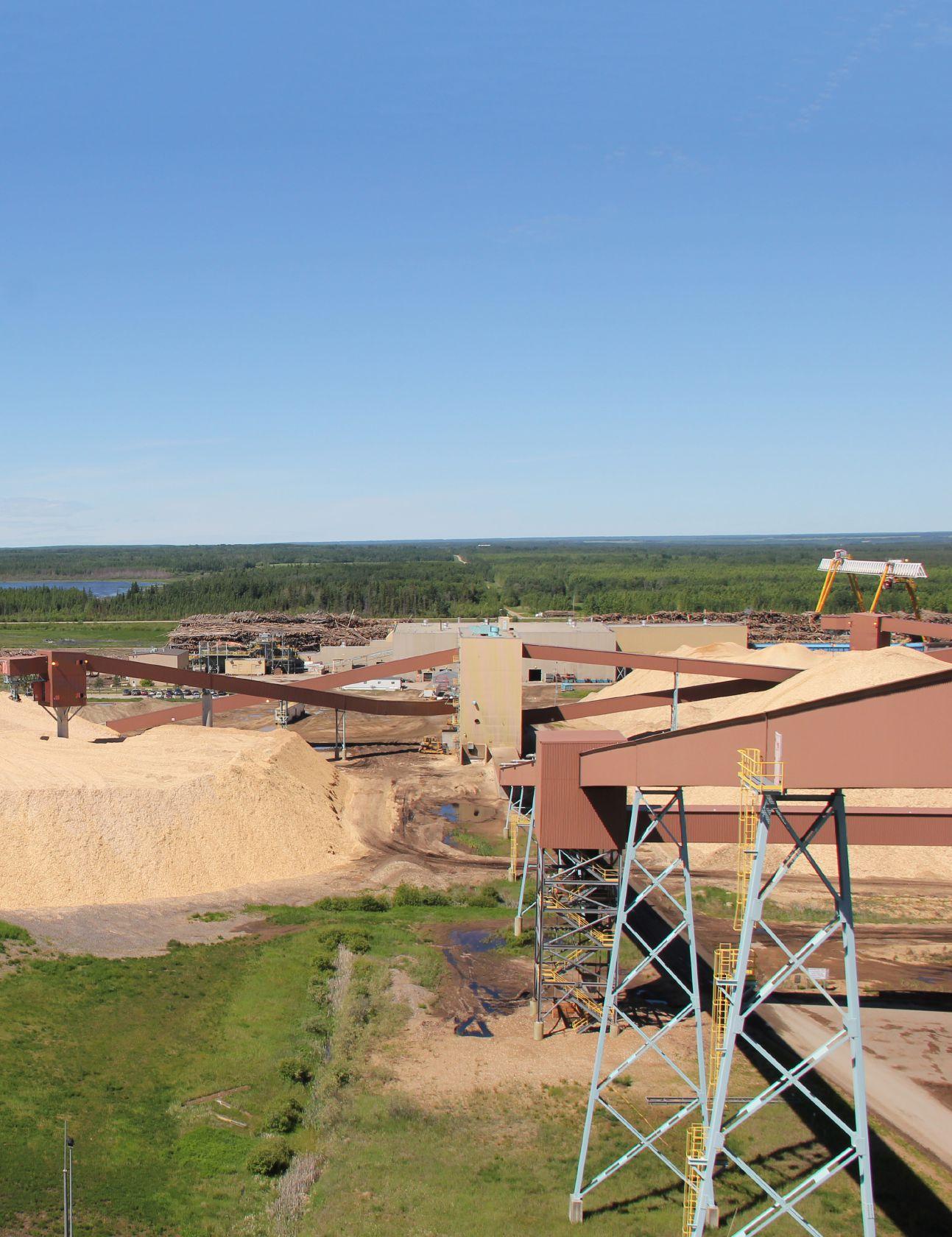

Under new owners, the hardwood kraft pulp mill is looking for ways to expand its product lines and diversify.
As talk of biorefineries turns to action, here’s a summary of who’s doing what, from lignin to sugars.
and shoe
There has long been a thread of foreign ownership running through Canada’s pulp and paper industry. It is a way for paper companies with limited upstream resources to secure their fibre supply. It serves as vertical integration in some cases, as diversification in others.
In the case of Hokuetsu Kishu’s acquisition of Alberta-Pacific Forest Industries last year, it seems to be a bit of both. I visited the mill in June, while on my way home from PacWest; the story can be found on page 11.
As I was doing my research for that story, reading the Hokuetsu Kishu annual report, one fact put into perspective the value of our Canadian forests. Hokuetsu Kishu has six paper and board mills in Japan. The company owns tree farms and “profit-sharing afforestation forests” in Japan totaling 12,291 ha. Its annual report notes that these forests are mainly used for providing building materials or as conservation reserves. “We originally acquired our own forests to serve as reserves for pulp materials. However, we currently source 99 per cent of our pulp materials from overseas broad-leaf tree plantations.”

Cindy Macdonald Editor
Now, with the acquisition of a Canadian subsidiary, Hokuetsu Kishu indirectly manages forest resources covering 6.4 million hectares.
Switching gears now to value-added products from the forest, I saw a tanker truck of lignin while on vacation in Eastern Ontario this summer. I was so excited. My travelling companion, understandably, did not share my excitement. I don’t know who the producer was, but it’s a good sign for the industry’s transformation. How long will it be before inbound chip trucks meet outbound tanker trucks at the mill gate? Read more about the progress of Canada’s bio-products sector on page 16.
Also in this issue is an update on the packaging market, based on a presentation I heard at a meeting of AICC Canada, an association for packaging converters. Another speaker at that meeting was Serge Desgagnes of Kruger. He was discussing new board machines in general, and specifically his company’s conversion (rebuild) of a paper machine at the Trois-Rivières mill. He made the point that Canadian entrepreneurs are keeping pace with global changes. Cascades built a greenfield containerboard mill recently in New York state, Atlantic Packaging converted a newsprint machine to make board, and now Kruger is doing the same thing. This shift to packaging grades is happening around the world, and Canada is in the thick of it. In fact, by installing new capacity for lighter board grades, Canadian companies are on the cutting edge for the North American market.
One thing is clear when you look along the value chain from our much-desired fibre basket to the manufacturing infrastructure at mills across the country – this is not a sunset industry.
Editor
CINDY MACDONALD
905-713-4338 cindy@pulpandpapercanada.com
National Accounts Manager LAURA GOODWIN 289-928-8543 lgoodwin@annexweb.com
President and CEO
ANNEX BUSINESS MEDIA
MIKE FREDERICKS
Group Publisher/Director of Content and Engagement
SCOTT JAMIESON
519-429-5180
sjamieson@annexweb.co
EDITORIAL/SALES OFFICES
Annex Business Media
105 Donly Drive South Simcoe, ON, N3Y 4N5
Media Designer
EMILY SUN esun@annexweb.com
News and Press Releases media@pulpandpapercanada.com
Account Coordinator
TRACEY HANSON thanson@annexbizmedia.com
Circulation Manager BEATA OLECHNOWICZ bolechnowicz@annexbizmedia.com
PULP & PAPER CANADA (ISSN 0316-4004) is published by Annex Business Media 105 Donly Drive South, Simcoe, ON, N3Y 4N5
CIRCULATION
email: mchana@annexbizmedia.com Tel: 416-442-5600 ext 3539 Fax: 416-510-5170
Mail: 80 Valleybrook Drive, Toronto, ON M3B 2S9
SUBSCRIPTION RATES
Canada $55.00 per year; $88.00 for 2 years. Outside Canada (US) US$101.95 per year; (foreign) US$110.00.
From time to time, we make our subscription list available to select companies and organizations whose product or service may interest you. If you prefer not to receive this information, please contact our circulation department in any of the four ways listed above.
Annex Privacy Officer privacy@annexbizmedia.com Tel: 800-668-2374
The editors have made every reasonable effort to provide accurate and authoritative information but they assume no liability for the accuracy or completeness of the text or its fitness for any particular purpose.
No part of the editorial content of this publication may be reprinted without the publisher’s written permission. ©2015 Annex Publishing & Printing Inc. All rights reserved.
Publications Mail Agreement No. 40065710
Print edition ISSN 0316-4004 On-line edition ISSN 1923-3515
Sustaining member, Pulp and Paper Technical Association of Canada; Member, Alliance for Audited Media.


“We acknowledge the [financial] support of the Government of Canada.”
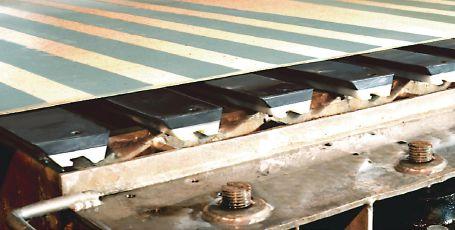
The latest generation of high performance material for table dewatering elements, provides long life at reduced cost.

New impeller upgrade reduces energy consumption and pulping time while still providing the same high performance.
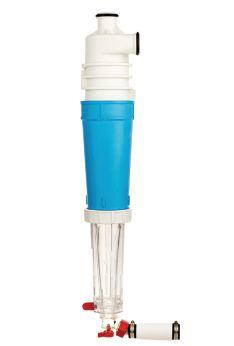
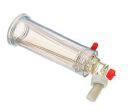
We offer many shower designs engineered to reduce operating costs.

Simplifies the maintenance of your cleaner plant.
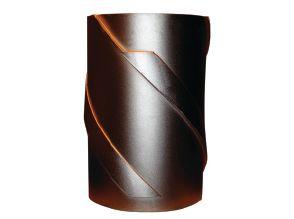
Realize power savings and increased rotor and screen plate life by installing this state-of-the-art rotor.
Kruger installing $55-million tissue machine at Crabtree facility
Tissue manufacturer Kruger Products is investing $55 million to add a paper machine at its Crabtree plant in Quebec. The project will increase the mill’s overall production by approximately 20,000 metric tonnes annually.
The new PM8 will produce tissue products primarily for the away-from-home market. The tissue machine is expected to be commissioned by end of next summer.
The company received a $39.5-million loan from Investissement Québec, which is acting as an agent of the Government of Québec in this project.
“This major investment was largely made possible by the support of the Québec government and the Joliette Regional County Municipality, as well as by our Crabtree employees who rallied for their plant’s future,” said Gosselin. “We would like to thank Minister Anglade for her support.”
Kruger Products serves the Canadian consumer market with Cashmere, Purex, SpongeTowels, Scotties’ and White Swan brands. The company also serves the away-from-home market.
The union representing employees at Kruger Products’ Crabtree tissue mill issued a statement in support of the new paper machine for the mill.
Éric Sourdif, president of the union (Syndicat national des travailleuses et travailleurs des pâtes et papiers de Crabtree), said workers at Crabtree are currently working with old machinery in a very competitive industry. He said the mill needed a significant investment to solidify its market share and the jobs at Crabtree.
According to a statement from the union, the workers at Crabtree have agreed to an extension of five years on the current collective agreement, meaning it will expire in 2023. Sourdif says the employer requested a longer agreement in order to facilitate the investment.


A mill in St. Catharines, Ont., and five U.S. specialty paper and tissue mills are under new ownership following the sale of Dunn Paper to Arbor Investments, a Chicago-based private equity firm.
Wingate Partners, a Dallas-based private equity firm, completed the sale of its portfolio company, Dunn Paper, Inc., to Arbor on Aug. 29. Wingate partnered with the Dunn management team to acquire the business in July 2010. According to a statement from Wingate, the paper company quadrupled revenue and increased EBITDA by eight times since 2010.
The new owner, Arbor Investments, focuses exclusively on acquiring companies in the food, beverage and related industries. Arbor has said the current senior management team at Dunn Paper will continue to lead the organization.
“Dunn is a well-positioned company within the specialty paper business with a focus on food and consumer products end customers. We intend to leverage Arbor’s food expertise to further Dunn’s market penetration,” said Richard Boos, partner of Arbor Investments.
Yvon Pelletier is stepping away from management of Fortress Paper’s dissolving pulp mill in Thurso, Que., turning that role over to Giovanni Iadeluca. The company has announced that Iadeluca will take over as president of the dissolving pulp segment. Pelletier will continue as CEO of Fortress Paper.
Iadeluca’s role will include leading and coordinating the strategic direction of the business at the Fortress Specialty Cellulose Mill in Thurso. Pelletier, as CEO of Fortress Paper, will focus on new business opportunities for the company.
Iadeluca was formerly the CEO of AV Terrace Bay. As CEO, he was responsible for the restart and turnaround of the Terrace Bay pulp and paper mill.
Pelletier commented: “The Fortress Specialty Cellulose Mill has seen considerable improvement over recent quarters and with Giovanni’s experience as a lean leader we expect this to continue at an accelerated pace until the mill realizes its full potential. Giovanni possesses the necessary leadership and technical skills to undertake such a task.”
Iadeluca said in the statement announcing his departure from AV Terrace Bay: “I am proud of our accomplishments over the past four years as we have transformed AVTB and demonstrated increased market share in NBSK. During that time I have been able to witness the growth and transformation of the mill with unprecedented improvements in health and safety as well as achieving daily and monthly production records.”
Iadeluca and his team at AV Terrace Bay also developed strategic partnerships with Greenpeace, Canopy and FSC during his tenure.
Cascades Sonoco introduces water-based barrier coating
After three years of rigorous product development and field trial work, Cascades Sonoco is introducing a water-based barrier coating to replace the standard polyethylene coating used on folding carton grades to make traditional food takeout containers. Incorporating the new FlexSHIELD barrier coating makes the take-out box compostable when applied to recycled paperboard, without compromising critical barrier performance, the company says.
“During the development of this product, we had numerous companies tell us if we could solve the cracking issues with a water-based solution, we would really be on to something the market has been asking about for a very long time,” said Sandy McArthur, director of sales and marketing, Cascades Sonoco.
The Halalt First Nation has discontinued two lawsuits previously commenced against Catalyst Paper related to trespassing and breach of confidentiality.
“We are pleased Halalt has chosen to discontinue its participation in the litigation against Catalyst,” said Joe Nemeth, president and CEO of Catalyst Paper. “Catalyst is focused on improving its long-term relationship with the Halalt First Nation and working collaboratively to safeguard the environment along with developing mutually beneficial economic opportunities.”
One of the discontinued claims filed by Halalt alleged that Catalyst has illegally trespassed on, and caused damages to, Halalt’s asserted territories and fisheries resources through the operation of Catalyst’s Crofton Mill since 1957.
The second claim was filed jointly by Halalt, Sunvault Energy Inc. and Aboriginal Power Corp. alleging Catalyst disclosed certain confidential information pertaining to a proposed anaerobic digester facility in breach of a confidentiality agreement. The Notice of Discontinuance filed by Halalt in this lawsuit removes Halalt as a plaintiff; Sunvault Energy and Aboriginal Power remain as plaintiffs in the lawsuit.
Catalyst denies the remaining allegations contained in this claim.
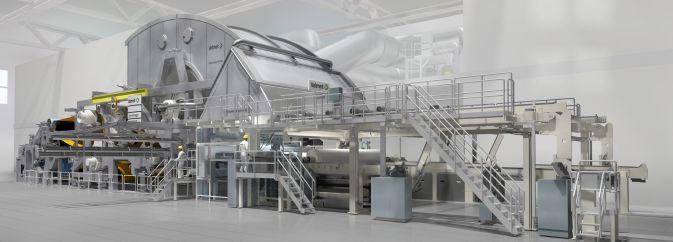
The first of three tissue converting lines has entered production at Resolute Forest Products’ state-of-the-art tissue facility currently under construction in Calhoun, Tenn.
The company announced in early September the completion of commissioning of the first tissue converting line. The remaining two lines will be commissioned by year-end.
“We are on schedule with the US$270 million project, our largest investment since 2010,” stated Richard Garneau, president and CEO. “The first production of bath tissue and towel came off the converting line on August 17, representing an important milestone. We are confident that the new tissue machine will be operational as planned, in the first quarter of next year.”
Resolute’s new tissue machine and converting operations are being built at its Calhoun pulp and paper mill, which the company expects to be one of the most competitive and efficient tissue operations in North America.
Construction of the Advantage-NTT tissue machine is underway. “We are proud to have one of the most modern and flexible NTT machines, specifically designed for the retail market in North America,” added Garneau.
Valmet’s Advantage NTT tissue production technology is designed for maximum flexibility.
Tolko Industries will close its Manitoba operations on December 2, 2016. The facilities in The Pas, Man., include an inactive sawmill, a chipping operation and a kraft paper mill, employing about 330 people.
“This is not a decision we have entered into lightly,” said president and CEO Brad Thorlakson. “Over the 19 years we have been in the community, a great deal of work has been done, both internally and externally, to improve the mill’s competitive position. Unfortunately, despite years of continued effort to improve the cost structure and business results of the operations, the business is not financially sustainable.”
Tolko is one of the largest employers in The Pas, a community of about 5500 in northern Manitoba.
“This is a very sad day for workers and the community that has invested so much into the mill over the years,” said Joie Warnock, Unifor Western Director.
The mill in The Pas first opened in the late sixties. Tolko purchased the Manitoba kraft paper and sawmill operations in 1997.
Thorlakson noted that the decision to close the mill is in no way a reflection of the people, community or local and provincial governments. “We understand that this will be a very difficult time for them and the community, but we cannot continue to sustain the losses at the operation.”
According to various media reports, there are efforts being made to find a buyer for the Tolko Manitoba operations.
An article on the Winnipeg Free Press site notes that Tolko’s The Pas mill has high energy costs, high transportation costs and “lacks the economies of scale that integrated lumber and paper mills enjoy.”
In a submission to Manitoba Hydro, the company said its power costs per tonne of paper increased 33 per cent between 2010 and 2014.
• More than 350 pieces of equipment from the closed Graphic Packaging mill in Jonquiere, Que., have been sold at an online auction.
• Cascades has taken a majority interest in Longhorn Paper Converting, a tissue converting plant in Grand Prairie, Texas, expanding the Quebec company’s coverage of the U.S.
• The four largest shareholders of Catalyst Paper have extended the deadline for Kejriwal Group International to sign a definitive agreement to acquire the B.C. papermaker. Catalyst Paper has entered into a confidentiality and non-disclosure agreement with KGI, which allows KGI to initiate its due diligence process in connection with the proposed transaction.
• Catalyst Paper has permanently shut down PM 9 at the Powell River mill. The paper machine had been indefinitely curtailed since December 2014. A company statement says that Catalyst “continues to focus on revitalizing the Powell River mill for the future.”
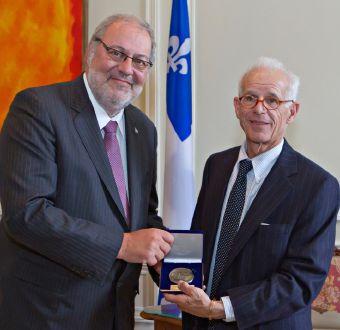
• In recognition of his contribution as an exceptional citizen, Joseph Kruger II, chairman and CEO of Kruger, was awarded the Medal of the National Assembly of Québec in May. The medal underlines Kruger’s significant contribution to the Québec community through the family company of which he has been chairman and CEO since 1988.
In 2015, the European paper industry’s performance was second best in the world after China, with a stable production and increased consumption compared to 2014, according to data gathered by the Confederation of European Paper Industries (CEPI). CEPI members produced 90.9 million tonnes of paper and board in 2015.
The packaging sector’s production continued to increase while graphic paper (newsprint, printing and writing paper) maintained its recent decline.
Graphic grades represented 38.8 per cent of all paper and board produced in Europe in 2015, packaging grades 49.0 per cent, sanitary and household papers 7.9 per cent and specialty grades 4.3 per cent.
Market pulp production fell by 0.7 per cent compared to 2014, with an output of 13.1 million tonnes.
These and other figures can be found in CEPI’s 2015 Key Statistics brochure.
Nexolia Bioenergy Inc. is purchasing a non-operating pulp mill and sawmill located in Lebel-sur-Quévillon, Que., from Fortress Paper. The sale includes the buildings and equipment, as well as the energy generation, connection and transmission plant for an aggregate purchase price of $15.36 million.
Yvon Pelletier, president and CEO of Fortress Paper, commented: “The sale of the LSQ mill represents a divestiture of a non-core asset which will release the company from a number of future obligations and allow it to focus on other value enhancing transactions to grow its business.”
Nexolia Bioenergy Inc. is a private company focused on investing in natural resources, renewable energy.
Fortress Paper had intended to re-open the LSQ mill, and signed an electricity supply agreement with Hydro Québec in 2012. Restarting the mill’s co-gen facility was intended to reduce production costs for specialty cellulose.
But in 2014, a duty on dissolving pulp imposed by China made the production of dissolving pulp at the mill not viable.
The Ontario Superior Court has rejected the admission of multiple allegations from Resolute Forest Products Inc. as part of the company’s defamation lawsuit against Greenpeace.
According to a story in the Financial Post, the court ruled that Resolute’s claims about Greenpeace were an attempt to expand the scope of the lawsuit to include an inquiry into the environmental activist organization.
Canadian pulp and paper industry veteran David McDonald is one of two consultants to be honored by TAPPI’s engineering division. McDonald, president of JDMcD Consulting, is the recipient of the 2016 TAPPI Engineering Division Technical Award and Beloit Prize. Don Sorenson, Amec Foster Wheeler,received the 2016 TAPPI Engineering Division Leadership and Service Award and Amec Foster Wheeler Prize.
David McDonald has worked in the pulp and paper industry for more than 38 years, with FPInnovations and its predecessor Paprican.
“I have learned a lot from many talented and knowledgeable people while attending Engineering Division conferences and committee meetings over the years,” said McDonald. “Looking at the list of previous winners and thinking of other worthy candidates, I am humbled that I have been chosen for this award.”
McDonald will receive his award during the Awards Reception at PaperCon 2017 in Minneapolis.
Domtar is once again expanding its personal care business, with the acquisition of Home Delivery Incontinent Supplies Co., a national direct-to-consumer provider of adult incontinence and related products.
“Direct-to-consumer engagement and interaction is growing, and provides unique consumer and customer insights that are critical to continuously improve the value of our offering,” said Michael Fagan, president, Domtar Personal Care division.

Submitted by FPinnovations
In recent years, the demand for an alternative to plastic has been mounting with increasing consumer awareness and concern about global warming and leakage of packaging materials into natural systems. In response to these concerns, an increasing number of cities are forbidding the use of plastic bags by commercial establishments, leading to other solutions such as reusable bags. This situation is creating a significant opportunity for the Canadian forest industry, since wood-derived materials are biodegradable, sustainable and, in most cases, easier to recycle.
FPInnovations, through its Advanced Packaging program, is developing an advanced packaging strategy for the production of the next generation of sustainable packaging products that can compete with plastic materials on cost as well as performance. The group will work
Consolidation and integration will continue in packaging Consolidation, vertical integration and globalization are three trends affecting the containerboard and corrugated industries, according to Mark Wilde, managing director of BMO Capital Markets. Wilde provided an update on North American containerboard and corrugated markets at the annual meeting of AICC Canada in September.
Demand globally is mixed, Wilde reported. In North America, demand volume is expanding slowly. Brazil has slowed three to five per cent in the last 18 months, and volumes are slowing in China, but European demand has been stronger than expected in the last two years, he said.
The supply side is “creeping up,” said Wilde. There is a combination of new recycled fibre mills and grade conversions. Looking ahead, Wilde predicted slower new capacity growth in North America,
with members, partners, suppliers and end-users to develop new products and designs based on wood fibres, and apply new biomaterials and technologies to produce innovative packaging materials.
The activities are funded by the Forest Innovation Program of Natural Resources Canada and by the Quebec Ministry of Forests, Wildlife and Parks, leveraging FPInnovations’ member company contributions.
An important objective of the Advanced Packaging program is to provide solutions to challenges facing the packaging industry, such as weight reduction, increased flexibility and the development of more advanced packaging materials, while meeting consumers’ expectations in terms of cost, convenience and functionality. The program plans to take advantage of the unique properties of advanced wood
fibres and biomaterials, such as cellulose filaments (CF), lignin and modified fibres, to develop lightweight and superlightweight products, highly stretchable papers, and papers that have good barrier performance and/or antimicrobial properties. Another outcome will be a set of innovative technology platforms that support the development of those new products and applications.
The group is setting specific targets, such as achieving more than 10 per cent reduction in weight from the current level for paperboard, commercializing highstretch paper products (mulch, geotextiles), and prototyping 3D-shaped products made by pulp thermomoulding and paper thermoforming. Throughout, the group will continue to support the industry in its efforts to develop transitional as well as non-traditional packaging products. PPC
but capacity ramping up in Europe.
Cost pressures on the industry have been limited, he stated. OCC has been near historical trough levels, and energy costs have generally been low.
On the subject of consolidation, Wilde feels there is room for more mergers and acquisitions in the North American industry, as well as the European market. In Latin America, there have been recent moves into the region by U.S. and European players. He cited SmurfitKappa and WestRock as examples.

The emphasis on vertical integration is demonstrated by North American integrated producers of board buying independent converters. Atlantic Packaging is one example, with its joint venture Blackhawk Corrugated and acquisition of Skybox
Packaging. As a result of this trend, Wilde said, valuation multiples for independent converting companies have risen from 6-7x to 9-10x in recent deals.
Wilde offered several examples of globalization. He is of the opinion that large U.S. players are “running out of room at home.” They are looking in other areas for growth, such as Latin America. Meanwhile, foreign companies are eyeing the high margins and stable prices enjoyed by U.S. producers. SAICA, SmurfitKappa and Pratt are examples.
Wilde feels that the re-purposing of paper mills to produce board will continue to boost the supply side of the containerboard industry.
AICC Canada is an association serving the packaging and converting industries.

Executives at Canada’s largest pulp mill are feeling invigorated by new owners.
By Cindy Macdonald, editor
Employees at Alberta-Pacific Forest Industries say they feel secure and hopeful again, after a few years of uncertainty. The mill transferred from one Japanese owner to another in 2015.
The Alberta-Pacific mill opened in 1993, a joint venture of Mitsubishi Corp. and Oji Paper. At the time, it was the largest single-line kraft mill in the world. It was also one of Mitsubishi’s largest ventures in North America. But in 2013, Mitsubishi decided to withdraw and began trying to sell the mill. The eventual buyer was Hokuetsu Kishu, one of the leading paper companies in Japan.
Hokuetsu Kishu has six mills in Japan,
as well as operations in China and France.
“We regard Al-Pac as a very important platform to develop business opportunities in North America,” says Sam Terao, a corporate officer of Hokuetsu Kishu and chairman, president and CEO of Alberta-Pacific.
Al-Pac’s sales make up less than 20 per cent of Hokuetsu Kishu’s sales revenue, but account for almost one third of its profit.
Daryl Nichol, mill manager for Al-Pac, says in turn, that Hokuetsu Kishu has been “a breath of new life” for the northern Alberta mill.
With the new ownership, a change has been immediately evident, says Nichol.
Brent Rabik, Al-Pac’s business unit lead-
er for business development and government affairs, says the company is working on the optimization of the current business, and continuing to invest in R&D.
“Being for sale for two years, things were very unsure,” Rabik recalls. Since the completion of the sale in Oct. 2015, he says, “there’s a sense of moving forward.”
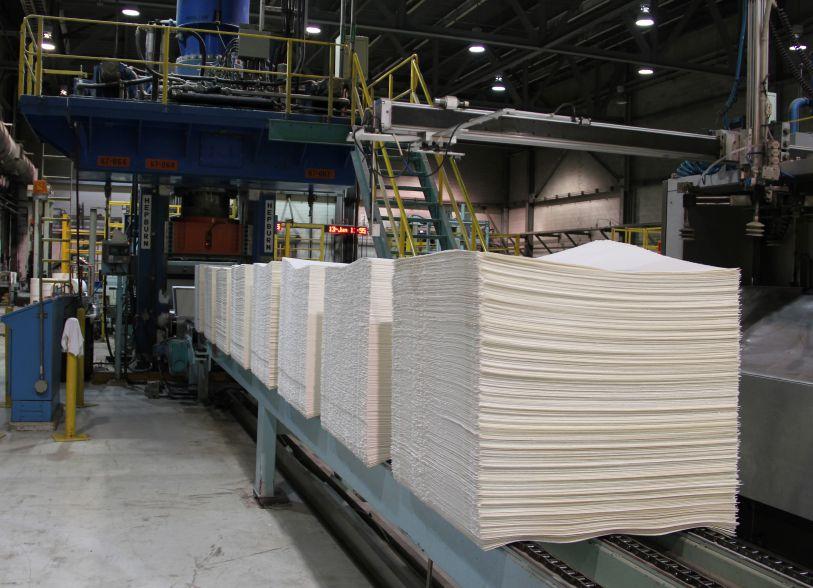
Al-Pac employs 385 team members and, for most of the year, about 650 contractors. The company had $398 million in sales last year, producing 622,000 tonnes of pulp. Most is bleached hardwood kraft, and a small percentage is softwood kraft.
Al-Pac sells the majority of its output to North America (60 per cent), with the rest going to Asia. Nichol says the mill’s competitive advantage is the characteris-
















































high-pressure steam turbines (41 MW) to supply all mill power.
A low pressure condensing steam turbine was added later with assistance from the Pulp and Paper Green Transformation Program. This $65-million project also involved installing 28 km of power transmission lines, a new substation, and developing an operational strategy to maximize power export.
Al-Pac also undertook a bio-methanol project, creating methanol from stripper off gas. The project began in 2012. The
equipment is running, but optimization work is ongoing. The methanol is not yet able to meet the standard necessary for sale to external customers, although the purity target has been achieved. Nichol says the methanol can offset costs for the mill if it is burned internally as a fuel.
The mill manager says the company continues to look for new opportunities, particularly bolt-on technologies, perhaps cellulose nanocrystal. Al-Pac is involved with the pilot CNC plant operated by Alberta Innovates Technology Futures.
Hokuetsu Kishu announced the acquisition of Alpac Forest Products Inc. and Alpac Pulp Sales Inc. in February 2015. The purchase is part of the Japanese company’s plan to expand its portfolio. “By making two companies in the Al-Pac group fullyowned subsidiaries, we have made a full-scale entry into the market pulp business, where global demand continues to expand,” says the annual report.
The Japanese papermaker is in the middle of a three-year “medium-term management plan” called C-next, which has three priorities: change, challenge, create. The emphasis is on realizing further growth. Hokuetsu Kishu’s core businesses (prior to the Al-Pac acquisition) were identified as: paper; white paperboard; specialty paper; and paper processing.
The Hokuetsu Kishu annual report notes that Al-Pac’s efforts to expand its revenue sources, including power generation and reforestation contracts for oilsands development, have led to “a multi-faceted business structure that ensures stable revenues.”
Other avenues of exploration are pulp as an additive for plastics, new pulp grades for tissue and toweling, transload facilities, and the use of waste ash in concrete and road building.
At the time the mill was built, Nichol recalls, management wanted this mill to be different. There was an effort to develop self-directed, self-managed teams. “Our people are engaged, even to this day,” he comments. That attitude has carried over to safety and environmental concerns.
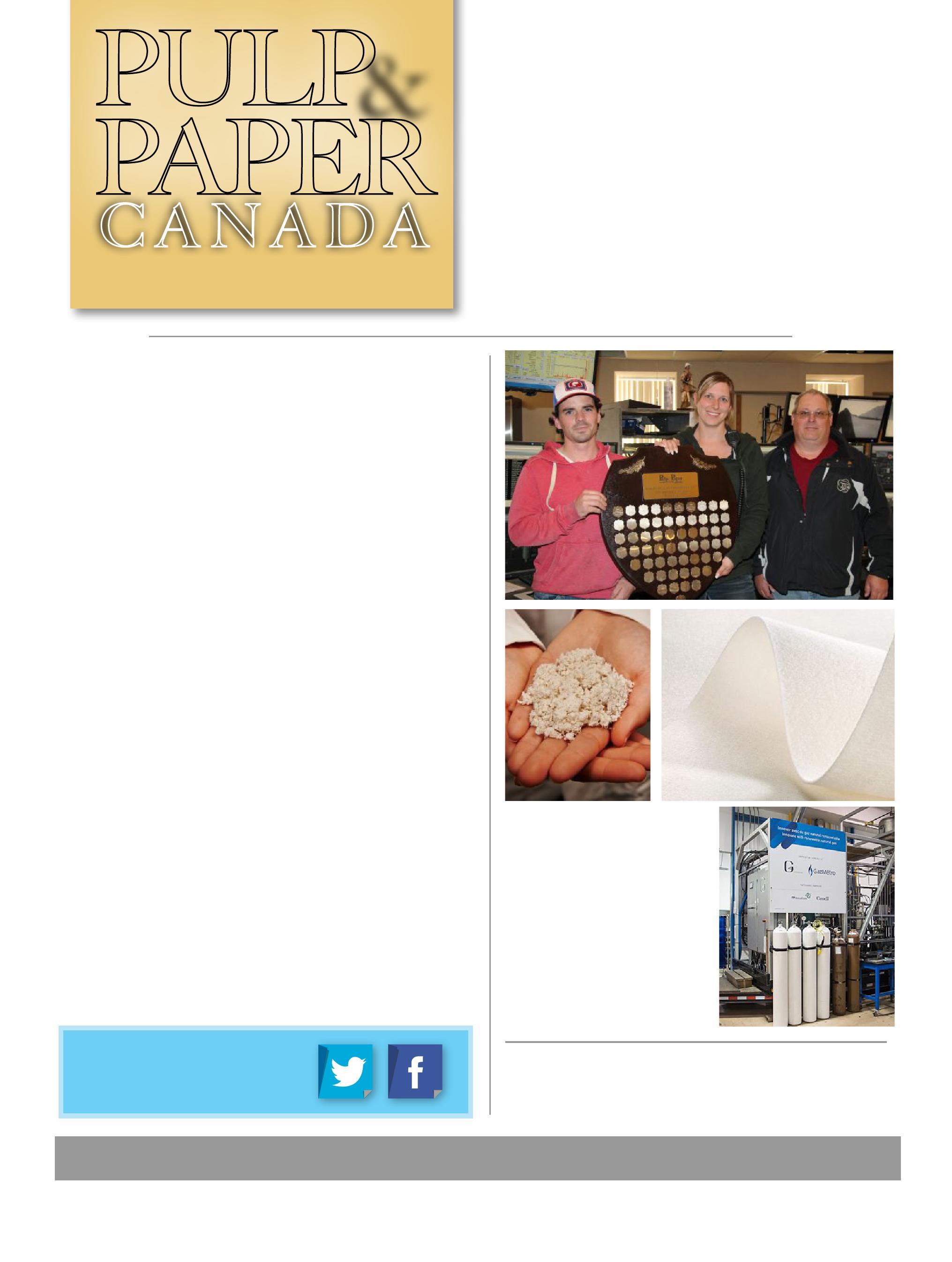
The mill received the Safest Mill in Canada award in 2011 and 2015 from Pulp & Paper Canada, and has “Partners in Injury Reduction” certification.
It has also been on the list of the Top 100 Employers in Canada for many years.
Safety is really part of each task, not “something else” that a team member also has to do, explains Nichol. All new team members get one to one-and-a-half days of safety training. He says there is a lot of communication from the company leadership about safety, and there’s been a lot of reinforcement this past year.
The company also uses a “Heads Up” program. So far, more than 2000 procedures are in the system. PPC
Many of the pulp companies in Canada have joined the bio-economy.
By Cindy Macdonald, editor
Biorefining in Canada has moved from the talking and testing phase to the production phase. Five Canadian pulp companies are producing biochemicals or biofuels, and several more are in the construction phase of bioproducts projects.
Whether for internal use or external sale, it makes sense to expand the chemical processes at a pulp mill to more fully utilize the fibre resource and perhaps capture some of the promised demand for bio-based chemicals.
Here is a round-up of announced projects at pulp mills across Canada.
It should be noted that many of these projects are supported by funding from various federal and provincial programs – most prominently, the Investments in Forest Industry Transformation (IFIT) program, Sustainable Development Technology Canada, and the Centre for Research and Innovation in the Bio-Economy (CRIBE).
Birla (AV Cell, AV Nackawic, AV Terrace Bay) – In 2014, it was announced that AV Terrace Bay was partnering with CRIBE and GreenField Specialty Alcohols to test and develop a method to recover sugars from woody biomass.
– The company’s project to manufacture and sell bio-based methanol produced from stripper off-gas has had some success. It was reported in 2015 that the mill was using the bio-methanol in its lime kiln, but at that time the mill had not achieved the required specification to sell the methanol to external markets.
Canfor Pulp – Canfor Pulp has formed a joint-venture with an Australian compa-

ny to integrate its catalytic hydrothermal reactor platform with Canfor’s mills. The reactor process would convert wood residues from the kraft process into biocrude oil. This could then be used to produce biofuels and biochemicals.
Cascades – At the Norampac Cabano facility, Cascades is investing in a hot water pulping process that will allow it extract hemicellulose from hardwood chips. It is expected that the hemicellulose can be sold as a wood-extracted sugar concentrate.
Domtar – After several forays into bioproducts, Domtar is now evaluating the lessons learned from its many projects.
CelluForce, a joint venture between Domtar and FPInnovations, began producing cellulose nanocrystals in January 2012. CelluForce is actively testing its biomaterial in applications related to the oil and gas industry, and has a commercial application in the adhesives sector. The company had stockpiled product for the
market development phase, and hopes to resume production at the Windsor, Que., facility in 2017.
Domtar also invested in the LignoBoost lignin separation technology, installing a commercial-scale plant at its mill in Plymouth, N.C.
At its Dryden, Ont., mill, Domtar announced in 2015 plans to produce “modified softwood pulp fibre for highperformance composites.” The proposed pulp was intended for use in both papers and non-traditional markets, such as fibre reinforcement for cement and fiberglass.
Ensyn – Ensyn is not a pulp mill but is having success producing wood-based biofuels with its rapid pyrolysis technology at a stand-alone facility in Ontario. The company sells renewable fuels to several hospitals in New Hampshire, and has broken ground for a woodbased biodiesel plant in Quebec.
Kruger – Kruger went from announcing a cellulose filament demonstration plant
to production in a scant six months. The demo plant located at the TroisRivières mill began production in June 2014. Kruger is using cellulose filament in some of its own paper products, and the material has two commercial applications.
An early entrant to the bioproducts field was the Kruger Products mill in New Westminster, B.C. This mill installed a Nexterra gasification system to produce syngas from wood chips for internal consumption within the tissue facility.
Mercer (Zellstoff Celgar) – Mercer is participating in a joint venture with Resolute Forest Products to commercialize cellulose filaments for applications outside of the paper industry. The joint venture is called Performance Biofilaments.
Millar Western (Whitecourt) – A bioenergy project intended to generate green electricity for the Whitecourt pulp mill was announced in 2014. Biogas from three anaerobic digesters will be

scrubbed and used to produce electricity and heat for pulp mill processes.
Port Hawkesbury Paper – Executives from the Port Hawkesbury mill said in 2014 that the company would explore the possibility of producing wood-based cellulose sugars, but no further announcements have been made.
Resolute Forest Products – In 2011, Resolute’s Thunder Bay pulp and paper mill was an early entrant to the biorefining world, hosting a demonstration-scale lignin separation plant designed by FPInnovations and NORAM Engineering. The company did not pursue commercialscale lignin technology, but just recently announced that the mill will be the site of a pilot biorefinery with the aim of producing biochemicals from wood.
Resolute is also a joint-venture partner with Mercer in Performance Biofilaments, a company charged with finding nonpaper applications for cellulose filaments. Resolute also announced in 2016 a bio-
economy project for its Saint-Félicien pulp mill in Quebec. The mill will install an enzyme-enabled carbon capture technology that is expected to capture up to 30 t of CO2 per day.
Tembec – The Tembec complex in Temiscaming is a long-time producer of lignosulfonates, and also produces resins from wood and green energy.
West Fraser (Cariboo Pulp, Quesnel River Pulp, Slave Lake Pulp, Hinton Pulp) – West Fraser has shown a strong commitment to testing and implementing new technologies at both its sawmill and pulp assets. Building on the success of the demonstration facility in Thunder Bay, West Fraser built a commercial-scale LignoForce lignin extraction facilty at its Hinton pulp mill. The 30-t/d lignin plant began production in April 2016. In addition, an anaerobic digester at Slave Lake Pulp produces a methane-rich gas that is used to produce green electricity. PPC
opportunities for companies that see things differently.







Helping our members stay ahead of the pack!
FPInnovations is a world leader in the development of new products and new applications. We rely on a team of more than 500 innovators and experts to create new sciencebased solutions. We don’t just talk about innovation. We innovate.
Next generation technology towards smart and greener pulp and paper products.
Advanced bioproducts that contribute to every aspect of daily life.
Solutions that deliver worldclass innovation across the forest value chain.
fpinnovations.ca
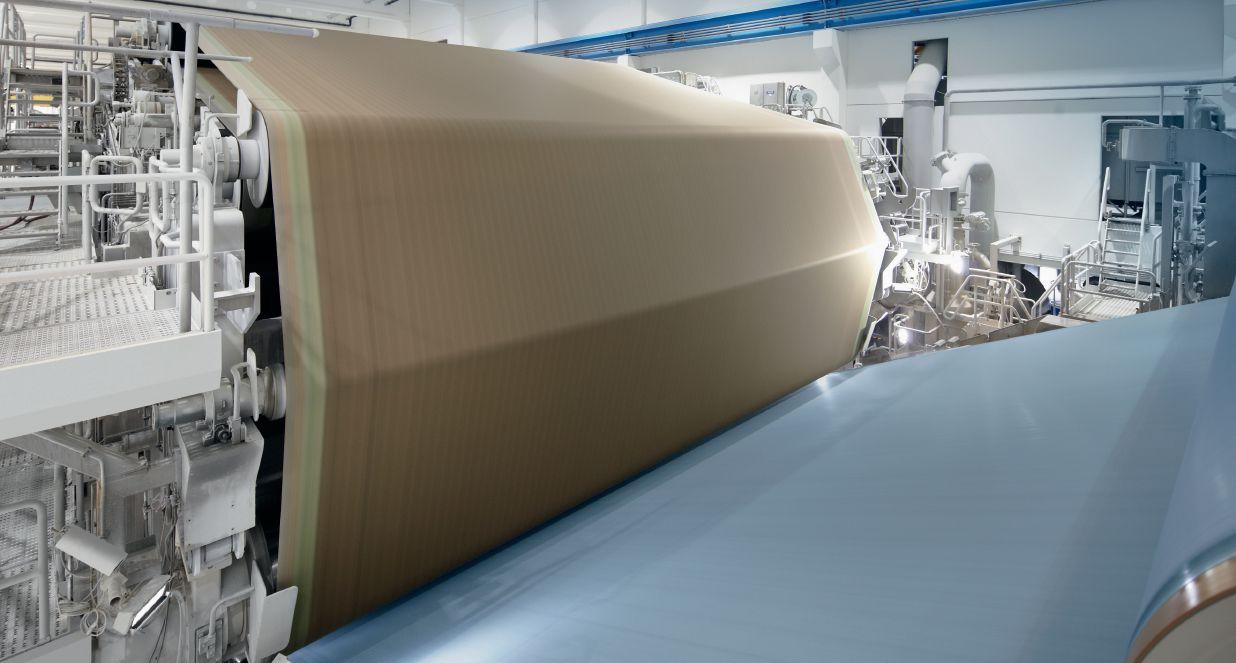
contributes to improved performance for Voith press felts
PeakElement, the elastomer component available for all Voith press felt designs, is said to improve the efficiency of machines for all paper grades. The new material reduces startup time and has shown to reduce energy consumption, the company states.
The elastomer component is integrated into the felt structure and ensures that the felt achieves the optimum saturation in the nip as quickly as possible. This is necessary to obtain the ideal hydraulic pressure in the press nip and enable appropriate dewatering.
As press felts with PeakElement technology compress up to 15 per cent more than standard felts, the functional saturation is achieved within a much shorter period. As a result, the startup time for the paper machine is noticeably reduced and the actual production speed is reached sooner, according to the manufacturer.
The rebound capacity of the press felt is also crucial for performance over the entire service life. The elastomer component prevents a lasting deformation of the material – even after more than two million revolutions. This means that the flow of water is guaranteed and the machine efficiency is continuously maintained, Voith reports.
PeakElement technology has already proven effective in numerous paper machines producing all grades of paper. Along with the shorter startup times and lower energy consumption, paper manufacturers have also opted to switch to PeakElement technology because of the higher production volume it offers. Voith Paper, www.voith.com
The Impulse family of shoe press belts from Xerium Technologies combines the latest in specially developed polyurethane materials, state-of-the-art manufacturing technology and global application expertise.
Impulse technology is available in a variety of proprietary venting patterns for optimized performance on virtually every grade of paperboard, tissue, paper, and pulp.
“We are very excited to launch Impulse - a new generation shoe press belt technology,” said Bill Butterfield, executive vicepresident and chief technology officer of Xerium.
“Our roll cover technology team … has now delivered a unique high-performance polymer shoe press belt with an expanded product portfolio especially for demanding machines. Impulse is already running very successfully on numerous machines around the world and we are extremely delighted in the growth potential for this new class of product Xerium now supplies.”
Impulse shoe press belts provide a durable solution for the rugged service requirements of modern high-speed, highly loaded shoe presses.
According to the company, a reinforcing structure provides excellent structural stability and superior impact damage resistance. The belts’ increased chemical resistance and reduced deformation is said to provide improved groove stability.
In addition, Impulse belts have best-in-class flex fatigue in combination with low hydrolysis resulting in reduced swelling, Xerium reports.
Xerium Technologies, Inc., www.xerium.com
Kadant Solutions to provide stock approach system for Japanese board mill
Kadant Solutions has received an order for two Octopus stock approach systems for a coated duplex board machine in Japan.
Coated duplex board is typically used as packaging material for small boxes that require high quality printability, such as consumer electronic products, food packaging, pharmaceuticals and other consumer merchandise. It can also be used in combination with high-performance corrugating medium and linerboard for the outer layer of corrugated packaging.
First introduced in 1995, Kadant says the Octopus system has been successfully used to supply vats, hydraulic formers, and both air pad and hydraulic headboxes with uniform flows across the width of the paper machine without the need for recirculation. According to the company, the flat basis weight profile allows the mill to improve sheet quality and reduce energy and fiber costs. The Octopus system will be used in place of conventional tapered inlets to reduce cross-machine variation and to control overall sheet profile.
As basis weight supplied to each zone of the forming device is a function of flow and consistency, cross-directional basis weight is controlled by the Octopus stock approach system’s ability to vary consistency in each supply zone. Consistency control of each zone is controlled off-machine, allowing operators to make profile corrections safely while the paper machine is in operation.
Kadant Solutions, www.kadant.com
BTG acquires process control software vendor Spectris plc, the parent company of BTG, has acquired Capstone Technology Corp., a provider of software for process control optimization and decision support analytics across several processing industries.
Capstone’s MACS suite of software includes multivariable predictive modeling, commonly referred to as advanced process control, as well as control loop tuning and monitoring, all of which can help manufacturers achieve gains in productivity, yield and cost reduction. According to BTG, MACS combined with BTG’s unique single-point in-line sensors provides market leading process control solutions for pulp producers and papermakers.
“Capstone is an excellent addition to BTG. The combination of Capstone’s software tools with our single-point instruments enables us to provide market leading solutions for process control and optimization across our global markets,” said Brian Pahl, BTG president.
Capstone’s dataPARC provides comprehensive operational decision support through PARCserver data historians and PARCview real-time data analytics and visualization tools, which are used to capture, aggregate and visualize process data for troubleshooting and optimizing unit operations.
Capstone will operate independently, but reside within BTG Group.
BTG Group, www.btg.com
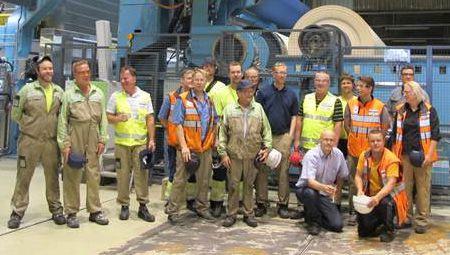
Valmet contributes to Kotkamills’ PM conversion
Kotkamills’ rebuilt board machine No. 2 (BM2) restarted on July 22 in Finland. Valmet supplied key technology and an automation package for the extensive paper machine grade conversion project. The printing paper (MFC) production line was converted to produce a range of folding boxboards and food service boards.
“Our BM2 is the first machine in the world to have the capability to produce dispersion barrier coatings directly on the machine, producing barrier boards that can be recycled with normal paper waste due to having zero plastic content,” says Markku Hämäläinen, CEO of Kotkamills. “The interest in our new sustainable products has been massive. The new machine offers a wide range of interesting possibilities for converters, brand owners and designers alike.”
Stefan Fors, project director at Kotkamills, says he was pleased with how quickly the project came together. “The project schedule was really tight; from the change of the ownership of Kotkamills to start-up in less than sixteen months. That is extremely fast. I am very pleased with cooperation with Valmet and how wellprepared Valmet’s project organization was for such an extensive project.”
Valmet’s delivery included equipment for stock preparation, a new coating section with two layering curtain coating stations, a blade coating station with roll application, a sizing section with film application and all related coating air dryers. A wide scope of equipment for the coating color kitchen and machine circulation for sizing and coating was included. The delivery also included a center-driven reel, a compact winder, amd modernization of dryer section and calender.
An extensive automation package for BM2 included Valmet DNA machine and drive controls with integrated condition monitoring, and Valmet IQ quality management solution including QCS, several profilers and a web runnability monitoring and inspection system. Automation deliveries for the pulp mill and the chemi-thermomechanical pulp (CTMP) plant included a number of analyzers and optimization of process controls for various process stages. The CTMP plant and the coating kitchen are also equipped with Valmet DNA automation systems.
A performance agreement between Kotkamills and Valmet was made to continuously develop BM2’s coating process to qualify as high-class coated board. The agreement involves both on-site support and troubleshooting support via remote connection to speed up problem solving. Valmet, www.valmet.com
Voith to supply tissue machine to Little Rapids
American specialty paper manufacturer Little Rapids Corp. has signed a contract with Voith Paper Brazil to purchase a new tissue paper machine. This new machine will replace the existing PM3, located in Shawano, Wis.
Voith says the new machine will significantly improve paper quality. It will produce 119 tonnes per day at a speed of 1830 m/min. Except for the existing Yankee dryer, which will be reused, all of the other machine components will be new and based on Voith’s machine model VTM 3.
In addition to the new tissue machine and auxiliaries, Voith’s scope of supply includes: stock preparation, approach flow
Over the past several months, a Quebecbased natural gas supplier has been conducting a demonstration project aimed at converting forestry biomass into secondgeneration renewable natural gas.
Gaz Métro says the trials carried out in collaboration with the British Columbia firm G4 Insights at the Natural Gas Technologies Centre in Boucherville, Que., enabled it to develop “a conversion process that is unique in the world and marks an important milestone in the development of new renewable energy technology in Quebec.”
Gaz Métro and G4 used a thermochemical process called pyrocatalytic hydrogenation (PCH) to transform wood chips from Quebec into natural gas. The process is now ready to be tested in a larger pilot project that will produce greater volumes.
“With this small-scale project, we proved that PCH is technologically viable.
system, steam box, dust and mist removal systems, DCS systems and field services.
The project is scheduled to start in thefall of this year, and start-up is expected for the end of 2017.
Little Rapids is a family-owned business. The company’s core product lines serve the medical and beauty market segments, flexographic printing for a variety of packaging markets, and tissue, MG paper, and wet crepe paper for the specialty paper market. Voith Paper, www.voith.com
Based on a customer request, PulpEye has launched a new module, ConsistencyEye, for faster measurements and calibration of sensors for different process streams. This method is particularly suitable for measurement of low consistency streams, such as those found in paper and board machines’ stock preparation departments. The company explains that there is currently no quick way to measure consistency of different fibre streams for cali-
bration of consistency sensors. Usually the measurements are done manually, which takes time and the result may be influenced by how the measurement is done.
“The module is of interest to any mill with many consistency sensors to be calibrated regularly,” says Öjvind Sundvall, managing director of PulpEye. “As the consistency influences, among other things, the amount of chemicals added and the refining, it is very important that the consistency sensors always give the actual values. In stock preparation departments there are many flows where false or slow consistency measurements during calibrations may result in substantial costs caused by wrong product quality.”
Sundvall continues: “Our first ConsistencyEye customers confirm that a calibration of the consistency in a flow takes only 2 to 5 minutes instead of earlier typically 40 to 60 minutes for the existing laboratory method. In addition to that, the measurement result is independent of who does the calibration, which contributes to quality secured product properties.”
PulpEye, www.pulpeye.com

It is now essential that we press ahead with our efforts, so as to determine how we can improve the process even further and increase its production potential. Our goal is to use forestry biomass and produce a “green” energy supply of Quebec-sourced and renewable natural gas,” explains Martin Imbleau, vice-president, development and renewable energies at Gaz Métro.
Gaz Métro says this renewable natu-
ral gas, over the coming years, could be used locally or injected into the company’s network.
G4 is developing PCH technology for large-scale, economical production of renewable natural gas (RNG) from forest biomass. The proprietary G4 process uses fast pyrolysis techniques and a catalyst to transform forest biomass thermochemically into renewable natural gas.
The Ontario government is investing $4.5 million to help FPInnovations and Resolute Forest Products establish a fully functioning biorefinery plant in Thunder Bay, Ont.
The new biorefinery plant is a pilot project that will produce biochemicals derived from wood, resulting in renewable, biodegradable and cost-effective alternatives to petroleum-based products for use in the construction, automotive, mining, oil and other sectors.
Resolute Forest Products is contributing $3.5 million to the project and will host the plant at its Thunder Bay pulp and paper facility.
“The three-year research program with FPInnovations will help demonstrate the feasibility of the process and optimize potential market applications for biochemicals derived from wood – critical to the commercial success of the project,” Richard Garneau, president and CEO of Resolute, said in the release.
The Quebec government is contributing a grant of up to $1.5 million to Bioénergie La Tuque (BELT) to support techno-economic feasibility studies. The studies are a preliminary step prior to the development of a forest-based biorefinery planned for 2023.
“The Quebec government’s announcement today allows us to mobilize the best available experts worldwide to work on this important project that will contribute to the economic development of the region,” said Patrice Mangin, director general of the BELT project.
Making the funding announcement, Quebec’s minister of energy and natural resources, Pierre Arcand, said he was particularly impressed with the work accomplished to date by Bioénergie La Tuque.
Patrice Bergeron, president of BELT, commented: “This commitment by the Government of Quebec ... confirms its intention to support and give birth to a real bioenergy sector. We hope to attract one or more major investors, who are essential to the realization of this project, which represents an investment of about one billion dollars.”


Saint-Félicien pulp mill opts for carbon capture
Resolute Forest Products and Serres Toundra will deploy enzymeenabled carbon capture technology from CO2 Solutions at Resolute’s Saint-Félicien pulp mill.
The $7.4 million project involves the capture of up to 30 tonne of CO2/day from Resolute’s softwood kraft pulp mill. The majority of the CO2 will be used by Serres Toundra’s neighboring vegetable greenhouse.
“We are pleased to host this innovative, first-of-its-kind project in the pulp and paper industry,” stated Richard Garneau, president and CEO of Resolute. “Through our participation, we will reduce the carbon emissions from our Saint-Félicien mill, as well as support the scale-up of a low-cost carbon capture technology with the potential for broader deployment.”
The project is specifically designed to minimize the footprint and capital cost of the carbon capture unit. According to CO2 Solutions, the design of the equipment further reduces the already low cost of the company’s technology and will be applicable in subsequent projects.
Following a six-month demonstration period, Serres Toundra has agreed to purchase the captured CO2 for a period of ten years thereafter.
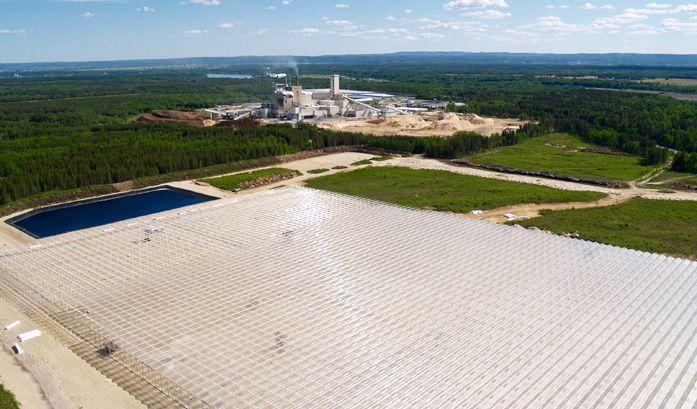
Crews have broken ground on a major cleantech project on the north shore of the St. Lawrence River in eastern Quebec.
The project, known officially as AE Côte-Nord Canada Bioenergy Inc., will cost $103.9 million to build and is expected to come online by the end of next year. Once completed, the Cote-Nord project is expected to produce approximately 40 million litres of biocrude using 65,000 dry tonnes of forestry byproducts from Quebec every year.
The Canadian and provincial governments have agreed to cover the majority of the construction costs. The feds will invest $44.5 million in the project through Sustainable Development Technology Canada (SDTC) and Natural Resources Canada (NRC), while Quebec plans to contribute $32 million. Meanwhile, the three private sector companies collaborating on the project – Ensyn Bioenergy Canada, Arbec Forest Products and Rémabec Group – will invest $27.4-million.
The Cote-Nord plant takes advantage of a made-in-Canada technology pioneered by Robert Graham and Barry Freel at the University of Western Ontario in the 1980s. Biomass firm Ensyn Corp., which will own a 50 per cent stake in the new biocrude plant, holds the rights to the rapid thermal processing (RTP) technology along with its joint venture partner, U.S. engineering conglomerate Honeywell International Inc.
In use for more than 25 years, including at a smaller-scale facility in Renfrew, Ont., the process uses hot flowing sand to fragment biomass into vapours, gases and char. The vapours are rapidly cooled and recovered as light biocrude, while the heated gas and char are recirculated and used to reheat the sand, continually fueling the process.
Norske Skog has been granted NOK 6.5 million from Innovation Norway for two projects – the further development of microfibrillated cellulose (MFC) and the development of fibreboard.
Innovation Norway has already funded a pre-built pilot plant for MFC-production at Saugbrugs, which will open later this year. This plant has a capacity of about 1 ton per day.
“We are very proud to achieve the significant milestone of a first commercial agreement for the use of our technology alongside first-class partners. This will enable us to demonstrate the breakthrough combination of our enzymatic carbon capture process in low cost, small footprint RPB (high-intensity gas liquid rotating packed bed mass transfer technology) equipment,” stated Evan Price, president and CEO of CO2 Solutions.
As announced on March 4, 2016, and subject to obtaining total project funding commitments, Sustainable Development Technology Canada will provide $2.4 million towards the project in the form of a nonrefundable grant. Resolute and Serres Toundra will make in-kind contributions valued at $0.3 million and $0.1 million, respectively.
CO2 Solutions is awaiting responses from potential public and private partners to complete the financing for the project.
The main purpose of the MFC-project is to develop MFC from thermomechanical pulp (TMP).
Norske Skog expects that the microfibrillated cellulose (MFC) will enhance paper-based products. In addition, the company says, MFC can be developed as a replacement for plastic products, as well as a thickening substance in various products, such as paint.
“If we succeed in producing MFC with this technology and use it in our paper production, this could reduce our costs and make us more competitive in the future. At the same time, the MFC competence will be useful for the entire group,” says Sven Ombudstvedt, president and CEO of Norske Skog.
According to Norske Skog, research and production of MFC has so far been based on chemical cellulose pulp (sulphate and sulphite pulp). Only a handful larger production facilities exist. Production of MFC from thermomechanical pulp is entirely new.




Switch to more stable, longer lasting Busan® 1215 from Buckman. You’ll see significant improvements in runnability and speed with fewer boilouts and washups and lower chemistry costs. And that’s just the beginning. Busan 1215 can also help you:
REDUCE ODOR caused by volatile fatty acids and sulfate-reducing bacteria.
INCREASE SAFETY with proprietary feed equipment that provides leak detection, built-in separation of active ingredients, auto flushing and more.
IMPROVE PAPER QUALITY with fewer holes and sheet defects and reduced off-grade production.
PROTECT THE ENVIRONMENT by reducing the potential toxicity of your mill’s effluent.
Let Busan 1215 protect your equipment, your people, the environment and the bottom line. Contact your Buckman representative or visit buckman.com, and see just how easy it is to upgrade your deposit control program.