Up with performance, down with costs! 360°Rolls is Valmet’s new approach to board and paper machine rolls and their environment, addressing your mill’s main business drivers. It means deep understanding of your production and maintenance processes and the effect of different factors, such as rolls and roll maintenance, roll covers and fabrics, showers and doctor blades. The papermaking process functions at its best only when all factors related to rolls perform seamlessly together. Learn more at valmet.com
PULP PAPER &
CANADA
Port Hawkesbury Paper and Evonik
Canadian
Alberta-Pacific, Weyerhaeuser and Resolute Forest Products have the best records among participants in the Safest Mill in Canada contest. See the full list of results here.
Canada’s pulp and paper industry gathered in Montreal in February to learn about business trends, new technology and developments in biorefining.
Here’s what to expect from the diverse program of TAPPI’s annual conference and exhibition.
A
Consumer insights about paper
Inevitably, after a major event like PaperWeek Canada, where I’ve chatted with readers and been bombarded with reams of information, I have many disparate ideas that I want to pass on. So in honor of the conference tradition, let’s structure this like a presentation.
Today, I will be discuss getting back to basics with bleaching and Carman Allison’s insights regarding consumer packaged goods.
Someone involved with the bleaching sector in Canada remarked to me that there is a cohort of young engineers in mills now who have little experience and need documentation on “the basics.” One form of documentation that can educate people new to this industry is technical papers. Please do share the knowledge from our mills, even knowledge that seems basic, by encouraging staff to write or participate in the development of technical papers.
Cindy Macdonald Editor
Carman Allison is vice-president, consumer insights, with Nielsen, a consumer research firm. His keynote presentation at PaperWeek Canada was both more timely and more focused on Canada than most presentations I’ve seen on the subject of market trends. Specifically on the subject of paper goods, Allison said the dollar value of sales of tissue and towel sold in Canada in 2015 remained essentially flat. There was 9 per cent growth in the sale of paper waste bags.
The thing about paper products, said Allison, is that promotions don’t get shoppers to consume more of the product.
Looking at where people shop for paper products, he noted some changes in recent years. In 2010, grocery stores received 49.9 per cent of the “share of wallet” for paper products, while warehouse stores (like Costco) received 15.7 per cent. By 2015 there had been a shift, with grocery stores losing 3.2 per cent of that share, and warehouse stores gaining 5 per cent. Mass merchandise stores lost 2.7 per cent in that same period.
While we know that ecommerce has been a boon for the paper packaging sector, the shift from traditional to digital retail only accounts for about 2 per cent of the sales of consumer packaged goods. Canadians are not turning to ecommerce for their food shopping, Allison commented.
What categories of retail are growing? Based on data gathered in the 52 weeks ending in September 2015, Allison said online shopping grew 21 per cent; dollar stores 10 per cent; pet specialty stores 9 per cent; and warehouse stores 8 per cent. Ethnic grocery, general merchandise, drug, and convenience and gas categories all grew 4 per cent.
A final insight from Allison: millennials will soon become the largest group of consumers, and they like prepared foods. Paper products have a role to play in this category. PPC
Editor
CINDY MACDONALD
905-713-4338 cindy@pulpandpapercanada.com
Publisher JIM BUSSIERE 416-442-5600 ext. 3606 jim@pulpandpapercanada.com
National Accounts Manager LAURA GOODWIN 289-928-8543 lgoodwin@annexweb.com
PRODUCTION
Media Designer EMILY SUN esun@annexweb.com
News and Press Releases media@pulpandpapercanada.com
President and CEO
ANNEX BUSINESS MEDIA
MIKE FREDERICKS
Group Publisher/Director of Content and Engagement
SCOTT JAMIESON
519-429-5180 sjamieson@annexweb.co
Account Coordinator
TRACEY HANSON
thanson@annexbizmedia.com
Circulation Manager
BEATA OLECHNOWICZ bolechnowicz@annexbizmedia.com
PULP & PAPER CANADA (ISSN 0316-4004) is published by Annex Business Media 105 Donly Drive South, Simcoe, ON, N3Y 4N5
Canada $55.00 per year; $88.00 for 2 years. Outside Canada (US) US$101.95 per year; (foreign) US$110.00.
From time to time, we make our subscription list available to select companies and organizations whose product or service may interest you. If you prefer not to receive this information, please contact our circulation department in any of the four ways listed above.
The editors have made every reasonable effort to provide accurate and authoritative information but they assume no liability for the accuracy or completeness of the text or its fitness for any particular purpose.
Sustaining member, Pulp and Paper Technical Association of Canada; Member, Alliance for Audited Media.
“We acknowledge the [financial] support of the Government of Canada.”
• Digital Revolution – Mill of the Future
• TAPPI Young Professionals Program
• Tutorial Sessions
• Women’s Leadership Panel
• OpEx Maintenance and Reliability
Kruger Packaging chooses Valmet and Kadant for PM rebuild at Trois-Rivières
Valmet will modernize a paper machine (PM10) at the Kruger paper mill in Trois-Rivières, Que., as part of a project to convert the newsprint machine to produce containerboard. PM10 will be rebuilt using advanced containerboard manufacturing and automation technology to produce 360,000 tonnes per year of 100 per cent recycled lightweight and high-strength linerboard. The rebuilt production line will start up in 2017.
Kadant Black Clawson will contribute the recycled fibre processing line to Kruger’s machine conversion project. Delivery of the OCC line and related equipment from Kadant is expected to be made in the second half of 2016.
The modernization project is expected to generate significant growth opportunities for Kruger.
PM 10 is approximately 8.4 metres wide. It will be fully modernized from headbox to winder to produce linerboard with industry-leading high strength-to-basis weight properties, and with sheet formation and surface characteristics suitable for highquality graphic printing for corrugated box plants.
In addition to the machinery improvements, the delivery will include a Valmet DNA automation system with remote servicing capabilities for machine and process control as well as MD/CD controls. Valmet will deliver also a Valmet IQ Dilution Profiler that contributes to improved sheet quality and minimized variability. A Valmet Pulp Analyzer will provide fast and precise online updates of key fibre and papermaking furnish properties.
“Valmet is one of the few suppliers who can design, manage and deliver this kind of vast grade conversion project. Additionally, Valmet’s pilot plant played a substantial role since we could demonstrate the technologies to the customer in real life conditions,” says Mike Gray, Valmet’s area vice-president in North America.
The new OCC line will have a capacity of 1,150 bone-dry metric tons per day. Kadant says it will feature the latest technology for the production of recycled corrugated container board, enabling the mill to operate with low energy consumption and high capacity. The system will include the Hydrapulper® low consistency continuous pulper, the Hydraflow continuous detrasher, ragger and ragger tail cutter, trashwell, high density cleaners, and a coarse screening system that features the highcapacity, high-efficiency V-MAX® screen cylinder, among other related equipment.
“Our growing number of machine conversion projects – those that shift a machine’s production from declining graphics paper grades to containerboard used for packaging – is encouraging as customers continue to recognize Kadant products and technologies as highly reliable in demanding applications, such as the processing of recycled fibre,” said Peter Flynn, president of Kadant Black Clawson.
The value of the Valmet order has not been disclosed, but the company notes that the value of paper machine rebuilds depends on the scope of the delivery, and this kind of rebuild is typically valued around EUR$30 million.
Kruger Packaging is a Canadian manufacturer of containerboard and packaging products made from recycled fibres. The company operates one containerboard mill in Montreal.
Northern Pulp settles water dispute, withdraws Supreme Court appeal
Northern Pulp Nova Scotia has notified the Supreme Court of Nova Scotia of its withdrawal of the appeal of its Industrial Approval (IA). This withdrawal is a result of the Nova Scotia Minister of Environment’s decision on outstanding items within Northern Pulp’s IA for the operation of the Pictou County pulp mill.
“There is no benefit to being involved in a lengthy court process. Working together to ensure the best environmental protection possible, while maintaining the long term stability and profitability of the mill, is the best scenario for Northern Pulp, our suppliers and our employees and their families,” explained Bruce Chapman, Northern Pulp’s general manager.
The IA issued by the provincial government almost a year ago was appealed by the mill, based on some outstanding items related to the mill’s water use.
According to the decision announced on Feb. 8, Northern Pulp must achieve a maximum daily average water consumption rate of 92,310 cubic metres by Jan. 30, 2020. Calculated on an annual average, the mill must not exceed 80,000 cubic metres per day by Jan. 30, 2018 and 70,000 cubic metres per day by Jan. 30, 2020.
Prototype paper made from marijuana stalks
A company focused on the recycling and repurposing of cannabis bio-waste has completed its first prototype paper product created from 100 per cent recycled marijuana stalks. Restalk says it has engineered a sustainable and tree-free paper product.
“Only recently has there been any attention focused on the byproducts caused from the cultivation of medical and recreational marijuana,” says Restalk CEO and co-founder Lucas Hildebrand. “We have successfully developed a supply chain of sustainable farmers, collected several tons of material and have begun the recycling process.”
“Our paper prototype is a great start, but we are really just scratching the surface. There is a real viability for our material to be integrated across several sectors, whether it be in the form of composites, bio-plastics, textiles, or even 3D printing,” he continues.
Restalk recycles parts of the plant which contain marginal levels of psychoactive properties. Through the recycling process any subsequent THC compounds are removed, according to the company, making the material federally legal to possess and handle, as per the Marijuana Tax Act of 1937.
People…
• Derek Nighbor is the new CEO of the Forest Products Association of Canada (FPAC). Nighbor was most recently senior vice-president of Food & Consumer Products of Canada. Paul Lansbergen, who has been acting CEO at FPAC, will remain a part of the association’s management team.
• Ivan Pikulik is the 2016 recipient of the Gunnar Nicholson Gold Medal Award, TAPPI has announced. The award will be presented during PaperCon. Pikulik is owner of IPConsulting in Montreal, and led the papermaking program at FPInnovations (formerly Paprican) for 28 years.
• Richard Berry, vice-president and chief technology officer at CelluForce, has joined the board of directors of TAPPI for a three-year term, beginning in 2016.
• Jason Burlage has been appointed president of TerraSource Global, a provider of advanced material handling and size reduction solutions.
Resolute and FSC tell two different stories
Citing unwillingness on the part of Resolute Forest Products to be involved in mediation efforts to resolve its suspended Canadian FSC certificates, the Forest Stewardship Council (FSC) announced that it has abandoned its efforts to engage Resolute in a mediation process.
In response, Resolute stated that it has not been “unwilling”; it has expressed legitimate concerns in good faith that have not been addressed.
“This is wrong,” said Resolute’s Seth Kursman, vice-president of corporate communications, sustainability and government affairs. “On Dec. 18, Resolute stated that ‘we would certainly support an equitable consultative mediation process.’ We also stated that ‘the provincial governments of Quebec and Ontario would be the only appropriate overseers of a mediation process. They are the stewards of public forests.’ Instead of recognizing this fact, why does FSC choose to misconstrue the facts?”
Kursman continued to state that the mediation process that FSC proposed affects numerous forest products companies, not just Resolute.
“Others have expressed concerns, and a number of certificates have been terminated or suspended,” he said. “In fact, FSC suspensions and terminations in Canada currently total 13.8 million hectares. And yet the focus of FSC – like the focus of Greenpeace – has been entirely on Resolute.”
In November 2015, FSC proposed a mediation process to Resolute to help the reinstatement of its suspended FSC certificates in Canada.
“During a meeting with Resolute’s CEO, there were no signs that Resolute is willing to engage in efforts to resolve the problems they pointed out so eloquently. This confirms the consistent, negative signals we are receiving from Resolute, and for this reason, FSC is abandoning the idea of a mediation process involving Resolute Forest Products,” said Kim Carstensen, director general of FSC, in February 2016.
Egg carton manufacturer expanding to the U.S.
Having boosted the utilization of its Canada egg carton manufacturing plant, Hartmann now is planning to invest US$30 million to establish a new facility in the U.S. Midwest. Hartmann produces egg cartons in several South American and European locations, and at Brantford, Ont.
“Our current activities in North America have contributed significantly to Hartmann’s growth and profitability in recent years, and with the new factory in the U.S. we want to ensure a continuation of the positive development,” says CEO Ulrik Kolding Hartvig.
The U.S. plant will produce molded-fibre egg packaging. It is expected to be operational in early 2017.
Cognex vision systems incorporated into Ametek
The Surface Inspection Systems Division (SISD) of Cognex Corp. was recently acquired by Ametek Inc. for approximately US$160 million.
“SISD’s proprietary real-time image processing technology expands our capabilities in the non-destructive process inspection market. In addition, SISD will be able to leverage AMETEK’s complementary technology and products within its vision systems,” said Frank S. Hermance, Ametek chairman and CEO.
SISD develops and manufactures software-enabled vision systems used to inspect surfaces of continuously processed materials for flaws and defects.
NOTICE OF APPOINTMENT
Cascades is pleased to announce that Mr. Charles Malo has been appointed President and Chief Operating Officer of Norampac, a division of Cascades.
After earning a Bachelor of Business Administration (BBA) degree from the Université du Québec à Montréal (UQAM), Charles Malo began his career as a controller at Etcan, a division of Cascades, in 1990. He then joined the Norampac group when it was created in 1997, in the corrugated cardboard business line. Over the years, he became Director of Administration; Regional General Manager, Operations, for Central Canada; and, in 2001, Vice-President and Chief Operating Officer, Packaging. From April 2015 to January 2016, Charles Malo served as Chief Operating Officer for Norampac, overseeing not only transformation operations, but also the production of containerboard.
This appointment makes him the third President of Norampac, succeeding Alain Lemaire and Marc-André Dépin. Mr. Malo is well known in the industry for his knowledge and leadership. He is an active member of boards of directors for various associations, companies and non-profit organizations, including that of the Fondation Hôpital Pierre-Boucher.
in 1964, Cascades
MALO
Employee dies in roll-over at Catalyst’s Crofton mill
An industrial vehicle roll-over on Jan. 27 at Catalyst Paper’s Crofton, B.C. mill resulted in the death of an employee.
A local newspaper, the Victoria TimesColonist, said a man in his 60s was killed when the tractor he was driving rolled over near the entrance to the mill.
“We are saddened by this tragic incident,” says Joe Nemeth, president and CEO. “We are doing everything possible to support the investigation.”
Nemeth extended sympathies to the family of the deceased.
The Crofton mill produces newsprint and NBSK pulp, and has about 570 employees. The incident happened near the hog fuel pile sometime in the evening of Jan. 27.
WorkSafeBC will lead the investigation, supported by mill personnel.
Lawsuit filed against Catalyst Paper wants Crofton shut down
Catalyst Paper is being sued by the Halalt First Nation and its business partners, alleging trespassing on the part of Catalyst’s Crofton mill and breach of confidentiality. The company denies the allegations contained in both claims.
The first claim was filed by the Halalt and its members, alleging Catalyst has illegally trespassed on (and caused damages to) the Halalt’s asserted territories and fisheries resources through the operation of Catalyst’s Crofton Mill, which has been in operation since 1957.
The Halalt is seeking an interim and permanent injunction restraining Catalyst from conducting its operations at the Crofton Mill that interfere with the Halalt’s claimed riparian, water and land rights and is also seeking approximately $2 billion in damages.
The second claim was filed jointly by the Halalt, Sunvault Energy Inc. and Aboriginal Power Corp., alleging that Catalyst disclosed certain confidential information pertaining to a proposed anaerobic digester facility in breach of a confidentiality agreement. The plaintiffs are seeking, among other things, approximately $100 million in damages from Catalyst and a permanent injunction restraining Catalyst from constructing, owning or operating an anaerobic digester facility.
Research funding for Lakehead supports pulp and paper processing
A five-year Industrial Research Chair position in Green Chemicals and Processes is being created at Lakehead University in Thunder Bay, Ont., with an investment of more than $814,000 through the province’s Northern Ontario Heritage Fund Corporation (NOHFC). Research will focus on ways for the pulp and paper and mineral processing industries to reduce their environmental impacts.
The new research position will be supported by 16 new jobs.
“Our government’s contribution to research and development at Lakehead University will not only assist the industry in developing new ways to protect the environment but will also result in job creation,” commented Bill Mauro, MPP for Thunder Bay-Atikokan.
Fluff pulp forecast to achieve 3.6 per cent growth
Large hygiene markets and fast-growing nonwovens will drive global growth for fluff pulp, according to a new report from Smithers Pira – The Future of Fluff Pulp to 2020.
Global demand for fluff pulp was 5.4 million air dried tonnes (ADMT) in 2015, up from 4.7 million ADMT in 2010. Projected demand in 2020 is 6.5 million ADMT for a projected annual growth of 3.6 per cent by 2020.
“Fluff pulp is a very desirable pulp product, with production costs lower than for dissolving pulp, and prices higher than for papermaking grades,” said Phillip Mango, author of the report.
“The outlook for fluff pulp pricing is that it will not vary as much as it has in the past and list price will stay high while actual discounted prices slowly drop from 2015 through 2020. This will make fluff pulp even more attractive versus other fibres.”
The competitive landscape for fluff pulp is dominated by large pulp and paper companies located in North America, thanks to the optimal growing conditions in this region. The four largest fluff pulp producers are Georgia-Pacific, Weyerhaeuser, International Paper, and Domtar.
Irving Tissue fined $50,000 after worker injured
Irving Tissue Corp. pleaded guilty and has been fined $50,000 after a worker suffered an injury while performing maintenance on a machine that produces bath tissue.
The incident took place at the company’s paper production facility on Weston Road in Toronto on July 18, 2014.
According to the Ministry of Labour, the worker stopped the machine and changed the perforating blades. The worker noted that dust had accumulated under the anvil heads of the machine. The worker was using one hand to remove dust
From left, Lakehead president Dr. Brian Stevenson; Dr. Sam Salem, assistant professor in civil engineering; Dr. Andrew Dean, vice-president, research and innovation; Dr. Pedram Fatehi, associate professor in chemical engineering; the Honourable Michael Gravelle; and the Honourable Bill Mauro participated in the funding announcement.
from under one of the anvil heads when it came down. As a result, the worker suffered injuries to the hand.
A Ministry of Labour investigation determined that at the time of the incident the anvil head was not blocked to prevent its movement while maintenance work was being performed, and that the cleaning and maintenance procedures for the machine did not include the use of blocks.
Malo takes over top spot at Norampac
Marc-André Dépin is stepping down as president and CEO of the Norampac
Group, a subsidiary of Cascades. Charles Malo succeeds him as president and chief operating officer.
Mario Plourde, president and CEO of Cascades, and the company founders, Bernard, Laurent and Alain Lemaire, paid Dépin tribute: “We would like to express our admiration for the exceptional work carried out by Marc-André at the head of Norampac. It is in large part thanks to him that the group has grown to be a leader in the Canadian and American containerboard industry. We also owe him a great debt of gratitude for the work he accomplished on the Greenpac project, the most important in the history of Cascades.”
Dépin will act as a strategic advisor for the company.
They noted that Malo “has the energy, experience and vision necessary to take on his new responsibilities successfully.”
Charles Malo joined Norampac group in 1997, as director of administration of the corrugated board sector. He has progressed through various roles with the company, holding the position of chief operating officer of Norampac since April 2015.
Briefly….
• The 2015 State of Canada’s Forests report is now available from Natural Resources Canada as a PDF download at: http://www.nrcan.gc.ca/ forests/report/16496
• Weyerhaeuser Co. has completed its previously-announced merger with Plum Creek Timber Co. The combined company owns more than 13 million acres of timberlands and operates 38 wood products manufacturing facilities. The combined company retains the Weyerhaeuser name.
• Canfor Corp. has been named one of B.C.’s top employers for 2016. According to the company, Canfor was selected for “the support we provide for life after work and retirement planning, and for our commitment to lifelong learning through internships, in-house apprenticeships, mentoring, subsidies for professional accreditation and other educational opportunities.”
The forest sector – A growing clean tech industry
By Paul Lansbergen, vice-president, forest products association of canada
Manyurban Canadians may not think of clean tech and the forest sector in the same breath – they may still have the image of dirty and dangerous work in the woods and belching smoke stacks at the mills. That view is outdated. With modern high tech machinery and drones working in the forests, and dramatic cuts to emissions at computerized mill sites, the sector has become greener and cleaner.
So, when the new Liberal federal government talks about clean tech and modern-day innovation, it should note the considerable contribution of the forest products industry.
The sector is committed to being “clean,” whether through sustainable forest management, clean air and clean water, or the products made from a renew-
able resource. We have invested heavily in technology to improve our resource utilization; to make us more energy efficient; generate more renewable power –some mills are net exporters of power and reduce our overall environmental footprint. Some of this technology is mechanized, some is computerized, but much, if not all, can be considered clean.
Did you know, for example, that the industry has eliminated noxious emissions such as dioxins, and that pulp and paper mills have cut greenhouse gas emissions by an astounding 66 per cent since 1990? Did you know that the industry has been in the forefront of water treatment well in advance of many municipalities? Did you know that Canada’s forest sector has world-leading environmental practices? You don’t have to believe FPAC – a survey of international customers found that Can-
OPINION
ada’s forest products industry had the best environmental reputation in the world.
Now we are taking it to a whole new level. More and more innovative products are being produced from wood fibre, from car parts to clothing to cosmetics and green chemicals, with Canadian companies even exploring the vast potential of wood fibre at the nano level.
All these products store carbon and can replace materials with a heavier carbon footprint. That is especially true of new engineered mass timber products that have paved the way to taller wood frame buildings.
The new Liberal government wants to push clean tech. Canada’s forest sector has already embraced the concept and is committed to continuous improvement, ready to help the government advance its goals for the benefit of all Canadians. PPC
Charles Malo and Mario Plourde at the inauguration of Norampac’s Greenpac facility in 2015.
Greener microwavable food packaging could soon be on your grocery list
By Jennifer Ellson, senior communications specialist, fpinnovations
FFroma research project on printed electronics focusing on printing conductive inks on cellulose-based substrates, FPInnovations’ Paper, Packaging and Consumer Products group has developed an application for paper packaging using printed susceptors.
Aimed at improving cooking performance in a microwave oven, susceptors are heating components that react to microwaves and control the heating rate to make food such as popcorn and frozen pizza crispy. Today’s commercial susceptors are made of metallized plastic films, but exploring options that do not rely on petroleumbased plastic or metal was becoming attractive, particularly with the increased concern about environment and sustainability.
“We based our approach on the fact that ink can be printed on paper to modify the paper properties,” explains Lyne Cormier, research leader for the project. Therefore, the team focused on developing a susceptor using conductive carbon ink on cellulose-based substrates, both of
which are compostable components. “The printed susceptor concept is not new as it has been patented more than 20 years ago. However, it was not commercialized due to performance issues,” Cormier said.
Initial experiments were performed in FPInnovations’ laboratories, to identify an ink formulation and the printing patterns that would match or exceed the performance of existing susceptors. The laboratory work led to a patent application and a product prototype for popcorn bags. “We then had to confirm whether or not satisfactory results on a few samples were the same on a larger scale,” Cormier said. The technology was therefore successfully tested on a commercial press at the Printability and Graphic Communications Institute (ICI) in Montreal. The large number of samples produced enabled us to do a full evaluation that confirmed product uniformity and consistent performance. The team has also initiated testing to ensure the printed susceptor meets the FDA requirements, which is very important for food packaging.
FPInnovations will move on with the commercial demonstrations in converting plants, and is seeking research alliance partnerships. The process will be used to validate the reduction in production costs and other benefits compared to manufacturing traditional susceptors.
FPInnovations’ paper-based approach, contrary to susceptors usually made of metal or petroleum-based plastic, is a significant step toward a fully-compostable product, while providing the paper sector with new opportunities. The patentpending technology also provides a costeffective and potentially simpler alternative to existing susceptors as they can be added during printing.
Active food packaging is a steadily growing segment, with a market expected to reach $285 million by 2020 in the United States alone. The demand for such products creates new market opportunities for paper and board producers and FPInnovations is working with its members and their customers/partners to grab a sizable market share. PPC
HOW TO KEEP CONTRACTORS SAFE
Audits, training and pairing can be used to keep contractors safe while on the mill site.
By Carroll McCormick
With scores of contractors on site on any given day, and more than 1,000 of them in some mills during shutdowns, pulp and paper companies have developed elaborate procedures and programs to reduce the likelihood of injury to these outside workers.
These include mill site orientations, job-specific safety procedures, hazard assessments, double-layered lockouts, audits and, when there are near misses or incidents, investigations and recommendations for how to reduce the chance of a repeat incident.
In recent years, several contractor fatalities have occurred at Canadian mills. An employee of a contractor working at West Fraser’s Hinton kraft pulp mill died on Nov. 23, 2015, when he became tangled in a piece of equipment. Almost one year earlier, a contract truck driver who delivered wood chips to Catalyst Paper’s Crofton mill was found dead in a chip silo. And in 2011, a blow tank at Terrace Bay Pulp exploded while being welded by workers
employed by a contractor. The explosion killed one employee of the contractor and injured two others.
Just how much more at risk contractors may be than regular mill employees is not easy to answer. Data on occupational injuries does not necessarily differentiate between employees and contractors working on site.
Some activities are more risky
Risk varies within the contractor population. Take the workers who do highpressure cleaning. “Usually they work in very confined spaces and tight spots. Their job is usually to clear lines. They work with high pressure, such as 15,000 psi water,” says Eric Ashby, general manager at Domtar Windsor Mill.
“We need to make sure they follow proper procedures. In all the mills, the major incidents I had with contractors were with high-pressure cleaning.”
Boilermakers working on pressure vessels are at greater risk, as are hole watchers, who keep track of those entering and leaving confined spaces. “I have seen cases where they do not know all of the risks.
There is a tendency to focus mostly on the contractors, but not on the hole watchers,” Ashby says.
Ashby adds workers using rigging to his higher-risk category. “We see a lot of incidents related to rigging.” Working at heights and with electrical equipment are two more activities with life-altering consequences when there are incidents.
Outside workers don’t know all the hazards
“Multiple power sources are an additional level of complication in mills. Hydraulics, gravity … you can’t expect an outside contractor to know what all those power sources are,” says Gord Leffley, duty consultant at Workplace Safety and Prevention Services.
Leffley also speaks of possible conflicts between the contractor’s activities and the work the mill is doing. “The need for coordinating the activities of the contractor and the host is critical.”
Contractors may be paired with mill workers to help keep them safe. “We strive to do this when we bring contractors in for short term outage or emergency work
Safest Mill in Canada Contest
2015 RESULTS
“C”
Wayagamack Inc., Trois-Rivières, QC
as much as possible,” says Andy Coulas, planning and contract maintenance lead technician with Daishowa-Marubeni’s Peace River Pulp Division (DMI). As well, he adds, “All contractors are supplied a mill site map, and out of bounds areas or special PPE requirements are posted throughout the mill.”
Mills give contractors layered training from the general to the specific; e.g., mill site orientations for everyone, general training in specialty areas such as confined spaces, lockouts and working at heights, and training tailored to individual jobs. Hazard assessments, safe work permits and specific procedures add depth and breadth to contractors’ knowledge of the scene, and help them avoid injury.
“All contractors should receive a work scope for planned work before arriving at the site. This will include any specific procedures there are on the task [these procedures all include a risk assessment]. Once on site they are required to make contact with the DMI rep supervising the task. All contractors are required to complete a field level hazard assessment or pre-job hazard assessment and obtain a safe work permit before commencing work,” Coulas says. He explains that the safe work permit, which is issued by a qualified area operator, identifies local hazards.
Oversight is critical
Management oversight, even of highly experienced contractors, is important, Ashby says. “We review their processes and approach to safety. We review projects ahead of time. When you do better planning, you set yourself up for success. A lot comes down to [being proactive] before contractors start working.”
Mills may also list the equipment they expect contractors to wear, and tools they forbid; e.g., box cutters. “Mills have a responsibility to highlight these requirements within their safety induction; for example, the cutting tool policy at [Resolute Forest Products], authorized cut resistant gloves, chemical protective level 1.5 as per RFP chemical and hazardous material PPE policy,” says Dominic Leroux, safety and health manager of Resolute Forest Products.
Interestingly, Coulas notes that the most common safety errors he sees are not wearing the proper hand protection
or other PPE, such as safety glasses and hearing protection.
Since leading a horse to water is no guarantee that it will drink, safety audits are a big part of making sure everyone is working safely.
“Domtar supervisors will understand the specific risks associated with specific sites. There are a lot of audits: confined spaces, mobile equipment … We try to multiply the number of eyes so we can identify risks proactively,” Ashby says.
What else can be done to ensure that the contractor is making the best use of a mill’s safety procedures? “The best thing I can tell you is management oversight,” Ashby says. “This is the best barrier; for example, audits.”
“We have safety officers on site 24 hours a day, conducting regular inspections, tours and audits,” comments Paul Perrier, safety/loss control superintendent at DMI.
Oversight is important for dealing with the inevitable differences between some contractor cultures and a mill’s own.
Ashby notes that for a brand new contractor with its own culture, management oversight to make sure everything is followed is critical to building a relationship.
Speaking of the industry in general, Ashby observes that whether contractors are injured more than mill employees relates to their training and culture. “Small, family contractors tend to have less structure and not the level of training, and a higher tolerance for risk. Some [contractors] have a better culture than mill employees.”
In fact, Leffley says, safety should not just be mills worrying about contractors. Vigilance should flow in both directions. “I’ve had this discussion with many placement agencies: There is work out there that you don’t want, because of the risk to your staff. Contractors need to ask themselves the same question.”
With regard to contractor culture, Ashby relates this anecdote. “In one mill we … came to realize that a ‘true’ boilermaker has to wear his hardhat on backward. We had face shields for them, but
they were for hardhats turned the right way around. We had 11 eye injuries one day because of the gap between the face shields and the hard hats. Some guys left the site because they didn’t want to turn their hats the right way around.”
Layers of safety
Ensuring that contractors have met certain safety training standards before they come to the mill, such as pre-qualification standards through the Cognibox third party system, adds another layer of safety. “We have used the Cognibox system since 2014,” Leroux says. Within the software, “contractor safety incidents rates are assessed [against] the industry average.”
To work at Domtar Windsor, Ashby says, contractors have to be registered with Cognibox. “Cognibox has the task of making sure all the [contractors’] training certificates are up to date.”
At the end of the day, Ashby insists, “It is all about risk management. Identify the risk and put in the controls.” PPC
PAPERWEEK CANADA 2016
Canada’s pulp and paper industry gathered in Montreal to learn about business trends, new technology and developments in biorefining.
By Cindy Macdonald, editor
With PaperWeek
Canada and Biofor International taking place concurrently in Montreal and sharing some sessions, there continued to be a strong emphasis on bioproducts during the pulp and paper industry’s annual conference and trade show. The forward-looking emphasis on the bio-economy was balanced by targeted sessions on pulp markets, management, safety, maintenance, tissue and packaging.
PaperWeek Canada took place from Feb. 1-4 in Montreal, at the Fairmont Queen Elizabeth Hotel. Biofor International ran from Feb. 2-4, at the same venue. Both events are operated by PAPTAC, a Canadian pulp and paper association. News and insights from both events follows. For more technology-oriented coverage, see page 22.
Pulp supply getting ahead of demand
In the pulp market outlook session, the analysts were agreed in their forecast that an overcapacity situation in pulp is quickly approaching. Solie Kilpi of Pöyry noted that about 1.7 million tonnes of softwood capacity will be entering the market in the 2015-2018 period, while hardwood
capacity is expected to grow by 6.4 million tonnes in that period. So she predicts an overcapacity situation until the 2020s. This could lead to the exit of high-cost pulp producers, and may also lead to a declining trend for pulp prices.
Cascades becomes more focused and centralized
Suzanne Blanchet, senior vice-president, corporate development, outlined recent changes at Cascades, a Quebec-based manufacturer of tissue and packaging. The company has been trimmed to 11,000 employees and 90 units, from a high of more than 12,000 employees at 110 units.
Cascades’ management team has made a strategic decision to focus on packaging and tissue. In recent years the company has divested its Canadian boxboard assets and fine paper mills. Between 2011 and 2015, Cascades closed 15 plants and shed 6 assets. The focus now, said Blanchet, is on strengthening the company’s presence in Europe, continued cost reduction and an IT upgrade.
She noted that the company’s strategic plan is to modernize its core business, optimize capital allocation, and innovate. The Lemaire brothers, the founders of Cascades, were manufacturing-driven, and liked to buy equipment, Blanchet said. In contrast, the new CEO, Mario Plourde, has
more of a tendency to modernize.
Blanchet recounted how Cascades is in the midst of centralizing and standardizing its administration. The company is implementing SAP, which she said is a rigorous framework that has helped to put standardized procedures and processes in place. “Cascades was very decentralized,” said Blanchet. Now, the company has a centralized procurement plan and supply chain. “Shared services is a big plus,” she said, but it required a huge shift in company culture.
Domtar and West Fraser share bioproducts strategies
An executive panel that kicked off PaperWeek Canada and Biofor International reaffirms that Canadian companies are having success in the bio-economy. Speakers for the opening session were Robert Graham, CEO, Ensyn; Bruno Marcoccia, director of R&D, Domtar; Gurmindher Minhas, managing director, Performance BioFilaments; and Rod Albers, manager, energy and bioproduct development, West Fraser. They shared their strategies for choosing and implementing innovative technologies.
Domtar has a portfolio approach, said Marcoccia. The pulp and paper company’s strategy is to invest in a range of products and technologies, which have varying
risk profiles and varying time lines. “Our successes have more than justified the investments we’ve put into bio-refining projects,” Marcoccia concluded.
He said the company considers biorefining “as a potential third pillar of our business.”
Domtar’s strategy for the biorefining program invokes open innovation and engagement, the portfolio approach, risk recognition and mitigation, and focusing on the company’s competitive strengths. The platforms Domtar favors, said Marcoccia, are fibre and its derivatives; lignin and its derivatives; extractives and volatiles; and wood cellulosic derivatives (convertible sugars).
West Fraser, being primarily a wood products company, approaches the bioeconomy as a way to use residuals and a method to get the most value out of fibre, explained Rod Albers, manager, energy and bioproducts development. He said the company is seeking bolt-on technologies that complement its primary processes.
West Fraser has implemented several bioenergy projects using organic rankine cycle technology, is installing a lignin recovery system at the Hinton pulp mill, and is using biogas to generate green electricity at Slave Lake Pulp. Albers also said that the company is interested in activated carbon as an end-product because is it
“one of the few that can use our feedstocks and get value similar to the products we produce today.”
Albers noted that creating the right team of people is critical to success. West Fraser has chosen to dedicate certain people to the pursuit of bio-pathways. There is one individual at each of the company’s three pulp mills who manages bioproducts development. Also, “we have a visionary in our company that helps lead us along.”
One of the key drivers of the investigations into bioproducts is the fact that the company’s pulp mills are 40-60 years old, and the company is looking for a means to justify re-capitalizing them, Albers stated.
For West Fraser, he said, a bioproduct technology must be ecologically sustainable, meet the company’s business objectives, increase the value of the feedstock, have synergy with current operations, and be commercial or near-commercial.
He jokingly observed that the Canadian pulp and paper industry “has a long history of adopting technology that’s well advanced.”
Biomaterials entering the market
Celluforce is a few steps closer to bringing its nanocrystalline cellulose product to market, participants at PaperWeek Canada heard on Feb. 3. CEO Sebastien Corbeil shared a few lessons learned and described
a few near-commercial applications for this unique bio-based additive.
Corbeil recalled that when Celluforce was first trying to enter the market, there were about 100 applications that were thought to be suitable. The company has now weaned those down to six target markets.
One application in the adhesives market is already commercial, and Celluforce is expanding its customer base in this field, said Corbeil.
In the oil and gas market, Celluforce is working on five specific applications to do with rheology modification and drilling fluids. Corbeil said two applications will be ready for commercial trials this year.
For pulp and paper markets, Corbeil spoke of an application related to wet-end chemistry that will undergo commercial trials this year.
Among the less well-developed markets, the company is still pursing uses for NCC in cement, paints and coatings, and resins and composites.
Celluforce is not manufacturing currently, but expects to resume operations at the facility at Domtar’s Windsor, Que., mill in 2017. Corbeil says the company has enough material stockpiled for its current needs.
Parliamentary Secretary promises support
Parliamentary Secretary Kim Rudd, on behalf of the Honourable Jim Carr, Canada’s Minister of Natural Resources, met with forest sector stakeholders at PaperWeek Canada. She highlighted the government’s support for increasing the market for Canada’s sustainably produced, high-quality forest products.
“Our government has set some ambitious goals for climate change, market diversification, innovation and economic growth, and I believe the forest sector is uniquely positioned to help us deliver on these goals,” said Parliamentary Secretary Rudd. “The Government of Canada will continue to support Canada’s forest sector as it evolves to meet changing global demand by developing innovative, highvalue forest products.”
Several speakers during the course of PaperWeek and Biofor applauded Canada’s support for innovation and its funding tools for research and development.
Domtar’s Bruno Marcoccia said that
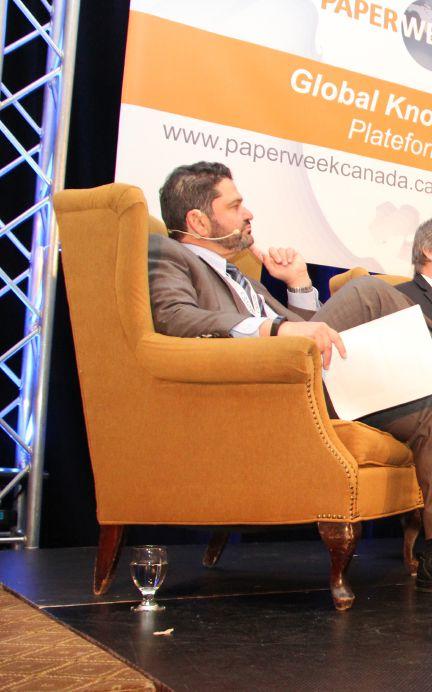
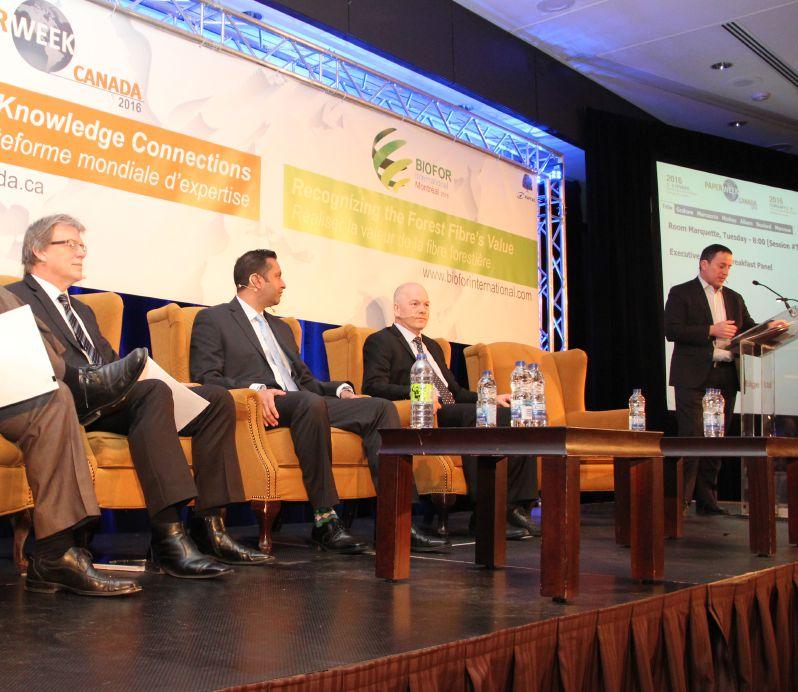
Speakers for the opening session of were, from the left, Bruno Marcoccia, Domtar; Robert Graham, Ensyn; Gurmindher Minhas, Performance BioFilaments; Rod Albers, West Fraser. At the podium is the moderator, Jason Linkewich of LinksEdge.
Domtar is committed to collaboration with Canadian partners and universities. He commended the quick, accessible, effective support of Canada’s innovation system. More than 75 per cent of Domtar’s research and development takes place in Canada, even though only 25 per cent of its manufacturing is done here.
Setting the stage for new technologies
In a session discussing first of their kind technologies, Jim Wearing of NORAM Engineering stressed that what’s need to launch a demonstration plant is a combination of the right client, the right funding and the right site.
“Select a site where technical and economic factors create a perfect storm,” said Wearing. Look for a situation that will offer multiple benefits, available infrastructure to reduce installation costs, and a company champion, he advised.
NORAM has been involved in industrial ramp-up of several new technologies for the pulp and paper sector. The company jointly developed, with FPInnovations, the LignoForce lignin recovery process and the industrial method for producing nanocrystalline cellulose used at the CelluForce demonstration plant.
For the lignin process, Wearing says capital cost studies were performed at several mills as the developers were seeking the ideal site for the demonstration of the technology. The ideal combination of factors was found at West Fraser, where the lignin can be used within the company as an adhesive for panel board.
Big data needs structure
Nicolas Mansuy of Natural Resources Canada told participants we have an explosion of data happening in the forest products industry, but lack the structure and integration to make the data valuable.
There is plenty of structured information about trees, soil, genetics and conservation areas in global and national databases, said Mansuy. But what’s missing is data from the supply chain, from on-board computers on harvesters and trucks, from CT scanners in sawmills.
“The data along the wood supply chain is abundant, but not structured, nor easily accessible at national or international levels relative to the environmental database,” reads Mansuy’s presentation. “Data integration is required in the forest sector where the volumes of digital data generated by automatic sensors are increasing exponentially.”
Mansuy suggested that integration could lead to multi-disciplinary forest decision-support systems. He said a new culture of data acquisition, integration and sharing is needed.
Lignin in polyurethane nears commercial status
Armand Langlois reported on the progress his company, Enerlab 2000, is making in the development of a polymerization process to incorporate lignin in polyurethane. Langlois said the benefits of incorporating lignin are: a reduced environmental footprint, more independence from petrochemical markets; and lower costs. Enerlab is developing a technology called isolignin. The first step, said Langlois, is to
condition the lignin (in terms of moisture content, particle size, purity), and then add it to the isocyanate. In the second step, the isocyanate reaction is initiated with either heat, a catalyst or a resin.
The technology was developed between 2011 and 2014, with the assistance of the National Research Council. A pilot line conducted demonstrations with lignin from four different sources: kraft pulping, organosolv, soda and lignosulfonate.
Langlois reports that the industrial process implementation in ongoing. Enerlab is installing a dryer, determining drying conditions, optimizing the polyurethane formulation, completing the characterization of the foam and working on the online addition of lignin. Langlois hopes to begin commercial production later this year.
He explained that bio-foams with up to 20 per cent lignin content have similar performance to conventional foams. The feasibility of these products has been shown on the pilot line, said Langlois, and there is lots of interest from the industry.
He commented that for his process, lignin must be available for $0.50 to $0.75/lb to achieve cost savings versus traditional polyurethane foam.
What’s the forecast?
PaperWeek Canada and Biofor International left participants with a good idea of what to watch for in the future. An oversupply of pulp and falling prices are likely. Commercial applications for lignin and nanocellulose are still just out of reach. And big data is making its way through the forest sector. PPC
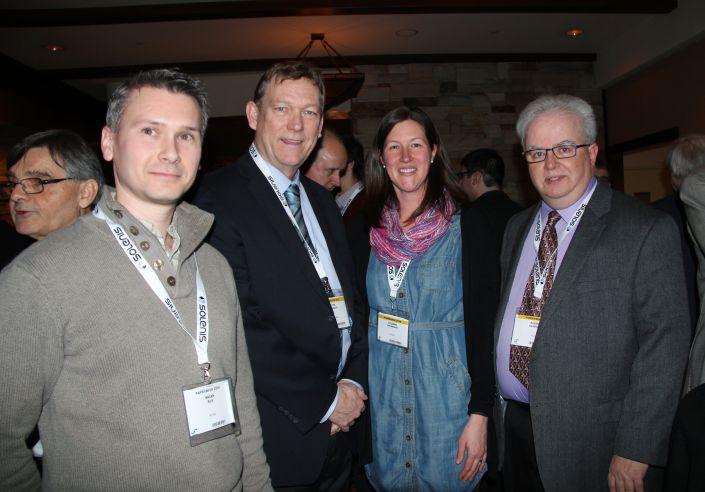
Left: Several representatives of J.D. Irving made the trek to Montreal.
Right: Parliamentary Secretary Kim Rudd met with forest sector representatives at PaperWeek Canada.
PACWEST CONFERENCE
TECHNOLO GY ”
2016 EXECUTIVE
PROGRAM Committee:
Kelly Parfitt - Canfor Pulp
Gord Start - West Fraser-Hinton Pulp
Steven Bull – Canfor
Surendra Singh – Alberta Newsprint
IBMP ORGANIZING Executive:
Scott Curry – CQ Strategy
Ajay Vashisht – Quadra Chemicals
Tim Jarvis – ERCO Worldwide
Drew Lyon - OVAL International
Mike Trivett – Valmet
AWARDS
* H.R. MacMillan Trophy for BEST MILL PAPER
* RUNNER-UP for full length paper (open to consultants and researchers)
* BEST SUPPLIER PAPER
* BEST NOVICE PAPER for first presentation by author
2015 HR MacMillan Trophy for BEST PAPER awarded to TEDDY TOWNSLEY with Program Chair KELLY PARFITT, Canfor Pulp
TECHNICAL SESSIONS
• Bioproducts and Energy
• Mechanical Pulping and Papermaking
• Process Control
• Kraft Pulping
• UBC Student Presentations
INDUSTRY PRESENTATIONS
• Emerging Technologies
• Human Performance Improvement
To network with peers, industry leaders and technical experts. Enhance professional development learning about new technologies, process improvements and what’s being showcased for the latest industry challenges.
We are also pleased to present a full Spousal Program
2016 CALL FOR PAPERS
For inclusion in the Program, abstracts must be received by March 15th 2016 with paper completion by MAY 23rd
Selection of papers is based on several criteria, including originality, technical merit and mill relevance
Time limit for presentations is 20 minutes with 5 minutes for Questions & Answers
ABSTRACTS
should be submitted to PACWEST 2016 Program Chair:
Gord Start , West Fraser-Hinton Pulp at Gord.Start@westfraser.com
For Registration and more information visit:
PROGRAM OUTLINE
WEDNESDAY, JUNE 8
I NDUSTRY MEETINGS:
* PAPTAC Councillors
* Mill Managers & Sr. Executives
* Maintenance Managers Round Table
* Energy Reduction Steering Committee
* Papermaking Technology Committee
* SHORT COURSES:
- Process Integration Workshop
- Bleach Plant Optimization
- Opportunities in Greenhouse Gas Management
* Trade Fair
THURSDAY, JUNE 9
* Conference Forum featuring leading Industry Managers & Analysts including:
* Bill Adams - Canfor Pulp
* Jean Hamel - FPInnovations
* James Olson – UBC
* Rod Albers - West Fraser
* Pulp Machine Superintendents RT
* Maintenance Managers RT
* 2 Technical Sessions
* Trade Fair
FRIDAY, JUNE 10
* 5K Fun Run
* Trade Fair
* Pulp Machine Superintendents RT
* Maintenance Managers RT
* 5 Technical Sessions/Panels
* Keynote Feature Luncheon Speaker:
Jesse Brown - “The Next Canada"
* Awards Dinner ( with entertainment)
SATURDAY, JUNE 11
* Annual Golf Tournament
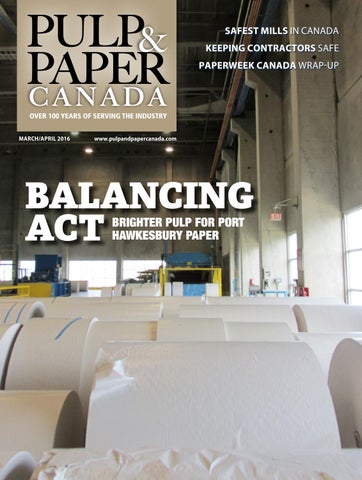
BALANCING
What could improve the bleaching process at Port Hawkesbury Paper without upsetting the other processes at the mill or paper qualities?
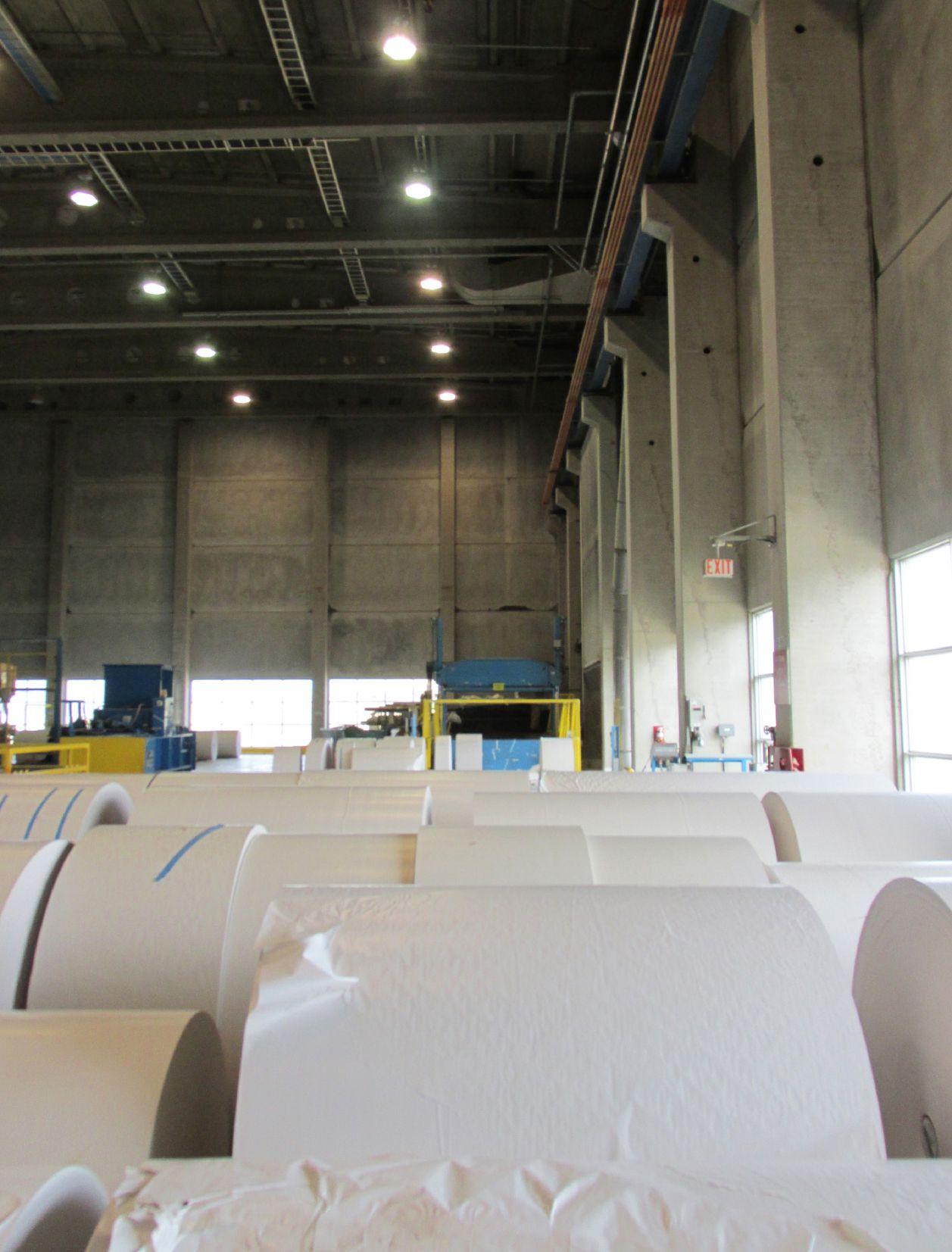
When new owners restarted the paper mill in Port Hawkesbury, N.S., in October 2012, they recognized that the mill needed better economics in order to be competitive. One cost-improvement initiative was to work with Evonik Canada to decrease the cost of pulp brightening.
Port Hawkesbury Paper is a modern thermomechanical pulp (TMP) mill, with a single stage of H2O2 to brighten the pulp, using conventional hydrogen peroxide bleaching chemistry. The mill produces supercalendered paper.
Bleaching became a target for cost reductions because it is “a huge cost to Port Hawkesbury Paper and [improvements] could be implemented at very low cost,” explains Les Urquhart, TMP day supervisor, Port Hawkesbury.
Evonik explored with the mill various alternatives for either decreasing cost or improving brightening efficiency.
Examine the possibilities
In a technical paper presented at PaperWeek Canada 2016, “Peroxide optimisation program: Port Hawkesbury Paper mill,” the authors describe the lab studies, mill trials and implementation of a solution which resulted in an average savings of about 3 kg of hydrogen peroxide per ADMT of thermomechanical pulp.
The paper was authored by Mark Frith, FPInnovations; Les Urquhart; Roy Kyte, sales manager – Canada East, Evonik Canada; and Dan Davies, applications manager, Evonik Canada. At the time of the project, Frith was TMP manager at Port Hawkesbury Paper.
Evonik undertook a lab study to evaluate the conditions used in the H2O2
By Cindy Macdonald, editor
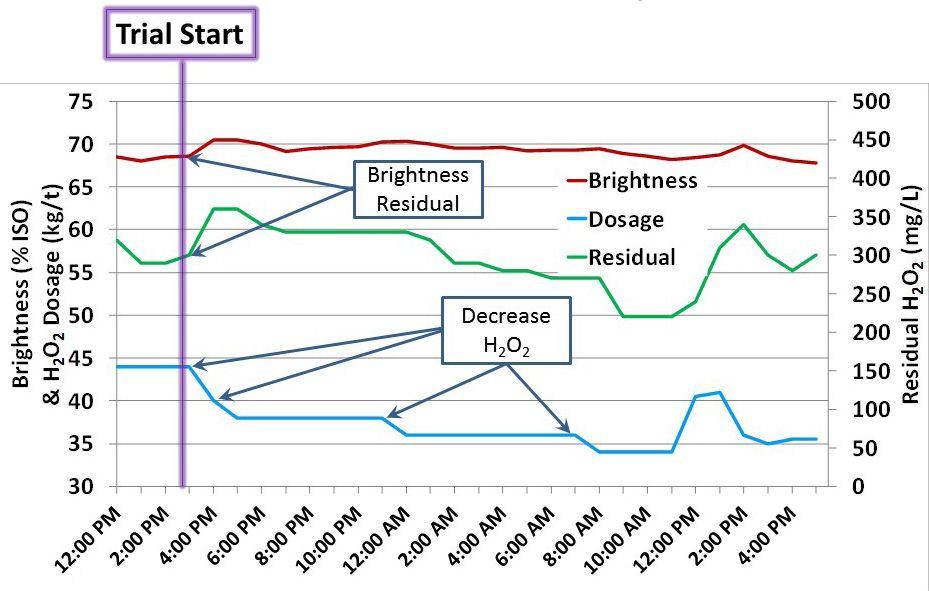
Mill trial results: Brightness and residual H2O2 both improved immediately. The H2O2 dosage was controlled manually, and was decreased several times by the operators. Toward the end of the graph, a new pulp stream was added so the H2O2 dosage was increased by the operators, but later lowered based on better-than-expected brightness response.
stage. Multiple factors were examined, including conditions, chemical dosages and additives.
The grade chosen for evaluation was produced under the following conditions: 3.5% H2O2, 2.4% NaOH, 1.2% silicate, 18% consistency, 80°C and 1 hour retention time, targeting 70% ISO brightness.
So many options
The study examined the optimum dosages of NaOH and silicate, temperature, chelation treatment, MgSO4 addition, retention time and use of an additive. Although the lab work indicates that many aspects of the brightening process could be tweaked, they have to be considered in context of the complex, inter-related processes of the mill.
“The lab study provided several promising avenues to pursue, but it is a long step from the lab to the mill,” the authors state. “So there was careful consideration for which variations should be tried, considering other effects in the mill.”
For example: “It would be possible to decrease the dosage of NaOH, while maintaining the brightness. However, this would represent a minor savings and could negatively influence other pulp properties,” the authors say.
Another example: Increasing the silicate dosage had a positive effect on both brightness and residual H2O2, which demonstrates potential savings for H2O2, but there were concerns with other factors, the authors note.
Chelation was considered a likely can-
ACT
didate for savings, and did end up being the first solution implemented by the mill. The authors report that an addition of 0.2 per cent DTPA to the brightening stage gave a brightness increase of about 1 per cent ISO over the control test. Increasing to 0.4 per cent DTPA gave an increase of 1.8 per cent brightness over the control.
The option considered to be most beneficial for Port Hawkesbury Paper was to move the addition point for the DTPA, instead of increasing the dosage. DTPA is normally added to the fibre line in advance of the cleaners and disc filters. In this case, it was felt that an addition point further downstream, closer to the bleach tower, might have some advantages.
From the lab to the mill
So a trial was undertaken in which DTPA was added at the MC#1 pump, immediately prior to the TMP unbleached tower. The advantages of this addition point are that the pulp consistency is higher, allowing for more effective chelation; there is less opportunity for the re-addition of metals; and there is an effective water removal step at the twin wire presses that will allow the removal of the chelated metals.
The effect of changing the DTPA addition point was immediate; the brightness and residual H2O2 both improved.
Based on the positive results of this trial, the mill has moved the addition point permanently. On-line and lab results have demonstrated an average savings of about 3 kg of hydrogen peroxide per tonne of TMP.
Other options for optimization are “not being followed up at this time,” says Dan Davies, Evonik. Davies explains that within the complex process reactions of a pulp mill, it is very difficult to change “just one thing.” There are generally unanticipated and unintended consequences.
Davies says Evonik will undertake an optimization project of this scale only every few years. The results generated by the lab work and mill trials will take years to investigate and implement at customer sites, he notes.
“We partner with our customers,” says Davies. “We want them to be the most efficient they possibly can be.”
The Port Hawkesbury optimization project took place over a span of about 12 months, Davies recalls. There were several months of data analysis and discussions with mill personnel, followed by a week of lab work, followed by 8-9 months of mill trials.
The change to the DTPA addition point was implemented permanently at the end of March 2014.
“We are constantly looking at trials, whether it’s chemicals or mechanical, working with our suppliers and our own team, being careful not to upset runnability but to actually improve and save costs at the same time in this challenging industry,” adds Les Urquhart. PPC
Creating business
opportunities
for
companies
that
see things differently.
on fpinnovations.ca Helping our members stay ahead of the pack!
FPInnovations is a world leader in the development of new products and new applications. We rely on a team of more than 500 innovators and experts to create new sciencebased solutions. We don’t just talk about innovation. We innovate.
Next generation technology towards smart and greener pulp and paper products.
Advanced bioproducts that contribute to every aspect of daily life.
Solutions that deliver worldclass innovation across the forest value chain.
PaperCon PREVIEW
TAPPI’s annual conference has a diverse program that cuts right to the heart of the challenges facing North American mills.
The 2016 PaperCon conference and exhibition may have a hard time topping last year’s centennial celebration, but the program this year is promising. TAPPI’s annual event takes place in Cincinnati, from May 15-18, and is expected to draw more than 1200 attendees.
PaperCon generally has excellent executive-level speakers providing an outlook for the industry and focusing on key trends. It also has good info for managers at the mill level, those who are grappling with operational challenges. This year there is a particular emphasis on the IT issues surrounding the mill of the future, and several sessions that touch on grade conversions.
PaperCon draws CEOs, mill managers, superintendents, scientists, process engineers and suppliers with a comprehensive technical program and a trade show. The 2016 theme is TAPPI’s Next Century: Meeting the Challenge of Change.
Big data and IoT in mills
The IT Mill of the Future session at PaperCon 2016 will help attendees get ahead of the curve on information technology issues. New IT systems, big data, cloud computing and the Internet of things (IOT) have revolutionized many industries – and pulp and paper is next.
Mike Harwood of Zellstoff Celgar in British Columbia is one of speakers in the session entitled “Industry 4.0 – Future IT of pulp and paper mill.” His presentation is: “IT to evolve as integral part of strategic business planning and mill operations.”
The session was organized by Timo Arra, Eurocon MOPSsys, who is also a frequent speaker at Canadian events. The objective of the session is to provide an outlook for the next industrial revolution – variously called smart manufacturing, Industrial Internet of Things or Industry 4.0 – on pulp and paper
mills’ information systems.
This session content will highlight an evolution roadmap for mill information systems that will comply with upcoming technology challenges.
Other presenters are Carl-Fredrik Hammarqvist, senior vice-president, supply chain management from Holmen Paper, and Christophe DesLandes who will speak on cloud computing for pulp and paper mills.
Speaking about the structures and applications that generate operational data and how this vast quantity of operational data, i.e. big data, can be managed to give mill personnel the comprehensive information they need to manage, report on and predict the performance of the mill
By Cindy Macdonald, editor
The State of the Industry session will feature information from Jon Rager, RISI; Clay Enos, Fisher International; and Joan Sahlgren, Paper & Packaging.
Considering a conversion?
On the papermaking side, grade conversions are a popular topic. Daniel Hedou of AstenJohnson is presenting “Reducing the Risks and Raising the ROI in Conversions of Groundwood and Freesheet Machines to Packaging,” and Martin Jauch of Voith is presenting a case study of a grade conversion from graphic to packaging paper. Another session groups several papers that address the challenges for mills converting to linerboard grades. Frank Cunnane of Cristini will discuss instrumen-
THE MILL OF THE FUTURE
SESSION
WILL HELP ATTENDEES GET AHEAD OF THE CURVE ON INFORMATION TECHNOLOGY ISSUES.
and its various units, will be Michael vonGrumkow of Voith, Timo Arra of Eurocon MOPSsys, and Mariana Sandin of OSISoft.
There’s also a session in the papermaking track entitled “What Do I Do with All This Data?”
Trends and insights for managers
Some highlights from the PIMA management program are the opening executive panel, a women’s leadership session, and one called “Embracing change is sustainability.” Appearing on the executive panel are: Michael D. Garcia, president, pulp and paper division, Domtar; David Scheible, chairman of the board, Graphic Packaging Holding; and Douglas Osterberg, president and CEO, Appleton Coated.
tation for a gap former conversion from newsprint/LWC to corrugating medium. Richard Turnbull of Andritz will address considerations from an approach flow/stock preparation standpoint. Vaughn Wildfong, Paperchine Johnson Foils, will speak about gap forming for containerboard.
Diverse program
Other tracks included in PaperCon 2016 are: the Coating and Graphic Arts track, which addresses market trends as well as presenting papers on opacity enhancement, coating fundamentals, and coater runnability; and the RPTA Production-Technical Seminar, which will focus on technical issues regarding paperboard and containerboard using recycled fiber. PPC
TECHNOLOGY FROM PAPERWEEK CANADA
Here are some highlights of equipment, materials and applications discussed during the technical sessions of PaperWeek Canada 2016.
CNF BOOSTS STRENGTH OF PACKAGING PAPERS
The use of bio-based cellulose nanofibrils (CNF) offers potential benefits for the production of both conventional and new paper grades, according to a technical paper authored by experts from GL&V and the University of Maine. The paper is titled “The application of CNF to improve packaging grade performance.”
GL&V and the University of Maine have formed a product development and commercialization partnership for CNF technology, called FibreFine™.
Several trials were run on different paper grades on the UMaine pilot paper machine, with CNF added both to the furnish and as a surface application on the fourdrinier table. Results for an OCC packaging grade are very encouraging, say the authors.
Comparing the two methods of incorporating CNF, the authors noted that adding CNF to the furnish demonstrated the maximum strength improvement, and improved internal bond strength. A drop in freeness causes a 1.5-2.0 per cent drop in couch solids, but press dryness may rise, they state.
Applying CNF to the surface gives a smaller strength improvement, a large decrease in porosity and an improvement in sheet smoothness. The small volume of secondary flow does not affect couch dryness, according to the authors.
GL&V, www.glvpulppaper.com
MICROBIAL ODOUR CASE STUDY
There are two main sources of odour in the papermaking process: microbial and chemical. Control of odours involves identifying the source or reaction, and remov-
ing it from the system, explains David Jones of Buckman in his technical paper, “A review of odour issues and solutions in recycled packaging grades.”
An example is odour caused by free chlorine combining with organics. The solution, says Jones, is to scavenge the chlorine.
Mills using recycled fibre will likely face a higher microbial population than mills using virgin fibre, because use and collection contaminates the fibre, Jones explains. Single stream recycling can result in more food waste in the fibre.
Jones presents a case study of microbial odour at a mill producing food grade packaging board. The mill received customer complaints of odour, and employee complaints of odour in the mill. Organic acid quantification in the sheet was done, and clostridium bacteria were surveyed everywhere in the system. Jones notes that the amount of clostridium was very high in some poorly agitated white water tanks.
Clostridium were found to be the main contributor for organic acid in the sheet. The treatment of clostridium was addressed with biocide in pulp and white water tanks. The mill also improved its housekeeping practices, such as cleaning tanks, aeration of un-agitated water tank, regular boilout schedule.
Buckman, www.buckman.com
ADVANCED ADDITIVES FOR RECYCLED BOARD
Recent trends in the production of packaging products in North America have challenged papermakers to meet both production and strength specifications. These demands have especially impacted the wet-end chemical technologies used
By Cindy Macdonald, editor
in the production of recycled board, Steve Johnson and Harold Goldsberry of Kermira Chemicals Inc. say in their technical paper, “Advancements in glyoxalated polyacrylamide technologies for the production of recycled board.”
Glyoxalated polyacrylamide (GPAM) and poly-vinyl amine (PVAm) have emerged as the most widely used technologies in commercial application.
In the last few years, “advanced” highsolids and high-performance GPAM products have become available, and a new technology “booster” is available to widen the GPAM operating window, say the authors. “There have been some recent advancements in GPAM product and application technologies that make it very effective for achieving the combination of machine productivity and strength required today for recycled liner and medium grades.”
In the case of one U.S. mill producing 20-33 lb. recycled medium, advanced GPAM replaced conventional GPAM. The paper machine in this case was a fourdrinier type, with a speed of 1850 fpm and typical production of 375 U.S. tons/day. The furnish was 90 per cent OCC with 10 per cent mixed papers. The authors describe the existing wet-end chemistry as “conventional GPAM to machine chest, GPAM at 1.0-1.5 lb/ton, wet-end defoamer at 0.25 lb/ton.”
The objectives of a trial with advanced GPAM were to increase CD ring crush to above 33.5 on 23 lb. medium while at least maintaining machine productivity, and to use advanced GPAM technology to reduce overall wet-end costs.
The paper lists these results for the advanced GPAM:
• Machine speed increased by 9 per cent
• Achieved target strength performance with 35 per cent reduction of GPAM dosage (dry basis)
• 20 per cent reduction in GPAM cost
• Increased first pass retention. Tray solids reduced by 25 per cent
• Opportunity for fibre substitution
• Mill converted Q2 2013 to advanced GPAM
Kemira Chemicals Canada, www.kemira. com
INNOVATIVE BEARINGS FOR PAPER MACHINE DRYERS
Manuel Gonzalez of SKF Canada explained that dryer cans generally use spherical roller bearings on both sides. The steam has to pass through the bearing, and the dryer cans have long shafts, so a large degree of thermal expansion occurs.
There are two methods to accommodate this, he noted. One is to allow axial displacement in the housing, in which case the floating side needs to withstand axial load. A second option is to use rockers, but the down side is that rockers have a small surface and they don’t dampen vibration.
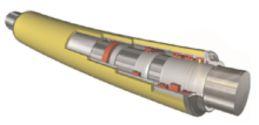
The solution suggested by SKF is the CARB bearing. This type of bearing permits axial displacement. It has a solid
Lone worker safety monitoring technology
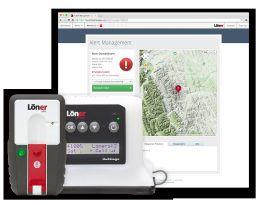
A prominent Calgarybased pipeline company purchased more than $440,000.00 in Loner Bridge Systems and services to monitor their lone workers, Blackline Safety Corp. has announced.
housing, and can tolerate misalignment.
CARB bearings are single row bearings with long, slightly barrel-shaped symmetrical rollers. The rollers of CARB bearings are self-guiding, i.e. they always adopt the position where the load is favourably distributed over the roller length, irrespective of whether the bearing rings are misaligned or axially displaced. The ability to distribute loads favourably keeps the friction and frictional heat at low levels. Lower operating temperatures extend the service life of the lubricant and the bearing.
CARB bearings are intended exclusively as non-locating bearings. They can simplify locating/non-locating bearing arrangements because thermal expansion of the shaft can be accommodated within the bearing virtually without friction. CARB bearings can reduce noise and vibration levels, for example, in paper machines and fans.
SKF Canada, www.SKF.com
CONSISTENCY METER FOR FORMING SECTION
Luca Canali of Cristini outlined the use of advanced instruments to improve runnability for paper grade changes.
The FiberScan consistency meter provides an accurate measure of the water mass on the forming fabric using a low-power microwave technology. In one case, Canali explained how a narrow range of incoming consistencies to the top wire allows effi-
“Ensuring the ongoing safety of personnel through a region as large as Western Canada requires a universal approach—we designed our Loner Bridge System for precisely this purpose. This solution is the only true, last-mile option available for businesses to monitor their personnel everywhere – within hazardous environments, across large fields of
operation and throughout complex facilities, says Cody Slater, Blackline’s CEO and chairman.
Blackline’s lone worker monitoring solutions bring value to a diverse base of industries including utilities, research labs, manufacturing, transportation and service companies.
“Our customers have found they can improve employee safety and save money with Loner equipment compared to manual check-in processes or older technology,” says Sean Stinson, Blackline’s vicepresident sales and product management.
cient water removal, better formation and improved ply bond generation.
Canali says Cristini has documented reductions in amperage loadings to drive the forming section and vacuum blower. In some cases, the company has been able to reduce starch consumption due to enhanced paper properties.
Cristini, www.cristini.com
SELECTIVE FRACTIONATION FOR TMP MILLS
Selective fractionation is discussed as a method of saving energy in the technical paper Energy Reduction for TMP and Mill Implementation, by Reza Amiri, Lahoucine Ettaleb and Mark Frith.
Selective fractionation, as addressed in this paper, can be achieved by pressure screens, which separate based on fibre length, or hydrocyclones, which can separate based on gravity, fibre wall thickness or coarsenes.
To save energy with fractionation systems, the authors advise sending only materials which needs further treatment to reject refiners (that is, thick-walled, and coarse fibres). This reduces the tonnage going to the reject refiners and therefore saves energy.
The authors estimate that savings of $5/tonne can be achieved with low capital expenditure.
FPInnovations, fpinnovations.ca
TECHNOLOGY NEWS
in all industries and geographic locations with real-time safety incident awareness, delivering help within minutes instead of hours or potentially days later.
Blackline Safety Corp., www. BlacklineSafety.com
Valmet launches PermaCote carbide coater blades
The challenges in blade coating of paper –quality variations, short blade lifetime and high blade costs – have been overcome by Valmet’s new PermaCote eC and nC blades, says the company.
PermaCote eC, made of high quality carbide, is a cost-efficient, long-lasting blade optimized for pre-, back- and middle-coating. It has superior edge wear
resistance. According to Valmet, PermaCote eC has significantly reduced the cost per ton related to coater blades on coated board and WFC at several mills.
PermaCote nC is a high quality nanocarbide blade. It has a dense structure optimized for demanding top coating, resulting in extra smoothness. Valmet states that the superior microstructure, improved wear resistance and low tendency for microscale cracking give this blade an exceptionally long lifetime.
Valmet, www.valmet.com
Submersible pumps suit harsh conditions
Wajax Industrial Components has added Stancor Pumps to its product portfolio across Canada. Stancor Pumps offers a variety of pumps designed for harsh operating conditions.
“We have customers who are asking for durable and reliable electric submersible pumps in several different markets,” said Rick Byers, a business development manager at Wajax Industrial Components.
Stancor’s Avenger line of wastewater-effluent pumps offer an economical and reliable way of handling wastewater, effluent and industrial waste. Semi-recessed vortex impellers on the SE and SV pumps, as well as the SEW vortex series, handle solids up to 2 in. Wajax Industrial Components, www. wajaxindustrial.com
Online dirt measurement
The OpTest On-line Dirt In-speck-tor (ODI) measures visible dirt in sheets according to ISO 5350-4, TAPPI T563 & PAPTAC D35 standards. The ODI measures the number, size and equivalent black area (EBA) of visible dirt specks far more precisely than the human eye. Operating on most pulp machines, it measures dirt specks on sheets moving up to 500 m/min at a resolution of 0.02 mm². The ODI provides the information you need to ensure a high quality, consistent product.
The ODI reports both the physical sizes, typically used for process optimization, and EBA sizes, used for grade (customer) cleanliness specifications.
The reports include both the PPM (mm²/m²) and the number of specks/m². Both are required to make informed decisions on production quality acceptance. OpTest Equipment Inc., www.optest.com
Canadian mills invest in measurement technology PulpEye analysis tools are making a splash in Canada. The company received new orders for PulpEye analyzers from two Canadian mills last fall: Domtar’s Windsor, Que., mill, and Port Hawkesbury Paper in Nova Scotia.
The PulpEye for Domtar Windsor is now up and running, equipped with modules measuring fibre, shives and SR. The installation also includes the CrillEye module. Domtar Windsor has two paper machines with a total production capacity of about 640,000 tonnes of uncoated papers, including high brightness, opaques, offset, multi-purpose digital papers, copy paper, laser forms bond and envelope papers. The mill has one pulp line with a capacity of about 440,000 tonnes.
Port Hawkesbury Paper in Nova Scotia is an integrated mechanical pulp and paper mill producing high gloss papers. The TMP pulp production is done by three refiner lines each having three stages of refining. The PulpEye being installed there is configured with modules for measurements of freeness, fibre and shives.
Port Hawkesbury Paper is the first mill in North America to install the RefinerEye module, a clever way of taking high concentration pulp samples directly from the blow line after refiners.
“Needless to say, we are very pleased to have landed these orders in Canada,” says Öjvind Sundvall, managing director of PulpEye AB. “It is our second breakthrough in Canada and for new application areas. Without mentioning any details about these installations I can say that these customers are really showing innovative thinking and we look forward to a continued good cooperation.”
PulpEye, www.pulpeye.com
CRIQ method reduces energy costs of refining
A Canadian patent was recently awarded to Centre de recherche industrielle du Québec (CRIQ) for a process that reduces energy costs associated with refining wood chips at paper mills.
CRIQ equipment featuring this technology uses the process to stabilize dry mass flow and perform real-time analysis of the properties of raw material entering wood chip refiners. This process makes it possible to avoid energy waste at the
Innovative spreader roll technology
With the EvoStretch spreader roll, Voith offers a model that can achieve significantly longer service intervals than standard spreader rolls.
The EvoStretch high-performance bearings feature one or two ceramic balls as well as the usual steel balls, giving each bearing a special self-repairing effect. The ceramic balls remove contaminants, smooth the contact surfaces and thus have an integrated polishing function. This “self-healing effect”, proven in close cooperation with a well-known ball bearing manufacturer, clearly slows bearing wear and substantially reduces servicing costs.
Voith also offers StretchUp Service, roll service tailored to spreader rolls. As part of the StretchUp Service, it is now possible to upgrade spreader rolls from a variety of manufacturers to use the EvoStretch bearings.
Voith has also developed another spreader roll component that can increase service life: SolarStretch polyurethane sleeves for spreader rolls. SolarStretch features abrasion resistance that is twice as effective as standard rubber sleeves and can be supplied in a variety of surface designs.
Increased abrasion resistance significantly extends service intervals and thus ensures continuous availability of the spreader rolls.
Voith Paper, www.voith.com
refining stage caused by variation in chip properties. The more uniform the raw material, the more consistent the pulp quality, according to CRIQ.
Tests in a medium size plant revealed net energy savings of about two per cent, or approximately $875,000 per year.
“Besides being very profitable, as evidenced by in-plant testing, this patented process will improve the carbon footprint of many job-generating companies in the region,” notes Feng Ding, research officer at CRIQ.
CRIQ, www.criq.qc.ca
SCA testing liquid fuels from black liquor
SCA is investing approximately 50 million SEK (about $8.1 million) in a pilot plant for the production of liquid biofuels and chemicals from black liquor. The plant will be installed in SCA’s containerboard mill Obbola outside of Umeå in Northern Sweden.
The pilot plant will use black liquor, a by-product from the mill’s production of kraft pulp, as raw material for the production of lignin oil and further processing into liquid biofuels and chemicals.
“This is a pilot plant where we will evaluate the potential of the process and research the technology,” says Mikael Källgren, president of SCA Energy. “We do see a large potential in the production of liquid biofuels that may replace petrol or diesel in standard vehicles.”
The project has been granted an 11-million SEK subsidy from the Swedish Energy Agency. The pilot plant will be built in 2016 and will be operational in 2017.
SCA Energy develops renewable energy from forest resources and produces forest-based biofuel, in addition to managing SCA’s wind-power assets.
American Process granted nanocellulose patent
American Process, Inc. has received a patent for its BioPlus™ nanocellulose technology, U.S. Patent No. 9,187,865. This patent covers an AVAP® process for producing a nanocellulose material, as well as many downstream applications using the nanocellulose.
The process includes fractionating a biomass feedstock with an acid, a solvent for lignin, and water, to generate celluloserich solids; and then mechanically treating the cellulose-rich solids with a relatively low amount of energy to form cellulose nanofibrils or nanocrystals.
The company says other patents are pending for the nanocellulose material and compositions that include the nanocellulose, as well as for other aspects of the technology, in the U.S., Brazil, Europe, Japan, China, India, Russia, Canada, Australia, Malaysia, and South Africa.
According to lead inventor Dr. Kim Nelson, “Nanocellulose has proven to be a versatile material with a vast array of potential commercial applications. With exceptionally low-cost commer-
cial-scale production potential and flexibility in nanocellulose morphology and surface functionalization, API’s nanocellulose process has overcome the most significant barriers to commercialization for this 21st-century biomaterial.”
“Our BioPlus nanocellulose has conquered the major commercial barriers that have hitherto inhibited rapid market development. Specifically, BioPlus nanocellulose materials are cost-competitive with traditional materials; they can be produced as a powder and we have introduced novel lignin-coated nanocellulose, both crystals and fibrils, that are oleophilic and compatible with plastic applications. We are currently focusing development of market applications ranging from packaging to transportation light-weighting and rheological modifiers,” said Dr. Theodora Retsina, API’s CEO.
Tall oil among the topics at wood biorefining event
In Stockholm at International Wood Biorefining Week, representatives of Arizona Chemical, a leader in biorefining crude tall oil (CTO), will initiate debate on the true value-adding elements of the bioeconomy, on solutions far beyond the narrow concept of biofuel production.
Arizona Chemical refines and upgrades CTO in its biorefineries in Europe and the U.S. into a wide range of innovative bio-based specialty chemicals. The CTO-based solutions replace fossil-based materials in thousands of everyday products such as adhesives, paints, cleaners, coatings, tapes, labels, roofing materials, tires, lubricants and fuel additives. The basic idea in all those innovations is not only to offer a green alternative to the versatile producers of consumer and industry products, but clearly improve the functionality of these commodities.
CTO-based specialty chemicals delivered by Arizona Chemical enable the increased high-end reuse of recovered asphalt, reduce sulphur in diesel fuel and improve the strength and stability of tackifiers as well as the durability and visibility of road markings.
CTO, a co-product of the kraft pulping process, originates from pine tree resin.
International Wood Biorefining Week runs May 24-26 in Stockholm.
New report outlines keys to cleantech success in Canada
The March 1 launch of Prime Minister Justin Trudeau’s Smart Prosperity group to identify priorities and opportunities to advance our clean technology economy has sent a strong signal that there will be functional and systemic support for businesses looking to compete in the global clean technology industry.
With this in mind, CanadianManufacturing.com and its sister site Cleantech Canada have published a study that outlines some of the keys to growing a cleantech company in Canada.
Conducted in partnership with Edmonton-based Climate Change and Emissions Management Corp., the 2016 Cleantech Directions report looks at the economic impact of the sector; top target markets; how to leverage shifts in policy; and how to obtain buy-in from even the stingiest corporate executive.
Download the full report from CanadianManufacturing.com.
Tough little cookies.
A crushed roll of paper can cost manufacturers and their customers countless hours, dollars, and headaches. But by simply inserting core plugs into each roll, paper makers can reduce damage and loss claims for just pennies per roll. As a family-owned New England company that has been producing core plugs for over 50 years, Souhegan guarantees a high-quality, steady inventory of the products you need, whenever you need them.
We offer two different types of high-density, molded wood core plugs engineered specifically for the paper industry:
CORSAVER™ PLUG
Designed for fine coated papers, the name says it all – this little gem can withstand three times more pressure than most other center hole plugs on the market. In independent testing, our CorSaver plugs withstood a 10,000 lb crush in a .668" walled paper tube.
CENTER HOLE PLUG
With an easy-out design preferred by many end-use customers, an impressive crush strength, and a competitive price, our re-engineered Center Hole plugs are an industry favorite for all grades of paper.
• 3" Center Hole plugs have a crush strength of 2,300 lbs in a .668" walled paper tube.
• 4" Center Hole plugs have a crush strength of 5,000 lbs in a .25" walled paper tube.
For more information on standard plug sizes and custom options call us at (603) 654-2311 or visit us online at www.souheganwood.com
CORSAVER PLUG
3" CENTER HOLE PLUG
4" CENTER HOLE PLUG
AN INFLUENT MICROBICIDE SO GOOD, IT
You may already know that Oxamine® for influent is more stable, so it works harder longer than bleach, chlorine gas and bromide treatments to control microbiological activity and save you money. You may also know that it has less impact on the environment. But did you know that the Oxamine microbicide program comes with proprietary feed equipment designed for industry-leading safety? It’s the only technology on the market with all these advanced safety features.
• LEAK DETECTION
• A BUILT-IN SEPARATOR to keep active ingredients apart in the case of a line break or other issue
• AUTOMATIC FLUSHING in case power is lost
• REGULAR INSPECTION by Buckman personnel to ensure efficient, safe operation
Protect your equipment, your people, the environment and the bottom line. Contact your Buckman representative or visit buckman.com , and see just how easy it is to switch to Oxamine.