
Anaerobic
Cellulosic
Pests,
Climate change has finally made it to the top of the list of things that keep global leaders awake at night, which is no small feat considering all the other risks that are vying for the attention of decision-makers.
Almost 750 experts and decision-makers in the World Economic Forum’s communities responded to the organization’s Global Risks Perception Survey.
The survey asked respondents to consider 29 global risks – societal, technological, economic, environmental or geopolitical – over a 10-year time horizon, and rate each according to their perceived likelihood of it occurring and impact if it does.

Cindy Macdonald Editor
The risk with the greatest potential impact in 2016 was found to be a failure of climate change mitigation and adaptation. This is the first time since the report was published in 2006 that an environmental risk has topped the ranking. This places a failure to adapt to climate change ahead of the risk of weapons of mass destruction, ranking second, and the risk of water crises, ranking third. Large-scale involuntary migration was also rated among the top five for impact, as was severe energy price shock (increase or decrease).
Respondents to the World Economic Forum’s survey are drawn from business, academia, civil society and the public sector and span different areas of expertise, geographies and age groups.
The risk rated most likely was large-scale involuntary migration, followed by environmental risks of extreme weather events and the failure of climate change mitigation and adaptation, and major natural catastrophes.
(As a side note, cyberattacks are now considered the greatest risk to doing business in North America.)
So, we, as a resource-based industry, should be taking steps to mitigate the effects of climate change. The Canadian Forest Service and the Canadian Council of Forest Ministers have been conducting research about climate change and the vulnerability of Canada’s forests for years. There is a vast store of knowledge available to guide the decisions of forest products companies, and all the companies that make up the supply chain for forest products. Check out the story on page 13 for more details.
The industry and our research and development partners have put a lot of effort into transformation in recent years, to react to market changes. In the longer term, the industry will have to transform itself to adapt to climate change as well. Given the long growth cycles of our fibre supply, that transformation has to begin now. PPC
Editor
CINDY MACDONALD
416-510-6755 cindy@pulpandpapercanada.com
Publisher JIM BUSSIERE
416-442-5600 ext. 3606 jim@pulpandpapercanada.com
National Accounts Manager LAURA GOODWIN 289-928-8543 lgoodwin@annexweb.com
Media Designer EMILY SUN esun@annexweb.com
News and Press Releases media@pulpandpapercanada.com
President and CEO
ANNEX BUSINESS MEDIA
MIKE FREDERICKS
Group Publisher/Director of Content and Engagement
SCOTT JAMIESON
519-429-5180
sjamieson@annexweb.co
Account Coordinator
TRACEY HANSON thanson@annexnewcom.ca
Circulation Manager
BEATA OLECHNOWICZ bolechnowicz@annexbizmedia.com
PULP & PAPER CANADA (ISSN 0316-4004) is published by Annex Business Media 105 Donly Drive South, Simcoe, ON, N3Y 4N5
CIRCULATION
email: mchana@annexbizmedia.com Tel: 416-442-5600 ext 3539 Fax: 416-510-5170 Mail: 80 Valleybrook Drive, Toronto, ON M3B 2S9
SUBSCRIPTION RATES
Canada $55.00 per year; $88.00 for 2 years. Outside Canada (US) US$101.95 per year; (foreign) US$110.00.
From time to time, we make our subscription list available to select companies and organizations whose product or service may interest you. If you prefer not to receive this information, please contact our circulation department in any of the four ways listed above.
Annex Privacy Officer privacy@annexbizmedia.com Tel: 800-668-2374
The editors have made every reasonable effort to provide accurate and authoritative information but they assume no liability for the accuracy or completeness of the text or its fitness for any particular purpose.
No part of the editorial content of this publication may be reprinted without the publisher’s written permission. ©2015 Annex Publishing & Printing Inc. All rights reserved.
Publications Mail Agreement No. 40065710
Print edition ISSN 0316-4004 On-line edition ISSN 1923-3515
Sustaining member, Pulp and Paper Technical Association of Canada; Member, Alliance for Audited Media.


“We acknowledge the financial support of the Government of Canada through the Canada Periodical Fund of the Department of Canadian Heritage.”
Resolute files NAFTA case over Port Hawkesbury
Resolute Forest Products is once again turning to the North American Free Trade Agreement (NAFTA) to protest the actions of Canadian governments. In the final days of 2015, Resolute announced the filing of a Notice of Arbitration under NAFTA with regard to measures taken by the former provincial NDP government in Nova Scotia and the Government of Canada in support of the Port Hawkesbury Paper mill in Nova Scotia.
Resolute contends those measures discriminated in favor of Port Hawkesbury and resulted in the closing of Resolute’s Laurentide mill in Quebec in October 2014, depriving Resolute of its investment in that mill. The company states that those measures are in violation of Resolute’s rights under NAFTA as a U.S. investor in Canada.
This is not the first time Resolute has used NAFTA rules to its advantage. In 2010, when the company was known as AbitibiBowater, it requested arbitration with regard to the expropriation of the company’s assets in Newfoundland and Labrador, including the Grand Falls-Windsor mill and hydroelectric infrastructure.
The Government of Canada chose to pay AbitibiBowater $130 million in compensation for the expropriation, to avoid potential long and costly legal proceedings.
In the current case regarding Port Hawkesbury Paper, Resolute is seeking damages for direct losses of approximately US$70 million.
Resolute Forest Products owns or oper-
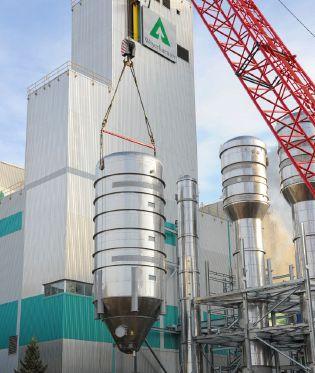
Weyerhaeuser Co. is exploring strategic alternatives for its cellulose fibers business, which includes the company’s mill in Grande Prairie, Alta. (at left). The board of directors intends to consider a broad range of alternatives, including continuing to hold and operate the business or a sale or spin-off of the business.
“The people and assets associated with our cellulose fibers business are some of the finest in the industry,” said Doyle R. Simons, president and chief executive officer. “We have consistently improved the performance of this business while continuing to meet the needs of our worldwide customers.”
Weyerhaeuser is primarily an owner of timber land and producer of wood products. On Nov. 8, 2015, the company announced a merger with another large land owner and producer of wood products, Plum Creek.
Weyerhaeuser’s cellulose fibers business includes five pulp mills, two modified fiber mills, one liquid packaging board facility, and one publishing papers jointventure facility.
ates more than 40 pulp, paper, tissue and wood products facilities in the United States, Canada and South Korea.
Canadian producers will fight countervailing duty on supercalendered paper
A ruling by the U.S. International Trade Commission that the U.S. paper industry is materially injured by imports of supercalendered paper from Canada will result in a countervailing duty of up to 20 per cent on these products.
The affected exporters are Port Hawkesbury Paper, Resolute Forest Products, Catalyst Paper and Irving Pulp & Paper.
Chrystia Freeland, Minister of International Trade, stepped up in defense of the Canadian producers and requested a binational panel review, under Chapter 19 of the North American Free Trade Agreement (NAFTA).
“Canada believes that the U.S. Department of Commerce erred in calculating subsidy rates on Canadian exports of supercalendered paper,” said Freeland.
On October 14, 2015, the U.S. announced final countervailing duty rates, which are even higher for some mills than the previous interim rates.
Port Hawkesbury Paper and Resolute FP Canada, who are considered mandatory respondents in this CVD investigation, received final subsidy rates of 20.18 per cent and 17.87 per cent, respectively. All other producers/exporters in Canada have been assigned a final subsidy rate of 18.85 per cent. The “all others” category includes Catalyst Paper and Irving Forest Products.
Under the Department of Commerce’s preliminary determination, in July 2015, Port Hawkesbury’s duty was 20.33 per cent, Resolute’s was 2.04 per cent, and Irving Forest Products and Catalyst Paper were facing 11.19 per cent.
Port Hawkesbury Paper and Catalyst Paper have indicated they will fight the duties.
“We are only part way through a long process, and we are intent on proving that the imposition of duties is not supported by the facts or the law and is unfair to other Canadian mills in addition to ours,” stated Marc Dube, PHP business development manager. “PHP remains highly confident in our ability to reduce these duties substantially, or eliminate them entirely, as part of the process.”
“We are disappointed with this outcome,” said Joe Nemeth, CEO of Catalyst Paper. “We will seek an expedited review of our case by the U.S. Department of Commerce as soon as possible.”
Since August 4, 2015, based on the preliminary rate, Catalyst has deposited to the U.S. treasury approximately $1.3 million, representing sales of 17,000 tonnes of supercalendered paper to U.S. customers.
Two energy efficiency projects at the Gatineau Tissue mill owned by Kruger Products have qualified for $675,000 in financial assistance under the Quebec government’s EcoPerformance program.
Kruger Products’ Gatineau Mill manufactures and distributes paper towel and tissue products for household and commer-

cial use under the Cashmere and Scotties brands. With this financial assistance the company was able to complete a condensate management improvement project and will implement a heat recovery project.
At the Gatineau mill, condensate from three Yankee dryers provides hot and warm water for the various steps in the tissue manufacturing process. Kruger Products has improved condensate management across the manufacturing process through technical solutions, and now uses re-vaporized condensate to produce low-pressure steam in order to optimize the energy recovered from condensate. This solution increases the temperature of the condensate that builds up in the tank, thereby reducing the energy required to re-introduce condensate into the de-aerator. This project has significantly reduced the mill’s consumption of heavy fuel oil and gas.
The company has also installed a hotwater cleaning shower with high-pressure and oscillating jets at its Gatineau mill to reduce steam use at the pick-up felt cleaning shower. With this new process, which is replacing a steam-cleaning shower, a previously under-used heat recovery system is generating hot water ranging in temperature from 40°C to 50°C. The project will reduce the amount of heavy fuel oil and natural gas needed to generate steam.
“We are very proud of these initiatives, which are part of a long-term strategy and help to make Kruger Products a sustainability leader,” said Daniel Dumont, general manager, Region East, Kruger Products L.P. These projects are estimated to reduce the mill’s GHG emissions by more than 2707 t per year.
Regulatory testing carried out last fall on Northern Pulp’s power boiler indicated a marked improvement compared with tests carried out earlier in 2015.
The most recent tests for the kraft mill located in Abercrombie, N.S., show a result of 111 mg/Rm3. September testing revealed a level of 190 mg/Rm3 which exceeded the emission limit set at 150 mg/Rm3. Upon learning the September results, Northern Pulp immediately contracted a boiler specialist to review the mill’s entire boiler system. The company was also directed to review the system by the provincial department of the environment.
The review, which began in October, led to the implementation of several suggested operational improvements; recommendations regarding air distribution have already been executed.
“We committed to better understanding the power boiler and reasoning for the varying test results,” states Bruce Chapman, general manager with Northern Pulp. “We have a plan in place which will see us continue this positive trend of improving our environmental performance.”
Northern Pulp’s communications manager, Kathy Cloutier, explained in September that preliminary findings concerning the power boiler suggested that “too much excess combustion air is within the power boiler furnace, which is directly related to particulate.”
“With the removal of excess air, particulate should fall back in line with 150 mg/ Rm3 limit,” she noted. Cloutier said preliminary findings also led to discussion and
Resolute Forest Products Inc. has accelerated its move into the tissue market with the acquisition of Atlas Paper Holdings, Inc., a manufacturer of at-home and away-from-home tissue products, including recycled and virgin paper grades.
“This is a step-change acquisition that provides us with an immediate position in the multi-billion-dollar North American consumer tissue market,” says Richard Garneau, president and CEO of Resolute Forest Products. “This acquisition also gives us immediate tissue industry experience as we work toward bringing our Calhoun tissue project online by early 2017.”
Based in Florida, Atlas Paper manufactures branded and private label tissue products covering economy, value and premium grades. Atlas Paper operates three tissue machines, with an annual production capacity of approximately 65,000 short tons; 14 converting lines in Hialeah (Miami) and Sanford (Orlando); and a paper recycling facility in Tampa. The company employs about 360 people.
The employee of a contractor working at West Fraser’s Hinton kraft pulp mill died on Nov. 23 when he became tangled in a piece of equipment.
According to a story by Global News, the deceased worker is 23-year-old Dean Smith, an employee of Winfield Industrial Sales and Service Ltd. Smith was installing a handrail on a tower when the incident happened. It is being investigated by Alberta’s occupational health and safety agency.
Smith leaves behind a wife and one-year-old son.
planned further study into Northern Pulp’s bark size. Bark that is too small may also lead to an increase in particulate matter.
Northern Pulp had also taken actions earlier in the year to mitigate its emissions. Since the May 2015 shutdown, the company has replaced the power boiler rear multi-cone dust collection system, replaced the venturi deck nozzles, modified piping drains on the scrubber water supply and replaced cleaning shower nozzles. The company says replacement of the multi-cones increases the efficiency of this dust collection stage, resulting in less particulate exiting the boiler.
Northern Pulp is working with AH Lundberg Systems Ltd. of Vancouver to follow up on further suggestions made during a 2014 power boiler scrubber audit they conducted.
Twin Rivers Paper Company was fined $320,000 on December 18 after pleading guilty to offences under the Fisheries Act related to a spill of evaporator condensate from its mill in Edmundston, N.B.
An investigation determined that in 2013, the overflow tank of evaporator condensate was blocked in order to prepare for the mill’s annual shutdown. This contributed to a spill into the Madawaska River. Two further deposits of effluent in 2014 occurred during dredging activities at the mill’s secondary effluent treatment lagoon located in Saint-Basile, N.B.
BASF is reorganizing its paper, water, oilfield and mining businesses within the Performance Chemicals division. The company believes the key success factors in both the Water Solutions and Paper Chemicals businesses are cost leadership, operational and commercial excellence, as well as efficient and reliable supply. Consequently, BASF is combining these two businesses to form a new global business unit called Paper and Water Chemicals.
The owners of Chetwynd Mechanical Pulp have laid off 109 workers and announced that the BCTMP mill will not reopen until March 31, 2016. Employees of Paper Excellence received the news of layoffs on Nov. 27, but the mill has been closed since September. A planned two-week maintenance shutdown was extended due to market conditions. The company’s earlier plan was to re-open in January 2016.
The Chetwynd mill was shuttered in 2012 by its former owner, Tembec. Paper Excellence purchased the plant and proceeded to invest $50 million to upgrade the facility. It reopened in May 2015.
A spokesperson for Paper Excellence says the layoffs are temporary and do not take effect immediately; they will be phased in.
• Domtar has made The Paper Trail, the company’s interactive site that helps customers trace the impacts of their paper purchases, available in French.
• The first edition of the FPInnovates conference highlighted the importance of innovation in the workforce and the impact of new technologies. The one-and-a-half-day event put on by the FPInnovations research institute ran on Nov. 25 and 26 in Montreal. It attracted 200 delegates.
• Cascades Inc. is investing $26.4 million at its Norampac corrugated board conversion plant in Drummondville, Que., to install a new corrugator that will double the plant’s production capacity.
• Kraft pulp mill owner AV Terrace Bay Inc. pleaded guilty to seven offences and was fined $250,000 in October for failing to ensure that effluent discharge and testing limits were maintained. Ontario’s Ministry of the Environment states that the mill’s effluent did not meet regulatory quality requirements on several occasions between July 1 and December 30, 2013.

WE’RE PROUD TO PARTNER WITH SLAVE LAKE PULP TO HELP THEM:
• Comply with environmental regulations
• Recover green energy from waste
• Reduce surcharges and disposal costs Contact us to solve your pulp and paper mill’s wastewater challenges.

By Paul Lansbergen, acting president and CEO, Forest Products Association of Canada
Beautyis in the eye of the beholder. I take the same approach when considering challenges and opportunities. In my eye, a challenge is an opportunity to overcome a barrier or risk.
One upcoming challenge: the new federal government has a more urban focus than the previous government. We look forward to highlighting to them how our “rural” forest industry plays an important role in urban daily life. In terms of jobs and economic benefit, many of our new Parliamentarians may not know that the forest products industry employs 230,000 people, that it is responsible for 12 per cent of manufacturing GDP and contributes more to the national economy than auto manufacturing. But perhaps more importantly, as we move towards a low carbon economy, we are part of a growing

supply chain of bio-based materials that show up in a myriad of products we use on a daily basis.
There are also concerns that the desire to redefine the relationship with indigenous people in Canada could potentially have a negative impact on resource industries. However, our industry is a major employer of indigenous people and we will continue to partner with indigenous communities to nurture mutually beneficial relationships.
The Forest Products Association of Canada (FPAC) is especially intrigued with the opportunities surrounding an issue getting increased attention lately –the threat of climate change. The forest products industry is part of the solution to this problem. Canada’s immense renewable forests store carbon, the greenhouse gas associated with climate change, as do products made from wood. This includes
traditional lumber and paper but also new innovative products such as car parts, clothing, cosmetics and green chemicals.
Here’s just one example – a 100,000 square foot wood building would have a net carbon benefit of 7,380 tonnes of carbon (from storing the greenhouse gas plus avoiding emissions that would have been released from using alternative materials). This net benefit of this single building is the equivalent of taking 1,410 cars off the road for a year.
The government’s priorities on innovation, clean tech, and freer trade also align with our priorities. We can be partners to achieve their objectives and make further progress towards our Vision2020 goals..
Overall, FPAC is optimistic about prospects in 2016 – there will no doubt be challenges ahead but the forest sector will continue to have both a good environmental story and a good economic story to tell. PPC
By Jennifer Ellson, senior communications specialist, FPInnovations
Research conducted at FPInnovations laboratories has led to the development of new, glossy coating formulations that will allow the use of lightweight coated papers on commercial web inkjet printing presses. A successful largescale plant trial in collaboration with a member company has recently been conducted, which allowed evaluation of this new coated paper on a commercial web inkjet press.
Indeed, FPInnovations has been working extensively in the past three years to expand the use of lightweight coated paper beyond its traditional use in offset printing. Currently, the only segment of the commercial printing industry that is
showing noticeable growth is the web inkjet printing industry. To assist our member companies in capturing a share of this market, research was conducted in our laboratories, which has led to the development of new, glossy coating formulations that will allow the use of lightweight coated papers on commercial web inkjet printing presses.
To fully assess the performance of these new coatings, large quantities of coated paper had to be produced for fullscale printing trials on commercial web inkjet presses. FPInnovations has worked closely with one of our member companies to scale up the process and plan pilot coating and full-scale mill trials.
The trial in the mill successfully produced glossy lightweight-coated paper
that was evaluated on a commercial web inkjet press. The results of the printing trials showed good print quality, even at high ink coverage. Our member paper company is now engaged in commercialization efforts.
“To our knowledge,” says FPInnovations research leader Lyne Cormier, “this will be the first glossy lightweightcoated paper grade for inkjet printing to be offered on the market.” Potential applications could include production printing of personalized magazines and catalogues, a target market niche for those high-speed printing presses.
For more information concerning this new grade of paper, contact Lyne Cormier at lyne.cormier@fpinnovations. ca or 514-782-4481. PPC
The Forest Products Association of Canada (FPAC) in partnership with the Canadian Council of Forest Ministers (CCFM) awarded the Skills Award for Aboriginal Youth to Taylor Wale and Patrice Bellefleur.
Wale is a 22-year old woman from the Gitxsan First Nation studying natural resource conservation in the Faculty of Forestry at the University of British Columbia, with the goal of becoming a professional biologist. Bellefleur, a 27-year old member of the Innu of Pessamit, will soon start his Master’s degree in forest science at Laval University with a long-term goal of helping to improve the integrated management of forest resources in his community.
Precision Energy Services has been awarded a contract to engineer, supply and provide technical support for a second paper mill sludge-to-energy system for Atlantic Packaging in Toronto. PES previously supplied a fluidized bed combustion system to the Atlantic Packaging plant at 111 Progress Ave. in 2012.
According to PES, the papermaker was seeking to reduce tipping fees, transportation and natural gas costs by the use of sludge from its recycled paper mills.
PES is supplying a complete sludge-to-energy system, including a PES fluidized bed combustion system, a 40,000 lb./hr. steam generator and the balance of plant equipment.
Employees, elected representatives and community leaders joined Domtar executives on Dec. 4 at the Domtar pulp mill in Kamloops to mark the mill’s 50th year of operations.
The kraft pulp mill started up in 1965, when a new and innovative concept for utilizing waste materials from regional sawmilling operations was developed. Sawmill residuals or waste in the form of sawdust and wood chips would be used to make pulp. A group of innovative entrepreneurs recognizd this opportunity and set to constructing a pulp mill in Kamloops.
Fast-forward to the modern pulp mill of today that produces specialty pulp for its customers along with renewable green energy for internal use and exports to the provincial power grid.
“Since 1965, this mill has grown with the local community,” said Michael Garcia, president of Domtar’s pulp and paper division. “I thank all of the Kamloops mill employees for their work and focus on optimizing this mill and driving continuous improvement in a highly competitive market.”
The Kamloops facility employs more than 325 people, and the operation supports another 200 transportation jobs delivering fibre to the mill. Today, 22 sawmills in the region supply fiber to the site, demonstrating that the revolutionary concept of using sawmill waste as raw material for making pulp still makes sense 50 years later.
Assets of the Former GRAPHIC

APRIL TBD, 2016 4008-4010 Rue Saint-André, Jonquière, Quebec, G7S 5K5
HUGE QUANTITY OF LATE MODEL & WELL MAINTAINED PAPER MANUFACTURING ASSETS & PRODUCTION SUPPORT EQUIPMENT
FEATURING: VALMET (1989) 142” trim paper machine with GL&V (2010) BTF & head box; (4) late model HONEYWELL EXPERION MX scanners, (5) dryer sections, spare S/S head box; GL&V slitter/re-winder, centri-cleaners; Lrg offering of spare paper machine rolls; (5) brass couch vacuum rolls; new boxes of rubber rolls; 200 ton per day TMP line; ESCHER WYSS pressure screening unit; SPROUT BAUER 1000HP & 500HP refiners; Complete S/S OCC pulping line; Lrg pulp drying line; over (150) late model GOULDS pumps up to 250HP, several machining & maintenance depts., (10+) high voltage outdoor transformers & electrical substations, lrg valve, gearbox & motor inventory, electrical switchgear, transformers & drive units, spare parts yard & scrap/useable material inventory, factory support equipment & much more!
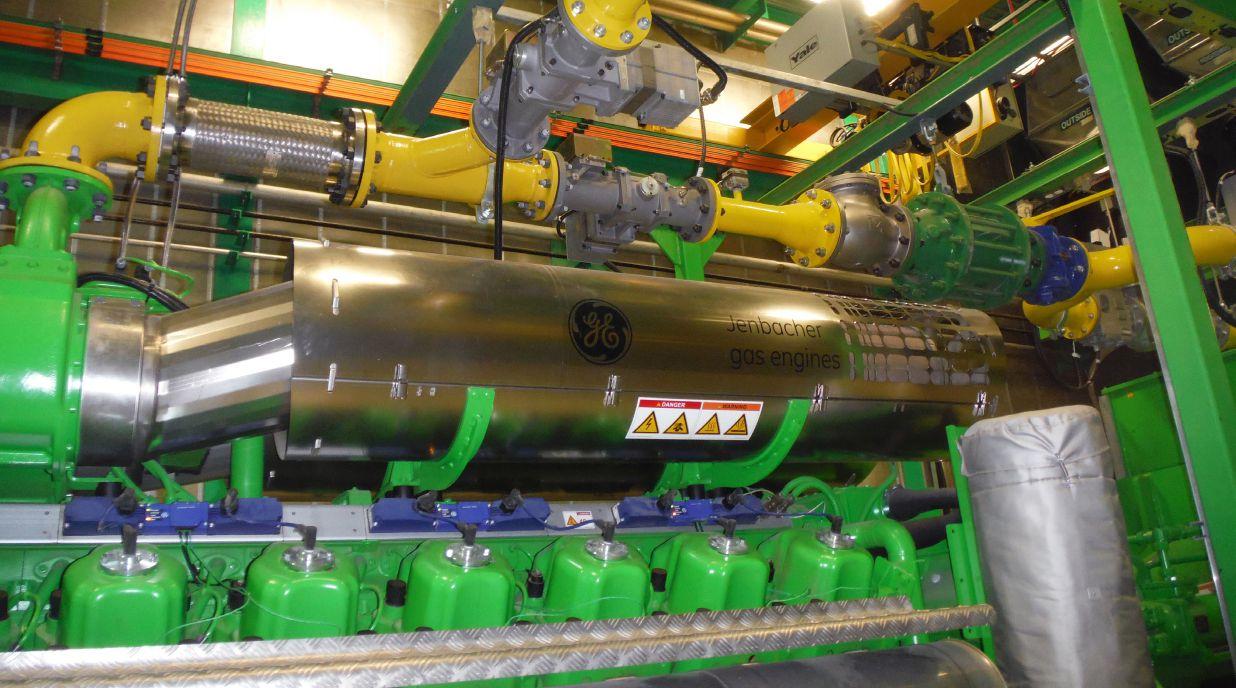
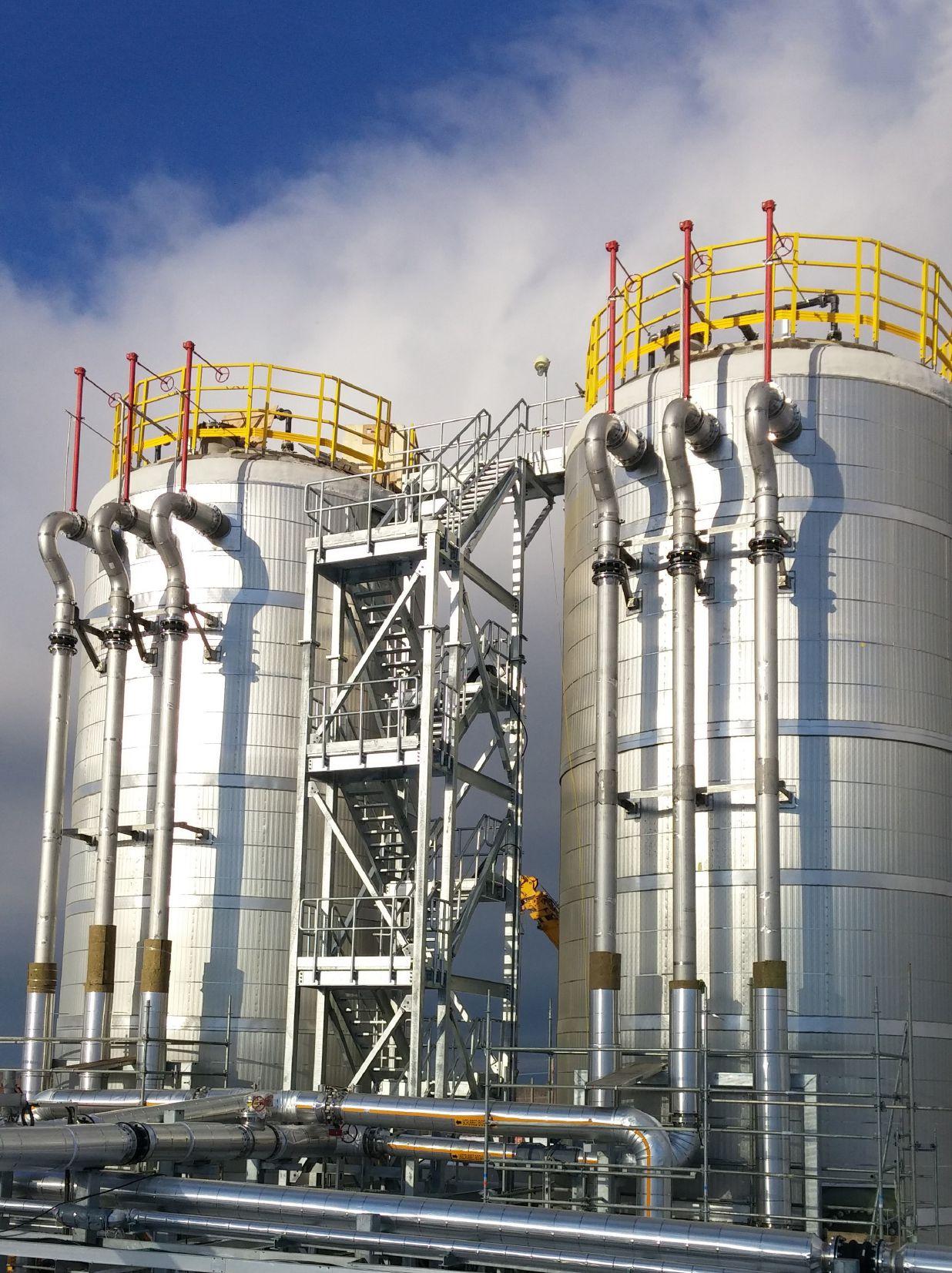
Anaerobic digestion of effluent provides methane for the generators at Slave Lake Pulp.
By Cindy Macdonald, editor
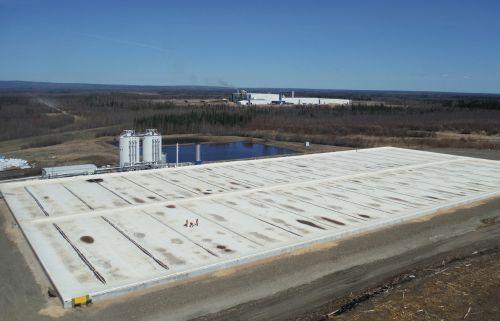
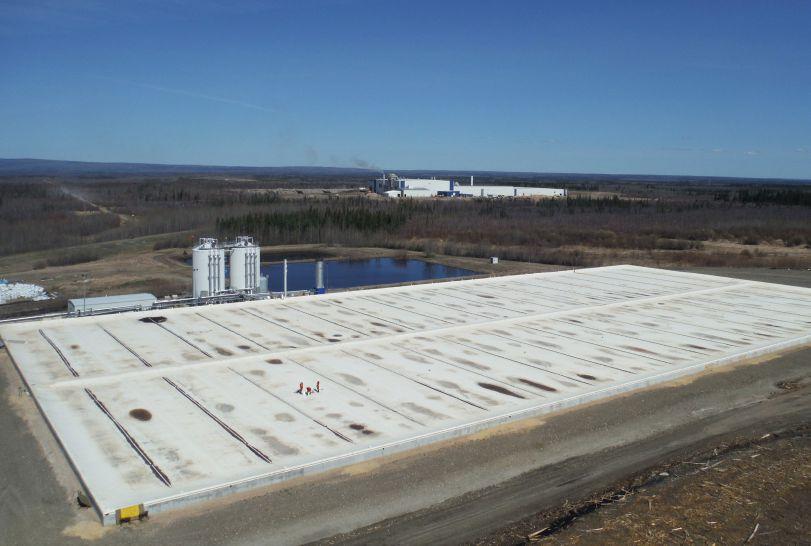
There’s a giant, covered pond filled with microorganisms at the Slave Lake Pulp mill site. It’s man-made, and it’s massive, the size of three hockey rinks. This is a new addition to Slave Lake’s wastewater treatment system and the source of the methane that the mill converts to green electricity.
The low-rate anaerobic treatment system is believed to be the first in Canada for the pulp and paper sector.
Slave Lake Pulp, a subsidiary of West Fraser Mills Ltd., is a 240,000-tonneper-year BCTMP mill located in northern Alberta. The mill primarily processes aspen to produce market pulp for the global market.
The company decided to explore bio-methane for power generation and
requested tenders in 2012. Shannon Fehr, engineering superintendent, says the bid process evoked a wide variety of technologies from around the world. Representatives of Slave Lake went on a trip to China and Thailand to see anaerobic technology in action. Closer to home, they viewed the ADI-Bulk Volume Fermenter (BVF®) reactor system in operation in Taber, Alta.
The West Fraser team ultimately chose the low-rate, anaerobic BVF system from ADI Systems for the biomethanation with power generation project. General manager Tony McWhannel says the project is part of West Fraser’s commitment to environmental and technical leadership.
ADI Systems is a Canadian company, based in Fredericton, N.B. Senior process specialist Peter McCarthy says the selling points of the BVF system are its low need for operator attention, the fact that it
doesn’t require granular sludge, and that it is more economical to purchase than high-rate systems. In this particular case, Slave Lake Pulp had sufficient space to install the large-footprint digester.
“We run very lean,” says Fehr. “We needed something that wasn’t going to be a big drain on our resources.”
High-rate digestion systems can be very time-consuming, she says. “We felt the operator input, for us, would be prohibitive.”
Another advantage of the BVF technology is that it doesn’t require a tank. The costs of building a tank in Alberta at that time were prohibitive, she recalls.
“So, from a cost perspective, BVF was a leader.”
Also, Fehr says ADI Systems offered performance guarantees that satisfied West Fraser.
As part of the tendering process, sev-
eral anaerobic pilots were commissioned. Alberta Innovates – Technology Futures performed a lab-scale low-rate anaerobic pilot followed by an aerobic pilot stage to simulate the final effluent quality of an anaerobic pre-treatment stage followed by conventional aerobic treatment.
Simple yet effective technology
In a technical paper co-authored by Fehr, McCarthy, Daniel Bertoldo of ADI Systems and Megan DiJulio of Slave Lake Pulp, Slave Lake Pulp Biomethanation with Power Generation Project , the authors describe the anaerobic process as it applies to Slave Lake: “In general, anaerobic digestion involves a series of steps in which microorganisms break down organic matter in the absence of oxygen….resulting in the production of biogas, a mixture primarily consisting of methane and carbon dioxide (with hydrogen sulfide and trace amounts of other gases). The high heating value of methane allows for the biogas energy to be recovered and offset fossil fuel consumption.”
Financing for this project was assisted by the Climate Change and Emissions Management Corporation (CCEMC), which provided $5 million and the EcoTrust Fund, which contributed $10 million. A further $25 million was contributed by West Fraser. In December 2015, Fehr reported that the project was under budget, but one year behind schedule because of some difficulties associated with building tanks for the scrubber system.
Now, $40 million and three-and-a-half years after the tenders began, the final piece of the system is in place. The biogas scrubbers were commissioned in the final days of 2015. They are among the world’s largest biological scrubbers, in terms of hydrogen sulfide loading.
In their technical paper, Fehr and McCarthy note that the BVF reactor is effective at consistently achieving high organic removal efficiency, yet is relatively simple. “The anaerobic reactor itself is an earthen basin with a concrete perimeter wall lined with a geotextile underlay and geomembrane liner….. piping evenly dis-
WSP offers a wide range of services to our clients throughout all engineering project phases. With over 5,000 pulp, paper and power projects completed in Canada, we bring local knowledge and world-wide expertise to your doorstep.
ENGINEERING SERVICES
Process Design > Mechanical/Piping > Building & Structures
Equipment Specifications > Automation & Control > CAPEX
DESIGN SPECIALTIES
Steam Power Applications > Wood & Bark Handling > Power Distribution
Control Systems > Co-generation Systems > Process Modeling
34,000
500
40
5
tributes incoming wastewater throughout the front-end of the reactor, where the majority of the biologically degradable organics are digested.”
Biogas generated in the system migrates to the reactor cover perimeter, where blowers pull gas through the biogas scrubbing system, boost the gas pressure and transmit the scrubbed biogas to the generators.
The process characteristics of the BVF reactor enhance process stability, and have an inherent ability to handle variations in hydraulic and organic loads. “This factor is important for Slave Lake Pulp, as the mill frequently alternates pulp brightness grades, resulting in swings in the wastewater’s COD concentrations from 5,000 to 19,000 mg/l,” say the authors.
The biological scrubber system, called BioGascleaners, consists of two parallel 600-m3 scrubbing tanks filled with packed media and Thiobacillus bacteria which biochemically convert the hydrogen sulfide in the biogas to sulfate and sulphuric acid. Cleaned biogas is transferred to the
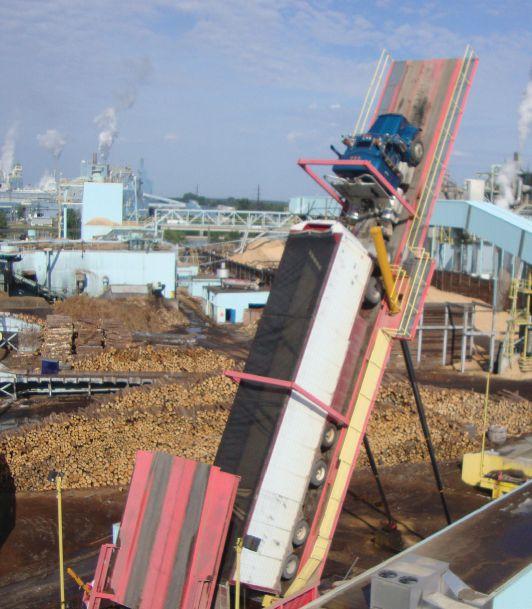
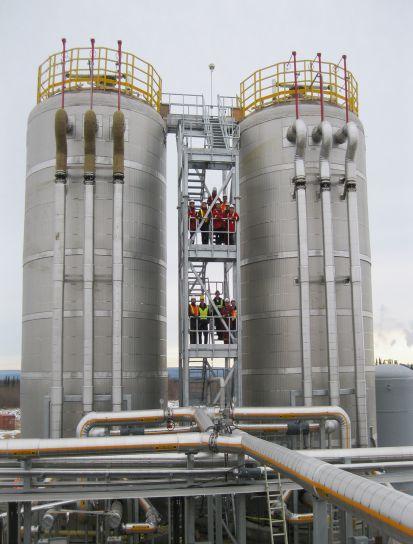
GE Jenbacher “gensets” – gas-fired reciprocating engine generators designed for biogas applications. The three 3-MW engines at Slave Lake Pulp are dual-fuel capable; they can also run on natural gas.
“There’s been a learning curve for us regarding anaerobic digestion,” Fehr admits. Biological systems generally take a long time to commission, and the digester took months, she recalls.
Detailed design of the anaerobic digestion and biogas scrubbing systems began in February 2013. It was decided to perform the construction in two phases due to the large size of the reactor and the harsh winter conditions typical of northern Alberta.
The first construction phase extended from June to December of 2013. The objectives were to have the basin, liner and internal items installed, and to fill the reactor with water. An area 95 m by 185 m had to be stripped and excavated. The reactor liner and internal piping were installed by Geomembrane Technologies Inc. In November, the reactor was filled with effluent from Slave Lake Pulp’s conventional activated sludge (CAS) system, and warm effluent was circulated in the reactor over the winter to keep the liquid
from freezing.
A metal frame control building was also erected during this first phase of construction. The control building includes an electrical room (housing MCC, PLC, VFDs, and transformer), blower room (housing the three biogas blowers, CH4 and H2S detection, gas-liquid separator, biogas oxygen content monitor, and sump pump) and pump room (housing the pumps, heating system for the building and biogas scrubber system, and sump pump).
The second phase of construction began in April 2014. It involved the installation of the geomembrane reactor cover and completion of the biogas piping. When the reactor was warm enough, seed sludge was added, sourced from the City of Edmonton’s wastewater treatment plant and waste activated sludge (WAS) from Slave Lake Pulp’s treatment system. By September, the reactor was ready to accept wastewater from the mill.
Construction on the biogas scrubber system was completed in 2015.
The technical paper by Bertoldo et al. describes the performance and benefits of the new wastewater treatment system.
“Canada’s first low-rate anaerobic BVF
reactor treating pulp and paper wastewater has achieved the target objectives for improving the performance and efficiency of the [Slave Lake Pulp] WWTP, including increased process stability, reduced electrical costs by 43 per cent, lower chemical usage by 50-75 per cent, and reduced waste sludge generation and disposal requirements by 20-25 per cent. Anaerobic pre-treatment has allowed [Slave Lake Pulp] to decommission two of the four existing aeration basins, which has further simplified the overall treatment system.”
The authors also note that anaerobic effluent quality has been consistent during the variations in incoming wastewater strength.
ADI Systems has previously installed several sequencing batch reactors for recycled paper mills in Canada. McCarthy says the his company’s BVF low-rate anaerobic digester could potentially be used for BCTMP mills and recycled-fibre mills. “The technology is good for high-COD streams,” says McCarthy, which may also include some select wastewater streams from kraft, dissolving pulp or other pulp and papermaking operations.
Slave Lake Pulp mill generates a highstrength wastewater stream which, prior to the biomethanation project, was treated in a CAS system. PPC
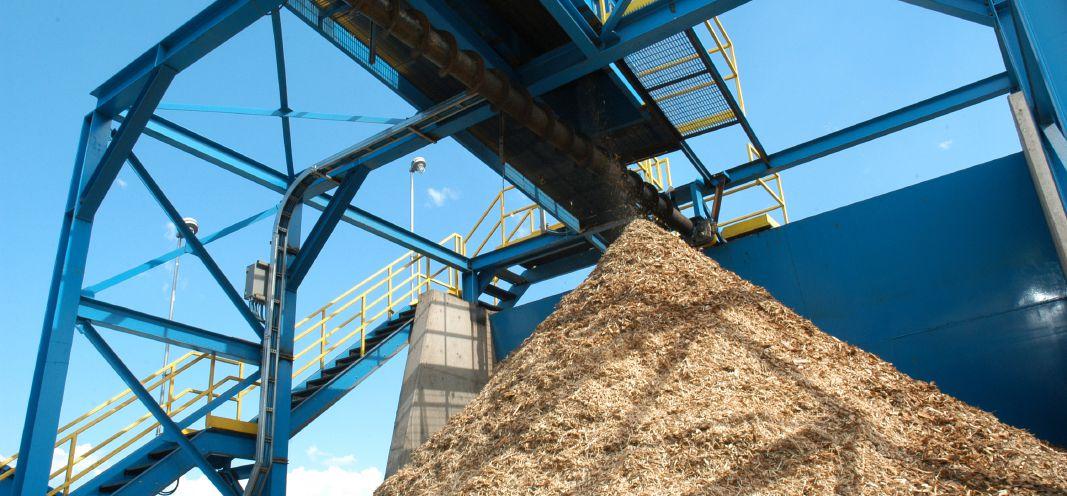
Biofuels sourced from forest waste have received a boost in recent months, with aviation fuels becoming the focus of a research project in B.C. and Ensyn Corp. receiving key regulatory approvals for its renewable gasoline and diesel products.
A consortium that includes Boeing, Air Canada, WestJet and Bombardier, as well as research institutions and industry partners, will assess whether forest waste could be harnessed to produce sustainable aviation biofuel using thermochemical processing. The University of British Columbia (UBC) and SkyNRG are also key partners in the project.
“Sustainable aviation biofuel will play a critical role in reducing aviation’s carbon emissions over the long term,” said Julie Felgar, managing director of environmental strategy and integration, Boeing Commercial Airplanes. “Canada is in a terrific position to leverage its sustainable forests to make environmental progress for its aviation industry and other transport sectors.”
A 2015 Boeing-sponsored study by UBC found that aviation biofuel made from forest waste could meet 10 per cent – about 175 million liters – of British Columbia’s annual jet fuel demand. These efforts could also supply biofuel to ground and marine vehicles, saving about 1 million tons of CO2 emissions per year on a life cycle basis across the transportation sector, the study found.
“By utilizing Canada’s strong forestry research expertise and the knowledge of industry collaborators, this project will contribute significantly to understanding the viability of forest residue-sourced biofuels,” said Teresa Ehman, director, environmental affairs, Air Canada.
The consortium is led by UBC and Noram Engineering and Constructors of Vancouver. Project partner SkyNRG, based in the Netherlands, is a distributor of sustainable jet fuel that offers an integrated feedstock-to-flight solution.
Across the Atlantic, the Swedish research institute Innventia is coordinating a collaborative research project called Lignojet that aims to establish lignin as a raw material in bio-based aviation fuel. The Swedish-Brazilian project brings together players along the
entire value chain: the Brazilian pulp producer Fibria, Karlstad Airport, LignoBoost Demo, Valmet and SP Process Development.
Innventia believes aviation fuel based on renewable raw materials can be produced cost-competitively by integrating production in the pulp mill, where there are already processes and equipment for dealing with large flows in a cost-effective way.
“It’s certainly true that bio-jet fuel made from various raw materials is already used, but here it’s a matter of also developing applications within products based on forest raw materials as quickly as possible,” says Karlstad Airport’s CEO Peter Landmark. “In this way we will gain a new local fuel industry, and with our current knowledge we should be able to fly using certified biofuel from forest raw materials within 5-8 years.”
Canadian biofuels developer Ensyn has been granted a key regulatory approval from the U.S. Environmental Protection Agency for its renewable gasoline product, RFGasoline. This “Part 79” approval under the Clean Air Act is required for the sale of RFGasoline into U.S. commerce. Ensyn’s renewable diesel product, RFDiesel, has also received this approval.
RFGasoline is a drop-in gasoline transportation fuel. It is created by processing Ensyn’s renewable crude (RFO), a liquid cellulosic feedstock for refiners, with customary petroleum feedstocks in conventional petroleum refineries, a process that Ensyn calls RFO coprocessing. Ensyn produces the RFO at its pyrolysis facility in Renfrew, Ont.
Ensyn is developing and commercializing RFO coprocessing in a strategic alliance with Honeywell UOP, a supplier of technology solutions for refining.
Conventional biofuel solutions are based on producing blend fuels, such as ethanol and biodiesel, that are blended with finished fuels post-refining. In contrast, Ensyn notes that its coprocessing solution provides refiners with a renewable feedstock and the result is ASTM-specification transportation fuel, not a blend.
In the skies or on the roads, biofuels are likely to make a splash in the next few years. PPC
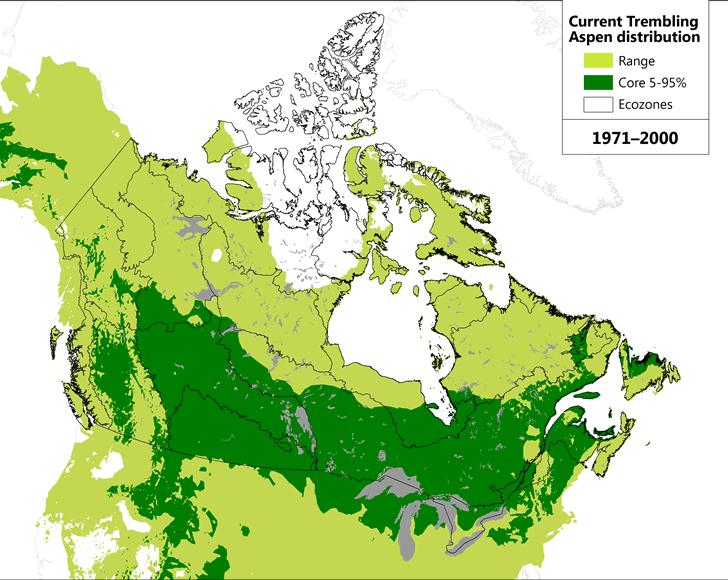
The consequences of warmer temperatures and weather disturbances will be most dramatic in British Columbia and the Western Boreal region.
By Cindy Macdonald, editor
Climate change is happening quickly, but forests adapt slowly. That’s the root of the problem that will challenge Canada’s forest industry for the next hundred years.
The effects of climate change will vary by region. It is believed that Canada will experience a greater rise in temperature than the predicted global average. During a webinar called Tracking Indicators of
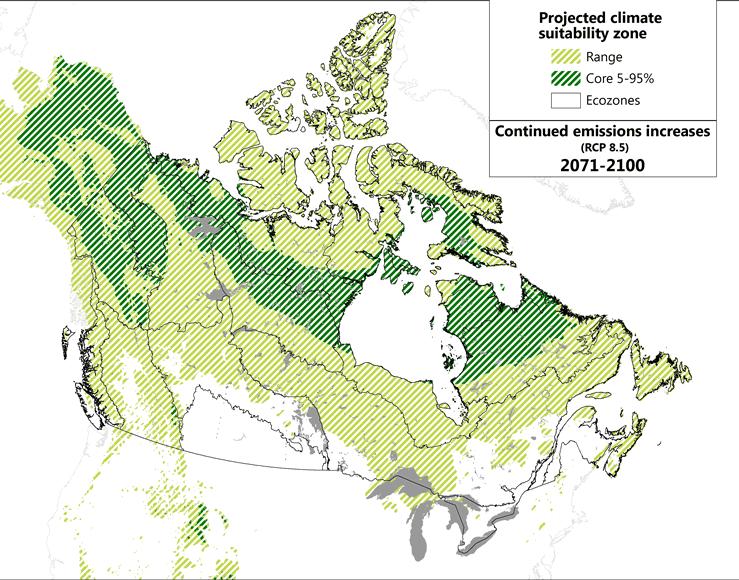
Change in January 2016, Dr. Catherine Ste-Marie of Natural Resources Canada noted that under a moderate climate change scenario, where global temperatures are expected to rise 3.2 degrees, Canada’s average is predicted to rise 5.6 degrees. Temperature increases are forecast to be greatest in the high Arctic, and greater in the central portions of the country than along the east and west coasts. Some results of climate change are already evident; the mountain pine bee-
tle infestation is the most obvious consequence, but there are others. More frequent forest fires, covering a larger range. Aspen dieback in Alberta.
The Canadian Forest Service has been doing research on climate change for decades. In recent years, much of this work has been channeled into a program called Forest Change. Dr. SteMarie explained that the goals of the Forest Change program were: tracking the effects of climate change, creating a suite
of tools to support decision-making, and performing assessments that could guide policy and future investments.
The Canadian Council of Forest Ministers has also supported research into climate change. In one of its early reports, Vulnerability of Canada’s tree species to climate change and management options for adaptation (2009), the lead author, M. Johnson, summarized: “Over the next several decades, the climate in Canadian forests will shift northward at a rate that will likely exceed the ability of individual tree species to migrate. While most tree species can migrate naturally up to a few hundred metres per year via seed dispersal, the climatic conditions in which each species thrives may move north by several thousand metres per year.”
“Tree species and genotypes will acclimatize, adapt, and migrate; however, in many cases, the rate and magnitude of future climate change may significantly exceed the ability of tree species to natu-
rally adjust,” he continued.
The vulnerability report outlines the following expected trends in species ranges:
British Columbia: There is likely to be a decline in spruce-dominated forests in the central and southern interior of British Columbia. Losses of sites suitable for interior Douglas fir are likely in the south beyond 2080.
Western boreal: According to most climate model projections, this region will undergo the greatest warming. In the north, warming will lead to the expansion of zones that are suitable for pine species over the short term, but by 2050, total areas suitable for pines will likely be less than present day. In the southern forestgrassland transition zone, warming and drying are likely to result in progressive stages of dieback. Drought-prone spruce will be lost first, followed by pines and then aspen, to be replaced by some form of prairie grassland.
Eastern boreal: There is likely to be an increase in productivity and relatively little
species loss, although spruces and birch may be out-competed by pine and aspen on drier sites. However, one study projects major losses of area suitable for black spruce and jack pine in central Ontario.
Southern Ontario, Québec, and the Maritimes: Species diversity in this region is high, and models project that by 2100, northward shifts of 250–600 km will occur in climate zones that are suitable for many hardwood species. Some of these species presently occur naturally only south of the U.S. border. Balsam fir is likely to disappear from Nova Scotia and most of New Brunswick, and shift north into northeastern Québec and Labrador.
There are efforts being made by foresters and researchers regarding selective breeding and assisted migration of tree species to counter the effects of climate change on Canada’s forests, but these do carry some ecological risk and are the subject of some ethical debate. Whether by nature’s hand or man’s, the forest landscape in Canada will change dramatically in the next 100 years. PPC
At FPInnovations, we’re so much more than researchers. We’re industry partners with the diagnostic solutions to help you improve product performance, reduce costs and add unique value. From technologies such as our state-of-the-art Web and Role Testing Centre and ISOcertified Optical Calibration Laboratory to on-site consultations, we’ve got your needs covered

fpinnovations.ca Follow
Stora Enso Poland is a market leader in the pulp and paper industry in Central and Eastern Europe. Core products include industrial papers, corrugated board and boxes. Headquartered in Ostrołeka, 120 kilometers northeast of Warsaw, its investment of more than EUR 500 million in recent years supports a focus on sustainable output/sustainability with lower fiber and energy costs.
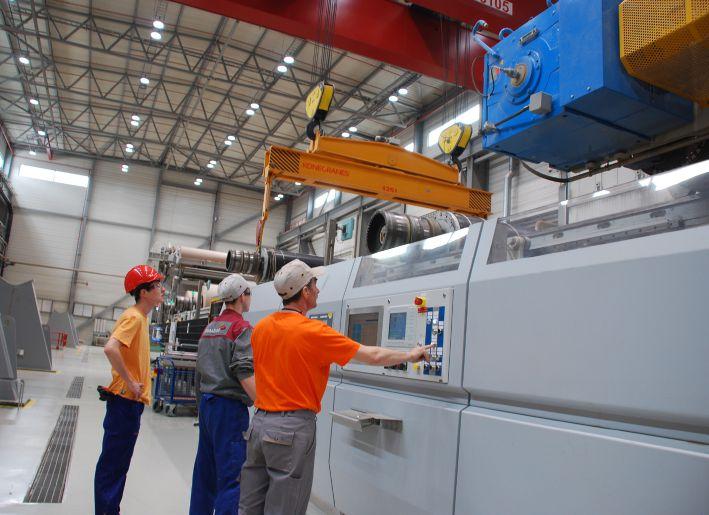
In May of 2013 Stora Enso Poland launched PM 5, a new 450,000 tpy lightweight containerboard machine. This fast, streamlined machine has quickly become
their centerpiece for lightweight board. It is a model for simplicity in board production.
PM 5 uses 100% recycled fiber primarily sourced in Poland, producing kraft-liner top, testliners, and fluting. Lighter weight grades of equal or higher strength are now the norm. In addition to the machine’s efficiency, the mill’s power plant makes it nearly energy self-sufficient.
Key innovations for PM 5 include lower-than-usual investment costs in civil engineering and construction, and its ability to produce high strength and smoothness in lighter weight grades.
By Martin Koepenick, Innova
“The usual massive basement beneath the new machine doesn’t exist,” says Witold Kostecki, Competence Center manager, Stora Enso. “Our civil engineering streamlining eliminated structural costs of around 17 million euro. Another bold step included installation of a compact POM approach system instead of the traditional massive silos, storage tanks and deculator. More capital costs were saved with this decision, but even better, the POM system improves quality and efficiency, and costs


less to run and maintain.
He continues: “We also dry from both sides, giving us superior flatness, providing better runnability for corrugating and printing.”
From a performance standpoint, the containerboard grades at SE Ostroleka all deliver what customers are demanding. This includes better stacking strength, burst strength, puncture and flat crush resistance.
Says Kostecki, “Consistent surface texture, smoothness, and color hue stability now happen routinely. With pinholes and impurities no longer an issue, imperfections in printing are rare. Because of our high flatness and dimensional stability, converters tell us that they are running faster and smoother on a consistent basis.”
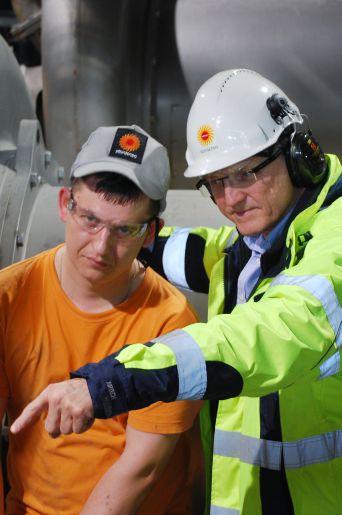
Adds Radosław Kopec, Stora Enso production manager, “With the POM system our team can push paper machine performance even higher. There is no substitute for stability to improve runnability. When contaminants don’t build up in silos and storage tanks, you not only run better today, but you have confidence for tomor-
row and beyond – even when the recycled furnish poses challenges.”
“Our operators also appreciate the efficient deaeration from POM Degassers, and management values the investment “not made” for the typical extensive mezzanine to support and house an expensive deculator.”
The POM compact approach system from Aikawa Fiber Technologies (AFT) includes very few components. Two POMix Stock Processors mix the stock. Three POMp Degassers dearate the whitewater. Two POMlock suction leg sealing units complete the basic system.
According to Risto Nykanen, project manager, AFT, “Stora Enso has improved drainage, cleanliness and quality, which are essential for consistency and high operating efficiency. We like to say that POM means ‘Peace of Mind’. You get more from less, and with ease. In addition, systems engineering of the entire approach flow, combined with training, makes a measurable improvement happen on a continuous basis.”
Nykanen points out that airless and gas-less short circulation is a central feature of POM. “When you eliminate flotation of dirt and pitch on air bubbles, less microbiological activity and flocs are the
norm. Extreme cleanliness produces quality not otherwise possible on a continuous basis. Problems like pinholes and other imperfections are no longer a concern.”
Some key benefits of the POM system are stability, controllability, cleanliness and energy efficiency. The technology has a small footprint, and can result in investment, operational and maintenance savings, according to Nykanen.
When there are no tanks with open surfaces to collect pitch and dirt, this means that smart whitewater fractionation results, saving fiber and filler. Says Nykanen, “Fast flow speeds actually keep the pipes clean, so that a stable process is maintained.”
According to Kopec, “In keeping with our desire to minimize chemical usage, we like the self-cleaning effect of the POM system. Defoamers are still needed, but only half the amount as before. Other productivity benefits include 75 per cent less wet end breaks, and much faster grade changes.”
“When you start up and stabilize faster, it’s easier to satisfy customers, who need a particular grade with short turnaround time. This matters a lot in an intensely competitive market,” Kostecki adds. PPC
Eighty-year-old cranes get a makeover
Demag Service has given two identical double-girder travelling cranes a makeover at the Albbruck-Dogern (RADAG) hydrolectric power station. Following extensive work on the drive and control systems, both of the overhead travelling cranes, which are now more than 80 years old, meet state-of-the-art requirements and ensure high availability to support the replacement of machine parts.
The two double-girder overhead travelling cranes were each equipped with a 150-t hoist unit and a cantilever crab to be able to perform repair work on the turbines and to replace machine parts. Besides the modernization of the drive systems for three motion axes, the customer also wanted the entire electric equipment on the cranes to be replaced and a crane control system with safety functions to be installed. The availability of one crane installation had to be ensured throughout the entire conversion phase.
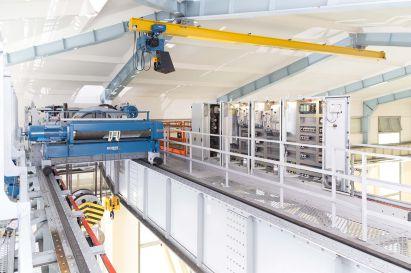
In order to lift the components, which weigh more than a ton, to the working level, Demag Service first installed an I-beam girder with a chain hoist below the building’s roof structure. This additional lifting device was the key for the logistics challenges at this construction site.
The first requirement involved the replacement of the drive units on both of the 150-t hoist units, which had an additional intermediate gearbox. Demag Service designed a shaft with which the output of the new hoist motor is transferred to the gearbox.
A railing was installed on the inside of the crane bridge as additional protection against falling. All work on the walkways had to utilise bolted connections, since the riveted steelwork precluded any welding due to the expected deformation caused by the higher temperatures.
The integration of many electronic components has enabled both overhead travelling cranes to bridge a technological gap of more eight decades. To this end, a Siemens S7 failsafe PLC was installed which communicates via Profibus and Profinet.
The hoist unit and supporting structure are protected against overloads by the electronic load detector. The load spectrum recorder records all loads on the hoist units during operation.
Thanks to the new control system, synchronized operation of both cranes is ensured in tandem mode for the main lifting and cross-travel motions. To do this, both cranes communicate over a reliable Profinet connection via an optical data transfer system. Terex Corp., www.demagcranes.com
FITNIR Analyzers launched the latest addition to its suite of process analyzers at the 2015 TAPPI PEERS conference in late October. FITNIR Kappa provides accurate and consistent pulp properties measurements within 20 seconds. The new unit
uniquely measures kraft pulp properties without requiring extensive sample preparation or the use of chemicals. “This translates into savings ranging from $150,000 to $250,000 per year,” says Tom Sands, president, FITNIR Analyzers.
The advancement of NIR spectroscopy has led to the development of an innovative solution for the quantification of true kappa number that steps up where traditional measurement techniques fall short. With FITNIR Kappa, wet pulp samples are simply washed with water and pressed into a pad. When combined with FITNIR Benchtop for pulp liquor analysis, a chemical-free laboratory is attainable.
Procurement applications and final product testing are also now possible. “FITNIR Kappa is the first of its kind to directly measure kappa number on dry pulp sheets without the use of chemicals, yet [it] can provide rapid, reliable and accurate results,” explains Thanh Trung, vice-president of technology. “The data from FITNIR Kappa lends itself to process optimization, ensuring the target product quality is reached and maintained.”
Many other possible parameters for improving product quality with FITNIR Kappa are in development, and applications are already available for Air Dry (AD) content. According to FITNIR, FITNIR Kappa represents a paradigm shift in how pulp properties measurement is done. Its simplicity reduces operatorto-operator variability, while providing faster, more accurate results for improved efficiency and profitability.
FITNIR Analyzers 604-221-2230, www.fitnir.com

Over 50 years of experience in Canada
Tech’s offices extend across Canada providing multidiscipline engineering and environmental Services for all industries including Pulp & Paper, Mining, Material Handling, Chemical, Oil & Gas, Municipal Infrastructure, Water, and Wastewater.
tetratech.com/canada
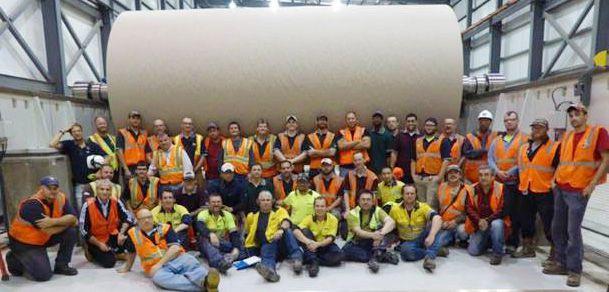
The first installation in North America of Valmet’s OptiConcept M board making line has successfully started up in Indiana. Pratt Industries’ Valmet-supplied containerboard production line, PM 16, came on stream on October 4, 2015, at their greenfield paper mill in Valparaiso, IN.
“PM 16 is one of the industry’s most efficient paper mills, employing 120 people to make 370,000 tons a year – twice the productivity of many competitor mills. It is the world’s most environmentally-friendly paper mill and a showcase for the latest in 21st-century papermaking technology,” says Anthony Pratt, global chairman of Pratt Industries.
The Valmet OptiConcept M board making line is designed to use less water, electricity and raw materials. “That’s important not only for our environment but also for our customers who realize the importance of sustainable packaging,” says Pratt.
Pratt Industries is one of the largest corrugated packaging companies in the United States.
Valmet 514-335-5426, www.valmet.com
Calender upgrade lets Holmen produce new paper grades
Voith has upgraded and successfully commissioned a paper machine at Holmen Paper in Braviken, Sweden, allowing the papermaker to produce various paper grades ranging from newsprint to sophisticated SC papers, including the recently developed Holmen UNIQ SC paper. UNIQ SC has a basis weight range of 43 – 50 g/ m2 and is suitable for magazines, catalogs and advertising supplements.
As part of the three-week upgrade to PM 53, Voith replaced the former EcoSoft calenders with a Janus MK 2 calender. The special design of this calender, featuring a 45° incline of the roll stack, meant that the existing Nipco rolls could be reused while achieving a 40 per cent higher line load. The MasterReel reel winder was relocated for reasons of space and fitted with a LunaReel rubber roll cover.
The special machine concept of the Janus
MK 2 calenders allowed the upgrade to be carried out quickly and efficiently. There was no need for major structural work in the building, as the new calender could be placed on the existing paper machine foundations thanks to the 45° incline of the roll stack, putting it on the same level as the paper machine. The inclined stack configuration also provides further benefits, says Voith, such as reduced susceptibility to vibrations, shorter roll change times and very good access.
Holmen production manager Jenny Melander says the paper was of a very good quality directly after startup. The rebuild allows Holmen Paper to enhance its flexibility, because PM 53 can switch the calender between single, double or multi-nip operating modes at any time without interrupting production, enabling it to produce paper qualities ranging from matt to glossy and from low to high density.
Voith Paper, www.voith.com/paper
Kadant receives order for recycled fiber processing line Kadant Inc. has received an order totaling approximately US$7 million from a paper producer in Southern Europe for recycled fiber processing equipment to be used in conjunction with a paper machine conversion. The machine is to be converted from printing and writing grades to packaging grades.
“We are pleased to have been selected to provide this turn-key recycled fiber processing line for a major rebuild project in Southern Europe,” commented Jonathan W. Painter, president and CEO of Kadant. “This rebuild is significant in that it is part of a broader trend of converting a machine’s production from printing and writing grades to containerboard used for packaging. As these types of conversions make increasingly more economic sense to the paper industry, Kadant is well positioned to leverage its expertise and broad product offerings used in containerboard production.”
Kadant, www.kadant.com
Bleaching chemicals plant starts up in Quebec
Hydro Technologies (Canada) Inc., a supplier of high-performance bleaching solutions for the pulp and paper industry, has completed the construction and start-up of its new plant in Quebec, Que., less than two years after originally announcing the $20-million investment.
Hydro Technologies produces HY BRITE® bleaching liquors, which contain sodium hydrosulfite (SHS).
“We are extremely satisfied to have completed such a major project in so little time and within budget; we are even happier to have a plant that exceeds our expectations in terms of products manufactured and operational reliability,” said president and general manager Michel Crête. Quadra Chemicals Ltd. 800-665-6553, www.quadra.ca
Sliding vane pumps offer 180-degree
Blackmer has added the NPH and XH Series sliding vane pump models to its product line. The feature that sets these pumps apart from the competition is the choice of 90- and 180-degree porting. This gives the NPH and XH pumps a high level of operational flexibility.
Blackmer, blackmer.com




FPInnovations partners with Naturex on forest-derived molecules
Active molecules derived from Canadian forest biomass for food processing and cosmetics applications are the objective of a strategic partnership between FPInnovations and Naturex, a global leader in specialty plant-based natural ingredients.
FPInnovations is a research and development organization focused on the forest products sector. It will ensure access to Canadian forest biomass and contribute additional expertise in extractable wood derivatives.
Naturex’s ability to identify and extract natural active ingredients will be deployed to demonstrate the potential of this biomass.
Antoine Bily, Naturex’s chief research and development officer, says the collaboration is a great example of open innovation. “Trees of the Canadian forest represent an enormous reserve of innovative active molecules, both in terms of volume and biodiversity,” he adds.
Enerlab 2000 will receive an investment of $500,000 over four years to pursue the development of iso-lignin, a biopolymer based on lignin.
Making the announcement, Laurent Lessard, Quebec’s Minister of Forests, Wildlife and Parks, said the iso-lignin technology is unique in the world.
In all, $2.5 million will be invested in the project to commercialize this technology.
Enerlab 2000, located in Saint-Mathieu-de-Beloeil, Que., specializes in polyurethane insulation systems.
The renewable attributes of nanocellulose will promote its increased adoption, concludes a new report from Transparency Market Research. According to Transparency’s nancellulose market report, the global nanocellulose market was valued at US$54.9 million in 2014 and is anticipated to reach US$699.6 million in 2023, expanding at an annual growth rate of 33.8% between 2015 and 2023.
Extensive financial and technical support from government and research organizations has been the key factor driving the nanocellulose market in the recent past, says Transparency, particularly in North America and Europe.
The superior structural strength of nanocellulose has been another key factor for the growth of this material. However, according to the report, technical and economic issues such as high production costs, plant scaling up, and lack of product standardization and quality are likely to hamper market growth.
Nanofibrillated cellulose was the largest product segment, accounting for more than 50 per cent of the global nanocellulose market in 2014. Nanofibrillated cellulose is used in various end-user industries such as composites, paper processing, pharmaceutical, paints and coatings, and oil and gas.
Nanocrystalline cellulose held the second-largest market share in 2014. This material is used in biocomposites, food and beverages, paints and coatings, packaging films, and textiles.
Biomaterials were in the spotlight in Sweden in the final weeks of 2015. Stora Enso inaugurated a new Innovation Centre for biomaterials in Stockholm and several organizations announced their intention to form an open “test bed” called LignoCity where companies can develop and scale up technology that refines lignin to climate-friendly fuels, chemicals and materials.
Stora Enso’s Innovation Centre for biomaterials will host research, applications, business development and strategic marketing under one roof. “Specifically, the centre will help to boost innovation by identifying business opportunities in the markets for renewable materials and bio-based chemicals. We will link our own expertise with leading research centres, universities and business partners,” explains Arno van de Ven, senior vice-president and head of innovation in Stora Enso’s Biomaterials division.
Currently, there are 40 people working in the centre. It is estimated that by the end of 2017 it will employ about 100 people, recruited both from inside the company as well as externally. Stora Enso is a global provider of packaging, biomaterials, wood and paper.
LignoCity, a new centre for green technologies and the forest-based bioeconomy, is a collaboration of Innventia, Nordic Paper and Paper Province. Innventia’s demonstration plant in Bäckhammar will be further developed and made into an open test bed for companies who want to evaluate and validate new refining concepts in the lignin area. The plant is currently the only one in the world that can produce tailor-made lignin qualities in sufficient quantities for upscaling.
The project involves 18 industrial and public players.
“With LignoCity, we are bringing together business models, technological development and infrastructure for research, development and innovation. In the long term, we also hope to be able to extract other components from the black liquor and tackle other process streams,” says Per Tomani of Innventia, manager for the LignoCity project.

Store, reclaim, convey and feed biomass and alternative fuels directly into boilers and kilns.
Chip screening, air density separation and overthick chip conditioning or sizing for digester optimization. Primary and secondary crushing as well as multiple feeder options to process wood and biomass.
Support for biomass energy generation from truck/rail receiving through metered infeed into the boiler.







Enzymatic technologies are transforming how pulp, paper, tissue and packaging products are made — boosting performance, profitability and sustainability for mills around the world.
As the global leader in the field, Buckman can help your mill enter the Enzymatic Age, too.




Our Maximyze® line for fiber conditioning, Optimyze® line for stickies control and Buzyme® products for deposit control can give your mill the economic and environmental advantages it needs to compete successfully for years to come.


GRAB THE LEADING EDGE. To learn more about enzymes and how they work, request a free copy of The Leading Edge — How Biotechnology is Taking Pulp and Paper Mills Into the Future. Just email us at knetix@buckman.com or contact your Buckman representative today!