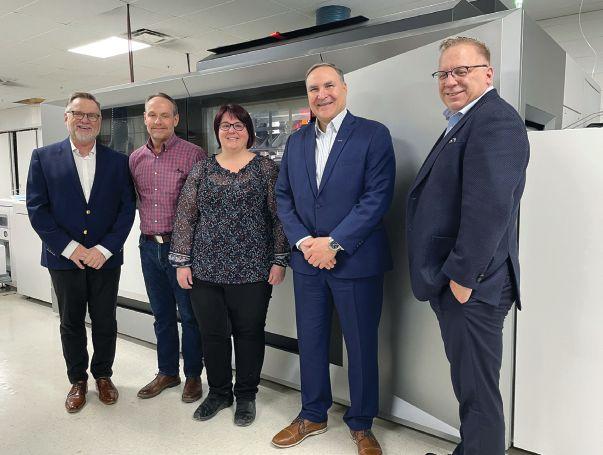
26 Marilène and Caroline Fournier, co-presidents, Imprimerie Ste-Julie
COLUMNS
FROM THE EDITOR
4 Nithya Caleb AI goes mainstream
INSIDER
8 Bob Dale, Heather Black, and Phil Klugman
Trouble recruiting talent?
CHRONICLE
10 Nick Howard
An unresolved shell game
TECH REPORT
AI goes mainstream
AUBS study, as quoted in a recent Reuters report estimated ChatGPT, a chatbot by OpenAI, an artificial intelligence (AI) research and deployment company, hit 100 million monthly active users within two months of launch, making it the fastest-growing consumer application in history.
customers can then connect that data to OpenAI’s advanced AI models out of the box or choose their own external model and use natural-language prompts directly within their Salesforce CRM to generate content that continuously adapts to changing customer information and needs in real time.”
Reader Service
Print and digital subscription inquiries or changes, please contact Angelita Potal 416-510-5113 apotal@annexbusinessmedia.com Fax: 416-510-6875
Mail: 111 Gordon Baker Road, Suite 400, Toronto, ON M2H 3R1
Bob Dale, Heather Black, Phil Klugman, Nick Howard, Treena Hein, Angus Pady and Scotty Graham
OpenAI launched ChatGPT in November 2022.
With the ability to generate articles, essays, poems, jokes, etc. based on user prompts, ChatGPT has begun changing content creation and marketing. However, the chatbot has been criticized for providing false and misleading information as well as biased, offensive, and objectionable opinions. Open AI admitted the model was from perfect.
In a blog post, the company said, “Unlike ordinary software, our models are massive neural networks. Their behaviours are learned from a broad range of data, not programmed explicitly. Though not a perfect analogy, the process is more similar to training a dog than to ordinary programming. An initial “pre-training” phase comes first, in which the model learns to predict the next word in a sentence, informed by its exposure to lots of Internet text (and to a vast array of perspectives). This is followed by a second phase in which we “fine-tune” our models to narrow down system behaviour.
“As of today, this process is imperfect. Sometimes the fine-tuning process falls short of our intent (producing a safe and useful tool) and the user’s intent (getting a helpful output in response to a given input). Improving our methods for aligning AI systems with human values is a top priority for our company, particularly as AI systems become more capable.”
Salesforce
In early March, Salesforce launched Einstein GPT, the world’s first generative AI CRM technology. It has also established a $250 million generative AI fund to bolster the startup ecosystem and spark the development of responsible generative AI.
According to a media release, “Einstein GPT will infuse Salesforce’s proprietary AI models with generative AI technology from an ecosystem of partners and real-time data from the Salesforce Data Cloud, which ingests, harmonizes, and unifies all of a company’s customer data. With Einstein GPT,
Ethical issues
The rise of generative AI has forced society to examine the ethics governing these technologies once again. In an article in the Conversation, Jordan Richard Schoenherr, assistant professor of Psychology at Concordia University, highlights two issues: cultural appropriation and plagiarism. He questioned whether ChatGPT or DALL-E, an AI system that can produce realistic images and art, could be called creators, considering that the responses from these chatbots are the result of “assimilating and combining divergent patterns from different artists.”
“By scooping up these products through a process of analysis and synthesis, we can ignore the contributions and cultural traditions of human creators. Without citing and crediting these sources, they can be seen as high-tech plagiarism, appropriating artistic products that have taken generations to accumulate,” he wrote.
In a discussion with Calum Chace, an AI expert and Forbes columnist, Francesca Rossi, IBM’s AI Ethics Global leader, explains how the tech industry is planning to mitigate the risks associated with AI. One possible solution would be “adding filters to the output of generative AI systems, using Reinforcement Learning from Human Feedback, which leverages the human ability to identify preferred content, instead of relying entirely on automated training signals.”
Chace said some people are hoping “neuro-symbolic AI can contribute sufficient fact-checking and error correction process without human intervention.”
Regardless of how the private sector decides to make AI responsible, it’s imperative world governments create regulations to ensure the technology is safe, inclusive, and reliable.
NITHYA CALEB Editor
ncaleb@annexbusinessmedia.com
Media Sales Manager
Kim Barton kbarton@annexbusinessmedia.com 416-510-5246
Media Designer Lisa Zambri lzambri@annexbusinessmedia.com
Account Coordinator
Alice Chen achen@annexbusinessmedia.com 416-510-5217
Audience Development Manager Urszula Grzyb ugrzyb@annexbusinessmedia.com 416-510-5180
Group Publisher/VP Sales Martin McAnulty mmcanulty@annexbusinessmedia.com
President/COO Scott Jamieson sjamieson@annexbusinessmedia.com
Subscription rates
For a 1 year subscription (six issues): Canada — $43.00 +Tax Canada 2 year — $70.50 +Tax United States —$98.00 Other foreign —$191.00 All prices in CAD funds
Mailing address
Annex Business Media
111 Gordon Baker Rd., Suite 400, Toronto, ON M2H 3R1 Tel: 416-442-5600 Fax: 416-442-2230
Occasionally, PrintAction will mail information on behalf of industry related groups whose products and services we believe could be of interest to you. If you prefer not to receive this information, please contact our Audience Development in any of the four ways listed above. Annex Business Media Privacy Officer Privacy@annexbusinessmedia.com 800-668-2384
PrintAction is printed by Annex Business Media Printing on Creator Gloss 80lb text and Creator Silk 70lb text available from Spicers Canada. ISSN 1481 9287
Mail Agreement No. 40065710
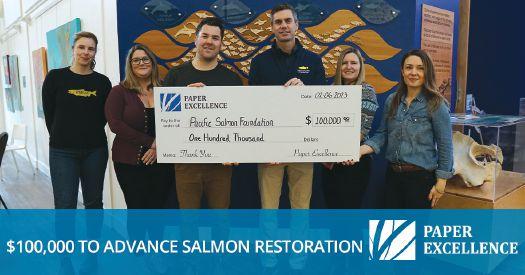
Paper Excellence Canada gifts $100,000 to the Pacific Salmon Foundation (PSF) to boost efforts to conserve and restore Pacific salmon populations across B.C. Paper Excellence’s donation will support PSF’s Community Salmon Program, which awards hundreds of grants to grassroots salmon conservation projects across B.C. and the Yukon each year. The gift will be distributed through grants in communities where Paper Excellence operates to help advance community-driven stewardship initiatives at a local level.
R.R. Donnelley & Sons Company (RRD) enters into a share purchase agreement with Data Communications Management (DCM), a provider of marketing and business communication solutions. Under the terms of the purchase agreement, DCM will acquire all the issued and outstanding shares of Moore Canada Corporation, a wholly owned subsidiary of RRD.
Friesens joins the newly launched Canadian Employee Ownership Coalition (CEOC). Chad Friesen, CEO of Friesens, joins CEOC as a member of the steering committee. This non-profit has a mission to bring the multi-billion-dollar wealth-building benefits of employee-ownership to Canada. Friesens has been employee-owned in various forms since the 1950s.
Xitron is collaborating with Ultimate TechnoGraphics of Montreal. Ultimate’s Impostrip software will now be the imposition option incorporated into Xitron’s Navigator Workflow. According to Paul Napolitano, Xitron’s Navigator Workflow product manager, Impostrip offers broad functionality with various levels of automation, making it the optimum imposition choice for pairing with Navigator.
All Printing Resources (APR) opens its first Canadian office in Ontario. Jeff Dancer has been added to the APR team to support this new facility. He will lead the team as director of the Canadian division. APR provides the flexographic printing industry with a complete range of solution-oriented products and services.
Supremex, a North American manufacturer and marketer of
envelopes and a provider of paper-based packaging solutions, acquires Impression Paragraph, an integrated provider of paperbased packaging, print and point-of-sale products for a broad range of commercial markets. The transaction was concluded for approximately $26.6 million, on a cash-free and debt-free basis.
Huge Paper, Toronto, signs an agreement with Magnum Magnetics, one of the largest magnetics manufacturer in the U.S., to distribute Magnum’s magnetic media products to commercial printers across Canada. Products include flexible magnetics (aka rubber magnets), printable magnetic sheeting and magnetic rolls, magnetic strips and tapes, and extruded magnets. Common applications include commercial print, wide-format/ decorative signage, POP/retail displays, menu boards/take-out menus, calendars, sports schedules, vehicle signage, outdoor banners, and building wraps.
GEW will be represented for its label and narrow web retrofit
business across Canada by DTM Flexo Services. Spare parts and services for Canada will continue to be supplied by GEW.
Electronics For Imaging (EFI) appoints Frank Pennisi, a veteran of the industrial and technology sectors, as CEO. In tandem, EFI’s Fiery business unit has been separated as an independent company that will remain wholly owned by Siris Capital Group. As separate companies, EFI and Fiery will have distinct areas of strategic focus that will enable them to serve their customers better and grow over the long-term, with EFI in industrial inkjet and Fiery as a digital front end (DFE) provider.
Alwan Color Expertise signs distribution agreement with ColorConsulting USA. As part of the agreement, ColorConsulting will support Alwan’s existing customers and network of dedicated consultants and resellers in North America.
A small group of people at the Guiding Light initiative from Austria have launched the #bravehood campaign to help children affected by the Russian-Ukraine war by selling T-shirts, hoodies, and other items created with the help of their print-on-demand partner Printful. This merch would be created with iconic song lyrics and all proceeds will be donated to UNICEF. Coldplay, the Rolling Stones, R.E.M., Nick Cave, Paul Simon, Garbage, Dolores O’Riordan from the Cranberries, Dido, Glen Hansard, Natalie Merchant, and Wir sind Helden have provided their lyrics to this campaign.
Paper Excellence Canada donates $100K to the Pacific Salmon Foundation to advance salmon conservation in B.C.
Jeff Dancer
Printful partner campaign for Ukraine earns celeb support.
Friesens joins Canadian Employee Ownership Coalition
Huge Paper secures Canadian distribution rights for Magnum Magnetics.
Flint Group appoints Robert Welford as president of Xeikon, its digital division. Welford joined Xeikon in September 2018 when he took over the management of research & development, with a broad remit overlooking the engineering operations, the ink and toner competence centres, and the print process and project management office. As the new president, he will further leverage these competencies.
Canon Canada appoints Isao “Sammy” Kobayashi as president and CEO. He succeeds Nobuhiko Kitajima, who is retiring after a successful 42-year career with the global Canon organization. Kobayashi holds a degree in political science and economics from Meiji University in Japan. He began his career with Canon in 1990 in a sales rolen and progressed successfully. In 2022, Kobayashi was promoted to senior vice-president and was named as an executive officer of Canon.
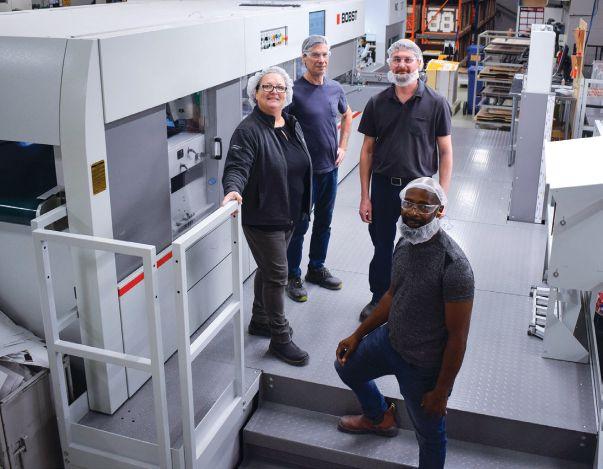
The Jones Healthcare Group installs a Bobst Novacut 106 ER flatbed die-cutter in their facility in London, Ont.
Durst appoints Chuck Slingerland as new corrugated sales manager for Durst North America. In this position, Slingerland will continue to focus on and grow Durst’s, and Koenig & Bauer Durst’s, presence in this critical part of the industry. Slingerland brings over two decades of experience in the packaging industry, from flexography to sales.
Roland DGA makes three key changes to its leadership team under new president Amado Lara. Dan Johansen has joined Roland DGA as vice-president of sales. Prior to joining Roland DGA, Johansen, a sign and graphics industry veteran of more than 22 years, served as U.S. director of sales and marketing for industrial printing at Ricoh USA. Sid Lambert , who has been with Roland DGA for more than 18 years, has been promoted to sales director. He will be responsible for digital print division sales in North America and South America, excluding Brazil. Dan Wilson , who has held several positions at Roland DGA over the last 16 years, serving most recently as marketing director, has been promoted to vice-president of marketing and customer development. In his new role, Wilson’s responsibilities centre around driving demand for the company’s product offerings.
Marquis commissions a brand new Heidelberg Speedmaster XL 106 LED UV press at its Montmagny, Que., plant.
PDI, Que., has invested in one of the latest innovations in sheetfed inkjet technologies from Canon, the VarioPrint iX3200.
April 16-19, 2023
Forum 2023
Columbus, Ohio
April 17-18, 2023
InfoFlex 2023 Columbus, Ohio
April 19-21, 2023
PPC’s 2023 Spring Outlook & Strategies Conference Nashville, Tenn.
April 26-27, 2023 Wrap Fest Silverstone, U.K.
May 10-11, 2023
Xeikon Cafe North America Elgin, Ill.
May 11-13, 2023
Graphics Canada Expo Toronto
May 23-26, 2023
FESPA Global Print Expo Munich, Germany
While you may be looking for a ‘self-starter,’ new employees will require information, tools, and guidance to succeed.
Trouble recruiting talent?
Top five hiring practices to attract the best in industry
By Bob Dale, Heather Black, and Phil Klugman
f 2022’s biggest hurdle was supply chain issues, then 2023 is going to be bench strength. Today’s candidates are doing their due diligence on the companies they are considering, such as asking peers, searching social media platforms, and checking LinkedIn, Glassdoor, etc. It’s important owners clearly understand their current company culture and make the necessary improvements. Your offer must be more attractive than your competitor’s, so here are the top five things to do.
1. Define your company’s brand strategy
• What is your company’s value proposition?
• Why work here? Is it ‘fun’?
• What is your onboarding process, from interview to first day on the job?
• What is your plan to make the company more diverse and inclusive?
• Make your opportunity exciting because if you’re not thrilled about your company, how will someone else be.
require information, tools, and guidance to succeed.
• Why do staff want to help customers and contribute to your company’s success?
• Younger employees may need more social support because they missed the level of social interaction they had at school. Offering department managers more discretion and a small budget for monthly or quarterly pizza lunches boosts morale.
3. Is there a career path for the right candidate?
• What learning and development opportunities does your company offer? Young people would appreciate the opportunity to diversify rather than be stuck at one role.
4. Pay equity transparency
• Young workers will share pay information, so develop a formal salary structure.
rewards for high performers. Take into account individual and team contributions when planning compensation programs.
5. Early discussions with prospective employees must include life/work balance
• This can be demonstrated before initial engagement and be as simple as an email tagline. We know printers whose email messages convey information about respecting employees’ personal time or highlighting they work four-day work weeks and providing details to reach them after work hours.
If 2020’s biggest hurdle was revenue and 2021-22 was supply chain issues, then 2023 is going to be bench strength.
• Differentiators may be more than price, quality, and service. One reason an employee was attracted to our firm was due to our ‘corporate social responsibility’ programs.
2. What are your expectations and how will there be support for them to succeed?
• While you may be looking for a ‘self-starter,’ new employees
• Historically, the perception is that labour is the most controllable variable in the accountant’s arsenal. However, human resource does not provide that form of guarantee or direct RO, and a strong business case can be made for fair wages.
• Consider a leveraged compensation model that is similar to sales plans with goals, shared risk, incentives and
• As with successful sports teams, many championships are won due to motivation that focus on teamwork and not individual skills. While these recommendations may appear to shift the company’s priorities on the newest employees, these are all best practices that are important to achieve long-term success. These suggestions may come with a price tag that must be reflected in your cost of doing business.
Bob Dale, Heather Black, and Phil Klugman are with strategic consulting firm Connecting for Results. They can be reached at info@connectingforresults.com.
www.mullermartiniusa.com
An unresolved shell game
The bankruptcy of Gaston Lefebvre’s Printing Material, Canada’s largest in the printing supply sector
By Nick Howard
he Seventh Educational Graphic Arts Exposition took place with great fanfare at the New York Coliseum in Manhattan. From September 6 to 12, 1959, the city of New York hosted what was billed as America’s largest graphic arts fair since the late 1940s. To take advantage of the over 200,000 visitors, a rival show, Spectra ’59, was organized to run consequently, and within walking distance, at the New York Trade Show Building. However, this odd set of events would take a back seat to the commotion at the booth of Montreal-based firm Printing Material.
TGaston Lefebvre, the 36-year-old owner of Printing Material, was the Canadian agent for Polygraph-Export, which included exclusive selling rights for all graphic arts products produced in the German Democratic Republic (GDR). By all accounts, he was well educated, with a B.Comm degree from McGill University and a sales pitch that could convince most printers to hand over their cash. To crack the U.S. market, Lefebvre deviously booked space at Spectra ’59 and installed a Universal Webmaster RZO (offset half-web made in Leipzig, GDR) at his booth.
You’ve stolen our press!
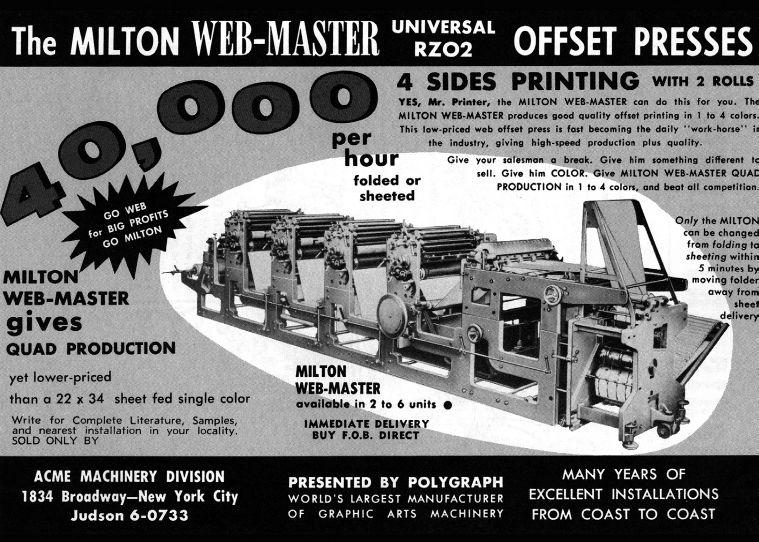
Not surprisingly, there was already a Webmaster RZO dealer in the U.S.— the Acme Litho-Plate Graining Co. Acme was owned by New York-based Milton Berg, who, in 1949, craftily chartered a ship loaded with wastepaper from New York to the East German port of Rostock. Berg then bartered the paper, desperately need-
ed by East Germans, in exchange for machinery made by Planeta, Brehmer, Universal, and Perfecta. The Universal, quickly renamed the Milton, was being displayed at Acme’s booth at the 1959 Graphic Arts Exposition. Since 1950, Berg’s company had been the official U.S. importer of over 53 lines of Polygraph machinery produced in the GDR. Planeta was the diamond of the bunch, and since 1954, Berg had successfully racked up U.S. sales of the popular Planeta PZO-6 and PZO-7 presses (49 and 55 in., two-colour) while at the same time reminding prospective clients that Planeta had indeed designed and sold its drawings to the English firm George Mann. The resultant 1932 design facsimile known as the “Mann Fast-five” had then seen brisk sales all over the U.S. through local agent, American Type Founders.
Where did the money go?
It wasn’t long before Berg caught wind of the cheeky Canadian. He showed up at Lefebvre’s booth yelling, “You’ve stolen our press!” and sharing with passers-by the lurid details of the betrayal. This incident ironically helped expose what would soon become Canada’s largest bankruptcy among printing industry suppliers.
After the dust settled, a $4 million deficit (worth $41 million today) would be uncovered.
In 1943, Printing Material, trading as Matérial d’Imprimerie Ltée in Quebec, was a subsidiary of Lefebvre & Sorin Ltée, a company formed in 1937 by Lefebvre’s father, Achille.
In 1955, Lefebvre gained sole ownership and immediately sought to take advantage of the growing Canadian printing industry by lining up many European graphic arts agencies, such as Kiekebusch, Grafopress, Nebiolo, Koenig & Bauer, Johannisberg, Sadolin & Holmblad, Buhler Bros (Swissplex), GMA Tirfing, and Parisolith.
In 1957, Montreal firm Barer Engineering & Machinery, which held the Canadian rights to all East German machinery, agreed to sell Polygraph-Export rights along with their remaining inventory to Printing Material. Now with even more lucrative lines to sell and at exceedingly low prices due to East German companies’ desperate need for hard currency, Lefebvre signed crazy deals, offering long-term repayment plans, extending credit, and inflating the value of trade-ins, and basically anything to secure a sales contract. The financing firms of the day were delighted to
Gaston Lefebvre became the sole owner of Printing Material in 1955.
An ad by Acme Machinery. PHOTO: NICK
extend loans to Printing Material after they saw the potential of fat margins on East German equipment. All Lefebvre needed was to show a copy of a sales contract along with a customer deposit. Air travel back and forth to Europe and California, expensive hotels, and fast cars became a part of Lefebvre’s life: an addiction that has been the downfall of many salesmen.
A ponzi scheme
As debts piled up, Lefebvre felt the screws tightening and pushed his sales staff to write contracts with even more generous terms to appease bankers. The ruse worked for months, but there would be no escaping reality. On the surface, Printing Material was a successful venture ensconced in a palatial building on Montreal’s Park
In 1957, Printing Material acquired the sales rights for Polygraph-Export.
Avenue and employing over 80 people. The dam finally burst on October 28, 1959, when Lefebvre orchestrated a “voluntary bankruptcy with only hours to spare.” Over 520 creditors discovered they’d be whistling for pennies on the dollar and had been duped by Lefebvre’s hyperbole. Polygraph-Export had the most to lose and flew a representative to Montreal to salvage remaining inventory, but their $608,000 ($7 million today) had already vapourized.
Further bad news awaited the appointed receiver when substantial cash sums paid to the company by finance companies “were never entered in the company books,” and individual sales were “financed not only once, but twice, and, in some cases, three times.”
Oddly, Lefebvre was listed as a creditor, but he would vanish from the scene by the end of November, after transferring his house in the affluent town of Hampstead, outside of Montreal, to his brother-in-law.
The saga of Printing Material
would haunt the industry for years to come. On a personal note, my father had to look for a new job after the sudden bankruptcy.
Lefebvre never materialized again nor did the money. To add insult to injury, the Statler Hilton Hotel in New York never got paid for Lefebvre’s stay during Spectra ’59.
Milton Berg, on the other hand, had some terrific years selling East German machinery. By 1957, he had delivered 135 Universal RZOs alone. Still, by the end of 1960, he relinquished his agency to Royal Zenith.
Royal Zenith would hold on to the agencies until 1990 when Koenig & Bauer purchased Planeta and the Iron Curtain finally imploded under its weight.
HOWARD, a partner in Howard Graphic Equipment and Howard Iron Works, is a printing historian, consultant and Certified Appraiser of capital equipment. nick@howardgraphicequipment.com
NICK
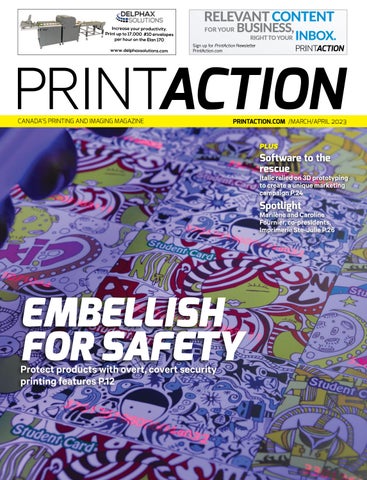
Functional embellishments are making products safer and more universally accessible.
SAFE, SECURE AND UNIVERSAL
Functional embellishments are making products safer and more accessible
By Treena Hein
Functional embellishments are “a big game changer,” according to Kevin Abergel, founder of Florida-based digital embellishment marketing company Taktiful. He believes ‘functional’ is the next logical place for print.
Tamir Hativa, head of Indigo Secure at HP, points to a Smithers report that found the global market value for security printing is expected to hit US$36 billion this year, up from US$29 billion in 2019.1
According to Smithers, the conflict in Ukraine, the energy crisis and high inflation have contributed to a
weakening of the global economy and disruption of supply chains. Opportunities to trade in fake goods are being exploited by criminal organizations. The rise of influencer marketing has been accompanied by an increase in counterfeit goods.
“The industry is diversifying to incorporate an ever-wider range of features to serve the needs of different actors and accommodate diverse use cases,” Hativa says.
One of the main applications of security printing is advanced brand protection by using various print features to demonstrate the authenticity of a product. This also helps keep low-quality or even potentially dan-
gerous, counterfeit goods out of the supply chain, explains Hativa.
Additionally, various security print features on the forms and other documents used by governments, regulators and other bodies are already widely used in some instances for proper document authentication and tracking.
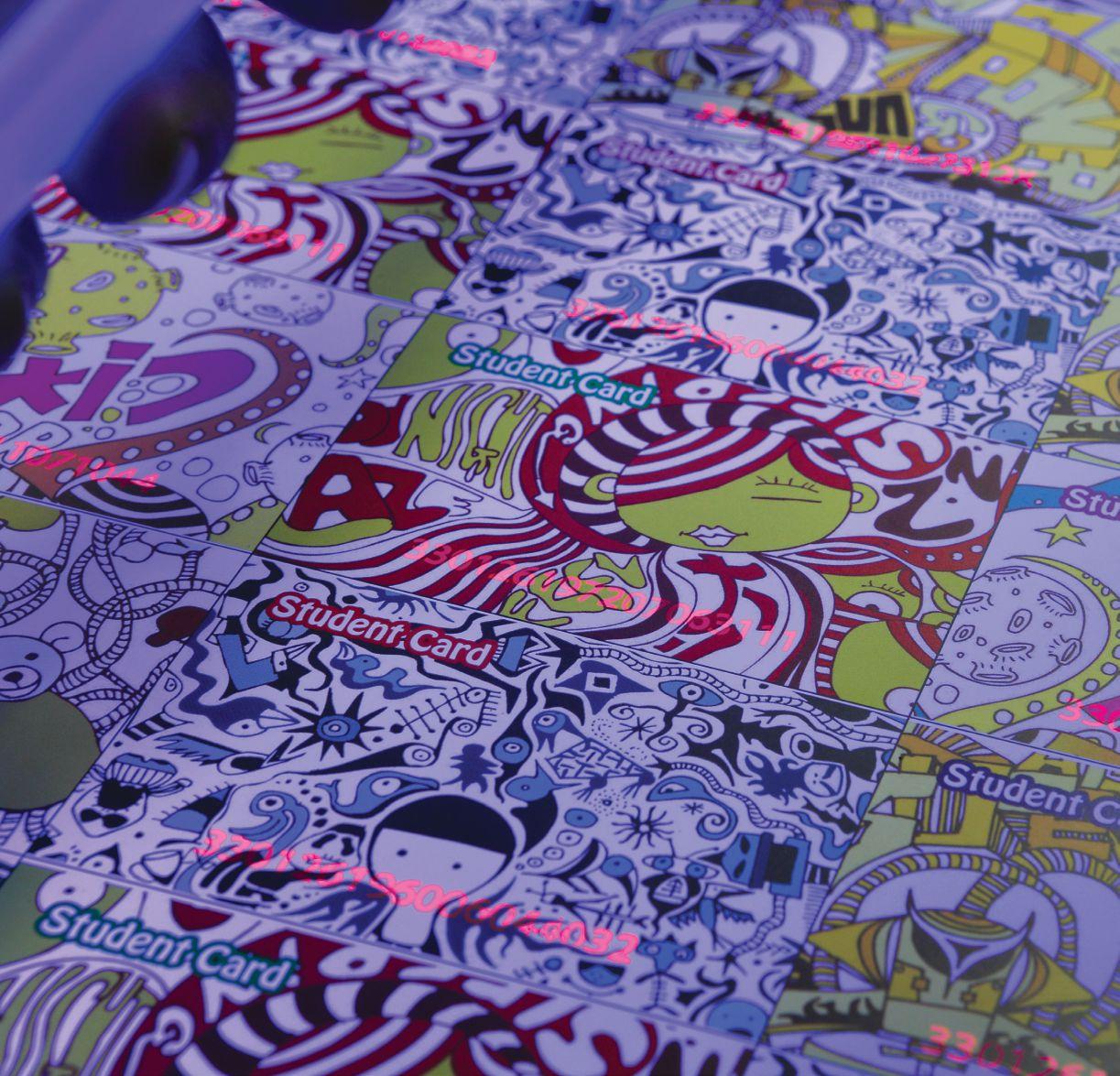
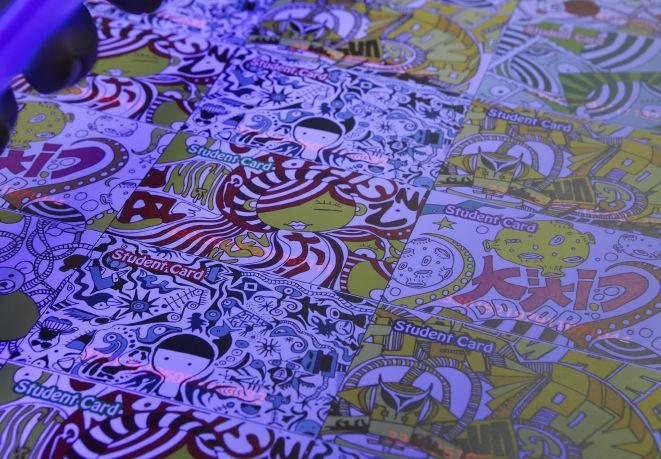
HP Indigo digital printers offer overt security features, such as holograms and colour-shift inks; semi-covert ones like QR codes or microtext to be authenticated with another device; covert features such as invisible inks, which are authenticated by experts or purpose-built devices; and forensic-level features that are de-
tectable only in a lab and authenticated purely by expert inspectors.
Even a decorative foil on its own can inherently offer a low-level security feature in some applications, explains Jeff Peterson, executive director of Foil & Specialty Effects Association (FSEA). For example, a plainly printed item such as an event ticket can easily be copied and printed illegally, but you can’t print one with a decorative foil.
Peterson credits digital inkjet embellishment tech for increasing the use of functional embellishments. The technology has made it easier to put raised features on various types of packaging and/or labels.
HP Indigo digital printers offer several security features like holograms, colour-shift inks and QR codes.
Security printing helps protect the brand as well keeps counterfeit goods out of the supply chain.
He adds, “Some digital printer companies are now offering a fifth colour on their new models, which allows you to use a metallic or iridescent ink to add a security feature or other types of applications.”
Accessibility
Beyond security, another huge area for functional embellishments is accessibility. At the forefront of this is CyR.U.S. Raised Universal Symbols, the first, and only, modern tactile language designed to give the over 2.2 billion people in the world with some or total vision loss more independence, safety, and enjoyment of life.
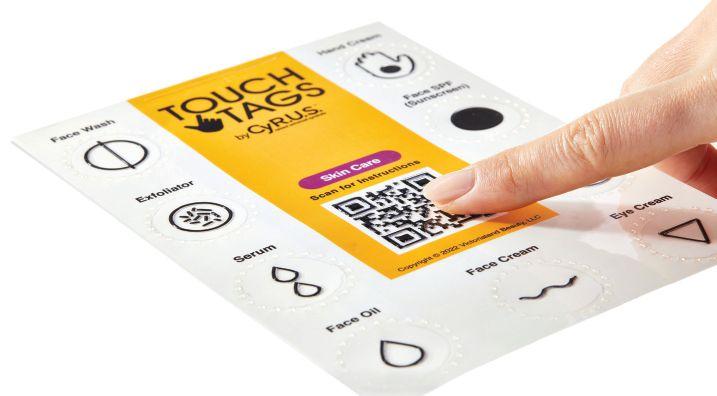
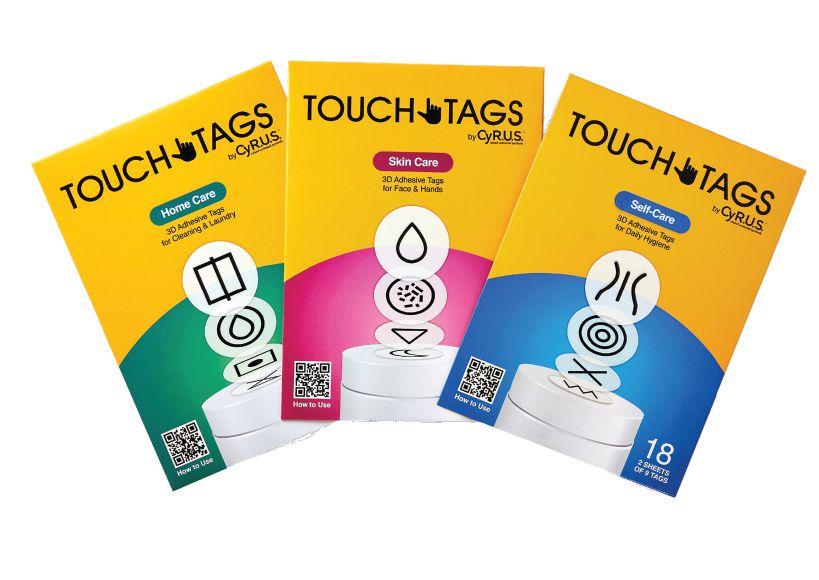
This spring, the company’s Touch Tags, product labelling sheets, will hit the market. Once applied to skin care, self-care and common household products, they enable people with vision loss to quickly identify the item. The visually impaired, explains CyR.U.S. founder and chief visionary officer Victoria Watts, includes those born with impairment, those who have lost vision for any reason, and also the growing number of seniors who progressively lose some vision as they age. She also points out that even those who take their contacts out or remove their glasses to shower would find Touch Tags reassuring.
Idea origin
Watts got the idea for Touch Tags about six years ago, when her fourth child, Cyrus, was born blind.
“It was my introduction to the challenges people with vision impairment face every day,” she says. “It was right in front of me, with my baby, and I started thinking about how he would navigate life once he was older. I realized one night when I was giving him a bath that he wouldn’t ever be able to tell the dif-
Commercial, labels, packaging – ultra short to long runs
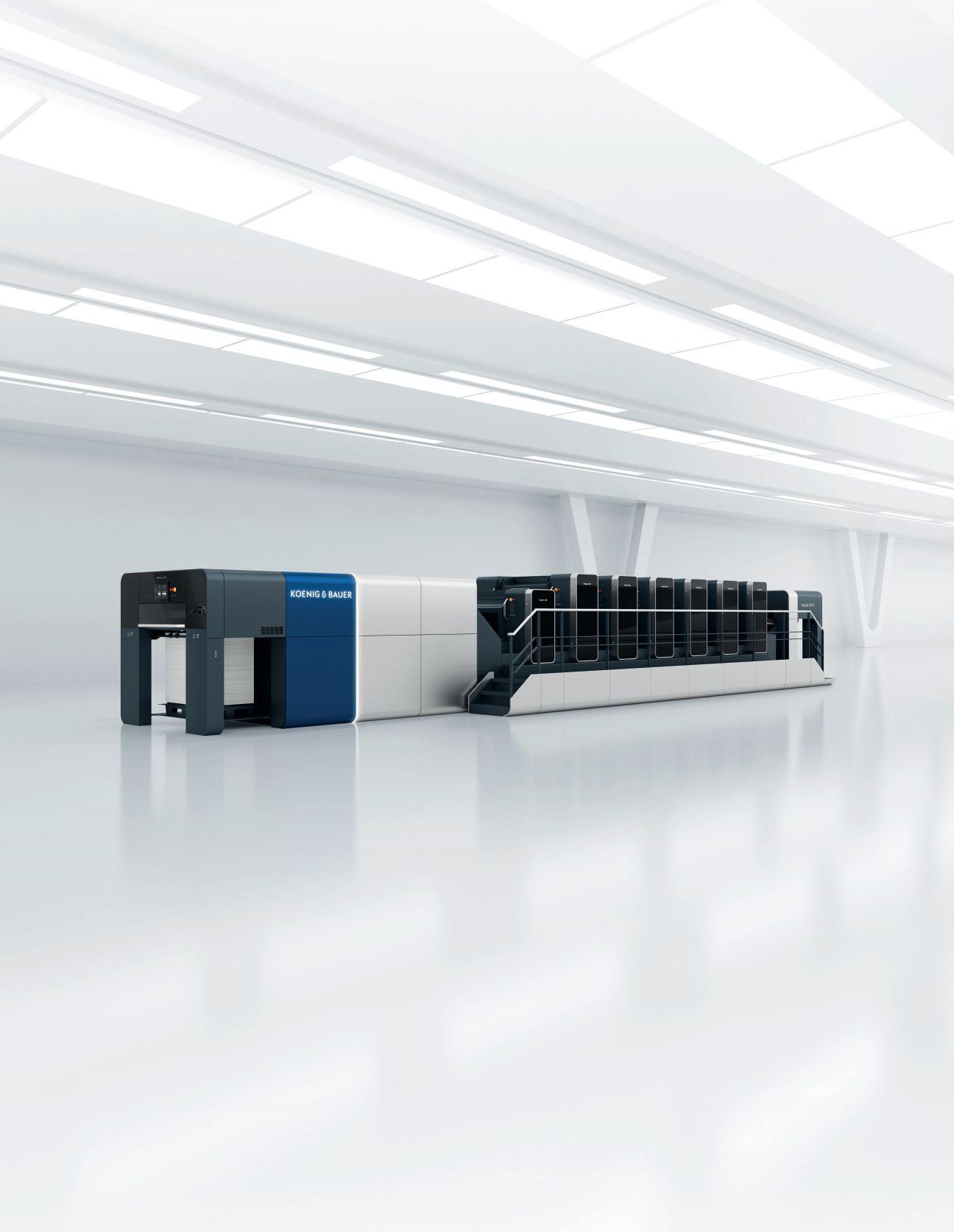
The Rapida 106 X maximizes your capacity for the highest productivity for every market segment. Industry-leading technology ensures the fastest throughput for more sellable sheets on your floor – day in and day out! Print at up to 20,000 sheets per hour - even in perfecting. The ultimate in color and quality control, simultaneous makeready processes and proactive digital services are among the benefits which help you always surpass your goals.
Rapida 106 X. The new performance benchmark in industrial printing.
rapida106x.koenig-bauer.com
ference between products without something to aid him. It was terrifying for me to realize he wouldn’t even be able to take a shower by himself without help, if nothing changed.”
Once she started researching, she noted a few companies were using Braille on their packaging, but this wasn’t a good solution. Less than 10 per cent of the visually impaired read Braille (due to the assistive technology now available, and other reasons). Additionally, Braille takes up quite a bit of room on packaging.
Watts did further investigation with the help of the Lighthouse Organization of Collier County for the visually impaired. She realized a raised universal symbol system was needed. She created the CyR.U.S. System and launched as a proof of concept in 2020.
However, in talks with many selfcare product manufacturers, she came up against the same barrier each time: the cost of putting these raised symbols on products.
“Everyone thought the idea was great, but the cost was too much,” says Watts. “About a year ago, I realized I could make symbol labels directly available to those who need them. I looked at digital printing, and saw that using the Scodix method, I could produce ‘Touch Tag’ sheets.”
Each sheet comes with raised (durable, waterproof) symbol product labels, but also several other features to aid the visually impaired. These are the result of feedback Watts gathered from a dozen focus groups across the full range of visual impairment over the last six months. Each label has a raised edge so that it’s easy to find and peel off the sheet. There’s a QR code in the centre that leads to audible directions for use and descriptions of the symbols. There’s also a raised line at the top of the sheet to show which end is up.
CyR.U.S. Raised Universal Symbols’ Touch Tags are labelling sheets that make products more accessible to the visually impaired.
US $36B
According to Smithers, security printing is expected to hit US$36 billion this year, up from US$29 billion in 2019.
Everyone thought the idea was great, but the cost was too much. About
a
year ago, I realized I could make symbol labels directly available to those who need them
with digital printing. – Victoria Watts
“Those with more severe or total visual impairment still need a person to help them apply the decals, but this is a huge step in the right direction to give people the independence that we all deserve,” says Watts. “There are so many barriers to independence for those with disabilities in our society and I am hopeful this universal language that I’ve created can break down some of them. I believe that if the world becomes accessible, anyone can do anything. Universal accessibility design improves everyone’s lives.”
Roll out
Returning to Touch Tags, Watts notes that over the next 30 years, 55 per cent of the global population will experience some level of vision loss because of natural ageing. She adds CyR.U.S is a universal language that will work in all countries. Consum-
ers can buy Touch Tags directly from the website.
“It feels good to be this far,” she says. “It’s the hardest thing I’ve ever done but the most fulfilling, to make the world better, break down barriers for my son and the visually impaired community. We are about to reach consumers directly with an affordable product that will improve their quality of life. Most of us will have vision loss at some point in our lives and we should work toward a world where we can all be independent, safe and enjoy life as much as possible. I want to have CyR.U.S eventually across all product categories, and we will improve what we offer as printing technology advances.”
A lean and team-centric approach allowed Connecting for Results to flourish during the pandemic
By Nithya Caleb
The economic climate is chilly. Many companies are wondering how to move forward. It would be helpful to glean lessons from companies that began during the start of the pandemic when the world’s economy came to a standstill. One such firm is Connecting for Results (CFR). This fall, CFR will celebrate its fourth anniversary. I asked its CEO Gordon Griffiths and COO Bob Dale to share tips on how to stay resilient.
How did you manage to not only run a business through the pandemic, but
also expand it in such a short timeframe?
GG: Having the best people and a variety of solid offerings are the key reasons for growth.With all the recent changes in the industry, I’ve been looking for the people with the best solutions to join our team. I cannot tell you how often clients have checked out our website and said, “Wow, you have Nicky Milner (and others) on your team?” The biggest impact on our growth was expanding to the United States, but we did that after building a solid base first.
Were you concerned about launching
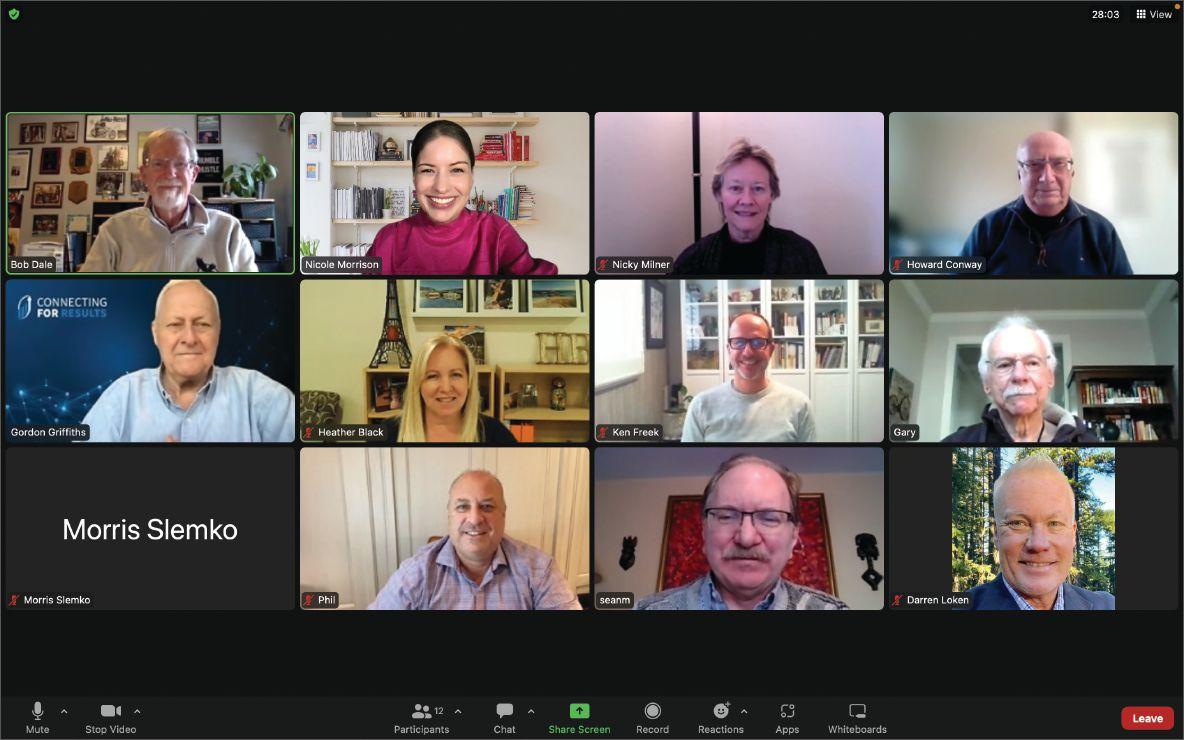
The Connecting for Results team
a business during the pandemic?
GG: We launched five months before the pandemic was official and it was only going to be Bob and myself. We have different skill sets and really complement each other. I can quickly see where we can help, and Bob, being a trained consultant, examines the facts before planning and executing the fix. During the beginning of the pandemic, Heather Black was the first person to join us. She’s responsible for recruitment services. We’re now a 12-member team.
What steps did you take to insulate CFR from the pandemic?
BD: We controlled investment. We delayed leasing office space, and then shifted from a full-time office to fractional space and facilities. Since M+A activity reduced internationally, we changed our marketing messages and sales and business activity to focus on our other service offerings like strategic consulting and recruitment. During the pandemic some markets, such as packaged goods production, were booming so we focused on them.
What were some of the challenges and how did you overcome them?
BD: When business travel was cancelled, we moved to virtual meetings and used digital tools like DocuSign. We established a peer group of senior executives from key print companies across Canada to identify common issues. CFR began to share best practices from an impartial perspective to help other companies in the industry.
How did you manage to keep the CFR team motivated throughout the pandemic?
GG: We are a very seasoned group, so motivating people was not the issue. The challenge was more in finding opportunities. During the pandemic, companies were holding on and consulting expenses were not top-ofmind, although a need.We don’t know to what degree COVID slowed our growth and never will. Whenever called on, our team gave their best and they put in the same effort as if they owned the company.
What factors contributed to CFR successfully navigating a pandemic?
BD: Since I had experience with remote work, I was able to put in place tools for team collaboration, planning and activity tracking, and communications. We took a team approach to our projects. Everyone was focused on communications for customer benefit and mutual success.
What advice did you give yourself about starting a new company when businesses were struggling to stay afloat?
GG: Consulting is far from an instant return on effort, but I can tell you, any start-up takes time and energy. You must have the ability to get up for the next opportunity after you have been knocked down. Great things take time. Also, tomorrow depends on how well you are doing today. We were smart and lucky to stay lean. We marketed ourselves at the speed of cash, and we are still marketing. What has paid off
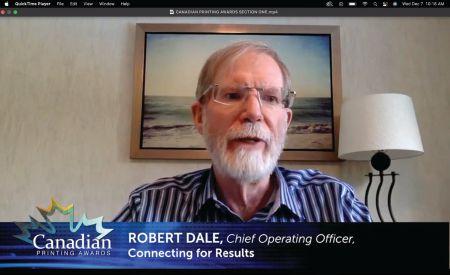
Gordon Griffiths giving his acceptance speech for winning a 2021 Canadian Printing Award in the Lifetime Achievement category.
Bob Dale accepts a 2021 Canadian Printing Award in the Community Leader of the Year category.
We took a team approach to our projects. Everyone was focused on communications for customer benefit and mutual success – Bob Dale
ABOUT CONNECTING FOR RESULTS
Established in November 2019, Connecting for Results (CFR) is a strategic consulting organization specializing in the printing industry. It’s a fully remote, lean business with offices in Victoria, Toronto, and St. John’s in Canada, and Seattle and New York in the U.S. CFR’s 12 consultants have decades of experience in all aspects of graphic communications. Connecting for Results aims to attract people to the industry, create awareness of the benefits of print, and support diversity across the industry. To do so, they work with the Toronto Metropolitan University’s (TMU) Graphic Communications Management program, especially mentoring the students, the Eva’s Print Shop, a non-profit training at-risk young adults for industry jobs, and the Canadian Print Scholarships.
2019
Connecting for Results was founded in November 2019.
is deciding from the beginning that we would always provide more than we promised, and then some.
What were some of the lessons learned about operating a business during a pandemic?
GG: Despite expertise, consulting is not for everyone. However, we’ve ended up with an excellent team. COVID was very challenging, but we learned that you could cover a lot of ground with products like Zoom. Bob and I were going to make a second trip to Montreal to meet a client, but we couldn’t due to company protocols. Thanks to virtual meetings, we covered a week of activity in a day (less travel, hotels, etc.), and it’s still helping us to go strong today.
What are your plans for CFR?
GG: We have a good platform. Now we need to grow sales and improve each offering. I like to think we are like a high-end restaurant that is perfecting their specialty. Our tagline is “Knowledge + Experience = Results”, so we better be up to date. One of our offerings is to help companies with their succession plans, and believe me, we are thinking about ours after only three years.
Benefits of AI, ML
Artificial intelligence and machine learning technologies will be helpful for quality control and process optimization
By Angus Pady
Our industry has been slow in adopting artificial intelligence (AI) and machine learning (ML), but they are starting to make some inroads. The packaging sector can benefit the most from this technology especially in the areas of quality control, automation, and optimization. Below are some of the
areas where we will see early adoption.
Error detection
AI-powered cameras and machine learning algorithms can be trained to identify and detect errors such as
colours in the printing process. This can be done in real-time, allowing for immediate correction and minimizing the need for manual inspection.
Quality prediction
Machine learning algorithms can be
trained to predict the quality of the print based on various factors such as press settings, ink and paper characteristics, and other parameters.
Quality monitoring
AI and ML can be used to constant-
Artificial intelligence and machine learning can be useful for quality control, automation, and optimization purposes.
ly monitor the print quality throughout the run. This can involve capturing images of the print and running them through machine learning algorithms in order to identify and correct errors as they occur.
Deep learning, specifically computer vision and natural language processing, can be designed to identify defects during the product packaging process. These deep learning models can verify that a label on a package is present, correct, straight, and readable.
Quality improvement
Machine learning algorithms can also be used to learn from past print runs and find ways to improve quality. For example, analyzing data from past print runs to identify the press settings and other factors that lead to the best print quality, and using these settings for future print runs.
Adobe introduced Sensei, its AI-enabled platform, in 2016.
Multidimensional quality control
Machine learning algorithms can be
trained to analyze data from multiple sources such as visual, spectral, and mechanical data to create a multidimensional view of print quality and identify errors and issues that may be missed with traditional methods.
AI package structural creation
Designers use AI-enabled virtual reality environments to design packaging. In some cases, you can see how the package will look when placed on a shelf in a particular store. What will it look like behind glass in the freezer section and under various lighting conditions? How will it look next to other products? All of these can be tested before actual design.
Predictive maintenance
In AI and machine learning, predictive maintenance refers to the ability to use volumes of data to anticipate and address potential issues before they lead to breakdowns in operations, processes, services, or systems.
AI-driven nesting
The ability to optimize how images are distributed on a page is already being used on various cutting tables and RIPs to minimize material waste.
Custom box creation and personalized printing
We can set up a system that looks at all outgoing shipments and categorizes the packages into groups. The groups then get sorted and placed together, a corrugated feeder matches up the packed groups with box sizes, boxes are automatically created to the exact size required and the packages are then fed into the production line. At the end of the line, the boxes are printed with a personalized message and shipping instructions.
AI-driven inspection
This is, by far, the most advanced use of artificial intelligence in our industry. AI-driven inspection systems can not only see defects faster than any human, but also learn. Computer vision modelling is incredibly adept at learning what an acceptable product/package should look like as it moves down the line. A properly trained model should easily detect wrinkles, rips, tears, warpage, bubbles, colour, and printing errors. The challenge at this stage is that these types of systems require
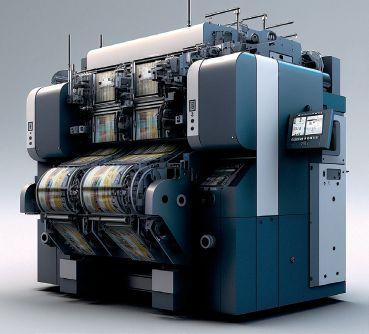
This image was generated by MidJourney, an AI-powered chatbot. This was in response to the text prompt: printing press, in the future.
significant amounts of CPU power and the sheer amount of data science knowledge it takes to train, deploy, and monitor a suite of deep learning models running in production is difficult to deploy correctly without outside support.
Adobe Sensei
If you have used Photoshop lately, you may have seen some of the AI-powered tools like Content-Aware Fill. Did you know Adobe Sensei has AI tools that can use your customer data for unique insights about individual consumers? You can use your data assets for predictions. We are entering a new era where machines will allow us to do our jobs quicker and more efficiently. At the same time, technology will challenge some of our deep-seated beliefs. Embedding AI into your company’s operations, much less ensuring business impact, isn’t going to happen overnight. Organizations will need a short-term strategy for delivering quick, high-impact AI wins and a long-term strategy enabling a progressive artificial intelligence culture.
Angus Pady is a G7-certified expert that has helped customers resolve colour management challenges for over 30 years. He can be reached at angus.pady@ fujifilm.com.
Organizations will need a short-term strategy for delivering quick, highimpact AI wins and a long-term strategy enabling a progressive AI culture.
Showcasing the latest offerings from
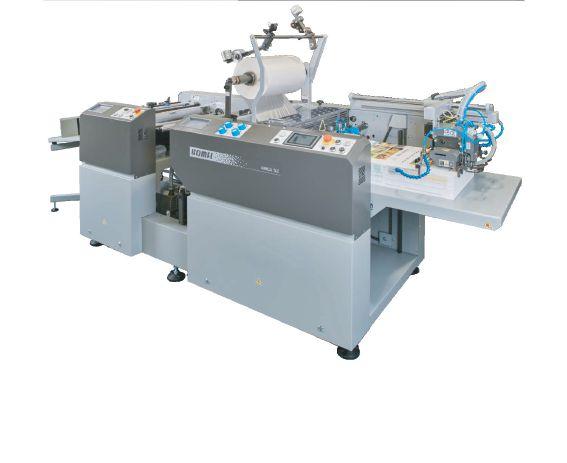
The Jetvarnish 3D 52L provides printers with the
Konica Minolta launches embellishment press
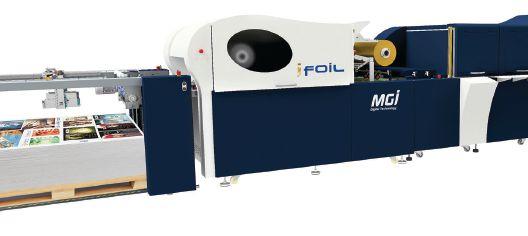
Konica Minolta Business Solutions (Canada) unveils a new digital embellishment press, the Jetvarnish 3D 52L. It allows printers, finishers, and converters to have an inhouse full production and prototyping print embellishment system without screens, dies or plates. The all-purpose patented varnish formula allows both flat 2D spot UV highlighting and sculptured 3D raised special effects.
Roland DGA expands the TrueVIS printer family
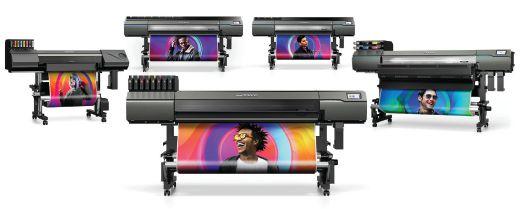
Roland DGA expands its TrueVIS line with six new inkjets. The newly launched models include the AP-640 resin printer, the LG640/540/300 UV printer/cutters, and the MG-640/300 UV printer/ cutters. The TrueVIS AP-640 resin printer is suitable for a range of applications, including wall decor, indoor signs, retail displays, stickers and decals, banners and posters, and vehicle wraps. The LG-300, LG-540, and LG640 models are professional-level UV printer/cutters.
Ricoh launches new workflow solution
The Ricoh TotalFlow Producer automates the submission and consolidation of jobs coming from multiple sources, such as e-mail, web-to-print, and file transfer services. The automatic preflight function helps to identify file issues, including missing fonts, inaccurate page size, poor image resolution, and incorrect colour.
Fiery releases new vehicle templates
Fiery releases new and updated vehicle templates for 2023 for its Pro Vehicle Outlines (PVO) product offering.
Roland DGA adds six new inkjets to its TrueVIS line of printers.
The Ricoh TotalFlow Producer automates the submission and consolidation of jobs.
Bringing ideas to life
Italic used 3D proofing to create a delightful unboxing experience for
Bauer Canada
By Scotty Graham
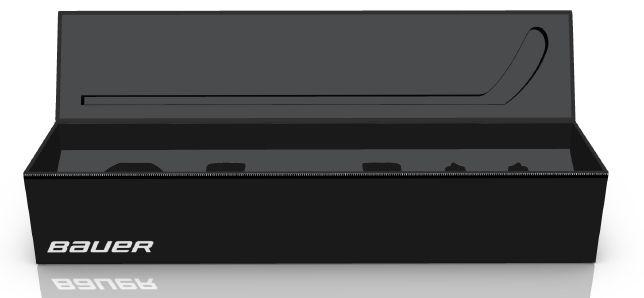
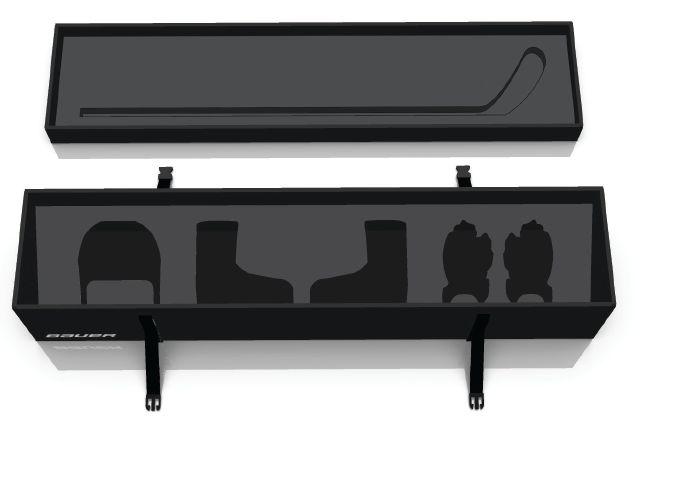
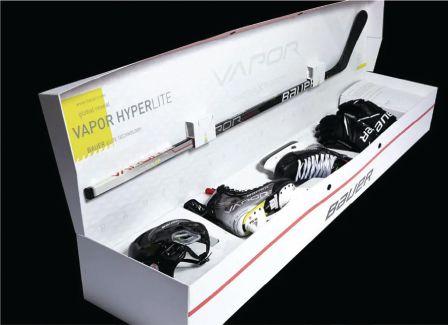
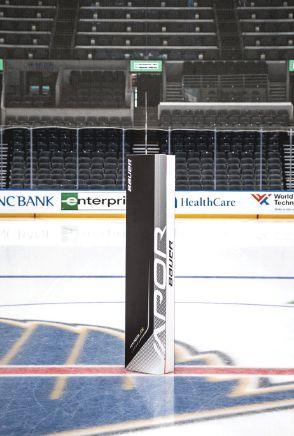
Italic, Toronto, is a print servicer provider that is focused on helping brands enhance their products through high value visual communication pieces and experiential marketing campaigns. Recently, Italic was given the task of creating the packaging for Bauer Canada’s Vapor Hyperlite product line, which needed an unboxing experience that would impress and delight hockey influencers worldwide. To achieve this goal, Italic relied heavily on their 3D proofing services, which have revolutionized their prototyping process.
Project highlight
The packaging was made of white corrugate. Gloss varnish was applied on sections of the artwork, which created variances in the print visually as well as texturally.
Custom inserts were created to house various items. Italic also made custom shipping boxes for the packages. This was Italic’s largest package at that time.
Challenge
One major challenge with the project was long-distance proofing logistics, which 3D proofing helped solve. Typically, Italic prefers to show clients an in-person product sample before obtaining approval.
However, this can be a costly and challenging process, especially when clients are far away, multiple revisions are necessary, or the final product is oversized. 3D proofing allowed Italic to provide a visual representation of the product to the Bauer Canada team without multiple in-person samples. It also al -
lowed them to show a larger team of people a proof of concept quickly without the need to produce and ship prototypes to several locations.
In addition to saving on shipping costs, 3D proofing helped with troubleshooting before the package was built. Italic’s team could identify potential issues with the package’s dielines and address them before production, saving time and money and ensuring the final product met the high-quality standards Italic’s clients expect.
Nathan Witt, Italic’s prepress and workflow manager, explains that prototyping and proofing are increasingly crucial in the printing industry.
He said, “Print is not taught today; it is learned. Prototyping and proofing fill the knowledge gap, giving clients the confidence to make any necessary changes or adjustments and catching any potential issues early in the process.”
Italic began using 3D proofing in 2018. It took Italic’s staff some time to understand the system, especially the different steps needed to create dielines as well as how to display objects in a way that looks not only accurate, but also good. For instance, showing different materials accurately, simple corrugate vs. acrylic or wrapped chipboard.
The biggest challenge for the team was balancing the amount of time required to generate the 3D proof vs. the value it provided. By the time Italic bagged the Bauer Canada project, the team was quite proficient in 3D proofing.
With the use of 3D proofing, Italic could ensure Bauer Canada’s Hyperlite product line met their
Toronto-based
Italic used 3D prototyping services to create packaging for Bauer Canada Vapor Hyperlite product marketing campaign.
3D
Italic adopted 3D proofing services in 2018.
client’s expectations and was of the highest quality. The whole project took four months to complete.
Italic’s use of 3D proofing and prototyping transformed the approval process by providing new solutions to challenges print projects often face. Bauer Canada’s campaign, distributed globally from Italic’s downtown Toronto facility, was a resounding success both in person and across social media.
Marilène and Caroline Fournier/ co-presidents / Imprimerie Ste-Julie
Sisters Marilène and Caroline Fournier are the co-presidents of Montreal-based Imprimerie Ste-Julie. Founded in 1975, the company specializes in commercial printing of labels and packaging. Marilène looks after production and Caroline focuses on sales and administration. Together, they are raising the sustainability standards of not only Imprimerie Ste-Julie, but also Canadian printing to ensure the industry is on par with its European counterparts.
What is the state of the print industry today?
MF & CF: The self-adhesive label industry is growing rapidly due to the increasing demand for personalized products and functional labels. Technological advances in digital printing have led to significant improvements in print quality, speed, and durability. Digital printing offers flexibility. Cost is also lower for shorter production runs with multiple SKUs. The linerless market is also growing, as they are an environmentally friendly alternative to standard self-adhesive labels and consumers as well as companies are looking to reduce their environmental impact and carbon footprint. Currently, we are the exclusive distributor of linerless labels in Canada.
What attracted both of you to the print industry?
MF & CF: Printing allows us to bring ideas and projects to life and make them tangible. It is rewarding to see our clients’ creations take shape. As an industry, printing is constantly evolving with new technologies and trends, be it ERP systems, prepress advances, printing, or automation. These are all very exciting areas for us as owners. We also have the opportunity to be a driver of change, make sustainable choices and rethink packaging and make it eco-friendly.
How can the industry attract more young people?
MF & CF: Promote sustainable development, seamless customer experiences, and the new technologies and innovative practices used in the printing industry to show youngsters that it is not an obsolete or uninterest-
1975
Imprimerie
Ste-Julie was established in 1975.
ing sector. We can also showcase how vibrant our industry is as well as the fascinating jobs and career opportunities that are waiting to be discovered on social media channels.
Invest in continuous training to help employees develop their skills and knowledge, making sure they fulfil their potential. This is very attractive to talented and ambitious young people. The younger generation is interested in companies that invest in training emerging leaders and use a team-centric philosophy.
In such a competitive landscape, how can printers win more sales?
As an industry, printing is constantly evolving with new technologies and trends.
MF & CF: It is necessary to have an effective online presence by optimizing networking and developing an effective digital marketing strategy. However, customer experience is the biggest differentiator.
It is important to be present for clients and actively listen to their business, production and staff needs. This increases brand loyalty. Our main values are customer focus and agility. Authenticity in business makes a big difference in creating a win-win relationship with clients.
What are some of the biggest
opportunities in the print industry?
MF & CF: There are many great opportunities for the industry. Process automation, the growing use of the Internet of Things (loT) and sustainability are, however, the focus areas for Imprimerie Ste-Julie.
Eco-responsible and economical solutions that reduce waste and costs must be integrated into our daily business practices.
What do you think is the most exciting thing about print today?
MF & CF: Our industry can be a part of the circular economy. We must take the steps required to reduce our environmental impact while saving our resources. We’ve been working on this since 2018. We obtained certifications and established partnerships with relevant companies so that our actions are tangible. Several innovative products are entering the market. We need to find a way to develop them in order to bridge the gap with Europe, which is way ahead of us in terms of sustainability.
Marilène and Caroline Fournier’s responses were edited for length. For more Q&A Spotlight interviews, please visit www.printaction.com/profile.
Switch it up. Stand out. Stay ahead. Opportunities to transform your craft are everywhere. Are you ready to take your print business to new dimensions? Let Konica Minolta ignite your print possibilities.
Join us at Graphics Canada 2023 at booth 5200 to learn how we can help you see the potential in the future of print.