Prrot o ectiion n aga g inst st infnfec e tioous s la l ryynggotrachheeiti t s, ,
Ma M rek’s an a d infecttioouus burursal diiseeasses e in n onne e shhoot t
Provven en safafetty y for yo y u ur r floocck
The latesst t innnoovatiion on froom t thhe ma mannufafaccttuurrer r of VAX A XI XITEKK® HVVTT+IBD BD in f
Better animal welfare in transit Study shows sensor system effectively monitors transport conditions in real time.
Layer losses
Assessing the impact of IBV variants in
Caring for the newly hatched
The time between hatch and placement is critical for producing the best-quality chicks.
by Brett Ruffell
Inspiration from some familiar names
This year’s Influential Women in Canadian Agriculture (IWCA) interviews were once again inspiring and informative. If you haven’t heard them yet, all six discussions are now available for your listening pleasure at canadianpoultrymag.com/podcasts.
As a refresher, IWCA is a recognition program designed to honour, highlight and celebrate the work women are doing across Canada’s agriculture industry. Following a successful launch in 2020, readers once again nominated Canadian women working in all aspects of agriculture, from farming and research to animal health, sales and marketing.
Throughout this past summer, the leaders chosen as this year’s honourees shared their stories and wisdom in the IWCA podcast series. Two of the names will undoubtedly ring a bell to Canadian Poultry readers, as both have long been known for helping to guide evidence-based decision making around animal welfare in livestock production.
For a few years while she was president of the Canadian Centre for Food Integrity, Crystal Mackay wrote for us about consumer perceptions of food production and how farmers could help influence the public’s views around animal welfare and other pertinent issues. “My whole career can be summed up as working to bridge the gap between farmers and consum-
ers,” she said during her IWCA interview.
Now, for the past two years she’s been the CEO of Loft32, an innovative communications firm she founded that includes speakers, trainers and project managers who are focused on food and farming. “It’s really a talent stable of good people with a focus on things in common, such as love for agriculture and food,” she explained.
In her IWCA discussion, she discussed the biggest challenge she’s dealt with in her career. “In the early days of my career, I spent a lot of time dealing with critics – activist groups who oppose farming specifically –and really developed a lot of
“My whole career can be summed up as working to bridge the gap between farmers and consumers.”
subject-matter knowledge around that area. It’s a serious issue, and it subsides and raises its head again, depending on the day and the issue and the groups.”
How did Mackay respond? Not by getting defensive but rather by offering to educate people to help them come to informed conclusions about food production.
Another name that will surely ring familiar is Tina Widowski, who’s spent more than 25 years investigating the factors that affect the well-being of poultry
and livestock. Currently a professor in applied animal behaviour and animal welfare in the Department of Animal Biosciences at the University of Guelph, she recently stepped down from a 12-year term as the director for the Campbell Center for the Study of Animal Welfare. She’s also the Egg Farmers of Canada Research Chair in Poultry Welfare. Perhaps surprisingly given her prominent status in the field of livestock research, Widowski grew up in the city of Chicago – the furthest thing from growing up on the farm. In her interview, she discussed the challenge of having the confidence to make a name for herself in an industry where she didn’t have a background. “And so, part of overcoming that is interacting with people in the industry,” she said in her interview, adding that one way she does that is by visiting as many barns as possible.
There’s a forthcoming opportunity to hear even more from these leaders about how they overcame similar challenges and more. That’s because this year’s IWCA program will once again culminate with a virtual event in the fall that brings together women from across agriculture to share in their experiences, offer guidance and advice in an interactive setting.
The second annual IWCA Summit will take place on October 19th. The topics up for discussion this year include: establishing and advancing your personal brand; building community; and overcoming challenges and adversity. Register today for this virtual event at agwomen.ca.
canadianpoultrymag.com
Reader Service
Print and digital subscription inquiries or changes, please contact Anita Madden, Audience Development Manager Tel: (416) 510-5183
Email: amadden@annexbusinessmedia.com
Mail: 111 Gordon Baker Rd., Suite 400, Toronto, ON M2H 3R1
Account Coordinator Alice Chen achen@annexbusinessmedia.com 416-510-5217
Media Designer Alison Keba
Group Publisher Michelle Allison mallison@annexbusinessmedia.com
COO Scott Jamieson sjamieson@annexbusinessmedia.com
PUBLICATION MAIL AGREEMENT #40065710
Printed in Canada ISSN 1703-2911
Subscription Rates
Canada – 1 Year $32.50 (plus applicable taxes) USA – 1 Year $91.50 CDN Foreign – 1 Year $103.50 CDN GST - #867172652RT0001
Occasionally, Canadian Poultry Magazine will mail information on behalf of industry-related groups whose products and services we believe may be of interest to you. If you prefer not to receive this information, please contact our circulation department in any of the four ways listed above.
As the egg laying industry continues to evolve, equipment manufacturing companies must do the same. At LUBING we are fully aware of our need to progress with the changing industry and that is why our culture of innovation is the reason for our success. LUBING is leading the way by offering a wide variety of products for today’s Cage-Free housing demands as well as bio-security concerns.
Glass-Pac Canada
St. Jacobs, Ontario
Tel: (519) 664.3811
Fax: (519) 664.3003
Carstairs, Alberta
Tel: (403) 337-3767
Fax: (403) 337-3590
Nipple Drinking Systems
Pullets / Layers with and without LitterGuard Cups
Egg Conveying Systems
Curve conveyors customizable to nearly any application Belt Conveyors ranging from 18, 24, 36, 48 and 60 inches (capable of delivering up 750 cases/hr)
Accumulator Tables
Custom-made, all-stainless tables for all situations
Perch Systems
Ergonomic design allows birds to perch comfortably Reduces stress and helps create a calm environment
Les Equipments Avipor
Cowansville, Quebec
Tel: (450) 263.6222
Fax: (450) 263.9021
Specht-Canada Inc.
Stony Plain, Alberta
Tel: (780) 963.4795
Fax: (780) 963.5034
What’s Hatching
Canadian poultry insurance program
CEIRA marks 10th anniversary
A farmer-owned and -managed insurance program for the regulated Canadian poultry industry is celebrating its successful first decade. Established in 2011 to provide Canadian egg producers with coverage for the presence of Salmonella enteritidis (SE), the Canadian Egg Industry Reciprocal Alliance (CEIRA) now includes a total of four underwriting groups. Since its inception, the program has provided $20 million in claim settlements to egg producers whose flocks have been affected by SE.
CFO moving forward with digitization of auditing functions
Chicken Farmers of Ontario (CFO), with support through the Canadian Agricultural Partnership’s Place to Grow: Agri-Food Innovation Initiative, is moving forward with the digitization of auditing functions and improved information sharing across the Ontario chicken supply chain. In 2015, the board launched CFO Connects, a digital platform that transformed the way the chicken industry does business. This latest project will enhance and expand the auditing functionality of the CFO Connects platform.
Survey results show continued support for chicken farmers
Government support for the Canadian chicken sector is very popular, according to a recent survey conducted before the federal election by Abacus Data for Chicken Farmers of Canada (CFC). Most notably, the survey revealed that 82 per cent of Canadians support the supply management system.
The Poultry Industry Council held its charity golf event September 1 at Foxwood Golf Club in Baden, Ont.
PIC’s charity golf tournament raises thousands
The 2021 Poultry Industry Council’s (PIC) annual charity golf tournament couldn’t have happened on a more perfect day.
under par was the score the best team award winners from Nieuwland Feed & Supply had.
More than 160 golfers had a great time at Foxwood Golf Club in Baden, Ont., where everyone benefitted from a day out to safely reconnect with colleagues in the poultry sector.
There were many memorable moments of the day, with Happy Gilmore shots as well as lots of contest winners.
Orrie Alexander was the golfer to beat for the day, winning both the putting contest and the longest drive.
The best team award went to the group from Nieuwland Feed & Supply, which included Mat Harrison, Scott Nieuwland, Kevin Ottens and Brandon Rumph. The team turned in an incredible score of 14 under par.
All contest winners and photo highlights can be found on PIC’s website.
“The Annual PIC Golf Tournament is a highlight for the industry each year and we have been so fortunate to be able to continue to host it during the pandemic,” says PIC chair Ed Verkley.
“It was wonderful to see so many of the industry representatives and producers in person. Myself and the PIC staff look forward to next year with the return of a shot gun start and a return of our banquet dinner.”
The day was made possible by numerous sponsors, volunteers from the sector, the golf course and PIC staff. Funds raised during the event directly support PIC’s delivery of educational programs and training.
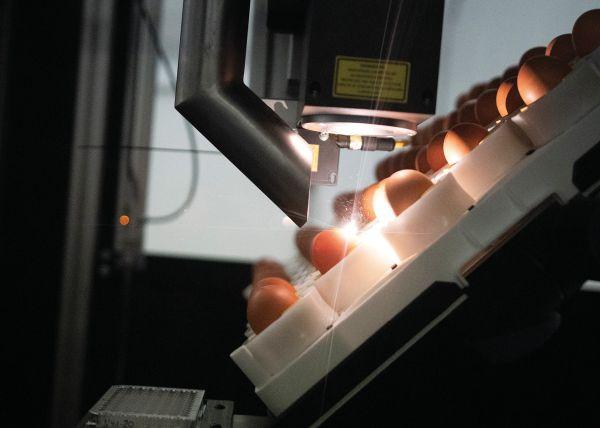
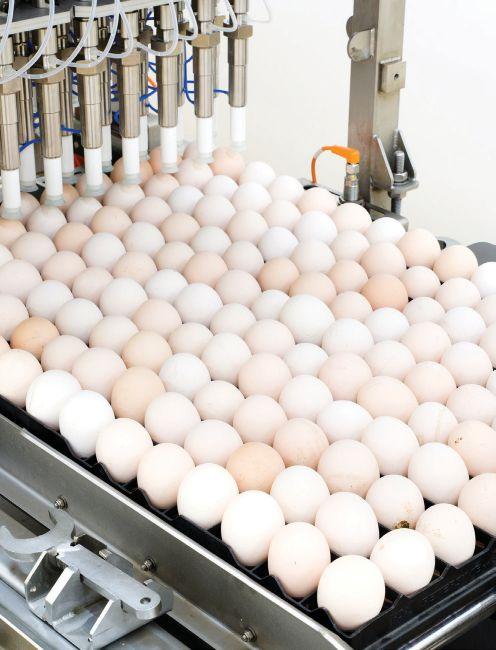
SELEGGT Circuit uses a laser that makes a tiny pinhole in the egg to extract fluid for gender testing.
Europe’s largest laying hen hatchery implements in-ovo sexing
Verbeek´s Broederij B.V. and respeggt group have entered into a collaboration to reduce the number of day-old male chicks that are culled in the Netherlands for European egg markets.
The SELEGGT Circuit technology for gender identification in the hatching egg will be installed in the Verbeek hatchery in September 2021.
The equipment will be put into use immediately after installation and on a frequent basis to reduce the number of day-old chicks culled at the facility.
Packing centres will then have the option of ordering Novogen and other genetic breeds of chicks that are “Free of Chick Culling” due to gender identification on the ninth day of incubation.
Verbeek´s Broederij B.V. supplies laying hen hatching eggs, day-old chicks and pullets to poultry farmers in the Netherlands and abroad.
For this purpose, the company operates a modern laying hen hatchery in Zeewolde in the Netherlands as well as various
rearing farms in Europe for the rearing of day-old female chicks. The laying hen hatchery is the largest in Europe and offers primarily Novogen breeds.
Respeggt group is a service provider specialized in early gender identification in the hatching egg by applying the SELEGGT Circuit technology. Additionally, respeggt ensures the added value “Free of Chick Culling” through the supply chain verification of every hatch.
Customers can already find eggs branded with the respeggt label “Free of Chick Culling” in more than 6,000 supermarkets and discount supermarkets in Germany, the Netherlands, France and Switzerland.
The total hatchery capacity of Verbeek´s Broederij B.V. is 30 million layer chicks per year.
The collaboration between Verbeek and respeggt will allow an annual output of more than 10 million female respeggt laying hens that lay over three billion “Free of Chick Culling” respeggt eggs for a handful of European egg markets.
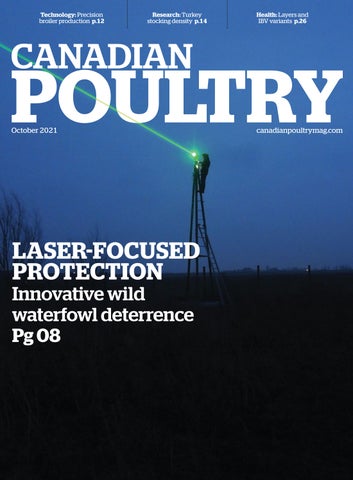
Researchers trial innovative approaches to wild waterfowl deterrence and monitoring to protect poultry barns from avian influenza.
By Melanie Epp
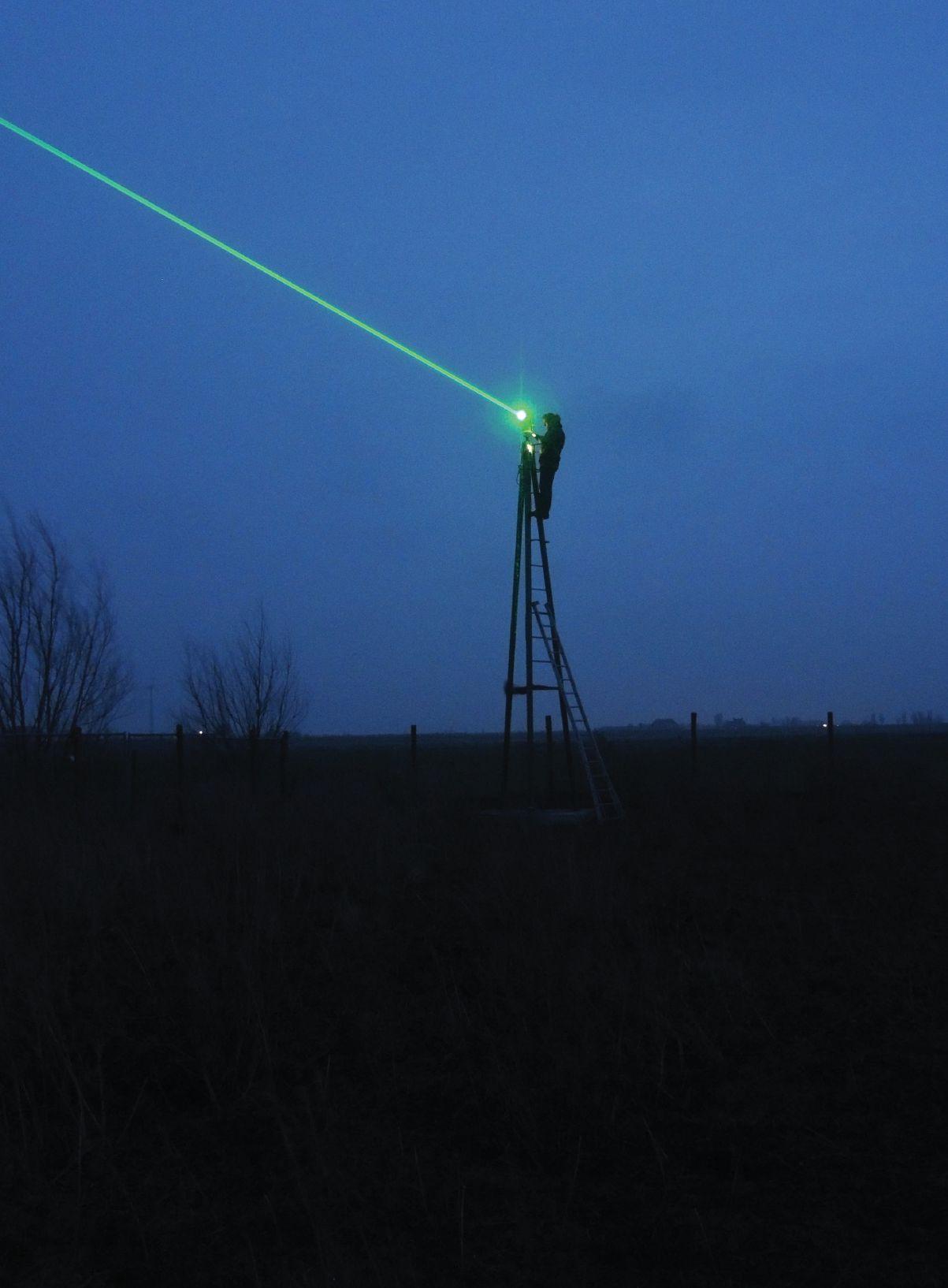
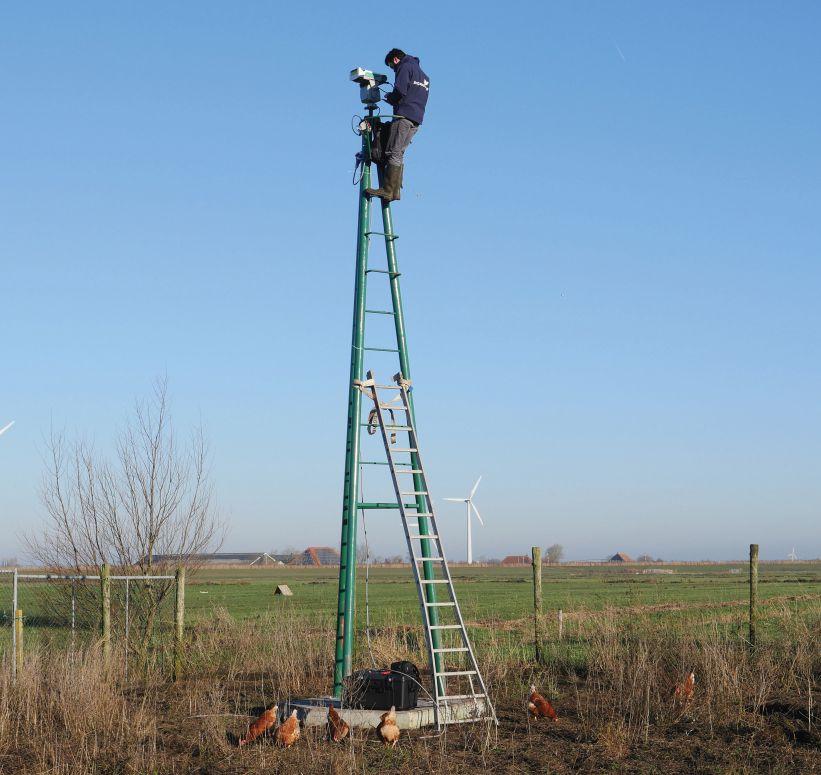
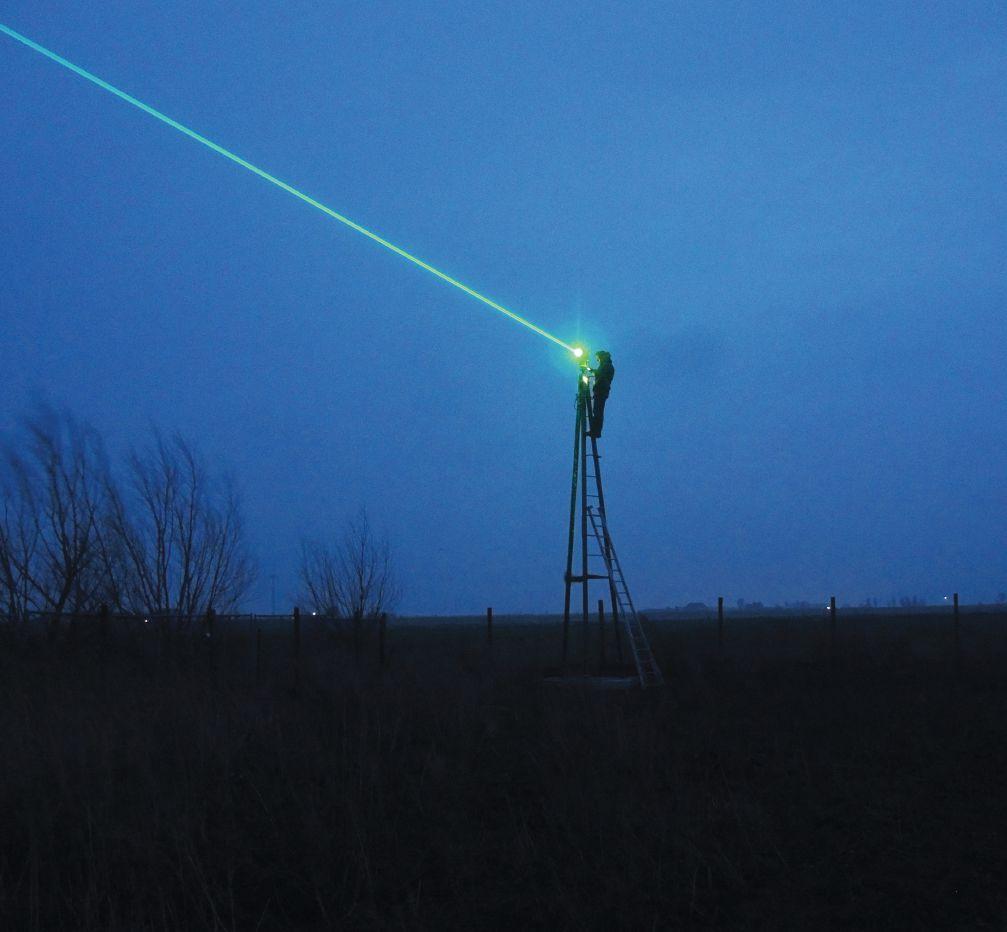
Farmers could soon have a new tool in the fight against the spread of avian influenza. Researchers at Wageningen University and Research in the Netherlands have found that lasers make an effective deterrent for keeping wild migratory birds from landing in the free-range area of poultry farms.
Coupled with other biosecurity strategies, this could be an effective tool as Canada’s poultry producers move to cage-free production.
Migratory waterfowl are an important potential source of infectious disease, and are especially problematic in the spread of avian influenza. Wageningen Bioveterinary Research (WBVR) researchers, located in Lelystad, the Netherlands, found that mallards, which are a high-risk species for the spread of avian influenza, visit the free-range areas of poultry farms.
Activity was almost always isolated for the period between sunset and sunrise, especially from November to February when migratory birds are most active.
Wild birds are known to be a natural reservoir of the avian influenza virus. Experts believe that poultry become infected through oral pick up of contaminated feces from wild waterfowl or through feces-contaminated drinking water. Therefore, it is of the utmost importance to keep wild waterfowl off farm, especially during migration.
Since the outbreak of 2003, the European Union has established an intricate reporting and sampling system that tracks the introduction and movement of low- and high-pathogenic avian influenza (LPAI and HPAI, respectively).
Examining bird movements
Using data tracked on these farms, Dr. Armin Elbers, epidemiology researcher, WBVR, could see that the farms that were within 500 metres of wildlife reserves or bodies of water were the ones that had a higher probability of introduction of LPAI virus, of which some forms can quickly mutate to the high-pathogenic variety.
The data also revealed that 75 per cent of introductions of LPAI virus in the Netherlands were on free-range farms with outdoor access. One farm was hit 10 times. It was important, therefore, to ensure that wild birds be kept off of these farms.
In the first phase of their research, Elbers and his team monitored the farm that was hit 10 times with video camera equipment, recording for 24 hours a day for an entire year. It was an incredible amount of work reviewing the
footage, but Elbers says it was well worth it, as he got some very good insight into the types of birds that were visiting this farm.
While gulls were the main visitors in the winter period to the farm during the day, at night, flocks of mallards would come in to settle in the open areas and water pools where the poultry moved throughout the day. Mallards are known to be vectors of infectious animal diseases, especially avian influenza, Elbers says.
Lasers as deterrents
Airports were already using lasers to scare off wild birds. So, it was an obvious choice for farmers. But no one had conducted a study on-farm. Thus, the researchers were uncertain it would work.
Virtually no wild ducks visited the farm when the laser was operating. In fact, the laser prevented introduction 99.7 per cent of the time, Elbers says. Visits from other wild birds were also effectively reduced by the laser.
But is a laser a safe and effective solution? Steinar Henskes, founder of Bird Control Group and developer of the laser, believes it is. The laser has a range of 800 metres to one kilometre and covers 360°. It is projected on the area to be protected. Birds perceive the laser as a physical danger and fly away, Henskes says.
The number of lasers needed on-farm depends on whether or not there are obstacles, such as barns and trees. Typically, one to three lasers are enough, but the more obstacles there are, the more lasers
of introductions of LPAI virus in the Netherlands were on free-range farms with outdoor access.
will be needed.
The lasers can be solar operated or run off of grid power. It connects to the app via Bluetooth, where its path is mapped out.
What’s especially nice about the laser is that it is noiseless, so it doesn’t disturb the neighbours. And birds don’t habituate to it, like they do to other deterrents, such as noise cannons.
Bird Control Group is currently in the process of obtaining the Pest Management Regulatory Agency (PMRA) license for Canada.
Biosecurity then deterrents
While there are other deterrents available to farmers who have a migratory bird problem on-farm, Christopher Sharp, population management biologist with Can-
adian Wildlife Service Environment and Climate Change Canada, says enhancing biosecurity should always be the first course of action.
Initial steps should be controlling the movement of people and vehicles and eliminating access of wild birds to farm buildings and water supplies. Sharp recommends removing standing water and eliminating spilled grain that could attract wild birds.
In addition to these methods, Sharp suggests farmers use fences and moveable pens to keep outdoor layer flocks from moving around too much.
Areas can be protected using netting or scaring techniques, but the latter should really be a lastditch effort, he says. Producers can get permits from
By
the numbers
ECCC that authorize specific activities that are designed to reduce conflict with migratory birds.
One tactic is to kill a small number of birds or to remove eggs and nests to dissuade others from using the area. These permits must be justified and are approved on a case-by-case basis. The permits are issued free of charge.
Another popular deterrent tool is a propane cannon, which produces an intermittent loud bang to scare the birds.
The problem with this option is that it bothers neighbours and birds acclimatize to it over time.
Scarecrows can also be effective if done properly, Sharp says. They need be moved around frequently, but work well when combined with other tactics. He says regions that
75 per cent of
10 is how many times one poultry
Gulls were the main wild bird visitors to a monitored poultry farm during winter days. Mallards, which are a high-risk species for the spread of avian influenza, were the most common visitors at night.
99.7 per cent is the level of prevention the laser delivered against wild duck visits to the free-range area.
96 per cent is the level of prevention the laser delivered against visits by other wild birds to the range between sunrise and 10:00 am.
Since airports were already effectively using lasers to scare off wild birds, Dutch researchers thought they could also be effective at protecting poultry barns. They were right.
Scientists from the Wageningen University & Research in the Netherlands analyzed data around avian influenza spread and then trialled a laser to deter wild birds from landing near poultry barns. Here are some highlights of their work.
introductions of LPAI virus in the Netherlands were on free-range farms with outdoor access.
farm was hit by LPAI.
went cage-free early have lessons to share. “Canada has the potential to get it right the first time,” he says.
Monitoring movement
Windows of migration are fairly well defined for specific species. Hence, monitoring movement presents another opportunity to minimize interactions. Victoria Bowes works as an avian pathologist at the Animal Health Center for the provincial government in B.C.
The scientist is part of a team that monitors wild migratory birds, like the trumpeter swan.
The Animal Health Center has been monitoring trumpeter swans for 20 years and regularly tests them for lead poisoning. They’ve extended that testing to include avian influenza. In this way, the swan acts as a sentinel that alerts researchers to the
movement of LPAI and HPAI.
“Our big concern right now is everything is looking identical to what happened in 2014,” Bowes says, referring to the movement of HPAI (H5N8) through Korea and Japan into B.C. “But what’s very
interesting is, with that detection, it became almost a non-event because the industry had everything in place to self-quarantine.”
This story barely made a flicker in the news. What did make the headlines was when the same migratory birds moved into Minnesota in April of 2015. “But to me, the big story is how did our industry, which was the most densely populated multi-commodity poultry production area of all of Canada – how do we only get 11 cases?” Bowes says.
The answer, she explains, is preparedness. Bowes suggests that industry keep an eye on B.C.
“We’re all thinking it’s going to hit us again,” she says. “I’m eyeballing those trumpeter swans as a good source of surveillance data, as well as a possible introduction.”
Simply Perfect!
Wisium has developed a global egg management approach aiming at better performance in egg production.
The Egg Quality is an egg management program, with a goal to achieve a high standard quality egg, ensuring the best return on investment. It meets the main challenges in egg production : eggshell quality, egg size, yolk colour and albumen quality. Choose Wisium to make your egg production simply perfect!
B.C.’s Animal Health Center has been monitoring trumpeter swans for 20 years, and recently extended its testing to include avian influenza.
Precision broiler production
Cargill inks deal to bring high tech data capture and analytics to chicken farmers.
By Madeleine Baerg
This summer, Cargill Foods and Canadian technology company Intelia finalized a partnership agreement to distribute Intelia’s Compass broiler precision management platform to broiler producers in both the U.S. and Canada.
“The whole concept of precision livestock is a huge area of opportunity,” says Robbie Moody, the commercial director of poultry for livestock nutrition supplier Provimi, a subsidiary of Cargill. “If you look at what’s been done on the crop side of agriculture with more precision approaches, it’s huge. We’re looking forward to bringing that to broiler producers.”
Compass is a monitoring, management and modelling platform that collects and analyzes real-time broiler barn data. The system uses broiler barn sensors, including bin scales, hanging perch scales, water meters, gas (ammonia and C02) sensors, humidity sensors and more, to record key metrics of bird health and growth.
The data is then analyzed by Intelia’s fully integrated artificial intelligence (AI) algorithms to generate real-time predictions and management efficiencies. For example, by tracking exact feed usage, the AI system can automatically predict the precise timing bins will need refilling. By analyzing changes in bird behaviour such as water consumption rates, the system can warn of potential health concerns before
they are clinically obvious.
And – arguably the most valuable advantage – the system can use the real-time, specific growth curve of an individual broiler barn, factoring in historic growth curves of previous flocks raised in the same barn, to determine the exact date and time birds will get to specific target weights.
An overweight bird consumes unnecessary feed. An underweight bird costs yield and may not meet a processor’s requirements. Compass’ predictive analysis will allow farmers, processors and feed companies to optimize production efficiencies, from food usage, to transport booking, to every component of processing, based on more accurately achieving ideal
weights at processing.
“When applied in a broiler complex, Compass can help maximize bird health and well-being, operational performance, efficiency, even sustainability by turning data into useful insights,” Moody says.
Privacy concerns
The data collected on a farm belongs to that producer. As such, the producer would have full control over the usage of any data captured by Compass.
That said, there are efficiencies and advantages to sharing real-time data to other partners: veterinarians and pharmaceutical companies that can act on health flags; feed companies who can
The Compass system Cargill is rolling out is a monitoring, management and modelling platform that collects and analyzes real-time broiler barn data.
automatically expedite feed deliveries; processors who can arrange transportation; and processing times precisely aligned with bird readiness predictions.
Admittedly, some producers will steer clear of this kind of technology for fear of others’ eyes on their data.
“The ‘big brother is watching you’ idea is going to be out there, and some people will probably stay away because of it. Unfortunately, they’ll miss out on a lot of opportunity to get better because of it,” Moody says.
Shared successes
“We need to debunk the theory that it is producers against the rest of the value chain,” adds Caroline Forest, vice president of sales and marketing with Intelia. “The whole chain is interdependent. The success of one is the success of all, and everybody is on the same team. By collaborating with data sharing, everyone is more efficient. When everyone is more efficient, everyone makes more money.”
She points to an example of a processor with a customer who requires a very specific weight of processed bird. Predicting weight can be extremely challenging, even for a highly experienced producer. The Compass system allows a producer to set a desired weight and have the data prediction tools tell them the to-the-hour optimized time for transport and pick-up. Consequently, the producer can capture a premium for shipping birds of exactly the right weight. The transporter can optimize their shipping schedule because they know in advance exactly what’s needed. The processor can save costs on extra cutting, and can be rewarded with a premium from the customer too.
Valuable data
Of course, while data capture and sharing has key on-farm benefits for producers, the biggest beneficiary of data collection is the feed supplier and the processor. Saving $0.01/bird is good news for a producer with a barn of 35,000 birds. Saving $0.01/ bird is great news for, say, Cargill’s London, Ontario plant, which processes 80,000 birds per day.
For exactly that reason, Forest advises
that producers ensure they don’t give away their data for free.
“Your data has real value. If you share data with a vendor or supplier, make sure you get a specific compensation: a rebate, a privilege; a specific benefit; or a reduced cost to access a specific service or product,” she says.
Early stages
Because the partnership with Cargill was only inked very recently, Moody doesn’t yet know exactly when Cargill will begin offering Compass to producers, nor exactly what form incentives or partnership might take.
Already, Compass is installed in hundreds of broiler barns, some because individual farmers have seen the advantage and invested privately; others because processors or feed mills are installing at a larger scale.
“We’re at the early adopter stage. I’d compare it to 10 or 12 years ago when the same kinds of digital solutions came upon the cash crop market,” Forest says. “Nowadays, just try to find a soybean producer who isn’t using some kind of digital solution: it’s almost impossible. They gained in efficiency; they gained in yield; they gained in cost savings. From a farming and sustainability standpoint, it made sense; it just had to be proven.”
While Forest says she doesn’t think Compass or similar technologies will be mainstream by next year, she says there’s no question that this form of data collection and sharing is the future.
“This is what we need to produce more chickens without more resources. If we’re able to make the current system more productive, that’s one step towards a more sustainable industry.”
Too close for comfort?
Measuring the impact of stocking densities on turkey hen health and welfare.
By Jane Robinson
Dr. Karen Schwean-Lardner and her team have been tracking turkey stocking densities for the past several years. They completed a research project to evaluate the impact of stocking densities on turkey toms a few years ago, and then turned their attention to turkey hens. Their findings will help inform reviews and future updates to the Canadian code of practice.
Schwean-Lardner says toms and hens are completely different – necessitating individual stocking density research on both. “There are so many differences between toms and hens, not only in body size but indications of temperament too,” says Schwean-Lardner, an associate professor in the Department of Animal and Poultry Science at the University of Saskatchewan. Over the last few years, Schwean-Lardner and her graduate student Sameeha Jhetam have been assessing the impact of various stocking densities on the performance, health and welfare of turkey hens.
They have recently completed the project analysis. What they found was that, like toms, the current codes for hens provide accurate, relevant guidelines that reflect good on-farm practices, with a few caveats.
Tracking birds at close quarters
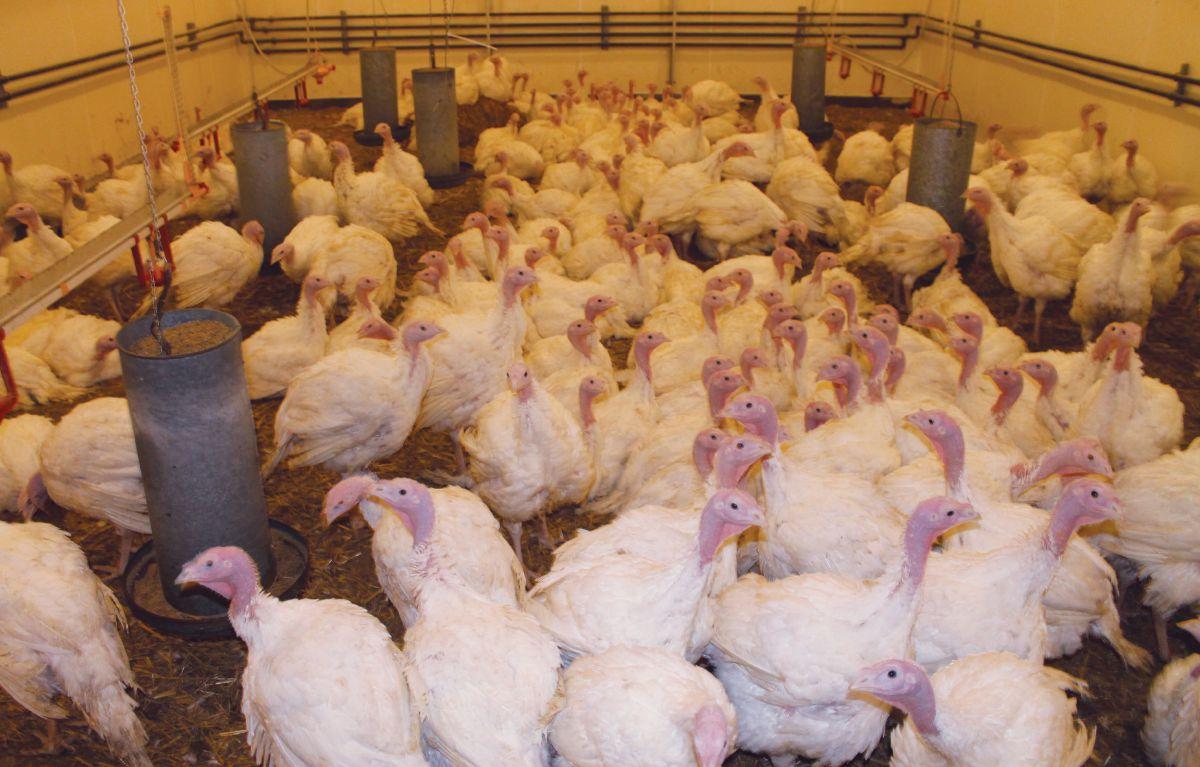
Throughout 2019, Schwean-Lardner and Jhetam conducted trials at the University of Saskatchewan’s Poultry Research and Teaching Unit – a unique, climate-controlled research facility. A total of 3,550 turkey hens were raised until 11 weeks of age at four different stocking densities (achieved at market age) of 30, 40, 50 and 60 kg per square metre in each trial. All birds were housed in large ventilation-controlled rooms with four replications per stocking density.
Data were collected throughout the trial on body weight, feed consumption, feed efficiency and mortality. Birds were also observed for foot pad lesions, mobility, feather cover and cleanliness at weeks eight and 11. Stress was evaluated at various ages by determining the ratio of hetero-
phils to lymphocytes in the blood, an indicator of chronic stress. Video footage of treatment rooms was used to evaluate bird behaviour, including the occurrence of aggression and other behaviours of the hens. Jhetam’s work on the trials was the basis for her M.Sc. with Schwean-Lardner.
“We also aimed to reduce the impact of air quality on the birds at the various stocking densities,” Jhetam says. “By testing carbon dioxide and ammonia levels several times a week, we were able to adjust the ventilation in each room to improve air quality overall, and ensure the same air quality between all the stocking density treatment rooms.”
Few positives in high densities
At higher stocking densities – more than what is currently recommended in codes of practice – there was nothing positive with respect to bird growth and welfare in the research findings. “Body weight was negatively impacted at high stocking densities and feed consumption was also lower
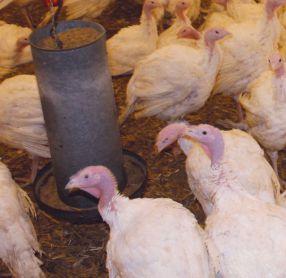
For a study, turkey hens were raised at four different stocking densities. The 11-week-old hens pictured above were raised at 40 kg per square metre.
Chicken Farmers of Canada has released a revised version of the Raised by a Canadian Farmer On-Farm Food Safety Program manual. This is the first major update of the program since 2014, and the requirements will take effect for all audits as of January 1st, 2022.
One of the major changes in this revision is greater flexibility around washing, disinfection, and downtime. Three different options are now provided for this, with different combinations and frequencies of cleaning and downtime. Other changes have also been made to harmonize with current regulations and clarify existing requirements.
Check out all the details and new forms at www.chickenfarmers.ca/offsp-manual/
throughout the 11-week period,” Jhetam says. “Birds were less active, had more foot pad lesions, poorer mobility and feather coverage/cleanliness. The reduced activity also resulted in reduced animal welfare and more overall disturbances between birds.”
At the lower end of the stocking densities evaluated – less than the current codes – bird productivity improved as measured by body weight and feed conversion, but aggression between birds was higher throughout the trial period.
“We found a couple of really important factors about stocking density for hens in this research,” Schwean-Lardner says. “At high stocking density, clearly production and welfare on an individual bird basis were negatively impacted. And despite having the same air quality and ventilation as other stocking densities, we still had more foot pad lesions and bigger mobility issues.”
Schwean-Lardner knows that, from a producer perspective, more money is made at higher stocking densities, but she encourages producers to look for a better, bigger balance. “I want producers to know that stocking density matters and is not as simple as looking at economics. It has the potential to negatively impact the bird’s welfare.”
The other important finding is the impact of hens raised at lower stocking densities. “At very low stocking densities, we found more damage by aggression because when birds had so much space there were some negative welfare implications,” Schwean-Lardner says.
Keep to the middle ground
The current codes of practice for turkey hen stocking density ranges from 45 to 50 kg of bird per square metre – roughly the mid point of the ranges tested in the team’s research.
“Based on our findings, we are doing pretty well in Canada with turkey hen stocking densities as long as we are balancing economics and welfare,” says Schwean-Lardner. But she’s quick to point out that their results are very dependant on good environmental conditions.
“It’s important to remember that we evaluated stocking densities under really good environmental conditions. So if producers aren’t as focused on the environment for the birds – and if they are housing at the higher end of stocking densities – on-farm results will be different than what we found. And producers are likely to see a
AGRO-DESIGN CONSTRUCTION
bigger impact of stocking density on bird health and welfare,” Schwean-Lardner says.
As part of the trial, the team also conducted a basic economic evaluation that compared input costs, including the cost of the poults, cost of feed and income made on the sale of the birds.
No estimations of energy usage, labour or equipment maintenance were included. Not surprisingly, economics improved with higher stocking densities, but at a cost to bird welfare.
“I want producers to know that it’s important to be able to balance multiple management practices with stocking density to ensure good production and good welfare,” Jhetam says.
While there are no immediate plans for more stocking density work on turkey meat birds for Schwean-Lardner, she has a lot of questions. About the differences between hens and toms – there are very few at higher densities when they are both less active and mobile, but there is more aggression with hens at lower stocking densities. And she has questions about group size. “It would be great to repeat these stocking density trials in commercial barns where there are thousands of birds, compared to hundreds of birds in our trials.”
This research is funded by the Canadian Poultry Research Council as part of the Poultry Science Cluster, which is supported by Agriculture and Agri-Food Canada as part of the Canadian Agricultural Partnership, a federal-provincial-territorial initiative. Additional funding was received from Aviagen.
Dr. Karen Schwean-Lardner (left) and graduate student Sameeha Jhetam have been assessing the impact of various turkey stocking densities.
The Latest Tool Against IBD
BY DR. BABAK SANEI, NATIONAL BUSINESS AND TECHNICAL MANAGER
Q1 Why IBD (Gumboro) is an important disease in broilers?
Infectious bursal disease virus (IBDV) will affect the most important immune organ of young broiler and layer chickens, called Bursa of Fabricius. The negative impact on this organ directly affects the immune status and increased susceptibility to other pathogens.
If birds are infected at early ages (before 2-3 weeks), it results in permanent significant immunosuppression. The affected broiler flock is prone to secondary infections that can manifest in different forms such as colibacillosis, lameness (e.g. arthritis and tenosynovitis due to Staphylococcus, enterococcus and/or E.coli infections), higher susceptibility to coccidiosis (e.g. Eimeria tenella breaks) and higher condemnations (e.g. higher cellulitis) and overall poor flock performance. Concurrent infections with other viral diseases such as IBH and IB would amplify losses in affected flocks. Infections after 3 weeks can result in transient immunosuppression and still be costly to the producers, if not addressed with proper vaccination.
Q2 Are all IBD viruses have the same disease impact on flocks?
No, Based on virulence of the virus, IBDV is further divided into
1. Classical and Very virulent IBD strains (causing significant bursal lesions and high mortality in affected flocks)
2. Variant strains (that can potentially cause bursal lesions and immunosuppression)
In Canada, Very Virulent or classic IBD infections in commercial broilers have not been identified yet. However, on the other hand, variant IBD strains are quite common and can result in subclinical form of disease. As mentioned, depending on environmental conditions, on-farm management and presence/ absence of other pathogens, there can be wide range of impact from increased FCR, poor weight gain and higher secondary mortality and condemnations.
Q3 What is the best way to protect broiler flocks against IBD?
Broiler breeders: The first step is to have a robust vaccination program in all broiler breeders. Fortunately, our Canadian broiler breeder flocks are hyperimmunized ( receive multiple live priming followed by two killed vac-
cines at different ages) against IBD and provide good level of maternal antibodies (MAB) to broiler progenies (via yolk) that can protect broilers at least for the first 2 weeks of life. However, the level of maternal antibodies gradually declines below threshold and can leave flocks susceptible to possible IBD variant infection.
Broilers: Once maternal antibodies wane then exposure to the virus can cause transient immunosuppression after 2-3 weeks of age and depending on other predisposing factors result in economic or mortality losses in broilers, hence vaccination of broilers at the hatchery or at the farm will be needed to cover for the entire life of a broiler flock.
Q4 What are different kind of Vaccines available to fight against IBD?
Due to variation of IBD variants antigenicity and their virulence, proper vaccines should be used based on laboratory diagnostic results.
There are three different types of IBD vaccines currently available for use in broiler flocks
1. Live attenuated vaccines that are classified based on their level of antigenicity and ability to survive in presence of maternal antibodies. These are either used at the hatchery or at the farm during the second week of life.
2. Recombinant IBD vaccines. These vaccines are used at the hatchery and via In-Ovo vaccination in broilers and Sub Q in layers. Their induced immunity provides good protection against moderate level of IBD infections that mainly affect flocks after 14-21 days of life depending on the type of applied vaccine and onset of immunity.
3. Antigen-Antibody complex vaccine that contains live strain of IBD virus accompanied with specific antibodies. This vaccine is ideal to address the problem of persistent high IBD challenges in broilers. These vaccines are also used at the hatchery via In-Ovo route. The technology of the vaccine enables it to be effective in birds with varying level of maternal antibodies. In cases of persistent high IBD infections, it is better to use these vaccines over multiple crop placements and allow the vaccine to gradually replace the field virus. Once this is achieved, application of recombinant vaccines (such as Poulvac® Procerta™ HVT-IBD) can be used, thereafter.
Q5 What is the best way to diagnose IBD in commercial flocks?
1. When immunosuppression is suspected, IBD Elisa serology on blood samples taken at the processing plant (if possible), or at the farm close to shipping is a rapid and less costly initial step. However, this is only a screening tool and depending on the result should be followed by other diagnostic tools. Minimum of 10 blood samples per given broiler barn is appropriate.
2. When veterinarians visually assess bursa of 5 randomly selected birds at around 28-30 days of age, if bursal atrophy is suspected, bursa can be submitted for molecular diagnostics and histopathology. If the result is positive and show high level of virus in the tissue, it can be followed by sequencing.
The result of sequencing is a table that helps producers and their veterinarians to select the best vaccine strategy that is most suitable for the type of variant that flock is exposed to.
Q6 What is the new Poulvac® Procerta™ HVT-IBD vaccine that Zoetis is offering?
Zoetis Canada is going to launch its newest member of IBD family,
Poulvac® Procerta™ HVT-IBD — the industry’s latest vector vaccine for Marek’s disease and infectious bursal disease virus (IBDV). For veterinarians and producers, it offers the latest science and best overall protection against contemporary IBDV challenges.
Zoetis has identified a new construct that delivers earlier protection against important IBDV variants and classic IBD challenges.
Poulvac® Procerta™ HVT-IBD, paired with the gold standard Embrex® Inovoject® process — an Embrex biodevice for vaccinating eggs in ovo — delivers a comprehensive approach for bird health in the hatchery and is fully supported by unmatched field service.
Q7 How Does Poulvac® Procerta™ HVT-IBD work and what differentiates this vaccine?
This vector vaccine is using Marek’s Turkey Herpes Virus
as the backbone, with an insert of the immunogenic segment of IBD VP2 gene, together protects against Marek’s disease and IBD challenges.
One of the main differentiating attributes of this new vaccine is its early onset of immunity, which is important in broilers with low maternal antibodies during early life. The maternal antibodies will protect broilers for up to around 2 weeks, but will eventually decline and leave broilers susceptible to potential IBD challenge. This will become more important for broilers that are sourced from various breeder flocks with varying degrees of maternal antibodies.
Zoetis’ new Poulvac® Procerta™ HVT-IBD is able to establish earlier onset of immunity and better efficacy against classic and several important variant IBD infections.
Q8 What is the complete line of IBD vaccine products that Zoetis currently offer to the industry?
• Poulvac® Procerta™ HVT-IBD for use in broiler and layer flocks and fits into a complex-wide best-in-class approach for IBD protection.
• Poulvac Maternavac® 4 & Poulvac Maternavac® 2, inactivated four-way and two-way vaccines for breeders, provides high level of maternal protection transferred to their broiler progenies.
• Live Bursine®-2 vaccine for use in broiler flocks with low maternal antibodies, as either standalone IBDV vaccine or following the in ovo administration of Poulvac Procerta HVT-IBD. This vaccine can be used in commercial layers and also in broiler breeders for live priming prior to killed vaccination.
• Poulvac® Bursaplex® for in ovo administration in broilers when the field virus challenge escalates, helping ensure Poulvac Procerta HVT-IBD remains efficacious in the long term.
For years, Zoetis has been providing diagnostic supports to veterinarians to identify IBDV field strains and determine the timing and severity of IBDV challenges. We have worked closely with field veterinarians to address various IBD challenges and design best tailored vaccination program.
Better animal welfare in transit
Study shows sensor system effectively monitors transport conditions in
real time.
By Lilian Schaer
Anew study has proven that a sensor-based tracking system for livestock can ensure good animal welfare during transit.
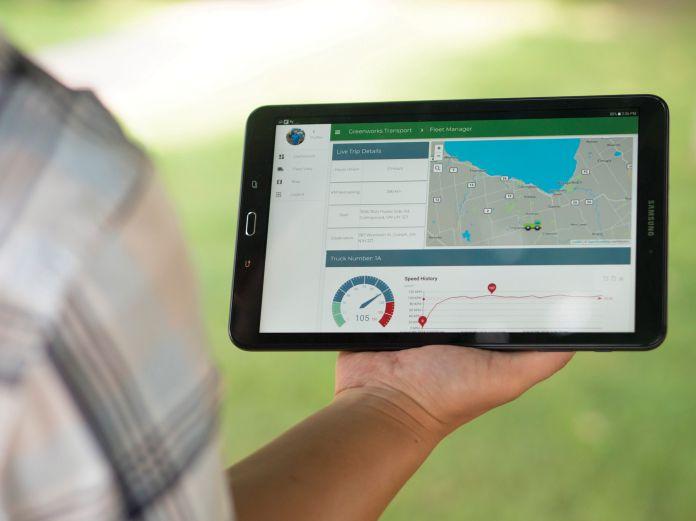
The two-year project, led by the Canadian Animal Health Coalition (CAHC), has found that Transport Genie, the electronic monitoring system developed by a Guelph, Ont.based start-up of the same name, can successfully track microclimate conditions inside livestock and poultry trailers in real-time.
With new animal transport regulations from the Canadian Food Inspection Agency (CFIA) coming into effect in 2020 and greater public scrutiny on the welfare of animals on Canada’s roads, CAHC sees Transport Genie as an important tool to prove those standards are being met.
“There is a need to make sure transporters have tools they could use to ensure the health and welfare of animals during transporting – and that those tools are impartial and in real-time,” says CAHC chair Jennifer MacTavish, who is also general manager of Ontario Sheep Farmers. “It’s not that we think our truckers need to be kept an eye on, but we want to help them be able to prove it. So, when this project came up to streettest, it seemed like a natural fit for us.”
Monitoring conditions and regulatory compliance
Through a system of smart sensors, Trans-
port Genie monitors conditions inside livestock and poultry trailers and provides that information to the transport driver, as well as dispatchers and others who wish to receive notifications via email or text message, so actions to correct any emerging problems can be taken right away.
The sensors record interior temperature and humidity; work to monitor CO2 and ammonia levels is still being completed. It also tracks outside temperature readings, pressure, humidity, and wind speed – all of which is matched with GPS data from the trailer. Braking, acceleration and the duration of rest stops are also monitored, which are key to demonstrating compliance with the new livestock transport regulations.
For poultry, one of the biggest changes was shortening the maximum intervals
without feed, water and rest to 28 hours for feed and 24 hours for water. Previously, it was 36 hours from the time the first bird was loaded to when the last bird was unloaded.
The other big change involved the definition of transport time. Previously, it included only time spent in-transit. Now, the clock starts ticking on the 28-hour limit when either feed, water or rest is removed. Typically, feed removal will happen first, which is what starts the clock; it will keep going right until processing.
Automating risk reduction in transit
The genesis of Transport Genie came from work project coordinator Tim Nelson, currently president and CEO of Farm Health Guardian, completed a few years
New research found that Transport Genie, a remote monitoring system that uses sensors, can successfully track microclimate conditions inside livestock and poultry trailers in real-time.
ago with Poultry Industry Council (PIC). That’s when the organization developed a chart to help with decision-making around whether or not birds should be transported.
“We didn’t have a good way of doing anything about trucks that run into inclement weather – should a truck be loaded or can the truck be set accordingly to mitigate damage? That stuck in my mind a lot,” Nelson recalls. “There were issues with transport in other livestock, too, and I knew we needed a better way to do this.”
Nelson and co-inventor Joel Sotomayor were already working on another farm health technology project called Be Seen Be Safe, which records and analyzes movement data between farms in an effort to contain animal disease outbreaks. At the same time, the CFIA had started consultations on updating livestock transportation regulations and national codes of practice
improvements
When it came time to put the technology to the test, Nelson approached CAHC and the project, involving researchers at University of Guelph, University of Saskatchewan and Agriculture and Agri-Food Canada, as well as livestock transport industry partners, received government funding through the Canadian Agricultural Partnership.
for the care and handling of farm animals were also being reviewed.
“Now that we had smart ways of monitoring things and sending information, we thought surely there is a way we can monitor poultry and livestock in transport – so Joel and I put our heads together,” Nelson says.
The technology was tested in different seasons and climatic conditions over longand short-haul distances using a variety of trailer designs and hauling multiple species. Luckhart Transport, a livestock hauling company based in Sebringville, Ont.,tested the sensors and provided feedback.
The work was invaluable in determining things like sensor placement, what types of measurements should be monitored for best results, and even the best types of materials for sensor casings to avoid animal
LAYER SIGNALS: A PRACTICAL GUIDE TO LAYER FOCUSED MANAGEMENT
Luckhart Transport, a livestock hauling company based in Sebringville, Ont., tested the sensors and provided feedback for the project.
Technology
damage, Nelson notes.
“When it comes to positioning of sensors in the trailer, where do you place them if you want to monitor the environment on an entire load of chickens? Those on the outside suffer from cold, while inside they overheat,” he says. “We also found that for poultry, monitoring temperature is not the best and that monitoring CO 2 levels is much better. When poultry stress, they breathe heavily and CO2 goes up, so the project went from measuring temperature to temperature, CO2 and humidity.”
Dr. Terry Fonstad at the University of Saskatchewan conducted durability testing of the sensors in transit. Sensors must be able to withstand pressure washing, chemicals used during cleaning and disinfecting, and the ongoing vibrations caused by bumpy rural roads and railways crossings.
At the same time, they have to be able to function equally well when the trailer is empty and subject to -40°C outdoor temperatures and while the trailer is being heat treated at 100°C to kill pathogens between loads.
ready for industry use
According to Nelson, the Transport Genie team decided to focus on development of a robust and reasonably low-cost system that will work on majority of conventionally built livestock trailers on Canadian roads today that needed a way to monitor livestock in transit. Data is encrypted.
“We cater to a retrofit system that can fit into any type of truck so people can be compliant with the regulations,” he says, adding that once the system was running and providing data, Transport Genie started attracting interest from many parts of the world.
It’s now already being used by a large Swiss poultry producer and Meat and Livestock Australia is trialing the system for live animal exports. And although Luckhart Transport continues to use the system, it has yet to see widespread uptake in Canada.
“The livestock industry needs this like oxygen,” Nelson believes. “It’s robust and it does a good job and we were working with a group (Luckhart) who were very helpful. We now have the use case and the system is ready to go.”
Announcing Necrotic Enteritis Vaccine
The Future is Now
Clostridium Perfringens Type A Vaccine: s
The only mass-administered vaccine available for controlling necrotic enteritis in chickens that has been demonstrated to meet CFIA and USDA standards for purity, efficacy, potency, and safety.
Only vaccine for necrotic enteritis that stimulates an immune response against a-toxin and Netb toxin of C . perfringens Type A. Clostridium perfringens Type A vaccine has been shown to be effective for the vaccination of healthy chickens day of age or older against necrotic enteritis due to Clostridium perfringens Type A .
Talk to your Huvepharma sales representative or contact customer service at customerservice@huvepharma.ca
Layer losses
Assessing the impact of IBV variants in Canada.
By Jane Robinson
As scientists around the world grapple with evolving variants of the virus behind COVID-19, Dr. Faizal Careem searches for strategies to help poultry producers manage variants of another coronavirus, the infectious bronchitis virus (IBV), that are showing up across the country.
Canadian poultry producers depend on vaccines to protect flocks from IBV infection, but as Careem is discovering, new variant strains are posing new control challenges. Careem is the head of the Department of Ecosystem & Public Health, and a professor of virology, at the University of Calgary Faculty of Veterinary Medicine. He’s leading a research project to assess the impact of IBV variants on egg production and fertility of chickens.
“IBV is of particular concern to layer operations,” Careem says. “It infects both young and adult chickens, causing lesions to the respiratory, reproductive and urinary systems, depending on the strain.” The age
of a bird infected with IBV also determines how the disease impacts the reproductive tract of birds. As a result, IBV infections can damage the developing reproductive tract in young birds and cause reduced egg production and quality in layers. Careem’s work is looking at the impact of variants in young birds and adult layers.
There are IBV vaccines currently available in Canada, but the continuous emergence of variant strains of the virus has led to infectious bronchitis (IB) outbreaks in vaccinated flocks, resulting in significant economic losses. “We need to better understand the variants to be able to develop more effective vaccination protocols that rely on cross protective immunity,” Careem says.
Variants of concern
Careem and his research team are well into their multi-year study to determine the impact of the IBV variants on egg production and bird health. They are also evaluating existing vaccine options to ultimately provide better protection options for pro-
ducers. “If the IBV variants that compromise reproductive performance are better known, it will help by improving and developing mitigation strategies and identifying potential vaccine candidates for the Canadian poultry industry,” he says.
The five-year project began with the isolation and identification of key IBV variants from on-farm samples received at the Animal Health Laboratory at the University of Guelph, representing poultry operations across Canada. Four specific variants of concern were identified – Delmarva (DMV/1639), 4/91, Mass and CA1737.
Most of the team’s work to date has focused on the DMV/1639 and 4/91 variants. DMV/1639 has been shown to have a significant impact on egg layers when infection occurs in young and adult birds. The 4/91 variant caused kidney lesions that would cause significant losses for the poultry industry as a result of poor growth performance and mortalities. And the Mass variant has been linked to shell-less egg syndrome.
A University of Calgary research team is leading a project to assess the impact of infectious bronchitis virus variants on egg production and fertility of chickens.
If you can’t handle the stress, get out of farming.
talk to someone who can help
It’s time to start changing the way we talk about farmers and farming. To recognize that just like anyone else, sometimes we might need a little help dealing with issues like stress, anxiety, and depression. That’s why the Do More Agriculture Foundation is here, ready to provide access to mental health resources like counselling, training and education, tailored specifically to the needs of Canadian farmers and their families.
Health
DMV/1639 strain causes significant production losses
From variants isolated in their lab, Careem and his research team Mohamed Hassan and Shahnas Najimudeen evaluated the impact of the DMV/1639 and 4/91 strains on two ages of birds – day old chicks and hens in lay.
Day-old specific pathogen free female chicks were infected with the DMV/1639 variant and were processed at 16 weeks of age. Approximately 40 per cent of infected hens had developed cystic lesions on their oviduct – a condition leading to false layer syndrome with a huge potential for economic losses for egg producers.
They also infected 29-week-old specific pathogen free layers with the same variant. At five days post infection, egg production had dropped to 40 per cent.
“DMV/1639 appeared to primarily affect egg production,” Hassan says. “The 4/91 variant is not affecting egg production but caused kidney lesions – usually in younger birds – that can lead to poor growth and increased mortality, especially in broiler flocks.”
DMV/1639 is a variant that impacts kidney function and would also have a negative impact on the broiler sector. Kidney lesions are usually severe in younger ages, causing poor growth performance and elevated mortality in broilers in particular.
The research team has also been working on the Mass variant. It’s been tied to shellless egg syndrome in Alberta and Saskatchewan layer operations over the past decade. “We are currently running an experiment to develop an effective vaccine protocol to control the Mass variant,” Careem says.
Understanding the impact of these variant strains of IBV is step one. Finding protection options for the industry is a key focus for Careem and his team. “We’re in the process of evaluating vaccination strategies that could provide cross protection for birds against the variants.”
This research is funded by the Canadian Poultry Research Council as part of the Poultry Science Cluster. Additional funding has been provided by Egg Farmers of Canada, Alberta Agriculture and Forestry and Egg Farmers of Alberta.
Caring for the newly hatched
The time between hatch and placement is critical for producing the bestquality chicks.
By Eduardo Costa
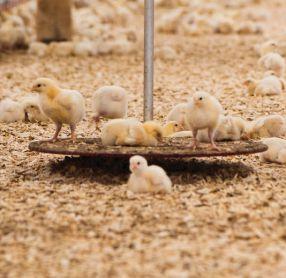
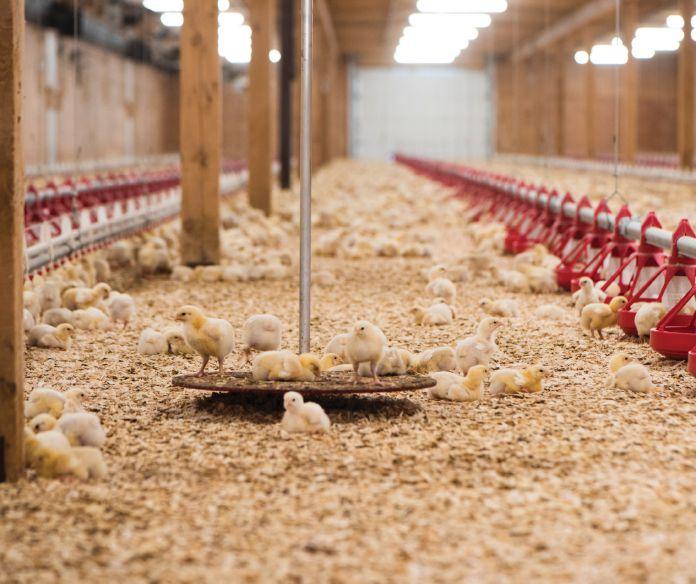
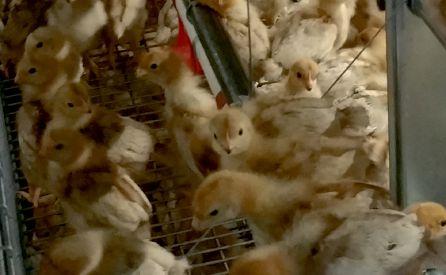
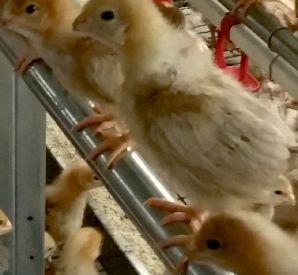
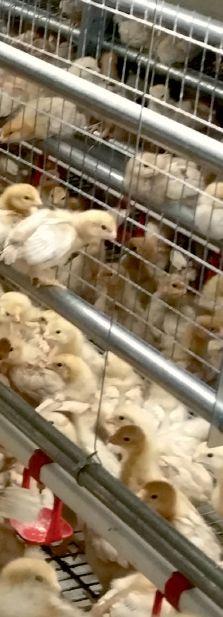
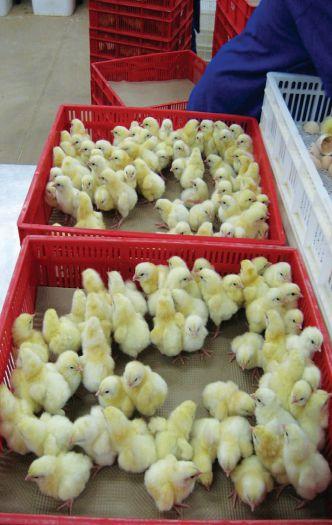
Focusing on correctly processing, storing, and transporting chicks is very important to producing the best-quality day-old chicks.
Newly hatched chicks cannot fully self-regulate their body temperature and need an environment with the correct ventilation to provide sufficient oxygen that helps them maintain a thermo-neutral body temperature. Any stress, even for short periods, can harm broiler performance.
Body temperature
From the moment the chicks are dry inside the hatcher through the first hours on the broiler farm, internal body temperature should be maintained at 104°F to 105°F (40°C to 40.6°C). Chick body temperature can go up very quickly and once the birds are hot it’s difficult to cool them back down.
When body temperatures get close to 106°F (41°C), the birds start to pant as they try to lose the excess body temperature. They lose five times more moisture by panting than with regular breathing, leading to dehydration.
Overheating is the biggest cause of dehydration for chicks. Also, panting increases relative humidity in the environment, making it more difficult for the birds to exchange heat by evaporation. When the
If
chicks are hot, they spread the wings, get very noisy and become lethargic.
When room temperature is too low or there is too much draft through the boxes, the chicks will huddle, trying to control body temperature. Pulling out green chicks (early pullout) or after spray vaccination are the moments where chicks are most susceptible to chilling. Besides being a contamination source, wet chick boxes can also chill the other birds. Make sure the boxes are clean and dry at pullout time.
The temperature inside the boxes should be maintained at 90°F (32°C), but that temperature may be from 11°F to 22°F (6°C to 12°C) higher than room air temperature. This is why it’s so important to keep space for air flow between the stacks of boxes. As a rule of thumb, there
should be enough space to walk between the stacks of boxes.
Low relative humidity will also accelerate dehydration. Humidity cannot compensate for moisture loss, and if it’s too high, chick heat loss by evaporation is limited, causing more heat stress. Keeping the relative humidity around 65 per cent is best to maintain chick quality and welfare.
Transport
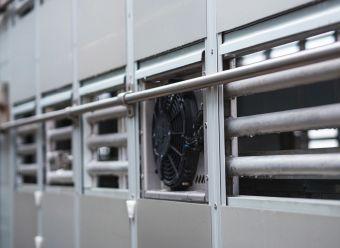
Chick transporters should provide a minimum ventilation rate of 20 CFM (34 m 3 per hour) per 1,000 chicks in the wintertime and double this in the summertime. Some trucks depend on movement to ventilate the interior, but these trucks do not ventilate well in heavy traffic or when stationary.
Ideally, the trucks should have mechanical air intake with an air preparation chamber (for temperature and humidity) and exhaust fans should be able to maintain the correct amount of oxygen and temperature.
As in the processing and holding rooms, temperature inside the boxes should stay at 90°F (32°C) and relative humidity should stay at 65 per cent. The floor of the truck body needs to be very well insulated to prevent heat accumulation in the truck, especially on the bottom boxes.
Drivers must be specialized and committed to the care of the day-old chicks through good animal husbandry and welfare practices.
Minimum stocking density should be 3.3 in ² (21 cm ² ) per chick, with lower chick concentration during extremely hot weather and/or long distance trips (check with local regulations as some areas legislate chick density).
climate conditions are good and chicks are comfortable, they should be calm, breathing quietly through their nostrils with little noise, and evenly spread in the boxes.
OCT. 19, 2021 12:00PM EDT
JOIN THE CONVERSATION Register for a virtual mentorship event with some of the most influential leaders in Canadian agriculture.
This half-day virtual event will showcase select honourees and nominees of the IWCA program in a virtual mentorship format. Through roundtable-style sessions, panelists will share dvice and real-life experiences on leadership, communication and balance working in agriculture.
SPONSOR
Bird Management
Barn arrival
Upon arrival at the farm, face the vehicle into the prevailing wind to prevent wind chill on the chicks during unloading. The birds should go straight to the brooding area and have immediate access to feed and water. If doing a quality check and count sample, this needs to be done simultaneously with unloading by trained personnel.
Holding the birds in the boxes inside the brooding area will quickly lead to overheating. During unloading, count the number of chicks dead on arrival (DOA) and observe if this mortality is evenly spread through the truck or is concentrated in spots. Then provide immediate feedback to the driver.
Chick behaviour is one of the best tools to evaluate climate conditions and bird comfort. The chicks should be calm,
breathing quietly through their nostrils with little noise, and evenly spread in the boxes. When released in the broiler house, the birds should be active and spread evenly, looking for water and food calmly.
Five key points:
•Temperature: Keep temperature inside the boxes at 90°F (32°C). Remember that inside the boxes, it can be from 11°F to 22°F (6°C to 12°C) higher than room temperature. Use chick cloacal temperature as a tool. Keep it in the range of 104°F and 105°F (40°C to 40.6°C).
•Ventilation: Provide enough fresh air. Leave space for air flow but no direct air drafts over the birds. Keep CO2 below 2,500 ppm (0.25 per cent) and RH at 65 per cent.
•Loading: Do not overload the trucks.
Load the truck according to truck type recommendations and roads. Give a minimum of 3.3 in² per chick (21 cm² per chick). In very hot weather, a lower density is recommended. Check with local regulations as some areas legislate chick density.
•Unloading: Don’t open the doors facing the wind. Unload straight to the brooding area and release the birds immediately. Count the number of chicks DOA and observe the distribution of this mortality.
•Behaviour: Pay close attention to chick behaviour during holding, transportation, and after placement. Listen to what the birds are trying to communicate.
For more information, access the Cobb Hatchery Guide and Broiler Management Guides at cobb-vantress.com.
Offering for Sale:
Established in 1934 this well managed multigenerational family farm offers a turnkey broiler operation near the agricultural community of Landmark. This well kept farm yard and house truly does offer a unique opportunity for a great farm lifestyle, while being only 30 minutes from Winnipeg. The farm currently operates with just over 148,129 kgs of quota, contains 5 barns and has a 2,200 square foot residence right on site. Barn equipment and two tractors included.
For further detailed information, and to receive a Buyer Information Package, please contact Gemma Brown at gbrown@snj.ca, 204.346.5109, solicitors for the Sellers
Barn Spotlight
Keho Poultry Farms
Location
Fort Macleod, Alta.
Sector
Broiler breeders
The business
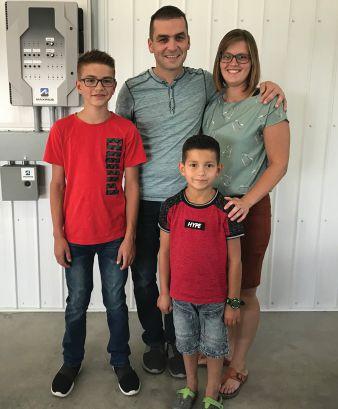
Joe and Gera Hengstmengel have owned their broiler breeder farm since 2019. Gera manages the barn while Joe works full-time in commodity sales, checking on his flock to start and end each day.
The need
Prior to building their own barn, Joe had spent five years managing broiler breeder barns on behalf of other owners. He eventually reached a fork in the road. “I was to the point where I’m either going to do this for myself or I’m not going to do it at all anymore,” Joe says. “Doing it for somebody else is fun but I knew I needed to take the next step.” They applied and won the new entrant lottery in 2019 and, from his barn management experience, Joe knew exactly what he wanted to build.
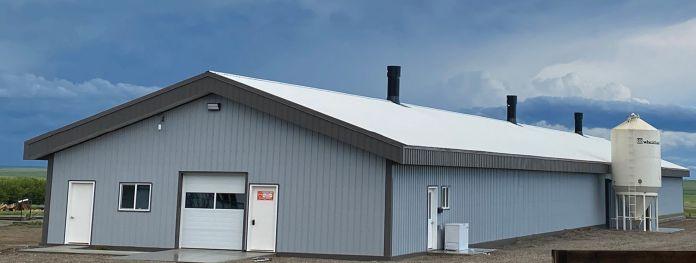
The barn
The producers built an all-in/all-out barn. The birds come in as day-olds and remain there for 58 weeks. “I had no choice because I couldn’t afford to build a separate rearing barn that’s going to be empty for 44 weeks of a cycle,” Joe says. Whereas many barns include centre nest boxes with scratch areas on two sides, the Hengstmengels went with a centre scratch area where they raise their pullets for one month before allowing them to access the slatted areas. Some people warned them against having an all-in/allout barn, saying it presented too many challenges. But two flocks in, Joe says they’re hitting above industry average on chicks per hen.
Barn Spotlight highlights new and renovated barns and hatcheries.
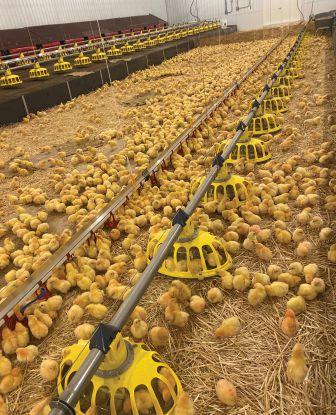
Loop feeders allow the broiler breeder producers to have 16 hens per pan and their feed distribution is under two minutes. The barn also features Van Gent community nests.
As an all-in/all-out barn, the birds come in as day olds and remain there for 58 weeks.. This spares the producers from having to build a separate pullet barn that would largely remain empty.
They raise their pullets on a centre scratch area for the first month, which they say leads to better heat distribution for the young birds.
Joe spent five years managing broiler breeder barns for clients and his wife Gera now manages their own barn while he works full-time in commodity sales.
PHOTO CREDIT: KEHO POULTRY FARMS
WAKING UP WITH THE SUN
SUPPLY MANAGEMENT It ’ s worth it
For Canada’s egg farmers, every day starts with getting up at the crack of dawn to deliver the fresh, local, high-quality eggs that Canadians love.
Find out why supply management is worth it for Canada at eggfarmers.ca
Introducing Poulvac® Procerta™ HVT-IBD. Timing is everything in a poultry operation, and Zoetis created its newest vector vaccine to put time back on your side. Backed by the latest science resulting in excellent overall protection, studies found that Poulvac Procerta HVT-IBD protected chickens fast against classic and important variant IBD strains.1-3 It’s a quick way to full protection from infectious bursal disease. Contact your Zoetis representative.