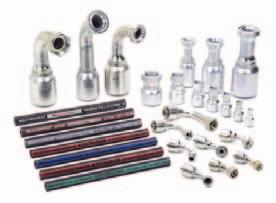
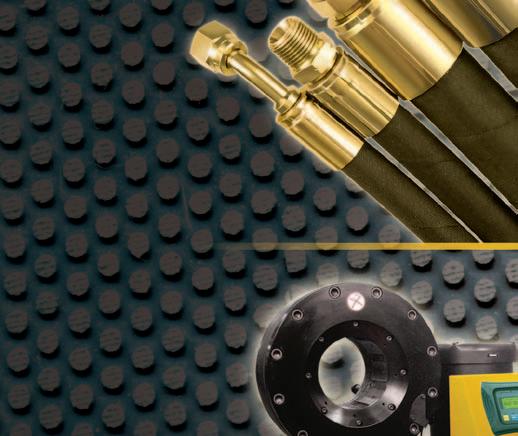
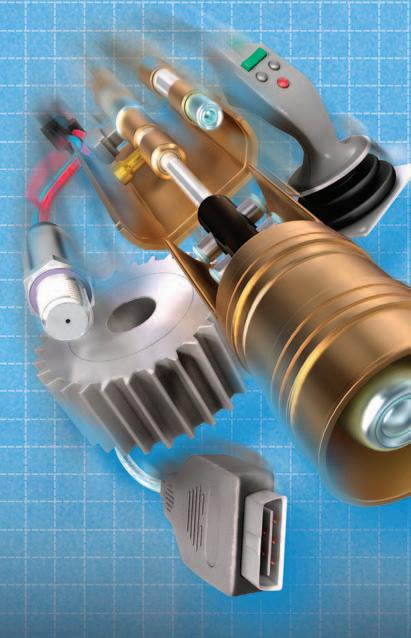
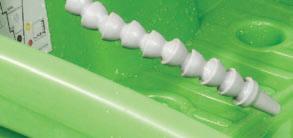
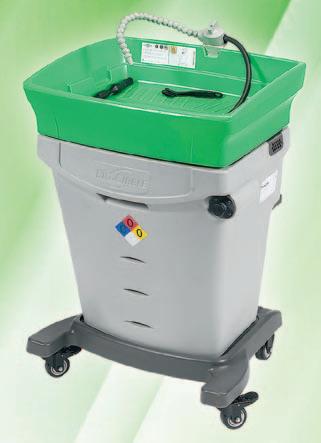
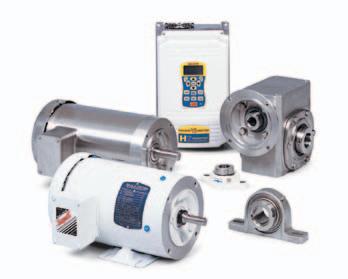
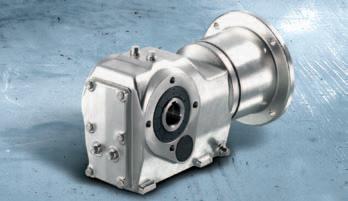
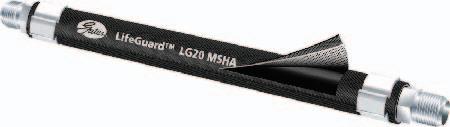
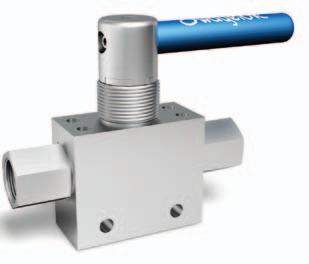
Eaton has announced that select one- and two-wire braid and four-spiral hose styles, marketed as the Weatherhead Diamond Advantage program, have been re-engineered to provide higher working pressures and higher temperature ratings, plus a durable, more abrasion-resistant hose cover. Included are hose styles H190, H280, H290, H430 and H245L. Temperature rating of these styles is 260°F. The H190, H280, H290 and H245L styles meet and exceed Euro Norm SN/SC standards. The H430 fourspiral hose meets and exceeds EN 4SP pressures in sizes -8 through -16 and meets and exceeds SAE 100R12 standards in all sizes.
Flap disc gets the job done fast
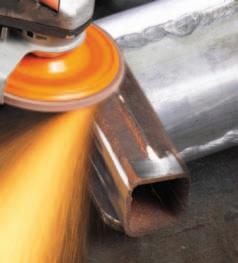
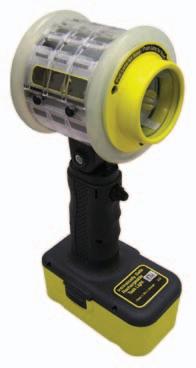
The Enduro-Flex Turbo flap disc from Walter Surface Technologies features Cyclone technology, which combines a mixture of abrasive grains with cooling agents that produces a fast removal rate and a uniform finish. This technology, together with the company’s flap geometry, enables a 36 Grit cut rate and a 60 Grit final finish. In addition, Turbofan cooling allows the workpiece to stay cooler, resulting in less surface damage and longer disc life. Spin-on application makes for fast and easy disc replacement. The disc can be used on steel, stainless steel and aluminum.
Walter Surface Technologies
Reader Service Card No. 390
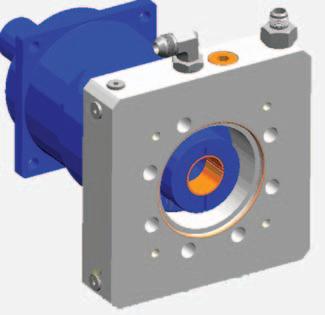
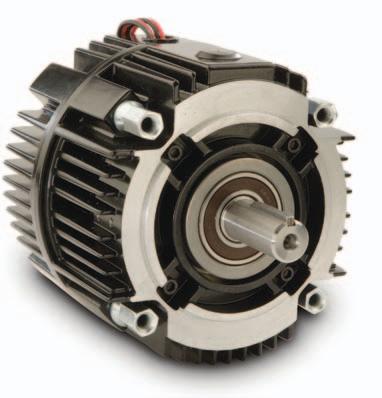
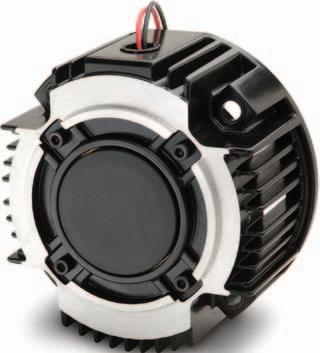
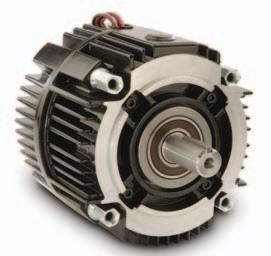
Servomotor brake provides secure holding The Eclipse line of servomotor brakes, designed to mount to servomotors up to 20 hp, has been introduced by Nexen. The family comprises spring-engaged servomotor brakes equipped with a split hub, zero backlash clamp collar for attachment to the servomotor shaft. These easyto-use, flange-mounted brakes provide long-lasting performance and require no maintenance. Applications include intermittent dynamic stopping, holding and E-stop. Brake torque is 2.3 Nm to 125 Nm (20 in.lb to 1,100 in.-lb). Seven sizes are available with split-hub/shaft collar shaft mounting. Square flanges range in size from 57 mm to 265 mm (2.25 in. to 10.4 in.).
Nexen Group
Reader Service Card No. 360
Reliable Under Pressure
Shaft alignment tools keeps energy costs in line
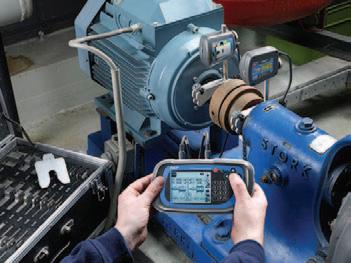
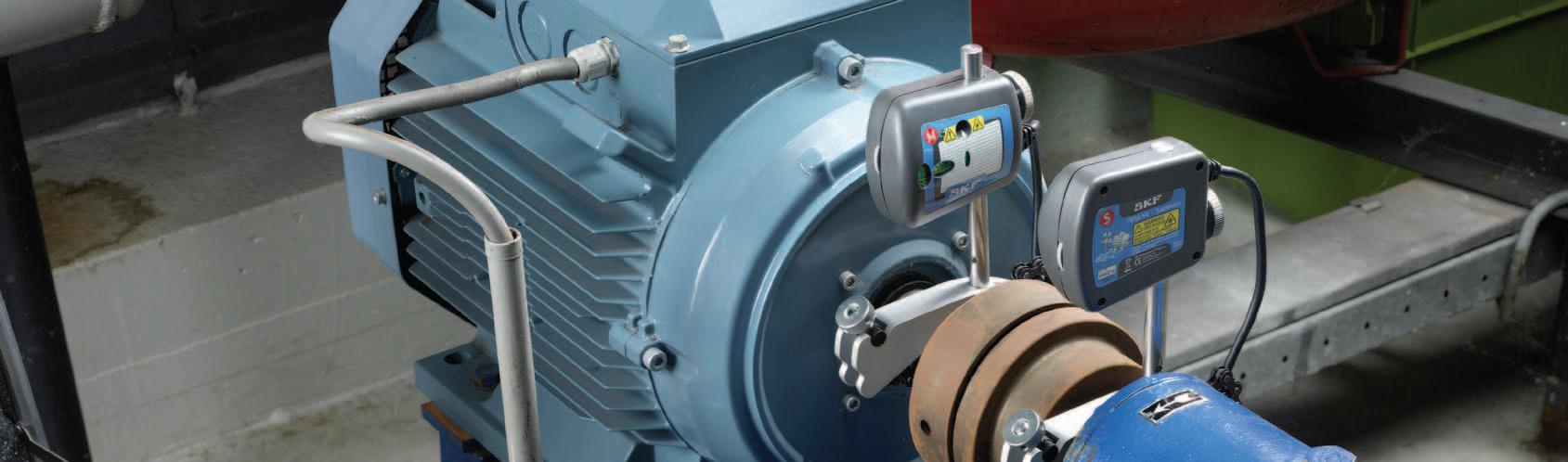
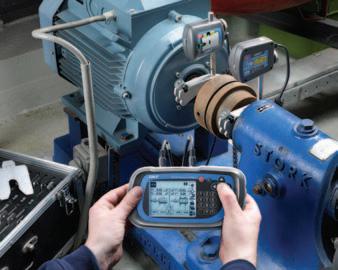
The TKSA series of shaft alignment tools from SKF consists of two models, the TKSA 20, designed for virtually any budget, and the TKSA 40, which features built-in tolerance to checking and a
memory facility that allows results to be stored and shared. Both tools are easy to use and display real-time alignment values. They help to reduce energy consumption and machine breakdowns.
SKF Canada
Reader Service Card No. 363
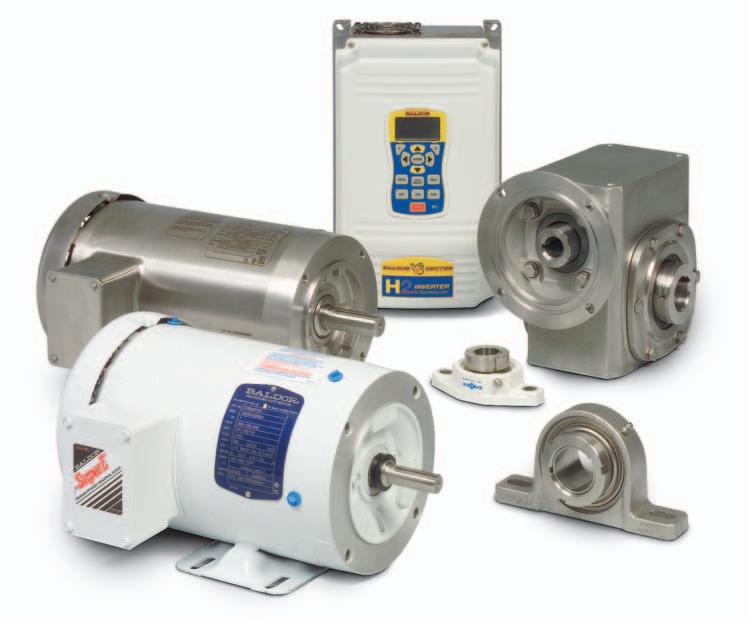
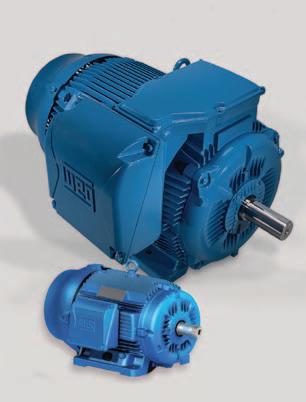
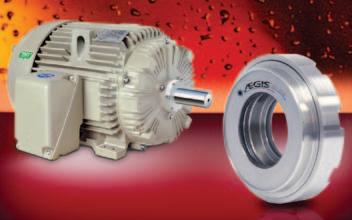
Electric motors offer high efficiency WEG has introduced the Quattro and W22 Super Premium energy-efficient electric motors. A line-start permanent magnet motor, the Quattro is a hybrid model that features a three-phase distributed winding in the stator and operates at IEC established IE4 efficiency levels. The W22 Super Premium, the most efficient model in the W22 product line, is two efficiency bands over premium motors and operates with very low noise levels and high torques. It has a 1.25 Service Factor through the 447T frame size. VJ Pamensky
Reader Service Card No. 364
UV-resistant tubing protects wiring from sun’s rays
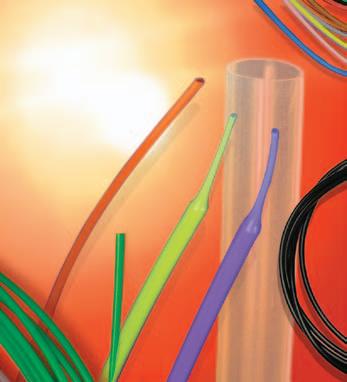
Parker-TexLoc UV-resistant fluoropolymer tubing products withstand the harsh outdoor elements that normally degrade tubing — such as sunlight and UV rays. The products will not crack, degrade or discolour. They operate in temperatures as high as
260°C (500°F) and are chemically inert, making them suitable for environments where chemicals and corrosion are present. Custom- and standard-sized tubes are available in TexFluor, PTFE, FEP or PFA in sizes ranging from 0.01 in. I.D. up to 4 in. I.D., and can be supplied in smooth bore, heat shrink for covering wires, or in an extra-flexible convoluted or corrugated style.
Parker-TexLoc Reader
in this issue
features
Five ways to kill a bearing / 13
These likely are behaviours currently being practiced in your plant.
Solving troubles with heavy duty blocks / 14
When is bearing repair the correct alternative? / 15
1985-2010
Preventing premature bearing wear / 16
Here are the top two causes of premature bearing raceway surface wear.
Design overcomes the two most common problems.
Bearings with little or no damage often can be reconditioned and recycled easily and at low cost.
Repair or replace those bearings? / 18
Rebuilt slewing rings and turntable bearings are practical when the turnaround time is critical.
Inspecting motor bearings / 19
Thermography is a good alternative to vibration analysis for low-speed operations.
I, Cobot / 21
How collaborative robots will change the face of maintenance in hostile conditions.
High-motivation maintenance / 22
Nova Scotia’s Otter Lake waste processing facility makes sure machinery maintenance is effective.
What’s up, Jack? / 23
How screw jacks handle heavy lifting in two Alberta applications.
‘Misalignment contributes to bearing contamination through poor seal performance’.
MARCUS WICKERT / 14
‘A lot of people don’t know that stainless steel has only 10%-15% of the strength of carbon steel’.
MIKE WELWOOD / 26
‘I find that the Summit gives me the ability to look at problems from a different perspective’.
DON LATHAM / 8
‘I try to find parts cleaners and tools that don’t harm the environment’.
JAY LENO / 25
columns
Maintenance Management:
Cleaning up tools … and the environment / 25
Canadian version of bioremediation technology replaces toxic solvents for cleaning parts and tools.
Chain fixes for severe conditions / 26 Plated, self-lubricated and high-strength chain tackle the challenges of harsh environments.
Common mistakes with clutches and brakes / 27
Maintaining better uptime with motion control systems.
Report from IDI’s Supplier Summit / 37 Independent distributors connect in Alberta.
Report from PTDA’s Canadian Conference / 38 New format draws a crowd to Montreal.
One step ahead, one step back / 28
Follow along with Step 34 in a journey to World-Class Maintenance at the Plentya Paper Company.
CMMS Solutions: Document dilemma / 29
Organize your equipment documents to reduce expenses.
The Safety File: How to build a safety culture / 30 Making financial gain secondary to safety.
Co-operative content
The term ‘cobot’ on our cover isn’t a typographic error. Cobots are collaborative robots, a rarely heard term that’s been floating around in research labs since the 1960s. But you’ll be hearing much more about cobots soon.
Not only is NASA working on them for space station maintenance, General Motors has been investing heavily in research with cobots with the intention of putting these helpful co-workers on their production lines (and we thought GM was nearly broke!).
Our blatant use of the phrase “I,
Cobot” of course recollects the blockbuster Hollywood movie, “I, Robot,” starring Will Smith as homicide detective Del Spooner, who hates robots. The 2004 film was based on a collection of short stories published under the same title by famous science-fiction writer Isaac Asimov. The setting was well into the future — 2035 — where the world was filled with robots.
But you likely won’t have to wait another quarter century to see humanlike robots working right next to you, as our feature story on page 21 reveals.
As you turn to this and other pages
inside, you’ll see that this issue, which includes more than a dozen technical features plus three regular full-length columns, has two main themes: maintenance in harsh environments, and techniques for extending the life of bearings. We also delve into another power transmission topic — clutches and brakes. In addition, you’ll find our informative Industry Newswatch sections, plus more than 50 write-ups in our Product News and Product Spotlight pages.
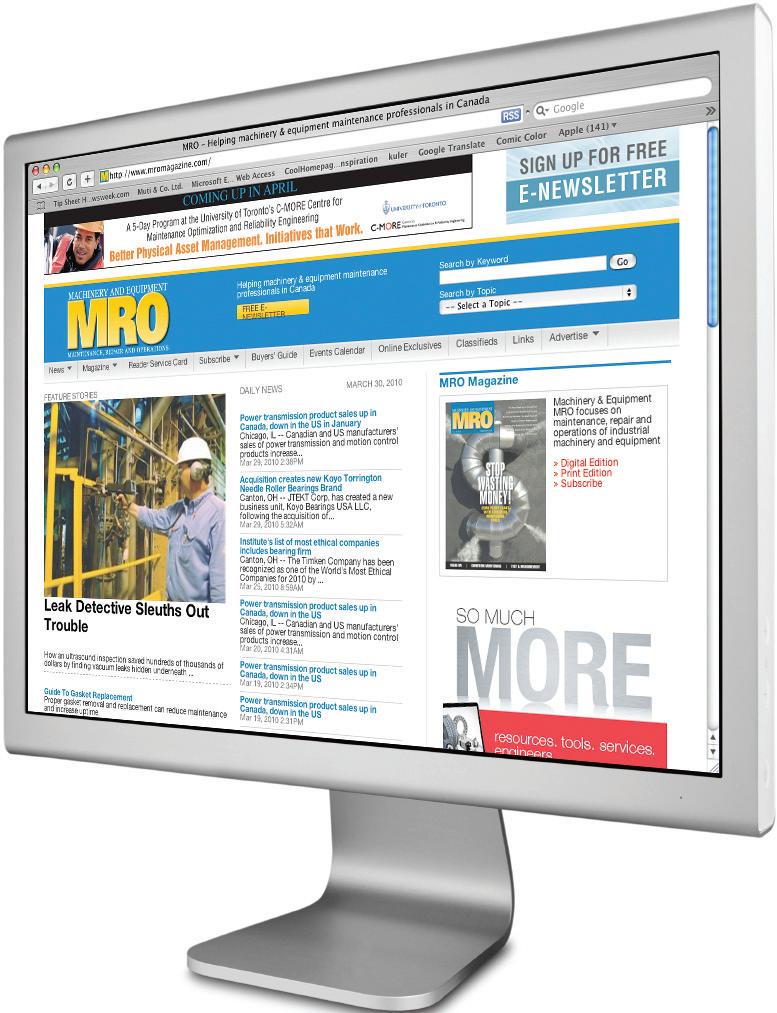
That can be a lot to take in, but we hope you’ll try. And if you encounter articles you know would be of interest to a colleague, please pass along your issue when you’ve finished reading it. You can also encourage others to sign up for their own subscriptions. They are available free to those who qualify by using the reader service cards in this issue or by going online to www.mromagazine.com and selecting the Subscribe menu.
If you do pass along your issue and
can’t get it back, you can always review our full content online by selecting our digital editions. We have archived all of our issues back to the year 2000 (sorry, 1985-1999 issues are in print only), so there is a lot of reference material you can call upon when you need advice, a maintenance solution, or a description of a special component to solve a particular problem.
Our reader service cards also can be mailed or faxed to us with the enquery numbers circled so you can obtain more information from suppliers on the products or stories in which you have an interest. However, it’s even faster and easier to use our new online reader service card (RSC) function at www.mromagazine.com/rsc.
We hope you enjoy — and benefit from — all the content in this issue.
Bill Roebuck, Editor & Associate Publisher
Did you know?
Koyo Seiko was formed in 1921. Today we are part of the JTEKT Corporation with consolidated sales of $10.3 billion and employing more than 33,000 around the world.
In January 2010 JTEKT acquired the Torrington® needle roller bearing business from the Timken Company and these products are now available from authorized Koyo distributors worldwide.
The Koyo brand supports an extensive array of applications, forming part of the original equipment for many world-class names and is a trusted supplier to industry for the ongoing repair and maintenance wherever anti-friction bearings are required.
Going green starts with a commitment to the future.
It’s about creating a vision for the future and then communicating that until it becomes a part of your culture. It’s about new approaches to break through old barriers. And it’s about holding true to your commitment when challenges arise.
Koyo continues to research, develop and deliver products that consume less energy, last longer and lighten their load on the environment. Since 2005 we’ve reduced the CO2 output per unit in manufacturing by 30% and since 2008 reduced our CO2 footprint in logistics by 31%.
In 2009 alone we reduced energy consumption in manufacturing by 14%, raw materials by 20% and CO2 emissions in logistics by 16%; all this while maintaining production levels.
Here are some of the many targets we are working towards achieving this year: Zero landfill waste; 90% reduction of 2001 levels of incineration waste; 30% reduction from 2003 levels of overall waste per unit; 5% increase in manufacturing efficiency per unit and 5% reduction in weight per unit.
For a copy of Koyo’s Corporate Social Responsibility report please visit www.koyo.ca
Making bearings since 1921
.
SEptEMbER 2010
Volume 26, No. 4
Established 1985 www.mromagazine.com
Editorial Bill roebuck, Editor & associate Publisher 416-510-6749 broebuck@mromagazine.com
Ellie robinson, art director
Contributing
Editors
Richard G. Ensman Jr., Simon Fridlyand, Carroll McCormick, Peter Phillips, Angela Webb, Cliff Williams BusinEss nick naunheimer, Publisher 416-510-6868 nnaunheimer@mromagazine.com
Eric achilles Cousineau, adv sales Manager 416-510-6803 eachilles@mromagazine.com Kimberly Collins, advertising Production 416-510-6779 Melinda Marasigan, subscription Enquiries 416-442-5600 x3548
Stronger, lighter, more powerful, and a longer working life – only from NORD Gear.
But, perhaps, what’s most remarkable about the innovative new design of the NORDBLOC.1
Helical In-line series is that we were able to improve upon its already superb predecessor. Yes. We even impressed ourselves.
Advanced innovation gives you yet more durability, more efficiency and more reliability. Consider its compact dimensionally interchangeable design plus an aluminum alloy housing that’s both corrosion resistant and 60% lighter than castiron. Plus, oversized output bearings providing larger capacity and increased working life.
What could be better?
How about a NORDBLOC.1 configured to your exact specifications. We’re ready, 24/7, to design, assemble and ship — anywhere in Canada or worldwide. Call NORD Gear to find your perfect match.
The only intelligent choice is NORD Gear.
New study says recovery on the way for key manufacturing industries
Ottawa, ON — Production in several hard-hit Canadian manufacturing industries is expected to improve in 2010, according to a new study. It will, however, take until 2011 for some industries to experience an increase in profits or to emerge from the red, according to the Canadian Industrial Profile — Summer 2010, published by The Conference Board of Canada in collaboration with Business Development Bank of Canada (BDC).
The Summer edition of the service provides a five-year (2010-2014) production, revenue, cost and profitability forecast for six Canadian industries: aerospace products, furniture products manufacturing, motor vehicle parts, paper products manufacturing, printing services and wood products manufacturing.
“Some of the manufacturing industries analyzed in this report faced declining production before the recession, and the downturn only made matters worse,” said Michael Burt, associate director, Industrial Economic Trends. “Not every industry is at the same point in [its recovery], but improved profitability can be expected as demand grows and the cost-cutting implemented during the recession starts to help the bottom line.”
The status of each of the six industry segments is summarized below.
Aerospace: Production slowed abruptly in the second half of 2009, and is expected to weaken again in 2010. As a result, industry profits are forecast to decline by 35% to $269 million this year. The good news is that demand seems to be picking up, which bodes well for the industry’s performance over the next four years.
Furniture manufacturing: Even before the recession, cheaper international furniture led to declining Canadian production levels for most of the past decade. Cost reductions kept the industry in the black despite the recession, and profitability is forecast to improve modestly, but foreign competition will remain fierce.
Motor vehicle parts: Parts-makers are expected to lose money for the third consecutive year in 2010, but a projected loss of $41 million is much smaller than
that incurred the previous two years. US vehicle demand is gradually recovering and cost-cutting measures implemented during the recession are improving the bottom line — to the extent that the industry is expected to be profitable in 2011.
Paper products manufacturing: Paper producers lost $3 billion in the past two years, but more modest losses of $139 million are expected in 2010. After reaching a nadir last summer, sales and production are trending upward, and profits of $366 million are forecast in 2011. Within the industry, the recovery will be uneven — some segments of the industry are expanding while others continue to shrink in size.
Printing services: Printers are facing technological changes — primarily from the shift to online publication — as well as environmental concerns, which limit the industry’s long-term growth prospects. Nevertheless, industry profitability is expected to grow from last year’s low of $210 million, to $240 million in 2010, and the industry will post modest gains thereafter.
Wood products manufacturing: Three consecutive years of major losses for wood producers will come to an end in 2010, and profitability is forecast to reach $1 billion as early as 2012. The gradual recovery in the US housing market and increased exports to China will both contribute to growth in the industry.
The Canadian Industrial Profile Service is part of The Conference Board of Canada’s Industrial Economic Trends research. In all, outlooks for 23 industries are completed each year. The publications are available at www.e-library.ca. For more information, visit www.bdc.ca.
MANUFACTURERS’ SALES ON THE RISE ACCORDING TO PTDA OUTLOOK
Chicago, IL — Sales of power transmission/motion control (PT/MC) products by US manufacturers rose 2.4% in June 2010, compared to the previous month, while Canadian manufacturers’ sales rose 25.4%, according to sales data released by the Power Transmission Distributors Association (PTDA) in its latest Market Outlook Report.
Year-to-date sales in the first half of the year also are up in both the US and Canada. In the US, year-to-date sales rose 4.9% compared to the same period in 2009, while Canadian sales rose 9.7%.
For the second consecutive month, confidence in the market by US manufacturers holds a neutral position of 5.0, while Canadian manufacturers’ confidence rose from 4.9 to 5.2 on a scale of 1 (very pessimistic) to 10 (outstanding).
In the US, all tracked categories showed month-to-month gains, with the
exception of standard industrial motors. Canadian manufacturers’ product sales also rose in all but one category: clutches and brakes.
A US-based trade association, PTDA represents 185 power transmission/ motion control distribution firms that generate more than US$10 billion in sales and span 3,500 locations in North America and 11 other countries. PTDA members also include 181 manufacturers that supply the PT/MC industry.
The Market Outlook Report is published monthly by the PTDA. For more information, visit www.ptda.org or call 312-516-2100.
GORD DUNCAN’S RETIREMENT
Hudson, QC — A surprise farewell dinner party for Gord Duncan, past president of Kinecor LP, took place in June 2010 on the evening prior to the opening of the PTDA Canadian Conference in Montreal. His early retirement was first announced in our previous issue.
The event, tagged ‘Bye-Bye Gordie’, was held at the Willow Place Inn in Hudson, west of Montreal. It was attended by a literal ‘Who’s Who’ of industry suppliers, many of whom gave glow-
upcoming year. Chris Bursack, director of marketing for Industrial Supply Co. Inc., Plymouth, MN, attests to the value of participating in the PT/MC industry’s annual Industry Summit. “The networking opportunities with manufacturers and fellow distributors are fantastic. If you come, invest the time, make the connections — the benefit is definitely there.”
As an incubator for innovations and solutions, Industry Summit participants will collect ideas they can implement immediately upon their return to the office. “I enjoy the motivational speakers, the industry speakers,” says Don Latham, president and CEO of Belterra Corp., Delta, BC. “I find it gives me the ability to look at problems from a different perspective.”
By offering multiple sessions, PTDA encourages Industry Summit participants to customize their experience and delve deeper into the possibilities presented in new markets, new ideas and new ways of communicating.
Focusing on PTDA’s core membership, the Big Issues for Small Distributors Forum is an open exchange of ideas designed to assist CEOs and owners of small to mid-sized distribution firms in managing their businesses more profitably.
Motion Control: Accelerating the Opportunity is a strategic look at the motion control industry and a tactical discussion on building customer value propositions and identifying profit opportunities in the motion control arena.
ing accolades (along with the occasional withering comment) of their experience working with Duncan since he joined the industrial distribution firm as president in 2002.
PTDA’S 50TH ANNIVERSARY INDUSTRY SUMMIT TO LOOK TO THE FUTURE
Chicago, IL — Executives in power transmission and motion control (PT/ MC) will converge at the Power Transmission Distributors Association’s (PTDA) 50th Anniversary Industry Summit this fall to celebrate a half-century of success and look to the future with ‘A Summit of Possibilities’.
To be held at the J.W. Marriott Desert Ridge in Phoenix, AZ, Oct. 21-23, 2010, the Industry Summit will allow PTDA members to devote essential time to working on their businesses through participating in networking, listening to leading-edge keynote speakers and joining in workshops and targeted business development opportunities.
The Industry Summit’s signature event, the Manufacturer-Distributor Idea Exchange (MD-IDEX), brings together existing and potential channel partners to strategically plan for the
Not Just Hot Air: Turning a Profit in Wind Energy will provide the inside scoop on the emerging wind energy market. A representative from the American Wind Energy Association will provide a snapshot of the industry, its future outlook and insight for the requirements and expectations of the supplier community. Prospecting for the Future: Web 2.0 for B2B Marketing will provide real-world applications for businesses seeking to leverage Web technologies in marketing and sales. Led by David Griffith, president and CEO of the Modern Group Ltd., the workshop will get specific on how participants can use technology to drive new business — without a significant time commitment.
Wayne Rivers, president of the Family Business Institute Inc., will help companies retain (or rebuild) technical expertise by learning techniques on how to start the knowledge transfer process in Preserving Competitive Advantage: Managing Your Corporate Expertise.
For more information, visit www.ptda. org/IndustrySummit.
BSA PARTNERS WITH ABMA TO HELP STOP COUNTERFEIT BEARINGS
Glen Ellyn, IL — The Bearing Specialists Association (BSA) has embraced an anti-counterfeiting distributor partnership proposal from the American Bearing Manufacturers Association (ABMA). Counterfeiting represents a $600-billion a year problem that is costing US businesses $200 billion to $250 billion annually. With its approval, BSA agreed to: • embrace the World Bearing Associa-
Improved profitability can be expected in manufacturing as demand grows and the cost-cutting implemented during the recession starts to help the bottom line.
Gord Duncan (centre) was joined by family members at his industry retirement party.
Photograph by Bill Roebuck
tion (WBA) Awareness Campaign and help market it to end users via the association’s websites and member e-blast;
• market BSA’s Top Ten reasons to buy from authorized distributors • encourage members to share this information with end users.
In addition, BSA agreed to publish Organizational Statements and Articles Against Counterfeiting, including denouncing any involvement in counterfeiting throughout the bearing supply chain; voicing support for ABMA and WBA anti-counterfeiting activities; and sharing news on lawsuits, raids and other anti-counterfeiting activities with memberships.
BSA also agreed to create association position papers on various topics against counterfeiting. Finally, if a BSA member is convicted of selling counterfeit bearings, the Board will carefully review its BSA membership status in light of that
conviction.
BSA’s opposition to counterfeit products is well-established. Its Top Ten program of reasons to buy products and services from authorized BSA member distributors was launched in 2007 to help distributors educate end users about the value of authorized distribution. The association welcomed ABMA’s Scott Lynch to its 2010 Winter Meeting for an update on anti-counterfeiting efforts. The association also presented its own program on counterfeit bearings at its 2010 annual convention.
For more information on BSA, visit www.bsahome.org.
EASA ANNOUNCES NEW OFFICERS
St. Louis, MO — The Electrical Apparatus Service Association (EASA) has announced its new international officers for the 2010-2011 administrative year. The new officers are: chairman of the board Sandi Howlett, Ainsworth Inc., Toronto; vice-chairman Kevin Toor, Birclar Electric and Electronics LLC, Romulus, MI; and secretary/treasurer Bill Gray, Control Concepts, Houston, TX. Serving on the executive committee with the above officers are immediate past-chairman David Griffin, CPM Engineering Ltd., Manchester, England; Ken Gralow, Gray Electric Co., Schenect-
ady, NY; and Mike Dupuis, Monelco Ltd., Windsor, ON.
EASA is an international trade organization consisting of approximately 2,000 electromechanical sales and service firms in 59 countries. Through its many engineering and education programs, EASA keeps members up-to-date on materials, equipment and state-ofthe-art technology related to sales, service and maintenance of motors, generators, drives, controls, pumps and other electromechanical equipment. For more information, visit www.easa.com.
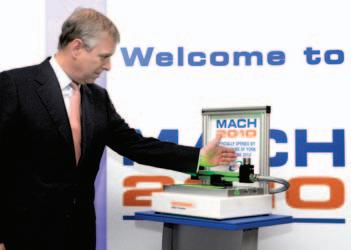
His Royal Highness Prince Andrew, The Duke of York, officially opened the UK’s MACH2010 exhibition in June 2010 at Birmingham’s National Exhibition Centre, using an advanced laser system manufactured by Renishaw plc. The Duke, who is also the UK’s Special Representative for International Trade and Investment, passed his hand through a Renishaw NC4 laser tool setting system, which set off an electronic buzzer to signify that the show was formally open.
CANADIAN MANUFACTURING WEEK TO FEATURE NEW STREAMLINED FORMAT
Toronto, ON — Canadian Manufacturing Week (CMW) 2010, to take place Oct. 5-7, 2010, will have a new format, new location and an improved program.
“In the face of what’s being called the new industrial revolution, the manufacturing sector is being asked to rebrand, and to look for innovative ways to decrease costs while producing highquality products,” said Mark Tomlinson, executive director and general manager of the Society of Manufacturing Engineers (SME), organizer of the event.
“Canadian Manufacturing Week 2010 is responding with a more streamlined format that will make it easier for visitors to find the answers they need.”
New to this year’s event is a threezoned format intended to more clearly and conveniently group the latest manufacturing technologies and solutions into specific areas: Weld Expo Canada, the Advanced Manufacturing Zone, and the Physical Asset Management Zone.
Weld Expo Canada will focus on forming, fabricating and finishing. This zone will highlight everything required for sheet metal operations, from laser, arc and robotic welding to stamping, waterjet cutting and pressworking, to coating equipment, electroplating and automated finishing.
An Advanced Manufacturing Zone will zero in on the factory of the future with a focus on automation and assembly, design engineering and software, additive manufacturing, reverse engineering
continued on page 10
Counterfeit bearings are a problem internationally.
and electronics manufacturing. Technologies on display will include robotics,
simulation and three-dimensional imaging.
A Physical Asset Management Zone will be where manufacturers can learn about running an efficient operation. In addition to green solutions for fluid and waste management or air quality control, it will feature products for asset tracking and management, plant engineering and maintenance, as well as lean manufacturing.
The event will take place at the Toronto Congress Centre, North Hall, 650 Dixon Rd., Mississauga, ON. For more information, to register, or to exhibit, visit www.cmwshow.ca.
NO ROOM FOR VIOLENCE IN THE WORKPLACE
Toronto, ON — Shoving; yelling; intimidating; throwing things. Each and all of these are signs of violence. And while the physi-
cal assault aspect may immediately come to mind, workplace violence is a much broader problem. It includes any act in which a person is abused, threatened, intimidated or assaulted in his or her employment.
And it doesn’t have to happen at work. Work-related violence can occur at off-site business functions, at work social events, in clients’ homes or away from work but resulting from work, such
as a threatening telephone call to your home from a client.
The message is clear, says the Canadian Centre for Occupational Health & Safety (CCOHS) — if you see it, report it.
Employers can get the message across with new posters from CCOHS. The posters depict the long list of unacceptable behaviours that are considered to be violent or bullying acts, and can help employees recognize the signs of workplace violence.
Violence and bullying can create stress, anxiety and low morale in employees and, ultimately affect the health of the individual and the organization. The first step in prevention is recognition, says CCOHS.
For more information, visit www. ccohs.ca/oshanswers/psychosocial/bullying.html.
BEARING SUPPLIER LAUNCHES 3D GAME IN ALBERTA AND SASKATCHEWAN
Mississauga, ON — NSK Canada has launched a learning program focusing on the oil, gas and mining industries in Alberta and Saskatchewan to support and improve the productivity of critical production equipment.
The first part of this learning program is a new online game, entitled NSK Bearing Match, available at www. nskbearingmatch.com. The game features 3D action that puts players to the test. Players must fix critical machinery with the correct NSK bearing to avoid machine failures.
Each piece of machinery featured in NSK Bearing Match is used within many industries, including oil, gas and mining, which are key segments served by NSK Canada. The company has very specific bearings and engineering expertise to address machine performance, which results in improved productivity and associated cost savings related to enhanced machinery reliability.
“This fun, interactive game experience is a reflection of the creative thinking that goes into the development of our products and the crafting of unique customer solutions,” said Oswaldo Almeida, the company’s aftermarket sales manager. “We feel it is important that our customers and the market understand how innovative we are as a company. It is a key priority for NSK to develop innovative value-added initiatives aimed at enhancing customer support.”
Players of NSK Bearing Match will learn about NSK’s products available for the oil, gas and mining industries in a fun, educational, and competitive way, Almeida said. Players from Alberta and Saskatchewan will be eligible to win prizes, which include Apple iPads and Visa gift cards, and will be subscribed to receive value-added technical information distributed by NSK that will promote maximum productivity and uptime. The contest closes Sept. 30, 2010.
NSK Canada is a member of the NSK Ltd. Group of companies, headquartered in Tokyo, Japan. For more information, visit www.ca.nsk.com. MRO
Bullying in the workplace can reduce the morale of employees.
Company Briefs
• Baldor Electric Co., Fort Smith, AR, which markets, designs and manufactures industrial electric motors, mechanical power transmission products, drives and generators, has announced that John A. McFarland plans to step down from his role as chief executive officer on December 31, 2010. He will remain active as executive chairman and retain his position as chairman of the executive committee. The board of directors has promoted Ronald E. Tucker to chief executive officer and president, effective January 1, 2011. Tucker currently serves as president and chief operating officer.
• Chain manufacturer Drives LLC, Fulton, IL, has added a warehouse location in Brampton, ON. It is Drives’ seventh distribution centre in North America, and is located in the Brampton Distribution Centre operated by Colinx LLC. CoLinx is a manufacturer-owned provider of shared e-commerce and logistics services in North America. “Our new Brampton warehouse will allow Drives to provide local product and service to support the needs of our growing Canadian customer base,” said Barbara Ross, vice-president, sales and marketing.
• The future of the Gates Canada facility on Henry St. in Brantford, ON, is uncertain, as its parent, Gates Corp. of Denver, OH, stands to be acquired by a Canadian firm. Gates Corp. is owned by Britain’s Tomkins plc, which is undergoing an acquisition by a company jointly owned by Canadian Onex Corp. of Toronto — a private investment firm — and the Canada Pension Plan Investment Board. The deal is expected to close in late September 2010.
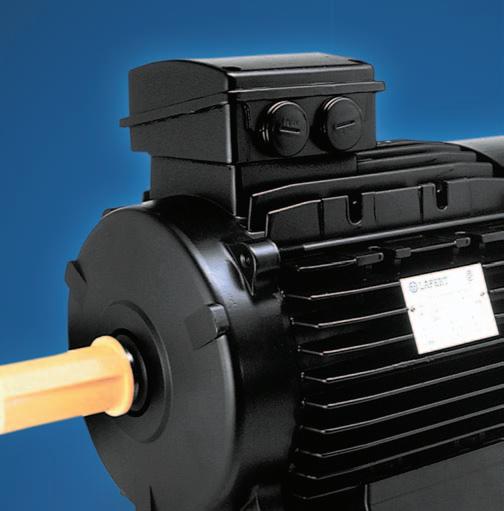
• PTM Industries Inc., Toronto, ON, and Lafert North America, Mississauga, ON, have extended their existing partnership. PTM’s Calgary distribution centre will now provide distribution and logistic services for Lafert in Western Canada. PTM currently acts as the national representative for Lafert’s SITI metric gearbox and Sacemi coolant pump lines.
• KCB Tools, Mississauga, ON, a metalworking tool supplier, celebrated its 45th anniversary on Sept. 8, 2010.
News and views about companies, staff, product lines and more. Best Equipment Value
• The Electrical Apparatus Service Association (EASA), St. Louis, MO, has announced the addition of Jim Bryan to its technical support staff. Before joining EASA, Bryan worked for more than 20 years at Emerson Motor Company in St. Louis, MO.
• The Timken Company, Canton, OH, has acquired QM Bearings and Power Transmission Inc., based in Ferndale, WA. QM manufactures spherical roller bearing steel housed units and elastomeric and steel couplings used in demanding processes such as sawmill and logging operations. The addition of QM aligns with Timken’s strategy to expand its penetration in high-performance applications and extend its power transmission capabilities beyond the company’s original, core bearing business. QM’s product offering will complement Timken’s recently released Type E product line. It will strengthen the presence of the Timken brand in the roller housed unit category and provide an additional offering for markets such as forestry, which require high-performance, durable products.
The acquisition is subject to certain government and regulatory approvals. Timken expects to close the transaction by the fourth quarter of 2010. Terms of the deal were not disclosed.
• An intensive, three-day course on the design, application and maintenance of anti-friction bearings will be presented by NTN Canada at its Mississauga, ON, training centre Oct. 19-21, 2010. The course will feature both lectures and hands-on workshops. The workshops are designed to highlight problems commonly resulting in premature bearing failure. For more information, visit www. ntn.ca, e-mail trainingprograms@ntn. ca, or call 1-800-405-6720.
• RBC Bearings Inc., O xford, CT, an international manufacturer of highly-engineered precision, plain, roller and ball bearings for the industrial, defence and aerospace industries, has received a top supplier award from Midori Kai, Komatsu America’s association of select supplier companies that have been chosen for membership based on high measurable standards. RBC Bearings was named the top supplier out of a select group of 36 at the Midori Kai supplier meeting in June 2010. RBC has over 250 authorized industrial distributor locations in Canada.
Industrial Components & Services
Kinecor Solutions
Industry Expertise
Service & Repair Centres
24/7 Emergency Service
Cost Savings Programs
Kinecor partners with thousands of suppliers around the world to find the right products and develop solutions that respond to your unique challenges.
With our broad product offering, national infrastructure, engineering expertise and technical services, Kinecor provides you with a single and complete source of supply.
continued on page 12
Bearing course takes place in October.
Photo: NTN Canada
• Petro-Canada Lubricants, Mississauga, ON, has once again won an International Stevie Award for Best New Product or Service of the Year in the manufacturing category in The 2010 International Business Awards. The award recognized recent breakthroughs in the Purity FG food lubricant line. Nicknamed the Stevie for the Greek word ‘crowned’, The International Business Awards are the only global, allencompassing business awards program honouring great performances in business. Recipients of International Stevie Award trophies were selected from more than 1,700 entries received from organizations and individuals in more than 40 countries.
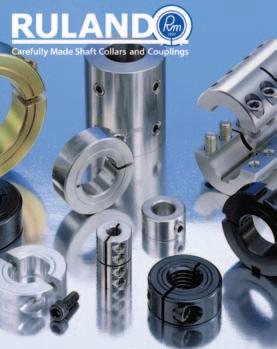
• RotoPrecision Inc. , Mississauga, ON, a provider of precision mechanical and power transmission components, has entered into an agreement with Ruland Manufacturing Co. Inc. of Marlborough, MA, to become its master distributor in Canada for its shaft collars and
couplings. Ruland uses a wide-range of proprietary processes, including special materials and surface treatments, singlepoint facing shaft collars, anti-vibration coupling hardware and precision honing in its products. These include a full range of shaft collars, rigid couplings and flexible couplings, including beam, bellows, oldham, jaw and disc. Recent product line extensions include metric shaft collars, metric rigid couplings, step bore couplings and motion control couplings.
• FLIR Systems Inc., Portland, OR, has entered into a definitive merger agreement to acquire ICx Technologies Inc. ICx has expertise in a wide spectrum of detection and surveillance technologies.
• Bishop-Wisecarver Corp., Pittsburg, CA, the manufacturer of the DualVee guide wheel for guided motion technology, has announced that Suad Bajric of Mississauga, ON, has won the 2010 Creative Dual/Vee Applica-
tion Video Contest. In celebration of its 60th anniversary, Bishop-Wisecarver was looking to discover and award the most creative mechanical application designed using DualVee linear guide wheels. The submission by the employee of Hana Design was for an application that uses six size 0 DualVee guide wheels that travel on a 36-in.-diameter circular tensioner with a 10-in. stroke. The design combined three long springs hidden below the track to control tension force. Bajric created the doubleedge track himself. The design is used on machines for winding paper around transformers. It shows that a circular motion can be achieved on a large radius, says Bajric, who adds that the application has been installed on three machines, replacing outdated bearings from another company. “The application is very compact and clean,” he said. The winning video, showing the application in operation, can be found
on www.youtube.com; search for 2010 Creative DualVee Application Winner.
• Wajax Income Fund, Toronto, ON, which includes industrial distributor Kinecor LP in its holdings, has announced a proposal to convert the Fund into a corporation. If its application is granted and other conditions are satisfied or waived, the Fund expects the arrangement will become effective on or about January 1, 2011.
• The Timken Company, Canton, OH, will invest approximately $50 million in its steel operations in Canton. Slated to begin this year, the investment is for the installation of a new intermediate finishing line at the Gambrinus Steel Plant and expansion of the steel lay-down yard at the Harrison Steel Plant’s small-bar mill. Timken’s Steel Group has had a significant increase in demand across all markets, and 2010 sales are expected to increase by 70% to 80% compared to 2009. MRO
Editor’s note: More detailed versions of many of these stories, along with additional news items, can be found online at www.mromagazine.com.
Don’t add any extra stress to bearings
Problem: Every bearing becomes unserviceable in the course of time, even if it is installed correctly and operated properly. The raceway surfaces and the rolling contact surfaces of the rolling elements are repeatedly subjected to compressive loads and the surfaces eventually flake. Can this be resolved?
Solution: Make sure you don’t encourage premature bearing failure through improper selection or handling, or lack of maintenance. These problems are avoidable, unlike bearing fatigue. However, breakdowns due to improper application, bearing design and maintenance are more frequent than flaking due to rolling fatigue in the field. It’s important to inspect bearings during operation to see if problems are developing, in order to prevent unnecessary failure. Check the bearing temperature, noise and vibration, and examine the properties of the lubricant.
Specific guidelines can be obtained from bearing manufacturers, such as NTN Corporation’s catalogue no. 3017/E, Care and Maintenance of Bearings.
A tip of Mr. O’s hard hat goes to NTN Canada for this tip.
Do you have a solution for a maintenance problem? Send it in and if it’s published, we’ll send you a Mr. O Problem Solver T-shirt. Include your address, telephone number, print complete details and, if possible, add a sketch to help explain your tip. Send your tips to Mr. O, Machinery & Equipment MRO, 12 Concorde Place, Suite 800, Toronto, ON M3C 4J2.
Mr.0 The Practical Problem Solver
Five Ways
to Kill a Bearin
BY KEN BANNISTER
Bearings designed and lubricated in accordance with their actual operating conditions, such as load, speed, heat and running time, most often will outlive their parent machine’s usefulness. Unfortunately, this behaviour would take the thrill out of the kill! So in an effort to reduce a bearing’s life, we consciously decide to overload the machine, speed it up, run it 24/7, and forego routine lubrication maintenance. Sound familiar?
The life of a bearing may be simple, but too often it is an arduous one. Subjected to the severest conditions and abuse, some bearings can toil for months — often years — and tenaciously hang on to life in a valiant effort to stall the inevitable, but we get them in the end!
In an attempt to thwart their tenacity, we perform tests to see how quickly and effectively we are killing them by measuring their temperature, checking their shock pulse, feeling their vibration, and by examining for wear effluent left behind in any lubricant we can find. We then take this data and attempt to predict the exact date of their death so we can repeat the process all over again — hoping to be more efficient the next time.
Although we recognize that up to 70% of all mechanical failures are due to ineffective lubrication practices, we continue to do little to change our behaviour towards them, and choose to live with premature bearing failure. In short, we kill bearings!
Of course, this article is written ‘tongue in cheek’, but if you really want to kill a bearing, the following five death strategies have shown to be the most popular true, tried and tested methods available today:
1. Death by design
g
Defined engineering principles and experience allow the design engineer to choose the best type of bearing for use in any situation by taking into account such attributes as bearing load, speed, materials, construction, clearances and lubricant entry design.
Because virtually all bearings must be lubricated, the savvy designer will likely specify a centralized automatic lubrication system, designed to perform in accordance with the client’s production and maintenance requirements, knowing this is a simple approach guaranteed to more effectively lubricate the bearing, reduce energy and triple bearing life.
Knowing this, we can effectively kill the bearing three times faster, and look like cost-cutting heroes by refusing to meet with the designers and by lobbying and instructing the engineering group to eliminate the centralized lube system in favour of cheap grease nipples that cost just pennies to install.
For machinery already in service, why not promote the purchasing department as cost-cutting heroes by ignoring a ‘like-for-like’ bearing replacement policy, and assure premature failure by specifying inferior quality bearings that cost less? What’s the harm; isn’t the bearing going to die anyway?
2. Death by kindness
Virtually all bearing designs rely on lubricants to stay alive. Paradoxically, the very lubrication tool, designed in 1916 by Arthur Gulborg to save bearing lives, has been inadvertently used to kill them ever since. Gulborg’s invention is a seemingly
Most of you reading this will recognize some, if not all, of these behaviours currently being practiced within your plant.
intuitive device that can hydraulically develop up to 30 times the pressure required to damage a bearing seal — all with the squeeze of a hand. Gulborg named it the grease gun; the ‘save the bearings’ crowd like to call it ‘the Lethal Weapon’.
In the bearing killing business, we can take advantage of this hydraulic powerhouse knowing that by design, a bearing only requires 40% to 50% of its cavity filled with grease to provide an optimal lubrication state. Overfilling will make the bearing sluggish and cause its internal temperature to spike due to fluid friction. This will rob its owners of energy, increase greenhouse gas consumption, and significantly reduce its working life.
Luckily, because most grease gun operators mistakenly believe they must witness grease discharge from the bearing whilst greasing, we are assured of the bearing’s early demise. After all, if a little grease is good, an extra shot or two can’t harm the bearing, can it?
To continue this strategy, we must ensure grease gun operators remain untrained on how to correctly operate a grease gun and encourage them to look for grease coming out of the bearing or seal.
3. Death by neglect
In the bearing killing business, a bearing with little or no working lubricant is a highly desirable state. Adopting a neglectful strategy by allowing lubrication PMs to be missed or incompleted is a most effective way of letting friction work its evil ways on the bearing and cause death by neglect.
4. Death by contamination
Because bearings are not dirt or water tolerant, adopting a contamination strategy is great for effectively reducing their lives. Death by contamination is an easy strategy to master and can be accomplished in many ways. Popular tactics include:
• Never cleaning your grease gun tip or grease nipple before and after grease gun use
• Never clean and/or change oil fi lters
• Never reinstall the reservoir fill cap after filling a reservoir
• Always discard reservoir breather caps
• Always use a shared (non-dedicated) open container to store, transport and transfer lubricants, and never clean it after use
• Always use a non-dedicated, dirty funnel
• Always point a water hose directly at the bearing or reservoir when you can.
5. Death by ignorance
Promoting the old adage ‘oil is oil, grease is grease, any will do’ is an essential strategy for encouraging ignorance towards the use of correct lubricants for every application. Because many oils and greases are not compatible with each other — especially synthetics — staying ignorant about lubricant compatibility is a must.
Adopting a ‘silence’ policy regarding lubricant compatibility and transfer techniques will certainly serve you well in the bearing killing business.
Most of you reading this will instantly recognize some, if not all, of these behaviours currently being practiced within your plant. By knowing the top five ways to kill a bearing, you now know what NOT to do and prevent their early demise.
Implementing a best-practices lubrication program requires little capital outlay and can be accomplished for a few dollars per day. Isn’t it time you jumped bearingkilling ship and implemented actions that declare ‘We save bearings!’ MRO
Ken Bannister is an internationally recognized specialist in implementing bestpractice lubrication management programs and is the author of the best-selling book ‘Lubrication for Industry’, published by Industrial Press, and the author of the section on lubrication in the newly published ‘Machinery’s Handbook’, 28th edition, also published by Industrial Press. For more information, contact Ken Banister at 519-468-9173 or e-mail info@engtechindustries.com.
Solving troubles with heavy duty blocks
Design overcomes the two most common problems: contamination and installation.
BY MARCUS WICKERT, P.ENG
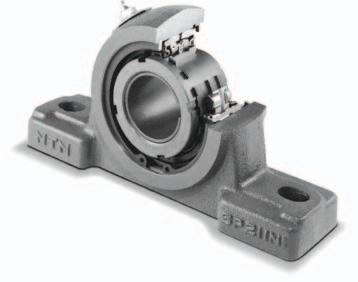
Afocus to directly work with maintenance staff to solve everyday bearing operation problems led to the development of NTN’s SP/SFC Heavy Duty Block se ries. Having provided years of service for harsh applications in industries including mining, steel, paper and forestry, NTN Canada engineers focused on the two most common problems found in the field with traditional heavy duty blocks: contamination and installation.
Contamination: All bearing manu-
Introducing…
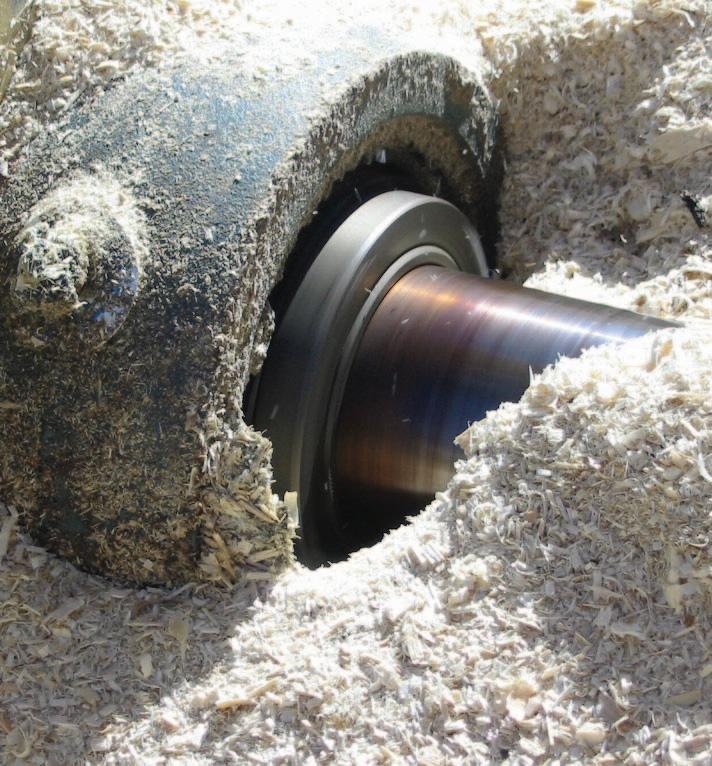
facturers provide bearing selection tools that reference a theoretical life for their products; however, one thing that is proven is that Canadian industry is a challenge to the theory. Contamination can quickly destroy seals, lubricants and ultimately, bearings. The best solution is to keep contamination out of the bearing to achieve performance.
The advantage of NTN’s SP/SFC heavy duty blocks originates from an intense focus on bearing integral sealing that results in more than one advantage in the real world. Primarily, the concept is to keep dirt out.
Maintenance protocol, education and tools have greatly improved over the years but there are still challenges that any textbook or catalogue recommendation cannot overcome. For example, misalignment is rarely understood as a contributing factor to contamination, yet ultimately can
Efficiency Right Angle
Achieve up to 40% energy savings!
With the new Hub City HERA gearbox, it’s easy to replace inefficient gearing technology with a product that delivers 90% operating efficiency in ratios up to 60/1. Each HERA model also has the power density and versatility to directly replace up to four different worm gear models, minimizing inventory and downtime. Simply unbolt the old and drop in your new high-efficiency HERA. HERA – One powerful GREEN solution!
Phone: 605-225-0360
hubsales@regalbeloit.com
www.hubcityinc.com
render poor seal performance. While in a misaligned state, heavy seal pressure and wear occurs along one half of the seal surface; at the same time minimal seal pressure along the opposing half allows an opening for contamination ingress into the bearing cavity.
Many housing designs are limited to +/-0.5 degrees before the seal becomes compromised. By integrating seals directly on the bearing insert, seal centres are moved closer to the bearing centre, which results in a +/-1.5-degree misalignment capability from NTN’s MX-W insert.
The MX-W seal itself is engineered with an internal grease reservoir. Grease migrates into a unique formed seal cavity to provide a reserve that is easily supplied and accessible to the rolling elements when needed the most.
Under extremely severe conditions, or for rotating component safety concerns, additional seal covers and optional end covers are also available in the SP/SFC
series to complement the MX-W sealed insert. However, the common problem that results in shaft seals frequently subjected to washdown or moisture is shaft corrosion. As a consequence of this corrosion, shaft wear at the seal land can also compromise seal effectiveness and the ingress of contamination can occur. For this reason, the MX-W bearing rings feature a phosphate coating. This added corrosion resistance allows the core integral bearing seals to not only run on a precision ground surface, but also to have optimized longevity and performance.
For many aggressive operating environments, the MX-W insert is the core of the series’ success in converting applica-
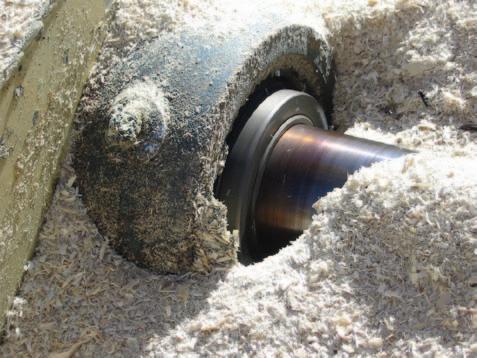
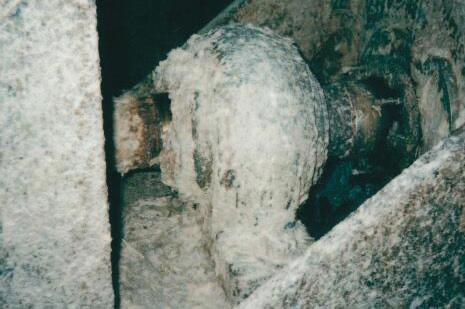
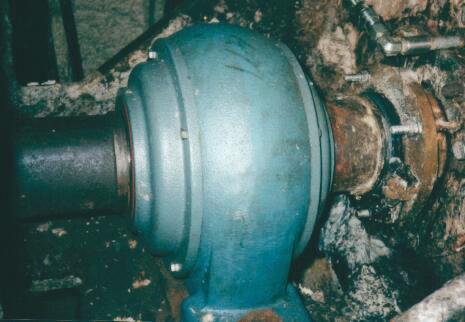
Fig 1: NTN’s SP series is designed for ease of installation. Fig 2: The heavy duty unit withstands highly contaminated environments.
Fig 2 Before
Photos: NTN Canada
Fig. 4: Before and after the installation of an NTN C-SP unit in a harsh environment.
Fig 4
FOCUS ON BEARINGS
When is bearing repair the correct alternative?
Bearing repair is not a new concept, nor has it changed a great deal over the years — and that’s good news. Repairing damaged bearings is a precise science that has been finetuned over time through careful and gradual enhancements to provide superior results.
Just as new designs and technologies improve bearings, growing expertise and the technology of bearing repair continues to increase the reliability and performance of reconditioned bearings, keeping it an economical alternative to purchasing new bearings.
Knowing and understanding the value of bearing repair means knowing what repair can do and when to use it.
Bearing design takes into account the use and application of the bearing and establishes an appropriate prediction for service and fatigue life. No matter who the manufacturer is, bearings often deviate from these expectations due to factors such as contamination, in-
Solving troubles with heavy duty blocks
tions requiring monthly bearing replacement to those providing years of trouble-free service.
Assembly: Cost savings and pressure to work faster and get equipment running as efficiently as possible are challenges for most maintenance departments. Under such pressures, installation of open bearings in split-style housings only promotes chances of contamination entering the bearing or lubrication at time of installation.
Keeping an open bearing assembly clean during installation is not easy and can only lead to repeated bearing replacements in the future. Tasked with the challenge to avoid failure, the second main SP/SFC design achievement is simplified installation to avoid mistakes.
The unit is supplied completely assembled and consists of a one-piece pillow block (SPA/SPW style) or flanged housing (SFC style) with the MX-W insert that is sealed and lubricated in NTN’s clean bearing manufacturing environment. The series’ one-piece ductile housings avoid mixing of caps with bases and integrated snap rings avoid any requirement for additional fixing rings, thus each inventoried unit can easily adjust to a fixed or free assembly.
Reducing components and steps required at installation has proven to avoid initial setup errors, while a completely enclosed insert allows continuous work to commence at any given time in the surrounding environment without a concern of bearing contamination.
MRO Marcus Wickert, P.Eng. is the manager of engineering and service at NTN Canada. He may be reached by e-mail at wickertm@ntn.ca.
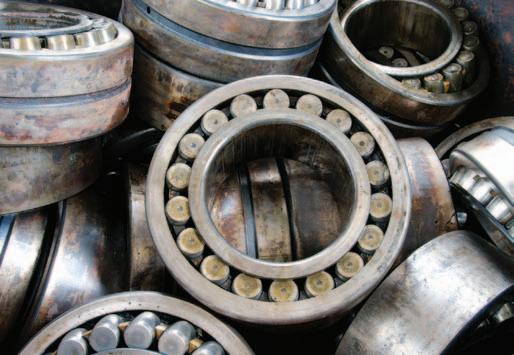
adequate lubrication and misalignment.
When a bearing is damaged, the entire machine of which it is a part suffers. Conventional practice suggests that a damaged bearing should be scrapped and replaced. The popularity of bearing repair has helped companies understand its value by providing an efficient and cost-effective way to resolve the problem.
Bearings often can be returned to original specification for less time and money than purchasing new ones. A quality repair and reconditioning pro-
gram can result in significant savings compared to discarding and replacing bearings. Depending on the scope of the work, bearing repair can save as much as 50% to 90% of the cost of purchasing a new bearing. Beyond the cost, repairs often save time compared to ordering replacement bearings, reducing costly downtime.
Another value-added service of bearing repair is using damage analysis as a tool to identify difficult conditions and prevent future problems.
However, although it offers many benefits, reconditioning is not always the best option for a damaged bearing.
The challenge of properly utilizing bearing repair services is determining if and when a bearing needs repair, and deciding which options are the best economical and long-term decision.
Visual inspection serves as the fi rst step in deciding if a bearing needs repair. Careful review of additional cri-
teria assists in determining the need for repair, such as:
• Is the bearing nearing or has it exceeded its suggested life expectancy?
• Have operating temperatures exceeded 93°C (200°F)?
• Has the bearing been exposed to excessive vibration?
• Has the bearing been subjected to sudden changes in lubrication or temperature?
Early detection of a problem through routine checks can spare companies’ unnecessary downtime and expense, and help to capitalize on the capabilities and benefits of bearing repair. Bearings with little or no damage often can be reconditioned and recycled easily and at low cost. MRO
For more information on bearing repair services, visit timken.com/industrialservices.
A new spin on threadlocking
FOCUS ON BEARINGS
Preventing premature bearing raceway surface wear
Based on more than 3,000 inspections over the past 20 years, expert Don Burris reveals the top two causes of premature bearing wear.
We receive daily shipments of bearings for inspection and for quotes for repair at the Applied Industrial Technologies Bearing Inspection and Repair Shop here in Saskatoon, SK. We have completed 3,185 inspections to date, beginning in the IECO Delta shop in 1990, then from 2002 to September 2010 under the Bearing and Transmission company banner, and now as Applied Industrial Technol-
ogies. So we are in a unique position to comment on the predominant causes of premature bearing wear.
In the majority of cases inspected here, the returned bearings have only been in service for about one to two years or less, and already show indications of surface wear and damage. This raceway damage is usually in the form of two problems: contamination particulate indentations, and corrosion etching.
Contamination particulate indentations
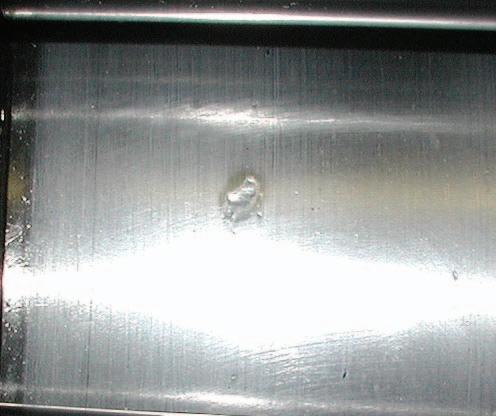
Cause: Contamination particulate indentations are caused by hard contamination particles (such as dirt) that becomes trapped under the rolling elements of the bearing, resulting in denting of the raceway and rolling element contact surfaces (see Fig. 1).
Shallow, small, rounded dents caused by soft contaminant material are not
considered a threat, however the deeper, sharp dents made by hard contaminants, which are surrounded by raised material, are a cause of surface degradation and premature wear, and must be relieved during refurbishment.
Bearings with this type of wear can usually be refurbished (polished) economically.
Downtime is expensive. We can help you reduce that time with high quality tungsten carbide partsóparts that will last 5 to 25 times longer than tool steel in the same high wear applications. Working in tungsten carbide and other advanced materials, our skilled craftsmen will manufacture custom parts for your equipment to exacting specifications.
Contact TWD for your Wear Solution. Reduce your downtime and maintenance costs and improve the bottom line.
Prevention: To prevent this problem, ensure that the bearings and housings are kept absolutely clean prior to and during installation. Ensure that grease fittings are wiped clean prior to connecting a grease gun.
Remove the cap on split housings at regular intervals and scoop out all the old, contaminated grease, and repack with fresh grease according to the bearing manufacturer’s specifications.
For circulating oil lubrication systems, ensure that oil lines are flushed (especially after a failure) and ensure that the filtration is monitored closely using a sampling program and that quality filter elements are used. Upgrade the sealing.
Corrosion etching
Cause: Corrosion etching is caused by moisture (water) contamination of the lubricant, whereby the water reacts with the chemicals in the lube and forms a mildly acidic mix that corrodes the raceways, often at roller spacing points (see Fig. 2).
Bearings in service that are subject to long shutdown periods are prone to this type of damage.
Moisture will also reduce the effectiveness of a lubricant, and in turn can dramatically affect bearing life. It has been shown that the presence of 100 ppm (0.01%) of water dissolved in a lubricant can decrease bearing fatigue life significantly. We have seen many examples of otherwise good bearings, showing no significant wear, with this type of unfortunate, costly damage.
Repairs generally involve regrinding all the rolling contact surfaces and installing a new set of rolling elements.
Prevention: After shutdown, purge out the contaminated grease with fresh grease and rotate the bearings periodically. On large housings, remove the seal covers and scoop out the contaminated grease, then hand pack with fresh grease. There are specially formulated greases that seem to perform quite well under moisture-contaminated conditions. On circulating oil systems, run the lube system after shutdown with a purifier in the line to reduce moisture content, and rotate the bearings periodically. Upgrade the sealing. We have seen cases of all the other typical causes of premature wear, such as transportation damage, mishandling damage, misalignment, excessive preload, lack of lubrication, improper lubrication, and so on. However, the two above are the most frequently conditions observed here.
MRO
Don Burris is manager, Applied Industrial Technologies Bearing Repair, Saskatoon, SK.
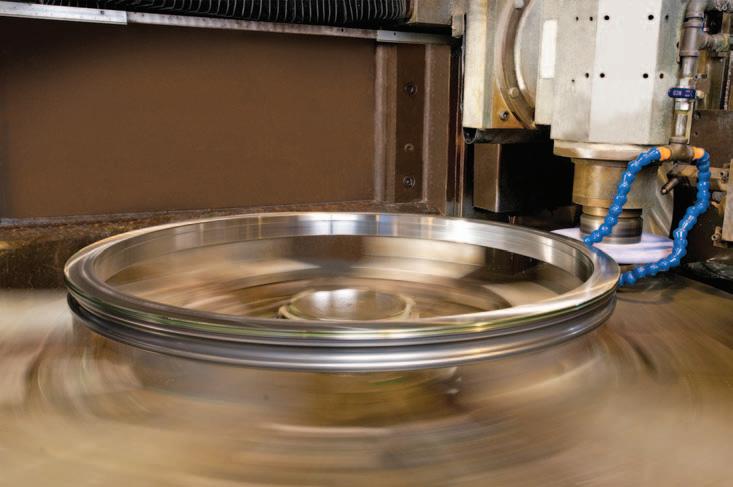
Bearing remanufacturing: How rebuilt slewing rings, turntable and other types of bearings can be a money-saving alternative to new replacements, especially when turnaround time is critical.
BY RON SHAW
Rebuild or Replace?
Maximizing value is important to every manufacturer today, and that means getting the most out of every component. If you’re using slewing rings/ turntable bearings, the key is to extend their life and reduce what you’re spending on replacements.
You can extend the life of your bearings significantly by avoiding overloads, doing regular maintenance and being alert for problems before they get serious. And while you can’t postpone replacing them forever, you can give most old bearings new life by having them remanufactured to their original specs — for much less than the cost of a new bearing.
Overloading is a common cause of premature bearing failure. Although most slewing rings are big and rugged, expecting one to do more than it was designed to do is asking for trouble. Another thing to avoid is severe tasks that load the bearing in the same area.
Maintenance is important for any mechanical component, especially one that works as hard as a slewing ring. At a minimum, a bearing should be lubricated at regular intervals and the mounting bolts torqued to the recommended level. Check them periodically.
Many premature bearing failures can be avoided by simply keeping your eyes and ears open, and some of the symptoms are easy to spot. Be alert for smoothness or too-easy rotation, and analyze purged lubricant periodically. Can you hear clicking or grinding, or feel excessive clearance? If so, the bearing may need replacing. But not necessarily with a new bearing.
Repair vs. replacement
Bearing repair (or remanufacturing) is an increasingly attractive alternative to replacement. Today’s manufacturing techniques allow repaired bearings, with proper maintenance and usage, to match or exceed the life of a brand new bearing at a much lower cost.
Almost any bearing over 4 in. in diameter can be economically remanufactured: thrust and radial bearings, multirow ball and roller bearings, tapered roller bearings, and thin-section ball bearings. This is especially true of large turntable bearings, typically found in cranes, excavators, tunnel boring machines, metal mill equipment, bulk handling, mining shovels, and other diverse applications. The spherical roller bearings commonly used in paper mills and mining applications are also good candidates for remanufacturing.
Turntable bearings typically have
large diameters (e.g. 4 in. to 20 ft) and most are custom-engineered and manufactured for specific applications. This can make them quite costly, not to mention the investment they require in spare parts inventory for end users. Remanufacturing such bearings when they wear, instead of buying new ones, can save substantial time and money.
For example, in a metal mill, the ladle turret bearing is arguably the most expensive bearing, and lead times for replacements can often range from several months to more than a year. You should be able to get a remanufactured bearing in a matter of weeks at approximately half the price, with an identical warranty period.
Similarly, the big cranes and excavators used by construction companies rotate on large turntable bearings, or slewing rings. Replacement bearings from the manufacturer can be costly, with lead times of several months. Remanufactured slewing rings, on the other hand, can be supplied at 40% to 50% of the cost of a new unit in only three or four weeks.
While some people equate ‘new’ with ‘better’, this is not necessarily the case with bearings. Today’s bearings are usually manufactured and remanufactured with the same equipment and the same quality control methods as new ones, but the process naturally includes some additional steps.
Comprehensive process
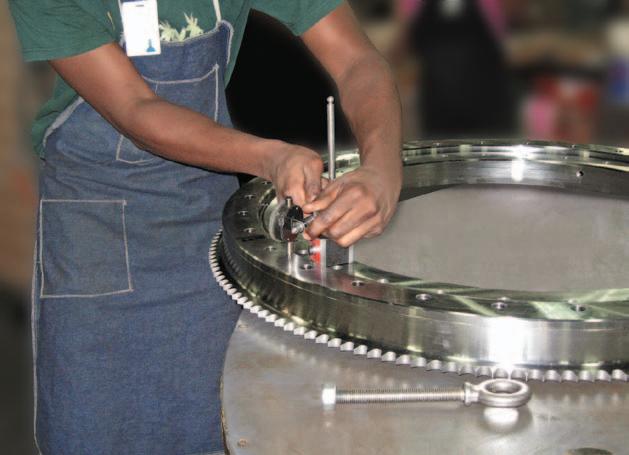
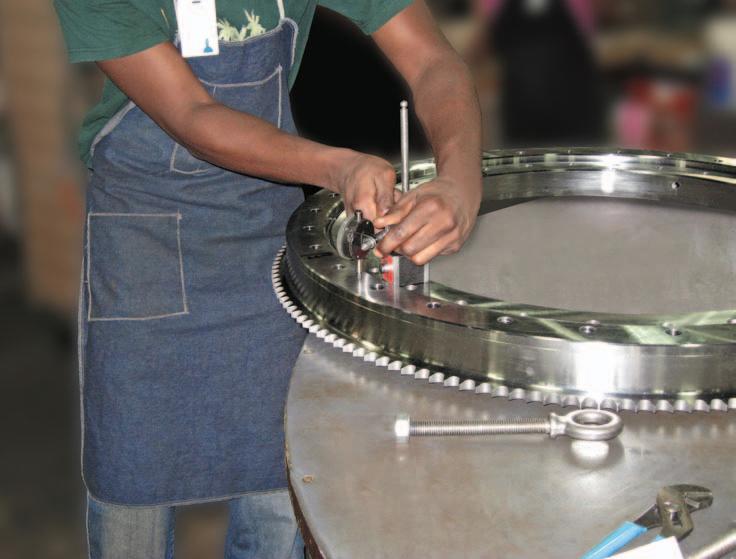
The first step is a thorough inspection that checks and documents turning torque, free-state clearance and critical dimensions. Inspectors then disassemble and clean the races, rolling elements and separators. Then comes non-destructive testing of the races — usually magnetic particle inspection to detect cracks or defects — and hardness readings in the raceways.
These test results are reviewed by service engineers to determine if the bearing meets the criteria for remanufacturing. If it shows excessive wear or defects/impurities in the bearing races, it is not a good candidate for remanufacturing.
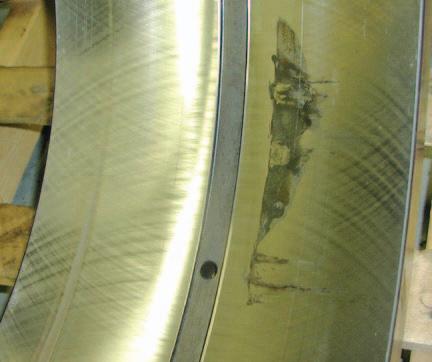
If a bearing qualifies, it undergoes specific operations based on the engineering analysis. For example, precision grinding assures that the raceway meets the required geometry to optimize the load capacity and has a mounting face parallel to the raceway. Typically, remanufactured bearings are precisionground to even higher standards than new ones, since each raceway is individually ground instead of done in large production lots without individual attention.
After grinding, the bearing is reas-
2: Bearing races are precision-ground to the proper
3: Critical features are all inspected and documented before shipment.
sembled with new rolling elements and separators, or cages. These new parts are slightly oversized to compensate for the material removed from the raceway during grinding, giving the resulting remanufactured bearing the identical geometry it had when new.
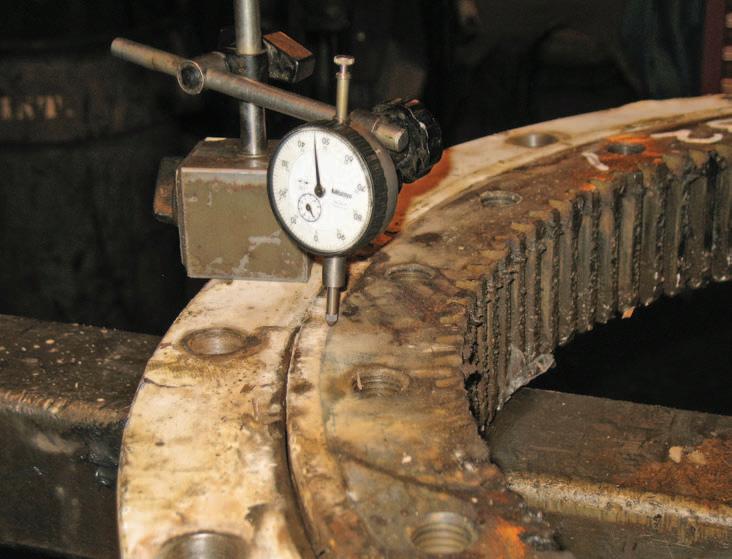
The final step before packaging for shipment is inspection. The remanufactured bearing assembly is lubricated and inspected — including measuring and documenting turning torque, freestate clearance and gear runout — and then serialized to ensure traceability before shipping.
This comprehensive process produces bearings that perform like new at lower cost and, especially in the case of
large turntable bearings, have shorter lead times. Just like avoiding overloads, remembering maintenance, and catching problems early, remanufacturing is a simple way to extend the life of your bearings — increasing the return on your original investment while reducing what you’re spending on replacements.
MRO
Ron Shaw is the bearing remanufacturing manager for Kaydon Corporation, Bearings Div., Avon, OH. Use the number below on our printed reader reply cards in this issue to obtain more information, or our faster Online Reader Service Card at www.mromagazine.com/rsc.
Fig 3
Fig 2
Fig. 1: Initial inspection (torque, clearance, etc.) determines which operations a bearing needs in order to be restored.
Fig.
geometry.
Fig.
Inspecting Motor Bearings
For predictive maintenance, thermography is a good alternative to vibration analysis for bearings that are relatively small, in low-speed operations, or when bearings are physically inaccessible or unsafe to get close to while the equipment is running.
Tyou operate…and measure.
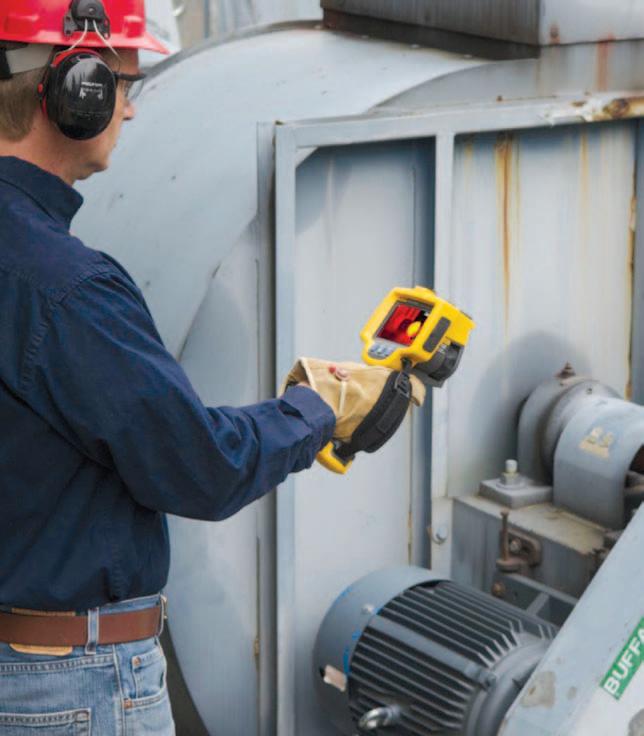
hermography is used in many predictive maintenance (PdM) programs today to monitor the temperatures of operational equipment. With thermal imagers, technicians can capture two-dimensional infrared maps (images) of bearing and housing temperatures, which enables them to compare current operating temperatures against benchmarks and detect potential failures and avoid equipment loss. This article will examine typical thermography applications for inspecting bearings.
Consider this scenario: A motor bearing fails, the motor heats up and lubrication begins to break down. The windings overheat and then the temperature sensor cuts out and stops the motor. In the worst case, the shaft binds up, the rotor locks up and the motor fails completely.
What to check: Generally speaking, vibration analysis is the PdM technology of choice for monitoring large, accessible, relatively high-speed bearings, but it can only be done safely when transducers can be placed on the bearings. Thermography is a good alternative to vibration analysis for bearings that are relatively small (e.g., in conveyor rollers), in low-speed operations, or when bearings are physically inaccessible or unsafe to get close to while the equipment is running.
In most cases, thermography can be performed at a safe distance while the equipment is operating. Capturing a thermal image with a handheld imager also takes less time than performing vibration analysis.
Mechanical equipment should be inspected when it has warmed up to a steady-state condition and is running a normal load. That way, measurements can be interpreted at normal operating conditions.
The first step is to capture a thermal image of the bearing to be checked, and if possible, to capture images of bearings in the same area performing the same or a similar function, e.g., the bearing at the other end of a conveyor or paper machine roller, or another pillow block on the same shaft.
Identifying potential problems
Problems with bearings are usually found by comparing the surface temperatures of similar bearings working under similar conditions. Overheating conditions appear as hot spots within an infrared image and are usually found by comparing similar equipment. In checking motor bearings, this procedure entails comparing end bell to end bell (for motors and bearings of the same type) or stator to end bell temperatures.
In general, it is a good idea to create a regular inspection route that includes all critical rotating equipment. If a route for regular vibration analysis already exists, thermography can be added easily to these existing bearing monitoring efforts.
Once the inspection has been completed, save a thermal image of each piece of key equipment that has been inspected on a computer and use the software that comes with the thermal imager to track these measurements over time. This will provide baseline images that will help you determine whether a hotspot is unusual or not and help you verify when repairs are successful.
What represents a red alert? Equipment condi-
tions that pose a safety risk should take the highest repair priority. Beyond that, determining when action is required to keep a bearing from causing the loss of a crucial piece of equipment is a case-by-case undertaking that gets easier with experience.
For example, on one difficult-to-monitor line, an auto manufacturer moved from vibration analysis to a combination of vibration and thermography to determine that normal operating temperatures for bearings on the line fell within a specific range. The company’s PdM personnel, well trained in thermography, now treat a bearing running above the upper limit of the normal operating range as an alarm situation.
When using thermography on bearings that are not normally monitored using vibration analysis, or even when spot-checking bearings, try to establish alarm criteria, as you would for other condition-monitoring technologies. Some thermography experts, for example, have established rules-ofthumb for allowable temperature differentials for bearings on specific types of equipment using specific lubrication techniques (grease, oil bath, etc.).
The potential cost of failure
For a failed bearing in a specific motor, pump, drive or some other critical component, analyzing the cost of the repair, lost production opportunity and lost labour costs will provide the total potential cost of the failure.
All rotating equipment generates heat at the friction-bearing points in the system — the bearings. Lubrication reduces friction and thereby reduces and, to varying degrees (depending upon the type of lubrication), dissipates the heat. Thermal imaging allows you to capture this process with images — while also revealing the condition of the bearings.
When thermal images indicate an overheating bearing, you should generate a maintenance order to either replace the bearing or lubricate it. Vibration analysis or another PdM technology may help determine the best course of action. Using the software associated with the thermal imager to document your findings, including a thermal image and a digital image of the equipment, is the best way to communicate the problems you find and to suggest repairs.
With motors accounting for the majority of the electricity consumed by industry, an integral part of optimizing performance and minimizing downtime is having the ability to capture information on a motor’s temperature profile. Using thermal imaging to perform routine checks can play an important role in making sure that motors are running at peak efficiency at all times, while avoiding costly and time-consuming repairs.
Colin Plastow has been with Fluke Electronics Canada since 1987 in various support and product management positions. Today, as industrial product manager for Fluke, he brings his expertise in electronic test and measurement to customers in hightech and industrial markets. He may be contacted at colin.plastow@fluke.com. For more information, use the Reply Number below either on a reader service card in this issue, or online at mromagazine.com/rsc.
The belting you now use is costing you more than you think. To find out just how much you could
Photo: Fluke
Elctronics Canada
Hydro-Service
National Service Center
622 rue De Hull, Ville Lasalle, QC H8R 1V9
Tel: (800) 265-9970
Fax: (800) 661-6118
Renold Hydro-Service® offers superior corrosion resistance for chains. Engineered to perform in wet and washdown environments, Hydro-Service® chain has the same strength and working load as carbon steel chain. The mechanically applied coating will not chip, flake, or peel and contains no Hexavalent Chromium.
Western Service Center 9210 - 60th Ave. Edmonton, AB T6E 0C1
Ontario Service Center 80 Hale Road, Unit 1 Brampton, ON L6W 3N9
New research indicates that cobots — collaborative robots — could play significantly in the future of equipment maintenance in harsh and hostile environments. Unlike traditional robots, cobots are able to work alongside human workers to handle a wide variety of tasks, or can work independently in environments that are dangerous for regular workers.
A few years ago, the Washington-based National Aeronautics and Space Administration (NASA) and Detroit-based General Motors Corp. came together to develop the next generation of what they call a dexterous humanoid robot — their version of the cobot. Called the Robonaut2 or R2, it is designed to use the same tools as humans, and to work safely side-by-side with humans, both on earth and in space.
The two organizations, with the help of engineers from Oceaneering Space Systems of Houston, TX, developed and built the R2. Significantly, this new-generation robot can use its hands to do work beyond the scope of prior humanoid machines. R2’s dexterous hands give it the strength and flexibility to manipulate tools just like humans do, making it an ideal helper for humans.
Using leading-edge control, sensor and vision technologies, the research is intended to prove that robots like this could assist astronauts during hazardous space missions and also could help GM build safer cars and plants.
The 136-kg R2 consists of a head and a torso with two arms and two hands. Its human-like shape was a product of the fact that it was built to work side-by-side with people.
R2 will launch on the space shuttle Discovery as part of the STS-133 mission planned for later this year. It will be the first human-like robot NASA has sent to space. R2 would become a permanent resident of the station, where it could assist in maintenance and other chores.
“This project exemplifies the promise that a future generation of robots can have
both in space and on earth, not as replacements for humans but as companions that can carry out key supporting roles,” said John Olson, director of NASA’s Exploration Systems Integration Office at NASA headquarters in Washington. “The combined potential of humans and robots is a perfect example of the sum equalling more than the parts. It will allow us to go farther and achieve more than we can probably even imagine today.”
In the future, the greatest benefits of humanoid robots in space may be as assistants or stand-ins for astronauts during spacewalks or for tasks too difficult or dangerous for humans. The same attributes would apply for earthbound cobots that could be put to work in factories, mines and mills. For example, a cobot could disassemble the coverings on a piece of machinery while a maintenance technician does other work, and reassemble the components after repairs have been completed, saving time and making better use of the skills of the maintenance expert.
“Our strategy is to develop technologies that can fundamentally change the way we manufacture cars and trucks,” said Kenneth D. Knight, executive director, GM Manufacturing Assembly & Automation Center. “This includes a focus on developing ways to further support our operators.”
GM engineers on site at NASA’s Johnson Space Center are sharing their results with colleagues at GM’s Technical Center in Warren, MI, so teams working on nextgeneration GM cars and trucks can develop innovative safety technologies that will keep customers safe in the future. Also, GM’s manufacturing engineering team is working to identify potential applications for R2’s array of vision, motion and sensor technologies that will assist its workers in manufacturing operations.
Manufacturing engineers in GM’s research and development operations say they also plan to use the findings to help develop future technologies that can make plants safer for workers at the company’s
COBOT
manufacturing facilities around the world.
“This cutting-edge robotics technology holds great promise …,” said Doug Cooke, associate administrator for the Exploration Systems Mission Directorate at NASA. “I’m very excited about the new opportunities for human and robotic exploration these versatile robots provide across a wide range of applications.”
“For GM, this is about safer cars and safer plants,” said Alan Taub, GM’s vicepresident for global research and development. “When it comes to future vehicles, the advancements in controls, sensors and vision technology can be used to develop advanced vehicle safety systems. The partnership’s vision is to explore advanced robots working together in harmony with people, building better, higher quality vehicles in a safer, more competitive manufacturing environment.”
“Our challenge today is to build machines that can help humans work and explore in space,” said Mike Coats, Johnson’s centre director. “Working side by side with humans, or going where the risks are too great for people, machines like Robonaut will expand our capability
C obots could prove to be a reliable solution to the problem of maintenance in hostile conditions in industry in the not-toodistant future.
BY BILL ROEBUCK
Robonaut2 – or R2 for short – is the next generation dexterous robot. Its humanlike shape was a product of the fact that it was built to work side-by-side with people, assisting with work that it is diffi cult or dangerous on earth and in space.
for construction and discovery.”
On the space station, R2 will join another robot, Dextre, known as the space handyman. That robot, built by the Canadian Space Agency, consists of two long arms to perform tasks that normally require spacewalking astronauts to complete. Dextre can ride on the end of Canadarm2 — also built by the Canadian Space Agency — to move from worksite to worksite.
While Dextre is located on the station’s exterior, R2 will be confined to operations in the station’s Destiny laboratory. However, future enhancements could allow R2 to move more freely around the station’s interior, and it could one day be modified to operate outside the complex.
R2 will be tested in zero gravity, as well as being subjected to the station’s radiation and electromagnetic interference environments. The interior operations will provide performance data on how a robot may work side-by-side with astronauts. As development activities progress on the ground, station crews may be provided hardware and software to update R2 to allow it to do new tasks.
All that research is what can bring to reality an industrial, maintenance-specific cobot to help deal with the toughest MRO challenges in harsh environments here on earth.
MRO
Bill Roebuck is the editor of Machinery & Equipment MRO.
Above:
Left: Chris Ihrke, senior project engineer for General Motors, works with the new dexterous humanoid robot developed by NASA and General Motors at Johnson Space Center.
Photographs courtesy NASA
A
contract makes clear the link between effective machinery maintenance and success for Nova Scotia waste processing facility.
hands. A 6-in. by 10-in. chunk of stainless steel slipped past them one day and damaged the shredder’s rugged steel teeth. One day a worker spotted an engine block. This August, another one found a hand grenade.
High-motivation Maintenance
BY CARROLL MCCORMICK
With relentless regularity, trucks deliver between 450 and 900 tonnes of curbside garbage a day — 155,000 tonnes a year — to the Otter Lake Solid Waste Management Facility just outside of Halifax, NS. There, it is inspected and unacceptable materials are removed. Since there is no space to store the garbage, the equipment used to process it must always be available.
Mirror Nova Scotia has a 25-year design, build and operate contract with the Halifax Regional Municipality (HRM), which owns the facility. The terms are clear: Mirror has a fixed annual budget to pay for equipment repairs and replacement and once garbage is delivered to the facility, it becomes Mirror’s responsibility. If, for some reason, it cannot process the garbage, it must pay to truck it to a landfill that will accept it. Consequently, Mirror is exquisitely aware of the value of maintenance to its bottom line.
Nova Scotia leads the country in requiring, by law, that a sizeable list of recyclable and compostable materials be separated at source by citizens and businesses in mandatory curbside recycling and green cart organics composting programs. Nonetheless, citizens still discard some organic material and recyclable material with their garbage.
Mirror’s primary task is to remove leftover organic material for decomposition and subsequent disposal of stable and inert materials in landfill cells. Its secondary task is to recover as much as possible of the recyclable material that should have been separated at source; e.g., metal, plastic and paper.
The 89,000 sq ft facility, which began operating in January 1999, has two processing areas: the Front End Processor (FEP) and the Waste Stabilization Facility (WSF).
The first stop for garbage is the FEP. It is dumped on the tipping floor area and workers make an initial inspection. They remove large pieces of metals such as washing machines, fridges and stoves for recycling. More workers pull material off the conveyors that might jam equipment before it travels to the two bag breakers, which rip open the green bags.
Conveyors then deliver the garbage to
Top: Small material falls through perforations in rotating trommels.
Right: This agitator works in an environment corrosive enough to rot the roof girders. Bottom right: At least two hours of cleanup a day is a key maintenance routine task.
two trommels. As these 8-ft-diameter by 40-ft-long perforated drums rotate, most of the organics fall through 2.5 in. and 6-in. holes. This material goes directly to the WSF where it is partially decomposed before being sent to landfill cells.
Larger material continues on to a shredder, which sizes material to about 2 in. in diameter before it goes to the WSF.
About 500 ft worth of rubber and steel pan belt conveyors hustle the garbage from tipping floor to bag breakers to trommels to shredder to WSF. The other main pieces of equipment in the FEP are two compactor units and a baler for paper and cardboard. The most important mechanical device in the WSF is an agitator that mixes and aerates the organics in 14 concrete-sided bays.
The equipment is robust. However, says facility manager Paul Barkhouse, “Garbage is hard on equipment.”
Having logged 15 years in the garbage business before coming to Mirror, Barkhouse knew that that regular cleaning was the most effective way to keep equipment running. “People check grease, etc., but the main core of maintenance is cleaning. This keeps [all other] maintenance down.”
Steve Copp, Mirror’s landfill/safety manager, adds, “The more you clean equipment, the longer it lasts.”
Mirror has four heavy equipment mechanics on staff, but the line workers, the 30 people per shift who inspect and remove unacceptable items from the gar-
bage, deserve most of the credit for keeping the equipment healthy.
“Everyone has a daily cleanup sheet. Daily cleanup is a big part of our maintenance program. It is like an inspection every day. Material builds up on the belts. You can’t see [the machinery properly] if there is trash under the conveyor. The production line [sorting] crews have a responsibility to keep clean and inspect equipment,” Barkhouse explains. “It’s almost like a competition between the shifts to see who can do the best job cleaning the equipment.”
Regular cleaning helps, for example, to reduce wear in the steel pan conveyors. Of all the facility’s equipment, they require the most maintenance: garbage, such as glass, accumulates around the rollers and causes premature wear. “You might replace 25-40 wheels in the steel conveyors a month,” Barkhouse says.
The good health of the bag breakers and shredder are literally in the workers’
Mirror takes pains to learn where its staff prefer to work, which makes them happier and more effective. “We literally see people prefer one side of the conveyor to the other. Some like to pull big pieces of metal off the conveyor. Others want to remove little pieces of paper,” Copp explains. If equipment breaks because, say, a piece of metal is not spotted and removed, Mirror is responsible. “Our procedure for determining the cause of a break is not as formal as a root cause analysis, but there are meetings with staff,” Copp says.
“Additional maintenance costs are borne by Mirror, so it is to their advantage to do effective maintenance,” says Barry Nickerson, an HRM waste resource engineer.
According to the contract’s ‘Schedule K’, which sets out the equipment’s useful life expectancy at the facility, Mirror can only shut for eight business days a year. However, even these days must be made up on Saturdays. Mirror is entirely responsible for the consequences of lost production time.
After the facility was built in 1998, Mirror and HRM ran trials for six months to work out the maintenance budget and how long it took to clean the equipment. Time-to-replacement for equipment came from the trials and advice from OEMs. Some OEM estimates were too optimistic, while some equipment has lasted longer than expected. When garbage damaged equipment, Mirror beefed it up. Mirror also lengthened one conveyor line and added more staff to allow more time to pick out material that could damage the equipment.
Mirror submits monthly operating reports, which include details on any major downtimes. Schedule K makes clear how many hours of operating time each piece of equipment must run before HRM will pay for its replacement, but there is some room to negotiate.
“If we think a piece of equipment can last longer, we will try and make it last as long as possible. By doing this, HRM will give us leeway to, for example, replace some other piece of machinery,” Barkhouse explains.
“Thanks to our maintenance and regular cleaning, we have been able to lengthen the replacement schedule of some equipment,” Copp adds. “On the other hand, some equipment has not made it to the hours of use that is in the contract.” When this happens, Nickerson notes, “Mirror has to justify earlier replacement.”
The maintenance budget for each piece of equipment changes each year. “We negotiate maintenance costs according to the age of the equipment,” Barkhouse explains. “In each five-year contract, we see an annual increase in maintenance dollars, according to the expected increase in the cost of maintaining each piece of machinery. Rates are reset to lower amounts after a piece of machinery is replaced.”
How well has this contractual exposé of the value of maintenance worked? Since it opened, the Otter Lake facility has been closed exactly four days, not because of equipment problems, but due to a power outage caused by Hurricane Juan in September 2003. MRO
Montreal-based Carroll McCormick, an award-winning writer, is the senior contributing editor for Machinery & Equipment MRO.
Photography by Carroll McCormick
What’s Up, Jack?
Screw jacks handle heavy lifting year round, from platforms in Alberta’s oil sands to the raising of Calgary’s transit cars for maintenance.
Mechanical actuators such as screw jacks convert rotary motion into linear motion for a variety of industrial uses. Different types are available — mechanical, hydraulic, pneumatic and electrical — suiting different applications and needs. The mechanical actuators discussed in this article specifically focus on harsh and severe-service maintenance environments.
Calgary-based Pantano Energy Services Inc. designs and manufactures amphibious drilling equipment for extreme environments such as Alberta’s oil sands industry. Its Pantano Drill Platform — a 55-ton flotation platform — is one of its latest models. In order to provide a level work platform for employees, Pantano incorporated a Joyce mechanical screw jack at each corner between the tracks and the rig platform. Each screw jack moves independently, raising and lowering the platform to achieve the appropriate level on uneven terrain.
By choosing mechanical actuators instead of hydraulic versions, the jacks can operate in frigid temperatures without failure. This is an important feature, as the drill platforms are designed to be used year-round.
Maintenance is minimal as the jacks have very few drive components and require greasing only on a yearly basis. And, since the jacks are mechanical, there aren’t any messy fluids or broken hoses to contend with.
The mechanical screw jacks have proven to be a maintenance-free and cost-effective solution for Pantano, operating effectively in even the harshest weather conditions.
Another product for harsh environments are IBC bellows and covers, which protect power transmission applications exposed to contaminants, while also protecting employees from possible safety hazards.
In one application of these products, the light railcar maintenance garage for Calgary Transit was searching for a method to raise transit cars for maintenance and repairs. Calgary Transit wanted to ensure that the equipment would provide a nonstraining ergonomic level to work at for its maintenance personnel.
A local machine builder designed and built eight jacks incorporating a Joyce/ Dayton screw jack in each. In order to el-
evate a railcar, four jacks are positioned on each side of the railcar and raised separately to the desired height, allowing maintenance personnel to perform work underneath and on each side.
Each screw jack is covered with bellows to protect the screw from dust and debris, as well as eliminate pinch points for workers. These jacks have now been in operation for more than 20 years.
Joyce/Dayton mechanical screw jacks and IBC bellows and covers have proven to be an ideal solution for maintenance pro-
fessionals working in standard or extreme environments across Canada. MRO
Both of the solutions for the applications described here were sourced from TransQuip Inc., Grimsby, ON, the Canadian master distributor for Joyce/Dayton power transmission products and IBC protective bellows and covers. For more information, use the Reply Number below either on a reader service card in this issue, or online at mromagazine.com/rsc.
Reader Service Card No. 407
While we now have a new name, we still provide the same exceptional service and quality products that have driven the
Bellows protect screw jacks from debris at Calgary Transit shop.
Three 50-ton Joyce Screw Jacks are used to raise and lower the rig platform for Pantano Energy Services.
Photos: Trans-Quip
FOCUS ON HARSH ENVIRONMENTS
Reducing Contamination
Bearing isolator technology can effectively replace lip seals in rotating equipment to reduce the frequency of failures.
As industrial maintenance specialists work to extend the life of their rotating equipment, increasing emphasis is being placed on reducing contamination in the bearing housing and improving lubrication retention ... especially in harsh environments.
Bearing isolator technology has proven to increase the mean time between failure (MTBF) and improve the reliability of a variety of rotating equipment, providing real cost savings.
The Inpro/Seal Bearing Isolator is a non-contacting, non-wearing compound labyrinth seal. This two-part dynamic
Left: Bearing isolators can effectively sstop leaking in bearing housing sets.
seal consists of a stator, most commonly press-fitted into the bearing housing, and a rotor attached to the shaft. The rotor and stator work together to provide complete permanent protection. Here’s how:
• Bearing lubricant is captured in the inner portion of the labyrinth and flows back to the bearing housing.
• Outside contamination attempting to enter the bearing housing is captured in the outer labyrinth paths and expelled through a port in the rotor by centrifugal force and gravity.
One of the key patented features of the bearing isolator is the VBX ring. During operation, the VBX ring lifts (due to centrifugal force) to create a non-contacting permanent seal. The VBX ring also effectively seals against outside contaminants that would otherwise be drawn into the bearing housing following heating/cooling of the enclosure.
a ball mill pinion gear set with 15.750 in. (400 mm) shaft pillow blocks (SSD 3184).
This bearing isolator technology was originally developed by Inpro/Seal in 1977 to replace lip seals as a sealing solution in industrial process equipment, such as pumps, motors, gearboxes, pillow blocks, steam turbines, paper machine rolls and other types of rotating equipment.
The problem with lip seals is that they contact the shaft, resulting in friction and drag, limiting their life span to about 3,000 hours. Alternatively, a bearing isolator lacks any wearing parts, thereby sealing the bearing for the life of the equipment without consuming additional energy. (The original bearing isolators had been in service for more than 30 years, when the pump line on which they were first installed was finally taken out of service.)
Case study: Ball mill bearing housings Inpro/Seal representatives were called to a Canadian industrial facility in 2005 to address an ongoing issue of oil leakage on
The facility made several failed attempts to use conventional contact seals to stop the leakage. The equipment was retrofitted with Inpro/Seal’s patented VBXXD bearing isolators, preventing further leakage by permanently sealing the bearing housings.
Since the retrofit in 2005, three other ball mill pinion gear bearing housing sets have been effectively sealed with bearing isolators at the facility. All four installations are still operating trouble-free, resulting in increased mean time between repair (MTBR), savings on oil consumption and elimination of an occupational hazard.
MRO
Founded more than 30 years ago, Inpro/ Seal is now part of Waukesha Bearings and Dover Corp. For more information, use the reply number below either on a reader service card in this issue, or online at mromagazine.com/rsc.
Right: Bearing isolators were invented 30 years ago.
Images:
Inpro/Seal
Cleaning up tools ... and the environment
lthough global warming can cast a pall of gloom over most discussions of the topic, a Canadian innovation is helping to do its part for the environment when it comes to industrial cleaning.
Companies involved in the research process for Bio-Circle knew that most manufacturing, processing and maintenance operations regularly require clean tools and parts. And their scientists also knew that the bioremediation process had been instrumental in helping, microscopically, to gobble up huge, impossibly messy oil spills.
Bio-Circle researchers discovered a means of harnessing the microscopic life forms that can literally digest contaminants and convert them to simple, clean, H2 O with negligible traces of CO2 . The result is clean tools or parts. And the residue? It’s virtually plain water, slightly warmed, and having a pleasant, slight scent of green apples.
More than 50,000 parts washers operate across this country each day, according to industry estimates. And, over 95% of the workers in these operations historically have used acrid-smelling, skinirritating, toxic solvents to clean parts and tools.
Television personality and car/motorcycle aficionado Jay Leno, who also is the operator of Jay Leno’s Big Dog Garage, where he restores his growing antique car collection, understands the importance of parts cleaning while being aware of environmental concerns.
“The motto we try to have here at the garage is ‘do no harm’. We like restoring cars and we like cleaning parts and we try to do it in as green a way as possible. And with that in mind, I try to find parts cleaners and tools that don’t harm the environment. And I heard about this parts cleaner and I thought I would investigate it.
“Normally when I was a kid, we’d clean parts and then the hands would be argh! — they would get all white and gnarly — and then you’d have to wash them and use gloves. You don’t have to do that with this.
“And this doesn’t wash down the drain. With my old parts cleaner, a guy would come every three weeks and change the solvent. The secret is in the solution. It’s dirty, it sits in this thing overnight and it actually cleans itself. Wow! That’s pretty good. Very cool!”
An estimated 250,000 Canadians use toxic solvents every day. And the environmental damage from this is spreading. Industry estimates suggest that the toxic effluent released can amount to approximately 35,000 tons of used solvent being hauled out annually, with approximately 4,000 tons of VOCs (volatile organic compounds) evaporating into the atmosphere.
So when it comes to cleaning dirty, greasy tools and parts, the good news is the bio-remediation microscopic process — patented worldwide by Bio-Circle — drops the dangerous effluent numbers to virtually zero.
Bio-Circle is a wholly-owned division of Montreal-based Walter, a privately held Canadian company that has been servicing the metal fabricating and related industries in the Americas and Europe for over 50 years. Its quest for product improvements continues at a microscopic level in associated research
in
and at the
Over 260 Locations Coast to Coast Across Canada
Chain fixes for severe conditions
BY MIKE WELWOOD
Self-lubricating chains have been around for more than 20 years, with constant improvements having been made over time in materials, life and strength. For example, Tsubaki’s Lambda chain suits any application where regular lubrication is impossible. But what happens when self-lubricating chain cannot handle the speed of your application? There’s a solution designed specifically for high-speed applications.
This chain was designed and tested in the Canadian market for local customers with demanding applications. For example, the forestry industry requires that chains hold up to the extreme speeds of planers, bull-edgers
the speed and lack of lubrication. Even if the chain is lubricated regularly, the speed will cause the lubricant to exit the chain through the forces of the rotation of the sprocket, and also from the vibration of the chain. The double-staked rivets cannot stand up to the lateral forces or the vibration of the chain at high speeds.
In one application in a planing mill, Speedmaster chain replaced standard chain to produce a annual savings of almost $3,500, while increasing chain life from 0.87 months to 7.27 months.
Tsubaki’s Speedmaster chain features a hard-chrome plated pin and quadstaked rivets. A hard-chrome plated pin reduces the co-efficient of friction, as well as the wear in this critical pin-bushing area. The quad-staked riveting supports the lateral forces the chain will experi-
ence in some of these applications, as well as the resulting vibration from the high speed of the chain.
Why can’t a standard ANSI roller chain work in these applications? Standard off-the-shelf chains use doublestaked rivets and standard materials for the pin. The pins will wear quickly from and similar high-speed processes.
Some applications evolve through the years to the point that they can be beyond the capability of the roller chain initially designed for the application. This can cause many headaches if you have to change guide rails, sprockets, shafting, machine position or others pieces of equipment that may interfere with upgrading to a larger chain size. One solution to this problem is Tsubaki’s Super series chain line.
with the newest technologies and leading-edge education for the fluid power, power transmission and motion control industries.
All in one place, once every three years.
A chain is considered a Super series chain when it uses most of the dimensions and features from the standard ANSI roller chain, but increases the strength capacity through upgrading a few critical dimensions and strengths. Super series chains are ideally suited to severe operating conditions such as heavy shock loads. They are also well-suited to operating conditions that require higher horsepower ratings, and maximum allowable loads and tensile strengths, especially where space is limited.
In a sawmill application, replacing standard chain with Super series chain resulted in annual cost savings of slightly over $64,000, while increasing chain life from 0.83 months to 5.57 months. This operation had a downtime fixed cost of $4,050 every time the chain needed to be replaced. Over the course of only a year, it could require as many as 17 replacement chains.
Corrosion protection
Many industries require roller chains and have to combat corrosion to protect their investment. If you have a washdown, outdoor or extremely humid application, corrosion can prevent you from achieving the maximum life of your chain.
The general solution is to use stainless steel chains and materials. What many people are not aware of is that stainless steel has only 10%-15% of the strength of carbon steel on a similar-sized part. Stainless steel also costs significantly more. To replace a carbon steel chain with a stainless steel chain, in most cases, you will need a much larger chain size, causing the cost to increase exponentially.
The economical solution is a plated chain. Plated chain is not for every application, as the plating will flake as it wears and can contaminate your product. However, it combines the strength of carbon steel with the anti-corrosive properties of the plated material. The most common types of plating are nickel and zinc. Tsubaki’s Neptune brand uses a two- or three-layer zinc-based plating for corrosion protection (see Fig. 1).
In a food processing application, using plated chain resulted in an annual cost saving of $2,745 while increasing chain life from 0.37 months to 6.37 months.
This plating construction is superior to stainless steels but it can affect the strength of the underlying carbon steel chain. Plating chains at high temperatures can cause a reduction in strength due to the extraction of small amounts of carbon material from the chain. MRO
Fig. 1: Plated chain uses zinc coatings.
erhaps the first potential common mistake in motion control is not specifying a clutch and/or brake when necessary. Specifically in applications with high cycle rates, for accurate positioning in motion control applications, and for large starting loads, motors alone are quite limited.
Whether or not clutches and/or brakes should be specified depends on the application details, but certainly as cycle rates exceed 10 cycles/min. they should be considered. However, even in cycle rates below 10 cycles/min., clutches and or brakes might be necessary in applications with larger loads, in low-friction systems when shorter stopping times or distances are required, and in processes requiring accurate positioning.
Getting more specific with regard to traditional electromagnet clutches and brakes, a common mistake is in sizing these devices in applications operating below 100 rpm. This is most evident at the extreme of low speed and static engagements, where electromagnetic friction devices will not maintain rated torque. Conversely, spring set, electrically released brakes, ideal for zero-speed-engagement holding applications are often not optimum for continuous dynamic stopping (Fig. 1).
Wrap spring clutches and brakes are simple and effective, accurate, non-accumulative error indexing and positioning devices. However they operate in a relatively narrow band of application parameters. Problems related to too much or too little speed and inertia are common (Fig. 2).
Closely related to clutches and brakes are the controls used to power them. While controls are a critical part of the clutch/brake system, they are often not given proper consideration at the time the system is designed. Users will often call their supplier for help at the time the clutch and/or brake is being installed, realizing they need something to control it. Some specific oversights involve ‘permanent magnet’ electrically released brakes, where an adjustable output control is required to effectively disengage the brake. Fixed output controls are often used in these applications.
Certain electromagnet clutch/brake controls require customer-supplied switching. Since clutch brake systems can cycle in the range of many millions per year, electro-mechanical relays with only hundreds of thousands in their cycle life rating can be a maintenance issue.
Problems that occur
Overheating and premature failure of motors are often the result of cycling a motor alone too fast. Low throughput, poor quality and high scrap can often result without the fast and accurate starting and stopping of a clutch and brake. Variable frequency drives alone are also limited in cycle rates and the quickness and accuracy of stopping and holding.
Engaging a traditional electromagnetic device continuously below 100 rpm will
FOCUS ON mOtiON
Common mistakes with clutches and brakes
not maintain rated torque and can result in inconsistent stopping and compromised load moving and holding. Starting a very large inertia or friction load without a low or no-load starting clutch unnecessarily stresses the motor and puts an extreme load on the electrical service. Operating a wrap spring clutch with too much speed and inertia will result in breaking a spring. Operating with too little speed and inertia do not allow the clutch and brake springs to fully wrap and unwrap, causing inconsistency in positioning and premature wear of the springs.
A fixed output (clutch) brake control may not fully release the armature of a permanent magnet electrically released brake, causing armature drag, excessive heat, premature wear and failure.
Avoiding pitfalls
For high cycle-rate applications, it is simply necessary to do a complete and accurate application analysis, being careful to take into account all load inertias, speeds and potential sources of friction, to maximize cycle rates and maintain repeatability.
In spite of the growing popularity of VFDs, they are limited in controlling motion and providing controlled stops and holding. Even against servo motors, because of the extremely high torque to internal inertia ratio of a typical electromagnetic clutch/brake-combination, clutch/brakes can match or exceed a servo’s accuracy, particularly on a cost/value basis (Fig. 3).
There is no substitute for brute force. If you have a modest cycle rate, say 10 cycles/ min., your cycling motor application may be enhanced by a high-performance dy-
namic cycling, permanent-magnet motorbrake module (Fig. 4). It takes half the heat out of the motor and drive, dissipating it in the brake, and provides long-life dynamic stopping and no-power holding.
Avoiding other specific pitfalls, in lowspeed/no-speed engagement applications, pre-burnishing (pre-running the clutch or brake under certain conditions) helps, but it is not always a permanent solution. Over-sizing is effective if spacing and proper funding is available. This is a common situation on the output side of a speed reducer, when applications require the decoupling of the load so it can be moved independently of the drive.
The most elegant solution is an electromagnetic tooth clutch. The caution here is it can only be engaged at zero speed. For zero-speed-engagement brake applications, a simple spring set brake is a cost-effective solution. But many applications require a combination of low/zero-speed and higher speed (>100 rpm) engagements. For these applications it may be a good idea to get the manufacturer’s technical support involved.
In starting a large load, a fluid coupling or centrifugal clutch is effective in reducing the starting load on the motor and the electrical supply.
Wrap spring clutch and brake applications are another place where accurate system analysis is crucial in achieving the desired performance and maximizing life.
Control choices
Regarding controls, there are numerous options on the market today, making this
Clutch and brake problems can result from misapplication of the components, control issues or the challenges of specific applications.
BY
another good opportunity to take advantage of the manufacturer’s technical support for assistance with your application. Some specific features of clutch/brake controls that can help avoid problems and improve results are adjustable outputs, internal transistor switching and over-excitation (OEX).
An adjustable output control is required for all permanent-magnet electrically released brakes to get a clean release of the armature.
There are a number of mounting and switching options to accommodate most application requirements (Fig. 5).
To avoid maintenance issues with electromechanical relays, there are controls available with internal transistor switching, giving millions of cycles of maintenance-free service.
When ultimate repeatability is required, and OEX-control shortens the coil current build time, reducing variations in engagement times and variation in position control is necessary.
Conversely, when clutch or brake engagements are too abrupt, disrupting material flow, unnecessarily stressing power transmission components and supporting structures, or causing noise and vibrations unacceptable to personnel, an adjustable control can soften the engagements to acceptable acceleration rates.
MRO
Joel Hable is a senior application engineer with Warner Electric. Technical support is available from the company by calling 1-800-825-9050.
Reader Service Card No. 400
Fig. 1: Electrically released brake. Fig. 2: Wrap spring brake. Fig. 3: Electromagnetic clutch/brake combination. Fig. 4: Warner’s high-performance, dynamic-cycling, permanent-magnet motor-brake module. Fig. 5: With clutch/brake controls, there are a number of mounting and switching options to accommodate most application requirements.
Fig. 5
Fig. 5
Fig. 2
Fig. 4
Fig. 3
JOEL HABLE
Fig. 1
Follow along with Step 34 in a journey to World-Class Maintenance at the Plentya Paper Company as the team undergoes major changes to achieve its goals.
electrician, was changing the encoder on the rewinder last shutdown — you remember the expensive German one? Well after he’d used the last one, I was a little concerned that we would be exposed because the delivery time on the encoder is six weeks. So I asked Larry to make sure the order had been placed.
“Rather than rush off to do so, Larry suggested that we stop ordering the German encoder. He pointed out that we could use a US-made encoder that had exactly the same functionality, with a slightly different mount, and that if we drilled and tapped two holes in the rewinder frame, it could fit. Not only that, but our local supplier has them on the shelf, so we could get one here within an hour. The cost of the German encoder is $3,500 and the US one is $950, and we already have one in stock.”
One step ahead One step back
BY CLIFF WILLIAMS
This article is part of an ongoing series. The introduction appeared in Machinery & Equipment MRO’s February 2005 issue and the series has run in every issue since. Previous instalments are archived online at www.mromagazine.com. In this issue, we pick up where we left off in the June 2010 edition, as maintenance manager Bob Edwards deals with the loss of a key member of his team, yet gets some good news about his department’s spares inventory.
when we did shut down, things started to look pretty good. By the time I added in Carol’s report on start-up downtime, the cost of installing the on-line monitoring just paled into insignificance.
I was thinking about how I needed to thank Dave, our millwright, for pushing me in this direction, when — as if he read my mind — he came walking into my office.
“That’s great,” I told Kevin. “I‘m glad to see you’re getting with the program.”
Key Points
“Not only with that Bob, but I print out my backlog list every week and I’ve told the guys that there needs to be a work order for everything. When I went to tell Fred, our production manager, that the operators would have to put in work requests from now on, I was shocked, because he told me it was about time! That’s not the Fred I’m used to.”
If you do things right, someone moving up and on is inevitable.
don’t look back — except to see how far behind the competition is. You must have a few weeks of vacation left, so if you want to take some time off, I’ll square it away with the human resources department.”
Standardization and rationalization provide great savings.
You need to understand what your CMMS can tell you.
“Like I told you a couple of weeks ago, it’s not business as usual any more, and I’m glad to see you contributing, Kevin.”
s Carol and I sat down and reviewed the reports she had prepared, the whole picture of what was — and what had been — happening in the department became more apparent.
“Look at this report, Bob. It’s a combination of the downtime reports and breakdowns that occur in the first 24 hours after the shutdown. There seems to be more breakdowns in that period than any other week.”
“Well, when you think about it, that supports what we learned about failure distributions. Remember, the most failures occur at the earliest part of the life cycle.”
“Exactly, so it seems that if we can convince Fred that we don’t need to shut down to change out rolls, we’ll certainly see maintenance downtime dramatically reduced.”
“Thanks, Carol this is great. I’ll adjust the roll change schedule to reflect what they did at the paper mill we visited in Wisconsin, and add these reports. I’m sure Joe, the plant manager, will be happy.”
When I got back to my office, I started to work on the new shutdown schedule for changing rolls. In Wisconsin they said that they now changed rolls on an average of every 18 months instead of six, so that was easy. But we still needed to shut down for operations reasons, so I wasn’t sure that I could just not schedule shutdowns.
I took a look through my shutdown records and it seemed that the operators did major work every other shutdown, so I felt comfortable increasing the shutdown frequency to six weeks to start. When I factored in the reduced hours
“Dave! I was just thinking about you — take a look at these numbers! They’re pretty rough but you can see the order of magnitude we’re talking about.”
Dave didn’t seem as enthusiastic as I thought he would. In fact, he was quite subdued.
“Bob, remember our conversation a few weeks ago about my taking a step up the ladder and how I said that now that I’d seen the different approach, I’d started to consider it? Well, I did more than consider it. You know the car plant just outside the city? They’re looking for a maintenance supervisor, or at least they were, but they’ve got one now — me.”
My heart sank and I’m sure my jaw did too. Dave was one guy I really didn’t want to lose, but he was right — it was only a few weeks ago that I said he was ready to move up. It was obvious that Dave hadn’t made this decision lightly, as the way he had described it was almost apologetic. I needed him to feel he’d made the right decision, so I stood and offered my hand.
“Great news, Dave! I am absolutely certain you’ll be a success in no time. Just make sure to get me your contact info as soon as you can so I’ll know where to call when I need advice. How long before you leave?”
“I start two weeks on Monday but I don’t know if I can take coming into work each day with this hanging over me. It’s been the toughest decision I’ve ever made and I’m still not certain.”
“Look, Dave, both you and Carol have shown you have the talent and initiative to make a successful career in maintenance. She got her chance to move into reliability, and now you’ve got an opportunity. Grasp it with both hands and
“Thanks, Bob. That would be great. If I could finish Friday, then I wouldn’t have time to regret it.”
“Consider it done, and good luck.”
As Dave left my office, I couldn’t help but reflect that it seemed as if for every high that we saw, a low quickly followed behind. I went back to my computer and started to look at the numbers again, when I got notice that I had a new e-mail. As I wanted a diversion, I took the time to open it. It was an advertisement for a seminar on spare parts management and even though I didn’t think I would go, I began to be intrigued by the topics. They were going to talk about optimum inventory turns, stock outs, and economical reorder quantities, and would try and figure out what were the myths and what were the facts. The suggested savings if you did things right were quite impressive.
The presenter of the seminar had recently published a book explaining what the terms meant and trying to dispel the myths around spare parts. I knew our spare parts were definitely not optimized, unless that meant we had too many. Kevin, our electrical supervisor, had already told me we had a spare motor for every roll drive on the wet end of the machine, when we only really needed one with adapter plates.
How much more of that did we have, I wondered? And before I realized what I was doing, I had ordered the book.
I remembered that we had shipped a couple of motors to our sister mills and I thought I’d check with Kevin about where we were with the rest.
“We’re pretty much down to our minimum now, Bob. But we’ve cut our inventory by half. We’ve also made some other improvements in the stores. Larry, our
“Well, Larry contributed even more. He said that while he was in the storeroom, he noticed that there were boxes of fuses that were the same rating, just different manufacturers, and all with different part numbers. So we combined them by rating and I don’t think we’ll have to buy a fuse for a couple of years.”
Carol had told me some months ago that we were a little worse than North American average for stock turns, so I knew she had access to some information. I wondered how much more information she could get. I was sure we would be better than we were before, but I also felt there were a lot more opportunities to reduce our inventory, while reducing our spending.
Carol confirmed that we were a little improved, but she admitted that she hadn’t looked at the inventory module of the maintenance system in any depth. She promised to at least get me what we could produce in the way of reports by the end of the week.
Later that evening, I sat with my wife, Sandy, and told her about Dave’s leaving and how I felt a loss.
“Bob, you should definitely take it as a compliment. You showed Dave that there was another way of managing, and I’m sure that allowing him to work with the suppliers on the pumps gave him confidence. You should use this as an example of what people can get out of taking initiative and encourage the rest of the guys to do the same. Not all are going to want to be supervisors, but I’m sure all will want an enriched, more engaged workplace.” Next, I prepared myself to tell the guys about Dave the next morning. MRO
Cliff Williams is the corporate maintenance manager at Erco Worldwide in Toronto, ON, and a consultant with TMS — Total Maintenance Solutions Inc., Markham, ON. He can be reached by email at williamscliff@rogers.com.
ave you ever wondered what to do with the many documents and folders filled with reference material that belong to your equipment and maintenance activities?
Until you actually take a few minutes to list all those documents, you probably don’t realize exactly how long that list really is (it took me about 15 minutes to write down mine).
Next, I want you to think about the people who should have easy access to the information. Crafts people, process technicians, maintenance management, the engineering department and others need to be able to access these files.
My own list amounted to 20 separate documents, all with valuable and sometimes critical information that maintenance people need to be able to view or print whenever necessary.
If you’ve taken a few minutes to make a list like this, you may be surprised to find how many documents, manuals, parts lists, calibration sheets, drawings, etc., are stored in file folders and cabinet drawers, just about everywhere around your facility. You might have a file for this, a drawer for that, another home for some other papers — you see what I mean.
So let’s compare our lists. When we’re done, maybe both of our lists will have grown.
Let’s start off with the one we should always start with, which of course is safety.
We have the general safety items like wearing eye protection and steeltoe shoes, but what I’m talking about here are specific safety instructions and procedures.
For example, documents that describe the exact location of the isolation points and lockout methods required to work safely on the equipment.
Then we have areas that require confined space entry or welding permits. At a refinery we work with, there is a 10-page-long procedure to replace a valve. The document includes how to don the self-contained breathing apparatus that must be worn during the valve removal procedure. Next, it explains the replacement procedures and all the necessary checks that must be done before and after the change, along with the process of returning the pipeline over to the production department.
Have you thought about a procedure to remove large motors, gearboxes or conveyors? Or some equipment weighing hundreds — maybe thousands — of kilograms? If you stop and think for a minute, you can probably recall many other safety documents you have or need to create that will protect your crafts people.
Let’s move on to SOPs or Standard Operating Procedures. If you don’t already have them written down, then you probably know you should get started. Anything that must be done in a standard way, such that the safety or ef-
Place all of your equipment and procedure documents in one location for easy retrieval and benefit from reduced expenses, improved safety and better maintenance.
BY PETER PHILLIPS
fectiveness of a process will not be affected, needs a SOP.
These will cover everything from procedures to stop and start-up equipment, to how to create, execute and close a work order. Also, procedures to record equipment modifications — the Change Management Document — need a SOP.
Then we have our favourite preventive maintenance documents that have the complete set of instructions to carry out in-depth inspections, where measurements must be recorded and analyzed against previous records.
Facilities having pipelines and vessels conduct integrity tests and wall thickness checks on a regular bases, often yearly or bi-yearly. These documents must be completed and filed for future reference to chart degeneration over time.
Calibration documentation and results are very important to science labs, pharmacies companies and hospitals. These documents are so important that they are assigned official registration numbers and revision numbers. Used during scheduled instrument calibrations, they create an important history on the equipment. They need to be accessible and current whenever calibrations are due to be done.
Next we have new equipment. When it’s purchased, the manufacturer will send along a host of documentation. This can include an operation and maintenance manual, detailed drawings, recommended maintenance intervals, a complete materials list, rebuild instructions, as well as a recommended spare parts list. It’s all very valuable information that defi nitely needs to be
Document DILEMMA
available for maintenance techs.
Equipment warranty and maintenance contracts are often overlooked or poorly tracked.
The maintenance crew will often fix failures due to poor design or low-grade parts that are covered by warranty. If the warranty information is unavailable, which is often typical, the manufacturer is not held accountable.
Maintenance contracts are usually the same. Crafts people are unaware of the contents of the contract and just fix the problem themselves, without contacting the contractor. Both of these issues can add extra — and unnecessary — burdens on your maintenance budget.
We also have special documents. An aluminium casting company we service produces a distinct number of casted parts before the mould is refurbished. A document called an End of Run Assessment outlines the work that needs to be done to the mould before it can resume production. The document lists the standard preventive checks, repairs and modifications that must be completed. It includes pictures of the casting that indicate and reference the specific repairs. The document is created by the production department and accessed by the toolmakers who carry out the maintenance.
I’ll stop here with my list, but you get the general idea. Unless you make a list of your own, you won’t realize the size and scope of all the maintenance documents you have.
Where to keep documents
The next question to answer is about what to do with all those documents and files.
The best solution is to create a maintenance documents folder on your company’s shared network drive. Next, link the documents to your maintenance software.
Your software will have the ability to attach documents to equipment records, PM plans, inventory records and work orders.
In turn, these documents can be viewed or printed either manually or automatically when they are needed.
Permits, calibration sheets, rebuild instructions — any document you have — can be printed precisely when your crafts people require them to carry out their tasks.
Drawings can be converted to PDF files that can be viewed before dismantling new and complex equipment. Pictures can be taken of specific problems and linked to work orders.
You’ll probably agree that your documents need to be in one location. Your CMMS/EAM software is the place they need be linked.
Imagine the time saved by not having to search all around to find the right document. Imagine how much safer your people can work with lockout isolation points and specific hazard information in their hands before starting maintenance.
Imagine the possibilities of having accurate, up-to-date information at your fi ngertips by solving your document dilemma. MRO
Peter Phillips of Trailwalk Holdings, a CMMS consulting and training company based in Nova Scotia, can be reached at 902-798-3601 or by e-mail at peter@trailwalk.ca.
BY SIMON FRIDLYAND
How to build a safety culture
ome companies spend a lot of time and effort on logos, signs, meetings, awards, programs, supervisor intervention, monetary incentives, and even disciplinary action, yet they continue to have poor safety records. Meanwhile, other companies have outstanding safety records. What’s the secret of the successful firms?
The secret lies in the safety culture of the organization. In order to examine this topic, let’s begin with a definition of safety: ‘Safety is the state in which the risk of harm to persons or damage to property is reduced to, and maintained at or below, an acceptable level through a continuing process of hazard identification and risk management’. This definition is consistent with recent trends in which safety has become synonymous with the management of risk.
Effective safety management requires more than just an organizational structure and a set of rules and proce-
The project of safety Building a safety culture is not a safety function, but a project management function. Consider the following tools in managing a safety culture building process.
Assess: Assess whether your equipment meets the requirements of current and applicable safety and industry standards. Usually you may need to get outside help from professional organizations specializing in safety reviews of equipment. Compliance to the current and applicable standards represents the best due diligence and the best engineering practice.
Assign: Make specific work assignments and hold individuals accountable for certain safety objectives. They will become your safety champions.
Assign individuals to inspect equipment and work areas for problems such as poor lighting, missing guards or damaged equipment.
Assign ownership of a single problem to an individual (who may lead a group in resolving it).
Assign individual safety ownership for equipment retrofits, and well as for purchasing new safe and compliant equipment.
Assign appropriate budgets so these tasks actually happen.
Train: Once you’ve selected your safety champions, you must do more than just tell them, “Now I am making safety part of your performance evaluation.” You must train everyone that safety is equal to or greater than all other goals. Safety champions are teachers, but they are only as effective as their own training and the backing of management allow them to be.
Teach: Your trained safety champions will teach safety to the rest of the team.
dures. It has roots in a strong and visible commitment to safety by top management. With an organizational safety culture, the priority given to safety is continually demonstrated by management attitudes, decisions and methods, as well as by a clearly stated safety policy and objectives.
When management places safety ahead of fi nancial gain, a clear message is sent to everyone in the organization, and a positive company safety culture is created. The benefit of this process is such that once the safety culture is created, it pays tenfold back and has a positive effect on the fi nancial gains of organization.
Key indicators
There are no absolute measures of a company’s safety culture, but there are some key indicators that are almost always associated with a positive safety culture. One is the adequacy of the allocation of budgets and personnel to the safety function. Another is whether a safety position is considered a prize or a dead-end job. Still another positive indicator is when senior management not only reviews financial performance but also openly and objectively assesses the company’s safety performance.
A productive company safety culture encompasses both individuals and the organization, and thus must effectively address both attitudes and structure.
A successful safety culture needs clearly defined duties and well-understood practices, together with clear reporting lines.
A company’s safety culture is an intrinsic characteristic of the company itself. It is an inherent part of the operation of the organization and must be based on high levels of information sharing and trust between management and the work force.
Monitor: Check your safety culture progress by asking key questions. How are employees responding? How are your teachers carrying out their duties? Do they need more training? When did you last observe people working? Are safety inspection reports precipitating action? Is it easy to report unsafe conditions or equipment? Are you using outside experts to review equipment compliance? Are you ensuring that new equipment meets current and applicable safety standards? Are you replacing unsafe equipment? Are you rewarding your employees for safe or unsafe acts?
Recent studies show that in companies with lower accident rates, the personal involvement of top managers in occupational safety is at least as important as their decisions in the structuring of the safety management system (functions that would include the use of financial and professional resources and the creation of policies and programs, etc.).
The active involvement of senior managers acts as a motivator for all levels of management by keeping up their interest through participation, and for employees by demonstrating management’s commitment to their well-being.
The results of many studies suggest that one of the best ways of demonstrating and promoting humanistic values and people-oriented philosophy is for senior management to participate in highly visible activities, such as workplace safety inspections and meetings with employees.
MRO
Simon Fridlyand, P.Eng., is president of S.A.F.E. Engineering Inc., a Torontobased company specializing in industrial health and safety issues and PSR compliance. He can be reached 416-447-9757 or simonf@safeengineering.ca. For more information, visit www.safeengineering.ca.
What’s new…
in products, systems, components and accessories for machinery and equipment maintenance, repair and operations.
Warner Electric has introduced the heavyduty Gen2 electromagnetic packaged clutch/brake UniModule for use in tough conveyor applications, including baggage-handling systems. This module features a larger bearing that provides a dynamic load capability increase of 47% over earlier models. Also, a redesigned armature and spline hub provides an effective spline length increase of 83%, resulting in a 44% decrease in spline compressive stress. Two fully assembled, pre-burnished, factory-tested units are offered for 143/145TC NEMA frame, up to 2 hp.
Warner Electric
Reader Service Card No. 384
Fibre composite lining is built to last Braketex 100% Kevlar fibre composite lining from Tribco has a long service life, is non-abrasive and does not generate dust as it wears. It will not score or abrade metal rotors, drums, flywheels and other opposing surfaces. Suitable for all industrial brakes and clutches, this durable lining delivers close static to dynamic ratios of friction coefficients at high energy levels along with high pressure in both dry and wet applications. The company stocks replacement brake
pads and clutch plates that fit most original equipment brake and clutch systems. In addition, it relines worn brake shoes and other metal carrier plates or will custom-fabricate new parts to order.
Tribco
Active brake rectifier saves time and effort
Murrelektronik’s active brake rectifiers simplify DC brake connections by combining the contactor and rectifier modules in one compact component, enabling DC brakes to be controlled directly from the control cabinet. The devices, which are UL approved for worldwide use, receive signals from the PLC via a 24-VDC control input. A semiconductor switch then controls the rectified output voltage of the brake. Approved main voltages from 230 VAC to 480 VAC make them suitable for a variety of applications. Also included is an integrated semiconductor switch to eliminate maintenance needs.
Murrelektronik
Reader Service Card No. 359
Compressor fluid line offers enhanced performance
Petro-Canada has announced enhancements to its line of Purity FG compressor fluids, providing an increased level of oxidative resistance. The enhancements include improvements to oxidation stability and anti-wear properties, for stronger performance, less downtime and longer equipment life. A robust food-grade fluid, it can be used in more severe applications, hotter conditions, more difficult environments, as well as in oxidatively stressful operations. The fluids, designated 32, 46, 68 and 100, meet the highest food industry purity standards and fit well in HACCP and GMP plants. All comply with FDA regulations and are H1 registered by NSF.
Petro-Canada
Reader Service Card No. 372
Calibrator tests accuracy of analogue and digital instruments
Adapter plate reduces heat from motor/gearbox connection
The AlphaCool adapter from Wittenstein, used to connect a servomotor to a gearbox, is designed to reduce the heat generated due to the connection. The specially designed adapter plate allows maximum flow of fluid to better remove the heat. In addition, it provides a lowering of the motor winding temperatures. This fluidcooled plate enables increased performance in the motor/ gearhead combination, and higher torque load and/or rpm. As a result, a smaller motor potentially can be used.
Wittenstein
Reader Service Card No. 371
ing; material-positioning for feeding printing presses, cutters, metal presses and conveyors; and more.
Transquip
Reader Service Card No. 373
Brochure describes various lines of backstops
Ringspann has announced the release of a Backstop Solution brochure detailing its lines of backstops used on uphill conveyors and crushers. Included are backstops used on the head shaft pulley, as well as backstops installed internally to the speed reducer. The internal backstops fit in reducers manufactured by Dodge, Flender, SEW and others.
Fluke has introduced the Fluke 5080A calibrator, engineered to calibrate both analogue and digital test instruments. This easy-to-use instrument calibrates a wide workload that includes analogue meters, panel meters, digital multimeters, watt meters and, with optional accessories, clamp meters, megohmmeters, oscilloscopes to 200 MHz and more. Its high voltage and current compliance makes analogue workload calibration easy and precise, while built-in protection circuitry protects it against potentially damaging input voltages. The instrument also works, via an upgrade, with the MET/CAL software platform.
Fluke Electronics Canada
Reader Service Card No. 374
Pallet truck lifts load to work height
Combining the attributes of a lift table and a pallet truck, the PalletPal lift truck from Southworth allows the operator to pick up a
load, transport it to the workplace and lift it to the most convenient working height. It features a lifting capacity of 1,650 lb and can be raised as high as 31-1/2 in. The electric-lift model, powered by a 12-V, maintenance-free battery, includes extended-duty cycles, a battery discharge indicator and an automatic battery charger. The manual-lift model has two lifting speeds, 17 strokes for light loads and 56 strokes for heavy ones. Features include high-tensilestrength-steel construction and 45-in.-long standard forks; for longer loads, 79-in. forks are available. Applications include maintenance work; order-pick-
Ringspann
Reader Service Card No. 375
Affordable multimeter has IR thermometer built in Designed for tight budgets, the Extech EX210 from Extech Instruments is a rugged, compact multimeter complemented
by an infrared thermometer. It quickly identifies overheating motors or locates hot spots on electrical panels or HVAC vents without contact. The built-in IR thermometer with laser pointer features a 4:1 distance-to-target ratio and a range from minus 20°C to plus 230°C (minus 5°F to plus 446°F). Features include a large, easy-to-read fourdigit backlit display, choice of auto- or manual-ranging, and continuity and diode testing. Cat III600V rated, it is suitable for electrical troubleshooting on electronics, appliances and inside building circuits. It comes with test leads and 9-V battery.
Extech Instruments
Reader Service Card No. 376 continued on page 32
www.tsubaki.ca
Brochure details how motor products provide energy savings
Baldor’s energy savings brochure examines and defines premium efficiency and looks at the company’s products that are designed to produce energy savings. This 18-page brochure describes premium ef-
ficiency Reliance Super-E motors, which meet or exceed NEMA premium efficiency standards. An exploded view of a Super-E motor is provided and the com-
pany’s BE$T software is attached within the brochure. In addition, the brochure explains how additional energy savings can be accomplished by adding adjustable speed drives on fan and pump applications.
Baldor Electric
Reader Service Card No. 379
Ultrasonic condition monitor offers wide range of functions
The handheld Ultraprobe 15,000 Touch ultrasonic condition monitor uses touchscreen technology for one-touch measurement, analysis and collection of all required data. Offering a wide range of on-board features, including a spectral analyzer, the system has the ability to take equipment temperature with an infrared thermometer, photograph test points with an on-board camera, select from multiple data screens including dB, temperature and spectral analysis, pinpoint locations with a laser pointer, store
Beefed up caster line has higher capacities
Colson Caster has upgraded its line of Enforcer fork casters with additional heavy-duty capabilities and new engineering features for more aggressive environments and applications. The upgraded product is rated at up to 6,000-lb capacity for the most rigorous and exacting production sites, including heavy tow-line venues such as automotive and tire production lines. It also is suitable for medium-capability requirements such as food processing centres and sheet rock dollies. The line has a kingpinless design with a single-ball raceway and a selection of brake options including side-lock and tread-lock brakes.
Colson Caster
Reader Service Card No. 361
data, sounds and images, generate reports, review historical record data, and more. Optional accessories are available that can be added to the basic kit.
UE Systems
Reader Service Card No. 377
Low-height caster can carry ultra-heavy loads
Hamilton Caster has announced the Mini-Mite caster for applications that demand an extremely low overall height and high capacity. Each caster stands just 6-in. tall and supports up to 10,000 lb. The swivel construction is a kingpinless design with a CNC-machined 6-in.
diameter hardened raceway and polished steel balls. The outside diameter of the ring is 7-1/4 in. and there are four holes for mountings 3-in. by 3-in. wide. The caster wheel is a 4-in. by 3-in. wide 1045 steel roller with four precision bearings inside.
Hamilton Caster & Mfg.
Reader Service Card No. 362
Air wipe is designed for drying small-diameter surfaces
Exair’s 1/2-in. Super Air Wipe produces a 360-degree airstream that can blow off, dry, clean or cool the material passing through it. The split design can be clamped around continuously moving material such as wire, cable, pipe, hose and extruded shapes. The device ejects a small amount of compressed air through a thin slotted nozzle that pulls in high
volumes of surrounding room air. Air consumption is 13.9 scfm at 80 psig, and the sound level is low at only 75 dBA. Offered in aluminum and stainless steel, it is available in diameters from 13 mm to 102 mm (1/2 in. to 4 in.). Applications include wiping wire, drying inks, paint and screen printing, cooling hot and extruded shapes, and blow-off of water, plating, coatings and dust.
Exair Reader
You have a choice of using our traditional
reader service cards in this issue to
more information, or our new Online Reader Service Card at www.mromagazine.com/rsc, which provides a
and
Bearing line withstands harsh environments
Reid Supply offers IPTCI corrosion-resistant bearings for food processing and other industries demanding superior performance in corrosion resistance. Products include an entry-level unit comprising a copper, nickel and chrome hous-
ing assembled with a black-oxide-coated bearing insert. Also available is the IPTCI 304 stainless housed unit assembled with an all-stainless insert fitted with a triple lip seal, which offers good washdown and contaminant protection. Any style of housing (nickel-plated, white thermoplastic or 304 stainless) can be combined with any type of insert (black oxide, hard chrome or all stainless), depending on the application.
Reid Supply Reader Service Card No. 346
Preassembled bearing unit is easy to install
NKE has introduced a range of ready-tomount bearing units, consisting of a bearing fitted in a cast or pressed housing, that are designed for use in heavy and agricultural machinery, as well as in the steel industry. Made from cast iron or pressed sheet steel, the housings
can be combined with a range of different bearing inserts. These bearing inserts consist of single-row, deep-groove ball bearings sealed on both sides against moisture and dust. The bearings are factory-lubricated, and most bearing-housing combinations can be relubricated during operation to extend their service life. The SQ171 model is coated for enhanced corrosion protection.
Global Bear
Reader Service Card No. 347
Modular
bearing is
for wind turbine gearboxes
NKE’s modular bearing system for planetary gears in wind turbine gearboxes consists of cylindrical roller bearings that are fitted directly into the planetary gear, the bore of the gear acting as the outer raceway. Developed to customer specifications, the system has been applied in projects using gearboxes rated 1.5 mW, 2 mW and 2.5 mW, for example, with single-row cylindrical roller bearings without an outer race. The bearings have bore diameters of 160 mm, 190 mm
What’s new in bearings
and 200 mm and are fitted with an inner-race-guided, one-piece brass cage, which contains inspection grooves for endoscopic condition assessment of the inner race surface. For higher loads and wider gears, they can be assembled to form sets of two, three or four bearings.
Carbon steel ball bearings that fail prematurely can be replaced without increased cost with RBI premium stainless bearings and stainless steel or thermoplastic housings. These bearings extend equipment life because the stainless 440C ball bearings and 304 stainless steel housing are not affected by water and other caustic fluids that can migrate into the bearings.
RBI Bearing Reader Service Card No. 383
Long-life pillow block needs no lubrication
Global Bear Reader Service Card No. 350
•
•
Graphalloy Model 163 pillow block assemblies designed for high-temperature and submerged environments that do not permit the use of grease and oil have been introduced by Graphite Metallizing. These rugged, easy-to-install products suit moderate-speed applications under high- or low-load conditions. Available in cast iron
or stainless steel, the heavy-duty units are suitable for such applications as ovens, drag-line conveyors and dampers. They also perform well in wet applications such as washdowns and submerged applications such as plating tanks and industrial washers. Self-lubricating and chemically resistant, they provide long operational life.
Graphite Metallizing Reader Service Card No.
Service Card No. 139
Motor products withstand washdown conditions
A broad range of washdown and paintfree motors and controls, all-stainless motors and speed reducers, linear motors and controls, and servo motors and controls is available from Baldor. Washdown motors include AC, DC, JM-type pump motors (‘J’ is for jet pump, ‘M’ is for mechanical seal), inverter-duty, vector-duty, SmartMotors, AC servo and a choice of finishes. Super-E premium-efficient designs are available in every configuration.
The motors are suited for applications requiring high-pressure cleaning with caustic solutions. The stainless steel speed reducers are easy to clean and sanitize, minimizing bacterial contamination. Baldor Electric Reader Service Card No. 385
Gear reducer withstands wet environments
The KESA37 stainless steel gear reducer from SEW-Eurodrive features a special housing design and the use of high-quality stainless steel, suiting it to intensivecleaning applications such as in the food and beverage and pharmaceutical industries, and in constantly wet environments. These gear reducers combine
easy-to-clean surfaces with a high-grade resistance to acid and alkaline. Recesses that can collect dirt and liquid have been
What’s new in components for harsh environments and washdown applications
eliminated to the extent possible, and all seals and connections are available with protection up to IP69K. The housing and all fittings are made of stainless steel, preventing any type of corrosion.
SEW-Eurodrive
Reader Service Card No. 304
Retaining rings/wave springs withstand chemical solutions
Rotor Clip manufactures retaining rings and wave springs suited to the harsh conditions inherent in washdown-duty motors. The company’s stainless retaining rings are made primarily from 15-7 MO steel, while its line of single- and multi-turn wave springs are made primarily from 17-7 PH. Both grades offer excellent strength and hardness, fatigue
properties and corrosion resistance, making them resistant to the chemical solutions used in washdown applications. Carbon spring steel, when left unplated, is highly susceptible to corrosive forces, and retainers made from this material require corrosion-resistant plating.
Rotor Clip
Reader Service Card No. 388
Food-grade grease stands up to washdown applications
Lubrication Engineers’ 4082 Sheerplex grease has received food-grade approval from the Canadian Food Inspection Agency for use in food processing applications where incidental contact may occur. The grease is formulated for washdown environments where daily sanitation cycles are required. It washes off with hot water and cleansing agents. Suitable for use in centralized lubrication systems and in refrigerated areas of food plants, this aluminum-complex, NLGI 2 grease has a smooth, non-tacky texture that provides good pumpability even at low temperatures and appears nearly transparent, allowing for visual inspec-
Rechargeable worklight is for hazardous locations
Lind Equipment has introduced the portable XP300LED work light, designed for hazardous location lighting. This rechargeable, intrinsically safe LED worklight is approved for Class 1, Division 1, Group C&D locations in Canada and the United States. Providing seven hours of run time on a single charge, the light has three 3-W LEDs that are rated for over 50,000 hours. The LEDs are protected by a polycarbonate lens that can be adjusted to change the beam from a worklight to a floodlight. Features include a pivoting light head, hanging hook, wrist strap, and a NiMH battery complete with a 120-V charging cord.
Lind Equipment
Reader Service Card No. 302
tion of equipment. It offers good rust protection and withstands wet, mild acid or alkali conditions.
Lubrication Engineers of Canada Reader Service Card No. 311
All-stainlesssteel gearbox suits food industry
The non-corrosive GAM SSP stainless steel economy series gearbox comprises a single-piece stainless steel housing, stainless shaft, stainless input adapter, stainless bolts and viton seals. The use of special food-grade greases achieves compatibility with common food-application health standards. Additional features include a threaded access hole plug, shielded output seal and IP66 rating. Three frame sizes are available in gear ratios from 3:1 to 100:1. The series is available for single-piece or high-quantity applications.
Electromate
taminants. The idler design prevents premature bearing failure, resulting in longer roller life, reduced downtime and lower maintenance costs.
Luff Industries
Reader Service Card No. 389
Cleaner-degreaser leaves nothing behind but fresh scent
Reader Service Card No. 301
Valve’s ceramic plates seal out contaminants
Rexroth’s long-service-life Ceram valves feature ceramic plates designed for basic sealing, excluding such environmental
Featuring a highly concentrated formula, Oil Eater Orange cleaner-degreaser cuts through grease, oils and resins quickly and easily, eliminating the need for multiple cleaning solutions. The powerful, water-based alkaline has a corrosion-preventive solution that is nontoxic, biodegradable and effective on machinery, bearings, tools, concrete floors and more. After the product has been sprayed or wiped on the surface and rinsed clean, the only thing remaining is the fresh orange scent. It is available in 1-gal, 5-gal., 30-gal. and 55-gal. containers.
Kafko International
Reader Service Card No. 305
Bearing protection ring directs shaft currents to the ground
The Aegis severe-duty SGR bearing protection ring protects severe-duty motor bearings from VFD-induced shaft currents with a shaft grounding ring — and from contaminants with an IP56 non-contact isolation seal. The ring is suited for motors controlled by variable frequency drives in pulp and paper, food, mining, pharmaceutical, water/wastewater, chemical processing and other severe-duty processing applications. It protects bearings from electrical damage known as ‘bearing fluting’, which can lead to noise and vibration and result in motor failure. The bearing isolator withstands dust and
powerful jetting liquids. The bearing protection ring is not suitable for Class 1 (Division 1 or 2, Zone 1 or 2) hazardous areas.
Electro Static Technology
contaminants as corrosion, dust, dirt and sand, which can end up in an air line. These contaminants accelerate wear and cause failure of rubber seals. The ceramic plates, one static and one dynamic, are made of extremely hard aluminum oxide and form a nearly perfect seal. The top ceramic plate slides against the bottom static plate, causing a self-cleaning action as the valve shifts, and slots in the plates direct air flow as the top plate is shifted. These plates do not suffer from the sticking problem to which rubber seals are prone.
Bosch Rexroth Canada
Reader Service Card No. 303
Conveyor idler line seals out contaminants
Consisting of a polymer end cap, triple labyrinth seal and optional high-moisture seal, Luff conveyor idlers are designed for heavy washdown applications and environments with ultra-fine con-
Reader Service Card No. 307
Pressure transmitter can be used in hazardous applications
Dwyer Instruments has introduced the Mercoid explosion-proof series 3200 smart pressure transmitter. Microprocessor-based, it features flexible pressure calibration and pushbutton configuration, and is programmable using HART Communication. It is capable of being configured using the zero and span but-
tons; a field calibrator is not required for configuration. The software compensates for thermal effects, while EEPROM stores configuration settings and stores sensor correction coefficients in the event of shutdowns or power loss. The transmitter is FM-approved for use in hazardous locations.
Dwyer Instruments
Reader Service Card No. 308
Stainless steel shaft collar is for food processing applications
Ruland offers a broad range of smoothbore shaft collars in 316-grade stainless steel to meet the sanitizing requirements of food processing, medical and pharmaceutical applications. The 316-grade stainless steel includes more molybdenum than other grades and offers high resistance to pitting and crevice corrosion in chloride environments. The collars are available in one- and two-piece,
clamp-style designs with bore sizes from 3 mm to 50 mm and 1/8 in. to 3 in. All are single-point faced to ensure perpendicularity and proper alignment. The company also offers shaft collars in 303 stainless steel, aluminum, black oxide carbon steel and engineered plastic.
Ruland Manufacturing
Reader Service Card No. 310
Product line targets food and beverage industry
Festo has developed a product range for the food and beverage industry that addresses the demands of severeservice and washdown environments. Highly corrosion resistant, the products include valves, actuators, pneumatic tubing and fittings that have been developed for food zone environments. Air cylinders have been designed with corrosion-resistant materials and special features such as low-temperature seals when required. Self-adjusting cushions eliminate the need for cushion screws, providing a smooth exterior finish.
Festo
Reader Service Card No. 312
Thick grease stays in place during washdown operations
Protective shroud replaces gasket on filter elements
Zinga Industries has introduced a product option for its line of AE and ZAE spin-on hydraulic filter elements. The FG03Q spin-on element protective shroud replaces the existing element gasket and provides additional environmental protection to the exposed portion of
the element top. Designed to enhance the appearance of new machinery, the shroud addresses the issues of rust and dirt build-up on machines exposed to the environment. It can replace most manufacturers’ Buna gaskets.
Zinga Industries
Reader Service Card No. 315
High-voltage termination enclosures are for hazardous locations
Adalet’s HV4X and XHVX series of high-voltage termination electrical enclosures are for explosion-proof/flame-proof and increased-safety applications. The HV4X series of increasedsafety, high-voltage termination enclosures features a single-door style with clamped cover and is available in stainless steel 316L or 304. The 1 x 1 connection series is designed for shielded or unshielded cables up to 8 kV at 500 A, while the 2 x 2 connection series is designed for two parallel unshielded cables up to 2 kV at 1 kA total. The XHVX series is designed for use in explosion-proof/flame-proof applications. XHVX enclosures carry an IP66 rating and feature maximum electrical ratings of 8 kV and 1,000 A.
Adalet
Reader Service Card No. 317
Industrial equipment maintenance professionals face a continuing challenge keeping machinery effectively greased after washdown procedures. Lubriplate No. 1444 grease provides good resistance to washout from water, caustic washdown solutions, and coolants and cutting fluids used in machining operations. The thick, tacky grease combines an aluminum complex thickener with a very heavy base fluid and can be used for slow- to moderate-speed bearings and bushings. Available packaging includes a 35-lb pail, 120-lb and 420-lb drums, and a carton of 40 units of 14-1/2-oz cartridges.
Lubriplate Lubricants
Reader Service Card No. 313
Washdown wheel repels liquids, debris
DualVee washdown wheels from BishopWisecarver protect against the ingress of liquid, making them suitable for food and beverage applications, as well as highspeed water jet cutting machinery. Interchangeable with standard vee wheels, they feature an over-moulded metallic shield that deflects under the pressure of the washdown fluid. The soft outer rubber layer compresses against the wheel, forming a momentary seal that prevents ingress of the liquid. The inner seal keeps external fluids out of the wheel and retains the internal lubrication grease. Once the stream is directed away from the wheel, the deflected shield returns to its original position, allowing any residual fluid to drain out or be spun out.
The 117 series of Graphalloy bushings has been introduced by Graphite Metallizing. Graphalloy, a graphite/metal alloy, is formed from molten metal, graphite and carbon. It is a uniform, solid, self-lubricating bushing and bearing material that performs well in high-temperature applications, such as in bakery ovens, heat-treat furnaces, glass plants, potato chip and bagel factories, dampers, stokers, and more. The bushings are available in two primary grades for high temperatures, both with FDA acceptance, as well as for low temperatures. Many grades are suitable for temperatures up to 750°F in air, and special grades provide service up to 1,000°F and higher in non-oxidizing atmospheres.
Graphite Metallizing Reader Service Card No. 318
Collars and couplings withstand harsh conditions
Stafford corrosion-resistant collars and couplings are offered in 303 and 316 stainless steel, brass, bronze and other materials for various power transmission and structural system requirements. They are suitable for use in pump drive systems, mixing equipment, flow control instruments, and other applications exposed to water, harsh chemicals, solvents and detergents. Developed for water treatment, pollution control,
Renew Now!
Don’t let your free subscription lapse. More than ever, we think you’re going to need us in the months ahead.
Machinery & Equipment MRO is a trusted resource for over 18,000 readers serving a wide range of industries across Canada.
Because of your role at your company, it’s available to you at no cost
But as our circulation list is audited twice a year, we you need to confirm your subscription information.
Now it’s easier than ever!
Please take a moment to visit www.mromagazine.com
Simply click on Subscriber Services near the top of the left-hand column of our home page.
Maintaining your no-cost magazine subscription right now is easy and takes about a minute. Thank you for your support.
pulp and paper, chemical plants and related facilities, these corrosion-resistant collars come in one-piece, two-piece and set-screw styles in sizes up to 16 in. ID, and the couplings come in one-piece, two-piece and three-piece styles up to 6 in. ID.
Stafford Manufacturing Reader Service Card No. 319
Stainless steel connector series resists corrosion FasTest TwistMate MIT internal and MET external connectors, previously available in heat-treated black steel, now feature rugged stainless steel construction for greater durability and corrosion resistance. Delivering a leak-tight connection to threaded pipe without the use of wrenches and thread sealants, the connectors feature a twist-to-connect and pressure-assisted, grip-and-seal design that allows for fast, safe and repeatable connections, eliminating thread wear and damage. Applications include filling, flushing, plugging, calibrating and venting. The connectors are rated for pressures up to 10,000 psi and come in sizes from 1/8 in. to 3 in. NPT. They are also offered in BSPP, BSPT, SAE and metric.
FasTest
Reader Service Card No. 320 MRO
What’s new in fluid power products and components
Sleeve protects workers as well as hose
Developed following a rigorous testing program, the LifeGuard sleeve from Gates comprises two nylon layers, which during manufacture are continuously woven at the same time, one inside the other, but they are not attached to one another. The inside sleeve layer is made of nylon fibre that stretches up to 20%. By stretching, it can absorb the energy of a burst or pinhole leak, assuring the safety of workers within a 3-ft line-of-sight. The abrasion-resistant outer sleeve contains the fluid and re-
directs it to the clamped ends. Compatible with a wide range of fluids, the sleeving protects hoses, up to 212°F, from 3,000psi pinhole leaks and 6,000-psi bursts on 1/4-in., 3/8-in. and 1/2-in. hose sizes.
Gates
Reader Service Card No. 341
Two-way valve can be easily configured and purchased online
Asco has introduced the 8262/8263 Series two-way direct-acting solenoid valves with increased AC and DC pres-
Medium-pressure ball valve series is expanded Swagelok has released a larger size of its FKB series mediumpressure ball valve. This trunnion-style ball valve provides a leak-tight seal for applications up to 1,034 bar (15,000 psig) and features the company’s direct load design, which delivers a consistent seal across a full range of pressures. The larger-sized 8FKB ball valve, with a 9.5-mm (0.375-in.) orifice, offers 1.2-in. gaugeable Swagelok medium-pressure tube fitting end connections or 1/2-in. female NPT. The 6FKB ball valve is available with 5.3-mm (0.209-in.) orifice and 1/4-in., 3/8-in. or 1/2-in. medium-pressure tube fitting end connections or female NPT end connections. Swagelok
Reader Service Card No. 337
sure ratings and real-time online configuration and ordering. Suitable for applications in industrial and agricultural machinery, food production machinery, laundry and dishwashing appliances, and medical and analytical instruments, the valves come in normally-closed, brass
and stainless steel constructions. They can be used to control the flow of air, water and light oil and are offered in 1/8in., 1/4-in. and 3/8-in. pipe sizes. The online configuration tool allows a customer to quickly build a valve to meet a set of specific requirements, and then displays the list price, availability, 3D CAD drawings and specifications for the configured product, which can be purchased on line.
Asco
Reader Service Card No. 335
Variable-speed pump drive offers significant energy savings
Rexroth offers ready-to-mount variablespeed pump drives and hydraulic units,
combining hydraulic power with electrical energy efficiency. The pre-parameterized drives reduce the work involved in commissioning and fit seamlessly into decentralized automation structures via open interfaces. The highly dynamic intelligent electrical drive only generates the volume flow actually required, while reduced speed during breaks in the cycle means a significant drop in the energy required. It can be retrofitted into existing machines. Two models are available.
Bosch
Rexroth
Reader Service Card No. 332
Ball valve allows unobstructed flow
Assured Automation’s 36 Series full-port ball valve is a three-piece ball valve constructed of 316 stainless steel, available with threaded, socket weld and quick clamp ends. It can be equipped with a manual handle or with pneumatic or electric actuators. Suitable for use in such industries as food and beverage, cosmetic, pet food, chemical and pharmaceutical, the series features seats of PTFE or RPTFE, stem seals of PTFE, Viton or RPTFE and body, ball and stem of stainless steel. End connections include 1/4-in. to 3-in. NPT threaded, 1/4-in. to 2-in. socket weld and 1/2-in. to 4-in. T-clamp. Assured Automation
Reader Service Card No. 331 MRO
You have a choice of using our traditional printed reader service cards in this issue to obtain more information, or our new Online Reader Service Card at www.mromagazine.com/rsc, which provides a fast and simple way to request additional details from suppliers.
Independent distributors connect in Alberta
BY ERIC ACHILLES COUSINEAU
Kananaskis, AB — The IDI Independent Distributors Inc. Annual Meeting and Supplier Summit, which took place at the Delta Lodge At Kananaskis in Alberta June 15-18, 2010, turned out to be at a great location for the members and vendors who were golf enthusiasts.
One of the events took place at the beautiful Banff Springs Golf Course in nearby Banff, where the scenery was breathtaking. Another event saw delegates attend a live rodeo show, which was a first-time experience for most of the buying cooperative’s members. But this meeting wasn’t just fun and games, as a great deal of business was done during vendor-member meetings.
During these meetings, Scott Bebenek, president of IDI, presented his view on the distribution cooperative and why it works so well. It mostly comes down to acting like a big family and coming together when other members need support, he said.
IDI members are proud of being a part of a community and giving back, which they proved by raising more than $22,682 during the event for selected charitable causes, including more than $15,000 for the Canadian Cancer Society and $2,500 for The Weekend to End Women’s Cancers.
IDI’s meeting also provided an opportunity for the IDI office to update its shareholder members on the current status of priority issues, such as IDI Connects, importing, electronic and paper catalogues, and national accounts, to name a few.
The meeting concluded with the honouring of past directors, past chairmen of the board, retiring directors and the outgoing board of directors, and the passing of the gavel from outgoing chairman Craig Urquhart of Intercity Industrial to incoming chairman Michel Vezina of VL Industriel.
IDI is a member-owned cooperative of Canadian distributors specializing in bearings, fluid power products, industrial supplies, janitorial supplies, power transmission products and safety supplies, who wish to retain their independence in a rapidly changing and dynamic marketplace. IDI’s mission is to advance the interests of its members, customers, suppliers and staff, and to work in harmony towards the continuation of their success in a free enterprise system. IDI currently consists of more than 100 member companies in over 250 locations across Canada, employing in excess of 2,300 employees and commanding sales of over of $1 billion. For more information, visit www.idiind.com. MRO
Craig Urquhart (l) passes the gavel to Michel Vezina, IDI’s incoming chairman for 2010-2011.
IDI president Scott Bebenek (l) gives a token of appreciation to outgoing IDI chairman Craig Urquhart in recognition of his past two years of service.
Scott Bebenek gives an IDI cheque to Kathy Ramage of Triton Industrial for women’s breast cancer research.
John Davis of Tsubaki Canada (l-r), with Phil Schmidts and Paul Meo of NTN Canada, learn some rodeo facts.
The rodeo in Kananaskis was a firsttime experience for many IDI delegates.
Ice sculpture prepared by the Delta Lodge At Kananaskis shows IDI’s logo on a scenic mountain backdrop.
This signature hole at the Banff Springs Golf Course reflects the distracting beauty of Alberta’s mountains.
Scott Bebenek (r), president of IDI, hands a giant cheque to Bob Ascah, a representative of the Canadian Cancer Society.
Scott Bebenek (r) of IDI and Mark Levac of Levac Supply resolve their annual friendly bet. This year, Levac won.
John Morrison, vice-president of supplier relations for IDI, speaks to delegates at the group’s annual meeting.
Phil Schmidts of NTN Canada takes aim at the famous Banff Springs Hotel. Photographs
New format for PTDA Canadian Conference draws a crowd
Montreal, QC — Nearly 200 of the power transmission/motion control industry’s top executives gathered in Montreal June 3-5, 2010, for the Power Transmission Distributors Association’s (PTDA) Canadian Conference.
Attracted by an all-new format, including a new Product Showcase, which featured table-top exhibits of the latest products from PTDA’s manufacturer members, attendees met with new and potential partners, gained insights on the trends shaping the industry and heard from speakers at the top of their game.
Held at the Marriott Montréal Château Champlain, the PTDA Canadian Conference helped attendees freely discuss some of the most pressing issues of the day.
Eight of the industry top executives tackled inventory management, the distributor’s role in creating value, and training and educating your salesforce, in an industry panel on Distribution Channel Efficiencies.
Corporate planner Ryan Garrah gave participants a framework for creating innovation in their own companies.
Pierre Marc Johnson, former premier of Québec, updated the group on
his perspectives as chief negotiator of the Québec Government of Canada for European Union (EU) free trade negotiations. With Canada’s exports into the EU valued at nearly C$30 billion and imports from the EU at C$45 billion, the EU is a major trading partner for Canada, he noted.
An incredible story-teller with a message that was right on target, Ken Wong of Queen’s University focused his presentation on one purpose — showing participants how “to detect, to destroy, to avoid marginsucking maggots.”
Joe Ellers, author of The Sales Manager’s Handbook and The Best Distribution Sales Book Ever, outlined his 10 rules for achieving sales management excellence.
Founded in 1960, the Power Transmission Distributors Association (PTDA) is a US-based trade association that represents 185 power transmission/motion control distribution firms that generate more than $10 billion in sales and span 3,500 locations in North America and 11 other countries. PTDA members also include 181 manufacturers that supply the PT/ MC industry. For more information, visit www.ptda.org. MRO
Strutt of Ontario Belting & Transmission and PTDA’s Canadian representative, who was back in the saddle after a sick leave, shares a laugh with Paul Meo, NTN Canada. Meo — on a dare — dressed flamboyantly at a PTDA reception as a fundraising stunt. He garnered over $600 for cancer research.
ing to commemorate the times she spent at events in this country over the years. Lyon has been with the association for 16 years.
Photos: Bill Roebuck
Denys Bolanos, Lafert North America, and Greg Babcock, Koyo Canada Inc.
Barb Ross, Drives LLC; Tim Dillon, Nexen Group Inc.; and Phyllis Russel, PTDA.
Dave
Mary Sue Lyon announced plans to retire as PTDA’s executive vice-president at the end of this year. In recognition of this being her final Canadian Conference, delegates presented her with an Inuit soapstone carv-
Richard Ayuen, Russell Grant and Adrian Trottman, Kinecor LP; and Osamu Ueda, Tsubaki of Canada Ltd.
Sean and Helen Hickey, Laftert North America.
David Strutt, Ontario Belting & Power Transmission, stands with Robert Crawford and Will Seguin, Cooper-Grainger Canada Inc.
Rick Hamilton, Renold; Ted Chisholm, BDI Canada; Ted Mauch, KTR Corp.; and Patrick Gregoire, Renold.
Bill Wake, Delta, BC, and Larry Renolds, Brampton, ON, man the tabletop display for SEW Eurodrive Co. of Canada.
Evan Boere, Timken Canada, and Cam Lawrence, BDI Canada.
Ted Chisholm, BDI Canada; Mary Sue Lyon, PTDA; Alan Haveson, Lee Linear; and Patrick Gregoire, Renold.
At NTN, we are dedicated to help you get the most out of your rotating machinery.
Our people contribute to this vision every day. Invite us to roll up our sleeves with you.
UNMATCHED ENGINEERING EXCELLENCE FROM THE SCHAEFFLER GROUP
PowerTherm Induction Heaters
Many rolling bearings and other rotationally symmetrical parts made from steel have tight fits onthe shaft. Larger bearings and parts - in particular - can be mounted more easily if they are heated first.
Induction heating is superior to the conventional methods, and particularly suitable for batch mounting. Heating is carried out on complete bearings, rings for cylindrical roller or needle roller bearings and rotationally symmetrical steel parts such as labyrinth rings, roll couplings, etc.
Advantages
• Quick, safe and energy-efficient operation
• Environmentally friendly - no disposal required
• Uniform, controlled heating
• Automatic demagnetization
For the mounting of bearings and parts with a mass up to 300 kg, Schaeffler supplies five FAG brand table-top heating devices -
PowerTherm HEATER10 to 300 -suitable for mobile and/or stationary use. For parts with a mass as great as 3,000 kg, Schaeffler offers and recommends heavy duty standalone devices.
Driven to Extremes
The constant evolution of capacity and efficiency in the field of power transmission increases the standardto be achieved in technical product design. And in the selection of technology partners. Drawing from years of close collaboration with designers and manufacturers, Schaeffler Group implements the latest technology into compact and powerful INA and FAG bearing design solutions. From industrial gears and transmissions to wind turbines and modern rail applications, Schaeffler is driven by innovation and operational reliability to achieveextreme standards of performance.
Transport and Mounting Tool BEARING.MATE
BEARING.MATE is an accessory used for the safe quick and easy handling of medium-sized and large rolling bearings. It can also be used where bearings are heated prior to mounting. The tool is comprised of two handles and two steel strips. Turning the handles clamps the steel strips firmly on the outer ring of the rolling bearing. The compact packaging also includes two brackets to be used when handling spherical roller bearings and selfaligning ball bearings. The clamps secure the bearing in order to prevent tilting of the inner rings. The tool and bearing can either be carried bytwo people or by crane using slings (ordered separately). If two carrying slings are used, the rolling bearing can be rotated to any position when transported bycrane. During heating on an induction heating device, the BEARING.MATE remains mounted on the bearing. The steel strips expand uniformly with the bearing, maintaining optimum tension.
BEARING.MATE is recommended for use in conjunction with bearings weighing as much as 500 kg, and can tolerate heating temperatures as high as 160°C. It is available in three different sizes that can be matched to bearing outside diameters ranging from 250 to 850 mm.
For additional information about PowerTherm induction heaters or BEARING.MATE, contact your local Schaeffler representative or visit www.fis-services.com
To receive FREE information circle the numbers on the card below that correspond to the number found on the product(s) that interest you. Fully complete the card below and be sure to print clearly so your request can be processed accurately. Print out and fax/mail this card today! For faster service fax to (416) 510- 6875 Please provide your e-mail address to receive the MRO Newsletter full of Industry and Product News. MRO will also update your subscription via e-mail.
MY COMPANY’S MAIN BUSINESS ACTIVITY AT
q
q
q
MANUFACTURING
q Food Products
q Tobacco Products
q Textile Mills
q Finished Fabric Products
q Lumber & Wood Products
q Furniture & Fixtures
q Paper & Allied Products
q Printing, Publishing
q Chemical Products
q Petroleum Refining Product
q Rubber & Plastic Products
q Leather Products
q Stone, Clay, Glass & Concrete
q Primary Metal Industries
q Fabricated Metal Products
q Industrial & Comm. Machinery
q Electrical & Electronic Equip.
q Transportation Machinery
q Instruments, photo & medical goods
q Misc. Manufacturing
q Transportation Services
q Communications Services
q Electric Power, Gas & Sanitary Serv.
q Goverment
WHOLESALE TRADE
q Electrical Apparatus & Equipment
q Construction & Mining Machinery
q Industrial Machinery & Equipment
q Industrial Supplies
q Misc. Wholesalers
SERVICES / OTHER
q Retail
q Electrical Repair Shop
q Welding Repair
q Armature Rewinding
q Misc. Repair Shops
q Misc. Services Incl. Engrg Serv.
PLEASE INDICATE WHICH OF THE FOLLOWING PRODUCTS YOU ARE PLANNING TO PURCHASE OVER THE NEXT FEW MONTHS. A q Aerial Work Platforms/Lifts
B q Automation Components
C q Bearings – to 3” D q Bearings – over 3” E q Bearings – Split Roller F q Linear Bearing/Systems