

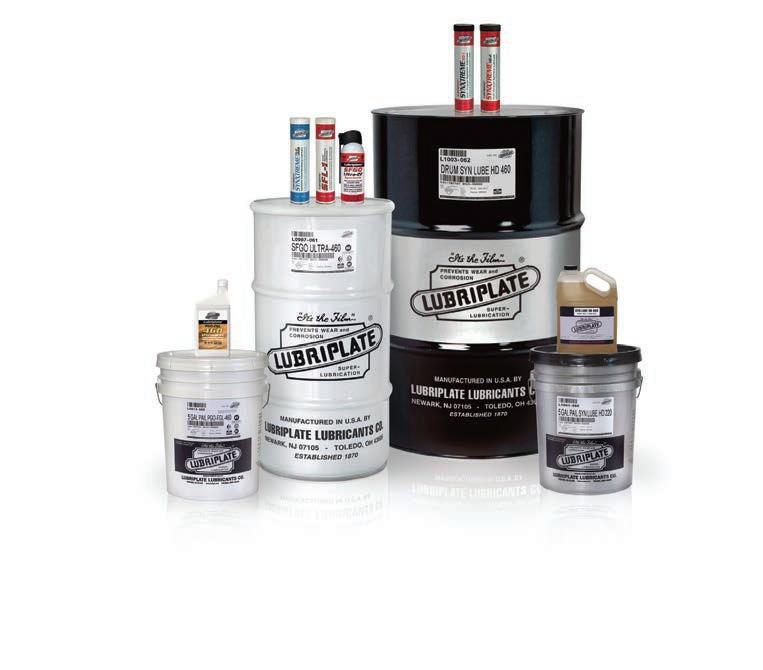
Lubriplate has been helping industry meet its lubrication needs for more than 150 years. In that time, we have learned what works and what doesn’t. Put our experience and knowledge to work for you.
Lubriplate offers a full range of ultra high-performance synthetic and petroleumbased lubricants that have been engineered from the ground up to provide a number of cost saving benefits including; extended lubrication intervals, reduced friction, multiple application capability and lubricant inventory consolidation.
Lubriplate offers its Complimentary ESP Extra Services Package to all of its customers at no additional charge. Services include; Complete Plant Surveys to help determine your exact lubrication needs, Color Coded Lube Charts and Machinery Tags which simplify maintenance procedures, Lubrication Training Programs and Follow-Up Oil Analysis.

NOVEMBER 2021
Vol. 37, No. 5
Established 1985
www.mromagazine.com
Twitter: @mro_maintenance
Instagram: @mromagazine
Facebook: @MROMagazine linkedin.com/company/mro-magazine
Reader Service
Print and digital subscription inquiries or changes, please contact
Beata Olechnowicz, Audience Development Manager
Tel: 416-510-5182 Fax: 416-510-6875
email: bolechnowicz@annexbusinessmedia.com
Mail: 111 Gordon Baker Rd., Suite 400 Toronto, ON M2H 3R1
Mario Cywinski, Editor 226-931-4194 mcywinski@annexbusinessmedia.com
Paul Burton, Senior Publisher 416-510-6756 pburton@annexbusinessmedia.com
Maryam Farag, Associate Editor 437-788-8830 mfarag@annexbusinessmedia.com
Ilana Fawcett, National Account Manager 416-829-1221 ifawcett@annexbusinessmedia.com
Melanie Morgan, Brand Sales Manager 437-218-0941 mmorgan@annexbusinesmedia.com
Graham Jeffrey, Media Designer
Catherine Giles, Account Co-ordinator 416-510-5232 cgiles@annexbusinessmedia.com
Scott Jamieson, COO sjamieson@annexbusinessmedia.com
Machinery and Equipment
MRO is published by Annex Business Media, 111 Gordon Baker Rd., Suite 400, Toronto ON M2H 3R1; Tel. 416-442-5600, Fax 416-510-5140. Toll-free: 1-800-268-7742 in Canada, 1-800-387-0273 in the USA.
Printed in Canada
ISSN 0831-8603 (print); ISSN 1923-3698 (digital)
PUBLICATION MAIL AGREEMENT #40065710
Subscription rates.
Canada: 1 year $65, 2 years $110. United States: 1 year $110. Elsewhere: 1 year $126. Single copies $10 (Canada), $16.50 (U.S.), $21.50 (other). Add applicable taxes to all rates.
On occasion, our subscription list is made available to organizations whose products or services may be of interest to our readers. If you would prefer not to receive such information, please contact our circulation department in any of the four ways listed above.
Annex Privacy Officer
Privacy@annexbusinessmedia.com, 1-800-668-2374
No part of the editorial content of this publication may be reprinted without the publisher’s written permission © 2021 Annex Business Media. All rights reserved. Opinions expressed in this magazine are not necessarily those of the editor or the publisher. No liability is assumed for errors or omissions.


Earth Overshoot Day 2021 happened on July 29, a month earlier than the year before. It was pushed forward because emissions are on the rise and biodiversity loss is speeding up. (Each year, Earth Overshoot Day represents the date humanity has used up all the biological resources the planet regenerates each year.)
This is when terms like “environmentally friendly” and “sustainability” come in. “Sustainability is meeting the needs of today without compromising the ability of future generations to meet their own.”
And the simplest way to define being environmentally-friendly is “the act of living with intent.” The intent is focused on not only not creating harm to the environment, but also preventing as much harm from happening to the environment through your interactions with it. Being environmentally-friendly goes far beyond just turning off lights when you leave the room or separating your garbage for recycling; it is about changing the purpose of how you live.
In this issue of MRO, our main theme is the impact that maintenance can have on the environment. Going green. Carbon neutral. Eco-friendly. Carbon footprint. We hear these buzzwords about the environment all the time, and organizations always want to reduce waste and save money. But what does maintenance sustainability really mean for the maintenance team?
Within traditional maintenance management, the implementation and optimization of specific maintenance policies and strategies is mainly based on cost and availability criteria. However, maintenance actions often have an impact on energy, consumption of resources and related environmental impacts.
The last decade, a green image became more important, which resulted in an increasing awareness of the importance of ecological impacts. Therefore, it becomes centrally relevant to take ecological aspects into account in maintenance management. According to maintenance experts, the maintenance department is often the focus of environmental policies because maintenance itself is a key part of sustainability, as it improves operations and contributes to longer asset life.
After all, the best way to reduce waste is by preventing assets from becoming inefficient and from breaking too soon in the first place, which means that organizational sustainability policies have a big impact on how the maintenance team does its job.
Here is a sneak peak of what you’re going to learn about in this issue:
• Measuring environmental impact is about calculating what is saved instead of what was spent; fuel that wasn’t burned, water that wasn’t used, and waste that never happened.
• Computerized maintenance management system (CMMS) solutions can help you track what you’ve already done, and what still needs to be done. Also, CMMS can help you quantify how those tasks turn into savings; in time, money, and other resources.
• Good practice in maintenance has a direct effect by increasing the life cycle of facilities and equipment, contributing to more sustainable use of raw materials needed for their construction.
• Similarly, good practice affects the quantity of spare parts used, or obsolete parts thrown away, energy consumption of the organizations, the quantity of highly polluting waste generated in the form of used lubricants and products caused by machine failures.
In conclusion, the environment is the responsibility of all of us, so let’s start taking care of it, even if a certain action might look insignificant to you, it will definitely add to the bigger picture, and eventually reduce our ecological footprint.


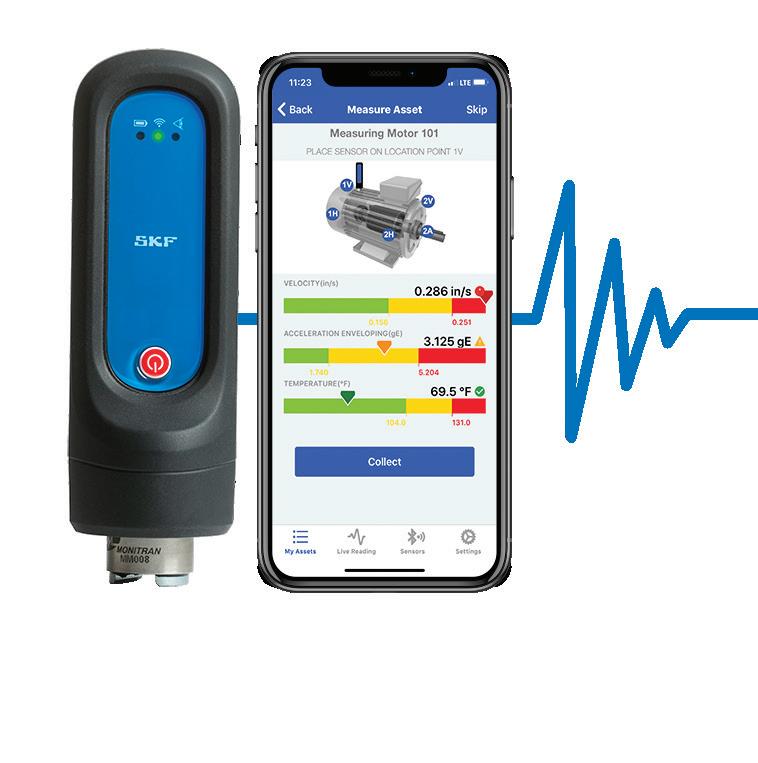
Combining the SKF QuickCollect portable sensor and the SKF Pulse app allows you to quickly evaluate asset health on demand and prevent machine failure. Get expert advice without investing in complex technology.
• On-the-spot machine diagnostics with visual alarm indicators
• No need for training or diagnostic expertise
• Connect directly with SKF experts for analysis and diagnostic reports
• Pulse Check diagnostic reports, available via the app, include recommended corrective actions






Samotics has been selected by Thames Water Utilities Ltd. as its sole supplier for electrical signature analysis (ESA) technology through at least 2025.
The award is part of Thames Water’s strategy to achieve cost-effective reliability through the condition-based maintenance (CBM) of its critical equipment. To that end, three tenders were issued, for three different CBM technologies: vibration, thermography and ESA.
ESA is the company’s technology of choice for its fleet of submerged assets, whose location makes it hard to acquire high-quality, high-frequency data. Because the electrical data used in ESA can be captured remotely in the motor control centre, there is no need to install sensors on or even near the equipment.
All CBM technologies detect a broad range of mechanical faults; ESA is the only one that can detect electrical faults, which cause up to 30 per cent of equipment failures. It is the only CBM technology that can report on energy efficiency, which Thames Water will use to help achieve its goal of net zero carbon by 2030.
Samotics has been awarded a threeyear exclusive contract to provide ESA monitoring technology and services for Thames Water’s equipment fleet, with an option to renew for another five years at the end of the initial term MRO
Olaf Berlien will take over as President and CEO at Austrian gas engine manufacturer INNIO.
Berlien has experience in plant engineering with the gas and oil industry, and in the automotive and semiconductor industries as well.
Over the past 30 years, he has held leading positions as a board member and managing director of technology companies such as IBM, Carl Zeiss, Thyssenkrupp Technologies and ThyssenKrupp Elevator, as well as Exyte. Recently, Berlien served for six years as CEO of Osram, a global leader in the semiconductor-based lighting and sensor industry. MRO
Kruger Energy L.P. announced the acquisition of two semi-trailer trucks that will be among the first all-electric class 8 vehicles to hit the road in Canada.
By the end of this year, the new trucks will operate 24/7 to carry goods between Kruger facilities in Québec.
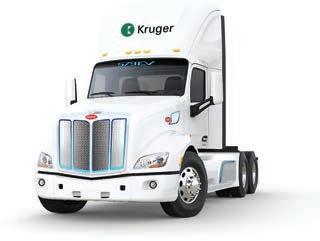
By opting for electric transportation, Kruger aims to reduce GHG emissions as part of its ongoing efforts to reduce its environmental footprint. As a result of purchasing its first two electric trucks manufactured by Peterbilt, the company expects a reduction of 380 tons of CO2 per year, which is equivalent to removing about 90 passenger cars from roads.
Kruger Energy chose Peterbilt’s Model 579EV trucks for their battery life, range and pricing, and for the conventional Model 579, including optimal weight distribution, superior aerodynamics, advanced safety features and a comfortable interior for the drivers. Truck maintenance will be carried out by partner dealer Camions Excellence Peterbilt. MRO

Brother Mobile Solutions, Inc. (BMS), provider of mobile, desktop and industrial printing and labeling solutions, has partnered with AEM to bring cable testing and labeling efficiencies to a broader group of system designers and contractors.Brother and AEM rolled out their joint solution and demonstrated how Brother iLink&Label app and PT-E550W industrial labeling tool integrates with AEM TestPro CV100 and Network Service Assistant to help speed the testing and labeling process, eliminate duplication of jobsite effort, reduce human error and improve the project labeling step. MRO
Frontier Lithium Inc. has appointed David Ewing as its Vice-President of Sustainability and External Affairs, a newly created position in the company. Ewing brings over 20 years of experience in environmental matters. He developed a sustainability program recently and led the Indigenous partnerships and regulatory affairs portfolios for Evolugen by Brookfield Renewable, a subsidiary of Brookfield.
Before joining Brookfield, David held several senior positions in the natural resources sector. He resolved many complex environmental and social issues through collaboration with various parties, such as government regulators, Indigenous peoples, and environmental groups.
Additionally, with 15 years of public service experience working for Environment Canada, Fisheries and Oceans Canada and Treasury Board, he has gained knowledge of environmental regulations and the ability to navigate government. MRO


Association of Canada virtually hosted its 21st annual MainTrain; Canada’s annual learning event and conference.
BY MARYAM FARAG
This was the second time the conference was held virtually, with over 300 delegates, speakers, exhibitors and sponsors attending, and allowing the opportunity to engage with maintenance, reliability and asset management professionals across Canada and the world.
The two-day main event, held September 28-29, was preceded by four weeks of pre-conference programming, including bi-weekly presentations on a range of topics, from balancing risk and performance, to the importance of culture in aligning an organization to achieving excellence.
The program highlighted the range of industries in which “maintenance, reliability and asset management are crucial to achieving value, and how technology is being leveraged by asset-owning organizations around the world to deliver that value.”
PEMAC hosted two educational workshops in partnership with Northern Lakes College as part of the preconference program.
Module 1 of PEMAC’s Maintenance
Management Professional (MMP) program, An Integrated Strategy for Maintenance Management, consisted of an introduction to the program, developing the framework for thinking about a strategic approach to maintenance management that is integrated with their business and organizational goals.
Secondly, PEMAC’s course, Becoming a Certified Asset Management Assessor, provided candidates with preparatory instruction to help them complete the Certified Asset Management Assessor (CAMA) exam.
The main conference program consisted of 40 presentations from national and international speakers, covering four tracks: maintenance, reliability, asset management and technology, featuring case studies, plenary sessions, and panel discussions.
The opening plenary discussion highlighted the intersection of climate change and asset management, “and how organizations and all levels of government should be looking to leverage asset management principles and practices to both minimize and respond to the risks posed by climate change.”
This year’s award ceremony was held on the evening of the first day of the conference. PEMAC members were honoured with eight awards from across two categories: member awards and Excellence in Practice awards (Capstone awards, individual awards and team award). PEMAC awards recognize
achievement of each type, for both maintenance management and asset management subject areas.
The conference program concluded with How Asset Management Contributes to Reliability in Unreliable Times, a global panel of asset management practitioners from Australia, Brazil, South Africa, and Japan, which was moderated by Susan Lubell, Past President, PEMAC and Canadian delegate, GFMAM.
The discussion highlighted the global importance and impact of natural disasters, climate and weather events to public and private sector asset-owning organizations across the world. It also provided a global perspective on the importance of resilience, sustainability and how asset management is evolving as countries around the world are adapting to the ever-changing environment.
Machinery and Equipment MRO was joined by platinum sponsors, Northern Lakes College and UE Systems, and a total of 14 sponsors and exhibitors who supported the online event.
In the concluding remarks, PEMAC President Jean-Pierre (J.-P.) Pascoli announced that MainTrain 2022 is scheduled to take place September 2022, in Toronto, Ont. MRO
Maryam Farag is the Associate Editor of Machinery and Equipment MRO magazine, Food and Beverage magazine, and Plant Magazine, Annex Business Media. Reach her at mfarag@ annexbusinessmedia.com



Global Bear Inc. is a stocking distribution specialist of precision bearings and power transmission products. Our customers include industrial bearing and power transmission distributors and original equipment manufacturers.

We have built our reputation on:
• Superior quality products
• Outstanding service and delivery
• Competitive pricing
Through our strategic partnerships with a select number of international bearing and PT manufacturers, Global Bear Inc. provides our customers with the following benefits:
• Outstanding inventories of those hard to source products
• Free access to our vast product and application knowledge base
• Bilingual communications
• Competitive pricing
• Toll free numbers for Canada and the United States
• Invoicing in Canadian & US currency
• Catalogue availability
• Global sourcing capability

BY CLIFF WILLIAMS
Previously, we discussed why and how asset management came to be – with the explanation of the need to derive value from the assets. We looked at how it should be built using tools such an asset management policy, a strategic asset management plan, and then specific asset management plans. We also veered off into how the developers of ISO 55000 may have forgotten a very important word in ‘accountability’. Building on those, in this article, we look at how and who pulls all of these
things together, and try to answer a very challenging question for most organizations; who owns asset management?
The starting point for answering this question is your current state; your resource, your knowledge, your authorities, and perhaps the most important, your level of engagement and commitment as an organization. For most organizations, adopting asset management principles will require some form of change or modification of the current culture.
It’s pretty simple really; if you don’t
need to change the culture (my definition of culture is the agglomeration of the behaviours of those in the organization, as driven by the leadership through the goals they provide), then it means you have the correct behaviours and the correct measures, and so you are already practicing asset management, even though you might not call it that.
Many organizations are choosing to involve consultants in the process of building their asset management program – this can help speed up the process, but great care must be taken when setting the scope and expectations for the consultants. The consultants will provide you with tools, methodologies, structure, etc. – but only in response to what has been asked of them.
If we assume that we need to change the culture as explained above, then this needs to be included in the scope. To
achieve the outcomes desired from the hiring of the consultants, there needs to be a clear understanding of current state, so that the focus can be on those things that are going to help you move forward to the desired state. This can take the form of an audit or a survey, but must include roles and responsibilities, and not just processes, tasks, or duties. This is key because these are the things that will enable you to enact change and achieve your goals, and it is most often found that there is lack of clarity in these matters.
Having confusion around roles and responsibilities quickly leads to the biggest problem that we mentioned earlier – accountability – or more correctly, lack of accountability. It’s very difficult to hold someone accountable for something if we, or they, are not really sure they are in fact responsible for it, or even worse, that they don’t have the authority to do what needs to be done.
Now, everything we’ve said is required when hiring consultants, applies equally to when the program is being built from within – it’s just now you will be doing everything yourself, and so, you will need a very comprehensive roadmap, broken down to detailed tasks for moving along the map before you start trying to implement the program.
This brings us to the question of ‘who owns asset management?’ because how you now proceed to make the changes necessary as guided by the consultant’s plan, or your own roadmap, will determine the answer to this question. For those of us who live in the maintenance and reliability space, this same sort of discussion crops up when we talk about centralized or de-centralized maintenance – who owns maintenance? Similar to the question around maintenance, there is no specific guidance as to which is the better option, but it’s a decision that needs to be made very early on, as this will drive the training and infrastructure required to sustain asset management.
To describe the centralized model, it is one where a department is set up and given responsibilities for all things, asset management along with the resources, expertise, and authorities to deliver them.
The de-centralized version is one where asset management is spread across the organization, and everyone has the training, skills and knowledge around asset management for their particular role and department, and in their little world become the asset managers.
Each of these scenarios will present
risks that need to be considered and addressed for success. In the centralized model there is quite often the challenge of finding the resources, as this is a ‘new’ department, the level of expertise may not be available withing the organization, meaning new hires, and the biggest risk is that everyone else in the organization assumes they have no part to play in asset management.
In this scenario, when we ask other departments about asset management plans or measures to drive improvement in value, most of the departments will defer to the asset management group – they don’t see the connection between what they do and the asset management program. This is why we need to make sure that we understand the current idea of roles and responsibilities so that we can make the connections for them, and have them understand their input into deriving value for the organization through asset management.
The de-centralized model runs the risk of asset management being considered conflicting with current duties, and so, is not the focus of what people do. It requires training of everyone involved and this usually it ends up as a problem, and so people do not actually have the training, skills, or knowledge to do their job. The biggest risk is that if fully de-centralized, there is no oversight of how the asset management program is doing, outside of looking at the high-level results. Although on the plus side of this model, when done correctly, you are not adding people and you are going to get greater engagement in the asset management program.
As with most choices between two very different approaches, the middle ground is usually where the most appropriate path lies. Let’s think about safety in the work place, when we ask ‘who is responsible for safety’, we get answers and examples from the progressive organizations that clearly shows that they not only say it – they live it.
They can show where every job description contains an element of safety responsibility and measures, and results are communicated often and with transparency. These organizations still have a safety director or manager, but their role is not ‘practicing’ safety; their role is ensuring that everyone else is ‘practicing’ safety, and providing guidance and support to help them succeed.
These organizations usually have very good safety records, especially when compared to those on the other end of the
spectrum. More often than we should, we get the answer to the question of ‘who is responsible for safety’ as the safety director or the safety department. People know that they need to work safely, they know that we don’t want accidents or incidents, but they don’t see it as an integral part of their duties – they see safety as something that is a different topic to their responsibilities.
The big difference between the two scenarios is that the those in the progressive organizations consider safety to be a part of their job, whilst the others consider safety to be apart from their job.
If we replace the word safety with the word environment, then everything we just said applies – so the question is, why would we take a different approach to asset management? Asset management is focused on the triple bottom line of people, planet and profit, so why not proceed the same way?
So, as you move along the journey to sustainable asset management, why not answer the question ‘who owns asset management?’
Why not give the example of the hybrid approach, which falls somewhere in the middle of centralized and de-centralized approach. Why not have it so that asset owners understand and take responsibilities for the day-to-day performance of asset management in their area and are supported, guided and influenced by a central asset management group?
Exactly, how it will be set up will depend on the individual organization – how many people will be in the asset management department? Where do their goals end and the department heads begin, etc.?
As you begin the building of the program, don’t forget to take advantage of the opportunity to involve the asset owners in process – if they are included in designing and creating the documents, plans, templates, etc., they are much more likely be prepared to play their part in owning asset management. What path is your organization taking? MRO
Cliff Williams is author of the bestselling maintenance novel ‘People – A Reliability Success Story.’ He is a maintenance and asset management educator, and a keynote speaker at conferences around the world, who believes success is achieved through people. Currently Cliff shares his knowledge and experience as an advisor on maintenance and reliability for people and processes, and asset management with TMS asset management and is a facilitator for PEMAC’s Asset Management Program.

How to commit to being environmentally responsible in maintenance activities, and understanding the environmental impact of keeping assets reliable.
BY MARYAM FARAG
Today, maintenance is more than just discipline; it’s a holistic approach to how you manage your assets.
Early on, maintenance was more a task of how to upkeep your equipment, keep things running, and fixing them if/ when they break (reactive maintenance). However, as time went on, the discipline has evolved into a more predictive and planned type of activity.
With the Internet of Things (IoT) coming online, and smart devices and equipment, we are moving forward to not just maintaining, but monitoring and predicting what the equipment feels like and how it is performing.
To put it simply, maintenance is becom-
ing more about managing assets than just maintaining them.
“Maintenance has not just evolved, it has also revolted,” said Erika Mazza, CMMS Specialist, Region Municipality of Durham.
By knowing how your assets are performing, what kind of risks you are willing to take, and how it affects operations, you can choose between three different strategies of maintenance that are corrective, preventive, and predicative.
Maintenance has gone from anticipating what was simple, repair, fix, or maintain; to now being able to make full analysis of the equipment performance, and deciding based on the organizational strategy, what type of strategy is going to
be used to keep this equipment performing as intended.
One of the benefits is that it helps identify which steps in the maintenance process might be unsustainable. As maintenance evolves, its impact on the environment evolves too, and achieving environmentally sustainable maintenance should be the goal in every facility.
Let’s look at how maintenance can impact the environment, positively and negatively.
The direct effect that maintenance has on the environment that surrounds the facility
“It’s easy to think nowadays that maintenance has positive outcomes in the
If your company processes higher dollar amounts, improve your cash flow by receiving business payments with real-time confirmation. Interac e-Transfer† for Business, from Scotiabank, allows you to simplify your payment processes by sending or receiving up to $25,000 per transaction with just an email address or account number.1
Completely transform your business payment processes in an instant. For details, visit scotiabank.com/interacforbusiness or contact your Scotiabank® Relationship Manager.
environment. If you keep your equipment running tight and well, then you have less disposal of the equipment, and the process could be more efficient, and therefore saving energy and so on,” said Mazza.
Nonetheless, the negative outcomes should not be disregarded. For example, some workers can overuse materials and create a lot of waste, if they don’t perform their activities properly. Meaning that they may not be trained properly on how to perform their activities. Another way that maintenance activities can have an impact on the environment is the kinds of products that are used, and the different types of maintenance activities.
“If we use products that are not environmentally friendly or biodegradable, then these products are going down the drain, and they will end up either in the receiving water, in the ambience, like in the air, or could produce a lot of noise as another type of contamination,” said Mazza.
The activities mentioned by Mazza could impact the environment if they are done frequently enough, which could contribute to creating procedural waste, lasting a long time and having a negative impact.
“Sometimes I like to start with how maintenance can impact negatively in the environment to understand how can we change that behaviour, or the ways we do those activities to be less impactful, to be greener, and to be eco-friendlier when we do them.” said Mazza.
Workplace culture is considered another factor that impacts the environment. For instance, some workers may prefer to take a piece of equipment, wash it properly in the sink, using special sink drops, for example, to contain any contaminants and prevent waste going through the sewage. On the other hand, some workers may just flush it right away letting the waste go right into the storm drain.
Both are doing their job properly in terms of washing the piece, but not both of them are doing it the environmentally-friendly way.
“These kinds of behaviours are hard to convey to the workforce, but they could be easily detected based on the different processes and strategies in the workplace,” said Mazza. “If the workers have clear instructions on how to do their job in the most efficient and environmentally friendly way, they will pick up on that kind of behaviour and it be -
comes a habit.”
Some actions are considered small and therefore get overlooked, such as letting the water run instead of shutting it between rinsing equipment. These types of actions are essential to include in environmental-related policies, as those behaviours will add up to the bigger picture.
Predictive maintenance and condition-based maintenance; those two strategies are good at moving the numbers in favour of the environment. These two types of maintenance are environmentally friendly, as they avoid interventions to the equipment if unnecessary. They can help reduce the frequency of maintenance activity, and in turn reduce consumption of supplies, creation of waste, and potential introduction of contaminants to the environment.
T hat is one of the biggest benefits of using condition monitoring maintenance strategy for the environment. It can help to know how the equipment is performing, and how to work with the core conditions and physical conditions of this equipment. Therefore, if your asset is working properly under the right conditions, it’s going to draw less energy.
“With the Internet of Things, we can also have asset performance management systems that tell us how to start doing anything that requires a twinkle to perform the best way they can. It’s not just for energy usage, but also for chemical usage,” said Mazza. “Always remember that the main point to getting something to be environmentally friendly is to reduce waste, to reduce putting agents of contaminants into the environment, and to be effective. All these three categories are covered through predictive maintenance and condition monitoring maintenance.”
Firstly, having an environmental policy to create a culture of being eco-friendly is an essential step. The second step is to assess the technologies that you are acquiring, your assets, and consumables, making sure they are eco-friendly.
The third step is to include the process design, which with an environmentally friendly objective will help you understand how your organization is working, and how you can use the resources in
the most efficient way to reduce waste.
“We’re talking about reducing redundancy if it’s not required, utilizing variable frequency drive, or VFD, to reduce the amount of time a motor is idling. Make sure you use energy efficient type of motors,” said Mazza. “Review the MSDS, material safety data sheets, for the consumables you use for your maintenance activities. I think that is super important, because in their issue they have a section that tells you what is the impact, and what is the best way to dispose these materials into the environment.”
Finally, use CMMS, even if it’s something simple, as it can help any organization plan their maintenance activities better and more efficiently to reduce waste. Also, going mobile and reducing the usage of paper means saving a lot of trees.
The lifecycle of an asset consists of: design, procure, maintenance operation, and then disposal. The maintenance operation is the longest part of the life cycle of an asset.
If you make sure the equipment is reliable, during that longer part of their life cycle, it is ensured that these assets are going to last longer, and will not need to be replaced. It won’t waste consumables throughout its life cycle because it’s leaking oil, wasting chemicals that it pumps, or any bad malfunction that is avoided by using reliabilitycentred strategies.
Are facilities or companies nowadays willing to commit to being environmentally responsible for their maintenance activities?
“Absolutely yes. Workplace organizations are getting more committed to that specific leg of sustainability. Right now, to be a competitive enterprise, you need to be profitable, you need to have great human capital, but you also have to be environmentally responsible,” said Mazza. “In companies today, the understanding to be environmentally responsible goes hand-in-hand with how they optimize their processes to reduce waste and to manage their resources better.” MRO
Maryam Farag is the Associate Editor of Machinery and Equipment MRO magazine, Food and Beverage magazine, and Plant Magazine, Annex Business Media. Reach her at mfarag@annexbusinessmedia.com

ManufacturingJobsite.ca is Canada’s premier online job portal for the growing manufacturing sector. A laser focus on the right people across the country’s largest manufacturing media audience means you get the right applicants the first time. No more massive piles of unqualified applicants, just professional employers reaching qualified professionals.
Powered by the top manufacturing media brands in Canada, the reach to over 500,000 industry professionals on ManufacturingJobsite.ca is amplified by:
Website advertising to 185,000 qualified monthly site visitors
A comprehensive and magnifying reach across multiple associated job boards
Email promotion and job alerts to 131,000 industry emails using Canada’s largest CASL-compliant direct access to manufacturing professionals
Social media promotion to all brand networks on Facebook, Instagram, Twitter and LinkedIn
How to analyze work order activities to ensure there is a strong planning process implemented within the maintenance department.
BY PETER PHILLIPS
This issue is the start of a series of articles outlining the critical duties of five positions within the maintenance department. The positions include the planner, storekeeper, supervisor, tradesperson and the maintenance manager.
I am starting with the planner because this position holds the key to the inner workings for the planning of work and the work order flow process. The position requires a great deal of attention to detail and intertwines the other four maintenance roles, and therefore, is the pivot point of most maintenance activities.
To start, however, we may want to analyze the current work order activities to ascertain if there is a robust planning process within the maintenance department. We need to ask how do we know if our planning system is broken?
of a broken planning system
In order to understand and appreciate maintenance planning, it is necessary to acknowledge that “all maintenance jobs are planned.” As long as facilities are maintained and the maintenance and repair work are needed, this statement will be fact.
In the absence of a planner, the function may be the responsibility of craft foremen, who may perform the planning role, in addition to supervising craft personnel. In other instances, the craftsmen do their own planning after receiving the assignment from their foremen. The engineering department, with appropriate drawings and bills of material, may plan technically complicated or high-cost jobs. The most common practice usually involves a combination of these methods with varying degrees of success. Obviously, the size and complexity of a
maintenance department must be considered in any approach to maintenance planning. Management and control of a small maintenance group, of five or less crafts people, can be accomplished on an informal basis. Paperwork, communication systems, procedures, and reports can be maintained at a bare minimum, and good supervision will provide for adequate service at proper costs levels.
Once a maintenance force begins to exceed five and more crafts people, it begins to present complications from both the coordination and planning standpoint. Unfortunately, large complex organizations often retain the informal control approach, even though the magnitude of the operation has long since exceeded manageable dimensions.
Since maintenance work is variable in nature and content, job planning offers the greatest opportunity for maintenance improvement. At the same time, planning presents one of the most difficult problems encountered in maintenance. The symptoms of inadequate or incomplete maintenance planning can be readily identified by:
• Poor job instructions resulting in delays, confusion, and lost time
• Inadequate coordination of materials resulting in false starts, delays, or makeshift repairs.
• Poor coordination of crafts resulting in wait time and idle personnel
• Poor timing of equipment isolation and shutdown resulting in excessive downtime
• Over manning of jobs
All these result in the waste of time and money. Poor communications and mate-
rial problems are most generally the two biggest symptoms of a failed planning system. Job instructions received by the craftsmen are sketchy, incomplete, or nonexistent. Confusion, delays and lost time result from the efforts made to ascertain what should be done. Visits to the job and discussions with requesting personnel not only take time, but are bothersome to people preoccupied with other problems, therefore, the discussions do not take place.
Many times, incorrect or incomplete information is received. Improper or faulty communication results in poor work performance, failure to satisfy the customer, frayed tempers, and high costs. Unless the job is planned sufficiently in advance to provide for proper coordination of materials and manpower, it may result in false starts, delays, or makeshift repairs.
Materials may be required that are not carried in stock, yet the job is started even though these purchased materials have not been received or have not been ordered. Interruptions, delays, confusion resulting from unnecessarily long machine interruptions, and high costs may be incurred.
No single facet of maintenance management offers greater potential savings than does maintenance planning, and that hinges on good planning and scheduling practices. Good planning and scheduling go hand-in-hand. Without one, the other cannot successfully operate. Labour and material cannot be utilized if equipment is not scheduled for release. Converse-
ly, equipment scheduled for downtime is wasted if the appropriate package of labour and materials has not been prepared. Either problem produces waste and results in higher maintenance costs.
In the last few years, American industry spent approximately $600 billion on plant and equipment maintenance. According to maintenance specialists, at least $200 billion of that mammoth expenditure was wasted, and more than money went down the drain. Poorly maintained equipment produces poor quality products, and equipment failures result in disrupted production schedules and in deliveries to customers. In short, poorly planned maintenance increases costs while decreasing product quality, productivity, and customer service delays in deliveries.
The benefits of a well executed planning and scheduling system are:
• Increased uptime
• Reduced fixed costs
• Reduced inventories
• Improved safety and health performance
• Improved environment performance
• Improved maintenance and repair quality
The role of the job planner has been misunderstood in many maintenance circles. It has wrongly been stated that the main job of the planner is to apply standard data so that the job can be rated by time. This misconception is quickly corrected by taking a detailed look at how the planner spends their time in a typical maintenance planning function.
The following table indicates the major activities a planner should engage in as identified by a study performed on a maintenance planning group.
Many maintenance organizations use the planner to fill in for the supervisor when the supervisor is not at work. This is not recommended because it conveys to management and maintenance personnel that the planning function is something the organization adapt without having it. Other things a planner should not do are included in the list below:
• Plan emergency work.
• Plan unscheduled repairs.
• Schedule routine activities.
• Engage in unrelated maintenance activities
• Become multipurpose.
• Used as a maintenance person
Only one person should be responsible for planning a job, regardless of the number of units, trades, or people involved. Without a clear definition of the responsibilities, the planning process will produce confusion rather than a workable plan. While each organization is different, the scope of work should not significantly impact the planner’s duties.
In general, a planner will be responsible for the following:
• Reviews work orders for each significant piece of information
• Assign work orders needing planning and material to the WO status of “Hold”
• Assure work order has approval and authority
• Prepare weekly schedule and facilitate weekly scheduling meeting
• Prepare daily schedule for maintenance supervisor (without assigning personnel to the job – this is the supervisors’ responsibility)
• Receive and process daily schedule and late work report from previous day
• Enter Emergency work orders into CMMS, if trades do not have access
• Close work orders in CMMS when complete
• Facilitate maintenance activity with production
• Maintain integrity of PM program, i.e., checklists, trigger, frequency, compliance, and schedules
• Establish and maintain equipment parts catalog, equipment history, storeroom, min/max levels
• Compile weekly compliance reports
• Coordinate with central shops/project schedules
• Approve stores and purchase requisitions for planned jobs
• Review actual vs. plan on completed work orders
• Coordinate special programs. I.e., ladder inspections, equipment surveys
• Identify recurring maintenance problems through CMMS Trends
• Maintain maintenance key performance indicators for department
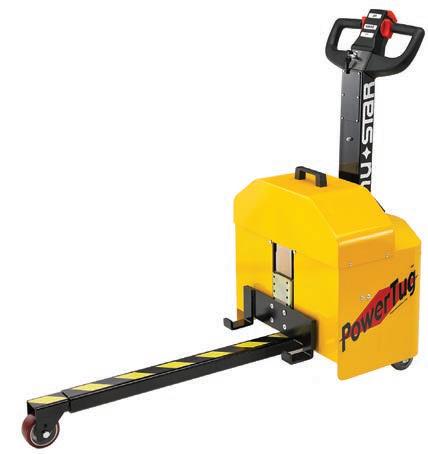
• Quality material handling tugs individually manufactured in the U.S.
• Engineered to handle unique applications
• Productivity gains through labor reduction
• Improve

• Create standard job packages
• Use BOM’s, pick list, job kits
• Use equipment history files to learn from the past
• Establish and adjust PM frequencies
Planning is simply a step-by-step approach to get work done by the most cost-effective method.
Winning the customer confidence by delivering services on schedule is the key. Then, refining the process to continually improving the planning system. Properly planned jobs can be as much as 4-5 times less expensive than unplanned work. While planning requires considerable effort, it ultimately saves money for the organization. With these savings and in simple terms, planners are free MRO
Peter Phillips is the owner of Trailwalk Holdings Ltd., a Nova Scotia-based maintenance consulting and training company. Peter has over 40 years of industrial maintenance experience. He travels throughout North America working with maintenance departments and speaking at conferences. Reach him at 902798-3601 or peter@trailwalk.ca.

Industrial equipment design changes as technology changes. As a result, maintenance is not a function, but rather an ongoing dynamic process.
BY L. (TEX) LEUGNER
Company culture must be continually reviewed and developed to ensure that every employee remains part of the equipment reliability improvement process.
When continuously improving an equipment reliability program, two fundamental questions must be answered; what is effective maintenance, and what is efficient maintenance?
Effective maintenance means doing the right maintenance tasks at the right time, while efficient maintenance means carrying out each maintenance activity correctly so that rework is never necessary.
Many tools have been developed over the years to assist maintenance and operations professionals to help answer these questions, including predictive maintenance condition monitoring, reliability centered maintenance, the 6S program and equipment reliability improvement programs, utilizing Six Sigma statistical measurement.
However, simply put, most organizations could resolve many of their maintenance problems by recognizing and removing waste with the implementation of lean maintenance; a strategy that recognizes and removes eight forms of waste. How does your organization deal with waste of maintenance overproduction?
LOGIC: Overproduction includes poorly prioritized or excessive preventive maintenance (PM). PM programs must be reviewed periodically to ensure that these activities are proven effective at reducing potential machine failures and production stoppages, and carried out efficiently.
How does your maintenance department eliminate the waste of waiting?
LOGIC: lost time waiting for parts, waiting for transportation to the site, waiting for equipment to be shutdown prior to work, waiting for planning and/or scheduling are only a few of the time wasters that maintenance technicians experience in many organizations.
How does your organization deal with the waste excessive travel?
LOGIC: many manufacturing and process facilities cover acres of property. Examples include energy producers and automotive plants. Waste includes technician’s travel to the job, spare parts, special tools or product delivery.
How does your organization deal with inappropriate or unnecessary processing in the maintenance group?
LOGIC: examples of this waste include excessive work order processing, missing
work order information, poor or no planning, scheduling mistakes and utilizing planners or schedulers for activities unrelated to their specific responsibilities.
How does your organization deal with waste associated with inventories?
LOGIC: examples of this waste include poor (or no) control of tool cribs and spare parts stock rooms. Some organizations place special tool and spare parts control up to maintenance planners or the technicians themselves which are invitations to stock control disasters.
How does your maintenance group manage the waste associated with unnecessary motion?
LOGIC: this waste includes technicians looking for additional technical information, picking parts or supplies (not pre-packaged for pick up or delivery to the job site), and ordering and obtaining additional resources never included on work orders.
How does your organization manage the waste associated with knowledge and skill?
LOGIC: this waste includes under utilizing the knowledge of machine operators (who very often know more about certain machines and processes), than the technician and under-utilized skills or knowledge of the technicians themselves.
How does your organization manage the waste associated with defects, callbacks and repetitive failures?
LOGIC: these include poorly concluded or incomplete repairs due to production demand over-ride, poor or incomplete work order instruction detail, poor (or no) planning or scheduling, the frequent absence of proper failure analyses processes and procedures.
Eliminating the sources of waste described above can be done by developing processes and procedures that will help
the maintenance organization provide effective and efficient service to the production or manufacturing group.
The process must focus on continuous machine reliability improvement, and begins with thorough and complete documentation of the specific critical equipment necessary for uninterrupted production in the facility. Next, preventive maintenance procedures and processes must be correctly and completely documented, including when and how maintenance activities are to be carried out.
This process should include monitoring the time required to carry out specific maintenance activities, including preventive, corrective and repair tasks. When and where appropriate, the application of condition monitoring tools, such as taking vibration measurements and obtaining oil samples, can be included as part of the preventive maintenance program, and technicians should be trained to carry out these tasks as part of their PM routes.
Whereas OEE (overall equipment effectiveness), measures loss in equipment, OME (overall maintenance effectiveness) on the other hand, measures losses (waste) within the maintenance process-
es and provides information on waste in the maintenance work backlog.
Scheduled PM, including necessary condition monitoring, can be generated according to a pre-established program often referred to as the “forecasted backlog.” Thus, PMs are removed from the planning and scheduling of the “ready backlog,” that includes corrective maintenance, specific improvement projects and jobs approved for carry over from a previous shift.
All of this work requires the full and complete attention of the maintenance planner/scheduler to ensure that all parts, supplies and any special tools are correctly and properly ordered and obtained just in time to conform to the schedule. When undertaking the repair work itself, the process of documentation continues including the work done, how much time was required and the inclusion of unexpected delays due to an absence of spares or tools resulting from the frequent discovery of more extensive damage to the machine on disassembly. Finally, where a critical machine component or the machine itself has failed, analysis of all critical components or ma-
chine failures should be carried out in order to prevent re-occurrence.
Once all of these processes are well developed, it makes it much easier to continually improve upon the processes and procedures that can remove even more of the waste described, making it easier to make improvement adjustments, and these can be leveraged across the entire organization. Although most company’s maintenance programs are driven by preventive maintenance, condition monitoring, planning and scheduling and work order management, the identification, measurement improvement and ongoing analyses of labour hours expended efficiently and effectively is the key to reliability improvement.
L. (Tex) Leugner, the author of Practical Handbook of Machinery Lubrication, is a 15year veteran of the Royal Canadian Electrical Mechanical Engineers, where he served as a technical specialist. He was the founder and operations manager of Maintenance Technology International Inc. for 30 years. Tex holds an STLE lubricant specialist certification and is a millwright and heavy-duty mechanic. He can be reached at texleug@shaw.ca.


Sustainability is becoming a more a common practice in many organizations in terms of how an organization presents itself to its customers as an alley to the environment.
BY MARIETE F PACHECO
Large scale initiatives in the mainstream media have become commonplace due to retailers becoming more vocal in their demands for suppliers to reduce packaging, use more sustainable materials in their products and packaging, plus the push to shift their fleets to green fuel alternatives, such as hybrids, electric or propane.
Sustainability is possible across most industries when reviewing their core operations, such as in manufacturing, construction, warehousing and others. MRO purchases are a major area of opportunity for an organization to improve or implement sustainability practices.
Sustainability as a key strategy can be positioned as an organization’s competitive advantage, from all communication
perspectives, when interacting with customers, employees and even shareholders. Both employees and customers view the positive brand story that a sustainability-focused organization offers.
The sustainability message can help with talent attraction and retention as well as attracting customers. Having a shared sustainability value between employees and customers helps build a more vested and emotional connection. Some employees will value the opportunity to work for an organization that believes in and operates sustainably, and may also use this as a deciding factor to work for a new possible employer; especially common with millennials.
Shareholders and investors benefit directly from cost savings of sustainabil-
ity initiatives, such as reductions in hazardous goods use, including the downstream disposal and handling costs. Overall, there is a positive brand reputation story to be shared across these critical stakeholders.
Integrating sustainability metrics into contracts should be implemented at the beginning of the procurement process when a contract goes out to the tender. Various metrics can be considered for the tender depending on the industry or operation, including: a product’s end of life (ability to re-use), the percentage of recycled content used in the product (e.g. oil, paper, plastics), types of recycled content used (e.g. post-industrial VS post-consumer), elimination of hazardous goods use (e.g. CFCs in aerosol products, VOC in paints, mercury in lights), changing the type of disposable needed (standard disposal VS recycling VS special hazardous goods disposal), freight modes (e.g. air VS rail VS truck), country of origin to reduce the carbon footprint related to shipping (e.g. global VS domestic VS local), the type of energy used during manufacturing of products (e.g.: coal VS nuclear VS electric VS solar), and lastly, having the manufacturer provide their own sustainability initiatives (e.g. waste reduction, emissions reduction, supporting local environmental causes, etc.).
An important factor is engaging suppliers early on by communicating an organization’s strategy and expectations, in addition to sharing its own targets and best practices to demonstrate their commitment to sustainability.
Considerations include incorporat-











ing a point or scoring system to reflect those suppliers that provide sustainable solutions and products alternatives, to products denoted in the tender’s criteria, such as quality, service and pricing.
Another attribute to consider is including the tender to reflect sustainability in use reduction and lifecycle of products. Use-reduction is reducing the consumption of a product by using one product over another. For example, reducing the usage of single-use plastic bags by using metal containers for storage of goods.
Another factor is product lifecycle, which considers a product’s full process from “cradle-to-grave” of sourcing of raw materials (recycled vs. virgin), manufacturing, packaging, distribution, maintenance and servicing.
and replacement.
Through sourcing environmentally friendlier MRO supplies, organizations can also save tremendously in disposal and handling fees. For example, when using harsh chemicals to clean equipment, an organization needs to invest in the proper PPE for employees to ensure their safety.
Disposal of used cleaning chemicals needs to be processed by a hazardous waste service, which can be costly when contrasted with using gentler chemicals that may not require PPE (or as much), or require special and costly hazardous waste disposal.
When an organization starts on its sustainability sourcing journey for MRO supplies, there are many third-party cer-
Sustainability as a key strategy can be positioned as an organization’s competitive advantage, from all communication perspectives, when interacting with customers, employees and even shareholders.
Lastly, a product’s disposal at its endof-life. For example: hydraulic fluid manufactured from virgin base oil and shipped across the globe, which requires very extensive multi-layer packaging due to high-level of handling, which generates a very significant carbon footprint compared to a locally manufactured hydraulic fluid, made of recycled base oil.
Making environmentally focused MRO choices can result in cost-savings, when approaching sustainable procurement from a whole-of-product life perspective, as opposed to solely concentrating on an invoice price.
Driving savings for an organization is possible when procurement balances both the long-term and short-term costs. New equipment or tools’ initial investment may seem at first to be a significant cost to an organization, however, when amortized over the duration of life of the equipment, the annual cost is reduced, in addition to the reduced energy-use, and maintenance or operating costs.
For example, installing LED lighting or reduced water consumption plumbing fixtures; the average energy and water consumption reduction helps to offset the higher initial investment, in addition to the longer lifespan of the equipment, which requires less servicing
tifications that can provide guidance.
Commonly recognized Canadian and North American certifications include: CSA Energy Efficiency Mark (gas appliances, HVAC), CSA Sustainable Forest Management (paper products), Forest Stewardship Council (paper products), ECOLOGO by Underwriters Laboratories (sealants, disinfectants, hand cleaners, etc.), GREENGUARD by Underwriters Laboratories (adhesives, sealants, etc.), Energy Star (HVAC, lighting) and USDA Bio preferred (lubricants, building materials).
These industry certifications can offer assurance that a third-party has thoroughly assessed and confirmed the manufacturer’s sustainability and “better for the environment,” claims. An easily identifiable certification mark on a product’s packaging can aid in categorizing a product, or the product can be verified by contacting the respective certifying body.
Best practices for making MRO purchasing more sustainable include ensuring all stakeholders are aware of an organization’s sustainability strategy from the onset, in addition to including them in the decision-making process as part of a strong change management initiative throughout the journey.
Ensuring success when shifting to sus-
tainable purchasing is best to start on a small-scale with simple changes, such as switching to greener alternatives on high consumption products, like cleaning supplies, personal protective equipment and cutting tools.
Some examples of alternative “better for the environment,” products include: Simple Green’s offering of biodegradable and non-toxic cleaning chemicals, or Watson Gloves’ “Green Monkey” nitrile gloves, which has enhanced biodegradability so as to have a shorter lifespan in landfills of 10 years vs. conventional nitrile gloves, which degrade in 200 years.
In the manufacturing and automotive sectors, Greenfield Industries purchases used high speed steel cutting tools from its customers, and processes the spent products into new tools. More extensive sustainability steps can be taken as part of an organization’s long-term capital investment strategy, such as upgrading lighting and plumbing fixtures. For example: GE provides a variety of LED lighting integrated with motion sensors to assist with energy reduction.
In plumbing fixtures, manufacturers such as American Standard provide water conserving products, such as toilets and faucets. For organizations in search of turn-key solutions, there are options to engage third-party service providers that offer additional support through an energy audit, or other initiatives such as recycling services or waste diversion programs; like LifeCycle Revive who recycles used disposable PPE into new PPE.
Sourcing sustainably within MRO is more than a passing fad, and is now seen as a strong long-term strategy to strengthening an organization’s competitive advantage in the marketplace, both for common stakeholders, such as investors, customers and employees, but also the communities they operate in.
There are a variety of tools available to assist organizations focused on implementing a sustainability focused MRO purchasing program; from leveraging sustainability service providers to third-party certification bodies, and even simply, working more closely with existing suppliers to learn more about their environmentally friendlier product options. MRO
Mariete F Pacheco, MBA, PMP, Managing Director, FRW Services Inc. has over 15 years of procurement and supply chain management experience across a variety of industries including industrial, construction, retail and more.
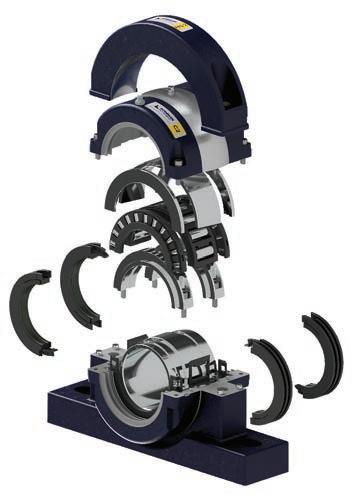
For the first time in split roller bearing history, there is a bearing specifically designed to accommodate high axial load as well as increased radial load applications across a range of heavy-side sectors.
Harnessing the unique component production capabilities of additive manufacturing, the new Bowman Advanced Split Roller Bearing delivers up to 75% higher radial load capacity and up to a 1000% increase in axial load capacity in both directions.
Here, Chris Ager, Business Unit Manager for Bowman International’s Split Bearing Division, explains the thought process behind the design and the significance of innovating products for specific applications:
Q: Describe how you went about innovating a ‘world-first’ bearing. When innovating a new bearing, we prefer to use a ‘blank page’ design philosophy, rather than simply trying to evolve or change an existing product. This enables us to scrutinise each sub-component, and understand it’s strengths and weaknesses, before working out how to improve in accordance to the specific application we are designing for.
For example, a traditional split roller bearing accommodates axial load as a secondary consideration, relying on sliding contact from race lips alone. We knew that in order to innovate a bearing that would optimise performance and reduce failure in high-load applications, the axial force would need its own integrated axial rolling element - something that has long been impossible to achieve with traditional component manufacturing techniques. Harnessing new technologies such as additive manufacturing, we were able to overcome this barrier and succeed in making a bearing that accommodates much higher radial and axial forces with great success. When innovating a product for a specific environment it’s important to design for both the primary issue (in this case high-load capacities), but also any secondary issues too. When studying high load applications, we identified two additional issues – the lack of available space around the system which made replacement and maintenance difficult, and the importance of maintaining uptime in busy and time-critical environments.

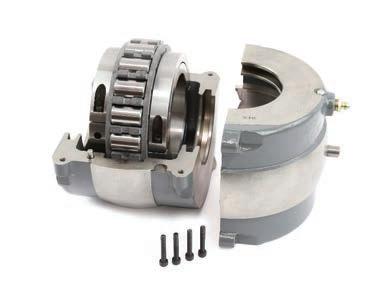
To meet these secondary needs, we knew that our new roller bearing needed to be split to the shaft. This would enable engineers to assemble it radially around the shaft, eliminating the need to disconnect the coupling and move other equipment such as motors, gearboxes or pumps in order to complete any maintenance. The radial assembly of our new bearing delivers up to ten times quicker installation times compared to equivalent solid bearings, saving time and money on planned and reactive maintenance.
Q: Explain why additive manufacturing was the right method for creating the new Bowman Advanced Split Roller Bearing.
Bearing components, by their very nature, tend to be round objects manufactured from rings or rods and the most complex component is usually the bearing cage. We knew that as soon as there was an emerging technology that could create complex forms in resilient
materials, this would likely be the answer to creating a bearing cage with enhanced performance capabilities.
Additive manufacturing allowed us to create strong durable cages with highly complex geometries that could not be manufactured in any other way - the resulting cages create bearings with superior performance to other manufacturing methods, all at a reasonable price point and no tooling required.
For more information on Bowman’s new Advanced Split Roller Bearing, search ‘Bowman Split Bearings’ online.
Industrial equipment design changes as technology changes. As a result, maintenance is not a function, but rather an ongoing dynamic process.
BY DOUGLAS MARTIN
Even now, they continue on this path. I will review some of the highlights of how, in today’s industry, they continue to make energy saving and environmental benefits.
Steel is a key component in the manufacture of bearings. However, the manufacture of steel requires a significant amount of energy for heat, and the most common fuel for that heat is carbon-based LPG (liquified petroleum gas), which, of course, is a significant contributor to greenhouse gasses.
Most recently, a bearing steel manufacturer, Ovako Steel, in partnership with Linde Gas AB, has performed a test in which the LPG was replaced by hydrogen gas. The benefit of burning hydrogen is that the only emission is water vapour.
What was key in the test was whether the use of hydrogen as a heating fuel would affect the quality of the steel. Fortunately, there were no quality issues found when using hydrogen fuel. Although this was a test, it promises a future in which the production of steel can be done with the use of hydrogen fuel without affecting the quality of steel. This will be a significant reduction to the carbon footprint in the manufacture of steel, a key component of rolling element bearings.
Sealed deep groove ball bearings (DGBBs) have been used for many years. The most common application is in medium to small electric motors that are “sealed for life” or “maintenance free”. The advantage of a sealed bearing is that it does not require re-greasing to achieve the expected system life. Within the past number of years, bearing manufacturers have introduced sealed spherical roller bearings. As spherical roller bearings are one of the most popular bearing designs in industry, there is lots of potential for the use of sealed SRBs in industry and the opportunity to reduce the use of grease used for re-lubrication.
With sealed SRB’s, there is a general rule that if the application speed is less




than 50 per cent of the bearing’s reference speed limit, and the operating temperature is less than 70C, then the bearing can be operated as “sealed for life” or “maintenance free”, depending on the level of external contamination.
Of course, the benefit of sealed for life is that there is no need to re-grease the bearing. Without re-greasing, there is a reduction in waste and the need for petroleum-based lubricants.

One of the concepts with the use of sealed SRB’s is the concept of a three-barrier solution. This concept means that there are three layers of protection from contamination of the bearing. The first barrier is the housing seal that protects the bearing cavity, the second barrier is the grease fill in the bearing cavity between the bearing and the external seals. The third barrier is the seals integral with the bearing. In terms of environmental impact, the benefit of a three-barrier solution is that the grease used in the secondary barrier can be an environmentally friendly grease, as its only purpose is to create a barrier to resist the ingress of contamination. As such, it does not have to be a mineral oil-based grease (which the bearing needs), it can be a vegetable oil-based grease or other grease that is acceptable to be purged into the surrounding environment.
To this point, there is no widely used base oil that can provide the film strength
needed for surface separation of rolling elements and raceways. The “magic” of petroleum-based lubricants has not been matched by any current, common solutions. Since grease plays a dual role in a bearing; lubrication and sealing (prevention of contamination ingress), then the role of sealing can be done by an environmentally friendly grease. The three-barrier solution, as described above, lends itself to this, specifically, a high-performance grease can be used in the bearing (one that has a long service life), and then an environmentally friendly grease can be used as the grease used to purge the seals.
One example of such a grease is one which uses an Anhydrous Calcium thickener and a biodegradable ester oil.
Of course, seals can be a component that generates friction, so there is a balance between the benefit of a seal that reduces grease consumption and a seal that reduces friction.
Examples of where an alternate seal can be used are in:
Freight cars in railways: An improved lower friction seal used in 200,000 freight cars travelling at an average speed of 80 km/hour can offer a total power savings of 160 MW over the traditional seal. This power savings can be translated in to a reduction of the burning of diesel fuel and CO2 emissions.
Idler roller bearings in conveyors: A bearing using a shield instead of a contact seal in a converter idler roller can reduce the energy consumption by 66 per cent (based on test results at 650 rpm using a method that follows DIN 22112-3). This translates to savings of 20 GWh and 6700 tones of CO2 for a conveyor equipped with 120 000 idler bearings.
Car wheel bearings: Improved seal designs in hub bearings have reduced the friction by 25 per cent compared to conventional units. These higher efficiency units help reduce the CO2 emissions of medium size cars by up to 1.3 g/km.
Bearing remanufacturing: Depending on their size, bearings can be remanufactured. Instead of scrapping the bearing, it
can be sent to a remanufacturing facility and the appropriate actions can be taken, such as re-grind of the raceway and replacement of components. Besides the economic benefit of using the existing components, there can be savings of 80 per cent of the CO2 emissions compared to the manufacture of a new bearing.
Bearings can contribute to reduction in emissions by improving reliability of machinery. By preventing machine breakdown, pollutants can be prevented from entering the environment due to process interruption. This is especially notable in the oil and gas process industry.
Every year, the oil and gas industry “flares” an estimated 150 billion cubic metres of waste gases. Along with SO2 that causes acid rain, gas flaring emits about 400 million tons of CO2. Much of this flared gas can be captured by vapour recovery units (VRU) and then be used or re-injected. Doing so reliably is difficult, as the harsh process gases can cause VRU compressor bearings to wear out and fail in six months or less. When bearing failures cause unplanned compressor downtime, gas recovery stops and emergency flaring starts.
In the case noted above, bearings with high nitrogen steel and ceramic rolling elements were used to addressed the harsh conditions, however, this does illustrate how there can be a relationship between machine reliability and avoidance of harmful emissions or other forms of pollution.
Growing in use and availability are hybrid bearings, using ceramic rolling elements. Although the production of ceramic balls began in the 1980s, they have not come into more widespread use until the last decade. Advantages that can be gained from ceramic rolling elements are: lighter weight, and a lower moment inertia, improved surface contact properties allowing less lubricant of poorer quality, or rather allowing extended “sealed for
life” operation, and prevention of electrical current flow through the bearing, which is a significant issue with variable frequency electric motors.
These properties of hybrid bearings make them ideal bearings for electric powertrains for cars, trucks and trains, which require bearings that can survive high speeds, accelerations and temperatures with minimal lubrication. In this
case, rolling element bearings facilitate the growth of electric vehicles.
Besides the very nature of rolling element bearings (sometimes known as “anti-friction” bearings) as friction reducers, there are additional opportunities for energy savings and environmental benefits offered by them. These benefits can be realized from cradle to grave in the life-cycle of a bearing. MRO
Douglas Martin is a heavy-duty machinery engineer based in Vancouver. He specializes in the design of rotating equipment, failure analysis, and lubrication. Reach him by email at mro.whats. up.doug@gmail.com.

Festo’s DFPC double acting linear actuator optimized for process applications. It’s available in standard or preconfigured versions. The latter can be ordered with different stroke lengths of the space bolts, piston rods of differing lengths, different thread types and diameters, adapted for ATEX II 2GD certification.
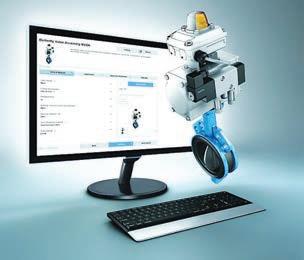
DFPC has been designed for actuating process valves types such as gate, knifegate and pinch valves, or valve bodies without housing. It’s used for the demanding requirements in water- and waste-water treatment, the mining industry, power stations as well as the paper, pulp and steel industries.
The piston rods, screws, nuts and tie rods are made of stainless steel, while the cylinder barrels and end caps are made of aluminum.
There are interfaces for process valve to ISO 5210 and ISO 15552 with extended tie rods. Proximity switches, mountings for position sensing and Namur adapter plate are available as accessories. The DFPC is available currently with strokes of up to 1600 millimetres and in the sizes 80 to 200. www.festo.com
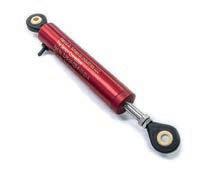
Harold G. Schaevitz Industries LLC has expanded its sensor product offering by adding a line of ILPS-19 Series Inductive Linear Position Sensors using LVIT Technology. They are contactless devices designed for factory automation and a variety of industrial or commercial applications, such as motor sport vehicles, automotive testing, solar cell positioners, wind turbine prop pitch and brake position, and packaging equipment.
ILPS-19 Features:
• Six ranges from 1 to 8 inches (25 to 200 mm)
• 0.75-inch (19 mm) diameter anodized aluminum housing sealed to IP-67
• Radial cable exit version comes with swivel rod eye ends
• Axial termination versions with either M-12 connector or cable www.hgsind.com
Unison Ltd. launched Synergy HBM (hybrid, multi-stack); tube bending machines, available in 50 millimetres and 80 mm (maximum tube diameter) versions initially, and will feature the company’s latest Unibend Lite control system.
As hybrid machines, Unison’s new Synergy HBM range combines electric and hydraulic operation. As with Breeze models, bend arm, carriage, plane of bend and carriage side shift are servo driven,
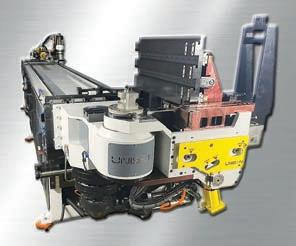
while mandrel, pressure die and clamping system are hydraulically controlled.
The Unison Synergy HBM range:
• 50 mm or 80 mm collet capacity
• Three-stack, multi-stack design
• Clockwise (right hand) bend arm rotation
• 4000 mm tube length in to stopped collet
• Fixed platen
• Servo driven degree of bend
• Servo driven rack and pinion carriage
• Servo driven plane of bend
• Servo driven carriage side shift
• Hydraulic drop away clamping system
• Hydraulic pressure die assist
• Hydraulic mandrel with retraction function
• Unison Unibend Lite control system
• Colour touch screen
• Foot pedal program control
• Optional Bendpro CNC control system www.unisonltd.com
Phnix introduced a refrigerant-airExpert inverter R290 all-in-one heat pump water heater to deliver hot water while minimizing carbon footprint.
R290 refrigerant has a GWP of three, R32 = 677 and R410A= 2088, which would help accelerate the adoption of heat pumps in residential buildings, thereby cutting use of polluted energy for heating. www.phnix-e.com




The podcast features conversations with industry experts about maintenance, reliability, repair, asset management, safety and operations. Topics that are of utmost importance to MRO readers.
Previous guests and topics have included:
• Scott MacKenzie, Senior National Manager of External Affairs, Toyota Motor Manufacturing Canada – Maintenance at TMMC Plants with a Focus on the Environment;
• Martha Myers, Founder and Owner, Martha Myers Consulting Service –Importance of Networking and Education in Maintenance;
• Doc Palmer, Managing Partner, Richard Palmer and Associates Inc – Focus on Scheduling and Planning of Maintenance;
• James Reyes-Picknell, President, Conscious Asset – Managing Maintenance and Reliability;
• Shawn Casemore, President, Casemore and Co Inc – Engaging Your Employees in a Safety Culture; and
• Steve Richmond, CEO, Projetech Inc - How the expansion of 5G networks can benefit maintenance and repair operations MRO
Past Mr. O tips are now available on our web site. We have tips from many industry experts on a wide variety of MRO related topics.
Recent Tips include:
• Sustaining our environment with maintenance;
• Ramping up from your COVID-19 slow-down;
• Planners: The underestimated safety heroes;
• Online networking during COVID-19;
• Asset information management;
• Don’t lose productivity during COVID-19, gain it;
• The first step toward building a safety culture; and,
• Many more.
View all the tips at mromagazine.com/mr-os-tips/