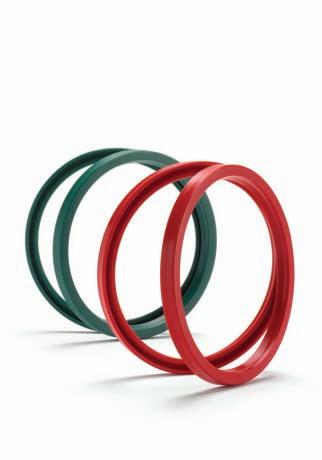
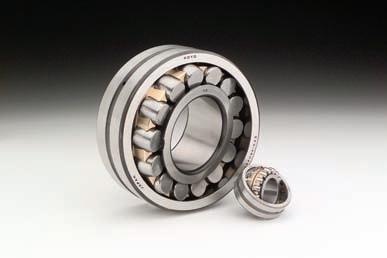
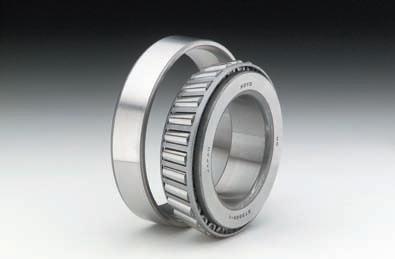
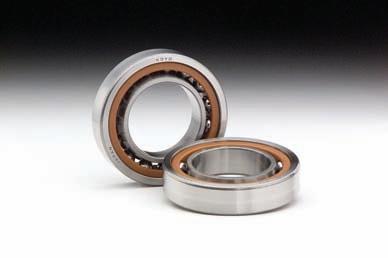
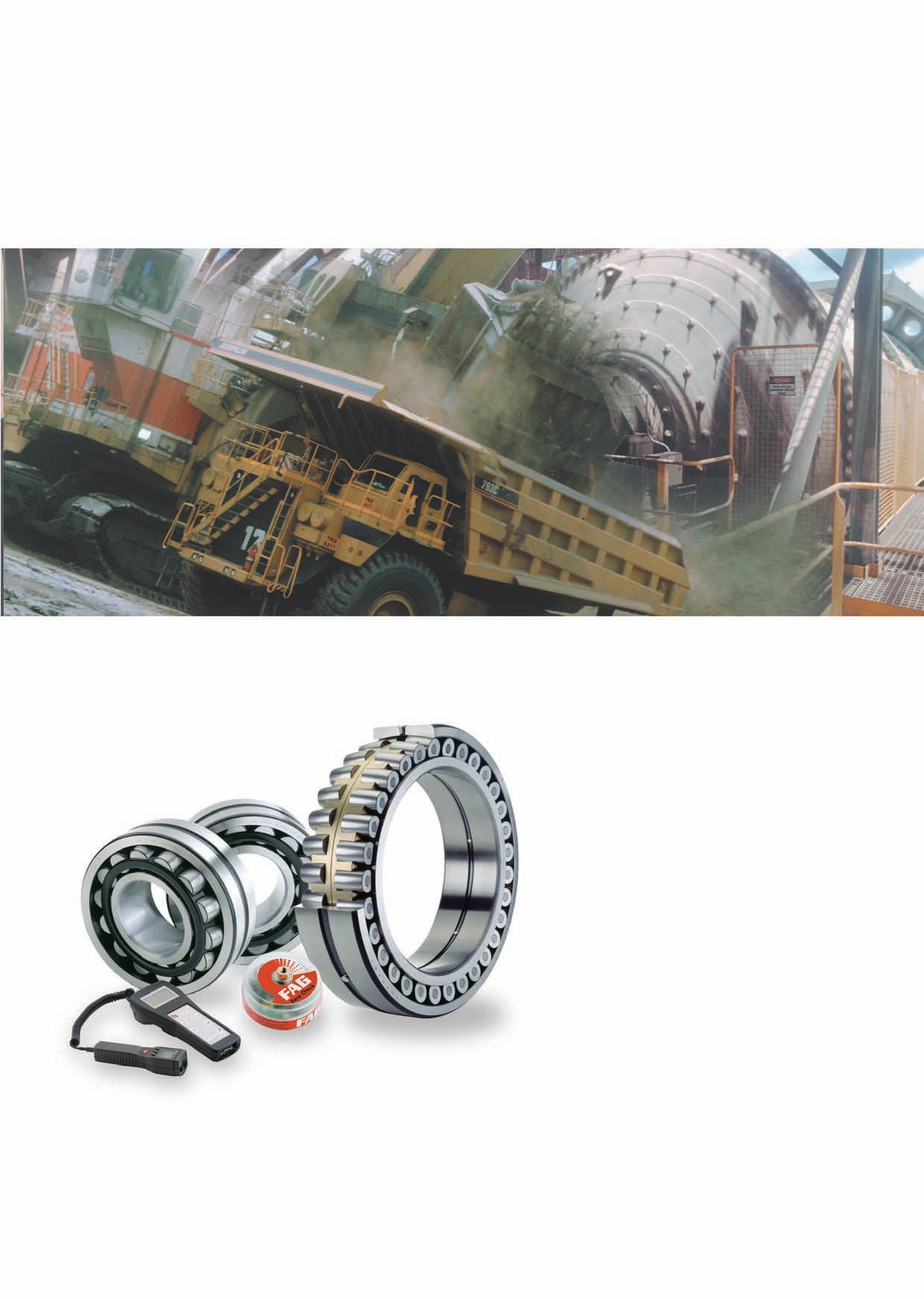
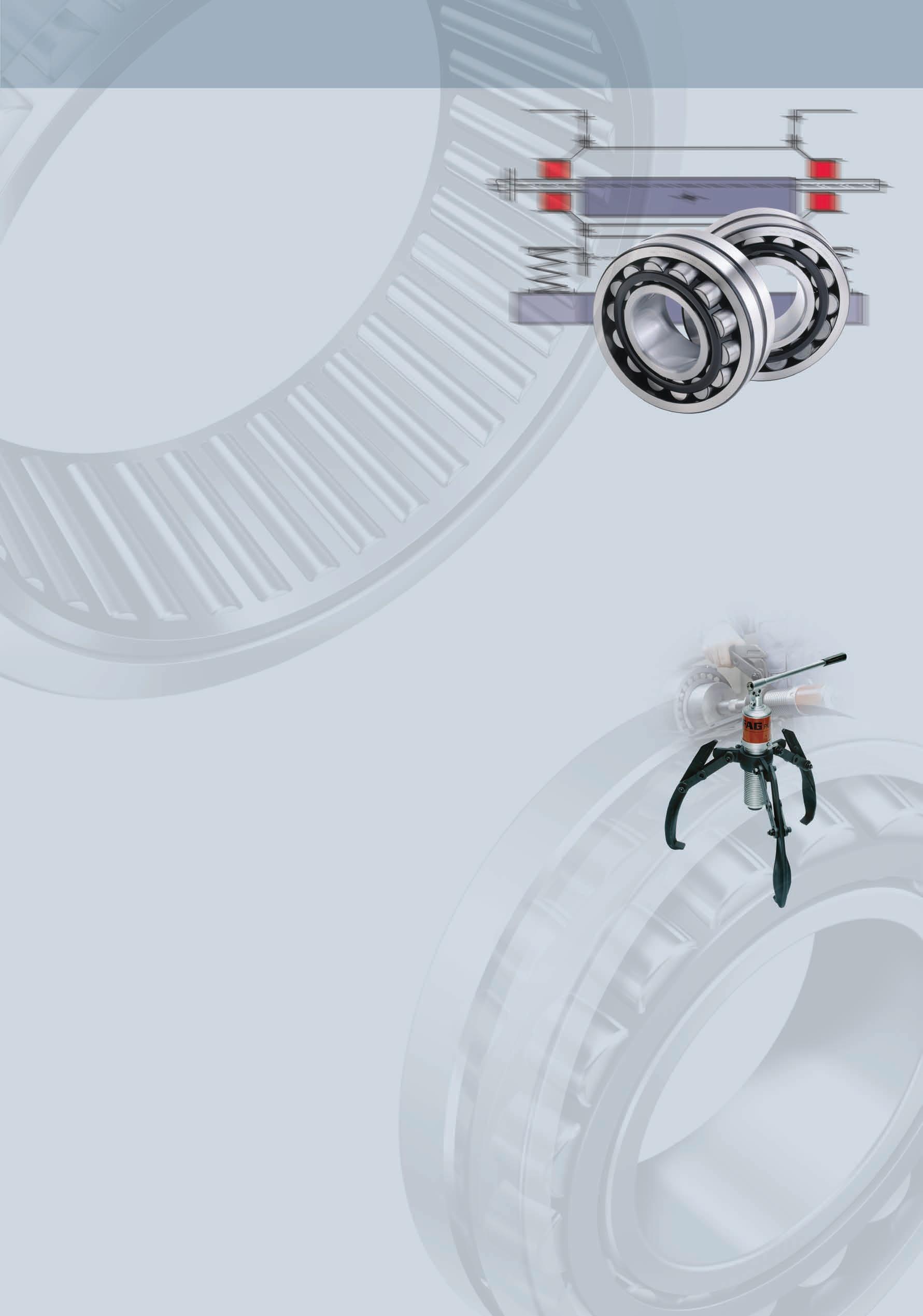
Continuous caster bearing has component design for easy handling
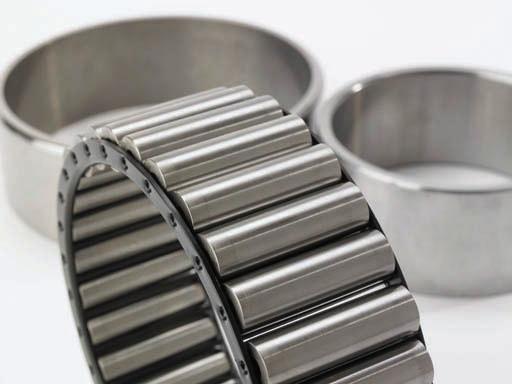
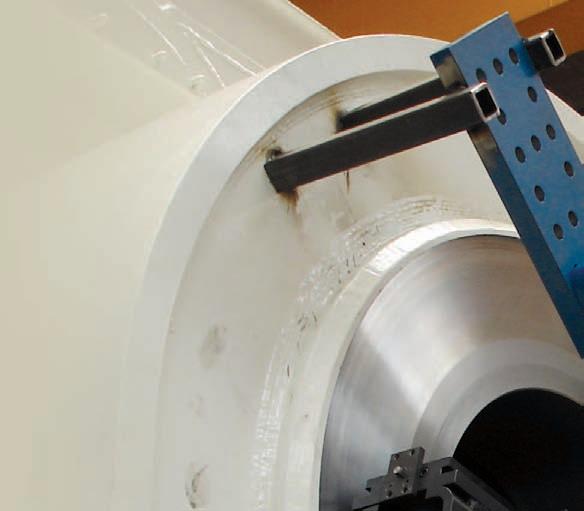
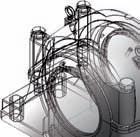
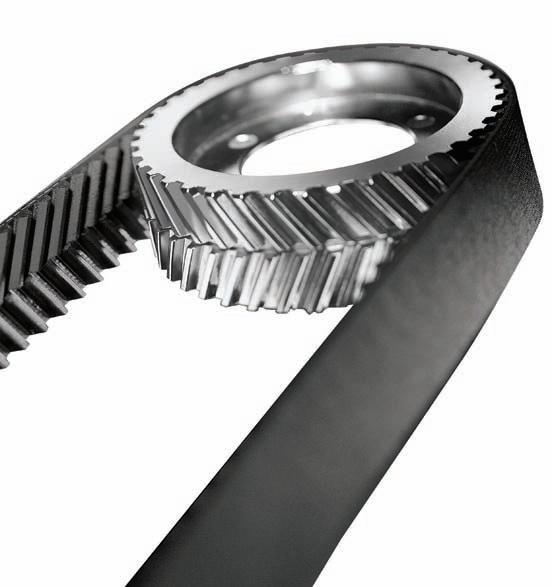
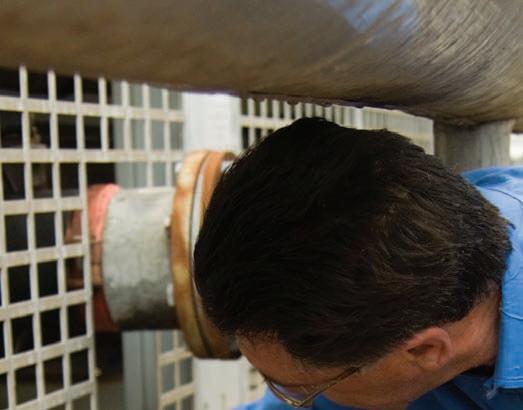
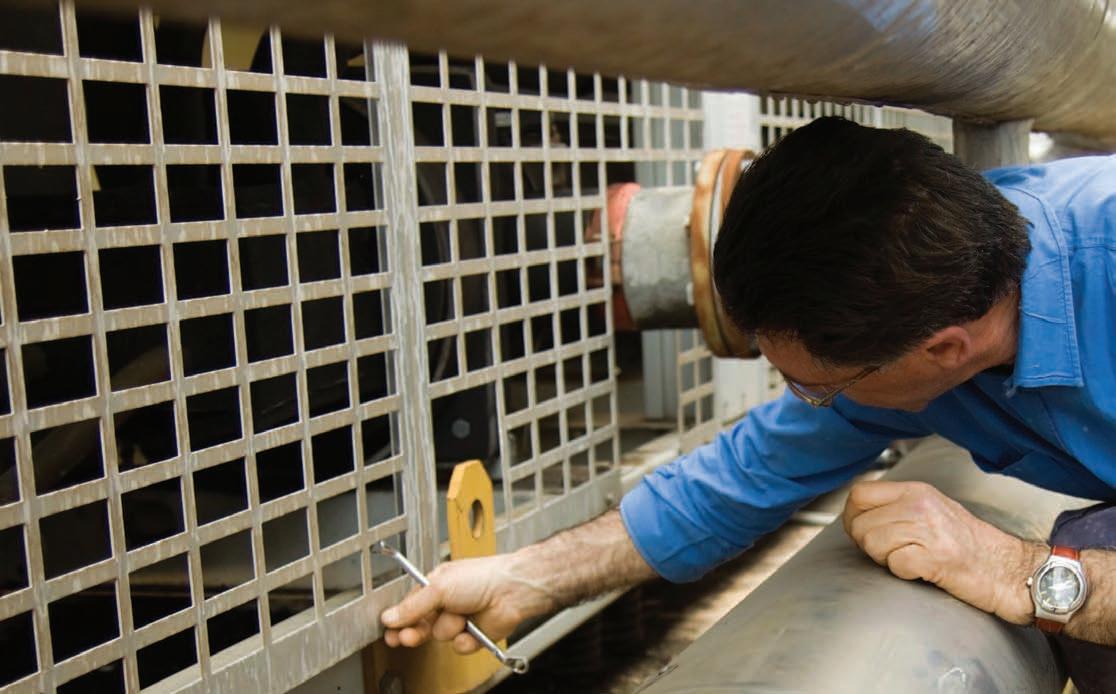
Timken has introduced a line of easy-toinstall, high-capacity bearings for demanding continuous caster applications
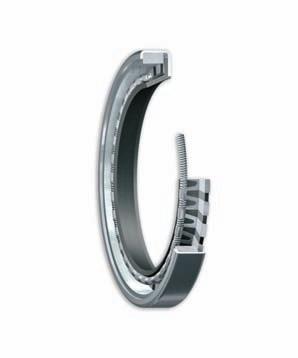
in the metal industry. The Adapt bearing is used in the float position in strand roll support segments. Each bearing consists of a cylindrical inner ring, an outer ring with a proprietary outer race profile and a roller/retainer assembly that features
specially profiled rollers with a snap-in retainer. This component design simplifies inspection and removal, while also allowing operators to independently change parts as needed during maintenance, saving time and costs.
The Timken Company Online Reader Inquiry No. 650
Work boots fit comfortably all day
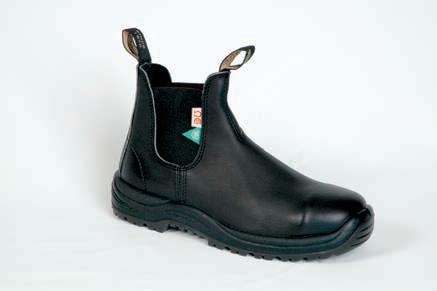
Designed for harsh conditions, Blundstone’s lightweight and durable CSA-approved Greenpatch footwear features added cushioning for all-day comfort and a heat-formed heel for a snug fit. Deluxe Poron foot beds provide support for the back and heels. Weather proof elastic and leather keep the feet dry, while also allowing them to breathe. For safety in tough envi ronments, a broad-fitting tempered steel, Grade 1
safety toe cap protects the toes. The injection-moulded soles are heat, slip, oil, acid and electric shock resistant.
Blundstone Online Reader Inquiry No. 652
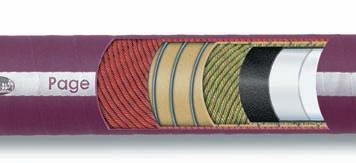
Hose sleeve protects operator from injury
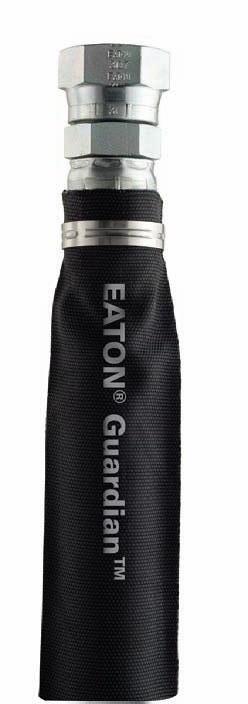
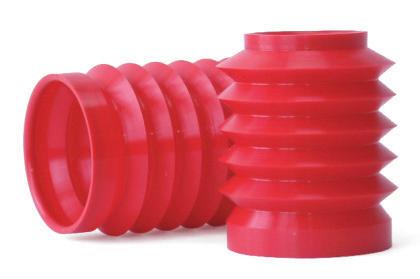
The Guardian hose sleeve from Eaton protects equipment operators from potential injuries resulting from hose failures. The ultra-tight, polyamide six-weave construction enables it to restrain hose bursts at pressures up to 16,000 psi, deflect 1-mm pinhole leaks at 4,000 psi and provide durability of up to 250,000 abrasion cycles. Compatible with most chemicals associated with fluid-conveyance applications, the sleeve meets the “Line of
The Industrial Choice
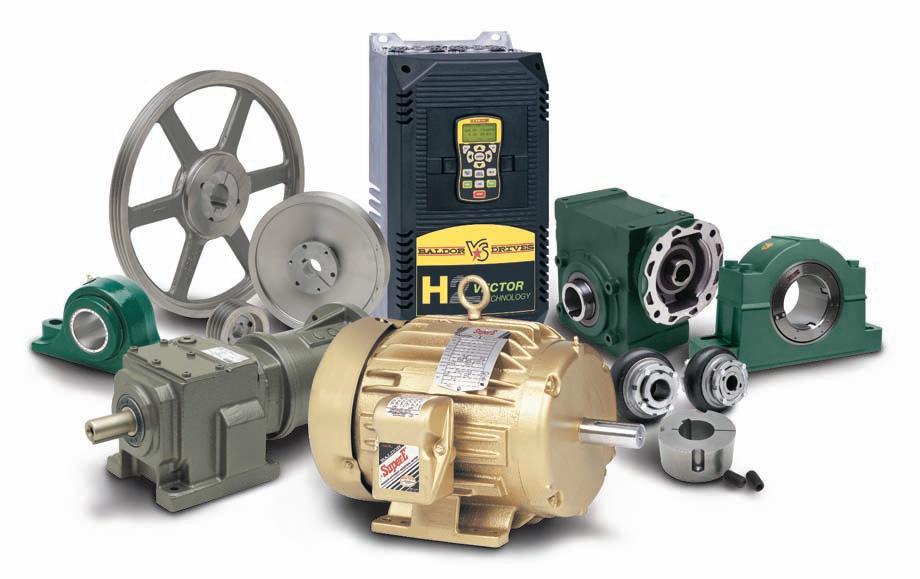
When it comes to industrial electric motors, power transmission products and drives, no other manufacturer offers more than Baldor...that is why Baldor is The Industrial Choice! Whether your application requires a fractional or 15,000 Hp motor, a variable frequency drive, mounted bearings or gearing, a pulley or sheave or even a standby generator, Baldor is the choice most preferred by industry.
When your next project demands the most reliable and energy efficient products available, look to Baldor as your one source for more industrial solutions.
baldor.com 479-646-4711
• Superior Reliability
• Unmatched Quality
• Local Sales and Support
• Quickest Delivery Available
Sight” operator protection regulations EN982 ISO norm 833 EN414 and ISO 3457, as well as industry standards for abrasion and flame resistance. It is available for -4 through -24 hose sizes.
Eaton
Online Reader Inquiry No. 654
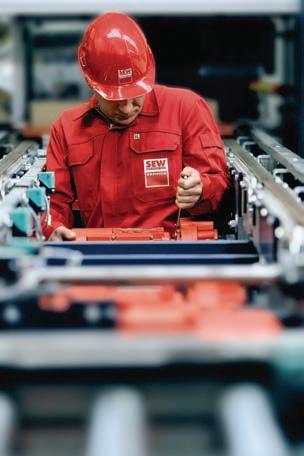
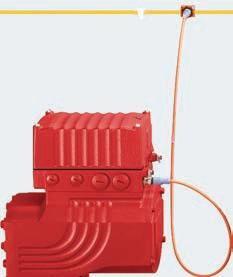
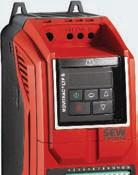
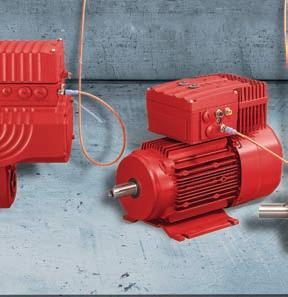
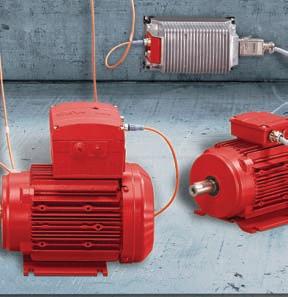
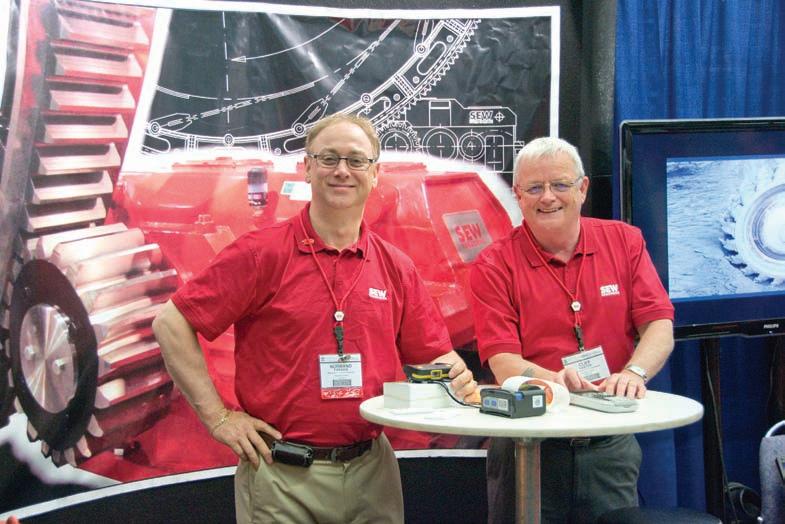
Service agreements allow successful drive rebuilds If an SEW-Eurodrive needs rebuilding, that is no time to compromise on its original quality, the company advises. Its factory technicians follow strict guidelines developed through years of successful rebuilds. If the existing stator isn’t up to standard, it’s never rewound, but replaced. Wear items such as bearings are automatically replaced with the originally specified replacement parts, not ‘will-fits’ that may compromise the performance of the drive.
SEW-Eurodrive
Online Reader Inquiry No. 658
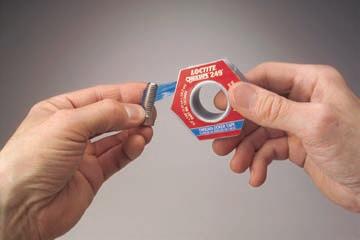
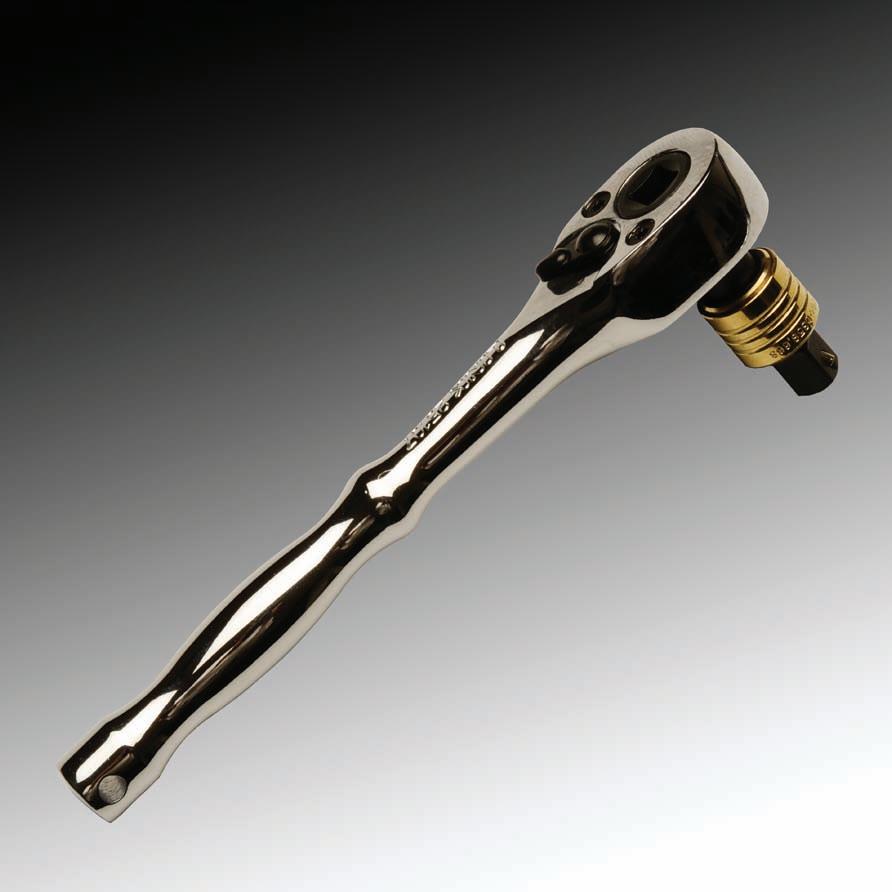
Threadlocker tape makes no mess Henkel’s Loctite QuickTape 249 generalpurpose threadlocker tape is dry to the touch and packaged in a convenient 260-in. roll. Clean and mess-free, this medium-strength, low-tack, anaerobic threadlocker can be carried in a pocket or toolbox, and can be pre-applied to fasteners for future assembly. To apply, it is
simply peeled from the spool and wrapped around the fastener’s threads, with the size of the fastener determining the number of wraps required, and it is removable with hand tools. It fixtures in 30 mins., and full cure is achieved in 24 hours. Operating temperature range is minus 65°F to plus 300°F. Henkel
Online Reader Inquiry No. 656
Speed reducer is designed for robustness
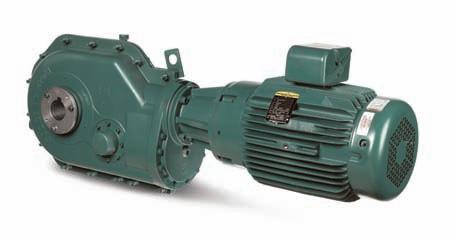
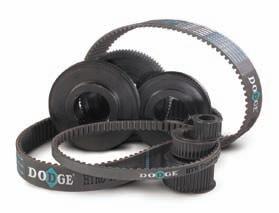
The Dodge Motorized Torque-Arm II speed reducer features a rugged, AGMArated design that offers long life, premium HNBR oil seals with excluder seal technology and a straddle mount input
pinion for maximum torque throughout. The reducer mounts in multiple positions for a compact, flexible design, and is easily paired with a standard Baldor-Reliance NEMA C-face motor.
Kinecor LP
Obtain
Online Reader Inquiry No. 657 MRO
in this issue
features
Bringing the machine to the mountain / 13
Portable machine tools simplify the challenge of repairing heavy equipment on site.
Solving problems anywhere, anytime / 16
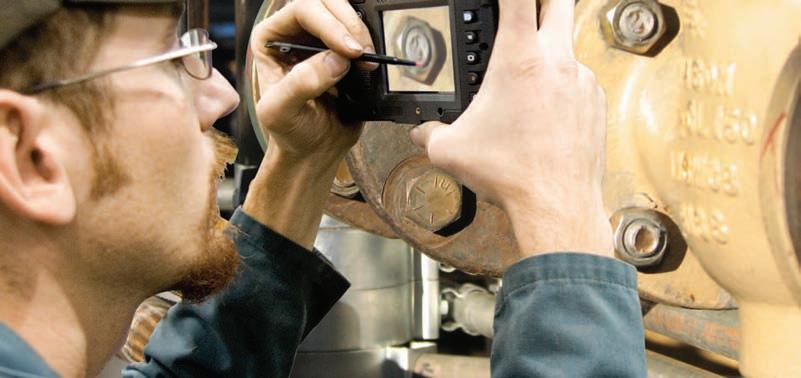
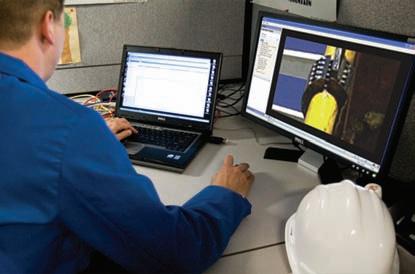
Mobile video collaboration brings remote experts to a maintenance problem virtually, saving time and expense.
Using rigid couplings for precision applications / 17
A sometimes overlooked advantage of rigid couplings in motion control is that they can be used to establish shaft alignment in some systems.
Vampire ride runs smoother with DC drives / 19
Retrofitting the control system of a theme park’s rollercoaster allowed an alternative to redesigning the system with AC technology.
special section: Industrial Lubrication
Preventing dirty-oil downtime / 25
Extending the life of throw-away gearboxes / 26
All-weather oil handles minus 42°C / 27
What’s new in lubrication / 28
columns
A day in a life / 30
Motor reliability critical for mine / 20
Compressor-duty motors supplied to Cameco help prevent flooding at the world’s largest high-grade uranium mine.
Saving money by maximizing pump lifespans / 22
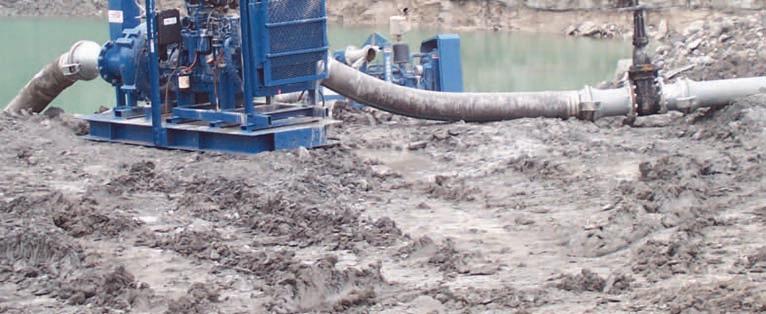
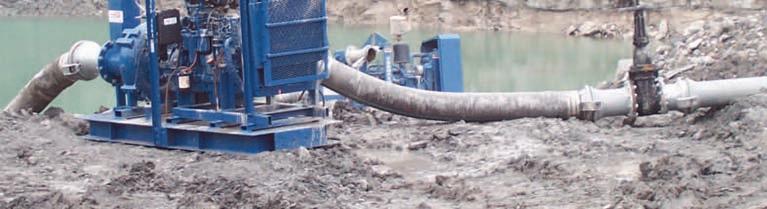
In aggregates applications, scheduled preventive maintenance of engine-powered portable pumps also provides an opportunity to perform a general machine audit.
Spring shows prove popular with delegates / 37
News and photos from IFPE 2011, CIM 2011 and Partners in Prevention 2011.
Bearing specialists learn about clean energy / 38
Tragedy can result when machine safety systems aren’t in place or are overridden by employees.
Words of wisdom that just ain’t so / 31
Old-timers in your plant may have lots of maxims to offer, but younger staff may have good reason to doubt them.
departments
Editor’s Notebook / 6
Industry Newswatch / 8
Business Briefs / 10
Mr. O, The Problem Solver / 12
The Safety File / 30
Supervisory Suggestions / 31
CMMS Solutions / 32
Maintenance Management / 33
MRO on the Road / 37-38
Product News
Product Spotlight / 2
Focus on Lubrication / 28
Focus on Pumps / 34
Focus on Tools / 35
Focus on Drives / 36
p36 p28
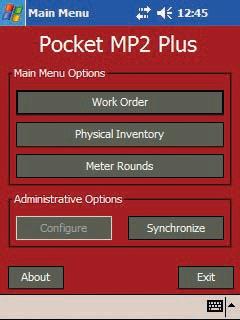
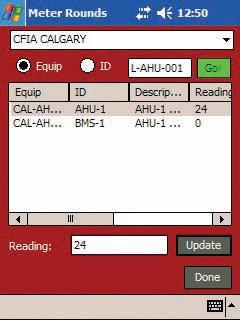
Solving the data entry problem / 32 Many CMMS systems have the ability to record critical data from manufacturing processes and instrumentation readings. Handheld computers are a fast and accurate means for maintenance departments to get this data into their programs.
Evaluating single-supplier sourcing / 33
editor’s selections
Follow along with Step 39 in a journey to World-Class Maintenance at the Plentya Paper Company as the maintenance team sees its responsibilities being realigned.
The annual meeting of the BSA adapted to the cowboy influence in Austin, TX. p32
‘It makes sense to move the portable machine tool to the project site, rather than moving the big part to the tool.’
Andy Becker / 13
‘Air is, in fact, one of the most detrimental hydraulic system contaminants.’
J.E. Myles / 26
‘Now I have an extra 150 hours to play with, which helps me to schedule service appointments for several machines, all on the same day.’
Jody Morrison / 27
‘Ivan’s fingers were reattached at the hospital the same night.’
This spring was a busy time of year for us and for industry’s many suppliers to the MRO marketplace. In March, our staff attended the humongous IFPE trade show in Las Vegas, NV, where there were more than 400 exhibitors and 120,000 delegates. Next was the Bearing Specialists Association (BSA) annual conference in Austin, TX, where manufacturers and distributors gathered to discuss industry issues and to network.
In May, we also attended the CIM Conference and Exhibition 2011 — the Canadian Institute of Mining show — in Montreal, Health & Safety Ontario’s Partners in Prevention conference and show in Toronto, and during the first week of June, the Canadian Conference of the Power Transmission Distributors Association (PTDA), where a couple of hundred delegates
learned about new products in the PT industry, heard about future market opportunities and got an update on forthcoming economic trends.
If you attended any of these events, you likely saw me and staffer Eric Achilles Cousineau with our full-size Nikon cameras taking hundreds of photos. You’ll find a few of them featured in our MRO On The Road section on pages 37 and 38.
In the past, we’ve felt frustrated after such events that we were able to publish only a small number of the photos we shoot. So to solve that problem, we’ve worked with our in-house web developers to add the online MRO Photo Gallery to our website. It’s live now at www.mromagazine.com/photogallery, and there you’ll be able to view, download and print your favourite images.
Eric was the driving force behind its development, so we hope you enjoy all the event photos online now. It’s one more way we’re expanding our coverage of the industrial aftermarket with the help of the Internet.
We also attended another recent event, one which wasn’t aimed at our readers but the magazine publishing community. It was the annual Kenneth R. Wilson (KRW) Awards gala, presented by the Canadian Business Press. It recognizes excellence in writing, editing and graphics in business, professional and trade magazines.
We’re happy to report that Machinery & Equipment MRO received a Silver Award and an Honorable Mention Award for its two nominations in the prestigious competition. Over 600 entries were received from 62 publications. The awards were presented at a ceremony at the Carlu in Toronto on June 7, 2011.
Machinery & Equipment MRO senior
machine tools x foundries x metalworking machinery x lawn & garden x speed reducers medical x instruments x transmissions x kilns x mining x pharmaceutical x HVAC x hoist transportation x agriculture x washdown x construction x gear box x pumps x steel mills railway x band saws x aggregates x pulp & paper x spindles x grinders x textiles x vibrating screen x hand tools x electric motors x power generation x compressors x automation x idlers
Just some of the places you’ll find Koyo bearings.
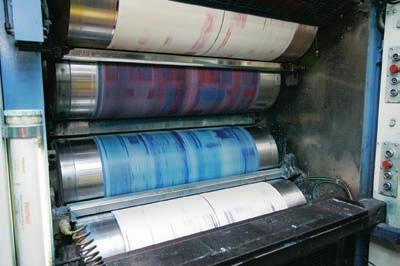
wind turbines x automotive x conveyors x aerospace x stamping x recreation vehicles blowers x food & beverage x winches x cranes x excavator x fans x robotics x sander x mixer back-up roll x paver x printing press x debarker x head pulley x dryer x track roller x planer oil & gas x clean room x extreme environments x forestry x return rolls x traction motors x tunnel boring x rock crushers x rolling mills x work rolls x smelting x sawmills
contributing editor Carroll McCormick of Montreal received the Silver Award in the Best Technology/Industrial/Manufacturing Article category for his feature story, The Case of the Missing Foreman, a compelling profile of the maintenance operations at Genfoot Inc., which appeared in our April 2010 issue.
As well, MRO Magazine art director Ellie Robinson was nominated for her humorous layout of Five Ways to Kill a Bearing, for which she received an Honorable Mention Award. The article was published in our September 2010 issue. Both articles can be found using the search function on our website at www.mromagazine.com.
That makes a total of 11 KRW Awards the magazine has received, including four Gold (first place) awards, and several Silver and Honorable Mention Awards.
Our hearty congratulations go to all of this year’s recipients.
Bill Roebuck, Editor & Associate Publisher
JUNE 2011 Volume 27, No. 3 Established 1985 www.mromagazine.com
Bill Roebuck, Editor & Associate Publisher 416-510-6749 broebuck@mromagazine.com
Ellie Robinson, Art Director Contributing Editors
Richard G. Ensman Jr., Simon Fridlyand, Carroll McCormick, Peter Phillips, Angela Webb, Cliff Williams BUSINESS
Nick Naunheimer, Publisher 416-510-6868 nnaunheimer@mromagazine.com
Eric Achilles Cousineau, Adv. Sales Manager 416-510-6803 eachilles@mromagazine.com
Kimberly Collins, Advertising Production 416-510-6779
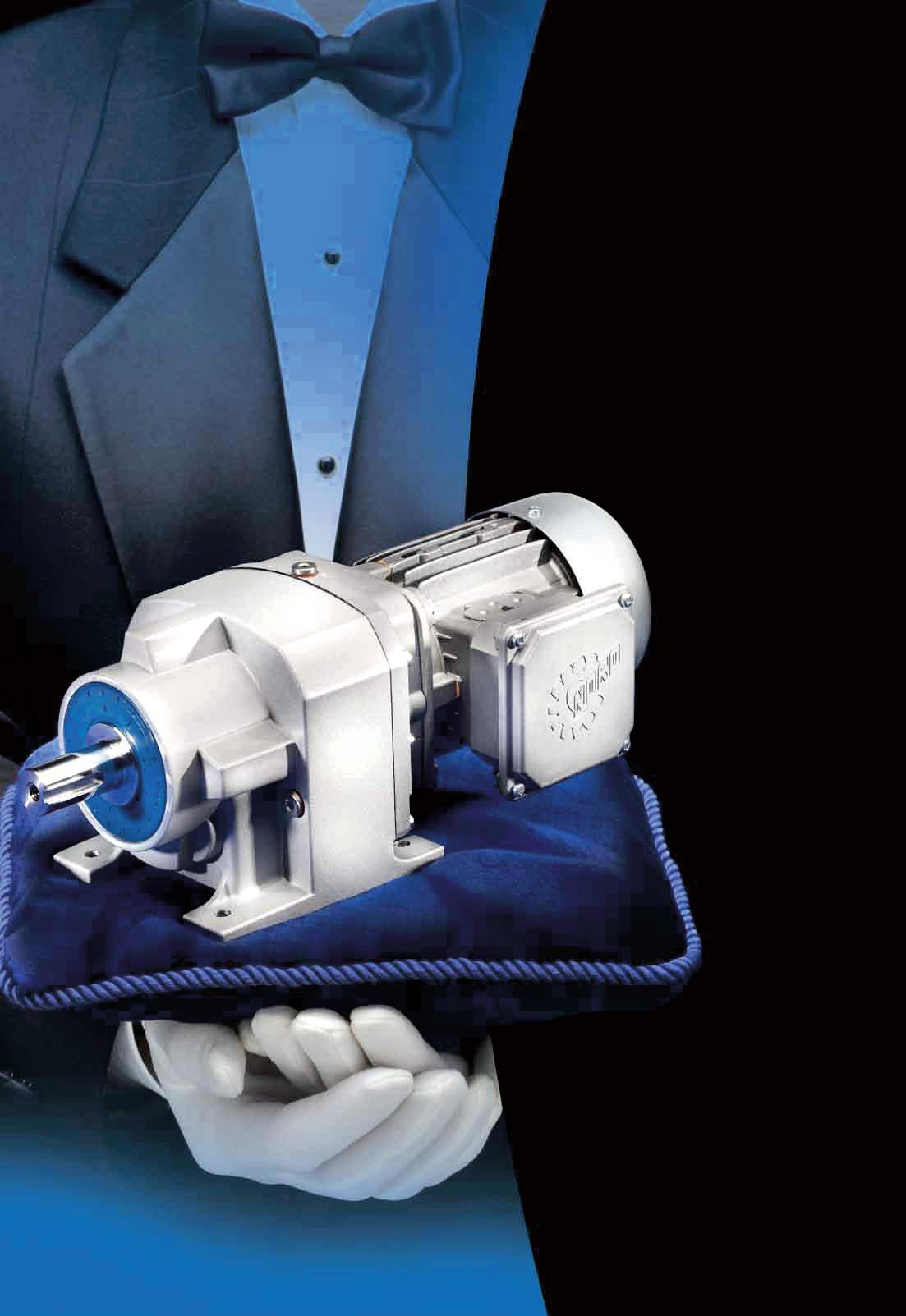
Stronger, lighter, more powerful, and a longer working life – only from NORD Gear.
But, perhaps, what’s most remarkable about the innovative new design of the NORDBLOC.1
Helical In-line series is that we were able to improve upon its already superb predecessor. Yes. We even impressed ourselves.
Advanced innovation gives you yet more durability, more efficiency and more reliability. Consider its compact dimensionally interchangeable design plus an aluminum alloy housing that’s both corrosion resistant and 60% lighter than castiron. Plus, oversized output bearings providing larger capacity and increased working life.
What could be better?
How about a NORDBLOC.1 configured to your exact specifications. We’re ready, 24/7, to design, assemble and ship — anywhere in Canada or worldwide. Call NORD Gear to find your perfect match. The only intelligent choice is NORD Gear.
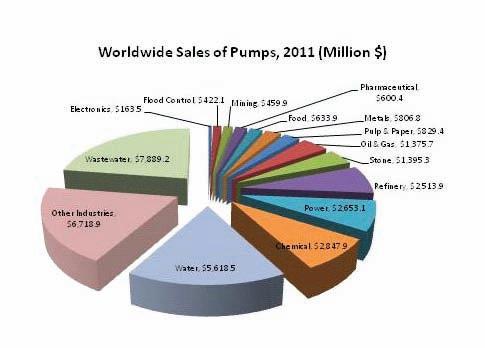
43% of industrial pumps sold this year will be installed in Asia
Northfield, IL — The world market for industrial pumps will be just under $35 billion in 2011. The Asian sales will be 50% greater than in the Americas and will constitute 43% of the world total. These are the latest forecasts in Pumps World Market, an online, continually updated publication of the McIlvaine Company.
es and directories from Rogers Publishing Group of Toronto.
The transaction includes the following magazines: Canadian Contractor; Canadian Metalworking; Canadian Packaging; Canadian Plant; Design Engineering; Food in Canada; Hardware Merchandising; Heating, Plumbing & Air Conditioning (HPAC); Le Bulletin des Agriculteurs;
estimated 100 million work days in 2010 for these reasons.
Women lost 11.0 days compared with 7.6 days for their male counterparts. Full-time workers with preschool-age children lost 3.1 days for personal or family responsibilities, compared with 1.4 days for those in families without children.
Full-time employees in the public sector, who are more likely unionized or female, lost 11.8 days of work time in 2010 for personal reasons, compared with 8.2 days for their privatesector counterparts.
Contributing factors to work absence rates include the nature and demands of the job, the male-female composition of the workforce, and union representation.
Unionism is a strong determinant of the presence of paid sick or family leave. Full-time workers who belonged to unions, or who were covered by collective agreements, missed an average of 12.9 work days for personal reasons in 2010, compared with 7.3 days for their nonunionized counterparts.
At the industry level, full-time employees who missed the most work days on average were those in health care and social assistance (13.4 days) and public administration (11.8 days). The lowest averages were recorded by those in professional, scientific and technical services (5.4 days) and primary industries (7.0 days).
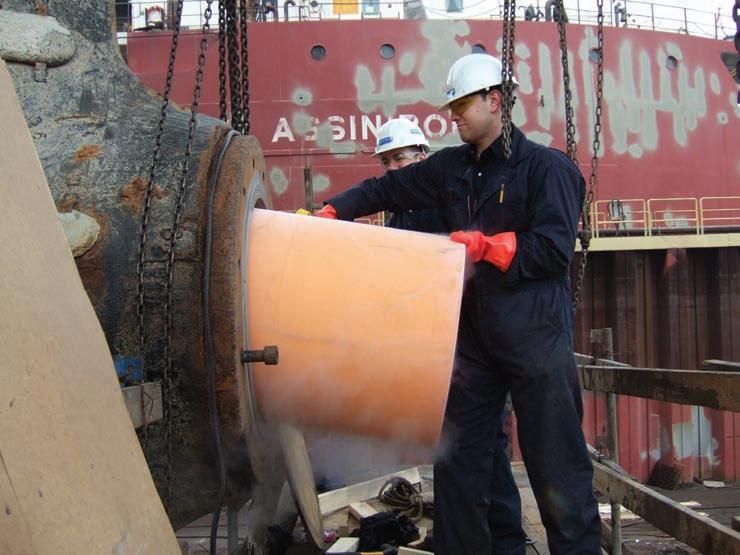
peller shaft bearings. Thordon’s bearing system completely eliminates oil from the ship stern tube by using seawater as the lubrication medium and Thordon non-metallic bearings in place of the metal bearings.
The seawater is taken from the sea, pumped through the bearing positions and then flows into the sea. By using a Thordon bearing system, shippers can reduce millions of litres of stern tube oil lost annually to the oceans and seas.
The risk of an emergency aft stern tube seal repair to prevent oil pollution, costing ship owners up to $250,000, is also eliminated.
Municipal wastewater plants will account for 23% of the total purchases. Municipal drinking water systems will account for 16%.
The chemical, power and refining industries will also be big purchasers. The infrastructure needs in the developing world account for a significant portion of the demand. Clean water is one of the highest priorities in Africa and Asia. Asia will account for purchases of just under $15 billion this year. China will lead the way with major investments in pumps for power, water, wastewater and many basic industries.
There are thousands of pump companies. China has been steadily gaining domestic capability to produce the more demanding types of pumps. Nevertheless, there are a number of major international suppliers that account for a significant portion of the total sales.
The top two suppliers account for 16% of world sales. The top five suppliers account for 33%. The five companies in slots five through 10 account for another 17%. So, in total, the top 10 companies account for 50% of industrial pump sales. However the bulk of the sales are by companies with much lower sales volume. The company ranked #50 has sales of $145 million. The company ranked #100 has sales of $38 million.
For more information on the study, see www.mcilvainecompany.com/brochures/ water.html#N019.
PARENT FIRM OF MRO MAGAZINE ACQUIRES MORE PUBLICATIONS
Toronto, ON – Machinery & Equipment
MRO parent Business Information
Group (BIG Magazines LP) of Toronto, a division of Glacier Media Inc. of Vancouver, has acquired the Industrial Group of trade publications as well as associated digital properties, trade shows, databas-
Materials, Management & Distribution (MM&D); Meetings & Incentives Travel (M&IT); On-Site; and Purchasing B2B. Also included are two online properties: Frasers.com and Canadian Manufacturing Online. The readership database of the various brands totals over 277,000 industry professionals.
Prior to the acquisition, BIG was already Canada’s largest publisher of trade magazines, online magazines, mailing lists and directories – including Scott’s – with a readership database of almost one million.
PERSONAL REASONS, ILLNESS OR DISABILITY KEEP EMPLOYEES OFF THE JOB
Ottawa, ON — In an average week in 2010, 8.0% of full-time employees in Canada missed some work for personal reasons, according to a new report from Statistics Canada, Work Absences in 2010 This proportion was unchanged from 2009, but up from 6.3% in 2000.
Among full-time employees, 5.7% missed work because of their own illness or disability, while 2.3% missed work for personal or family responsibilities. Women on maternity leave and men on parental leave are not included in these figures.
On average, the number of days lost by full-time employees in 2010 was down slightly from 2009. However, averages were above levels a decade earlier.
For example, full-time employees lost an average of 9.1 days in 2010 for personal reasons, compared with 9.5 days in 2009 and 8.0 days in 2000.
Full-time employees were absent 7.4 days because of their own illness or disability, down from 7.8 days in 2009, while 1.7 days were lost for personal or family demands in 2010, unchanged from 2009.
In total, full-time employees lost an
The report Work Absences in 2010 is based on data from the Labour Force Survey for full-time employees holding only one job. Part-time, self-employed and unpaid family workers were excluded. Absences for vacations and statutory holidays are not included in the report.
POLLUTION-FREE PROPELLER SHAFT BEARINGS OPERATE IN SEAWATER RATHER THAN OIL
Burlington, ON — Thordon Bearings, a Canadian manufacturer of seawater-lubricated propeller shaft bearings, has been shortlisted for the Ocean Environmental Protection Award at the 2011 Sustainable Shipping Awards to be held in London, England, July 7, 2011.
There are currently over 2,000 ships using Thordon seawater-lubricated pro-
Thordon Bearings Inc. designs and manufactures a complete range of nonpolluting propeller shaft, rudder and shaftline products for the global marine market.
For more information, visit the website at www.thordonbearings.com.
STUDY TRACKS ENGINEERING JOB OUTLOOK THROUGH TO 2018
Ottawa, ON — Engineers Canada has released a labour market study that shows the current and future market conditions in engineering. The study tracked current national labour supply and demand and includes a projection from 2010 to 2018, providing engineering students, universities, employers and governments with insight into labour market forecasts.
The study also includes an overview of
Municipal wastewater plants will account for 23% of the total purchases of pumps in 2011.
Full-time employees lost an estimated 100 million work days in 2010.
Photo: Thordon Bearings
disciplines and geographical areas that may benefit from new engineering and technology talent.
Engineers Canada of Ottawa is a national organization of the 12 provincial and territorial associations that regulate the practice of engineering in Canada and licence the country’s more than 234,000 members of the engineering profession. Engineers Canada is the business name of the Canadian Council of Professional Engineers.
“The results of the labour market study will be of benefit to many groups — including high school students that will graduate in the next two years, as it identifies which disciplines and areas of the country will need engineers in the next seven years,” said Chantal Guay, ing., P.Eng., M.Env., Engineers Canada’s chief executive officer.
The study was conducted in conjunction with Randstad Engineering of Toronto, which specializes in engineering recruitment and workforce solutions. “We are excited to be working with Randstad Engineering on this project as a valued and trusted advisor when it comes to workforce planning and strategy,” said Guay.
“The study is very useful for human resources management and career planning,” said Mike Winterfield, president of Randstad Engineering. “Attracting and retaining the best workers will require employers to think about their place within the labour market and the unique selling points of their company. Knowing labour market needs and trends will help companies to better develop, understand and promote their selling points.”
Study results also demonstrate the importance that diversity has in the workplace, said Winterfield. All human differences and perspectives can be potential contributors to success in the engineering and technology sectors, and professions need to be welcoming to a diverse group of people, including women. Providing individuals with the opportunity to excel in an environment that is flexible, respectful, equitable and encouraging will not only benefit the workers but also their employers and society as a whole.
Included in the study is information on qualifications and attribute requirements, along with career opportunities for those considering immigrating to Canada. For instance, while levels of immigration and Canadian graduation established in 2008-2009 are likely sufficient to balance markets across the coming decade, issues such as replacement demands related to retirements in many occupations will add to current challenges in recruiting experienced engineers.
The Engineering Labour Market Conditions 2009-2018 report is available online as a pdf document at www.engineerscanada.ca. For additional information, visit www.randstadengineering.ca.
2011 CANADIAN FLUID POWER CHALLENGE INTRODUCES NEW TASK
Toronto, ON – The 2011 Canadian Fluid Power Challenge organizers were a little concerned that a new problem scenario they devised for this year’s competition, held May 12, 2011, in Toronto, might be too difficult for the students. It turns out they needn’t have worried, as more teams
succeeded in completing at least one cycle than in any of the previous 10 challenges.
Students from 18 west Toronto middle schools were asked to design and build fluid power devices to pick up a wooden block and place it on one of two shelves — in effect, a simulation of a warehouse material handling problem. They were evaluated on a set of criteria, including the number of cycles completed and the quality of their design portfolios. Leading the parade of successful schools this year was firstplace winner, Islington Junior Middle School.
This year’s teacher tour, which took place while the students were building their machines, visited the Bombardier Aerospace plant in Downsview, ON. The teachers saw the final assembly lines for Q400 regional airliners and Global Express corporate jets. They also saw fluid power in action in the testing and R&D centre.
The Challenge, which is a partnership of the Canadian Fluid Power Association (CFPA) and the Toronto District School Board, is intended to provide Grade 8 students with hands-on experience building a mechanism with real-world applicability and to open their eyes and those of their teachers to the world of technology careers.
This was the eleventh year for the Ca-
nadian Fluid Power Challenge (previously known as the Hilltop Tech Skills Challenge). The CFPA’s Western Chapter also holds a Challenge in Edmonton that involves both high school and middle school students.
For more information, contact John Bachmann, CFPA education co-chair, at bachmann.johnh@rogers.com or at 905-607-9852. MRO
More detailed versions of these stories, along with many additional news items, can be found online at www.mromagazine.com.
When you think about “Performance”, you think about products that can increase service life and reduce energy consumption. NSK’s
load ratings and smooth, quiet rotation. With a wear-resistant
world-class performance in electric motor applications, Think NSK.
The winning team from Islington Junior Middle School includes Veronica Stan and Hyeonji Kim (front), and Kevin Sprunt and Areeb Hafiz (back).
Business Briefs
News and views about companies, people, product lines and more.
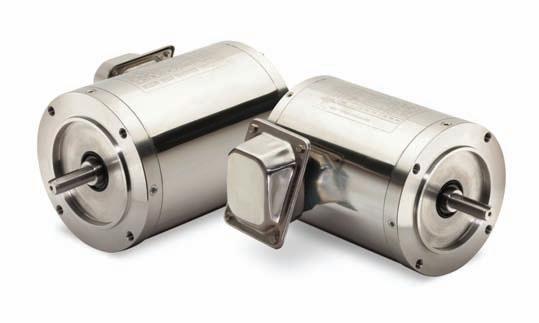
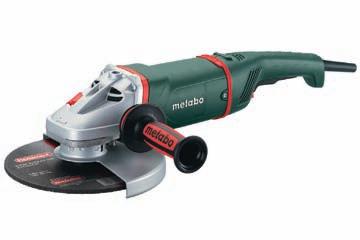
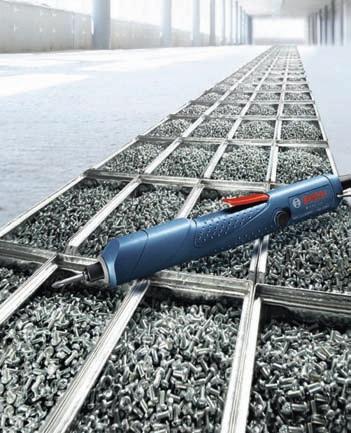
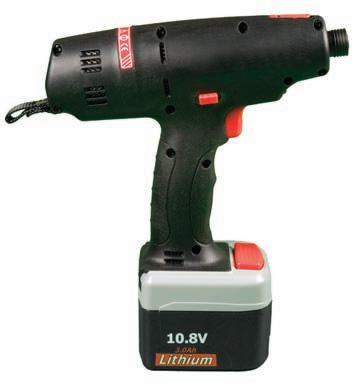
• Bosch Rexroth Canada now offers Bosch Production Tools designed for industrial use. They include cordless screwdrivers and wrenches for precise assembly, air tools for production, service air tools used quency grinders. In addition to Rexroth’s DC electric tightening systems, Bosch Rexroth Canada also offers a full range of assembly systems. For more information, visit www.boschproductiontools.com.
• FLO Components Ltd., Mississauga, ON, a firm specializing in automatic greasing systems, is one of 16 Ontario employers being recognized for dedication to training the next generation of skilled workers and supporting the province’s economic future. The annual Minister’s Awards for Apprenticeship Training celebrate employers that show leadership in training apprentices, support the apprenticeship training system, and promote careers in skilled trades. From 16 final nominees, four will be announced as winners in late June 2011.
Commenting on the award nomination, Chris Deckert, president of FLO Compo-
nents, said, “It was an honour to be nominated, especially to be named with such other great organizations in industry as Mining Technologies International Inc. of North Bay and Toromont CAT of Thunder Bay.
“The apprenticeship training system is something we believe in very strongly. We are committed to ‘meeting customers’ needs better’, and the only way to do that is with qualified, welltrained people. We see this as a necessary investment in the growth of our employees in order to continue providing superior service to our customers.”
• Due to demand, Boston-based Emerson Bearing has converted its online product
Six amazing models. One trusted name.
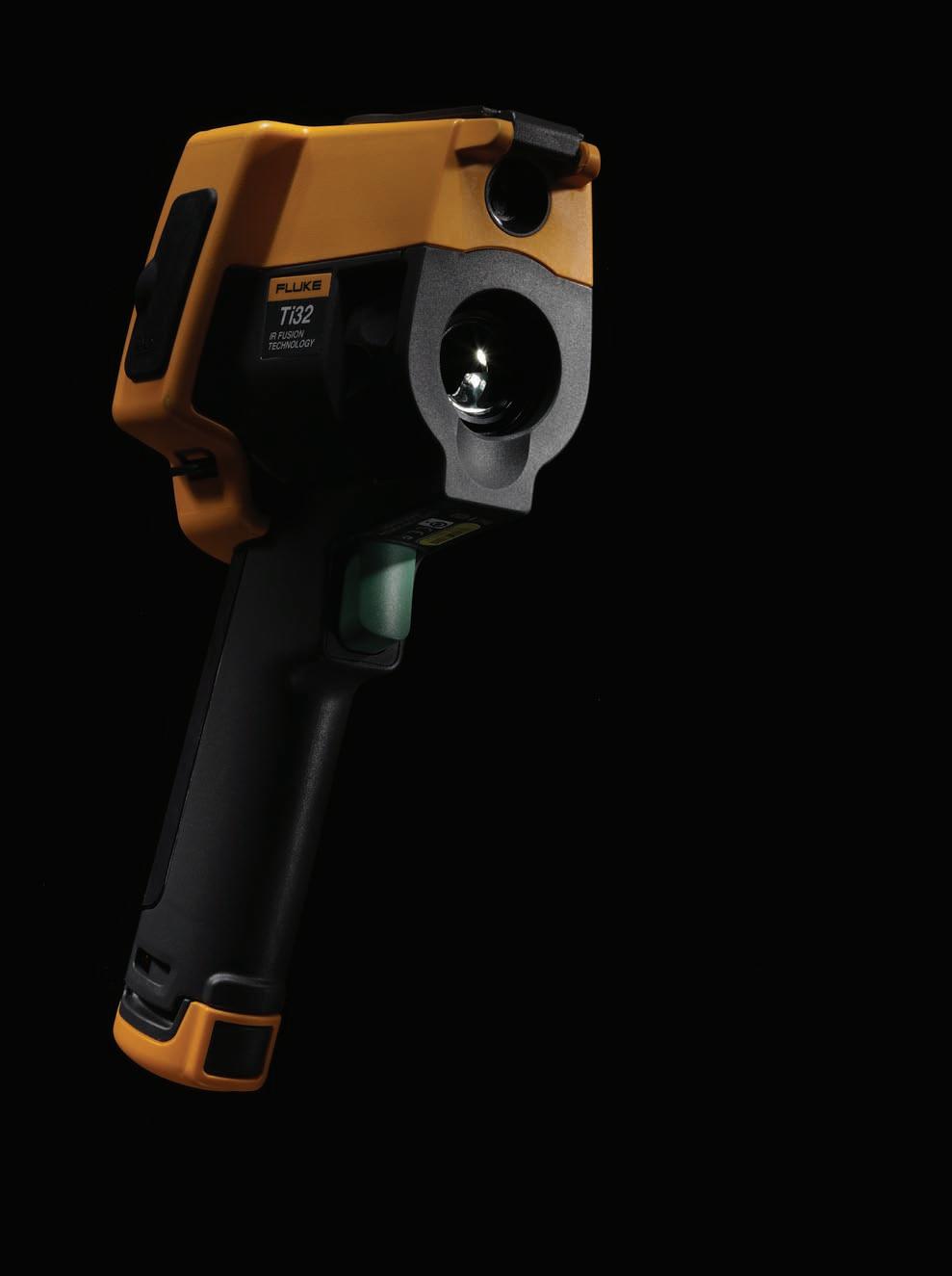
The Fluke P3 Series
Proven Practical Performance
The only thing that precedes Fluke’s highest standards of quality is our reputation for making the finest measurement tools in the world. Fluke thermal imagers are no exception. And, the P3 series handily delivers on the promise to offer the most tool for the money.
• Superior image quality
• One-handed, easy-to-use interface
• Torture tested™
Find out more about these new products from Fluke at www.flukecanada.ca/P3series
catalogue into a 210-page print catalogue. Feedback from clients has indicated that a comprehensive print catalogue better suits a number of the company’s bearing clients, who may not have easy access to a computer or who simply prefer the print catalogue to the online catalogue.
• Chain Guard Industrial Lubricants, Markham, ON, has appointed Comlube Technology Inc., Whitby, ON, as a distributor of its lubricating products. Comlube will distribute and provide technical and troubleshooting support for all products offered by Chain Guard. Incorporated in 1986, Comlube is a supplier of hightechnology lubricants. For more information, visit: www.comlubetechnology.com.
• WEG, which is based in Brazil, and the Spanish company M. Torres Olvega Industrial (MTOI), have established a joint venture for the manufacturing of wind turbines. A technology transfer agreement between WEG and MTOI resulted in the establishment of the joint
venture, with equal shareholding participation, and includes manufacturing, assembling, installation and commercialization of wind turbines, as well as a package of operation and maintenance services to be provided in Brazil.
The technology developed by MTOI allows the power generator to be coupled directly to the turbine shaft, without requiring the application of a gearbox. As a result, there will be a significant reduction of components, as well as operational and maintenance costs.
“We are stepping into this segment with a technology that is modern and comparable to what is best in the market,” says Newton Idemori, WEG’s business development director. “Our partner has already supplied wind turbines to Europe for over 10 years.”
The wind turbines are being initially manufactured at WEG Energy manufacturing facilities in Jaraguá do Sul, in the state of Santa Catarina, Brazil, with the first order scheduled to be delivered in the second half of 2011. About 250 employees are working directly in the manufacturing of this new WEG product.
“In addition to allowing a more direct participation in the wind-power generation business, this co-operation agreement will give us the possibility of meet-
Photo: Bosch Rexroth Canada
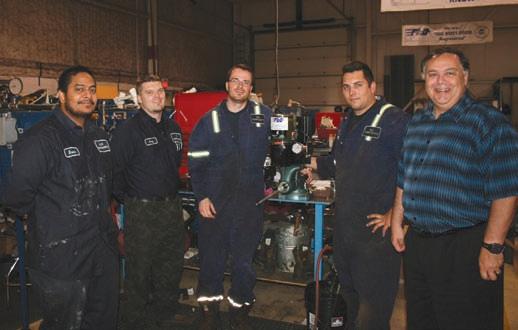
Current FLO apprentices include, from left to right, Ravi, Joe, Matt and Adam. On the right is Chris Deckert, the company’s president.
New line includes cordless tools.
Photo: FLO Components Ltd.
Photo: WEG
About 250 employees are working directly in the manufacturing of new WEG wind turbines.
continued from page 10
ing the growing domestic market demand,” says WEG CEO Harry Schmelzer, Jr. “Furthermore, several of our current products, such as generators, transformers, drives, electric motors and coatings, will make up part of the package to be supplied to this market segment.”
• Lincoln Industrial Corp., St. Louis, MO, has presented its Distinguished Distributor Award for 2010 to FLO Components Ltd., Mississauga, ON. This award is presented annually for outstanding sales performance to one or two distributors in North America. This is FLO’s fifth time receiving this particular recognition, the previous years being 1999, 2002, 2005 and 2007.
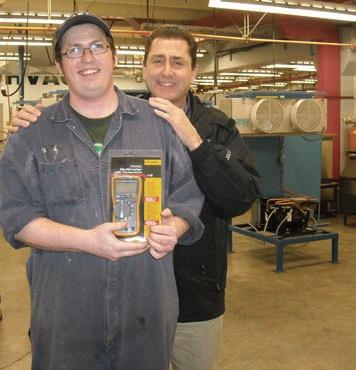
• Brian Dixon, a student in the Joint Apprentice Refrigeration Training School (JARTS) at the British Columbia Institute of Technology (BCIT), has received recognition for outstanding achievement in the HVAC (heating ventilation air con-
ditioning) field of study, and was awarded a Fluke 116, a multimeter specifically designed for the HVAC technician, by Fluke Electronics Canada, Mississauga, ON.
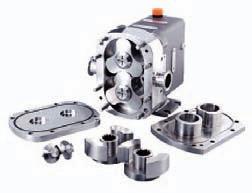
• Viking Pump of Canada Inc., Windsor, ON, celebrates its 86th year in business this year. The company supplies application-specific products of rotary posi-
Proven Solutions. Terrific track record.
Superior results.
Loctite® Threadlockers
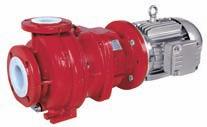
tive displacement and kinetic technologies, including gear pumps, centrifugal pumps, vane pumps, lobe and circumferential piston pumps, diaphragm pumps, metering pumps, flow meters, systems and controls. It also offers base-mounted packages complete with motor, reducer, fabricated steel baseplates, OSHA guards, VFDs, control panels and more.
Viking recently completed a large gear pump project for a major oil company in Canada that required heavy-duty gear pump packages for a variety of demanding applications. The pumps are rated up to 1,100 US gpm, up to 150 psi discharge pressure, have special cartridge seals, and API flush plans, all mounted on custom-fabricated baseplates with motors and gear reducers. For more information, visit www.vikingpumpcanada.com.
• The Timken Company of Canton, OH, and Xinjiang Goldwind Science & Technology Co. Ltd. (Goldwind) of China have signed a memorandum of
When it comes to:
• resisting vibration
• preventing corrosion and leakage
• improving quality
• reducing weight, size and cost, mechanical locking devices just don’t hold up.
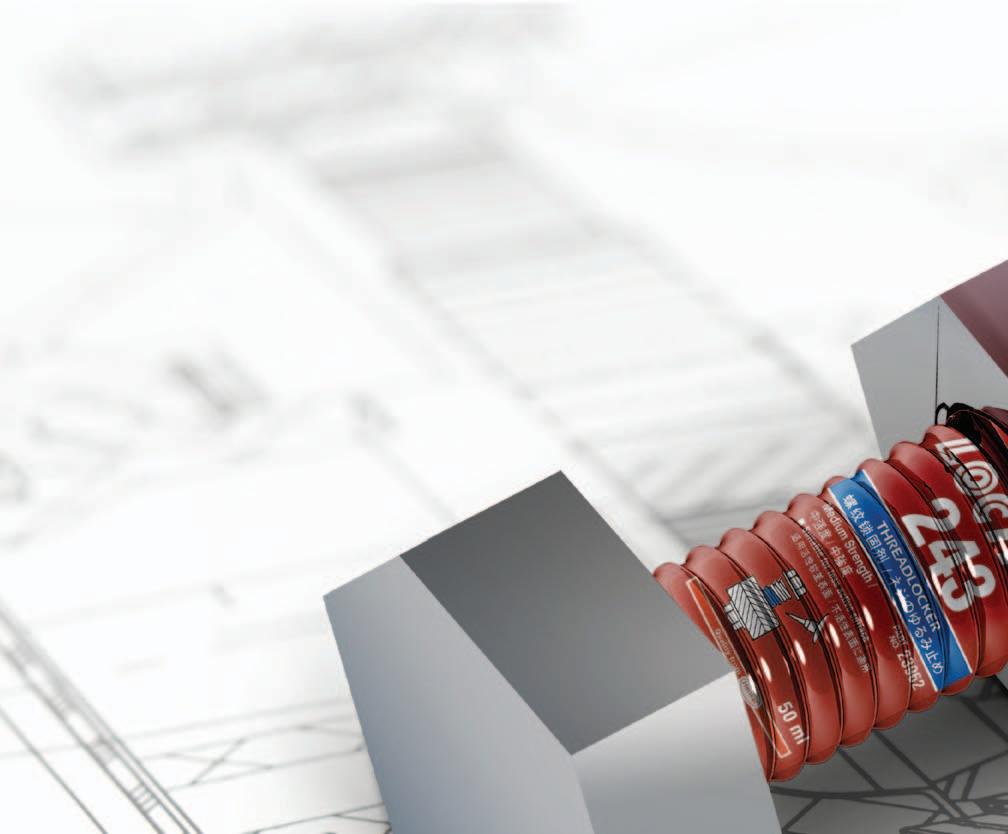
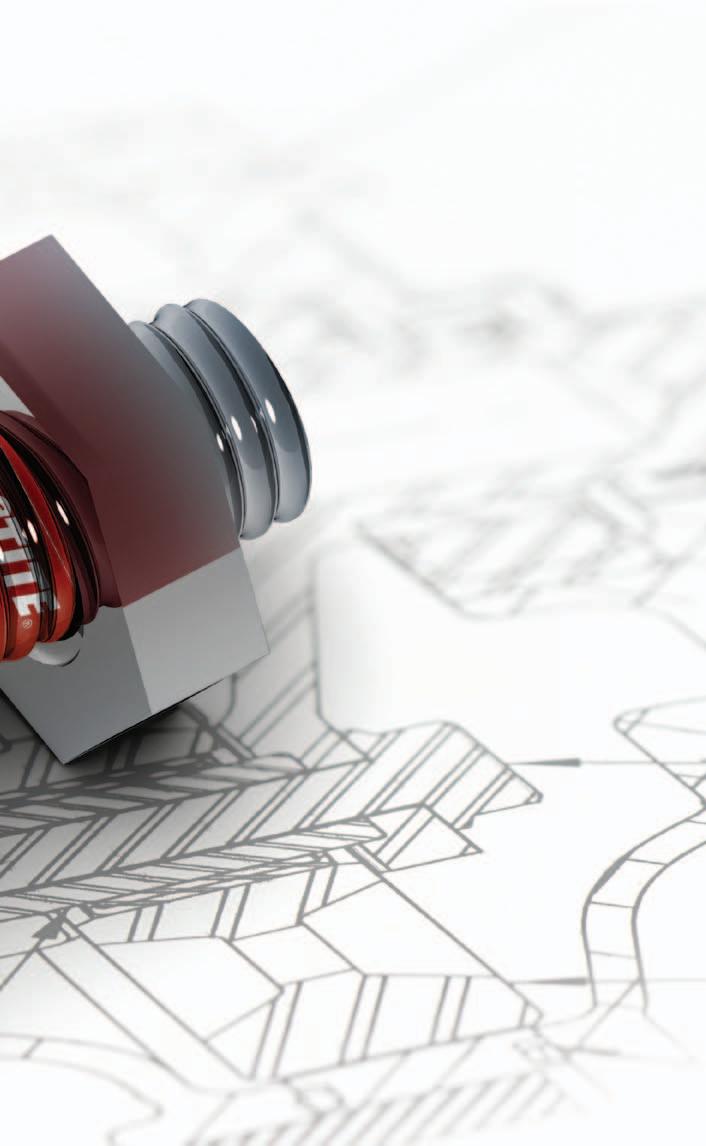
By filling the thread roots and preventing side-to-side movement, Loctite® threadlockers have dramatically increased the reliability of threaded assemblies for over 50 years. New advancements provide higher temperature resistance, improved oil tolerance and primerless performance. Don’t let your designs fall apart. Use Loctite®.
To learn more about our newest threadlockers – Loctite® 243™ and Loctite® 263™ – go to www.useloctite.com/mro. For technical assistance, call 1.800.263.5043.
long-term strategic collaboration in the United States to co-operate on a range of technical services, products and aftermarket support for the development, supply and maintenance of advanced wind turbine components and systems.
This memorandum’s three-year term extends and broadens the existing relationship between the two companies, with the opportunity to multiply significantly their current collaboration. To support these efforts, Timken will develop additional capacity in China and at its other facilities focused on wind energy technology to support Goldwind’s expansion globally.
The companies have had a strong relationship since 2008, when they began collaboration on wind turbines of 1.5 megawatts. Last year, they signed an agreement valued at US$26 million to support the development of additional, multi-megawatt projects.
Timken has continuously expanded its capabilities over the past decade to serve the wind energy sector, which is the company’s fastest-growing business. The company’s product offering includes a breadth of bearings and gearbox systems for multimegawatt wind turbines with a full complement of seals, lubrication systems, online intelligent monitoring technologies and support services for the life of the equipment. Timken’s wind-energy supply chain includes wind-bearing production in China, India, Romania and the United States. The company this summer breaks ground on a new Wind Energy Research and Development Center in Ohio, the first full-scale wind-energy bearing and seal system testing facility in the Americas.
• BDI Canada Inc., Mississauga, ON, a national industrial distributor that already operates 32 branches across Canada, has opened three new branches in Alberta to service the oil and gas industries in Alberta and Saskatchewan, says regional manager Cam Lawrence. The new branches are located in Red Deer, Lloydminster and Rocky Mountain House. MRO
Extending belt drive life
Problem: What should I do to get longer life from my V-belt drives?
Solution: Two preventive maintenance tools can be used to accurately align and tension belt drive systems: a laser alignment device and a tension tester or sonic tension meter. When properly designed, aligned and tensioned, a new V-belt drive can operate at 98% efficiency. Misalignment of the pulleys and improper belt tension, however, can cause significant energy efficiency reduction and shorten the life of the drive.
Mr. O thanks the engineers at Gates Corporation for this tip.
Do you have a solution for a maintenance problem? Send it in and if it’s published, we’ll send you a Mr. O Problem Solver T-shirt. Include your address, telephone number, print complete details and, if possible, add a sketch to help explain your tip. Send your tips to Mr. O, Machinery & Equipment MRO, 12 Concorde Place, Suite 800, Toronto, ON M3C 4J2.
Mr.0 The Practical Problem Solver
Award winner Brian Dixon (left) is congratulated by an instructor from BCIT’s JARTS program.
Photo: Fluke Electronics Canada
PORTABLE MACHINE TOOLS
SIMPLIFY THE CHALLENGE OF REPAIRING HEAVY EQUIPMENT ON SITE.
Bringing the machine to the mountain
BY CARROLL MCCORMICK
When Sonny Baytaluke’s crew was hired to repair corroded flange faces on some large pressure vessels for potato pro cessing, it brought in portable machine tools to do the job. The alterna tive would have been to embark on a huge logistical exercise, starting with peeling back the plant roof in order to re move the pressure vessels and transport them to a repair centre.
“In the time we repaired the two ves sels, the customer would have barely been able to remove one of the pressure vessels and ship it to a service centre,” recalls Baytaluke, the field service man ager for Weir Minerals Canada in Cal gary, AB. The Calgary service centre specializes mainly in rotating equipment, refurbishment and engineering solutions, hydroelectric equipment refurbishment, vibration analysis and balancing. It also provides millwrights and machinists for plant shutdowns.
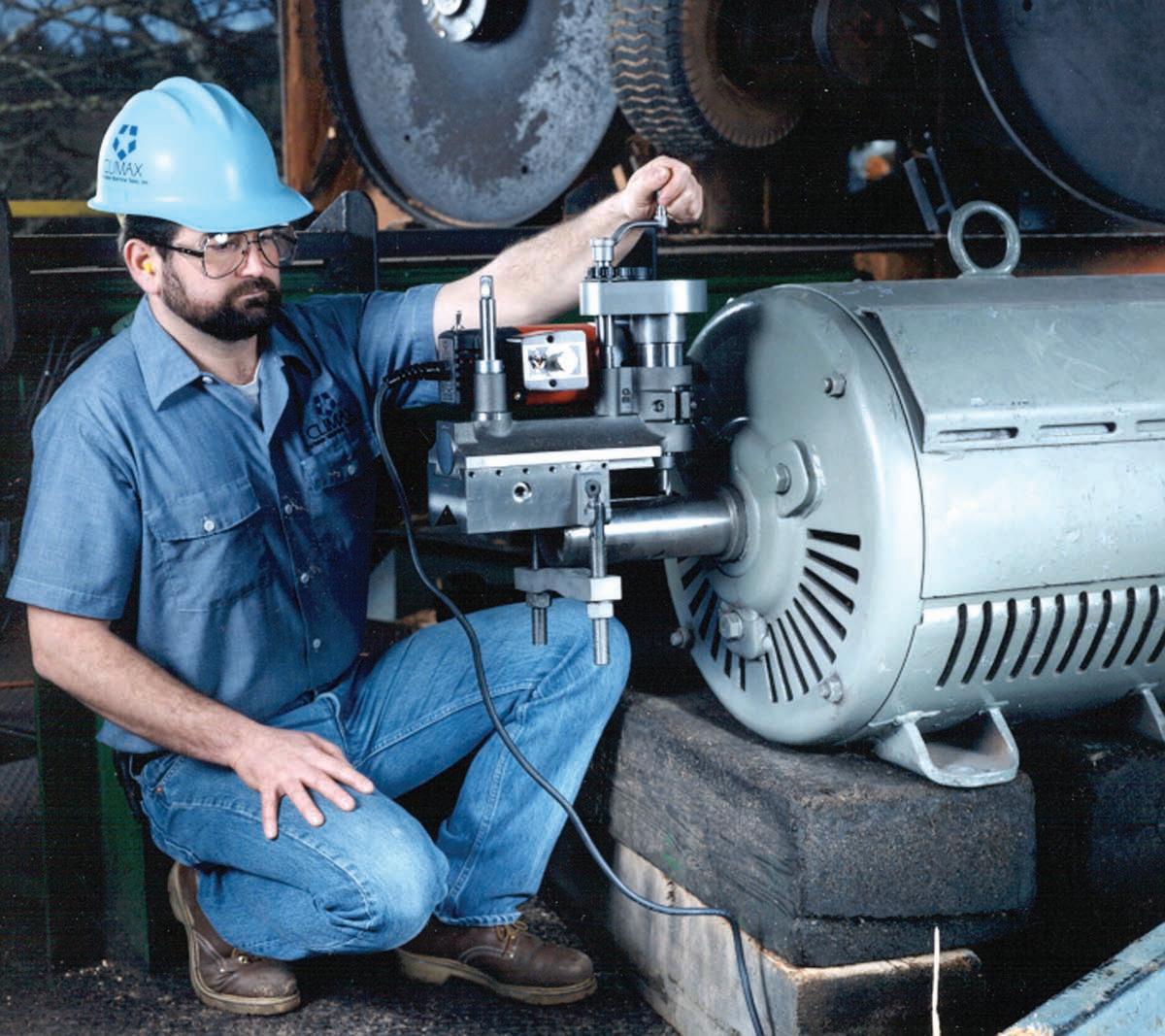
Weir uses portable machine tools manufactured by Climax Portable Machine Tools Inc., headquartered in Newberg, OR. Founded in 1966, Climax has 50 different models of standard portable machine tools, including autobore welding systems, boring machines, lathes and valve grinding and lapping machines.
Its smaller portable tools include boring machines that make holes as small as 1.5-in. (38.1 mm) and key mills that can cut keyways 1.25 in. (31.8 mm) wide. The big tools include flange facers capable of machining flanges with facing diameters of 120 in. (3 048 mm) and circular mills that can handle milling diameters up to 197 in. (5 003.8 mm).
Climax also makes customized and one-of-a kind machine tools, which account for about 50% of its business. Customers have used them for projects such as line boring bushings on hydro dam wicket gates, and repairing valves and pipes by remote control in radioactive zones in nu-
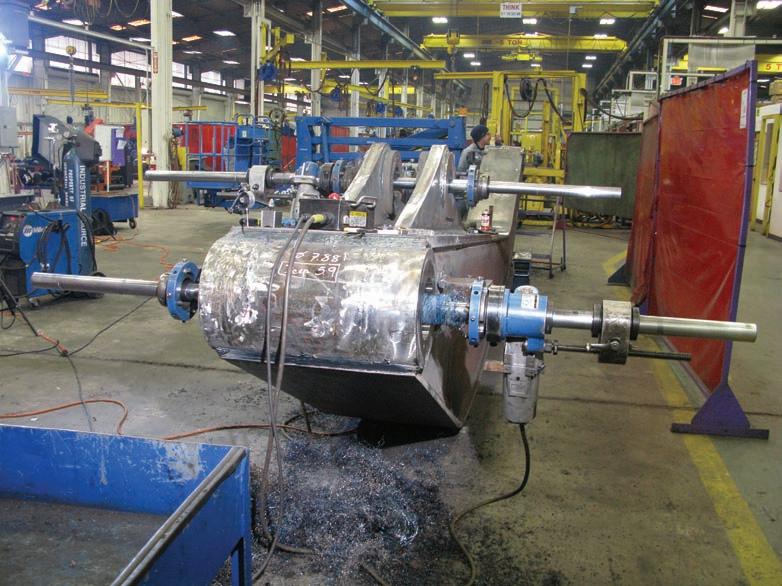
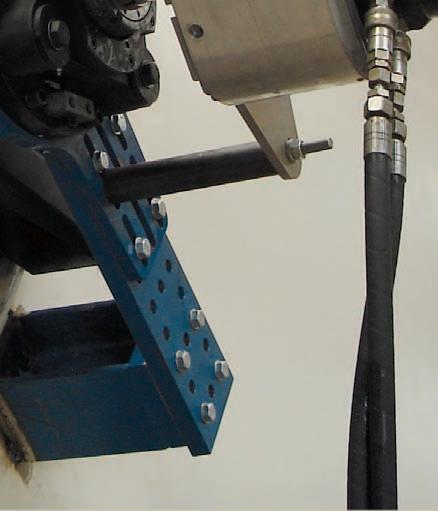
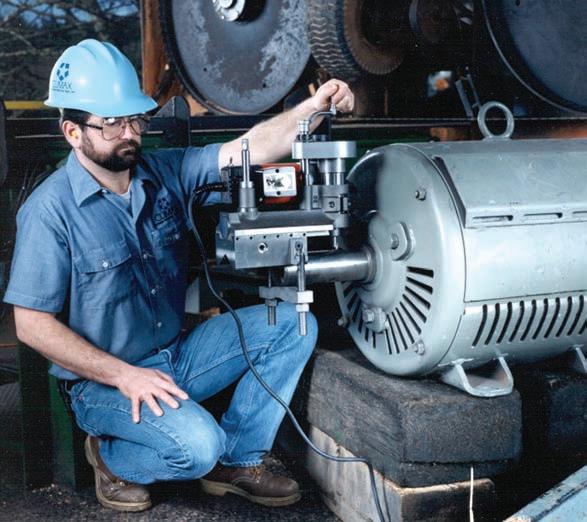
Top: This boring machine is equipped with a hydraulic drive unit, but users can also use electric or servo-electric and pneumatic drive units. Above left: These two line borers are machining, to factory specifications, welded-up pin holes on an excavator bucket. The job takes just one to two hours. Above right: This key mill can cut keyways on shafts with diameters from 0.75 in. to 10.5 in. (19.1-266.7 mm).
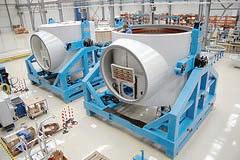
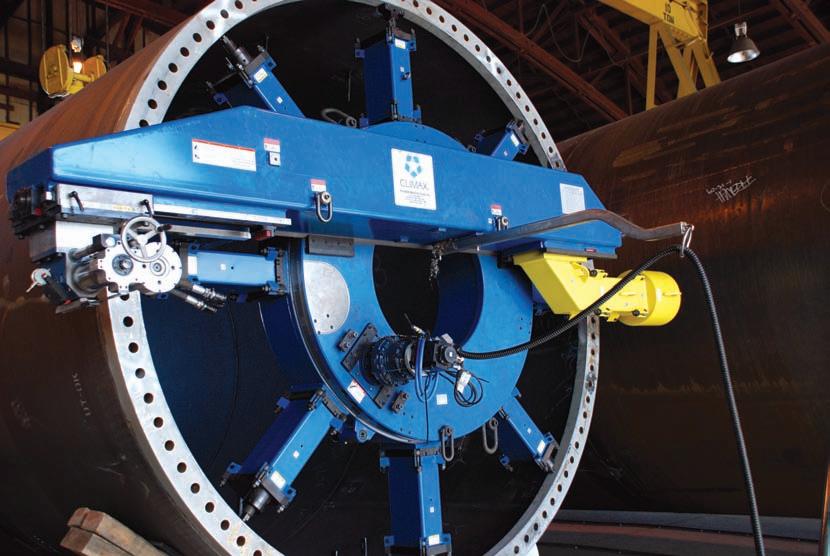
Right: A circular mill like this one was used to machine, on site, the flanges on 500 wind turbine sections that arrived out-of-spec at the Port of Vancouver, Washington.
clear power plants. “Power generation is one of our key markets,” says Andy Becker, vice-president, strategic business development and marketing for Climax.
Weir’s Calgary service centre recently refaced the seat on a 12-ft dia (3.66 m) valve in the penstock at the Glenmore Dam in Calgary. As for smaller projects, Baytaluke says, “One example that keeps us fairly busy is companies that do gas compression packages. They manufacture skid units that are sent to remote locations. They will weld flanges on the preheaters, etc. As the final [step] in hooking the pipes up, we come in with flange facers: 2-in., 6-in., etc. I did a cou-
ple of 20-in. flanges the other day.” The Climax website includes a variety of videos that show its portable tools in action. In one example, machinists are setting up a CM6000 circular mill to machine wind turbine tower flanges. They lift the mill into place with an overhead
Industrial Distribution • Engineered Solutions
With more than 55 branches coast-to-coast, Kinecor is your largest Canadian distributor of industrial components and value-added services. Kinecor supports the Canadian industries by providing turn-key solutions that respond to your unique challenges.
winch, but because of its modular design, it is still portable.
“We always attempt to have the ability to have one person set up a machine (although in this case it takes two). We try to make the machines so they can be broken down into parts that weigh 50 lb (22.7 kg) or less,” Becker says.
The Calgary service centre was already using Climax portable machine tools when Baytaluke joined the company in 1988. It stocks a variety of them in its Fort St. John’s, Edmonton, Calgary and Montreal offices. “We use the Climax machine tools on a national basis. If I need a line boring machine and, say, it is in Montreal, I make a call and Montreal ships it to Calgary,” Baytaluke explains. “If the job is beyond the capacity of the tools we own, we rent what we need from Climax.”
All rental requests are handled through the Climax dispatch centre in Newberg and the equipment is dispatched from the nearest rental depot. Canadian orders, for example, are electronically transmitted to a rental centre in Edmonton that also serves as a Climax rental depot. The rental centre is also responsible for storing, shipping and refurbishing the rental machines. Climax also is exploring opportunities to open a rental depot in Eastern Canada.
There are many advantages of bringing the tools to the machining project, beyond the obvious one that some, like hydro dams, do not transport well. However, says Becker, “Our basic value proposition is still not that well understood. The concept of bringing the tool on site and doing the work there is one we continually have to reinforce. It makes sense to move the portable machine tool to the project site, rather than moving the big part to the tool.”
Baytaluke agrees. “Consider, for example, the cost of cranes, insurance and transportation. The portable machine tools mitigate a lot of risk and liability.”
Speed is also a big factor. One Climax case study describes how Hitachi Canadian Industries Ltd. in Saskatoon, SK, uses one of the portable machine tools to speed production: Hitachi was finding that moving wind turbine tower sections into its machine shop and mounting them on to stationary vertical boring mills to machine out-of-spec flanges was interfering with tight delivery schedules. It decided to purchase a Climax CM6000 circular mill, which it could bring to the tower sections indoors and outdoors. The mill can machine flanges from 6 ft to 16 ft (1.8-4.9 m) in diameter, to a surface flatness tolerance of 0.0004 in./ft (0.0333 mm/m), according to specifications provided by Climax.
Despite its size, the mill can be disassembled for efficient storage and then reassembled in about 60 minutes.
In this case, the CM6000 is braced inside the wind turbine tower section with jack screws, but other Climax tools are tack welded onto the project and then finely adjusted. “Rigidity of the equipment is important,” says Becker; the tools routinely machine to extremely fine tolerances. The Climax portable tools deliver the same quality as that of stationary tools, Becker says. “It is hard for people to realize this, but these are very sophisticated machines.”
Climax supports its product line with a regular schedule for training its customers. “The training facility is always busy. The most popular course is for bore welding and boring,” Becker says. Climax also holds a twice-yearly program in which it gives an overview of all five of its machine types in five days.
Climax uses feedback from companies like Weir to improve its tools. Baytaluke, who considers his machinists to be among the most innovative in the coun try, reports, “We have come up with some wild and wacky applications. We go well beyond published tolerances. Climax likes to keep in touch to find out what works and does not, and how to make their machines better.”
In the past three years, Climax has been focusing on making components more interchangeable among its tools. Otherwise, says Becker, the company is always on the lookout for new tools and applications. “There is not a day that a new idea for a portable machine does not cross my desk.”
Carroll McCormick, senior contributing editor, is based in Montreal. He is the re cipient of several awards for his writing in Machinery & Equipment MRO. Online Reader Inquiry No. 676
Online Reader Inquiry No. 125
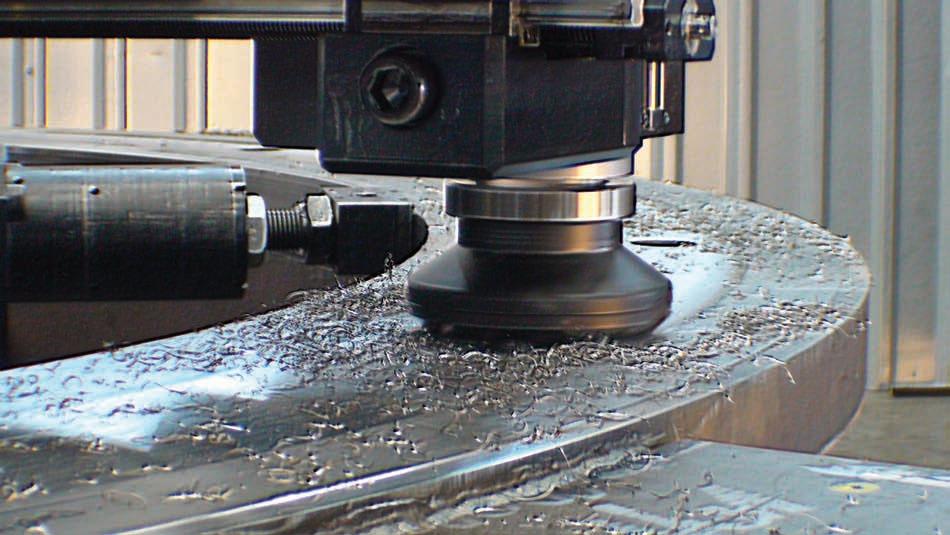
This flange facer is equipped with a milling head with multiple rotating cutters.
In maintenance, as in many other things, time is money. And it’s never been truer for companies with operations spread across the globe. Equipment downtime, lost production and high travel costs to troubleshoot problems can kill the bottom line.
If the best engineer is located in Calgary or Houston and the assembly line is in the Far East or the equipment is at an oil rig off the coast of Newfoundland, costs mount quickly when decisions are delayed. Typically, the expert (or a whole team of experts) would board a plane to go and try to solve the problem, causing further delays and incurring expensive travel costs. With mobile video collaboration, no one leaves their desk, let alone the country. Finally, this technology is being taken outside of the boardroom. The develop-
ment of new mobile technologies has expanded the opportunity for video collaboration from face-to-face meeting rooms to the plant floor and into the field. Today’s mobile technologies securely extend the power of video collaboration across an enterprise. Enterprises are already experiencing the benefits of mobile video for maintenance, repair and operations (MRO) applications, including an increased rate of first-visit problem resolution, reduced non-chargeable service calls, better warranty decisions and returning machines to service faster.
SOLVING PROBLEMS Anywhere! Anytime!
Mobile technologies include wireless video devices for use at remote locations and collaboration software for the remote experts’ desktops. Plant or field workers use the mobile device to share video, voice, telestration (onscreen drawing) and images with the experts, who interact live through the collaboration PC software, allowing the experts to help plant floor personnel or field technicians no matter where they are located.
For many manufacturers, their plant floor operation contains competitive, sensitive information. In many large companies, potentially ‘rogue’ video devices, such as smart phones, must be checked at security. To overcome these security concerns, enterprise-grade mobile video devices provide security, encryption, authentication and even centralized administrator control.
Reducing downtime on the plant floor
BY MARIEKE WIJTKAMP
grade mobile collaboration system was the answer. It can now bring remote experts into key field decisions quickly, delivering a positive financial impact on the profit contribution of the contract. Its previous attempts to diagnose field situations using home-grown solutions such as webcams and cell phones were unsuccessful. These solutions lacked the real mobility, interaction and detailed optics that enterprise mobile solutions delivered.
Network requirements
It is important to consider infrastructure requirements for the mobile collaboration system. Mobile devices require either an Ethernet or wireless network connection to access the Internet. Wireless connectivity (i.e. 802.11 b/g) is the most common method used in facilities such as a repair depot or plant. The bandwidth consumption typically ranges from 250 kbps to 1 Mbps, depending on the existing infrastructure.
Production equipment downtime costs can be staggering, ranging from $1,500/ hour to $8,500/hour for a production cell, to as much as $3,500/minute for an entire auto factory line. Trying to troubleshoot an equipment problem through pictures via e-mail, or waiting for an offsite specialist to travel to the problem site, adds costly hours that can be avoided with mobile collaboration technologies.
For field-based applications, it is more common to see bandwidth consumption below 128 kbps due to narrow bandwidth backhaul connections. However, even with only 128 kbps, mobile collaboration can include live video, voice, telestration and image sharing between the field technician and the remote expert.
For one major consumer packaged goods manufacturer, mobile collaboration now allows it to perform remote production line equipment maintenance and repair. In the past, when a machine was down and the right engineer was not available onsite to troubleshoot the problem, downtime rapidly escalated. With mobile video collaboration, plant technicians can now show a remote expert the failed equipment, removing unnecessary delays from the repair process.
Improving repair decisions in the field
Another alternative to consider is the use of 3G or 4G cellular networks through mobile Wi-Fi hotspot devices such as the MiFi or Cradlepoint. By using a hotspot device, a wireless network can be created anywhere that offers adequate cellular coverage. Heavy industrial equipment manufacturers often use cellular connectivity to perform live collaboration from the field.
Now, engaging in a full video collaboration session has become as simple as making a phone call.
MRO
Marieke Wijtkamp is vice-president, Librestream Technologies Inc., Winnipeg, MB. For more information, visit www.librestream.com.
Online Reader Inquiry No. 683
Heavy industrial equipment manufacturers face the challenge of servicing equipment around the globe. In some cases, these manufacturers are 100% liable for any downtime and repair costs associated with their equipment. Often, field technicians have significant decision-making power and costs can escalate tenfold if the wrong choice is made in the field.
Another benefit of mobile collaboration relates to the problem of experienced field technicians approaching retirement, meaning it is becoming more difficult and expensive to provide in-person coaching of junior technicians. Travel costs alone can range from $2,500 to $5,000 per trip.
For one industrial equipment manufacturer, implementing an enterprise-
Scan this
QR code with your smartphone to read more about mobile collaboration in MRO applications, along with a case study. No smartphone? Then use this link:
www.librestream.com/Solutions MRO.html.
Top: Video links let maintenance techs point out problems they need expert help with. Right: Remote oil and gas operations are ideal candidates for mobile collaboration.
Photos: Librestream Technologies Inc.
Using rigid couplings for precision applications
BY BILL HEWITSON
A sometimes overlooked advantage of rigid couplings in motion control is that they can be used to establish shaft alignment in some systems.
Rigid couplings historically have been imprecise, inexpensive, and often home-made components for simple shaft-to-shaft connections. It is not surprising that in the past, many people would not consider using rigid couplings in a servo application. However, smaller-sized rigid couplings, especially in aluminum, are increasingly being used in motion control applications due to their high torque capacity, stiffness and zero backlash. It is important though, that unlike their common counterparts, the rigid couplings used have the precision and features necessary for low maintenance and accurate performance.
As the name implies, rigid couplings, which are sometimes called sleeve or muff couplings, are torsionally stiff couplings with virtually zero windup under torque loads, but they are also rigid under loads caused by misalignment. If any misalignment is present in the system, the forces will cause the shafts, bearings or coupling to fail prematurely.
This also means that the couplings cannot be run at extremely high rpm, since they cannot compensate for any thermal changes in the shafts that can be caused by heat build-up from high-speed use. However, in situations where misalignment can be tightly controlled, rigid couplings offer excellent performance characteristics in servo applications.
Shaft alignment
A sometimes overlooked advantage of rigid couplings is that they can be used to establish shaft alignment in some systems. First, loosen motor and other component mounts so that there is free play. Then connect the shafts with the rigid coupling, which, if precisely made, will align the shafts. Centre the components on any remaining free play and tighten the mounts.
There are several features required of rigid couplings to ensure proper performance in motion control applications. Most important is that the coupling itself does not introduce misalignment into a system where it cannot be absorbed without damage to bearings and seals or by caus-
Safety is a serious obligation and a legal requirement with severe penalties.
SAFE PASS is your single-source solution for the most economical and effective way to meet all your safety requirements. It is designed for productivity gains and safety compliance.
The best time for a SAFE PASS:
• Before moving your plant
• When you are under Ministry of Labour orders to comply
• When you are concerned about equipment safety
• When you are not satisfied with your current process
Audit
• Complete hazard analysis and solutions recommendations
Design
• Detailed design enables tender for drastic cost savings
• Increased operational efficiency creates a financial payback
Build
• Tender process and expert project management for lowest total cost
• Minimum disruption and highest efficiency solution
PSR sign-off
• By a professional engineer with no disclaimers
S.A.F.E. Engineering in partnership with Schneider Electric™ offers a complete safety solution for your machinery. SAFE PASS is a preferred automation and safety solution:
To receive 10% off a SAFE PASS audit and a chance to win an Apple® iPad® , visit www.SEreply.com and enter key code d126v.
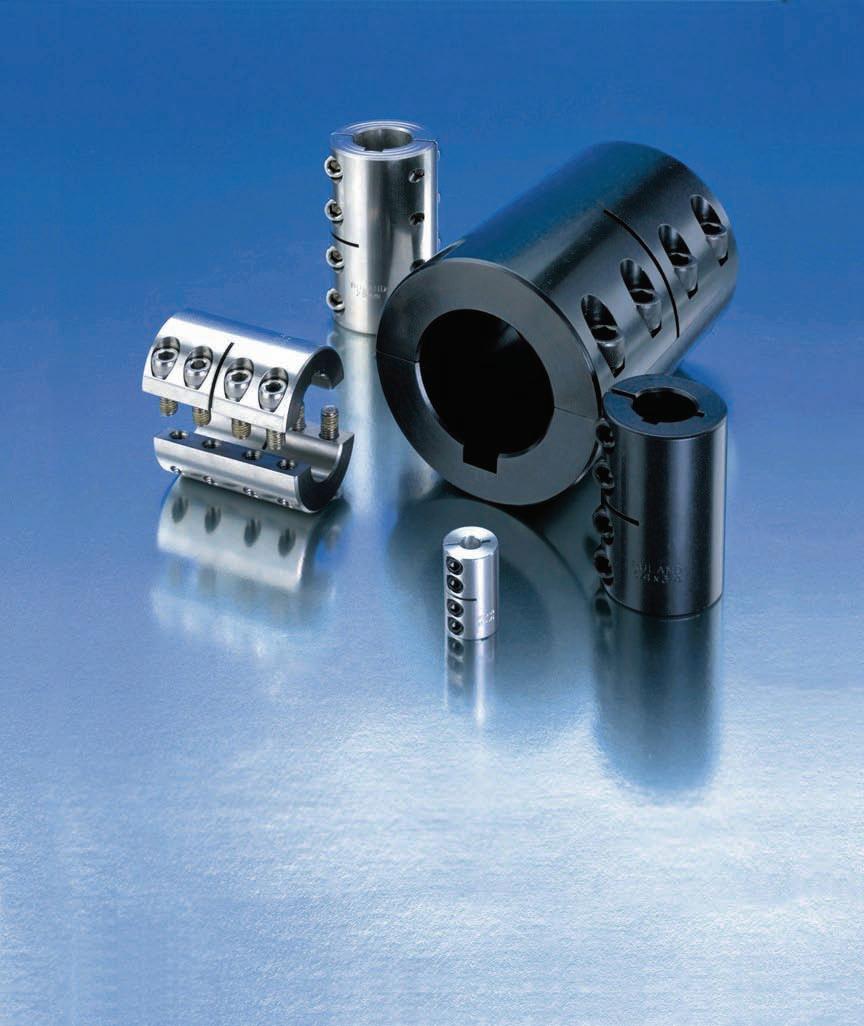
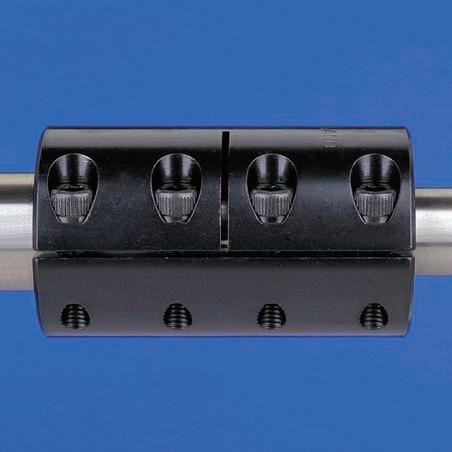
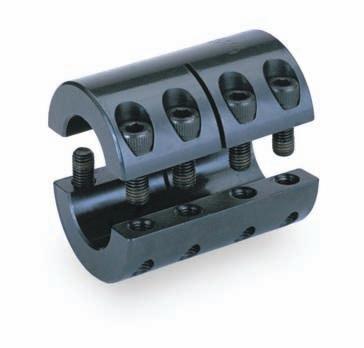
Left: One- and-two piece rigid couplings in different sizes in aluminum, carbon steel and stainless steel.
Above : Rigid coupling on a shaft.
ing poor system performance.
The strictest control of shaft alignment will result when the bores are honed, since honing assures that both bores are collinear. Honing also corrects any residual distortions caused by stresses introduced during the manufacturing process, resulting in a round, precisely sized bore. Proper sizing and geometry assure a large percentage of shaft contact and greater torque transmission ability.
The simplest style of rigid couplings has set screws to fix the coupling to the shaft through impingement. A superior
FOCUS ON DRIVES
alternative is clamp-style rigid couplings, since they wrap around the shaft to provide high torsional holding power without the shaft damage and fretting inherent in set-screw types.
Two-piece styles have the additional benefits of allowing for disassembly and maintenance without removal of other components. When the hardware on a two-piece rigid coupling is opposing, the coupling can be operated at higher rpm, since it is dynamically balanced.
As a guideline, one-piece rigid couplings can be evaluated for applications up to 3,000 rpm. The guideline can be in-
Performance
Parameters of Rigid Couplings
creased to 4,000 rpm when a two-piece style with opposing hardware is used. Rigid couplings lack a mechanism to absorb the vibration inherent in many mechanical systems. Vibration can cause hardware to loosen and torque transmission ability to diminish during normal use. Placing a nylon treatment on the screw threads can reduce the effect of vibration on the hardware for increased coupling reliability. The nylon also provides the necessary dissimilar material to reduce galling of the screw threads in stainless steel couplings.
Proper installation
Most clamp-style rigid couplings have cap screws close to one another and arranged in pairs. This design, especially when combined with a cross-cut, facilitates greater holding power and also accommodates slight deviations in the size of the two shafts being connected.
It is recommended that this style of coupling be installed by tightening the paired screws alternately in several steps. This is because the close proximity of the screws results in a mutuality of the hoop stress developed in the coupling by each screw in a pair. As each screw is tightened, it tends to relax any tension developed by its companion. Alternately tightening the screws in several steps distributes the tension more evenly, assuring a tighter fit and the desired better holding power.
A less common but sometimes useful type of rigid coupling is the three-piece clamp-style. This design allows for more convenient exchange or adjusting of coupled shafts, particularly where the shaft cannot be axially detached. Either side of the coupling can be detached and the shaft removed without disturbing the other shaft connection. The three-piece design also accommodates a slightly larger variation between the sizes of the shafts being connected by clamping independently on the two shafts.
Summary
The benefits of rigid couplings include their economy, high torque capacity, torsional stiffness and zero backlash.
Selecting a coupling for a servo application involves many different performance factors, including torque, shaft misalignment, stiffness, rpm, space requirements and others that all must be satisfied for the coupling to work properly.
When they are precisely manufactured with honed bores and other features to assure performance, rigid couplings are increasingly used in motion control applications where components are properly aligned. Frequently, the coupling itself is used to establish the needed alignment. In addition to motion control applications, rigid couplings are often used to connect line shafting or other components such as a motor to a gearbox. MRO
Bill Hewitson is director of manufacturing and engineering at Ruland Manufacturing Co. Inc.
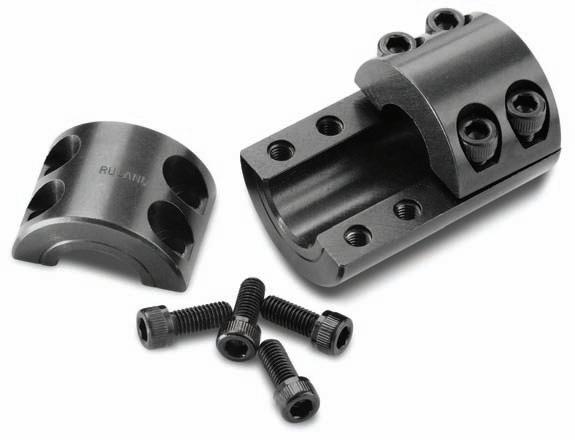
Above: Three-piece rigid coupling.
Right: Two-piece rigid coupling.
Vampire ride runs smoother with DC drives
Retrofitting the control system of a theme park’s rollercoaster allowed an alternative to redesigning the system with AC technology.
Chessington World of Adven tures, a popular theme park and zoo in southwest London, of fers 25 different rides and attrac tions. One of the most famous is the Vampire ride. It became the UK’s first suspended rollercoaster when it opened in 1990 and the only coaster to fly above tree height.
ly scenario of hardware or software failure inside the PLX. The coast-stop input forces the drive to cease supplying armature current to the motor irrespective of drive operating conditions.
Another useful safety feature is the PLX’s ability to automatically revert from tacho-generator speed feedback to armature voltage feedback in case of mechanical or electrical damage to the tacho-generator or its connection medium to the drive. The drive will give a warning of this failure to the PLC, but it will continue to be under closedloop speed control until the next convenient stop instance when the fault can be addressed.
During the summer season, the Vampire thrills adrenalin junkies of all ages – it is one of the few rollercoasters Europe-wide available also for small children, starting at a height of 1.1 m. At peak periods, the Vampire ride attracts 17,000 visitors a day.
Three trains make, on average, 720 laps of the track over an eight-hour day. This creates a substantial workload for the ride’s DC motor control system. The ageing control system was becoming costly in both maintenance and downtime. Chessington World of Adventures needed to improve the ride’s reliability ahead of last summer’s peak season.
It had two options: Redesign the control system to use AC motors and AC drives, or keep the existing DC motor control system and retrofit it with modern DC drives. Redesigning with AC technology would mean a lengthy and costly health and safety review. Keeping the already installed and proven DC technology proved both easier and more cost effective.
System integrator B & G Controls of Sittingbourne, Kent, was contracted by Chessington World of Adventures due to their knowledge of fairground applications. B & G Controls chose DC drives from Sprint Electric because the companies had previously worked together on another demanding ride application at the theme park.
“Two 430 Ampere PLX digital DC drives were installed to control the Vampire’s flight,” explains David Garwood from B & G Controls. “Each flight has many twists and high-speed turns, but the two lifts create the serious demand. To raise the three trains and 24 passengers, the drives operate at 90% current for the first lift and 100% current for the second.”
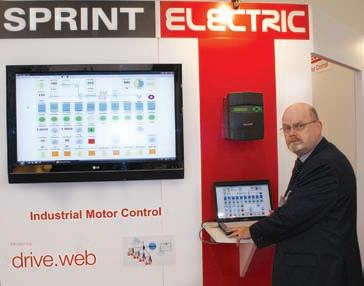
To make the ride’s load-run-disembark process a smooth one for the park’s visitors, the PLX had to interface with an existing SLC-500 series PLC from Allen Bradley. “The PLX DC drives’ software made it possible to reprogram, inside the drive, some of the signals coming out of the PLC to suit the application better. Signals such as Field o.k. and Tacho o.k. required logic function and timer function PLX application blocks to re-create what the PLC needed of them,” explains Sprint Electric’s research and development director, Aris Potamianos, who helped with the software integration and commissioning.
With the installation and commissioning completed, Chessington World of Adventures’ engineers were pleased with the revamped control system, having noticed the ramp up to full speed is a lot smoother than before the retrofit took place. MRO
Sprint Electric drives are distributed in Canada by MDA Controls Inc., Oakville, ON.
Online Reader Inquiry No. 681
A PLX safety feature suited to this application is the drive’s coast-stop input. This ensures the ride control can effect an almost instant isolation of the drive from the rest of the process in the unlike-
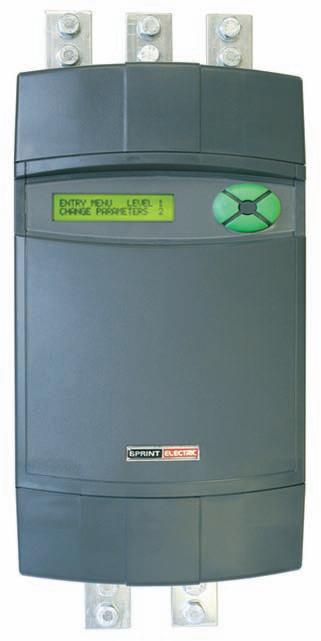
Left: The PLX185 DC drive from Sprint Electric is rated at 185 kW/250 hp. Above: The Vampire ride is a swinging, suspended rollercoaster at the Chessington World of Adventures.
Photos: Sprint Electric
Motor reliability critical for mine
CCompressor-duty motors supplied to Cameco help prevent flooding at the world’s largest high-grade uranium mine.
ameco Corp. of Saskatoon, SK, is one of the world’s largest uranium producers. Otherwise known as the Canadian Mining and Energy Corporation, Cameco was formed in 1988 by the merger and privatization of two crown corporations.
Cameco’s operations account for about 16% of the world’s uranium production from its mines in Canada and the United States. The corporation produces 11.34 million kg (25 million lb) of uranium a year, with 8.2 million kg (18 million lb) coming from its Canadian facility. Most of the mining takes place in Canada, but there are also facilities in Smith Ranch, WY, Crow Butte, NE, and in the Republic of Kazakhstan.
Mining at the main Cameco facility at McArthur River,
#1 in Bearing Isolators www.inpro-seal.com
When your equipment is down, you need a partner that ships a solution to you same-day not some day. At Inpro/Seal, we recognize the high cost of downtime facing our customers; that’s why we’ve designed our operations to support quick–turnaround of our custom–engineered bearing protection products.
With manufacturing locations in North America and the United Kingdom, we’re able to offer industry–leading products with unparalleled response time and service to customers around the globe.
The right technology…right when you need it. YOUR SAME-DAY SHIPMENT SPECIALISTS
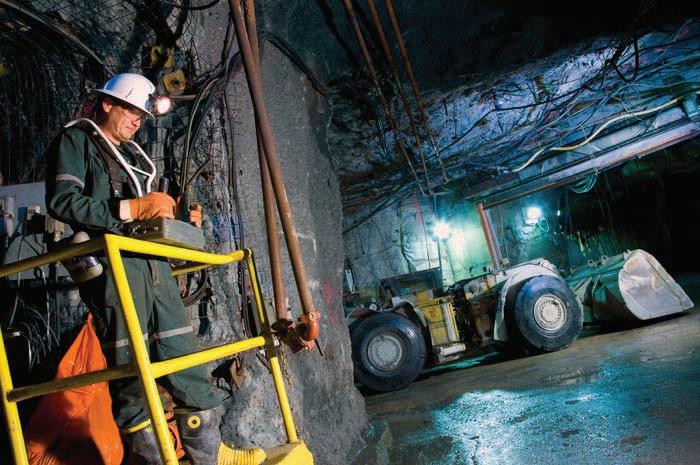
Above: Cameco radiation specialist Marko Baran, part of the radiation safety team at the McArthur River mine, checks for any evidence of radon gas near the raisebore mining machine. The raiseboring process itself helps to separate miners from direct contact with the ore body.
Left: McArthur River miner Ken Pederson uses a remote controller to run the scoop tram, keeping himself at distance from the high grade uranium ore being moved from the extraction chamber to the underground grinding circuit.
Photo: Cameco
Photo: Cameco
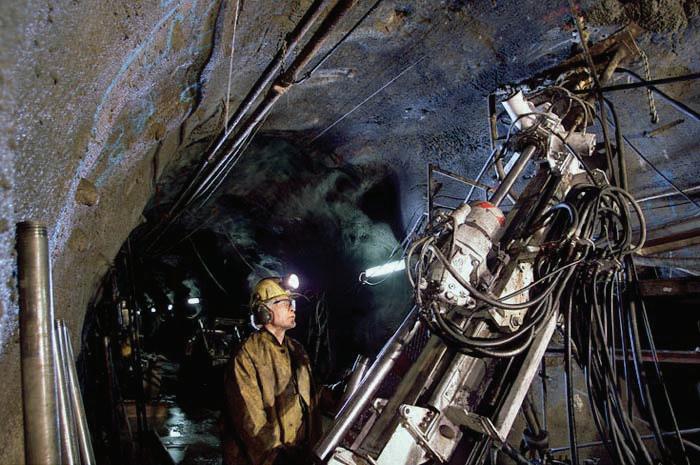
located 620 km north of Saskatoon, takes place underground near the Athabasca Basin, which hosts the largest high-grade uranium mines and deposits. Because water is roughly 20 m (65 ft) from the mining location, it is critical that the surrounding water be frozen. If the water is not frozen, then it will flood the mining zone, putting the workers and uranium at risk. To control the temperature of the water, Cameco uses freeze compressors that are controlled by electric motors.
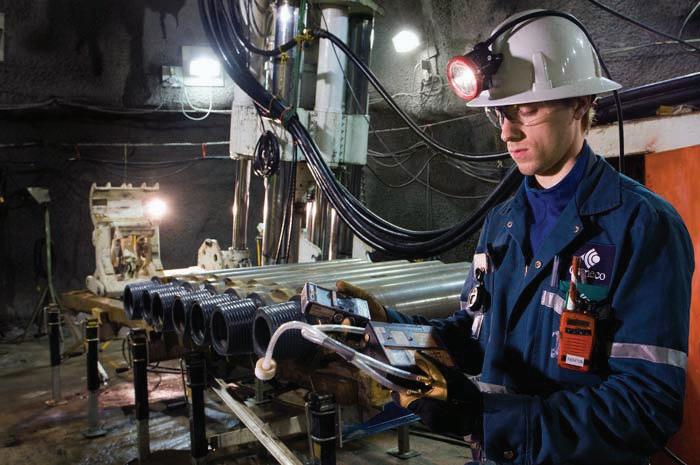
The electric motors are a critical ele ment in keeping the operation running smoothly. Currently, Cameco is running 650 hp, 5,000-volt motors.
Nearly two years ago, Cameco started experiencing maintenance issues with the motors that were powering its com pressors. The end bearings were wearing out and the compressors stopped work ing. While backup motors were available, Cameco began to look for other motor op tions that would be more reliable and last for a longer period of time.
After consulting with Precision Elec tro-Mechanical Ltd. (a WEG distributor in Saskatoon and a member of EASA, the Electrical Apparatus Service Association), Cameco made the decision to replace the failing motors and all future motors with WEG electric motors. “WEG’s electric mo tors greatly surpass the level of quality of other motors on the market,” says Dwight Radloff, the electrical foreman at Cameco.
The compressor-duty motors are de signed to meet the high torque require ments of air compressor loads. Special electrical and mechanical features en sure reliable service and long motor life.
Standard features of WEG compres sor-duty motors include: single-phase, two-pole, 60 Hz configuration; manual overload protection; start capacitor; squirrel cage rotor; Open Drip Proof (ODP) design; fan cooled (internally); ball bearings; NEMA dimensions; and high starting torque.
In addition to the compressor-duty mo tors, Cameco is also using several other WEG motors, including 700-hp, 460-volt HGF motors for pumping. WEG’s electric low-voltage H line features simple and compact construction and is manufac tured in finned, cast iron frames for se vere-duty applications. Internal and ex ternal fans are also provided, resulting in an inside temperature balance that helps to extend the winding lifetime of the
motor and improves performance.
The compressor-duty WEG electric motor has been operating for over 18 months without any mechanical issues. In the future, Cameco plans to replace any failed motors made by other manufacturers with WEG products. “We expect these
motors to last twice as long as those that we were previously used to power our compressors,” says Radloff.
Cameco’s McArthur River deposit, which has ore grades about 100 times the world average, was discovered in 1988 and production began in 1999. The mine
has reserves sufficient to sustain production until 2033.
This report was updated and edited by Bill Roebuck based on information provided by WEG, Cameco and other sources.
Online Reader Inquiry No. 680
MRO
Far left: Freeze piping installed from the 480-metre level at Cameco’s Cigar Lake, SK, facility, combined with freeze pipes installed from the surface, freeze the sandstone around the ore body and help secure the mine development from water inflow.
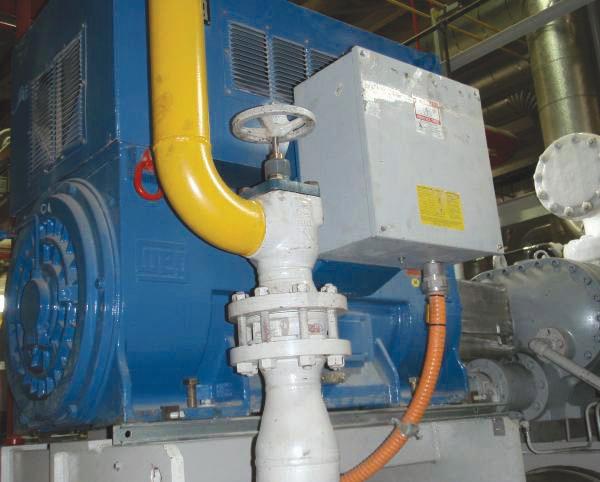
Left: WEG motors power pipe-freezing compressors for Cameco’s biggest Canadian mine.
Photo: WEG
Photo: Cameco
FOCUS ON PUMPS
Saving money by maximizing pump lifespans
key to a good service and maintenance program is preventive maintenance. This includes adjusting and tuning up equipment and detecting and correcting small problems before they become major problems.
Preventive maintenance is a key component in maximizing the lifespan of an engine-powered portable pump, as well as providing cost savings, better profitability, increased pump availability, improved productivity, and decreased repair costs. That's why it makes sense for pump owners and users to implement a comprehensive service and maintenance program.
Effective service and maintenance keeps equipment working at peak efficiency, so it should not be viewed as a strain on income. The
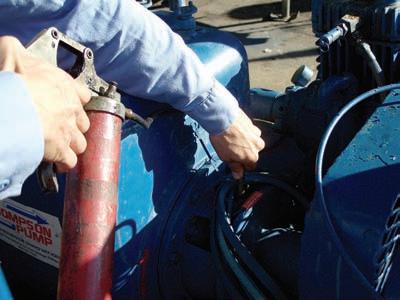
Scheduled preventive maintenance is typically viewed as oil, fuel and air filter changes every 200 to 250 operating hours, as recommended by the manufacturer. While this is necessary, it also provides an excellent opportunity to perform a general machine audit that includes inspection of all wear components and making replacements or adjustments as needed.
Good equipment maintenance requires that everyone share the responsibility. Field operators and mechanics must make sure the equipment is operated properly and that required maintenance intervals are performed. Supervisors must ensure that the proper maintenance schedule and procedures are completed by the mechanics. Finally, the purchasing or parts department must procure the necessary parts, in advance, to avoid delays and downtime.
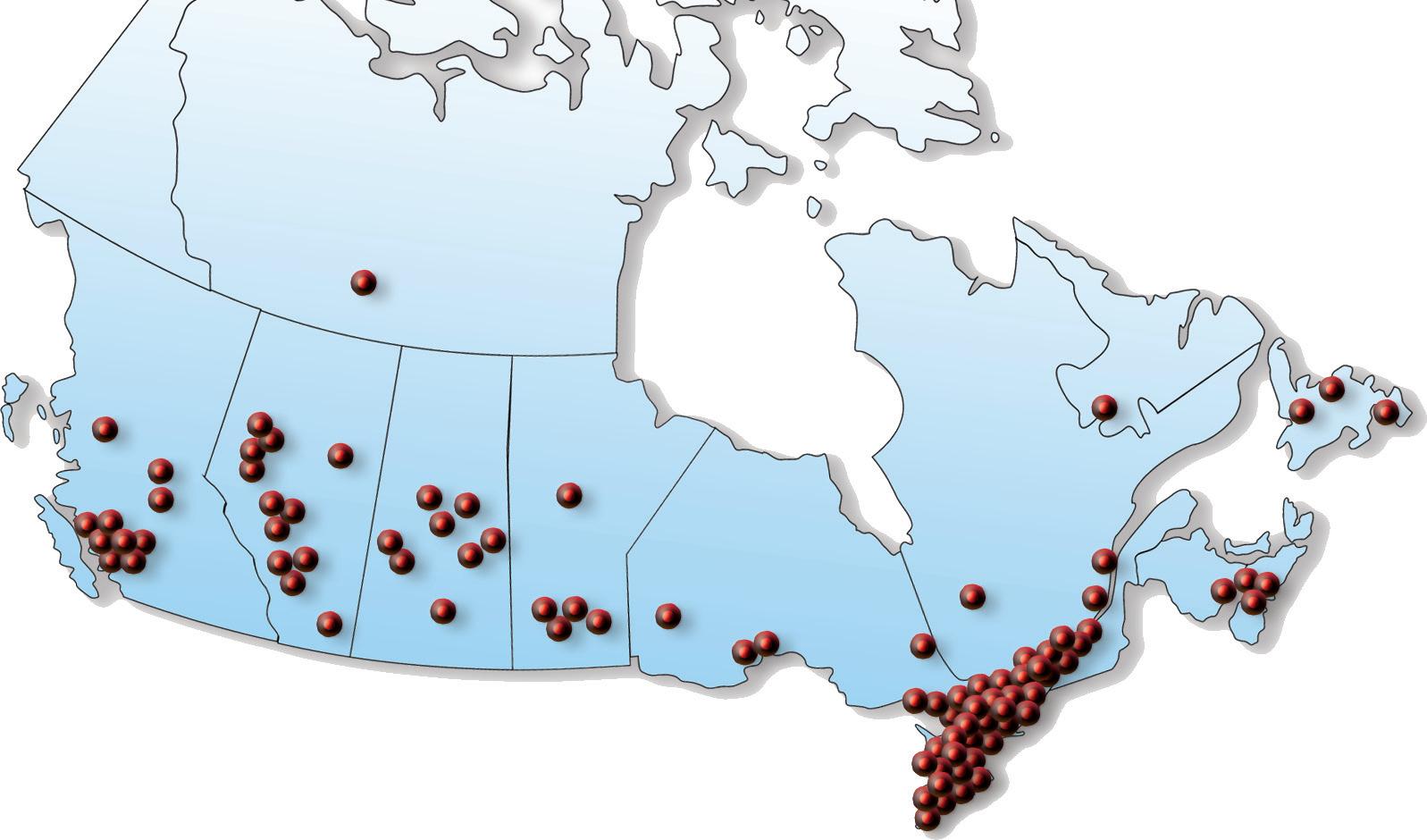
Over 260 Locations Coast to Coast Across Canada
Having a manufacturer’s trained service technician perform these tasks may increase the initial cost of the service when compared to using on-staff personnel. However, a trained technician will do the job correctly and also identify components that are susceptible to failure, which avoids downtime and damage to other parts. This will reduce repair costs throughout the life of the equipment and result in savings amounting to much more than the initial cost of a service call.
General pump maintenance
During a visual inspection of an enginepowered portable pump, all areas of material buildup should be noted and removed after the unit is shut down. Remove dust, especially around the alternator, radiator and control panel. Dust can create waterways and channels affecting electronic and non-electronic components. An air hose is the most effective tool to remove dust buildup.
Often in the aggregates market, the substance being pumped has varying pH levels. These high and/or low pH levels can cause extra wear on a pump. Thus, some manufacturers offer pumps with special materials such as bronze or stainless steel, or with special coatings. Hardened impellers, wear plates and volute rings can also lengthen life pump. For pit dewatering, always be sure to use a strainer. This keeps unwanted foreign materials out of the pump.
Items to monitor
To perform general maintenance properly, it is important to pay close attention to the pump while it is running. The following are items to monitor: heat, pressure, vibration, noise, flow, speed, strain, liquid level, power consumption, product contamination, leakage and emissions. Serious items to watch for, cavitation and water hammer, are two occurrences seen frequently in the aggregates market. To prevent cavitation, run the pump at the proper speed or provide a larger suction hose to handle the fluid. Water hammer, which is a spike in discharge pressure and often the cause of blown seals, can be prevented by starting the pump and slowly throttling up to recommended max speed. Multiple check valves in the discharge line can also provide relief to water hammer. MRO
OIL QUADRUPLES
LIFE OF THROWAWAY GEARBOXES
EQUIPMENT’S ALL-SEASON
MINUS 42
LUBE HANDLES
PREVENTING DIRTY-OIL DOWNTIME IN HYDRAULIC SYSTEMS
WHAT’S NEW IN LUBRICATION PRODUCTS
Industrial Lubrication
Lubrication, Tribology and Hydraulics
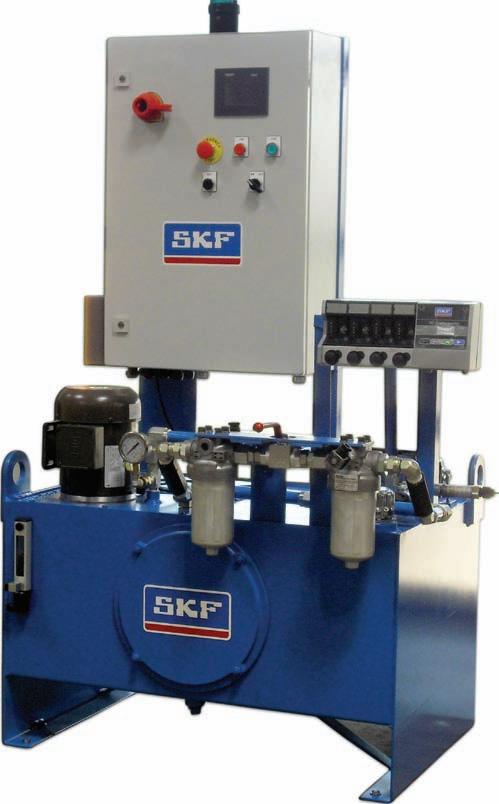
Made in Canada –SKF Circulating Oil Lubrication Systems
sed in where lubrication must
Circulating oil lubrication systems are used in applications where lubrication points must be cooled and cleaned by oil in addition to providing lubricity. Used extensively in general and heavy industries, typical applications may include; steel rolling mills, conveyors, paper machine dry end bearings, industrial fans and gear boxes.
The lubrication system must be able to deliver the right amount of highly conditioned, with appropriate temperature, oil to each lubrication point. The oil then flows back into the lubricant reservoir for reconditioning and reuse after passing through the lubrication points.
The respective system is selected on the basis of:
• the operating conditions (variations in the operating temperature and viscosity)
• the accuracy requirements for lubricant quantities
• the monitoring requirements
The SKF circulating oil lubrication unit is ideal for rolling bearings on industrial fans where high speeds and/or high temperatures can preclude the use of grease. These units deliver a continuous flow of cooled and filtered oil directly to the bearing. The metered pump flow is matched to the bearing and housing size, preventing oil leaks and excessive heat associated with oversized pumping systems. The use of circulating oil lubrication may also reduce bearing vibration associated with the use of grease lubricant at higher speeds.
The Canadian made circulating oil lubrication units are available in two standard tank sizes (other sizes are available); 75 litre (19 US gallon), and 130 litre (34 US gallon).
For additional information, please contact SKF Lubrication Solutions at lubrication@skf.ca or 1-800-207-5823.
Preventing dirty-oil downtime
Reservoir isolators eliminate ingestion of airborne contaminants into hydraulic oil.
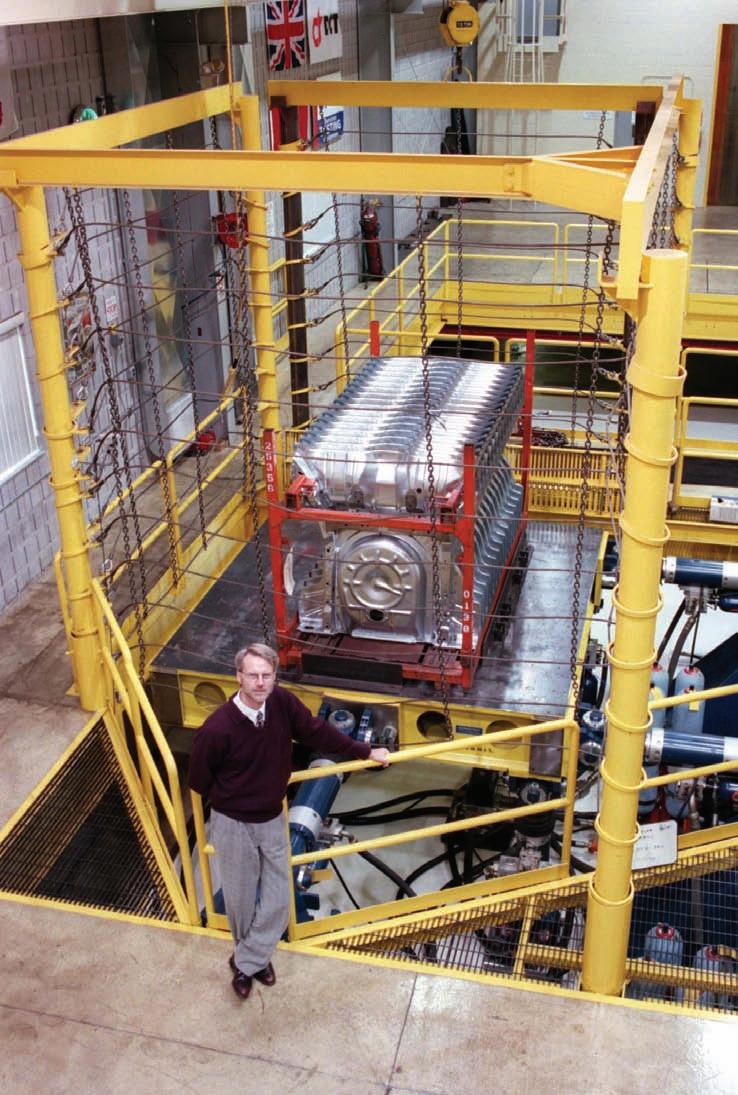
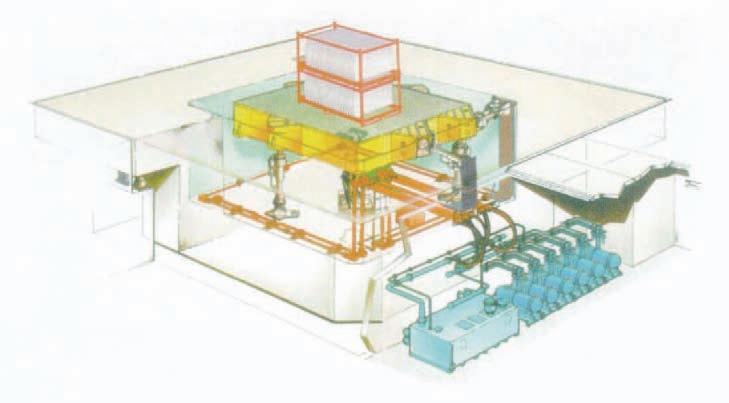
E. Myles Inc., a hydraulic systems distributor based in Troy, MI, worked with its sister company, Control Power-Reliance, to engineer the world’s largest six-axis transportation simulator back in 1996. Today, the simulator continues to run using the original
The simulator was designed to run five to six days per week, two shifts per day. The system included six high-speed servo valves that run up to 50 Hz.
J.E. Myles needed a 1,000+ gallon reservoir, and a cooling system to keep the oil temperature at 110°F or less. The simulator’s continuous operation was crucial –- downtime had to be kept to an absolute minimum. With this in mind, the distributor specified that Parker KleenVents be installed on the reservoir to keep the hydraulic oil as clean as possible.
Even in the most sterile environments, constant airflow through the reservoir can raise the the Total Acid Number (TAN) of hydraulic oil, slowly degrading its properties and causing oxidation of the fluid. This, in turn, can lead to varnishing of system components and/or premature wear. Air is in fact one of the most detrimental hydraulic system contaminants. Containing moisture and metal particulate, it can condense inside reservoirs and fall into the oil as water. High ambient and operating temperatures, meanwhile, only serve to accelerate acidic build-up.
When the TAN exceeds a predetermined level, critical machines must be shut down, the oil drained and disposed of, and new oil purchased — a time-consuming and costly proposition that scheduled maintenance alone cannot prevent.
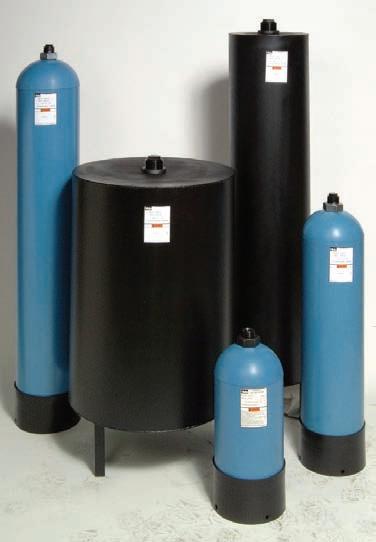
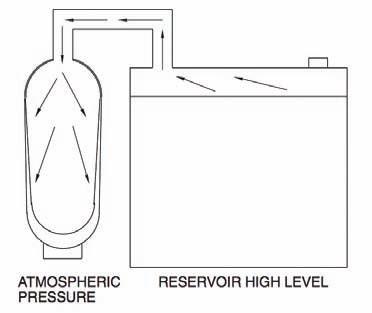
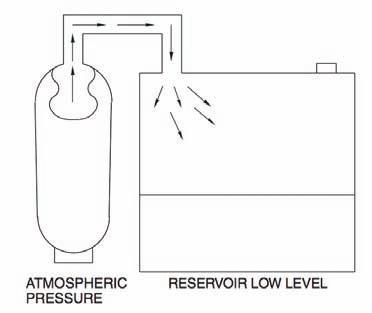
The KleenVent KV Series reservoir isolator could help ensure continuous equipment operation. KleenVents use an elastomeric bladder as a ‘lung’, where changes in gas volume in the reservoir can be contained and prevented from mixing with the outside air.
In operation, when the hydraulic reservoir is filled, the air on the top of the oil (Figure 1) goes into the KleenVent bladder. When the oil level in the reservoir goes down (Figure 2), it pulls the air from the bladder back over the top of the oil. This containment approach completely eliminates the potential of pulling in outside air. Instead, the atmosphere now acts against the outside of the bladder isolator, while internally the same air is continuously exchanged between the reservoir and the bladder.
This separation allows the system to operate normally, while preventing ingestion of airborne contaminants. Unlike conventional breather-vent filters, Parker’s reservoir isolator provides a positive separation without the possibility of clogging, making it maintenancefree. Importantly, with proper bladder material selection, KleenVents are compatible with virtually any type of hydraulic fluid
The J.E. Myles/Control Power-Reliance transportation simulator was put into operation in July 1996. At that time, the TAN of the 1,000+ gallons of hydraulic oil was 0.75. As of March 2011 –- after 177 months and more than 620,000 hours of operation –- the simulator continues to run using the original hydraulic oil.
“The TAN of the oil today is within 10% of what it was the day we purchased it, almost 15 years ago,” said Colin Myles, vice-president, J.E. Myles. “We’ve never changed the oil, thanks in large part to Parker’s KleenVents. Without them, we’d have purchased new oil at least three times by now.”
Myles added that the system has never
Top left: Kleenvent units come in various sizes.
Top right: The world’s largest six-axis transportation simulator has been operating reliably since 1996.
Right: System required a 1,000+ gallon hydraulic oil reservoir.
Figure 1: Air on top of the oil in the reservoir goes into the bladder.
Figure 2: Air is pulled from the bladder back over the top of the oil in the reservoir.
experienced a servo valve or actuator failure –- again partly attributable to consistently outstanding fluid cleanliness levels. He estimates between $1,000 and $5,000 as the potential cost to repair one of the simulator’s six 250gpm servo valves, while repair of a single 50 KIP actuator -– of which there are also six -–would range from $3,000 up to $15,000.
“We would have likely repaired at least one servo valve and actuator to this point, had we not installed KleenVents from the start,” noted Myles. By using KleenVent reservoir isolators, J.E. Myles has kept its simulator system free of airborne contamination and moisture that is usually introduced through a standard filler breather. As a result, filters are only needed to remove
Table 1: Savings achieved
wear-generated particles, while varnishing of the servo valves has been non-existent.
The cost savings in hydraulic fluid, meantime, has been remarkable. Assuming an average cost of $18.00 per gallon for new oil, and an average disposal cost of $4.50 per gallon for old oil, the KleenVent solution has saved J.E. Myles more than $90,000 since 1996.
“The greatest benefit,” added Myles,
“besides the cleanliness of the oil and the money saved, has been the uninterrupted system function we can count on day-to-day. Thanks to KleenVent, downtime due to dirty oil has never been a problem for us. IL For more information, visit Parker Hannifin Corp.
Fig. 2
Fig. 1
Worm gearboxes are typically used as an inexpensive way to provide high, single-reduction gear ratios for machine drives and conveyors. These gearboxes are tolerant of start-and-stop operations and load variations, and are used with many types of food processing equipment.
In mixers or packaging machinery, worm gearboxes are often buried inside the processing machinery. In conveyor drives, they are mounted overhead. Their inaccessibility makes it difficult to maintain and service them. The result is that often, they are not well-maintained, resulting in potential drive component damage and wear, and faulty motion control.
The main drive component of a worm gearbox is constructed of bronze. Extreme pressure (EP) lubricant additives that would normally enhance the sliding friction properties of the gearbox can be corrosive to bronze. This bars the use of these helpful additives in the worm gear oil formulation. The result is worm gear oil with minimal additives, having to provide all lubrication properties through high-viscosity film strength.
Disposable gearbox
ing machinery and conveyors was 2,000 hours. To improve gear lubrication and simplify maintenance, it switched to Molykote L-1146FG Synthetic Gear Oil, a Dow Corning product.
Unlike oils made in conventional fractionation processes, synthetic oil is made by combining smaller molecular building blocks to meet targeted performance specifications and to minimize impurities. The new oil contains a new-generation phosphorus anti-wear (AW) additive to reduce friction between the gears and extend service lifetime.
The formulation is non-corrosive to the bronze drive components. What is more, it is a food-grade lubricant. Plant management at this facility had adopted a policy of using only food-grade synthetic PAO products for MRO needs. Although in many cases these products exceed the unit cost of the conventional mineral oils they replace, their superior performance more than makes up for the difference. Standardizing on food-grade products also eliminated the possibility that plant workers would confuse one type of oil with another.
Using the new synthetic oil formulation, the standard oil change interval has now been extended to 9,000 hours in the disposable gearboxes, over four times the design life of either the conventional lubricant products or the synthetic lubricant used as OEM fill for the throwaway gearbox design.
As a result, the pizza-crust manufacturer can count on its machinery and conveyors to run for over a year before scheduling replacement of the throw-away worm gearbox.
In addition, friction within the gearbox was prevented to such an extent that the operating temperature during production dropped 11°C (20°F).
Working in partnership with a lubricant manufacturer, gearbox manufacturers identified a synthetic polyalphaolefin (PAO) lubricant that has become a standard oil for worm gears. However, the inaccessibility of the gearboxes still deterred proper maintenance of the systems.
To simplify maintenance requirements, one gearbox manufacturer designed a disposable gearbox filled with the standard PAO oil. The design offered maintenance personnel at food processing plants the opportunity to forego oil changes or repairs. Designed for 2,000 hours of operation, the gearbox is simply thrown away after 12 weeks.
Long-life food-grade lubricant
At a pizza-crust manufacturing plant, the standard oil change interval on its mixers, packag-
Maintenance savings in time and equipment are high, since machine uptime has increased dramatically. The PAO synthetic oil gives excellent lubrication at high and low temperatures, reduced volatility and compatibility with equipment designed for use with mineral oils. It conforms to USDA listing requirements applicable to meat and poultry plants, and is qualified for direct food contact under FDA regulations. Instead of throwing out a gearbox every three months, the plant now sees a 350% increase in the equipment life because of the new worm gear oil. IL
For more information, visit www.dowcorning.com. Online Reader
All-weather oil handles minus 42
Change to cold-weather lubricant gains an extra 150 hours between service intervals for Transport Hardy’s heavy equipment.
Achain reaction is defined as a series of events in which each induces or influences the next. In the forestry industry, such an occurrence is often related to equipment downtime, because when one machine breaks down, it can leave other machines sitting idle. This can result in lost revenue, increased expenses and the possibility of some very costly repairs.
With the combination of quality equipment, preventive maintenance, oil analysis and its choice of lubricants, Transport Hardy Inc. of Val-d’Or, QC, is making chain reactions a thing of the past.
Transport Hardy specializes in wood harvesting, roadbuilding, log loading, hauling and unloading. The business was formed in 1971 and has since grown to become one of the largest in the Quebec forestry industry. It now serves a large range of clients in the Abitibi region of northwestern Quebec.
“Preventive maintenance is very important. We do oil analysis on all of our machines and keep very detailed charts and records,” says Jody Morrison, operations manager of Transport Hardy.
The equipment fleet, which includes 16 log loaders, four articulated trucks, three wheel loaders, three graders, three tractors and a processor, operates around the clock under severe forestry applications and heavy workloads. Cold weather is also a factor. “We are faced with severe cold temperatures in this region. It’s quite common for us to see -39°C (-38°F) … actually last winter it got down to -42°C (-44°F),” says Morrison.
“It’s my job to make sure all of our machines are running at peak performance,” he adds.
“There are several companies we do business with and they all help us to be successful in the work we do … companies like Federal Equipment — who we purchase and service some of our machines through — and our oil distributor, Signal.”
Morrison was looking for an ultimate heavyduty engine oil that would provide all-season protection and performance. “I didn’t want to have to worry about cold weather start-ups, or having to stock different oil grades, or reliability, or premature engine and component wear,” he says.
“I also like to have control over my service intervals. It’s not cost-effective for me to send a mechanic out to work on just one machine, because it’s a 300-km drive there for, say, an hour of work, then a 300-km drive back. I wanted to have the option of extending intervals so that we can service three or four machines in the same day.”
As a result, Morrison upgraded and consolidated to Petro-Canada’s Duron Synthetic 5W-40. “Duron Synthetic 5W-40 gives me great cold start-up capabilities, lubrication and wear protection,” says Morrison.
The product is an all-season heavy-duty engine oil formulated to maximize reliability and minimize wear, particularly in extreme cold-temperature conditions. It also helps conserve energy through ease of cold weather start-ups and provides fluidity without sacrificing high-temperature properties.
“Our service intervals used to be at 250 hours on all of our machines,” notes Mor-
rison. “Since switching, we’ve extended those intervals to 400 hours. Now I have an extra 150 hours to play with, which helps me to schedule service appointments for several machines all on the same day.” IL
For more information, visit www.petro-canada.com. Online Reader Inquiry No. 684
DELO® WITH ISOSYN® TECHNOLOGY: A POWERFUL COMBINATION OF PROTECTION AND OUTSTANDING VALUE FOR THE PARTS YOU RELY
Some of the world’s largest, most advanced fleets depend on the outstanding performance of the Delo® family of products with ISOSYN® Technology. Delo helps:
• Provide extended service protection
• Maximize engine durability
• Minimize operating costs By partnering with Chevron, one of the leading innovators in lubrication technology, you get the confidence to succeed. To learn more about Delo with ISOSYN Technology and how it gives you an edge, visit us at www.deloperformance.com.
Forestry industry firm operates 30 pieces of heavy equipment in northwestern Quebec.
DayLube has added 1-gal and 5-gal pails to its line of high-performance greases. These easy-carry, simple-touse containers make the grease suitable for high er-volume applications, especially conveyors, but also the protection of bearings, cables, cams, chains, conveyors, machine parts, robotics, wear plates and more. The grease uses nanoceramic particles that act as sub-microscopic ball bearings to provide continuous lubrication to steel surfaces. Temperature range is minus 40°F to plus 800°F, and the nanoceramic particles remain intact to 2,500°F. The grease is environmentally friendly,
maintains its viscosity across the full temperature range and is NSF-H1 food grade certified. It is also available in 16-oz tubes and 16-oz jars.
Dayton Progress Online Reader Inquiry No. 664
Food-grade lubricant line cuts maintenance costs
Designed to reduce lubrication intervals, downtime and maintenance costs and extend equipment life, the Omnilube family of premium-quality food-grade synthetic oils and greases approved for incidental food contact is available for compressor, hydraulic, chain, gear and multipurpose applications in food, beverage, pharmaceutical and related industries. The fluids, offering good anti-wear pro-
tection and oxidative stability, are formulated from high-quality polyalphaolefin, polyalkylene glycol, ester and mineral base oils, depending on application. They are also approved for Kosher use.
Ultrachem
tives and oxidant inhibitors, while its natural detergency minimizes carbon build-up on chains. It has a high flash point and a recommended operating temperature range of minus 25°C to plus 315°C (minus 13°F to plus 599°F). An NSF H1 food-grade registered product, it is approved for incidental contact with food in and around food-processing areas. Applications include bakery oven chains, beverage can lines, drying ovens, cement plants, etc.
Online Reader Inquiry No. 662
Food-safe chain oil withstands high temperatures
Chain Guard Food Safe 220 H1 (CG-FS-220-H1) synthetic food-grade lubricant is designed to withstand the harsh environment of food processing facilities. This high-temperature, ester-based synthetic chain oil is fortified with anti-wear addi-
Whether you build, produce, manufacture, run or generate, one fact is clear: better lubricants and better lubricant suppliers lead to increased productivity. That’s why Imperial Oil is proud to offer Mobil Industrial Lubricants – recognized worldwide by more than 5000 equipment builders. With the combination of Mobil Industrial Lubricants and Imperial Oil expertise, we don’t just elevate productivity – we help unleash it. Visit www.imperialoil.ca for more information.
The third edition of the Basic Handbook of Lubrication, published by the Society of Tribologists and Lubrication Engineers, is available. Compiled and edited by STLE’s Alberta Section, the 360-page handbook covers some 30 lubrication topics with contributions from 25 authors. The technical material is oriented to both lubrication-industry newcomers and veterans. This comprehensive reference book is recommended study material for two of STLE’s certifications: Certified Lubrication Specialist and Oil Monitoring Analyst (I and II).
STLE
Online Reader Inquiry No. 665
Mobile lube system goes where it’s needed
A mobile lubrication system from the IFH Group provides storage and dispensing of lubricants, cutting oils, bearing oils, hydraulic fluids, transmission fluids and engine oils for plants requiring lubrication maintenance at multiple
locations over a large area. The system, which can be placed by a forklift in the bed of a heavyduty pickup truck for easy mobility anywhere within a plant, includes two 50-gal and two 25-gal steel containers with PVC sight gauges, each with an air-operated piston pump and filter. Retractable hose reels feature metered dispensing control handles to indicate how much fluid has been dispensed. A large steel tool box with cabinets underneath the reels provides convenient storage of tools, greases and rags.
IFH Group
Online Reader Inquiry No. 663
Extended service interval grease keeps equipment running longer
Chevron Lubricants has introduced Delo grease ESI, engineered to extend service intervals up to and beyond 30,000 miles. Suitable for Class 6-8 trucks, the grease reduces friction and wear for a wide range of on-road and offroad applications in equipment such as wheel bearings, chassis, steering drag links, kingpins, transmission cross-shaft pins and more. Its formulation comprises highly refined base stocks, a lithium complex thickener, rust and oxidation inhibitors and extreme pressure and tackiness additives. The grease works well in automatic centralized greasing systems and in wheel bearings operating under high and low temperature conditions.
DECENTRALIZED DRIVE SYSTEMS
DECENTRALIZED DRIVE SYSTEMS
MOVIGEAR
Movigear® is distinguished by its high level of system efficiency, a significant factor in reducing energy costs. The integration and coordination of all the drive components lead to a long service life and system availability. Movigear® is an intelligent system with its own control concept. Its high-quality networking helps reduce startup time and supports monitoring and maintenance tasks. When combined with a functional user software, drive tasks can be solved as quickly and easily as possible.
MOVITRAC ® LTE B
The range of functions provided by MOVITRAC® LTE B is particularly well adapted to less complicated applications. Its user-friendly design makes integration quick and easy, it also meets the high quality requirements of everyday requirements. The Movitrac® LTE B is also available in IP66/NEMA 4k making it suitable for special ambient conditions. These frequency inverters operate reliably and flexibly even when exposed to dust or water.
PSC
Planetary servo gear units
The low backlash PSC planetary servo gear units are designed for torque classes from 30 to 305 Nm. They are designed to offer the greatest possible flexibility and ROI, as not every application demands machines designed for maximum performance. These planetary servo gear units are the basis for versatile, dynamic, and above all cost optimized drive solutions.
MOVITRAC ® LTX
Simple, fast and diverse: as part of the Smart Servo Package, SEW-Eurodrive offers the new Movitrac® LTX servo inverter for universal use. It stands out with advantages such as ease of operation, short startup times as well as optimized costs. Available in two sizes and covers a power range from 750W to 5.5 kW. The Movitrac® LTX is particularly suitable for use in applications such as secondary packaging, handling, and logistics.
In many industries and applications, implementing economical automation concepts means utilizing decentralized systems throughout. Long rows of control cabinets with complex wiring, expansive space requirements and long distances between control cabinet and motors are too rigid and not very economical. Only the combination of fl exible, versatile, economic and target-oriented modules will provide an effi cient solution. This is the reason why system operators opting for decentralized drive systems from SEW-Eurodrive are always ahead of the game.
Our Drive Solution Pyramid.
The demands on material handling systems today have never been more wide ranging or more challenging. That’s why SEW-Eurodrive offers drive solutions for every kind of industry application. From the simple to the sophisticated, our pyramid of solutions allow you to control costs and limit complexity by giving you the ability to tailor our products to the exact intelligence and performance specs you require. Reducing energy consumption is also an important imperative today for the modern production line. Just ask Coca-Cola, who achieved a sensational 75% reduction in energy consumption by incorporating 40 of SEW-Eurodrives’s revolutionary decentralized MOVIGEAR® units in a recent overhaul of a European bottling plant transport line.
VFDs: RELIABLE, COMPACT & VERSATILE
SERVO PACKAGE: SIMPLE, FAST & DIVERSE
Tragedy can result when machine safety systems aren’t in place, or are overridden by employees.
BY SIMON FRIDLYAND
is a chance that both of them may be charged with violation of the Occupational Health and Safety Act.
As soon as I got back to the office, I received an urgent phone call from another manufacturer. They just had a serious machine accident. I rushed there to investigate.
The machine was approximately 15 years old. There was no proper guarding on the machine. The MOL had earlier issued 54(1) K orders to comply. It read as follows: “Require the employer, at his or her expense, to have a professional engineer test any equipment or machinery and verify that it is not likely to endanger a worker [section 54(1)(k)]; and stop the use of anything, pending such testing [section 54(1)(l)].’
It was 10:52 p.m. when Steven, a machine operator, was called to help clear a jam on the machine located next to his. When he looked at the machine, he realized almost immediately that the problem was a stacked stock.
Ivan, the operator of the jammed equipment, could not clear the machine. He left his personal reset key in the reset button keyhole and entered the code for the machine to start clearing the jam. However, it was unsuccessful.
The machine was protected by a light curtain and in order to get the machine moving, it had to be reset. He placed both hands inside the knife area of the machine and was trying to pull the stock very hard, but it did not move. Ivan asked Steven to reset the light curtain by pushing the reset button and run the machine.
Just as the stock stated to move, Ivan immediately felt a strong pinch. The fingers on both of his hands were cut off by the machine. With all his might, he screamed for help, but it was too late. Eight of his fingers were on the floor and blood was pouring from his hands.
Ivan paid a huge price for this horrific accident. Even more unfortunate is that it was easily avoidable.
My company had recently upgraded this machine and it had all the necessary protection, as stipulated by the current and applicable machine guarding standards and codes. I received a desperate phone call first thing the next morning; the client wanted us to be there right
away. The provincial Ministry of Labour (MOL) had been notified and an inspector had arrived in the middle of the night, as well as the police. The machine was locked down for further investigation.
Our investigation began with an analysis of the accident.
These types of machines are notoriously difficult to effectively guard by using fixed guarding or continuously using lockout/tagout methods, because the operator must frequently interact with the equipment. The CSA Z-432 machine guarding standard does allow for exceptions to locking out equipment if it is integral to the process and routine.
When lockout/tagout isn’t practical, the standard allows taking the energy sources out of the equation. Installing a light-curtain protective system and personalized reset key keeps employees from coming in contact with energy sources during routine operating processes, such as clearing jams and doing minor maintenance. This type of protection is very effective, if the employer and employees fully understand its use and, more importantly, its limitations.
The investigation revealed that the light curtain protective system met all the requirements stipulated by the machine guarding standard.
Later the same morning, the MOL engineer arrived. He checked the Pre-start Health and Safety Review report (known as a PSR). The report included a hazard analysis, which identified the quality of the safety system based on frequency of
exposure, severity of harm and possibility of avoidance. The hazard analysis established the degree of redundancies necessary for the system, based upon the degree of exposure. The standard specifies that the higher the degree of exposure to harm, the greater the degree of redundancies. In this particular situation, the system was rated control reliable or dual channel with monitoring.
The MOL engineer also checked the schematics of the system and verified that the system met the requirements for a control reliable system.
The conclusion of the investigation was obvious: The machine met all current and applicable standards requirements. Compliance to the current and applicable standards represents the best due diligence and the best engineering practice. The MOL released the machine back into production the next morning.
The decision to release the machine was welcomed by the client. This particular piece of equipment was critical to the output for the entire plant. The company was fulfilling a very important order and was working 24/7. Should the machine have been locked down for a longer period of time, it would have had very negative implications on the company’s ability to deliver its order on time.
Ivan’s fingers were reattached at the hospital the same night. However, I don’t know how functional he is going to be.
Ivan’s and Steven’s behaviour was further investigated by the MOL. There
In order to fulfill the requirements of this order, the equipment must be upgraded to satisfy the requirements of the current and applicable safety standards. Once the equipment is upgraded and meets the requirements, it is ‘deemed not likely to endanger a worker’.
The process of upgrading begins with an audit. The audit consists of a complete hazard analysis and solutions recommendations, followed by the design of a safety solution. The safety solution must be effective and have only a positive impact on the productivity of the machine. During the design stage, all pertinent drawings and bills of material are created. It is very important to have engineered drawings because they enable that tender process, as well as produce a record of what has been done. The next steps in this process are the build and the completion of a final PSR. As you can see, this is a necessary and relatively lengthy process. We know from experience that it may take at least a month or longer to go through the process, depending on the complexity of the machine.
Unfortunately, this particular machine was one of many packaging machines in this manufacturing facility. Since the accident was a very serious one, the MOL was concerned about allowing the operation of similar equipment. Shutting down the packaging machinery would have a very serious impact on the delivery of the company’s products.
I speculated that this manufacturer would be charged with violations of the Occupational Health and Safety Act.
Based on Ontario’s Workplace Safety and Insurance Board (WSIB) data, there were 80,863 lost-time injuries related to machinery in 2009 in the province. I strongly advise manufacturers to be proactive to make sure that all of the equipment in their factories is safe. MRO
Simon Fridlyand, P.Eng., of SAFE Engineering Inc., specializes in industrial health and safety concerns and PSR compliance. For more information, visit www.safeengineering.ca.
Online Reader Inquiry No. 679
ou’ve heard that the early bird gets the first worm and that a penny saved is a penny earned ... and a lot more folk wisdom besides. Yes, those old truths are worth pondering, but before you take them as literal guides to your daily work life, consider the other side of those axioms.
• The early bird gets the first worm. True, but research shows that if you deprive yourself of sleep, your productivity will decline.
• A penny saved is a penny earned. But don’t save compulsively. Sometimes it’s better to spend those pennies on education, technology or labour-saving improvements.
• We’ll cross that bridge when we come to it. Perhaps you’re better off getting a map, and doing some serious planning.
• Patience is a virtue. True, but if we took patience to the extreme, would we enjoy technological advancements today?
• Silence is golden. So are brilliant, rambunctious ideas and provocative conversation.
• Many hands make light work. Very true. But don’t use this principle to shirk personal responsibility or accountability.
• Watch out for number one. Better look out for the people around you, especially if you’re a leader. They’re the folks who will make you successful.
• When the going gets tough, the tough get going. Exactly where do the tough go? What’s the best place for them during difficult times?
• When life gives you lemons, make lemonade. Better, perhaps, to sell the lemons at a discount and move on.
• Play the cards you’re dealt with. Just don’t forget that you can quit the game anytime, and get new cards.
• Early to bed, early to rise, makes a man healthy, wealthy and wise. What does that old proverb say about the role of working women today?
• Never put off to tomorrow what you can do today. Follow this rule literally and you can end up pursuing low-priority or even meaningless tasks in your quest to finish everything today.
• It’s six of one and a half-dozen of the other. If you can’t see the difference between two options, perhaps more research is required.
• Birds of a feather flock together. They do, but what does this axiom suggest about diversity? Any successful group or business needs people of many backgrounds flocking together.
• Don’t count your chickens before they hatch. If you follow this wisdom literally, you’ll never make a profit projection.
• Take it or leave it. Better, perhaps, to sit and remain silent. Perhaps an opening for negotiation will present itself.
• It’s water over the dam. The big question: can you stop the flow of additional water?
• Practice makes perfect. But can you justify excessive practice? Do you really need to be perfect?
• Take it like a man. Exactly how should a man take it? What about a woman?
• If you can’t beat ‘em, join ‘em. Better to develop a strategic partnership of some sort.
• If it ain’t broke, don’t fix it. This is a recipe for disaster in an age of total quality management and continuous improvement.
• What you see is what you get. Hardly. You have to look below the surface, especially in this complex, high-tech age.
• What does that have to do with the price of tea in China? Watch out for misdirection and confusion.
money. Spendthrifts and poor planners can use this old proverb to rationalize all sorts of spending.
• The grass is always greener on the other side. The big question: can you fertilizer the grass on your side, and make it greener?
• Rules are made to be broken. True
BY RICHARD G. ENSMAN, JR.
wisdom lies in analyzing the reasons rules need to be broken.
• Haste makes waste. These days, haste often makes the deal.
• Money is the root of all evil. It’s also the root of most good.
• You can be penny-wise but pound-foolish. Maybe, but it all depends on the situ-
ation. Ask yourself: what benefit do you gain by counting the pennies?
• Beggars can’t be choosers. What does this bit of folk wisdom say about the sales and negotiating skills of people who ask for things?
• You can catch more flies with honey than with vinegar. True, but if you’ve got that much vinegar around, what else can you do with it?
• Necessity is the mother of invention Creativity, however, may be the father.
• Make hay while the sun shines. It’s OK to make hay during the daytime, but remember: early mornings and late evenings are the most productive time for many folks.
• Time will tell. Why wait? Maybe you can find the answer to your question now.
• An ounce of prevention is worth a pound of cure. Don’t worry about preventing every misfortune; you’ll never have time for bold initiatives.
• Time flies when you’re having fun. But don’t forget to set priorities for other things you want — or need — to do.
• Opportunity doesn’t knock twice. Opportunity lies everywhere. You simply have to recognize it — or better yet, make your own opportunities.
• Is the glass half-empty or half-full? Does it matter? The question is this: do you want to drink it?
Wise old proverbs are everywhere, but lest you accept them indiscriminately, remember the insightful words of an old sage: “The wise make proverbs ... but fools repeat them.” MRO
Richard G. Ensman, Jr., is a frequent contributor to Machinery & Equipment MRO.
Solving the data entry problem
Many CMMS systems have the ability to record critical data from manufacturing processes and instrumentation readings. Handheld computers are a fast and accurate means for maintenance departments to get this data into their programs.
BY PETER PHILLIPS
Computerized maintenance management software (CMMS) continues to grow in popularity as more maintenance departments realize the power these programs possess. As well, manufacturing, government and public facilities are finding more uses for their existing CMMS software.
Companies that have established strong equipment-based maintenance programs, which use the preventive maintenance (PM), work order and inventory modules of their software, now want to use many of the other functions their CMMS has to offer. No longer content to just print work orders, these assertive maintenance departments want to maximize their return on their software investment.
One the functions they want to use is the ability to record critical data into the CMMS from manufacturing processes
and instrumentation readings taken from the equipment that supports the building envelope.
For example, in Canadian laboratories that conduct research for the health and welfare of people and animals, the number of daily critical instrument readings that are recorded on clipboards is staggering. Both buildings and manufacturing/processing equipment use software that monitors and records critical measurements and can set off alarms when problems arise; however there are still a multitude of other readings taken by stationary engineers and process technicians that are recorded on hand-written charts.
These measurements include temperature, pressure and vacuum, among others (see Figures 1 and 2). The readings can be recorded and analyzed once in the CMMS software to spot trends to detect early
equipment failure. Other readings taken from building utilities, such as water, gas and electrical usage, can be also recorded.
However, there are problems with entering dozens of meter readings in the CMMS program. First is the time it takes to manually enter the readings into the software. It can take several hours each week to enter all the data. Because they are usually the last to be entered, meter readings are not current and often are a week or more old.
Second is the accuracy of the data. We all know about a maintenance crew’s typical lack of penmanship. Maintenance clerks must often take a best guess as to what they think has been written on the paper records.
Third is the human error factor associated with manual data entry.
Looking for a faster and more accurate means to get this data into their CMMS programs, maintenance departments have turned their attention to handheld computers. With additional mobile software purchased from their CMMS provider, technicians can carry small computers with them as they complete their daily equipment rounds. These units are equipped with scanners, touch screens and easy-to-use interfaces. Using them, readings can be taken very easily and accurately.
Equipment barcode labels are applied next to instruments and gauges to be read. All the person needs to do is scan the barcode, which causes the unit to display the equipment identification, the previous meter reading and a field to enter the current meter value. Using the touch screen or keypad, the new meter reading is recorded.
Once the maintenance rounds are completed, the handheld device is placed in a cradle, which automatically uploads the captured data into the CMMS system. Units can also be linked wirelessly to upload the data into the CMMS database.
Sound simple? Well it is. Maintenance
staffs really like using the mobile unit as a tool. Instead of carrying around a clipboard and papers that can get dirty or lost, they simply slide the Blackberry-sized unit in and out of their pocket or belt clip.
Data entry people are usually ecstatic about this process. The time previously spent entering this data into the CMMS can now be utilized elsewhere. As well, the recordings are current and accurate.
It gets even better. The mobile unit can also download work orders from the CMMS, and they can be filled out electronically, and then uploaded with information about the parts used, maintenance hours logged, and any other comments. If needed repairs are noticed during the maintenance rounds, work orders can be created on the fly.
Yes, it’s a paperless system for those progressive maintenance shops that have mastered the basic CMMS functionality and are ready to work with the advanced software features.
Many CMMS solution companies provide mobile software that offers this kind of functionality. The cost for the mobile software starts at about $1,000 and pocket computer equipment with scanners ranges from $800 to $1,800, plus accessories and extended warranty costs. The units are tough and can withstand multiple drops to concrete. There are also rubber boots available for some models for severe environments.
This cost may seem high, but if you calculate the time it takes to manually enter data into your software, you’ll see that it won’t take very long to recoup your investment.
When you are ready to use your CMMS as the professional maintenance tool it is designed to be, look into the additional software and hardware you can purchase to add efficiency, accuracy and time-saving capabilities to your maintenance program. MRO
Peter Phillips of Trailwalk Holdings, a Canadian CMMS consulting and training company, can be reached at 902-7983601 or by e-mail at peter@trailwalk.ca. Online Reader Enquiry No. 677
Scan this QR code with your smartphone to read a white paper on the ruggedness of handheld computers for use in tough environments. No smartphone? Then use this link:
Figs. 1 & 2: Pocket MP2 software from Blue Dot Solutions works with Infor ERP systems, among others. Top: Psion’s Ikôn PDA is an example of the handheld computers that can make data acquisition easy.
Fig. 1
Fig. 2
This article is part of an ongoing series. The introduction appeared in Machinery & Equipment MRO’s February 2005 issue and the series has run in every issue since. Previous instalments are archived online at www.mromagazine.com. This month, we pick up where we left off in the April 2011 edition, as maintenance manager Bob Edwards examines the mill’s supplier relationships.
We were really on a roll. We had handed over basic care routes to the operators after showing them how simple it was to use the vibe pen and the ultrasonic wand. I won’t say it didn’t meet with resistance, but not enough to worry me, as those who were interested seemed to be intent on bringing the others with them.
We had developed a decision tree for the off-shifts to call in help if needed, and we had created a large whiteboard that showed a list of jobs that could be done in two, four or seven hours — The 24/7 Board.
John, our vibration consultant, was now discussing his reports with millwrights Pete and Ivan, and we had gone as far as enrolling both of them in vibration analysis training, with a view to have them to take over John’s role.
Next on my list was the reduction in inventory, but this was taking a while to make a reality. We had reduced our motor inventory and by reviewing our Automatic Purchase Generator, had been able to adjust our max and min stock levels based on usage of a number of items, but it was a slow process. I needed to speed things up, so I asked Carol, our reliability manager, if she could pull a report of usage by item category so I’d know where to focus.
When she came into my office with the report, she seemed upbeat.
“There’s nothing revolutionary here, Bob, given our equipment profile. We use bearings, seals, couplings and valves the most, so that’s pretty good.”
“OK, what do you mean by ‘pretty good’?”
“Well, they are really generic spares, as opposed to being OEM- or supplierspecific. That means we can shop around. In fact, I had a call last week from a supplier who wants to talk about a singlesupplier agreement. He’s coming in this afternoon. Would you like to meet him?”
“I’m not too sure about this singlesupplier deal, Carol. Won’t they have us over a barrel?”
“The fact of the matter is, we buy most things from them now, as they’ve given us great service, and there were only a couple of times I noticed their prices were higher than I could get elsewhere. We just don’t leverage our buying power. That’s what I’m hoping for this afternoon.”
“Give me a call when he arrives.”
I took a look at the usage report that Carol had left and found that even though the highest usage was in the ‘consumables’ area, the highest value was in the one-off OEM spares that we were never going to get rid of. I wondered what we could ever do about these and then a light went on in my head; we’d do whatever they did in at the mill we’d visited in Wisconsin.
I swear I could see Alan, the maintenance manager in Wisconsin, smiling down the phone as I explained our challenge.
“Ah, you really are making progress, Bob. It took us a while before we figured out this was a problem. Initially, we manually removed the OEM spares from our
Evaluating single-supplier sourcing
BY CLIFF WILLIAMS
tion on how, as a single supplier, his company could meet our needs on a wide range of items. He showed us those items that he had supplied to us in the past, and then those he also could supply to us.
When Carol and Trevor started to talk about the level of savings we could realize, I interrupted. “That was a good presentation, Trevor, but I’m looking for something a bit more beneficial for us.”
“Well, Bob, those discounts are really the best we can do.”
“I’m not looking for a bigger discount, Trevor, although if you have one, we’ll take it. What I’m looking for is a supplier who will truly partner with us.”
Trevor looked confused and Carol’s jaw dropped.
“I’m looking for someone who is prepared to work with us on a consignment basis — that’s where I see the value.”
Carol shook her head but said nothing. Trevor thought for a moment.
“Of course I can’t agree to that today, but I can agree to look at it with the rest of the team back at the office.”
Follow along with Step 39 in a journey to World-Class Maintenance at the Plentya Paper Company as the maintenance team sees its responsibilities being realigned.
inventory turn calculations and just noted that we weren’t counting them because they were there based on consequence and lead time, and that we hoped they never would be used.
“Then, we talked with some people who were in the inventory field and they suggested that we could actually set up a category in our CMMS for this type of item — they called them Insurance Spares. They said that even though this didn’t really change what we had in inventory, they should be discounted from all of the calculations, as there was no real option other than to keep them.
us for them until we use them. They have access to our purchase history, so they have set up the max and min levels based on that. They have a lot of parts in stock, so they just replenish ours when we get down to one. They do a weekly run to check and restock, but we can call them if we have an emergency and they’ll bring something over right away.”
“Hmm, that’s interesting. I might use that today when our supplier comes in to talk about a single-supplier deal. What you think about those?”
Key Points
“We started to produce two sets of inventory reports — one with and one without Insurance inventory — though we were only measured against the ‘without’ numbers. Our latest move on this is to have these items classed as assets. Our finance department says they believe we can do that, even though we don’t depreciate them but get charged the full amount if they ever get used. This cleaned things up, but didn’t really change anything for us, as we’ve pretty much ignored these parts since we validated that those things we were calling Insurance Spares were, in fact, just that.”
“Thanks, Alan. That’s great advice, as usual. And yes we have been making progress.” I went on to tell him about what we had been doing in recent weeks.
“Hey, that 24/7 board seems like a good idea — maybe we’ll steal it from you.
“There’s one other thing we are doing with inventory that may interest you,” Alan added. “We’ve just signed a consignment agreement with our local supplier. They will put bearings, seals and so on onto our shelves, but won’t charge
“We have them and they work fine. You just need to have a periodic review on any price increases. With our new agreement, we feel we have saved the company significant money. The inventory guys we talked with about Insurance Spares said the ball-park figure for maintaining inventory is 20% to 25% of the cost of the spares, including labour damage, obsolescence room, etc.”
“You’ve certainly given me something to think about, Alan. Talk to you again.”
I left a voice mail for Monte, our vicepresident of finance, telling him about the Insurance Spares and assets, since I knew that any decision on this would be made at his level. As soon as I put the phone down, I realized I should have talked first with Joe, our plant manager, so I called him right away and explained it all one more time. I can’t tell you how relieved I was when he said it would be okay for me to get in touch with Monte!
I didn’t have a chance to talk with Carol before she called to let me know that Trevor, the sales rep from our local industrial distributor, had arrived, so I headed up to Carol’s office.
Trevor led us through his presenta-
“Hmm, I’m not sure you need to discuss much, as you’ve got all the numbers in your presentation. You just have to decide if the single-supplier agreement is worth it. You know that we’ve purchased the major roll bearings direct from the manufacturer until now. Well, I’d be prepared to include them in this deal — they’re worth around $40,000 each. I want to move very quickly on this, so go back and talk with whomever you need to, and let me know an answer by tomorrow.”
“I’m not sure that’s possible, Bob. We have to look at how we’d set it up and what we’d do with the stock that’s already here.”
“The set-up we can do after we‘ve agreed on the deal, and as for current stock, if we bought it from you, we’d expect a credit. If not, we’d start that as soon as we used one.”
After Trevor left, Carol got angry at first, but then got excited about what we were trying to do.
“You could have let me know that was coming! Where did you get the idea from?”
“Sorry. I talked with Alan in Wisconsin just before I came up here so I didn’t have time to tell you. That’s where the ideas came from — well except for the credit on the current stock; that came right off the top of my head.”
It had been another productive day. Later, as I told my wife about what had happened, she gave me a frown.
“A few weeks ago, you surprised Joe in a meeting with Corporate, then you surprised Fred in a meeting with Joe, and now this. I realize that you want to make progress and there’s nothing really wrong with what you do, but I think you need to do one more thing. Explain to everyone that this is what you’ll do, not because you don’t value their opinion or you don’t want to involve them. It’s just that you’ve been given goals, and in trying to meet them, this kind of thing is likely to happen.
“Remember what you said when you talked about giving the shift guys authority to call someone in? The only crime is not making a decision. I’m sure everyone will understand that.” MRO
Cliff Williams is the corporate maintenance manager at Erco Worldwide in Toronto, ON, and a consultant with TMS — Total Maintenance Solutions Inc., Markham, ON. He can be reached by e-mail at williamscliff@rogers.com. Online Reader Inquiry No. 678
What’s new in pump systems
Online software helps in pump selection
KSB Canada’s website, www.ksb.ca, features a new release of the EasySelect online tool for selecting and configuring pumps, covering an expanded line-up of standard pumps for sectors such as water, wastewater and industrial applications. This easy-to-use tool considers both technical specifications and economic criteria such as energy use. In addition, it gives users access to supporting documentation, including data sheets, performance
curves and installation diagrams. The information can be printed or downloaded.
KSB Canada
Online Reader Inquiry No. 619
Vane pump is rated for use with water-glycol hydraulic fluids
Eaton has announced that its Vickers 35V series vane pumps have been tested and qualified to operate at full pressure ratings with good quality, water-glycol hydraulic fluids. These improved ratings make the pumps suitable for use in such applications as die-cast, primary metals, forging and automotive assembly/welding. Featuring a pressure-balanced design for long service life, the pumps are qualified to 172 bar (2,500 psi) at 1,800 rpm with inlet pressure of 0 psig to 5 psig.
Eaton
Online Reader Inquiry No. 620
Intensifier pump is for UHP water applications
The 150-hp, 60,000-psi iP60-150 waterjet intensifier pump is capable of producing up to 11.4 l/min. (3 gpm) of ultra-highpressure water for precision water jet cutting and UHP surface preparation applications. It supports orifices up to 0.64 mm (0.025 in.) and features dual intensifier systems. Features include an efficient kidney loop hydraulic cooling and filtration system, an anti-corrosive interior coated hydraulic reservoir, easyto-remove lift-off covers and touch-screen controls. The motor drive assembly is mounted on an isolation system to reduce noise and vibration.
Jet Edge
Online Reader Inquiry No. 622
Tubing withstands extremely harsh chemicals
Texfluor PTFE tubing from Parker Hannifin is highly chemical- and corrosionresistant. It is resistant to such highly corrosive chemicals as aqua regina, hydrofluoric acid and hydrogen peroxide. In addition, there is no solution that will swell or dissolve PTFE at temperatures
Introducing www.mromagazine.com/rsc
below 570°F (327°C). The tubing is odourless, tasteless, non-wetting and nonleaching, and is easy to clean, anti-stick and resistant to extreme heat and cold, and to ultraviolet rays. Vibration damping properties are good at both sonic and ultrasonic frequencies.
Parker Hannifin
Online Reader Inquiry No. 621
Pumps designed for high-pressure applications
Viking Pump has expanded its line of highpressure positive-displacement pumps to 43 cu m/hr (190 gpm). The pumps feature the sealless Viking Mag Drive, single or double cartridge seals, component mechanical seals or lip seals. The SG-10 and SG-14 sealless external gear pumps are for high-pressure applications where liq
uid or vapour containment is crucial. The series offers 29 displacements, and pressures to 34 bar (500 psi) standard, with some models offering pressure up to 170 bar (2,500 psi). All models operate at up to four-pole motor speeds and offer either foot bracket or close-coupled motor mount to both NEMA C and IEC frame motors. They can handle liquids from 1 cSt to 250,000 cSt viscosity.
Viking Pump
Online Reader Inquiry No. 623
Hose maintains purity of transfer material
Parker Page offers USP Class VI certi fied RCTW rubber-covered fluoropoly mer hose, which transfers materials without contaminating the integrity of
the product. Extremely flexible and easy to clean, the hoses handle temperatures up to 149°C (300°F), while assuring prod uct purity. The EPDM rubber covers the FEP tube with a multi-layer of rubber and polyester reinforcement with an added helical wire for support. The rub ber and polyester insulate the tube, elim inating the risk for burns, and the wire helix supports full vacuum service. Sizes range from 1/2-in. ID up to 4 in. ID.
Parker Page International Hose Online
What’s new in hand and power tools
Screwdriver offers portable torque control
A line of FlexPower cordless screwdrivers has been introduced by Mountz. De signed for torque control and dur ability, the tools are built around the 10.8-V and 14.4-V high-cap acity lithium-ion battery platforms and are suitable for applications where air or electric power is not easily accessible. The tools operate at lengthy periods between charges, stop automatically when the preset torque has been reached and suit tight space applications. An ergonomic hand grip improves control and reduces fatigue in long-run applications. LED indicators provide an audible and visual alarm signal. These screwdrivers are offered in a pistol-style configuration, as well as a right-angle style and cover a torque range of 8.8 in.-lb to 265.5 in.-lb.
Mountz
Insulated torque wrench provides operator safety
Mountz insulated torque wrenches are for use in life-threatening highvoltage and low-voltage electrical assem bly applications where over-torque conditions are not tolerated and operator safety is mandatory. De signed using non-conductive plas tic insulation, the wrenches ensure proper torque con trol and eliminate the possibility of failure due to shorting, arcing or other elec trical damage. Two styles are of fered. The 1,000-V wrench, available in cam-over and click models, is suitable for use in electrically live situations, while the 50-V wrench, offered in break-over models, is for use in uninterrupted power supply and other battery applications where protection up to 50 V is required.
Wright Tool
Angle grinder offers long run time, cool operation
The Metabo Metal Masters W26-230 large angle grind er features a diagonal fan that pulls air across the motor, providing increased air flow and cooler operation. Equipped with a 9-in. wheel, the tool delivers 159 in.-lb of torque and a no-load speed of 6,600 rpm. It has a long-lasting 15-A motor with 2,400 W of power and 4.7 hp. The VibraTech three-position side handle reduces vibration levels and allows the user to turn the tool 90 degrees to cut vertically, while still having a firm grasp on the grinder. The grinder, designed to reduce user fatigue, is suited for the prolonged cutting and grinding of large areas of metal.
Online Reader Inquiry No. 606
Metal surface drum sander makes for consistent finishing Camel Grinding Wheels has introduced a metal surface drum sander and flap wheel drum line for large-scale metal finishing. Made with electronic controls, a soft-start
Online Reader Inquiry No. 601
Versatile line includes toolboxes and carts
Lista’s Technician Series includes toolboxes, technician carts and cart garages. The affordable, large-capacity, rugged toolboxes feature full-extension drawers with a 440-lb capacity. Worktops transform the toolbox cabinet top into a work area with work surfaces of various materials. Toolbox base options range from mobile casters to fixed fork truck bases to stationary raised bases with levelling. The heavy-duty yet lightweight mobile carts are flexible and manoeuvrable and come in various configurations. Cart garages offer a storage area integrated into a complete technician workbay, and allow carts and tools to be stored securely and neatly when not in use. They are available as a fully enclosed, free-standing garage or as a security door with face frame only.
Online Reader Inquiry No. 608
Striking wrench adaptor adds versatility
Designed to save money, time and tool storage space, the 111/2-in. long Wright Tool striking wrench adaptor allows for a single striking wrench to be used on a variety of fasteners by attaching to any size 1-in. drive impact socket. The adaptor can be used in conjunc tion with a 1-in. drive extension or flex handle to hold the adaptor in place. Both straight and offset-style units are offered, ranging in sizes from 1 in. to 4-5/8 in. They are suitable for applications involving heavy construction equipment, off-highway equipment, power plants and large chemical and processing facilities.
Wright Tool
Online Reader Inquiry No. 604
Link Tools’ all-metal locking ratchets are manufactured with a tether hole at the bottom of the handle, allowing users to easily attach the ratchet to a wrist tether or tool belt. This prevents dropped tools and accidents while they are working at heights or in sensitive areas. Called the Locker, the ratchet features a case-hardened spring-actuated steel pin, recessed groove and ribbed releasing collar. An opening at the top allows the attachment of a second ratchet. Available in 1/4in. and 3/8-in. drive sizes, the ratchets are manufactured using 100% high-polish, nickel-plated, heat-treated chrome vanadium steel.
feature and a variable-speed dial, the flap drum sander is engineered not to bog down while making shadow-free finishes. It weighs 7.9 lb, provides 4 in. of working tool width and features an 11-A input and 700-W output. The flap wheel drum line consists of four types of 4-in. by 4-in. drums with keyhole arbors. The four types are coated aluminum oxide drums, zirconia aluminum oxide drums, interleaf and non-woven drums. The coated drums are available in 40-grit through 12grit sizes, while the interleaf drums come in 40-grit to 240grit sizes.
Camel Grinding Wheels
Online Reader Inquiry No. 605
Locking pliers have three times more gripping power
The new Irwin Vise-Grip Curved Jaw Locking Pliers feature a self-energizing lower jaw that delivers three times more gripping power than traditional locking pliers, with absolutely no slipping or stripping. There’s no need for heavy input pressure – the jaws tighten for maximum grip as torque is applied to the tool. They’re available in two core models: Fast Release, with a one-handed, triggerless release and anti-pinch, nonslip ProTouch Grips; and Original, with a classic trigger release. This new CR range is especially well-suited for performing in greasy work environments where there may
be lots of lubricants, and for manoeuvring in tight spaces where you cannot easily get two hands on a tool. The pliers come in three models: 5-in., 7-in. and10-in.
Tool
Obtain free additional information about any of these items by using our Online Reader
What’s new in drive systems
Linear drive offers high-thrust option
Amacoil-Uhing RG3 linear drives are available with an extra bearing option that doubles the axial thrust capacity of the drive unit without significantly increasing the length of the drive box. RG4 drives are also an economical solution because increasing thrust with the four-ring option is less expensive than scaling up to a larger size RG3 drive. Nine RG3 sizes are each available with the four-ring option. The extra bearing doubles the thrust
by increasing the number of bearing-toshaft contact points. RG linear drives are used in equipment requiring a reciprocating linear motion component such as material handling systems, winding machines, spraying assemblies, converting equipment and metrology systems.
Amacoil-Uhing
Online Reader Inquiry No. 614
Synchronous belt drive is energy efficient
Baldor has introduced a synchronous belt drive system using Dodge HTR and HTRC Tracker belts. The belts have a reinforced parabolic profile tooth design, allowing the belt teeth to sit deep in the sprocket. Combining these belts with Dodge Taper-Lock sprockets yields a power-dense rubber synchronous drive system. The neoprene rubber belts are manufactured with a glass
Stainless steel motor withstands caustic washdown
Engineered for harsh washdown applications where high-pressure caustic solvents and cleaners are used,
Boston Gear’s line of stainless steel motors features an exterior construction of 300 Series stainless steel housing, end bells, output shaft and conduit box. Motors are UL/ULc certified and conform to 2007 EISA efficiency standards. All units feature Class F insulation, Class B rise at 1.15 service factor, and epoxy-encapsulated windings. Stainless steel 230-VAC/460-VAC, three-phase, 60-Hz (50-Hz) motors are totally enclosed and are available in seven sizes ranging from 0.5 hp to 3 hp. They can easily be mounted to the company’s 700 Series stainless steel speed reducers. Suitable applications include food processing and packaging applications, including dairy, meat and poultry, bakery and snacks, fruits and vegetables, and candy.
Altra Industrial Motion
Online Reader Inquiry No. 616
fibre
Create Your Own Leads in Minutes
making it virtually maintenance free. Power ratings are offered up to 1,200 hp. The HTR offering is an average-strength belt, while the HTRC is a higher-strength belt suitable for high-horsepower and high-torque applications.
Baldor Electric
Online Reader Inquiry No. 613
Redesigned frame increases motor efficiency
WEG Electric has redesigned the frame of the IEEE 841 electric motor to its new W22 platform, offering extended benefits for pulp and paper, petrochemical, steel industries, and other severe-duty applications. Featuring NEMA Premium electrical design with high torques and low temperatures, the redesigned motor delivers reliable performance, long life, optimization of energy resources, VFD operation, noise level reduction and easier maintenance. The company’s coatings epoxy paint system exceeds the 240-hour ASTM 117 salt fog corrosion test. Additionally, a foot flatness check is conducted on all motors to a tolerance of 0.005 or better to ensure easy installation and minimal vibration.
WEG Electric
Online Reader Inquiry No. 617
Ethernet-based control system is versatile
An Ethernet-based distributed control system for DC drives is available from Sprint Electric. The system, called drive.web, includes graphical configuration tools that provide diagnostics and configurability of
remotely via the Internet. These tools also provide full documentation and an operator interface for local control, all without the need for a PLC or supervisory computer. The hardware consists of an Ethernet port and processor. Additional hardware includes interfaces to AC drives and remote I/O modules. Running on the Java operating system, the configuration software provides graphical configuration and documentation tools for AC and DC drives, and startup/commissioning assistance with real-time information from the drive and network.
MDA Controls
Online Reader Inquiry No. 615 MRO
Obtain free additional information about any of these items by using our Online Reader Reply Card at www.mromagazine.com/rsc.
Spring shows popular with delegates
Magazine’s brief highlights from IFPE, CIM and Partners in Prevention.
IFPE features PTDA pavillion
Las Vegas, NV — IFPE 2011, a huge international exposition and technical conference dedicated to the integration of fluid power with other technologies for power transmission and motion control –including hydraulic, pneumatic, electrical and mechanical technologies — was a resounding success, featuring more than 430 exhibitors. In fact, exhibit space sold out well in advance of the show.
Partnering with Conexpo-Con/Agg
2011, IFPE, which took place March 22-26 in Las Vegas, helped draw over 120,000
people to the Las Vegas Convention Center. Delegates attended from more than 35 countries around the world. IFPE’s exhibitors unveiled an impressive range of new technologies, products and systems for a wide range of industrial applications.
A feature of the show was the PTDA Pavillion, where 17 members of the Power Transmission Distributors Association exhibited in a special 3,300 sq ft section of the show floor.
The next IFPE show will take place in three years. MRO
CIM Conference & Exhibiton examines mining issues
Montreal, QC – The CIM Conference & Exhibition 2011, which took place May 22-25 at the Palais des Congrès de Montréal, was organized by the Canadian Institute of Mining, Metallurgy and Petroleum.
This year’s technical sessions focused on economic issues, globalization, environmental stewardship and technology areas, drawing in over 6,000 participants. Featured sessions covered proj-
ects, best practices, people and business management, environmental and social responsibility, innovation and technology, earth science and the Iron Ore Symposium. New this year, conference-goers benefitted from simultaneous translation into French throughout the program.
This year also boasted CIM’s largest exhibition floor, with more than 400 industry equipment and service providers exhibiting. MRO
Partners
in Prevention show targets health and safety concerns
Mississauga, ON – Partners in Prevention 2011, a health and safety conference and trade show, took place at the International Centre in Mississauga, ON, May 17-18. Hosted by Health & Safety Ontario, a group of four health and safety associations, the conference brought together more than 4,000 health and safety professionals, industry experts and solution providers.
The annual event featured over 400 exhibitors and more than 60 sessions, workshops and courses. Among the featured speakers were WestJet founder Don Bell and mental health advocate Margaret Trudeau.
1. Barney Draper and Marjorie Scheib, CEJN Industrial Corp.
2. Brenda Holt and Ann Arnot, PTDA.
3. Randy Kish and Tony Beggetta, Goodyear Engineered Products.
4. Sean Hickey and Denys Bolaños, Lafert North America.
5. Robin Eckman, Posi Lock Puller.
Normand Paradis and Cliff Lester, Peter Hussey, Viking Chains Inc.
3. Alex Cook, Sensear. Tom Pape and Jim Healy,
Stephane Pastor and Jean Marc Bourgeois, Pruftechnik.
1. Jim Grawinski, Marigold Industrial Inc.
2. Mark Cammisuli, Busch Vacuum Pumps & Systems.
3. Lawrence Kowal, Walter Surface Technologies.
4. Amanda Ramkalawan, Canadian Standards Association.
5. Derek Coughlin and Lori MacLeod, Superior Glove.
Photos:
Eric Achilles Cousineau, MRO Magazine
Bearing specialists learn about clean energy
BY BILL ROEBUCK
Glen Ellyn, IL — At its 2011 Annual Con vention, held April 29-May 3, at the Hyatt Regency Lost Pines, Lost Pines, TX, clean energy specialist Dr. Michael Webber from the University of Texas shared his expertise on prospects for clean energy manufacturing to help attendees identify critical future markets.
Webber joined two other keynote speakers in a business program that marked BSA’s 45th anniversary of bring ing together the top-level executives of what is now a $6.3-billion North Ameri can bearing industry. Webber said that although the U.S. made up only 3% of the world’s population, it consumed 20% of the world’s energy. He discussed a wide vari ety of energy sources and their future po tential, concluding, “I’m pretty excited about natural gas.”
Worldwide, the bearing market is es timated to be worth $50.5 billion and is expected to expand by 50% over the next five years, said Jeff Manzagol of Kaydon/Cooper Bearings. He noted that in North America, sales were up 15% in 2010 over 2009.
Connie Podesta, speaker, author, orga nizational therapist, human resource pro fessional and expert in the psychology of human behaviour, gave an enthusiastic presentation called ‘Growing With People’. Using interactive exercises and her high-energy personality, Podesta discussed relationships, personality types, influence, life balance and more. She made delegates guess what category they thought they were – squares, triangles, circles or squiggles — then explained the characteristics of each. The process is 96% accurate, she said.
In a departure from its previous conferences, BSA invited networking and relationship-building expert Andy Andrews to help set the tone for its Conference Table Session. Andrews addressed attendees and spouses in a breakfast meeting before the opening of the association’s traditional session.
Andrews is an internationally known speaker and novelist whose combined works have sold millions of copies worldwide. His message to BSA focused on the importance of networking and relationship building between channel partners in today’s ever-changing marketplace.
BSA elected the following slate of officers for 2011-2012: president, James Webster, DXP Enterprises; first vice-president, Linda Miller, Bearings & Drives Inc.; second vice-president, Jack Simpson, Applied Industrial Technologies; treasurer, Brian Negri, Jamaica Bearings Co. Inc.; and chairman of the board, Ellen Holladay, Motion Industries Inc.
The conference attracted 24 first-timers among the 66 distributor and 93 manufacturer delegates. In addition, 92 spouses and companions were in attendance. The associations’ next convention takes place April 27-May 2, 2012, in Bonita Springs, FL.
BSA is an international service and educational organization representing a total of almost 100 companies distributing factory-warranted ball-, roller- and anti-friction bearings, and invited manufacturers of bearings and related products. For more information, visit the BSA website at www.bsahome.org. MRO
1. Many delegates
2.
3. The theme for BSA’s 45th convention was ‘Growing
4.
5.
6.
7.
9.
10.
11.
Photos: Bill Roebuck and Eric Achilles Cousineau, MRO Magazine
adopted western dress during the annual convention in Austin, TX.
Skeek shooting was a popular optional activity for several conference delegates.
Together’.
Immediate past president Ellen Holladay, Motion Industries, passes the gavel to incoming president James Webster, DXP Enterprises Inc.
Chris Curran, Climax Metal Products; Amanda Montgomery, The Timken Company; and Brian Negri, Jamaica Bearings Co. Inc.
Dermot Strong and Maeve L’Estrange, Motion Industries, with Olga Meo and Paul Meo, NTN Bearing Corp.
A Round Robin format was used for BSA’s annual tennis tournament.
8. Steve Durston, Jamaica Bearings Co. Inc., poses with Mitch Bouchard, General Bearing Service Inc.
Leda Sabbagh, Rolamentos CBF Ltda.; Tom Diez, The Timken Company; Taka Fukuda, Fukuda Corp.; Mitch Bouchard, General Bearing Service Inc.; Rafaella Peviani (Leda’s daughter); and Brian Negri, Jamaica Bearings Co. Inc.
BSA’s board members gather for the association’s annual business meeting.
Michael Pastore, Kaman Industrial Technologies, played in the BSA Golf Tournament with Evan Boere, Timken Canada, Sean Hazelton, Emerson Industrial Automation (Canada), and David Zoesch, Schaeffler Group.
We see less downtime in your future.
At NTN, we are dedicated to help you get the most out of your rotating machinery.
Our people contribute to this vision every day. Invite us to roll up our sleeves with you.
UNMATCHED ENGINEERING EXCELLENCE
Spherical Roller Bearings T41D
Vibrating screens for grading material and other machinery where vibration stress exists are among the most severe bearing conditions encountered in machinery construction. For a number of years Schaeffler has offered special design FAG E1 spherical roller bearing with specification T41Ato accommodate the punishing operating conditions found in vibrating machinery such as:
•high loads and high speeds
•high radial accelerations
•revolving shaft deflections
•sliding motion within the bearing
In order to prevent fretting corrosion between the bearing boreand the shaft, Schaeffler now offers the same series and design of spherical roller bearings with a thin-layer chromium plated bore (specification T41D). This coating ensures that the displacement ability (floating bearing function) between the bearing and the shaft – necessary
due to thermal influences - is maintained for a long period of operation. With the addition of thin-layer chromium plating, FAG spherical roller bearings for vibrating screens offer unparalleled operating benefits:
•highest load carrying capacity
•supports heavy shock loads and radial acceleration
•no fretting corrosion
•unhindered thermal shaft expansion
•prevention of shaft damage
•longer service life
Through Rock-Solid Obstacles
The combined technologies of INAand FAG offer the broadest possible range of bearing solutions to guide mining and processing machineryand equipment through the most demanding operating conditions.
From standard bearing products to highly specialized application solutions, including monitoring and maintenance services, INA and FAG commit decades of innovation to optimizing the performance of boring and excavation machinery, hoisting and conveying equipment, grinding mills and vibrating screens. Operational reliability and cost-effective innovation from INA and FAG – bearing solutions that move the earth.
Hydraulic Extractors PowerPull SPIDER
Hydraulic extractors PowerPull SPIDER are used where higher extraction forces are required that preclude the use of standardmechanical methods and devices. The 10 available extractor sizes have a range of extraction forces from 40 to 400 kN, covering a very wide range of possible applications. These devices allowrolling bearings, gears, sleeves and many other shrink fitted parts to be quickly and easily dismounted. In addition, the light weight of the extractors mean that they can be used in virtually any position.
If necessary, greater grip depth can be achieved through the use of extralong
extraction arms (available integrally if specified, or separately as accessories).
For protection of operators, the extractors SPIDER 40 to 80 havea safety grid. All larger hydraulic extractors are supplied with a transparent, tough safety cover to capture any parts that may fly off under extreme load. All parts under load are made from high quality chromiummolybdenum steel, and an integral pressure control valve prevents overload of the extractor.
For additional information about spherical roller bearings T41Dor hydraulic pullers, contact your local Schaeffler representative.