

MACHINERY AND EQUIPMENT

25th Anniversary Issue!
Laser alignment reduces turbine vibration


Fixing CMMS annoyances
Field evaluating electrical products
Slashing lube and bearing costs
Report from PTDA’s Industry Summit
MODERN TIMES?
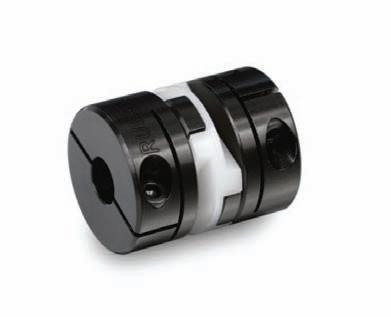
Oldham couplings can act as a mechanical fuse
Oldham electrically isolating couplings from Ruland Manu facturing are three-piece coup lings manufactured with two hubs and one centre disk in acet al for high torsional stiffness, or nylon for vibration and shock absorption. Torque transmission is accomplished by mating the slots in the centre disk and the drive tenons on the hubs with a slight press fit for zero backlash. The disk slides on the tenon to allow for a relatively large amount of parallel misalignment. Oldham couplings are electrically isolating and can act as a mechanical fuse. If the plastic insert fails, it breaks cleanly and does not allow any transmission of power, thus preventing damage to more expensive components.
RotoPrecision Inc.
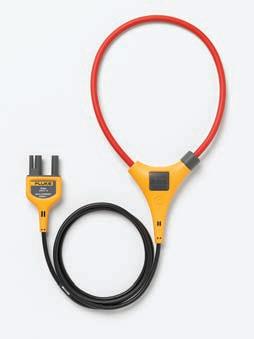
Current probes offer measurement flexibility
The Fluke iFlex flexible current probes expand the measurement range of certain Fluke meters to 2,500 AAC. The large coil allows users to reach around large or awkward-shaped conductors up to 6 in. in diameter, while the small, 0.3-in. profile allows the coil to reach between the tightly packed cables. Supplied with a 6-ft cord, the probes are available in 10-in. and 18-in. sizes. The model i2500-18 probe is in cluded with the Fluke 381 and 376 clamp meters. Both this model and the i2500-10 are com patible with Fluke 374 and 375 clamp meters. They are rated for safe use in hazardous locations.
Fluke Electronics Canada Reader Service Card No. 304
Leak diverter kit protects equipment from overhead leaks
Spill Busters leak diverter kits from Can-Ross come in a 5-gal pail and allow process industries to divert water leaks from leaky roofs and ceilings and also to process liquid leaks from overhead equipment such as valves and gaskets. The components are compatible with most chemicals. These handy kits allow maintenance staff to control and divert process liquids to a containment area, where they can remain without causing health and safety risks and damage to equipment until repair work can be scheduled.

Grinding disc flaps wrap right around periphery
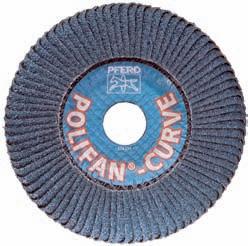
Polifan-Curve is a new Pferd flap disc designed to quickly achieve a smooth, consistent surface finish on fillet welds. The radial construction shape offers a superior solution for this common task. The tough material removes scale and bead from all metals. It works faster than grinding wheels with out the risk of undercutting the workpiece. It offers excellent tool life, including the radius edge of the disc.
Pferd Canada Inc.
Reader Service Card No. 316
Can-Ross Environmental Services Reader Service Card No. 303
The Industrial Choice
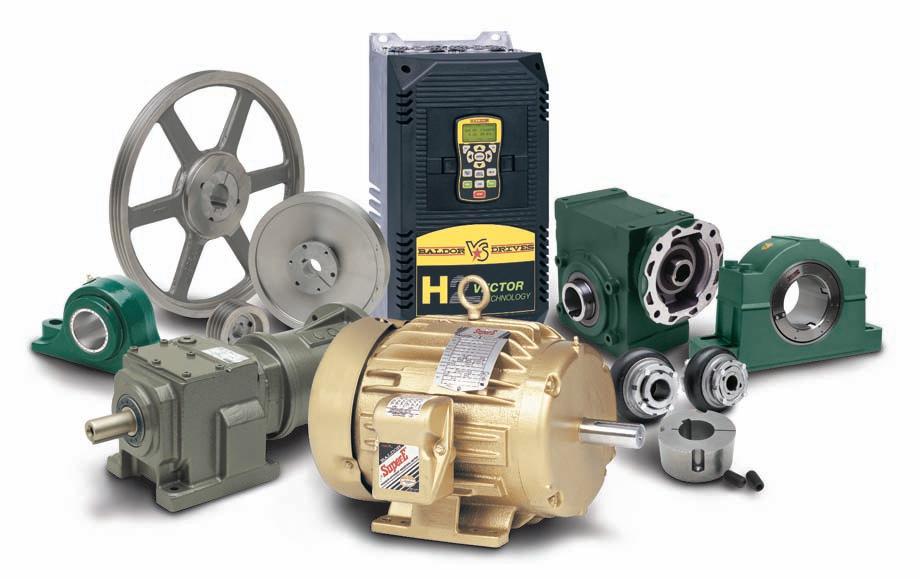

When it comes to industrial electric motors, power transmission products and drives, no other manufacturer offers more than Baldor...that is why Baldor is The Industrial Choice! Whether your application requires a fractional or 15,000 Hp motor, a variable frequency drive, mounted bearings or gearing, a pulley or sheave or even a standby generator, Baldor is the choice most preferred by industry.
When your next project demands the most reliable and energy efficient products available, look to Baldor as your one source for more industrial solutions.
• Superior Reliability
• Unmatched Quality
• Local Sales and Support
•
Anti-stick coating speeds gasket removal
Garlock has developed an anti-stick agent that facilitates removal of gaskets from flanged joints. Flange Free is a high-temperature, inorganic coating that the company is applying to its line of compressed-sheet gasketing, including extreme-grade gaskets for critical-service applications. The coating is fused to the surface of the gasket material and does not contain chemicals that could cause the gaskets to degrade. In most cases, gaskets treated with the product
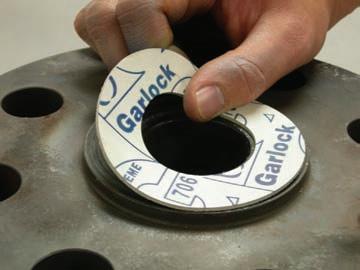
can be removed in a fraction of the time and force required to remove untreated gaskets without damaging equipment or injuring workers. Because they can be removed intact, they are easy to dispose of properly.
Garlock Sealing Technologies Reader Service Card No. 305
Cutting wheel receives performance enhancements
An ultra-thin cutting wheel for portable angle grinders, the Zipcut from Walter is made of abrasives with an improved engineered formulation for more durability and better cohesion. The integrated-rib design enables an operator to cut fast and comfortably, while using less pressure than other thin cut-off wheels. Heat is kept lower, resulting in less discoloration and minimal burr. The wheel is
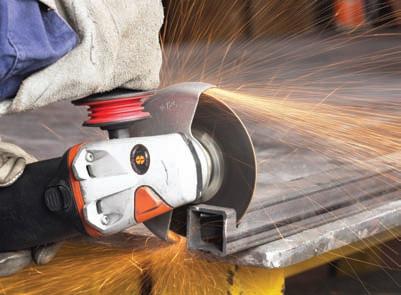
heavily reinforced for extra safety, yet is flexible and resistant to twisting and bending. The improvements result in less surface damage, longer disc life and straighter cuts. Walter

in this issue
features
MRO magazine celebrates its 25th anniversary / 8


A brief history of our first quarter century is bolstered by comments from contributors across the country.
Reducing lube and bearing costs for western firms / 15 SKF opens a Solution Factory in Edmonton
Understanding field evaluation for electrical products / 16
Electrical product certification and field evaluation processes in Canada, under the direction of the Electrical Safety Authority, help reduce the risk of injury or fire for people or property.
Reducing vibration with laser alignment / 17
Wind turbine drive trains can exhibit highly variable alignment between flexibly mounted generators and gearboxes.
Mohawk College honours first ICP grads / 29
The Industrial Careers Pathway’s first Canadian graduates are from the Mohawk College Industrial Distribution Leadership Certificate Program.
Industry Summit celebrates PTDA’s 50th anniversary / 30
More than 680 people attend the association’s annual meeting, including decision makers from distribution and manufacturing firms in seven countries.
editor’s selections
‘Criticality analysis helped us clarify where we needed to focus.’
Norm Kowalchuck / 15
‘With MRO, it was No-Frills publishing.’
Michael Gulas / 10
‘ALS takes the grease gun out of your hand and replaces it with a wrench.’
Gabriel Lopez / 20
‘Got program bugs? The good news is there is RAID to help you.’
Peter Phillips / 22
‘This was the eureka moment: Procedures!’
Cliff Williams / 23

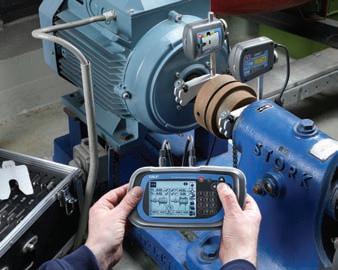



Modern times require safer workplaces
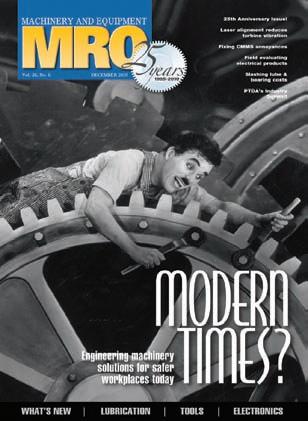
mages from Charlie Chaplin’s memorable Modern Times movie – like the one on this issue’s cover – give us an insight into industry in the hard times of the 1930’s. All those unprotected workers and that unguarded machinery meant a lot of danger in the workplace back then.
Modern Times, one of the last great silent films, is a story about industry that focused on individual enterprise and the pursuit of happiness. The movie opens with an overhead shot of a flock of sheep jostling in their pen, then rushing through a chute. Instantly, the sheep dissolve into a similar overhead shot of industrial workers pushing out of a subway station at rush hour on their way to work

in a factory. Issued in 1936, Modern Times is about the classic battle of man and the toil and dehumanization of factory life, yet it concludes optimistically.
Although we’ve come a long way from that era of industrialization, it’s taken years of inventions, regulations and advancements in safety to get us where we are today in the workplace. Regarding safety, it seems like these are the real ‘modern times’. But even so, industrial accidents still happen with alarming frequency – sometimes leading to deaths of workers on the job.
Why? We’ve learned that it’s not just guards on machinery and safety training and personal protective equipment
and safe procedures that are needed to keep workers safe. It’s also an attitude of having a safety culture in an organization (the focus on profits over safety has caused many industrial disasters). Yet that’s still not enough to keep us safe.
As our Safety File column (page 21) so aptly points out, work environments can really be made safer by applying new engineering safety solutions. The technology to safeguard plant equipment and machinery exists today and continues to evolve. We just need to see it put into place more frequently.
We hope that’s a project you’ll embrace as we enter a new year – one that happens to be the start of our second quarter-century of publishing. We’re looking forward to bigger and better things in 2011 as the $140-billion North American MRO marketplace gets back on its feet.
Finally, we want to point out that this will be the last edition in which we’ll in-

Did you know?
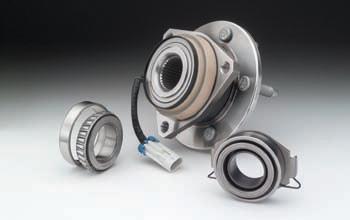
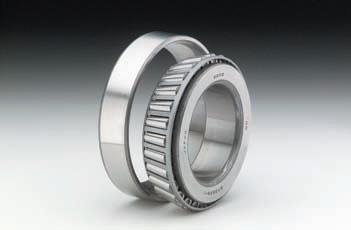
Koyo Seiko was formed in 1921. Today we are part of the JTEKT Corporation with consolidated sales of $10.3 billion and employing more than 33,000 around the world.
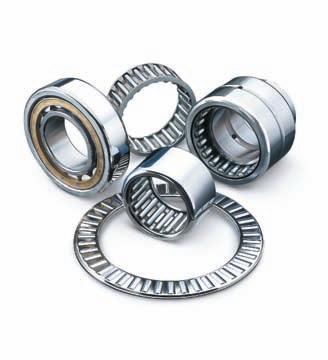
In January 2010 JTEKT acquired the Torrington® needle roller bearing business from the Timken Company and these products are now available from authorized Koyo distributors worldwide.
The Koyo brand supports an extensive array of applications, forming part of the original equipment for many world-class names and is a trusted supplier to industry for the ongoing repair and maintenance wherever anti-friction bearings are required.
Going green starts with a commitment to the future.

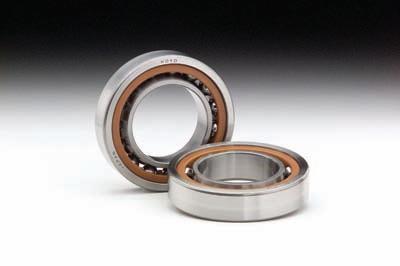
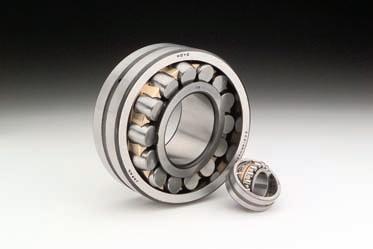
It’s about creating a vision for the future and then communicating that until it becomes a part of your culture. It’s about new approaches to break through old barriers. And it’s about holding true to your commitment when challenges arise.
Koyo continues to research, develop and deliver products that consume less energy, last longer and lighten their load on the environment. Since 2005 we’ve reduced the CO2 output per unit in manufacturing by 30% and since 2008 reduced our CO2 footprint in logistics by 31%.
In 2009 alone we reduced energy consumption in manufacturing by 14%, raw materials by 20% and CO2 emissions in logistics by 16%; all this while maintaining production levels.
Here are some of the many targets we are working towards achieving this year: Zero landfill waste; 90% reduction of 2001 levels of incineration waste; 30% reduction from 2003 levels of overall waste per unit; 5% increase in manufacturing efficiency per unit and 5% reduction in weight per unit.
For a copy of Koyo’s Corporate Social Responsibility report please visit www.koyo.ca
Making bearings since 1921.
clude printed Reader Reply Cards in each copy. We’ve found that more and more readers are using the Internet to find advertisers’ information and the sources for items mentioned in our feature articles and Product News sections, so we’re following the trend and are saving some paper to boot (a good thing for the environment). We expect you’ll find it’s faster, easier and more effective to request the information you want though our Online Reader Service Card at www. mromagazine.com/rsc. It’s available 24/7 from any computer connected to the Web. (And if your one of the few who don’t want to use this service, don’t hesitate to call, fax or write to us with your request). Now, let’s look ahead to our 26th year of Machinery & Equipment MRO. Read more about my thoughts on this milestone, and those of several other readers, in the special anniversary section starting on page 8. Bill Roebuck, Editor & Associate Publisher

Carroll McCormick, Peter Phillips, Angela Webb, Cliff Williams
BUSINESS
Nick Naunheimer, Publisher 416-510-6868 nnaunheimer@mromagazine.com
Eric Achilles Cousineau, Adv. Sales Manager 416-510-6803 eachilles@mromagazine.com






It’s our 25th anniversary
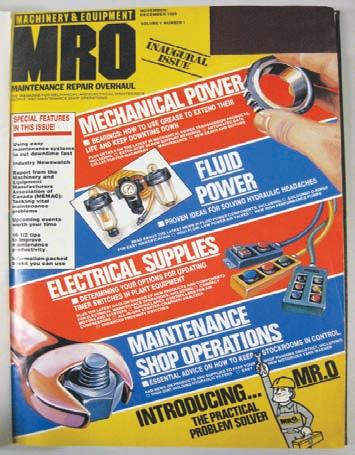
elcome to the 25th anniversary issue of Machinery & Equipment MRO Our publishing organization was founded as an independent small business in September 1985, and the first issue was published in December of that year.
Over the years, we’ve had a few different owners; first, the founding partners, Peter Helston and Victor Zellermeyer. Then, in 1990, the company was sold to Southam Business Communications. In 1998, Southam’s magazine group was acquired by Hollinger International. And four years ago, the operation was sold again, this time to Vancouver-based Glacier Media.
However, despite these ownership changes, MRO magazine has had only one editor (such editorial longevity a rarity in the publishing business). I started planning the editorial content for our first issue based on the insights of Peter and Victor, and honestly never anticipated still being in charge of its content a quarter of a century later. But as many of you know, it’s a great market involving exciting industries, and it kind of sticks to you like glue.
We’ve evolved significantly from our early days — and expanded our operations too — adding supplements for the lubrication and electrical markets, an innovative website featuring daily industry news, and other products and services for readers
BY BILL ROEBUCK
ers to reach Canada’s maintenance decisionmakers, and to provide useful, practical information to those working in maintenance, repair and operations in the country’s mines, mills, manufacturing plants, utilities and distributor branches.
provides readers with informative and timely content that is geared to their day-to-day professional needs. The magazine was designed to be an effective way for suppli-
Interestingly, we’ve just done a poll that shows almost a quarter (24%) of our readers have been reading the magazine over the past 15 to 25 years. Another 35% have been subscribers for between five and 15 years. And 40% are from over the past four years. We think that’s a pretty good breakdown – lots of loyal, long-term readers, and lots of new blood too.

BY PETER HELSTON


Please consider adding your own comments or reflections on the past 25 years. We’d love to read them, so don’t hesitate to get in touch by sending an e-mail to broebuck@mromagazine.com.
the past 25 years
It is probably fair to say that the idea for Machinery & Equipment MRO magazine was conceived as a result of a recession. This world was a very different place back in the early 1980’s. As publisher of Canadian Machinery & Metalworking, a Maclean Hunter magazine, I could look out at the worldwide machinery and equipment business and see trends taking shape. But after the awful recession of ’81-’82, which in some ways was worse than the recent ‘Great Recession’, nothing was the same as it had been. Canada’s metalworking machinery manufacturing industry virtually disappeared in the space of 18 months — the OEM business had never experienced such tough markets!
Often, though, good enterprise can spring from bad times. Some companies like Canadian Timken had been regular advertisers in CM&M for 75 years. But in January of 1981, at the start of that awful economic period, I had a call from Denny Arnold, marketing manager for Timken in Canton, OH. He wanted to break the bad news to me that after 75 years of advertising in the
magazine, Timken was not renewing its contract for 1981 due to the economic times. Timken was “shifting its advertising focus from the OEM market to the MRO market.” I asked Mr. Arnold what the “MRO” market was.
Over the next year, Denny educated me on exactly how this market worked, the importance of distribution, and the fact that no magazine in North America served this market directly at the time. Needless to say, it is a magazine publisher’s dream — and a fairly rare one at that — to find a market that has no magazine occupying that space, especially a sector as large and vibrant as the machinery aftermarket.
After a year of research into the MRO market, it was evident this was a sector crying out to be served by a business magazine. Why there were no magazines in Canada and the US serving it simply came down to the fact that ‘maintenance’, either machinery or facilities, just didn’t sound that sexy. Little did our publishing industry know then about how important a business it was.
The rest of the story is this: I worked up a plan for Maclean Hunter to launch a magazine to serve the machinery MRO market. Unfortunately, the executives at the company saw this idea as a threat to
We’d like to thank every one of our readers for their loyalty over the years, and also thank our many advertisers — without their support this magazine would not have been possible.
As we enter our second quarter-century, we’re encouraged to have just come out of yet another recession (our third). A growing economy means we’ll be able to continue investing in relevant content – some traditional and some new and innovative. We certainly hope you’ll be along for the ride.
Bill Roebuck is the editor and associate publisher of Machinery & Equipment MRO and mromagazine.com.
many existing company magazines that had bearing, drive, lubricant, motor, etc. advertising (they were right in this assumption, as it turned out). So they turned it down.
That is why Machinery & Equipment MRO became an independent magazine, when we launched it in the fall of 1985, with Bill Roebuck at the helm of the editorial, as he is today. Congratulations to Bill and Machinery & Equipment MRO magazine for nurturing that original idea for a quarter century.
Peter Helston was one of the two founding publishers of MRO magazine.
Retaining its focus
BY VICTOR ZELLERMEYER
The notion for a magazine focusing exclusively on the general upkeep and maintenance of machinery and equipment came to us in the early 1980’s, a difficult time for the general economy. It’s fair to say, all of us involved with the launch of this magazine had a huge personal and financial stake in the success of MRO.
After five years of tremendous growth and financial success, as NAFTA was taking shape and one-by-one, manufacturing plants were moving south of the border, the magazine was sold to Southam — and that pretty well ended my personal involvement with Machinery & Equipment MRO
It certainly gratifying to see not only that MRO remained the focused magazine it always was, but that the founding editor Bill Roebuck is still at the helm.
Congratulations to the entire team and here’s wishing you continued success.
Victor Zellermeyer was one of the two founding publishers of MRO magazine.
A contact point
BY CLIFF WILLIAMS
Twenty-five years ago, I had been in Canada just four years. The steel industry was booming, Oshawa was GM north, and there were 10-12 pulp and paper companies operating in Canada, employing thousands of people. Interest rates were just coming off historical highs of a recession, but companies were still investing.
Work planning was carried out on micro-fiche systems. Multi-skilling had not been heard of, and if you wanted a spare part, it involved a lot of telephone calls.
We had just hired a contractor to do some line-shaft alignments using a newfangled device — a laser aligner. At the time, vibration analysis was done through both ends of a screwdriver.
This was the world that saw the birth of MRO, a magazine designed to bring everyone the news of the changes that were taking place in the world of maintenance and to allow a contact point for those who wished to get a better understanding of the tremendous shift towards the technical age that was happening.
Quickly switch to today, where Canadian industry has gone through enormous change and is still evolving. Interest rates are at historical lows but no-one seems to be investing. The market is global — and so is the competition.
Almost everyone has a CMMS system, but for many the planning is no better than before. Most alignments are done with a laser, while a screwdriver is only used for driving screws. We can talk in real-time, order parts, get involved in forums and receive training from anywhere in the world, while just sitting at our desks.
And MRO magazine is still bringing us the news we need, and it allows us to
understand the current environment though informed articles and topics — and now it’s immediately available when we want through the use of the Internet.
As the saying goes, ‘The more things change, the more they stay the same.’
Cliff Williams is the corporate maintenance manager at Erco Worldwide.
A significant milestone
BY MARY SUE LYON
Let me begin by extending a hearty congratulations to Machinery & Equipment MRO upon reaching this significant milestone of 25 years in publication. MRO has been a tremendous ally and source of news support for the Power Transmission Distributors Association throughout the magazine’s entire history.
The magazine has been a resource to PTDA for communication with its Canadian membership and prospective membership throughout the years. Your coverage of our annual Industry Summit has always been thorough and always provides the ‘Canadian’ angle for the event.
In addition, the support of the publisher and editor of Machinery & Equipment MRO was instrumental in PTDA’s initiation and growth of its annual Canadian Conference. Now in planning for its 10th annual Canadian Conference, the editorial and advertising support of your magazine has been an invaluable asset to building and sustaining interest in this event to serve the significant power transmission/motion control dis-

tribution industry across Canada.
On behalf of the entire PTDA organization, we wish you much continued success.
Mary Sue Lyon is the executive vice-president of the Power Transmission Distributors Association.
Documenting the changing MRO world
BY DON LATHAM
For the past 25 years, the MRO magazine has reported on the changes that have occurred in Canadian industry. We have seen manufacturers consolidate their MRO supplier base under the concept of integrated supply. They have also reduced their engineering and maintenance departments and created business opportunities for new service companies.
Growing with MRO
BY JOHN LAMBERT
Twenty-five years ago, I was a recently promoted foreman, moving from ‘the tools’, as we say, into management. It was not an easy move because it was on-the-job learning. Moving away from my skills as a tradesman, where I was comfortable, to take on a position that is more about people management, was a challenge.
We have also seen the consolidation of industrial distributors into large companies, while at the same time start-up, value-added distributors discover new niches in the marketplace. And emerging new MRO communities in recycling and renewable energy have arrived on the scene.
MRO magazine, in print and on-line, continues to document our changing MRO world.
Don Latham is the president of Belterra Corp.
They say that you learn by your mistakes so I can also say I learned a lot. Good information on maintenance was not readily available, unless you were receiving the MRO magazine, which was the only magazine that came into our plant. It was the link for us on what was going on in the outside world of maintenance. It was how we learned about new technologies.
There was always a copy on my desk and I also got a copy for the shop so it could be passed around — and it was. Yes, there were trade shows, but in the early 1980’s, we were running very lean and mean and we could not afford the time to send any of the foremen or supervisors.
Later, when I made supervisor, I was still hungry to learn. I was taking night school classes for subjects like motivation and management (I learned later that these words do not always go together).
But most of the technical information came to me from the articles I read in MRO magazine.
Little did I think that one day I would be writing such articles for the same magazine. This happened after I started my own business in 1994. I had started by offering training for tradesmen in topics such as shaft alignment using dial indicators. A friend of mine knew one of the publishers of MRO magazine, Victor Zellermeyer, and set up a meeting between us. The idea was that he could give me some insight into starting my business, how to market it, and so on. What he did was introduce me to one of his clients, who sold vibration instruments. So without going over all the details, we added instrument sales to our company’s offerings.
Many of you will know how successful we have become and I owe a lot of it to my relationship with this great magazine — not only for my early education in maintenance but also for providing the link into instrumentation. MRO magazine also has published articles that I have written for machinery installation and condition monitoring, which I appreciate. So my hat’s off for this great magazine. I would always support them, given the opportunity. They have been a tremendous provider of good-quality information for our industry over these years and I look forward to continue reading it for many years to come.
Three cheers for MRO!
John Lambert is president of Benchmark Maintenance Services Inc.

Consistency, without the fluff
BY MICHAEL GULAS
I had been working in the bearing and power transmission business for 10 years when MRO magazine first came out. I remember the first edition. The publication has been true to its mandate, which was to present an unbiased and informative representation of the MRO industry in Canada.
I also remember visiting Peter (Helston) just after the first year of the magazine’s life and Peter summed up MRO as “no-frills publishing.” Solid reporting without the fluff.
In reflection, I can think of two impressive features of the magazine that have kept my interest over the years. One is consistency. I enjoy the articles and reporting on ‘What’s New’, and items like covering the industry conventions and changes that occur in its many com-
panies and organizations.
The other interesting aspect of MRO is the diverse but focused reporting on technological advancements and trendy changes that occur in the Canadian industry.
The magazine has remained Canadian and I like that. I hope to be able to enjoy MRO for another 25 years.
Michael Gulas is business development manager – industrial at Oiles America Corp.
Steadfast and true
BY KEN BANNISTER
Thinking back to 1985, two major transitions were occurring in the maintenance shop that would have major ramifications for the future of asset management: 1) disco was no longer being played on the radio, and 2) the PC computer — along with its accompanying first-generation CMMS software — created a major
transformation in how we performed maintenance work.
Since then, the maintenance department has absorbed many revolutionary changes in its quest for asset reliability and availability, undertaking to overcome the negative aspects of downsizing and attrition, while mastering the complex requirements of new technologies.

Throughout this turbulent period, Machinery & Equipment MRO has remained steadfast and true to its maintenance audience for 25 years, providing a mirror to the changing times through a format that delivers easy-to-understand explanations of often complex subjects, easing the pain of change for its readers. In today’s throwaway society, in which corporate takeovers regularly destroy legacies, achieving a quarter of a century’s sustainability is a truly marked event. Much of the maga-

zine’s success must be attributed to its only editor, Mr. Bill Roebuck, a person I respect very much and am pleased to call my friend.
Congratulations, Machinery & Equipment MRO magazine! I am pleased to have been a subscriber, avid reader, and contributor to your magazine for much of your past 25 years, and hope to continue for many years to come!
Ken Bannister is the president of Engtech Industries Inc.
Maintenance getting the attention it deserves
BY PETER PHILLIPS
Here’s what I have seen over the past 25 years. For many years, maintenance departments have been seen as a necessary cost to keep the equipment operating and in good enough condition to serve its purpose, whether it was producing product in a manufacturing facility or ventilating a room in a university.
Over the past 25 years, there has been a monumental shift in the way companies look at maintenance. Just-in-time manufacturing, lean manufacturing, reliability-centred maintenance and many other initiatives have brought maintenance to the forefront.

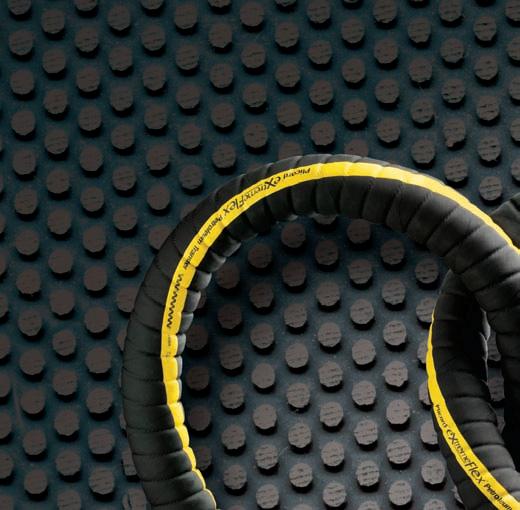




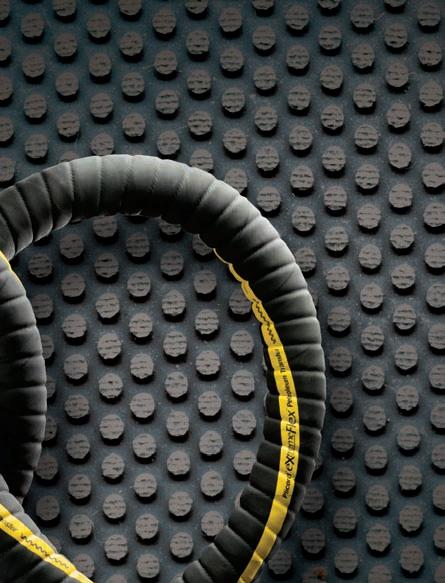
of petroleum transfer hose


Organizations have realized that effective maintenance practices that include detailed preventive and predictive maintenance procedures, proper parts, tools and technical training are key factors in the reliability of equipment, thus improving overall availability.
After many years of struggling to maintain the equipment with limited resources, the maintenance department is now enjoying the attention it deserves.
Peter Phillips is president of the CMMS consulting firm Trailwalk Holdings.
A unique Canadian presence
BY STEVE O’BRIEN
Some pithy observations: The MRO market has changed dramatically over the past 20-plus years. The independent distributors have continued to shrink, while the large US-based chains have grown.
The OEM market has gone from base manufacturing into specialized niche markets in order to adapt to both currency fluctuations and shrinking demand at home (markets such as solar and turbine power, and oilfield equipment like coil tubing injectors).
Through all this, MRO magazine has managed to create, develop and maintain a unique Canadian presence in the marketplace. Technical articles, editorial commentaries and industry news all have a distinct Canadian perspective. MRO magazine never fails to emphasize that we know our own products and services better than anyone else.
MRO magazine also realizes that the flow of information is changing. The enduser today is most concerned with obtaining all his product information at the speed of light, with readily available, cost-saving materials at his fingertips. Service has gone from having reliable ontime deliveries to the fastest delivery. The price mantra has turned into the performance mantra (e.g. ‘I’ll pay a little more but it has to last longer’).
MRO magazine understands this in a
Fault sensors allow remote shutdown of wind turbine
Perth, Scotland — The wind farm at Drumderg hill in Perth and Kinross, Scotland, consists of 16 turbines that can generate 37 megawatts, enough to power 25,540 homes for a year. Working atop a 330-ft-tall wind turbine is a dizzying task — not least because the platforms continue to rotate in search of wind during maintenance checks.
Bad weather poses no serious risk to the machinery, but in strong gales, sensors housed in the nacelle can automatically slow down or halt the blades. Failing that, the owner of the site, Scottish and Southern Energy, can shut down the turbines remotely from its head office in Perth if any fault is detected.
Engineers work in a buddy system, each relying on their partner to stick to safety rules. Access to the top of each turbine is via a two-man lift inside the shaft, which brings them out just below the nacelle.
BEARING ASSOCIATION LAUNCHES AWARENESS CAMPAIGN AGAINST COUNTERFEITING
Canton, OH – According to the World Bearing Association (WBA), in the past two decades, counterfeiting in general has grown by 10,000% globally. While there has been much reporting about consumers being taken advantage of by counterfeits in music, film, home electronics and designer clothing, a far greater risk lies in industrial counterfeiting of items such as tires, seals and bearings. All these products are safety-critical and fake versions pose a real threat.
As a result, the WBA has launched an awareness campaign to inform about safety hazards arising from counterfeit bearings. “Our initiative is aimed at sensitizing the public on the dangers associated with counterfeits,” says James W. Griffith, WBA president, and president and chief executive officer of The Timken Company.
“The WBA is thus intensifying its anti-counterfeiting initiatives — that means information for customers on the one hand and consistent prosecution of offenders through the competent authorities on the other.”
The WBA anti-counterfeiting information campaign will reach out to various audiences over the next three years through e-mails, Website banner ads, social media and the campaign site, www.stopfakebearings.com. On the website, consumers can learn more about counterfeiting and what branded-bearing manufacturers are doing to stop it.
“Everyone who buys, sells, mounts and uses bearings can be adversely affected by counterfeits, so it is in their best interest to be on the lookout for them,” says Griffith. “Manufacturers of products containing industrial bearings may be held responsible for damages. We want purchasers to realize that counterfeiting is a widespread and serious problem.”
Counterfeiting also violates intellectual property, such as patents and trademarks. Because counterfeits look like and are marketed like genuine, premium-brand products, it usually takes a trained expert to identify them.
Premium manufacturers invest continuously to develop their technology and
improve the quality and value of their products. “When counterfeiters copy the look of industrial bearings — and apply respected brand names that aren’t theirs — they are infringing upon the rights of the manufacturer,” concludes Griffith.
The WBA is a non-profit and unincorporated industrial association. It was founded in 2006 by three regional bearing associations: the American Bearing Manufacturers’ Association (ABMA), the Federation of European Bearing Manufacturers’ Association (FEBMA), and the Japan Bearing Industrial Association (JBIA).
continued on page 12







Having the right tools for critical maintenance and repair work can make a big difference in your production efficiency. Kinecor carries a comprehensive line of mill supplies from the world’s most reputable manufacturers.
Kinecor – a single and complete source of industrial components and services for all of your MRO needs.

Engineer Ross Kennedy balances on top of a wind turbine as he carries out a check of the rear aileron.
Photo: Toby Smith, Daily Mail
DISTRIBUTOR BRINGS TOGETHER EMPLOYEES AND SUPPLIERS
Mississauga, ON — Canadian Bearings Ltd. held a sales and service meeting for both suppliers and employees across Canada at the Hotel Novotel Toronto in Mississauga, ON, on Oct. 2, 2010. “A sales and service meeting of this size hasn’t been held in more than a decade,” said CB busi-



� Cleans
�
�
ness manger Ali Moghadam. The theme of the event was ‘Ready to Deliver More’.
“We’re the industrial supplier of choice for many of Canada’s large and small manufacturers,” said CB president Farrokh Khalili. “Today, CB is a lot more than bearings. We offer one of the most comprehensive lines of products in the industry, with nine categories of product solutions. During the event, we got common understanding of our expanded offerings, our service innovations, our future plans, and the Ready to Deliver More campaign.”
GUNS ‘N SMURFS GOLF CLASSIC ATTENDED BY PTDA MEMBERS
Mesquite, NV — Since 1991, a group from the power transmission industry has been heading to a golf course following the annual Industry Summit of the Power Transmission Distributors Association (PTDA) for a three-day Invitational Golf Classic. This year’s event took place in Mesquite, NV, following the 2010 Industry




tall and short players, plays homage to former members Dan Thrussel, Ken Fee and Ron Starr, industry stalwarts who have since passed away. This year’s winner of





POSITIVE OUTLOOK FOR 2011 SEEN IN LATEST PTDA BUSINESS INDEX
Chicago, IL — According to the third quarter results of the Quarterly Business Index released by the Power Transmission Distributors Association (PTDA), PTDA members are projecting 10% growth on top of the 14% average growth expectation for 2010.
In the third quarter, respondents experienced expansion, albeit at a slightly reduced rate than the second quarter. The overall reading for the third quarter was 74.6, compared to 77.0 in the second quarter. A reading above 50 indicates expansion.
A comparative review of distributor and manufacturer results show that manufacturing expanded at a faster pace than distribution, with a reading of 76.6 for manufacturers vs. 71.2 for distributors.
A US-based trade association, PTDA represents 185 power transmission/ motion control distribution firms that generate more than $10 billion in sales and span 3,500 locations in North America and 11 other countries. PTDA members also include 181 manufacturers that supply the PT/MC industry.
SOME SYNTHETIC LUBE MARKETS ON A GROWTH CURVE








Cleveland, OH — US demand for synthetic lubricants and functional fluids will expand more than 3% per year to $4.8 billion in 2013, with growth rising at an even faster pace in volume terms to reach 520 million gallons, according to a new study by The Freedonia Group.
Engine oils and hydraulic and transmission fluids will experience the fastest gains as synthetics finally begin to penetrate the conservative medium- and heavy-duty truck markets.
While engine oils and hydraulic and transmission fluids will achieve relatively strong growth going forward, other types of synthetic lubricants and fluids are expected to realize a slow decline in demand through 2013, largely as a result of falling average fluid prices. From a product standpoint, the greatest declines will be in heat transfer and metalworking fluids. Synthetic metalworking fluid demand will suffer from increasing substitution of bio-based fluids for synthetics.
These and other trends are presented in Synthetic Lubricants & Functional Fluids, a $4,700 (US) study. For more information, visit www.freedoniagroup.com. MRO


More detailed versions of these stories, along with many additional news items, can be found online at www.mromagazine.com.
At Canadian Bearings’ Ready to Deliver More meeting, suppliers hosted display booths for their products.
The 2010 Guns ‘n Smurfs’ golf classic was won by Pierre Bouchard (standing, third from left).


Company Briefs
News and views about companies, staff, product lines and more.
• The Power Transmission Dis tributors Association (PTDA) Board of Directors has unanimous ly selected Ann Arnott, currently PTDA’s vice-president of programs and services, to succeed Mary Sue Lyon as the next executive vicepresident of PTDA, effective Janu ary 1, 2011. Lyon is retiring after 16 years in this position.

• V.J. Pamensky Canada Inc., Toronto, the exclusive Canadian importer for WEG products, which are manufactured in Brazil, has launched a new website at www.pamensky.com, reports marketing coordinator AJ Zellermeyer.
• The ABB power and automation technology group, Zurich, Switzerland, will acquire Baldor Electric Company, Fort Smith, AK, a North American supplier of industrial motors, in an all-cash transaction valued at approximately $4.2 billion. The deal is expected to close in the first quarter of 2011.
• The Manufacturer Council of the EPTDA (European Power Transmission Distributors Association) is inviting all manufacturer member companies to bring along two of their distributor companies, who are not yet a member of the association, to join the EPTDA’s 2011
Annual Convention in Budapest, Hungary, on September 28-30, 2011, on a complimentary basis. “This initiative signals our firm commitment to take EPTDA membership to new heights,” said Jos Benneker, chair of the EPTDA Manufacturer Council and sales manager, Europe, David Brown Benzlers. For more information, visit www.eptda.org.
• Endress+Hauser Canada Ltd., Burlington, ON, a supplier of industrial measuring technology and automation equipment, is celebrating its 20th anniversary in Canada. The Swiss parent of the company launched its Canadian operation in 1990. The company employs over 100 people at offices in Montreal, Calgary and Edmonton, as well as Burlington. In addition, the company recently expanded into Saskatoon.
• Under the hot Utah sun at the Bonneville Salt Flats Sept. 20-24, 2010, four racing teams shattered standing world land speed records, using streamlined cars and motorcycles that traveled at speeds of 280

mph to over 400 mph. Broken were the land speed records for a naturally aspirated race car, streamlined motorcycle, turbocharged streamliner and streamlined racecar. Virtually every car in the competition relied upon Loctite products to enhance performance. According to Mike Shannahan, Henkel’s director of marketing for the North American general industry business, “Loctite products, especially our threadlockers, are critical to racing performance, and the teams really appreciated our help and support throughout the Shoot-out.”

• The Cooper Bearings and Kaydon Bearings divisions of Kaydon Corp., Phoenix, AZ, have announced a joint sales initiative by their North American sales teams aimed to improve coverage and give customers more bearing choices from a single source. Kaydon and Cooper will continue to develop and manufacture their own product lines in their own facilities, but will now offer them through a single sales and distribution network. The joint sales initiative is being managed by Brian Short, director of distribution sales for Kaydon Bearings.
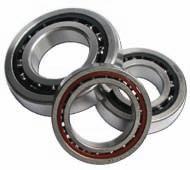
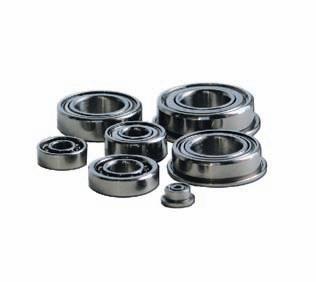
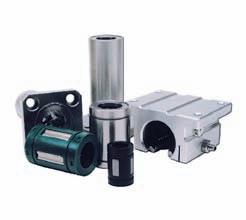
• Ian Parkhill, president of Wera Tools North America, Burlington, ON, reports the company has now completed the transition of its logistic support centre to Tucker, GA. “We have also relocated our North American Sales and Marketing Support Center,” he says. The company’s Canadian office is now located 4129 Harvester Rd., Unit H, Burlington, ON L7L 5M3.
• Emerson Bearing, a Boston-based bearing company catering to OEM and MRO markets internationally, has recently announced a new Machine Tools division. Customer care representatives in the new division are trained to accommodate the unique needs of machine tool clients. The division was created to meet increased demand and significant growth in this market over the past couple of years. Marketing specialist Bob Piracini leads the new division.
• As part of its customer care program, Emerson Bearing provides a bearing failure analysis service that helps clients determine the cause of bearing failure so that they may prevent future failure and predict reliability. Clients also can use the Bearing Failure Analysis program within the Technical Toolbox on the Emerson Bearing website located at www.emersonbearing.com.
• Two industrial companies play a supporting role with astronauts performing a spacewalk repair in the movie Hubble 3D. In May 2009, when the future of the Hubble space telescope was hinging on delicate repairs performed by NASA astronauts using ATK’s Mini Power Tool, ATK needed precision components required for the job. Now ATK and Timken are featured in the movie. ATK’s Mini Power Tool, equipped with Timken custom thinsection precision ball bearings engineered especially for the application’s unique requirements, helped to enable the crucial repairs to return the Hubble Space Telescope to active duty.
Land speed record-breaking racer Charles Nearburg, flanked by Loctite Land Speed Shoot-out producers Mike Cook Sr. (right) and Mike Cook, Jr., poses in front of the Spirit of Rett.
PTDA’s Ann Arnott.
Reducing lube and bearing costs
Bearing supplier opens a Solution Factory in Edmonton that includes its first bearing
refurbishing facility in Canada.
BY CARROLL MCCORMICK
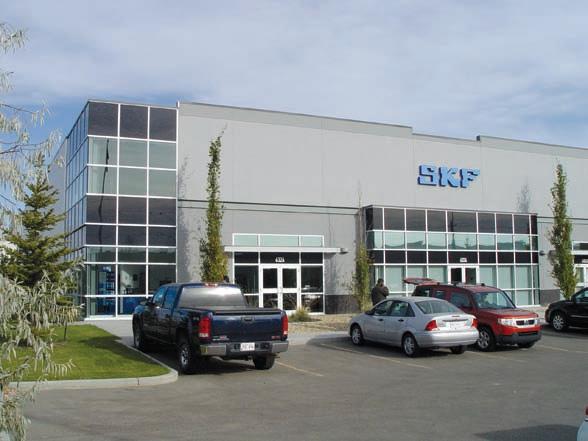
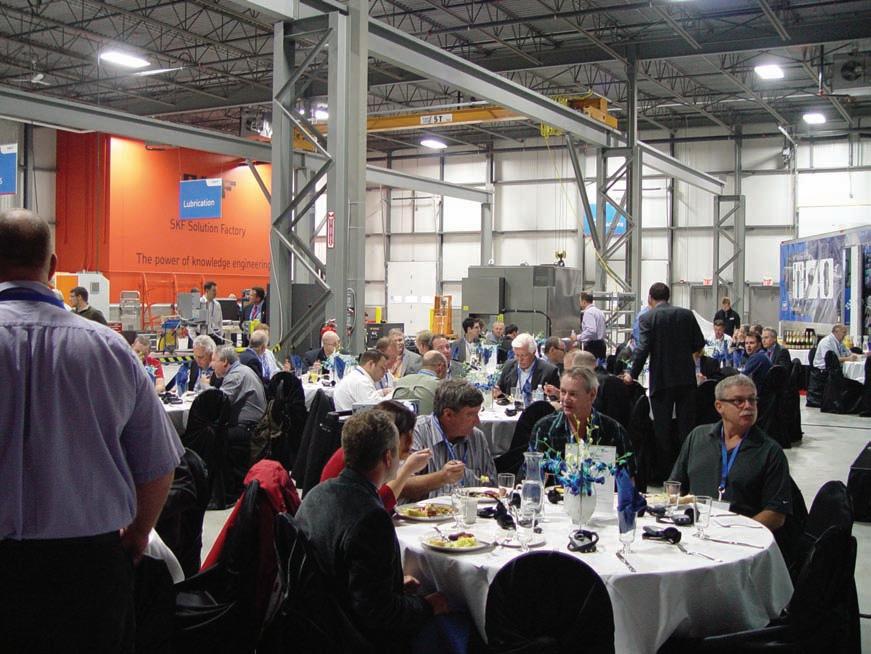
In Edmonton in October 2010, bear ing, seals and maintenance solutions provider SKF Canada celebrated the opening of the global company’s 15th Solution Factory. The 18,000 sq ft (1,672 sq m) facility houses new and ex isting capabilities under one roof.
The largest room in the Solution Fac tory is a 14,000 sq ft (1,300 sq m) repair area, divided into three bays. The first bay is for fabricating seals, assembling lu brication skids and other miscellaneous repair and servicing activities. The sec ond bay, equipped with a five-tonne crane, is for bearing remanufacturing. The third bay is for repairs and future expansion.
Clients entering the Solution Factory by the front door step directly into an exhibition room. Here they can see static and active displays of SKF products such as specialty bearings, seals, mechatronics and power transmissions. Nearby is a training room and remote diagnostics centre (RDC).
The grand opening of the Solution Factory was well-attended by SKF personnel and maintenance specialists from the oil and gas, and pulp and paper industries, in western Canada. SKF Canada president João Ricciarelli summarized the mission of the Solution Factory. “Customers want solutions: reduced time to market, reduced cost of production, improved productivity. The Solution Factory puts all the resources we can give our customers in one place … we want to transfer knowledge from ourselves to our customers.”
To illustrate Ricciarelli’s point, Norm Kowalchuck, maintenance service co-ordinator at Cenovus Energy, Calgary, AB, presented a case study of how SKF devised maintenance strategies for Cenovus; e.g., criticality analysis and preventive maintenance. “The criticality analysis helped us clarify where we needed to focus,” explained Kowalchuck. The work yielded over $6 million in soft savings, with a return
on investment (ROI) of about three months.
Shawn Elliot, senior advisor at Vancouver-based Daishowa-Marubeni International Ltd.’s DMI Peace River pulp mill in Peace River, AB (489 km northwest of Edmonton), presented a case study in which he discussed how the mill integrated SKF solutions into DMI’s reliability strategies. He reported a roughly 25% drop in lube and bearing costs, an increase in equipment availability of 2-3% and operator-driven equipment reliability up about 100%. “Operator-driven reliability has been the biggest change for us in the past five years,” Elliot said.
After more chat and a ribbon cutting ceremony, SKF divided the attendees into groups for a tour and demonstration of seven areas of the Solution Factory. These cover what SKF calls its five platforms: Bearings, Seals, Lubrication, Mechatronics and Reliability Services.
The first stop was in the centre bay where, for the first time in Canada, SKF will have a bearing refurbishing capability. After incoming bearings are inspected, they are cleaned in a Quadra-Jet Model 250 washer (think giant dishwasher) that can accept bearings up to 49 in. (124 cm) in diameter. Afterward, technicians check
bearing clearances, dismantle, repair, reassemble and pack customers’ bearings for shipping. These operations were scheduled to begin by the end of October.
In the second area we saw presentations of different types of SKF solutions; e.g., lubrication system designs, vibration monitoring systems and the company’s work in the hydrocarbon processing industry. SKF provided illustrations of equipment such as pumps, blowers, fans, and maintenance tools such as portable electronic devices and other application-specific solutions.
After a stop and talk in the exhibition room, we passed through to the fourth area: the RDC. This room is equipped for Remote Data Capture and analysis, diagnostics reporting and the general making available of data to customers 24/7. A key advance in the creation of the RDC is that SKF engineers no longer have to physically visit equipment to collect data.
The most physical expression of SKF’s commitment to, as Ricciarelli put it, “equip the world with knowledge,” was parked at the fifth stop beside the refreshment table: After our group came, conquered and left, I stayed behind to learn more about the SKF solutions vehicle — a 26-ft (7.9-m) Kenworth with a walk-in, custom-made show-
room kitted out with demonstration equipment and graphics representing SKF’s five platforms.
This solutions vehicle, which replaces an SKF tool truck that had seen 12 years of service, has been on the road since May 17, 2010. It has already visited 171 endusers and the plan is to have it on the road for 50 weeks of the year.
During each appointment that the solutions vehicle has with middle managers at a company, SKF has two goals: Enlighten end-users about the five platforms and explain how they allow SKF to create solutions, according to Mark Howard, business manager, seals platforms. “As we inform them about what we have and do, we ask probing questions about how their plant is operating. The overall concept is to discuss [how much] they spend a year and how they can reduce maintenance costs. We want to talk about how to increase uptime and reduce costs.”
Hopelessly behind the pack again, I got a private tutorial on a demonstration lubrication system in bay three. The Solution Factory will design and assemble custom lube system skids here, do assessments and perform associated services. Until now a service that Toronto-based SKF provided primarily from eastern Canada, this Edmonton-based capability will improve response time to customers.
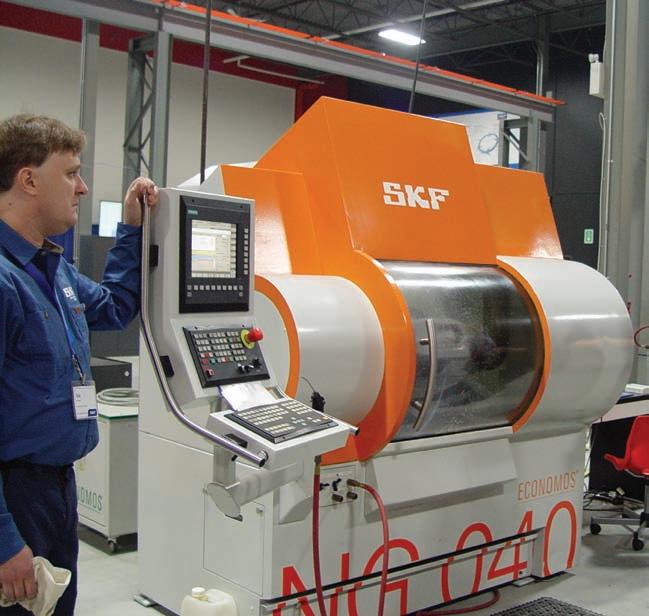
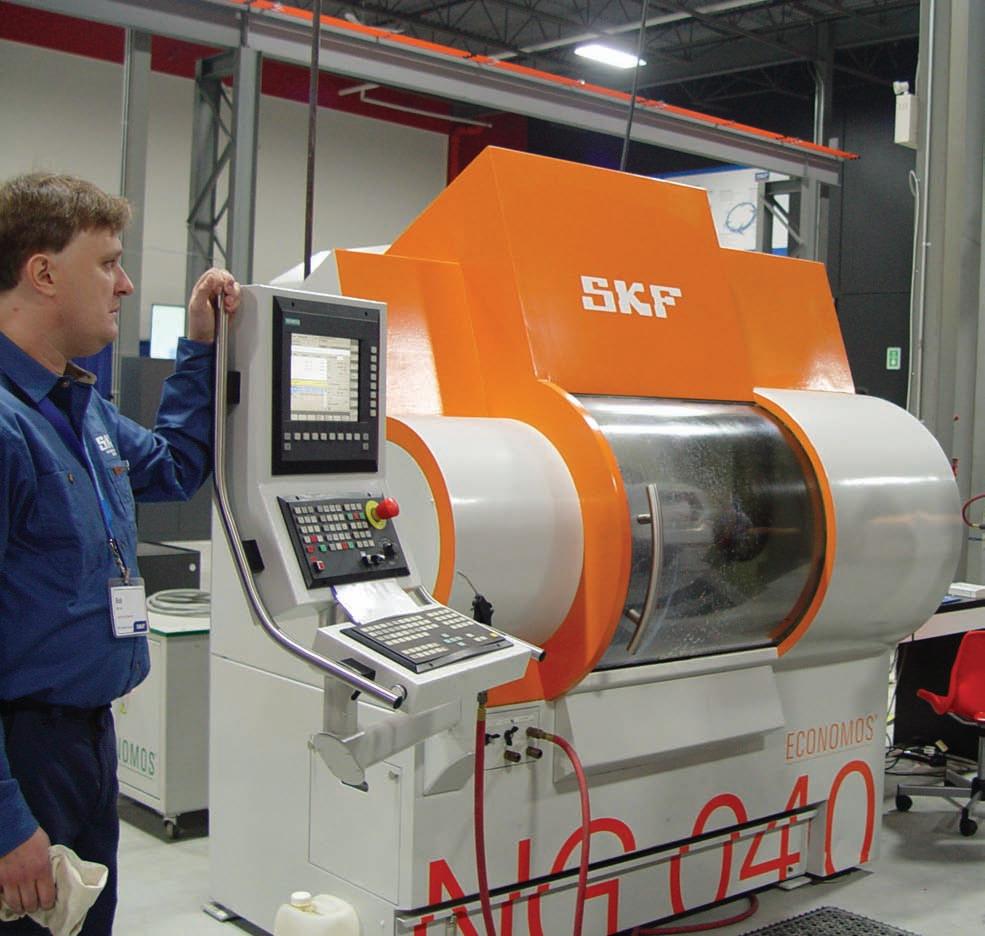
Stationed a few feet away in the last section was the sealing solutions area and an Economos NG 040 SealJet. It is capable of quickly fabricating seals, including oneoff orders, up to 18 in. (45.7 cm) in diameter; the Economos has software that translates measurements from a client’s hardware to calculate the correct replacement seal size. While the machine rapidly carved a red seal, we learned that 70% of SKF’s seal business is for the aftermarket. By 2015, SKF plans to have 30 Solution Factories around the world, all connected and following a common standard. As for Canada though, explained Ricciarelli, “We are investing a lot in Canada in engineering capabilities — application engineers who can help customers.” MRO
Montreal-based Carroll McCormick, an award-winning writer, is the senior contributing editor for Machinery & Equipment MRO.
Understanding Field Evaluation
Electrical product certification and field evaluation processes in Canada, under the direction of the Electrical Safety Authority, help reduce the risk of injury or fire for people or property.
BY RICK MARTIN
When you use, maintain or repair machinery and equipment with built-in or add-on electrical components, you likely will assume you don’t need to be concerned about the electrics. But have you wondered what it is that manufacturers or importers of electrical products have to do to make sure they have electrically safe products?
The Canadian Electrical Code (CEC) requires equipment to be ‘approved’. Generally that means a certification organization such as CSA (Canadian Standards Association) or UL (Underwriters Laboratories) makes sure the product meets an acceptable level of safety, as specified in the Canadian standards (for others that handle certification, see www.esasafe.com). But these standards and the certification process are geared up for larger production runs. So the industry has a gap to fill for small quantities of electrical products. This gap can be filled by Field Evaluation (FE).
For a manufacturer to get a product certified, it generally means it needs a production run in excess of 500 units per year. For smaller production runs (1 to 500), the ‘Authorities Having Jurisdiction’ (electrical inspection agencies) in Canada allow equipment to be field-evaluated to a Canadian standard called CSA SPE-1000.
Field Evaluation is only concerned about the electrical safety of a product. It is not a substitution for certification, because sometimes certification will address other safety issues such as electromagnetic radiation, burns from lasers, location of emergency stop switches, etc. CSA SPE-1000, the standard that the FE process follows, has three mandatory non-destructive tests. Basically the electrical safety requirements of the standard and the CEC are followed to ensure the product is electrically safe. A serialized FE label must be put on the equipment personally by an inspector accredited by the Standards Council of Canada. Some people believe this process to be even safer than certification, since every product must be inspected and labelled. The inspectors follow a specified procedure that has been developed by experts in the electrical industry and the process is audited by the Standards Council of Canada.
In the US, the technical requirements are very similar but not quite as well-defined for production runs of small quantities.
FE would be found useful for the following situations:
• The equipment is already manufac-
tured, shipped or installed

• The equipment is manufactured in small quantities
• Cost of certification for the small volume does not make good business sense
• There is not enough time for the manufacturer to organize and to arrange a certification process
• The manufacturer is testing the market with a small quantity
• The manufacturer wants to make sure the design is reasonable before proceeding with the somewhat slower and more expensive process of certification.
How certification and field evaluation got started
The following is a brief history of how certification and field evaluation started in Canada. First, the Electrical Safety Authority (ESA) evolved from Ontario Hydro, which was once the Hydro Electric Power Commission (HEPC).
It is not surprising that few people realize that ESA has affected the safety of electrical equipment for the people of Ontario and Canada. This evolution of equipment approval over the past century has created an environment with so many subtle controls in place that a relatively safe environment exists.
In the 1890’s, steam-driven generators made it possible for the majority of Ontario villages with over 3,000 residents to have access to electric streetlights. It was only a year or two later that the Toronto Incandescent Electric Light Company was established — and then the electrical safety of equipment became an issue in Canada.
This safety initiative came from the Canadian Fire Underwriters Association (CFUA). The CFUA was concerned about the massive financial liabilities its members could face from structural fires caused by electrical equipment. Therefore, in 1892, the CFUA appointed an inspector to ensure that all electric equipment was installed in accordance with CFUA requirements.
The new power source also had caught the fancy of consumers and nowhere was this more evident than in the City of Toronto, where scores of contractors and builders came forward to meet the demand with inferior, often bogus, and clearly dangerous equipment.
To offset growing concerns, significant amendments were made to the Power Commission Act in 1912 and 1914 to ensure that electrical equipment was safe.
In 1918, the HEPC Approval Laboratory was established to test electrical equipment to determine its adherence to

specific and stringent guidelines. The Approval Laboratory department was operated by HEPC and resulted in the establishment of rules and regulations for testing and approving electrical materials, devices and fittings. The initial approval labels that were applied were actually solid bronze metal.
Products that met the guidelines were declared ‘HEPC Approved’ and later ‘Hydro Approved’. This process was generally accepted by the electrical industry across Canada.
The purpose of this function was to provide standards and testing of electrical equipment to avoid risk of injury or fire to persons or property. This approval process was considered so significant that by 1924 the HEPC was empowered to prohibit the sale of electrical equipment considered to be unsafe for public use.
As a result, the Approvals Section of the HEPC Electrical Inspection Department was established. Soon HEPC was testing products for all of Canada. When other provinces requested the use of the ‘HEPC Approved’ designation and they started to include this approval in their legislation, it quickly became evident that there was a need for a national testing body.
As a result, in 1940, the Canadian Standards Association Testing Laboratory was created by the HEPC, and the CSA certification process began as a self-
contained, self-supporting unit. HEPC continued to approve small quantities of equipment and specialized equipment that could not be done under certification.
And now, in modern times ... Today, in North America, most electrical equipment is submitted to accredited certification organizations (e.g., CSA, UL and others) for approval, but for smaller quantities and specialized equipment, the Field Evaluation process still applies. ESA continues to provide that service as part of its safety heritage.
The best time for manufacturers to get the Field Evaluation process started is at the conceptual design stage. An FE inspector can meet with designers and give tips and suggestions to make the design and the FE process work best. MRO
Rick Martin, P.Eng. MaSc., is the senior research engineer with the Electrical Safety Authority (ESA), an organization created in 1999 by the Ontario government to be responsible for electrical inspection activity and to introduce a broader public electrical safety mandate for the province. ESA tracks electrical incident statistics and works with electrical trades to reduce the number of electrical workplace incidents by encouraging safe work procedures. For more information, visit www.esasafe.com.
Top: Field evaluation is ideal for electrical products made in small numbers. Above: ESA publishes brochures such as this to help reduce electrical injuries in the workplace.
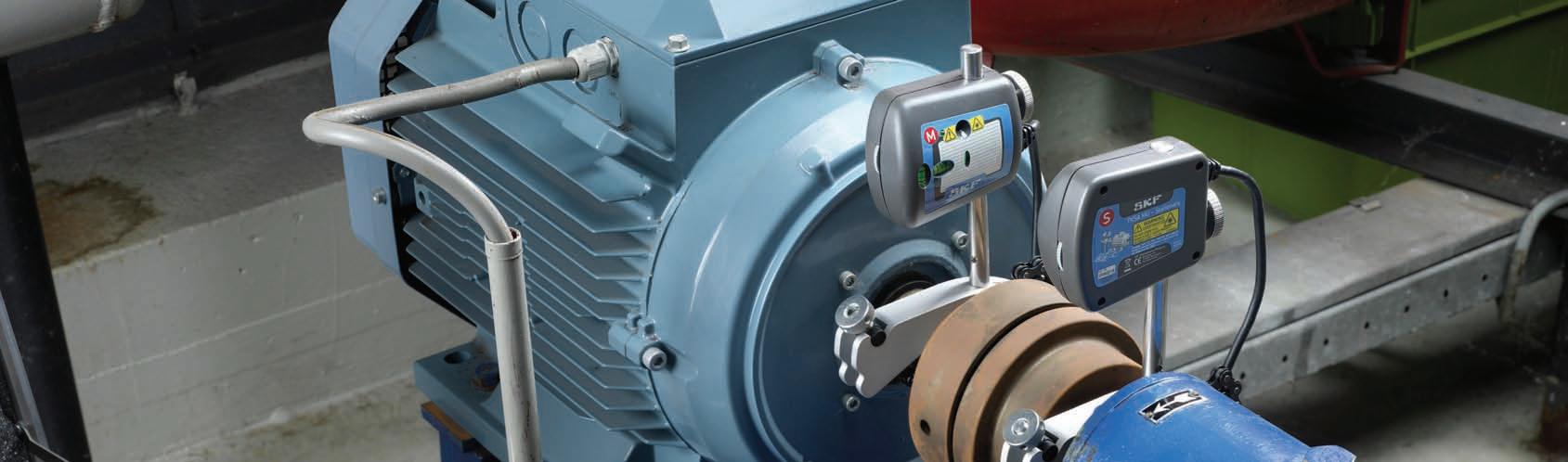
Alignment errors in wind turbine drive trains are among the main causes of vibration in this machinery. They are easy to identify by evaluating the vibration velocity spectra: If the amplitudes at the single and/or double frequency of the generator shaft are too high, the most recent alignment reports should be checked or the shaft alignment should be measured using laser-optical alignment equipment.
Drive trains in a wind turbine exhibit highly variable alignment between the flexibly mounted generators and gearboxes. The generator shaft shifts toward the gear output shaft, depending on load and speed.
To ensure that power can be transmitted during all alignment conditions that arise during operation, system manufacturers usually use couplings with a very large working range (Fig. 1). Here it is important that alignment conditions during operation actually remain within the working range of the coupling in use.
This can be accomplished using couplings as shown in Fig. 2 that are capable of a high degree of displacement. However, even this type of coupling has limitations when it comes to parallel offset, which manifests itself in greater restoring forces, stronger vibrations and premature wear.
Using modern laser measurement methods, a near-perfect shaft alignment can be achieved between the gearbox and the generator with the system at a standstill. In reality, however, it is not desirable to align flexibly mounted drive trains to ‘zero’. Rather, both components must be misaligned while at a standstill so that the ideal shaft alignment is obtained during operation.
FOCUS ON ALIGNMENT
Reducing vibration with laser alignment
Wind turbine drive trains can exhibit highly variable alignment between flexibly mounted generators and gearboxes.
BY DR. EDWIN BECKER AND OLE HOLSTEIN
Here is a glossary of terms for alignment projects.
Erecting: Installation of a machine on-site.
Alignment: Adjustment of the machine into the correct position when it is erected.
Alignment target value: Specification of final condition after alignment (set values).
Alignment report: Description of actual condition achieved after alignment (actual values).
Alignment condition: Condition after alignment with the machine at a standstill and cold. This will change when the machine is in operation and warm.
Displacement: Change in the position of the shaft when changing from one operating state to another, especially from a standstill with a cold machine to a state of continuous operation with a warm machine.
Influences on the alignment condition (in accordance with VDI 2726):
• Heat expansion between the installation and operating temperatures (foundation, housing, shafts)
• Flexible deformation during operation (foundation, housing, shafts)
• Displacements between the installation and operating conditions (due to play, forces and lubrication)
• Skewed position of gearbox shafts due to externally applied masses (brake discs, couplings)
• Radial clearance and wobble of flange
• Radial and axial rigidity of connection coupling.
Angular offset: Measured in degrees, millirad (mrad) or as a relative quantity in millimetres per metre (mm/m).
Example: A coupling with a 100 mm diameter has a gap at the top edge of 1 mm, which causes an angle of 10 mrad (note: 1 mrad = 1 mm per metre; rad is short for radian).
Parallel offset in mm: The distance between the points of intersection of the rotating axes with a certain plane perpendicular to both axes. Usually the parallel offset refers to the distance between the rotating shaft axes in the centre of the coupling.
To achieve this, the direction of the displacements that occur during operation must be known. The data can be entered as so-called target values in all Prüftechnik alignment systems.
Where to obtain alignment target values
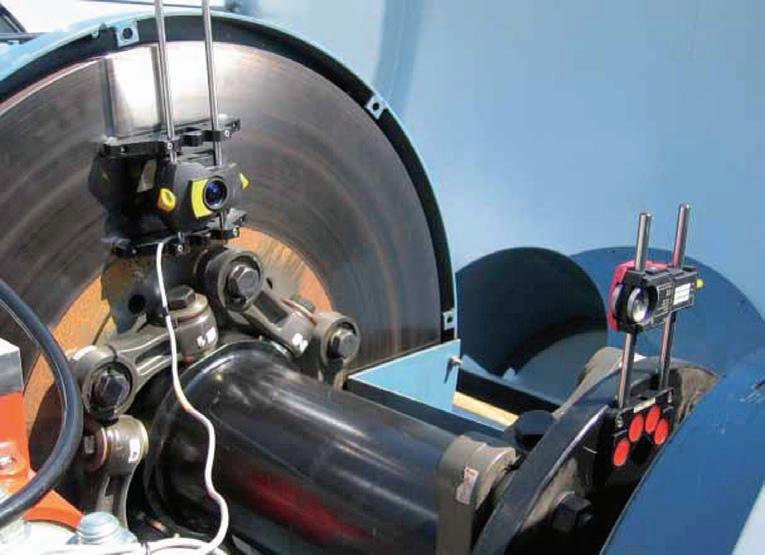
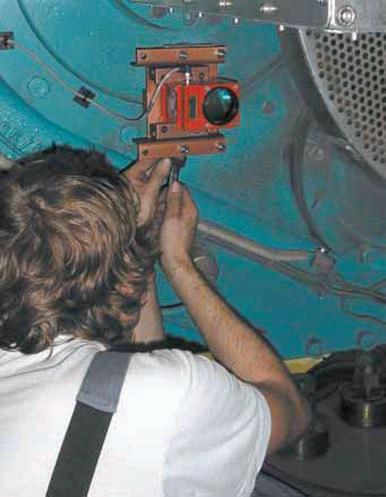
The alignment target values can either be taken from the operating manual or obtained from the system manufacturer. However, the wide variety of drive train components and basic frame types makes it difficult to provide general quantitative figures. The actual alignment target values can be determined using a Permalign alignment monitoring system. For this purpose, highly sensitive laser sensors are mounted on the generator and gearbox (Fig. 3) to measure the displacements of the machines in intervals of one second. The measurements can be recorded and further evaluated with any online CMS from Prüftechnik. Thus, customers who already have an online system can simply connect the Permalign components to the system via an RS-232 interface and the measurements can be transmitted to the monitoring centre by remote access.
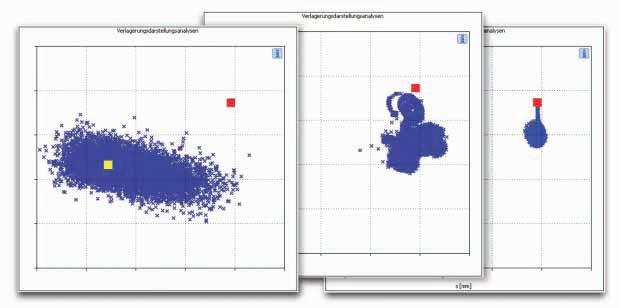
To determine the alignment target values, measurement results are then evaluated under different wind conditions: without wind (system at a standstill), with light wind (system rotating irregularly), with moderate wind and with strong wind. Fig. 4 shows the measurement results in an XY-graph. The resulting alignment target values are then entered into the alignment system and automatically taken into account during the alignment procedure. Typically, the required measurement campaign lasts between one and four weeks — depending on the location and wind conditions.
MRO
Dr. Edwin Becker and Ole Holstein are with Prüftechnik Alignment Systems GmbH, Ismaning, Germany. More on the topic of shaft alignment can be found in the company’s manual for technicians and engineers. Request a free copy by e-mail at info@pruftechnik.com.
Card No. 412
Fig. 1: The four degrees of freedom in alignment. Fig. 2: The shaft of a wind turbine drive train is aligned using a laser system. Fig. 3: A laser system is installed temporarily on a gearbox. Fig. 4: Displacement under various wind conditions – light (A), medium (B), and strong (C).
Fig 2
Fig 4
Fig 3
Selecting High-Temperature Greases
The choice of greases that can withstand extreme temperature conditions poses some challenging lubrication engineering decisions.

extreme conditions they operate under, these extreme temperature conditions poses some
challenging lubrication engineering decisions. In addition to heat resistance, the greases in use often require additional properties like exceptional load-carrying capability, oxidation stability, water washout resistance and good pumpability.
The first step towards selecting the right hightemperature grease is to identify the possible causes of product degradation during operation. Though the primary cause of degradation is thermal stress, contact with air leads to oxidative failure, which also contributes to the degradation.
Once the sources of degradation have been determined, aspects such as viscosity, viscosity index, stability of the composition and the additive package properties also need to be considered.
To a very large extent, the properties of a grease are determined by its three components, the base oil, the thickener and the additive package.
Base oils: Base oils can be subdivided into
mineral and synthetic base oils. Mineral oils are the most widely used base oil components and represent approximately 95% of the grease manufactured. Solvent-refined mineral oils have a high percentage of unstable, unsaturated molecules that tend to promote oxidation. Mineral oils that have undergone extensive processing to remove the reactive molecules or saturate the molecules (with hydrogen) exhibit improved stability (oxidative and thermal).
Combining two or more smaller hydrocarbons to larger molecules produces synthetic hydrocarbon base oils. These base oils provide the best thermal and oxidative stability. Highly refined mineral and synthetic hydrocarbon base oils typically start to degrade at between 110°C and 150°C. For operation at still higher temperatures, ester silicones or fluorosilicones or more highly fluorinated base oils such as PFDF are recommended.


Thickeners: Three different types of thickeners can be used in a grease formulation: Organic (polyurea), inorganic (bentonite, silica) and soap/complex soap (lithium, calcium, sodium, etc.) thickeners. However, the usefulness of the grease over time depends on the stability of the whole formulation package and not just the stability of the thickener.
Polyureas have additional inherent antioxidant and anti-wear properties. Lithium complex thickeners have maximum temperature limits superior to those of simple lithium soap thickened greases. Overall, metal ion soap thickeners have thermal degradation limits that range roughly from 120°C to 200°C.
Additives: The additive must be capable of working synergistically with the thickener and the oil, resulting in a balanced, stable mixture of the three components. The additive package also introduces desirable properties like oxidation resistance, corrosion protection and wear resistance to the grease.
A critical issue that must be addressed prior to the selection and application of greases is the possibility of different greases mixing, and more importantly, their compatibility.
Grease compatibility
Compatibility or incompatibility between hightemperature greases must be addressed prior to their selection and application. Since the total grease formulation is a complex but balanced mixture of its components, any addition of unplanned chemicals can upset this welldefined balance and lead to degradation of performance levels.
Mixing incompatible greases results in an increase or decrease in grease consistency. Therefore it is very important that specially designed high-temperature grease products not be mixed. IL
This article is adapted from Dow Corning’s Molykote Smart Lubrication Series. For more information, send an e-mail to industrial@dowcorning.com, or use the reader service number below. Reader Service Card No. 411
Criteria for selecting a high-temperature grease
1. Is operation of the equipment requiring lubrication continuous or intermittent? If it is continuous, a premium grade product that meets the operational requirements should be selected.
2. What is the real temperature range at which the equipment will operate? Does it exceed 150°C?
3. Does the equipment go through heating and cooling cycles at operating and non-operating intervals?
4. Is the lubricant exposed to moisture during operation? Moisture upsets the thermal stability of the grease formulation.
5. How long are relubrication intervals and how hard is relubrication? If relubrication is difficult, a premium-grade grease product should be chosen to achieve lower maintenance costs (generally, lower maintenance costs more than offset the higher price of the upgraded lubricant).
Lubrication Systems for Fans and Industrial Applications
Veteran industrial equipment operators remember when it was common to flood machinery with as much lubricant as possible to protect it from the heat of high-speed operations. No more. Advances in lubrication technologies have proven that automated lubrication systems deliver a number of important advantages, from faster production times to reduced maintenance costs to a healthier, more environmentally friendly workplace.
Up to 40% of premature bearing failures are caused by lubrication problems — too much, too little, the wrong type or contaminated lubricant. SKF has developed a wide range of automatic lubrication technologies that, while relatively simple to implement, result in significant benefits.
Circulating-oil lubrication systems are used in applications where lubrication points must be cooled and cleaned by the oil. This system can be used extensively in general and heavy industries; typical applications include steel rolling mills, conveyors, paper machine dry end bearings, industrial fans and gearboxes.
The lubrication system must be able to deliver the right amount of high-quality clean oil, with the appropriate temperature, to each lubrication point. The oil then flows back into the lubricant reservoir for re-use after passing through the lubrication points.
The respective system is selected on the basis of:
• the operating conditions
• the accuracy requirements for lubricant quantities
• the geometry of the system
• the monitoring requirements.
Industrial fan units: SKF circulating-oil system
The SKF circulating-oil lubrication unit is ideal for applications where the heat generated by the bearing must be taken away from the bearing, as well as providing lubricity to the bearings or gears, such as rolling bearings on industrial fans, where high speeds and/or high temperatures can preclude the use of grease. These units deliver a continuous flow of cooled and filtered oil directly to the bearings. The pump flow is matched to the bearing and housing size, preventing oil leaks and excessive heat associated with too much oil flow (see Fig. 1).
Controlling and measuring oil flow
SKF Safeflow oil flowmeters are used for controlling and measuring the flow rate of lubricants in oil lubrication systems. This flowmeter has a straight glass flow tube with an internal calibrated cone. Because the oil flows through the float, rather than around it as in ordinary flowmeters, the float is always clearly visible. The oil flow can be remotely and continuously monitored. The alarm system consists of one alarm sensor for each flow tube and one monitoring unit for up to 10 alarm sensors.
The SKF Flowline Monitor flow rate monitoring system introduces a new digital dimension for measuring and controlling oil circulation lubrication system flow rates. The systems operate individually and they can be programmed as well as adjusted separately. With one glance, operators can see the flow rate status of each individual lubrication point from the Flowline monitor (see Fig. 2).
SKF flow limiters are used in large oil-circulating lubrication systems. The task of a flow limiter is to divide up the volumetric flow of
the main line into parallel individual volumetric flow quantities and to ‘limit’ these according to requirements, or to keep them constant.
Additional information on the complete range of SKF Lubrication Solutions is available by visiting www.skf.com/lubrication. SKF Lubrication Engineers are available to assist you in determining the correct lubrication solution to your specific application and needs. Please send your e-mail enquiry to lubrication@skf.ca or call 1-800-207-5823. SKF –The industry’s most complete resource for knowledge engineered lubrication solutions.
Reader Service Card No. 299

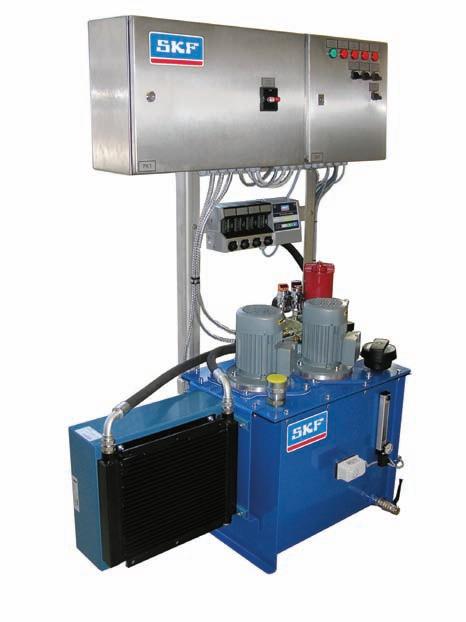
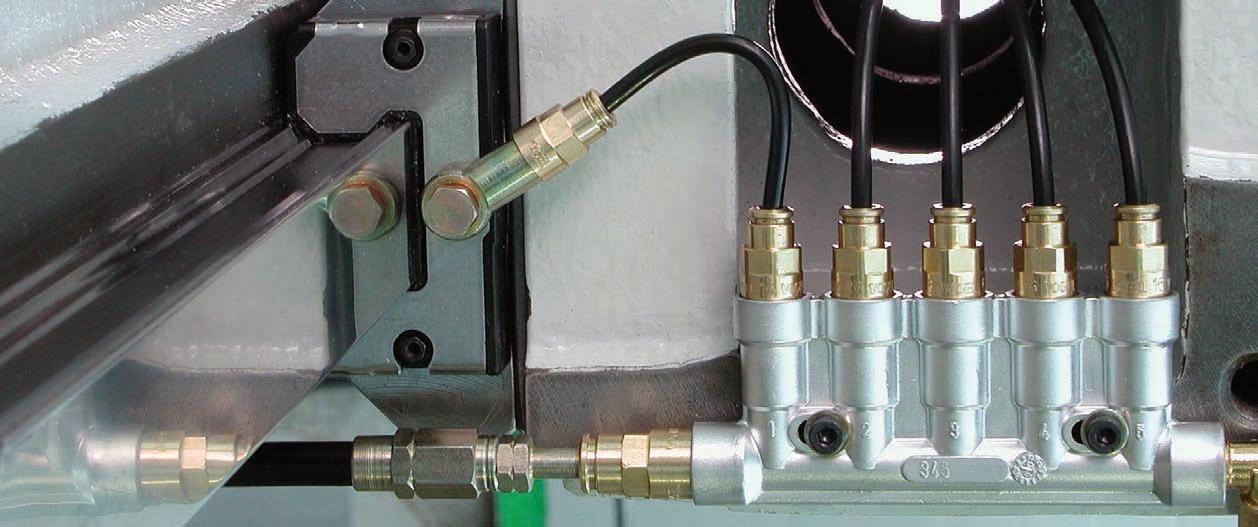
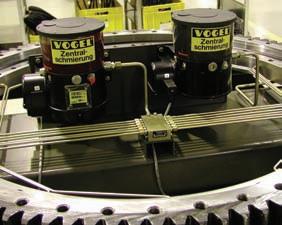
Fig. 2: SKF Flowline Monitor.
Fig. 1: SKF SM100 circulating oil lubrication unit.
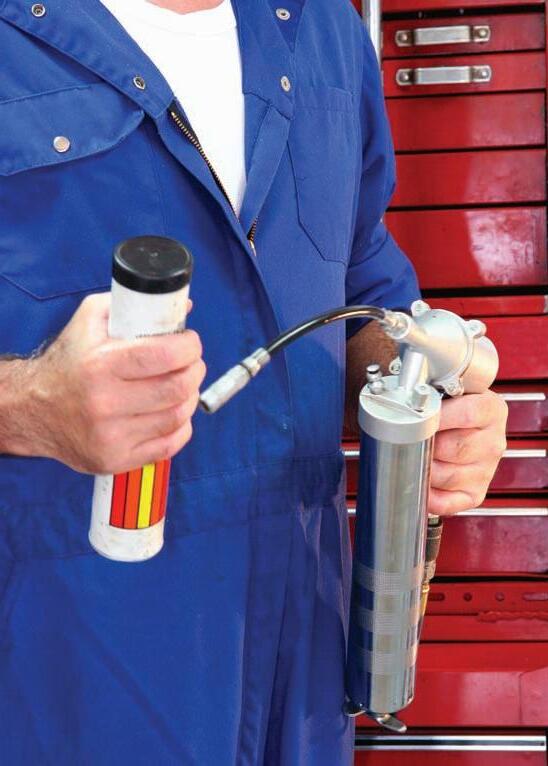
Holster that Grease Gun!
Eight compelling reasons for using an automatic lubrication system.
Whether you know it as an automatic lubrication system (ALS), an autogreaser or a centralized grease lubrication system, an ALS automatically lubricates multiple points on a piece of equipment from a centralized pump/control unit that is mounted in an easily accessible location.
Such a system dispenses small, measured amounts of lubricant at frequent intervals, while your equipment is operating, thus maintaining the correct amount of grease in the bearing at all times and a consistent lubricant seal to prevent dirt and contaminants from migrating into bearings.
“In talking with people who don’t currently use automatic lubrication systems, we often hear statements like ‘Even if I use an autogreaser, I still have to do a walkaround to inspect the system’,” says Gabriel Lopez, a marketing specialist with Flo Components Ltd., Mississauga, ON. “This is absolutely correct. An automatic lubrication system will not replace your regular equipment maintenance inspection. You still have to check for loose or damaged lines and make sure that everything is operating smoothly.
“What an ALS does is take the grease gun out of your hand and replace it with a wrench. Then, you can use the grease lines
as a guide and have the opportunity to focus on making any necessary adjustments or repairs as you conduct your regular inspection.”
So you might ask, what’s the point of using an ALS? According to Lopez, there are eight reasons why you would use one:
1. Safety: An ALS helps to reduce or eliminate climbing over and under machinery or into difficult-to-reach areas. Whether you’re an owner/ operator of a single piece of equipment, or the maintenance manager for a large operation, the safety of personnel in the workplace is a key consideration.
2. Efficient lubrication: An ALS applies grease while the machine is running, so you don’t have to stop what you’re doing or set aside time to lubricate it — in other words, less downtime. Furthermore, because the bearing is turning when it receives the grease, you get much better grease coverage on the bearing.
3. Better lubrication: Applying grease is often most effective when it is dispensed in small, measured amounts over short, frequent time intervals. Unfortunately, tight deadlines and manpower constraints, harsh environments, severe-service conditions or in some cases the location of the equipment often make this method of lubrication impossible.
Equipment gets greased when it’s available, and when we have the time and somebody available to do it. Clearly, this approach is not optimal for the point that requires lubrication. An ALS makes this problem go away.


Whether you build, produce, manufacture, run or generate, one fact is clear: better lubricants and better lubricant suppliers lead to increased productivity. That’s why Imperial Oil is proud to offer Mobil Industrial Lubricants – recognized worldwide by more than 5000 equipment builders. With the combination of Mobil Industrial Lubricants and Imperial Oil expertise, we don’t just elevate productivity – we help unleash it. Visit www.imperialoil.ca for more information.
4. Better housekeeping: How much grease is too much? According to Lopez, “If you’re oldschool, you keep pumping it in until you see it oozing out of the bearing. This is called overlubrication.” As previously stated, frequent and small, measured amounts will give your bearings the best protection.
In addition to no over/under lubrication, this also means that you get less spillage and leakage. The end results are less wasted lubricant and less mess on your equipment, floor, site, etc. Appearance aside, safety issues (from the danger of slipping) and environmental concerns are even more important problems resolved by using an automated lubrication system.
5. Less downtime and reduced maintenance costs: Time and manpower constraints often make it nearly impossible to keep up with the lubrication requirements of equipment, especially in the harsh Canadian climate. The preventive maintenance provided by an ALS is absolutely key to reducing maintenance costs and minimizing downtime by extending the life of the many pivots, bushings and components on equipment. This also means there will be also fewer replacement parts to stock.
6. Increased overall productivity: Higher productivity results from an increase in machine availability and a reduction in downtime due to breakdowns or general maintenance.
7. Longer equipment life: Because bearing areas are consistently protected and your machinery in general is better maintained, bearings are less likely to fail and need replacement.
8. Helps the environment: For the environment, reduced premature wear of bearings and other components means less landfill. Also, since you’re not over-greasing, you’re depleting fewer resources from the environment and you’re not contaminating the environment with dripping lubricant. IL
Components Ltd. of Mississauga, ON, has been supplying automatic lubrication systems
©iStockphoto.com/ Photoservice
ore than eight out of 10 workers (85%) rate workplace safety first in importance among labour standards, even ahead of family and maternity leave, the minimum wage, paid sick days, overtime pay and the right to join a union, according to a new study from the National Opinion Research Center (NORC) at the University of Chicago.
Despite widespread public concern about workplace safety, the study also found that the media and the public tend to pay closest attention to safety issues when disastrous workplace accidents occur. Even during those tragedies, the fate of workers is often overlooked, such as during the recent oil well disaster in the Gulf of Mexico.
“Workplace safety is too often ignored or accidents taken for granted,” said Tom W. Smith, director of NORC’s General Social Survey (GSS). “It is striking that coverage in the media and public opinion polls have virtually ignored the 11 workers killed by the blowout and destruction of the drilling platform.”
Questions instead focused on the environmental impact of the disaster and overlooked worker safety, Smith pointed out. But he noted that “if optimal safety had been maintained, not only would the lives of the 11 workers been saved, but the whole environmental disaster would have been averted.”
The reason for this interest is very basic. When people go to work, they want to put forth their best and come home alive and well.
Most organizations appreciate the importance of minimizing incidents and accidents in the workplace. Done properly, in order to reduce or even eliminate accidents in the workplace, companies must develop safety cultures, optimize man-
MODERN TIMES IN SAFETY
agement systems, provide legal compliance for machinery, equipment and processes, and deliver behavioural safety change programs that begin at the top of any organization and cover all employees.
Attitudes and behaviour, right across an organization, will always strongly influence the importance placed on health and safety. The goal of developing a safety culture is to instil the qualities that motivate management and workers to strive to achieve safety excellence and can be developed only if everyone works together. Within a safety culture, safety must always come first and take into consideration everyone involved.
Workers’ attitudes are also extremely important, especially those of young employees. According to information published by Youth Canada, the following statements are held true by young workers, although the reality is different.
“I can take risks. I won’t die.”
In 2007, 78 workers aged 15 to 29 died in the workplace in Canada.
“I can handle anything.
I’m young and fit.”
Over one-quarter (25.99%) of all occupational injuries happen to workers
between the ages of 15 and 29.
“Nothing will happen to me. I’m safe at work.”
More people are injured on the job than in traffic accidents.
“I must do any job my employer tells me to do.”
You have the right to refuse unsafe work.
“I am not responsible for workplace safety. This is my employer’s responsibility.”
You are responsible for knowing and complying with all workplace regulations.
These attitudes are the documented reality of our workplaces. Just relying on procedures may not be enough to prevent accidents, especially among young workers. In my opinion, the best way to improve health and safety in the workplace is to properly engineer safety into production machinery and processes.
One should simply look at the evolution of safety. Some of you may remember an old Charlie Chaplin comedy film called Modern Times
This film portrays Chaplin as a factory worker, employed on an assembly line. After being subjected to such indignities as being force-fed by a ‘modern’ feeding
machine and working on an accelerating assembly line where Chaplin screws nuts at an ever-increasing rate onto pieces of machinery, he suffers a mental breakdown that causes him to run amok, throwing the factory into chaos.
These times of reckless indifference to of health and safety are now gone in Canada. However, some of our equipment 75 years from now may look as bad as that in Chaplin’s Modern Times.
Engineered solutions for the safeguarding of machinery and equipment have come a long way since those days. We can bring the future into our factories now, by engineering safety solutions. The technology to safeguard plant equipment and machinery exists today.
We just need to improve our cultural attitude towards health and safety. The interest is already there. MRO
Simon Fridlyand, P.Eng., is president of S.A.F.E. Engineering Inc., a Torontobased company specializing in industrial health and safety issues and PSR compliance. He can be reached 416-447-9757 or simonf@safeengineering.ca. For more information, visit www.safeengineering.ca.
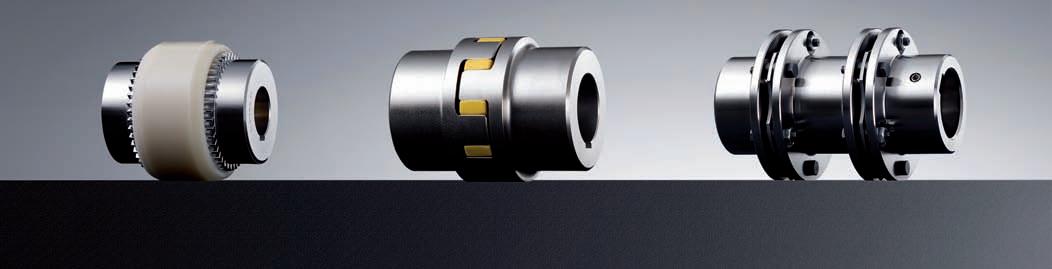
When

BY PETER PHILLIPS
BUGGING YOU? WHAT’s
In the past month or so, I’ve heard a lot of CMMS users complain about small issues regarding their software. Overall, they are happy with how the software performs, but the small issues and glitches are driving them crazy. Subsequently, the person who sold them the software is getting an earful. Conversely, there are other companies that use the same programs that have few or no issues at all. So why do we have this difference in satisfaction? We’ve done an investigation. Here are a few reasons from unhap-
py people we’ve talked to, as well as some problems we’ve heard about.
At the PEMAC conference in Toronto in November 2010, I heard a CMMS trainer say that he doesn’t understand why facilities spend many thousands of dollars on the purchase of a software product and the infrastructure to support it — and then spend practically no money on training.
I support his opinion, because we experience exactly the same issue. When buying programs under $10,000, maintenance departments expense the cost of the soft-
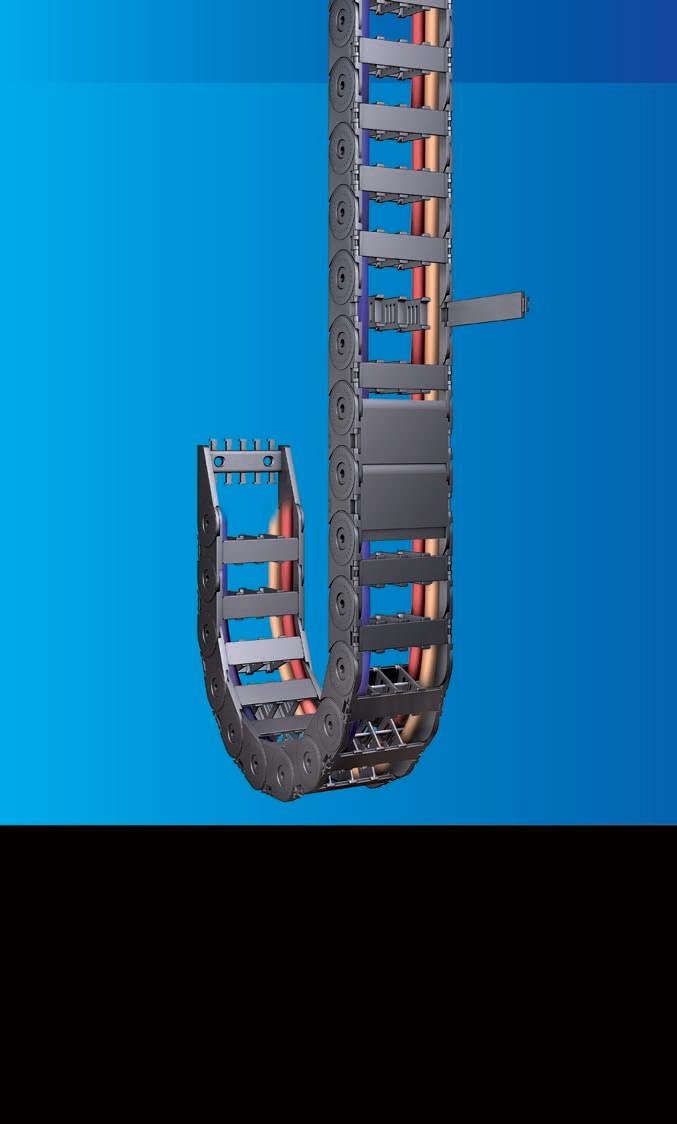
ware from their monthly budgets and think that the implementation will be easy. We’ve received many calls right after these companies have purchased a program, looking for a quote to help them set up and launch the software — only to hear them say that this cost is not in their budget.
As a result, they do the best they can with the software, but 90% of the time they end up with something that doesn’t work properly. Then we receive another call to come and help them, which costs even more because we need to fix the mess they’ve created and then re-implement the CMMS.
On large implementations of EAM and ERP systems that cost $20,000 to $100,000-plus, the project budget may not include enough money for training. Often, users are jammed into a classroom for generic training and then are expected to go back to their plant and try to use the software with their own data. No follow-up training is scheduled and people are left on their own to figure out the software. This seldom, if ever, works.
Every CMMS on the market runs principally from menus and screens, just like any other software we use in our day-to-day electronic life. So most of the CMMS problems come from the lack of basic knowledge of the program.
Running maintenance software is all about navigation of the program — knowing what screens are available and how they function. Most programs have shortcut keys, which really help you to get your work done quickly. Very often there are special screens for closing work orders that really are fast and save a mountain of time.
Reports are always important. Knowing how to create them to extract the information you want in an easy-to-understand format is important to everyone that uses the program.
Not knowing these basic skills can really slow you down and give you a poor impression of the software, and can result in nasty calls being made to the person who sold it to you.
Program bugs
The next thing that bothers a lot of CMMS users are the little program bugs. All programs have them and like any other unwanted infestation, they can cause all sorts of problems.
The good news is that there is RAID to help you. It doesn’t come in a spray can, but follow these directions and apply them properly and they will work just like the bug spray from the hardware store.
R: First you need to Read the documentation and manuals that came with the software. Many program issues can be resolved by using the software utility functions. There will be a number of quick fixes for you to apply. However, most people don’t know they exist, or the security function in the software doesn’t give them access. So the bug wins.
A: If you are still having problems, Ask your CMMS support line. They can tell you what you need to do to rectify most problems and issues. Many vendors have on-line support on their websites to help you resolve issues by yourself. Call your support line or log on to the website today and start fixing your problems.
I: Still having problems? Identify what they are and exactly when they are happening. Where are you in the program and what buttons have you clicked to cause the error or fault? Once again, call your CMMS support line and explain your problem. The experts will probably want to do an online meeting to view your issues first hand. I’ve found these support analysis people really know their stuff. It’s pretty hard to stump them. If they can’t help you right then, they will do some research and call you back promptly. They also may ask you for a copy of your database so they can do a further analysis of your data.
D: Many times your problems can be resolved if you Download the latest patch or version of the software. These fixes are generally released by the software manufacturer every two to three months. They usually rectify a host of program errors that have been reported by users. Typically, a software company will release a new version of its program every year or so, and you should download and install it. In order to receive new releases of their programs, software providers will require you to be on a support contract. We always advise our clients to keep their support up-to-date. Many facilities decide to let their support contracts expire, but in the end realize that this was a mistake. The patches, new releases and technical support are worth the yearly cost.
CMMS software needs periodic care and attention to keep it healthy. If you have an IT department, you need to educate those people about your software. They need to be aware of what the program needs to work smoothly. Put them in contact with your CMMS tech support and provide them with all the documentation you have available.
Many maintenance departments have purchased their software without consulting or including the IT department in the purchasing process. If this has been the case, get them involved now, because they will be the ones to apply program patches and install new software versions. You need their support.
So there you have it. Getting basic CMMS training and eliminating the bugs in your program can save you a lot of frustration. The companies that don’t have issues have received training and followed the RAID tips.
There’s a saying that goes: “Have you ever been bitten by an elephant?” Of course, the answer is “No.”
“Have you ever been bitten a mosquito?” The answer is “Yes.”
The moral of the story? It’s the little things that eat you up.
So make a goal to eliminate those pesky little things that bite you — and stop blaming your software.
MRO
Peter Phillips of Trailwalk Holdings, a CMMS consulting and training company based in Nova Scotia, can be reached at 902798-3601 or by e-mail at peter@trailwalk.ca.
When it really matters, trust Tsubaki.
©iStockphoto.com/ Christine Glade
MAINTENANCE MANAGEMENT
STARTING TO WORK ON REAL TEAMWORK
BY CLIFF WILLIAMS
Follow along with Step 36 in a journey to World-Class Maintenance at the Plentya Paper Company as the maintenance team strives to achieve its goals.
This article is part of an ongoing series. The introduction appeared in Machinery & Equipment MRO’s February 2005 issue and the series has run in every issue since. Previous instalments are archived online at www.mromagazine.com. In this issue, we pick up where we left off in the November 2010 edition, as maintenance manager Bob Edwards gets ready to implement procedures to record the expertise of the mill’s most experienced maintenance personnel.
The meetings with Fred, our production manager, and his group, to tell them how we were going to record the reasons for delays in getting work done, went very well. We were able to explain that this wasn’t really a blame issue, but more a way of reducing or eliminating those delays. At the end of the session that I presented, I asked Fred if he had a few minutes to go over what had happened at the Corporate meeting the previous week.
“Sure Bob, although Joe, the plant manager, has told me quite a bit about it, and he did mention that you had supported me when he had said I wasn’t ready. Thanks for that. I do appreciate it.”
“Well, I hope Joe managed to get across how enthusiastic Corporate was about what we are doing. Fred, I don’t want you to take this the wrong way, but I’m afraid you’ll stand out for all of the wrong reasons. Corporate seem to want us to be a copy of the Wisconsin mill and their production group is very advanced. Let me tell you about some of the things they do.”
I went on to tell Fred about how the Wisconsin mill had started as a greenfield site, where they threw out all the traditional practices and pay scales. I also told him how they now had competence-based training and skill sets.
“You are only considered qualified if you can demonstrate competence in doing the task — not just by answering questions — and only then are you allowed to do the task and are paid the rate for that task. Their pay scale is built on the number competencies the individual has demonstrated — there’s no thought for seniority.”
“Well, we’d never get away with that with our union.”
“Agreed, Fred, but there are other things they do that we could do also, and which would demonstrate to the Corporate office that you are on board and working towards the change.”
“Look, Bob, you know I was resentful of you at the beginning because I thought you were going to cause chaos with your change ideas. But now I’m only mildly re-

sentful and that’s just because I don’t feel I have the vision you do.”
“In that case, let me share the vision … just kidding. One of the things that struck me in Wisconsin was the lack of barriers. Not only were the hourly guys allowed to do much of what our supervisors do, but there didn’t seem to be any difference in the approach of maintenance and operations in dealing with problems.
“Whenever they carried out an analysis of a problem, they had cross-functional teams — irrespective of the topic. Their operators have taken on what they call ‘Basic Care’, where they have operator routes and checks that actually get fed back into the maintenance system.”
“Our operators carry out checks and they have their shift walk-arounds. I know, I have drawers full of old log books.”
“Exactly, Fred. Any information that might help in the future is hidden away in a drawer that would take weeks to sort out. If we formalized their walkarounds, included them in a work order, and then recorded them and the checksheets in the CMMS, then we’d have everything live. It would also show Corporate that we’re a team.
outside of a pensioner’s house, another was when they built a swing set for a family with six children under the age of nine.
“The company provided the materials and the workers volunteered their time. If you could spearhead getting this started , I’ll help out in any way I can.”
Patrice agreed to take this on and he felt confident that we would be able to work out the same type of arrangement that Wisconsin had.
“There are certainly winds of change blowing around the Corporate office and I think this will go over very well. My first step will be to get permission to gather a team to find a way of identifying deserving causes,” Patrice added.
I was definitely on a winning streak as I went to talk with Carol about how far she had come in setting up some codes. I asked her to set up routes for Fred’s operators and that’s when I had my first strike against me, or so I thought.
Key Points
“What do you think? Should I get our reliability manager, Carol, to draft something you could show to your people? And what do you think about the idea of having cross-functional teams? We intend to investigate any time the mill is down for four hours or more, or when there is a delay in starting a job of more than one hour.”
“I’m all for it, but you need to allow me some time to sell these ideas to the guys. How about three weeks?”
“How about one week? I think you’re doing what Joe did with you — selling short. I know from discussions we’ve had with your guys about what we are doing — they’re can’t wait to get started.”
“Okay, okay. One week it is.”
This was a great start to real teamwork, something the Wisconsin mill exceeded at. They had used one more idea I wanted to explore, so I headed up to the human resources office to see Patrice, the HR manager. I explained to him how the people at the Wisconsin mill tried to do something every month to give back to the community. One time it was painting the
“Sorry, Bob, but I’ve not really looked at the codes, I‘ve been too busy doing some analysis and I think I’ve come up with something.”
“Well, I hope it’s something good, as I was really expecting to have the codes set up for everyone next week. On top of that, I’ve just finished talking with Fred and we want to set up the operator rounds and checklists on the CMMS to have them ready for next week.”
“I’ve been looking at the failures we get during and shortly after startups and it seems to be very much people-influenced. I ran a check of who did the work during the shutdown and it seems to be the same people repeating. The other interesting thing is that it’s mostly the guys that joined us after the mill started.”
“Hmm, that is interesting. We did an awful lot of training early on that we haven’t repeated, so I guess we should be retraining people.”
“I’m not too sure if that is the right solution — or at least the only solution. When we started up the mill, we had so many failures that people learned the hard way — by doing it — and that experience seems to be invaluable. The other thing is what to do when somebody new is hired — get a training session again?”
“You’re not helping here, Carol. You
haven’t worked on the codes and now you’re telling me what won’t work. That’s not really making my day.”
“Relax, Bob, this is all leading up to my eureka moment — procedures!”
“Procedures?”
“Yes, we get the experienced guys to write the procedures for repetitive jobs. Believe me, they know what to do and what not to do. If we can move their knowledge from their minds to our procedures, I’m pretty sure we’ll have all we need to stop these startup problems. We can concentrate on maintenance as much as we like, Bob, but if equipment is installed incorrectly, then no amount of maintenance will keep it running.”
This really was a eureka moment. We’d been so caught up in trying to find ways of stopping the fires from happening that we’d missed the idea of making sure we made things as fireproof as possible.
“Okay, I apologize. That was time better spent. Now all we’ve got to do is try to find time in the experienced guys’ schedules to have them write the procedures.”
“I’ve thought about that as well, Bob. In the CMMS, we have the capability of setting up a Standing Work Order that remains open and only charges labour to our general cost centre. We can set one up for ‘Procedure Writing’ and assign a period each week in each guy’s schedule, so that when we look at resources, we take that into consideration.”
“This doesn’t mean that you’re off the hook for the codes and Fred’s checklists,” I said. I then proceeded to tell Carol what I had agreed to with Fred, and left with the feeling that my one strike had actually turned into a home run.
At home, after dinner, my wife Sandy couldn’t help but notice the smug look on my face, so she asked what had happened. I recounted the success of the day and sat back and waited for the praise.
“So, you seem to have allies on your quest, but now you need to remember that you are only as strong as the weakest links in your team. As the team gets bigger, it becomes more difficult to identify them before it’s too late, so don’t get too complacent.”
I could always rely on my wife to keep my feet on the ground. MRO
Cliff Williams is the corporate maintenance manager at Erco Worldwide in Toronto, ON, and a consultant with TMS — Total Maintenance Solutions Inc., Markham, ON. He can be reached by e-mail at williamscliff@rogers.com.
Absorbent is safe to use in hazardous locations
Shaft tolerance codes are reclassified for customer convenience
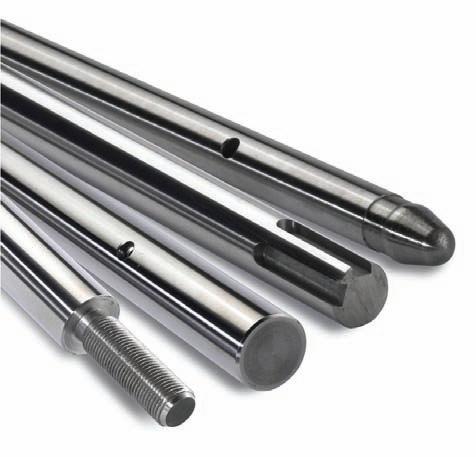
In order to simplify the ordering process for its customers, Lee Linear has reclassified the tolerance codes for its case hardened linear shafting. Customers can specify the shafting by the different codes based upon the bearing use. Class S shafts accommodate A-type linear ball bearings; needle roller bearings should be used with Class N shafts; for die set bearings customers should specify Class D shaft-
ing; and open and adjustable linear ball bearings and pillow blocks are best used with Class L shafting. ISO precision shafting also can be provided. Lee Linear Reader Service Card No. 309
Coolant recycling ROI calculator estimates savings
PRAB’s Fluid Filtration Division has released a return on investment calculator for its Guardian coolant recycling system. The

Designed to pick up viscous products including both alkyd and latex paints, Enviro Dri Universal absorbent from Can-Ross is a perlite base granular product that will ab sorb most acids and bases. In addition, it will suppress va pour and can be used to extinguish/smother magnesium fires. The product is non-WHMIS-controlled, passes the TCLP in accordance with Ontario Regulation 558 and is nonflammable per class 4, Div 4.1 of the Transportation of Dangerous Goods Act. It is available in a 5-gal pail with a handy dispenser cup and 1-gal shaker jugs. Can-Ross Environmental Services Reader Service Card No. 307

easy-to-use, on-line calculator allows operations managers for machining and grinding applications to estimate initial payback and long-term savings of the system. The payback is based on the user’s inputted costs related to labour, coolant purchases and disposal, as well as tooling savings. This coolant recycling system cuts coolant waste disposal costs up to 90% and the need to buy coolant up to 75%. With process capacities up to 5,678 l (1,500 gal) per hour, the system also extends tool life an additional 25%.
PRAB
Reader Service Card No. 308
Non-messy threadlocker tape can be carried in a pocket



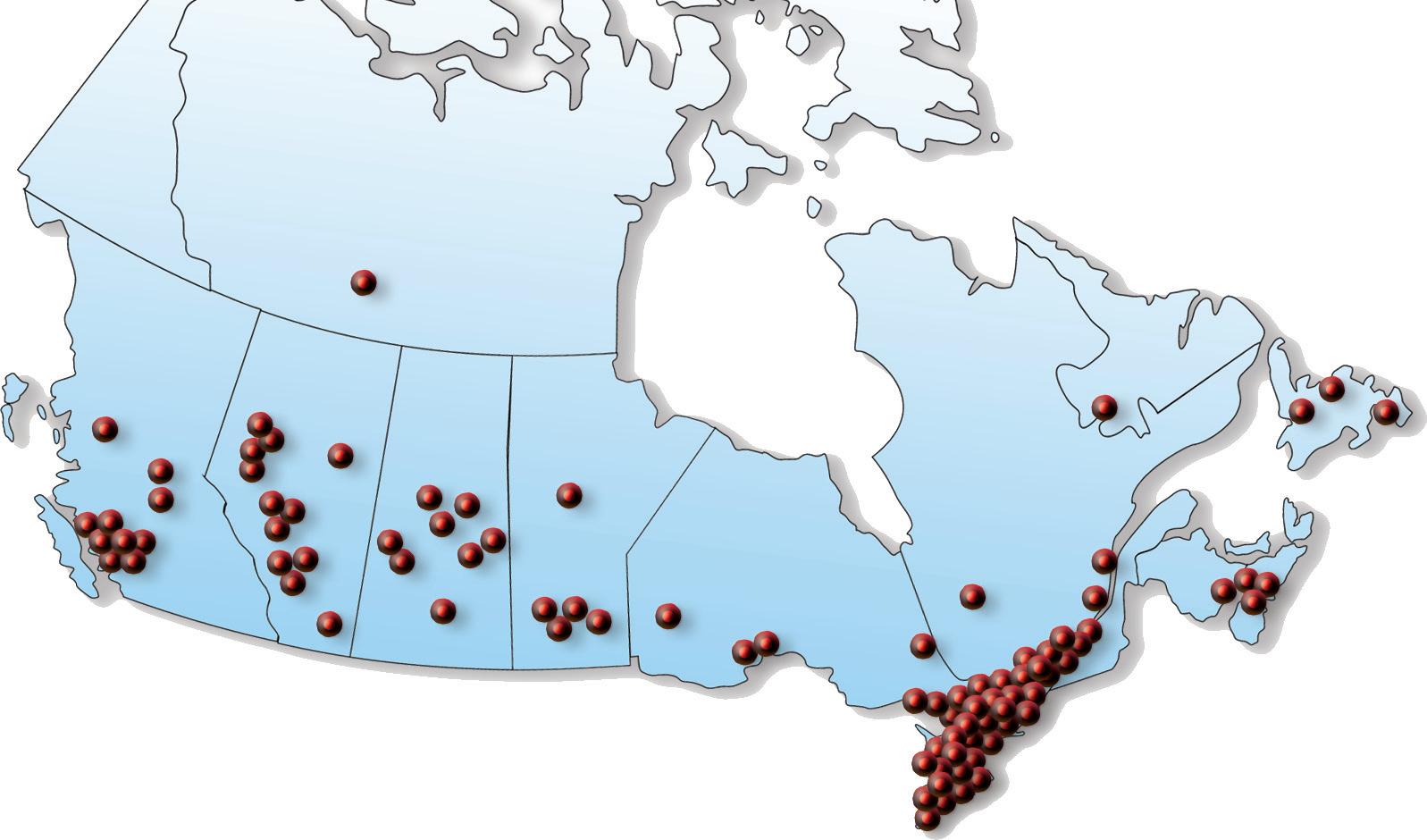
Henkel has introduced Loctite QuickTape 249 threadlocker tape. This mediumstrength, dry-to-the-touch anaerobic threadlocker is packaged in a convenient 260-in. roll for easy portabili ty in a pocket or tool box. It can be pre-ap plied to fasteners for future assembly. Re movable with hand tools and similar to liquid and stick threadlockers, the tape product fixtures in just 30 minutes and full cure is achieved in 24 hours. Operating temperatures range from minus 65°F to plus 300°F, and the shelf life is two years.
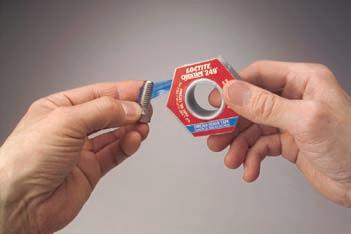


Henkel
Reader Service Card No. 320
Apparel line offers maximum welder protection
Originally developed for military applications, Miller’s WeldX fabric combines the lightweight and breathability benefits of cotton with good spatter and flame resistance to protect welders from the hazards of heavy-duty welding. The fabric consists of a blend of oxidized acrylic fibres and strengthening fibres treated with a compound that allows the material to shed

spatter and sparks. It is considerably lighter than most leathers, and also is lighter than many flame-resistant cotton garments. Laundering will not degrade its flame resistance over time. Garments made of this fabric are available as jackets, sleeves, cape sleeves, bibs and aprons to meet a variety of applications.
Miller Electric Reader
What’s new in lubrication
Fluid storage/ dispensing system
safely handles harsh chemicals
t

IFH’s Special Product Package is a fluid storage and dispensing system designed for applications involving corrosive chemicals and other abrasive fluids that require special handling for safety and efficiency. The company’s standard PVC sight gauge on the front of the steel containers is replaced with a glass sight gauge equipped with ball check fittings at both ends. Underneath the containers are 3/4-in. NPT fittings and flex steel hose for resistance to fluids that may damage PVC hose. The package can be supplied with new IFH fluid storage and dispensing systems or as a retrofit to existing systems.
IFH Group
Reader Service Card No. 383
Oil analysis program is revamped
The upgraded Shell LubeAnalyst program, in a scientific approach to preventive maintenance, provides an online user interface that offers a worldwide sample history and failure trends on various types of equipment and engine types. A regular oil analysis program helps customers build a historic database, allowing them to watch for trends in a variety of areas. Used-oil samples provided through the program can reveal whether contaminants are getting into the oil, indicating head-gasket leaks, leaking fuel injectors, or other problems. Spectrochemical analysis detects the presence of wear metals in the oil. The knowledge gained can help optimize drain intervals, increase equipment reliability, minimize unscheduled downtime, and more precisely track operating efficiency and maintenance practices.
Shell Lubricants
Reader Service Card No. 360
Test kit is for oil and vibration condition monitoring
SKF’s bearing analysis kit for industrial oil analysis and vibration testing is a multi-parameter, test kit that contains all of the necessary equipment and consumables for oil and overall vibration condition monitoring. Suitable for on-site use, this portable kit has as its centre a robust, durable test cell, which provides simple, accurate results that can be trended for water in oil and total base number. An easy-to-read digital display provides instructions and test results with a fiveyear battery life, and built-in memory for recording previous test results.
SKF Canada
Reader Service Card No. 361
Polyurea grease prolongs life of electric motor bearings
Lubrication Engineers has introduced the 1282 Monolec Extend EM Grease. Formulated with polyurea thickener and designed specifically for use in electric motor bearings, this NLGI 2 extreme-pressure lubricant offers superior mechanical stability for long service life. It features low bleed char-
acteristics, and good pumpability and oxidation resistance. With this grease, bearings run cooler, motor efficiency is increased and very low oil separation occurs. The grease maintains stability in the presence of water and protects bearings against rust and corrosion. It also can be used for automotive bearings in generators, alternators and starters.
Lubrication Engineers of Canada
Reader Service Card No. 362
Eco-friendly line offers high-performance lubricity
A family of premium-quality, biobased products that includes a variety of spray lubricants, penetrants
Antifreeze prevents frozen tools
As the pressure drops from 100 psi down to atmosphere through a tool or valve, the compressed air, which is always at 100% humidity, supercools rapidly and can freeze up the equipment. Polar-Lube technology replaces the regular lubricant in FRL units and prevents air-line freeze-up. It protects air-lines down to minus 60°F. Simply adding this antifreeze to a frozen tool inlet will unfreeze the tool. It lubricates and will not affect O rings, seals, rotor blades, bowls or hoses and is compatible with all manufacturers’ drop, mist or automatic lubrica tors. Applications include outdoor airlines, air tools, air hoists, valves, auto matic door cylinders on buildings, and transportation vehicles.
Roessel & Company
Reader Service Card No. 319

and greases is available from Plews/ Edelmann. Formulated from renewable, biodegradable vegetable oils, eco-friendly LubriMatic Green lubricants and greases have four times the natural lubricity of petroleum-based products and are less likely to thin down at high temperatures, according to the company. The products are designed to replace or mix with petroleum products. Made from US-grown crops, they do not have a harsh odour. Applications include farm and construction machinery, hand-held tools and automotive work.
Plews/Edelmann

–

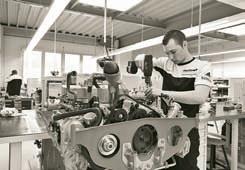
What’s new in electronic & electrical components
Electronic contactor replaces mechanical units
A durable line of three-phase solid state contactors and reversing contactors capable of handling high-frequency switching has been introduced by Carlo Gavazzi. In-

versions, the REC series comprises a three-pole non-reversing version with three switched phases or a three-pole nonreversing and reversing version with two switched phases, both up to 5 hp and 480 VAC. The REC2 and REC3 provide direct starting of three-phase motors, while the REC2R offers direct starting and reversing of three-phase motors. The relay switches instantaneously upon application of the control voltage to emulate mechanical relay operation, and is mechanically compatible with the company’s CGT-22 line of bimetallic overload modules. It can be DIN rail and panel mounted.
Carlo Gavazzi
Reader Service Card No. 335
Joystick is built to withstand the rigours of the workplace
APEM Components has announced the release of the 8000 series switchbased joystick. This rugged joystick operates using snap-acting switch technology, offering one- or two-axis control with single-step or progres sive switching. Supplied with 150-mm long, twisted wires with tinned ends, it is self-centring and requires a force of 1.3 N to move from centre. It is sealed to IP65 above the panel and can be drop-in mounted or assembled from behind the panel. Typical applications include camera controls, quality control equipment and medical equipment, and wireless controls for cranes, heavy machinery and various field operations.
APEM Components
Reader Service Card No. 327
Instrumentation & control catalogue comes in hard copy or pdf
Dwyer Instruments has introduced its 2011 instrumentation and control catalogue, featuring over 60 new products. Comprising 600 pages, the catalogue is convenient and easy to use and contains all the information needed to make a purchasing decision, including pricing,
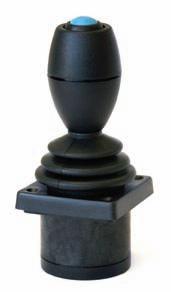
applications, product dimensions, specifications and more. Instruments for measuring, transmitting or controlling pressure, flow, air velocity, level, temperature and humidity are described in detail. Also available is the digital catalogue on CD with interactive features that include keyword search, notes addition, page print and page save in pdf format.
Dwyer Instruments
Reader Service Card No. 326

Electrical insulation protects roller bearing against damage
NKE’s SQ77 electrically insulated rolling bearings feature a built-in electrical insulation, which provides reliable protection against current discharge and the resulting electrical corrosion. The bearings are
The Components. The Systems and Controls. Design Expertise. Today’s market demands cleaner, greener, more efficient applications. Stay competitive with the newest technologies and leading-edge education for the fluid power, power transmission and motion control industries.
All in one place, once every three years.
Register today: IFPE.com
by


layer on the outer ring, the SQ77E with an insulation layer on the inner ring, and the SQ77B hybrid bearing, which features ceramic rolling elements with theoretically infinite insulation resistance. Applications include electric motors, generators and other electrical machines.
NKE
Reader Service Card No. 328


Buffer module protects against voltage fluctuations

The MB Cap Ultra from Murrelektronik is a buffer module that protects production processes and installations against voltage fluctuations. Capable of integration into new and existing power supply systems, it stores energy and bridge voltage fluctuations from up to 38 sec. at 10 A load or up to 6 min. at 1 A load. The module can communicate with the control or with a PLC/PC connected to the system via signal contacts or a USB interface, allowing a controlled reaction to changes in the operating mode. Integrated ultra capacitors allow maintenancefree operation.
Murrelektronik
Reader
What’s new in hand and power tools
Upgraded die grinder boosts productivity
Dotco 12LF and 10LF series die grinders from Cooper Tools feature an increase from 0.3 hp to 0.4 hp, delivering an improvement of up to 20% higher working speeds than existing Dotco models. In addition, the grinders feature an improved design that does not require a shim kit after disassembly, simplifying maintenance and minimizing downtime. They are available with rated speeds of 12,000 rpm or 20,000 rpm using either 9 cfm or 11 cfm of air at 90 psi. The 10LF series has a rugged aluminum body, while the 12LF series features a dual-material composite body with cushioned areas.
Cooper Tools
Reader Service Card No. 347
Durable hammer offers operator comfort
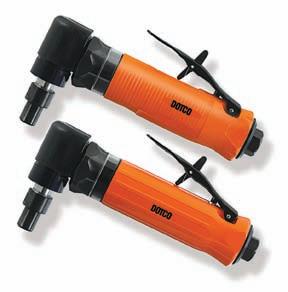
hardened screws and extends bit life when fastening specialty screws. Also available is an eightpiece screwdriver set, model 48-22-2008. The folding jab saw, model 48-22-0305, features a blade that folds into the handle for easy storage and accepts all standard-size recip saw blades. The compact hack saw, model 48-22-0012, suitable for cutting in tight spaces or making flush cuts, features a tool-free, fast blade change. In addition, the PVC/ABS saw, model 48-22-0223, also has a tool-free blade change, and has a metal core for durability.
Milwaukee Electric Tool
Reader Service Card No. 344
Training CD instructs workers in safe use of grinders

DeWalt has introduced a line of heavy-duty SDS rotary hammers that feature Shocks-Active Vibration Control and have been designed for performance, durability and comfort. The D25223K D-handle and D25323K L-shape 1-in. rotary hammers feature a shock-mounted rear handle system for reduced vi bration and increased comfort and productivity. The L-shape models, D25323K and D25324K, are compatible with the D25300DH dust extraction system. The hammers feature an 8-A motor that delivers 0 rpm to 1,150 rpm, 0 bpm to 4,300 bpm and a large hammering mechanism that generates 2.5 ft/lb of impact energy.
DeWalt
Reader Service Card No. 342
Ratchet helps in safe scaffolding installation
Designed for the safe installation of scaffolding, the WrightGrip SB ratchet, model no. 4488, is an allinclusive tool featuring a 1/2-in. drive, 7/8-in. openhead ratchet, a replaceable hammer on the other side of the ratchet available with inserts in brass or steel, and a 7/8-in. open-end wrench on the end of the handle. The open-head ratchet fits in narrow spaces and is interchangeable with a 2-in. deep socket for final tighten ing on smaller scaffold diame ters. A lanyard ring allows the tool to be tied off to the scaffold builder. The ring can slide up and down the handle to keep the lanyard out of the way while the user works with either end of the tool.
Wright Tool
Reader Service Card No. 349
Cordless power tool line resists dust and water
Micro drill offers high performance and long tool life
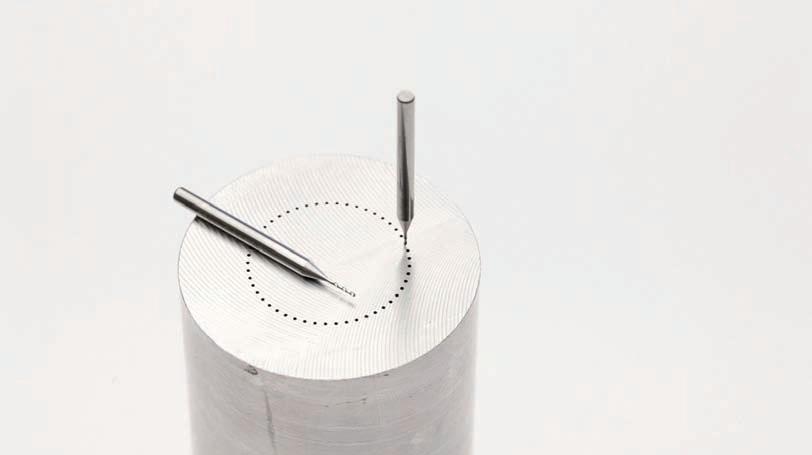
Abrasive wheel grinders can cause serious accidents when they are not adjusted correctly or used improperly. To help workers stay safe, ManComm has released the Grinder Safety Training CD. This CD can help workers improve safety and minimize risk by focusing on a personal protection system for pedestal and bench grinders. Topics covered include personal protective equipment, grinder and grinding wheel rpm compatibility, ring tests, grinding wheel installation, guard adjustment and aluminum oxide grinding wheels.
The CD is part of the company’s Safety Interactive Training Experience product line and actively engages trainees in user-based interactions. A grinder safety awareness quiz is included.
ManComm
Reader Service Card No. 345
Locking chain plier features extra-long, replaceable chains
Strong Hand Tools has designed a locking chain plier with an extra-long chain for greater holding capacity. It comes standard with a 24-in. chain, which can be removed from the plier and replaced with a series of six chains, measuring from 16 in. to 78 in. in length, which are sold separately. Each chain has a fishtail end for quick, easy-in, easy-out assembly. A chain retainer on the plier jaws holds the chain in position during work setup, while a quick-turn crank handle makes it easy to adjust the opening and the torque. An optional mounting base is available for mounting the plier on a table.
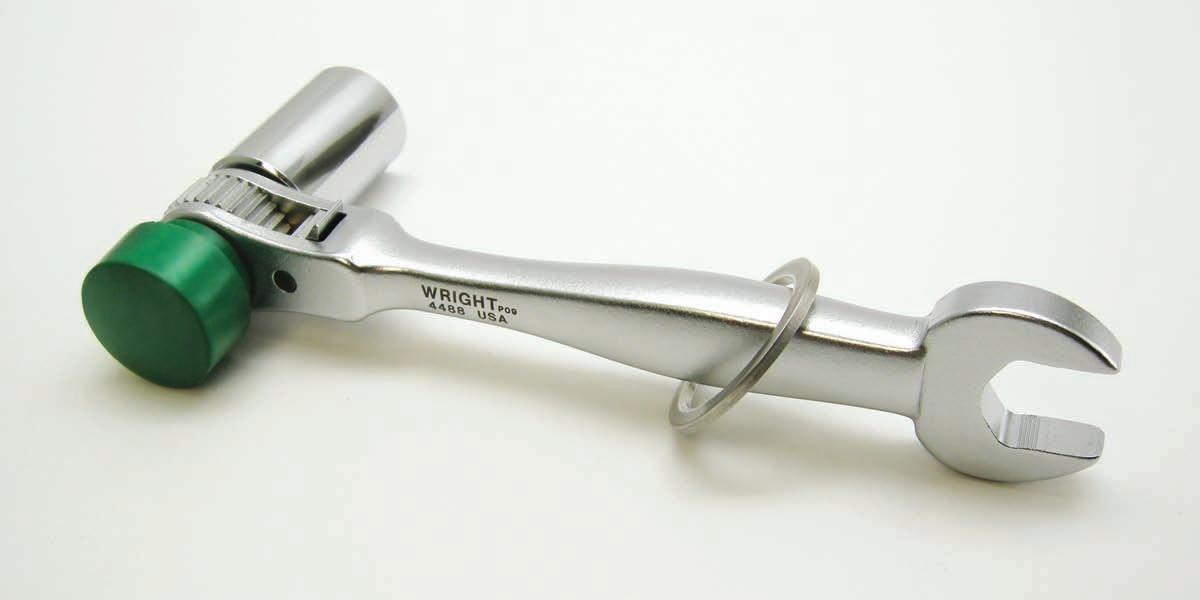
The Tough IP cordless power tools from Panasonic Canada feature dust- and water-resistant technology recognized under IEC international standards. Each of the tools underwent dust and water resistance testing by the IEC, which awarded them a rating of IP56. The line includes 13 cordless power tools, including a range of drills and drivers, impact driver and wrench, jig saw, circular saw and a grinder. Also included is a selection of custom combination kits to suit a number of applications. The GuardIon system monitors each battery cell during battery charging and during tool use to prevent over-discharging and overheating of the battery pack.
Panasonic Canada
Reader Service Card No. 343
Hand tool line is versatile
Milwaukee’s line of hand tools includes an 11-in-1 screwdriver that features an ECX bit and hardened tips. The ECX bit prevents bit wear from
Reader Service Card No. 348
Straight and smooth jaw pliers enhance tool line
Seco has launched the solid carbide high-performance micro drill, designed for small part pro duction in the auto motive, engineering and medical indus tries. The model SD22 is a pilot hole drill that can achieve depths of two times its diameter. The model SD26 drill, designed for either two-step or direct drilling, can reach depths of up to six times its diameter. Both styles come in diameters of 0.1 mm to 2 mm, are uncoated and feature a 130-degree point. These durable drills are suited for hole-making in high-strength steels and superalloys such as titanium.
Seco Tools Canada





Irwin Tools has added two jaw configurations to its line of Vise-Grip GrooveLock pliers. Suitable for maintenance and repair professionals, plumbers, electricians and auto mechanics, the new designs include smooth jaws and straight jaws that feature the company’s press-and-slide-button technology, a feature that provides for fast lower jaw adjustment. The smooth jaw pliers are designed for use on fittings that could be damaged, such as chrome plumbing fittings. Straight jaw pliers have teeth positioned at right angles to provide maximum hold in all directions, and also are for use on square nuts and bolts. Lengths range from 6 in. to 20 in., and jaw capacity sizes range from 1-1/8 in. to 6 in.
Irwin Tools
Reader Service Card No. 350 MRO

unique way, in that they pay the bills by running ads that tout every supplier’s ‘better mousetrap’. However, they balance this perspective by publishing maintenance tips and end-user commentaries that are rarely manufacturer-specific, as they are application-specific.
It’s time to wave the flag on a unique publication that celebrates the Canadian MRO market!
Steve O’Brien is a partner at Advantage Sales Network.
A survivor – no small feat
BY HANK VANDERSAR
First of all, congratulations as the survivor and original editor of MRO magazine — no small feat in today’s mostly electronic media mix.
The MRO was an enjoyable source of ideas and information during my engi-
neering days in plant projects and maintenance. Furthermore, the technical articles we submitted when I was involved with a service provider not only proved helpful to the readers (as noted by the number of inquiries) but also became useful as training, seminar, advertising and marketing tools as a consequence.
Although it has been eight years since I retired from full-time MRO work, it remains my hobby as I complete projects at home and in my volunteer/part-time work in a hospice and in churches.
I must admit that on some work occasions, I am reminded of the ideas, helpful hints, philosophy and technology gleaned from my exposure to MRO magazine.
Keep on feeding those MRO masses for the next quarter century with the written word of MRO magazine!
While working with Ainsworth Inc., Hank VanderSar was the provider of MRO’s Tech Tips column.
Technology playing a huge role
BY JOHN MORRISON
Here are some advancements/ changes in the MRO market I have seen in the past 25 years
Although manufacturers and distributors continue to consolidate under the guise of ‘bigger is better’, the independents are still thriving. In fact, new independents quite often form out of acquisitions.
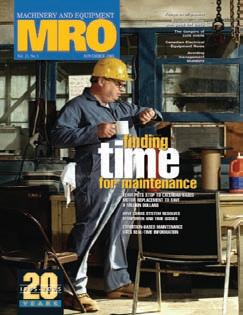
suppliers’ office. This elimination of redundancy in the order process far outweighs the e-shop approach, where the distributor has to enter the order twice (once in their system and once on-line with the manufacturer).
Independent distributors have focused on selling service and niche marketing as a way to combat the nationals. This has been a necessity as the margin opportunities are not what they used to be.
Technology has started to play a huge role in MRO as the benefits of EDI are taking root. At IDI, we have built an EDI hub that enables members and vendors to participate in ‘single order entry’, where an order doesn’t need to be rekeyed at the
Electronic data storage has also emanated at the distributor level as well as at the manufacturer level. Distributor e-shops are now an effective way for end-users to place business with distributors online.
Importing at the distributor level as well as private labelling (as a way to gain back margin dollars) has been a strong trend in the past decade. Domestic suppliers are now much more interested in helping a distributor with their private label needs in order to retain/gain volume.
John Morrison is vice-president at IDI Independent Distributors Inc.
Providing value

The industry I grew up in was focused on ensuring your distributor was local to your site. That meant having a local branch, local inventory, local customer service and strong local technical sales representatives that understood the op-

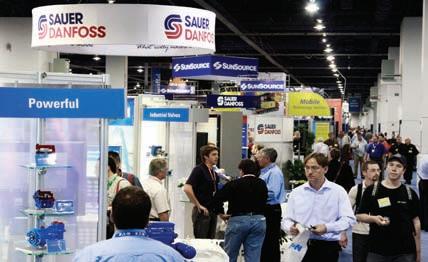
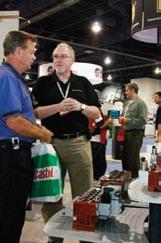


The distributor understanding of the operations at the site played a major role in decisions and these were made locally. When I look at the industry today, I see this is drastically changing. With today’s technology, there is a perception that ‘local’ is no longer important. There is a belief that value is defined by your ability to source a part number, and it doesn’t matter any more where it comes from. It concerns me to see technology playing such a major role now, because our business was built on relationships and technical knowledge — two people doing business together. In today’s world, people are being replaced by electronic platforms. I also remember that we worked hard to ensure the bearings and power transmission industry was not known as a commodity. We worked on providing value. All of us valued our industry and the people who worked in it. MRO magazine played a major role in providing a platform for showing customers value. But with today’s technology, combined with a new generation of buyers who can source product on the web, with companies who will use electronic platforms to manage their RFQs and with entire departments being outsourced, it is sadly transforming the bearings and power transmission industry into a commodity business. In the long run, that will only put more and more pressure on prices and those distributors who will not adapt will be squeezed out of the market.
Today, you have bigger but fewer players. Is this good or not? Nobody knows; it’s just the way it is. Will it impact our industry? For sure it will. I see the industry losing its technical expertise. The industry as we know it will be very different in five to 10 years. It will be hard in the future to attract young, bright individuals to this industry if all they have to do is know part numbers, prices and availability. I remember an industry where you discussed with the customer his operations and you MRO
Yvon Goudreau is a vice-president at
Mohawk College honours first Industrial Careers Pathway grads
BY ROBERT ROBERTSON
Hamilton, ON – The Industrial Careers Pathway (ICP), an alliance of seven associations and partners in the industrial distribution channel, works to help distributors meet the challenge of filling sales and customer service positions in North America. ICP links students to career paths in industrial distribution through partnerships with local educators and employers.
“As part of this program, ICP has organized an educational curriculum that is offered through several colleges in the US and Canada, as well as an online training program,” says ICP executive director Phyllis Russell. Now, ICP has seen the first graduates from its educational program at Mohawk College in Hamilton, ON.
The 2010 Mohawk College Fall Con tinuing Education Convocation Ceremony was held in October in Hamilton. Eigh teen graduates out of a class of 25 from the college’s Industrial Distribution Lead ership Certificate Program (IDLCP) were recognized for educational achievement.
Pump alignment facts
Problem: We’re always fiddling with the alignment of one particular pump. Can we ignore it for a while?
Solution: The alignment of the pump shaft with the driver is a significant reliability factor for many applications, depending on the type of coupling and the speed of the pump.
For appropriate applications, taking the time to achieve precision alignment will pay dividends in avoided seal leakage and extended bearing life.
Conversely, precision aligning every pump may be more than is necessary. Precision alignment describes procedures that achieve tolerances less than 0.005 in. Before an assessment of the need for precision alignment is undertaken, a good understanding of shaft alignment concepts and procedures is in order.

Graduating students attending the ceremony included: David William Belcher (Honours); Daniel Cheoreanu (Honours); Juan Cotrina; Joseph Henry Daley (Honours); Philip C. Davreux; Ryan Disero (Honours); Laszlo Fodor; Susan A. Furlong (Honours); John Mason (Honours); Antonio Ricardo Munion (Honours); Douglas Frank Donald Pollard; Aurelio Romano; Robert Thomas (Honours); Brian Tombolini (Honours); J. Kent Wakem; Ian A. Warden; Jordan M. Wright; and Patrick Michael Wright.
Developed under the Power Transmission Distributors Association’s PTDA Foundation Industrial Careers Pathway brand, Mohawk College’s IDLCP consists of six courses of 30 hours each.
The program of studies includes: Business Fundamentals in Industrial Distribution; Operational Fundamentals in Industrial Distribution; Marketing, Sales and Customer Service in Industrial Distribution; Negotiations in Industrial Distribution; Leadership and Effective Communication in Industrial Distribution; and Industrial Distribution Integrated Case Study, which is a capstone course that is taken last.
Mohawk College’s IDLCP was developed by a dedicated and highly involved team of industry stakeholders and educators. Electro-Federation Canada (EFC), the Canadian Fluid Power Association (CFPA), Canadian Association of Plumbers and Heating Professionals (CAPHP), and the Ontario Association of Certified Engineering Technicians and Technologists (OACETT) supported the program in Canada, along with the PTDA.
Mohawk College’s IDLCP is intended for individuals working within the industrial distribution and manufacturing sectors who have responsibilities for key customer accounts and client relations. The program was chosen from across the Ontario community college system as the 2009 CONNY award winner for unique and innovative programming.
Courses are offered on a semester basis through in-class sessions or through Mohawk’s IDLCP online version, which is available as part of the Ontario’s community college consortium, OntarioLearn. Classroom sessions are currently offered at Mohawk’s Fennell campus in Hamilton. OACETT assisted in the funding of Mohawk’s online initiative.
“What’s great about the program is that students take the courses one at a time. You’re not doing a crash course in one week. It takes students 1-1/2 to two years to go through the whole program,” said Pat MacDonald, Mohawk College’s associate dean of the School of Continuing Education and Distance Education/Online Learning. “The only course we insist students take in a certain order is the last Capstone course. The program is an evolution of learning and skill development.
“Student testimonials are convincing us that we’re really doing the right thing. Many of the graduates have come from technical programs. Our courses enable students to see the ripple effect of their decisions on the rest of a company. They learn the importance of having good customer service, while making a positive impact on the organization’s bottom line.”
Industry instructors are the driving force behind Mohawk College’s IDLCP. They include:
• Ted Chisholm, vice-president, BDI Canada (Business Fundamentals Leadership and Effective Communications);
• Richard Ayuen, former vice-president, Kinecor LP (Negotiations in
Industrial Distribution);
• Paul St. Germain, wholesale distribution industry executive with IBM Canada (Marketing, Sales and Customer Service in Industrial Distribution, and the Capstone course);
• John Bachmann, retired and former marketing manager, Wainbee Ltd., and past chair of the CFPA (Marketing, Sales and Customer Service in Industrial Distribution);
• Carm Stewart, executive vice-president, Gerrie Electric (Operational Fundamentals in Industrial Distribution);
• Drew Tils, pricing manager, Gerrie Electric (Operational Fundamentals in Industrial Distribution);
• Paul Meo, vice-president, NTN Bearing Corp. of Canada (Negotiations in Industrial Distribution); and
• Rodney Stelmack, vice-president, marketing, Canadian Bearings; he will teach the Capstone course next semester.
“We’ve been involved from day one developing the program and building the six modules. At the end of the day, it’s good to give back,” said Ayuen. “It’s also great to see young people wanting to pursue and enhance their skill sets, while creating better career opportunities. The program was a big success. Students coming out of the program can apply what they learned the next day and to the business.”
When Machinery & Equipment MRO spoke with some of the graduating students, it was clear that Mohawk’s IDLCP was a tremendous experience. Robert Thomas, who works in inside sales with Gerrie Electric, said the courses helped to improve his overall business skills and knowledge. “Learning new negotiation skills was a key thing that I picked up from the courses,” he said. “It’s really a good program.”
For more information on ICP, visit www.industrialcareerspathway.org. To obtain additional details on the Mohawk College program, visit the website at: www.mohawkcollege.ca. MRO
is a
Mr. O’s thanks for this tip go to the technical experts at the Electrical Apparatus Service Association (EASA).
Drive belt is cracking
Problem: This winter, we’re finding a few drive belts that run outdoors are failing. We’re located in western Canada, where temperatures had hit 30 below back in November.
Solution: As temperatures drop to low levels, rubber belt materials become stiffer until they reach a brittle point at about -36ºC (-32ºF). Cracking, the major cause of belt failure due to cold, occurs below this temperature.
Ways to avoid cold-temperature cracking include:
• Warming the drive enclosure or making a temporary enclosure and installing a quick-heating unit.
• Removing the belt and storing it in a warm place between uses.
• Keeping idle time to a minimum and arranging for continuous operating periods.
• Applying minimum torque or no load when starting a drive that has been idle for a long time.
• Using larger pulleys to reduce excess belt bending.
Mr. O’s thanks for this tip go to the technical experts at the Gates Corp.
Do you have a solution for a maintenance problem? Send it in and if it’s published, we’ll send you a Mr. O Problem Solver T-shirt. Include your address, telephone number, print complete details and, if possible, add a sketch to help explain your tip. Send your tips to Mr. O, Machinery & Equipment MRO, 12 Concorde Place, Suite 800, Toronto, ON M3C 4J2.

Robert Robertson
freelance contributor to Machinery & Equipment MRO.
Photo courtesy Mohawk College
Photos: Robert Robertson
Left: (from left) instructor Richard Ayuen, instructor Carm Stewart, Pat MacDonald of Mohawk College, instructor Paul St. Germain and instructor John Bachmann. Above: The instructors and first graduates of Mohawk Colleges’s Industrial Distribution Leadership Certificate Program, part of the Industrial Careers Pathway initiative, gather for a group photograph. Below: Graduate Robert Thomas: “It’s really a good program.”
Mr.0 The Practical Problem Solver
Industry Summit celebrates PTDA’s 50th anniversary
BY BILL ROEBUCK, EDITOR
The 50th Anniversary Industry Summit of the Power Transmission Distributors Association (PTDA), held Oct. 21-23, 2010, at the J.W. Marriott Desert Ridge in Phoenix, AZ, featured the theme ‘A Summit of Possibilities’. It was attended by more than 680 people, including top-level decision-makers from distribution and manufacturing firms in the US and Canada. As well, delegates attended from France, Germany, Mexico, Trinidad and the United Kingdom.
The total number of delegates was up 25% compared to the 2009 summit, and the companies represented were up 12% from the previous year.
PTDA was founded on February 10, 1960. Its first annual convention was held
later the same year. The annual summit provides a mix of educational sessions on industry trends, distributor-manufacturer meetings and peer networking forums.
The opening keynote address was presented by Mike Rayburn, known as the World’s Funniest Guitar Virtuoso, who combined unique musical talents with motivational snippets. Several other industry and marketing presentations were part of the three-day event.
One of the most popular talks, Making Sense of the Economy, was presented by economist Alan Beaulieu, who offered a generally optimistic outlook for the next three years, especially for the Canadian market.
The association named Penny Omnès,
1. Michael St. Jacques and Oswaldo Almeida, NSK Canada; Yvon Goudreau, Kinecor LP; and Jean-Sebastian Lavigne, NTN Canada. 2. Dave and Diane Strutt, PTDA. 3. Yvon Goudreau and Adrian Trotman, Kinecor LP. 4. Mary Sue Lyon of PTDA presents the association’s Warren Pike Award for lifetime achievement to Penny Omnès, BCB Corporate Services. 5. Mary Sue Lyon, PTDA executive vice-president, was honoured for 16 years of service to the association. Lyon is retiring at the end of 2010. Board member Randy Breaux, Baldor Electric, presented her with a music box as one of several parting gifts.
6. Bill Roebuck, MRO Magazine; Ted Chisholm, BDI Canada; Mary Sue Lyon, PTDA; Cory Shaw, Timken/QM Bearings; Evan Boere, Timken Canada; Sean Hazelton, Emerson Industrial Automation and Dermot Strong, Motion Industries/BC Bearing Engineers.
7. Tamara Somerville, Posi Lock Puller, with Ajay and Neera Bajaj, Rotator Products.
8. Brian Short, Kaydon Bearing, and Earl Rogalski, Garlock Klozure. 9. Tom Karch, SKF Canada; Jos Sueters, Tsubaki of Canada; and Tony Bisante, RBI Bearing. 10. EASA board member Gary Siemon, Ampro Electric, was a first-time attendee at PTDA. 11. More than 60 women at the PTDA Industry Summit participated in a fundraising walk to benefit the Susan G. Komen for the Cure fundraising campaign.
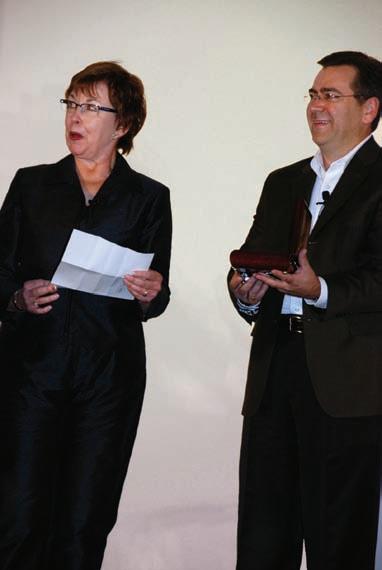
director, BCB Corporate Services, North Vancouver, BC, the 21st recipient of its Warren Pike Award for lifetime achievement in the power transmission/motion control (PT/MC) industry.
After presenting this award, PTDA executive vice-president Mary Sue Lyon was herself honoured for 16 years of service to the association. Lyon is retiring at the end of 2010. Commenting on her reason for stepping down, she said, “On December 21, 2008, I was lucky enough to walk away from [a major car accident] with a broken arm, a concussion and a new perspective on what is important in life — that I spent more energy, effort and time on my personal relationship with Terry, my life partner, my friends and my family. It was my proverbial wake-up call.”
The Industry Summit’s signature event, the Manufacturer-Distributor
pointments and open times.
For the fifth year, the Industry Summit included a Motion Control Showcase, featuring 20 motion control suppliers with live demonstrations of the latest products and equipment. The showcase is targeted at members considering expansion into the motion control arena, looking for additional suppliers to support current offerings or interested in networking with other market players.
PTDA, a Chicago-based trade association for the industrial power transmission/motion control (PT/MC) distribution channel, represents 185 power transmission/motion control distribution firms that generate more than $10 billion in sales and span 3,500 locations in North America and 11 other countries. PTDA members also include 181 manufacturers that supply the PT/MC industry. For more



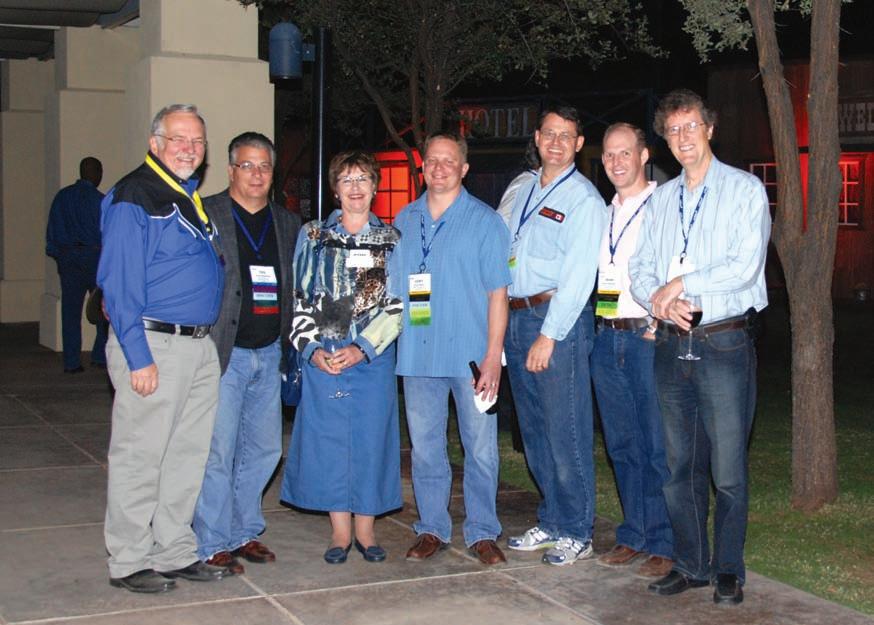


We see less downtime in your future.
At NTN, we are dedicated to help you get the most out of your rotating machinery.
Our people contribute to this vision every day. Invite us to roll up our sleeves with you.
Condition-based maintenance with FAG Detector III
Condition-based maintenance encompasses 1) identifying damage at an early stage, 2) defining planned repairs, 3) making optimum use of bearing life, and 4) achieving considerable reductions in costs. FAG Detector III fulfils these tasks to an optimum degree and is also highly suitable for users with only minimal knowledge of vibration technology.
FAG Detector III is an offline vibration monitoring system, data collector and operational balancing device all in one. By means of various sensors, it can record
The Cutting Edge in Machine Tool Design
Super precision bearing technology from the Schaeffler Group is focused on delivering innovative bearing solutions with improved operating efficiencies. As a result, Schaeffler products set standards unchallenged by other bearing manufacturers in the world today when it comes to performance reliability, running accuracy, high speeds, longer operating life and a sensitivity to cost.
The extensive range of Barden, FAG, and INA super precision bearing products offered by Schaeffler can satisfy vir tually any machine tool application requirement - from spindles to ball screws to turn tables - with an optimal solution from a single source.
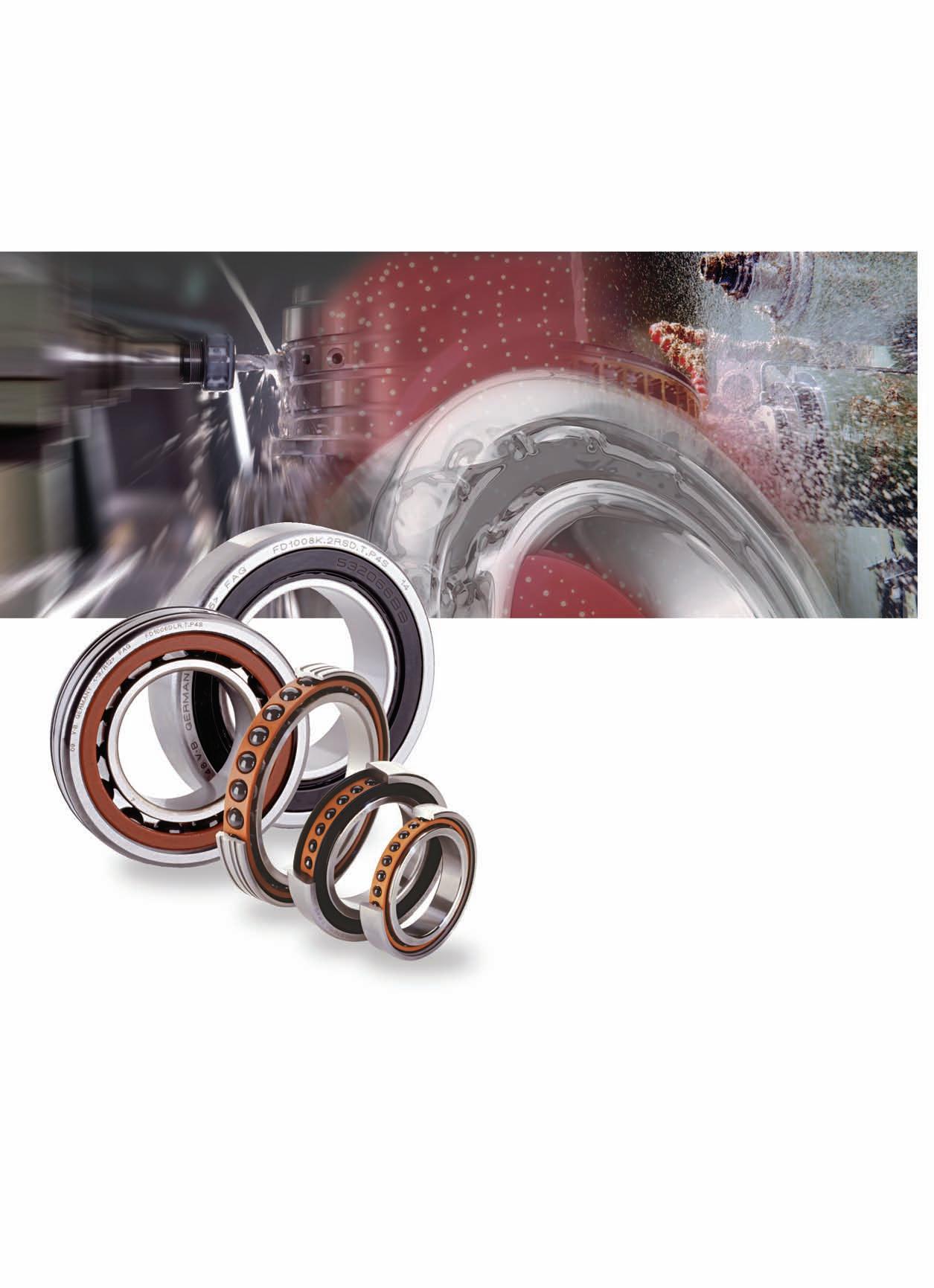
the vibrations, temperatures and speeds of machinery. Step by step, the device’s software guides the user through the measurement and balancing procedure. The userfriendly software then allows easy and effective data analysis. Furthermore, comments can be defined in the software, transferred to the FAG Detector I II and selected as required after measurement. Any incipient damage can therefore be detected at a very early stage. As a result, maintenance can be planned and machine availability can be increased.
FAG Detector III is the ideal entry level device for the detection of
• imbalance and misalignment
• rolling bearing damage
• gearbox damage (tooth sets) Typical areas of application include the monitoring of
• pumps
• electric motors
• fans
• machine tools
• compressors
• gearboxes
• spindles
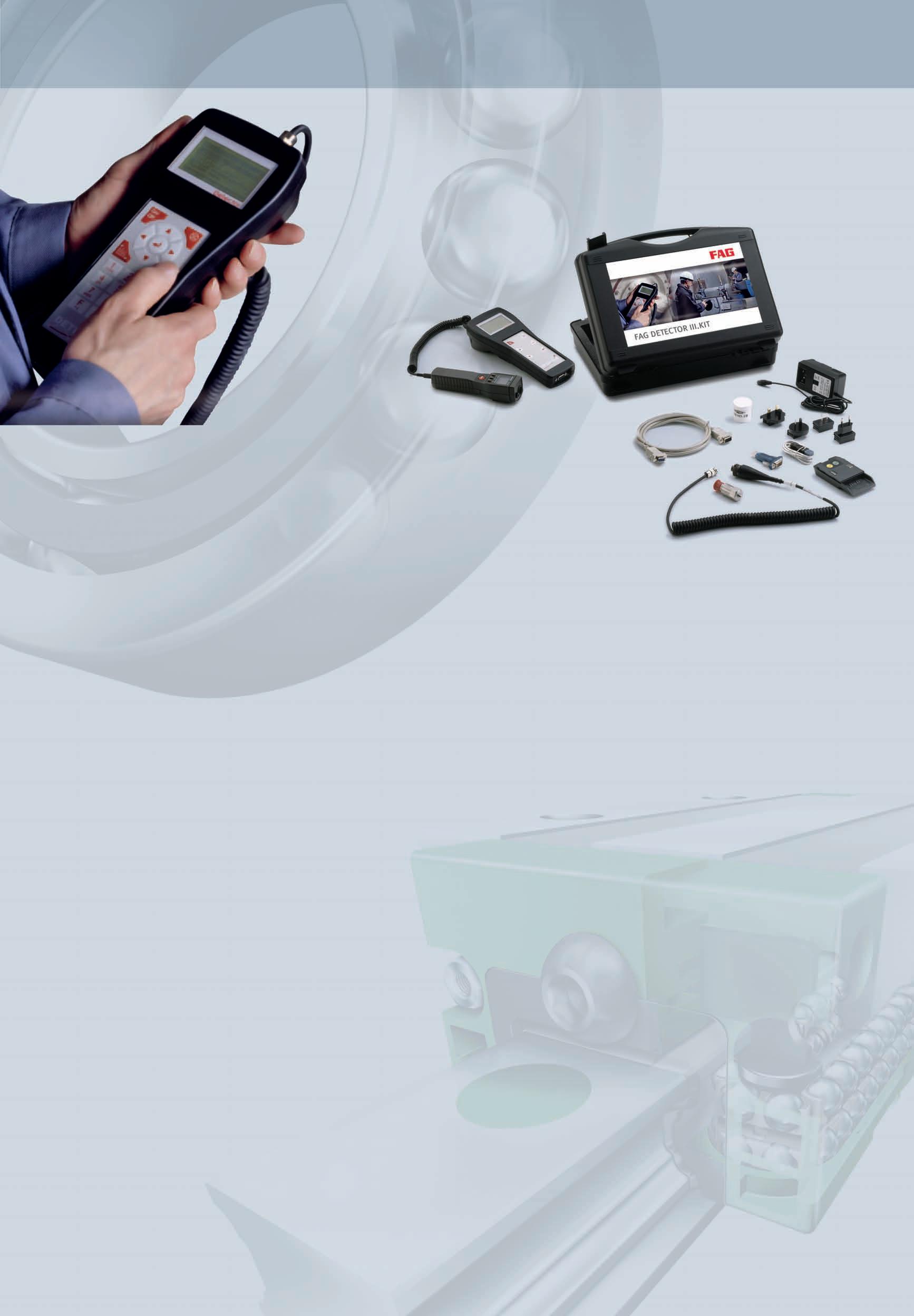
For additional information about FAG Detector I I I, contact your local Schaeffler representative or visit www.fis-services.com.