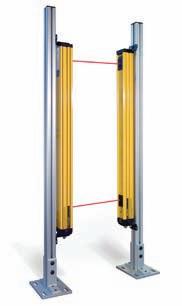
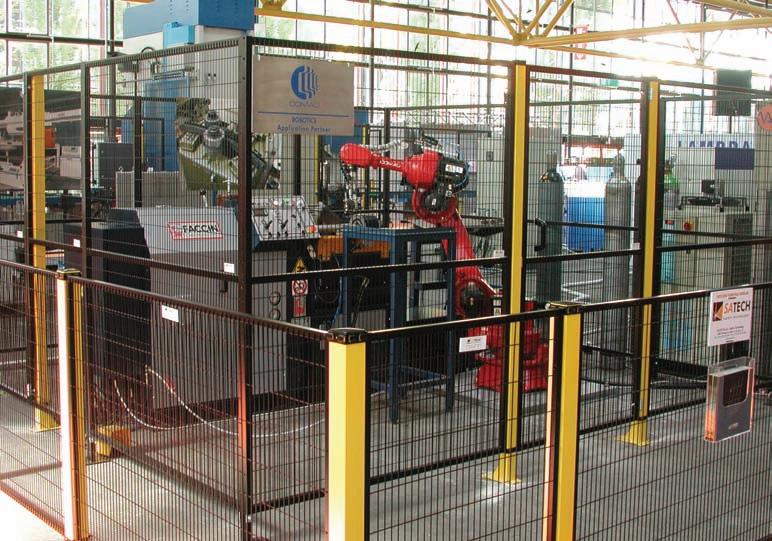
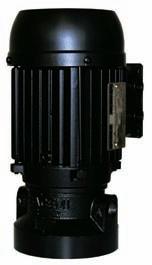
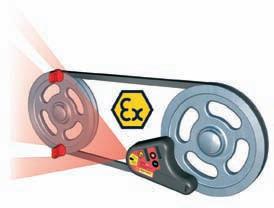
tSTI’s light-duty floor stand is designed for mounting the company’s family of safety light cur tains, as well as its PA4600 perimeter access guarding device. Availa ble in sizes ranging from 1.0 m to 1.4 m (40 in. to 60 in.), the stand includes mounting brackets and concrete mounting bolts. Heavy-duty floor stands also are available. Light curtains and perimeter guards used to detect personnel have specific mounting requirements. This stand is suitable for mounting the bot -
Industrial adhesive bonds instantly Designed for interior and exterior facility maintenance or building projects, Loctite Power Grab from Henkel Canada is a heavy-duty industrial construction adhesive that grabs in stantly with forceful holding power. It can be repositioned for 15 mins. after it has been applied and holds firmly in place until it cures. The ad hesive can instantly hold a maximum vertical load of 10 lb per sq cm (20 lb per sq ft) on a porous surface. Waterresistant and paintable, it bonds easily to materials such as concrete, brick, wood, stainless steel, ceramic, tile and most plastics. The solvent-free, lowodour latex adhesive cleans easily with soap and water, and is available in 300-
tContactor series saves space, installation time Schneider Electric’s TeSys D 40A, 50A and 65A contactors feature Everlink termination technology. This technology saves time by providing a direct connection to TeSys D overload relays and TeSys GV3P manual motor protectors without requiring an interconnect block. The termination provides constant tightening pressure by combining spring and screw technology that moves with the wire as it relaxes over time to reduce the need to retighten. The contactors are easy to install in DIN rail or panel-mount configurations. They save space be-
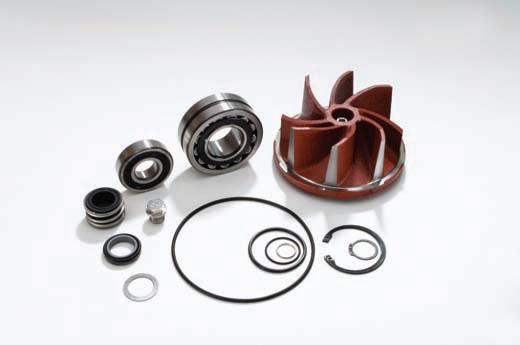
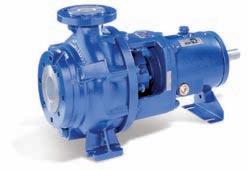
Impeller models meet range of pumping needs
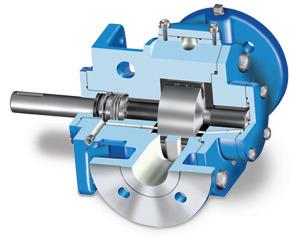
KSB’s wastewater transport pumps, including the Amarex family of submersible pumps and Sewatec pumps for dry-well installations, can be ordered with special impellers that are optimized for tough water treatment applications. Five models are offered. E- and K-type general-purpose impellers are shrouded, single- or multi-vane
handle solid objects. D-type impellers are open-vane impellers that are highly resistant to clogging. The F-type free-flow impellers can handle abrasive particles or gases. Designed for small-diameter pipes, the S-type impellers have built-in cutters to help reduce blockages.
KSB Pumps
Reader Service Card No. 384
Modular bearing system is for planetary wind turbine gearboxes
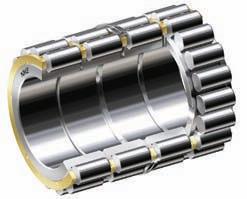
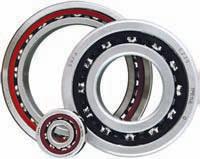
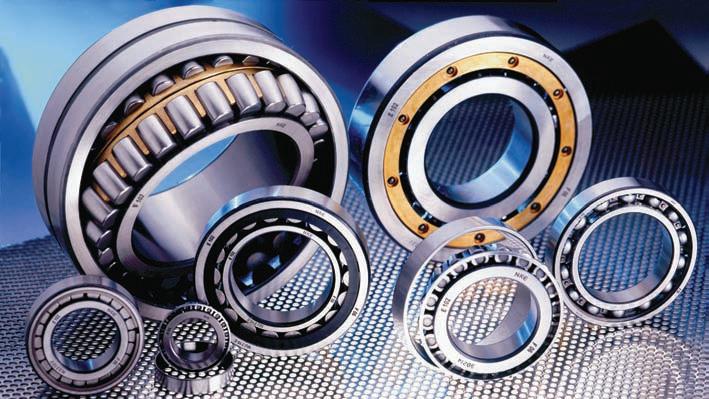
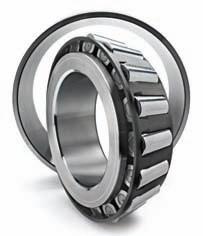
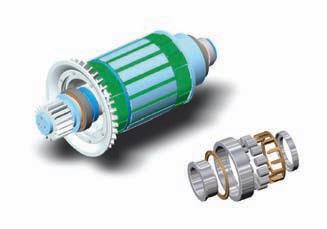
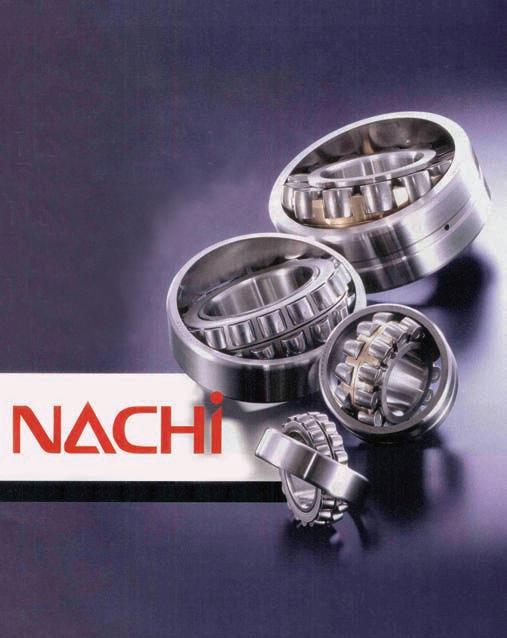
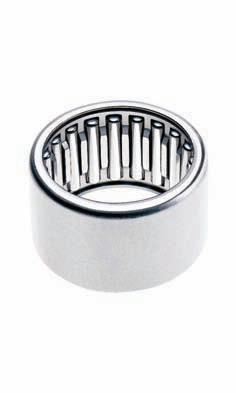
NKE Austria has developed a modular bearing system for planetary gears in wind turbine gearboxes. The system features single-row cylindrical roller bearings of the RN range, which do not have an outer ring. These bearings are equipped with a one-piece solid brass cage, which is guided by the inner ring. They can be assembled into sets of two, three or four bearings to conform with the individual load and design parameters of a specific gearbox. Supplied ready to install with the components required to secure the bearings axially in the planetary gears, each bearing set is packaged as a unit and is marked to prevent inadvertent swapping of matched components within each set.
Global Bear
Reader Service Card No. 385
Capacitor models
deliver reliability within budget
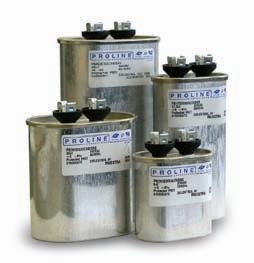
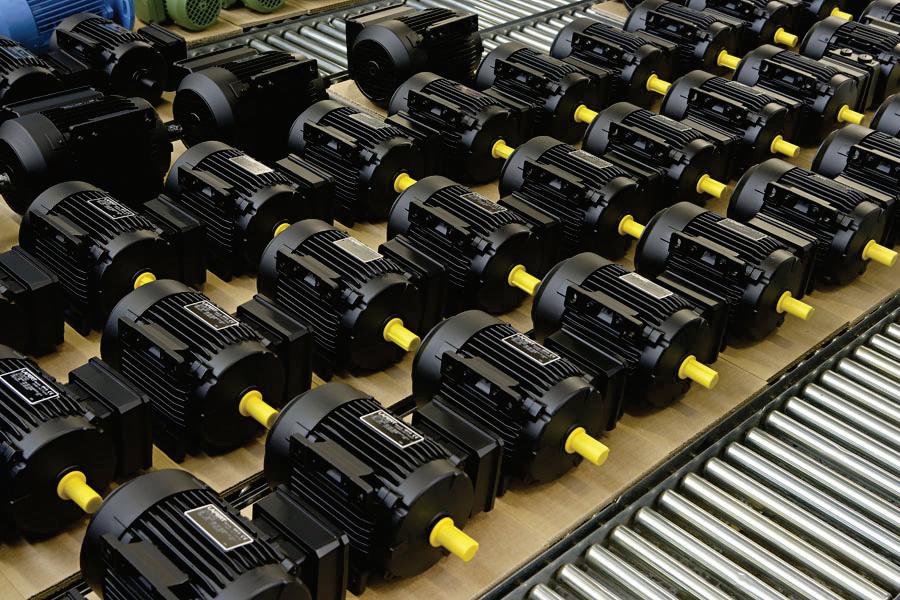
For over 50 years, GE Capacitors by Regal Beloit prod ucts have been in stalled into Leeson products. GE Capacitors by Regal Beloit is a division of RBC Manufacturing Corp., which is a subsidiary of Regal Beloit Corp., a manufacturer of mechanical and electrical motion control and power generation products. Leeson Canada, a manufacturer and wholesaler of electric motors, speed reducers, drives and related electro-mechanical components, is a Regal-Beloit company that now distributes the Proline capacitor. The Proline, which exceeds the IEC-252 Class B industry standard for reliability, is rated at 10,000 hours, delivering quality, performance and reliability at a significantly lower cost than the Genteq long-life brand (proven at 60,000 hours). Both Genteq and Proline capacitors are available for residential heating and cooling applications.
Leeson Canada
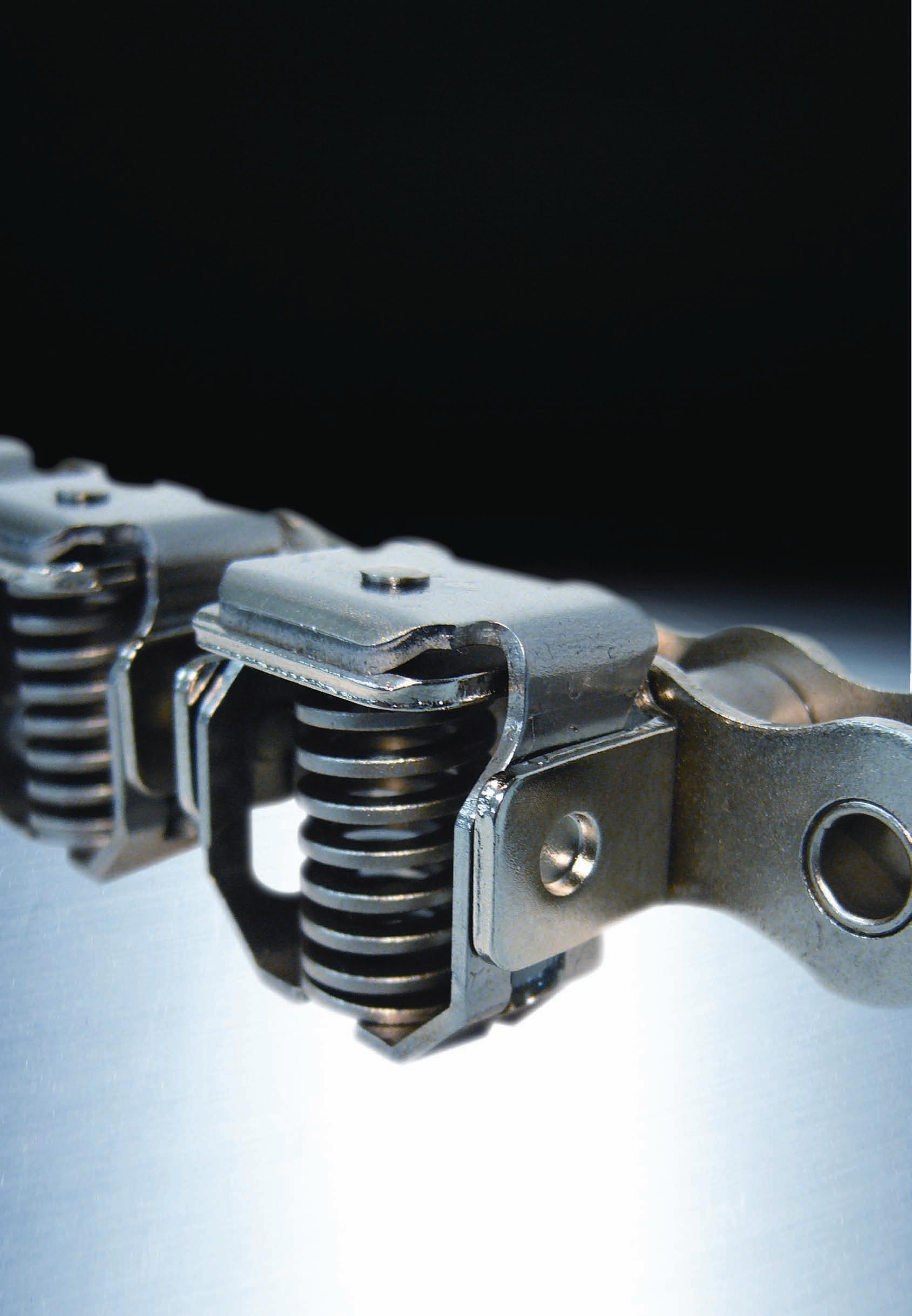
Precision Attachment Roller Chain
Drives, LLC is the world leader in USA manufactured chain products. A complete line of Precision Attachment Roller Chains are available to meet your specific needs.
Drives’ Rapid Response Program delivers your solution. Drives Precision Attachment Roller Chains are produced in accordance with ANSI standards and manufactured to exact tolerances. Three classifications of matching and tagging are employed to meet the tolerances of your most precise application. If you’ve experienced unnecessary downtime due to mis-feeds or jams, look into the complete line of Drives standard chain attachments, available in carbon or stainless steel. Custom services are available to modify standard attachments to your specifications. Engineers are available to advise on new or difficult Precision Attachment Roller Chain applications.
Drives relentlessly delivers leading edge solutions with over 100 years of advanced engineering knowledge and experience.
RCM: The next generation of maintenance / 15
Reliability-centred maintenance is the way of the future at Howe Sound Pulp and Paper in Port Mellon, BC.
Profile: BSA president Steve Durston / 17
Evolution is ongoing in the bearing industry and for the Bearing Specialists Association.
Niche supplier solves hot bearing problem / 18
Retrofit of steel mill tunnel furnace creates challenge.
Quick action on machine
bearing saves a shaft / 18
Condition monitoring unit alerts Toyota in advance and saves 16 hours of downtime.
Getting serious with belt and chain alignment / 19
Correcting misalignment reduces wear, increases efficiency, lowers energy consumption, and decreases vibration and noise. Here’s how to do it.
Cover story: Fighting flow frustrations / 21
We examine what a pump is designed to do and why it doesn’t always do it.
columns
Getting ready for the end of the recession / 23
The Safety File: Enhanced machine guarding alone can increase employee productivity by 25%.
Dealing with multi-site maintenance challenges / 24
CMMS Solutions: There’s a lot to be learned from regional municipalities with their widespread assets.
Who makes a good boss? / 25
Supervisory Suggestions: Bill Gates of Microsoft shares lessons learned over the years.
High standards met at every corner / 26
Maintenance Management: Follow along with Step 26 in a journey to World-Class Maintenance at the Plentya Paper Company.
We really could use your help
Regular readers of this column will know we always try to bring an optimistic outlook to the MRO world — and in fact to the Canadian economy in general. There’s almost always a bright side to every story, and we’re happy to share it.
But after researching and writing various articles lately about the state of Canadian industry, we have to admit to feeling somewhat defeated. This past week there’s been bad news, followed by seemingly worse news, every single day.
Here are some examples from reports available at press time.
In the fourth quarter of 2008, the industrial capacity utilization rate dropped to below 75%, the lowest level since this data began being monitored 22 years ago. The rate fell in 16 of the 21 major industries. Looking for a glim-
mer of light, we noted that, at least in the non-manu facturing group, the for estry and logging sectors posted moderate increases.
The labour productivity of Canadian businesses also fell in the fourth quarter of 2008, by 0.5%. Productivity declined as output dropped more rapidly than hours worked. Sorry, but we couldn’t find much good news in this story.
In addition, the real gross domestic product (GDP) of Canadian businesses shrank by 1.3% in the fourth quarter, reflecting weak domestic demand and a continuing slump in exports. This was the largest decline since the first quarter of 1991.
On top of this, the Canadian dollar depreciated by 14.1% relative to its US coun-
terpart in the fourth quarter of 2008. Canadian unit labour costs measured in US dollars decreased substantially due to this depreciation. In good times this would be beneficial to our US-bound exports whereas today it just puts more pressure on our overall economy, given the severe weakness of the US economy. Canada’s manufacturing sales in January validate this sad point: they dropped 5.4% to the lowest level in almost 10 years.
True, if you take out motor vehicles, and related parts and accessories, January’s manufacturing sales decreased a more moderate 1.2% compared with December 2008, but then constant-dollar manufacturing sales, which are measured in 2002 prices, fell 6.4% in January — the sharpest decrease since 1997. If there is relief, we owe it to the raw materials sector. For example, petroleum and coal product manufacturers reported a 7.2% in-
crease compared with December. Whew!
Struggling to find another bright aspect of the economic picture, we noted that the Atlantic Provinces posted mostly positive results, with January sales up 2.3% in the region compared with December.
And digging deeper, we found a glimmer of hope among the dismal February unemployment numbers: employment in manufacturing rose by 25,000.
So you see, there’s almost always some good news among the bad, especially when you dig for it. But finding that good news is a challenge, so we’d like your assistance. Help lift the gloom by writing us with any positive stories you have — anything that makes you feel good about your business, your job, your industry or the MRO market. Write to broebuck@ mromagazine.com. And thank you.
Bill Roebuck, Editor & Associate Publisher
The only intelligent choice is NORD Gear. So
For performance you know you can trust, say yes to NORD Gear drive systems.
You want the best for your operation and outdated drive systems just don’t deliver. For a relationship that’s meant to last, switch to industryleading NORD Gear drive systems.
They’re more reliable, use less energy, require less maintenance, have a longer service life and are much safer. We have mounting configurations and options to satisfy even the harshest environments. It all adds up to lower total cost of ownership.
NORD Gear is also a global leader in service. We can design and assemble literally millions of drive configurations. We’re only a phone call away and prepared, 24/7, to ship assembled units from stock components anywhere in Canada or worldwide.
Don’t settle for second best. For reliability, efficiency, cleanliness and safety you’ll welcome us with open arms.
2008 power transmission sales growth falls below 2007 levels in Canada
Chicago, IL — In releasing 2008 year-end sales data for distributors and manufacturers of power transmission/motion control (PT/MC) products, the Power Transmission Distributors Association (PTDA) reported that US distributors and manufacturers experienced overall growth in sales in 2008 while their Canadian counterparts experienced a decline in sales.
Confidence in the market, as measured on a scale of 1 to 10 (with 10 being most optimistic) has eroded overall, holding a current neutral position between 4.6 and 5.2 versus a range of 5.0 to 5.8 at year-end 2007.
Growth in sales of PT/MC products is definitely slowing. Following a moderate growth rate of 6.6% in 2007, US distributors saw a 4.3% increase in PT/MC product sales in 2008.
Canadian distributors ended the year with a drop in sales, the first loss since 2001. Distributors of PT/MC
Branch search capaBility added to online directory of Bearing specialists
Glen Ellyn, IL — The Bearing Specialists Association (BSA) has added a branch search capability to the BSA public website, www.bsahome.org, to give visitors the ability to search for BSA member branches in their area.
Branch search capability is just one more step BSA has taken to make authorized distribution more accessible to end users and make its members more competitive in today’s challenging marketplace.
To ensure branch information is current and correct, BSA has given distributor members the ability to update branch information online via its Members-Only website.
For more information, contact the BSA office at 630-858-3838 or e-mail info@bsahome.org.
We sWitched off for
Toronto, ON — On Saturday, March 28, Machinery & Equipoffices in Toronto went dark as we took part in Earth Hour, the fight against climate change sponsored by the
By simply turning off all non-essential lighting for one hour at our building, we joined tens of millions of concerned citizens and corporations throughout the world in calling for action to save our
We had encouraged our customers, business partners and suppliers to join us in supporting Earth Hour 2009 and we’d like to hear what you did at your company. Send a brief note to editor Bill Roebuck at broebuck@mromagazine.com.
Manufacturing sales fall to loWest level in past decade
in January, accounting for about threefifths of total sales.
However, in February, employment rose by 25,000 in manufacturing, with the largest gain in food products manufacturing. Transportation equipment manufacturing was little changed following declines the month before. Despite the overall increase in February, manufacturing employment is down 5.3% (-104,000) from 12 months earlier.
four provincial econoMies expected to groW this year
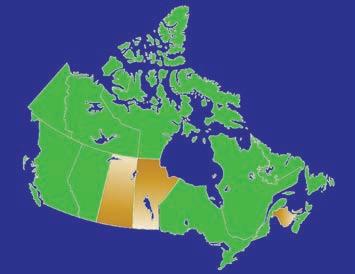
Ottawa, ON — Saskatchewan, Manitoba, Prince Edward Island and New Brunswick are the only four Canadian provinces forecast to have growing economies this year, according to the Conference Board’s Provincial Outlook-Winter 2009.
“No province is immune to the effects of the global recession, but the momentum in the domestic economies of Saskatchewan and Manitoba will cushion the blow from the downturn in the resource sector,” said Pedro Antunes, director, National and Provincial Forecast, Conference Board of Canada.
“The outlook for the second half of the year is more optimistic. All provinces are expected to bounce back in 2010, as the US economy hits bottom and begins to recover.”
Saskatchewan will again post the strongest growth among the provinces at 1.6%. Manitoba is also in a good position to ride out the global recession. Large public and private capital projects, a resilient labour market and personal income tax cuts will lift Manitoba’s economic growth by 1% in 2009.
Prince Edward Island’s real GDP is expected to grow by 0.6% in 2009 — and stronger growth is forecast next year, as the province gears up for the massive development of wind power energy on the Island.
as Olympic-related infrastructure projects wind up. Real GDP will decline by 0.1% this year, but an improved global outlook and the timing of the Olympics will help B.C. join Alberta in leading the recovery in 2010.
The malaise in the manufacturing industry is spreading quickly to other sectors of the Ontario economy. The province will face the weakest consumer spending outlook of all provinces, and real GDP in Ontario will fall by 1.2%.
Quebec’s overall real GDP will go down by 0.4% in 2009. The Quebec aerospace industry is now beginning to feel the effects of the global downturn and consumers are becoming more cautious, as 33,000 jobs will be lost this year.
With industrial production and the job market faltering, Nova Scotia’s overall economic growth is projected to fall by 0.3% in 2009.
Despite a positive outlook for consumer spending and construction, Newfoundland and Labrador’s economy will decline in 2009 by 2.6%, the worst performance of all the provinces. Oil production continues to fall off at mature sites and the closure of the newsprint mill in Grand Falls will hurt manufacturing output.
products in Canada ended 2008 with a decrease in sales of 0.5%, compared to a gain of 1.3% in 2007.
US manufacturers of PT/MC products experienced year-to-date sales growth of 3.8% in 2008, off slightly from the 4.1% growth rate posted for 2007. Year-to-date orders of PT/MC products for US manufacturers, however, were down 2.2% in 2008 versus 1.0% growth for 2007. The annualized sales-to-inventory ratio dropped slightly from 10.0 at year-end 2007 to 9.7 at year-end 2008.
Canadian manufacturers’ sales suffered in 2008, with a decrease in sales of 7.4% for 2008, following relatively flat results in 2007. The annualized sales-toinventory ratio remained steady at 7.0 at the end of 2008.
In considering sales growth on a product-by-product basis for 2008, product categories for US manufacturers showed an overall growth in sales with only two product categories experiencing sales declines – mounted bearings and positioning systems/linear motion products. Canadian manufacturers, on the other hand, showed an overall reduction in sales with only three product categories showing sales growth – variable speed drives, clutches and brakes, and shaft couplings. Year-end data for 2007 and 2008 is available in a complete report. Order it online at www.ptda.org/store or call PTDA at 312-516-2100.
Ottawa, ON — Manufacturing sales decreased 5.4% to $41.7 billion in January 2009, falling to the lowest level in almost 10 years. Motor vehicle and motor vehicle parts industries, particularly in Ontario, reported record decreases during the month. Excluding motor vehicles and related parts and accessories, manufacturing sales decreased a more moderate 1.2% compared with December.
Constant-dollar manufacturing sales, which are measured in 2002 prices, fell 6.4% to $38.1 billion in January. This was the sharpest decrease in constantdollar sales since the current series started in 1997.
At the industry level, sales in 14 of 21 manufacturing industries decreased
A significant provincial fiscal stimulus package — $100 million in tax cuts and $1.2 billion in infrastructure spending over the next two years — will help New Brunswick eke out 0.2% real GDP growth in 2009.
Energy companies are slashing capital investment in the oil and gas industries, producing disarray in the Alberta economy and its first contraction since 1986. Sliding manufacturing, construction and mining output will lead to a decline of 0.5% this year.
British Columbia’s trade-dependent sectors, such as forestry, manufacturing and mining, are hurting and the pillar of the province’s recent boom — the domestic economy — is suffering
Blue chip fir Ms Benefit froM cleaner, safer and energyefficient M anufacturing Milwaukee, WI — Rockwell Automation has released a new white paper that explores how world-class brands, The Boeing Company, Coca-Cola and General Mills, use sustainable production practices to help manage today’s economic challenges.
The paper, Perspectives on Sustainable Production: Delivering Economic Value and Serving Greater Good, features viewpoints from sustainability executives at Rockwell Automation and its customers, all of whom consider sustainable production practices a necessity during the current economic downturn.
“Sustainability is just good business. Energy efficiency, improvement in recycling, and eliminating waste are things we’ve been doing since the 1990s,” CocaCola’s Mark Lee, director, Commercial Products Supply Engineering/ELSP,
Bearings on Mars
NASA’s Mars rovers seem to keep on running and running. The Spirit and Opportunity rovers have been making discoveries on the Red Planet since January 2004. Both are driven by 39 DC micromotors from Swiss drive specialist Maxon. Electromate Industrial Sales Ltd. is the company’s Canadian distributor. Together Spirit and Opportunity have driven more than 21 km, climbed mountains, descended into craters and struggled through sand dunes. NASA originally expected these robots to be operational for just three months. The equipment has to be able to withstand dramatic temperatures on the surface of Mars, which can range from around -120°C to +25°C, as well as vibrations and the special atmosphere.
Bearings were not a growth category for Canadian distributors in 2008
Photo: NKE Austria GmbH
Growth is predicted in 2009 for Saskatchewan, Manitoba, Prince Edward Island and New Brunswick.
Photo: NASA
says in the paper. “We’ve been doing these things for the past 10 years and we will work on them for the next 10. It’s part of a continuous improvement culture and the relentless pursuit of waste elimination, whether it’s labour, inventory, energy or water. I think it’s a part of what you have to do to be a successful manufacturing entity.”
Rockwell Automation defines sustainable production as cleaner, safer and more energy-efficient operations:
• Production is cleaner when it reduces waste, minimizes emissions and consumes fewer natural resources.
• Production is safer when it protects workers from job injuries, the community from harm, processes and equipment from downtime, and when it helps ensure product safety and quality.
• Production is more energy efficient when companies produce goods with less energy.
“Rising prices and shortages of resources, whether of talent, dollars, energy or materials, have rewritten the economics of manufacturing,” comments Bob Ruff, senior vice-president, Control
non-food applications. While planning began years before, it went online in the summer of 2006 during the Atlanta drought. The facility has reduced the plant’s water consumption by an average of 46%, or about 5.3 million gallons per month, which is enough to supply about 1,000 homes. Schulz also notes the facility saves General Mills approximately $840,000 per year.
“Showing the benefits is clearly the single most critical success factor,” Schulz says. “The difficult part of that is sometimes those benefits are hard to see. That’s where information and their systems are so critical. If you don’t measure it, you can’t manage it.”
“We’ve done a pretty sound job of driving energy improvements and efficiencies. Now we are looking at that next level where opportunities are harder to find and harder to justify,” explains Lee from Coca-Cola. “The next cut of granularity requires better data. That’s one of the areas where we partner with Rockwell Automation to deploy energy-monitoring solutions, which allow us to find those hidden opportunities.”
mation. “Sustainable production practices deliver economic value. They provide a long-term solution to volatile energy, scarce raw materials, costly workers’ compensation, lost worker productivity, and product liability costs.”
“In times of economic trouble, sustainable companies become survivable companies because they’ve driven inefficiencies out of their system,” adds Boeing’s James W. Fonda, advanced technologist, Networked Systems. “Any responsible company will continue to try to drive [its] bottom line home, so [it becomes] survivable in times when oil becomes more expensive and other economic problems bubble to the surface and cause havoc.”
All three of the Rockwell Automation customers agree that regardless of the type of project – energy conservation, water treatment or materials substitution, for example – priorities and success depend on being able to show how sustainable production supports a particular business objective.
“Which project is most important really depends on the business justifications for improvement, and that will vary by region and country. We have to make sure there is a business reason to improve and post gains against those metrics,” explains General Mills’ Jim Schulz, director, Controls and Information Systems.
In the white paper, Schulz cites General Mills’ waste treatment facility at its Covington, GA, plant as an example of how a project executed for typical business reasons also benefits the community and environment. The facility, operated with Rockwell Automation control technologies, recovers and treats the plant’s food-processing wastewater for reuse in
At Boeing, a pilot program includes wireless sensors attached to electric motors that monitor the operations and health of plant and facilities equipment, such as heating and cooling systems. By incorporating predictive-modelling technologies, these sensors can also recommend repair or replacement before problems occur.
“We’re modelling our processes to try to improve them. It’s one way we can look at how we can reduce waste and change processes before we make investments in those changes,” Boeing’s Fonda describes in the paper.
Ruff makes the point that today’s integrated control and information systems provide access to real-time data that helps lower costs and improve efficiencies.
“We need that kind of visibility so we can record and prove that we can make a difference in our factories,” adds Fonda.
The paper also includes a section that provides perspectives on future sustainability innovations. For a copy of this white paper, visit www.rockwellautomation.com/go/prsp/.
protecting Workers froM nasty on-the-joB surprises Vancouver, BC — WorkSafeBC has issued a hazard alert in response to an incident that has killed a worker at a woodprocessing plant in British Columbia.
In the incident, a worker was feeding rough lumber into a stripsaw. The employer had instructed workers to feed lumber into the stripsaw from the side. The worker, however, fed the boards through from the end of the infeed table instead, presumably for extra force.
But when a board kicked back out of the stripsaw, it broke into three pieces. One piece struck another board on the table, which shot back down and struck the worker. He sustained fatal injuries.
WorkSafeBC recommends the following safe work practices to prevent injury from kickback:
For every machine, employers must perform a risk assessment to determine the most appropriate method of safeguarding for the level of risk. The surest way is to eliminate the hazard or find
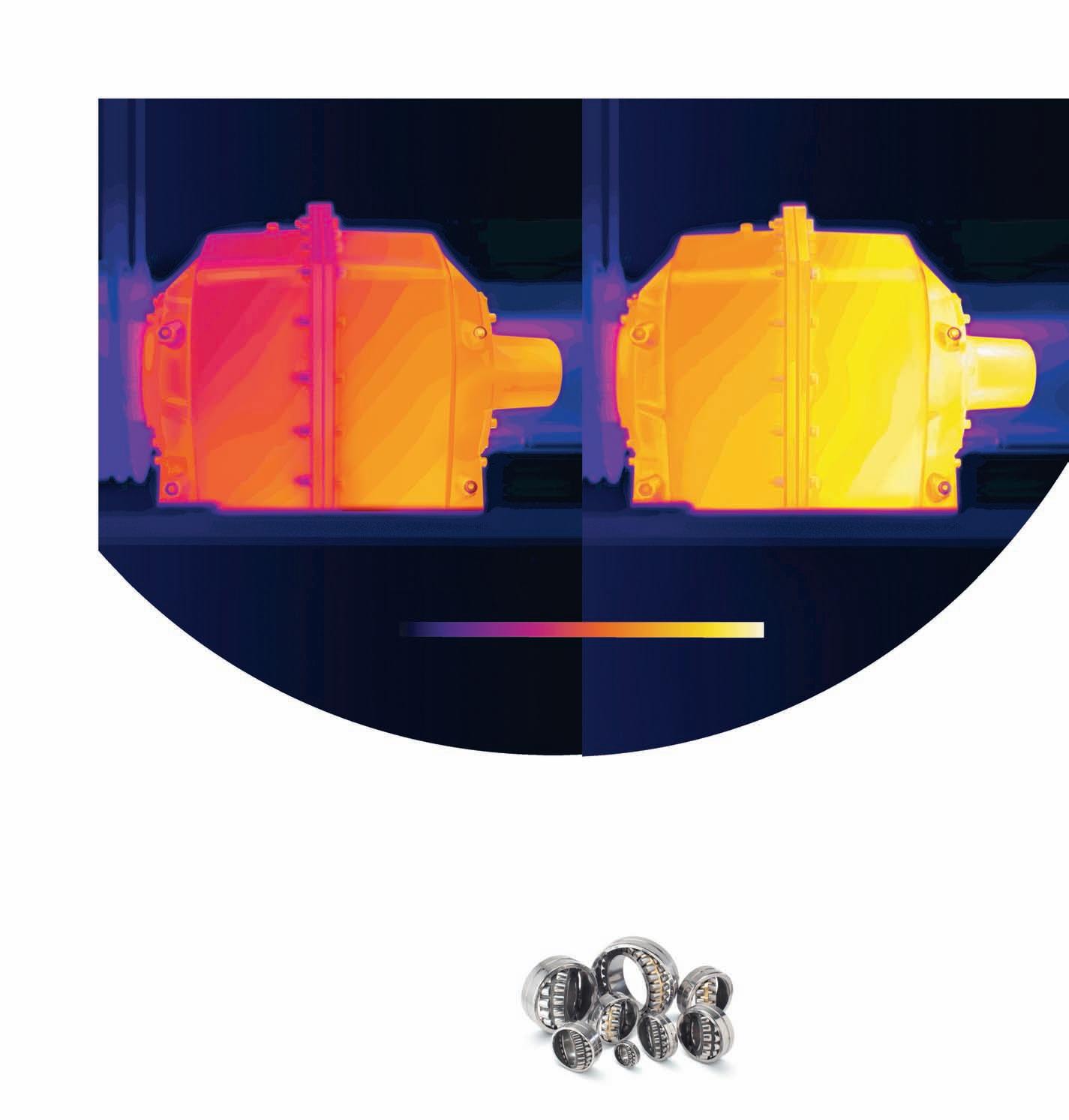
When you think “Quality”, you think about bearings that can withstand high speed, shock loads, misalignment and marginal lubrication conditions. We think about maximizing uptime and lowering maintenance costs with quality components supported by 24-hour service and worldwide distribution. For spherical roller bearings designed to deliver world-class performance in vibrating applications, Think NSK.
a substitution (such as using machines instead of humans). Next on the general hierarchy of safeguarding, in order of importance, are:
• Engineering controls — such as effective kickback fingers, barrier guards, twohand controls or presence-sensing devices
• Employee awareness of warning signs and labels, computer warnings and other safety alerts
• Training in safe work and lockout procedures, and
• Personal protective equipment, such as safety eyewear and hearing protection.
Other recommendations are to ensure that workers operating dangerous machinery have the necessary supervision. They must be instructed to report unsafe acts or conditions so that these can be corrected without delay, and to follow established safe work procedures.
For more information, visit the website at www.worksafebc.com.
guide discusses prevention of M echanical hazards
Montreal, QC — A new guide on the prevention of mechanical hazards has been published by the Institut de recherche Robert-Sauvé en santé et en sécurité du travail (IRSST). The machine safety guide describes methods for eliminating hazards at source and ways to protect against them by using fixed guards.
The risk reduction or distance protection principles presented in the guide are appropriate for the majority of machines. However, before applying the generic solutions proposed in this guide for conveyors, metal presses, drills and rubber machines in the province of Quebec, it is necessary to consult provincial regulations and standards relating to these machines.
The 70-page guide covers some of the currently known protection principles; however, it is not an exhaustive collection
of solutions. To download the document, go to www.irsst.qc.ca/files/documents/ PubIRSST/RG-597.pdf.
Established in Québec in 1980, the IRSST is a scientific research organization and a private, non-profit agency. Its board of directors is composed of an equal number of trade union and employers’ representatives, making it a joint body.
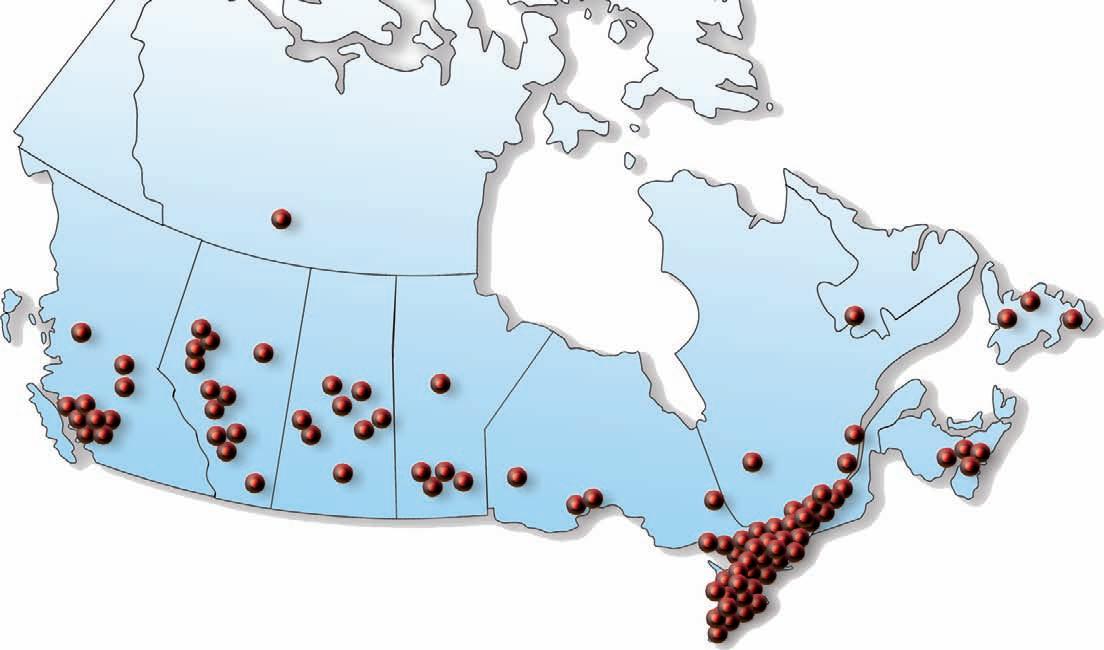
Over 260 Locations Coast to Coast Across Canada
ptda launches neW product training With pt interactive online Chicago, IL — Even in the toughest economic times, there is one investment that always provides positive returns — training for employees.
A knowledgeable and skilled staff improves a company’s competitive advantage by meeting customers’ growing demands for technical support, process improvement recommendations and improved production efficiency. The continuing challenge, even more evident in today’s marketplace, is how to deliver relevant and effective training in an affordable and time-efficient manner.
Capitalizing on the association’s recognized expertise in the PT/MC field, PT Interactive Online from the Power Transmission Distributors Association (PTDA) teaches the basics of PT/MC products and applications, including maintenance and diagnostic tips, application and selection criteria, and standards.
Using a series of 14 independent courses based on PTDA’s Power Transmission Handbook, employers can customize each employee’s training program.
“We’re all feeling the pressure to step up our training programs, especially on the basics. As customers look to our companies for solutions support, PT Interactive Online delivers,” said Ken Miko, vice-president, BDI, a major distributor. “Due to the online format, PT Interactive Online is the next generation of product training. It’s basic, dynamic, customizable and truly interactive.”
PT Interactive Online courses are available for an introductory registration fee of $75 per course for PTDA members and $125 per course for non-members. For details, visit www.ptda.org/PTInteractiveOnline, e-mail ptda@ptda.org or call 312-516-2100.
MRO
Editor’s note: More detailed versions of many of these stories can be found online at www.mromagazine.com. Simply type a topic of interest into the search box near the top of the home page.
Photo:
Company Briefs
News and views about companies, staff, product lines and more.
• Greg Babcock was recently appointed national sales and marketing manager for Koyo Canada, Burlington, ON, with the mandate to diversify the company’s business and create new strategies for growth. He began his career more than 25 years ago in the bearing and power transmission industry, and has an expansive background in management, sales and marketing.
• Mark Holden has joined the sales team at Advantage Sales Network Corp. in Brampton, ON, and is responsible for sales activity in southern Ontario. He began his sales career almost 15 years ago in the power transmission distribution market and most recently managed North American sales and marketing
activities for a European motor/reducer manufacturer.
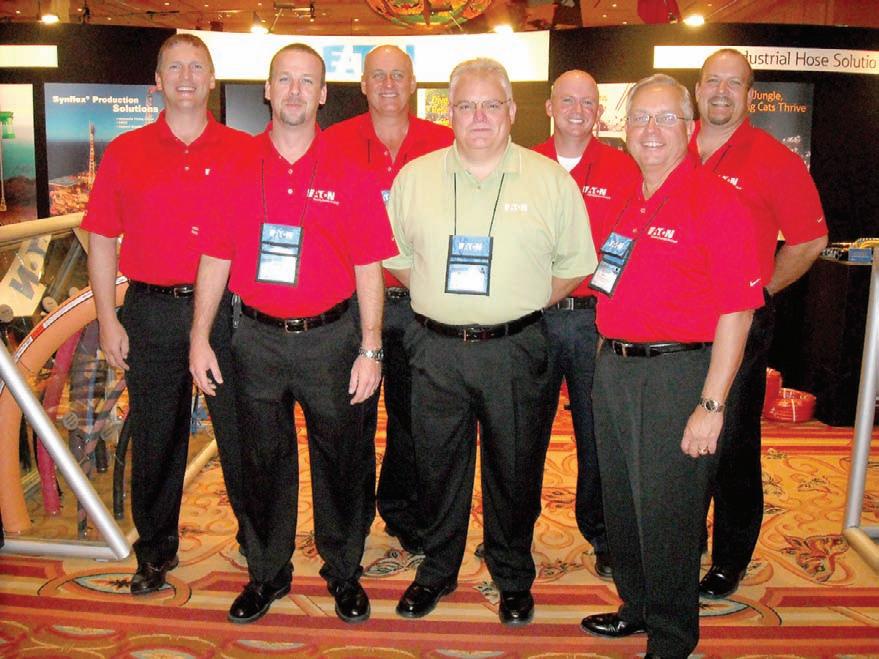
• Eaton Corp., Eden Prairie, MN, has formed a new Industrial Hose Unit to enhance its presence in the industrial rubber and thermoplastic hose markets, with the unit being set up in both Canada and the U.S. The Industrial Hose Unit is supported by inside sales people located in Cleveland, TN, the primary distribution location for industrial hose, said business unit manager Joe Mika.
“They are supported by additional product experts in Guelph, ON. Technical support for Industrial Hose Solutions is provided by the Eaton Fluid Conveyance technical team in Maumee, OH. The unit also will handle recently acquired hose
products from Arrow and Durodyne. Many of these products will be re-branded as Eaton Industrial Hose, while certain Boston brand products will continue to carry existing product identifiers.
When it comes to market trends and exceptional networking specific to the power transmission/motion control industry, no other conference comes close!
• In 2009, Drives LLC, Fulton, IL, will celebrate 50 years of manufacturing chain and screw conveyor products, which are now supplied to 34 countries worldwide. The company is a member of PTplace.com, which delivers 24/7 service logistics and ecommerce business systems for manufacturers of power transmission products and bearings. The company is ISO 9001:2000 registered and APIQR registered.
PTDA 2009 Canadian Conference
May 28 – May 30, 2009
Join the Power Transmission Distributors Association in scenic and convenient Niagara Falls! For the eighth consecutive year, PTDA provides a venue for the industry’s top decision makers to trade ideas and develop business relationships in a cost-effective and time-efficient format
Dedicated to Canadian industry networking and trends, the conference will offer attendees sessions covering:
• An economic update tailored to the Canadian industrial sector presented by Jayson Myers, president of Canadian Manufacturers & Exporters, Canada’s largest industry and trade association.
• Build a team and your business by successfully selling change, a vision and your mission. Larry Smith, president and CEO of the Montreal Alouettes Football Club, will show you how mastering these important elements can make a true difference to your organization and help you bring out the best in your people.
• Market briefings on end-user industries critical to the Canadian marketplace.
• Posi Lock Puller, Cooperstown, ND, has made a number of appointments and organizational changes. Paul Dent has been named president of sales. With 28 years of management experience in both distribution and manufacturing, he has worked in England, Canada and the US. Dent has actively served on several committees of the Power Transmission Distributors Association (PTDA). Also, Jo Anderson joined the company in sales and customer service, and Meggan Sletten joined in production and assembly. Tamara Somerville, former director of sales, has been appointed president of global initiatives and strategic alliances. She also continues her role as corporate vice-president. Teri Huso, former marketing manager, is now director of marketing initiatives. Lori Fetting has been named sales team coordinator and will continue her role as employee relations advisor. Posi Lock, a family enterprise, was founded in 1978 by Dean and Peggy Somerville.
• Formal and informal networking with key decision-makers in the Canadian PT/MC market.
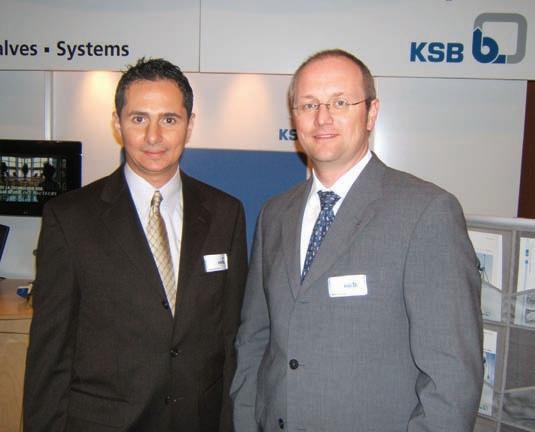
regional office for Quebec. The main focus will be on municipal and industrial customers and consulting engineering firms. Makram (Mak) Mouhli will head the new office as regional business development manager.
The Canadian Conference is open to all PTDA members selling product in Canada as well as non-members who qualify for membership.
• At some EUR 5.9 billion, Bosch Rexroth AG’s sales for 2008 were up 9.8% over 2007. Based in Frankfurt am Main, Germany, the subsidiary of Robert Bosch GmbH anticipates a significantly weaker performance for 2009. However, the company said it is maintaining investment in research and development at
KSB president Jens-Uwe Strunk (right) with Makram (Mak) Mouhli, regional business development manager for Quebec.
Photo: KSB Canada
Photo: Eaton Corp.
Eaton’s new industrial hose team.
handleup to 5
inhorizontal,verticalorupright m ountinginstal lat io ns. Widerhelicalgea r teeth re duceth e s tressconcentratio n at the rootofthetooth. Want maximum strength? GetParamax®,onlyfromSumitomo,andsmile!
above the average industry level. The company achieved its most pronounced growth levels with products in the areas of mobile and industrial hydraulics. Gearboxes and drive solutions for wind energy plants recorded the highest rates of growth.
• Drives LLC, Fulton, IL, has named Barbara J. Ross as director, sales and marketing, for the United States and Canada. She will focus on the continued sales development of USA engineered class chains, power transmission roller chains and specialty attachment conveyor chains in North America. Ross previously held the position at Drives LLC as national accounts manager for industrial distribution in
North America. She is involved in the Power Transmission Distributors Association (PTDA), previously serving as chair of the Manufacturing Council, PTDA convention chair, and on the Industry Relations committee. She currently serves as a trustee of the PTDA Foundation Board and is a member on the PTDA Employee Development Committee.
• Exxon Mobil Corp., New York, NY, plans to invest at record levels — between $25 billion and $30 billion annually over the next five years — to meet expected long-term growth in world energy demand. “The global economy is currently experiencing a downturn, but at ExxonMobil we are focused on the long term,” Rex Tillerson, chairman and chief executive officer, said at a recent briefing for investment analysts. In the downstream, the company is progressing plans to invest more than $1 billion in lower-sulphur diesel projects at three refineries in the US and Europe.
• Fluke Corp., Everett, WA, a developer of portable electronic test and measurement technology, has acquired Hawk IR International Ltd., North Yorkshire, UK. Hawk IR will continue to operate as Hawk IR International as part of the Fluke Electronics Industrial Division. For more information, visit Hawk’s website at www.hawk-ir.com.
• FLIR Systems Ltd., Burlington, ON, has added JFC Solutions, Burnaby, BC, as a manufacturing agent for its infrared cameras and for its Extech Instruments line, for electrical/MRO distribution from Ontario west to British Columbia.
• Gates Canada Inc., Brantford, ON, will close its London, ON, power transmission facility in response to the difficult economic climate that has resulted in declining sales volumes, continued pricing pressures and higher raw material costs. The company plans to move a portion of its operations to its facility in Windsor, ON, by the end of the second quarter of
2009. Full closure of the London facility is expected by December 2009. There are 179 employees at the London facility.
• The Timken Company, Canton, OH, is realigning its organization to improve efficiency and reduce costs. The company has targeted pretax savings of $30 million to $40 million in annual selling and administrative costs. It expects implementation of these savings to be completed by the end of the third quarter. It expects to cut its salaried workforce by up to 400 positions in 2009. Over the past 15 months, the company has lowered production and cut its manufacturing workforce by approximately 2,500 positions.
• Chicago-based industrial distributor W.W. Grainger Inc. has named Court Car ruthers, 36, to a newly created position as president of its inter national businesses in Canada (AcklandsGrainger Inc.), Mex ico (Grainger S.A. de C.V.), and China. Carruthers has been president of the company’s Canadian subsidiary, joining Acklands-Grainger in 2002.
Editor’s note: Longer versions of many of these stories are online at www.mromagazine.com. Simply type the topic into the search box near the top of our home page.
Improper drivebelt tension causes problems
Problem: Toothed belts operating in an under-tensioned condition may allow belt teeth to ride out of the sprockets until an acceptable tension level is achieved. This phenomenon, referred to as ‘self-tensioning’, can be most clearly observed at the point of lowest dynamic belt span tension, or where the belt teeth are entering the driven sprocket grooves. When a belt is self-tensioning, the belt teeth ride up out of the sprocket grooves until increased span tension from the approaching tight side tension forces the belt teeth back down into the sprocket grooves. The point at which the belt teeth are forced back down into the sprocket grooves often results in a sharp, momentary point of bending that can result in belt tensile cord damage.
Solution: Check belt tension regularly and adjust accordingly to prevent belt damage.
Mr. O’s thanks for this tip go to the drive engineers at Gates Corp.
Do you have a solution for a maintenance problem? Send it in and if it’s published, we’ll send you a Mr. O Problem Solver T-shirt. Include your address, telephone number, print complete details and, if possible, add a sketch to help explain your tip. Send your tips to Mr. O, Machinery & Equipment MRO, 12 Concorde Place, Suite 800, Toronto, ON M3C 4J2.
MRO
Barb Ross of Drives LLC.
Photo: Drives LLC
Mr.0 The Practical Problem Solver
Court Carruthers of W.W. Grainger Inc.
Photo: W.W. Grainger Inc.
A
British Columbia paper mill introduces Reliability-Centred Maintenance
and finds it’s the way of the future.
maintenance. . the next generation
taking its cue from a failure in the newsprint area that led to a threeday shutdown, Howe Sound Pulp and Paper Limited Partnership began the process of implementing Reliability-Centred Maintenance (RCM) in selected areas of its mill in Port Mellon, BC, 55 km north of Vancouver.
“We had a good preventive maintenance (PM) program and inspections, but this failure reinforced our case that we needed to move to a different style of maintenance,” says Harry Wilson, the maintenance/engineering superintendent - kraft. “RCM is the way of the future: the right maintenance at the right time on the right equipment. It allows you to predict failures and react.”
Millions of words have been devoted to explaining RCM, in textbooks, in periodicals and in online publications, and readers can learn its intricate details from such sources. In the rough though, RCM is about defining what is the optimum performance of equipment and components, and taking action when the performance falls outside of acceptable operating parameters.
This is a key function of RCM because, according to Wilson, as many as 89% of equipment failures are random, that is, they can occur anytime, from hours to months after a piece of equipment starts operating outside optimum operating pa-
BY CARROLL MCCORMICK
rameters such as temperature, pumping volume, vibration or speed.
“You want to focus your efforts on the 89% that are random. You want a program and a prediction technique that says when a failure will occur and when to react. This is an opportunity to make the repair at minimum cost to the organization,” says Wilson.
RCM is also about focusing attention on the maintenance activities which have most effect on the performance of the plant, according to John Moubray in his book, Reliability-Centered Maintenance (Industrial Press Inc.). It is also about leaving equipment alone if it is functioning properly and calculating which maintenance is actually cost-effective; that is, determining if the cost of the maintenance amounts to more or less than the cost and consequence of a complete equipment failure.
Howe Sound had been considering RCM for quite a while, and the newsprint area failure reinforced the mill’s position that it needed to implement the maintenance process. “We have been talking about going to proactive maintenance at the mill for years. Going over to RCM was not a big issue. We were just looking for the right time and opportunity to do it,” Wilson says.
The mill looked at three candidate
continued on page 16
Both salaried staff and hourly workers are on the RCM implementation team at the Howe Sound mill (above). "RCM is for people with large and sophisticated maintenance programs and sophisticated equipment," says maintenance boss Harry Wilson. Howe Sound's second target for RCM implementation is its pulp mill (right). A three-day shutdown of the newsprint area led to the search for an RCM consulting firm (below).
companies to help with the implementation, then hired the Ivara Corp. of Burlington, ON, which has extensive experience with RCM in a variety of industries. Two of its consultants began a fourmonth stay at the mill last fall to work with the mill’s people. The mill put together an eight-person team to implement the program and to communicate the results to the workforce. “The team is devoted full-time to implementing RCM,” Wilson says. “You have to free people up and tell them that this is their focus.”
The team prepared a plan for allocating resources and time. Training, done on-site by Ivara for team members and maintenance members that work on the equipment, was completed by mid-February, 2009. Training also began on using Ivara’s reliability software. Called EXP, it integrates with the mill’s computerized maintenance management software (CMMS) system, Maximo (the program was taken over by IBM in 2006), allowing it to access the maintenance information stored in it for 10,000 of the mill’s assets.
The mill is implementing RCM on the paper machine this year. “We were looking to implement the project in areas that had a high rate of return and would give quick results. The payback for the paper machine is slightly more than one year and we expect to see an increase in uptime and a significant improvement in quality,” Wilson says.
Explaining RCM to mill workers and management is important for several reasons. You need to get buy-in from the top down, and ensure that everyone embraces a change-in-culture mentality, Wilson explains. “We rolled out the program at our monthly business review. We talked to our union representative so the union would know in advance what we were doing and trying to achieve.
“You need buy-in from the floor. We have been talking with our tradesmen, who are looking forward to this. We had an open house in late February so people could see what we are doing. We got a lot of positive feedback.”
One of the many tasks in setting up RCM is determining what failures can occur in a piece of equipment, how a failed state is defined and what events are likely
to cause a failed state. These events, for example, a gearbox failure due to a leaky seal, are called failure modes. Some machines have only a few failure modes. More complex machines have hundreds of them, and one of the purposes of RCM is to predict when failure modes will occur.
There are many other tasks that have to be done in the RCM process, and plant workers play an important part, for ex-
“You are monitoring your equipment’s health. There are pre-set alarms. Based on that information, we develop an appropriate plan to mitigate any failures.”
The mill will use its existing predictive techniques, such as vibration monitoring, on-line instrument calibration verification, oil analysis and thermography, to help collect data for RCM. When maintenance workers inspect the machinery, they collect data in hand-held units, and later the data is downloaded into a personal computer and analyzed to determine whether the equipment has gone into failure mode.
The goal is to ensure that maintenance personnel perform condition-based maintenance on the right piece of equipment at the right time for the right reasons. Wilson anticipates that this RCM strategy will eliminate about 30% of the preventive maintenance tasks that the mill is doing now. That time will be reinvested in doing the right maintenance on the right equipment at the right time. It will allow the mill to deploy its workforce effectively.
With RCM analysis of critical newsprint equipment now well under way, a full implementation of RCM for the paper machine will be completed by the end of this year. Wilson expects to have RCM implemented mill-wide in three to five years. MRO
In the next issue, senior contributing editor Carroll McCormick reports on another pulp and paper facility, the Domtar Windsor Mill in Quebec, which has been using RCM for 10 years.
The Howe Sound mill (top), located north of Vancouver, BC, specializes in newsprint and kraft pulp. Its commitment to implement RCM extends from the president on down. Big machinery (left) is used to wrap paper rolls. RCM lets the maintenance team go into more detail on the probable causes of any equipment failures. This year's goal is to implement RCM on its paper machine (above).
BSA president Steve Durston reflects on the status of his industry as the bearings association gets set to hold a convention that’s sure to roll.
BY RICHARD RIX
evolution ONGOING IN THE BEARING INDUSTRY
the Bearings Specialist Association (BSA), whose annual convention runs from May 1-5, 2009, at the Hyatt Grand Cypress Hotel in Orlando, FL, is an active and prestigious group that promotes a high level of professional expertise and technical knowledge among suppliers, distributors and users of bearings and related products.
BSA likely has more expertise with regard to bearings than does any other specialist group with its particular product.
Without question, the BSA annual convention has gained a reputation for being one of the most important and enjoyable events in the industrial calendar. Since the group keeps its finger on the pulse of the bearing industry, it is able to provide crucial updates and enable the kind of networking that is so critically important to sourcing products and gaining technical insights about bearings, their qualities and their application.
BSA core members are authorized bearing distributors, mainly from North America. The association's mission is to serve as “the forum to enhance networking and knowledge-sharing and promote the sale of bearings through authorized distributors.” Its mandate is to help ensure product excellence and promote the use of genuine bearings.
Bearing manufacturers also are welcome to participate in the group’s activities, most notably in technical matters and application opportunities. Manufacturers do not have voting rights but have influence with the group by helping it serve as a network for the dissemination of communications and information on the supply side and among users of bearings.
broad industrial to niche, such as his own company, which specializes in aerospace, government and rail applications.
ing, should help to diminish the impact. As well, times of economic downturn also mean more interest in MRO (maintenance, repair and operations), where of course bearings play an enormous role.
Durston’s own background reflects the increasingly global scope of the industry. A native of England with a technological background in the aerospace industry, first with British Airways, then with Saudi Arabian Airlines in Jeddah, Durston moved into the UK bearings industry 25 years ago, joining Barden Bearings in 1984 and working in product engineering and then field sales. He joined Jamaica Bearings in 1989 as European sales manager and four years later moved to New York as director of aerospace sales.
Reflecting on these international experiences, Durston has noticed that “the US work mentality is very different from Europe. Europeans tend to work to live; Americans much more live to work.”
With his wife of 29 years, Lynne, Durston lives on Long Island and the
He has been an advocate of BSA virtually from day one in the industry, and is a strong promoter of the annual convention.
The intriguingly named session, ‘Are manufacturers from Mars, distributors from Venus?’ will attempt to provide answers.
Asked for an example of possible differences, Durston says, “Manufacturers believe that they think more long-term than distributors.” This will be just one of the issues to be explored.
Areas where distributors and manufacturers have worked together include combating counterfeit products, challenges caused by material shortages and product lead-times, and the development of a standardized format for price data.
In terms of technology, Durston says that condition monitoring is continuously being examined by the industry, whereby bearings can self-monitor during operation and provide feedback as their performance deteriorates, so preventing “catastrophic shutdowns,” and having an impact on scheduled maintenance needs. There is also ongoing activity with regard to the analysis and development of materials and their effect on the environment, such as in the area of plating.
Bearings can be found in virtually all equipment and machinery, ranging from transportation to computers to machine tools and beyond. Being so pervasive, these highly engineered, precision-made components tend to get taken for granted, which is regrettable, since they contribute mightily to the success of countless applications. Generally they function extremely well, and the industry is continuously striving to make them more effective and reliable by addressing such issues as noise, vibration and durability.
BSA’s president for 2008-09, Steve Durston, hands over the gavel at this year's annual convention to president-elect Edu-
“The biggest challenge facing BSA as an association is consolidation of the industry,” Durston says. “It’s a challenge we are meeting by providing more benefits and better networking and communication among our members.” So, while there might be a smaller pool of distributors to draw on for membership, the promotion of excellence and pursuit of higher standards is making BSA, in its own words, “the industry’s must-belong-to organization for authorized bearing distributors.”
Durston acknowledges that BSA members, with total sales close to US$7-billon a year, are being affected by the recession, but the broad range of market sectors that BSA serves, such as transportation, medical, pulp and paper, and min-
“The distributor/manufacturer committees that are organized at the event are the best place to discuss, evaluate and come up with goals together,” Durston says. As the convention program says, this year’s event in particular promises to deliver “the honest, gut-check conversation between distributors and manufacturers that industry has needed, but never before achieved.”
That conversation at the convention will be anonymous, in that rapid-response electronics will instantly reveal onscreen responses from distributors and manufacturers that are summative and not individualized, to encourage forthright participation that will be meaningful. “Everyone will have the opportunity to know what their supply chain partners are really thinking,” Durston says.
In fact, through its committees, BSA has for a long time tried to consider the differences in how distributors and manufacturers think and what motivates them.
Durston adds that BSA is extremely proud of its Certified Bearing Specialist program, which identifies and quantifies the specific skill sets to certify an industry professional as a bearing specialist. This educational program provides the opportunity for industry professionals to gain recognition for their knowledge and technical competence.
Durston says that an increasing number of manufacturers’ engineers are availing themselves of the certification program, “so as to broaden their horizons, since they tend to operate in a specialized niche.”
Durston says he will continue to do what he can to help BSA develop and “enhance the good points.” There is an active past-presidents council whose mandate includes promoting membership in BSA among qualified distributors. There is plenty of information on the group at www.bsahome.org. MRO
MRO contributor Richard Rix of Toronto may be reached at richardrix@sympatico.ca or 416-449-0878.
Steve Durston's image (above) was projeted on a large screen at last year's BSA convention prior to his election as the association's 2008-09 president. After the election (left), he addressed
Photos: Bill Roebuck
Niche supplier solves hot problem
Retrofit of steel mill tunnel furnace creates bearing challenge.
Many modern steel mills are updating their processes in an attempt to increase their efficiency. One such upgrade, inside a tunnel furnace, created an opportunity for a niche component manufacturer to develop simple yet effective solutions.
Below:QM Bearings developed a new Blue Brute bearing capable of handling a large amount of heat expansion. Below left: Bearings must withstand temperatures up to 2,000°F in this steel mill’s tunnel furnace.
molten metal at the caster may be as much as 3,000°F, the slabs have been cooled to the 2,000°F range by the time they are sent to the tunnel furnace.
Standard bearings have a limited amount of travel before the seals no longer make contact on the outside of the inner race. Additionally, in this process upgrade, another potential bearing challenge was created. When changing from wet rolls to dry ones, it is necessary to use larger-diameter rolls. Since the pass line of the slab must be maintained, it usually becomes necessary to reduce the base-to-centre height of the bearing.
TIn this steel mill, the 600-ft-long tunnel furnace sits between the caster and the rolling mill and maintains and equalizes the temperature of the hot slabs of steel. The slabs can be 3 in. to 4 in. thick, 60 in. wide and as much as 40 ft long.
While the temperature of the
The conveyor rolls inside the tunnel furnace are generally 12 in. to 14 in. in diameter and can be either water-cooled or dry. Water-cooled rolls are expensive and complicated to maintain. With dry rolls there is no water cooling, as they rely on the nature of the materials used to tolerate the heat.
The facility wanted to change from wet to dry rolls, as they offer longer life and better ability to convey the slab without having a transfer of heat between the slab and roll, but certain bearing issues had to be resolved.
Each roll is supported by a pillow block bearing unit on each end and driven by a gear reducer through a coupling. The rolls are designed to turn in either direction as slabs may be moved back and forth in the furnace during the operation.
Due to the wide variation in temperature of the rolls in common tunnel furnaces, thermal shaft expansion is greater than standard bearing units can accommodate. Trying to achieve this much axial travel of the roller bearing within the housing creates a sealing problem that can lead to premature bearing failures.
On request, QM Bearings developed an innovative yet simple solution specifically for this application, using a new Blue Brute bearing capable of handling the large amount of expansion put on these bearings from the high heat. These new bearings mount, lock and seal the roller bearing in a cartridge. The cartridge assembly is then mounted inside a modified extended housing and allowed to travel large distances within it. This way the critical operation of sealing the bearing in its proven configuration is maintained, while allowing large amounts of shaft movement. Other solutions would require a seal to move long distances along very expensive roll shafts, creating wear of the seal and the shaft.
In regard to the shaft height problem posed by the transition from wet rolls to dry ones, QM Bearings was able to accommodate this request during the design of the bearings.
Managers in charge of keeping highend production plants, such as steel mills, increasingly efficient can often benefit from the project and maintenance solutions offered by niche suppliers. MRO
More details on QM Bearings can be found at www.qmbearings.com.
Reader Service Card No. 391
Quick action saves a shaft
oyota Motor Manufacturing Kentucky is among a growing number of users that have documented cost savings and a reduction in downtime with a simple condition monitoring device.
The device — the StatusCheck from Timken — is a wireless system designed to monitor bearing operating conditions and issue alerts when it detects excessive levels of temperature and vibration. It’s a cost-effective method that reports potential faults immediately, providing users with an opportunity to identify potential problems and act quickly to avert costly repairs.
Maintenance personnel in the Toyota plastics shop in Georgetown, KY, use StatusCheck equipment to complement an existing predictive vibration analysis program. In one incident, “project team members conducted our standard checks and identified a defect in the outer race of a fan bearing,” says Rick Heifner, oil and vibration analyst in the plant’s plastics department.
“We placed a StatusCheck unit on the equipment. Due to the critical nature of the particular machine, we decided to continuously monitor the bearing with the StatusCheck transmitter. The system then alerted us that a significant change had occurred
Being alerted to a bearing problem in advance saved 16 hours of downtime for Toyota.
A
StatusCheck condition monitoring system alerted Toyota plant maintenance personnel to a change in a bearing’s condition so they could replace it before it failed.
in the condition of the bearing.
“We replaced the bearing and averted a serious problem that could have caused 16 hours of downtime. Because
we acted quickly, the bearing did not damage the shaft and we saved the expense of replacing it.” Timken developed StatusCheck as
part of its complete predictive maintenance program, which focuses on increasing efficiency in plant operations. Users in the mining, power generation, metal rolling and general manufacturing industries have reported cost savings ranging from tens of thousands to millions of dollars, along with increased efficiency in their operations.
“The StatusCheck system’s advanced technology offers plant and maintenance personnel another tool to help prevent costly, unplanned downtime,” says Daniel Szoch, Timken manager, sales and marketing, Reliability Solutions.
“Many customers have realized a rapid return on their initial investment and have expanded their systems to include numerous StatusCheck units. The cost savings for one major manufacturer exceeded $2 million,” Szoch says.
StatusCheck can be mounted via an internal magnet or by a threaded adaptor. Its construction makes it suitable for use in harsh environments. Integrated software allows for notification of alarms via computer or cell phone text messages. MRO
For more information about Timken Canada
Correcting misalignment reduces the wear on sheaves, belts, chains, seals and bearings. It also increases efficiency, lowers energy consumption, and decreases vibration and noise.
By John LamBert
belt and chain alignment is not some new concept. Early industrial machines were all beltdriven, for example, and had to be aligned. Even so, industry still seems to have a problem with belt and chain alignment.
We don’t actually align the belts or chains, though. We align the pulley or sprocket. Yet if you look at some of the ways that we try to align sheaves (pulleys) and sprockets, you would think that we were still in the dark ages. Some traditional methods leave a lot to be desired.
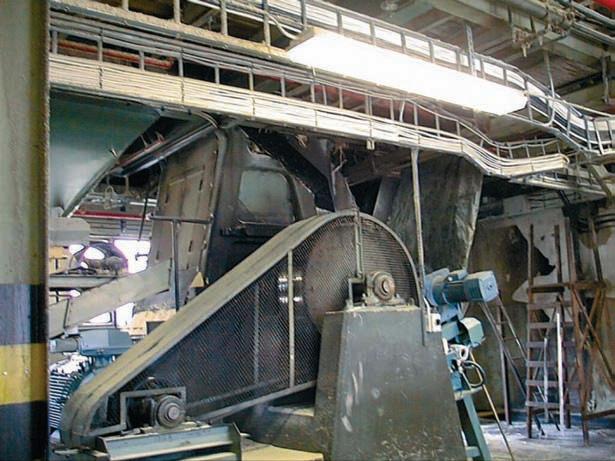
I have seen a tradesman quite literally eye-balling a belt into alignment (Figure 1). I guess you could call this the ‘calibrated eyeball method’. The recommendation is to use just one eye for a more accurate alignment.
When looking at all the advances we have made in the maintenance world, it seems we are still fixed on using a string or straightedge for belt alignment. It is still the most common form of belt alignment today.
belt & chain alignment getting serious with
Using a piece of string to align two sheaves should be left in the past. It belongs in the dark ages. If you are serious about machinery installation, you have to use a laser.
Those old, traditional methods were time-consuming and inaccurate, and if you had to measure a long span, it became a two-man job. You had to measure, make an adjustment and then re-measure. Going back and forth so many times led to the term, “That’s close enough.”
A technical paper published by the belt manufacturer Carlisle says you can use a straightedge but you have to measure on the outside surface of the sheave as well as the inside surface. Why is that?
It is so that you can see if you have a mismatched sheave. Do you think that on your belt drives you can get a straightedge between the sheave and the machine’s casing? Not likely, so this is not done. The fact of the matter is that the (small) differences between the wall thicknesses of sheaves have been ignored in the majority of cases.
Also, how would you measure this if you were using a string? The reality is that when using a string or straightedge, you are only measuring in the horizontal plane and the vertical is ignored — as well as the difference in the sheave walls.
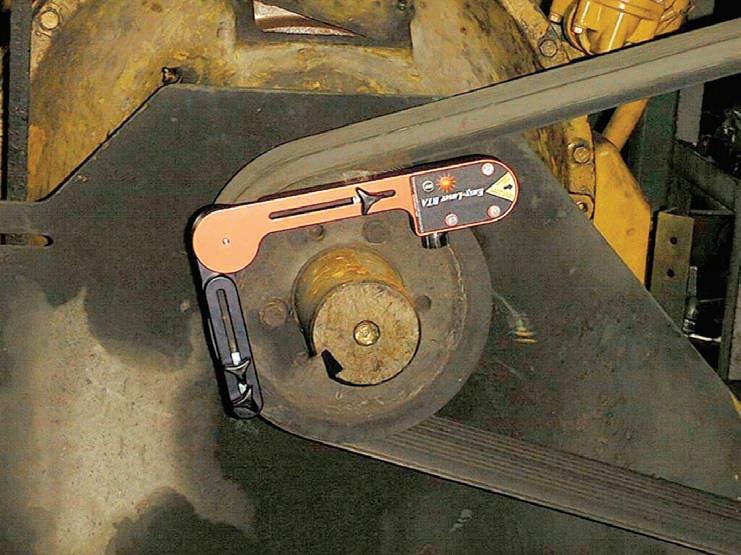
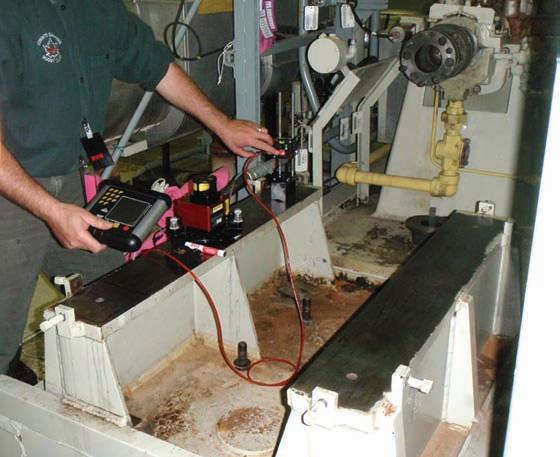
The first laser belt and chain alignment system, developed by Easy Laser and called the BTA (Belt Transmission Alignment) D100, took the hit and miss out of the alignment process (Figure 2). But even with this tool, there is still a lot that is missed in the installation of beltand chain-driven machine units.
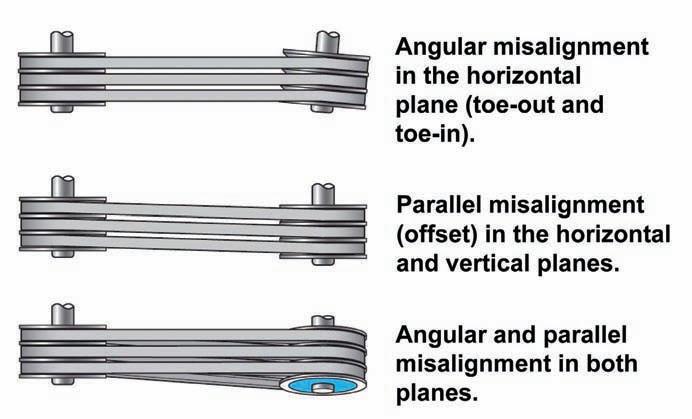
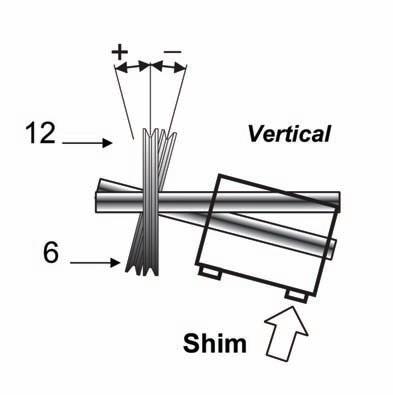
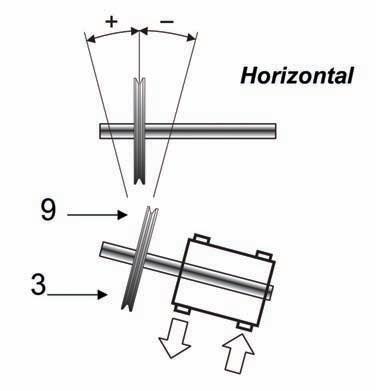
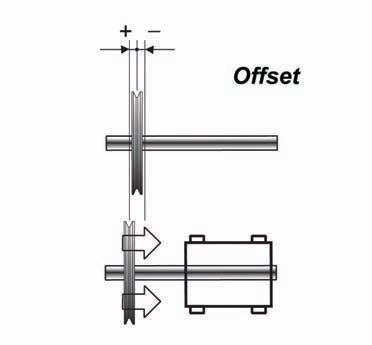
The goal is to correct the offset and angular misalignment in both the hori-
zontal and vertical planes (Figure 3). The reason why is to reduce the wear on sheaves, belts, seals and bearings, etc. You want to increase efficiency, lower energy consumption as well as decrease vibration and noise. Regarding energy, to give you some idea of the power savings possible, the results of a study conducted by the SAAB steel mill in Sweden are interesting. The
Figure 5 (below): This is a picture of a substantial motor base that at first glance you would assume is flat, but is not. We measured the base with the customer’s own shaft alignment system and a sweep laser. The results show that the base was twisted. It actually measures 0.006 at the high point and -0.014 at the low end. This was a wellmade base that was machined flat after being fabricated, but my guess is that it was not stress relieved and it has twisted. This base will create stress on the motor.
mill had 200 fans, although they only used 53 of them for the study (Figure 4). Current readings in amps were taken before and after the BTA laser system was used and the results showed a 3.5% decrease in power consumption.
The company runs 24/7 but it used a conservative number of 800 operating hours per year and 40 hp as the average motor rating. We’ll use 0.07 cents per kilo-
Fig. 3
Fig. 2
Fig. 1
Fig. 5
Fig. 4
All images sourced by John Lambert.
The installation process
Another of our goals must be to remove any unwanted stress from the machine units. This is why we should start with the base. Check that it is anchored securely and the machine’s mounting pads are flat. A twisted base will distort the machine and create vibration. Machine units are designed to be mounted on a flat surface. Are the bases in your plant flat? How would you know? We just make the assumption that the base is flat, don’t we? (See Figure 5.)
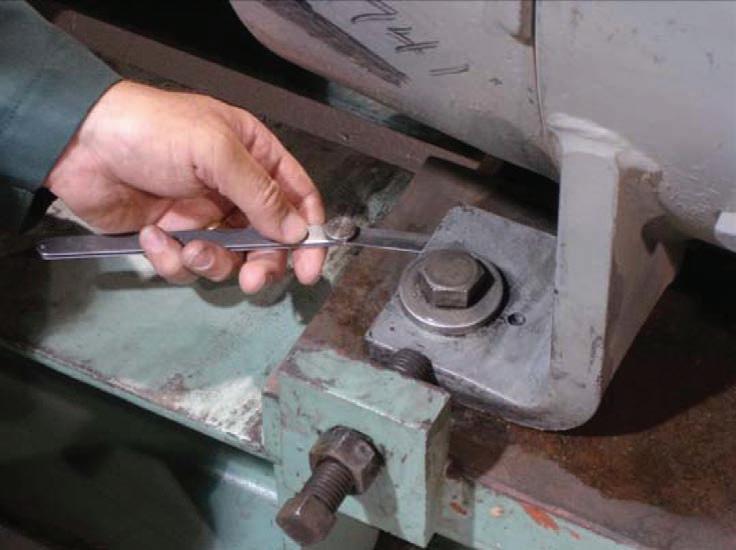
Another issue often overlooked is checking for distorted machinery feet (softfoot). Why is it that we will usually check for softfoot on a coupled-driven unit but not on a belt-driven unit? We have to correct softfoot when aligning a coupled shaft. If we don’t, we will not get the results we need to achieve an accurate alignment that is within the tolerance that we need (Figure 6).
What is softfoot? We know that it is the distortion of the foot or the base’s mounting pad(s) that twists the machine’s casing and deflects the shaft. Do you think that a belt-driven system could have distorted feet or base pads? Do you think that it would run better with this stress removed? The obvious answer is ‘yes’.
Sheave inspection
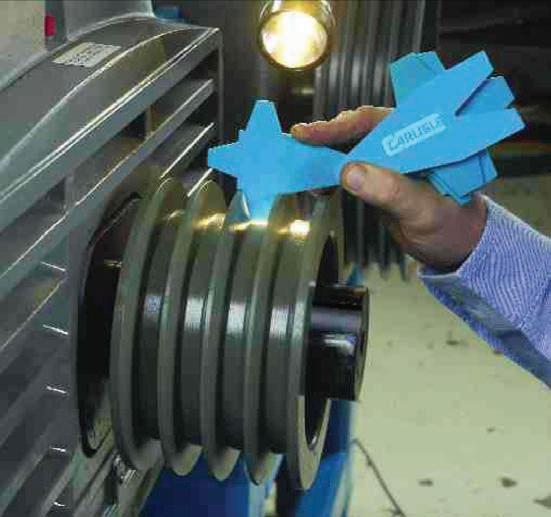
Spending some time on sheave inspection is important. Use a sheave gauge to check
Focus on drives
off over the distance between the sheaves.
The way to check this is to do an alignment, then reverse the laser units to make sure the beam is the same position.
Use a dial indicator to measure the rim run-out of each sheave. It should be no greater than 0.002 thou. This can happen with straight bored hubs that have been oversized.
Also use a dial indicator to check the face run-out of each sheave. If you have stood at the side of a belt drive and seen that the sheave appears to be wobbling, it’s usually because the sheave is skewed or on a bent shaft.
High readings are common with taper lock bushings that have been installed incorrectly (typically skewed by the use
that the side wall of the sheave has not become concave (Figure 7). You usually see the most wear in a small sheave; it obviously has the most contact with the belt. With wear, the wall becomes concave or dished out and the belt loses the wedging action that it needs to create torque. It then starts to slip, creating heat, which is the beginning of the end of the belt. The rule of thumb for this measurement is to use 1/32 in. (0.031 thou). If it’s over this, replace the sheave. You have to be careful with worn sheaves if you are using a laser that sits in the V-groves. A small amount of wear can put the beam
of an air gun). The rule of thumb for this is to adjust the bushing mounting screws to a tolerance 0.001 thou per inch of sheave diameter.
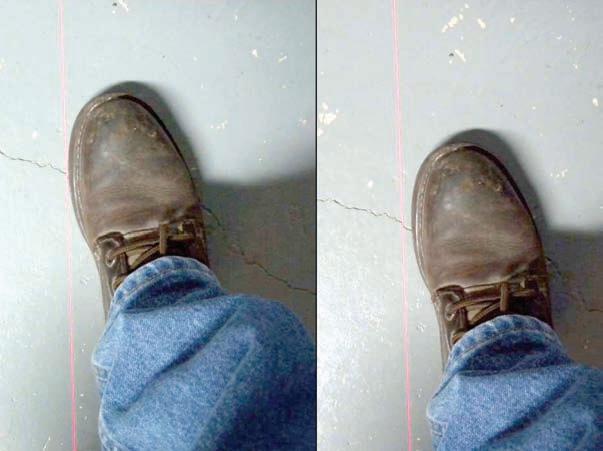
A quick way to check the sheave runout is to put the laser transmitter on the sheave and point the beam down on to the floor. Put your boot up against the beam and hold it there (Figure 8). Remove the laser and rotate the sheave 180 degrees. Re-attach the laser and if the beam hits the edge of your boot (or the same position as before) it’s okay. If the beam is off, re-check with the dial indicator to see if it is being caused by a bent
shaft or a skewed sheave. (You don’t have to point the laser to the floor; you can aim it across the room to a position on a wall. Obviously, the greater the distance, the more you will see the beam move.)
Now check the belt, even a new one. Make sure there are no defects and that it is the right size for the sheave. Never use a combination of new and old belts. If all looks good, you are now ready to start the alignment procedure.
The alignment procedure
The alignment procedure is fairly simple (see Figures 9, 10 and 11):
1. Start with the vertical plane and correct the angle by shimming the motor.
2. Adjust the toe-in or toe-out again until the value reads zero. (Remove all the angular misalignment first in both planes.)
3. Now slide the sheave forward or back in order to correct the parallel offset.
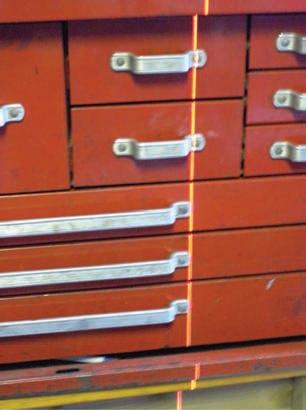
Next, fix the stationary machine. Mount the laser transmitter on the stationary machine unit and point the beam backwards away from the moveable machine. Locate the beam on a fixed position (e.g. a wall or a pipe) and mark the position with a marker at the top and bottom. Now point the laser beam forward past the moveable machine and again mark the position at the top and bottom.
What you have done is marked the position of the stationary machine unit. I call these marks anchor points. It means that when you tension the belt later, if
the beam is off the mark more than what is deemed acceptable, you have probably distorted the base when you tightened the belt. (If you don’t want to mark the wall, pull your toolbox over or use something else that’s portable and line up the beam to it, as in Figure 12.)
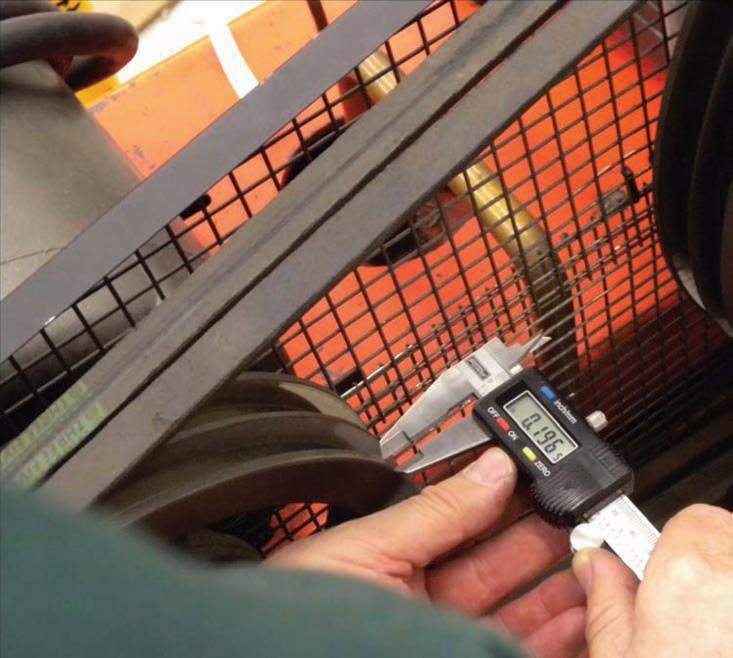
Measure the wall widths of both sheaves (Figure 13). If they have different face widths, just add or subtract the difference from the zero value of the target, or if you are using a digital system, adjust the offset to the value you want for a perfect alignment.
Now the trick is to keep it in this position while you tension the belt. I must admit that this is not easy, especially when using a base that just has just one adjusting bolt, but that is why we use skilled tradesmen for this work.
Tension the belts to the manufacturer’s specifications and keep your eye on the laser marks on your toolbox to make sure that the base is not being distorted during the tensioning. And most importantly, you must re-tension the belt and check the alignment within the next 24 to 48 hours of operation.
Now sit back and plan on checking the belts again in three years and replacing them in five.
MRO
John Lambert, president of Benchmark
Fig. 8
Fig. 7
Fig. 6
Fig. 10
Fig. 9
Fig. 12
Fig. 11
Fig. 13
All images sourced by John Lambert.
ontrary to popular opinion, a centrifugal pump is not designed to develop one head at a single capacity, as requested by the pump purchaser. In fact a pump is designed and produced to supply a whole range of head-capacity conditions, as identified on its performance curve. The pump will operate on that curve if it is driven at the particular speed for which the curve is drawn.
However, the actual conditions on that curve, at which the pump will run, will be determined by the system in which it operates. In other words, for all practical purposes, the system controls the pump, and will operate that pump at whatever conditions it sees fit, regardless of the head and capacity for which it was acquired (and designed) to achieve.
To grasp this clearly, we first need to understand how a pump works. For this we need to understand the Characteristic Pump Performance Curve. To the uninitiated, this diagram may seem like a mass of lines set up simply to confuse the reader. In fact, it is only a picture of how the pump works. However, we do need to be able to make some sense out of that picture
Pump capability
Let’s start with the relationship between the capacity (or flow rate) and the head. The ‘head’ is simply the concept of pressure identified on a barometric scale with the medium being water instead of mercury. For example, an atmospheric pressure of 14.7 psi can support a 30 in. column of mercury on a barometric scale.
This is frequently used to identify vacuum conditions as ‘inches of mercury’. However, this pressure can also support a 34-ft-high column of water and this measure is used to identify pump pressures in ‘feet of water’.
Such a column of liquid is referred to as the Static Head. Consequently, the relationship between pressure and head is as shown as follows:
Pressure in psi x 2.31
Head in Feet = –––––––––––––––––––––Specific Gravity of Liquid
To fully appreciate the relationship between head and capacity, consider a centrifugal pump discharging into a straight vertical pipe. The liquid will eventually reach a level beyond which it is unable to move. This can be considered as the maximum head the pump can develop. Although the pump will continue to run, it will be unable to push the liquid any higher in the pipe.
Under these conditions, liquid is being churned around in the pump casing, but there is no flow passing through the pump, therefore the capacity or flow rate at this maximum head is zero.
Expressing pressure as ‘head’ in this way makes the pump curve applicable to every liquid, regardless of its density.
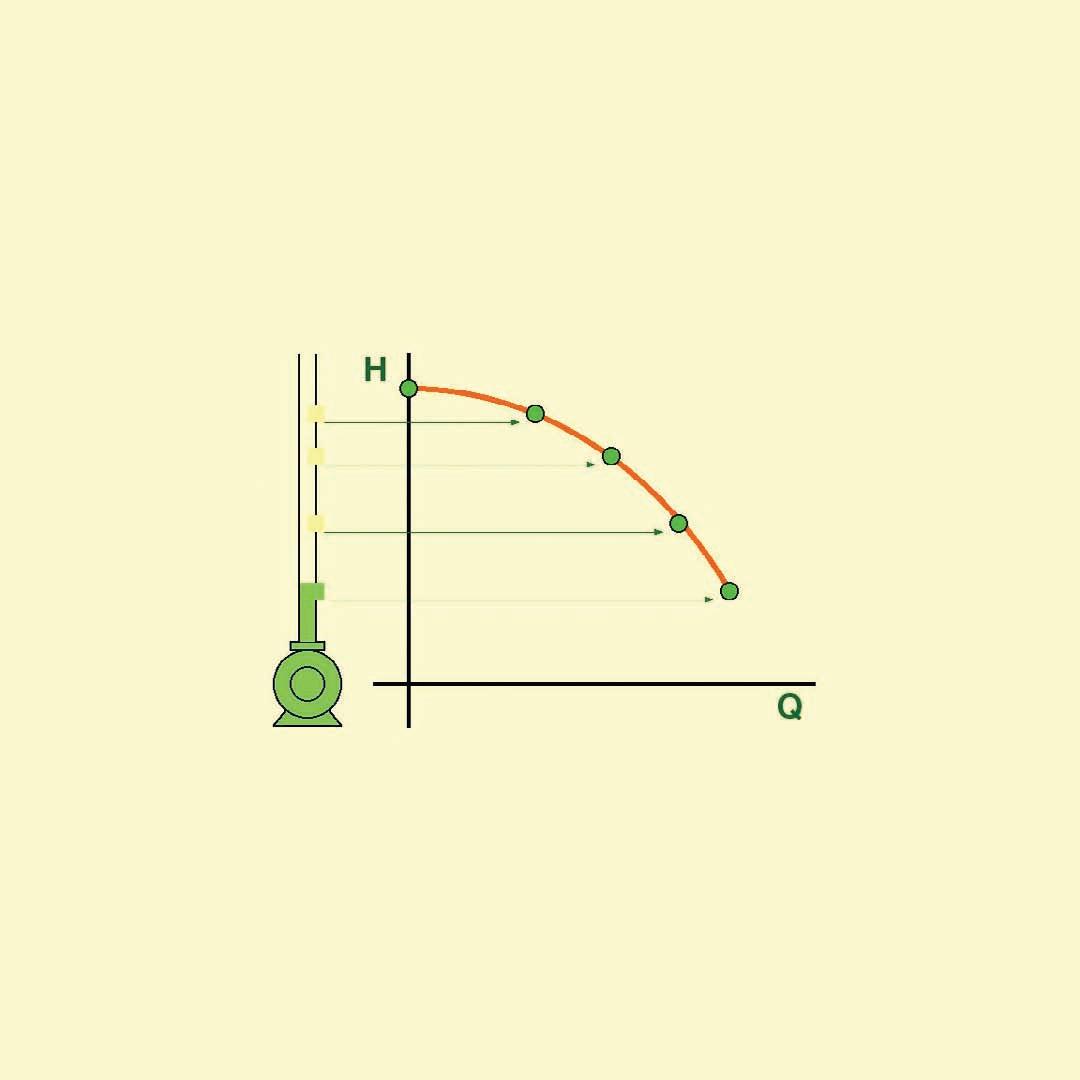
If we cut holes in the discharge pipe at progressively lower levels from the
fighting flow frustrations
BY ROSS MACKAY
top, the head is effectively reduced, and the pump will steadily develop an in creasing capacity.
By graphically depicting these results (Figure 1, Creating the Pump Curve), a Characteristic Pump Performance Curve is drawn. You will note that this curve is not completed down to zero head, as a centrifugal pump does not operate relia bly beyond a certain capacity, at which point, the curve is usually discontinued.
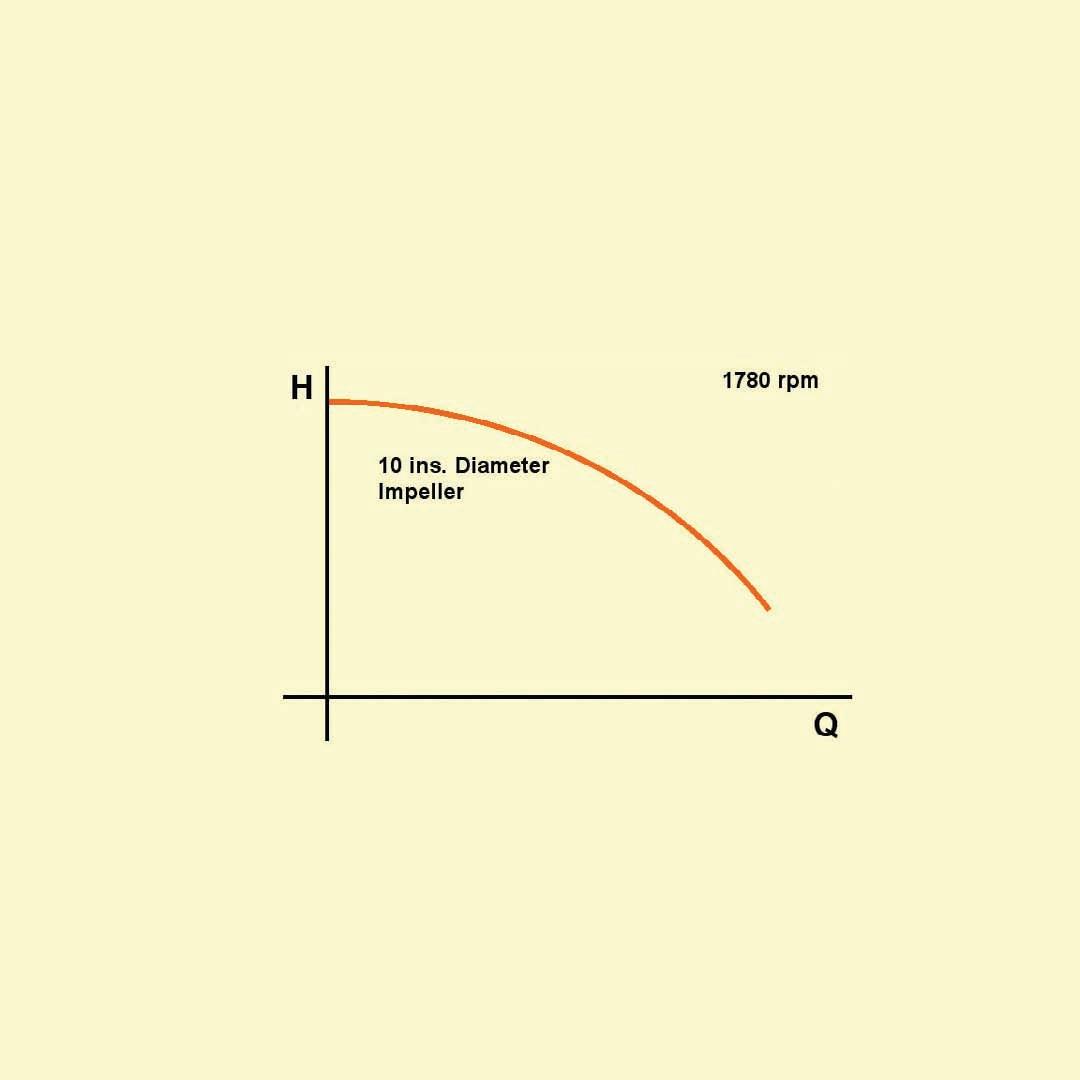
The curve (Figure 2, Pump Perform ance Curve) identifies the capacity that this pump can develop, and the Total Head it can add to a system when it is run at a particular speed with a specified impeller diameter.
Consequently, the only practical way you can change what the pump is capable of doing is by physically adjusting how fast the pump is rotating, or by changing the impeller diameter.
But why doesn’t the pump always do what it’s expected to do?
System considerations
If the centrifugal pump is controlled by the system, we should now understand some aspects of a pumping system. For this we look at the System Curve.
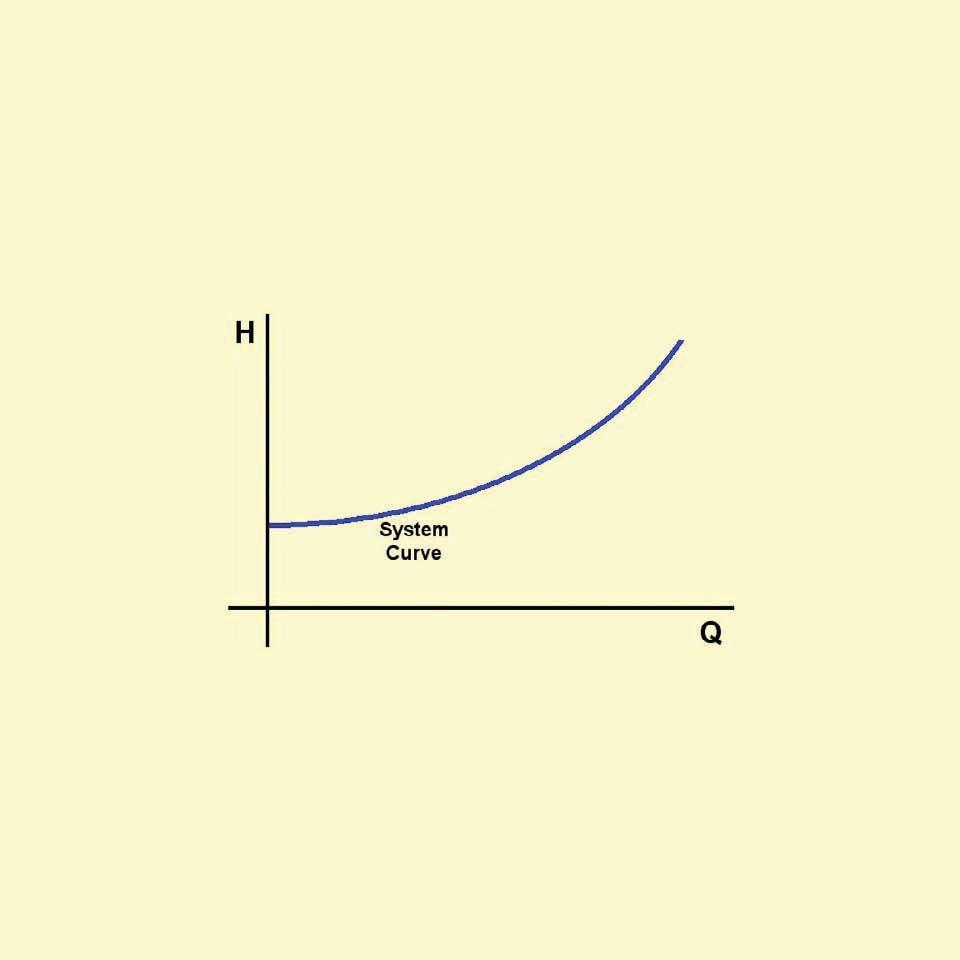
The System Curve is created by the combination of factors that resist the flow of liquid from one end of a system to the other. The common factors in all systems are gravity and friction.
We examine what a pump is designed to do and why it doesn’t always do it.
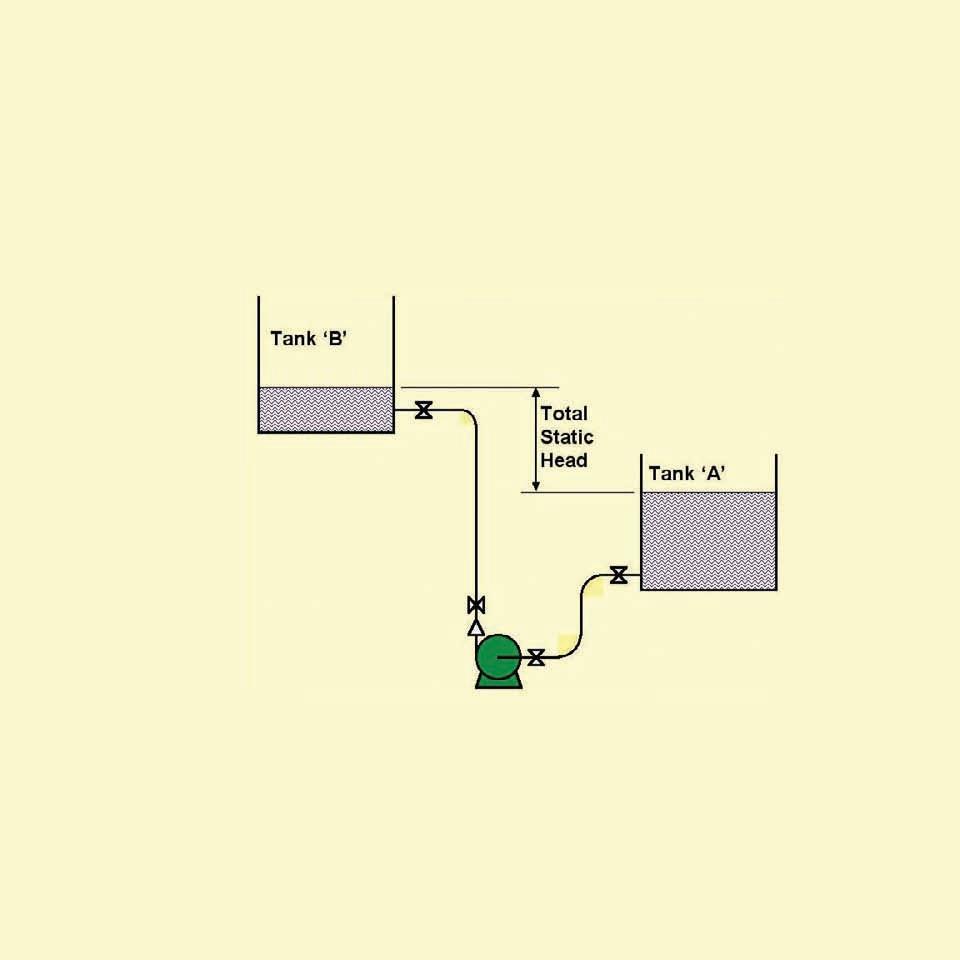
To overcome gravity in a typical sys tem, as shown in Figure 3, the liquid must be raised through the vertical dis tance represented by the change in eleva tion between the originating source to the final destination.
Referring to this as the Total Static Head, this distance is measured in one of two ways, depending on the layout of the system.
In the arrangement shown in Figure 3, it would be measured between the free surface of the liquid in the suction source and the free surface of the liquid in the discharge tank.
If the pump discharge line entered the discharge tank from above, the Static Head would be measured between the free sur
continued on page 22
Fig. 1
Fig. 2
Fig. 3
Characteristic Pump Performance Curve
Pump Performance Curve
FOCUS ON PUMPS
nificant, except in low-head applications.
The only other conditions we need to take into account are the pressures at the suction source and in the discharge tank. If they are both open to atmospheric pressure, they balance each other out and we can ignore them. If, however, they are closed vessels under different pressures, the difference in pressure has to be added to the Total Head required from the pump.
A combination of the differential pressure, the Total Static Head, the friction loss, and the Velocity Head is referred to as the Total Head. When plotted against the capacity, the resultant curve, shown in Figure 4, is known as the System Curve. Therefore, when a specific flow rate is selected for a system, the System Curve will identify the Total Head that must be overcome.
The flow rate through a system can only be supplied by a pump, and is therefore the capacity required from the pump.
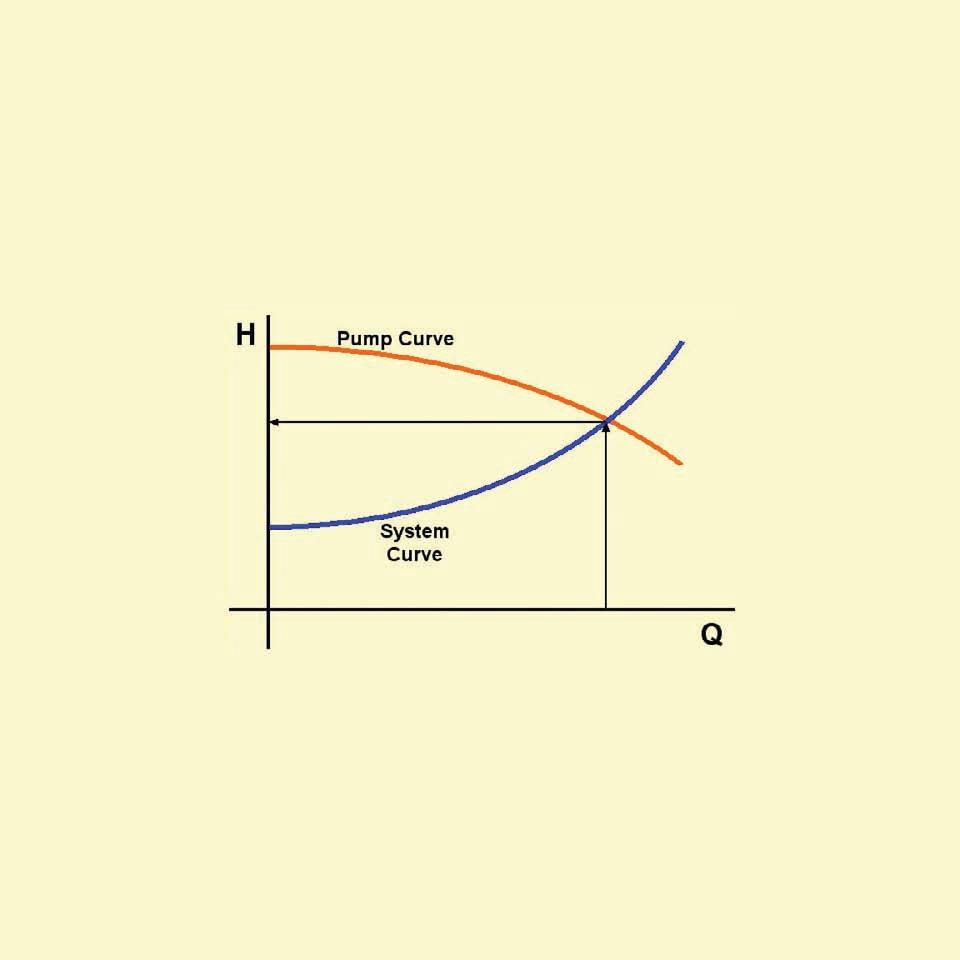
When the pump is properly selected, its Characteristic Pump Performance Curve will intersect the System Curve at the point at which the pump will operate (Figure 5, Pump and System Curves).
An increase in Static Head can be caused by reducing the liquid level in the tank, and will move the System Curve straight up on the graph, thus reducing the capacity required.
An increase in friction loss can be caused by a variety of conditions, such as automated controls opening and closing a different valving system. This will result in the System Curve adopting a steeper slope and again reducing the capacity required.
Therefore, if we don’t physically change the pump speed or impeller diameter, then any change in head or capacity noted at the pump means that the system has been changed either purposely or accidentally.
Remember, the system controls the pump. So don’t be surprised if the pump doesn’t do what you expected it to do. Look at the system and find out what has changed. MRO
Ross Mackay is an internationally renowned expert in pumping reliability. Based in Aurora, ON, he specializes in helping companies increase their pump asset reliability and reduce operating and maintenance costs through pump training programs. He is the author of The Practical Pumping Handbook, and can be reached at 1-800-465-6260 or through his website at www.practicalpumping.com.
Getting ready for the end of the recession
Enhanced machine guarding alone can increase employee productivity by 25%.
BY SIMON FRIDLYAND
The value of Canadian manufacturing sales – heavily dependent on exports to the beleaguered United States – plunged 8% in December 2008 from the previous month, Statistics Canada reported.
In Ontario, which accounts for about half the country’s manufacturing sales, the decline was 9.2%. Sales of auto parts, the blood of the fading Ontario manufacturing economy, fell 17.6% “as parts manufacturers struggled with a sharply reduced demand from the auto assembly plants,” the agency noted.
These are typical of the statistics we continue to hear daily. We are definitely experiencing difficult times. However, the difficult times will not last forever. Here are some positive forecasts for 2009 from news reports:
“Late last week, National Bank noted that the U.S. housing market — the rotten heart of the global economic malaise — appears to be nearing a nadir. Median household income is coming in line with the median price of an existing home, a key factor for recovery, and the inventory of unsold homes and condos is falling, another good sign.”
“Although 2009 will clearly be a very tough period, the evolving global supply chain presents opportunities for Ontario exporters, particularly manufacturers of high value-added intermediary and final goods.”
So what do manufacturers need to do to get ready for the end of the recession?
The short answer to the question is ‘to be more efficient’.
A recent survey of small- to mediumsize manufacturing companies collaborates these findings: “Some 61% of manufacturing respondents across the country [report] being ‘more efficient’ over the prior 12 months. Manufacturing was tied with business services for leading the way on efficiency. The study also showed that business owners generally are keenly aware of the importance of investing, and have a defined investment strategy.”
Many of our customers say to us, ‘When times are good we are busy fulfilling our orders and we don’t have time to upgrade our facilities. Therefore, the time to upgrade equipment to make it more efficient and safe is now.’
Facility upgrades usually include process streamlining, equipment development, equipment safety upgrades to achieve compliance, and improved machine utilization.
Let me show you how it works.
Machine safety upgrades and productivity are two sides of the same coin. Can you imagine two machines that are exactly the same, except that one machine is unguarded and open while the other is well-guarded with a solution that was developed with the collective involvement of maintenance, operations and engineering professionals?
The open machine can be run, set-up and adjusted many different ways, any time during the run, whereas the guard-
ed machine can only be run, set-up and adjusted one way, only at set-up. This process is called Standard Work.
Standard Work is a lean term. Lean principles are used here on a micro level. The operation of the machine is dictated by guarding. It’s just like a straight line running from point A to point B. This path has no unnecessary twists or turns.
Obviously, a properly guarded machine will produce the most consistent product and it will last longer. (For similar reasons, car rental agencies in North America typically will not rent manual transmission models because the different use patterns can damage these transmissions).
In industry, scrap, equipment downtime, damage and personal injuries are directly related to the amount of procedural mistakes and variability. It is human activity that drives operational efficiency.
In several large studies, the productivity from enhanced machine guarding alone was shown to increase employee productivity by 25% over a five-year period, while the associated indirect operating costs were reduced by 20%.
It has even been proven that the human mind will alter work in such a way as to increase man's chance of survival. In other words, in an environment
where we perceive risk, we work more slowly and cautiously. When we feel safe, we work faster, we are more at ease, we are more efficient.
In order to succeed with the retrofitting approach, maintenance professionals should assume a leading role. You are the people who know the machines best and therefore your contribution to the retrofitting process is invaluable.
Many companies we know about are going through this process right now, because it helps to keep maintenance personnel busy during these challenging times, as well as get the operations ready for the coming market turnaround. MRO
Simon Fridlyand, P.Eng., is president of S.A.F.E. Engineering Inc., a Torontobased company specializing in industrial health and safety issues and PSR compliance. He can be reached 416-447-9757 or simonf@safeengineering.ca. For more information, visit www.safeengineering.ca.
seen. How they can keep track of everything without asset management software is beyond me. Things in municipalities are much more sophisticated than one might think, running anywhere from high-tech water treatment plants, to using GPSs to locate water valves several feet below ground.
This month I wanted to write about something that most of us take for granted. We drink water from our kitchen taps, flush the toilet and drive down our roads. We rarely think about the work it takes to maintain all these amenities.
Prior to this past year, I didn’t realize the complexity of the regional infrastructure maintenance that can be found in every community. In these municipal facilities across the country, PM schedules, corrective maintenance and spare parts management ranks right up there with that in any other industrial facility.
It’s just not a bunch of guys leaning on shovels and digging holes, as might be the public’s perception. They work with a high level of technology with the added twist of having multiple sites with assets that are hidden in remote locations or are underground. Even so, every piece needs to be maintained in order to serve the public.
The federal government recently promised millions of dollars for infrastructure projects for our cities, towns and municipalities — money for roads, bridges, water and wastewater improvements, to name just a few. All of us know the condition of the roads in our country. What we don’t see is the many utilities that are buried underground or located off the beaten track. In some communi-
Multi-site maintenance
ties, our water and sewer lines are frail to say the least. In my own town, water pipe breaks are commonplace and maintenance crews are constantly digging holes in our streets to repair leaks.
Budgets are very tight for municipal governments. Unexpected repairs, severe weather, etc., can throw a major wrinkle into their finances. By talking to officials in local towns and municipalities in my area over the past few months, I’ve learned a lot about how they operate and the challenges they face.
First of all is the lack of available cash. Budgets are mostly based upon tax revenue and service fees. Most of the money is used up with annual expenses for operating, repair and maintenance.
Capital projects are budgeted into the mix to improve water and sewer systems and repave streets. These are important improvements that protect the citizens they serve and the local environment.
Like their industrial cousins, they are facing budgets freezes, cancelled projects and shortages in manpower. Many of our town and municipality infrastructures are in poor condition. Pipes have been underground long past their life expectancy, and many roads have more patches than they have original pavement.
Although many people will lose their jobs in this economic downturn, the fed-
challenges
With regional municipalities, assets are located over many square miles. If you can imagine, it’s like having small production lines every three to four miles — not the norm in industry where everything typically is in one building, under one roof. It’s an ideal maintenance challenge for a CMMS system.
BY PETER PHILLIPS
eral infrastructure money should be a windfall for our local communities.
One of the commonalities our towns and municipalities share is that they still pretty much run their maintenance operations with pen and paper. Maintenance PMs and repairs, if recorded at all, are all kept on paper and stored in thick file folders. Purchase orders (POs) are still written in triplicate-copy PO books. Finding an asset’s history or where a pump was bought last time becomes a librarian’s nightmare of sorting through files and old PO books.
Many counties have told me that the provincial government has recently asked them for a list of their assets. The vast majority of them that I talked to didn’t have an electronic list of equipment or other assets. Everything is on paper.
So where is all this leading me? Well, many of these local governments are purchasing CMMS software. Most of them have had it in their budget proposals for the past two-to-three years and finally have gotten approval to purchase. Many others are still waiting to see when money may become available. Possibly the recent federal budget will help them.
A municipality’s asset list is vast. Most have one of the largest lists I’ve
The old days when things were simpler are long gone. With the amalgamation of small towns and communities into large regional municipalities, assets are located over many square miles. If you can imagine, it’s like having small production lines every three to four miles — not the norm in industry where everything typically is in one building, under one roof. How’s that for a maintenance challenge?
A CMMS operating in these widespread regions, however, doesn’t need to be managed any differently than how we do it in conventional facilities.
A planner and a maintenance supervisor (usually the same person) organize and execute their maintenance activities in the same manner as singlesite industries.
As always, a CMMS helps with the planning of work and stores the results so that equipment history, costs, etc., can easily be accessed.
Warranty tracking is a big part of the record-keeping process for them, to keep track of pumps, valves, and motors, etc. They are spread all over the county yet still need to be tracked for repairs, maintenance and warranty work.
In water treatment plants, for example, banks of UV lights are used in sterilization systems. They have dozens of UV bulbs and every bulb has a warranty. When a bulb is installed, the date must be recorded and its running hours must be tracked in order to claim any warranty. A CMMS is the best way I know to track this data.
Water and wastewater treatment plants have daily test and inspections that must be completed. Some CMMS packages have the option to record test and inspection results right in the software. Recording an out-of-tolerance result can create an automatic work order to address a failed inspection point.
Remote access to the CMMS is a criterion for larger regional municipalities. In some regions, it’s not uncommon to have several water treatment plants located a long way from the central maintenance shop. For them it’s essential that the remote operators of these plants have access to the software. They need to record inspection results and create work request so the central maintenance supervisor can dispatch a maintenance person to address the issue.
Lets not forget the many pieces of mobile equipment that municipalities must maintain, which add more complexity to their operations. Trucks, loaders, backhoes and snowploughs — to name a few — must be kept in workable condition at all times. CMMS systems that have a fleet module can track repairs, fuel consumption and tire usage.
I must admit my maintenance hat goes off to all the people involved in looking after this diverse group of assets. Let’s hope that every city, town and municipality receives the support they need to obtain the technology and software to help them maintain the millions of dollars of assets for which they are responsible.
MRO
Peter Phillips of Trailwalk Holdings, a CMMS consulting and training company, can be reached at 902-798-3601 or by email at peter@trailwalk.ca.
There isn’t a magic formula for good management, of course, but if you’re a manager, perhaps these tips will help you be more effective.
1. Choose a field thoughtfully. Make it one you enjoy. It’s hard to be productive without genuine enthusiasm. This is true whether you’re a manager or employee.
2. Hire carefully and be willing to fire. You need a strong team, because a mediocre team gives mediocre results, no matter how well managed it is. One common mistake is holding onto somebody who doesn’t quite measure up. It’s easy to keep this person on the job because he’ s not terrible at what he does. But a good manager will replace him or move him to a set of responsibilities where he can succeed unambiguously.
3. Create a productive environment. This is a particular challenge because it requires different approaches, depending on the context. Sometimes you maximize productivity by giving everybody his or her own office. Sometimes you achieve it by moving everybody into open space. Sometimes you use financial incentives to stimulate productivity. A combination of approaches is usually required.
One element that almost always increases productivity is providing an information system that empowers employees. When I was building Microsoft, I set out to create an environment where software developers could thrive. I wanted a
company where engineers liked to work. I wanted to create a culture that encouraged them to work together, share ideas and remain highly motivated. If I hadn’t been a software engineer myself, there’ s no way I could have achieved my goal.
4. Define success. Make it clear to your employees what constitutes success and how they should measure their achievements. Goals must be realistic. Project schedules, for example, must be set by the people who do the work. People will accept a ‘bottoms-up’ deadline they helped set, but they’ ll be cynical about a schedule imposed from the top that doesn’t map to reality. Unachievable goals undermine an organization.
At my company, in addition to regular team meetings and one-on-one sessions between managers and employees, we used mass gatherings periodically and email routinely to communicate what we expect from employees.
5. To be a good manager, you have to like people and be good at communicating. This is hard to fake. If you don’t genuinely enjoy interacting with people, it’ ll be hard to manage them well. You must have a wide range of personal contacts within your organization.
You need relationships — not necessarily personal friendships — with a fair number of people, including your own employees. You must encourage these people to tell you what’s going on (good or bad) and give you feedback about what people are thinking about the company and your role in it.
6. Develop your people to do their jobs better than you can. Transfer your skills to them. This is an exciting goal, but it can be threatening to a manager who worries that he’s training his replacement. If you’re concerned, ask your boss: “If I develop somebody who can do my job super well, does the company have some other challenge for me or not?”
Many smart managers like to see their employees increase their responsibilities because it frees the managers to tackle new or undone tasks. There’s no shortage of jobs for good managers. The world has an infinite amount of work to be done.
7. Build morale. Make it clear there’ s plenty of good will to go around and that it’s not just you as some hotshot manager who’s going to look good if things go well. Give people a sense of the importance of what they’re working on — its importance to the company, its importance to customers [e.g. your production department]. When you achieve great results, everybody involved should share in the credit and feel good about it.
8. Take on projects yourself. You need to do more than communicate. The last thing people want is a boss who just doles out stuff. From time to time, prove you can be hands-on by taking on one of the less attractive tasks and using it as an example of how your employees should meet challenges.
9. Don’t make the same decision twice. Spend the time and thought to
Who makes a good boss?
BY BILL GATES
make a solid decision the first time so that you don’t revisit the issue unnecessarily. If you’re too willing to reopen issues, it interferes not only with your execution but also with your motivation to make a decision in the first place. After all, why bother deciding an issue if it isn’t really decided?
People hate indecisive leadership, so you have to make choices. However, that doesn’t mean you have to decide everything the moment it comes to your attention. Nor that you can’t ever reconsider a decision.
10. Let people know whom to please. Maybe it ’s you, maybe it ’s your boss, and maybe it’s somebody who works for you. You’re in trouble — and risking paralysis in your organization — when employees start saying to themselves: “Am I supposed to be making this person happy or this other person happy? They seem to have different priorities.”
I don’t pretend that these are the only 10 approaches a manager should keep in mind, or even that they’re the most important ones. There are lots of others. Just a month ago, for example, I encouraged leaders to demand bad news before good news from their employees. But these 10 ideas may help you manage well, and I hope they do. MRO
Bill Gates originally wrote this article for his employees at Microsoft in 1997, yet its points remain valid today, and they easily can be adopted and applied at maintenance operations in various industries.
Here are 10 tips to ponder from t H e co-founder
This article is part of an ongoing series. The introduction appeared in Machinery & Equipment MRO’s February 2005 issue and the series has run in every issue since. Previous installments are archived online at www.mromagazine.com. In this issue, we pick up where we left off in the Feburary 2009 edition, as maintenance manager Bob Edwards and members of his team visit another mill.
The small group from our mill in Canada was touring a so-called ‘Super Mill’ in the United States. Our guide, Alan, the mill’s mechanical team lead, continued to tell us about the history of his facility.
“The mill reached its design production rate approximately six months after start-up and we’ve increased our production rate many times since.”
“That really is impressive,” commented Carol. “How have you been able to keep the demand increasing in a shrinking marketplace?”
“Our paper is the preferred choice at every one of our customers. We run better, more trouble-free than any of our competitors and our relationship is excellent with every one of the customers.”
“But how has maintenance helped that and how has the extra demand affected how you do maintenance?”
“Obviously, we’ve needed to make sure that the mill could run at full capacity, but we don’t do anything in isolation. We are involved in every facet of the plant. The mill has established a Customer Improvement Association — the CIA for short — where we have teams dedicated to each of our customers.
“We offer visits to the pressrooms, we have the customers visit our mill and we have a designated contact person who handles any enquiries from the customer. Two of our millwrights and one electrician also are contact people and we have a tradesperson on every team for this.
“Similarly, if there is an equipmentrelated problem or if there is a project that will increase speed or reduce downtime, the operations group will be part of the team.”
“Don’t you find that having these teams actually slows down the process?” I asked. “We seem to take forever to come to a decision and quite often we can’t get everyone that we want, to attend.”
“I know what you mean, Bob, but we have very clear guidelines. The first sin is not attending — the team lets you know in no uncertain manner. The second sin is not making decisions. We don’t tolerate endless discussions; everyone is expected to come to the meeting prepared and upto-speed, so then it’s just a discussion of the merits of the alternatives. Once consensus is arrived at, we move on. Sometimes meetings are only 20 minutes long.
“If I’m honest, then I should mention that there is usually a lot of discussion outside of the meeting. We all consider continuous improvement to be part of our everyday job.”
“This is really interesting, Alan. Tell us more,” I requested.
“We’ve done so many things over the past few years that it’s hard to pick out the highlights. We’ve installed full online vibration monitoring, we have a mini oil analysis lab, we use infra-red analysis not only on our electrical equipment but also for heat loss.
“We carry out Motor Current Analysis once a year but we’re looking at some new technology that will allow us to monitor constantly.
“We also made a significant saving when we did an ultrasonic leak detection survey. We were having problems with erratic responses on some of the equip-
HIGH STANDARDS
MET AT EVERY CORNER
Follow along with Step 26 in a journey to World-Class Maintenance at the Plentya Paper Company as the team makes further progress towards its goals.
BY CLIFF WILLIAMS
ed it — and when we had finished repairing leaks and changed the way some the air lines were run, we had so much air capacity we were able to permanently shut down a compressor.”
Key Points
• Use available maintenance technologies
• Make decisions quickly
• Keep the shop clean to build pride
“Okay, you’ve convinced us! How about we take a look around the shop?” Carol suggested.
We all headed down to the shop and the first thing I noticed was a very large board with maintenance KPIs (key performance indicators) written on it. It contained daily, weekly and monthly results where appropriate, and any that didn’t meet the target had a comment beside them.
I could see Carol busily taking notes while Stan was looking around in some form of disbelief. The shop was spotless and each workbench had the same setup, with bins for parts attached to them.
The lathe and milling machine were pristine — and there was none of the junk that you found in our shop around the hydraulic presses. At one end of the shop there was a collection of carts with tools neatly laid out on them, each with drawers and a vice. Alan noticed me staring at the carts.
“They’re our standard job carts. We have a number of jobs that we do on a regular basis that require larger tools and rigging, so we set up carts that contain all that’s needed to do the job. There is a kit of spare parts in the drawers so there’s no reason for anyone to leave the job site at all. This means the job gets done a lot quicker and we’re back into production a lot sooner.
“The cleaning and restocking is done when we’re making paper again. Remember
for lunch, I asked him if things had been tidied up just for our visit.
“No way! Folks who do that are not kidding their visitors, they’re kidding themselves. A couple of years ago we decided to implement a 5S program, not just in the maintenance department but throughout the plant — as you’ll see when we take a tour.”
Chuck was as good as his word. Wherever we went in the plant, there were locations clearly marked and there was nothing just sitting around. One of the surprises was when we arrived at the stock prep area. At our plant, everything was bare concrete, but what we found here was tile everywhere.
“Wow, Chuck, this must have cost a fortune. What prompted you to tile everything?”
“How long does it take you to get your area looking as clean as this?” he asked.
“No idea. I’ve been in the mill five years and I’ve never seen it this clean!”
“Exactly. It takes us about 15 minutes a day to keep this place clean . We never lose equipment due to contamination and it helps us develop a feeling of pride. Our belief is that if people have to work in a mess, you can’t expect them to do an outstanding job — and that’s what we expect from them. Let’s have lunch.”
Alan took us to the cafeteria where the food was as good as in any restaurant. I noticed that the prices of the meals were minimal.
“Wow, do you mind if I bring my wife here for dinner one evening?” I joked. “The food is great and the prices fit into my budget!”
when we talked about ing? Well, there’s a procedure on how to do the job in one of the drawers, along with a list of all spares and tools required, so if anyone’s not sure about something, the information is there for them.”
“So that’s what Chuck meant when he said that things are designed so that someone new can do exactly what an experienced person can,” I commented.
“It certainly does shorten the learning curve,” said Alan. “And it also means that things get done the right way and that’s really important for reliability. Let’s keep going.”
We went into the stores where again everything was neat and tidy. What was really impressive was three shelves with bins containing parts and a copy of the work order attached. When I commented on the bins, Alan explained.
“Pretty much every job on our backlog list has a kit prepared. That way, if an opportunity should arise before the scheduled date, then all we have to do is come in here and pick up the kit. For jobs that are to get done on their scheduled date, we deliver the kits to staging locations in the different areas of the plant.”
We found more of the same as we walked around the maintenance complex. It all exuded efficiency, with everything having its place and everything in its place. Locations were painted on the floor, there were pictures of how things should look, and every tool was neatly stored with outlines marked on peg boards.
When Chuck showed up to take us
“It’s just another way we build in pride and belief in the company. Everyone knows that the meals are subsidized and they are grateful. We also have one meal a week that is suggested by anyone at the mill.”
“You really do take care of your people. But don’t you find that it gets in the way?”
“Not at all. There is a sense of community in the plant — to the extent that there is a group that volunteers to take on local community projects. Last month they decorated a retired person’s house; the group volunteered their time and the company bought the materials.”
“All of this must be costing quite a bit of money that’s coming off the bottom line — just to make people feel better.”
“You’re missing the point, Bob. We don’t do all this just to make people feel better — that’s a byproduct. The decision was made when this mill was built that this type of employee involvement was essential if we were to meet our projected profits. As you’ll see later, people here have tremendous freedom to make decisions and we believe that every one of them will save us money in one way or another. It must work, as we have met targets every year, even though they’ve steadily increased.
“But have no doubt, if we didn’t meet targets and the owners believed it was because of our level of commitment to this program, it would end. We owe it to the owners and shareholders to maintain profits and everyone at the plant understands this. They know that if this is to remain our operating model, then it has to be successful and they’re dedicated to it.”
It was becoming even more apparent to us why this mill was held in such high esteem by the industry. MRO
Cliff Williams is the corporate maintenance manager at Erco Worldwide in Toronto, Ont., and a consultant with TMS - Total Maintenance Solutions Inc., Markham, Ont. He can be reached by e-mail at williamscliff@rogers.com.
Bearings meet challenge of reducing friction
SKF Energy Efficient E2 bearings use advanced bearing technology to reduce frictional energy losses by up to 30% beyond the company’s standard bearings. The low friction that these bearings exhibit enables manufacturers to build greater energy efficiency into their equipment. Dimensionally interchangeable with ISO standard bearings, they are suitable for light-to-normal loaded applications such as electric motors, pumps and conveyors. Compared to SKF standard bearings, they consume less lubricant while enabling longer bearing life, reducing the total cost of ownership.
SKF Canada
Reader Service Card No. 330
Self-lubricating bearing material offers long wear life
What’s new in bearings
duced by Beco in Italy with special internal clearances to operate at temperatures well above the standard grease range. The series has speed limitations owing to the high operating temperatures.
Global Bear Reader Service Card No. 332
Slewing ring bearing requires no lubrication
Metcar grades M-343 and M-346 high-temperature mechanical materials from Metallized Carbon are designed to operate in difficult environments where oil and grease lubrication cannot be used due to temperature limitations. Suited to medium to high loads, the carbon/graphite Antimony-impregnated materials operate at temperatures up to 700°F. They provide good wear resistance and enhanced lubrication for bearings and thrust washers operating in both submerged and dry conditions. Bearings manufactured from Metcar are self-lubricating, non-galling, and dimensionally stable, and have high compressive strength.
Igus slewing ring bearings use two self-lubricating, low-friction polymer sliding elements in place of ball bearings. The cost-effective, low-noise PRT modules are highly wear resistant, easy to install and maintenance free. Robust and with a high load capacity, they have aluminum housings and use stainless steel screws. Applications are diverse and include semiconductor and clean rooms, assembly lines, production facilities and robots. Units are available with outside diameters of 30 mm, 60 mm, 100 mm and 200 mm.
Steel-housed bearing is easy to install and uninstall
Baldor has introduced the Dodge Imperial HD mounted roller bearing, featuring a cast steel housing for heavyduty applications. The housing is available in pillow block, flange, edger flange and piloted flange configurations. The company’s adapter mount system makes the bearing easy to mount and dismount, which reduces installation and removal time. The adapter nut tightens the adapter on the shaft and an easy-to-attach lock plate holds the adapter nut in place. Removing the lock plate and turning the nut allows the bearing to slide off the shaft. During operation, the adapter sleeve improves concentricity and reduces vibration.
Baldor Electric
Reader Service Card No. 333
packaging and food-processing machinery, printing, textile and others.
Kilian Manufacturing
Reader Service Card No. 337
Rolling bearings are for railway vehicles
Metallized Carbon
Reader Service Card No. 338
Ball bearing helps cut energy costs
NSK has developed a standard series of high-performance HPS angular contact ball bearings for industrial machinery such as pumps or compressors. These ball bearings extend service life, reducing operating costs. Also, if equivalent life is
sufficient for a given application, smaller bearings can be mounted for use in smaller machinery, thus helping to reduce energy costs. The design increases permissible speed while maintaining accurate positioning, which contributes to highspeed operation of industrial machinery. Three types of cages are offered.
NSK Canada
Reader Service Card No. 339
Ball bearing series is designed for ultra-high temperatures
Designed to accommodate extreme temperatures, Global Bear’s 6000, 6200 and 6300 series ball bearings are offered in open, sealed and shielded versions, for temperatures ranging from 302°F to 536°F (150°C to 280°C). The bearings are pro-
Igus
Reader Service Card No. 335
Custom bearing assemblies find use in many work areas
Custom-engineered bearing assemblies and solutions for a wide variety of applications are offered by Kilian Manufacturing. The precision-machined bearings and assemblies span a size range of 1/4-in. O.D. to 6-in. O.D. and are manufactured using a variety of materials, including carbon steel, stainless steel and engineered polymers. Applications include automotive and off-highway vehicles, machine tool, conveyors, material handling,
NKE Austria supplies rolling bearings for railway vehicles. In the railway industry, bearings used in traction motors need to have a long service life. The most commonly used types of bearings for these motors are cylindrical roller bearings, deep-groove ball bearings and electrically insulated roller bearings. Gearbox bearings run at high speeds, are exposed to significant loads, and must endure shocks, vibrations and extreme temperatures. Bearings most commonly used here are cylindrical roller bearings, tapered roller bearings, angular contact ball bearings, four-point contact ball bearings and deep-groove ball bearings. The company also provides commercial and technical support, including application consulting, development and design, calculation, testing and logistic services.
Global Bear
Reader Service Card No. 334
Polymer bearing cuts downtime
Masonry block manufacturer TechoBloc uses a specialized press for forming block moulds, an operation that involves a central
trunnion, which operates in tens of thousands of cycles per month. The company used to use 660 bronze as the bearing material for the trunnion, and spent several hours per month on maintenance as a result. It needed a bushing material that would withstand the rigours of a 24/7 manufacturing environment and run reliably for months at a time. After replacing the bronze bushing with Thordon SXL, an elastomeric polymer bearing material, the company found that downtime was reduced by 30 to 36 hours per year.
Thordon Bearings
Reader Service Card No. 331
Bearings meet specs for hydro-power turbines
Developed for hydro-power applications, GGB Bearing Technology’s HPM and HPF fibre-reinforced, plastic composite bearings provide high load capacity, good shock and edge loading capacity, low friction, superior wear rate, corrosion resistance and dimensional stability. The bearings meet the U.S. Army Corps of Engineers’ specifications for self-lubricating bearings for wicket gate applications in hydro-power turbines, according to tests performed by Powertech Labs. In these tests, the bearings were subjected to accelerated wear testing under conditions simulating those encountered in hydropower turbines.
GGB Bearing Technology
Reader Service Card No. 336 MRO
What’s new in power transmission components
Linear actuator comes in three types
The Jaeger brand SJ series electromechanical linear actuators for AC-powered applications perform efficiently in a wide range of motion-driven equipment and devices in various environments. The UL-approved 115-VAC and 230-VAC actuators feature motors offering thermal protection up to 120°C, integrated limit switches, Acme screw and metal gearbox, all of which contribute to promote quiet and virtually maintenance-free operation. Three standard types are available with the capability to achieve load capacities up to 5,000N and speeds up to 7.2 mm/sec, depending on the model. Stroke lengths range from 100 mm to 600 mm.
SKF Canada
scanners, X-Y positioning slides, highspeed dynamometers, measuring instruments, robotics, machine tools, and more. The company offers a design guide to coupling performance characteristics on its website, at www.huco.com. Also on the website is a coupling selector, an interactive tool that takes the key information provided and presents all the couplings that fit the criteria, with a link to the detailed specification of each coupling.
Huco Dynatork
Reader Service Card No. 342
Linear guide seals out contaminants
Reader Service Card No. 343
Web-based tool assists in coupling selection
Huco Dynatork’s range of small precision couplings is suited for use in a wide range of applications, including high-end servo drives, pulse generators,
Designed for contaminated environments, NSK Precison America’s VI series of linear guides delivers functionality and long operating life for manufacturing equipment applications with heavy exposure to particles such as graphite powder and sawdust. The series features high-performance seals with a multi-lip structure, as well as caps for rail mounting holes, which reduces the entry of fine contaminants to less than 1/10 of existing NSK
Emerson has introduced the Morse CB-HS high-speed conveyor backstop clutch product line. The clutch design allows users to reach extremely fast line speeds, in sizes ranging from 7,000 ft-lb to 722,000 ft-lb. Incorporating a complement of anti-rollover cams and dual ball-bearing support, the construction helps improve energy efficiency by creating a smoother-running clutch and lowering the over-running drag torque and temperature. The clutch design includes 28% larger spacers and an advanced taconite sealing system. The clutch is particularly suited for use in such applications as aggregate-conveying and coal-handling.
Emerson Industrial Automation
Reader Service Card No. 348
products. Low-temperature chrome or fluorinated chrome plating surface treatments are available. The guides are equipped with the company’s K1 lubrication units, which allow long-term, maintenance-free operations in environments where grease is either difficult to replenish or easily washed away.
NSK Canada
Reader Service Card No. 346
Open gearing products come in wide range of designs
Boston Gear offers a comprehensive range of standard open gearing products, including spur, helical, mitre, bevel, worms and worm gears. Gears are manufactured in steel, cast iron, brass or non-metallic materials. Also provided are stock altering services such as reboring, keyways and setscrews, along
cated at www.bostongear.com, visitors can access BostSpec, a program that assists engineers with gearing selection and provides CAD drawings. Also on the website is the current, 164-page gearing product catalogue.
Boston Gear
Reader Service Card No. 341
Clutch/brake series helps reduce costs
Deltran MCS/MBF series metric clutches and brakes have been introduced by Danaher Motion. These RoHS-compliant clutches and brakes are available in diameters from 63 mm to 280 mm (2.48 in. to 11.02 in.), torque ratings from 5.5 Nm to 500 Nm (49 lb-in. to 4,425 lb-
in.), seven frame sizes and a wide selection of DIN 6885/1-compliant metric bores and standard metric keyways. Customized versions also are available. Features include a zero backlash armature design, static or dynamic engagement, and the ability to operate in temperatures from minus 10°C to 40°C. The products are a cost-effective solution for companies producing in the order of 1,000 machines annually, or as a drop-in replacement, in material handling, packaging, robotics and factory automation applications, among others.
Danaher Motion
Reader Service Card No. 349
Quick-clamping
shaft collar installs without tools
Quick-clamping shaft collars from Ruland do not mar the shaft or require tools and are designed for quick adjustments. These lightweight collars are particularly suitable for light-duty applications requiring frequent set-up changes or adjustments. They are available with bore sizes from 5/16 in. to 1-1/2 in. and 8 mm to 35 mm. They also are available in one- and twopiece clampstyle designs and a set-screw design. Materials of manufacture include 316 stainless steel, 303 stainless steel, RoHS-compliant yellow zinc plating, high-strength aluminum with an anodized finish, black oxide carbon steel and engineered plastic. Ruland Manufacturing
Reader Service Card No. 344
Bearing catalogue is packed with helpful information
The Thomson Selection Guide to inch and metric linear Ball Bushing bearings, 60 Case shafting and RoundRail linear guides contains product overviews and comparisons, as well as specifications and ordering information. This
250-page resource guide also includes an engineering appendix to help the reader correctly specify, install and maintain the products. Also featured are a number of new products, including metric Super Ball Bushing bearings, as well as stainless steel Multitrac and A-bearings. Thomson
Measuring tool aligns belt-driven machines
An intrinsically safe tool, the EasyLaser D130 BTA Ex measuring tool makes it possible to align belt-driven machines precisely, easily and quickly, even in potentially explosive environments. It is approved in accordance with the latest ATEX directive and classified to IECEx regulations. This reliable tool helps reduce wear on sheaves/ pulleys, belts, bearings and seals, as well as reducing vibration. The resulting increased efficiency means large energy cost savings.
Benchmark Maintenance Services
Reader Service Card No. 322
Synchronous drive features wearresistant belt
Featuring high torque and precision with low maintenance, Synchronous Plus drives from TB Wood’s offer the flexibility of a dualsprocket design that features both metric and standard-tapped holes coupled with a high-capacity belt. The belt features helically wound, extra-strong glass-fibre cords that are chemically treated and designed for stability, flexibility and high tensile strength. Its nylon cover fabric construction provides good resistance to tooth wear and shear from friction. Load capacities are available for a wide range of torque loads. Applications include material handling, packaging and high-speed printing, as well as machine tools such as indexers, drill presses and boring mills where synchronization is a necessity.
What’s new in belt drives
Energy costs lowered using PTFE belting
CS Hyde’s PTFE coated belting saves on energy costs when compared with stainless steel or plastic products, according to the company. The non-stick, easy-to-clean belting offers better heat transfer and absorbs less energy than other types of belting. In addition, maintenance costs are lower. The belting is generally less expensive, and can be operated using a simpler, low-cost pulley and drive system.
CS Hyde
Reader Service Card No. 324
V-belt packs power in small size
Developed to replace traditional V-belts in applications where space and weight saving are critical, the Quad-Power II V-belt is Gates’ top-of-the-line narrow section V-belt for heavy-duty industrial drives. It has extremely high power capacity, even on small pulley diameters, while improved resistance to outside bends allows the use of back idlers. The optimized notch profile makes the belts run smoothly in the pulley grooves.
Gates Canada
Reader Service Card No. 327
Belt offers operating efficiency
Carlisle’s smooth-running Power-Wedge Cog-Belt features high-efficiency moulded cogs. This construction offers improved belt flex and reduced bending stress, improved wedging and less slip, and greater energy savings. The fabric laminates are in the power zone, and the neoprene-impregnated fabric allows good flexibility and adhesion. The fabric
Pulley CAD drawings now available online Optibelt now offers a new service through the Internet called Optibelt Pulleys Plus. After the quick entry of some user data, an operator can recall important information about Optibelt standard pulleys. A clearly arranged user interface as well as a practical functionality make Optibelt Pulleys Plus a tool that simplifies work. The pulleys are offered in different 2-D and 3-D formats. Users can simply download the provided drawings onto their systems for immediate use. The service can be found at www.optibelt.com. As well, the company’s website features an interactive product catalogue for Optibelt V-grooved pulleys, ribbed belts and timing belt pulleys. The website enables fast and clear access to lots of important information.
Optibelt
Reader Service Card No. 326
is made of a tough cotton/polyester blend for long wear and it provides
Altra Industrial Motion Reader Service Card No. 323
Multi-rib belt suits high-speed applications
Interroll has introduced the PolyVee beltdriven roller and RollerDrive, which provide reliable torque transmission up to 300% higher than traditional systems, the company claims. The high-torque,
multi-rib belt features a flexible core that allows it to be applied without any tensioning device. It is equipped with a new hub and belts with up to four ribs, minimizing belt slippage and maximizing length of life cycle. The belt is suitable for most conveying applications, including roller curves, 24-VDC pallet conveyors, long transport zones and high-speed operations.
Interroll
pulley
Don’t let your free subscription lapse. More than ever, we think you’re going to need us in the months ahead.
Because of your role at your company, it’s available to you at no cost
But as our circulation list is audited twice a year, we you need to confirm your subscription information.
Now it’s easier than ever!
Please take a moment to visit www.mromagazine.com
Simply click on Subscriber Services near the top of the left-hand column of our home page.
Maintaining your no-cost magazine subscription right now is easy and takes about a minute. Thank you for your support.
controlled response to shock loads.
Carlisle Power Transmission
Reader Service Card No. 328 MRO
What’s new in pumps
Low-viscosity pump saves on energy costs
By reducing brake horsepower requirements, Viking gear and vane pumps offer lower energy costs than ANSI centrifugal pumps, even on the thinnest of fluids. The broad performance range and designs means that efficiency is not dependent on the specific gravity of the liquid. In general, whatever the viscosity, the iron internal gear pumps and stainless steel vane pumps consume less energy and frequently allow smaller motors. Energy costs represent about 45% of typical life-cycle costs for a medium-sized industrial pump, compared to the initial purchase cost, which is only about 10%-15%, with the remainder as maintenance and other costs (according to the US Dept. of Energy).
Viking Pump Reader Service Card No. 310
Peristaltic pump incorporates Profibus
Pipeline strainer comes with choice of covers
Eaton’s Model 91 fabricated tee-type pipeline strainer protects expensive pipeline system components such as pumps, nozzles and instrumentation through removal of unwanted particulate matter from the system flow. Two types of covers, bolted or davit assembly, are available for the strainer. The bolted cover is suitable for applications where basket-changing is infrequent, while the davit assembly makes removing the strainer cover of larger strainers a oneperson job. The combination of a convoluted strainer screen and a straight-through flow path results in very low pressure losses. The strainer is offered in carbon steel, stainless steel or special alloy construction. Flanged pipeline connections for 2-in. through 48-in. sizes are available in ANSI 150#, 300# or 600# ratings.
Eaton Filtration
ties. The 520, 620 and 720 series pumps are suitable for metering or transfer of slurries or viscous, shear-sensitive and aggressive fluids without contamination of the pump or fluid. The integrated Profibus capabilities make it easy and efficient for technicians to integrate the sealless, valveless pump technology into their Profibus control system. In addition, the resulting reduction in the complexity of installation wiring, and associated engineering time and hardware, lowers capital cost. Diagnostic capability and speed of responsiveness are increased, cutting plant downtime and maintenance. A second pumphead option doubles the maximum flow rate to 17.6 gpm on the 720 series pump.
Watson-Marlow Pumps
Reader Service Card No. 311
Plunger pump is built for strength
Pneumatic calibration hand pump has ergonomic grip
The Series PCHP pneumatic calibration hand pump from Dwyer Instruments comfortably sources pressure and vacuum to check calibration of gauges, switches, transmitters and recorders. The ergonomically designed, contoured cushion handles provide extra comfort while preventing the pump from sliding. An oversized check valve offers smooth operation throughout the output range, and dual O-rings on all pistons prevent leakage. Output range is -0.945 bar to 40 bar (-28 in. Hg to 600 psi). Materials of construction include stainless steel fittings, anodized aluminum housing, plastic/rubber handles and Nitrile O-rings.
Dwyer Instruments
Reader Service Card No. 312
Diaphragm metering pump has leak shut-off
The Omega PHP-800 series diaphragm metering pump has PVDF double ball valves, pumps up to 2,700 ml/min (42 gph) and handles output pressures up to 12.1 bar (175 psi). Features include a digital touchpad and
cations, primary and secondary production and bulk transfer. The pumps feature leak-tight integrity and good chemical compatibility. Orings and U-cups prevent air leakage by providing a positive seal as the air valve shifts.
Reader Service Card No. 314
Spare parts kit helps in pump maintenance
KSB Canada stocks maintenance kits for its Amarex KRT family of submersible pumps for water and wastewater applications. The spare parts kit is available in three variations. The basic maintenance version contains a set of replaceable seal
back-lit LCD display that is easy to read and use. The display shows the output percentage as well as the diaphragm failure alarm status. A built-in leak detection system shuts off the pump head if a chemical leak occurs. Applications include waste water treatment, plating tanks, metal finishing and fertilizer feed, in the automotive, municipal water treatment and agricultural industries.
Ingersoll Rand
Reader Service Card No. 319
Hydraulic pump design gets overhaul
used pumps, also includes a set of replacement bearings and associated fasteners. A full-scale set, complemented by the impeller, is for use when a full-scale overhaul of the pump is needed.
KSB Canada
Reader Service Card No. 318
Pump torque limiter saves on energy
The 10,000-psi Model 1810 has been added to Cat Pumps’ line of triplex positive displacement pumps. This durable pump delivers a smooth, low-pulsation flow of 3 gpm at 10,000 psi. It has a low unswept volume, resulting in high volumetric efficiency. Features include compact footprint, block-style manifold of heat-treated 304 stainless steel, highstrength plunger rods, oversized bearings and custom Delrin seals. Optional 15,000-psi rupture disc, regulating relief valve and pressure gauge complete the package. Each pump can be fitted with optional adapters for standard NPT connection. Applications include hydrostatic testing, chemical injection, high-pressure tooling and heavy equipment cleaning.
Cat Pumps
Reader Service Card No. 321
Durable pump handles finishing applications
Parker Hannifin has introduced an optional torque limiter for 45-cc/rev to 140cc/rev model P1/PD series pumps, allowing the use of smaller prime movers, resulting in more efficient use of fuel or electricity. The torque limiter adjusts flow in the circuit to keep the prime mover from stalling under heavy loads. To accomplish this, the device’s control monitors both pressure and displacement as measured by the pump’s hanger angle. It is a single spring unit that works with the Parker compensator, a ventable pressure limiter or a load sensing or remote venting circuit. As pressure rises, flow is reduced according to the zero adjustment spring rate of the torque limiter. When pressure has risen to its full value, the compensator assumes control.
Parker Hannifin
Reader Service Card No. 316
The Exel pump from Binks, designed for highflow circulation systems requiring moderate pressure, works with water-borne and solvent-borne fluids, catalyzed coatings, high solids coatings, abrasive materials and moisture-sensitive materials. It is particularly suitable for highly filled abrasive thixotrophic and shear-sensitive materials. Available in three 4:5.1 all-stainless-steel models, the pump delivers up to 6.85 gpm at 60 cycles per minute, and has a maximum inlet pressure of 6.9 bar (100 psi) and a maximum working pressure of 31 bar (450 psi). Features include stainless steel wetted fluid chambers with self-priming pistons and smooth internal passages with straight-through flow patterns.
Reader Service Card No. 317
Added materials of construction enhance diaphragm pump
Previously offered only in aluminum, the ARO Pro series 2-in. and 3-in. ported metallic diaphragm pump models from Ingersoll Rand now also are available in cast iron and stainless steel. All three materials are available for all port sizes of the Pro series portfolio, making them particularly suitable for plant maintenance, OEM appli-
High delivery, accurate control of the oil flow and ergonomic design are three characteristics of the Enerpac XA series airdriven, foot-operated hydraulic pump with Xvari technology. The pump features two pedals, for pressure build-up and pressure reduction, both of which are depressed with the ball of the foot, so that the heel stays on the ground to lessen fatigue. Although the pump footprint is larger than previous Enerpac hydraulic pumps, the unit is lower and more stable and compact. Also, hydraulic delivery is up to about 50% higher because Enerpac has used a rotating air motor and a two-stage rotating pump element instead of a linear air motor. The pump element has an eccentric shaft with cams for the separate drive of a low-pressure piston and a high-pressure piston. A planetary gearwheel reduces the speed of the air motor (20,000 rpm) to the 2,000 rpm that the hydraulic pump runs. Features include a completely closed housing manufactured from impact-proof plastic and a closed rubber oil reservoir.
Enerpac
Hard-working pump makes maintenance easy
Designed to handle solids-laden liquids in the energy, pulp and paper, chemical and foodprocessing industries, KWP heavy-duty, non-clogging pumps from KSB can be ordered in a variety of abrasion- and corrosion-resistant alloys for long and reliable service. Features include replaceable wear plates and a back pullout design, making it possible to overhaul the pumps without disconnecting the pump casing from the piping. The standard line of horizontal, radially split volute casing single-stage pumps comes in scalable sizes with discharge diameters ranging from 40 mm to 250 mm. They are capable of delivering outputs up to 1,300 cu m/h (5,700 gpm) with heads up to 100 m. KSB Pumps
Gloves protect against
sharp objects
HyFlex 11-624 gloves from Ansell offer a high degree of cut protection together with a cool, soft feel and ergonomic design. Lightweight, comfortable and flexible, the gloves feature a knit liner comprising a yarn combination of DSM Dyneema, Spandex and nylon. A polyurethane black coating provides a medium-high level of abrasion resistance, a sure grip in both dry and wet applications, and protection from wear. Offering ANSI Level 2 cut protection, the glove is designed for applications requiring employees to handle small to medium-size sharp objects such as metal, plastic, glass and ceramics in a dry to moderately oily environment. The gloves can be washed and re-used without losing any cut protection.
Ansell Reader Service Card No. 300
Eyewear offers good fit for narrow faces
Adding to the growing line of safety eyewear designed for people with narrow faces, including women, Scorpion SM safety eyewear from Gateway Safety is 10% smaller, but otherwise identical to the regular Scorpion style. It is attractive
and lightweight, yet durable, and a custom fit is provided by adjustable-length, four-position ratcheting temples. A soft fingertip nosepiece helps minimize slipping, even in hot work environments, while a venting system between the frame and lens helps minimize fogging. The eyewear meets or exceeds the ANSI Z87.1+ standard.
Gateway Safety Reader Service Card No. 302
Underwear toughs out on-the-job challenges
Duluth Trading Performance underwear, comprising 93% nylon and 7% Spandex, protects against chafing, itching and clamminess. Anti-microbial fabric helps to help fight mildew, bacteria and job-site odour. The garments come with a sturdy, wide elastic waistband that is brushed inside for chafe-free comfort. Boxers are offered in deep hunter, graphite, dark cobalt and black, briefs are offered in white and black, and boxer briefs are offered in black, dark cobalt and deep hunter, all available in sizes medium to 3XL. Machine-washable and -dryable, they are claimed to wick away sweat 10 times better than cotton underwear.
Duluth Trading
What’s new in personal protection
Flexible work boot combines protection with comfort
Cat Footwear’s Ergo FlexGuard work boot features a flexible external metatarsal guard made with d3o material, a shock-absorbing material with intelligent molecules that flow as the wearer moves. Upon impact, the molecules lock together to absorb shock and resist impact. This flexible work boot offers the same level of protection as traditional rigid, bulky work boots, yet is much more comfortable to wear.
In addition to the anatomically moulded guard, the boot features iTechnology construction, which combines work-boot durability with athletic footwear comfort, ASTM F2413-05 I/75 C/75 steel toe and electrical hazard protection. The slip-resistant rubber outsole includes siping for improved traction.
Cat Footwear
Reader Service Card No. 304
Website lets user dress model in PPE products
An interactive, virtual model, Symbiosis Man, that allows customers to ‘try on’ personal protective equipment products before purchase, has been introduced by Kimberly-Clark. Available at www.mykleenguard.com, the tool allows users to select products based on a range of criteria, such as typical uses, type needed and the level or protection required. By clicking on a series of icons, the user can dress the model in head-to-toe protection that includes eye protection, respirators, gloves and coveralls from the KleenGuard
Work
boots keep feet dry
W.L. Gore & Associates has created a Gore-Tex waterproof, breathable lining for numerous brands of work boots, including Danner, Red Wing, Rocky and Wolverine. To ensure optimum performance, the company has put the lining through rigorous tests. In the walking simulator test, the boots are placed on mechanical feet equipped with sensors. The feet take up to 300,000 steps in a water bath, equivalent to approximately 40 hours of work on a wet jobsite. If moisture enters the boot, the machine stops and an LED indicates the location of the leak. Other tests include the breathability and climate comfort test, and the wicking test.
W.L. Gore & Associates Reader Service Card No. 301
line of products. Both front and back views are available. Fully dressed images can be forwarded to a customer or printed out for future reference.
Kimberly-Clark Professional
Reader Service Card No. 305
Protective headphones incorporate AM/FM radio
Designed to shut out noise, KBC Tools & Machinery’s Worktunes hearing protector features soft foam, oversized ear cushions, a fully adjustable head band and an AM/FM stereo radio built right in. These economical headphones are NN4 22 DB tested in a VNLAPaccredited laboratory, and are lightweight and comfortable. Also available are cutting tools, measuring and inspection tools, workholding tools and more.
KBC Tools & Machinery
Reader Service Card No. 306
Work pants combine strength with comfort
Available in Europe for nearly 50 years, the Blaklader line of workwear has been introduced to North America. The company’s work pants are rugged and durable without sacrificing style and comfort. They feature reinforced utility pockets, which are
easily accessible even when squatting or kneeling, with angled pocket corners for screws and nails. Also featured are lightweight kneepad pockets with foam or gel inserts, a webbed hammer loop and detachable screwdriver pocket. Seams are triple-stitched for strength. The pants are offered in a variety of colours, in cotton twill, cotton canvas and heavyweight poly/cotton canvas with extra-strength Cordura. The Canadian distributor is based in Burlington, ON.
At Work Sales & Marketing Reader Service Card No. 307
Light-duty glove has stretchy nylon liner
The line of Tuff-Coat gloves is available from Perfect Fit Glove. Designed for light-duty applications, the palm-dipped gloves include a lightweight, stretchy nylon liner that provides flexibility and dexterity, combined with a durable latex coating for resistance to cuts, punctures and abrasion. In addition to two cut-resistant styles made with DuPont Kevlar fibre shells and two general-purpose styles made with cotton/polyester blend shells, a hi-viz acrylic dipped glove with thermal protection also is available for use in high-activity/ low-light settings.
Perfect Fit Glove
Angle grinder puts emphasis on safety
Makita Canada features the GA series of 5-in., 6-in. and 7-in. angle grinders, designed for professional use. Each grinder is equipped with a Makita motor protected by dust-proof labyrinth construction and epoxy-coated motor windings to eliminate damage by foreign particles
impacting the armature. Individual models also offer the Super Joint System to avoid gear breakage, and an electronic brake. The series offers power, durability and safety in a comfortable, low-profile, lightweight package.
Makita Canada
Reader Service Card No. 350
Hammer design promotes comfort
Two top-end Plumb hammers have been introduced by Cooper Tools. The Plumb solid-steel hammer includes a magnetic nail starter, which holds nails in position for easy starting. The oversized striking area of the head is part of the weightforward design, and helps create better balance. Anti-vibration technology in the shaft absorbs shock and helps minimize fatigue, and the grip of the handle features a contoured band to prevent forward movement. The oversized striking area of the Plumb Pro series glass-fibre hammer provides excellent nail control, and nail-pulling power is enhanced by bevelled claw edges. The soft-grip handle includes moulded ridges to prevent slippage, and a contoured end.
Cooper Tools
What’s new in hand and power tools
Rotary cable cutter reduces wire nicking
The Sir Nickless rotary cable cutter from Ideal prevents the occurrence of nicked conductors while cutting BX, MC, AC, Greenfield and other types of aluminum or steel armoured cable up to 3/8 in. diameter. The cutter features a curved tray that improves cutting performance by forcing lie tight against the bottom wall of the cable and safely away from the top-positioned cutting blade. In addition, an auto cam lock allows the tool to cut small-diameter flex cable such as Southwire MCap without the use of awkward plastic shims. The rugged, all-metal frame withstands worksite conditions, and its highperformance blade stays sharp.
Ideal Industries
Power hammer’s anti-vibration feature eases operator fatigue
The Hilti TE 40-AVR Combihammer is designed for a variety of applications, including hammer drilling in concrete, masonry and natural stone, light chiselling on concrete and masonry, socket cutting using percussion core bits up to 3-1/2 in., and drilling with high torque in wood and steel (with optional chuck). The tool features a 1,010-watt motor, well-balanced design, ergonomic D-grip, and Active Vibration Reduction, which lowers vibration and helps reduce operator fatigue. The company will service the tool quickly and reliably, if needed, with no additional cost for two years.
Hilti
Reader Service Card No. 352
areas on the North American site now are fed from common international pages. Easy-to-follow tab navigation allows quick access to areas of interest. In addition to updated technical information and content improvements, new sections have been added to the site, including Business
and open-pit mining, and grain elevators. Under normal circumstances, they should not render a hot spark when they strike the target material while working under volatile conditions. Available in metric as well as standard sizes, the non-sparking tools also are offered in beryllium copper on request. The tools are electrically conductive and should not be used around electricity, or conditions that may produce a static electrical discharge.
Reader Service Card No. 354
Reciprocating saw packs power
Milwaukee Electric Tool has introduced the durable 15-A Super Sawzall reciprocating saw, Model 6538-21, providing high overload protection. The powerful motor maintains constant speed and power under cutting load, while the Gear Protecting Clutch feature extends gear and motor life by absorbing sudden blade lock-up. The tool produces extremely low vibration levels, allowing the user to work longer without becoming fatigued.
Milwaukee Electric Tool Reader Service Card No. 356
Lightweight riveter is powerful Engineered to maximize stroke and pull force with a three-jaw set, the lightweight MP-3V and MP-4V Marson air/hydraulic riveters from Alcoa are supplied with nosepieces to set rivets in all alloys, and come with adjustment service wrenches,
Solutions, and Service and Support. Also added is a link to the company’s live online Machining Forum.
Seco Tools
Reader Service Card No. 360
Tool catalogue gets new look
Hardy Tools
Reader Service Card No. 358
Angle grinder stands up to heavy operating conditions
Reader Service Card No. 351
Interchangeable insert ratchet wrench has reversing lever
J.W. Winco offers GN 316 series interchangeable insert ratchet wrenches with a reversing lever. Made of steel and available in metric sizes, these RoHS-compliant tools are suitable for assembly and repair work, as well as fi xed applications on machinery and equipment. The housing of the wrench is coated with black matte plastic in a textured fi nish, while the knob is made of glassfibre-reinforced polyamide technopolymer. The wrenches are available in tapped insert type, round bore with keyway and square bore type. The inserts are easily interchangeable and can be supplied individually.
J.W. Winco
hydraulic fluid, fluid applicator, spare jaws and a removable swivel air connection line with a built-in off/on valve. The MP-3V model provides a 3/4-in. stroke and 1,800 lb of pulling force. Capacity is 3/32 in. to 3/16 in. for all alloys. The heavy-duty MP-4V riveter provides a 1-in. stroke and 3,420 lb of pulling force with a capacity of 5/32 in. to
Alcoa Fastening Systems
Reader Service Card No. 355
Tool company website gets new look
Seco Tools has changed the design and navigation of its North American website, www.secotools.com/us, to match that of the Swedish parent company. Many of the
Featuring an updated look, the 2009 Wright Tool catalogue provides descriptions, specifications and part numbers for all the company’s product lines. The 406-page catalogue introduces new tools that expand the existing line of heavy-duty hand tools. Information on the Wright Tool University is included, as well as industries served by the company. The Perfecting Performance Quality Process, a system for identifying customer needs and translating them into quality products and services, also is detailed. Safety information for each tool is located at the beginning of each section and at the bottom of the page on which the tool is featured.
Wright Tool
Reader Service Card No. 357
Non-sparking tool line is designed for volatile environments
A line of non-sparking hand tools made of aluminum bronze has been introduced by Hardy Tools. The tools can be used in the proximity of highly flammable substances in a variety of volatile industrial environments, including petroleum and chemical manufacturing, explosive and sparking activities in both underground
Metabo has introduced the WE9125 Quick 5-in. angle grinder built with the company’s Vario Constamatic (VC) electronic speed stabilization for heavy operating conditions such as grinding, cutting and finishing granite, marble or concrete, as well as grinding and finishing metals. The VC electronics constantly monitor the current in the motor, adding voltage as the load increases to keep the tool running at optimum speed. The motor offers 950 W of power and 22 in.-lb of torque. Essential components are protected from dust and debris with double-lipped labyrinth sealed bearings, a special winding protection grid and epoxy-coated field coil windings. The weight of the grinder is 5.4 lb.
Metabo
Reader Service Card No. 359
Electronic callipers protect against contaminant ingress
Suitable for harsh manufacturing environments, Starrett’s 797 electronic calliper series offers IP65 protection. The callipers are resistant to coolant, water, dust, dirt and metal chips. User-friendly features include a large, easy-to-read LCD display with 0.310-in.-high characters, zero at any position, instant inch/
millimetre conversion, manual on/off and a CR2032 battery with more than 3,500 continuous hours of life. An RS 232 outport allows the collection and outputting of data for analysis. Made of hardened stainless steel, the callipers are available in a variety of size/measuring ranges and come in a fitted plastic case. Starrett
Free MRO Product Literature Guide
new Pulley catalog “B216”
BR eCo flex ’s new B216 pulley catalog offers made-to-order and stock pulleys. t he new domestic “CNC” pulley maufacture allows for precise machining standards, leading to superior product quality and quick product availability.
BReCoflex now provides finished custom precision pulleys and stock pulleys with pilot bores, for immediate delivery. Custom pulleys include backlash, reduced backlash “se” or zero backlash “0” tooth gap design. Call for our free engineering support!
BReCoflex Co., L.L.C. 888-463-1400 or 732-460-9500, email: info@brecoflex.com
BReCoFLeX Circle Reply Card No. 274
tough Steel™ tough steel™was developed for those applications where contamination with hard particles is inevitable. this series of NsK-developed materials reduces the bearing’s sensitivity to contamination and reduces the internal damage caused by contamination. Proprietary material formulation reduces the severity of rolling contact surface indentations. Internal bearing damage is mitigated and the onset of surfaceinduced flaking is significantly delayed. extends life multiple times in contaminated environments.
NsK
kl-fSM
Canada’s premium chain and wire rope lubricant. With all of the corrosion inhibiting abilities of Krown’s KL-73 and the anti-wear properties of a surface modifier, KL-FsM is changing chain lubrication. Reduced wear, reduced down time, reduced chain noise and reduced product consumption are all among KL-F s M’s potential benefits for your chain and wire rope. KL-FsM is now your chain’s strongest link. Visit www.krown.com/industrial for a free sample.
KRoWN INDustRIAL Circle Reply Card No. 280
Do you know Jack
the New Ats electro-Lube “Jack” Luber 125cc Replaceable Grease Cartridge for quick change-out in the field. over 200 psi, rugged and tough; cuL Div 2 pending Available in May 2009, to pre-order call 1-800663-8141 www.atselectrolube.com
Ats eLeCtRo-LuBe Circle Reply Card No. 272
gearBox iS eco-frienDly
“As a company striving to “go green,” you understand that it means more than minimizing environmental impact and eliminating hazardous substances. You know it also requires conserving natural resources, and improving efficiency while keeping life cycle costs low. Maintenance-free grease lubrication and exceptionally long service life, make sumitomo’s Hyponic® an ideal eco-friendly gearbox for your application.”
suMItoMo
Circle Reply Card No. 275
new Single Stage Drive
sumitomo’s New single stage Paramax Drive (sPA series) releases on April 1st, 2009. Features large split housing, detachable cooling coils, and cooling fan for high cooling performance. Ideal for the Paper Mill and Pump Industries.
suMItoMo
Circle Reply Card No. 283
technical ServiceS now offereD By tSuBaki!
tsubaki’s technical services staff is available for on-site inspections and can recommend the best solution for your application. A partial list of our services includes the following: on-site services
• Maintenance seminar
• Critical Application survey
• Application troubleshooting In-House services
• Facility tours
• one Day seminars
• Failure and Wear Analysis
• sample Identification Contact tsubaki at info@tsubaki.ca for the complete list and to see how our technical services can help you best.
tsuBAKI
Circle Reply Card No. 278
Belt Drive Preventative Maintenance & Safety PrograM
Gates is dedicated to providing reliable information to keep your facility running safely at optimum capacity. When compared to the maintenance and replacement costs of roller chain or gear drives, belts can be the most cost-effective and reliable power transmission solution. An effective preventive maintenance program consisting of a safe working environment, proper belt drive installation, inspection and performance evaluations will continue to keep costs down. Let Gates help increase your facility’s uptime and avoid costly belt drive failures. Visit www.gates.com
GAtes
Circle Reply Card No. 281
With some of the highest load ratings in the industry, NsK’s HPs™ (High Performance series) spherical Roller Bearings pull out all the stops, delivering unparalleled performance and long life.
• Average 50% increase in bearing service life
• Average 12% higher load capacity
• Higher limiting speed
• Reduces costs and improves productivity
For more information, visit www.ca. nsk.com.
DriveS, llcProDuct you neeD, Service you exPect.
extended Life CHP™ hard chrome plated pins possess standard steel’s metallurgical properties for toughness and strength while delivering an extremely hard wear-resistant pin surface. CHP chain pins resist wear longer than standard heat-treated pins, even in dry and abrasive environments. Contact Drives, LLC for more information on extended Life CHP™ series chains. Visit our website, www.drivesinc.com, today.
DRIVes, LLC
Circle Reply Card No. 273
ProDuct ShowcaSe - tiMken® torrington® Metric neeDle roller BearingS: timken offers a broad range of torrington metric needle roller bearings to service the growing market of nonNorth American designed equipment. our own european manufacturing facilities offer us complete coverage of metric needle roller bearings and cam followers in all the same configurations as inch-sized product. extensive local inventory and interchange capability, allows for quick order turnaround. When you think metric - you can turn to timken. For more information on metric needle roller bearings, contact timken Canada at 905-826-9520 or www.timken.com
tIMKeN CANADA Circle Reply Card No. 276
Motovario
RotoPrecision’s In-Line Helical Cast Iron Gear Reducer Guide is designed to provide you with basic information in the selection process of Motovario NeMA (Inch) and IeC (Metric) gear reducers. Both types of gear reducers are stocked and assembled in Canada by RotoPrecision. Application support engineers are available to answer any questions you may have and to provide detailed design information. Call us today! www.rotoprecision.ca/Downloads RotoPReCIsIoN INC. Application support: 1-888-712-3400 Web: www.rotoprecision.ca
RotoPReCIsIoN INC.
Circle Reply Card No. 279
DriveS, llcProDuct you neeD, Service you exPect.
Drives, LLC is the world leader in manufactured chain products. A complete line of superior quality precision roller chains, attachment chains, and engineered conveyor chains are available to meet your exact needs. Drives, LLC not only offers the most comprehensive line of chain products; Drives offers solutions with over 100 years of advanced engineering knowledge and experience. Request a copy of our NeW catalogue CD! to view our complete line of products, visit www. drivesinc.com.
DRIVes, LLC
Circle Reply Card No. 282
(416) 510-6803.
hPS™ SPherical roller BearingS
INDUSTRY EVENTS
Two-day maintenance benchmarking course set for June 22 at UofT
Toronto, ON — Benchmarking: Analytical Approach to achieve World Class Reliability and Maintenance Excellence, is a C-MORE (Centre for Maintenance Optimization and Reliability Engineering) Masterclass taking place at the University of Toronto June 22-23, 2009, with Serge Mathieu as the instructor. Mathieu is a leader in Operations Management for ABB Reliability Consulting.
Understanding where you currently stand in important reliability and maintenance areas is essential to determining effective strategies for improvement. This session focuses on World Class Reliability (WCR) Benchmarking Reference Bases, including Management Leadership, Roles & Responsibilities, Preventive & Predictive Maintenance, Suppliers & Services Integration, Physical Asset Program, Continuing Education and Performance Assurance.
Participants will have the opportunity to discuss case studies from ABB’s industrial WCR Benchmarking assignments, for a deeper understanding of the WCR process and the results that can be achieved.
Masterclasses at C-MORE are based on its history of application-based research in the field of maintenance management and its connections to leading practitioners and consultants in the field. The objective of the programs is to combine quality content delivered by leading instructors with the academic rigour of the University of Toronto, a world-class university.
The programs are designed to provide practitioners with first-hand knowledge to make them more effective in their workplaces in a short period of time through an intensive, interactive training environment.
For details on this class, visit www. mie.utoronto.ca/cmore/masterclass_ main.html.
ptda canadian Meeting set foR May 28
Niagara Falls, ON — The 2009 PTDA Canadian Conference will be held at the Sheraton Fallsview Hotel & Conference Centre in Niagara Falls, ON, May 28-30, 2009. At it, the Power Transmission Distributors Association (PTDA) plans to deliver industry-specific information and trends focused on Canadian markets.
Devoted to Canadian industry networking and trends, the PTDA Canadian Conference is designed for distributors and manufacturers in the power transmission/motion control (PT/MC) indus-
sues and solutions with non-competing distributors — all in one convenient location over two days.
The conference will include a two-hour program on May 29 by sales guru Joe Ellers, who will discuss tactics for selling on value to improve profitability. Another program will provide insights into how technology trends are affecting the PT/MC industry.
The conference also will offer:
• An economic update tailored to the Canadian industrial sector, presented by Jayson Myers, president of Canadian Manufacturers & Exporters (CME), Canada’s largest industry and trade association.
• Build a team and your business by successfully selling change, a vision and your mission, with Larry Smith, president and CEO of the Montreal Alouettes Football Club. He will show delegates how mastering these important elements can make a true difference to an organization and help bring out the best in people.
• Market briefings on end-user industries critical to the Canadian marketplace.
• Formal and informal networking with key decision-makers in the Canadian PT/MC market.
The Canadian Conference is opening to all PTDA members selling product in Canada — distributors and manufacturers — as well as non-members who qualify for membership. For more information and to register, visit www.ptda.org/CanadianConference.
segWay inventoR to speak at ptda /fpda fall Meeting
Chicago, IL — Inventor, entrepreneur and tireless advocate for science and technology, Dean Kamen will be the opening keynote speaker for the co-located PTDA 2009 Industry Summit and FPDA 2009 Network Symposium to be held on October 22-24, 2009.
The event — the first time the two organizations have co-located their fall meetings — will take place at the brand new Hilton San Diego Bayfront in California.
Most well-known as the inventor of the Segway Personal Transporter, Kamen is president of DEKA Research & Development Corp., Manchester, NH. DEKA is focused on the development of revolutionary new technologies that span a diverse set of applications.
Co-locating the fall meetings of the Power Transmission Distributors Association (PTDA) and the FPDA Motion and Control Network (or simply FPDA, which was formerly known as the Fluid Power Distributors Association), will
able to bring to our collec tive membership speakers like Dean Kamen who can spark the innovation and energy they need to design their next move.”
“The leadership of the FPDA Motion & Control Network is looking forward with great anticipation to this co-located event with PTDA,” said Richard Neels, FPDA president-elect, who will assume the associa tion’s presidency in spring 2009 and will preside over the fall event. “As distributors in the industrial and mobile markets, FPDA and PTDA members have a lot in common, and by co-sponsoring many of the events, we are each able to offer our members a top-notch program and unparalleled networking among distributors and manufacturers. With both associations contributing to the program planning, this is shaping up to be an extraordinary event and we’re proud to be part of it.”
the learning objectives.
While specific course topics vary widely, RMI training courses are organized to match the following five facets of the SKF Asset Efficiency Optimization (AEO) workflow process:
Maintenance strategy (MS): Relates to methods and technologies used to develop a maintenance strategy. Courses emphasize a technically and financially sound maintenance strategy developed to match business goals.
Work identification (WI): Relates to methods and technologies used to identify maintenance work. Course topics include preventive maintenance, predictive technologies, information integration and decision support systems, and work order request generation.
In addition to Kamen, Alan Beaulieu of the Institute for Trend Research will speak at the closing luncheon, offering his insights into this unprecedented economy. Workshop sessions will assist participants in positioning their companies to be ready to ride the first wave of upturn with focused content on uncovering the hottest markets, planning for entering those new markets and minimizing the risks associated with seizing opportunities.
A key component of the co-located meetings will be the Motion Control Technical Conference and Showcase. The Motion Control Technical Conference is for technical specialists in the power transmission/motion control (PT/MC) industry to learn about motion control trends and technologies. Part forum, part technical benchmarking, the Technical Conference focuses on the latest trends and information in the motion control arena.
For more information, visit www.ptda. org/IndustrySummit or www.fpda.org.
Reliability Maintenance institute Releases couRse schedule foR 2009
Work control (WC): Relates to methods and technologies used to control maintenance work. Course topics include maintenance planning and scheduling, standard job plans, spare parts alignment, and supply and logistics.
Work execution (WE): Relates to methods and technologies used to complete maintenance tasks. Course topics include precision maintenance, best practices in lubrication, installation, precision alignment, balancing, and postmaintenance testing.
Living program: Relates to methods and technologies used to evaluate maintenance work and strategy, thereby “closing the loop” and making maintenance a continual improvement process. Course topics include root cause analysis, reliability analysis, maintenance work closeout, machine redesign, and technology upgrades.
Contact the Reliability Maintenance Institute at SKF Canada: tel. 416-2992877, e-mail training@skf.ca, or visit www.skf.ca.
WoRldskills coMpetition foR youth coMes to calgaRy to pRoMote tR ades
Calgary, AB — The annual WorldSkills Competition will host more than a thousand skilled young people from trade, service and technology programs in 50 countries and regions around the world at a week-long event in Calgary, AB, taking place Sept. 1-7, 2009.
The theme for the co-located meeting is “What’s Your Next Move?” and will feature programming designed to help
dustrial distribution industry, members note speakers, workshop sessions and
“Working together with FPDA on this
ognizing that many of our members are multi-faceted, seeking to be a complete resource for their customers,” said Drew Tucci, 2009 PTDA president. “By joining forces with FPDA for this event, we’re
Toronto, ON — To meet challenging business targets, a key focus area is to manage the total cost of ownership by increasing machine reliability and uptime. To leverage invested capital in machinery and equipment, it is essential to continuously develop your people as you increase efficiency and productivity. In this vein, SKF Canada provides an array of competence development activities in a unique learning environment for plant management, engineering staff, maintenance personnel and operators.
The 2009 SKF Reliability Maintenance Institute (RMI) course schedule combines all public courses scheduled throughout Canada and the United States. All courses and programs offered are consistent at all locations and by all instructors. The Canadian courses begin April 14 and run through to Dec. 4, 2009. Venues include Toronto, Montreal and Vancouver.
The course portfolio is designed around the SKF Asset Efficiency Optimization workflow process and has been created to allow participants to gain the knowledge and expertise in a structured development path. It uses an array of technologies — such as online, classroom and coaching — to reach
The youth, aged 17 to 23, will compete for gold, silver and bronze medals in more than 40 skill categories. The categories include Manufacturing & Engineering Technology.
For more details, visit www.skillscanada.com or call 1-877-754-5226. MRO
Editor’s note: Many more events of interest to readers can be found online at www. mromagazine.com. Simply click on the Events Calendar link on the left side of our home page.
PTDA’s Canadian Conference takes place in popular Niagara Falls.
The inventor of the Segway will speak about developing new technologies.
50 countries will participate in WorldSkills 2009.
UNMATCHED ENGINEERING EXCELLENCE FROM THE SCHAEFFLER
PowerTherm Induction Heaters
Many rolling bearings and other rotationally symmetrical parts made from steel have tight fits onthe shaft. Larger bearings and parts - in particular - can be mounted more easily if they are heated first.
Induction heating is superior to the conventional methods, and particularly suitable for batch mounting. Heating is carried out on complete bearings, rings for cylindrical roller or needle roller bearings and rotationally symmetrical steel parts such as labyrinth rings, roll couplings, etc.
Advantages
•Quick, safe and energy-efficient operation
•Environmentally friendly - no disposal required
•Uniform, controlled heating
•Automatic demagnetization
For the mounting of bearings and parts with a mass up to 300 kg, Schaeffler supplies five FAG brand table-top heating devices -
PowerTherm HEATER10 to 300 -suitable for mobile and/or stationary use. For parts with a mass as great as 3,000 kg, Schaeffler offers and recommends heavy duty standalone devices.
Driven to Extremes
The constant evolution of capacity and efficiency in the field of power transmission increases the standardto be achieved in technical product design. And in the selection of technology partners. Drawing from years of close collaboration with designers and manufacturers, Schaeffler Group implements the latest technology into compact and powerful INA and FAG bearing design solutions. From industrial gears and transmissions to wind turbines and modern rail applications, Schaeffler is driven by innovation and operational reliability to achieveextreme standards of performance.
Transport and Mounting Tool BEARING.MATE
BEARING.MATE is an accessory used for the safe quick and easy handling of medium-sized and large rolling bearings. It can also be used where bearings are heated prior to mounting. The tool is comprised of two handles and two steel strips. Turning the handles clamps the steel strips firmly on the outer ring of the rolling bearing. The compact packaging also includes two brackets to be used when handling spherical roller bearings and selfaligning ball bearings. The clamps secure the bearing in order to prevent tilting of the inner rings.
The tool and bearing can either be carried bytwo people or by crane using slings (ordered separately). If two carrying slings are used, the rolling bearing can be rotated to any position when transported bycrane. During heating on an induction heating device, the BEARING.MATE remains mounted on the bearing. The steel strips expand uniformly with the bearing, maintaining optimum tension.
BEARING.MATE is recommended for use in conjunction with bearings weighing as much as 500 kg, and can tolerate heating temperatures as high as 160°C. It is available in three different sizes that can be matched to bearing outside diameters ranging from 250 to 850 mm.
For additional information about PowerTherm induction heaters or BEARING.MATE, contact your local Schaeffler representative or visit www.fis-services.com