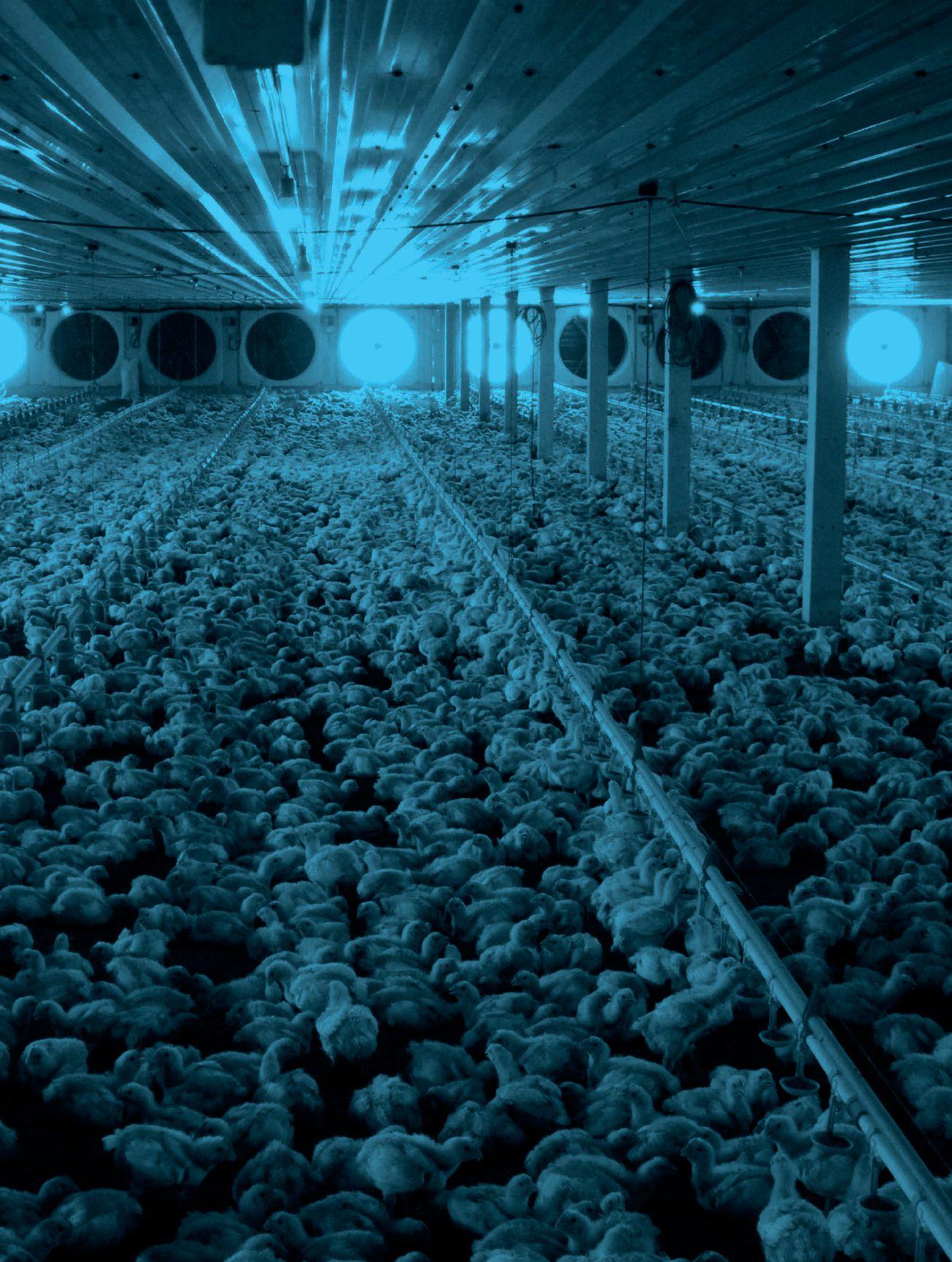
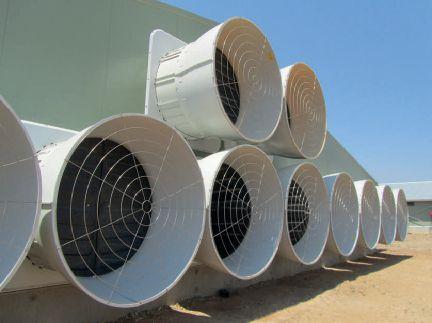
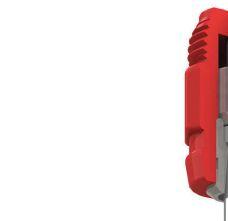
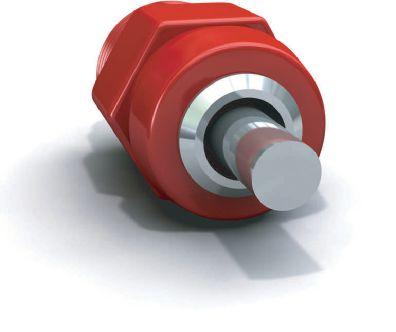
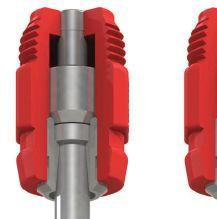
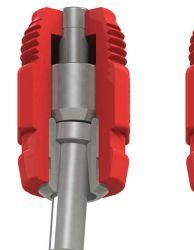
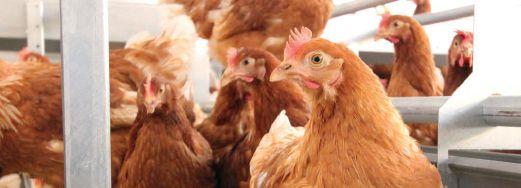
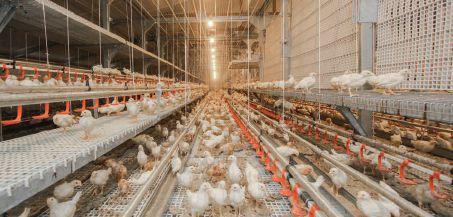
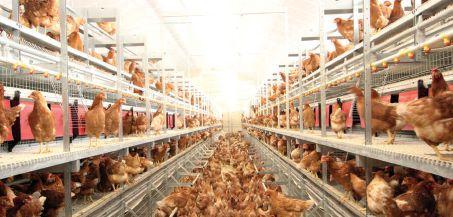
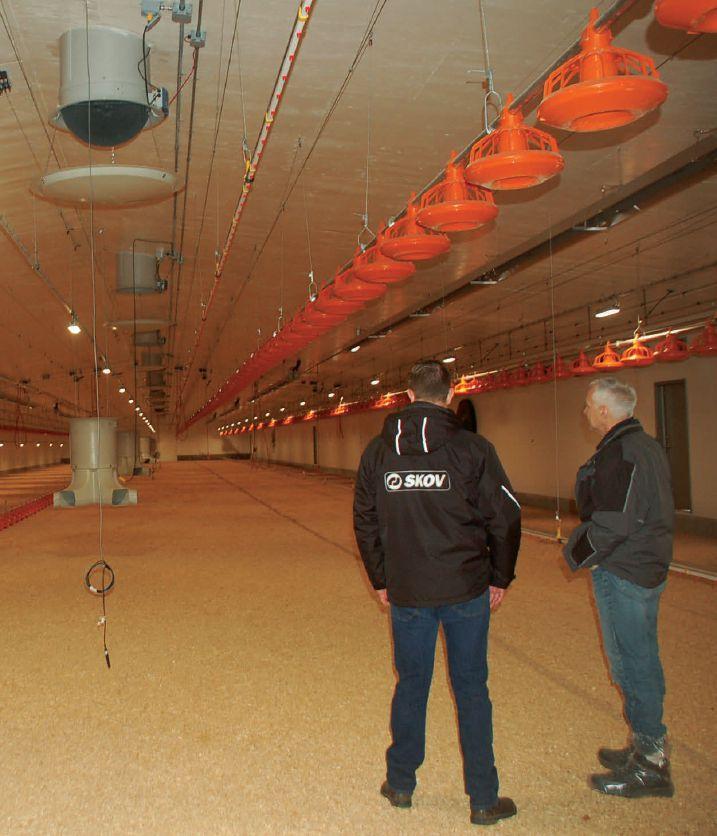
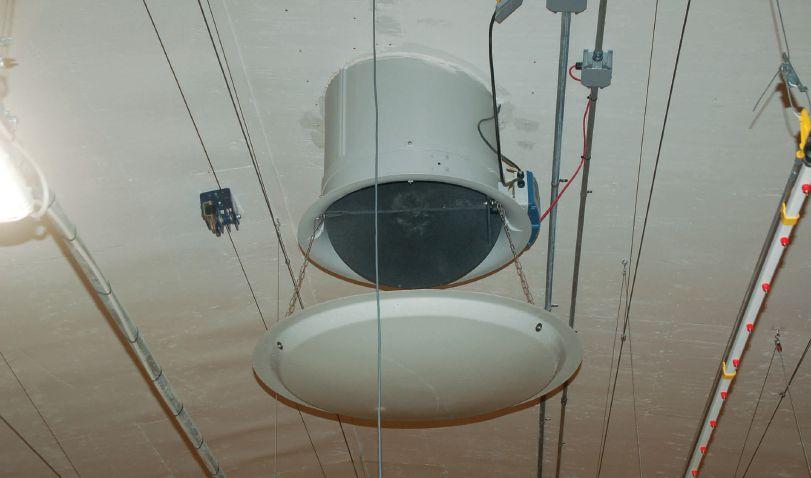
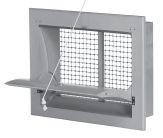
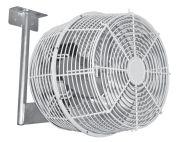
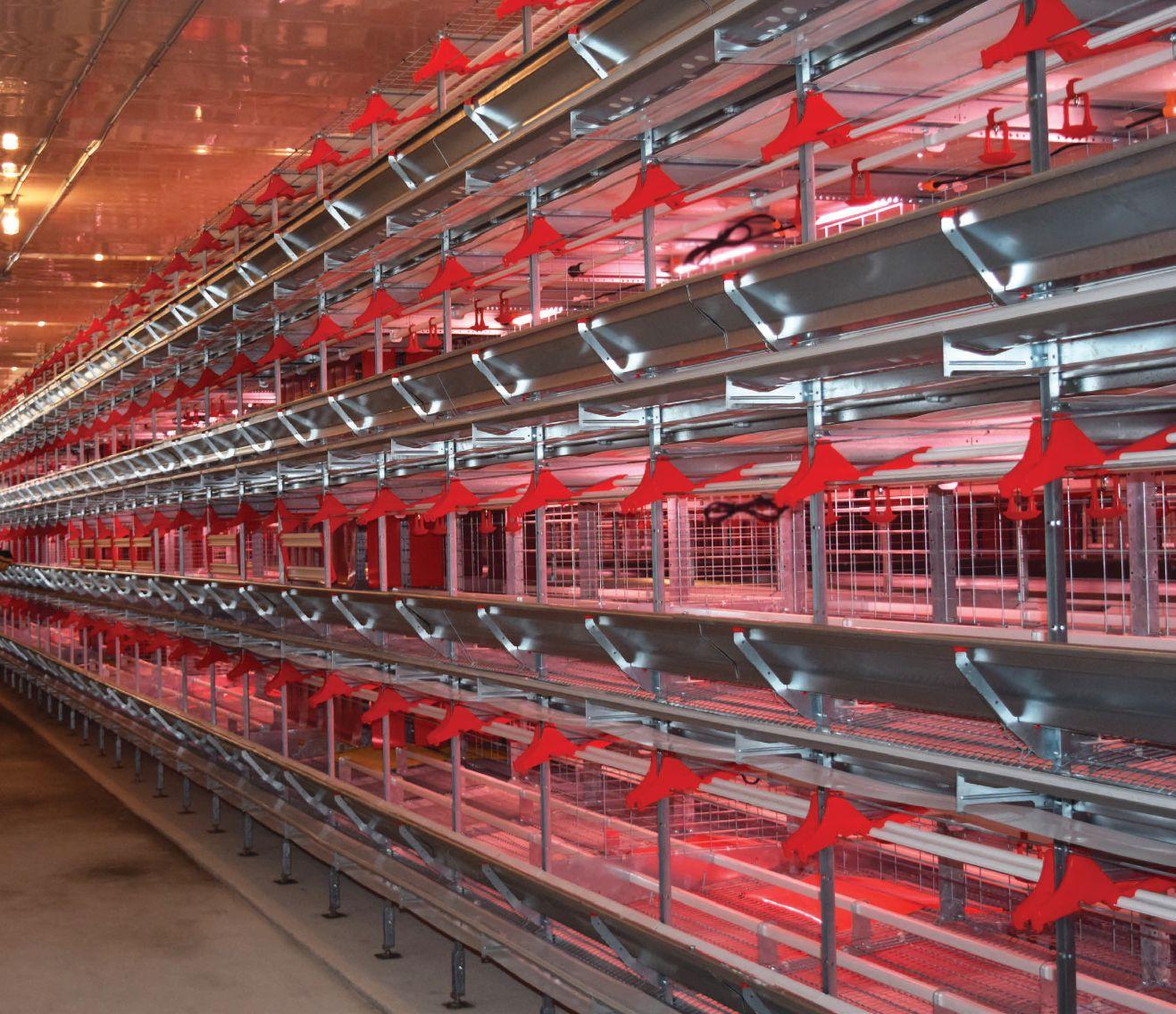
Looking at performance, pressure stability and power consumption, BlueFan is the best fan on the market. BlueFan is designed specifically for the harsh livestock house environment. It does not corrode and shuts tightly when not in use. BlueFan saves energy and money and ensures the animals in the livestock house optimum climate and wellbeing.
Overview yields profit
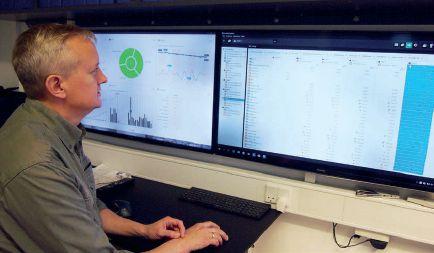
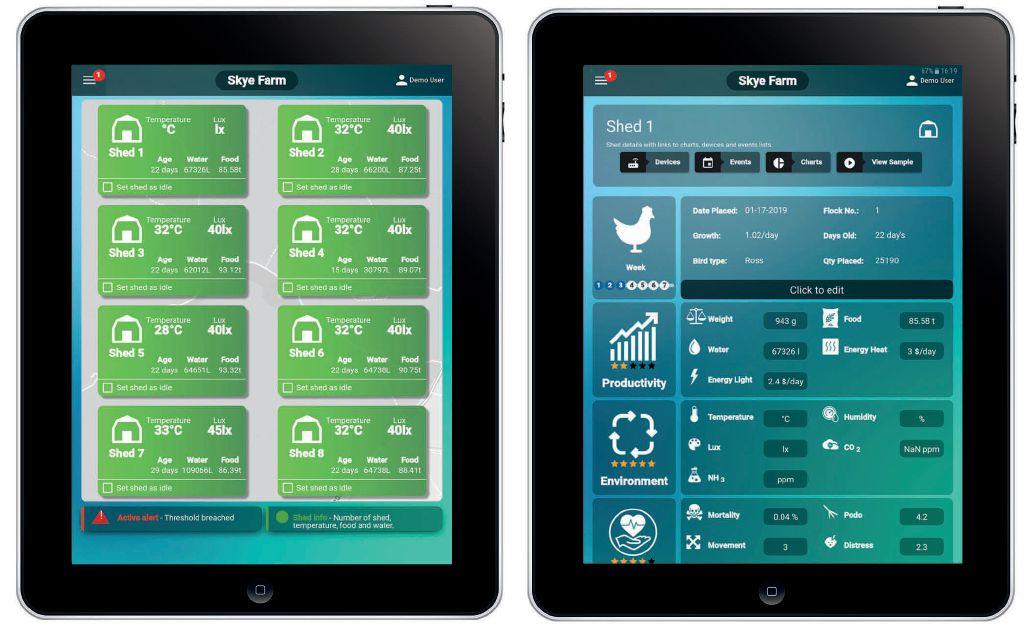
Only by being in full control of your production, you can achieve top performance. Based on the data provided by FarmOnline, you will be able to compare essential production data across the individual houses and concentrate your efforts on the houses where improvements are required. Business supervisors and consultants can also get the data they need to analyse production and advise farm managers.
DOL 539 WITH 10” SCREEN: SKOV’s controllers feature the most modern technologies available and the userfriendly interface provides you with an easy and fast operation.
by Brett Ruffell
Bridging the animal wellness gap
I’ve written before about a growing frustration within the industry. Increasingly, global food companies are coming out with their own welfare programs for poultry and egg sectors. Many of them include their own unique commitments suppliers must adhere to. Adding to this frustration, some of these pledges appear to be driven not by evidence but by pressure activists put on brands.
Understandably, it’s challenging for companies with global supply chains to meet animal welfare commitments. However, clearly a one-size-fits-all approach is unfair to producers. Sensing an opportunity to bridge the gap between multinational food companies and livestock industries in the markets they serve, health and safety organization NSF International developed new Global Animal Wellness Standards (GAWS).
Unveiled in February at the International Production and Processor Expo in Atlanta, Ga., the standards address the full lifecycle of livestock production – from hatchery to slaughterhouse and ever ything in between. In terms of poultr y, the program includes standards for egg layers (table and hatching eggs) and meat birds. It also includes standards for beef and dairy cattle, small ruminants and hogs.
NSF is aiming to help companies like restaurant chains, foodservice operators and pro-
cessors meet their global animal welfare commitments while getting buy-in from producers and other suppliers. “There was really no third-party standard out there that covered the whole supply chain and that could deliver on a global level,” says Robert Prevendar, global managing director of supply chain food safety at NSF. “As a global company, we work with a lot of companies that have global supply chains.”
The organization thinks livestock industries will welcome the program, partly because they respect regional differences. One way in which NSF accommodates these
“There was really no third-party standard out there that covered the whole supply chain and that could deliver on a global level.”
variances is that its standards are outcome-based rather than prescriptive. For example, they don’t include set numbers for aspects such as ammonia levels or stocking density that farmers around the world must adhere to. Nor do they call for certain types of poultry breeds like some other organizations do.
Instead, producers identify their own thresholds and then explain their choices to an NSF auditor. “It’s going to be a different feel and approach for most producers who are used to be-
ing audited on the animal welfare side to very prescriptive standards,” says Elaine Vanier, NSF’s animal welfare and animal feed program lead.
Another aspect that sets the standards apart: They take a holistic approach. The idea is that animal wellness depends on four interconnected components – good animal health, welfare, handling and care. “If you have an issue in any one of these areas it can reduce overall wellness of the animal,” Vanier says.
Producers will then conduct a ‘hazard analysis’ to assess any threats to animal wellness on their barns. “They need to understand what their risks are and incorporate ways to mitigate them,” Vanier explains.
NSF says numerous global food companies have already expressed interest in the program, and Canada’s feather boards are collectively meeting to provide feedback on the standards in the near future.
Vanier is confident they’ll welcome the standards as well. One reason for her optimism is NSF already has working relationships with Canada’s poultry and egg groups. For instance, it performs annual third-party audits of Chicken Farmers of Canada’s Raised by a Canadian Farmer Animal Care Program.
What’s more, since the standards look at the management system and program requirements, much of what a CFC farmer has in place would meet some of NSF’s standards. The organization is conducting a benchmarking exercise to see exactly where the two programs overlap to make audits as efficient as possible
Mail: 111 Gordon Baker Rd., Suite 400, Toronto, ON M2H 3R1
Subscription Rates
Canada – 1 Year $32.50 (plus applicable taxes)
USA – 1 Year $70.50 USD
Foreign – 1 Year $79.50 USD
GST - #867172652RT0001
Occasionally, Canadian Poultry Magazine will mail information on behalf of industry-related groups whose products and services we believe may be of interest to you. If you prefer not to receive this information, please contact our circulation department in any of the four ways listed above.
With LUBING’s OptiGROW drinkers you can say goodbye to Chicken Little and hello to Bigger Settlement Checks! Customers using OptiGROW broiler drinkers are experiencing faster weight gains, better conversions and lower mortality rates.
) Greater side fl rce allows all bird nd get off to a g reater Finishes! ) to av 2 fo an G 1 2 3
As easy as 1, 2, 3.
Glass-Pac Canada
St. Jacobs, Ontario
Tel: (519) 664.3811
Fax: (519) 664.3003
Carstairs, Alberta
Tel: (403) 337-3767
Fax: (403) 337-3590 Les Equipments Avipor
Tel: (450) 263.6222
Fax: (450) 263.9021
Specht-Canada Inc.
Stony Plain, Alberta
Tel: (780) 963.4795
Fax: (780) 963.5034
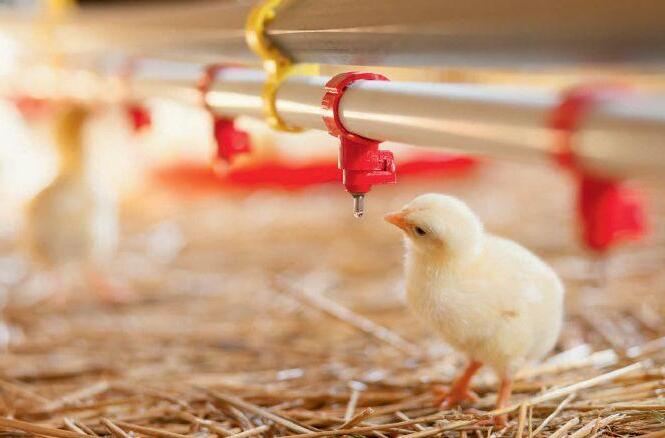
Large bottom pin that holds a drop of water to attract day old birds to nipple / great starts / average first week mortality below 1%.
o attract old b verage m
Greater side flow with minimal triggering force allows all birds to easily trigger the nipple and get off to a great start. Great Starts =
3) pi
3) Both, vertical and side action, deliver the Opti-mum flow rates and ability to grow a 4 lb small bird up to a 10 lb Jumbo bird with the same nipple. After hundreds of house updates, customers are consistently seeing improved weight gains of up to 1/2 lbs/bird with dry litter conditions!
What’s Hatching
Masterfeeds names new Ontario GM
Mark Bodenham is Masterfeeds’ new general manager for Ontario, replacing the recently retired Peter Peacock. Bodenham joined Masterfeeds in 2013 after 26 years in monogastric sales and sales management. He was instrumental in strengthening the company’s swine sales team in Ontario, as well as driving its Vigor swine feeding programs. Bodenham is a graduate of the University of Guelph, where he received an associate diploma in agriculture and a bachelor’s degree in agriculture business.
B.C. adopts farm animal codes of practice
In late February, B.C. announced it is adopting the National Farm Animal Care Council Codes of Practice. The codes, which are generally accepted management practices for owners of farm animals in B.C., include areas such as animal handling, feed and water, housing, health and welfare management, and husbandry practices. The codes of practice for farmers of meat livestock, poultry and fur animals are scheduled to become B.C. law on June 1, 2019.
Canadian awarded first Aviagen Poultry Genetics Scholarship
Midian Nascimento Dos Santos has been named the first recipient of the Aviagen Poultry Genetics Scholarship, which is part of Aviagen’s contribution to the Canadian Poultry Research Council. Dos Santos is a 2014 graduate of the University of Sao Paulo, Brazil, with a Bachelor of Science in Animal Science. She will apply the $5,000 award toward her current doctoral study in poultry behaviour and welfare at the University of Guelph.
58K
will be awarded annually for 10 years to a combination of MSc. or PhD students at the University of Guelph.
New scholarship honours Shaver
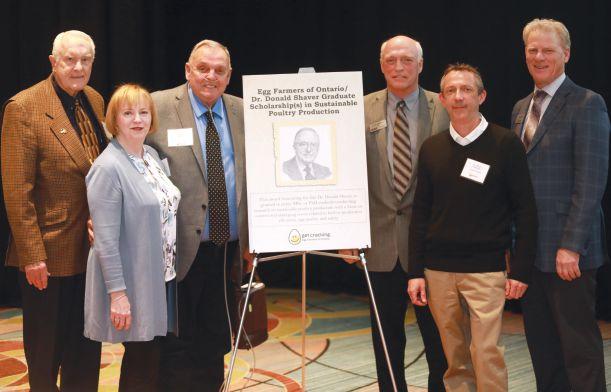
Before closing out this year’s annual general meeting, Egg Farmers of Ontario (EFO) announced a new initiative to honour the late Donald Shaver.
passed away last July at the age of 98.
The Egg Farmers of Ontario/Dr. Donald Shaver Graduate Scholarship(s) in Sustainable Poultry Production will be granted annually to graduate students at the University of Guelph (U of G).
It will be awarded to students conducting research on sustainable poultry production with a focus on issues related to feed or production efficiency, egg quality and safety.
The scholarships recognize the late Shaver, who grew from operating a small hatchery to a world-wide poultry breeding empire doing business in 94 countries.
Beginning at age 15, with his first incubators at his parents’ home in what is now Cambridge, Ont., he developed an international poultry business with research and hatcheries in the U.S., France and the U.K. Shaver’s
illustrious career in poultry breeding placed Canada in a position of world prominence.
Funding for the 10-year commitment totals up to $58,000 annually and will be awarded to a combination of MSc. or PhD students.
This will be from funding established at the U of G made up of $500,000 from EFO and $80,000 from the Shaver estate in recognition of his significant contributions to the Canadian poultry sector. More details about the scholarships will be available from the U of G.
“Egg Farmers of Ontario wanted to recognize the immense impact Dr. Shaver made to the development of layer genetics that has meant so much to the livelihoods of Ontario’s egg and pullet farm families,” said EFO chair Scott Graham in a press release.
“We felt the best way to recognize his legacy would be to connect it to sustainability issues which had become Dr. Shaver’s focus in his later years.”
Donald Shaver
5 questions with ‘smart’ farmer David Speller
U.K. broiler farmer David Speller is the proud owner of a ‘smart’ barn that takes technology to the next level. For instance, he uses robotics, monitors and sensors to track water usage, odour changes in the barn and flock behavioural change as a result of lighting programs. He also shares his experiences with poultry technology at events and owns two service companies, OPTIfarm and Applied Group.
Which monitors and sensors do you currently use?
Standard equipment includes monitors for temperature inside and out, relative humidity, air pressure, air volume, CO2, water and feed intake. Moving forward, we are real-time ammonia sensing and gathering data from robotic platforms so we can see the whole barn. As the robots move through the birds, we analyze bird droppings, improve thermal image utilization and apply automatic gait scoring.
We have a lot of image data, either special cameras for behavior or security cameras for basic analysis of drinker heights, feeder heights, feed in pans, bird spread and bird activity. Sound analysis will be here soon also, as well as far more complex software to consider all the data we can gather and work out the interactions between the various data sets we can see currently, as the picture is too complicated.
Of the sensors and technology you’ve implemented on farm, which one couldn’t you live without and why?
Visual cameras. All the data is lovely, but you get a lot from an
image. A picture paints a thousand words, as they say.
Which tasks do you still prefer to do yourself?
Culling sick animals is a challenge. We can collect the dead and identify sick birds, but to actually take a life without human judgment might be a challenge morally for consumers, and technically for the engineers.
How can embracing technology help farmers?
Customers for our business are getting bigger and want scalable solutions – technology allows that. Customers need more attention to detail as margins tighten. Technology and its data can give new knowledge. Consumers should see this as an opportunity for openness. If we are truly proud of what we do, we should start to open up using technology and let the consumer see what we do. Hopefully, like us, they will like what they see.
If you could give Canadian poultry farmers one piece of advice about implementing new technology on farm, what would it be?
Start by trying to answer a question you have, not one a salesman says he can answer for you. Many can be answered very cost effectively with some good advice from an independent source. Then, once you are making more money, decide on the nice-to-have options available in the market. Of course, even basic technology needs someone to spend time evaluating it and making recommendations for change.
Coming Events
MAY
MAY 1
PIC Research Day, Stratford, Ont. poultryindustrycouncil.ca
IEC Global Leadership Conference, Denmark internationalegg.com
David Speller is a broiler farmer, founder and CEO of OPTIfarm and owner of
What’s Hatching
Liberals promise billions for supply-managed farmers
The Trudeau government is promising billions of dollars to compensate dairy, egg and poultry farmers hurt by Canada’s recent free-trade agreements –industries concentrated in vote-rich Quebec and Ontario.
The $3.65 billion the government is setting aside includes $2.15 billion to help farmers who lose income because of trade deals with Europe and countries on the Pacific Rim, both of which make it easier for foreign egg, dairy and poultry producers to enter the Canadian market.
That is in addition to a $250-million, five-year fund established in 2016 to compensate dairy farmers for the European Union deal.
The budget earmarks $1.5 billion for farmers who lose money when they sell their production rights in the supply-management system.
“ To ensure that Canada’s dairy, poultry and egg farmers can continue to provide Canadians with high-quality products in a world of freer trade, we will make available an income protection program for sup -
ply-managed farmers, along with a measure to protect the value of quota investments these farmers have already made,” Finance Minister Bill Morneau said in his prepared budget speech.
The budget does not provide details on how or when the money will be distributed to farmers and producers, who have long railed against any move that would expand foreign involvement in those sectors.
But the government appears to be hoping the promise of compensation will provide a salve to supply-managed farmers, many of whom are clumped in key ridings in Quebec and Ontario and angry that the deals have weakened their grip on the market.
That could prove important for the Liberals, who will likely need a strong showing in the two provinces in this year’s federal election to have a hope of retaining power.
The budget also indicates more money could be forthcoming as the government works with industry “to address the impacts on processing, as well as potential future impacts of the Canada-United States-Mexico Agreement (CUSMA).”
“The federal government recognizes the impact of trade agreements on our sector and is following through on its commitment to support our domestic dair y industry,” said Pierre Lampron, president of the board of directors for the Dairy Farmers of Canada. “We also welcome the government’s commitment to continue the dialogue on the future impact of CUSMA on our sector.”
Maple Leaf Foods names new VP of animal care
Maple Leaf Foods has promoted Kathleen Long to vice president of animal care. In her new role, she will lead the company’s animal care policies and programs in all livestock and poultry production and processing operations. Long joined Maple Leaf Foods in 2013 and supported the company’s animal care strategy in her previous role.
CFC announces executive committee for 2019
Chicken Farmers of Canada recently announced its executive committee for 2019. The elections followed the annual general meeting. The 15-member board of directors, made up of farmers and other stakeholders from the chicken industry, chose its key representatives. Benoît Fontaine, of Stanbridge Station, Que., will continue as chair. Derek Janzen of Aldergrove, B.C. was elected first vice-chair. And Tim Klompmaker of Norwood, Ont., was named executive member.
Cobb, OneEgg project fights malnutrition in children
Continuing their mission to increase the availability of animal protein to children around the world at risk of malnutrition, Cobb-Vantress and OneEgg recently launched new chapters in Nepal, Honduras and Ethiopia. Participating children receive one egg a day several days a week, greatly increasing animal protein consumption, which is essential for proper growth and development. Protein malnutrition affects nearly 150 million children around the world, and eggs contain 18 different types of protein and nine different vitamins.
Finance Minister Bill Morneau announced plans to help supply-managed farmers in his budget speech..
LRIC Update
By Lilian Schaer
Shining the light for safety and quality
AWaterloo, Ont.-based company is using a combination of physics, chemistry and artificial intelligence to gain a better understanding of poultry meat and help boost food safety in processing facilities.
And those are only two of potentially multiple applications for hyperspectral imaging in the poultry industry.
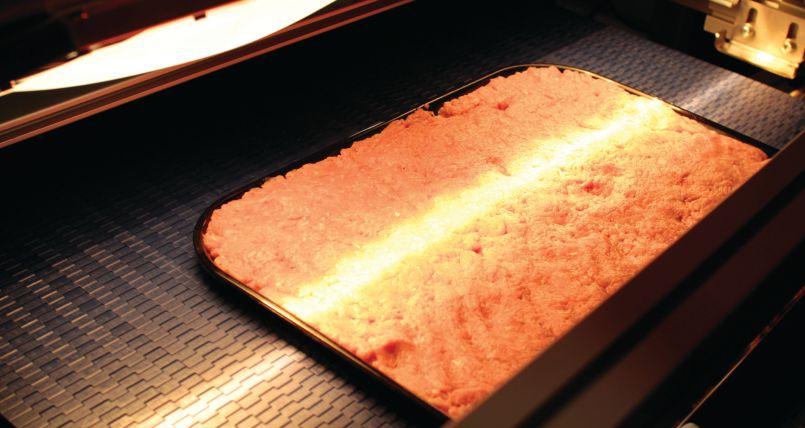
P&P Optica (PPO) has developed Smart Imaging System that shines light on food i tems as they pass through food processing production lines. Light reflecting off the food’s surface is captured and read by a spectrometer that takes a pixel-by-pixel view of what it’s seeing and communicates that to artificial intelligence engines for analysis.
“ This analyzes all the captured data to tell us the chemical properties of the food item so that we can make decisions about it,” explains Heather
Galt, vice president of marketing, adding that one popular application for the technology in poultr y plants is finding foreign objects.
“Hundreds of thousands of pounds of chicken daily are inspected by people, metal detectors and cameras and because we can see chemistry with hyperspectral imaging, we can actually see foreign objects that look like meat but aren’t,” she says. “For example, clear or white plastic can look like fat but because it doesn’t chemically look like chicken, our system will find it.”
It is also able to find items like wood, plastic or rubber that are undetectable by either x-rays or metal detectors. Now being deployed in various poultry facilities in North America, PPO’s technology can also provide information on the fat-lean-protein composition of meat, and work is un derway on an application that can identify tenderness the same way.
“This analyzes all the captured data to tell us the chemical properties of the food item so that we can make decisions about it.”
“Typically, our customers come to us because they’ve had an incident with a foreign object and want to improve surveillance – recalls are expensive, with impacts to the brand and lost productivity,” Galt says. “But in almost every case, they’re also looking at quality; fat, lean, protein and water content can all have an impact on how tasty poultry is and how well it cooks.”
In February, Export Development Canada (EDC) announced a $1 million investment into P&P Optica to help further develop its technology as well as expand into international markets beyond C anada. According to the company, Smart Imaging System is the industry’s first complete solution for de -
tecting, grading and sorting food, in-line and in real time.
Another homegrown success story is Hypereye, a patented scanning technology developed by McGill University professor Michael Ngadi that can identify gender and fertility of day-old eggs. This could mean an end to incubating male and infertile eggs and culling of male chicks
Poultry Industry Council and Egg Farmers of Ontario have supported this research and Livestock Research Innovation Corporation is now partnering with EFO to commercialize the technology. Testing of the system is currently underway in Ontario hatcheries
Also in egg production, Chinese researchers have found that hyperspectral imaging technology can be used as an accurate, non-invasive way to detect cracked eggs and predict colour and shell strength.
Research by the United States Department of Agriculture shows that hyperspectral imaging can be used to speed up the detection of pathogens like campylobacter, a major cause of bacterial foodborne illness in humans. Different bacteria can look very similar when cultured on solid media, but hyperspectral imaging can identify microorganism’s unique fingerprints that aren’t otherwise visible.
This article is provided by Livestock Research Innovation Corporation as part of LRIC’s ongoing efforts to report on Canadian livestock research developments and outcomes.
Lilian Schaer is a freelance writer and editor and communications specialist with Agri-Food Project Services Ltd. in Guelph, Ont.
One popular application of P&P Optica’s Smart Imaging System is scanning meat for foreign objects, as shown here.
Photo credit: Paul G. Novosad
CRPC Update
Assessing biosecurity and sanitation practices
Two Canadian research teams, one from the University of Guelph (U of G ) and the other from the Universtiy of Montreal (U of M) conducted stu dies to evaluate the value of recommended biosecurity measures and sanitation procedures in the poultr y industry.
The approach
Biosecurity measures are designed to protect populations from transmissible infectious agents and to reduce the consequences of an infection. Research has regularly highlighted the importance of barn entrances and overall barn sanitation in relation to pathogen spread, reaffirming the importance of both as key elements of biosecurity measures.
To be effective, biosecurity measures must be applied consistently by all; however, application of biosecurity protocols are often sporadic and variable. Previous studies have proposed that lack of knowledge or understanding of biosecurity principles helps explain low or variable compliance with biosecurity standards.
However, the scientific literature is limited in applied studies using pathogens to demonstrate their relative impact.
Jean-Pierre Vaillancourt from U of M, Michele Guerin from U of G and their research teams decided to evaluate the value of recommended biosecurity measures and sanitation procedures in the poultry industry.
The studies
Researchers created a typical poult-
ry barn entrance in a laboratory facility in Quebec to include clean and dirty areas. The dirty area contained sterilized material retrieved from the entrance of an actual farm contaminated with a genetically modified bacterial strain or viral surrogate that allowed their presence to be monitored by measuring bioluminescence.
The team then determined the degree of floor contamination occurring from the three most frequent biosecurity breaches. The security breaches included: Not changing boots between contaminated and clean areas; donning farm boots while in the clean area; and donning farm boots while in the contaminated area. The researchers assessed the dilution effect on pathogen load when walking with contaminated boots.
The second study was conducted under field conditions in Ontario. Thirty-six commercial broiler barns were cleaned following flock removal using one of three sanitation procedures. The procedures included: Dr y cleaning (blow down); wet cleaning (with detergent after dry cleaning); and disinfecting with disinfectant after wet cleaning.
Bacterial loads on cement and wood floors were evaluated at three time points: Before dry cleaning (baseline); two days after sanitation; and six days after sanitation.
Findings and recommendations
Results of the biosecurity breaches at barn entrances demonstrate that it is possible to prevent cross-contamination of areas by effectively changing boots. Stepping back into
The Canadian Poultry Research Council, its board of directors and member organizations support and enhance Canada’s poultry sector through research and related activities. For more details, visit cp-rc.ca.
the contaminated area does significantly contaminate both boots and t he floor in the clean zone. Not changing boots at all between areas significantly increases the floor contamination level of the clean area.
Additionally, researchers observed no dilution effect of the contamination on either boots or the floor after walking 10 steps. Outcomes of this study demonstrate that barn entrance designs should focus on creating conditions to facilitate changing boots between areas to ensure optimal biosecurity compliance.
Results of the sanitation procedures study show that current sanitation procedures performed on commer cial farms reduce floor contamination. The impact of the three different sanitation procedures differs between the studied pathogens
Based on these findings, researchers recommend that producers use the cleaning procedure best suited for the pathogen outbreak they are having in their barn (d isinfection for E. coli , and dry cleaning for Salmonella spp. and Clostridium perfringens). Allowing sufficient time post-sanitation is of great benefit to pathogen reduction, and concrete rather than wooden floors are recommended for new barns.
Next steps
Researchers identified key elements that will be useful for biosecurity training purposes and for decision making regarding on-farm sanitation procedures to allow producers to improve practices. The research team is currently focused on such activities.
This research is funded by CPRC/ AAFC (under the Poultry Science Cluster Program), OMAFRA, Poultry Industry Council and University of Montreal.
Entrance designs should focus on creating conditions to facilitate changing boots between areas to ensure optimal biosecurity compliance.
the value of recommended biosecurity measures and sanitation procedures in the poultry industry.
Jean-Pierre Vaillancourt from U of M, Michele Guerin from U of G and their research teams evaluated
Public Insights
By Ashley Bruner
Food safety and public trust
Most of us are probably guilty of eating some raw cookie dough or licking the spoon when making a cake without much thought about the food safety implications. On the other hand, the most recent romaine lettuce recall resulted in man y leafy greens being pulled from grocery stores and restaurants. Both are examples of how food quality and safety can impact the average person’s life and the food system in both little and big ways.
The quality and safety of food is a central concern to those within the food industry, but research shows that these issues are also front of mind to consumers as well. The Canadian Centre for Food Integrity’s (CCFI) annual public trust research reveals that over half of Canadians are very concerned about food safety, and this metric has remained consistent for the past three years. Food safety is not just a concern for Canadians, it’s an expectation.
Although a majority of Canadians are concerned about food safety, there are a number of key demographic groups who are significantly more concerned about this issue. Foodies (76 per cent), mothers (66 per cent) and women (61 per cent) are more likely to be very concerned about food safety overall and should be the key target audiences when communicating on this topic.
Food safety is not only a top issue of concern among Canadians, but also has an impact on public tr ust in Canada’s food system. According to CCFI’s public t rust model, consumers feel producers and food companies/pro -
cessors have the greatest responsibility when it comes to food safety.
When it comes to who is trusted on this topic, however, both groups are lacking. Under half (47 per cent) trust farmers/producers while one in five (20 per cent) trust food companies. These figures are far behind who consumers trust most – themselves (73 per cent). Government is also in this category of most responsible (17 per cent) and least trusted (21 per cent).
There is a dangerous disconnect between who Canadians hold responsible for ensuring the safety of the food they eat and who they trust to do so.
There is clearly some work to do to bridge this gap and better-earn public trust in food safety. The first step is increasing transparency. CCFI research shows that ther e is a strong link between demonstrating transparency when it comes to food safety and building public trust.
When seeking information on food, Canadians most often turn to online sources. Thus, this is where the food system should aim to improve transparency in food safety.
Overall, respondents rated providing third party audit information the highest (48 per cent) i n terms of demonstrating transparency followed by track record ( 43 per cent), company practices (42 per cent) and policies (39 per cent). These are the broad categories that the food system must ensure easy to access and authentic information is available for Canadians.
The top food safety transparency-building practices revolve a round food labelling; more spe -
Demonstrating Transparency in Food Safety
Canadians rated information sources.
cifically, identifying all ingredients and labelling foods that may ha ve come into contact with allergens. Secondary practices are r elated to third-party audits –ensuring food safety practices are audited and making these results available online.
Before getting to those results, ensure you share your organization and/or your personal values a nd commitment to providing safe, healthy, affordable food.
University experts and independent dietitians are both ranked very highly for credibility on safe food topics. You can find both on bestfoodfacts.org as third-party experts answer questions about anything on your plate f rom nutrition to animal welfare to food safety inspections. Reference this resource on your websites and through your social media channels to help turn up the volume on credible experts’ voices.
Food safety has been a consistent concern among Canadians for the past three years, par ticularly among moms, foodies, and women. Canadians hold food companies and farmers most responsible for food safety but are among the least trusted, an important gap that must be addressed.
The food system must turn up the transparency when it comes to food safety and make it personal – demonstrating shared v alues is the most effective way to connect with Canadians and build trust.
Interested in learning more?
Download the CCFI Public Trust Research reports in (English and French) and listen to webinars about this research, food safety, transparency, millennials and more at foodintegrity.ca.
Ashley Bruner is research coordinator with the Canadian Centre for Food Integrity, an organization dedicated to helping Canada’s food system earn public trust. Visit foodintegrity.ca for more information.
Ask the Vet
By Tom Inglis
Early mortality
Tom Inglis is managing partner and founder of Poultry Health Services, which provides diagnostic and flock health consulting for producers and allied industry. Please send questions for the Ask the Vet column to poultry@annexweb.com.
What are some factors that impact early mortality rates and overall chick quality?
Early mortality in a flock can have several causes or contributing factors. One of the most common reasons is a bacterial infection of the navel (omphalitis) or yolk sac. In this ar ticle, I discuss omphalitis and other factors that can impact early mortality rates and overall chick quality.
What is normal mortality?
Typical total mortality in a broiler flock will account for four to five per cent of the population over the course of five to six weeks. This number will vary slightly from one farm to the next depending on a number of factors. The majority of these losses often occur in the first week and, ideally, total mortality at seven days of age is one per cent or less.
The most common cause for first week losses, as mentioned above, is bacterial infection of the navel (omphalitis) or yolk sac. It is important to consider that mortality can also be due to starveouts, dehydration, contamination of hatchery administered vaccinations, improper incubation conditions, fungal infection, viral infection, nutritional deficiencies or toxicity. Environmental conditions, such as chilling, may also play a significant role in the mortality rate, regardless of what the initial cause is.
Omphalitis and infected yolk sac
The term omphalitis refers to inflammation of the navel (belly button). Bacterial infection of the navel will cause omphalitis. Since the navel is very closely associated with the yolk sac we often see these infections at the same time.
Despite appearances, the surface of an egg is unclean and there are numerous bacteria present. This is one of the r easons that hatching eggs are carefully graded upon arrival at the hatchery. Dirty eggs are removed, as are any eggs with evidence of shell defects or cracks. The reason for all of this work is to try and minimize the risk of bacterial infection and omphalitis 21 days down the road when the eg gs hatch. Until approximately 20 days
of incubation, the yolk sac is outside of the chick’s body. But at 20 days of incubation the yolk sac should be mostly internalized and the navel should be in the process of closing. This is one of the reasons why the progress of chicks as they hatch is closely monitored. It is important that a hatch is not pulled too early, as too many birds will have open and unhealed navels at this point.
Significant efforts are made to maintain a high level of sanitation within a hatchery environment, as any open, unhealed navels are an invitation for omphalitis and infected yolk sacs to occur. Therefore, it is important for the hatching egg producer and the hatchery to work closely together to ensure the best quality hatching egg possible
and to minimize the chances of omphalitis once the eggs hatch.
Unfortunately, there are cases where hatching egg contamination occurs. Or, there may be a breakdown in sanitation and the level of bacterial contamination overwhelms the control measures in place. In these instances, a percentage of chicks are exposed to a bacterial challenge and omphalitis can occur
Bacterial species
There are a number of different bacterial species capable of causing omphalitis/infected yolk sac.
The most commonly isolated bacterial species is E. coli.
• Normally present in poultry environments and a normal part of the intestinal microflora in poultry. Infection with E. coli, and most other bacterial species associated with omphalitis, can occur when an opportunity arises such as excess contamination of egg shells, cracked hatching eg gs, open/unhealed navels at hatch or poor sanitation.
Other commonly isolated species include:
• Enterococcus species (usually E. faecium, E. faecalis or E. durans): Much like E. coli, are a normal part of the intestinal microflora in poultry.
• Pseudomonas aeruginosa: A water loving bacteria and can contaminate lines that supply drinking water to birds (both at broiler breeder and broiler barns), water to machines used for wash-
Ideally, total mortality at seven days of age is one per cent or less.
ing eggs and water to incubators and hatchers for maintaining humidity.
• Staphylococcu species: Also normally present in poultry environments as part of the normal microflora on the skin of both animals and humans.
As one can see based on this information, a number of bacterial challenges are normally present. The prevention of omphalitis and infected yolk sac, therefore, relies heavily on the measures taken by the hatching egg producer and the hatchery to prevent overwhelming challenge and infection.
W hen increased bacterial challenge does occur, minimizing the outcome relies heavily on the conditions in the hatchery at hatch, preventative measures that can be taken around this time point and on the conditions the birds are placed in at the farm.
Excellent brooding conditions at placement can mean the difference between 1.5
per cent and greater than two per cent mortality during the first week. Any added stress that occurs during the first week (improper temperature/humidity, poor water quality, poor ventilation, poor access to feed, etc.) can further set the chick back, making the fight against infection and disease that much more of a challenge.
Treatment of early mortality
The first step taken in the treatment of early mortality should be an investigation into the underlying cause. While bacterial infections are generally the most common source, it should not be assumed that is the problem. In some cases, if flocks are affected with another condition, such as dehydration, some of the treatments used for bacterial infection can actually be toxic to a dehydrated bird.
Another factor to consider when determining treatment of early mortality is when to treat. Many cases of omphalitis/
infected yolk sac are due to E. coli and mortality generally decreases by the time the flock is six to seven days of age.
In general, treatment for omphalitis/ yolk sac infection is not recommended unless mortality persists beyond this period of time. This allows severely affected sick and lame birds, which will not respond to treatment, to be identified and culled from the flock.
A concern regarding early treatment is that the result may be that birds which should be culled are missed as the medication makes them ‘feel better’. However, these birds are unable to clear infection due to the nature of the initial challenge. In these cases, birds will temporarily improve only to relapse later in the cycle.
There are, of course, cases where early omphalitis challenge is so severe that early treatment is warranted. That’s why it is important to consider each case individually when discussing the decision to treat a flock.
On-farm food safety
Producers and other experts share best practices.
By Karen Dallimore
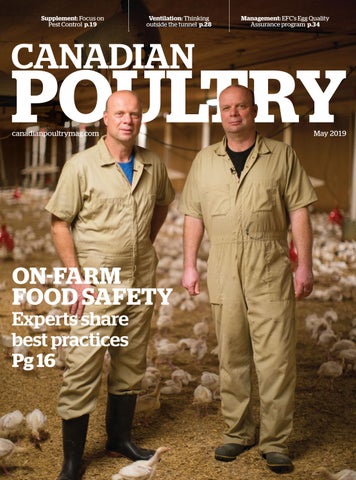
When you consider food safety, it’s easy to think of the kitchen – storing poultry properly, preparing it wisely and cooking it thoroughly. But the journey to safe food on our plates starts well before then. It actually begins on the farm. Canadian Poultry asked a few industry exper ts about how farm management practices contribute to food safety. The following are five key takeaways from those discussions.
1. Litter management
The reality of poultry production and medicine is that we are working towards disease control to optimize food safety, animal wellbeing and performance, says Jess Walkey of Joyce Veterinary Services (JVS) in Hillsburgh, Ont. Working alongside well-known poultry veterinarian Mike Joyce, she points to flock immunity and litter quality as two areas of focus to reduce pathogen load and influence food safety as a result.
Flock immunity includes a health monitoring program, immunization, nutrition and management, Walkey explains. The effectiveness of vaccines is well established but it is litter management where she sees the most room for producers to make a difference.
As JVS states in its technical bulletin, “Managing litter [is] a critical control point for growing commercial poultry.” On day one, you’re dealing with baby birds, and babies of all species need to be kept dry and warm. This is something over which the barn manager has full control, influenced by decisions about the litter itself, ventilation and water management.
Walkey notes that wet litter translates into potential stressors such as increases in bacteria load, leg problems, encouraging the growth of molds and protozoa, and damage to skin and respiratory system through an increase in ammonia.
Shavings will reduce the risk of cellulitis; straw increases the risk of skin trauma. Walkey recommends a minimum of two inches, especially for concrete floors, to optimize absorption and provide comfort and warmth. Producers also need to consider ventilation from day one. After all, the veterinarian notes, it’s easier to keep litter dry than to dry out wet litter.
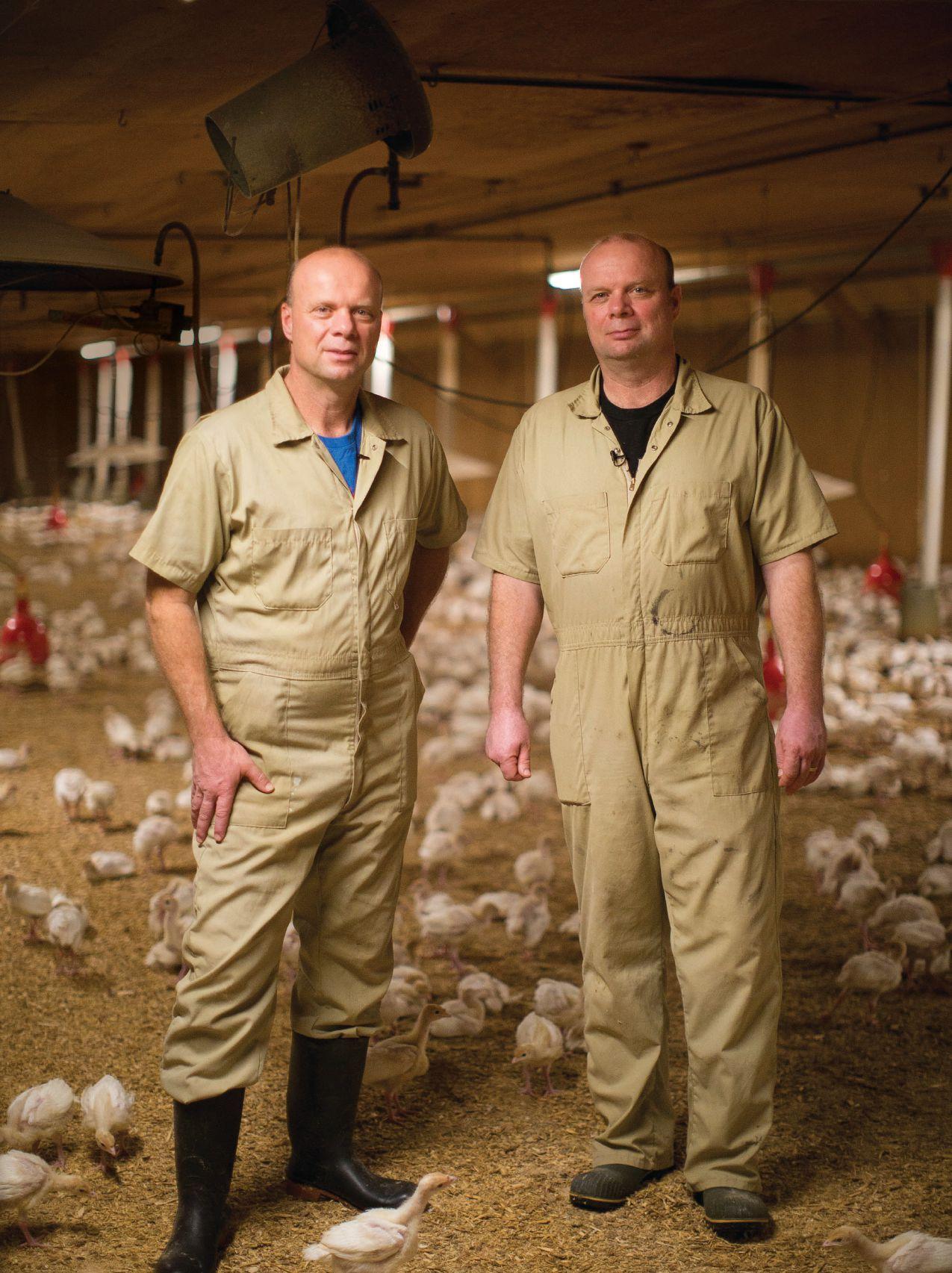
Oegema Turkey Farms president Mike Oegema shares Walkey’s sentiment about litter management. Based in Talbotville, Ont., Oegema Turkey Farms is a third-generation family operation started in 1958. It now grows approximately 55,000 turkeys per year. In 1992, the Oegema family started The Turkey Shoppe, offering turkey products to consumers directly from the farm.
For Oegema, drawing from his experience connecting both ends of the production spectrum, the key to on-farm food safety is
straightforward. “The most effective management practice in the barn that contributes to food safety is simple – keep the litter clean,” he says.
Clean and dry litter prevents footpad sores and leads to better overall footpad health, he observes. If that means adding more fresh litter than usual during cold winter months then do so, Oegema suggests, noting that birds with better footpad health are more apt to move around to get food and water. When it comes to harvesting the birds, well-managed litter means they move more easily to the loader or catchers and you will have less “unfit for harvest” birds left in the barn, the producer notes. At the processor you will have less condemns, which means more money ends up in your bank account.
2. Sanitation
Keith Warriner of the Department of Food Science at the University of Guelph in Guelph, Ont., is widely sought after as a source of information about food safety. He often preaches the importance of food preparers using different cutting boards for raw meat and using a meat thermometer to ensure food is thoroughly cooked.
When asked about what farmers could do to improve food safety, Warriner quickly points to sanitation and water decontamination to help minimize pathogen load.
Sanitation is the key part of the puzzle in the control of pathogens of concern to food safety and flock health, Warriner says. To many, good sanitation is often confused
In sharing their on-farm food safety advice, most experts focused on different aspects of litter management.
with visions of using strong sanitizers that you need a HAZMAT suit to apply. However, applying strong sanitizers cannot compensate for poor sanitary design or inconsistent procedures.
Barn design is key to successful sanitation with non-absorbent surfaces being used for construction, ensuring there are no inaccessible niches where pathogens could become established. Sanitary design also includes ensuring the facility is well maintained with no standing water or openings by which rodents can enter.
Warriner recommends producers prepare a standard sanitation oper ating procedure (SSOP) to outline a consistent sanitation process, following a sequence of removing soils and organics using a suitable detergent and then apply-
ing the sanitizing agent. One cannot sanitize surfaces through organic matter that provides physical protection for pathogens and also neutralizes the sanitizer.
Finally, the last step in the process is monitoring the sanitation performance through testing and plotting the data to analyze the trend. If the pathogen contamination trend is increasing then producers need to revise their sanitation p lan. “To many, sanitation is a routine exercise,” Warriner says. “But in reality, it is a process of continual improvement and central to the health of the flock and r educing pathogens relevant to food safety.”
3. Water treatment
Pathogens such as Salmonella and Campylobacter can be readily trans-
ferred between birds via the water they drink, Warriner explains. Water can be contaminated at any point from the original source through to the final drinking nipple or bath.
Warriner’s preferred source of water is ground or municipal. He urges caution when using surface or rain water, as they can introduce pathogens.
Water can vary in the hardness and mineral content, which can directly impact flock health. However, hard water can also have indirect effects of causing scale formation in pipes that provide niches in which biofilms can become established. Therefore, in some areas it is beneficial to soften water prior to entering the facility.
Regardless of the source, producers need to sanitize all water, even municipal. There are techniques
Food safety selfassessment
Reducing food safety risks begins at the farm level with good management, including:
• Practicing worker and visitor hygiene;
• Properly cleaning and sanitizing the barns;
• Treating, testing, and monitoring water;
• Proper handling of manure and compost; and
• Pest control.
Through Growing Forward 2, the Ontario Ministry of Agriculture, Food and Rural Affairs has created a series of self-assessment worksheets to help find gaps from a food safety perspective and contribute to creating an action plan for your farm. The assessment includes developing a system that will provide traceability and validate that control measures are effective.
To obtain a copy of the self-assessment, contact foodsafety@ontario.ca or call 1-877-4241300.
Mike Oegema, president of Oegema Turkey Farms, says litter management is key to on-farm food safety.
NivoVaria® rearing system
pullet training to the next level
system
for farmers, inspired by layers
such as ozone and UV that inactivate pathogens but, importantly, do not retain residual antimicrobial activity enabling pathogens to survive then transfer bird-to-bird. Chemical sanitizers such as chlorine or acidifying agents have a long history in water treatment, however, byproducts such as odour are not highly toxic but can reduce water intake.
Warriner prefers sanitization through electrolyzed water, using a sanitizer that does not produce byproducts but also has residual antimicrobial activity. Although electrolyzed water must be generated on site, he has found it to be a valuable intervention in preventing pathogens being transferred via drinking water.
4. Ventilation
Al Dam, poultry specialist for the Ontario Ministry of Agriculture, Food and Rural Affairs, is a familiar face in the poultry industry in Ontario. He looks after the needs of birds from all commodities as well as artisanal flocks right across the province.
When asked for on-farm food safety advice, his list of manage-
ment issues quickly grew. But as the main concern, he echoed other experts by focusing on litter quality – this time from a ventilation perspective.
Even when it’s really cold, keeping minimum ventilation is important, Dam says. The birds must also be kept within a comfortable temperature range, which may require adding heat to the barn. If the birds get too chilled then their energy goes to keeping warm instead of production, eating more but growing less.
Air flow controls the humidity as well as the temperature. The idea is to remove moisture and promote drying. Litter holds moisture well but once its capacity is reached you’ve lost it for the duration of the flock, Dam says.
Adding dry shavings or drying agents can help temporarily. But Dam suggests focusing onprevention such as proper minimal ventilation and repairing water leaks from drinking nipples or bells and keeping water lines high enough so birds do not spill water. Dry birds are healthy birds, meaning a safer product.
Keith Warriner of the University of Guelph says sanitation and water decontamination are important parts of the food safety puzzle.
Beetles
House Flies
Mites
Rodents
Parasites
Fungals
Traps
Monitors
Inspections
IDEAS SET IN MOTION
What’s new in pest management. From current threats to novel treatments, best practices and more, this guide will help producers protect their barns from rodents, insects and more.
PEST CONTROL SUPPLEMENT
DARKLING BEETLE CONTROL
Best strategies – and positive reports from Ontario on use of fungal product.
By Treena Hein
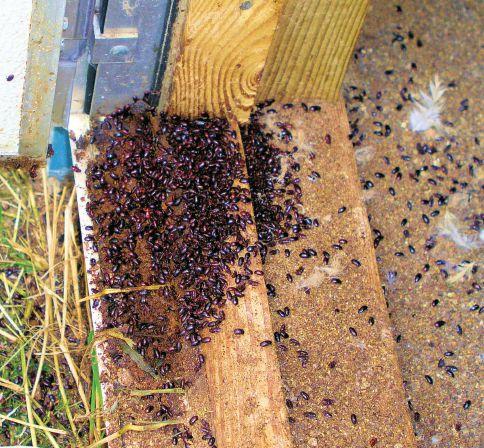
Al Dam, poultry specialist at the Ontario Ministry of Agriculture, Food and Rural Affairs, says that in 2018, he had more inquiries about darkling beetle infestations than he’s had in a long time.
“Is it resistance to insecticides, loss of certain insecticides, improper application of products, general biosecurity management, or all of the
above? We’re not sure,” he reports. “The temperature in 2018 was pretty high in some areas in the summer and that’s obviously great for insects. In every situation I heard about, producers were seeing more and more of the beetles over time and may not have realized necessarily how bad things had gotten until they see a population explosion.”
Some producers, says Dam, are also seeing populations of
hairy fungus beetle (it feeds on fungus in straw and that’s the way it gets into the barn). To combat this, some farmers have switched from straw to shavings, switchgrass, cardboard products or peat moss, but Dam notes that producers should double-check to make sure any new bedding choice is ‘in line’ with the approved beddings in their board’s onfarm food safety program.
Darkling beetle control
With darkling beetle, as with any insect pest, a multipronged approach is always needed. In conjunction with other control factors, some producers are having success
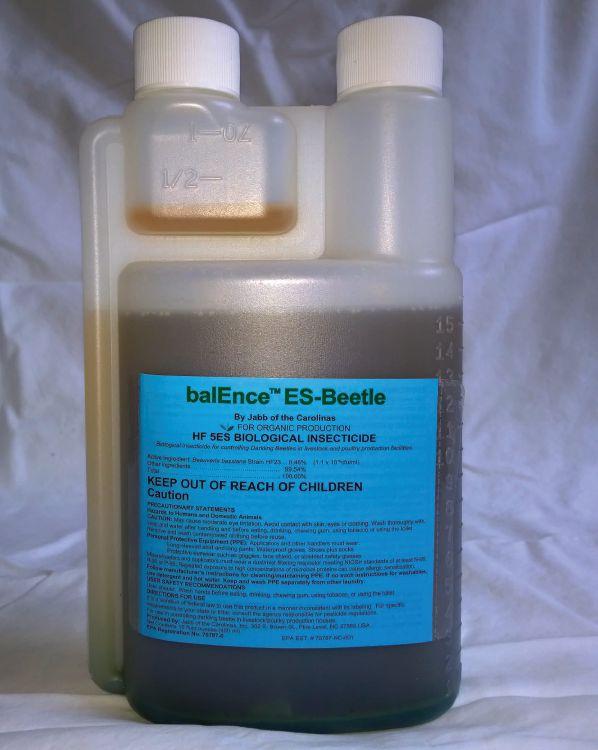
with a targeted fungal product called balance ES-Beetle. “These products take a while to work,” Dam points out. “You must use the product properly and also keep up with the application recommendations to achieve and maintain control.”
The active material in balEnce, explains Jim Skinner (owner of U.S.-based distributor Terregena and an adjunct professor at Western Carolina University in North Carolina) is a fungal spore that was discovered by an Italian entomologist 200 years ago. It occurs naturally in soils around the world and is host-specific. “Some years ago, a scientist at
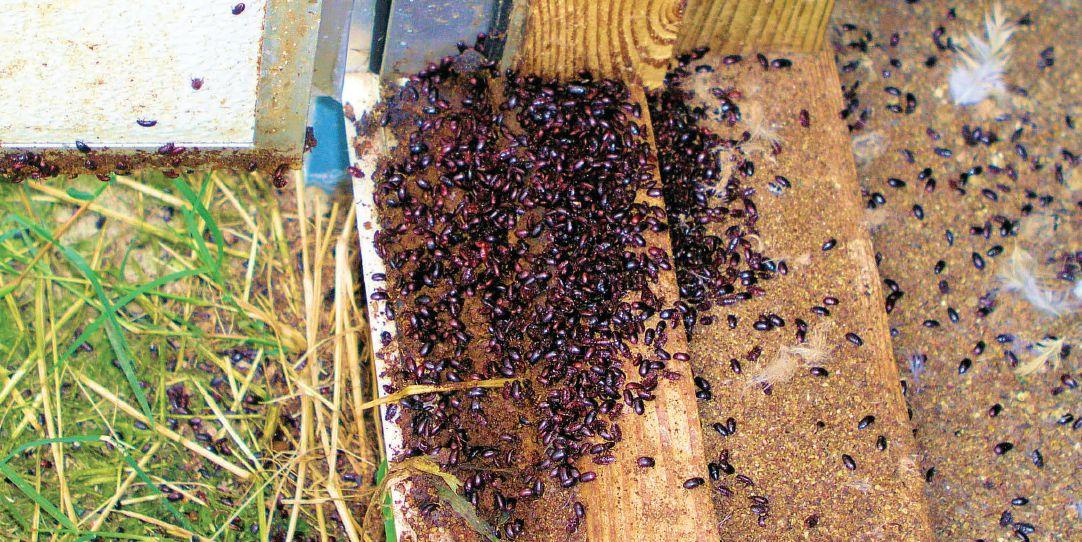
Darkling beetles enter a poultry barn door.
North Carolina State University was able to isolate the strains that specifically target darkling beetle, and strains for other insects as well,” Skinner says.
It’s available in liquid concentrate and powder. Skinner says they both work similarly and that most farmers use the liquid. The spores are picked up by the darkling beetle, and the spores then grow, reproduce and kill the insect in one-to-five days.
Jordan Poelman has used balEnce for five years at his family’s broiler farm in Bayfield, Ont. He’s seen very good results for control of both darkling beetles and flies, and he has became a product distributor.
For the family’s older barns, which had a very high pressure of darkling beetles, the Poelmans were spending significant time and resources on chemical sprays
and more are discussed.
When asked about the importance of keeping manure dry, Ontario broiler producer and balEnce-ES user Alex Westerhout reports that he’s “not sure,” as he finds most of the beetles come out when he turns on the heat at the start of flock and the litter is dry.
“My litter is normally very dry anyway,” he adds.
Westerhout has been using the product for about four years since he heard about it through Poelman. He applies it with a backpack sprayer along the base of all interior walls and around posts as well.
“I do it ever y crop before new bedding placed with enough time to let it dry before the bedding goes down,” he says.
He’s used both Sevin Dust and Debantic 50WP products in the past and says these products didn’t result in any decrease in darkling beetle population.
Key facts about darkling beetles
• Broiler, turkey, brooder and grow-out houses are ideal environments for the darkling beetles to breed, thrive and multiply. Their livability is near 100 per cent from egg to adult.
• Young birds, when exposed to darkling beetles, prefer to eat them rather than their poultry food. Darkling beetles also consume a tremendous amount of poultry feed.
and commercial fogging services. However, within three cycles of using balEnce, Poelman says both adult beetles and larva were not very noticeable, and that the beetles have never developed any resistance to the product.
Barn humidity control is also important in darkling beetle control. “You need to keep manure dr y, so it’s about good ventilation and also managing water usage,” Poelman says. “Proper line heights are needed and really high water quality is also very important. With very high water quality (I use Hydroxyl II), you have less water wastage, better feed consumption and less ventilation is needed. I also do dry clean in between flocks, and a heavy-duty wash once a year with Hydroxyl II.” Poelman also values a broiler Facebook group where ideas and solutions for insect pests, achieving water quality
Debantic (from Bayer) is a wettable powder that can be applied as a premise spray, dust or directly to birds to control a variety of pests in poultry and livestock barns. Bayer says it also offers Credo, a premise spray for the control of darkling beetles in poultry barns that can be applied as a broadcast, band, spot or crack treatment. Tempo is another Bayer pest control powder product that’s mixed with water and applied as a general premise spray to control darkling beetles, flies and more.
Westerhout isn’t sure if he’s saved money using balEnce, but he says he doesn’t really care. “It’s been very effective,” he says. “I saw lots of dead beetles for about one year and then had a large crop of dead larvae everywhere.
“Since then, just see a few beetles every crop. I don’t think you ever totally eradicate the beasts once infested – the eggs can take a long time to hatch after being laid in the walls.”
• The darkling beetle breeding cycle, from egg to adult, takes 42 to over 60 days depending on temperature.
• Adults can live more than a year.
• Eggs are laid in the litter or soil. The larvae develop in the litter with the preferred sites being under feeder pans and along the walls of the house.
• Darkling beetles transmit many poultry diseases and can harbour several parasites. These include Marek’s, Infectious Bursal Disease (Gumboro), coronavirus, Newcastle Disease Virus, avian influenza, Salmonella sp, E. coli, Aspergillus sp, Eimeria spp., roundworms, and tapeworms.
Source: Terregena
Some producers are having success with a fungal product called balEnce ES-Beetle.
STRUCTURAL DEFICIENCIES
Prevent unwanted visitors from entering your barn.
By Alice Sinia
Cockroaches, ants, birds, ground beetles and rodents are exactly the kinds of visitors you do not want to stop by unannounced. Poultry facilities often have an abundant supply of food, water and shelter – the three resources pests need to survive. And any tiny cracks, gaps around utilities or tears in window screens could let pests in to your workplace.
Many insects and other pests have the ability to carry and transmit harmful bacteria, viruses and diseases to both people and poultr y birds. To protect your poultry and employees from pest-transmitted pathogens and physical injuries caused by them, it is important to identify conducive conditions such as readily available food or water, potential entry points and habourage sites and then correct these deficiencies and other weak spots that may attract and let in any unwanted pests.
How pests get inside
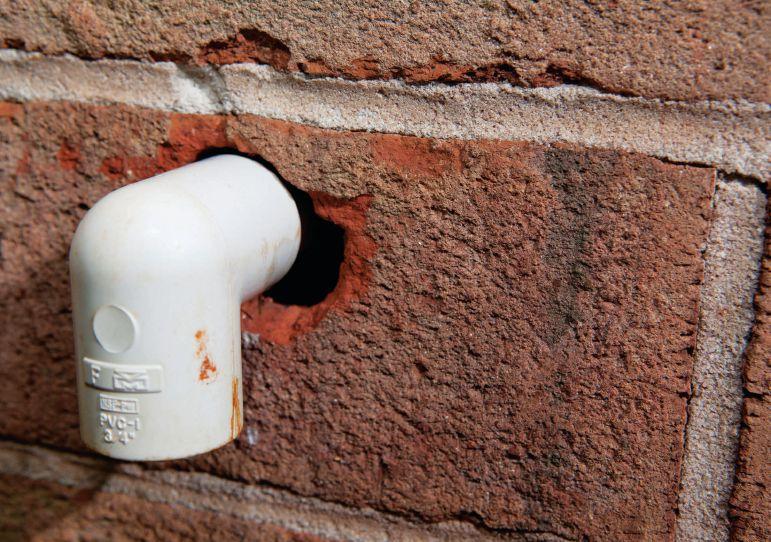
Small cracks and crevices provide the perfect opportunity for unwanted critters to enter your facility. Pests like bird mites can easily enter cracks that are barely
open, and gaps around existing utility and plumbing lines or missing wall bricks and blocks create openings big enough for pests like ground beetles, ants and cockroaches to enter the building. Even sewers can provide networks for cockroaches and sewer rats to find their way in. In fact, cockroaches can fit through cracks as small as a sixth of a centimetre wide, mice can fit through holes the size of a dime and rats can fit through holes the size of a quarter.
When it comes to the exterior of a building, there are a multitude of ways pests can come indoors, such as cracks, gaps and holes.
These deficiencies provide access points for critters. Openings on the roof can also serve as a key point of entry for rodents and birds, which love these open spaces.
How to spot problems
Train your staff on the signs of pest activity so they can be on the lookout as they perform their normal routine. Regularly inspect for signs of pest activity and immediately alert your pest management provider of any issues. Make sure to complete a thorough inspection when looking for any cracks or openings leading inside the building – any overlooked opening could turn into an open door for pests. Here are a few tips to help identify structural deficiencies that can lead to pest problems:
• Regularly inspect your roof and rooftop HVAC units for openings, which can serve as bird nesting and roosting sites.
• Positive air pressure will push flying pests out the door. To test if your building has positive air
Small cracks and crevices provide the perfect opportunity for unwanted critters to enter your facility.
pressure that will prevent insects from coming inside, hold a tissue in front of a cracked exterior door. If the tissue is blown away from the building, the room has positive air pressure. If it is sucked in, the room has negative air pressure that will pull pests inside.
• Check interior w alls regularly for cracks, crevices and dust build-ups on flat ledges above eye level. These cracks provide harbourge for bird mites, mealworms and other pest insects.
• Maintain a stringent sanitation schedule. Be especially vigilant about bird holding rooms and feeding pens, as these areas are susceptible to droppings, food spills and other sanitation issues that can become pest hot spots
• Set up pest monitoring devices to detect pest activities for early intervention. Monitoring not only detects pest activity in advance but it also helps to pinpoint problem areas that have con-
ducive conditions that need to be addressed.
How to address problems
If structural deficiencies are allowing pests inside, it’s important to make repairs. Here are a few preventive actions you can take:
Windows
Replace broken windows, torn window screens and caulk any cracks or gaps around each window of your facility. Ants outnumber humans 14,000 to one and sealing up these openings make it more difficult for these invaders to intrude on your building.
Doors and entryways
Replace door sweeps as needed to eliminate gaps created by everyday wear and tear. Install air curtains at entrances and replace torn door screens to discourage flying insects from coming inside. If possible, keep doors closed at all times and install vinyl
Fly Problem?
strip doors to help further prevent pest entry. Make sure doors are closing properly and tightly, and if they are not, lubricate the hinges. If daylight can be seen from inside when the door is closed, it means that the door is not closing properly.
Building exterior
Trim tree branches so they don’t touch the exterior of the building. Although most mice and rodents prefer to live close to the ground, some species will live in abandoned bird or squirrel nests found in trees. Keeping surrounding trees trimmed and away from the facility prevents these critters from climbing inside.
Waste management
Be sure to discard waste in sewers that could prevent the sewers from draining and ensure a proper poultry waste management system is in place, as they may catch the attention of curious pests.
CURRENT PEST CONTROL TRENDS
Population and control strategy updates for mites, flies and more.
By Treena Hein
It’s an approach that’s time-honoured and still holds significant value in pest control: a multipronged strategy is a very effective way to manage serious pests like mites, flies and more in the barn. Are there new products and strategies, however, to add to the tool kit, and what threats are of most concern right now in Canada? We contacted several experts to get their views.
First, let’s look the severity and risk level for mites in Canada. Bill Vaughn notes that while there’s no indication that Poultry Red Mites (PRM) and N orthern Fowl Mites (NFM) are on the rise, they do remain a sporadic threat. “When farms have the infestation, it is very difficult to control,” says the global director of poultry products marketing at MSD Animal Health (the name for Merck
Animal Health outside of U.S. and Canada). PRM, he adds, are also vectors for disease. “Dr. Jenny Nicholds, formerly a pr actitioner in Canada and now at the University of Georgia (clinical associate pr ofessor of avian medicine in the College of Veterinary Medicine), has recently presented a paper proving this,” he says.
This paper, presented recently at the 2018 Proceedings of the American Association of Avian Pathologists, reported on a situation of increased mortality on a Saskatchewan broiler breeder farm. Nicholds, who is still a poultry extension veterinar-
ian at the University of Saskatchewan (U of S), performed necropsies on two flocks. Treatment for a bacterial infection with antibiotics was met with relapse. There was also an apparent increase in the burden of existing PRM. Both the increased hen mortality and mite population had followed the prohibition of carbamates, notes N icholds, a class of insecticide previously used on this farm for mite control as part of an integrated pest management program.
N icholds provided E. coli isolates from mites, sick birds, healthy birds and the environment to Dr. Joe Rubin
In Ontario, there are reports of high populations of rats infesting poultry farms over the past year.
in the department of veterinary microbiology at U of S, and he determined the isolates from sick birds and mites were closely related. Nicholds concluded a final diagnosis of E. coli septicemia , vectored by, and secondary to, parasitism by PRM.
Nicholds notes that PRM were first identified in Saskatchewan in 2013. “They only come out at night, so depending on type of facility, you won’t notice them until there is a big population,” she notes. “In situations where an unfamiliar creepy crawler is observed, the first thing to do is identify the creatures you have. In the case of mites, they could be grain mites or other species that are not poultry pests.”
PRM spends most of its life cycle in the environment, while NFM spends its entire lifecycle on the bird. This impacts the best approach to control, Nicholds
notes. Simply put, you have to get the drug to the bug. “For NFM, you can apply the correct product to the birds and/or have them dust bathe in it, depending on product label indications,” she says. “For PRM, it’s going to be crack and crevice treatment.”
Until recently, many mite application options for poultry barns ha ve been quite labour intensive. Additionally, Nicholds notes that bet ween resistance problems and bans on certain classes of treatment, options are also becoming increasingly limited. However, new options are now here. Nicholds says new research has provided adequate information to allow the CgFARAD (C anadian global Food Animal Residue Avoidance Database) to provide withdrawal recommendations for the off-label use of an a vermectin product in poultry (Ivermectin).
Administration of this product through drinking water is much easier than spray application and/ or dust bathing. Use of these products, however, is still associated with a meat and egg withdrawal time, making it an impractical option for commercial layer flocks
Another alternative is a fluralaner product (Exzolt), which is licenced in 40 countries for treatment of PRM and has been used in Canada under an Emergency Drug Release. Nicholds says in Europe, it has a 14-day meat withdrawal and zero-day egg withdrawal. She adds that it was used “with great success” on the breeder operation struggling with PRM that was the focus of the study mentioned above, and according to ongoing monitoring efforts using AviVet mite traps and software, the operation remains free of PRM today. I ncreasing the heat in the
Biological methods for houseflies
Summarized from ‘House Fly Control in Poultry Barns ’:.
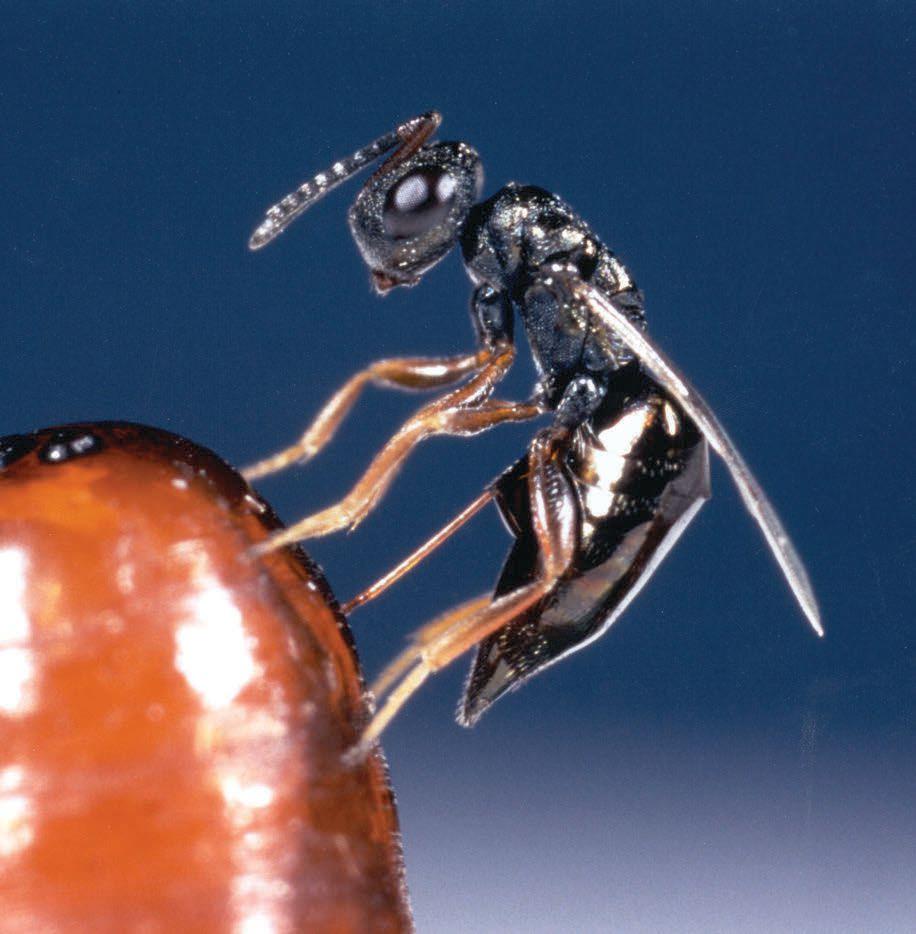
“Parasitic wasps are very small, do not sting people and usually go unnoticed. There are several species of wasps used to control flies. They are purchased as a mixture determined by barn conditions and geographic location. Using several species of wasps provides better control as they have different habitats, temperature tolerances and searching behaviors for seeking out fly pupae.
The Hister Beetle is also a predator of house flies. Larval and adult stages feed on house fly eggs and larvae. The beetles can survive in both wet and dry manure. This biocontrol method works best at operations with longer production cycles. Similar to parasitic wasps, pathogen-free beetles can be purchased in large quantities from a commercial supplier.
Barn application of nematodes have been relatively unsuccessful. The nematodes’ poor survival rate and limited movement makes them a less-than-optimal candidate for biological control programs for flies.”
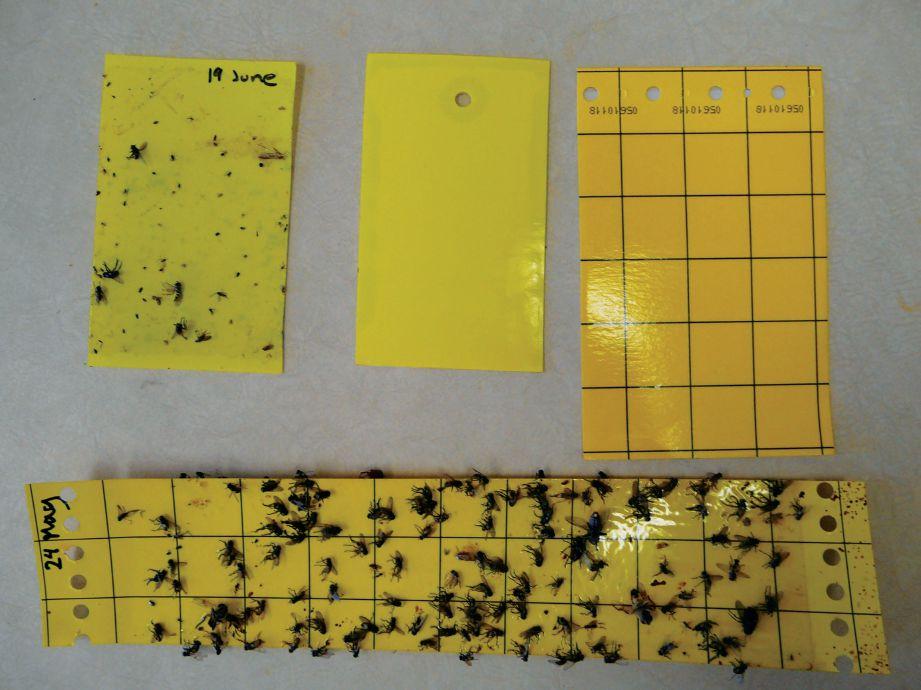
For flies, insecticide sprays can be used on poultry barn walls, granular bait trays and sticky tape can be hung as well.
building between flocks is also a way to reduce populations of PRM, says Nicholds, but at the same time, we must remember that some buildings can’t achieve a very high temperature. Specialized pest control companies can bring sources of supplemental heat. Nicholds says the goal is generally 140°F for 30 minutes, but if you can’t achieve that, go as high as you reasonably can for as long as you can. Caution should obviously be practiced, recognizing that not all equipment can withstand sustained high temperatures.
Biosecurity is another big piece of the mite-control puzzle, adds Nicholds. Producers should avoid moving equipment and birds between farms or barns, and mice and rats must be kept away. In Ontario, Al Dam, poultry specialist at the Ontario Ministry of Agriculture, Food and Rural Affairs, says he’s heard about high populations of rats infesting poultry farms
Merck’s four-step approach for poultry red mites
• Monitor population of red mites to determine the optimal time to treat
• Do a biosecurity audit to help assure that the treatment program will be successful long term to minimize reintroduction of mites
• Treat with approved products, applied carefully and accurately
• Conduct follow-up monitoring to determine the success of the treatment, with follow-up treatment as needed.
over the past year. As far back as 2017, fast-growing populations of rats were also reported by CBC in southern Ontario and warm winters were listed as a cause.
Mites, house flies and more Like mites, house flies can also carry
RODENT CONTROL PROGRAM
SECURED PERIMETER
diseases (as well as parasites like mites) and can potentially travel between barns and even farms. Indeed, they have been found to possibly carry 100 organisms that include human and chicken pathogens, and can be a contributing factor in the spr ead of these microorganisms, notes Simon Lachance, professor of veterinary entomology and pest management in organic systems at the University of Guelph, Ridgetown Campus. These can include, he says, Salmonella and E. coli
For control of red mites, house flies, darkling beetles and other pests in poultry barns, Lachance notes that it’s important to reduce moisture in manure as much as possible. “Everything [related to water] needs to be examined,” he sa ys. “Water leaks or condensation problems should be checked for and fixed, feeders must be kept at appropriate heights, and then there’s proper ventilation, and so on.”
Lachance and his colleagues have studied the strategy of adding various substances to manure to reduce house fly populations.
“We tried boric, citric and acetic acid, lime, diatomaceous earth and found that boric acid worked quite well, but there is no commercial product on the market for this.”
For flies, insecticide sprays can be used on poultry barn walls, granular bait trays and sticky tape can be hung as well. “There are fungal biopesticides that have been shown in studies to work, and while they take a while longer to kill flies, they are another tool that should be used,” Lachance notes.
“They affect flies with another ‘mode of action’ and using several modes of action is important in not only control but in prevention of resistance development in pests. There are various chemistry ‘groups’ in conventional pesticides and then ther e are biopesticides that employ fungi and other things.
“Resistance can, however, develop even in bioproducts. Sticky tape should be used in conjunction with sprays and will catch any resistant flies. The sticky roll tape that stretches horizontally works the best.”
VETOQUINOL’S
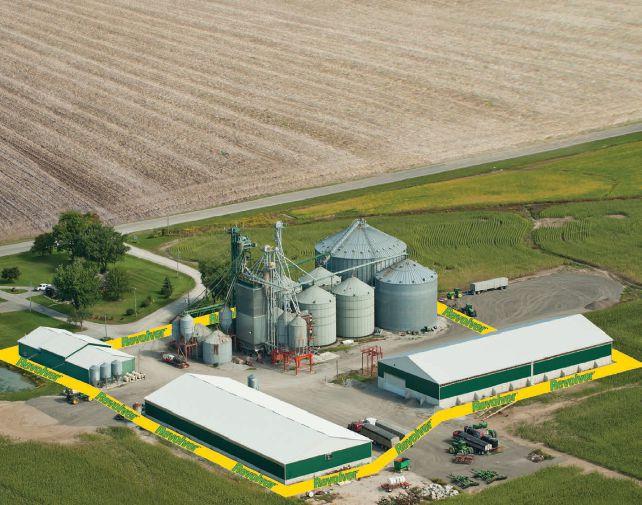
Rodent control encompasses more than just technical solutions. Vetoquinol’s innovative and lethal products confront rodent behaviour head-on. Our complete rodent program is a safe and easy way of controlling—and winning—the war against rodent infestation. Vetoquinol. The quiet triumph of securing a rodent-free work environment. Revolver™ clubvetoquinolca
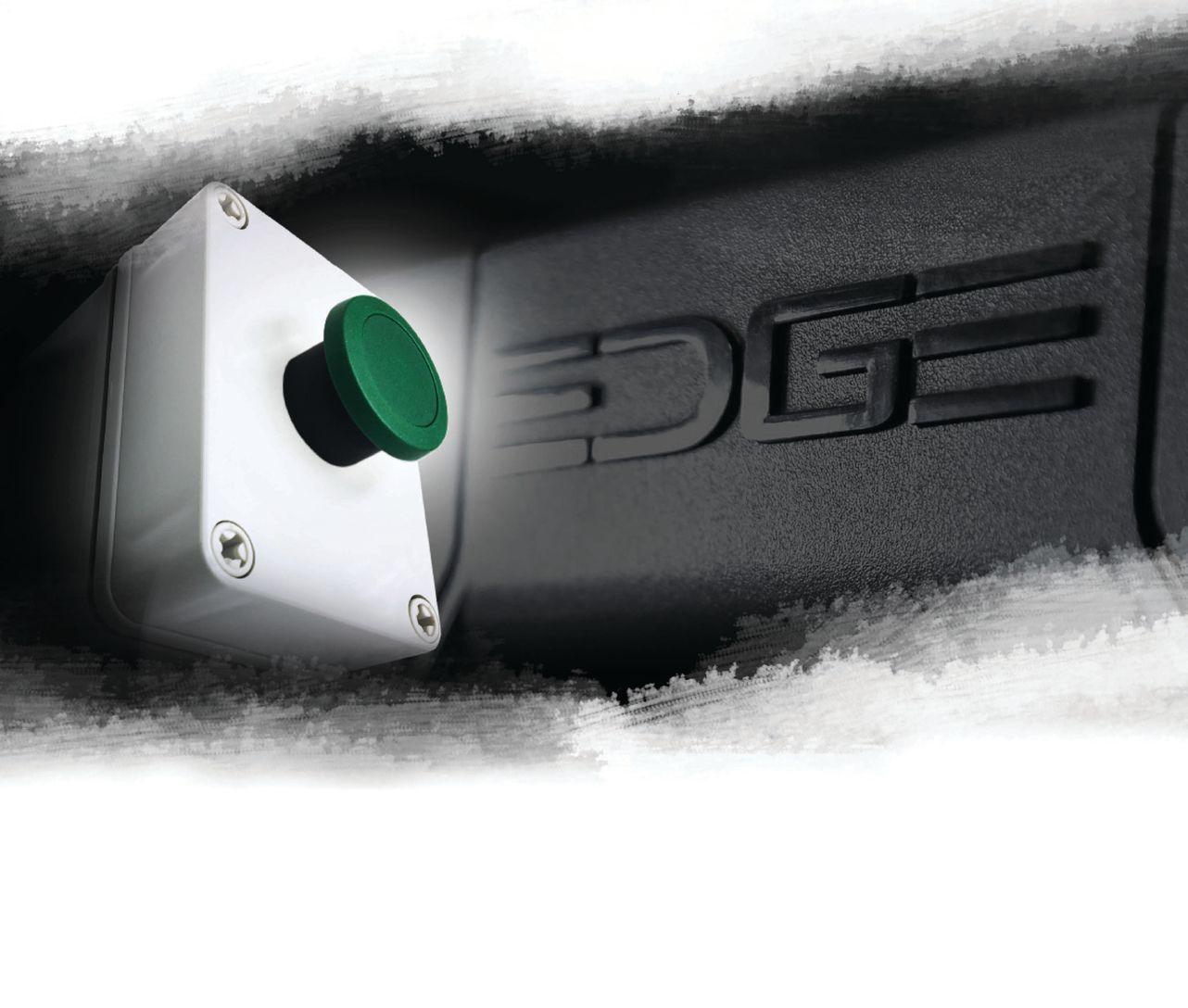
Maintain complete control during load-out, cleaning and restocking with Cumberland’s scenario feature for EDGE®. The bypass option allows for system changes with the press of a button.
The EDGE® Controller quickly identifies issues and responds with self-diagnostics, triple layer protection and instant notifications. Revolutionize your operation with the next generation of controls.
Thinking outside the tunnel
B.C. broiler barn first in North America to install new type of ventilation system.
By David Schmidt
When Andre van Kammen of Cedar Acres Farm in Chilliwack, B.C., decided to build a new barn for his newly-acquired chicken quota (from his in-laws), he thought outside the box – or, in his case, outside the tunnel.
Instead of using tunnel ventilation, as is the norm for Canadian chicken barns, van Kammen has installed a Skov LPV (low power ventilation) chill unit system.
Though this is the first chill air system in North America, Skov, a Danish manufacturer of climate and farm management solutions, has installed several hundred of these units in New Zealand, says Mikkel Overgaard, who recently moved from Australia to become Skov’s business manager in North America.
“New Zealand farmers have stopped using tunnel ventilation in new barns,” Overgaard says.
Although the price isn’t much different than a tunnel system, van Kammen believes it will reduce operating costs, as it requires less power and less heat. While he admits some of his fellow growers are skeptical, he is confident the chill air system will work well. He also welcomes being a guinea pig for the system.
“There’s always a new way to do things and if there’s a better way, I’m open to it,”
he says. “Skov says the system will work and I believe them.”
Overgaard is even more exuberant, saying, “I believe this will be a top performing barn in B.C.” He stresses each installation is custom- engineered. “Skov uses the address of the farm to determine the specific climatic conditions the system needs to be designed for.”
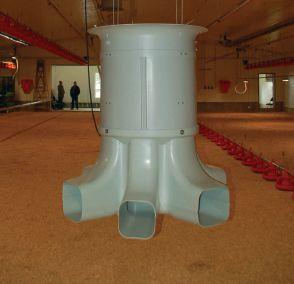
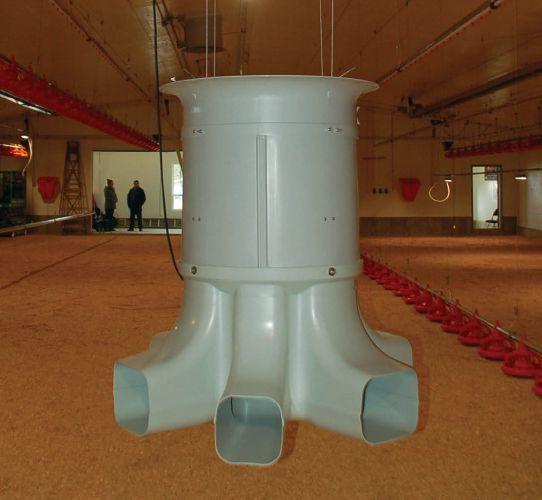
Each chill unit is comprised of a round cylinder, which houses the fan. Air is blown out through six outlets spaced equidistantly around the base. The units are hung from pulleys mounted on the ceiling, allowing them to be raised or lowered as required.
The fans move the air at 1.2 to 1.5 meters per second or about 200 to 280 feet per
A look at the new broiler barn at Cedar Acres Farm in Chilliwack, B.C.
minute, the low end of what tunnel ventilation provides in air speed. During the summer, the units are lowered so the air is blown between instead of above the birds.
“The chill air system will reduce experienced temperature in the barn by up to 7 °C,” Overgaard states, adding the temperature is also more uniform through the barn. “In a tunnel system, you can have a difference of five to 10°C along the length of the barn.”
Uniformity of both temperature and air quality are two reasons why chill air systems could gain in popularity.
Although he has no experience with the Skov chill air system and therefore cannot comment on its effectiveness, Bill van Heyst, a University of Guelph research engineer who has been studying ventilation systems for years, says the longer the barn, the more likely there could be issues with tunnel ventilation.
“Typically, birds near the inlet end will
have air that is less polluted by ammonia and particulate matter and the air will have lower relative humidity,” he notes. “As the air is swept down the length of the barn, it will pick up ammonia, particulate matter and moisture, thus, exposing birds at the exhaust end of the barn to more adverse conditions.”
Overgaard says the system can also prove useful in winter. Instead of using the units
to reduce air temperature, they can be hoisted up to the ceiling during the winter and used at low speed for heat recovery.
“You can blow the heat down from the ceiling and reduce how much new air you bring into the barn,” Overgaard explains.
In addition to the chilling cylinders, chimneys are spaced along the ceiling to vent hot air out of the barn. Fans along the side can augment air intake from the in-
Water quality is often underestimated and yet it is such an important nutrient for each animal. Did you know that your animals drink twice as much water as the food they eat? When working with our Total Water Care concept, you are guaranteed the continual clearing of water lines to eliminate biofilm and simultaneously cleaning the water while maintaining taste. Total Water Care ensures that your water lines and water itself are toxic free and safe for you and your animals to consume.
lets along the top of each sidewall.
“ The fans are made of non-corrosive plastic. They run at variable speeds and can move 25 per cent more air than competitors’ fans,” asserts Tyler de Boer of AgPro West Supply. AgPro West, a new poultry equipment dealer, is staking its business future on Skov and Big Dutchman.
While both have been building poultry equipment for many years, there has not been a lot of uptake on those lines in B.C. recently. “This is the first Skov installation in B.C. in many years,” de Boer says.
Skov has also placed misters in front of the air inlets atop the sidewalls. The misters can reduce the temperature of incoming air by up to 4°C. “Between the misters and the chill units, we can reduce the summer barn experienced temperature by over 10°C,” Overgaard states.
While Skov is putting a lot of its energy into chill air units, it has not entirely given up on tunnel ventilation. Overgaard notes that in areas with extreme heat, such as in Australia, Skov will use a combination of chill units and tunnel ventilation to bring temperatures down to acceptable levels. However, he notes most of Canada has temperatures similar to those in New Zealand so
just using the chill air units should be sufficient.
The new Cedar Acres barn is 60-feet wide by 400-feet long and designed to house up to 32,000 birds. Van Kammen says it will initially house only 30,000 birds. For that size of barn, the system includes eight individual chill air units, meaning each unit needs to cool about 3,000-square feet.
Because each unit needs to cover a greater width (60 feet) than length (50 feet), outlets facing the walls are slightly larger than those pushing air lengthwise. It also includes seven chimney fans and three wall fans in each of three sections.
“For the system to work at its best, you need one chill unit every 50 feet and a maximum width of 75 feet,” de Boer says. You need one unit every 50 feet.
The new barn incorporates a vaulted ceiling instead of the flat ceiling found in most poultry barns. Although Harry van Hemert of Intercoast Construction says a vaulted ceiling adds to the building cost as the tr usses cost $1.50 to $2.00 more per square foot, de Boer says the vaulted ceiling is critical to the overall efficiency of the ventilation system.
“It gets the air moving better,” he explains. “We want to see the air go up and fall back down at the temperature we like.”
Each chill unit is comprised of a round cylinder, fan and six outlets
SENSOR TECHNOLOGY
Devices enabling new ways to measure, calculate and analyze data. By Melanie Epp
While precision farming technology has taken the crop production world by storm, it’s been slow to enter the livestock sector, especially poultry production. But in recent years, innovative companies and researchers around the world are finding new ways to measure, calculate and analyze data using sensor technology. Their work has improved the rate at which farmers can detect disease, and has helped improve overall health and welfare.
What’s on the market
In a recent article on poultry technology and the rise of robotics, Canadian Poultry took a look at some of the data-collecting tools available on the market today, featuring companies like ChickenBoy and Fancom.
ChickenBoy is a lightweight device that slowly travels on rails situated above the
flock, gathering information on ambient conditions (humidity, temperature, airspeed and CO2 levels), health and welfare. It takes thermographic images, which can be used to sort live stock from dead. The thermographic images are also used to assess dropping colour, which can predict disease two to three days earlier.
At KU Leuven in Belgium, professor Tomas Norton’s research team often works in collaboration with industry to test new technology, including sensors. In one of its earlier collaborations, the university worked closely with Fancom to ev aluate precision livestock farming technology for the poultry sector. Specifically, they looked at the use of camera technology to map the behaviour of broilers and relate it to different management and welfare issues they were seeing in the barn. “Over the years, we’ve looked at linking the data coming from this sensor with the different indicators that are of value to the farmer,” he says.
Some of those indicators include functionality of the feed line, ventilation, litter quality and welfare scores. “The idea is that by using the animal itself as a sensor, actually we can identify quite quickly when there are challenges to the growth of the birds,” Norton says.
ALIS series
Although Greengage is best known for its induction-powered lighting systems, the U.K.-based company recently launched four new sensor innovations, which have been designed to clip directly onto its lighting system. They include the ALIS Greenhouse Sensor, the ALIS Chirpy Sensor, the ALIS Cluster Sensor and the ALIS Ambient Sensor.
ALIS Greenhouse Sensor measures ammonia, carbon dioxide and humidity in real time. ALIS Ambient Sensor monitors temperature and lighting in the barn, which, according to Steven Mitchell, marketing manager for Greengage, helps
Birds wear infrared ankle sensors to monitor their movement throughout the barn.
producers achieve optimum production yields and maintain welfare standards.
ALIS Cluster Sensor, which covers an area of five-square metres, uses thermal imaging and allows the farmer to monitor flock mobility and clusters that can trigger poor litter quality, pododermatitis and adverse gut health. It also alerts farmers to the temperature of the birds.
“If the temperature of the birds is too high, it usually means that there’s something wrong with the birds’ health or the conditions are too hot in the barn,” Mitchell says. “Heat stress is a trigger for several things, but ultimately it’s linked to disease or infection in poultry.”
The sensors all link to the same cabling infrastructure as Greengage’s lighting,
which means there’s no additional investment to the farmer if they choose to add sensors later. Because the lights are induction-powered, they simply clip on rather than being hardwired into the barn.
The lighting is so simple to install, explains Mitchell, that no electrical contractor is needed. The added benefit of working with this type of easy-to-install system is that it can be moved around the barn as needed.
The fourth sensor, ALIS Chirpy, detects and alerts farmers to stress in young chicks. It is the result of collaborative acoustics research with several U.K. universities, but mainly Newcastle University.
The company wanted to find out if there was a correlation between vocal sounds and animal welfare. Read more about this device on page 42.
All Greengage sensors are connected by Wi-Fi to a software platform in the form of a web app so the farmer can monitor the barns from a mobile device. Currently, lighting cannot be controlled using a mobile device, but Greengage is working to implement this feature as well.
ZTHZ on-site technician Markus Schwab had to find a way to protect his infrared detection system from dust, feces, mites and curious hens.
Sensor-based research
More recently, KU Leuven’s Norton has begun work on a European-wide project that’s studying the use of sensor technology in layer housing. The first is looking at red mite outbreaks in the barn, a problem that causes anemia and frustration in birds. Norton and his team are trying to identify behaviours that are linked with infestations.
KU Leuven researchers are also working on different solutions for identifying the health of birds using sound, cameras and individual sensors. With sound, they’re measuring respiratory health through coughing sounds.
While the coughing is not very audible, they want to be able to pick up signals that alert producers when a problem may be surfacing. Published work on this research will be available soon.
Finally, Norton is also using sound technology to measure the feed intake of broilers. “Feed is a really important factor on a broiler farm, even more than a layer
farm,” he said. “It’s 70 per cent or more of the input costs.”
Led by Michael Toscano, poultry welfare researchers from the Center for Proper Housing, Poultry and Rabbits (ZTHZ) in Switzerland are trying to better understand hen behaviour through research at the individual level. ZTHZ is a collaborative effort between the University of Bern and the Federal Food Safety and Veterinary Office.
Toscano monitors individual birds using an infrared tracking system. After putting the information into a graph, he was able to pick out patterns.
That is, individual birds have very set daily routines in the way that they move from the litter area to the nest boxes. Some birds really enjoy going outdoors, while some never even venture towards the door.
Having access to this type of information could be beneficial for breeding companies, Toscano says. “You want good
egg laying behaviour,” he says. “You want birds that are laying in the nest box, and it would be really interesting to figure out what’s causing that variation.”
Another trait Toscano would like to quantify is feed efficiency – how much feed a bird consumes versus how many eggs they lay.
In terms of hen welfare, Toscano is also interested in learning more about feather peckers and their motivations. “Where flocks have access to a range, the flock tends to have less feather pecking,” he says. “Now, whether that’s because birds that are feather peckers go outside more or whether birds that would be feather pecked are going outside to get away, we don’t know.”
Knowing more about which birds cause problems would allow breeders to eliminate that trait through their breeding programs. “If we can identify certain traits that are linked to economic importance then that’s going to be helpful to the breeding programs,” Toscano says.
Mark of confidence
EFC’s new Egg Quality Assurance program aims to build consumer trust.
By Madeleine Baerg
Canadians care that the eggs they choose are humanely raised, top quality, safe and produced in C anada. Very soon, a single Egg Quality Assurance (EQA) symbol on the carton, menu or package will give consumers the information they need to enjoy Canadian eggs with added confidence.
On February 1 st, Egg Farmers of Canada (EFC) unveiled a comprehensive new national EQA certification program applicable to all types, colours and sizes of Canadian eggs produced on regulated Canadian farms. The program, which certifies that eggs meet EFC’s mandatory Start Clean-Stay Clean on-farm food safety and animal care programs, aims to differentiate Canadian eggs by assuring consumers of those eggs’ quality, safety and humane-certified production practices.
“I see this program as an ‘of course’ and something very obvious,” says Roger Pelissero, a third-generation egg farmer and the current chairman of EFC. “When we started down the road with HAACP (the Hazard Analysis Critical Control Point, the precursor to on farm food safety standards) way back in the 1980s, I was one of the farmers who said ‘Why wouldn’t we?’ This is the same: we’re walking our talk. It’s easy to prove what we do. Why not have an official program in place that verifies what we do?”
In fact, the standards set out under the EQA program have been in place for all commercially-produced Canadian eggs for nearly 20 years. As such, the EQA program
will not add new management, operational or reporting requirements on-farm. Rather, it will combine the existing quality assurance programs under a single, branded, easily recognizable symbol.
“It’s one thing to have standards. That’s important. It’s another thing to promote that you have standards. That’s what this program centres upon,” says Tim Lambert, CEO of EFC.
Based on findings from previous consumer research, Lambert expects the new EQA program to prove popular in restaurants and grocery stores.
“We fully expect that Canadians are going to embrace (the EQA logo). They want transparency. They want to know that farmers adhere to standards, and that those standards are audited by a third party. And other survey work tells us that over 90 per cent of Canadians want to buy Canadian product.
“I’m really excited. I think the program works on so many levels. It fits consumer desires. It gives us an opportunity to tell our story which I think is hugely impor tant.”
The concept of a single, comprehen-
The standards set out under the EQA program have already been in place for all commercially-produced Canadian eggs for nearly 20 years.
BOARD ANNOUNCEMENT
Following the Turkey Farmers of Canada’s 45th Annual General Meeting and Election of Officers, TFC is pleased to announce the 2019/2020 Executive Committee and Board of Directors:
DARREN FERENCE
BOARD OF DIRECTORS:
Vic Redekop, BC
Darren Ference, AB
Jelmer Wiersma, SK
Rachelle Brown, MB
Brian Ricker, ON
Calvin McBain, QC
Bertin Cyr, NB
Steven Eadie, NS
Doug Hart, CPEPC
Michel Pépin, CPEPC
Adam Power, FPPAC
Scott Olson, AB Alternate
Chair
Vice Chair
CALVIN MCBAIN
Executive Member
BRIAN RICKER
• Exacon’s brand name since 1987
• Available in sizes 12” to 60”
• White or Black polyethylene flush mount housings
• Designed to meet the rigorous demands of farm/agricultural ventilation
• Energy efficient Multifan, MFlex or North American motors
• Fiberglass housings available in 50” and 60” diameter
TPI WALL AND CEILING INLETS
• TPI is a well known manufacturer of high quality polyurethane inlets
• High quality and high insulation value results in precise manufacturing delivering high tolerance for better ventilation control
• Wall inlets, ceiling inlets and tunnel inlets
• TPI wind hoods and wind hoods with built-in light trap also available
PUR AG AIR FILTRATION SYSTEM
• High quality L7 Pathogen barrier filter with prefilter significantly reduces the chance of air transmitted diseases. (ie bird flu and other influenza viruses)
• Clarcor provides a complete system such as filter housing frame designed for eaves and side air inlets
• This system makes installation of filters easy and practical plus reduces the risk of non-filtered air from entering the building
GREENBREEZE BASKET FAN
• Designed for more air flow and consistent pattern
• Precise guard spacing reduces air restriction
• Easy to open front guard allows easy cleaning
• Includes hanging bracket to allow direction adjustment
• Variable speed, efficient motor 115/230v
GENIUS I-TOUCH VENTILATION CONTROL
• The well known and proven Genius control line is now available as a Touchscreen interface
• Navigates like an I-Pad by simply touching, swiping or dragging on a 7” or 10” touch screen
• Available with up to 8 variable stages and between 15 to 30 on/off relays
• A slave is available to expand to 50 on/off relays
• Many options including light control, bird scales, perch scales and bin scales
• Built-in wifi allows easy access to the internet for managing, viewing and recording history on FarmQuest website
LIGHT TRAP/DARK OUT
• High light reduction
• Low resistance to air flow
• Simple Installation
• Easy to clean
• Uses P.v.c. snap release spacers
sive quality assurance program is the natural progression of EFC’s commitment to public engagement and social responsibility.
“One of our significant drivers is around the whole notion of building public trust in our food system. We recognized that, more and more, society in g eneral wanted to know the products they are buying are safe and high quality, that if producers are working with animals that they’re working to high standards, that it’s all monitored by a third par ty,” Lambert says.
“We’ve long thought it would be of value to take our on-farm food safety and our on-farm animal care programs and put them together in a program that Canadian consumers could see. This is about putting a face or a logo to standards that have happened for many years,” he continues.
The project is a collaboration of all parts of the egg industry and will include participation from farmers right through to retailers and food service providers. Lambert reports that there is already a lot of enthusiasm within the industry for building the EQA brand.
In anticipation of the roll-out, every Canadian egg farmer recently went through EQA audit and certification process to ensure 100 per cent compliance across the entire industry.
While all farms must comply with the on-farm standards that form the basis of the EQA program, use of the logo is voluntary. Lambert expects a gradual uptick in symbol usage as pr ocessors work through existing, unbranded carton inventory and as word is spread to restaurants and food service companies.
Production realities, consumer priorities and scientific understanding all change over time. While Pelissero says doesn’t expect additional standards to be added to the EQA program anytime soon, its structure will easily accommodate changes as necessary.
Over the past couple of y ears, EFC took part in a comprehensive process to update the Code of Practice for the care and handling of layers under the guidance of the National Farm Animal Care C ouncil. They intend to complete a
similar update every five to seven years.
“The EQA isn’t for one kind of production. The symbol represents all of our standards, right across the country, for all of our eggs. If we decide to add anything, it will still fall under that guideline,” Pelissero says. “As technology changes, we’ll take a look at it. We’ll sit
POULTRY
down with different veterinarians and industry partners to ensure there’s nothing hiding in the closet.”
Industry and government are applauding EFC’s commitment to proactive transparency.
“We get nothing but good remarks when we meet with MPs in Ottawa. They
say, ‘Man: you guys are out in front. You’re not looking backwards, you’re tackling the big issues – sustainability, housing, food safety, animal care – with very forward thinking,’” Pelissero says. “And why shouldn’t we? Canadian egg farmers are doing a great job. We want to showcase that to maintain trust and credibility.”
Buy Canadian
The new EQA program’s roll-out coincides with increasing trade uncertainty, both a move towards more aggressive, protectionist negotiations by some of our trading partners and, more recently, uncertainty regarding whether Canada’s biggest trade deal will move forward as negotiated.
For poultry-keepers, this means being alert when in the hen house, watching and listening to the animals, and paying attention to their behaviour as a group as well as their individual behaviour. This usually provides much information about animals’ health, well-being and production for poultrykeepers to use for improving economic results and the well-being of the animals, as well as their own.
The book PoultrySignals includes points of departure allowing for more animal-oriented procedures and is vital for poultry-keepers and anyone involved in poultry on a regular basis.
$69.99 Item #9087490798
Some experts argue that the further we get towards summer, the less likely the Democrats are to give Trump a win on the still-unratified Canada U.S. Mexico Trade Agreement. With an election coming up here at home, Canada’s signature on the agreement is also not entirely certain.
Whether or not the agreement is confirmed in the near term, there’s no way to predict whether Canada may have to give up more market share to U.S. eggs over the longer term.
While Lambert says differentiating Canadian from imported eggs is certainly a priority, the EQA program was not rushed to completion as a response to concerns about trade.
“Under different trade agreements we’ve always had some eggs we had to import. There’s no question that, with Canada reaching different trade deals, we’ve had a lot of people say, ‘How do I know I’m buying Canadian eggs?’ This (program) is an extension of our desire to answer that question, but it’s not timed around that.”
Currently, approximately 94 per cent of eggs sold in Canada are produced within our borders. The rest come almost exclusively from the U.S. The Canadian Government has committed that the majority of eggs imported from the US under the Canada U.S. Mexico Agreement will be directed to processed applications.
Now, the EFC is seeking further interpretation on how exactly ‘the majority’ is defined: while anything from 51per cent and 99 per cent could be defined as such, EFC will continue to lobby for as few fresh American eggs as possible in Canadian grocery store coolers.
Achieving good internal egg quality
How do feed and management factor in?
By Paulien Rutten
Depending on where you are in the world, consumer preferences will dictate desired egg colour and egg size; however, good quality eggs should always be free from internal blemishes such as blood spots, pigment spots, and meat spots. Researchers examine dozens of traits that are linked to egg quality. This large collection of data ensures that the best birds are selected for producing good quality eggs. Genetics play an important role in resulting egg quality, but management is another key factor.
Yolk colour and quality
Health and management are also important factors in achieving good internal egg quality. Egg yolk colour can be controlled using carotenoids, whether from synthetic or natural origin, to achieve the desired yolk colour. Carotenoids bring colour to the egg, and they also modulate the an-
ti-oxidant potential of the eggs, which can affect embryo development as well as enhance the yolk’s health benefits.
When looking at egg yolk composition, the feed composition will be a strong reflection of the end result. Egg yolk fatty acid profile is directly linked to the fatty acid profile of diets. Diets rich in omega-3 and omega-6 fatty acids will lead to egg yolk rich in a feed fatty acid profile. The concentration of feed vitamins will also affect egg yolk vitamin composition.
Within the egg yolk, mainly fat soluble vitamins are transferred, such as vitamin A, vitamin E and vitamin D. Water soluble vitamins are also transferred to the egg yolk such as riboflavin, folic acids, niacin, thiamine, pyridoxine, panthotenic acid, biotin and vitamin B12.
In addition to maintaining high internal egg quality, certain imperfections in the egg yolk should also be avoided. Blood spots found into the egg weight can have some nutritional links. Blood spots are af-
fected by mycotoxins contamination like o chratoxin, strong choline deficiency, vitamin A and vitamin K.
Albumen and vitelline membrane quality
The most common test for internal egg quality test was invented by Raymond Haugh in 1937. After being weighed, an egg is broken onto a flat surface and a micrometer is used to determine the height of the thick albumen that surrounds the yolk. The height, correlated with the weight, determines the Haugh unit, or HU rating.
The higher the number, the better the internal quality of the egg. The albumen ratio is important to the food processing industry as standards demand a certain quantity of good solids (dry matter) in the eggs. Another important parameter for egg quality is the vitelline membrane strength. A strong membrane is useful to keep the egg white and yolk separate. A weak membrane can lead to important economic
Within Hendrix Genetics’ breeding department, researchers examine more than 50 traits that are linked to egg quality.
SOILED UN and
Vetoquinol’s line of high-end cleaning and disinfection products are designed to remove biofilm and kill infection-causing viruses before they take over and wreak havoc on your entire flock.
Cleaning + disinfection. Proper use of the right product at the right time makes all the difference. Work with products you can always trust.
PRODUCTION
Veto_�_CanadianPoultry.indd 1
CP_Vetoquinol_Febmar19_CSA.indd 1
losses within an egg processing plant because once the membrane is broken, the egg yolk can pollute the egg white.
There are a number of factors that may affect HU: egg storage time and temperature, hen age, nutrition, disease, supplements, exposure to ammonia, induced moult, and medication. High vanadium levels in the feed are one potential cause of lower HU as vanadium can reduce the amount of crude ovomucin per millilitre of thick egg albumen. Longer storage time, especially at higher temperatures, can reduce the albumen quality as the pH increases over time. In addition, the quality of the vitelline membrane declines, making the yolk more breakable.
18-02-14 2:34 PM
2019-01-30 3:18 PM
When identifying the cause of poor albumen quality, be sure to look at the risk of disease. Infectious bronchitis virus has been observed as a main contributor to reduced albumen quality. Other potential disease factors are Newcastle disease, laryngotracheitis, or egg drop syndrome. Like the egg yolk, the vitelline membrane’s fatty acid profile depends on the fatty acid profile of the feed. Saturated fatty acids have been shown to increase vitelline membrane permeability. Additionally, vitamin E can be used to increase vitelline membrane strength.
Egg composition
All nutritional factors affecting egg composition, whether the internal or external egg quality, are linked to nutrient intake. It is important to manage the birds’ feed composition as well as feed distribution management. Laying hens have a strong preference for coarse feed particles. Feed distribution management must introduce an empty feeder period in the middle of the day for one to 1.5 hours to secure fine particles consumption.
The goal is to secure an intake of small particles containing phosphate, vitamins, trace elements and pigments. When birds are given the opportunity to sort feed particles, the eggs produced will be very variable in terms of composition. An empty feeder technique will promote uniform feed consumption for uniform egg quality.
Looking at each of these factors will enable egg producers to monitor and optimize egg quality.
Biosolve Plus
• This is a well established business serving the agricultural community in SW Ontario for over 30 years.
• Owners are ready to retire and let the next entrepreneur take over in an industry where there are very few competitors.
• Owners make a very comfortable living, and there is a huge potential where this industry can go.
• Purchase is for the common shares and includes the business and business assets.
• There are also options for leasing some other assets.
• Property also available Selling price: $2.6m. Serious inquires only please. For more info, reply to: biz-opportunity@hotmail.com
The ALIS Chirpy Sensor
Production
Founded in 2008, Greengage is a lighting company that designs LED lamps, power hubs and sensors for agricultural production. Later this year it expects to launch a new device called ALIS Chirpy.
Equipment specs
SECTOR
Brooders
LOCATION
Roslin Institute
Edinburgh University, U.K.
ALIS Chirpy is an auditory sensor that measures vocal sounds of chicks in the barn. The sensor is the result of collaborative acoustics research with several U.K. universities, but mainly Newcastle University. The researchers studied recorded vocal sounds to see if there was a correlation between them and animal welfare. They were able to identify 22 vocal sounds that were the result of different emotional states. Using that data, Greengage developed an algorithm that allows the sensor that links vocal sounds to the different emotions.
Innovation factor
For chicks, the first week or so of growth and development is essential. “If you don’t get that initial growth stage right, the bird never really recovers,” says Greengage marketing manager Steven Mitchell. “If birds are stressed or depressed it can affect the emotional state of neighbouring birds,” he adds. “That basically means that they don’t meet the target weight and the general productivity of the bird is not as expected.” Using the sensor to identify stress at an early stage will enable farmers to make changes by adjusting temperature or lighting.
The web app will display alerts when the sensor detects distress.
ABOVE: The sensor simply clips on to Greengage’s existing lighting system.