…without exposing your animals, your employees or your family to disinfecting solutions containing harsh chemicals,** …or placing an added burden on our already-fragile environment?
10
HATCHERY: Millions of Chicks
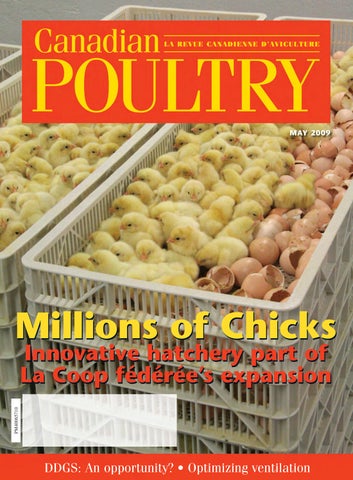
La Coop fédérée inaugurates an innovative hatchery as part of a $10-million expansion plan By André Dumont
12
FEED: Distiller’s Grains: An Opportunity?
Taking a closer look at a 21st-century feedstuff
By Matt Oryschak and Eduardo Beltranena, Alberta Agriculture and Rural Development
22
PIC UPDATE: Optimizing your Ventilation System
A summary of key points for getting the most out of your ventilation equipment
By Steve Clarke and Dan Ward, OMAFRA 26
HOUSING: This New Barn
‘Will Work’
The Bertens family decided pouring new equipment into an old barn didn’t make sense By Jim Knisley 30
RESEARCH: Oxygen Supplementation
La Coop fédérée expands
Researchers study its effects during the last stage of incubation on broiler performance and ascites susceptibility
By U. Sahan, A. Ipek, O. Altan, B. Yilmaz-Dikmen
FROM THE EDITOR
BY KRISTY NUDDS
Demographic Shift
Anew perspective can open up new avenues of possibility. One of the most interesting presentations I have attended in some time was given by Dr. David Foot, a professor of economics at the University of Toronto and author of the books Boom, Bust & Echo: How to Profit from the Coming Demographic Shift and Boom, Bust & Echo: Profiting from the Demographic Shift in the 21st Century at the Chicken Farmers of Ontario annual meeting.
Dr. Foot’s books are based on his research on the economic impacts of demographic change. Foot believes that understanding trends, particularly those large in scope, has everything to do with population demographics – and those who pay attention to the number and needs of certain age groups, and how these needs change as populations age, will be successful in business and in designing effective policies.
Foot took attendees on a demographic tour, showing us how demographic shifts are closely tied to economic spending patterns and desires. When displayed graphically, populations that have consistent birth and death rates are “true” pyramids. When population “booms” (increased birth rate over a period of time), “busts” (decreased birth rate over a period of time) and “echoes” (children of boomers – although birth rate declined, the sheer number of boomers resulted in a small surge that Foot calls an echo), the resulting graphs no longer look like pyramids, but like a vase being formed on a pottery wheel – as time goes on, the base gets thinner, the middle widens and the top becomes quite narrow.
In Canada, the boom group are baby boomers and they represent the largest demographic group. The bust group are those in their 30s to early 40s. The echo
group are teens and 20-somethings.
There is some disparity in the population cycles in different regions of the country. For example, Ontario has the biggest echo population, while Eastern Canada has the oldest population in the country.
For agriculture, understanding where certain populations are concentrated and what their nutritional needs are can help focus marketing efforts and production to match consumption.
It can also help with potential export markets and understanding our competitors. Brazil and India, according to Foot, have experienced booms and their population pyramids are more stable. As a result these countries are emerging economic powers. Former powers Germany, Russia, and Japan have declined, having had old populations and low birth rates for several decades now. In comparison with our NAFTA partners, Canada’s population is older. Mexico has a true pyramid, and the echo group is bigger in the U.S.
For a supply-managed sector such as poultry, demographics can play a key role. Female teens in the echo group influenced by activists might not want to eat meat – ever. Baby boomers, as they age, will likely decrease the amount of meat they eat, but shift from red meats to poultry and eggs to meet their protein requirements. in applying Foot’s theories, we see the opportunity for niche markets may be stronger in areas of the country where older populations with more disposable income exist.
To view Foot’s demographic pyramids, go to www.footwork.com – They will make you see trends and buying habits in a whole new light.
May 2009 Vol. 96, No. 5
Editor
Kristy Nudds – knudds@annexweb.com
888-599-2228 ext. 266
Contributing Editor
Jim Knisley – jknisley@kwic.com
Publisher/Sales Manager
Marilyn White – mwhite@annexweb.com
519-429-5193
888-599-2228 ext 237 • fax: 888-404-1129
Sales Assistant
Mary Burnie – mburnie@annexweb.com 519-429-5175 • 888-599-2228 ext 234
Production Artist
Krista Misener
Group Publisher Diane Kleer – dkleer@annexweb.com
President Mike Fredericks – mfredericks@annexweb.com
Mailing Address
P.O. Box 530, 105 Donly Dr. S., Simcoe, ON N3Y 4N5
Publication Mail Agreement #40065710
PAP Registration #9850
RETURN UNDELIVERABLE CANADIAN ADDRESSES TO CIRCULATION DEPT., P.O. BOX 530, SIMCOE, ON N3Y 4N5.
e-mail: cnowe@annexweb.com.
Periodicals postage paid at Buffalo NY. USPS 009-324, ISSN 1703-2911. Published monthly by Annex Publishing and Printing Inc. US Office of publication c/of DDM Direct.com, 1223 William St. Buffalo NY 14240. US Postmaster send address change to PO Box 611 Niagara Falls NY 14304.
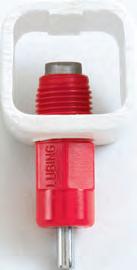
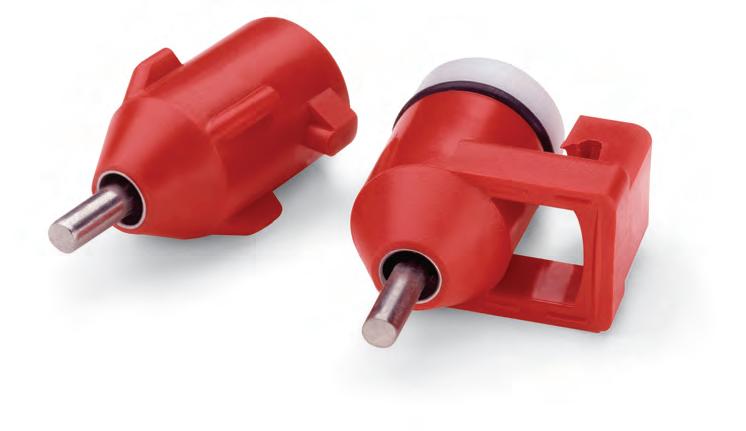
FeatherSoft Advantage 360° Nipples deliver up to 65 ml/min at ONLY 8" of water column and above 90 ml/min at 16". NO CUPS REQUIRED.
FeatherSoft Hi-Flow 360° Nipples deliver up to 95 ml/min at ONLY 8" of water column and above 140 ml/min at 16".
Simplistic Design
Unique, patented 3-part design reduces problem risk.
1) Stainless Steel or Stainless / Plastic Body
2) Stainless Steel Metering Pin
3) Stainless Steel Triggering Pin
Nipples DO NOT REQUIRE steel balls, O-rings or seals.
Corrosion Resistant
Extruded aluminum rails do not rust, unlike conduit.
Raised Water Entry
Raised water entry point, inside pipe, eliminates the possibility of sediments from entering the nipple.
Glass-Pac Canada
St. Jacobs, Ontario
Tel: (519) 664.3811
Fax: (519) 664.3003
Carstairs, Alberta
Tel: (403) 337-3767
Fax: (403) 337-3590
Specht-Canada Inc.
Stony Plain, Alberta
Tel: (780) 963.4795
Fax: (780) 963.5034
See why FeatherSoft™ Nipples are the Smart Choice.
20 Micron Test
Lubing Nipples reduce risks of blockages by allowing particles up to 20 microns to pass through. More than double the competition.
Square Pipe Advantage
Square pipe keeps nipples always in upright position.
Preassembled Shipping
Watering sections are shipped completely preassembled making installations quick and error-free.
Long Service Life
Lubing drinkers have established a reputation for outlasting any others on the market. Documented reports available of drinkers in operation for more than 30 years.
Upgrade Capabilities
Lubing can replace ALL types of sections either on conduit or other aluminum rails. FeatherSoft J-Lock and Twin-Lock Nipples with Lubing technology are available to upgrade in a "twist".
J. Dean Williamson Ltd.
London, Ontario
Tel: (519) 657.5231
Fax: (519) 657.4092
Fax: (450)
A WHAT’S HATCHING HATCHING
National Meeting Highlights
fter 10 years, an agreement has been reached between the Egg Farmers of Canada and the Saskatchewan Egg Board over quota allocation. Also of note was a quota increase of 162,000 birds approved by the National Farm Products Council (NFPC) in February and currently surpassing the 2009 sales increase target by 2.5 per cent.
CHEP
At the Advisory Committee meeting, at the Canadian Hatching Egg Producers (CHEP) annual meeting the committee recommended a revised 2009 allocation of 1,019 million kilograms and initial 2010 allocation of 1,029 million kilograms and were approved by the board of directors. Saskatchewan and Alberta have recently signed contracts with CHEP, increas-
ing the agencies member provinces from four to six.
CFC
Setting allocation for period A-92 led to intense discussion and the Board’s majority decision was to set allocation at 148.2 million kilograms, an amount equal to one per cent less than the adjusted base or slightly more than last year’s actual production. However, directors could not come to agreement on the Anticipated Growth Rate (AGR) for period A-93. The CFC Board also made two additional decisions of note during this session: they agreed to extend the trial period for interprovincial sales within the MDP for another six periods and they declined a request for membership from Canadian Hatching Egg Producers (CHEP).
TFC (CTMA)
After more than 35 years, the Canadian Turkey Marketing Agency (CTMA) changed its name to Turkey Farmers of Canada (TFC) / les Éleveurs de Dindon du Canada (ÉDC) effective March 26, 2009. TFC stated that this new name better reflects its organization’s membership and business activity. It is also based upon extensive consumer and industry research indicating that Canadian consumers appreciate and understand a name that is reflective of a Canadian product and the involvement of Canadian farmers.
All producer directors with the exception of British Columbia (who believed no cutback was required) decided upon a reduction of only two million kilograms in the whole bird allocation for 2009/2010. – CPEC Highlighter
Photos
Accomplished Edmonton author Judy Schultz unveiled her new book Which came first? The egg, of course!: It’s not just history, it’s Lilydale! in March. Schultz is a nationally recognized and accomplished author and speaker
Lilydale’s History Featured in New Book Movement Restrictions
who specializes in food and agriculture. The book tells the story of the Edmonton-based company’s rich Canadian history and its evolution into one of the country’s leading poultry processors.
Project editor Peter Collum says the book is a “fascinating account of how one of
On April 3, the Canadian Food Inspection Agency (CFIA) lifted all remaining movement restrictions on birds and bird products in southern British Columbia. No additional cases of avian influenza were found during extensive testing of commercial poultry in the area.
The movement restrictions were put in place following the discovery of low pathogenicity H5N2 avian influenza in a commercial poultry operation on Jan. 24, 2009. During the ensuing investigation, the CFIA declared a second operation infected on Feb. 11.
All birds on the two farms were humanely destroyed and composted on site in accordance with international standards and provincial environmental requirements.
“The co-ordinated efforts of all levels of government provided an unprecedented response to this outbreak,” noted Ron Cantelon, B.C. Minister of Agriculture and Lands. “By working together,
Edmonton’s best-kept corporate secrets grew from the Alberta Poultry Producers Limited, with its initial focus on eggs, into a company with brand recognition across Canada.”
In addition to offering copies of the book to local libraries, historical organizations, and potentially making it available for public sales in the future, Lilydale will be providing the book as a gift to employees.
we were able to minimize the impact to industry and get those affected back into business as quickly as possible.”
As a final step in the outbreak response, the CFIA will conduct broader testing
of poultry operations in B.C. Consistent with the guidelines of the World Organization for Animal Health, this surveillance will allow Canada to regain its status as an avian influenza-free country.
A ‘Revitalized’ CFO
Chicken Farmers of Ontario kicked off the year ahead by announcing plans to promote Ontario-raised and -processed chicken with the unveiling of Ontario Fresh Chicken brand. This reflects CFO’s commitment to serving the market by offering the great tasting, locally grown chicken. In the coming year CFO will be working with food processors, retail and foodservice companies to identify and promote the benefits of Ontario chicken. On the heels of this
unveiling, CEO Rob Dougans announced the creation of new awards to drive innovation in the industry. The Growing Innovation Award will be presented to the food processor that develops the most innovative and valueadded Ontario Chicken product. A donation of $25,000 will be made to the charity of the successful applicant’s choosing. Full details are available on CFO’s website at www.ontariochicken.ca.
Dr. David Byrne will be the recipient of the 2009 Medal of Excellence to be presented at Alltech’s 25th International Animal Health and Nutrition Symposium taking place in Lexington, Ky., May 1720. Byrne will be honoured for his commitment to food safety, including his revolutionary reform of the European Union’s safety systems during his tenure as European Commissioner for Health and Consumer Protection.
Todd Martin has been named product manager for Chore-Time Egg Production Systems. Formerly product engineer for the company, Martin will be responsible for overseeing management and development of new products, as well as planning and implementing product strategy.
Dr. Martin Zuidhof has been appointed associate professor at the Poultry Research Centre (PRC), University of Alberta, effective Feb.1, 2009. Before joining the university, Zuidhof spent 15 years specializing in poultry with Alberta Agriculture, Food and Rural Development. His research focuses on bioeconomic modeling and has collaborated extensively with Drs. Frank Robinson and Rob Renema.
DAVID BYRNE
ONTARIO
MARTIN ZUIDHOF
WHAT’S HATCHING HATCHING
Welfare Approved Program Available
Animal Welfare Approved, a program that promotes the well-being of animals and the sustainability of humane family farms, announced recently that it has approval from the Canadian government to begin certifying farms in Canada. Program Director Andrew Gunther says, “American consumers know buying products with the
Animal Welfare Approved label ensures their meat, dairy and eggs came from high welfare farms. Soon Canadians awill be able to benefit in the same way.”
Labels on Animal Welfare Approved products in Canada will read, “This product originates from animals who are raised under the standards of the Animal Welfare Approved Program (TM).”
Mx Gene Immune to AI
At least 62 per cent of chickens indigenous to Indonesia are resistant to bird flu, thanks to a gene called Mx, the Indonesian Institute of Science (LIPI) revealed in late March.
Sri Sulandari, a gene researcher at the institute Umar Anggara Jenie’s biological research centre, said her institute carried out the first-ever gene study focusing on how humans coped when contracting the virus and on the vaccination process.
Sri said that few have looked into the genetic side to see how chickens themselves have a natural resistance to bird flu, and that the indig-
MAY
COMING EVENTS
May 12, 2009
PIC Research Day
“What’s Eating Us in What We Eat? Fighting Foodborne Pathogens,” The Arboretum, Guelph, Ont. Registration and lunch for this event starts at 12:00 pm. Speaker presentations will commence at 1 p.m. and finish at 4 p.m. Wine and Cheese reception to follow.
For more information, visit www.poultryindustry council.ca or tel: (519) 837-0284.
JUNE
June 7-9, 2009
Canadian Poultry and Egg Processors Council (CPEPC) Annual Convention, Moncton, N.B.
Registration information available at www.cpepc.ca.
JULY
July 2-4, 2009
ILDEX India, Pragati Maidan, New Delhi, India. For more information: www.ildexindia.com.
enous chickens’ ability to resist avian influenza varies according to the strength of the antivirus genes in their body.
Recent evidence indicated the Mx gene was associated with chicken resistance or susceptibility to highly pathogenic bird flu. Indonesia’s varied population of indigenous chickens is a mine of information on the Mx gene and how resistant each breed of chicken is to bird flu, Sri added.
Based on research findings, the institute rated the darkcoloured Cemani chicken the most resistant to the virus.
Source: The Jakarta Post
July 20-23, 2009
Poultry Science Association Annual Meeting, Raleigh, N. C. Hosted by North Carolina State University. For more information, visit www. poultryscience.org/psa09.
SEPTEMBER
Sept. 29 – Oct. 1, 2009
Poultry Service Industry Workshop, Banff Centre, Banff, Alta. For more information: e-mail info@ poultryworkshop.com or visit: www.poultryworkshop.com.
Hatchery
Millions of Chicks
La Coop fédérée inaugurates an innovative hatchery as part of a $10-million expansion plan
BY ANDRÉ DUMONT
Nothing seems to get in the way of La Coop fédérée’s poultry sector growth strategy.
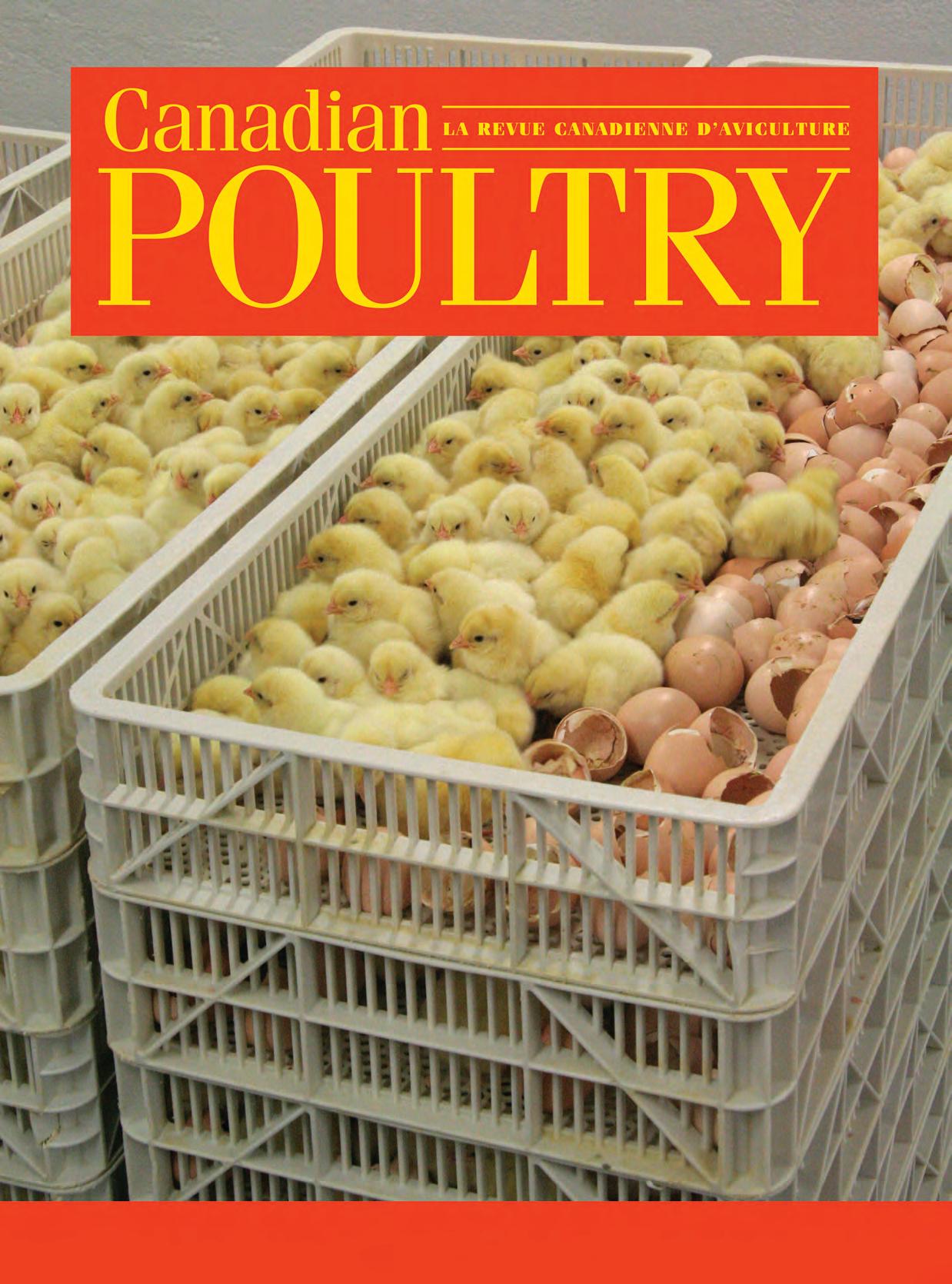
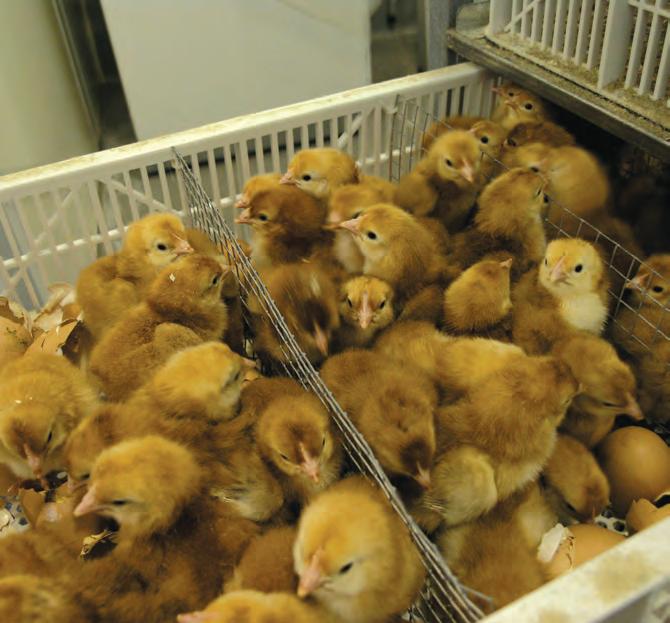
Last March, the Quebec co-op network inaugurated a one million broiler chick per week hatchery, the second largest in Canada.
The Victoriaville hatchery enlargement and modernization is the largest part ($6 million) of a $10-million expansion plan. La Coop fédérée also acquired a pullet farm ($1 million) and expanded its Saint-Jude breeder farm ($3 million), all in the Centre-du-Québec region.
This strategy will boost La Coop fédérée’s broiler breeding network’s efficiency, says poultry senior manager Martin Véronneau.
“Our breeding farms will yield larger lots of same-size eggs. Chick uniformity will be better, which will make the farmer’s job easier and translate into improved uniformity at processing,” Véronneau explained.
Broiler chick sales have increased by 35 per cent over the last three years. To respond to demand, La Coop fédérée was forced to import chicks from the United States, with all the logistics and risks involved.
La Coop fédérée is already the most important chicken feed supplier in Quebec. It shares the local broiler chick market with other hatchers, but Véronneau says its market shares are on the rise. However, the greater part the chick sales increase is the result of farm acquisitions in New Brunswick.
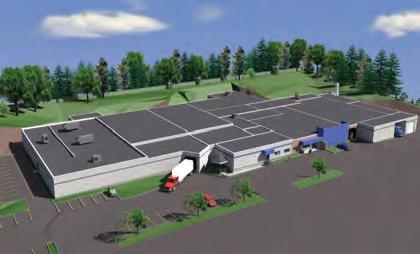
Above: The $10-million investment La Coop fédérée announced last May is now completed.
Right: A model of the new expansion.
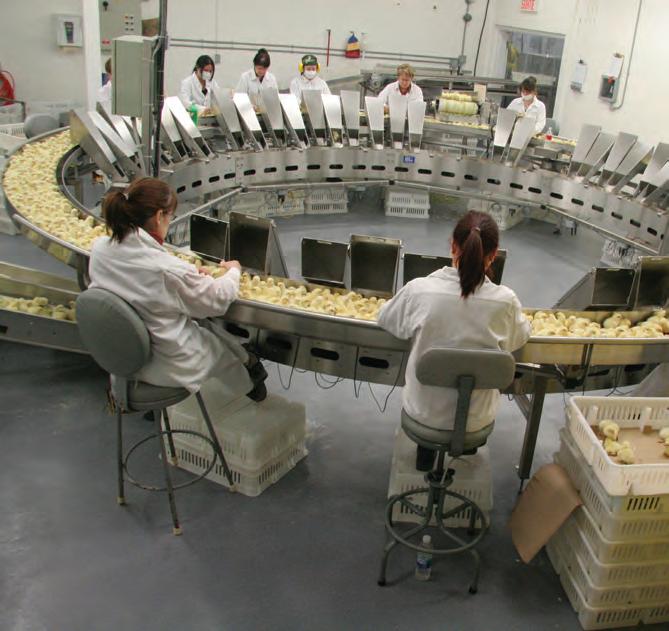
The Victoriaville hatchery is now the most modern in Canada, Véronneau says. It employs 60 people. With 67,320 square feet, the hatchery is the second largest in Canada on a single site.
Current production is at 52 million chicks per year. It could be boosted to 56 million without major investments.
The hatchery’s footprint was increased by a little less than 50 per cent. New incubators and hatchers – all Jamesway brand – were added. Automation of chick and shell sepa-
ration, vaccination and packing was also improved.
“Everything was thought out with product quality and client needs in mind,” says hatchery manager Louis Turcotte.
Expanding the Victoriaville facility meant the end of production at La Coop fédérée’s Saint-Félix de Valois hatchery. The building and equipment were too old to be upgraded.
The Saint-Félix-de-Valois hatchery was located within 500 metres of three henhouses. This made compliance with
BIGGER AND BETTER
Photos by
André Dumont
HACCP standards impossible.
The Victoriaville expansion was planned for HACCP certification. From receiving to shipping, eggs and chicks follow a one-way path, in order to eliminate cross-contamination risks. “No lot ever goes back the way it came,” says Véronneau.
State-of-the-art technology was also installed in the boiler room. Glycol-based heat exchangers are used to recuperate heat from eggs nearing the end of their incubation cycle to divert it to younger eggs. According to Turcotte, the resulting heating savings are so important that the hatchery will not be consuming more energy than before the expansion.
BREEDER FARMS
Last summer, La Coop fédérée bought a 7,500-layer farm located 10 minutes away from Victoriaville. The site is large enough to house 12,000 more breeders. With this farm, La Coop fédérée will be able to raise one-third of its broiler breeders.
These breeders will be sent to La Coop fédérée’s Saint-Jude farm, its largest supplier of hatchery eggs. A new 35,000-breeder barn was added, pushing the site’s total to 90,000.
The four barns in Saint-Jude are linked with conveyors to a central work area where egg grading and packing are automated. According to Véronneau, this is now the largest automated broiler incubation egg production site in Canada.
These farms, along with other smaller breeder farms in Stanbridge, Wickham and Victoriaville, as well as in New Brunswick, all deliver their eggs to the Victoriaville hatchery. Chicks are then delivered to farmers (co-op members or not) in Quebec, New Brunswick and Eastern Ontario.
Mature chickens end up in La Coop fédérée’s Olymel processing plants, whose most important clientele are barbecue chicken restaurants. Les Rôtisseries St-Hubert take the largest
Continued on page 28
If you are looking for excellent broiler performance, dry litter and drinkers designed specifically for the way birds drink, you need Max3 Drinkers from Ziggity. The TL Max3, designed for Ziggity twin-lock systems, and the Aktive Max3 for J-lock systems, are built with quality components that won’t leak or corrode. That means birds perform better in every category – bird weight, feed conversion, seven-day mortality and condemnations.
To learn more about how to maximize your bird performance, call Ziggity Systems to request the Performance Matters brochure series or visit our Web site to download a copy.
TL Max3
Aktive Max3
Feed Distiller’s Grains: An Opportunity?
Taking
a
closer look at a 21st-century feedstuff
BY MATT ORYSCHAK AND EDUARDO BELTRANENA, ALBERTA AGRICULTURE AND RURAL DEVELOPMENT
In 2008, we saw historic prices for wheat and similar highs for corn and other coarse grains. American soybean meal also hovered around $450 US per tonne. While the world was preoccupied with the price of spaghetti, livestock and poultry producers were faced with how to scratch out a living from an ever-shrinking (and often negative) margin. One contributor to these historic grain prices was increased demand for grains by the emerging ethanol industry, whose growth of late has been spurred on by government policy and historic high oil prices.
There is ongoing disagreement among experts over the role and extent to which different forces (e.g., drought, market speculation, ethanol) contributed to these record prices. What few would dispute, however, is that over the past few years ethanol production has emerged from a fringe industry on the edge of Canadian agriculture to an important competitor for cereal grains in Canada and North America as a whole. The question in the mind of many producers is what to do.
Naturalist Charles Darwin once said “it is not the strongest of the species that survive, nor the most intelligent, but the one most responsive to change.” In other words, adaptability and flexibility (rather than size or deep pockets) are perhaps the most important qualifications to be a producer in the 21st century. To
those who are more willing/able to adapt, adversity will seem less like a threat and more like a sign that it’s time to do things differently.
Challenges and opportunities, as the saying goes, are often two sides of the same coin. The challenge associated with increased competition for Canadian grain supplies for poultry producers is self-evident, but where is the potential opportunity in this situation? The answer: dried distiller’s grains and solubles. The goal of our monogastric nutrition research group at Alberta Agriculture and Rural Development, led by Dr. Eduardo Beltranena, is to fill in the information gaps to make DDGS a realistic and competitive alternative to more costly protein supplements (e.g., soybean meal) in poultry rations.
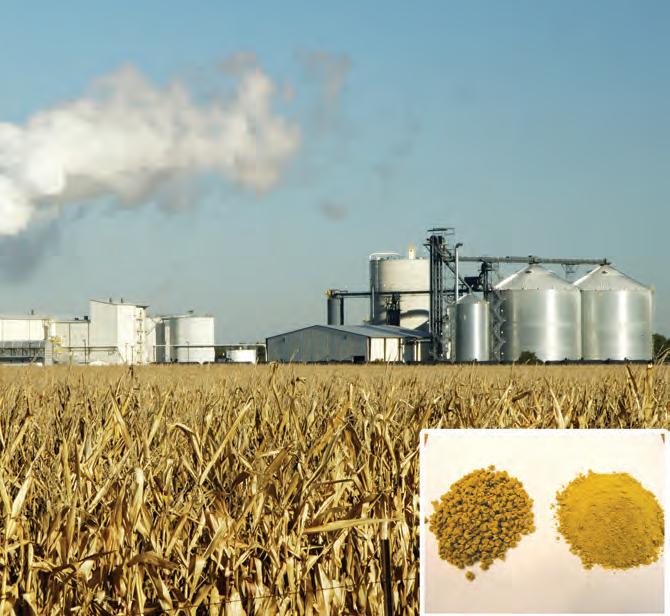
The recent surge in ethanol production means that byproducts such as dried distiller’s grains (inset) are becoming plentiful – but making them more useful as a poultry feed is challenging researchers.
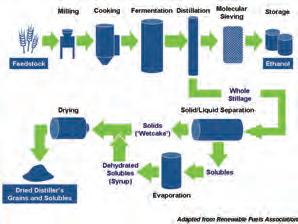
Dried distiller’s grains and solubles (DDGS) are a mixture of the solid and soluble residues from the fermentation and distillation system (Figure 1).
After milling, fermentation and distillation, the solid residue in the whole stillage is separated out into solid (referred to as “wetcake”) and liquid solubles fractions. The solubles fraction
FUTURE FEED?
BIGFANS FOR BIGJOBS!!
• Intake fiberglass cone w/adjustable deflectors optimize air throw and direction
• Variable speed adjustment from 50 rpm to 300 rpm for ventilation in all seasons. Very efficient 3 hp motor draws 0.3Kw on low and only 2.2 Kw on high
• High air velocity creates optimum cooling plus fly and insect control for livestock and workers.Low air ability in winter reduces humidity while keeping floors dry and warm
• Covers an area of 36ft X 175ft or 6,300 sq.ft.
• Ideal applications include Dairy, larger Turkey and Swine facilities, Greenhouses, Factories, Warehouse and Machinery buildings
• On high speed produces 55,000 CFM and 25 CFM/watt at 0”S.P.
• Speed adjustment from 300 RPM down to 80 RPM. Fan power consumption reduces with speed
• Extremely quiet operation on all speeds
• Automatic belt tensioner
• Totally enclosed high efficient motor
Contact Exaconfor adealer nearyou!
Feed
FIGURE 1. SIMPLFIED OVERVIEW OF THE ETHANOL/DDGS
PRODUCTION STREAMS IN MODERN ETHANOL PLANTS.
• Heavy corrosion resistant fiberglass housing is concentrated by evaporating off excess liquid to produce a syrup. This is then added back to the wetcake and the mixture dried to produce DDGS. The resulting product has more concentrated levels of most nutrients compared to the native grain with the exception of starch, which is completely removed during fermentation/distillation (Table 1). It should be noted that a side benefit of the fermentation process is that twothirds of the phosphorus (P) in DDGS is available, which is roughly twice that of the respective native grain. This is due in large part to the destruction of phytate during the fermentation process. Phytate is the major form of P in plant-based feedstuffs and is digested poorly by pigs and poultry, who lack the necessary phytase enzyme. The implication is that diets that include DDGS would require less inorganic P supplementation, which could reduce both feed costs and P output from poultry operations.
There are, however, several practical challenges to feeding DDGS. These include variability in nutrient content, storage and handling limitations (i.e., flow properties) in feed mill scenarios, limited information on maximum levels in practical diets and nutrient digestibility for DDGS types other than corn. Fibre content is another important consideration. During the fermentation process, valuable nutrients such as fat and minerals are concentrated, but unfortunately fibre is as well. Fibre generally impairs nutrient digestibility, especially for younger birds. Our research has focused on the last three
Feed
TABLE 1. NUTRIENT COMPOSITION OF DIFFERENT TYPES OF DRIED DISTILLER’S GRAINS AND SOLUBLES USED IN OUR STUDIES COMPARED TO VALUES REPORTED FOR NATIVE GRAINS1.
1Average values for native grains from Leeson & Summers, 2005 and AARD, 1996
TABLE 2. EFFECT1 OF TWIN-SCREW EXTRUSION ON ILEAL NUTRIENT DIGESTIBILITY IN CORN AND WHEAT DDGS FED TO BROILERS (28 DAYS OF AGE, 30% INCLUSION LEVEL).
1Different superscripts in rows indicate significant differences (P<0.05)
TABLE 3. MAIN EFFECTS1 OF SINGLE-SCREW EXTRUSION AND A MULTIENZYME COMPLEX ON ILEAL NUTRIENT DIGESTIBILITY IN TRITICALE DDGS FED TO BROILERS (28 DAYS OF AGE).
screw shaft (or two) rotates within a barrel, exposing the material being extruded to pressure (i.e., heat) and shearing forces during passage. In theory, the shearing forces and heat experienced by the DDGS during the extrusion process should have positive consequences for amino acid digestibility. Shearing forces serve to disrupt the fibre in the feedstuff and heat forces proteins to unfold (i.e., denature). Both of these situations would presumably make proteins more accessible to digestive enzymes, which should increase the proportion available to the birds.
In our first experiment we tested the effect of twin-screw extrusion on nutrient digestibility of corn or wheat DDGS. Each type of DDGS (corn or wheat, extruded or not) was fed at either 15 or 30 per cent of the total diet to broilers on Days 7-14, 21-28 and 35-42 of the study. Ileal digesta was collected on Days 14, 28 and 42.
Our results suggest twin-screw extrusion generally improved nutrient digestibility in both corn and wheat DDGS. Interestingly, while there were some minor differences in nutrient digestibility between non-extruded corn and wheat DDGS, nutrient digestibility in the extruded DDGS types was statistically the same (Table 2).
Based on some earlier work we did in pigs, we expected to see some improvement in amino acid digestibility, but the improvement we saw in lysine digestibility exceeded our expectations. Extrusion improved lysine digestibility approximately 35 per cent in both DDGS types. Digestibility improvements in the other nutrients were less dramatic, but still ranged between six and 19 per cent.
1Different superscripts in rows within each effect indicate significant differences (P<0.05)
challenges in this list. Recently, our group took a closer look at the feeding values of wheat, corn and triticale DDGS and the potential for low-cost processing to improve nutrient digestibility in a
series of two experiments.
The processing treatment compared in these studies was extrusion, either single- or twin-screw. An extruder operates similar to a meat grinder, where a
In the first study with wheat and corn DDGS, all diets contained a commercial multi-enzyme preparation (Superzyme DDGS, Canadian BioSystems) designed specifically for DDGS. In our second study we wanted to look closer at the effects of extrusion and the enzyme individually and in combination. To this end, in the second study we fed diets containing either 15 or 30 per cent triticale DDGS (single-screw, extruded or not), with and without the multi-enzyme complex. Test diets were once again fed to broilers on
days 7-14, 21-28 and 35-42 of the study, with both ileal digesta and feces collected on days 14, 28 and 42.
In contrast to the improvements we observed in our first study, single-screw extrusion of triticale DDGS resulted in modest improvements in energy and crude protein digestibility and with the
exception of methionine, little impact on amino acid digestibility (Table 3). In contrast, supplementing diets with the enzyme complex resulted in more consistent improvements. The enzyme complex improved ileal lysine digestibility in the triticale DDGS by 21 per cent and energy digestibility by 12 per cent.
The question you might be asking is why the differences between the two studies and even between wheat and corn DDGS in the first studies? Part of the answer might stem from differences between single- and twin-screw extrusion. Twin-screw extrusion is a generally more intense processing treatment (involving higher pressures), which in theory could do a better job of eliminating impediments to nutrient availability in feedstuffs. Another possibility is that the response to extrusion depends on DDGS type.
Safe to use humans, animals, environment
Multiple applications foam, spray or fog
Proven effective against most harmful disease causing agents
Non-corrosive to your equipment
Cost-effective based on your real needs
To explore this second possibility further let’s go back to study one and look at the disappearance of hemicellulose in each of the test diets (Table 4). Hemicellulose is a more degradable type of fibre (compared to lignin or cellulose) that forms part of the cell walls that surround starch granules (and associated protein) in the endosperm of cereal grains. Birds don’t produce the necessary enzymes to degrade hemicellulose, but microbes that live in the digestive tract do and are able to use it as an energy source via fermentation.
The results from our first study showed definite differences in hemicellulose degradation and lysine digestibility among the test diets (Table 4). When we looked at the relationship between lysine digestibility and hemicellulose disappearance we found that regardless of inclusion level extrusion increased hemicellulose degradation. However, there was a striking disparity between the two DDGS types in how well lysine digestibility correlated to hemicellulose disappearance.
For corn DDGS, there was strong positive correlation between the two factors, while for wheat DDGS the correlation was weaker and depending on whether DDGS was extruded or not, was either positive or negative. This tells us that much of the improvement in lysine digestibility in corn was related to fibre degradation, while in wheat there were other factors in play.
In summary, the take home messages from these two studies are that extrusion and enzyme supplementation (both alone and together) appear to improve
Feed
TABLE 4. APPARENT ILEAL LYSINE DIGESTIBILITY (AID) AND HEMICELLULOSE DISAPPEARANCE IN DIETS CONTAINING 15% OR 30% OF UNEXTRUDED OR TWIN-SCREW EXTRUDED CORN AND WHEAT DDGS FED TO BROILERS (DAYS 21-28).
1Different superscripts in rows within each effect indicate significant differences (P<0.05)
nutrient availability in DDGS for broilers. The most dramatic improvements we observed were for lysine and energy digestibility, particularly where twinscrew extrusion was used in conjunction with a multi-enzyme complex designed especially for DDGS.
Learning more about DDGS nutrient availability and processing methods is
central to finding a place for it in practical poultry feeding. To this end we are currently analyzing data from a separate performance study looking at the feasibility of graded inclusion levels of all three DDGS types, both extruded and not.
There is perhaps another characteristic that should be added to our earlier list of important prerequisites for being
a 21st-century producer – optimism. A professor of mine once described a pessimist as someone who looks at a manure pile and sees only a manure pile. An optimist immediately grabs a shovel and starts digging into the pile in a desperate search for the pony that must have created the pile.
The “pile”, in the context of our discussion, is increased competition for and consumption of feed grains for ethanol production. The “pony” (for you optimists out there) is the potential of DDGS to replace more expensive dietary components and lower your feed costs – all while maintaining performance. Canadian poultry producers should take comfort in that our group at AARD is working hard to help them find that elusive “pony.” ■
For more information, contact Dr. Eduardo Beltranena 780-427-4567 or e-mail: eduardo.beltranena@gov.ab.ca
Kaitlin Hamilton (Ontario)
FOR IMMEDIATE RELEASE
CFC’s main responsibility is to ensure that Canada’s 2,800 chicken farmers produce the right amount of fresh, safe, high quality chicken to meet consumer needs. CFC is proud of its role in a continuing agriculture success story and over 30 years of raising the quality chicken that Canadians trust.
March 24, 2009 (OTTAWA)—Chicken Farmers of Canada (CFC) today announced the election of the 2009 Executive Committee.
The 15-member Board of Directors, made up of farmers and other stakeholders from the chicken industry, provides leadership on CFC’s strategic plan and mission and has chosen the following representatives:
David Fuller, a farmer from Blomidon, Nova Scotia, has been re-elected as CFC’s Chairman – a position he has held since 1999. He has been with CFC’s Board since 1996. David and his family produce 1.6 million kilograms of chicken annually in the Annapolis Valley. Three generations of Fullers have been involved at all levels of the industry.
Martin Dufresne, representing the province of Quebec, was re-elected to the position of 1st ViceChair. Also a member of CFC’s Production Policy Committee, Martin farms near St. Félixde-Valois with his wife and three children. He produces approximately 1.7 million kilograms of chicken per year on the farm started by his father in 1954. He has been farming for over 20 years and is also the Chair of the Quebec provincial board, Les Éleveurs de volailles du Québec
Urs Kressibucher, a 2nd generation farmer from Beaverton, Ontario, was re-elected to the CFC Executive Committee as 2nd Vice-Chair for 2009. Since 2004, Urs has participated on the CFC Production Policy Committee, the CFC Food Safety Committee and the CFC Animal Care Committee. Representing District 9 (Eastern Ontario) for seven years for Chicken Farmers of Ontario and serving as ViceChair of the Poultry Industry Council, Urs and his family have been chicken farmers for the past 20 years.
Erna Ference has been involved with poultry farming for years and has been re-elected as the Member at large. As a Certified Management Accountant and a second generation poultry farmer, she brings a breadth of experience to the table. Married to Reg, a former CFC Board member from Alberta, they have five kids between the ages of 14 and 25. Their operation produces about 1.5million kg per year and is located in the foothills of the Rocky Mountains.
For more information, please contact Marty Brett, Senior Communications Officer,
CPRC Update
Below are highlights from the Canadian Poultry Research Council’s (CPRC) 2009 Annual General Meeting (AGM).
2009 BOARD OF DIRECTORS
A new board of directors was established for 2009. Jacob Middelkamp, an Alberta broiler producer representing Chicken Farmers of Canada (CFC), will take over as chair from Chris den Hertog. Chris served as chair for two years – the CPRC would like to thank him for his capable leadership. Chris is a broiler breeder producer from British Columbia representing the Canadian Hatching Egg Producers (CHEP) and will serve as vice-chair in 2009. Erica Charlton remains a director representing the Canadian Poultry and Egg Processors Council, as does Helen Anne Hudson who represents Egg Farmers of Canada (EFC). Turkey Farmers of Canada (formerly the Canadian Turkey Marketing Agency) appointed Roelof Meijer, a turkey producer from Alberta, as its representative on the CPRC Board. The CPRC would like to take this opportunity to welcome Roelof, and to thank our directors for their ongoing efforts in support of CPRC activities.
THE FUTURE OF CPRC
In his chair’s report, Chris den Hertog described CPRC as being at a “crossroads” at which it needs to decide what its future role will be. This role has been the topic of many recent discussions. Starting with a workshop in October 2008 among various poultry research funders across Canada and continuing with further correspondence with these organizations, we have received useful feedback with regard to CPRC’s potential role. There is a clear need and desire for a national organization that can effectively service poultry research across Canada. Further consultation with these organizations will help focus our vision.
SUCCESSION PLANNING
Further development of CPRC brings with it the need to consider resources. The CPRC Directors discussed the implications of increasing our staff, as well as the process by which an increase could be accomplished. CPRC will revise staff duties based on its future role, as developed in consultation with the various funders of poultry research across Canada.
A NATIONAL SCIENCE STRATEGY
The CPRC has spearheaded efforts to develop a national strategy for poultry research. There are several organizations across Canada that support poultry research, but, in some cases, these efforts are exerted in isolation. There needs to be better co-ordination among all funders of poultry research in Canada such that their collective investment has the greatest impact possible and all unnecessary duplication is avoided. It is envisioned that a cohesive science strategy will help achieve these goals.
CONTINUING RESEARCH
The CPRC, of course, maintains its interest in directly supporting Canadian poultry research. Our aim is to maximize the impact of the poultry sector’s investment in research. To that end, CPRC only releases research dollars if they are matched at least 1:1 by one or more non-industry sources. The CPRC encourages other funding organizations to enforce a similar requirement. There are many non-industry (especially government) sources of research funding available in Canada – we would be pleased to help any interested organizations access them.
The majority of CPRC’s funding thus far has gone to research consistent with national priorities; there is also a mechanism by which CPRC will support a project outside these main areas if it represents a significant scientific opportunity. These priorities are revisited every five years (next workshop planned for 2010) to ensure they continue to represent the needs of our industry. Individual research projects within four main themes have received CPRC dollars. As we continue to work with other funding organizations across Canada, it is envisioned that CPRC’s approach to funding will develop into one based on longerterm research programs rather than individual projects – it is important for our research community to have access to stable, long-term funding sources in order to develop stable research programs. While we need to continually assess the success of a given research program in addressing the needs of the day, a stable source of funding is necessary to maintain its required resources. This situation is especially true in the case of personnel. It is very difficult to retain a trained laboratory technician, for example, if funding is only provided for one project at a time. If funding dries up between projects and a researcher can no longer afford to keep a technician, the time and money invested in training that individual will be lost.
MOVING FORWARD
The CPRC continues to grapple with the myriad of issues surrounding the current poultry research environment in Canada. Communication will be the key to clarifying CPRC’s role in relation to other funding organizations across the country. We will keep you informed of CPRC’s continuing development and welcome any input you may have.
For more details on any CPRC activities, please contact Gord Speksnijder at the Canadian Poultry Research Council, 483 Arkell Road, R.R. #2, Guelph, Ontario, N1H 6H8. Phone: 289-251-2990, fax: 519-837-3584, e-mail: info@cp-rc.ca, or visit us at www.cp-rc.ca. ■
The membership of the CPRC consists of the Chicken Farmers of Canada, Canadian Hatching Egg Producers, Turkey Farmers of Canada, Egg Farmers of Canada and the Canadian Poultry and Egg Processors’ Council. CPRC’s mission is to address its members’ needs through dynamic leadership in the creation and implementation of programs for poultry research in Canada, which may also include societal concerns.
CIBC Agriculture
Services
Whether you’re thinking about expanding your agriculture business or have cash management and investment needs, now is the ideal time to work with a CIBC business advisor. You’ll develop a fresh perspective on where your business is currently and where you’d like to take it.
Want to know more?
Visit a CIBC branch and talk to a CIBC business advisor today. Or call us at 1-888-493-2422 or visit cibc.com/agriculture. It’s worth a talkTM
Optimizing Your Ventilation System
A summary of key points for getting the most out of your ventilation equipment
BY STEVE CLARKE, ENERGY AND CROP SYSTEMS ENGINEER/ OMAFRA AND DAN WARD, POULTRY AND OTHER LIVESTOCK HOUSING AND EQUIPMENT ENGINEER/OMAFRA
Sizing and energy efficiency as well as the proper equipment (pit fan, wall fan, with or without shutters, wind protection, etc.) should be considered when selecting or upgrading a ventilation system.
Do not use amperage to compare fan efficiency – many other factors also affect performance.
Wherever possible, use 240V (not 120-V) motors to increase the efficiency of energy use. Higher voltages will decrease the energy that is lost in the wire itself.
All wiring should be minimum #12 gauge, to reduce line losses.
When different fans are compared, consider (1) how much air can be moved and (2) how much energy is required to move (CFM/W (cubic feet of air per minute per watt) or L/s/W (litres per second per watt)).
Use one large belt-driven fan instead of several small direct-drive fans to reduce energy use, initial capital investment and maintenance costs. Directdrive fans should achieve an efficiency of 10 CFM/W, whereas belt-driven fans should achieve closer to 20 CFM/W.
The pressure difference created by ventilation fans between the inside and
the outside of the building is called static pressure. Most ventilation systems for farm buildings are designed to operate at a static pressure of 1.25 - 1.5 mm (0.05-0.06 in.) water gauge. Compare all fans at the same static pressure. The higher the L/s/W or CFM/W value, the more efficient the fan is.
If the building is located in an area of high prevailing winds (and thus pressure on the fans is high), install windbreaks or wind hoods to ensure optimum airflow.
HOW BIG IS TOO BIG?
Sizing of fans is very important. Oversized fans waste energy and cannot control the room temperature effec-
Sizing and energy efficiency are important factors when choosing ventilation equipment.
tively since they cycle on and off constantly. Undersized fans also have difficulty controlling room temperature and will not provide the necessary airflow.
Fan diameter is not an indication of the fan output capacity or fan efficiency. One energy-efficient fan may not be stable or may not offer consistent energy efficiency over a wide static pressure range compared to another energyefficient fan.
PIC Update
HOW MANY FANS?
In livestock buildings ventilated by fans, the quantity of fans should be enough to provide at least four stages or levels of ventilation between the ventilation rate for humidity control (Stage 1) and ventilation rate for temperature control (Stage 4).
THE BENEFITS OF ELECTRONIC CONTROLLERS
The ventilation system is continuously being managed
Users have the ability to control temperatures more precisely
The heating and ventilation sys-
•
tems can be interlocked to avoid wasting energy
More energy-efficient equipment can be used, which can be properly sequenced for optimum operation
MAINTENANCE
A poorly adjusted belt can result in a 30 per cent reduction in airflow. Clean fan blades and louvres regularly to improve the efficiency of the ventilation system. Dirt and dust accumulation can greatly reduce airflow and insulate the motor, causing overheating.
This content is from a factsheet available at the PIC. Full copies of this fact-
sheet can be obtained from the PIC website at www.poultryindustrycouncil.ca or by fax – simply call PIC on 519-837-0284 for a copy.
ThisFactsheet was developed with sponsorship from Hydro One and in partnership with the Ontario Power Authority, the Ontario Federation of Agriculture, the Ministry of Energy and the Ministry of Agriculture, Food and Rural Affairs.
PIC PICS
The London Poultry show was great. Thanks to all our exhibitors for their fantastic effort – the booths were terrific.
Value-based marketing decision support through characterization of broiler growth and yield
BY KIMBERLY SHEPPARD, RESEARCH COORDINATOR
Many manufacturing supply chains carefully measure relationships between inputs and outputs with the goal of fine-tuning processes to maximize profitability. This approach can be applied in agricultural systems, although variation in biological processes is generally much greater, making small improvements harder to measure. This slows the optimization process. Live production accounts for approximately half of the cost of wholesale chicken (whole bird); just under 40% of the wholesale price is feed. Thus, there is room for nutritional improvements to benefit the bottom line of the broiler supply chain by reducing cost, increasing value, or both.
Toward this aim, Dr. Martin Zuidhof and his research team at the University of Alberta conducted an experiment to determine the effect of nutrition (cost) on broiler growth rates and yield dynamics (value). They fed one of two prestarter diets to Cobb x Avian 48 broilers, based on breeder specifications for either reducing feed cost or maximizing growth rate and feed efficiency. After that, at eleven days of age, three levels of dietary energy and five levels of dietary balanced protein were phase fed. Over 2,200 birds were processed at various ages to characterize how yield changed with body weight and nutrition. Their findings? Prestarter nutrition was very important for body weight and yield. The diet designed for maximizing growth rate and feed efficiency increased the value of birds persistently, as measured by increased breast yield. Saving a few pennies on feed in the first eleven days of a broiler’s life
(by using the diet designed to reduce feed cost) improved profits neither for the producer nor the supply chain.
Dietary balanced protein was very important for breast yield. Reducing amino acid levels below Cobb’s recommended levels for maximizing growth rate and feed efficiency resulted in reduced breast yield in males and females. Increasing amino acid levels above these recommendations did not significantly improve breast yield in females. However, 1.075 x recommended balanced protein levels increased breast yield in male broilers. High protein levels reduced fat pad weights at low body weights, but increased fat pad weights at higher body weights. High dietary metabolisable energy levels were most important in the first four weeks of broiler production. Lower than recommended energy levels increased body weight and breast yield after twenty eight days of age.
In addition to nutritional analysis, Dr. Zuidhof and his team developed an extensive system of equations that can be used to predict scenario-specific body weight, yield, and feed intake to fifty six days of age, in response to a broad range of broiler nutrition programs. Dr. Zuidhof believes that changes to the current marketing system that reward quality traits such as high yield and reduced fat would improve the industry’s ability to benefit from the results of the current study. To read more on this study, please visit www.poultryindustrycouncil.ca.
Dr. Martin Zuidhof was featured in the April 2009 issue of Canadian Poultry magazine.
Continued on page 29
POUR PUBLICATION IMMÉDIATE
Le 24 mars 2009 (OTTAWA) – Les Producteurs de poulet du Canada (PPC) ont annoncé aujourd’hui l’élection des membres du Comité exécutif de 2009.
Le Conseil d’administration composé de 15 membres, soit des producteurs et d’autres intervenants de l’industrie du poulet, oriente le plan stratégique et la mission des PPC et a sélectionné les représentants suivants :
David Fuller, un producteur de Blomidon, en Nouvelle-Écosse, a été réélu président des PPC, poste qu’il occupe depuis 1999. Il siège au Conseil des PPC depuis 1996. David et sa famille produisent 1,6 million de kilogrammes de poulet par année dans la vallée de l’Annapolis. Trois générations de la famille Fuller ont participé à tous les niveaux de l’industrie.
Martin Dufresne, le représentant la province de Québec, a été réélu au poste de premier vice-président. Également membre du Comité des politiques de production, Martin est producteur près de Saint Félix de Valois, où il habite avec son épouse et ses trois enfants. Il produit environ 1,7 million de kilogrammes de poulet par année sur la ferme bâtie par son père en 1954. Il est producteur depuis plus de 20 ans et occupe également le poste de président de l’office provincial du Québec, Les Éleveurs de volailles du Québec.
La principale responsabilité des PPC est de s’assurer que les 2 800 producteurs de poulet du Canada produisent la bonne quantité de poulet frais, salubre et de haute qualité pour répondre aux besoins des consommateurs. Les PPC sont fiers de contribuer à une réussite continue dans le secteur agricole et à l’élevage du poulet de qualité dans lequel les Canadiens placent leur confiance depuis plus de 30 ans.
Urs Kressibucher, un producteur de deuxième génération de Beaverton, en Ontario, a été réélu au sein du Comité exécutif des PPC et à titre de deuxième vice-président pour 2009. Depuis 2004, Urs siège au Comité des politiques de production, au Comité sur la salubrité des aliments et au Comité des soins aux animaux des PPC. Représentant des Chicken Farmers of Ontario pour le district 9 (Est de l’Ontario) pendant sept ans et vice président du Conseil de l’industrie avicole, Urs et sa famille sont producteurs de poulet depuis les 20 dernières années.
Pour obtenir de plus amples renseignements, veuillez communiquer avec Marty Brett, agent principal des communications, au 613.566.5926 ou à l’adresse mbrett@poulet.ca
Erna Ference travaille dans le secteur de l’aviculture depuis de nombreuses années et a été réélue membre à titre personnel. À titre de comptable en management accréditée et avicultrice de deuxième génération, elle fait profiter de sa précieuse expérience au Conseil. Erna et son époux Reg, un ancien membre du Conseil des PPC de l’Alberta, ont cinq enfants agés entre 14 et 25 ans. Leur exploitation produit environ 1,5 million de kilogrammes de poulet par an et est située dans les contreforts des Rocheuses.
Housing
This New Barn ‘Will Work’
The Bertens family decided pouring new equipment
into an old barn didn’t make sense
BY JIM KNISLEY
Henk Bertens and his family faced a not so simple, but all too common, decision.
It involved lots of money, lots of planning, lots of extremely technical and detailed decisions and lots of other knowns and unknowns.
From the outside it looked to be a simple question of whether to retrofit an old two-storey broiler breeder barn or build a new one.
A retrofit would be less expensive initially, but would never result in a state-ofthe-art facility. It would also mean going out of production for a time – perhaps too long a time.
And while in the grand scheme of things it may be a small matter, the old barn had all those stairs.
At the end of the day, “Investing a lot of money for new equipment in the old barn didn’t make sense to us,” Bertens said.
The family, Henk, Marieke, Koen, Anja, and Joost, bought the farm on Sunshine Line, near Kirkton, Ont., four years ago. It had a barn that was originally built in the early 1980s and expanded in 1989 with new equipment put in. After 20 years the equipment was at the “end of its life,” Bertens said.
So last summer the family tore down an old bank barn to make room for a new broiler breeder barn.
“We decided we didn’t want a new twostorey. Too much running up and down.”
Because he removed the old bank
barn, and he now had the space, he decided to go with a double-wide barn, which makes it easier to care for the birds and easier to clean.
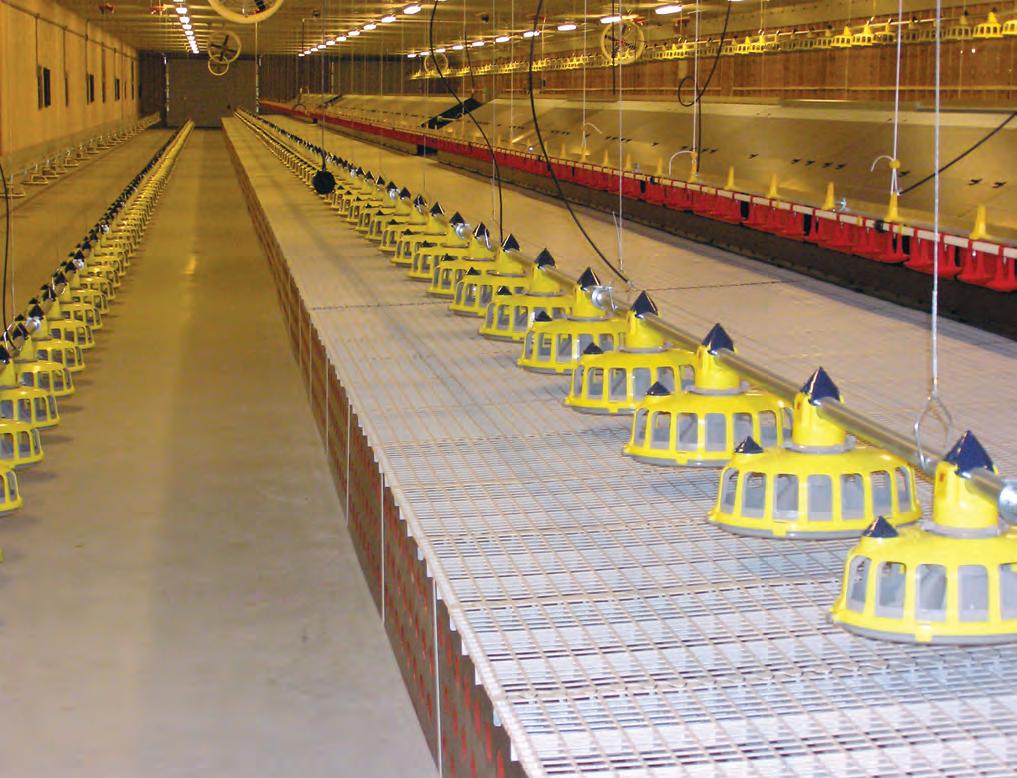
Most importantly it was designed with the birds in mind. It has fully modern feed and water systems, a fully insulated floor and automatic roll-away nests.
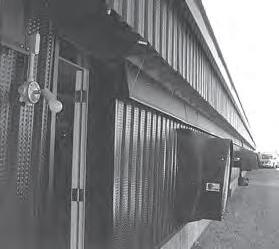
The Jansen system, supplied by Meller Equipment of Jarvis, promises to reduce labour by up to 50 per cent and keep the eggs clean and minimize cracks. The shape, colour and floor material were chosen to keep floor eggs to a minimum.
The barn is cross-ventilated to accommodate the extra width.
One of the tricks in a broiler breeder barn is ensuring that the males don’t get
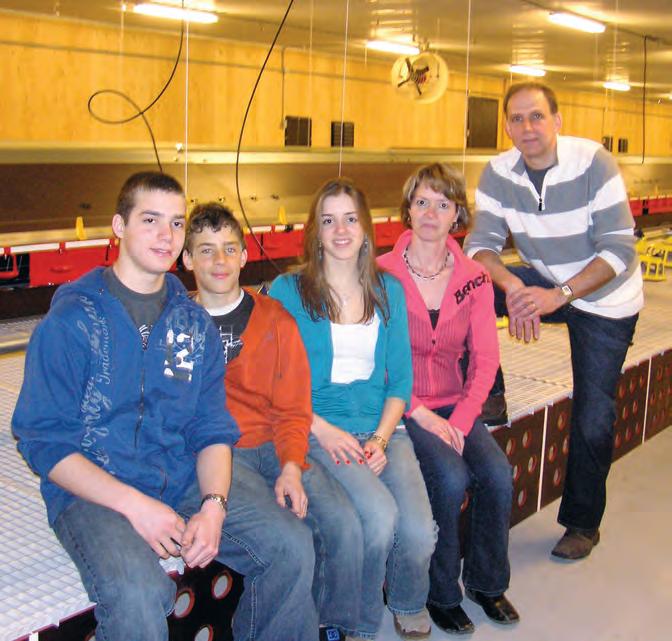
Joost, Koen, Anja, Marieke and Henk Bertens (left to right) put their brand new broiler breeder barn on display in early March.
at the females’ feed and vice versa. In large part this is because the feed formulations are different, but also because the females’ diet is tightly regulated.
The method of accomplishing the separation is elegant in its simplicity and based on the physical differences between the males and females. The males have bigger heads so the female feeders have grills that allow a female head through, but block the large headed
MEET THE BERTENS FAMILY
Housing
males. Meanwhile the males are taller than the females so the male feeders are raised high enough that the females can’t reach them.
The feeding system is fully computerized so the farmer knows exactly how much feed is being delivered and consumed.
The barn itself is 300 feet long and 84 feet wide. There is also a 24-foot by 84foot service area.
David Kloosterman, of Agrotec, who designed and built the barn, said the double-wide barns began getting popular about 10 years ago. He said they
are better than a two-storey as they are easier to maintain and work in. Also going double-wide works out better than doubling the length, which would make a barn far too long.
The insulated floor “makes the birds more comfortable and keeps the barn warmer and drier and makes it easier to clean,” he said.
“There are also fewer health issues with an insulated floor,” he said.
The barn’s roof is also insulated, which helps retain heat in the winter and keeps the barn cooler in the summer. With air intakes on both sides there is good air
THE BERTENSES’ NEW BARN IS SINGLE-STOREY AND DOUBLEWIDE TO GIVE THE FAMILY THE PRODUCTION THEY NEED WITHOUT ALL THE STAIRS OF THEIR OLDER TWO-STOREY BARN.
movement, he said.
The barn is designed to accommodate about 12,000 birds.
Bertens said he decided to hold an open house after the barn was completed and before the birds were brought in because few farmers in the area had ever seen the inner workings of a new broiler breeder operation. The last open house in the area was three years ago and he decided it was time for another one.
As to his new barn, new equipment and the big investment, Bertens was pleased with the result.
“This will work,” he said. ■
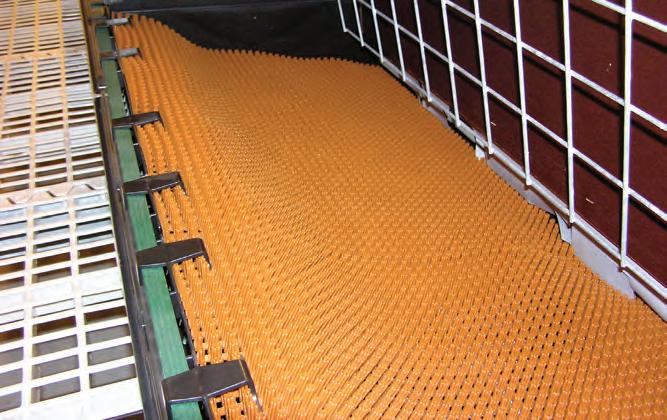
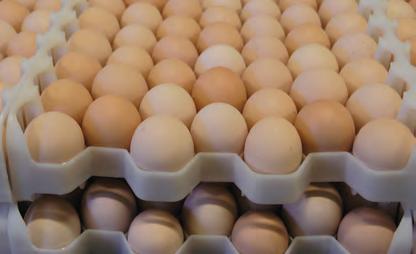
THE EGGS ARE GUARANTEED A SAFE, SOFT LANDING.
Hatchery
Continued from page 11
share, with five million birds per year.
With this $10-million investment, La Coop fédérée is securing a better hold on quality control and uniformity, all the way from the pullet farm to the processing plant. “If chicks leave the hatchery in uniform lots, chickens have a better chance to get to the processing plant in uniform lots,” says Véronneau.
The equation is simple: when more birds have the exact weight clients like St-Hubert demand, Véronneau says, more money goes in the farmer’s pocket. ■
Hatchery Features
The 12 P120 Platinum Single Stage Incubators and three P40 Hatchers offer such features as variable speed drives and CO2 control, which optimize hatch, bird quality and energy efficiency. Jamesway’s ventilation department worked closely with a local company, Groupe Soteck (www.soteck.com) to install an innovative ventilation system that met all parameters. The installation includes a heat recovery system that captures the heat from the incubators and hatchers cooling water system. The recovered heat is used to assist in room heating as well as heating the incubators and hatchers. The chiller system installation includes a dedicated heat recovery chiller that is able to provide the chilled water requirement for machines, while supplying hot water requirements, through capturing heat generated by the chiller. The plumbing system for the incubators, hatchers and HVAC heating and cooling coils includes variable speed motors and pumps that provide optimum water flow and pressure requirements. This system minimizes the amount of energy consumed during periods of low demand.
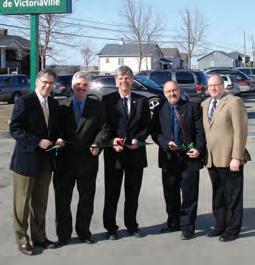
The open house was attended by over 50 local growers, industry specialists and members of the community. Cutting the ceremonial ribbon are (left to right): Ian MacKinnon, president of Jamesway Incubator Company Inc.; Claude Lafleur, managing director of La Coop fédérée; Ghyslain Cloutier, first vice-president of La Coop fédérée; Louis Turcotte, hatchery complex manager of La Coop fédérée; and Andre Theriault, area sales manager, Jamesway Incubator Company Inc.
PIC Update
Continued from page 24
We sincerely hope you had a fruitful couple of days and we’re sorry the bar at the exhibitor’s appreciation night closed early on Day 1. We’ll work on rectifying that for next year.
The attendance was pretty much as usual (about 2,000) but the mood this year was definitely bullish – sadly I think it had more to do with the weather than the economy. It was great to see so many visitors from south of the border and elsewhere across the world. Thanks for coming and hopefully we’ll see you back next year. The product promotions were a hit and miss affair: we’ll have another go next year via a ballot, so watch for the e-mail asking for expressions of interest in early 2010.
With summer on the way, this month we’ve featured a summary of information on ventilation and really hope those of you who are looking at changing or updating your ventilation find this useful. Please visit our website for the full document.
You’ll receive this edition just a couple of days shy of our research day, which this year focuses on food safety – this is a “must hear” for those of you involved in industry who have any interest whatsoever in this important topic. It’s at the University of Guelph Arboretum, it’s as cheap as chips to come along and it’s only a half-day so really no excuses for not attending – again please visit our website for details, but at this 11th hour, perhaps it is better to call us at 519-837-0284.
This year we’ve received 38 research proposals a few less than last year, they’re currently out for external review after which they’ll be reviewed by an industry-only panel for their “fit” with the R&E Strategy. The results of this year’s grant competition will be published in Canadian Poultry in August.
As always – contact us with your ideas, for information or to enquire about what’s next from PIC. You can reach us at 519-837-0284 or pic@ poultryindustrycouncil.ca. ■
– By Tim Nelson, Executive Director
• SolarWall has been installed on hundreds of agricultural and live-stock buildings, reducing heating costs by up to 30%. The system, which uses the sun to pre-heat incoming fresh air, also dramatically improves air quality and decreases humidity.
There are many reasons to consider SolarWall for your new or existing buildings:
• SolarWall provides thirty years or more of free heat.
• SolarWall means more fresh air can be brought into the building improving air quality without increasing heating costs.
• SolarWall is maintenance free and has no moving parts.
• SolarWall is cost effective - As of September 1, 2008 there is a federal contribution of $70.00/m2 of solar panel area and a matching $70.00/m2 contribution from the Ontario provincial government.
• SolarWall also contributes to cooling a building in the summer by shading the existing outside wall from the sun.
Call Exacon or an authorized SolarWall dealer near you for additional information and to obtain a free quote.
Research Oxygen Supplementation
Researchers study its effects during the last stage of incubation on broiler performance and ascites susceptibility
BY U. SAHAN 1 , A. IPEK 1 , O. ALTAN 2 , B. YILMAZ-DIKMEN 3
Broiler chickens are intensively selected for productive traits. Extreme selection pressure towards either growth rate or feed conversion ratio puts high demands on the metabolic processes in broilers1. This has resulted in anatomical and physiological limitation of blood flow through their lungs, with deficient oxygenation of their tissues as a consequence2.
Oxygen requirement is the most critical trigger of ascites in broilers3. Ascites susceptibility is particularly pronounced during the period of rapid juvenile growth when the metabolic rate is very high1. Although the peak incidence of ascites occurs in the fifth or sixth week of the growing period, the etiology of the disease may be initiated much earlier, even during the embryonic stage4).
Rapid growth increases the oxygen requirement, cardiac output, and blood flow and may result in increased pulmonary arterial pressure primarily by increasing the metabolic demand for oxygen5 Chicken embryos grow rapidly over the last seven days of incubation, resulting in a 60 per cent increase in the oxygen consumption during the interval between the start of breathing and hatching6.
Researchers have suggested that oxygen supplementation from 18 to 21 days of incubation could be used as an effective means of improving hatchability of
supplementation in the incubator can be an effective means of improving hatchability.
broiler eggs.7 Right ventricular failure and ascites are responses to the increased workload by the right ventricle as a result of pulmonary hypertrophy. Right ventricle to total ventricle (RV:TV) ratio can be used to determine the ascites status of a bird before gross lesions are apparant.8
The aim of the current study was to determine the effect of using supple-
mental oxygen treatment during the last three days of incubation on broiler performance and ascites susceptibility.
METHODOLOGY
A total of 720 eggs were obtained on the same day from a commercial broiler breeder flock (Ross 308) at 40 weeks of
Oxygen
MORE OXYGEN, PLEASE
Research
age. The eggs were sanitized and stored at 18 C and 75 per cent relative humidity (RH) for five days. The eggs were incubated in an incubator (Cimuka A1, Ankara, Turkey) at 37.2 C and 54 per cent RH for 18 days. On the 18th day of incubation, all eggs were candled and 650 fertile eggs were randomly divided into two groups. The first group was placed in a hatcher cabinet at normal atmospheric condition. The second group was placed in a hatcher cabinet that was supplemented with oxygen from 18 to 21 days of incubation. The partial pressure of oxygen within this cabinet was regulated with a flow rate of approximately five litres per minute. The percentage oxygen was monitored daily with the use of an oxygen analyzer. Both cabinets were maintained at 36.5 C and 72 per cent RH. Digital thermometers were used in each hatcher cabinet to verify set point temperatures. After hatching, 270 chicks per treatment (normal atmospheric condition and supplemental O2 at hatching) were reared. The chicks were weighed and coded. They were randomly distributed into 12 pens (six replicates of 45 chicks per pen, for each group). The chicks were brooded at 32.5, 29 and 27 C during Weeks 1, 2, and 3 respectively. From the third week, all broilers were reared at a constant temperature of 21 C. The feed in pellet form was formulated according to the specifications of the NRC (1994)9. Feed and water were provided ad libitum. The lighting schedule was 24 hours of light from Days 1 to 5 and 23 hours of light per one hour dark thereafter. Individual body weights were recorded at one, three, five and six weeks of age. Live weight gains and feed conversion ratios were calculated. Mortality and mortality due to ascites values in each pen were recorded daily. All dead birds were examined for the presence of typical ascites lesions, as determined in previous publications, and mortalities due to ascites were recorded.10 On the fifth week of the experiment, 10 chickens randomly chosen from each group were
Research
killed and the hearts were removed and dissected to obtain heart weights in order to calculate the RV:TV ratio8
The research used a randomizedplots experimental design. The SAS (SAS, 1989) package program was used in the evaluation of statistical analysis. Differences between means were compared using the Duncan multiple range test and Chi-Square analysis was used in analysis of mortality ratios.
RESULTS
Oxygen supplementation caused a significant increase in initial chick weight (P<0.01). The effects of oxygen supplementation on body weight (BW), growth rate and feed consumption were found to be significant at six weeks of age. Although oxygen supplementation did not have a significant effect on mortality, it is interesting to note that there was a difference of 2.59 per cent in mortalities due to ascites between the two treatment groups. It must be noted that, numerically, this was only a difference of seven birds (8-1), and thus statistically insignificant. At five weeks of age, there were no differences in right ventricle weight and the RV:TV ratio between the two groups.
DISCUSSION
In the study, oxygen supplementation in the hatcher cabinet resulted in a heavier mean chick weight. The results are in agreement with those of Stock and Metcalfe (1984)11 and Christensen et al. (2004)12, who stated that oxygen limits the growth of the chick embryo. Liu et al. (1995) concluded that BW at eight weeks of age was correlated with embryonic O2 consumption on Days 14-19 of incubation.6 Jones (1995) reported an improvement in feed conversion ratio and an increase in BW of eight per cent when oxygen content within the hatching cabinet was maintained at 23 per cent.13 In this study, the oxygen-supplemented group had a significantly higher mean final BW, feed consumption and feed conversion ratio than the control group.
>
The high metabolic demands of today’s fast growing broiler, together with insufficient oxygen availability, leads to hypoxia, which triggers ascites. Beker et al. (1995) demonstrated an inverse relationship between oxygen consumption and ascites incidence (R2=0.96).14
Mortality due to ascites of this nature was 0.37 per cent in the oxygen-supplemented group, compared with 2.96 per cent in the control group.
In the present study, mortality results were in agreement with those of Beker et al. (2003).15 It was concluded that oxygen supplementation from the 18th to 21st day of incubation increased chick weight, final body weight, growth rate and feed efficiency of the broilers.
1Department of Animal Science, Faculty of Agriculture, University of Uludag, Gorukle, Bursa, Turkey, 16059. 2Department of Animal Science, Faculty of Agriculture, University of Ege, Bornova, Izmir, Turkey.
3Department of Animal Husbandry and Health, Uludag University, Keles Vocational School, Keles, Bursa, Turkey, 16740
REFERENCES
1.Decuypere, E., Buyse, J. and Buys, N. (2000). World’s Poultry Science, 56(4): 367-377.
5. Wideman, R.F., Tackett, C. (2000). Poultry Science, 79: 257-264.
6. Liu, Z., McBride, B.W, Lirette, A. and Chambers, J.R. (1995). Canadian Journal of Animal Science, 75 (1): 115119. NRC (1994)
7. Altan, O., Sahan, U., Ipek, A. and Aydn, C. (2006). Arch iv Fur Geflugelkunde, 70(2): 64-68.
8. Huchzermeyer, F.W., Deruyck, A.M.C. and Van Ark, H. (1988). Onderstepoort Journal of Veterinary Research, 55: 5-9.
9. Nutrient requirements of poultry. 9th ed. National academy of sciences.
10. Julian, R.J., McMillan, I. and Aquinton, M. (1989). Avian Pathology, 18: 675 -684. Jones, G.P.D. (1995). British Poultry Science, 36: 123-133.
11. Stock, M.K., Metcalfe, J. (1984). Respiration Physiology, 58: 352-358.
12. Christensen, V.L., Wineland, M.J., Yoldorom, I., Ort , D. T. and Mann, K.M. (2004). Journal of Animal and Veterinary Advances, 3(2): 52-65.
13. Visschedijk , A.H.J. (1968). British Poultry Science, 9: 173-184.
14. Beker, A., Vanhooser, S.L. and Teeter, R.G. (1995). Avian Diseases, 39: 285-291.
15. Beker, A., Vanhooser, S.L., Swartzlander, J.H. and Teeter R.G. (2003). Poultry Science, 82: 15501553. ■
Now in its sixth edition, Poultry Diseases is once again fully revised with the addition of vital new material. It remains the standard reference work on health and disease for those involved in the poultry industry, government and veterinary education. Following a familiar structure, readers of the sixth edition gain concise but major reviews on current knowledge of general and disease-specific topics discussed over 45 (5 new) chapters in seven sections. With a large international team of contributors led by an authoritative editor team and a Foreword by Professor Frank Jordan, the 6th edition of Poultry Diseases is an invaluable resource.
Item #0702028625 $206.00
prices do not include GST or shipping charges
•
•
•
•
Chore-Time Ultra o Feed System
8,000 ft. of trough and feed auger, complete with 32 feed motors and 2 control panels. Previously installed in 2 separate barns of 4 - 250 ft. 2 tier rows. Used 6 years. $32,000. Contact Manfred: 1-204-324-6253 Cell: 1-204-324-7369 or mjjanz@sdnet.ca
Farm (49,500 quota) located in the Fraser Valley, B.C. 2 near new dbl decker barns, 5 bay garage, R.V. parking garage, older 4 bdrm house situated on 4.7 acres. Close to schools, shopping, etc. For more info contact Agnes 604-846-1987 For photos email roni246@shaw.ca
ST EAST, DUNNVILLE, ONTARIO N1A 1G2 Phone 905-774-7624 or Toll
1-888-718-8445 Fax 905-774-5960
52 ACRE BROILER FARM: 1 Barn – 20,000 sq ft. Driveshed. 16,500 quota. Auto generator. Smithville Area. Call Jack.
BROILER BREEDER FARM WITH 19010 H.E.M.S.: 1 Barn operation. Vencomatic nests. Plasson & Cumberland Nipple Drinkers. Chain feeders for Hens. Pans for Roosters. Bird scales. Plastic slats. Auto Ventilation from cross to tunnel. Birds out Fall 2008. Back in Feb. 2009. 75 KW Generator. 5 Bdrm brick home. 2nd home on property. Call Jack.
50 ACRE BROILER FARM - 2 BARN OPERATION: Barns have new steel, insulation checked and replaced where necessary. All equipment set for broilers. Barns have new vents and controls. Generator building. 3 bdrm brick bungalow completely updated. Large pond for water. Call Jack.
GRIMSBY AREA: 10 Acres on paved road. 32,000 sq ft of barns with auto generator. 40 x 60 x 2 driveshed used as retail outlet. 3 bdrm century brick home, pool. Call Jack
MODERN POULTRY FARM: 2 barn operation. Auto ventilation, feeding system, nipple drinkers. Standby generator. Drive shed. 4 bdrm, 2 bath home. 48 acres sandy loam soil. Tiled. Paved Road. Call Jack. www.ccagr.com Call us for more information about investment opportunities in Ontario Agriculture.
ALL THINGS CONSIDERED
BY JIM KNISLEY
A Growing Movement
Michelle Obama is putting in a vegetable garden. Generally that would merit a “that’s nice.” But this is the first time since the Second World War that a section of the White House lawn has been turned to vegetables and it is being seen as a symbol for changes in the American food industry.
Trendsetter that I am, I’d like to believe the Obamas are following my lead. I’ve been growing spices for years. Admittedly it was more because they are easy and because I find them attractive than to enhance my feeble culinary skills. But last year I added four tomato plants. Giving them all the care they needed, which means I ignored them, I pulled in a veritable flood of fruit.
This year I think I’ll add beans to the mix and put in a grapevine down by the wild raspberry patch. I don’t know if the grapes will work out, but it is worth a try.
Meanwhile, the guy next door grows everything. He has a couple of date palms that he stores every winter and replants with a backhoe, every summer. This year he’s threatening to try kiwi fruit. Across the road we have our livestock producer. He had half a dozen chickens until his dog died and a fox got in and wiped out the chickens. He now has a couple new dogs and I expect new chickens will soon follow.
This, I suppose, is local, organic, sustainable food at its most elementary and amateurish level. But it is a serious and growing movement.
In February, Tom Vilsack, the new U.S. secretary of agriculture, took a jackhammer to a patch of pavement outside his headquarters to create his own organic garden. This is a guy from Iowa who was better known for full-throated support of giant agribusiness than backyard gardens.
to reward conservation and to promote local food networks.
The local food movement is certainly resonating in Ontario where it is being pushed by Ontario’s Egg Producers. They have a resolution they’ve sent to Ontario municipalities that asks local councils to support local food. While it is in part a resolution aimed at derailing the cage-free egg movement, it seems to resonate with local politicians. Recently Haldimand County passed the resolution.
I report on Haldimand County council for a local paper and when the resolution came up for debate cages weren’t even mentioned. What was mentioned was the desire of councillors to have local consumers support local farmers by buying locally produced food.
To some degree the councillors were speaking to the already converted. Local farmers’ markets down this way are growing and new ones are springing up. From what I’ve read this is happening nationwide.
Even in Toronto, people are checking labels and looking not just for the Product of Canada designation, but an actual farm name or at least the county the food came from.
Part of this shift to local food also seems to be tied to the organic food movement. But there is an emerging problem on that front. Organic, and even free-range or cage-free, may make some people feel good about themselves, but it comes at a cost.
Even in Toronto, people are looking for locally produced food
At a time when incomes are shrinking and no one seems sure they will have a job tomorrow people are scared and keeping a close watch on their money. For poultry and egg producers this is not a bad thing. Eggs are an inexpensive source of protein, turkey is cheap and frozen whole chickens are routinely on sale.
If that wasn’t enough to convince everyone that things have changed, Kathleen Merrigan, of Tufts University and a longtime champion of sustainable agriculture, has been appointed as Vilsack’s top deputy.
The sustainable-food movement is based on the belief that the U.S. is efficient at producing cheap, abundant calories that generate profits for agribusiness, but are unhealthy for consumers and damage the environment.
Sustainable food supporters argue that instead of funnelling billions of dollars a year (a minimum of $7.5 billion this year) to corn and soybean growers the money should be spread more equitably and used to encourage farmers to grow a diversity of crops,
But the organic or free-range versions are anything but cheap. A couple of days ago a dozen, large Grade A eggs was selling for $1.97 in my local discount supermarket. This works out to just over 16 cents per egg – a true bargain. Meanwhile, higher up on the shelf there were some specialty eggs selling for more than 40 cents each.
Forty cents probably isn’t outrageous given the nutritional benefits of eggs. But unemployment here is just under 10 per cent and rising fast. Since there seems to be no great health benefit from the pricier eggs, $1.97 a dozen is a whole lot more attractive.
Given the state of the economy I can see local food doing well, I think sustainable agriculture has traction, but I’m not so sure about imported organic or other “specialty” products. ■
AGITA® Fly Bait
The fly solution for your farm.
AGITA fly bait delivers an innovative solution for fast effective control of adult house flies. When used according to label directions, AGITA fly bait is easy to handle and apply, and has an excellent safety profile with no known cross resistance.*
Get AGITA working for you. Contact your local distributor or Novartis Animal Health Canada Inc. customer service, 1 800-387-6325.✦