GREETINGS: A message from the Minister of Agriculture and Agri-Food Canada
9
MANAGING Supply: Taking a look back at the conception and arrival of orderly marketing
By Jim Knisley
15
pRoFIlES: 20 influential names from the last 100 years
31
GENETICS: 100 years of poultry breeding
By Peter Hunton
32
DECADES: A look back through the last 100 years of Canadian Poultry
71
EDIToRS ThRouGh ThE yEARS: Canadian Poultry magazine is now on its sixth editor. here are the first five.
100 Years of Breeding
Past Editors March 2013 • Vol. 100 Issue 3
4 From the editor: Lianne Appleby
All things considered Jim Knisley depa R t M ents
featu R es
9 Managing Supply 15 Profiles
FROM THE EDITOR
by Lianne appLeby
A century of stunts and stars
Most of us who watched have already forgotten the winners at the 85th Academy Awards, which were held in hollywood last month. Apart from the fact that this magazine is 15 years older than oscar, I do remember that during the program, I was impressed that in just nine decades, the film industry has undergone a revolution. Remarkably, it has progressed from silent to surround-sound, from black and white to high-definition colour and from primitive Chroma-Key scenes to computer-generated imagery. That’s an astounding example of progress.
Back in the infancy of movies, audiences were amazed by Buster Keaton’s falling house stunt in the movie Steamboat Bill, Jr. During the making of the picture, accounts say that Keaton drove a nail into the ground to mark where he should stand while the 4,000 pound house facade fell around him. An open window, which conveniently prevented his on-screen demise, was just big enough to give him two inches of clearance on either side.
Five decades later, Canadian agriculture pulled off an incredible feat of its own – the advent of supply management for certain sectors. The transformation was perhaps not as dramatic as those that moviegoers had witnessed on the big screen by this time, but words like “profitable” and “competitive” could be used in the same breath as “Canadian poultry production.” The system still has its critics today, but as with the oscars, there are people who are very happy with the outcome, people who think it’s not fair and people who couldn’t care less.
Some people still wonder how Keaton built up the nerve to attempt his 1928 stunt. let’s not forget – he didn’t know it was going to turn out all right. he could
have been seriously hurt, which may have delayed shooting and impacted the film’s revenue, or worse, he could have died.
likewise, the pioneers of the poultry industry didn’t know what lay ahead as they sat around boardroom tables met with government ad infinitum and laboured towards a system that could work for producers – again, in the pursuit of profit. The risk in this case wasn’t individual injury but the breakdown of an entire sector.
Today, supply management is under greater threat than ever of ending up on the cutting room floor. But, whether you are a fan or not, it should not filter your respect for those who determinedly fought to create it. The poultry industry doesn’t have its own version of the Academy Awards, but it does have its Keatons . . . and countless other heroes and heroines who, over the years, have helped to shape the industry we have today.
Funnily enough, Buster Keaton later said, “I was mad at the time or I would never have done the thing,” when asked about his falling house. With retrospect like that, it’s a good thing he was never a leader in Canada’s agricultural industry.
We hope you enjoy this special anniversary edition of Canadian Poultry magazine as much as we’ve enjoyed 100 years of covering the industry’s red-carpet moments, stunts and stars. n
March 2013 Vol. 100, No. 3
Editor
Lianne appleby – lappleby@annexweb.com
226-970-1139
888-599-2228 ext. 266
associate Editor
David Manly – dmanly@annexweb.com 888-599-2228 ext. 261
Publisher/Sales Manager
Marilyn White – mwhite@annexweb.com 519-400-2424
888-599-2228 ext 237 • fax: 888-404-1129
Sales assistant
Mary Burnie – mburnie@annexweb.com 519-429-5175 • 888-599-2228 ext 234
Media Designer
Gerry Wiebe
Group Publisher Diane Kleer – dkleer@annexweb.com
President Mike Fredericks – mfredericks@annexweb.com
Mailing address
P.O. Box 530, 105 Donly Dr. S., Simcoe, ON N3Y 4N5
Publication Mail agreement #40065710 rEturN uNDELiVEraBLE caNaDiaN aDDrESSES tO circuLatiON DEPt., P.O. BOx 530, SiMcOE, ON N3Y 4N5. e-mail: subscribe@canadianpoultrymag.com.
With more than 60 years of experience developing innovative products for poultry producers worldwide, Lubing has established a reputation of leadership by introducing new, cutting-edge technologies to the poultry industry.
Find out what’s NEW at Lubing by visiting our site at www.lubingusa.com
SprayCabinet
Spraying/Disinfecting your chain... Simplified!
DripCanopy
Keep your floors mess-free with a DripCanopy!
Cantilever Drive Unit
Keep the clutter out of processing!
ChainKeeper
It’s like life insurance for your conveyor system!
BaitStation
Keep your rodent problems under control!
Lubing?
Glass-Pac Canada
St. Jacobs, Ontario
Tel: (519) 664.3811
Fax: (519) 664.3003
Carstairs, Alberta
Tel: (403) 337-3767
Fax: (403) 337-3590
Tel: (519) 657.5231
Fax: (519) 657.4092
Tel: (450) 263.6222
Fax: (450) 263.9021
(780)
Which Came First?
Technical Service
Delivering the Best Advice and Support
Cobb business units in North America, EMEA (Europe, Middle East, Africa), South America and Asia have their own technical service teams. They are a group of specialists covering a range of disciplines including hatchery, breeder and broiler management, microbiology, veterinary medicine, nutrition, environmental control, and processing. The Cobb technical service teams have the resources, direct access and responsibility to support the technical needs of assigned customers assisting to take full advantage of the Cobb genetic potential.
Providing Business Solutions For Our Customers
cobb-vantress.com At Cobb, We’re Actually More Concerned With What Comes Next
Management
Managing Supply
Achieving supply management in canada was not as easy as one would expect
The chronology of supply management in Canada’s poultry industries seems straightforward and linear, but disguised are the challenges, controversy, drama and crises that set the clock in motion.
The legislative chronology began when the Farm products Marketing Agencies Act was passed in December 1971, and given Royal Assent on Jan. 12, 1972.
The Act provided an essentially parallel structure at the federal level, which was intended to dovetail with existing provincial plans.
In conjunction with provincial legislation, the federal act enabled poultry producers to establish national marketing boards and utilize supply management. The Egg Farmers of Canada were first off the mark in December 1972 and began operations in June 1973, while the Turkey Farmers of Canada (TFC) followed in 1974 with the Canadian Turkey Marketing Agency (CTMA). The Canadian Chicken Marketing Agency commenced operations a few years later in 1979 and in 1986 the Canadian Broiler hatching Egg Marketing Agency (CBhEMA) began operating under a supply-management system. Canadian pullet growers are still working today to establish their own agency.
The journey to supply management in Canada’s poultry industry involved interprovincial wrangling, constitutional challenges, the collapse of markets postwar, internal confrontations and a series
of false starts and dead ends. It was a journey in which Britain and the united States played significant parts.
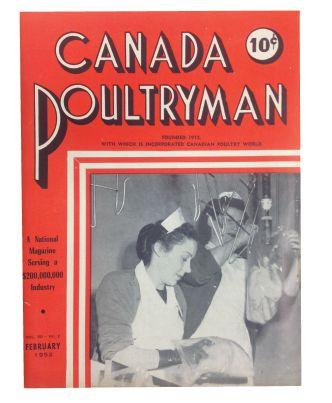
Fred Beeson, then editor and publisher of Canada Poultryman (now Canadian Poultry), played a key role throughout the early years in defining the need for change, promoting (and perhaps originating) the idea of supply management and providing coverage of the long, strange quarter-century trip.
From the export-led boom of the war years, through the struggles to retain international markets, to the interprovincial confrontations and court and constitutional challenges, Beeson and his magazine were there.
prior to the Second World War and during the Great Depression, the Canadian poultry industry was hardly an
industry. Beeson once said that, “During the depression, ’30’s agricultural production costs were hardly considered. It was enough, the producer was told, that he could scrape up sufficient food for his family and keep off relief.” producing eggs and chickens was for the most part a secondary industry on most farms. Small flocks were kept in small poultry houses and the eggs and birds were sold locally to generate some cash for the farm.
But when the war happened, it all changed. Struggling for survival, Britain went all in to the war and needed food –a lot of food. Canada rallied to the cause, not only sending its sons and daughters, but also organizing itself to supply food, with eggs being a key component. After the united States entered the war, it also found the need for imported food
Bill c-176 was passed and enacted by the Parliament of canada in January 1972.
ottawa
B Y J IM Kn I s LEY
Management
(particularly chicken). Responding to the dire needs, the Canadian government set up a top-down apparatus to stimulate food production and delivery.
And it worked. There was a dramatic shift from food grains to feed grain. prices were stabilized, production surged and exports boomed.
In 1945, Britain took almost three million cases of eggs from Canada.
Then, the war ended, and no one was certain what would come next. Some argued that the egg export industry would be a permanent feature of the Canadian economy. others insisted that the exports were a wartime bubble that would pop.
In January 1946, Beeson wrote: “With the war over, poultry producers find themselves at the crossroads. Will subsidies be maintained, will the overseas market continue and what price will it net producers?”
later that year, Beeson penned that the shape of the crossroads was becoming clearer. Denmark, Canada was told, had begun to sell eggs to Britain at 14 shillings less per 30 dozen cases than Canada. he wrote in June 1946, “how then can Canada continue to hold her position in the British market when other European countries are getting into production also?”
It was a critical question because half of Canada’s total egg production was being exported to Britain.
S.C. Barry, associate chief of the Dominion Marketing Service, said at the hatchery services convention in october 1946 that the British market was the key to prosperity. he said that Canada “must hold a substantial portion of that market, that it is the main force which will influence the barometer of prosperity in the industry.”
The stresses and strains of emerging from a long wartime economy were also being felt across agriculture.
In February 1947, the Canadian Federation of Agriculture met with the federal cabinet and its brief said, “We believe it is highly desirable to have order and system in our production and marketing programs all the way through from the farm to the world market.”
But calling for order was far easier than achieving it. Change was in the wind.
Many economists, businessmen, financiers and politicians wanted a quick return to the prewar-free enterprise system with the removal of controls and subsidies. For example, in May 1947, Beeson wrote of the prospect of the removal of feed subsidies and higher prices for grain without
the possibility of higher prices for eggs or chicken. “To maintain production it is absolutely necessary to continue a stabilized price relationship between costs and selling prices.” he continued, “Removing subsidies on grain will crumble the poultry industry as surely as the stabilized price
CONGRATULATIONS
Just as Canadian Poultry works to provide quality material for their readers, Big Dutchman stands for long-lasting quality, service, and unsurpassed know-how, and as the industry leader, our innovations will continue to positively impact the industries we serve.
Every day farmers the world over realize the benefits of our dedication to innovation. From our poultry, pig, and egg production systems to our tightly integrated automatic controls, we continue to set standards for efficiency, productivity and reliability.
It’s our innovations that help our customers succeed.
has built it up these last few years.”
Management
A year later, the situation had deteriorated to the point that the B.C. poultry Industries Council called for national action and Beeson called for the passage of a national Natural products Marketing Act that would work in conjunction with pro-
London Poultry Show
April
vincial marketing legislation. This would allow the establishment of a national board so that “the industry can regulate and control its own future.”
While Canada dawdled its way to a national board, Australia acted. It faced a similar situation in terms of both the
British export market and its legislative framework – there were state marketing boards, but no national body. But, in January 1949, the Australian government established the Australian Egg Board to co-ordinate with the state agencies and buy and sell eggs and egg products intended for export. The board was to have 10 members, six of whom were producers.
In June of that year, Beeson called for the formation of a national export board to handle surplus production.
But with the decline and collapse of the British egg market and the re-emergence of the u.S. as an agricultural power and exporter, the 1950s and 1960s were marked by unstable prices, uncertain supplies, and fluctuating producer and processor revenues.
The instability came at a time when, building on its wartime need for production and efficiency, poultry emerged as an industry utilizing scientific and industrial developments in husbandry, feed, housing, lighting and animal health. As Beeson wrote, the days of the barnyard flock and poultry as a secondary enterprise aimed at generating a few extra dollars for the farm were over. poultry producers’ flocks now numbered in the thousands or tens of thousands and poultry was no longer a sideline for thousands of farmers.
Key in all this was rural electrification. This was a singular goal of provincial governments and agencies following the war and changed everything for farmers. For poultry producers it enabled the construction of modern barns with lighting, feed and ventilation systems that dramatically raised productivity.
The economist paul Krugman wrote recently in the New york Times that “electrification, for example, was a much bigger deal than the Internet.” It was a singular force in driving economic growth deep into the 20th century, he said.
Despite all the advances, the Canadian poultry industry remained unstable. In 1961, the B.C. broiler industry was facing overproduction and shipping its surpluses to Alberta, Saskatchewan and Manitoba. Beeson wrote that none of the
Management
provinces wanted the products either, as it helped break their prices.
In January 1962, British Columbia formed a broiler board to rein in production and stabilize prices. It was the first and only poultry board operating in Canada at the time. “here we were with no surplus broilers in B.C., none in the neighbouring provinces and a rising price,” Beeson wrote after the board’s establishment.
Beeson argued in April 1964 that the industry needed more than the marketing control allowed under some provincial laws. The editorial said, “one cannot help but feel that it is not marketing control that is needed, but production control. our feeling is that it is this form of control that all other poultry groups need to ensure a continuing healthy marketing setup.”
“If an industry has a surplus,” the editorial continued, “there is no known method of maintaining a satisfactory price with or without a board short of destroying the surplus.”
In November 1964, with turmoil continuing and emotions at their peak, Beeson weighed in again in his editorial and pulled no punches: “hoping the other fellow will go broke is a poor way of evaluating the profit prospects of a business. That’s the present state of affairs, let’s face it.”
he continued: “Don’t let us waste time pointing fingers at one another. Far better to face the fact we are not living in a period of scarcity anymore. We can, in any one season, quite easily double our production across Canada. In fact that’s the way we have been heading for several years; not making it because too many go broke each year.
“It may well seem that we harp on this problem of overproduction and consequent low prices eternally in these editorials. We don’t apologize because this is the number one problem of the industry.”
Through the 1960s, other provinces joined B.C. in forming provincial boards including Quebec and ontario in 1965, Saskatchewan and Nova Scotia in 1966, and Manitoba in 1968. The boards had authority to regulate pricing and produc-
tion through marketing quotas but only within the province – often they faced cheaper product from other provinces or from the united States.
This culminated in 1970, with ontario and Manitoba shipping large volumes of eggs to Quebec. In response, the Quebec government allowed the provincial egg
“If an industry has a surplus,” the editorial continued, “there is no known method of maintaining a satisfactory price with or without a board short of destroying the surplus.”
marketing board to restrict the imports. In retaliation, the other provinces restricted the movement of Quebec chicken into their provinces, and the result was known as the “Chicken and Egg War.”
however, Manitoba devised a brilliant legal tactic to deal with the situation. Since it could not refer the Quebec legislation to a Manitoba court, it enacted identical legislation of its own, and then referred that legislation to its own Court of Appeal, where the legislation was struck down. This decision made it clear there were limits to what provincial boards and legislation could accomplish without coordination by both the provinces and the federal government.
A brief history of supply management on Agriculture Canada’s website says that Bill C-197 was introduced shortly thereafter. The bill “would have enabled a national marketing agency to control production through a quota system and allocated a portion of the national market to each province. It would have prohibited surpluses in one province from being sold
in another province and set the price paid producers according to production costs.”
But that legislation died on the order paper.
It was reintroduced as Bill C-176 and was passed and enacted in January 1972, but only after substantial debate. From that, the National Farm products Marketing Council was established and it paved the way for the creation of the Canadian Egg Marketing Agency, with the forming of the CTMA following shortly thereafter. Chicken took longer because of interprovincial disputes over shares of national production and quotas.
The establishment of a national agency should have put an end to the disputes, but the debates continued. In a February 1980 editorial, Beeson criticized chicken agency members for “jockeying for position in the pecking order,” adding, “… probably it will again take the Minister of Agriculture to put his foot down, heavily, really heavily.” Beeson added: “If it hadn’t been for such provincial bickering four or five years ago the Agency would have come into existence and annual imports would not have averaged more than 5 million pounds instead of fifty million plus a year as of now.”
In a 1975 debate in the B.C. legislature, D.E. lewis said: “I have to say quite openly that I feel that the Canadian Egg Marketing Agency is a disaster . . . . I don’t think that CEMA has been beneficial to B.C. or the farmers or the producers.”
“If the present CEMA system is allowed to continue, I can see nothing but chaos in the province,” lewis said.
Similar debates were held and opinions aired across the country. Surprisingly, the federal Agriculture Minister, the late Eugene Whelan, long a strong supporter of marketing boards, agreed. “CEMA is not the success that producers want it to be. Nor is it the success I want it to be,” said Whelan. “The final verdict will come in the next few months. If the provincial boards live up to their agreements, our chief egg marketing problems will end. If they don’t, the next press conference I call on CEMA will be the last.”
Basically, the problems stemmed from overproduction and the reluctance or
Management
inability of provinces and the provincial boards to control it. Compounding the difficulties was a continued rise in u.S. imports. It got to a point where Whelan told the provinces that if they instituted tough, enforceable provincial regulations and agreements to deal with domestic overproduction, he would deal with the Americans.
An example of tough new provincial rules came on April 18, 1975, when the ontario Farm products Marketing Amendment Act was signed into law. It gave the ontario Egg producers’ Marketing Board, for the first time, authority to establish regulations to carry out effective production control utilizing quotas and providing for the inspection of premises (without a warrant) when it was believed the regulations were not being followed.
With provincial regulation in place, the federal government did its part by imposing strict import quotas for eggs and other supply-managed poultry and poultry products. The u.S. challenged these import quotas at the General Agreement on Tariffs and Trade, but they were upheld.
In 1978, the Supreme Court of Canada was called into the fray. The Court was asked by the Attorney General of ontario for a ruling on the constitutionality of the provincial and federal rules and regulations, as well as the agreement between the
provinces and the federal government.
In its ruling, the court said: “The provincial regulations in question were not aimed at such extraprovincial trade and in so far as it affects this trade it is only complementary to the federal regulations. This is perfectly legitimate, otherwise federal-provincial cooperative action in regulating a commodity in both intraprovincial and extraprovincial trade would be impossible.”
Chief Justice Bora laskin, writing for the majority, wrote that the federal-provincial agreements establishing supply management were lawful, “even if it be an awkward way of overcoming a want of federal authority to regulate through an agency of its own the marketing of eggs throughout and beyond Canada, including local marketing.”
Taking that the Supreme Court settled the legal argument for supply management, William Stewart, ontario’s progressive Conservative minister of agriculture from 1961 to 1975, described the social and economic necessity of egg production as “a disaster course” at the london poultry Conference in June 1972.
And Eugene Whelan described the politics of the time, saying: “I went through hell to make sure you had supply management.” n
Profiles
VIPs of the Poultry Industry
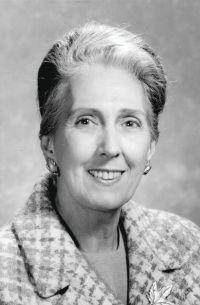
Dorothy Batcheller: a champion of the poultryman’s cause.
Dorothy Batcheller was a true trailblazer – a whirlwind visionary who promoted the consumption of turkey, eggs and chicken by leveraging funds provided by producers, without any dependence on government.
Batcheller (her maiden name, which she used in her career) worked as an economist for the Consumers Section of Canada’s Department of Agriculture, from the late 1930s until she retired –for the first time – in 1950. It wasn’t long before she was persuaded to take a part-time position with the poultry products Institute (ppI), which had a goal of promoting the consumption of eggs, chicken and turkey across the nation.
It was a difficult time to take on this challenge, but Batcheller worked with what she had. The Canadian poultry industry had been crippled at that time, forced to drastically reduce its layer flock after Britain cancelled egg contracts in 1949. There were no marketing boards at that time, and the ppI operated on a shoestring budget. When the marketing boards were formed, Batcheller seized the moment. She travelled coast to coast,
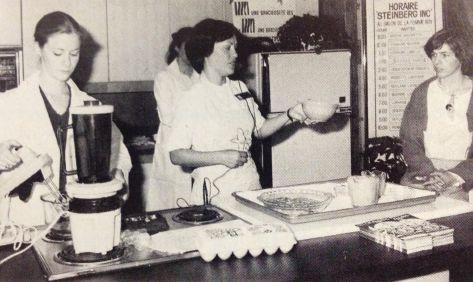
directly promoting poultry consumption. She also pushed for – and got – poultry marketing board home economists in all provinces, women who were able to build on her work in generating interest in poultry.
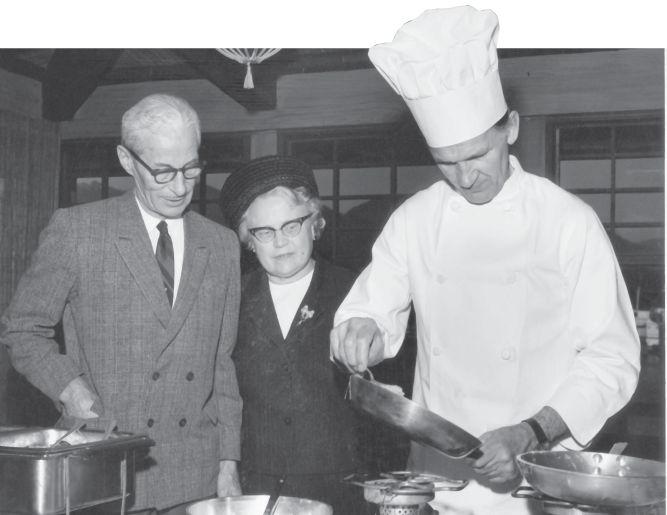
Batcheller also produced cookbooks for all three commodities: Cooking Canada’s Chicken, Cooking Canada’s Turkey and Cooking Canada’s Eggs. All of her recipes were “husband tested” and she promoted the books tirelessly. After a marathon two-week, 16-hour-per-day, 2,000-mile tour around Saskatchewan, her visits to schools and grocery stores – along with associated newspaper and radio coverage – triggered orders for 10,000 of each volume. From July 1970 to April 1971 she clocked 42,000 miles on her promotional rounds in various provinces. During one visit to Vancouver, Batcheller’s half-hour spot with a noted radio broadcaster expanded into a threehour marathon segment, with phone lines jammed with calls demonstrating the public’s thirst for poultry information.
Dorothy Batcheller was a dedicated, hard-working professional with ambitious goals that she met and exceeded for an industry she believed in. As Fred Beeson said in 1981 (the year she died), she “championed the poultryman’s cause, so effectively, for so long.”
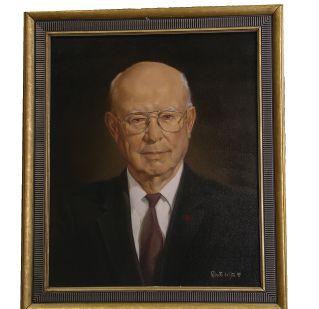
had an abiding faith. he organized farms, built farm organizations and developed people. Because he became a paraplegic in an accident in his youth, Mr. Beaty learned to build with people. harvey was founder and builder of Cold Spring Farms limited and affiliated companies. he purchased his first farm of 100 acres in Thamesford in 1949 and added to it until there were 60 farms containing 8,745 acres in ontario in 1994 and further holdings in the uSA.”
Harvey Beaty was nominated for the Canadian Agriculture Hall of Fame by fellow producers via what is now known as turkey Farmers of ontario.
harvey W. Beaty (1916-94) was inducted into the Canadian Agriculture hall of Fame in 1995 after devoting his working life to agriculture.
The citation for the induction says, in part: “For more than forty-five years, W. harvey Beaty successfully devoted his working life to agriculture, in which he
Beaty led and co-ordinated the growth of enterprises in turkeys, beef, pork and grain in Canada. he diversified his expertise into a feed mill, grain elevators, a processing plant, a rendering plant, a farm machinery dealership, automotive workshops, a fertilizer plant, fabrication, construction and development.
Beaty also served as director of many organizations, including the ontario Turkey producers’ Marketing Board, the ontario Egg producers’ Marketing Board, the ontario poultry Council, the poultry products Institute of Canada and
Dorothy Batcheller
harvey Beaty
the poultry Industry Conference and Exhibition. he assisted in the formation of several of the organizations, as well as the ontario poultry Centre. he served as director of the oxford and ontario Federations of Agriculture and on the Thamesford Village Council, Western Farm Association, and the ontario Food Council. he was also involved in assignments for the Economic Council of Canada, the Canadian Grains Council and the Canadian Tariff Board.
clauDe BernarD
It was 1966, and egg producers were being tossed through the boom and bust cycles before supply management. Claude Bernard was just a young man then, sharing all the pains, hopes and dreams of trying to convince some 2,700 producers to join create a marketing board.
Claude Bernard is a living and always involved witness, since 1966, of FPocQ’s development and evolution.
Bernard and ovila lebel founded what became the first federated, province-wide, table egg producers’ marketing board in Canada in 1964: Quebec’s mandatory egg marketing agency. A graduate of the Brigham School of Agriculture, at 29 years of age, he immediately became lebel’s right hand man.
Claude Bernard also became chairman of the Saint-hyacinthe Regional union of Table Egg producers in 1966.
A Grading and Sales Agency was also created and Quebec’s mandatory egg marketing agency experienced 17 years
Profiles
of prosperity. But Quebec’s mandatory egg marketing agency and, particularly, the legitimacy of the Sales Agency, were challenged by several members who had other ideas.
After representing Quebec’s mandatory egg marketing agency at the Canadian Egg Marketing Board (CEMA) from 1976
to 1981 and supporting ovila lebel, especially by defending the Sales Agency, the legitimacy of which he was convinced, Bernard was elected chairman of Quebec’s mandatory egg marketing agency when lebel decided to retire in 1982.
Bernard noted the successful rise of a number of grading stations, one of which
60 Years Strong
5 00 bird operation...our humble beginnings
D
Creating value for the turkey industry
1
was Nutri-Œuf Inc. in St. hyacinthe, a regrouping of 34 producers presently owning more than 1.35 million layers and marketing some 40 per cent of all Quebec eggs.
When Bernard became convinced that the Sales Agency was becoming an obstacle to unity among Quebec pro-
Profiles
ducers, he resigned from his position as chairman in 1986, after having allowed a motion to dissolve the Sales Agency and erase the registration acronym Quebec’s mandatory egg marketing agency, which was replaced by the actual “FpoCQ”: Fédération des producteurs d’œufs de Consommation du Québec - the Quebec
Just see a veterinarian? We see more.
We see the numbers that connect us. We see the number of visits our veterinarian, Dr. Helen Wojcinski, makes to improve your flock performance. We see the countless hours of training and experience that come with Helen wherever she goes.
Together by understanding the numbers, we understand the industry.
000 miles travelled to visit customers each year years of formal Animal Health education
16 industry presentations delivered per year
120 people trained through Hybrid Hatchery Workshops
Federation of Table Egg producers. Self-sufficiency in table eggs and industrial eggs is still far from being realized but progress is steady, if slow. Efforts made by all chairmen to establish equitable allocations have gained ground.
Wally Berry
When Wally Berry looks back on his years in the poultry industry, he thinks he was very fortunate to get involved before it changed from small farm flocks to large-scale growing of chicken and turkey.
Berry entered the poultry business in 1946 after being discharged from the air force, with a firm known at that time as the Alberta poultry producers, now known as lilydale poultry.
The company was set up in 1940 to 1941 to support the war effort and millions of pounds of dry-egg powder, fowl, chicken and turkeys shipped overseas to feed the troops.
Active in the poultry industry for 43 years, wally Berry says his main interest is now horses.
According to the annual reports from those days, the company was serving 40,000 poultry shippers in Alberta. During the war years, Alberta built itself up to be the second largest producer of poultry products in Canada, next to ontario. Alberta poultry producers operated 75 egg-handling stations, 10 country killing plants, three hatcheries and an egg-drying plant.
It was in the early 1950s that the organization realized that it was totally
obsolete for what lay ahead in the poultry industry. It had to sell off every operation, including its real estate, and start over.
o ver the next number of years, l ilydale developed into one of the major poultry processing companies in Canada, with operations in British Columbia, Saskatchewan and Alberta.
When Berry started in the poultry industry it was in its infancy compared to what it is today. In the 43 years he was involved, he saw it change from New york dressed to eviscerated poultry then to further processing and basted turkeys. With such developments as line speeds running at 12,000 per hour, liquid freeze systems and marketing boards, it was one change after another. In 1955, 3.7 pounds of feed was used to produce a pound of chicken at 73 days, Berry once said. “Compare that to today’s figures!”
hayWarD clark
Hayward Clark was a leader in the poultry industry, a co-operator, a strong supporter of farm organizations and a faithful member of his church.
hayward R. Clark’s 54 years in the poultry industry rank him among the pioneers who were able to see the industry grow from the small farm flock to the multimillion-dollar, efficient food producing industry it is today.
Born in 1900, Clark did not begin his career in the poultry industry until 1926 with a setting of eggs he hatched on the farm, but he ended it with a modern chick hatchery that at the time of his retirement
Profiles
was the largest in the New Brunswick, serving markets throughout Atlantic Canada. his leadership was instrumental in the rapid and dramatic development of improved breeder flocks. The standard dual-purpose breeds such as Barred Rocks were the mainstay of the business until the late 1950s, when he initiated and encouraged the specialization of poultry breeds, obtaining a Shaver leghorn franchise for New Brunswick and encouraging the use of meat birds for the broiler trade.
hayward Clark was a cooperator. he was associated with Capital Co-operatives, both on the board of directors and as its president during the time it expanded to serve the needs of the farmers in the central area of New Brunswick. his contribution to the farming community was also extended to thirteen years on the board of directors of Co-op Atlantic.
hayward was a leader in the poultry industry, a cooperator, a strong supporter of farm organizations. his business was one of the largest in Atlantic Canada and following his death in 1981, is now under the management of his son, Donald. he was inducted into the Atlantic Agriculture hall of Fame in 1984.
changed
from a seasonal operation into a year-round industry.
he also quickly discovered that the growing season was not long enough to have birds ready for the peak selling times – Thanksgiving and Christmas. With artificial lighting, though, the birds could produce eggs year round, and therefore produce meat year round.
he collaborated with u.S. producer, breeder and friend George Nicholas, in Sonoma, Calif., and through artificial lighting and the development of artificial insemination they were able to supply a growing market.
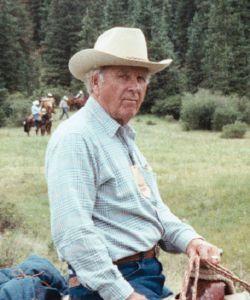
Mac Cuddy was born on oct. 24, 1919, in Kerwood, ont., and raised on the family farm in Adelaide Township. At the young age of 14, he found that if he left lanterns burning in the chicken house the chickens laid more eggs. Cuddy was a born poultry producer.
After earning his degree in horticulture in 1942 from the ontario Agriculture College in Guelph, he enlisted and went off to serve in the Second World War. he returned home in 1945 with the rank of Captain.
In June 1950, Cuddy bought a 100acre turkey farm just outside Strathroy, ont., where 400 breeding turkeys quickly increased to 1,000 birds. Supply issues led him to buy a couple of used incubators and he soon started hatching his own eggs.
Cuddy Farms ltd. in Canada, the united States and Scotland now supply poults worldwide. As the company grew, Cuddy diversified into food processing, developing further-processed turkey and chicken products that consumers readily accepted.
In 1986, Cuddy Chicks broiler hatchery was established in Jarvis, ont., and by 1987, Cuddy had opened Canada’s largest and most advanced poultry and processing plant in london, ont. Both were sold in 2001 to Cargill’s Sun Valley Foods. By 2003, the remaining food-processing business was sold and the focus of the company returned to turkey.
Cuddy passed away in 2006 but his legacy lives on. his contributions to the industry have been recognized in numerous ways. he has received the ontario poultry Council Award of Merit, the ontario Chamber of Commerce o utstanding Business Achievement Award, and the london Chamber of
alfreD McInroy (Mac) cuDDy
Mac Cuddy
raising turkeys
Commerce Farmer of the year Award. In 1986, the Canadian hatchery Federation named him “Man of the year.” he was also made honorary member of the poultry Science Association. In 1994, the university of Guelph awarded him an honorary doctorate of laws and Canadian Business Magazine named him ontario’s “Master Entrepreneur of the year.” he has been inducted into the london Business hall of Fame, and the ontario and Middlesex agriculture halls of fame.
BrIan ellsWorth
Brian Ellsworth retired in the early 2000s after 34 years as general manager of ontario Egg producers.
But his influence extends well beyond ontario. A major factor in the Canadian egg industry, he was chairman and is now honorary president of the International Egg Commission.
The influence of Brian Ellsworth has been far-reaching in the egg industry.
Ellsworth is a former president of the ontario Institute of Agrologists. he was a Nuffield scholar and served as Canadian president of the Nuffield Association. he was general manager of the ontario Egg Board in the turbulent years leading to supply management and coordinated a producer mail-in campaign that spurred the ontario government to quickly set up a promised marketing board. The campaign irritated the politicians, but produced results and the board was established.
Ellsworth also presided over the
Profiles
expansion of the agency from a twoperson office located in downtown Toronto to a much larger office located in Mississauga and was instrumental in ontario’s many successful egg marketing initiatives.
For 24 years John Eyking represented Canada’s egg producers on the board of the canadian egg Marketing agency.
When John Eyking decided to emigrate from holland in 1953, his first choice of destination was British Columbia because he felt its climate offered the best opportunity to use his family-farm experience with growing bulbs, vegetables and strawberries. But the west’s economy was struggling at the time, and so he decided to try Canada’s east coast instead. It ended up being a good choice.
After he arrived in Nova Scotia, Eyking worked on a dairy farm, a golf course and a nursery. he started his own landscaping business, and in the winters, found other work. he met and married another young Dutch immigrant, Jeane Mertens, and the couple soon bought a farm on Boulardarie Island, raising vegetables and a small flock of poultry. Both operations grew, and Eyking was soon farming 60,000 laying hens. As the egg industry cycled through the ups and downs to come, the Eyking operation sustained itself through its farm store and selling eggs door to door. Eyking also purchased a small independent grocery store chain,
but did not stay with it.
By 1968, Nova Scotia egg producers were facing difficult issues. Eyking tried to persuade his colleagues to create a supply management system similar to what he had learned was being developed in British Columbia. The first attempt failed, but with the help of agriculture department representative Stuart Allaby and others, a second vote two years later was positive. For 24 years of his career, Eyking represented Nova Scotia on the board of the Canadian Egg Marketing Agency. That experience strongly motivated him to create an “atmosphere of co-operation” among Nova Scotia egg producers, so that market share tussles between mainland and Cape Breton farmers could be resolved.
The Eykings eventually had 10 children, several of whom help run the operation. The family grows their own poultry feed on several nearby farms, and it is mixed onsite and blown into the barns using a computer-controlled system. Today, John Eyking claims to be mostly retired from the farm business, but shows few signs of slowing down the pace he’s always kept during his long and varied career.
Bert hall
Born in 1920 and raised on a farm near Manitou, A.E. (Bert) hall was a founder of the first registered turkey hatchery in Manitoba. In 1956, he assumed the position of general manager and director of Manitou Broiler Farms ltd., participated in the organization of the Manitoba Broiler Industry Association and was its chairman. In 1968, the Manitoba government established the Manitoba Chicken Broiler producers’ Marketing plan and Bert was appointed as a board member and later served as chairman for 15 years. he also represented Manitoba in the formation of the Canadian Broiler Council, was a member and served two terms as president of the Manitoba Farm Bureau, was a director of the Western Agricultural Conference, a director of the Canadian Federation of Agriculture and Canfarm, and served as the Manitoba
John eykIng
representative to the Canadian Chicken Marketing Agency, completing a term as chairman. Bert was also appointed to the Federal Government Ad hoc Grains
Bert Hall was a key player in the growth and development of Manitoba’s poultry industry.
Profiles
Committee (whose purpose was to ensure adequate supplies of feed grains for the Canadian livestock industry), chaired a committee for consultation with producers on a new farm organization and was provisional chairman of Keystone Agricultural producers. In 1988, he was appointed a member of the Manitoba Natural products Marketing Council, served on his district’s school board for 20 years as trustee, was a member of the pembina Manitou health Board for 10 years and served as mayor of Manitou from 1986 to 1992.
Bert was honoured with the Queen’s 25th Anniversary medal in 1977 and inducted into the Manitoba Agriculture hall of Fame in 1999.
Joe huDson
With Joe hudson still at the helm,
Burnbrae Farms remains a thriving participant in Canadian agribusiness.
For Burnbrae Farms, the company built by Joe hudson, the old question of which came first – the chicken or the egg – is easy to answer – it was the cow that came first. At first a dairy farm in lyn near Brockville, ont., Burnbrae began egg production in 1943.
Joseph Arthur hudson, along with his wife Evelyn, had been expanding the farm’s crops and dairy business. In 1943, their son Joe became involved in a high school poultry project, which he then managed on the farm with help from his father and his brother Grant. By the time Joe completed high school in 1948, the number of laying hens had increased to 3,000. Eventually, the farm’s main enterprise became poultry, with the first laying barn constructed in 1952 and a major expansion in 1956.
with Joe hudson still at the helm, Burnbrae Farms remains a thriving participant in canadian agribusiness.
over the years, the lyn operation has continued to expand. The laying barns are now connected by an in-line system whereby a conveyor belt carries the eggs from the barns to an egg processing facility. over the decades, the company has expanded on a large scale through buying other production sites and grading stations. In 1981, Bon-EE-Best Eggs in Mississauga joined the Burnbrae group. Burnbrae also has a Calgary plant, and effectively the company now has a presence in all regions right across Canada.
Burnbrae has also continued to add specialty products, such as all-vegetable feed “Nature’s Best” and omega-3 fatty acid-rich “omega pro” eggs, with tremendous growth seen in that segment of the business. Burnbrae Farms now employs 450 people nationwide and sells eggs and egg products to many of Canada’s major grocery chains, foodservice operations and large bakery customers.
In 2000, Joe hudson was honoured as a life member by the Canadian Federation of Independent Grocers and the year after, received the Golden pencil Award, given out by the Food Industry Association of Canada for outstanding service in the food sector. hudson turned 75 on July 12, 2012, and remains the very active chair and CEo of the family-owned company.
Profiles
peter hunton was born in Newcastle on Tyne, England. he obtained his B.Sc. in Agriculture (honors) from Durham university’s King’s College, and his M.Sc. from Wye College, university of london, where he specialized in poultry science and genetics.
While working for Shaver poultry Breeding Farms in Canada, hunton was awarded his phD from the university of london. hunton spent his career working for Shaver poultry Breeding Farms, Ross poultry, and the ontario Egg producers’ Marketing Board as poultry specialist 1980. he retired from the oEpMB (now Egg Farmers of ontario) in 2001.
Dr. Peter hunton has edited a book and written numerous articles about poultry production, including many for Canadian Poultry magazine.
Throughout his career and for many years after retirement, he wrote articles for trade journals that made science understandable to the industry. he also wrote scientific articles and contributed to major textbooks, including Poultry Production (as editor) in 1995. hunton was the World poultry Science Association’s (WpSA) Canada Branch president, and later international vice-president, senior vice-president, and president. he led the successful bid for the XXI World poultry Congress in Canada. During his time as WpSA president, he travelled widely on asso-
ciation business to increase membership and branch formation, especially in South America. hunton also attended symposia organized by branches of the European Federation, Australia, India and Bangladesh. For 45 years he has been an enthusiastic supporter of WpSA in all of its endeavours, and most recently led the committee to provide online access to the journal by all members.
Dr. steven leeson
For nearly 40 years, Dr. Steven leeson has been a fixture in the world of poultry providing new insights in the area of nutrition. Though broad in its scope, his research is traditionally focused on the energy metabolism of broilers, feeding programs for layer hens and creating nutritionally enriched eggs.
Dr. steven leeson is internationally renowned for his work in the area of poultry nutrition.
leeson is a native of England, and received an Mphil in 1971 and a phD in 1974, both from the university of Nottingham. Following graduation, he travelled with his wife Anne to the university of Guelph, originally for a one-year post-doctoral study with Dr. John Summers. But leeson was offered a faculty position at Guelph in 1977 in the Department of Animal and poultry Science, where he has remained. he became chair of the department in 2005 and served in that role until 2010. his impact stretches beyond research,
Dr. Peter hunton
ONE NEW NAME HERE FOR
however, because he has mentored more than 20 graduate students (including the editor), while playing an integral role in undergraduate education at the university of Guelph. he has taught and designed courses on poultry production and nutrition as well as introductory courses in animal science at the diploma, undergraduate and graduate levels.
leeson’s contributions to poultry science have not gone unnoticed, as he has been presented with numerous awards for his research, including the American Feed Manufacturers Nutrition Research Award, the Distinguished Research Award (ontario Agricultural College), a Service in Extension and public Service Award (Canadian Society of Animal Science), the Canadian Society of Animal Science Fellowship, the poultry Industry Council’s poultry Worker of the year award and many others.
he has written more than 320 articles in refereed journals, 80 articles in trade journals, and five books, including a revision of M.l. Scott’s The Nutrition of the Chicken with the late John Summers. he’s also given more than 600 presentations on the topic of poultry and animal sciences.
george nIcholas
George Nicholas intuitively knew that a single mutation he found in his flock would change the turkey industry.
George Nicholas was born in San Francisco on April 30, 1916. he moved with his family to a poultry farm near petaluma,
Profiles
Calif., when he was nine years old. he soon started raising slaughter turkeys. At the age of 16, Nicholas was named California’s first Future Farmers of America Star Farmer because of his outstanding achievements in turkey production. The profits from his farming went towards tuition at the university of California, Davis, where he graduated in poultry science in 1937.
In 1939, he purchased a 175-acre farm near Vineburg, California with Johnny Nicholas, starting Nicholas Turkey Breeding Farms.
When George found a single white poult in the early 1950s, he knew he had found something important. By crossing this white bird with the bronze variety, he eliminated the unsightly, inky pinfeathers on the meat. The Nicholas breed – the white turkey – has now become the industry standard.
over the years, he added new lines, developing a faster-growing turkey with better feed conversion. his higher-efficiency birds reduced the cost of production and made turkey more affordable for everyone, shifting expensive, seasonal meat to a bird that could be enjoyed throughout the year.
Nicholas Farms became the first turkey business to hire scientists – geneticists, nutritionists and avian veterinarians – for turkey research and development. Their advancements led to the development of many of today’s artificial insemination techniques. Through his efforts, the company developed into a multimillion-dollar pedigree turkey breeding business that put Sonoma County on the map.
In 1978, Nicholas expanded the company to Europe. Based in Scotland, Nicholas Europa ltd. imported eggs from California and supplied turkey breeding stock and technical support to European and Middle Eastern countries.
In 1983, he became the first turkey breeder to be inducted into the poultry Industry hall of Fame in Maryland.
Nicholas died in 1984, but his Sonoma-based company continues to be a major international player in breeding turkeys.
Dr. frank roBInson Award-winner, trail-blazing researcher, author – all of these descriptions and more fit Dr. Frank Robinson. As a professor of poultry production and physiology at the university of Alberta for many years, Robinson is still tirelessly exploring new ways of bringing people to the research and research to the people.
Dr. Frank robinson was inducted into the Alberta agriculture hall of Fame in 2006.
Robinson’s research career has placed an emphasis on the reproductive efficiency of broiler breeders, something that captured his curiosity early on. he also does research to create what he calls “owner’s manuals” for new lines of chickens.
Robinson is associate chair of his university’s agricultural, food and nutritional science department and director of its poultry Research Centre – a research institute for which he was a major fundraising force back in 1998. It was and still is a very innovative facility, one that includes a processing plant and hatchery. In 2004, Robinson accepted the World poultry Science Association Education Award in recognition of the centre.
preservation of heritage stock is an important function at the facility, and Robinson remains concerned about the genetic vulnerability of our commercial flocks. he also believes we need more poultry research in Canada, with an emphasis on having a national and an
international scope.
When he is not researching and teaching, Robinson gives presentations across Canada and around the world. over the last two years, he has also co-authored two books for poultry farmers. his contribution to education has been acknowledged with 14 awards. his dedicated fellow poultry faculty members, known around the university as the Coop of Seven, have received three other group awards over the last five years. Together they have helped to turn out practically trained students who have strong problem-solving skills and are able to think on their feet.
In 2004, the university of Alberta also presented Robinson with the Rutherford Award for Excellence, a teaching award that carries quite a bit of prestige on a campus with more than 1,900 faculty members.
however, many would say that no matter how many awards are won by Robinson and his team, his continued dedication and enthusiasm for his work makes the Canadian poultry industry the real winner.
Robinson was appointed as interim vice-provost and dean of students beginning July 1, 2008.
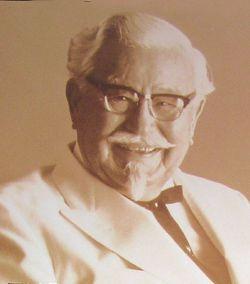
Born on Sept. 9, 1890, in Indiana, harland Sanders was the oldest of three children. his father – a coalminer in Kentucky – died when Sanders was only six, leaving him to help look after his
Profiles
family. he showed an early talent for cooking while his mother worked in the local shirt factory.
harland eventually held jobs as a farmhand and a streetcar operator; he worked on the railroad and the riverboats.
In the early 1930s he opened a gas station in Corbin, Ky. Word of mouth had travellers stopping at the gas station to sample his cooking. he soon opened a restaurant – Sanders Court and Café – across the street where he started working on his now famous coating recipe.
harland started experimenting with a pressure cooker in the ’30s, finding the right cooking times, the right pressure and the right shortening temperature to produce his signature southern fried chicken without deep-frying.
his secret recipe – an “original blend of 11 herbs and spices,” made him famous in Kentucky. In 1935, Kentucky Governor Ruby laffoon made Sanders a “colonel” for his efforts.
But in the early 1950s, plans diverted the highway around Corbin and Sanders closed the restaurant.
Sixty-five years old and penniless, he had a choice: he could subsist on his $105-a-month pension or he could take his fast-food chicken to the world, offering a “finger lickin’ good” alternative to hamburgers and hotdogs.
In 1952, Col. Sanders took to the road – secret recipe stored in his head and bags of his special coating mix stored in his car – ready to cook for restaurant owners. he convinced them to produce fast-food chicken and pay him a nickel for every chicken they sold. The Kentucky Fried Chicken – KFC – franchising business was born.
By 1964, over 600 restaurants throughout the united States and Canada had signed on, with several owned and operated by the late Dave Thomas, eventual founder of Wendy’s.
At the age of 74, Sanders sold his interest in the company for $2 million.
Sanders died in 1980 and the secret recipe still remains a secret, locked securely in the company safe.
KFC serves more than a billion of the colonel’s “finger lickin’ good” chicken
dinners annually in Canada, approximately 25 per cent of the total Canadian production for 1.7- to 1.8-kilogram broilers.
MIlo anD ross shantz
Ross Shantz in the early days of the enterprise.
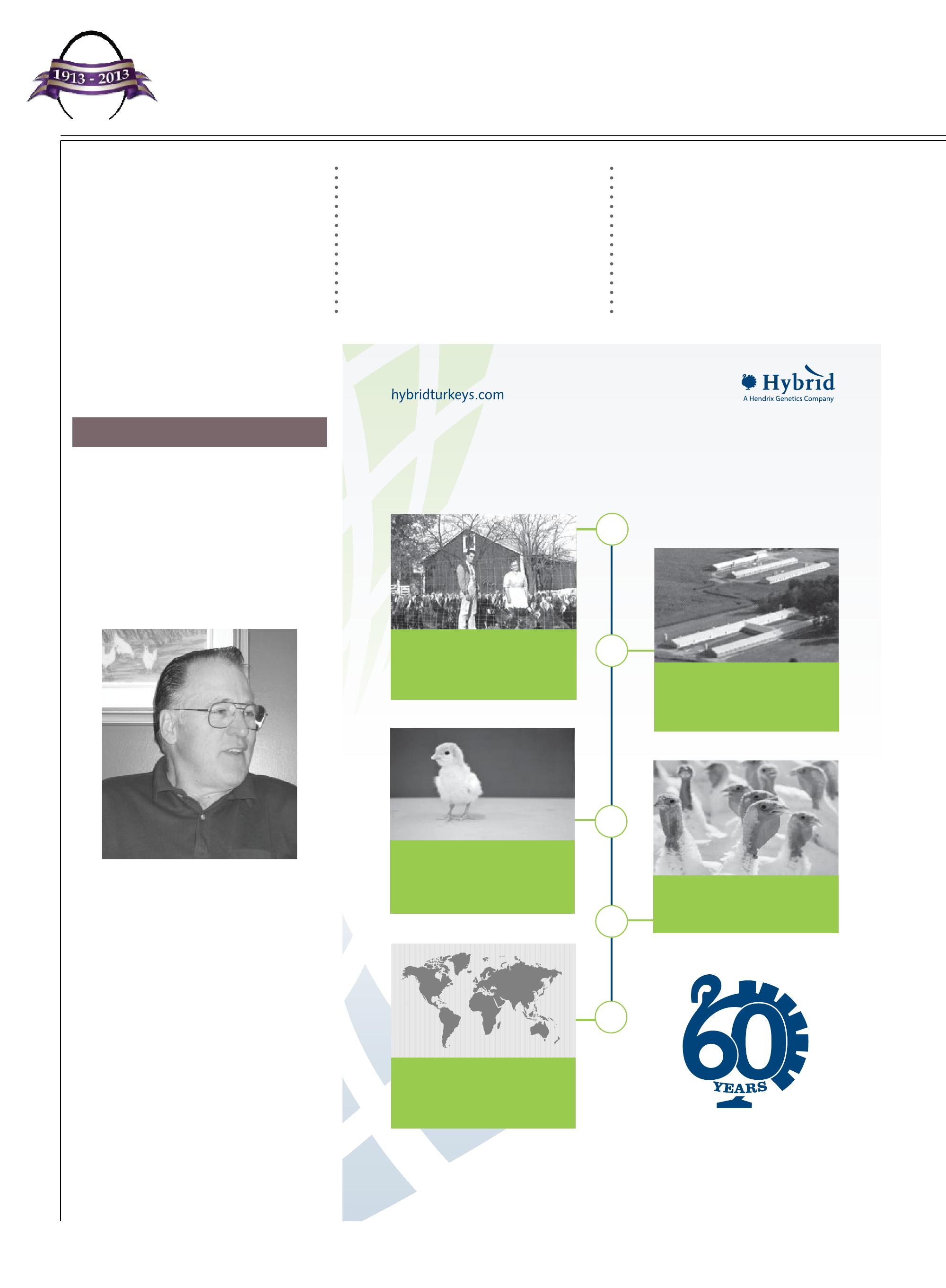
hybrid Turkeys began operations in the early 1950s with 500 commercial meat turkeys. Since then, hybrid has grown so that today, the company is one of only two major turkey-breeding companies worldwide.
Milo Shantz was born in New hamburg, ont., in 1932 and Ross in 1939. The Shantzes’ early involvement in the poultry business led to the development of hybrid Turkeys in 1970, which now encompassed two pedigree complexes and two hatcheries in Canada, and multiple farms in Canada and France.
Profiles continued on page 65
col. harlanD sanDers
Colonel Harland Sanders, a pioneer of “Finger lickin’ Good” chicken.
Milo shantz in 2007.
Dave Jeffries and his sons, Roland and Ernie, know a thing or two about farming. So, when it was time to expand the business, they naturally chose a bank that knew how to help. At TD, they found Agriculture Specialist Vince Puchailo, who helped implement a succession plan. Vince’s understanding of the complex process even impressed the lawyers handling the sale. A personalized approach to agriculture nance, like Vince’s, is something all TD Agriculture Specialists bring. Maybe it’s time you brought one to your farm.
For more information, visit a branch or tdcanadatrust.com/agriculture
Dave, Roland & Ernie Jeffries Vegetable Growers
Vince Puchailo TD Agriculture Specialist
Remarkably Clean
Genetics
100 Years of Poultry Breeding
over the past century, poultry breeding has evolved from a hobby into an entire industry
B Y P ETER H U n TO n
My association with Canadian poultry breeding began early in 1967, when I moved from an academic position at Wye College – then the agricultural school of England’s london university – to working at Shaver poultry Breeding Farms ltd., as research coordinator. At that time, the breeding industry was evolving rapidly from relatively humble beginnings into an international business. The forces underlying the evolution of the industry were several: firstly, there was the capacity of breeders to harness the science of genetics for the improvement of commercial poultry. Additionally, the rapid expansion of both the egg and poultry meat fields transformed from relatively unimportant, disorganized, segments of agriculture into financially viable and successful consumer-oriented industries.
During the period from 1912 until the late 1960s, breeding had undergone significant changes and developments. With the emergence of Mendel’s pioneering studies of plant genetics (first reported in the 1850s and rediscovered in 1905), scientists began to investigate whether the same principles applied to animals, especially chickens, since they were plentiful and easy to work with.
Commercial breeding can be said to
this shaver advertisement is circa 1960 and was published with spanish text.
have begun when some farmers decided to make choices among the birds available for reproducing. These choices were, in the early days, almost exclusively based on appearance; physical characteristics could be emphasized and to some extent, modified so that a degree of uniformity could be established, thus differentiating individual farmers’ stocks. With the invention of the trap nest, it became possible to obtain individual performance records, although these were not widely used until the 1930s and ’40s. Geneticists had found that variation in
physical traits such as comb type, plumage and skin colour, could be explained using Mendel’s work, but they had difficulty explaining traits such as body weight, egg production and mortality, which were not divided into discrete classes, but varied on a continuous basis. however, the serious breeders developed progeny testing to a fine art, and were able to make significant improvements in egg production and other commercial traits.
Continued on page 74
BreeDInG ProMotIon
1913-1925
Trends
n The B.C government raised alarm over the large volume of unmarked foreign eggs entering and disrupting the market in April 1915, so calls were made for immediate and mandatory Country of origin labelling.
n outdoor lamp brooding had had its day and indoor room brooding was the way of the future in March 1918.
n The key to success in the egg business in 1918 was that good hens will yield a lot of eggs and a positive financial return while poor hens will cost more to feed than they will return in eggs.
n In June 1919, getting rid of “surplus” males was advised for farmers who wanted a healthier, more productive flock. “If our readers have not already eaten or sold their suplus male breeders they should do so at once; the hens will lay as well, if not better, without a male bothering them.”
n poultry in the 1920 united States was one of the country’s biggest industries, but few people have much invested in it and even fewer focused solely on poultry, according to Geo Rommel, chief of the animal husbandry division of the u.S. Bureau of Animal Industry.
n To get the best breeding results, farmers were told, to know the background of each
Better birds, better prices and egg grading
When 1925 came to an end, egg producers were enjoying the best of times, according to prof. E.A. lloyd. Egg prices were up, farms were profitable and the birds had been mightily improved, breaking laying records year after year.
But he cautioned that the newfound prosperity might not last. u.S. eggs were reentering the Canadian market, undercutting prices in Eastern and Central Canada. Canadian production was rebounding, adding pressure.
Firsts
n Regulations respecting the grading and marketing of egg were established in 1918 under the livestock and livestock products Act. These applied to eggs that were exported or moved interprovincially, and they were the first set of national regulations established in any country in the world.
n Also in 1918, the Rop programs were introduced, which gave rise to today’s quality breeding stock. Canada was the first country in the world to establish a government-supervised poultry improvement plan.
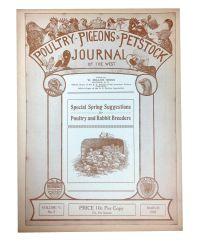
n The publication of the first edition of Moose Jaw-based “The Western hen” was welcomed by W. Miller higgs, editor of Poultry Pigeons & Petstock Journal in March 1918.
n With the strain the First World War was put-
he also advised producers to remember that the current prosperity was built on boneyards of broken dreams. “our comparatively high prosperity this year is due, however, to the losses and retirement of many poultrymen of previous years.” he also reminded egg farmers that at least some of their prosperity was built on a solid foundation of
consumer confidence that came from nationwide egg grading.
“Canada’s egg grading laws are the envy of the u.S. and of practically every other country in the world.”
In addition, he warned against allowing the “propaganda” peddled by merchants and some politicians to abolish “these modern, advanced and helpful regulations.”
ting on food supplies in 1918, urban dwellers were urged to keep small flocks of chickens in their backyards.
n W. Miller higgs, editor of Poultry Pigeons & Petstock Journal announced he was headed to the front lines in the First World War “to do his bit” in July 1918. The production of the journal was left in the hands of his wife.
n Starting with the November 1918 edition, Thos. Edwards, W.h. Willins and h.D. Reid acquired ownership of Poultry Pigeons & Petstock Journal from Mrs. Miller higgs, who had been managing the magazine while her husband was serving with the Canadian army in Europe.
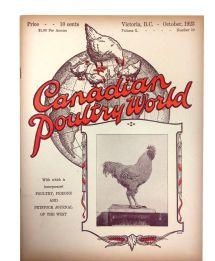
n After lengthy consideration in July 1921, the editor and ownership decided to change the
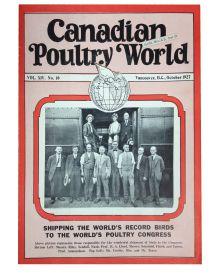
name of the journal from Poultry Pigeons & Petstock Journal to Canadian Poultry World – a “far more appropriate name.”
n Mrs. Wilmer Steele of oceanview, Del., is considered the pioneer of the commercial broiler industry. In 1923, she raised a flock of 500 chicks intended to be sold for meat. her little business was so profitable that, by 1926, Mrs. Steele was able to build a broiler house with a capacity of 10,000 birds.
n A co-op aimed at collecting B.C. eggs and wholesaling them collapsed and Chas. Golding wrote that he believed he knew why. The price of eggs in Vancouver was determined by the Seattle price for surplus eggs. he wrote in August 1924 that “we have absolutely no protection in our own markets for outside powerful competition.”
individual in the mating.” This would guarantee the pedigree.
n “poultry molted well will breed well, lay well and look well and pay well” –Canadian poultry World, August 1921.
n In 1921, the greatest concern was the importation
of eggs from Washington State that were sold below the cost of production. Despite this, B.C. egg producers were investing in “splendid new buildings of the best known type.”
n highly productive laying hens were elusive, according to a January 1924 editorial. Fewer than one per cent of hens produced
300 or more eggs in a year.
n Imports of rail car loads of surplus u.S. eggs in December 1923 caused B.C. egg prices to fall from 55 cents to 42 cents a dozen in a matter of days.
n Federal Record of performance standards for Canadian poultry were becoming tighter and tighter in late 1924. Designed to maintain the standards of breed integrity and high productivity, Rop (Record of performance) standards were advancing the quality of Canadian poultry on both fronts.
n A three-year study of confinement versus range for laying hens ended in March 1925 and found that range birds produced more eggs and consumed less feed per egg produced. It also found that “chickens bred from hens confined lacked vitality, perhaps the biggest factor in egg production.”
Monitrol is proud to present the GENIUS colour touch screen control.
Monitrol Inc., a Canadian success story, is celebrating its 25th anniversary. To underline this milestone, it will simply do what it has been doing since the beginning: Innovating.
Based in Boucherville Quebec, Monitrol Inc. is launching a new version of control called the GENIUS iTouch. Much like its predecessors, this control can control and monitor a multitude of livestock building systems such as feeding, water counters, ventilation, heating, lighting, cameras, scales and much more.
With a touch of your finger tips
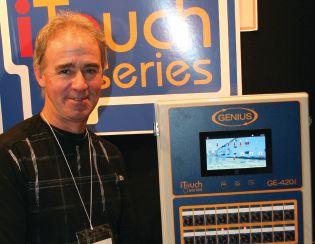
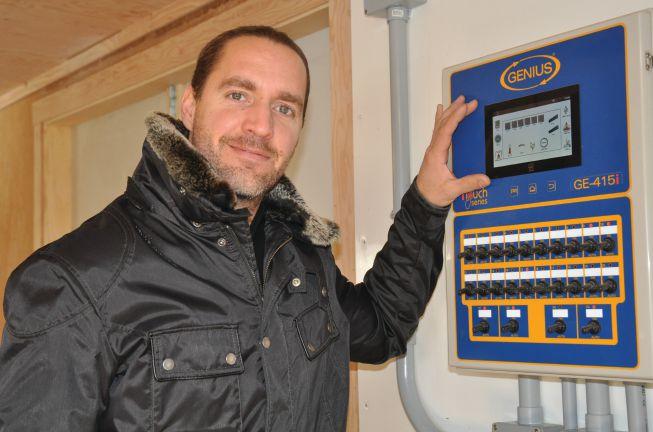
The new GENIUS iTouch is also equipped with some improvements including a colour touch screen and a USB port. With one touch of the screen, you can easily navigate the control, change the size or position of an icon,
or change a control setting. For example, you can move or change the size and orientation of icons representing inputs and outputs to create a personalized house view of your building. Also, the GENIUS includes an on farm food safety form which for the most part can
be filled out automatically by the control. “This is a big time saver” says Daniel Husereau, poultry producer in Oka, Quebec. At his farm, he raises 90 000 birds per flock with the help of his GENIUS iTouch controls, and Mr. Husereau is happy to point out that “The touch screen is user friendly, and it is very practical to have remote access to the control using an internet connection, via a computer, tablet, or smart phone.” In fact, the GENIUS iTouch control has the option to be hardwire or wirelessly (WIFI) connected to the FarmQuest Online management service, thereby allowing the producers to consult their controls from the office, house, or anywhere in the world!
Producer and agronomist Mathieu Brodeur measures his previous flock’s performances with FarmQuest in order to manage his farm more profitably with the GENIUS iTouch control.
Daniel Husereau, poultry producer, appreciates the user friendliness of the new GENIUS iTouch colour touch screen.
Monitoring Performance
The FarmQuest is an online server which constantly uploads data of livestock conditions from the GENIUS controls, and in case of an out-of-limits event, will send a warning message to the producer either by text message or emails. “FarmQuest allows us to compare data from many controls or at different time periods, this is a big advantage. For example, with growth curves from previous flocks, we can improve the way we distribute feed.” remarks Mathieu Brodeur, owner of fifteen iTouch controls, and poultry producer of 150 000 chickens in Saint-Alphonse-de-Granby, Quebec.
International Recognition
The new GENIUS iTouch series was one of the finalists for the prize of Innov’Space in September 2012, during the « Salon international de l’élevage (SPACE) » international livestock show held in the city of Renne, France. “Equipped with many languages, the GENIUS control has no borders, and has been sold in many countries including France, Turkey, and Japan.” says Gilles Routhier, Director of Administration, Sales and Marketing at Monitrol Inc.
Both Mr. Brodeur and Mr. Husereau are part of a group of producers that take part in periodic round table discussions on current control
trends hosted by Monitrol in Quebec, Ontario, and elsewhere. Thanks to the comments of these producers, GENIUS controls will reflect their needs and the most recent trends in the market.
“If we have been in business for the last 25 years, it’s because we have listened to producers and provided them with what they need. The fact we truly work as a team makes our success a reality.” says Gilles Routhier, who is also cofounder of Monitrol Inc. with his brother François, Director of Research and Development. GENIUS iTouch controls are manufactured by Monitrol Inc. For more information, please visit our website at www.varifan.com.
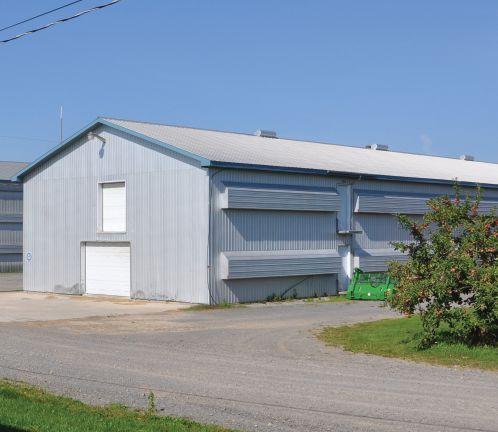
Daniel Husereau Farm, in Oka, raises 90 000 chickens per flock on 5 000 m2 area with the help of GENIUS iTouch controls.
Les Productions Mathieu Brodeur, in Saint-Alphonsede-Granby, raises 150 000 chickens per flock, using 15 GENIUS iTouch controls.
1926-1935
The Calm Before the storm Trends
n In 1926, there were significant drops in egg prices: Canadian duty was three cents per dozen, compared to a duty of eight cents for eggs entering from the united States.
n Egg production in 1927 increased by over 100 million dozen, or 70 per cent, since 1920 due to increasing technology, husbandry and larger flock sizes.
n Raising turkeys gained in popularity in the late 1920s.
n In April 1931, the poultry population in Canada increased by one million between 1929 and 1930 due to the improvement in egg production, marketing and grading.
n The use of wax in the poultry industry for help in plucking the bird was attracting attention, so the process was profiled in September 1935.
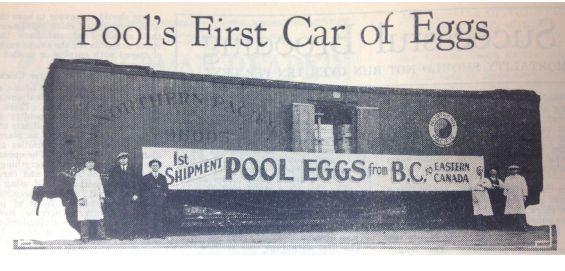
in the late 1920s, there was a lot of focus on the perils of declining egg prices and the dominant presence of u.S. eggs in Canadian markets, known as “egg dumping.” An editorial from 1926 said that American eggs receive a duty of three cents per dozen, but local eggs sent to the u.S. are burdened with an eight cent tariff. While plenty of options were discussed throughout the following years, the issue was never completely resolved. In 1929, the B.C. Egg pool and poultry Association was formed to monitor, candle and distribute co-operatively up to 1,000 cases of eggs per day, valued at $9,000. In June of that year, 76 carloads (or 1,031,737 dozen eggs) were sold in 36 days. Chick sexing was also a hotly discussed topic in 1934, with numerous articles explaining the process involved, and its
potential use and value within the industry, which all culminated in a series of articles written by Rolfe M. Forsyth. The articles, which ran in July, August, September and october 1934, discussed every avenue of the process, including a step-by-step description of the process and the pros and cons associated with it.
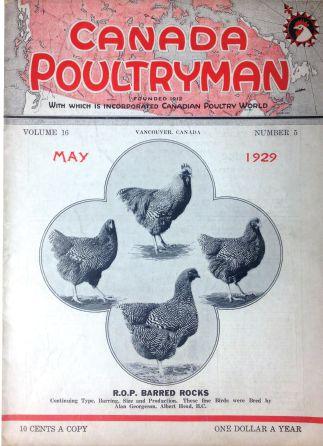
This decade was also a time of change for Canadian Poultry World (renamed Canada Poultryman in 1928), with not only a title change but also many layout and design alterations along the
Technologies
n The April 1933 issue featured a Fire Torch from North Coast Welding Co. ltd. to disinfect and sanitize your barn is a “positive way to destroy disease germs.”
n Chick sexing using the Japanese method was first described in September 1933.
n B.C. Electric Railway
Company released a forced air draft electric brooder in early 1934.
n In mid-1934, a connection was found between the number of eggs a hen produces and the amount of oyster shell (a popular source of lime) the bird consumes because of calcium requirements.
n Chick sexing was
way. The most significant occurred in May 1930 with the sponsorship of the International Egg laying Contest by Canada Poultryman and the disasters that followed and resulted in the demolishment of Western Trade publishing Co. ltd., the company that owned and published the magazine. In total, the design of the magazine changed four times, while ownership of Canada Poultryman shifted twice: from pacific Coast Motorist ltd. in May 1930 to Farm papers limited in February 1935.
demonstrated in a series of articles: July, August, September and october 1934.
n Ventilation strategies for your barn, from R.V. Wilcox, B.S.A., described in September 1934, included using hinged windows as well as air intake and outlet shafts to take advantage of natural air movements.
n Egg grading helped to increase both production and consumption of Canadian eggs (from 142 million dozen to 249 million and 16.8 dozen per capita to 26.8).
n The poultry producers’ Association of British Columbia was formed in March 1926.
n R.h. Storer and W.B.M. Miller purchased The Canadian Poultry World in December 1926.
n Adding oyster shell to feeds became mainstream in mid-1927.
Firsts Issues
n The controversy of importing chicks from the united States continued in 1926.
n Bacillary white diarrhea was the most discussed problem affecting B.C. poultrymen in 1928.
n price disagreements within the B.C. Egg pool plagued the organization after its founding in early 1929.
n In early 1930, the use of artificial heat in poultry houses was gaining steam, but was not recommended by a committee of B.C. poultry officials.
n Egg prices reached below 35 cents per dozen in B.C. in the first half of 1931, and dipped even lower in the prairies (21 cents), the lowest in 20 years.
n In 1933, it was decided that Grade A1 eggs are to be candled, graded and packed by the producer
n 1,080,000 eggs were shipped to Great Britain from the pacific Coast for the first time in 1927.
n The magazine was renamed Canada Poultryman in 1928.
n National poultry Council was formed in January 1929.
n In February 1929, the B.C. Egg pool (the first step in co-operative marketing) was introduced.
n Canada Poultryman opened office in Saskatchewan in 1930.
n The magazine was taken over by Canada
(a grade available only to the producer) by the live Stock Branch of the Dominion Department of Agriculture.
n With chick sexing becoming more common in the early 1930s, farmers were interested in acquiring the skills, but lacked the confidence to master the procedure.
n The poultry Marketing Scheme for British Columbia (part of the Natural products Marketing Act) was outlined in detail in April 1935, with its problems discussed in the May 1935 issue.
poultryman publishing Co. ltd. from Western Trade publishing Co. ltd. due to losses sustained conducting the International Egg laying Contest in April 1930.
n pacific Coast Motorist ltd. purchased the magazine in May 1930.
n In December 1930, magazine released the first Annual and Breeders Directory.
n In 1933, tried and true “Canada poultryman Feeds” within the magazine were published to help farmers.
n Chick sexing was
discussed in the September 1933 issue for the first time.
n Farm papers limited purchased Canada Poultryman in February 1935.
n Douglas Thornhill, a well-known Alberta poultry farmer, began writing his article “practical paragraphs by a prairie poultryman.”
n The “Albertan” poultry breed was officially recognized as a new Standard variety in 1935.
The Beginner’s A.B.C.
January 1929
n Always interest yourself in your stock.
n Breed always from the best of stock.
n Careful attention commands success.
n Dirt is the most virulent conveyance of disease.
n Eggs should be removed from the nest as often as convenient.
n Fresh water is compulsory.
n Good frit, flint and oyster shells should never be absent.
n Hatch no more than your ground will carry – save chance of loss.
n Insides of houses, etc., must be kept spotless.
n Join and support the associations that are working for the betterment of the industry.
n Keep well up in poultry matters – read the Canada Poultryman.
n Look out for the first signs of disease – a stitch in time saves ninety-nine.
n Make a spare pen; it’s bound to come in handy for hospital, new purchases or training.
n Nests must be roomy, comfortable and clean.
n Overfeeding is the cause of many disappointments, such as scarcity of eggs, etc.
n Perches should be movable so that they may be often and easily cleaned.
n Query columns of Canada Poultryman are a mine of information.
n Raise chickens only from the best stock.
n Successful poultry-keeping is the result of careful study.
n Turn every useless fowl into cash, or it will quickly eat your profit.
n Utility points must be maintained by pedigree record-nest strains.
n Vegetables and green stuff are a necessity.
n Water and waterpots must be fresh.
n X’s should be cut down as much as possible.
n Years and seasons are not all alike – do not expect the same success every time.
n Zeal – and plenty of it.
over a century
In 1997 Annex Business Media acquired Canada Poultryman as part of its trade and agriculture magazine start up. This esteemed magazine had been serving Canadian producers for over 80 years, and as such fit well with our goal to publish the most trusted brands in Canada.
Today Annex Business Media is Canada’s largest privately-held business to business and farm trade publisher with 35 print titles, 53 websites, and numerous digital and e-products. The company has built a solid reputation as a forward thinking, innovative business specializing in both traditional and new media environments.
Annex has grown steadily since its original acquisition of nine magazines, but our core value remains the same – provide people with an environment that encourages the enterprising spirit and they will astound you. Our commitment to customers, culture and community allows Annex to provide industry-leading content for our readers and innovative marketing solutions for the businesses we serve.
The partnerships that we nurture by serving on industry association boards and committees, volunteering at events and co-hosting activities are an integral part of why Annex and its titles are among the most trusted media brands in Canada.
We have enjoyed the last 16 years of opportunity, partnerships, challenges and change in the poultry industry. Those changes included the necessary renaming of the magazine to Canadian Poultry to recognize the contribution of all members of the industry. There have been many highlights on the way to the 100th Anniversary of this magazine, as well as a few lows. Yet every step of the way one key belief remains the same – that we are fortunate to serve this vital industry. Here’s to many happy returns.
Mike Fredericks, President & CEO, Annex Business Media
1936-1945
Trends
n Debate continues throughout the decade, especially in Western provinces, regarding the import of u.S. eggs into an already satiated Canadian market.
n In May 1936, the Dominion Budget imposed a duty of 10 cents per dozen on eggs and four cents on baby chicks coming from the united States.
n per-capita egg consumption had decreased from 356 eggs in 1926 to 260 eggs in 1936.
n In october 1940, 20,000 cases of eggs were shipped from British Columbia to Great Britain to help the British during the war effort.
n From oct. 1 to Nov. 30, 1940, the editors of Canada Poultryman donated every cent from subscribers to the Canadian government to assist in the war effort.
Technologies
n In June 1936, the Slatted Floor house from England is introduced to rear pullets and make sure that every bird has fresh air within the house.
War Impacts the Industry
during the last half of the 1930s, genetics took the forefront, with a major discussion in 1936 focusing on the differences between breeds. producers were concerned about the emergence of the New hampshire breed (similar to the Rhode Island Red) and its effect on the industry. Additional breeds were thoroughly discussed throughout the year as well, including the Buff Minorcas, light Sussex, Barnevelders, Welsummers and more.
Different methods of production were also discussed, namely the dramatic rise of the laying battery system. So much so that many articles and editorials were devoted to the explanation of how the new cages allow greater sanitation, bird control, cleaner eggs and ease in bird management.
The issue of u.S. imports continued to worry producers with a tariff imposed on eggs and baby chicks (10 and four cents, respectively), so
the domestic and home markets were protected. Despite that, prices were still so low that in the April 1937 editorial, editor Fred W. Beeson advised producers to “set aside one case of eggs that would ordinarily go to market” and store it yourself to decrease the market saturation and drive up prices. There was no indication his idea worked, but in December 1937 and January 1938, both editorials highlighted the need for a different method to increase both prices and demand – advertising.
This led to the development of a petition to the minster of agriculture, conducted through Canada Poultryman, for the creation and funding of a national advertising campaign for the purpose of raising egg consumption in Canada. In June 1938, in which the minister promised to take some sort of action. Instead, a “Buy by Grade” campaign was delivered in the fall, which showed
little improvement to the industry. Industry prospects improved the following year in midNovember 1939 with a campaign to foster the increased consumption of poultry and turkey meat on the domestic level through “magazine and newspaper ads, radio talks and moving pictures.”
All other debates and developments, however, got placed to the side briefly when the Second World War broke out in 1939. Countless articles were written on Canada’s involvement, specifically with regards to its commitment to provide Britain with eggs and how the war would impact the poultry industry as individuals left Canadian shores to fight. While other issues popped up, such as the drive towards battery cages and the advantages of blood testing for pullorum, until its end the war continued to draw headlines regarding its impact on the industry.
n The B.C. Electric Company’s new system of circulating preheated air under barn floors to eliminate condensation during the winter was featured in late 1936.
n Two articles, in September and october
n FIRply, an “ideal lining for brooder houses, laying pens” that is made from four-foot by eight-foot sheets of Douglas Fir plywood, is shown in the July 1936 issue.
1938, described ways to take advantage of the loans available through the home Improvement plan (h.I.p) to improve various aspects of a farm.
n In April 1939, the electric brooder was profiled because it began to gain usage across Canada.
n Due to war restrictions,
producers were encouraged by the magazine in March 1943 to build their own breeders.
n In May 1943, the eggdrying process for shipment overseas was explained in detail, so producers could fully understand what was happening to their product
Firsts Issues
n Breeders and hatcherymen organize in Alberta and British Columbia to create Western Canada Baby Chick Association in 1936.
n In March 1937, electrocution (or electric stunning) is thought to take the place of other killing methods, based on studies by the National Research Council.
n In January 1938, Canada Poultryman began a multi-month petition to the hon. James G. Gardiner (Minister of Agriculture) to create and fund a $100,000 national advertising campaign for eggs.
n In July 1938, a delegation met with the minister of agriculture on June 16 and received active support and a promise of action.
n october 1939: With the Second World War in full swing, Canada helped to feed Great Britain and her allies with eggs and other poultry goods.
n July/August 1943: Rail grading of poultry was introduced in Canada.
n The R.o.p breeding policy was redone with regards to pullet pedigrees and egg grading in January 1944.
n The R.o p Breeders of British Columbia formed a new association – the R.o.p poultry Association of B.C. in November 1944.
Félicitations
à Canadian Poultry Pour son
n With a shortage of chick sexers in Canada in early 1936, workers from Japan came over to do the job, but numbers still fell short.
n B.C. poultrymen protested Dominion government regulations requiring compulsory blood testing for pullets not intended for breeding in mid-1936.
n The debate between laying or battery cages for layers still raged in December 1936.
n october 1939: An article on how the war will affect the Canadian poultry industry from Canadian poultry marketing authorities (John I. Brown, W.A. landreth and W.A. Brown) was published.
n Wartime prices and Trade Board announced that wholesale prices will be fixed beginning on Feb. 12, 1941, for fish meal and animal products to be used in feed.
n A National poultry Conference was held in January 1944 to discuss conduct during and after the war for the entire industry.
n At the National poultry Conference, cross-bred chicks were looked upon with disfavour, and it was recommended that shipments be prohibited, at each province’s discretion.
Le bien-être animal et la biosécurité : au cœur de nos préoccupations !
Company Profile
Company Profile
Company Profile
Canadian Bio-Systems Inc. (CBS Inc.) is an innovation-focused company that manufactures a wide range of products used in feed, food, industrial and environmental applications.
Canadian Bio-Systems Inc. (CBS Inc.) is an innovation-focused company that manufactures a wide range of products used in feed, food, industrial and environmental applications.
Canadian Bio-Systems Inc. (CBS Inc.) is an innovation-focused company that manufactures a wide range of products used in feed, food, industrial and environmental applications.
The company was established in 1984 and is headquartered in Calgary, Alberta, Canada, with manufacturing and warehouse locations east and west, serving customers internationally.
The company was established in 1984 and is headquartered in Calgary, Alberta, Canada, with manufacturing and warehouse locations east and west, serving customers internationally.
The company was established in 1984 and is headquartered in Calgary, Alberta, Canada, with manufacturing and warehouse locations east and west, serving customers internationally.
All of the company’s products are based on a strong foundation of research and development. Each is designed to deliver specific, clear benefits that represent safe, natural ways to improved performance, profitability and environmental stewardship.
All of the company’s products are based on a strong foundation of research and development. Each is designed to deliver specific, clear benefits that represent safe, natural ways to improved performance, profitability and environmental stewardship.
All of the company’s products are based on a strong foundation of research and development. Each is designed to deliver specific, clear benefits that represent safe, natural ways to improved performance, profitability and environmental stewardship.
CBS Inc. products are designed to provide high-quality solutions that meet all the demands of today’s marketplace. View complete product listings here.
CBS Inc. products are designed to provide high-quality solutions that meet all the demands of today’s marketplace. View complete product listings here.
CBS Inc. products are designed to provide high-quality solutions that meet all the demands of today’s marketplace. View complete product listings here.
The company’s product line-up is continually broadened with new, innovative options emerging from its research and development pipeline.
The company’s product line-up is continually broadened with new, innovative options emerging from its research and development pipeline.
The company’s product line-up is continually broadened with new, innovative options emerging from its research and development pipeline.
All products and customer relationships are backed by a diverse team of wellqualified staff and technical support, linked to a broader network of expertise.
All products and customer relationships are backed by a diverse team of wellqualified staff and technical support, linked to a broader network of expertise.
All products and customer relationships are backed by a diverse team of wellqualified staff and technical support, linked to a broader network of expertise.
CBS Inc. is dedicated to working directly with customers and their industries to help them get the most out of products and stay at the leading edge, through new innovations, top products, exceptional service and science-based approaches that are second to none.
CBS Inc. is dedicated to working directly with customers and their industries to help them get the most out of products and stay at the leading edge, through new innovations, top products, exceptional service and science-based approaches that are second to none.
CBS Inc. is dedicated to working directly with customers and their industries to help them get the most out of products and stay at the leading edge, through new innovations, top products, exceptional service and science-based approaches that are second to none.
Information on CBS Inc. and its products is available at www.canadianbio.com. CBS Inc.also welcomes direct business inquiries. Phone: (403) 279-3339 or Toll free: 1-800-561-2474.
Information on CBS Inc. and its products is available at www.canadianbio.com. CBS Inc.also welcomes direct business inquiries. Phone: (403) 279-3339 or Toll free: 1-800-561-2474.
Information on CBS Inc. and its products is available at www.canadianbio.com. CBS Inc.also welcomes direct business inquiries. Phone: (403) 279-3339 or Toll free: 1-800-561-2474.
Congratulations to Canadian Poultry Magazine on 100 years!
Congratulations to Canadian Poultry Magazine on 100 years!
1946-1955
Trends
n Canadian chick production in 1945 was 43.4 million, down seven million from 1944.
n Following the Second World War, competition for egg and poultry markets increased in late 1945 and Canadian producers were told to focus on efficiency.
n The campaign to sell victory bonds didn’t let up with the end of the war. In the october 1945 edition of Canada Poultryman, it shifted to a call for farmers to buy bonds to ensure “a victorious peace.”
n During the Second World War, Britian became a dominant market for Canadian eggs, taking up to half of surging production, but by January 1949, it had changed. Canada Poultryman wrote, “we shall do well to look after our domestic market which is, and always has been our most profitable outlet for eggs and poultry.”
n Total confinement rearing of turkeys gained popularity on the prairies in early 1949. however, “where good, clean range land is available and where the danger of predators is not too great, it is felt that the range rearing system has many advantages and should be followed wherever practicable” –R.M. Blakely, Dominion Experimental Station, Swift Current, Sask.
Modernization Takes Root
there is no doubt the average poultry farm is far too small. Attempting to make a living comparable from those in other industries or occupations with a thousand layers just can’t be done anymore. For one thing. the possible profit per bird is not likely to increase as the years go by, and for another, the complexities of modern living bear little relationship to a couple of decades ago.
That is another way of saying that our living today is far more expensive because of our greater “quantities of essentials than ever it has been in the past. Those who in past years made a living from 160 acres of land did so on mighty few dollars a week, but they made a living or figured they did. No one farming today has any desire to go back to the hardships endured by earlier settlers, and so, if we are to expect an income that will cover present day living costs, we have to
raise our sights. Therein comes the rub. The cost of constructing the necessary buildings for additional stock is so steep as to make one hesitate at the attempt. It is safe to say, though, that those who are able to do this will reap a worthwhile harvest because their number will be comparatively few for a long time to come.
With labour saving equipment, a man today
Technologies
n Beginning in late 1966, the use of artificial lighting was found to be beneficial to egg production. “In turkey production I see a change coming. In fact, the most spectacular development that is
likely to take place in the next few years in the poultry industry of Canada will be the commercialization of turkey poults,” wrote W.J. Rae, professor of poultry husbandry, university of Saskatchewan, in November 1946. n “one of the newest
is said to be able to look after several thousand layers with less work than his father encountered with a few hundred. From now on, the watchword is going to be economical production and that means maintaining the greatest number of productive birds with the least labour.”
Canada Poultryman, November, 1948 – Written by Fred Beeson
and most advanced pieces of equipment is the moving feed carrier which is now in operation in some plants and which may be regulated to operate with absolute regularity as the operator may desire.”
– Canada Poultryman September 1949
Firsts
n The war in the Netherlands officially ended when German General Johannes Blaskowitz surrended to Canadian General Charles Foulkes on May 5, 1945, at Wageningen.
n The war in Europe ended with Germany’s unconditional surrender on May 8, 1945.
n The Empire of Japan surrendered on Aug. 15, 1945, ending the war in Asia.
n The Vancouver Island Co-operative Association was formed in 1945 to operate a killing, chilling and egg-grading station and to supply wholesale and consumer markets.
n In 1946, products Marketing Act, which, with numerous amendments, remains in effect today.
– The Automatic Egg Washer – was introduced, which washed eggs in a “sanitary manner” with water hot enough to kill common bacteria, and was gentle enough not to damage
of agriculture in February 1948 for the establishment of a poultry marketing scheme.
n Vitamin B12 was identified in 1948, the last traditional vitamin. Shortly thereafter, it was found that animals such as poultry require the vitamin.
n In January 1948, Newcastle Disease was first identified in Canada. By late 1948, six cases had been identified, including one in Saskatchewan, three in ontario, one in Quebec and one in Nova Scotia.
n The Australian Egg Board was established in January 1948 to buy and sell eggs and egg products intended for export.
n In the March 1948, a new machine
n In 1950, W. Murray Clark of Caledonia, ontario, established Ceva Animal Health, Guelph, ON
SALMET, one of the Zimmerer Family group of companies, established over 50 years, is a Global supplier of a wide range of innovative and unique poultry production concepts with emphasis on bird friendly solutions. The Zimmerer Family is one of the leading producers of Cage Free, Organic and Free Range eggs on their family-owned farms in Germany. Salmet’s Alternative egg production solutions are field tested on their own farms before being promoted for Global sales. All Salmet equipment is also manufactured in their family group of factories.
Alternative Equipment Systems:
v Pedigrow 2 Pullet Rearing
v HR3 Cage-Free Layer System
v CombiBarn Perch/Nest System
v Nest with Slats
v Nest without Slats
v All-In-One
Cage Equipment Systems:
v Pullet Rearing Cage
v Furnished/Unfurnished Cage options
v Colony Cage System
v Standard Cage System
v Parent Stock Cage
v Broiler Cage
All Salmet products are compliant with welfare regulations and with our expertise, we share this knowledge.
For more information please visit our website www.salmet.de
Salmet Poultry Systems • PO Box 177, Raymond, OH 43067 • PH: 937-358-2260 • Fax: 937-358-2411
• Email: info@salmet.us
Vital Growth 1956-1965
Trends
n In February 1960, the Canadian egg industry became free of support prices (for the first time since 1941).
n Debeaking of poultry was claimed to be the best way to prevent cannibalism in 1960 by herb Gasperdone of the B.C. Department of Agriculture.
n New Canadians’ preference of ducks and geese to regular poultry allowed the waterfowl market to expand in the early 1960s.
n The Fraser Valley, in mid-1962, had more layers in cages than conventional floor-type houses, turning egg production into a more factory-style operation.
n A new disease known as transmissible enteritis appeared in turkey poults in Alberta in late 1963.
n A.D. Davey of the poultry Division of CDA said in December 1963 that consumption of poultry products could rise by 190 per cent for meat and 85 per cent for eggs by 1980.
from the December 1961 Fred Beeson editorial regarding an address by W.A. landreth at the 1961 poultry Conference:
“Now, to return to Mr. landreth’s ideas. he suggests that each province form an Egg producers Council, a Broiler Growers Council, a Turkey producers Council.
Taking eggs first, he suggests this Council should, in conjunction with the “Trade”, establish the prices of eggs for the coming week. The spread in price for grading and cartoning eggs should have added to it one half cent per dozen which would finance the council.
particularly since the B.C. Broiler Growers Association has gone on record as favoring production Control by a Compulsory Quota.
Through its provincial board of directors, working closely with the egg wholesalers, be they co-ops or privately owned, Mr. landreth stresses that stability can result from studying trends and putting in voluntary production controls. he suggests similar procedures for broilers and turkeys. his views are interesting,
They made an attempt at a voluntary cut-back, failed, and then decided that the only way to achieve a quota system was to come in under the Natural products Marketing Act. Even with this Act they cannot control how many broilers a man grows but they think, and hope, that they can enforce their powers under the Act to regulate how many broilers from any one grower can be processed.
The achievement of their goal may be attainable. It may not. Time alone will tell … We have given this matter a great deal of thought. We do not think Mr. landreth’s ideas are likely to be taken up by the industry in each province, on an entirely voluntary basis. We further are of the opinion that the Natural products Marketing Act, so sweeping in its powers, is not the vehicle the industry needs. We agree with Mr. landreth that the Councils should be voluntary, but we’d like to see national legislation put into effect that a producer group, representing say, 75 per cent of the product within its boundaries, could establish, under law, production Quotas, to be set in consultation with the first receivers – the egg wholesalers and grading stations, the poultry meat processors, the feed manufacturers and the hatcheries. Each of these parts of the industry are vital to the continuing welfare of the industry.”
Firsts
n In early 1960, a university of California vet scientist found a new virus that affects the respiratory system of chickens and may be related to Newcastle disease.
n At the 1960 poultry Conference in london, ont., re-formation of the Canadian poultry Council was suggested to help promote Canadian poultry products, but no
Issues
n The u.S. banned diethylstilbestrol for the caponizing of poultry in the early 1960s.
n Fraser Valley, B.C., in 1960 began talks to utilize the Compulsory Egg Marketing Board, which would allow producers to set prices
n Early in 1961, a referendum took place to bring in compulsory marketing in the Fraser Valley, but it was defeated by a vote of nearly three to one.
n The former president and general manager of Canadian poultry Sales ltd. proposed in 1962 that
action was taken.
n Five hundred egg producers were in favour of forming the B.C. Egg producers’ Association at a meeting in Abbotsford, B.C., during the mid1960s to help voice the views of the producers, and help them solve price and surplus problems.
n however, the motion for a marketing board from the B.C. Egg producers’ Association was defeated at a subsequent meeting.
each province form an Egg producers Council, a Broiler Growers Council and a Turkey producers Council, and establish quotas.
n Fred Beeson’s August 1962 editorial discussed the danger the poultry industry is facing by losing the small and independent producer and being controlled by a few very large firms or corporations. he also introduced the idea of using “sales quotas.”
n The london poultry Show building, the Western Fair Manufacturers Building, burned down on June 20, 1963 (the final day of the sixth annual poultry Conference and Exhibition).
Technologies
n The Insect-o-Cutor, a bug zapper, became available in Canada in 1962 and could be used to control flies and other flying insects in barns.
n By feeding layers increased corn, alfalfa meal and cereal-grass, it was shown in late 1962 that eggs were produced with a much darker yolk, but with no difference in flavour.
n Dr. Salsbury’s laboratories marketed a vaccine sprayer in the early 1960s that could vaccinate 5,000 chickens or turkeys in 12 minutes
n Researchers at J. Bibby and Sons of london, u.K., developed a new feed during the 1960s known as “peckets,” designed to keep laying birds from becoming bored and from developing vices.
n A new technique for measuring the success of fumigation and sanitary measures was outlined in the october 1963 issue – examining fluff (or downy) shed from newly hatched birds for microbes before and after the measures were implemented.
n In the mid-1960s, lagoon disposal systems for poultry manure were gaining popularity across the Western and prairie provinces.
n In late summer 1962, a mild vaccine to control Avian Encephalomyelitis (Epidemic Tremors) became available in British Columbia and ontario.
The Rough Ride to supply Management 1966-1975
Trends
n Dr. R.V. hemsley of K-Vet laboratories, hespeler, ont., in the January 1968 issue of Canada Poultryman stresses that the keys to disease prevention are often good management; a good, well-ventilated, wellmaintained barn; and clean equipment.
n In a series of articles in 1968, Ross Milne of the farm sales department of ontario hydro emphasized the need for proper poultry barn planning, as well as lighting, ventilation and wiring.
n Concern was growing over the increases of disease and mortality in broiler breeders in early 1969, as the new superfast growing strains of broilers were more susceptible to disease.
n To meet the needs of modern turkey production, breeding companies adopted strain cross programs and breed tomes for a variety of traits to increase potential profitability in mid1969.
n To preserve egg quality, the Canadian Department of Agriculture reported in March 1970 that proper cooling is essential.
n The ads in Canada Poultryman from 1965 to 1975 tell a unique story of an industry on the move with new technologies being unveiled all the time.
from the mid-1960s to the mid-1970s, Canada’s poultry industries lurched from crisis to profitability and back to crisis. This culminated in the so-called chicken-and-egg war with provinces dumping surplus production into other provinces and dealing with the commercial, regulatory and legislative reactions and fallout.
Throughout this period, producers and provincial governments sought answers and stability by forming provincial marketing boards. often they worked to stabilize production and prices, but just as often they buckled under the pressure of dumped products from other provinces, and in later years, the united States.
It was a stressful, highpressure time. Sometimes the pressure came from within the industry applied by producers and processors wedded to free enterprise and sometimes it came from consumer groups and commercial interests, which benefited from bouts of chronically low prices and chaotic markets.
This didn’t end with the formation of CEMA (Canadian Egg Marketing Agency) in 1972. The agency struggled. Its member provincial marketing boards agreed with the necessity of a co-ordinated national program, but disagreed mightily on such details as provincial shares of national production, quotas, traditional markets and even how to measure production.
Then in 1974 and 1975, an even larger threat appeared in the form of eggs coming in from the u.S. The imported eggs combined with the failure to control surplus production within Canada resulted in near panic.
Agriculture Minister Eugene
Whelan, long a strong supporter of marketing boards, stepped in with an ultimatum and a solution.
The ultimatum was to tell CEMA and the provincial boards that they first had to devise strict, enforceable rules to control overproduction and once that was done the federal government would deal with the u.S. imports.
“CEMA is not the success that producers want it to be. Nor is it the success I want it to be. …The final verdict will come in the next few months. If the provincial boards live up to their agreements, our chief egg marketing problems will end. If they don’t, the next press conference I call on CEMA will be the last.”
The squabbling and squawking came to a quick end and the federal government imposed import quotas in mid-1975. however, Canada’s import quotas were challenged by the u.S. under the General Agreement on Tariffs and Trade (now the WTo). The u.S. challenge was dismissed when the international panel ruled that Canada’s quotas were in compliance with international trade law.
n In April 1967, most employees of farms, ranches, nurseries and greenhouses became eligible for unemployment insurance.
n In early 1967, William (Bill) Stewart officially opened Shaver poultry’s new hatchery in Galt, ont.
n The Saskatchewan Turkey Marketing Board was approved by the provincial government and set to begin operations Aug. 1, 1967.
n In early 1967, ontario broiler producers voted 92 per cent in favour of giving their board the responsibility of setting live prices and of setting terms and conditions
of sale. however, Bruce MacNamara, former chair of the broiler board, cautioned that some form of national marketing control was still necessary.
n In 1968, for an unprecedented third consecutive time, the Shaver Starcross 288 walked off with the uSDA-ARS two-year sample test with the highest net income.
n The Canadian Department of Agriculture received a major international award for development of a process for a new form of frozen eggs in early 1970. using liquid nitrogen, egg mélange is frozen into droplets that can be packaged in varying sizes. previously,
frozen eggs came only in 40-pound lots and smaller portions were unavailable.
n on Apr. 18, 1975, the Farm products Marketing Amendment Act was signed into law. It gave the ontario Egg producers’ Marketing Board, for the first time, authority to establish regulations to carry out effective production control utilizing quotas and providing for the inspection of premises (without a warrant)
Technologies
n In a series of articles in 1968, Ross Milne of the farm sales department of ontario hydro emphasized the need for proper poultry barn planning, as well as lighting, ventilation and wiring.
n A vaccine against Marek’s disease was introduced in 1970 and the scientist credited with its development is Dr. Ben Roy Burmester. Before that, Marek’s disease caused
substantial loss in poultry industries estimated at up to $20 million in increased mortality in Canada. Approval to release the vaccine for sale in Canada was
when it is believed the regulations are not being followed.
n on Sept. 5, 1975, the ontario Ministry of Agriculture and Food poultry research centre at Arkell, outside of Guelph, officially opened, consisting of six buildings designed to meet the research demands of the entire industry. The centre is operated by the university of Guelph under the Department of Animal and poultry Science.
given Nov. 11, 1970.
n In 1975, the university of Saskatchewan received a $2.2-million grant from the Devonian Foundation for a new laboratory to study infectious diseases of food-producing animals.
n The new laboratory will be operated by VIDo (the Veterinary Infectious Diseases organization) and will develop new vaccines aimed at combating a wide range of animal diseases.
1976-1985 Trends
n Nov. 15, 1976: CEMA dropped egg prices by two cents per dozen for A large in response to a reduction in costs established by the production pricing formula.
n Agriculture Canada revised regulations in late 1976 to allow Canadian plants to sell egg products to the u.S. or do custom processing.
n In January 1977, CEMA launched a second national advertising campaign to increase egg consumption: it marked the creation and firsttime usage of the “Get Cracking” and “Faites vos oeufs” slogans.
n The use of broiler cages, instead of housing on the floor, began to take off in late 1977 with the ACA Co-op acquiring a lohmann Broilermatic in Berwick, N.S., the first commercial installation in North America.
n At a meeting at the end of January 1979, CEMA increased egg quotas by three per cent due to increasing demand.
n With the election of Joe Clark’s progressive Conservative government in 1979, the minister of agriculture, Eugene Whelan, was replaced by John Wise.
n Due to a shortage of large eggs in ontario in late 1979, the ontario Egg Board increased demand for medium eggs and increased the price spread between medium and large eggs to 10 cents.
The Honeymoon Period
in the mid-1970s, supply management was already in full swing and enjoying a fairly productive time. however, without a national agency to control production of broilers, the product was susceptible to market pressures and imports from the u.S. That said, not everyone was happy with supply management, as evidenced by some speakers of the 1978 National poultry Seminar exclaiming that they want a return to the “good old days.” The debate continued throughout the decade, with no sign of slowing down.
of agriculture threatened to disband CEMA, the agency improved its standing and producer co-operation.
Additionally, in February 1976, the Consumers’ Association of Canada told the Canadian Broiler Council (CBC) that the egg industry was overcharging consumers a million dollars a week (or 15 cents per dozen). Industry leaders and professionals were quick to state that the claim was untrue and unsupported. however, the damage was done and resulted in many individuals and professionals questioning the methods used. Add that to CEMA’s difficulties in managing the market supply and adjusting the prices of eggs based on a formula from outside consultants, and it is no surprise that many articles were written throughout the decade on how exactly egg pricing is determined and possible alternatives. however, when the minister
In response to criticism, the National Farm products Marketing Council conducted hearings into the egg industry (requested by the Consumers’ Association of Canada). The full hearings were published and summarized in the November 1978 issue of Canada Poultryman, and will be featured on our 100th website.
In May 1977, Bill C-42 was introduced and criticisms of it from farmers arose almost immediately with the proposed creation of a Competition policy Advocate. This position would be able to challenge the rulings of national marketing boards and take them to court if it was believed not enough market competition was present. however, a few months later in August, the ontario Federation of Agriculture said in a statement that
marketing boards should be exempt from Bill C-42. In the end, the bill did not pass through Second Reading of the legislature and disappeared from discussion.
There were also numerous reports on the effects of eggs on cholesterol; with articles and news briefs written to the effect that egg yolks run the gamut from having a significant effect, to a minimal, to none at all. The u.S. Senate Select Committee on Nutrition and human Needs in January 1978 stated that people should drastically decrease cholesterol consumption, especially in regards to eggs. In response, CEMA planned (in the fall 1978) an extensive public advertising and promotion campaign to raise awareness of the health issue.
After the 1979 election of Joe Clark’s progressive Conservative government, John Wise replaced Eugene Whelan as minister of agriculture. Editor Fred Beeson wrote a farewell editorial for Mr. Whelan in July 1979; however, the change did not last long – as the re-election of the Trudeau liberal government led to Whelan’s reinstatement until 1984.
A great change in Canada Poultryman occurred in July 1980, as Beeson retired as editor, a position he had held since the mid-1930s.
Firsts
n The hon. William G. Newman was appointed minster of agriculture for ontario in January 1976.
n The poultry Industry Council of Canada formed in mid-1976.
n In November 1976, British united Turkeys of England and hybrid Turkeys limited of Canada announced an agreement giving hybrid exclusive rights to breed and market the B.u.T. 6 large White turkey in
Issues
n In 1976, imports of broilers from the u.S. were on the rise because there was no national agency to control production and utilize supply management of broilers.
n Consumption of eggs in Canada was declining in the late 1970s.
n In April 1976, the Consumers’ Association of Canada said that in February the egg industry had overcharged consumers a million dollars a week (or 15 cents per dozen).
n In late 1976, the Canadian Egg Marketing Agency (CEMA), which is in charge of operating the supplymanagement program, refused to import and subsidize any more eggs.
n Also in 1976, the Canadian Egg producers Council signed new agreement with CEMA to be its public relations and political arm while remaining a member of CEMA’s consultative committee.
North America, Central America and South America.
n CEMA was awarded the I.E.C. Annual Marketing Award for egg promotion in June 1978.
n The Canadian Chicken Marketing Agency commenced operations on Feb. 5, 1979.
n Canfarm moved ownership from Agriculture Canada to its new company, Canfarm Co-operative Services, on March 30, 1979.
n The B.C. interior’s
n In the late 1960s, imports of u.S. chicken were hurting retail sales, so in the 1970s, provincial marketing boards sought protection under a national broiler chicken marketing plan.
n Competition Bill C-42, described in May 1977, aimed to establish a Competition policy Advocate that could challenge national marketing boards rulings.
n In June 1977, poultry Industry Council provisional chairman,
first processing plant, Colonial Farms ltd., opened in Armstrong, B.C., in mid-1979.
n poultry weights changed to metric from the more
Edward R. hoover, wrote that Council operations should be shelved after strong opposition from one particular segment of the poultry industry and its coercive methods.
n In Nov. 1977, the Standing Committee on Agriculture in B.C. ruled in favour of forming the Canadian Chicken Marketing Agency
n Alberta Turkey Growers Marketing Board officially withdrew from the CTMA on in January 1978 because of high u.S. imports.
n The Alberta Turkey
Technologies
n DEKAlB AgResearch introduced the Xl-link, a “high performance” white egg layer bred for “high egg numbers and high peaks, excellent livability and good egg size” in 1976.
n The “long Egg”
was introduced to Canadians in Copenhagen by the SANoVo Engineering Company in July 1976.
n A study from the university of Maine in 1975, detailed in August 1976, investigated the effects of heat stress on caged layers. It
customary imperial units (foot, yard, pound, etc…) on Jan. 1, 1980.
n Fred W. Beeson retired as editor of Canada Poultryman in July 1980.
Growers Marketing Board sought readmission to the CTMA in April 1979
n April 1980: A report from the Committee on Antibiotics in Agriculture was released and recommended as much reduction of antibiotic use in food-producing animals as possible.
n Maplewood processors ltd., a major poultry processor in B.C., closed down in June 1980, allowing Cargill an almost complete monopoly on the B.C. processing industry.
found that older birds suffer more, that they take longer to recover and that this problem requires constant management and maintenance.
n The use of ultraviolet light versus chlorine treatments to sterilize the water for poultry was debated in March 1977.
1986-1995
Trends
n R.J. Morris forecast that changes in consumer eating habits would benefit poultry in early 1985, as the steady and increasing demand would require producers to adopt “disciplined financial management” as the main priority.
n In the March 1985 editorial, Tony Greaves wrote: “phew! We came through 1984 with our agencies intact. But only just. I’m aware of at least one provincial government that is actively promoting the withdrawal of a board from its agency. And I hear rumours that there may be others.”
n Cuddy Food products of london, ont., in April 1985 was processing 66,000 pounds of boneless, skinless chicken meat daily to produce 4,568 chicken nuggets per minute to supply all McDonald’s restaurants in Canada.
n The arrival of computers and computer spreadsheets in April 1985 on the farm was eliminating the need for copious paper records and made putting together information significantly easier.
n CEMA cautioned the new progressive Conservative government in ottawa in mid-1985 against deregulating the egg industry.
n A full-blown free trade deal with the u.S. would wipe out 80 per cent of
Lost Years
the poultry industry went through over half a decade of uncertainty as NAFTA, CuSTA and the uruguay Round of GATT negotiations went on and on and on …
Those five years of uncertainty may have delayed the day of reckoning, but they did not allow the industry to start its reactive process. The result was delayed construction and renovation and the
Firsts
n Free trade with the u.S. was put on the front burner once again and poultry producers worried that it would threaten supply management.
n The Canada-u.S. Free Trade Agreement (FTA) was reached by negotiators for Canada and the united States on oct. 4, 1987, and signed on Jan. 2, 1988. Supply management was protected.
n The leaders of Canada, the united States and Mexico met in San Antonio, Texas, on Dec. 17, 1992, and signed
the poultry production on the prairies, according to a study by Deloitte, haskins and Sells in May 1986.
n The dramatic growth in the market for processed eggs presented new prospects for the industry
development of a siege mentality that interfered with normal industry relations. So instead of improving efficiency the delays in renovations have actually set us further behind just when we should be racing to improve our level of competitiveness.”
From an editorial by Tony Greaves in Canada Poultryman December 1995.
the North American Free Trade Agreement (NAFTA). The agreement then went on to be ratified by legislative or parliamentary branches.
n NAFTA involved Canada, Mexico and the
united States. It came into force on Jan. 1, 1994, and superseded the Canada–u.S. FTA.
n Tariffication under the General Agreement on Tariffs and Trade (GATT), signed April 15, came into effect July 1, 1995, replacing import quotas that had protected Canada’s supply-managed industries.
n In 1995, lyle Vanclief, chairman of the federalprovincial task force on orderly marketing, said that Canada was only allowed to maintain high tariffs because of the national supplymanagement system.
but was creating major problems for CEMA in May 1986.
n Mould and mycotoxins in poultry feed were found to be a source of significant economic loss in late 1994.
n Dr. peter hunton of the ontario Egg producers’ Marketing Board described in early 1995 how computers and the wide range of information now available online will be an “invaluable tool.”
1996-2005
Trends
n CFo and AoCp agreed on supply-determination procedure. The new system addressed differences between small and large processors.
n In late 1990s start to see more articles on poultry heat stress management and fly and beetle control.
n october 2004 – omega-3 eggs started to become a popular consumer choice.
n In June 2005, biosecurity continued to emerge as a trend. and producers were encouraged to continue to keep it top of mind.
Keeping the Wolves at Bay
as in the previous decade, supply management was still the target of much criticism internationally. At the uruguay Round of the General Agreement on Tariffs and Trade, supply management was left virtually untouched, but the World Trade organization talks were a more serious threat, with globalization of all goods, including agriculture and food, a hot topic.
Tony Greaves in his June 1998 editorial compared the world oil cartel, and its cutback of production, to orderly marketing in agriculture. “When oil is sold at below the cost of production, the working people bear the
Issues
n In February 1996, Canada Poultryman reported that major outbreaks of Marek’s disease had recently occurred in vaccinated flocks of chickens throughout North America. The symptoms and lesions differed from what had been normally seen prior to the advent of vaccination.
n June 1996: The SAGE agreement was established wherein producers formally establish a new national marketing arrangement.
n January 1998: Transgenic animals are here to stay, declared Dr. Ann Gibbons of the
university of Guelph.
n The ontario Chicken Marketing Board became Chicken Farmers of ontario on March 24, 1997.
n The magazine published several articles on integration and how family farms need to look at doing this if they plan to survive in the rapidly changing livestock industry.
n The new poultry program Team (ppT) was formed, with representatives from the poultry Industry Council, the university of Guelph and the ontario Ministry of Agriculture, Food and Rural Affairs (memorandum of understanding). The idea
brunt of the recession.”
AAC Minister lyle Vanclief pointed out that there was a Canadian dichotomy where some sectors want protection and some wanted liberalization of trade – which made it look as if Canada was talking out of both sides of its mouth at the WTo level.
Through the late 1990s and 2000s, food safety was a common topic in the magazine, taking on many acronyms such as oFFSAp (on-Farm Food Safety program) in ontario chicken circles. This was related to another issue that rose up ... that of crisis and emergency management planning.
behind it was to support sustainable production, health and welfare for poultry and speak to environmental and economical issues that producers may face.
n January 1999: Articles on disease resistance, food safety and antimicrobial resistance appeared in the magazine.
n Mid-1999: The Alberta Chicken producers poultry Technology Centre opened in Edmonton.
n In July 2000, the magazine suggested succession planning is often overlooked until it is too late but producers need to give this a serious think.
n In December 2000, a feature about larry
In the early 2000s, succession planning and farming as a family business started to be covered in the magazine as lack of planning became an issue for producers across Canada.
In the mid-2000s, however, the most common article topic was biosecurity – spurred by the low pathogenic avian influenza outbreak in British Columbia, highly pathogenic AI in Asia and Eastern Europe, an infectious laryngotracheitis (IlT) outbreak in ontario, and the previous AI outbreaks in North Carolina and Virginia. Even advertisements showed the concern.
Martin of the George Morris Centre talked about globalization and its impacts on the poultry industry, saying success is derived from meeting customer needs and not dumping surplus product.
n In February 2002, Canadian Poultry printed part one (excerpts) of the report into the Walkerton Tragedy, by Justice Dennis o’Connor. o’Connor concluded that the incident was not the fault of the owner of the cattle farm involved, but rather a result of lack of chlorine monitoring in the water supply. Improper operating practices were implicated.
Firsts
n The first poultry Meat outlook Conference was held in ottawa in June 1996. It was jointly organized by national chicken and turkey marketing agencies, CpEpC, further poultry processors and national farm products council.
n In September 1997, hybrid Turkeys hosted an open house at the recently completed Mapleglen pedigree Complex near Ayr, ont.
n In June 1996, Agricorp is created under the AgriFood and Rural Business Bill, passed in June of 1996. Agricorp will deliver crop insurance and safety net programs.
n Spring 1997 saw heavy flooding in Manitoba and producers banded together to provide storage space and growing premises. Flocks shipped early in unaffected areas so that birds in flooded areas could be relocated.
n July 1997: FpVQ lobbied the provinces and CFC,
Technologies
n In mid-1995, Alltech Inc. of Nicholasville, Ky., introduced Allzyme Vegpro, which was designed to improve the digestibility of vegetable proteins in soybean meal, peas, beans and full-fat canola.
n The idea of being able to sex chicks before hatch started to show up in research – this was seen as a benefit that would reduce
saying that the national supply management system had broken up into individual provincial systems at the expense of the nationally co-ordinated agreement
n In September 1997, the poultry Industry Council was created by merging the poultry Industry Centre for Research and Eductation and the ontario poultry Council.
n We started to see talk of “technology transfer” and its importance in the industry – that is, sharing of knowledge, research results and technology that can better the industry as a whole.
n May 1998: New co-op legislation in Canada was seen as potentially increasing farmers’ share of the consumer dollar, but work needed to be done on how to use the u.S. models.
n In 1998, a national allocation agreement was signed for Canada (by each of the 10 production boards).
n In March 1999, FightBAC
hatch space and animal welfare concerns around disposal of the chicks.
n In 1998, the magazine featured an article on ozone treatment of hatching eggs to improve egg hatchability and improve sterilization.
n In September 1999, the magazine featured Tina Widowski at the university of Guelph and her research on the effects of new, energy-efficient lighting (high-pressure sodium lights) on chicken performance.
was launched by the Canadian partnership for Consumer Food Safety and Education, a collation of 48 of Canada’s major stakeholders in the food sector. The campaign sought to motivate Canadians to fight harmful bacteria by practising critical safety steps when preparing food in their homes.
n In January 2000, Canada Poultryman reported that ontario’s small processors have formed an organization called the ontario Independent poultry processors Association to, in its words, fulfil a need to serve new and growing markets.
n April 2002: Magazine name changes to Canadian Poultry
n April 2002: B.C. chicken farmer Clint heppell built a barn 88 feet wide to maximize the limited real estate available to him.
n on May 29, 2002 (reported July 2002), the Canadian poultry Research Council opened
n In fall 2000, a new stateof-the-art broiler barn was constructed by Mehrle Farms ltd. of Manitou, Man. unique to Western Canada, it was built with self-supporting ribbed, composite polyurethane panelling that had no steel or wood frame.
n In March 2002, the Arch McKinlay I-Conveyor was featured. The system was unique in that it moved eggs in a continuous flow without transfer points and also around 90-degree corners.
its doors – CpRC had and continues to have administrative capacity to provide a focal point for poultry research in Canada.
n october 2002: The Krahn Brothers in B.C. were first to install an A-frame cage system for layers.
n In March 2003, Clark poultry ltd. near hamilton, ont., built state-of-the-art broiler barns using latest designs and materials.
n Spring 2005: Alberta Chicken producers approved a new market development policy that would allow producers to grow additional chicken for market development when a processor requests the same.
n August 2005 marked the first Merial Avian Veterinary partnership Conference.
n January 2006: ontario livestock and poultry Council broke ground in its first year. It was formed to focus on animal health and risk mitigation.
n September 2003: Quebec poultry producers experimented with alternative biological waste disposal methods. A stacked moving belt allowed maximum heat exposure for speeding up the dehydration process.
n January 2006: Canadian Poultry explored a solar heating system installation on Ray heyink’s broiler barn in ontario meant to curb energy prices. A government program offset the cost of the installation by 25 per cent.
2006-2013
The Customer is Always Right
in the late 2000s and early 2010s “traceability” became a key word as food safety rose to the fore in the minds of agriculture’s governing agencies. Consumers became increasingly aware of where their food comes from and began to want to support local producers as much as possible. Government programs to support this cause started to pop up across Canada, including the Canadian Integrated Traceability program (CITp), which was worth $1.7 million in 2006.
The development of ethanol-based fuels also quickly created a dilemma in agriculture. Corn, otherwise
used as feed, started to be diverted for use in ethanol production – thus driving up the cost of corn and hitting producers’ pocketbooks very hard.
The magazine featured articles about how to save
energy in poultry production, and touched on wind energy, proper insulation weather-stripping and proper ventilation.
Animal welfare during transport was also increasingly an issue.
Firsts
n In october 2006, British Colombia introduced specialty egg quota for organic, free-range and free-run production.
n New research showed that poultry is not as tolerant to mycotoxins as previously thought. Results showed that certain mycotoxins could reduce immune response and result in depressed growth rates, productivity and feed consumption.
n The Atlantic poultry Research Centre opened in July 2007; at the time it was Canada’s most advanced research facility.
n The British Columbia poultry/Biosecurity Emergency response initiative promotes adoption of biosecurity practices and emergency response protocols for the poultry industry.
n In late 2008, the Quebec egg producers’ marketing board offered a startup program to people wanting to get into the industry that didn’t
require they buy quota right way. Certain criteria had to be met, however.
n A new pathobiology lab for the university of Guelph was completed and was expected to help improve the health of people, animals and the environment.
n In November 2010, the first enriched housing system was installed in Manitoba.
An efficient means of reducing barn temperature due to its unique water recycling process and natural cooling effect.
RollSeal®
An excellent seal for evaporative cooling applications when not in use. In addition, RollSeal shutters are a great alternative to fan shutters... no airflow restrictions when open and no air leakage when closed.
Don’t let another year of summer heat, stress your
Fans and Controls
Controlling a hot climate begins with the proper ventilation fans and control system. We offer several fan models and controls to meet your individual facility requirements.
Tunnel Ventilation
Tunnel Inlets help to eliminate dead zone areas by creating the perfect air pattern. Our tunnel inlets are low maintenance and come fully assembled for easy installation.
Come visit us at the London Poultry Show 2013 to learn more. April 10 - 11 th, 2013, Progress Building at the Western Fair grounds. London Ontario.
Product photos compliments of, sold and installed by, Clark Ag Systems RollSeal is a registered trademark of Grant Crider and is used under license to The GSI Group, LLC
2006-2013
Issues
n There were some heat stress troubles in early summer of 2007 and producers were encouraged to be more prepared to deal with extreme heat in their barns, for example, by having back-up generators in place.
n To this point, post-traumatic stress
was often ignored after producers suffered great loss of animal life. Animal disease has a human toll that was slowly being acknowledged and talked about.
n Recent consolidation among primary breeders (of layers, turkeys and most broilers) in the world meant that most genetics seemed to originate
from two companies by the mid2000s, and this was causing pricing and supply issues for those buying genetics. This concentration of global poultry genetics resources also had researchers at Agriculture and AgriFood Canada concerned. In the last 65 years, the world had gone from 300 breeders down to just two, a situation that compromised genetic diversity.
n In early 2008, grain prices seemed to be on the rise. World demand had exceeded production for five of the last seven years and supplies were expected to remain tight. This was a foreboding outlook for livestock producers.
n Industry groups in ontario began working together in 2010 to make the workplace safer for chicken catchers and haulers.
n Farmers and other members of the agriculture industry were encouraged to be prepared to handle the media effectively and get the right messages out to consumers.
n Farm succession planning started to become an issue in agriculture. Family dynamics were predicted to change going forward and there were likely to be different issues and concerns for future generations. Families were encouraged to sit down and talk about plans for their farms.
n Food irradiation was introduced in the united States, but consumer acceptance was seen as the stumbling block in Canada, even though it had been deemed an effective tool for removing pathogens.
n In 2011, a newly coined phrase, “biosecurity fatigue,” became an issue as producers began to tire of hearing about biosecurity.
n Based again on ethanol, cost of feed becomes a rising concern in North America, to the point that it is brought to the attention of the u .S. Senate Committee on Agriculture.
n In 2012, new educational materials were released to help producers and catchers answer the question “should this bird be loaded?”
2006-2013
Trends
n By May 2007, the realization had hit agriculture that there needed to be better preparation for emergencies and highway traffic accidents where animals were being transported. First responders were generally untrained in this area and focus needed to be put on ensuring they know what to do, as these situations were often very public.
n In June 2007, British Columbia launched a new mandatory producer biosecurity program.
n on-farm windpower became more common to help reduce energy costs and produce a more “environmentally sustainable” product.
n Demand for antibiotic-free chicken was growing, so St. huberts restaurants wanted to serve it – but could growers supply the demand?
n Consumer needs were evolving and placing demands on retailers to differentiate products. Industry had a role to play in helping retailers ensure this demand is met.
n After years of “shop ‘til you drop,” consumers were now looking for value, which was good news for poultry and egg producers. Farmers needed to operate in a way that was consistent with consumers’ ideas.
n An increasing global population and a growing global middle class meant more opportunities for Canada’s poultry farmers but accessing these markets
would be complex.
n In early 2012, results of a united States survey showed that price was playing a greater role in the meat purchasing decision process.
n In the fall of 2012, animal welfare specialist Temple Grandin said that farmers needed to be more observant of the animals in their care and truly understand them.
n Jayson lusk of oklahoma State university proposed that animal welfare could be improved by having consumers purchase “animal wellbeing units” via their food choices.
✔ Alberta egg farmers take pride in providing high quality, fresh, locally produced eggs and egg products.
✔ In Alberta, 157 registered egg farmers produced 48,908,544 dozens of eggs in 2012.
✔ From our farms to your plate, naturally nutritious and delicious … eggs!
Technologies
n A new Chore-Time Modular Manure Belt cage system had implications for reduced aromas and easier breathing in layer barns.
n pDA devices allowed producers to control their poultry houses from anywhere, at any time.
n A German poultry farmer built a layer barn with a layer of amorphous silicon solar cells on top of the regular roof to help offset energy costs.
n Composting started to go high-tech. The new BIovator is an enclosed composting system composed of a long, hollow steel cylinder with steel paddles mounted on the inside walls, which both mix and slowly move material forward. Deadstock comes out as compost.
n In November 2007, a story in the magazine reports the “crackless egg,”
with a real-time wireless sensor, provides instant identification of trouble spots that cause cracking on egg farms.
n Ciemme Apollo catching machines from Italy will allow birds to be caught using a crew of as few as three people, which can alleviate some of the stresses around of the most labour-intensive parts of chicken farming.
n In February 2009, an article ran about a new flooring system that could help to curb ammonia, according
to researchers at the university of Maryland Eastern Shore campus. The system consisted of interlocking squares, and air funnelling through the holes in the flooring help to keep fecal matter dry.
n Food business data management became crucial when an incident such as a food recall happened. It was essential to have the ability so see clearly into product systems and to be able to coordinate data and communicate effectively between levels in the supply chain.
n In February 2011, the magazine reports a new vaccine for Newcastle Disease developed by the uSDA.
n Insta-panel insulation for floors of poultry barns ensured drier floors, and more comfortable and healthier birds.
n live, in-barn cameras allowed producers to view what was going on
Fruit Omelette with Maple Sugar
IngredIents
• 2 eggs
• ½ banana
• 4–6 strawberries, fresh
• ½ apple, peeled or unpeeled, thinly sliced
• 1 tsp (5 mL) maple sugar* or more, to taste
* Maple sugar is twice as sweet as white sugar. It is made by boiling sugar maple sap until the liquid has almost evaporated. If white sugar is used instead, use 2 tsp (10 mL) or more.
dIrectIons
Whisk eggs in a small bowl. Spray a small non-stick skillet with cooking spray. Preheat to medium. Pour eggs into skillet. As eggs set at the edges, with spatula, gently lift cooked portion to allow uncooked egg to flow underneath. Cook until bottom is set and top is almost set. Arrange fruit on half of the omelette. Sprinkle generously with maple sugar. Fold the omelette over fruit. Serve on a warm plate.
2006-2013
in their barns from a computer or smartphone device.
n lEDs, seen as the lighting of the future, have the potential to cut energy costs significantly and to have greater durability.
n In January 2012, new Canadian bio-tech know-how could help to reduce deadly pathogens in raw and prepared meats and poultry products. The Sentinel Bioactive paper network developed a system whereby phages attached to packaging paper could attack pathogens such as listeria.
n university of Manitoba researchers evaluated the efficacy of a new DNA vaccine for highly pathogenic avian influenza.
n The Zephyr stun gun could provide a humane way to euthanize birds. A non-penetrative captive bolt stunner, it is driven by compressed air.
n Vital Foods launched the Vita D “sunshine” egg, which provides 100 per cent of a daily dose of vitamin D via a proprietary, all-natural, plantbased feed additive rich in the vitamin.
Built in part on the foundation Dr. Shaver has laid in the first half of the 20th century, ISA is the world´s leading breeder of brown and white egg layers, which thrive in both traditional and alternative production systems and in different climatic conditions.
Where Dr. Shaver made success with the Shaver Starcross 288 in 1954, named after the number of eggs it laid, the today’s mission of ISA is to breed laying hens that are capable of laying 500 first quality eggs per hen housed. This enables more sustainable egg production and helps egg producers make higher returns on flock investments.
Besides layer breeding, ISA produces and sells layer parent stock to 300 distributors across the globe who produce and sell laying hens to thousands of egg producers around the world.
The laying hens are available in the market under different brand names:
Pure line breeding
Parent stock production
Laying hen production
Egg production
Egg packing & processing
Retail
Consumers
Profiles continued from page 28
hybrid soon became one of the largest primary breeders of turkeys in the world and sold breeding stock and other products in more than 40 countries. In 1981, hybrid Turkeys was sold to hendrix International of the Netherlands. Ross served for the first five years as president and served five years on the board of directors
DonalD shaver
Donald (Don) McQueen Shaver is an extraordinary ambassador for Canada whose numerous honours and awards have brought prestige to Canadian agriculture. Shaver was appointed a member of the order of Canada in 1978, promoted to an officer of the order of Canada in 1990 and was one of the first to be
Profiles
recognized in the International poultry hall of Fame in Nagoya, Japan, in 1988.
Donald Shaver is a singular figure in the Canadian poultry industry and is cited as being “one of the country’s foremost leaders in increasing efficiency in food production.”
Dr. peter hunton wrote in a 2001 article in Canada Poultryman that Shaver was born in Galt (now Cambridge), ont., on Aug. 12, 1920. The interest in poultry breeding began at the age of 12 when he received two chicks as a gift and soon after bought 15 more that he bred, entered in a 350-day Canadian National Egg laying contest, which he won. he gained more chicken breeding experience through a government-sponsored Record of performance project and then began his first hatchery, Grand Valley Breeders.
From 1940 to 1945, Shaver served with the Royal Canadian Armed Forces in Africa and Europe. While he was in the armed forces, his breeding stock was destroyed by a fire, but upon his return in 1946 he revived his hatchery.
Shaver’s long-term aim to produce a layer more prolific than any other
was achieved in 1954 with the Shaver Starcross 288, so named for the number of eggs it laid in one of the initial tests, which surpassed other breeders. Building upon this success, he entered the export market with sales of chickens to the united States, South America, Europe and Asia. When he retired as CEo of Shaver poultry Breeding Farms in 1985, his company was operating in 94 countries.
In “Donald McQueen Shaver: pioneer in Canada’s poultry Industry,” peter hunton reports that one of the highlights of the 2001 World’s poultry Congress in Montreal was the presentation by Shaver at the opening ceremony. This took the form of an eloquent plea for action in the field of germplasm conservation, which has become one of his most important crusades since his retirement from the commercial industry.
Profiles
Max Tishler’s discovery of the effect of sulphaquinoxaline on coccidiosis was an enormous contribution to modern poultry production.
It was the terrible 1918 Spanish flu outbreak that decided the career of then 12-year-old Max Tishler – a man whose
discoveries made valuable contributions both to human health and to agriculture, particularly to poultry.
Tishler obtained his p hD in chemistry at h arvard u niversity by 1934, and after teaching there for the next few years, he joined a small pharmaceutical company. This firm, called Merck and Company, would become one of the largest drug companies in the world.
Merck scientists had isolated a number of vitamins and hormones important to human health, but a way to produce them economically in large quantities was needed. That’s where Tishler came in. h e developed a new large-scale manufacturing process for several vitamins, as well as cortisone and some amino acids, some of which were important in animal diets. h e also developed ways to manufacture
14th 22, 2013
June 23, 2012
Max tIshler
some human and animal antibiotics, and developed vaccines against measles, mumps and rubella. In all, Tishler filed more than 100 patents It was in the early 1940s that he made his significant poultry-related discovery – sulphaquinoxaline. Tishler observed that sulpha drugs had a negative effect on intestinal parasites in poultry, and found sulphaquinoxaline to be the first effective antibiotic for the treatment of coccidiosis. h e discovered that small doses over a long period of time would prevent it entirely.
Tishler and his associates developed a mass production method, which made it possible for modernday intensive poultry production to flourish. While his name may not be instantly recognizable to poultry producers, Tishler’s contribution
Profiles
to the sector is enormous. In all, Tishler spent 32 years with Merck and Company, retiring in 1970 and taking a position at Wesleyan u niversity in Connecticut, where he later became chair of the chemistry department. Tishler achieved professor emeritus status in 1975 and continued to enjoy his work almost until his death in 1989 at the age of 82.
As the father of supply management, Eugene Whelan, with the help of then prime minister p ierre Trudeau and Bill Stewart, then o ntario’s minister of agriculture, proclaimed the Canadian Egg Marketing Agency in 1973, the National Turkey Marketing Agency in 1974 and the National Chicken Broiler Agency in 1976.
The late Honourable Eugene whelan is still widely recognized as “the Father of supply Management.”
Born in 1924 in Amherstburg, ont., Whelan began his political career began with the local school board at 21. A mixed farmer and trained tool and die maker, he entered politics because
h on. e ugene Whelan
he “wanted farmers to have a bigger say,” starting as the reeve of Anderdon Township and warden of Essex County in 1962.
he was defeated in his first ontario election in 1959 but followed with successful terms at the federal level from 1962 to 1984.
he chaired the house of Commons agriculture committee from 1965 to 1968 and served as parliamentary secretary to the minister of fisheries and forestry from 1968 to 1970. In 1972, he was appointed federal minister of agriculture, a position he held almost continuously until 1984. Whelan also served in the Canadian Senate from 1996 to 1999.
In addition to political offices, Whelan was director and president of the harrow Farmers Co-op, and director of the united Co-operatives of ontario, the Co-operators Insurance Company and the ontario
Profiles
Winter Wheat producers Marketing Board.
Among many other honours, he is an officer of the order of Canada and received the Queen’s Jubilee Medal. he was inducted into the Canadian and ontario Agriculture halls of fame. In 1983 he received an honorary doctorate of law degree from the university of Windsor.
Whelan has also been an active representative of Canada internationally through the World Food program and the united Nations.
But Eugene Whelan’s proudest moments came when he travelled through the countryside. “I remember those communities 40 or 50 years ago. you didn’t see nice farms and well-kept homesteads. It makes me proud to think ‘maybe I had a little bit to do with it.’
“The whole principle of supply management is producing what the market will bear, especially when you’re dealing with
biological entities – perishable products. you can’t just produce products and hope to God somebody’s going to buy them.
“We showed farmers how to make a decent profit . . . and from there – it’s history.”
Senator Whelan and his wife Elizabeth were married for over 43 years and have three daughters: Theresa, Susan and Catherine.
The honourable Eugene Whelan passed away on Feb. 19, 2013 in his home in Amherstburg, ont.
teD WIens
Ted Wiens had a way with people. This not only defined him personally, it became his legacy to the poultry industry according to many of the people who worked with him over the years.
he was initially against establishing
an egg marketing board in Saskatchewan, but once it was established Wiens supported it fully. he eventually served as chair, and provided excellent representation at both the provincial and national levels as Saskatchewan’s CEMA representative. Wiens also spent many years on the processors side, and was instrumental in shaping some major decisions for CpEpC, including his term as president from 1977 to 1978.
Wiens’ career in poultry began in 1967 when he approached Safeway with a plan to supply table eggs. he was involved in his family’s trucking business at the time. Safeway agreed, so he moved his wife hilda and sons Bob and Tim to Regina, where he built a 40,000-egg layer unit and o and T poultry Farms was born. The company grew rapidly and in 1975, the trucking business was sold. over the years, the family built the business to become one of the largest production units in Western Canada. The Wienses also built a grading station and feed mill, and bought an equipment company in Manitoba.
ted wiens was a man many remember for his strong opinions, strong values and good character.
In the late 1980s, Wiens looked outside of Canada’s borders. he purchased a majority share in Agdevco from the Saskatchewan government to continue promoting Saskatchewan’s agricultural expertise in developing countries. “o and T Agdevco” led him to projects in Indonesia, India, hong Kong, the Caribbean and Russia.
Sadly, he was killed in an accident
Profiles
on a business trip in the Bahamas in 1993 while negotiating a deal to buy Gladstone Farms, a fully integrated broiler operation in Nassau.
In 1993, the Canadian Western Agribition dedicated its “Sale of Champions” to him. “The whole agriculture industry lost something special
when Ted had his accident,” said then executive vice-president Wayne Gamble.
“Ted was one of a kind,” says longtime friend and colleague harold Crossman, summing up the thoughts of many of the people in the industry who knew him. “Whether you agreed with him or not, you parted as friends.” n
For Egg Producers:
l Choose from a variety of housing systems ... including colonies, aviaries, nests or manure belt cages
l NEW! VERSA® PLUS Enriched and Enrichable Colony Systems
l A growing line of reliable manure drying and handling equipment
For Poultry Producers:
l Complete packages for broiler, broiler breeder and turkey production
l NEW! ENDURA® 57-Inch Tunnel Fans
l REVOLUTION® and LIBERTY® Broiler Feeders; GENESIS® Pullet and Breeder Feeders
ENDURA® Tunnel Fans
LIBERTY® Broiler Feeders
MMB™ Modular Cage Systems
Gen. 2 QUADRATHERM® Heaters
VERSA® Enriched Colony Systems
GENESIS® Breeder Feeders
Broiler Feeders
A Division of CTB, inC A BERKSHIRE HATHAWAY COMPANY
Editors Through the Years
Few details are available on editors from 1913-1932, but see page 32 for snippets.
freD Beeson (1932-1980)
Fred Beeson was born in England in 1901 and his love of poultry started when he was 15, during the First World War, when, no doubt, his family produced food to supplement the limited rations available. By 1925, Beeson was in Canada, working for the Alberta poultry Branch until he moved to British Columbia in 1928. There he bought and lost money operating a breeder farm on Vancouver Island, then worked for a mainland-B.C. leghorn breeder for a year.
he joined the staff of Canada Poultryman in 1931 as an advertising salesman, then bought the magazine for $1 and took over as editor in 1932, rather than let the magazine fold during the Depression. During that time he often used the dollar taken for a new subscription to pay for his expenses on the road. he lived on a one-acre lot in what is now an upscale neighbourhood in Burnaby and produced the magazine from the basement. The April 1932 issue grossed $236.04 with a full-page ad costing $30.
he and his wife, page, were married in 1933, and from then on, she was in charge of bookkeeping and magazine production, with some part-time help. They also operated a breeder operation of between 1,000 and 2,000 birds, producing breeds that didn’t compete with Canada Poultryman advertisers, ending with a Brown leghornlight Sussex cross, which could be colour sexed.
Without Beeson’s vigorous campaign in 1951 to get ottawa to approve a Newcastle Disease vaccine, it is likely the entire Fraser Valley population of chickens – spread among 3,000 small flock owners – would have been destroyed to control the epidemic.
likewise, his championing of a national supply-management system was instrumental in persuading producers to work together to get approval for provincial marketing boards, which later developed into national agencies for eggs, turkey, chicken and hatching eggs.
Beeson’s support of supply management and marketing boards brought him into direct conflict with the allied trades who were then firmly in the driver’s seat. This cost the husband-and-wife team many ad dollars, and sometimes an issue of Canada Poultryman was pasted up, ready to go to the printers, but publication was delayed until sufficient ad income could be achieved, because his bank overdraft was at its upper limit.
Fred wrote his last editorial for the July 1980 issue of Canada Poultryman. he died while on holiday in Maui on Mar. 7, 1982 at the age of 80.
tony greaves (1980-1998)
Tony Greaves had a banner year in 1996. he received not just the ontario poultry
In an editorial following the awards, Greaves wrote: “Two major awards in one year. Air Canada subsequently warned me that they’ll start charging for extra baggage if my head swells any further.”
he followed the jocular aside with sincere thanks to the industry.
Greaves began his involvement in the Canadian poultry industry in 1958, a year after immigrating to Canada from yorkshire in England, where he had attended Seale hayne Agricultural College in Devon.
he worked as summer relief at the Alberta Random Sample Test Station north of Edmonton. he then became a chick salesman with prairie hatcheries in Regina before purchasing the company from harold Mclellan.
he worked as a hatcheryman through the 1960s and 1970s before
Council’s Award of Merit but also the Max Wiener Award at the Canadian hatchery Federation convention.
becoming manager of the Saskatchewan Chicken Board and then editor of Canada Poultryman. Greaves later continued his involvement with the magazine as contributing editor, writing feature and news articles, providing sage advice to the current editor and submitting a monthly column entitled “parting Shot”.
In addition to much wisdom, the column frequently contained tidbits from Greaves’ past.
JIM knIsley (1998-2000)
Jim Knisley’s term as editor of Canada Poultryman spanned the centuries. It began late in the 20th century and ended early in the 21st.
he came to Canada Poultryman from the Regina leader-post, where he had been an agriculture reporter and columnist for more than 15 years. prior to that he had been a reporter and an occasional columnist and editorial writer at newspapers in Sarnia, Delhi, Waterford and petrolia, ont.
Early in his term as editor, he was confronted by a crisis at CEMA (now EFC). As CEMA chairman Felix Destryker explained it, CEMA was a victim of its own success. Demand for eggs had increased significantly; thus, the provincial boards and the national agency had to decide how to allocate the new production. A compromise proved hard to find and for a while the agency seemed on the brink. But, not for the first time, cool heads prevailed and an agreement was reached.
Knisley left the editor’s job in 2001 but continued to write articles for Canadian Poultry. he retired fully in May 2012, but his monthly column entitled “All Things Considered,” is a reader favourite.
Editors
adventures of owning a very small farm and chicken hatchery in the u.K. during WWII. After immigrating to Canada they continued farming in SW ontario.
She received a B.Sc. from the university of Guelph and shortly after accepted the role of research assistant in the Department of Zoology. her own jump
into the poultry world came when, after a short hiatus for family, she accepted a position with Vetech laboratories (now CEVA) in Technical Support and Marketing for their line of poultry vaccines. Canada Poultryman, with its strong connection to the poultry farmer, was an important venue for advertising their products.
Supporting Canadian Poultry
Grand Valley Fortifiers is an advanced nutrition company specializing in supplying premix supplements for farmers around the world who produce poultry, eggs, pork, milk, and beef. We are also shipping our products as far as Russia with some great success. Grand Valley Fortifiers is committed to Advanced Animal Nutrition for Improved Human Health. To find out more about our poultry products and how we can serve you please visit us online at grandvalley.com.
Marilyn White has had a strong connection to agriculture for most of her career. her interest in poultry was started at the knees of her parents who recount their
MarIlyn WhIte (2000-2005)
In 2000, she took on the role of editor for Canada Poultryman. In 2002, to bring the magazine into the 21st century, the name was changed to Canadian Poultry. There were also major changes occurring in agriculture. 9-11 heightened border controls and import/export requirements, WTo continued to challenge supply man-
Editors
agement and diseases such as Mad Cow and high and low path Avian Influenza brought food safety and on-farm biosecurity to the forefront but resulted in great improvements to the poultry industry. Biosecurity improvements filled Canadian poultry content and one of her 2004 editorials on the need to strengthen bios-
ecurity was recognized by Canadian Business press as one of the Top 5 editorials for a trade publication in Canada.
Maximize Pro ts
Ask us how utilizing Grand Valley Forti ers poultry premix and mixing on-farm can save money and improve your ocks performance
Call us today at 1-877-625-4400 and speak to one of our Poultry Specialists or visit us at the London Poultry Show, April 11-12, 2012. www.grandvalley.com
The opportunity to take on the publisher and national sales manager role for Canadian Poultry came in 2006, and her interest and enjoyment of the poultry industry continues to grow – just ask her family who warn visitors not to get her started talking poultry.
krIsty nuDDs (2006-2013)
Kristy Nudds assumed the editor’s role in January 2006, driven by a passion for agricultural communications. Kristy first began writing as a student with the university of Guelph’s SpARK (Students p romoting Awareness of Research Knowledge) program. An experienced technical writer, Kristy then worked for an advertising agency with animal health and crop clients.
Nudds is still a member of the International Federation of Agricultural Journalists via her membership in the Canadian Farm Writer’s Federation. In April of 2012, she was elected to the Board of the Eastern Canadian Farm Writer’s Federation. She is also an Articling Agrologist (A. Ag) with the ontario Institute of Agrologists.
A native of Ancaster, she holds a B.Sc. in Animal Biology and an M.Sc. in Nutrition and Metabolism, and now resides in Tillsonburg, ont., with her husband, Ryan, and newborn daughter, Abigail.
In September 2011, Nudds received an award from the International Federation of Agricultural Journalists for her article entitled “Bird’s Eye View” which appeared in CpM in April of the same year. This feature detailed the use of in-barn cameras, allowing for the real-time observation of birds from anywhere, anytime. n
100 Years of Poultry Breeding continued from page 31
By the outbreak of the Second World War, many breeders, including Donald Shaver (aged 19 at the time), had established themselves locally as sources of baby chicks, and most sold hatching
Genetics
eggs, breeding pairs or trios, to other breeders. Across Canada, every small town or village would have had one or two hatcheries, some just using internal sources of hatching eggs, and others purchasing improved stock from outside sources. The process was labour-intensive and most of the hatcheries were small,
inefficient and only operated on a seasonal basis. Customers were small, too, with few owning more than 100 birds.
In the late 1940s, the breeding industry began to develop more rapidly. When Donald Shaver returned from war service, although his original stocks were lost in a fire, he quickly re-established himself in the breeding business in Galt (now part of Cambridge), ont. There were many similar breeders across Canada, and in most of the developed countries of the world, but developments were delayed in Europe due to the war, but serious breeding companies emerged in the united States. prof. Goodale developed the Mount hope strain of White leghorn, which was widely sold and probably still contributes to some of today’s hybrids. Kimber Farms in California employed its first professional geneticist, Dr. W.F. lamoreux, in 1943.
By the 1950s, geneticists were beginning to understand how genetics worked with commercial traits, but the resources necessary for the useful application of this knowledge to a professional breeding operation were not cheap. They were quite beyond the capability of the average small-town breeder, and those who developed the complex breeding infrastructure knew that they needed more than local markets to support such an investment. Thus, the system of franchise, or distributor, hatcheries was born, in which the local hatchery obtained male and female parent breeders from a primary breeder, grew and mated them, and used the resulting hatching eggs for the production of commercial chicks.
In 1967, Shaver poultry Breeding Farms ltd. had at least seven hatchery distributors in ontario alone, plus others in most Canadian provinces and large ranges of franchised distributors were also spread across the united States. Many had originally had their own breeding programs, but chose to become distributors instead – one of these, Demler Farms in orange County, Calif., was one of Shaver’s larger franchise hatcheries. It eventually merged with an egg production company and changed its name to Dairy Fresh, which in turn became part of Cal-Maine Foods, currently one of the united States’ largest
egg companies.
of course, competing breeders had similar distribution systems to support their ever-growing research and development programs. By the early 1970s, commercial poultry meat and egg production breeding in North America was dominated by approximately 20 primary breeders that initially specialized in one or two products. Shaver gained commercial prominence with its Starcross 288 breed, a White leghorn cross. The company quickly expanded to both brownegg layers and broilers, since the same sales force could, it was believed, support these different products. Many primary breeders specialized only in broiler stocks, and some bred exclusively either male or female strains.
Although meat stocks were selected primarily based on growth, conformation and feed conversion, egg layer stocks had to be subject to highly complex selection programs involving full pedigree breeding, individual identification, trap nesting and so on. The exact selection criteria and breeding methods became closely guarded secrets. No longer were breeders willing to sell each other stocks, and in fact went to great lengths to prevent competitors from acquiring their pure lines. When commercial stocks consist of two-way crosses, risk of strain piracy is high. Thus, the use of three-way or fourway crosses became common.
The 1960s were also the time when long distance air travel became economical, so that not only passengers, but also day-old chicks, could be transported halfway around the world in 24 to 36 hours, thus opening international markets to those breeders willing to go after them. Shaver was the only Canadian breeder to thoroughly exploit international markets: at their height in the late 1970s they were selling in more than 90 countries, and had company-owned (or joint-venture) breeding farms in the united States, England, France, Germany, pakistan and Barbados. Both domestic and international sales were still supported by technical and veterinary expertise from their headquarters in Cambridge. These were the days when most breeding companies
UNEQUALLED VERSATILITY
The only telehandler designed and built to outperform the tractor and the loader Increase of your productivity by 20% to 50% Best fuel economy of the industry
Merlo: undisputed worldwide leader in telehandlers
mERLo IN cANADA: from coast to coast!
QUEBEc manulift
Quebec City, (418) 651-5441
Varennes, (450) 652-5550
Garage Émile Larochelle Inc.
Saint-Isidore, (418) 882-5654
Équipements R.m. Nadeau
Sherbrooke, (819) 846-6828
Les Entreprises
Antonio Laporte & Fils Inc.
Notre-Dame-des-Prairies, (450) 756-1779
centre Kubota des Laurentides
Mirabel, (450) 434-0000
Location Blais
Rouyn-Noranda, (819) 797-9292
mANIToBA
Bobcat of central manitoba Ltd.
Winnipeg, (204) 633-1058
oNTARIo manulift
Burlington, (905) 315-8881
corbeil Equipment Ltd.
Curran, (613) 673-5184
Hutchinson Farm Supply Inc.
Stouffville, (905) 640-2692
Delta Power Equipment
Essex, (519) 776-7374
Exeter, (519) 235-2121
Forest, (519) 786-5335
Watford, (519) 849-2744
Stoltz Sales and Service
Listowel, (519) 291-2151
Mildmay, (519) 367-2672
Elmira, (519) 669-1561
GJ’s Farm Equipment Inc. Burgessville, (519) 424-9374
Anderson Equipment Sales Belleville, (613) 969-6246
SASKATcHEWAN E. Bourassa & Sons
Assiniboia, (306) 642-3826
Estevan, (306) 634-9444
Pangman, (306) 442-2033
Radville, (306) 869-2277
Weyburn, (306) 842-6626
meadow Power & Equipment Ltd.
Meadow Lake, (306) 236-4455
ALBERTA manulift
Langdon, (403) 936-8668
Nieboer Farm Supplies
Nobleford, (403) 824-3404
(780) 443-3800
country
(780) 835-5515 BRITISH coLUmBIA meinen Brothers Agri Services
(604) 796-3820
PANORAMIC
Genetics
produced detailed, printed management guides for all of their products.
until the 1960s most breeding companies were privately owned, but as capital demands expanded, there was a greater need for external funding sources. Shaver sold a part-interest in his company to Cargill Inc. in the early 60s and the balance when he retired in 1985. other breeders, particularly in the united States, tended to sell out to larger companies to help facilitate their expansion. In the 1970s, a number were sold to pharmaceutical companies (pfizer, Merck, upjohn and others), but whatever synergies were expected failed to materialize and most of these relationships were later abandoned.
In this process, the number of primary breeders continued to shrink, through erosion or mergers. And the slow shift back to poultry-oriented companies having control of the breeding process began. The franchise system also gradually broke down, as breeder-owned or joint-venture hatcheries replaced them, although this did not happen in Canada, largely due to the system of supply management, which keeps commercial flock sizes lower than, for example, the united States.
In terms of Canadian activity, the Institute de Selectionne Animale (ISA) has a strong presence in the former Shaver facilities in Cambridge, ont., where research and development
continues on white-egg stocks, and from where grandparents and parents are shipped to the united States and other overseas markets. lohmann has a grandparent farm and hatchery in Brantford, ont., also the source of parent stock for Canada, the united States and other markets. hybrid Turkeys continues to operate primary breeding and distribution facilities in and around Kitchener, ont.
By the first decade of the 21st century, ownership of primary breeding poultry organizations had diminished to the point at which breeding work is controlled by very few companies, listed in the following table.
EW Group Germany
Cobb-Vantress (owned by Tyson Foods) United States
Grimaud Frères France
ISA (egg Layers): ISA, Babcock, Shaver, Dekalb, Bovans and Hisex brands
Hybrid Turkeys: XL, Grade Maker, Diamond White Medium, Converter and Orlopp Bronze brands
Landcatch (salmon)
Hypor (pigs)
Egg layers: Lohmann, Hy-Line, H&N brands
Aviagen broilers: Ross, Arbor Acres, Indian River
Turkeys: B.U.T., Nicholas Fish: Aquagen
Broilers: Cobb, Avian (joint development agreement for R&D with Hendrix Genetics)
Broilers: Hubbard
Egg layers: Novogen Pigs: Newsham Ducks and others
Multiplication and distribution of commercial stocks continue to evolve. Since the 1970s most integrated broiler businesses have established their own breeding farms and hatcheries. This is less so in the egg industry although several of the largest companies in the united States have their own hatcheries. More common is the establishment of breeder-owned or joint venture hatcheries, which have largely replaced the franchise hatcheries as the primary distribution method for egg-type chicks.
Distribution systems for egg stocks in Canada have remained mostly as franchised hatcheries, as stated previously, due to relatively small commercial flock sizes resulting from supply management. Broiler hatcheries in Canada vary: some are independent; some, such as integrated production companies, own others.
Thus, in the past 100 years, poultry breeding in Canada has evolved from hundreds (or perhaps thousands) of small, independent farms that did very little in the way of selective breeding, to the point at which most breeding work is done by a handful of multinational companies whose products are distributed and multiplied on an international basis. Canada has both contributed to, and benefited from, this exciting evolution. n
Company name LoC ation main produC ts
Hendrix Genetics
ALL THInGs COnsIDERED not the Usual suspects
oby JiM KnisLey
ver the past 100 years, chicken has gone from the occasional Sunday meal of a spent layer or surplus rooster harvested from a backyard flock, to a traditional staple that is available everywhere. Every community of any size will have fast food restaurants dedicated to chicken, while other fast food outlets will feature it and, it is safe to say, every bar in North America has chicken on its, often limited, menu.
This rise came from the inspiration of three most unlikely people – a (until very recently) largely unknown and unheralded university researcher, a woman working in the kitchen of a corner bar and a bankrupt. These three made today’s broiler industry by increasing consumer demand.
The university researcher was Robert C. Baker, a food science professor working out of a basement lab at Cornell university. “Baker was a professor of poultry science, and a chicken savant,” wrote Maryn McKenna in the online journal Slate on Dec. 28, 2012. The foods he and his graduate student assistants invented went on to launch what the industry now calls “further processed poultry.”
Among the foods Baker and his fellow researchers developed was a prototype chicken nugget, or stick. It was a challenge, but once they mastered the food engineering, they test-marketed them in an attractive box, selling them for 26 weeks in five local supermarkets. They completely sold out.
Baker and fellow researchers laid out the whole process in the Cornell publication Agricultural Economics Research in April 1963 and the publication was distributed free of charge, McKenna writes.
For the full Slate story on Baker, which I highly recommend, please visit: http://www.slate.com/articles/life/food/2012/12/ robert_c_baker_the_man_who_invented_chicken_nuggets.html.
The woman working in the kitchen of the corner bar was Teressa Bellissimo. late one Friday night in 1964, her son Dominic was tending bar when a group of his friends arrived. They were hungry and Dominic asked his mother to prepare something for them to eat.
She looked around the kitchen at the Anchor Bar in Buffalo, N.y., and spotted a pile of chicken wings that had been destined for the stockpot for soup and decided to take a chance and try something.
She deep fried the wings and flavoured them with a sauce – the wings were a hit with Dominic’s friends and quickly became part of the Anchor Bar’s menu. Soon people from across Buffalo and ontario’s Niagara peninsula were heading to the Anchor Bar for “wings” (I know because I was one).
Within a few years, wings were everywhere. The National Chicken Council estimated that 1.25 billion chicken wings were eaten on Super Bowl Sunday, 2012. In all of 2012, more than 13.5 billion chicken wings (over three billion pounds) were sold and the Chicken Farmers of Canada estimate that Canadians consume around 77 million kilograms of chicken wings a year.
This rise came from the inspiration of three most unlikely people
In the 1980s, chicken nuggets took off. McDonald’s spurred the development with its determination to add chicken to its menu and by initiating the creation of its own version.
In 1985, Canada Poultryman reported that Cuddy Food products of london, ont., was processing 66,000 pounds of boneless, skinless chicken meat daily and producing 4,468 McNuggets a minute for McDonald’s. The plant was utilizing the equivalent of 65 million pounds of live chickens per year.
anD that Was Just the start
other restaurants were soon producing their own versions and supermarkets began stocking their own frozen nuggets. A new demand for tens of millions of pounds of chicken appeared seemingly overnight.
The last of the three, Col. harland Sanders, is the best known and for good reason –he brought “finger lickin’ good” chicken to the world. Not bad for someone who was broke when he was 62 years old.
Sanders went broke when the u.S. government built a new Interstate highway 10 miles away from the old highway on which his restaurant, Sanders’ Court and Café, was located. Sanders was down but not out, as he had a recipe for Southern Fried Chicken that involved pressure-cooking, which he believed produced the best tasting chicken on the planet.
he headed out across the u.S. with bags of his special coating mix in his car and the recipe in his head. he offered restaurant owners a deal: If they liked his chicken, they would turn their restaurants to producing fast food chicken and pay Sanders a nickel for every chicken sold.
Suffice it to say, they liked his chicken. KFC now has more than 17,000 outlets in 105 countries and its contracts account for about 25 per cent of all the 1.7- to 1.8-kilogram broilers produced in Canada. n