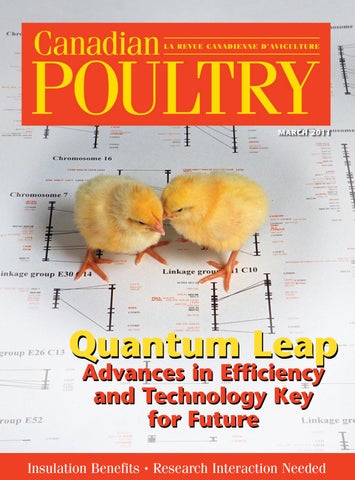
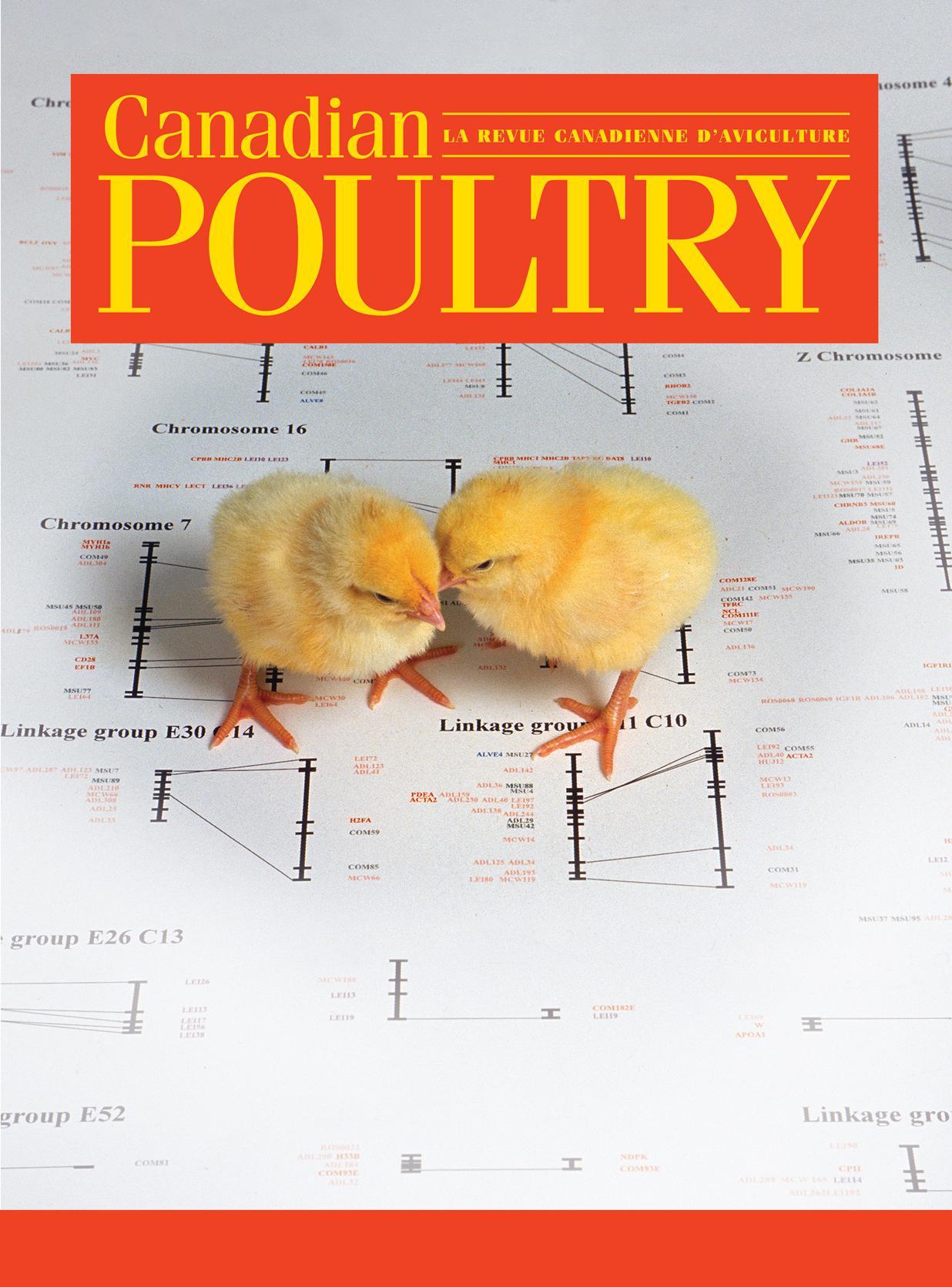
INDUSTRY: Quantum Leap Advances in efficiency and technology are the key to the future
By Jim Knisley
ENERGY: Insulation: “It’s a no brainer” Insulation is a smart investment that pays off in winter and summer
By Jim Knisley
24
PRODUCTION: Accessing the Inaccessible Farmer solidarity has made it possible for Nicholas Tremblay to start and to keep growing
By André Dumont
PIC UPDATE: Novel Marek’s Disease Vaccine University of Guelph researchers have developed new vaccine formulations that control virus shedding and protect against virulent strains
By Kimberly Sheppard, Research Co-ordinator 32
RESEARCH: Bridging the Knowledge Gap Poultry research centres and industry need to have stronger interactions in order to meet future challenges
By Mojtaba Yegani
FROM THE EDITOR
BY KRISTY NUDDS
Do More with Less
Iclearly remember the professor of my first class in animal nutrition saying, “the challenge for animal nutritionists is to keep up with the animal geneticists.”
In the poultry industry, dedicated work by geneticists has allowed for remarkable progress – we now have a broiler chicken that can produce one gram of breast meat from only nine grams of feed. Fifty-plus years ago, it took 28 grams of feed to produce the same amount of breast meat.
The challenge for nutritionists (as well as producers) has not only been to provide a nutrient-dense diet to meet increasing growth rates and rates of lay, but also to cope with the fact that each genetic strain is increasingly specific.
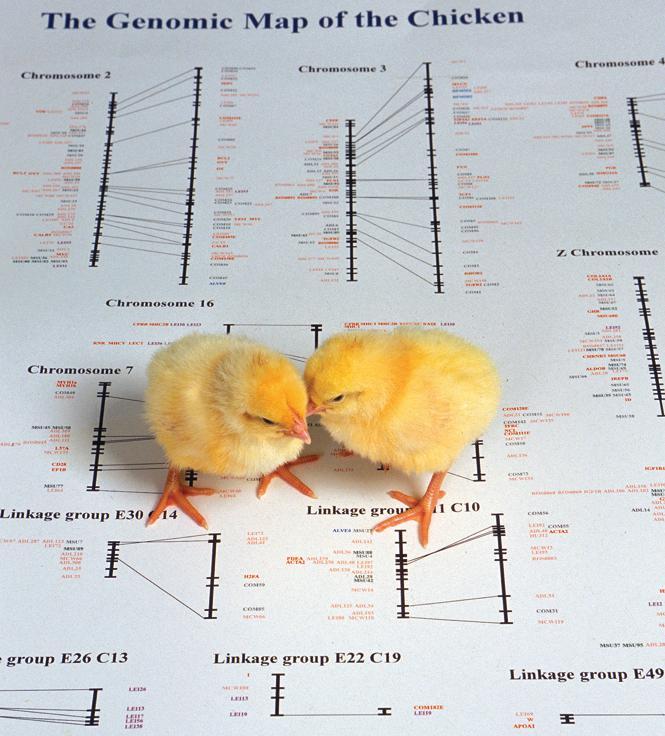
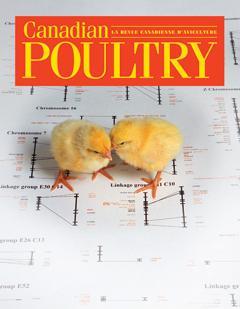
But nutritionists have more tools available to them to deal with genetic progress, and they could soon use these to their advantage. As pointed out in our cover story (page 11), now that the genome of the chicken has been mapped, more efficient utilization of nutrients can be achieved through the use of applied molecular biology and gene expression.
More efficient growth is not only achievable, but necessary. We are currently facing a similar situation to what we did in 2008: energy costs are skyrocketing, competition for feedstuffs is increasing, and grain supply forecasts and commodity futures are changing almost daily, which is causing another global food crisis.
According to a new report, Canada’s AgriFood Destination, released by the Canadian Agri-Food Policy Institute (CAPI), Canada needs a major overhaul with respect to agricultural policy in order to contribute more food to global markets, as well as feed our own.
The Canadian Federation of Agriculture (CFA) agrees. It is currently finalizing its National Food Strategy, which outlines a plan to decrease the risk of Canada becoming reliant on food imports while maintain-
ing the sustainability and profitability of our food supply.
Both the CAPI and CFA strategies for overhauling our food system state that policies designed to keep food cheap have not only wreaked havoc for domestic production, but also caused a health epidemic (increasing rates of obesity, diabetes and heart disease) that is crippling our healthcare system.
Both parties agree that members of our food and health systems need to work more closely together, and Canada must increase its export potential. Environmental sustainability is also key, as is bringing together all stakeholders, including producers, processors, retailers and policy makers, at the same table.
So how does the poultry industry play a role in these strategies? Neither the CAPI nor the CFA strategy speaks directly to supply management. In fact, at first glance, it seems as though the focus is export commodities only, to “level the playing field” with respect to the import and export policies of other countries, which could affect our position at the World Trade Organization.
However, both strategies speak to the importance of domestic production. The CAPI report outlines a goal of having Canada produce 75 per cent of its own food by 2025. The CFA strategy focuses on branding Canada-made products to international as well as Canadian consumers.
But to continue providing consumers with an affordable, nutritious product at a time when competition for inputs and energy costs will only continue to increase, and to become more efficient, the poultry industry must capitalize on the resources available to it.
We can all do our part by taking advantage of the annual meeting season to talk with researchers, government representatives, and even fellow producers, and determine how the industry can do more with less.
March 2011
Vol. 98, No. 3
Editor Kristy Nudds – knudds@annexweb.com
888-599-2228 ext. 266
Associate Editor
Jim Knisley – jknisley@kwic.com
Publisher/Sales Manager
Marilyn White – mwhite@annexweb.com 519-429-5193
888-599-2228 ext 237 • fax: 888-404-1129
Sales Assistant
Mary Burnie – mburnie@annexweb.com 519-429-5175 • 888-599-2228 ext 234
Production Artist
Krista Misener
Group Publisher
Diane Kleer – dkleer@annexweb.com
President Mike Fredericks – mfredericks@annexweb.com
Mailing Address
P.O. Box 530, 105 Donly Dr. S., Simcoe, ON N3Y 4N5
Publication Mail Agreement #40065710
PAP Registration #9850
RETURN UNDELIVERABLE CANADIAN ADDRESSES TO CIRCULATION DEPT., P.O. BOX 530, SIMCOE, ON N3Y 4N5.
Occasionally, Canadian Poultry Magazine will mail information on behalf of industry-related groups whose products and services we believe may be of interest to you. If you prefer not to receive this information, please contact our circulation department in any of the four ways listed above.
Got Lubing? Contact your local Lubing Distributor for more detailed information about our innovative products or vist our website at www.lubingusa.com.
Les Equipments Avipor
Cowansville , Quebec
Tel: (450) 263.6222
Fax: (450) 263.9021
Glass-Pac Canada
St. Jacobs, Ontario
Tel: (519) 664.3811
Fax: (519) 664.3003
Carstairs, Alberta
Tel: (403) 337-3767
Fax: (403) 337-3590
Specht-Canada Inc.
Stony Plain, Alberta
Tel: (780) 963.4795
Fax: (780) 963.5034
J. Dean Williamson Ltd.
London, Ontario
Tel: (519) 657.5231
Fax: (519) 657.4092
With more than 60 years of experience developing innovative products for poultr y producers worldwide, Lubing has established a reputation of leadership by introducing new, cutting-edge technologies to the poultry industry.
Our innovative products are produced with the most modern manufacturing capabilities giving our customers a profitable advantage in productivity
Curve Conveyors
Handle up to 60° angles
Belt Conveyors
Lengths up to 2,000 ft.
Transfer Tables
Rugged Construction - Built to last
Dirty Egg Returns
Superior design - Reliable performance
Nipple Drinking
Ideal water flow from pullets to layers
Future Challenges WHAT’S HATCHING HATCHING
TPaul Aho, Poultry Perspectives, and Mike Donohue, Agri Stats Inc.
he two biggest challenges facing the poultry industry are grain and energy prices, Dr. Paul Aho said at the Poultry Market Intelligence Forum at the 2011 International Poultry Expo in Atlanta, in January.
Dr. Aho, principal, Poultry Perspectives, said in 2010, the ethanol industry used 40 per cent of the U.S. corn crop, and the use of corn to make ethanol is driving corn prices.
Washington politicians have a love affair with ethanol and this is shown by their reluctance to remove tariffs, subsidies and mandates that favour ethanol over other uses for corn, he said. One of the few things that might end the ethanol infatuation is the rapidly escalating price of food and the threat of a crisis. “We could have a serious world food crisis and that
might finally change things,” he said.
Current high levels of chicken production coupled with high grain and energy prices do not bode well for broiler producers. Their bottom lines could be squeezed and the industry could shift from expansion to contraction. “This could be a very difficult year with cutbacks, rationalization and consolidation,” Aho said.
Mike Donohue, vicepresident, Agri Stats Inc., also spoke at the forum. He said: “2008 was the worst year financially for the U.S. broiler industry that most people have ever seen.” The industry’s response in 2008 was a five per cent to six per cent reduction in pounds produced. But it has bounced back and the U.S. broiler
industry is currently at record high weekly slaughter volumes.
But that could change because of high and rising feed costs. The Agri Stats industry average cost per bushel of corn was $6.25 in the first week of January this year. He expects corn to be $7.00 to $7.25 per bushel for March and up to $7.30 per bushel by May. “We are at a crisis in availability and costs for feedstuffs,” he said.
The costs will likely change in industry production practices. The average weight for “big” broilers went over eight pounds per bird for the first time last fall. Big chickens continue to gain ground in production efficiency. But, Donohue said that $7 to $7.50 per bushel corn will cause companies to start dropping weights in their big-bird programs.
Granny’s Purchases Turkey Further Processor
Granny’s Poultry Cooperative has finalized an agreement to purchase the operations of Prairie Produce Inc. as part of its commitment to poultry processing in Manitoba and its strategy to provide consumers with healthy and convenient meal options.
Prairie Produce is a federally inspected turkey further processor that specializes in the production of specialty and low-sodium turkey roasts
Hayter’s to Expand
Hayter’s Turkey Products Inc. of Dashwood, Ont., is expanding.
The company is renovating its existing facility to improve production capacity and is expanding its retail store. It will also establish a test kitchen to develop new, healthy turkey products.
Together, these improvements are expected to help triple sales, create up to six new jobs and retain more than 60 positions that will help boost the local economy. The expansion will allow the company to meet growing demand for turkey products and support local farmers.
The Province of Ontario is assisting the expansion by investing close to $350,000 in Hayter’s through its Rural Economic Development Program.
and rolls and has been primarily serving the health-care, food service, and institutional markets for the last 23 years. It has been located in Winnipeg since 1948.
Granny’s said in a release that it will be business as usual and all the current employees will remain with the organization under Granny’s management.
Granny’s Poultry chief executive officer Craig Evans says that the acquisition “shows our commitment to our producers, the poultry
industry, and is a logical expansion to our business.”
Granny’s has introduced several new poultry products over the past 18 months that are infused with flax, reduced in sodium, certified through the Heart and Stroke Foundation and carry the Health Check label.
“We are always looking for opportunities, and further processing provides strength and durability to grow the business and primary poultry,” says Randy Schroeder, president and board chairman.
Granny’s Poultry is a farmer-owned poultry cooperative and is Manitoba’s largest poultry processor.
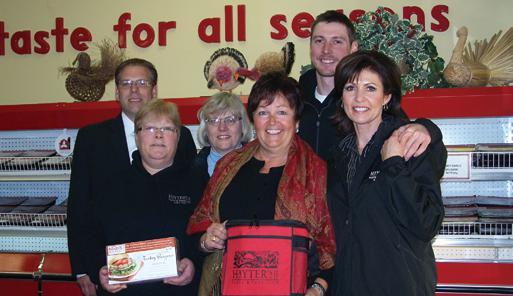
Back row: Dave Maguire (HACCP co-ordinator, Hayter’s),Joanne Maguire (president, Hayter’s), Justin Hayter (farm manager, Hayter’s). Front row: Connie Masse (production lead, Hayter’s), Carol Mitchell (Ontario Minister of Agriculture, Food and Rural Affairs), Elaine Hayter (co-owner, Hayter’s).
Poultry Project Panned
near Ponoka.
Concerned citizens in central Alberta are fighting a poultry project that’s been given the go-ahead near three scenic lakes. They want the Natural Resources Conservation Board to overturn its decision to approve the 9,500-broiler-chicken farm
Friends of the Chain Lakes fear that the operation will be too close to wetlands that serve as headwater to the lakes.
A conservation board spokesman says the protection area is suggested and is not an “outright or absolute’’ exclusion.
COMING EVENTS
MARCH
March 15-17, 2011
40th Midwest Poultry Federation Convention, Saint Paul Rivercentre, Saint Paul, Minn. For more information, visit: www.midwestpoultry.com, or contact Lara Durben, e-mail: lara@ midwestpoultry.com
March 20-23, 2011
60th Western Disease Poultry Conference and ACPV Workshop, Holiday Inn Capitol Plaza, Sacramento, Calif. For more information, visit: www. cevs.ucdavis.edu
APRIL
April 19-20, 2011
Poultry Industry Conference and Exhibition (London Poultry Show), Progress Building, Western Fairgrounds, London, Ont. For exhibitor and registration information, please visit: www.western fair.com or tel: (800) 619-4629.
MAY
May 10, 2011
PIC Research Day, Victoria East Golf Club, Guelph, Ont. For more information, visit: www.poultryindustrycouncil.ca or tel: (519) 837-0284
JUNE
June 12-14, 2011
CPEPC Convention, Delta Hotel, St. John’s, N.L. For more information, visit: www.cpepc.ca or tel: (613) 724-6605
ALBERTA
WHAT’S
HATCHING HATCHING
VERSA Approved by AHA
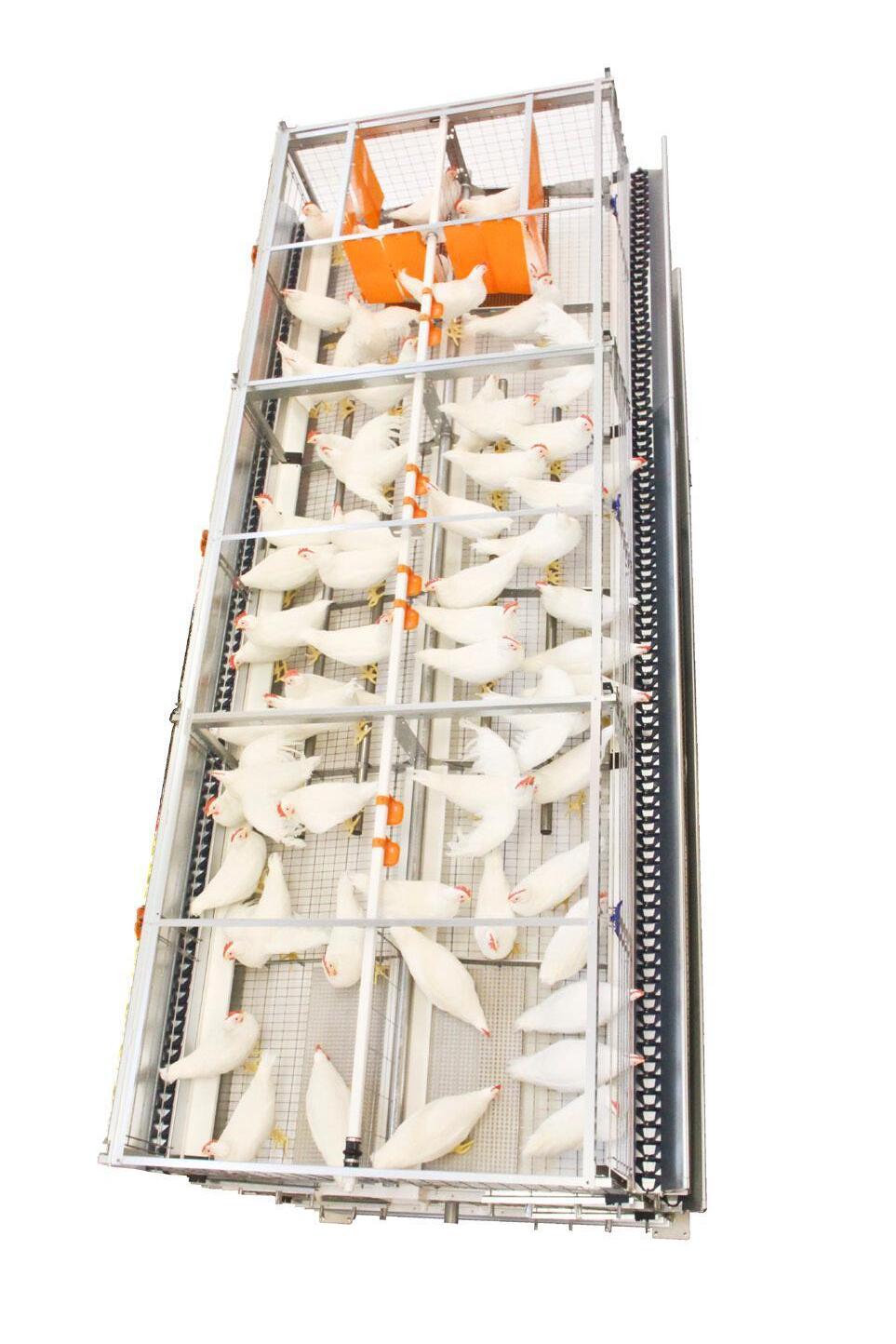
Chore-Time Egg Production Systems has announced that its VERSA™ fully enriched colony system has received the American Humane Association (AHA) Seal of Approval for Humane Housing Systems. The AHA awards the Seal of Approval to housing designs that are shown to contribute to the health and well-being of laying hens and that meet the American Humane Certified Animal Welfare, which provide 120.3 square inches (776
square centimetres) of floor space per bird and house 61 birds. Compartments are 22 inches (55.9 centimetres) tall.
The enrichments include easy-to-grip plastic perches, a nesting area with flexible red curtains and comfortable turf pad, scratch panels for keeping claws trimmed, and an area for dust bathing complete with turf pad and feed delivery system.
Only fully enriched systems are eligible to earn the Seal of Approval.
IPE Sees Growth
The 2011 International Poultry Expo (IPE) and International Feed Expo drew more than 20,000 poultry and feed industry leaders from all over the world. In addition, the show had more than 900 exhibitors, almost a 12 per cent increase from last year. This year’s attendance surpassed the 2010 figure of 18,896. International visitors from 102 nations totaled 4,371, a 13 per cent increase over 2010. Other than the United States, the largest group from a single country
was Canada with 767 visitors. The largest region represented was Latin America and the Caribbean with 1,951 visitors. The large exhibit floor was the central attraction. Exhibitors presented the most current innovations in equipment, supplies and services utilized by industry firms in the production and processing of poultry, eggs, and feed products. All phases of the poultry and feed industry were represented, from live production and processing to further processing and packaging.
COMING EVENTS
JULY
July 16-19, 2011
Poultry Science Association Annual Meeting, America’s Center, St. Louis, Mo. For more information, visit: www.poultryscience. org/psa11
AUGUST
August 8-11, 2011
5th International Workshop on the Assessment of Animal Welfare at Farm and Group Level (WAFL), University of Guelph, Guelph, Ont. Hosted by the Campbell Centre for the Study of Animal Welfare and the Ontario Veterinary College. For more information, e-mailCCSAW@ uoguelph.ca or visit: http://www.uoguelph.ca/ csaw/events
OCTOBER
October 4-6, 2011
Poultry Service Industry Workshop, Banff Centre, Banff, Alta. For more information, visit: www.poultryworkshop.com
We welcome additions to our Coming Events section. To ensure publication at least one month prior to the event, please send your event information at least eight to 12 weeks in advance to: Canadian Poultry, Annex Publishing, P.O. Box 530, 105 Donly Dr. S., Simcoe, Ont. N3Y 4N5; e-mail knudds@annexweb. com; or fax 519-429-3094.
CIBC AGRICULTURE SERVICES
Your business needs are unique. Your livelihood depends on weather conditions, market changes and production cycles.
Managing and expanding your agricultural business requires the expertise of a business advisor intimately familiar with your challenges and opportunities.
You need the trusted, one-on-one relationship of a CIBC business advisor, backed by a team of dedicated CIBC Agricultural Banking Specialists.
You need solutions that are as unique as you are.
To speak to a CIBC business advisor, visit any CIBC branch, go to cibc.com/agriculture or call 1-888-493-2422.
PRODUCTS PRODUCTS
FarmManager Software Now Subscription-based
As of January 2011
Fancom is introducing a new sales model for all its FarmManager™ management software. This means that they will be selling their software in the form of a subscription, consisting of an annual license fee.
This can be extended by a package of services that can vary from designing a suitable infrastructure for your data, installing and up-dating the software, to optimizing the farmers’ operational processes.
For the user, the advantages include not having the worry of unexpected expenses, and having the latest ver-
sion of the software. In addition, the security of management data is in safe hands by relying on unlimited support from the Help desk. Fancom will save a back up of the configuration so that users can revert to the default situation.
For more information, visit: www.fancom.com.
COMBI-RT Forklift
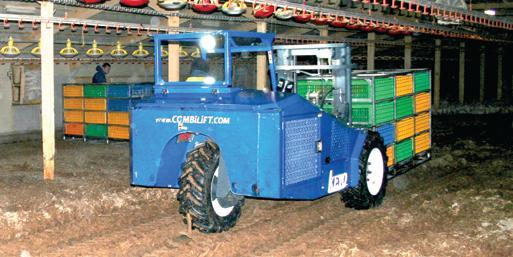
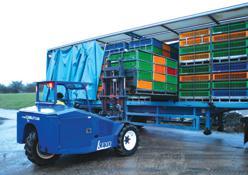
The new COMBI-RT forklift from Comblift has been specifically designed with the needs of the poultry sector in mind. It was developed with the help of feedback provided by Keyo Agricultural Services, one of the UK’s largest providers to the poultry processing sector.
The design and specific features of the Combi-RT offer a wide-range of benefits for producers and operators. In
SmartBobTS1 Sensor
Baddition, it reduces the stress level of the birds and biosecurity risk.
Combilift says that the COMBI-RT design took into account the requirements of catching, handling, and transportation. The Combi-RT comes as standard with a clear view three stage mast with full free lift and its low-profile allows it to work both outside and under the low level eaves inside the poultry house.
Having picked the empty modules from the trailer the operator can then lower the mast without any loss of speed to take them directly to the waiting catchers, sidelining any danger of the module collecting litter on its base as it travels through the poultry house. A further benefit of the full free mast is that it minimizes any chance of impact damage to door structure, drinker and feeder equipment.
For more information, visit: www.combilift.com.
inMaster Level Controls has introduced SmartBob-TS1 cable-based sensor for bins up to 60 feet tall. This continuous level measurement sensor is ideal for operations with multiple, smaller storage and process bins containing powders or bulk solids. This compact, rugged SmartBob-TS1 sensor weighs less than 10 pounds and works effectively in environments where airborne dust and filling noise can prevent other types of continuous level devices from working reliably. The bin level data generated by the SmartBob-TS1 can be viewed from a control console mounted at the base of the bins, with eBob software loaded onto a personal computer, or via BinView Web-based software that also has the ability to send automated alerts and emails to a cell phone or iphone.
The SmartBob-TS1 is designed to reliably measure powders, granules, pellets, plastic resins, and all types of dry bulk solids in smaller bins, tanks and silos and is popular with poultry and swine operations, feed mills and farms. It offers diverse communications options including convenient 4 to 20 mA outputs, RS-485 wired network capabilities, or wireless communications via an optional built-in 900 MHz wireless modem. Measurements can be sent to a PLC, read locally on a SmartBob control console, from a PC loaded with eBob software, or via the Internet using BinMaster’s BinView program.
For more information, visit www.binmaster.com.
Industry Quantum Leap
Advances in efficiency and technology are the key to the future
BY JIM KNISLEY
The question Alltech asks in its 2011 North American lecture tour is fundamental: How will we feed 9.3 billion people by 2050?
The answer is to do things better and more efficiently and to adopt, develop and deploy new technology.
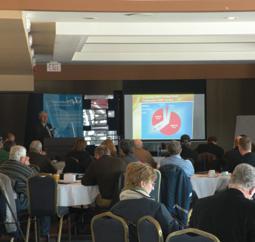
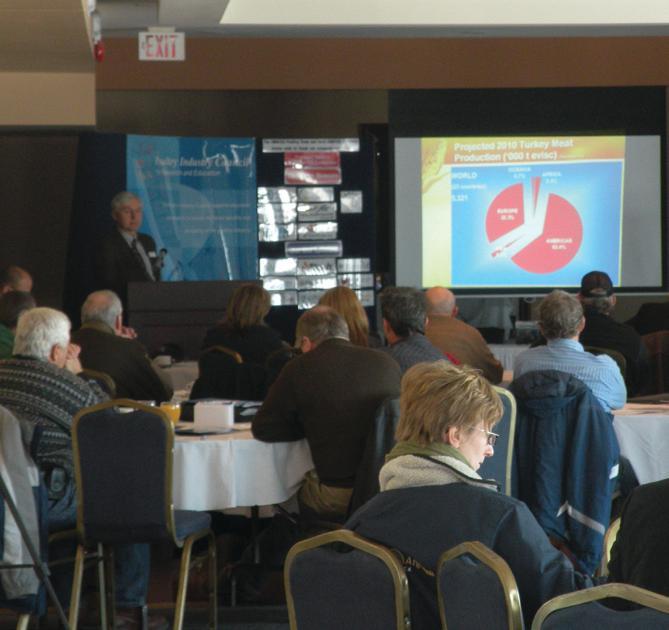
Speaking in Guelph, Ont., in January company leaders spoke on a range of research, including methods to develop and use advances in the nutrition of chickens.
Mark Lyons, international project director for Alltech, said scientists and farmers will have to think “outside of the box” to provide all the food the world will need by 2050.
“We need to think bigger. We need to think of the ramifications of what we do,” Lyons said. “We live in a world that needs to be fed. We have to see these things as opportunities, not as problems.”
Technologies need to be pulled together and “we need a second green revolution,” he said.
Karl Dawson, director of worldwide nutrition for Alltech, said dealing with the “food crisis” will require “not just small changes, but another quantum leap.” Dawson said food production increased 166 per cent in the second half of the last century and it was done on 25 per cent less land and with fewer people. That will have to happen again.
To do it will require redefining and rethinking the production system, and animal nutrition has a huge role to play.
To further increase productivity as competition for inputs increases, we will need to take full advantage of the genetic capabilities of chickens.
This will require taking full advantage of the genetic capabilities of chickens and other livestock. He said developments are underway that are making everything older nutritionists like himself learned obsolete. It is nothing short of a revolution and it is needed to meet the approaching challenge.
“We can’t do this with little changes. We’re going to have to do major over-
hauls,” he said.
He spoke of research the company is undertaking using applied molecular biology and genetic expression to allow chickens to make more and better use of nutrients, and that will result in more efficient production.
This research includes in ova feeding, which involves injecting nutrients into a chicken egg. This speeds the early
MORE WITH LESS
development of the chick but also changes a chicken’s ability to make better use of nutrients throughout its life.
“You’re actually changing gene expression at that level,” Dawson said.
Similar research is being done with pigs. Changing the diets of sows, for example, changes the gene expression of piglets, enabling the offspring to make better use of nutrients throughout their lives.
Dawson said the future will be one in which programmed feeding is standard and the results will be startling. Nutrition researchers have learned that “timing is everything” and that “there are long-term consequences to everything you do.”
By employing nutritional conditioning in the egg you can change the gut and make it more efficient at absorbing nutrients throughout its life. Chicks can also be conditioned in their first 90
Industry
hours to make optimum use of nutrients. That conditioning will last after the special conditioning has stopped and throughout the bird’s life.
“These are not small changes,” he said. We can reduce nutrient requirements by 50 to 75 per cent and get usual growth. By using simple programming you can get a “lower-cost diet, similar performance and higher meat quality.”
What has changed is that scientists never had the tools to measure at the molecular level before, but now the tools are available. “We have to think a different way.”
“In the next decade we will see more changes in nutrition than in all history. It will probably be the most exciting time in nutrition that we’ve ever seen,” Dawson said.
He added that there will also be a lot of changes in what are considered basic feedstuffs.
Pearse Lyons, founder and chairman of Alltech, said the company has started marketing its Alltech Angus beef to restaurants in the United States. The beef comes from cows that have been fed specialized diets, which results in bettertasting and healthier beef.
Lyons also talked about the “farm of the future” concept, which the company unveiled at the 2010 World Equestrian Games, an event it sponsored.
The concept includes a traditional farm that would treat manure with a methane digester and would include refineries for fuel and feed production.
The company is also involved in algae: it operates the largest algae biofuel processing plant in the world and has a contract with the U.S. Department of Defense to generate 200,000 gallons of biodiesel for the navy.
Continued on page 15
CPRC Update Ammonia – What’s the Big Stink?
The agricultural sector is a contributor to ammonia emissions in Canada, whether from animal agriculture or its use as fertilizer. The Canadian Environmental Protection Act (CEPA) designates several contaminants associated with ammonia as “toxic substances.” Under the Act, the federal government is required to manage these substances. Although there are no regulations in North America on ammonia emissions, regulations are being drawn up in the United States, and it may be that Canada is not far behind. The poultry industry has funded research in order to identify the sources of ammonia, determine its scope and effects and develop strategies to decrease emissions and/or their impact.
Dr. Steve Leeson at the University of Guelph has been studying ammonia emissions from layer hens over the past three years. This research considers the effects of ammonia on the health and welfare of the birds as well as strategies that might be used to reduce its emission.
AMMONIA IN THE BARN
Ammonia levels in commercial layer barns can range from five to 30 parts per million (ppm). Exposure to ammonia levels at the high end of this range can cause nose and throat irritation in humans. Dr. Leeson’s preliminary results indicate that layer hens are not averse to 20 ppm ammonia and that ammonia levels typically found in commercial barns do not cause undue stress to the birds. However, ventilation air exhausted from the barns does contain ammonia and efforts are underway to find ways to reduce this source of emission.
LOWERING CRUDE PROTEIN
certain amino acids were found to be deficient and had to be added back to maintain egg numbers. While lowering CP is an effective way to decrease ammonia emissions, fine-tuning low CP diets requires a better understanding of the efficiency at which layer hens can utilize free amino acids as compared to intact proteins from ingredients such as soybean meal.
FEED ADDITIVES
Dr. Leeson also tested three commercially available feed additives for their ability to reduce ammonia emissions. The first was a natural charcoal derived from oak trees that has been shown to adsorb a range of chemicals. When added to feed at a rate of 3 kg/1,000 kg, the product resulted in a small reduction of ammonia emissions. The second product, a saponin derivative from the yucca plant, resulted in 10-24 per cent reduction in ammonia emissions when added to the feed at a rate of 0.5 kg/1,000 kg. The third product, also derived from the Yucca plant, resulted in even greater reduction of ammonia. Supplementing feed with this product at 0.5 kg/1,000 kg resulted in a 50 per cent reduction of ammonia emissions, which translates into an estimated 3,000 kg of ammonia per 100,000 layers annually.
Research considers the effects of ammonia on the health and welfare of the birds and strategies to reduce it
Dr. Leeson’s work complements steps others in Canada and abroad are taking towards an overall approach to reduce ammonia emissions. Funding for this research was provided by CPRC, Novus International Inc. and Ajinomoto Heartland LLC in partnership with the Natural Engineering and Research Council (NSERC) and Agriculture and Agri-Food Canada (AAFC).
Since virtually all ammonia originates from nitrogenous compounds in feed, lowering crude protein (CP) is one way to reduce ammonia emissions. Dr. Leeson and his group fed laying hens diets ranging from 20 per cent CP down to 10 per cent CP. Results clearly showed that reducing dietary nitrogen leads to reduced nitrogen in the manure, which in turn results in less microbial conversion to ammonia. For the diets used in this study, CP levels of less than 15 per cent began to result in decreased egg size and body weight. As CP dropped even lower,
For more details on any CPRC activities, please contact Gord Speksnijder at The Canadian Poultry Research Council, 483 Arkell Road, R.R. #2, Guelph, Ontario, N1H 6H8, phone: (289) 251-2990, fax: (519) 837-3584, email: info@cp-rc.ca, or visit us at www.cp-rc.ca. n
The membership of the CPRC consists of the Chicken Farmers of Canada, the Canadian Hatching Egg Producers, the Turkey Farmers of Canada, the Egg Farmers of Canada and the Canadian Poultry and Egg Processors’ Council. CPRC’s mission is to address its members’ needs through dynamic leadership in the creation and implementation of programs for poultry research in Canada, which may also include societal concerns.
Industry
Continued from page 12
Lyons said the company is focused on the future coming up with solutions to the big problems. “We’ve got tremendous challenges,” he said. The solutions may not be here today, but they are coming.” n
Food in Crisis
Rapidly
rising world prices for sugar, grains and oilseeds pulled world food prices to a record high in December and prompted a warning that prices are in “danger territory.”
A United Nations’ monthly index of food prices surpassed its previous monthly high set in June 2008, when escalating food prices prompted riots and unrest in many poorer nations. The index published by the Food and Agriculture Organization (FAO) tracks the prices of a basket of grains, oilseeds, dairy, meat and sugar, and has risen for six consecutive months.
The FAO food index hit 215 points in December, up from 206 in November, to break the 213.5 registered in June 2008. It shows a dramatic rise in prices for food in a decade. In 2000 the index stood at 90 and did not break through 100 until 2004.
The Economist magazine’s commodity-price index indicates that global food prices have risen by 27 per cent in the past year.
Abdolreza Abbassian, FAO economist, told The Guardian: “We are entering a danger territory.” But he said the situation is not yet as bad as 2008.
Sugar and meat prices are at record levels and grain prices have risen to 2008 levels, he said.
Abbassian warned that prices could continue to rise because of fears of drought in Argentina and floods in Australia. Cold weather in Europe and elsewhere across the northern hemisphere is raising fears of winter kill of fall seeded crops such as winter wheat.
“There is still room for prices to go up much higher, if, for example, the dry conditions in Argentina tend to become a drought, and if we start having problems with winterkill in the northern hemisphere for the wheat crops,” Abbassian said.
“We are concerned; the real reason for concern is the unpredictability,” Abbassian told Reuters.
Julian Jessop, chief international economist at Capital Economics, said: “The surge in agricultural food prices is largely a consequence of supply shocks, such as droughts in major wheat-producing countries. These have been compounded by speculative pressures.”
The FAO also said in its monthly report that global production of food would have to rise by at least two per cent this year to meet the ever-increasing demand without further depleting stocks.
Energy Insulation: It’s a No-Brainer
Insulation pays off in winter or summer
BY JIM KNISLEY
As I walked across the parking lot the raw northeast wind poked and prodded. Icy needles bit deep. But walking through a door and into a truck garage the size of a poultry barn, albeit higher, changed all that. It was suddenly warm. The temperature had to be 20 to 25 degrees higher than the raw, bitter day outside.
Looking around, there wasn’t a heater in sight. There were, however, lots of doors. Mounted sideways on the walls and ceiling, these doors weren’t for going in and out: they were insulated cladding inside the garage.
The walk across the parking lot and into the garage was as effective a demonstration of the benefits of insulation as can be imagined. It was practical and persuasive. The walk was worth thousands of words.
That the garage was so well insulated shouldn’t have been a surprise – it is located at Insta-Insulation’s head office just north of Boston, Ont.
Herman Schuts, the founder and president of Insta-Insulation, is a walking encyclopedia on the effectiveness and efficacy of insulation. While most Canadians know the necessity of insulating to take the sting out of winter, fewer recognize the benefits and necessity of insulating against the summer heat.
Cutting energy demand and heating costs in winter is usually top of mind. What is too often given shorter shrift is that insulation, particularly in poultry
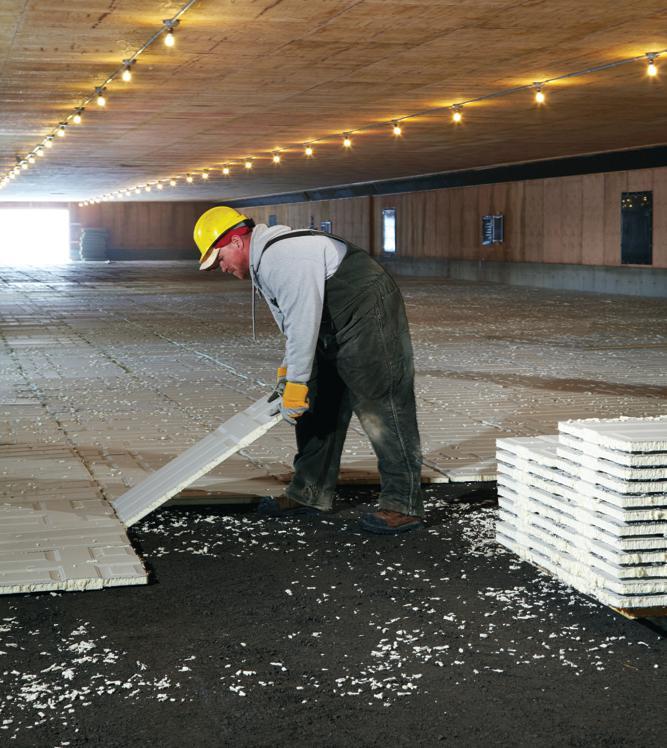
Insta panels provide R-12 insulation for the floor of this poultry barn being built in Eastern Ontario. This ensures a drier floor and more comfortable, healthier and more profitable birds.
barns, also works in the summer by keeping heat out of the barns.
R-50
But that mindset is changing. Art Kloosterman, of Agro Design Ltd.,
recently designed four new barns in Eastern Ontario that have insulated floors – a feature that is sometimes overlooked - for winter protection but also have R-50 in the attics.
“It was a no-brainer,” Kloosterman said. The insulation in the floors is
DRIER FLOORS
Energy
SCHUTS, PRESIDENT OF INSTA-INSULATION, SAYS THE MOST EFFICIENT FURNACE IS ONE THAT DOESN’T COME ON.
“amazing.” It keeps the litter drier, the birds healthier and saves energy and money. The R-50 insulation in the attic really works in the summer by keeping intense summer heat off the birds and eases the load on the ventilation system, which saves electricity and money.
Cutting energy costs has become increasingly important, he said, as the cost of electricity and propane has risen. With energy costs expected to continue to rise, steps to reduce energy use are becoming commonplace.
He said that enhancing the attic insulation from a more typical R30 or R40 to R50 was inexpensive and is “a good step.”
Kloosterman, who designs barns for a living, is a big believer in the benefits of insulation and increasingly so are the farmers he works for.
SAVE MONEY
For Schuts the proof is, as they say, in the pudding.
“Poultry growers that insulated properly save money on heating; reduce bird crowding; and realize a healthier environment with reduced ammonia levels – all of which means improved yield and attractive payback
HERMAN
Energy
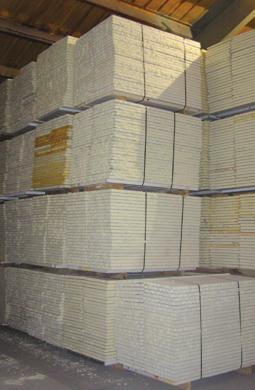
A SMALL MOUNTAIN OF PANELS ARE STORED AT INSTAINSULATION’S WAREHOUSE OUTSIDE BOSTON, ONT.
on investment,” he said.
“The most efficient furnace is one that doesn’t come on,” he said.
Insta-Insulation specializes in insulated floor panels, Walltite spray-inplace polyurethane foam insulation and blown cellulose insulation for attic and wall injection projects.
The floor panels are unique and make creative use of insulated doors or parts of insulated doors. When companies build insulated doors for homes, businesses or garages they are one piece. If a customer wants windows in the doors the material is cut out to create a space for the window. The result is a beautiful door, but also an insulated panel, which from the door company’s perspective is a leftover. Insta-Insulation obtains the leftover panels and shapes them for use in floors.
The one-and-three-quarter-inch polyurethane foam panels, which come enclosed in either steel or fibreglass, have an R-12 insulation rating. The panels are covered by the concrete slab and provide immediate benefits including reduced heating costs, more comfort for the birds, lower mortality, lower maintenance costs, and better feed conversion.
Schuts says he has never met an
Free Your Broilers from Grill Restrictions with Chore-Time’s LIBERTY® Feeding System
Chore-Time’s LIBERTY® Feeding System features an open approach to feed access.
• With just four grill struts, the LIBERTY Feeder’s open grill gives optimum feed access to broilers of all ages and weights.
• Raising the silver feed cone for flooding results in greater feed visibility along with a high level of feed to attract young birds.
• The LIBERTY feeder’s variable flood capability gives growers more flexibility in reducing the flood level and setting the feed level for grow out.
To provide your birds with innovative open access eating, contact your local TRUE RED® certified Chore-Time distributor today, and grow with us!
Feed saving features include the center cone’s incorporated anti-rake fins and the special configuration of the grill edge.
The LIBERTY® Feeder’s open grill with scalloped edge was designed for bird comfort based on modern bird genetics.
Patented
The feeder’s center cone can be winched to match the feed level to the birds’ age or size.
Energy
Military Study
In the Jan. 13 edition of the New York Times, Steven M. Anderson, a retired army brigadier general, wrote of the benefits of insulation.
Anderson wrote that as the military’s senior logistician in Iraq in 2006 and 2007 he tracked the fuel needed to power the generators providing electricity for air conditioning and other essential uses.
In 2007, an army study found that spraying foam insulation on the exterior of inefficient structures would reduce their energy requirements by more than 80 per cent and improve the quality of life for the troops living in them, he explained in the article.
As a result of that study, the U.S. military spent $95 million insulating inefficient structures. A 2010 study showed this initiative was saving about $1 billion a year and taking more than 11,000 fuel trucks off the road, he noted.
The U.S. military’s payback was more than $10 for every dollar spent.
unsatisfied poultry customer. His company’s installation of well over 10 million square feet of panel floor insulation, as well as research, can back up his claim.
MAKE MONEY
Research has shown a three- to five-cent difference per kilogram of production between barns with insulated floors and barns without floor insulation. With a four-cent difference between the insulated and uninsulated barns the difference can be almost $10,000 a year (see sidebar).
Meanwhile, the Walltite spray-in-place insulation creates a gap-free, airtight seal that is resistant to moisture, sealing any cracks or crevices that cold or warm air could travel through. It also eliminates the need for a plastic vapour barrier.
The blown insulation is a recycled product that offers air barrier qualities because it is tighter and has a high R-value. An additional and important benefit for poultry farmers is that “rodents don’t like blown cellulose,” said Schuts.
HEAT FOLLOWS COLD
Schuts says the key to understanding insulation is that “heat follows cold.” If the floor is cold, heat will rush towards it, and in an uninsulated floor the heat will move into the ground below. Insulating the floor eliminates this waste of heat.
If there is a cold spot along the wall the heat will head there. In the summer, if the attic is hot the heat will head into the not-quite-so-hot barn.
Poultry farmers shouldn’t stop at just insulating their barns, as important as that is. Farmers should also consider the benefits of properly insulating their homes. Schuts says savings to homeowners can be substantial and, depending on heat source, could amount to thousands of dollars a year with the additional benefit of keeping the house cooler in summer and reducing the cost of air conditioning.
More information about Insta-Insulation is available at www.instainsulation.com. n
Miscellaneous Costs for Sample Broiler Barn
Production Accessing the Inaccessible
Farmer solidarity has made it possible for Nicholas Tremblay to start and to keep growing
BY ANDRÉ DUMONT
Egg production is closed to newcomers. The high price of quota and the way it’s traded make it impossible to start, unless your family is already in the business.”
Leaders of Quebec’s egg industry have grown so tired of hearing such statements they’ve set out to make them simply not true. And their start-up program (lifetime loan of quota for 5,000 layers) was just the beginning.
Two new programs now contribute to what the Fédération des producteurs d’œufs de consommation du Québec (FPOCQ – Quebec Egg Producers) could call a new era of accessibility and transparency. Do they really work? “You bet!” says a 34-year-old farmer Canadian Poultry spoke with last November.
Meet Nicholas Tremblay. The poultry farm he built from scratch in 2008 is an example of how producer solidarity, when combined with strong determination and a bit of luck, can make dreams come true.
After obtaining a degree in agronomy from McGill University, Tremblay first worked at La Coop fédérée’s Victoriaville hatchery. A year later, he was employed by a pharmaceutical company, to serve poultry and hog farmers.
Living in Sainte-Julie, south of Montreal, Tremblay set out to start a
OPPORTUNITY SEEKER
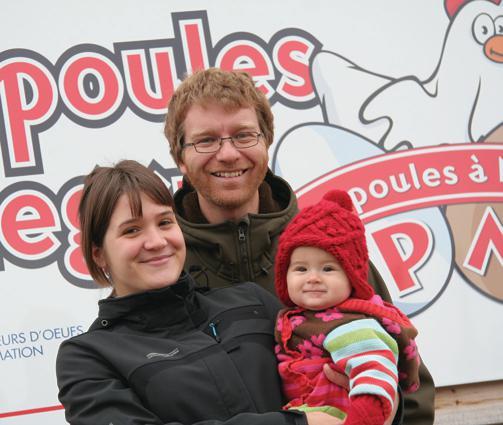
Amélie Audet, Nicholas Tremblay and their youngest daughter Juliette. Little Meggy is absent.
Becoming an egg farmer is a dream come true for 34-year-old agronomist Nicholas Tremblay, who is taking advantage of every single program to access quota.
modest broiler farm. He was ready to purchase quota, but environmental regulations made the site he had hoped to use inappropriate.
In 2006, Tremblay became one of the four finalists in the FPOCQ’s first-ever lifetime quota loan for 5,000 layers. The final winners were hog farmers Joanne LaBranche and Patrick Côté, of Kinnear’s Mills.
The following year, Tremblay’s application was judged one the five best out of 26. This time, luck was on his side when his name was drawn from the hat, among the five finalists.
“The nice thing is that the application process is so serious, that if you win, you don’t need to panic. Your business plan is pretty much ready,” Tremblay says.
“I’m an agronomist and I was meant
by
Photo
André Dumont
to work in agriculture all my life, but I was really thinking it would be impossible for me to become a farmer.”
Tremblay started building his henhouse on a piece of land that had belonged to his grandfather in SaintAmbroise, in the Saguenay-Lac-SaintJean region. The 20- by 200-foot building was completed in September, along with a packing room and a refrigerated room. The farm was named “Les poules à Meggy” (Meggy’s hens), after his first daughter’s name.
The 5,000 layers soon arrived. The first years would be hard, with spouse Amélie Audet staying behind in SaintHyacinthe to finish a veterinarian degree, visiting Nicholas and her daughter Meggy every weekend.
Tremblay could rely on his father –Gilles Aurélien Tremblay – to help. In order to make ends meet, he started working three days a week for the pharmaceu-
Production
tical company that once employed him.
Any possible way to expand production was sought. A woman on the FPOCQ’s board was so enthused with Tremblay’s project she turned to him when quota from her own farm was to be sold.
Tremblay managed to purchase quota directly from this producer. He also convinced others to rent him the extra quota for hens they couldn’t house on their own farm.
“We are very happy,” Tremblay says. “But nothing happened by itself. We made lot of phone calls to other producers and had to borrow a lot of money.”
Along the way, two new programs helped make Tremblay’s life easier and his farm more prosperous. Following in the footsteps of Quebec dairy farmers, the FPOCQ set up a centralized quota exchange system.
“We had realized that farmer-to-farmer
quota transactions were mostly benefiting large operations,” FPOCQ communications manager Philippe Olivier said.
The centralized quota exchange is managed by AGECO, an independent research firm. The system is fully transparent, with sales happening about four times a year. Sellers set their price and buyers register their bids. Those who bid too high or too low are out of luck. The available quota is split among those whose bid matched exactly the seller’s price.
At first, the selling price of one hen of quota stabilized at $250, which pretty much neutralized the guessing game. However, things are evolving with the last bid at $255, leaving the next one pretty hard to guess.
“The system is made for quota to sell at a balanced price,” Olivier says. “It’s not the one bidding the highest that wins the available quota.”
Tremblay has managed to secure some quota through this new system. However, he hopes one day the price of quota will be capped, just as dairy farmers have done. For a well-established farmer, he explains, paying $325 for a bit of new quota is pretty easy, but for him, the price has to be reasonable and predictable.
The larger share of Tremblay’s expanded production has come from rented quota. Again, the FPOCQ has stepped in to make the game fairer.
All new rental quota is managed by the FPOCQ, who puts it in a pool, combining it with its own quota reserve. Once a year, this quota is made available at a set price, to all those who are willing to rent it.
“It is very advantageous to produce with this quota,” Tremblay says. “I may have a small farm, but my power generator, my alarm system and my packing room have cost me just the same as they would have in a larger farm.”
Three years down the road, Tremblay has nearly doubled his production. “We are very happy with all these programs,” he says. “Yes, there was some luck involved in getting the 5,000-layer quota loan. But I think we are making our own luck, working hard to show that we are serious and that this lifetime loan was only a starting point.” n
PIC Update
Novel Marek’s Disease Vaccine
University of Guelph researchers have been developing new vaccine formulations that are able to control virus shedding while protecting against virulent strains
BY KIMBERLY SHEPPARD, RESEARCH CO-ORDINATOR
Marek’s disease (MD) is a viral disease of chickens often associated with the formation of tumours and immunosuppression. Based on some estimates, the annual losses to the global poultry industry due to this disease are between $1 and 2 billion. These losses are mostly due to condemnation and, more importantly, suppression of the chick’s immune system, a condition that predisposes the bird to secondary infections.
Vaccines are available to control this disease and almost all broilers, layers and breeders in North America are vaccinated against MD. However, Marek’s disease virus (MDV) is ubiquitous and there is evidence that it is increasingly gaining virulence, which may lead to breakdown of immunity generated by vaccines in vaccinated flocks. The challenge for the poultry industry is that there are no vaccines available to protect against new virulent strains of the virus. More importantly, it is thought that vaccines act as a driving force for evolution
The challenge for the poultry industry is that there are no vaccines available to protect against new virulent strains of the virus causing Marek’s disease.
of MDV because vaccines, although protective against clinical disease, are not able to prevent shedding of the virus. When virus is shed to the environment, other birds may contract the virus from the environment and become infected.
Dr. Shayan Sharif and his research team at the University of Guelph have been developing new vaccine formulations that are able to control virus shedding and, at the same time, protect against virulent strains of MDV. From feathers, the team dissected out cellular and molecular mechanisms of immune response to the virus, since feather tissue is the main site for development and shedding of infectious viral particles. Their findings? It was clearly demonstrated that both field and vaccine virus-
es elicited a robust immune response in feathers. However, despite the fact that cells of the immune system could enter the feather in order to fight off the virulent viruses present in the tissue, these cells were not able to eliminate the virus. This may be the root cause of the inability of the chicken’s immune system to prevent virus shedding.
It was also discovered that an immunological molecular mediator was present in feathers of vaccinated or infected chickens. When added to vaccine formulations, this molecular mediator conferred high protection against Marek’s disease. Protection of birds was also associated with a reduction in virus load in their tissues. Therefore, although this vaccine formulation is still experimental,
PROTECTING AGAINST MAREK’S
Remarkably Clean
Helping you every day…
As the summer comes to an end, Vétoquinol would like to remind you of the importance of a good biosecurity protocol and its implementation on a daily basis. On top of the continuous measures that you put forward, keep in mind that using a detergent for cleaning optimizes the efficiency of your disinfectant. As for the disinfectant, it’s important that your choice be compatible with your detergent. A disinfectant should also have a broad spectrum and be proven effective against the specific pathogen you are dealing with.
Need more information?
Consult your farm biosecurity specialist: Vétoquinol! Detergents
Biofoam Dupont Chlor-A-Foam
Dupont Neutrafoam
Dupont Biosolve Plus
Dupont Acid-A-Foam XL
BioSentry 904
Virkon
it provides another line of defence against highly virulent strains of MDV. Finally, in collaboration with Dr. Robert Silva of the USDA’sAvian Disease and Oncology laboratory, USDA in Michigan, the team developed an assay that is able to distinguish a widely used vaccine strain, called CVI988/Rispens, from virulent strains of MDV. This will be a useful test for determining if vaccinated flocks have been infected with virulent MDV.
PIC Update
Niagara Falls), and will also bring a terrific learning opportunity back in front of farmers. With the new location comes a new format with an exciting lineup of hands-on practical workshops to start the proceedings and an excellent lineup of speakers to round off what promises to be an excellent couple of days – look out for details in Canadian Poultry magazine and on the PIC website.
BY TIM NELSON, EXECUTIVE DIRECTOR
2011 is off to a flying start!
This year we’ve already seen an increased interest in the producer updates. Check out the PIC website (www.poultryindustrycouncil.ca) for venues and dates for the next producer updates, and please register early online or call us to make sure we have numbers for catering early on.
This year’s Innovations Conference is moving to London (previously held in
PIC is involved in some exciting projects this year: developing a PAACOcertified poultry welfare auditing course, investigating the real cost of biosecurity, and looking into the effectiveness of electronic monitoring technology which, in the event of a disease outbreak, will aid in tracking farm service vehicles that may be carrying the disease and help to control it more quickly. We’re also working with students in the two poultry clubs at the University of Guelph to develop a video on planning and implementing a biosecurity management system on your farm.
In late January, a group of decision
makers from the four feather boards met to consider our long-term poultry research needs. It was clear from the meeting that a strategic investment in personnel and infrastructure is needed and we need to start soon if we are to keep abreast of the emerging issues that will challenge our industry over time. Industry is taking investment in scientific research seriously, which is why it’s all the more disappointing to read a recent National Scientific and Engineering Research Council (NSERC) media release stating that agriculture is no longer a priority for research investment. Please contact Tim Nelson at PIC for more information on this troubling development.
Finally, we’re always looking for farmers to get involved in our projects – those who have taken part in the past report that they learn a lot by being involved and generally have a lot of fun. For details of any of the above, or simply to find out how you can join PIC activities, call us at 519-837-0284 or e-mail tnelson@poultryindustrycouncil.ca. n
PIC’S PICKS
Get Real
Don’t buy a prototype when you can invest in real proven performance!
Today, understanding what’s real is paramount when making a decision to invest in an enrichable system. For a fully enriched future, get the proven performance of Big Dutchman’s AVECH™ Enriched Colony Housing system.
With millions of birds living in these systems throughout the world, and with the Seal Of Approval from the American Humane Association on a certified farm in the U.S., you can be confident in the proven performance, reliability, and industry acceptance of the AVECH™ system.
See it in action at: enriched.bigdutchmanusa.com then contact a Big Dutchman representative today.
Research Bridging the Knowledge Gap
Poultry research centres and industry need to have stronger interactions in order to meet future challenges
BY MOJTABA YEGANI, PHD CANDIDATE, POULTRY RESEARCH CENTRE, UNIVERSITY OF ALBERTA
In the December 2010 issue of Canadian Poultry magazine, there was a discussion on the subject of funding research projects by the Ontario poultry sector. According to the sources consulted for the article, there are some concerns about the future as it seems that industry support has remained stagnant or “waning,” while the need for poultry research, people, and infrastructure continues to grow.
There is no doubt that the efforts made by poultry research centres at both national and international levels should be recognized and appreciated by the poultry industry. It is of paramount importance to not only continue encouraging this support, but to strengthen the relationship between research centres and the industry. The present article is intended to re-emphasize the importance of this issue and also briefly discuss some approaches that can play a positive role in this regard.
INDUSTRY’S CHALLENGES
Industry has reached high standards in many aspects of poultry production, but there are still many challenges in different areas, including: nutrition, diseases, food safety, welfare, and the environ-
Continuous and constructive communication between researchers and industry is needed.
ment. The industry cannot deal with these issues by itself and research centres can provide the industry with unique and effective solutions that can be applied to a variety of regions and types of operations.
SUPPORTING RESEARCH CENTRES
There is a constant necessity to support poultry research centres because they
not only conduct research projects, but they also train the next generation of professionals who will join the industry, government organizations, or academic institutes. One of the main reasons for the expansion of the poultry industry is that the industry has been very efficient in using the scientific information generated at research centres. Although the industry is now able to achieve its objectives in many fields, it should continue to support universities, as universities provide credible research in many
different areas. Although the industry feels that its investments in research have been beneficial, such important factors as global economic volatility, consolidation of the industry and increasing competitiveness may limit research funding provided by the industry in the future.
NATURE OF RESEARCH PROJECTS
Projects at poultry research centres can be generally divided into basic or applied research. Both types are required for further advancement of the poultry industry. Applied projects are usually accompanied with more applicable results (mainly in the short term), and because of this, there has been a strong tendency in the industry to support this category of projects. On the other hand, basic research may not always result in findings with immediate applications, and as a result, there may be a less industry investment in this type of research. However, basic research, in addition to its own benefits, can often support the applied projects in order to make them more understandable for the industry. Although the industry supports basic research, it seems that these projects will continue to receive financial support mainly from government or government-associated organizations at both provincial and national levels.
Focusing heavily on research projects with long-term implications can result in disconnection with the industry. On the other hand, the needs of the industry constantly change and it is unrealistic to expect research centres to find solutions for all these problems in a short period of time. Thus, a balanced combination of research projects with short- or long-term applications would be of great benefit for sustainability of the poultry industry.
Regardless of the nature of research projects, it would also be of great help if some researchers could gain a sufficient understanding of the practical aspects of poultry production by getting in touch
Research
more frequently with the “real world.” Research projects should, as much as possible, be helpful to industry and help it find answers for the challenges that exist in the field.
MUTUAL UNDERSTANDING
Researchers need to show that their research is of value and relevance to the industry. The industry also needs to be clear on its expectations from research centres. These objectives can be achieved through continuous and constructive communications between these sectors. Good communication will allow collaborative mechanisms to be put in place to establish a direction research should take to find solutions for current and future problems.
TRANSFER OF RESEARCH FINDINGS
Knowledge gaps exist between poultry research centres and different sectors of the industry. Research centres are expected to provide answers to the industry issues of the day. In some cases, answers to these questions are already known, but the problem is that this knowledge has not been efficiently transferred to the industry. Enhancing transfer of knowledge is one of the most important factors that can play a significant role in bridging the gaps between research centres and the industry. Research findings, regardless of how complicated they might be, should always be transferred in a form that can be understood in the real world.
In order to achieve this important goal, it is of absolute necessity to maintain and enhance an efficient relationship between research centres and the industry to encourage a strong combination of scientific knowledge and real world experiences which will ultimately benefit both sectors.
Holding regular technology transfer meetings is probably still the best way for interactions. However, there are also other approaches that can be taken. Sending out technical newsletters by
poultry research centres on a regular basis can be of great help to boost the relationship with both national and international poultry industries.
It seems that trade magazines have a stronger presence in different sectors of the industry compared to peer-reviewed journals. As a result, having researchers write articles in poultry trade magazines can be another effective way of delivering information to the industry.
More recently, the use of social media has become very popular, and this can be another excellent communication channel with the industry. According to results of a survey conducted among farmers in the Netherlands in 2010, 40 per cent of the participants stated that they use social media every week. YouTube was ranked as the most commonly used among the farmers who responded to this survey. Respondents also stated that they will increase their use of these media in the future, particularly for informational purposes.
CONCLUSIONS
As stated in the editorial of the December 2010 issue of Canadian Poultry magazine, “Sometimes researchers and farmers don’t know how to talk to one another in the same language, and this is a significant issue for the sector.” Reaching a realistic mutual understanding through efficient communication between research centres and the industry is becoming much more important, and this understanding can be of great help in bridging the gaps and coping with the challenges that both sectors will encounter in the short and long term.
ACKNOWLEDGMENTS
Comments and suggestions provided by my contacts at both research centres and the industry are greatly appreciated. I also thank Emmy Koeleman of Vetsweb for translating (from Dutch to English) results of a survey conducted by AgriDirect among farmers in the Netherlands. A full list of references is available on page 36. n
The #1 Name for In-Vessel Composting
REFERENCES
Knisley, J. 2010. Declining research investment. Canadian Poultry Magazine. December issue, pp. 36, 38.
Nelson, T. 2008. http://www. canadianpoultrymag.com/content/ view/1464/41/
Taylor, R. L. 2009. The future of poultry science research: Things I think I think. Poultry Science 88:1334-1338.
Nudds, K. 2010. Funding our future. Canadian Poultry magazine, Vol. 97, No. 12:4.
Poultry Research Funding in Canada. A workshop organized by Canadian Poultry Research Council, Oct. 1, 2008.
Shaw, A., L. Stevenson, and K. Macklin. 2010. Improving research at universities to benefit the poultry industry. Journal of Applied Poultry Research. 19:307-311.
Scanes, C. G. 2007. The global need for poultry science education, research, and outreach. Poultry Science. 86:1285.
Hunton, P. 2010. Global trends in poultry production and research. World Poultry. Vol. 25, No. 9: 19-21.
Yegani, M. 2009b. Online professional networking: An effective interactive tool. Poultry Science 88:2014-2015.
Pohl, S. K., D. J. Caldwell, and M. B.
Farnell. 2010. Extension – what is needed to improve university and industry collaboration. Journal of Applied Poultry Research. 19:316-319.
Reynnells, R. D.2001. Transfer Technology in the Poultry System. Journal of Applied Poultry Research. 10: 279-284.
Yegani, M. 2009c. The importance of writing in poultry trade magazines. World’s Poultry Science Journal. 56: 569. AgriDirect survey www.agridirect.nl.
PUBLISHER/SALES MANAGER
MARILYN WHITE
MWHITE@ANNEXWEB.COM
1.888.599.2228 EXT 237
WOULD YOU LIKE TO ADVERTISE YOUR BUSINESS IN OUR PUBLICATION?
ALL THINGS CONSIDERED
BY JIM KNISLEY
At the Mercy of Weather
This is shaping up to be a very, very interesting year. Which, if you believe in the old Chinese curse, “May you live in interesting times,” is a bad thing.
Making it all the more interesting is that there is precious little anyone can do to bring on much-needed boredom. As advanced as we think we sometimes are, we have yet to develop sure-fire ways to control the weather. We seem to be able to influence it over the long term (though some continue to deny that) and we can mitigate some of its worst impacts over the short term with irrigation and water conservation technologies. But when the weather gets really interesting, all we can do is get out of the way and watch.
In the past year alone we’ve had to watch as much of the Canadian Prairies went under water. Pakistan had its worst flooding ever and Australia experienced the same.
Meanwhile Argentina is in the midst of a drought, Russia which had finally become a significant exporter of wheat the previous year, saw its crops literally catch on fire because of relentless heat and drought, and this winter much of the U.S. winter wheat crop is threatened by a dry fall and a lack of snow cover this winter.
The result has been slashed production and much lower than usual quality in the crops that have been harvested. This has led to rapidly rising prices for grains, oilseeds and other crops.
Recent reports indicate flax is in short supply and prices are headed up with little prospect of a decrease. Even sugar has reached the point where there are reports that some Brazilian producers are shifting supplies from ethanol production onto world food markets.
When the 2011 crop is ready for harvest soybean, supplies will be down to 140 million bushels and corn stocks will be about 745 million bushels, the smallest year-to-year carryover since 1995.
The stocks-to-use ratio for corn is projected at 5.5 per cent. The USDA said the ratio reflected a decline in the yield estimates for last year’s crop and an increase in ethanol use.
The stocks-to-use ratio for soybeans is projected at 4.2 per cent, the lowest ever.
On the livestock side, there is good and bad news. The bad news is, of course, the rapidly rising cost of feed. The good news is that beef and hog supplies are tightening and prices are rising. This also seems to be playing out on milk markets.
If agriculture were like a steel company the response to the current situation would be straightforward – you crank up production. While farmers everywhere will no doubt try, it’s hard to do if the soil is too wet or too dry or if spring comes late and winter comes early. And even if the seed gets in the ground a summer heat wave or relentless rain can undo even the best made plans.
Maybe 2011 will be like 2009, when big crops pulled us back from the brink. Or maybe 2011 will be like 2010 and we’ll have a real mess.
While there is nothing we can do about the weather, there are some things that should be done
Meanwhile, in the U.S., politicians, who are nothing if not sensitive to the pressure and power of well-financed lobby groups, voted to extend ethanol subsidies and the ethanol mandate. With corn prices soaring, and world demand for U.S. corn surging, the decision was made to divert more corn from food to fuel. Up here in the Great White North we continue with our “me too” ethanol policy.
As we look toward spring there are forecasts that parts of the Prairies, thanks to last year’s rain and heavy snow this winter, will be too wet to seed in the spring. This could reduce expected production by five to 10 per cent below the multi-year average.
In the United States, the USDA is already forecasting that its stockpiles of corn and soybeans will be down to near record-low levels.
While there is nothing we can do about the weather, there are some things that could and, in my opinion should, be done. This first is the creation of a world grain bank. It could be run by the FAO or under some other form of multinational agreement. Crops would be bought and stored during good years and then sold and distributed in bad years. This would have the added benefit of reducing the wild swings in prices by increasing demand in years when supplies are plentiful and increasing supplies when production is poor.
The second thing that should be done is to take a hard look at producing ethanol from grain, especially the practice of having both a government-mandated minimum ethanol content in gasoline and production subsidies. The combination has the effect of increasing demand for corn and increasing the ability of ethanol producers to bid up corn prices at the expense of hard-pressed livestock producers.
Neither of these measures is politically easy.
But if we have another bad year, political noise could be the least of our worries. n