
DIGITAL THREAD













Xpansion I/O has never been so practical









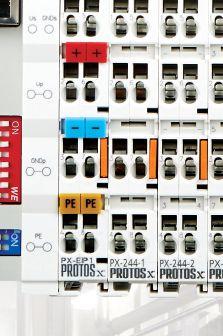
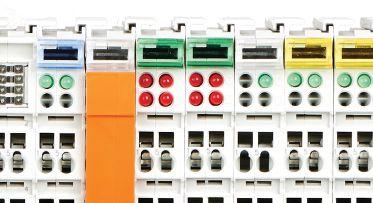
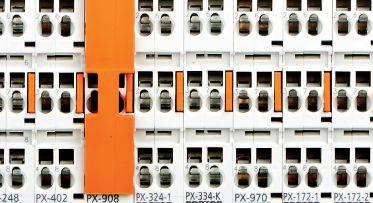
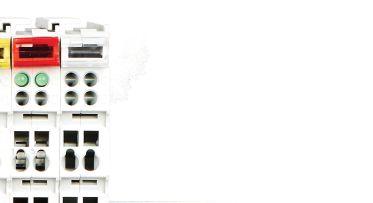
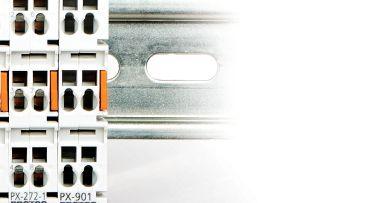
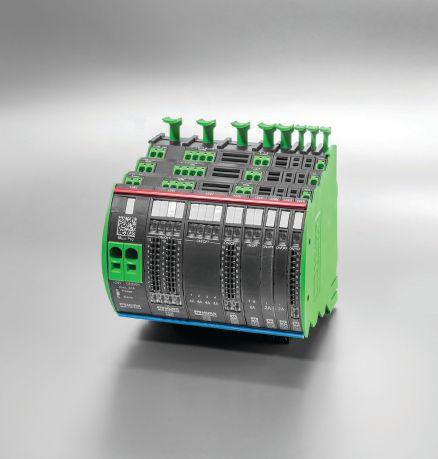
Built to be versatile in the field, the Protos X Field I/O system has a slim design with numerous I/O point configurations. The small footprint lets you install Protos X I/O assemblies exactly where you need them, even in tight locations. No need for excess field wiring, no need for unused I/O points and with the already low price, you’ll save money again and again with Protos X.
• Rackless design for easy installation in areas with limited space
• Bus Couplers available in Modbus RTU/ASCII, Modbus TCP and EtherNet/IP protocols to integrate with a wide variety of controllers and SCADA/HMI packages
• Discrete terminals available in AC and DC with a variety of point
•
•
•

• A variety of power supply and power distribution options give you added versatility

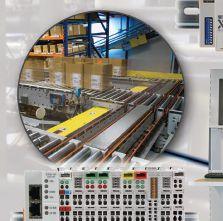
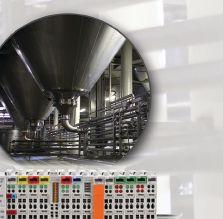
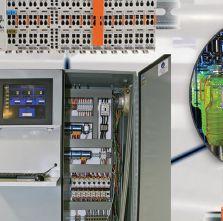
Distributing I/O for your process saves space, wiring and money!



Orders over $49 get FAST FREE SHIPPING
Our shipping policies make it
than ever to order
U.S.! Fast free standard shipping* is available for most orders over $49 U.S., and that includes the brokerage fees (when using an AutomationDirect nominated broker). Using our choice of carrier, we can reach most Canadian destinations within 2 to 3 days. Order by 6pm ET and in-stock orders ship the same day!
*2-day free shipping does not apply to drop-ships, or orders requiring LTL transport, but those shipments can take advantage of our negotiated super-low flat rates (based on weight) that include brokerage fees.
See Web site for details and restrictions at: www.automationdirect.com/canada





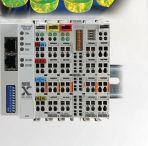
(PX-EIP1: 1-port EtherNet/IP Coupler)



Motion monitoring on an external unit allows combines safety functions with machine efficiency By
Marcel Wöhner and Jörg Forcht
Draw
By Jason Kasper
A
Shane Novacek
a digital thread
Michele Markey


NOTABLE TWEETS
@Rajant Corporation
In the market for a future-ready #network with #autonomous adaptability, mission-critical reliability, and complete mobility?
Rajant’s Shawn Lemley shares his insight in @ AutomationMag
Check it out:
bit.ly/2QIQgck
#wirelessmesh
#industrialIoT

@ROK Guardmaster
A majority of industrial companies are using #safety to not only mitigate risks but also to improve productivity and profitability, according to a survey by LNS Research.
bit.ly/2RKv7zN
@euautomation
As sensors continue to advance, the gap between old and new technology becomes more apparent. This is made worse by the fact that many of the experts in legacy equipment maintenance are retiring.
euau.to/2DKlUo8
BY KRISTINA URQUHART
Industrial networks: The IIoT’s workhorses
Because it’s relatively intangible, the concept of the Industrial Internet of Things (IIoT) can be a difficult thing to wrap your head around. But it’s essentially a catch-all term for the network of physical devices embedded with sensors, actuators and other connectivity enablers that collect data to send to the cloud, where it can be accessed by end users in your plant.
The IIoT relies on many components to operate, but perhaps the most fundamental are the industrial networks that power it all – the underlying architecture of technologies (such as fieldbus or the industrial Ethernet) that allow all of these devices to talk to one another.
According to the Industrial Internet Consortium (IIC), a global body that advocates for the adoption of the IIoT, every organization requires a different industrial network depending on its needs – and that involves a lot of decision-making. These range from basic decisions (i.e. whether to use a wireless or wired system), to the complex (i.e. which safety protocols to follow).
Navigating these variables can be challenging for manufacturers, and so the IIC recently released a white paper to familiarize the industry with use-case scenarios. The paper, titled “Industrial Networking Enabling IIoT Communciation,” is a precursor to the IIC’s forthcoming Industrial Internet Connectivity Framework, which will detail best practices for IIoT communication and evaluate the merits of currently available technologies.
According to the paper’s authors, despite frequent product turnover, the future of networking will need more design considerations to accommodate
things like security, reliability and technology lifecycle management.
“In contrast, operational technology (OT) systems comprise systems with longer life cycles, on average 19 years,” the report says. “This difference in development speed leads to slow adoption of new network technologies into existing OT deployments. Manufacturing subsystems should therefore be decoupled from the network devices while keeping a consistent interface between them.”
It’s an interesting idea, but one that will likely take a long time to become reality. A plant that has made significant investments in the integrated technology solutions offered up to this point will be hard-pressed to justify the cost of modifications needed to separate their manufacturing systems from their industrial network architecture.
Yet the convergence of information technology (IT) and OT may make it a more urgent priority. 5G connectivity – the latest evolution of wireless technology – is being rolled out over the next few years to replace 4G/ LTE networks. 5G will enable faster connections and lower latency rates to allow for operational information to be delivered in real-time.
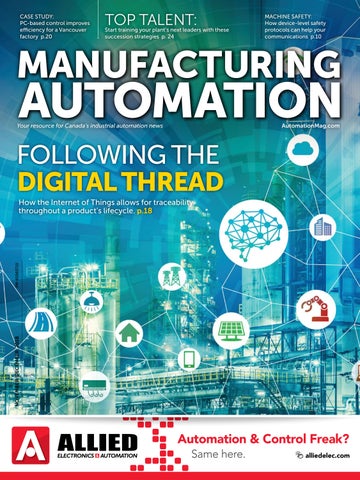
The industrial networks that govern the IIoT boast other benefits, too. Advanced network architectures are what enable things like the digital thread, which has become an important view into a product’s lifecycle. We highlight how the digital thread can help manufacturers earn new revenue on p. 18.
Ultimately, that’s what this entire IIoT concept is about – maximizing profitability and productivity. And who doesn’t want that? | MA
EDITORIAL ADVISORY BOARD
AL DIGGINS, Chairman of the Board, Treasurer and General Manager, Excellence in Manufacturing Consortium
DAVID GREEN, Technology and Business-to-Business Consultant
KARIN LINDNER, Founder and Owner of Karico Performance Solutions
DON MCCRUDDEN, Vice-President, Business Development, Festo
DAVID MCPHAIL, President and CEO, Memex Automation
NIGEL SOUTHWAY, Business Productivity Consultant and Author on Lean Thinking
BILL VALEDIS, Vice-President, Precision Training, Products and Services Inc.
Your resource for Canada’s industrial automation news
EDITOR
Kristina Urquhart kurquhart@annexbusinessmedia.com
PUBLISHER
Klaus B. Pirker kpirker@annexbusinessmedia.com
VICE-PRESIDENT & EXECUTIVE
PUBLISHER
Tim Dimopoulos tdimopoulos@annexbusinessmedia.com
ART DIRECTOR
Graham Jeffrey gjeffrey@annexbusinessmedia.com
ACCOUNT COORDINATOR
Debbie Smith dsmith@annexbusinessmedia.com
CIRCULATION MANAGER
Urszula Grzyb ugrzyb@annexbusinessmedia.com Tel: 416-442-5600 ext. 3537
PRESIDENT & CEO
Mike Fredericks
CONTRIBUTING WRITERS
Eric Ehlers, Jörg Forcht, Paul Hogendoorn, Jason Kasper, Michele Markey, Shane Novacek, Gurvie Waraich, Marcel Wöhner
Manufacturing Automation is published seven times a year by:
Annex Business Media 111 Gordon Baker Rd., Suite 400, Toronto, ON, M2H 3R1 Tel: 416-442-5600 Fax: 416-442-2191
Printed in Canada ISSN 1480-2996
Publication Mail Agreement #40065710
CIRCULATION
email: lmalicdem@annexbusinessmedia.com Tel: 416-510-5187 Fax: 416-510-6875
Mail: 111 Gordon Baker Rd., Suite 400, Toronto, ON, M2H 3R1
SUBSCRIPTION RATES
Canada — $42 per year
United States — $74 (US) per year and Foreign — $84.50 (US) per year
Students — $20 per year
ANNEX PRIVACY OFFICER
email: privacy@annexbusinessmedia.com Tel: 800-668-2374
Occasionally, Manufacturing Automation will mail information on behalf of industry related groups whose products and services we believe may be of interest to you. If you prefer not to receive this information, please contact our circulation department in any of the four ways listed above.
The contents of Manufacturing Automation are copyright © 2018 by Annex Publishing & Printing Inc. and may not be reproduced in whole or part without written consent. Annex Publishing & Printing Inc. disclaims any warranty as to the accuracy, completeness or currency of the contents of this publication and disclaims all liability in respect of the results of any action taken or not taken in reliance upon information in this publication.
We acknowledge the [financial] support of the Government of Canada.

AUTOMOTIVE
Honda of Canada Mfg. donates $50K to Ontario pathway
Honda of Canada Mfg. (HCM) has made a $50,000 donation through the Honda Canada Foundation to the Nottawasaga Valley Conservation Authority (NVCA) to build a new, accessible pathway in Riverdale Park in Alliston, Ontario.
The pathway will commemorate two significant production milestones for the company. Working in collaboration with the NVCA, the Town of New Tecumseth, the Rotary Club of Alliston and the Alliston BIA, construction of the new trail will commence in the spring of 2019.
“Riverdale Park plays an important recreational role in New Tecumseth,” says Doug Hevenor, chief administrative officer of the NVCA, which is a public agency dedicated to preserving the environment across Simcoe, Dufferin and Grey, Ontario. “As the landowner, the NVCA is privileged to partner with HCM on this important trail project that will enhance access throughout this wonderful greenspace.”
In September, HCM hosted several events to celebrate 20 years of production at its Plant 2 frame plant and 10 years of production at its Engine Plant. Opened in 1998, HCM’s Plant 2 provided Honda the opportunity to add nameplates to its product offering including its first entries into the minivan (Odyssey), SUV (MDX, Pilot) and light truck (Ridgeline) segments.
In 2008, the addition of an engine plant boosted productivity and flexibility. As the first Japanese automaker to build a manufacturing plant in Canada, these investments in additional plants have allowed HCM to grow over its 32-year manufacturing history in Canada.
From eight cars a day in 1986, HCM now has 4,200 associates and produces 1,690 vehicles and 1,000 engines daily. To date,
more than eight million vehicles have been built at HCM.
“We are incredibly proud of how HCM has evolved over the years to meet the needs of both our associates and our customers,” says Bill Easdale, senior vice-president of Honda of Canada Mfg. and vice-chair of the Honda Canada Foundation.
“Our contribution today is our way of thanking our community









for their ongoing support and partnership. We are excited to be a part of a project that will provide







everyone in the community with more access to enjoy the amazing parkland along the Boyne River.”








Honda of Canada Mfg. (HCM) donated $50,000 to the Nottawasaga Valley Conservation Authority (NCVA) to build an accessible pathway.
AUTOMATION UPFRONT
TRADE
Manufacturers relieved in wake of NAFTA
Reaction from Canadian business groups to the terms of a renegotiated trade pact between Canada, the U.S. and Mexico range from relief to dismay as the details of the proposed new pact begin to sink in.
The deal, which will be called the United States Mexico Canada Agreement (USMCA), was reached late on Sept. 30 amid 11th-hour negotiations ahead of the U.S.-imposed Oct. 1 deadline.
The steel and aluminum industry has expressed concern that the trade deal doesn’t include an end to tariffs, dairy producers claim it will completely undercut their industry, while manufacturers – especially the automotive industry – have welcomed an end to the threat of tariffs and
the many months of uncertainty.
“Disappointed because they didn’t agree on a solution on the 232 sanctions regarding aluminum and steel,” says Jean Simard, CEO of the Aluminium Association of Canada.
“We find it very unfortunate, and to us it’s certainly very important in the coming days and weeks leading to the final signing of the agreement that they are able to resolve the situation.”
United Steelworkers Canadian director Ken Neumann says Canada “sold out” steel and aluminum workers by not getting the 25 per cent steel tariffs and 10 per cent aluminum tariffs lifted.
“It appears Canadian steel and aluminum workers are among those being sacrificed in the concessions made by the Liberal government in this deal,” he says in a statement.
The dairy industry was also heavily critical of the deal, which
NEW Network-Capable Absolute Encoder from EPC


will grant expanded market access to the domestic dairy market and eliminate competitive dairy classes.
Bruno Letendre, head of the association that represents Quebec’s milk producers, says the concessions in the agreement are the equivalent of 13 days fewer production for his members.
“We’ve been sacrificed,” he says. “There’s no doubt about that. Supply management has been sacrificed.”
The measures will have a “dramatic impact” on dairy farmers and cause the industry to shrink, says Pierre Lampron, president of Dairy Farmers Canada, in a statement. “This has happened, despite assurances that our government would not sign a bad deal for Canadians.”
The general sentiment among manufacturers is one of relief, says Dennis Darby, president and CEO of Canadian Manufacturers & Exporters.
“It removes that uncertainty that was hanging over the sector, in terms of our access to this North American market, in terms of the rules related to our integrated North American supply chain.”
He says he hopes the aluminum and steel tariffs can be resolved shortly, but that the manufacturing industry didn’t lose on what’s in the new deal.
“At a minimum we haven’t lost any ground. Versus a very unpredictable and protectionist U.S. administration, I think
Canada did as well as it could.”
The deal preserved dispute-resolution provisions in Chapter 19, which allow for independent panels to resolve disputes between companies and governments, and in Chapter 20, the government-to-government dispute-settlement mechanism.
A side letter published along with the main text of the agreement exempts a percentage of eligible auto exports from the tariffs. A similar agreement between Mexico and the U.S. preserves duty-free access to the U.S. market for vehicles that comply with the agreement’s rules of origin.–The Canadian Press
EXPANSION
Graybar to open new Ontario branch
Graybar Canada has announced it is opening a new branch in Vaughan, Ontario this fall.
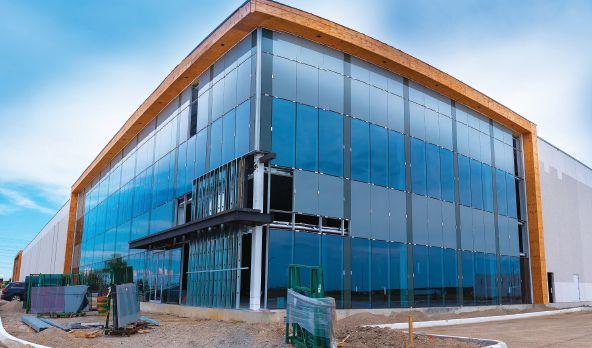
Located near Highway 427 and 407, the new 90,000-square-foot facility will be a consolidation of the existing Markham and Mississauga branches. As Graybar Canada’s biggest branch to date, the Vaughan location will be an electrical, communications and data, automation, and wire warehouse hub for the Greater Toronto Area (GTA).
To service current and local customers in Mississauga, Graybar Canada will be opening a counter pick-up location nearby at 160 Brunel Road.
Graybar Canada’s biggest branch to date will open in Vaughan, Ontario this fall. The 90,000-square-foot facility will service the Toronto region.
PHOTO: GRAYBAR CANADA
“With more and more customers taking advantage of our full lines of business, it makes sense for us to position ourselves in a central location,” says Brian Thomas, executive vice-president and general manager of Graybar Canada.
The Vaughan branch will be sized for growth and feature a wire-paralleling machine. “With a significantly larger warehouse, we’ll be able to stock more inventory and provide more efficient wire cutting services,” says Thomas. The new facility will also include energy-saving LED lighting and controls plus a larger training room to accommodate staff and customers on site.
Zund America to build North American office
Zund America is building a new North American headquarters in Wisconsin. The company is
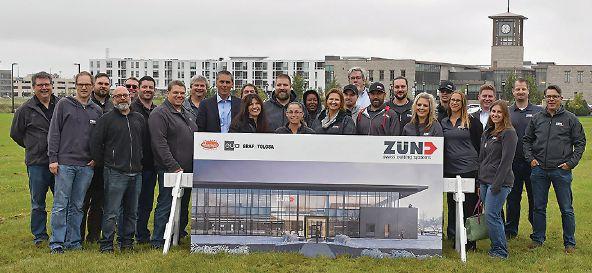
the U.S. sister of Zünd Systemtechnik, the Swiss manufacturer of digital cutting systems.
The new space in Oak Creek, Wisconsin, will include offices as well as areas for product display, customer and employee training, and warehousing for product.
From these offices, Zund America will support customers all over the U.S. and Canada, in graphics, packaging, leather, textiles/composites, manufacturing
and other industries. The project will be completed in September 2019.
LABOUR RELATIONS
WSIB cuts employer premium rates for 2019
The Ontario Workplace Safety and Insurance Board (WSIB) and the provincial government have announced that the WSIB
has paid off its unfunded liability, which will lead to a 29.8 per cent cut in employer premium rates by January 1, 2019.
The unfunded liability, which stood at $14.2 billion in 2011, is the difference between future obligations to pay injured workers and the money available to pay them. WSIB was a unique case, as private insurance companies are not permitted to have a “cushion” if they go bankrupt.
The government and the WSIB say that eliminating the unfunded liability not only helps employers put money back into the economy, but also ensures an accountable workplace safety and insurance system.
Critics say that the move hurts workers, who they say may receive less benefits as a result of the loss of the pool. The WSIB maintains that the government determines the benefits to workers, not the board itself.
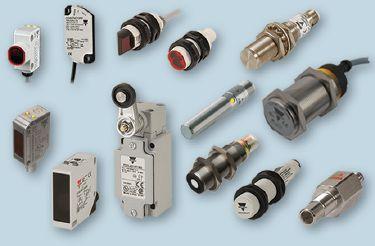
SENSORS: Inductive and Capacitive Proximity Sensors • Photoelectric Sensors • Level Sensors • Ultrasonic Sensors • Magnetic Sensors • Limit Switches • Safety Interlocks
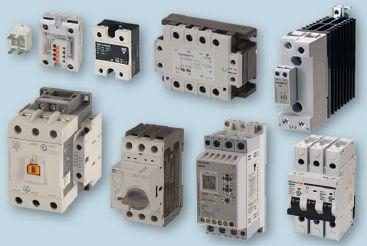

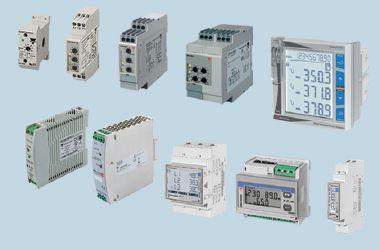
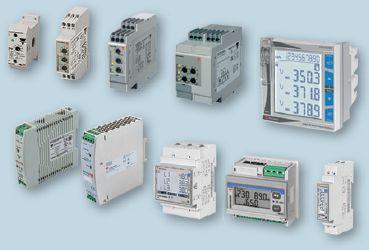
Whether it’s our industry leading range of solid state relays and contactors, or our vast range of sensors, motor controls, energy meters and voltage/current monitors, CARLO GAVAZZI has the solution for your application needs. Contact us
Zund America has announced a new North American headquarters in Wisconsin, which will serve U.S. and Canadian customers.
CARLO
AUTOMATION UPFRONT
The unfunded liability was due to be paid off by 2027, and the WSIB says it was able achieve its goal 10 years ahead of schedule through collection of premiums and a reduction in number of overall claims.
The 2019 average premium rate for Ontario will decrease from $2.35 to $1.65.
ROBOTICS
Rethink Robotics shutters
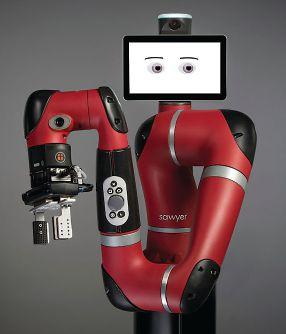
Rethink Robotics, the Boston-based maker of collaborative robots, has closed its doors.
According to media reports, the company was low on cash flow and a planned acquisition fell through.
Rethink Robotics, founded in 2008, was one of the early trailblazers of the cobot, with its double-arm Baxter model appearing on the robotics market in 2011. In 2015, the company released the single-arm Sawyer, a smaller, more controlled version of Baxter. Sales of the cobots did not perform as expected.
Ninety-one employees were laid off as part of the closure.
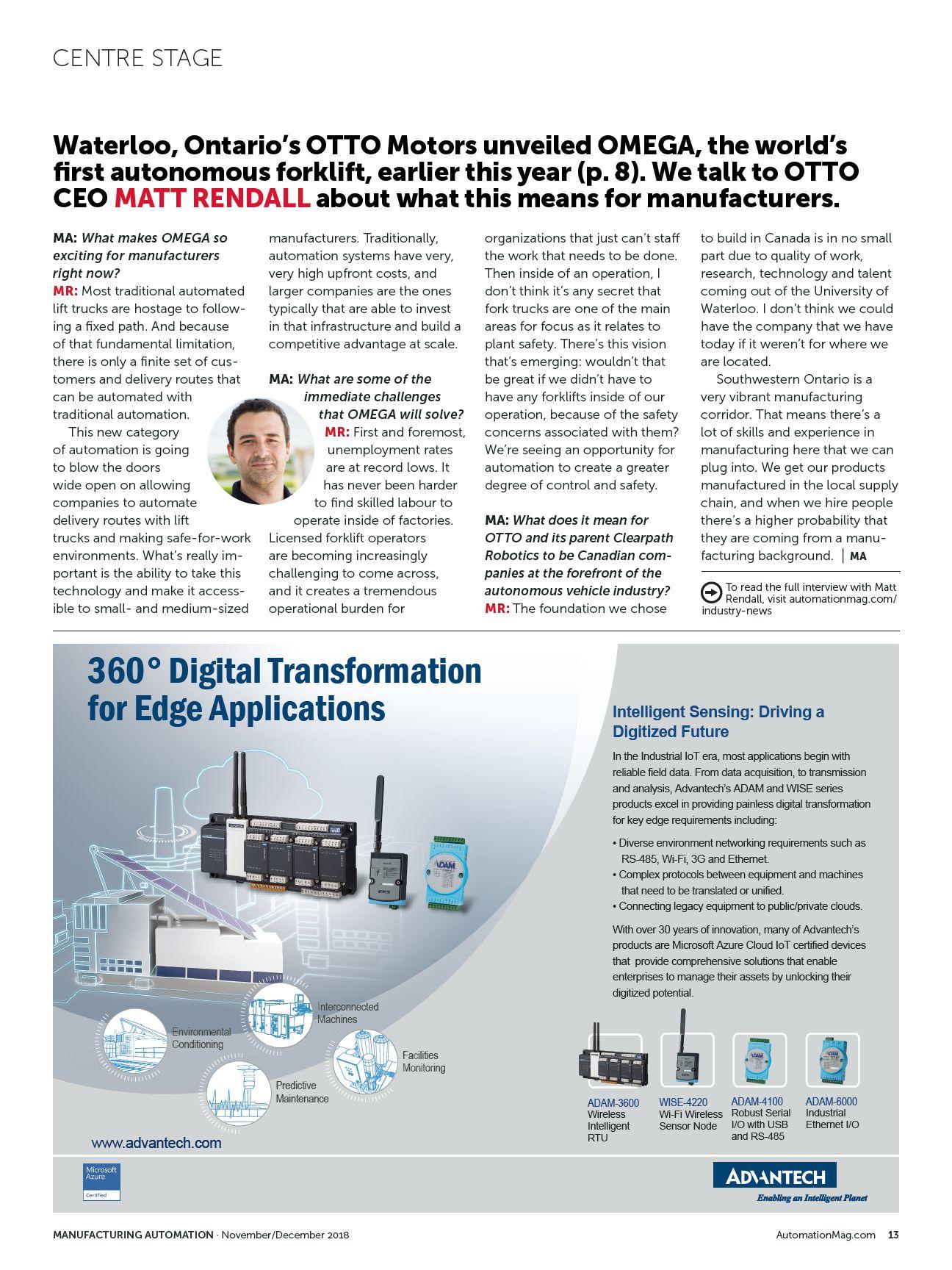
OTTO Motors debuts first self-driving forklift
Matt Rendall, CEO of OTTO Motors (see p. 13), says that the release of OTTO OMEGA, the
company’s new self-driving lift truck, at IMTS 2018 was the realization of a longtime goal.
“The autonomous forklift has been on our roadmap almost since day one,” Rendall says. “We just weren’t ready as a company to tackle that challenge in the first couple of chapters of our go-to-market.”
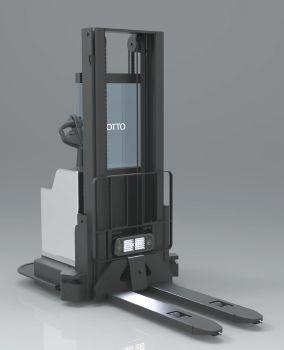
OTTO Motors, a division of the Canadian-based Clearpath Robotics, says that OMEGA is world’s first self-driving lift truck.
Designed to increase efficiency and improve plant safety, OMEGA is unlike other lift trucks in that it is able to react to changes on the factory floor in real-time, use laser-based perception to navigate around obstructions and learn new behaviours as it moves along using its advanced artificial intelligence system.
OMEGA constantly collects data from its surroundings while communicating with a centralized control system. The vehicle receives orders, reports on its status and notifies human operators of issues.
The vehicle specializes in two jobs: autonomous floor-to-floor deliveries and a semi-autonomous mode, where workers can work with OMEGA by taking over complex loading or unloading tasks, such as pallet deliveries. The lift truck can pick up and drop off skids fully autonomously, receive items to be put away, deliver parts to
production lines, cross dock, transport trash – everything from storage to shipping.
Operators can make changes anytime with the OTTO Fleet Manager software, which connects OTTO vehicles to the user’s production process for higher levels of efficiency and control. For example, a user can download the software to an iPad and see their floor plan, the jobs OTTO is doing, battery life and future tasks. They can use the software to make changes to job types, schedules and where the vehicles can move.
OTTO OMEGA will roll out to select partners over the next year to measure success before it heads to market.
EDUCATION
Sandvik Coromant gives scholarships to Alberta students
Sandvik Coromant has awarded nine students in their fourth year of the Machinist Apprenticeship Program at the North Alberta Institute of Technology (NAIT) with its annual scholarships.
The awards dinner took place in Edmonton on September 25. Seven of the recipients were given the Sandvik Coromant Award, based on top academic achievement in the fourth year of the program. In addition, the Sandvik Coromant Leadership Award was granted to two
individuals who demonstrated initiative, creativity, leadership with their fellow students and enthusiasm in conjunction with academic achievement.
Malcolm Haines, dean of the School of Skilled Trades at NAIT, says, “We are very grateful to Sandvik Coromant for all they have done to support our program and our students [...] they are helping to ensure that our programs can stay on the cutting edge of what the machining industry requires now and will require in the future. Our students have greatly benefitted by having both the financial support provided by the awards [and] the opportunity to use the state of the art tooling that Sandvik Coromant is renowned for.”
NAIT is a polytechnic school that specializes in science, technology, business and trades.
Tom Henry, partner marketing Americas manager at Sandvik Coromant, adds, “Support for education and sharing knowledge to gain the skillsets required by our industry is a priority at Sandvik Coromant. The NAIT education partnership provides students with the opportunity to develop their skills leading to pathways to real world career advancement and we are proud to support that.”
Sandvik Coromant is part of the global Sandvik Corporation and develops manufacturing tools and machining solutions for the metalworking industry.
Ontario’s OTTO Motors recently debuted the OTTO OMEGA, which the company says is the world’s first self-driving lift truck.
Nine machinist apprenticeship students at the North Alberta Institute of Technology (NAIT) recently won scholarships from Sandvik Coromant.
Rethink Robotics, creator of the Sawyer robot (pictured), abruptly closed its doors in October, citing poor sales.
DEAL MAKERS
Endress+Hauser and Lumen partner on process automation
Endress+Hauser, a specialist in process measurement and instrumentation, has partnered with Quebec-based electrical distributor Lumen.
“The evolution to Industry 4.0 and Industrial Internet of Things offers limitless opportunity for Canadian companies,” says Anthony Varga, general manager at Endress+Hauser. “Thanks to the strength of our partnership with Rockwell Automation and Lumen’s expertise, we’ll be able to go to greater lengths to help modernize the Canadian manufacturing sector.”
As part of the partnership, Lumen can provide its process automation customers with opportunities through the
integration of Endress+Hauser’s measurement technology with the Rockwell Automation platform. The companies say that the pre-tested and validated designs between Rockwell Automation and Endress+Hauser offerings help reduce the costs associated with bringing new measuring points or a new production line into the manufacturing facility.
Customers of Lumen will also have the opportunity to work with a single-source provider, enabling them to acquire the PlantPAx system, a modern distributed control system with field instrumentation and measurement solutions.
MOVERS AND SHAKERS
Jody Fildey is the newly appointed vice-president of sales at Gray Tools Canada and will head its new automotive and heavy truck aftermarket division. Fildey brings 30 years of
MEET THE NEW POWER COUPLE
experience serving the industry. According to Gary Nuttall, president of Gray Tools, “Our expansion into the automotive and heavy truck aftermarket is a strategic fit, and part of our medium-term business plan. The addition of Jody to our executive team allows us to greatly advance our pursuit of this strategy.”
Bombardier has appointed Sam Abdelmalek as its new chief transformation and supply chain officer. Abdelmalek will report to Alain Bellemare, the president and chief executive officer of Bombardier. In this position, Abdelmalek will assume responsibility for the continued transformation of the company’s operations and lead the company’s supply chain activities to reduce costs and improve efficiency and quality to support Bombardier’s growth objectives. “We are
very excited to welcome Sam to the Bombardier leadership team,” says Bellemare. “He is a strong and dynamic leader, with a proven track record of creating value through effective supply chain management and process improvement.” Abdelmalek brings almost 30 years of aerospace and industrial experience to Bombardier.

Applied Motion Products has appointed Josh Burns as its northwest regional sales manager for the western U.S. and British Columbia. Before joining Applied Motion Products, Burns spent four years as a sales engineer with Eaton. Burns holds a degree in supply chain management and marketing from the University of Illinois. | MA
• Power Supplies – scalable size, power and technology for all budgets
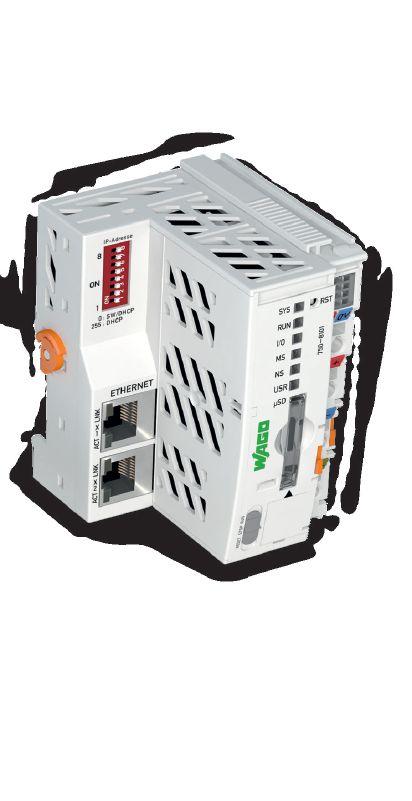
• WAGO-I/O-SYSTEM – bus couplers support 16+ networks and 500+ I/O modules
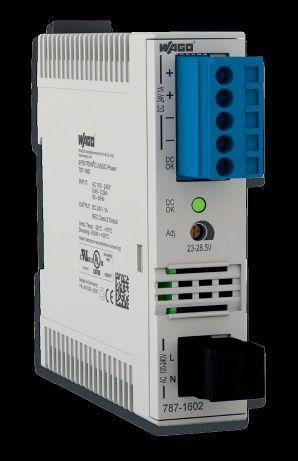
• Power supplies with TopBoost / PowerBoost enhance your automation application
• UPS, ECB, redundancy and buffer modules round out your power quality needs
Explore the benefits of the power couple at www.wago.ca/powercouple
BY TOM KNAUER
Implementing device-level safety communications
Manufacturing is rapidly changing, driven by trends such as low volume/high mix, shorter lifecycles, changing labour dynamics and other global factors. One way industry is responding to these trends is by changing the way humans and machines safely work together, enabled by updated standards and new technologies including safety communications.
In the past, safety systems used hard-wired connections, often resulting in long cable runs, large wire bundles, difficult troubleshooting and inflexible designs. The more recent shift to safety networks addresses these issues and allows fast, secure and reliable communications between the various components in a safety control system. Another benefit of these communications systems is that they are key elements in implementing the Industrial Internet of Things (IIoT) and Industry 4.0 solutions.
Within a typical factory, there are three or more communications levels, including an enterprise level (Ethernet), a control level (Ethernet-based industrial protocol) and a device/ sensor level (various technologies). The popularity of control- and device-level industrial communications for standard control systems has led to strong demand for similar safety communications solutions.
Safety architectures based on the most popular control-level protocols are now common and often reside on the same physical media, thereby simplifying wiring and control schemes.
Devicelevel safety protocols are fairly new and realize many of the same benefits as the Ethernetbased safety protocols, while addressing some of the drawbacks.
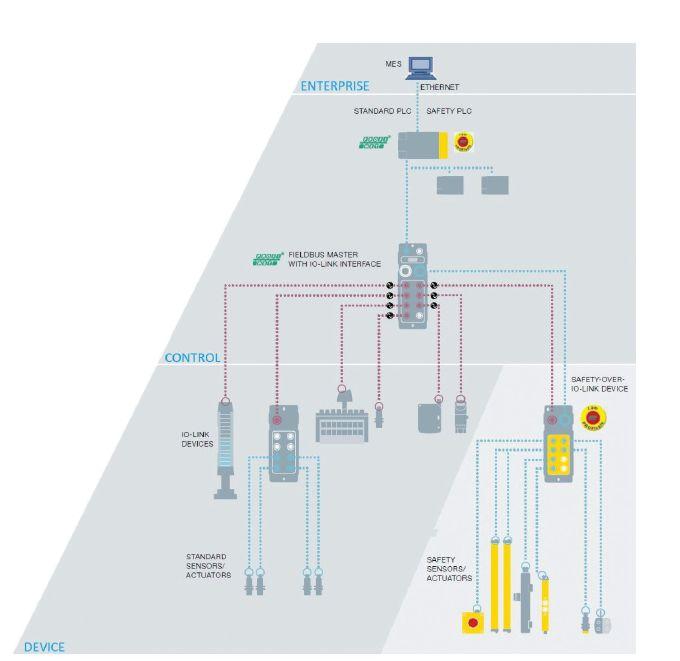
The table below includes a list of the most common safety control-level protocols with their Ethernet-based industrial “parent” protocols and the governing organizations.
These Ethernet-based safety protocols are high speed, can carry fairly large amounts of information and are excellent for exchanging data between higher-level devices such as safety PLCs, drives, CNCs, HMIs, motion controllers, remote safety I/O and advanced safety devices. Ethernet is familiar to most customers, and these protocols are open and supported by many vendors and device suppliers –customers can create systems using products from multiple suppliers. One drawback, however, is that devices compatible with one protocol are not compatible with other protocols, requiring vendors to offer multiple
communication connection options for their devices. Other drawbacks include the high cost to connect, the need to use one IP address per connected device and the strong influence by a single supplier over some protocols.
Device-level safety protocols (see table, opposite) are fairly new and less common, and realize many of the same benefits as the Ethernet-based safety protocols while addressing some of the drawbacks. As with Ethernet protocols, a wide variety of safety devices can be connected (often from a range of suppliers), wiring and troubleshooting are simplified, and more data can be gathered than with hard wiring. The disadvantages are that they are usually slower, carry much less data and cover shorter distances than Ethernet protocols. On the other hand, device connections are physically smaller,
Tom Knauer is the Safety Business Champion for Balluff, Inc., a sensor manufacturer and supplier of automation system solutions. balluff.com
much less expensive and do not use up IP addresses, allowing the integration into small, low-cost devices including E-stops, safety switches, inductive safety sensors and simple safety light curtains.
The awareness of, and the need for, device-level safety communications will increase with the desire to more tightly integrate safety and standard sensors into control systems. This will be driven by the need to:
• Reduce and simplify wiring
• Add flexibility to scale up, down or change solutions
• Improve troubleshooting
• Mix “best-in-class” components from a variety of suppliers to optimize solutions
• Gather and distribute IIoT data to higher-level systems
Many users are realizing that neither an Ethernet-based safety protocol nor a device-level safety protocol can meet all their needs, especially if they are trying to implement a cost-effective, comprehensive safety solution that can also support the IIoT. This is where a safety communications master (or bridge) comes in to assist – it can connect a device-level safety protocol to a control-level safety protocol, allowing lowcost sensor connection and data gathering at the device level, and transmission of this data to the higher-level communications and control system.
Combining device-level and control-level protocols helps users optimize their safety communications solutions, balancing cost, data and speed requirements, and allows IIoT data to be gathered and distributed upwards to control and MES systems. | MA


















GOING DIGITAL
BY ERIC EHLERS
Moving collaboration technology to the plant floor
The modernization of the factory is changing the way manufacturers are conducting their operations by connecting the entire business. The factory floor, formerly isolated, is now connected and producing vast amounts of data whose analysis is used to improve business operations, reduce downtime through predictive maintenance programs and integrate complex supply chains. The siloes that existed between operations technology (OT) and information technology (IT) are now converging around new solutions with focused projects around the Internet of Things (IoT) and improving end-to-end security are just a few examples. An underlining foundation to this evolution of manufacturing is more focused collaboration across teams with integration of all this new data that is being produced.
The reality of the manufacturing industry today is that many teams are dispersed across the globe, whether engineering, operations, supply chain or sales teams. They all need to communicate securely on a regular basis. Collaboration technology has been in place for years, either within the enterprise or the carpeted space. However, when it comes to collaborating directly on the factory floor, it has been a challenge. In many cases, factories are harsh environments – they are noisy, and there is a lot of interference from machines that can make communications difficult. This challenge has resulted in the continued use of older technology such as two-way radios. Technology has shifted now, and modern collaboration technology is very secure and viable on the plant floor for a host of applications. Industrial Ethernet and wireless advancements support higher data rates and throughput, and help create coverage across a connected factory. This advancement enables workers to take advantage of mobility with the ability to access voice, video and data on their handheld devices.
Overcome challenges with collaboration technology
Some of the areas where manufacturers can take advantage of collaboration technology:
1. Improving their new product introduction (NPI) process. With the use of team rooms and video conferencing, multiple teams can work through ideation concepts, design and development. Email or phone is often an inefficient mode of working through complex details. Having the ability to share and annotate technical

documents in real time means that the latest versions are always available and shared in a central, secure location.
2. Leveraging collaboration technology for remote maintenance. Collaboration technology helps teams respond faster to downtime or to any issues on the plant floor. Video conferencing allows remote experts to view and resolve efforts at the source without having to be directly onsite. Messaging apps provide for a connected workforce, so workers can communicate across the plant in real time.
3. Archiving and documentation. The ability to access key documents and diagrams in a central location can assist with troubleshooting and help improve processes, and also promote workplace safety.
4. Integration of collaboration technology with IoT. IoT technology enables more communication and insight into the machine performance on the factory floor. This advancement means machines can share real-time updates on performance, and broadcast alerts on machine health issues. Integration of those communications with collaboration technology opens up an array of transformative possibilities. Open-application programming interface (API) allows multiple technologies to connect and communicate with one another. As an example, an alert triggers critical personnel to interact in a designated incident “response room.” Those users then communicate via calls, video conferencing and chat as a means of mitigating the issue.
Bring collaboration technology to the factory floor
To successfully deploy collaboration technology, consider the following:
1. Change management: Consider how collaboration technology will impact existing processes. Before any changes occur, make sure to document all existing processes and then outline where any changes via collaboration technology might take place. Training will be essential to ensure users don’t default to the old way of doing things.
2. Security: It’s critical to ensure collaboration tools don’t compromise an organization’s security. Collaboration technology involves multiple users and devices engaging from numerous sites, often remotely. Remote access security measures are critical. Additionally, collaboration enables the exchange of knowledge sharing that could contain sensitive information or intellectual property (IP). Collaboration platforms should support end-to-end encryption to keep content safe.
3. Infrastructure: As noted earlier, there have been tremendous leaps in networking technology on the factory floor. Companies should ensure their infrastructure is robust and up to date so they can enjoy the full benefits of collaboration technology. The benefits of collaboration technology are no longer limited to carpeted space. Collaboration technology is mature and ready to support manufacturing efforts. The time is now for manufacturers to embrace collaboration technology and streamline their operations. | MA
Eric Ehlers is the marketing manager in the SME, manufacturing and energy verticals at Cisco. He is filling in for regular columnist Jennifer Rideout while she is on leave.
INDUSTRY WATCH
BY PAUL HOGENDOORN
Smart, hungry and humble
It is easy for me to identify the “true all-stars” on the teams I worked with over the years. They were the performers that not only got things done, but that products, divisions, and even companies were built upon. Some were diamonds in the rough, discovered along the way. Some were fresh graduates with that certain “spark.” Some were well educated, and some had great previous experience. It is easy to identify who those exceptional individuals were because the results spoke for themselves.
However, it wasn’t always as easy for me to identify exactly what it was that made them special, until I heard Patrick Lencioni speak at a conference I attended. His assertion was that the ideal team player was “smart, hungry and humble.”
Smart. It’s easy to understand that intelligence would be a critical characteristic. All of the all-stars on my list are very smart people. Some are highly educated and “academic,” but others had an extra degree of common sense. Others just had a type of internal compass that led them intuitively through what seemed to others to be random processes – to conclusions that others might not have ever gotten to.
Hungry. This took me a little longer to digest. A few of the people I’ve worked with came to Canada as refugees, brought over by parents hungry for a better future for them. They were eager to dedicate themselves to the task of achieving a better life. Others were hungry in other ways. They were persistent in their efforts and simply driven to achieve the goal. Whether it was a new product, a groundbreaking technology, or a new way to get the message out, the completion of the goal was all that mattered. Tenacity. Persistence. Relentlessness.
Humble. This one took me even longer to sort through, but then I realized it might actually be the most definitive trait of the three. Smart people often have trouble listening to the insights and input from others, unless those insights come from people they believe to be as smart, or smarter than themselves. And driven, persistent people often don’t have the
Paul Hogendoorn is president and co-founder of FreePoint Technologies. He can be reached at paul.hogendoorn@getfreepoint. com or getfreepoint.com. “Measure. Analyze. Share. Don’t forget to share!”

patience to slow down and consider other voices; their determination often includes an element of stubbornness. Both conditions are sort of natural and can be expected – smart and driven people usually rise to the top of the class and move up in the ranks of the company because of their smarts and dedication.
Humble people are more likely to actively and genuinely listen to all input from everyone, and to consider those insights as just as important, if not more so, than their own.
So, here’s where humble separates the good and very good from the exceptional: humble people are more likely to actively and genuinely listen to all input from everyone, and to consider those insights as just as important, if not more so, than their own. Humble people are also more likely to praise and “honour up,” acknowledging the achievements of people one or two rungs above them. Pride often gets in the way, but not for humble people. Humble people count on other insights and opinions to fill holes in their own blind spots. Without humility, it’s often hard to even accept that you have those blind spots.
A friend of mine recently retired as president of a major international technology company. He started when the company had only 30 people. He was an engineer but started his career there in marketing, eventually heading that department and becoming vice-president. After many years in that role, he was passed over for the top role, despite having served very effectively as second in command and helping build the company to a very successful state. He continued to serve the new leader, just as humbly, smartly and dedicatedly as
he had the previous leader, but the company’s growth stalled. After a few years, the new president was removed and he was asked to take the leadership role, which he did. The company’s growth returned. When he eventually retired, there was nothing that had to be said about his importance or the contribution he made to the company, because the results spoke for themselves. The company was strong, vibrant and succeeding. I have known him for over 30 years now and can look back on all the conversations I had with him, recalling that he was more interested in hearing my opinion and thoughts than expressing his own, and the times he would genuinely acknowledge and honour not just his subordinates, but also his peers and the people above him. It sounds simple and perhaps easy, but it’s not. It’s actually a rare trait among people that are very smart and very driven.
Congratulations to M on your retirement. You have set a fine example for others to follow. A big thanks to S, F, M and K. Having you on my teams was an honour – you have the talent and the drive, but it was your humility that allowed us to do the spectacular things we did. And a big vote of encouragement to C, J and B – your future looks bright if you continue to follow your strong internal compass. And, lastly to R, the smartest, most unwavering and humblest person I know – without you on the team, nothing of true importance would have ever gotten done. | MA
PREVENTING HAZARDS
Motion monitoring on an external unit combines safety functions with machine efficiency
BY MARCEL WÖHNER AND JÖRG FORCHT
Motion monitoring enables efficient machine operation – but standards also demand maximum safety. With an external monitoring unit, safety functions can be implemented as standard on frequency converters and servo amplifiers of various performance classes and from various manufacturers; in most cases this can be achieved very economically.
The objective of safety technology was and always will be to prevent potentially hazardous movements. Nothing, then, is more obvious than to have a close connection between safety technology and motion generation. For technical and economic reasons, the drive electronics – servo amplifiers and frequency converters – have remained as non-safety-related components in very many applications. In such applications, the required safety
is guaranteed through additional safe components, which bring the drive to a de-energized, safe condition in the event of a fault, or safely monitor the movement of the connected motor.
Motion monitoring has two main tasks: it must detect any violation of the limit values and then trigger an appropriate safe reaction. It must also detect any potential errors in the encoder system and likewise trigger an appropriate error reaction.
Retrofitting safety
Even with external, safe motion monitoring systems, it is possible to implement many of the safety functions that are defined in IEC 61800-5-2 by reusing the existing actuator and sensor technology, even on older drive systems. This is significant, particularly where a retrofit is involved, because it means the cost of exchanging the drive, motor and sensor technology can be saved. Existing drive functions can also continue
to be used. What’s more, it is no longer necessary to undergo the sometimes-complex process of converting the existing drive program to a new system, along with the additional training required to program the safety section.
The task of the external devices is to detect motion. The safety characteristic data of the employed sensors, e.g. rotary encoders or proximity switches, is significant in determining the safety level that can be achieved. Different solutions to suit the various requirements are available to monitor movements with external monitoring devices. At the highest level, it is important to distinguish between so-called standard encoders and “safe” encoders.
Pre-assembled adapter cables simplify connection of the external monitoring devices. These are inserted between the drive and feedback encoder and record the motion monitoring signals. Appropriate adapters are available for all common drive manufacturers and drive models.
Another advantage of using external motion monitoring modules is the fact that the safety system is independent from the employed drive system. So all the safety functions, special motion
generation functions and motion control functions can be implemented within the usual system.
Compatibility with encoders
An important requirement for solutions with external safety is the ability to evaluate all standard sensor systems (rotary encoders in various designs, incremental encoders (TTL, HTL), Sin/Cos encoders) up to Performance Level (PL) d of ISO 13849-1 and two proximity switches up to PL e. This is made possible via feasibility checks within the external safety component that monitors the sensor signals. As a result, it is possible to achieve diagnostic coverage of up to 90 per cent on the encoder system. Through appropriate warning messages, a potential encoder failure can be detected early. It is also possible to use internal encoder diagnostics and to react to a potential fault signal from the rotary encoder with a protection violation. If a higher PL is required, this can be achieved by using an appropriately certified, safe rotary encoder. The important factor here is the correct interaction between encoder and safety relay. The documentation belonging to the respective encoder describes
Safe speed monitors and a configurable control system can be integrated into existing speed monitoring structures (pictured), or used to create new structures with flexibility of design options.
the requirements of the monitoring device, which must be met in order to use the device and to claim the certified safety-related characteristic data.
If a certified, safe sensor cannot be used, it is still possible to achieve a higher PL with little effort. An additional proximity switch is fitted so that it scans the hazardous movement on a toothed wheel or shaft coupling, for example. The monitoring device can now continuously compare the established speed values from both encoder systems (standard rotary encoder and proximity switch). If the values are no longer feasible, the monitored axis is brought to a stop. As a result, motion monitoring up to PL e is possible with two standard components. Monitoring for broken shear pins or gear monitoring can also be implemented in the same way.
Safe motion monitoring solutions with external monitoring devices can be used in conjunction with standard, certified Sin/ Cos encoders designed for up to PL e. As a result, safe motion monitoring can be implemented up to the maximum PL with only one encoder. If there are only a few safety functions to be linked to motion monitoring, individual relays provide an appropriate solution.
Reacting to errors
The more complex the task, the more beneficial existing add-on functions of the external monitoring devices are likely to be. In the event of an error, e.g. if a speed-monitoring function reacts, a drive should always be shut down as quickly as possible. Long transmission times to centralized safety systems and their program cycle times can often present a problem. With local stop outputs, which can drive the safety
functions SS1 (Safe Stop 1) and STO (Safe Torque Off) directly, motion-monitoring modules can trigger a stop of the corresponding axis just a few milliseconds after the monitoring function has reacted. Thanks to integrated delay stages, it is even possible to implement the SS1 function, after an emergency stop signal has first been transmitted to the drive and after the drive’s STO
function is activated when the set delay time has elapsed. This way, an axis can still be brought to a controlled standstill in the event of an error, before the controller inhibit makes braking impossible. If you need to shut down not just one but multiple drives simultaneously, a cascading function

can allow you to do it simply, within a few milliseconds; this is independent of fieldbus times or task cycles on the controller.
In their independence of the rest of the system, external motion monitoring systems allocate for future developments, both on the drive and the encoder side.

Marcel Wöhner is a product manager and Jörg Forcht is a product developer at Pilz GmbH & Co. KG. pilz.com

DESIGNING A DIGITAL THREAD
Draw on the power of the Internet of Things to ensure traceability throughout a product’s lifecycle
BY JASON KASPER
Lo w margins, intense competition, and risk aversion in the digital era have become a formula for disruption in industrial manufacturing. So, how are you ensuring that your organization is on the right path not only to survive, but also to gain the digital edge over competitors?
A priority for any organization’s digital transformation should be implementation of the digital thread. Why? Because in order to meet your customers’ demand for the latest technology and stay ahead of your competitors, you must continuously be innovating. And you can’t do it with legacy business processes, outdated engineering and manufacturing systems, or siloed information. You need to unlock that knowledge, harness existing systems and connect people across the enterprise.
What is the digital thread?
The digital thread makes connections to critical information, enabling you to follow a product’s digital history
and all related digital assets – from concept and planning, through design, manufacturing, quality assurance, field maintenance, and disposal. The implementation of the digital thread increases productivity, improves responses to customers, provides market-expansion opportunities, and creates sustainable feedback loops for innovation. The digital thread connects product information generated by a multitude of functions and phases, including product requirements, simulation models, electronics and embedded software, manufacturing process plans, service records and the Industrial Internet of Things (IIoT).
Removing information silos – connecting critical information and then understanding when it changes, how it changed and what it means – enables a collaborative environment throughout the design-to-manufacturing process. Everyone has a view into information and therefore users can see the changes in real-time, enabling conversations to occur that otherwise would happen after the fact or maybe not at all.
Legacy IT systems are incapable of
managing today’s – and tomorrow’s –product complexity. These proprietary closed systems were designed for specific engineering and manufacturing disciplines. The inability to integrate across disciplines disrupts on-time delivery of new products, because these complex products now contain not just the mechanical and electrical disciplines, but software as well.
The impact of change, coupled with increasing product complexity across the lifecycle, is a fundamental reason for pursuing the digital thread. It increases visibility into what is happening between disciplines, enabling collaboration and reducing quality defects that could impact your bottom line and affect customer perceptions.
Adapt to new business needs
Increased product complexity has exposed the shortcomings of legacy engineering, manufacturing systems and business processes with information locked in silos, making collaboration between teams and disciplines difficult if not impossible. Simultaneously, IT architectures and systems lack the power and sophistication to effectively coordinate engineering product development and manufacture across disciplines – mechanical, electrical, and software – across the entire product lifecycle.
The best way to resolve this problem is by connecting those disparate
systems to gain access to all of the information locked away in legacy systems. With complete traceability across the product lifecycle, various teams can work concurrently with the latest product information.
The foundation for growth in an era of complex connected products requires a modern, platform-based approach that enables organizations to quickly change course as business needs change. It is this connection of processes and systems that is at the heart of the digital thread.
Close the loop for quality
A s competition increases for the best new products with the latest technological improvements and materials, there is added pressure to shorten development cycles. Yet, many businesses still use standalone systems and spreadsheets to manage quality, which leads to disconnected information and process gaps. This can then lead to higher rates of product recalls, which can result in fines, compliance issues, and, ultimately, a damaged brand.
B y contrast, the digital thread allows cross-disciplinary teams and the extended supply chain to create closed-loop capabilities that identify and manage risk, improve quality, meet customer requirements, and attain environmental, safety, medical, and other forms of compliance.
As an example, a large jet-engine manufacturer built a digital thread to synchronize its bill of materials across multiple legacy manufacturing systems and locations. This resulted in the creation of a traceable digital thread between engineering and manufacturing, improving visibility to changes between disciplines as well as a 62 per cent reduction in changes to analyze, an 82 per cent reduction in data entry by eliminating spreadsheets and siloed data, and an 80 per cent reduction in tools used, simplifying user training and IT maintenance.
Enable product innovation
In previous years, determining and matching a product’s functions and capabilities with what a customer required was an art form. Today however, we need new connections to information to build a little science into the process and increase our effectiveness and
Look for an open architecture, including open standards, APIs and connectors to ensure that the platform integrates with other enterprise applications and legacy PDM/PLM systems.
Digital thread
The digital thread is a framework that gives a manufacturer an integrated view of a product’s entire lifecycle, from concept to completion.
responsiveness to customer demands. One primary means of achieving that is by connecting operations and maintenance information from assets in the field back into the four walls of manufacturing. This starts by connecting to information in the field, where the product operates. Next, couple that information with the evolution of the product configuration as it operates in different environments. Finally, apply powerful analytics to understand failure rates of components, maintenance historie s and environmental operating conditions. Armed with this level of information, you’re in a better position to foster more collaborative discussions with customers about their needs that can shape the next generation of design, manufacturing and quality improvements.
Harness new revenue opportunities
The ability to create and deliver new services and models presents great opportunity. This is particularly true as product complexity increases. Customers seeking the latest technology in order to gain a competitive advantage more quickly may soon realize they lack the proper resources to maintain your new solution. Instead, they might look to progressive manufacturers that can package the right product with enhanced field-service capabilities, such as real-time monitoring, predictive maintenance techniques, and rapid responses. In many cases, this product-asa-service approach is easier and more reliable than traditional ownership and do-it-yourself maintenance.
Build your digital thread
A platform approach should use a model-based technology and a service-oriented architecture that allows companies to develop and modify applications, processes and workflows far more easily than traditional PLM systems that take a hard-coded approach and struggle to adapt.
L ook for an open architecture, including open standards, APIs and connectors to ensure that the platform integrates with other enterprise applications and legacy PDM/PLM systems. Industrial manufacturers must rethink their business processes and connect siloed systems with the digital thread. The result will be sustainable connections of critical data that will enable new business models and handle increasing product complexity. Follow these seven steps to begin:
1. Understand commitments made by the business for new product direction; outline the gaps in achieving direction.
2. Align the organization to your strategy based on resource competencies – people, process and technology.
3. Face facts about legacy IT situations; be realistic about the approach and timeline to get tangible results.
4. Embrace the opportunity for business process change – this will power the digital thread.
5. Power the product lifecycle by using a platform that is open, flexible, scalable and upgradeable.
6. Ensure that employees buy in to supporting all of the new business goals and objectives. Management needs to communicate openly by clearly defining and reinforcing the purpose of the new direction. This helps employees to accept where the organization wants to head in the future.
7. Finally, be realistic about the time needed to implement change. Not following through, or measuring and reinforcing organizational alignment will lead employees to stray and go back to what they think are tried-and-true approaches to align to business goals. | MA
Jason Kasper is the product marketing manager for Aras, a developer and publisher of product lifecycle management software. aras.com
STANDARDIZING MACHINE DESIGN
An Ontario-based manufacturing technology provider uses PC-based control to improve automation efficiencies
BY SHANE NOVACEK
Old adages advise against reinventing the wheel, but what is a manufacturer to do when customers all want different wheels? Answering this question for global manufacturers every day is RAMP, Inc., an automation technology services provider located in Waterloo, Ontario. RAMP develops custom solutions that balance highly tailored manufacturing functionality with standardized connectivity, operation
and maintainability. RAMP has tackled many large-scale automation projects across North America and Europe in numerous industries. The company has deep application experience in many markets, with particular strength in energy recovery and automotive projects, and also has major clients in healthcare and consumer products manufacturing, electronics assembly, food production, and scientific research at various universities and institutes.
With increasing domestic
manufacturing activity in industrialized countries, manufacturers need more efficient production methods to improve global competitiveness. “For example, there is a strong push in domestic automotive manufacturing to increase the adoption of techniques such as lightweighting to make vehicles more fuel efficient and handle better when driving,” says Michael Balzan, director of RAMP. “The burgeoning electric vehicle market is also driving manufacturing investments and will continue to rapidly expand in the near future.
We see major developments in machine autonomy, with IoT becoming more pervasive across industries.” These transformative changes push manufacturers to adopt next-generation manufacturing technologies, and the engineering team at RAMP can handle all the design aspects, including mechanical components, automation and controls.
RAMP projects can involve the manufacturing of new products without predefined processes, and they can also modernize and replace legacy systems. To cover the entire application spectrum, RAMP follows a structured project management development (PMD) model that stresses agile engineering. This supports concurrent project development and engineering to optimize all processes. “RAMP provides customers a significant value-add through proper and thorough engineering analyses of the end users’ products and processes,” says Jeff Kerr, manager of mechanical design at RAMP. “We start this at the outset of system implementation – even before we think about the control platform. We cross-functionally examine
all requirements and break them down into individual conceptual designs. This way, we ensure that all mechanical and control components are fully compatible, resulting in the best possible solutions for customers.”
Agile engineering
RAMP exudes creative engineering ideas through the company’s breadth of knowledge in diverse industries, and the company identifies potential risks upfront. From the first customer visit, the RAMP team manages risk with proof-of-concept consultation backed by practice-proven design techniques. “A strength at RAMP is our ability to rapidly customize solutions according to each customer’s unique needs,” explains Stephen Gugeler, manager of control systems at RAMP. “We can accommodate multiple part types and rapid changeover requirements while providing standard interfaces and production methodologies. Regardless of the particular machine type or range of products they’re manufacturing, custom solutions from RAMP are designed to be inherently familiar.”
W ith standardized machine
With standardized machine design, RAMP customers that have multiple divisions or facilities can move cross-functional teams between facilities and still learn new processes quickly.
design, RAMP customers that have multiple divisions or facilities can move cross-functional teams between facilities and still learn new processes quickly. This understanding spreads across engineering, technician and maintenance teams so all personnel can operate new machines and navigate changing manufacturing processes more easily.
A recent RAMP client to integrate custom-built machinery is CORE Energy Recovery Solutions based in Vancouver, British Columbia. A RAMP-built machine installed in 2018 at CORE manufactures energy recovery ventilators (ERVs) that increase air exchanger energy efficiency in residential and commercial buildings. The ERVs are used in the CORE Mustang crossflow exchanger line.
30%
The RAMP machine takes base materials, including a patented polymer membrane and aluminum foil, through the machine process that laminates layers of membrane and corrugated aluminum in various heights and pitches unique to each customer recipe. The second half of the machine takes the laminated materials through a high-precision vacuum conveyor designed and built by RAMP. This custom sheet layer then has separating
materials placed on it using a unique pick-and-place process with common pick positions but recipe-driven place positions varying from 250 mm to one metre. Finally, the layers are stacked across multiple dimensions and heights to create the last recipe-driven dimension and then exited off a conveyor to the operator.
PC control software
RAMP has used PC- and EtherCAT-based control technology from Beckhoff Automation for over four years and has since increased its usage across the organization. “The Beckhoff control platform is the standard on three of our primary systems, including this web handling system for CORE, as well as our moulding machinery and measurement equipment used in automotive applications,” Gugeler says. TwinCAT 3 software from Beckhoff allows RAMP to handle PLC and motion control, plus I/O mapping and configuration in a single software solution. The RAMP team creates code using various IEC 61131-6 languages, ensuring that the company’s standards-based approach extends to software engineering. TwinCAT also helps RAMP leverage open, vendor-neutral technologies like the OPC
Using PC-based control, RAMP was able to reduce both PLC cycle times and overall automation system costs by 30 per cent.
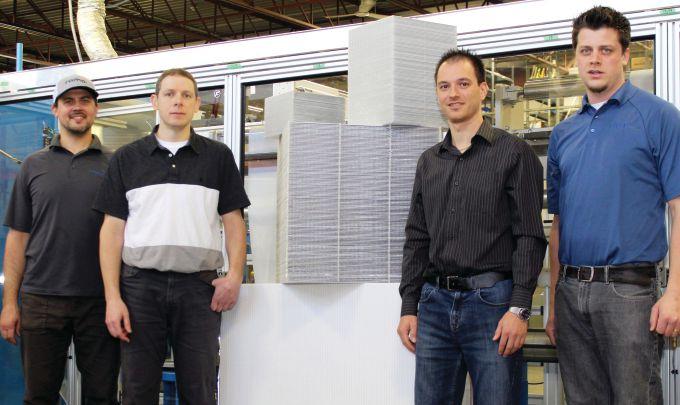
Members of the RAMP engineering team, from left: Martin Pinnau, mechanical technician; Stephen Gugeler, manager of control systems; Jeff Kerr, manager of mechanical design; and Stephen Slothouber, controls program lead.
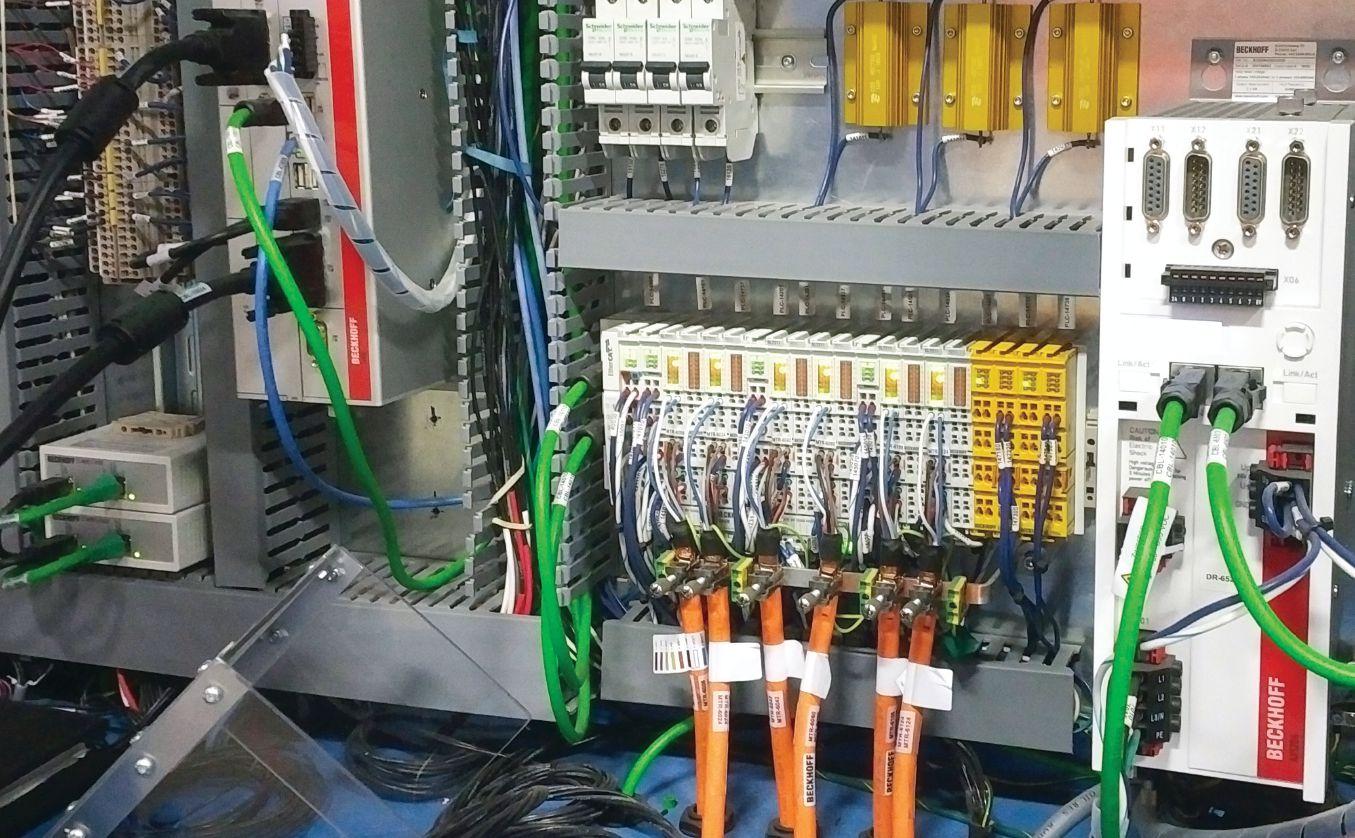
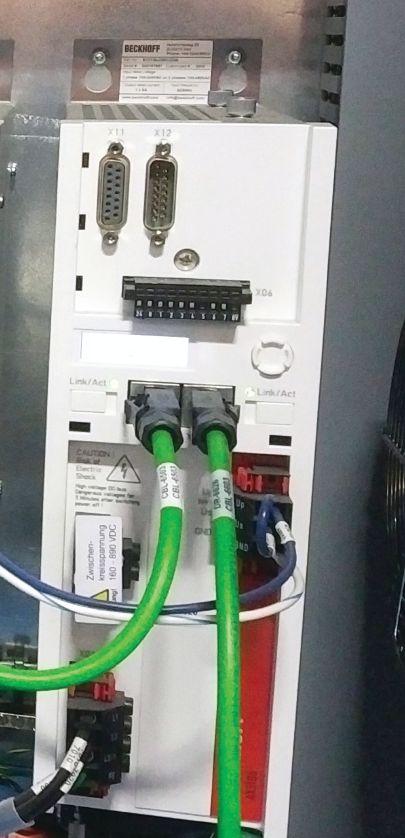
RAMP used a C6930 IPC (left) and AX5000 series EtherCAT servo drives (right) for high-end motion control.
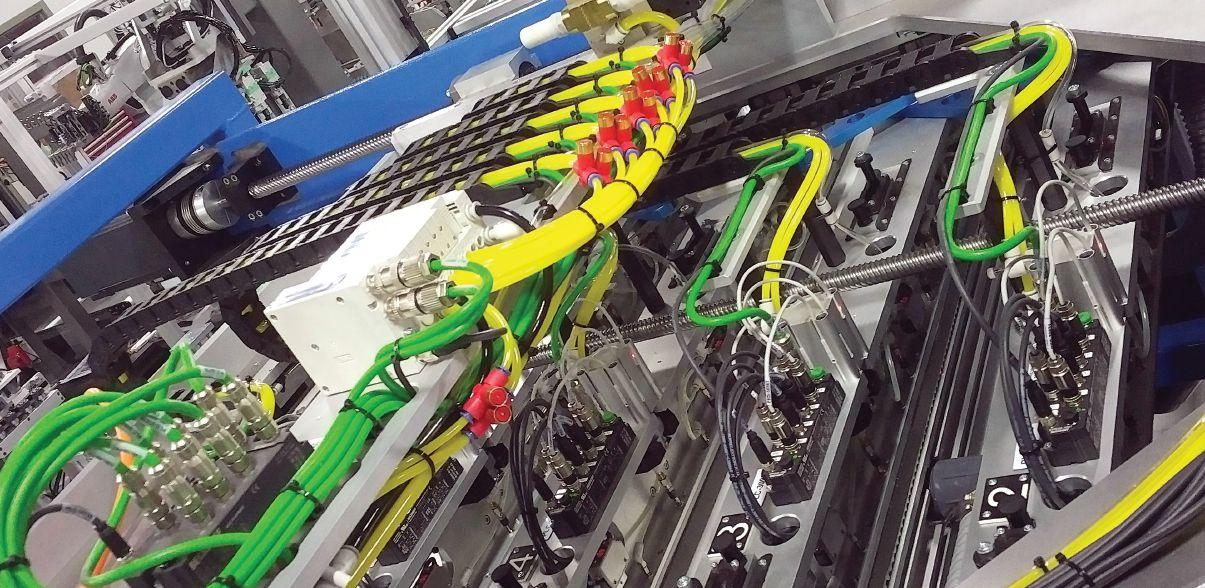
In order to minimize wiring distances over to field devices, RAMP uses a machine-mounted EtherCAT Box I/O in IP 67 protection throughout the system.
UA standard for secure connectivity to higher level databases such as Amazon Web Services (AWS) and SAP.
RAMP uses a variety of TwinCAT tools for high-speed data analysis and advanced code development. “TwinCAT 3 excels in all areas of PLC and motion control programming, but goes far beyond this,” Gugeler says. “For example, ScopeView makes troubleshooting and modification efforts faster and more efficient. And since the platform directly integrates with Microsoft Visual Studio, RAMP can take advantage of standard computer science tools and methods, such as C# for UI development. This means we can fully leverage emerging engineering talent from local universities and colleges. These new engineers entering the workforce are very familiar with IDEs like Visual Studio, but may not have interacted with a traditional PLC before.”
Industrial PCs
Based on the application requirements and specifications from CORE Energy Recovery Solutions, RAMP required a high-powered industrial PC (IPC) to handle all automation software and Windows applications, as well as the company’s recipe and data acquisition solutions. “We needed an IPC that
could run our applications at a one millisecond update rate to provide maximum control over the process. That led us to the high-power, cabinet-mounted C6930 IPC from Beckhoff,” says Steve Slothouber, project control lead at RAMP. The C6930 that RAMP selected features a fourth-generation Intel Core i5 processor (two cores, 2.7 GHz).
RAMP connects the C6930 IPCs to CP2916 multi-touch control panels to display dashboards that run on an HMI server for local and web-based access. The dashboards are filled with overall equipment efficiency (OEE) information and important data from existing validation systems. RAMP uses two CP2916 panels with 15.6-inch displays for HMI hardware, allowing for easy operation and process control. To cover I/O requirements, RAMP standardized on an EtherCAT system that offers analog and digital devices rated in IP 20 and IP 67 for all data acquisition and machine safety requirements. The IP 20 EtherCAT terminals result in a smaller enclosure footprint and permit a free mix of safe and nonsafe I/O in the same segment. Highdensity (HD) EtherCAT terminals, which offer as many as 16 I/O channels in a 12-mm wide terminal housing,
CORE
RAMP built custom machinery this year for CORE Energy Recovery Solutions in Vancouver, backed by PC-based control from Beckhoff Automation.
promote space savings. These also greatly reduce wiring effort through DIN rail installation and cage clamp wiring connections.
“The EtherCAT I/O system provided the high-speed networking and fast scan times we needed while ensuring flexible network topologies,” says Matt Buchwald, electrical design lead for RAMP. “The CORE application requires high-end control technology that can react to production changes and adjust output controls in under 10 milliseconds.” The application also had to integrate with various third-party field devices on different networks, and each protocol had to be managed in the central controller. In this case, the EtherCAT I/O system directly connects to EtherNet/IP hardware required on the machine. This included devices installed on web handling equipment, vision system hardware, automatic power tensioning controls and dispensing units.
In order to minimize wiring distances to field devices, RAMP uses machine-mounted EtherCAT Box I/O in IP 67 protection throughout the system. “This allows us to place our field inputs and outputs closer to the application and reduce overall cable length and cable track requirements,” says Buchwald. “Integrating all safety systems on the same EtherCAT network via TwinSAFE I/O further reduces overall cabling and electrical assembly
“Even before we think about the control platform, we cross-functionally examine all requirements and break them down into individual conceptual designs. This way, we ensure that all mechanical and control components are fully compatible.”
time. The safe inputs and outputs efficiently connect with safety doors, light curtains, area scanners and e-stops. TwinSAFE also handles Safe Torque Off (STO) functionality on some hard-wired motion control equipment.”
For drive technology that would reduce cabinet space, RAMP applied 24-mm wide EL7211 servomotor terminals for some of the machine’s motion control requirements. “We can use one low-cost 48-volt power supply for the EL7211 drives, significantly reducing space and cost requirements for servo drives,” says Gugeler. Beckhoff stepper technology also factors into the application, with AS1020 stepper motors used for low-cost control of motion, velocity and position. These are driven by EP7041 stepper motor modules rated at 50 V DC, 5 A, with


built-in incremental encoder for resonance-critical applications.
For higher power and load requirements, the RAMP machines also incorporate AX5000 series digital compact servo drives for high-end position control, electronic gearing, velocity control and super-imposed position control. The drives connect to AM8000 series servomotors, which cut up to 50 per cent of motor cabling and connectors, to handle conveyance, pick and place, web lamination, tension control and height adjustments for the production line.
Lowering costs
As the machine control system for CORE Energy Recovery Solutions evolved over a year of development, RAMP repeatedly added new field devices for data acquisition. “We were initially


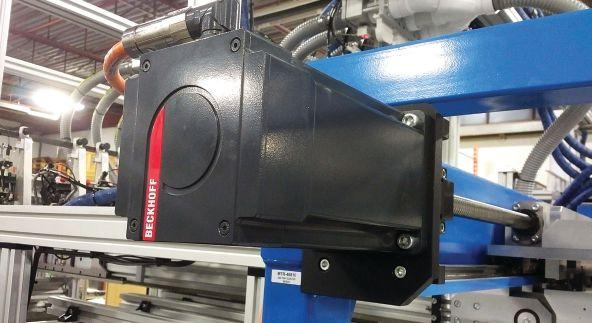
The drives used in RAMP’s soluctions connect to Beckhoff Automation’s AM8000 series servomotors to handle conveyance, pick and place, web lamination, tension control and height adjustments for the production line.
concerned about over-taxing the IPC from a data-processing perspective, but the system capably handled continual increases in data, even while handling all automation and control functionality,” says Balzan. “The stakes were high in this tight deadline project, because if the CPU and RAM couldn’t keep up, it would have required a major redesign.”
Since RAMP first transitioned to PC-based control and EtherCAT technology, the company has had ample time to compare metrics with older generation PLC- and PAC-based systems. “We


clearly increased control quality, improved system reliability, increased productivity and boosted OEE for all RAMP solutions with PC-based control,” says Gugeler. “Specifically, we improved PLC cycle times by 30 per cent and reduced control system costs by approximately 30 per cent.” With the results apparent in the company’s engineering approach to networking technology, RAMP continues to use PC-based control to create fully customized machines with the efficiency found in standard, series production machines. | MA
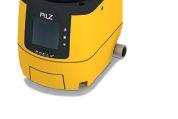
Safety Laser Scanner PSENscan. Experienced system planners and design engineers know the score: the monitoring of danger zones is just as indispensable for automation as protection is on the mountain. Risks must be detected immediately and processed reliably. Based on many years of experience in the field of optoelectronic sensors, Pilz is now taking the next step. With a new product group: flexible, configurable safety laser scanner for productive area monitoring. Play it safe: sensor technology, control technology, drive technology and visualisation. A one-stop shop. The complete solution from Pilz.
Pilz Automation Safety Canada L.P., Internet: www.pilz.ca










Shane Novacek is the marketing communications manager for North America at Beckhoff Automation. beckhoff.ca
LEADERSHIP SUCCESSION STRATEGIES





Prepare your plant’s pipeline of talent by offering development opportunities
BY MICHELE MARKEY
Baby boomers have left a footprint on every industry since they joined the workforce five decades ago. In leadership roles, they have set the organization’s vision, established the company’s culture and built the business’s reputation. Each day, more than 10,000 baby boomers turn 65 years old, and this trend will continue until 2029, according to Pew Research. As boomers reach retirement age, younger leaders who step into their positions will be challenged to maintain the quality of the brand, products or services.
Retirement isn’t the only reason why companies lose leaders. Although many CEOs plan to leave, there are those who exit the company due to an emergency or illness, a merger or acquisition, board dismissal or resignation.
Between 10 to 15 per cent of corporations across all industries appoint a new CEO each year. In
the industrial manufacturing environment in the United States and Canada, that number is even higher at 15.5 per cent, according to PWC’s Strategy& group and its Strategy+Business magazine. In the 2016 version of its annual study on CEOs, governance and success, Strategy+Business reported that 2.1 per cent of CEOs in the United States and Canada were forced out of their positions (one per cent of CEOs in industrial manufacturing), and 3.4 per cent left due to a merger/ acquisition (3.1 per cent of CEOs in industrial manufacturing).
With a strong succession plan and a talent pipeline in place, the organization can avoid gaps in leadership, reduce costs associated with finding a replacement and nullify any lost confidence in the company by employees, shareholders and the market.
What is succession planning?
Succession planning focuses on identifying the knowledge, skills
and abilities that will be needed to perform certain functions. The plan prepares individuals to perform these functions in the future. Considerations must be made for:
• Identifying skills gaps and training needs
• Retaining institutional knowledge
• Boosting morale and retention by investing in employees
• Replacing unique or highly specialized competencies
Any organization can plan for leadership succession based on company vision and goals. The goals of the business will drive the skills and attitudes that are critical for those in key positions.
While many organizations believe they have a succession plan in place, it is often confused with replacement planning. This typically identifies one or two current company leaders who are available to replace someone on short notice or during an emergency. The replacement is often a temporary measure. It doesn’t account for a long-term, continual solution like succession planning.
By establishing a robust leadership succession plan, businesses can bolster their employees’ abilities to move into these roles.
Companies that develop their upand-coming leaders benefit from:
• Improved retention of talented employees.
•Reduced costs in external searches and faster decisions made to fill key positions.
• Engaged employees who are encouraged by their career progress and new skills.
• A positive corporate culture that encourages outside talent to seek employment with your company.
Start with a plan
Build a business case by determining the needs of the company and how to address these needs with talent. Key company leaders may have their own ideas for succession plans. Start with them sending their plans informally, either through email or in conversation.
If they are having trouble articulating their plans, ask questions that help generate ideas.
• What is your talent strategy, and how does it support the business?
• What would you do if the CEO quit next week?
• What are the roles that need to be actively managed, and what are your plans for them?
• Who among your current employees do you identify as having potential for growth?
• What are the top three things you need to manage risk, as it relates to personnel?
Talented people are a major component of a company’s future
success. Start by identifying top talent at different levels: company contributors, middle management and leaders. Each position at these levels can be viewed as potential leaders, whether it is moving contributors to management, middle management to executive positions, or VPs and executives to the C-suite.
Assess these people for key competencies, like team building and communication. How do they inspire and persuade employees? How do they communicate to generate buy-in? Can they build a support team with complementary skills, yet different perspectives, to generate healthy discussions and avoid groupthink?
Develop top talent
Once talent has been identified, drive their growth with experiences and training. Create new positions, roles and assignments that expose them to high potentials; assign a second-in-command role that allows upcoming leaders to take over key responsibilities; and have them fill in for a senior leader for short periods.
Staff projects with development in mind (what can be learned from projects, and who would perform best?). Performance reviews, mentoring programs, experience paths, rewards and incentive programs can track progress.
Relevant and engaging learning and development is driving today
workforce, and a formal training program also should be included to develop your future leaders. Popular delivery methods are:
• Continuous learning, which makes materials and content accessible through many formats, including technology and interaction with peers and in-house mentors, and puts a value on learning as much as productivity in the workplace
• Employee-driven learning, which empowers employees to define their own continuous path of training based on intrinsic motivators like autonomy, mastery and curiosity and extrinsic motivators like badges and rewards
• Personalized learning, which an individual identifies to fill skills gaps, exciting them and keeping them engaged
Regardless of how it is delivered, training must be conceptual and experiential, customized to the needs of the learner, designed to help embrace and lead through change, supportive of the shared goals of a multigenerational workforce, and finally accessible, meaningful and relevant.
It’s up to you to make sure you have the right people going down the path toward continued organizational success. Without a succession plan and development of your future leaders, they may be ill prepared to navigate the business into the future. | MA
Understand your future leaders
Today, there are as many as five generations working at one company, with millennials making up the largest demographic in the workforce. Generation Z is close behind. Because this younger workforce will be tomorrow’s leaders, it’s important to understand what’s important to them.
First, the workforce must be agile, empowered and engaged at any level of the company. Agile employees are flexible enough to jump from project to project while still being confident and enthusiastic. Empowered employees are self-directed, they have the authority to make decisions and respond to challenges, and they are respected and rewarded for their innovative solutions. Engaged employees care about the outcome and are committed to the organization.
Second, modern employees want a work culture that aligns with their personal values, a path to expanding responsibilities and increased compensation, and a chance to
show their creativity.
Third, employees want learning and development as part of the overall work experience. Note that many companies have not made employee experience a priority, and they have not assigned responsibility to a senior leader to make learning and development part of the package.
To engage employees, leadership must obtain the resources to integrate performance management, goal setting, diversity and inclusion, wellness, workplace design and leadership development into the total employee experience.

Michele Markey is the vice-president of training operations for SkillPath, a professional learning and development provider. She can be reached at mmarkey@skillpath.com
Table source: Brandon Hall Group
NEW PRODUCTS
Automated electronic software delivery
NOS Microsystems offers an electronic software delivery (ESD) solution, getPlus, to help industrial automation customers make the transition to Industry 4.0. The software delivery manager is lightweight at 200kB (<1MB) on the client side. The software acts as an intelligent ecosystem that fully integrates into clients’ existing databases, such as SAP and Oracle, to establish ESD or enhance the ratio of existing ESD with self-service access to software updates. getPlus links clients with their customer by connecting to suppliers’ current web interfaces. There, it provides a platform that automates the updating process for customers. Upon software delivery, it generates a unique targeted sales point based on user data collected. The end result ensures convenience, reduced support costs, life cycle maintenance of products and revenue recognition across the supply chain. The solution establishes a TLS connection, runs pre-checks before download and bypasses tax and customs regulations. Automation providers that use getPlus are able to directly inform customers of new devices and other updates. The software also tracks downloads and maintenance expirations. getplus.com
DIY AI software for robot cells
Universal Logic has updated its Neocortex artificial intelligence software designed for doit-yourself engineers. The software allows engineers to
configure and deploy AI-based robot cells for variable picking in both manufacturing and consumer products supply chains. Neocortex DIY extends perception, directs grasping and guides robots, resulting in human-like flexible picking at high speed. The user assembles their own hardware and installs Neocortex DIY, which then gives the robot high-speed, AI-based, dynamic control that up until now required Universal’s engineering integration. The software will guide the user through the process of integrating the robot, end-of-arm tool and sensors with Neocortex DIY, which will then handle the calibration, obstacle avoidance and object recognition required
for a successful deployment. Neocortex DIY allows the user to pick their brand of choice. The software will communicate with a range of products from Cognex, IDS Imaging and other USB 2.0/USB 3.0 and GigE devices, as well as robots from ABB, FANUC, KUKA, Omron/ Adept and Yaskawa Motoman. universallogic.com
Edge control software for vision
Schneider Electric has released the latest version of its EcoStruxure Power Monitoring Expert (PME) and
Power SCADA Operation (PSO) software. PME is the latest “edge control” software addition to the IoT-enabled EcoStruxure Power platform, which resides in Schneider Electric’s EcoStruxure architecture – the open and interoperable system architecture for building, grid, industry and data centre customers. PME acts as the window to a digitized power network, taking advantage of IoT connectivity and distributed intelligence, and connects to field devices including power and energy meters, electrical distribution equipment and building energy systems to
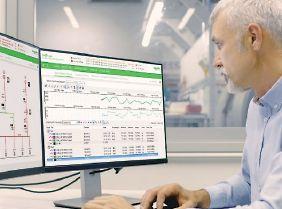
evaluate efficiency. The latest edition of PSO significantly augments its edge control within a connected and integrated power distribution network. PSO is ideal for mission-critical power applications designed to provide real-time vision and control for timely response. schneider-electric.ca
COMMUNICATIONS & NETWORKING
Ethernet rack switch with PoE support
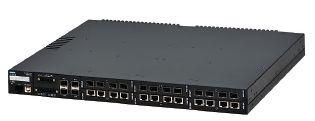
Siemens is expanding its Ruggedcom portfolio with an Ethernet 19-inch rack switch with Power-over-Ethernet (PoE) support, which allows for precision timing and network communication on a single network. The CLP interface port on the Ruggedcom RST2228P allows for replacement of devices in the field to automatically apply a failed device’s configuration to a replacement unit. The device features an operating temperature from -40 to 85 degrees Celsius, as well as electromagnetic interference (EMI) immunity. The product is a rugged Layer 2 rack switch with four integrated 1/10 Gbit/s uplinks and up to 24 field modular 10/100/1000 Mbit/s interfaces supporting IEEE 1588 transparent clock and PoE. The Ruggedcom RST2228P device has a combined power of 500 watts with a maximum of 60 watts per port. siemens.com
Ethernet-to-fibre PoE+ media converter
Antaira Technologies has announced the IMP-C100-XX series, a compact industrial Ethernet-to-fibre PoE+ media converter featuring a 10/100TX Ethernet port and a fixed fibre interface, which supports ST or SC connectors depending on the model. This series is compliant with 802.3at standards, which is backwards compatible with 802.3af. There are multi-mode and single-mode models to support applications with a variety of fibre distances and types. It is designed to fulfill industrial applications that require fibre optic distance extension while using minimal space. The IMP-C100-XX series has a built-in “link fault pass through” (LFP) and “far end fault” (FEF) function with 48~55VDC redundant power inputs with reverse polarity and overload current protection. This product series supports DIN-Rail as well as wall-mountable orientations. antaira.com
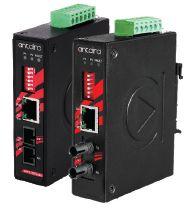
AUTOMATION UPFRONT
MOTORS & DRIVES
Zero-backlash linear voice coil motor
Moticont has released a more powerful high-speed, zero-backlash linear voice coil motor featuring an internal shaft and bearing. The compact Moticont
GVCM-070-089-03 linear voice coil motor has a high force-to-size ratio, 40.86 lbs (181.5 N) continuous force and 129.1 lbs (573.4 N) peak force. The housing measures 2.75 in (69.9 mm) in diameter and is 3.5 in. (88.9 mm) long, with threaded mounting holes for easy integration into both current and future applications. The stroke of the motor is 2.5 in (63.5 mm) and the precision ground shaft is 0.2359 in +/0.0003 (5.993 mm +/-0.008) in diameter with an internal thread. moticont.com
More torque for higher acceleration
Applied Motion Products has launched three new models of its StepSERVO integrated motors, which provide highspeed motion control for high-throughput applications such as packaging and labelling, automated test and measurement, and automated assembly. Using closed-loop feedback and advanced control technology, StepSERVO creates more torque for higher acceleration in meeting faster machine cycles that result in greater productivity. The StepSERVO motors operate cooler and more quietly than standard motors by drawing just
4:57:33 PM
4:57:33 PM
enough current to control the load. They also reduce current to the motor when the load is not demanding torque, and provide reductions of 10 dB in noise due to less current in the motor windings. The TSM Series features eight digital inputs, four digital outputs and one analog input, and supports RS-232, RS-485, CANopen, Ethernet, EtherNet/IP and Modbus communications. Motors are available in various frame sizes, including a new NEMA 34. The SSM Series features three digital inputs, one digital output and one analog input, and supports Ethernet, EtherNet/IP and Modbus TCP communications. The TXM Series combines the features of the TSM Series with IP65-rated environmental capabilities and M12 connectors for operating in wet and dusty environments. applied-motion.com
Integrated units for speed control
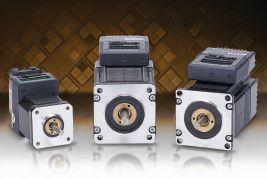
location in the coming years.
“Bosch is committed to Mexico. The country is and will remain an important market and a hub for our global manufacturing and development network,” said Stefan Hartung, member of the Bosch board of management.
steps per revolution. An internal indexer can accomplish pointto-point moves controlled via ASCII communication. Free SureMotion Pro drive configuration software is available for advanced integrated motor/drives (not required for standard drives) to configure and set up the drive. automationdirect.com
One-way traction drives with less heat
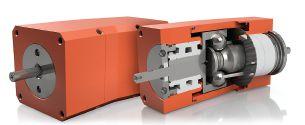
According to the company, the new plant will employ a manufacturing execution system to collect data and share production information in real time, aiding in preventive maintenance and higher product quality, it says. The system also digitally connects the plant to the Bosch Group’s global manufacturing network.
In total, Bosch operates 10 manufacturing locations around the country and has already introduced the use of smart technologies, for example at its Mobility Solutions sites in Toluca and Juárez.
Overall the Bosch Group employs around 16,000 associates
Rolling Motion Industries is now offering two highefficiency traction drives, the MAR-17-1-2.1 and the MAR23-1-2.1. These are one-way traction drives with only six moving parts and use an engineered traction fluid with a coefficient of friction of 0.1 to 0.12. These traction drives typically last three times longer than conventional gearboxes, and with no metal-to-metal
and is active with all four of its business divisions in Mexico.
CZECH REPUBLIC
Augmented reality company expands operations
contact, the drives generate up to 72 per cent less heat after 24 hours of continuous operation. Additionally, they create up to 38 per cent lower dB at 3,000 rpm (less than a home refrigerator) over conventional gearboxes. Even though there is no metal-to-metal contact, Rolling Motion Industries says there is no slippage or lost motion between the input and output shafts. The MAR17-1-2.1 traction drive is designed for speeds to 3,600 rpm with 10 to 20 in/ lbs of torque, and the MAR-231-2.1 traction drive is rated for 3,600 rpm with 20 to 30 in/lbs of torque. Both of the drives are available with an optional overriding clutch. rmidrive.com
OPS Solutions, maker of Light Guide reality and manufacturing expanding new the Czech Light is designed improve assembly a digital onto ing audio guidance, Meanwhile, Pro incorporates software platform
The the European and will to expand partnerships.
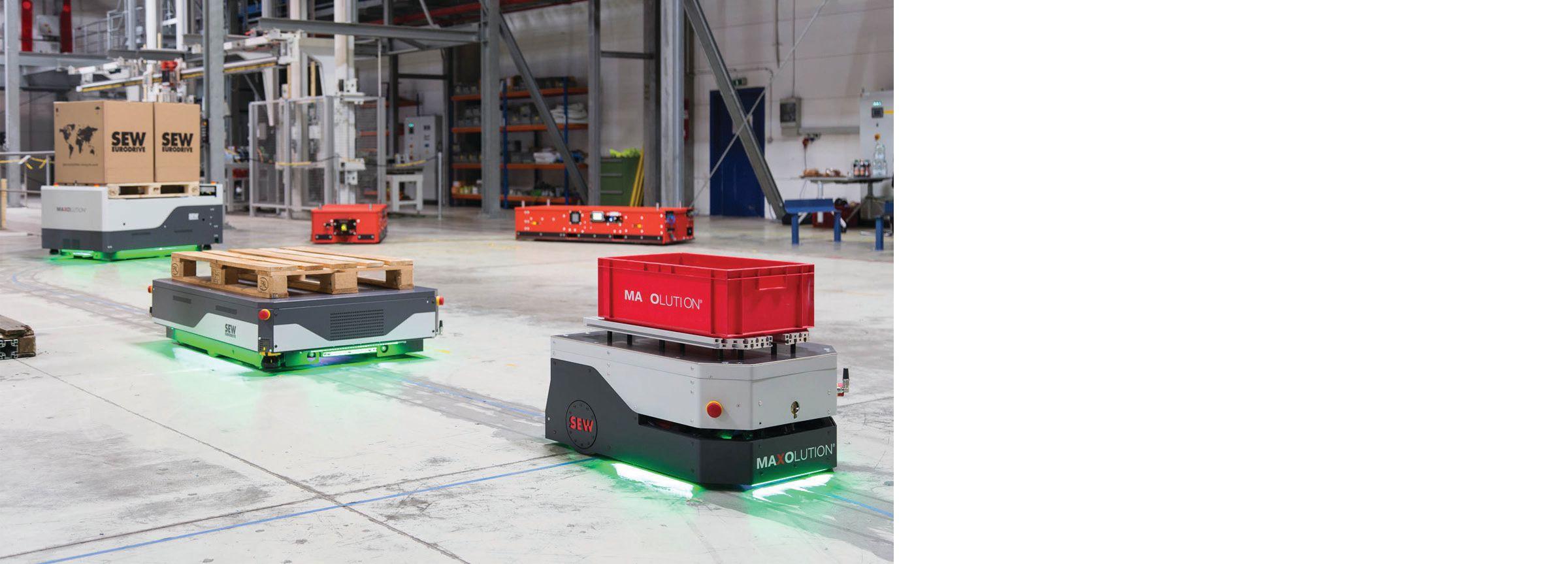
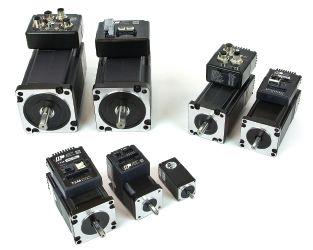
AutomationDirect has added integrated motors and drives to its SureStep line of stepper motion control products. The new SureStep integrated drive/ motor units provide accurate micro-stepping position and speed control for smooth motion and step response and require only two components: the power supply and integrated stepper motor/drive. Existing SureStep systems require four components including power supply, stepper drive, motor extension cable and motor. SureStep advanced integrated motor/drives have available torque from 54 to 340 oz-in and software-selectable resolutions ranging from 200
“In have in the nology Europe president “The expand become the manufacturing Europe.”
Siemens Business develop Telecommunications Orange factory
Job alert: Bosch expects the new plant will add
NEW PRODUCTS
Invert-mounted SCARA robot
ABB has introduced its new invert-mounted IRB 910INV SCARA robot. By mounting the IRB 910INV on the ceiling, manufacturers can increase the space efficiency and flexibility of each cell and do more complex tasks even in confined spaces. The ceiling mounting also allows the IRB 910INV to collaborate with other robots and machines simultaneously in the same footprint, further boosting productivity. The IRB 910INV has the same motion control as the original ABB IRB 910 family, for repeatable point-to-point accuracy in picking and placing, assembly and testing. This includes electronics small parts assembly tasks such as screw driving, inserting or mounting components, and automated inspections solutions for quality control. The IRB 910INV will be certified for clean-room applications in the future. The compact and lightweight IRB 910INV is available in two variants – one has a maximum
payload of three kilograms with 350-mm reach, and one has a maximum of six-kilogram payload with 550-mm reach.
abb.com
End-of-arm tool changer
OnRobot has released a patented tool changer for collaborative applications. The Quick Changer has no sharp edges and is affixed to the end of a robot arm to allow for quick
replacement of end-of-arm tools with a click. Inserted tools are automatically positioned correctly with a repeatability of ±0.02 mm. Weighing 200 g (seven oz.), the Quick Changer can sustain up to a 10-kg (22-lb) payload. Its compact size also adds minimal distance from the tool center point (TCP) to the robot, which minimizes stress on robot joints. The Quick Changer can be used on any robot arm,
MACHINE SAFETY
Safety light curtains with muting setups
Rockwell Automation has released the Allen-Bradley GuardShield 450L safety light curtain system to isolate robotic work cells from the rest of the plant with transceiver technology. The integrated laser alignment system (ILAS) of the GuardShield 450L-E provides multiple visible laser points that optimize setup. Users can integrate a GuardShield 450L-E system in hand and finger protection applications from 150 mm (5.9 inches) up to 1,950 mm (76.7 inches) in increments of 150 mm (0.5 foot). After start-up, users can leverage advanced features
drone, or other equipment with an ISO-9409-1 flange. onrobot.com
Microlocation beacons for robots
Humatics Corporation has debuted its Spatial Intelligence Platform for robot microlocation in manufacturing operations. The platform uses radiofrequency beacons deployed in a constellation, mobile sensors and a software suite to give robots and industrial automation equipment the ability to navigate through complex environments and collaborate with people. The platform aims to change the ways autonomous vehicles move on the factory floor by allowing users to change routes indoors or outdoors without making infrastructure adjustments. The KinetIQ 300 system localizes mobile objects in 2D and 3D and the KinetIQ 100 system measures distances with two centimetres of precision at ranges of up to 500 metres. humatics.com
MATERIAL HANDLING
High-speed washdown door
Rite-Hite has developed a new high-speed door for easy cleaning in food operations. The LiteSpeed Washdown High-Performance Door has curtain retention of up to 0.2 InWC. The PVC vinyl curtain of the LiteSpeed Washdown operates on a stainless-steel frame designed without a header and motor shrouds, which are two areas notorious for harbouring bacteria. The heat-sealed vinyl and optional urethane curtains stand up to caustic cleaning chemicals used in a typical washdown application. The roll-up design translates into a smaller physical footprint and peak operating speeds of 65 inches/second. The motor is coated to withstand the harshest regular cleanings. Using available safety presence sensors and an LED countdown, personnel working near the door are unlikely to bump into
and functionality, including cascading, built-in muting and blanking. The advanced muting and blanking functions of the GuardShield 450L-E light curtain are set up through DIP switches located on the dedicated plug-in modules. Common muting setups, such as four-sensor or two-sensor with L- and T-configuration and override functions, can also be selected on the device. The safety light curtains are CE marked for all applicable directives, and certified through cULus, KC, RCM and TÜV. Watch the online video showing how the transceiver technology in the light curtains work. rockwellautomation.com
Manual control for open safety gates
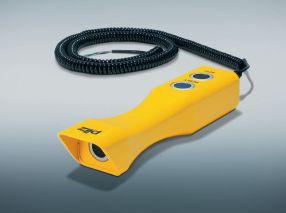
control units are used when work is being carried out in a plant or machine’s danger zone. Pilz says that its new PITjog manually operated control devices can be used, for example, to control machine functions by hand while the safety gate is opened. The advantages of the
control devices are the ability to work safely inside a plant or machine’s danger zone, an easy-to-monitor process with the safety gate open, and ergonomically moulded housing for comfortable operation. The company’s control devices include plastic housing with three pushbuttons, two pushbuttons for two-hand function and one pushbutton for the reset function, protection type IP50, coiled cable for a large operating range and secure storage within its retainer. The application areas for control devices can range from machine set-up, servicing work, process monitoring and test operations. pilz.com
Manual
it. However, if the LiteSpeed Washdown is impacted, the door will automatically reconfigure back on its tracks. ritehite.com
Power drum handler for up to 1,000 lbs
Liftomatic Material Handling has introduced a customized portable drum handler for C1 D1 applications. The C1D1-DCM power drum transporter is a powered and self-contained handling device for lifting, lowering and moving all types of steel, plastic and fibre drums. Weight capacities up to 1,000 pounds are available. The models offer users a number of benefits, including protection for EE- and EX-rated environments. Features include a steering/throttle handle for forward/reverse drive, lift and lower features and a tight turning radius for tight aisle and restricted workspace facilities. The transporter offers a standard lift height of 20” to allow for palletizing on standard or spill pallets. The power system can negotiate inclines and load/unload trucks and shipping containers. The handler includes a counterbalanced configuration for “head-on” work. liftomatic.com
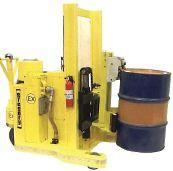
PROCESS CONTROL
Monitoring and control at Ethernet speed
Moore Industries has released the HES HART to Ethernet Gateway System that converts signals from up to 64 wired HART devices to Ethernet MODBUS/TCP and HARTIP. The HES allows HART transmitters and smart valves to interface directly with MODBUS/ TCP-based monitoring and control systems over Ethernet, with field device data viewable in any web browser via the HES’s built-in web server. The HES is available in a single-channel or four-channel configuration. Single-channel configuration supports up to 16 HART devices in digital multidrop mode, or it can support just one device in a standard point-to-point 4-20mA loop configuration. The four-channel configuration can support up to 64 total HART devices for high-density installations. The HES supports communication with HART 5, 6 and 7 field devices, which include Coriolis, magnetic, vortex, ultrasonic and multivariable mass flow meters, along with pressure, pH, level, temperature transmitters and even smart valve positioners. The HES has sufficient memory
to handle thousands of process variable and diagnostic data points from connected smart HART devices. miinet.com
SaaS analytics for process manufacturers
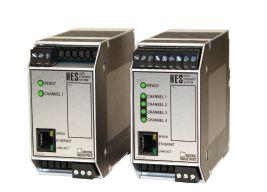
Seeq Corporation’s advanced analytics solutions for process manufacturers are now available to be delivered via software as a service (SaaS) on Microsoft Azure. Seeq enables engineers and scientists in process manufacturing organizations to rapidly analyze, predict, collaborate and share insights to improve production outcomes. Seeq includes support for Azure-specific features such as Azure Directory Service. Seeq is now offering SaaS to
address customer interest in cloud-based analytics solutions. Recent releases of Seeq have focused on enabling larger deployments through scalability features, and on making the Seeq applications easier to navigate for users. In the SaaS release, there’s also expanded machine learning functionality for customers doing predictive analytics, and an improved query model for customers accessing contextual data from SQL-based data sources. Seeq supports major data historians. seeq.com
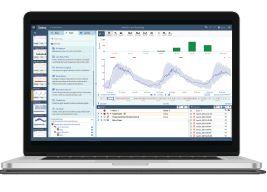
ADVERTISER INDEX
Advantech Industrial Automation Group 13
Allied Electronics & Automation 1 + 15 AutomationDirect 2 Beckhoff Automation Ltd. 5 Carlo Gavazzi (Canada) Inc. 7 Encoder Products Company 6 Harmonic Drive LLC 17
TO ADVERTISE
MA’s Technology Handbooks
are a series of digital magazines that focus on a single product category within Canada’s manufacturing industry. Posted on MA’s website as an interactive flip-style magazine, our Technology Handbooks provide specific market and product information, as well as trends within that specific product category, to machine builders, component manufacturers, end-users and system integrators.
For more information, contact Klaus Pirker at kpirker@annexbusinessmedia.com or (416) 510-6757.
Lovato Electric Corporation 25 Murrelektronik Canada 3 Pilz Automation Safety
Contact Klaus B. Pirker • KPirker@annexbusinessmedia.com



BACKSTORY







What MA published in...
2009
“Convergence requires seamless integration throughout a manufacturer’s enterprise. Open systems connected these disparate systems together but have not yet lived up to expectations.”
2010


The progression of IT/OT convergence
Manufacturers have seen massive communication and operations improvements through the convergence of informational technology (IT) – the ever-present systems sending and storing information throughout an organization – and operational technology (OT) – the systems informing direct change through monitoring and control of devices and processes. IT and OT offer significant improvements in plant efficiency when the proper technology is in place to enable communication between the systems.
These systems have been integrating for years, starting in 1968 with Modicon’s first programmable logic controller to replace hard-wired relay-based systems. OT has since rapidly advanced, introducing microprocessors, digitized process algorithms and the Modbus in 1979, which was the first
industrial communication bus. This allowed users to integrate computers and machines, providing more effective connection and automation in industrial machines. By 2000, web-embedded automation for industrial systems was widespread, allowing for remote supervision of processes.
On plant floors, IT/OT convergence today begins with data gathered from machines and systems for storage on the cloud. This vast amount of data collected periodically holds valuable information about operations or maintenance aspects. AI systems can digest this data to create actionable insights, which can be used to optimize operations and reduce costs.
IT/OT convergence will continue with widespread digital transformation, with four major influences driving the next steps:
• 5G connectivity will open new


2011




“We have access to information in a much more transparent way than before – and this also drives a redesign of the user interface to deal with more information in the same screen. IT systems are looking more and more like SCADA systems.”
2012
“The adoption of digital operations allows enterprises to solve two key challenges: driving operational performance seamlessly and overcoming the challenge of a declining skilled workforce.”
“Advances in and launches of new industrial Ethernet-enabled sensors, meters and process equipment have finally reached the level where a critical mass is present for wide adoption across industries.”






2016
“The convergence of IT and OT has been slow to get started, probably due to a mutual lack of trust, but now it is time.”


business opportunities as it eliminates information silos and boosts IoT adoption, and will enable multiple industries and plants to communicate, share insights and collaborate effectively with a single network.
• Blockchain technology can be introduced to track transactions and protect IoT devices. As it advances, many new uses such as quality assurance will become a possibility.
• Digital twins, or digital representations of physical equipment or assets, can be used for analytics, control or to simulate real-world behaviours. This will help improve operation and speed uptime to market, resulting in improved ROI.
• AI continues to advance and will allow for self-optimizing machines, which can recognize and deliver system information to technicians. Forecasting system demands is only a start to what AI can provide as IT and OT grow closer. | MA

Gurvie Waraich is the offer manager, digital plant for Schneider Electric Canada. schneider-electric.ca
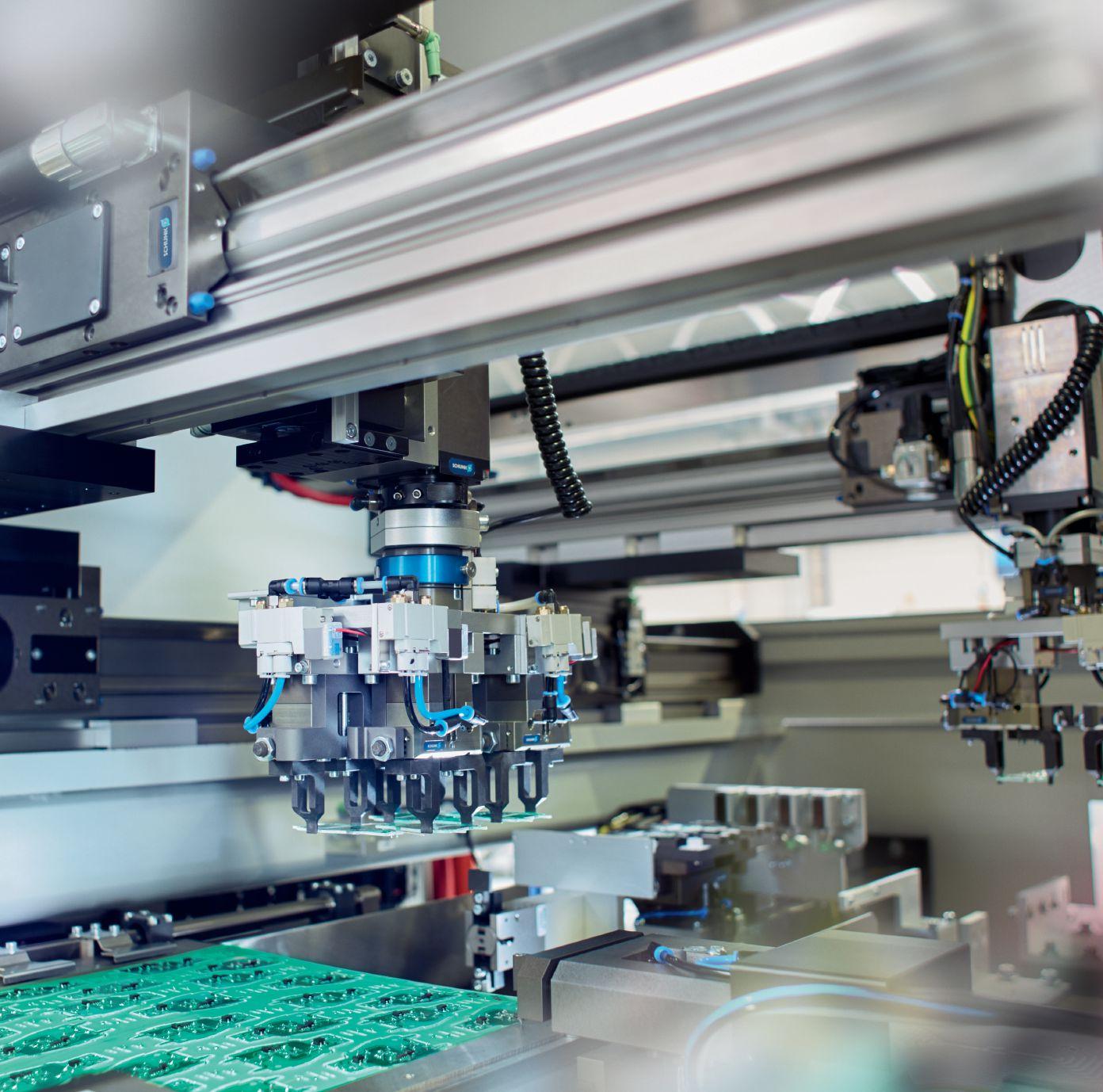
0.01 mm repeat accuracy LDN Linear Axis
90% faster gripper change
SWS Quick-change System
NEW: Up to 50% higher gripping force
PGN-plus-P Universal Gripper
Everything for your Handling System
More than 4,000 components for handling and assembly.


Always on track
SIMATIC ITP1000: Maximum mobile performance, every day
More flexibility with the robust SIMATIC ITP1000 Tablet PC: thanks to its long battery life, the tablet is suitable for all-day mobile use in the entire industrial environment. Frequently used applications can be implemented at the touch of a button. For top performance and maximum time savings.