


by Brett Ruffell
by Brett Ruffell
Several years ago, the people at Egg Farmers of Canada (EFC) noticed a trend. In an increasingly urbanized society, fewer people had a direct connection to where their food came from. Despite this shift, the organization’s CEO Tim Lambert noticed younger Canadians were more interested in where their food came from. They appeared particularly concerned about the environmental impact of production.
It was clear to Lambert that society was going to hold producers to a higher level of accountability in the future. While some businesses might perceive this change as a challenge or threat, the EFC exec sa w the opposite. “We said why don’t we embrace this as an opportunity for our industry and become leaders in societal response and put it at the core of our business,” Lambert says. That’s exactly what the organization did.
EFC developed a sustainability strategy focused not just on the environment but also on several other related factors. Now years later, it’s shared how Canadian egg producers have carried out that strategy in a new report called “Our Sustainability Story”.
The document, available at eggfarmers.ca, outlines industry efforts in five key areas (or pillars). First and foremost, it shows what’s being done to protect the health and welfare of hens. Next, it details how the
industry ensures it delivers safe, high quality eggs to Canadians.
The third pillar describes how producers are making egg production environmentally sound. The final two pillars harken back to sustainability being holistic. The fourth covers how producers, through EFC, are enhancing the wellbeing of others, while the final component details how the organization is empowering producers and its own staff.
“The pillars are interconnected,” Lambert insists. For example, he says without strong welfare standards on your farm you’re going to have higher levels of mortality,
“We said why don’t we embrace this as an opportunity for our
industry and become leaders
in societal response and put it at the core of our business.”
more disease and lower production. As a result, you’re going to require more resources like feed to get the desired output from your flocks.
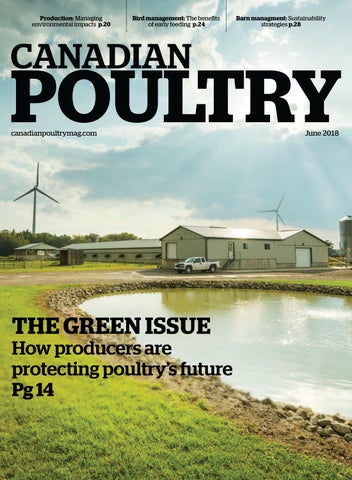
In this issue of Canadian Poultry, we focus on the third pillar – ways in which poultry production is becoming more environmentally sound. In our cover story on page 14, for example, we check in with what many say is the gold standard for sustainable egg production
in Canada – the Brant Colony layer barn in Alberta. We profiled the highly touted “net-zero” barn when it first opened a few years ago. Now, we check in to see how things are going and any lessons learned. We also introduce you to the Kipster barn, a Dutch operation that claims to produce carbon-neutral eggs.
When it comes to the environment, Lambert says C anadian farmers already have a lot to be proud of. EFC conducted a lifecycle analysis – a 50-year study of Canada’s egg industry – through UBC sustainability researcher Dr. Nathan Pelletier. His work showed Canadian farmers were producing 50 per cent more eggs today than they were 50 years ago while at the same time using only half as many resources.
“It’s a compelling story,” says Lambert, noting that EFC has made a multiyear commitment to supporting further work from Pelletier as its sustainability research chair. The green farming expert will be sharing results from his work in a new quarterly column in Canadian Poultry Read Pelletier’s first column on page 32.
Lambert says EFC’s holistic approach to sustainability has delivered results for producers. He points to the fact that eg g consumption in Canada has grown dramatically over the past decade as proof the strategy is working. “We do a good job of telling our story and I think it resonates,” he says. “It’s not just the right thing to do; we believe it’s also good for business.”
canadianpoultrymag.com
Editor Brett Ruffell bruffell@annexweb.com 226-971-2133
Associate Editor Jennifer Paige jpaige@annexweb.com 416-305-4840
National Account Manager Catherine Connolly cconnolly@annexweb.com 888-599-2228 ext 231 Cell: 289-921-6520
Account Coordinator
Alice Chen achen@annexweb.com 416-510-5217
Media Designer Alison Keba
Circulation Manager
Anita Madden amadden@annexbusinessmedia.com 416-442-5600 ext 3596
VP Production/Group Publisher Diane Kleer dkleer@annexbusinessmedia.com
COO
Ted Markle - tmarkle@annexbusinessmedia.com
President/CEO
Mike Fredericks
PUBLICATION MAIL AGREEMENT #40065710
Printed in Canada ISSN 1703-2911
Circulation
email: rthava@annexbusinessmedia.com Tel: 416-442-5600 ext 3555 Fax: 416-510-6875 or 416-442-2191
Mail: 111 Gordon Baker Rd., Suite 400, Toronto, ON M2H 3R1
Subscription Rates
Canada – 1 Year $32.00 (plus applicable taxes)
USA – 1 Year $69.00 USD
Foreign – 1 Year $78.00 USD
GST - #867172652RT0001
Occasionally, Canadian Poultry Magazine will mail information on behalf of industry-related groups whose products and services we believe may be of interest to you. If you prefer not to receive this information, please contact our circulation department in any of the four ways listed above.
Annex Privacy Officer privacy@annexbusinessmedia.com Tel: 800-668-2374
No part of the editorial content of this publication may be reprinted without the publisher’s written permission. ©2018 Annex Publishing & Printing Inc. All rights reserved. Opinions expressed in this magazine are not necessarily those of the editor or the publisher. No liability is assumed for errors or omissions. All advertising is subject to the publisher’s approval. Such approval does not imply any endorsement of the products or services advertised. Publisher reserves the right to refuse advertising that does not meet the standards of the publication.



































Glass-Pac Canada
St. Jacobs, Ontario
Tel: (519) 664.3811
Fax: (519) 664.3003
Carstairs, Alberta
Tel: (403) 337-3767
Fax: (403) 337-3590










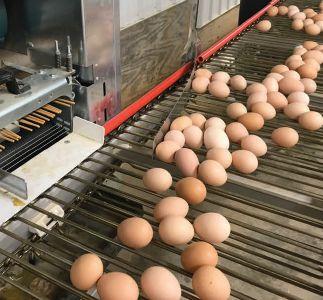
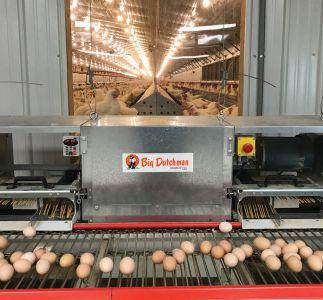
Lubing Conveyors are the safest ride for your eggs from nest to packer



The Lubing name has become one of the most trusted names in the industry because of our exceptional quality, reliability, performance and trouble-free operation.
Custom Configurations - Lubing Breeder Conveyors can be configured to work with any imaginable requirements; any necessary curves, heights and distances.
System Specifications - Available in 14-in and 20-in widths.
System Benefits - Eliminates manual labor of egg collection and reduces egg damage.
Fast Installation - Components ship completely preassembled for easy, quick installation.
Superior Service Life - With more than 40 years developing conveyor products, Lubing conveyors have an established reputation for longest lasting product life in the market
Les Equipments Avipor
Cowansville, Quebec
Tel: (450) 263.6222
Fax: (450) 263.9021
Specht-Canada Inc.
Stony Plain, Alberta
Tel: (780) 963.4795
Fax: (780) 963.5034
Chicken Farmers of Ontario recently launched the Ontario Chicken Innovation and Growth Program to accelerate consumer-facing product innovation and stimulate growth in the Ontario chicken industry. Through this program, top consumer-facing innovations will be recognized and an additional supply of chicken will be allocated to enable the innovation and accelerate growth. For more information, visit: chickeninnovation.ca/.
3M Food Safety recently announced its new 3M Molecular Detection Assay 2 – Campylobacter with 3M Campylobacter Enrichment Broth, providing more efficient testing for a key pathogen associated with poultry production. The testing process is significantly faster than alternatives like PCR, immunoassay and culture methods, and having a streamlined protocol for Campylobacter and Salmonella means the system is able to perform up to 96 tests of multiple types in one 60-minute run..
Agriculture and Agri-Food Canada recently released the 2018 Canadian Agricultural Outlook with analysis on the economic state of the agriculture and food sector. According to the report, Canada’s producers are forecast to see record farm income levels in 2017 and near-record levels in 2018. Crop and livestock receipts are both set to increase in 2017 and 2018. Net cash income is forecast to remain high in 2018. At the same time, continued growth in asset values is expected to raise average farm net worth to $3.16 million by 2018.
turkey farmers are operating in Canada
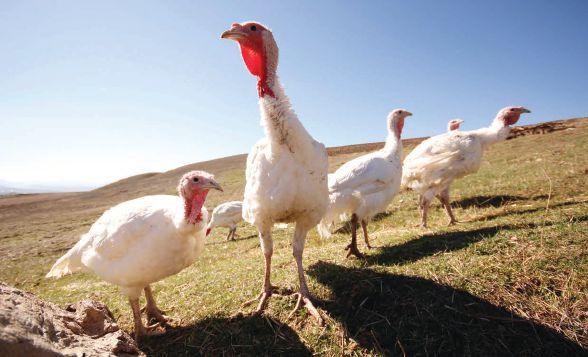
The Canadian turkey industry is a vital part of the Canadian poultry sector, producing turkey products worth $412 million a year and a pillar for growth, job creation and innovation across the country.
$3.16M is the estimated average farm net worth in 2018.
Agriculture and Agri-Food Canada recently announced an investment of $240,000 to the Turkey Farmers of Canada (TFC) to assist producers in meeting the highest animal welfare, biosecurity and food safety standards.
TFC received $98,235 to conduct the final government recognition stages of its On-Farm Food Safety Program (OFFSP) that will help enhance the credibility of production practices with buyers, stakeholders and consumers.
An additional $141,200 was provided to amend TFC’s current Flock Care Program, which enables the turkey industry to demonstrate adherence to national standards for animal
welfare and provides buyers and consumers with the assurance that all animal welfare standards are met and up to date.
“We appreciate the government investment in agriculture. Canadian turkey farmers will use it to continue earning and keeping public trust. More consumers than ever want to know where the food they eat has been produced. We want to continue building their confidence in our great Canadian product. That’s why this government investment is important. TFC’s On-Farm Food Safety and Flock Care Programs are continuously updated and improved, demonstrating our commitment to ensuring the proper care of our birds and providing safe, high quality food for Canadians,” said Darren Ference, chair of Turkey Farmers of Canada.
Dr. Nathan Pelletier was recently named the Natural Sciences and Engineering Research Council of Canada (NSERC)/Egg Farmers of Canada industrial research chair in sustainability. We asked him five questions.
What do you do?
I study food systems from a supply chain perspective in order to identify important sustainability risks and opportunities, and to advance solutions to sustainability challenges.
How does your work contribute to egg farming in Canada?
My research will identify opportunities for Canadian egg farmers and their value chain partners to continue to improve resource efficiencies, reduce emissions and innovate for the future. Taken together, this will contribute to improving the profitability of egg production, enhance the public trust and social license that egg farmers enjoy, and position the Canadian industry as world leaders in sustainability management.
What are you working on right now?
I’m currently putting in place the necessary data infrastructure to support rigorous and fully transparent sustainability modelling for the Canadian egg industry. I’m also actively recruiting graduate students to work on a variety of industry-focused projects, while simultaneously developing sustainability scenarios to help guide the continued evolution of the industry.
What does it mean to be the new NSERC/Egg Farmers of Canada industrial research chair in sustainability?
This award provides a strong basis for supporting a five-year program of research involving numerous graduate researchers that will ultimately provide the information, knowledge and tools necessar y to identify and implement sustainability improvement opportunities for the Canadian egg industry. In short, it enables undertaking a substantial and well-supported industry-focused program of research.
What are the big opportunities for egg farmers to lead when it comes to environmental sustainability?
The Canadian egg industry has already taken a leadership role in supporting the establishment of my research chair in sustainability and in collaborating in successfully pursuing the Industrial Research Chair opportunity. By actively engaging in the envisioned five-year program of research, and actively collaborating with my team to ensure that the research outcomes are effectively transferred to Canadian egg farmers, the industry will be very well positioned to take a leadership role globally in sustainability measurement, management and communication initiatives in the agri-food sector.
Pelletier, in collaboration with his graduate students, will be providing regular updates on his sustainability work in a new quarterly column for Canadian Poultry. See his first column on page 32.
Source: Egg Farmers of Canada

JUNE 2018
JUNE 20
PIC Health Day
Stratford, Ont.
JUNE 20 - 22
Canada’s Farm Progress Show Regina, Sask.
JULY 2018
JULY 22 - 24
2018 Chicken Marketing Summit Orlando, Florida
JULY 23 - 26
2018 PSA Annual Meeting San Antonio, Texas
AUGUST 2018
AUG. 15 - 16
North American Manure Expo Brookings, S. Dakota
AUG. 31 - SEPT. 2
International Poultry & Livestock Expo Bangalore, India
DISEASE WATCH
Stay informed on infectious disease outbreaks with the latest alerts from Canadian Poultry magazine. For more, visit: canadianpoultrymag. com/health/disease-watch
APRIL 16
Newcastle disease
Czech Republic
APRIL 16
Salmonellosis, North Carolina
United States
APRIL 9
Avian influenza
North District, Hong Kong
China
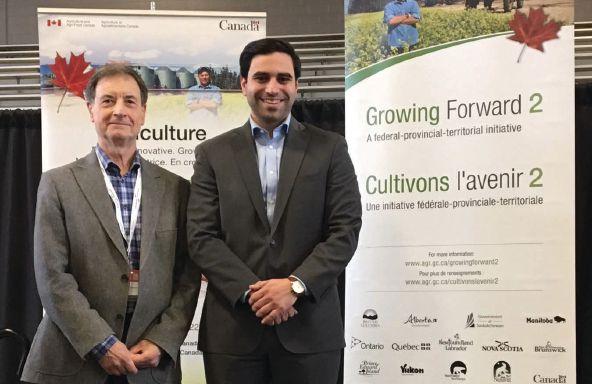
Member of Parliament for London North Centre, Peter Fragiskatos, on behalf of Agriculture and Agri-Food Minister Lawrence MacAulay, announced investments of nearly $2 million to help Canadian poultry producers manage risks.
These investments went to various projects that develop new insurance tools to protect poultry and egg producers against the financial impact of an outbreak of a poultry disease such as avian influenza.
Projects include:
• $659,750 for L’Équipe québécoise de contrôle des maladies avicoles to develop an insurance-based compensation plan for Quebec poultry producers to cover certain costs related to six diseases, including avian influenza, during an outbreak.
• $378,250 for the Canadian Egg Industry Reciprocal Alliance to develop an avian influenza insurance for Canadian regulated egg supply chain producers and a Salmonella enteritidis insurance for Quebec
broiler breeders hatching egg producers.
• $473,700 for Chicken Farmers of Ontario to develop enhanced biosecurity operating procedures during a poultry disease outbreak, and to implement an avian influenza insurance to compensate chicken and turkey producers in Ontario for losses resulting from a disease outbreak.
• $318,500 for the Poultry Insurance Exchange Reciprocal of Canada to develop an avian influenza insurance for Ontario, Alberta and Saskatchewan hatching egg producers and Ontario table egg producers.
“Every poultry farmer knows how devastating an outbreak can be on their operations and their bottom lines. Our government is pleased to work with poultry organizations across Canada to ensure that farmers have the proper tools in place to manage those financial risks. These investments will support a stronger agriculture sector and the well-paid middle-class jobs it provides,” said Minister MacAulay.
April marked the official launch of the Canadian Agricultural Partnership, a progressive $3-billion commitment that will help chart the course for government investments in the sector over the next five years. Federal, provincial and territorial (FPT) governments have been working collaboratively since 2016 to develop the next agricultural policy framework, the Canadian Agricultural Partnership. FPT governments consulted with a wide range of stakeholders, including producers, processors, indigenous communities, women, youth, and small and emerging sectors to ensure the partnership was focused on the issues that matter most to them.
After a soft launch in late 2017, Marketplace-E is being introduced by Ritchie Bros. as its latest buying and selling solution. Complementing the company’s onsite unreserved auctions and online-only auctions through IronPlanet, Marketplace-E offers sellers increased control over price, location, and timing, while providing buyers access to more equipment available to purchase right away. For more information, visit: ironplanet.com/ marketplace-e
In Canadian Poultry magazine’s producer-written blog, Cindy Huitema shares her journey from a conventional to an enriched housing facility. “I hope that by documenting this process in my new blog, it will help others who are deciding what to do with their future hen housing,” Huitema says. To follow along, visit: canadianpoultrymag.com/profiles/blog













By Lilian Schaer
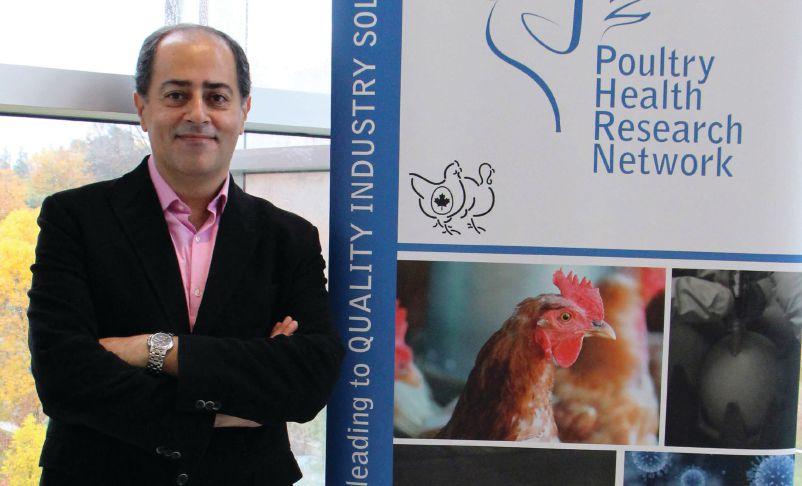
AUniversity of Guelph professor of poultry immunology is preparing to launch a new initiative devoted to reducing antimicrobial use in poultry through gut health.
Dr. Shayan Sharif, newly appointed chair of the Department of Pathobiology at Ontario Veterinary College, has brought together a national consortium of researchers from Western C anada, Ontario, Quebec and the Maritimes. Their goal is to collaboratively address various aspects of the poultr y gut health question.
“What we are trying to do is create better solutions to enhance poultry health, and more specifically gut health, as a way of reducing the use of antimicrobials in poultry production,” Sharif explains. “This is a complex issue that
requires a complex solution.”
Human health pathogens like Salmonella and Campylobacter are of interest to researchers, but there is also a par ticular focus on Clostridium perfringens . It’s the pathogen that causes necrotic enteritis, which, according to Sharif, could become more prevalent in the future as antimicrobial use for disease prevention is phased out.
“There are not a lot of solutions right now; we are moving towards a multipronged approach for control with made-in-Canada solutions that are cost beneficial and meet specific needs of Canada’s poultry industry,” he says.
Sharif is also currently leading a program focused on avian influenza (AI) control. Involving scientists from the Departments of Population Medicine, Computer Science, and Food and Resource
“This is a complex issue that requires a complex solution.”
Economics, the research is looking at new vaccine creation, disease spread modelling and evaluating the economics of various control strategies.
Computer scientists, for example, are turning to social media data mining for clues on when and where AI might emerge next. They are trying to establish a correlation between what is talked about by social media users and actual surveillance and diagnostic activities by bodies like the World Health Organization, the World Organization for Animal Health and others to help authorities with response and policymaking.
Sharif says the Canadian Food Inspection Agency, for example, does not distinguish between exposed and
v accinated birds, which can create problems with international trading partners. And traditional vaccines take 10-to-14 days to take effect – a long time in an outbreak situation – so the AI network is looking at alternatives that can create immunity in a flock in only a matter of hours and without impacting global trade.
At the same time, new delivery mechanisms are being developed for these alternative compounds so they can be administered to a large number of birds quickly and effectively. One solution in the works is encapsulating them in nanoparticles and using them in aerosols.
“This virus will emerge again in the future no matter what we do, so we had better be ready for it,” Sharif believes. “We are creating a decision support system for policy makers that can help them refine their strategies for control of the virus.”
Work in the AI network is funded by Canadian Poultry Research Council, Agriculture and Agri-Food Canada p oultry cluster, Ontario Ministry of Agriculture, Food and Rural Affairs, Chicken Farmers of Saskatchewan, Egg Farmers of Canada and the University of Guelph’s Food from Thought initiative.
This article is provided by Livestock Research Innovation Corporation as part of LRIC’s ongoing efforts to report on Canadian livestock research developments and outcomes.

By Tom Inglis
Tom Inglis is managing partner and founder of Poultry Health Services, which provides diagnostic and flock health consulting for producers and allied industry. Please send questions for the Ask the Vet column to poultry@annexweb.com.
What are some ways to improve cleaning and disinfection after a disease challenge?
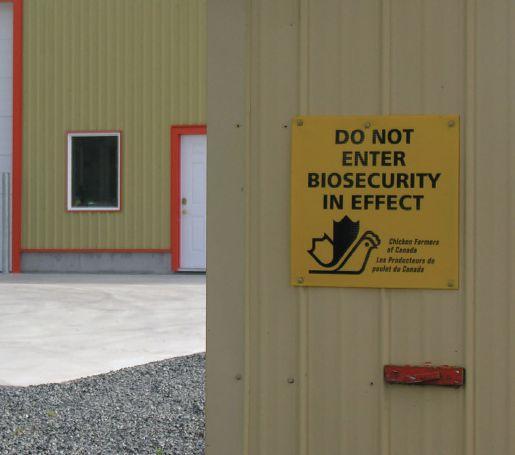
In a chicken industry that is minimizing the use of antibiotics, our ability to provide an optimal clean environment is paramount. This can be achieved through cleaning and disinfection (C&D) and strict biosecurity.
The Chicken Farmers of Canada (CFC), within their on-farm food and safety program (OFFSAP), clearly outlines the procedural C&D steps to follow in-between healthy flocks. The manual further elaborates on situations in which the broiler farm has encountered a viral disease challenge, such as Infectious Laryngotracheitis (ILT), and recommends that poultry producers thoroughly C&D the facility. This article will examine enhanced C&D methods after a disease outbreak (viral or bacterial) on your farm and reinforce some of the basics.
Six primary areas are identified within an enhanced C&D process: pest control; removal of organic material/ feed, washing; disinfection; fogging; and waterline management. All of these areas will play a role in helping the farm achieve a clean barn environment after a disease outbreak.
As soon as the birds have been shipped, heightened pest control measures should be applied to help control ro -
dents, beetles and flies. These are known pests within poultry facilities and can be important vectors for infectious disease. Rodent control is a c entral part of a biosecurity program as they can be the source of contamination in feed, water and barn environments. When birds are shipped their food source (feed) is removed. This provides an excellent opportunity to increase the rodenticide pressure. Rodents have a keen sense of smell so maintaining fresh bait in the traps will help keep it free of mould and moisture. Some additional baiting tips include: securing bait in stations; bait near high activity areas; and cover more areas with less quantity. It is important to shuttle rodenticides to ensure the rodent population isn’t building up
resistance and continually offer new products. Producers could also consider subcontracting rodent control.
Darkling beetles serve as a constant pest for broiler farmers and can contribute significantly to disease transmission, in creased feed conversions, and structural damage to barns. Some of the diseases that darkling beetles are known to carry include Infectious Bursal Disease, Reovirus, Avian Influenza, Newcastle disease, Salmonella, Campylobacter and E.coli. Prompt treatment of the barn environment with a labelled insecticide is key to the success of controlling the darkling beetle population. Maintaining heat in the barn after the birds have been shipped and turning the
lights off will keep beetles in the manure, allowing application of the insecticide along the edges of the barn (clear a three foot area along the walls). When the barn cools and the lights are turned on the beetles will escape back into the walls, travelling over the insecticide. A second application on the floor and three feet up the walls is warranted after the barn is cleaned and before adding new bedding. A common spot for beetles to hide is under the feed pans. It is recommended to spray under the pans as per the labelled insecticide after bedding has been added. Managing the fly population within a facility is accomplished by using approved baits and sprays. Fogging the barn after the birds have been removed with an aerosol insecticide will help to eliminate adult flies.
Enhanced pest management is key after a disease challenge in a flock but it doesn’t negate the importance of a thorough clean and disinfect of the barn. Here are a few suggestions:
• Remove all residual feed within the hoppers/feedlines/pans. Leftover feed can diminish the effectiveness of your pest control program. Remove all manure from the barns and store/spread the contaminated manure offsite and away from the farm. This is important as some litter can harbor viruses/bacteria and

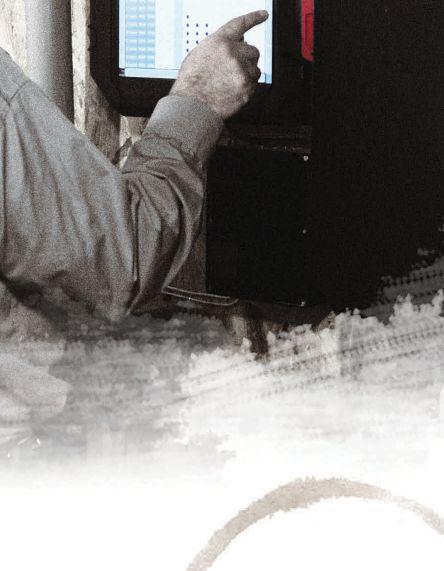
Take control of your system from the comfort of your truck, office, couch or anywhere in between.
Build a system to fit your needs with any combination of plug-in cards or expansion boxes.
Integrated diagnostics, full redundant power supplies and communication paths, and fail safe mode
Large 15” color touchscreen interface for simple operation
could potentially re-infect facilities.
• A thorough blow down must be completed to successfully remove all the organic material, dust and feathers. This includes heaters, fan blades, light fixtures, louvers, vents, ceiling, feed pans, walls, floor and any other equipment in the barn.
• Hot water wash all surfaces with a detergent. Apply the detergent at low pressure first and allow an adequate amount of time to soak. Pressure wash with hot water (not over 140°F) before the detergent dries on the surface. Surfaces to be washed include walls, fans, louvers, vents, drinkers and feeders. Wash all service rooms and mortality buckets. Be mindful of any exposed electrical devices as these might need to be hand washed.
• Wash and disinfect all boots, coveralls and equipment used for pushing out the barns. Take careful attention to the inside of the tire wells on skid steers and loaders.
• Disinfect, as per the label, all exposed surfaces in the barn once cleaned and dried. Allow a minimum of 10 minutes contact time. In the winter, when the temperature is cooler, increase the disinfectant contact time to a minimum of 20 minutes.
• With cycles of repeated disease challenge, it is recommended to fog the barn with a disinfectant. This can be done with a hot fogging system or a cold fogging system. The old method of fumigating the barn with Formalin was also very effective. But because formaldehyde is extremely toxic and all safety precautions must be followed exactly, we do not recommend this practice.
• Waterlines must be flushed and cleaned with a suitable product and protocol.
These steps are key for lowering the risk of the next flock being exposed to a similar disease challenge. Enhanced C&D takes a lot of elbow grease but has lasting implications on overall bird health.
Canadian Poultry magazine’s Ask the Vet Q&As have built a strong following in print. Now we’re continuing these important conversations online in a new podcast series. Listen to our first audio Q&A on canadianpoultrymag.com, where we discuss the important topic of Salmonella and the poultry industry with Tom Inglis of Poultry Health Services. Read a preview of that conversation below.
Why is Salmonella such an important issue for the poultry industry?
Part of the answer is Salmonella is a bacteria that doesn’t cause problems for poultry. It can actually be considered part of their natural flora. With chickens and turkeys, it doesn’t cause the birds any problems. But it’s a food safety issue, particularly with egg consumption where we still serve eggs sunny side up. It’s very important that we control the Salmonella passed on through the birds to any of the poultry products that we develop.
Are all strains of Salmonella the same?
No, that’s part of the challenge. There’s an amazing diversity of Salmonellas. There’s about 2,500 species that are described. There are about 30 of them that we follow closely for human illness. There’s a big difference in the strains. Many of them are well adapted to birds and so they don’t show any signs of carrying the bacteria.
What is changing for Salmonella control in the poultry industry?
I think it’s evolving quite quickly. It’s still one of the most important food borne illnesses in the world. Some of the best statistics are out of the U.S. and the Centre for Disease Control, which estimate 1.2 million illnesses a year, as many as 450 deaths and 23,000 hospitalizations. There’s even a significant impact in terms of days off work and the economic impact of people being ill. So it’s a very important illness for humans.
One of the big changes is initially all of our programs were developed to control Salmonella Pullorum and Salmonella Gallinarum, which are two strains that actually affect chickens and turkeys. We’ve eradicated those diseases essentially, but most of our monitoring programs are still focused on Salmonella Pullorum and Salmonella Gallinarum. So we’re trying to adapt testing and catch up to increased expectations to public health and consumers and the industry itself to be able to detect Salmonella more quickly, respond to it and develop integrated programs to control it.
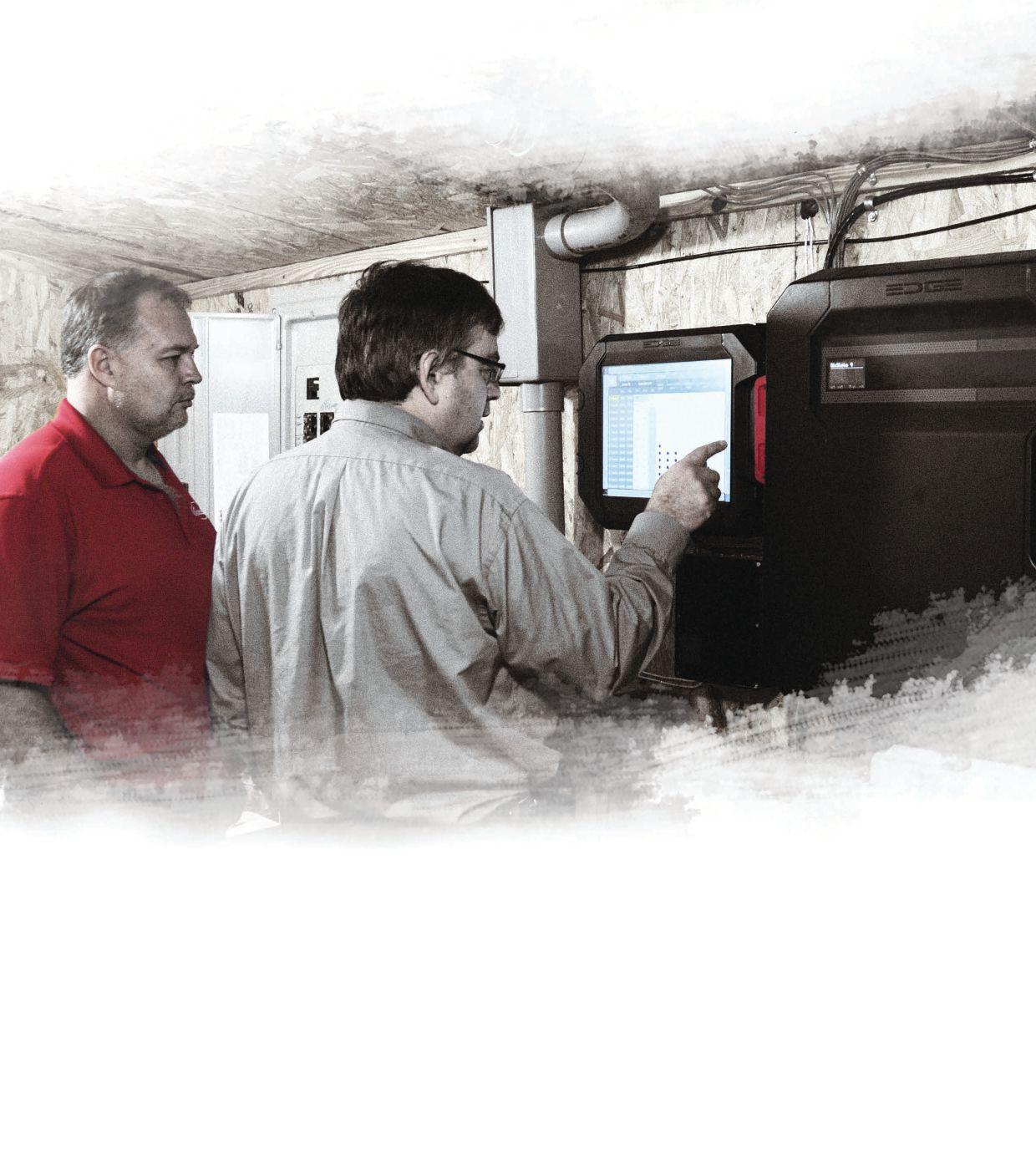





You’re a nutritionist, HVAC Engineer and Bio-Security Expert before your second cup of coffee. Multi-tasking is an understatement. With EDGE®, advanced control
jack of all trades and enjoy another cup of joe.

Ready for your custom solution? Contact your Cumberland dealer for an expert who stands with you and behind the products we manufacture.
By Treena Hein
Sustainability is not a buzzword in farming. It’s a day-to-day reality. If you don’t sustain the soil and greater environment on a farm, you won’t have a future. And if you don’t efficiently use – and maybe re-use – energy, water and other resources, you won’t sustain your farm business financially either, again jeopardizing your future. A number of ag-related sustainability initiatives are moving forward in Canada and around the world in all types of farming. Here, we look at two layer operations – one Canadian and one in the Netherlands – that have made great strides towards sustainability, especially with electricity generation.
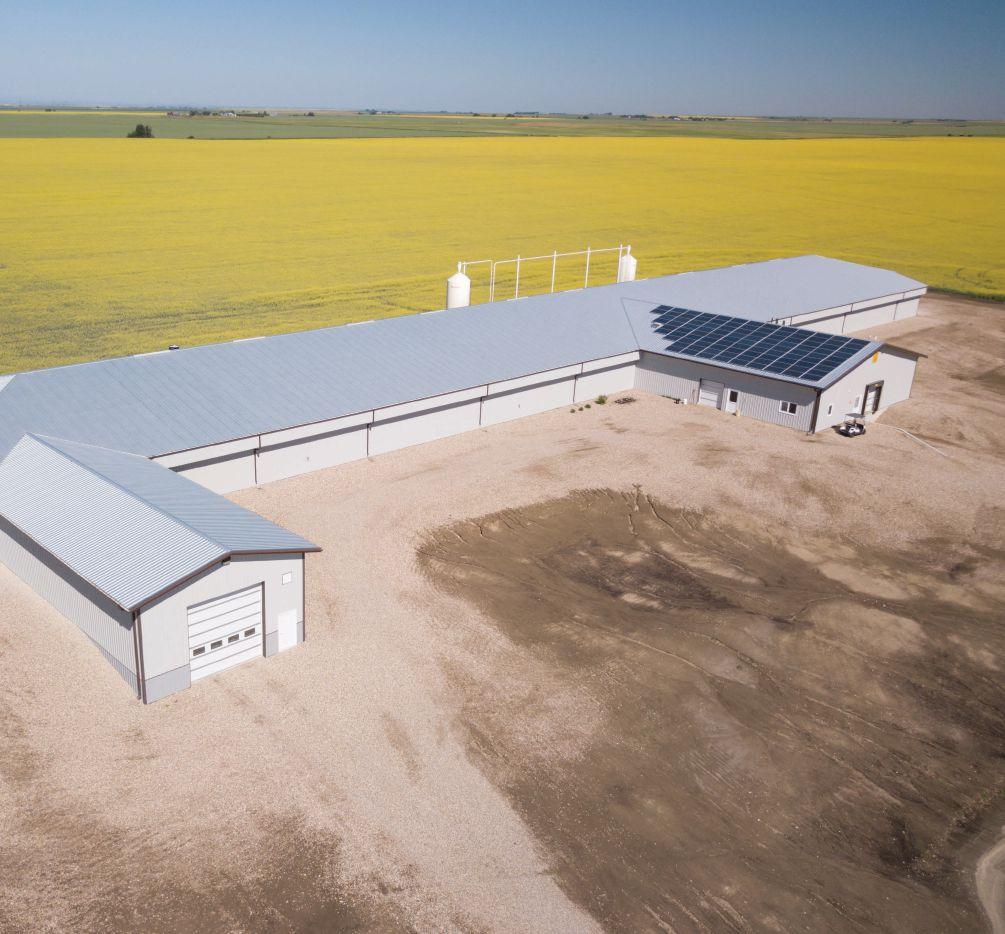
You’ve likely heard of the freerun aviary egg operation (13,500 hens) owned by the Brant Hutterite Colony in Brant, Alta., near Lethbridge. The layer barn/egg cooling facility, built in 2016, features a 25 kWh solar power array and various high-efficiency technologies, constructed partially with the help of provincial and federal funding. Using input from Egg Farmers of Alberta (EFA) and Al-
berta Agriculture and Forestry, Brant Colony designed the building and purchased items like a Heat Recovery Ventilator (HRV), high-efficiency egg-cooling equipment and LED lights. The barn has a hydronic heating system, where heat radiates out from warm water heated up with a natural gas boiler and circulated through a set of tubes, in this case hung from the ceiling.
EFA industry development officer Jenna Griffin notes that the layer operation was designed to be electrically net-zero. At this point, it seems to have exceeded that goal. Annual electricity consumption of the layer barn is 24,815 kWh and the solar panels generate about 29,000 kWh. In fact, that amount of solar power generation comes close to covering the total consumption of the layer barn, the eg g-cooling area and the pullet barn (31,279 kWh). Pullet flock sizes in 2017 ranged from 13,600 to 14,000 birds. Natural gas consumption for all the buildings in 2017 was 714 gigajoules.
In terms of the barn’s other system, in 2016 there was uncertainty about whether the incoming airspeed would be sufficient to reach the centre of the barn. This could have been a potential issue in very cold weather, says Brant Colony egg production manager Darrel Mandel, when the rate of incoming airflow needs to be reduced to prevent fan freeze-up. However, he reports that air circulation is better than anticipated. “We have found that restricting the shutter on the intake fan, when at low speed,
helps to get better pressure and better flow to the centre,” he explains. “We did have to use a pressure washer twice during the winter to open up the drain in the unit –the drain itself didn’t freeze (it has a heat tape) but inside on the interior floor of the unit, a layer of ice formed which did not allow condensation to drain.”
Regarding the HRV unit, Mandel says the manufacturer recommends having it washed automatically every 48 to 72 hours. However, “with the winter we had at times, -30°C to -38°C for seven-to-10 days, we were forced to prevent that as it was too much of a risk to have it freeze up,” he says. “Maybe I’m wrong, but I feel that in really cold times like -30, the unit is almost too big. It only requires the exhaust fan to run at 76 per cent and that may be too low to keep the unit warm enough. But we did not have any wet litter on the scratch area during the cold spells as humidity was very low. I should mention that I keep in close contact with other free-run producers who do not have HRVs, and I always find that the humidity is quite a bit lower in our barn than theirs, which helps to keep the litter dryer in times when we are forced to ventilate at a minimum level.”
Mandel adds that next winter, they will likely prevent more heat loss from the layer barn by closing and insulating all the fans that are not in use during the winter months (right now, there is some air leakage through the shutters).
There are no concrete plans at this point to add more solar panels,
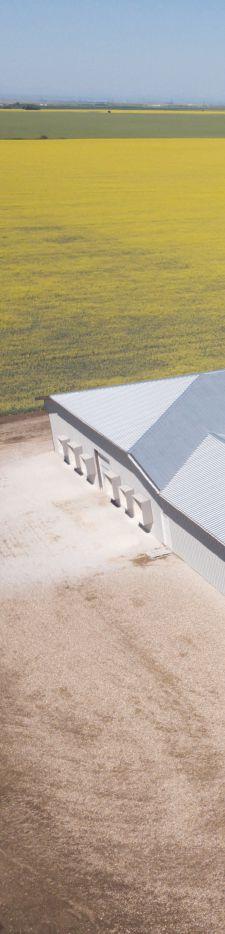
29,000 kWh is the amount of solar power the Brant Colony Farm generates, coming close to covering the total consumption of the layer barn, the egg-cooling area and the pullet barn (31,279 kWh).
but it could occur in the future.
“We have a diversified farm, and it doesn’t make economical sense to just invest in this one project,” Mandel notes. “It would be more profitable to do solar power expansion on a larger scale.”
Overall, he says the efficiency technology that they have invested in has been expensive, but that it must be viewed in the big picture. “We can’t just look at it from the point of saving energy,” Mandel explains. “There are other benefits such as better air for birds and employees, dryer litter, warmer incoming air for the birds, that have to be weighed in as parts of the return on investment. It’s kind of hard to measure the value of all of them at this point, and only time and experience will give more insight on the full benefits.”
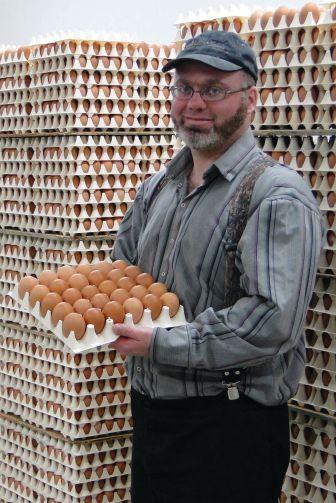
In late 2017, media outlets around the world eagerly picked up the story of Kipster, a new layer operation in the Netherlands that s tarted up last September and claims to be producing carbon-neutral eggs. The face of Kipster is Ruud Zanders, a Dutch chicken farmer who operates the farm with three partners, fellow farmer Styn Claessens, communications strategist Oliver Wegloop and sustainability entrepreneur Maurits Groen.
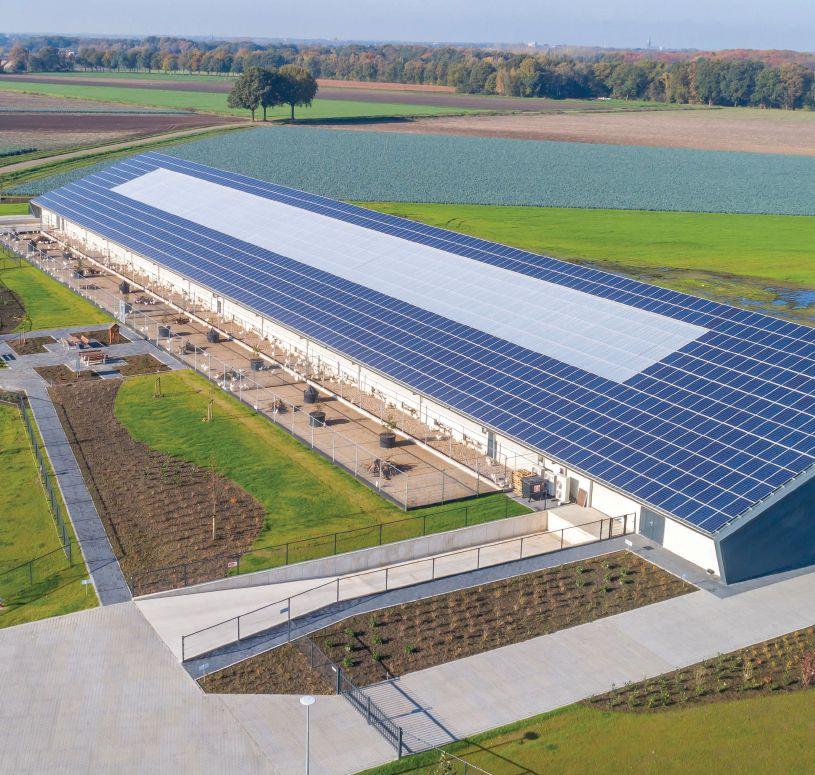
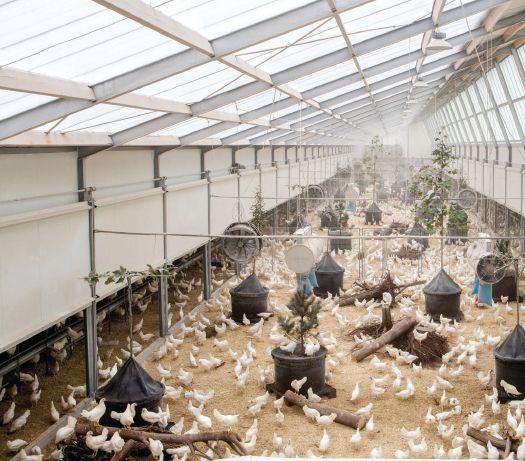
T he farm sells eggs from its 27,000 layers (white Dekalb from Hendrix Genetics) to a major European retailer called Lidl. The barn is an aviary system (NATURA Step from Big Dutchman) with two wings and a spacious covered courtyard in between, complete with small trees.
Part of the courtyard roof is clear glass and the rest is opaque solar panels. The total number of solar panels on the farm is almost 1,100, and beyond providing for the barn, the remaining electricity generated (60 per cent) is sold to the grid. No heating is used – only what Zanders calls a standard heat recovery system.
Also on the environmental sustainability front, outgoing air from the barn is filtered to reduce fine dust by over 95 per cent.
Big Dutchman reports that a tunnel system dries the manure up to a dry matter content of 80 per cent, allowing it to be pelletized and sold as fertilizer. In terms of animal welfare, the facility has achieved the highest rating possible from Dutch animal activist group Animals Awake.
Kipster egg prices are linked to Green
the wind
Using renewable and readily available resources is a hallmark of sustainability – and has been a standard operating procedure at
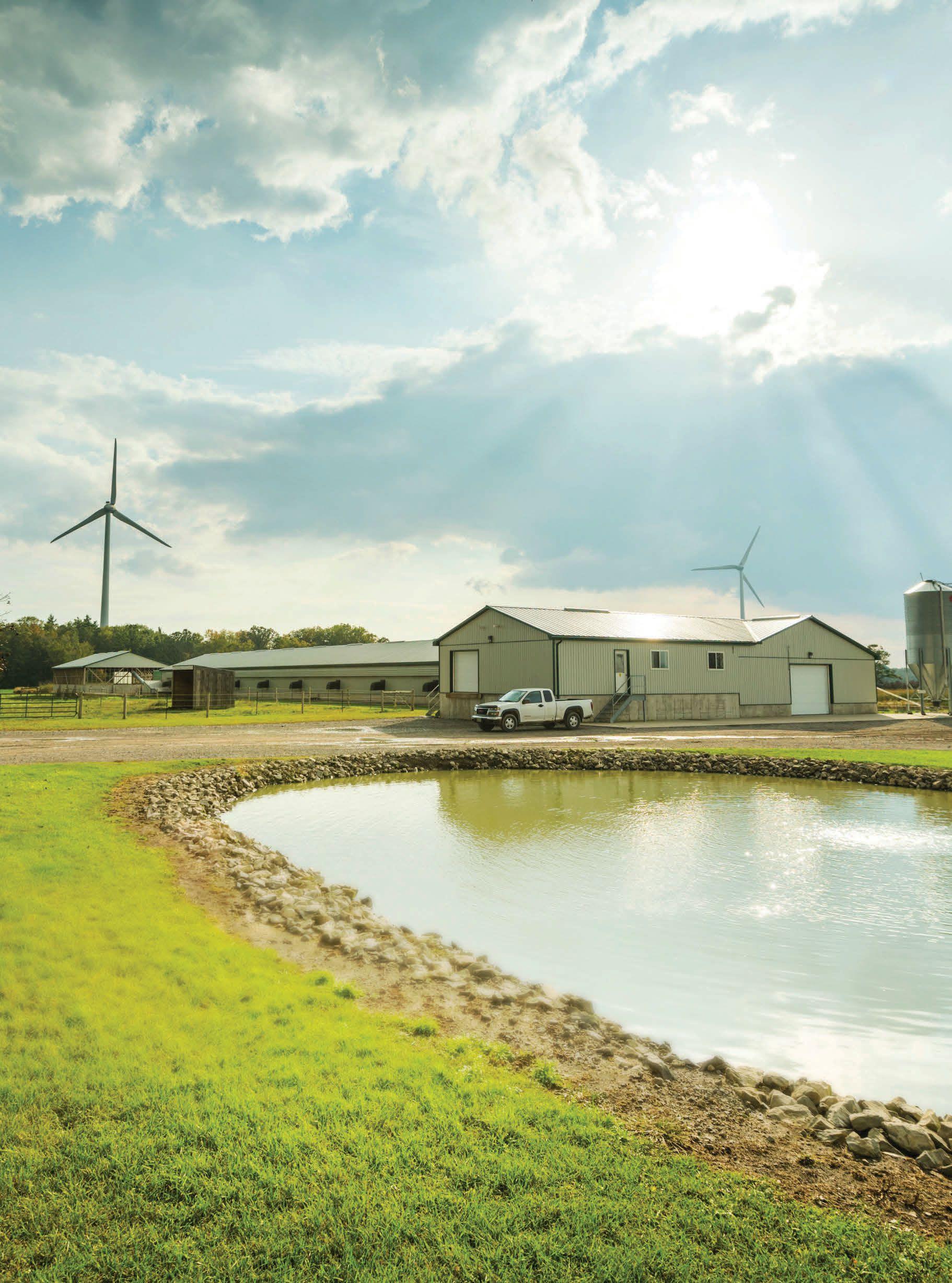
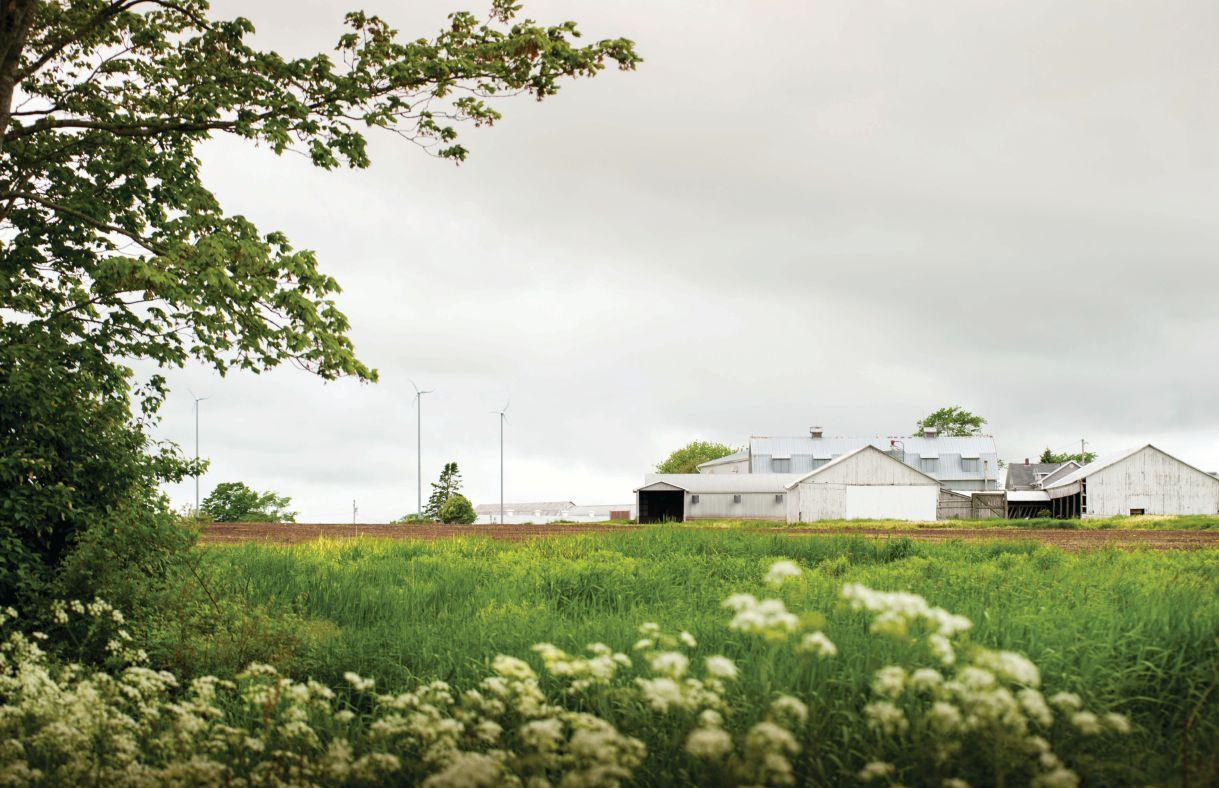
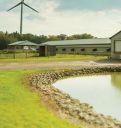
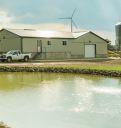
The farm (about 14,000 hens and half as many pullets) is situated in quite a windy spot. Thus, 11 years ago the owners installed three 50-foot wind turbines that generate four KW apiece.
The technology has worked well for the Jennings family over the years, powering barn equipment – and on good wind days, allowing excess power to be added to the grid.
This use of renewable energy allows Bayview to market its eggs as eco-friendly under the Maritime Pride Eggs label.
In coming years, the Jennings have said they hope to grow feed crops, build their own feed mill, expand their egg quota and incorporate solar energy on the farm.

feed prices and updated every six months. They are lower in cost than free-range and organic eggs in the Netherlands marketplace, and Zanders says he has no interest in trying to achieve organic certification, as some of the standards are not very sensible. “We don’t want to have a lot of land for the chickens available if they don’t use it,” he explains, “and second, we don’t to want to be feeding our birds with organic cereals, because we as humans can eat that as well.”
Kipster’s hens receive a feed (made by Dutch firm Nijssen) that partly contains local bakery waste. Zanders says these residues replace all the cereals and maize that would normally be present in chicken feed. For protein, sunflower or rapeseed meal is added.
Zanders confirms that, “by using waste food as feed, the farm is also cutting deeply into its carbon footprint.” He says 70 per cent of the carbon footprint of an egg depends on what is fed to them, and that the carbon footprint of feed made from bakery residues is about 50 per cent lower than standard feed. Zanders also confirms that his carbon-neutral egg claim is based on initial calculations by scientists at Wageningen University. He’s not sure if the scientists will do another set of calculations, but he and his colleagues will conduct their own at the end 2018.
Zanders says it was not hard to locate enough waste material from local bakeries, “because, on average, a huge bakery has about three-to-four per cent residues.”
In terms of whether there are ever any shortages of residues, he notes that it’s not possible for Kipster to have a shortage because its concept is about tailoring herd and flock sizes to the amount of food waste or marginal land available.
“In our vision, you have to feed the hens with residues, the cows and goats with grass, and so all the land where it’s possible for producing plant-based products is used to grow food for humans,” he says. “Marginal land is used for milk production and a little bit of meat in the form of the eventual slaughter of the dairy cattle.”
It would be difficult for even a small percentage of the global industry to use human food residuals in chicken feed. What’s more, the carbon footprint of a typical Canadian layer barn is very high because of higher numbers of birds needing more heat, light, ventilation and other factors.
How does Zanders think the Kipster claim of carbon-neutral

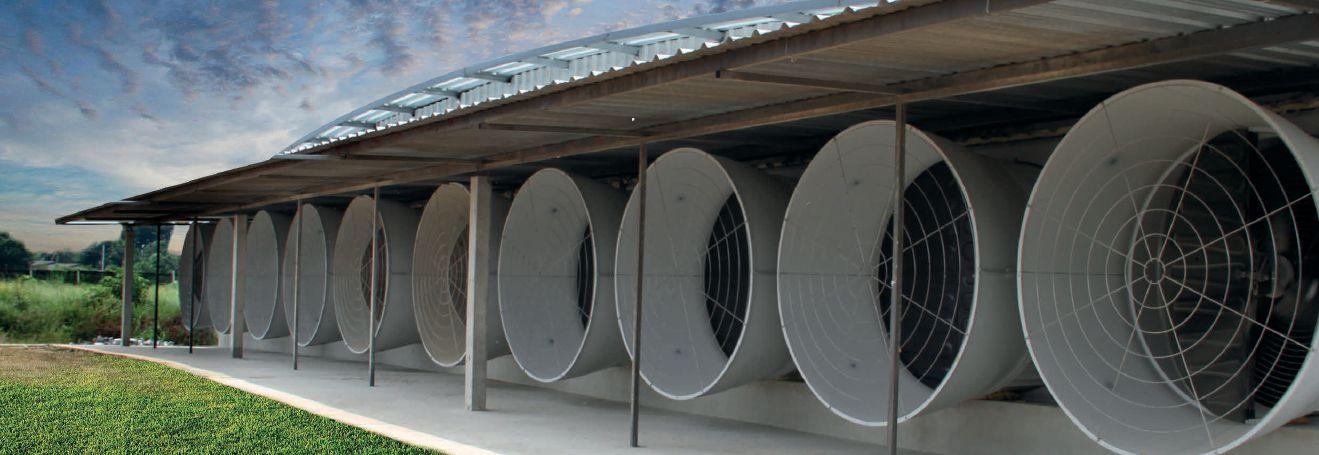

High performance. Energy efficient.
Intelligent design. Long durability.


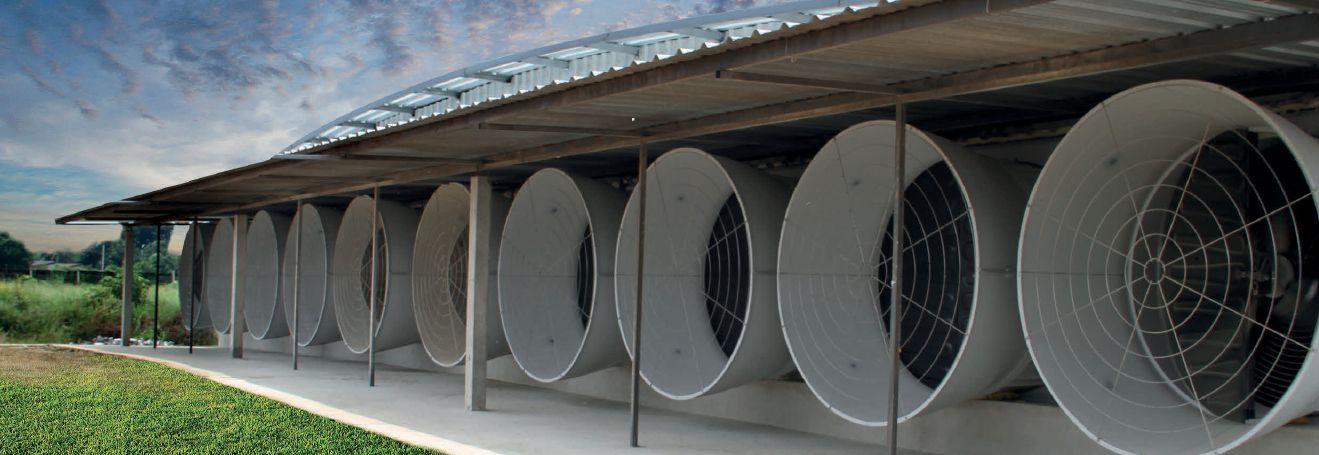
BlueFan is designed specifically for the harsh livestock house environment. It does not corrode and shuts tightly when not in use. BlueFan saves energy and money and ensures the animals in the livestock house optimum climate and well-being. BlueFan is the best fan on the market.
Read more at www.skov.com or contact your authorized SKOV distributor:

County Line Equipment Ltd. 8582 Hwy 23 N., Listowel ON PH: 800-463-7622 www.county-line.ca

“Only time and experience will give more insight on the full benefits,” Mandel says.

eggs affects the poultry industry worldwide? After all, many consumers are likely reading about the operation and wondering why the rest of the layer barns in the world can’t produce carbon-neutral eggs as well, holding other producers to unrealistic standards.
Zanders reiterates that, in terms of carbon footprint, feed is the most important factor.
“And yes, everybody can run their operation like Kipster does,” he notes. “Consequently, I think that we should have fewer animals. I think that in every country you can work with alternative/ green electricity. If you say maybe there are not enough residues to feed all the world’s animals, then maybe that’s right, with a wrong conclusion. Then in that case, we don’t have too few residues, but too many animals.”
Egg Farmers of Canada was asked for its comments on Kipster. The organization states that while sustainability is a core value of the Canadian egg industry, it does not wish to comment on Kipster given that it has been operational for short period of time and there is limited information available.

















By Karen Dallimore
Bill Van Heyst grew up on a mixed farm near Grand Bend, Ont. He remembers looking after 500 laying hens – that was the maximum amount allowed under quota at the time. He also remembers switching over the old tunnel ventilated 1960s vintage poultry barn to battery cages from free-range. If he’d only known then that free-range would be fashionable once again…
Today, Van Heyst is an environmental engineering professor at the University of Guelph. He describes modern day poultry barns as ‘industrial operations’, with multiple identical structures with the potential of a larger environmental impact than the smaller family type farm of the past. While much of the Canadian industry is only the size of some of the larger farms in other countries, we do have unique conditions to consider and potential benefits in improving production and management right here at home when it

comes to the environmental impact of production.
It comes down to analyzing inputs and outputs, said Van Heyst, which can include species, feed, water and bedding, heating and cooling equipment, electricity and incoming air. Outputs take into account eggs and meat, spent hens and mortalities, litter and excreta and air contaminated with gases, odours and particulates.
Feed and water spills and waste are not only lost money but also, in terms of emissions, water added to soiled manure increases the amount of ammonia volatilized. Excess protein in feed has the same effect. This is something that is being addressed already, said Van Heyst, with diets carefully tailored to the specific stage of production. The ingredients of the diet itself may have a further impact on emissions as well, with omega-3 diets anecdotally resulting in increased odour.
As for bedding materials, studies show no difference in terms of ammonia emissions between chopped straw or wood chips for broilers and turkeys. The choice of bedding remains more of a decision based on price and availability than environmental effect.
What about your production cycle? It’s cheaper to have an empty barn in the winter than the summer. Can you schedule depopulation to a seasonal advantage?
Reducing clean outs may also have an impact. In the U.S., broiler and turkey barns are only cleaned after every two or three cycles. Here, cleaning after every cycle is meant to kill harmful bacteria but is it also killing beneficial bacteria?
The most obvious output is litter and excreta. Ammonia volatilization can be controlled with Poultry Litter Treatment but it’s not cheap, creating a balancing act between cost and effect. Typically, manure will leave the layer barn every three-to-four days on a belt system, ideally going to a separate



storage facility where it can be kept dry to crust over to stop volatilization, reducing odour and nitrogen loss as potential fertilizer. Outdoor bunkers typically used for turkey and broiler manure are notorious for nitrogen loss with their backward slope creating a lake in front of the pile.
Energy consumption can be best addressed by conservation. The industry has moved away from incandescent lights to LED while using auto control systems for consistency. A clean barn is more efficient too: It takes more energy to turn a fan caked with a layer of heavy dust than one with clean fan louvers.
The basic cycle of ventilation is fresh air in, contaminated air out. It sounds easy but it is actually difficult when we have to design systems for three completely different seasons: Winter heating, summer
cooling and spring and fall somewhere in between – “we’re never quite sure,” Van Heyst says. Thirty-degree swings within a few days are not unusual, creating management challenges.
Reducing ventilation with natural gas heaters may seem like a good way to retain heat in the barn but it also retains CO2, water vapour and possibly carbon monoxide. The trade off for heat loss is air quality. Respirable dust is also a concern for the farmer, causing cardiac and respiratory health issues and exacerbated by ammonia. It’s expensive to control if you go the route of air scrubbers. However, Van Heyst suggests keeping it dry in the house can help.
As an engineer, Van Heyst likes to look to buildings and building materials as potential areas of improvement. Unfortunately, poultr y barn design hasn’t been a high
priority at the research level. There are new technologies such as heat exchangers, geothermal heating and cooling, composite building materials, structural insulated panels, nanocoatings that can kill viruses and decompose emissions, and phase change materials that store heat in the day and passively radiate heat at night, but no one is bringing these to the farm. How can a barn be designed specifically for cage-free or enriched hens? Products haven’t been designed around that idea either; the battery cages were simply removed.
New barns can be tightened up, said Van Heyst, providing an opportunity to save energy. Good insulation and a vapour barrier will help to retain heat, either from supplementary sources or from the birds themselves. In the summer, peak temperature in a well-insulated barn can be delayed by a few hours to when it’s cooler outside
By Dr. Keith Bramwell, PhD, senior technical advisor with Jamesway Incubator Company
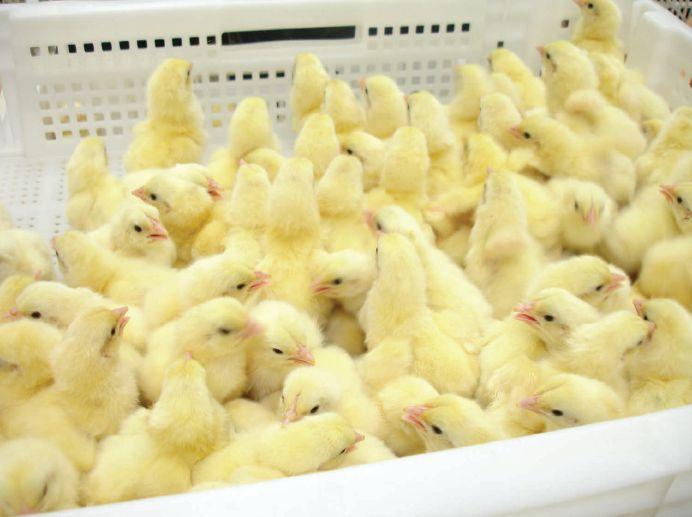
Development of the avian embryo, or chick, can be categorized in to one of two strategies designed to meet two very different physiological and biological needs. The avian embryo will develop as either an altricial or precocial chick, each with their own specific set of needs necessary to survive after hatch.
When comparing the two incubation and developmental strategies, the altricial chicks undergo a significant amount of their embryo growth and development after hatch, while the parents are feeding, the helpless chick and precocial chicks undergo a more significant portion of their embryo growth and development during the incubation period so they can hatch ‘ready to go’.
Altricial chick development is common in perching type birds that usually nest in trees, birds such as; songbirds, pigeons, raptors, etc. The young hatch as helpless naked birds which are unable to open their eyes or even hold up their heads. The young altricial chicks cannot maintain their own body temperature, even for short periods of time, and are thus very reliant on their parents for warmth and brooding.
Additionally, the parents, usually both are involved, are very instrumental in
feeding and caring for the newly hatched chicks until they fledge the nest to begin life on their own. These types of birds will lay their clutch of eggs over several days and will usually begin to incubate the eggs before all eggs are laid, resulting in chicks hatching at various intervals over a period of a few days.
The newly hatched chicks will stay in the protected nest away from most predators and are fed individually by their parents. Because the chicks hatch over several days, there is often a great size difference between the chicks; with the last hatched and smallest of the clutch often succumbing to the increased competition for food and space from their larger siblings. The growing chicks are then fed and cared for until each one has developed enough to leave the nest.
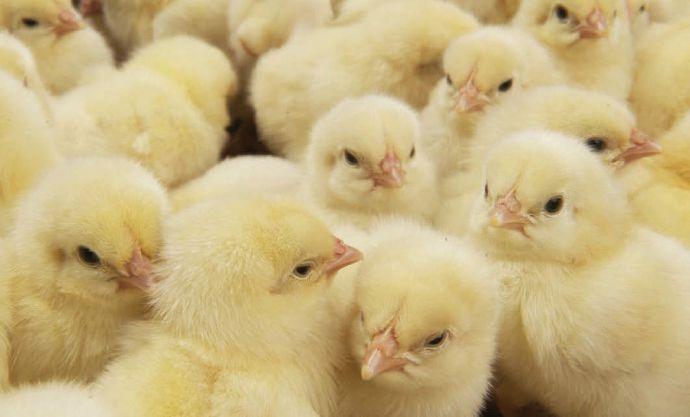
Precocial chick development is common with the majority of the ground dwelling and ground nesting birds such as; chickens, turkeys, ducks, pheasants, etc. The young precocial chick hatches with a warm covering with the ability to reasonably maintain body temperature, eyes are open with no reliance on the parents to physically bring food back to the newly hatched chicks, as they are able to walk within hours after hatch.
The mother will lay her clutch of eggs over a period of several days to a couple of weeks, depending upon the clutch size. However, she will not begin incubating the eggs until all eggs are laid to try and maintain a narrow hatch window as the newly hatched chicks will all need to be escorted together by the mother away from nest site in search of food.
To enable these precocial chicks to hatch together and leave the nest together, there are a couple of biological mechanisms in place to facilitate this function. First, in the hours leading up to the completion of the hatching process, precocial chicks engage in an activity called ‘clicking’, where the chicks are able to communicate with each other from within the shell in an effort to synchronize the hatch time.
The second is that eggs that produce precocial chicks contain a higher percent yolk (40 per cent versus 25 per cent) as compared to eggs from altricial chicks. This allows the chicks to remain in the nest after hatch to wait for the other chicks to hatch so they can all leave the nest together. Nature intended for the chicks to use this available yolk to synchronize the post hatch feeding process between all hatchlings.
If the first hatched chicks try to forage for food without the mother or the group they may become subject to predation without the protective instincts of the mother. This is what nature intended; that all chicks are able to begin feeding at the same time with the first hatched chicks utilizing the nutrients in the yolk in an effort to synchronize the early feeding process.
Following what nature has designed and intended, is it really necessary and beneficial to feed newly hatched chicks im-
mediately after hatch? In nearly every area of poultry production systems, uniformity is a key and very critical component to success.
When it is not achieved inefficiencies often result in areas including the hatchery, the brooding house, and all the way to the processing plant. It is widely known and accepted that when chicks are not uniform from the start, problems will ensue whether they be replacement parent stock or broilers destined for the market.
Uniformity in replacement breeders has been shown to result in a better and more productive breeder house. Uniformity of young breeders tends to ‘level the playing field’ during rearing and allows the birds to more evenly compete with each other for resources such as food, water and space.
Feed consumption and light duration is controlled and limited to encourage the majority of the birds to mature at an even pace, responding to light stimulation together and thereby commencing egg production together. Uniformity in the breeder house has been shown to improve

egg size uniformity, egg production and broiler flock performance.
Uniform egg size results in uniform chicks. When placed chicks are more uniform, productivity of the entire flock is improved. Nearly every hatchery manager desires the most uniform egg size possible, and nearly every broiler manager or grower would greatly prefer chicks that are sourced from similar aged parent flocks to improve the uniformity of chick size at placement.
When chicks are placed that hatched from eggs or from parent flocks of greatly varying ages, dramatic size differences in the chicks is often the result and overall poor flock performance results.
In the case of the various early feeding programs, a number of factors of concern must be considered. It is well known that research has continually shown that when feed is withheld from chicks after hatch, there is a delayed growth curve in those chicks as compared to chicks from the same hatch that were provided feed immediately at placement.
The chicks that had feed withheld from them for periods of time after hatch will never catch up with the others of the same age and hatch and therefore would take a day or so longer to reach the desired market weight. It would be unadvisable for anyone to intentionally place birds in a single house that had hatched and therefore begun food consumption at one or more days apart from each other, as final flock uniformity would be negatively affected and birds would be sent to the processing plant with one or more day’s difference in growth rate.
Additionally, the unfed chicks placed in a house that are seeing food for the first time, have to compete with chicks that have had access and have consumed feed and water for various periods of time. This
increased competition would likely be another cause to negatively affect uniformity as the chicks that have had feed for extended periods of time would be much more active and running around the chicks that are still searching for food.
Would a producer want to take a group of hatched chicks and immediately place some on feed and water then intermittently over the next 36 hours, place new groups of newly hatched chicks in that same house and let them compete for food and water with the older chicks?
Nearly all would decline to do this. This would create a less uniform housed group of chicks from the start, resulting with the last chicks placed, never catching up in terms of body weight. Essentially, this is what is happening when chicks are fed as soon as they hatch, they are all starting on feed at different time intervals in relation to each other.
If in replacement breeder farms, birds are fed and light managed in a manner to allow birds to mature at each bird’s own pace, the results would be exceedingly poor uniformity and poor overall performance of the breeders and the progeny. If hatched broilers are each allowed to consume feed as soon as they hatch, the same result is likely, poor uniformity.
Nature, and the biology of the precocial chick, is designed for the optimal survival of the group of chicks as a whole with the first chicks hatched utilizing their yolk reserves to be ready for all chicks to begin feed consumption at the same time. This is the natural process of precocial chick growth and development.
While it may be beneficial for an individual chick to begin feed consumption immediately after hatch, the growth and development and uniformity of the group of chicks may be hindered. Currently research in a controlled setting is underway to more fully investigate this practice of early feeding to compare livability, growth and uniformity of the birds through processing with groups of birds from the same hatch where feeding is initiated at the same time to the entire group of hatched chicks. Once these studies are concluded, the science will support the best procedure.


















Sustainability has been a topic of discussion globally for quite some time now. It is a term that we have all heard, but what exactly does it mean? How can we responsibly apply this concept to the poultry industry from the ground up? This goal of sustainability forces us to think of the bigger picture, to think globally. However, some of the biggest impacts to sustainability are found on-farm at the producer level.
Social conscience and the animal rights and welfare mindset of the consumer is growing. We as an industry are well aware that the consumer dictates the product and how it is raised.
It is, however, important that those of us who are in the business of putting animal protein on the dinner table take responsibility to educate the consumer. As an industry we need to assess our practices and stand proud of the care that is taken when providing the consumer with the ever-traditional and important holiday turkey.
At the fifth annual Animal Agriculture Sustainability Summit at the International
Production and Processing Expo (IPPE) in January 2015, Bryan Weech, director of Livestock for the World Wildlife Fund (WWF), explained that the key to utilise resources is to provide for future generations because we are currently consuming one-and-a-half times this planet’s resources.
The population is growing and we have to become more efficient and effective at feeding this number using no more resources than we use today. A lot of the population growth will be urban, removing the consumer further and further away from the farm.
Therefore, we need to educate the public on common on-farm practices. While we need to educate today’s consumer, it is just as important to educate future generations – from kindergarten to graduate school – to ensure that our industry continues to be sustainable for decades to come.
So, what are the things that modern poultry producers do to ensure that they remain sustainable and globally conscious?
There has been much talk of energy ef-
ficiency. Saving energy not only reduces your hydro bill, it also decreases your carbon footprint, which has a major global impact. For earth to be sustainable at the global level, everyone must assume responsibility and be accountable for their influence on this planet.
It is important that producers make good economic decisions so they can ensure that their business is not only profitable, but that they can reinvest into the business using efficient and effective modes of management.
But what is energy efficient? For a product to be energy efficient, it must use less energy to provide the same result. Products that boast to be energy efficient need the research to prove these claims.
Producers need to be conscious of where the source of information is coming from and that it is trustworthy. Are you truly running an energy efficient operation? Are the products you are using in your barn decreasing your carbon footprint?
Consider the LED lighting in your operation. Are the lights engineered to dim effi-
This text has been prepared to guide veterinarians, laboratory diagnosticians, nutritionists, and students in their professional activities relating to diseases, parasites, and malfunction of the digestive tract of commercial poultry.
The interrelationship of intrinsic and environmental factors in the context of intensive production systems requires an appreciation of the multifactorial etiology resulting in dysfunction. A systematic approach to evaluating production records, clinical signs, lesions, and laboratory investigations is stressed through adoption of a common format for the conditions reviewed.


ciently at all dimming levels? If you are unsure, check the specs that are provided to you by your supplier.
Get your local electricians to check the power consumption of the lights on your farm. How they perform on farm can be different from how they perform in the electrically clean environment of the engineering test bench.
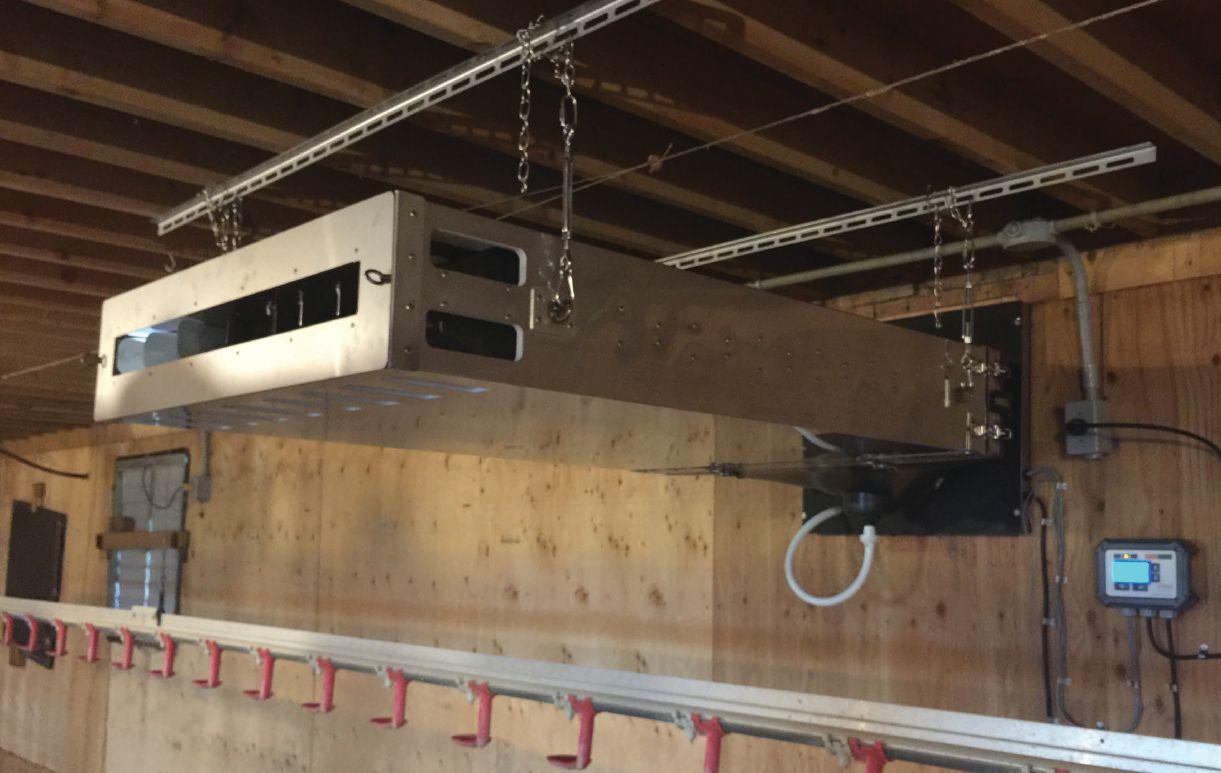
Another energy efficient product to help a poultry farm decrease their carbon footprint is a heat exchanger. The premise of a heat exchanger is that it preheats the incoming air with the warm air that is being exhausted.
This helps prevent the continuous down fall of cold drafts on the production. Harnessing the energy that is being expelled into the atmosphere saves you heating costs. If considering incorporating a heat exchanger into your operation, ask yourself the following questions: Does is use one motor or two? How does it prevent icing up in our
northern humid climate?
In short, always verify that the design of the products in your barn are truly energy conscious and are not just being marketed as such. Work with dealers that can recommend products that are new and trending and actually do what they claim.
Embrace technology. Align yourself with partners that understand and support it and who will empower you to be confident in the tools you have purchased to manage your business.
Big data is a term that has also been thrown around a lot. What does it mean for you and sustainability on your farm? Software packages have been working in conjunction with your ventilation controllers and have been gathering/monitoring data from your farm for years.
Consider that the amount of water needed to produce one chicken from farm-totable is equivalent to a four-minute shower. Even though it takes less feed input for a
chicken to grow today than it did in the past, it still takes the poultry industry a longer time to reach the expected shipping weight relative to other livestock sectors.
By analyzing these metrics, you can see what is working and what is not and adjust your feed and water consumption to maximize your sustainability and possibly even predict future success or failures.
In Canada, our unique supply management system allows producers to embrace technology and remain sustainable. The poultry industry over all has taken many steps forward in the last several years to become more sustainable. We must share this knowledge with the world and hope other agricultural sectors learn from it and we all grow together.
Nora Wolske is ventilation products and controls manager for Canarm AgSystems. She has over 18 years of experience working with livestock equipment and ventilation systems.



By Ben Kaiser

It seems like every second conversation about installing new equipment in barns eventually leads to boilers. Now I’ll grant, it may be because I have a tender spot in my heart for boilers due to my plumbing and gasfitting background. They have become so much more technical over the past few years.
Not every boiler is created equal, and not every boiler makes sense in every application. Here’s why, using water as an example. It takes one BTU/hr to raise one pound (lb) of water one degree Fahrenheit (F), once water hits 212°F it then requires 970 BTUs for water to change into steam at 212°F. This also works in reverse, when you go from steam at 212°F to water at 212°F, there is 970 BTUs of heat energy that gets released. This is the principle that makes high efficient boilers highly efficient. A condensing boiler takes the products of
combustion, the smoke, and condenses them. In very simple terms, it turns the gas into a liquid, and then uses the energy released and puts that into your system instead of out into the air.
I know, I know… You’re asking why does this even matter – how does this affect me? Doesn’t this mean that a high efficiency boiler really is the best for any and all applications? Well, to answer that we need a tiny bit more information. Namely, at what temperature do the products of combustion in a natural gas appliance turn to water? A rule of thumb number that I use is 135°F. Lower than this and we get nice condensation. Higher than this and the vapour stays in vapour form all the way through my system and makes its way outside.
So, we know that it’s by taking the energy from the phase change that we can add more energy into the system –in the boiler we are changing
The
is not every boiler makes sense in every application.
from vapour to liquid. We also know that with natural gas that number is around the 135°F mark. Now, let’s take this into real world applications.
For a typical in-floor or under-slab heating system the water runs at, let’s say, 120°F on those cold wintery nights. That high efficiency boiler is humming along in cruise control, dumping gallons of condensate water down the drain. Because the water in the concrete floor is low, we can use the energy from the condensate gases turning into a vapour and dump that energy into the water.
In cases where we have an outdoor reset, where the boiler automatically lowers the temperature as it gets warmer outside, the boiler gets even more efficient. The lower the water temperature the easier it is to dump the heat into the
water. Now as long as the system water temperature is below 135°F we can cause the boiler to condense and make it more efficient. But what happens if you’re using high temperature fan coils or radiation p ipe? Simply put, nothing. There is no condensation happening because the dew point hasn’t been reached –the temperature is too high.
In practical terms, it means this: If your system is designed to use high temperatures, a high efficient boiler doesn’t save you much. A note of caution, though - a conventional boiler is not supposed to start condensing. The condensate water can be quite acidic, in the neighbourhood of four on the pH scale. Condensation boilers are designed to handle this. Conventional boilers would eventually have their heat exchangers eaten out.
In my opinion, when it comes to a house I like the IBC boilers due to the ease with which the electrician can wire them. When talking about a line of boilers, I look to the Lochinvar boilers.
They offer everything from small wall hung residential boilers to big multi-million BTU boilers. If you’re asking about cast-iron sectional boilers, my favorite is the Viessmann line. If you want something that is simple and easy to fix, in my mind nothing beats the Super Hot line.
Ultimately, boiler selection comes down to two factors.
Number one: What application is this boiler designed for? Is it high temperature, low temperature or high flow? Number two: What do you or your plumber feel comfortable servicing and repairing?

By Nathan Pelletier
Sustainability, in the broadest sense, simply refers to maintaining the conditions necessary to our well-being. This clearly includes a healthy environment – for example, clean air, clean water, fertile soil and a stable climate. It also includes healthy societies and communities, in which we have opportunities to pursue what we understand to be a good life. And, importantly, it requires healthy economies. Societal attention to the relationships between food and sustainability has skyrocketed in recent years. This trend speaks to a growing collective awareness of the pressing nature of the many sustainability challenges we face, such as climate change, nutrient pollution, and increasing competition for land, water and energy resources. It also reflects the central role of modern agrifood systems in contributing both to these challenges as well as to their potential solutions.
Sustainable intensification in agriculture is the process whereby we progress towards producing more with less – in other words, producing more food using fewer resources and generating less waste. This requires highly efficient, ecologically integrated and economically viable food production technologies and practices.
The on-going sustainable intensification of agriculture provides a critical piece of the challenging puzzle of how to sustainably feed a growing world population, which may reach 9.4 billion people by mid-century and close to 12 billion by century’s end.
The Canadian egg industry, supported by value chain partners, has demonstrated an impressive track record of sustainable intensification to date. Over the past 50 years, egg production in Canada has increased 50 per cent, while the overall environmental footprint of the industry has decreased a
“Over the past 50 years, egg production in Canada has increased 50 per cent, while the overall environmental footprint of the industry has decreased a commensurate amount.”
commensurate amount. Thanks to improvements in farm management, hen health, feed conversion and rate of lay, as well efficiency improvements all along the supply chains that support egg production (for example, more efficient fertilizer and crop production for poultry feeds), the industry now produces much more while using much less.
The question and the challenge that presents itself is whether and how the industry can maintain and even enhance this trajectory of sustainable intensification looking forward. The NSERC/Egg Farmers of Canada Industrial Re -
search Chair in Sustainability, housed in the Food Systems Priority Research for Integrated Sustainability Management (PRISM) Lab at the University of British Columbia Okanagan, has been established to support this very objective.
With combined egg industry and federal funding provided through this chair, the Food Systems PRISM Lab will work closely with Canadian egg farmers and their value chain partners on a range of sustainable intensification initiatives. This includes, for example: identification of sustainability best management practices; evaluation of current and emerging sustainable intensification technologies along the supply chain; and development of regionally specific technology deployment decision support tools.
The PRISM Lab is also developing the Canadian Agri-food Life Cycle Data Centre (CALDC). The CALDC will enable sharing information and data amongst Canadian agri-food industry participants in support of transparent, credible and reproducible sustainability measurement and management initiatives.
The PRISM Lab is actively seeking research partnerships and opportunities to collaborate with egg farmers, allied industry partners, researchers and other stakeholders. Working together today, we can create the success story of tomorrow! Interested parties should contact me. For more information, please visit: prismlab.weebly.com.
I, along with my graduate students, look forward to providing regular updates in this new quarterly “Green Eggs” column.












Sector
Layers, egg production
Location
Rivière-Héva, Que.
Production
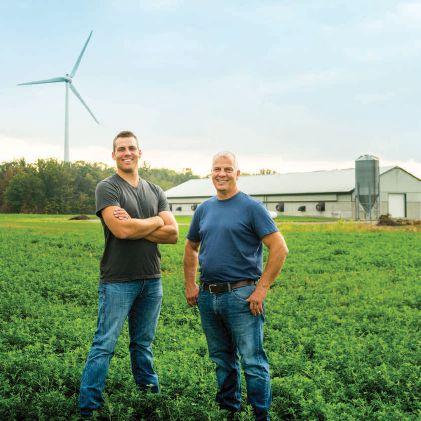
Maurice Richard and his sons Jean-Philippe and Alexandre operate an enriched 70,000-bird layer operation over four barns.
Equipment specs
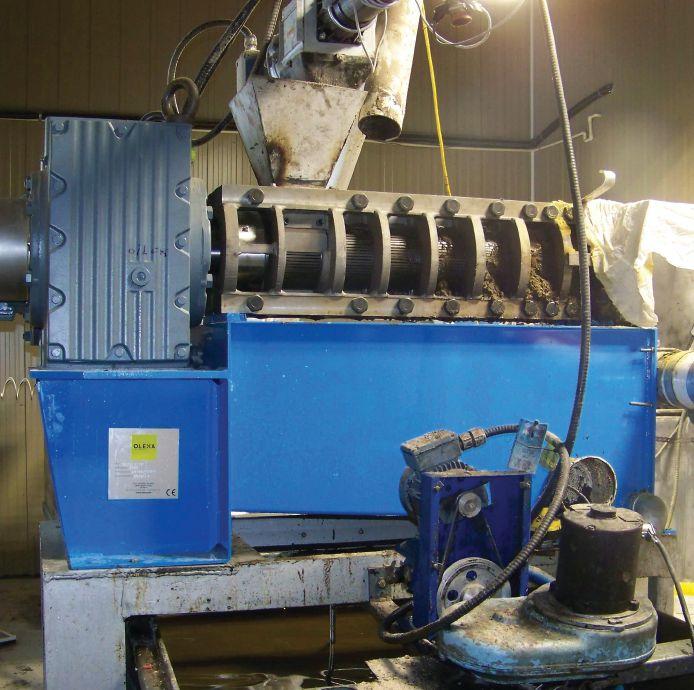
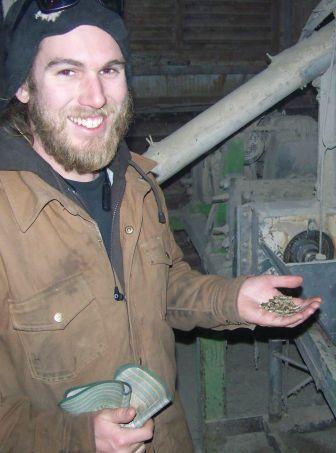
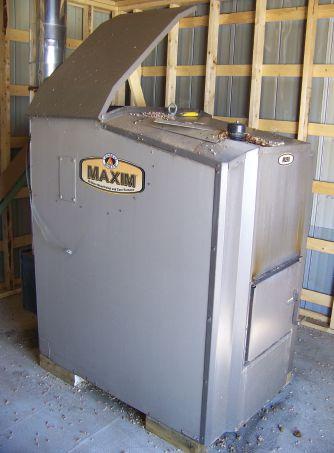
Three barns have enriched systems from Farmer Automatic, with the fourth being converted next year. All the barns are heated with pellet stoves, which heat water running through the barns’ concrete floors. Wood pellets are currently being used, but in the future the Richards plan to make pellets from the farm’s crop straw and fast-growing planted trees. The barns’ ventilation system is used to dry chicken manure, which is piled in grain silos between the barns. The dried manure is crushed and pelleted, then spread on the farm’s fields or sold.
On sustainability
“Sustainability is the key to the future,” Alexandre says. “There are so many ways to use everything we can. This not only makes us more sustainable, but we are also more autonomous and financially better off. My grandfather, although he passed on when I was young, was the founder of the farm and left to us the great legacy we have now. With my father always leaving a lot of room for me and my brother to try new things, we are trying to make the best of it.”

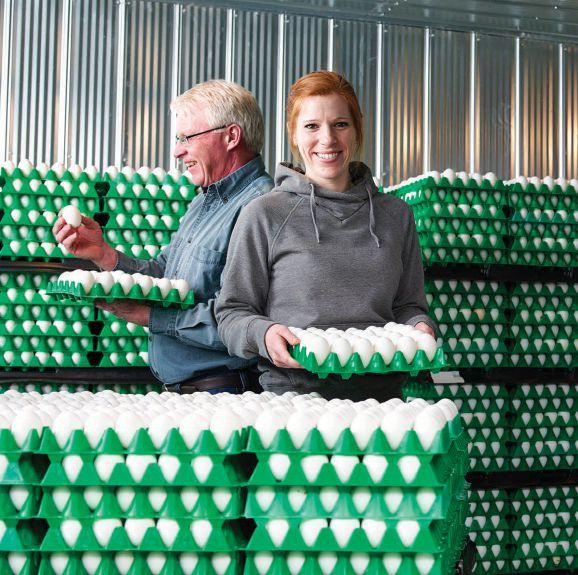
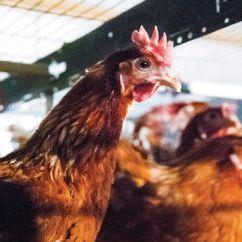
For Canada’s egg farmers, growing and greening our industry go hand-in-hand With new innovations and efficiencies, we ’ re leading the way to a sustainable future for the fresh, high-quality eggs that Canadians enjoy.