CP - June 2015

Page 1


OUR RESPONSIBILITY. OUR COMMITMENT.

Canadian turkey farmers take great care to ensure the humane treatment of their turkeys and provide safe, high quality food to consumers.

As part of this commitment, Turkey Farmers of Canada administers two auditable on-farm programs designed to demonstrate and ensure a high standard of care on Canadian turkey farms: the TFC On-Farm Food Safety Program© and the TFC Flock Care Program©.

These programs provide commercial turkey farmers with thorough requirements and templates to ensure the proper management of food safety hazards, biosecurity and flock care on their farms.

Learn more at turkeyfarmersofcanada.ca.

10

INDUSTRY: Future Growth

Cargill identifies the top three poultry industry drivers

13

GENETICS: Preserving Rare Breeds

Why preserving endangered poultry is just as important as preserving pandas

18

RESEARCH: Rapid On-site Detection of Avian Influenza University of Guelph researchers have developed diagnostic tools that provide results in minutes

By Nerine T. Joseph PhD, Livestock Research Innovation Corporation on behalf of the Poultry Industry Council

20

HEALTH: H5 May Linger Breeding season may further spread the virus in wild bird populations

By

The Canadian Press

TECHNOLOGY: Poultry Manure as Algae Food Alberta supports climate change technology that absorbs greenhouse gases

By Tony Kryzanowski

Tips for how you can prepare

extreme weather

By Poultry Industry Council

FROM THE EDITOR

It’s All About Perception

For each issue of Canadian Poultry magazine, I give our production team several pictures that relate to the cover story and we sit down and discuss the photo options and the article. It’s often not easy to find photos that convey the story perfectly, but we try to have something relevant.

Taking photos inside of commercial poultry barns is tricky and requires a lot of equipment that I don’t have, and let’s face it there are only so many ways to photograph chickens in a barn. So, often I rely on stock photography.

Stock photography websites offer plenty of different options. In addition to photos of chickens, there are many photo options available to show a “concept” if you dig deep enough. For this month’s cover story (see page 10) I tried to show “growth” in the poultry industry in a generic form, without focusing on one specific driver. I gave the production team photos of a car dashboard (to show “driving”) and arrows on a graph to show growth. A bit of a stretch maybe, but I thought it could work with the right image.

Well my first attempt didn’t hit the mark but it brought up an interesting point about consumer perception.

Since the cover story discusses not only what’s driving growth, but how these drivers will allow growth to be sustainable, one of our production artists suggested a photo of chickens in loose housing or in a group outside, because in her mind, this type of production is “more sustainable.”

This was an innocent comment from someone who hasn’t had to sit through a multitude of cover meetings with me explaining why these types of photos are often inappropriate for many articles

(she’s fairly new to the publishing company). Yet, her innocence is very telling of how an average consumer envisions what poultry production should look like.

This is matched by a recent survey reported by the Western Producer. Commissioned by Alberta Farm Animal Care, the survey asked more than 750 people about their knowledge of farm practices and how it might affect their eating habits. While it’s not surprising the market research firm found that [people] are “fundamentally ignorant about farming practices and what goes into what they are eating,” it also identified the term “super farms” emerged in the survey, which respondents used to refer to “large corporate industrial farms.”

It’s not clear if a typical poultry operation where chickens are housed in a barn would be considered a “super farm,” but respondents felt these types of operations should be monitored for their effect on the environment, animal welfare and human health. Concern over how “industrial” farms could be impacting health was identified as an emerging issue, and that women were more likely to believe confinement housing had detrimental health effects.

This shows that in addition to animal welfare – the key focus area for consumer engagement efforts as of late – consumers are worried about environmental effects, and how they could affect their own health.

If poultry is going to continue in a sustainable manner, it’s not going to be achieved solely on the type of operation envisioned by our production artist. The industry needs to consider how to address the “look” of confinement housing from an environmental, and animal welfare point of view. n

JUNE 2015

Vol. 102, No.5

Editor Kristy Nudds – knudds@annexweb.com 519-428-3471 ext 266

Digital Editor – AgAnnex Lianne Appleby – lappleby@annexweb.com 226-971-2133

Sales

Catherine Connolly – cconnolly@annexweb.com 888-599-2228 ext 231 Cell: 289-921-6520

Account Coordinator

Mary Burnie – mburnie@annexweb.com 519-429-5175 • 888-599-2228 ext 234

Media Designer

Emily Sun

Group Publisher

Diane Kleer – dkleer@annexweb.com

Director of Soul/COO

Sue Fredericks

Mailing Address

P.O. Box 530, 105 Donly Dr. S., Simcoe, ON N3Y 4N5

Publication Mail Agreement #40065710

RETURN UNDELIVERABLE CANADIAN ADDRESSES TO CIRCULATION DEPT., P.O. BOX 530, SIMCOE, ON N3Y 4N5.

email: subscribe@canadianpoultrymag.com.

Printed in Canada ISSN 1703-2911

Circulation email: subscribe@canadianpoultrymag.com Tel: 866-790-6070 ext 201 Fax: 877-624-1940

Mail: P.O. Box 530, Simcoe, ON N3Y 4N5

Subscription Rates

Canada – 1 Year $30.00 per year (with GST $31.50, with HST/QST $33.90)

GST – #867172652RT0001

USA – 1 Year $ 66.00 USD Foreign – $75.00 per year

Occasionally, Canadian Poultry Magazine will mail information on behalf of industry-related groups whose products and services we believe may be of interest to you. If you prefer not to receive this information, please contact our circulation department in any of the four ways listed above.

No part of the editorial content of this publication may be reprinted without the publisher’s written permission. ©2015 Annex Publishing & Printing Inc. All rights reserved. Opinions expressed in this magazine are not necessarily those of the editor or the publisher. No liability is assumed for errors or omissions. All advertising is subject to the publisher’s approval. Such approval does not imply any endorsement of the products or services advertised. Publisher reserves the right to refuse advertising that does not meet the standards of the publication.

OptiGROW

More Weight with Less Wait

1 2 3

easy as 1, 2, 3. and still maintaining exceptional litter

conditions.

Got Lubing? Contact your local Lubing Distributor for more detailed information.

Glass-Pac Canada

St. Jacobs, Ontario

Tel: (519) 664.3811

Fax: (519) 664.3003

Carstairs, Alberta

Tel: (403) 337-3767

Fax: (403) 337-3590

J. Dean Williamson Ltd. London, Ontario

Tel: (519) 657.5231

Fax: (519) 657.4092

As

1) Large bottom pin that holds a drop of water to attract day old birds to nipple / great starts / average first week mortality below 1%.

2) Greater side flow with minimal triggering force allows all birds to easily trigger the nipple and get off to a great start. Great Starts = Fantastic Finishes!

3) Both, vertical and side action, deliver the Opti-mum flow rates and ability to grow a 4 lb small bird up to a 10 lb Jumbo bird with the same nipple. After hundreds of house updates, customers are consistently seeing improved weight gains of up to 1/2 lbs/bird with dry litter conditions!

Les Equipments Avipor

Cowansville, Quebec

Tel: (450) 263.6222

Fax: (450) 263.9021

Fax: (780) 963.5034

Food and Drug Amendments Welcomed WHAT’S HATCHING HATCHING

Chicken Farmers of Canada (CFC) applauds the Government of Canada for taking a leadership role on the issue of antimicrobial resistance and for announcing plans to strengthen antimicrobial stewardship controls.

The Canadian government is proposing amendments to the Food and Drug regulations to modify the options for own-use importation, to strengthen the regulations for active pharmaceutical ingredients, and to increase veterinary oversight for antimicrobials used in livestock.

CFC said in a release it supports the responsible use of antimicrobials to maintain animal health, animal welfare and food safety and is pleased to partner with the federal government on these issues

As part of its commitment

to responsible drug use, the option to use antimicrobials obtained via own-use importation and the use of active pharmaceutical ingredients has not been permitted for Canadian chicken farmers since 2009, and is a requirement of the On-Farm Food Safety Assurance Program, a program which is mandatory for all Canadian chicken farmers.

CFC developed an antimicrobial use strategy with all members of the stakeholder chain in 2012.

Implementation of the strategy focusses on surveillance, education and reduction alongside research and innovation. Implementation of the strategy has resulted in:

• A mandatory industry policy to eliminate the preventive use of Category I antibiotics as of May 15, 2014

• Surveillance, in cooperation with the Canadian

Integrated Program for Antimicrobial Resistance Surveillance of Health Canada, of antimicrobial use and resistance on chicken farms

• The release of Responsible Use Guidelines

• Education and communication seminars/ tools for farmers and the supply chain

• Research into innovative products such as vaccines and alternatives to antibiotics

We support only the most responsible use of antibiotics and we are being proactive to manage antibiotic use in order to provide continued confidence to consumers and government. CFC said in the release that it understands that consumers and others have concerns regarding antibiotic use and resistance, and “we take our responsibility very seriously.”

Royce wins Champion Award

Brent Royce of Listowel, Ont. has been named the 2015 recipient of the Farm & Food Care Champion Award. Royce grows crops and raises turkeys on his family farm and has been involved in farming for his entire life. He is a strong advocate for agriculture, using every opportunity available to him to talk about farming with non-farming Canadians. He was among the first to sign up for Farm & Food Care’s Speak Up ambassador training, and has since become a regular interviewee by many Canadian (both rural and urban) media sources. Royce also actively engages the public through social media using Twitter.

Cobb Flock Award Winners

Synergy Agri Group of Nova Scotia is the latest winner of the award for the top Cobb500 breeder performance in Canada.

The award was presented to Synergy production manager Gary McAleer and the production team by David Engel, Cobb-Vantress technical service manager for Eastern Canada. The group also received the award for the top chick producing Cobb500FF flock.

The company averaged 145.81 chicks / hen housed on all of their flocks, ranked on adjusted chicks / hen to 65 weeks of age. Their flock

He is a graduate of the Advanced Agricultural Leadership Program, is a longserving volunteer on the Perth Federation of Agriculture, is a director representing Huron and Perth counties for the Ontario Federation of Agriculture and is chairman of the Uncontrolled Electricity Working Group –a committee working to help manage uncontrolled electricity and its adverse effects of livestock farmers.

Royce is also involved with both the Innovative Farmers’ Association of Ontario and the Perth County Soil and Crop Improvement Association. In its nomination, Turkey Farmers of Ontario described Royce as “a passionate turkey farmer and

Brent Royce (pictured with wife Christa) is the 2015 winner of F & F Care Ontario’s Champion Award

great agricultural advocate.” His industry involvement and public outreach, said TFO General Manager Janet Schlitt, makes him an ideal candidate for the recognition. The award was presented April 15 at Farm & Food Care’s annual meeting.

in Barn 5 won the award for the most chicks on the Cobb500FF flock averaging 151.32 chicks / hen housed (to 65 weeks of age).

There was also an award given for the Cobb500SF flock that produced the most chicks. Couvoir Boire & Frères in Quebec won this award for the second year in a row. The flock in Barn B-6 achieved 149.49 chicks / hen (to 65 weeks of age).

This year an award was given for the best overall flock

based on total eggs adjusted to 65 weeks of age. Two flocks topped the list, less than a tenth of an egg apart and resulting in a tie being awarded. One was the Cor Kapteyn flock in Ontario which produces eggs for the Curtis Chick hatchery at Maple Lodge Farms; this flock produced 184.57 total eggs. The second was the flock in Barn B-51 at the Pondeuses Atlantique farm of La Coopérative fédérée in New Brunswick; this flock produced 184.50 total eggs.

COMING EVENTS

JUNE 2015

June 17-19, 2015

Canada’s Farm Progress Show, Evraz Place, Regina, Sask. For more information, visit: www.myfarmshow.com

JULY 2015

July 14-15, 2015 North American Manure Expo, Chambersburg, Pa. For more information, visit: www.agannex.com/ manure-manager/manureexpo

July 27-30, 2015

Poultry Science Association annual meeting, Louisville, Ky. For more information, visit: www.poultryscience.org/ psa15

SEPTEMBER 2015

September 15-17, 2015

Canada’s Outdoor Farm Show, Canada’s Outdoor Park, Woodstock, Ont. For more information, visit: www.outdoorfarmshow. com

OCTOBER 2015

October 6-8, 2015

Poultry Service Industry Workshop, The Banff Centre, Banff, Alta. For more information, visit: www.poultryworkshop. com

NOVEMBER 2015

November 18, 2015

Canadian Poultry Sustainability Symposium, Best Western Plus Lamplighter Inn and Conference Centre, London, Ont. For more information, visit: www. cpsustainability.com

HATCHING HATCHING

Maple Lodge Complaint

Animal Justice has filed a complaint against Maple Lodge Farms, alleging the company makes “numerous false and misleading claims.’’

The complaint was filed with the Canadian Food Inspection Agency and the Competition Bureau.

The group alleges Maple Lodge Farms is misleading consumers by portraying itself as a family company committed to the humane treatment of chick-

ens. It points to hidden camera footage released recently by Mercy for Animals that claimed it was taken inside the company’s plant in Brampton, Ont., and showed birds dying of cold while being transported to the plant.

Animal Justice says the footage is in contrast to images on the company’s website and food packaging that portray a small-scale, pastoral farming operation.

COMING EVENTS

November 19, 2015 Poultry Innovations Conference, Best Western Plus Lamplighter Inn and Conference Centre, London, Ont. For more information, visit: www. poultryindustrycouncil.ca

JANUARY 2016

January 26-27, 2016

International Poultry Scienctific Forum, Georgia World Congress Center, Atlanta, Ga. For more information, visit: http:// www.ippexpo.org/ipsf/

January 26-28, 2016 International Production & Processing Expo, Georgia World Congress Center, Atlanta, Ga. For more information, visit: www.ippexpo.com

U.S. aims to reduce emissions

.S. Agriculture Secretary Tom Vilsack announced in late April voluntary programs and initiatives for farmers, ranchers and foresters meant to build on President Barack Obama’s efforts to combat global warming, and they don’t require congressional approval.

Those efforts aim to reduce net greenhouse gas emissions, boost carbon capture and storage and come with various enticements, including grants, low-interest loans and technical assistance. Specific actions include reducing the unnecessary use of fertilizer and meth-

ane emissions from cattle and swine, reforesting areas damaged by wildfire and disease and encouraging tree planting in urban areas. For methane reduction in particular, the federal program promotes installing more anaerobic digesters, which use naturally occurring bacteria to break down organic waste to produce biogas.

Vilsack’s department estimates that if all steps are followed, it would reduce emissions and enhance carbon sequestration by roughly 120 million metric tons of carbon dioxide equivalent.

We welcome additions to our Coming Events section. To ensure publication at least one month prior to the event, please send your event information at least eight to 12 weeks in advance to: Canadian Poultry, Annex Business Media, P.O. Box 530, 105 Donly Dr. S., Simcoe, ON N3Y 4N5; email knudds@annexweb.com; or fax 519-429-3094. Please write ‘Event Submission’ in the subject line.

New Coccivac® Live Coccidial Vaccines Guide is available now at www.becauseitworks.ca

Used year-round in your flocks, Coccivac® vaccine can help achieve simple, sustainable and profitable prevention against coccidiosis. Resistance is not an issue, so Coccivac frees birds from the stress associated with in-feed anticoccidial rotation and shuttle programs. You and your feed company can focus on improving nutrition and better gut health.

To make the transition to Coccivac, go to www.becauseitworks.ca, talk to your veterinarian or speak to your Merck Animal Health representative.

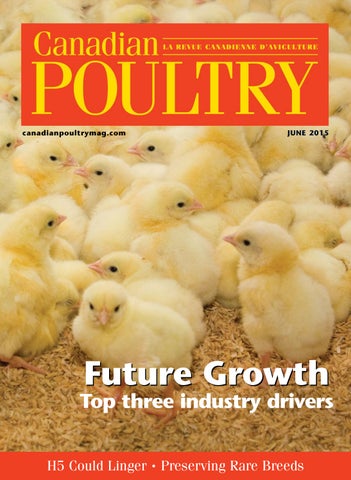
Future Growth

Cargill identifies the top three poultry industry drivers

Sustainability is a concept that’s front and centre in many sectors today, and poultry is no different. Indeed, it’s part of one of the three top poultry industry drivers that Cargill has identified – guiding principles on which to base sound decisions now and in the future.

Part of the path to achieving sustainability for poultry producers, explains Cargill’s Mario Penz, is the increasing use of “precision nutrition.” Penz works as the company’s strategic accounts technology director for its global animal nutrition business, and is also a Cargill Corporate Fellow. He has published hundreds of research papers, regularly presents at conferences and serves in leadership roles at several poultry organizations.

PRECISION NUTRITION

ACHIEVING SUSTAINABILITY

Mario Penz, strategic accounts technology director for Cargill’s Global Animal Nutrition Business says increasing the use of precision nutrition is part of the path to achieving sustainability for poultry producers

How can we make the diet closer to the needs of the bird, Penz asks, so that similar or better production results are achieved at a similar or lower cost, at the same time we minimize pollution from elements like excess nitrogen and phosphorus? “When you don’t have thorough knowledge of the ingredients and a systematic process of analysing them, it’s tough to answer this question,” he notes. “Gathering data and analyzing it is also important because we’ve gone as an industry to focussing on an adequate diet for the animal at the lowest cost, to also having a focus on protecting the environment. We’ve moved from being very pragmatic with regards to the cost of the feed formulation to now also addressing society’s concerns.”

Part of precision nutrition is solid feed analysis. Cargill researchers and other researchers have found that feed compo-

nents like protein, amino acids, fats, fatty acids, macro- and micro-minerals can differ significantly from place to place, which points to compositional analysis of crops as an important part of ‘feed precision’ and reaching maximal sustainability. The same variety of soybeans for example, notes Penz, can differ quite a bit in composition depending on where it’s grown.

Precision nutrition also takes age of the bird into account. “We determined that it’s best to use three to four calorie levels for each ingredient for different ages of birds,” Penz explains. “The different stages in an animal’s life are important to factor in. Older birds in general are okay with feed that’s lower in digestibility, and younger birds need diets with more digestibility.” Digestibility and other factors are important to the health of the digestive tract, which has a direct impact on an animal’s immune system.

Cargill has developed the “Cargill Nutrition System” (CNS), a world-class nutrition system that matches nutrient supply with nutrient demand and utilizes different delivery methods for the various customer segments Cargill serves. These methods can be through products (complete feed, premix, or additives), software, or even knowledge sharing. Penz says worldwide nutrient data and animal metabolism and requirement research from Cargill’s 15 global innovation centres and published data are updated on a continuous basis to make this the most robust and up-to-date nutrition system in the industry. “Our team all over the world is ready to spread what we have developed,” he explains. “The first wave of introduction was last year and it enables us to deliver nutrition that ensures animals perform more profitably, more efficiently and more sustainably. For instance, we have found that with the CNS, we can provide similar or better pro-

duction results at a lower cost, at the same time we can reduce nitrogen and phosphorus supplementation, with a consequent excretion reduction anywhere from 10 to 40 per cent.”

PROTEIN DEMAND

One of the other top two poultry industry drivers is an increasing world demand for high-quality protein, and Penz notes that demand for poultry leads the way. “From 2010 to 2020, chicken production will grow by 28 percent and world population will be almost 8 billion people,” he says, citing sources such as U.N. Food and Agriculture Organization’s documents ‘Agricultural Outlook 2010-2019’ and ‘World Agriculture: Towards 2030 –2050.’ “We will need to produce 124 million tons of chicken to meet this growing demand.”

Penz adds, “As I’m sure many Canadian Poultry readers are aware, there is a strong correlation between income and protein consumption, and as incomes go up around the world and the middle class grows, people can afford for more poultry and other meats. Chickens are very efficient at converting feed to protein, and are more economical to raise compared to other animals like pork and beef.”

Penz notes that eggs and milk are also high-quality protein sources, being a package of nutrients that solely nourish an animal at the start of life. “However, from a land use perspective – looking at how much animal protein can be produced per square unit of area – poultry meat is the most efficient and economical,” he explains.

Poultry production is also going to become more and more important, says Penz, because there are no restrictions on eating chicken or eggs in any religion or region of the world. He also notes that poultry production in a given country (where the feed is also produced) gives that country a significant amount of food security – specifically protein security. He foresees that the rural areas in many regions will be producing more and more chicken as time goes on, and animal producers already producing chicken will progress faster than those in other types of animal production. “Cargill is looking at poultry production in a very serious way,” Penz notes. “But while poultry is an important segment of our business, we continue to focus on helping producers grow their businesses in the swine, beef and dairy cow, and aquaculture sectors.”

SUPPLY CHAIN TRANSPARENCY

Supply chain transparency is the third global industry driver that Cargill identifies, one that is paramount to building consumer trust. Whether it’s GMO-free options, organic or “natural” products, pointing out food origins and animal welfare, consumers want information they can trust. “The industry must assure people that our products that come to the grocery store are safe – we need to give that comfort,” Penz observes. “Our job as a nutrition supplier is to provide assurance to our customers that what we say is in our products is actually there.”

Penz points to hormones in chicken as an example where transparency is very important. “It’s a fallacy that hormones

In addition to precision nutrition, one of the other top two poultry industry drivers is an increasing world demand for high-quality protein, demand for poultry leads the way.

Industry

“The industry must assure people that our products that come to the grocery store are safe – we need to give that comfort,” says Mario Penz, strategic accounts technology director, Cargill Global Animal Nutrition.

are used in chicken production, but it’s been in the media a lot,” he notes.

“There is no positive impact to including added hormones in chicken production. However, there is a perception that the industry used to use hormones and now does not, and this perception needs to be addressed. Hormones were never used in chickens based on different reasons and the most significant are the complexity

of the hormone application and more importantly, there is no response on poultry production improvement with hormones.”

When asked the degree of transparency that people will want – just how much information they wish to have about animal welfare specifics for example – Penz responds that society will lead the way. “People have anthropomorphic views towards other species and think that the conditions that animals might live in would not be something they would choose,” he observes, “but we can gain a lot of insight from the fact that a happy chicken is a productive chicken. If animals are under stress, they will not gain weight and or produce as many eggs. So we need to do a better job as an industry to explain this to people and having more people visiting farms to understand animal agriculture.” n

Euro 2012 Meller’s Alternative Housing

Meller offers the “Euro 2012” Enriched Group Housing System for Laying Hens Integrated into each cage are perches, large nesting area, scratch area, LED lighting and manure drying capabilities. The Euro 2012 System offers heavy duty manure drives, chain feeding systems, overhead or lift type egg collection and the “Egg-Ease” egg saver system.

Genetics

Preserving Rare Breeds

Why preserving endangered poultry is just as important as preserving pandas

The Livestock Conservancy keeps an endangered livestock list very much like the International Union for the Conservation of Nature’s Red List of Endangered Species. Of 175 recognized breeds of chickens, 12 breeds are listed as critically endangered, 12 listed as threatened, while seven breeds are recovering. With seven turkey breeds endangered or threatened, none are recovering.

When we think of endangered species, we seldom consider farm animals. Yet, preserving rare breeds of domestic livestock and poultry is becoming ever-more important. With only two breeding companies in control of the majority of the world’s genetics for layers, broilers and turkeys, it falls on academic and private owners to maintain endangered breeds. Unselected breeds of poultry - those original breeds that have not been artificially selected for specific traits, as with commercial strains, and have maintained their “pure” breed qualities are just as threatened as panda bears.

It has long been argued that to sustain future food production we need to preserve as wide a gene pool of plants and animals as possible. This is becoming more important as we face disease pandemics, climate change, and dwindling land and water resources.

Take for example climate change. Whether or not you believe in global warming, June 2014 was declared by the National Oceanic and Atmospheric

INCREASING IMPORTANCE

With only two breeding companies in control of the majority of the world’s genetics for layers, broilers and turkeys, it falls on academic and private owners to maintain endangered breeds.

Administration as the “hottest month on record,” a global trend that has been occurring for 30 years.

High temperatures are associated with sicker poultry, higher mortality rates, poorer meat and egg production, lower feed efficiencies and poorer meat quality, creating higher costs to poultry producers and the supply chain. Although experts say it will take a combination of measures to address the challenges posed by a warmer world, scientists say selective breeding will need to be part of the solution.

Researchers from the University of Delaware announced they were looking to Naked Neck chickens to help mitigate the effect of climate change on animals. Incorporating these genetics into commercial strains would build in heat resistance, improve feed conversion of new climate-adapted feed crops and build disease immunity, they said in a release.

Here in Canada, universities and research institutes are not involved in such research, largely due to a lack of funding and lack of facilities according

Genetics

to Gregory Bédécarrats, Associate Professor at the University of Guelph. The University along with the University of Alberta are however doing what they can to preserve older strains and rare breeds of laying hens through their respective poultry programs.

The two institutions are also exploring joint opportunities to preserve genetics, says Dr. Bédécarrats. This could include sharing breeding stock of Canada’s poultry heritage lines used to breed the original commercial chicken donated to the Universities by Shaver Poultry founder Don Shaver nearly a decade ago.

“Among other things, these genetics could play an important role in other research such as alternative housing or congenital disorders, such as ascites and lameness, or Merck’s disease,” Dr. Bédécarrats explained, “so they are important to preserve.”

Meanwhile, commercial breeding stocks are vulnerable to a range of threats that may need to rely on older genetics to overcome. Reuters reports the U.S. broiler industry discovered the a Ross breed of rooster, which sires as much as 25 per cent of the U.S. broiler chicken supply and is used exclusively in Canada, had developed a fertility problem due to over selection. A change in genetics is being used to resolve the problem.

Dr. Bédécarrats says, “rare breeds are our insurance policy, but insurance can be expensive.”

Similar to crops, publicly funded research facilities once played

a larger role in breeding livestock and poultry. For many years, numerous universities across the county and Agriculture Canada kept populations of breeding stock and ran breeding programs. For poultry, this can be a costly undertaking as preserving avian genetics requires keeping live animals in large enough populations for maintaining a randomly-bred sample. In recent years, the heritage flocks have been on the chopping block as university budgets are tightening and as government research stations are closed.

The UofA is now one of the last remaining public institutions to run a heritage breed program, and have come up with some creative ways to finance the program. At the University’s Poultry Research Centre, a person can adopt a hen as part of the University’s 20-year heritage breeds program. People pay $150 a year to “adopt” a heritage chicken. In return, they are rewarded with 24 dozen eggs in a 10-month period. The income generated by the sale of these surplus eggs, and as well as heritage chicks, helps to fund the breeding program.

In-kind contributions instead of sales to the public are used to sustain the Shaver lines kept at the University of Guelph. While surplus eggs are sold to the breaker market under their research quota agreement, it is the cost savings provided by student volunteers that helps to keep the program viable. Poultry club students there provide the hands-on work required to maintain

Watering Wisdom

Key Principle:

Water meters measure water usage, not water consumption. Water usage (WU) has two components: Water consumption (WC), water that is ingested by the birds, and Water spillage (WS), water that is spilled, not ingested.

This is a very important distinction because you cannot assume increased water usage will translate into increased consumption. Increasing water usage may simply create more spillage that can cause wet litter conditions. This in turn negatively affects bird health, reduces growth rate and increases pododermatitis.

Key Directive: Manage your watering system in a manner that promotes water consumption and minimizes water spillage. Learn about best watering management practices and much more at Ziggity’s Poultry Watering U website.

the four Shaver breeding flocks housed at the Arkell Research Station. Under the guidance of Dr. Bédécarrats, students participate in the maintenance and breeding to ensure that each generation retains their conformation, egg performance and egg quality traits. In return students are awarded an AI certificate from the Poultry Industry Council.

University and government cutbacks are always a risk, so private collections also play a role in preserving heritage breeds. Asked if fanciers and back-yard flock producers are a help or a hindrance, Dr. Bédécarrats says it is a bit of both. “There is always the risk that these genetics may become inbred or diluted,” he says, adding, that the serious breeders have been important in maintaining pure lines of threatened breeds.

There are more than 30 chicken and turkey breeds listed in the Canadian Heritage Breeds directory of private breeders. Fancier and hobby breeders have always helped maintain rare breeds but largely for the hobby market rather than for use in production lines.

The upsurge in backyard flocks and the slow food and local food markets is changing that by creating market niches for certain breeds. Dual purpose and hardier breeds raised by the growing number of backyard flock owners or breeds that have a certain panache with foodies are finding commercial value.

Also driving demand is the changing Canadian demographic which is opening doors under the chicken marketing system.Technology might also provide a life-line. Presently, unlike mammalian species, the technology for freezing and storing avian germplasm doesn’t exist. Canada is leading the world in finding a way to apply this cost-effective method of preserving avian genetics. A research project led by Dr. Fred Silverside, formerly with Agriculture and Agri-Food Canada, has been testing the feasibility of cyrofreezing avian ovaries and gonads. If successful, these tissues may then be stored for long periods and implanted to re-generate living birds and flocks when desired, or more importantly, when needed. n

Research Rapid On-site Detection of AI

University of Guelph researchers have developed diagnostic tools that provide results in minutes

OF THE POULTRY INDUSTRY COUNCIL

Dr. Suresh Neethirajan and his team from the “BioNano Laboratory” of the University of Guelph have worked to develop a new detection system capable of detecting small amounts of avian influenza virus within minutes. It’s a diagnostic tool not only capable of detecting the virus rapidly on-site, but that will also enable field deployable, point-of-care diagnostic systems.

Influenza is one of the most common infectious diseases, resulting in up to half a million human deaths annually. Influenza A, a subtype of the virus associated with pandemics and causing most deaths, is further classified according to the properties of two viral surface proteins called hemagglutin (HA) and neuraminidase (NA). The H1N1 humanadapted strain of the virus caused up to 40 million human deaths in 1919 and the recently detected H5N1 avian influenza strain, commonly termed “bird flu”, has resulted in up to half a million human deaths since 2000.

“Considering the threat which avian influenza poses to human health and the growth of the agricultural sector, investing in disease control strategies is

Dr. Suresh Neethirajan and his team from the “BioNano Laboratory” of the University of Guelph have worked to develop a new detection system capable of detecting small amounts of avian influenza virus within minutes

vital”, explains Dr. Suresh Neethirajan in describing the issue at hand. “Preventing the spread of the infection is the best way to keep the disease under control. Prevention in this case starts with effective surveillance.”

Dr. Neethirajan explains the current status of their findings in a report: “a novel sensing mechanism for quicker detection of avian influenza. Sensitivity of the sensing mechanism is possible for both H1N1HA and H5N1-HA allowing the discrimination between avian and human influenza. This proves to be extremely valuable in the recent human influenza pandemic caused by poultry birds.

We have created a rapid animal health pen side diagnostic tool that only needs less volume of blood, less chemicals and

less time compared to the currently used methods. The sensing mechanism and the technique have the potential to serve as a feasible and sensitive diagnostic tool for influenza virus detection and discrimination for poultry industries, with further improvement on the architectures”.

The developed sensing assay will aid not only the poultry industries, producers and farmers, but also the public. The technology under development will ultimately be deployed towards early diagnosis of avian influenza. The results from the proposed point of care test for early diagnosis will assist in identifying potential public health threats.

This project was funded by the Poultry Industry Council and the Turkey Farmers of Ontario. n

RAPID TEST

Health

H5 May Linger

Breeding season may further spread the virus in wild bird populations

The H5 bird flu viruses crossing North America may be around for a while, avian influenza experts warn.

The nesting season, which will see wild birds converge on breeding grounds in Northern Canada and Alaska, could further spread the virus in wild bird populations, and produce a new wave of outbreaks in poultry operations when the birds fly south in the fall, they suggested in late April.

“So if the viruses weren’t there to begin with, there’s a good bet that these wild birds will migrate north and bring those viruses there again, and then potentially see a second wave of reintroduction,’’ said Dr. Tom DeLiberto, assistant director of the national wildlife research centre of the U.S. Department of Agriculture’s animal and plant health inspection service.

It’s not completely clear what route the highly pathogenic H5 viruses took to get to North America, though the suspicion is that infected wild birds brought this family of Asian bird flu viruses to North America, perhaps through northern Russia and Alaska.

The first spotted was an H5N8, a virus which emerged in China a few years ago. It later swapped genes with North American bird flu viruses, creating H5N2 and H5N1 hybrids.

The H5N2 virus was first seen in British Columbia’s Fraser Valley last December, where it triggered a large outbreak across a number of poultry operations. Since then the virus has been found in multiple U.S. states and (at press time)

FURTHER SPREAD

USDA scientists have been studying avian flu viruses to determine which birds are most susceptible to them. Mallard ducks are highly vulnerable to the virus. They are not visibly sick when they are infected, but they do emit viruses so can contribute to its spread.

three Ontario poultry farms, two housing turkeys and one broiler breeders. All the farms are located in Oxford County and prompted the Canadian Food Inspection Agency to impose two separate control zones within the county.

USDA scientists have been studying these viruses to determine which birds are most susceptible to them. Dr. David Swayne, director of the southeast poultry research laboratory at Athens, Ga., said wild mallard ducks are highly vulnerable to the virus. They are not visibly sick when they are infected, he said, but they do emit viruses so can contribute to its spread.

Other birds — non-aquatic birds like hawks, falcons and eagles — appear also to be vulnerable, but in them infection is fatal, said DeLiberto.

These viruses have been found in

birds in three of North America’s four flyways — the Pacific, the Central and the Mississippi flyways. The only unaffected flyway so far is the Atlantic, but experts appear to feel the virus’s appearance there is only a matter of time.

These viruses are descendents of the Asian H5N1 bird flu virus that has killed millions of poultry in Southeast Asia, Egypt and places in between since late 2003.

As well at least 784 people in 16 countries are known to have been infected with H5N1 viruses since 2003 and 429 of them have died. There have been no known human infections with the H5N2 virus to date.

H5N1 has caused major economic losses in Asia, and while H5N2 is clearly a threat to poultry operations in North America, experts are not predicting the

• Control access points

• Establish restricted areas

• Enforce bio-security pyramid rules

• Block access if a disease is confirmed

• View the comings and goings at all times

Laying Hens: a Practica L g uide for Layer f ocused Manage M ent

Not all poultry farmers maximise the full potential of their birds. Both kept in cage or floor systems, for a good performance during the production period, the management should be correct and efficient. But how do you know that what you are doing is right? Your chickens continuously send out signals: about their health, how well they know their way around their surroundings and whether they feel happy and comfortable.

Do you recognise the signals your chickens are giving? Do you know the difference between abnormal, runny droppings and healthy caecal droppings? Are you able to identify abnormalities of the egg and trace this back to the cause? And do something about it?

If you recognise the signs that point to potential problems, then make sure you are armed with information to take the appropriate steps to get your flock back on track. But to do so, you must know all the ins and outs of your own farm and be able to assess the impact these changes will have on your animals.

same level of devastation here.

``I would not expect, even if we do see the virus returning in the fall, that we would see the kinds of problems that Southeast Asia has had,’’ said Dr. T.J. Myers, associate deputy administrator for veterinary services with the USDA animal and plant health inspection service.

Health

He pointed to the fact that commercial poultry production in North America is different from poultry farming in Asia, and operations have extensive biosecurity measures in place.

That said, he acknowledged investigations are will underway to try to figure out how H5N2 has managed to make its

way into commercial poultry operations in North America, despite the biosecurity precautions.

www.hybridturkeys.com

Partner of Choice

Our commitment and dedication to the Canadian turkey industry has spanned the last 60 years. Today, the lasting relationships we have developed, ongoing investments in research and the performance of our products are assurances that Canadian turkey farmers will continue to benef ifit from the advantages Hybrid Turkeys has to offer:

> a network of trusted Canadian distributors

> aff iliations with agricultural research institutions

> a team of global technical experts

Partnering for your success.

In Ontario, in an effort to prevent the virus from spreading during cooler weather, the Feather Board Command Centre (FBCC) issued a warning in April to producers on the importance of minimizing the risk of introducing fecal material from wild birds into their poultry operations, particularly during planting season. The FBCC warned that tilling and planting equipment “cover every inch of fields that may have been contaminated by wild birds” and should be kept away from poultry barns and from driveways serving poultry premises.

The FBCC and the Ontario poultry marketing boards also advised producer members not to attend any meetings, which resulted in the cancellation of the London Poultry Show (this was scheduled to be held at the Western Fairgrounds April 22 and 23), and two events hosted by the Poultry Industry Council (PIC): Research Day (scheduled for May 6) and Health Day (scheduled for June 13), both of which were to be held in Guelph.

U.S. HIT HARD

As of April 28, 2015, 97 outbreaks of H5N2 HPAI were reported in the U.S. 74 turkey flocks were affected, 10 commercial chicken flocks, one mixed flock and 12 backyard flocks. The total toll was greater than 15.4 million birds (57 million commercial turkeys, 4.75 million commercial chickens and 70,000 backyard poultry). n

New Technology Poultry Manure as Algae Food

Alberta supports climate change technology that absorbs greenhouse gases

What do poultry manure and emissions from Alberta’s oil sands have in common?

They are both connected to a plant-like organism call micro-algae, which could help the province meet its greenhouse gas emissions reduction targets.

Micro-algae grow by leaps and bounds when fed with poultry manure as an organic fertilizer, which in turn make them more effective for scrubbing greenhouse gases like carbon dioxide from industrial facilities and power plants before they enter the atmosphere.

“Chicken manure is high in nitrogen, phosphorus and potassium. It contains the main nutrients that algae need,” says Bob Mroz, President and Chief Executive Officer of a Maryland-based biotech company called HY-TEK Bio. It is developing and marketing patented technology using micro-algae for mitigation of greenhouse gases.

Alberta likes the potential of HY-TEK Bio’s technology, as the company was recently awarded a $500,000 grant as part of the $35 million international Grand Challenge: Innovative Carbon Uses competition offered by the province’s Climate Change and Emissions Management Corporation (CCEMC). The corporation collects a levy from large greenhouse gas emitters that in turn is used to fund promising technology

University of Maryland scientists collected poultry manure from various area sources to test if they could economically extract the nutrients and deliver them in liquid form.

aimed at reducing greenhouse gases, like the micro-algae technology offered by HY-TEK Bio.

The company has identified a unique strain of micro-algae that is able to absorb 100 per cent of greenhouse gases

like carbon dioxide from flue gases produced by industrial manufacturing and power generation.

Micro-algae are photosynthetic, plant-like organisms that need light, water, carbon dioxide and nutrients,

NUTRIENTS IN LIQUID FORM

mainly nitrogen and phosphorus. They can feed on compounds like carbon dioxide, nitrogen oxide, sulphur dioxide and volatile organic compounds emitted from such facilities as heavy oil production plants and coal-fired power plants, releasing beneficial oxygen in the process and growing into a plant commodity with considerable commercial potential.

The challenge for HY-TEK Bio has been to find an inexpensive source of nutrients to fertilize the micro-algae to accelerate its growth to perform as advertised in a greenhouse gas mitigation application. Addition of nutrients like those in poultry manure make the micro-algae grow faster and increases its production, like fertilizer added to a corn crop.

Mroz says that as the company worked to develop its technology, it encountered organizations like the Chesapeake Bay Foundation, which expressed its con-

cerns about poultry manure seeping into the region’s water drainage system, resulting in considerable algae growth in areas like the Chesapeake Bay. Because of this concern, and the availability of grants, HY-TEK Bio approached researchers at the University of Maryland, which has been working with micro-algae extensively for the past four years, to investigate poultry manure’s potential as a cheap nutrient source. The company already has a working demonstration facility with four bioreactors consuming flue gas emissions from a three megawatt, biogas-fueled power plant attached to a City of Baltimore waste water treatment plant.

University of Maryland scientists are now testing poultry manure as a natural fertilizer to feed micro-algae. The overall plan is to develop a pilot project that demonstrates a process that, in addition to showing how the micro-algae

mitigates greenhouse gases, also demonstrates how the poultry manure-derived nutrients can be applied to maintain the growth and health of the micro-algae.

Should the application prove successful and commercially attractive, this could pay a significant environmental and economic dividend to poultry and egg producers, as well as help to solve a growing global problem. Not only would producers of poultry manure have a new and better method for manure disposal, but it could also create a new potential income stream for them.

Dr. Feng Chen, Associate Professor at the University of Maryland Centre for Environmental Science, says there are about 800,000 tons of poultry manure currently being generated annually in the Maryland and Mid-Atlantic area of the United States alone. Most of the manure is land applied as a form of disposal, but the problem is that sometimes

New Technology

the nutrients leach into the water drainage system. An alternative use of this poultry manure as fertilizer for microalgae would direct that manure into a new, non-polluting direction.

Alberta is one jurisdiction that has shown an interest in what the university and HY-TEK Bio are accomplishing with the use of micro-algae in greenhouse gas mitigation in its massive fossil fuel industry. It has been identified as a notable contributor of carbon dioxide to the atmosphere, especially in its oil sands mining and processing operations.

The University of Maryland research has just started and is being conducted at a basic level, with development of a system to economically extract the nutrients from the raw poultry manure, leading to methods of controlled release of the nutrients to the micro-algae to achieve certain performance targets.

While the research project is still

in its early stages, the University of Maryland researchers say that they are “quite encouraged” by the results they have witnessed so far in using poultry manure nutrients to encourage micro-

algae growth. The poultry manure they are using was collected from various commercial operations in Maryland. Now, the University is working on such issues as how to develop a consistent liquefied nutrient product from raw poultry manure, given the variability of the raw material from one poultry operation to another.

Mroz says while there is some variability, they all seem to work well as nutrients for micro-algae growth. The main issue is cost of production, taking it from its raw form to a liquid.

“When you are talking about 500 to 1000 of these bioreactor tanks to mitigate a power plant, the nutrient has to be really, really cheap,” says Mroz. About 400 of the company’s micro-algae tanks can fit on one acre, “but we can use multi-storey facilities to increase land usage.”

In addition to establishing an inexpensive process to convert the raw poul-

HY-TEK Bio has developed patented bioreactors to grow micro algae.

Technology

try manure to liquid form for use as a micro-algae nutrient, what HY-TEK Bio hopes to achieve through its research project with the University of Maryland is to determine if the brown color of the liquid manure is a deterrent to micro-algae growth because the algae needs as much light as possible to grow.

Should the University successfully develop a method to costeffectively manufacture a clear, odourless liquid nutrient product from raw poultry manure, Mroz says this also has potential as a marketable, commercial product.

Dr. Russell Hill, Director and Professor at the Institute of Marine and Environmental Technology (IMET) at the University of Maryland Center for Environmental Science, says the University’s research related to using poultry manure as a nutrient source for micro-algae is novel.

“If greenhouse gas mitigation using micro-algae is ever going to really be used on a large scale, the nutrient requirement will be huge,” says Hill. “It could really help to solve the problem of disposal of chicken manure, and potentially it could even put greater value on the chicken manure.” n

University of Maryland lab work shows that poultry manure is a good nutrient source from which to grow micro algae.

PIC Update

Getting Ready for the Heat

Tips for how you can prepare for transporting in extreme weather

The birds are ready to be shipped, the catching crew is onsite, the hauler is pulling in the driveway, and the processor has tomorrow morning’s shift fully scheduled. Everyone wants the birds to travel comfortably and arrive alive.

Canada’s Health of Animals Act prohibits the transportation of any animal that cannot be moved without undue suffering during the expected journey.

Just as everyone has a vested interest in the outcome of that journey, everyone has a role to play in complying with the regulation – from the producer to the processor, and including the catchers, loaders, and haulers.

“Good bird welfare is everyone’s responsibility,” says Al Dam, provincial poultry specialist at the Ontario Ministry of Agriculture, Food and Rural Affairs. “It’s the right thing to do – and it’s the law.”

WORKING WITH THE CATCHING CREW

Ontario’s guidelines for transporting poultry – popularly communicated via the “Should this bird be loaded?” poultry loading decision tree – provide catchers (and others) with direction for the identification of sick or injured birds, as well as environmental considerations for loading and transportation.

To improve load-out efficiency and

Good communication with the catching crew, transport company and processor can ease live transport challenges during extreme weather events.

ensure your birds can be loaded, producers are encouraged to identify compromised birds during routine flock monitoring and cull sick birds on a daily basis. Deadstock should be properly disposed of in accordance with provincial legislation.

The catching crew’s on-site supervisor will confirm the producer’s assessment of bird health and environmental conditions at the farm. Since shipping densities will vary with bird type, expected weather conditions, and estimated travel time, it is critical that accurate bird weights and counts are provided before loading begins.

Take particular caution if you are loading birds during periods of extremely high temperatures and humidity. Stocking density in containers may need to be adjusted, and discussions should occur among all stakeholders to assess whether or not birds should be loaded and if the truck can be delayed until better conditions are available. There are tools associated with the poultry loading decision tree that can help with these decisions.

WORKING WITH THE TRANSPORT COMPANY

Although policies and standard operating procedures shape on-site decision making, the live trucking industry relies heavily on producers to communicate information about local weather conditions, their barn and loading area, and their birds.

“It’s hard to write specifics on transportation,” says Richard Mack, President of Riverdale Poultry Express Inc. in Elmira, Ontario. “Many factors other than weather impact the loading of birds, including flock health, loading area conditions, travel distance, and lairage.”

At Riverdale, newly hired drivers train with their more experienced colleagues until they can go solo – even after completing Canadian Livestock Transportation training.

“It’s not just about driving a truck,” says Mack. “Our drivers are also called upon to

ARRIVING ALIVE

Industry

be animal welfare specialists, truck mechanics, computer users, and politicians. They must work in all weather conditions, be good at administration and paperwork, and understand the dynamics –and legal ramifications – of how they load their trucks.”

Although there are some promising advances in new equipment and loading techniques, the industry depends on prompt, qualitative feedback from processors on issues that happen during transportation and lairage. “The sooner we know, the sooner we can take corrective action,” says Riverdale’s Mack. “It’s hard to fix what we don’t know about.”

WORKING WITH THE PROCESSOR

As a producer, you are responsible for understanding the processor’s expectations for feed withdrawal, evaluation of bird fitness to travel, and any specialized loading protocols that can reduce bird stress. You should also ensure that barn conditions and facilities promote safe, humane catching with minimal stress.

“Work with your processor to schedule loading at times that will help minimize stress on the birds,” recommends Paul Bulman, Live Planning and Procurement Manager at Pinty’s Delicious Foods in Port Colborne.

“We are all in this together and we all share in the implica-

tions of decisions made to ensure humane transportation during extreme weather.”

WHAT IS INDUSTRY LEADERSHIP DOING?

Over the past year, industry leaders in Ontario have been working to address the challenges associated with the safe and humane transportation of poultry during extreme weather.

Ontario has formed an Extreme Weather Transport Committee representing the interests of producers, processors, handlers, haulers, and government. Standard operating procedures developed for hot and cold weather transport for broiler chickens have been adopted by industry associations and shared with producers at a series of regional poultry producer updates in February and through the Chicken Farmers of Ontario. Although the committee is currently focused on broilers, it intends to include other poultry commodities.

“Our next step is to look at the existing work on poultry transport and identify areas where more research could help with the Canadian and Ontario situations when it comes to extreme weather,” says committee member Al Dam.

As Ontario’s poultry industry braces for the heat and humidity challenges of the summer, that information can’t come too soon. n

Turns Deads Into Dirt

Put mortality management back in your hands.

BIOSECURE: Provides complete protection against the spread of diseases like PED

COST EFFECTIVE: Lowest operating cost in the industry

VALUE-ADDED: Best way to convert mortalities into easy to manage compost

• Ease to Use

HERE’S THE POINT

Musical barns have pay-offs

We are all familiar with the quote “Music has charms to soothe a savage beast” by 17th century playwright William Congreve. The same may hold true for poultry.

Even though chickens don’t sing they do seem to have musical preferences according to a growing body of research and farm experience. And the right kind of music appears to be good for production. University researchers in Europe and the U.S. have shown that, like humans and certain other species, chickens prefer soothing melodic music over sharp and jarring tunes — think of the difference between easy-listening songs over punk rock. Why chickens like music is inconclusive, much as why humans like music, although psychologists have plenty of theories.

Surprisingly chickens are serving a role in trying to answer that question. It is impossible to determine whether human preferences are the result of nature or nurture. That’s because humans hear music in the womb, and prenatal exposure could predispose us to enjoy certain types of musical sounds.

Day-old chicks however are the perfect lab animal to investigate the role of genetics and environment on musical preferences in humans, according to experts. That’s because you can eliminate the effects of prenatal sounds (other than their own peeps) by incubating chicken eggs in sound-proof environments and then test their preferences once hatched. It turns out that these preferences favour melodic music. And because chickens don’t sing (vocalization such as peeping, clucking and crowing isn’t singing) they aren’t predisposed to musical sounds.

not hear music. 15-year-old Thian Carman, Nova Scotia’s youngest registered farmer, heard some dairy farmers play music for their cattle in order to get them to relax and produce more milk. He thought the same principle might work for his chicken flock and decided to test that theory for his science fair project. CBC reported that his six week experiment compared results between no music, country music and classical music. Unlike classical music, Carman found eggs produced when country music was played, weighed more than the control but were not bigger in size. Music seems to benefit broiler production too. Recently, Taiwan’s government backed methods developed in Australia and New Zealand to provide broiler birds with music as a way to increase growth rates and reduce feed costs. With government assistance, a chicken farmer in Yunlin County, is using music piped into his barn of 40,000 birds during feeding time. He has stated that the days on feed have been reduced 10 per cent amounting to a savings of over NT$100,000 in feed costs for each flock. Additionally, the owner said that not only do both the cocks and hens exhibit even temperaments, but his chickens produce better meat. The birds are certified as “raised with music and sold without pharmaceutical residues” and draw a premium price.

There are low cost ways to make practical improvements in production that improve animal wellbeing and farmer income

But there is practicality behind the science too. A 2014 Bristol University study commissioned by a UK producer showed that soothing relaxing music directly affected chicken behaviour. Compared to no music, layers entered nesting boxes 159 per cent more often and classical music was what the hens preferred. While the study did not show an increase in egg production it did show that classical music reduced the number of floor eggs by six per cent.

Also in 2014, a science fair experiment by a Nova Scotia student found that eggs produced while chickens listened to classical music were significantly bigger and heavier than those that did

There are also anecdotal accounts of the musical benefits to chickens. A British farmer claims that opera music has doubled the rate of lay for his two dozen birds. An accidental discovery, he believes that the increase in production is because calm animals produce better.

At the commercial level, controlled studies are now underway to see if these calming affects can reduce aggressive behaviours such as feather pecking, a statistically significant problem in loosehoused layers in Europe where beak trimming is scheduled to be banned in 2018.

In response to these findings, Happy Egg Co. has produced a three-track CD, Top of the Flocks, composed by British composer Jack Ketch. Universal Music Group was reportedly hired to put together a compilation of tunes for broiler production in Taiwan.

Here’s the point: There are low cost ways to make practical improvements in production that improve animal wellbeing and farmer income. Some are as simple as plugging in a radio. n

Remarkably Clean

Virkon

“We

Jean, Patrick, Laurent & Nicholas Souligny on their family farm in St. Isidore, Ontario.

Turn static files into dynamic content formats.
Create a flipbook
Issuu converts static files into: digital portfolios, online yearbooks, online catalogs, digital photo albums and more. Sign up and create your flipbook.