Visit us at IPPE 2019, booth C10629


by Brett Ruffell
Visit us at IPPE 2019, booth C10629
by Brett Ruffell
Happy New Year!
As you’ll read in the pages ahead, we’re ringing in 2019 with an eye towards the future. This issue is focused on the research and innovations that will help shape the industr y in the coming years.
As part of that effort, we’ve developed our first Canada-wide research round up (see page 12) – something we plan on turning into an annual tradition. From precision feeding to sustainability, we’ve painted a broad picture of the Canadian research landscape.
Each year we’ll update you on these projects and also introduce you to any important new studies. On that note, please k eep us in the loop about any new projects getting underway this year (or let us know about any ones we might’ve missed in this issue’s report). Send your updates to poultry@annexweb.com.
Speaking of the future, I recently read some alarming figures. According to Statistics Canada, 92 per cent of farms lack a formal succession plan. At the same time, the average age of Canadian producers has hit 55 after steadily rising for decades. Moreover, there are now more farmers over the age of 70 than under 35.
Experts say this clearly shows more producers need to add ‘Get the ball rolling on succession planning’ to their list of New Year’s resolutions. Shea Ferster, a Saskatoon, Sask.-based business advisor
with consulting firm MNP, has worked with numerous family farms, including poultry farming operations, on succession planning
While families have many reasons to put off succession planning, Ferster feels the most common issue is that many simply don’t know where to start. “There are a lot of feelings involved,” Ferster says. “You don’t want to ruin Christmas and say, ‘Ok, here’s what I was thinking.’ “
But the consultant says time is of the essence with
More producers need to add ‘Get the ball rolling on succession planning’ to their list of New Year’s resolutions.
succession planning, especially for producers in supply-managed sectors. Why? He says quota adds a layer of complexity to an already complex process. Things get particularly challenging when s ome children are active on the farm while others aren’t. “How do you give quota to a non-active child?” he says, adding that without a succession plan the situation can get messy fast.
Ferster tells families succession planning is a process, not an event, and that it typically takes five to seven years to figure out.
Part of the reason it takes so long is the challenge of balan-
cing ‘fair versus equal’, fair being a perception while equal being a mathematical equation. For instance, while a transfer of $1 million in farm assets is technically equal to a $1 million cash transfer, it’s unfair to compare the two. That’s because, un like cash, the farmland re quires hard work to generate value. Thus, planning well in advance allows families to balance this concept and avoid misunderstandings.
Ferster’s last piece of advice is to bring in a third party. An outsider can help facilitate the process, getting things underway while managing each party’s expectations so no family member is seen as the bad guy. “I think facilita tion is key because you need to gather as much information as you can,” he says. “There are lots of folks out there with different processes.”
One approach Ferseter has found success with lately is conducting one-on-one inter views where he asks each family member the same questions. He finds people are more open about what their expectations are – e.g., active versus non-active chil dren – in this type of setting.
And I have a final piece of advice of my own – be sure to check out our online succes sion planning portal family farmsuccession.ca. A collaboration between Canadian Poultry magazine and other Annex Business Media agricultural publications, the portal is full of expert tips and case studies to help ensure your family farm is successfully passed on.
canadianpoultrymag.com
Editor Brett Ruffell bruffell@annexbusinessmedia.com 226-971-2133
National Account Manager
Catherine Connolly cconnolly@annexbusinessmedia.com 888-599-2228 ext 231

approval. Such approval does not imply any endorsement of the products or services advertised. Publisher reserves the right to refuse advertising that does not meet the standards of the publication.







St. Jacobs, Ontario
Tel: (519) 664.3811
Tel: (450) 263.6222
Fax: (519) 664.3003
Carstairs, Alberta
Tel: (403) 337-3767
Fax: (403) 337-3590
Tel: (780) 963.4795
Fax: (780) 963.5034 Glass-Pac Canada
Fax: (450) 263.9021
Global animal health and nutrition company Alltech has launched a new poultry feed additive it says aids in optimizing gut form and function. Called Viligen, the company says it contains a range of new, scientifically-backed ingredients to support gastrointestinal tissue growth and activity. It blends fatty acids, prebiotics and essential trace elements, which Alltech’s researchers say combine to promote beneficial bacteria in the gut and support natural defenses.
4-H Canada announced a new program that will support the emotional and physical well-being of rural youth across Canada. Called the 4-H Canada Healthy Living Initiative, the two-year program begins in spring 2019. The first year of the initiative will see the creation of resources and tools that will support youth facing mental health challenges. It will communicate how to access resources or recognize when a peer needs support as well. The second year will focus on physical health, nutrition and well-being.
The U.S. Patent and Trademark Office (USPTO) has extended the patent protection for the Weeden Sprinkler Systems. The concept consists of several components. Based on the temperature and the age of the bird, water droplets are provided in short pre-set durations. The water droplets don’t hang in the air and are heavy enough to hit the birds, causing them to stand up and release the trapped heat from underneath their bodies. Once up, the birds habitually migrate to the feed and water, creating cyclical drinking and feeding patterns.
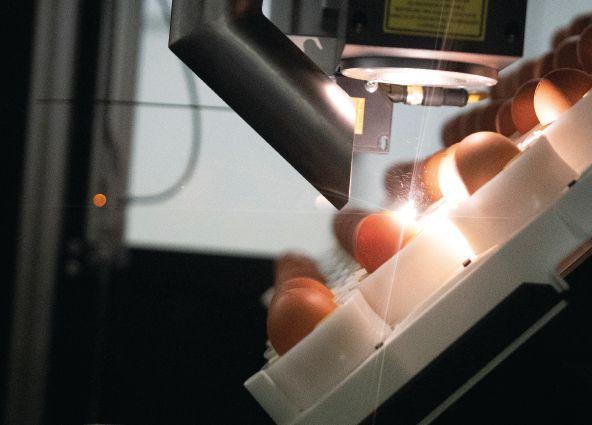
0.3 mm
is the size of the hole the SELEGGT laser burns into the hatching egg shell to extract fluid for analysis.
SELEGGT, a joint venture between HatchTech, German supermarket chain REWE and the University of Leipzig, has developed a market-ready method for gender identification in hatching eggs.
In Germany, supermarkets are already selling eggs from ‘hens without brothers’. The eggs from which the laying hens are born have been checked on the genus during the incubation process.
In the SELEGGT method, a laser burns a hole of no more than 0.3 millimetres into the hatching egg shell. Afterwards, a small amount of fluid is extracted through a non-invasive procedure. The interior of the hatching eg g is untouched and remains safe and sound.
Through a change in colour, a marker will indicate whether the sex-specific hormone estrone sulphate can be detected in the hatching egg. If detected, a female chick is developing in the hatching egg. Consequently, only female chicks hatch on the 21st
day of the incubation. No estrone sulphate indicates a male hatching egg, which is separated and processed into high-quality animal feed.
The developers expect the method will prevent millions of male day-old chicks from being gassed. In Germany alone, around 45 million male chicks from laying hen breeds are killed every year.
German Federal Minister of Food and Agriculture Julia Klöckner welcomed the news. “This is a great day for animal welfare in Germany.”
Jan Kunath, the deputy chief executive officer of REWE Group, adds, “Throughout next year, our customers will be able to buy the so called free-range respeggt-eggs gradually throughout Germany.”
At the same time, SELEGGT is developing a business model to make the technology available to the industry as a cost-neutral service. The patented process will be available to the first hatcheries from 2020.
Dr. Michael Grashorn helped judge entries for DLG Group’s highly coveted innovation awards, which were presented at November’s EuroTier fair in Germany. He was there to evaluate poultry-specific innovations. We asked him five questions.
How many submissions did you receive this year, and what about this year’s poultry-specific submissions stood out to you?
This year the number of nominated innovations in the field poultry has been lower than in 2016, as some of the big companies didn’t have booths at the fair. I had to assess roughly 20 nominations of the following fields: feed additives (e.g. phytobiotics, probiotics); drinking water sanitation; equipment to distribute litter material automatically in the occupied house; feeders; drinkers; and animal welfare. Concerning animal welfare, the most innovative nomination was the system SELEGGT Acus, which can be used to determine the gender of the developing embryo during incubation. This system was awarded a silver medal, as the only poultry innovation.
What poultry trends stand out?
Automation is clearly increasing. More and more systems are developed to make labour for the farmer easier, like the automatic distribution of litter in empty or occupied housing. Increasingly, control systems are being introduced (like for water systems) to assure secure husbandry conditions. Digitalization is increasing tremendously, allowing the farmer not only to control his houses, but also to
intervene from anywhere and to get real-time information on the production level of his birds just by using smartphones or tablets.
Any advice for those looking to submit an innovation?
They should be aware of the state of development and of the availability of products in the respective field. The nominated innovation should either improve significantly the wellbeing, the health and the welfare of the animal, or should make the work significantly easier for the workers, or should improve the product quality distinctly.
For those unfamiliar with EuroTier, what is its draw for Canadian poultry farmers? As a huge number of companies in the field of poultry production are at the fair, it is very easy and convenient to compare their offers. At the same time, visitors are pointed to innovative developments. Also, visitors can meet farmers from foreign countries, come into contact with specialists in the respective field of their interest, and may also get information on related fields. They can learn new processes to apply on their own farms.
For the first time this year there will be a special prize for products that satisfy the demands made by higher animal welfare standards. What submissions from the poultry sector meet this criterion? There haven’t been any submissions from the poultry field that met this criterion. The system Cow Body Scan received this award.

Department of
Population Genomics, Institute of Animal Science at the University of Hohenheim in Stuttgart, Germany.
JANUARY 2019
JANUARY 20
PIC Science in the Pub Guelph, Ont. poultryindustrycouncil.ca
JANUARY 24-26
Pacific Agriculture Show ,Abbotsford, B.C. agricultureshow.net
JANUARY 29-31
FarmTech
Edmonton, Alta. farmtechconference.com
FEBRUARY 2019
FEBRUARY 6
PIC Poultry Producer Update Jordan, Ont. poultryindustrycouncil.ca
FEBRUARY 12-14
IPPE
Atlanta, Ga. ippexpo.com
Stay informed on infectious disease outbreaks with the latest alerts from Canadian Poultry magazine. For more, visit: canadianpoultrymag. com/health/disease-watch.
DECEMBER 5
ILT
Perth County, Ont.
NOVEMBER 9-15
New Castle Disease California
OCTOBER 23
LPAI Minnesota
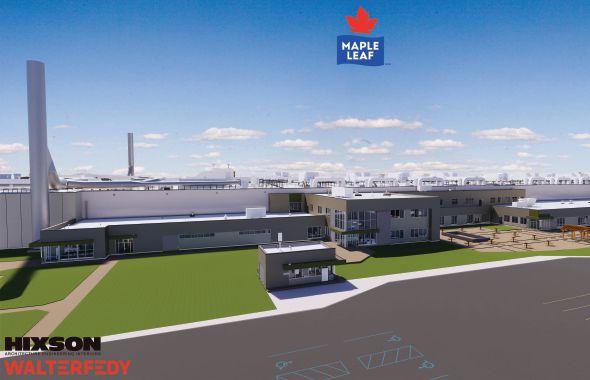
Maple Leaf Foods Inc. is building a $660-million fresh-poultry facility in London, Ont., that will enhance its ability to process higher-margin products by closing three aging plants in the province.
The protein company will invest an initial $605.5 million into the plant that will serve Eastern Canada and an additional $5 million into related projects over the next five years, while $34.5 million will come from the Ontario government and an additional $28 million from the Canadian government. It will lead to a net reduction of about 300 jobs.
The new facility will span nearly 60,000 square metres and employ 1,450 full- and part-time workers once operations begin, which is expected in the second quarter of 2021. Construction will begin this spring. “It will solidify and strengthen the poultry industry in Canada for the next many, many decades,” Maple Leaf CEO Michael McCain said in a
conference call.
Chicken is the most consumed and fastest growing meat protein in Canada. McCain said the plant is the largest single-site investment ever made in the Canadian food sector. Production from three of Maple Leaf’s other plants will eventually be consolidated into the new facility, the company said.
Its St. Marys plant is expected to close by late 2021 and its Toronto and Brampton facilities will close by in mid- to late -2022. “These plants have served us well but they’re now 50 to 60 years old and severely growth constrained because of location, footprint or infrastructure and nearing the end of their productive capacity,”
McCain told analysts.
McCain said he “deeply” regrets the impact on existing employees, but the plant will allow it to earn millions more by delivering higher margin valued-added air-chilled, tray-packed boneless and ground poultry.
A plan by Ontario’s animal welfare agency to pull back from investigating cruelty cases involving farm animals is a cause for concern, the provincial government said, emphasizing the group’s obligations under the law. The Ontario Society for the Prevention of Cruelty to Animals has said it lacks the funding necessary to continue investigating reports of abuse of livestock and horses, suggesting the Ontario Ministry of Agriculture, Food and Rural Affairs should take over that responsibility. But the ministry has said it does not have police powers to enforce cruelty laws. Those powers lay with the OSPCA and police forces across the province.
Canadian Bio-Systems (CBS) Inc., a Calgary-based feed additive and enzyme maker, has added a new member to its team. The company announced it has hired Anhao “Tony” Wang as its nutrition and technical service co-ordinator. His scope will include contributing to solutions supporting both domestic and international markets. In the final stage of completing his PhD in Animal Science at the University of Saskatchewan, Wang has had a strong research focus on feed and mycotoxin throughout his studies.
Salmet GmbH & Co. KG, a manufacturer of poultry equipment for layers based in Germany, recently announced it’s expanding its North American sales team. The company has appointed Peter Mumm regional business manager for the U.S. and Canada.

By Crystal Mackay
Most Canadians celebrate innovation when it comes to their phones, cars and medical breakthroughs. Break out the party horns!
But where’s the excitement when it comes to technology and food? Why isn’t agriculture invited to the party? It’s lar gely because of the way those in the agricultural community have traditionally approached the conversation.
“ The Agenda”, a well-respected television show on T VO in Ontario, hosted a program on gene editing and technology in food earlier this fall. I was on the panel to talk about consumer views, together with Stuart Smyth of University of Saskatchewan, Ian Affleck of CropLife Canada and Lucy Sharett of the C anadian Biotechnology Action Network.
It’s a complex topic and difficult to advance thinking when it gets purposefully cornered into public versus private funding and the need for labelling debates. The host, Steve Paikin, described this new foray into gene editing of food as the first with dir ect consumer benefits. GMOs, in contrast, have been viewed as only having production benefits.
The public isn’t interested in hearing about on-farm efficiencies and productivity when it comes to technology that involves the environment, animals and the food they’re

What are the values that drive consumers when it comes to credibility about information on their food? See the latest research from CCFI on foodintegrity.ca using a new methodology called ‘digital ethnography’ to document consumer behaviour online to help establish five key segments of consumers based on values and motivations.
feeding their families. All consumers hear with that approach is how innovation benefits the farmer’s bottom line. Inundating them with information and scientific lingo to sway opinion backfires, too.
So, how does agriculture earn its invitation? It’s about engaging in conversations about the benefits of technology and innovation for people, animals and the planet. That’s what resonates in the context of agriculture’s ethical obligation to do what’s right.
Yes, often technology does improve efficiency and productivity, but why is that impor tant to consumers –and you? Focus on the great-
er good.
R esearch from the Canadian Centre for Food Integrity (CCFI) shows that connecting with consumers on the values that we all share is the key to earning trust.
In fact, it’s three-to-five times more important to earning trust than sharing facts and demonstrating skills and expertise.
Consumers simply want to know that you care about the same things they do, like the highest standards in animal care, and producing safe, affordable, nutritious food in a way that protects and sustains our environment.
The acceptance and rejection of promising innova -
tions like gene editing hinge on how agricultur e approaches the conversation n ow and in the long-run. Earning trust through shared values is an ongoing commitment in all forms of communication: one-on-one and online con versations, presentations, media interviews, mark eting materials, public hearings and policymaker engagement.
I’m not discounting facts and science as an important part of the dialogue – they’re absolutely necessary. But consider this: In CFI trust surveys, when participants are provided with information alone on a controversial food topic like GMOs without the underpinning values it simply galvanized their opposition.
Shared-values engagement can have a real impact with those who are skeptical of technology – even those who are unsure why other than it symbolizes “big ag,” which they inherently mistrust.
Connecting with the public to gain broader acceptance of important innovations is within reach. We know from our research that the opportunity exists.
The question is, will agriculture seize it, invest and commit to a long-term, v alues-based dialogue to earn public tr ust? Our planet and its people will be better off for it. And that’s something we all can celebrate.
This column was adapted from an article by Terry Fleck, executive director of The U.S. Center for Food Integrity.

By Lilian Schaer
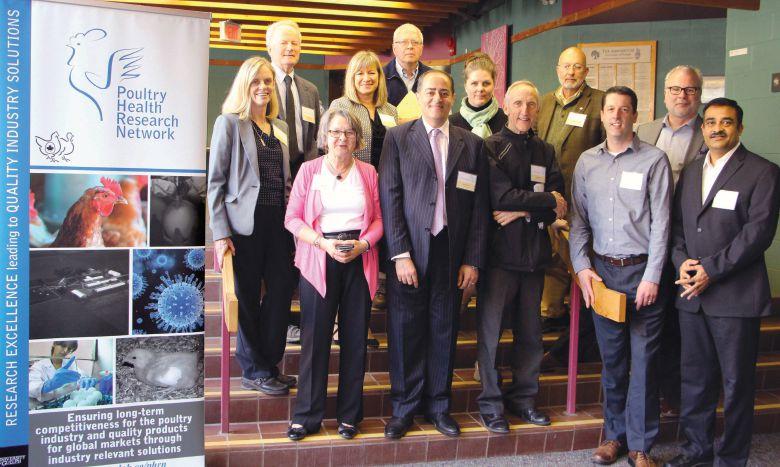
Canada’s poultry industry has complex research needs. Chicken, egg and turkey producers as well as breeders, hatcheries and processors all face their own challenges and demands.
At the same time, though, there are larger issues that affect everyone, such as antibiotic use or gut health, for example, where resources and knowledge could be pooled for common benefit.
And that’s what gave University of Guelph poultry researcher and pathobiology depar tment chair, professor Shayan Sharif the idea of creating the Poultry Health Research Network (PHRN).
“Our goal is to promote poultry research for the benefit of the industry by creating a
pool of poultry researchers, health specialists and industry experts to serve as a poultry hub,” explains PHRN co-ordinator Dr. Ravi Kulkarni, who joined the network in 2015.
Although it started as a Guelph-focused initiative, PHRN’s membership has spread Canada-wide and internationally to the United Kingdom.
“By establishing communications, we want to identify key issues the industry faces and then form teams and research groups from across the industr y to help find solutions,” Kulkarni adds.
He cites the phasing out of antibiotics in poultry production as a key example of the coordinating role PHRN can play. Through consultation with producers, Poultry Industry Council, Canadian Poultry Re-
“By establishing communications, we want to identify key issues the industry faces and then form teams and research groups from across the industry to help find solutions.”
search Council, national chicken, egg and turkey farmer associations, Canadian Animal Health Institute and poultry experts, PHRN identified gut health as a major health issue linked to reduced antibiotic use.
This resulted in an entire research day of expert presentations and panel discussions focused specifically on gut health that attracted over 100 participants from research, industry, producers and government.
PHRN also takes an active
role in promoting poultry research education and bringing together researchers from different faculties – from animal bioscience to engineering and computer science – who work on poultry research but may not know each other.
Kulkarni maintains the PHRN website, which houses an events calendar, research portal of news stories about poultry research and fact sheets about common poultry industry diseases and challenges.
“The whole idea is to provide increased accessibility to our resources in online searches related to poultry,” he explains, adding that PHRN has also become one of the top poultry research sources on Twitter due to regular tweets about various aspects of poultry health, nutrition, management and research.
Monthly seminars about key poultry research topics are also recorded and posted online on YouTube.
On the research side, PHRN has helped form research clusters to co-ordinate targeted research for solving problems relevant to the industry. Kulkarni also attends industry meetings as part of efforts to build collaborative links between industry and researchers.
PHRN’s future focus is on building stronger outreach with producers, developing more resources for students and young poultry farmers and securing additional funding to support the network’s activities.
“At the end of the day, we want to see how we can direct our research to areas that are directly helpful for the industry – we want to be a go-to place for anything related to poultry,” Kulkarni says.
The latest studies on production, biosecurity, food safety and more.
By Treena Hein
It’s here – Canadian Poultry’s first roundup of poultry research studies, from compounds in eg gs that prevent human health issues to seaweed and insect meal as feed ingredients. Note that summaries are often only partial due to space limitations, some studies span more than one category and some are being carried out by graduate students. To save space, we are only listing names of one main scientist and institution.
Please note also that many projects listed here are funded by the Canadian Poultry Research Council (CPRC) and other agencies such as Agriculture and AgriFood Canada and the Atlantic Poultry Research Institute (APRI). The CPRC members are Chicken Farmers of Canada (CFC), Canadian Hatching Egg Producers (CHEP), Turkey Farmers of Canada, Egg Farmers of Canada (EFC) and the Canadian Poultry and Egg Processors’ Council.
Alexandra Harlander at the Campbell Centre for the Study of Animal Welfare at the University of Guelph
(U of G) is examining why chickens feather peck. She’s also looking at how eating feathers may affect the digestive tract, as well as interactions between the digestive tract and the brain.
What’s more, Harlander currently studies non-traumatic activities as a major cause of bone damage in chickens and how muscle use affects skeletal health to determine solutions for prevention of keel (breast) bone fractures. She is studying how a bird’s choices between clean and dirty environments affects its health and behaviour as well.
Ben Wood, also of U of G, is studying whether feather pecking in turkeys is related to genetics and activity level, with Hybrid Turkeys (CPRC project #PWB054).
In addition to supporting CPRC projects, EFC supports many other welfare-related projects. One involves testing if social stress induced by dense populations of laying hens in free-run systems contributes to feather pecking or influences changes in gut microbiota, immune system and more (Harlander).
EFC is also supporting the development of the first-ever survey on risk factors for feather-pecking behaviour in North American laying hens. The goal is to identify and quantif y management, environmental and genetic associations with pecking and feather loss in alternative housing systems. Survey results will be used to create a Canadian Feather Management Plan (a user-friendly feather cover scoring system and illustrated guide) for farmers (Harlander).
EFC also supports research as -
sessing methods for on-farm euthanasia of turkeys, chickens, breeders and layers and another study on the effect of finishing space allowance in standard and enriched rearing systems on performance, health and welfare of layer pullets (Tina Widowski, U of G).
Another welfare study with EFC’s supports looks at the behaviour of pullets following the provision of lighting during embryo development and also the influence of a r ange of exposure conditions during simulated transport on pullet and end of lay physiology, welfare and meat quality (Karen Schwean-Lardner, University of Saskatchewan [U of S]).
Lastly, EFC supports studying the optimal photoperiod during incubation that will best enable newly-hatched chicks to adapt to their rearing environment (Bruce Rathgeber, Dalhousie University).
Marie-Lou Gaucher at the University of Montreal (U of M) has found a significant percentage of carcasses and environmental samples in poultr y processing plants in Quebec contain Clostridium perfringens, which causes necrotic enteritis in chickens and is also a cause of food-borne human illness. She is now determining how contamination occurs and the corrective measures that might be taken. Beyond involvement with CPRC projects, EFC supports a number of human health studies related to eggs. One looks at how the ingestion of egg whites may increase antioxidants in the aging heart (Sanjoy
Ghosh, University of BC [UBC]).
Another is an assessment of vitamin-enriched granule extracts from egg yolk (James House, University of Manitoba [U of Man.]).
A third involves developing an in-egg vaccination platform to reduce food safety bacteria (Wolfgang Koester, U of S).
Yet another EFC-supported project looks at the ability of digested egg yolk to lower blood pressure in rats and the components responsible (and two upcoming projects: a clinical trial to assess the safety and efficacy of an egg-derived peptide in blood pressure management and the development of a new application for ovotransferrin, a natural bioactive protein in egg white, as a functional food ingredient for use in bone health
products) (Jianping Wu, U of A).
EFC also supports the development of nano-textured eggshell s urfaces from breaking plant eggshell waste to create eggshell scaffolds that can be used as a bone graft substitute in orthopedic reconstructive procedures (M axwell Hincke, Univeristy of Ottawa [U of O]).
EFC supports two more studies looking at eggs and human health. One seeks to determine whether eggs consumed as a bedtime snack will assist people with type 2 diabetes achieve better glucose control (Jonathan Little, UBC).
Another is evaluating eggshell membrane nano-particles as therapeutic agents against cancer and other conditions (Maxwell Hincke, U of O).
Hendrix Genetics has partnered with insect protein production firm Protix to improve the potential of insects as a feed ingredient.
Out west, Doug Korver at the University of Alberta is determining whether hens are able to regulate calcium intake to meet their needs, and how their appetite for calcium compares to current breeder-recommended levels.
Korver is also determining how multi-enzyme supplementation of laying hen diets can reduce costs and the use of eubiotics (a combination of enzymes, probiotics, pr ebiotics, essential oils and benzoic acid) as potential replacements for growth-promoting antibiotics in broilers.
Back east, APRI researchers are
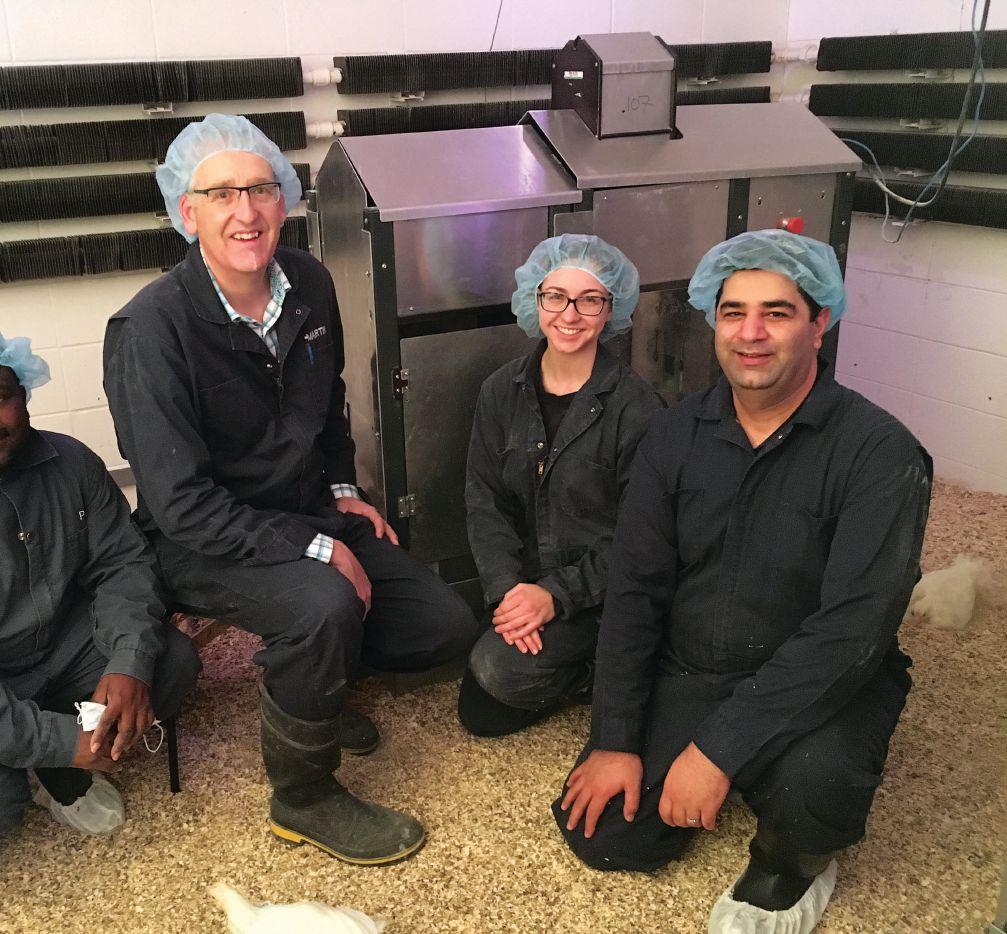
Martin Zuidhof, associate professor at the University of Alberta, recently published a study called ‘Lifetime productivity of conventionally and precision-fed broiler breeders’ in the journal Poultry Science
Zuidhof notes that skip-day feeding has been criticized from the standpoint of metabolic stress, behavioural stress (hunger) and so on. Frequency of feeding cannot be further reduced, but technologies that ensure rapid and equal feed distribution to each bird are limited.
Zuidhof and his colleagues have therefore developed a precision feeding system where free-run broiler breeder pullets and hens are weighed and provided with feed only if body weight is lower than their target for that day.
Birds received five to 12 small meals per day. Zuidhof found that feed efficiency increased by four per cent compared to conventional feeding and there was good flock body weight uniformity.
Read more about this study on our website.
studying local lobster shells as an alternative calcium source for laying hens (Derek Anderson and others). The team is also looking at the use of crickets in poultry diets and their antimicrobial potential to defend against necrotic enteritis (Stephanie Collins and others).
EFC supports a study finding that if digestibility can be improved, defatted DBSFL black soldier fly larvae meal may replace soybean meal as a source of protein in laying hen diets (Kimberly Cheng, UBC).
U of A’s Martin Zuidhof continues his work on precision feeding layers for improved uniformity, production and sustainability (see sidebar on page 13).
Zuidhof, Sasha Van der Klein and others have also done studies finding early photostimulation reduces broiler breeder performance and that the effects of rearing photoperiod on broiler breeder reproductive performance depend on body weight.
Another study is looking at if different feed ingredients and dietary manipulation strategies can reduce ammonia and carbon emissions in egg production (Eduardo Beltranena,
Alberta Agriculture and Forestry).
Dalhousie’s Rathgeber is assessing the use and benefits of dietary red seaweed in laying hen diets.
Meanwhile, U of G’s Elijah Kiarie is looking at the role of limestone particle size on skeletal development and performance of pullets and laying hens, the epigenetic, long-term effects of parent stock diets enriched with omega-3 fatty acids on embryonic bone development and skeletal development in pullets and laying hens.
Lastly, in a yet-to-be launched study, U of M’s James House will look to define omega-3 requirements for optimal health/performance in pullets and laying hens.
U of G’s Bill Van Heyst is evaluating control strategies to reduce emissions of particulate matter and ammonia from poultry operations (CPRC project #ENV074). He’s also assessing an air treatment system for enhanced environmental and biosecurity on broiler operations (#ENV090).
UBC’s Nathan Pelletier is developing the Canadian Agri-food Life

Nathan Pelletier and his team are evaluating and disseminating sustainability improvement opportunities for Canadian egg farmers and their value chain partners.
Cycle Data Centre (CALDC), an online repository of quality publicly-accessible data for characterizing the resource use and emissions profiles of common activities along Canadian food supply chains. He and his team are also evaluating and disseminating sustainability improvement opportunities for Canadian egg farmers and their value chain partners.
A web-based sustainability assessment platform will be available for egg farmers to measure sustainability performance based on a variety of indicators against regional, national, and housing system-specific benchmarks. It will allow farmers to set goals, track progress and communicate their performance to value chain partners to address emerging, market-driven requirements for sustainability measurement and reporting.
It will also provide EFC with a basis for developing national resource efficiency and emissions reductions targets and initiatives. Pelletier’s other current or upcoming projects include a life cycle assessment of LED lighting for pullet/ layer barns (involving Greg Bede -











carrats, U of Guelph), of renewable energy and waste management strategies for egg supply chains, and of nitrogen efficiency strategies for egg farmers.
He’s also developing a feed formulation decision support tool based on the sustainability of ingredients.
Trever Crowe is researching the influence of extreme temperature on turkey physiology, welfare and meat quality (CPRC project #PWB073).
Meanwhile, U of G’s Patrick Boerlin and Agnes Agunos of the Public Health
Agency of Canada have teamed up to look at farm-level surveillance of antimicrobial use and resistance in Ontario turkey flocks (CPRC #AMN092).
Agunos is also collaborating with U of M’s Martine Boulianne on the development of the Canadian Integrated Program for Antimicrobial Resistance Surveillance (CIPARS).
The goal is to investigate the national prevalence of Salmonellae, Campylobacter and generic E. coli in broiler breeder flocks and to determine the resistance profile of these bacteria (CPRC #FSQ099).
Beyond involvement with CPRC initiatives, CFC currently supports two bird health research projects headed by U of M’s Martine Boulianne.
These are multi-year investigations into the effects of organic acids on reducing intestinal pathogens in broiler chickens, and an examination of gut health in antibiotic-reduced broiler flocks.
Our safe, high-quality chromium optimizes performance by combating the negative impact of environmental and health stressors. This means improved feed conversion in your operation.1 Don’t stress. Optimize performance and boost your bottom line with KemTRACE Chromium.



























A separate study is looking at lighting during incubation in combination with sanitation of hatching eggs with lysozyme (Rathgeber, Schwean-Lardner and others). Another is looking to identify metabolomics markers for health in laying hens (Leslie MacLaren, APRI).
In addition to supporting several CPRC projects, CHEP supports a two-year project led by John Stavrinides at the University of Regina. For this initiative, Stavrinides is developing an inexpensive disinfectant spray based on newly-discovered antibacterials for use on eggs in hatcheries
EFC supports a number of other health-related studies. One involves evaluating a rapid diagnostic tool for avian influenza in the barn (Suresh Neethirajan, U of G).
Another is assessing how natural compounds can induce the activity of prophages (viruses that attack bacteria) against Salmonella Enteritidis and E.coli in laying hens (Lawrence Goodridge at McGill University).
While some Canadian Poultry Research Council projects are listed above, see the complete and very extensive list here: cp-rc. ca/research/programs.






• Genomics = Improved Selection Accuracy
• State-of-the-Art Data Management Systems

• Advanced Ultrasound Technology for Improved Meat Quality
• Improved Measurements for Broiler Efficiency





By Treena Hein
As the Canadian poultry industry continually improves bird welfare, it’s incorporating new research a nd technologies into transport and handling.
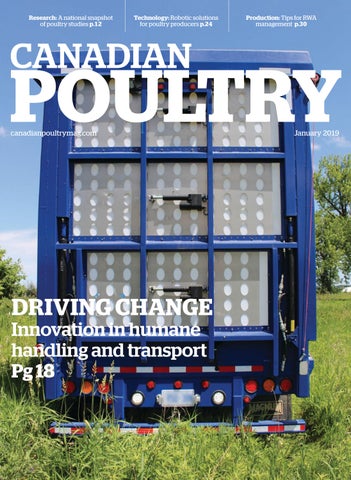
One of Canada’s processing industry leaders, Maple Lodge Farms, has done a large amount of its own research and development on poultry transport and holding facilities. It established a Transport Working Committee in 2014 for this purpose, which included vets, agricultural engineers, ventilation experts, animal behaviourists, transportation specialists and equipment manufacturers.
Since then, the group has evolved into becoming the firm’s permanent Animal Welfare Committee, reports Maple Lodge Farms director of corporate affairs Carol Gardin. “This committee considers a broad range of animal welfare projects and initiatives, including our current transition to modular loading and controlled atmosphere stunning for broiler chickens.”
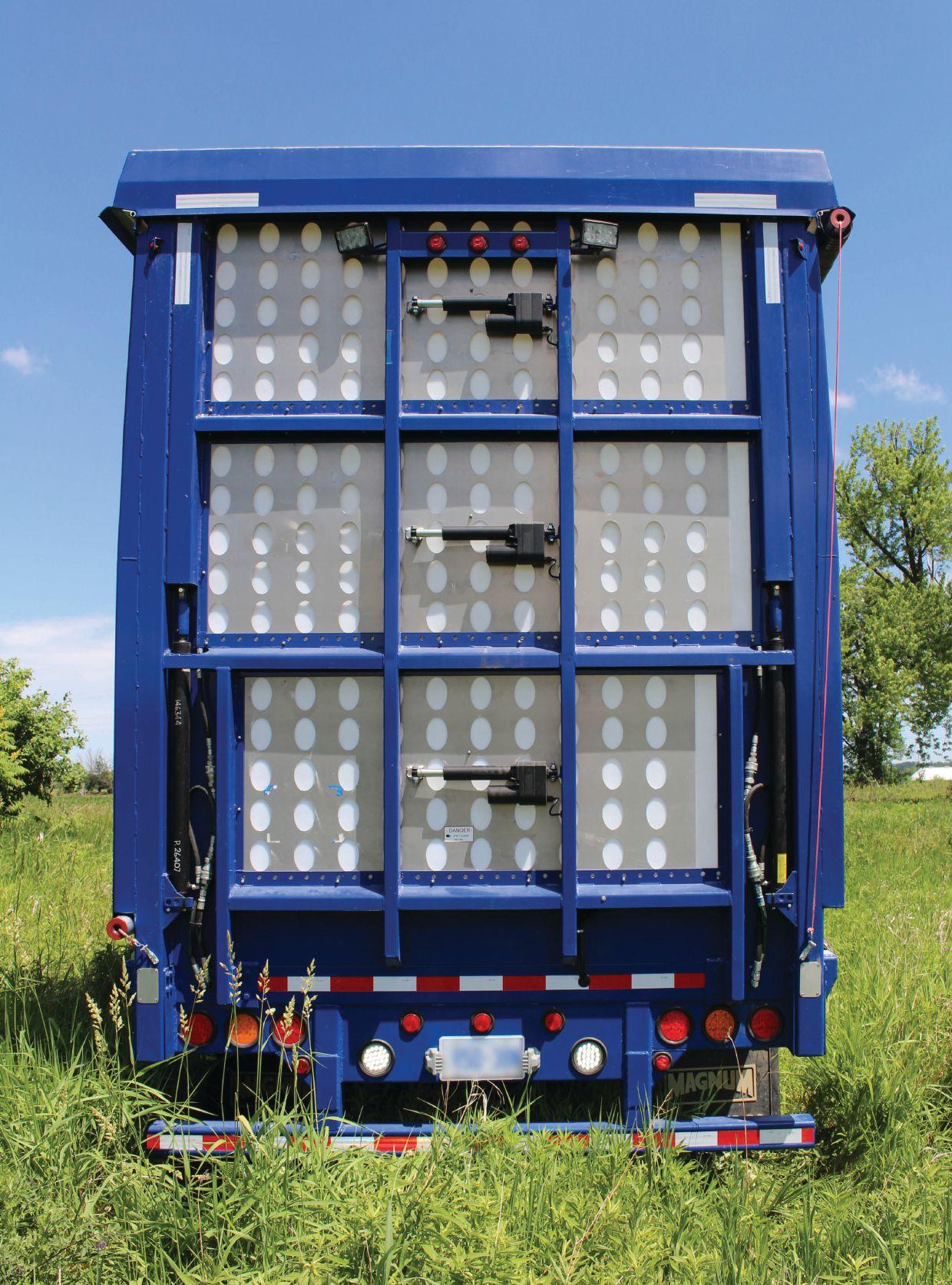
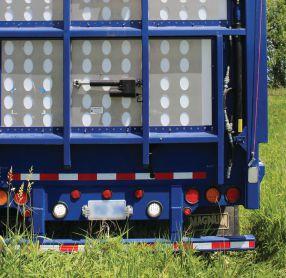
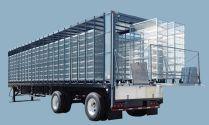
Maple Lodge Farms has developed several trailer prototypes over the past two years. The design has been refined over time to optimize air flow so that all chickens, no matter where they’re located on the trailer, experience the same environmental conditions. All designs were established using computational fluid dynamics software.
The two mechanical ventilation systems that were trialed (up draft and down draft) were abandoned as they were ineffective. “The challenge…is to overcome the uneven temperature gradients that
develop within an enclosed poultry trailer as a result of the birds’ body heat and respiration,” Gardin explains.
“The mechanical ventilation systems not only presented challenges with regards to sanitation and biosecurity, they p otentially compounded the gradients that already existed.”
The newest trailer design efficiently moves air around within the trailer, preventing heat and humidity from building up. “During the winter, there is more than ample body heat generated onboard the trailer to keep the birds warm, but the
trick is to distribute the heat evenly so that all birds experience the same conditions,” Gardin notes. “Our research demonstrates that the strategic placement of air inlets/outlets can achieve that.”
She adds that having reached a final design, their next step was to automate the system so that air flows are automatically adjusted as temperature/humidity rises or falls.
The design also includes tarps with perforated sections placed strategically along the length of the trailer to work in conjunction with adjustable, perforated


An evaluation of two broiler catching methods was recently published in the journal Animals As catching and associated handling at catching can lead to stress, injuries and mortality, Norwegian researchers Kittelsen, Granquist, Aunsmo, Oppermann Moe and Tolo investigated the effect of two hands-on broiler catching methods.
One method was broilers being caught by both legs and carried inverted to the drawers, and the other was birds caught under the abdomen and carried in an upright position.
The team took the following measurements: Effects of catching method on crating time; number of birds in the drawers and number on their backs in the drawers; number of wing and leg fractures; and number of birds dead-on-arrival at the slaughterhouse.
Neither method resulted in broken legs, birds on their back in the drawers or broilers dead-on-arrival. The upright catch and carry method provided a lower and more consistent number of birds per drawer. In addition, this method resulted in fewer wing fractures and was also faster.
However, the Canadian national Poultry Handling and Transportation Manual directs broiler catchers to catch birds by the leg. This manual and an associated one-day training session were first produced in 2015 by the Poultry Services Association (PSA) in conjunction with Al Dam, poultry specialist with the Ontario Ministry of Agriculture, Food and Rural Affairs.
PSA is non-profit organization representing those involved in the handling and transportation of poultry in Ontario (about 85 per cent of commercial poultry catching and 90 per cent of live haul by volume).
PSA executive director Susan Fitzgerald says the manual and training were very well-received at the time, and in 2016 PSA teamed up with the Canadian Poultry and Egg Processors Council to expand the content and make both the manual and training applicable in all provinces. “That led to a revised national version of the manual being issued in 2017 along with updated training,” Fitzgerald says. “There have been 971 people take the training.”
The manual directs poultry workers to “gently catch broilers by the legs just above the feet and move them to containers in a way to avoid injuring their legs, joints, or wings.” Fitzgerald says catching broilers as described is considered a humane method of handling and adds that in the pullet section of the manual and also in the end-of-lay section for caged layers birds are to be supported under the breast.
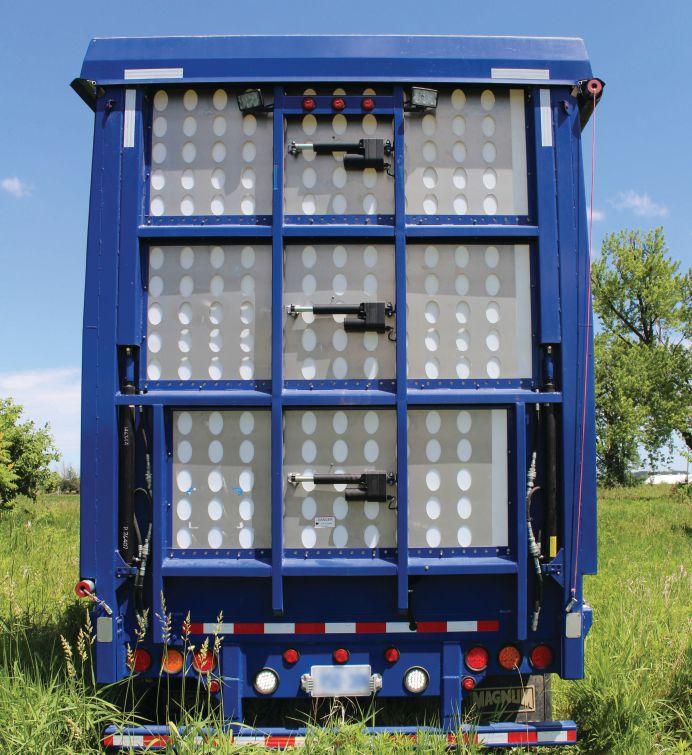
boards at the front and back. Other elements include automated roll-up of tarps, a better lighting system, advanced hydraulic-lift roof, in-cab digital environmental display, insulated floors with w eather-proof coating (promotes easy cleaning and water run-off) and an advanced biosecurity system.
Gardin explains that, “all of these efforts were timed to align with our implementation of modular loading at the end of October. Currently, the new trailers are being manufactured.
“We will continue to capture data and refine the design, as necessary, to achieve comfortable environmental conditions inside the trailer, across all seasons and weather conditions.”
On the academic front, Trever Crowe, associate member in the Department Animal and Poultry Science at the University of Saskatchewan, with colleague Karen Schwean-Lardner, has been working to accurately define appropriate poultr y trailer conditions, especially in
Crowe notes that while it’s likely that birds can cope with colder conditions while in transit as long as the trip is relatively short, “we also expect that these appropriate limits will vary with a number of factors: Broilers versus hens versus turkeys or feather cover,” for example. He says once they have a better idea of what birds should and should not be subjected to, the thresholds can be used in a variety of circumstances, including the establishment of science-based codes of practice and set points for actively-ventilated transport trailers.
For its part, Transport Canada updated its Health of Animals Regulations (Humane transportation) in 2016 and will publish amendments in early 2019. The department claims that the amendments will accomplish a variety of goals besides improved welfare, including alignment with international standards and current science, clarification of definitions and removal of vague terms, improvement of
Synthetic











enforcement capabilities and removal of obsolete or unnecessary requirements.
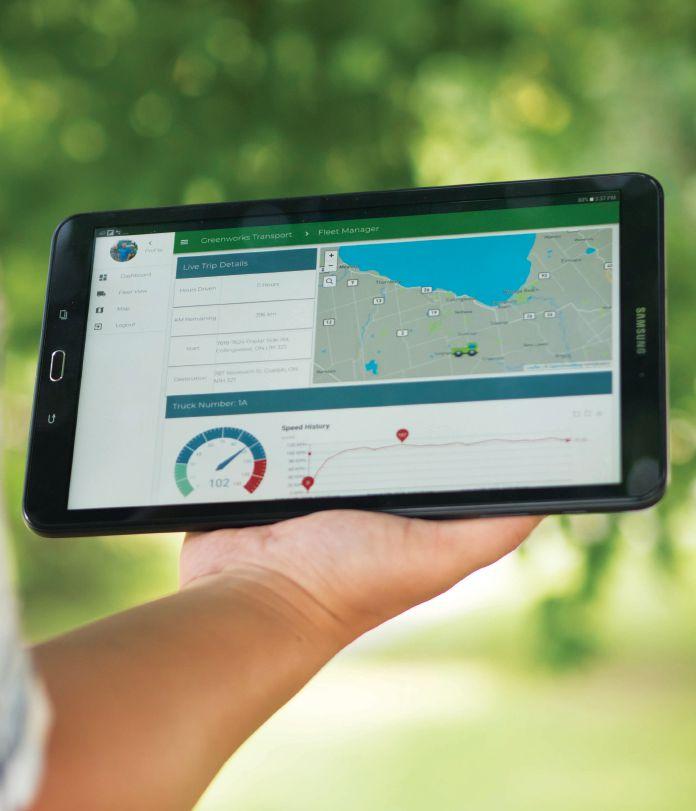
A patented real-time transport trailer sensing system is now being launched by the Ontario-based creators of Be Seen, Be
Safe geo-fencing farm visitor tracking and outbreak biosecurity control system.
Called Transport Genie (TG), its system consists of sensors placed in the tr ailer that continually relate data on humidity and temperature to transport fleet managers and drivers so they can

make the best decisions possible on environmental conditions. Data receivers can set up automated responses, for example, so that conditions are adjusted when they approach a threshold, or track data over time.
The system was trialled at Luckhart Transport in Sebringville, Ont., this year, and presented at both the Ontario Pork Congress in June and the World Poultry Tech Conference in Atlanta, Ga. in November, among other significant meetings.
“The trick is to distribute the heat evenly so that all birds experience the same conditions.”

The development of TG was partly supported through the Accelerating Innovative Research program through the Ontario Ministry of Agriculture, Food and Rural Affairs. The Canadian Animal Health Coalition (CAHC) also helped in the development. CAHC is a non-profit that works to identify farmed animal health and welfare solutions, influence government policy and more, and has created the Canadian Livestock Transport (training) Program.
In the view of CAHC executive director Mark Beaven, TG is revolutionary. “ Traditionally, transporters have had the ability to monitor such things as temperature, but it was through the use of data log gers, so it was after the fact,” he notes. “In many cases, this was too late. With TG, transporters will have the opportunity to take corrective measures before
any change in variables cause any ill effect towards the livestock being transported.
“And the fact that there are multiple checks and balances as well will allow for greater accountability. Not only the driver will be alerted, but the fleet manager can be alerted to any issues while in transport. All of these capabilities that TG brings to the industry will not only improve the welfare of the livestock and poultry while in transit, but also the quality of the end product. It is for these reasons that the CAHC is so supportive of doing what we can to assist in the development of technologies like TG.”
Beaven predicts that TG will be used in all commodities, but expects that poultry and swine will be the two largest sectors that could benefit from this technology.
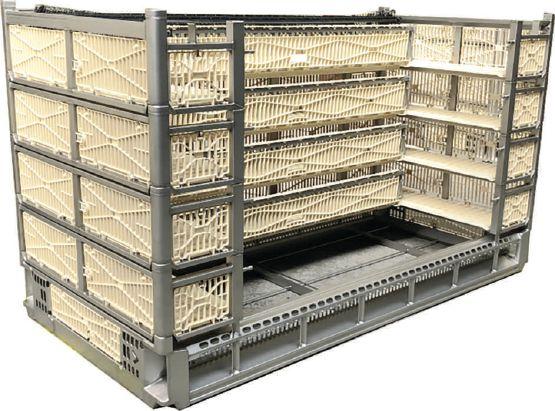
One sale has occurred so far in Canada of a new modular poultry handling system from Marel. The firm’s industry marketing manager Roy Driessen says the design of the ATLAS gives maximum attention to bird well-being while considerably increasing efficiency. The system’s SmartStack transportation module increases loading capacity by up to 38 per cent, which means fewer truck movements and fewer CO 2 emissions. “At the same time, more space is available per bird and hygiene is up,” Driessen says.
Cargill recently installed a $22 million state-of-the-art Controlled Atmospheric Stunning (CAS) system at its London, Ont., chic ken processing facility. The system replaces electric stunning and has been operational since the spring.
The firm notes that while both electric and CAS stunning systems are approved, proven and acceptable for humane poultry harvesting, a growing number of consumers and customers are expressing a desire for CAS systems. Cargill says it was a pioneer in the use of CAS, having installed it at one of its U.S. turkey processing facilities more than a decade ago.

By Melanie Epp
In the past decade, robotic solutions have found a home in the agricultural sector. Their uptake shouldn’t surprise anyone; robots are perfect for those repetitive and time-consuming tasks producers would prefer to leave behind. They not only take on unwanted tasks without complaint, but they also allow producers to improve overall production by freeing up the time needed to address bigger and more complicated tasks. They’re being used to improve farmers’ working conditions, and to gather and analyze data that will help increase productivity and profitability. Here are some of the robotic solutions from around the world.
In Cholet, France, robotics pioneer Octopus Robots has designed two robots specifically for poultry production. The first, Octopus Poultry Safe, sanitizes and
decontaminates large buildings by delivering liquid disinfectants and sanitizers, working autonomously until the entire targeted area is saturated. The robot collects data while working, such as temperature, humidity rate and carbon dioxide levels. It also gathers data on sound and light levels.
Poultry Safe is equipped with a second module called the Scarifier, which also has the ability to work as a standalone robot. The Scarifier is designed to aerate litter in presence of poultry. It is capable of dealing with all types of substrates, turning and ventilating litter to prevent the onset of aspergillosis (a disease caused by Aspergillus fungus), pododermatisis (inflammation of the foot pads) and hock and br east injuries. Regular litter aeration is also known to inhibit the fermentation process in soil and dramatically reduce the level of ammonia in barns.
France-based company Tibot Technologies designed a similar robot for aerating litter. The Curiosity runs along the poultr y house floor, running prongs through the litter to keep it aerated. In doing this, it prevents moisture from accumulating and ammonia levels down.
The Curiosity robot runs on lithium battery that lasts for 10 hours. It can be programed to work all over the house, has six speeds and has a four-wheel drive system, making it possible to handle varying terrain in the barn. Although the robot is still in development, the company says it will be commercially available in the spring of 2019 for a cost of about $10,000.
Showcased at Space 2018, an agricultural trade fair in Rennes, France, a high-pressure washing robot called Lavicole won the highly coveted Innov’Space award. Designed specifically for cleaning poultry houses, the robot is track-mounted and fully radio-controlled.
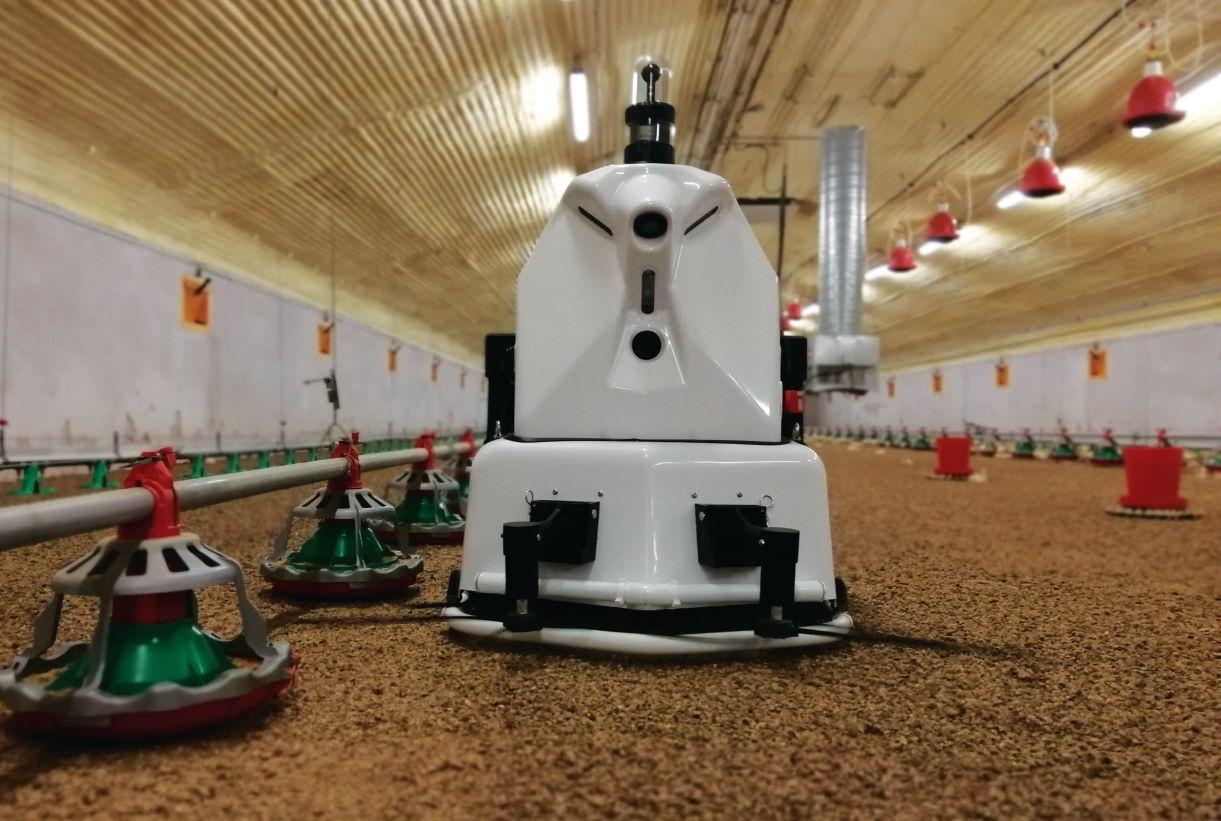
In order to ensure thorough cleaning, the robot is equipped with three washing devices. A directional ramp mounted on an articulated arm and equipped with five rotating nozzles that can reach 4.5 metres high make it easy to clean ceilings and walls. Lavicole also has a washing system designed to clean feeders, a manual
high-pressure cleaning lance and a foam gun to apply detergent. The French company Rabaud designed Lavicole.
Have you ever wondered what your broilers are up to when you’re not around? Is their activity healthy? And if

not, how can you make sure you address the issue as quickly as possible? Dutch company Fancom has a solution to address these questions and more.
EyeNamic is not actually a robot, but a behaviour monitor that captures the movement and activity of animals, alerting farmers to problems that could become welfare issues, like improper distribution, crowding, feed and water intake and piling, explains Fancam area sales manager Daan Berkers.
“It’s your third eye in the house,” Berkers says. Farmers find it important to know, for example, why birds are crowding in one area, but not going to another, he explains. Maybe the litter is too wet. Maybe the ventilation isn’t working properly. Or maybe the water line has shut off. Whatever the problem, being able to monitor from a distance at all times allows farmers to quickly respond to abnormal behaviour.
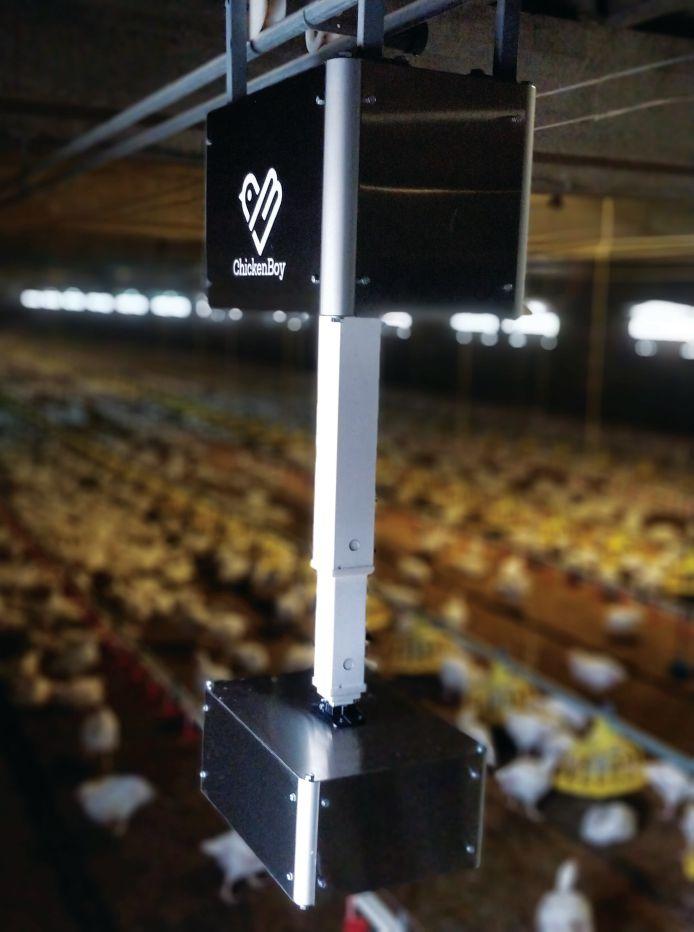
Another monitor, ChickenBoy, is a lightweight device that travels slowly (10 cm/second) on rails overtop of the flock, gathering three datasets as it goes. It collects information on ambient conditions, welfare and health, and watches over installations
As ChickenBoy moves along the rails, it gathers data on climate conditions, including humidity, temperature, airspeed, and carbon dioxide levels. For now, it does not come equipped with an ammonia sensor, but the Spanish company Faromatics, is looking for a partner, says Daniel Rosés, company co-founder and senior partner.
ChickenBoy also takes thermographic images that can distinguish between chickens that are dead or alive. What’s more, it assesses dropping colour, alerting the farmer when it is off. Some thermographic imaging tools even alert famers when flock health status changes. By looking at the colour you can see which ones are not well and which ones are healthy. “Farmers can predict disease two to three days earlier through excrement analysis,” Rosés says.
Although the cost is not yet established for Canadian buyers, Rosés says it costs European clients around €15,000 for the device.
In open aviary systems, training hens to lay eggs in nesting boxes can be a difficult task. For farmers, it means regularly walking through barns and manually moving birds to deter them from laying on the floor. It’s a time-consuming job, and one that farmers can now pass on to a robot.
Spoutnic, designed by Tibot Technologies, has been designed to move around the barn in random patterns. As it travels, it gently forces hens to keep moving, which keeps them from laying eggs on the floor.
Reducing the number of eggs on the floor reduces the amount of time farmers have to spend stooped over, picking up eggs. Lionel Planquette, Tibot’s technical manager, says internal studies show that Spoutnic helps increase feed consumption, which he says leads to increased gr owth of 300 grams per bird. Barns where Spoutnic works also show a three per cent decrease in mortality.
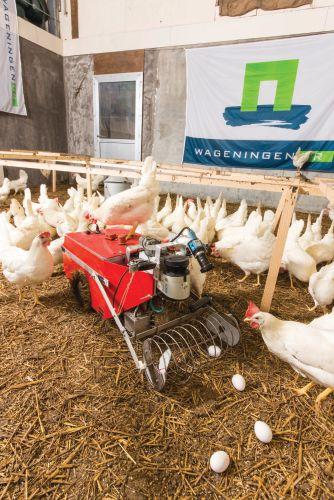
If Spoutnic isn’t available, poultry farmers could always employ a poultry-bot to collect floor eggs. Designed by Wageningen University in the Netherlands, the robot eliminates the one to two hours that farmers spend collecting
eggs in cage-free housing systems. Collecting eggs may be its main task, but this robot can also track data, like humidity and temperature, and keeps an eye out for sick and dead birds.
Finally, French agricultural manufacturer Inateco designed Sentinel Robot, a d evice that distributes bedding automatically. While bedding distribution is its primar y function, it also monitors animals using a variety of sensors, including visual and thermal cameras.
Using artificial intelligence, Sentinel Robot is able to establish diagnoses, make recommendations, issue alerts and fully automate the spreading of litter in the presence of animals. Inateco won a silver innovation award at EuroTier, the world’s largest trade fair for animal production. EuroTier takes place in Hanover, Germany every second year.
The robot drew a lot of curious bystand-
ers, some of whom were concerned about what its presence meant for the farmer. “We don’t want to take the farmer out of the barn,” Inateco’s Lorris Miglioretti says reassuringly. “We just don’t want him to take care of this task.”
“While the bedding is being done, he can be inside looking after the animals, creating this bond between the farmer and the animal,” he concludes.
Much like ChickenBoy, Sentinel Robot moves around the barn as needed. As it goes, it collects data, including temperature and humidity, as well as CO 2 and ammonia levels.
For the moment, Sentinel Robot works best combined with Dassau electric mobile straw chopper technology. However, the compan y does plan to make the technology available to other companies as well. There are already Sentinel Robots working in barns in Europe.
By Leasea Butler of Cobb-Vantress
The poultry industry has seen quick changes in regards to the usage of antibiotics. These have resulted in rapid responses by production teams to manage their processes differently. For instance, it would have been taboo five years ago to “wet” an egg in any way for fear of bacterial growth.
In today’s poultry production world, most companies are using antibacterial wipes to reduce bacterial growth on eggs, as well as many other wet sanitation methods. As an industry we have had to learn quickly, but we still do not have all the answers. In many cases just more questions.
One question is how to reduce bacterial loads coming from the breeder farms. Bacteria grows at the rate of two times every 15 minutes in the poultry house environment. The eggs are coming through the vent of a chicken, immediately being exposed to not the cleanest of environments.
The first line of defense is ensuring that the intestinal health of the birds is good so that there are no additional bacteria being introduced while the egg is being laid. Some companies are trying different prebiotics or probiotics to help with the hen’s intestinal health.
Most have found they have to be more diligent with their intestinal health programs starting in the pullet house. Ensuring they have a good gut flora from a
pullet will result in better hen health. Special attention should be placed on cocci programs and water line sanitation to help establish good bacterial flora.
Once through the vent, eggs are subject to the environment of the chicken house –either the nest pad and nest belt or the floor. Keeping clean floors, nest pads and nest belts can be challenging, but with better intestinal health, improved ventilation and husbandry, bacterial loads can be mitigated.
A lot of companies are supporting the replacement of nest pads and nest belts, as well as top dressing the floors with new bedding material post peak production. Anything that can be done to reduce the bacteria levels on the surfaces that the egg touches will reduce the amount of bacterial load being taken to the hatchery.
Another key aspect of mitigating the bacterial challenge to an egg is reducing the number of cracks and microcracks. Microcracks will hatch an egg at a reduced rate
of +23 per cent, but that means +60 per cent of them will hatch.
Some of this reduced hatch comes in the form of three per cent higher contaminated eggs. These contaminated eggs result in higher bacterial levels in the hatchery. The remaining 17 per cent is in early (10 per cent) and late (10 per cent) dead embryos.
The chicks that do hatch are also affected. The chicks that do hatch from microcracked eggs result in eight per cent cull or downgrade chicks, and the seven-day mortality of chicks from microcracked eggs have one per cent higher rates than those from non-cracked eggs.
Anything that a company can do to reduce the risk of microcracks will help the bacterial load, embr yo health and chick health, resulting in better hatch and better seven-day mortality. Some areas to look at would be transition for the egg from the nest pads to the belts, transition from the belt to the table, the person collecting the egg, and transportation of the egg.
Another point is how quickly the egg is
Discover HATCHPAKTM COCCI III, a new coccidial vaccine containing three attenuated, precocious strains that stimulate a strong natural immune response, while minimizing tissue damage.
being cooled. Some companies allow the egg to sit at egg collection room temperature for a few hours before placing them in the egg cooler so that the fresher eggs that are just below 41°C are not immediately placed into a 20°C egg cooler, causing microcracks. Once the egg is in the egg room, the eggs
can be fogged with a disinfectant to help reduce the bacteria levels that the egg came in contact with. Although, these fogging systems do not reach the bacteria that have been allowed through the pores of the eggs or through the microcracks. Many companies may fog them numerous times be-













fore they are set into the incubators. In the incubators, there is not a lot that is being done to reduce bacteria levels, but the key is reducing the stress of the embryo through temperature management. Many companies are looking at the possibility of moving to single-stage machines so that they can clean between sets.
The next critical step is at embryo transfer. The equipment used to do the embryo transfer process must be as sanitary as possible. Experts suggest increasing the frequency of cleaning the transfer spoons, suction cups, heads and tables. Many companies were waiting until breaks to do some of these processes.
Having a standard procedure that requires a cleaning every ‘x’ number of buggies or machines will help the bacteria levels that are being introduced to the eggs to follow. Also, setting eggs so that your more problematic flocks and old flocks run last will help reduce the bacteria load being spread to good conditioned eggs.
You see many combinations of sanitation in the hatchers, but this is a critical step due to the bacterial bloom that occurs in hatchers. As the chicks hatch they release the bacteria that may be in the egg. As these bacteria grow in a nice, warm, moist environment, every chick is exposed to this bacteria load without proper sanitation. The cleaner the environment can be before hatch begins the better.
Also, reducing any stress the chick may be encountering during these crucial first hours will help its overall immune system health. Keeping CO2 levels and temperature levels throughout the entire hatch window will reduce this stress and allow their natural immunity to thrive.
There are a number of steps that must be evaluated and changed in RWA poultry production. The industry has been doing a lot of these steps for many years, but now there is a need to become even more diligent and detailed. At the same time, research avenues and innovations are increasingly being explored as the industry strives for answers.


By Dr. Kayla Price
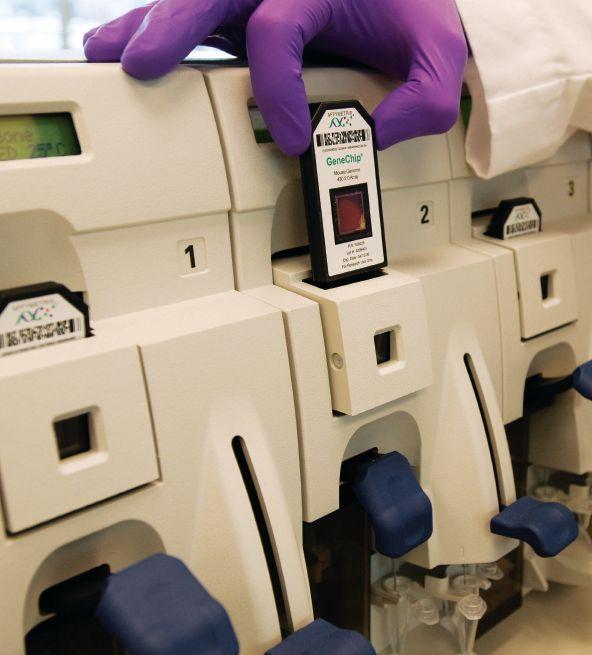
The study of poultry production has progressed significantly over the past several years, including the introduction of more complex research approaches to understand changes in the bird. Traditionally, in research, scientists ask a question and then answer it – at least par tly – through a study or a series of studies. While this approach is still extremely useful, modern science allows researchers to use “-omics” technologies to consider a subject more holistically and better understand different combined pieces.
This holistic view can help better define an original research question and act as a problem-solving tool. Research like this is happening in many labs across Canada a nd beyond, but translating it to and implementing it on the farm will help us better understand the mode of action of certain technologies or their impact on the animal – and to understand the “why”.
These “-omics” technologies look at the totality of a biological subject – i.e., broad-spectrum data –to characterize and quantify this information for interpretation by the researcher. Essentially, this type of work allows the researcher to profile a large pool of biological data in a single snapshot, and this information can help us understand the dynamics of, or changes to the subject. Often, “- omics” work is paired with current or previous animal data to better understand how this new information can be applied.
There are many kinds of “-omics” technologies, including proteomics, which measures protein levels, and transcriptomics, which measures the messenger molecules, mRNA. These “-omics” technologies have been around for a while, but thanks to the ease of conducting the work and recent reductions in costs, more academics are making use of this field of research. Often, researchers can use the data generated to understand what is happening in the bir d and help inform field decisions – or it can be used the other way around, with an observation in the field that provokes a question to be answered.
“-omics” technologies
Functional transcriptomics is used to measure the level of expression of either all the genes or a selected group, to determine whether these genes are turned on or off and at what intensity they are activated or inactivated. These genes, which are the code for the body, can have a direct function or be part of a bigger system of a direct function. A genotype (the sequence of genes an organism carries) helps make up a phenotype (observable characteristics – that is, what we see on the outside) that can be impacted by genes and the environment. E pigenomics is the study of epigenetic modifications – for example, changes in gene expression that do not alter the actual DNA sequence in a cell at a given time. These epigenetic changes can be produced by many different outside factors, such as age, diet, environment, microbes and so on. When applied in poultr y produc-
is an expert in poultry intestinal health.
“When
paired with good barn management and husbandry, these techniques could help further innovation within the poultry industry.”
tion research, epigenomics can help determine if certain experimental conditions can have an impact on the genes being expressed and, if paired with watching the birds, can change certain aspects of poultr y performance. Additionally, epigenomics can study whether changes in a parent bird have an impact on offspring development, a phenomenon known as maternal programming or fetal programming. This type of research is not limited to just looking at genes, as you can also look at proteins being expressed, changes in metabolites (substances formed during chemical processes to maintain life) and so on.
T his helps us understand how genes are turned on and off, and helps us understand the ways these genes are affected or, conversely, affect other genes.
In the body, signaling pathways function similarly to “the domino effect” – if you line up dominos and knock the first one over, it will subsequently knock the second domino over, which will knock the third one over, and so on, until all the dominos have fallen. In the same way, activation or deactivation of genes impacts more than one individual gene – it can also change the activity of other downstream targets, just like dominos.
“-omics” technologies allow researchers to profile a large pool of biological data in a single snapshot.
T he use of microbiomics, the study of the totality of microbes in an environment, has been on the rise as more countries announce antibiotic reduction strategies or regulations. Information provided by microbiomics can help us understand what microbes are present in a certain environment (like the intestine) at a given time or what has changed there, as microbes can change depending on such factors as age, diet and environment.
Using the information microbiomics provides, communities of

microbes and their total present population in an environment can be better understood, but this analysis does not necessarily tell us the microbes’ function or how they work in an animal. Part of the key to making this work practical is understanding the function of microbes and what they release into the gut, their impact on the gut and, ultimately, their impact on the whole bird. More researchers are interested in looking not only at the microbiome but also at the changes in metabolites produced by microbes and the animal in response to the changes in the microbiome – a separate area of research called metabolomics.
In terms of understanding
the intestine, these different “-omics” technologies can help us learn how the gut grows under normal conditions and what has a positive or negative impact on it. They can also reveal what affects the gut in different challenge situations.
To better understand how everything works together, there is an analogy equating these concepts of “-omics” to a movie. In this example, the life of the bird is the movie, the cells are the main actors, the microbes are the actors’ managers and DNA is the script (genotype), with the DNA sequence being the words on the page. The script tells the actors what to do, the managers work around the actors and the dir-

ector has the power to change scenes or dialogue. The director, like epigenetics, can be influenced by many outside factors to make changes to the movie, but the resulting movie is all that the audience can observe (phenotype). The same movie may turn out differently depending on the director or the director’s mood during filming.
In the world of nutrition, nutrigenomics can be used to study the effect of nutrients or different “bioactive” feeds on gene expression, how they impact the bird on a genetic level and what can be observed. Nutrigenomics also allows us to better understand the impact of different nutrients on a genetic level and how that impact might affect different poultry breeds and production states. This, in turn, can lead to a better understanding of precision nutrition and what is turned
on and off in different production states. From this information, researchers can then determine what is needed in terms of specific nutrition to combat these changes.
However, it is important to note that this information is generated in the lab and using it directly on the farm could be different when utilized in the future. Different bioactive technologies – like alternatives to antibiotics or mineral sources – can influence not only the genes of the animal but also how the animal responds during times of good health or health challenges.
At the end of the day, these techniques provide a better understanding of what is happening inside the animal during different conditions. When paired with good barn management and husbandry, these techniques could help further innovation within the poultry industry, especially as we move into a new era of oversight of antibiotic use.





Sector
Broiler hatching eggs
Location
Stratford, Ont.
Production
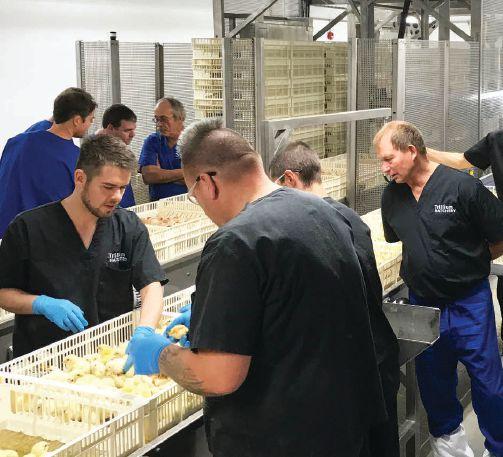
Trillium Hatchery was co-founded by a consortium of producers, including Doug Kaizer, Dave Brock and Murray Booy. It opened in November.
Equipment specs
The hatchery features the HatchCare system, whereby chicks are provided with tightly-controlled and ideal environmental conditions, along with access to feed and water upon hatch. Kaizer and the Synergy Group built Canada’s first HatchCare facility three years ago in Nova Scotia.
Innovation factor
“We’ve switched to a different LED fixture in Nova Scotia that provides better wearability, and these fixtures were the choice in constructing Trillium,” Kaiser notes. “Control of the chick environment is similar, but building heat is powered by propane in Nova Scotia instead of natural gas at Trillium, as natural gas is not available in Nova Scotia.” Boilers in both facilities heat water that runs through the incubators and hatchers. Booy says that tubes containing both warmer and colder water can be adjusted every few inches to maintain hatcher temperature. Ventilation is also very closely controlled in the incubators and hatchers. Sexing services are provided at Trillium but not in Nova Scotia. Exhaust is ported through the end walls with Trillium’s building ventilation system. Visit us online trilliumhatchery.com
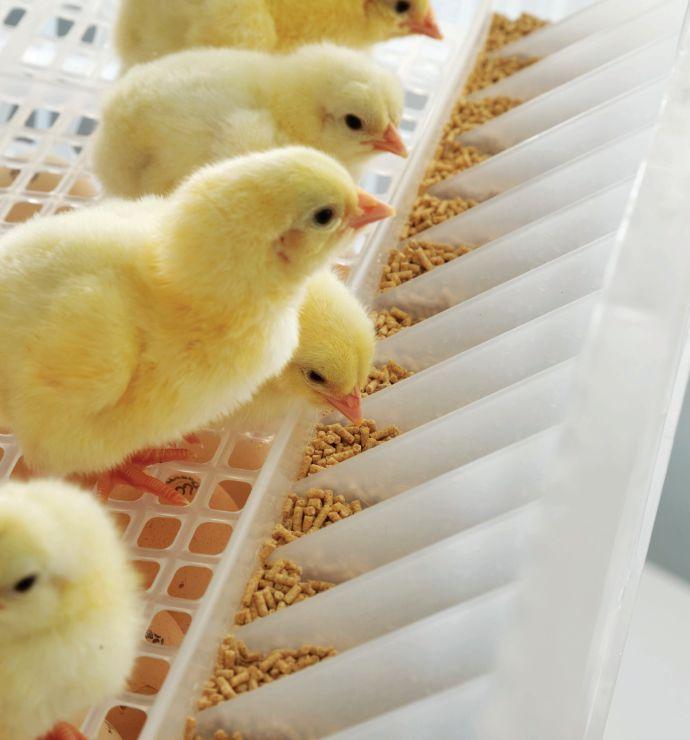
ABOVE: The hatchery uses the HatchCare system developed in Europe, where chicks access feed and water upon hatch. It’s thought to be ideal for RWA production.
site tour to mark the hatchery’s opening.
Canadians want to know where their food comes FROM. They believe that Canadian food is unmatched when it comes to food safety and quality.