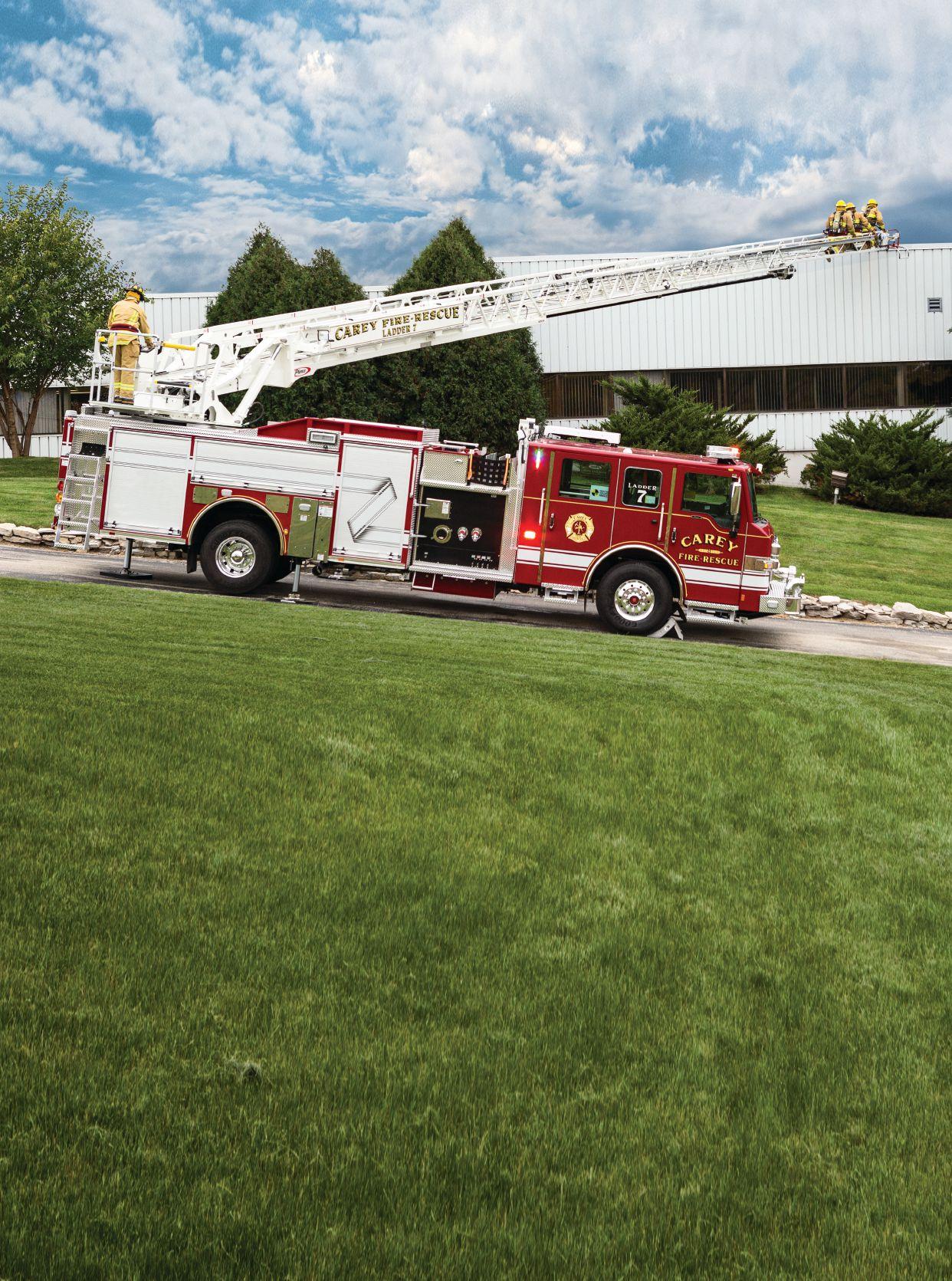
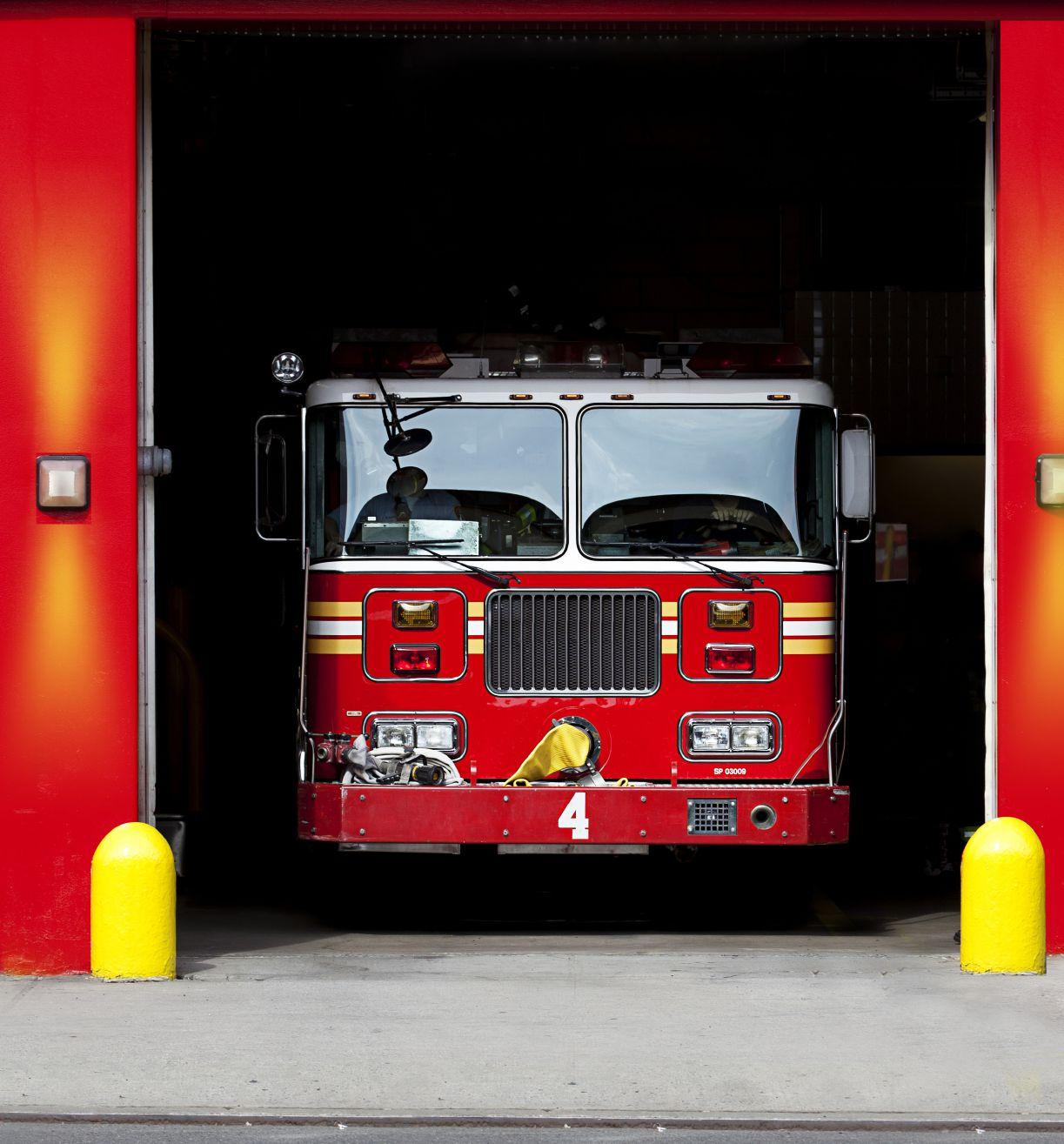
Our Command Vehicles are engineered and manufactured to meet your department’s requirements. Additionally, E-ONE’s Heavy Rescue, Special Operations, Hazmat or Technical Rescue products can meet your every demand, providing the full package to put you in control at emergency situations.
Command Vehicles Customized
BY LEN GARIS AND JD SCHWALM
LAUREN SCOTT
From the editor
By Laura Aiken
Role models
As I sit to write this letter in my new role as editor of Canadian Firefighter, I find my fingers doing more drumming than typing in considering what to say. I am not a rookie editor, but I am a rookie in your field and a happy one at that. I am grateful for the opportunity to be of service and learning the ropes of what matters to the fire industry.
There are many issues that could be commented on; hot topics like two hatting and how the paramedics and fire service work (or don’t work) together. I am learning about these subjects and I am sure you have thoughts on them for you will always be the expert I am learning and gathering information for.
What comes to mind as I turn drumming into keystrokes is the common ground we have in being a part of industries that are changing. Suffice to say, the internet and all things multimedia have fundamentally morphed the work of a journalist into one who plays a content orchestra, rather than a single instrument (paper). It seems as
though the role of the firefighter has expanded in similar ways. Your job is about much more than fire suppression. Firefighters have built new skills through auto extrication and there is a growing need for medical training when firefighters are first on the scene. In Vancouver and Surrey, B.C., firefighters learned how to give the overdose-reversing drug naloxone to incidents of opioid OD. Naloxone is now being offered to Ontario firefighters. In this edition, we learn about a new study that sees firefighters helping heart
No matter how the fire service changes, the essential nature of firefighters as leaders and role models stay the same.
health in their communities. Firefighters do far more than just fight fires; their skills play quite the safety symphony.
Fire departments are being called on to lead natural disaster efforts beyond wildfires. Flooding and general emergency preparedness are fast becoming part of the municipal toolkit fire departments
are depended upon for.
Fire prevention and public education remain of critical importance. There may be less fires these days, but they are certainly no safer.
While the role of the firefighter may be changing, its position as a role model is steadfast. Most parents’ homes (including mine) have fire truck toys. Firefighters live large in the imagination of children. The popular animated children’s series Paw Patrol features Marshall the fire fighting pup as one its major characters, which goes to show kids still identify strongly with firefighters.
Firefighters are revered for bravery, for helpfulness and for easing the way on the worst days of people’s lives. Fire fighting is a respected and essential profession, one whose members are considered heroes.
No matter how the fire service changes, the essential nature of firefighters as leaders and role models stays the same. Be true to this sentiment, and you will always find it within yourself to be able to change and grow with the times.
January 2018 Vol. 41, No. 1 cdnfirefighter.com
EDITOR
Laura Aiken laiken@annexweb.com 416-522-1595
ASSISTANT EDITOR
Lauren Scott lscott@annexweb.com 416-510-5116
ADVERTISING MANAGER Adam Szpakowski adzpakowski@annexweb.com 289-221-6605
SALES ASSISTANT Barb Comer bcomer@annexweb.com 519-429-5176 or 888-599-2228 ext 235
MEDIA DESIGNER Emily Sun
GROUP PUBLISHER Martin McAnulty fire@annexweb.com
COO
Ted Markle tmarkle@annexweb.com
PRESIDENT & CEO Mike Fredericks
MAILING ADDRESS
P.O. Box 530, 105 Donly Dr. S., Simcoe, ON N3Y 4N5
SUBSCRIPTION RATES
For a 1 year subscription (4 issues: January, April, July and October):
111 Gordon Baker Rd., Suite 400, Toronto, ON, M2H 3R1
ISSN 1488 0865 PM 40065710
Occasionally, Canadian Firefighter will mail information on behalf of industry-related groups whose products and services we believe may be of interest to you. If you prefer not to receive this information, please contact our circulation department in any of the four ways listed above.
Mississauga firefighters honoured in Ottawa
A group of central Ontario first responders were presented with the Governor General’s Medal of Bravery at a ceremony in Ottawa on Nov. 23. In April 2014, nine Mississauga, Ont., firefighters and two paramedics rushed to help firefighters trapped under rubble after a three-alarm fire caused an explosion at a warehouse in the city’s north end.
Volunteer departments exempt from some Bill 148 provisions
Volunteer fire departments will be exempt from on-call provisions in Ontario’s fair workplaces legislation that would have required volunteers to be paid the same as full-time firefighters. Bill 148, the Fair Workplaces, Better Jobs Act, would have entitled volunteers to three hours of pay for days they are on call, which is every day. Both the Association of Municipalities of Ontario and the Ontario Association of Fire Chiefs (OAFC) raised concerns over how much the bill will cost taxpayers.
MP proposes life imprisonment for fire fighting equipment theft
A British Columbia MP introduced a private members bill that proposes a penalty of life imprisonment for fire fighting equipment theft and mischief. Bill C-365 would amend the Criminal Code to include specific penalties related to fire equipment theft. The Criminal Code of Canada currently has no specific penalties related to the theft of fire fighting equipment. If passed, guilty persons could face life imprisonment if the theft causes actual danger to life.
Mississauga, Ont., firefighters
First responders join military in battling stigma
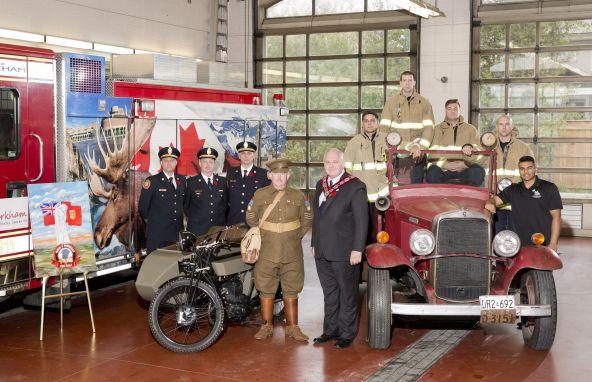
First responders will now be included alongside military personnel in the Red Friday program, which raises awareness for the mental health of deployed Canadians.
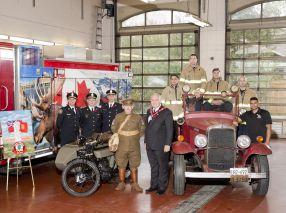
The campaign officially relaunched at an event in Markham, Ont., on Nov. 17, to commemorate the 100th anniversary of Vimy Ridge, where 62 firefighters fought alongside the 4th Canadian Mounted Rifles during World War I.
Red Friday founders Karen Kelly and Lisa Miller, whose husbands were deployed in Afghanistan, created the organization in 2006. The initial objective was to wear red every Friday to “remember everyone deployed” (RED).
In 2017, Bob McTaggart of the 4th Canadian Mounted Rifles Association worked with the City of Markham to broaden the organization into a national awareness program.
The ultimate goal of Red Friday
1918-2018 is to reduce and remove the stigma around mental health in the military and first responder communities, McTaggart said.
Markham Chief Dave Decker, a military veteran, was at the event in November. “The police, EMS, fire and the military have a number of areas where we’re similar although we’re completely different services,” Decker said. “They’re all going to suffer the same types of mental trauma…. That’s a big tie in for fire, I think, to make sure the public understands similar things can happen outside of a war environment ”
Although Red Friday is commemorating the 100th anniversary of Vimy Ridge in 1918, McTaggart said this campaign is forward-looking.
“It’s time and it makes sense,” he said in an interview with Canadian Firefighter. “All of [these services] are intrinsically bound together and it was time that was highlighted.”
Find the latest fire-related news, stories, blogs and analysis from across Canada, and access to our forums . . . cdnfirefighter.com
received the Governor General’s Medal of Bravery
BILL 148 received royal assent on Nov. 27.
Between alarms
By Arjuna George
Set your department’s core values
Sometimes we all need some direction on how to act and what to do. We often find ourselves creating mission and vision statements that are long, generic, and uninspiring. To help set your compass, Mark vonAppen, a California captain and founder of the Fully Involved blog, has created four simple rules he calls the Big 4. His concepts have spread like wildfire through the service. The first time I came across these four simple terms, I knew they reflected my vision in a nutshell: (1) do your job, (2) treat people right, (3) give all-out effort and (4) have an all-in attitude. When I saw these rules, I appreciated the simplicity, and the fact that I can’t add anything more. I firmly believe the Big 4 sum up how we should lead our lives and run our fire departments. We should embrace these guiding principles between alarms, on incidents, at work and at home.
The Big 4 can be a tool to help pilot every member in your department, from those just entering the fire service to the leaders in your organizations. The rules are so simple, yet they cover so many components of a tight ship.
The first rule — do your job — sounds at first like an abrupt and almost rude suggestion, but when you dig deeper and really contemplate what do your job means, it is a positive matter-of-fact statement to follow. Doing your job doesn’t
mean putting your head down, and simply being a “yes-per son”. It’s the complete oppos ite. By doing your job, you are exhibiting professionalism and owning it, from the tech nical skills to human compas sion. Doing your job means studying, training and challen ging yourself daily. Be some one that everyone wants to work with. Take initiative, lead by example and do your best. The only way you can really do your job is by know ing it inside and out. Know what is expected of you, dem onstrate drive and push for it each and every day. Above all, be professional.
The second rule, and one that I feel is paramount to success on the job and in life, is to treat people right. late Alan Brunacini, a chief in Phoenix, was the godfather of treating people right. He used the phrase “be nice” as his de partment’s core value. By treating people right,
Len Garis is the Fire Chief for the City of Surrey, B.C. Contact him at LWGaris@surrey.ca JD Schwalm completed his MD and residency at McMaster University. Contact him at schwalj@mcmaster.ca
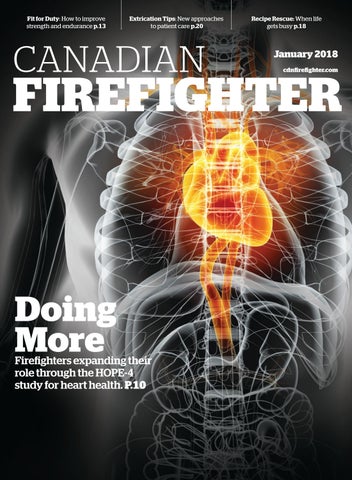
Doing more
Expanding the role of the fire service to create healthier and safer communities. By Len Garis and JD Schwalm
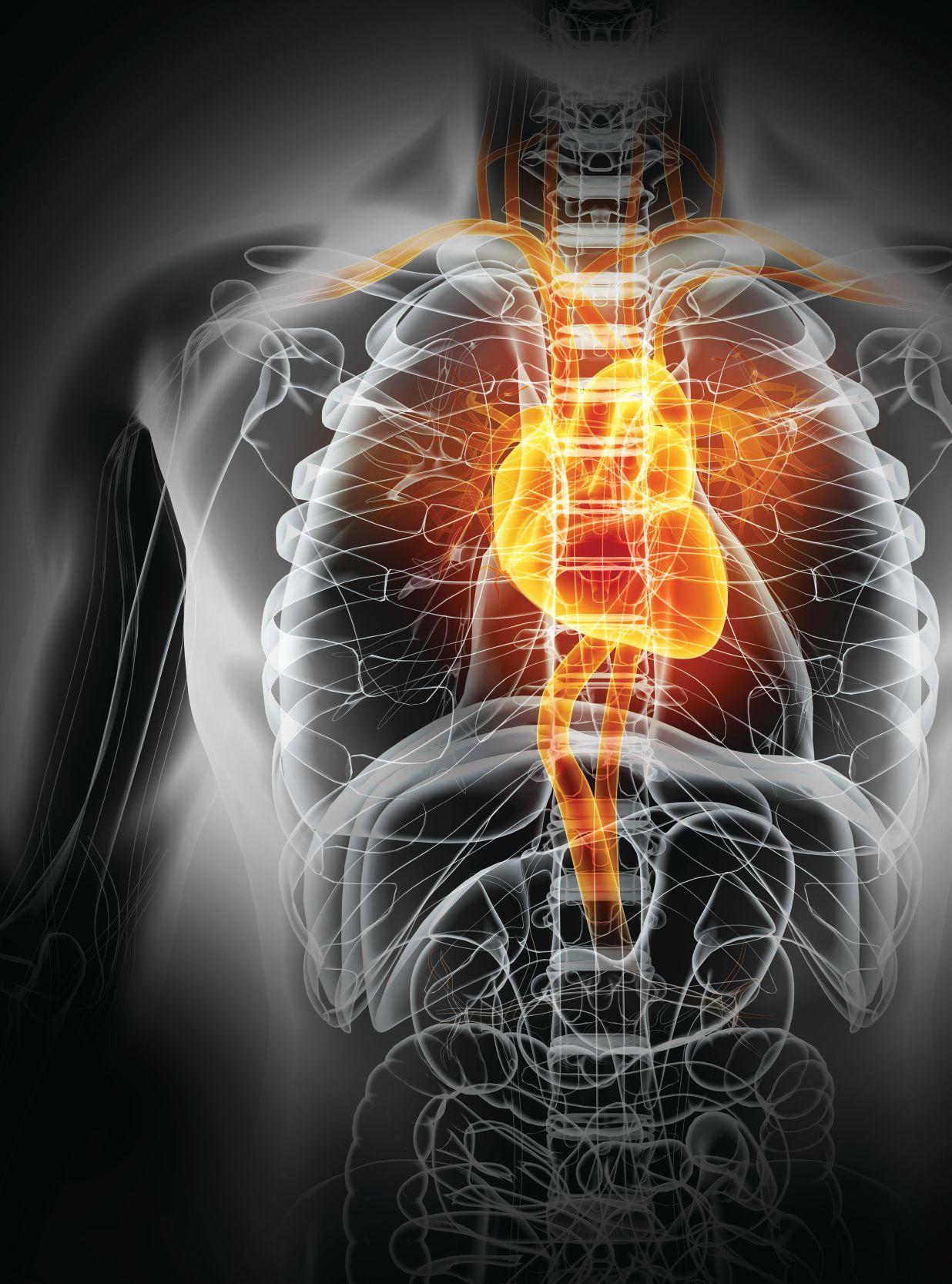
An international clinical study that trained firefighters to help reduce heart disease among residents is showcasing the potential of Canadian fire services to bring added value to their communities.
Surrey, B.C., is one of four sites in the Heart Outcomes Prevention and Evaluation 4 (HOPE-4), a Canadian-based, international study that is evaluating the benefits of using non-physician health workers (NPHWs) as part of a cost-effective program to identify, treat and control cardiovascular disease (CVD) around the world. CVD accounts for nearly half of all deaths from non-communicable diseases worldwide. HOPE-4 aims to reduce CVD deaths and events through a multi-faceted community-based intervention.
In Surrey, HOPE-4 is following a group of about 50 residents enrolled in the program by Surrey Fire Service members who were trained as NPHWs to identify risk factors for CVD, perform basic screening tests, and provide prevention counselling. Supported by mobile health (mhealth) technologies, the fire services also make specific health care suggestions to participating health care providers.
“The training of firefighters as non-physician health workers is a great example of optimizing an existing
Outcomes Prevention and Evaluation 4
CVD accounts for nearly half of all deaths from non-communicable diseases
resource to improve health outcomes,” said Surrey Fire Service Deputy Chief John Lehmann. “Firefighters are respected professionals who are in regular contact with citizens through our day-to-day duties and community outreach work. If we can help point those at risk of cardiovascular disease in the right direction, we could have an even greater impact on the health of the community we serve.”
The pilot sites
Launched in 2014 by the Population Health Research Institute in Hamilton, Ont., HOPE-4 targets low- to middle-income countries as well as lower-income/ high-risk populations in higher-income countries.
Surrey is a city of about 500,000 in Metro Vancouver that – like most large urban centres – has citizens and
Heart
(HOPE-4) is a Canadian-based, international study that is looking at the benefits of using non-physician health workers as part of a cost-effective program to identify, treat and control cardiovascular disease.
neighbourhoods with a range of income levels. The same is true of the other Canadian pilot site, Hamilton, which is similar in size to Surrey. Individuals with no background in health care were trained as NPHWs for the Hamilton pilot, while the other 30 communities in Malaysia and Colombia trained high school graduates, research assistants and existing community health workers with no formal training in cardiovascular care.
In its early stages, HOPE-4 developed an NPHW training curriculum tailored to the needs of the target community. For example, in higher-income countries such as Canada, HOPE-4 focuses on identifying highrisk individuals and connecting them to existing services and programs. In countries where access to medical care is more limited, NPHWs play a stronger role in the management of CVD, coupled with free access to proven medical therapies.
Honed with feedback from the four sites, the refined curriculum has been adapted for the World Health Organization (WHO) Global Hearts Initiative,
Early feedback
Initial study results indicate firefighters may be of best used for screening and referrals rather than ongoing monitoring.
launched in September 2016 to increase prevention and control of CVD around the world. The training of primary health workers and NPHWs is one of the initiative’s measures intended to strengthen services at the primary health care level.
While the HOPE-4 curriculum has been adapted and rolled out through the WHO, the study team in Canada continues to collect and analyze the data coming in from the four sites.
Initial results
Surrey’s 50 study participants live in the same apartment block and were signed up for the study in 2015 after four firefighters completed training and testing in basic chronic disease assessment and management, including identifying CVD risk factors such as smoking and poor diet, performing screening tests such as measuring blood pressure and hip/waist ratios, taking medical histories, and providing counselling on treatment options and lifestyle changes. In the field, the firefighters were equipped with a tablet computer to guide them through the assessment process, and equipment to conduct blood pressure tests.
Results from the Canadian pilot projects are still being assessed, but what has already become apparent is that the firefighter resource is best used for front-end screening and referrals, rather than follow-up and ongoing monitoring. With the appropriate training and tools, firefighters out in the community could be helping to identify CVD and other potential health issues and steer at-risk individuals towards local health services.
“Firefighters are trained to handle medical situations and we’re already out in the community, so the HOPE-4 project seemed like a natural fit.” said Mike McNamara, president of Surrey Firefighters’ Association (IAFF Local 1271). “As well, as firefighters we’re always looking for opportunities to do more to improve the health and safety of our community.”
The whole society approach
The concept of increasing the capacity of firefighters is not new to Surrey. The city’s fire service has continually pushed the boundaries of traditional firefighter work as a way of maximizing the resource and providing greater benefit to the community. In 2005, for example, Surrey firefighters began taking part in public safety inspections of residential marijuana grow operations as part of the city’s Electrical & Fire Safety Inspection initiative, which has reduced both the associated safety hazards (including fires) and number of grow operations in the community.
Another example is Surrey’s HomeSafe program, winner of a 2013 Community Health and Safety Program
Excellence Award from the International City/County Management Association (ICMA). Through HomeSafe, on-duty career firefighters go door-to-door in neighbourhoods identified as fire hotspots, where they speak to residents, provide fire-safety information, and offer to install a free smoke alarm or conduct a free confidential fire-safety inspection. The program has significantly increased smoke alarm activations and reduced fire spread and size in HomeSafe neighbourhoods.
The re-examining of traditional emergency responder roles is happening more and more across the country and
around the world, part of a growing “whole-of-society” approach to community resilience.
The need to redefine fire services within this context was discussed at a September 2016 meeting of the Fire Community of Practice, a body of Canadian public- and private-sector fire leaders and experts established by Defense Research and Development Canada’s Centre for Security Science in 2012 to identify problems in public safety and security and contribute to science and technology solutions.
The report on the meeting, Canada’s Fire Service in the Context of Community Safety, pointed out the potential bene-
fits of re-examining the current emergency management approach, to both reduce service overlaps and cost, and to ensure communities can meet growing demands for service – including the high-impact events that exceed the existing response model’s capacity.
Further afield, another example of a “whole-of-society” approach can be found in the United Kingdom, where the Well North program of the Manchester Academic Health Science Centre is exploring a collaborative community leadership approach to improve the health and wellbeing of low-income individuals in northern England.
At a time when traditional firefighting work is declining due to improved safety practices and building technologies, and when communities are struggling to meet increasing demands for service and accountability, it is critical that decision-makers consider the untapped potential of the fire service for improving service-delivery efficiency and effectiveness as well as health and safety outcomes.
Details about the HOPE-4 clinical study are posted at www.phri.ca/hope4.
Information about the Surrey Fire Service and its programs can be found at www. surrey.ca.
Fit for duty
By Sherry Dean
Sherry Dean is a career firefighter/engineer with Halifax Regional Fire & Emergency. She has more than 20 years of experience in fitness and training. deansherry@bellaliant.net
How to improve strength and endurance
Well-rounded firefighters are more than strong. If the elevator doesn’t work and you don’t have the endurance to climb the 15 storeys, the fact you have the strength to smash in the door is irrelevant. Being able to sprint through two kilometres of woods to get to a brush fire is fruitless if you can’t carry the pump and supplies. There are many benefits of developing a combination of strength and endurance. You can and need to do both.
A colleague once commented on the rep scheme of a particular workout, which had a very high rep count. He argued that doing 30, 40 or even 50 reps of an exercise would be detrimental and could even lead to injury. I asked him if he had ever chopped a cord of wood and then asked if he had been able to do it in 12 chops. Point taken.
There is no question that repetitive trauma injuries happen, but they are usually the result of improper form and conditioning. There are easy ways to avoid overuse injuries while increasing your intensity and stamina. Balancing your ability to complete movements without compromising form and pacing your intensity is key. Changing your reps from low (one to five) to high (20 and above), and including a variety of exercise movements will also help to limit the possibility of injury.
Mix up your workout routine to include days where you perform heavy lifting, days where you do more endurance-based work and days that combine the two. This schedule will improve both facets of your fitness. There are countless approaches to programming, but
Warm Up x 2
Inch worm x 10
Walking lunges x 20 (10 each leg)
Twisted cross x 20 (hold 3 seconds each rep)
Jump squat x 15
Butterfly sit-ups x 15 (bottom of the feet together, knees wide)
Workout x 4
400-meter run (it’s not that far)
5 strict pull-ups (bands, assisted, jumping pull-ups if necessary)
Farmer’s walk x 100 meters (Heavy weight with good form)
Burpees x 10
Power step-ups x 20 (switch legs each rep) – 50 to 60 centimetres (20 to 24 inches)
Cash Out
Push-ups x 50 (time isn’t a factor, 10 at a time will do)
Cool Down Mobility
2-minute couch stretch
2-minute standing straddle (centre, right and left)
1-minute each side cow face (arms only)
1-minute child’s pose
you don’t have to get overwhelmed by the choices. Focus on your personal needs. If you have a weak upper body, then spend more time on upper body strength development. Just don’t forget about endurance. Be sure to include high-rep days periodically. The same holds true for any other body part. Include high-intensity movements in your workout. These movements do not have to be high-impact. Slamming a medicine ball and kettlebell swings are two examples of low-impact movements that will quickly elevate your heart rate and challenge strength at the same time. Rowing is another fabulous exercise you can use for power and intensity. My all-time favourite heart rate movement – burpees! Monitor your intensity. Don’t let your form suffer. If you have to start cheating to do an exercise, take a short rest. Rest long enough to recover, but not so long that you aren’t challenged by the workout. Take a three to five second rest and jump back in. You may find you are only able to do another three or four reps, but your heart rate will remain high so you are pushing endurance. You’re in charge of your effort, but don’t short change yourself. If you are working on endurance
you shouldn’t be able to carry on a conversation during your workout. There will be lots of time to talk when you’re done.
Cross train. It is no secret that athletes can benefit in one sport by working on other areas. Balance, co-ordination and power can all be improved by challenging your body to a variety of different movements. This is one really good way to avoid overuse injuries. The more variety you add, the more you can improve your overall fitness. If you limit yourself to the same few exercises in a four-day cycle, there is a higher chance of injury when you need to work outside of your usual range of motion.
Continually challenge yourself and your motor patterns to improve fire ground performance. We don’t work in a limited environment with a limited pattern of movement. Each emergency can require us to twist, turn and lift in a variety of movements during a timeframe that can range from a sprint to a marathon. If you want to improve your strength and endurance, try to improve your lifts and your cardio at the same time. If you are looking for a nice peaked bicep, curl away. For the rest of you, here is your workout. Stay safe.
Finding the fire
How a firefighter and military veteran overcame PTSD, health issues and life’s curveballs to become an international athlete.
By Lauren Scott
Phil Badanai is a fighter. At 44 years-old, he is a firefighter, military veteran, international athlete, a proud father and recent grandfather, overcoming a series of physical and mental health challenges along the way.
Not long ago, Badanai says he was at his lowest point and feeling like his life was over. He was diagnosed with post-traumatic stress disorder, which developed largely as a result of an ambush attack while he was on a peacekeeping mission in Croatia.
Last year, he began training for the Invictus Games. Founded by Prince Harry in 2014, the Invictus Games is a parasport competition that raises money for wounded, injured, or sick veterans and military personnel. Training wasn’t easy, but it changed his life.
“I never expected the journey to be what it was,” Badanai said.
Growing up in Thunder Bay, Ont., Badanai joined the Royal Canadian Regiment right out of high school. Two years later he was deployed to Croatia.
On Dec. 31, 1994, Badanai and colleague John Tescione were driving back from an observation post when a group of more than 20 Serbian soldiers opened fired on them, he described. Badanai was shot twice and Tescione was shot seven times.
Badanai drove 13 kilometres to the medical station. After treatment he was sent home to Canada, where he received the Governor General’s Meritorious Service Medal. The jeep Badanai drove is
now part of an ongoing display at the Canadian War Museum in Ottawa.
After Badanai’s final deployment in 2001, he decided to become a firefighter.
“It was not something I had planned,” he said of the career change.
After graduating from the fire academy at CFB Borden in 2002 he was posted to Cold Lake, Alta.
“When I was in Cold Lake I started noticing things weren’t the same,” he said.
Badanai would become extremely angry, many times without cause, he said. Yet he remained calm when other firefighters were stressing over a call.
“I was the exact polar opposite,” he said. “I was constantly angry, unless something was going on and then I was relaxed.”
Badanai said he felt that he stood out in
a way he hadn’t as a soldier.
“With being in the army, [PTSD] is easy to hide because my biggest thing was explosive anger,” he said. “[The military is] all speed and violence and they want you to be aggressive, so that was easy to masquerade.”
Two years later he was sent to Trenton, Ont., where he started going to therapy. Concerned he would lose his job as one of the senior crew members, he worked even harder to hide his mental struggles.
“I had a feeling that if they diagnosed me with PTSD that was the end of my career, but I kept on doing all my duties in the fire hall,” he said. “I was doing everything I [could] to keep working. “ Despite keeping up appearances, he said his crew understood something was wrong.
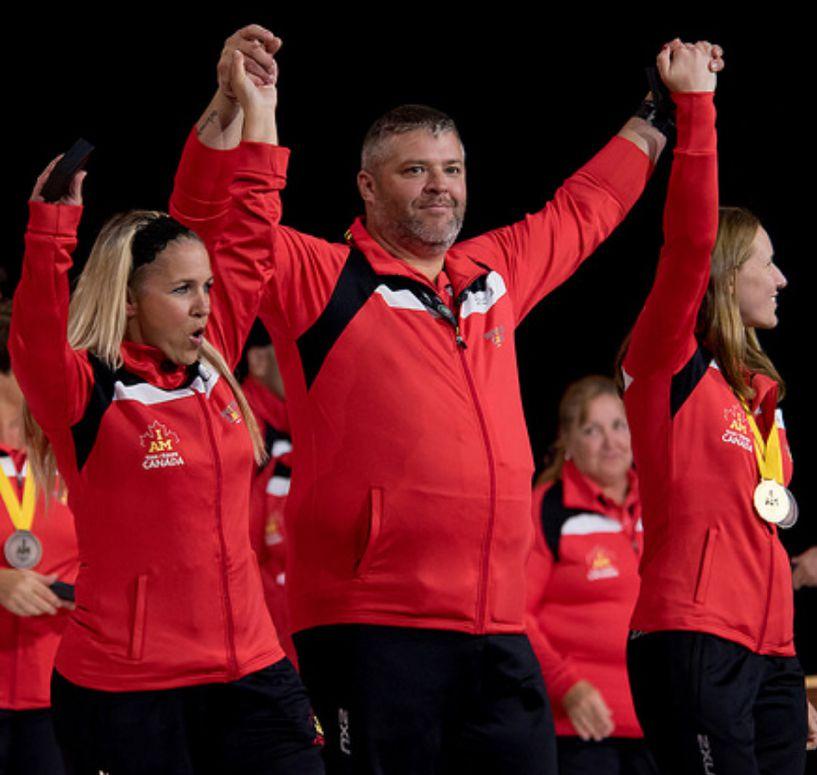
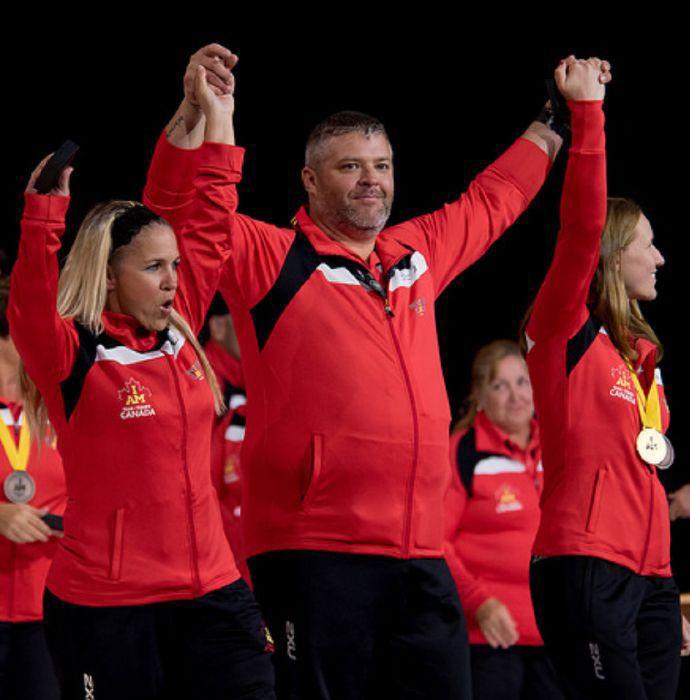
Phil Badanai with his teammates at the 2017 Invictus Games in Toronto.
“Whether you’re in the army or a firefighter, it’s the guys and girls you’re with; it’s your family,” he said. “Your crew will know if something is up with you.”
Members of the military have to be fit for deployment to keep their jobs. In 2008, he was given medical release and began working as a civilian instructor at the CFB Borden fire academy.
He currently works as a firefighter with Bombardier Aerospace in Toronto and as a private training instructor.
Finding passion
Recently, Badanai said he went through a period where he couldn’t find joy in his life, despite trying.
“I needed something to change,” he said. “I needed something in my life to get me out of that rut.”
He said he was inspired by his friend Steve Daniel, a veteran and world-class
athlete from Sudbury, Ont. Daniel was paralyzed after a parachuting accident in 2005, but that didn’t stop him from competing in the 2008 Beijing Paralympics or winning a silver medal in rowing at last year’s Invictus Games in Orlando, Fla.
So, Badanai sent in his application to compete in the 2017 Invictus Games. Badanai was one of 90 athletes selected to compete for Team Canada. This was the change he was looking for and he went into training with a new fire. But in April, less than two weeks after the first training camp in Victoria, Badanai suffered a stroke.He spent the next five days in hospital.
“When I was getting discharged from the hospital, the first thing I said to the doctor was, ‘when can I start training?’” He said he was advised he could start the next day.
“I’m not going to let a stroke hold me
ROOKIE TO CHIEF…
back,” he said.
He began posting about his stroke on Team Canada’s Facebook page and giving training updates.
“I started posting every time I worked out . . . to just use that as accountability for myself,” Badanai said. “I found out it was actually a motivator for other people.”
Badanai’s determination was so inspiring that his teammates voted for him to be the flag-bearer.
“Maybe a couple of years ago I would have been defeated, but with Invictus and with everything else, having great support both at home and with the team, it’s motivating.”
In September, he competed in indoor rowing, wheelchair rugby and wheelchair tennis.
Now Badanai lives by a new life motto: “Take the negative and turn it into a positive.”
“Life throws you curveballs and you’ve just got to learn to adapt to it.”
Recipe rescue
By Patrick Mathieu
When life gets busy
As I sit down to write this article, a lot of big things are happening in my life. My beautiful wife is 32 weeks pregnant and our home is under renovation. Throw in work, kids and activities and my deadline for this article has well passed (sorry to my very patient editors). Then it hits me . . . wow, life is busy! It is a life we chose, but finding the time for even the simplest tasks seems almost impossible at times. I am sure that I’m not the only one to feel the tug of everyday responsibilities and pressures of a busy life. When your day gets filled up with things to do, it is often meal time prep, cooking and eating that gets cut out of the agenda. Sometimes, take-out and boxed meals can seem like the only option. Not only does your overall health and nutrition suffer for this, but you also lose quality time cooking and eating together as a family or crew. No matter how busy life gets, meal time is a priority in my home and I make it a priority for my crew in the fire hall.
You have to eat, right? So you might as well turn it into an opportunity to stop, refuel and recharge. The key is to simplify meal time so it doesn’t feel like just another thing on your list. Here are a few tips that have helped keep my love of cooking strong, even on busy days when it would be easier to order a pizza.
Cook when you feel fresh.
No one wants to work all day, get home late and then try to feed the family. Instead of enjoying the process of making a great meal, you are more likely to rush through it to get food to the table as soon as possible. Where’s the pleasure in
Start meal prep in the morning, and if you can’t cook it all the way through at least you’re giving it a head start.
Patrick Mathieu is an acting captain at Waterloo Fire Rescue in Ontario. Mathieu is the author of Firehouse Chef: Favourite Recipes from Canada’s Firefighters, published in 2016. stationhousecateringco@yahoo.ca @StationHouseCCo
that? Start meal prep in the morning, and if you can’t cook it all the way through at least you’re giving it a head start. Perhaps spend a weekend afternoon preparing meals for the week when you feel less pressure. You will be happiest cooking when you have the most energy to do it.
Keep fruits, vegetables, whole grains and proteins on hand
It’s no secret that if you have a wellstocked pantry and refrigerator with quality healthy ingredients, they are more likely to find their way onto your plate (or in your bowl). A healthy soup, salad or pasta can be made in 20 minutes or less, which you can fill with nutritious ingredients that leave you feeling satisfied.
Practice and perfect a few favourite meals that everyone loves
Look for dishes that the family and crew can’t get enough of that you can whip up without a recipe (or you can try some of my recipes). Think of Vietnamese noodle soup with a warm, fragrant broth and filled with any combination of your favorite noodles, protein and vegetables. Or, perfect a classic five-ingredient recipe like spaghetti carbonara, where the ingredient list is short but the flavour is huge!
INGREDIENTS
1 lb dry spaghetti
2 tbsp extra-virgin olive oil
4 oz pancetta or slab bacon, cubed or sliced into small strips
4 garlic cloves, finely chopped
2 large eggs
1 cup freshly grated
Parmigiano-Reggiano, plus more for serving
Freshly ground black pepper
1 handful fresh flat-leaf parsley, chopped
Heavy cream (optional)
Pinch of nutmeg
Bring a large pot of salted water to a boil, add the pasta and cook for eight to 10 minutes, or until tender yet firm. Drain the pasta, reserving half a cup of the starchy cooking water to use in the sauce (if you wish).
Meanwhile, heat the olive oil in a deep skillet over medium heat. Add the pancetta and sauté for about three minutes, or until the bacon is crisp and the fat is rendered. Toss the garlic into the fat and sauté about a minute more.
The number of garlic cloves to give your spaghtetti carbonara the perfect garlic kick.
Food and health trends come and go.
I recently did a live cooking demo and talk at Toronto Fire Services’ wellness symposium. My message was to use whole real foods and focus on quality over quantity. Yes I cook with butter, and yes I cook with cream. I eat carbs and grains and I try to maintain an overall healthy balanced diet. Focus on
Add the hot, drained spaghetti to the pan and toss for a couple minutes to coat the strands in the bacon fat. Beat the eggs and Parmesan together in a mixing bowl, stirring well to prevent lumps. Remove the pan from the heat and pour the egg/cheese mixture into the pasta, whisking quickly until the eggs thicken, but do not scramble. Thin out the sauce with a bit of the reserved pasta water or heavy cream, if desired, until it reaches desired consistency. Season the carbonara with several turns of freshly ground black pepper, a pinch of nutmeg and salt to taste. Distribute the spaghetti carbonara into warm serving bowls and garnish with chopped parsley and more cheese if desired. Enjoy!
Spaghetti Carbonara
INGREDIENTS
For the broth:
2 large onions, cut into quarters
4-inch piece of fresh ginger, quartered
2 whole cinnamon sticks
2 whole star anise
3 whole cloves
2 tsp whole coriander seeds
6 cups beef broth
1 tbsp soy sauce
1 tbsp fish sauce
3 carrots, roughly chopped
To serve:
1/2 lb sirloin steak
8 oz dried rice noodles (bahn pho)
3 green onions, thinly sliced
1 chili pepper (Thai bird, serrano, or jalapeno)
1 to 2 limes
1 cup bean sprouts
1 cup fresh herbs (cilantro, basil, Thai basil, mint, or a mix)
Hot sauce, Sriracha, or hoisin sauce, to serve
� Combine all the broth ingredients in a large soup pot. Cover and simmer the broth for 30 minutes to give time for all the spices and seasonings to infuse.
� Slice the beef into very thin slices across the grain, and aim for slices no thicker than a quarter of an inch. Once sliced, keep the beef covered and refrigerated until ready to serve.
� Bring a second saucepan of water to a boil, drop in the rice noodles and cook according to package instructions (typically one minute for very thin noodles and up to four minutes for wider noodles). Strain the noodles and run them under cool water to stop cooking. The noodles will start to stick together after cooking, so either divide them immediately between serving bowls or toss them with a little neutral-tasting oil to prevent sticking.
� When the broth is ready, set a strainer over another bowl or saucepan, and strain the solids from the broth. Discard the solids. Place the broth back over low heat and keep it just below a simmer. You should see a fair amount of steam, but the broth should not be boiling. The broth needs to be quite hot to cook the beef.
� Divide the noodles between serving bowls and top with a few slices of raw beef. Arrange the beef in a single layer so that the slices will cook evenly in the broth. Slices that are stacked or clumped may not cook all the way through.
� Ladle the steaming broth into each bowl, pouring it evenly over the beef in order to cook it. The beef should immediately start to turn opaque. Fill each bowl with as much broth as desired. Serve the pho with all of the toppings at the table and let each person top their bowl as they like. Enjoy!
health when you think of food. Think of it simply: if you eat more vegetables, you will be healthier. If you drink more water, you will be healthier. If you get caught up in food trends and diet fads, this will become your focus instead of enjoying the food you make.
Cooking is easier than you think
I totally understand that not everyone loves cooking as much as I do, but what I want people to realize is that boxed meal options really aren’t that much easier than cooking from scratch. In the amount of time it takes to make a box of macaroni and cheese, you can make your own using natural, simple, wholesome ingredients. I promise it will be much more rewarding and delicious.
INGREDIENTS
Vinaigrette
2 garlic cloves, minced
1 tsp Dijon mustard
3 tbsp red wine vinegar
1/2 lemon, juiced
2 tbsp chopped fresh flat-leaf parsley
2 tbsp minced fresh tarragon
Sea salt and freshly ground black pepper
1/2 cup extra-virgin olive oil
Salad
1 lb small red new potatoes, scrubbed and halved
8 large eggs
1 lb green beans, stems trimmed
2 lbs fresh sushi-quality tuna
2 tbsp extra-virgin olive oil
Sea salt and freshly ground black pepper
1 pint cherry tomatoes, halved
1 cup Nicoise olives
16 anchovy fillets
16 caper berries with stems
1/2 bunch fresh chives, snipped in half
� To make the vinaigrette combine all the ingredients in a bowl and whisk vigorously so it will emulsify. Set the dressing aside while preparing the salad.
� Cook the potatoes, eggs, and green beans all in same pot. To do this, put the potatoes in a large saucepan with a pinch of salt and add enough water to just cover. Bring to a boil over medium heat and simmer the potatoes for 12 minutes to give them a head start, and then add the eggs. Place a steamer basket or colander on top of the simmering water and put the green beans in the steamer and cover with a lid. Steam the beans for five minutes until crisp-tender while continuing to cook the potatoes until fork-tender. Drain out the water and put the potatoes, eggs, and green beans in a colander. Rinse briefly under cold water. Peel the shells off the eggs and cut them in half lengthwise.
� Place a large skillet over medium-high heat. Rub the tuna on all sides with olive oil, a bit of the vinaigrette and season with a fair amount of salt and pepper. Lay the tuna in the hot pan and sear for approximately two minutes on each side. Transfer the tuna to a cutting board and slice into half-inch pieces.
� To assemble the salad combine the potatoes, green beans, tomatoes, olives, anchovies, capers, and chives in a large mixing bowl. Drizzle the salad with enough vinaigrette to just moisten and toss gently to coat. Season with salt and pepper and take care not to mush up the ingredients. Arrange the ingredients nicely on a dinner plate and lay the seared tuna across the top, with the eggs around the rim. Drizzle with the remaining vinaigrette and serve. Enjoy!
We all go through stages in life where it feels like daily responsibilities are a little overwhelming and trying to balance it all can be difficult. These are the times that we need proper nutrition more than ever. Don`t let making meals become another chore. Instead, embrace it as an opportunity to slow life down, connect with your loved ones or crew, and reward yourself with togetherness and a great meal. Find out what works best for you and make it part of your daily and weekly routines. I hope my tips help and you enjoy the recipes I’ve shared in this edition of Canadian Firefighter. As always, if you need any kitchen advice or recipes please feel free to contact me. Stay safe and eat well!
Vietnamese Pho
Seared Tuna Nicoise Salad
Extrication tips
By Chad Roberts
Chad Roberts is a firefighter in Oakville, Ont., and works on a heavy rescue. He is a member of the Oakville extrication team and competes and trains across North America. chadroberts12@gmail.com
New approaches to patient care
In my last Extrication Tips column, we left off talking about best practices for patient care. I discussed the process from the point of access, to full ABCs, cervical spine immobilization, and primary assessments.
Just like with anything in our service, firefighters are always striving to do more. In the field of auto extrication, this means going the extra distance for patients in and around the accident scene.
This article will address how some extrication teams are changing their approach to patient care. Some of the following ideas have been around for some time, but with new research emerging from the United Kingdom, United States and Canada, we may be on the verge of some major changes in how we can provide better care to our patients.
The three things I’m going to cover are the most appropriate applications of the cervical collar, changes to assessments that determine a patient’s need for full immobilization, and the possible decline of backboards.
For a long time, many firefighters have had the impression that once a spinal injury is suspected in an accident, we should slap the collar on our patients as soon as possible. However, in a recent study published in Emergency Medical Journal, a group of British emergency medical experts concluded this might not be the best approach. The study shows that premature use of the c-collar is not only detrimental to a patient’s comfort level (which can lead to increase levels of anxiety and quicker progression of shock), it can also cause more difficulty for patients breathing quality and even increase intracranial pressure. In
fact, the researchers found that conventional extrication techniques can cause up to four times more cervical spine movement than controlled self-extrication.
I’m not saying you should throw your collars in the garbage, but it might be more effective to delay the use of the collar until the patient is physically extricated from the vehicle, thereby using it more as an immobilization device. Once the patient is in EMS care on the stretcher, the collar can be removed to provide the patient with better comfort and overall status.
Proper patient assessments, which are used as baselines in these studies, determine whether or not our patients should be immobilized or allowed to walk away from the vehicle. The use of something as simple as the Canadian C-Spine Rules can give us an idea of which of our accident victims should be packaged or not. Another study in
For a long time, many firefighters have had the impression that once a spinal injury is suspected in an accident, we should slap a collar on our patient as soon as possible.
the Emergency Medical Journal from 2014 showed that patients who walk themselves to the ambulance had less overall spinal movement than patients who are packaged, removed and strapped to a backboard. A patient suffering from a minor injury will subconsciously try to protect that injury themselves rather than being immobilized.
This is does not mean that our services are no longer needed at the scene of an accident – far from it. What these studies suggest is that crews should take a more focused patient assessment to better understand the next steps in the extrication
In my next article, I will discuss new ways glass is being placed in vehicles and how it affects first responders.
spinal injuries: UK, U.S. and Canada.
process. Extrication is always necessary to provide proper assessment and create the space required to best accommodate patients and their injuries.
Lastly, I would like to discuss using backboards during the extrication process. It is possible that backboards will no longer be used to transport patients over long durations. Some researchers have pointed out the effectiveness of
proach is proving to be more beneficial to the human spine, which is contoured rather than flat like a backboard.
Although this may be different from what we’re used to, we must remember that these ideas, studies and results are not intended to deviate us from our extrication plans. Patients still need to be assessed properly, and the extrication crew must create sufficient space to create a spinal inline removal path. Try to imagine the patient with a plunger on their head. If the patient is suspected of a spinal injury, our ideal path is to keep that plunger as straight as possible.
other devices like the Kendrick Extrication Device (KED), arguing it may be the best option to remove and transport patients. Since the 1980s, an increasing number of medical studies have shown the past practice of collaring and then strapping a patient to a flat, hard board is detrimental to the patient’s well-being. Instead, like the collar, the backboard should be utilized more as an extrication device during patient removal. Once patients are safely in an ambulance, they are transported on the stretcher only. This ap -
Once again, these are simply research and ideas that are still being analyzed through further studies. I am by no means saying crews should throw previous techniques away today and put these new ideas to the test in the field tomorrow. This article is intended to be a heads-up as to what is already being done in some places around the world, which may become a reality in Canada in the not-so-distant future. Just this past week, I heard someone refer to auto extrication as “patient extrication” and how we need to change the focus from simply ripping up vehicles to the best removal practices to get our patients from the vehicle. I couldn’t agree more.
In my next article, I will address glass management, including new ways glass is being placed in modern vehicles and how first responders can approach these changes. Until then, be smart and never stop watching, reading and listening.
For your cleaning, decontamination, inspection, testing, repair and record keeping of your firefighter’s protective clothing... we have you covered!
• 24/7 access to Firetrack®, the online data base that provides you with complete details of your C&M Program with FSM. We do the work for you!
• ETL Verified
• ISO 9001 Registered
• Fast turnaround
• Complete Bunker Gear Rental Program – Toronto Location Ontario (toronto) 1-888-731-7377
Western canada (calgary) 1-403-287-0155
Mid-West USa (Detroit, Mi) 1-866-887-6688
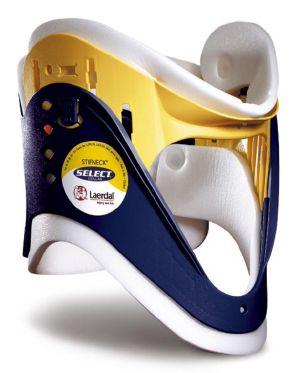
Cervical collars are commonly used by fire departments across Canada, but new research is beginning to call their use into question when it comes to patient care.
Dispatches
By Jennifer Grigg
Jennifer Grigg has been a volunteer with the Township of Georgian Bay Fire Department in Ontario since 1997. jhook0312@yahoo.ca @georgianbayjen
A lifetime of learning in 18 months
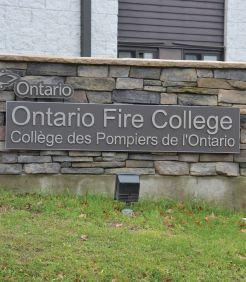
Last June, I began a journey that challenged, motivated and inspired me in ways that I never could have imagined. I started a new job as an instructor at the Ontario Fire College. It was everything I’d dreamed of and more, so much more.
Being the introverted person that I am, such a leap into the unknown seemed like a huge stretch, but somehow, I still knew I could do it. In fact, one of the most challenging aspects of the job was finding my bearings and getting comfortable with being at the front of the class. As someone who has experienced anxiety (and written about it in past columns), it took some work to overcome the anxiousness and discomfort, but it really came down to one thing: passion.
I knew that if I could just get out of my head (and away from the broken record of negative thoughts), and tap into my passion for the service, then I would be fine. Whenever I taught the Fire Instructor 1 course and had students that were nervous about their presentations, I would share my story with them. I knew that if it worked for me, it would work for anyone.
One of my favourite things about my time at the Fire College was watching people go from “I’m so nervous, I just want to get this over with” to understanding how powerful and fun the instructing experience can be. Everyone is passionate about aspects of the fire service – it’s why they joined in
the first place. When students tap into that, you can see their body language change, their tone of voice and inflection shifts and their faces light up. I was honoured to witness that time and time again over the last year and a half.
When I talk about being an introvert, or my anxiety, I’m sharing things that expose my vulnerability. But that’s what connects us to others. We all have things that make us feel vulnerable, but sharing why we’re so passionate about the fire service is a beautiful thing.
Aside from finding comfort at the front of the class, another challenge I faced was finding my voice. Again, one might think that having a strong voice is a prerequisite for being an instructor. I’ve always been strong in my commitment to my core beliefs and passionate about sharing experiences, but this was more about speaking my truth while honouring my boundaries.
For most of my tenure, I brought work home on evenings and weekends. This wasn’t unique to me. Many of the other instructors did the same. However, I was motivated by a feeling that I still wasn’t good enough. I thought I needed to do it to keep up. I told myself that it would only be for the first few months and that I wouldn’t bring work home as much once I got a handle on things.
Note to self: when your motivation for doing anything is coming from a place of feeling like you’re not good enough this should be one
At the end of the day, we all want the same thing: to have a positive affect on the fire service.
heck of a clue. For me, it’s about boundaries. I’ve found that doing too much for others, regardless of whether it’s at work or at home, comes back to not honouring ourselves and what’s best for us, usually stemming from feelings of “not enough”. If we’re feeling stressed about having to do something, we need to ask ourselves why we’re doing it.
I eventually learned to distinguish between a reasonable amount of time working at home and the unrealistic expectations I put on myself. From then on, I created a healthier work-life balance. Again, it comes back to boundaries. There is only so much you can do effectively in a day. I left my weekends open for spending time with my family, and focused on work at work. If I did bring work home, I limited myself to only an hour or two in the evenings. I was extremely fortunate to be able
to develop personally and professionally in that job and I’m forever grateful.
Something else I appreciated about my time at the college was how much everyone cares. They care about the Ontario Fire College and what it stands for. They care about the fire service and the impact they have on the service province wide. They care about the integrity of training and certification, and most importantly, they care about each other.
I developed relationships with my colleagues that went beyond being mere co-workers. They encouraged me, inspired me and supported me. They made me aspire to rise to their level of professionalism. They were always there to listen or help and brought their absolute best to work everyday.
As with any workplace, organization or company, there is much that goes on behind the scenes that outsiders never see. It’s easy to pass judgment on how things appear from an external view. We’ve all done it at one point. Having been at the front of the classroom for 18 months, I have a new appreciation for the challenges instructors face at the College, and also for the challenges faced by municipal fire departments in Ontario.
At the end of the day, we all want the same thing: to have a positive effect on the fire service.
I can’t wait to see what lies ahead for me and how I can contribute in my own little way, having gained a lifetime of learning in a year and a half.
With one of the most advanced training facilities in Canada, we challenge you to be the best you can be at our Emergency Training Centre in Vermilion, Alta.
Can’t attend firefighter training full time? Take advantage of our online-blended learning program.
2018 start dates: Face-to-face program
April 3, April 30 and July 30
Blended delivery program
April 16 online with onsite portion starting July 9
Back to basics
By Mark van der Feyst
Mark van der Feyst has been in the fire service since 1999 and is a full-time firefighter in Ontario. He teaches in Canada, the United States and India and is lead author of Residential Fire Rescue. Mark@FireStarTraining.com
Firefighter survival series: Making a mayday call, part 3
When firefighters call for a mayday, they are informing everybody that they need help. Whatever the situation may be, they are in need of assistance and the first step is to call a mayday.
When a mayday call is made, firefighters can initiate a few action steps to get out potentially life-threatening situations. Let’s examine four main action steps over the next four editions of Canadian Firefighter that can be taken by the endangered firefighter if they are able. These four action steps are orientation, communication, alert command and activate PASS alarm.
Why these action steps? Firefighter survival is about rescuing yourself before the rapid intervention team (RIT) operation, if possible. If you can rescue yourself, it will negate the need for the RIT team to continue, allowing continued focus on fire ground operations.
Firstly, remain calm and don’t panic. This sounds very easy and may seem like common sense, but the reality is when a life-or-death death situation is staring you directly in the face, you could easily become another number in Canada’s line of duty death (LODD) statistics. This is a terrible situation to be in and it is common to panic. The flight or fight response is triggered as firefighters try to free themselves from dangerous situations.
Can a firefighter remain calm so they can rescue themselves or call a mayday? The answer is yes – yes, they can.
Firefighter survival is about rescuing yourself before the rapid intervention team (RIT) operation, if possible.
A firefighter with proper and consistent training can learn to remain calm when facing a life-ordeath situation. For example, two Toronto firefighters fell from a roof into a burning building while bat-
tling a massive six-alarm blaze downtown in January 2011. The mayday call that was put out by the captain who fell into the fire was recorded on the dispatch audio. He was calm, cool and collected. His transmission was crystal clear with a calm voice. Why was this? He was trained to do so. He participated in firefighter survival training a few days before the fire, which helped him to remain calm when he faced this situation.
To successfully complete this self-rescue endeavour, the firefighter must get their bearings. This can be accomplished by scanning around the immediate area. By observing their surroundings, a firefighter may be able to pinpoint their location, which can be communicated to the RIT team. This allows the team to get to the downed firefighter quickly, which helps move rescue operation faster. What if the firefighter can’t see anything? We can always use our sense of touch to determine what part of a house or building we might be in.
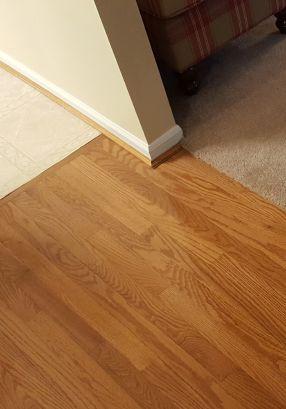
Buildings and rooms have some common features that we can perceive through touch. For example, if you are on the second floor of a house and feel carpet, a bed or a dresser, it is safe to assume that you are in a bedroom. If you are on the second floor and there is a hard floor surface that feels slippery, you are most likely in a bathroom. On the first floor of a house, most kitchens have hard floor surfaces; family rooms often have some form of carpeting. When firefighters feel around the area where we are lying or sitting, we might be able to figure out where we are and orientate ourselves.
After we have determined where
If air supply is too low to wait for the RIT team, firefighters may have to attempt a self-rescue.
Firefighters can orientate themselves by looking or feeling their surroundings. Hardwood, carpeting or tile can help firefighters identify their location.
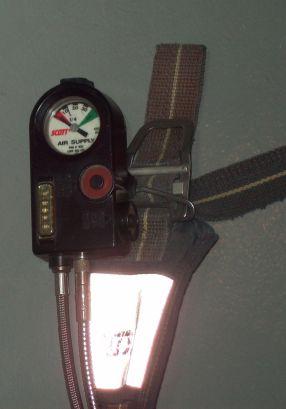
we are, we need to determine how much air we have left in the cylinder. This is important information that we need to pass on to command and the RIT team. By knowing how much air is left, a firefighter can start to conserve air and wait for the RIT team. If the supply is low, or if there is enough air, firefighters can start to self-rescue.
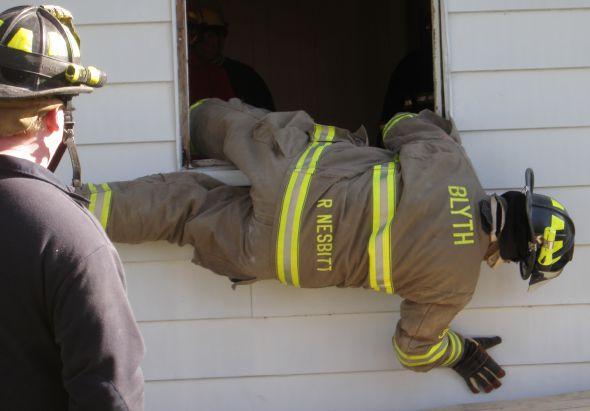
Houses typically have many windows, with at least one in every room. Whether you have low or high air supply, bailing out a window is a good option. Without using too much air a firefighter can accomplish a head-first ladder dive, hang and drop, or use a rope bailout system.
A firefighter can also try to locate a hose line. If a firefighter can locate a hose line, they can read the couplings by feeling for the lugs, which determines way is out by following the hose back to the pump panel.
Lastly, the firefighter who has called for a mayday needs to consider fellow crew members.
Where are they? Firefighters work in teams with a minimum of two members. Depending on the time spent inside the structure, there may be more than one team operating inside. By locating a fellow crew member, the mayday firefighter can be led to safety or can be assisted in other ways, like using buddy breathing, EBSS hose, psychological support, or physical assistance in getting free from an entrapment.
Survival orientation training can be done at the fire station or training building. The training helps firefighters focus on the best self-preservation tactics and develop a calm mindset. Some tactics include assessing surroundings, checking air supply status and locating hose lines and fellow crew members. Training is crucial to survival. Train in firefighter survival so that if the time comes that you are facing a life-or-death situation, the outcome will be a positive, like it was for Toronto fire crews in 2011.
Bailing out a window is a great option for self-rescue. Firefighters can use a head-first ladder dive, hang and drop, or use a rope bailout system.
New technology
Oakville Fire leverages software to maximize home safety surveys
By David Hamilton
How old are the smoke alarms in your home? Did you know that to properly maintain them, you need to test the alarms every month and replace them before their expiry date?
In Oakville, a town west of Toronto with 188,900 people, the local fire department does an annual door-to-door campaign to educate residents on the proper use and maintenance of smoke detectors and carbon monoxide (CO) alarms in homes, as well as talk about fire safety.
“We’ve conducted this public education program for many years; however, we haven’t consistently collected data to help us track the success of our efforts,” said Gary Laframboise, chief fire prevention officer at Oakville Fire.
Prior to 2016, the Town’s firefighters used paper forms to record residents’ feedback. However, there was no system established to track and compile feedback year over year, which would allow for analyses such as identifying at-risk households that could benefit from follow-up visits. To address this challenge, Oakville Fire reached out to the town’s information technology group as well as the strategic business support group, which included the
Geospatial Services Solutions team headed by Frank Goehner.
“I had just read a blog about new field data collection apps in ArcGIS and thought that apps such as Survey123 could be a good solution to address our fire department’s needs,” said Goehner.
Leveraging Oakville’s Esri enterprise license agreement allowed staff to access and deploy ArcGIS apps without incurring additional software costs. The cross-functional team began developing a strategy for building a new field survey app to support Oakville Fire’s Home Awareness Program (HAP).
Defining survey targets
With more than 66,700 households in Oakville, it would be impossible for the town’s nearly 200 firefighters to inspect every house within the required twomonth period (from late May to end of July 2016). Since smoke alarms typically have an expiry date of 10 years, the team narrowed down the survey targets to homes built between 2004 and 2006.
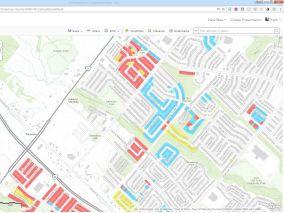
Staff used ArcGIS Online to map building permit data from the town’s permitting system and identified 4,500 homes that met their criteria. Visualizing the data on a map allowed the team to see the density of the targets and effectively plan how to divide the firefighters into crews and determine the
neighbourhoods where they should be dispatched.
Building the survey app
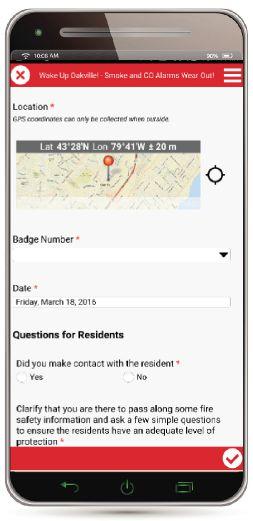
After the survey targets were identified, the team proceeded with creating a mobile app in Survey123 for ArcGIS that firefighters could access on smartphones.
“We needed an app that would be quick to deploy and easy for our firefighters to use,” said Goehner. “Since most of our staff were familiar with spreadsheets, we decided to build an Excel-based survey that will connect easily with Survey123.”
Survey123 includes a desktop tool called Survey123 Connect that works side by side with Microsoft’s XLSForm authoring tool for creating XLS files. The tool allows authors to preview XLSForm files as they edit them. It also publishes the forms into ArcGIS Online or Portal for ArcGIS and creates feature services based on the specified form for data collection.
Building the survey form in Survey123 was relatively straightforward once the team decided on the questions to be asked, their sequence and exact wording.
“We wanted the survey to be brief and concise—something that could be done within 5-6 minutes,” noted Laframboise. “We designed the questions to provide fire safety information, as well as gather data about the resident’s level of knowledge about fire safety and prevention.”
The team created a 10-ques-
tion survey with conditional logic, where succeeding questions were asked based on the resident’s initial response. For example, if a resident was home and said they were available to take the survey, the app prompted the firefighter to introduce the town’s fire home awareness program, advise the resident that their home was now more than 10 years old, and explain that the law requires smoke and CO alarms to be replaced within the timeframe stated in the manufacturer’s instructions or a $235 fine could be issued for non-compliance.
Once the structure of the survey was finalized, the team published the form in ArcGIS Online and used the Survey123
Firefighters accessed the Survey123 app on Android smartphones. The app prompted them to ask questions or provide fire safety information based on the respondent’s answers.
David Hamilton is the Public Safety Industry Manager for Esri Canada. His efforts are focused on advising customers how to use geographic information system (GIS) technology to improve all areas of public safety. He can be reached at dhamilton@esri.ca
website to share the form and any revisions to the survey with firefighters equipped with Android smartphones.
Winning over users
At first, the team received some pushback from fire crews who were used to conducting the survey with pen and paper.
To help them become familiar with the digital survey, fire trainers were assigned to teach firefighters how to use the app. They leveraged how-to documents and video tutorials created by staff. This turned out to be more effective than having the GIS team deliver the training because fire trainers were more knowledgeable about firefighters’ workflows and could speak their language.
The nearly 200 firefighters were divided into 50 crews of four. About 10 crews were deployed to do the surveys per shift. Each crew was given a Samsung Galaxy S5 smartphone equipped with the Survey123 app and a single-user subscription to ArcGIS Online versus an organizational account. This enabled all the devices using the Survey123 app to be managed in one account and viewed on a single map. As well, this model made updating revised surveys into the devices much easier. The team also created another account that would allow managers to view the collected data.
To monitor the firefighters’ exact location during the surveys and prevent any overlap, staff installed a GPS app on the phones, which significantly improved positional accuracy.
“Getting buy-in from Oakville’s fire chief and senior management was not difficult after they saw the amount and kind of data collected via the app,” said Goehner. Using Operations Dashboard, another app in ArcGIS, staff created an online executive dashboard that gave managers a real-time, comprehensive view of survey operations.
In the nine weeks in 2016 that firefighters conducted home surveys, the town was able to gather data from more than 4,000 households.
“For the first time, we’ve established a database with accurate information that we could refer to in order to identify at-risk households,” noted Laframboise. “This will
help us better analyze the data and plan more effective fire prevention campaigns.”
Oakville Fire’s HAP app also serves as a blueprint for other survey apps. The department is already planning to conduct a similar survey focused on reducing
cooking fires, which is the top cause of residential fires in the town.
As well, the department plans to bring fire call information from its other data visualization system into ArcGIS to analyze hotspots.
Tools of the trade
By Sean Kingswell
Sean Kingswell is an experienced career firefighter, personal trainer, fitness coach and the creator of the FIRESAFECADETS program. firesafecadets@gmail.com @firesafecadets
Firefighter health and wellness key to injury prevention
For firefighters, fitness and well-being is one of our top priorities. There are many reasons why a firefighter should take care of his or her well-being, including performance, survival, customer service and more. That being said, a top motivator should be injury prevention.
Injury prevention means curbing harm, both physically and mentally. Prevention is a concept that should be very familiar to firefighters. Prevention is an important partner to suppression; preventing a fire is always smarter and safer than fighting it. The same goes for injury and disease. When it comes to fire or injury prevention, it is important to stress the dos and don’ts to help guide firefighters. For example, prevention officers teach the public what to do (install smoke alarms) and what not to do (leave cooking unattended). Simply hoping for the best would be a ridiculous fire prevention plan. But hoping for the best is a common approach to injury prevention. Firefighters should take a proactive approach because a reactive approach means you are already hurt.
The reality is that a fit body is less likely to be injured. Good body composition protects joints, improves mobility and prevents the heart from having to work too hard. Improving the strength and endurance of muscles while working on flexibility puts firefighters at a lower risk of injury. Stretching can be a great injury prevention tool, allowing for better range of motion and recovery. The secondary components of fitness are just as crucial. Good balance, agility, co-ordination
and reaction time all have safetyrelated benefits.
As with any element of wellness, our lifestyles also affect the ability to prevent injury. The ways we take care of the inside of our bodies have a direct correlation with our risk to certain injuries or illnesses. For example, a poor diet has been linked to obesity, diabetes, and even some types of cancer. Whether it’s quitting smoking, adopting good sleep habits or a balanced diet, these and other lifestyle choices are relevant to prevention. Incorporating stress-reduction techniques like exercise and meditation into your routine can help prevent the build up of stress, leading to mental injury. Personal stress is often tied to our work stress and vice-versa. Although post-traumatic stress disorder (PTSD) is on one end of the critical incident stress continuum, we can all have critical incident stress that needs to be managed anywhere along that same continuum.
One of the most important factors for a current injury is a previous injury or history of illness. That means that if you have injured an area in the past, you may want to pay special attention to that area in the present. Injuries can plague you
for years and affect day-to-day choices in and out of the fire hall. When circumstances in our personal lives arise that may be of particular danger (whether that is based on physical fitness, age or skill) firefighters may want to assess the risks and potentially opt out. It is a good idea to have personal situational awareness. I’m not trying to tell you how to live your life, but the consequences of an injury for a firefighter are very different than with most occupations. We should pay attention to using good mechanics when we are lifting or working at all times, including on a call. The perceived risk in a situation often defines how seriously we consider biomechanics. For example, if you were picking up a pencil from the ground you would certainly be less concerned with mechanics then picking up a couch. That being said, when firefighters are tired at a call after working hard while wearing heavy PPE, their risk of injury may increase. Proper mechanics become more important as crews get fatigued, even with smaller loads. Some common causes of injury at a fire scene are frustration, complacency, fatigue and distraction.
In terms of action steps, firefighters must first develop an awareness of their bodies, understanding where they might be susceptible based on circumstances, history, genetics and symptoms (pain). Like touching a hot stove, pain is how our bodies tell us something needs to change.
Firefighters need to focus on their mental health, taking time to de-stress when they need it. Physically, choose a well-rounded approach that strengthens your heart, muscles, connective tissue, bones and joints. Finally, condition yourself to adopt proper body mechanics using the 10 fundamental firefighter movements.
Front seat
By Jason Clark
Leave valuable lessons for young firefighters
Jason Clark has been a volunteer firefighter in southwestern Ontario since 2007. Having recently made the transition to captain from firefighter, Clark has a new perspective on riding in the front seat. jaceclark71@gmail.com @jacejclark
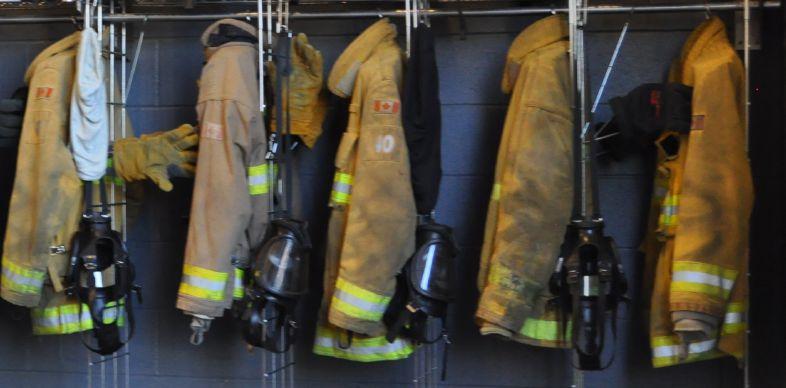
Twenty-five sets of bunker gear hang along the back wall at our station, each with a nameplate for every member of our department. Some of our senior crewmembers have put in over 30 years of service and are still active in training, responses and community involvement. On the other end of the spectrum, the newer members with less seniority take the racks at the end of the wall furthest from the door.
A fire department’s average years of experience can change drastically over a quick time period. You can lose a few senior members to retirement, and just like that the department has traded in 20 or 25 years of service that will be replaced with probationary firefighters. It’s part of the fire service life cycle.
We are constantly bringing new members to the trucks as our veterans retire. Let’s face it, one day we will be leaving
the department, taking all of our years of service with us.
When a senior member leaves the department, it’s tough because I know I’ve learned many things from that person, whether the lessons were intentional or not. You watch the way they work and perform various skills, picking up some tricks of the trade along the way.
In the on-call service there is the reality that your senior crew may not be available for a response. You might end up with a mix of several senior members and the rest with less than five years experience. Fire fighting isn’t a baseball game where the manager sits looking at his line-up, methodically benching players and making a few roster moves. We don’t stop our operations at the scene to put in a pinch runner, make a pitching change or ask for a time out to see if everyone is ready for the next batter.
In our field of work, training with the best methods prepares us for what might happen on the fire ground, but things can
In our field of work, training with the best methods prepares us for what might happen on the fire ground, but things can always change at a call.
always change at a call. Responding to emergencies is the best test to see if training had any impact on our junior members. No call ever really happens the exact way we train for it.
My department took a chance on me 10 years ago when I was fresh out of college and had never touched an air pack or fire hose in my life. Now as a captain, I enjoy working with the newer members to make sure they are comfortable with the required skills. Sometimes after they complete a skillset correctly, they may look at me funny when I ask them to do it again and again. The more firefighters practice, the better the return. The training will pay off when it matters most: at a call.
We responded to a single
motor vehicle collision with confirmed entrapment in August 2017. As the first officer on the scene, I did a 360-degree walk around and then radioed that I wanted the jaws fired up to spread the door to gain patient access. The three other members working on the rescue truck that day had a combined six years total experience between them.
As I re-evaluated the access plan in my head, I looked back and saw one of my crew members ready to go with the spreaders. I realized I had called for the spreaders first, but the cutters would help us to gain access quicker. Since my crew was prepared, they hooked the jaws and the cutters up in case both were needed. I told them I made a mistake and communicated what I actually required. Without losing a moment, the firefighter holding the jaws set them down and picked up the cutters. He approached the vehicle and made his cuts, removing the door before paramedics got the stretcher to the vehicle.
At that scene, I was working with the newest members on the department while they were working with me as the newest captain. That day, my three-member rescue team with six years of combined experience were able to pick me up without losing a beat.
One day, the time will come for you to hang up your gear up for the last time. As soon as you leave the station, you will be taking years of service and experience out of the department. It doesn’t matter if you were a chief officer, captain or a firefighter, you will have left your years of experience behind for someone to learn from.
Why stop if you don’t have to?
1 Christenson J, Andrusiek D, Everson-Stewart S, et al. Chest compression fraction determines survival in patients with out-of-hospital ventricular fibrillation. Circulation. 2009;120:1241-1247.
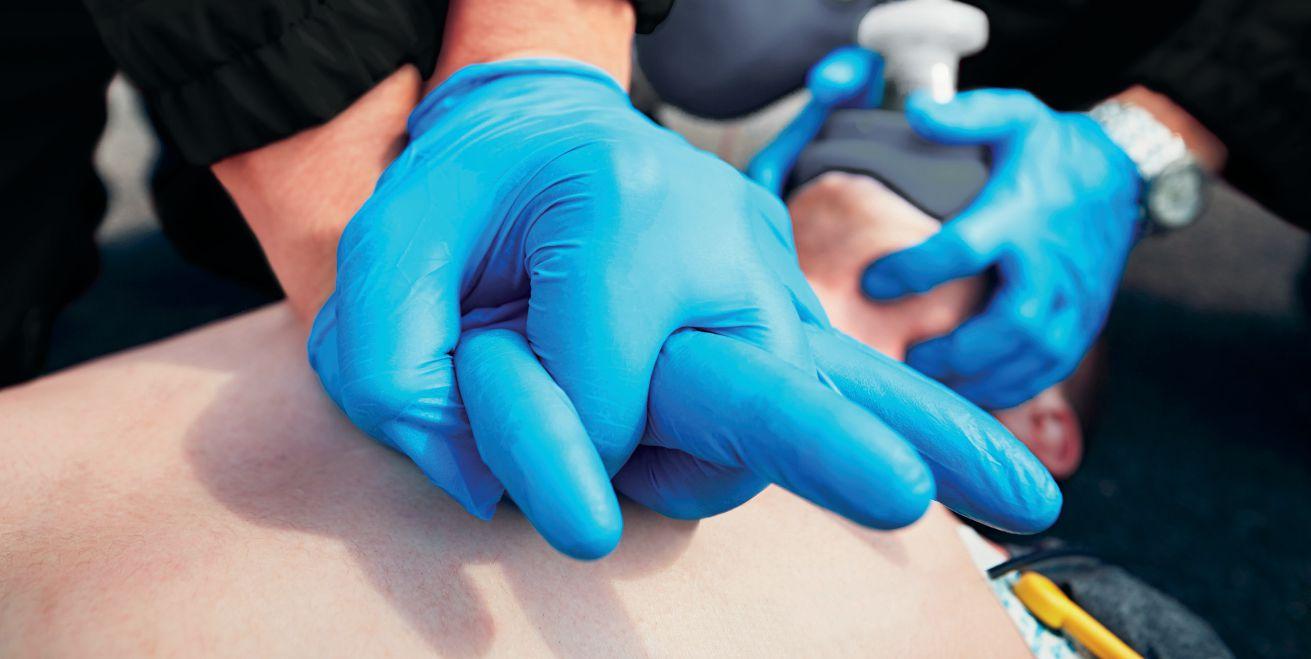
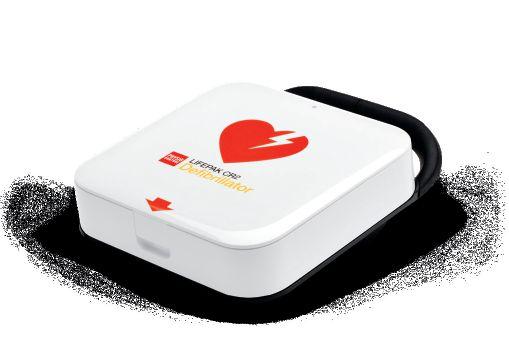
When you keep your hands on the patient, you increase compression fraction—a key factor in successful outcomes1. The innovative LIFEPAK® CR2 defibrillator is the only AED that analyses and makes a shock decision while chest compressions continue, reducing the pause between CPR and defibrillation.
Download more information about the new technology that makes this possible: stryker.com/dontstop