
One less thing to worry about
EASY- TO-USE | CONSISTENT QUALITY INPUT
TRACEABILITY OF ALL PRODUCTS | TECHNICAL GROWING SUPPORT
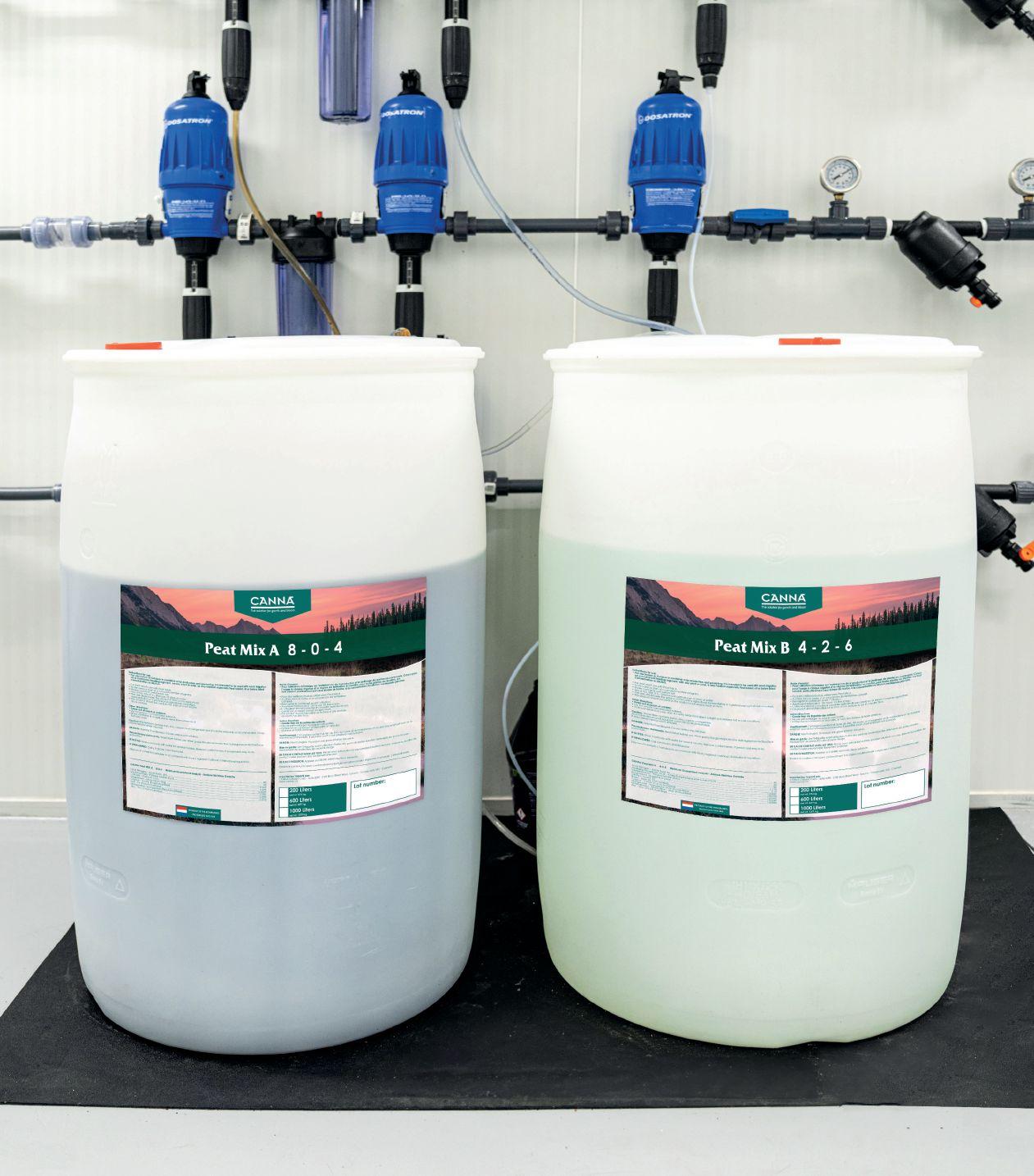
CANNA PEAT MIX A & B is an easy-to-use 2-part fertilizer specifically designed for the unique characteristics of Canadian peat mixes. It has all the essential elements required for your plants to see the most optimal results throughout the entire plant life cycle. All CANNA nutrients are manufactured from the highest quality materials, as we recognize the vital role of clean and consistent inputs, as well as keeping it simple!
Trust CANNa, a leader in the industry for over 30 years, to deliver on our promise that “Quality proves itself!”


COLUMNS
08 | Health & Safety
Safeguarding cannabis workers from summer heat
20 | Vantage Point
How low THC products are changing the cannabis market
21 | International Affairs
Europe is leading the evolution of global cannabis policies
DEPARTMENTS
| Under the Lights
Q&A with Tom Ulanowski, co-founder, Quantify Environmental; former chair, C-45 Quality Association

Survey Results: Trends in QA
Unpacking Grow Opportunity’s quality assurance poll, from packaging considerations to AI implementation
COVER STORY
Novelty to Loyalty: Securing brand affinity in cannabis Cannabis companies leverage data, market segmentation and strategic brand activation to elicit brand loyalty in Canada
Women in Weed: The pioneers of progress
Women in the cannabis industry are catalysts for change, bringing diverse perspectives and innovation to the forefront
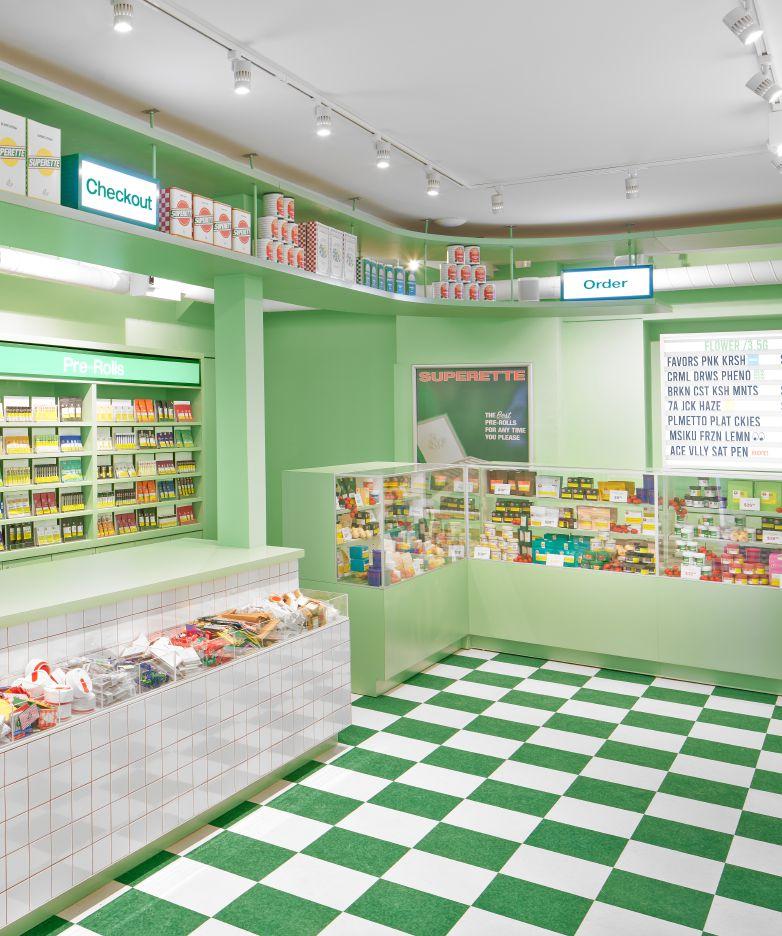
Superette, the Ontario retail banner by SNDL, showcases mid-century diner aesthetic in their four retail stores.

By Haley Nagasaki
Complexity Simplified: The brilliance of marketing
Welcome to the sizzling Summer issue of Grow Opportunity magazine. This season we explore the challenging field of marketing and brand loyalty in cannabis as red tape inhibits conventional advertising channels. However, not all drawbacks can be attributed to the regulations since championing brands have done so in the same promotional minefield. In a world of strict compliance, aside from producing a reputable product, alternative strategies and a sharp creative focus are essential company goals.
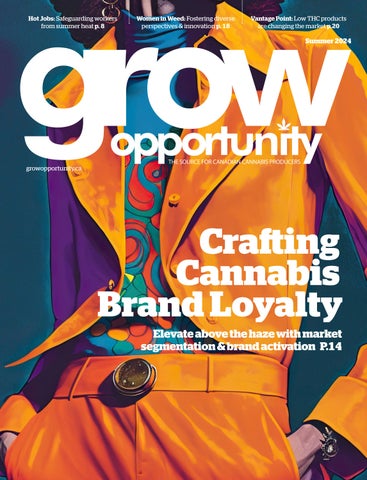
Last year when I walked into Hall of Flowers, I noticed the aesthetic of many booths felt 70s retro. So rather than portray a point-of-sale transaction or another live action facility photograph, I wanted the cover to speak for itself, this time in a metaphorical rather than literal fashion. (In this issue, cannabis is compared to the fashion industry.)
With the cover story idea in mind, next I came across Mitchell Osak’s speaker announcement for a branding panel focused on storytelling. We all know the tale of a legacy brand that went legit, or a medical patient who healed themselves and decided to incorporate. While valid, in this industry, these stories are a dime a dozen and must serve as a starting point to a larger, more complex
narrative that can then be distilled into a catchy phrase, symbol or word. This is the brilliance of marketing: taking a complex, 1,000-page novel and portraying it in the blink of an eye with a simple yet powerful meme. For Pure Sunfarms’ Pink Kush, that word is “nostalgia.”
These stories serve as a starting point to a larger, more complex narrative that can then be distilled into a catchy phrase, symbol or word.
Osak also introduced me to SNDL – a retailer known predominantly in western Canada that acquired Ontario’s four store retail banner Superette. Granted retailers have “more levers to pull” when it comes to marketing, still this mid-century diner aesthetic supported the story angle I was crafting.
The theme of cannabis industry promotion appears again in Ashley Keenan’s article with Katie Pringle’s statement regarding slashed budgets and the drive to do more with less. However, the onset of a segmented marketplace and the low dose products that signal a sophisticated market also appear in the Vantage Point column. And in the news, OCS farmgate regulations provide an ideal backdrop for unique storytelling, consumer engagement and experiential marketing opportunities.
Another prevalent theme in the issue surrounds quality assurance via the Winter survey we circulated, and the Spring virtual summit we hosted featuring Deepak Anand, Tom Ulanowski and Denis Gertler.
On page nine, you’ll find the results of our QA survey with a supporting article by Jake Hribljan and comments from Cannara, Aurora and U.S.-based cybersecurity consultancy SideChannel. You can download the full report on our website.
Anand also joins us as the author of the International Affairs column, sharing European updates after cannabis reform and overseas events made headlines last season. Gertler takes a deep dive into the world of hemp-based products in the United States that are gaining popularity among consumers seeking low potency alternatives. And Ulanowski, whose Quality Summit in June was interrupted by the Canada Gazette announcement of the proposed cannabis regulation changes, appears as the subject of our Under the Lights Q&A. Ulanowski has stepped down as chair of the C-45 board of directors, and we thank him for his work advancing this industry.
Finally, thank you to our readers, contributors and sponsors who enable our research and respective storytelling on the fluid nature of the evolving market. To you we say enjoy the high season, and cheers to blazing in the Summer sun!
Summer 2024 Vol. 8, No. 2 growopportunity.ca
Reader Service
Print and digital subscription inquiries or changes, please contact Angelita Potal, Customer Services Administrator Tel: (416) 510-5113
Email: apotal@annexbusinessmedia.com
Mail: 111 Gordon Baker Rd., Suite 400, Toronto, ON M2H 3R1
EDITOR
Haley Nagasaki hnagasaki@annexbusinessmedia.com 416-510-6829
PUBLISHER
Adam Szpakowski aszpakowski@annexbusinessmedia.com 289-221-6605
NATIONAL ADVERTISING MANAGER Nashelle Barsky nbarsky@annexbusinessmedia.com 905-431-8892
ACCOUNT COORDINATOR Kathryn Nyenhuis knyenhuis@annexbusinessmedia.com 416-510-6753
MEDIA DESIGNER
Brooke Shaw
AUDIENCE DEVELOPMENT MANAGER
Shawn Arul sarul@annexbusinessmedia.com
GROUP PUBLISHER
Paul Grossinger pgrossinger@annexbusinessmedia.com
CEO Scott Jamieson sjamieson@annexbusinessmedia.com
MAILING ADDRESS
P.O. Box 530, 105 Donly Dr. S., Simcoe, ON N3Y 4N5
SUBSCRIPTION RATES 1 year subscription (4 issues: Spring, Summer, Fall, Winter): 1 year offers: Canada $26.01 + Tax USA $47.94 CDN FGN $54.57 CDN GST # 867172652RT0001
ANNEX PRIVACY OFFICE privacy@annexbusinessmedia.com Tel: 800.668.2374
ISSN: 2561-3987 (Print) ISSN: 2561-3995 (Digital) PM 40065710
Occasionally, Grow Opportunity will mail information on behalf of industry-related groups whose products and services we believe may be of interest to you. If you prefer not to receive this information, please contact our circulation department in any of the four ways listed above.







Talking Cultivation at Grow Up, Toronto
Some panel sessions followed a cultivation focus, including a case study by Muskoka Grown’s cultivation manager Melissa Amelia about transitioning from HPS to LED grow lights. In addition to lower boiler and chiller load, and lower replacement and maintenance cost, Amelia found consistent THC levels between the two types of lights but an increase in overall yield and terpene levels. She commented on the earlier purpling of flower under LED, quoting: “The future is full spectrum.”
Triploids, cannabis seeds with three sets of chromosomes, also served as a topic of discussion. Big League Genetics’ Dustan McLean sat with Steven Tan, 4Plant Corporation, Max Jones of the University of Guelph, and Greater Sacramento’s Benjamin Lind of Humboldt Seed Company, moderated by plant specialist Amos Bassi.
While the “tech” for producing these resilient seeds may not yet be there, “we know it happens naturally in nature and finding those naturally occurring ones will be my focus,” said McLean. “I think they have huge benefits for drought-stricken areas and places like Alberta where fast flowering plants will flourish.”
The panel commented on the potential issues when delivering triploid seeds to industry with haste, akin to the feminization craze, however McLean noted that “guys like Ben are doing it right.”
Health Canada reverses decision, grants Calgary man suffering from chronic headaches access to psilocybin mushrooms
Marylanders pardoned for marijuana convictions
Maryland Gov. Wes Moore ordered more than 175,000 pardons for marijuana convictions, saying the “most sweeping state-level pardon in any state” will help reverse harms from the past caused by the war on drugs.
– Brian Witte, The Associated Press

New opportunities for Ontario cannabis farmgate stores

Thailand to ban recreational marijuana by end of 2024
Thailand, which decriminalized cannabis in 2022, is poised to reverse course and snuff out the recreational market by the end of the year. – Yahoo News Canada
The Ontario Cannabis Store (OCS) has introduced new regulations enhancing access to farmgate locations, similar to how a fruit stand offers fresh produce directly from the orchard. Farmgate stores increase consumer engagement by allowing LPs to innovate and connect directly with customers. Lee Cohen, VP of cannabis product development at LOOSH Brands, says: “With our facility in the heart of Toronto, we feel we have a unique opportunity to showcase our own products as well as to support partners and craft growers with limited drops.” The retail outlets, located at production facilities, enable producers to test new products in real-time and build brand loyalty with exclusive seasonal or limited-time items.
LPs must apply to the Alcohol and Gaming Commission of Ontario (AGCO) and hold necessary licenses from Health Canada and AGCO. Farmgate stores follow the same regulations as other cannabis retailers, including purchasing products wholesale from the OCS. The unique operational framework developed by the OCS supports direct sales to consumers, either in person or online.
Farmgate stores feature two types of product listings: exclusive SKUs available only at the farmgate store, and general list SKUs. This product listing process encourages innovation, creating a dynamic market environment that benefits both producers and consumers.






AD LUCEM LAW CORPORATION is an international legal and consulting practise based in Vancouver, British Columbia.
True to its meaning “to or towards light,” AD LUCEM LAW CORP. brings clarity and resolution to legal challenges in emerging and regulated industries.
AD LUCEM LAW CORPORATION has been instrumental in supporting policy reform, constitutional challenges, and business development since its inception in 2013, earning founder Robert W.E. Laurie recognition as a skillful lawyer, valued industry consultant, and requested public speaker.




Health
& Safety
By Alexandra Skinner
Hot Jobs: How to safeguard cannabis workers from summer heat
As climate change intensifies summer heatwaves, cannabis employers should prepare for extreme heat, and have plans in place to mitigate the risk of heat exposure and related illnesses.
“WorksafeBC data shows that workers in agriculture and manufacturing are prone to heat stress. This poses a risk for the cannabis industry because it has both indoor and outdoor workers,” says Mike Nielsen, director of prevention field services at WorkSafeBC.
During the 2021 heat dome in British Columbia, many cannabis producers had to pause operations, as they were not prepared for the elevated temperatures. However, heat stress poses a serious risk to workers even at temps well below B.C.’s 2021 record highs.
What is heat stress?
Heat stress occurs when the body’s cooling mechanisms are overwhelmed by heat. It typically occurs when the body is unable to cool itself sufficiently. Symptoms of heat stress include excessive sweating, dizziness, heat rash, cramps and nausea. If left untreated, heat stress can escalate to severe conditions like heat exhaustion, and even fatal conditions like heat stroke. Dehydration plays a significant role in exacerbating heat stress because adequate hydration is crucial for the body’s ability to self regulate.
“To best protect your workers, start with a risk assessment for your worksite that considers this hazard,” Neilsen says. “The best time to do this is before extreme weather arrives.”
Three key factors contribute to the risk of heat stress: the environment, the tasks and the workers themselves.
affect heat tolerance. Employers should advise their workers on these risks and be supportive of workers’ personal concerns.
Reduce the risk
Once risks have been identified, employers must collaborate with workers on what measures to put in place to reduce the
“If left untreated, heat stress can escalate to severe conditions like heat exhaustion, and even fatal conditions like heat stroke.”
The Environment:
Workers in greenhouses or indoor settings, especially concrete buildings, face challenges related to heat and humidity. Greenhouses have fewer environmental controls, like centralized HVAC systems, while concrete buildings tend to absorb and retain heat. Further, the lack of natural ventilation can lead to stagnant air, and equipment can also elevate the temperature indoors. In addition, workers may wear protective gear or uniforms that limit airflow, heightening the risk of dehydration and overheating.
The Work:
The nature of the work itself plays a significant role in heat stress, as doing physical tasks like harvesting, pruning and processing can cause the body to generate more heat.
The Worker:
Individual factors like age, fitness level, pre-existing medical conditions or medications can
risks. Consider the following control measures, and determine when these controls should be put in place:
Schedule physically demanding tasks during cooler periods, typically before 11 a.m. and after 3 p.m. This can vary in extreme heat conditions or heat dome events, as late afternoon can be the hottest part of the day.
Implement physical modifications to facilities, equipment and processes to minimize heat exposure. Employers should consider physical modifications to buildings, especially those without HVAC systems. Shade cloths are an option for greenhouses, and whitewashing concrete buildings can reduce sun exposure.
Monitor on-site heat and humidity conditions regularly. Establish work-rest cycles and ensure workers are not working alone in high-temperature conditions. Rotate work activities or increase person power to reduce individual exposure and allow for adequate cooling
breaks. Designate cooling areas with shade and ample water supply.
Clothing choice is also critical. While protective gear like Tyvek suits may be necessary, breathable alternatives should be explored. Educate workers and first-aid attendants on heat stress symptoms.
Employers, co-workers, and first-aid attendants play a crucial role in keeping workers safe by knowing the signs of heat stress. “You don’t know when you’re being affected by heat stress, so work in pairs, and ensure your workers and colleagues know the signs,” says Nielsen. “It’s also critical to promote a culture where prompt reporting is encouraged.”
Symptoms include excessive sweating, fatigue, dizziness, headache, nausea, muscle cramps, rapid heartbeat, pale skin and fainting. Confusion is also a symptom that is often overlooked. In addition, heat can be dangerous no matter how familiar someone is with it. Don’t assume conditions are safe for workers who are used to hot conditions.
While extreme heat events like heat domes may not occur every summer in Canada, as extreme temperatures become the new normal, the risk of heat stress is constant. Integrating risk assessment and heat stress management into regular operations is essential for protecting agricultural and manufacturing workers in cannabis.
Alexandra Skinner is the manager of government and media relations at WorkSafeBC. WorkSafeBC engages workers and employers to prevent injury, disease and disability in B.C., serving 2.7 million workers and 280,000 employers across the province.
EMERGING TRENDS IN QA: CANNABIS INDUSTRY SURVEY
Breaking down the results of Grow Opportunity’s quality assurance survey
By Jake Hribljan
The burgeoning Canadian cannabis landscape is a dynamic environment brimming with opportunity and obstacles. Navigating regulatory framework, evolving consumer demands and rapid technological advancements all weigh heavily on those working diligently to make Canadian cannabis a global benchmark.
In this issue, Grow Opportunity surveyed a cross section of C-suite executives, vice presidents and directors, senior partners and a variety of managers in cannabis, to pose questions on everything from packaging considerations to data management, and the integration of artificial intelligence. Here’s a detailed breakdown of the survey results, and a look into the feelings of Canadian cannabis industry stakeholders:
SKUs & Export
Of the 143 respondents, almost 75 per cent hold positions in senior management or ownership. This gives respondents a holistic view of all processing concerns from start to finish. Flower continues to be the dominant product being sold by LPs, with nearly 67 per cent of respondents selling flower at their company.
Which of the following best describes your level/position within your organization?
Survey Results
How many SKUs are you currently selling?
For the producers that are exporting cannabis, how many countries are you exporting to?
training procedures for employees is crucial to operations, Lopez says.
Cannara’s team is continuously monitoring and evaluating the quality of their output. “Market feedback is also very important in helping us improve,” Lopez adds. “Whenever we identify something that can be improved on, subject matter experts and employees on the ground level are tasked with implementing corrective and preventative measures.”
Overwhelming, cost reigns as the top consideration for packaging, receiving almost 36 per cent of first place votes. Materials and recycling round out the second and third place considerations. Speaking to Lindsey Soper, Aurora’s manager of corporate communications, she notes that packaging considerations is a balance between meeting all required compliance requirements, be it ensuring robust child resistant closure studies are carried out, while also building consistency of packaging components in both quality and size.
A little less than half of respondents say their company is selling between one and 10 SKUs (46 per cent) while around a quarter are selling 11 to 20, and another quarter are over 20. Nearly 57 per cent of respondents say their companies are exporting cannabis or cannabis products abroad, with nearly 85 per cent of those exporting to multiple countries, and almost 25 per cent to five or more countries. As legalization efforts around the world persist, opportunities for international growth will only continue to balloon.
Operations & Compliance
The survey results reveal a strong commitment to maintaining high standards in regards to compliance with Good Production Practices (GPP). A majority of respondents emphasize the importance of documented Standard Operating Procedures (SOPs), with 63 per cent implementing these as a cornerstone of their compliance strategy.
Quality control checks and audit programs are integral to the industry’s compliance efforts, with 54 per cent conducting regular quality checks and 61 per cent
engaging in self-inspection and audit programs. Cannara Biotech’s director of marketing, Christian Lopez, attests to these findings, noting Cannara’s deep commitment to quality and compliance. “We rely on a large and experienced quality department, which draws from knowledge acquired in the pharmaceutical, nutraceutical, food and beverage industries, to build robust procedures and quality systems.” Instilling a sense of personal ownership over their processes and investing in
While ‘flexibility in different products and quantities’ ranked last in packaging considerations, this option received the most total votes at 139, while also receiving the most fourth place votes. This would seem to align with Soper’s comments.
“Our main challenge that we could face is the fact that design of the label accommodates all required text while ensuring enough blank space exists on a label to adequately allow for placement of the excise stamp,” says Soper.
A majority of respondents agree that
How do you ensure comprehensive compliance with Good Production Practices (GPP) throughout the production, packaging and labeling processes?


Survey Results
How do you drive continuous quality improvement in finishedproducts? (Select all that apply)
How many hours per week do you spend on data entry?
What are your major QA challenges right now? (Select all that apply)
As new technologies bloom, new risks emerge as well, however a majority of respondents say they are not concerned with cybersecurity risks at their company. Brian Haugli, CEO of SideChannel, a cybersecurity management firm that helps mid-market companies build a comprehensive cybersecurity program, notes that most companies believe it is only major players such as
How would you rate your level of engagement with Artificial Intelligence (AI)? (Choose one)
‘lack of testing standardization’ is the biggest challenge in QA. This would seem to be another mark in the contentious back and forth between stakeholders and regulators in the industry. ‘Ethical and sustainable practices’ comes in at second in QA challenges, showing stakeholders’ concern over the long-term viability of operations.
New Tech
While 2023 and 2024 have been marked by investors chasing artificial intelligence (AI) in the stock market, AI has yet to take hold in Canadian cannabis. Only 30 respondents say they are currently applying AI, with almost 80 per cent of respondents not using AI at all, or only considering integrating AI.
PepsiCo or Microsoft that are at risk. “The highest hit group [for cyberattacks] is midsized and small sized law offices, and K-12,” says Haugli.
Believing that hackers are only teenagers at a computer in a basement is a grave mistake, warns Haugli. Cybersecurity attacks today are highly sophisticated and carried out by teams that operate much in the same manner as a large corporate entity, with whole departments and chains of command. Targeting mid-sized operations with ransom-ware in order to steal and hold sensitive data hostage can have an immense ROI. People might dismiss the threat, only to be blindsided by an attack “and they have no idea what to do, and [they] go out of business,” says Haugli.
Regarding record keeping, 55 per cent of respondents say they use software, 51 per cent use cloud services and 47 per cent use hard drives. With so much data being managed by tech, and so much time spent on data entry (50 per cent of respondents report spending between 11 to over 31 hours a week on data entry), it is alarming there is so little concern for cybersecurity risks.
Conclusion
The survey findings offer valuable insights into the prevailing trends and challenges shaping Canada’s cannabis industry. From operations to new tech, LPs are navigating a complex landscape of regulatory scrutiny, market dynamism and constant innovation. How cannabis industry stakeholders adapt remains a question, but when speaking to executives and partners, the singular truth is that Canada is privileged to be home to some of the very best in cannabis.
What is your level of concern regarding cybersecurity risks to your company?
What options do you use for record keeping?
Most believe it is only major players such as PepsiCo or Microsoft that are at risk, but “the highest hit group [for cyberattacks] is midsized and small sized law offices, and K-12.”
– Brian Haugli, CEO, SideChannel

CRAFTING CANNABIS BRAND LOYALTY
Cannabis companies leverage data, market segmentation, consumer behavioural shifts and strategic brand activation to elicit brand loyalty
in Canada
By Haley Nagasaki
In Canada’s cannabis industry, brand loyalty is shaped by two competing narratives. One emphasizes smart marketing campaigns as key strategies, while the other argues that the lack of prominent brands is due to issues of availability and consistency, as well as the cannabis consumer’s desire for novelty.
The focus here is brand loyalty as a goal for every cannabis company, likened to industries such as fashion, cosmetics and beverage alcohol. This is a comparison made by global cannabis consultant, Mitchell Osak.
Osak, who has experience working with marketing powerhouse Procter & Gamble, defines branding as “the ability of a product or service to drive high awareness, repurchase, plus the ability to command a price premium

in the marketplace versus its competitor.”
Despite the initial marketing hype surrounding regulated weed, where “more money was spent; more heat was generated with a lot less light,” he says, “at the end of the day, I think it’s because of the restrictions.” He also witnessed the reflex of hurling cash at a problem without fully understanding consumer and channel needs.
Recently Osak spoke on a panel at Benzinga on the art of storytelling, and echoing the advice he provides international clients, told the room that in order to brand, marketers first must study human behaviour and connect the “latent primordial desires and fears we all have.” Or employ an “anthropological lens” to the brand’s market position and
benefits before embracing the tactical branding considerations.
“We have low brand development in this industry,” says the expert who has worked on brands like Tide, Cascade and Cover Girl. “We have nothing like that almost six years into cannabis.”
Osak believes that even with the regulations we have in place, eventually we’ll get there, but it will take longer. “It will take an evaporation of lots of brands in the marketplace, such that you’re left with fewer but stronger ones – more consistent and standardized ones,” he says.
A segmented cannabis marketplace
Understanding consumer needs means offering more product by segments. This is emerging for target groups by leveraging specific product profiles.
Quality means different things to different people, and in this industry, high terpenes or high THC became a proxy for quality, when in fact it’s potency, not quality.
– Mitchell Osak
Producers might cater flower for the connoisseur, or for first time smokers. They may market a brand of edibles for seniors. Aiming products at different segments and at different occasions is the key to satisfying different needs.
“It’s the difference between a Chanel dress and a Zara dress,” says Osak.
The emergence of organic product offerings serves as an example of a mix up between feature and benefit, where growers confused organics as a benefit rather than a feature. Branders didn’t connect organics with a consumer benefit or outcome, such as eliciting a cleaner high using living soil, which is a message that needed to come through in the marketing.
“Quality means different things to different people,” he says, and in this industry, “high terpenes or high THC became a proxy for quality, when in fact it’s potency, not quality.”
What matters is the consistent, quality product at the right price. “Terpenes and THC matter, but they matter for the need state of the consumer when they want to consume it.” Of course, “price per buzz” is going to drive a lot of consumer preference, however the entrance of low THC products on the market signals the start of a sophisticated industry.
While the market is starting to segment – cutting across gender and sex, income and region – there will still be “switchers in all directions,” says Osak, who come in for the 99-dollar ounce, but leave with the new infused pre-roll.
The reason why brands haven’t yet “entrenched themselves in people’s minds,” is that there is high incentive to switch brands. There is always new product coming out, some producers are unable to sustain consistent production, and consumer tastes evolve.
Cannabis vs. fashion
With the churning out of new strains and product formats, cannabis resembles the fashion industry that may recycle styles but never stagnates. With fashion comes loyalty to houses of brands, and less to a particular style or fashion.
Cannabis companies have frequent SKU turnover, compounded by stocking issues. And with consistent new micro licenses who generally grow better-quality product, Osak makes the analogy to the wine industry, where consumers opt for the region or the grape and less the winery.
“It’s hard to build brands in a segregated, stratified high end wine world,” he says. “It takes decades if not hundreds of years.” The pace of innovation, constant need for capital and the number of producers in cannabis could hinder the ability to build brands in the market’s current state.
So how can cannabis companies get a leg up amidst regulatory struggles, saturation and turnover?
Brand activation
With early branders’ lack of consumer understanding, some companies recognized the challenges (namely the lack of ROI) and shifted to what the marketing expert calls brand activation.
If brand management is the act of building a brand image through advertising and PR, then brand activation is what happens in the retail setting – also called trade or channel marketing. “The power is when you get the overlap; when your brand activation or trade marketing enhances your brand promise and value proposition,” says Osak.
Too much focus on brand building at the higher level never makes it to the budtenders in store. On the flipside, too much emphasis on sampling or swag can also damage a brand that sometimes requires the “allure of mystery.” Price signalling will support the quality message, but it’s how branders can tie it all together, like an overlapping Venn diagram, that can make all the difference.
“You need your great sales reps hustling in store,” says Osak. “You need consumer and insights driven brand thinkers, and you need the product educators crafting the
right message for budtenders and store managers about why the consumer should support them.”
Branding in Retail: SNDL case study
Osak affirms that in many ways, retailers have done a better job than product companies at eliciting brand loyalty. “Partially because they have more levers to pull,” he says.
For example, Alberta-based SNDL owns a variety of retail banners that are positioned to different market segments. With a store count of 190, they are the largest retail footprint in Canada operating four retail banners: Value Buds, Spiritleaf, Superette and their deep discount brand Firesale.
“When all retailers sell the same products, creating brand loyalty is critical and we lean into basics to support brand affinity,” says Marcie Kiziak, president of cannabis retail at SNDL. “While price and selection are key factors,” she says, “we heavily focus on the in-store experience and the expertise of our staff.”
A multi-banner approach that caters to different demographics in a fluctuating market is a competitive advantage that enables a curated retail experience based on the location of the communities they’re in. “Looking at our two largest banners,” says Kiziak, “Value Buds focuses on value-driven, large-format convenience customers, while Spiritleaf consumers tend to be more casual and value trying new formats, producers and flavours.”
Moreover, “Firesale is a pilot concept focused on deep, deep value, and Superette is an award-winning, best price retailer that is uniquely designed for the community in which it operates,” says Kiziak, who works for a company that has captured the full scope of the customer base.
SNDL gauges trends and community preferences using industry data, combined with real-time customer
insights to identify and adapt to trends. Consumer feedback is a pinnacle of their operations. Kiziak also emphasizes collaboration with industry partners that “help us understand the broader community and share insights across retailers, regulators and producers.”
SNDL’s agile business model, grounded in fundamentals and inventory management, enables them to respond well to market shifts. In addition to inventory management, they use other data points to align with consumer preferences, striving for “consistency, quality and value,” says Kiziak. “And data is the lever needed to effectively curate our menus to hit all those markers.”
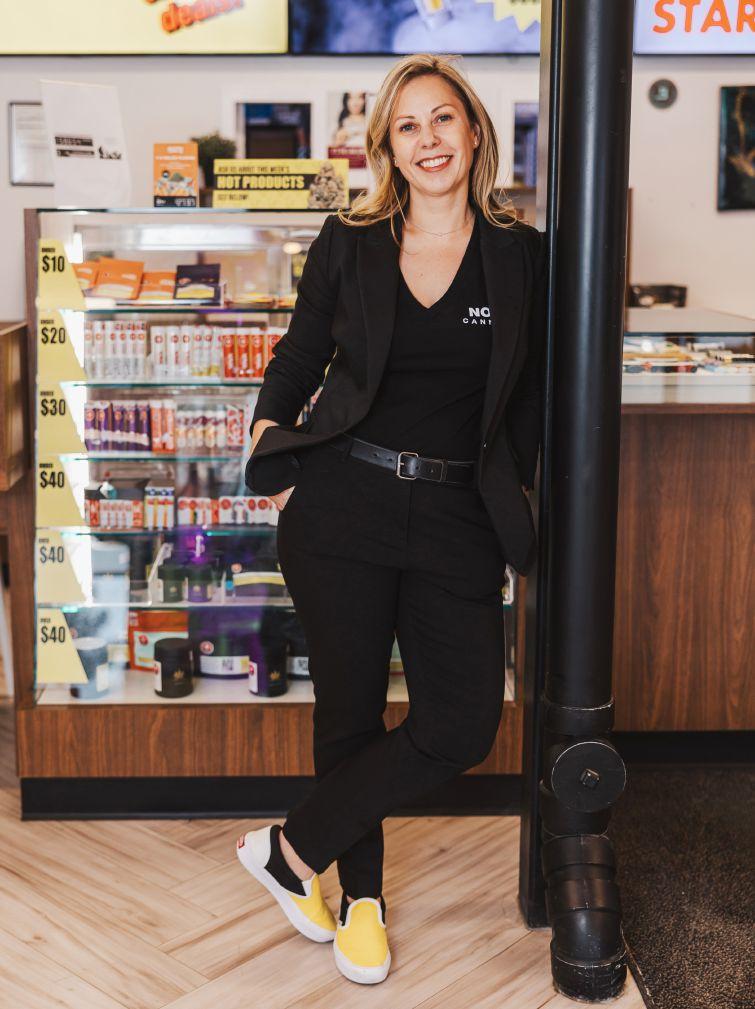
The value in our multi-banner approach means that we have something for everyone and a deep understanding of the customer.
– Marcie Kiziak, president of cannabis retail, SNDL (above)
Exception to the Rule: Pink Kush
Due to a number of competing factors such as marketing chokeholds and stocking limitations, there are few strong brands in Canadian cannabis today, with outliers such as Pink Kush and some from eastern Canada.
Pure Sunfarms of Village Farms International (VFI), is among the largest global producers of cannabis and is home to the best-selling Pink Kush brand. “It really hit the sweet spot in terms of what consumers are looking for as they’re going from pre legalization to legalization,” says Maria Guest, Pure Sunfarms’ VP of brand. The Vancouver Island genetic holds a wide appeal among consumers, and it has a bit of everything says
PHOTO: SNDL
At the start, some LPs launched multiple brands at the same time, “placing bets before you really knew what the makeup of this brand-new industry is going to shape up to be.” - Maria Guest
Guest: “The quintessential Kush has a nostalgia associated with it – the sweetness, the spiciness – it really captures the nostalgia of what Kush was pre legalization.”
Guest spent 20 years in strategic brand marketing before shifting to the Delta, B.C. producer, that launched in the Canadian market in
2019, a 1.1 million square foot greenhouse facility previously converted from tomato production.
For the last five years, Guest has overseen product development. She outlined the LP’s initial strategy of starting with one brand, Pure Sunfarms, before expanding into additional segments, such as their


value brand Fraser Valley Weed Co.
At the starting line of regulated cannabis, some LPs launched multiple brands at the same time, “placing bets before you really knew what the makeup of this brand-new industry is going to shape up to be,” says Guest.
“Even a year later when we launched, it was with one brand intentionally, to focus our efforts and build Pure Sunfarms with consumers.” After three years, they began expanding their portfolio to address the changing consumer trends and preferences with a multi-brand approach.
Earlier this year, Pure Sunfarms launched Kush God, a Pink Kush cross catering to cannabis consumers looking to try something new.
“Resting assured,” says Guest, “that they always come back to the ones they love.”


How women are transforming the cannabis industry Beyond Tokenism:
Women are catalysts for change, despite underrepresentation and economic instability, bringing diverse perspectives and innovation to the forefront
By Ashley Keenan
Women in weed is a popular turn of phrase in the cannabis industry to describe the diverse and passionate professionals who work with the plant in some way. It can be a powerful representation of women who have made their careers in Canada’s legal cannabis industry. It can also be used as a marketing ploy that tokenizes women and their relationship to the industry and the plant itself.
There isn’t one type of woman who works in weed; we aren’t a single entity with the same expertise or personalities. On all levels of leadership, women can be versatile advocates, patients and professionals with diverse skill sets, using their platforms to elevate each other. Behind closed doors, women in weed aren’t just mentoring each other. We also share experiences: discussing pay rates, outstanding invoices, and who our allies are (and aren’t).
Just like other industries, women in weed face unique challenges as opposed to their

male counterparts, where efforts to include women can sometimes seem disingenuous. Nearly six years into legalization, women working in cannabis are still struggling for representation, navigating an overburdened industry and helping to build a more sustainable future.
Industry show panels, for example, typically offer a panel using the phrase to sell tickets to a ladies’ brunch-style event. Why is that an issue? Women aren’t discussing their careers as subject matter experts, often they’re simply talking about what it’s
like to exist in the space as a woman. There is so much value in women in weed-type events, but they alone aren’t able to make large scale changes. For International Women’s Day, Radicle Femmes led by Marigold PR, with the OCS and Sister Merci, posed a question that I ask myself at every “Women in Weed” panel – why do we still need these events? These events are super fun and great networking opportunities but if the cannabis industry truly is progressive and inclusive, would we still need events or panels about being a working woman?
“Women in weed” can be a powerful representation of women who have made their careers in cannabis. It can also be used as a marketing ploy that tokenizes women, their relationship to the industry and the plant itself.
Ashley Keenan is a journalist, consultant and patient advocate who uses reporting and storytelling to educate, entertain and empower folks curious about cannabis.
These breakout events exist because women still need safe spaces to grow as professionals. There have been advances over the years to improve inclusivity, but we are a far way from equal representation for women, non-binary folks, disabled individuals and people of colour disproportionately affected by prohibition. Layoffs and cutbacks have women questioning their role in the cannabis industry, even if they have been here for years. Women are a crucial part of diverse workspaces but are disproportionately affected by lay-offs
“Women have unique perspectives and passions they bring to the table, which can lead to better consumer loyalty and employee retention,” says Hilary Black, fractional chief impact officer who pioneers social change in the cannabis industry by “doing the work to ensure that the ethics of the plant are embodied in the business and the industries growing around the world.”
As companies struggle to keep their doors open, let alone turn a profit, these companies aren’t just surviving – they’re thriving. Black mentions how companies like Rubicon, Aqualitas, Organigram and Wana are killing it during such a volatile time for the industry. And they do it while maintaining a strong commitment to diversity. “There is some connection there, I think, around the fact that they are female-led companies. Not just the CEOs, they also have a high percentage of women on their boards and C-suite.”
Right now, the cannabis industry isn’t expanding and growing, instead, it’s consolidating and contracting, according to Black. “I would definitely say that there are fewer opportunities [for women and overall]. It has a lot to do with what is happening
in the capital markets and happening in the industry in Canada.”
Another popular turn of phrase is “The future is female” – which alludes to both the women working in cannabis and the plant herself – but it hasn’t felt very true lately. The COVID-19 pandemic disproportionately impacted women-owned businesses in all sectors as well.
As layoffs and slashed budgets continue to rip through the industry over and over again, the pool of talented women who are now freelancing continues to grow. Aside from execs, one of the first line of professionals to go are typically diversity, social justice, sustainability, marketing, social media, PR and communications. A majority of these roles are held by women.
“Throughout my career, marketing is the first line to get cut, which is mostly made up of female professionals” shares Katie Pringle, CEO and co-founder of Marigold PR. “Even though studies have shown these roles are instrumental in building momentum and driving velocity for your business.”
“Right from the beginning of legalization, we saw brands hire huge marketing teams and structure themselves like traditional corporate companies,” says Pringle, noting that the cannabis industry needed more of a start-up approach. “Marketing budgets are significantly smaller than they used to be; everyone’s trying to do more with less.
Of course, it isn’t all doom and gloom. In her experience, Pringle has seen a lot of brands that value bringing women to the table but notes there is still room for growth. “We have a long way to go to catch up with other industries in terms of social responsibility like diverse and equitable initiatives.”
“We do a lot of professional development & mentorship. I’ve watched my team advance significantly with that kind of attention & investment in their future.” – Katie Pringle
The future of women in weed
“When you ask about how sexism in the industry inhibits growth – that if you have an automatic denial of the merit of women, which is really what sexism is – then it’s much harder for women to be leaders and be in decision-making roles,” says Black.
Black notes that women are integral to the cannabis industry and stresses the need for more women in C-suite, boardrooms and beyond to create and maintain a more inclusive space. Of course, this can’t be done in an echo chamber and Black tells Grow Opportunity that industry can’t underestimate the value of consumer voices.
“These issues [of diversity] aren’t going to be solved by professional players alone,” says Black. “Consumers have an integral role to play in diversity by being intentional about the brands they purchase from. If there’s a product you really like but the company doesn’t have enough women in leadership positions – let them know.”
Purchasing power is one of the most impactful ways to create change as everyone is chasing brand loyalty in an oversaturated market. As my hero Ashleigh Brown, patient advocate and founder of SheCann, always says: “Patients and consumers need to vote with their wallets.”
In addition to consumer pressure, women in the industry need to keep leaning on each other and continue to persevere. In contrast to boys clubs in cannabis, Pringle is proud of her female staff. “I kind of have a girls club, we’ve always promoted within. We do a lot of professional development and mentorship. I’ve watched my team advance significantly with that kind of attention and investment in their future.” At the end of the day, most stakeholders want to create a diverse and equitable space. “There’s still a huge opportunity for women,” says Pringle. “I think we’re heading into another phase; the industry has been really hard and we’re making a comeback.” Women should look for “the kinds of rooms they want to be in,” advising those entering the market to network out of their comfort zones and not be afraid to initiate one-to-one conversations with other professionals in the industry.

Vantage Point
By Denis Gertler
Low-THC products are changing the U.S. cannabis markets
It started innocently enough. Folks I’d gifted my homegrown to were telling me it was too strong. Others said they wanted to function rather than space out while preparing dinner or minding the kids. Could this be a thing, I wondered?
Then a post about Dad Grass appeared in my LinkedIn feed. Curious, I reached out to its author, Ben Starmer, cofounder and CEO. From there I plunged into the rabbit hole of low-dose THC consumer products. Ben and business partner, Josh Katz wanted weaker weed and surmised that other consumers did too. But the market was focused on potency. Enter Dad Grass, a brand of natural hemp-derived products. I asked him if he had done any market research. “Not really,” he said. “I had a gut instinct. I felt in my bones that low potency is the future.” Starmer explained that his products are all based on organic hemp flower, including a range of dried flower, prerolls, gummies, beverages, tinctures and dog treats. It turns out that he was on to something as the market for low-potency cannabis has recently exploded.
Dad Grass tests below the 0.3% THC threshold identified in the 2018 U.S. Farm Bill, which legalized hemp use across the U.S. The threshold was intended to differentiate industrial hemp from ‘marijuana,’ but legislators didn’t foresee consumer demand would grow beyond natural
hemp products. Enter a new class (and departure from Dad Grass) of crafted cannabinoids where the CBD contained in hemp flower has been changed through chemical processes to form psychoactive compounds such as delta-8 (D8).
Unlike traditional cannabis, hemp-derived cannabis can be distributed across state lines. Depending on state legislation hemp products may be sold online, through delivery services, inside liquor stores and in supermarkets. Hemp beverages are a small but fast-growing segment of the U.S. cannabis beverage market. Overall, sales of hemp-derived THC beverages grew 143% in 2023 according to the Brightfield Group. By next year the category is forecast to overtake CBD beverages.
Hemp drinks are sometimes likened to craft beer as a sessionable, low-dose alternative to high-THC and hard beverages. On its website the Hemp Beverage Alliance likens the retail model for hemp to the sale of beer and wine which are found everywhere, while spirits (and high THC products) are
legally purchased at statelicensed outlets. That’s how the Alliance sees hemp and cannabis co-existing.
Some in the traditional cannabis industry see things differently. According to economist Ruth Fisher, state-regulated marijuana businesses are far from happy. “The 2018 Farm Bill opened a can of worms,” states Fisher as its definition of hemp is open to varied interpretations. The 0.3% THC content threshold distinguishing federally legal hemp from marijuana scheduled under the Controlled Substances Act doesn’t adequately differentiate the two plants because it doesn’t address how chemistry changes potency. This has allowed a “haze of legality [by permitting hemp-based beverages] to backwash into the legal industry,” Fisher says. While makers of higher-potency, cannabis drinks are hemmed in by state borders and have strict regulations on packaging and marketing, lowTHC and conversion CBD beverages derived from hemp can take advantage of less onerous promotional rules, and broader
packaging, distribution and sales networks.
Despite rapid growth and evident loopholes, all segments of the cannabis beverage business must contend with a patchwork of state regulations. In New York, hemp-derived THC products are limited to one mg of THC per serving and 10 mg per package. Florida recently legislated both D8 and THC beverages, banning D8 and confining THC beverages to five mg per serving and 50 mg per container. In California, all THC beverages must be sold in authorized dispensaries.
Can this situation continue?
At the Drug Enforcement Administration’s Supply Chain Conference in May, Terrance Boos, chief of the agency’s Drug and Chemical Evaluation Section, intimated that new rules will soon be proposed to clarify that psychoactive, hempderived cannabinoids be treated as controlled substances.
Now that the tech is widely available and these products have been scaled, Fisher wonders whether regulators can extinguish demand. Others, such as policy activist Steph Bowen, think that Pharma and Big Alcohol are poised to pounce once cannabis is de-scheduled.
However the agendas of business, politics and regulators play out, a significant, albeit challenging new market – one that looks quite different from the traditional cannabis industry – has emerged.
Denis Gertler is a regulatory consultant, board member and former government regulator.

By Deepak Anand
Europe’s leading role in the evolution of global policies
The global cannabis industry continues to evolve, with significant developments in various European countries shaping the future of cannabis policy and business. This update covers recent progress in Germany, Switzerland, Italy and Malta, highlighting their unique approaches and the implications for the broader market. Additionally, updates are included on the expansion of Canadian exports.
Germany: Legalization & medical market growth
Germany is making strides towards becoming a major player in the European cannabis market. In April 2023, the German government approved a plan to legalize recreational cannabis use, making it the largest European nation to do so. The proposed legislation allows adults to possess up to 25 grams of cannabis and grow a limited number of plants for personal use. The government aims to implement a controlled distribution system to ensure product safety and reduce black market activities.
Since April 1, 2023, the German medical cannabis market has seen significant growth. Changes in regulations have streamlined access for patients, leading to a notable increase in prescriptions and dispensations. The introduction of more efficient pathways for doctors to prescribe cannabis and the availability of a wider range of products have contributed to this expansion. Analysts predict that the German medical cannabis market could reach up to €1.5 billion annually by 2025.
Switzerland: Pilot programs and decriminalization
Switzerland is taking a cautious but progressive approach to cannabis. In January 2022, the Swiss government launched pilot projects to test the effects of legalizing cannabis for recreational use. These studies aim to gather data on consumption patterns, public health impacts, and the effectiveness of regulatory measures.
Additionally, Switzerland has decriminalized the possession of small amounts of cannabis, allowing adults to possess up to 10 grams without facing criminal charges. This shift towards a more lenient stance on cannabis reflects changing public attitudes and a desire to explore harm reduction strategies.
The pilot projects are expected to inform future policy decisions, potentially leading to broader legalization and a regulated market. Switzerland’s methodical approach could provide valuable insights for other countries considering similar reforms.
Malta: Pioneering legalization in Europe
Malta made headlines in December 2021 by becoming the first European Union country to legalize the possession and cultivation of cannabis for personal use. The legislation allows adults to possess up to seven grams of cannabis and grow up to four plants at home. Additionally, non-profit cannabis clubs can distribute cannabis to their members.
Malta’s progressive approach aims to balance personal freedoms with public health considerations. The
government has emphasized education and harm reduction, alongside strict regulations to prevent misuse. Malta’s pioneering stance could serve as a catalyst for other EU countries considering similar reforms. The success of Malta’s model will likely be closely watched, offering insights into the practicalities and societal impacts of legalized cannabis.
Canadian Exports: Leading the global market
Canada continues to lead in the international cannabis market, particularly in exports. Canadian cannabis companies are leveraging their experience and regulatory advantages to supply medical cannabis to emerging markets worldwide. Canadian exports have been growing, with shipments to countries like Germany, Australia and Israel. This trend underscores Canada’s role as a global cannabis hub and highlights the importance of international trade in the cannabis sector’s growth.
Analysts predict that the German medical cannabis market could reach up to €1.5 billion annually by 2025 .
In conclusion, the international cannabis landscape is rapidly evolving, with significant developments in Germany, Switzerland, Italy and Malta. Each country is navigating its unique path towards reform, influenced by cultural, legal and political factors. As these nations experiment with different models of legalization and regulation, they contribute valuable lessons that will shape the future of global cannabis policy.
The progress in these countries demonstrates the growing acceptance and normalization of cannabis, paving the way for a more integrated and regulated international market. The expansion of the medical cannabis markets in Germany and Australia, coupled with Canada’s increasing medical cannabis exports, underscores the dynamic and interconnected nature of the global cannabis industry.
Deepak Anand is the principal at ASDA Consultancy Services. He is a wealth of knowledge and experience in the global pharmaceutical and cannabis industries, and serves on the boards of pharmaceutical associations across North America and Europe.
Passing the Torch: Tom
Ulanowski’s crucial C-45 contribution
With a background in analytical chemistry, environmental science, and ecohydrology, Tom Ulanowski did not envision a career in the cannabis industry prior to its existence. However, a move to British Columbia in 2014 coincided with Canada’s legalization of medical cannabis, presenting an opportunity for him to contribute to the sector’s in-demand technical and scientific roles.
Ulanowski managed the first LP in the province, Canna Farms, and later founded cannabis extractor Nextleaf Labs in Coquitlam. He also consulted, taught a cannabis program at Kwantlen Polytechnic University, and became involved with the C-45 Quality Association at its first summit in 2019. After serving a three-year term as chair on C-45’s board of directors, Ulanowski is now stepping down to make way for new leadership.
GO: What is one of the most impactful improvements you’ve seen during your time with C-45 Quality Association?
TU: Some of the major issues throughout the years were lack of communication and specific guidance from Health Canada – whether they pertained to day-to-day operations, SOPs, product release, or preventative control plans. One of the biggest requests from the industry has always been ‘please help us define and detail testing and release criteria for different products.’ Quite often, Health Canada just referred to the regula-
tions and said it’s up to the QAP to figure that out and defend it for themselves. However, over the last few years, we’ve seen comprehensive guidance documents come, and we now have very specific insights and guidance on to what should be done and is considered a best practice by the federal regulator.
GO: What are the highlights from the C-45 summit in Hamilton?
TU: The summit was, in my humble opinion, a tremendous success! We had about 120 delegates show up, mostly from Ontario, but from all across the country. Four representatives from Health Canada spoke, and the event showcased a diverse mix of participants, including quality-focused employees from OCS and AGLC. It was a great opportunity for industry professionals, service providers and regulators to connect.
These quality summits are different than other cannabis industry events in that they’re more technical, and I would say more intimate and in depth. For this summit, we had seven sessions; it was very interactive with lots of time for discussion. And it just so happened that halfway through the summit, the proposed changes to the Cannabis Regulations were published in the Canada Gazette. We discussed the anticipated changes in cannabis regulations, expecting them in the coming days or weeks, and then just two hours later, we were able to delve into specific details as they were officially published.
I think the biggest takeaway from our Quality Summits is that there are many people with very similar issues all across the country –across license holders and service providers. It’s important for delegates to be aware that they’re not just working in a silo, that there’s other people out there with similar challenges, and that they can make connections with those people to help save them time and frustration.
GO: In your opinion, what are the biggest proposed changes to the Cannabis Regulations?
TU: Allowing more than two alternate quality assurance people –that was pretty important. One of the biggest changes on the product side was removing the one-gram weight limit for pre-rolls.
The differentiation in color between container lid and body, although a small change, allows for more flexibility in packaging. The cut-out windows in packaging for dried cannabis are, I think, going to be massive for the industry. The industry has been asking for this for years; it will enable people to purchase cannabis based on its appearance, not just on price or potency, which is important.
Things like QR codes, again, allowing options for expanding on customer information engagement. Simplifying labels – removing the actual THC requirement, I think is a benefit that will probably lead to less recalls due to product label errors, and less cost and frustration. One of the most significant proposed changes is the allowance of multi-packs for cannabis edibles. The industry has long been advocating for an increase in the 10-milligram THC limit in edibles to better compete with the illicit market. Now, it will be possible to

It’s important for delegates to be aware that they’re not just working in a silo, that there’s other people out there with similar challenges, and that they can make connections with those people to help save them time and frustration.
Tom Ulanowski is the co-founder of Quantify Environmental Ltd., a consultancy driving sustainability and profitability for manufacturing businesses through the use of Industrial IoT.
PHOTO: TOM ULANOWSKI
have SKUs with multiple 10 mg THC edibles in a package, as long as each immediate container still contains only 10 mg of THC.
GO : Describe your latest venture Quantify Environmental Ltd.
TU: The impetus for myself and my business partner, Dave Fox, to start Quantify Environmental – an industrial IoT focused company – was a background in environmental science and sustainability. Indoor cultivation of cannabis is one of the most energy intensive industries in North America. Something like one-totwo per cent of the energy grid in North America is dedicated to indoor cannabis cultivation. While working in several cannabis production facilities, I noticed numerous inefficiencies in operational and facility management. I felt a profound

sense of guilt knowing that our industry has such a significant environmental footprint, and many of these issues could be addressed by having the necessary visibility to make informed decisions. This led me to adopt a data-driven ap -
proach in my day-to-day operations, and we saw the perfect opportunity to leverage data-driven approaches in manufacturing to reduce waste and lower operational costs, resulting in happier, more engaged employees.
CANNABIS GROWER’S HANDBOOK


Cannabis Grower’s Handbook covers the newest lighting technologies such as LED and adjustable spectrum bulbs; permaculture and regenerative farming techniques; advanced drying and curing methods and strategies; comprehensive integrated pest management; and over a dozen specialized garden setups.
With over 600 pages of full-color photos, this grower’s guide presents the latest science, tools, and methods to enable you to grow a cannabis garden of any size, anywhereindoors or out.
C-45 Quality Association Directors at the June 7 Quality Summit in Hamilton, Ont. From left: Monica Maille, Brigitte Simons, Nina Ackah, Tom Ulanowski, Brandon Tate and Hubert Marceau.