Fluence creates advanced lighting solutions for controlled environment crop production.
We apply the latest research in photobiology, evidence-based design, precise engineering and advanced technology to foster a healthier and more sustainable world.
Learn more at www.fluence.science
Habitat for life
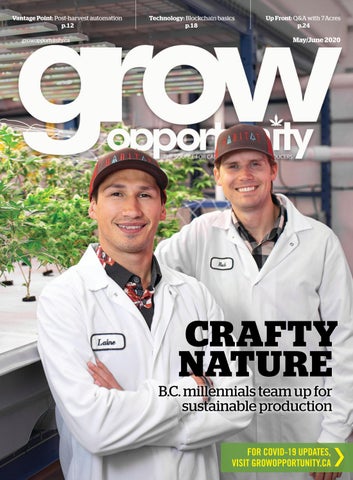
One B.C. team’s pioneering venture where nature meets technology BY LYNN FANTOM
Blockchain: Strengthening the weakest links
New platforms help cannabis companies improve supply chain management BY TREENA HEIN
Q&A with 7Acres brand manager Jeremy Timoteo BY JEAN KO DIN
From the editor
By Mari-Len De Guzman
Small is beautiful
The agility of craft growers could play a key role in the cannabis industry’s continued battle against the illicit market, but they need to be given the proper ammunition to effectively and successfully compete in the marketplace.
To date there are 368 Health Canada licence holders under the Cannabis Act, but only 42 have been given a micro-cultivation or micro-processing licence across the country. Disruptions in business and government operations due to the COVID-19 pandemic is not helping the situation, either. In a letter to licence holders last March, Health Canada indicated some delays and temporary changes to the licensing process and activities in the wake of COVID-19. This could mean potentially longer than normal processing times for new licences, including for micro-cultivation.
Micro-cultivators can provide the high-quality, craft cannabis products the ‘legal’ market has been sorely lacking and that the large-volume producers have essentially not been able to effectively and consistently supply – at least, not in the high-quality or variety that cannabis connoisseurs have been accustomed to pre-legalization.
Some of the great innovations happening in the cannabis industry right now are taking place in the micro-level. Our cover story (page 14) is one
example – a couple of young farmers in B.C. successfully integrating innovation and organic cultivation. Other promising innovations in the industry are happening in the marketing and business organization realms, many of which are adhering to the principles
Micro-cultivators can provide the highquality, craft cannabis products that the ‘legal’ market has been sorely lacking.
of strength in numbers.
7Acres, for example, has just announced a new brand called Craft Collective, which brings together under one umbrella the most-popular cultivars from “the country’s most talented craft producers.” Our associate editor Jean Ko Din spoke with 7Acres’ Jeremy Timoteo about the strategy behind this move (page 24).
In British Columbia, the concept of ‘cannabis co-operatives’ are popping up, providing a platform for craft producers to collaborate and share access to resources on business development, funding, and production, among other things.
In Ontario, the Wildfire Collective was launched last year by Mark Spear, which aims to build a community of sustainable, organic, outdoor carft-cannabis farms. Among its initiatives is a crowdfunding campaign that hopes to raise $2.5 million in capital. The company not just hopes to build the engine to al-
low small, organic, craft growers to compete in the marketplace, it also wants to make a meaningful impact on the medical cannabis community, through compassionate pricing and helping to ensure greater access for the nearly 370,000 registered medical cannabis users in Canada.
Craft growers can be the saving grace for medical cannabis consumers – an important market that many industry observers believe had been left behind in the race to capture a big chunk of the recreational cannabis market. High-quality, craft-grown cannabis is almost synonymous to medical cannabis and more needs to be done to strengthen the connection between these two parties.
With the right opportunities and a conducive playing field, craft cannabis growers can thrive in this highly competitive marketplace by remaining agile and sticking to its roots. Unlike their big, multimillion-dollar counterparts, craft growers have the luxury of scale that allows it to produce consistent, high-quality strains that will help bring grey market consumers into the legal fold.
Speaking of quality cannabis, nominations are now open for our annual Canada’s Top Grower Award (see ad on page 9). This is open to all licensed producers, both standard and craft growers. We want to shine a spotlight on the country’s most outstanding cannabis grower – and that could be you or someone you know.
May/June 2020 Vol. 4, No. 3 growopportunity.ca
EDITOR Mari-Len De Guzman mdeguzman@annexbusinessmedia.com 289-259-1408
ASSOCIATE EDITOR Jean Ko Din jkodin@annexbusinessmedia.com 437-990-1107
ASSOCIATE PUBLISHER Adam Szpakowski aszpakowski@annexbusinessmedia.com 289-221-6605
NATIONAL ADVERTISING MANAGER Nashelle Barsky nbarsky@annexbusinessmedia.com 905-431-8892
ACCOUNT COORDINATOR Mary Burnie mburnie@annexbusinessmedia.com 519-429-5175 888-599-2228 ext 234
CIRCULATION MANAGER
Jay Doshi jdoshi@annexbusinessmedia.com 416-510-5124
MEDIA DESIGNER
Svetlana Avrutin
GROUP PUBLISHER/VP SALES Martin McAnulty mmcanulty@annexbusinessmedia.com
COO Scott Jamieson sjamieson@annexbusinessmedia.com
MAILING ADDRESS
P.O. Box 530, 105 Donly Dr. S., Simcoe, ON N3Y 4N5
SUBSCRIPTION RATES 1 year subscription (6 issues: Jan/Feb, Mar/Apr, May/Jun, Jul/Aug, Sep/Oct, Nov/Dec): 1 year offers: Canada $25.50 + Tax USA $47.00 CDN FGN $53.50 CDN GST # 867172652RT0001
SUBSCRIPTIONS
Jay Doshi
jdoshi@annexbusinessmedia.com Tel: 416-510-5124 Fax 416-510-6875 or 416.442-2191 111 Gordon Baker Rd., Suite 400, Toronto ON M2H 3R1
Occasionally, Grow Opportunity will mail information on behalf of industry-related groups whose products and services we believe may be of interest to you. If you prefer not to receive this information, please contact our circulation department in any of the four ways listed above.
We recognize the support of the Government of Ontario
Supreme Cannabis appoints new CEO
Beena Goldenberg, former CEO of Hain-Celestial Canada, is now the new president and chief executive officer of Supreme Cannabis Company Inc.
She succeeds Colin Moore, who was interim president and CEO since January 2020. Moore assumed the role after former CEO Navdeep Dhaliwal announced his departure, and former chief advocacy officer John Fowler “parted ways” with the company in October 2019.
According to the company’s statement on April 27, Moore will continue as a director of the company and as an advisor to Goldenberg, providing support throughout the transition until the end of July 2020.
“The board and I are thrilled to welcome Beena Goldenberg to lead the company,” said Supreme Cannabis’ board chairman, Michael La Brier. “Beena is a proven, entrepreneurial leader in the Canadian CPG sector who will apply her passion and expertise in marketing and manufacturing to Supreme Cannabis’ brands and operations and capture the vast opportunities within the Canadian and global cannabis industries.”
Goldenberg brings with her more than 30 years of experience in the Consumer Packaged Goods sector. Before her 15 years in Hain Canada, she held senior leadership and marketing roles at Catelli Foods Corp., Parmalat Canada and Pillsbury Company Ltd. She also served on the Board of Food and Consumer Products of Canada, the largest CPG industry association in the country. She holds a Bachelor and Master’s of Engineering (Chemical) from McGill University.
More cost-cutting at Canopy Growth
operations in Springfield, N.Y., because of an abundance of hemp produced in the 2019 growing season, but the company will continue using that supply to create hemp-derived cannabidiol products for the U.S. market.
Outside North America, Canopy will end work at its cultivation facility in Colombia and has entered into an agreement to cease operations in South Africa and Lesotho.
HIGH STAKES
Constellation Brands is set to increase its ownership in Canopy Growth by 5.1 per cent, giving the beverage firm 38.6 per cent ownership of the cannabis producer.
Canopy Growth Corp. is laying off 200 workers in its third round of cuts in the last two months. The Smiths Falls, Ont.-based company said the employees impacted are working in several departments and located in Canada, the U.K. and the U.S.
“When I arrived at Canopy Growth in January, I committed to conducting a strategic review in order to lower our cost structure and reduce our cash burn,” said David Klein, Canopy’s chief executive, in a press release. He added that the changes are an “important step” in that direction and will result in a “healthier, stronger organization.”
In mid-April, Canopy laid off 85 full-time workers and closed a handful of facilities.
Klein said Canopy’s indoor facility in Yorkton, Sask., was shut down in order to align its production in Canada with market conditions.
Canopy will also stop farming
Canopy is no stranger to having to make large reductions, especially in 2020. The brand behind Tweed, Tokyo Smoke, Maitri and Doja orchestrated a massive overhaul at the start of March. It involved the layoff of 500 workers, a writedown between $700 million and $800 million, the closure of two greenhouses in Aldergrove and Delta, B.C., and the cancellation of plans to operate a third in Niagara-on-theLake, Ont.
Klein attributed those cuts to the Canadian recreational pot market developing “slower than anticipated” and “profitability challenges across the industry.”
Cannabis companies are expected to be in the fight of their life as COVID-19 sweeps Canada, challenging pot brands that were already struggling to maintain cash flow and keep up with the evolution of an entirely new industry.
Canopy did not directly attribute this announcement to COVID-19, but experts are anticipating a massive disruption of the industry as several major cannabis retailers have closed their stores.
On April 7, Moncton-based Organigram Holdings Inc. announced the temporary layoff of 400 workers, while Calgary-headquartered Sundial Growers said last week it would temporarily cut 65 per cent of its staff.
Ontario sees flurry of new customers amid COVID-19
Ontario’s cannabis distributor has seen online orders triple since COVID-19 started sweeping the country and prevention measures were implemented, with almost one in three orders coming from new customers.
The Ontario Cannabis Store says it received between 2,500 and 3,500 orders prior to March 9, but in the weeks after mass adoption of physical distancing, those orders doubled to 5,000, then doubled again, topping out at 13,000 in one particular week.
In a bid to continue squeezing out the illegal market and keep up with the demand, the distributor has staffed up, lowered prices on more than 240 cannabis products and launched free shipping during COVID-19 to make legal options more accessible.
The demand and closures of some cannabis stores have pushed the OCS to expand its three-day, direct-to-door courier service to cover 63 per cent of the province’s consumers.
That service will be expanded in the coming weeks, but is already dealing with almost 5,000 orders a day, up from its usual 400.
More than 30 per cent of total orders are from new customers.
Sugarbud announces distribution deal with Saskatchewan
Sugarbud Craft Growers Corp. has entered a wholesale distribution and supply agreement with the National Cannabis Distribution (NCD) for the Province of Saskatchewan.
Under the terms of the agreement, the Alberta-based company has given exclusive rights as wholesaler and distributor for an initial period of two years. The supply agreement will initially encompass Sugarbud’s dry flower products and will be amended to include new product offerings as they become available and approved for sale in the province.
Sugarbud CEO John Kondrosky said in a statement this new agreement gives the company a clear route to the Saskatchewan market.
“Our agreement with NCD also marks a very important first step in our commercial rollout and entry into our target Canadian markets for adult-use recreational cannabis products,” said Kondrosky. “We are extremely pleased to be partnering with an organization like NCD and look forward to launching our Craft Cannabis Collection in Saskatchewan in the very near future.”
Sugarbud is expected to launch its first recreational dried cannabis products in its late Q3 term this year.
Neptune teams up with prominent conservationist for new product development
Neptune Wellness Solutions Inc. has entered into a partnership with renowned primatologist and anthropologist Dr. Jane Goodall to develop a plant-based wellness brand called Forest Remedies.
The brand is said to develop hand sanitizer products, essential oils and hemp-derived products sourced from high-quality botanicals from around the world.
“This marks my third partnership with Michael (Cammarata, Neptune Wellness CEO) and reflects our mutual goal of enabling consumers to make ethical purchasing decisions to create a better world for all living things,” said Goodall in a statement. “I believe there is still a window of time to heal the planet before it is too late, but only if we each make the right choices every day. I believe that Neptune’s Forest Remedies brand is part of the solution and that is why I am proud to partner with Michael and Neptune to bring new Forest Remedies products to market.”
As part of this partnership, five per cent of all product sales will be donated to support Dr. Goodall’s environmental conservation and reforestation initiatives. Neptune Wellness has already made an initial donation of $25,000 to the Jane Goodall Institute.
“In light of COVID-19, we believe there will be a renewed focus and emphasis on personal self-care. The purchasing decisions consumers make to support their health and wellness will have a lasting impact on the environment and our collective health and wellness,” said Cammarata.
Neptune Wellness is an extraction, purification and formulation company focused on health and wellness products. The company’s head office is based in Laval, Que., while its 50,000-square-foot cannabis facility operates in Sherbrooke, Que. It also runs a 25,000-square-foot facility in North Carolina that processes hemp biomass into extracts.
1 MILLION HAND SANITIZERS
NEPTUNE WELLNESS SUBSIDIARY BIODROGA IS SHIPPING ABOUT ONE MILLION OF ITS PLANT-BASED HAND SANITIZERS EVERY WEEK IN RESPONSE TO DEMAND DURING THE COVID-19 PANDEMIC. NEPTUNE’S HAND SANITIZER GEL IS AVAILABLE IN 2OZ, 4OZ, 6OZ, 8OZ, 16OZ, 1 LITRE AND 1 GALLON FORMATS.
THE CANADIAN PRESS
Nobel-Prize-winning anthropologist Dr. Jane Goodall with Neptune Wellness CEO Michael Cammarata.
GROW OPPORTUNITY IS SHINING A SPOTLIGHT
If someone you know deserves to be recognized for their outstanding leadership in cannabis cultivation, nominate them for the 2020 Canada’s Top Grower Award. The winner will be announced and profiled in the November/December issue of Grow Opportunity magazine.
DO YOU KNOW A CANNABIS GROWER WHO:
• Shows deep understanding and knowledge of quality cannabis cultivation?
• Is committed to the highest standards of cannabis growing practices?
• Demonstrates strong work ethic and has a strong passion for sustainable and responsible production?
• Demonstrates exceptional leadership and innovation?
ELIGIBILITY:
All nominees must be currently employed or operating at a Health Canada-licensed cannabis cultivation facility.
WINNER RECEIVES:
• Front cover profile feature in the Nov/Dec issue of Grow Opportunity
• Guaranteed spot to participate in the Growers’ Roundtable at the CANNAtalk Experience
• Guaranteed spot to participate in the Growers Luncheon panel held at Grow UP conference in Niagara Falls, Ontario
• Official award presentation at Grower Day – Grow Opportunity’s conference and tradeshow for cannabis growers
NOMINATION CLOSES AUG 31ST, 2020
Chad Morphy, GreenSeal Cannabis Co.
Gregg Wigeland, Sundial Growers Inc.
Legal Matters
By Matt Maurer and Vlad Mihaescu
Regulatory and business challenges to cannabis producers during COVID-19
The impact of COVID-19 has been felt in a multitude of industries, and Canadian cannabis producers are no exception. Cannabis retail stores have had some contradicting directives from governments as to whether they can continue to operate during the pandemic, while cannabis producers were deemed an essential service from the outset and continue to operate across the country – but not without challenges, some of which are currently felt while others are likely to materialize in the near future.
Operational challenges
Cultivation of cannabis requires the physical attendance of employees, and therefore causes concerns with regard to the spread of COVID-19. Employers face the challenge of trying to meet the demand for cannabis products in an environment that necessitates modifications to regular operations. Social distan-
cing, personal protective equipment and increased sanitation practices have become the new reality and are critical for producers to avoid a potential outbreak in their facilities.
Certain security-cleared individuals are critical to a cannabis producer’s organization. To assist in the continued operation while mitigating the risks of COVID-19, Health Canada temporarily allowed cannabis producers to designate alternate individuals to take over security-cleared roles, such as responsible persons, master growers and heads of security, where the cannabis producer does not have sufficient personnel due to self-isolation or illness. All alternates must be reported to Health Canada with the name of the individual, their role and the date upon which they will assume the role. It is up to the producer to ensure the individual is capable of fulfilling the role and that such individual has not previously had a security clearance refused, suspended or cancelled.
Regulatory changes
Due to an increased need to focus resources on the COVID-19 pandemic, Health Canada has made adjustments to its operations and servicing of the cannabis regulatory regime. In a letter to cannabis producers in March, Health Canada indicated that amendments to existing licenses and security clearance applications would take priority, likely meaning that applications in the queue for new facilities will be further delayed. Cannabis producers will have to face the reality that not all projects will be able to progress at the same pace during this period and that operations could be halted for longer than expected where regulatory approval is required. Cannabis producers may email HC.licensing-cannabis-licenses.SC@canada.ca to identify critical amendments required to support operations at this time.
Sales and financing
Although there have been reports of increased cannabis sales recently, the long-term economic impact of the pandemic is uncertain. Any restrictions on retailers or decreased production output will likely result in reduced revenues. The general uncertainty of the pandemic has made it even more difficult to raise financing, meaning that many companies may potentially face bankruptcy without sufficient cash flow to sustain them through an extended period of reduced revenue.
Cannabis producers, like many other businesses, will look to alternative financing and are seeking financial assistance from the government during this period. Several programs exist for loan financing, wage subsidy and even rent assistance to those businesses that qualify and apply. Additionally, payment of sales taxes, customs duties and income taxes have been delayed to provide companies with additional relief. Cannabis producers are encouraged to seek guidance on the support available to them.
Matt Maurer is the vice-chair of the Cannabis Law Group at Torkin Manes LLP in Toronto.
Vlad Mihaescu is an associate in the Business Law and Cannabis Law Groups at Torkin Manes.
I’ve never experienced numbers this high.”
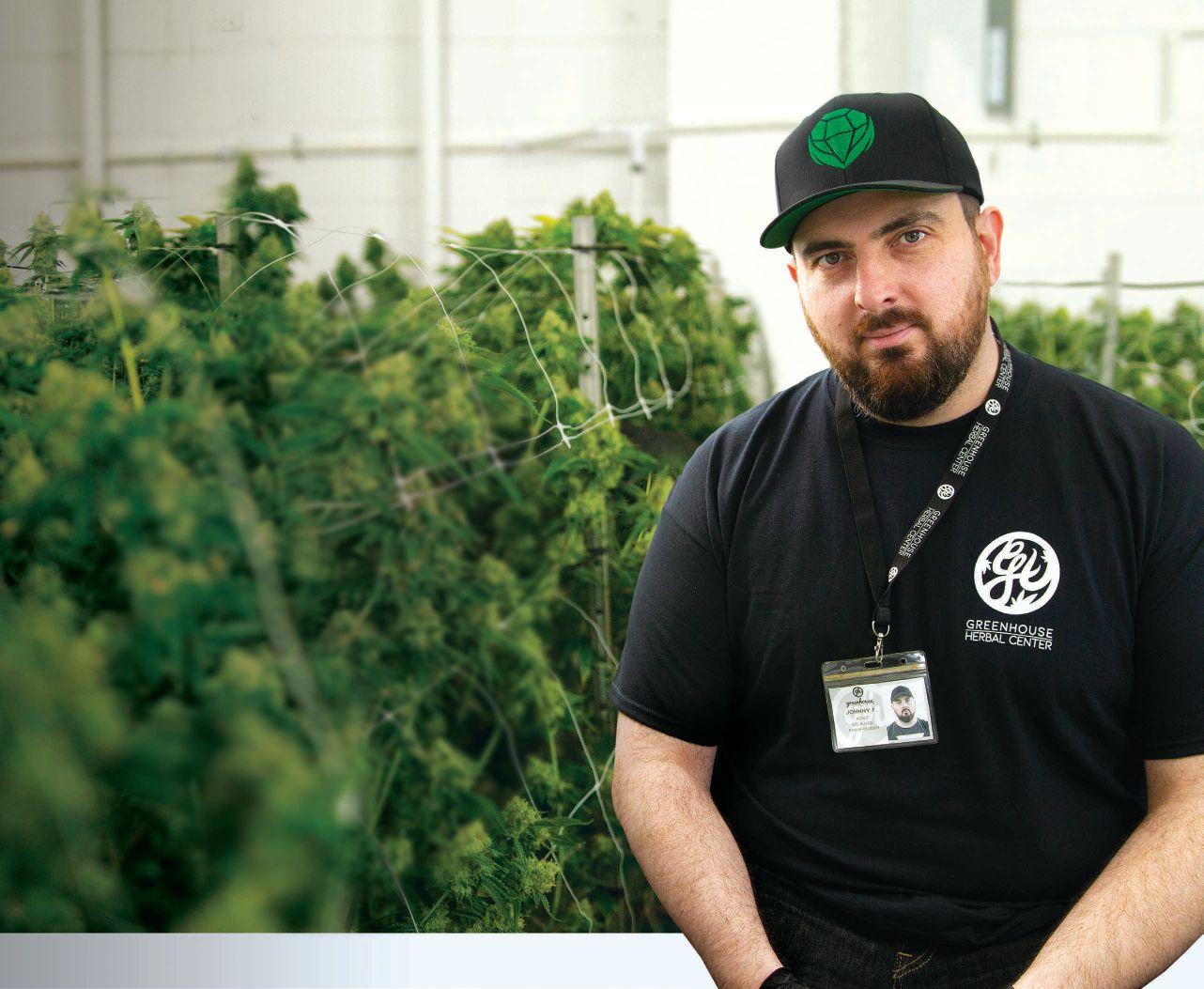
“We’ve been using Emerald Harvest and we haven’t had one single impurity, one single issue with any of our testing. The quality of the smell, the size, the yield - everything is ideal. I’m getting higher THC content with Emerald Harvest than any other company. ”
Read their whole story and other grower success stories on our website.
Bigger yields. Superior quality. Maximum potential.
Emerald Harvest has partnered with growers around the world to help them deliver consistent, profitable crops every harvest.
Our premium base nutrients and supplements are made from the finest ingredients so they run clean, test clean, and simply grow the highest quality product.
Home growers to commercial cultivators are enjoying incredible results with Emerald Harvest nutrients. And their success stories say it all.
Johnny Evdjukian Cultivation Manager GREENHOUSE HERBAL CENTER
By Cullen Raichart
The case for automation
Why post-harvest innovation is key to thriving in a competitive market
The main focus in the past has been on automation for pre-harvest processes, such as applications designed to make running your grow more efficient and less time-consuming. Automated systems with sensors to control environmental factors such as temperature, humidity, airflow, lighting, irrigation, and even fertilizing systems have been embraced by producers. More recently, however, it has become clear that automated harvesting solutions on the back end of the process are a necessary addition for businesses to survive and thrive in this evolving, highly competitive marketplace.
Market demand
The U.S. combined recreational and medical cannabis market has gone from $6.5 billion in 2016 to a staggering $14 billion in 2019, with projections for 2020 at $22 billion. With the market expanding in all sectors, larger companies are at an advantage, and the competition is only increasing. Operations of all sizes will need to automate either a part, or most of their operations. By employing a level of automation, businesses can hold on to a smaller number of highly-trained employees, saving time, money, and also lessening the risk of product contamination. Margins are tight in the current climate. A product contamination incident caused by human error can cause financial losses that smaller and mid-level producers especially have trouble absorbing.
Time is money
Automating harvesting and post-harvesting processes saves time, which leads to facilities being able to streamline and increase efficiency. The old adage ‘time is money’ holds true here. The faster you can process, the more you can process; and the more efficient your operation, the better
your bottom line. The competition is getting stiffer, and as companies have to speed things up to compete they are embracing automation as the answer. Operating overhead can be crippling if you can’t scale at the right time. Scalability is the key to survival in a tightening market, and if you can’t up your productivity by reducing your processing time, you can’t compete.
Size does not matter
Automation will be embraced by businesses at all levels in the industry in the future. Many small operations producing 1,000 to 5,000 kilos per year will employ customizable automation for a portion of their process, and will often use hand-trimming to finish, especially if their focus is craft flower. It is common practice to machine trim 80 to 90 per cent and then hand-finish the remaining 10 to 20 per cent. The mid-size operations producing 500 to 1,000 kilos per month have a need for intelligent tools that provide precision with respect to weighing and packaging. Reducing the number of people needed to operate a facility this size has multiple benefits, such as greater overall efficiency, less risk of human error, and a reduction in the risk of contamination. Large operations often producing thousands of kilos per day will be moving in the direction of automating as many steps in their process as possible. Many industrial-scale cannabis operations are
running 24/7 and automation allows them to keep this up.
Real-time data is your friend
Being able to collect data in real-time is a huge advantage. Tracking exact weights of raw material and processed material, in addition to gathering strain-specific data along the automation chain can help managers make data-driven decisions. Tracking profitability at each step can allow you to divert material with a higher value into a certain area. For example, 30 per cent could go into flower packages, and seven per cent into extraction and so on. After a certain point in the processing stream, waste product generated from processing high-value material can be funneled to extraction. This can help you get the most out of your raw material and maximize profits.
Future of automation
The large, industrial-scale operations producing upwards of 1,000 kilos per day will go in the direction of full-scale, end-to-end automation similar to what we see in the traditional agricultural sector. These largescale systems can be customized to the specific needs of each facility, taking care of everything from trimming, to sorting, sifting, extraction, and finally packaging, batching, and labeling, while minimizing the number of employees needed for oversight. Over time, these systems will become more sophisticated employing artificial intelligence (AI) and cutting edge, smart technology to propel production into the future. In a few years’ time it will look nothing like it looks today. It will be a whole new world. Raw material will go in one end, information will be collected at each step in the process, and the finished product will come out the other end. The production facility of the past will start to look more like a sci-fi version of a cannabis production line.
Cullen Raichart t is the founder and CEO of GreenBroz, Inc., with more than 12 years experience as an entrepreneur and inventor in the cannabis industry. A veteran of the U.S. Armed Forces, Cullen is considered a distinguished inventor whose drive has earned him a reputation as a pioneer in automation in the emerging agricultural cannabis industry.
Sustainable Facility Disinfection for Yield Protection
SHYIELD® One-Step Disinfectant Cleaners are the 1st disinfectants designed specifically for use in Cannabis Facilities with relevant use directions and efficacy claims. Registered with Health Canada, SHYIELD® disinfectants can improve your sanitation program by ensuring:
Consistency — Prevent microbial contamination with effective products & protocols
Efficiency — Streamline sanitation processes with one solution
Sustainability — Protect your facility & the environment
Habitat for life
One B.C. team’s pioneering venture where nature meets technology
By Lynn Fantom
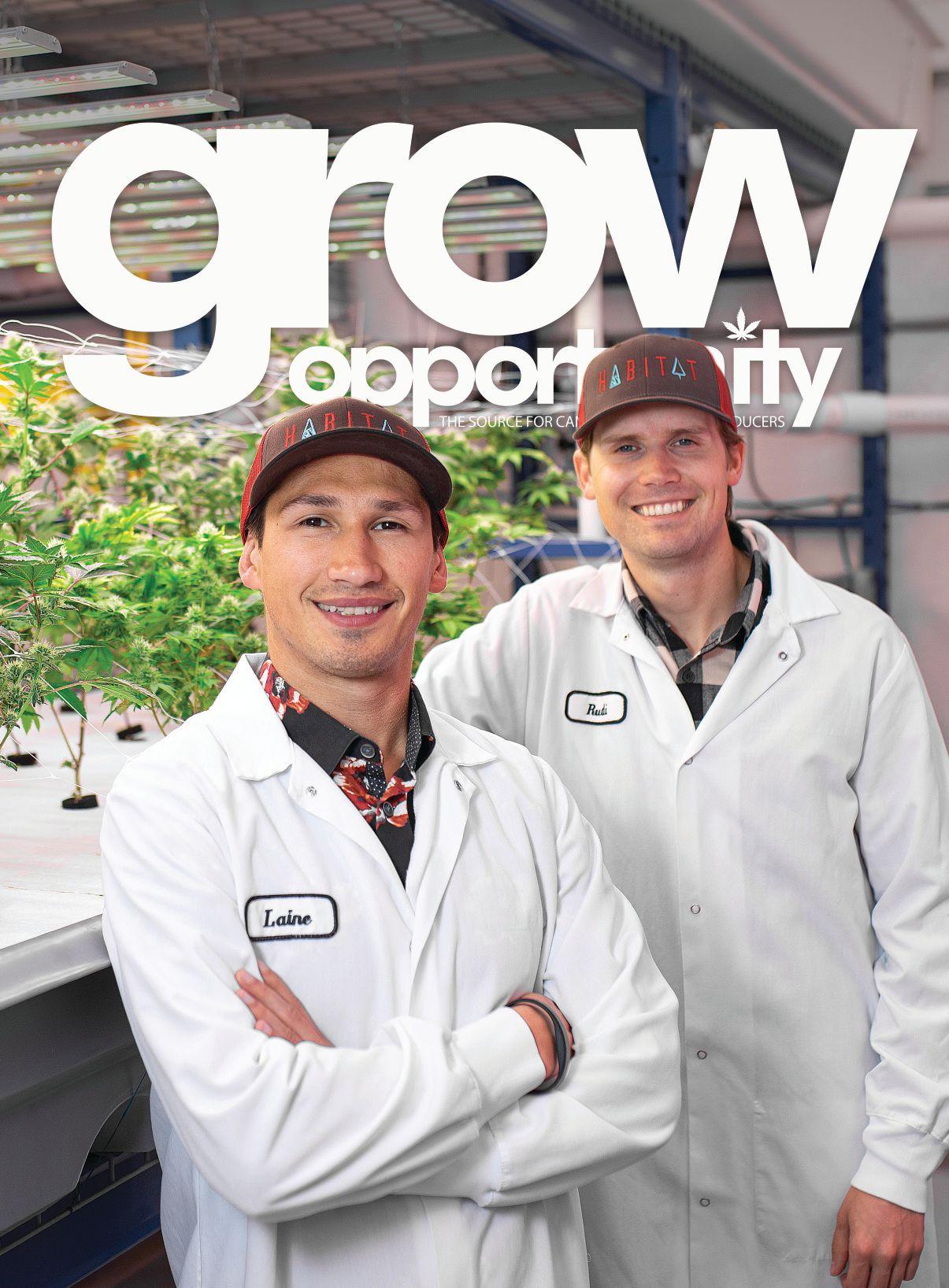
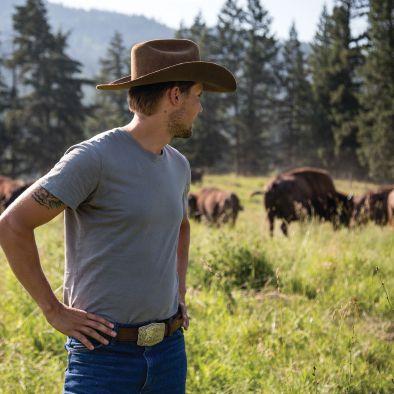
If you can’t see what a bison has in common with a salmon, then you might not have the inventive vision of two ranchers in British Columbia, who are now realizing their goal of “wielding the technology of nature” in an aquaponics venture that began bringing recreational cannabis to market in April.
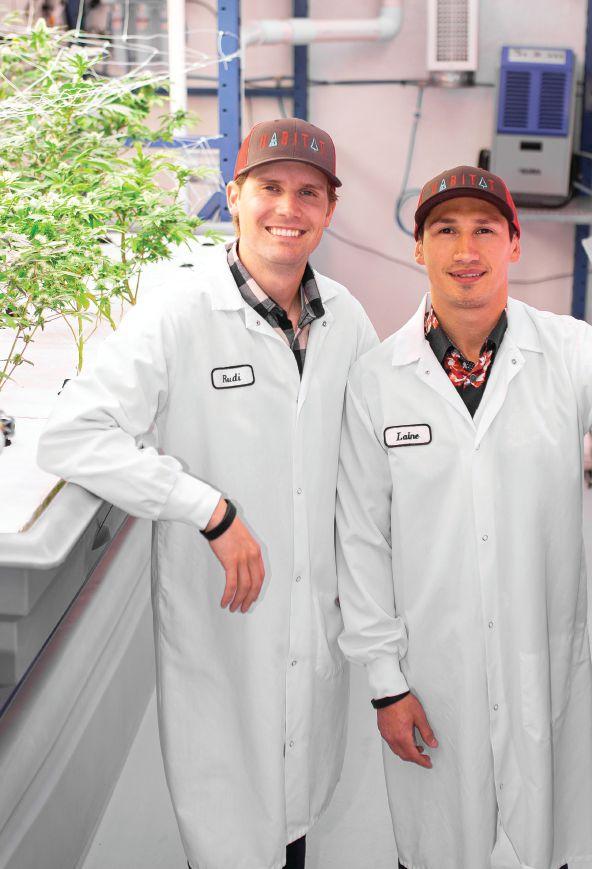
The company, called Habitat, is the brainchild of Rudi Schiebel and Laine Keyes, who have been practicing “regenerative agriculture” at their 600-acre Turtle Valley Bison Ranch in Chase, B.C. Their idea was to extend this principle to growing cannabis together with Coho salmon in an aquaponics system.
“We wanted to marry everything we had learned about the symbiotic relationships between microorganisms, plants and animals, and bring that indoors coupled with 21st century technology,” says co-founder and chief executive Schiebel. “That’s how we were introduced to aquaponics – which is the epitome of that.”
In 2017, they set their sights on this goal. “But there’s not a place that you can turn to and just buy a system and get rolling,” says Schiebel. That’s when the two millennial ranchers sought out Justin Henry, a Vancouver-based aquaculture consultant who designed the system in collaboration with PR Aqua.
Two years later, the company’s success in achieving its foremost goal of quality was embodied by an announcement that both the cannabis and salmon will be certified organic under the Canadian Organic Aquaculture Standard. That is a first of its kind for cannabis.
The Habitat team launched its initial product, Cake, at recreational cannabis retailers in B.C., Saskatchewan, and Alberta. A second line, Caviar, will be available “for your New Year’s party,” says Schiebel. Shelter Craft Collective handles packaging and distribution, as well as online sales to medical patients at Shelter Market.
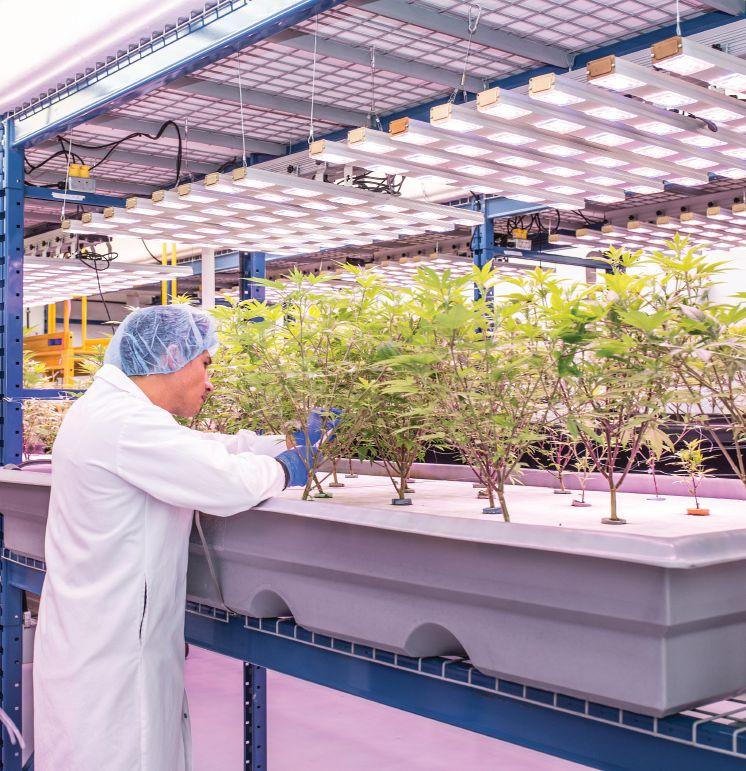
The operation, which has been growing cannabis on a micro-license, can produce 400 to 500 kilograms a year, with the capacity to double that in its 6,000-square-foot facility. The fish farm is currently small, yielding about 25 salmon a week.
But, says Schiebel, “we have our technology proven and are ready to start scaling.”
PROOF OF CONCEPT
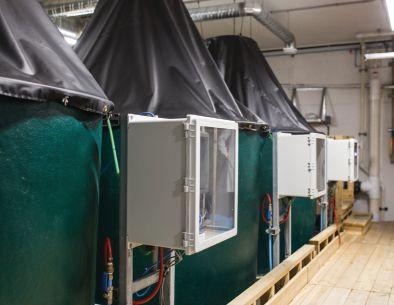
The concept of aquaponics is basically this: fish produce waste products that plants need. In a recirculating aquaculture system (RAS), solid waste and ammonia are filtered out and captured in a digester where bacteria do their work in a process called mineralization. The result is nitrate-rich water, which is delivered to the plants. In addition, carbon dioxide produced by the fish, as well as by the bacteria, is captured to nourish the cannabis.
Think of the three players in aquaponics as the fish, the bacteria, and the plants.
In the case of Habitat’s design, known as a decoupled system, the cannabis and the salmon are each on its own system of recirculating water. “The two systems are operating separately to obtain the quality of water that is best for each,” says Henry, who now serves as director of aquaculture at Habitat.
“We have a lot more control, but we still have everything living off each other in a symbiotic manner,” adds the CEO. “It’s a full, living system.”
MAKING MORE BY USING LESS
For cannabis farmers who are burning through money, listen up: “In order for aquaponics to be disruptive, it needs to not only have the intrinsic environmental benefits, but economic drivers as well,” says Schiebel.
Dynamic Duo: (L-R) Rudi Schiebel and Laine Keyes are applying regenerative agriculture to cannabis cultivation.
A major factor in this business model is how diversifying with two crops mitigates risk. There are also cost savings derived through synergies.
“We are decreasing the costs on the plant cultivation side from the inputs that are already on site because of the fish,” Schiebel explains. “There are cost savings from resource utilization.” (For example, large indoor farms augment CO2 levels using generators, burning propane, or bringing in gasified CO2.)
Plus, the plants are thriving, according to Schiebel. Less disease equates to increased yields.
Director of aquaculture Henry points to the ongoing research to quantify and validate this aquaponics equation, such as the work of Dr. Nick Savidov at Lethbridge College in Alberta. In 2015, that organization received a $2.1 million grant to investigate critical issues of aquaponics, including economic return on investment.
THE CRAFT OF CANNABIS
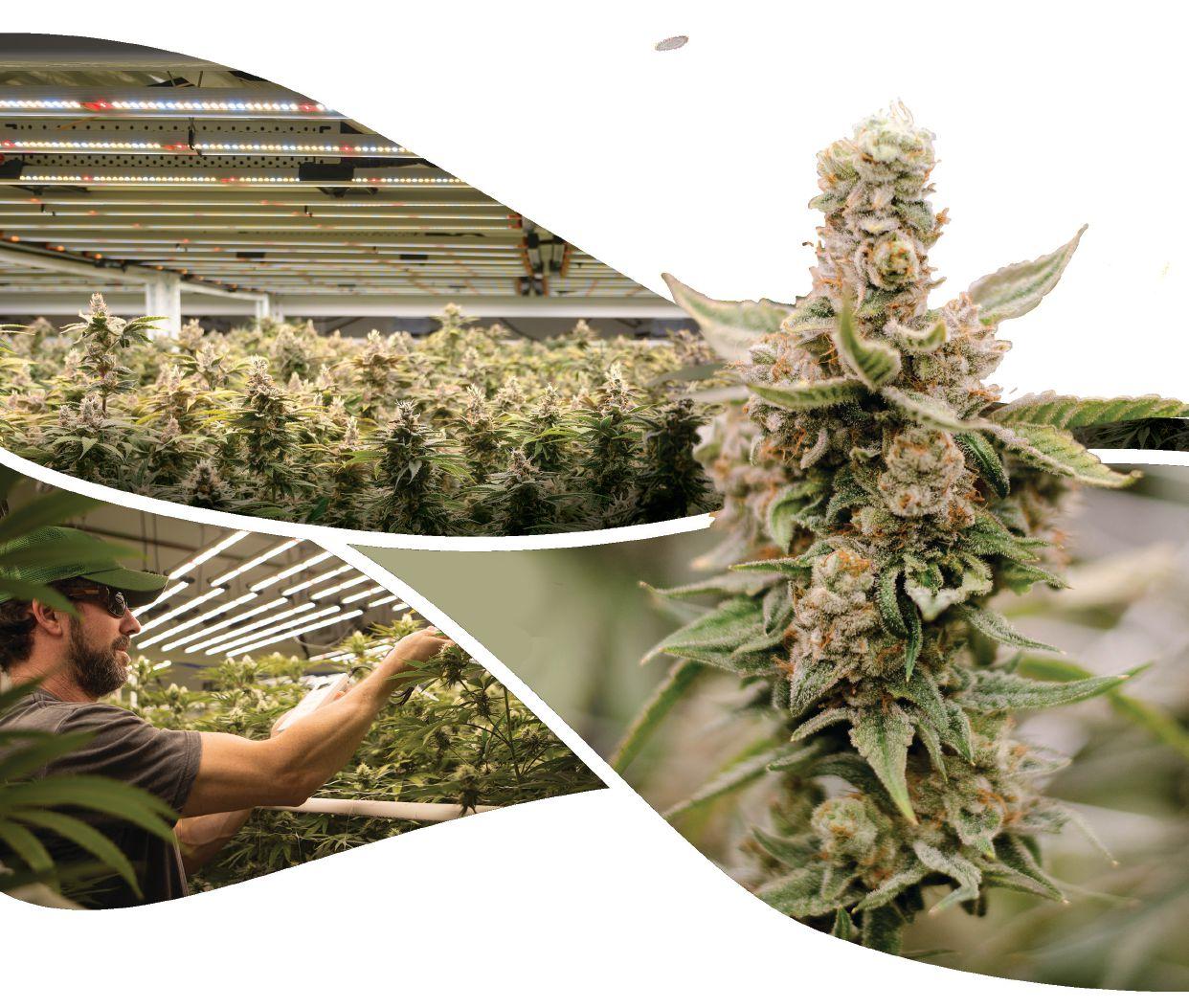
Habitat’s co-founder Laine Keyes, a second-generation cannabis grower, has developed a bank of over 180 cultivars and oversees growing operations.
To achieve the goal of producing a premium product, he and his team devote time and care to the entire process from breeding to harvest to cure. That’s a luxury many large-scale producers can’t afford.
Habitat is home to a 600-acre bison ranch in Chase, B.C.
Habitat’s aquaponics production facility is certified under the Canadian Organic Aquaculture Standard.
Particular attention is given to retaining the trichomes on the cannabis flower. Those trichomes, of course, are where the cannabinoids and terpenes are stored. Habitat insists on hand trimming versus tumbling, which “beats up the flower.”
Organic certification 101
Cannabis is regulated under the 2018 Cannabis Act, with Health Canada issuing licences. On the other hand, food is regulated by the Safe Food for Canadians Act, with the Canadian Food Inspection Agency (CFIA) granting organic certification, and the CFIA owns the organic logo familiar to consumers. The key point: the logo can’t be granted to crops the agency doesn’t regulate.
“There’s some work to be done to smooth that process a little bit still,” Habitat Life’s resident aquaculture expert Justin Henry says diplomatically.
In the meantime, cannabis grown in an aquaponics system can be certified organic under a different standard, the Canadian Organic Aquaculture Standard, which covers livestock and crops farmed in an aquaponics system. It just can’t use the logo.
“It’s like selling fish with a really bad filleting job,” Schiebel adds. But, all consumers may not fully appreciate the significance of such care.
Terpenes not only produce aroma, but also interact with other compounds, resulting in the so-called “entourage effect.” Globally, researchers continue to investigate this dynamic, but the Habitat team, like many growers, believes this interplay creates a range of effects, from “more uplifting to more sedating. It’s not just the THC content,” says Schiebel.
“But the market is not there yet. The driver among consumers, by default now, is the THC,” Schiebel says. That will change as buyers expand their knowledge around cannabis, he believes.
However, for today’s avid consumers – the repeat buyers who are intent on quality – the treatment of the flower, the trim process, and the flavour created by a slow cure all play a role in their buying decisions, according to Schiebel.
Organic certification is “a big driver as well for consumers,” he continues. And that makes sense. According to the Canadian Organic Trade Association, 83 per cent of Canadian millennials buy organic food products weekly. That cohort overlaps significantly with the heaviest cannabis users.
WHY SALMON
Although the most commonly raised fish in aquaponics is tilapia, the Habitat team chose Coho salmon. Over the years, the market for salmon has grown considerably, especially with increased demand for healthy and nutritious food in high-income urban areas. Coho salmon farmed in RAS, like Habitat’s system, has received “Best Choice” recognition from the Monterey Bay Aquarium Seafood Watch.
But farming salmon in RAS can be tricky. Mistakes can wipe out a lot of fish. To reduce that risk, Habitat was wise to enlist an expert: Justin Henry. With advanced degrees from universities in British Columbia and Denmark, both meccas of aquaculture, he has experience with recirculating aquaculture that dates back to 1995.
He has also chaired the technical committee of the Canadian General Standards Board to develop the standard for organic production systems in aquaculture. So, he is a master of that gnarly system of laws and governing agencies for organic certification.
Habitat’s nine-person team has come a long way to get to the point of launching during a pandemic. In addition to pioneering a new cultivation model, the company has seen dramatic fluctuations in interest by consumers and investors alike. But Habitat’s leaders are keeping their eyes on the prize. After all, says Schiebel, “Over the course of the last two years, we’ve gone from an illegal industry to an essential service.”
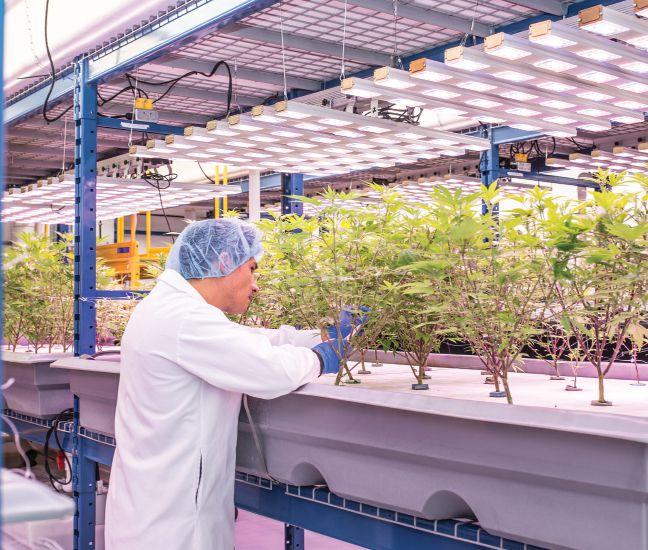
Co-founder Laine Keyes tending to the cannabis plants
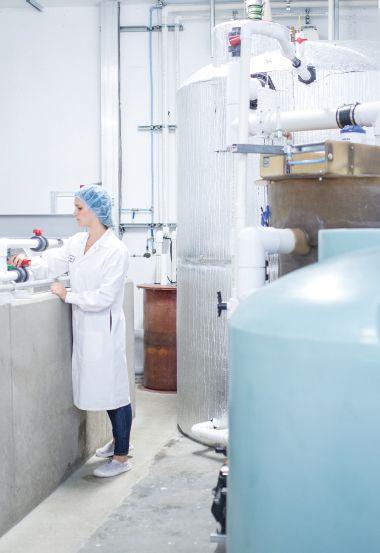
Niki Tusnady, operations manager, in the filtration room
Blockchain: strengthening the weakest links
New platforms are helping cannabis companies improve supply chain management, protect intellectual property and take their medicinal product development to the next level
By Treena Hein
It’s hard to open a website, magazine or newspaper these days without seeing more news about blockchains. Deloitte, one of the largest professional services networks in the world, did a Global Blockchain Survey last year, finding that blockchains are gaining traction in an increasing number of industries. This is due, state the authors, to “a seasoning of the collective opinion towards blockchain based on increased exposure to the technology and a better understanding of its abilities and drawbacks in practical, day-to-day, business use cases.”
Perhaps the most common use of blockchains – or at least, its most common expected use as adoption of the technology processes – is to boost efficiency and prevent fraud in supply chains. In Canada’s cannabis industry, as in other sectors, blockchains enable automation of record-keeping for supply chain participants as well as regulators, easy and quick product recall, and more accurate auditing, explains Daniel Reitzik, CEO at DMG Blockchain Solutions in Vancouver.
Blockchain, says Rietzik, does not replace any of the existing systems already used in Canada’s cannabis sector to manage seed to sale, Enterprise Resource Planning (ERP), shipping and logistics, warehousing or point of sale. However, when data from each of these different systems along the supply chain is incorporated into a blockchain, an additional, highly-secure and cohesive record is created. With this shared digital ledger in place, every party along the chain, from the licenced producer (LP) to point-of-sale, has a real-time picture of where the product is located, along with pertinent associated details. That is, at every point along the chain, information is added in blocks by various parties, and every time new information is added, everyone’s identical copy of the block-
We focus on the automation of indoor farming So you have full control over the growth of your cannabis plants
The process computer for Plant Empowerment
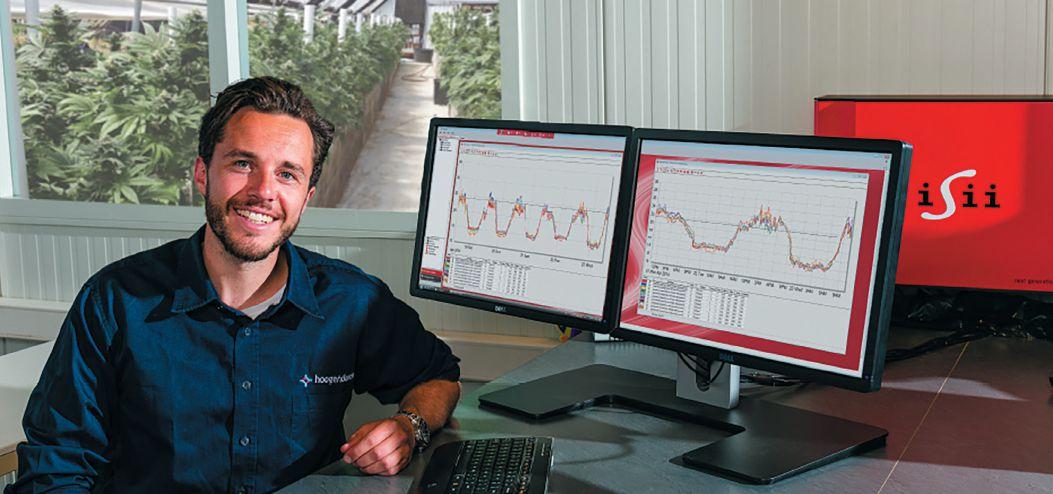
Hoogendoorn’s next generation iSii monitors and controls all climate,irrigation and energy equipment in all types of facilities such as greenhouses and buildings. The iSii is equipped with advanced controls that work according to the principles of Plant Empowerment. This way light, temperature, humidity and CO2 are aligned with each other for a maximum photosynthesis. In addition, to prevent water stress, irrigation is driven by the evaporation energy and water balance of the crop. With the iSii process computer, you set the base for high quality production.
info@hoogendoorn.ca | www.hoogendoorn.ca
Due to the decentralized and immutable nature of blockchain as a database, the master genetic and chemical record of unique strains and seeds can be recorded and protected at a specific point in time.
chain is updated. None of the information can be changed; generally, if an error is made, there is a note made about it and the original data remains.
The implementation of the technology should occur as soon as possible in Canada’s cannabis industry supply chain, says Reitzik, because to delay will risk trust. “The cannabis industry is moving from a black market to a gray market to a legal industry,” he explains, “and as such the industry has a responsibility to ensure that the provenance/origin of all products in the supply chain is irrefutable and immutable.” DMG Blockchain’s system Wazabi will be ‘beta tested’ soon with a full platform release later this year.
Securing IP
Another way blockchains are now being harnessed in various sectors, including cannabis, is to protect intellectual property (IP). TruTrace Technologies, for example, has created a blockchain platform called StrainSecure that does this specifically for cannabis. To explain how it works, TruTrace CEO Robert Galarza first outlines how blockchain differs from conventional databases. “Traditionally, databases record digital information very similar to filing physical records within a filing cabinet,” he says. “In the same way records can quickly be found in the cabinet by alphabetic or numerical tabs, organizations can access information from a database through a basic query or search system. This process works incredibly well within an organization, as well as when dealing with small amounts of information. However, as the volume of information increases, or as information begins to be shared amongst multiple organizations, it becomes more and more difficult to access and share this data safely and rapidly.”
If each organization has their own ‘filing cabinet’ of sorts, he explains, all the other stakeholders are forced to depend on the accuracy of those records. That’s potentially a big problem in itself, but added to that is the fact that every stakeholder can have different systems (and levels) for data security and information-sharing. Blockchains solve all these problems.
Since quality assurance and standardization are critical to ensuring safe and consistent cannabis products, this was the data area that TruTrace has focused on with its blockchain platform.
growing environment, a simple, flexible, and sustainable control system is crucial. This is why proactive LPs are turning to Reliable Controls. Our nation-wide network of factory-certified
Authorized Dealers will design, install, and commission a comprehensive control system paired with an intuitive, custom-tailored graphical interface. Take command of your precisely-controlled environment. Generate tracking reports and analytics. Reduce your carbon footprint while improving productivity, quality, and serviceability.
To learn more about this cost-effective and Canadian-made solution, please contact a local Reliable Controls
Authorized Dealer near you.
“Due to the decentralized and immutable nature of blockchain as a database, the master genetic and chemical record of unique strains and seeds can be recorded and protected at a specific point in time,” Galarza says. “Similar to land title records, the record of who and when unique IP from cultivation and breeding is owned could serve as an effective means by which to prove ownership.”
In the StrainSecure platform, genetic and chemical profiles are created for every ‘mother’ plant and a detailed digital record is registered and recorded for each client. All critical data, such as information about manufacturing processes, are recorded for every batch and lot and tracked to the end products being consumed, Galarza explains. The platform automates and digitizes the scheduling and tracking of tests as well, which reduces the inefficient processes that are currently the norm to manage all this.
Boosting efficacy and more
In order to develop new systems aimed at improving the experience of cannabis patients and consumers and the development of better products, TruTrace recently partnered with Strainprint Technologies, a company that already offers tools that enable patients, doctors, pharmacists, producers, retailers and regulators to monitor (or self-monitor in the case of patients) the use of medical cannabis across North America. These systems will employ blockchain to ensure data authenticity and security, and are intended to be integrated with electronic medical records, seed-to-sale and point-of-sale software systems used by Shoppers Drug Mart and many other companies.
In partnering to do this, the companies are demonstrating a belief that as the cannabis industry continues to mature, there will be an increasing focus on product validation and standardization of treatment so that patients can derive the maximum benefits from their cannabis medication. Indeed, Strainprint CEO Andrew Muroff believes real-world patient tracking against tested products is the only way to advance the scientific understanding of cannabis to enable better product development.
The new systems will connect validated product data with ‘authenticated patient data’ – data reported by patients related to the outcomes they are experiencing from use of their cannabis medication, authenticated in two ways. The information is first tracked in real-time by patients and validated by physicians (they confirm a given patient is being treated for a specific health condition or conditions). Secondly, the data is tracked against products validated in terms of their DNA/chemical profile as well as any variance in chemical profile by batch. “For now, it is product ingredient and genetic data that will be validated as a baseline at the time of testing and stored on a blockchain,” Muroff explains. “Future tested batches of any such product will be appended to the blockchain record for that product to prove authenticity and variance/drift batch over batch. This will help protect IP for producers and, when combined with authenticated patient reporting, provide the only source of ‘real-world use’ data to improve manufacturing and marketing.” For patients, the suite of systems will include next-generation versions of the Strainprint mobile app and integrate ‘pharmacogenetics’ (the study of how one’s genetics can influence medication outcomes), Bluetooth and more. For their part, doctors will be able to access an expanded set of patient monitoring and reporting tools in the ‘Strainprint Analytics – Clinic Edition’ platform; they will also have a new app, and be able to use patient questionnaires and virtual ‘research rooms.’
With these new tools as with all other information handling in both the cannabis and health care sectors, protection of privacy is crucial. On this point, Murroff explains that “in all cases, Strainprint tools and technologies are privacy-compliant to the highest standards in North America (HIPAA, the U.S. Health Insurance Portability and Accountability Act; PIPEDA, Canada’s federal Personal Information Protection and Electronic Documents Act; and PHIPA, Ontario’s Personal Health Information Protection Act) and soon will have General Data Protection Regulation compliance for use in the European Union. All patient data is always at rest on secure servers in Canada.”
Robert Galarza, CEO, TruTrace Technologies
Andrew Muroff, CEO, Strainprint Technologies
Tailor-made solutions for cannabis crops
Our best sachets yet!
Control Spider Mites, Russet Mites, Thrips, White y
No carrier material on the crop
Low and high humidity resistant
Quick release and easy to use
Preventive and corrective solutions
Industrial compostable
Collective collaboration
Brand manager Jeremy Timoteo shares 7Acres’ plans to capture the craft market
By Jean Ko Din
Bringing craft cannabis to Canada’s legal market is no easy feat.
The extensive requirements and costs to enter the regulated market have kept many of these expert growers landlocked in the grey market. But 7Acres has found a way to bring in new players under its new brand extension, the Craft Collective.
The Craft Collective features a curated selection of craft strains from across the country. The first of these is a Pink Kush that was launched exclusively in British Columbia on April 29.
7Acres brand manager Jeremy Timoteo believes that bringing more craft growers into the market will bring more passion to the industry as a whole and ultimately, attract more consumers to turn to the legal market.
Grow Opportunity connected with Timoteo to talk about how the Craft Collective can become a launching pad for skilled micro cultivators to build capital and market experience while navigating regulations under the guidance of the 7Acres team.
Grow Opportunity: In your opinion, what do craft growers and micro cultivators offer that a large, commercial producer can’t?
Jeremy Timoteo: From 7Acres’ standpoint, I really do think we’ve proven that we can grow really high quality cannabis in a large facility, at scale. Where the smaller growers come in, and the value they have, is they can really bring speed and variety and nimbleness to the equation. It’s much easier for them to R&D multiple strains in small batches, get them in, get them out, commercialize it
quickly on that smaller scale. It’s a lot more difficult to steer a big ship like 7Acres or other large, commercial grows.
Above all, it’s going to be great for consumers. I think there was still quite a lot of debate on how discerning cannabis consumers actually were pre- and slightly post-legalization. But it’s very, very clear now that cannabis consumers know what they like, they know what quality is and if you don’t have it, they’re not buying it.
GO: How do you decide which craft growers to partner with?
JT: It’s not easy. It hasn’t been easy and I don’t foresee it being too much easier in the future. We look at everything, from how they actually grow, to their genetic library, their facility, how that’s built, the type of lighting they use, their finishing techniques, who their team of growers are. And I think from a regulatory standpoint, most importantly, is that they meet all those requirements for Health Canada. From there, once we’ve established that this is a great cultivator, we look at their offerings for their specific cultivars and lots. And we really need to make sure that it’s the best possible expression of that cultivar, and really checks all the boxes for those subjective quality cues – whether that’s aroma,
appearance, terpene content, THC content. The list goes on and on and on. At the end of the day, what I can say is that we’re very, very particular about who we select.
GO: Once you’ve decided to work with a craft grower, how hands-on is your company from there?
JT: We work really, really closely with them through the qualifying process and all the way up to point of purchase. And we definitely offer them our insight and experience when it comes to those questions. Looking back to when 7Acres first started, we kind of did the same thing too. Before legalization, we were growing cannabis and selling it to other LPs under the medical system which gave us the ability to get that influx of capital to continue that operation and keep it going until legalization came. It also gave us the opportunity to iron out the kinks so that when legalization hit, we knew we were releasing some of the best products on the market.
Through us, they can see how well these products sell, what consumer responses are, what kind of tweaks that they need to make down the road and get everything in place that they need and be well-funded along the way.
GO: Because these products are sold as “Limited Drops,” is it fair to assume that the product selections will be something that’s always changing?
JT: Exactly, and I think that’s more of the value that we bring to consumers. We’re not structuring a deal where we say, we’ve got one lot of Pink Kush from you so let’s lock you down for a year or two. Because we know quality can change, people at facilities can change, structures can change, all sorts of things can change that can ultimately have an impact on that product quality. We look at this on a lot by lot basis. That said, the craft producers that we do select and proceed a particular lot with, obviously, they’re in our good books for the next one.
PHOTO: 7ACRES
Jeremy Timoteo
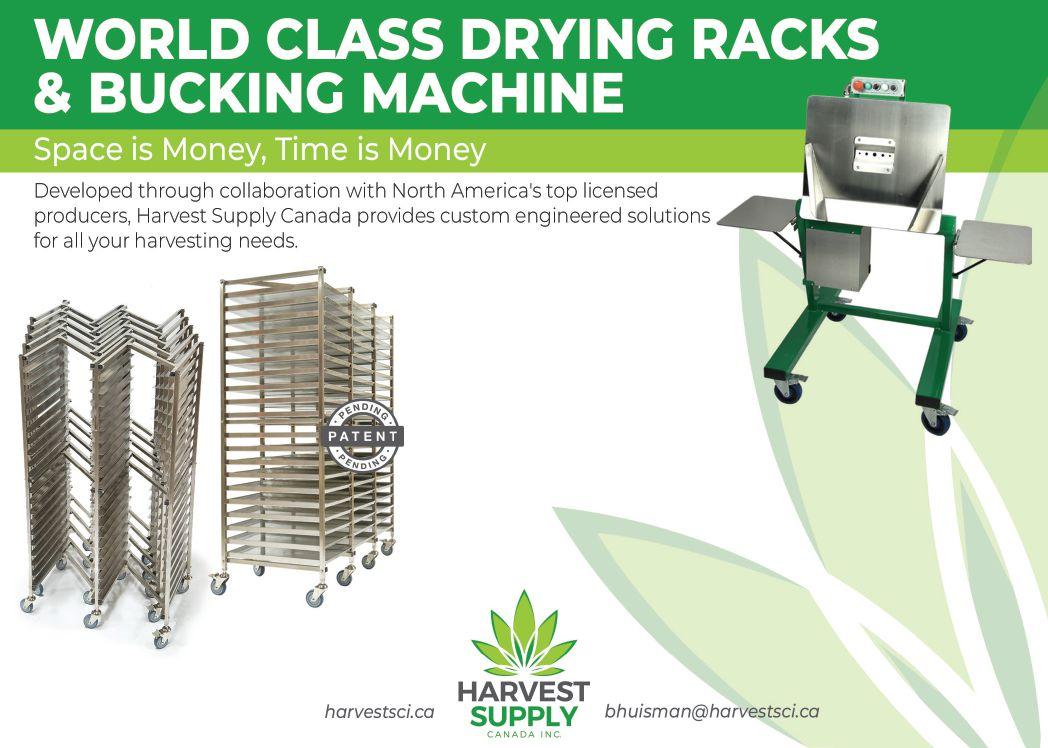
Patent Pending Drying Racks & Trays
• Nest the Z-Shaped Stainless-Steel Drying Racks to save up to 50% floor space
• Customize the Hanging Racks to your preference, adding or removing rows
• All Drying Racks feature six heavy-duty swivel wheels with brakes to ensure safe and easy movement
• Stainless Steel round bar edge on trays, leaving no residue and risk of cross contamination as compared to other fold over edges
• Stackable trays, easy to pull apart
UL Certified Bucking Machine
• Harvest up to 150 lbs/hr
• Equip with optional stem chipper
• Easily buck wet or dry product
• Suitable for indoor and outdoor use
• Allows for operation by two people, safely and comfortably
• Fast and Easy cleaning with corrosion resistant and water proofing construction
• UL Certified and GMP Compliant
Suppliers’ Corner
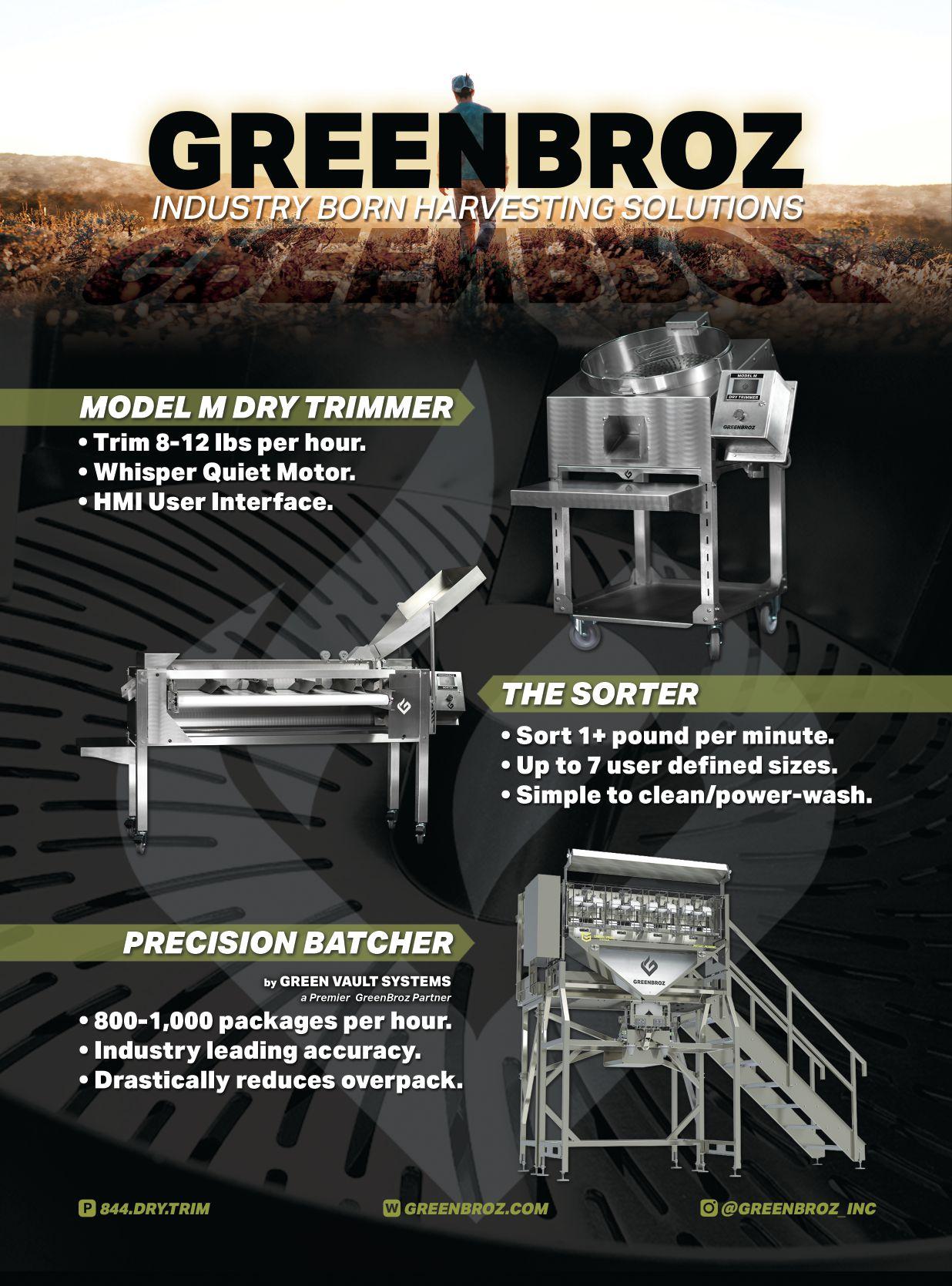
GreenBroz shifts gears to provide new PPE remediator
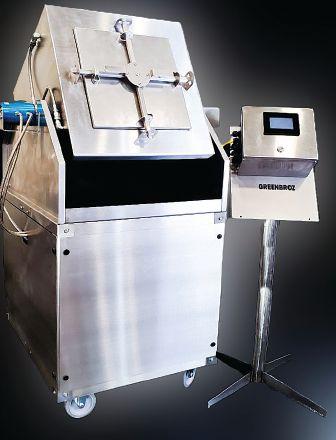
GreenBroz Inc. is shifting the gears of its production to help cannabis facilities protect workers against COVID-19.
The harvesting equipment manufacturer is adapting its production efforts to provide full automation of the Gard’n Clean chlorine dioxide system. This machine can be used to sterilize personal protective equipment (PPE).
“We were in a unique position to be able to shift our efforts to the design and production of a system which can address an immediate and urgent need in the midst of this current crisis,” said GreenBroz CEO, Cullen Raichart, in a statement. “We want to be a part of the solution and are excited that we have a prototype ready to go, and are currently seeking FDA Fast Track approval.”
GreenBroz has retrofitted its Alchemist Trichome Extractor with an optek-Danulat carbon dioxide gas detection advanced sensing system, designed to detect CIO2 levels in the rotating drum. Scott Rotary Seals provided the seal mechanism and Kaman Automation designed the human machine interface touchscreen panels.
“Using Gard’n Clean patented, ultrapure CIO2 is the only way to fully remediate without damaging or leaving a residue on disinfected material,” said Shamol Vyas, founder of Gard’n Clean.
The PPE Remediator is constructed using surgical-grade stainless steel and measures 40 inches by 52 inches by 60 inches, with a capacity of eight cubic feet. It can be used on-site, eliminating the need to transport contaminated PPE to a larger machine on a separate floor.
The quiet motor and fully programmable 30- to 60-minute cycle make it convenient to use. The active two-stage filtration system ensures complete decontamination, while the Cl02 detector monitors functionality for optimum safety.
www.greenbroz.com
Precision promises costeffective solutions for extraction
Precision Extraction Solutions has announced two new extraction technologies for hemp and cannabis.
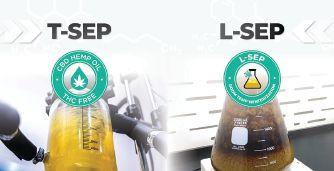
T-SEP, short for THC separation, produces THC-free CBD distillate. The 7LPH model is capable of processing up to seven litres of crude oil per hour and is said to remove more than 99 per cent of THC and THC-A from extracted oils.
The process is estimated to cost US$3.50 per litre, mitigating costs of flash chromatography media and providing a low-cost alternative to traditional cannabinoid extraction technologies.
Precision also unveiled its new L-SEP technology, short for lipid separation. The processor is said to instantaneously separate fats and waxes from plant oil extract at room temparature. The winterization process can be reduced from 24 hours to less than 10 minutes with over 97 per cent lipid removal from crude oil.
The 60LPH base configuration model comes standard with a 100-litre vessel/ filter press combination and all necessary appendages. It claims to be capable of processing up to 60 litres of crude oil
per hour at a cost of less than 50 cents per litre.
“It’s a win-win situation for all,” said Precision CEO Marc Beginin. “The T-SEP and L-SEP processes demonstrate our commitment to providing groundbreaking technologies to the growing industry.”
Patents are currently pending for both technologies.
www.precisionextraction.com
UniMax launches line of new walk-in fume hoods
UniMax is expanding its series of hoods to include new models with greater interior working dimensions.
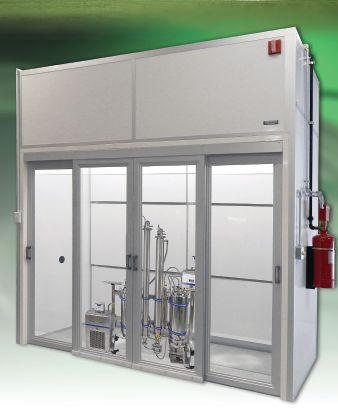
The floor-mounted, walk-in fume hoods range from six feet to 24 feet wide, four feet to eight feet deep and seven feet to 16 feet high. Botanical extractions, tall apparatus/distillation processes, roll-in reactors or long-integrated instrumentation systems can be easily accommodated in these hoods.
UniMax floor mount hoods are constructed with chemical-resistant, non-conductive modular panels, featuring composite resin surface material. This design allows for on-site assembly and easy disassembly.
Custom sizes and designs are also available and can be built to exact specifications.
www.cannabislabsolutions.com
REGISTER
REGISTER
Suppliers’ Corner
A&L Labs has new customer service and marketing lead A&L Laboratories Inc. has welcomed Daryl Patterson as the new customer service and marketing lead of food and pharma, in its cannabis division.
Patterson will work with cannabis growers and processors to provide technical support for soil and plant analysis, Health Canada testing requirements and outdoor production services. He brings more than 11 years of experience with
laboratory analytical services for A&L Labs.
“With the new demands of the cannabis industry, I am committed to ensuring producers have the knowledge and technology at their disposal to deliver better production results and yields,” said Patterson.
A&L Labs is celebrating its 35th anniversary expertise and modern laboratory facilities in Canada’s agriculture, environmental, food and pharmaceutical sectors. www.alcanada.com/cannabistesting
Twister releases new mobile trimmer for craft cultivators
B.C.-based Twister has announced a new addition to its fleet of harvesting eqipment for craft cultivators.
The BatchOne Dry Trimmer is a new, mobile unit built specifically for those who prefer dry trimming in a batch-style workflow. With the ability to trim up to 88 lbs. dry per hour, the BatchOne can decrease the hours spent and cost per pound of your production.
It is designed with ultrafine saddle adjustments and paired with a ¼ HP motor that prevents stalling. This silent machine provides users the confidence needed to walk away while achieving the industry’s tightest batch style trim.
The quick-removal tumbler design makes it simple to clean and maintain. It also allows you to fit the Batch One through most standard 32-34” doors. The bins used to capture the trim are foodgrade, stackable and nestable for storage. www.twistertrimmer.com
By Mohyuddin Mirza
The end zone
Role of root oxygen in cannabis plant performance
Cannabis growers are well aware of the importance of oxygen for cannabis production – both for quality and quantity – but we should understand the dynamics of oxygen and how proper levels of dissolved oxygen in water can impact the plant and its performance. The choice of any oxygen generation technology may well rest on this information and knowledge.
Oxygen is produced during the process of photosynthesis, the fixing of light energy on the leaves. This oxygen is produced during the light period and is exhausted through ventilation. This is a by-product of the chemical reaction of photosynthesis. It is beneficial for workers who can breathe this oxygen while working with the plants.
Oxygen in water is a different story. Dissolved oxygen (DO) has an important role to play in root health. However, dissolved oxygen depends on water temperature.
Simply stated, the cooler the water temperature, the better the DO. At 4ºC, the oxygen levels are around 9 to 11 mg/L or parts per million (ppm). That is why aquatic life survives.
At 20ºC, the oxygen level drops to around 5 to 6 ppm, and at 26ºC the level will be around 3 to 4 ppm. These are actual measurements I have taken in a facility. Some published figures may be slightly different. The challenge here is that we cannot grow cannabis at 4ºC
water temperature. We need around 18ºC to 20ºC. In some cases, the water temperature can go higher if black irrigation pipes are trapping light. The higher the temperature, the lower will be the DO.
Biochemical oxygen demand
Biochemical oxygen demand (BOD) is the amount of dissolved oxygen needed (i.e. demanded) by aerobic biological organisms to break down organic material present in a given water sample at a certain temperature over a specific time period. Many labs will work out this figure for you. The important thing to know is that the higher the BOD, the lower will be the DO. That may make it necessary to add oxygen to your irrigation water.
DO and root health
In substrate based growing media – like commercial soilless mixes, coir or rockwool –the media are designed for high porosity, medium porosity and low porosity, which indirectly indicate air to solid
ratios. Highly porous mixes are used for rooting of clones, where more oxygen is available for rooting. These mixes need better water delivery because there is less water holding capacity.
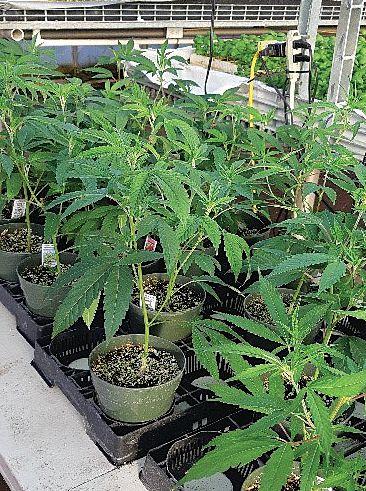
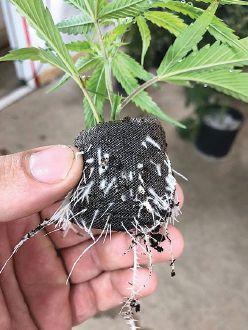
The growing medium in the pots in the above picture (#1) is of medium porosity. It has good air porosity and water holding capacity. In picture #2 the plant shows excellent development of roots in a high air porosity plug. Note an abundance of root hair.
When plants are irrigated to a saturation point, then the oxygen in the root zone depends on the levels of dissolved oxygen. The roots absorb nutrients through cation exchange and release hydrogen or hydroxyl ions which is reflected in the pH. When water is removed from the growing media by the roots then air starts going back based on the air porosity of the media.
Aeroponic system
My observation is that plants grown in aeroponic and hydroponic systems benefit
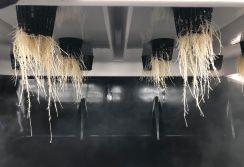
most from dissolved oxygen. The photos below are from Choice Growers in Strathmore, Alberta, which uses an aeroponic system. The roots are directly misted with oxygenated water.
The plants shown in picture #3 have roots with oxygen levels of around 8 to 10 ppm. Note the roots are pure white, contains lots of feeder roots and an abundance of root hair. This translates into very good top growth (photo #4).
Fungus pythium
The relationship between oxygen levels and fungus Pythium is important to understand. Below 4 ppm, the fungus starts multiplying, and around 2 ppm roots will start turning brown and the top of the plant will show water deficiency symptoms.
There are different techniques and machines to add oxygen to water. Growers should investigate which protocols suit their setup the best. One last point: oxygen over 13 ppm is of no benefit to the cannabis plants.
Moyhuddin Mirza, PhD, is chief scientist with the Cannabis Nature Company in Edmonton, and a consultant with the cannabis industry. Email him at drmirza@cannabisnature.ca