What are consumers looking for in 2024 and what is motivating them? | 14
AI and flowers
Meet Daisy, Bayview Flowers’ new award-winning plant-care assistant | 22
Grower Day recap Highlights and snapshots from this year’s event | 32
Cultivating the future
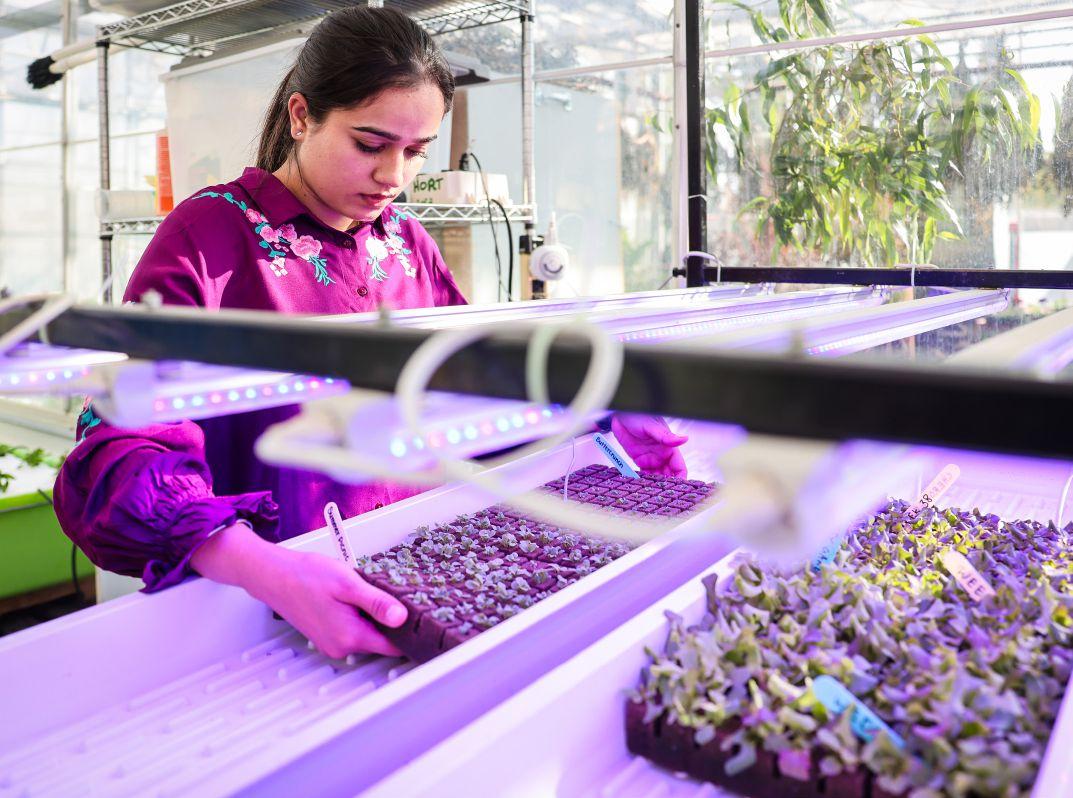
This fall, Alberta’s Olds College will welcome students enrolled in Canada’s first indoor agriculture certification course.
News 6 Grower of the Year 8
Profiling Jake Enns, director of growing for Greenhill Produce.
trends 14 Explore what people are buying in 2024 and what motivates them.
ON THE COVER
Grower
AI IN HORTICULTURE
Bayview Flowers launches new plant-care assistant to support end consumer.
BY AMY KOUNIAKIS
Canada’s first indoor agriculture certificate program to welcome new students this fall. BY
JOHN DIETZ
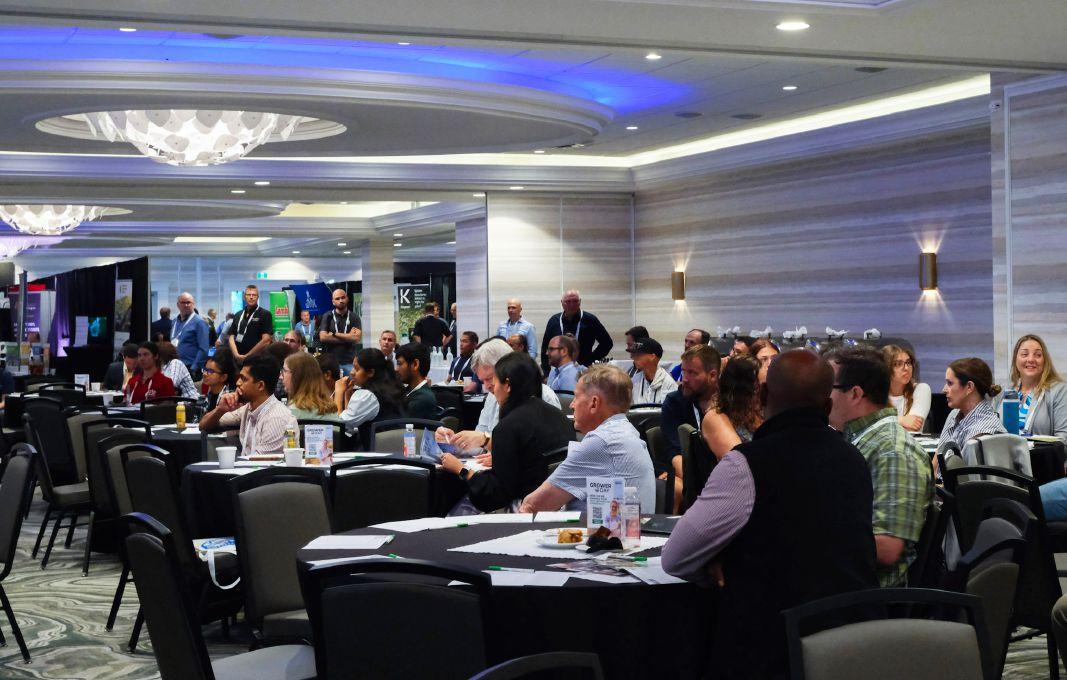
Highlights and snapshots from this year’s event.
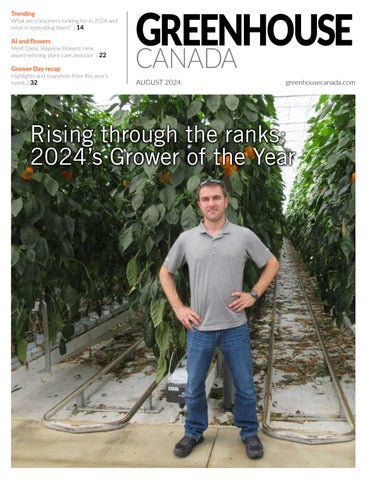
of the Year, Jake Enns, director of growing for Greenhill Produce. Read more on Page 8. Photo by Amy Kouniakis
Get to know 2024’s Grower of the Year
As the days grow shorter in these late stages of summer, it’s hard not to reflect on how quickly the year has gone so far.
As this issue of Greenhouse Canada is printed, many of us are preparing for that back-to-school hubbub that picks up as we head into the waning days of summer. This is also a time of transition for many in the greenhouse sector who might be clearing the way for new crops and prepping for 2024’s final quarter. Either way, it’s a good time of year to stop and take a look back on the challenges and successes of the first eight months of this year and maybe make some adjustments to mitigate some of those challenges and drive success further.
thoughtfully than Greenhill Produce’s director of growing, Jake Enns. It’s this attention to detail and Enns’ success in supporting the company’s steady growth over the years that has earned him the distinction of being named Greenhouse Canada’s Grower of the Year.
“He, quite literally, grew into growing.”
In this issue of the magazine, we take a closer look at some consumer trends and how growers may want to tap into them to learn more about the wants and needs of the end consumer to ensure they’re producing products that will ultimately satisfy that broad audience. Do you think your operation is doing all it can to support and attract that final chink in the supply chain? Maybe you’ll gain a fresh perspective or find a new avenue to explore in this month’s Greenhouse Canada which may, in turn, help support planning for the next phase of your business. Check out a couple of our consumer-focused coverage on pages 14 and 22. Planning ahead, as you well know, is key to keeping ahead of challenges that might arise in the greenhouse environment and it seems no one does it more thoroughly or
This past spring, I had the chance to meet up with Jake at one of Greenhill’s production facilities in Kent Bridge. Enns’ growth within the company started at age 15 when he started there as a general labourer. He has since taken on several roles at the company that saw him steadily progress into the role he now holds; he, quite literally, grew into growing. It was an honour to meet him and tour the very modern and pristine facilities at Greenhill and to write Jake’s story, which can be found on page 12.
And finally, as I write this, our Grower Day event is merely three weeks in the rearview. In this issue we share some of the highlights from this day of education, networking
sjamieson@annexbusinessmedia.com
and fellowship. There were some great moments at the event but the one I keep reflecting on is our end-of-day grower panel discussion on sustainability in greenhouse production. The conversation was lively and enlightening. So much so, that we’re hoping to make this a regular addition to our Grower Day experience for years to come. A big thank you to all of our sponsors, exhibitors, speakers and attendees for making the event a success. Check out some of the photos from the day on page 32.
Grocers earn award for local produce promotion
Sixty grocery stores across Ontario are being recognized for their creativity in promoting locally grown fruits and vegetables with the ‘Foodland Ontario Retailer Award.’
“Congratulations to all the winning stores across Ontario and thank you to everyone who works hard to create great displays promoting Ontario grown foods,” said Rob Flack, Minister of Agriculture, Food and Agribusiness in a June press release. “Your commitment to promoting fresh, locally grown fruits and vegetables deserves recognition, as it helps to support everyone across the food supply chain and grow the provincial economy.”
Three Awards of Excellence were given to stores
which received Platinum awards in two consecutive years for multiple eye-catching displays of Ontario fruits and vegetables throughout the seasons. The winning stores are: Foodland #3249 in Markdale; Longo’s #34 in Stouffville; and Starsky Fine Foods in Hamilton.
“Our team at Foodland Markdale strives to provide customers with the best quality produce, and that usually means Ontario’s very own local food,” said Tawnya Tersigni, manager of the store in Markdale, in the release. “You could say that local food is the bread and butter of our business and that is why we are proud to work with Foodland Ontario and the provincial government to promote it.”
CPMA CREATES NEW ROLE TO ENHANCE MEMBERSHIP OFFERINGS AND EXPAND MARKETS
The Canadian Produce Marketing Association (CPMA) announced the appointment of Greg Palmer as its vice president of trade and market development, a newly created role that aims to strengthen CPMA’s membership offerings and expand into new markets domestically and beyond Canada.
“We are excited to
welcome Greg to our team,” said Ron Lemaire, CPMA president, in a press release announcing the appointment. “His expertise in produce procurement, quality control, food safety, and his involvement in our industry make him an invaluable addition to our sales support and trade development team.” Palmer has served
Plant Products welcomes new president
BioFirst Group recently announced the appointment of Bart Sosef as President of its Plant Products division. Sosef, currently GM for Biobest Netherlands and sales director for Benelux, will be reporting directly to CEO Jean-Marc Vandoorne.
Plant Products caters to the horticulture sector across North America and central Europe, a recent press release from BioFirst Group said. In his new role, Sosef will focus on strategic growth, expanding the sales force across Canada and the U.S., and leading the market’s gradual transition from synthetic pesticides and fertilizers to sustainable alternatives, the release said. (Source: BioFirst Group)
on several boards and committees including the Greenhouse Vegetables Industry Advisory Committee in 2022, the CPMA’s Diversity Equity and Inclusion Working Group in 2022, and currently, the Ontario Produce Marketing Association Young Professional Network Committee. He has also
participated in programs that support young professionals pursuing careers in produce such as CPMA’s Passion for Produce in 2022, the International Floral and Produce Association (IFPA) Emerging Leaders in 2022 and the IFPA Young Leaders class of 2023. (Source: Canadian Produce Marketing Association)
BY THE NUMBERS
Statistics Canada report from June 20, 2024
In Canada, 6.1 per cent of all businesses made use of AI in producing goods and delivering services over the last year.
84.9 per cent of those businesses reported no change in their employment levels after implementing AI in producing goods or delivering services
Cadalora RZ Races Ahead
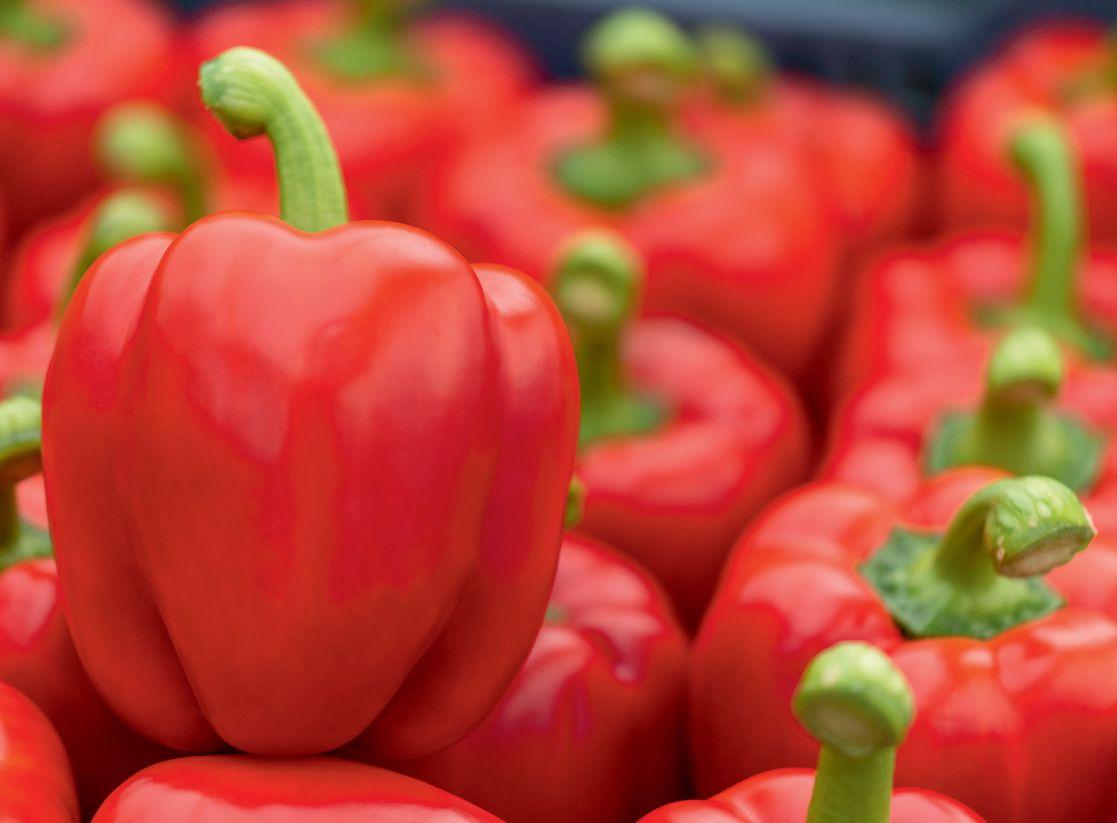
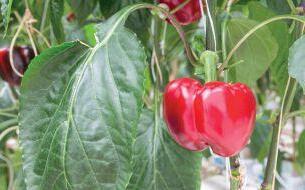
CADALORA RZ , a new red blocky pepper variety from Rijk Zwaan for greenhouse growers. Cadalora RZ is a well-balanced plant that combines good vigour with nice setting behaviour to produce bright red fruits that are suitable for bagging and bulk packaging. High yield production and strong against blossom end rot and inner rot, Cadalora RZ is a winner for your sweet pepper program! For more information, contact: Rijk Zwaan Canada | Brad Breedveld, Pepper Crop Specialist | b.breedveld@rijkzwaan.com Rijk Zwaan Canada | David Janik, Fruit Crop Specialist | d.janik@rijkzwaan.com
www.rijkzwaanusa.com
FROM THE GROUND, UP
2024’s Grower of the Year cultivated a lifetime career at Greenhill Produce
BY AMY KOUNIAKIS
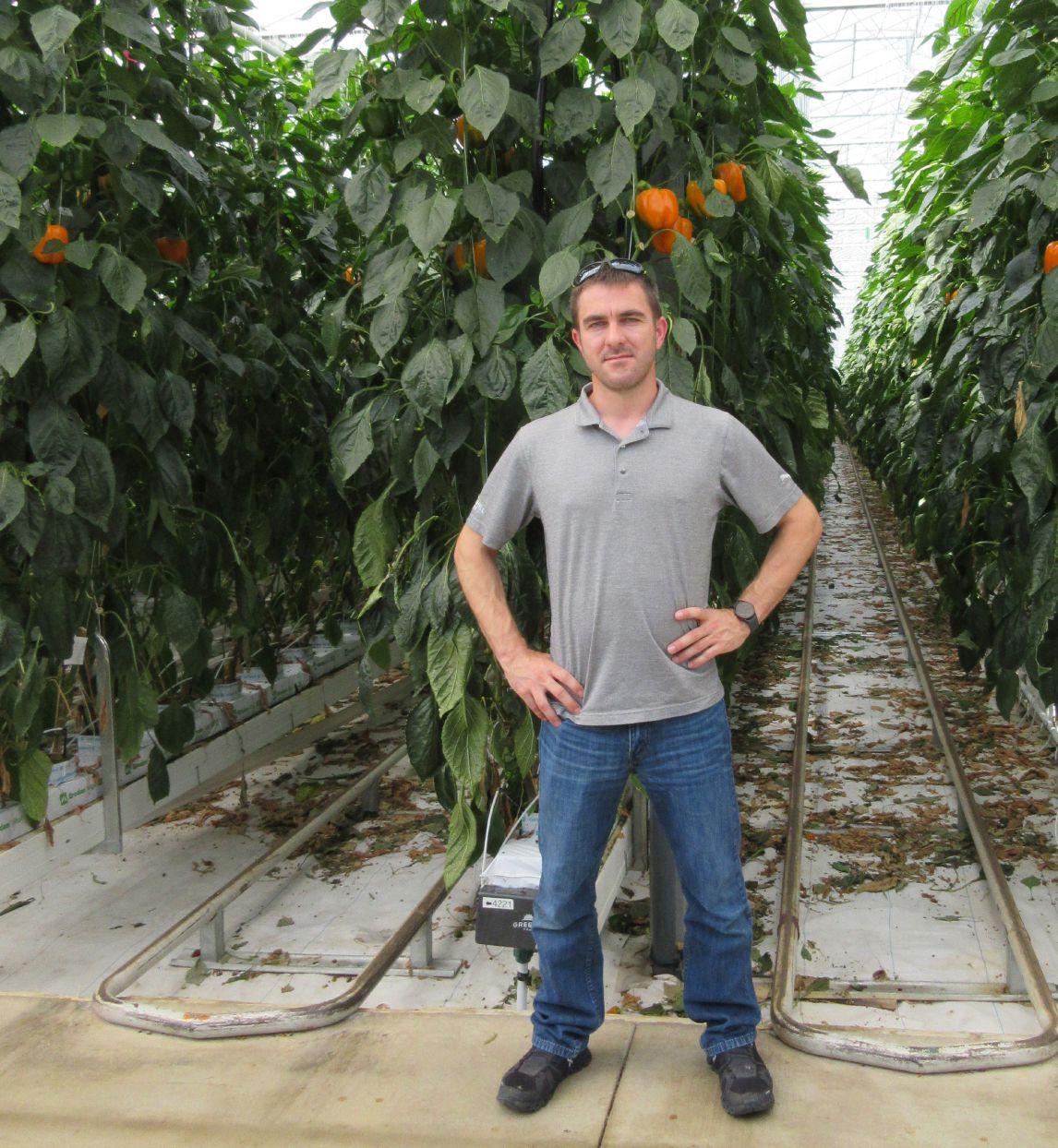
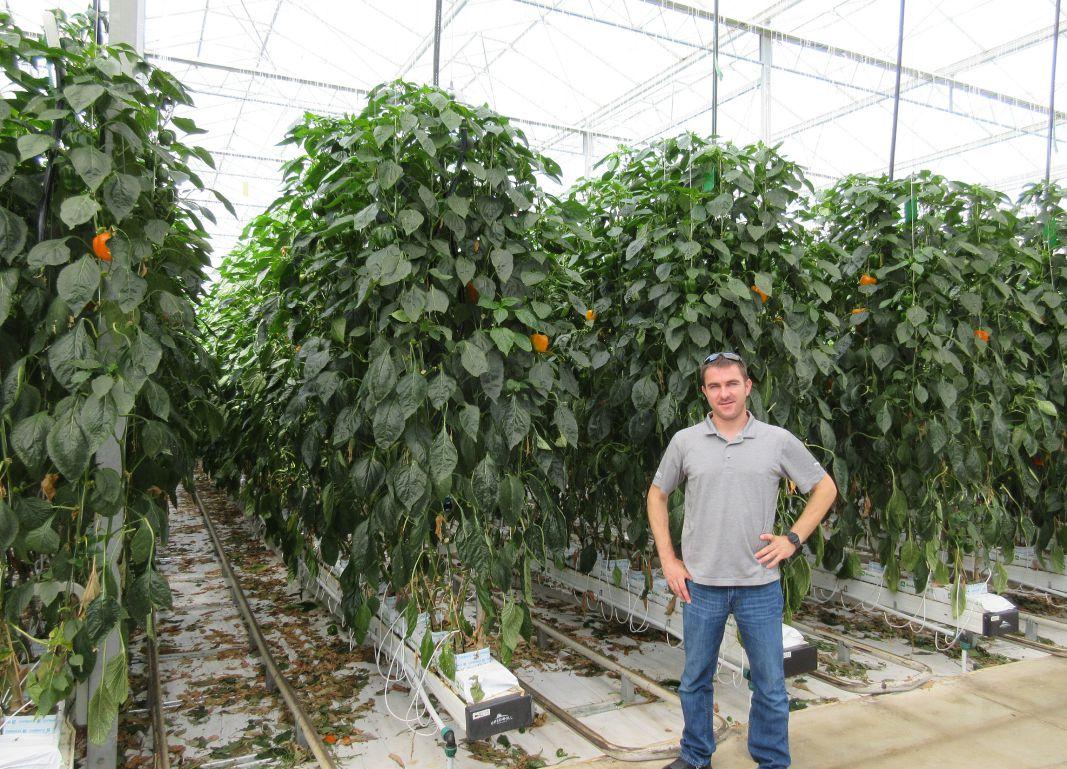
BELOW Jake Enns, director of growing for Greenhill Produce in Kent Bridge, Ont., has been with the company for 15 years.
When 15-year-old Jake Enns started out as a general labourer at Greenhill Produce, it was with a mind to help support his family and maybe procure a little pocket money. Fifteen years later, Enns is now not only the director of growing for the company, but also an important fixture in the Canadian greenhouse industry whose dedication to the sector and humble approach to production has earned him the distinction of being named Greenhouse Canada’s 2024 Grower of the Year.
Like many in the growing business, Enns was born to parents who worked in agriculture. His parents, who emigrated to Canada from Mexico when he was a youngster, worked open-field farms, and still do, in the Chatham-Kent region of Ontario.
“When I was 13, I started working with my dad in the field,” Enns recalls. “Then, when I was 15, my parents got me a job here (Greenhill Produce) as a general labourer.”
From the get-go, Enns recalls his younger self being awestruck by the vertical nature of production and the technological aspects of growing indoors.
Greenhill Produce was established in 2001 by the Geertsema family out of a six-acre hydroponic
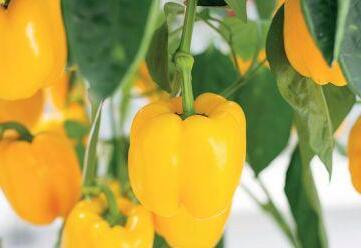
greenhouse. They specialized in growing red, yellow, and orange sweet bell peppers.
“It’s vertical plants and we never had bell peppers on the field.” While bell peppers themselves were nothing new to him, he clarifies, to see them produced on this scale and in this controlled environment was.
Enns soon made friends amongst his coworkers and earned a reputation for being affable and hard-working, so much so that after two years as a general labourer, was promoted to forklift operator. He also started mentoring newcomers to the operation, some of whom Enns still calls colleagues today.
A short time later, he started trucking for Greenhill: “I was hauling peppers for about a year and half and then I was hired to be a crop supervisor,” he said. It was in this role that Enns really started to hit his stride at the company.
“During this time, he not only demonstrated his leadership skills but also his exceptional learning capabilities,” wrote Isaac Guenther, Greenhill’s Director of Production, in his endorsement letter for Enns. “From understanding climate, irrigation, and production strategies, it was only a matter of time before Jake became a grower.”
Guenther, who benefited from Enns’ mentoring in his early years with the company, said he watched his friend and colleague take naturally to the role of crop supervisor. His logical, precise and patient temperament served him well in managing those lengthy and challenging pepper crops.
“He adopted a proactive approach to growing that involves a continuous questioning of the status quo,” writes Guenther. “Driven by his logical nature, Jake even discovered previously missed issues that were contributing to a suboptimal crop environment.”
As crop supervisor, Enns became even more acquainted with Greenhill’s pepper crops, spending much of his time observing and charting the crops’ progress and challenges.
“This was my college,” Enns says with a satisfied grin on his face. “I would watch the plants to see what they did. I studied them and learned to work with them.”
He had support of Greenhill’s growers and the consultants the company frequently works with to
optimize production. Enns says he gratefully soaked up the wisdom of those individuals and even went to great lengths on his own time to learn more about the crop on a cellular level and its interactions with the greenhouse environment.
Eventually, Enns was promoted to head grower at one of Greenhill’s production sites where, again, he excelled at optimizing output and getting ahead of problems before they arise, Guenther recalls.
RHAPSODY
“Rather than reacting to challenges as they arise, Jake would strategically plan during the off-season to avoid relying on reactive growing techniques,” he said. “Today, Jake fully harnesses Greenhill Produce’s climate technology to predict irrigation, fertilization, and climate, enhancing efficiency and productivity.”
Enns’ push to get out ahead of problems before they happen has fuelled Greenhill’s technological evolution over the years. Under his and the teams’ purview, the company has embraced new
Proven disease control
When you need proven plant protection for greenhouse vegetables, greenhouse ornamentals and outdoor ornamentals, Envu is ready with solutions you can trust. Rhapsody® ASO is an OMRI-certified biologic fungicide labelled for fungal and bacterial diseases that uses multiple modes of action to outperform leading synthetic chemistries.
technologies to closely monitor crop health and the growing environment.
“If the software or hardware doesn’t exist that he is looking for,” Guenther said of Enns, “he’ll be studying how to make it in-house.”
LEFT
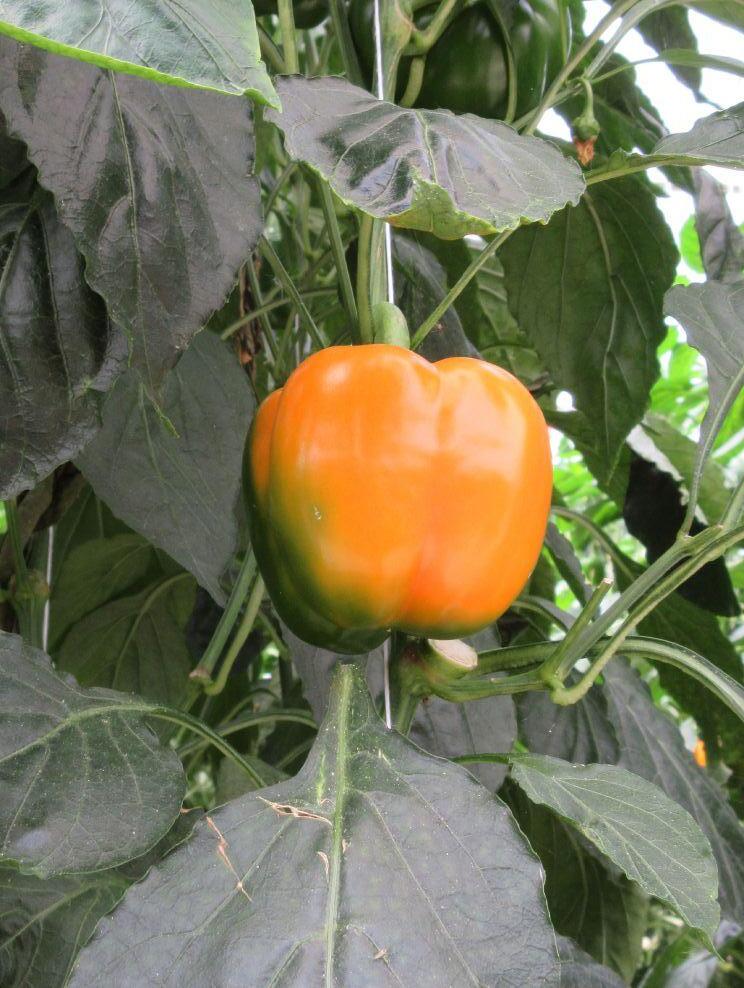
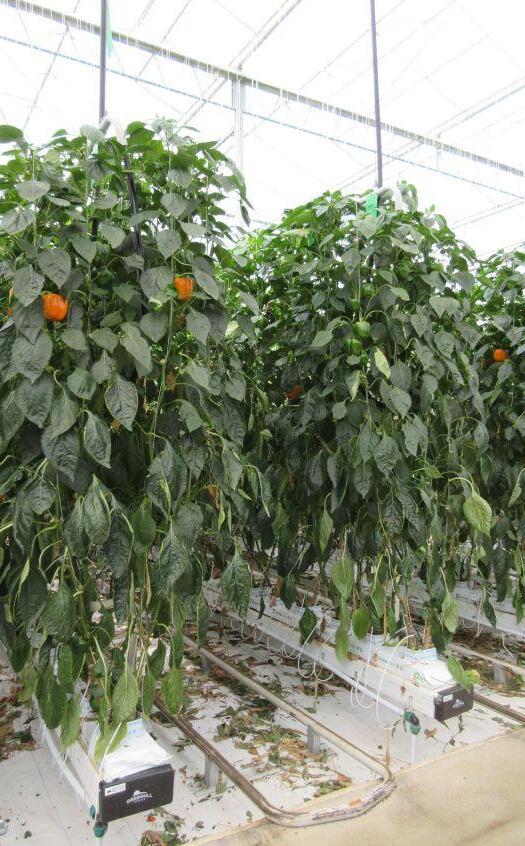
Orange peppers, Enns says, are the more finicky variety of peppers at Greenhill. The team there carries out extensive pepper trials to evaluate new and established varieties of bell peppers to compare against the rest of Greenhill’s crop.
family and his colleagues had come to know and respect him for and immediately got to work finding ways in which to improve processes and streamline Greenhill’s operations.
He has facilitated the transition of Greenhill Produce’s Growing Department from a qualitative to a more analytical and quantitative approach to crop management, Guenther explains.
“To achieve this transformation, Jake has implemented a routine of conducting daily water measurements, adopting innovative crop measurement techniques, and arranging for the analysis of various crop samples” he said.
More recently, Enns said he’s introduced more rigorous and regular testing of tissue and water samples, again, to ensure their team is getting out ahead of any potential problems.
“When I was 13, I started working with my dad in the field.”
In 2019, Enns’ dedication to the company and tireless work developing efficient crop management solutions, earned him yet another promotion: this time to become one of Greenhill Produce’s Director of Growing.
“I was proud that the [Geertsema] family trusted me with this,” Enns said he felt of the promotion. He accepted the role with the determination and humility the
“We have never done as much testing as we have done this year,” Enns said of the recent uptick in testing. “I just want to know what is going on in the plant.” He said that this granularity helps determine how effective fertilizers are and whether the plant is getting everything it needs from the fertilizer or if various nutrients are competing with one another. If there’s a redundancy or stressor, the tissue testing will likely pick it up much sooner than water testing.
Greenhill also participates in extensive trials every year to assess new varieties of peppers.
“I really like to see the new stuff out there,” Enns said. “Other greenhouses have the trials but I want to see for myself how the plant performs.” Enns will take meticulous measurements and have numerous tests performed on the trial crops to assess it against Greenhill’s main crop
LEFT TO RIGHT
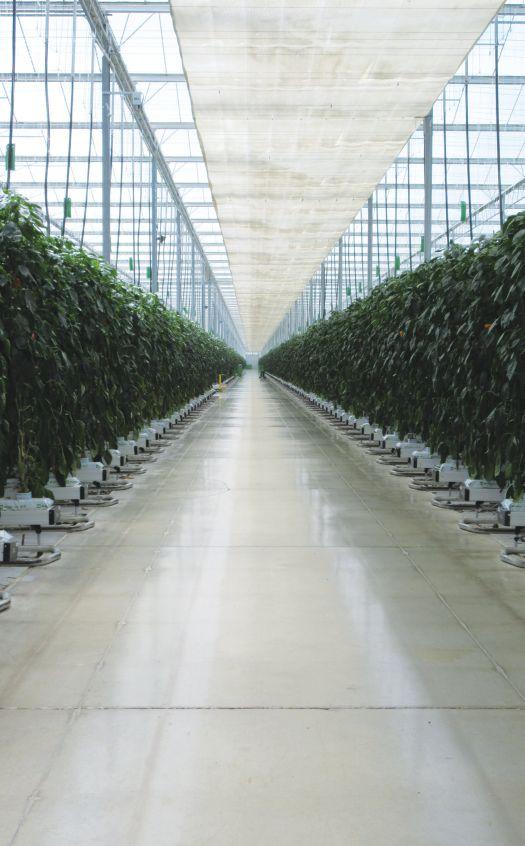
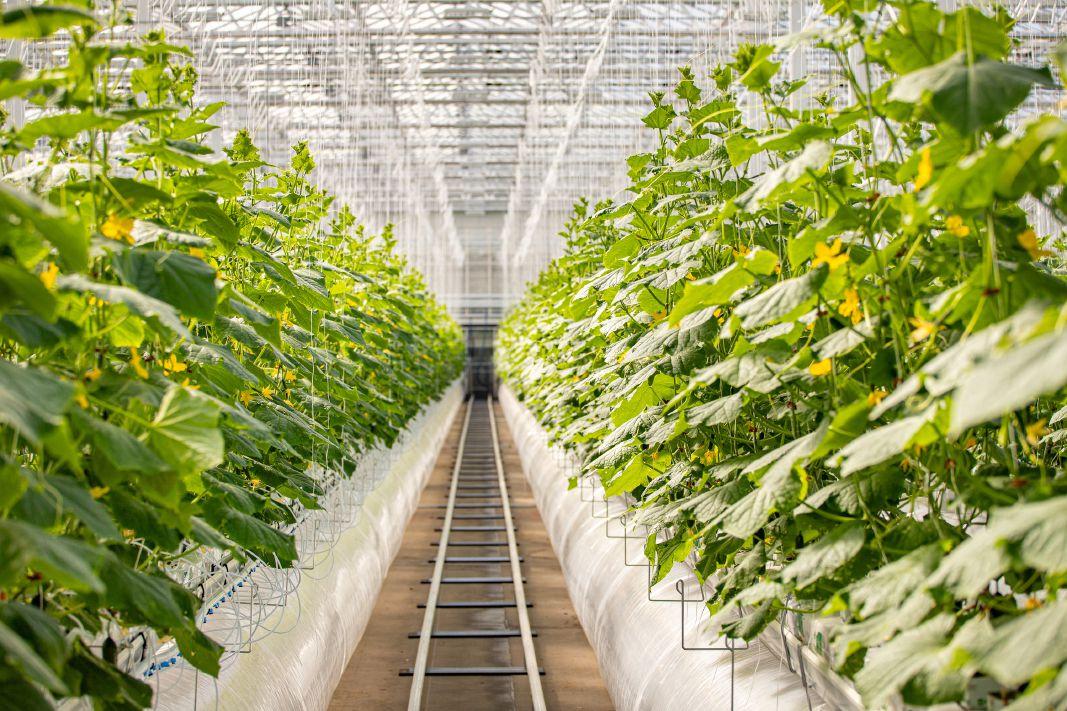
Enns has introduced a rigorous regimen of tissue and water testing at Greenhill Produce to closely monitor the health of the crop. This meticulous approach, Enns says, helps the team keep well ahead of problems; Greenhill Produce, established in 2001, started out as a six-acre hydroponic greenhouse growing orange, red and yellow bell peppers. Since then, the company has expanded to 150 acres of greenhouses across several locations in the Kent Bridge area.
to determine a variety’s fitness for production.
One of Enns’ greatest accomplishments at Greenhill, beyond supporting the company’s significant expansion, is the role he’s played in harmonizing the team of growers who report to him. He’s accomplished this by bringing everyone together to tour the crops at all four growing locations as a group once a week. During these tours, Enns and his team assess crop health together
and brainstorm ideas for improvement, if needed.
“I like to challenge them to try something they never thought they’d do,” he says.
Enns himself visits every location daily to check in on the crop and offer his support and guidance.
“We used to be, kind of independent growers on each block,” he recalls. “For me, my biggest job was to get them all connected and I feel like that has been a really good thing for the company.”
It seems he is correct. From six acres in 2001, Greenhill Produce has grown to more than 150 acres of high-tech greenhouses spanning multiple locations. Enns’ nominators credit him with playing an integral role in that growth and in modernizing Greenhill’s production.
“His passion for the crop and his science-based approach to management continue to drive Greenhill Produce’s operations
forward,” Guenther says. “Jake’s journey is a testament to hard work, dedication, and a genuine passion for what he does.”
That passion continues to be fuelled by the team and company that has supported Enns’ growth from Day 1.
“I love seeing everything grow: the plants, the people, the company,” he said.
“We have a great team here. It’s a very motivated group of people I’m surrounded by.”
CONGRATULATIONS TO THIS YEAR’S WINNERS
Greenhouse Canada is proud to celebrate the rising stars in Canada’s greenhouse sector!
Read more about them and the work they do in the June/July 2024 issue.
Know someone worthy of Top 4 status?
Nominations open again in early 2025.
SPONSORED BY
Manufacturing
Rose Séguin
Sollum Technologies Montreal, Que.
Paul Kamps
Kamps Hydrangea Inc. Vineland, Ont.
Qinglu Ying
Vineland Research and Innovation Centre Vineland, Ont.
Kyle Dick Plant Products Leamington, Ont.
CONSUMER TRENDS 2024
Sustainability, health and wellness are major forces in the marketplace
BY J. LYNN FRASER
Greenhouses are protected, stable environments. Ironically, they operate in a changeable marketplace. Greenhouse growers must adapt to satisfy consumers’, partners’, and clients’ diverse needs.
“Consumers,” says Sylvain Charlebois, Professor, Director, Agri-Food Analytics Lab, Faculty of Management, School for Resource and Environmental Studies, Dalhousie University, “tend to have a distinct view of agriculture.” Greenhouses don’t quite fit into the view consumers have of farmers and consumers’
ABOVE
“bucolic” view of farming. Yet greenhouses “have the potential to be selling points for flowers, plants, fruits, and vegetables.”
A recent PwC report found “consumers desire in-person interactions” but technology “can enhance their shopping experience.” In exchange for value some consumers are willing to pay a “sustainability premium.” Consumers value “authenticity and transparency.” Canadians, 36 per cent, are eating healthier and 35 per cent expect to eat more produce in 2024. Respondents placed inflation, 44 per cent, as the “top threat facing the
Lufa Farms in Montreal, Quebec combines branding with community outreach to connect with potential customers; Sylvain Charlebois is the director of the Agri-Food Analytics Lab, Faculty of Management, School for Resource and Environmental Studies at Dalhousie University in Halifax, N.S.
country, eclipsing economic volatility and health risks, despite … cost of living gradually slowing.”
So what are consumers buying and why? Here’s a look at some of the motivations and factors contributing to consumer decision making and what they’re buying.
PLANTS
Consumers are “knowledgeable” about houseplants and garden plants states Amy Bowen Ph.D., Director, Consumer, Sensory & Market Insights, Vineland
BELOW
Research and Innovation Centre. Consumers are self-directed when they buy plants but are receptive to well informed garden centre employees. These are not “impulse buys.”
Consumer interest is influenced by the trend in “health and wellness.” According to a blog post from The HC Companies, a manufacturer of planters and pots for horticulture, this is important for millennials who value clean air and who to want decrease their stress. They want to show their expertise on Instagram while being part of a community and be
nurturing. According to Garden Know How’s Mary Ellen Ellis, millennials, born between 1980 and 1996, have a love of plants and gardening that has been passed on to Gen Z, born 1997 to 2012, who love heirloom vegetables and native plants.
Native plants, pollinator supportive plants and rain gardens are noted by Sheridan Nurseries (2023) as being part of 2024’s sustainability. Fashion influences are seen in “gothic gardens.” Hortifuturism (technology, hydroponics, aeroponics) is another trend.
Great Lakes Greenhouses in Leamington, Ont. credits their involvement with trade associations and in industry events, conferences and retail conferences with keeping them informed about new trends, challenges, opportunities. The company says it also surveys its partners quarterly.
PHOTO: GREAT LAKES
LandCON (2024) comments that ‘immersive’ gardens that engage senses, nature, and emotions are trending. The sustainability trend is seen low carbon landscaping, recycled and reclaimed materials, and creating wildlife sanctuaries. There is also a blending of interiors into exteriors with vertical gardens and green walls.
VEGETABLES & FRUITS
When buying fruits and vegetables consumers are guided by “convenience lists,” prices, where the product is grown and how it is grown observes Bowen. “A segment of consumers look to price, country of origin, flavour, and how they are produced,” she said. Other influences include marketing boards, research, and social media, trade magazines, and trade shows. In the grocery store ‘foodie’ consumers will ask for the latest varieties and food trends, Bowen notes.
“They want to show their expertise on Instagram while being part of a community and be nurturing.”
CLIMATE CHANGE
A recent report from Retail Insider points out that 48 per cent of Canadians are adjusting meal planning based on climate change. This includes paying a higher price for a product with a “lower climate impact,” the report notes. This consumer behaviour is a characteristic of evaluating food for sustainability and physical and mental health values.
DEMOGRAPHIC EFFECTS
Canadians consume different foods than they did 50 years ago, points out Michelle Tran in an article published on the Youth in Food Systems website earlier this year. This reflects Canada’s changing ethnicities and cultures in addition to changes in family size. Consumers buy in terms of portion sizes such as bulk buying or single servings, Bowen comments. The Canada Food Guide also reflects these changes as “emphasis is placed on shifting Canadian’s intakes towards more vegetables, fruit, whole grains, and plant-based sources of
RIGHT Amy Bowen, Ph.D., is the director of Consumer, Sensory & Market Insights for Vineland Research and Innovation Centre.
PHOTO: VINELAND
ABOVE
The Canadian Shield Rose is a variety from the Vineland Research and Innovation Centre’s 49th Parallel Collection, which was developed with the Canadian landscape, and consumer need for a hardy rose, in mind.
protein.” Food Insecurity and inflation are also changing Canadians’ habits.
WHAT GROWERS SAY
Lufa Farms, Quebec
Known for urban rooftop greenhouses and partnering with local farms, Lufa Farms combines branding with community outreach to connect with potential customers. “We change what
“A segment of consumers look to price, country of origin, flavour, and how they are produced”
we grow based on demand,” notes Callie Giaccone, PR & Outreach Specialist. “We try different varieties. People love our eggplants and peppers.” The company uses social media to reach consumers while their marketing is done in-house. Its direct giving program enables their clients donate to the program that gifts Lufa farm baskets to help allay food insecurity.
PHOTO:
Great Lakes Greenhouses (GLG), Ontario
We’re “a family-owned and operated cucumber, mini cucumber, and organic pepper farm,” comments Jeff Richardson, VP Sales. GLG sells locally, provincially, in Canada and the United States to “retailers, wholesalers, distributors and food service.” Richardson comments, “Being a family-owned and operated company we are nimble...to adjust to partner and market needs.” GLG is involved in “several trade associations” and “industry events, conferences and retail conferences” that keep it informed about “new trends, challenges, opportunities. It surveys its partners quarterly.” Richardson observes “with current environmental pressures people are looking for a controlled environment to grow. This will continue to bring new commodities into the greenhouse space.”
Nature Fresh, Ontario
Nature Fresh sells tomatoes, cucumbers, peppers locally, provincially, in Canada and the United States to “retail and foodservice clients” states Frank Neufeld, EVP. The process to decide goes through Concept Exploration à Trial & Development à Pre-Market Planningà Commercial Production.
“We continually review our sales data and analytics [and] the feedback we receive from retailers and consumers.” Consumers are surveyed weekly at random. It can take “upwards” of seven years to launch a new product, however, “if a product isn’t resonating with the market or a product is gaining traction more rapidly than we expected, we must be able to pivot quickly. Our in-house marketing team allows us to do this.”
Ontario Flower Growers (OFG), Ontario
“We are a grower owned co-op. Grower members decide what they ship. We sell and distribute for them,” states Michelle Sloot, Product Development & Supply. OFG sells horticultural products such as finished floral products for the local and provincial market. It has been in business for 52 years. “Many growers
attend grower tradeshows, trade media and social media. We also watch these and look for feedback from customers (commercial clients) on what they are looking for.”
SATISFYING CONSUMERS AND CLIENTS = SUSTAINABILITY FOR GREENHOUSE GROWERS
Capitalizing on commercial greenhouses sustainability and their efficiencies is a branding option for growers. Informing consumers know about the safety,
affordability, and freshness of greenhouse vegetables is important. Differentiating brands, such as by emphasizing the region the product comes from, is a way to attract consumers. Canada is its own brand that has “cachet”, according to Charlebois, associated with safety, quality, and high production standards. In Quebec the contribution of greenhouses to the province’s food security and autonomy is an attraction.
PwC advises creating and promoting “a product portfolio that reflects
consumers’ desires for wellness, nutrition and more sustainable food production.” It advises creating “bonds with environmentally conscious consumers by connecting your customers’ intentions with sustainable impacts.”
Overall PwC found “Brands that deliver innovative value while meeting consumers’ demands for authenticity and transparency can build trust and win market share.”
SOURCES
• Ellis, Mary E., Gen Z Gardening Trend, https://www. gardeningknowhow.com/gardenhow-to/lifestyle/gen-z-gardening
• Government of Canada, Canada’s Food Guide: An Update, https://
LEFT
When buying fruits and vegetables consumers are guided by “convenience lists,” prices, where the product is grown and how it is grown, says Vineland’s director of Consumer, Sensory & Market Insights, Amy Bowen.
• LandCON, Toronto Homes 2024, 2024, https://www.landcon.ca/ landscape-design-trends-2024/
• PwC, The imperatives for retailers to build consumer trust, 2024 Voice of the Consumer—Canadian insights, 2024, https://www.pwc. com/ca/en/industries/consumermarkets/voice-of-the-consumer. html#:~:text=Brands%20that%20 deliver%20innovative%20 value,in%20Canada%2C%20 earlier%20this%20year.
• Retail Insider, Exploring the Canadian Food Landscape in 2024: What are consumers seeking from food retailers?, 2024, https:// retail-insider.com/articles/2024/04/ exploring-the-canadian-foodlandscape-in-2024-what-areconsumers-seeking-from-foodretailers/#:~:text=In%20recent%20 years%2C%20Canadians%20 have,the%20increase%20in%20 food%20prices.
• The HC Companies, Why Do So Many Millennials Love Houseplants as a Hobby? 2024, https://hc-companies. com/millennials-lovehouseplants/#:~:text=But%20 why%20do%20Millennials%20 love,mood%2C%20and%20 lower%20stress%20levels.
• Tran, M., Food Consumption Patterns in Canada and How that’s Changed, Youth in Food System, 2024, https://seeds. ca/schoolfoodgardens/foodconsumption-patterns-in-canadaand-how-thats-changed/
Navigating the consumer environment can be quite a challenge for growers, especially those that don’t have a direct pipeline through retail space or a storefront. For some, this may not seem like a barrier to business but for others, this has presented an opportunity.
Bayview Flowers Ltd., based out of Jordan Station, Ont., zeroed in on this seeming disconnect several years ago and has been working ever since to bridge the gap and enhance the end-consumer experience. Earlier this year, the company shared the result of their years-long efforts as they unveiled their new AI-powered plant-care assistant, aptly named ‘Daisy.’
“It became clear to us that there was a need to empower plant purchasers,” said Evan van Staalduinen, Bayview’s marketing manager, in a recent interview with Greenhouse Canada
“Studies have found that a lack of knowledge
is a purchase barrier for the end consumer – so consumers not knowing how to actually care for the plants they purchased. We saw that as an opportunity to try to tackle that barrier.”
Van Staalduinen references the 2021 ‘Consumer Houseplant Purchasing Report’ from the Floral Marketing Fund which found 15 per cent of those surveyed do not purchase houseplants for themselves because the plant will die.
Bayview’s early efforts to tackle this knowledge gap resulted in the development of their Living House brand of plants. Plants in this lineup, which launched in 2019, are sold with a unique code that can be found on the product care tag and can then be registered on the livinghouse. ca website where plant-specific care information is readily available. Once registered, users can manage their plant collections and even give their plants names.
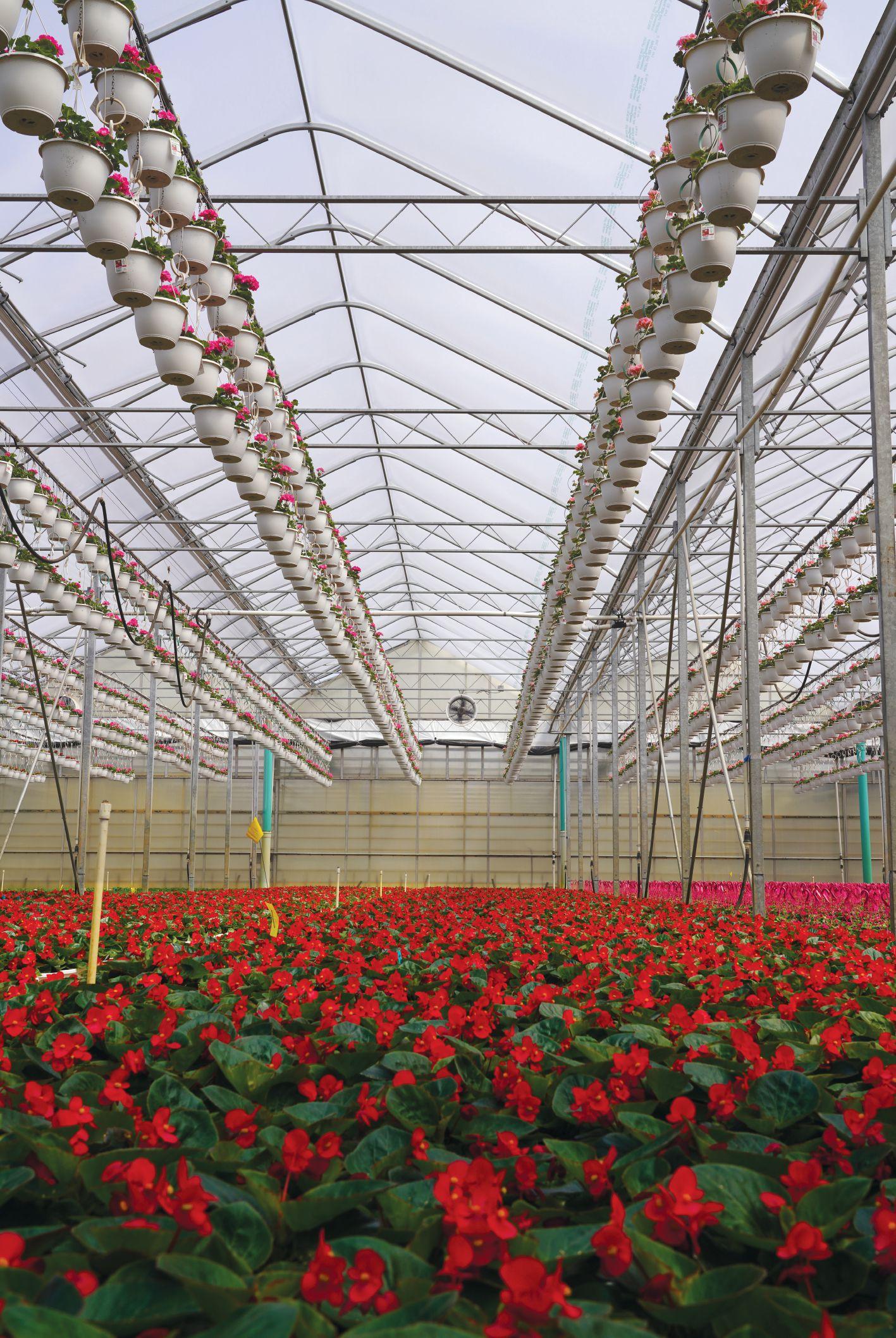
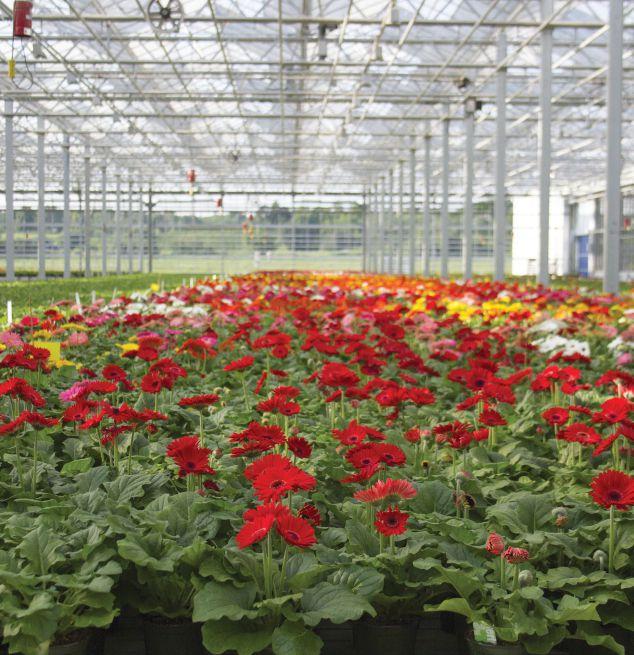
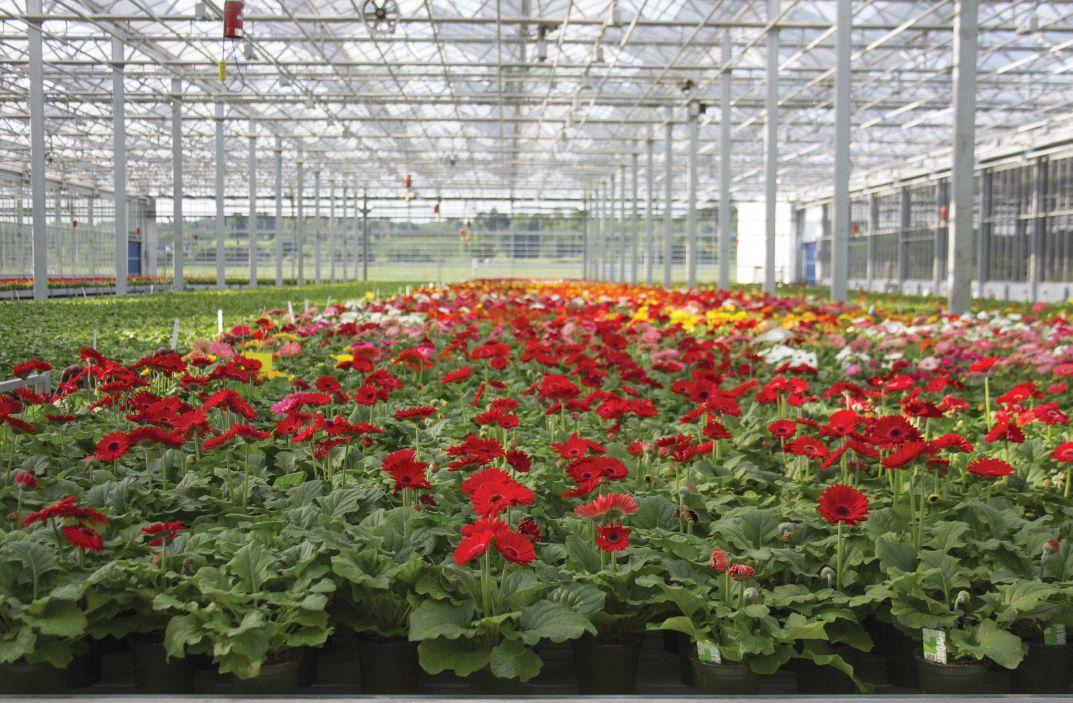
ABOVE A crop of Gerbera daisies at one of Bayview Flowers’ greenhouses.
PHOTO: BAYVIEW FLOWERS
LEFT TO RIGHT
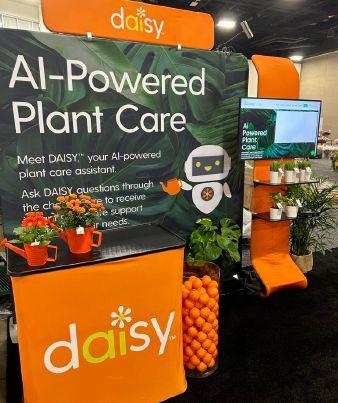
Daisy was developed using a closed LLM (large language model) environment, which means that, unlike open-source LLMs, all content is developed, maintained and vetted by Bayview Flowers; Bayview Flowers unveiled their AI-powered plant-care assistant, called Daisy, at the 2024 Floriexpo held in early June.
The brand was very well received by end consumers and retailers alike, as it added a layer of accountability and quality for the latter and empowered the former with the tools needed to be a successful plant parent. Today, more than 50,000 plants have been registered to the website.
While the popularity of Living House is proof that Bayview was on to something, the emergence of Artificial Intelligence had some at the company feeling even more could be done to support end consumers.
Stewart Cameron, Bayview’s digital
marketing co-ordinator, told Greenhouse Canada that by surveying registered users of their Living House website, they came to realize there was a need for more ondemand and specific plant-care assistance.
“Almost like if you had a pet and it was sick and needed an emergency vet on a weekend,” he explains. “There was a need for instantaneous and customized responses; to get plant-care [information] to people right away.”
AI, the company felt, could provide that support but, given that the
technology is still in its relative infancy, with a little more human oversight.
Daisy was developed using a closed LLM (large language model) environment, which means that, unlike opensource LLMs, all content is developed, maintained and vetted by Bayview Flowers. The company has spent the better part of this past year testing and trialing the technology, putting Daisy through the paces to ensure the quality of the information it is drawing on.
“It’s not going to scour the internet for any kind of answer that it finds, it’s only going to learn from the information that we’ve traded on,” said Van Staalduinen.
“We have a lot of direct connections with industry expertise and care guidelines from the breeders we deal with or the suppliers that we deal with. So, we’re getting really good information, direct from the industry experts.”
Cameron cautions, however, that because AI is still learning and improving, there may be some instances where Daisy’s answers won’t be up to snuff and that’s where users can connect with a Bayview representative for support.
“That’s where we really thought it was important to have the human element
LEFT
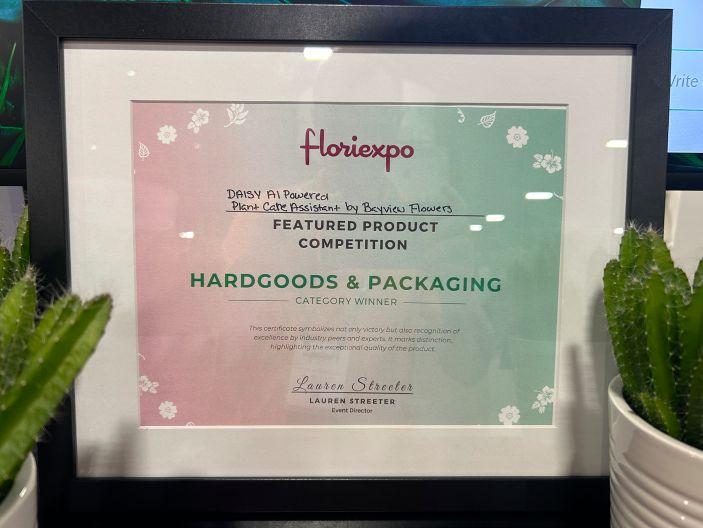
Bayview Flowers’ AI-powered plantcare assistant, Daisy, won the Featured Product Competition at the 2024 Floriexpo, the largest B2B floral event in North America
integrated,” he said. “If someone isn’t satisfied with the response they’re getting, they’re able to get that live agent support.”
Even Daisy’s support was thorough enough to help the end-consumer, Bayview representatives will constantly monitor Daisy’s interactions, especially in these early days, to ensure they’re as accurate and up to date as possible.
“If we see a Daisy response that we didn’t think was really that helpful, we can actually train it on new data so that it gets a better response next time,” Van Staalduinen adds. “So the longer Daisy exists, it’s going to get better through that constant feedback loop and cycle of learning.”
Equipping the end consumer with the knowledge to keep their plants healthier longer may seem counter intuitive for those who hope that same consumer will be a repeat customer when said plant dies, but Bayview, again, sees this as an opportunity and is playing a longer game.
For them, plant parenthood is a lifestyle; one being embraced by younger generations who, with the rising costs of living, are looking to purchase quality products with a much longer life span.
“Plant parenthood is an emotional investment. More people have come to realize there are benefits to caring for plants - there’s a lot of joy that comes from doing that successfully,” Van Staalduinen explains. “The hope is that if more people feel confident to buy plants, the number of plants they buy will go up.” And it’s reasonable to assume, he adds, that buyers will return to the spaces and brands “where they previously had a positive experience.”
“The other benefit that comes with building a connection with the consumer is you have a better opportunity to actually listen more directly to their needs,” Van Staalduinen continues.
“We get that direct feedback in terms of how to make our products better, how we make our services better. We can ultimately make our retail partners have a better customer program by building those relationships.”
In early June, the Bayview team took Daisy to Ft. Lauderdale for the FloriExpo tradeshow for its official launch. The reception was incredibly warm, and Daisy even won the Featured Plant Product competition at the show and has been
highlighted by organizers in subsequent media coverage of the event.
It is early days for Daisy, but Bayview has their eye on the horizon and is poised to take their new tool to the next level.
“Demand for a mobile application is clear given some of the feedback we’ve gotten from some of our user experience surveys,” Cameron said.
Ultimately, the hope is Daisy will be the starting point for something far greater for Bayview, its business partners and the industry as a whole.
“If this keeps going, you’re going to end up with, hopefully a large network of people who are using this and you can continue to learn as a community and ultimately, provide better products,” said Van Staalduinen.
“That listening aspect is really important. I think more and more companies, are really putting a focus on how they are listening and learning and working to provide better products and experiences through that connection.”
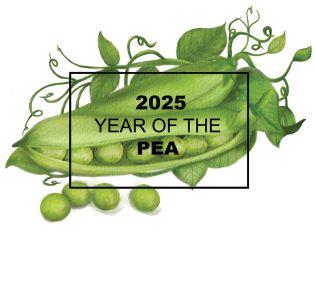
The National Garden Bureau recently announced the newest plants selected for their 2025 ‘Year of’ program.
For the ‘Year of’ program, the NGB selects plants and crops specifically for the North American market that are easy to grow, widely adaptable, genetically diverse and versatile.
presentations and graphics, printable posters and even pre-written social media posts, all of which can be downloaded and used for free after November 1. Prior to that time, more information about the program and its selected plants can be obtained by contacting the NGB.
National Garden Bureau unveils next year’s popular and easy-to-grow varieties
BY NATIONAL GARDEN BUREAU
The goal of the program is to help breeders, growers, retailers and marketers plan for the year ahead.
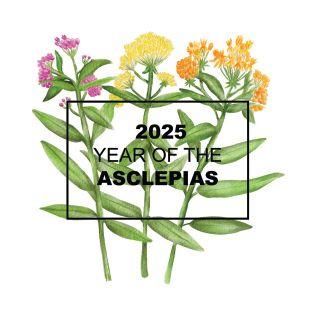
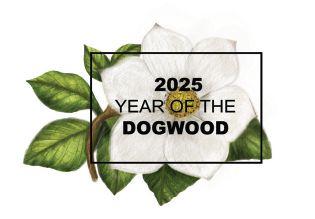
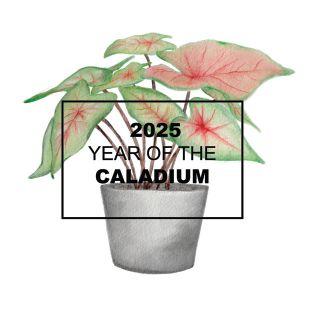
The 2025 Year of selections include: Asclepias (milkweeds), Caladium, Calendula, Dogwood, Monstera and Pea.
The crops chosen each year represent six horticultural categories: bulbs, annuals, edibles, perennials, shrubs and houseplants, a category added in 2022.
Once they’ve made their selections, the NGB then develops and makes available marketing tools to help members in the industry promote each year’s “Year of” crops. Promotional materials include: custom, hand-painted logos, hundreds of photos of all six crops, Power Point presentations, “Did You Know”
Breeders, brokers, growers and garden centres across the U.S. and Canada can use this program as part of their marketing efforts. They can take advantage of the publicity the program generates by using the creative materials developed by the NGB in their own marketing.
Consumer promotion of the 2025 Year of the plants will get underway in earnest in early November, when a webpage for each selection will be launched where NGB members can share their own images of the crops.
Each of these crops will also be featured in future editions of Greenhouse Canada so stay tuned for more.
Founded in 1920, the National Garden Bureau is a U.S.-based non-profit organization whose mission is to disseminate basic instructions for home gardeners. For more information, contact NGB’s executive director, Diane Blazek at blazekdiane@gmail.com or info@ngb.org.
Green incentives growers for Ontario
Ready for better crop yields and bigger savings? Set your greenhouse up for long-term growth with retrofit incentives from Save on Energy.
Cultivating the future
Olds College introduces Canada’s first indoor agriculture certificate program
BY JOHN DIETZ
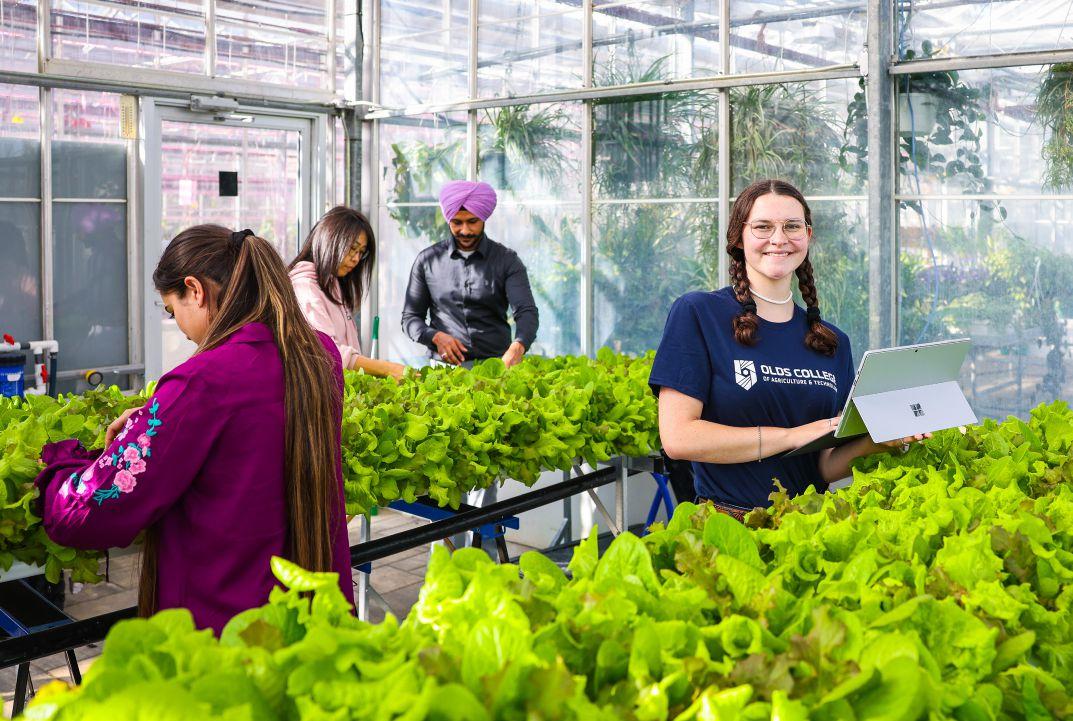
Canada’s first Indoor Agriculture Certificate program begins this fall at Olds College of Agriculture & Technology, Olds, Alberta.
Announced in late November 2023, the certificate is one in a series of recent innovative steps at the school.
Founded in 1913, the school is located about 75 km north of Calgary. It has been Alberta’s traditional home for two-year agriculture diploma program graduates. However, it has changed course in the 21st century.
The first Olds College graduates with the new certificate may emerge in time for spring planting in 2025, but they also may stay on at the school for another three years – depending on personal goals.
The Indoor Agriculture certificate program offers
ABOVE
a blend of four courses, on-campus or online, plus a five-month work-integrated learning course.
The classroom courses provide an introduction to controlled environment agriculture (CEA), basic horticulture, technology for CEA, and business practices for the CEA sector. Enrollment this fall is open for 30 students.
Admission requirements include English proficiency and high school credits for two science courses. Mid-career adults who want to upgrade skills or change careers to work in this emerging field also are welcome.
“We are very excited to offer a program that caters specifically to the controlled environment agriculture (CEA) sector,” said Debbie Thompson, VP, Academic. “Our students will acquire essential skills in plant production techniques, modern
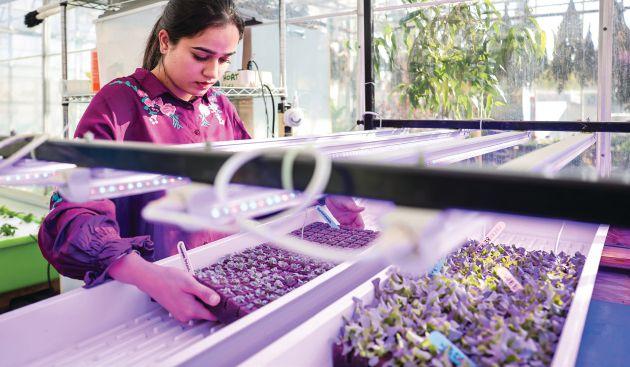
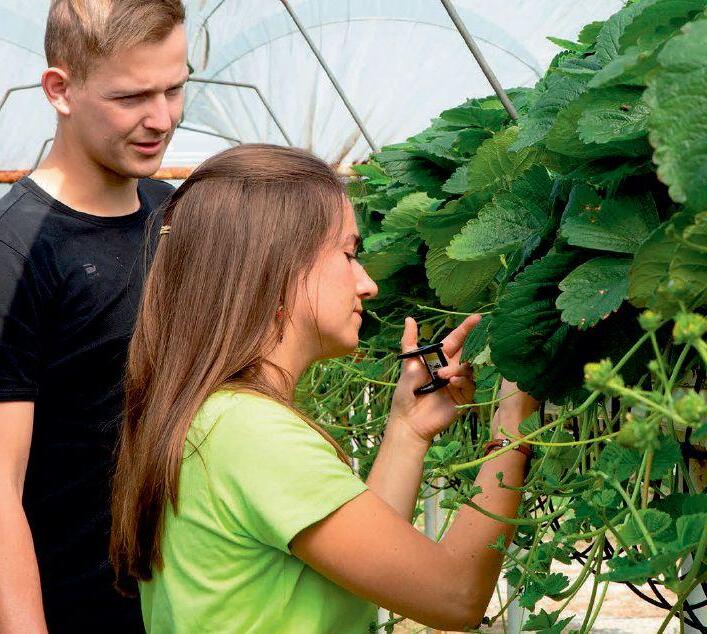
Canada’s first Indoor Agriculture certificate program from Olds College offers a blend of four courses, on-campus or online, plus a five-month work-integrated learning course. The classroom courses provide an intro to CEA, basic horticulture, technology for CEA, and business practices for the sector.
PHOTO: COURTESY OLDS COLLEGE
OCTOBER 9 & 10
NIAGARA FALLS, ON CANADA
ABOVE
Partial funding for the new program is supplied through the Royal Bank of Canada as part of a $150,000 commitment to Olds College in 2023 to promote CEA research and innovation.
technologies, and business practices that are crucial for success in this field.”
Partial funding is supplied through the Royal Bank of Canada as part of a $150,000 commitment to Olds College in 2023 to promote CEA research and innovation.
Demand for skilled professionals in the CEA sector is surging, Thompson explained. This program will equip students with the knowledge and hands-on experience for a career in the field, and it addresses the growing demand for sustainable and high-tech farming methods.
As a minimum, a fresh Grade 12 graduate can enroll this fall to take the courses and begin a working career in the industry. The industry, and good jobs, are waiting for the right people.
A GROWING FIELD
According to Jay Steeves, Dean of the Werklund School of Agriculture & Technology, the Indoor Agriculture certificate is part of a larger, broad-ranging initiative at Olds College.
“We are part of a collective effort to establish an association in the rapidly
growing CEA industry,” says Steeves. “The increasing demand for urban agriculture and self-sustainable food production is attracting more people to the industry.
Before launching the program, Olds College did a feasibility study with industry stakeholders. There was a clear labour shortage. Workers were needed with a combination of skills in horticulture, technology, automation, and business management.
The work environment is primarily indoors and industrial, using automated controls to feed, water and illuminate fast-growing, nutritious food for urban consumers, he explained.
“We are home to the Olds College Smart Farm, which encompasses 3,600 acres of land dedicated to crop and forage production. With state-of-the-art technology and equipment, Olds College provides the ideal setting for developing a program that supports the CEA industry. Our urban partners have shown a growing interest in adopting sustainable practices and increasing efficiency in food production, making this initiative a natural fit,” Steeves explained.
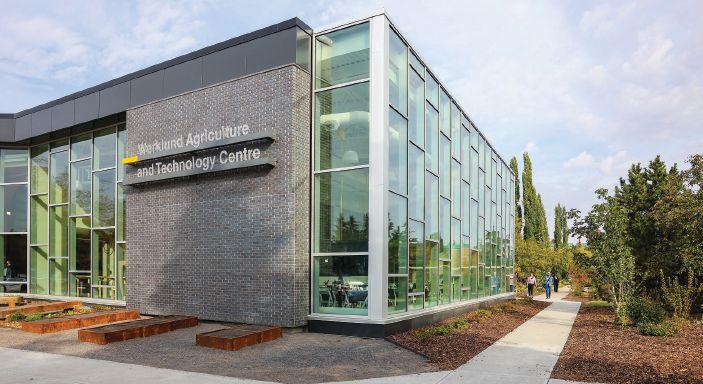
The Werklund Agriculture & Technology Centre, dedicated in 2022, is a $14,000,000 facility that is home to the college’s first four-year bachelor’s degree program — the Bachelor of Digital Agriculture degree, which saw its first cohort of students in fall of 2023.
Olds College has been enjoying a quickly rising reputation.
As a research college, it has been rising in the ranks. It is within the top five research colleges in Canada and currently holds fourth place in the rating system.
The student body grew to 2,588 last year. By citizenship, 36 countries were represented in the student population.
Olds College now operates three schools: School of Life Science & Business, School of Trades and Skills, and the Werklund School of Agriculture & Technology. It continues to offer a variety of two-year programs in trades, apprenticeship, education and training.
The Werklund Agriculture & Technology Centre, dedicated in 2022, is a $14,000,000 facility that is home to the college’s first four-year bachelor’s degree program — the Bachelor of Digital Agriculture degree, which saw its first cohort of students in fall of 2023.
“The Bachelor of Digital Agriculture degree combines academic coursework and impactful research, offering a unique learning experience,” says Steeves.
“With industry-leading faculty, stateof-the-art facilities, and cutting-edge technology, this program stands out as a baccalaureate degree.”
Olds College is becoming globally recognized for knowledge and innovation. It is focused on technology, skill development, applied research, and collaborative initiatives with industry. A variety of certificates, diplomas, applied degrees and post-diploma certificates are offered in agriculture, ag tech, land and environment programs.
A stream of ag technology grads is emerging with certificates in agronomy, agribusiness, smart agriculture, drone operation, food marketing, and electronic control programming. Other fields.
“Students in the Indoor Agriculture certificate program will have access to our 4,000 sq ft ‘green’ lab, which is equipped with advanced controls for humidity, air temperature, and lighting,” says Steeves.
GROWER DAY 2024
Highlights from this year’s event
BY GREENHOUSE CANADA
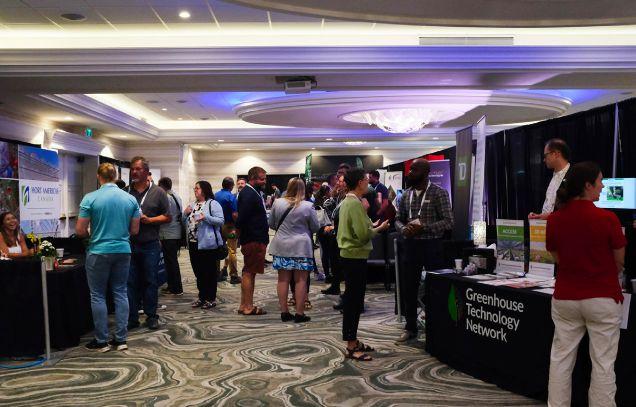
The day started off stormy and uncomfortably humid but that didn’t stop close to 200 attendees, exhibitors and speakers from soaking in the coolness that was a fully air-conditioned Grower Day 2024, held in St. Catharines, Ont. on June 18.
Despite there being another industry event in the area on the same day, this year, Grower Day welcomed 195 industry professionals for a day of education, fellowship and networking.
The event kicked off with a few words from Greenhouse Canada editor, Amy Kouniakis, who then handed moderator duties off to the always delightful and esteemed Dr. Rita Sterne, project manager of The Greenhouse Technology Network, who nimbly steered the course throughout the day.
In an effort to address comments and suggestions from attendees of Grower Day 2023, education sessions at this year’s event had
ABOVE AND RIGHT
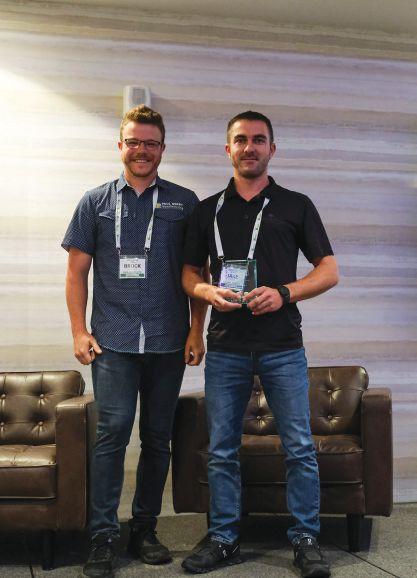
Grower Day 2024: Brock Penner, of Paul Boers Manufacturing (left) with the 2024 Grower of the Year recipient, Jake Enns.
PHOTOS
ABOVE
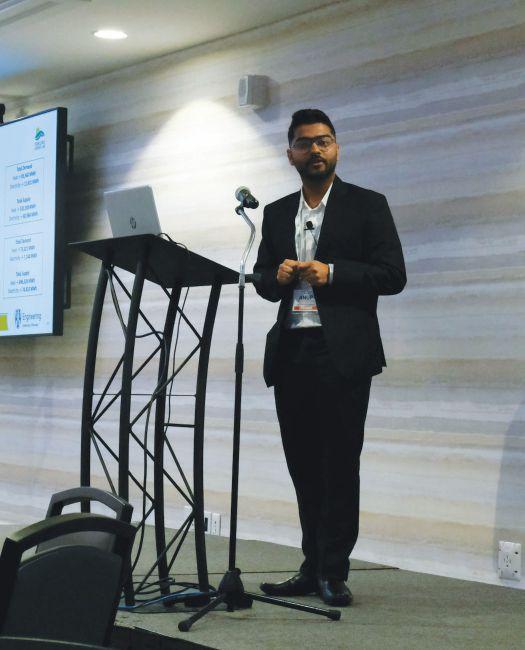
Anup Jwala Poudel, a mechanical engineering MASc student at the University of Windsor, presented some of the research he and his team are conducting on leveraging Small Modular Reactors (SMRs) for sustainable energy solutions in greenhouses.
a decided ‘sustainability’ theme to them, for the most part. It seems, in some of the feedback Greenhouse Canada has received from growers is that ‘sustainability’ can be a somewhat mystifying word in that there are many forms of sustainability that require addressing: financial and environmental foremost among them.
To get the day started, Anup Jwala Poudel, who was filling in for Dr. Rupp Carriveau, director of the Environmental Energy Institute and co-director of the Turbulence and Energy Lab at the University of Windsor, explored the subject of small modular reactor systems for greenhouses. Poudel, who is a master’s student under the guidance of Carriveau, spoke at length about the possibilities of leveraging this source of clean energy and how it may play a big part in the future of greenhouse production.
Next up, we heard from Dr. Scott Golem, research lead for Niagara College’s Horticulture and Environmental Sciences and Innovation Centre. Golem shared a truly enlightening presentation on optimizing light intensities for Cannabis cultivation.
After a quick coffee break, Judy Colley, the IPM technical lead for Plant Products Ancaster got up on the stage to teach her Mixology 101 session. In this session, growers were schooled on the delicate dance of running a successful bio program while still spraying for pests. She dove into how certain chemistries
ABOVE
can affect beneficials and timelines for chemistry applications to minimize their impact on beneficials. More on her session will be featured in an upcoming issue of this magazine.
Colley’s lively session was followed by an update on the status of the Tomato brown rugose fruit virus (ToBRFV) from Dr. Jonathan Griffiths, research scientist in molecular virology at Agriculture and Agri-food Canada. His presentation, which hit a cinematic tone with continuous and quite apt references to the ‘Back to the Future’ movie franchise, detailed the past, present and future (you can see how the movie theme plays in) of research into genetic resistance to ToBRFV. While the subject matter was no laughing matter, the manner in which it was delivered was lighthearted and engaging, breaking down an incredibly complex topic into more digestible and comprehensive tidbits. If you want to know the gist of Griffith’s presentation, think back to the franchise’s most quotable lines courtesy of Doc Brown: ‘Where we’re going, we don’t need roads.’
A delicious buffet lunch was a most welcome change of pace at this point of the day. Friends, colleagues and new acquaintances met in the lunch line, or gathered at tables to chat and enjoy the delectable spread served by the lovely staff at Holiday Inn & Suites Conference Centre in St. Catharines.
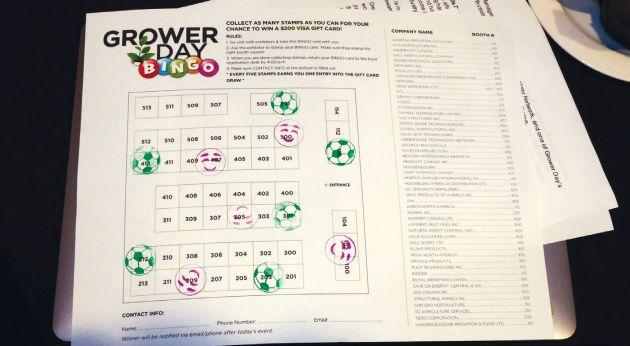
This was also a busy time for attendees, who were participating in the new Grower Day BINGO game, to meet with exhibitors and fill out their cards. Participants were asked to collect as many stamps as possible from exhibitors to earn entries into a draw for a $200 VISA gift card. Congratulations to our first-ever Grower Day BINGO winner, Tanya Irani!
After lunch and fellowship, the sessions started up again with an insightful presentation from Dr. Brian Lynch, director of Horticulture Technology Solutions at Vineland Research and Innovation Centre, on robotic solutions for the greenhouse sector and how they may play a role in solving labour and efficiency challenges.
Dr. Josh Henry, who travelled from Ohio to present at the event, was up next with his insights on optimizing
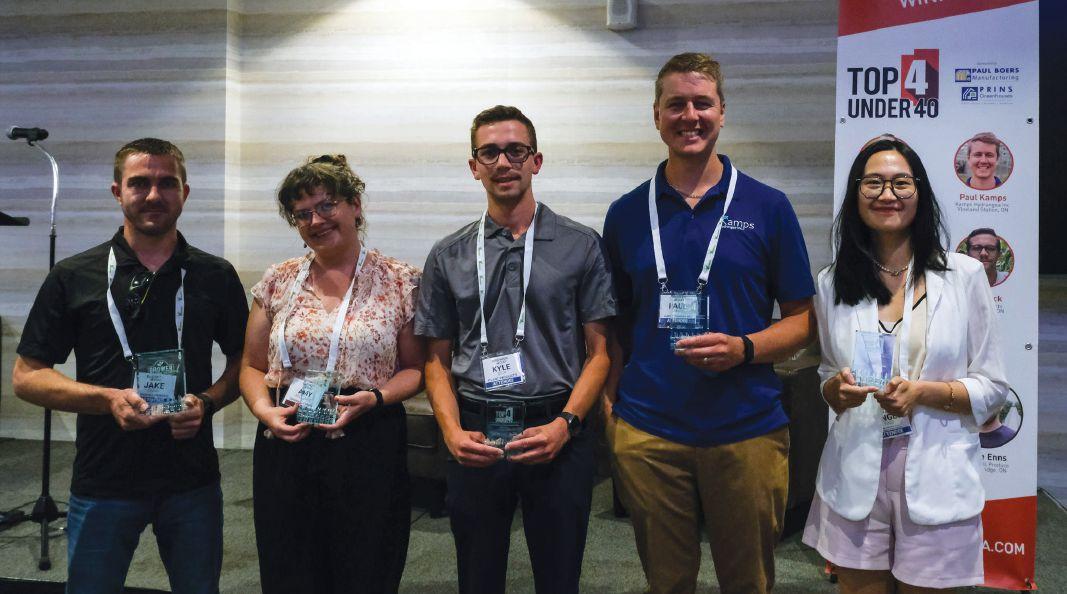
Celebrating excellence: From left: 2024 Grower of the Year, Jake Enns; Greenhouse Canada editor, Amy Kouniakis; Top 4
Under 40 winners Kyle Dick, Paul Kamps and Qinglu Ying.
nutrition for poinsettia production, a particularly poignant theme this time of year. He shared some invaluable advice on optimizing water and fertilizer inputs for the crop.
Amy Jenkins, also from the Vineland Research and Innovation Centre, had the distinction of being the final presenter of the day. Her session focused on a recent study into sustainable greenhouse vegetable production and what practices are currently popular in the sector and touched on what is coming down the pipeline. Jenkins’ presentation was the perfect segue into our end-of-day grower panel discussion.
The Grower Day panel, moderated by Aaron Coristine from Ontario Greenhouse Vegetable Growers, featured Jan VanderHout of Beverly Greenhouses, Matt Korpan from SEF Horticultural Innovation Centre and Mike Vanderzwet from St. Davids Hydroponics. The subject was sustainability in the greenhouse sector, and it was clear from the audience engagement and the lively discussion on stage that this is a hot-button topic for many in the industry and carries a variety of meanings. The economic and logistics issues associated with sustainable production are top of mind but so too is ensuring business viability amid the rising costs of just about everything. It seemed like this discussion could have gone on for ages, given the interest in the room but, time was
Dirr’s Encyclopedia ofTrees and Shrubs is the most comprehensive visual reference on this important subject.
A combination of Dirr’s bestselling books under one cover, adding new plants, new photographs, plus all new commentary in Dirr’s signature style, it is the bible of woody plants.
From majestic evergreens to delicate vines and flowering shrubs, Dirr features thousands of plants and all the essential details for identification, planting, and care, plus full-colour photographs showing a tree’s habit in winter, distinctive bark patterns, fall color, and more.
$105.00 | Item #0881929010
running out and we couldn’t end the day without recognizing the hard work, dedication and passion of the individuals being recognized as this year’s Top 4 Under 40 honourees and our Grower of the Year.
On hand to accept their Top 4 Under 40 plaques were Paul Kamps, sales director for Kamps Hydrangea Inc., Qinglu Ying, research scientist formerly with Vineland Research and Innovation Centre, and Kyle Dick, sales manager for Plant Products in Leamington. Greenhouse Canada’s Grower of the Year for 2024, Jake Enns from Greenhill Produce, also appeared on stage to accept his well-earned recognition.
It was the perfect ending to a day organized in the hopes of uplifting and supporting this important industry and the people that make it run. It wouldn’t have been possible without the support of Greenhouse Canada’s thoroughly engaged audience, the attendees and exhibitors who spent a lot of time and money to be at Grower Day and our generous sponsors: Paul Boers Manufacturing, Prins Greenhouses, Philips, Koppert, Ball Seed and Ridder.
Next year, we celebrate the 30th anniversary of Grower Day. Planning has already begun for the festivities, slated to be held on June 17, 2025. Stay tuned for the details!
For more information on any of the sessions mentioned above, please reach out to Amy at akouniakis@annexbusinessmedia.com for assistance.
ABOVE
Grower panel discussion on sustainabitlity. From left: Aaron Coristine (Ontario Greenhouse Vegetable Growers), Jan VanderHout (Beverly Greenhouses), Mike Vanderzwet (St. Davids Hydroponics) and Matt Korpan (SEF Horticultutal Innovation Centre).
Worldwide supplier of integrated horticulture lighting solutions
Dutch contemporary design Most efficient LED fixtures
Superior light distribution with high efficacy
Compact & robust dimming solution to optimize yield
August
AUG. 6
The Garden Center Show Milwaukee, WI
AUG. 14
Nursery/Landscape Expo San Antonio, TX
AUG. 15
Landscape Ontario Open House/Guelph University Flower Trial Milton, Ont.
AUG. 21 Farwest Show Portland, OR
AUG. 25
International Garden Centre Association (IGCA) Congress
Québec City and Laval, Que.
September
SEPT. 23
American Society for Horticultural Science Conference Honolulu, Hawaii
October
OCT. 9-10
Canadian Greenhouse Conference Niagara Falls, Ont.
OCT. 17 PMA Fresh Summit Atlanta, GA.
To submit an upcoming event, contact editor Amy Kouniakis at akouniakis@annexbusinessmedia.com.
INSIDE VIEW
GARY JONES | greenhousewolf@gmail.com
Gold medal time?
Late spring is the time for new varieties of flowers, bedding plants and other ornamentals to be acclaimed winners in many global shows, trials and competitions. Roses, dahlias, chrysanthemums, and a cornucopia of other favourite plants.
At the 7th annual International Rose Trials in Monaco, gold medalist in the ‘Hybrid Tea’ category was the new rose ‘Orange Sunrise’ (also known as the ‘Herman Salling Plant ‘n Relax’). Rosa Eskelund of the Danish family-owned breeding company ‘Roses Forever’ says “It’s the first time that we won gold during this competition. It’s not easy to win Monaco, because the gold medal is only awarded to a rose that scores high in all categories… Aside from this achievement, Monaco is a great place to win.”1
And in De Lier, the ‘FleuroStar Award 2024-25’ went to Dahlia ‘Dalina Maxi Starburst Pink’, from Florensis. “This stunning new Dahlia … boasts a myriad of unique, anemone-shaped flowers in a strong pink color with delicate patterns on the petals…. Dalina® Maxi Starburst Pink will undoubtedly stand out on the shelves, generating many impulse sales.”2 And don’t forget the granddaddy show of them all, ‘Chelsea Flower Show’, where Gold Medals are sooo coveted.)
“These prestigious awards really boost sales.”
We have our own events closer to home. The ‘California Spring Trials’ (CAST) have been going strong since 1996, and are “where the world’s prominent breeders, growers, educators, brokers, marketing professionals and other plant enthusiasts review new annual, perennial, ornamental, grass and vegetable introductions.”3 But does it have medals?
And at Mel Sawaya’s Garden Trials, in Ontario, “over 300 horticultural producers, breeders, buyers, wholesalers and marketers attend looking for leading-edge plants to watch and to avoid.”4 Or the ‘Cultivate’ event in Columbus, with its ‘New Varieties Zone,’ and the Ohio State University Cultivar Trials. Again though, no specific awards?
WHY ARE AWARDS SO HIGHLY PRIZED?
Says Rosa Eskelund of Roses Forever, “It’s a great honour, it helps us to attract new licensees. We already received licensee requests from German growers.”1 So, winning is good for sales.
And our dahlia? Says Richard Petri, Managing Director Floramedia Germany: “During my years at Selecta one, I have experienced first-hand what
FleuroStar can do for a new variety. For Petunia NightSky, the impact of winning the award was huge and really launched that variety on the road to commercial success.”2 So again, these awards really boost sales. Success also comes from the industry partnerships, press campaigns, product placement at retail, and extensive shared marketing support that come with winning at prestigious events. And at the FleuroStar Award Evening “Approximately 140 guests from a cross-section of the international industry enjoyed a networking dinner, learned more about all participating varieties and attended the announcement of the new winner first-hand.”2
WHAT ABOUT VEGGIES?
A search for ‘vegetable variety trials’, uncovers lots of university trials, and private or non-profit association breeding trials. These are often specifically for outdoor vegetables, and none are the ‘medal’ type of trials. The Canadian Greenhouse Conference has its “New Variety Showcase” for greenhouse crops: a shop window of new genetics. Perhaps the closest ‘competitive’ event for greenhouse veggies though would be the ‘Greenhouse Vegetable Awards’ in Leamington, but these have somewhat limited geographical influence. Other events, such as the Canadian Produce Marketing Association (CPMA) Awards and the ‘PAC Global’ Awards, are for innovations in packaging, and not for plants or produce.
SO WHAT?
Well, how do we get awards and recognition for new vegetable cultivars to the same global level as those for cut flowers or perennials? Awards that would make consumers decide they ‘just have to have one of those (insert your product)’. Think of the benefits. I’ll be looking for the winner of the Vegetable Gold medal somewhere soon.
1. www.FloralDaily.com, publication date: Fri 14 Jun 2024
2. www.FloralDaily.com, publication date: Fri 14 Jun 2024
3. https://www.springtrials.org/page.cfm
4. ‘Sawaya Gardens’, at https://sawayagardens. com/about/
Gary Jones sits on several greenhouse industry committees in BC and welcomes comments at greenhousewolf@gmail.com.