President Mike Fredericks mfredericks@annexweb.com
RETURN UNDELIVERABLE CANADIAN ADDRESSES TO CIRCULATION DEPT.,
e-mail: subscribe@fruitandveggie.com
Fruit & Vegetable Magazine is published seven times a year (January, February, March, April, Mid-April, October, November/December) by Annex Publishing & Printing Inc.,
Printed in Canada ISSN 1488-7959
Circulation
e-mail: subscribe@fruitandveggie.com
Subscription Rates
Occasionally, Fruit & Vegetable Magazine will mail information on behalf of industry-related groups whose products and services we believe may be of interest to you. If you prefer not to receive this information, please contact our circulation department in any of the four ways listed above.
N.S. strawberry producer named Innovator of the Year
Study shows irradiation reduces virus risk in
potato producers tout benefits of tile drainage
..................................................................................................................14 The future of wine in Nova Scotia: 2012 Atlantic Canada Wine Symposium occurring in May By
strains of late blight dominating Canadian potato
Dakota
Tnitely become a boon for fresh market fruit and vegetable grow-kets. On-farm sales are up in most areas, the place and customers are showing they are dedicated to buying food grown close to home.
But so far, Buy Local seems to be limited to fresh produce, leaving processed fruits and vegetables out in the cold.
“I think the local trend is here to stay,” says Rob Hannam, a consultant with the
going to help in the processing fruit and vegetable market.”
refers to is the recent closure of the commovement of production to the U.S. This de-
Buy local, process local
“When I walk the aisles of my local supermarket, I see plenty of products from far away lands that we also produce here,” he stated. “I know because I actually produce some of them. I am talking about such things as pickles from India, canned tomatoes from Italy and
“From a grower perspective, it is extremely frustrating knowing that we produce a high quality product at a competitive price and yet it is ignored in favour of imported product whose only redeeming factor is its price point.
“I would like your commitment to sourcesible that are produced here.”
The response from Loblaw, dated OcJohanne Edwards, a senior customer service representative with the company.
Visit any grocery store and you would canned fruit or vegetable in the place that despite the fact the country does have processing growers and the ability to supply the market.
This is a fact not lost on the Ontario Processing Vegetable Growers (OPVG) organistores to support local food “at all times,” -
seem to be getting across.
“Our board has some fairly strong views -
it upon himself to write to Galen Weston, president of Loblaw, about the issue.
“Loblaw was the chosen recipient of his attempts to portray [itself] as a champion of responses we received ranged from slightly condescending to infuriating.” -
asks Weston for help.
largest grocery retailer, we remain extremely dedicated to supporting our local farmers,” she wrote. “We are committed to sourcinging said, there are times when local growour demands and we have to look outside of
The next letter to Loblaw was sent DeRichards.
“I felt it necessary to write to you because your response did not deal with the points raised … In particular your letterour demands and we have to look outside
“While this is true with respect to freshcally, referenced such products as pickles, canned tomatoes and canned vegetables,” Richards stated. “These products are grown and processed here in Ontario and are available year-round from Ontario processors. We question the need therefore to stock Loblaw shelves with pickles from India, tomatoes from Italy and canned vegetables from
Buy Local encompasses much more than
vegetables grown, packed fresh, and processed here in Ontario, it is possible to eat locally all year round.”
Julie Dunham, a senior communications co-ordinator with Loblaw, now takessures Richards that Loblaw -
cent of produce in the store was sourced locally produced products in all departments throughout our stores,” she stated.
The original grower once again took up message across.
walk,” he stated. “Sourcing such products as pickles, canned peas, sweet corn, beans and tomatoes from far away places. . . does absolutely nothing for the community in which I live. The logical end game, if taken across a range of consumer products, is that we will eventually shop ourselves out of a anything in those new and newly renovated superstores?”
Julie Dunham, once again skirts the issues the OPVG is trying to resolve and stresses with local growers.failing to add whether those new vendors and vegetables.
Somehow I doubt they did.
The OPVG continues its commitment to promoting locally produced processed fruits and vegetables.
anything unless we, as consumers demanding growers and fresh market producers.
Higher performance and expertise. THE PERFECT FIT FOR YOUR HORTICULTURAL BUSINESS.
More and more, fruit and vegetable growers are discovering the advantages of high-performance horticulture products from Dow AgroSciences. Our products and expertise will help you control pests and improve profit. Get exceptional insect control with DelegateTM – registered in potatoes. Control powdery mildew with QuintecTM. Protect your produce with DithaneTM DG RainshieldTM NT, the world’s most trusted protectant fungicide. Grow your high performance business with horticulture products from Dow AgroSciences. Accomplish more. Call 1.800.667.3852 or visit www.dowagro.ca.
Forecast for hort The trends affecting fruit and vegetable production in 2012
By Margaret Land
When it comes to market trends and predictions, Rob Hannam,
Food Network, a consultant company out of Guelph, Ont., hopes he has the pulse of the future.
Hannam was recently in Nova Scotia to share with fruit and vegetable producers what he sees as the trends facing horticulture in the future can be broken down into four main topics: food trends, sustainability programs, food safety and traceability, and mobile technology.
Food trends
“The only way to look at food trends is to look at the ups and downs,” he said, adding there are always more positives than negatives.
One of the main “ups” currently affecting agri-food is population growth, said Hannam.
“In the big picture, we have more and more people in the world to feed,” he said.
to produce as much food as has been consumed since the beginning of humanity.”
will come the aging of the baby boomer generation, Hannam said, adding with aging more concern about what people are eating, dietary restrictions and health concerns.
“I see this as creating opportunities for fruit and vegetable producers,” he said. “I market.
“I see new segments, new needs and opportunities for [growers] to cater to those
ferent crops. I see that trend toward whole food, real food, coming back from the past.”
questions about the foods they are eating, receiving clear answers.
“When you look at food labels on the area. I see products labeled as naturally
the marketplace.”
confusion, said Hannam, who quoted from
they are trying to use more food that is pro-
per cent agree they are trying to use more food that is produced organically.
said. “But I think it highlights a real neednity to go after this market.”
open to growers. -
plain the system – what you do, why you do it, and is it safe,” said Hannam. “That communication is important – explaining what
Rob Hannam is president of Synthesis Agri-Food Network, a consultant company in Guelph, Ont.
According to Rob Hannam, food safety programs are here to stay so “get on board.”
you do, why you do it … reassuring people about your production practices.”
Linking into this is the movement toward buying local, a food trend Hannam believes is here to stay. But while he sees it growing and helping the fresh market, he is uncertaincessing fruit and vegetable sector.
ment, said Hannam, adding that Wal-Martduce “assortment” sourced locally, with lo-
“The bottom line is that whether their motivation is to reduce their costs of shipping or to be perceived as a green company, Hannam. -
population has grown from 3.9 million people -
are from Europe and the U.K.
“Lots of those folks who are coming to said Hannam, adding some of their food an opportunity.”
such as Toronto and Montreal, some are set-
immigration population in Nova Scotia were
production of ethnic vegetables.
“Replacing imports should be a hugethat we grew up on to a lot of other crops that
Of course, on the negative side of food trends is the movement toward cheap imports.
“It is a competitive market,” said Hannam, adding that many of these cheaper imports are produced using cheap labour and
not going to help you this year.”
Other negatives affecting food trends in
markets and more people heading that way,” he said. “It will never replace the vast maand hopefully that awareness can translate into buying habits being changed.” -
and increased competition, said Hannam, adding that production system preferences can be viewed as either a positive or a negative in food trends.
“It gives you an opportunity to differentiate your practices or change your practices or the need to explain and defend what you do, how you do it and why,” he said.
Sustainability
The issue of sustainability is becoming a hot topic in the agri-food industry, said Hannam, scrambling to produce sustainability initiatives. Why?
to three main reasons: cost savings, pres(NGOs), and brand advantage.
“Initially, these sustainability platforms are really around their own manufacturing plant and their stores,” he said. “The next phase … is to go back to the farm.”
Some of the main companies leading thecompany recently decided to measure its carbon footprint. “They determined that the largest single source of carbon emissions inplication. Sixty-two kilograms of the carbon
came from the agricultural practices.”
Florida examining two different types of ferstandard, slow release nitrogen product, said Hannam.
“This is on the radar of these large food orange growers are encouraged to adopt one
input into your crop inputs; more people watching what you use and how you use it. to document.”
Food safety and traceability
Mobile technology is set to boom for agriculture, according to Hannam, who outlined an iPad app called ScoutDoc that lets the user do field scouting and recordkeeping in the field using GPS maps.
actions report – “These will become, if theycabulary,” said Hannam, describing differbased food safety program. -
duced to food safety documentation, he felt the company was replacing common sense with a paperwork system.
“These things we do are the right thing to check this or check that or measure this or
expand the workforce and you have different people involved in the operation and as your food travels further, you need to really make sure this is something you adopt and embrace.”
He likes food safety systems for two reasons: they raise awareness of food safety with everyone in the operation and they build a continual improvement culture.
tems approach coming to your farm soon,” Hannam said. “This breeds a nice, healthy continual improvement approach. I do rec-
or investigating it. They are here to stay, these programs. Requirements will likely increase. Get on board.”
Mobile technology
“In my opinion, mobile technology is set to boom for agriculture,” said Hannam. “You
crop production operation. It can really help you.”
da survey, farmers are keeping pace with the general public in adapting to the new technologies available with 29 per cent of pro-
six per cent of producers owning a tablet (the same as the general population).
“Mobile technology is cool,” said Hannam, outlining several different apps that are available for farmers.
These include SellSmart, an app created by the Grain Farmers of Ontario to help farmers sell their corn, soybean and wheat crops; a plant population app created by Dekalb to help growers calculate the settings needed on their seeder to produce a set plant population, and ScoutDoc, an iPad app that
One consumer based app Hannam thought would be useful for fruit and vegetable producers is HarvestMark, a service that helps connect growers to the end consumer of their product. With foods that carry the HarvestMark brand, customers can use their smartphones to scan the bar code. If
that bar code would link back to information about the food safety or production of that particular package of product.
“So it links and connects the farmer,” said Hannam. “You could have a great story about your farm, the history of your operation, you could have the details of where it was produced and how. This is a glimmer of the kind of connection we can have with our consumers now with these devices.”
He wished everyone a safe and success-
the four trends he sees affecting horticulture in the future.
more ups than downs,” said Hannam. “Try and your farm operation.”
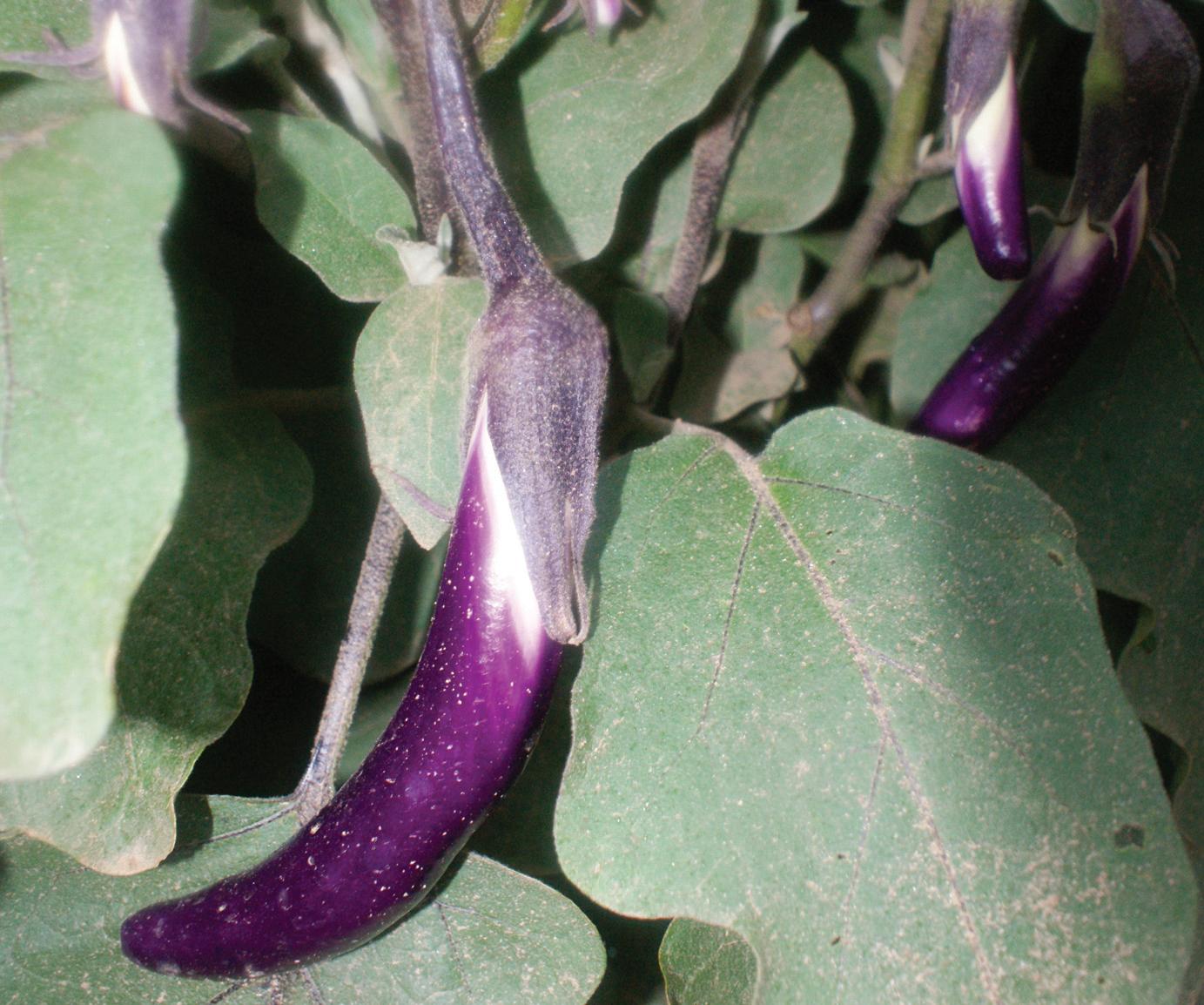
Consultant Rob Hannam believes that with Canada’s growing ethnic population, it’s time growers shift away from producing traditional crops and investigate growing more exotic crops, like Oriental eggplants.
Nova Scotia strawberry producer named Innovator of the Year
Iof Little Dyke, N.S.
Horticulture Nova Scotia Innovator of the -
his acceptance speech. “I think we all need to look to be innovative about what we do those of us that survive and thrive in the future will be people, young farmers, who are innovators and looking for opportunities.”
Noble Spencer, a local farmer who would go
"I think those of us that survive and thrive in the future will be people, young farmers, who are innovators and looking for opportunities."
Curtis Millen
“Noble was looking for someone to help that if he helped him weed the strawberries, he would give him six rows of strawberries for his own,” explained Steven Harris, vice-tis weeded the strawberries. The next summer, he weeded the strawberries but he also industry.”
cleared it and planted strawberries. This piece of land is now part of what the Millen family call the Home Farm of their farming operation.
His partnership with Noble ended in
in northern nursery stock and strawberries, -
ery plants to Spain but the freight ended up producing southern nursery stock for the Florida market.creasing his strawberry matted row acreage, and Newfoundland.
-
chased a farm with blueberries. They raked and sold the blueberries to a processor but small processing line. He tried running his
looking for. He continued to explore his options and ventured to Maine where he found a blueberry line more to his liking. -
chased two. Now he has six of those blueberry lines,” said Harris.
product to customers while also educating the public on the different varieties of strawberries available.
“He wanted to educate them that there were actually different varieties of strawbersaid Harris.
This proved successful until a new toll the decision to turn the market into offshore housing due to a shortage of local labour. In women arrive.
“This coming summer – the summer of
To make up for the loss of the farm mar-
huts and sold directly to the public in the Halifax area.
By Margaret Land
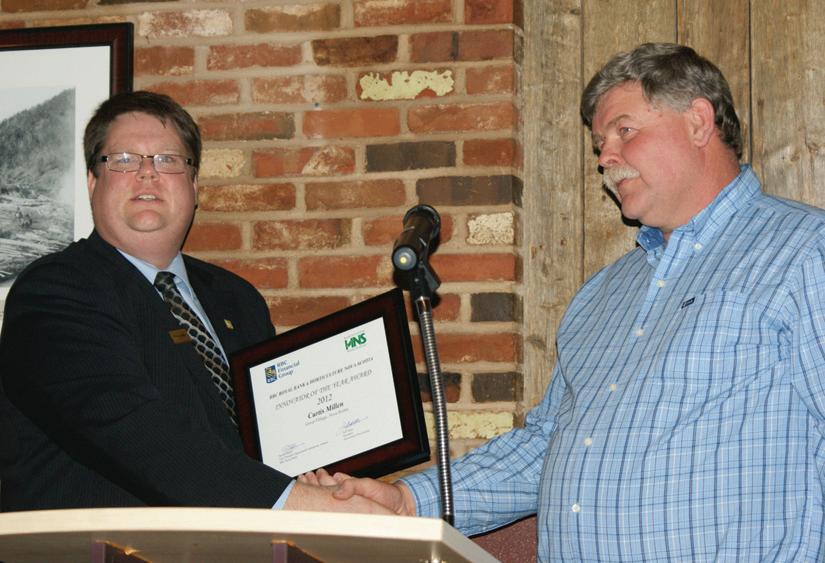
Steven Harris (left) with the Royal Bank of Canada presents Nova Scotia berry producer Curtis Millen with the RBC Horticulture Nova Scotia Innovator of the Year Award during Horticulture Nova Scotia’s annual conference.
The system tracks when and where in the picker.
producing strawberries using the raised bed system.
better,” said Harris. “He has built a reputation on this by always growing the best quality possible.”
work with their parents on the farm and are looking at entering into their own farming ventures. The family now fruits and picks of strawberry nursery plants, and fresh packs -
a boy who lived two houses down an oppor-
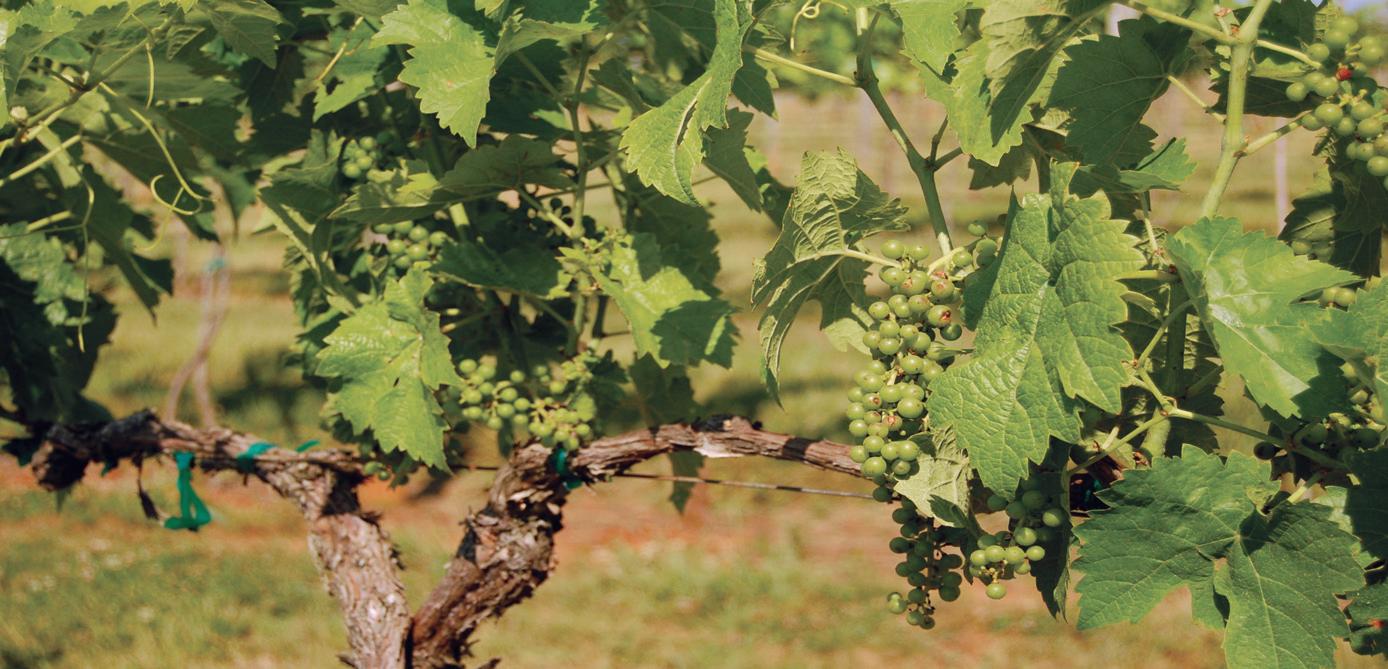
Grapes worth celebrating
PURE PROTECTION LEADS TO PURE PERFECTION
PureSpray™ GREEN Spray Oil 13E. Protection at its purest –CAS# 8042-47-5
Introducing PureSpray GREEN Spray Oil 13E, from the largest producer of white oils. It’s proof that not all spray oils are created equal. It is an innovative isoparaffin oil that offers the highest purity levels on the market with CAS# 8042-47-5. This means it’s formulated with 99.9% pure isoparaffin base oils and is guaranteed to be free of aromatics, which harm the food chain. And since it’s suitable for organic production, both organic and traditional growers can benefi t from its many strengths.
PureSpray GREEN Spray Oil 13E effectively protects your high value grape crop by quickly controlling pests and disease, and providing extended protection within your IPM program. All without any
resistance, phytotoxicity or burning issues, when used as directed. So use it early to avoid the need for traditional toxic chemicals later.
As many pesticides are being delisted, your choices are limited and becoming more so every day. So when you have a choice to make, be sure to choose the purest – PureSpray GREEN Spray Oil 13E. It’s an effective choice with unlimited possibilities. For more product information visit www.purespraygreen.com/grapes.
Study shows irradiation reduces virus risk in lettuce, spinach
team of scientists studying the effects of electron-beam irradiation on iceberg lettuce and spinach has had its research published in the February health-risk reduction from virus-related foodborne illness through the use of electron-beam irradiation.
“The purpose of this study was twofold,” said Dr. Suresh Pillai, director for -
lege Station. “First, we wanted to determine poliovirus and rotavirus sensitivity to electron-beam irradiation on fresh-cut lettuce and spinach. Secondly, we wanted to quantify the theoretical reduction in health risk of lettuce and spinach at different contamination levels and electron-beam doses.”
Dr. Pillai said the study is important due to growing concern over viral infections transmitted through fresh produce, healthcare costs associated with foodborne vi-
health-risk reduction through the use of electron-beam irradiation.
foodborne illnesses,” he said.
Dr. Pillai said this was a collaborative study involving the centre, the Instituto detonoma de Mexico, and the School of Pubof the University of Texas Health Science
The study, originally published online ahead of print in mid-December, cites theversity estimate of current health-care costs associated with foodborne viruses at about
Dr. Pillai said that although norovirus is the leading cause of viral foodborne illnesses, all enteric viruses, including poliovirus and rotavirus, can cause foodborne infection that may lead to chronic disease complications.
“Fresh produce can be contaminated by enteric viruses through irrigation water containing fecal matter or by wash water that has become contaminated, plus the wild-type poliovirus is a health threat in many parts of the world,” he said.
He added that to date the U.S. Food and
for use on only lettuce and spinach, so the leafy greens.
“We selected electron-beam processing as this is the technology that has the potential for worldwide use because it is based on electricity and is basically a switch-on, switch-off type technology,” Dr. Pillai said.
For their experiments, the team obtained iceberg lettuce and baby spinach samples from local grocery stores, then inoculated the samples with rotavirus and poliovirus
tron-beam doses.
Dr. Pillai said results showed that electron-beam irradiation was able to inactivate both rotavirus and poliovirus on lettuce and
poliovirus particles, electron-beam irradiation at three kilograys (kGy) will reduce the
gray is measurement unit of an absorbed
Similarly, according to study results,
electron-beam irradiation at three kilograys will reduce infection risks from about three
Dr. Pillai, however, noted that electronbeam irradiation is not meant to be used as a “stand-alone” or “clean-up” technology.
“The technology has to be used in con-
processing practices in packing sheds, so the level of virus contamination on the
By Paul Schattenberg
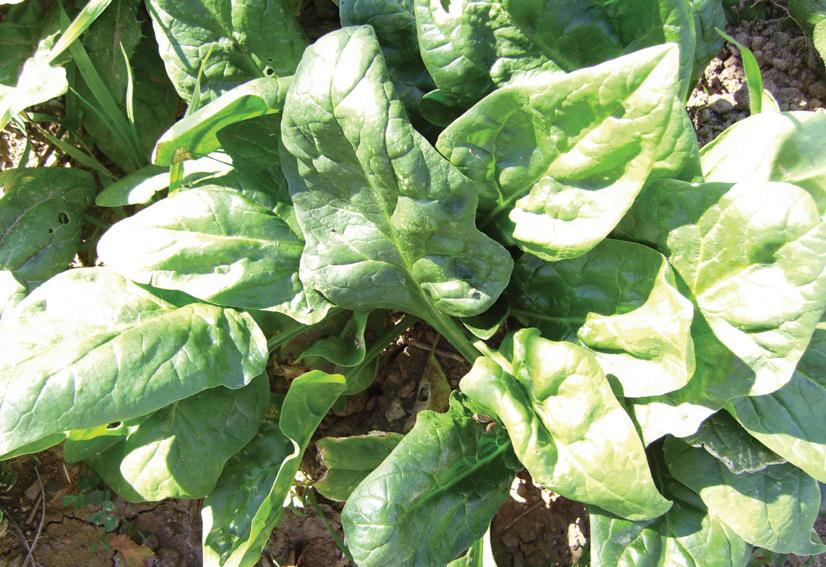
Research at Texas A&M University determined the sensitivity of poliovirus and rotavirus to electron-beam irradiation on fresh greens, such as spinach, and quantified the reduction in health risk of the spinach at different contamination levels and electron-beam doses.
product is kept as low as possible before Dr. Pillai said to his knowledge this in health risks by using electron-beam irradiation on fresh produce.
that electron-beam technology reduces the risk of viral foodborne illness in lettuce and spinach,” Dr. Pillai said. “But so far the fresh produce industry has not adopted thisers having a supply of seatbelts but not installing them in their vehicles.tron-beam irradiation, and we hope it will lead to greater public demand for the use of this technology as part of good agricultural and post-harvest practices.”
He said electron-beam irradiation
comprehensive food safety program, and that reducing infection risks will translate to savings in health-care costs and reduced human suffering.
The complete study can be found at the American Society of Microbiology website, http://aem.asm.org/content/early/2011/12/12/AEM.06927-11.short?rss=1
Manitoba potato producers
Last season in Manitoba began with a very wet spring but Stan Wiebe, a potato grower from near McGregor, where a tile drainage system has been installed did very well.
“Our average yield increase in those ar-ing a presentation to fellow potato growersduction Days conference and trade show at
Wiebe was one of several speakers addressing the issues of drainage at the con-
of engineering biosystems at the University of Manitoba, spoke of the need to manage
“Growers need to know the options and -
near Winkler, in southwestern Manitoba. The is a partnership involving the University ofners.
“Proper drainage and water management can save a lot of money,” said Sri industry are either too much moisture or lack of moisture.”
“One of the reasons that we wanted to to see if we could extend the spacing in our in our area. I was hoping to get some good gun considering it is labour intensive.” drainage treatments divided among sever-
to rely on natural sources of moisture. The second treatment involved overhead irrigation applied with a travelling irrigation gun.
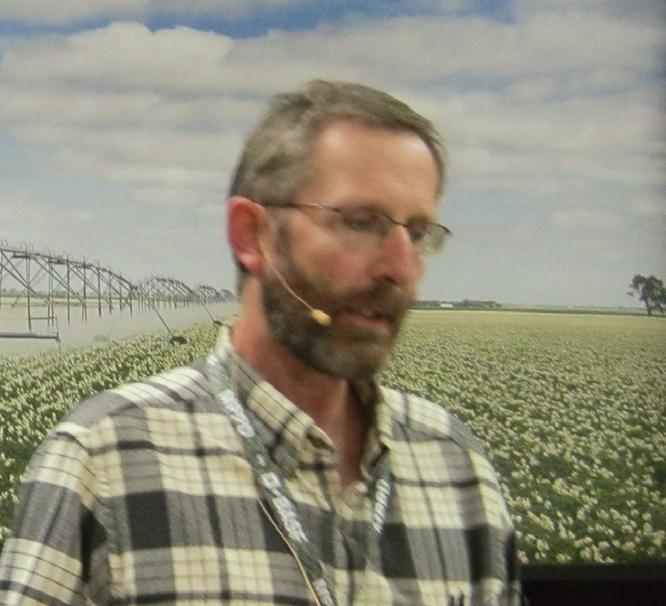
R. Sri Ranjan, a professor in the department of engineering biosystems at the University of Manitoba, says there’s a need to manage drainage for the benefit of soil quality, crop production, water quality and efficacy.
The third treatment used both tile drainage and overhead irrigation with a travelling gun. The fourth treatment had tile drainage
through the tiles.
“We installed a number of groundwater monitoring systems which record automatic how much water is coming out of each plot,”ter up to two feet below ground surface.
“We are measuring soil salinity, ground-ity and total yield. We are sending reports
experimentation was that salinity levels were much reduced in the sub-soil irrigated plots.
very wet year, there was no need for irrigation. This past season, he reported, the best results were from drainage measures combined with irrigation.
Derksen reported that because last summer was so dry, he had to double the amount of water that was needed to keep the water
lot of water drained away,” he said.
By Myron Love
Stan Wiebe, a potato grower from near McGregor, Man., describes the success he had last season with tile drainage in his fields.
An example of polyethylene corrugated drainage pipe. Potato producers are learning that proper drainage and water management in their fields can save money.
duces the export of water and nutrients. We
Wiebe reported that he is installing tile acres a year. “We have six more quarters that we consider dry,” he said. “We are still assessing the results to determine if the investment is worth it. Some years, there may be no difference in our yield as a result of using tile drainage. Other years, there may
while continuing to install tile drainage on our land.”
“How you manage water is critical,” he said. “With controlled drainage, there is -
The future of wine in Nova Scotia
2012 Atlantic Canada Wine Symposium occurring in May
By Dan Woolley
Ftempo could be described as lei-
Grand Pre, located near Wolfville in the more, Ste. Famille near Falmouth, also in the Valley, and Jost Vineyards at Malagash on the North Shore.
Playground sprang ahead.
“Only when the wine industry formedand politicians, they only want to hear from an industry that speaks with one voice.”
“We feel lucky,” said Jost. “It is an industry starting to build.”
considerable development potential on a
Mountain that could grow enough grapes
He recommends that Nova Scotia vineyards continue to focus on growing the varietals of Marechal Foch, Seyval Blanc, well acclimated to Nova Scotia growing conditions.
the vinifera varieties some people are faRiesling or Pinot Noir, unless conditions are favourable.
“What we have to do is get people used to the ones we grow here,” he said. “We tell our growers to concentrate on those vines that are consistent producers every year.”
Jost believes that more grape growing
research has to be done in the province.
in the heart of Nova Scotia wine country, in Truro, N.S., are working with the wine industry and Jost hopes this will continue in the future.
foreseeable future, the Nova Scotia wine industry is expected to remain a small, niche player. Nevertheless, Jost expresses optimism for the future of the domestic
he observes, “are drinking more and more wine.”
ers and wine enthusiasts.
“We have a small, but distinctive and vithat has piqued the interest of international sommeliers, researchers and media,” said Janice Ruddock, managing director of thenity to get together, to share trends, discuss the wine industry and to learn from each and learning the latest in wine technology and grape growing.”
educational workshops with three concurrent streams of learning – grape growing, winemaking and business applications for each of the sessions. Delegates will have the opportunity to network with other peo-
national and international colleagues in the sessions over the three-day event, including an intensive marketing workshop for
for grape growers on Sunday, May 27.
event is being held at the Westin Nova Scotian Hotel in Halifax, N.S.
grape growers, winemakers, winery own-
The symposium will feature key industry speakers, a supplier marketplace and
provinces. Registration is currently open. To register or for more information about the symposium, visit www.atlanticwinesymposium.ca.
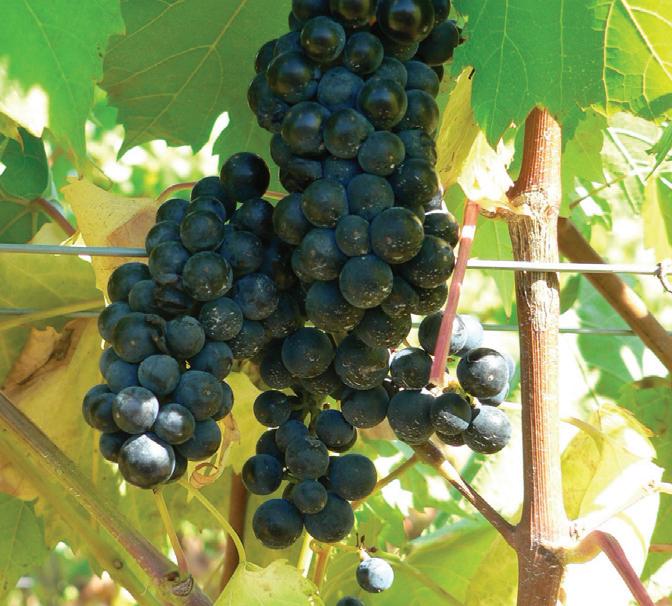
An example of Marechal Foch, one of several varieties of wine grapes grown in Nova Scotia.
An example of Seyval Blanc, one of several varieties of wine grapes grown in Nova Scotia.
By Myron Love
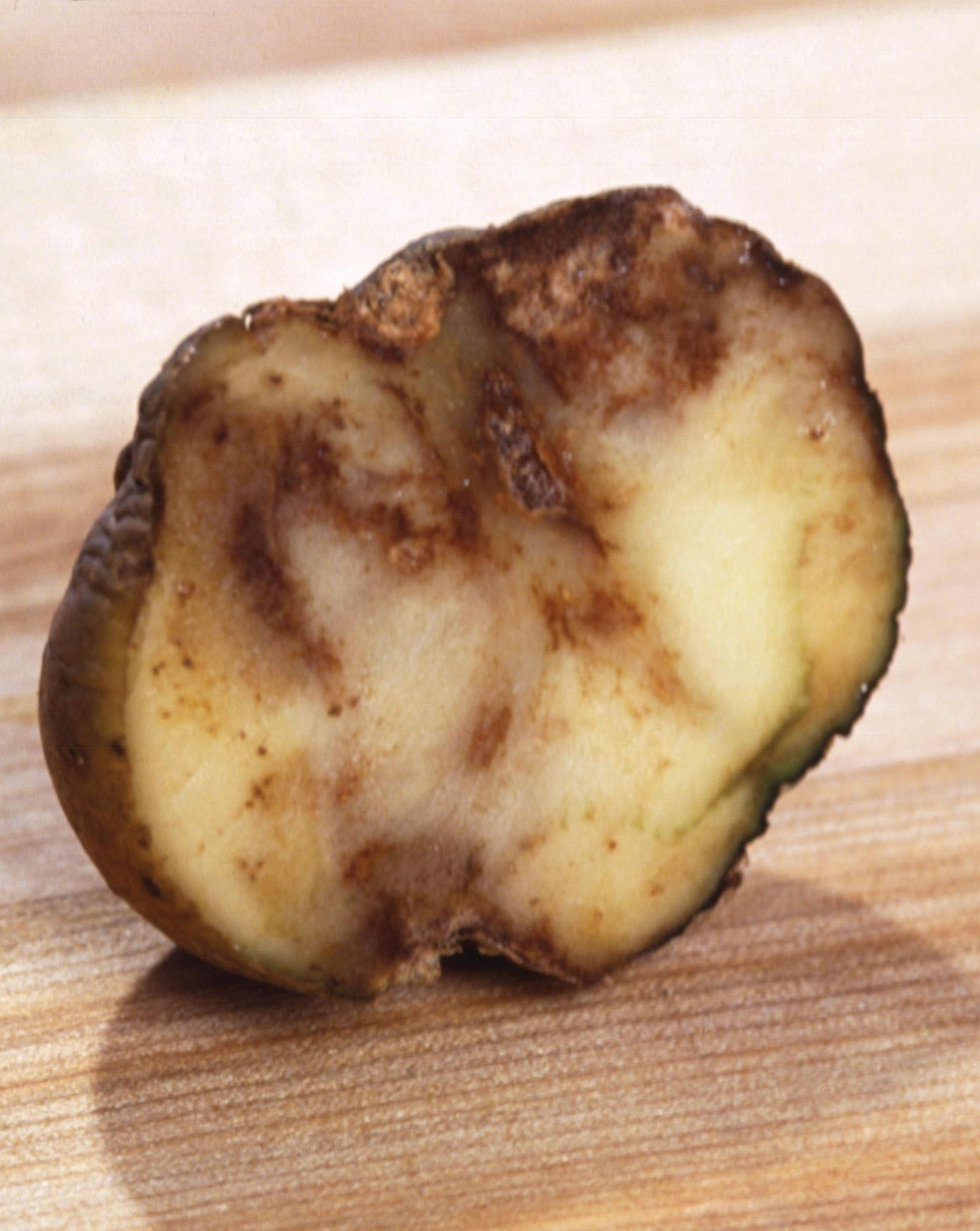
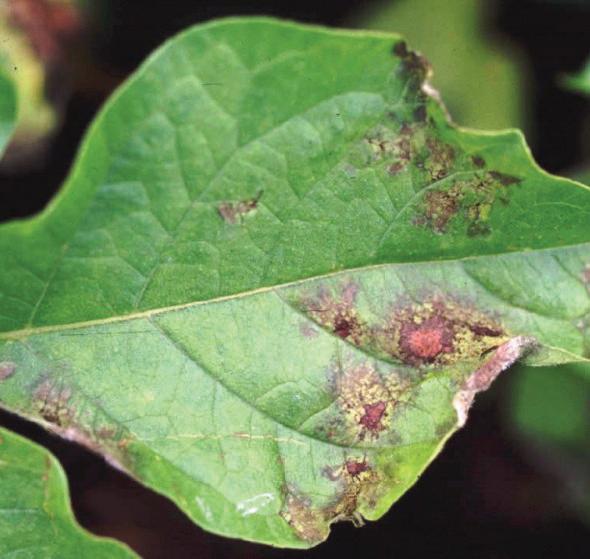
Over the past two growing seasons, there have been dramatic changes in the strains of the late blight have had to contend with.
“In recent years, the most common strain of the late blight pathogen (Phytophthora infestansada contained US-23 and US-24 strains, past season, US-23 and 24 dominated inmonly found on tomatoes in Ontario. In-
Production Days conference in Brandon, Man., with an overview of a newly established national Late Blight Working Group, of which he is a member. Theing network of scientists, including Khalilin Wicklow, N.B.; Larry Kawchuk from Katherine Dobinson from London, Ont., early outbreaks of late blight and track the strains causing disease across the country.
facilities for analysis in London, Ont., Le-
Late blight usually shows up in cooler, wetter seasons, Peters explains. The spores are spread by wind and rain.
Peters spoke of the role of volunteer potatoes in spreading late blight.
“In Prince Edward Island, we had a lot
Peters says the key to a successful fungicide program to prevent an outbreak of late blight is to start early with protectant products and ensure complete coverage.
of volunteer potatoes erupt this past season,” he says. “It was one of our worst seasons ever for volunteer potatoes.”
He recommends destroying volunteer a lot of volunteers as measures growers can take to reduce the risk of having crops infected with late blight. He also suggested disposing of cull potatoes before mid-June.
In choosing sites to plant the crop, he advises considering areas with good
the early detection of late blight,” he says.
Rick Peters, a research scientist with Agriculture and Agri-Food Canada, reports on the changes in the strains of the late blight pathogens that Canadian potato growers have been experiencing.
potatoes – are tomatoes, peppers, eggplant, petunias and some weeds.”
He notes that Russet Burbank and Shepody, the most common potato processing cultivars, are also susceptible to late blight. Dorita is one variety that is quite resistant.
“We are also working with Phostrol, which is another phosphorous acid-based product being considered for licensing in
Peters presented recent results from fungicide trials researchers have beenports that while Bravo worked well, the best results came from combining Bravo product).
For post harvest treatment, Peters stresses the importance of applying fun-
harvesting the potatoes for the best suppression results. He adds that the applica-
A
potato with diabetics in mind
Thirteen new selections developedada potato breeders in Fredericton, N.B., are ready for release to industry for further trials.
Peters says the key to a successful fungicide program to prevent an outbreak of late blight is to start early with protectant products and ensure complete coverage. He recommends the use of specialty fungicides when disease risk is high in addition to a backbone program of protec-
“Phosphorus acid-based products, notes. “The product moves easily in the plant, stimulates the plant to activate its own defenses and poses a low environmental risk.
However, he cautions that too high a older plants or plants that have undergone stress can result in some burning on the
seed sprouting have been reported.
Neil Gudmestad, a plant pathology professor at North Dakota State University, provided a brief report on research into early blight resistance to Boscalid.lates in Minnesota, North Dakota and per cent of them were resistant to Endura (one of the brand names for Boscalid),” he said. “That is of some concern.
“We know of two mutations in the population. When we inoculated plants treated with Endura, we found that the more
resistant while the more serious mutation resulted in total resistance.”
The NDSU research also determined high resistance levels to Quadris and Headline, Gudmestad reported.
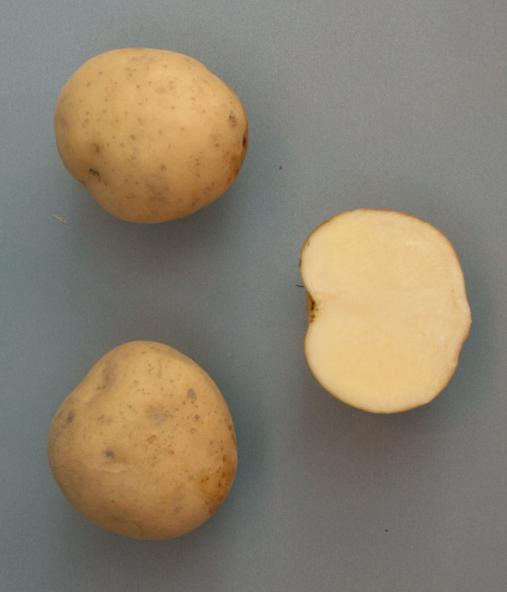
The selections include a low glycemic potato with potential healthscious consumers. Recent research shows that healthy, low glycemic including more sustainable weight loss and improvement in the management of diabetes. Low GI foods digest slowly. The reason lower GI foods are more desirable is they the body.
a low glycemic potato as a niche product that could help develop the market for a potato for diabetics and create a new market for farmers.
The next step is for the potato industry to test it and to see what they think.tatoes on offer this year including varieties for the chip and french fry business. There are also a potato for industrial starch use and others for the fresh potato market.
some new technologies to speed up potato variety development. and a Rheometer at the Potato Rescientists to measure starch content and composition of potatoes with a simple test, cutting years of trial and error to identify desirable characteristics. cultivars.
A Late Blight Working Group has been established with scientist members from across Canada. The group’s goal is to identify early outbreaks of late blight and track the strains causing disease across the country.
Growers have some unusual traditions — things they do every year to ensure a successful growing season. From the hula girl one grower pulls out at planting, to the barn dance another grower throws after every harvest, you go with what works. Just like the products that come through for you year after year, why mess with a good thing?
Thanks for putting your trust in our products. For more information, visit www.gowithwhatworks.ca or call 1-866-761-9397 toll free.
UAP to distribute
Rovral wettable
powder in Canada
Products recently reached an agreement distributor of the wettable powder formu-
The wettable powder formulation of high value fruit and vegetable crops and is registered for use on cherries, grapes, peaches, plums, raspberries, strawberries, garlic, ginseng, lettuce and onions, among others.
In addition to its disease control properties, Rovral also delivers several other including improved stability in crops such fungicide, Rovral can be a good rotational product on fruit and vegetable crops that typically receive multiple treatments.
The active ingredient in Rovral is iprodione and the wettable powder formulaknapsack, orchard or small sprayers.
www.uap.ca
U.S. growers gain access to biopesticide for fire blight prevention
announced that Blossom Protect was approved by the U.S. Environmental Protec-
Blossom Protect is approved for use in organic production.
Developed by bio-ferm GmbH in and pear trees.
“Four years of trials in the U.S. and several years of actual grower use in Europe have proven the effectiveness of either used by itself or as a tool with other products in a program of integrated pest management,” said Dr. Larry Parker, the director of Westbridge research and development.
Blossom Protect works by introducing highly competitive micro-organisms on to pear blossom.
“Blossom Protect is not an antibiotic and, as such, will be an important and blight,” said Dr. Parker.
Fire blight is caused by the bacterium Erwinia amylovora and is one of the most damaging and pervasive diseases in pome fruit. The traditional method of combating this disease has been the use of antibiotics, but their extensive use has resulted in antibiotic resistant strains of E. amylovora
Blossom Protect acts as a competitive antagonist and does not directly attack the E. amylovora developing resistance even with frequent applications. It leaves no chemical residue, is safe for humans and animals, and is harmless to bees and ben-
www.westbridge.com
Gemmrich W. Nursery now VineTech Canada
announced the viticulture supply business
“Over the past eight years, my family has continued the legacy passed on to us by Martin Gemmrich, a third-generation the quality of grapevines he supplied for
“Following his traditions, we have continued to strive for unbeatable quality in our products and services while remaining focused on raising the standards that he set.
“It is precisely the combining – or grafting – of these vine traditions with the application of research-based technology and technical expertise that has resulted in solutions.”
Wiens added that while he was proud -
ing, he believes the industry is more inter-dian grapevine solution with an emphasis
on research-based technology and technical expertise.
“I feel that in the new name, VineTech brought to the forefront of who we are and strive to be as a company,” he said.
www.vinetechcanada.com.
Weeding out herbicide applications in carrot production
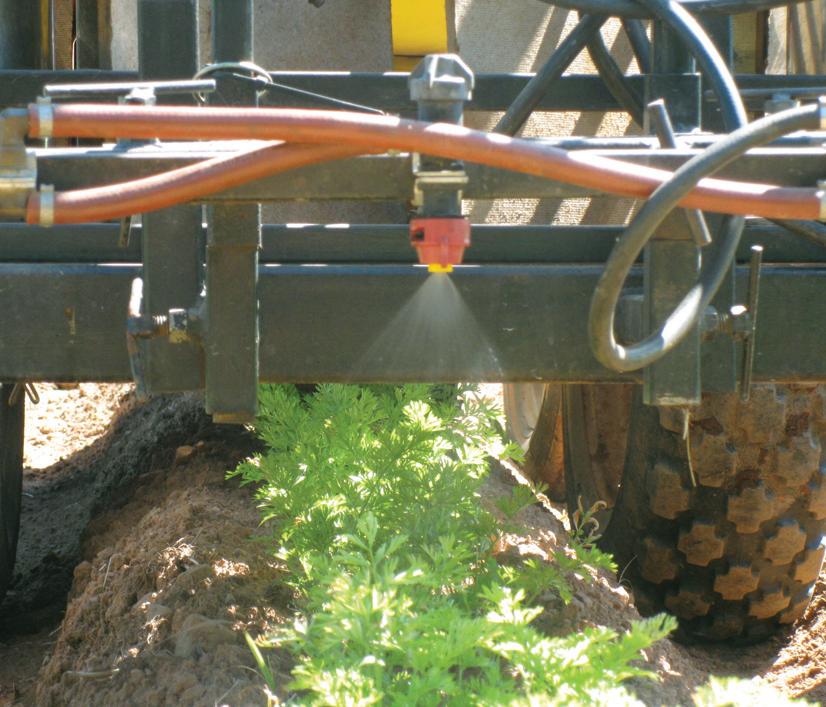
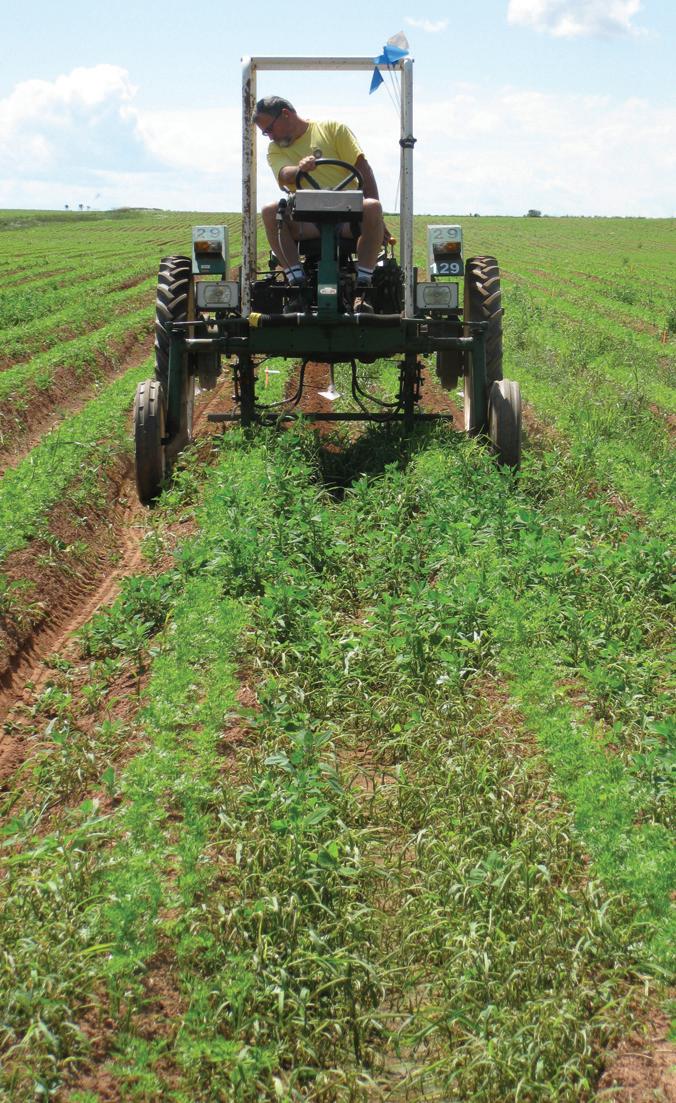
Carrot producers can cut weed control spraying by two-thirds and get the same harvest yield by spraying only the central part of the carrot rows instead of the whole field.
can cut weed control spraying by twothirds and get the same harvest yield.
The secret is to spray only the central part of carrot rows instead of the whole
Data from a second year of testing con-duces positive results.
The tests were done at two sites on Prince Edward Island – one at a farm in North Milton, the other in Hamilton, P.E.I. spray of herbicide including the rows and in between the rows. The other received a spray only in the central part of the row where carrots were growing.
“What we have found is that the yields are identical whether with traditional spraying or with the banding technique,” said research technician Basil Dickson.
There is more time required to do the
Based on data from two years of research by Agriculture and Agri-Food Canada research scientists, banding herbicide application produces positive results.
spraying equipment to consider, but Dickson estimates the switchover at only a few hundred dollars.
much in input costs but they will be leaving behind a much smaller footprint in the environment with the reduced pesticide amount.
Dickson said the results are good news for organic growers.
come on the market they can be sprayed on the central part of the row, while the cultivation,” he said.
Dickson expects word will get out on the research results and carrot growers will adopt the technique.
meetings this winter.
Growing potatoes north of 60
When you think of the Yukon, big rivers, mountains, the great outdoors, the midnight sun and the Gold Rush come to mind. Potatoes? Not so much.
lottetown, P.E.I., visited the Yukon inrial government to assist local growers in diagnosing potato diseases, after several years of supporting the potato sector with research advice. When growers have a disease problem they send Dr. Peters photos and samples to see what he recommends.
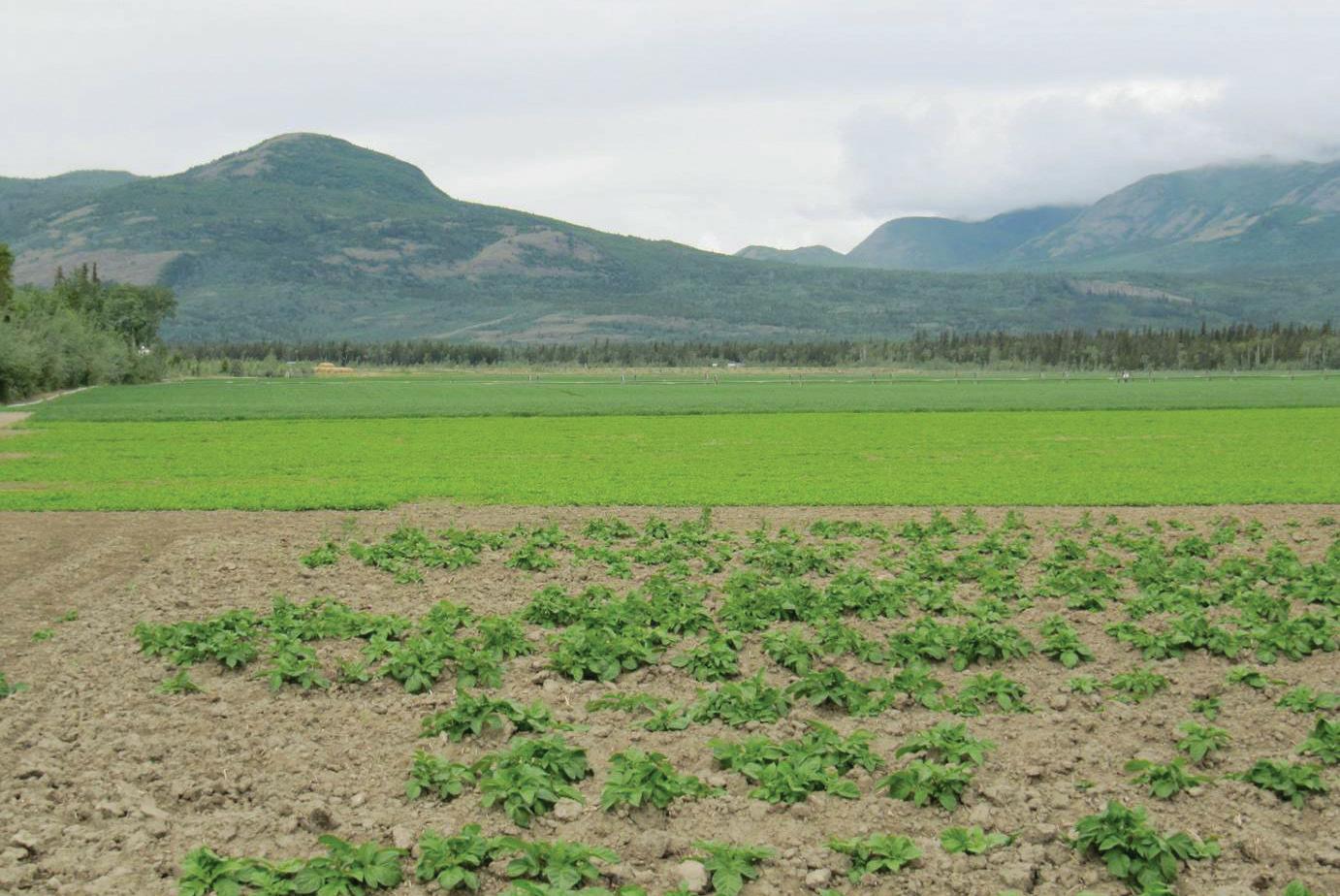
There are only a few larger-scale commercial producers in the Yukon. Most other producers are at a smaller, market garden scale. Most of the production is around Whitehorse. Nearly all the agriculture production in the Yukon – about -
er valleys and growers are using irrigation from the rivers for their crops. Only two per cent of the soil in the Yukon is good for farming. Much of the land is low in nutrients and organic matter.
Because of the short growing season, potato farmers plant in late May and har-
the midnight sun, longer days occur during the growing season, leading to good yields. There are advantages to being that
the area has good potential to develop as a seed potato growing area because they have few of the potato disease pressures that affect other parts of the country.
and supermarkets.
Yukon growers produce many of the same varieties that other fresh market
including Yukon Gold and Superior.
Dr. Peters hopes to continue to work with Yukon potato growers and government specialists on managing potato disease issues, including the potential for establishing collaborative research trials in the region.
New agricultural exporting workshops for producers
workshops, for agricultural producers interested in exporting, is now available. This new resource, developed by the
the Forum for International Trade Training (FITT), is designed to help individuals make crucial exporting decisions, avoid common pitfalls, and increase their understanding of international trade and foreign markets.
Workshop topics include assessing market opportunities internationally, investigating issues related to marketing agricultural products overseas, discussing ways to manmanner, and learning about key elements ofment methods and risk insurance.
can be delivered by export service providers, educational institutions, industry associations, and private companies. For or info@cahrc-ccrha.ca.
Canada's Yukon Territory produces about 40 hectares of potatoes annually, all destined for the fresh market.
New Products
Series tractors with three new models – the -
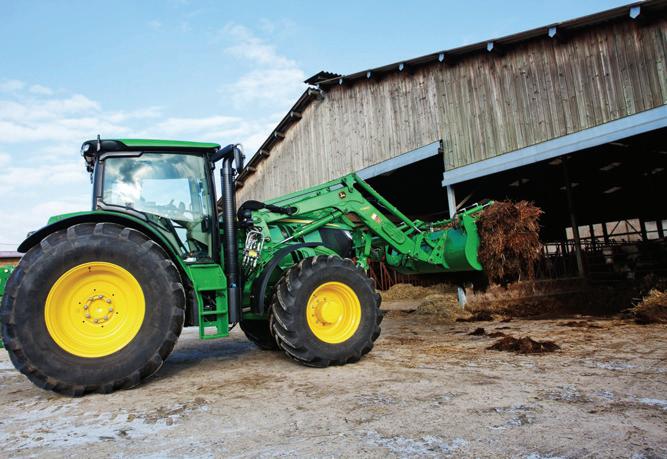
Series tractors are designed to be a do-it-all utility tractor with the versatility, power and comfort never before seen in a tractor in this horsepower range.
ter with touch screen display,” says Hessel. -
easy-to-operate tractors in their class. In ad-mph) transmission options that give this spacious utility tractor the functions of a much larger machine.”
Tier 4 diesel engines with Intelligent Power
hp during transport and non-stationary PTO applications. Transmission options include(optional) and IVT Transmissions (optional). speed.
The new tractors can be combined with the new H-Series loaders plus other John Deere and Frontier attachments. The tractors
drawbar, three lighting package options and two-wheel drive and mechanical front-wheel
Deere dealers starting later this summer. www.JohnDeere.com
Seed-applied nutrient approved for sweet corn, other cropsmulation, nutrient seed treatment for use on sweet corn, wheat, oats, barley and all types of corn.
Inc., as part of its nutritionals portfolio ofplied nutrient, with a micronutrient package,per, iron, manganese and molybdenum.minating plant needs them – on the seed,” says Eric Gregory, product manager with
helps develop a larger, more extensive root system, quicker emergence, greater plant biomass, and improved plant health and vigour. growers in pursuit of maximum yield and return on their crop inputs investment.” -
tion that can be applied using traditional seed -
blended or applied sequentially with traditional chemical-based fungicide or insecticide seed treatments.”
www.uap.ca
www.lovelandproducts.com
Joker offers new tillage technology
Joker, a high-speed tillage tool. Its high-speed compact disc design offerstions. This new concept in minimum tillage equipment features technology from Europecan market.
The Joker is available in the MT series series with 23- to 37-foot working widths, -
ing widths. Popular applications include tillage and seedbed preparation in row crops and
Joker can be used in the spring or fall to preserve moisture in dry ground or open up wet ground to speed up the drying process.
faster than traditional discs, allowing the tillage systems, it has been tested to complete savings.
The compact discs allow faster pulling speeds and provide residue management. The offset positioning and notched edges of straws and mulch tough residue.
The RT and MT series Jokers come to consolidate mulched material into the soil for fast decomposition. Its steel rings roll over the top of freshly tilled ground to consolidate loose soil without creating the compacted soil layers associated with other tillage methods.
The larger PT series is equipped with the
the Roll-Flex and offers performance in extremely wet conditions.
The RT and PT series come standard with the iDepth cab-mounted controller. The iDepth system continuously monitors the hydraulic-wing down pressure and automati-
the Joker includes torsion arms with a rubber suspension. This feature allows damage-free through the discs.
www.horschanderson.com
Valent launches mobile website
its corporate website, www.valent.com.
website and a new resource for customers who turn to their mobile device to access to important product information.
John Deere 6R Series
The new mobile website provides distributors and end users with onthe-go access to labels, product literature, videos, a comprehensive sales and professional product lines.
“Our customers lead busy lives. They rely on their mobile devices vice president of ag operations and strategy for Valent. “Our mobile website will help make it easier than ever for our customers to access information about Valent and its products,”
a smartphone or other mobile device to access information in an easy from our corporate website to help ensure we are providing the information our users need most,” Hammill said. “The full website will continue to serve as a comprehensive source for company and product information, with the mobile site providing simplicity and ease of use when on the go.”
www.valent.com
Rittenhouse introduces battery-powered wheelbarrow Rittenhouse has found an inventive product that is not only practical, but environmentally friendly as well.
The Overland battery-powered utility carts are essentially powered wheelbarrows, but since they are powered by battery, they do not pro-native to the gas-powered utility carts that are currently on the market.
Each Overland cart is made in the United States. The powdercoated frame and polyethylene hopper will stand up to daily use.
Get at it Early with
Funginex
For Brown Rot and Mummy Berry Control
Why
use FUNGINEX first?
Unsurpassed control of brown rot & mummy berry FUNGINEX is systemic via the xylem.
Con nues to protect rapidly growing ssue a er applica on Rainfast in 1 hour
Overland cart can accommodate almost any operator. The brake system prevents the cart from being unintentionally moved, but can be disengaged so the cart can be pushed manually if needed.
The Overland battery power cart makes moving heavy loads much easier and because it is battery, not gas, powered, it will not produce noise or emissions. It can also be run safely indoors.
www.rittenhouse.ca
Tessenderlo Kerley acquires Sevin from Bayer
Tessenderlo Kerley, Inc., a U.S. subsidiary of Tessenderlo Group, recently announced the purchase of the crop protection assets of the global crop business.
Financial terms of the agreement were not disclosed.
tion assets, including trade names, know-how, registrations and registration data.
business unit, NovaSource.
Tessenderlo Kerley Inc. produces and markets specialty chemical chemicals around the globe.