Mary Burnie mburnie@annexweb.com 519-429-5175 • 888-599-2228 ext. 234
Production Artist
Kate Patchell
Group Publisher
Diane Kleer dkleer@annexweb.com
President Mike Fredericks mfredericks@annexweb.com
PuBLicatioN MaiL agreeMeNt #40065710 returN uNDeLiVeraBLe caNaDiaN aDDreSSeS to circuLatioN DePt., P.o. Box 530, SiMcoe, oN N3Y 4N5 e-mail: lmorrison@annexweb.com
Fruit & Vegetable Magazine is published seven times a year (January, February, March, april, Mid-april, october, November/December) by annex Publishing & Printing inc., P.o. Box 530, 105 Donly Dr. S., Simcoe, oN N3Y 4N5
Occasionally, Fruit & Vegetable Magazine will mail information on behalf of industry-related groups whose products and services we believe may be of interest to you. If you prefer not to receive this information, please contact our circulation department in any of the four ways listed above.
My world is full of piles. Now, before you all start snickering, I don’t mean THOSE kinds of piles. I’m talking about the plural form of what the Canadian Oxford Dictionary describes as a heap of items, articles or whatever, laid or gathered upon one another.
At home I have piles of clothes to launder and put away, piles of dishes to wash, piles of papers to sort, piles of mail to open, piles of bills to pay, piles of hay to stack, piles of feed bags to lug, piles of manure to haul, and piles of trouble to keep my children out of. At work, I have piles of papers to file, piles of reports to read, piles of magazines to organize, piles of paperwork to fill out, and piles of articles to write. And in my mind, I have piles of ideas to sort through.
Lately, I’ve had another pile growing: books to read. In a moment of temporary insanity, I decided that I just didn’t have enough to do in my life and I should tackle the 1001 Books You Must Read Before You Die, an imposing list of literature compiled by Dr. Peter Boxall, a professor of English at the University of Sussex. And while I have a bit of a head start (I’ve actually read about 60 of the books on the list already), I still have 941 to go and a deadline steadily ticking away. I also have the daunting task of sourcing out these literary gems, which have titles such as Dead Babies, Goalie’s Anxiety at the Penalty Kick, The Invention of Curried Sausage and Willard and His Bowling Trophies. Who knew such books even existed? I’m being helped in my search by some fantastic, online used booksellers based in the U.K. who sell and ship books really cheap, especially to the colonies. And so the piles of books at my bedside and on my bookshelves grow higher.
So, what does all of this talk about piles, books and reading have to do with fruit and vegetable production?
Well, according to John Clement, the general manager of the Christian Farmers Federation of Ontario (CFFO), there’s a pile of paper growing regarding the present and future of Canada’s food strategy. In the past, the CFFO has added to the tower of ideas with its report, Goals for an Ontario Food Strategy And recently, the Canadian Agri-Food Policy Institute (CAPI) – described as an independent, unbiased policy forum – added its hefty tome to the top. Entitled Canada’s Agri-Food
The never-ending pile
Destination, the 101-page report describes how “falling profitability, lost opportunity and declining relevance are impairing Canada’s ability to capitalize on the tremendous opportunities that lie ahead” in the agri-food sector.
“The status quo is unacceptable,” CAPI officials state. “Canada’s agri-food industry has the natural and human resources to do much better – yet Canada risks sleeping right through its greatest potential.”
The institute describes its report as a wake-up call for the country at a time when food imports into Canada are rising and sets some ambitious targets for 2025:
• to double Canada’s dollar value of agri-food exports to $75 billion (currently just under $39 billion)
• to produce and supply more than 75 per cent of our own food (currently 68 per cent)
• to have more than 75 per cent of the agri-food sector rely on biomaterials and/or biofuels to
develop new revenues or reduce expenses.
“We need consumers here and abroad to choose Canadian food,” said Gaetan Lussier, chair of CAPI.
While I applaud the institute’s enthusiasm for increasing Canadians’ consumption of domestic products and battling imports, I question its idea of increasing exports. Many Canadian producers have tried to tackle that pile only to be shut out by protectionism, shipping costs and price undercutting by producers in other countries. I think sticking close to home and supplying our own citizens is a wiser and more profitable idea.
Meanwhile, CAPI is urging industry, government and other stakeholders to respond to the report and provide feedback on how best to implement the suggested changes. Those interested in doing so can visit the institute’s website at www.capi-icpa.ca.
I wish the group the best with its ideas and hope not too much dust settles on that pile before something is accomplished. ❦
March 8-11, 2011 – Berry & Vegetable School, Leduc, Alta.
Visit www.albertafarmfresh.com.
March 8-11, 2011 – Canadian Horticultural Council’s 89th Annual General Meeting, The Westin Ottawa, Ottawa, Ont.
Visit www.hortcouncil.ca.
March 10-11, 2011 – B.C. Tree Fruit Horticultural Symposium 2011, Trinity Baptist Church, Kelowna, B.C.
Visit www.bcfga.com.
March 10-12, 2011 – Atlantic Farm Mech Show, Moncton, N.B.
Visit www.farmmechshow.com.
March 10-12, 2011 – 2011 ACORN Organic Conference and Tradeshow, Crown Plaza, Fredericton, N.B. Visit www.acornorganic.org.
March 16-17, 2011 – Northeast Potato Technology Forum 2011, Crown Plaza, Fredericton, N.B. Visit www.gnb.ca/0027/potatoforum/ forum01-e.asp.
March 29, 2011 – Day Neutral Strawberry Workshop, Springfield Golf & Country Club, Guelph, Ont. Visit www.ontarioberries.com.
April 4-8, 2011 – OFFMA Tour to the U.K., stopping at various farm market locations in the U.K.
Visit www.ontariofarmfresh.com.
April 13-15, 2011 – Canadian Produce Marketing Association’s 2011 Annual Convention and Trade Show, Palais des congrés de Montréal, Montréal, Que.
Visit www.convention.cpma.ca.
May 4-5, 2011 – Delivering More Flavorful Produce Workshop, UC Davis Postharvest Technology Center, Davis, Calif.
Visit http://postharvest.ucdavis.edu.
Grapes worth celebrating
PURE PROTECTION LEADS TO PURE PERFECTION
Spray Oil 13E. Protection at its purest – CAS# 8042-47-5
Introducing Spray Oil 13E, from the largest producer of white oils. It’s proof that not all oils are created equal, and not all grapes achieve perfection. It is an innovative isoparaffin oil that offers the highest purity levels on the market with CAS# 8042-47-5.
Spray Oil 13E effectively protects your high value grape crops by quickly eradicating pests and disease and then continuing to provide extended protection. All without any phytoxicity or burning issues. So use it early to avoid problems from
developing, as it won’t damage your crop and it reduces the need for resorting to traditional toxic chemicals later.
As many pesticides have been delisted, your choices are limited and becoming more so every day. So when you have a choice to make, be sure to choose the purest – Spray Oil 13E. It’s an effective choice with unlimited possibilities. For more product information call
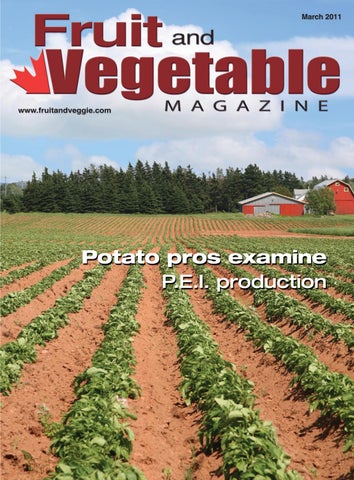
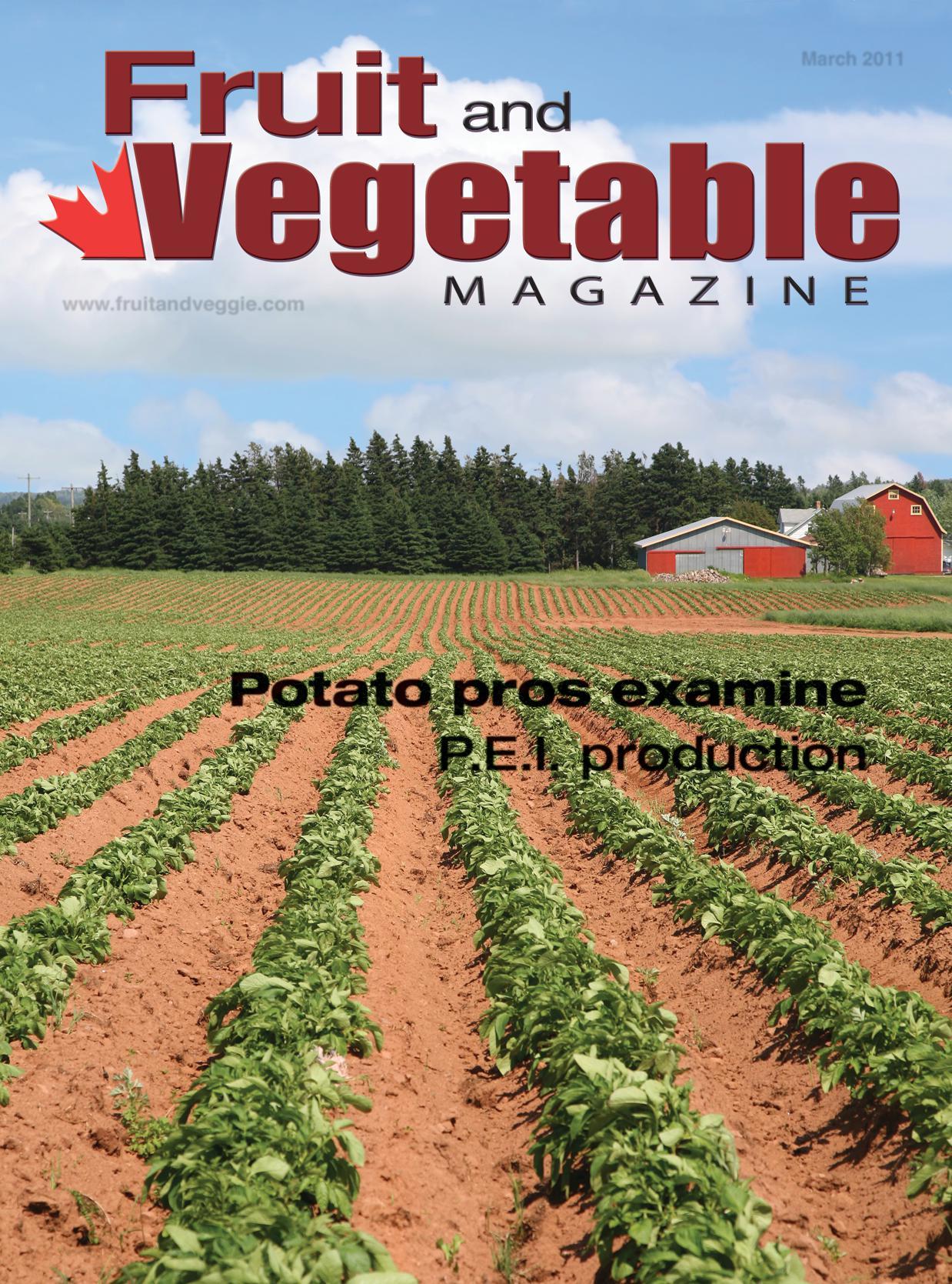
Potato pros examine P.E.I. production
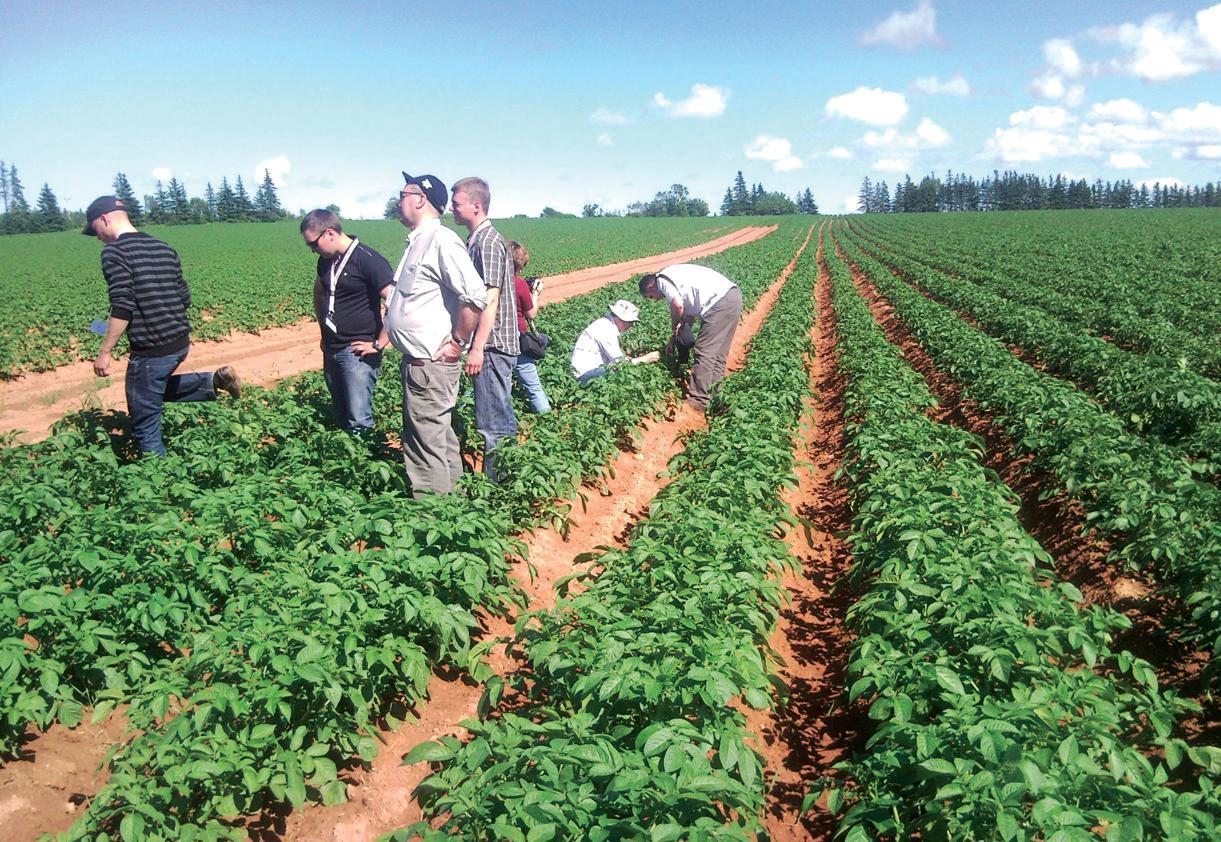
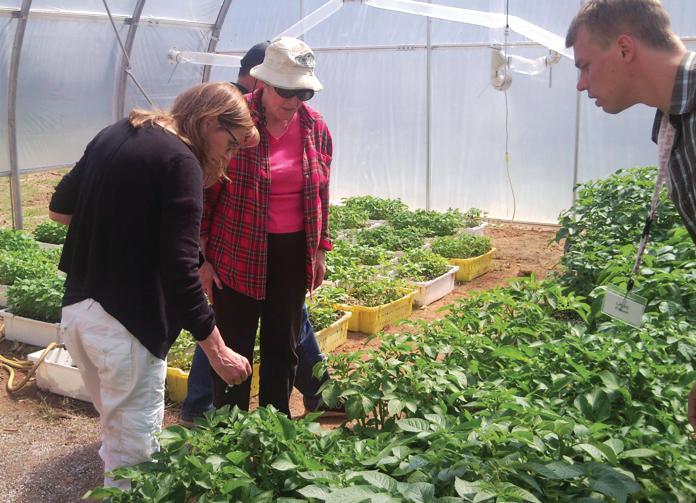
This past summer, an international potato industry group gathered on Prince Edward Island to get an insight into the main sectors of the industry on the island. Eleven individuals from Finland, Australia, Israel, Brazil, Chile and Costa Rica visited 16 different potato companies and organizations on the island, while several industry specialists from P.E.I., Nova Scotia and New Brunswick presented to the group as well. The tour was organized and hosted by Global Potato Tours, headed by potato consultant Lukie Pieterse.
One of the first places of interest on the tour group’s schedule was a visit to Fox Island Elite Seed Farm – P.E.I.’s prime nuclear and mini-tuber seed production facility in the western region of the island. The Elite Seed Potato Farm at Fox Island was established in 1962 by the past P.E.I. Potato Marketing Board. The current P.E.I. Po-
tato Board continues to operate the farms on behalf of P.E.I. potato producers. The farm has expanded over time to include a farm workshop, a disinfection station, a pesticide storage building, a tissue culture laboratory, screen houses, a seminar facility and an additional property with an irrigation pond. The total land base is 210 ha (520 ac). Cultivated land is 130 ha (320 ac) and up to 100 ac of potatoes can be grown each season using a three-year rotation. Mary-Kay Sonier, seed specialist for the P.E.I. Potato Board, guided the tour group and provided detailed information on the activities on the farm.
Still in Western P.E.I., the tour group paid a visit to W.P. Griffin Inc., a family-owned and -operated grower/packer business. John Griffin, president of W.P. Griffin Inc., acts as general manager in charge of administration and oversees the farming and packaging operations.
By Lukie Pieterse
He guided the tour group at the packing facility and explained that the company packages many different types of potatoes, including Russets, yellow-fleshed, reds and round whites. W.P. Griffin packages these in various sizes of traditional paper, poly, mesh and poly-mesh bags. The company also has the capability to provide size-specific count packs for the food service industry.
The tour group spent the better part of a morning at the Harrington Research Farm near Charlottetown. The farm is operated by Agriculture and Agri-Food Canada. Several researchers showed and
Eleven potato industry experts from Finland, Australia, Israel, Brazil, Chile and Costa Rica visited 16 different potato companies and organizations across P.E.I. this past summer.
Photo by Lukie
Pieterse
Top: Joyce Coffin, a private breeder, explains the breeding process to Dr. Elina Viranen and Lauri Raahko from Finland.
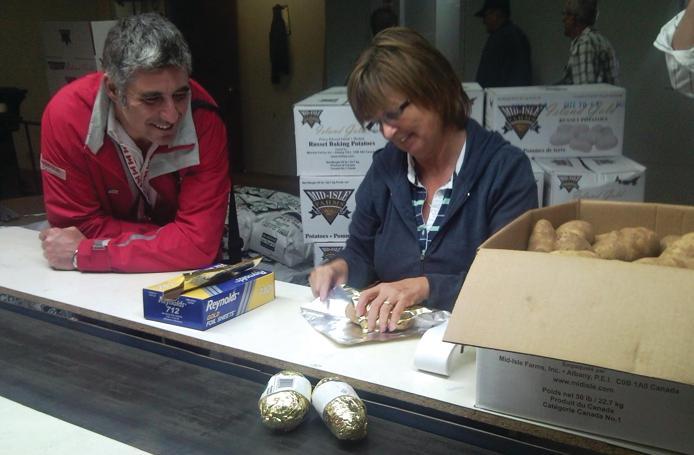
Bottom: Mirko Milinkowits, visiting researcher with the Department of Agriculture in Western Australia, examines a specialty potato packaging (potato wrapping of baker Russets) done by an employee at MidIsle Farms near Summerside, P.E.I.
discussed trial work on late blight, other potato related diseases, pests, rotation crops, variety trials, and more. Of particular interest was the entomology research program at the farm. Program leader Dr. Christine Noronha explained to the group that the program focuses on developing insect pest management techniques for potato production. The goal is to provide potato producers with an integrated insect pest management strategy. Currently, research is being conducted to reduce the spread of PVY by co-ordinating the provincial aphid alert system with insecticide and oil applications in the field. The efficacy of Trichogramma brassicae (an egg parasitoid wasp) to control the European corn borer in potatoes on P.E.I. is being evaluated. Research is also being conducted to determine the potential of a two-year crop rotation with specific crops to reduce the level of wireworm damage to potato tubers when planted following these crops.
Researchers involved in the entomology program at Harrington Research Farm are studying the impact of an organic potato management system on the populations of Collembola (springtails), soil dwelling insects that are used to determine soil health. The efficacy of new reduced risk insecticides to control potato insect pests is also being evaluated. In addition to the above, the use and efficacy of insect pathogens such as Beauveria bassiana and Metarhizium anisopliae is part of the ongoing entomological research at the farm.
George Webster, Minister of Agriculture, and Brian Douglas, Deputy Minister of Agriculture, with the P.E.I. Department of Agriculture, met with the tour group in Charlottetown for a luncheon. Both the ministers addressed the group and emphasized that Prince Edward Island is an important potato growing region in North
America where growers and the industry are constantly striving to adapt to changes in climate and to embrace new technologies. Group members were invited for a return visit and encouraged to spread the word about the island’s potato industry back in their home countries.
During a visit to the Canadian Food Inspection Agency (CFIA), the tour group gained insight into the activities of the agency. Dr. Solke de Boer and his colleagues explained that CFIA is responsible for the federal Seed Potato Certification Program, as well as the establishment and maintenance of policy directives to prevent the introduction and spread of diseases and regulated quarantine pests of potatoes in Canada. Typical CFIA activities include:
• verifying and certifying that exports
of potatoes meet the phytosanitary requirements of countries that import Canadian products
• verifying that imports of potatoes meet Canadian phytosanitary requirements
• conducting surveys to detect and control or eradicate designated plant pests in Canada.
At Allan Potato Handling Equipment, the group had a closer look at the company’s potato harvesters and windrowers – manufactured on site at the company’s headquarters located outside of Charlottetown. Donald Allan, president and CEO, also showed the group a range of related potato equipment produced by Allan Potato Handling Equipment, including pallet box loaders, conveyors, forklift hoppers, telescopic bin pilers, potato washers, belt
by Lukie Pieterse
Photos
graders and dirt eliminators. Tour members received a CD with detailed information on the company’s activities.
During a visit to the headquarters of Vanco Farms, the tour group learned that the company grows seed potatoes, processing potatoes and table potatoes at two different locations on Prince Edward Island. According to Rit VanNieuwenhuyzen, in charge of the potato operation at Vanco Farms, the company continues to develop markets with new specialty varieties in conventional and organic production. Vanco Farms produces and packages organic potatoes under the brand name Pure Organics Prince Edward Island. The company has been experimenting to find varieties that are more tolerable to fungi and bacteria, and have used a super sized “vacuum cleaner” in the past to suck bugs off the plants. Vanco Farms has undertaken a huge project to computerize its efforts at food safety traceability. The system is called “Path.” According to VanNieuwenhuyzen the company can trace its potatoes from any field to the customer’s fork. This system includes
quality checks that can be made available to customers.
The tour group visited the new Holland College facility in Charlottetown where science and food are joined together to create unique, novel culinary delights in Canada’s “Smartest Kitchen” – a new $4-million facility at the Culinary Institute in Charlottetown. Cavendish Farms also invested in the project. This has given the company its own culinary creation centre in a separate part of the building to be used solely for researching, developing and testing products for Cavendish Farms. The approximately 12,000-square foot facility is managed by chefs looking to find innovative ways to create valueadded foods. The group was treated to several novel dishes created from potatoes. They learned the newest trend in the food world is functional food where scientists extract bioactive compounds from different food sources, such as potatoes, including vitamins or healthy acids. Once extracted, the chefs at the smart kitchen can then put those healthy boosters into another food product.
Other visits during the potato study
Raymond Loo, a sixth generation farmer from Springfield, Prince Edward Island, was one of three 2011 Nuffield Scholarship recipients chosen recently by the Canadian Nuffield Farming Scholarship Trust.
Since 1996, Loo’s Springwillow Farms has been a certified organic farm growing fruit, garden vegetables, grains, forages and livestock.
In 2005, Loo set out to market organically produced P.E.I. products in Japan. Currently the resulting operation, Annespei Farm, markets products from 24 P.E.I. farmers. Crops exported include black currants, non-GMO and organic canola seed and oil, organic soybeans, organic buckwheat, organic rhubarb and other fruit. Visitors to Loo’s farm are often surprised to see fields of dandelions – the roots of which are used by the Japanese in the production of a specific coffee.
Loo has been working very hard to develop the organic industry on P.E.I. He feels strongly that the Island could one day be fully organic and become a world-renowned producer of high quality products. He is the past-president of the Certified Organic Producers COOP, a founding director of the Atlantic Canada Organic Regional Network, a board member of the P.E.I. Agrifood Alliance and vice chair of the P.E.I. ADAPT Council.
With his Nuffield Scholarship, Loo hopes to further develop his value chain as well as share his experience and learn from other farmers involved in similar initiatives.
The other 2011 Canadian Nuffield Scholarship recipients include Leona Dargis from Alberta and Kelvin Meadows
tour included:
• a visit to the trial site of a company conducting private contract research trials (testing of new products for registration purposes – fertilizers, chemicals, and related products)
• a visit to a manufacturer and distributor of storage control systems (ventilation, refrigeration, variable fan drives, humidity control technology, and more)
• large chips producing farming operation where the group also met with an international potato exporter
• a visit to a private potato breeding operation
Barbara Daniels-Lake, a researcher with Agriculture and Agri-Food Canada and specialist in the use of ethylene in potato storages, presented to the group and communicated the latest findings in this specialty area.
When leaving the island, all members of the tour group commented that P.E.I. is indeed a “microcosm” of the potato industry where much can be learned and valuable knowledge can be gained. ❦
from Saskatchewan.
Barry Cudmore, president of Nuffield Canada, is pleased with the research planned by all three scholars.
“Leona, Kelvin and Raymond are looking at important issues in relation to the need for competitive and long-term human resources practices, the deciphering of the regulations associated with food exports and the development of value chain initiatives,” he said. “We look forward to the innovative ideas they bring forth as a result of their international travels.”
Nuffield Farming Scholarships are awarded to enthusiastic individuals, between the ages of 25 and 45, wishing to explore topics of their choice in agriculture, land management, horticulture or the food chain. They provide individuals with the unique opportunity to develop a global perspective on food and agriculture; achieve personal development through study and travel; stand back from their day-to-day occupation and study a topic of real interest to them; access the world’s best in food and farming; deliver benefits to Canadian farmers and growers, and to the industry as a whole.
The scholarships also help these leaders to expand their knowledge and network with top individuals around the world, to promote advancement and leadership in agriculture. A key part of the scholarship is the opportunity for the recipients to study a topic of great personal interest to themselves by carrying out an extensive research and global study tour.
Applications for the 2012 Scholarship are due April 30, 2011. For more information on Nuffield Canada including application forms, visit www.nuffield.ca.
P.E.I. fruit farmer one of three 2011 Nuffield Canada Scholars
PRECISE PROTECTION FOR FRUITS AND VEGETABLES
With the same active ingredients as the other brands, the only difference you’ll see is the money you save.
MANA products target insects as quickly and efficiently as the name brands, only they do it at a fair price. Support fair pricing and ask your retailer for MANA insecticides.
Wholesome Pickins: Revolutionizing the family tobacco farm
By James Careless
In the 1930s, Archiel VanDeVelde moved from Belgium and started growing tobacco in Norfolk County, Ont. Of the several farms he owned, the 100-acre spread near Delhi, Ont., became his home.
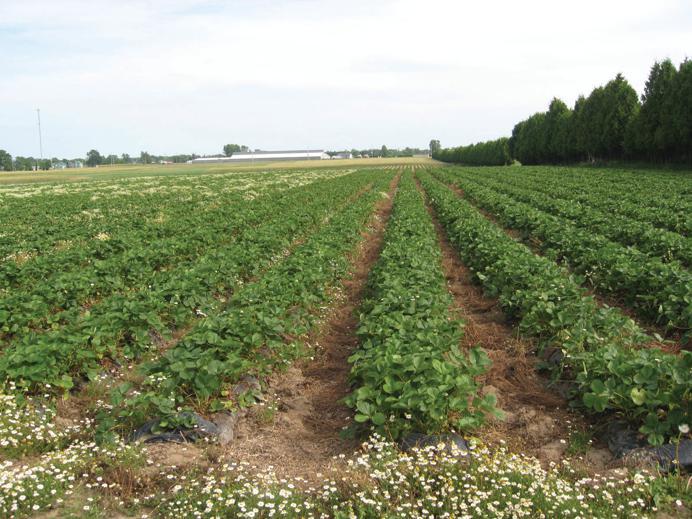
Today, the Delhi farm is owned and operated by Archiel’s great-grandson David VanDeVelde and his wife Jenn. Both have university degrees in agriculture and a commitment to keeping the family farm going. But with tobacco growing on the wane – at least in comparison to the glory days of decades past – this generation of VanDeVeldes is branching out into other areas. Although the VanDeVelde farm – now called Wholesome Pickins – still grows tobacco, it is also home to an extensive strawberry and raspberry growing operation and a country grocer known as Wholesome Pickins Market.
For their efforts, the VanDeVeldes won a $5,000 2008 Premier’s Award for Agri-Food Innovation Excellence.
“By planting ever-bearing strawberries and raspberries, and retrofitting the equipment they already had, these innovative growers built a business that has three part-time student employees and several part-time and full-time labourers,” says the award citation. “In 2008, they saw a 45-per-cent, year-over-year increase in customer traffic.”
“We’ve grown since then,” says Jenn. “Today we have 25 employees, and the acreage devoted to strawberries and raspberries has grown substantially. Meanwhile, our retail store offers the best baked goods, produce, cheese and meat grown in Norfolk County.”
The move away from tobacco
The VanDeVeldes began diversifying out of tobacco in 2005, although half of their acreage is still planted with this crop.
“We could see the writing on the wall,” Jenn says. “It was pretty clear when we graduated (from the University
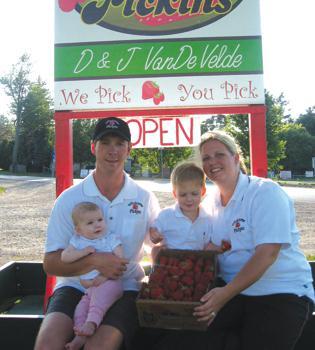
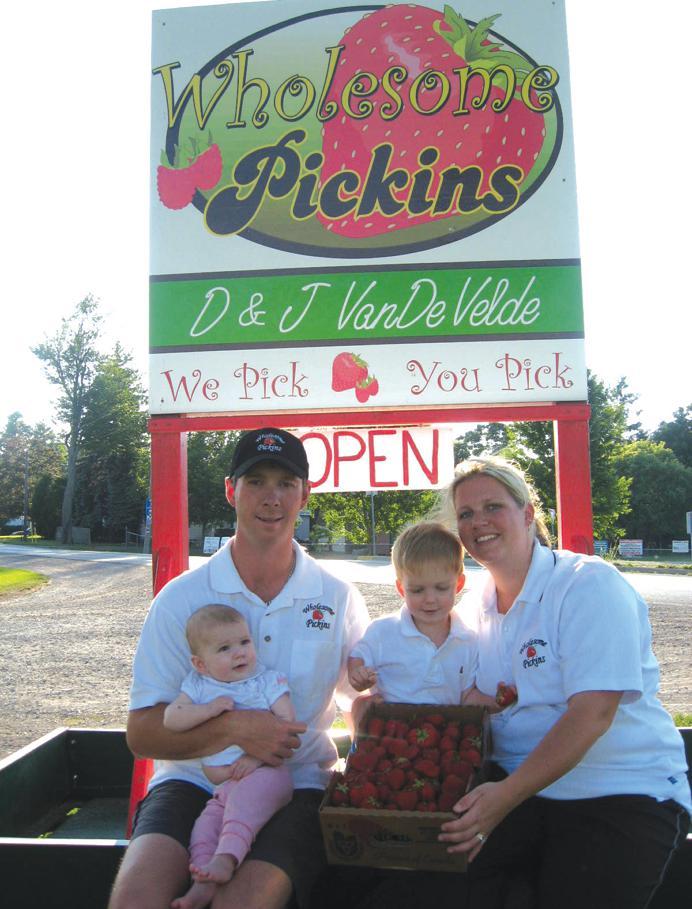
The VanDeVelde Farm – now called Wholesome Pickins – is owned and operated by David and Jenn VanDeVelde and their growing family.
of Guelph) that tobacco was not what it had been in the 1970s or earlier. Today, many growers have left the farm. Even those who have stayed in the business have taken full-time jobs elsewhere so that they can pay their bills.”
Armed with their educations, the VanDeVeldes saw a different possibility.
“We knew that the sandy soil here in
Norfolk County, which is so great for tobacco, could also be good for strawberries and raspberries,” says Jenn. “We also knew that our location on Church Street/County Road 4 – which is the main east-west road into Delhi – was perfect for a retail store. So we decided to take a stab at it.”
The first strawberry crop was planted
farm still grows to-
annually, which required the couple to creatively devise ways to adapt existing tobacco-raising equipment and farming techniques to cultivating strawberries and raspberries.
in 2005 on just a half acre. Today, the VanDeVeldes have 10 acres devoted to raspberry canes, June-bearing strawberries and ever-bearing strawberries.
“We have five kinds of June-bearing strawberries,” Jenn says. “The first to be ready for harvest are Mohawk and Annapolis, then Jewel and then Governor Simcoe and Serenity. Usually our strawberry season lasts four to five weeks.”
Wholesome Pickins grows two varieties of ever-growing strawberries; namely Albion and Seascape.
“Albion is great for freezing, while Seascape has a flavour similar to many of our June berries,” she says.
On the raspberry side of the business, the farm grows both summer and fall bearing varieties.
“During our summer season we harvest Prelude, Nova, Lauren, Titan, Killarney and Tulameen,” she notes. “In the fall, it’s Autumn Britten, which we harvest from mid to late August to first frost.”
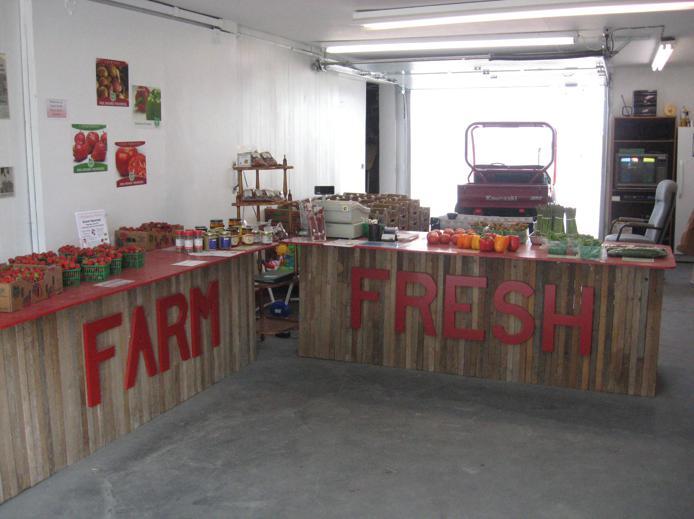
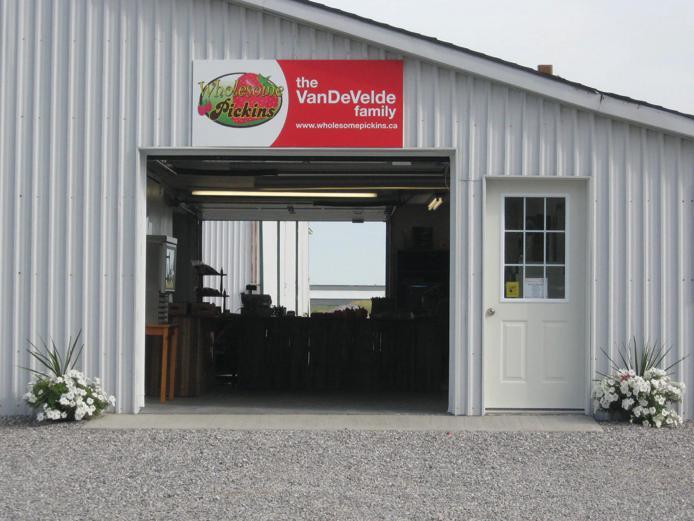
The Wholesome Pickins Market, housed in a converted section of the farm’s front barn, represents the VanDeVeldes’ effort to bring the best of Norfolk County to local consumers. To this end, it stocks all
The Wholesome Pickins Market, housed in a converted section of the farm’s front barn, represents the VanDeVeldes’ effort to bring the best of Norfolk County to local consumers.
kinds of locally grown produce: “This area can grow literally anything,” Jenn says. The store also carries Norfolk County beef from VG Meats, peanuts, fudge and snacks from Kernal Peanuts in Vittoria, Ont., a variety of fresh baked goods from Harmony Bakery, and cheddar, marble and curd cheese from Jensen Cheese of Simcoe, Ont.
Adapting tobacco equipment to fruit farming
Given their continuing investment in tobacco farming, the last thing the VanDeVeldes wanted to do was to buy a second set of agricultural equipment to raise fruit. This is why they creatively devised ways to adapt existing tobacco-raising equipment and
The VanDeVelde
bacco
Wholesome Pickins grows five kinds of June-bearing strawberries: Mohawk, Annapolis, Jewel, Governor Simcoe and Serenity. The farm also grows two varieties of ever-growing strawberries: Albion and Seascape.
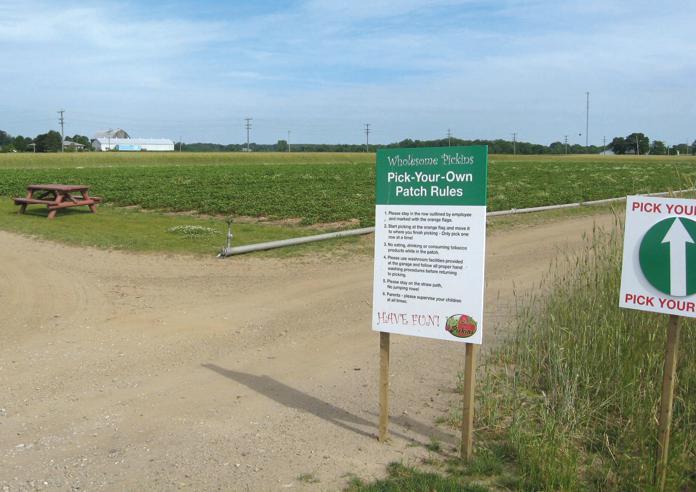
Top: Wholesome Pickins also offers pick-your-own opportunities for local residents.
Middle: The VanDeVeldes knew the location of their farm on a main road into Delhi was perfect for a retail store.
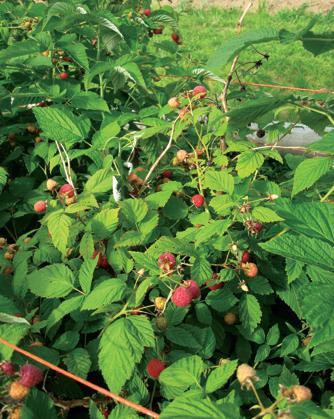
Bottom: On the raspberry side of the business, the farm grows both summer and fall bearing varieties, including Prelude, Nova, Lauren, Titan, Killarney, Tulameen, and Autumn Britten.
farming techniques to cultivating strawberries and raspberries.
“We use an old tobacco planter to plant all our June crops,” Jenn says. “We just made it work for strawberries by adding different fingers to the back end and installing a new water barrel to it for fertilizing new plantings. A major adaptation of tobacco equipment was in our irrigation systems. We were able to adapt the pipes, pumps and sprinklers to irrigate both tobacco and strawberries. The equipment also adapted to a ferti-irrigation injector that had been designed for large acreages and we adapted it for use in our much smaller fields. It started out covering just half an acre; now we use it to fertilize and irrigate six.”
That said, using tobacco equipment to raise strawberries has required a few compromises. For instance, the VanDeVeldes “don’t grow our strawberries the usual way, with wide widths of plastic planted with four rows each,” Jenn says. “Instead, we have based our rows on tobacco harvesters and sprayer tire widths, so that we don’t have to switch out the equipment. This means that we have plastic strips separated by tracks for our tires, and each width has just two rows to allow for cultivation.”
Growing business and jobs
Adding strawberries, raspberries and retailing has added revenues and jobs at Wholesome Pickins.
“We started off trying to do it all ourselves; just me and David,” Jenn laughs. “Now, we have four full-time employees who help with the fruits and store and three full-time employees that work in tobacco. Add our seasonal workers – a group that grows by numbers every year – and our payroll grows to 25 at peak.”
As for the farm’s future, “I expect that tobacco will always be a staple crop for us,” she says. “Still, our success in wholesale fruit and retail sales is driving what we’re doing. We are always looking for more local products for the store, and to see what new fruits we can grow. On the other hand, fruit can be a very hit-or-miss business compared to tobacco. It is much more vulnerable to seasonal threats, like the late frost we had this spring, and changes in market demand. So I see us balancing what we do between old and new ventures. Tobacco helped build this farm, and it will help underwrite our experiments as we try and grow new ideas.”
You can find Wholesome Pickins on the web at www.wholesomepickins.ca. ❦
Seehoweasy traceabilitycanbe
Track your fruit production with Field Manager PRO
Order now and you could winan Arctic Cat ATV*
Your customers want products that are traceable With Field Manager PRO, you can track your inputs, costs and activities Increase the marketability of your fruit crop and get a complete picture of your production and field records Field Manager PRO includes desktop and mobile software
Potato growers need to know the right amount of water to use. Too much water can delay emergence, leaches nitrogen and can cause decay in seed pieces, while too little water can slow growth or bring it to a halt entirely.
Regulating water input vital to producing healthy potatoes
By Myron Love
Dr. Jazeem Wahab is a researcher at the Canada-Saskatchewan Irrigation Diversion Centre and is well versed in the role of water and how best to manage its use in potato production.
He notes that growers have to know the right amount of water to use. Too much water delays emergence, leaches nitrogen and can cause decay in seed pieces, he says
Too little water – even 10 per cent less than needed – slows growth and can bring growth to a halt entirely.
He also lists the various potato diseases that can result from too much or too little water at the different stages in the potato’s development.
“The goal is to maintain an adequate amount of water throughout the potato’s growth cycle,” Wahab says.
He lists a number of steps in establishing an irrigation system in your fields. First, growers need to estimate the field capacity and calculate the depth of the crop roots, he says.
“You should irrigate when the soil moisture has been depleted by 35 per cent,” he says. “You have to monitor the moisture levels and make adjustments to match field conditions and weather conditions depending whether it is sunny, cloudy or rainy. The sun is the most serious problem in July and August.”
He outlines a list of irrigation guidelines. His first recommendation is to avoid planting in soil that is too wet or too dry. If the soil is too dry, irrigate before planting.
In the second stage of growth, soil moisture should be maintained at 75 to 85 per cent, he says. In the third stage of growth, he suggests that 65 per cent soil moisture is adequate in Saskatchewan.
“The highest water demand is in the fourth stage of growth,” Wahab says. “You need to maintain moisture levels between 80 and 90 per cent. Anything less will cause stress and result in reduced yields and quality and can lead to disease.”
In the last stage of growth, moisture levels need to be lowered to 60 to 65 per cent, he says. Too much water at this stage can result in pink rot or pythium leak. Too little water at this stage can produce black spot.
The type of potato producers are growing has to be factored into the amount of water needed. Norland is the most efficient in its use of water and produces better yields, Wahab says, adding that Burbank and Ranger are the least efficient in their absorption of water.
Ranger Russets need adequate moisture in the early stages of growth and need more water than Russet Burbank and Russet Norkotah varieties, Wahab says, while Shepody varieties need more irrigation.
Wahab notes that tillage influences water infiltration and surface run-off. While compaction reduces a field’s water-holding capacity, hilling reduces infiltration. ❦
Designer potatoes an example of access to high-value markets
By Myron Love
Potatoes are cheap, right? Well, that may be so when selling tubers by the 10-pound bag but a marketing company in the U.S. is selling its potatoes for more than $1 a piece. What it is doing is wrapping the pre-washed potato in an attractive package and putting a label on the wrap listing cooking and microwave instructions.
That is just one example of high-value market access spotlighted by Brent Warner, an agricultural marketing consultant.
“Most young people don’t know how to prepare potatoes,” Warner notes.
One of the people behind White Loaf Ridge Canada, Warner provides assistance to growers interested in making their products stand out in a world where most vegetable products are in a state of oversupply.
“What you have to bear in mind is that consumers are purchasing your experience,” Warner says. “Surveys show that most Canadians have a high level of trust in their local producers and prefer to be able to buy locally produced products.”
To support that statement, he cites the recent efforts made by the national supermarket chains to emphasize local production. He notes that over the past summer, 35 per cent of the produce for sale at Loblaws stores was purchased from local producers. In Fredericton, N.B., the Fredericton Co-op store has been selling only New Brunswick-grown corn for the past three years, he adds, while the Fraser Valley co-operative, B.C. Fresh, is working with medium size retailers and distributors to get more B.C.-grown product into the stores.
And people are going back to basics, he observes. They don’t want a lot of additives in their foods and are more concerned with food safety.
“In order to be a successful marketer, you have to know who your customer is, not just now but also five years from now,” Warner says, using as an example recent surveys showing huge growth in the number of Muslim immigrants coming to Canada, which is expected to translate into increased demand for lamb.
The current American obesity crisis, combined with a corresponding increase in the number of people with diabetes, will
Above: A U.S. company is marketing its potatoes by wrapping the pre-washed potato in an attractive package and putting a label on the wrap listing cooking and microwave instructions.
Right: You-pick operations have become less popular in recent years but people are returning to the field.
also have an effect on what is in your product (for further processors), he says.
On-farm visits are becoming increasingly popular in North America. Warner notes that less than two per cent of Canadians have any connection with farming and many are curious to experience farm life. Farm visits are a good way for producers to enhance their incomes during slow periods of the year, he suggests.
You-pick operations are one obvious way to attract “city folks” to the farm. Warner says that while you-pick was drying up in recent years, its popularity has come back strong. He reports that on Vancouver Island, for example, there weren’t enough berries to last the summer.
“People had to be turned away,” he says. Warner adds that you-pick operators also have an opportunity to educate their visitors in the ways of canning and freezing
berries. “A lot of people don’t know how and want to learn,” he says. “There was a 92 per cent increase in the sale of canning and freezing supplies last year.”
And cookbooks are big sellers.
“People are eating out less these days,” he says. “Home freezer sales are up by 15 per cent over the past three years and continue to increase.”
Farmers’ markets are also growing in popularity, he adds, cautioning that people want the real thing. In 2010, Loblaws tried unsuccessfully to introduce its version of a “farmers’ market” into its Ontario stores and Safeway attempted the same thing in California. Both were quickly closed down by consumer and industry complaints. ❦
Precision equipment being developed for wild blueberry producers
Horticultural crop growers – including wild blueberry producers – can expect more precision agriculture in their fields, according to Dr. David Percival, chair of the Nova Scotia Agricultural College’s (NSAC) Wild Blueberry Research Program.
Precision agriculture research has been underway at the NSAC since 2002, Dr. Percival says, adding that a meeting that year with officials of Oxford Frozen Foods – Nova Scotia’s largest wild blueberry producer and processor – established a research objective to reduce wild blueberry cultivation costs by precision delivery of agricultural chemicals to fields and increasing emphasis on farming sustainability.
Dr. Qamar-uz-Zaman, NSAC’s Precision Agriculture Research chair, says the research seeks “to optimize agricultural production in both time and spatial dimensions,” adding that over-applying chemicals has adverse environmental effects and increases production costs.
“What we are trying to avoid is a blanket application of agricultural chemicals, particularly pesticides,” says Dr. Percival
Of the province’s 40,000 acres of wild blueberries, 30 per cent are bare areas without berries, he says. “So, in a lot of cases, we think we can cut input uses by 30 per cent right there.”
Due to soil and crop variables plus weeds and wild grasses in blueberry fields, wild blue blueberries are a unique crop, says Dr. Zaman, adding that the fields must be mapped to set fertilizer application rate and it cannot be done manually.
Some field sites, because of crop yield rates, will need more or less fertilization with steep slopes requiring heavier applications and low-lying locations lighter fertilization, says Dr. Zaman. These topographical variations can be mapped (plotted) by remote sensing through a geographical positioning system (GPS), he says, adding
By Dan Woolley
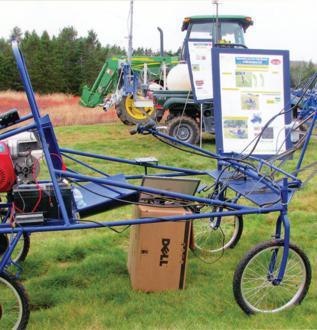
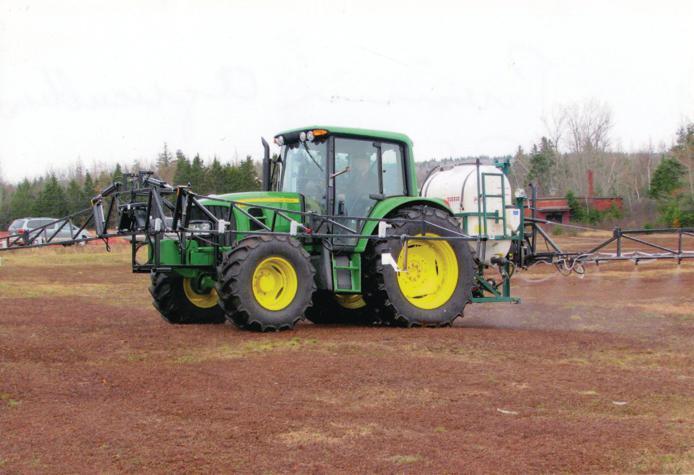
The Nova Scotia Agricultural College’s Precision Agriculture Research program’s prototype commercial variable rate sprayer demonstrates spot herbicide applications in the field.
that variable rate fertilization can lessen environmental impacts and remote sensing can plot sites for spot herbicide applications.
Dr. Zaman and his engineering team have developed a cost-effective, prototype variable-rate sprayer. It spotapplies herbicides, fungicides and insecticides from booms mounted on a four-wheel-drive ATV that carries a camera, sensors, computerized controllers, solenoid valves and custom imageprocessing software to detect weeds, grasses, blueberry plants and bare spots.
Dr. Zaman estimates spot application made using the variable rate sprayer to control golden rod saved up to 80 per cent of the herbicides that would have typically been applied. The sprayer has also been used to do spot applications on sheep sorrel, fescue, grasses and mosses in blueberry fields.
His team has also developed a tractor-mounted commercial prototype variable rate spryer. A uniform field
application of the herbicide Kerb on a 300-acre field costs around $54,000. A spot application using the program’s new sprayer costs about $10,000, a savings of $43,000, says Dr. Zaman.
The Wild Blueberry Producers Association of Nova Scotia (WBPANS) participated as a partner in NSAC’s precision agriculture research in wild blueberries. WBPANS executive director Dave Sangster says research drives production, berry quality, maintains competitiveness, increases profitability, decreases input costs and reduces environmental impacts, which “aids sales all over the world.”
Gary Brown, a field manager with Oxford Frozen Foods, says his company has received recent inquiries about the precision agriculture technology for use on grain fields and pastures from western Canadian farmers.
The NSAC engineering staff has also developed a cost-effective automated slope-mapping system, fixed to an ATV,
Photo by Dan Woolley
An example of the Nova Scotia Agricultural College’s Precision Agriculture Research program’s low-cost, self-propelled automated yield monitoring system.
to plot slope variations in the fields and make maps to determine site-specific fertilization to decrease environmental impact and increase crop profitability.
Researchers have also developed an ATV-towed electromagnetic induction instrument to map soil variability and built a self-propelled cart to carry instrumentation for lowcost, automated yield monitoring. The machine can plot fruit yield in a field and create maps for site-specific chemical application. Another program creation developed uses a modified tractor-towed fertilizer spreader to administer site-specific, variable rate fertilization using GPS-guided maps. ❦
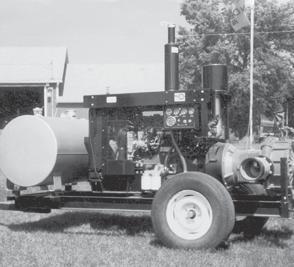
Computer controls and instrumentation found in the Nova Scotia Agricultural College’s Precision Agriculture Research program’s prototype commercial variable
PORTUGAL
Plan your purchases with the Hot Potatoes® Reward Program to earn even more Hot Potatoes reward points, taking you one step closer to the group trip to Portugal or new cash rebates.
Earn more Hot Potatoes reward points with special bonus offers
Talk to your retailer about how you can earn two times, three times or even four times more points with the purchase of these
Dr. Qamar-uz-Zaman
Dr. Dave Percival
Photo by Dan Woolley
Photo by
Dan Woolley
New temporary foreign worker regulations coming
Will your business be ready on April 1, 2011?
By Manjit Singh
Whether your company currently employs temporary foreign workers (TFW), or whether your company may do so in the future, you need to be aware of the new Temporary Foreign Worker Program regulations that will come into force on April 1, 2011.
New TFW regulations
Further to amendments to the Immigration and Refugee Protection Regulations (IRPR), made pursuant to the Immigration and Refugee Protection Act, for the first time in Canada, employers of TFWs will be held responsible for not only their own non-compliance thereto, but also the non-compliance of their TFW employees as well.
The penalties for non-compliance will be harsh – businesses found to be in non-compliance may be barred from hiring any more TFWs for two full years, and may also have their business names published on the Citizenship and Immigration Canada (CIC) website as a further warning to future TFW applicants. Even worse, at present, there is no appeal mechanism for challenging/removing a business from the list of banned businesses once a non-compliance determination has been made.
The new regulations are the culmination of efforts by the CIC to confront the problem of exploitation of TFWs in Canada, implement a regime of stricter employer accountability in order to encourage greater adherence to the program’s regulations, and ensure the temporary nature of the program.
TFW visa application process
On April 1, 2011, TFW work permits will be issued through a process of triple-redundancy determination via a mechanism consisting of Citizenship and Immigration Canada (CIC), Human Resources and Skills Development Canada
(HRSDC) and Canada Border Services Agency (CBSA).
Applications will be determined against three essential criteria: (1) whether the job offer is genuine; (2) whether the employer has been compliant with the TFW program conditions and regulations for a period of two years prior to the date of application or, if noncompliant, was the non-compliance justified; and, (3) whether the applicant has exceeded the new four-year cumulative cap on TFW status.
Genuine job offer
As part of the TFW visa application process, the “genuineness” of the job offer will be determined against several criteria, and it is expected that such TFW applications will be closely scrutinized by immigration officials. Consequently, businesses seeking to hire TFWs will have to tailor their employment offer letters in such a way as to address the requirements of the new regulations, and continue to monitor both their own compliance and that of their TFW employees.
Employer compliance
Regarding the two-year past compliance requirement, immigration officials will not only be scrutinizing past TFW applications, but may, in fact, requisition employer business records (such as T4 slips, employee records, etc.) in order to determine whether the employer has met the compliance requirements – any discovered past (two-year) non-compliance may not only fail your current TFW application, but may also bar you from TFW applications for a period of two years.
Four-year cap
Pursuant to the new IRPR regulations, TFWs will be allowed to legally work and live in Canada for a cumulative period of four years, with allowance for
tolling the clock. TFWs will be required to leave Canada at the end of the fouryear cap period and may not re-apply for TFW status until a further four-year period has elapsed (with some exceptions). Finally, non-compliance of TFWs with the four-year cap on status may be deemed as non-compliance by their employer – invoking the harsh penalties referenced above.
Conclusion
Consequently, businesses seeking to hire TFWs will have to endeavour to monitor their own compliance to the new regulations and the compliance thereto of their TFW employees. Businesses should also ensure that their record-keeping is current and both easily accessible and discernible to Canadian immigration officials for the purposes of their past compliance review.
Therefore, it is strongly recommended that businesses intending to hire TFWs consult with immigration lawyers current on the new regulations to ensure that their organization is ready to comply with the new regulations that will come into force on April 1, 2011, and maintain compliance thereafter. ❦
Manjit Singh is an associate in the International Legal Services Group of Cambridge LLP. His practice focuses on international law (both private and public), immigration law, defamation law, and civil litigation. For more information, please visit www.cambridgellp.com.
Disclaimer: This article contains general legal information and this information does not constitute legal advice. If you require specific advice, you should contact and retain a lawyer directly. Cambridge LLP expressly excludes any representations or warranties express or implied to the fullest extent possible.
Farmers help bring fruits, vegetables north Ontario’s horticulture farmers have joined with the provincial government again this year to bring healthy fruit and vegetable nacks to schoolchildren in Northern Ontario.
The Northern School Snack Program has launched its 19-week program at 110 elementary schools.
“The connection between food and health is undeniable,” says Brian Gilroy, an apple grower and chair of the Ontario Fruit and Vegetable Growers Association (OFVGA). “Fruits and vegetables are a key component of a healthy lifestyle and this school snack program is a great way of promoting awareness and increasing consumption by schoolchildren.”
Consistent availability of fresh, affordable fruits and vegetables can be a challenge for Ontario’s northern communities. This led to a launch of the program in 2006 as a pilot project following the release of several key reports that underlined the need for action against obesity.
The program is a partnership between the OFVGA, the Ontario Ministry of Health Promotion and the Health Units of Algoma and Porcupine districts. The OFVGA centrally sources fruit and vegetable snacks and co-ordinates delivery and distribution, which allow approximately 19,000 students to receive two servings per week for the duration of the program.
Produce served through the program includes strawberries, apples, mini-cucumbers, cherry tomatoes, pears, apple slices, cauliflower florets, broccoli florets, applesauceblend cups, carrot sticks, sliced peppers, pineapple chunks, sweet snap peas, clementines,
melon chunks and asparagus. Approximately 75 per cent of fruits and vegetables used in the school program are Ontario-grown, with the number being higher when supply allows.
“Our goal is to teach kids an appreciation for fresh fruits and vegetables and help them learn how to make lifelong healthy eating choices,” says Gilroy. “As farmers, we’re appreciative of our government and health unit partners to help us provide this program to elementary schools in Northern Ontario.”
BNQ to certify CanadaGAP food safety program participants
The Canadian Horticultural Council (CHC)’s CanadaGAP (On-Farm Food Safety) Program recently announced the addition of a new certification body for the program, Bureau de normalisation du Québec (BNQ).
BNQ joins QMI-SAI Global and the Guelph Food Technology Centre in the list of available certification bodies for CanadaGAP.
Third-party certification bodies are licensed by the CHC to provide audit and certification services for producers and packers of fresh fruit and vegetables who are enrolled in the program. Program participants must comply with food safety standards outlined by the program, and undergo and successfully complete onfarm audits in order to become CanadaGAPcertified. Several Canadian buyers – including Loblaw Companies Limited, McCain Foods Canada, Simplot Canada and Lamb-Weston – are requiring that growers become certified under the CanadaGAP Program.
New participants to CanadaGAP are asked to indicate their chosen certification body on the program enrolment form. Producers, storage operators and packers that are
already CanadaGAP-certified will be contacted to confirm their selected certification body before their next scheduled audit.
For more information about enrolling in CanadaGAP and about the certification bodies providing services, link to the CanadaGAP website at www.canadagap.ca.
BASF set to cultivate GMO potatoes in 2011
BASF Plant Science has concluded its Amflora cultivation plans for the 2011 season.
Amflora, the genetically enhanced potato for use in the starch industry, will this year be cultivated on two hectares of land in Üplingen (Saxony-Anhalt, Germany).
“There are many good reasons for the use of Amflora in Germany, which after all is renowned for growing starch potatoes,” says Peter Eckes, managing director of BASF Plant Science. “Separating the starch components in conventional potatoes for industrial use is not cost-effective or environmentally sound. Amflora is an innovative new variety that produces pure amylopectin starch. It therefore helps to cut down on resources, energy and costs, and offers farmers and the starch processing industry real added value.”
In addition to Germany, BASF Plant Science will again be planting out Amflora in Sweden during the 2011 season. After receiving approval from the authorities for the majority of the Amflora seed stock, BASF Plant Science is concentrating on propagating seed stock for cultivation in subsequent years. BASF is performing very strict internal quality checks for this purpose and is only using the best quality seed stock.
Amflora is a genetically modified potato variety that produces pure amylopectin starch. Conventional potatoes produce a mixture of amylopectin and amylose starch. In many potato starch applications – for example, in the paper, adhesive and food industries – only amylopectin is needed, but separating the two starch components is uneconomical. Amflora produces pure amylopectin starch and thus helps to save resources, energy and costs. Moreover, paper manufactured with amylopectin starch has greater tear resistance, and the addition of amylopectin to concrete and adhesives gives them a longer pot life. In the case of Amflora, BASF Plant Science and its partners in the starch industry decided to focus on industrial applications.
The best fruit comes from growers with a vision for better disease control.
New Products
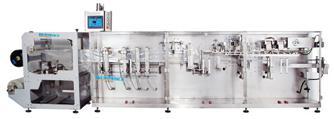
WeighPack r2b™ HFFS Bagger
The r2b™ Horizontal Form Fill Seal Bagger from WeighPack can create a wide variety of bags, integrating bag making, filling, sealing, and printing into one automatic process.
The r2b uses laminated roll film stock and can produce an array of bags, including flatbottom, stand-up, three-sided seal, four-sided seal, and with or without zipper closures. Specialty bags can also be produced on the r2b.
The servo drive provides control and repeatable performance and is rated mechanically at speeds up to 120 bags per minute. The straight-flow-through design allows the operator to see all stations from the operator colour touch screen. Large, removable access panels in both the front and back make the r2b easy to set up, clean and service.
Features of the r2b include an inline walking beam mechanism, a no-bag/no-fill sensor, variable speed control, an integrated exit conveyor and Telemechanique PLC. The unit interfaces with scales, augers and liquid fillers.
www.weighpack.com
Trimble releases AG GCS200 system
Trimble recently introduced the new AG GCS200 system for agricultural water management. The system, specifically designed for land levelling and drainage applications, works in conjunction with a laser transmitter to provide automatic machine control of implements such as scrapers and drainage machines, helping farmers to manage water on their fields regardless of crop type or water requirements.
The system is ideal for implements with PT valves, and can use either dual rigid mast control, or single electric mast control. Key components include the LR410 laser receiver and the new CB60 control box, providing a digital elevation display that can be used in both survey and control modes.
The CB60 control box delivers greater flexibility than its predecessors with configuration options for both surveying and grading. Owners of existing control systems can use the CB60 box as a drop-in replacement product, so customers with existing P.A. laser grade control systems do not need any
new cables or components.
The AG GCS200 system and the CB60 control box are compatible with English or metric units and can be used with several types of laser controlled water management and field-levelling products.
www.trimble.com
New Holland premiers zero emission tractor
An increasing demand for reduced emissions and energy independence has fueled the need for new technology and the use of alternative fuels on the farm. The New Holland NH2TM hydrogen-powered tractor made its North American debut at the 2010 Farm Progress Show in Boone, Iowa.
More than just an idea, the NH2TM tractor is a 106-hp working prototype able to perform all the tasks of a tractor while operating virtually silent and emitting zero pollutants.
Based on the New Holland T6000 Series tractor, the experimental NH2TM tractor replaces the traditional combustion engine with hydrogen fuel cells to generate electricity. Compressed hydrogen drawn from a tank on the tractor reacts in the fuel cell with oxygen, drawn from the air, to produce water and electrons. The electrons are harnessed in the form of an electric current, which drives electric motors to power the tractor’s drive train and auxiliary systems.
The NH2’s fuel cell generates 106-hp and emits only heat, vapour and water. The tractor has zero emissions because it does not produce polluting nitrogen oxides, soot particles or carbon dioxide. And because the NH2 is virtually silent, there’s also no noise pollution.
Fuel cells have a long working life and avoid the environmental issues of disposing of batteries, which lose their accumulation capacity during their life. Energydense compressed hydrogen can be stored conveniently in a tank, allowing the energy to be stored for an extremely long period
and the vehicle to be refuelled quickly.
New Holland’s experimental hydrogenpowered tractor is one element in a project that hopes to free farmers from the cost of purchasing fossil fuel and allow them to achieve fuel autonomy while meeting increasingly stringent emissions standards.
Farmers are in a unique position to benefit from hydrogen technology. Unlike many people, they have the space to install alternative electricity generation systems, such as solar, wind, biomass or waste, and then store that power as hydrogen. Apart from the environmental benefits, such a system would allow customers to become energy independent and improve their financial stability.
www.newholland.com
Massey, Key Dollar Cab offer orchard cabs, fenders
Massey Ferguson and Key Dollar Cab have formed an association that will bring to the market low-profile orchard cabs and orchard fenders designed to meet the unique production needs of the tree fruit and nut industries.
The accessories will be designed specifically for two of Massey Ferguson’s heavyduty utility tractors – the MF2670 HD and MF2680 HD low-profile utility tractors. By working together, the two companies plan to offer cabs and full-coverage orchard fenders that will be installed on the tractors prior to delivery. Financing will also be made available through AGCO Finance.
Fenders designed and built through this collaboration were recently on display during the World Ag Expo held in early February in Tulare, CA. The products will be available through licensed Massey Ferguson dealers and are expected to be on farms by late summer.
The cabs being created specifically for the MF2670 HD and MF2680 HD lowprofile tractors will feature a completely sealed, air-conditioned, pressurized cab with charcoal air and dust filtration to enhance operator safety in addition to the personal protective devices required while spraying in orchards. In addition, the cabs will feature one-half-inch-thick orchard glass to prevent window breakage. The low-profile cabs also will have a low, sleek shape designed to allow tree branches to slide by without breaking branches or damaging the crop.
www.masseyferguson.com
Other insecticides move through the plant in a single direction often leaving portions unprotected and susceptible to insect pressures.
With two-way systemic action, Movento® insecticide moves inside the plant simultaneously in two directions - thoroughly protecting the entire plant. Movento controls insect infestations you can see and can’t see in a broad range of horticultural crops. It’s a breakthrough in insect control for fruits and vegetables. With Movento – you’re home free.
Organic farmers outstanding in B.C.
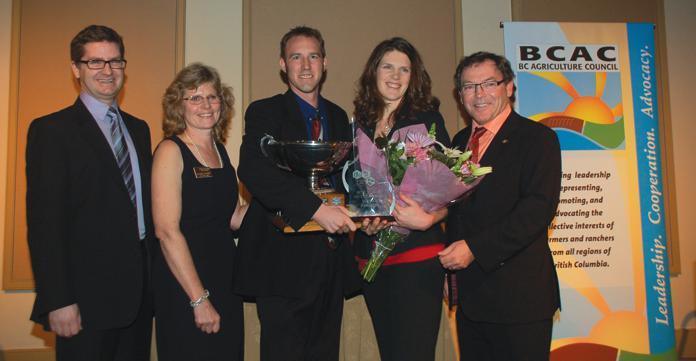
Annamarie and Kevin Klippenstein have been named the B.C. and Yukon Outstanding Young Farmers of 2011.
The Klippensteins of Klippers Organic Acres in Cawston received the prestigious award from B.C. Minister of Agriculture Ben Stewart in front of almost 500 people during the recent B.C. Agriculture Gala in Abbotsford.
Since acquiring their first five acres in November 2000, the Klippensteins have steadily expanded their organic orchard and market garden and now farm close to 40 acres. Although their intent was to sell everything they produced at Vancouver-area farmers markets, they have now diversified their operation to include value-added fruit products and summer and winter Community Supported Agriculture box programs, allowing them to have year-round income. This past year, they also began a gift certificate program that allows consumers to purchase gift certificates at the beginning of the year and exchange them for produce through the season.
A. KOOLMEES
A finalist for the OYF award in 2005, 2006 and 2007, Klippers Organic Acres was the first organic farm to have an Environmental Farm Plan and the first to be certified “Salmon Safe.” Kevin
is also chair of the new Organic Farming Institute of B.C. and runs a farm apprenticeship program, providing accommodation and training for up to 10 apprentices per year. The operation also employs up to eight WWOOF’ers (World Wide Opportunities on Organic Farms) at any given time.
“We feel there’s a need for young farmers and we have a successful model to show them,” Kevin explains.
The Klippensteins harvest more than just vegetables and tree fruits. In 2009, they also began harvesting the sun, installing solar panels to power their drying facility and apprentice accommodations.
Runners-up for the 2011 award were Ed and Laura Maljaars of Chilliwack.
To be eligible for the Outstanding Young Farmer award, farmers must be between 19 and 40 years of age, derive at least two-thirds of their income from farming and demonstrate progress in their agriculture careers. Nominees are judged on conservation practices, production history, financial and management practices, and community contributions.
As B.C.-Yukon OYF winners, the Klippensteins will travel to Regina this fall where they will compete against six other regional winners for the Canadian OYF award. ❦
Canada’s Outstanding Young Farmers program western vice-president Derek Janzen, B.C. OYF regional chair Suzanne Cuthbert, 2011 B.C. OYF recipients Kevin and Annamarie Klippenstein, and B.C. Minister of Agriculture Ben Stewart.
anada’s Fruit & Veg Tech X-Change
SEPTEMBER 1, 2, 3 2011
NORFOLK COUNTY, ONTARIO
“We encourage all companies doing business with Ontario’s vibrant fruit and vegetable industry to participate in this inaugural event. By joining us, we will showcase an impressive array of solutions that strengthen the sector’s success in the global marketplace. By supporting our growers and processors at this important trade show, we are demonstrating AgraTurf’s long term commitment to our customers and their specialized needs."
John Deere, AgraTurf
Courtland, ON
-
Joe Fewer, President & CEO
“The Ontario Fruit and Vegetable Growers’ Association is committed to the advancement of the edible horticulture sector in this province. Research and innovation are key pillars of a successful and sustainable future for our industry, and we are pleased to support initiatives and events that will give growers access to new tools, information and technology that can help move our sector forward.”
- Art Smith, CEO OFVGA Guelph, ON
"Case IH has deep roots in the fruit and veg industry and is proud to continue our support with participation in Canada’s Fruit & Veg Tech X-Change. Case IH will support our strong dealer network as they prepare and plan for this inaugural event. Both Case IH and our dealers appreciate the business format of the X-Change."
- Matt Roberts, Territory Sales Manager, Western Ontario
Case IH
Brantford, ON
“R & W Equipment Ltd. has been serving the Canadian agriculture community for over 40 years with irrigation systems and specialized vegetable equipment. Horticulture is our business and this event offers the unique opportunity for producers to see technology in action. There is something comfortable about an outdoor event, both for the exhibitor and the producer. I think they call it grass roots! We are proud to support Canada’s Fruit & Veg Tech X-Change, this year and many more to come."
- Wes Weening, Owner
R & W Equipment Ltd. Cookstown, ON
"Horticolor Canada would like to offer our congratulations on the 1st ever Canada’s Fruit & Veg Tech X-Change. This type of event is extremely important to both Ontario and Canadian markets and Horticolor is proud to be a part of it! We are a Canadian based manufacturing firm that specializes in servicing the horticultural sector. We offer complete one-stop service for all your marketing and branding requirements. See you at the Show!"
- Philip J. Hielema, Account Manager, Ontraio
Boucherville, QC
"We are committed to Canada’s Fruit & Veg Tech X-Change, an outdoor trade show which actively supports the horticulture and agricultural sectors. This amazing team is truly dedicated to the betterment of the industry. Gintec Shade Technologies Inc. is a world class fabricator of horticultural, agricultural and recreational fabrics, servicing all of North America. It is a pleasure to be involved in this inaugural event”.
- Mark Lucas, Owner
Gintech Shade Technologies Inc. Vanessa, ON / Tavares, FL
PACKAGING
Weed control
First few weeks after potato planting key
By Myron Love
The first six to eight weeks after planting your potatoes is the most vital period for weed control, says Dr. Doug Waterer. After that, the crop is big enough (with enough row closure) to look after itself.
The University of Saskatchewan plant sciences researcher notes that potatoes are generally “competent weed competitors.” Large seed piece potatoes in particular are fast emerging and the potatoes are well adapted to local growing conditions, he says. The wide row spacing makes for easy tillage and the robust, sprawling nature of the plants makes them capable of smothering weeds.
On the other hand, in the early weeks, that wide row spacing creates openings for weeds while field conditions are ideal for weed germination and growth, he says. The use of manures as fertilizer also encourages weed growth, adds Waterer.
He notes that weeds reduce potato yields and quality, interfere with field operations (such as inspection and rouging of seed fields) and increase production costs through restricted cropping and the necessity for herbicides.
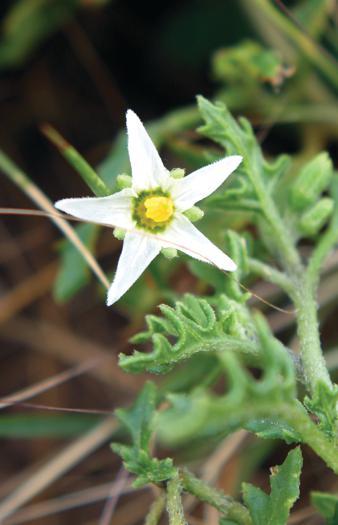
Some weeds, including perennials such as flat grass and Canadian thistle, or fast-starting winter annuals, get a jump on the potato crop. Others, such as green foxtail and pigweed, grow in large numbers and can crowd out the crop. Others, such as hairy nightshade, are close relatives of the potato plant and are tough to control without damaging the crop, too.
“Every one per cent in weed growth results in a corresponding decrease in potato yield,” Waterer says.
But how should growers go about controlling weeds?
Waterer suggests cultural controls, such as using crop rotation, avoiding working fields early – thus avoiding triggering weed germination – and avoiding band fertilizers.
“There is no sense in feeding the weeds between the rows,” he says.
He also recommends planting high-
quality potato seeds at a shallow depth and close together in warm, weed-free soil.
Waterer lists a number of herbicide options, including Eptam as a pre-planting herbicide.
“It should be applied before the crop is in the ground,” he notes, adding that Eptam is highly volatile and subject to substantial vapour loss if used improperly. It is best applied mechanically or through sprinkler water.
Pre-emergent herbicides that Waterer recommends for eliminating grasses and broadleaf weeds include Gramoxone, glyphosate or pelargonic acid. The products have a decent range but no residual activity, he notes, while emphasizing the need to make sure these herbicides don’t come into any contact with the crop.
“They can cause all kinds of damage,” he says.
A second pre-emergent herbicide he suggests is Flamer for controlling small grasses and broadleaf weeds, although he adds the product doesn’t work on perennials. Flamer should also be kept clear of the crop.
In the category of pre-emergence selectives, Waterer mentions Chateau and Lorox. Both kill emerging broadleaf weeds and subsequent germination, and both need water to activate them. Chateau provides four to six weeks of residual activity, while Lorox is good for six to eight weeks of residual activity, Waterer says.
Poast and Select are post-emergence selectives that control annual grasses, quack grasses and cereals, Waterer says. They kill emerged weeds up to six inches tall, and are slow acting, but have no residual activity.
Prism is a pre- or post-emergence selective that eliminates grasses and suppresses broadleaves, says Waterer, adding that the product can cause problems in canola planted late in the season.
Sencor is another pre- or post-emergence selective with four to six weeks of residual activity, says Waterer, adding that it shouldn’t be applied over
Hairy nightshade is a close relative of the potato plant and can be tough to control without damaging the crop.
very moist soil or wet crop foliage. Post emergence, it shouldn’t be applied within three days of cloudy, cool or wet weather or it could cause crop damage.
Tillage is also an option for weed control, Waterer notes. To be effective, the equipment has to be well set up, maintained and operated at the proper speed and the weeds need to be small still. The soil should be moist. There should be no more than three tillage passes a year. And there should be no tillage once the crop reaches a height of eight inches.
Tillage costs less than using herbicides, Waterer notes, although herbicides can work faster and growers don’t run into the potential problem of compaction. Herbicides also require prior research to match the product to the weed.
“A combination of tillage and herbicides will do the best job of weed control,” Waterer says. “Combining the two reduces the number of tillage passes required and the volume of herbicide required.” ❦
TerminaT e early bligh T
Scala® fungicide is programmed to protect against the threat of early blight in potatoes. And as the only Group 9 fungicide, it utilizes a unique mode of action, making it an exceptional resistance management tool. Hasta la vista, early blight.