What
By Laura Aiken
By Kirk Hughes
Know your TI’s limitations to be sure the fire is definitely extinguished. By
Manfred Kihn
Laura Aiken
Here’s
By Cyril Hare
Laura King

BY LAURA AIKEN Editor laiken@annexbusinessmedia.com
What
By Laura Aiken
By Kirk Hughes
Know your TI’s limitations to be sure the fire is definitely extinguished. By
Manfred Kihn
Laura Aiken
Here’s
By Cyril Hare
Laura King
BY LAURA AIKEN Editor laiken@annexbusinessmedia.com
know I’m in good company here when I say that fire trucks are utterly amazing. Our annual November apparatus edition is a favourite of mine to put together. I’ve got a soft spot for wheels and was originally drawn to automotive journalism in university, sports cars in particular. I recall writing about fuel cell technology in 2002. The need to pollute less with our machines has been well known for a long time. Here we are today with electric fire trucks rolling out from multiple manufacturers. It’s quite the feat.
As a teenager, I enjoyed learning to change the battery in my car — an era when it was relatively simple to do so. Autos have advanced to include some impressive features, but fire apparatus can astound you with its complexity. There are many specific options available to fine tune fire truck specs to the needs of its community and department. How fun it must be to plan the purchase of a new fire truck. Doing so in today’s economy takes an understanding of what economic factors are impacting truck manufacturers. Turn to page 10 to read about the significant challenges facing the industry and what fire services and municipalities need to know.
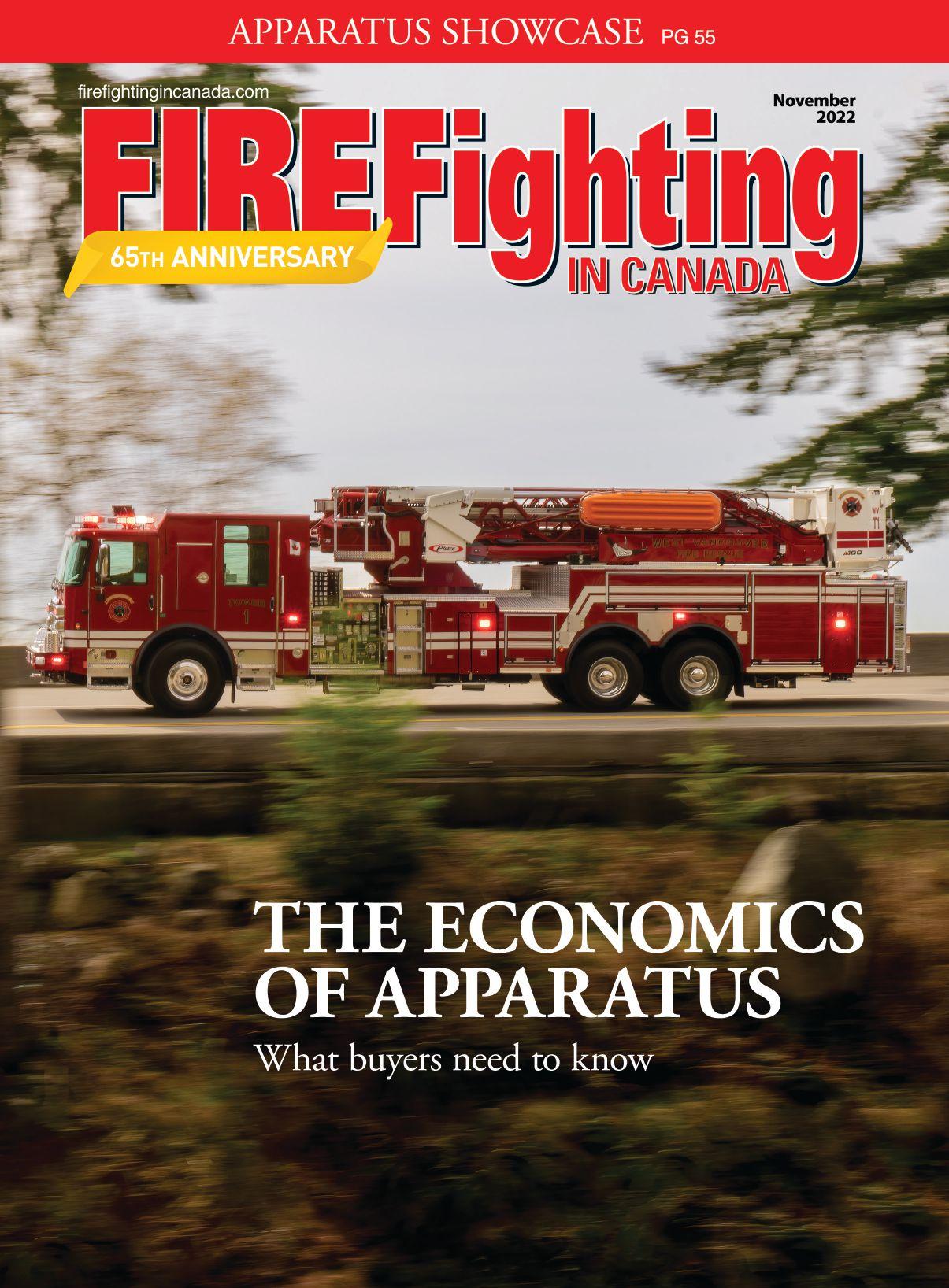
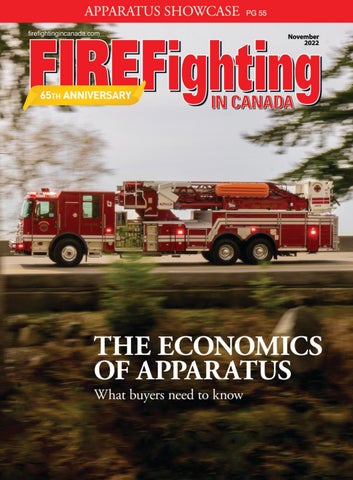
THE COVER
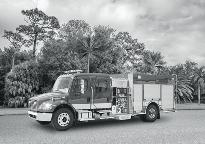
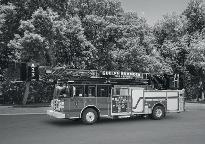
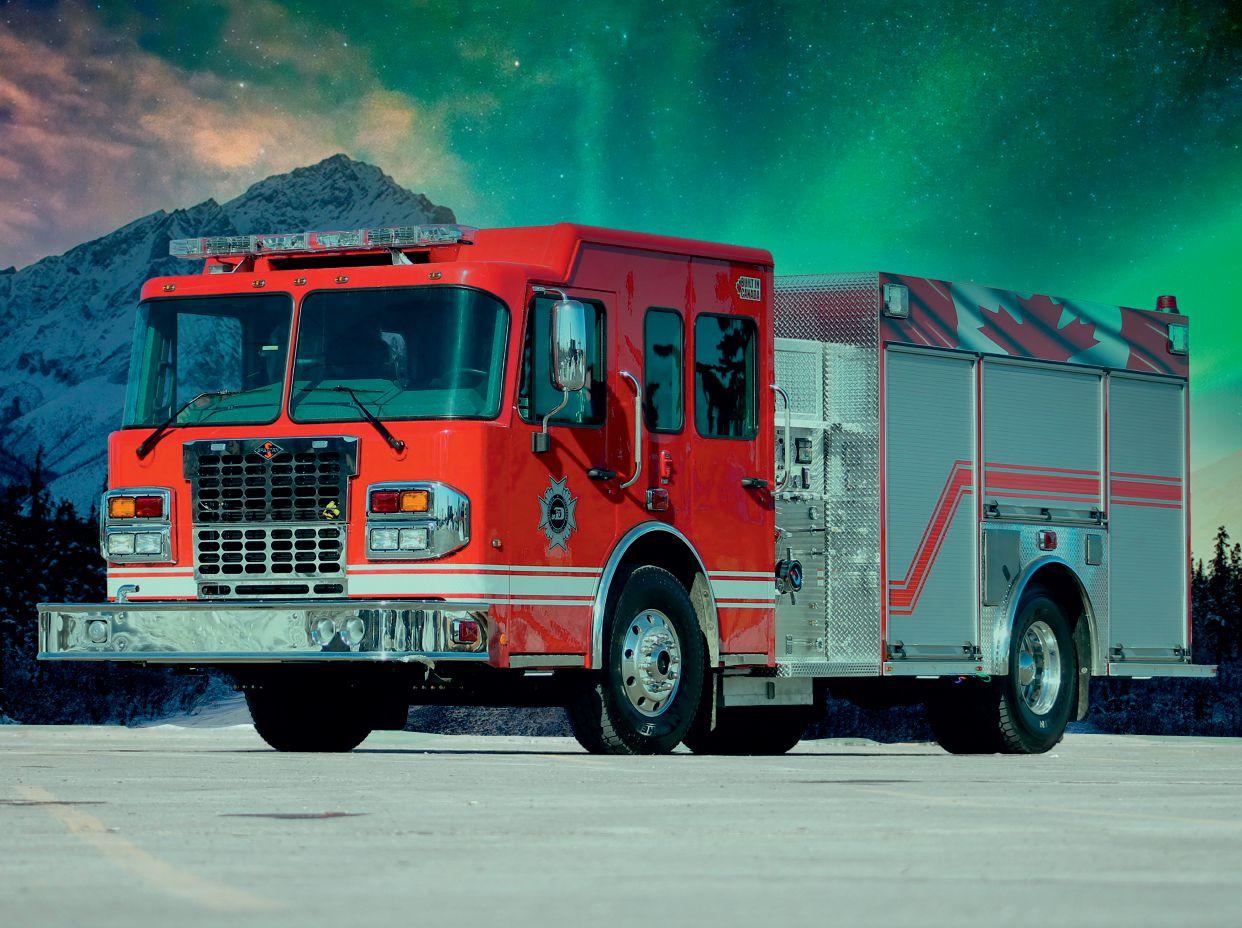
Adorned with art from Squamish Nation artist Xwalacktun, West Vancouver’s 2021 Pierce Ascendant aerial was sold by Commercial Emergency Equipment.
The return to spending and a full life in general, has ratcheted up demand for goods and services to a level that the providers can’t keep up with. This is happening across our economy. In publishing its Canadian quarterly economic forecast at the end of September, and surmising on the possibility of recession, TD Bank noted: “In the event that economic momentum gets thrown into reverse, this could shorten up the adjustment period on inflation. Either way, it’s not going to feel good. There’s no easy exit from this cycle.” TD Bank expects economic growth to top out over three per cent in 2022 before falling to one per cent in 2023. November’s fire truck focus goes beyond economics. In this edition’s Tech Talk on page 46, Chris Dennis explores the importance of fire truck repair facilities. We look at some history in fire truck manufacturing on page 28. And turn to page 55 to find the start of over 100 truck profiles in our annual apparatus showcase of deliveries across Canada and beyond.
ESTABLISHED 1957
NOVEMBER 2022
VOL. 66 NO. 7
Reader Service
Print and digital subscription inquiries or changes, please contact Angelita Potal, Customer Service Tel: (416) 510-5113 Fax: (416) 510-6875
Email: apotal@annexbusinessmedia.com Mail: 111 Gordon Baker Rd., Suite 400, Toronto, ON M2H 3R1
EDITOR LAURA AIKEN laiken@annexbusinessmedia.com 416-522-1595
ASSOCIATE EDITOR KAITLIN SECORD ksecord@annexbusinessmedia.com 416-435-1779
PUBLISHER ADAM SZPAKOWSKI aszpakowski@annexbusinessmedia.com 289-221-6605
BRAND SALES MANAGER SILVANA MAIOLO smaiolo@annexbusinessmedia.com 416-722-8403
ACCOUNT COORDINATOR CATHERINE GILES cgiles@annexbusinessmedia.com 416-510-5232
AUDIENCE DEVELOPMENT MANAGER BEATA OLECHNOWICZ bolechnowicz@annexbusinessmedia.com 416-510-5182
MEDIA DESIGNER ALISON KEBA akeba@annexbusinessmedia.com
GROUP PUBLISHER PAUL GROSSINGER fire@annexbusinessmedia.com
COO SCOTT JAMIESON sjamieson@annexbusinessmedia.com
PUBLICATION MAIL AGREEMENT #40065710 RETURN UNDELIVERABLE CANADIAN ADDRESSES TO CIRCULATION DEPT.
P.O. Box 530, SIMCOE, ON N3Y 4N5 e-mail: subscribe@firefightingincanada.com Printed in Canada ISSN 0015–2595
The past five years of our November apparatus editions have focused on electric fire trucks, cleaner cabs, future technology, trend round-ups and department specific specs. Going further back, innovations and trends crop up regularly. The decision to focus on the economics of apparatus for 2022 reflects the significance of the upheaval we are living through. The pandemic is still very much affecting our lives.
I hope you enjoy this year’s annual apparatus edition and all the wonderous wheels. Fire trucks are serious vehicles with life-saving jobs to do…but they are sure fun to look at, too.

SUBSCRIPTION RATES
Canada – 1 Year - $25.50
(GST - #867172652RT0001) USA – 1 Year $58.50 (CDN)
Annex Privacy Officer Privacy@annexbusinessmedia.com Tel: 800-668-2374
Occasionally, Fire Fighting in Canada will mail information on behalf of industry-related groups whose products and services we believe may be of interest to you. If you prefer not to receive this information, please contact our circulation department in any of the four ways listed above.
No part of the editorial content of this publication may be reprinted without the publisher’s written permission ©2022 Annex Business Media. All rights reserved. Opinions expressed in this magazine are not necessarily those of the editor or the publisher. No liability is assumed for errors or omissions.
All advertising is subject to the publisher’s approval. Such approval does not imply any endorsement of the products or services advertised. Publisher reserves the right to refuse advertising that does not meet the standards of the publication.
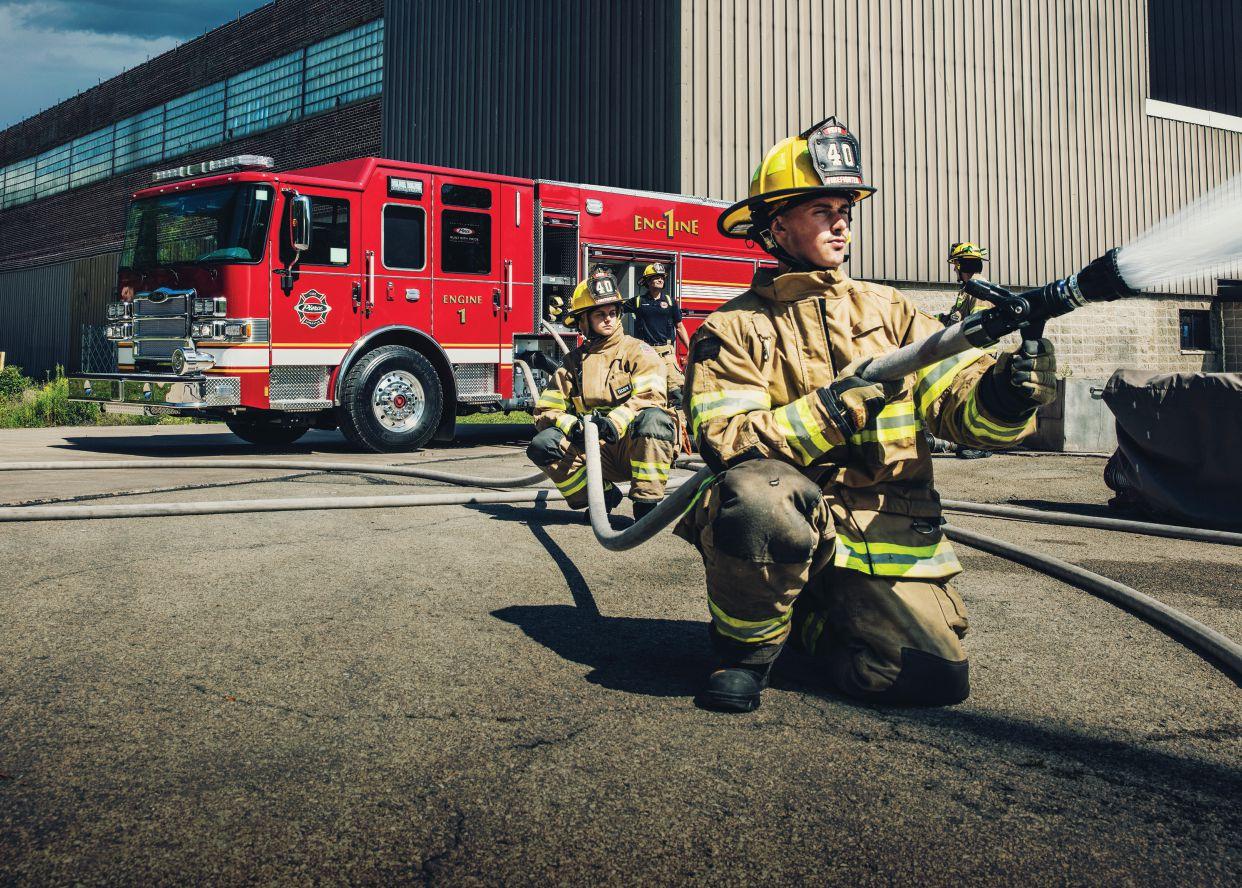


The Gravenhurst Fire Department has opened its brandnew state-of-the-art fire training facility. The Chief L.E. McNeice Training Centre occupies the upper floor of Station #1 headquarters. The training centre was named after retired Gravenhurst fire chief Lorne McNeice, who served with the department from 1972 to 2012, with 27 of those years at the helm.
The facility was designed by the department’s training division alongside local contractors. Gravenhurst training officer and platoon chief Tracy Jocque gave Fire Fighting in Canada a written walk-through of the centre, which was built with a $160,000 budget.
Simcoe Benchmark installed a manifold that supplies air to three different props: a standpipe, sprinkler head and gas metre. The manifold is controlled by a pressure regulator connected to an air cylinder that is then connected to a high-pressure hose at the bottom of the manifold. Training crews can open the valve of the prop they want to use with no mess because the water is replaced by air for these scenarios.
A standpipe prop allows training crews to practice connecting and charging the line as they would at one of the many standpipe boxes they could encounter in Gravenhurst buildings; using fire fighting hose and a proper nozzle to learn how proceed with using the aircharged line to search with and pull through a building. Firefighters can also train on how to use a high-rise bag and how to find their way out of a building by following the couplings.
Using air, recruits and firefighters can use the sprinkler prop to practice slowing the flow of water to a sprinkler head using wedges or sprinkler stops without getting wet. This prop has interchangeable
The city of Leduc, Alta., welcomed BRYAN SINGLETON as their new fire chief and director of emergency management. Singleton has held leadership roles with the city of Edmonton’s fire services and EMS, most recently as deputy fire chief. He also held senior leadership
roles with the Government of Alberta, where he was responsible for EMS legis lation, regulation and policy development.

In Ontario, MATT STEPHENSON was promoted to fire chief of Cornwall Fire Services. Stephenson brings 24 years
was appointed Renfrew, Ont.’s first director of emergency and fire services. Guest has been acting
their new fire chief and director of emergency services. Paulson came to
Address signs on the outside of both entry doors are set up to reflect “call” location and can used for single family dwelling scenarios with realistic square footage or divided in half for two different addresses.
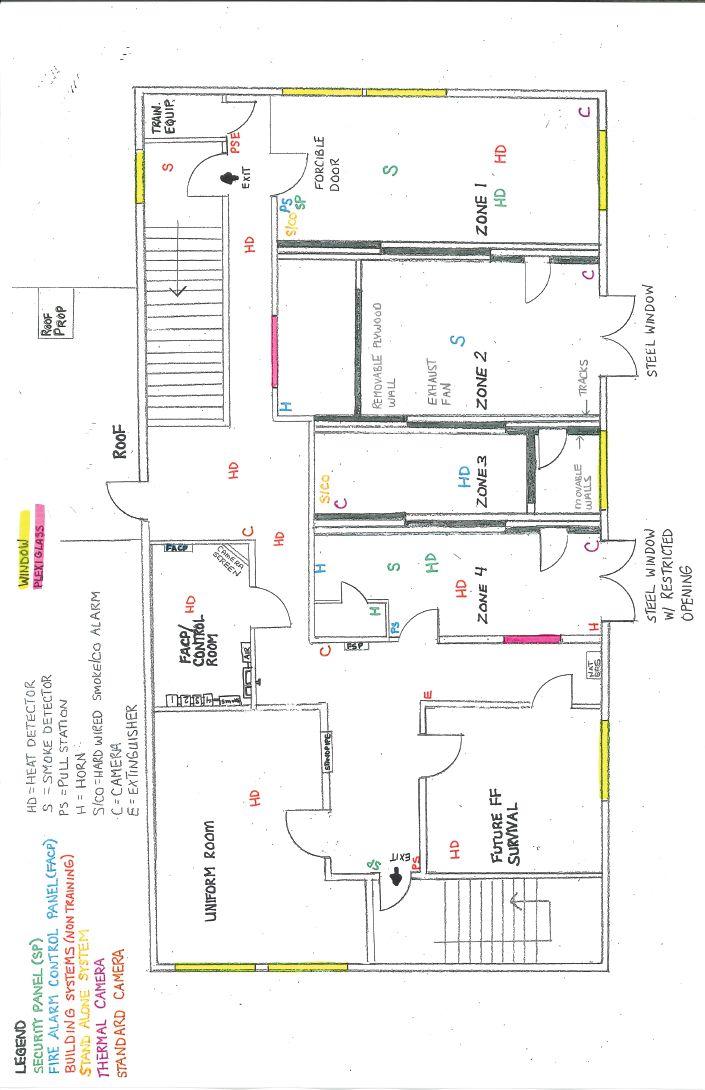
The Fire Alarm Control Panel (FACP) room is where many of the brains of the training centre reside, including its Bullard smoke machine, which was purchased with grant money from TransCanada and can cover 4000 square feet. A delivery duct system corresponds to four vents throughout the building and allows for the smoke to be delivered via remote control into select zones. There is an exhaust system in Zone 2 that draws the smoke out once scenarios are completed. The FACP’s camera system includes six video cameras — four in the structure that are thermal and two in the hallways — that record all activities and allow frames to be easily pulled for later debriefing.
The fire alarm panel in the FACP is connected to select detection devices in the structure and allows trainers to manually activate the pull stations or turn the system off if needed.
A mini classroom with a flipboard leads to the roof where a fold up “half roof” can be used to teach how to advance a roof ladder on a pitched roof.
The training facility also features a “house” via a series of rooms designed to simulate rescue scenario. The entry door on the south side has a forcible prop built into it so training crews can practice how to
force a door open.
Once inside, movable walls divide the house into zones. The zones are set up with three walls that can each be set up in three different positions, and one of the walls has a door. There are two walls that can be moved to create a smaller room with an opening but no door. One of them has a pull-out plywood pieces, which can be replaced with a sheet of drywall to teach how to breach drywall to escape a room.
The floor is heavy duty rubber which dampens sound and is gentler on a firefighter’s knees and gear. Two rugs placed in the house help give the firefighters a different texture to feel when crawling and can be used to simulate hazards such as extension cords under rugs.
There are two sets of steel windows to provide different challenges when entering or exiting. Both windows can be used for tower training, ladder training, Vent-Enter-Isolate-Search training and ventilation. A baseboard heater on a wall will be used for thermal imaging training.
The training centre also has two manikins – Fred and Pierce. Pierce has detachable limbs for entrapment training and a voice box which can be used to call out for help.
All firefighters dealing with any of the props will have their SCBA mask and visor down as well as be in full bunker gear.
And there is still more to come for Gravenhurst’s new training facility. In 2023, the plan is to add a firefighter survival room with a mayday prop.
Researchers have solved the mystery of why a highperformance fabric commonly used in fire fighting and other protective garments weakens prematurely when it’s exposed to moisture.
The cause was found to be the high sulfur content in some of the fibres, leading to an accelerated loss in fabric strength when exposed to sweat, water, rain, snow or
laundering.
“As the garment weakens over time, there’s no way to know whether the wearer is still protected or not,” said Saiful Hoque, a University of Alberta researcher in the Faculty of Agricultural, Life & Environmental Sciences, in a press release.
The recent study investigated the accelerated hydrothermal aging of
various fabrics typically used as outer shells in clothing for firefighters, oil and gas workers and electricians.
The fabrics were immersed in water at temperatures ranging from 60 to 95 C for up to 1,200 hours. After exposure, some of them lost significant tensile strength — the stress a fabric can withstand without splitting or breaking — without showing any visible
signs of degradation.
Besides fibre damage, the water-repellent finish in some of the fabrics also showed degradation, which adds to safety concerns.
“When a fabric starts absorbing water it transfers more heat, which can result in burns” said Hoque in the statement. “And water also makes what is already a heavy safety garment even heavier.”
Strathcona from Vancouver Fire Rescue Services and has over 30 years of experience in the fire service, including 15 years in leadership roles.
In Ontario, TOM LAUGHREN retired from his position as fire chief with Timmins Fire Department. Laughren took
on the role of chief in April 2019. He is the former mayor of Timmins and has over 30 years of fire experience, mainly with the Whitney Fire Department.
After 26 years of service with B.C.’s Sooke Fire Rescue, Fire Chief MATT BARNEY has retired. Barney served with the District of Sooke in various roles, including chief of
operations and prevention.
TIM BLAKE retired after more than two decades with the Trent Hills Fire Department. Blake joined the fire service in 1988 as a volunteer firefighter and began to serve as Trent Hills’ volunteer fire chief in 2001. He was appointed the munic -
ipality’s first full-time fire chief in 2012.
Retired Fire Chief DOUGLAS COUPER SMITH passed away on September 27. He served with the Puslinch Fire Department in Ontario for 37 years; 10 as fire chief.
BY MATTHEW PEGG Fire Chief Toronto
sat down to author this article on the afternoon of Sunday, Sept. 11, having just participated in the Canadian Fallen Firefighters Foundation Annual Memorial Service in Ottawa.
This year’s memorial service was especially poignant for many, and certainly was for me. This year’s ceremony fell directly on Sept. 11, which marks the 21st anniversary of the World Trade Centre attacks where 343 FDNY firefighters lost their lives fighting to save others.
I remember vividly where I was and what I was doing when the first hijacked airplane struck the north tower of the World Trade Centre. I was a newly promoted deputy fire chief in the town of Georgina, and was driving from Georgina Fire Station 1-6 to Fire Station 1-4 when my good friend Andre Maetzener, who was one of the volunteer firefighters, called me. Maetzener is a professional airline pilot and was stunned by images of the jetliner flying into the north tower. We spoke about what could possibly have gone wrong to result in such a tragic accident. He and I, alongside the on-duty crew, were watching the news feed on TV from the training room in the fire station when the second plane struck the south tower. I will never forget the deafening quiet that came over that room as all of us realized that this was not an accident.
Three hundred and forty-three of our fire service colleagues lost their lives when the towers fell, saving countless numbers of lives as they fought their way into those towers for rescue and fire control.
On this Sept. 11, some 21 years later, we gathered to honour and remember each of the fallen Canadian firefighters who lost their lives in the line of duty, and to support their families in their time of loss.
I am deeply grateful to everyone who worked so hard to make the Canadian Fallen Firefighters Foundation a reality. Today, the foundation serves with one overarching mandate: Honour. Remember. Support.
As leaders, we have a duty to honour those who have come before us, and to never allow their sacrifices to be forgotten. Those who have made the supreme sacrifice deserve nothing less than our intentional effort, as leaders, to honour their memory, service and sacrifice. I often remind recruits that each of us who serve today stand on the shoulders of those who have come before us, and that we share a duty to continue the work they began, all in the name of public safety.
It is also important that, as leaders, we take the time to remember. Admittedly, it can be difficult to think about those who have been taken from us, and to work through the pain of admitting to ourselves how much we miss them. But it is also comforting when we begin to smile thinking about all that they meant to us and how much we appreciated having them in our lives. These memories are very grounding for me, and serve as a constant reminder as to why
As leaders, we have a duty to honour those who came before us, and to never allow their sacrifices to be forgotten. ‘‘ ’’
If you have never been to the National Fallen Firefighter Memorial in Ottawa, I hope that you will be able to visit soon. The names of more than 1,750 firefighters are engraved on the walls of our national memorial, each of whom gave their life in the line of duty.
The names of people I miss every day are forever remembered on the walls of the memorial. And while reading their names always brings a smile to my face, there is also a sharp pain that follows, realizing how much I still miss their advice, guidance and friendship.
Matthew Pegg is the chief with Toronto Fire Services, having previously served in Georgina, Ajax and Brampton, Ont. Contact Matthew at matthew.pegg@toronto.ca and follow him on Twitter at @ChiefPeggTFS.
we do the work that we do. We exist to serve others.
Finally, leaders must also be there to support others when they need it. I am a firm believer that the leader’s place is at the back of the line when things go well, and at the front of the line when times are tough. Granted, just because we are leaders, doesn’t mean that we are able to fix all the problems that arise, nor does it mean that we can protect people from having to go through tough times. But, being in a leadership position gives us the opportunity and responsibility to actually be there to support our teammates if and when they need it.
In creating the Canadian Fallen Firefighters Foundation mandate, its founders have provided leaders with an effective and important roadmap to follow: Honour. Remember. Support.
May we, as leaders, commit to always meeting that challenge.
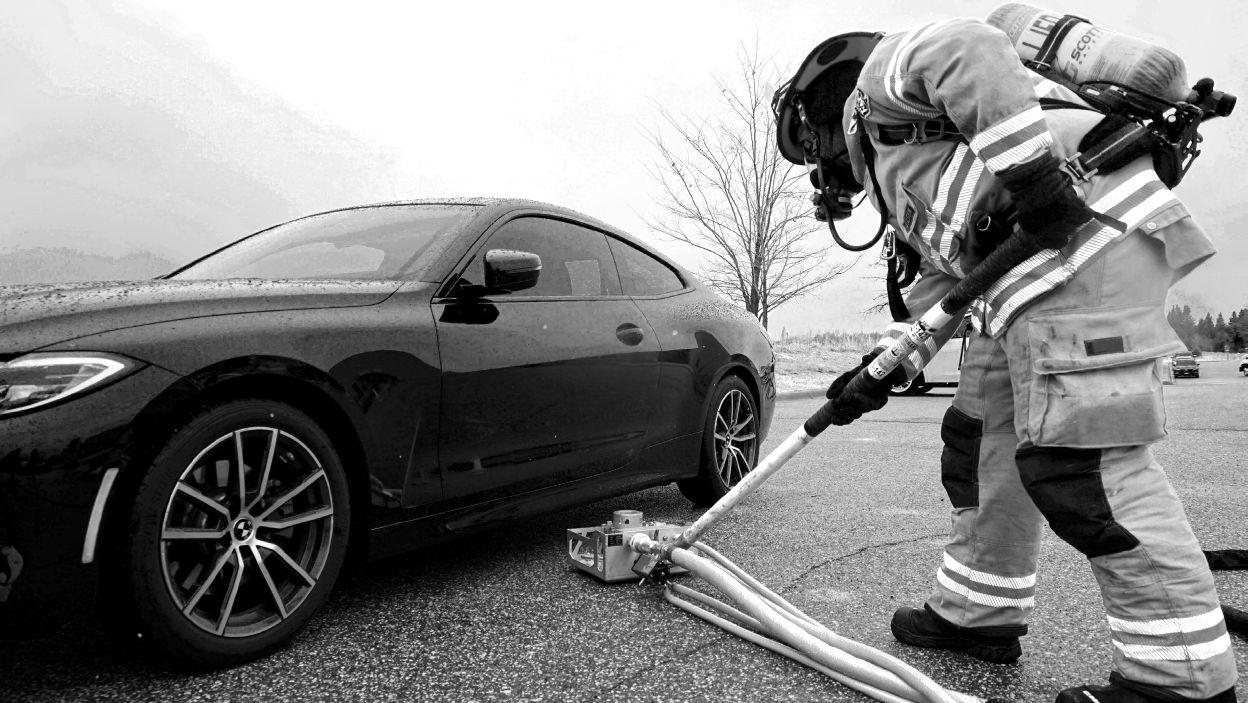
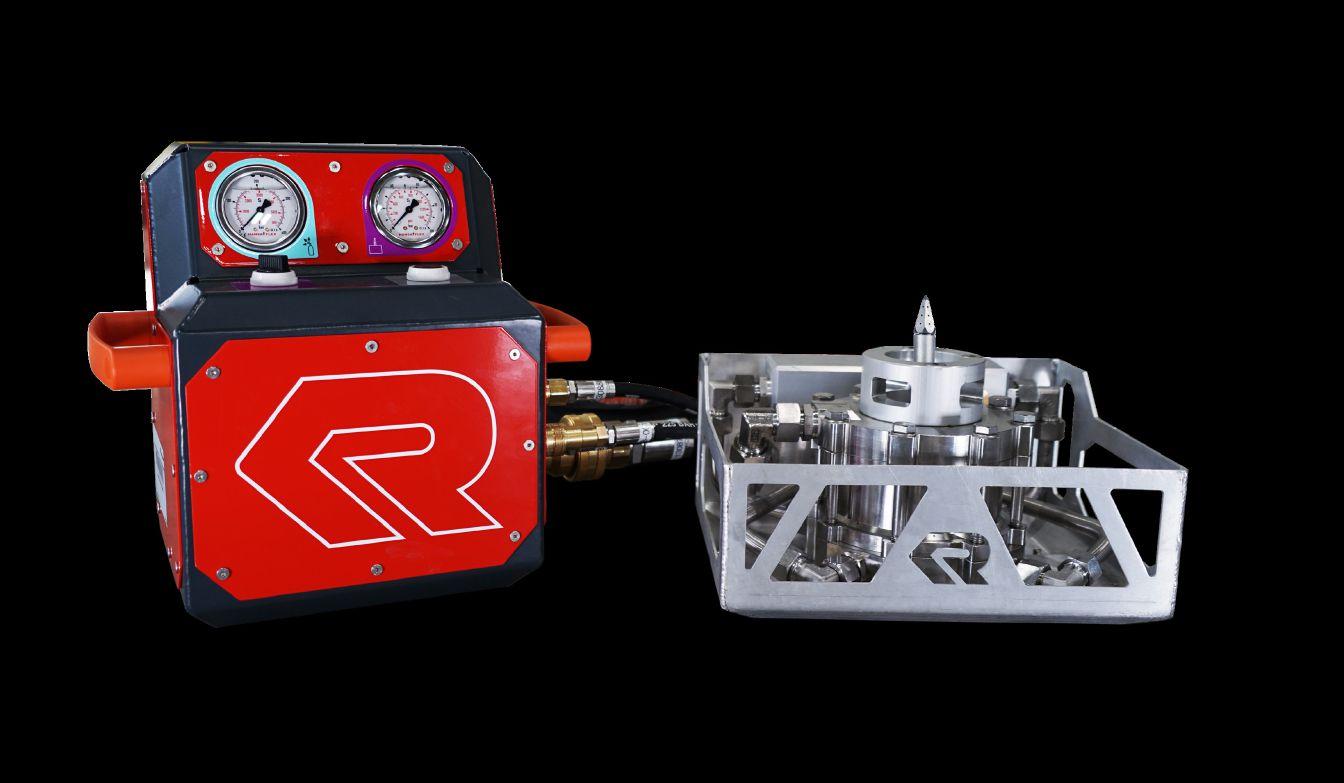
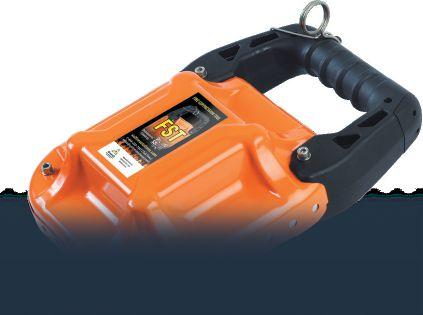
The call is coming when you will face an electric vehicle (EV) battery fire. Maybe you already have and experienced dousing an EV in more than 8,000 gallons of water and being on scene for four hours or more. There is a better way. Developed over six years in partnership with leading automotive companies the Rosenbauer battery extinguishing system technology (BEST) does the job with a fraction of the water and within an hour or less. When positioned beneath the vehicle, the piercing unit punctures the battery pack and halts thermal runaway by injecting cooling water around the battery cells at just eight gallons per minute. What was a resource-intensive call for service is now simple, safe, and efficient.





By LAURA AIKEN
The pandemic is still with us, but news of its death toll has been supplanted by the reverberations of its aftershocks. Supply chain disruptions. Inflation.
Labour shortages. An expected recession. All these factors have created several challenges for fire truck manufacturers and dealers. Fire chiefs, procurement committees and others with input into buying a municipality’s next apparatus should be aware of the impacts rippling into the purchasing and planning environment.
Morgan MacKay is the general manager for Commercial Emergency Equipment representing MaxiMetal in Canada, and U.S.based Pierce Manufacturing and Boise Mobile Equipment.
MacKay is a mechanical engineer by trade with a decades-long career in trucks. Of all the wheels on the road, he said fire trucks have the most complexity and technology. Aging exponentially increases the cost of keeping them current and operational, particularly when it comes to aerials.
This means most departments should be trading in their apparatus sooner rather than later, he said. The economics and life cycle cost analysis, which is well known in fleet services, shows this. The faster trade-in cycles are reinforced by higher market prices for newer used
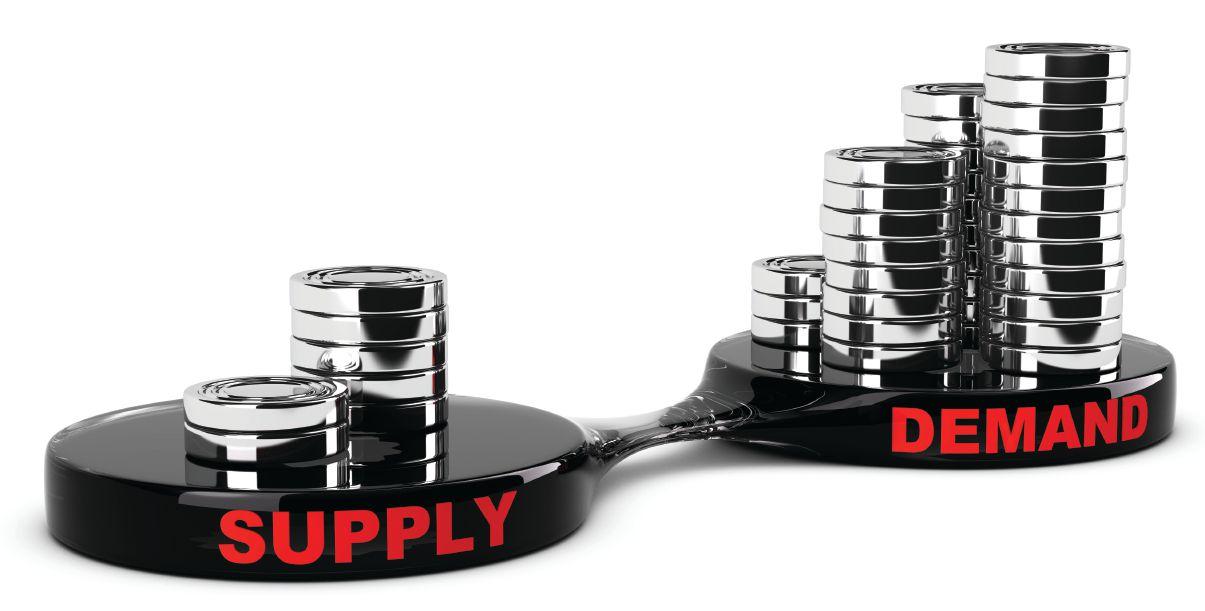
fire apparatus. Supply and demand underpin the market.
“The supply and demand of fire apparatus, like most trucks in North America, is out of whack,” said MacKay. “Demand for all trucks, not just fire trucks, is far outpacing the industry’s manufacturing ability. Raw materials and finished material supply chain delays, along with labour shortages, are preventing the truck manufacturers from ramping up production and meeting their production costs.”
This imbalance has set truck delivery backlogs at two to three years, he said, with North American truck manufacturers having pre-sold most, if not all 2023 and 2024 production slots, leaving a hesitancy to take orders into 2025 due to inflation and cost control concerns.
“The difficulty faced by the industry is that the input costs of truck manufacturers are rising even faster than record-breaking inflation. Raw and finished materials used to manufacture fire apparatus have increased by 15 to 30 per cent and up in the last two years. Some input costs, like shipping materials, are up as much as 50 per cent over pre-pandemic times.”
These echoes of the pandemic were heard via lockdowns at the port in Shanghai that caused mass delays and congestion. In May,
daily operations were 95 per cent back to normal, but backlog and disruptions from factories will continue to cause congestion this year, reported Bloomberg News, adding that a cargo backlog equal to 260,000 twenty-foot containers failed to ship in April because of a lockdown. Lockdowns in China matter to the automotive industry worldwide and things have not completely settled yet.
In addition to the battle of supply and demand versus supply chain, inflation took off like a jet, rising to 8.1 per cent in June, then descending over two months to 7 per cent. Prior to 2020, inflation was 2.2 per cent. This fell below zero during lockdowns. It started to trend up in 2021. TD Bank’s quarterly economic forecast for Canada predicts a return to 2.6 per cent by the end of 2023.
This October, Tiff Macklem, the Bank of Canada’s governor, spoke to the Halifax Chamber of Commerce about the consumer price index inflation. His key takeaways included understanding that high inflation in Canada is now more about what’s happening in Canada rather than globally, and that demand on the homefront is generally outpacing the economy’s ability to supply. The Bank is trying to slow spending in the economy so it can catch up. Another interest rate hike is expected. TD Bank’s quarterly report expected this to rise to four percent by the end of 2022.
As of late September, the producer price index was still very high, shared Laura Gu, an economist with Scotiabank who specializes in the automotive sector. This means parts prices are cranked up. Internal combustion engines are eight per cent higher than they were a year ago. The growth hasn’t been this high since at least 2012, she said. Tires are very expensive – the last time prices accelerated this fast was in 2011 due to higher rubber prices, but now supply chain disruption and inflation are the causes.
“Inflation is not coming down anytime soon and that’s our baseline scenario,” said Gu.
Inflation will be impacting the plants and production at Ontariobased Dependable Emergency Vehicles for the next year, said Pino Natale, Dependable’s chief of operations. Higher wage expectations, operations and company overhead are all at play. Lack of labour is limiting growth. Labour costs, with industry wide shortages, are affecting the manufacturing industry in general, said Gu, who noted we are seeing historically high job vacancy rates in Canada. This will push wages up, and thus costs, although she said there are signs the labour market is normalizing.
There is another bright spot in commodities. Aluminum prices have slowly been dropping, said Natale, a sentiment echoed by Gu. A reduction in commodity prices could offer short term relief. These lowering prices are reflective of weak global growth and expected recessions in parts of the world. Globally, shipping costs are coming down from tremendous highs, noted Macklem in his Halifax speech, alongside some improvements in global supply chains although these changes can’t be counted on to lower inflation in Canada.
Not much cheery to report for the economy, but there are measures municipalities can take to account for all the disruption.
MacKay and Natale offered several tips to fire apparatus buyers in this challenging environment.
Actively plan the replacement of trucks coming out of service in the next four years now and plan to order your truck replacement two years sooner than pre-pandemic supply chain disruptions, said MacKay.
Since deliveries are taking more time, patience is essential.
Replacement parts are also a challenge and not having the right part in stock could cause a delay in repair.
Dependable used to build in under 365 days and now the range could be 365 to 700 days due to the backlog from pandemic, said Natale. Replacement parts are also a challenge and not having the right part in stock could cause a delay in repair. Fire departments also need to consider the new environment of limited availability when it comes to specific brands, he said. Companies are discontinuing items and so a tire store once carrying “X” brand may not be stocking it anymore in lieu of a smaller selection of others.
Economics are changing quickly, said MacKay, so be wary of fixed and guaranteed pricing beyond 2023. The next couple years are going to be hard to budget, emphasized Natale as well, sharing that suppliers are only holding their prices for manufacturers for 30 days now when it used to be year. This will increase maintenance and service costs.
Ensure you have a percentage contingency to your capital replacement budgets for inflation and supply-chain disruptions, said MacKay. Ten per cent per year is his recommended number for finished goods and capital equipment. Natale has also been advising fire departments big and small to revisit their budgets, keeping
in mind that inflation on a million-dollar vehicles is going to look more like hundreds of thousands of dollars than hundreds. When revisiting budgets, Natale’s sense of it is that some municipal councils under-
stand what’s happening and others do not. Everyone needs to be educated on fire truck purchasing these days, not just the fire departments.
“Understand how your supplier is con-
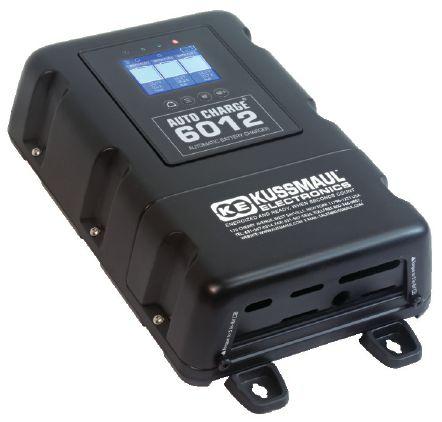
• Integrated systems communications • Charge 3 battery banks
• Accommodates most battery chemistries • Built-in touch display • Parasitic Load Compensation • 3 step or float charging
• Pump Plus feature included

trolling their input cost,” said MacKay. “Even the largest truck manufacturers in North America are reserving the right to correct pricing, and all have done so in the last year. For example, all Paccar and Freightliner chassis on order were re-priced this year, regardless of existing fixed price contracts.”
New trucks aside, the used market and the option to keep older trucks in service longer are very much in play. For those replacing trucks, the used truck market has never been stronger, said MacKay. With the long queue for new trucks, market prices of used trucks have gone up. Five to eightyear-old trucks fetch a significant premium on the used market, he said. Natale is seeing frame replacements or remounts happening as ways to save money and keep a truck in service longer.
The whole economy is still going through a change, and in some respects it’s only just begun. There is still plenty of uncertainty around inflationary pressure, said Gu. Rough calculations tell Scotiabank that even if inflation comes down fast, it’s still going to be beyond the central bank’s two per cent comfort zone next year. The industry is seeing improvement on the passenger vehicle side for delivery times, which is encouraging, but the prices are still very high.
It’s been a wild ride and it’s not over yet.
“One thing I’ve learned over the past three years,” said Natale, “is that you just need to be focused on everyday activities and be ready for what comes your way.”



BY LAURA KING NFPA Regional Director Canada
n Vancouver, at least five people have died this year in fires that started in the lithium-ion batteries that power e-bikes. Fire Chief Karen Fry told CBC News in June after a fatal fire, that overcharging e-bike batteries is not just a Vancouver issue.
“This is a problem, and this is a problem not only in the city of Vancouver,” Fry said. “This is something that we’re starting to see across North America. And in Vancouver, if we’re on trend with where we’re sitting right now . . . we’re in big trouble.
Fry was right. An article in the NFPA Journal article by my colleague Angelo Verzoni notes that in New York City, electronic mobility devices had caused more than 120 fires in the first eight months of 2022, putting the city on pace for more than 200 e-bike or e-scooter fires this year. Five people died in such fires this year.
Energy storage systems are essentially a bunch of lithium-ion batteries packaged together, and they’re everywhere: there are small versions in our mobile phones, and bigger, powerful units – many owned by provincial utilities – in municipalities across Canada.
In March, SaskPower announced that it had chosen On Power of Longueil, Que., to build Saskatchewan’s first utility-scale battery energy storage system. The 20-megawatt facility will be built in northeast Regina and will be able to power up to 20,000 homes for one hour.
Fortunately, SaskPower is working with the Regina Fire Department and other agencies to ensure that there are safety plans in place, and Fire Chief Layne Jackson is referencing NFPA 855, Standard for the Installation of Stationary Energy Storage Systems.
ver procedures to the ESS owner. Annex C in the standard, Fire Fighting Considerations, is a key resource.
Battery companies such as Panasonic are promoting the use of energy storage systems in homes and encouraging buyers and builders to consider them as a backup to the electrical grid or, in some cases, instead of the grid.
What’s a fire department to do if there’s a house fire in a home with an energy storage system? How will a department know there’s an energy storage system in a home?
Chapter 15 of NFPA 855, One- and Two-Family Dwellings and Townhouse Units, addresses many of these issues, and NFPA’s energy storage systems web page, www.nfpa.org/ESS, provides information, fact sheets, links to relevant standards, research foundation reports, blog posts and webinars, and videos.
The NFPA Journal article quoted Marty McCormack, deputy chief of training at the Boston Fire Department, who is writing standard operating procedures for firefighters responding to ESS incidents.
“Something that’s always said on the scene of a fire is ‘Fire’s knocked down, companies are overhauling,’ ” McCormack said. “And overhauling
You may have seen stories online or on TV about fires caused by electronic mobility devices or e-bikes. ‘‘ ’’
For firefighters, the challenge with energy storage systems is how to extinguish fires caused by thermal runaway. The build-up of energy and heat in an energy storage system (ESS) means fire can burn for a long period of time and may ignite adjacent cells, which can catch fire and explode, causing injuries and fatalities.
There have been massive ESS fires and explosions in several countries since 2016, but a 2019 fire at a utility-scale ESS in Surprise, Arizona, was really the impetus for NFPA 855. The Surprise incident, in which eight firefighters were injured, has been analyzed by experts, and three reports have been written. The conclusion: the fire was caused by faulty batteries produced in the manufacturing process.
NFPA 855 acts as a guideline for Canadian fire departments. The standard outlines processes for training, pre-incident planning, hazard mitigation analysis, testing, decommissioning, and post-incident hando-
Laura King is the reginal director for NFPA in Canada. Contact her at lking@nfpa.org and follow her on Twitter at LauraKingNFPA.
means you’re opening things up, exposing leftover fire spots. With an ESS, doing that could be deadly. So these SOPs and other training efforts will really be about teaching firefighters to wait for things to burn through before dousing them with water or making sure something’s not going to explode if you open it.”
NFPA offers a three-hour, self-paced online training program in energy storage and solar systems safety (www.nfpa.org/ess), with videos, animations, simulations, and review exercises that provide basic knowledge of electrical theory, types of photovoltaic installations, and battery chemistries.
A new edition of the 855 standard comes out later this year, and will build on recommendations in the current version, which includes provisions such as prohibiting the construction of ESS systems on a combustible roof and ensuring responders can access ESS sites.







For 50 years, we’ve placed our tools into the hands of heroes like these four gentlemen — and their children. You see, firefighting is in their blood. And that kind of passion doesn’t skip many generations. Thankfully. That’s why we’re insistent in making the most reliable and innovative rescue tools on the market, including our new eDRAULIC ® 3.0 Connect line.
By KIRK HUGHES
Abitterly cold Jan. 5, 2010, began like most of the past several weeks in Deline, N.W.T., and had started with a blast of heavy precipitation blowing off the nearby Great Bear Lake, adding humidity to the already staggering temperatures pushing down from the Arctic Circle that forced the temperature to read close to -50 C. This type of frigid weather is nothing new for this small community located in one of Canada’s remote northern areas, but the weather would play a critical role in the coming hours as a major landmark in the hamlet caught fire.
Preparing for fires in cold weather has been something rehearsed in countless fire stations across the country; it’s no surprise that Canadian firefighters are often faced with this difficult task during winter months - the joy of living above the 49th parallel. What makes this fire different wasn’t so much the low temperatures, but rather the pre-work that had gone into being prepared to deal with this precise scenario, and putting into place what had been, for months, painfully practiced.
Deline (pronounced del-a-naw) is a First Nation chartered community located on the west shores of Great Bear Lake, just west of the mighty MacKenzie River. With roughly 500 inhabitants, the remote settlement is a “fly-in” community, which means it’s only accessible by aircraft for most of the year. The residents of Deline are mostly Dene and Metis, with some “southerners” working in the school, nursing station and RCMP. A very involved place, residents often gather at local community centres to play hand games, drum, dance and socialize. One of
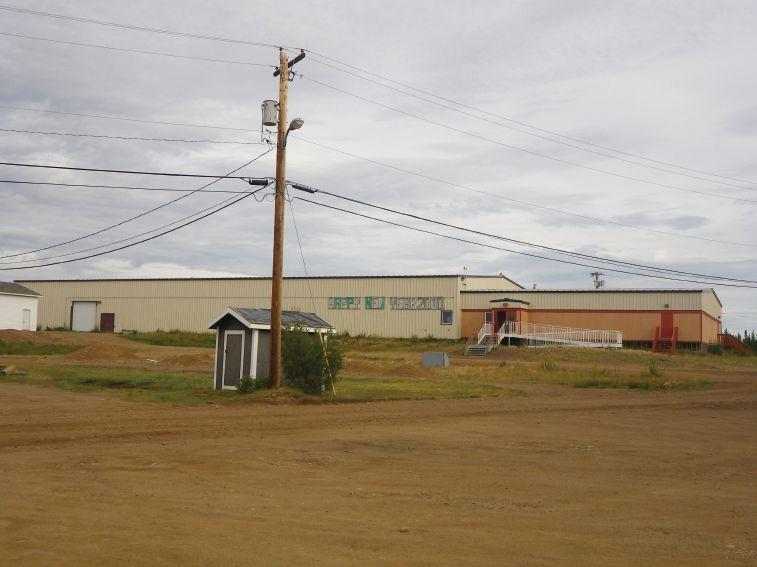
those community gathering places is the hockey arena and youth centre, located adjacent to the school named the Jimmy Vital Arena after a former Chief. The arena contained key pieces of recreation for the community, including an ice pad, change rooms, concession stand and a small meeting room that hosted after-school activities.
The Deline Fire Department had gone through a period of rejuvenation with help from the local Band Office who contributed funding for training and equipment. With the assistance of the Office of the Fire Marshall, the Deline Fire Department boasted a healthy volunteer core of 25 plus firefighters and one apparatus, a strong program for the region. One of the items discussed was the availability of the fire department to handle a major fire, since no mutual aid existed, and the funds needed to replace even modest structures would incur significant cost while reducing infrastruc-
ture capacity. With that in mind, the fire department trained steadily in preparation for that exact scenario. Some of the steps used during the Jan. 5 fire are still studied today as a guide on how to properly work a large fire in such hostile conditions.
Pre-planning was significant. Trucks were outfitted with heating pads to prevent freeze-up, maintenance was extended to ensuring fittings were lined with anti-freeze and even bunker gear was modified internally to allow for heat retention without affecting breathability. Drills had been conducted to train firefighters on the skillsets needed to move water quickly to avoid slushing up pumps and push water in such a way as to avoid line freeze. Crews practiced scene set-up to minimize exposure time for things such as hose advances and search operations.
As the sun peaked above the horizon early in the afternoon, shining a small amount of


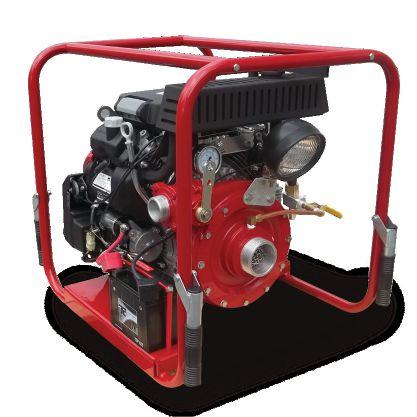
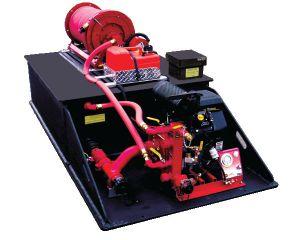
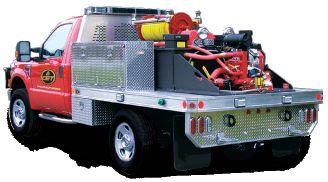
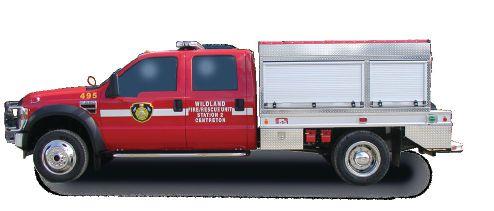
CET manufactures portable pumps, skid units, brush trucks and more to allow fire departments to Adapt, Improvise & Extinguish fire in almost any scenario where hydrants are scarce and static water resources maybe all you have to work with. CET- Providing fire ground solutions since 1908.
1
Portable Pumps (PFP-20hp-HND-MR Shown)
50+ models to choose from for both fire attack & resupply operations from static water sources like lakes, rivers, ponds and pools
2 3 4
Skid Units (Attack Pack Shown)
State-of-the-art custom designs & components –yet affordable!
Glider Kits
Arrives Completely pre-assembled, pre-plumbed, pre-wired and pre-tested ! Simply mount to your chassis, connect electrical and go fight fire!
Brush Trucks (Custom Built)
Solid/Affordable/Practical
light on to the community, a worker at the hockey arena was preparing to open-up for the after-school programs. As he shuffled boxes into the concession kitchen area, he inadvertently knocked the dial on the stove top counter. Placing the boxes near the stove to begin prepping food, he went back outside to gather more boxes but got side tracked speaking to another employee. A short time later, a light haze of smoke was noticed. A rink employee, working at the other end of the arena, walked into the foray to retrieve a mop when he noticed the smell of fire and pulled the alarm.
As the siren blared across the hamlet, firefighters reacted quickly and began to assemble at the hall. As the lone fire apparatus pulled out of the station, a black column of smoke was visible all through town. Arriving on-scene in a separate vehicle, the assistant fire chief observed heavy smoke conditions and visible flames inside the foray. He ordered a primary search while radioing the responding engine to prepare to pack up and stretch a hose line. Arriving moments later, the attack team made entry and managed to locate the seat of the fire. An interesting fact emerged: due to a recent
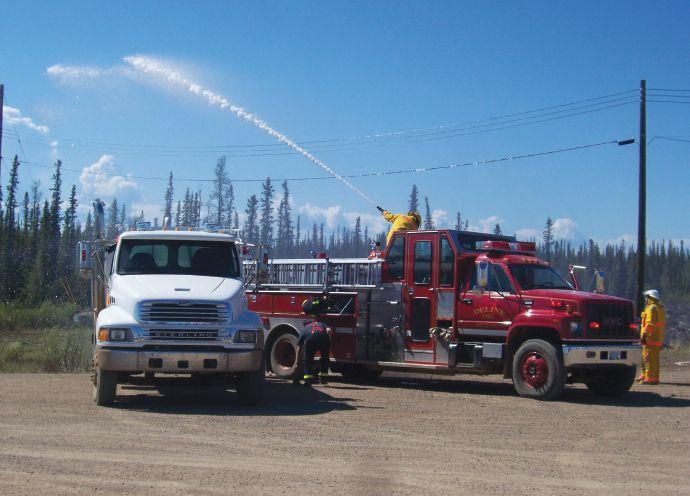
Practicing in the fall prepared firefighters and operators with understanding the tasks they’d encounter in the winter months
fire prevention program, a fusible link on a roll-door had dropped, containing the fire to one room. A second team made entry and performed a primary search. Even though the employees indicated no one should be
inside, given the time of day, it was decided to guarantee the arena was empty. A Rapid Intervention Team (RIT) was established and a water shuttle, using water tankers, was skillfully established. In the end, the
fire caused minimal damage to the structure. Although many factors existed that contributed to the overall success of the operation, a few key points stood out during the post-incident briefing:
1. The importance of establishing water supply: In the Arctic, standing water does not take long to freeze. Even during water shuttle operations, it is not uncommon for layers of ice to form. Pump operators alleviated this issue by using a small battery-operated trolling motor which kept the water churning.
2. Lighting: One thing that differs between the Arctic places further south, is the short amount of daylight hours available. By January, most Arctic communities can expect only a few hours – if any at all –and what sun that does shine is often described as “near dusk” in brightness. Crews had anticipated having to work in the dark, and large scene light towers with quick set-up features had been purchased and kept on the apparatus. During the arena fire, they were brought into service and made a significant difference to crews on the fire ground.
3. Rehabilitation: The extreme temperatures
had already existed in the community prior to the fire, but it was essential to rotate firefighters out of the weather so as to allow them to warm up. As practiced, employees of the Charter Community set up a McPherson Tent near the scene with a wood stove, benches and refreshments. This allowed firefighters a place to warm up and dry out some kit before heading back into the fire line. A medical crew from the local volunteer ambulance was also in attendance, checking vitals and monitoring for signs of frostbite. Although a small gesture, it paid dividends as firefighters worked throughout the evening hours (often the coldest time of the day).
4. The little things: Preparations had begun months in advance for any large fire. Deline had seen its fair share of incidents; plane crashes, deadly house fires, forest fires and more. It helped create a mindset, not only amongst responders, but the entire community – to be prepared. As firefighters battled the blaze, community members helped by handing out “hot pockets” to the crews, tossing down gritty sand on pathways to prevent slipping and even going so far as to bring wood and
food to the rehab tent to keep it going
Anytime a focal point in a community catches fire, the residents hold their collective breaths, hoping that the fire doesn’t destroy a building that could take years to rebuild. That reaction is universally accepted. What made the Jan. 5 Jimmy Vital Arena fire so different wasn’t the typical fire related preparations, but rather the innovation and forethought from the entire community. As they practiced, they discovered deficiencies, like water freezing in the porta-tank, then implemented a truly northern solution to deal with it. They realized that darkness and cold would be negative factors, so they went about mitigating them. As a case study, it showcases that when preparing for adverse conditions, learning lessons from training, implementing out of the box thinking and understanding the harsh working environment can aid in delivering when it counts and achieving amazing results.
Kirk Hughes is the director of protective services for the County of Vermilion River, Alta., having served with the Deline First Nation during his time in the RCMP. He can be reached at khughes@county24.com.


Volunteer firefighters play a vital role in small communities across Canada. And it’s a tough
So it can be tough to find – and keep – good crew members. Providing full-time benefits can help, but traditional benefits plans are expensive.
That’s why we’ve partnered with Equitable Life of Canada® to offer the CVIS Group HD&M Program.
• The plan is mandatory for all members.
• No plan member census data is required to provide a quote.
• No medicals are required.
• Members are covered up to age 70.
• The plan is only available for customers who already have VFIS Accident & Sickness Coverage.
• Only active members on the fire department are eligible. Coverage terminates when members retire or leave the fire department.
• Members can choose Family Coverage to extend coverage to family members.
• Benefits for eligible dependent children terminate at age 21. Dependent children in full-time attendance at school are covered up to age 25.


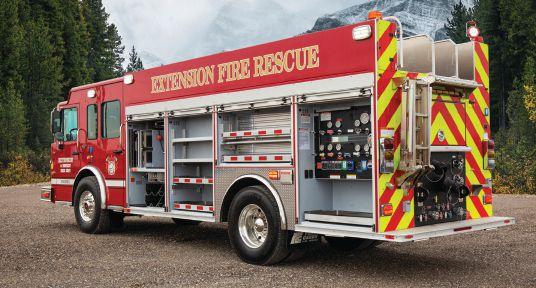
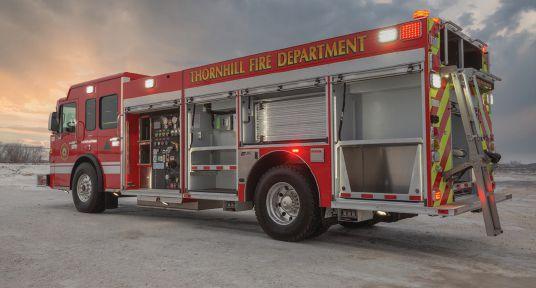

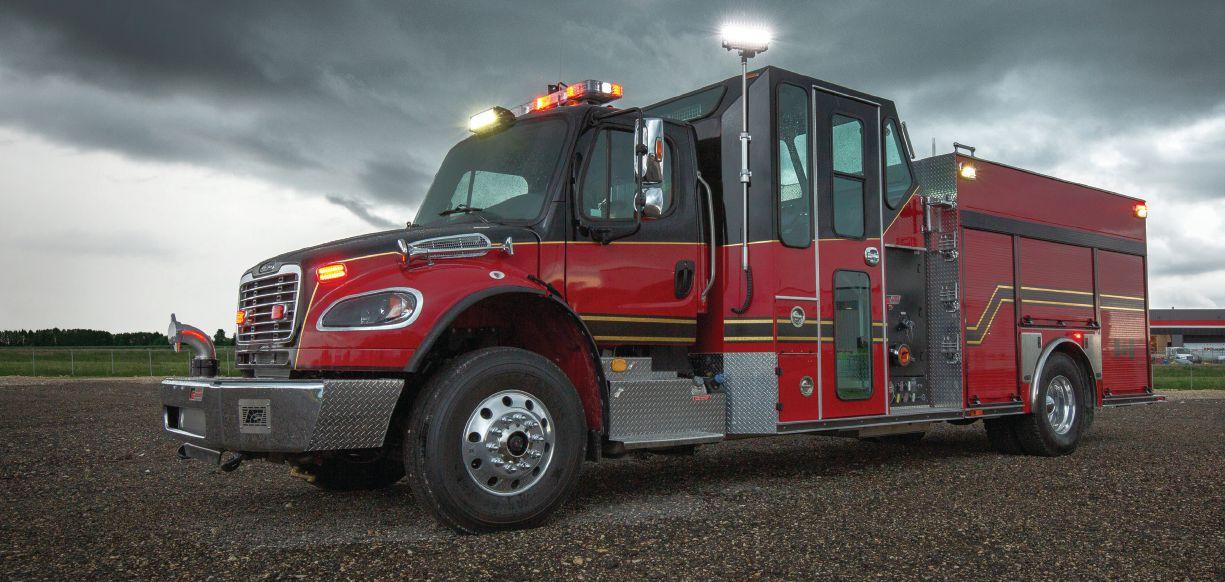
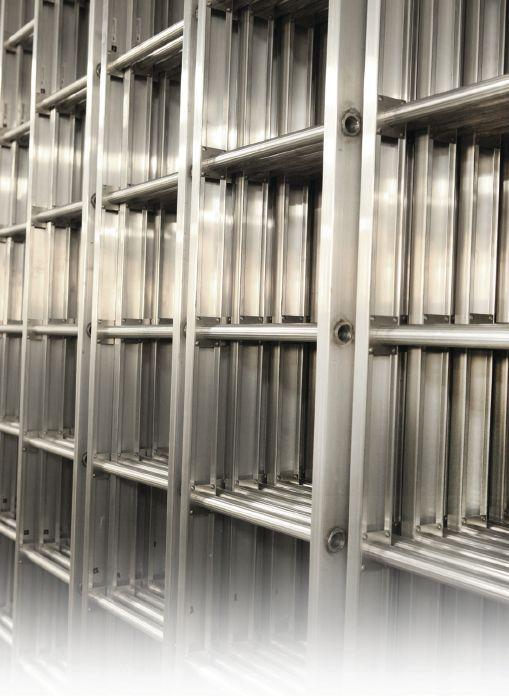
Our emergency rescue-max bodies provide fire departments with the performance of a pumper and the storage of a rescue and are customized for flexibility and maximum performance with side-mount, topmount, and top mount enclosed 3-man and 4-man crown options available. Be confident knowing you’re properly equipped for nearly any possible situation with our full-framed 6061- T6 aluminum extruded sub-frame utilizing 5083 saltwater marine-grade aluminum compartments.
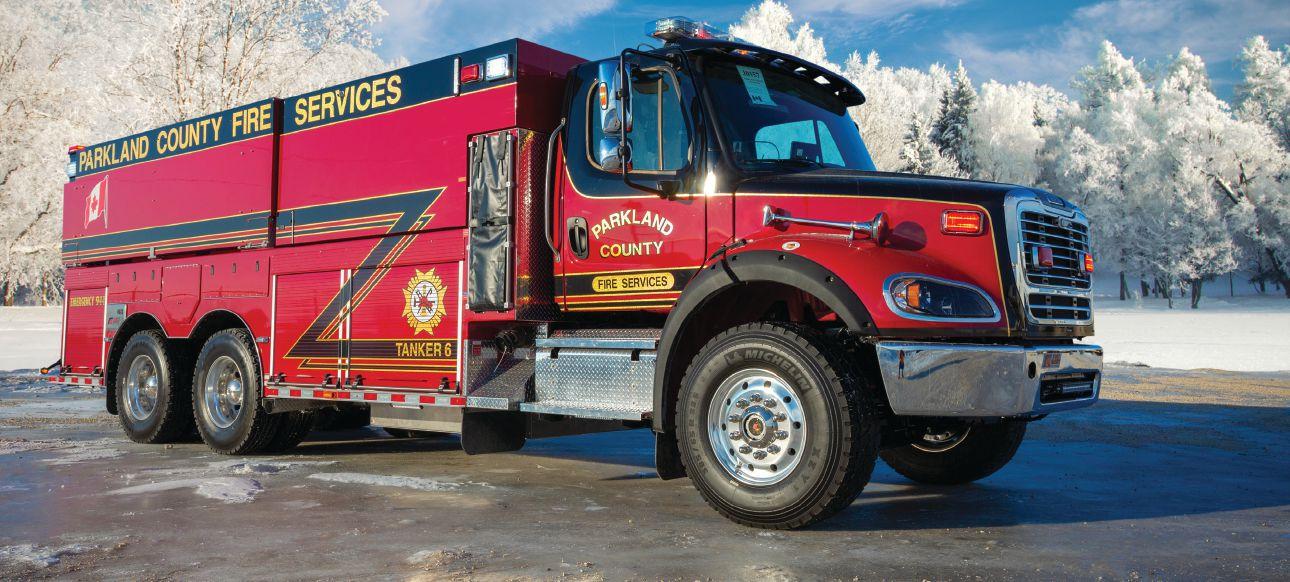

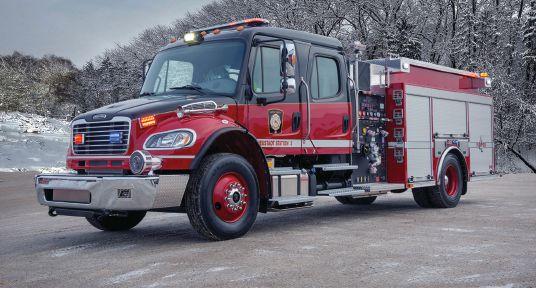
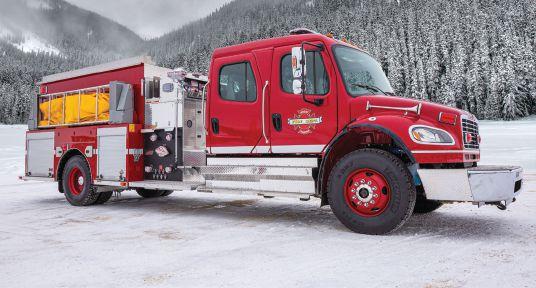
Our Crusader bodies are among the strongest and corrosion-free in the industry featuring a complete welded body and full 6061-T6 aluminum extruded sub-frame structure combined with 5052 freshwater marine-grade aluminum panels. Our Crusader pumpers deliver pump panels and controls designed with firefighters in mind while using the highest quality pumps and plumbing in the industry. Our tankers feature a wide range of tank capacities from 1500 to 3500 imperial gallons along with a variety of porta-tank options making for One Tough Truck your fire department and community can rely on.
BY MARK VAN DER FEYST
In Part 3 of this Vent, Enter, Search (VES) series, we are going to look at the tactic being performed using an aerial device as opposed to a ground ladder. Most times we equate doing VES with only a ground ladder at a residential structure, but the same tactic can be used at higher elevations using an aerial device.
When we think of residential structures, we usually picture a house, one or two stories high and sitting on a plot of land. But in suburban areas and metropolitan cities, residential structures are often more vertical than horizontal. Many municipalities are building up as opposed to building out because land in no longer available.
One restriction with doing VES at higher elevations is the reach of the aerial device in contrast to the building. The average aerial device is going to be 100 feet or 30 meters long, which will allow us to reach roughly the 10th floor or less. Anything higher than the 10th floor will require a different tactic be used, such as shelter in place.
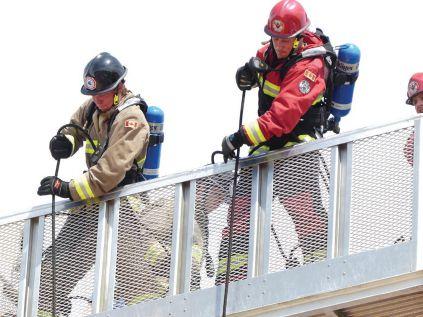
Another restriction is the fact that the team will be working at a higher elevation and when they have removed a person from the room, it will take some time to bring them down to the ground for EMS attention. Depending upon the severity of their injuries or their state of consciousness, they may be able to walk/climb down the ladder with the assistance of another firefighter, or they will need to be brought down to the ground by the aerial device. As you will see in Photo 1, being elevated can be a scary endeavor for most people, let alone assisting them down an aerial ladder to the ground, which may force the aerial device to have to be lowered down.
The speed of the aerial device will also be a restriction. Getting an aerial ladder or platform up to a balcony or window will take some time compared to a ground ladder going to the second or third story window. Set up of the out-riggers must be done before the aerial device can be lifted out of the cradle. Once set up, each manufacturer will have varying speeds of the aerial device to work with, and if the pump on board is being used for water delivery, the aerial speed will be governed by the speed of the pump. If there are more than one window or rooms to be searched using VES, the time it takes to move the aerial device from one spot to the next will also be time consuming.
There will be differences in operational approach based on the type of aerial device being used by the department, which will either be a straight ladder stick or a platform ladder. We are going to detail both types of operational approach for this tactic. Photo 2 shows a platform aerial ladder. With this type of aerial device, performing VES will and can be accomplished using only two firefighters in the platform bucket. This will allow for one firefighter to enter the room and perform the tactic and leave one firefighter at the window in the bucket, just like using a ground ladder at a house. With both firefighters in the bucket, the aerial device can be raised into position without having to have the firefighters climb up the ladder to the bucket. This will save time and expenditure of energy. The one
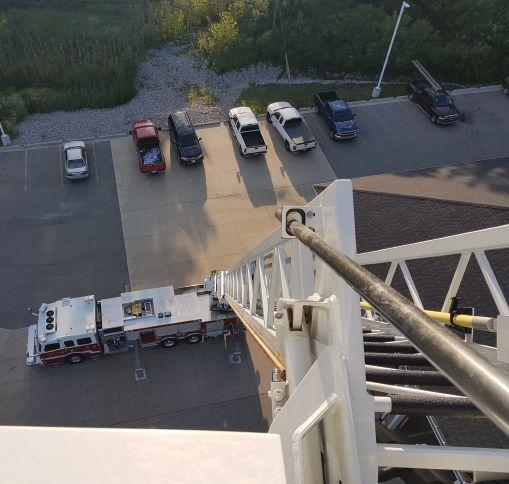
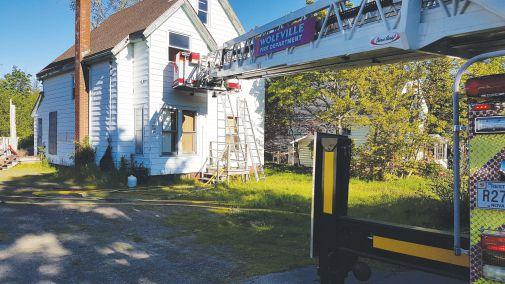
firefighter in the bucket can operate the aerial device from the bucket controls, eliminating the need for a third firefighter to operate. Do not position the platform bucket floor at the tip of the window. As you will see in Photo 2, the platform bucket needs to be positioned so that the floor of the bucket is level with the floor of the building or room. Same goes for a balcony type of entry. The reason for this is to make the transition between the bucket and the room a lot easier
for both the firefighter and the occupant. With the bucket floor being even with the room floor, the railing of the bucket will not be higher than the windowsill or balcony railing. When a firefighter or occupant is transitioning from one to the other, they can position the one leg over the railing/windowsill edge and into the platform bucket with the other leg still inside the room (they will be straddling the window and the bucket). If the platform bucket has side doors that can open, that should assist with making the transition easier.
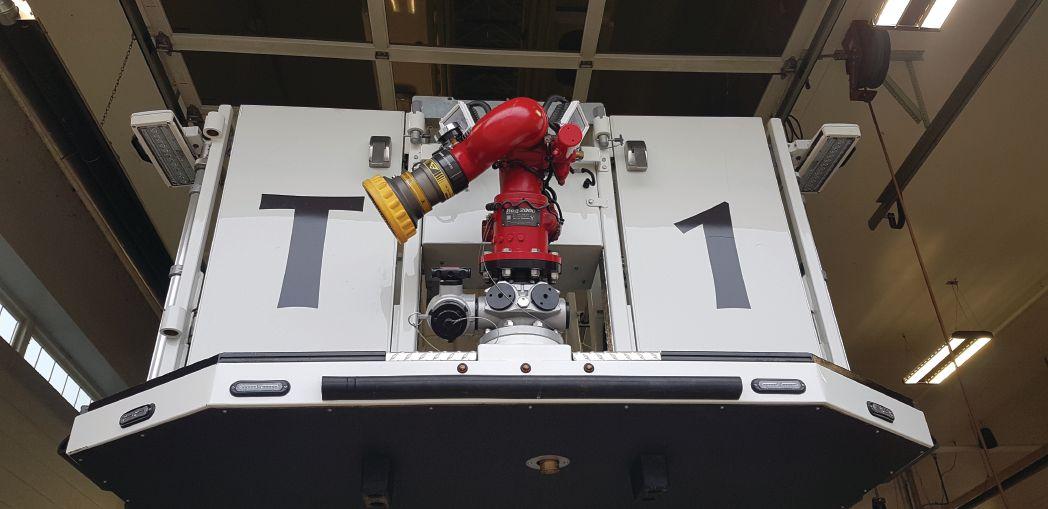
Many platforms will have angled buckets as pictured in Photo 3. This will assist with making transitions from the bucket to the room easier. As described in the previous paragraph, the platform can be positioned at the window with the angled part facing the window or building wall. This will be dictated by the position of the aerial apparatus in relation to the building.
The platform can accommodate securing the rescued person inside while bringing them down, or two persons inside along with the one firefighter. This may require that one firefighter climb down the ladder a section so that the load in the platform bucket and on the ladder frame will not be exceeded. Using the load chart on the side of the aerial ladder will let the team know if they can accommodate this or not.
With the straight ladder stick type of aerial device, there are a few differences in operations. The tip of the ladder still needs to be positioned at the windowsill just like a ground ladder. The aerial ladder will be brought up either beside the window and then under the windowsill, or above the window and then down under the windowsill. This will eliminate the possibility of a person trying to jump onto the aerial ladder from the window (if there is a person at the window calling from help). With that one person removed, the firefighter can then enter to VES that room.
The straight ladder stick will require a firefighter to control/oper-
ate it from the pedestal which will take away a team member or be that third firefighter on the team. Two firefighters will be on the aerial ladder to perform the tactic with one going in and the other at the window waiting. Should there be only two firefighters available, it is possible to perform this with one at the pedestal and one going inside.
The handrails of the aerial ladder will be an obstacle in the removal of the occupant. The cross-arm method used on a ground ladder cannot be used on the aerial ladder – instead the occupant needs to be placed on the ladder rungs with the one firefighter securing them and be brought down to the ground. If there are two firefighters on the aerial ladder working together, prevent overloading on the ladder tip by having one firefighter either stay in the room and wait to be picked up after they drop off the occupant, or they may have or climb over the occupant with the second firefighter climbing down one section of the aerial ladder.
The transitioning from the aerial ladder to the room floor will be a little different than the ground ladder and will require familiarity in working with a straight ladder stick and the handrails on it when getting on and off the aerial ladder.
Training with the aerial device will only enhance the development of skill needed to perform this tactic. In our December edition, we will close out our series on this tactic by detailing the “Do Not Do’s” of VES.

Mark van der Feyst has been in the fire service since 1999 and is currently a firefighter with the FGFD. He is an international instructor teaching in Canada, the United States, FDIC and India. He is a local level suppression instructor for the Pennsylvania State Fire Academy and the lead author of Fire Engineering’s Residential Fire Rescue book and other DVDs. He can be contacted at Mark@ FireStarTraining.com.



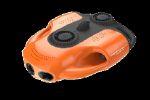
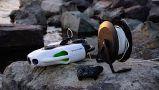
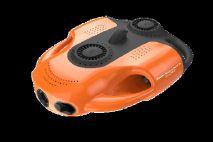
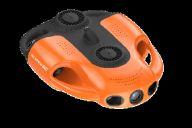
is revolutionizing ice and water state of the art technology noe Recovery work. Our intelligent underwater drone camera (from SONY) integrates both underwater shooting and observational functions, all with a 5 hour battery life, 4-thruster drive, and the ability to dive as far as 100 meters. It is easily maneuvered via remote control, is capable of 360 degree free rotation, calculates depth automatically, and provides real time transmission of underwater pictures, video and current temperature. The BW Space Pro is equipped with two hi intensity LED lights and includes with a 6X zoom camera.
Designed for Water and Ice rescue and recovery. Reduces risk to first responders and can aid in speeding up rescue and
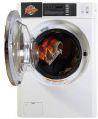
EW22 1-2 SETS OF GEAR
In addition to groves full range of Extractors they also offer a variety of Gear Driers.
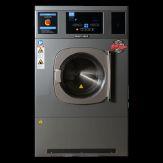
EW40 1-4 SETS OF GEAR
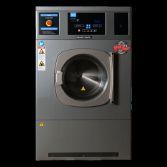
EW50 1-5 SETS OF GEAR
EW30 1-3 SETS OF GEAR
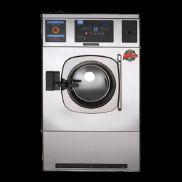
EW70 1-7 SETS OF GEAR
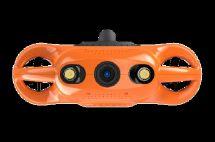
10 to +40C operating temperature
Max speed 1.5 M.s
Max depth – 100M Weight 4.2 kg
43 x 33 x 13 cm (16x12x5”) WIFI repeater
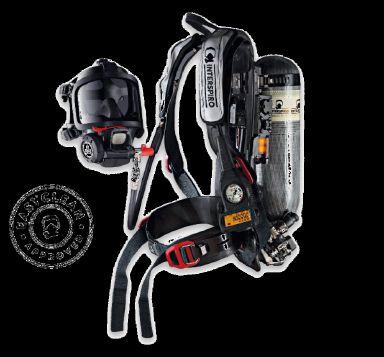
CANADIAN SAFETY EQUIPMENT IS PROUD TO BE A DISTRIBUTOR FOR THE INTERSPIRO RESPIRATORY PROTECTION LINE. THEIR STATE OF THE ART S9 INCURVE IS ONE OF THE MOST COMFORTABLE SCBAs YOU WILL EVER WEAR.
GIVE US A CALL AT 0182 OR EMAIL US AT INFO@CDNSAFETY.
No company has a richer history in Interspiro. Their innovations have become industry
By MANFRED KIHN
eing a firefighter is one of greatest jobs in the world. The sense of pride you get when you put on the uniform on your very first day and report for duty, to the time that you retire, is tremendous. But the various tasks that are required of you can be sometimes tedious and demanding and may not be your favourite, such as, conducting overhaul.
Once the main body of the fire has been extinguished, conducting overhaul is the next task, which is primarily searching for and extinguishing hidden fires or remaining hotspots. Other activities in overhaul include placing the building and its contents in a safe condition, determining the cause of the fire, and recognizing and preserving evidence of arson. Many of the tools used for overhaul are the same used for other tasks such as forcible entry and ventilation, which include pike poles, axes, prying tools and thermal imagers (TIs).
Before conducting overhaul of the structure, you must first ensure structural integrity of all the areas being searched. When searching for hidden fires, you should have a good understanding of general building construction to help you. Using your senses can aid you in the detection of hidden hotspots, which include:
• Sound: Any crackling or popping that can still be heard from fire still burning, hissing of steam.
• Touch: Any heat that can still be felt through walls and floors.
• Sight: Discoloration of materials, peeling paint, cracked plaster, rippled wallpaper.
• Thermal aided: A TI can identify a heat signature and form an image on the display screen using infrared radiation.
When examining all the areas involved in the main body of the fire, also look for the possibility of any fire extension into other locations of the building. Scan all areas visually with your naked eye and with the TI, for comparison purposes. TI can help you find hidden hotspots in concealed spaces such as in below floors, above ceilings or within walls without having to open areas and visually inspect them. Thermal imagers should not replace your senses since a TI is only a tool and when in doubt, open the area of concern and investigate further.
Understand that there are some limitations in operating a TI, any reflective materials must be searched via the traditional methods to uncover any hotspots or fire. The TI cannot see heat through a cooler object so thoroughly check insulation areas. If there are any discrepancies between the image shown on your TI and signs of fire in a concealed space, the spaces should be opened and inspected visually.
The emissivity in the different building materials used in construction of the structure will also play a big factor when using your TI. The density of materials such as brick, concrete and certain types of wood all have a higher emissivity value which will take longer to cool down. Constant monitoring in certain areas of concern may apply as we do not want to create any more unnecessary property damage than is required.
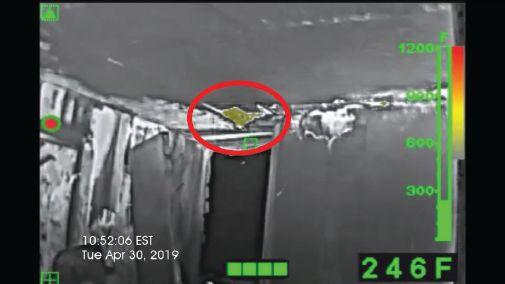
When using your thermal imager for examining or investigating potential fires or hotspots, there is information that will be shown on your display screen that can help you determine what you are interpreting:
• Black/white/grayscale: Objects or areas that are warm or hot will show up as white or whiter, objects or areas that are cold or cooler will show up darker or black and everything else will show up as grayscale.
• High heat colourization: The standard colours as per NFPA 18012021 are yellow, orange, red and will appear at certain temperatures depending on your TI’s make and model.
• Spot temperature measurement, which can consist of a sliding bar scale and/or a digital number depending on your make and model of TI.
If your spot temperature measurement starts climbing when observing a certain area, it is good to take notice of that, especially if any colourization appears. Take your time scanning all the areas of concern as the imager operator needs to interpret what they are looking at before moving on.
So, you have now declared the fire to be out, overhaul has been completed, and you are packing up your equipment in preparation to clear the scene. Stop, take that one last walk throughout the inside and outside of the structure with your TI. If your TI has digital video record (DVR) capabilities, this is the time you want to use it for any preservation of scene evidence. Now you can have that peace of mind that you are sure the fire is out before scene departure. Until next time, stay safe and practice often.
Manfred Kihn is a 19-year veteran of the fire service. He is Bullard’s fire training specialist for thermal imaging technology. He is certified through the Law Enforcement Thermographers’ Association as a thermal imaging instructor and is a recipient of the Ontario Medal for Firefighters Bravery. You can e-mail him at manfred_kihn@bullard.com.
FFIC’s 65th anniversary September edition explored some of Canada’s apparatus history and accomplishments. Here’s the promised follow-up.
By LAURA AIKEN
In a challenging year for Canada’s fire truck manufacturers, it’s a privilege to spend a bit more ink celebrating the tenacity, longevity and success of our homegrown apparatus and equipment. There are many people who have played integral roles in shaping the landscape coast to coast.
Howard Bradley is one. At 76, he has spent over 60 years in the fire industry through his involvement in Prairie Fire, Superior, and Rocky Mountain Phoenix. His grandfather started Prairie Fire, which sold all things fire fighting, in 1945 and it was passed on to his father. Bradley started fulltime in the business around 1963 and sold his first fire truck in 1968. In those days, they were with LaFrance Fire Engine & Fomite, and American company that set-up shop in Cooksville, Ont. Bradley came up through the company with his father’s desire he learn from the bottom up – cleaning toilets and sweeping floors wasn’t something he appreciated as a teenager, but he came to value the lesson. His dad also taught him that you never ask an employee to do something you can’t or won’t do, which left Bradley learning to do everything from filling fire extinguish-
ers to fixing fire trucks.
Bradley went on to serve as a principal in Superior, for about 15 years. Superior Emergency Equipment was founded by Bob Mather, Butch Barthel and Barry Skinner in Red Deer, Alta., in 1973. In 1980, Superior Fire Trucks was founded as a new division based in Kingston, Ont. Superior was eventually bought by Emergency One (E-One), turning into Superior Emergency Vehicles as a subsidiary in 1992.
Bradley, Gale Myers and Harvey Dussault (who died in a motorcycle accident in 2011), became the founding partners in Rocky Mountain Phoenix, originally a dealer for Superior. Rocky Mountain Phoenix became a dealer for Rosenbauer, and still is to this day, alongside supplying a number of other fire products. Bradley began the sale of Rocky Mountain Phoenix two years ago.
Six decades has seen a lot of change in movers and shakers, he said. King-Seagrave out of Woodstock, Ont., was once “king” in the west. Canadians were loyal to the Canadian manufacturers then, he said, and smart American companies kept a presence here. That seems to matter less these days, he said, with globalization. Technology, and automation in particular, has changed the fire service.
“But people can’t be eliminated,” he said. “Even if you had a robot to fix a truck you still need a human to agree it was fixed properly… You will always need a firefighter no matter how technically superior the equipment is.”
One of his most heartwarming moments came when a firefighter union president stood up and recognized Bradley as a fellow brother, acknowledging the importance of good, working equipment to firefighters.
“We really were accepted as part of the fire fighting community. I acted as a pallbearer at a number of fire chiefs’ funerals. They weren’t just my customers, they were my friends, and we shared a common ground in seeing the fire service succeed.”
On the east coast in Nova Scotia, Bob
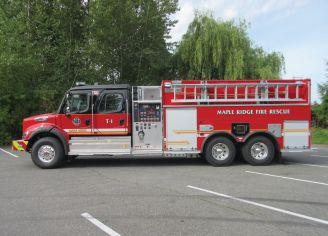
is the oldest fire truck manufacturer in Canada, having rolled their first pumper out in 1959.
Cuming started Cumings Fire & Safety in 1975, purchasing it from a local resident as a fire extinguisher recharging business. He owned a bakery for nine years as well, and they became too much, so he pared down to just fire and operated out of his mother’s garage for four years. The fire extinguisher business outgrew the garage and he bought a building in downtown Bridgewater, N.S. A friend in the fire business helped him get started, the first year with the store open saw little product on the shelves, he said, which he can look back and laugh at today. His wife Jane worked alongside him in the business, looking after the industrial safety division and general accounting while he managed the fire side. He built up the store, generating a good reputation for carrying the safest gear available to help his friends and colleagues. He sold fire trucks as a dealer for HUB and Superior, getting into every side of the business he could, and went 29 years before selling the business. The company is still in operation under the same name, but Cuming is amazed by the change in costs today. A good aerial used to be $500,000. A good firefighter suit used to be in the $1000 range. No more. He hopes the advancements in technology is what’s reflected in the price, nowadays.
Cuming was a firefighter for 20 years and a deputy chief in Bridgewater. He joined about 1965, an era of cotton coats and plastic

hats – about as “unsafe as you could get for the environment you were headed into.” He had to wait nearly two years to get on as a volunteer because the capacity in the department was full — that kind of problem wouldn’t exist for many volunteer departments in today’s tough recruiting environment. When people seemed to get interested in modernizing the safety equipment, that’s when he got interested in having a fire equipment business. He retired after having open heart surgery in 1985, and although he returned to the department, his doctor recommended he step off the active list. Poor health prompted his decision to sell the business as well, and he’s 78 now, “still ticking” he pointed out. He made a lot of good friends over the years, and he said he misses the fine people he’s dealt with in the fire service.
And, back on the west coast, a manufacturing legacy continues to thrive. HUB Fire Engines’ first pumper, built on a Ford chassis in 1959, was sold for $3,500 to the District of Matsqui, which is now Abbotsford, B.C., where HUB resides. Henry Whitehouse, the fire chief in then Matsqui, is HUB’s founder. Whitehouse sold the business in 1973 to Earl Smith, now deceased, and his friend Richard Mannering. Lorne Bunz later joined as a
business partner. The company expanded, introducing a mobile service and fire apparatus on different chassis such as GM, Ford and Mack. When Smith left, Bunz assumed majority control and oversaw a decade of tremendous growth, expanding HUB’s reach across Canada, and even as far as Russia.
When HUB celebrated its 40-year anniversary in 1999, Harvey Goodwin, Jack Rempel and Glenn Berger were the owners, having taken the reins as equal partners in 1995. All were local to Abbotsford, where HUB was well-known in the community, but none knew anything about the fire service in particular. They all shared a love for equipment — anything shiny and with wheels — said Goodwin, and had no shortage of business acumen. Goodwin looked after the marketing, Rempel focused on the finances, and Berger was the on-site partner full-time at the plant. Berger left several years ago, and today HUB has five partners, with a managing partner in Mike Welte (joined in 2017) and another active partner in Jason Vangarderen (came on in 2015). Goodwin, now 73, has been business partners with Rempel for over 40 years, and they are winding down their active roles, but not retired.
Canada’s oldest fire truck company has never missed a day of production, said Goodwin, and “order board wise we’re stronger than we’ve ever been.” HUB’s focus, from its inception, has always been on the smaller volunteer or composite departments and building personal relationships. It continues to be so today, and Goodwin said they have retained the relationships with these fire departments as their communities have grown and needs have evolved. HUB builds 15 to 20 high-end trucks per year, operating a different model than larger assembly line facilities who offer stock trucks or standard models.
The challenge today lies in the environment that is impacting all fire truck manufacturers, with the their three main issues being the supply chain and resulting surcharges, alongside availability of labour, said Welte, who was born and raised in Abbotsford like many of the other local partners in the business. Welte’s background is in finance, and he entered a new world coming into the fire. It’s one he’s enjoying and Goodwin agrees as he look back at his time in Fire.
“It’s been a great ride and there’s absolutely nothing I would go back and say I wish I wouldn’t have done it that way.”
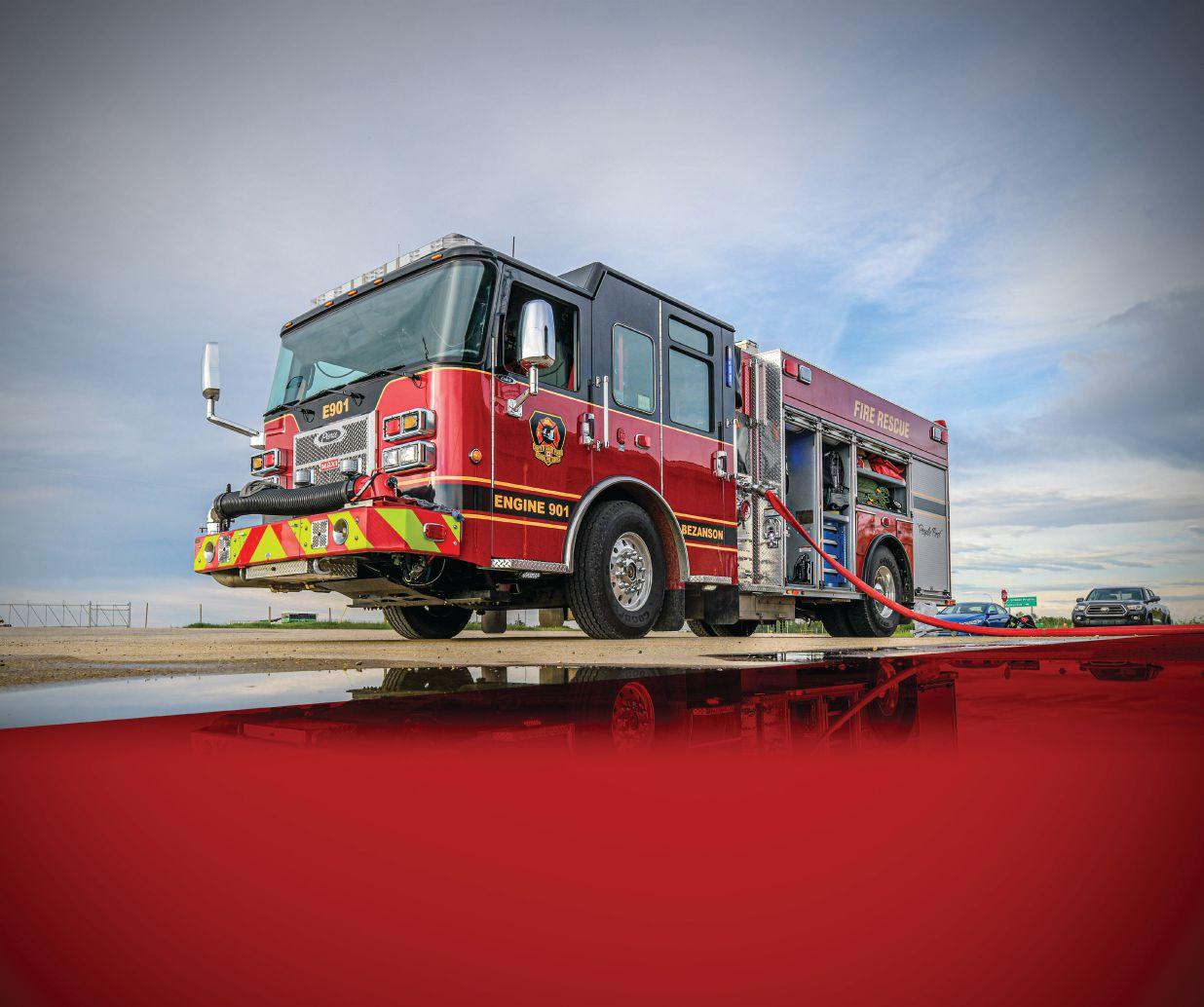
MAXI Saber provides exceptional value for Canadian fire departments by combining MAXIMETAL’s built-for-Canada know-how, Pierce’s robust, purpose-built chassis and Canada’s largest & best-equipped dealer network for support.
MAXI Saber is available with multiple firefighting body configurations including pumper, pumper-tanker, tender and rescue bodies, all proudly built in Canada. Visit our web site or reach out to one of our dealers today to begin planning your next fire apparatus.
By CYRIL HARE
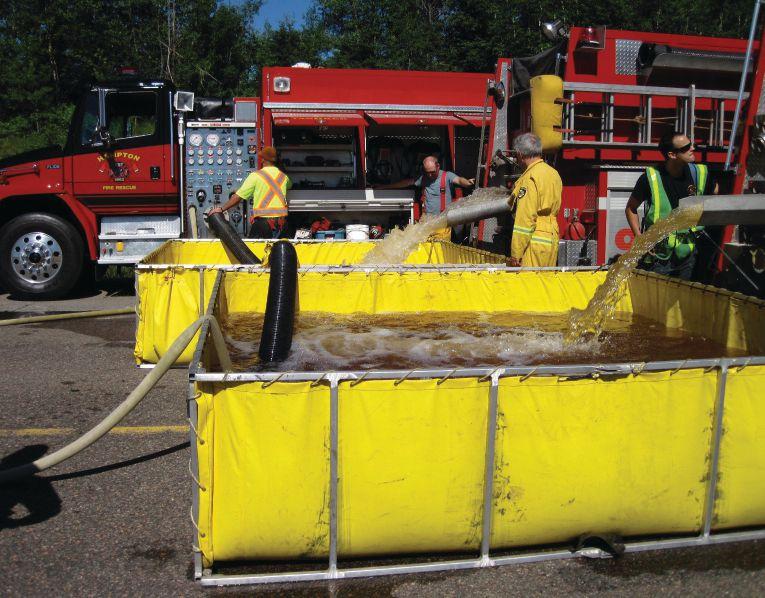
Fires in rural and suburban areas that are not served by watermains and fire hydrants present unique challenges for the fire service. Firefighters responding to a rural fire must bring their own water or have static sources available at or near the scene, that they can access for fire fighting. Without an adequate water supply, the responding firefighters will not be able to protect exposures and extinguish the fire. There are a number of measures that a fire department can take to ensure that they have enough water to safely control and extinguish a fire.
Standardized equipment and standard operating procedures (SOPs) must be developed by the fire department. Showing up without a plan is a plan for failure. In many rural areas, the fire service must rely on mutual aid to muster enough resources to deal with a fire emergency. All of the fire departments who respond to an emergency, must follow the same SOPs.
An excellent example of mutual aid co-operation is the Royal Valley Firefighters Association. This mutual aid group provides emergency response for a number of municipalities located east of Saint John, N.B. Their tanker shuttle response program, developed by the Kennebecasis Valley Fire Department, has been accredited by Fire Underwriters Survey (FUS) for an industrial/commercial water supply. The participating fire departments have standardized tanker response procedures and practice together regularly. All of their residents and property owners benefit from their combined efforts. One department could not muster sufficient personnel and equipment, however with their combined efforts, these departments are able to provide an exceptional tanker shuttle program.
Pre-planning is key to success in emergency response. You should know your water delivery capabilities and the location of your water sources for your response district and should have preplans for the set-up of tanker shuttles and pump operations. NFPA 1142 “Water Supplies for Suburban and Rural Firefighting” and the IFSTA “Pumping Apparatus Driver/Operator Handbook” provide excellent guidance on the use of static water supply sources and the establishment of water shuttle operations.
Each building has a different water supply requirement depending on the building size, construction and occupancy risk. There are a number of methods of calculating the required water supply. The provincial building codes are based upon the National Building Code (NBC). The NBC requires “an adequate water supply for firefighting” for large buildings. The NBC does not provide specific requirements for determining an adequate water supply. Appendix ‘A’ of the NBC provides the following guidance note: “A-3.2.5.7.(1) Water Supply. The intent of Sentence 3.2.5.7.(1) is that an adequate water supply for firefighting be readily available and of sufficient
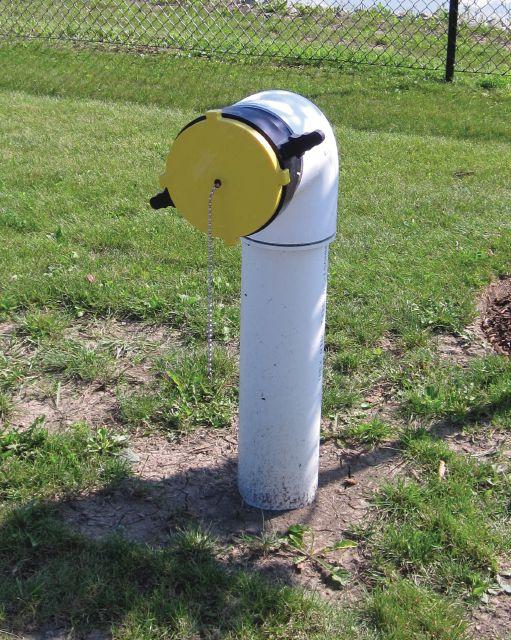
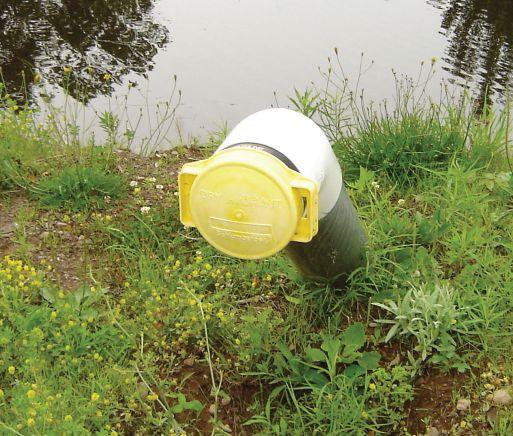
Pumpers should be equipped with sufficient hose and proper fittings to reach from the dry hydrant to the protected structures.

volume and pressure to enable emergency response personnel to control fire growth so as to enable the safe evacuation of occupants and the conduct of search and rescue operations, prevent the fire from spreading to adjacent buildings, and provide a limited measure of property protection.”
The water supply requirements for buildings containing internal fire suppression systems, including sprinkler systems and standpipe systems, are contained in specific standards referenced in the Code. Compliance with the referenced standard, including any variations made by this Code, is deemed to satisfy the intent of Sentence 3.2.5.7.(1). However, it will be necessary to verify that an adequate source of water is available at the building site to meet the required quantities and pressures.
For a building with no internal fire suppression system, the determination of the minimum requirements applicable to the water supply for firefighting is relevant mainly to building sites not serviced by municipal water supply systems. For building sites serviced by municipal water supply systems, where the water supply duration is not a concern, water supply flow rates at minimum pressures is the main focus of this provision. However, where municipal water supply capacities are limited, it may be necessary for buildings to have supplemental water supplies on site or readily available.
The sources of water supply for fire fighting purposes may be natural or developed. Natural sources may include ponds, lakes, rivers, streams, bays, creeks, and springs. Developed sources may include above ground tanks, elevated gravity tanks, cisterns, swimming pools, wells, reservoirs, aqueducts, artesian wells, tankers, hydrants served by a public or private water system, and canals. Consideration should be given to ensuring that water sources will be accessible to fire department equipment under all climatic conditions.
The volume of on-site water supply is dependent on the building size, construction, occupancy, exposure and environmental impact potential, and should be sufficient to allow at least 30 minutes of fire department hose stream use.
Appendix ‘A’ of the Ontario Building Code (OBC) provides guidelines for calculating a required water supply. The OBC also sets out minimum flows that must be achieved based upon the size and fire risk of the building. The OBC guidance, insur-
er’s standards such as FUS “Water Supply for Public Fire Protection” or NFPA 1142 can be used to calculate the capacity of a reservoir for a firefighting water supply. The NBC requires that a fire hydrant be within 45m of a fire department connection or where no fire department connection is required, within 90 metres of the principle entrance.
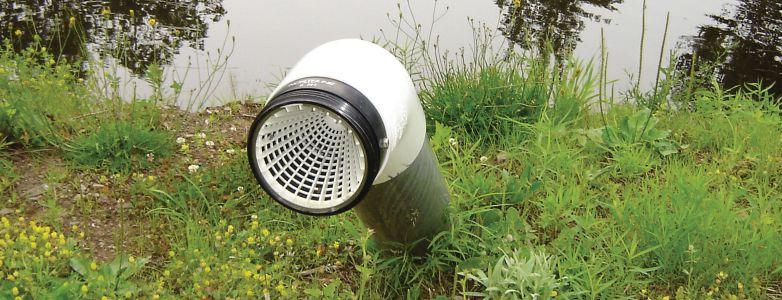
Where there are no water mains and pressurized fire hydrants, dry hydrants can be installed to satisfy the building code requirements. The installation of dry hydrants on tanks, ponds, streams and other static sources of water will facilitate a faster establishment of a water supply and safer operations for the emergency responders.
The building codes do not have specific requirements for small buildings such as houses. However, insurers will recognize a dry hydrant as a water supply for firefighting where the dry hydrant is within 300 metres of a residential building and where there is a year-round adequate water supply.
Pumpers should be equipped with sufficient hose to reach from the dry hydrant to the protected structures. In locations where the dry hydrant or other water source is greater than the hose load on the pumper, a pumper relay should be pre-planned. It is far more efficient, reliable and safer to
pump rather than to tank water. A two or three truck relay will provide more water to the scene than a tanker shuttle. Tanker shuttles should only be used when the water source is so far away that pumping is not possible.
During my consulting work across Canada, I have seen numerous variations of dry hydrants, many of which were non-functioning or inadequate for the risk being protected. In Canada there is no standard for the design and installation of dry hydrants. Guidance can be found in NFPA 1142. Specifications can also be provided by a number of equipment suppliers who sell dry hydrants. Since each province is responsible for establishing fire service standards for their communities, it would be appropriate for the provincial fire marshals to set a single standard for dry hydrants.
Most jurisdictions use 150 mm piping for the dry hydrant suction pipe however, I have seen piping as small as 65 mm used for dry hydrants. Small suction piping will not provide sufficient water to supply more than a single hose stream. Small suction pipes are not very effective when you need large volumes of water for master stream or aerial operations. Where the suction pipe is unusually long the pipe size may have to be increased to 200 mm or larger.
The suction connection should be equipped with a 150 mm male connection
for the pumper to connect to. Each pumper should carry a double female adapter that matches the suction hose to the 150 mm male fitting. It is not recommended to use a female swivel on a dry hydrant. Not all fire apparatus utilize 150 mm suction hose. If a 150 mm female swivel is used the fire department preplan will have to designate which pumpers can be used for drafting. I have reviewed incidents where the pumper that was assigned to draft did not have 150 mm hard suction hose and could not connect to a dry hydrant resulting in a delay in establishing a water supply. In addition, a female swivel requires more maintenance. Dry hydrants are not protected from the weather. The swivel must be lubricated and the gasket inspected for cracking or hardening on a regular basis.
Some jurisdictions require 100 mm Storz connections for the dry hydrant. I have witnessed incidents where the gasket on the Storz hose would not seal and a draft could not be achieved. Also, a 100 mm hose will severely restrict the water available to the pump. NFPA 1142 requires that a dry hydrant be capable of flowing 3800 lpm. NFPA 1901 “Standard for Automotive Fire Apparatus” requires a minimum suction hose size of 150 mm for pumps with a capacity of 4000 lpm or greater. A 100 mm suction is rated for pumps of 1300 lpm or less. There are insurer’s standards that dictate the required flows for various types of buildings and risks. FUS “Water Supply for Public Fire Protection” can be used for guidance in determining minimum water flow requirements. In Ontario the OBC sets out minimum flow requirements of 1800 lpm up to 9000 lpm depending on the size of the building and the risk. Where the flow requirements exceed 4000 lpm it may be necessary to have piping larger than 150 mm and to have more than one dry hydrant.
The dry hydrant should be within three metres of a hard surface that the pumper can be parked on. Initial draft lift should be a maximum of three metres whenever possible. Pumpers are rated based upon a 3 m lift and a greater lift will reduce the efficiency of the pump and the quantity of water available for fire fighting.
The fitting for the dry hydrant should not be higher than the centre of the pump suction. Where the fitting is higher than the pump an air bubble can form in the suction hose and cause the pump to lose suction. If you use clear suction hose, the pump operator can see any air bubble and work it through the pump without losing suction.
Many jurisdictions do not regularly test dry hydrants. The National Fire Code of Canada (NFC) references NFPA 25 “Standard for the Inspection, Testing, and Maintenance of Water-Based Fire Protection Systems” as the standard for maintaining fire protection systems. Section 7.2.2.6. of NFPA 25 sets out the requirements for inspection, testing and maintenance of dry hydrants. There are service companies who will provide regular inspection, testing and flushing of dry hydrants. A dry hydrant is of no use to you if it does not work. Dry hydrants that have been neglected and not flushed have been found full of debris and silt that has rendered them unusable.
Dry hydrants are a valuable tool for responses in areas without watermains and pressurized hydrants. Proper design, installation and regular maintenance will ensure that you have a reliable water supply when you need it.
Cyril Hare is the retired fire chief for the city of Mississauga. Since his retirement, he has been providing fire and life safety consulting services to government and industry across Canada in fire protection and prevention, special risk protection, emergency response, civil litigation and fire and building codes. He is the president of Cyril Hare & Associates Inc., a fire and life safety consulting firm.
By PATRICK J. KENNEY
How many times have you heard someone say, “We just didn’t see that coming.” I’ve heard it far too often and usually relating to personal tragedy, loss, and suicide.
As a speaker on mental health and suicide, I have had the honour of speaking to audiences from various backgrounds, including first responders, government leaders, mental health professionals and youth groups for more than 13 years.
Often after I speak, people share powerful and heartbreaking stories of how suicide has impacted them either personally, professionally, or both. Along with sharing their stories, they ask many great questions. What I hear far too often delivered with a sense of despair is, “Chief, they were such a great person; we just didn’t see that coming. How did we miss it? What can we do about it going forward?”
The pain of feeling you missed signals that could have saved the life of somebody you valued in whatever capacity: family, friend, or co-worker, is devastating. The simple answer about an incredibly complicated disease is that many times the signs are subtle.
Hindsight is 20/20 and looking back, maybe there were signs such as personality and behavioural inconsistencies that were out of the ordinary for that person.
Communication is so critical. You won’t know to what extent the challenge is in their life unless you ask:
• “Is there anything I can do for you?”
• Or, in the case of concern about suicide, “Are you thinking of killing yourself?”
What do we do if the person shares that they need help or are suicidal? In my experience, many leaders have not “pre-planned” the response to a human event the same way they have for an emergency response.
Good leaders try to think of as many possibilities as they can when they do a risk hazard analysis of their organization and community. I’ve always wondered why we don’t conduct a risk hazard analysis concerning our staff and their families. Why don’t we do human pre-planning?
Anytime you’re leading people, whether it’s in a fire department or a factory, you know human beings run into difficult life situations. Sometimes the challenge is driven by financial difficulty, other times by health, including mental health. Look at what we as a world have gone through the past two and a half years in this pandemic. We don’t do a very good job of pre-planning the effect of those kinds of events on our people. We don’t do a risk hazard analysis of what may impact our people, whether it originates from their personal or professional life.
In developing a human pre-plan here are some examples of questions to consider as you evaluate the effectiveness of your plan:
• What is your plan to support someone after finding out their child was diagnosed with cancer?
• What is your plan if somebody reports one of their shift personnel is acting out of sorts suddenly?
Without a plan, people react in the moment. You may have some resources you know are available to address a particular situation, but you may not know to what extent they’re effective. Worse yet, you may not have any resources on your radar at that moment, and you wing it. There is nothing worse than “winging it” with family, co-workers, and friends when someone unexpectedly takes their life.
So, what do I tell people who share they didn’t see a suicide coming? Remember, I am not a licensed mental health professional, just a fire chief dad who had a son die by suicide. That experience and the people who have shared their pain with me about a similar loss are the basis for this advice. I advise them to transition their approach regarding mental health and suicide to a proactive course of action aimed at education and include human pre-planning as a methodology to prepare for these serious and many times inevitable situations.
I encourage you to develop a human pre-plan specifically addressing mental health with the same vigor that you pre-plan target hazard buildings. If not managed correctly, the potential for life loss in both situations is devastating. So, what do you consider?:
Somehow, we don’t include people’s mental well-being as the number one item in our risk hazard analysis. We just keep our fingers crossed, hoping everything will go fine.
• Assume you will have people in your organization suffering from mental health challenges, whether it is their own or someone in their family, or even in their workgroup.
• Have steps in place that the person can go through to mitigate the emergency based on the severity. Plan for the simple through to the catastrophic.
• Know what your resources are, and make sure everyone is aware of how to contact them.
• Consider a written standard operating procedure (SOP) that outlines those resources, when they should be contacted and by whom. Putting it in an SOP format normalizes mental health as a personal safety concern and can help to destigmatize the topic.
• Do your homework on how effective those resources are. In other words, in the case of an Employee Assistance Program, what do they know about your organization, and what does your employees’ job
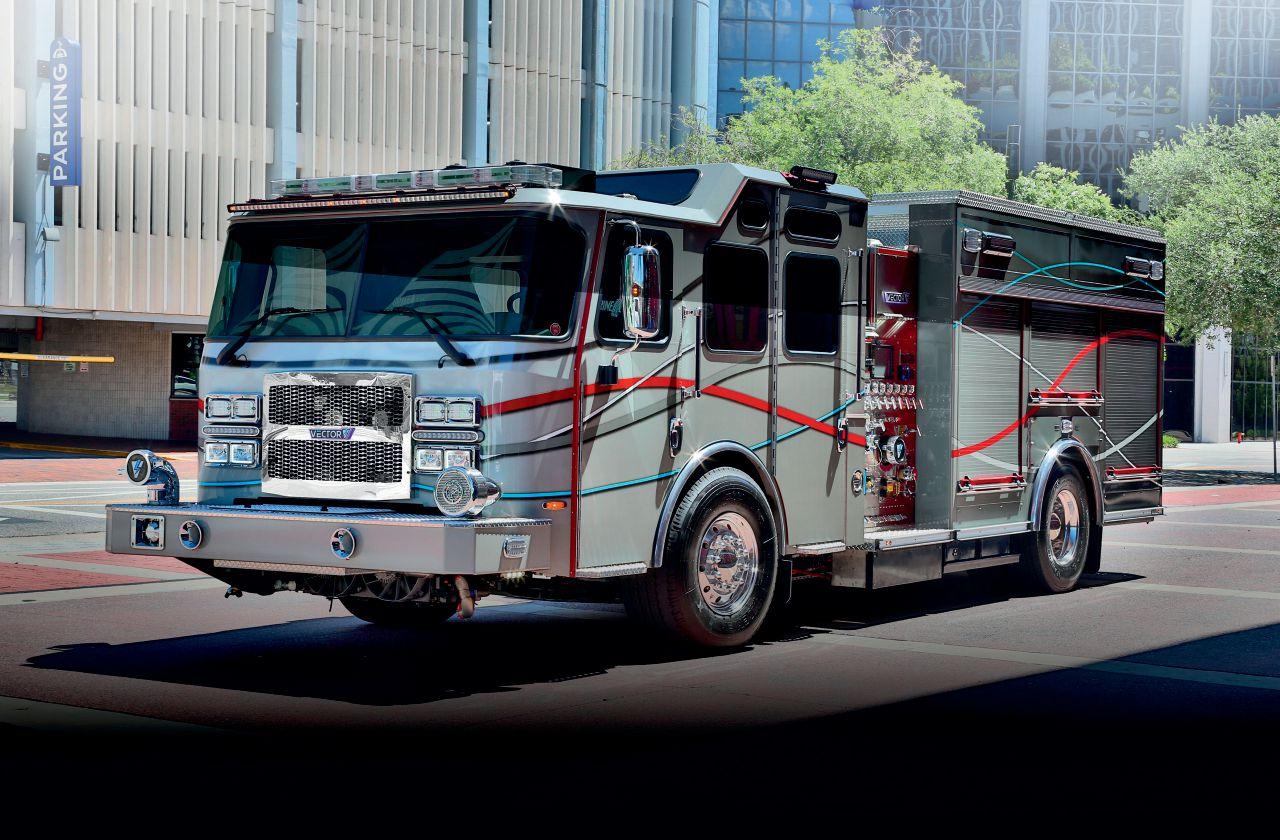
FULLY ELECTRIC DRIVE AND PUMP OPERATIONS—UP TO FOUR HOURS PUMPING ON ONE CHARGE
TWO TO SIX TIMES MORE BATTERY POWER—327 KWH TOTAL CAPACITY
LOW CENTER OF GRAVITY BATTERY PLACEMENT WITH UNDERSIDE ACCESS
One of the most exciting developments in the firefighting industry to date is here. Vector answers the call as the first North American-style fully electric fire truck that’s innovatively engineered so firefighters can drive and pump on electric power only. Energized with proven global technology and customizable to meet your needs, Vector is taking firefighting to an extraordinary new level. Welcome to the future of firefighting. Vector has arrived on scene. Contact your E-ONE, KME, Ferrara, or Spartan ER dealer to pre-order or schedule an exclusive virtual session with REV Fire engineers.

description entail?
• First responders train for the various emergencies we may see in the field with everything from fires to emergency medical calls, hazardous materials response, specialty rescue, terrorism, and now pandemics. Does mental health training in your organization include their families as well?
• Are your resources up to date (the roster of EAP counselors assigned to your personnel and their families) and are you familiar with their limitations (for example, how many counselor visits are covered by insurance?).
• Does your pre-plan include long-term counseling?
• What pre-plan do you have for addressing your own mental health? After you have the resources in place to handle things from the onset, make sure you also have the resources for the long term. That is an issue many organizations miss. We as leaders with our “Type A” personalities want to fix everything at that moment and move on. Mental illness is not routinely resolved that quickly. You can never pre-plan for everything, whether it’s an emergency or a human condition but you can have a pre-plan for most things you and your people can encounter. Those in terminal pain can be masters at hiding their suffering from you. They don’t want you to intercede for various reasons ranging from the associated stigma of having a mental illness to suicidal thoughts. Our son Sean would mask his suffering to the point of pretending he was happy to mislead his friends and family. He was determined to fool us into thinking he was doing better while at the same time planning his death by suicide. It is important to recognize that you can do everything in your power and still “not see that coming.” You can’t save everybody no matter how
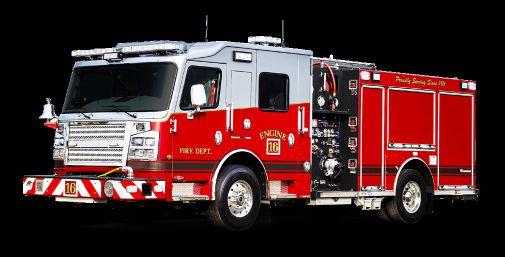
City View Specialty Vehicles is the Ontario dealer for Rosenbauer America. Rosenbauer America builds all type of fire apparatus, including aerials and platforms, pumpers, tankers and the RTX electric fire truck as well as the BEST electric vehicle Battery Extinguishing System Technology.
City View is in Mississauga and Ottawa, each with in-house and on-road service capabilities with 310T and EVT trained staff. City View are dealers for Cummins, Allison, and Meritor, and capable of completing minor service up to full engine overhauls.
comprehensive your plan is. Instead, focus on what you can do. That is to prepare for the situations concerning what you and your people can be expected to encounter.
If you didn’t see that coming, my challenge to you, going forward is to look at your organization, and if someone was in trouble not only have the plan developed but put it in place:
• Do you have a plan to address those challenges?
• Would everybody be trained on that plan?
• Would the resources be available ahead of time, for not just the individual but their family too?
• Would it be accessible and inviting if you’re the one that needs that help?
• Would you be proactive with education, not reactive with a “didn’t see it coming” moment?
Even with the best plan, you may still experience loss and the reality is in many cases you may never know the ‘why’. It is never too late to go back after a tragedy, and instead of second-guessing what you missed, put in place proactively how to attack the problem so that loss results in saving others in the future.
Patrick J. Kenny has been a member of the fire service for 38 years and the author of the awarding-winning International Bestseller TAKING THE CAPE OFF: How to Lead Through Mental Illness, Unimaginable Grief and Loss. He has presented in multiple countries on Mayday for Mental Health and written articles on mental health, leadership, fire safety, and fire code challenges. Learn more at https://patrickjkenny.com/.
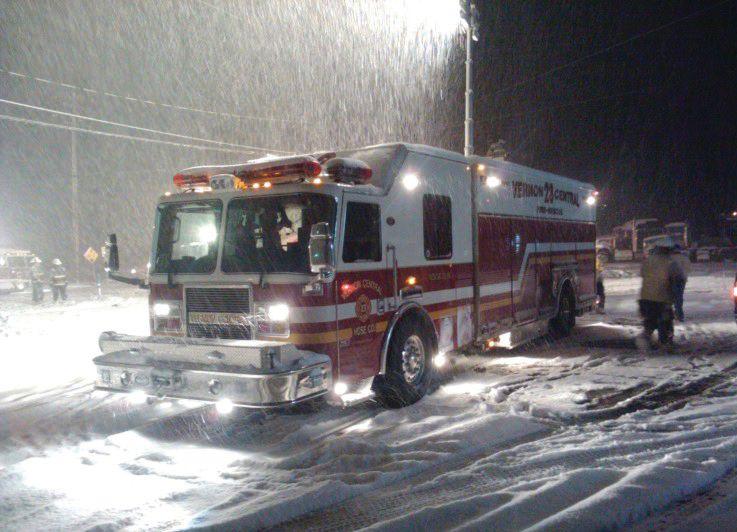
The Dynamic Fire Chief Item # 1593704407 $79.65
Bridges the gap between service delivery (management of street level operations) and the executive-level management needed by a five-bugle-wearing CEO. Whether you lead a paid or volunteer department, the management skills needed to lead a successful department are the same.
Hazardous Materials for First Responders, 6th Edition
Item #: 36701 $125.00
Prepares first responders to take appropriate initial actions at hazardous materials spills or releases and weapons of mass destruction incidents. This edition provides fire and emergency services personnel with the information necessary to meet the job performance requirements (JPRs) of NFPA 470, Hazardous Materials/Weapons of Mass Destruction (WMD) Standard for Responders, 2022 Edition.
Trench Rescue: Principles and Practice to NFPA 1006 & 1670, 4th Ed Item #: 1284202342 $139.00
The most comprehensive trench rescue resource on the market, delivering updated information on soil assessment, trench protection, shoring techniques, and more. The Fourth Edition provides a comprehensive introduction to trench rescue, focusing on the knowledge and skills required to effectively and safely perform rescues.

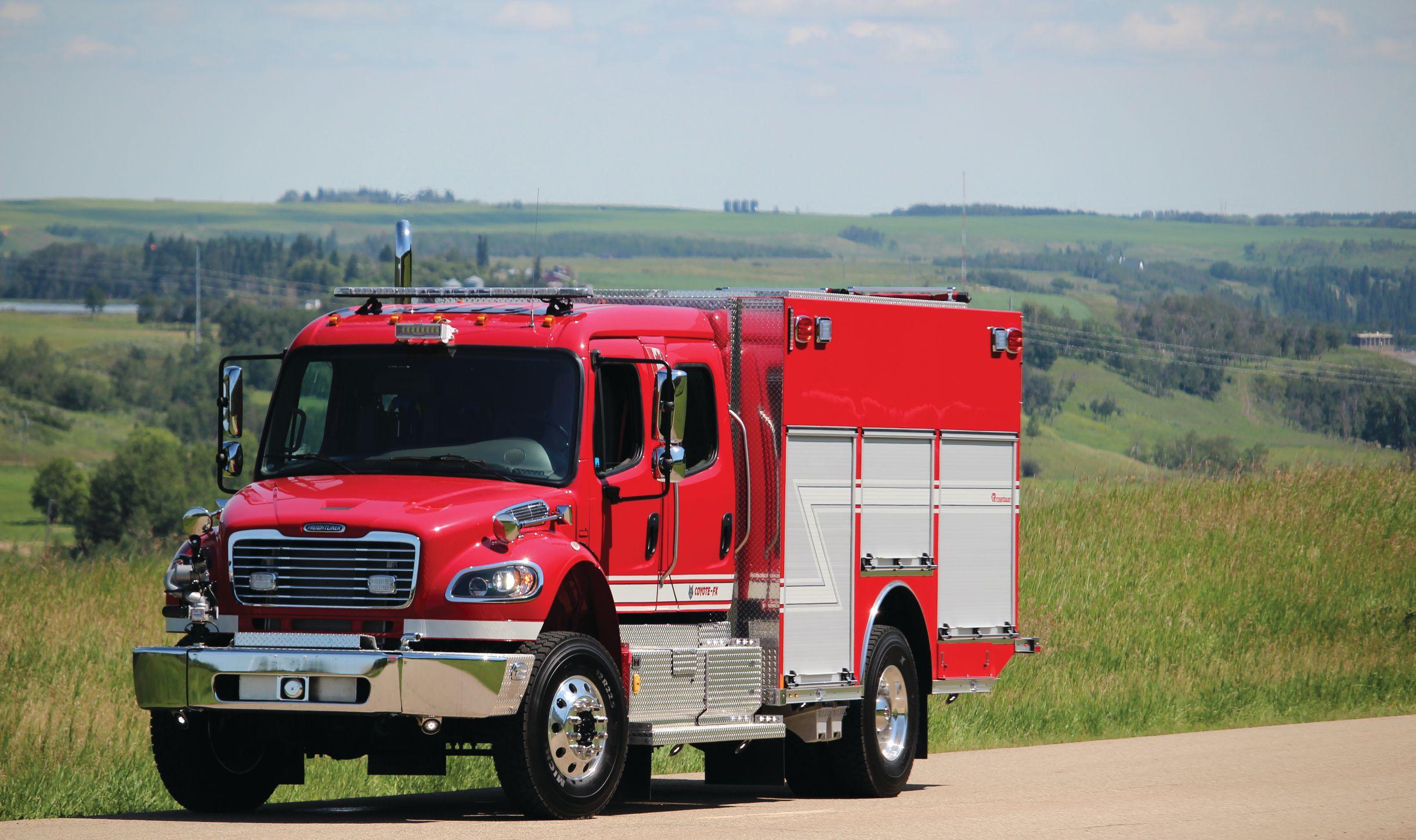



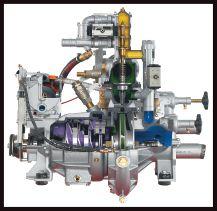
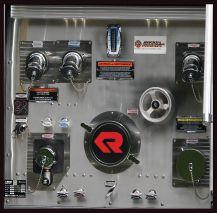
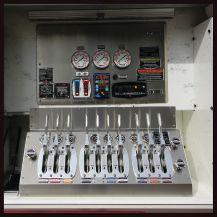
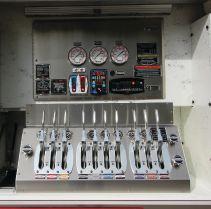
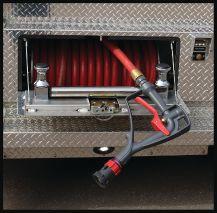


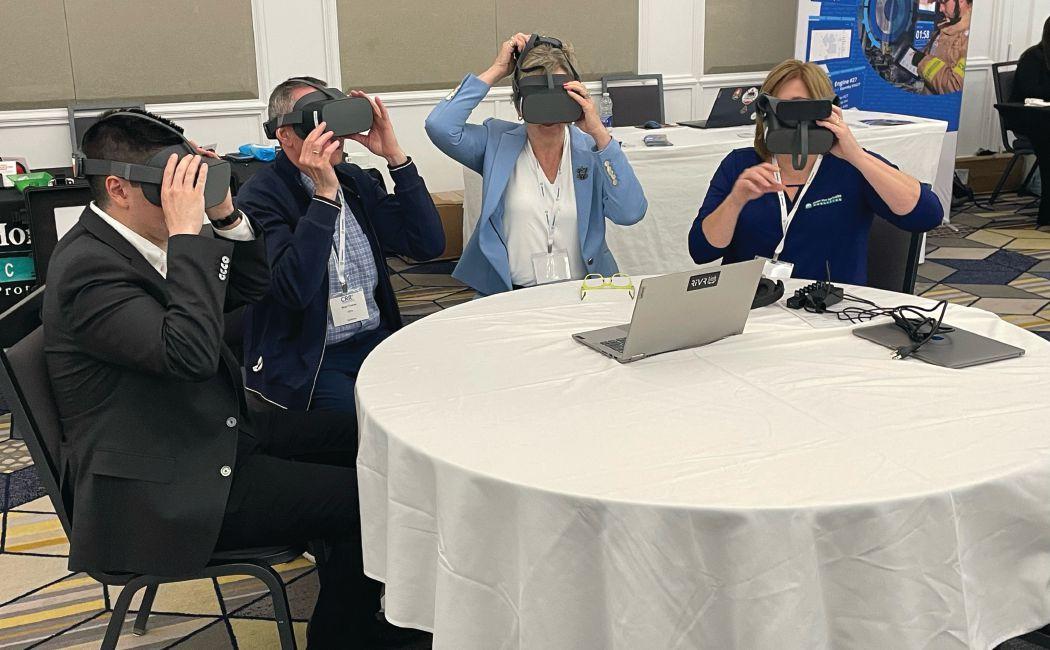
TOP Members of the Home Fire Sprinkler Coalition Canada train on the new VR headsets.. Left to right, Daniel Beck, Canadian Automatic Sprinkler Association; Sean Tracey, chair, Home Fire Sprinkler Coalition Canada; Laura King, NFPA regional director, Canada; and Marny McNitt, Home Fire Sprinkler Coalition.
RIGHT Deputy Chief Gilbert MacIntyre experiences the VR sprinkler video during the Maritime Fire Chiefs Association conference in Halifax in July. The VR kit can be used to educate builders/ developers about home fire sprinklers.
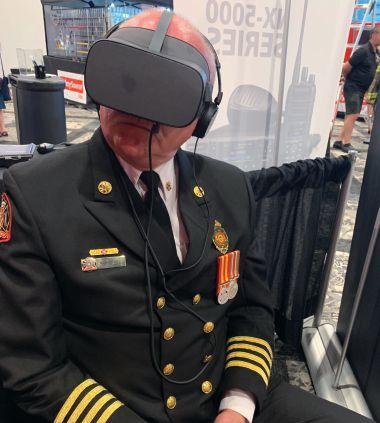
VR program helps educate developers about the benefits of
By LAURA KING
It’s not always practical to conduct a live side-by-side burn to increase awareness of home fire sprinklers – personnel, cost, weather, and environmental impact are just a some of the considerations.
With those factors in mind, and a desire to increase outreach to builders and developers, the Home Fire Sprinkler Coalition developed a virtual reality video that immerses viewers in sprinklered and non-sprinklered rooms.
The virtual reality home fire and sprinkler activation video changes the way sprinkler advocates reach audiences, said Lorraine Carli, HFSC president and senior vice president of outreach and
advocacy with the National Fire Protection Association.
“That’s because this side-by-side is truly portable; it requires no construction, no permitting and no live fire,” Carli said.
The VR video was produced using stateof-the-art cinematic technology to capture actual house fires in two identical living rooms. In one room, viewers experience the fire in real time until flashover occurs. In the other room, users see how the high heat from the fire activates the sprinkler, controlling the fire and smoke. Unlike VR animation, this resource offers a realistic educational opportunity to understand what a home fire is like, and how vital fire sprinklers are to escape, survival and property protection.
Intended for adults, the dramatic video is available at no cost on HFSC’s YouTube channel and on the HFSC Canada website for anyone to view in 2D (homefiresprinklercanada.ca). The 2D version allows users to move around the fire rooms by clicking and dragging the video.
The accompanying soundtrack encourages viewers to consider using the VR video to reach and educate future home builders and buyers in their communities. At the same time, through targeted digital advertising, HFSC Canada is connecting with Canadians who plan to build new homes, primarily millennials. In a survey of homeowners, 80 per cent of millennials who were educated about how sprinklers work said they would prefer a to buy a home that has home fire sprinklers.
For HFSC, advertising the facts about home fires and fire sprinkler technology, and the new, free virtual reality online video, are proving effective. Since the video was posted in January, it has been viewed more than 33,000 times.
To explore the value of an enhanced 3D experience, HFSC has also acquired cost-effective 3D glasses that are used with a smart phone. With the smart phone open to the YouTube video, users clip the phone onto the reusable glasses and experience the VR video in dramatic 360-degrees. (This option is available to Built for Life fire departments in Canada. To become a Built for Life department, visit homefiresprinklercanada.ca and click on fire service in the left menu.)
The most immersive experience with the virtual reality home fire and flashover video is achieved by wearing VR headsets. In Canada, with funding from FM Global, HFSC has produced a full-scale VR kit with 10 headsets, a presenter laptop and a self-contained rolling case. Using the kit, the
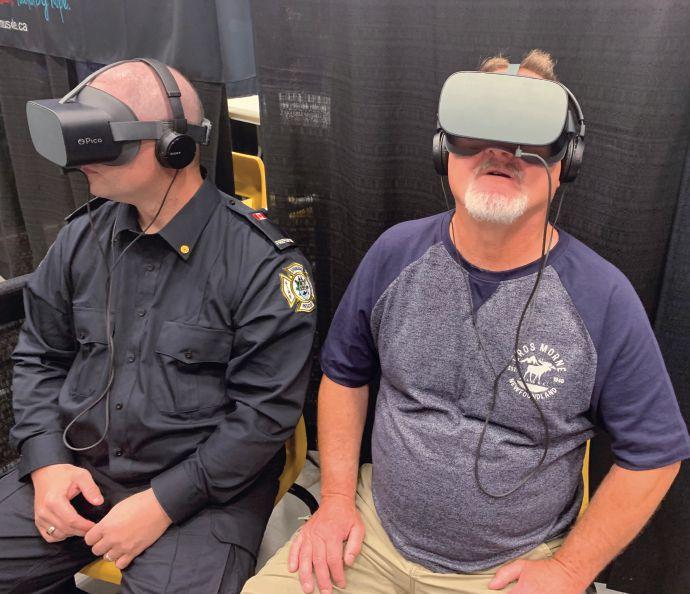
presenter can show the VR video to a group or use the headsets with individuals. The kit can be transported and used indefinitely. HFSC is evaluating the effectiveness of the immersive kit, asking for feedback from stakeholders who play a role in determining if new-construction homes will be protected with fire sprinklers. In addition to the fire service and AHJs, these stakeholders include developers, builders, planners, building officials and other local decision makers, and water purveyors. By bringing the immersive VR experience to them, fire and life safety educators are finding it much easier to reach and educate these stakeholders.
Based on 400 evaluations, more than 90 per cent of users said the VR video was a realistic experience and gave it high marks for the ability to “move around” in the
rooms. When asked to rank the educational benefit of the experience, 85 per cent gave it the highest rank. A few members of the fire service said the immersive experience was so realistic they could almost smell the smoke.
This new virtual educational tool can enhance local AHJ outreach to builders and developers. HFSC’s developer incentive program provides free information and case studies about AHJs that have successfully increased sprinklered new-home construction in their jurisdictions.
HFSC is aware that fire departments experience challenges dealing with sprinkler myths, code updates, and other negativity that impacts even voluntary sprinkler installations. As a result, in communities without new-construction home fire sprinkler requirements, local developer incen-
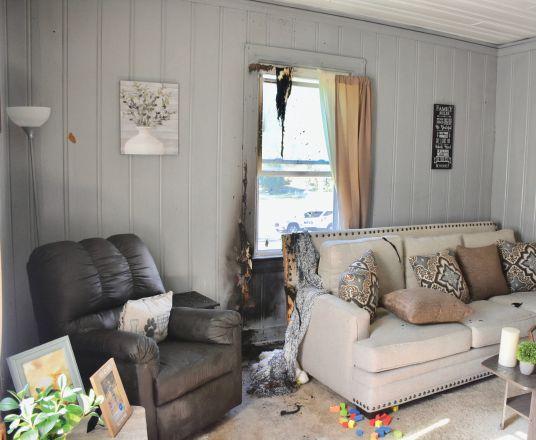
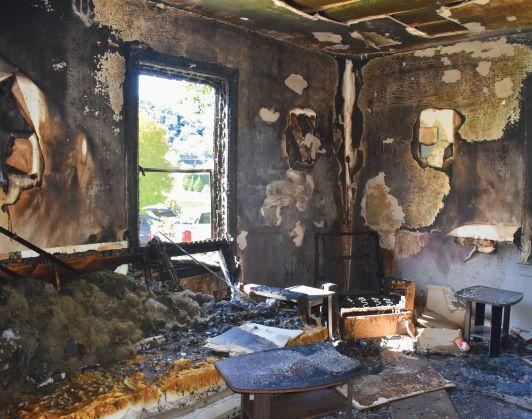
tives are an essential strategy for AHJs to achieve protection of entire developments.
Fortunately, the incentive approach is effective. Regardless of code restrictions, AHJs have the authority to offer valuable incentives (or trade-ups). Developer incentives, best negotiated at the pre-approval stage, are offered in exchange for full sprinkler protection to facilitate profitable infrastructure flexibility. By taking advantage of these trade ups, developers can better utilize land for higher revenue, and reduce infrastructure and other construction costs. The upshot? A local AHJ-led developer incentive program is a mutually beneficial strategy that helps achieve community risk reduction goals, protecting residents, firefighters and the entire community.
HFSC Canada comprises NFPA, the Canadian Automatic Sprinkler Association, Co-operators, and the Canadian Association of Fire Chiefs. For more information, and to view the virtual reality video in 2D, visit homefiresprinklercanada.ca, or email lking@nfpa.org.
Laura King is NFPA’s regional director for Canada. Contact her at lking@nfpa.org, and follow her on Twitter at LauraKingNFPA.
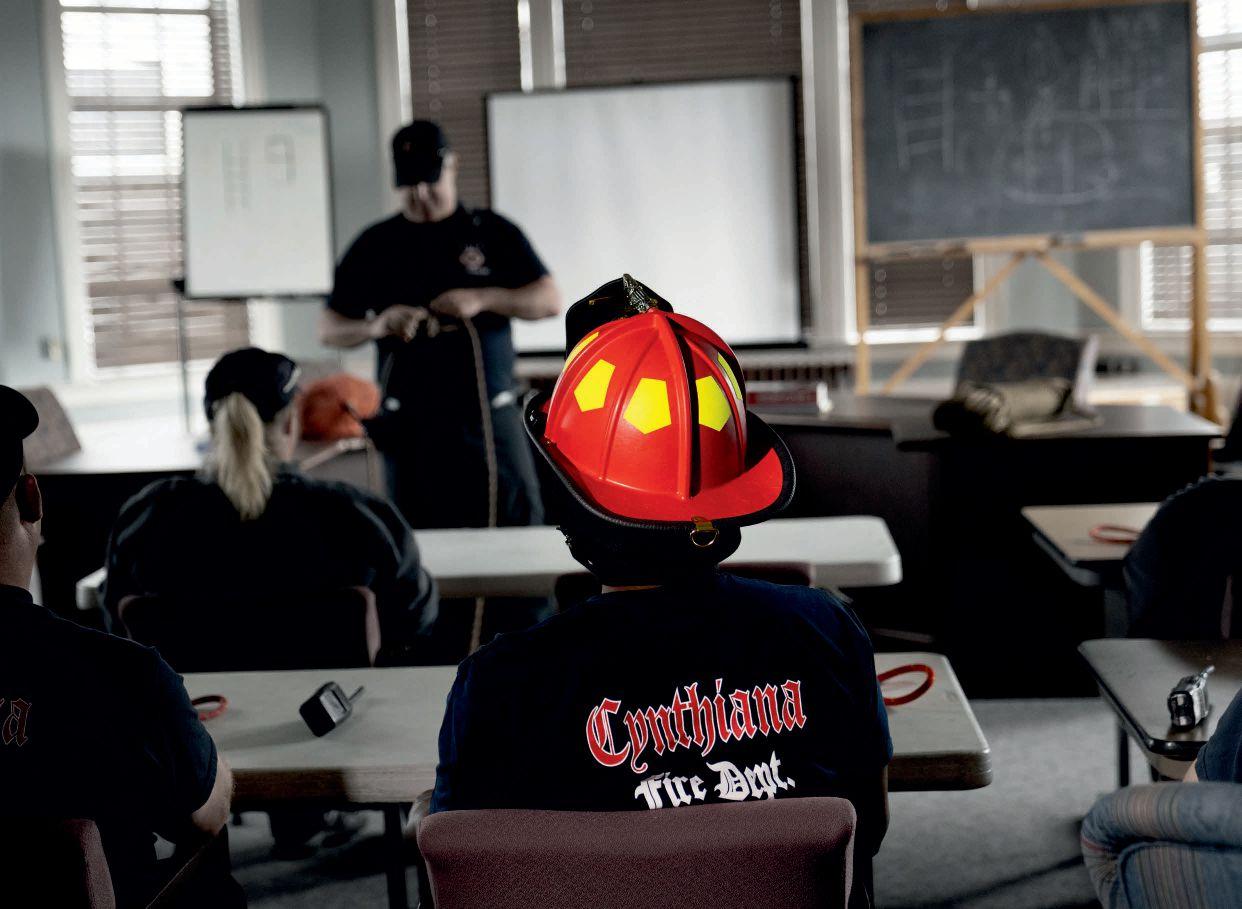

By CHRIS DENNIS
There has been a lot of conversation about electric fire trucks these days, but for this article, I’d like to turn attention to the very important topic of fire truck repair facilities. I am the apparatus division commander and chief mechanical officer for Vaughan Fire and Rescue Service in Ontario. This FD has a full-time crew of four technicians/EVTs, one chief officer and a clerk who works on nothing else but fire trucks. This is a proud division of people who give back every day, 24/7. Our job is to make sure the big red stuff can pump the wet stuff on the hot stuff as well respond to every call safely and perform without fault. Being a mechanical machine, and custom built specifically to a fire truck, has its challenges. The departments that depend on outside sources or internal municipal fleet garages without trained fire truck mechanics are at a great disadvantage. Here’s why.
The incoming electric fire trucks and related systems, as well as the apparatus we have now (both new or 20 years and older), are all specialized. I came from the private sector into the fire service many years ago. The evolution of the fire truck and its equipment has evolved no different than the world around us has: lots of technology. Bystanders see fire trucks with chrome, flashing lights, and sirens with women and men inside responding every day to an incident. They see it in their neighborhoods or while on vacation in distant lands, and recognize them all no matter what the colour, size, or design because of the common traits of emergency lights, sirens, striping and signage saying fire department. Brave firefighters put their selves on the line every day to make a bad day a better day in some way. Everyone in the department, from fire prevention to training, communications or mechanical repair,
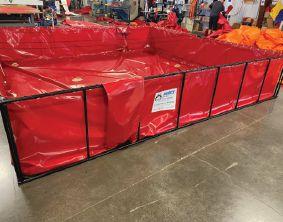

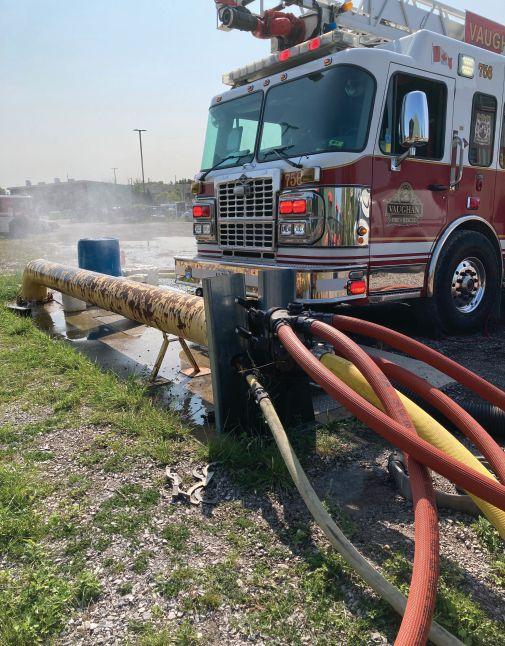

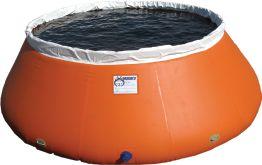
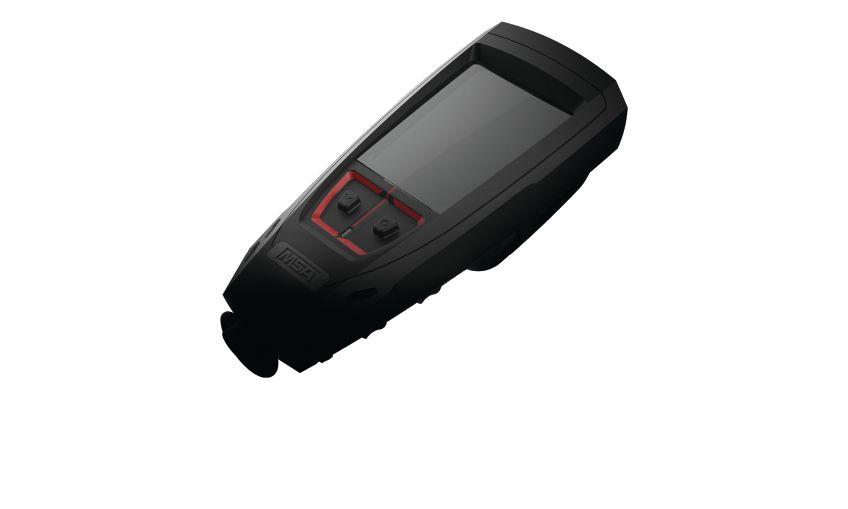
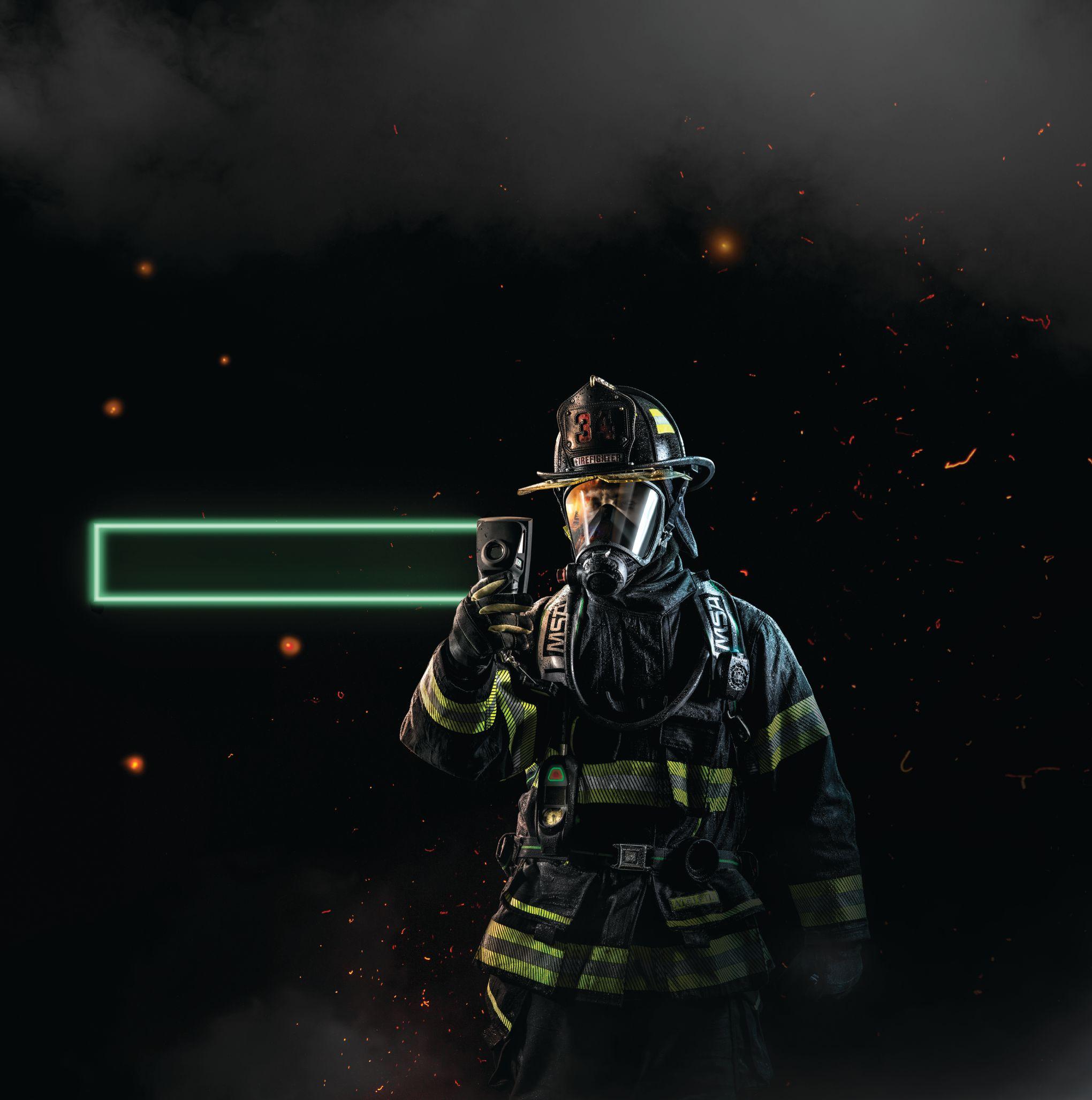
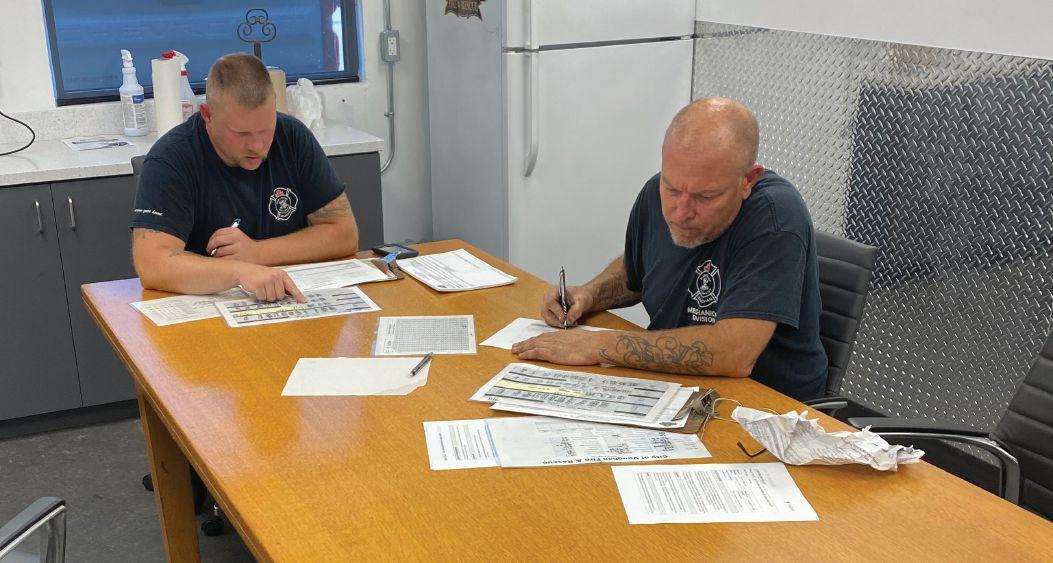
plays a critical role and have specific training. Comms personnel know communications, call signs, etc. Fire prevention investigates or educates purely based on fire department related issues. The education and skills each division have within their own departments is unique and this means a dedicated fire truck mechanic within your own department is required. I am with a full-time FD and familiar with budgets. If a full-time EVT is not doable because you’re a volunteer or a composite department, or even a full-time department without a budget or facility for a full-time fire truck technician, then look up and bring in an outside vendor that has fire truck repair experience and a proven track record. There are many across Canada. Ask for references. Speak to the departments they have serviced and are still servicing. Ask the FD what kind of work they do. Do they pump gas or fuel mobile? Are they willing to come out 24/7? Are they insured both to be working at your FD as well as liability for the work they perform? Do they specialize in a specific make of fire truck or are they well versed with all brands? Make it one stop shopping. Can I call this company to get break down repairs right away? Can they provide towing service and tire work? Can they do pump testing, ground ladder testing, nondestructive ladder testing? You have enough on your mind that you don’t need to call a bunch of places when the chips are down; call one number, they do the rest.
I have been contacted over the years from other departments looking for assistance; some direction. You may be a new fire chief or have recently become a firefighter-mechanic and are unsure what you are getting into and looking for some advice or support. You won’t be the first. Call your local FD find out who is doing their work.
The cost involved in today’s trucks is at an all-time high and
too few people are coming into the trade of fire truck repair. Vaughan FD hosted Camp Molly in October. This is a camp for women looking at getting into the fire service and offers hands-on experience. I was honoured to be asked by one of our firefighters to give a brief presentation on the repair side of the business. This introduced the women to another side of the business, as well as educated them on the trucks and equipment they ride in. They were informed that this is a specialized form of repair and training for EVTs and is ongoing throughout their career.
Consider this scenario. You spec’d out a new build or researched a good used truck for the department. The team has qualified the needs and wants for the truck based on what is provided for the community. You choose your fire truck vendor and make the deal. The truck is purchased, and you wait until it comes in. In your spec or used truck purchase agreement be sure it is written in that the vendor will be able to provide the service or repair in the event a warranty repair is needed (or any repair, for that matter). Be sure you have this in writing. It’s bad to find out once you have made this enormous dollar investment that you can’t get it repaired quickly or nearby. Then it’s too late. The truck can’t just sit. It must be repaired. In this case, you end up sending it out to local truck shop and they perform the repair because it’s an engine issue and in their wheelhouse to perform, and submit warranty claim. Or they bill you because they have no direct connection to the OEM in any way. You pay the bill then submit it to the fire truck dealer you worked with only to find out they did not approve this repair first and won’t pay the bill. After all, they could have done it for less. Whatever the reason, don’t get caught up in this. If you already have techs in-house or a repair shop that specializes in fire truck repairs in your arsenal, especially one that represents your type of truck, it will be an easier pill to swallow once repairs start.
To have a mechanic specific to fire trucks is key, and even best
A recent study reclassified firefighting within the highest occupational cancer risk category. At Ready Rack, we’ve been sounding this alarm for years, which is why we offer a line of products to help mitigate exposure to on-the-job carcinogens. From highly specialized extractors and dryers to science-based detergent, multisurface cleaner, skin cleanser and wipes all designed to meet or exceed NFPA 1851:2020. Ready Rack is dedicated to keeping America’s Bravest safer and their PPE service-worthy.
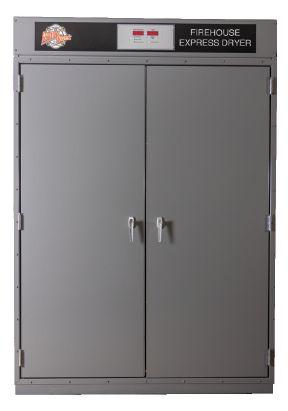

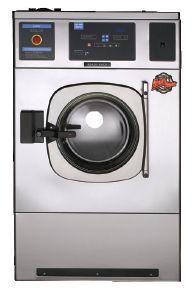
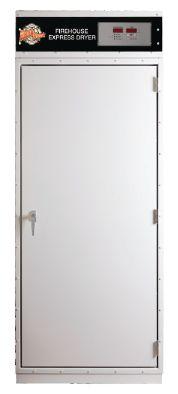
on the payroll. Some departments hire operational suppression firefighter /mechanics that can perform two jobs. This is great. You have a person wanting to be a firefighter who comes to the table with a mechanic license and EVT certificates as well. Be careful that you don’t then keep them tied up with fixing trucks because they were hired to do both and they will quickly become worn out and bitter — there must be a good balance. Let’s say the firefighter is deep into a heavy truck brake job in the fire hall. A call comes in for a confirmed structure fire. The firefighter-tech must now get cleaned up, out of coveralls, into bunker gear and put on their firefighter hat. They do this all while getting paid the same as the firefighter- non-mechanic sitting beside them. I am sure it would only be a matter of time before that firefighter-mechanic comes to you with another idea. Fixing trucks won’t be one of them.
Years ago, this duality was the norm. We hired trades people that could put their skills to work for other things in the fire department. That is by no means is the standard today. Equality across the board and diverse group of people make a strong department.
The mechanic goes to school for three to five years to learn the skills required. Throughout that time, and forever in their career, technology is changing, and more training is required. Sound familiar? His or her license must be validated every year at a cost out of their pocket and on their own time. They must buy tools continuously to adapt to the changes. A full-time department may pay for all the extras. We need to hire and support fire truck specific technicians. You can’t send an automotive mechanic from the fleet garage or from a general repair shop to fix a truck without correct certifications. Well, you can, but you will get and live with what you paid for. I know of a fire department that sent an older truck in for its annual safety inspection. It went to a private truck repair shop with certified technicians. The repairs were completed and explained in detail to the officer overseeing the FD fleet. One of the repairs was a substantial welding repair done on the frame. The officer in charge of the fleet had sent their apparatus to this shop and had only ever questioned some of the services performed based on time and money, not what they did. Why would they? They put their faith in a certified repair shop. The certified repair shop may or may not question the FD on tactics they use in the event of an emergency. If you don’t know the business, how do you know what is right and wrong? In this case the officer in charge knew a few things about apparatus. The frame repair was not simple. It was huge. And even though the apparatus was older, it took the equipment out permanently. Had the officer in charge of fleet not asked the question to a certified EVT fire truck tech, this truck may have stayed in service. To have people in charge of the fire fleet, they too must have knowledge to ask the right questions. Clarify what repairs should have not been done, whether a fire truck or not. Liability means that always, and nowadays more than ever, requires skilled and trained people to do the job correctly. Fire trucks, whether custom or commercial, are special to the kind or work they are designed to do. The apparatus on that truck chassis is what separates the commercial truck build from the custom truck build. To rely on the fleet department or outside repair facility without fire apparatus knowledge is a set up for
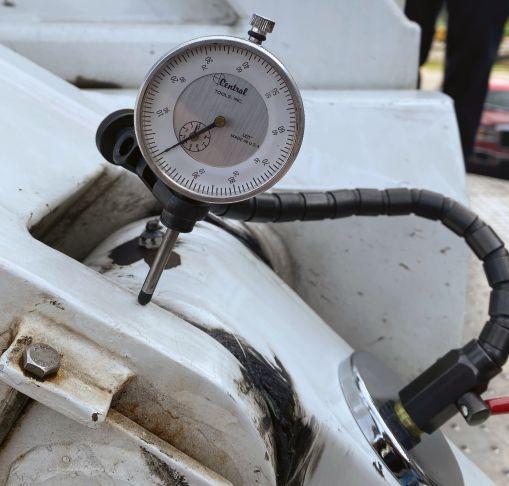
It’s important to be educated on apparatus specs.
costly downtime, money and heartache. Next time you speak with the truck technician of choice, ask them what the load management system is and how it works on your truck. Ask them if the truck is in service or out of service with a Class 2 leak. Ask them how often you should do pump testing or non-destructive ladder testing. Unless they have been there before, odds are they learn as they go. We do as well. The difference is we train to fix fire trucks every day to keep up with technology and the items added to keep the truck compliant and safe under the NFPA umbrella. Do what you can to set up good connections that are knowledgeable. If you have no choice, then maybe offer the EVT program (evtcc. org) to the repair shop or fleet manager so one of their techs can be educated. Make them a deal. They get two certifications under their belt and the fire department will pay for the certificate. It’s a small investment for the future of the department’s apparatus and equipment. I came from the private sector. I worked at Mack Canada and got my first taste of fire truck repair way back then. It was when I knew I wanted to be part of this big red, yellow, white, black machine…these rigs are all colours nowadays. I made it a point to know fire trucks and the fire service. They led me to where I am today. I am no different from the next technician. It’s nuts and bolts. However, these nuts and bolts, in my books, have a lot more metal in them. I am proud to be a mechanic first and then a fire truck technician .
In this era of technology and liability, just like hiring the right firefighters, have the right person to fix the truck. They should be well trained for the job. This way, if it ever went bad you would have a qualified person to lean on.
Remember my friends, “Rubber side down”.
Chris Dennis is the chief mechanical officer for Vaughan Fire and Rescue Service in Ontario. He can be reached at Chris.Dennis@ vaughan.ca.
OUR REVERSE FLOW WEAR RINGS
Restrict recirculation and improve overall efficiency and longevity of the wear ring.
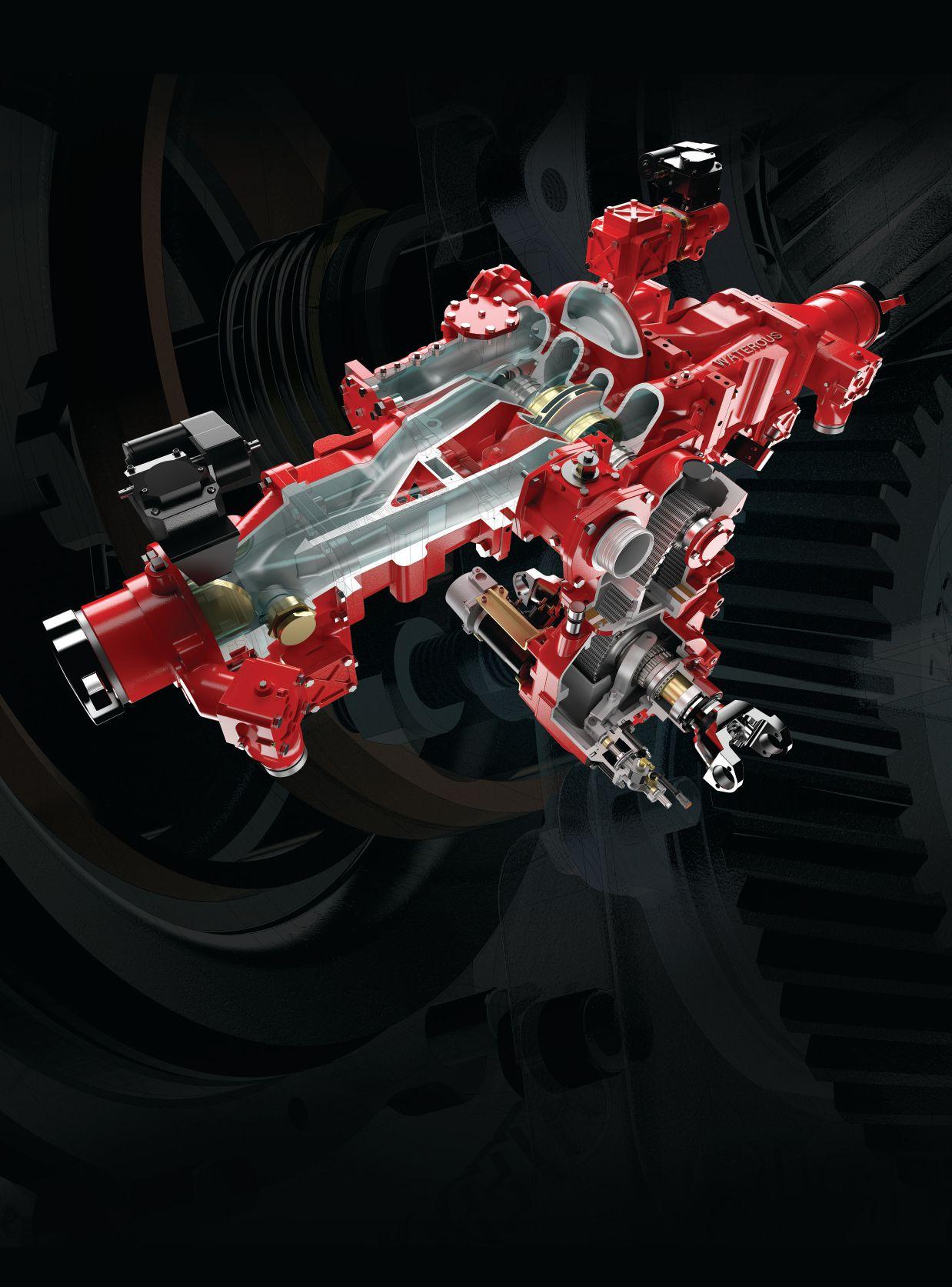
SEPARABLE IMPELLER SHAFT
Allows the pump transmission to be separated from the pump and removed from the apparatus. The pump remains mounted in the apparatus and can be easily repaired minimizing downtime.
CHAIN DRIVE
TRANSMISSION – Transfers power more efficiently than gear-driven transmissions by having more points of contact between the chain and rotating sprockets.
“Silent” chain drive makes our transmission the quietest in the industry.
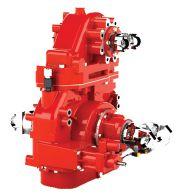
In the largest cities across the world, Waterous pumps never fall short. Cast and made in America, our pumps feature industry exclusive innovations. These innovations, along with the Waterous University library of support, help keep your pump running strong and your fire team serving the community.
FLAME-PLATED IMPELLER
PERFORMANCE – Bronze impellers are flame-plated with tungsten carbide, creating an ultra-hard surface resistant to wear.
By ED BROUWER
The author C. S. Lewis said, “Isn’t it funny how day by day nothing changes, but when you look back, everything is different?”
As I look back upon my journey with Fire Fighting in Canada, I hope that is true of the training issues and concerns we dealt with over these past 22 years.
Recently a friend of mine asked, “How are you, Ed?” Rather than my usual “I’m good,” I replied, “I’m hopeful.” He looked at me sideways and asked, “What are you hopeful for?” I grinned and said, “Not sure, just hopeful.” I have often thought that one role of the first responder is to be a bringer of hope. I have witnessed, as I’m sure you have, that a strange thing happens within patients/victims when we pull up on scene. They, along with the crowds of onlookers, seem to let out a sigh of relief.
As fire service trainers, we too are hope bringers. We have that responsibility not only to our department’s members, but to their families.
In the last issue of Fire Fighting in Canada I asked if your department had a Mayday policy. And, if so, does your department train on it? Let me ask now, “If not, why not?”
If you put on SCBA and enter IDLH environments, you need to drill on “Calling a Mayday”.
Now the letters IDLH don’t sound very intimidating, but they mean Immediately Dangerous to Life and Health.
There needs to be a better understanding of the word “immediately.” The way firefighters react to any given situation is based on their former training and experience. If they do not have “Mayday calling” in their experience, calling a Mayday will not come naturally when the need arises.
It is my conviction that both firefighters and officers need to experience what it may be like to call a Mayday before it is the real thing.
Do you want your real Mayday call to be the first time the IC or radio operator gets to test their Mayday skills?
At your next practice ask your members to answer these two questions.
1. What is an EIB?
2. How does it work?
Then ask yourself, “Does it work?” Don’t entrust your life to an untested safety system.
In the past I have introduced you to fallen firefighters who in their passing have become “influencers” regarding my training focus. It has been my intent to honour their sacrifice by learning from their LODDs, and thereby bringing hope to future firefighter families — hope that their loved ones will come home after the incident.
One of the most powerful ways to help young firefighters to become old firefighters is to instruct them in how and when to call a Mayday. I remind you that all the recorded messages indicated that in the Sofa Super Store fire (written about in the last edition), the C9 firefighters were lost, disoriented, and either running out of air or already out of
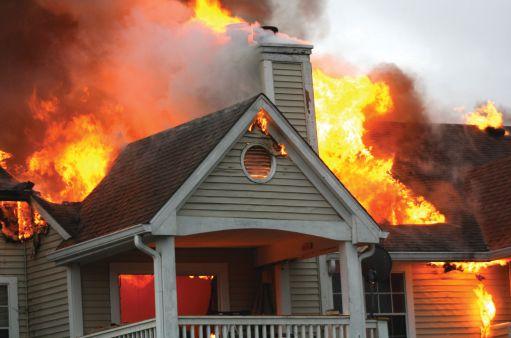
air. The firefighters were already in imminent danger, deep inside the building, when they began to call for assistance. As to firefighters who survived, seven firefighters lost connection with their hose line and their crew, two firefighters ran out of air. None of them called for help.
Another way to help young firefighters to become old firefighters is to stop saying, “It is a routine fire.” Firefighters must be aware that there really is no such thing as a routine fire. To survive you must expect the unexpected.
The Call: On March 6, 1987, the Kitchener Fire Department responded to a multiple-alarm fire at Horticultural Technologies that drew firefighters from across the city. The fire progressed through the night into the next morning. Sixty-nine firefighters, half of Kitchener’s force, either battled the blaze or cleaned up the mess. The firefighters had no idea what was burning, but reported that the smoke and flames were “every colour of the rainbow.” They learned later that the plant manufactured Oasis Floral Foam, a hard foam-like substance used to hold floral arrangements in place and keep them moist.
The Aftermath: In May 1989, Dave Ferrede, age 32, went on sick leave and was subsequently diagnosed with primary liver cancer. He was dead a month later. Then Capt. Stahley was diagnosed with primary liver cancer. He died in July 1990 at age 54. They were the first to die; 23 out of 69 firefighters who responded to that blaze developed cancer or Parkinson’s disease. Since then, 13 Kitchener firefighters have died, all but three of them with occupational cancer. Seven of the 10 firefighters who died of cancer fought the Horticultural Technologies blaze.
The Call: In 1993, the Warwick Volunteer Fire Department responded to a propane tank fire in Warwick, Que.
The Aftermath: The propane tank exploded, taking the lives of four members: Raymond Michaud (52), Raynald Dion (39), René Desharnais (36) and Martin Desrosiers (31).
The Call: On July 9, 1997, the Hamilton Fire Department respond-









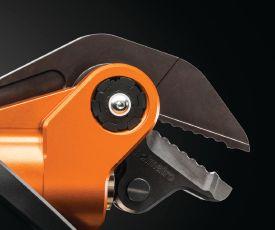


The features of the Mini Cutter include:
• Cordless design
• Unique inclined cutter jaw
• Grip teeth on both blades
• Integrated LED light
• Start-stop mode & variable speed control
Holmatro introduces the first battery powered mini cutter in the rescue market. Compact and lightweight, it gives you maximum freedom of movement and optimal cutting performance. First responders from any department can act swiftly with this cordless mini cutter—whether their other tools are powered by battery or a separate hose and pump.


ed to plastics recycler Plastimet on Wellington Street North. This fire turned out to be the largest plastics fire in Canadian history. There was more than 400 tonnes of PVC and other plastics stored on site. It burned for four days, spewing clouds of dioxin and other hazardous chemicals into the air.
The Aftermath: It became known as one of worst environmental disasters in Canadian history. It was also reported to be the fourth-largest environmental disaster of its kind in the world. The cause was, as suspected, arson. However, although the arsonist confessed, he could never be charged by Hamilton police, and his name was never made public. The arsonist was just eight-years-old at the time.
The Call: In the early hours of Aug. 16, 2003, Ministry of Forests in B.C. dispatched an Initial Attack crew to fire K5-628. The three-person crew worked at suppressing this single tree lightning strike. At 11:00 our two crews, Sons of Thunder and Dragon Slayers, having just returned from the wildfire crisis in Osoyoos, were dispatched to assist. Then, just before noon, a second fire broke out near Chute Lake and new flare ups North of Kamloops, forced authorities to divert the air support from K5-628.
Little did we realize as we stood on Antler Beach waiting to be ferried across to Squally Point that this was going to be the first of many long and frustrating days. Since the strike, some seven hours earlier, the fire had grown to 15 hectares. By the following day this number would be increased to 1000 hectares, mostly due to the constant high winds.
The second day, following the fire’s edge, we climbed to the 1000 metre level, and working with the Initial Attack crew put in over three kilometers of hand guard. With support from air tankers, we dealt with several escapes near Wild Horse Canyon and helipad 7. Other hot shot crews set up bladders and ran hose lines. The third day found us at even higher altitudes and in rougher terrain.
The smoke column hung ominously above us. The wind’s changing direction caused fire whirls and blow ups. All three days had brought unstable air masses and erratic fire behavior, but that day was different. You just sensed something was coming. Sure enough, by 16:00 we were warned that 70 kmph winds were predicted to push the fire back on top of us. We were to prepare for immediate helicopter evacuation. The 30 of us were flown to a staging area in Peachland where we awaited further orders.
The smoke column over the fire was now a huge mushrooming mass. The colour of the smoke indicated a very intense hot fire. We never did go back to Squally point. The high winds drove the fire over the guards with such intensity that it devoured our bladders, hose lines and medivac kits. Over the next few days, we would find out exactly just how vicious this fire dragon was going to be. In one day, it grew from 2,000 hectares to more than 11,000. That was just the start of K5-628, a fire that some thought to be a “routine” call out to a lightening strike. You may know this fire by another name, the Okanagan Mountain Park Fire.
For the next two weeks we worked our way North, up Chute Lake Road, past the lodge and along the 11 kilometers of the Kettle Valley Railway to the canyons above Kelowna. On Aug. 21 the fire made a run towards Kelowna. Fire apparatus from all over British Columbia and Alberta converged on Kelowna in an attempt to stop this dragon.
The Aftermath: More than 30 days had passed since we were dispatched to that single tree lightning strike; 25,600 hectares were burned, 239 homes were lost or destroyed, 12 wooden trestles in Myra
Canyon were vaporized and decks on two steel trestles burned. There were 27,050 people evacuated plus 4,050 re-evacuated. Total cost was estimated at $33.8 million.
The maximum resources used at one point were 700 personnel, 250 pieces of heavy equipment, and 20 helicopters. Over 1000 forestry firefighters, 1,400 armed forces personnel, 60 fire departments, hundreds of loggers and “Big Iron” operators took part in the suppression efforts.
Our fire crew was honoured to be the last crew to leave this fire. We still had the last hot spot spike and ribbon dropped by the helicopter doing infrared camera grid runs that last morning…39 days after the strike.
As you can see in the aforementioned examples, there really is no such thing as a “routine fire.” If we would just get rid of the word routine, it may give our members a better mind set for expecting the unexpected.
We have almost completely ignored the most important first step of survival on the fire ground — training firefighters to recognize they are in trouble. Perhaps the problem is that we have not clearly defined what it means to be in danger. Whether it is a structure fire, dumpster fire, vehicle fire or wildland urban interface fire, a wildfire or vehicle fire, we must expect the unexpected. That is why fire departments need to develop clear Mayday decision-making rules. These rules need to specify when a Mayday must be called. I also suggest that you institute yearly Mayday training programs complete with written exams and hands-on scenarios. All firefighters, including officers, must take part in this throughout their fire service experience.
Far too many ICs are not prepared to answer a Mayday call. That is why the entire Mayday system needs to be trained, drilled, and tested.
With the help of my Charleston 9 influencers, I will close with some sobering issues cited in the Sofa Super Store and warehouse fire Phase II Report, (a document seen as one of the most definitive and complete post-incident fire analysis ever conducted). The report revealed that although they were hearing of deteriorating conditions, none of the chiefs decided to evacuate the store and move from an offensive to a defensive attack. That decision didn’t come until after several disoriented firefighters had been rescued.
Among the 272 pages of the NIOSH report were the following lines: “The communications process was not controlled. The Fire Chief, the Assistant Chief, and Battalion Chief 4 were all issuing orders and providing direction independently, using a single overloaded radio channel. Critical messages, including distress messages from firefighters inside of the structure, were not heard.” Now check out this point: “There is no suggestion that any CFD members lost or surviving failed to perform their duties as they had been trained or as expected by their organization. The final analysis does indicate however, that the CFD failed to adequately prepare its members for the situation they encountered at the Sofa Super Store Fire.”
Until next issue – remember to train like lives depend on it because it does. I beg you…let no firefighter’s ghost say their training let them down. 4-9-4 Ed Brouwer.
Ed Brouwer is the chief instructor for Canwest Fire in Osoyoos, B.C., retired deputy chief training officer for Greenwood Fire and Rescue, a fire warden, wildland urban interface fire-suppression instructor and ordained disaster-response chaplain. Contact aka-opa@hotmail.com.
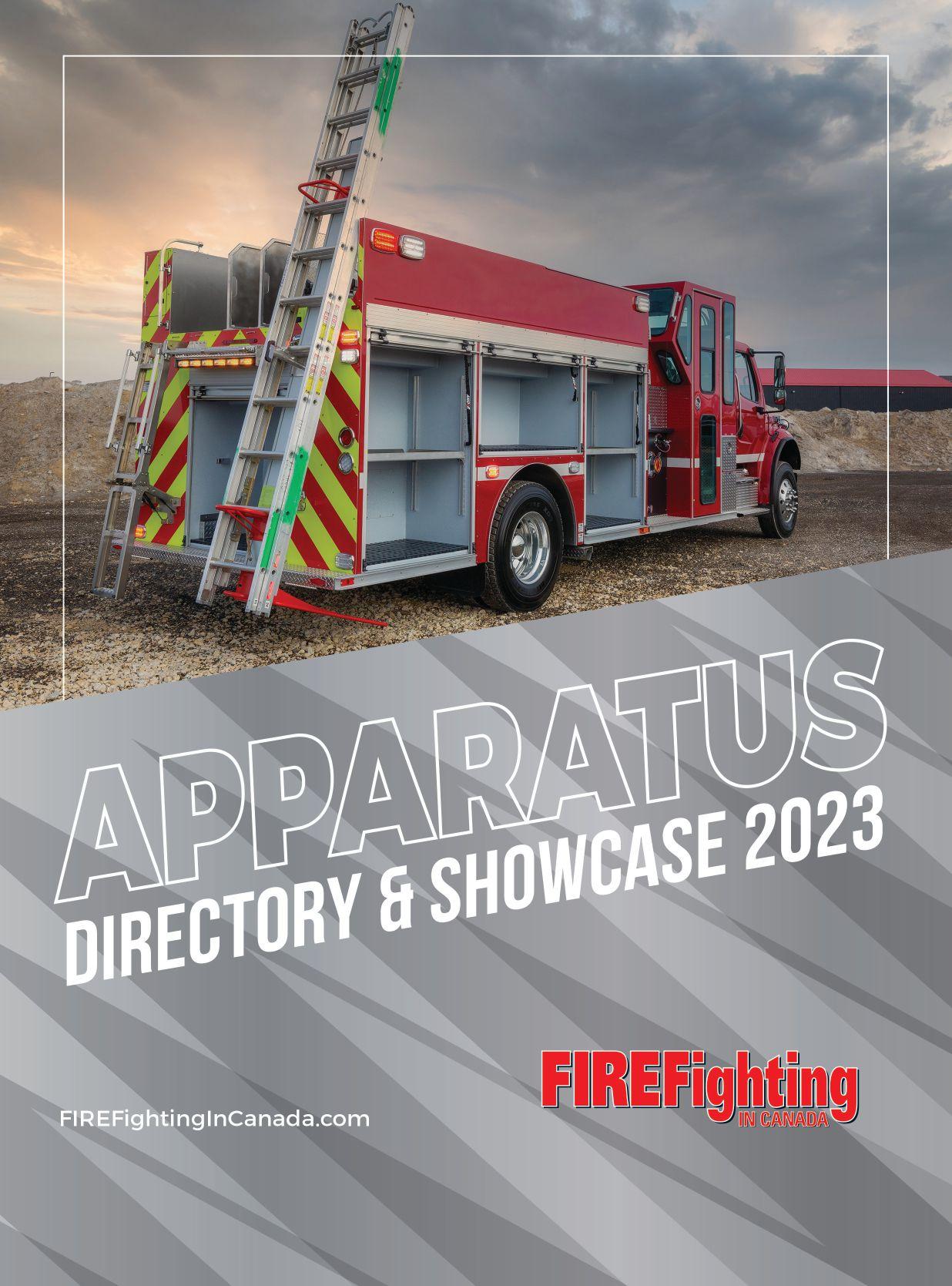
1200 DEGREES ONTARIO
402 Harmony Road
Ayr ON N0B 1E0
Tel: 800-254-2049
Toll free: 800-254-2049
Fax: 519-622-7705
Company Email: jclimie@1200-degrees.com Web: www.1200-degrees.com
“1200˚ ONTARIO is your full service, specialized vehicle dealership.
We have a complete line of solutions for your department from Apparatus sales, Equipment Sales to Parts and Service.
1200° ONTARIO offers exclusive premium brands and sets itself apart from others by offering the highest level of customer service in the industry today. We take great pride in offering the very best care to our clients throughout the sales process and beyond. We provide expert advice during the buying process, from consultations, spec development to committee presentations and anything in between, our customers are presented with the highest quality products and our customer care is second to none. Working with 1200˚ means having a single point of contact for all your departments needs.
1200° will take care of everything for our clients so they can focus on what’s important…. Helping people.”
A.J. STONE COMPANY LTD.
62 Bradwick Dr.
Vaughan ON L4K 1K8
Tel: 416-785-3752
Toll free: 800-205-3473
Fax: 416-781-2827
Company Email: order@ajstone.com
Web: www.ajstone.com
A.J. Stone has proudly served the needs of the First Responder Services of Ontario since 1972 by featuring quality products, knowledgeable sales team, and training support.
A.J. Stone supplies equipment from MSA, Task Force Tips, LION Protects, Paratech Rescue, FireBull, Enforcer, Genesis Rescue Systems, Streamlight, Innotex Bunker Gear, ProTech Gloves, Safe-T-System, CET and much more!
We service what we sell!

251 Queen St. S., Ste. 512 Mississauga ON L5M 1L7
Tel: 905-826-6682
Toll free: 866-735-1480
Fax: 866-511-6904
Company Email: info@airmation.ca
Web: www.airmation.ca
Air Technology Solutions is dedicated to our Clients, offering updated, timely, full service Indoor Air Quality (IAQ) solutions. Air quality concerns are mitigated using a unique combination of professional indoor air quality assessment coupled with solutions. Off the shelf or customized site specific air cleaning equipment is available to resolve IAQ issues. Our technical experts review client requirements and budgetary availability. The finest appropriate air cleaning systems are provided. Air Technology Solutions is a leader in Diesel Exhaust Remediation and is the ONLY environmental tested and proven filtration system to exceed standards: NFPA, NIOSH, OSHA and ASHRAE. Building and facility managers, business owners, contractors, architects, and engineers have been working with Air Technology Solutions since 1986 to resolve IAQ needs. Employee and personnel safety and health are key issues. Breathing safe air in the workplace is of utmost importance. We provide global customized solutions to control contaminants, pollutants and odours in your facility. We look forward to servicing your requirements.
AIR VACUUM CORPORATION
PO Box 517
Dover NH 03821
Tel: 603-743-4332
Toll free: 800-540-7264
Fax: 603-743-3111
Company Email: sales@airvacuumcorporation.com
Web: www.airvac911.com
Breathe Clean Air with AIRVAC 911®
Control the spread of hazardous contaminants in your station. The AIRVAC 911® Engine Exhaust Removal System protects 100% of the bay area by constantly monitoring and removing exhaust and particulate matter from your station without interfering with daily operations. No hoses, hook-ups or vehicle connections. No building modifications, no ducting and no outside exhausting. AIRVAC 911® is 100% automatic.
• Address Hot Zones within your station
• Remove off-gassing of turnout gear, hoses and parked vehicles
• Counter off-gassing of secondary pollutants
• Remove engine exhaust that re-enters the building
• Half the cost of hose systems
• Energy efficient LEED/green design
• NFPA 1500/OSHA/GSA compliant
For a free quote: www.airvac911.com
sales@airvacuumcorporation.com
800-540-7264
ARÉO-FEU
5205, J.-Armand Bombardier Longueuil QC J3Z 1G4
Tel: 450-651-2240
Toll free: 800-469-1963
Fax: 450-651-1970
Company Email: info@areo-feu.com
Web: www.areo-feu.com/en Aréo-Feu – Where Equipment Matches Courage
For more than 55 years, three generations of knowledge have succeeded to make Aréo-Feu the number one reference for the supply and service of equipment in the fire industry, in public safety or in civil protection.
Our favourable purchasing power allows us to maintain an important inventory of products that have state-of-the-art technology. Committed to building very good business relationships with our partners, we encourage the constant update and development of our team’s expertise.
Our daily goal is the complete satisfaction of our customers!
Multiple suppliers with whom we have a durable relationship for the benefit of our customers.
Official distributor of: MSA/Globe, Innotex, Rosenbauer, Protek, Elkhart Brass, Genesis Rescue Systems, Streamlight, Res-Q-Jack, Petzl, Husky, Solberg, TechTrade, Unifire, CET Fire pump, All American hose, OHD, Harrington Inc., LavXel, Kochek CO. Inc, Lakeland, Tohatsu, Waterous, ect.

BEARSPAW PROTECTAPUMP
A-927 Goldstream Ave
Victoria BC V9B 2Y2
Tel: 778-404-7385
Company Email: chris@protectapump.com Web: www.ProtectaPump.com
Home of the Fire Ceptor: “The Portable Drydrant” – Natural Source Shallow Drafting in only 6”-12”. Instantly Draft Safely at the water’s edge of a stream, lake, swamp, pond or even the Ocean! Gravel, sand, weeds are of no concern. Made in Canada, Patented Technology in the Fire Ceptor makes shallow drafting possible with 100% pump, nozzle & sprinkler protection.
Sounds unbelievable? We can prove it! Visit ProtectaPump.com for videos with Fire Chiefs demonstrating “The Portable Drydrant”.
TOP-MOUNT PUMPER | ROSENBAUER AMERICA
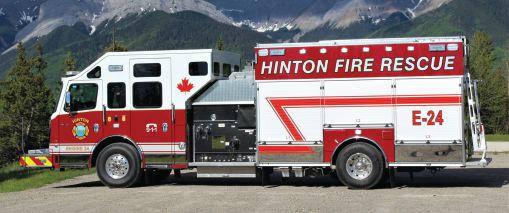
This top-mount pumper is manufactured on a Rosenbauer Commander 7024 chassis with a Cummins X12 500 HP engine and a Rosenbauer EXT aluminium body. Additional features include a Hale RSD 1250 IGPM pump, 1000 G water tank, FoamPro 3012 foam system with a 30 G foam tank, V-MUX electrical system, OnSpot tire chains and a rear mounted TFT hurricane monitor.
DEPARTMENT: Hinton Fire Department, Alberta

Assembled on a Freightliner M2 106 chassis with a Rosenbauer 1/8” FX aluminium body, additional features on this mid-mount pumper include a Rosenbauer N55 1050 IGPM pump, 750 IG water tank, 30 IG foam tank, Rosenbauer MP3 style pump house, EZ climb ladder, Line-X black out package and a Whelen LED light package.
DEPARTMENT: Lake Louise Fire Department, Alberta
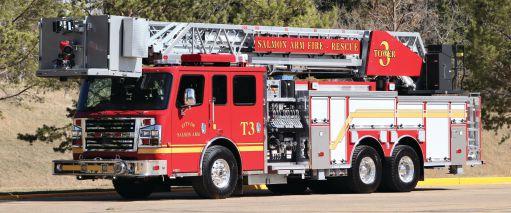
Assembled on a Rosenbauer Commander 6000 chassis, this platform has a Waterous S100C20 1750 IGPM pump, Cummins X15 505 HP engine, FoamPro 2002 foam system, Rosenbauer EZ load hosebed, Akron revel LED scene light package, leverbank valve controls and an Akron 3480 Stream Master monitor.
DEPARTMENT: City of Salmon Arm Fire Department, B.C.
|
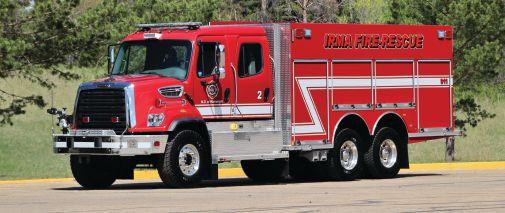
This apparatus was built on a Freightliner 108 SD 6x6 chassis with a Cummins L9 400 HP engine. It also features a HP bumper turret, HP booster line with electric rewind, Hale EZ fill foam system zone defense back up camera and a 10” Newtown quick dump.
DEPARTMENT: Irma Fire – Rescue, Alberta
REAR-MOUNT PUMPER | ROSENBAUER AMERICA
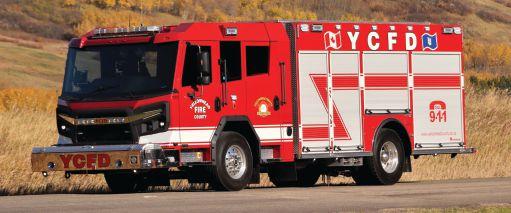
Built on a Rosenbauer Avenger 7011 chassis with a Rosenbauer 3/16” FX aluminum body, this pumper features a Cummins X12 500 HP engine, Hale RME 1500 IGPM rear-mounted pump, 800 IG water tank, FoamPro 2002 foam system with a 30 IG foam tank, side body mounted traffic advisors and an Akron Deckmaster 3440 remote control monitor.
DEPARTMENT: Yellowhead County Fire Department, Alberta
DEPARTMENT: Estevan Fire Rescue, Saskatchewan MID-MOUNT PUMPER | ROSENBAUER AMERICA
MID-MOUNT PUMPER | ROSENBAUER AMERICA
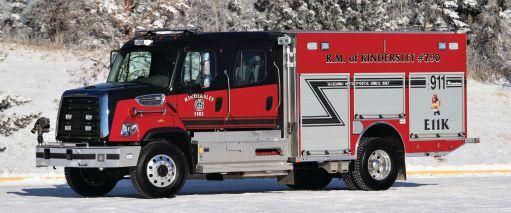
This apparatus is built on a Freightliner 180SD 4x4 chassis with a Rosenbauer 3/16” FX aluminum body. Other features include a Rosenbauer NH55 LPM pump, Cummins L9 400 HP engine, dual Rosenbauer EZ Climb ladders, a Rosenbauer FixMix HP foam system with a 20 IG foam tank and a cold weather package with a 30,000 BTU heater.
DEPARTMENT: Kindersley Fire Department, Saskatchewan
TANKER | ROSENBAUER AMERICA
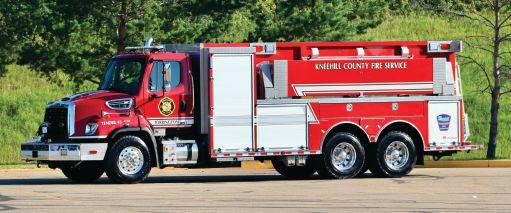
Manufactured on Freightliner 114SD chassis, this tanker has a Rosenbauer 1/8” FX aluminium body and a Cummins X12 500 HP engine. Additional features include a FoamPro 1600 foam system with 20 IG tank capacity, Rosenbauer NH55 1050 IGPM pump, Rosenbauer FixMix HP foam system, rear and side camera systems, FRC 12V scene lights, dual HP booster reels and a TFT Tornado bumper turret.
DEPARTMENT: Kneehill County Fire Service, Torrington Station, Alberta
RESCUE PUMPER | ROSENBAUER AMERICA
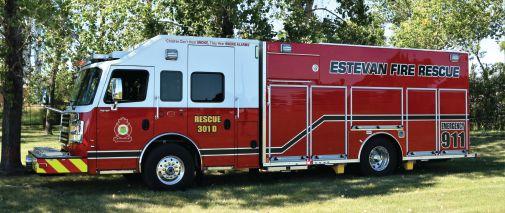
Built on a Rosenbauer Commander 7824 chassis, this pumper features a Cummins L9 450 HP engine, Rosenbauer N55 1050 IGPM pump, Willburt light tower, V-MUX electrical system, Hale EZ foam fill system, in-cab recirculation air scrubber, Q-siren and rear and side camera systems.
BULLDOG HOSE COMPANY
141 Junny Road
Angier NC 27501
Tel: 416-436-4910
Company Email: mike.calderone@bulldoghose.com
Web: www.bulldoghose.com
BullDog Hose Company, a division of Puck Enterprises, is proud to be a leading fire hose manufacturer in the North America. From HiCombat® II, Firepower® II, Hi-Vol®, Redchfief, and Ultima™, our dedication has positioned us as the premier in fire hose products.
The BullDog name stands for high performance, durability, safety and quality, with American-made products that are built to last.
CANADIAN SAFETY EQUIPMENT INC.
#3 – 2865 Argentia Rd.
Mississauga ON L5N 8G6
Tel: 905-826-2740
Toll free: 800-265-0182
Fax: 905-272-1866
Company Email: info@cdnsafety.com
Web: http://www.cdnsafety.com
We supply Industrial and Fire SCBA’s, SCBA Decon Washer, Thermal Cameras, CAF Systems, Fall Protection, Bunker Gear, Fire and Rescue and Ballistic helmets, Fire Hose, Communications Equipment, Nozzles, Fittings, Hazmat Suits, Ventilation Fans, Gas Detectors, Confined Space Rescue Equipment, Water and Ice Rescue equipment, Industrial and Municipal Safety and Lone Worker Protection systems.
CET FIRE PUMPS MFG.
75 Hector St.
Pierreville QC J0G 1J0
Tel: 450-568-2719
Toll free: 888-844-2285
Fax: 450-568-2613
Company Email: sales@fire-pump.com
Web: www.fire-pump.com No Hydrants, No Problem!
CET Manufactures Portable Pumps, Skid Units, Brush Trucks, Glider Kits, Foam Trailers, Water Tanks, and UTV Fire Units to help you fight fire where static water sources may be your only option.
The Flow Starts Here!
1213 Lorimar Dr. Mississauga ON L5S 1M9
Tel: 416-249-4500
Toll free: 866-739-3956
Fax: 416-249-6665
Company Email: inquiries@cityviewvehicles.com Web: cityviewvehicles.com
COMMERCIAL EMERGENCY EQUIPMENT CO.
591 Chester Road
Delta BC V3M 6G7
Tel: 877-443-2626
Toll free: 800-665-6126
Company Email: cfeduniw@comtruck.ca, jzimmerman@comtruck.ca
Web: www.comemerg.ca
Commercial Emergency Equipment Co is Canada’s largest dealer for Pierce Manufacturing Inc, Maxi Metal, and Oshkosh Airport Products. We provide sales, parts, and service of all makes of fire trucks, and support to our customers through our nationwide branch network.
Commercial Emergency Equipment Co. strives to exceed customer expectations in everything we deliver. With over 70 years in the truck equipment industry, we take pride in a proven track record of providing expert truck equipment solutions, top quality products, and first-class service to our customers.
We are a sole-source service provider with mobile EVT’S, on-call 24/7, throughout our nationwide branch network. We offer inspections, preventative maintenance, mobile pump testing, and foam system calibration, as well as comprehensive apparatus training on operation and maintenance.
We inventory an extensive stock of OEM and aftermarket parts, tools, and equipment ensuring quick delivery and reduced downtime to our customers. Our service technicians undergo continuous training and testing to ensure that the latest technology and innovation is applied to the service of your equipment.
When you need prompt, honest, and reliable service, you can count on us to support you.
BC, AB, SK, MB, ON, NT, NU, YT






CARL THIBAULT FIRE TRUCKS INC.
38 Thibault St., Box 1089
Pierreville QC J0G 1J0
Tel: 450-568-7020
Fax: 450-568-3049
Company Email: mthibault@thibaultfiretrucks.com
Web: www.thibaultfiretrucks.com
We are a Canadian based company and we manufacture a full line of fire apparatus which includes aerial ladders, pumpers, tankers, rescue units and vacuum tankers. We provide parts and other related products.
City View Specialty Vehicles is the sole Ontario dealer for Rosenbauer America. Rosenbauer America has a Canoe Procurement Group of Canada/Sourcewell contract for direct purchases of all type of fire apparatus, including aerials and platforms, pumpers, tankers and the RTX electric fire truck. City View is in Mississauga and Ottawa, each with in-house and on-road service capabilities with 310T and EVT trained staff. We are dealers for Cummins, Allison, and Meritor, and capable of completing minor service up to full engine overhauls. City View has extensive experience with hybrid-electric vehicle repairs, and is a dealer for electric vehicle charging infrastructure.

3842 Redman Dr. Fort Collins CO 80524
Tel: 970-297-7036
Toll free: 800-797-7974
Company Email: amys@commandlight.com
Command Light has helped departments elevate their scene lighting for more than 50 years, first with the company’s invention of its hydraulically operated fire truck light tower in the 1970s and then the advent of our electric-powered light tower in the 1990s. Today, as a leader among emergency vehicle lighting manufacturers, Command Light continues to forge the way in fire truck scene lights, adding a lineup of Tripods and Traffic Flow Boards to keep roadway responders safe during an era of distracted drivers.
CSE INCENDIE ET SÉCURITÉ INC.
5651 Chemin St-Francois St. Laurent QC H4S 1W6
Tel: 514-737-2280
Toll free: 866-737-2280
Fax: 514-737-2751
Company Email: info@cseis.com Web: www.cseis.com
We supply Industrial and Fire, SCBA’S, SCBA Decon Washers, Gear Extractors and Dryers, Thermal Cameras, CAF Systems, Fall Protection, Bunker Gear, Fire, Rescue and Ballistic Helmets, Fire Hose, Communications Equipment, Nozzles, Fittings, Hazmat Suits, Ventilation Fans, Gas Detectors, Confined Space Rescue Equipment, High Angle Rescue Equipment, Ice and Water rescue equipment, Boots and Gloves. Everything for Fire Fighting, EMS, Law Enforcement, Industrial and Municipal Safety and Lone Worker Protection Systems.
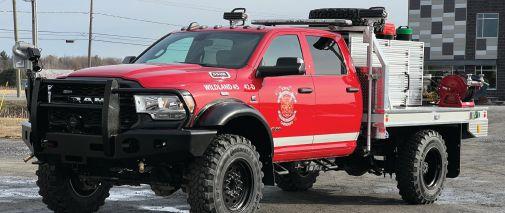
Built on a Ram 5500 chassis with a crew cab and powered by a 6.7L V8 diesel engine, this truck features fully customizable aluminum compartments with roll-up doors, heavy duty front bumper, 41’’ diameter super single wheels with a 3-1/2’’ lifting kit, 450 USG CET tank with 10 G integrated foam cell, CET PFP-20hp HND-MR mid-range pump, front bumper turret and a high-pressure pump.
DEPARTMENT: Carnduff Fire Department, Saskatchewan
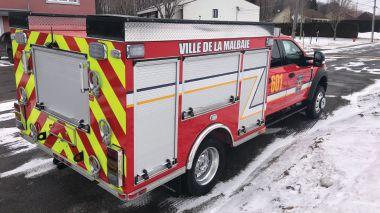
Assembled on a Ford F-550 chassis with a Super Duty Crew Cab and powered by a 7.3L gas engine this truck has a copolymer polypropylene body that is more resistant to impact than aluminum. Polybody is covered by a limited lifetime warranty. Other details include a fully open side-to-side transverse L1-R1 compartment with dual direction slide-out tray and one direction slide-out in B1.
DEPARTMENT: Ville De La Malbaie Fire Department, Quebec
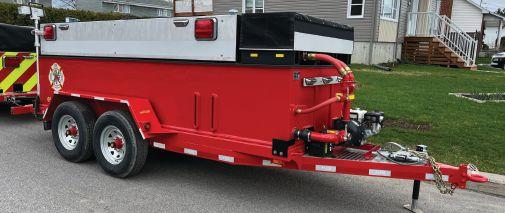
This CET 1000 USG foam trailer was built a heavy-duty steel trailer with dual axles. It accommodates a custom CET 1000 USG foam tank made of copolymer polypropylene. The UV and chemical resistant foam tank was equipped with a Honda transfer pump and two pre-connected hose trays.
DEPARTMENT: Ecopetrol, Colombia
The CET Glider kit is intended for the customer who wants to complete the body installation themselves or use a local outfitting shop. This unit was built for an International or Freightliner chassis with a 94” cable-to-axle. All compartments are aluminum there is a full-size transverse compartment in L1-R1. In the back, the units are equipped with 880 USG CET tank with 180 G integrated retardant cell and a CET PFP-23hpVGD-MR mid-range pump.
DEPARTMENT: Wildfire Defense Systems, Montana
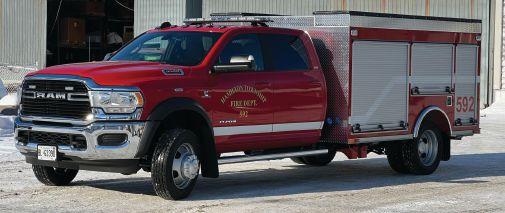
This truck is built on a Ram 5500 chassis with a crew cab powered by a 6.7L V8 diesel engine and a 84’’ cab-to-axle. The body is completely made from copolymer polypropylene. More resistant to impact than aluminum, polybody is covered by a limited lifetime warranty.
DEPARTMENT: Hamilton Township Fire Department, Ontario
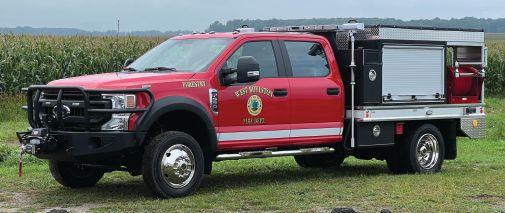
Manufactured on a Ford F-550 chassis with a Super Duty Crew cab and powered by a 7.3L gas engine, the CET flatbed is completed with copolymer polypropylene compartments that are more resistant to impact than aluminum. Additional features include a side-to-side transverse L1-R1 compartment, 300 USG CET tank with 10 G integrated foam cell and a CET PFP-20hpHND-MR mid-range pump.
DEPARTMENT: West Boylston Fire Department, Massachusetts
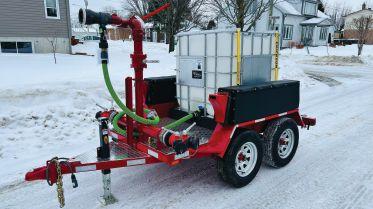
This CET single tote foam trailer was built with a heavy-duty steel trailer and dual axles. It accommodates a standard 265 USG foam tote that is fully removable using quick connections and comes with a 4” water manifold with 2-1/2” “Y” inlets and an Akron Monitor. It also features two poly hose trays that can accommodate 150’ of 4” hose.
DEPARTMENT: Tennacor Canada Inc., Saskatchewan
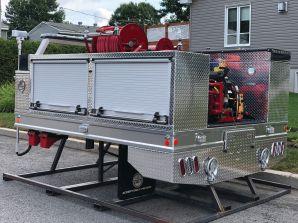
This CET Glider kit was built for a F-550 or Ram 5500 with a 60’ cable-to’axle. All compartments are made of aluminum with roll-up doors. The unit is equipped with a high-quality CET PFP-20hpHND-MR mid-range pump package with a 250 USG water tank.
DEPARTMENT: Winston County, Mississippi

D&R ELECTRONICS CO. LTD.
8820 George Bolton Parkway
Bolton ON L7E 2Y4
Tel: 905-951-9997
Toll free: 800-538-7338
Company Email: michael@dandrelectronics.com
Web: www.dandrelectronics.com
D&R Electronics offers emergency vehicle fleets with creative equipment solutions such as complex systems using mobile phones for desktop computing in vehicles to In-Vehicle Laptop/Tablet Mounting Solutions, In-Vehicle Printers and Printer Mounts, Equipment Consoles, Interior/Exterior LED Area/ Scene/Work lighting, SAE Certified/NFPA Compliant LED Emergency Lighting, LED Traffic Director Kits, Basic and Fully Programmable Siren/Light Control Systems, Programmable Power Management Systems, Battery Protection Modules, Equipment Storage Solutions
D&R Electronics is an ISO 9001 Registered company that has been proudly designing and manufacturing emergency vehicle equipment in Canada since 1976.
2425 Skymark Ave., Unit 1
Mississauga ON L4W 4Y6
Tel: 905-212-6600
Toll free: 877-372-4371
Fax: 905-212-6602
Company Email: susan.yu@draeger.com
Web: www.draeger.com/en-us_ca/Safety/Firefighting
Contact us at +1 877-372-4371 to learn more about SCBA, live fire training system, fixed gas and flame detector, mobile gas detector, thermal imaging camera, drugs and alcohol testing equipment and the rest of our portfolio.
Product services and technical training courses are offered at our Mississauga, Ontario and Edmonton, Alberta locations throughout the year. Arrange for service of your SCBA and gas detector now.
1601 S.W. 37th Ave.
Ocala FL 34474
Tel: 352-237-1122
Fax: 352-237-1151
Company Email: info@e-one.com
275 Clarence Street
Brampton ON L6W 3R3
Tel: 905-453-3473
Fax: 905-456-3477
Company Email: sales@dependable.ca
Web: www.dependable.ca
Dependable Emergency Vehicles builds highquality, cost-effective emergency vehicles that have been proven in the emergency response industry for over 45 years. Our attention to detail, and innovative design and engineering concepts, allows us to manufacture emergency vehicles to your specifications.
We manufacture pumpers, rescue-pumpers, walk-in & walk-around rescues, tankers, hazmat, command units, and other specialized fire apparatus at our production facility in Brampton, Ont. Dependable is also an Ontario dealer for KME fire apparatus.
Our 40,000 sq. ft. facility includes multiple vehicle bays, state-of-the-art sandblasting & paint facilities, indoor pump testing bays, and a full-service repair shop for body work and refurbishment, on all makes and models. Our apparatus showroom, located across the street from our production facility, provides a comfortable environment for our customers to view and get a hands-on experience with our emergency vehicles on display.
Web: www.e-one.com
E-ONE. STRENGTH THROUGH EXCELLENCE.
E-ONE, a full spectrum builder of fire apparatus, is the pioneer and recognized leader in extruded aluminum and stainless-steel construction. With their advanced engineering, fully integrated manufacturing and highly engaged dealer network, the proud customer focused E-ONE team delivers strength through excellence.
For more than 48 years, E-ONE has been the cuttingedge builder of:
• Aerial ladders and platforms
• Custom and commercial pumpers and tankers
• Rescues of all sizes
• Industrial trucks
• Aircraft rescue firefighting vehicles
INNOVATION EVERY DAY: Leading the way with advanced engineering and innovative design, E-ONE is an industry leader in product innovations, new technologies and exceeding customer expectations. Recent product advancements include the Vector, the first North American style fully electric fire truck. With 327 kWh of proven automotive-grade batteries, Vector delivers the longest electric pumping duration in the industry. Other recent advancements include the 100” wide Cyclone Cab, HR 100 aluminum aerial ladder, short jack for HP 100 Platform, Active Air Purification System, Air Transportable ARFF vehicles, AXIS Smart Truck technology, the ECO IDLE-TEC idle mitigation system and clean cab options.
E-ONE’S SUPERIOR AERIAL DNA: The DNA of E-ONE aerials consist of a unique design that gives E-ONE the advantage of stability and brute strength. The welded extruded aluminum construction will never rust or need repainting, resulting in a lower cost of ownership. Key design features include a 2.5 to 1 structural safety factor, crisscross under-slung jacks, integral torque box chassis, and the strongest cab in the industry.
SAFEST CAB IN THE INDUSTRY: Keep your crew safe with the cab that withstands over 5 times the static roof load and over twice the frontal impact required by NFPA 1901. The structural roll cage type design provides maximum protection and comfort for firefighters.
INTEGRAL TORQUE BOX CHASSIS: The integral torque box chassis is a unique design that provides a solid foundation and low center of gravity for the truck. This provides outstanding stability and strength, with the same 2.5 to 1 structural safety factor as the aerial device.
For further information on E-ONE apparatus or to find an E-ONE dealer near you, visit e-one.com
Darch Fire (Member of 1200 Degrees)
9-402 Harmony Road, Ayr, Ontario N0B 1E0
800-254-2049
Territory: Ontario
FireTek Emergency Vehicles LTD
30686-A Matsqui Place
Abbotsford, BC V2T 6L4
Territories: Alberta, Saskatchewan, Nunavut, British Columbia, Northwest Territories
Keewatin Truck Service
610 Keewatin St., Winnipeg, MB R2X 2R9
Phone 204-633-2700
Territory: Manitoba
Techno Feu Apparatus Maintenance (Member of 1200 Degrees)
105 Route Marie-Victorin Saint-Francois-Du-Lac, PQ J0G 1M0
Territories: Quebec, Atlantic Canada
(2) AIR LIGHT | DEPENDABLE EMERGENCY VEHICLES
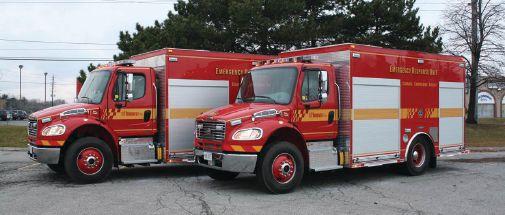
These twin air light vehicles were manufactured on a Freightliner M2 106 chassis with a Cummins L9 360 HP engine. They carry up to 125 SCBA bottles and 12 oxygen cylinders. Additional features include an FRC inView 360 video system, Harrison 20,000kW generator and a Waltco tailgate lift gate.
DEPARTMENT: Toronto Fire Services, Ontario
PUMPER | DEPENDABLE EMERGENCY VEHICLES
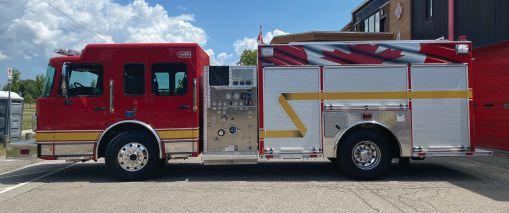
This pumper is built on a Spartan Metro Star chassis with a Cummins L9 380 HP engine featuring VGT Turbocharge. It is equipped with a Federal Signal light package, 1000 USG water tank and a Hale QFlo 5000 LPM pump.
DEPARTMENT: Niagara Falls Fire Department, Ontario
PUMPER RESCUE | DEPENDABLE EMERGENCY VEHICLES
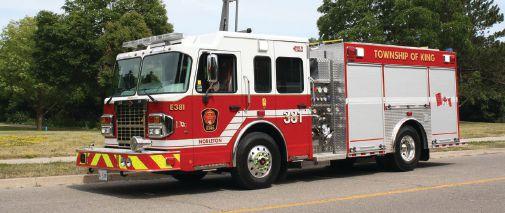
and a Command Light KL415D light
DEPARTMENT: King Fire and Emergency Services, Ontario
PUMPER | DEPENDABLE EMERGENCY VEHICLES
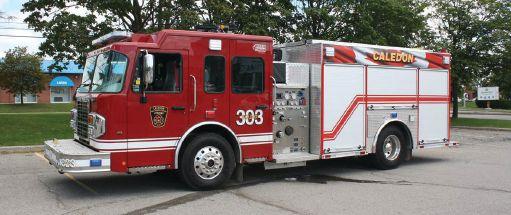
SQUAD | DEPENDABLE EMERGENCY VEHICLES
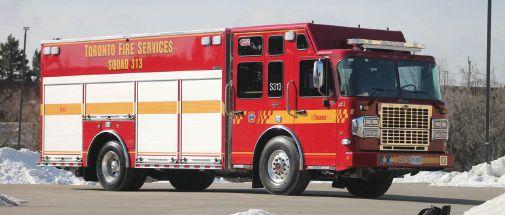
PUMPER | DEPENDABLE EMERGENCY VEHICLES
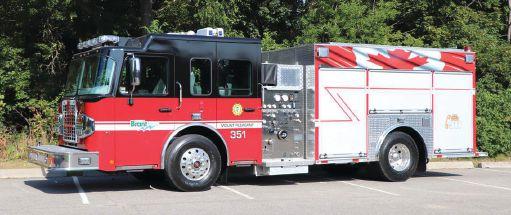
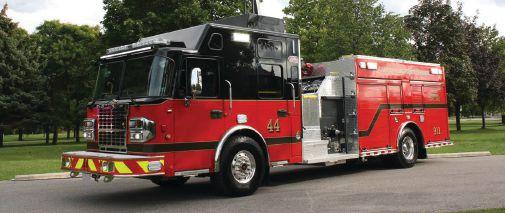
DEPARTMENT: Ajax Fire and Emergency Services, Ontario
PUMPER | DEPENDABLE EMERGENCY VEHICLES 77’ AERIAL | DEPENDABLE EMERGENCY VEHICLES
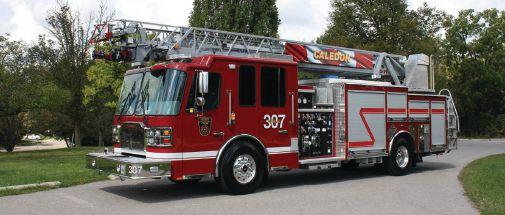
FERRARA FIRE APPARATUS, INC.
27855 James Chapel Rd., PO Box 249 Holden LA 70744
Tel: 225-567-7100
Toll free: 800-443-9006
Fax: 225-567-7675
Company Email: info@ferrarafire.com
Web: www.ferrarafire.com
Take Command with Ferrara
Ferrara Fire Apparatus is a premier manufacturer of fire trucks and emergency response vehicles offering a full line of pumpers, aerials, industrial, wildland, and rescue apparatus. Working hands-on with both municipal and industrial fire departments, the Ferrara team thrives on understanding response needs to custom design fire apparatus that will stand the test of time.
Taking crew safety and apparatus durability very seriously, Ferrara uses a fine-tuned construction process and heavy duty materials to build the strongest fire trucks in the industry. We offer a custom chassis product line that exceeds minimum requirements making them the safest available. With its extra-heavy-duty construction, you can take command with Ferrara.
For more information on Ferrara apparatus or to find a Ferrara dealer near you, visit ferrarafire.com
SAFETEK EMERGENCY VEHICLES
30686-A Matsqui Pl.
Abbotsford BC V2T6L4
833-347-3835
www.firetrucks.ca
FIRE FIGHTING IN CANADA/CANADIAN FIREFIGHTER
PO Box 530, 105 Donly Dr. S. Simcoe ON N3Y 4N5
Tel: 289-221-6605
Fax: 888-404-1129
Company Email: aszpakowski@annexbusinessmedia. com
Web: www.firefightingincanada.com
Canada’s National Fire Publication since 1957.
FIREHALL BOOKSTORE
PO Box 530, 105 Donly Drive S. Simcoe ON N3Y 4N5
Tel: 877-267-3473
Fax: 877-624-1940
Company Email: info@firehallbookstore.com
Web: www.firehallbookstore.com
Firehall Bookstore provides training & public education materials to the Canadian Fire Service industry and its professionals. A one-stop-shop for textbooks, DVDs, codes and standards, and fire safety & prevention educational materials for community outreach.
Products include: NFPA, IFSTA, Jones & Bartlett, Fire Engineering Books, Action Training Systems, Brady, Emergency Film Group as well as our Firehall Mall section offering gloves, lights, tools and accessories from A.J. Stone and ResQTech.
and production of equipment for the most extreme conditions in the world. We are a Bronto Skylift articulated aerial platform dealer, as well as the exclusive Canadian distributor of Sutphen Corporation aerial ladders and platforms. We truly build “One Tough Truck” and boast over 100 years of quality.
COAST TO COAST SALES AND SERVICE NETWORK: Brian Nash — Vice President – Sales – bnash@fgft. ca
Toll-Free: 1-800-565-3473 (ext. 3471) Cell: 204-9817845
Chad Kamminga — Service & Warranty –ckamminga@fgft.ca
Toll-Free: 1-800-565-3473 Direct Phone: 204-5943478
REGIONAL SALES REPRESENTATIVES:
Atlantic Canada — Adam Baldwin – abaldwin@fgft.ca
Toll-Free: 1-800-565-3473 (ext. 2006); Cell: 902888-9806
Eastern Ontario & Quebec — Peter Somerton –psomerton@fgft.ca
Toll-Free: 1-800-565-3473 (ext. 2005); Cell: 613859-5747
Central Ontario — Chris Pilek – cpilek@fgft.ca
Toll-Free: 1-800-565-3473 (ext. 3481); Cell: 204296-1915
Northern Ontario — Bob Lock – block@fgft.ca
PO Box 530, 105 Donly Dr. S. Simcoe ON N3Y 4N5
Tel: 289-221-6605
Fax: 888-404-1129
Company Email: aszpakowski@annexbusinessmedia. com
Web: www.firehall.com
Firehall.com provides an excellent forum for exchange among firefighters and others involved in the fire service. Advertising options include banner ads and e-blasts and offer extensive exposure to the rank and file.
FORT GARRY FIRE TRUCKS LTD.
RR 2, 53 Bergen Cutoff Rd. Winnipeg MB R3C 2E6
Tel: 204-594-3473
Toll free: 800-565-3473
Fax: 204-694-3230
Company Email: brian nash, bnash@fgft.ca Web: www.fgft.com
Fort Garry Fire Trucks is Canada’s oldest and largest manufacturer of high-quality fire apparatus offering a complete line of quality pumpers, tankers, rescues, aerial devices, and custom-designed and engineered specialized units. With headquarters based in Winnipeg, Manitoba, Canada, our customers emanate from cities, towns, and municipalities throughout Canada, the U.S., and abroad with the harshest weather, climates, and terrain. We boast one of the largest fire apparatus engineering departments amongst our competitors, devoted to the design
Toll-Free: 1-800-565-3473 (ext. 2004); Cell: 705665-2195
Manitoba & Saskatchewan — Lance Spencer –lspencer@fgft.ca
Toll-Free: 1-800-565-3473 (ext. 3475); Cell: 204995-3895
Alberta — Taylor Young – tyoung@fgft.ca
Toll-Free: 1-800-565-3473 (ext. 3466); Cell: 204298-9923
British Columbia — Al Anderson & Bryan Anderson –Fire Power Emergency Apparatus alan@firepowerplus.com or bryan@firepowerplus. com Phone: 1-250-668-2673 or 1-250-327-1904
Northwest Territories — Rick Penner – rpenner@ fgft.ca
Toll-Free: 1-800-565-3473 (ext. 2024); Cell: 204981-5118
Nunavut & Aboriginal/Northern Sales Manager — Ron Lavallee – rlavallee@fgft.ca
Toll-Free: 1-800-565-3473; Cell: 204-791-1167
Yukon — Gil Bradet – Nordique Fire Protection sales@nordiquefire.ca; Phone: 867-334-6603
United States (West) — Lloyd Hamilton – US Fire Equipment lloyd@usfireequipment.com; Phone: 253-863-1301
United States (East) — Philip Vander Molen – Vander Molen Fire Apparatus vmfire@verizon.net; Phone: 315-952-7787
CUSTOM PUMPER TANKER | E-ONE
LADDER TRUCK | E-ONE
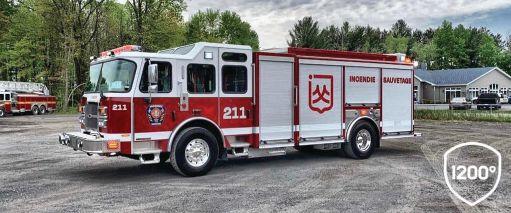
This custom pumper-tanker was manufactured on a Typhoon chassis with seating for six. It features a 5678 LPM pump, 68—LPM water tank, FoamPro 2002 foam system with a 113 LPM foam tank, and a Cummins 450 HP engine.
DEPARTMENT: Ville de Matane Fire Service, Quebec
SIDE-MOUNT PUMPER | KME
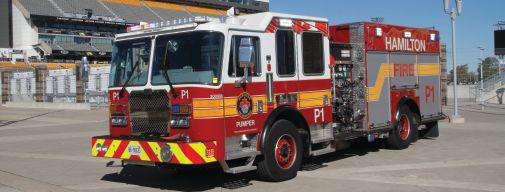
Built on a 100” Panther MFD chassis with a Cummins L9 450 HP engine powered by an Allison 3000 EVS transmission, this six-seater pumper also features a 20” front bumper extension with centre hose well capacity of 105’ of 1 ¾” hose, Steertek front axle, AXIS Smart Truck vehicle monitoring, FRC InView 360 camera, HiViz FireTech 72” brow light, Whelen warning and LED scene lighting packages, Hale QMax 2000 GPM single stage pumper and a 1000 G water tank.
DEPARTMENT: Hamilton Fire Department, Ontario
CUSTOM PUMPER TANKER | SPARTAN
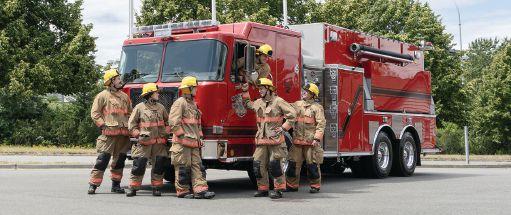
This custom pumper-tanker was built on a Spartan FC-94 LTD chassis with a Cummins L9 450 HP engine powered by an Allison EVS 3000 transmission. It is equipped with a Waterous CXPA pump with a flow of 1,050 IGPM, a 2,500 IGPM water tank and a Waterous Aquis 3.0 25 IGPM foam system.
DEPARTMENT: Saanich Fire Department, B.C.
IPS-NXT | SPARTAN
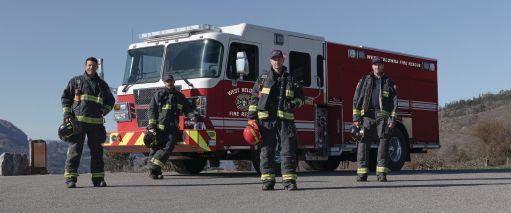
This Spartan IPS-NXT was built on a Spartan Gladiator chassis with a Cummins X15 565 HP engine and powered by an Allison EVS 4000 transmission. This unit features a Waterous CSU pump and has a flow of 2,000 IGPM, a 504 IGPM water tank and a Spartan One Touch CAFS - Class A foam system.
DEPARTMENT: West Kelowna Fire Rescue, B.C.
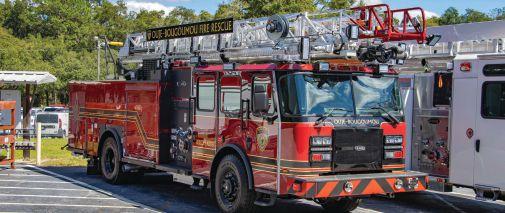
Manufactured on a Typhoon medium cab with a Cummins 450 HP engine, this truck is equipped with a severe duty dash pack, EZ Trac all-wheel drive system, LINE-X package, advanced aerial control systems, extruded aluminium 75’ aerial, dual ladder tunnel, 10 kW Harrison hydraulic generator, AXIS Smart Truck technology, Hale QMax 6000 LPM single stage pump and a 1890 L water tank.
DEPARTMENT: Ouje-Bougoumou Fire Service, Quebec
23M/75’ AERIAL | SMEAL

Assembled on a Spartan Metro Star LFD chassis with a Cummins X12 500 HP engine and powered by an Allison EVS 4000 transmission, this aerial truck features a Darley EM pump with a flow of 1,740 IGPM, a 330 IMPG water tank, and a FoamPro 2001 25 IGPM system.
DEPARTMENT: Pickering Fire Service, Ontario
CUSTOM PUMPER | SPARTAN
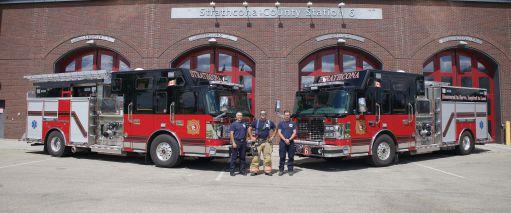
Built on a Spartan Gladiator chassis and a Cummins X15 505 HP engine powered by an Allison EVS 4000 transmission, this pumper holds a Waterous CSUC20 pump with a flow of 2,000 IGPM, a 504 IGPM water tank and a HaleFoam Logix foam system.
DEPARTMENT: Strathcona County Emergency Services, Alberta
CUSTOM PUMPER | SMEAL
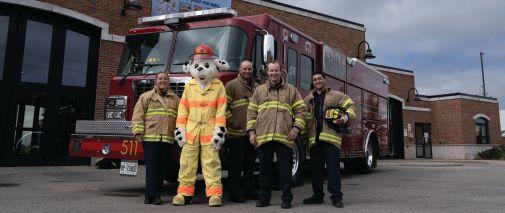
Manufactured on a Spartan Metro Star MFD chassis with a Cummins L9 450 HP engine and powered by an Allison EVS 3000 transmission, this pumper is also equipped with a Waterous CSUC20 pump with a 1,750 IGPM/7,000 LPM flow, a 750 IGPM/2,900 L water tank and a FoamPro 2002 20 IGPM/90 L foam system.
DEPARTMENT: Whitchurch-Stouffville Fire and Emergency Services
FSI® NORTH AMERICA, A DIVISION OF FIRE SAFETY INTERNATIONAL INC.®
311 Abbe Rd.
Sheffield Lake OH 44054
Tel: 440-949-2400
Fax: 440-949-2900
Company Email: sales@fsinorth.com
Web: www.fsinorth.com
FSI – Celebrating 25 years of serving the Life Safety Market worldwide 1997 – 2022
FSI North America® is a Full line supplier of mobile, portable and fixed hazmat decon shower systems. Shower Systems include traditional water/solution based decon, electrostatic equipment only decon, and Far UVC 222nm Disinfection.
FSI® TEAS® (Temporary Emergency Air Shelters) shelter systems, offered in among the world’s largest range of size and configurations, serve for Command, Isolation, Field Hospitals/Alternate Care from 101,000 beds, Sleeping, Fire Fighter Rehab, Temporary Morgues, and so on.
FSI® offers a complete range of Isolation Chambers, Rooms, Shelters, and Beds/Chairs systems.
FSI® also offers a complete range of sizes and configurations of Trailer Systems, Rescue Boats, Smoke Ejectors, and EMS supplies such as the FSI Transporter Disposable Backboards, Triage Tape Systems, FSI Medical Field Cots, and Mortuary supplies such as body bags.

HIGHWATER HOSE INC.
12 rue Willard East Angus QC J0B 1R0
Tel: 888-832-4310
Toll free: 888-832-4310
Fax: 819-832-4340
Company Email: sfraser@mercedestextiles.com Web: www.highwaterhose.com
Worldwide supplier of a wide range of rubber covered and lightweight, layflat fire and industrial hoses.
A NEW EVOLUTION IN FIRE FIGHTING:
• Deluge™ - Designed for high volume water supply where excellent friction loss, packability and cold temperature flexibility are critical.
• X-Stream® Plus - Designed for aggressive interior attack where excellent abrasion and cut resistance are essential and where color-coded attack lines are crucial.
• Available with iReflect®, WAYOUT® Couplings and iDentify® Coding System
OUR CANADIAN DISTRIBUTORS
• martinsfiresafety.com - NL
• indsales.ca - Labrador
• cumings.ca - NS, NB, PEI
• seaboardindustrial.ca - Cape Breton
• larsenal.ca - QC
• municipalequipment.ca - S./S.E. ONT
• transcanadasafety.ca - N./N.C. ONT
• soucisalosafety.com – N./N.C. ONT
• realsafety.ca - MB
• wfrfire.com - BC, AB, SK, YT, NWT
505 McCormick Dr.
Glen Burnie MD 21061
Tel: 410-768-9662
Fax: 410-768-4878
Company Email: info-usa@holmatro.com
Web: www.holmatro.com
Holmatro hydraulic equipment and system solutions are predominantly used in rescue, special tactics and industrial applications around the world. These types of applications demand reliable and safe tools under all circumstances.
3175 McCallum Rd. Abbotsford BC V2S 7W5
Tel: 604-859-3124
Toll free: 888-611-2896
Fax: 604-859-5821
Company Email: info@hubfire.com
Web: http://www.hubfire.com
Hub is Canada’s oldest fire apparatus manufacturer with a full parts inventory, collision repair, factory service department and on site mobile service. Contact our design department to help you with your next truck purchase. We will even help write your next RFP document.
7202 SE International Ct.
Bartlesville OK 74006
Tel: 918-798-4415
Toll free: 800-260-9950
Fax: 918-333-2004
Company Email: sales@huskyportable.com
Web: www.huskyportable.com
Husky Portable Containment is a manufacturer of firefighting and environmental safety products. We specialize in portable water tanks used in water shuttle operations. We also manufacture salvage covers, hose bed covers, staging mats, strainers, decontamination pools and showers, bladder tanks and spill containment berms.

1250 Franklin Blvd Unit 3a
Cambridge ON N1R 8B7
Tel: 877-890-9142
Toll free: 877-890-9142
Company Email: sales@iconicmetalgear.com Web: iconic-x.com
Made in Canada. Iconic X designs and manufactures the highest quality aluminum pickup truck packs for First Response/EMS vehicles. Each truck pack is made to order and tailored to the truck it’s ordered for. From the start, we partner you with a dedicated Iconic X product expert who will help configure your truck pack and storage compartments specifically for the needs of your unit/department. This provides maximum efficiency and storage for your team’s lifesaving equipment. No wasted space. Our products are built from 1/8-inch fully-welded aluminum and are the most durable and secure on the market. They’re built to last through years of abuse, multiple truck cycles, and will never rust. Contact us to view our full product line, learn more, and get a quote.
KME
One Industrial Complex Nesquehoning PA 18240-1499
Tel: 570-669-5132
Toll free: 800-235-3928
Company Email: kme@kmefire.com
Web: www.kmefire.com
KME is Engineered to Serve!
KME is a manufacturer of high quality, custom fire apparatus serving communities across the country. Choose from a wide range of products that includes Aerials, Pumpers, Tankers, Rescues and Wildland vehicles. Our nationwide network of sales and service centers supports you long after the sale with the parts and service you need to continue your life-saving missions. Your KME authorized dealers include:
1200º
105, route Marie-Victorin St-Francois-du-Lac, Quebec JOG 1MO 888-568-2777
DEPENDABLE EMERGENCY VEHICLES
275 Clarence St. Brampton, ON L6W 3R3 Phone: 1-800-268-0871
SAFETEK EMERGENCY VEHICLES
30686-A Matsqui Place Abbotsford, BC V2T 6L4 866-723-3835
METZ FIRE & RESCUE
3-304 Stone Road W #325 Guelph, Ontario N1G4W4 519-763-9955
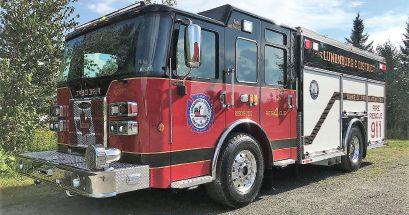
Walk-around heavy rescue apparatus built on a Pierce Saber FR chassis with seating for 6. Equipped with transverse slide-outs, 15,000LBS winch, 30KW hydraulic generator and electric cord reels.
DEPARTMENT: Lunenburg & District Fire Department, Nova Scotia
PUMPER | MAXIMETAL PUMPER TANKER | MAXIMETAL HEAVY RESCUE | MAXIMETAL
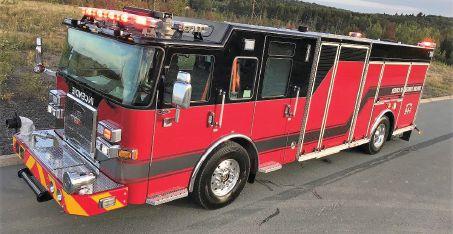
pumper
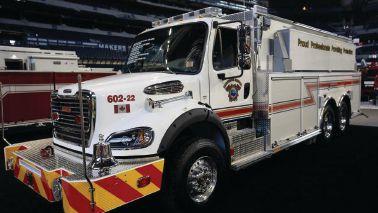
This Maxi 3000 IG PIC tanker was built on a 450 HP Freightliner M2-112 chassis and is equipped with Zico hydraulic portable tank racks, Akron forestry monitor, HALE 1250 US GPM pump, 3600 USG water tank and a Whelen warning light package.
DEPARTMENT: Clearwater Regional Fire Rescue Services, Alberta
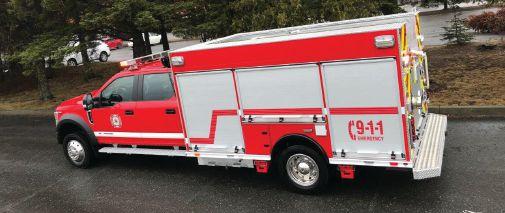
TANKER | MAXIMETAL MINI PUMPER | MAXIMETAL PUMPER TANKER | MAXIMETAL
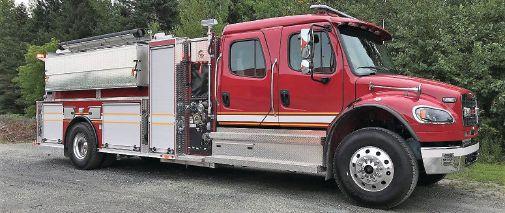
IGPM
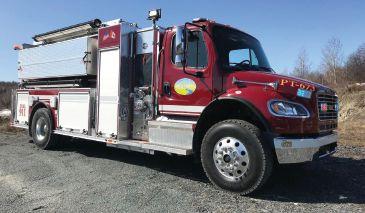
a Freightliner 2-door M2-106
in the
DEPARTMENT:
and equipped with a
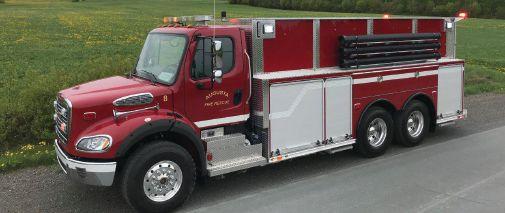
TANKER | MAXIMETAL PUMPER TANKER | MAXIMETAL
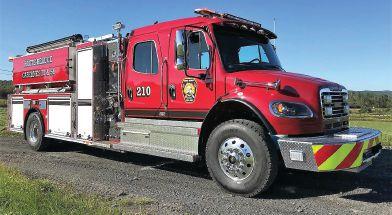

KOCHEK CANADA
62 Bradwick Dr., Vaughan ON L4K 1K8
Tel: 416-602-0404
Company Email: sales@kochekcanada.com
Web: www.kochek.com sales@kochekcanada.com
Robin Lewis, Customer Service
laura@kochekcanada.com
Laura Kenyon, Regional Director
10-year manufacturing defects & Lifetime against delamination (2-10-L)
POWERFUL FIRE PUMPS:
We are a leading manufacturer of high pressure, lightweight, portable fire pumps for forestry & municipal fire applications. When you need water, we deliver.
OUR DISTRIBUTORS:
www.martinsfireandsafety.com – NL www.indsales.ca – Labrador www.cummings.ca – NS, NB, PEI www.seaboardindustrial.ca – Cape Breton www.larsenal.ca – QC www.municipalequipment.ca – S/S.E. ONT www.transcanadasafety.ca – N/N.C. ONT www.soucisalosafety.com – N/N.C. ONT www.realsafety.ca – MB www.wfrfire.com – BC,AB,SK,YT,NWT
NFPA
c/o Firehall Bookstore, PO Box 530, 105 Donly Dr. S. Simcoe ON N3Y 4N5
Tel: 877-267-3473
Fax: 877-624-1940
Company Email: info@firehallbookstore.com Web: www.firehallbookstore.com


MAXIMETAL INC.
9345, 25e Ave
Saint-Georges, QC G6A 1L1
Tel: 418-228-6637
Toll free: 800-510-6337
Fax: 418-228-0493


Company Email: maximetal@maximetal.ca Web: www.maximetal.com


MAXIMETAL is a dynamic and innovative Canadian company specialized in the design and fabrication of optimized intervention vehicles for the Fire & Emergency as well as Utility industries. Our highquality Canadian-built apparatus are serving fire departments from coast to coast including some of the nation’s largest fleets like Montreal, Quebec City, Chatham-Kent and the County of Grande-Prairie. As a member of the Oshkosh Corporation family of companies, MAXIMETAL is proudly represented in the field by the Pierce Manufacturing dealer network.

MERCEDES TEXTILES LTD.
Montreal QC
Tel: 514-335-4337
Fax: 514-335-9633
Company Email: sales@mercedestextiles.com Web: www.mercedestextiles.com
For over 45 years, Mercedes Textiles has proudly delivered the most innovative and reliable water delivery systems to the firefighting community. From hoses & couplings to portable pumps, municipal to forestry, we put our technology where your courage is.
• KrakenEXO® – The most advanced UL-listed attack fire hose on the market – weighs less, kinks less, flows more water, beats the heat
• MegaFlo® Breather – Large volume attack & supply hose designed for fastest deployment, easiest recovery & best packability
• Highwater Hose Inc. – We offer of a wide range of rubber-covered lightweight, lay-flat & industrial hoses via our partner brand
• Many hoses available with iReflect® & WAYOUT® couplings and iDentify® Coding System – all manufactured under one roof, customized to your specifications, & NFPA 1961 compliant
• Best warranty on the market: 2-year All Hazards,
METZ FIRE AND RESCUE
3-304 Stone Rd. W. Guelph ON N1G 4W4
Tel: 519-829-9149
Fax: 519-763-6682
Company Email: john@metzfirerescue.com Web: www.metzfirerescue.com
Canadian dealer for KME Fire Apparatus. Specializing in custom and commercial pumpers, aerial, rescue, tankers and wildland units.

5865 McLaughlin Road Unit 1 Mississauga ON L5R 1B8 Tel: 866-332-2611
Company Email: customerservice.ca@nederman.com Web: www.nederman.com
With 75+ years of experience and well over 100,000 installations, Nederman offers diesel exhaust extraction systems designed specifically for emergency and fire vehicles. From the planning and design stage to installation, commissioning and maintenance support Nederman is your clean air partner.
Nederman Magna Systems reliably capture 100% of dangerous diesel exhaust emissions with source capture technology that prevents fumes from traveling throughout the station. Exhaust fumes are removed right at the tailpipe – the most efficient method. Our system design supports ergonomic attachments and quick-release when speed is required for fast station exits. Magna Systems have no coiled hoses or loops and saves space between trucks.
Nederman’s wide variety of product solutions are trusted at thousands of fire stations around the world with high quality construction and exceptional performance that maximized protection.
ONTARIO FIRE TRUCK INC.
1397 Old Hwy 99
Dundas ON L9H5E3
Tel: 905-628-3324
Toll free: 800-474-6698
Company Email: sales@ontariofiretruck.com Web: ontariofiretruck.com
Ontario Fire Truck Inc. is Ontario’s first choice for Fire Apparatus Service & Sales. We are your first and only call for Fire Apparatus Service, Sales & Testing! We offer you the finest repairs in the industry; we offer a 24 hour, 7 days a week service. All of our service staff is fully licensed Class “A” & “T” both provincially and EVT certified. We are fully insured and have over 30 years experience to provide the best service at your location. Our fully stocked mobile service trucks travel all over Ontario! Why take your truck anywhere, we come to you for both Service and Testing!
Our Sales staff has over 60 years combined experience in the fire industry, we offer only the finest Seagrave fire apparatus, and Our Company believes only the best will do! We are the authorized sales and Service Company for Seagrave fire apparatus and equipment companies.
“The bitterness of poor quality remains, long after the sweetness of low price is forgotten”
PUMPER | PIERCE MANUFACTURING & MAXIMETAL
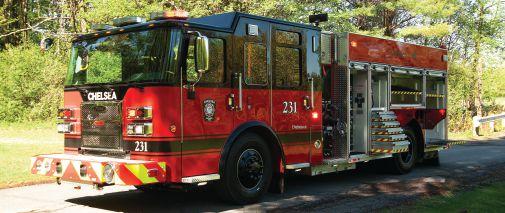
Built on a Pierce Saber FR 7010 chassis with a Cummins L9 engine and an Allison EVS3000 transmission, this pumper also features a 1000 G water tank, FoamPro 2001 foam system with 30 G tank, Paragon pump panel and a Q2B Federal Signal siren.
DEPARTMENT: Municipality of Chelsea, Quebec
TANKER | PIERCE MANUFACTURING & SAFETY SOURCE FIRE INC.
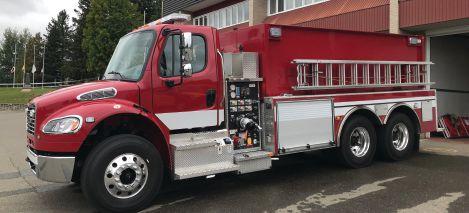
This tanker is assembled on a Freightliner M2-106 chassis, with a Cummins L9 360 HP engine and an Allison 3000EVS transmission. Additional features include a Waterous CXPA 1250 USGPM pump and 3000 USG tank.
DEPARTMENT: Village of St. Anne de Madawaska, New Brunswick
PUMPER TANKER | PIERCE MANUFACTURING & COMMERCIAL EMERGENCY EQUIPMENT
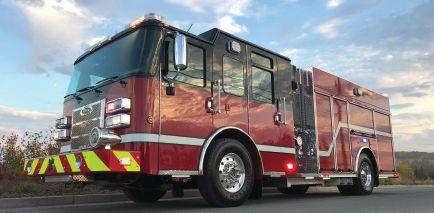
DEPARTMENT: Essex Fire and Rescue,
PUMPER TANKER | PIERCE MANUFACTURING & COMMERCIAL EMERGENCY EQUIPMENT
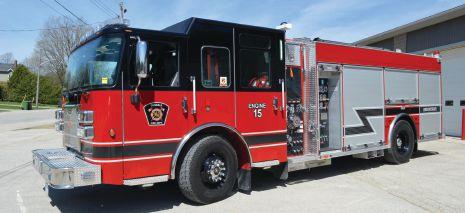
110’ AERIAL PLATFORM | PIERCE MANUFACTURING & L’ARSENAL
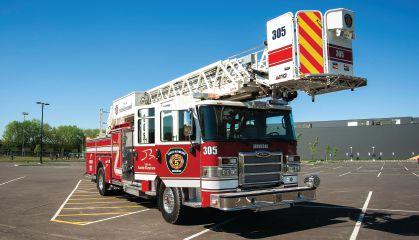
on an Enforcer
2000
DEPARTMENT:
110’ AERIAL PLATFORM | PIERCE MANUFACTURING & SAFETY SOURCE FIRE INC.
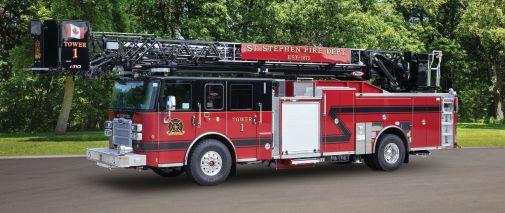
Ascendant
DEPARTMENT: St. Stephen Fire Department, New Brunswick
PUMPER TANKER | PIERCE MANUFACTURING & COMMERCIAL EMERGENCY EQUIPMENT
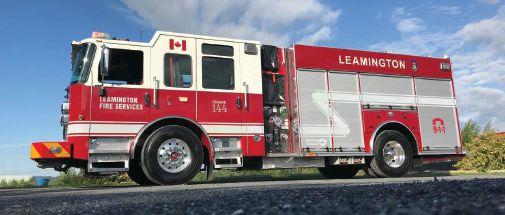
DEPARTMENT: Leamington Fire Service, Ontario
HEAVY RESCUE | PIERCE MANUFACTURING & COMMERCIAL EMERGENCY EQUIPMENT

This walk-around heavy rescue apparatus is built on a Pierce Saber FR chassis and features seating for six.
DEPARTMENT: Puslinch Fire and Rescue Service, Ontario
PIERCE MANUFACTURING INC.
PO Box 2017
Appleton WI 54912-2017
Tel: 920-832-3000
Web: www.piercemfg.com
Pierce Manufacturing: Perform. Like No Other.
It’s more than a tagline. It’s a lifeline extended to every firefighter served, and the expectation of every person and product at Pierce Manufacturing Inc. Behind the design of every highly customized and engineered pumper, aerial, tanker and rescue unit is a team of professionals whose mission is to build a truck, exactly how it’s ordered. The Pierce team pours everything they have into making sure a fire truck is ready to perform.
Pierce heavily invests in product development and programs to advance firefighter safety, education and performance. Performance-driven design means Pierce is continually evolving to provide firefighters with industry-leading advancements and unmatched innovation. As a subsidiary of Oshkosh Corporation (NYSE: OSK), the experienced team has access to an arsenal of cutting-edge technologies and revolutionary processes which have contributed to the development of six custom chassis and best-inclass innovations. Innovations include the Volterra™ platform of electric vehicles, Ascendant Class of Aerials®, Pierce Ultimate Configuration (PUC™), Command Zone™, Idle Reduction Technology, TAK4® Independent Suspension and Husky™ Foam Systems to name a few.
Commitment to performance extends beyond Pierce’s factory walls and into the communities served. A significant part of the Pierce legacy involves giving back to the community and the fire industry. Partnerships include the Firefighter Cancer Support Network, the National Fallen Firefighters Foundation, and Volunteer & Combination Officers Section of the IAFC.
See the Pierce difference for yourself at piercemfg. com.
5655 Kennedy Road, Unit 1 Mississauga ON L4Z 3E1
Tel: 800-465-0327
Company Email: david.k@plymovent.com
Web: www.plymovent.com
Since 1975, we have made it our business to ensure clean air in fire stations. We provide high-quality products to protect firefighters and others from exposure to hazardous diesel exhaust. Our source capture and removal systems are the recommended method for controlling exhaust emissions at your station. Breathe clean air at work with Plymovent. #hookupthehose

3 Greengage Rd
New Lowell ON L0M 1N0
Tel: 705-424-9960
Toll free: 888-434-0253
Fax: 705-435-6419
Company Email: dave.winfield@provix.net
Web: http://www.provix.net
PROVIX is about vision enhancement Cameras to see where once you could not, Portable and FRC Apparatus Lighting to illuminate scenes, Thermal imaging to see through smoke and fog, as well as command camera systems for situational awareness and remote viewing. PROVIX installs safety camera systems on apparatus for OEMs and on existing equipment. PROVIX supplies FLIR and Seek TICs and provides ladder mounted thermal cameras for aerials. We provide LED flares, for lighting up accident scenes and for traffic control. Apparatus Red Blue lighting from all of the top manufacturers are available at PROVIX. We install what we supply and we service what others sell! Contact PROVIX to discuss any of our services.
Head Office: 6415 Golden West Ave. Red Deer AB T4P 3X2
Tel: 403-347-7045
Toll free: 800-494-4210
Fax: 403-347-7049
Company Email: info@rockymountainphoenix.com
Web: www.rockymountainphoenix.com
Rocky Mountain Phoenix is your one-stop-shop for top-of-the-line innovative fire truck and fire equipment products and services. We offer a comprehensive line of emergency apparatus and emergency equipment, brands you know and trust; Rosenbauer, MSA, Innotex, CET Fire Pumps, HURST Jaws of Life, Akron Brass, Haix, Key Hose, MSA Cairns, Task Force Tips, Ready Rack, Firecraft and many more.
We service what we sell. We provide 24/7 service for all your emergency fire apparatus and fire equipment through our Shop Service and Mobile Service. Annual fire pump testing, fire truck and fire equipment service and repairs for British Columbia, Alberta, Saskatchewan, Manitoba, Nova Scotia, PEI and all of Canada’s Arctic.
Visit Us: https://www.rockymountainphoenix.com
BRANCHES: 103-2285 Queen St. Abbotsford, BC V2T 6T3
Tel: 604-864-7303 | Fax: 604-864-4938 | Toll Free: 1-888-815-0500
320 Logan Rd. Bridgewater, NS B4V 3J8
Tel: 902-298-0415 | Toll Free: 1-844-530-4003
SAFETEK PROFIRE
1775 Meyerside Drive, Unit 11-12
Mississauga ON L5T 1E2
Tel: 905-564-7900
Toll free: 877-572-0040
Company Email: sales@firetrucks.ca | parts@ firetrucks.ca | service@firetrucks.ca
Web: www.firetrucks.ca
At Safetek Profire, we are driven to serve those who keep our communities safe. Founded on our belief of delivering product and service excellence, our focus on supporting firefighters in performing their jobs safely is a constant priority. Core to our mission is putting our customers first by continuously challenging ourselves to break the mold of traditional customer service and recognizing that “Good Isn’t Good Enough.”
As the dealer of Bronto, E-ONE, EVI, Ferrara, KME, Ladder Tower, Metalfab, Smeal, Spartan, SVI and US Fire Pump*, we strive to introduce our customers to a new way of thinking about solutions to their challenges and problems. Our commitment to providing lifetime support through our parts and service departments are what pioneered us to be leaders in our industry, and support you in doing what you do best - serving your communities.
* Not all brands are available in all regions.

SEATS CANADA INC.
1800 Bonhill Road
Mississauga ON L5T 1C8
Tel: 905-364-5843
Fax: 905-364-7822
Company Email: seatsinfo@seatscanada.com Web: www.seatscanada.com
We offer a complete line of quality Emergency Vehicle seating for driver, officer, crew, wall mount and jump seats. Engineered for comfort and safety, these seats have easy exit flip-up split headrest and are manufactured in a wide variety of covering material.
100’ ASCENDANT TOWER | COMMERCIAL EMERGENCY EQUIPMENT
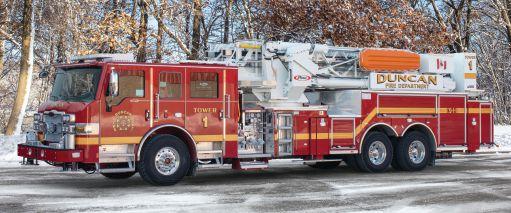
Built on a Pierce tandem axle Velocity chassis and powered by a Cummins X15 605 HP engine, this apparatus features TAK-4 independent front suspension, a Waterous 2000 GPM pump, 300 G tank, Whelen warning lighting, Hi-Viz scene lights, as well as side roll and frontal impact protection.
DEPARTMENT: Duncan Fire Department, B.C.
| COMMERCIAL EMERGENCY EQUIPMENT

Assembled on a Pierce Enforcer chassis and powered by a PACCAR MX-13 510 HP engine, this pumper features Pierce Idle Reduction Technology, TAK-4 independent front suspension, Husky 3 foam system, 8 kW Harrison hydraulic generator, Pierce Command-Zone electronics, Whelen warning lights, Waterous 2000 GPM pump, 400 G tank and a 30 G foam cell.
DEPARTMENT: North Vancouver City Fire Department, B.C.
RESCUE PUMPER | COMMERCIAL EMERGENCY EQUIPMENT
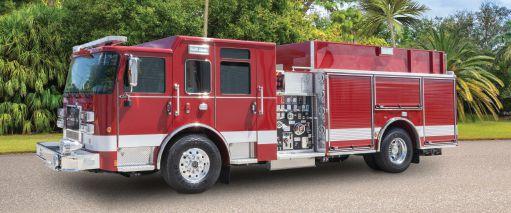
This rescue pumper was built on a Pierce Enforcer chassis and powered by a Cummins X12 500 HP engine, this apparatus includes TAK-4 independent front suspension, a Waterous 2000 GPM pump, high-flow waterway plumbing for monitor installation, Husky 3 foam system, and a 500 G tank with 20 G of foam.
DEPARTMENT: Beausoleil Fire and Rescue Services, Ontario
110’ ASCENDANT PLATFORM | COMMERCIAL EMERGENCY EQUIPMENT
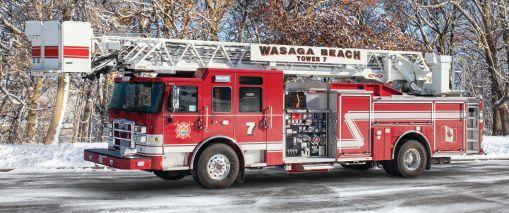
Manufactured on a Pierce Enforcer chassis with a notched-roof cab, and powered by a Cummins L9 450 HP engine, this apparatus has a 110’ steel aerial platform, TAK-4 independent front suspension, Waterous 2000 GPM pump, 500 G tank and a 20 G foam cell with Husky 3 foam system. Scene and warning lights are from Whelen and HiViz LED lighting.
DEPARTMENT: Wasaga Beach Fire and Emergency Services, Ontario
107’ HEAVY-DUTY ASCENDANT AERIAL | COMMERCIAL EMERGENCY EQUIPMENT
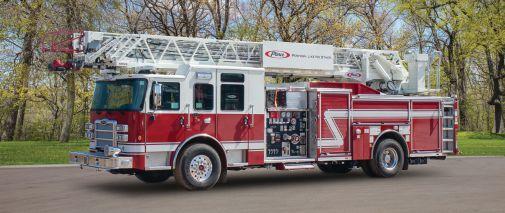
Built on a Pierce Enforcer chassis and powered by a Cummins X12 500 HP engine, this apparatus includes TAK-4 independent front suspension, a Waterous 2000 GPM pump, 1500 GPM high-flow waterway, Husky 3 foam system, and a 500 G tank with 20 G of foam.
DEPARTMENT: North Cowichan Fire Department, B.C.
PUMPER | COMMERCIAL EMERGENCY EQUIPMENT PUMPER | COMMERCIAL EMERGENCY EQUIPMENT
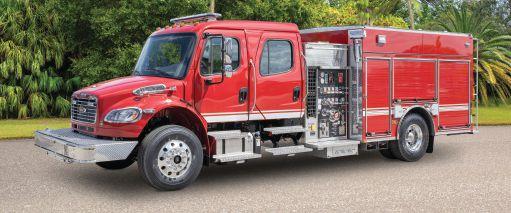
Built on a Freightliner M2-106 chassis and powered by a Cummins L9 360 HP engine, this pumper features a Waterous 1250 GPM pump, Husky 3 foam system, Hi-Viz LED scene lights and has a 1000 G tank.
DEPARTMENT: Sturgeon County Protective Services, Alberta
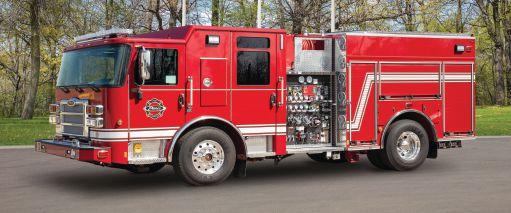
Manufactured on a Pierce Enforcer chassis, this pumper is powered by a Cummins L9 450 HP engine. Features include Pierce Idle Reduction Technology, a Waterous 1500 GPM pump, Darley 250 GPM auxiliary pump, 150’ 1” hose booster reel, Husky 3 foam system and a 650 G tank with a 20 G foam cell.
DEPARTMENT: Pays Plat First Nation Fire Department, Ontario
TANKER | COMMERCIAL EMERGENCY EQUIPMENT
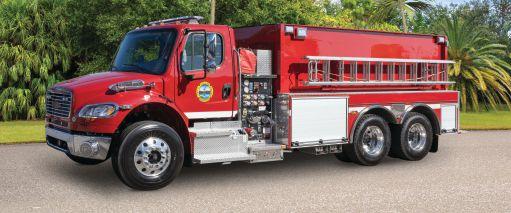
This pumper was built on a Freightliner M2-106 chassis and is powered by a Cummins L9 360 HP engine. Additional features include a Waterous 1500 GPM pump, Whelen lighting package and a 3000 G poly tank.
DEPARTMENT: Goulais Fire and Rescue Volunteers, Ontario
SPARTAN EMERGENCY RESPONSE
907 7th Ave North
Brandon SD 57005
Tel: 605-582-4000
Company Email: info@spartaner.com
Web: www.spartaner.com
Spartan Emergency Response (Spartan ER) is a leading designer, manufacturer and distributor of custom emergency response vehicles, cabs and chassis. Driven by a commitment to quality and innovation, Spartan and its portfolio of brands Spartan Fire Chassis, Smeal, and Ladder Tower (LT) offer a broad range of apparatus to meet your departments specific needs and requirements.
Spartan has a rich history in fire apparatus manufacturing with over 250 years of combined experience. Fire Truck design, development, manufacturing and after the sale support have always been at the heart of the company and continues today.
At Spartan, we work with you from the start to translate your truck’s specs into a design that gives you the right mix of safety, speed, agility, ergonomics, and serviceability that will last for the long haul.
SAFETEK Emergency Vehicles Ltd.
30686-A Matsqui Place
Abbotsford, BC V2T 6L4
23 Benton Road
Toronto ON M6M 3G2
Tel: 416-789-4354
Toll free: 800-473-5553
Fax: 416-789-5475
Company Email: infostarfield-lion@lionprotects.com
Web: www.starfieldlion.com
Starfield Lion has a legacy and ongoing vision of introducing PPE that is designed to ensure the health, safety and performance of the first responders who serve our communities. Your safety is our top priority. Your needs drive our innovations, we listen and develop the solution.
6450 Eiterman Road
Dublin OH 43016
Tel: 800-726-7030
Company Email: sutphen@sutphencorp.com Web: www.sutphen.com
As a family-owned and operated business of over 130 years, Sutphen Corporation’s mission is to build the safest, most reliable fire apparatus in the world through innovation and customer focus.
3842 Redman Dr.
Fort Collins CO 80524
Tel: 970-297-7100
Toll free: 888-784-1112
Fax: 970-297-7099
Company Email: info@svitrucks.com Web: www.svitrucks.com
SVI Trucks, a Super Vacuum Manufacturing Company located in Fort Collins, Colo., builds custom fire apparatus, including rescue trucks, hazmat units, command vehicles, fire engines, tanker trucks, law enforcement vehicles and more. To see SVI’s full fleet, visit svitrucks.com. To browse drawings, features and specifications of a truck, visit SVI’s Apparatus pages and click on any truck image.
W.S. DARLEY & CO.
325 Spring Lake Drive
Itasca IL 60143
Tel: 715-456-9390
Toll free: 800-634-7812
Company Email: jasondarley@darley.com Web: www.darley.com
You serve others. We serve you.
Founded in 1908, W.S. Darley & Co. (Darley) provides the highest quality pump, technology, and equipment solutions for first responders around the world. With origins in Midwest manufacturing, Darley a complete line of unmanned systems, immersive training technology, equipment and pumps. More information is available at www.darley.com.
WATERAX INC.
6635 Henri-Bourassa W.
Montreal QC H4R 1E1
Tel: 514-637-1818
Toll free: 855-616-1818
Company Email: info@waterax.com
Web: www.waterax.com
Trusted by wildland firefighters around the world, WATERAX sets the industry standard by developing innovative, portable fire pumps and water-handling equipment designed to withstand demanding applications and rugged environments. With a time-tested legacy of reliability, WATERAX carries on its mission to place powerful, precision engineered pumps into the hands of the men and women who need to move water to protect our forests and most cherished natural resources from the ravages of wildfires!
ZIAMATIC CORP. (ZICO)
10 West College Ave., PO Box 337
Yardley PA 19067-8337
Tel: 215-493-3618
Toll free: 800-711-3473
Fax: 866-493-1401
Company Email: sales@ziamatic.com
Web: www.ziamatic.com
For over 50 years, Ziamatic Corp. has provided first responders with the tools and equipment they need to make their jobs safer, easier, and more efficient every day. If you want quality, you want ZICO.
URBAN INTERFACE PUMPER | COMMERCIAL EMERGENCY EQUIPMENT
|
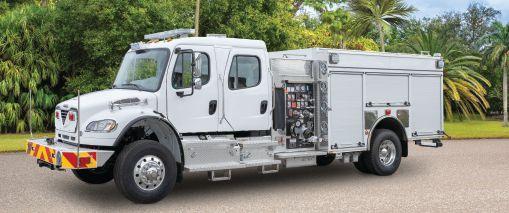
Manufactured on a Freightliner chassis and powered by a Cummins L9 360 HP engine, this apparatus features 4WD, pump-and-roll capability, a Husky 3 foam system, Waterous 1250 GPM pump, and a 750 G tank with 30 G foam cell.
DEPARTMENT: Clearwater Regional Fire Rescue Services, Alberta
RESCUE PUMPER | COMMERCIAL EMERGENCY EQUIPMENT
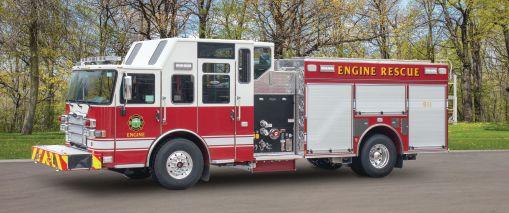
Assembled on a Pierce Enforcer 7024 chassis and powered by a Cummins L9 450 HP engine, this apparatus features TAK-4 independent front suspension, a Waterous 1750 GPM pump, 500 G tank with a 30 G integral foam cell, automatic tire chains, 3” Akron deluge monitor, Husky 3 foam system and a thru-tank storage tunnel for ladders.
DEPARTMENT: Okotoks Fire Department, Alberta
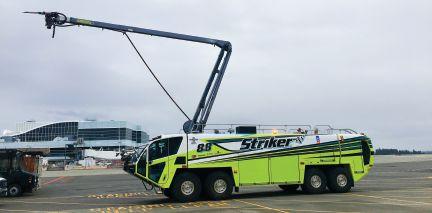
This ARFF truck features 17,034L tank, 2044L AFFF Concentrate, 250kg dry chemical, 10kW Onan hydraulic generator, Dual Scania DC16 16.4L 770HP V8 Engines, runway-ready performance telematics, Driver Enhanced Vision System, high-reach extendable turret with K-Factor precision piercing alignment and a low-attack bumper turret. DEPARTMENT: Calgary Airport Authority - YYC, Alberta
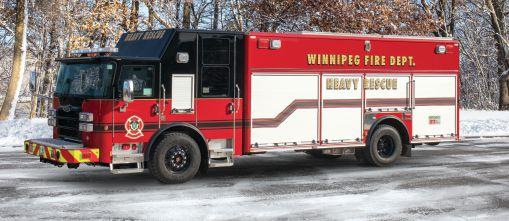
This matching set of rescues feature Cummins L9 450 HP engines, TAK-4 independent front suspension, Pierce Idle Reduction Technology, body-corner high-angle rescue anchor points, and a custom clean-cab layout with UAV operations command centres.
Winnipeg Fire Paramedic Service, Manitoba
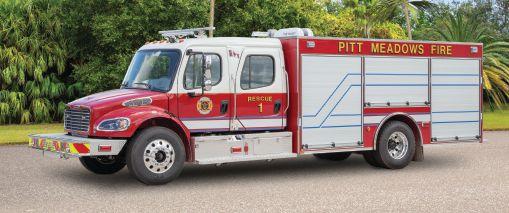
Built on a Freightliner M2-106 single-axle chassis, this rescue is powered by a Cummins B6.7 360 HP engine and features a Will-Burt NS2.3-600 WHL light tower.
DEPARTMENT: Pitt Meadows Fire & Rescue, B.C.
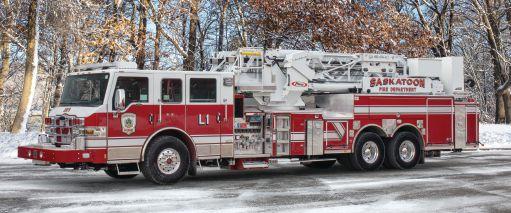
Built on a Pierce Velocity chassis, this aerial is powered by a Cummins X12 500 HP engine and features a Husky 3 foam system with a Waterous 2000 GPM pump and 300 G tank.
DEPARTMENT: Saskatoon Fire Department, Saskatchewan
ASCENDANT TOWER | COMMERCIAL EMERGENCY EQUIPMENT CUSTOM TYPE-6 WILDLAND BUSH TRUCK | COMMERCIAL EMERGENCY EQUIPMENT
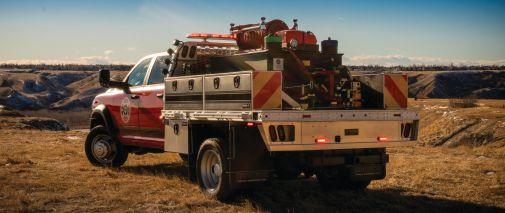
mid-range engine-driven fire pump with Scotty
system,
hose reel, multiplexed electrical control system, and a Whelen Engineering WeCan lighting and siren package. It is NFPA 1906 compliant.
DEPARTMENT: Lethbridge Fire EMS, Alberta
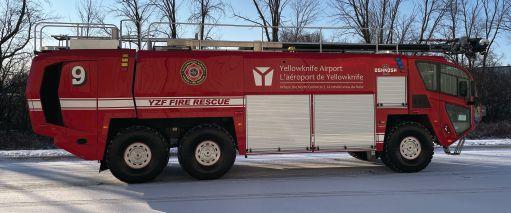
This airport rescue and fire fighting vehicle features a high reach extendable turret, Waterous 7511 LPM pump, 12,000L of water, 1590L AFFF concentrate, 227kg dry chemical, ECO EFP on-board foam testing system, TAK-4 independent front and rear suspension with rear-steer, Deutz 16L 690 HP V8 engine, and an electric ladder gantry with 24’ extension ladder.
DEPARTMENT: Yellowknife Airport, Northwest Territories
PUMPER TANKER | FORT GARRY FIRE TRUCKS
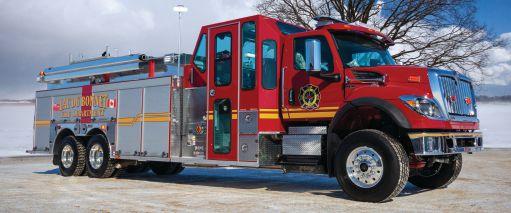
This pumper tanker was built on an International HV607 regular cab chassis and is powered by a Cummins L9 450 HP diesel engine and an Allison 3000 EVS transmission. This 5083-salt water marine grade aluminum unit features a 4-man enclosed pump house, Hale PTO RSD1500 pump, 2500 IG tank, TFT rooftop monitor with TFT 12-inch Extend-A-Gun, and a FoamPro 2001 Class A foam proportioning system.
DEPARTMENT: Lac Du Bonnet Fire Department, Manitoba
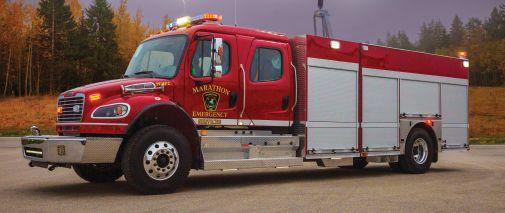
Manufactured on a Freightliner M2 106 crew cab chassis and powered by a Cummins L9 350 HP diesel engine and an Allison 3000 EVS transmission, this 5083-salt water marine grade aluminum unit features a Waterous Midship CSU1500 pump, a poly 800 IG tank, Akron Apollo rooftop monitor and a rooftop Command Light.
DEPARTMENT: Marathon Emergency Services, Ontario
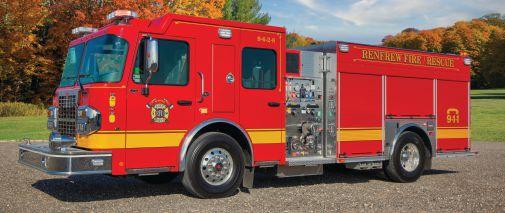
Built on a Spartan Metro Star 10-inch raised roof chassis with a Cummins L9 400 HP diesel engine and an Allison 3000 EVS transmission, this 5083-salt water marine grade aluminum pumper features a Hale Midship DSD1500 pump, an 800 IG tank, and a FoamPro 1600 Class A foam proportioning system.
DEPARTMENT: Renfrew Fire Department, Ontario
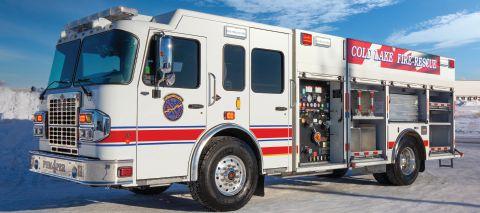
This apparatus was assembled on a Spartan Metro Star 10-inch raised roof chassis with a Cummins L9 400 HP diesel engine and an Allison 3000 EVS transmission. This 5083-salt water marine grade aluminum pumper features a Waterous Qmax 1500 pump, 800 IG tank, a rooftop TFT Hurricane monitor and a FoamPro 2001 Class A foam proportioning system.
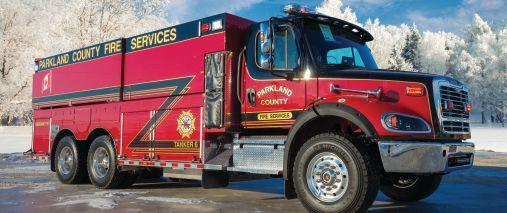
Built on a Freightliner M2 112 regular cab chassis that is powered by a Cummins L9 450 HP diesel engine and an Allison 4500 EVS transmission, this formed frame 5052 fresh water marine grade aluminum unit features a Hale Module PTO DSD 1250 GPM pump, 3000 IG poly tank, rooftop Command Light traffic board, two Zico hydraulic 1500 IG Porta tanks and a FoamPro 2001 Class A foam proportioning system.
DEPARTMENT: Parkland County Fire Services, Alberta
EMERGENCY RESCUE PUMPER | FORT GARRY FIRE TRUCKS PUMPER TANKER | FORT GARRY FIRE TRUCKS
DEPARTMENT: East River Fire Department, P.E.I EMERGENCY RESCUE PUMPER | FORT
DEPARTMENT: Cold Lake Fire-Rescue, Alberta
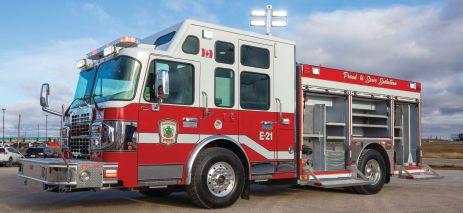
This emergency rescue pumper was built on a Spartan Metro Star 24-inch raised roof chassis with a Cummins L9 380 HP diesel engine and an Allison 3000 EVS transmission. This 5083-salt water marine grade aluminum pumper features a Hale QMAX XS1750 pump, a 500 IG tank, a rooftop LED Command Light, and a Foam Pro 2002 Class A foam proportioning system.
DEPARTMENT: Saskatoon Fire Department, Saskatchewan
TANKER & 2 PUMPERS | FORT GARRY FIRE TRUCKS
The tanker [middle] is built on a Spartan Metro Star 10-inch raised roof chassis with Cummins L9 380 HP diesel engine and an Allison 3000 EVS transmission. This 5083salt water marine grade aluminum truck features Hale Sidekick 750 GPM pump, 2000 IG tank and a 2500 USG Husky Porta tank. The pumpers are built on Spartan Metro Star MFD 10-inch raised roof chassis with Cummins L9 380 HP diesel engines and Allison 3000 EVS transmissions. These 5083-salt water marine grade aluminum apparatus feature Waterous Midship CSU2000 pumps, 800 IG tanks, rooftop Akron Deckmaster monitors, and Waterous Advantus 6 Class A foam proportioning systems. DEPARTMENT: Thornhill Fire Department, B.C.
EMERGENCY RESCUE PUMPER | FORT GARRY FIRE TRUCKS
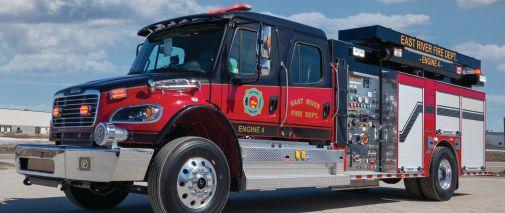
Assembled on a Freightliner M2 106 crew cab chassis and powered by a Cummins L9 360 HP diesel engine and an Allison 3000 EVS transmission, the 5083-salt water marine grade aluminum unit is equipped with a Waterous Midship CX1250 pump, a poly 1000 IG tank and a FoamPro 1600 Class A foam proportioning system.
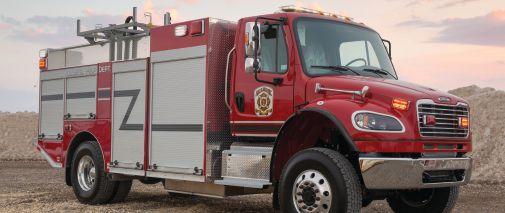
Manufactured on a Freightliner M2 106 4x4 regular cab chassis with a Cummins L9 330 HP diesel engine and an Allison 3500 EVS transmission, this 5083-salt water marine grade aluminum pumper includes a Darley PTO PSP1250 pump, 1000 IG tank and a Zico electric ladder rack.
DEPARTMENT: Montana First Nation Fire Department, Alberta
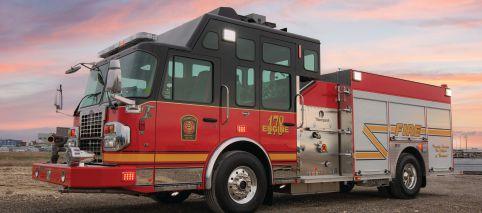
Built on a Spartan Metro Star 24-inch raised roof chassis with a Cummins L9 450 HP diesel engine, Allison 3000 EVS transmission and 5083-salt water marine grade aluminum body, this pumper features a Hale PTO RSD1250 pump, 800 IG tank, rooftop Elkhart Vulcan Direct Mount monitor and a FoamPro 2002 Class B foam proportioning system.
DEPARTMENT: Niagara-on-the-Lake Fire & Emergency Services, Ontario
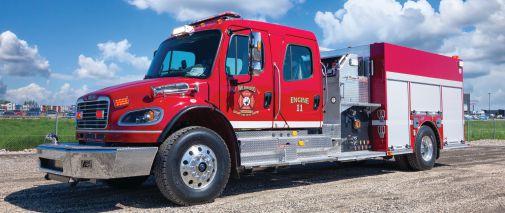
This pumper was manufactured on a Freightliner M2 106 chassis and is powered by a Cummins L9 350 HP diesel engine and an Allison 3000 EVS transmission. The 5052 marine grade formed aluminum unit features a Hale PTO RSD1250 pump, 1000 IG tank, Zico hydraulic portable tank holder with a Husky 1500 IG Porta tank and a FoamPro 2001 Class A foam proportioning system.
DEPARTMENT: Wildwood Volunteer Fire Department, B.C.
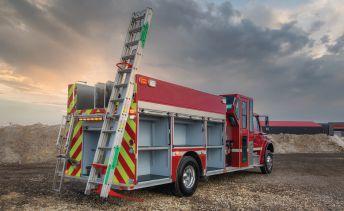
This 4-man crown pumper was built on a Freightliner M2 106 regular cab chassis that is powered by a Cummins L9 330 HP diesel engine and an Allison 3000 EVS transmission. This 5083-salt water marine grade aluminum unit features a Waterous Midship CX1250 pump, poly 800 IG tank, rear slide-out ladder rack and a FoamPro 1600 Class A foam proportioning system.
DEPARTMENT: Constance Lake First Nation Volunteer Fire Services, Ontario
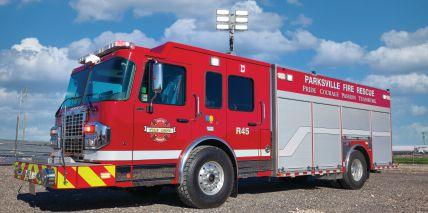
This walk around rescue was built on a Spartan Metro Star 10-inch raised roof chassis with a Cummins L9 450 HP diesel engine and an Allison 3000 EVS transmission.
The full framed 5083 salt water marine grade aluminum rescue features a rooftop Command Light, rooftop coffin compartments, an FRC scene light package and Slidemaster pull out and tip down trays.
DEPARTMENT: Parksville Volunteer Fire Department, B.C.
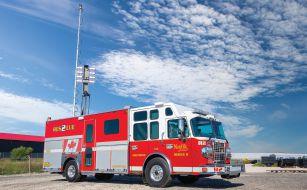
Assembled on a Spartan Metro Star 20-inch raised roof chassis, this rescue features a Cummins L9 380 HP diesel engine, Allison 3000 EVS transmission and a 5083 salt water marine grade aluminum body. Additional features include a rooftop Command Light, internal sliding doors separating the command centre from the walk-in, rolling office chairs with Velcro restraints for travel, extendable 30-foot mounted pan, tilt, zoom camera with command centre monitor and Slidemaster pull out and tip down trays.
DEPARTMENT: Norfolk County Fire Department, Ontario
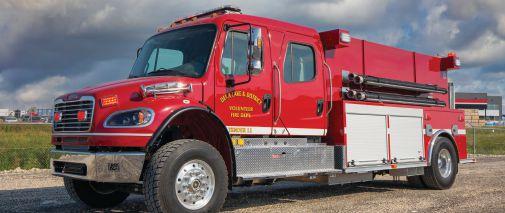
a
on a Commander 4000 chassis with a
ISX 565 HP engine and Allison EVS
and 60”
and
FX body has a Hale Q-MAX 2250 GPM pump, FRC TGA 400 pressure governor, 300 G tank, 101 ft three-section Smart platform and galvanized frame, outriggers, torque box, aerial and basket complete with two Akron monitors.
DEPARTMENT: Niagara-on-the-Lake Fire & Emergency Services, Ontario
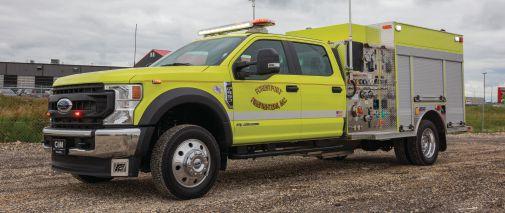
mini pumper was built on a Ford F550 4x4 crew cab chassis with a 6.7L V8 diesel engine. Additional features include a Hale DSD1250 midship pump and Whelen emergency and scene light packages.
DEPARTMENT: Forestport Fxire Department, New
PUMPER TANKER | ROCKY MOUNTAIN PHOENIX
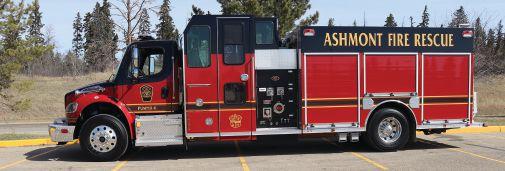
Assembled on a 2022 Freightliner M2-106 2-door cab and chassis with a Rosenbauer FX 1/8” aluminum extruded body, this pumper has a Rosenbauer NH 1050 IGPM dual pressure PTO pump, enclosed top-mount control panel, Fire Research InControl 400 pressure governor, Rosenbauer FixMix foam system, booster reel with 150’ of hose, FoamPro 2002 with a 30 IG Class A tank, 900 IG water tank, Whelen warning/ scene lights, 16” front bumper extension, RH hydraulic ladder rack, LED light tower and a Rosenbauer EZ-Climb rear access ladder.
DEPARTMENT: Ashmont Fire Department, Alberta
CUSTOM TME PUMPER | ROCKY MOUNTAIN PHOENIX TME PUMPER | ROCKY
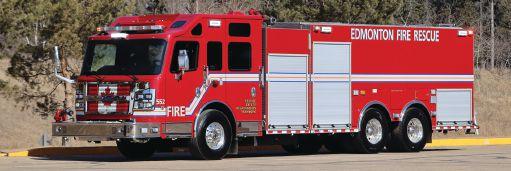
Manufactured on a 2019 Rosenbauer Commander 4-door tandem cab and chassis with a 500 HP Cummins X12 engine and a Rosenbauer FX 3/16” aluminum extruded body, this pumper has a Darley ZSM 9500 LPM split-shaft pump, Fire Research InControl 300 pressure governor, Darley HM 2000 LPM PTO pump, FoamPro 2002 foam system with a 182 L Class A foam tank, 13,375 L water tank, (3) 10” electric round dump chutes, 5000 LPM DeckMaster monitor, V-MUX electrical system with Smart Steering Wheel and Raydan Air-Link rear air suspension.
DEPARTMENT: Edmonton Fire Rescue, Alberta
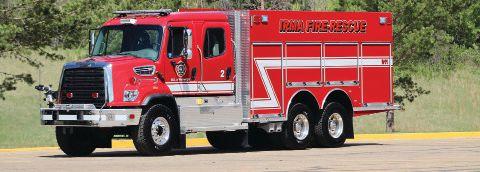
Assembled on a 2022 Freightliner 108SD 4-door 6x6 cab and chassis with a 400 HP Cummins L9 engine and a Rosenbauer FX 3/16” aluminum extruded body, this pumper features a Rosenbauer NH 1050 IGPM rear mounted dual pressure PTO pump, rear side operator’s panel, Rosenbauer FixMix high pressure foam system, FoamPro 2001 normal pressure foam system with a16 IG Class A foam tank, 1665 IG water tank, Whelen warning lights, Fire Research LED scene lights and a Rosenbauer Lo-Pro hydraulic ladder rack.
DEPARTMENT: Irma Fire Department, Alberta
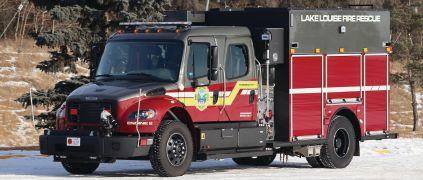
Built on a 2021 Freightliner M2-106 4 door cab and chassis with a 330 HP Cummins L9 engine and a Rosenbauer FX 1/8” aluminum extruded body, additional features include a Rosenbauer N 1050 IGPM normal pressure PTO pump, Fire Research PumpBoss 400 pressure governor, FoamPro 2001 foam system with a 30 IG Class A foam tank, 750 IG water tank, Whelen warning light package with body side Traffic Advisor lights, Akron scene lights, RH hydraulic ladder rack and four upper body rope rescue tie off points.
DEPARTMENT: Lake Louise Fire Rescue, Alberta
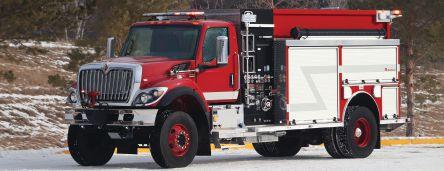
This pumper was built on a 2022 International HV-507 2-door 4x4 cab and chassis with a 360 HP Cummins L9 engine and a Rosenbauer FX 1/8” aluminum extruded body. Features include a Rosenbauer NH 1050 IGPM dual pressure PTO pump, Fire Research InControl 300 pressure governor, Rosenbauer FixMix foam system, Rosenbauer Rapid Intervention hose reel with 200’ of hose, FoamPro 1600 with a 16 IG Class A foam tank,1250 IG water tank, Rosenbauer Swivel dump chute, and a 1750 IG portable tank and rack.
DEPARTMENT: Bridge River Transmission Project, B.C. Hydro
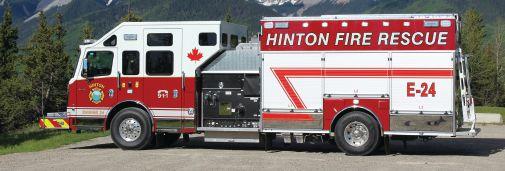
Built on a 2020 Rosenbauer Commander 4-door cab and chassis with a 500 HP Cummins X12 engine and a Rosenbauer EXT 3/16” aluminum heavy duty extruded body, additional features include a V-MUX electrical system, Smart steering wheel, HAAS Alert, Hendrickson FIREMAAX EX rear air suspension, Hale RSD 1250 IGPM PTO pump, enclosed top mount operator’s panel, Fire Research InControl 400 pressure governor, FoamPro 3012 hydraulic foam system with a 25 IG Class A foam tank, 832 IG water tank and a 1050 IGPM TFT Hurricane monitor.
DEPARTMENT: Hinton Fire Rescue, Alberta
PUMPER TANKER | ROCKY MOUNTAIN PHOENIX
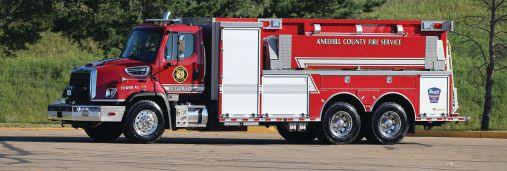
Built on a 2022 Freightliner 114SD 2-door 6x4 cab and chassis with a 500 HP Cummins X12 engine and a Rosenbauer FX 1/8” aluminum extruded body, this pumper includes a Rosenbauer NH 5000 LPM dual pressure PTO pump with pump and roll capability, Fire Research InControl 300 pressure governor, high pressure and normal pressure foam systems with a 20 IG Class A foam tank, 4000 IG water tank, Whelen warning lights, Fire Research LED scene lights, powered portable tank rack and a Rosenbauer EZ-Climb rear access ladder.
DEPARTMENT: Torrington Fire Department, Alberta
PUMPER | ROCKY MOUNTAIN PHOENIX
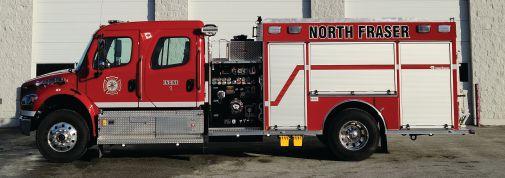
Built on a 2021 Freightliner M2-106 4-door cab and chassis with a 330 HP Cummins L9 engine and a Rosenbauer CT 3/16” aluminum body, this pumper has a Rosenbauer N 5000 LPM normal pressure PTO pump with pump and roll capability, a side-mount operator’s panel, Fire Research PumpBoss 400 pressure governor, FoamPro 1600 foam system with an onboard 20 IG Class A foam tank, 1000 IG water tank, Federal Signal warning light and scene light packages, slide-in compartments for suction hoses and a Rosenbauer EZ-Climb rear access ladder.
DEPARTMENT: North Fraser Fire Department, B.C.
SIDE-MOUNT PUMPER | ROCKY MOUNTAIN PHOENIX
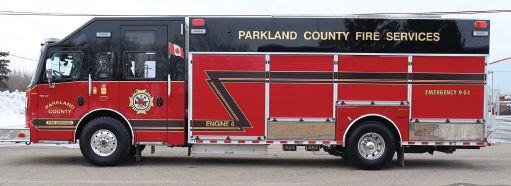
This pumper was built on a 2020 Rosenbauer Commander 4-door cab and chassis with a 450 HP Cummins L9 engine and a Rosenbauer EXT 3/16” aluminum heavy duty extruded body. Details include a V-MUX electrical system with a Smart steering wheel, HAAS Alert, Hendrickson ROADMAAX rear air suspension, Waterous CSU 5000 LPM split shaft pump, FoamPro 3012 hydraulic foam system, 25 IG Class A and 42 IG Class B foam tank, 832 IG water tank and a 6 kW Onan hydraulic generator with a 200’ cord reel.
DEPARTMENT: Parkland County Fire Service, Alberta
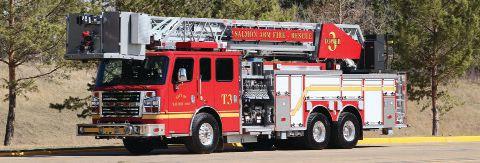
Built on a 2019 Rosenbauer Commander 4-door cab and chassis with a 505 HP Cummins X15 engine and a Rosenbauer FX 1/8” aluminum extruded body. Details include a Hendrickson ULTIMAAX rear suspension, Rosenbauer Smart Aerial device, one handed joystick control, ultrasonic collision sensors, Waterous split shaft pump, FoamPro 2001 foam system with a 17 IG Class A foam tank, 420 IG water tank, Whelen warning lights, Akron LED scene lights, 8 kW Smart Power hydraulic generator with a 200’ cord reel and a Rosenbauer EZ-Climb turntable access ladder.
DEPARTMENT: Salmon Arm Fire Rescue, B.C.
PUMPER TANKER | ROCKY MOUNTAIN PHOENIX
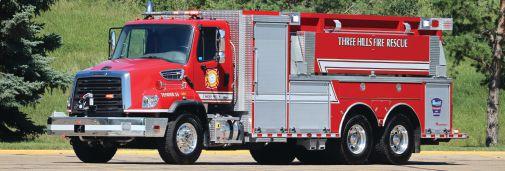
Built on a 2022 Freightliner 114SD 2-door 6x4 cab and chassis with a 500 HP Cummins X12 engine and a Rosenbauer FX 1/8” aluminum extruded body, features include a Rosenbauer NH 5000 LPM dual pressure PTO pump, enclosed side operator’s panel, Fire Research InControl 300 pressure governor, Rosenbauer FixMix high pressure foam system, high pressure booster hose reel with 150’ of hose, FoamPro 1600 normal pressure foam system with a 20 IG Class A foam tank, 4000 IG water tank, Whelen warning lights and Fire Research LED scene lights.
DEPARTMENT: Three Hills Fire Department, Alberta
SIDE-MOUNT PUMPER | ROCKY MOUNTAIN PHOENIX
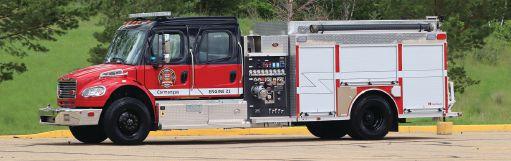
Rosenbauer Commercial side-mount pumper built on a 2020 Freightliner M2-106 4-door cab and chassis with a 360 HP Cummins L9 engine and a Rosenbauer FX 3/16” extruded aluminum body. This pumper includes a Waterous CX 1250 IGPM split shaft pump, side-mount operator’s panel, Fire Research InControl 300 pressure governor, FoamPro 2001 foam system with an onboard 16 IG Class A foam tank, 832 IG water tank, crosslays over the pump, is preplumbed for a deck monitor, Whelen warning light and scene light package, slide-in ladder storage, suction hose trays above the compartments on each side and a Rosenbauer EZ-Climb rear access ladder.
DEPARTMENT: Carmangay Fire Department, Vulcan County, Alberta
4 TANKERS | ROCKY MOUNTAIN PHOENIX
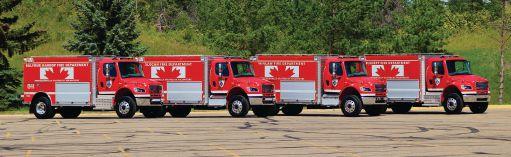
Built on 2022 Freightliner M2-106 2-door 4x4 cabs and chassis, each with a 360 HP Cummins L9 engine and a Rosenbauer FX 1/8” aluminum extruded body, these 4 tankers feature Waterous CLVK 420 IGPM PTO pumps with pump and roll capability, side-mount operator’s panels, Class 1 TPG+ pressure governors, 1665 IG water tanks, Rosenbauer Swivel dump chutes, two hosebed pre-connects, Whelen warning/ scene light packages, slide-in portable tank storage compartments, six suction hose trays and Rosenbauer EZ-Climb rear access ladders.
DEPARTMENT: Balfour, Blewett, Slocan and Windlaw FDs in the Regional District of Central Kootenay, B.C.
REAR-MOUNT PUMPER | ROCKY MOUNTAIN PHOENIX
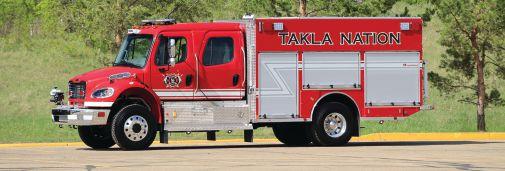
Built on a 2022 Freightliner M2-106 4-door 4x4 cab and chassis with a 360 HP Cummins L9 engine and a Rosenbauer FX 3/16” aluminum extruded body, this pumper includes a Rosenbauer NH 5000 LPM rear-mounted dual pressure PTO pump with pump and roll capability, Fire Research PumpBoss 400 pressure governor, Rosenbauer FixMix high pressure foam system, 150’ of high pressure booster hose, 1800 watt inverter/ charger, Whelen LED warning/scene, pre-plumbed for a deck monitor, powered hosebed covers and two (2) Rosenbauer EZ-Climb rear access ladders.
DEPARTMENT: Takla Nation Fire Department, B.C.
SIDE-MOUNT PUMPER | ROCKY MOUNTAIN PHOENIX
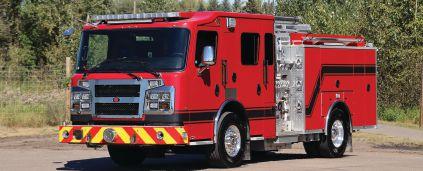
Built on a 2020 Rosenbauer Warrior 4-door cab and chassis with a 500 HP Cummins X12 engine and a Rosenbauer EXT 3/16” aluminum heavy duty extruded body with hinged doors, this pumper has Valor seats with Roll-Tek and 4Front air bags, V-MUX electrical system, HAAS Alert, Reyco parabolic rear suspension, FoamPro 2002 foam system with a 25 IG Class A foam tank, 580 IG water tank, booster reel with 150’ of hose, Whelen warning lights, FireTech LED scene lights and a Rosenbauer Lo-Pro II hydraulic ladder rack.
DEPARTMENT: Tsuu T’ina FD, Tsuu T’ina First Nation, Alberta
REAR-MOUNT PUMPER | ROCKY MOUNTAIN PHOENIX
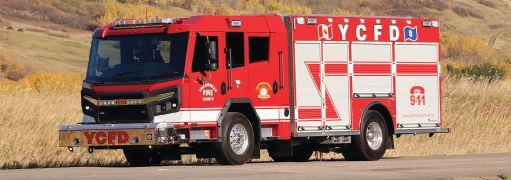
Built on a 2019 Rosenbauer Avenger 4-door cab and chassis with a 500 HP Cummins X12 engine and a Rosenbauer FX 3/16” aluminum extruded body, additional features include a V-MUX electrical system, Reyco rear spring suspension, Hale RME/RGA 1500 IGPM split shaft rear-mounted pump, Fire Research InControl 400 pressure governor, FoamPro 2002 foam system with a 30 IG Class A foam tank, 800 IG water tank, two front bumper preconnects, Whelen warning lights with body side Traffic Advisor lights, Fire Research Corp LED scene lights and a Rosenbauer EZ-Climb rear access ladder.
DEPARTMENT: Yellowhead County Fire Department, Alberta
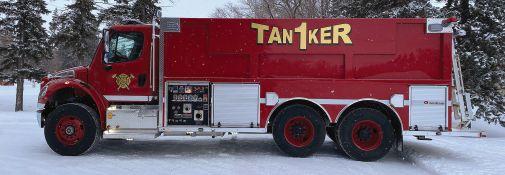
Built on a 2022 Freightliner M2-106 2-door 6x4 cab and chassis with a 360 HP Cummins L9 engine and a Rosenbauer FX 1/8” aluminum extruded body, additional features include a Darley 420 IGPM PTO pump, Fire Research InControl 300 pressure governor, 2500 IG water tank with a Rosenbauer Swivel rear dump chute, FoamPro 1600 Class A foam system with a 16 IG foam tank, two hosebed preconnects, Whelen warning/scene lights, rear slide-in portable tank, suction hose compartments and a Rosenbauer EZ-Climb rear access ladder.
DEPARTMENT: Grandview Fire & Rescue, Manitoba
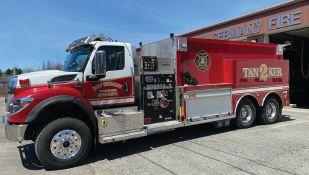
Built on a 2021 International HV607 2-door 6x4 cab and chassis with a 450 HP Cummins L9 engine and a Rosenbauer FX 1/8” aluminum extruded body, this pumper incorporates a Rosenbauer N Series 1250 IGPM PTO pump, Fire Research PumpBoss 400 pressure governor, 2500 IG water tank with a rear Rosenbauer Swivel Dump chute, 6” intake through the front bumper, 5” Fireman’s Friend rear direct tank fill, Whelen warning/scene lights, powered portable tank rack, body side suction hose compartment and a Rosenbauer EZ-Climb rear access ladder.
DEPARTMENT: New Germany Volunteer Fire Department, Nova Scotia

Assembled on a 2021 Rosenbauer Warrior 4-door cab and chassis with a 450 HP Cummins L9 engine and a Rosenbauer FX 1/8” aluminum extruded body, this Warrior design features Reyco spring rear suspension, Rosenbauer Smart Aerial device, one handed joystick control, 840 IGPM waterway, Akron StreamMaster II monitor, Hale DSD 1250 IGPM split shaft pump, Fire Research InControl 300 pressure governor, FoamPro 1600 foam system with a 17 IG Class A foam tank, 333 IG water tank, Fire Research LED scene lights and a Rosenbauer EZ-Climb turntable access ladder.
DEPARTMENT: New Germany Volunteer Fire Department, Nova Scotia
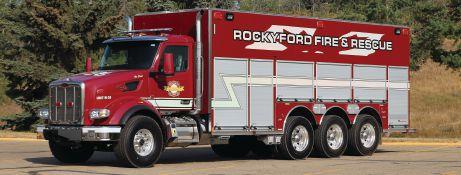
Built on a 2021 Peterbilt 567 2-door 8x6 tri-drive cab and chassis with a 605 HP Cummins X15 engine and a Rosenbauer FX 3/16” aluminum extruded body, this pumper has an enclosed side-mount operator’s panel with speedlays, Rosenbauer NH 5000 LPM PTO pump, Rosenbauer FixMix high pressure foam system, two high pressure booster reels with 150’ of hose, Fire Research PumpBoss 400 pressure governor, 4000 IG water tank with an electric rear Rosenbauer Swivel Dump chute, FoamPro 1600 Class A foam system with a 30 IG foam tank and Whelen warning/scene lights.
DEPARTMENT: Rockyford Fire & Rescue, Alberta
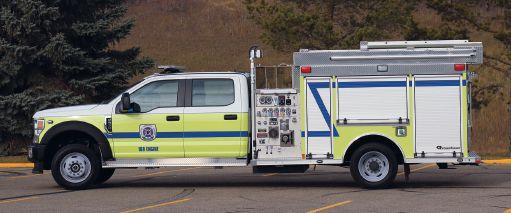
Built on a 2021 Ford F-550 4-door cab and chassis and a Rosenbauer 1/8” aluminum body, this mini pumper has a Darley HM 500 GPM PTO pump with pump and roll capabilities and a Rosenbauer UHPS pump. Additional features include an FRC PumpBoss 400 Series pressure governor, 250 IG Poly water tank, crosslays, Whelen warning lights, ladder storage, suction hose storage and an1800 W inverter.
DEPARTMENT: Jamieson Fire Department, Alberta
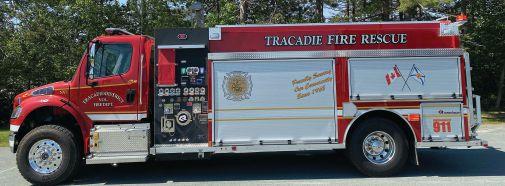
Constructed on a 2022 Freightliner M2-106 2-door cab and chassis with a 360 HP Cummins L-9 engine and a Rosenbauer FX 1/8” aluminum extruded body, this pumper has a Rosenbauer N 1250 IGPM PTO pump, Fire Research PumpBoss 400 pressure governor, Foam Pro 2001 foam system with a 20 IG Class A foam tank, booster hose reel with 100’ of hose, 1250 IG water tank, rear Rosenbauer Swivel Dump chute, speedlays, Whelen warning and LED scene lights, Rosenbauer ladder lowering system and Rosenbauer EZ-Climb rear access ladder.
DEPARTMENT: Tracadie Fire Rescue, Nova Scotia
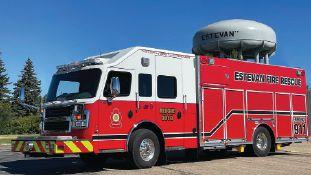
Manufactured on a 2020 Rosenbauer Commander 4-door cab and chassis with a 450 HP Cummins L9 engine and a Rosenbauer FX 1/8” aluminum body, characteristics include a V-MUX electrical system with a Smart steering wheel, HAAS Alert, Hendrickson rear air suspension, Rosenbauer N 1050 IGPM PTO driven rear-mount pump, FoamPro 2001 foam system with a 20 IG Class A foam tank, 500 IG water tank, Whelen warning light package, Fire Tech Guardian Elite LED scene light package and a Rosenbauer EZ-Climb rear access ladder.
DEPARTMENT: Estevan Fire Rescue, Saskatchewan
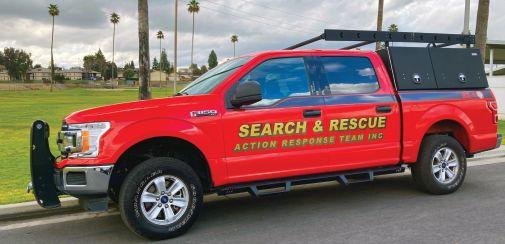
DEPARTMENT: Action
DEPARTMENT:
DEPARTMENT:
DEPARTMENT: Radnor, Ohio
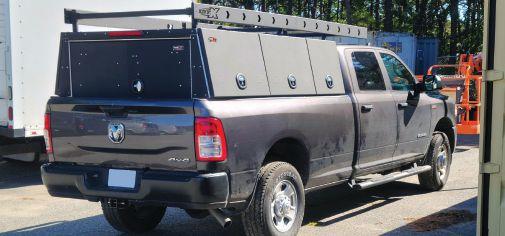
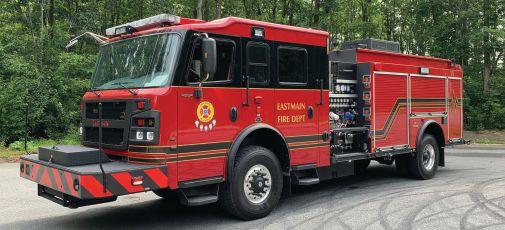
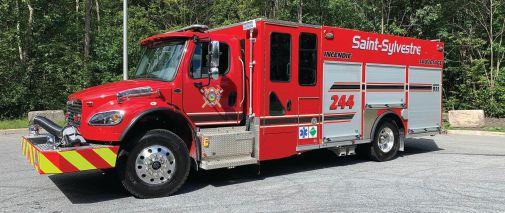
DEPARTMENT:
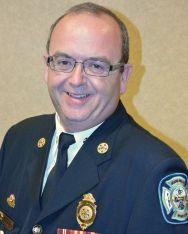
BY VINCE MACKENZIE Fire Chief Grand-Falls Windsor, N.L.
very time I watch the news about natural disasters, it seems we are under a climate change attack. In my mind, there is no question that climate change is real, and we are all aware of global warming and the worsening disasters. Unfortunately, I also think that Canada’s fire services are falling victim to two other types of climate changes and global warming is just one of those climates
Climate change is three-pronged for emergency services and these prongs are the perfect storm for some very challenging times ahead for Canada’s volunteer, composite, and full-time career fire departments.
The first one is the meteorological climate change, or global warming as it’s commonly referred too. We are feeling the effects of climate change and it increases the level of importance of our fire departments as disasters and weather events become more severe.
The second climate change is the “global cooling” of volunteerism in general. We see less people willing to step up and volunteer to staff our emergency services. Recruitment and retention of volunteer firefighters has become a serious consequence of this cooling. It’s just not volunteers, either. All emergency services are cooling significantly, especially our valued healthcare workers. The stresses and demands of the health care system, plus the strain that our lines of work are placing on individuals, is resulting in less and less people willing to take on that calling. Communities will surely feel the worsening effects in the years to come unless the volunteers of our community are better supported to enable them to stay strong at the levels we enjoyed just a decade ago. Long gone are the days of waiting lists for eligible individuals to wait to enter the ranks of their local fire department. Many of you reading this may have never experienced that in your generation. In the new generations, it is now common to see constant recruitment and retention efforts to keep our first response departments staffed.
services departments like no other. Our “demand climate” is broadening, and sooner or later this leads to less people willing to take on the tasks and responsibilities in a volunteer role as the tasks increase to interrupt our daily personal lives.
This has been a busy season for emergencies here in eastern Canada. Forest fires in Newfoundland and Fiona have put the emergency services in the forefront once again. In smaller communities equally hit by devastation of larger cities, with no nearby hospital or police station, Canada’s volunteer fire services are the first boots on the ground in non-urban communities. Volunteers of all groups, from firefighters, to search and rescue agencies, volunteer Red Cross and community and church groups, can well expect to be tasked more than ever. There’s the planning and preparation of emergency, response during the storm to the various events threatening life and property, and then offering recovery services as the community picks up the pieces in the absence of the dwindling volunteer community service groups. From fire fighting and rescue, to food prep, emergency shelter and pet care, many volunteer agencies respond long before governments and the military can mobilize. In many cases, the government’s
From fire fighting and rescue, to food prep and emergency shelter, many volunteer agencies respond before governments and the military can mobilize. ‘‘ ’’
The “demand climate” is the third prong that is changing before our eyes, and not in an encouraging way. As other emergency services suffer from the lack of capacity in Canada’s healthcare system, fire departments are getting tasked to fill voids in medical response. As major disasters occur, municipalities are working harder than ever in preparations and emergency management. Fire departments are also taking on roles other than fire and this has morphed into emergency
Vince MacKenzie is the fire chief in Grand Falls-Windsor, N.L. He is an executive member of the Canadian Association of Fire Chiefs and the current president of the Maritime Fire Chiefs Association. Email Vince at firechief@ townofgfw.com and follow him on Twitter at @FirechiefVince.
response is to first support the actions of the volunteer groups and NGO agencies already on the ground.
The bulk of the damage from Fiona hit communities hard in P.E.I., Nova Scotia, and Newfoundland. Port Aux Basques lost a couple of hundred buildings, many swept out to sea. Infrastructure damage will be in the millions of dollars. There was loss of life, and recovery will take a very long time for some. It was the volunteer fire departments that were first out of the gate in many of those communities.
While we know that volunteer organizations can accomplish tasks more quickly than any government can ever expect to provide, it’s time for our governments to re-assess and support the volunteers on a larger scale than ever. Larger funding for equipment and better funding to retain and support those that are already working the job are needed so they can weather all three of these climate changes.
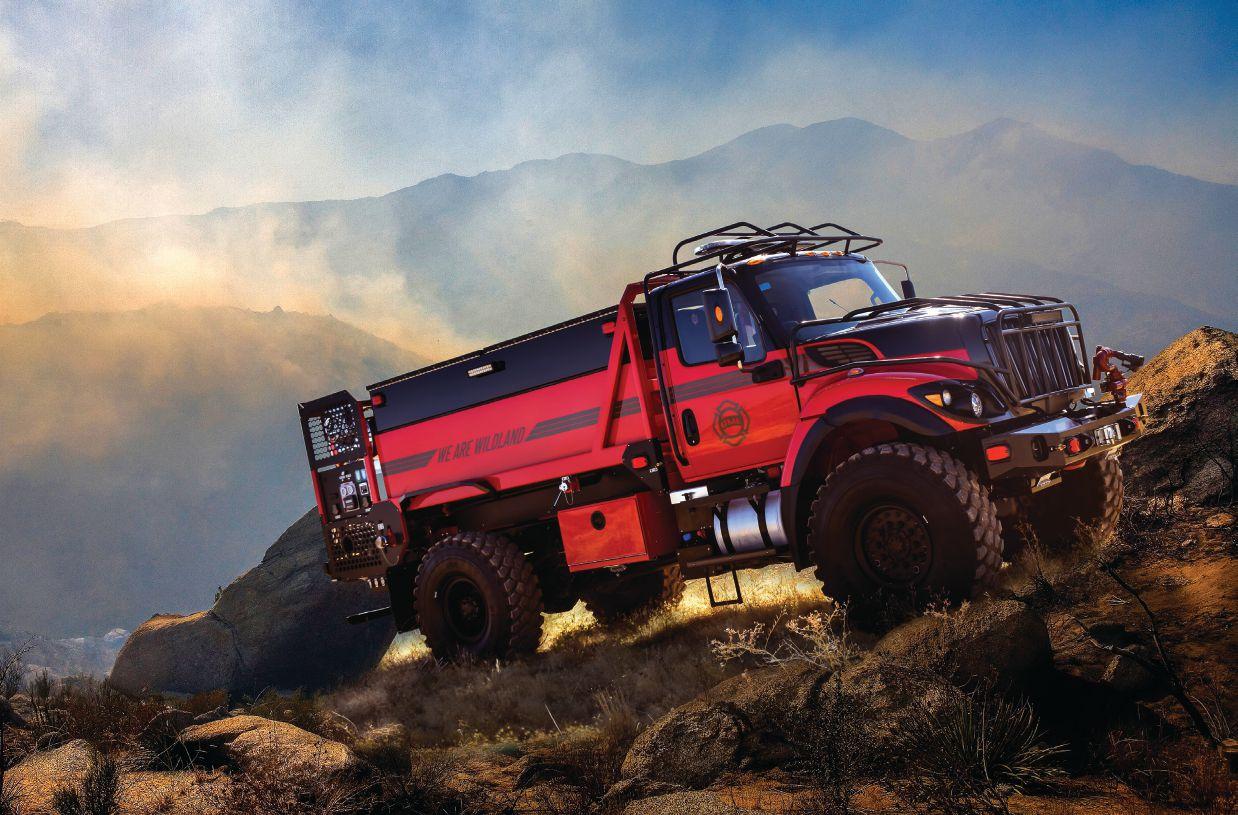
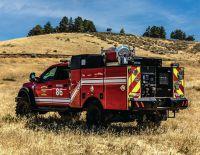
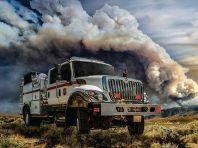
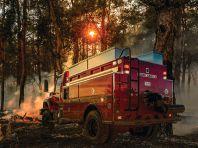
BME Fire Trucks, North America’s leading wildland apparatus manufacturer, has awarded the exclusive dealership territory for its emergency apparatus in Canada to Commercial Emergency Equipment. Commercial and BME have begun working hand-in-hand to bring the extensive line of BME Fire Truck apparatus to Canada’s first responders. Contact an Apparatus Specialist today to start building your next wildland truck. COMMERCIAL EMERGENCY EQUIPMENT IS CANADA’S FIRST AND ONLY DEALER FOR BME FIRE TRUCKS.