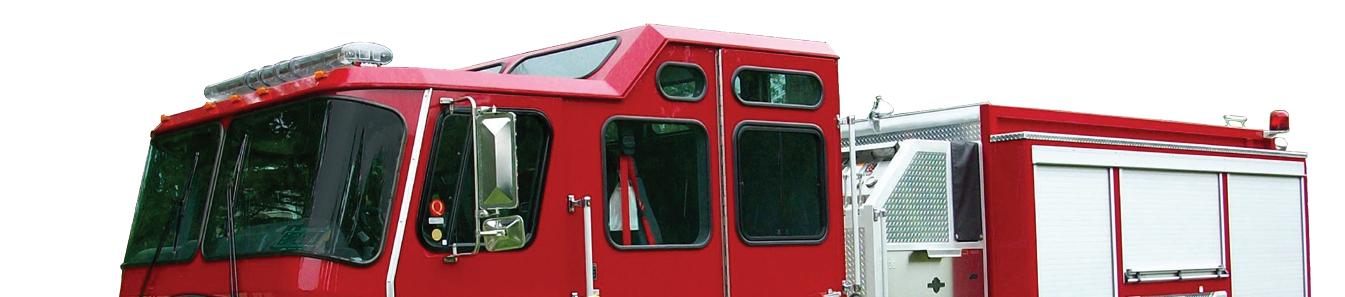
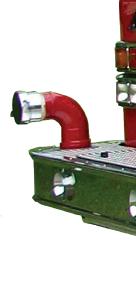
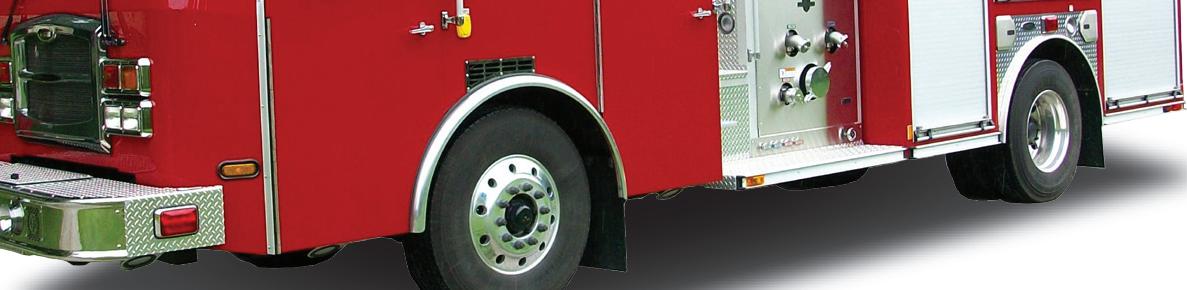
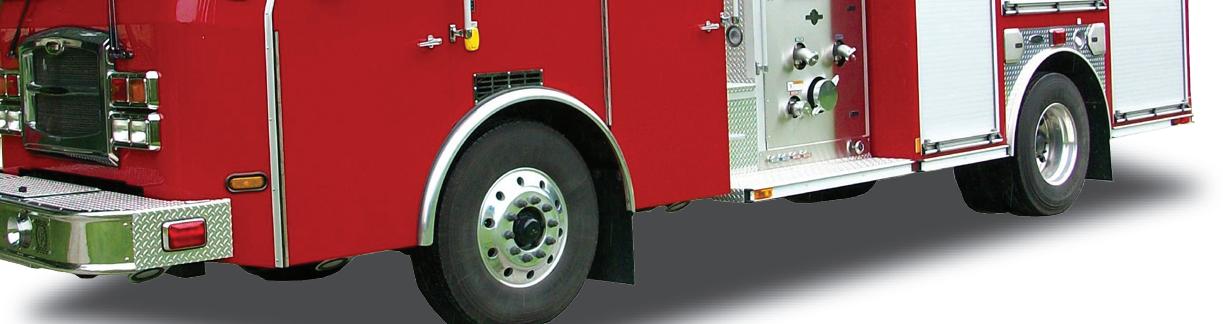
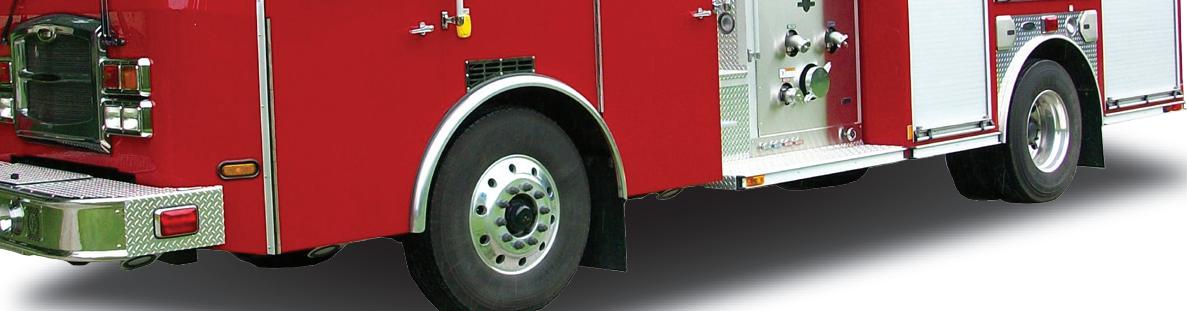
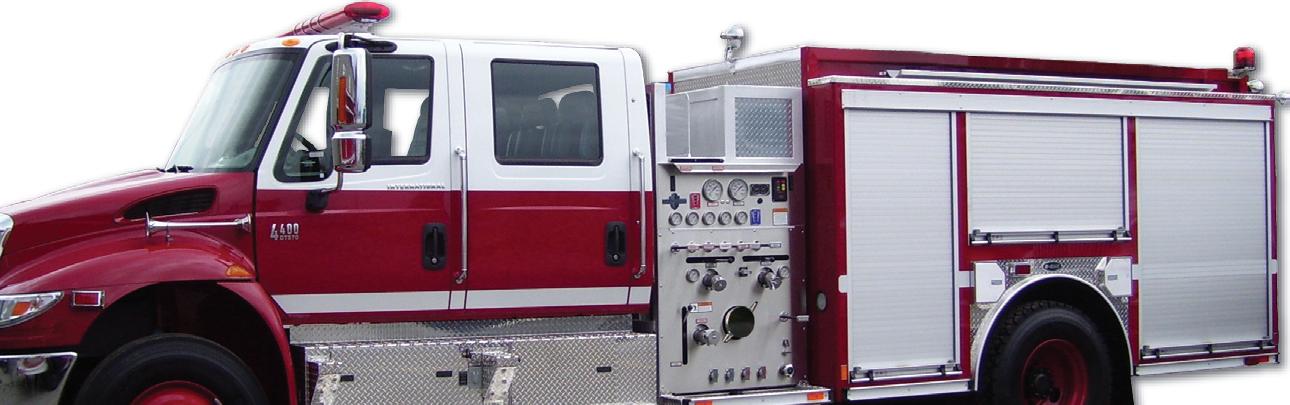
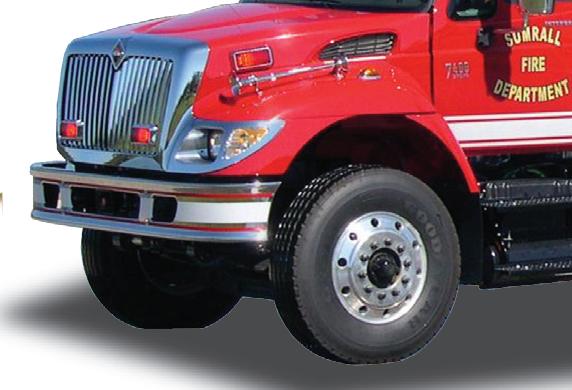
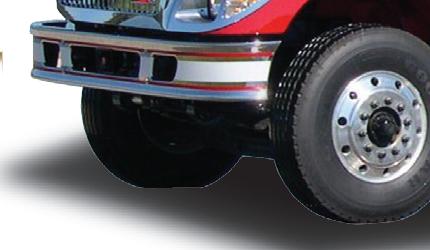
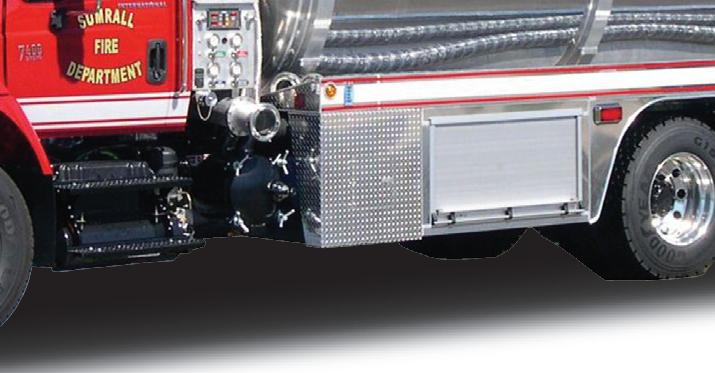
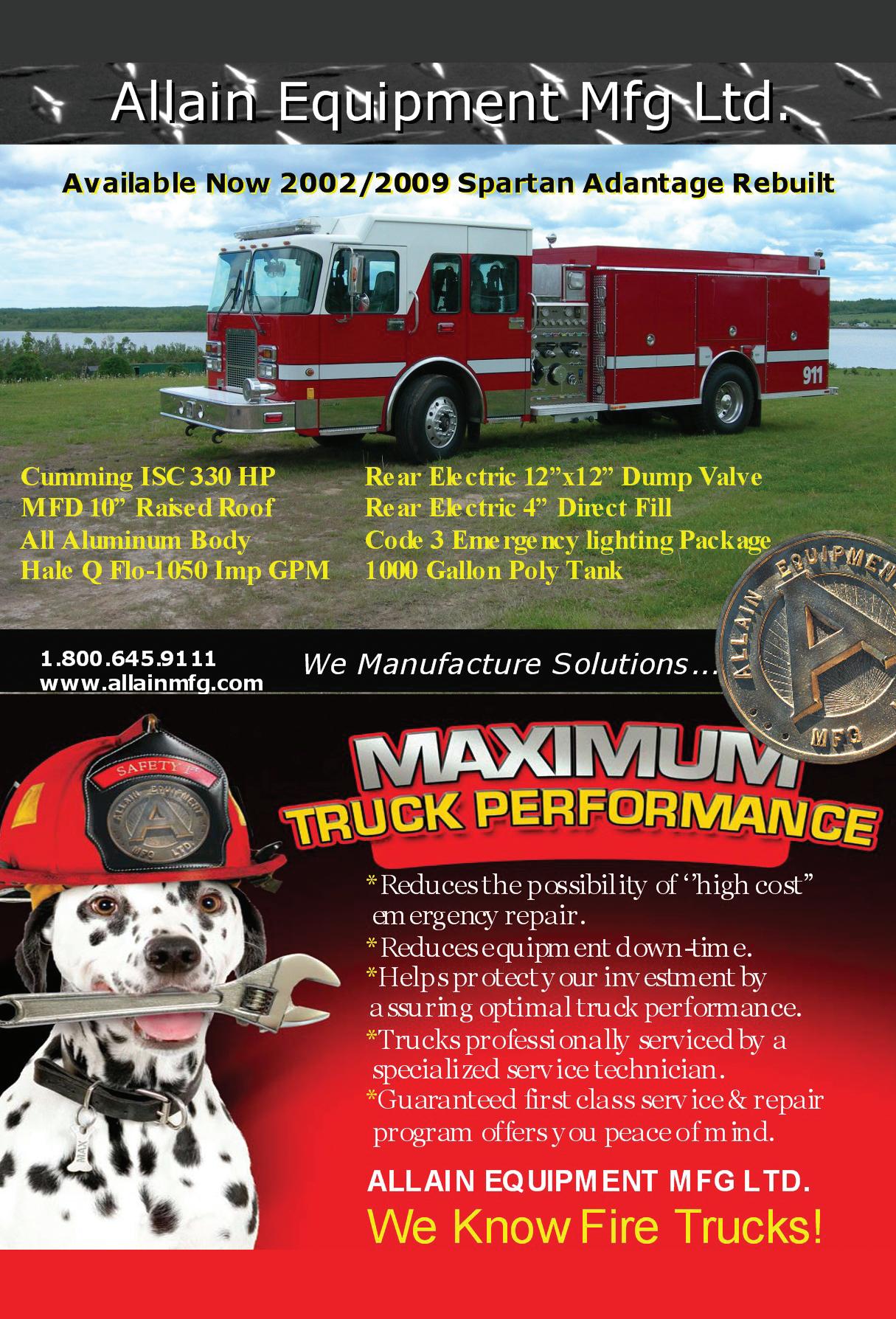
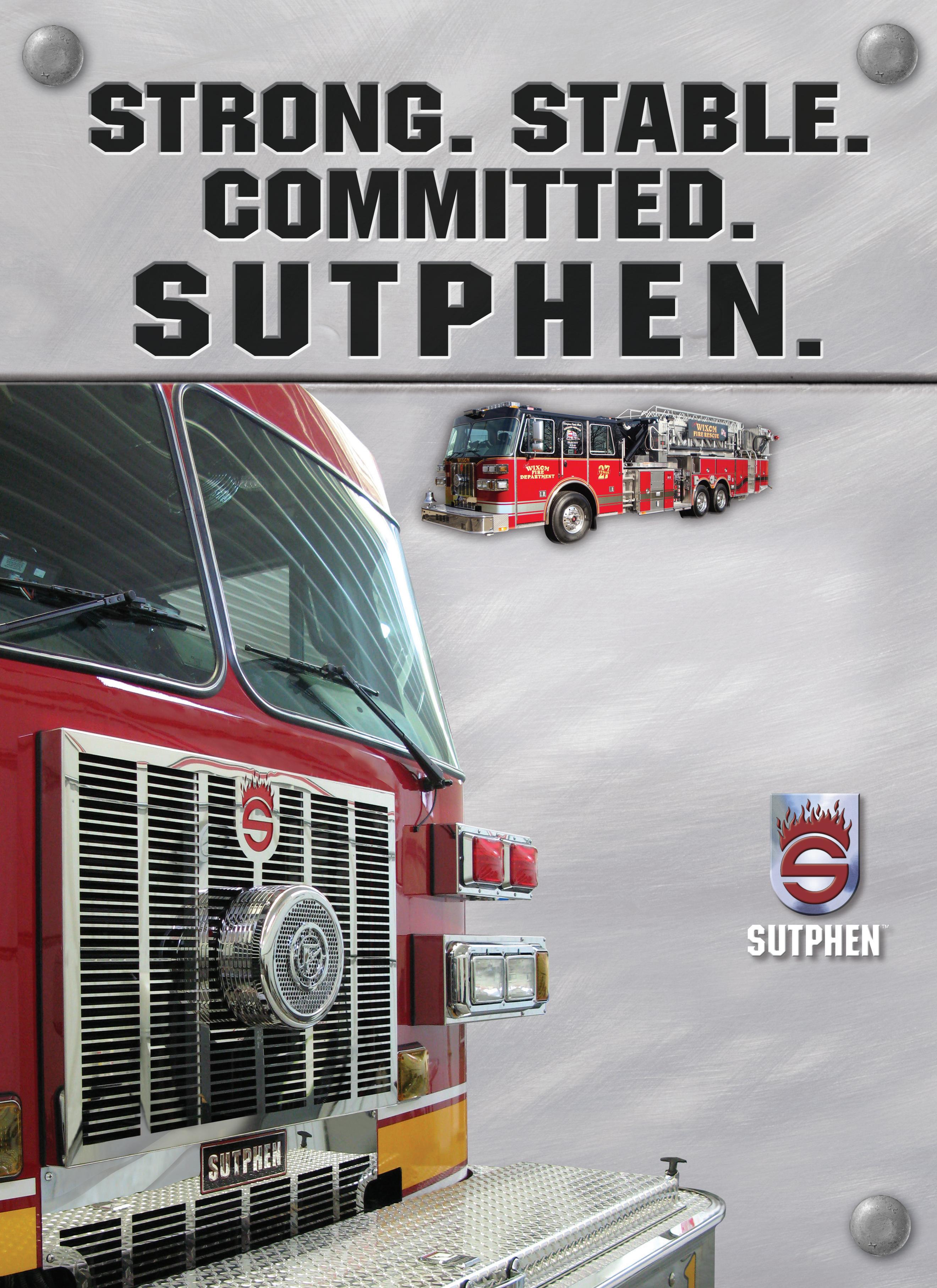
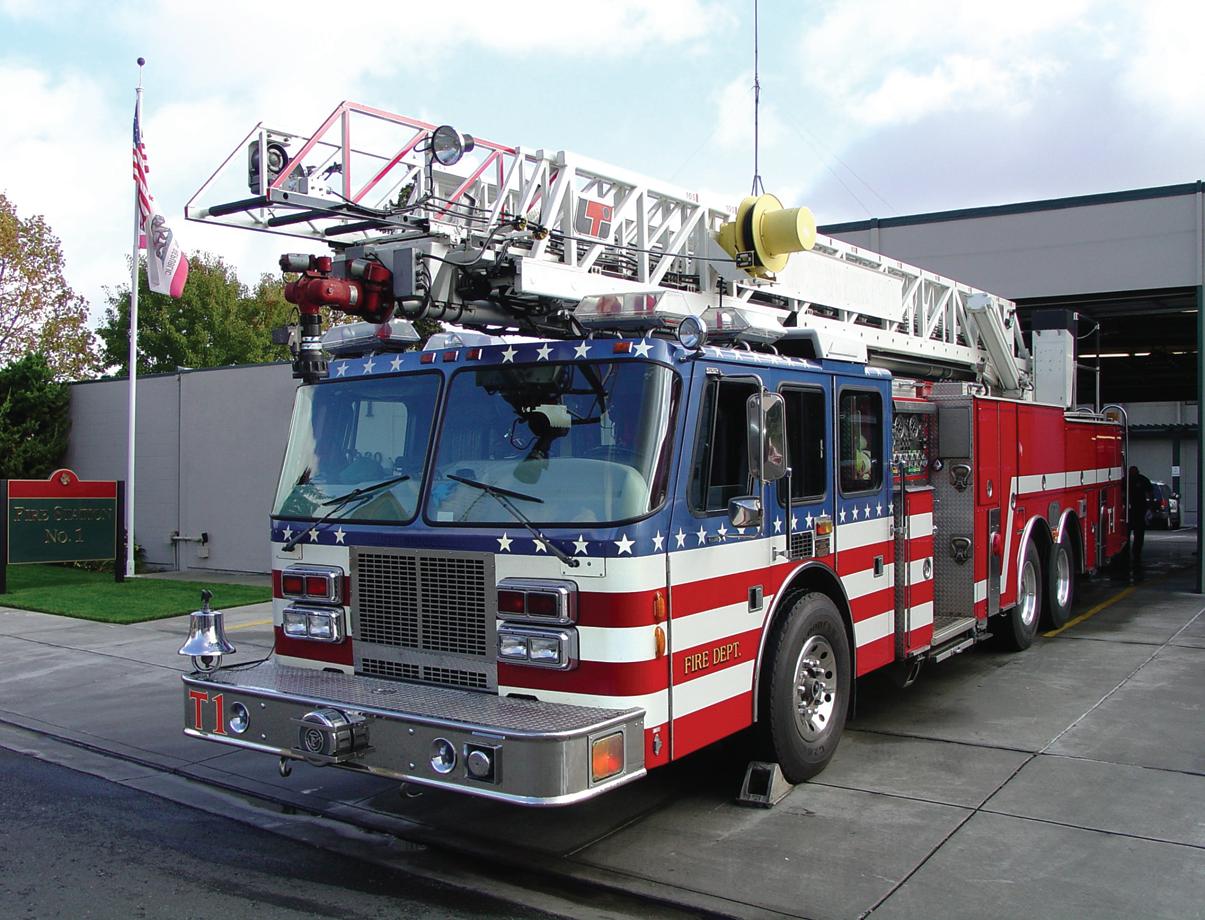
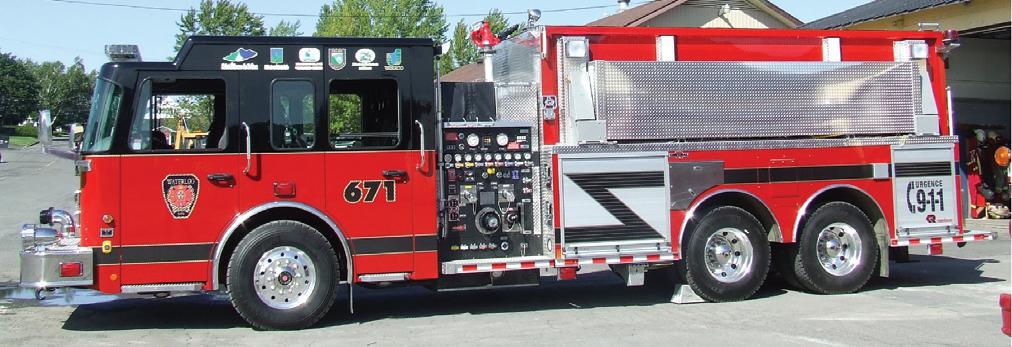
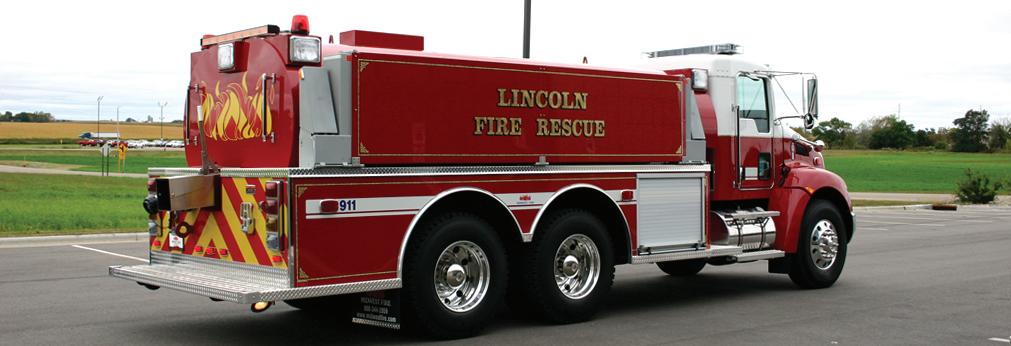
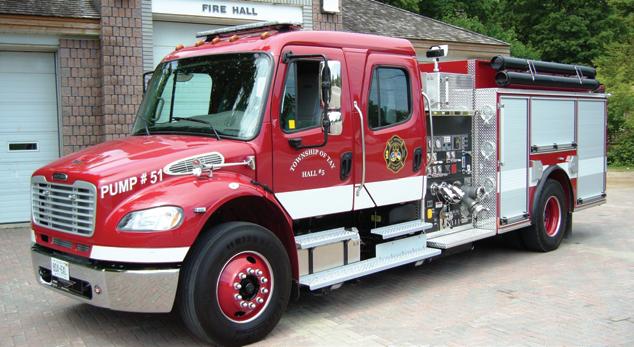
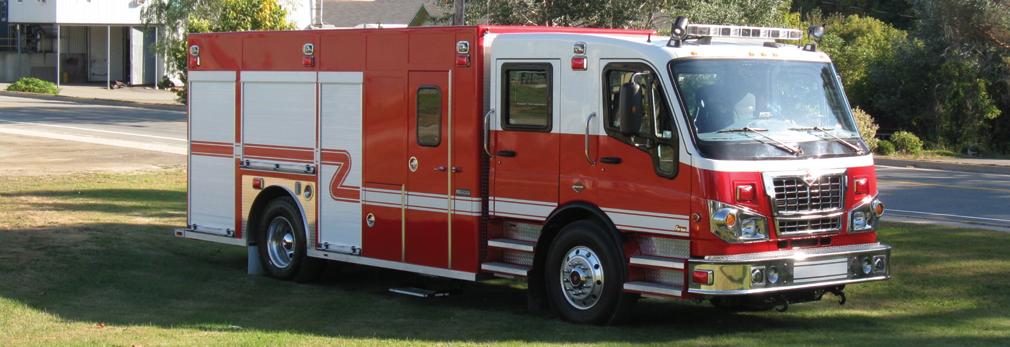
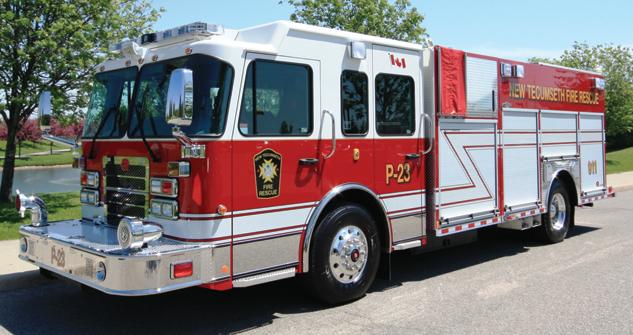
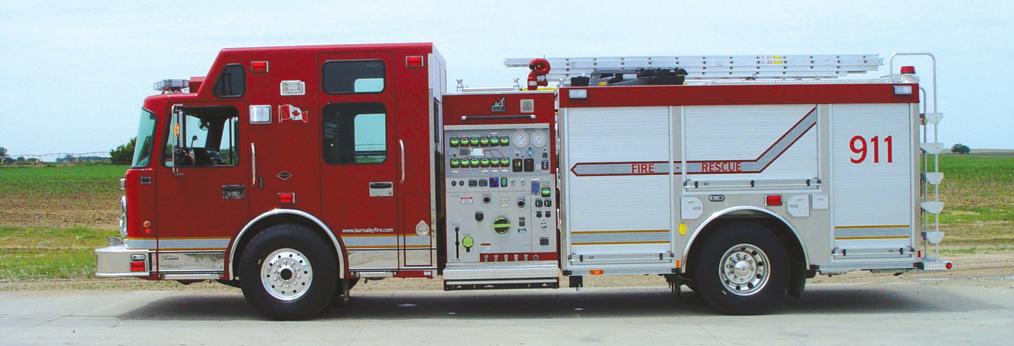
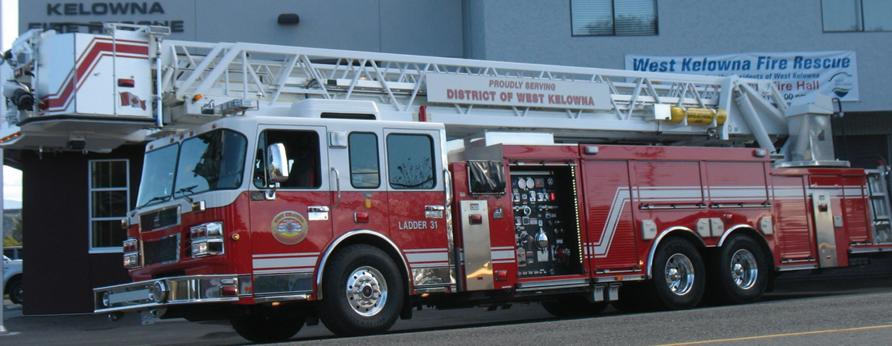
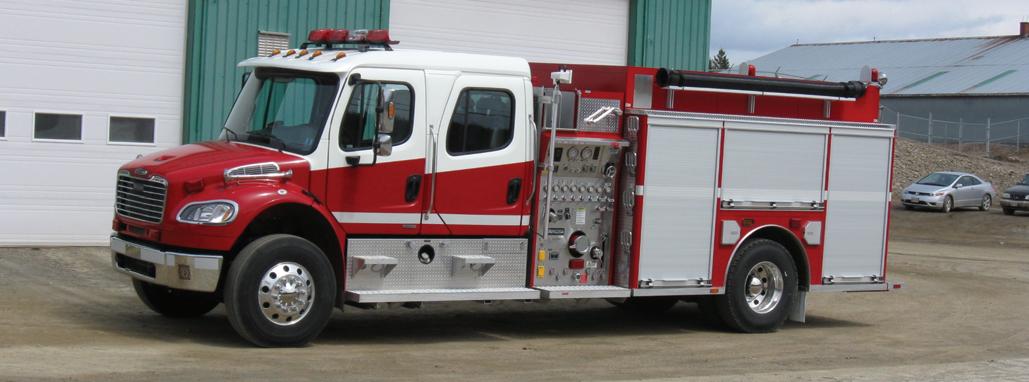
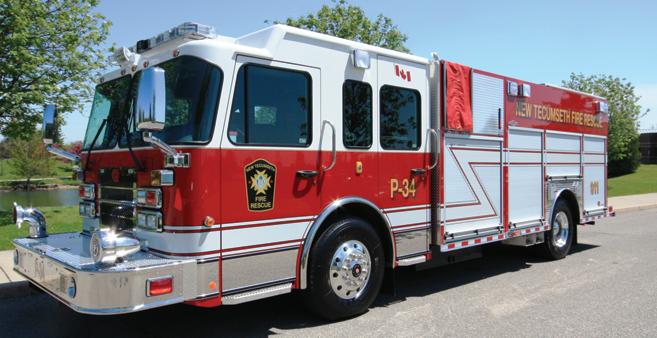
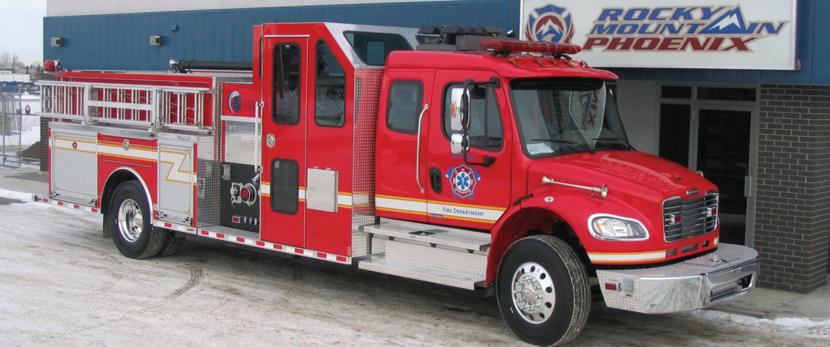
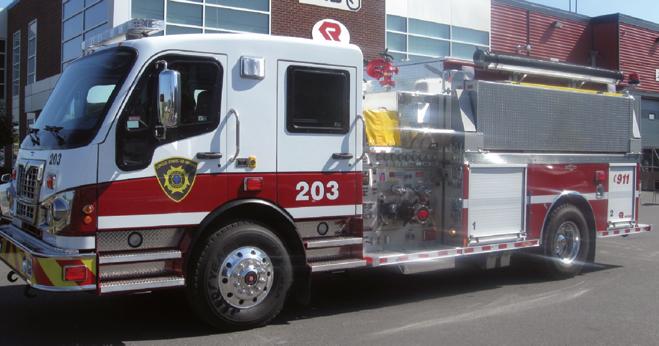
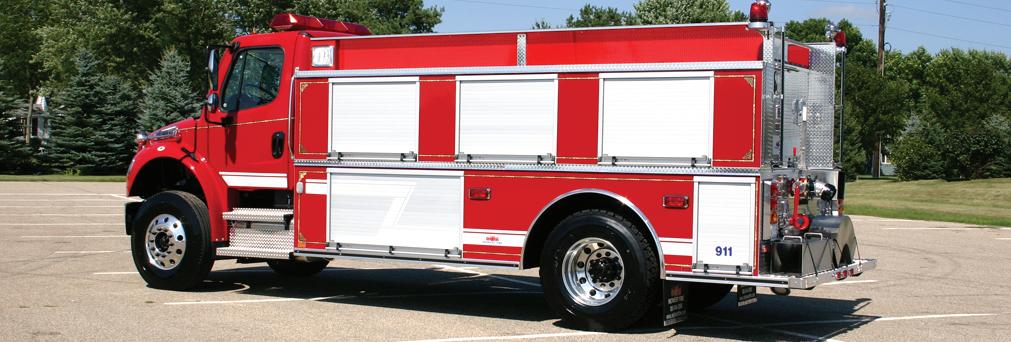
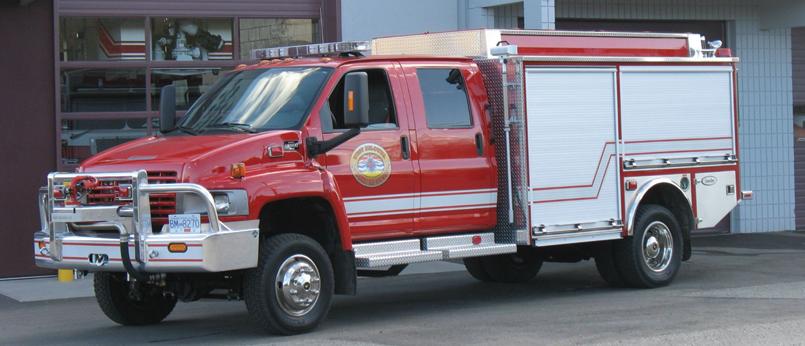
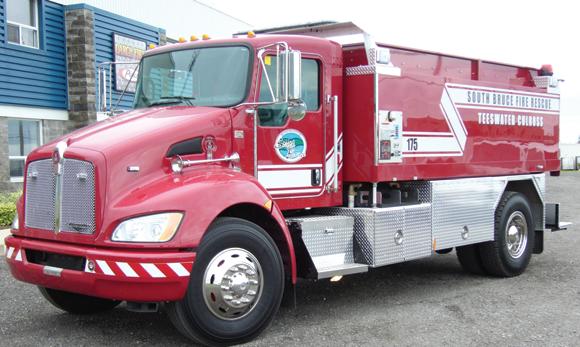
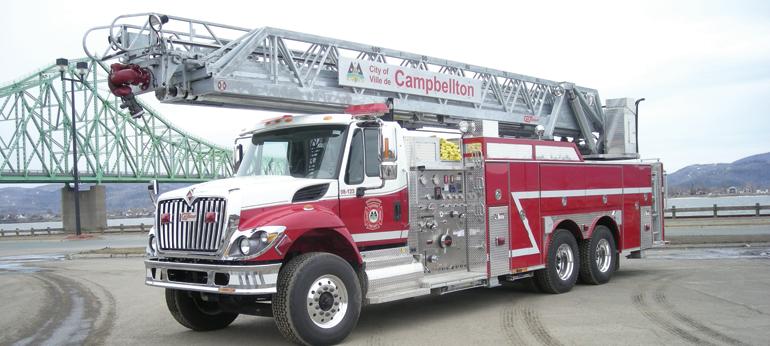
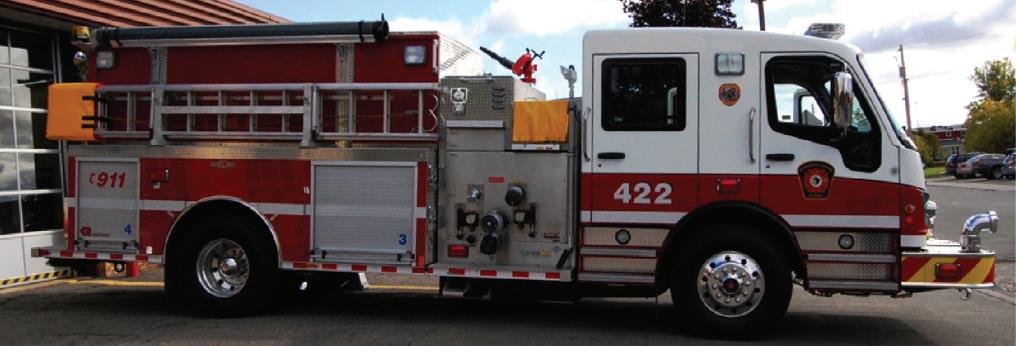
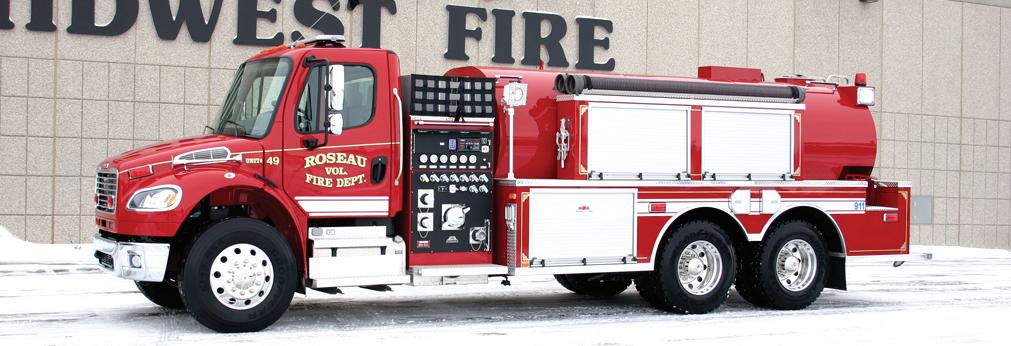
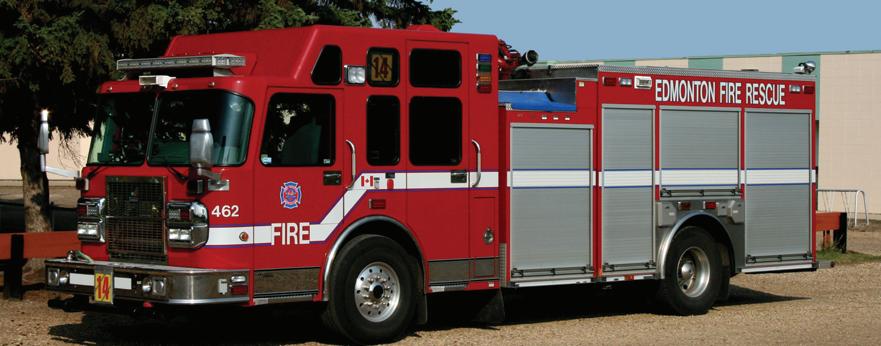
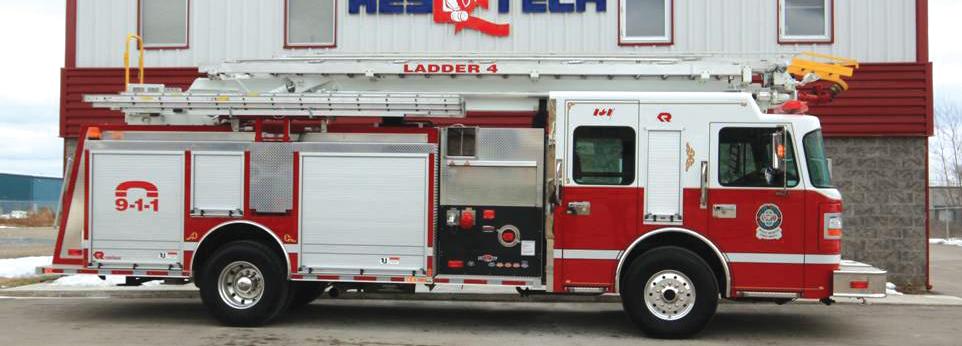
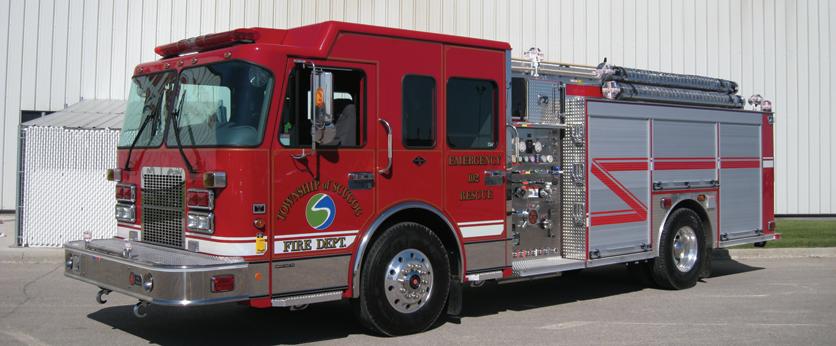
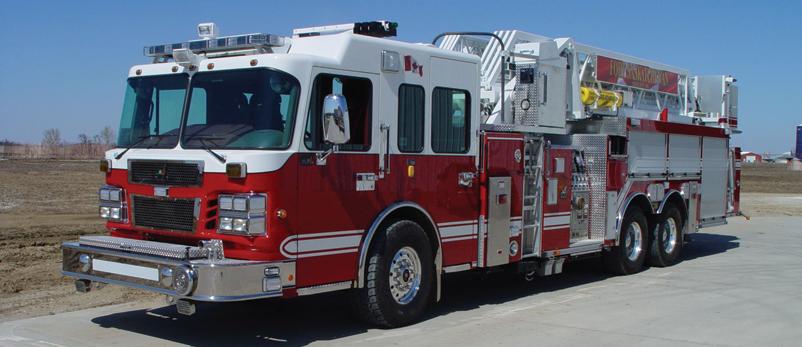
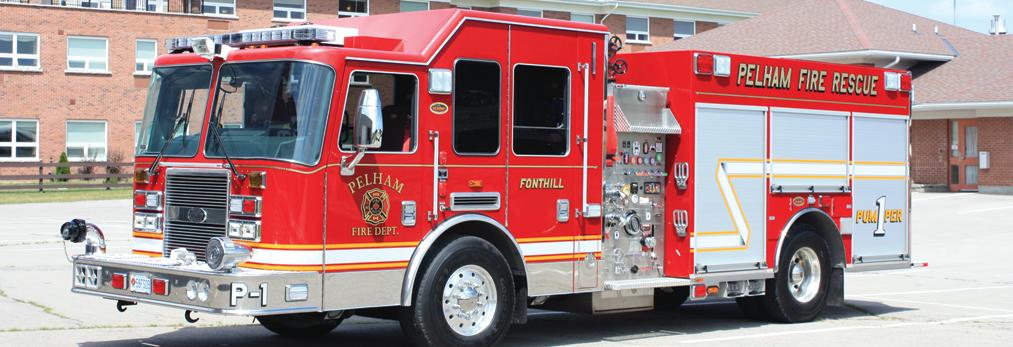
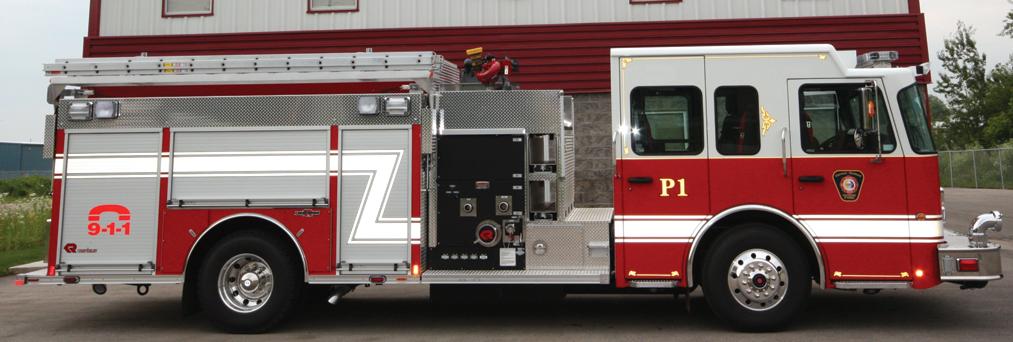
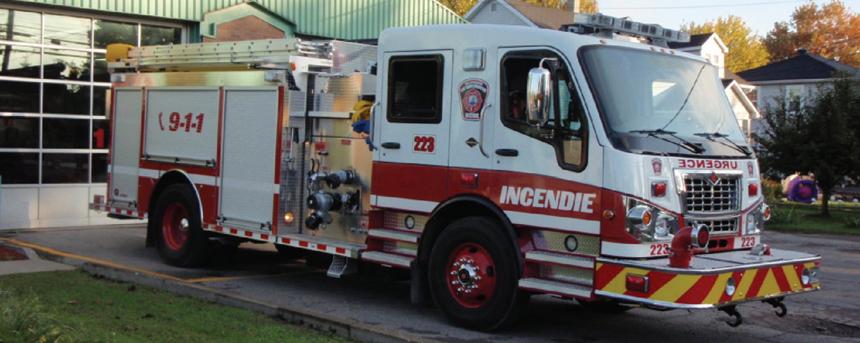
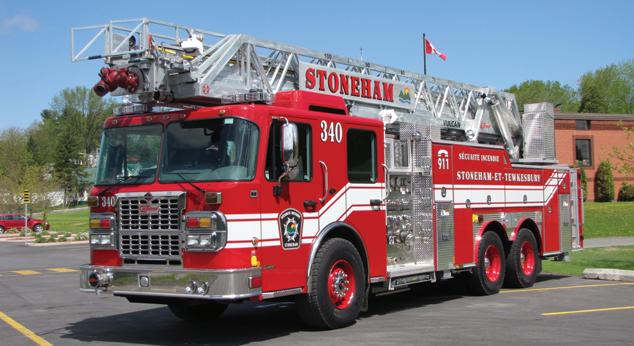
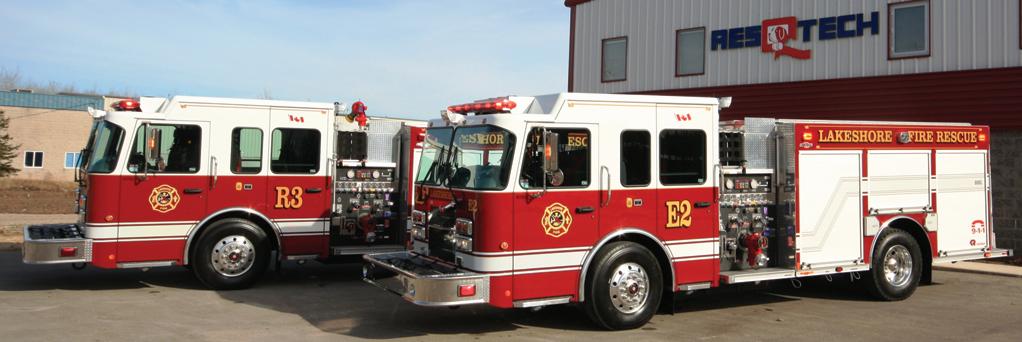
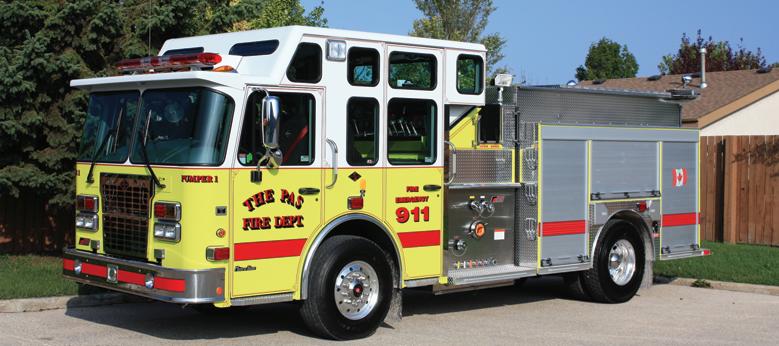
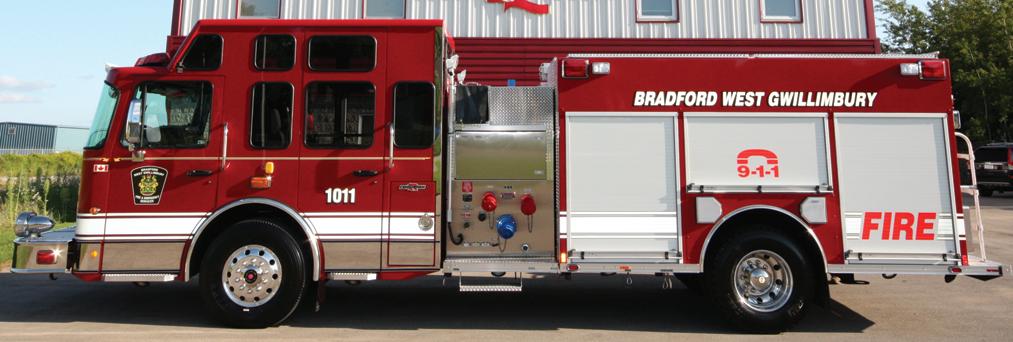
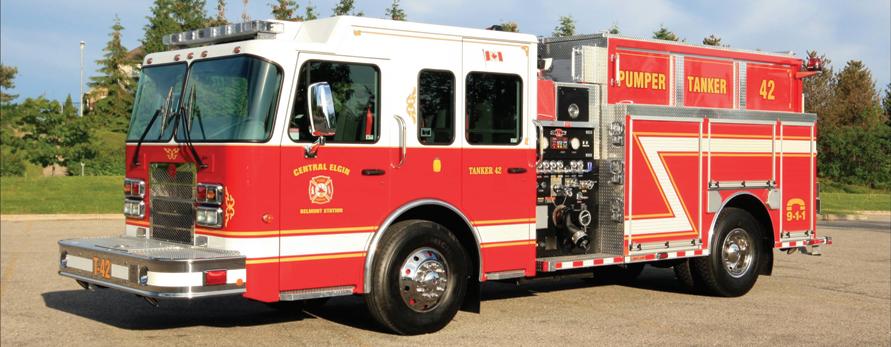
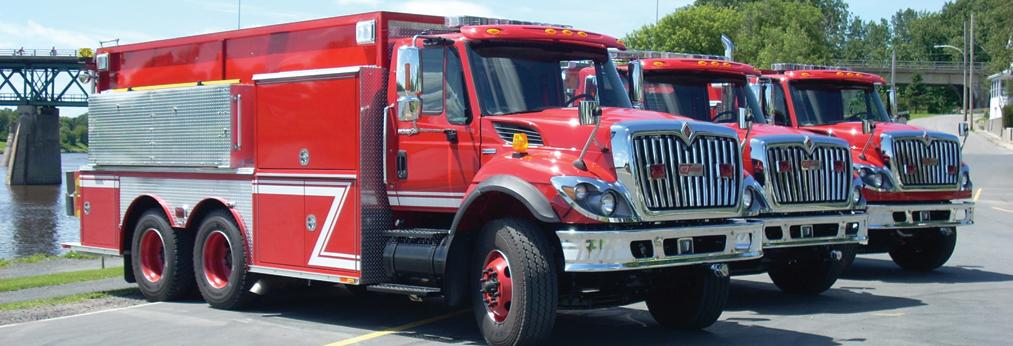
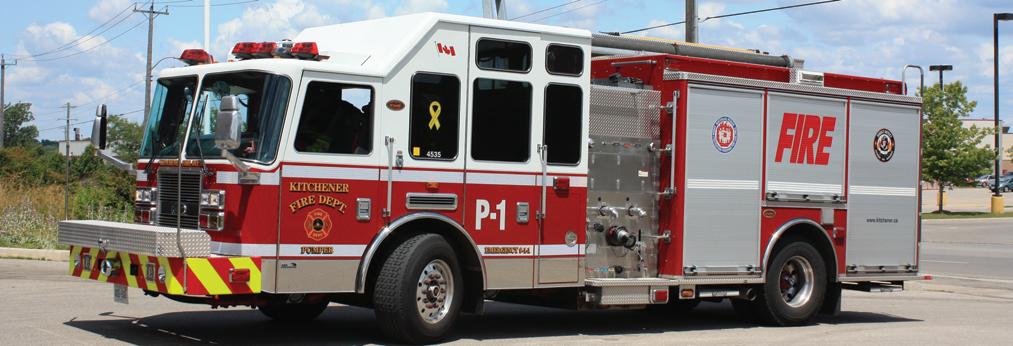
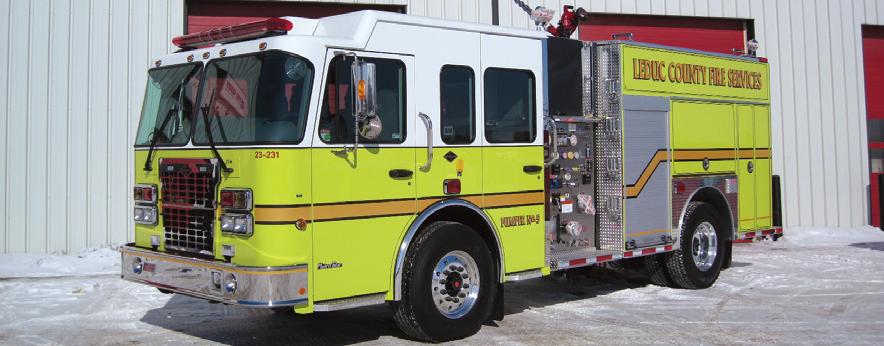
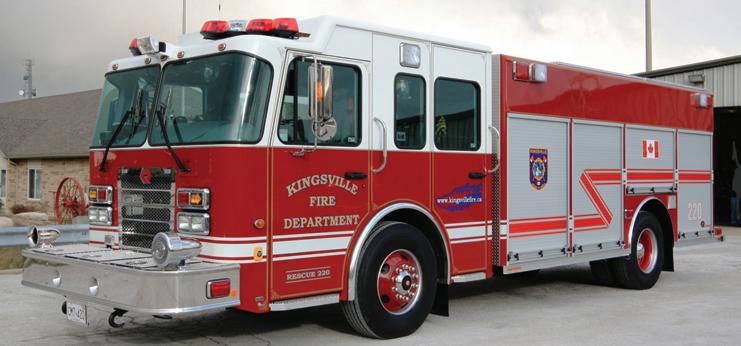
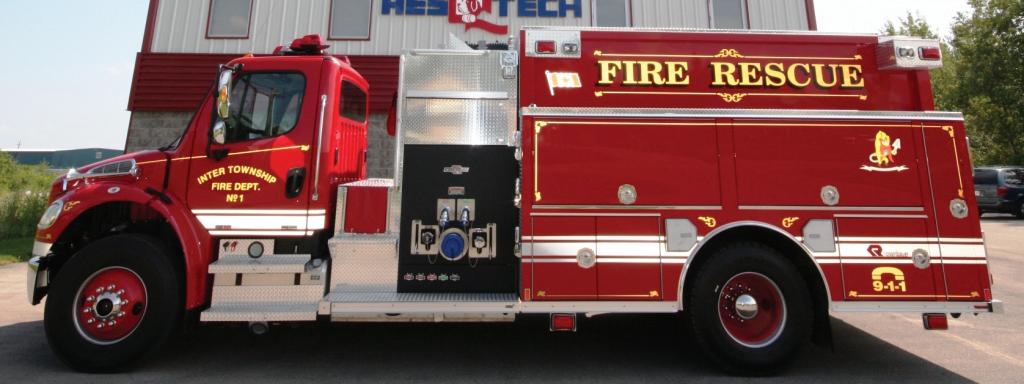
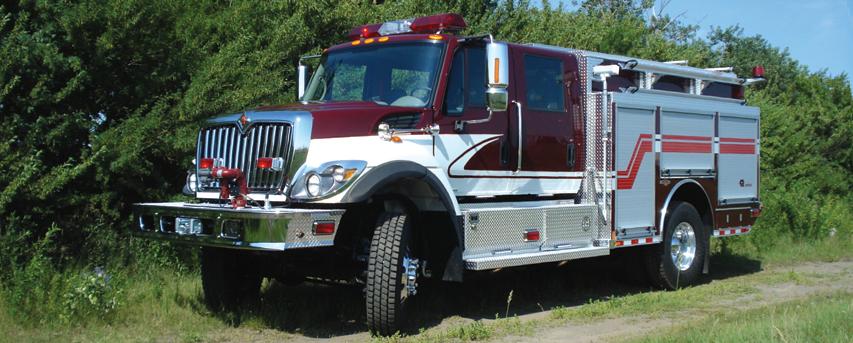
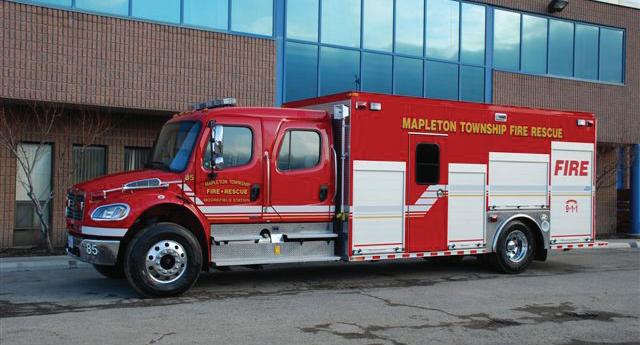
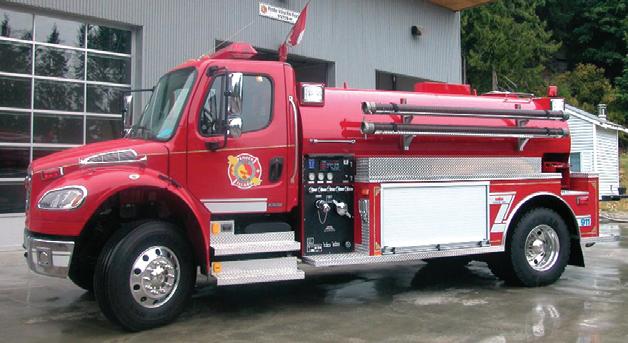
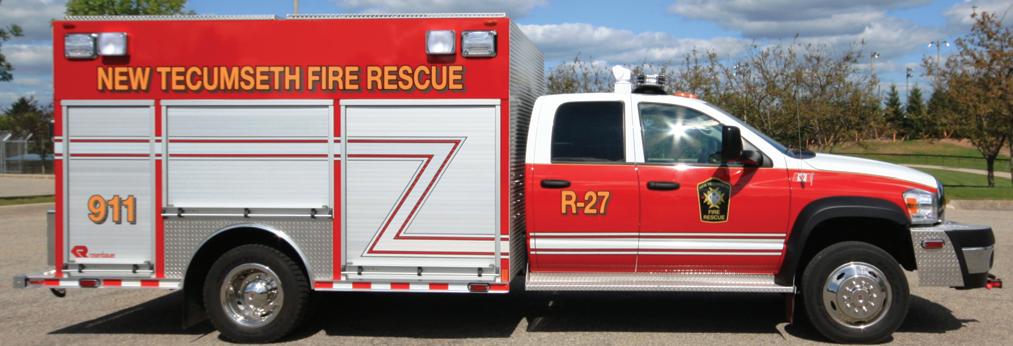
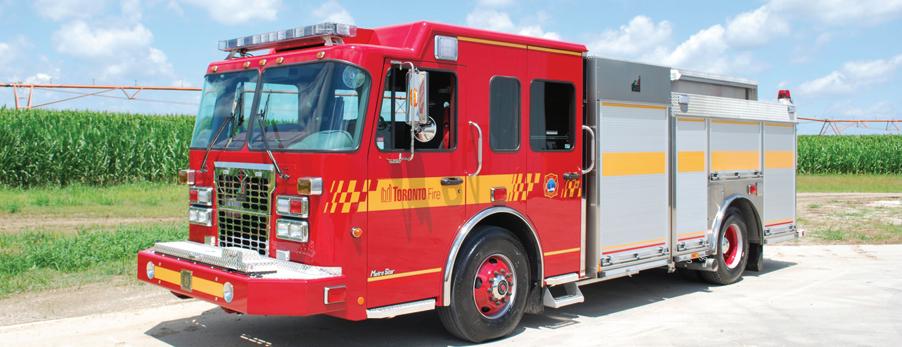
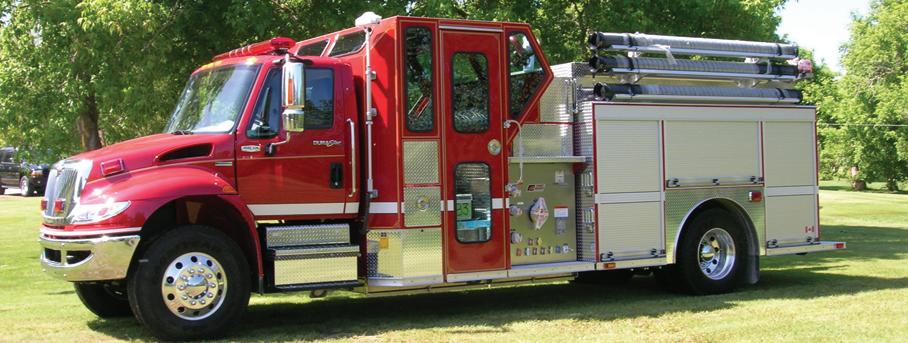
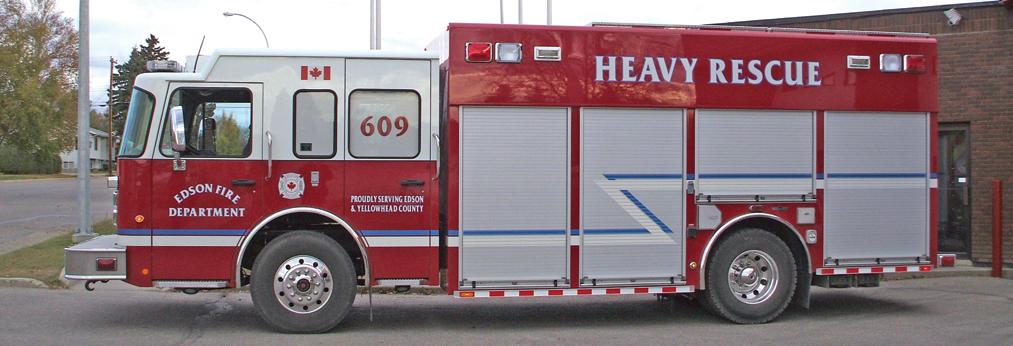
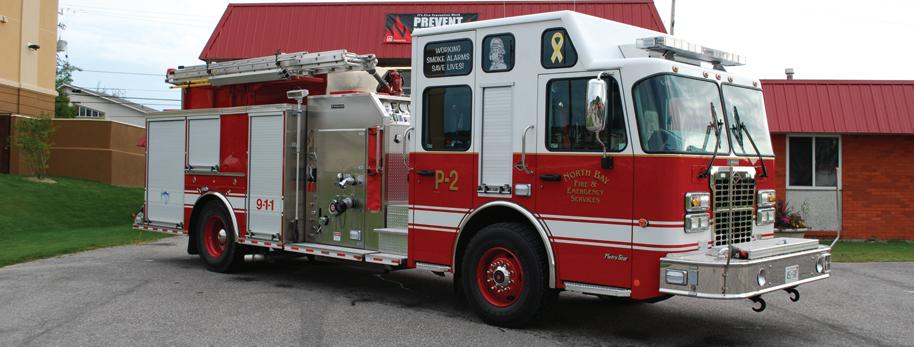
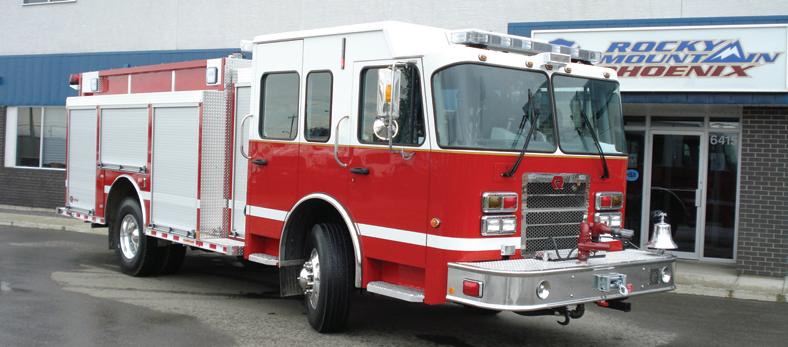
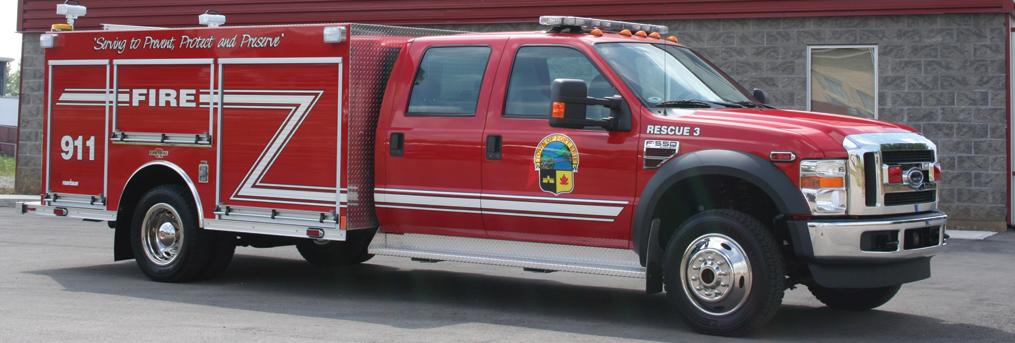
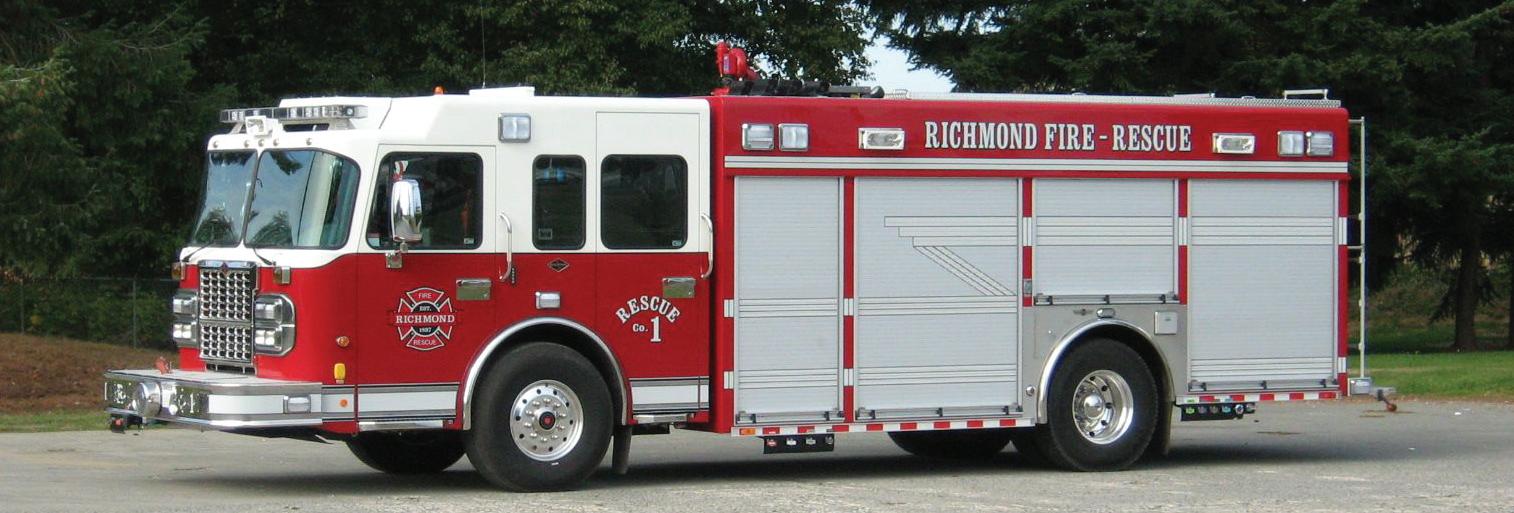
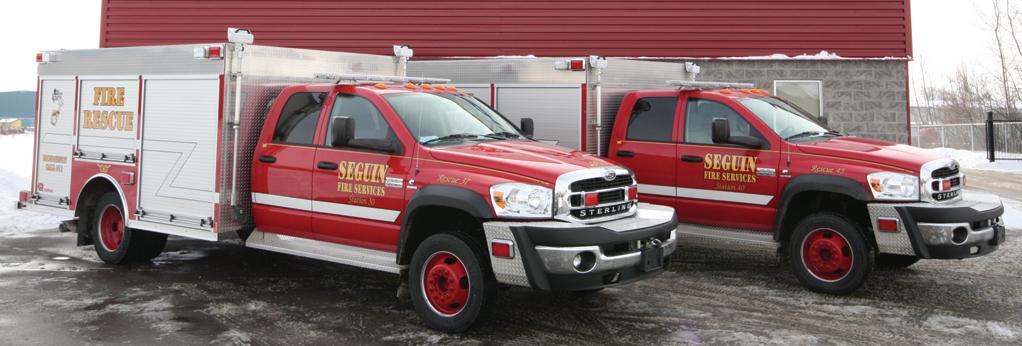
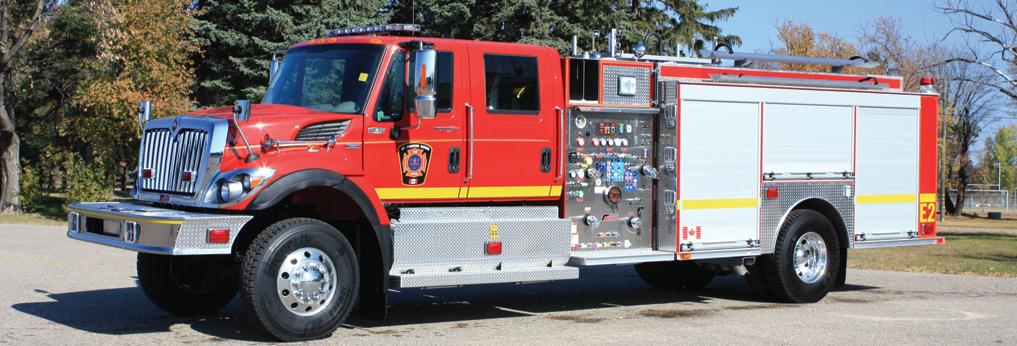
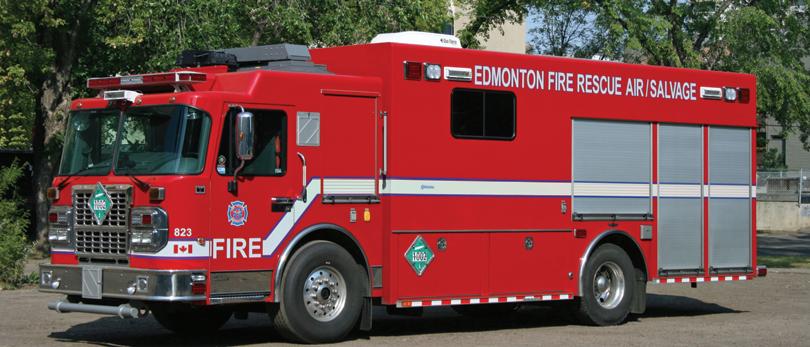
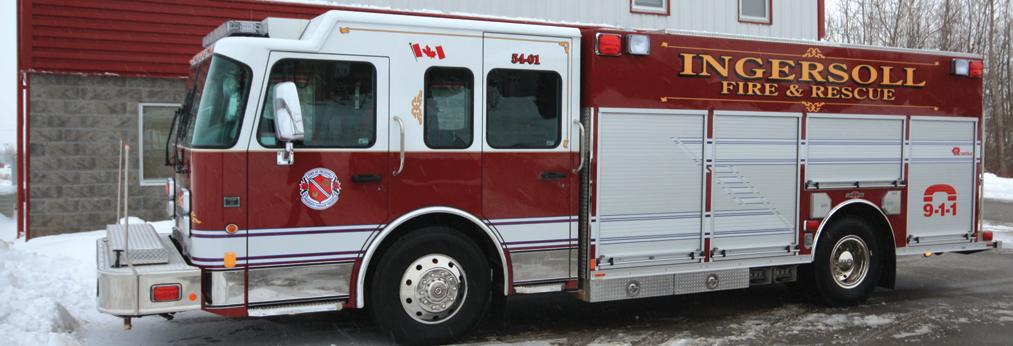
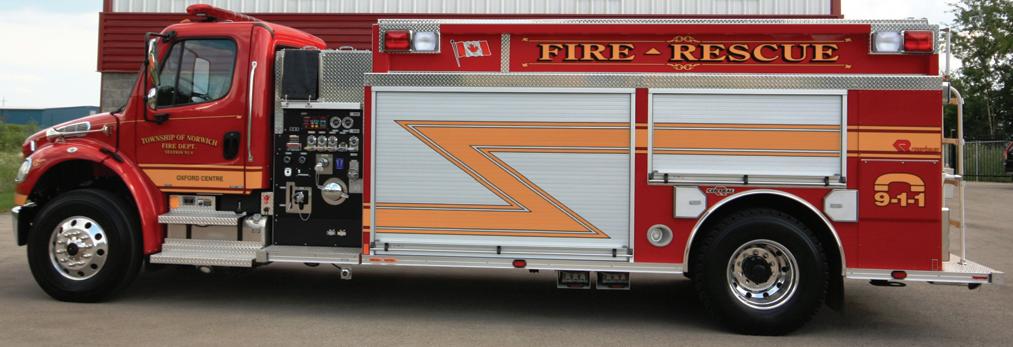
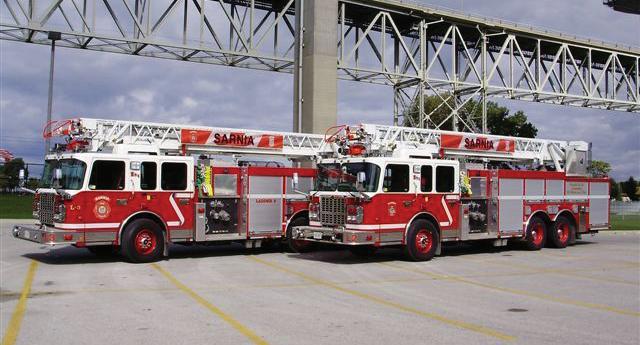
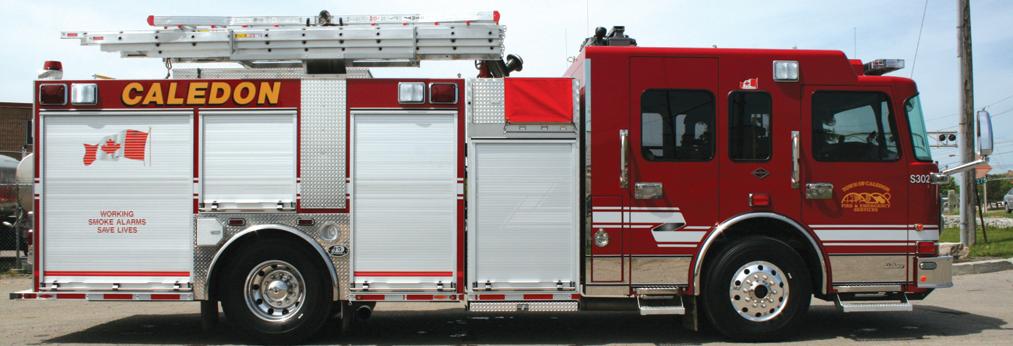
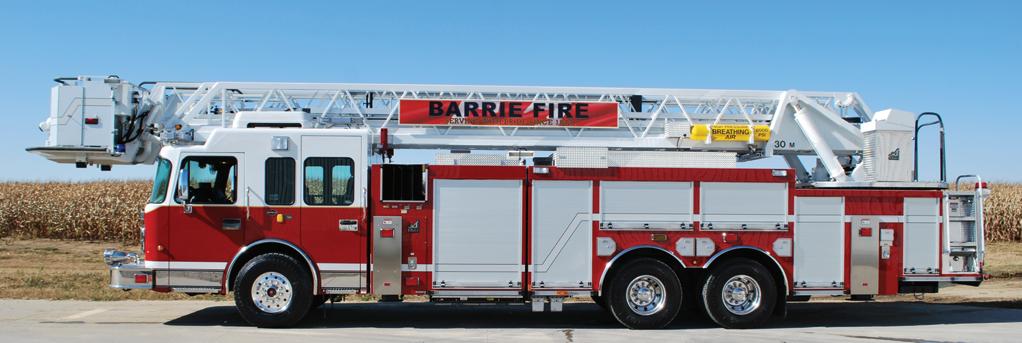
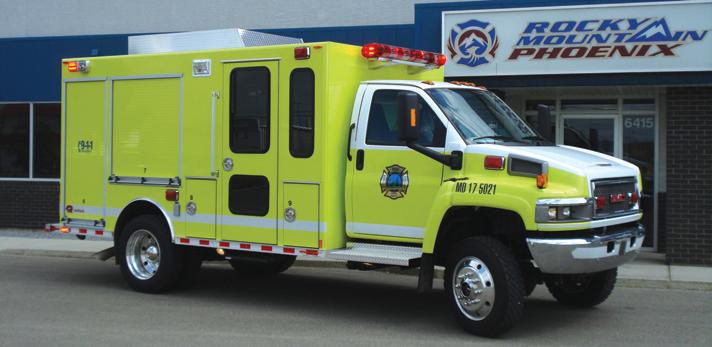
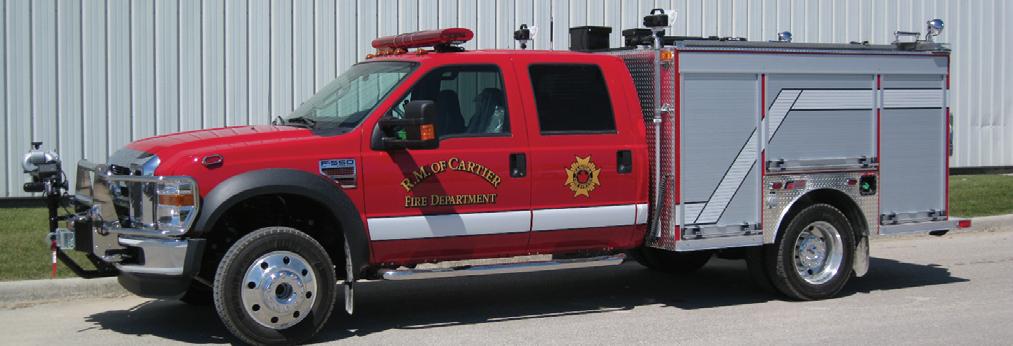
• 1/2, 3/4 or full-height officer side with various ladder storage configurations
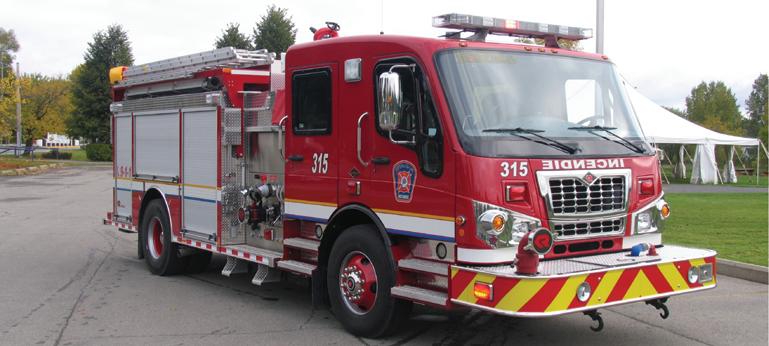
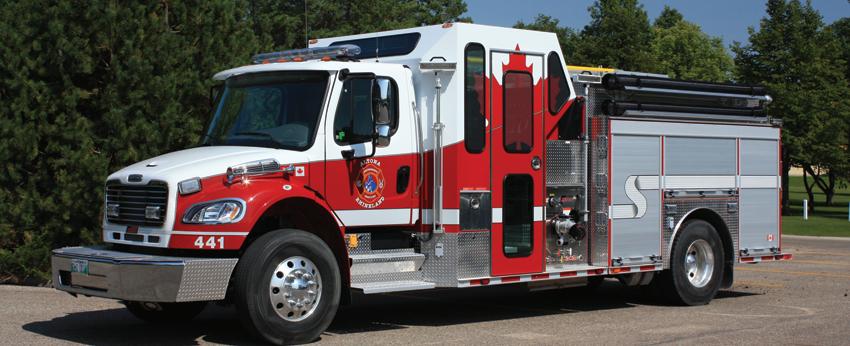
• 89 cu. ft. of hosebed storage
• Stock units available
• Freightliner® or International® 2-door or 4-door chassis
• 1250 to 1500 gpm Hale® pump
• 1000-gallon tank
• Side-mount or top-mount pump configurations available
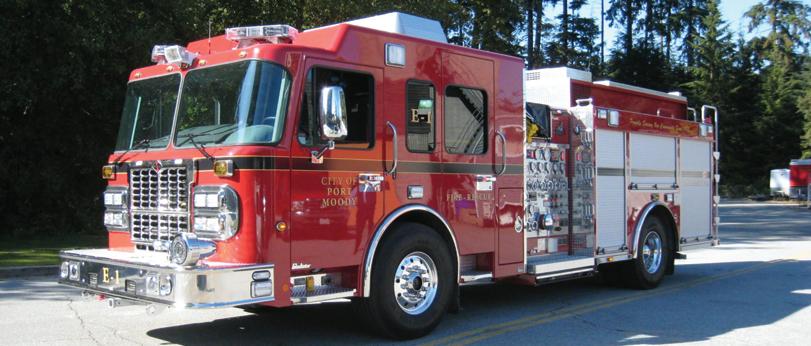
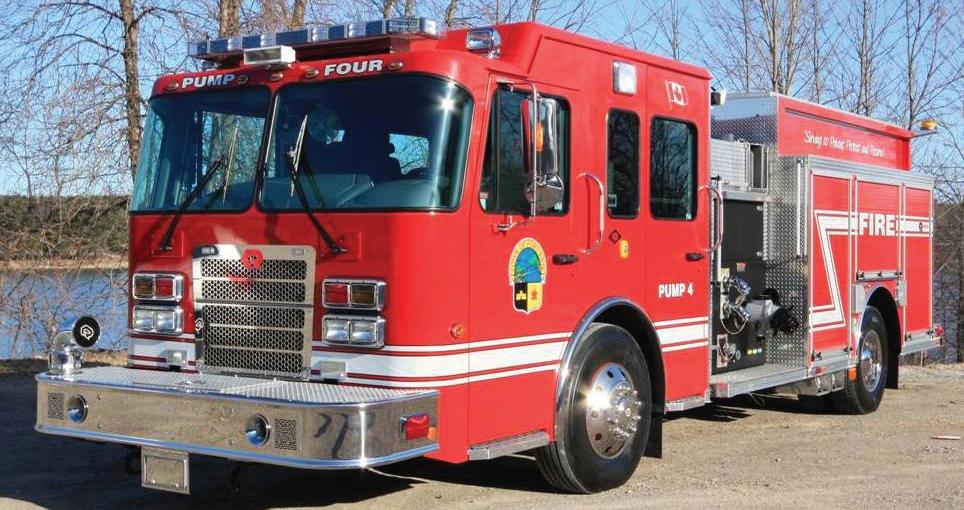
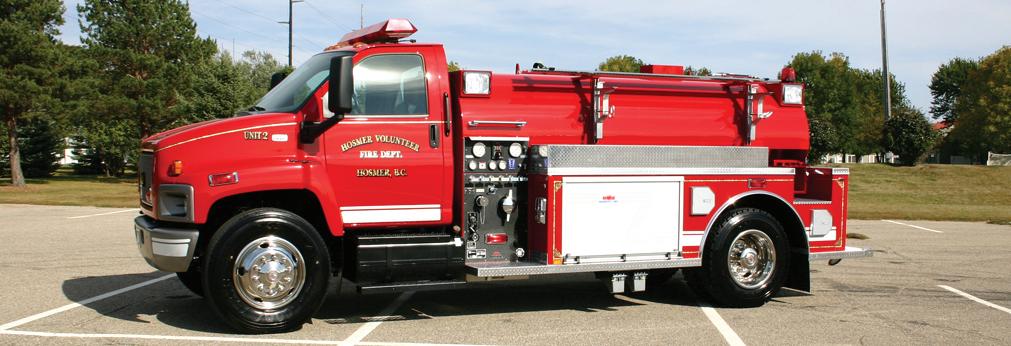
• 1/2, 3/4 or full-height officer side with various ladder storage configurations
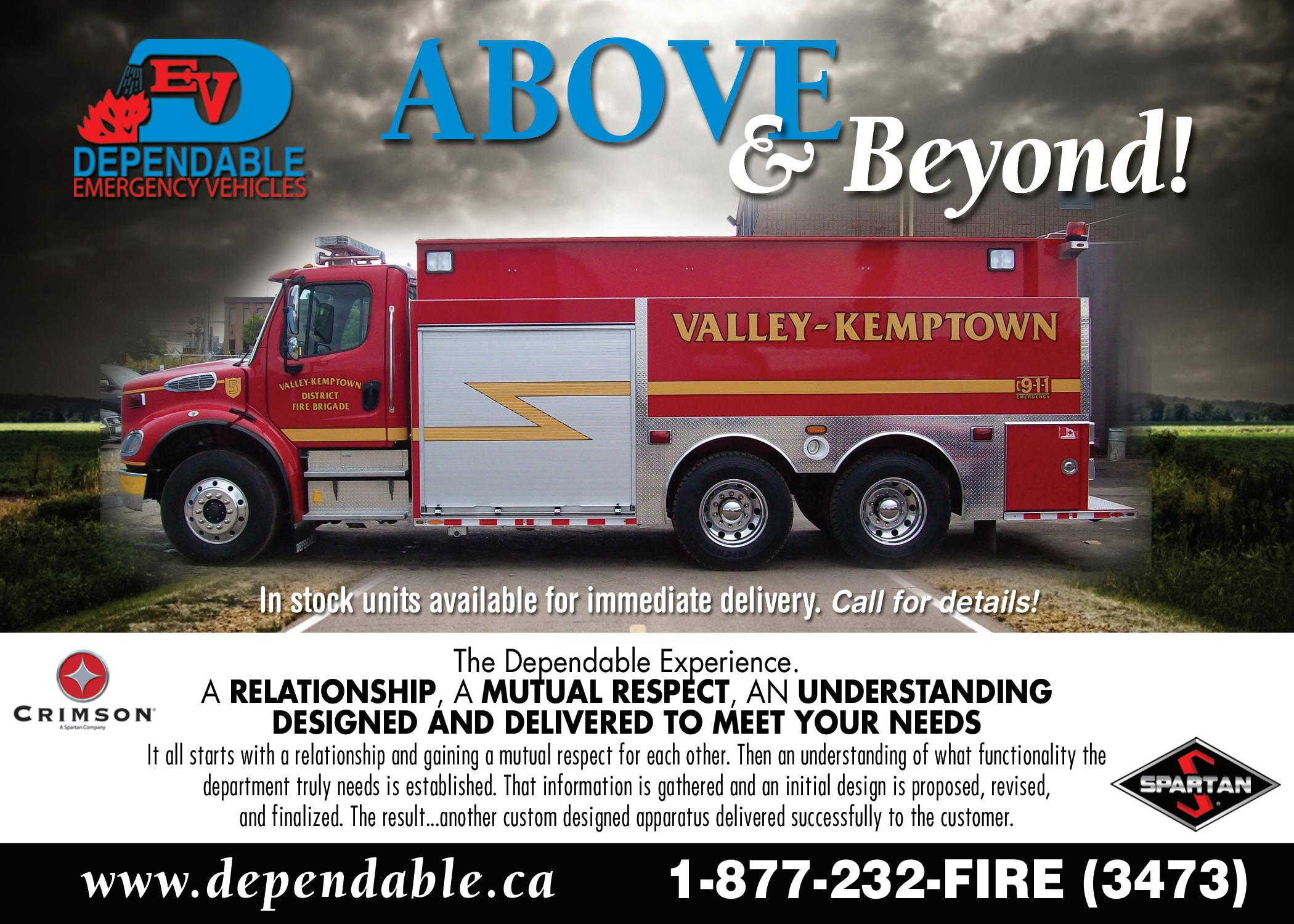
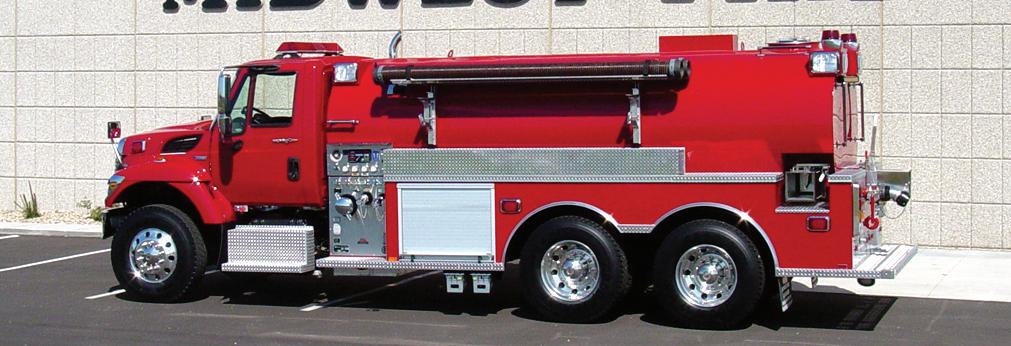
• International® chassis with electronic stability control
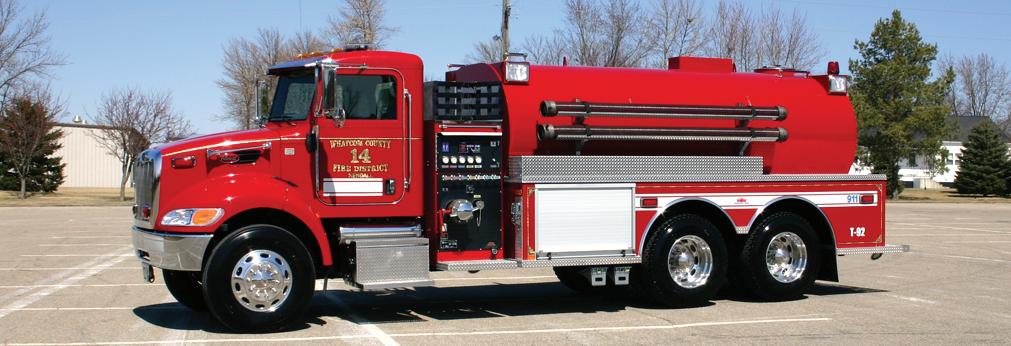
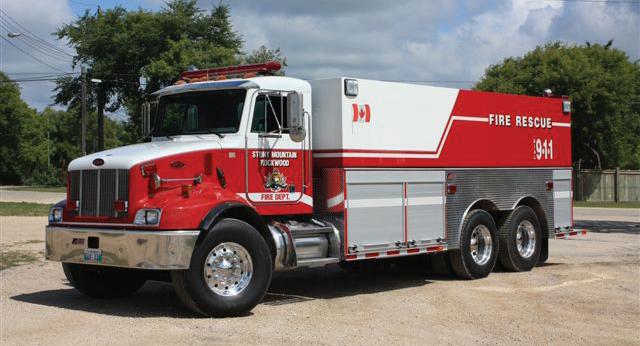
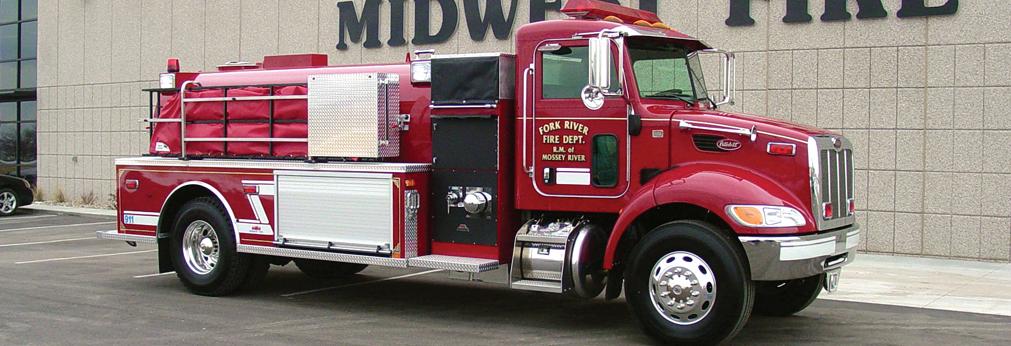
• Polished aluminum water tank with vacuum pump system
• In-cab pump and valve control console
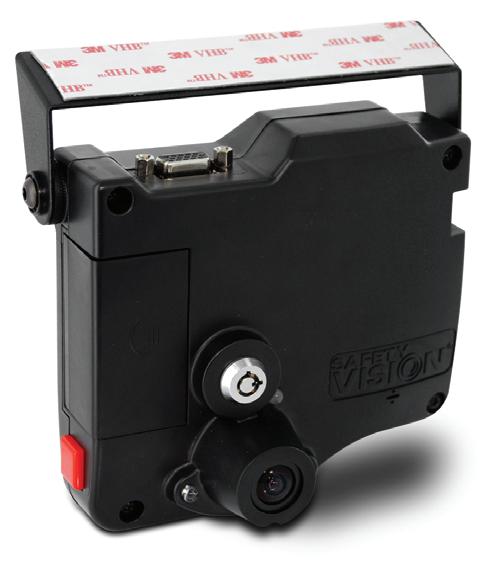
• Closed circuit monitor with two cameras
• Hard suction hose trays, length of unit
• Lighting and siren package
• Portable tank rack
• 89 cu. ft. of hosebed storage
• Stock units available
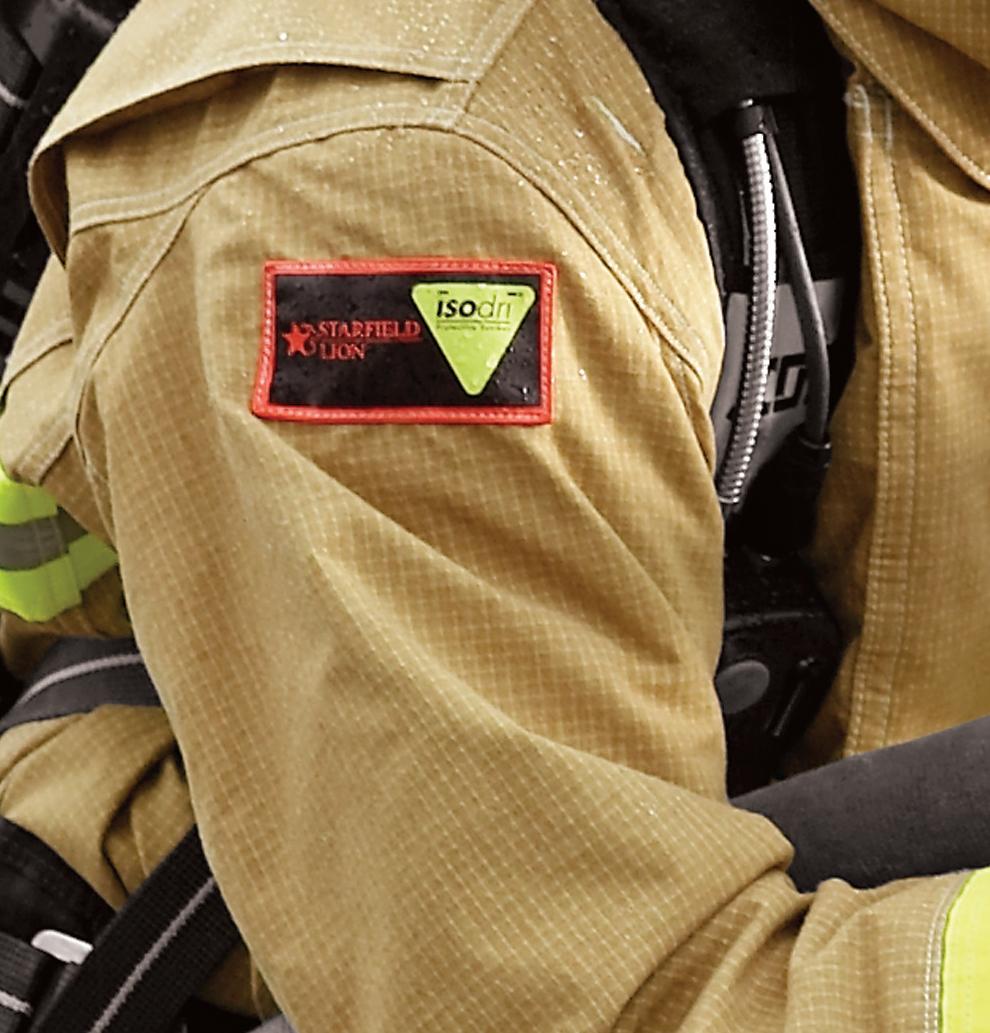
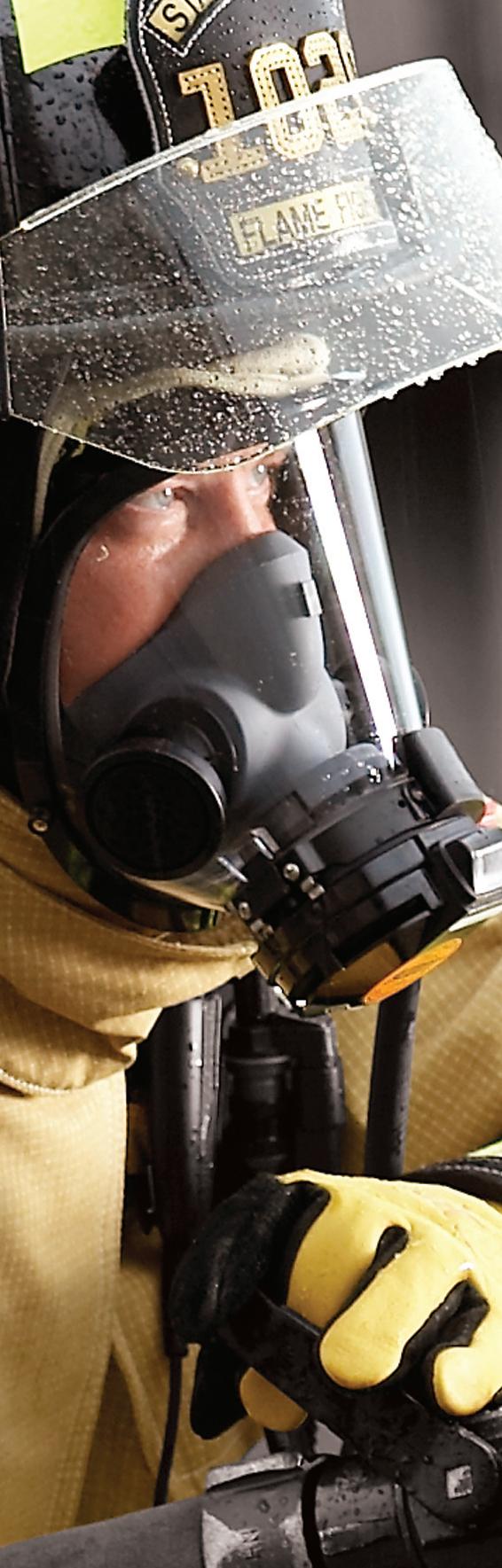
Why isodri®?
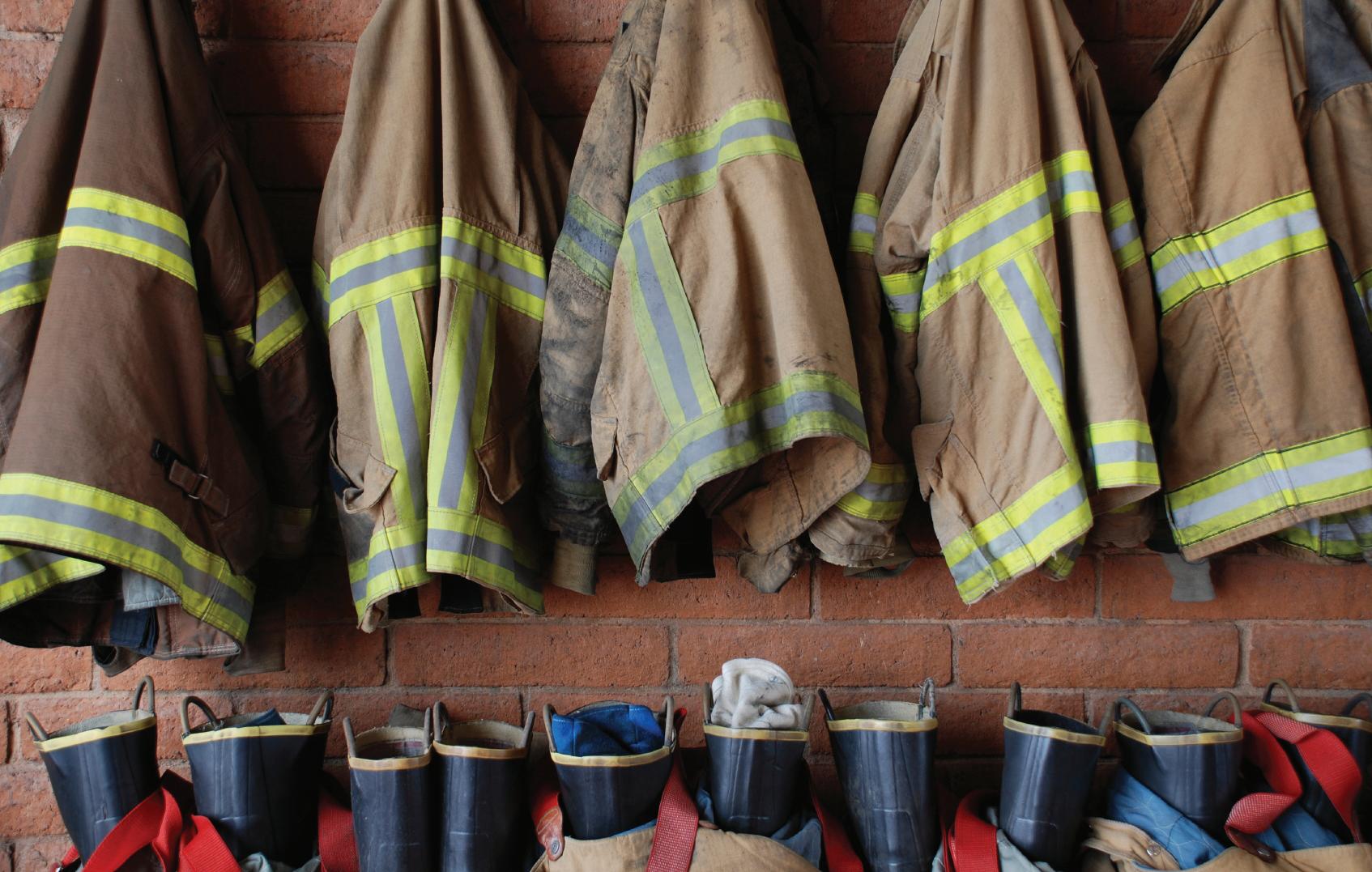
When water collects in your bunker gear, it adds weight and becomes uncomfortable. Water also displaces the insulating air in your thermal barrier. Once in your system, water can expand at an explosive rate, making you vulnerable to steam burns and serious injury.
Manage the moisture in your turnout isodri® technology is an engineered system that manages moisture through a combination of materials that block outside sourced water, wick perspiration off the body and resist storing water inside the protective envelope.
The insulating layers and outer shell of an isodri® system are molecularly bonded with DuPont’s Teflon® F to restrict the absorption of moisture and keep the protective layer of air intact. Exclusively from Starfield-Lion or Lion Apparel. Call 800.473.5553 or visit www.starfieldlion.com/isodri.shtml to see the video and learn more.
14
PANDEMIC PREP
Departments have taken the H1N1 threat seriously and developed plans and strategies to cope with worst-case scenarios. James Careless reports.
24 STRENGTHS AND WEAKENESSES
Validation of competency can limit risk and help personnel plan their careers. By Bob Simpson and Craig Richardson.
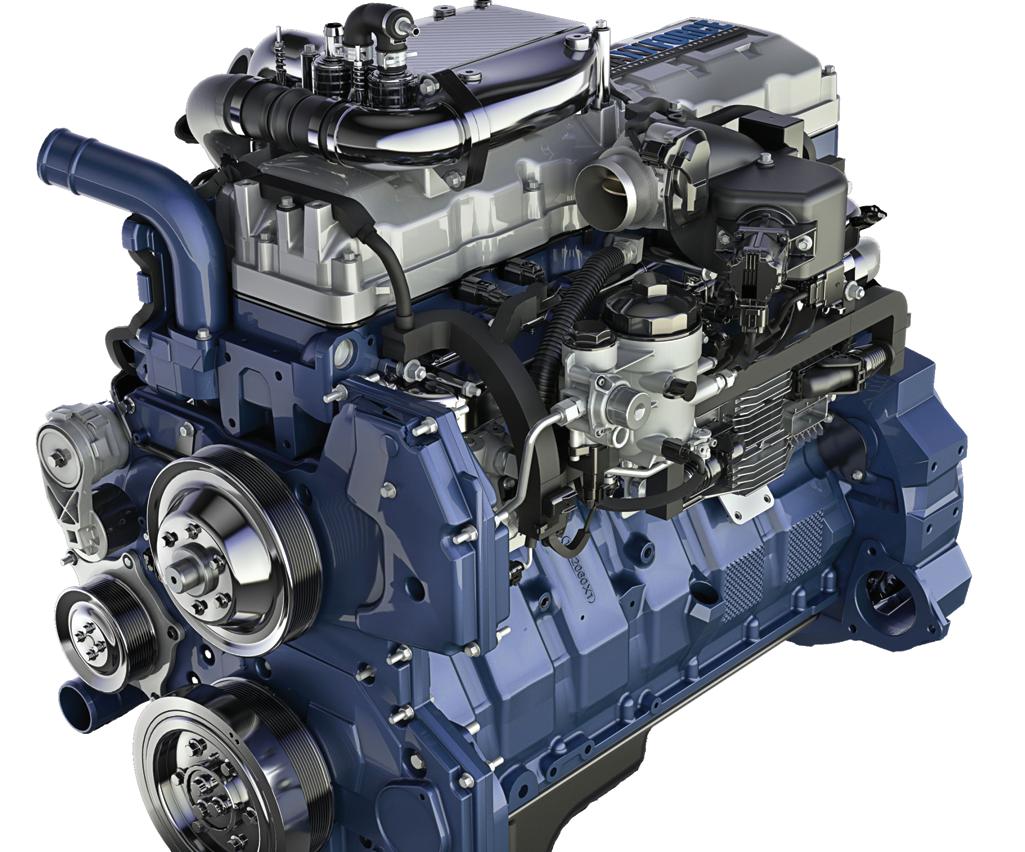
31 EMISSIONS ISSUES
New standards for diesel engines mean Canadian fire departments will pay more for new apparatus. By James Careless.
42
VISION 2014
Langford Fire Rescue in B.C. and its stakeholders have embraced a five-year vision statement that has instilled a higher sense of pride and value. By Linda Hunter.
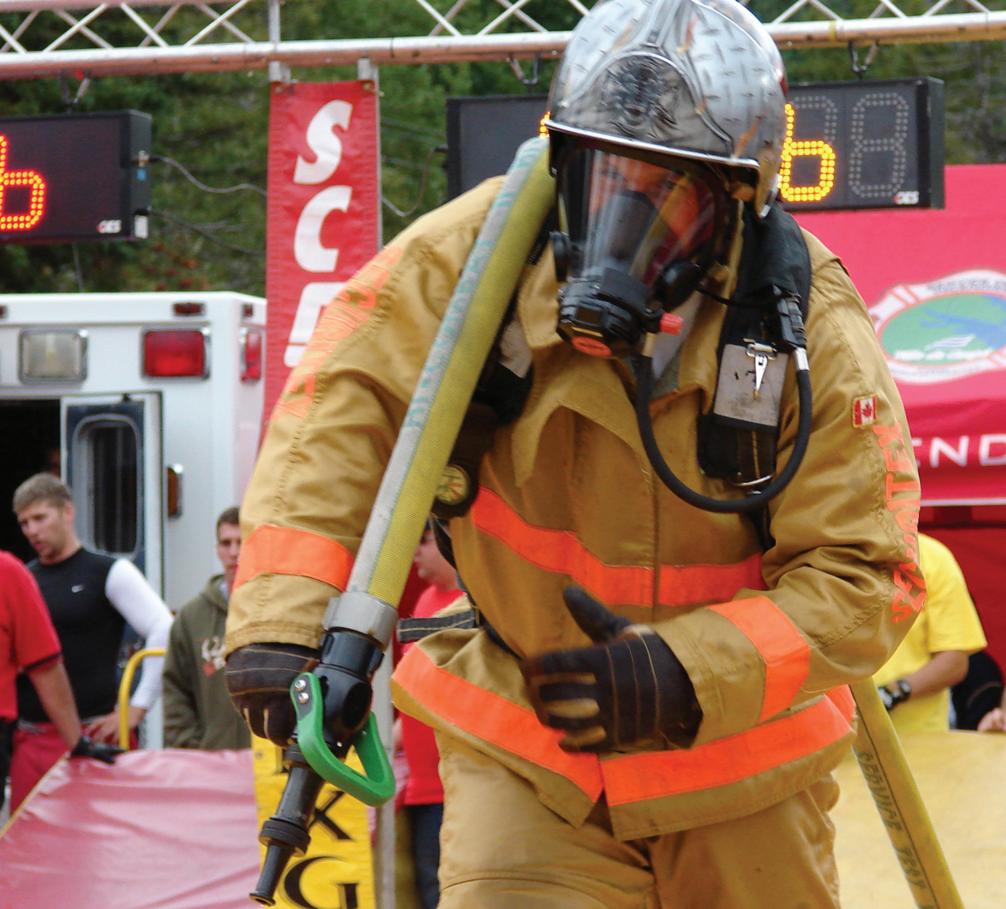
54 A CANADIAN FIREFIT FIRST
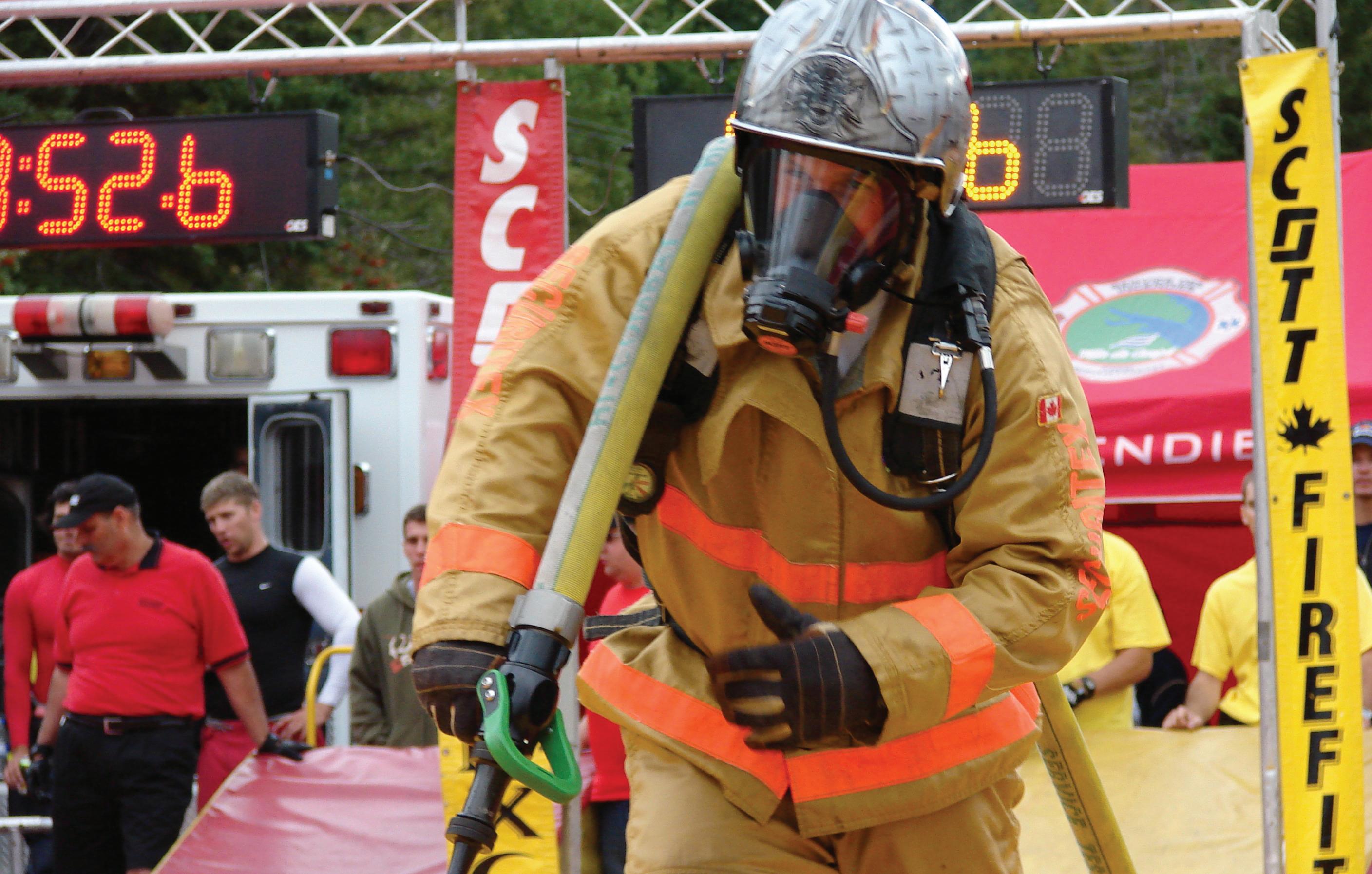
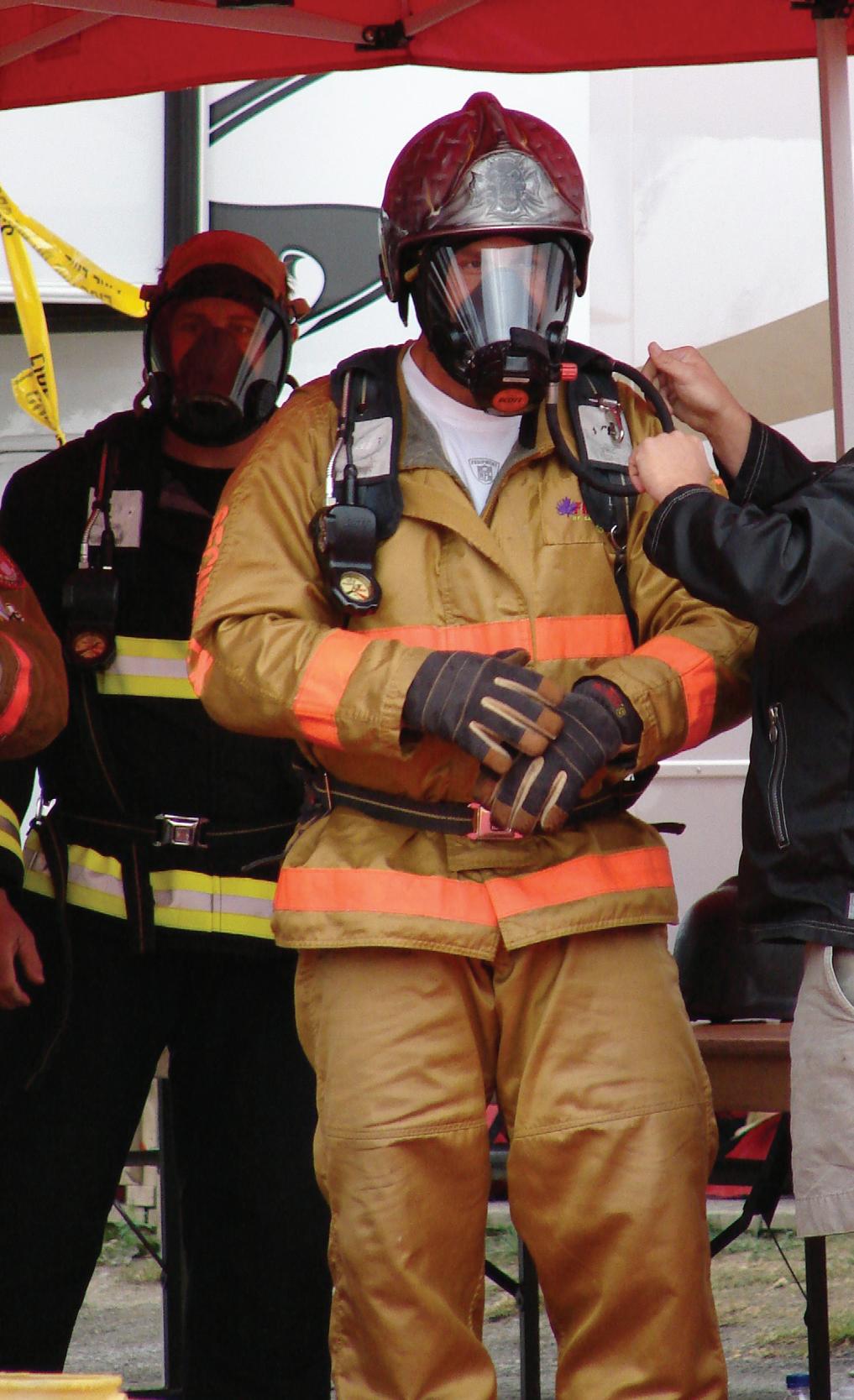
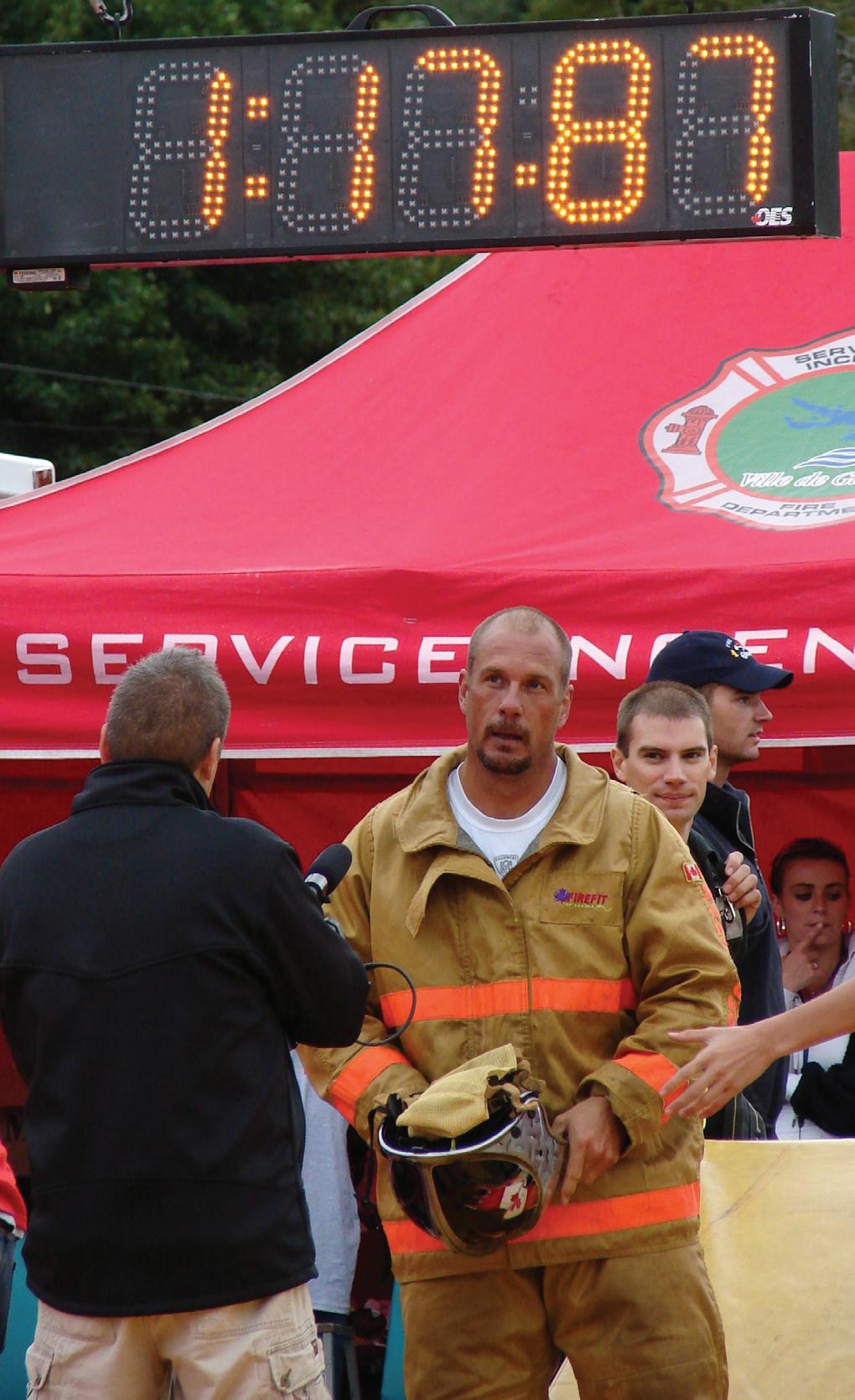
As Carey Fredericks reports, for the first time in the history of the Scott FireFit Championships, the over-40 winner also claimed the overall title.
68 STEP BY STEP
A chief’s guide for framing the department’s future. By Les Karpluk.
71 2009 APPARATUS DIRECTORY
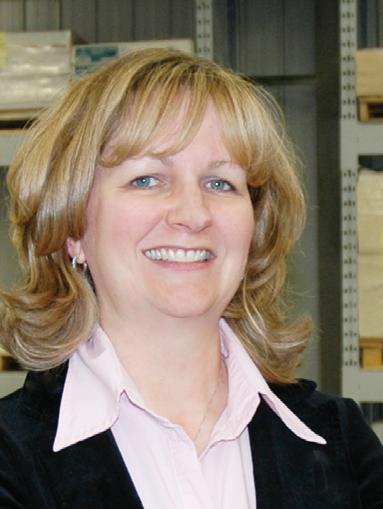
BY LAURA KING Editor lking@annexweb.com
O
COMMENT
Tackling the apparatus issue
ur annual apparatus edition is a major undertaking as we feature dozens of deliveries (see pages 71 through 96) that offer manufacturers a chance to show off their products.
From an editorial perspective, this edition brings readers stories that showcase issues about apparatus, and this year there is a considerable concern: new Canadian and U.S. emission standards for diesel engines that reduces emissions of NOx, or nitrogen oxides. The concern is not with the standard, which, of course, is good for the environment. Rather, in a nutshell, the new mandatory standard means Canadian fire departments will pay a minimum of $8,000 more for trucks starting Jan. 1 because, of course, the manufacturers are passing the costs on to consumers.
None of the manufacturers we talked to in our story on page 31 seemed to know for sure the upper limit of the price increase but guestimates hovered between $15,000 and $20,000.
The nagging concern is whether this cost – which is certainly justified given the environmental benefits – will be absorbed, or even understood, by municipalities doling out fire-service budgets in the aftermath of a recession that seems to just now be affecting municipal budgets.
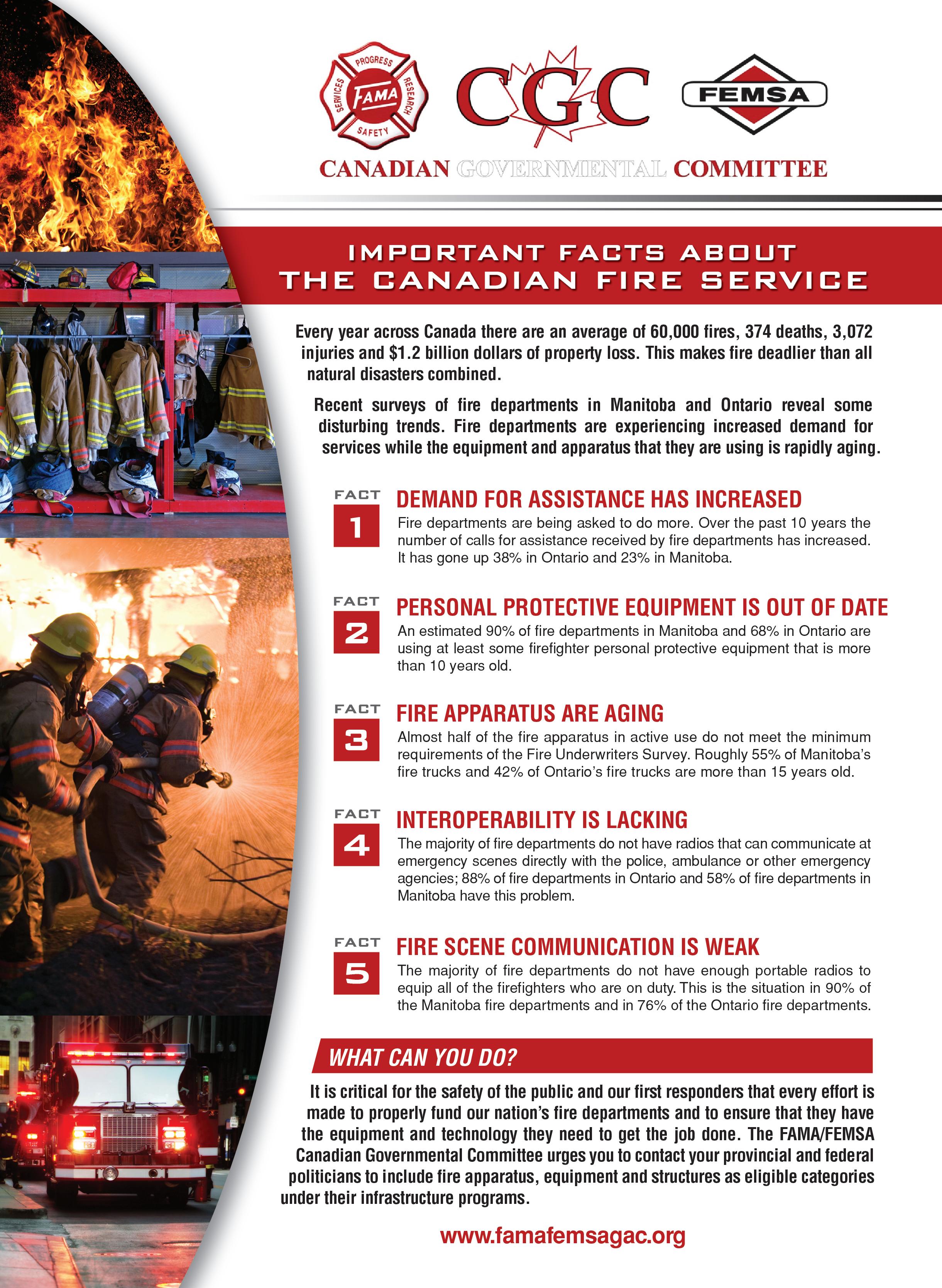
For the last two years, the Canadian Governmental Committee, which includes manufacturers and fire officers from across the country, has been working to make the federal government aware of the shortfall in fire service budgets that means departments from coast to coast – especially volunteer and composite departments – are driving outdated and unsafe apparatus.
The Ontario Association of Fire Chiefs, the Manitoba Association of Fire Chiefs and Fire Fighting in Canada have all done surveys that show departments are using apparatus that are more than 15 years old and no longer meet safety standards. The committee is working closely with FEMSA and its government affairs committee, which has successfully engaged the U.S. government, which provides grants to fire departments through the U.S. Fire Administration. Convincing the Canadian government of the need for federal money for the fire service is a long-term project and one that needs the participation and support of fire chiefs from coast to coast. Remember this when you’re considering your next apparatus purchase and can’t afford the options your department has deemed necessary.
A quick note about our columnists: We’re excited about some new columnists who join the Fire Fighting in Canada writers’ stable in the new year and we’ll tell you more about that in the February issue. In the meantime, we’re rotating some of our columnists who have been particularly pressed for time in their day jobs. You’ll miss Dave Hodgins’ Leadership Forum column this month but it returns in 2010.
Fax: 877-624-1940 Mail: P.O. Box 530 Simcoe, ON N3Y 4N5
SUBSCRIPTION RATES
Canada – 1 Year - $25.44 (includes GST - #867172652RT0001)
USA – 1 Year $50.00
We acknowledge the financial support of the Government of Canada, through the Publications Assistance Program and the Canada Magazine Fund, toward our mailing and editorial cost. Nous reconnaissons l’aide financiere accordee par le gouvernement du Canada pour nos coults d’envoie postal et nos coutl redactionnels par l’entremise du Programme d’aide aux publications et du Fonds du Canda pour les magazines.
From time to time, we at Fire Fighting In Canada make our subscription list available to reputable companies and organizations whose products and services we believe may be of interest to you. If you do not want your name to be made available, contact our circulation department in any of the four ways listed above.
All advertising is subject to the publisher’s approval. Such approval does not imply any endorsement of the products or services advertised. Publisher reserves the right to refuse advertising that does not meet the standards of the publication. www.firefightingincanada.com
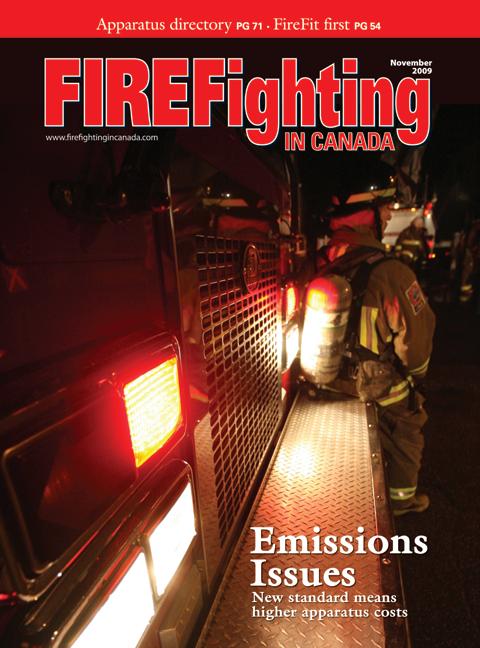
ON THE COVER
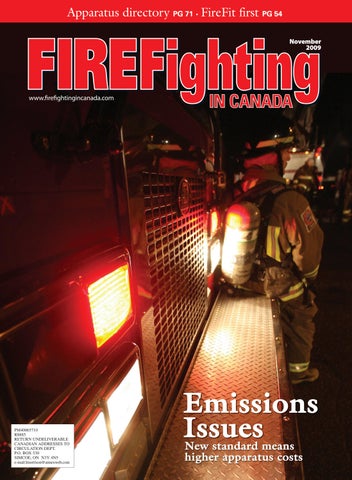
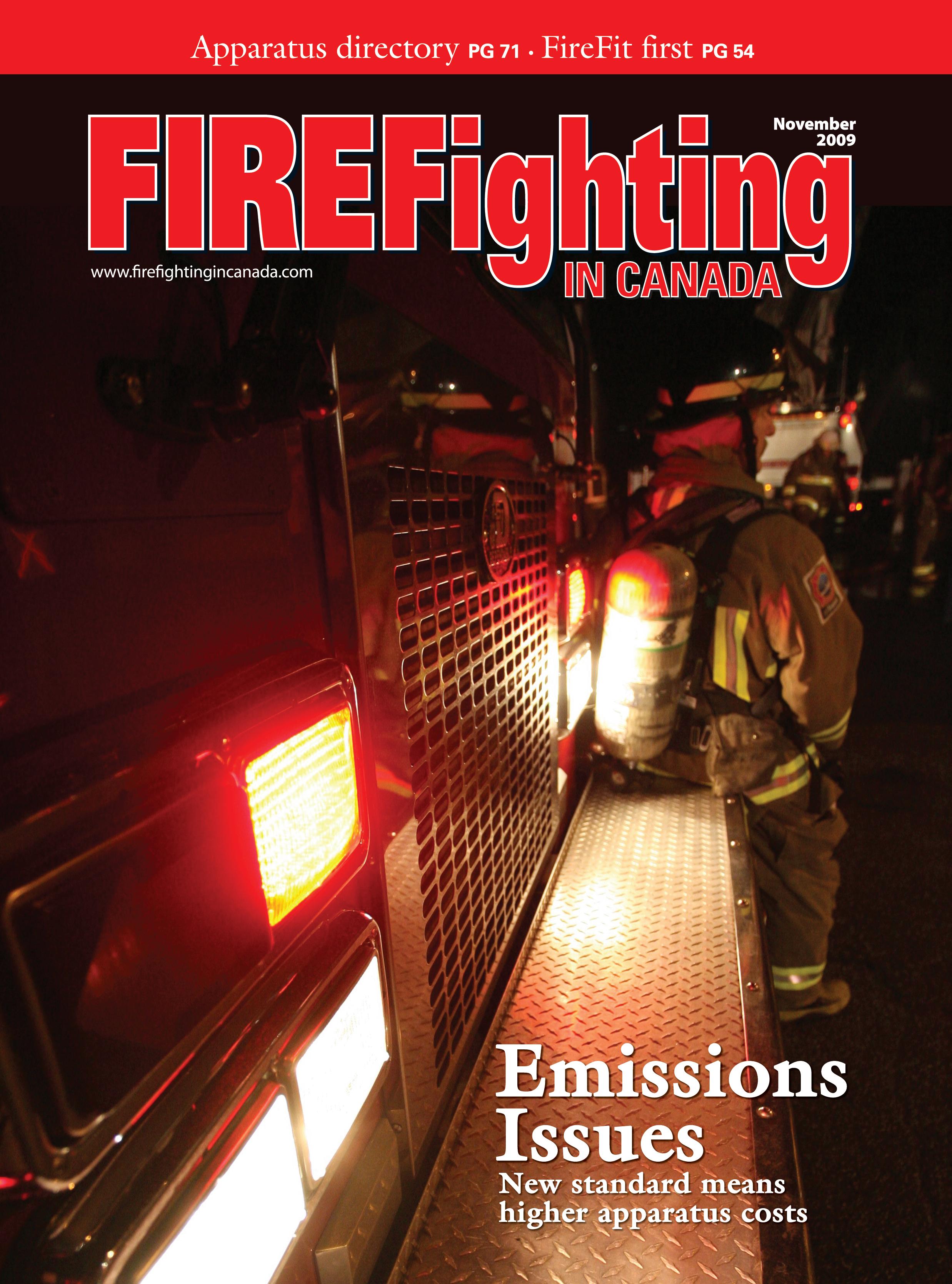
A new emissions standard for diesel engines that takes effect Jan. 1 means fire departments will pay thousands of dollars more for apparatus. See story page 31.
PHOTO BY JOHN RIDDELL
Areo-Fire, offers a complete service
For three generations, we strive to always serve our customers bette r. Our expertise in the fire industry has been accentuated by a combination of experience, expertise and training , continuous dedication from our staff, specialized and at the cutting edge of new technologies
The main objective of Areo-Fire is to help our customers better achieve their goals of operation while working closely with them to understand their needs and develop vehicles wich conform to their expectations.
To avoid unpleasant surprises... remember our team of expert advisors!
What We Offer
SALES TEAM
Stéphane Bouvier, (514) 893-5802
Montréal, Longueuil & Laval
Daniel Renaud, (514) 895-7106
Montérégie & Estrie
Marc Lavoie, (514) 217-1362
Outaouais, Lanaudière & Laurentides
Frédéric Drolet, (418) 572-5183
Québec, Beauce, Bas-du-Fleuve & North West N-B
Régis Bouchard, (418) 672-6451
Saguenay Lac St-Jean, Côte-Nord, Gaspésie & North East N-B
•Consultation to Evaluate your needs
•Calculation of Budget Prices
•Building of Specifications
•Complete projects and assured quality
•Financing available
•After Sale Service
EXPERT ADVISORS
Benoit Simard, (450) 651-2240 ext. 120
Technical support for fire trucks & Sales of Rosenbauer trucks
Gabriel Fafard, (450) 651-2240 ext. 207
Technical support for fire trucks & Sales of Rosenbauer trucks
Jason Nagy, (450) 651-2240 ext. 206
Technical support for fire trucks, junior
HEAVY & LIGHT SERVICE
Stéphane Ferland, (450) 651-2240 ext. 118 Director
Alain Parent, (450) 651-2240 ext. 122 Manager
BY
STATIONtoSTATION
ACROSS CANADA: Regional news briefs
CAFC names fire chiefs of the year
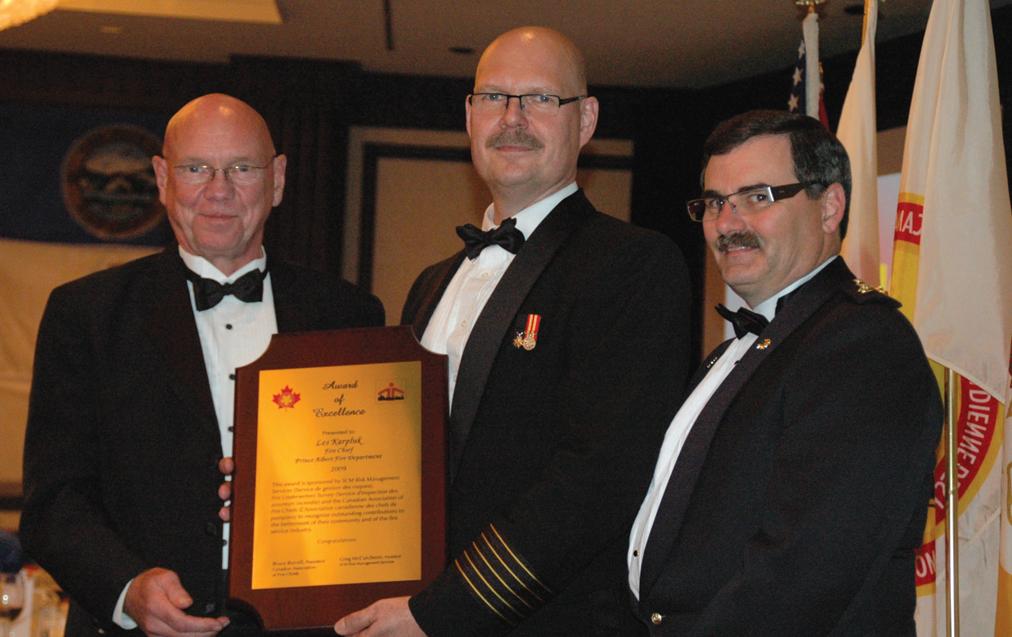
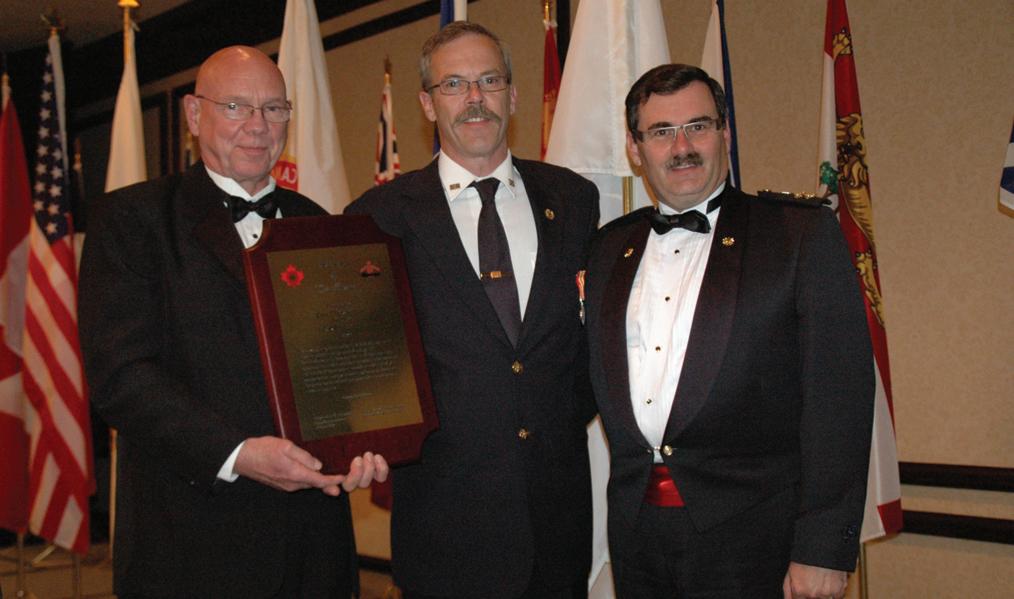
Winnipeg - Prince Albert Fire and Emergency Services Chief Les Karpluk and Selkirk Fire Chief Dan Thorsteinson have been respectively named fulltime career fire chief of the year and volunteer fire chief of the year by the Canadian Association of Fire Chiefs. Both awards were announced Sept. 23 at the closing ceremonies of the CAFC’s
annual conference in Winnipeg.
“Leading fire departments in today’s complex environment is a challenging task,” said CAFC
President Bruce Burrell, chief of the Calgary Fire Department. He added “the chiefs we honour this year have both displayed exemplary leadership to their staff and outstanding commitment to protecting the safety of their communities.”
Fire Chief Les Karpluk of Prince Albert, Sask., is presented with the CAFC’s full-time chief of the year award by Fire Underwriter’s Survey representative Jim MacLeod (left) and CAFC president Bruce Burrell (right) at the closing banquet of the CAFC’s Fire Rescue Canada conference in Winnipeg in September.
THE BRASS POLE
Promotions & Appointments
TONY BAVOTA and JEFF WEBER have been named deputy chiefs with the Burlington Fire Department in Ontario. Tony has been with the Burlington Fire Department since November 1995, achieved the rank of captain in 2005 and currently holds the position of acting platoon chief. Tony
has accepted the training and corporate emergency planning portfolio and will be directly responsible for the training division, volunteer firefighters and the department and corporate emergency planning initiatives. He will also act as the public/regional emergency management liaison.
Jeff is a deputy fire chief with the Kitchener Fire Department. He will be responsible for the fire prevention and communi-
Fire Chief Dan Thorsteinson of Selkirk, Man., (centre) receives the CAFC’s volunteer fire chief of the year award from Fire Underwriter’s Survey representative Jim MacLeod (left) and CAFC president Bruce Burrell (right) at the closing banquet of the CAFC’s Fire Rescue Canada conference.
Prince Albert, Sask., Fire Chief Les Karpluk is a 27-year career veteran of the fire and emergency services and became chief in 2006, with a staff of 50 under his command. He has played a leadership role in founding the Fire Mentoring Program to help youth at risk in his community. Under this program, youths, many of whom struggle with addiction problems, are partnered with firefighters and exposed to an environment of teamwork, determination and trust, safety and family.
Selkirk, Man., Fire Chief
cations portfolio and will be directly responsible for both the fire prevention division and the Appleby Fire Dispatch Centre, including the application support analyst and technology associate. Jeff has more than 17 years experience as a career firefighter and 10 years as a volunteer.
Retirements
Fire
Dan Thorsteinson has served as a firefighter for 25 years, becoming chief in 1999. A small business owner in the community of 11,000, his operation, with 32 volunteers, is able to supply the City of Selkirk and district with squads handling not only fires, but water/ice rescue and confined space and rope rescue. In addition, the River Boat Burn Fund, of which chief Thorsteinson is secretarytreasurer, has managed to raise $275,000 for the Firefighters’ Burn Fund.
-CAFC
of New Glasgow, N.S., retired Sept. 25 after 35 years of service. Mosher joined the New Glasgow department as a volunteer firefighter in April 1972 and was named deputy chief in 2000. In 2002 he took over as chief from the late Tom Rogers. In 2006, he was named full-time chief. Mosher has been involved in many fire service related associations including the Pictou County Firefighter’s Association,
Chief RUSSELL MOSHER
PHOTO BY LAURA KING
PHOTO
LAURA KING
CVSFA honours longtime volunteer
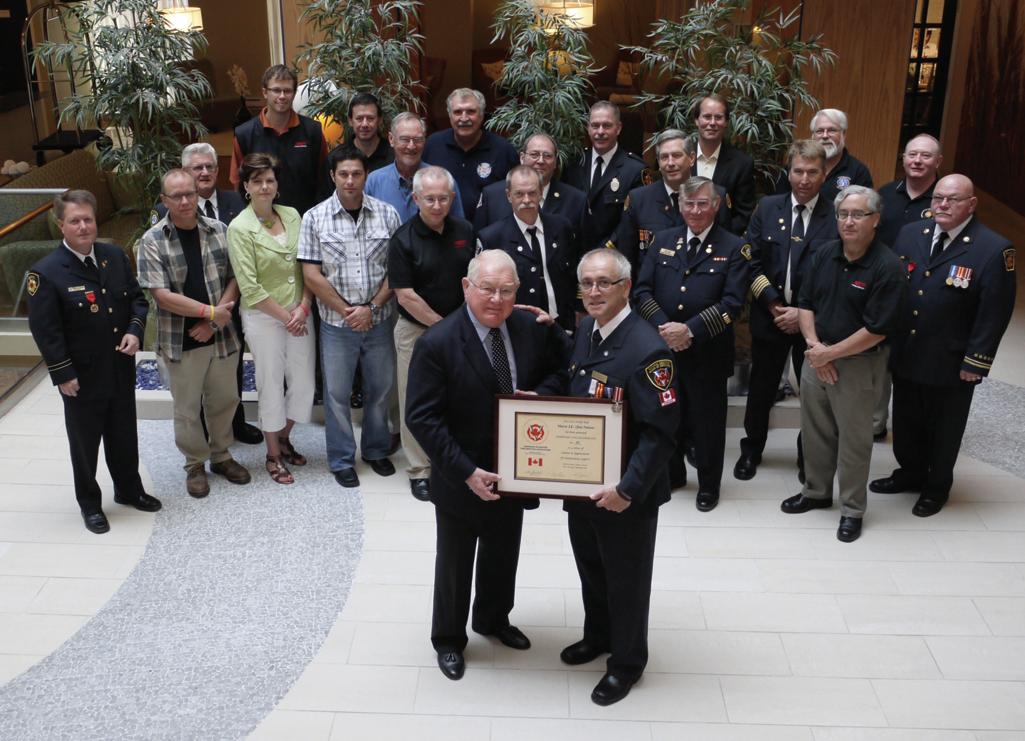
Ottawa - The Canadian Volunteer Fire Services Association met in Ottawa from Sept. 10-14. One of the highlights of the meeting was the presentation to Mayor Jim E. Nelson of Warfield, B.C., of an honourary life membership. It was the first such award to go to British Columbia. The award was presented by CVFSA President Martin Bell.
“Jim is a charter member who helped build the very foundation that created the CVFSA,” Bell said. “He was the author of our association’s letters patent and is a good friend of Canada’s fire service.”
Nelson joined the Warfield Volunteer Fire Department in June 1950. He was
promoted to captain in 1959 in charge of training of new personnel. After 21 years he became the deputy chief and two years later became the chief, a position he held for 14 years. In 1971 he joined the British Columbia Fire Chiefs Association. Seven years later he was elected president of the BCFCA. In 1975 he joined the Volunteer Firefighters’ Association of British Columbia and became president in 1986. He held that position for eleven years. He served on the BC Fire Commissioner’s Safety Advisory Council for nine years.
He became a member of the Canadian Association
of Fire Chiefs and in 1998 chaired a committee to form a volunteer chapter or division of the CAFC. In 1999 the group held its first meeting in Halifax. However, the group decided to work independent
of the CAFC to insure the views of the volunteers were promoted to the highest levels. Following this meeting, Jim drafted the first by-laws and filed the letters patent on behalf of the association.
Canadian chiefs association launches safety program
Winnipeg - Canada’s fire chiefs have announced a pilot project aimed at limiting children’s access to lighters and matches.
The pilot project will begin in Calgary, Toronto and Winnipeg as well as several smaller communities in Ontario.
Fire department staff will ask retailers to voluntarily refuse to sell matches and lighters to minors.
The project also seeks to educate parents and care givers
the Fire Service Association of Nova Scotia and the Fire Inspection Association of Nova Scotia.
Last Alarm
Firefighter BRIAN BRAGG of Inglewood, Ont., died Aug. 26 after a brief, but intense, battle with cancer.
Bragg was a captain with Brampton Fire and Emergency Services and the district
about the impact of children playing with fire.
The program was announced by the Canadian Association of Fire Chiefs at its annual conference in Winnipeg in September.
Hundreds of fires are caused each year by children playing with lighters and matches, resulting in deaths, injuries and millions of dollars in damage, said Cambridge, Ont., Fire Chief Terry Allen,
chief of the Inglewood Fire Department for the Town of Caledon.
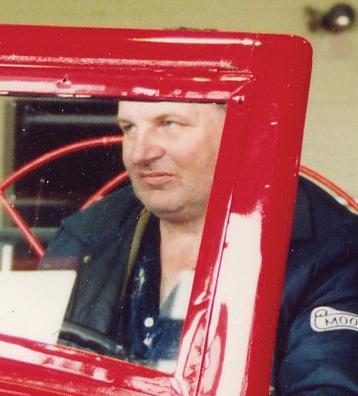
BARRY “MOOSE” DICKENS of the Flin Flon Fire Department in Manitoba passed away June 5 at the age of 61. Moose joined the department in January 1976 and was promoted to captain in 1998. Still an active member, he will be sorely missed for his computerlike memory and vast fire
the project leader.
“Fire chiefs consider this pilot project to be an important approach to reducing fire-related injury and property damage, particularly because victims are the youngest and most vulnerable members of our communities,” said Allen.
Retailers will be provided with stickers and posters to display in their stores as part of the public education program.
Dr. Sherri MacKay, an expert
fighting knowledge. He was fully involved in everything from Fire Prevention Week to weekly practice nights. These will be very hard shoes to fill.
on child arson, says arson and fire setting are significant public health and safety concerns.
“Individuals under age 16 play a prominent role in this problem, accounting for more than half of all fire related arrests,” said MacKay.
“This initiative could help reduce juvenile fire setting by reducing access to fire setting materials and influencing youth and community attitudes.”
-The Canadian Press
SEND US YOUR DEPARTMENT NEWS:
Fire Fighting in Canada and our readers want to hear about your department’s promotions, appointments and retirements. Send details and a colour photo by e-mail to lking@annexweb.com and we’ll publish an announcement in our next issue.
CVSFA President Martin Bell presents an honourary life membership to Jim Nelson, who was instrumental in the creation of the association.
PHOTO COURTESY CVFSA
STATIONtoSTATION
ACROSS CANADA: Regional news briefs
Ottawa donates $2.5 million to firefighter memorial
Ottawa - The Canadian government has pledged $2.5 million toward a national monument honouring Canada’s fallen firefighters.
The Canadian Firefighters Memorial, which will stand across from the Canadian War Museum on Wellington Street in Ottawa, will pay tribute to the almost 1,000 firefighters who have died in the line of duty. It is expected to be built by 2012.
Robert Kirkpatrick, a Mississauga, Ont., fire captain and president of the Canadian Fallen Firefighters Foundation thanked Canadian Heritage Minister James Moore and Public Safety Minister Peter Van Loan, who jointly made
the funding announcement in September.
“This important financial contribution will help our foundation realize our dream of having a national monument which recognizes Canadian firefighters who have made the supreme sacrifice,” said Kirkpatrick.
“The monument will be a place where family and friends can visit to remember their loved ones, and it will be a place that reminds Canadians that firefighters put their lives on the line everyday to protect Canadians and their communities.”
For the past six years, the CFFF has been working tirelessly to raise the funds required to build the monument.
In September, the CFFF
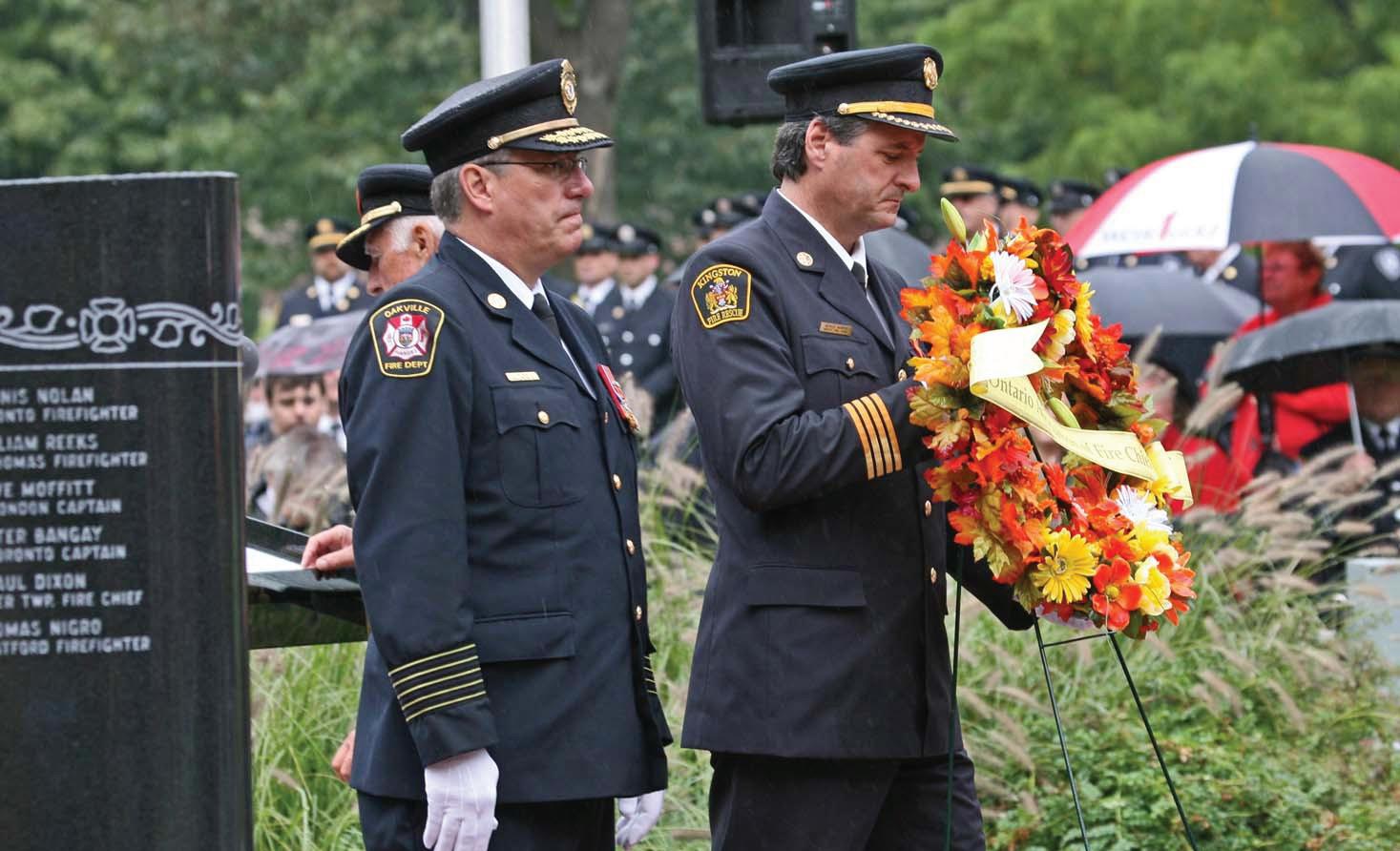
Ontario Association of Fire Chiefs President and Oakville Fire Chief Richard Boyes (left) and Ontario Fallen Firefighters Foundation President and Kingston Deputy Fire Chief Neville Murphy lay a wreath at the fallen firefighter memorial in Toronto near Queen’s Park during a memorial service in October. The ceremony recognized 28 firefighters whose deaths were formally recognized as line-of-duty deaths in the past 12 months.
held is sixth annual memorial ceremony, which paid tribute to 10 fallen firefighters who lost their lives in 2008. The foundation also raises money for scholarships for the families of the fallen. The foundation will soon proceed with a design competition and hope to unveil the design at next year’s ceremony.
Sperian donates $50,000 to fallen firefighter foundation
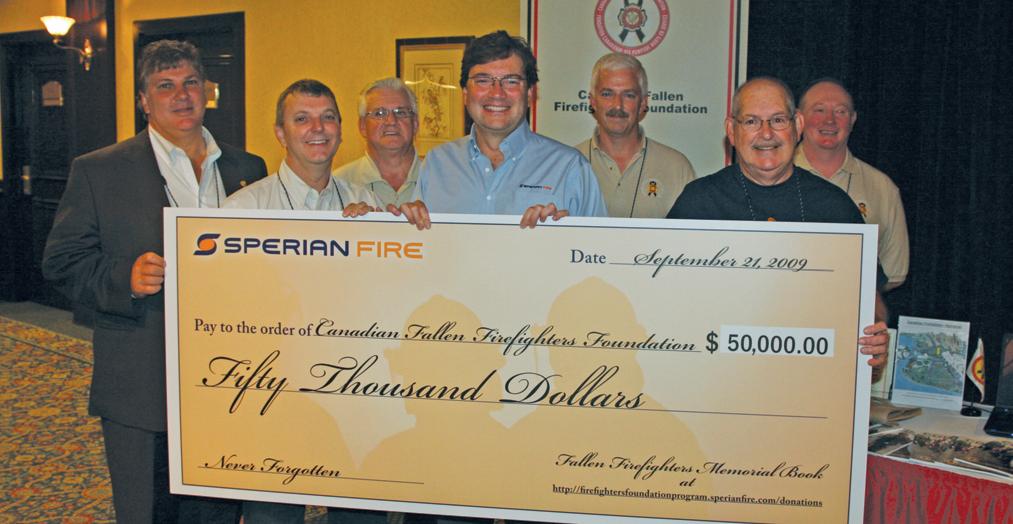
Winnipeg - Sperian Fire has donated $50,000 to the Canadian Fallen Fighters Foundation on behalf of the nation’s fallen fire heroes and their families. The donation was made by Sperian Fire as part of its on-going Memorial Book for Fallen Firefighters program to promote the honor, sacrifice, and memory of Canadian firefighters who have perished in the line of duty. Bill Sokol, vice president of strategic marketing for Sperian Fire, presented the C$50,000 cheque to CFFF president Capt. Robert Kirkpatrick of Mississauga, Ont., at Fire Rescue Canada 2009, The Canadian Association of Fire Chiefs’ 2009 conference, in Winnipeg in September.
Sperian Fire donated $50,000 to the Canadian Fallen Firefighters Foundation, the largest donation the CFFF has received to date, during the CAFC conference in Winnipeg in September. Pictured from left are Montreal Fire Chief Serge Tremblay, CFFF president Capt. Robert Kirkpatrick of Mississauga, Ont., Fred Kennedy president of the Canadian Volunteer Fire Service Association, Sperian Fire’s Bill Sokol and CFFF Directors Bruce Paradis, Ken Kelly and Tim Hinds.
Sperian Fire has been collecting and documenting the thoughts and memories of firefighters for their fallen brothers and sisters in a memorial book for fallen firefighters on its website, www.sperianfire.com. Sokol said he presented the donation “on behalf of everyone who visited the memorial book to sign their names and share their gratitude for Canada’s fallen fire heroes.”
Capt. Kirkpatrick thanked
-CFFF
Sperian Fire for its “historic donation and selfless program that has raised both the awareness and appreciation of the ultimate sacrifice made by our fallen heroes, and their families, to ensure that the rest of us may remain safe and well.”
He also said “the foundation is grateful for Sperian’s commitment to give back to the firefighting community and they should be congratulated by firefighters everywhere for their fantastic donation.”
The Sperian Fire donation is the largest the CFFF has ever received, he said.
As part of the memorial book program, Sperian Fire donated US$60,000 to the National Fallen Firefighters Foundation in the U.S. in August. Together, the donations mark the largest charitable gift in Sperian Fire’s history.
PHOTO BY JOHN RIDDELL
PHOTO BY ROB EVANS
BY BRAD PATTON Chief Centre-Wellington, Ont.
IVOLUNTEERVISION
The confusing art of leadership, simplified
have taken a few courses on leadership, received a couple of diplomas and read lots of books on the subject. I have also watched great leaders at work. I know that some people seem to be born with the skills needed to be a great leader, some have learned how to be a leader, and others will never learn.
I believe I might be somewhere in the middle of that and as I’m still learning, there might be some hope for me yet. I thought I could pass on what I have learned thus far and perhaps some of you could forward what you have learned to help me along with my journey (not that there has ever been a shortage of people telling me I still have a lot to learn). I might as well live up to the fact that I am a manager and have good skills in that department. However, leadership and management are very different concepts.
Managing is what a lot of fire chiefs, myself included, do regularly. We take a group of people, some trucks and equipment and figure out the best way to use them to meet the objectives given. We put out fires, extricate people from cars, deliver first aid, participate in training, work within budgets, et cetera. Being a good manager is not easy. I consider management a two-step process. Step one: Getting it all organized. This includes putting the right people and the right equipment together so that they safely and efficiently get the job done. In our business of managing volunteer firefighters it might take three to five years to complete step one. Then comes step two: The caretaker. All you have to do is keep the wheels greased and do some fine tuning once in a while to keep step one working efficiently.
Leadership, on the other hand, is far more complex. I define leadership as the ability to inspire people to go beyond what is expected or acceptable. You can tell if a fire department, a fire station or even a crew has good leadership just by watching; the morale is high, equipment is well cared for regardless of its age or use, and training is done professionally and with enthusiasm. There is also a higher regard for detail and everyone seems to have a better understanding of the “big picture”. The “why” we do what we do and “how” we do it reflects on our department and the community. That is good leadership, which goes well beyond good management.
captain or firefighter and you live in a town that has a population of between five and to 45,000, you will be recognized.
2) Many residents will know your name, years of service and rank, and they will be watching and judging you. If you want to be a good leader you need to understand and accept how people see you. How others judge you will reflect greatly on how your ideas are accepted, how people will trust you and how much financial support they will provide for budgets. Please do not take what I’ve said to mean you should be phoney in any way; rest assured people will see right through that.
3) Stand tall, be a good listener, be positive, don’t give snap answers just to appear smarter, and care about other people first.
4) Never stop learning about the job, especially the parts you don’t like such as budgets, report writing, committee or council meetings and members.
5) Be very careful of whom you trust. It’s all too easy to have a bad day or week then go have a few drinks and unload to someone, only to find out a short time later that what you said is now in the fire halls or on the street. You are then left to a lot of cleanup work to right the wrongs that should have remained unsaid.
I define leadership as the ability to inspire people to go beyond what is expected or acceptable. ‘‘ ’’
So here are some basic rules for leadership that I am personally working on.
1) If you want to be a good leader, always remember people are watching and listening to you 24/7. If you are a chief, senior officer,
Brad Patton is fire chief for the Centre Wellington Volunteer Fire Rescue Department in Ontario, with stations in Fergus and Elora. Centre Wellington has a population of 28,000 and covers 410 square kilometres.
6) Use your computer to get assistance from associations or your peers. In this electronic age you’re never alone.
Presently, I am working on a report regarding turnover in the volunteer / part-time fire departments and have asked the Ontario Association of Fire Chiefs to send three short questions out to its hip:
1) How many volunteer firefighters are in your department?
2) How often does your department hire new volunteer firefighters?
3) On average, how many years will a volunteer firefighter stay with your department?
In one day I received 55 replies and am pleased to report that at press time they are still coming in.
In short, to be a good leader you have to care for the membership and your community, be honest, be cautious and own up to any mistakes you make. Most importantly, never stop learning.
PANDEMIC
C PREP
Canadian departments are ready for H1N1
By JAMES CARELESS
Fire departments across the country have been working for months on pandemic preparedness plans to ensure the firefighters and paramedics are protected from the H1N1 virus
For months, fire departments across Canada have taken the H1N1 threat seriously and developed plans, procedures and supply strategies to cope with potential worst-case scenarios.
“We have a pandemic response plan which escalates our response activities as the risk goes up,” said Dave Meldrum, divisional chief of Halifax Regional Fire & Emergency’s safety division.
“Right now, we are at a relatively low alert level but if the disease becomes more widespread and/or more lethal, some of the additional measures we can take include restrictions on the type of calls we respond to – no Influenza-like illness (ILI) medical calls, for example – restrictions on meetings and training events, lock down of our stations to prevent entry of any persons other than working firefighters, and pre-entry symptom screening of firefighters before they are allowed to start duty.”
Dan Heney, deputy chief with Prince Albert Fire & Emergency Services in Saskatchewan said all risks of this magnitude are handled similarly: educate on the potentials and establish contingency plans for the worst.
“Health professionals have suggested all hazards pandemic plans be generated for sometime now, but legislators seemed to only advocate planning for specific events,” he said.
In some instances, departments were able to draw on past planning to prepare for H1N1. “We had to do all of this before for SARS in 2003,” says Joe Kowal, the Winnipeg Fire Paramedic Service’s emergency medical services liaison with the regional health authority.
“Although we were fortunate in not having to deal with SARS like our Toronto colleagues had to, the thinking that went into the SARS plan works equally well for coping with H1N1.”
H1N1 plans run the gamut from educating firefighters to protect themselves against infection and minimizing exposure to infected patients to deciding what supplies need to be available on trucks and in stations.
In the case of the Fredericton Fire Department in New Brunswick, pandemic planning goes beyond prevention and protection to an investigation to determine how to keep the department running on reduced strength. FDD also examined how its personnel might be cross trained to help with other city services, said Assistant Deputy Chief Paul Fleming of the department’s prevention and investigation division.
“This could include personnel with heavy equipment licenses, experience with chain saws and so forth,” he said.
Deputy Chief Dale McLean of Edmonton’s Fire Rescue Services said education is central to Canadian fire departments’ preventative approach to H1N1.
“We are telling our staff to follow the universal precautions for protecting themselves from infection, such as hand washing and using proper masks, gloves and gowns when responding to potential infection calls,” he said. “We are also teaching them to know what the symptoms of H1N1 are, and that they should stay home should they show any of these symptoms personally.”
In B.C., Port Coquitlam Fire & Emergency Services has worked with provincial agencies to develop a self-guided PowerPoint presentation on H1N1, said Fire Chief Stephen Gamble.
“It goes through the dos, don’ts and best practices for dealing with H1N1, and viewing it is a required part of each employee’s training regime.”
In Winnipeg, the city has created a website on its intranet where information is shared with staff, said Randy Hull, Winnipeg’s emergency preparedness co-ordinator.
“We have 10 separate H1N1 bulletins posted for staff. We have also held refresher courses on the proper usage and deployment of respirator masks and gloves.”
With 84 halls and 3,000-plus employees, Toronto Fire Services can’t address the H1N1 challenge by having “a tailgate education program,” said Capt. Tim Metcalfe, an occupational health and safety officer. So the department has sent out information through its regular fire chief communiqués via the TFS intranet.
“They talk about ways of protecting yourself and include fact sheets about immunization and H1N1. Our union is also posting information on their website.”
After education, sanitization is the next step in the fight against H1N1.
“We have hand washing stations and hand sanitizer stations at all
work locations,” says Halifax Divisional Chief Dave Meldrum. “We have hand sanitizer stations installed on all apparatus and we have completed quantitative fit testing on all career firefighters for their N95 respirators and are starting on our volunteers now,” he said.
Properly fitted N95 respirators, protective gloves and gowns for use in ILI situations have become standard equipment at many Canadian fire departments, in their stations and on their apparatus.
“Our people already are equipped with these items on their trucks,” said Brent Denny, deputy chief of volunteers for the Cape Breton Regional Fire Service, which oversees 33 fire departments – three professional, three professional/volunteer and the rest volunteer.
“Meanwhile, we have added an extra layer of protection by having our emergency health service dispatchers ask callers whether people have flu-like symptoms in their households. This allows us to give our people advance warning when they may be entering ILI situations.”
Toronto Fire Services’ dispatchers also alert its officers about possible exposure risks during calls. When a risk is present, TFS personnel follow routine precautions for dealing with infectious diseases, says Capt. Metcalfe. This means wearing bunker gear and boots, eye protection, protective nitro gloves and fitted N95 respiratory masks. The department does have gowns in stock, “but we haven’t received
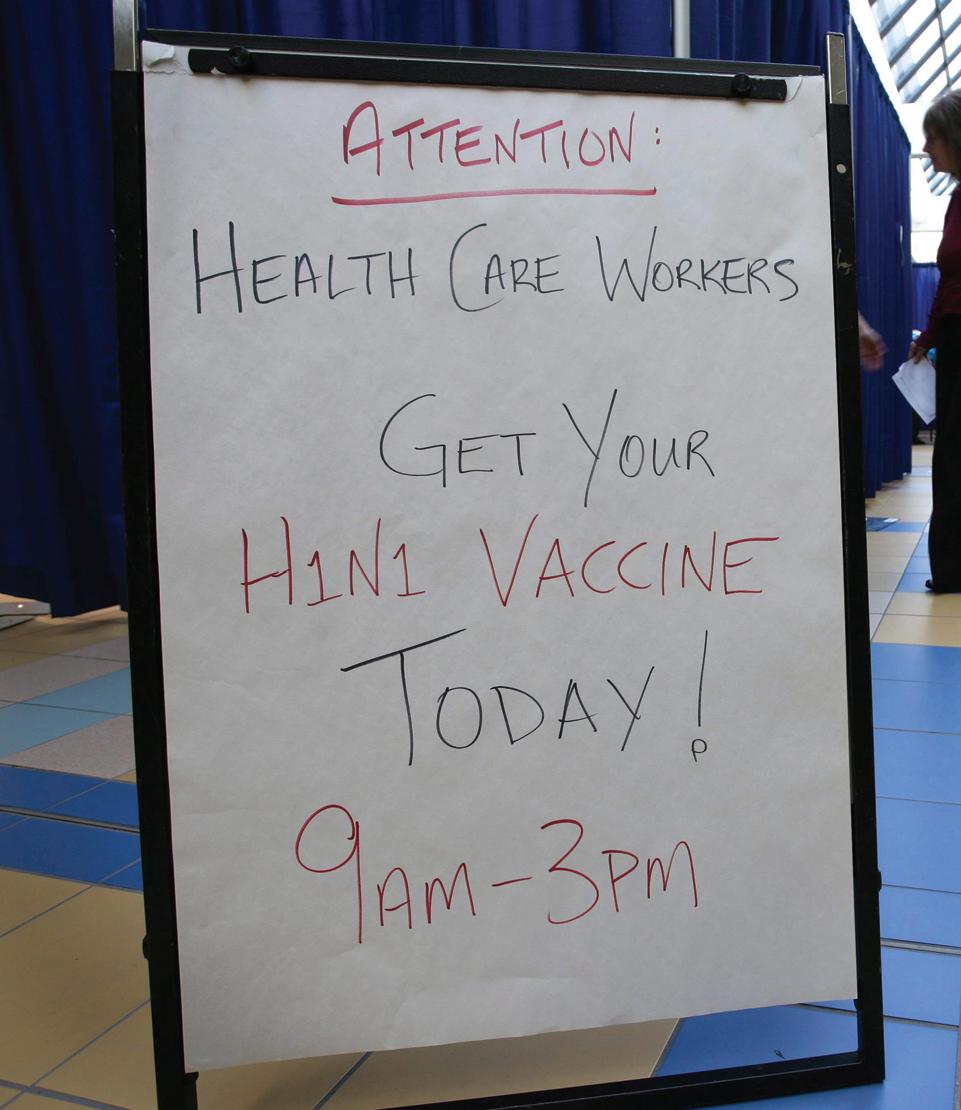
FIRST RESPONDERS QUESTION VACCINE HIERARCHY
When the second wave of H1N1 virus struck in late October killing a 13-year-old Toronto boy, the vaccine was just being rolled out and Canada’s first responders hadn’t yet been vaccinated.
At press time in early November, while thousands of school children were absent from classes across the country due to flu symptoms, it was too soon to determine the impact of the H1N1 outbreak on first responders or any other group, but fire officials in some provinces were clearly frustrated that their personnel were not included in the vaccination priority group.
Most Canadian fire departments had been working for months on pandemic plans for their own personnel and for their communities and were disappointed when their members were not among the first to receive vaccinations.
Start dates for vaccine programs varied from province to province although the recipient order – people under 65 with chronic illnesses, seniors, pregnant women, young children – was fairly consistent across the country.
Most provinces included health care professionals in the first group to receive H1N1 shots in late October but medical first responders were listed in the priority group only in some jurisdictions, including B.C., Manitoba and Quebec.
In Ontario, New Brunswick and Nova Scotia, medical first responders started getting their shots the first week of November, well after the virus had started to spread. In Alberta, Lethbridge firefighters could get their shots at a special clinic at the local hospital on Oct. 29 but establishing the clinic took considerable effort by fire officials.
Kitchener, Ont., Fire Chief Tim Beckett, who is the first vicepresident of the Ontario Association of Fire Chiefs, was quoted in a firechief.com story in October explaining to U.S. readers that the Ontario Ministry of Health had identified the order in which people were to receive the vaccine.
“We don’t fall under the health care workers,” Beckett said of medical first responders in Ontario. “First responders fall under phase two.” In Toronto, firefighters were able to get the vaccine in
the last week of October through a clinic aimed at protecting tierone workers.
At press time, most Canadian communities had just begun to vaccinate the general public and first responders. While the vaccine wasn’t available in Canada until late October, many U.S. first responders were vaccinated in early October.
Becket said in an Oct. 28 interview that fire officials hope to work with the province to establish a new protocol for first responders for any potential future pandemics or similar situations.
By Laura King
PHOTO
VERY FEW
THINGS CAN SURVIVE AN INFERNO.
OUR MISSION IS TO MAKE SURE YOU’RE ONE OF THEM.
The flames build. The smoke gets thicker and more intense by the second. People are fleeing. And what do you do? You push forward ready to do battle. It goes against every natural human instinct. But then again, firefighters are a different breed. For your infinite courage and selfless dedication, we salute you. But more importantly, we’re going to do everything we can to protect you. We’re MSA. And we equip firefighters with the most advanced thermal imaging cameras, helmets, air masks and gas detection devices available. Coincidentally, we’re somewhat of a different breed ourselves. You see, we’re a safety innovations company that’s been on a relentless crusade to protect lives for more than 90 years. Today we protect firefighters, soldiers, construction, iron and steel workers, oil riggers, utility workers, miners, consumers and hundreds more. Wherever there are workers who need to be protected, we will be there.
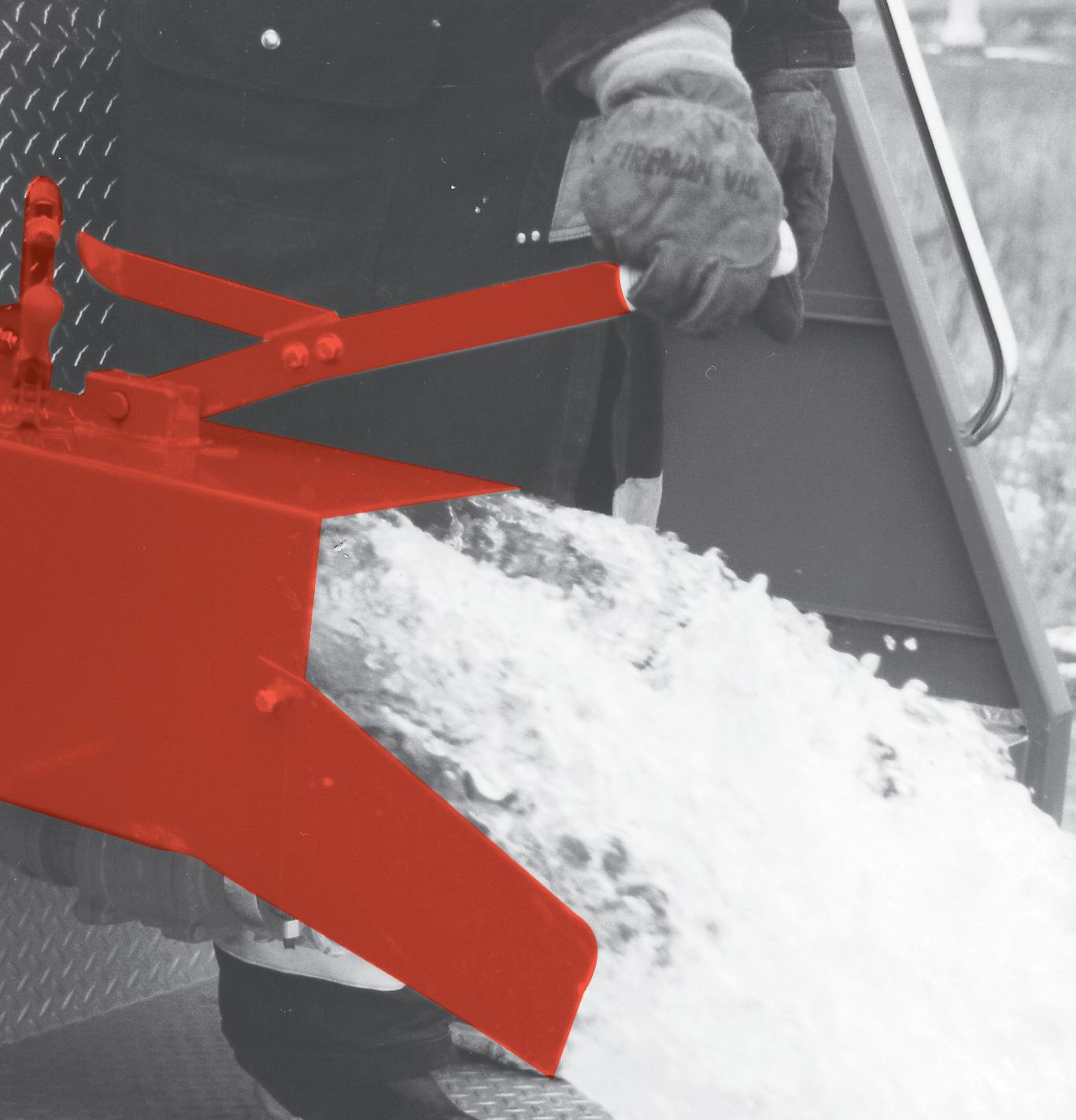
Nothing Dumps Faster! Ask for it by name.
Rely on A.H. Stock Manufacturing, the original manufacturer of the Kwik-Dump Water Valve.
Over 40,000 in use. We’ve been in business for over sixty years, so you can depend on us. That’s why Newton Kwik-Dump Valves can be trusted to get your tanker emptied and on its way FAST. Standard length, Mild Steel and Stainless Steel are in-stock. Need special length valves? Call us and it’s as good as done! Don’t accept look-alikes. Ask for us by name. For prompt, timely delivery, call us today.
Contact us for more information. Brochures and CD-ROMs available. A.H. Stock Manufacturing Corp. 8402 Center Road • Newton, WI 53063 Phone: 920-726-4211 • FAX: 920-726-4214 sales@ahstockmfg.com www.ahstockmfg.com
direction from the base hospital to start wearing gowns,” he said.
Canadian fire departments appear united in their attitudes towards H1N1 vaccinations: they want personnel to get vaccinated but they want the decision to be voluntary. The hope is that education will motivate firefighters to get the H1N1 shots.
“Our people are being strongly encouraged to get the H1N1 shot,” said Edmonton’s Dale McLean.
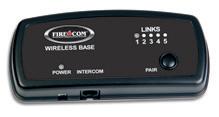
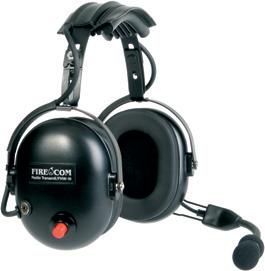
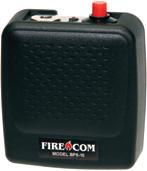
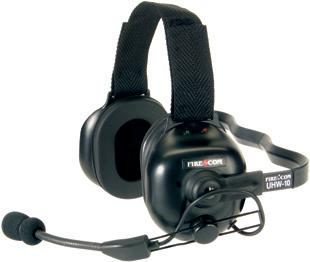
No wires or connectors. No cords getting slammed in the door. Just crystal clear, mission-critical communication. With Firecom’s wireless headsets, first responders are able to connect to the in-cab intercom system and vehicle radios, providing critical, on-scene communication. And now, with Firecom’s new belt pack, wired headsets can also communicate wirelessly. The headset and belt pack are ideal for command vehicles, on-scene first responders and ambulance attendants.
For more information about Firecom’s wireless headset, contact your territory manager at 800-527-0555 or email at sales@firecom.com.
In Prince Albert, emergency responders were on the region’s priority list, said Dan Heney. “When our priority level is reached, we will be vaccinated.”
Toronto Fire Services also took the voluntary vaccination approach, but in an effort to save time it brought vaccination clinics directly to firefighters. “The immunizations are being performed by EMS paramedics and Toronto Public Health nurses,” said Capt. Metcalfe. The program was part of a city-wide effort to protect tierone workers, including public safety officers and workers at seniors’ homes.
At press time it was unclear how severe the H1N1 infection would be. Regardless, the more people who get sick, the higher the danger to firefighters of exposure to H1N1 at work and at home. The real danger was that substantial numbers of firefighters could be lost to duty due to sickness, reducing departments’ ability to cope with daily duties.
Editor’s note: Research for this story was done in mid- October, before the H1N1 virus began to spread in late October.
PHOTO BY THE CANADIAN PRESS
BY LYLE QUAN Deputy Chief Guelph Fire Department, Ont.
ICORNERSTONE
How tackling tough stuff makes our jobs easier
n my office at fire headquarters, I have an inspirational poster on leadership that says leaders stand out by the nature of their commitment and the integrity of their character. I believe in this axiom, because anyone can be a leader when all is going well; it is how we present ourselves in times of adversity that demonstrates what types of people we are and how we deal with the highs and lows in our lives.
The two books I am presenting here will help you create some winning habits for dealing with peaks and valleys in your careers and personal lives. They will also help you understand how the prudent things you do in bad times can create more good times for you. Why is this? Quite simply, the more adept you are at dealing with adversity the more skilled you will become at taking advantage of those good times in a progressive and beneficial manner.
In his book Winning Habits (2004), author Dick Lyles presents four basic habits that when applied consistently can help you to succeed in your career and overcome the challenges you face. As I read Lyles’ book I quickly realized that these four habits really are the basic keys to success.
Lyles’ four habits are:
Be first on, last off and add extra value – always do that little extra;
Never trade results for excuses – don’t look for blame, look for results;
Solve problems in advance – always try to stay two steps ahead;
Always make those around you look good – if the team looks good, you look good.
Let’s break these down. Habit No. 1 tells us that those who are seen to always put in the extra effort and time are the ones who will get noticed in a positive way. Think of all the successful people you have met – what made them stand out? Most likely it was the fact that they had real staying power and were not afraid to put in that extra effort.
makers. What do I mean by this? Well, are you someone who plans ahead so you are trying to solve problems in advance, or are you someone who deals with issues as they present themselves and subsequently find yourself scrambling for answers?
And finally, No. 4 – make those around you look good. The more you make your team look good, the better you look. Believe me, everyone sees who is actually doing the work and who is simply trying to take credit for it. Never underestimate the ability of those around to see the truth.
Take these four habits, write them down and place them where you can see them as a daily reminder of how you can excel in what you do.
In the second book, Peaks and Valleys (2009), by Spencer Johnson, the author leads you through a concept that I find quite interesting. He presents readers with the idea that it’s what you do when you are in the valleys of life that dictates how quickly you can reach the peaks. In essence, peaks are moments when you appreciate what you have when you are riding high on life and/or at work. Valleys are moments when you long for what is missing. This is when things seem to go wrong no matter what you do.
Johnson’s book will teach readers how to get out of the valleys
Believe me, everyone sees who is actually doing the work and who is simply trying to take credit for it. ‘‘ ’’
Habit No. 2 – never trading results for excuses – is something I hold near and dear because I don’t want anyone on my team who is always laying blame on others or circumstances. I want people who move beyond that. I often say “what was, was and what is, is”. In other words, we cannot change what has happened but we can make a difference from this point on, so let’s not blame anyone; let’s get it done.
No. 3 – solve problems in advance. When I look for people to help me with projects I gravitate toward problems solvers, not problem
Deputy Chief Quan is a 28-year veteran of emergency services; a graduate of Lakeland College’s Bachelor of Applied Business: Emergency Services and Dalhousie University’s fire service leadership and administration programs. He is an associate instructor for the Ontario Fire College, Lakeland College and Dalhousie University. –E-mail: thequans@sympatico.ca
sooner; how to stay on the peaks longer and how to have more peaks and fewer valleys in the future. A key point in Johnson’s book is to avoid believing things are better than they really are when you are on a peak, or worse than they really are when you are in a valley. In other words, make reality your friend and see things for what they truly are.
Johnson also advises that, to stay on a peak longer, you should be humble and grateful. Do more of what got you there and keep making things better for yourself and for those around you.
I have no doubt that by applying Lyles’ four winning habits along with Johnson’s understanding of how to deal with peaks and valleys you will become more successful in what you do in life.
Both books can be obtained through Amazon and Chapters. Winning Habits by Dick Lyles (2004), published by Prentice Hall.
Peaks and Valleys by Spencer Johnson (2009), published by Atria Books.
Strengths and weaknesses
Program that validates skills, identifies gaps, a useful tool at work and in the courtroom
By CRAIG RICHARDSON and BOB SIMPSON
TOP Imagine that every job in your fire department has a set of competencies (skills, knowledge and attitudes) and that a menu of competencies is available to you and every other person in your department. This menu clearly defines the competencies required for promotion to the next position all the way up to fire chief.
In Canada, organizations and their supervisors can be held criminally responsible under Bill C-45 for injury or death caused by reckless disregard for an employee’s safety. What is reckless disregard? It is not limited to the actions at the emergency scene but can include events leading up to the incident.
Imagine you are in a courtroom, on the stand. The prosecutor is asking you questions about an incident to which you responded and during which a firefighter was seriously injured. The prosecutor’s questions about your skills are predictable. Unfortunately, so are your answers (along with those of most emergency responders).
Q: What training did you receive?
A: I was NFPA 1001 certified at level II in 1996, which included the skill in question.
Q: When was the last time you had any training?
A: My fire department’s training records have been supplied to the court and show that I was involved with drills at least three times per year.
Q: When was the last time you were tested in the specific skill?
A: In 1995 at recruit school.
Q: So the last time you had anyone examine your skills was more than 10 years ago? How does that prove that you are competent?
A: Yes, well, but, um, I am certified at
NFPA 1001 level II.
See where this is going?
It is no longer considered bad taste to sue fire departments and name individual responders in the suits.
We attend a school or training academy, obtain a passing grade and then, on the stand, the lawyer asks:
Q: What is the passing grade for this skill?
A: Seventy or 75 per cent.
Q: I see. So, what per cent of the liability for this incident falls inside the 25 to 30 per cent that you failed?
A: ?????
There are really three sides to the discussion about validating competencies: reducing liability; ensuring we are capable of performing the skills required to do our jobs; and developing the confidence that comes from being capable. The courtroom scenario above illustrates the potential risks of not having our skills routinely tested and recorded.
This is particularly true for officers in charge of operations during which responders are injured. Recent events in Canada and the U.S. during which supervisors and entire organizations have been held responsible for the deaths of emergency responders are indicative of the legal protection we may require from competency validation. The advantage for responders whose skills are routinely validated is that they become better at their jobs and safer while performing them. In addition, this regular competency validation can lead to advancement or provide other career options should some firefighters become unable to perform their current jobs.
Here’s another story. Imagine you were a boy scout growing up. As part of your time spent in Scouts, you earned your knot-tying badge, which included several of the knots used in the fire service. Now imagine that your ability to tie these knots, or your skill competency, was validated and recorded by your Scout leader and that this was done every two to three years. Now you are in your early 20s and you want to go to fire school and get your NFPA 1001 training. You have a personal history of validated competencies (a transcript of your life skills) that has been with you since primary school and it also contains your validated competencies, including knot tying.
Why should you need to complete the knot-tying portion of NFPA 1001 training if you have been validated in this skill and maintained that validation regularly?
Under this competency validation scenario, each competency – or skill – has a life span during which it would require re-validation. Validation is simply the performance of the competency, or skill, witnessed by a certified validator, instructor, examiner or superior. Validation need not be a formal testing session but rather can be witnessed use of the skill – a fire officer could validate, or re-validate the competency of one of his firefighters in ground-ladder deploys by acknowledging that this firefighter placed and used a ground ladder at a fire scene or during a regular drill session. If there is no opportunity for the skill to become validated during the normal course of work, a special session may be scheduled to validate particular competencies.
Fast forward to the courtroom after a competency validation program has been implemented. Now the answers are based on validation of competency by a recruit school instructor and, subsequently, by your fire officer (who has been validated as competent in the assessment of employees, subordinates and trainees). Does this sound more appealing as you face those tough questions on the stand?
Imagine that every job in your fire department has a set of competencies (skills, knowledge and attitudes) and that a menu of competencies is available to you and every other person in your department. This menu clearly defines the competencies required for promotion to the next position all the way up to fire chief. You, as an employee, could figure out which skills or competencies you have and which ones you need to advance within the department, then work toward learning those skills and being validated by a certified validator of those skills. Of course, you would still need to apply for and win any promotions but that competency set becomes your promotional plan and the employer’s method of measuring your ability to perform the job for which you have applied.
Now, take that a step further and lay the competencies of a firefighter, level II, on top of the competencies of other careers such as a carpenter or police officer. The competencies for these other careers are defined and it is therefore simple to determine which competencies or skills you need to become qualified for these other jobs.
Imagine further that your lifelong transcript of validated competencies travels with you to the registrar’s office at a university. The university lays the matrix of competencies for which you have been validated (and which you have maintained) on top of the competencies defined in the degree or diploma program in which you wish to enrol. It sounds reasonable that you would need only to become validated as competent in the skills that you are missing to reach that academic level.
This may seem like a dream world, or like a nightmare for records management people, but there are agencies that specialize in competency validation, including the Canadian company World ICU (www.worldicu.com).
Canada appears to lead the way in this new field. World ICU, which introduced this concept in the Alberta oil fields, has already defined 6,500 competencies for careers in myriad industries. The company can track your lifelong transcript of competencies and produce records for the purpose of advancement in career or education, or for the purpose of litigation.
How does it work? A job profile (once called a job description) is broken up into competencies (knowledge, skills and attitude are described in competency speak). Each of the competencies is valued and given a time continuum for use or retraining. The competencies are stored on the WICU server that administrators and candidates can access from anywhere, at any time. The candidate is asked to do a self test and then a certified validator signs off to agree that the candidate is competent in certain skills. Credibility hinges on the system used to create the validators.
Canada appears to lead the way in this new field of competency validation, in which skills are validated throughout a person’s career and a record or lifelong manuscript is kept for the purpose of advancement.
Ingleside, ON
Forms of competency evaluation have always been used by the fire service, with locally developed training, check sheets and evaluators. What has been missing is the layer of accountability when it becomes important to respond to and meet a prescribed standard imposed by outside agencies, government, non-government agencies and in litigious situations. An independent and unbiased system that manages competencies needed to achieve specific career goals is the path to resolving most of the accompanying issues.
The pressure to be competent and to ensure competency has
been taken to a new level. BCERMS (BC), EMA (Alberta), NIMS (U.S.) and NFPA all establish management standards that all first responders must meet. Unfortunately, attendance at courses and schools alone fails to prove competency. And success that lawyers and official inquiries are having against responders and their departments is a red flag for all managers and supervisors. Indeed, there have been cases in Kimberly, B.C., Yellowknife and New York in which competency or lack thereof has resulted in departments and chief officers being found liable for injuries to first responders.
With increasing pressure on supervisors at all levels to be accountable for the competency of their employees, validation of competency has the power to limit our risk, make us better, safer and help us plan our careers in a way that is not typical in the reactionary culture of the fire service.
When each of the competencies in a career path is clearly defined, and the training needed is practical, employees can take control of their careers. Competency gives confidence, accredits life experience and guides learners in the decisions necessary for living to their highest potential.
For more information on competency validation, please contact Bob Simpson or Craig Richardson at the e-mail addresses below.
Bob Simpson is Deputy Chief of Operations for Nanaimo Fire Rescue on Vancouver Island in B.C. Bob has 33 years of service with Calgary Fire Department as district chief where he introduced the concept of competency validation. E-mail: bob.simpson@nanaimo.ca.
Craig Richardson is the international director for the ISFSI and deputy chief of support and administration for Nanaimo Fire Rescue in B.C. He is a fire service educator delivering programs throughout Canada and internationally, and holds a master’s degree in leadership. E-mail: craig.richardson@nanaimo.ca
With pressure on supervisors to be accountable for the competency of their employees, validation of competency has the power to limit risk.
EMISSION
NS ISSUES
New standards mean higher costs for North American fire departments
By JAMES CARELESS
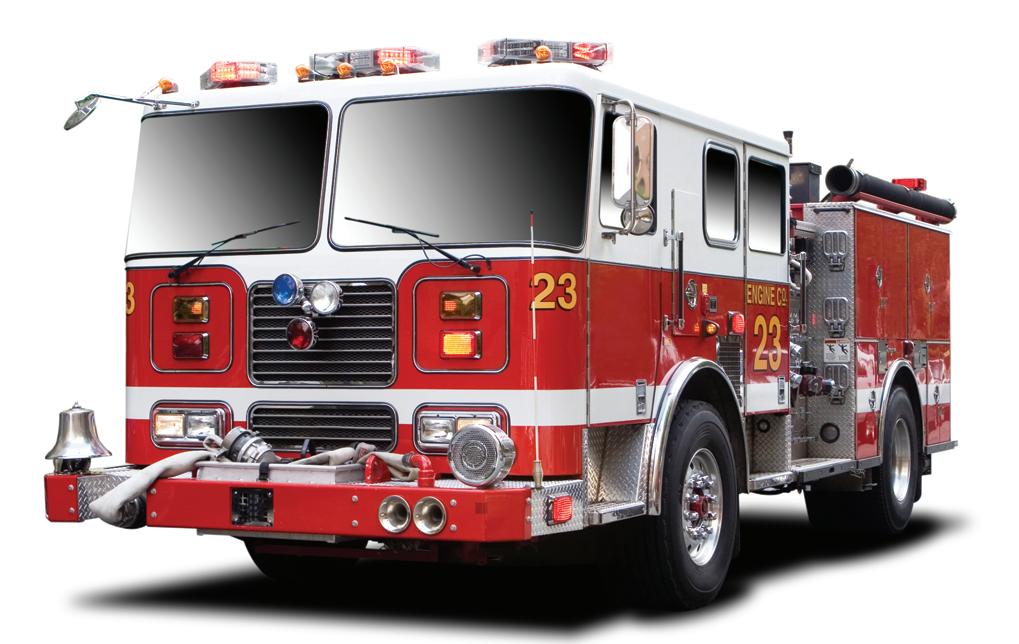
Anew emissions standard for diesel engines that takes effect Jan. 1 means Canadian fire departments will pay thousands of dollars more for apparatus starting next year.
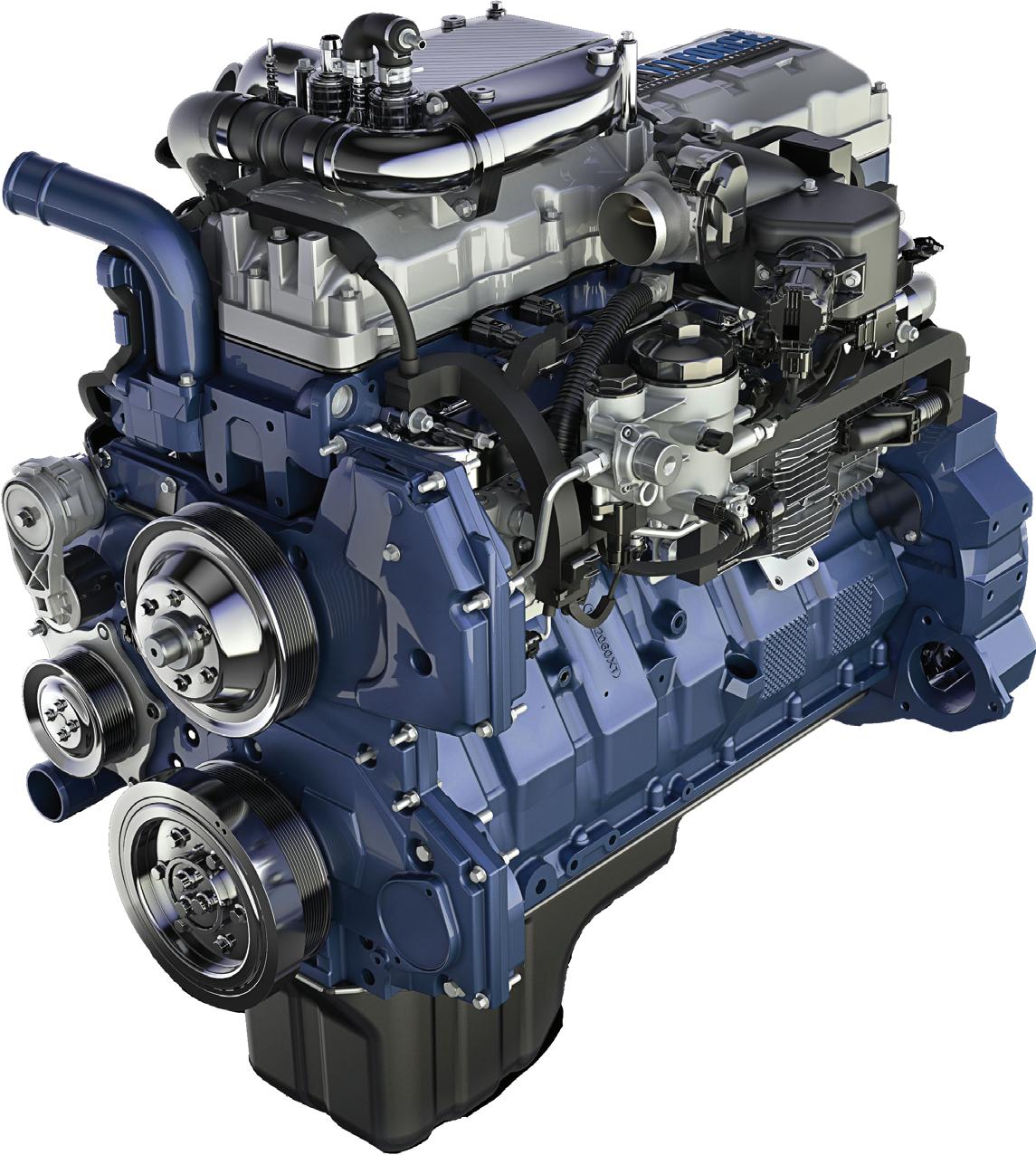
The new standard will reduce the amount of nitrogen oxides (NOx) emitted by diesel engines to 0.2 grams per brake horsepower hour from the 2007 level of 1.2 g/hp-hr.
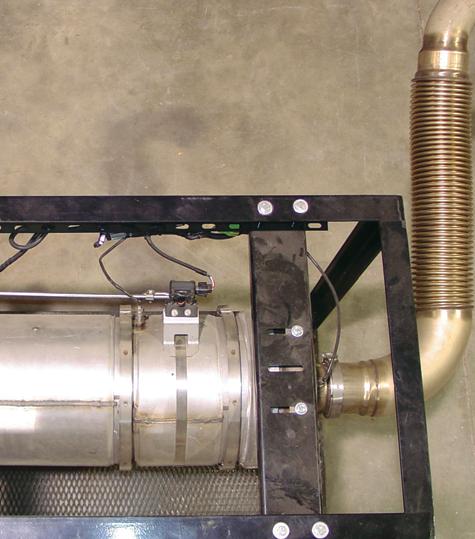
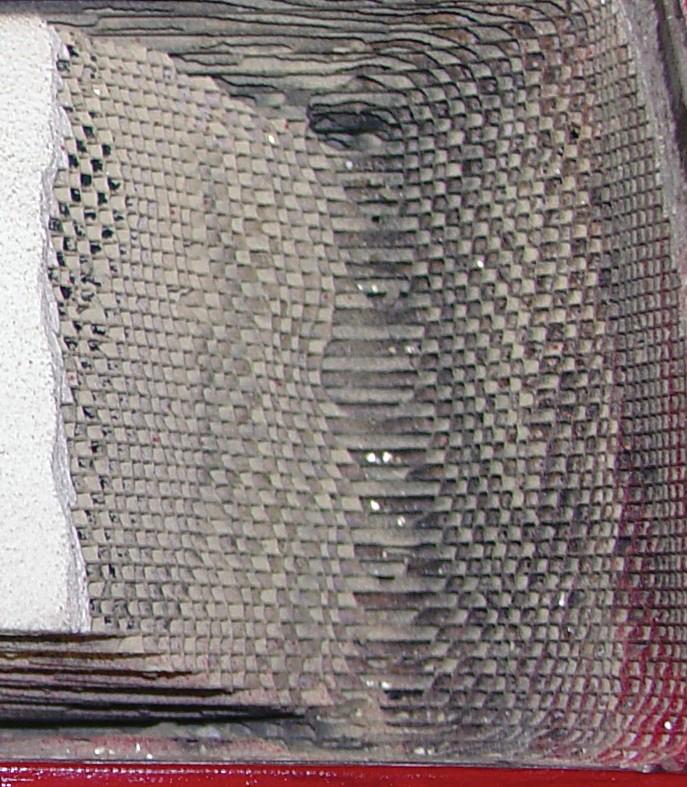
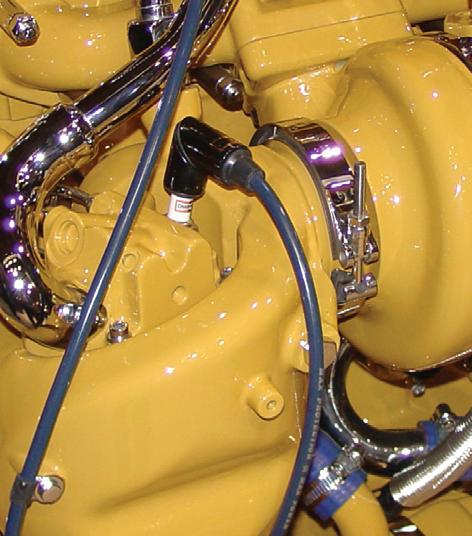
Meeting the standard has forced North American engine manufacturers to either substantially redesign their diesel engines and/or add extra exhaust filtering systems. Some companies have stopped making these engines altogether, saying the expense isn’t worth the return.
Re-engineering diesel truck engines is expensive. “It has been a tremendous effort for Navistar to redesign our engines,” says Bob Neitzell, vocational marketing manager for Warrenville, Ill.-based engine maker Navistar International. “We started back in 2006 by developing our MaxxForce line, which met 2007 EPA regulations and the 2010 EPA standards coming into force now.”
PHOTO BY JOHN RIDDELL
Unfortunately, the cost of meeting the standard is being passed on to chassis manufacturers and, from there, to fire departments. The amount of the price increase depends on whom you talk to.
“I don’t think anyone has got the firm price calculated yet because of the other changes and effects but I’ve heard anywhere from $10,000 to $15,000, which I think is a good guestimate,” says John Witt, who owns Smeal dealer Safetek Emergency Vehicles in Abbotsford, B.C.
“We are told by a U.S, manufacturer of custom chassis that the cost increase per engine will be anywhere from $17,000 to $25,000 each – in U.S. dollars,” adds Harvey Goodwin, marketing director for Abbotsford, B.C.-based manufacturer Hub Fire Engines.
■ THE 2010 ENGINES
Witt notes that the emission requirements have caused Detroit Diesel and Caterpillar to drop out of the emergency vehicle market. That leaves only engine-maker Cummins Inc., which uses SCR technology, and Warrenville, Ill.-based Navistar with EGR technology.
EGR stands for Exhaust Gas Recirculation. In Navistar’s ERG system – marketed under the name MaxxForce – the exhaust is re-circulated back into the engine’s pistons along with the fuel. This results in NOx compounds being burned up rather than being emitted.
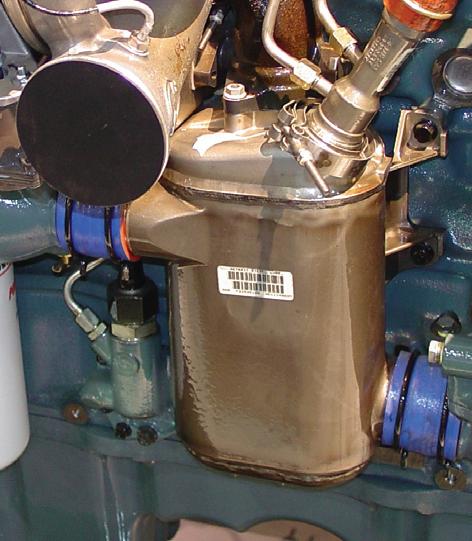
SCR stands for Selective Catalytic Reduction. Rather than recirculating the exhaust gas back to the engine, the exhaust is passed through a spray of urea (a form of nitrogen) on its way out of the vehicle. The urea interacts with the NOx, converting it to harmless nitrogen and water. Standard particulate filtering is required but does not have to be increased for SCR-based engines.
SCR engines are simpler than EGR engines but they require the trucks to have an extra catalytic system added, plus a tank loaded with DEF (Diesel Exhaust Fluid, a.k.a. urea) that must be kept filled.
“When you factor in the extra tank, plus the piping and other equipment required for an SCR system, it can end up taking up 14 cubic feet or more on an average fire truck,” says Rick Suche, president of manufacturer Fort Garry Fire Trucks in Winnipeg.
“You also have to keep the DEF tank filled with enough liquid to work. Otherwise, the engine’s electronic monitoring system may prevent you from using the vehicle at full power.”
DEF fluid is estimated to cost nearly as much as diesel. As for consumption, according to Cummins’ website (www.everytime. cummins.com), “DEF consumption is expected to be approximately two per cent of fuel consumption dependent on vehicle operation – duty cycle, geography, ratings, et cetera.”
Which kind of diesel should a department choose for its apparatus?
“In our opinion, one particular solution is no better than the other,” says Matt Creech, director of fire truck sales for Spartan Chassis in Charlotte, Mich.
“Both strategies have definite advantages but it is our customers that will choose which solution best meets their needs.”
■ IMPACT ON FIRE APPARATUS
The Canadian On-Road Vehicle and Engine Emission Regulations include prescribed technical standards that establish maximum emissions limits for heavy- duty diesel engines such as those used in fire trucks. These technical standards correspond to those of the U.S. Environmental Protection Agency, which were incorporated from the U.S. Code of Federal Regulations (CFR) to ensure that the specified standards are identical in both countries.
According to Environment Canada, the Canadian standards are aligned with those of the EPA and vehicles/engines covered by an EPA certificate are deemed to satisfy the regulations for the applicable model year. Compliance is mandatory.
The On-Road Vehicle and Engine Emission Regulations are available for review on the CEPA environmental registry at http://www. ec.gc.ca/CEPARegistry/regulations/detailReg.cfm?intReg=65 .
“The most notable change will be the addition of Selective Catalytic Reduction on engines other than the Navistar MaxxForce,” says Harvey Dussault, general manager of Rosenbauer dealer Rocky Mountain Phoenix in Red Deer, Alta.
Besides the extra components, pipes and DEF tanks (Dussault says the tanks will probably be under 10 gallons) the trucks will be designed to provide higher heat rejection and an increase in cooling and air flow.
“This will result in some changes to the cab to allow for these components,” he says.
For an apparatus outfitter such as Spartan Chassis, “integrating emissions solutions into our products has been a tremendous challenge,” says Spartan’s Matt Creech.
“There will be an overall weight impact as a result of the emissions changes. Spartan’s Gladiator cab will increase slightly in width, which will, as a result, increase the weight of the cab.
“There will also be additional weight to the chassis that include the SCR system. A switchback exhaust configuration (urea canister SCR catalyst stacked on top of the diesel particulate filter or DPF) for SCR chassis with a short wheelbase and SCR) may impact the useable space in the body behind the cab on the officer’s side.”
“The new engines are going to add weight to the apparatus, which is already being affected by the requirements of the NFPA 1901-2009 standard as to additional features/requirements,” echoes Safetek’s Witt.
“There are also the exhaust location requirements that have already created high temperature discharge issues. The placement of the exhaust . . . will impact the larger GPM pump modules and in many cases the rescue body compartment depth and mounting for all apparatus.”
■ IMPACT ON YOUR DEPARTMENT
Spartan’s Creech puts it bluntly: “There will be a price increase associated with the 2010 emission engines, as there are additional parts, components and complex systems required by the new technology.”
Dan Sutphen, sales manager with apparatus manufacturer Sutphen Fire Trucks in Dublin, Ohio, agrees. “We have spent more money on engineering these engines into our chassis, so there will be additional cost.”
Safetek’s John Witt puts it more boldly. “The 2010 EPA engine requirements not only affect Safetek but all of the fire service,” he says. “It’s going to increase the cost of apparatus to many of those fire departments already facing shrinking or limited budgets.
“We may see apparatus purchases delayed or refurbishment of existing apparatus to extend the service life a few more years until the issues with the new 2010 emission technology are proven; that is, i.e. SCR versus EGR. There is also the issue of the 2012 EPA standard, which is going to further affect our industry.”
The 2012 EPA emission standard will be even stricter than the 2010 standard.
So, what’s a cash-strapped fire department to do? There’s not much they can do, says Pino Natale, director of the emergency vehicle division of Dependable Truck and Tank Ltd. in Brampton, Ont. “You can buy 2009 trucks now if you have the budget,” he says. “But theat fact is that there are not that many 2009 engines still available.”
Sutphen agrees. “If at all possible, you should buy before the end of the year,” he says. “Costs will increase between $15K and& $20K after the first of 2010.”
“The only way around these additional costs for new fire apparatus isare to purchase before the end of the calendar year,” echoes Mike Moore, Pierce Manufacturing’s director of strategic product development and support.
“Pierce is estimating the additional costs for the 2010 engines to run from US$8,000 to US$23,000. This range is dependent on chassis (commercial or custom) and engine size.”
How are Canadian fire departments reacting to all this?
“There are a great number of my customers who’ve elected to order now to avoid the problems and costs associated with the 2010 EPA engines,” says Safetek’s Witt. “I have one major customer who’s ordered their 2010-2011 apparatus so that they can be fitted with 2009 engines at today’s prices. We are working closely with Spartan Chassis, who I use exclusively, in pre-ordering engines in advance of the 2010 requirements.”
However, over at Rocky Mountain Phoenix, “there do not seem to be customers lining up to make early purchases to beat the 2010 emission costs as they did during the last EPA changes,” says Harvey Dussault. “This is probably due to the recession, as politicians are holding the line on capital expenditures because of the optics to the taxpayers. They don’t want to appear to be spending money at this time. The last EPA change in 2007 saw a glut of business with departments taking advantage of saving the EPA increase, [but] this is not the case this time around.”
PHOTO BY JOHN RIDDELL
Apparatus makers estimate a price increase of at least $8,000 for 2010.
BACKtoBASICS Truck company, part 3
BY MARK VAN DER FEYST
All fire-service operations are conducted with safety as a priority. One of the most dangerous tasks we perform is raising ladders.
Overhead wires and other obstructions make raising ladders a particularly dangerous task. Electrical wires have been a killer of firefighters on the fire ground numerous times. We most commonly hear about line-of-duty deaths resulting from aerial ladders coming in contact with hydro-electrical lines.
The most recent North American LODD that involved an aerial ladder in contact with electrical lines occurred in January 2008. A fire captain from Scranton, Pa., died when the aerial bucket he was operating came in contact with high-voltage electrical lines at a house fire. The power had been cut to the house but not to the lines in the street.
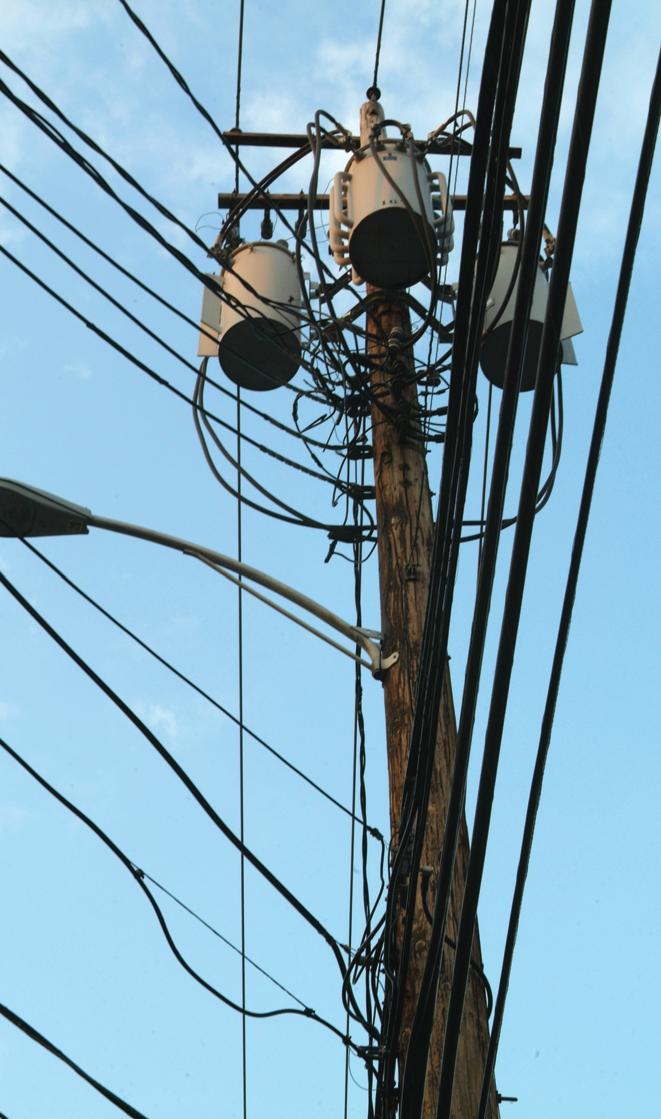
In basic training we teach rookies to look for any overhead obstructions when raising ladders. The obstructions that we are looking for include trees, wires and parts of buildings. Trees certainly present an obstruction to ladders being raised but generally not in a deadly sense, although wires do run through trees and we may not be able to see them. We are primarily concerned with electrical wires, phone lines and cable television lines. Any wires should be regarded as dangerous and we should take every precaution to avoid them.
When I teach Firefighter 1 test prep, I instruct the students to say out loud, “No overhead wires or obstructions”. This helps the student to remember to look up before they raise the ladder and it shows the evaluators that the students are looking for overhead obstructions.
Overhead wires are a constant obstruction in residential, commercial, industrial and rural areas, some more than others. In densely populated areas, there are more overhead obstructions. These obstructions can prohibit us from conducting certain operations.
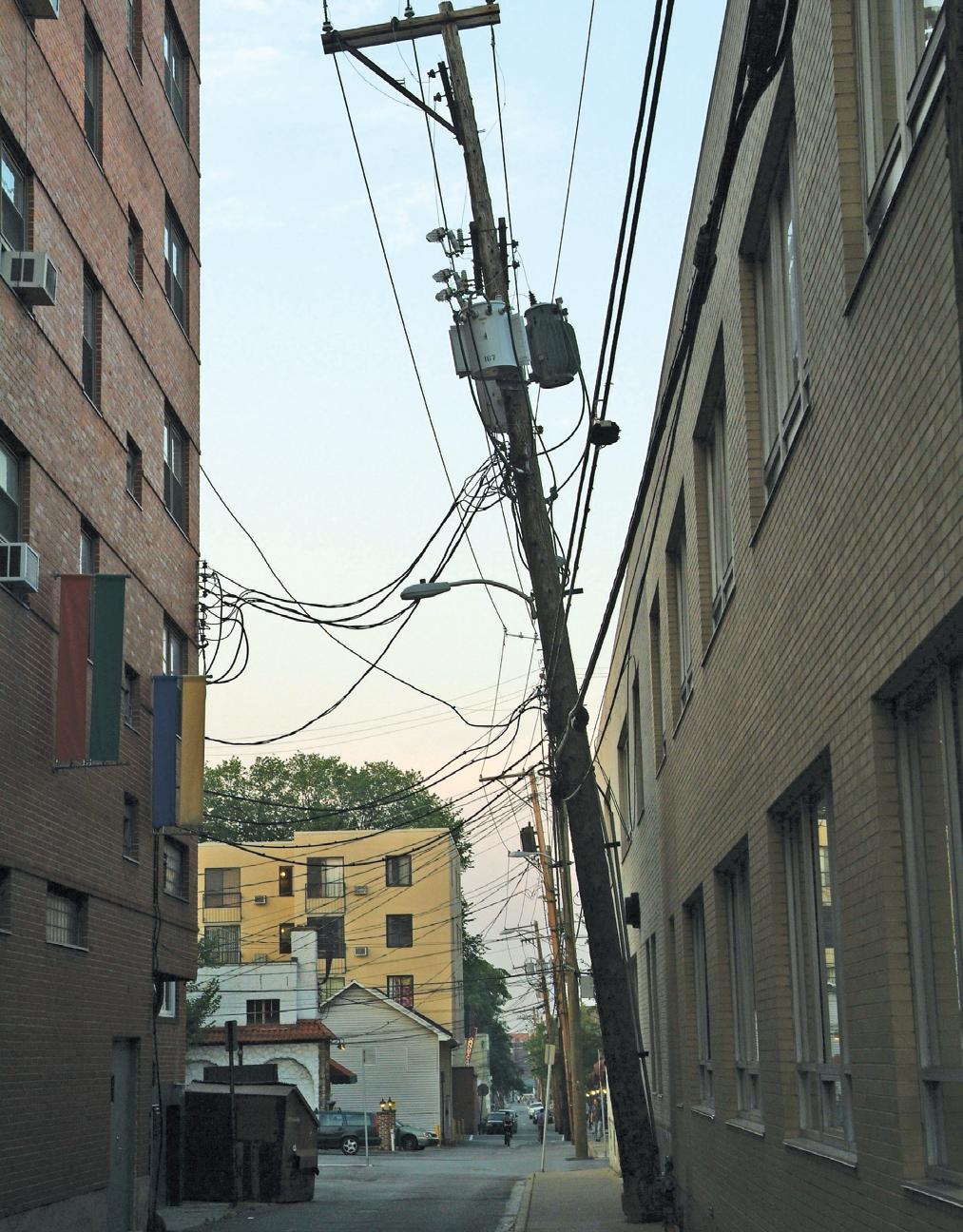
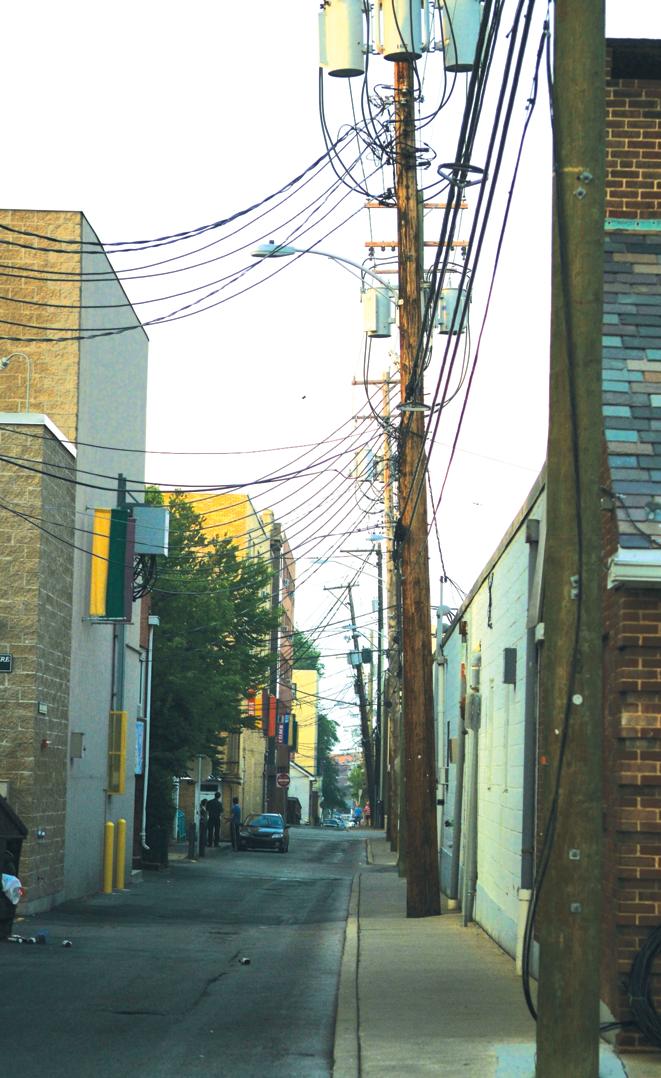
Look at photo 1. This picture was taken in an alleyway behind buildings in State College, Pa. The buildings have commercial or mercantile occupancies on the first floor but have residential occupancies for students on the second, third and higher floors. Notice all the wires that are feeding the different buildings. The base of the first hydro pole in the picture is right next to the building. If the pole were to be erected straight up it would be in contact with the building, so it has been angled outward to avoid this. Now the hydro pole is fewer than 10 feet from the other building across the alley. What if we had to rescue a civilian trapped on the third floor? Would you notice all the overhead wires?
I mentioned that the hydro pole is fewer than three metres from the building across the alleyway. We have always been taught to avoid contact with any live electrical line within three metres. This is to prevent any chance of arcing from the ladder and the electrical line. Would we attempt to rescue a person with these overhead obstructions present? There are a lot of questions associated with this scenario. Is the power turned off? Is there another way for the person to be rescued? Is there more than one person? We could spend an endless amount of time debating
Photo 1: Notice how close the wires are to both buildings. This typical scenario presents us with many challenges.
PHOTOS BY MIKE GUTSCHON
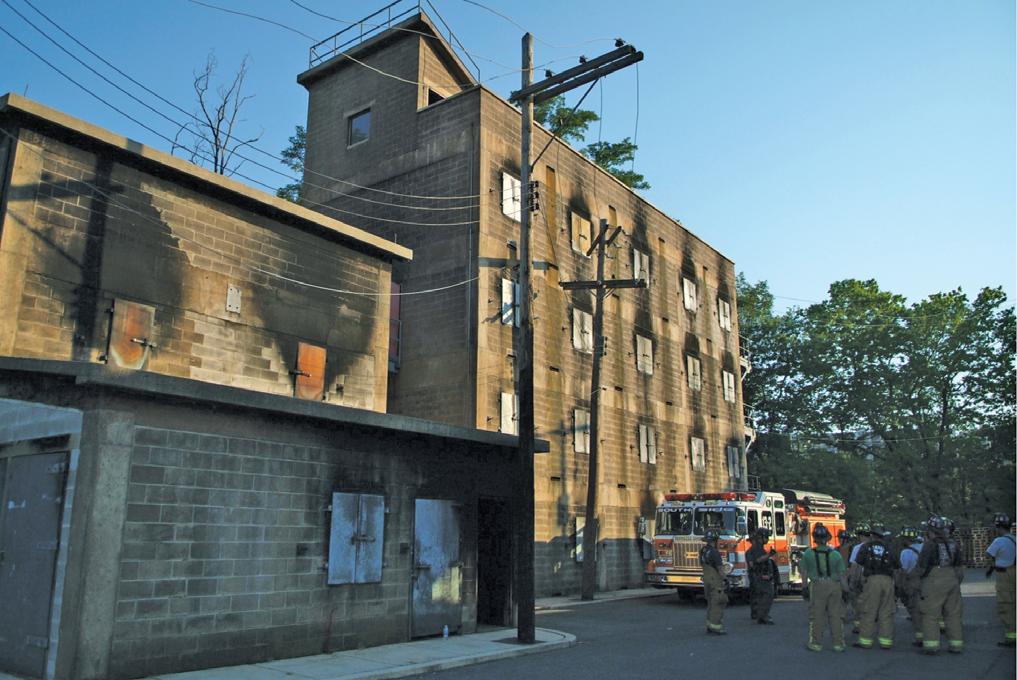
Photo 2: Training towers should have mock wires around them to reinforce the need to look up before we raise a ladder.
Our Preventative maintenance program is tailor made for each fire department. By having a maintenance program with Ontario Fire Truck you will receive a reduced labour rate, a discount on all parts, and you are always guaranteed appointments.
Service contract customers come first; you never pay a service charge or a mileage charge. Annual pump testing & aerial servicing are included.
(Parts and lubricants are extra)
We always put our customers first. Regular maintenance reduces the chances of having major breakdowns, thus putting your apparatus out of service.
You rely on your apparatus to perform, regular maintenance make sure your apparatus and your fire fighter safety comes first.
You owe your customers, the taxpayers the best service possible. Why not keep your apparatus at its best?
Ontario Fire Truck understands that taking your apparatus somewhere to be repaired is not practical. It even costs more! Units are often out of service longer due to travel, and the repairs usually cost more. Your apparatus is not under your control!
That’s why we are the leader in Mobile service, we come to you! You always know the state of the repair!
This saves you time, and most importantly it saves your department money!
For more information, call your local Globe dealer or Safedesign
B R ITI S H CO LUM BIA AN D ALBE R TA
Coquitlam, British Columbia
800-667-3362
Calgary, Alberta
800-661-9227
Campbell River, British Columbia
250-287-2186
Edmonton, Alberta
800-222-6473
Fort St. John, British Columbia
250-785-3375
K amloops, British Columbia
250-374-0044
Nanaimo, British Columbia
250-758-3362
Prince George, British Columbia
250-960-4300
Trail, British Columbia
250-364-2526
Q U EBEC
LaSalle, Quebec 800-905-0821
ATLANTIC P RO VINCE S
St. John's, Newfoundland 800-563-9595
Dartmouth, Nova Scotia
800-567-1955
Saint John, New Brunswick 800-567-1955
M ANITO BA AN D S A S KATCHEWAN
204-724-2281
BACKtoBASICS
MIKE GUTSCHON
Teaching rookie firefighters to say out loud, “No overhead wires or obstructions” helps students remember to look up before they raise the ladder.
these scenarios. I do know of a few firefighters who have conducted rescues with overhead wires within three metres, but in those cases, the situations dictated the circumstances. The firefighters attempted the rescues because they first looked up and observed the overhead obstructions. They knew what was there.
Whenever you are raising a ladder it is a good idea to have a spotter. We always use one when we are backing up an apparatus so why not use one when we are raising a ladder? A spotter can be used when raising a ground ladder or an aerial ladder. An extra set of eyes is useful to look for any overhead hazards that the ladder operator may not see.
How do we train to avoid overhead obstructions? For starters, we should equip our training towers with overhead obstructions. In photo 2 you can see a training tower with a high-rise building and a residential building. Around both buildings are typical overhead obstructions. These wires are not live and they are being used to train the firefighters to look up before they raise any ground or aerial ladders. These wires are all around the building to add varying levels of difficulty to raising a ladder for aerial and ground operations. Next, we need to train our firefighters to always look up before raising ladders. Having them say out loud “no overhead wires or obstructions” may be a start.
Mark van der Feyst is a 10-year veteran of the fire service who works for the City of Woodstock Fire Department. He is an instructor teaching in Canada and the U.S., a local level suppression instructor for the Pennsylvania State Fire Academy and an Instructor for the Justice Institute of BC. He can be reached at Mark@FireStarTraining.com
IN DECEMBER’S
BACKtoBASICS
Raising a ladder requires planning and skill. Firefighters must consider the height of the building, the destination of the laddering operation, the condition of the ground, access to the area and the purpose of laddering the building.
The most recent North American LODD that involved an aerial ladder in contact with electrical lines occurred in January 2008 in Scranton, Pa.
PHOTOS BY
BY SEAN TRACEY Canadian Regional Manager NFPA International, Ottawa, Ont.
Sprinklers issue needs gutsy review and revision
e need to address the fire-safety conditions in facilities that care for the aged. We have, in these types of residences, a fire-loss rate that should not be considered acceptable and that proposed changes to the 2010 National Building Code won’t rectify.
Canada has experienced some tragic losses in facilities accommodating the aged. These include four fatalities in a nursing home in Orillia, Ont., in January. A comparison of Canadian fire losses in these facilities with U.S. seniors’ residences shows that Canadian losses on a per-fire basis are significantly higher. Canadian facilities have 10 times the damage per fire and are 7.7 times more fatal than those in U.S. facilities. Canadian facilities caring for the aged have fire fatality rates 5.4 times higher than that of the Canadian general loss rate. This should be inexcusable in any developed nation.
In my opinion, one of the reasons for this is that U.S. facilities mostly fall under NFPA 101 Life Safety Code, which has provisions for existing buildings. Additionally, the Life Safety Code requires facilities to measure evacuation capabilities of residents, not just to provide training for supervisory staff. In 2006, NFPA 101 went even further by requiring all nursing homes to be retroactively sprinklered. This also applies to any assisted living centre that has proven to have impractical evacuation times based on actual timed evacuations. Our seniors should be so lucky.
Proposed changes to the National Building Code for 2010 will introduce Ontario’s B3 occupancies to the rest of Canada. This is in an effort to reflect how seniors are accommodated, and the level of care provided to them. In the simplest terms, B2 are nursing homes, B3 are assisted living centres and C, are senior apartments where no services are provided. The problem is that categorizing according to the building code is based on the level of services that are provided, not on the capabilities of the residents for self-evacuation – a fact that is not going to be addressed by adding another occupancy category in the National Building Code. Changes need to be made in the National Fire Code such that firm criteria for evacuation are established and facilities that fail can be required to be upgraded. Additionally, these classes of properties are desperately in need of existing building standards.
recently did just that following a close call that required all of the community’s resources. Officials were able to issue an order under the Ontario Fire Code to require a mandatory retrofit. A subsequent evaluation of other facilities in the community revealed that those structures would fare no better.
It is too late for the 2010 codes, but I propose a solution that every community could use now and it should fit with the fire prevention acts adopted in each jurisdiction. It will raise the ire of your respective fire marshals’ offices but what the heck – it may force the issue to be addressed. I suggest that fire departments go out and warn facilities that are not sprinklered that they will be evaluated in one week on their fire safety plans. Do not announce the specific date and time. Then, have the facilities run an evacuation drill of one fire zone during the evening hours, after residents have been put into their beds and when staffing is at its lowest. The time limit is 13 minutes. This is the benchmark used in NFPA 101 for impractical evacuation criteria and the trigger when assisted living facilities must be considered nursing homes and thus retroactively sprinklered. The facilities can include use of all staff, movement to a horizontal exit into another fire zone or to the exterior. If they are
In Canada, local fire services need tools to measure the evacuation capabilities of residents. ‘‘ ’’
In Canada, local fire services need tools to measure the evacuation capabilities of residents. If residents are unable to evacuate in a given time, then either the property needs to be retroactively sprinklered and/or more staff added. The Niagara Falls Fire Department
Sean Tracey, P.Eng., MIFireE, is the Canadian regional manager of the National Fire Protection Association International and formerly the Canadian Armed Forces fire marshal. Contact him at stracey@nfpa.org
unable to evacuate in the given time, or refuse, then issue an order to amend their plans to either require additional staff, retroactively sprinkler or use any equivalent method such as those found in NFPA 101A. Require them to advise you of their selected path, then rerun the test in six months. If they fail again, issue an order to require retroactive fire sprinklers.
The ideal solution would be for our political leaders to follow the lead of provinces such as Newfoundland and Labrador, which requires all of its facilities to be sprinklered . This, however, is a policy decision in each province. Having as many municipal fire departments doing timed evacuation drills in homes for the aged in their areas and publishing the failures may be a motivator for the provinces to act. It is within the responsibilities of the various Fire Code Acts for the fire departments to review and accept these plans. What better way than to run timed evacuation drills?
Looking toward Vision 2014
B.C. department embraces five-year plan and involves stakeholders in the process
By LINDA HUNTER
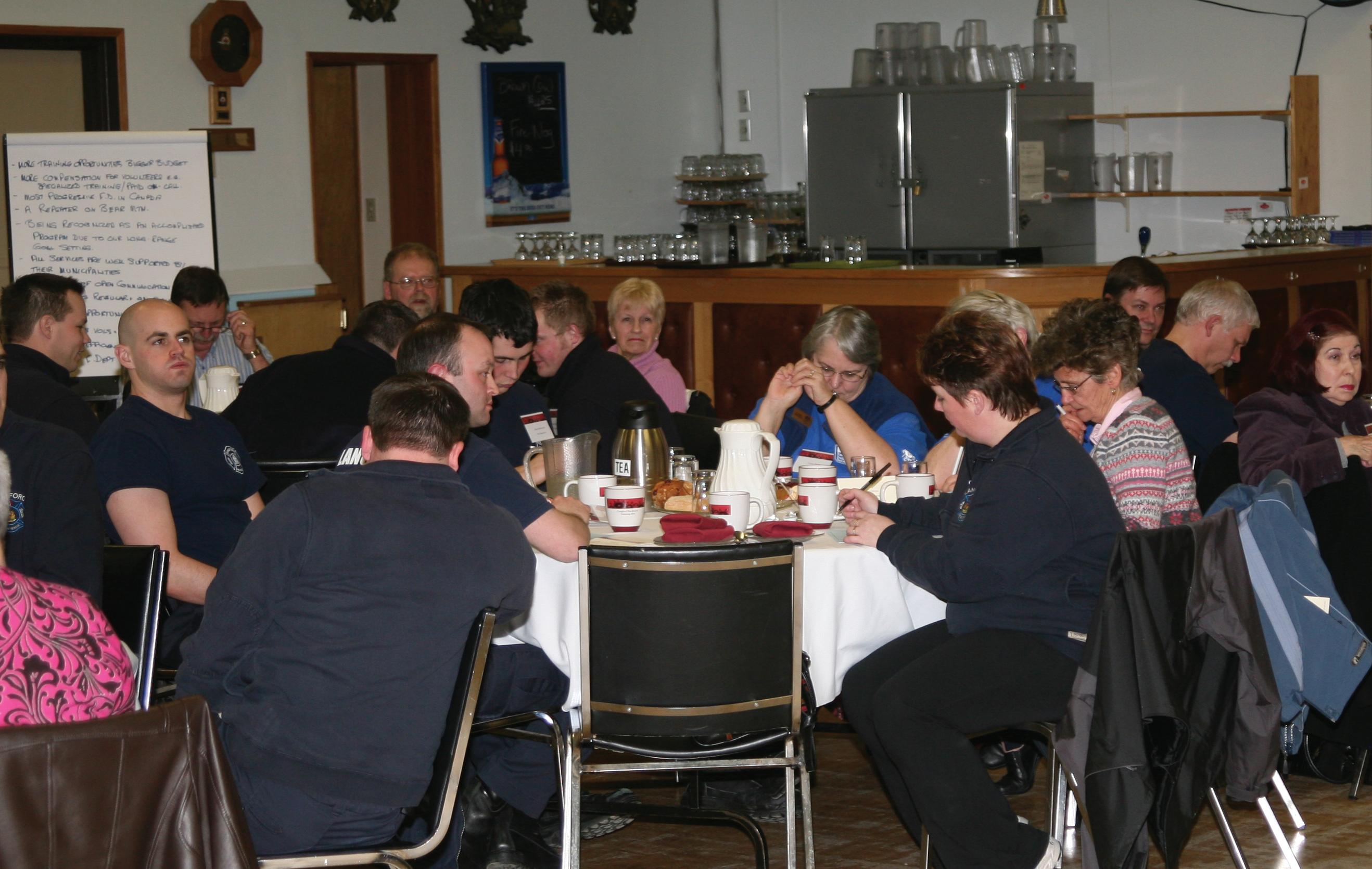
TOP Langford Fire Rescue Lt. Steve Adams (left), Chief Bob Beckett (right) and Phil Ohl with The Leader’s Edge leadership training and coaching organization host a café-style evening for LFR stakeholders to help develop a five-year vision statement for the department.
Lt. Steve Adams is passionate about firefighting and his role as the instructor and volunteer co-ordinator with Langford Fire Rescue in British Columbia. When he approached Chief Bob Beckett last November with a list of concerns ranging from apparatus issues to volunteer turnout, he wanted to be part of the solution.
Chief Beckett concurred with Lt. Adams’ observations and wanted to create a process through which the department would embrace the changes that Adams and others were advocating.
Beckett brought in consultant and longtime friend Phil Ohl from The Leader’s
Edge (www.leadersedge.ca), a Victoriabased leadership training and coaching organization. Ohl helped LFR produce a vision statement and guidelines for the next five years through a process called Vision 2014. Key to the process was the inclusion of stakeholders, including firefighters and municipal politicians, to ensure a thorough understanding of the department’s new direction and 100 per cent participation in the changes that would follow.
Beckett and Adams, with Ohl’s help, invited firefighters, community leaders and others to a coffee-house type evening in early 2009 to share concerns and ideas and participate in the formulation of the department’s new vision.
Stakeholders including firefighters, the women’s auxiliary, amateur radio aficionados and municipal politicians brainstorm to determine how to bring positive change to the department to address issues such as standards of response coverage and equipment and apparatus needs.
■ THE BACKGROUND
With more than 69 volunteer and full-time personnel in three stations, Adams spends much of his time listening to and watching the volunteers.
“Having a compliment of both volunteer and paid firefighters is a an asset as they work together to meet the needs of an ever growing community, needs that include more complicated building structures, higher training standards and improved response times,” he says.
“We have always had the expectation that a firefighter is a firefighter, paid or unpaid. We expect a lot of our volunteers; they give a tremendous number of hours, so it’s important to continue to develop a common agenda that is inclusive of everybody.”
Langford Fire Rescue’s concerns or challenges may be familiar to other Canadian volunteer and composite departments: standards of response coverage; equipment and apparatus needs; the potential for future collective agreement changes and the related impact on service levels; a projected 10 per cent increase in call volume per year based on municipal growth that would challenge sustainability for volunteers and career staff; response times to fire stations by volunteers (which had increased significantly due to the impact of growth/traffic duty officer rotation schedules); volunteer turnout to alarm-bell type calls; and the implementation of any changes deemed necessary to deal with the above issues.
Chief Beckett was pragmatic about the concerns that Adams and others brought forward, viewing them not as criticism, rather as a challenge to improve the department and push its personnel to perform at their highest levels.
“I think we created an organization over the past 13 years that embraces change and encourages individuals to challenge the status
culture that has embraced change.
quo,” Chief Beckett said. “I believe that the rubber band was losing some of its tension as we accomplished a number of goals in the past, and when we had a moment to take stock, we recognized the opportunity for re-stretching ourselves and take it (us) to the next level.”
In his almost 14 years as LFR chief, Beckett had ensured that along with technical training his personnel received formalized leadership and development training, resulting in a culture that embraces change. Consequently, inviting an outside agency to help management deal with the department’s issues was viewed as a positive step rather than with fear or skepticism.
Considering LFR’s longstanding relationship with Ohl, “bringing Phil in was not like bringing in someone from the outside,” Beckett said. “We consider this a relationship. He was brought in to compliment our efforts, as a resource, no different than any other training or education resource at our disposal. We wanted to take a pro-active approach, move forward and make a good thing even
PHOTOS
Langford Fire Chief Bob Beckett has ensured in his almost 14 years at the helm that his personnel received formalized leadership and personnel development training, resulting in a
better. We didn’t bring Phil in to fix anything; we wanted another perspective, a technical advisor who could help us see through another set of lenses.”
■ THE PROCESS
The key to the Vision 2014 process was inclusion. In January, more than 80 guests representing stakeholder groups including city counsellors, emergency social service reps, fire dispatchers, full-time and volunteer firefighters, members of the women’s auxiliary and amateur radio aficionados gathered for the coffee-house evening and workshop.
In his opening remarks, Beckett told the group that change is possible but that it requires ”patience nurturing and diplomacy”.
zation give you hope and optimism for our future?
•
With Beckett, Adams and Ohl in aprons and acting as servers to lighten the mood and promote frank discussion, guests watched motivational videos and were then asked to answer three questions: What is a source of pride for you in the work you do, or in the relationship you have with LFR?
•
•
Imagine you just woke up after being asleep for five years. What does LFR look like?
What attributes of our current organi-
The conversations culminated with many stakeholders delivering messages about what was right with LFR, what they believed wasn’t working and what they wanted to see changed. Areas of discussion included safety, training, volunteerism, values, operations and department models, staffing and education. The first phase of Vision 2014 was considered a success but the work had just begun. The next step was the formation of a committee to develop a vision statement based on the workshop results. Over the next few weeks the committee, made up of 12 members representing all the stakeholder groups along with Adams and Beckett, met with Ohl and developed the vision statement that they felt represented LFR: Working together, leading globally.
Since the birth of that vision statement, Beckett and his staff have developed a worksheet of issues and opportunities relating to the top 15 challenges identified in the Vision 2014 process and have selected six on which to focus:
•
Working collectively with internal (municipal) and external resources to provide the best possible services for those in need;
Creating an organization (a combination or composite fire department model) that others will wish to mirror or to which others will aspire; Developing relationships with all of stakeholders to ensure 100 per cent buy in and co-operation in reaching objectives;
Continuing to develop a training program that ensures that volunteers and career staff alike are trained to the highest standards;
Providing the department with equipment and apparatus that ensures optimum safety coupled with a focus on proficiency, effectiveness and efficiency; Focusing on sustainability for its volunteers and career staff by ensuring that their experience while with LFR is second to none.
■ THE RESULTS
Both the chief and Adams believe that without Vision 2014, there would be more frustrations, more misdirected energies and a lack of goal setting. Beckett and Adams continue to meet regularly with the various groups in the organization, for example the women’s auxiliary and the firefighters, to keep the Vision 2014 process alive.
Beckett and Adams agree that not a week goes by that the vision statement is not in use – it’s used to filter every decision, whether its the purchase of new equipment, the training programs the department runs or the community events in which it participate. This renewed focus for the department coupled with the appropriate dissemination of the department’s goals and objectives has allowed Beckett to continue to have positive communication with Langford Mayor Stuart Young, council and senior municipal staff.
Vision 2014 can be seen in the slogans on the department’s walls, in the department’s e-mails signatures, on letterhead and on its pens and coffee mugs. More importantly, it’s in the heads and heart of the firefighters and officers. It’s obvious when talking to Beckett or Adams that they want to live up to the vision they helped to create.
“It’s about pride factor and it has a steamroller effect – you have higher sense of pride, of worth, of purpose and of value, which leads you from an acceptable level of service to a high or even excellent level, and that then becomes the norm for all new members that come to the LFR,” Beckett said.
“We now share an energy, a passion, a motivation. Because of 2014 we are not discouraged by negatives. When we hit a wall, we just look for the crack. Collectively I believe that we can aspire to be the best that we can be, and with support, I know that we will reach that goal.
TRAINER’SCORNER
Air-supply management
By ED BROUWER
Before I launch into this month’s discussion, I would like to express my thanks for your feedback regarding a mayday protocol for the Canadian fire services. It seems that firefighters support a national standard for calling and responding to a mayday, yet the response from provincial fire commissioners and fire chiefs associations is frustratingly slow. Firefighters are still dying on the fire ground and it may be up to us to instigate the mayday protocol across our nation as an in-house policy. Let no firefighter’s ghost say that his/her training let them down.
Even though today’s firefighters are battling the fire dragon with “new and better” technology, they are still losing their lives to the same old killers (structural collapse, smoke inhalation, heat, getting lost and running out of air). In fact, our new gear lets us venture further into the dragon’s lair, which only complicates matters should something go wrong.
Since the dragon has not come up with new ways to kill firefighters, shouldn’t we in the fire service be able come up with counter measures to dramatically decrease line-of-duty deaths in the future?
I know I’m preaching to the choir, but when will we do something about the No. 1 killer of firefighters – heart attacks? Or what about firefighter fatalities from accidents occurring when responding to or returning from an emergency (fire apparatus or private vehicle). Many of these fatalities could be avoided by simply slowing down and wearing seatbelts.
The ball is in our court. We can and, in fact, must deal with the fact that firefighters are not screened adequately for heart conditions and overall heart health and that firefighters are not trained adequately to drive under emergency conditions.
Fighting the dragon inside of a structure is a bit of a different story. Firefighters are dying due to smoke inhalation after getting lost and running out of air, burns due to backdraft or flashover and/or crushing injuries caused by structural collapse.
The following are reasons for firefighters dying in structures: lack of training and experience; poor strategic and tactical leadership; and lack of air management. It is the latter that we will look at here.
Very few of our fire departments monitor their SCBA air supplies on the fire ground. They may have a staging area set up with fresh bottles and a RIT, but very few indeed have an SCBA board indicating time in and out. Even the firefighters themselves are not monitoring their air supplies closely, if at all. Some go in with halffilled bottles, never looking at their personal pressure gauges and simply waiting for their low-air alarms to go off. When the alarm goes off, they may, if it seems urgent, consider exiting the building. Firefighters must leave the IDLH atmosphere before their low-air alarm sounds.
During training, we were instructed (erroneously) not to worry about the low-air alarm going off. Should we find ourselves in a burning, smoke-filled building and run out of air, we were advised to simply disconnect the air supply tube and tuck it into our glove
It is only during hands-on training while wearing SCBA that firefighters can understand their personal air-consumption rates.
TRAINER’SCORNER
IS YOUR DEPARTMENT COMPLYING WITH NFPA 1404?
Chapter 5 of NFPA 1404 states (in 5.1.4), The Authority having jurisdiction shall establish and enforce written standard operating procedures for training in the use of respiratory protection equipment that shall include the following:
1. When respiratory protection equipment is to be used;
2. Individual air management program;
3. Emergency evacuation procedures;
4. Procedures for ensuring proper face piece fit;
5. Cleaning of respiratory protection equipment components;
6. A policy for changing respiratory filters and cartridges;
7. A policy defining the end of service life for all types of filter or cartridge-type respirators;
8. A policy defining the proper storage and inventory control of all respiratory protection equipment.
Appendix 5.1.4 (2) states: This program will develop the ability of an individual to manage his or her air consumption as a part of a team . . . This can require members to rotate positions of heavy work to light work so air consumption is equalized . . . The individual air management should include the following directives:
1. Exit from an IDLH atmosphere should be before consumption of reserve air supply begins;
2. Low-air warning is notification that the individual is consuming the reserve air supply;
3. Activation of the reserve air alarm is an immediate action item for the individual and the team.
Putting all this together, we find that you need to be out of the IDLH atmosphere before your low-air alarm activates. This would leave you with 25 per cent of your SCBA bottle (regardless of size or manufacturer). Consider that should
your low-air alarm activate and you are not at an exit door or window in 30 seconds, it is considered to be an “immediate action” situation. There are only two other immediate action items: a mayday situation and an activated PASS device.
Chapter 5 of NFPA 1404 states (in 5.1.6 and 5.1.7):
The authority having jurisdiction shall establish written training policies for respiratory protection, including:
1. Identification of the various types of respiratory protection equipment;
2. Responsibilities of members to obtain and maintain proper face piece fit;
3. Responsibilities of members for proper cleaning and maintenance;
4. Identification of the factors that affect the duration of the air supply;
5. Determination of the air consumption rate of each member;
6. Responsibilities of members for using respiratory protection equipment in hazardous atmosphere;
7. Limitations of respiratory protection devices;
8. Battery life limitations and recharging requirements of PAPRs.
The 2006 edition requires that firefighters determine the air consumption rate of each member. Appendix 5.1.7(5) states, The air consumption rate will be different for each individual.
Some factors that determine the individual’s air consumption rate are as follows:
1. Physical fitness and condition; 2. Size and weight of the individual;
3. Work being performed;
4. Environment where work is being performed;
5. Other stressors (e.g., people trapped, difficult access, outside temperatures);
6. Type of clothing used; 7. Training.
or bunker gear. Breathing this smoke presented an enormous risk to the short- and long-term health of firefighters. Generations of past firefighters have suffered from cancers and pulmonary diseases due to breathing this toxic smoke.
Today’s fires consume contents that are made mostly of synthetics, which produce some of the most dangerous and fatal chemicals known to humankind – chemicals like hydrogen cyanide, polyvinyl chloride, formaldehyde, hydrogen chloride and carbon monoxide.
The Phoenix Fire Department recently completed a study that revealed that a typical room-and-contents fire in a modern structure produces levels of carbon monoxide above 20,000 parts per million (ppm). This is enough carbon monoxide to kill a firefighter in just one or two breaths of this noxious smoke.
If you are a firefighter in a toxic smoke environment the only protection you have is the air on your back. It is of utmost importance that you manage your air effectively. You must leave the IDLH environment before your low-air alarm activates. This leaves a bigger window for the RIT should something go wrong.
It is only during hands-on training while wearing SCBA that firefighters will begin to understand their personal air-consumption rates. It is very important to regularly monitor air usage during training drills. Monitoring air supply needs to become a habit.
The question before each department now is whether your firefighters are exiting the IDLH atmosphere prior to using the SCBA emergency reserve. NFPA 1410 clearly establishes that the low-air alarm indicates the use of the emergency reserve, rather than a time-to-exit alarm.
We all know that it takes time for the efforts of RIT (activation, entry, locating, extracting) to be successful. If NFPA 1404 is not followed and firefighters work until their low-air activates, they significantly reduce their window of survivability.
The easiest way not to become a victim of these deadly smoke products is to manage the air in your SCBA and follow the parameters of NFPA 1404.
Until next time, stay safe and remember to train like their lives depend on it.
Ed Brouwer is the chief instructor for Canwest Fire in Osoyoos, B.C., and the training officer for West Boundary Highway Rescue. The 20-year veteran of the fire service is also a fire warden with the B.C. Ministry of Forests, a wildland interface fire suppression instructor/evaluator and a fireservice chaplain. Contact Ed at ed@thefire.ca
SPH 100 Aerial Platform
A Canadian FireFit first
Over-40 champion also claims overall title at national competition
By CAREY FREDERICKS
St. Catharines, Ont., firefighter
Mike Gilbert won the individual competition at the FireFit national championship in Gaspe, Que., in September and also claimed the over-40 title.
For the first time in the history of the Scott FireFit Championships the over-40 winner also claimed the overall individual title in the gruelling demonstration of fitness, stamina, mental toughness and plain brute strength.
Mike Gilbert, a 43-year-old veteran FireFit competitor and firefighter from St. Catharines, Ont., shredded competitors half his age at the championships in Gaspé, Que., in September with a time of 1:17:87 – seven one-hundredths of a second better than his 2008 Canadian and world over-40 record.
“Winning first overall, and first in the over-40 category at the national event was special for a couple of reasons,” said
Gilbert, who started competing in 1999, and has participated in 75 competitions.
“The field was as deep as it’s been in years and filled with a number of young guns. I felt very fortunate at the age of 43 to come out on top of this field. And it’s the first time in Canada that the over-40 winner was also the overall winner, something I am very proud of.”
Gilbert’s competition included 2007 and 2008 champion Joe Triff of Halifax, N.S., who slipped to eighth place, and perennial competitors Dwayne Drover and Darren Hillman of Windsor, Ont., who finished fifth and sixth respectively. Graham MacKenzie of Kamloops, B.C., placed second for the second consecutive year.
With time differences of just hundredths of a second, FireFit races are often decided by penalties for infractions on the FireFit course. Triff, still a relative newcomer in his 20s, posted a time of 1:21:96, with a penalty, on the first day of the competition and 1:20:74 in the final.
“Joe came in this year hoping to three-peat but unfortunately didn’t have a super clean run,” said FireFit organizer Hilary McRoberts.
While young FireFit rookies are threats, statistics from the last several years show that veterans who are used to the pressure of competition and the intricacies of the FireFit courses are more likely to do well.
“I would say Dwayne Drover from Waterloo has been my toughest competition over the last few years,” said Gilbert. ”He and I have been back and forth throughout regional events and we have both run similar times. Before Dwayne, it was Darren Hillman and Jack Bailey, both from Windsor. In my opinion it was Darren and Jack who took the competition to a new level.” Bailey won in 2001 and 2002, was second to Gilbert in 2003 and came fourth in 2004.
Gilbert won back-to-back national titles in 2003 and 2004 and won over-40 championships in 2006, 2007 and 2008. He attributes this year’s double victory to a modified training regimen and the support of physiotherapist Mark Scappaticci, personal trainer Matt Cuthbert, nutritionist Sandy Annunziata and massage therapist Heather Grant.
“Normally, I shut competitive training down until March or April, but last year I started in January with my wife, who was preparing to start a career as a firefighter and needed to keep her fitness
level up for the testing,” said Gilbert.
“As far back as I can remember I’ve always pushed myself in sports as hard as possible. I thrive on the mental and physical challenge that success is built on.”
In the women’s event, nine-year FireFit veteran Jacqueline Rasenberg of the York Region Fire Department in Ontario came first in 2:18:15, improving her 2008 second-place finish and repeating her 2008 over-40 championship.
“I was excited about the win but disappointed in my time. I was really hoping for a personal best,” said Rasenberg, who missed her goal by three seconds.
Danielle Comolli of Toronto Fire Services, another FireFit regular, came second. Comolli improved her previous two third-place finishes with a time of 2:22:14, 12 seconds faster than her 2008 time. FireFit newcomer Michelle Potts of the Hamilton Fire Department
MEN’S INDIVIDUAL
WOMEN’S INDIVIDUAL
NXG2 RELAY
in Ontario placed third with a time of 2:28:86.
“I’m ecstatic with my results,” said Potts, who was drawn to FireFit after volunteering at a competition in Brampton. “I remember watching the female athletes – one of whom was Jacqueline Rasenberg – and being so inspired that I vowed I would one day compete.”
McRoberts said Potts’ run was excellent for a first-time competitor. “She’s going to be someone to watch out for next year.”
In the men’s team event Joe Triff and his Halifax contingent’s attempts to three-peat were spoiled by the Kamloops team of Graham Mackenzie (1:18:20), Mike Brown (1:21:41) and Don Clarke (1:24:64), who ran for a combined total of 4:04:25. Triff (1:20:74), Andrew Foote (1:23:66) and Mike Sears (1:24:03) placed second in 4:08:43, followed by Windsor Fire & Rescue’s Hillman (1:20:31), Locky Gelinas (1:25:07) and Laureano Cordeiro (1:29:16) with a time of 4:14:54.
The Halifax team of Triff, Foote and Sears was able to three-peat in the relay event, however, followed by the team from Kamloops in second and Michael Frasso, Ralph Crouse and John Lawless from Kingston, Ont. in third. Triff and Sears also captured the NxG2 relay title with a time of 1:27:21.
The Halifax women’s team of Julie Read, Melanie Edwards and Whitney MacLeod took first place in the team and relay events. The women’s field was larger this year with three teams compared to just one last year. “It’s harder to put together a full team of women,” said McRoberts. “Some smaller stations only have one or two women in the fire hall and have no way of putting together a full team of five.” Still, McRoberts is pleased that the number of women’s teams in the competition increased this year.
“All in all we couldn’t have asked for a better event this year,” said McRoberts. “The Gaspé Fire Department did a tremendous job of organizing the event and looking after everybody involved.”
TEAMS
TRUCKCHECKS
The benefits of EGR
By DON HENRY
About 10 years ago the diesel engine industry brought in some very interesting technology to reduce NOx levels (There are a number of Nitrogen oxide compounds that can be produced as a by-product of diesel engine exhaust so it’s easier to group them all together as NOxs rather than pointing them out separately, hence the x designation.) Up to this point, engine manufacturers were concerned only with the black exhaust smoke that consumers could see coming from the exhaust stacks of trucks and buses. In an effort to reduce the black smoke –also called hydrocarbon particulate matter, or HCs – the manufacturers increased combustion temperatures and started using larger turbochargers with higher pressure boosts. This resulted in increased amounts of NOx gas coming out the exhaust pipe. While you can not see NOx gases directly, you can see their effects in ground-level ozone and in smog.
One method used to reduce NOx involved injecting the diesel fuel later in the combustion cycle, a method known as retarded timing; this reduced the combustion cylinder temperatures and therefore also reduced the amount of NOx gasses being emitted. It also reduced combustion efficiencies, resulting in higher hydrocarbon emissions (black smoke) and less-than-acceptable engine performance. Advancing the injection timing gives the air and fuel more time to mix in the combustion chamber. This causes higher combustion temperatures, less un-burned fuel and reduced hydrocarbon emissions. Now, if this sounds too good to be true, you’re right. Advancing the timing also causes higher NOx levels. So, in cleaning up the black smoke we pumped out a gas that you can not directly see. It was a bit of a tug-o-war. Trying to reduce one problem increased the other.
The other gases commonly found in exhaust fumes are water (H20), which is harmless, and carbon dioxide (CO2), which is thought to contribute to global warming and climate change. The solution at the time was for manufacturers to add some of the already burned exhaust gases to the intake air of the engine. This is called exhaust gas recirculation, or EGR for short. This was not a new to the industry; it had been used in automotive gasoline engines since the 1970s. If you add inert gas to the combustion process you reduce the peak temperatures and this has the effect of reducing NOx production. It also has the effect of reducing engine performance. To offset this loss in performance it was necessary to increase the cylinder pressure. This was done by making increases in engine compression ratios. This caused stress on other engine components and therefore better engine oil was needed. I think you know how I feel about oil analysis; this is just another reason to get an oil analysis program. The EGR system also had other effects on engine systems. It would have had a very detrimental effect on engine performance if hot exhaust were added to the intake air of the engine.
It would be necessary to cool these exhaust gasses before they could be combined with the incoming intake air. Engine manufacturers used the engine coolant system to also cool the exhaust gasses before they were introduced to the engine cylinders. That’s why this
Note the white spark plug on a diesel engine, which is used to insure that the diesel fuel ignites during a regeneration cycle.
A typical cooled EGR setup on a modern diesel engine; note the blue coolant hoses.
Looking down on a typical DPF. The connection to the engine is on the right side of photo.
FIGURE 2
Cutaway view of the inside of the DPF. Note the very small honeycombed passages.
PHOTO 3
PHOTO 4
PHOTO 1
PHOTOS BY DON HENRY
system is often called a cooled EGR system.
Simply put, a portion of the hot exhaust is on one side of a stainless container while engine coolant is allowed into the other side of the device. This exhaust gas cooling added about another seven to 10 per cent heat rejection load to the already taxed fire apparatus cooling system.
In short, if you had a less-than-adequate cooling system maintenance program before, you were now about to get caught with your pants down. This is another good reason for coolant filters and a good coolant analysis program. While this technology was adequate to reduce the N0x emissions from the four grams per brake horsepower levels required in 1998 it would not be enough to meet the 1.20 g/bhp-hr requirement of 2007. The solution most manufacturers used is a combination of EGR and another method known as selective catalytic reduction, or SCR.
The catalytic device is often called a diesel particulate filter, or DPF. This is also called an after treatment device because it treats the exhaust after it has left the engine. It is placed after the engine in the exhaust pipe. Like all filters, it is possible to plug this filter, and this filter tends to plug faster if the engine does a lot of slow speed operations such as idling for long periods of time. Apparatus often idle for lengthy periods at accident scenes.
It is very important that only ultra-low sulfur diesel fuel is used in these units. If your fire department has a stock of diesel fuel that can
be accessed during an emergency such as an electrical power outage, make sure it is ultra-low sulfur fuel. To clean out the filter, the manufacturers have developed a method of heating the DPF to a very high temperature. This burns any carbon off the catalytic bed. You could draw some parallels to the self-clean feature in your kitchen oven. There are different methods used by different manufacturers but they all involved spraying diesel fuel into the exhaust pipe between the engine and the DPF.
When the unit needs to go into this regeneration mode a DPF light will illuminated (solid) on the dash of the truck. This is called a Level 1 warning. The label on the visor above the dash will indicate that exhaust filter regeneration is required. You need only to drive on the highway at normal speed or conduct a parked regeneration to prevent future loss of engine power as the filter plugs. If the regeneration happens when driving it is called a passive regeneration; if it happens when parked and commanded then it’s called active regeneration. If you decide to ignore this warning the DPF lamp will
Triangle amber warning light.
PHOTO 6
High exhaust temperature lamp.
PHOTO 7
DPF lamp on dash.
PHOTO 5
EGR technology has been used in automotive gasoline engines since the 1970s but has been in use in diesel engines for only about 10 years.
flash indicating Level 2 soot loading. Your exhaust filter is now full; you will be prompted to pull the vehicle off the road and conduct a parked regeneration or you will have a loss of power. If you decided to not follow this warning you will get a Level 3 warning. This will continue, an audible alarm will sound and a triangle-shaped amber coloured warning lamp will light. In addition, an engine warning text will scroll across the dash on the liquid crystal display, but, most importantly, you will have reduced engine power. Even at this level it is still possible to conduct a parked regeneration and clean out the DPF. If you continue to ignore these warnings however, your engine
will shut down, the stop-engine light will come on, the DPF light will go out and the text warning on the LCD will say “a serious engine problem has occurred”. There will be an expensive bill for a professional to remove and clean you DPF.
One other warning light I want to cover is the HEST lamp. HEST stands for high exhaust temperature lamp. It illuminates if temperatures above 400 C are reached inside the DPF. This is normal and can happen during either passive or active regeneration. Naturally these exhaust components and exhaust gases are very hot. Keep people and flammable materiel away from this exhaust. If you can’t do that, shut off the engine. I know you did not want to hear that but that’s the way it is.
An excellent presentation of this materiel was given at the Fire Rescue International in Dallas in August by Bob Neitzel of International Navistar. It was part of the two-day apparatus maintenance section workshop. If you would like a copy of this Powerpoint presentation, e-mail me at don.henry@lakelandcollege.ca and I will send it to you. It is a great driver training aid for your fire department.
Congratulations to the following technicians who have obtained their Master Fire Apparatus Technician rating with the EVTCC:
Myron Lachamn, Red Deer Emergency Services; , Alberta.
Joseph Limoges, City of Kelowna, B.C.;
Wesley Walker, Richmond Fire Rescue, B.C.
Don Henry teaches in the Automotive Services Technician and Heavy Equipment Technician programs at Lakeland College in Vermillion, Alta. He can be reached at don.henry@lakelandcollege.ca
Offering: A 2 course certificate in incident command for experienced incident commanders. Please contact our office for more information.
Are you looking to take on more responsibility in your Department? Trying to round out your technical ability with leadership skills? Preparing to advance your career?
At Dalhousie University we offer a three course program, the “Certificate in Fire Service Leadership” to career and volunteer fire officers.The 3 courses Station Officer: Dealing with People,Station Officer:Dealing with New Operations and The Environment of the Fire Station are all offered in each of our 3 terms, September, January and April. The program can be completed in one year.
For more information and a program brochure please contact:
Gwen Doary,Program Manager
Dalhousie University Fire Management Certificate Programs 201-1535 Dresden Row,Halifax,Nova Scotia B3J 3T1
You will also find the information in our brochures or at the following internet address:Web site:http://collegeofcontinuinged.dal.ca
LETTERS to the EDITOR
To the editor,
I read with interest David Hodgins’ Leadership Forum in the June issue of Fire Fighting in Canada.
Dave is absolutely correct that I insisted the London Professional Fire Fighters Association be granted access to financial information prior to even considering any type of wage freeze or rollback. I believed that only to be fair, especially considering we have not had a signed collective agreement in place since 2003, whereas all other civic unions, including police, have agreements until the end of 2010. It’s rather difficult to agree to a wage freeze when you haven’t negotiated or been awarded an increase. We have received wage increases as a result of the Teplitsky award for 2004-2007, but are now entering into the arbitration process once again for 2008.
This motion was first put forward by Mr. Gosnell and Mr. Vanmeerbergen and soundly defeated by council. It reared its head in a later debate and the motion was to instruct the mayor to meet with all unions to discuss this issue.
Upon meeting with us, the mayor made it clear she was not going to approach the matter in this fashion and instead asked us to work co-operatively to find savings. Essentially, the mayor did not follow council direction and was taken to task by some members of council and the public. I give her great credit for that position.
Even when Dave Hodgins was here as chief, the association offered to participate in department budget deliberations so, perhaps, together we could find some cost savings. This never happened and it was again suggested to the CAO Fielding, at this meeting. He agreed that those discussions should happen.
We also suggested the corporation should be willing to negotiate collective agreements instead of forcing us into interest arbitration costing the corporation some $320,000 for 2004 through 2007. It’s also tough to swallow a wage freeze proposal when it is reported that the corporation is in possession of an eight million dollar surplus for 2008.
I do consider myself a leader, as a fire captain, qualified district chief and as an association president. If given the opportunity, we are more than willing and able to discuss and implement ideas that may lead to cost savings for the taxpayer. Being forced into a situation by a mandate from council is counter productive and detrimental to relationship building, something I know you value with high regard. This entire issue was used by a few members of council as political fodder. They knew full well what the answer would be.
Being in the public as much as we are, we know the hardships that many in our communities are facing. Neither the police administrator nor myself ever proclaimed our particular membership was “special”. It is the politicians more often than not who say that if we don’t agree to pay cuts then there will be layoffs. As you know, council sets the level of service. To agree with wage freezes or rollbacks is the beginning of the slippery slope.
Again, we would welcome the opportunity to offer innovative ideas in these troubled times, we just need to be asked to participate.
Respectfully,
Jim Holmes, president, London Professional Fire Fighters Association
To the editor,
Re Volunteer Vision by Fire Chief Brad Patton, Volunteers deserve equal legislation, August 2009.
As you can appreciate I have followed the commentary related to this subject within various publications and inside Queen’s Park. The underlying theme for many involved in this debate (including
Chief Patton) is that somehow the volunteer and part-time firefighters were excluded from presumptive legislation. In fact Chief Patton goes so far as to say that the volunteers were included in the original bill then removed.
All of the statements are untrue and very misleading. Where Chief Patton contradicted himself was when he identified that Bill 221 passed all three readings on the same day within minutes. Therefore how could the legislation have been amended to exclude or remove volunteers when there was no debate? The simple answer it wasn’t. Typically a piece of legislation is introduced in the House, which is referred to as first reading. Then the bill is brought back for debate among the MPPs and this is referred to as second reading. Typically at this stage the bill is referred to a committee where amendments are debated. Then the bill is brought back to the house for final debate and third reading. This did not happen in this case as it gained immediate all party support.
I have attached Bill 221 where it is clear that all it does is authorize regulation making powers to identify various occupational diseases, who they apply to (which includes volunteer firefighters) and how they apply. The reality is that no one was “excluded”, as the legislation applies equally to all firefighters across Ontario but it is the regulations that make the difference. The difficulty facing the volunteer firefighters is that not all provinces that have already passed similar legislation have been consistent in their treatment of volunteer firefighters whereas that was not the case for full-time career fire fighters.
As well, I would like to clarify for the record that the OPFFA has never taken a position opposed to volunteer firefighters receiving presumptive coverage for cancers and heart injury despite the assertions of some fire chiefs and municipal councils. I find it offensive that these individuals resorted to these types of accusations or, as Chief Patton asserts, that a provincial election and a powerful, well-run association (I will take a leap that he is referring to the OPFFA) is responsible for this mess.
What everyone has to realize is that there will be municipal opposition because of the financial impact, and the WSIB – which is ultimately responsible for adjudicating the claims that will flow from any regulation made under this legislation – will have great influence on the parameters of what the regulation will look like (i.e. years of service, determination of exposures). I am confident that the Ministry of Labour, which is working on this file, is faced with considerable (albeit not public) opposition and is trying to wade through this much in the same manner as it did for the regulation that applies to full-time career firefighters.
What everyone should realize is that we faced all of this same opposition and we worked on the content of the regulation for over two years. It just so happened that we did that work in conjunction with our lobbying effort to secure the legislation and thus had the benefit of seeing the regulation within months of the legislation being passed.
I hope this clarifies that no one was forgotten, removed or purposely excluded from this landmark legislation and I hope that my organization can finally rid itself of the unwarranted baggage that we are somehow opposing a move to provide coverage for other firefighters in Ontario.
I only hope that others will now take the time to understand the legislative process before they make and publish false allegations.
Sincerely,
Fred LeBlanc, President, OPFFA
Editor’s note
Columnist Brad Patton responds to Mr. LeBlanc’s letter:
In response to Mr. LeBlanc comments, it continues to amaze me that that when people write a letter, a memo or a column there are always some who misinterpret the meaning.
Let me try to explain my column and respond to Mr. Leblanc’s letter, in which he claims that my statements “are untrue and very misleading . . .”
First, Bill 221 in fact includes volunteer firefighters but the regulation excluded volunteers and in my opinion this was deliberate. The same day the bill was passed, Minister of Labour Steve Peters stated in a press release, “The Government will now move forward with regulation for full-time firefighters….”
Secondly, Bill 221 received first, second and third readings on May 3 (http://www.oafc.on.ca/lib/db2file.asp?fileid=1055) and Royal Assent on May 4, as stated in my column.
And, lastly, many times I have had different opinions than Mr. LeBlanc and OPFFA but in my column on presumptive legislation I praised the OPFFA for its work to get this coverage for its members, and I meant that very sincerely. The OPFFA has done a lot of work to get this coverage for their membership and I applaud the association.
I believe that all firefighters should be treated equally, work wherever they like and receive the same benefits.
Brad Patton
To the editor, Re Flashpoint, September 2009, Getting retirement ducks in a row by Peter Sells.
As the president of Mr. Sells’ former local, the Toronto Professional Fire Fighters Association, I feel compelled to respond to his article. While I whole heartedly support his position that people be educated and aware of the nuances of their pensions, I think he has missed educating people of some of the subtler benefits of the NRA 60 plan.
The 30 per cent surcharge is essentially accurate when comparing the contribution rates of NRA 60 (7.9 per cent) versus NRA 65 (10 per cent). There would be no disagreement with Mr. Sells example of the twins if the accrual of two per cent in pension per year was the only benefit of the NRA 60. But, there are a significant number of benefits of the NRA 60 plan that Mr. Sells has neglected to acknowledge and which people should be aware of.
The basic benefit is the ability to retire early. While retiring early may result in a reduced pension for the NRA 60 member, the reduction will be far less than it is for the NRA 65 member. No one can completely predict their future personal circumstances. Flexibility in a pension plan has value. The NRA 60 plan gives far greater flexibility.
Mr. Sells also states that for a late career starter, the only advantage is reaching unreduced early retirement age 2.5 years earlier. This benefit in itself is substantial but the reduction factor is also less for a NRA 60 member than the NRA 65 member, should the member want to retire earlier.
For example let’s consider Mr. Sells’ example of the 30-yearold twins.
1. The NRA 60 twin can retire unreduced at age 57.5 while the NRA 65 twin can only do so at age 60.
2. If they both want to retire at age 57, the NRA 60 twin (who will have 84 points) will have his/her pension reduced by five per cent while the NRA 65 twin will have a 15 per cent reduction (from age 60).
Recently, my local contacted OMERS to get the average retirement age of both NRA 60 and 65. We were not surprised to see a fiveyear difference between the two. NRA 60’s average age at commencement (normal plus early) is 55.32. NRA 65’s average age at commencement (normal plus early) is 60.51. This may prove to be significant considering the provincial government’s current review of the bone fide retirement age for firefighters. What will the pension landscape look like if changes are made after this review?
The recent changes allowing for supplemental plans within OMERS will likely lead to members retiring earlier. In reviewing the statistics of some 600 retirees in Toronto we found that 41 per cent utilized the NRA 60 provision to retire early with no reduction. That number is even higher if you add those that retire utilizing the reduced provision factors within NRA 60.
The less obvious benefit is the ripple effect created by members retiring earlier. Early retirement provides greater opportunity for those still on the job for earlier promotion. This allows for greater numbers of members to improve their salaries in their final years, resulting in improved pensions.
Peter is correct in stating, “The pension plans look at each group separately and take contributions based on expected payout of benefits.“This is done by looking at past experience, expected salary increases, life expectancy, inflation and various other considerations. Thus, NRA 60 members are paying for what the plan offers and the benefits that are actually being realized. The rate is based on actuarial assessment and not a pre-determined amount set by OMERS. If one actually looked at the last NRA 60 evaluation done by OMERS the NRA 60 increase was less then what was required due to a surplus in the plan that was used to offset it. NRA 60 is a valued pension benefit that police and firefighters share. One just has to look to at our counterparts in EMS who understand that it is a benefit worth fighting for, to understand that we are privileged to have this option and should not take it for granted.
Scott Marks
Editor’s note
Peter Sells responds to Scott Marks:
Thanks to president Marks for his letter. It was not the intent of my column to be a comprehensive review of the benefits of OMERS pensions. That would be a difficult task to accomplish in one page. Rather, my goal was to give my perspective on the merits of NRA 60 vs NRA 65. It seems that we agree on the relative cost of each plan; where we differ is on the value for that cost. Yes, NRA-60 members can retire 2.5 years earlier without penalty. And the figures Mr. Marks quoted showed that a significant number of firefighters are retiring early. My point was that regardless of their ability to retire a couple of years earlier, the cost that members pay for the right to do so is significant.
There are other retirement options within the system that neither Mr. Marks nor I discussed because, to reiterate, this is too complex a subject to address completely in this forum. We both stated our advice that members should be fully informed of their options.
I will close with my thanks to Local 3888 for the efforts it consistently makes in providing that information to its membership.
Peter Sells
Fire Fighting in Canada welcomes letters to the editor. Letters may be e-mailed to lking@annexweb.com. Letters may be edited for style and content. All letter writers will be contacted by the editor.
IN THE WATCHROOM
■ REPLACEMENT CLAMP FOR LIFT JACKS
Rescue 42’s Jackmate is a multi-purpose replacement clamp designed to replace a standard jack’s top clamp or base. The Jackmate slides over either end of the jack bar and locks into place with a quick-release pin. When used as a top clamp the Jackmate increases the jack’s winching, clamping and crushing capabilities. The Jackmate is designed to fit most brands of lift jacks. For more information call 888-427-3728 or visit www.rescue42.com
■ SAFEDRIVE MINIDVRT VEHICLE CAMERA
The SafeDrive MiniDVRT mobile digital video recorder (MDVR) system installs directly to the windshield and incorporates both a forward-facing road-view camera and a rear-facing cabin-view camera. The SafeDrive MiniDVR records video, audio, and metadata to a removable, high capacity and economical CompactFlash card included behind lock and key within each unit. Video is automatically recorded when a vehicle operator is speeding or driving erratically, when the driver/operator manually presses the eventsave button, or when a crash occurs. Also recorded and tracked are GPS map coordinates, G-force data, vehicle speed, event trends and audio that can be accessed by SafeDrive MiniDVR software. Serving as a data management portal, SafeDrive MiniDVR software provides advanced and powerful playback, search, and export features. Providing inclusive data control, the mobile surveillance system software offers quantifiable tools for event trends and event location plotted in Google Map views if the computer viewing the video is connected to the Internet. For more information call 800-880-8855 or 713-896-6600 or visit: www.safetyvision.com or www.candidoncameras.com .
■ PUBLIC ACCESS RESUSCITATOR
The CAREvent PAR – public access resuscitator – was designed to address the concerns of crosscontamination rescuers may have when performing CPR. The CAREvent PAR assists rescuers by providing audible and visual prompts for chest compressions, ventilation timing and automatic ventilations, removing the risk of cross contamination. The CAREvent PAR is available in multiple languages. For more information e-mail resuscitation@otwo.com
■ DISPOSABLE PADS FOR USE IN PATIENT TRANSPORT
The Protech Disposable E1436 is a combination of medicalgrade foam elastomer similar to medical-grade gel. The pad cushions patients against pain and pressure, which reduces the risk of pressure sore development (decubitus ulcer). The
Disposable E1436 includes an adhesive backing that keeps the pad in place while in use but does not leave an adhesive residue on the spine board and can be easily removed when the transport is complete. The pads are hypoallergenic (no latex) and hydrophobic (designed to not stick to wounds).
The pad is safe to use in water rescue and measures 14 inches wide by 36 inches long. Although this is a disposable pad, multiple uses are possible at the determination of the end user. For more information contact Trauma Technologies at 814-774-8219 or visit www.traumatechinc.com
■ SEARCH-AND-RESCUE RECONNAISSANCE DEVICE
The Recon Scout Rescue is a miniature reconnaissance device that allows search-and-rescue personnel to conduct immediate visual reconnaissance of confined spaces and dangerous indoor and outdoor environments. The one-pound Recon Scout Rescue can be directed by a firefighter to move through an environment and transmit real-time video back to the firefighter’s handheld operator control unit as well as to the incident command post. This video can be used to locate victims, explosive devices or other hazardous materials.
The Rescue is eight inches long and weighs just 1.3 pounds making it easy to carry and throw. Deploying the unit takes 10 seconds and requires no special training. A firefighter pulls the activation pin and throws the device through a doorway or over a wall, or drops it down a vertical shaft using a tether. Using a single joystick on the operator control unit the firefighter can then direct the device to move through the environment. The Rescue can see in complete darkness and can transmit video up to 100 feet indoors and 300 feet outdoors. When packaged with a ReconRobotics Command Monitoring Station, the Recon Scout Rescue can also transmit video to an incident command post that is located up to 1,000 feet away. The unit is available in three transmitting frequencies, allowing for operation of up to three devices in the same environment at one time. For more information visit: www.recon-scout.com/rescue.
■ PROTECTIVE CASES FOR VITAL EQUIPMENT
Storm Cases are designed to protect sensitive and vital equipment, from digital cameras and lenses, computers and electronics to medical and tactical equipment. The cases are airtight, watertight and dent and shatter resistant, and are available in a variety of sizes. Storm Cases are available with a choice of cushioned foam or padded foam dividers, lid foam or pocketed lid organizers and come in black, yellow or olive drab. All Storm Cases are guaranteed for life. For more information call: 1-800-999-1358 or visit, www.hardiggdistributor.com
■ NEW FIRE-ALARM SIGNALING SYSTEM
A new fire-alarm signaling system that can be easily installed using existing wiring in older buildings is available from Signalink Technologies (www.signalink.com).
Signalink’s Fire-Link II is an Underwriters Laboratories-listed power line-networked system that activates audible and visible alarms inside apartments in buildings that do not have in-suite alarms. When the main fire alarm system is activated, a loud alarm and a bright, LED visual-warning light (strobe) are simultaneously activated on the in-suite Fire-Link alarm device. The Fire-Link system plugs into any wall outlet and connects with a building’s existing fire-alarm system. FireLink reduces labor costs, allowing a 50-unit building to be retrofitted in a day.
■ WIRELESS GAS MONITOR FOR INERT ATMOSPHERES
RAE Systems Inc.’s AreaRAE Inert is designed to be used in low-oxygen atmospheres in which normal levels of atmospheric oxygen would initiate a chemical reaction, fire or explosion. The AreaRAE Inert can be equipped with up to five sensors, a photoionization detector (PID), a lower explosive limit (LEL) sensor, a solid polymer electrolyte (SPE) oxygen sensor, and two additional toxic gas sensors as the application or worksite demand. AreaRAE Inert has a wireless range of up to two miles and data can be retransmitted over the Internet for remote experts’ monitoring and evaluation. The instrument can be switched from inert operation to normal atmosphere mode in seconds. For more information, please visit www.RAESystems.com
A chiefs’ guide for framing the department’s future Step by step
By LES KARPLUK
We all know the saying about calling a spade a spade. Well, sometimes we need to take an inventory of our leadership style and see if it really fits with the department. We may think we are making the right moves, saying the right things and doing what has to be done but are we really leading? This is a tough question and it requires deep reflection before it can be answered honestly.
The Japanese have a term for this deep reflection called hansei. In The Elegant Solution: Toyota’s Formula for Mastering Innovation, author Mathew May describes hansei as the rigorous review conducted after an action, a sobering reality check that is essential for learning. Understanding who we are, what we do, and why our departments are servicing our communities is absolutely essential before we can take our departments to the next level. Ah, the next level; that elusive goal that keeps moving and forces us to change our game plan more times than we would like to admit.
Yes, hansei must be practised by those in the department who have the consuming desire to change the future. Hansei must be practised by those who are confident enough to look deep within themselves. Hansei must be practised by those who hold the responsibility to take the department to the next level. Yes, hansei is necessary for personal and departmental growth. Practising hansei is only the beginning of taking our departments to the future land. This may sound a bit off the wall, but I am willing to learn something from the management philosophies of a company that Fortune magazine stated in February 2006 was the world’s finest manufacturer and a truly great innovator.
■ ORGANIZATIONAL CHANGE
Planning organizational change in the fire department is complex and any move to change the norm or the culture of the department will more than likely be met with resistance. However, it may not be as doom as gloom as it first appears. I recently had the opportunity to speak at the British Columbia Fire Training Officers Association conference in Maple Ridge and delivered a presentation detailing leadership stages that can help leaders take fire departments to new frontiers.
Like any other fire chief it is my desire to lay out the future of the department before someone else does. Of course, this means that the chief and his staff must believe in the stages before any growth can occur, and, more importantly, must believe in the direction of the promised future state.
First and foremost, the chief must reframe the future of the department. The fire chief must look for new possibilities and rethink relationships inside and outside the department. This
Today’s progressive fire chiefs understand the word collaboration and work with staff to gain a commitment for the mission, vision and values of the department.
means looking for new ways to deliver our services more effectively and efficiently (sound business sense) and seeking alternative services for the community. For example, departments can provide mentoring programs through which firefighters are partnered with youth facing challenging circumstances in their lives. Or, departments might spearhead anti-graffiti campaigns. Filling gaps in the community fosters relationships outside of the department. We need to look for those areas in our communities that require strong leadership and then step up to the plate. Those kinds of actions win friends and votes.
The chief must champion commitment from staff in order to be an effective leader. Committed followers are not sheep that do not have a voice in the department. Today’s progressive fire chief understands the word collaboration and works with staff to gain a commitment for the mission, vision and values of the department. Be careful though, as anyone can write mission, vision and value statements for the department. You cannot fake commitment and staff need to see the mission, vision and values exercised daily otherwise they lose their effectiveness and become sterile.
The art of teaching and coaching must also occur daily so staff can develop and grow. Failure to teach and coach our staff will force the chief to deal with their problems. Teaching and coaching for building competencies and staff confidence is crucial for building organizational competence. Why organizational competence?
Chiefs who want to lead their departments into the future need to reflect on their motives and understand who and what they are.
Because we want to be strong as an organization so we are able to withstand those bumps in the road. Ensuring a strong organizational competence builds a solid foundation for department succession planning and career success. Sounds like a good enough reason for me.
Understanding the difference between the team and teamwork is fundamental for growth of the department. Having a team and working together are two different things and the fire chief must identify expectations for all positions in the department. This may sound elementary, but if expectations are not laid out and department values are not clear, then how can staff achieve success in their careers? Without expectations we create an environment where the act of reporting for duty is more a burden than delight – not something we can use to build the future.
The reality is that the fire chief will be required to make easy and difficult decisions. The easy decisions are those no-brainers while the difficult decisions often require significant emotional energy and result in a win-lose situation with staff. Some staff will understand the rationale for those difficult decisions while others will point fingers and judge.
Sometimes we have to call a spade a spade. There are those who will never see the vision (wanderers), those who see the vision but ignore it (followers), those who see the vision and choose to pursue it (achievers) and those who see the vision, pursue it, and help others see it (leaders). If we are going to lead our departments into the future we need to reflect on our motives and understand who and what we are. We need to believe in our people and work diligently with our achievers and leaders; doing this will bring many followers onside and into the reality stage. This is critical for leading the department into the future.
I presented a quote at the opening ceremonies of the British Columbia Fire Training Officers Association Conference in May, and it is worth repeating here. Education advocate Emery Stoops stated, “Leadership is complicated. It is intellectual; it is emotional, and it is physical. It is inherited and it is learned. It is the summation of the total man which must square with the myriad desires of the group.” Our profession deserves nothing less from us, and I was proud to be around so many professionals during my time at the Maple Ridge conference.
Les Karpluk CFO, BAppBUS: ES is fire chief of Prince Albert Fire and Emergency Service in Saskatchewan. He is a graduate of the certificate in fire service leadership and fire service administration programs at Dalhousie University and graduate of the Bachelor of Applied Business: Emergency Services from Lakeland College. Contact him at l.karpluk@sasktel.net.
NFPA 1002: Apparatus Driver/Operator
Qualifications 2009
NFPA 1002: Standard for Apparatus Driver/Operator Professional Qualifications specifies the job performance requirements for fire fighters who drive and operate fire apparatus, in both emergency and non-emergency situations.
Look to the latest edition for the most up-to-date criteria concerning:
• Fire department emergency vehicle driver
• Pump operator
• Aerial operator
• Tiller operator
• Wildland apparatus operator
• Aircraft rescue and fire-fighting apparatus operator
• Mobile water supply apparatus operator
$48.60
Fire departments, government agencies, and first response organizations nationwide can help ensure safe, prompt emergency response by following NFPA 1002.
The 2nd edition of the Aerial Apparatus Driver/Operator Handbook, with new photos and illustrations, is designed to educate the driver/ operator responsible for operating fire apparatus equipped with aerial devices. These devices include aerial ladders, aerial ladder platforms, articulating elevating platforms, telescoping elevating platforms, and water towers. The operation of apparatus equipped with fire pumps is covered in IFSTA’s Pumping Apparatus Driver/ Operator Handbook.
The 2nd edition of Aerial Apparatus Driver/Operator Handbook addresses the key job performance requirements of NFPA 1002, Standard for Fire Apparatus Driver/Operator Professional Qualifications, 2009 edition. Learning objectives, key terms, and review questions are included in each chapter. This 2nd edition serves as a perfect complement to the Pumping Apparatus Driver/Operator Handbook for driver/operators who are expected to operate both types of apparatus.
Support products available include:
• Study Guide in print • Study Guide on CD-ROM
• Curriculum
• Clip Art
Book Item # 36796Curriculum Item # 36798
APPARATUS DIRECTORY RESTRICTIONS ON USE
ALL INFORMATION contained in this Apparatus Directory, both product and company listings, is for the exclusive use of the purchaser only and is to be used solely by the purchaser. None of the information included in this Directory may be used to create, in whole or in part, any mailing list or other data compilation, in written or electronic form, that is to be sold or otherwise distributed to any third party. The purchaser may not include Directory information as part of their own marketing materials. Failure to comply with these restrictions will constitute violations both of this agreement and the copyright laws of Canada. Purchase and use of this Directory constitute acceptance of the restrictions set forth herein.
Although Fire Fighting In Canada magazine makes every effort to ensure the accuracy of information contained in this Directory, it must rely on others over whom it has no control for certain information. Purchaser acknowledges that Fire Fighting In Canada magazine and its publishers cannot and do not guarantee or warrant that the information in the Directory is complete, correct or current. Additions or corrections are invited at any time.
For more information on appearing in a future edition of the Directory, please contact the publisher at 1-888-599-2228 ext. 252
ADAPTERS
A.J. Stone
Akron Brass Company
Aréo-Fire
C-Max
Canadian Safety Eqpt.
Darch Fire
Dependable
Elkhart Brass Mfg.
Fort Garry
Hastings Brass
Hub Fire Engines
Kidde Canada - Angus Fire
Kochek Co., Inc.
Micmac Fire
Northline Coupling
Ontario Fire
Resqtech Systems
Rocky Mountain Phoenix
Task Force Tips
WFR Wholesale
AERIAL REPAIRS
Aréo-Fire
C-Max
Carl Thibault Emergency
Carrier Emergency
CET Fire Pumps
Darch Fire
Dependable
E-One, Inc.
Eastway Emergency
First Specialty
Fort Garry
Ontario Fire
ResQTech Systems
Rocky Mountain Phoenix
WFR Wholesale
AERIAL TESTING
Aréo-Fire
C-Max
Carrier Emergency
CET Fire Pumps
Dependable
Fort Garry
ResQTech Systems
Rocky Mountain Phoenix
WFR Wholesale
AERIALS
A.J. Stone
Aréo-Fire
C-Max
Carl Thibault Emergency
CET Fire Pumps
Darch Fire
Dependable
E-One, Inc.
Eastway Emergency
First Specialty
Fort Garry
Micmac Fire
Ontario Fire
Pierce Manufacturing
ResQTech Systems
Rocky Mountain Phoenix
Safetek Emergency
Sutphen Corp.
WFR Wholesale
AIRPORT CRASH TRUCKS
Asphodel Fire Trucks
Dependable
E-One, Inc.
First Specialty
Hotshot Fire Trucks
Ontario Fire
ResQTech Systems
Rocky Mountain Phoenix
Safetek Emergency
Stability Dynamics
Team Eagle
ALTERNATORS
A.J. Stone
C-Max
Darch Fire
Hub Fire Engines
Metalfab
Ontario Fire
Rocky Mountain Phoenix
AMBULANCES
Darch Fire
Dependable
Ontario Fire
ResQTech Systems
Rocky Mountain Phoenix
Safetek Emergency
Ziamatic Corp. (ZICO)
AXLES
C-Max
Darch Fire
Dependable
Fort Garry
Rocky Mountain Phoenix
BACK-UP ALARMS
A.J. Stone
C-Max
D&R Electronics
Darch Fire
Dependable
Eastway Emergency
Federal Signal
Fort Garry
Hub Fire Engines
Metalfab
Micmac Fire
Ontario Fire
ResQTech Systems
Rocky Mountain Phoenix
WFR Wholesale
BATTERIES
A.J. Stone
D&R Electronics
Darch Fire
BELLS
C-Max
Darch Fire
Dependable
Federal Signal
Fort Garry
Micmac Fire
Ontario Fire
ResQTech Systems
Rocky Mountain Phoenix
BOATS
Canadian Safety Eqpt.
Rocky Mountain Phoenix
BRAKES
C-Max
Darch Fire
Fort Garry
BRUSH TRUCKS
A.J. Stone
Asphodel Fire Trucks
CET Fire Pumps
Darch Fire
Dependable
Eastway Emergency
Fort Garry
Hub Fire Engines
Metalfab
Micmac Fire
Ontario Fire
ResQTech Systems
Rocky Mountain Phoenix
Safetek Emergency
WFR Wholesale
BUNKER GEAR
FireService Mgmt.
Globe Mfg.
Innotex
Rocky Mountain Phoenix
Safedesign Apparel
Starfield - Lion
CANTEEN
Action Meals
CARGO SLIDES/TRAYS
D&R Electronics
Darch Fire
Hub Fire Engines
CASES – WATERPROOF
A.J. Stone
Canadian Safety Eqpt.
Darch Fire
ResQTech Systems
Rocky Mountain Phoenix
WFR Wholesale
CHASSIS
A.J. Stone
Asphodel Fire Trucks
C-Max
Darch Fire
Dependable
Eastway Emergency
Fort Garry
Hub Fire Engines
Metalfab
Ontario Fire
ResQTech Systems
Rocky Mountain Phoenix
Sutphen Corp.
WFR Wholesale
CO2 SYSTEMS
Kidde Canada - Angus Fire
ResQTech Systems
COMMAND POSTS – MOBILE
Aréo-Fire
Asphodel Fire Trucks
Canadian Safety Eqpt.
D&R Electronics
Darch Fire
Dependable
Eastway Emergency
Fort Garry
Hub Fire Engines
Metalfab
Micmac Fire
Ontario Fire
ResQTech Systems
Rocky Mountain Phoenix
Safetek Emergency
SVI Trucks
WFR Wholesale
COMMUNICATIONS
EQUIPMENT – ON-BOARD
Aréo-Fire
Asphodel Fire Trucks
Canadian Safety Eqpt.
Glentel
Kenwood Electronics
Mine Safety Appliances
ResQTech Systems
Rocky Mountain Phoenix
Stability Dynamics
Team Eagle
WFR Wholesale
COMPARTMENT DOORS
Asphodel Fire Trucks
C-Max
D&R Electronics
Darch Fire
Dependable
Eastway Emergency
Fort Garry
Hub Fire Engines
Metalfab
Ontario Fire
ResQTech Systems
Rocky Mountain Phoenix
WFR Wholesale
COMPARTMENT FLOORING
A.J. Stone
Aréo-Fire
Asphodel Fire Trucks
C-Max
Darch Fire
Dependable
Eastway Emergency
Fort Garry
Hub Fire Engines
Metalfab
Ontario Fire
ResQTech Systems
Rocky Mountain Phoenix
COMPARTMENT LIGHTING
Canadian Safety Eqpt.
D&R Electronics
Darch Fire
Hub Fire Engines
Rocky Mountain Phoenix
COMPRESSED AIR FOAM SYSTEMS
A.J. Stone
Aréo-Fire
Asphodel Fire Trucks
C-Max
Canadian Safety Eqpt.
Carl Thibault Emergency
CET Fire Pumps
Darch Fire
Dependable
Fort Garry
Hale Products
Hub Fire Engines
Metalfab
Ontario Fire
ResQTech Systems
Rocky Mountain Phoenix
Safetek Emergency
Waterous
WFR Wholesale
COMPRESSORS
A.J. Stone
Aréo-Fire
C-Max
Canadian Safety Eqpt.
Darch Fire
Dependable
Hub Fire Engines
Metalfab
Ontario Fire
ResQTech Systems
Rocky Mountain Phoenix
Safetek Emergency
WFR Wholesale
COMPUTER MOUNTS
D&R Electronics
Darch Fire
Dependable
Hub Fire Engines
Ontario Fire
ResQTech Systems
Rocky Mountain Phoenix
WFR Wholesale
COMPUTER SOFTWARE
WFR Wholesale
COMPUTERS –
APPARATUS-MOUNTED
D&R Electronics
ResQTech Systems
Rocky Mountain Phoenix
WFR Wholesale
CONSULTING –
VEHICLE INSPECTION
Asphodel Fire Trucks
C-Max
Eastway Emergency
Ontario Fire
ResQTech Systems
Rocky Mountain Phoenix
Safetek Emergency
CORROSION CONTROL
Asphodel Fire Trucks
C-Max
Fort Garry
CRIBBING
A.J. Stone
Asphodel Fire Trucks
C-Max
Canadian Safety Eqpt.
Darch Fire
Dependable
Micmac Fire
Ontario Fire
ResQTech Systems
Rocky Mountain Phoenix
WFR Wholesale
DECK MATTING
A.J. Stone
Asphodel Fire Trucks
C-Max
Darch Fire
Dependable
Fort Garry
Hazmasters
Hub Fire Engines
Metalfab
Ontario Fire
ResQTech Systems
Rocky Mountain Phoenix
WFR Wholesale
DECK MONITORS
A.J. Stone
Akron Brass Company
Asphodel Fire Trucks
C-Max
Canadian Safety Eqpt.
Darch Fire
Dependable
Elkhart Brass Mfg.
Fort Garry
Hub Fire Engines
Metalfab
Micmac Fire
Ontario Fire
ResQTech Systems
Rocky Mountain Phoenix
Task Force Tips
WFR Wholesale
DECONTAMINATION SYSTEMS
A.J. Stone
Asphodel Fire Trucks
Canadian Safety Eqpt.
Darch Fire
Firetak Mfg.
Hazmasters
Kidde Canada - Angus Fire
Micmac Fire
Nicholson Mechanical
ResQTech Systems
Rocky Mountain Phoenix
Safetek Emergency
DETECTION SYSTEMS
Canadian Safety Eqpt.
Hazmasters ResQTech Systems
DOCK LIGHTS
A.J. Stone
Canadian Safety Eqpt.
Federal Signal
Fort Garry
DRY CHEMICAL SYSTEMS
A.J. Stone
Fort Garry
Kidde Canada - Angus Fire
ResQTech Systems
WFR Wholesale
DUMP VALVES
A.J. Stone
Aréo-Fire
Asphodel Fire Trucks
C-Max
Canadian Safety Eqpt.
Darch Fire
Dependable
Eastway Emergency
Fort Garry
Hub Fire Engines
Metalfab
Micmac Fire
Ontario Fire
ResQTech Systems
Rocky Mountain Phoenix
WFR Wholesale
Ziamatic Corp. (ZICO)
ELECTRIC THROTTLES
A.J. Stone
Aréo-Fire
C-Max
Darch Fire
Dependable
Eastway Emergency
Federal Signal
Fort Garry
Hub Fire Engines
Metalfab
Micmac Fire
Ontario Fire
ResQTech Systems
Rocky Mountain Phoenix
WFR Wholesale
ELECTRICAL SERVICE/REPAIR
Asphodel Fire Trucks
C-Max
Darch Fire
Dependable
Eastway Emergency
Fort Garry
Hub Fire Engines
Ontario Fire
Rocky Mountain Phoenix
WFR Wholesale
ENGINE BRAKE
Asphodel Fire Trucks
C-Max
Darch Fire
Fort Garry
Ontario Fire
ResQTech Systems
ENGINE GOVERNOR SYSTEMS
A.J. Stone
C-Max
Class 1 Inc.
Darch Fire
Fort Garry
Metalfab
Micmac Fire
Ontario Fire
ResQTech Systems
Rocky Mountain Phoenix
WFR Wholesale
EXHAUST EXTRACTION
A.J. Stone
Air Technology
Asphodel Fire Trucks
Plymovent Canada
ResQTech Systems
FITTINGS
A.J. Stone
Akron Brass Company
Aréo-Fire
Asphodel Fire Trucks
C-Max
Canadian Safety Eqpt.
Darch Fire
Dependable
Fort Garry
Hub Fire Engines
Kidde Canada - Angus Fire
Kochek Co., Inc.
Metalfab
Micmac Fire
Northline Coupling
Ontario Fire
ResQTech Systems
Rocky Mountain Phoenix
Task Force Tips
WFR Wholesale
FLOORING – NON-SKID
A.J. Stone
Dependable
Hub Fire Engines
Ontario Fire
ResQTech Systems
FLOWMETERS
A.J. Stone
Akron Brass Company
Aréo-Fire
C-Max
Class 1 Inc.
Darch Fire
Dependable
Elkhart Brass Mfg.
Fort Garry
Hale Products
Hub Fire Engines
Metalfab
Micmac Fire
Ontario Fire
ResQTech Systems
Rocky Mountain Phoenix
WFR Wholesale
FOAM SYSTEMS
A.J. Stone
Akron Brass Company
Aréo-Fire
Asphodel Fire Trucks
C-Max
Canadian Safety Eqpt.
CET Fire Pumps
Class 1 Inc.
Darch Fire
Dependable
Elkhart Brass Mfg.
Fort Garry
Hale Products
Hotshot Fire Trucks
Hub Fire Engines
Kidde Canada - Angus Fire
Metalfab
Micmac Fire
Ontario Fire
Pierce Manufacturing
ResQTech Systems
Rocky Mountain Phoenix
Unifoam Co.
Waterous
WFR Wholesale
FRAME REPAIRS
C-Max
Dependable
Eastway Emergency
Fort Garry
GENERATOR GOVERNOR SYSTEMS
Dependable
Hub Fire Engines
Micmac Fire
Ontario Fire
ResQTech Systems
GENERATORS
A.J. Stone
Akron Brass Company
Asphodel Fire Trucks
Canadian Safety Eqpt.
Darch Fire
Dependable
Eastway Emergency
Fort Garry
Hub Fire Engines
Ontario Fire
ResQTech Systems
Rocky Mountain Phoenix
Tempest Technology
WFR Wholesale
GROUND LADDER
INSPECTIONS
CET Fire Pumps
Dependable
Rocky Mountain Phoenix
WFR Wholesale
HAZARDOUS MATERIALS UNITS
Aréo-Fire
Asphodel Fire Trucks
Dependable
Micmac Fire
Ontario Fire
ResQTech Systems
Rocky Mountain Phoenix
Safetek Emergency
SVI Trucks
WFR Wholesale
HEADSETS
A.J. Stone
Asphodel Fire Trucks
Canadian Safety Eqpt.
Darch Fire
Glentel
Hazmasters
Ontario Fire
ResQTech Systems
Rocky Mountain Phoenix
WFR Wholesale
HORNS
A.J. Stone
C-Max
D&R Electronics
Darch Fire
Dependable
Federal Signal
Fort Garry
Ontario Fire
ResQTech Systems
Rocky Mountain Phoenix
HOSES & ACCESSORIES
A.J. Stone
Aréo-Fire
Asphodel Fire Trucks
C-Max
Canadian Safety Eqpt.
Circul-Air Corp.
Darch Fire
Dependable
Eastway Emergency
Fort Garry
Highwater Hose
Hub Fire Engines
Kidde Canada - Angus Fire
Kochek Co., Inc.
Micmac Fire
Northline Coupling
Ontario Fire
Plymovent Canada
ResQTech Systems
Rocky Mountain Phoenix
WFR Wholesale
INDUSTRIAL TRUCKS –IN-PLANT
Asphodel Fire Trucks
CET Fire Pumps
Darch Fire
Dependable
E-One, Inc.
Eastway Emergency
First Specialty
Hotshot Fire Trucks
Hub Fire Engines
Micmac Fire
Ontario Fire
ResQTech Systems
Rocky Mountain Phoenix
Safetek Emergency
WFR Wholesale
INSTRUMENT PANELS
Aréo-Fire
Asphodel Fire Trucks
C-Max
Darch Fire
ResQTech Systems
Rocky Mountain Phoenix
WFR Wholesale
INTERCOMS
A.J. Stone
Asphodel Fire Trucks
C-Max
D&R Electronics
Darch Fire
Federal Signal
Glentel
Hub Fire Engines
Mine Safety Appliances
Ontario Fire
ResQTech Systems
Rocky Mountain Phoenix
WFR Wholesale
INTERFACE VEHICLES
Darch Fire
Fort Garry
Hub Fire Engines
Metalfab
ResQTech Systems
Rocky Mountain Phoenix
Safetek Emergency
WFR Wholesale
LADDER ACCESS SYSTEM
A.J. Stone
Asphodel Fire Trucks
C-Max
Canadian Safety Eqpt.
Fort Garry
Hub Fire Engines
Metalfab
Micmac Fire
Ontario Fire
ResQTech Systems
WFR Wholesale
Ziamatic Corp. (ZICO)
LDH HARDWARE
A.J. Stone
C-Max
Darch Fire
Fort Garry
Hub Fire Engines
Kidde Canada - Angus Fire
Kochek Co., Inc.
Micmac Fire
Northline Coupling
Ontario Fire
ResQTech Systems
Rocky Mountain Phoenix
Task Force Tips
WFR Wholesale
LEASE/PURCHASE
FINANCING
A.J. Stone
Asphodel Fire Trucks
Darch Fire
Dependable
E-One, Inc.
Eastway Emergency
First Specialty
Fort Garry
ResQTech Systems
Rocky Mountain Phoenix
WFR Wholesale
LIGHT CONTROL SYSTEMS
A.J. Stone
Aréo-Fire
Asphodel Fire Trucks
C-Max
Canadian Safety Eqpt.
D&R Electronics
Darch Fire
Dependable
Federal Signal
Fort Garry
Metalfab
ResQTech Systems
Rocky Mountain Phoenix
WFR Wholesale
LIGHTS – BARS/STROBES
A.J. Stone
Akron Brass Company
Aréo-Fire
Asphodel Fire Trucks
C-Max
Canadian Safety Eqpt.
D&R Electronics
Darch Fire
Dependable
Eastway Emergency
Federal Signal
Fort Garry
Hub Fire Engines
Metalfab
Micmac Fire
Ontario Fire
ResQTech Systems
Rocky Mountain Phoenix
WFR Wholesale
LIGHTS
– FLOOD
A.J. Stone
Aréo-Fire
Asphodel Fire Trucks
C-Max
Canadian Safety Eqpt.
Command Light
D&R Electronics
Darch Fire
Dependable
Eastway Emergency
Federal Signal
Fort Garry
Hub Fire Engines
Metalfab
Micmac Fire
Ontario Fire
ResQTech Systems
Rocky Mountain Phoenix
Safetek Emergency
WFR Wholesale
LIGHTS – WARNING
A.J. Stone
Akron Brass Company
Aréo-Fire
Asphodel Fire Trucks
C-Max
Canadian Safety Eqpt.
D&R Electronics
Darch Fire
Dependable
Eastway Emergency
Federal Signal
Fort Garry
Hub Fire Engines
Metalfab
Micmac Fire
Ontario Fire
PowerFlare
ResQTech Systems
Rocky Mountain Phoenix
WFR Wholesale
MASTS – TELESCOPING
A.J. Stone
Aréo-Fire
Asphodel Fire Trucks
C-Max
Command Light
D&R Electronics
Darch Fire
Dependable
Fort Garry
Hub Fire Engines
Ontario Fire
ResQTech Systems
Rocky Mountain Phoenix
Safetek Emergency
Tempest Technology
WFR Wholesale
MINI-PUMPERS
A.J. Stone
Aréo-Fire
Asphodel Fire Trucks
Carl Thibault Emergency
CET Fire Pumps
Darch Fire
Dependable
Eastway Emergency
Fort Garry
Hotshot Fire Trucks
Hub Fire Engines
Metalfab
Micmac Fire
Ontario Fire
Pierce Manufacturing
ResQTech Systems
Rocky Mountain Phoenix
Safetek Emergency
WFR Wholesale
MONITORS
A.J. Stone
Akron Brass Company
Aréo-Fire
Asphodel Fire Trucks
C-Max
Canadian Safety Eqpt.
Darch Fire
Dependable
Eastway Emergency
Fort Garry
Hazmasters
Hub Fire Engines
Kidde Canada - Angus Fire
Micmac Fire
Ontario Fire
ResQTech Systems
Rocky Mountain Phoenix
Safetek Emergency
Task Force Tips
WFR Wholesale
N.D.T. INSPECTIONS
C-Max
CET Fire Pumps
NOZZLES
Task Force Tips
PEDESTALS – COMPUTER & RADIO
Asphodel Fire Trucks
D&R Electronics
Rocky Mountain Phoenix
PIPED-IN WATERWAYS
Asphodel Fire Trucks
Darch Fire
Dependable
Fort Garry
Ontario Fire
ResQTech Systems
Rocky Mountain Phoenix
PORTABLE EXTINGUISHERS
A.J. Stone
Aréo-Fire
Asphodel Fire Trucks
C-Max
Canadian Safety Eqpt.
Dependable
Fort Garry
Hazmasters
Kidde Canada - Angus Fire
Micmac Fire
Ontario Fire
ResQTech Systems
Rocky Mountain Phoenix
WFR Wholesale
PORTABLE FOAM UNITS
Task Force Tips
PORTABLE MONITORS
A.J. Stone
Akron Brass Company
Aréo-Fire
Asphodel Fire Trucks
C-Max
Canadian Safety Eqpt.
Darch Fire
Dependable
Fort Garry
Hazmasters
Hub Fire Engines
Kidde Canada - Angus Fire
Micmac Fire
Ontario Fire
ResQTech Systems
Rocky Mountain Phoenix
Task Force Tips
WFR Wholesale
PUMP ACCESSORIES
A.J. Stone
Akron Brass Company
Aréo-Fire
Asphodel Fire Trucks
C-Max
Darch Fire
Dependable
Eastway Emergency
Fort Garry
Hale Products
Hotshot Fire Trucks
Hub Fire Engines
Metalfab
Micmac Fire
Ontario Fire
ResQTech Systems
Rocky Mountain Phoenix
Waterous
WFR Wholesale
PUMP SERVICE & TESTING
Aréo-Fire
Asphodel Fire Trucks
C-Max
Carrier Emergency
Darch Fire
Dependable
Eastway Emergency
Fort Garry
Hotshot Fire Trucks
Hub Fire Engines
Metalfab
Midwest Fire
Micmac Fire
Ontario Fire
ResQTech Systems
Rocky Mountain Phoenix
WFR Wholesale
PUMPERS
A.J. Stone
Aréo-Fire
Canadian Safety Eqpt.
Carrier Emergency
Darch Fire
Dependable
E-One, Inc.
Eastway Emergency
First Specialty
Fort Garry
Hotshot Fire Trucks
Hub Fire Engines
Metalfab
Micmac Fire
Midwest Fire
Ontario Fire
Pierce Manufacturing
ResQTech Systems
Rocky Mountain Phoenix
Safetek Emergency
Sutphen Corp.
SVI Trucks
WFR Wholesale
PUMPS – PORTABLE
A.J. Stone
Aréo-Fire
Asphodel Fire Trucks
C-Max
Canadian Safety Eqpt.
CET Fire Pumps
Class 1 Inc.
Darch Fire
Dependable
Eastway Emergency
Fort Garry
Hale Products
Hub Fire Engines
Kidde Canada - Angus Fire
Micmac Fire
Ontario Fire
ResQTech Systems
Rocky Mountain Phoenix
Waterous
WFR Wholesale
PUMPS
A.J. Stone
Aréo-Fire
Asphodel Fire Trucks
C-Max
Canadian Safety Eqpt.
Carl Thibault Emergency
Darch Fire
Dependable
Eastway Emergency
Fort Garry
Hale Products
Hotshot Fire Trucks
Hub Fire Engines
Metalfab
Micmac Fire
Ontario Fire
ResQTech Systems
Rocky Mountain Phoenix
Waterous
WFR Wholesale
REELS – ELECTRICAL
A.J. Stone
Akron Brass Company
American Rescue
Aréo-Fire
Asphodel Fire Trucks
C-Max
Canadian Safety Eqpt.
CET Fire Pumps
Code 4 Fire
Darch Fire
Dependable
Eastway Emergency
Fort Garry
Hub Fire Engines
Metalfab
Micmac Fire
Ontario Fire
ResQTech Systems
Rocky Mountain Phoenix
WFR Wholesale
REELS – HOSE
A.J. Stone
Akron Brass Company
American Rescue
Aréo-Fire
Asphodel Fire Trucks
C-Max
Canadian Safety Eqpt.
CET Fire Pumps
Code 4 Fire
Darch Fire
Dependable
Fort Garry
Hub Fire Engines
Kidde Canada - Angus Fire
Metalfab
Micmac Fire
Ontario Fire
Plymovent Canada
ResQTech Systems
Rocky Mountain Phoenix
WFR Wholesale
REFLECTIVE TAPE & MARKINGS
A.J. Stone
Aréo-Fire
Asphodel Fire Trucks
C-Max
Canadian Safety Eqpt.
D&R Electronics
Darch Fire
Dependable
Fort Garry
Hazmasters
Micmac Fire
Ontario Fire
ResQTech Systems
Rocky Mountain Phoenix
Securitrim 2002
WFR Wholesale
REFURBISHING
Asphodel Fire Trucks
C-Max
CET Fire Pumps
Dependable
E-One, Inc.
Eastway Emergency
First Specialty
Fort Garry
Hotshot Fire Trucks
Hub Fire Engines
Metalfab
Ontario Fire
ResQTech Systems
Rocky Mountain Phoenix
SVI Trucks
WFR Wholesale
RESCUES
A.J. Stone
Asphodel Fire Trucks
Carl Thibault Emergency
CET Fire Pumps
Darch Fire
Dependable
E-One, Inc.
Eastway Emergency
First Specialty
Fort Garry
Hotshot Fire Trucks
Hub Fire Engines
Metalfab
Micmac Fire
Ontario Fire
Pierce Manufacturing
ResQTech Systems
Rocky Mountain Phoenix
Safetek Emergency
Sutphen Corp.
SVI Trucks
WFR Wholesale
ROLL-UP DOORS
Asphodel Fire Trucks
C-Max
D&R Electronics
Darch Fire
Dependable
Eastway Emergency
Fort Garry
Hub Fire Engines
Metalfab
Ontario Fire
ResQTech Systems
Rocky Mountain Phoenix
WFR Wholesale
SALVAGE TRUCKS
Darch Fire
Dependable
Eastway Emergency
Fort Garry
Metalfab
Ontario Fire
ResQTech Systems
Rocky Mountain Phoenix
Safetek Emergency
SVI Trucks
WFR Wholesale
SCBA BRACKETS
A.J. Stone
Aréo-Fire
Asphodel Fire Trucks
C-Max
Canadian Safety Eqpt.
Darch Fire
Dependable
E.S. Safety Systems
Eastway Emergency
Fort Garry
Hazmasters
Hub Fire Engines
Micmac Fire
Ontario Fire
ResQTech Systems
Rocky Mountain Phoenix
WFR Wholesale
Ziamatic Corp. (ZICO)
SEATING
A.J. Stone
Aréo-Fire
Asphodel Fire Trucks
C-Max
Canadian Safety Eqpt.
Darch Fire
Dependable
Eastway Emergency
Fort Garry
Hub Fire Engines
Micmac Fire
Ontario Fire
ResQTech Systems
Rocky Mountain Phoenix
Seats Canada
WFR Wholesale
Ziamatic Corp. (ZICO)
SIRENS
A.J. Stone
Aréo-Fire
Asphodel Fire Trucks
C-Max
Canadian Safety Eqpt.
D&R Electronics
Darch Fire
Dependable
Eastway Emergency
Federal Signal
Fort Garry
Hub Fire Engines
Metalfab
Micmac Fire
Ontario Fire
ResQTech Systems
Rocky Mountain Phoenix
WFR Wholesale
SKID UNITS
A.J. Stone
Aréo-Fire
Asphodel Fire Trucks
C-Max
CET Fire Pumps
Darch Fire
Dependable
E-One, Inc.
Eastway Emergency
First Specialty
Fort Garry
Hale Products
Hub Fire Engines
Metalfab
Micmac Fire
Ontario Fire
ResQTech Systems
Rocky Mountain Phoenix
Safetek Emergency
WFR Wholesale
SPEAKERS
A.J. Stone
Asphodel Fire Trucks
C-Max
D&R Electronics
Darch Fire
Dependable
Eastway Emergency
Federal Signal
Fort Garry
Hub Fire Engines
Metalfab
Micmac Fire
Ontario Fire
ResQTech Systems
Rocky Mountain Phoenix
WFR Wholesale
SPEAKERS – EARLY WARNING SYSTEMS
Darch Fire
Federal Signal
Ontario Fire
ResQTech Systems
Rocky Mountain Phoenix
WFR Wholesale
STEP CHOCKS
A.J. Stone
Aréo-Fire
Asphodel Fire Trucks
C-Max
Canadian Safety Eqpt.
Darch Fire
Dependable
Fort Garry
Micmac Fire
Ontario Fire
ResQTech Systems
Rocky Mountain Phoenix
WFR Wholesale
STOP & GO LIGHTS
Aréo-Fire
Asphodel Fire Trucks
Canadian Safety Eqpt.
Darch Fire
Dependable
Federal Signal
Ontario Fire
ResQTech Systems
Rocky Mountain Phoenix
WFR Wholesale
STRAINERS
A.J. Stone
Akron Brass Company
Aréo-Fire
Asphodel Fire Trucks
C-Max
Canadian Safety Eqpt.
Darch Fire
Dependable
Eastway Emergency
Elkhart Brass Mfg.
Fort Garry
Hale Products
Hub Fire Engines
Kidde Canada - Angus Fire
Kochek Co., Inc.
Metalfab
Micmac Fire
Northline Coupling
Ontario Fire
ResQTech Systems
Rocky Mountain Phoenix
Task Force Tips
WFR Wholesale
Ziamatic Corp. (ZICO)
TANKERS
A.J. Stone
Asphodel Fire Trucks
Carl Thibault Emergency
CET Fire Pumps
Darch Fire
Dependable
E-One, Inc.
Eastway Emergency
First Specialty
Fort Garry
Hotshot Fire Trucks
Hub Fire Engines
Metalfab
Micmac Fire
Midwest Fire
Ontario Fire
Pierce Manufacturing
ResQTech Systems
Rocky Mountain Phoenix
Safetek Emergency
WFR Wholesale
TANKS
A.J. Stone
Aréo-Fire
Asphodel Fire Trucks
C-Max
Canadian Safety Eqpt.
Carl Thibault Emergency
CET Fire Pumps
Darch Fire
Dependable
Eastway Emergency
Firetak Mfg.
Fort Garry
Hale Products
Hotshot Fire Trucks
Hub Fire Engines
Metalfab
Micmac Fire
Ontario Fire
ResQTech Systems
Rocky Mountain Phoenix
Ultra Poly
WFR Wholesale
TIRE CHAINS – AUTOMATIC
Asphodel Fire Trucks
Darch Fire
Dependable
Fort Garry
Hub Fire Engines
Metalfab
Onspot
Ontario Fire
ResQTech Systems
Rocky Mountain Phoenix
Rud Chain Inc.
WFR Wholesale
TIRES
Ontario Fire
TRAILERS
Aréo-Fire
Dependable
Hazmasters
Ontario Fire
ResQTech Systems
Rocky Mountain Phoenix WFR Wholesale
TRAINING & EDUCATION
Annex BookStore
Emergency Services Academy Fire Fighting In Canada
Justice Institute of B.C. NFPA
TRUCK FINISHES – PAINTS
Asphodel Fire Trucks
Carrier Emergency
Dependable
Eastway Emergency Hub Fire Engines
TRUCK SERVICE & REPAIR
A.J. Stone
Aréo-Fire
Asphodel Fire Trucks
C-Max
Carrier Emergency
Darch Fire
Dependable
Eastway Emergency
Fort Garry
Hotshot Fire Trucks
Hub Fire Engines
Metalfab
Ontario Fire
ResQTech Systems
Rocky Mountain Phoenix
WFR Wholesale
TURRETS – BUMPER
A.J. Stone
Akron Brass Company
C-Max
Darch Fire
Elkhart Brass Mfg.
Fort Garry
Hub Fire Engines
Kidde Canada - Angus Fire
Metalfab
Micmac Fire
Ontario Fire
ResQTech Systems
Rocky Mountain Phoenix
WFR Wholesale
TURRETS – ROOF
A.J. Stone
Akron Brass Company
C-Max
Darch Fire
Elkhart Brass Mfg.
Fort Garry
Kidde Canada - Angus Fire
Metalfab
Micmac Fire
Ontario Fire
ResQTech Systems
Rocky Mountain Phoenix
WFR Wholesale
USED APPARATUS
A.J. Stone
Asphodel Fire Trucks
CET Fire Pumps
Darch Fire
Dependable
Eastway Emergency
Fort Garry
Hotshot Fire Trucks
Hub Fire Engines
Metalfab
Ontario Fire
ResQTech Systems
Rocky Mountain Phoenix
Safetek Emergency
WFR Wholesale
VALVES
A.J. Stone
Akron Brass Company
Aréo-Fire
C-Max
Canadian Safety Eqpt.
Class 1 Inc.
Darch Fire
Dependable
Eastway Emergency
Elkhart Brass Mfg.
Fort Garry
Hale Products
Hastings Brass
Hub Fire Engines
Kidde Canada - Angus Fire
Kochek Co., Inc.
Metalfab
Micmac Fire
Northline Coupling
Ontario Fire
ResQTech Systems
Rocky Mountain Phoenix
Task Force Tips
Waterous
WFR Wholesale
VEHICLE ACCESSORIES
A.J. Stone
Aréo-Fire
Asphodel Fire Trucks
C-Max
D&R Electronics
Darch Fire
Dependable
E.S. Safety Systems
Fort Garry
Hub Fire Engines
Metalfab
Ontario Fire
ResQTech Systems
Rocky Mountain Phoenix
Rud Chain Inc.
WFR Wholesale
Ziamatic Corp. (ZICO)
VEHICLE CONSOLES
Asphodel Fire Trucks
C-Max
D&R Electronics
Darch Fire
Dependable
Eastway Emergency
Fort Garry
Hub Fire Engines
Metalfab
Ontario Fire
ResQTech Systems
Rocky Mountain Phoenix
WFR Wholesale
VEHICLE UPFITTING
Asphodel Fire Trucks
C-Max
D&R Electronics
Darch Fire
Dependable
Hotshot Fire Trucks
Hub Fire Engines
Metalfab
Ontario Fire
ResQTech Systems
Rocky Mountain Phoenix
WFR Wholesale
WATER/FOAM AIRCRAFT
Aréo-Fire
Dependable
ResQTech Systems
Rocky Mountain Phoenix
WFR Wholesale
WELDERS
C-Max
ResQTech Systems
WHEEL CHOCKS
A.J. Stone
Aréo-Fire
C-Max
Canadian Safety Eqpt.
Darch Fire
Dependable
Eastway Emergency
Fort Garry
Hastings Brass
Hub Fire Engines
Kochek Co., Inc.
Metalfab
Micmac Fire
Ontario Fire
ResQTech Systems
Rocky Mountain Phoenix
WFR Wholesale
Ziamatic Corp. (ZICO)
WINCHES
A.J. Stone
Asphodel Fire Trucks
C-Max
D&R Electronics
Darch Fire
Dependable
Eastway Emergency
Fort Garry
Hazmasters
Hub Fire Engines
Metalfab
Ontario Fire
ResQTech Systems
Rocky Mountain Phoenix
WFR Wholesale
Built on a Spartan Metrostar chassis and powered by a Cummins ISL 400-hp diesel engine and Allison 3000 EVS transmission, the truck is equipped with a Hale Q-Max 1,250 IGPM pump, 3.3 Hale Foam Logix foam system, 2,500 IG water tank and storage compartments for 12 SCBA.
DEPARTMENT: Waterloo, Ont.
FIRE RESCUE - MIDWEST FIRE
Built on a Kenworth T-300 chassis, the tanker has an Allison 3000 EVS transmission and is powered by a Paccar PX-8 360-hp engine. The truck is equipped with a Darley 2BE 18V pump and 3,000 gallon folding tank with power-assisted tip-down carrier.
DEPARTMENT: Lincoln, Beamsville, Ont.
PUMPER - DARCH / PIERCE
Built on a Freightliner chassis, this pumper is powered by a Cummins 330-hp engine and Allison 3000 EVS transmission and is equipped with a Waterous 1,250 IGPM pump, FoamPro 1600 foam system, 1,000 IG water tank and a rear dump valve.
DEPARTMENT: Tay Township Fire Department, Tay Township, Ont.
■ RESCUE - METALFAB
Built on a Spartan Furion chassis, this rescue unit has an Allison 3000 EVS automatic transmission and is powered by a Cummins ISC 360-hp engine. The truck has a combination walk-in/walk around rescue body, the front portion has a walk-in area, and the rear portion of the body is a walk around.
DEPARTMENT: The Bear River Fire Department, Bear River, N.S.
APPARATUSSHOWCASE
Built on a Spartan Metrostar MFD chassis, this pumper is powered by a Cummins ISL 400-hp engine and Allison 3000 EVS transmission and is equipped with a Waterous CXC10 single-stage pump, FoamPro 2002 foam system, 50 gallon foam tank, 833 IG water tank, 10 Kw PTO generator, 4,500 watt Command Light light-tower and a Warn 9,000 pound portable winch.
DEPARTMENT: New Tecumseth Fire Rescue, New Tecumseth, Ont.
PUMPER - SAFETEK
Built on a Spartan Gladiator chassis, this pumper is powered by a Caterpillar C13 525-hp engine and Allison 4000 EVS transmission and is equipped with a Hale Q-Max 2,250 IGPM pump, FoamPro 2002 foam system, 500 IG UPF water tank, full-width EMS compartments, Command Light KL450 lights and Honda EM6500 generator.
DEPARTMENT: The Burnaby Fire Department, Burnaby, B.C.
Built on a Classic Gladiator Spartan EMFD chassis, this truck is powered by a Cummins ISM-450 450-hp diesel engine and has a five-speed automatic Allison 4000 EVS transmission. The aerial unit is equipped with a Matador galvanized 104-foot, four-section rear mount platform ladder, and is also equipped with a Hale QMAX 1,750 IGPM pump, 300 IG co-poly water tank, Akron nozzle 1,500 GPM deck gun, Electrical Weldon V-MUX Multiplexing system and 8,000 watt On an Hydraulic generator.
DEPARTMENT: Ottawa Fire Services, Ottawa
■ HAZMAT RESPONSE - SAFETEK
Built on a Spartan Gladiator chassis, this hazmat response unit is powered by a Cummins ISM 500-hp engine and Allison 4000 EVS transmission and is equipped with a resource office for two personnel, an operations area for one person, Smartboard LCD system, Wilbert Cameras mast with a Pelco camera, Entry-link, a Data911 mobile data computer, three Dell workstation computers, Tellular phone system, Kohler 20 kW diesel generator and CL615 Command Light lights.
DEPARTMENT: Delta Fire & Emergency Services, Delta, B.C.
■
MANUFACTURERS’ DIRECTORY
AN ALPHABETICAL LISTING OF MANUFACTURERS, SUPPLIERS AND DEALERS OF APPARATUS AND COMPONENTS TO THE CANADIAN FIRE SERVICE.
Bill Stone, Debbie Stone, Mike Stone, Monika, Ali A.J. Stone Co. Ltd. has proudly served the needs of the Fire/Rescue and First Responder Services of Canada since 1972, featuring quality products, knowledgeable sales reps, and training support.Sales reps: Gary Horrill (Central Western Ontario), Mike Walker (Central Ontario), John R. Peter (Western Ontario), Steve Bell (Eastern Ontario), Gary Chappel (Northern Ontario), Brad Goodwin (Central Eastern Ontario), Andy Walczak (GTA), Ryan Thompson (Niagara Region), Mark Kentfield (Special Markets)
Self-Heating Action Meals® - nutritious meals for isolated responders. The lightweight kit contains pre-cooked meal + heater, providing hot food in minutes without matches, fire, stove, electricity. A favorite for Emergencies or Fires.
AIR TECHNOLOGY SOLUTIONS CANADA INC.
251 Queen St. S., Ste. 512, Mississauga, ON L5M 1L7
Tel: 905-826-6682 Fax: 866-511-6904
Toll Free: 1-866-735-1480
e-mail: info@airmation.ca website: www.airmation.
ca Randall Weber, VP Marketing & Sales, Canada Air Technology Solutions is dedicated to our Clients, offering updated, timely, full service Indoor Air Quality (IAQ) solutions. Air quality concerns are mitigated using a unique combination of professional indoor air quality assessment coupled with solutions. Off the shelf or customized site specific air cleaning equipment is available to resolve IAQ issues. Our technical experts review client requirements and budgetary availability. The finest appropriate air cleaning systems are provided. Air Technology Solutions is a leader in Diesel Exhaust Remediation.Building and facility managers, business owners, contractors, architects, and engineers have been working with Air Technology Solutions since 1986 to resolve IAQ needs. Employee and personnel safety and health are key issues. Breathing safe air in the workplace is of utmost importance.We provide global customized solutions to control contaminants, pollutants and odours in your facility. We look forward to servicing your requirements.
AMERICAN RESCUE TECHNOLOGY, INC.
2780 Culver Ave., Kettering, OH 45429
Tel: 937-293-6240 Fax: 937-293-7049
website: www.genesisrescue.com
Richard S. Michalo
American Rescue Technology offers a complete line of Genesis® hydraulic rescue tools, Matjack air bags and First Responder® self contained rescue tools. See our complete line of Boron Capable Cutters at www. genesisrescue.com
Steve Robertson, P.Eng., Director of Canadian Sales and Business DevelopmentCell Phone: 519-670-4564
District Managers: Eastern Canada - Normand Gareau; Central Canada - Ray Thompson; Western Canada - Jeff French; Customer Service Representative Michael Kling, 330-287-7071, mkling@akronbrass.com; Director of Canadian Sales, Steve Robertson, srobertson@akronbrass.com
ANNEX BookStore,
a division of Annex Publishing & Printing Inc.
PO Box 530, 105 Donly Drive S., Simcoe, ON N3Y 4N5
Tel: 519-429-3006 Fax: 1-877-624-1940
Toll Free: 1-877-267-3473
e-mail: bookstore@annexweb.com
website: www.annexbookstore.com
Becky Atkinson
Canadian distributors for NFPA, IFSTA, Pennwell, Brady and Action Training products.
APPARATUSSHOWCASE
Built on a Smeal Sirius chassis, this aerial platform is powered by a Detroit Diesel Series 60 515-hp engine and Allison 4000 EVS transmission and is equipped with a Smeal Fire Apparatus rear-mount 100-foot platform, Waterous CSU 2,000 IGPM pump, FoamPro 2002 foam system, 290 IG UPF water tank, 6kW Onan hydraulic generator, FRC telescopic scene lights and Smeal ergonomic hose loader.
DEPARTMENT: District of West Kelowna Fire & Rescue, Kelowna, B.C.
PUMPER - METALFAB
Built on a Freightliner M2 106 chassis, this pumper is powered by an Allison 3000 EVS transmission and a Cummins ISC 330-hp engine. The truck is equipped with a Hale Qmax 1,250 IGPM pump, Foam Pro 1600 foam system and 800 IG polypropylene tank.
DEPARTMENT: The Township of St. Clair Fire Department, Ont.
Built on a Spartan Metrostar MFD chassis, this pumper is powered by a Cummins ISL 400-hp engine and Allison 3000 EVS transmission and is equipped with a Waterous CXC10 single-stage pump, FoamPro 2002 foam system, 50 gallon foam tank, 833 IG water tank, 10 Kw PTO generator, 4,500 watt Command Light light-tower and a Warn 9,000 pound portable winch.
DEPARTMENT: New Tecumseth Fire Rescue, New Tecumseth, Ont.
Built on a Freightliner M2 106 chassis, this pumper is powered by a Caterpillar C7 330-hp engine and Allison 3000 EVS transmission and is equipped with a Waterous CSU 2,000 IGPM pump, FoamPro 2001 foam system and 1,250 IG UPF water tank.
DEPARTMENT: Wood Buffalo Fire Department, Fort Chipewyan, Alta.
Built on a Spartan Furion chassis and powered by a Cummins ISC 360-hp diesel engine and Allison 3000 EVS transmission, the truck is equipped with Hale Q-Flo Plus 1,050 IGPM pump, 1,500 IG water tank and storage for 12 SCBA
DEPARTMENT: Longue-Pointe-de-Mingan, Que.
TANKER - MIDWEST FIRE
Built on a Freightliner M2-106 chassis, this tanker is powered by a Cummins ISC 300-hp engine and an Allison 3000 EVS transmission and is equipped with a Waterous 1,250 IGPM pump and 2,500 IG folding water tank.
DEPARTMENT: Columbia Sushwap Regional, Salmon Arm, B.C.
Built on a GMC 5500 Crewca 4x4 chassis, this wildland interface truck is powered by a Duramax Dieesel 300-hp engine and Allison 1000 transmission and is equipped with a FoamPro 1600 foam system, 300 IG polyethylene water tank and Honda EU3000 generator.
DEPARTMENT: District of West Kelowna Fire & Rescue, Kelowna, B.C.
Built on a Kenworth chassis, this tanker is powered by a Paccar PX 8 360-hp engine and an Allison 3000 EVS transmission and is equipped with a Darley 500 IGPM pump and a 2,100 IG water tank.
DEPARTMENT: South Bruce Fire Rescue, Teeswater Culross, Ont.
■ PUMPER - ROCKY MOUNTAIN PHOENIX
TANKER - DARCH / PIERCE
AREO-FIRE LTD.
Head Office: 5205 J.A. Bombardier Longueuil, QC J3Z 1G4
Tel: 450-651-2240 Fax: 450-651-1970
Toll Free: 1-866-426-9991 (Ontario)
e-mail: info@areo-fire.com
website: www.areo-fire.com
Stephane Bouvier, 514-893-5802, (Sales Manager - Canada), Tim Rafter, 613-662-3253, (Eastern + Central Ontario), Daniel Kyrodrin, (Inside Sales Help) Committed to meeting our customers’ needs, we are proud to offer a wide range of top-of-the-line tools, clothing and accessories for fire fighting and emergency intervention. For over 40 years, we have continued to add new, high-quality products so that you can find everything you require under one roof.New toll free line for the province of Ontario: 1-866-426-9991
Repair services on: SCBA, gas detection, portable pump, pumper trucks, aerial ladder, etc.Authorized parts and service center for: Hale, Waterous, Darley, KOEHLERMajor product lines: MSA, CET FIRE PUMP, KOCHEK, RED HEAD, AWG, PROTEK, NAFH, SUPERVAC, LEADER FAN, HANSEN ENTERPRISE, RES-Q-JACK, STREAMLIGHT, SAVOX, ERGODYNE, MUSTANG, FRC, FOAMPRO, NAUTIC & ART. Rosenbauer (Eastern Ontario), HAIX, INNOTEX (Eastern Ontario), SALES, ROSBOROUGH BOAT, SUPERVAC, KOEHLER BRIGHT STAR, HALE, WATEROUS.
We build pumpers, tankers, rescues, rapid response and mini-pumper vehicles designed for need, built for your budget. Custom manufacturing of quality emergency and specialty vehicles for police, fire, EMS and industry. “If you can dream it up - we can build it”
C-MAX TRANSPORTATION EQUIP.
3044 Sawmill Rd., St. Jacobs, ON N0B 2N0 Tel: 519-664-3796 Fax: 519-664-3624
e-mail: fireinfo@c-max.ca website: www.c-max.ca
Clare Weber, President; Kathy Falkenberg Canadian family owned and operated business that offers a higher standard of service and sales for all your Fire Apparatus needs. C-Max Transportation Equip. offers 24 hour service from EVT Technicians with fully stocked service trucks. We offer Pump testing and repairs to all makes and models. We are also Ontario’s Factory Sales and Service Center for KME Fire Apparatus.
CANADIAN SAFETY EQUIPMENT INC.
2465 Cawthra Rd., Unit 114, Mississauga, ON L5A 3P2 Tel: 905-949-2741 Fax: 905-272-1866
Ross Humphry, Rory Hunt, Steve Rittenhouse, Doug Rittenhouse, Jason Irving, Chris Hamilton We supply SCBA’s, Thermal Cameras, Auto Extrication, CAF Systems, Fall Protection, Bunker Gear, Fire Hose, Communications Equipment, Nozzles, Fittings, Hazmat Suits, Ventilation Fans, Gas Detectors, Confined Space Rescue Equipment, High Angle Rescue Equipment, Boots and Gloves. Everything for Fire Fighting and Confined Space Rescue.
Carrier Centers is proud to be the E-ONE fire apparatus dealer for Ontario and Atlantic Canada. When you need full-service for all makes and models of mission critical vehicles including parts, pump and aerial testing, refurbishing, collision repair and more, make Carrier Centers your first choice to help your department keep your community safe. For sales contact Dave Purdie, for parts and service please call our toll-free number. For information regarding additional offerings including heavy trucks, walk-in vans, lease and rental, reefers and air conditioning, and body shop services, visit us online at www.carriercenters.ca
Carl Thibault, Maricarl Thibault, Mathieu Gélinas Manufacturer of: Pumpers, tankers, water towers, rescue units and aerial ladders.
CIRCUL-AIR CORP.
350 Pfingsten Rd., Ste. 105, Northbrook, IL 60062
Tel: 847-480-9600 Fax: 847-480-9900
Toll Free: 1-800-795-1150
website: www.circul-air-corp.com
Built on an International 7400 SBA 6x4 chassis, this unit has a five-speed automatic Allison 3000 EVS transmission and is powered by an International MaxxForce 9 330-hp diesel engine. The truck is equipped with a Vulcan galvanized 100-foot four-section ladder, Waterous CS 1,250 IGPM pump, 350 IG polypropylene tank, Foam Pro 2001 foam system, 30 IG foam tank and Electrical Weldon V-MUX multiplexing system.
DEPARTMENT: The Campbellton Fire Department, Campbellton, N.B.
Built on a Spartan Furion chassis and powered by a Cummins ISC 360-hp diesel engine and Allison 3000 EVS transmission, the truck is equipped with Hale Q-Flo Plus 1,050 IGPM pump, 1,500 IG water tank and storage for 12 SCBA
DEPARTMENT: Brownsburg – Chatham, Ont.
Built on a Freightliner M2-106 chassis, this truck is powered by a Cummins ISC 330-hp engine and Allison 3000 EVS transmission and is equipped with a 3,000 IG folding water tank with a tip down carrier.
DEPARTMENT: Roseau Fire Department, Roseau, MN USA
Built on a Spartan Gladiator chassis, this pumper is powered by Detroit Diesel Series 60 445-hp engine and Allison 4000 EVS transmission and is equipped with a Hale Q-Max 2,250 IGPM pump, FoamPro 2002 foam system, 400 IG UPF water tank, Harrison 15 kW hydraulic generator and FRC 120 vac Scene Lights.
DEPARTMENT: Edmonton Fire Rescue, Edmonton, Alta.
APPARATUSSHOWCASE
Built on a Spartan Gladiator tractor chassis, this unit was designed to tow Edmonton fire Rescue’s Decontamination trailer. The unit is powered by a Detroit Diesel Series 60 515-hp and an Allison 4000 EVS transmission and is equipped with an Onan 15kW generator, CL615 Command Light lights and command desk installed in the rear of the cab.
DEPARTMENT: Edmonton Fire Rescue, Edmonton, Alta.
Built on a Predator Severe Service chassis, this pumper is powered by a CAT CX-31 transmission and a CAT C-13 525-hp engine. The truck is equipped with a 100-foot aerial ladder, Hale Qmax 2000 2,000 IGPM pump, 500 IG UPF water tank and features a roll out hose bed.
DEPARTMENT: The Hamilton Fire Department, Hamilton, Ont.
Built on a Spartan Commander AT chassis, this aerial truck is powered by a Cummins ISC 330hp engine and an Allison 3000 EVS transmission, and is equipped with a 68-foot aerial boom, Waterous CXC10 1,250 IGPM single-stage pump, FoamPro 2002 foam system, 30 gallon foam tank, 833 IG water tank and an Elkhart Sidewinder Aerial Monitor.
DEPARTMENT: West Perth Fire Department, West Perth, Ont.
DEPARTMENT: The Hughenden Fire Department, Hughenden, Alta. ■
Built on an International 4400 chassis, this truck has an Allison 3000 EVS transmission and is powered by an International MaxxForce 9 330-hp engine. The rescue unit is equipped with SCBA seating for six, LED emergency lighting and traffic advisor, 15kW Onan PTO generator, 6,000 watt command light, two 1,000 watt tripod lights, a 12,000 lb. winch and a Webasto heater.
CLASS 1 INC.
607 N.W. 27th Ave., Ocala, FL 34475
Tel: 352-629-5020 Fax: 352-629-2902
Toll Free: 1-800-947-9472
website: www.class1.com
Fides Marketing Inc., Sales Agent - Brian D. Evans, President Tel: 514-426-5262 Fax: 514-426-1982
CLASS 1 is the market leader in the design and production of custom electronic instrumentation, controls and plumbing components for emergency vehicle applications.
CODE 4 FIRE & RESCUE INC.
2359 Royal Windsor Dr., # 4, Mississauga, ON L5T 4S9
Tel: 905-823-1177 Fax: 905-823-1921
Toll Free: 1-800-387-2286
e-mail: chris@code4.com OR linda-nbbpai@nbnet.nb.ca website: www.code4.com
Chris Christie, Linda Patterson
Please call Linda at 1-800-665-4900 for all your “Hurst’’ Extrication needs! Service, Sales and Training. Proudly Serving Those Who Serve Others
D&R ELECTRONICS CO. LTD.
8820 George Bolton Parkway, Bolton, ON L7E 2Y4 Tel: 905-951-9997 Fax: 905-951-0019
D&R Electronics is a ISO 9001: 2000 Registered Canadian Designer/Manufacturer/Installer of Vehicle Equipment such as: Consoles, Computer Mounts, Docking Stations and related Equipment for the Mobile Office, High-Intensity LED Vehicle Safety Lighting, Basic and Electronic Light/Siren Control Systems, Vehicle Mounted Traffic Control Devices and Custom Equipment Storage Solutions for Vans, Pick Up Trucks, Service Trucks and Mobile Command Units. D&R Electronics is a PANASONIC Authorized TOUGHBOOK Product Line Vendor and also a (VOR) Vendor of Record with the Ontario Ministry of Health Land Ambulance Branch meaning that we offer a complete line of Provincially Compliant Equipment for use on (ERV’s) Emergency Response Vehicles. Our full line of provincially compliant Equipment is listed on the Ministry of Health website (www.ambulance-transition.com).
1303 E. 11th St., Loveland, CO 80537 Fax: 970-667-4296 Toll Free: 800-797-7974 e-mail: info@commandlight.com website: www.commandlight.com
Mike Anderson
Command Light manufactures elevating, lighting towers that have been tested to -40º and to 90 mph wind. Command Light . . . see what you’ve been missing.
John Darch, Susan Miller, Todd Finnie Darch Fire is the Ontario dealer for Pierce Manufacturing. The Pierce product line features pumpers (including the innovative PUC), tankers, aerials and rescue trucks as well as industrial and specialty response vehicles.Darch Fire is your source for parts for most makes and models of fire apparatus. The Darch Fire Service Department offers full service capabilities for your fire apparatus in our shop or your fire hall.Darch Fire also sells and services fire pumps, nozzles, monitors, emergency warning lights and sirens, hose, portable CAFS systems, flashlights, porta-tanks, hand tools, scene lights, equipment mounting brackets and much more!
Design & manufacture custom fire pumpers, rescues, tankers, aerials, haz-mat, air-lighting units, minis, EMS & police support vehicles & equipment. Collision and restoration estimates, complete on-site vehicle collision and restoration, large custom paint shop. Apparatus repairs and MTO certification. Spartan Dealer, Freightliner, Sterling, International, Kenworth, Peterbilt, Mack, Ford, General Motors chassis. Sales. Service and parts for Hale, Darley and Waterous pumps. Extensive parts inventory. Sales and repairs of all makes of Emergency lighting, hose, nozzles and fire related equipment. Friendly, courteous and knowledgeable one stop shopping for fire apparatus and related equipment since 1975.
Manufacturer of the SafeTSystem, a complete compressed air cylinder storage and handling system for SCBA cylinders and O2 cylinders. Providing safe, secure, apparatus and station storage, as well as providing safe, efficient manual handling capabilities. Addressing huge health and safety issues, and saving your department money.
Built on a Spartan Metro Star chassis, this unit has an Allison 3000 EVS transmission and is powered by a Cummins ISC/ISL 370-hp engine. The truck is equipped with a Hale QFLO 1250 1,250 IGPM pump, 1,000 IG co-poly water tank, Foam Pro 2001 foam system, and features a rear-dump valve and overhead hydraulic ladder rack.
DEPARTMENT: The Township of Scugog Fire Department, Ont.
Built on a Smeal Sirius chassis this aerial platform is powered by a Detroit Diesel Series 60 515-hp engine and Allison 4000 EVS transmission and is equipped with a Waterous CSU 2,250 IGPM pump, Waterous Advantous foam system, 250 IG UPF water tank, Smeal Fire Apparatus mid-mounted 100-foot platform, KL475 Command Light,and FRC 120-vac Scene Lights on Body and Platform.
DEPARTMENT: Fort Saskatchewan Fire Department, Fort Saskatchewan, Alta.
■ PUMPER - METZ
Built on a Predator XL/LFD chassis, this pumper has a CAT CX-28 transmission and is powered by a CAT C-9 400-hp engine. The truck is equipped with a Waterous CSU 1,500 IGPM pump, 1,000 IG UPF water tank, Waterous Advantus foam system, 30 gallon foam tank and Onan generator.
DEPARTMENT: Pelham Fire Services, Pelham, Ont.
-
Built on a Freightliner M2 106 chassis, this pumper is powered by a Caterpillar C7 330-hp engine and Allison 3000 EVS transmission and is equipped with a Waterous CSU 2,000 IGPM pump, FoamPro 2001 foam system and 1,250 IG UPF water tank.
DEPARTMENT: Wood Buffalo Fire Department, Anzac, Alta.
APPARATUSSHOWCASE
Built on a Spartan Metrostar chassis, this pumper is powered by a Cummins ISC 330-hp engine and an Allison 3000 EVS transmission and is equipped with a Hale Q-Max 1,050 IGPM pump, FoamPro 2002 foam system, 50 gallon foam tank, 625 IG water tank, 10 KW Smart Power PTO generator, 4,500 watt Command Light Knight light-tower and Elkhart Stinger RF remote monitor.
DEPARTMENT: Clarence-Rockland Fire Department, Clarence-Rockland, Ont.
Built on a Spartan Furion chassis and powered by a Cummins ISC 330-hp diesel engine and Allison 3000 EVS transmission, the truck is equipped with a Hale Q-Flo Plus 1,050 IGPM pump, 1,500 IG water tank, 3.3 Hale Foam Logix foam system, 16 gallon foam tank and storage for 12 SCBA.
DEPARTMENT: Lac Saint-Francois, Que.
■ TANKER/PUMPER - MIDWEST FIRE
Built on a Peterbilt 340 chassis, this truck is powered by a Paccar PX-8 360-hp engine and Allison 3000 EVS transmission. The truck is equipped with a Darley LSP 1,000 IGPM pump and 3,000 IG water tank.
DEPARTMENT: Sumas, WA, USA
Built on a Classic Spartan Gladiator SMFD chassis, this truck has a five-speed automatic Allison 4000 EVS transmission and is powered by a Cummins ISM-435 435-hp diesel engine. The truck is equipped with a Vulcan galvanized 100-foot four-section ladder, Hale Qflo 1,050, IGPM pump, 300 IG polypropylene water tank, Foam Pro 2001 foam system, two 25 IG foam tanks, an Akron nozzle #3578 1,500 IGPM deck gun and Electrical Weldon V-MUX multiplexing system.
DEPARTMENT: The Stoneham-Tewkesbury Fire Deparment, Stoneham-Tewkesbury, Que.
■ PUMPER
ROCKY MOUNTAIN PHOENIX
■ AERIAL - THIBAULT
E-ONE, INC.
1601 S.W. 37th Ave., Ocala, FL 34474
Tel: 352-237-1122 Fax: 352-237-1151
e-mail: info@e-one.com
website: www.e-one.com
CANADIAN DEALERSManitoba, Northwestern Ontario & Nunavut:Carriere Fire & Safety, Craig Warren, 369 Archibald St., Winnipeg, MB R2J 0W6 Tel: 204-233-3737, Fax: 204-237-7675;B.C., Alberta: First Truck Centre Vancouver Inc., 18688 96th Avenue, Surrey, BC V4N 3P9, Tel: 604-888-1424;Ontario and Atlantic Canada: Carrier Emergency Equipment, Dave Purdie, 6 Edmondson St., Brantford, ON N3T 5N3, Tel: 519-752-5431;Quebec:Techno Feu Inc., Robert Traversy, Jacques Boisvert, 105 route Marie-Victorin, St. Francois du Lac, QC J0G 1M0, Tel: 450-568-2777, Fax: 450-568-0211.
EASTWAY EMERGENCY VEHICLES
1995 Merivale Rd., Ottawa, ON K2G 1G1
Tel: 888-729-7817 Fax: 613-226-6499
Toll Free: 1-888-729-7817
e-mail: sales@eastway911.com
website: www.eastway911.com
Neil Greene, Luc Thibault
Eastway Emergency Vehicles designs and manufactures Fire Apparatus for both major urban centers and small volunteer Fire Departments. Each unit is built with the same attention to detail, ensuring quality, strength and durability.Complete product lines of Pumpers, Tankers, Rescue, Wildland and HazMat vehicles is available. Design work is done using 3D Solid modeling. All manufacturing is done at our Ottawa facility. Used fire trucks are available, each with factory certification and warranty. Collision repairs and refurbs are performed with quick turn around, thus minimizing vehicle down time. Financing is available with competitive rates and flexible payment terms. Eastway Emergency Vehicles is proud to be celebrating 41 years as a 100% Canadian family owned and operated business.
ELKHART BRASS MFG. CO., INC.
1302 West Beardsley Ave., Elkhart, IN 46514
Tel: 514-426-5262 Fax: 514-426-1982
website: www.elkhartbrass.com
Fides Mktg. Inc. - Sales AgentBrian D. Evans, President.
North America’s premier manufacturer of brass and aluminum products for the Canadian Fire Service.
EMERGENCY SERVICES ACADEMY LTD.
2nd Floor, 161 Broadway Blvd., Sherwood Park, AB T8H 2A8
Tel: 780-416-8822 Fax: 780-449-4787
e-mail: esacanada@shawbiz.ca
website: www.esacanada.com
Linda Reid, Finance Manager FIRE FIGHTER TRAINING: Emergency Services Academy Ltd. (“ESA”) is an Alberta vocational school providing fire fighter and emergency medical training and education. ESA’s Professional Fire Fighter Program is designed for careers in municipal or industrial fire services. Ice Rescue, Rope Rescue, EMR and EMT available. ESA programs are taught by career professionals. Consulting services and customized training programs offered. For details phone ESA at 780-416-8822 or visit www.esacanada.com
FEDERAL
SIGNAL
2645 Federal Signal Drive, University Park, IL 60466
Tel: 514-426-5262 Fax: 514-426-1982
e-mail: b.evans@videotron.ca
website: www.fedsig.com
Fides Marketing Inc., Sales Agent - Brian D. Evans, President Leader in warning signal technology for the Canadian fire service.
FIRESERVICE MANAGEMENT LTD.
34 Torlake Cres., Toronto, ON M8Z 1B3
Tel: 416-251-3552 Fax: 416-253-0437
Toll Free: 1-888-731-7377
e-mail: tanja@fireservicemanagement.com
website: www.fireservicemanagement.com
Peter Hill, Tanja Wleklinski
Canada’s Premier facility dedicated exclusively to providing the best in bunker gear cleaning, assessing, decontamination and repair. NFPA 1851:2008 compliant, ISO 9001: 2000 registered, ETL verified for all fabric repairs and all moisture barrier repairs. Locations: Calgary, Toronto, Detroit, Montreal.
FIRETAK MANUFACTURING LTD.
1497 Dublin Avenue, Winnipeg, MB R3E 3G8
Tel: 204-975-0334 Fax: 204-975-0337
Toll Free: 1-800-475-5734
e-mail: info@firetak.com website: www.firetak.com
Bea Donaghy, Dave Donaghy, Mike Donaghy
Firetak Manufacturing Ltd. supplies lightweight, collapsible yet durable liquid containers which require a minimum of space for transportation and storage. These products are used by emergency response teams, fire departments, forestry, industrial and military operations worldwide for firefighting, temporary liquid storage, secondary containment, waste water isolation, spill control and transportation of liquids. Firetak has the capability to custom manufacture products to meet buyer specifications.
FIRE FIGHTING IN CANADA/CANADIAN FIREFIGHTER/EMS QUARTERLY
Publisher, Martin McAnulty Advertising Manager, Hope Williamson
Editor, Laura King
FIRST SPECIALTY VEHICLES
18688 96th Ave., Surrey, BC V4N 3P9
Tel: 604-888-1424 Fax: 604-888-7693
Toll Free: 1-888-882-8530
e-mail: phil.mcewan@firsttruck.ca OR jerry.gallant@firsttruck.ca website: www.firsttruck.ca
Jerry Gallant, Phil McEwan
Proudly promoting E-One in British Columbia, Alberta and the Yukon.
Built on Spartan Advantage chassis, these pumpers are powered by Cummins ISC 300-hp engines and Allison 3000 EVS transmissions and are equipped with Hale QFLO 1,250 IGPM pumps, FoamPro 2002 foam systems, 30 gallon foam tanks, 1,000 IG water tanks, 8 KW Onan PTO generators, FRC 750 watt brow lights and two FRC 1,500 watt telescopic flood lights.
DEPARTMENT: Lakeshore Fire Department, Lakeshore, Ont.
PUMPER - ROCKY MOUNTAIN PHOENIX
Built on a Freightliner M2 106 chassis, this pumper is powered by a Caterpillar C7 330-hp engine and Allison 3000 EVS transmission and is equipped with a Waterous CSU 2,000 IGPM pump, FoamPro 2001 foam system and 1,250 IG UPF water tank.
DEPARTMENT: Wood Buffalo Fire Department, Conklin, Alta.
APPARATUSSHOWCASE
PUMPER - FORT GARRY
Built on a Spartan Metro Star chassis, this pumper has an Allison 3000 EVS transmission and is powered by a Cummins ISC 330-hp engine. The truck is equipped with a Darley LDM 1250 1,250 IGPM pump, Foam Pro 1600 class A foam system and 700 IG hot-dip galvanized copper-alloybase steel water tank.
DEPARTMENT: The Pas Fire Department, Pas, Man.
Built on a Spartan Metrostar chassis, this quint is powered by a Cummins ISL 425-hp engine and an Allison 3000 EVS transmission and is equipped with a Smeal Fire Apparatus 75-foot rearmounted aerial ladder, Waterous CSU 2,000 IGPM pump, Waterous Eclipse 200 CFM, FoamPro 2002 foam system, 300 IG UPF water tank and Onan 6kW hydraulic generator.
DEPARTMENT: Merritt Fire & Rescue, Merritt, B.C.
■ PUMPER/TANKER – AERO ■ AERIAL - METZ
Built on a Spartan Furion chassis and powered by a Cummins ISC 330-hp diesel engine and Allison 3000 EVS transmission, the truck is equipped with a Hale Q-Flo Plus 1,050 IGPM pump, 1,500 IG water tank, 3.3 Hale Foam Logix foam system, 16 gallon foam tank and storage for 12 SCBA.
DEPARTMENT: Coteau-du-lac, Que.
■ PUMPER - FORT GARRY
Built on a Freightliner chassis, this pumper is powered by a Cummins 330-hp engine and an Allison 3000 EVS transmission and is equipped with a Darley LDM 1250 1,050 IGPM pump, FoamPro 2001 foam system, 800 IG water tank and 15 kW Onan hydraulic generator.
This truck is powered by a Caterpillar C13 525-hp engine, features an Allison 4000-EVS transmission and a 100-foot five-section, mid-mount aerial platform. The truck is also equipped with a Hale 2,000 IGPM pump and an Onan 10kw PTO/hydraulic generator.
DEPARTMENT: The Haldimand County Fire Department, Jarvis, Ont.
■ PUMPER - RESQTECH/ROSENBAUER
Built on a Spartan Metrostar chassis, this pumper is powered by a Cummins ISL 400-hp engine and Allison 3000 EVS transmission and is equipped with a Hale Q-Max 1,050 IGPM pump, FoamPro 2002 foam system, 40 gallon foam tank, 500 IG water tank and rear-mounted hydraulic rescue reels.
DEPARTMENT: Bradford West Gwillimbury Fire Department, Bradford, Ont.
FORT
GARRY FIRE TRUCKS LTD.
2521 Inkster Blvd., Winnipeg, MB R3C 2E6
Tel: 204-594-3473 Fax: 204-694-3230
Toll Free: 1-800-565-3473
e-mail: bnash@fgft.ca website: www.fgft.com
Brian Nash
Fort Garry Fire Trucks offers a complete line of Quality Fire Apparatus, including Pumpers, Tankers, Rescues and Aerial Ladders.
GLOBE MANUFACTURING COMPANY, LLC
37 Loudon Rd., Pittsfield, NH 03263
Tel: 603-435-8323 Fax: 603-435-6388
Toll Free: 1-800-232-8323
e-mail: info@globefiresuits.com
website: www.globefiresuits.com
Stephanie McQuade
Problem: Your current turnout gear restricts your performance. It’s physiology. When you move your arms to work in front of you or raise them up to work above you, you need more length across your back and more length under your arms or else your movements will be restricted. Our AXTION™ back with full-length expansion pleats and AXTION™ sleeve with pleats and darts on the front and back of each sleeve allows unrestricted movement with or without an SCBA and produces minimum coat rise when you reach up. Globe Firefighter Suits - Turning out the world’s best.
GLENTEL INC.
8501 Commerce Court, Burnaby, BC V5A 4N3
Tel: 1-800-GLENTEL Fax: 604-415-6515
Toll Free: 1-877-GLENTEL
e-mail: customer_service@glentel.com web site: www.glentelbusiness.com
Maryam Majhoub
BRANCHES: British Columbia: BC, 1751 Boundary Road, Vancouver, BC V5M 3Y7 Tel: 604-294-2323 Fax: 604-293-1475 Toll Free: 1-800-661-2214; 10412 Alaska Road, Fort St. John, BC V1J 1B2 Tel: 250-7856084 Fax: 250-785-6082 Toll Free: 1-888-771-9546; Alberta: 6420 6A St. SE, Calgary, AB T2H 2B7 Tel: 403-253-1199 Fax: 403-253-1180 Toll Free: 1-800-6783840; 10360 111 St., Grande Prairie, AB T8V 7L3 Tel: 780-532-8140 Fax: 780-532-8050 Toll Free: 1-800-8825965; 7483 50th Ave., Unit 3, Red Deer, AB T4P 1M5 Tel: 403-343-1333 Fax: 403-343-3145 Toll Free: 1-888343-3844; 10230 - 176th St., Edmonton, AB T5S 1L2 Tel: 780-732-3400 Fax: 780-451-7710 Toll Free: 1-800663-7277; 1415 3rd Ave., S., Lethbridge, AB T1J 0K7 Tel: 403-329-8111 Fax: 403-327-5091 Toll Free: 1-888339-8111; 516B 18th St. SW, Medicine Hat, AB T1A 8A7 Tel: 403-529-2219 Fax: 403-529-5458 Toll Free: 1-888-529-2219;Saskatchewan - #17-1724 Quebec Ave., Saskatoon, SK S7K 1V9 Tel: 306-244-7500 Fax: 306-244-0747 Toll Free: 1-800-827-8815;Ontario - 979 Main St. E., Hamilton, ON L8M 1N2 Tel: 905-549-1796 Fax: 905-549-5561 Toll Free: 1-888-746-3226
Glentel is a leading wireless communications company that provides a wide range of voice and data solutions to the public safety market across Canada. Our engineered solutions feature proven products from suppliers such as Motorola, Tait, Zetron, Vertex, MDS, Firecom, Bell, Rogers, and more. With service departments across Canada for after sales support, and over 40 years of wireless experience, we are confident that we can analyze your needs and provide you with a solution that works. Glentel - Wireless Made Simple.
HALE PRODUCTS INC.
700 Spring Mill Avenue, Conshohocken, PA 19428
Tel: 610-825-6300 Fax: 610-825-6440
Toll Free: 1-800-220-4253
website: www.haleproducts.com
Fides Marketing Inc., Sales Agent - Brian D. Evans, President Tel: 514-426-5262 Fax: 514-426-1982
North America’s leader in fire pumps, foam systems and fire truck controls.
236 Clark Dr., Vancouver, BC V5L 3H3
Tel: 604-253-2811 Fax: 604-253-3133
Toll Free: 1-800-653-2811
e-mail: hasbra@telus.net
Robert Worner
HASBRA FIREFIGHTING EQUIPMENT - Serving the Firefighting Community Through Quality Distributors Since 1916. ISO 9001-2000
Since 1989 Hazmasters has been committed to supporting FireFighters in creating safer work environments and a long-term safety culture. Hazmasters provides training, product deployment, equipment rental, repair and leasing.
HIGHWATER
HOSE INC.
12 rue Willard, East Angus, QC J0B 1R0
Fax: 819-832-4340 Toll Free: 1-888-832-4310
e-mail: hoseman@mindspring.com
website: www.highwaterhose.com
Dave Pritchard
Worldwide supplier of Layflat Fire and Industrial Hoses.
Manufacturer of Hotshot fire trucks service and repair shop for all makes of fire truck pumpers. Mobile service, repair, testing and consulting in Western Canada and Territories. Agents and Tech Support for FireDos Foam Systems.
HASTINGS BRASS FOUNDRY LTD.
Built on a Spartan Metrostar chassis, this truck is powered by a Cummins ISL 365-hp engine and Allison 3000 EVP transmission and is equipped with a Hale Q-PakJ 1,000 IGPM pump, 1,500 Ig water tank, enclosed port-a-tank storage and a 10-inch rear swivel dump.
DEPARTMENT: Central Elgin Fire and Rescue, Central Elgin, Ont.
Built on a Spartan Gladiator chassis, this pumper is powered by a Detroit Diesel Series 60 515hp engine and Allison 4000 EVS transmission and is equipped with a Hal Q-Max 2,250 IGPM pump, FoamPro 2001 foam system, 500 IG UPF water tank and Onan 7.5 kW diesel generator.
DEPARTMENT: Port Moody Fire Rescue, Port Moody, B.C.
Built on an International 7400 SBA 6x4 chassis, this tanker has a five-speed automatic Allison 3000 EVS transmission and is powered by an International MaxxForce 9 330-hp engine. The tanker is equipped with a Portable Pump CET 18HP pump and 2,500 IG polypropylene tank.
DEPARTMENT: The Township of Rideau Lakes Fire Services, Delta, Ont.
■ PUMPER - METZ
Built on a Predator XLFD chassis, this pumper has a CAT-CX-31 transmission and is powered by a CAT C-13 430-hp engine. The truck is equipped with a Hale Qmax 150 1,500 IGPM pump, 750 gallon UPF water tank and features a hydraulic ladder rack and Onan generator.
DEPARTMENT: The Kitchener Fire Department, Kitchener, Ont.
APPARATUSSHOWCASE
Built on a Rosenbauer/Spartan Commander AT chassis this truck is powered by a Caterpillar C13 525-hp engine and Allison 4000 EVS transmission and is equipped with a Hale 8FG 2,000 IGPM pump, 300 IG UPF water tank and Metz T-Rex 105-foot aerial ladder.
DEPARTMENT: Chestermere Fire Department, Chestermere, Alta.
Built on a Freightliner M2 chassis, this truck is powered by a Cummins 330-hp engine and an Allison 3000 EVS transmission and is equipped with a 16,500-pound Warn winch, four Bostrom SCBA seats, dula voltage 25kW PTO hydraulic generator, 6,000-watt c
DEPARTMENT: Vermilion Fire Department, Vermilion, Alta.
Built on a Spartan Furion chassis, and powered by a Caterpillar C7 330-hp diesel engine and Allison 3000 EVS transmission, this pumper is equipped with a Rosenbauer NH 1,050 IGPM pump, 600 IG water tank, Rosenbauer Fix-Mix foam system, a 5,000 watt Honda generator and telescopic lights and light tower.
DEPARTMENT: La Pariosse de Sainte-Marie-Madeline, Que.
■ TANKER - RESQTECH/ROSENBAUER
Built on a Freightliner M2 chassis, this tanker is powered by a Cummins ISC 330-hp engine and Allison 3000 EVS transmission and is equipped with a Darley PTO 500 IGPM pump, 1,800 IG water tank, fold-down port-a-tank storage, suction hose storage and 10-inch rear swivel dump.
DEPARTMENT: Huron East Fire Department, Huron East, Ont.
■ TANKER - THIBAULT
■ PUMPER – AERO
HUB FIRE ENGINES & EQUIPMENT LTD.
PO Box 10, 3175 McCallum Rd., Abbotsford, BC V2T 6Z4
Tel: 604-859-3124 Fax: 604-859-5821
Toll Free: 1-888-611-2896
e-mail: info@hubfire.com
website: www.hubfire.com
Sales: Harvey Goodwin Parts: Les Leedam, Linda Welsh Canada’s oldest fire apparatus manufacturer with a full parts facility and on site mobile service.
INNOTEX®
275 Gouin St., PO Box 2980, Richmond, QC J0B 2H0
Tel: 819-826-5971 Fax: 819-826-5195
Toll Free: 1-888-821-3121
e-mail: mike.mondoux@innotex.ca
website: www.innotex.ca
Mike Mondoux
INNOTEX® INC. is a North American leader in the development, manufacturing and distribution of high quality Firefighter Suits. INNOTEX®; Protection Through Innovation™.
Kenwood provides Mission Critical and comprehensive radio communication solutions to government, public safety, utility and commercial enterprises. An ISO 9001 world class manufacturer of transceivers and trunking systems in Analog and Digital (including NEXEDGE & P25) formats. Ancillary products include a complete line of Accessories, GPS receivers, AVL and Text Messaging software.
KIDDE
CANADA INC. – Angus Fire Division
340 Four Valley Drive, Vaughan, ON L4K 5Z1 Tel: 905-695-6060 Fax: 905-660-4670
Toll Free: 1-800-667-0423
website: www.kiddecanada.com
Contact Us: Jeremy Laviolette, Western Canada Sales Representative, ext. 6268, (jeremy.laviolette@kiddecanada.com); Mike Calderone, Ontario, Manitoba & Atlantic Sales Representative, ext. 6070 (mike.calderone@kiddecanada.com); Barry Coldwell, Inside Sales, ext. 6245 (barry.coldwell@kiddecanada.com); Louis-Paul Comiré, Inside Sales, ext. 6255 (louis-paul.comire@kiddecanada.com)
Laura Kenyon, Regional Sales Manager At Kochek, we take pride in manufacturing only the finest quality strainers, fittings, adapters, suction hose systems and other specialty equipment to meet a wide variety of water transfer needs. Our Canadian warehouse is now well stocked to expedite shipments across the country. Laura Kenyon looks forward to the opportunity to assist your industry or fire department in protecting the lives and homes in your community. For more information about Kochek products contact Laura.
JUSTICE INSTITUTE OF BRITISH COLUMBIA
– Fire & Safety Division
Maple Ridge Campus, 13500 - 256th St., Maple Ridge, BC V4R 1C9
Tel: 604-462-1000 Toll Free: 1-888-844-0445
e-mail: fire@jibc.ca
website: www.jibc.ca/fire
Shelley Reubens sreubens@jibc.ca
The JIBC is a world leader in education and training. Renowned for our hands-on, simulation-based educational approach, we offer a range of courses and programs, ranging from pre-employment training to a Bachelors Degree in Fire and Safety Studies.
The legacy of Angus Fire goes back over 200 years. Tradition, combined with innovation has allowed Angus to become the world leader in the manufacture of fire fighting equipment.Canada’s first choice in high quality hoses and foam products, the Angus Fire brand offers performance second-to-none, while Kidde Canada’s sales and technical support team ensure the legendary Angus Fire service level is maintained to the highest industry standards.
Ryan Stacey, CET, Sales & Marketing Manager Manufacturer of Fire Department pumpers, tankers and rescue vehicles. Serving all of Canada and the Northern New England states.
Built on a Smeal Sirius chassis, this pumper is powered by a Detroit Diesel Series 60 445-hp engine and an Allison 4000 EVS transmission and is equipped with a Hale Q-Max 2,250 IGPM pump, FoamPro 2002 foam system, 300 IG UPF water tank, hydraulic overhead ladder rack, and Onan 6kW hydraulic generator.
DEPARTMENT: West Vancouver Fire & Rescue, Vancouver, B.C.
Built on a Spartan Metrostar chassis, this pumper is powered by a Cummins ISC 360 360-hp engine and is equipped with an Allison automatic transmission. The pumper is also equipped with a Darley PSP 1250 1050 IGPM pump, a 4,500-litre co-poly water tank and FoamPro 2001 foam system.
DEPARTMENT: Leduc County Fire Services, Nisku, Alta.
Built on a Spartan Metrostar chassis, this rescue unit is powered by a Cummins ISC 330-hp engine and an Allison 3000 EVP ttransmission and is equipped with upper coffin compartments, 8 KW Onan PTO generator and Command Light 4,500 watt light-tower.
APPARATUSSHOWCASE
Built on a Freightliner M2 chassis, this pumper is powered by a Cummins ISC 330-hp engine and Allison 3000 EVS transmission and is equipped with a Darley LDM 840 IGPM pump, 800 IG water tank, enclosed ladder storage and a Shadow 2,000 watt light-tower.
DEPARTMENT: Inter Township Fire Department, Inter Township, Ont.
Built on a Navistar 7400 4x4 chassis and powered by an International MaxxForce 9 310-hp engine and Allison 3500 EVS transmission, this pumper is equipped with a Rosenbauer NH 1,000 IGPM pump, Rosenbauer Fix Mix foam system and 750 IG water tank.
DEPARTMENT: Homestead Coulee Fire Department, Homestead Coulee, Alta.
DEPARTMENT: Town of Kingsville Fire Department, Kingsville, Ont. ■ RESCUE - RESQTECH/ROSENBAUER ■ TANKER - FORT
■ RESCUE - DEPENDABLE
Built on a Freightliner M2-106 chassis, this rescue unit has an Allison 3000 EVS transmission and is powered by a Cummins ISC 300-hp engine. The truck features walk-in compartments with seating for three, Amdor roll-up doors, scene lights with telescoping poles and a Whelen light package.
DEPARTMENT: The Township of Mapleton Fire Department, The Township of Mapleton, Ont.
Built on a Peterbilt 330 chassis, this tandem axle tanker is powered by a Cat C7 engine and an Allison 3000 EVS transmission, is constructed of 5083-H321 salt water grade aluminum and is equipped with a 3,000 IG co-poly water tank.
DEPARTMENT: The Rural Municipality of Rockwood, Stony Mountain, Alta.,
■ PUMPER/TANKER - MIDWEST FIRE
Built on a Peterbilt 340 chassis, this pumper has an Allison 3000 EVS transmission and is powered by a Paccar PX-8 315-hp engine. The truck is equipped with a Darley LSP 750 pump and 2,100 IG folding tank.
DEPARTMENT: The Fork River Fire Department, Rural Municipality of Mossey River, Man.
Nick Weatherston, Owner/Manager; Scott Weatherston, Sales Mgr.; Mary Baker, Accts. Payable/ Receivable; Bernie Ryan, Shipping & Receiving; Paul Campbell, Government Sales; Doug Wilson, Inside Sales; Dwayne Young, Inside Sales; Emile O’Brien, Outside Sales, Shediac, NB; Andre Grandmaison, Outside Sales, Edmunston, NB (Holmatro Sales & Service Technician); Carla & Jim Brown, Outside Sales, Oak Bay, NB; Roland LeBlanc, Outside Sales, Halifax, NS; Walter Wilson, Outside Sales, Halifax, NS; Steve Collette, Oustide Sales, PE; Karen Weatherston, Mktg.; Kevin Arsenault, Purchasing; Trent MacLean, Service Technician; Chris Quartermain, Holmatro Sales & Service Technician; Henk Engels, Pierce Truck Specialist; Steve Rogers, Pierce Truck Specialist; Denis Ward, Branch Mgr., Newfoundland & Labrador; Rick DeHann, Inside/Outside Sales; Jim Peddle, Inside/Outside Sales
Micmac Fire & Safety Ltd. has been located in Burnside Industrial Park in Dartmouth, Nova Scotia since 1984. We provide products to Fire Departments, Hazmat Teams, Government, EMS and Police Departments, etc. We presently have a staff of 20 people and service all of Atlantic Canada. Most of our knowledgeable representatives have over 25 years experience in the Fire & Safety business.
MIDWEST FIRE
PO Box 524, 901 Commerce Road, Luverne, MN 56156
Tel: 507-283-9141 Toll Free: 1-800-344-2059
e-mail: ksmwf@iw.net
website: www.MidwestFire.com
Kraig Scholten
Midwest Fire specializes in manufacturing Tankers (Tenders) and Tanker-Pumpers for fire departments world-wide. We are based in Luverne, MN - the heart of the midwest and North America. Since 1987, we’ve been in the business of serving one specific purpose: MOVING water for Fire Fighters like you. We don’t claim to be all things to all people, but we are proud of the reputation we’ve built by our commitment to being the best in everything that we do. Midwest Fire – We specialize in MOVING water.
MINE SAFETY APPLIANCES COMPANY
5535 Eglinton Ave. W., Ste. 222, Toronto, ON M9C 5K5
Tel: 416-620-2533 Fax: 416-620-9697
Toll Free: 1-800-MSA-2222
e-mail: info@msanet.com
website: www.msafire.com
Kerin Sparks
Established in 1914, MSA is a global leader in the development, manufacture and supply of sophisticated safety products that protect people’s health and safety. Sophisticated safety products typically integrate any combination of electronics, mechanical systems and advanced materials to protect users against hazardous or life-threatening situations. The company’s comprehensive line of products is used by workers around the world in the fire service, homeland security, construction and other industries, as well as the military. Principal products include self-contained breathing apparatus, gas masks, gas detection instruments, head protection, respirators and thermal imaging cameras. The company also provides a broad range of consumer and contractor safety products through retail channels. These products are marketed and sold under the MSA Safety Works brand. MSA has annual sales of approximately $914 million, manufacturing operations throughout the United States and Europe, and more than 40 international locations. Additional information is available on the company’s Website at www.msanet.com.
NFPA
c/o Annex BookStore, PO Box 530, 105 Donly Dr. S., Simcoe, ON N3Y 4N5
Northline’s strong core of experienced people will respond to customer needs and understand the market that we provide our product to. Northline is a Canadian based manufacturing facility offering: LDH hardware, suction hose, strainers, Storz adapters, threaded fittings and dry fire hydrant products. Please contact us with questions that you may have. We value your commitment to Northline products and look forward to working with you.
ONSPOT OF NORTH AMERICA, INC.
555 Lordship Blvd., Stratford, CT 06615-7124
Tel: 203-377-0777 Fax: 203-380-0441
Toll Free: 1-800-766-7768
e-mail: onspot@onspot.com website: www.onspot.com
Patrick D. Freyer, President
This system permanently fastens to the vehicle’s rear suspension and allows the operator to engage and disengage tire chains at the flip of a dashboard switch without stopping, to enhance traction and braking in forward or reverse.
Built on a Freightliner M2-106 chassis, this pumper-tanker has an Allison 3000 EVS transmission and is powered by a Cummins ISC 300-hp engine. The truck is equipped with a Darley HM 500 pump and a 2,100 IG folding tank.
DEPARTMENT: Pender Island Fire Rescue, Pender Island, B.C.
Built on a Spartan Metrostar chassis, this pumper is powered by a Cummins Isc 330-hp engine and an Allison 3000 EVP transmission and it equipped with a Waterous CSUC 10 1,050 IGPM pump, FoamPro 2001 foam system, 20 gallon foam tank, 1,000 IG water tank, a Yamaha 52000 generator, two FRC telescopic lights, two wireless Go-lights and an FRC focus brow light.
DEPARTMENT: Fort Erie Fire Department, Fort Erie, Ont.
Built on a Rosenbauer/Spartan Commander AT chassis, this truck is powered by a Cummins ISL 365-hp engine and Allison 3000 EVS transmission and is equipped with a Waterous CSU 1,750 IGPM pump, FoamPro 2002 foam system and a 600 IG UPF water tank.
DEPARTMENT: Saskatoon Fire Department, Saskatoon, Sask.
Built on a Sterling Bullet chassis, this rescue unit is powered by a Cummins ISB 305-hp engine and an Allison 3000 EVS transmission and is equipped with a an Onan diesel generator, Command Light Knight 3,000 watt light-tower, Warn 9,000 pound portable winch, Rosenbauer Ultra High-Pressure system, 100 IG water tank, 10 gallon foma tank and electric hose reel.
DEPARTMENT: New Tecumseth Fire Rescue, New Tecumseth, Ont.
APPARATUSSHOWCASE
Built on a Spartan Metrostar chassis, this pumper is powered by a Cummins ISL 370-hp engine and Allison 3000 EVS transmission and is equipped with a Waterous CSU 2,000 IGPM pump, 500 IG UPF water tank and Amdoor roll-up doors.
DEPARTMENT: Toronto Fire Services, Toronto, Ont.
Built on an International 4400 chassis, this pumper is powered by a MaxxForce 9 310-hp engine and an Allison 3000 EVS transmission and is equipped with a 4,700 litre co-poly water tank, Waterous 1,050 IGPM pump and Foam Pro 1600 class A foam system.
DEPARTMENT: Red Lake Fire & Rescue Service, Balmertown, Ont.
Built on a Spartan Metrostar chassis, this rescue unit is powered by a Cummins ISL 400-hp engine and an Allison 3000 EVS transmission and is equipped with an Onan 10kW Hydraulic Generator, KL450 Command Light, a portable winch with receivers on all sides and custom oneway visibility window film on rear cab windows.
DEPARTMENT: Edson Fire Department, Edson, Alta.
These pumpers were built on Spartan Metro Star MFD chassis, have Allison 3000 EVS transmissions and are powered by Cummins ISL 400 400-hp engines. Both pumpers are equipped with Waterous CSU C10C 1,500 IGPM pumps, Foam Tank 761 foam systems and 1,000 gallon propoly water tanks and feature 8 kW Harrison MAS generators and Whelen Light packages.
DEPARTMENT: The North Bay Fire Department, North Bay, Ont.
ONTARIO FIRE TRUCK INC.
1397 Old Hwy. 99, Dundas, ON L9H 5E3
Tel: 905-628-3324
Cell: 905-577-3471
Fax: 905-627-0521 Toll Free: 1-800-474-6698
e-mail: sales@ontariofiretruck.com
website: www.ontariofiretruck.com
Wayne Robillard
Ontario Fire Truck Inc. is Ontario’s first choice for Fire Apparatus Sales & Service. We offer you the finest repairs in the industry, with fully licensed & insured mechanics, mobile service with fully stocked repair vehicles. Our Fire Pump Mechanics are EVT certified. Offering you 24 hour, 7 days a week service. Ontario Fire Truck Inc. is the Authorized Sales and Service Center in Canada for Seagrave. We are also the Canadian repair centre for Elkhart Brass firefighting nozzles and appliances. We are your first call for Fire Apparatus Service, Sales and testing.
Pierce Manufacturing Inc., a subsidiary of Oshkosh Truck Corporation (NYSE: OSK), is the leading North American manufacturer of custom fire apparatus. Products include custom and commercial pumpers, aerials, rescue trucks, wildland trucks, mini-pumpers, elliptical tankers, and homeland security apparatus. In addition, Pierce designs its own foam systems and was the first company to introduce the Side Roll Protection™ System to fire apparatus. To learn more about Pierce, visit http://www.piercemfg.com
Remove dangerous diesel exhaust from your firehouse with Plymovent® Vehicle Exhaust Capture and Removal Systems. From existing stations to new design-built, our automatic start-up and disconnect Source Capture Systems are the recommended method for controlling Exhaust emissions at your station. A global company with offices and distributors in over 45 countries and over 50,000 installations, Plymovent has a system designed to meet your station’s needs.
Tom Richards, Vice President, Distribution Services Portable LED emergency lights. 10 user selectable flash patterns. Rugged, waterproof, floats, can be run over. LED’s - red, blue, red/blue combination, amber, red/amber combination, green, white, infrared. Battery or rechargeable versions. Weight - 7 ounces. Used by hundreds of fire departments in the U.S. and around the world.
RESQTECH SYSTEMS INC.
189 Bysham Park Drive, Woodstock, ON N4T 1P1 Tel: 519-539-0645 Fax: 519-539-0646
ResQtech’s mission from the outset has been to provide QUALITY products to the fire industry backed by QUALITY people providing QUALITY service. Utilizing 22 years of knowledge and experience in the fire industry, ResQtech is able to provide its customers with a complete line of firefighting solutions that meet their every need.
APPARATUSSHOWCASE
The truck was built on a Spartan Gladiator chassis, has an Allison 4000 EVS transmission and is powered by a Cat C-13 engine. The truck is equipped with a Hale Qmax 200-23S 2,000 IGPM pump, Foam Pro foam system, 300 IG pro-poly water tank, 100-foot ladder and 12V Kussmaul Electrical System.
DEPARTMENT: The Municipality of Port Hope Fire Department, The Municipality of Port Hope, Ont
Built on a Spartan Advantage 4x4 chassis, this pumper is powered by a Cummins ISL 400-hp engine and Allison 3000 EVS transmission and is equipped with a Rosenbauer NH rear-mount 1,250 IGPM pump, Rosenbauer Fix-Mix foam system, FoamPro 1600 foam system, Akron FireFox bumper monitor and 800 IG UPF water tank.
DEPARTMENT: Rocky Mountain House Fire Rescue, Rocky Mountain House, Alta.
Built on an International 7400 6x4 chassis, this truck has an Allison 3000 EVS transmission and is powered by a International MaxxForce9 330-hp engine. The truck is equipped with a Darley LSP 1000 pump and 3,000 gallon folding water tank.
DEPARTMENT: The Rural Municipality of St. Francis Xavier Fire Department, The Rural Municipality of St. Francis Xavier, Man.
on a Ford F-550 chassis, and powered by an International Powerstroke engine and automatic transmission, this rescue unit is equipped with a Yamaha 5200 generator and two FRC optimum lighthead assembly tripods.
DEPARTMENT: Fort Erie Fire Department, Fort Erie, Ont.
■ PUMPER-RESCUE - SAFETEK ■ PUMPER - FORT GARRY
Built on a Spartan Gladiator chassis, this pumper is powered by a Cummins ISM 450-hp and Allison 4000 EVS transmission and is equipped with a Hale RME (with Waterous TC-10 transfer drive) 2,500 IGPM pump, Waterous Advantus foam system, 500 IG UPF water tank and a Harrison 20kW generator.
DEPARTMENT: Richmond Fire Rescue, Richmond, B.C.
Built on Sterling Bullet chassis, these rescue units are powered by Cummins 6.7L 305-hp engines and Aisin Seiki transmissions and are equipped with SCBA bottle storage compartments, a Yamaha 6600 generator, front-mounted 12,000 pound Warn electric winch and two FRC 500 watt Optimum telescopic lights.
DEPARTMENT: Seguin Fire Services, Seguin Township, Ont.
Built on an International 7400 chassis and powered by a Maxxfore 9 330-hp engine, the pumper is equipped with a Waterous CS1250 – 1,050 IGPM pump, Foam Pro 2001 foam system and 4,500 litre co-poly tank.
DEPARTMENT: Saint Francoise Xavier Fire Department, Saint Francoise Xavier, Man.
Built on Spartan Gladiator ER chassis, this truck is powered by a Detroit Diesel Series 60 445-hp engine and an Allison 4000 EVS transmission and is equipped with a walk-through bottle filling station, Bauer K-22 Compressor, two Bauer CFSII-25 Filling stations, six 6000psi ASME cylinders and a Lima 40kW PTO generator.
Built
ROCKY MOUNTAIN PHOENIX
6415 Golden West Ave., Red Deer, AB T4P 3X2
Tel: 403-347-7045 Fax: 403-347-7049
Toll Free: 1-800-494-4210
e-mail: info@rockymountainphoenix.com
website: www.rockymountainphoenix.com
Howard Bradley, Carey Feduniw
Operates out of an eight bay 20,000 sq. ft. facility with full parts, equipment and service.
Your complete source for MSA SCBA, Thermal Imaging, Protective Clothing, Suppression Tools and Equipment. Visit our online catalogue at www.rockymountainphoenix.com
Brian Dunn, Ontario: Tel: 519-336-0307 Fax: 519-3362758; John Witt, Corporate Office
Serving Canada’s Emergency Services Coast To Coast With A Complete Line Of Fire, Rescue, Ambulance and Specialty Emergency Vehicles For Fire, EMS and Police Agencies.
We offer a complete line of quality Emergency Vehicle seating for driver, officer, crew, wall mount and jump seats. Engineered for comfort and safety, these seats have easy exit flip-up split headrest and are manufactured in a wide variety of covering material.
SECURITRIM 2002 INC.
129 25, 46th Ave., Ville de Saint-Georges, QC G5Y 5B9
Securitrim 2002 is a specialized supplier of both 3M and Reflexite microprismatic reflective sheeting for commercial and emergency vehicle graphics. Brighter graphics enhance motorist safety and is now mandated by law for Fire apparatus. Securitrim 2002 is marketing
STABILITY DYNAMICS
– Helping Drivers Operate Safely
10 Trent Dr., PO Box 670, Campbellford, ON K0L 1L0
Tel: 705-653-0775 Fax: 705-653-4732
Toll Free: 1-866-241-3264
e-mail: info@stabilitydynamics.com
website: www.stabilitydynamics.com
Paul Cudmore, General Manager
Stability Dynamics produces vehicle rollover warning and data recording devices for operator training, operator awareness and vehicle monitoring applications. Our mission is to help drivers operate safely through the implementation of our products in Emergency Fire Apparatus.
STARFIELD
- LION COMPANY
1020 Lawrence Ave. West, Toronto, ON M6A 1C8 Tel: 416-789-4354 Fax: 416-789-5475
Robert Hosselet, National Sales Manager; Francesca Solano, Marketing & Merchandising Co-ordinator; Rosanne Kalenuik, Administrative Manager. Fire Fighter and Emergency Responder Protective Clothing:• Proudly Canadian made• Compliant with NFPA, CGSB standards for firefighter clothingWe build:* Bunker Gear* Fire Retardant Station Clothing* Coveralls * Wildland Fire Fighting Garments and much moreFor information on availability or to obtain our full-line catalogue, please contact us today at 1800-473-5553
SUTPHEN CORPORATION
PO Box 158, Amlin, OH 43002
Tel: 614-889-1005 Fax: 614-889-0874
Toll Free: 1-800-726-7030
e-mail: sutphen@sutphencorp.com
website: www.sutphen.com
Dan Sutphen
for installation over diamond checker plate.
Built on a Spartan Metrostar chassis, this pumper is powered by a Cummins ISL 370-hp engine and an Allison 3000 EVP transmission and is equipped with a Waterous CXK C10 pump, FoamPro 2001 foam system, 30 gallon foam tank, 600 IG water tank, Harrison 6 KW generator, Command Light 4,500 watt light-tower, enclosed suction and ladder storage and upper coffin and under body slide-out compartments.
DEPARTMENT: Ingersoll Fire Services, Ingersoll, Ont.
Built on a GMC 7500 chassis, this tpumper-tanker has an Allison 2350 HS/RDS transmission and is powered by an Isuzu 260-hp engine. The truck is equipped with a Darley HM 500 pump, 2,100 gallon folding tank and pre-connected hose tray.
DEPARTMENT: The Hosmer Fire Department, Hosmer, B.C.
Built on a Freightliner M2 chassis, this tanker is powered by a Cummins ISC 330-hp engine and Allison 3000 EVP transmission and is equipped with a Waterous CLVK 500 IGPM pump, 1,800 IG water tank, two Newton 10-inch electric side dumps, one 10-inch Newton manual rear dump and enclosed pot-a-tank storage.
DEPARTMENT: Township of Norwhich Fire Department, Norwhich, Ont.
Built on a Spartan Gladiator chassis, this pumper is powered by a Cummins ISM 4000 EVS transmission and is equipped with a Smeal Fire Apparatus 75-foot rear-mounted aerial ladder, Waterous CSU 2,000 IGPM pump, FoamPro 2002 foam system, 500 IG UPF water tank 8 kW Harrison hydraulic generator and a wireless controller for the aerial device and monitor.
DEPARTMENT: Sarnia Fire Rescue Services, Sarnia, Ont.
APPARATUSSHOWCASE
Built on a Spartan Gladiator chassis, this pumper has an Allison 4000 EVS transmission and is powered by a Cummins ISM 435-hp engine. The truck is equipped with a Hale Qmax 1,050 IGPM pump, Foam Pro 2001foam system and 600 IG polypropylene tank. The pumper also features Amdor roll-up doors, a 15,000-watt Harrison generator and Whelen Light package.
DEPARTMENT: Caledon Fire and Emergency Services, Caledon Ont,
Built on a Spartan Gladiator chassis, this aerial platform is powered by a Cummins ISM 500-hp engine and an Allison 4000 EVS transmission and is equipped with a Smeal Fire Apparatus 100-foot rear-mounted platform, a Hale Q-Max 2,250 IGPM pump, 300 IG UPF water tank, Onan 10kW hydraulic generator and dual cylinder 6000 psi breathing-air system.
DEPARTMENT: Barrie Fire and Emergency Service, Barrie, Ont.
Built on a GMC 5500 four wheel-drive chassis, this rescue unit is powered by a 6.6L Duramax engine and Allison 1000 transmission and is equipped with a walk-around body, 5kW Raven Blackbird generator, electric cord reel and roll out trays.
DEPARTMENT: Red Earth Creek Fire Department, Municipal District of Opportunity, Alta.
MINI-PUMPER - FORT GARRY
DEPARTMENT: The Rural Municipality of Cartier Fire Department, The Rural Municipality of Cartier, Man. ■ AERIAL LADDER/QUINT - SAFETEK
Built on a Ford F-550 chassis, this mini-pumper is powered by a 6.4L Power Stroke diesel engine and a five-speed TorqShift transmission and is equipped with a Darley 2.5-inch AGE 250 IGPM pump, Darley/Odin Kodiak CAFS, FoamPro foam system and 200 IG water tank.
SVI Trucks is the Fire and Police Industry’s Premier Builder of Custom Rescue, Haz-Mat, Air/Light, Command/Communications, Bomb/Swat Vehicles, and now Fire Rescue Boats. Built on Custom or Commercial Cab/Chassis. SVI Trucks “Limited Only By Your Imagination”.
TASK FORCE TIPS, INC.
3701 Innovation Way, Valparaiso, IN 46383-9327
Tel: 219-462-6161 Fax: 219-464-7155
Toll Free: 1-800-348-2686
e-mail: sales@tft.com website: www.tft.com
Rod Carringer, VP of Sales and Marketing; Jim Menkee, National Sales Mgr.; Brian Podsiadlik, Cdn. Mgr.
We go the extra mile to give you personalized service that is second to none. Technical assistance is available when you need it, from knowledgeable staff with many years of fire service experience. Our helpful sales staff stands ready to assist you, whether its simply to accept your order, quote pricing, or to answer your questions. If its service or repair parts that you need, our service department will help you get to the root of your problem and offer the best solution to meet your needs with 24 hour turn around on all equipment sent back for service. Providing the best service to our customers is not just a goal, it’s our way of doing business every day here at Task Force Tips.Please contact our local authorized Distributor for all your fire suppression needs:K & D Pratt, Ltd. (Maritime and Atlantic) 800-563-9595; ABC Fire and Safety (Winnipeg, MB) 800-665-1250 ; Boivin & Gauvin Inc. (L’Ancienne-Lorette, QC) 800-463-1590; M & L Fire & Safety (Ingleside, ON) 886-445-3473 ; Superior Safety (Thunder Bay, ON) 800-465-6822; Wholesale Fire & Rescue (BC, AB, SK, YT, NWT, NT) 800-561-0400
Paul Cudmore, General Manager; Edna Barnum, Mktg. & Sales Co-Ordinator
Team Eagle Ltd. Companies provide robust technological solutions and equipment that support safer, more effective firefighting. Eagle Airfield is the best source for airport firefighting vehicles. As the Canadian representatives for Oshkosh ARFF, Oshkosh Rapid Intervention Vehicles and Danko First Response units, Eagle Airfield can provide the right equipment for your airport.Eagle Integrated Solutions provide GPS based navigation systems for firetrucks, helping firefighters respond faster while remaining safe.The EagleEye DEVS system combines a Moving Map Display with an optional Infrared Thermal Imager to give your rescue crews the information they need to safely navigate to the site of an accident, either on or off the airfield in low and no visibility conditions.Stability Dynamics produce vehicle rollover warning and data recording devices for operator training, operator awareness and vehicle monitoring applications. The LG Alert Rollover Warning System is suitable for use on any non-articulated vehicle and is particularly beneficial where the vehicle is subjected to high cornering speeds, uneven terrain, dynamic loads (such as tankers) or by design has a high centre of gravity.
Customer Service OR Tom Fox, National Sales Mgr. Tempest is the leading manufacturer of Positive Pressure Ventilation (PPV) equipment. Look for these quality products from Tempest: Power Blowers, VentMaster™ Fire Rescue Saws, Tempest MVU™ and Shadow Smoke Machines.
Manufacture and development of fire fighting foams - Alcohol Resistant, AFFF, Class A, Training Foams as well as Wetting Agents, Foam Control Agents and Fluorosurfactants.
WFR is a stocking warehouse distributor and a manufacturer, supplying Western Canadian fire departments with a full line of equipment for all their needs, including the Pierce line of fire trucks.
ZIAMATIC CORP. (ZICO)
10 West College Ave., PO Box 337, Yardley, PA 19067-8337
2009 marks the release of two new styles of SCBA brackets for Ziamatic Corp. The Rol-Loc bracket is a self-locking bracket and the Electric Locking bracket is completely hands-free. For the most current information about Ziamatic Corp. products visit our website at www.ziamatic.com or call us toll free at 1-800-711-FIRE.
CUSTOM TRAINING
MESC will provide custom design training programs. Other courses available include: Building standards, Rescue program, Emergency Medical, Management Program, Fire Prevention, Public Safety and Hazardous Material. Manitoba Emergency Services College, Brandon, Manitoba, phone: (204) 726-6855.
LIVE FIRE FIGHTING EXPERIENCE: Short and long term courses available, Municipal and Industrial fire fighting. Incident Command System, Emergency Response/HazMat, three year Fire Science Technology Diploma program. Lambton College, Sarnia, Ontario, call 1-800-791-7887 or www.lambton.on. ca/p_c/technology/fire_emerg_resp.htm. Enrol today!
BY PETER SELLS District Chief
On-deck system superior to RIT
The Danes were renowned for a thousand years as shipbuilders, mariners and warriors on the sea. They maintained the independence of their small country throughout centuries of European power struggles by sustaining a strong naval defense. So when the British turned their attention toward Copenhagen, and, over the course of six years, devastated the Danish fleet, the situation required strong action.
Ships of that era were made of oak and the Danish forests were down to historically low levels so King Christian VIII issued decrees that resulted in the planting of thousands of oak trees. That was in 1807 and the trees are ready now. It was a good idea at the time. How could you fault the king for his vision? He recognized that the situation was not sustainable and took long-term strategic action to correct it. The only problem was that before the fruits of his actions could be realized, oak was irrelevant as a military resource.
Just as making warships from oak was recognized as a necessary and sensible standard practice, as firefighters we have developed procedures for our own defense. One of the most prominent examples of this was the emergence of Rapid Intervention Teams (I will use RIT, with all due respect to the RIC and FAST people out there). The theory was simple – we would train and equip firefighters to stand by outside the hazard zone to be ready to respond in case of a mayday. It was a solid and sensible strategy that found its way into industry standards. One fire service that implemented RIT procedures, including (as it is known for doing) proper training and equipment, was the Phoenix Fire Department. Then came the fire in the Southwest Supermarket on March 14, 2001, which claimed the life of firefighter Brett Tarver.
their apparatus at staging areas, PFD created a three-deep system of resource management to ensure that a tactical reserve is maintained.
In 2006, PFD repeated its drills using its new procedures. The results were dramatic and seem to justify the changes. In the 2002 drills, it took an average of 12 firefighters 11 minutes to find a mayday firefighter and a total of 21 minutes to complete the rescue. In 2006, it took an average of nine firefighters four minutes to find, and just over 12 minutes to rescue, a mayday firefighter. One of every five firefighters participating in the first study ended up getting lost and declaring his own mayday. This was reduced to one in 100 in the second study. In 2002, 60 per cent of the mayday firefighters ran out of air, compared to zero per cent in 2006.
Of course, regardless of how carefully a study is planned, it is still a study. I spoke with Brian Kazmierzak, division chief of training and safety for the Clay Fire Territory in South Bend, Ind. Clay Fire implemented on-deck procedures several years ago. Kazmierzak, a former RIT instructor, maintains that even a small department like Clay Fire can benefit from this change in tactical deployment. Whereas establishing a RIT would typically have taken 20 minutes, on-deck crews can be in place as the incident organization is built.
Why be assigned RIT instead of going on deck and being the next ones in? ‘‘ ’’
There are many lessons from that incident, but the one I will point out is that the RIT and mayday procedures executed that day took much longer, involved more people and were more inherently hazardous than anyone imagined. The PFD did a review of its procedures the following year, including conducting literally thousands of mayday drills. Problems were identified and the department implemented substantial changes, including the replacement of dedicated RIT personnel with on-deck crews under the control of sector officers. This was much more than a change in terminology.
On-deck crews are assigned as a resource to the sector officer. In addition to being trained and equipped for mayday response, the ondeck crews are available to cycle into the sector as previously assigned crews come out. At that time, another crew takes the on-deck position. Between the assigned resources, on-deck crews and crews with
Retired District Chief Peter Sells writes, speaks and consults on fire service management and professional development across North America and internationally. He holds a B.Sc. from the University of Toronto and an MBA from the University of Windsor.
Clay Fire hosted a recent Blue Card Incident Command instructor certification course. Echoing Kazmierzak’s comments, several of my classmates whose departments have gone with on-deck feel that it is faster and simpler. Hard-and-fast procedures like having the third-arriving pumper crew automatically assigned to RIT duties can handcuff the initial incident commander. (Anecdotally, I was told that it sometimes seemed that some personnel were reluctant to be third in. Why be assigned RIT and have a ringside seat at the fire, instead of going on deck and being guaranteed to be the next ones in?). Putting those resources to work early can reduce the hazards at hand and mitigate the need for a RIT.
So I know what you are thinking – what became of the oak trees? Well, today they are referred to as fleet oak, or flådeege in Danish. They are now used on deck for building luxury yachts and for highend flooring. So don’t throw away your RIT kits. You can use them when you are on deck.