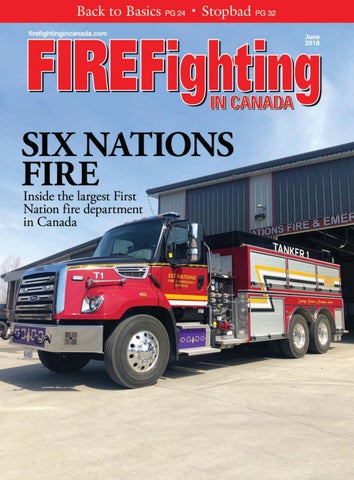
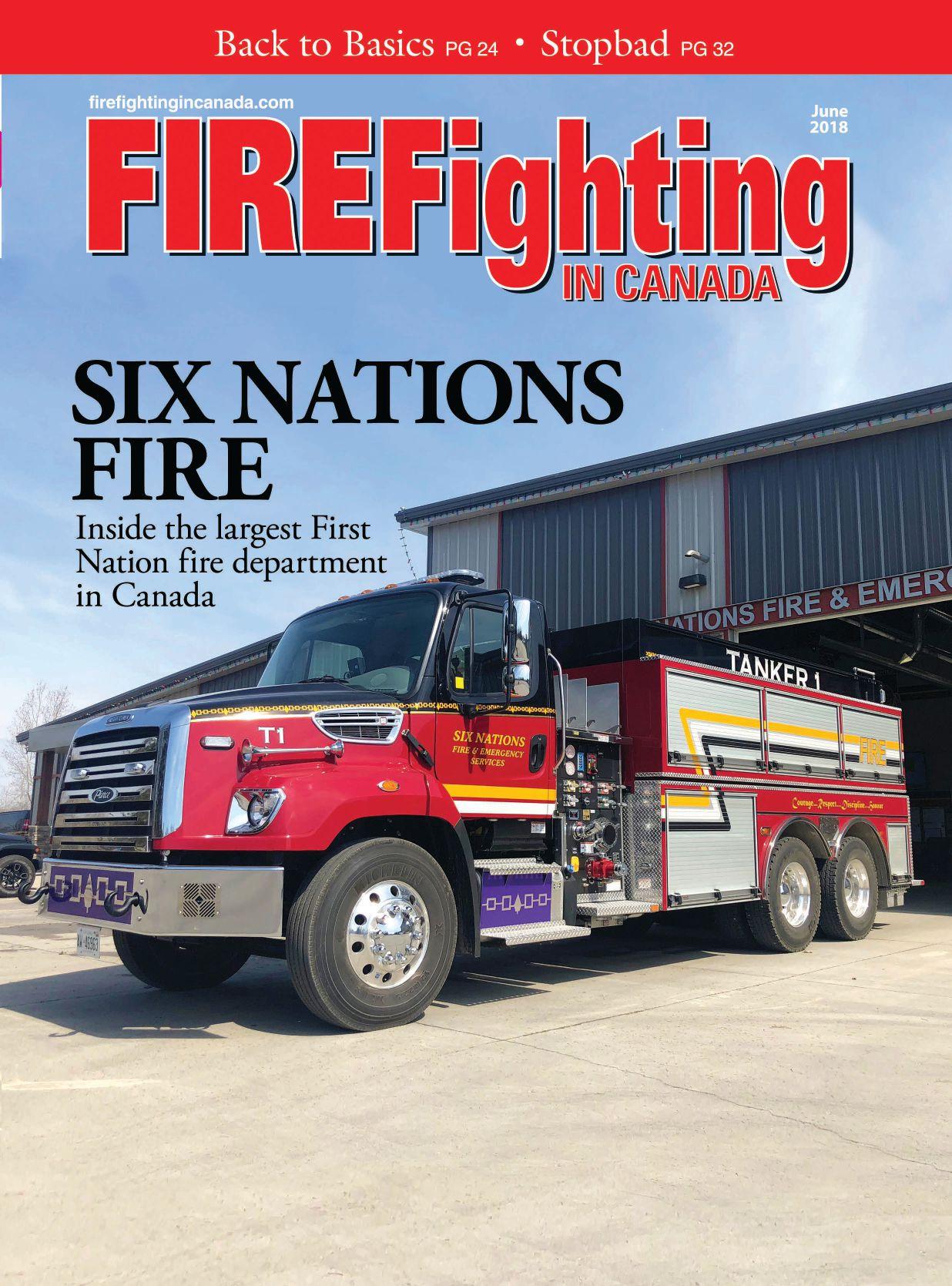
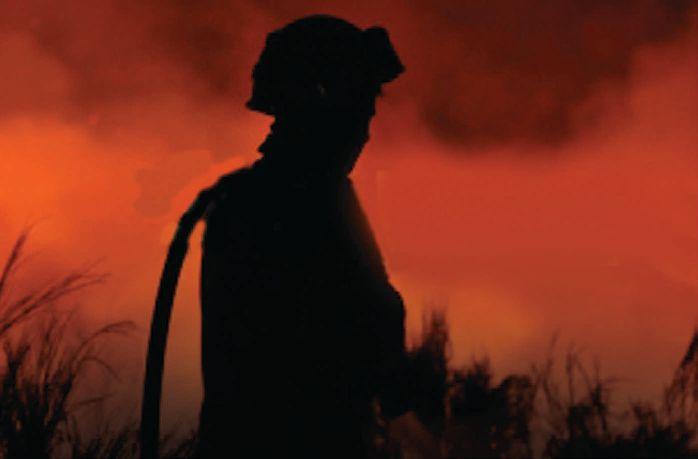
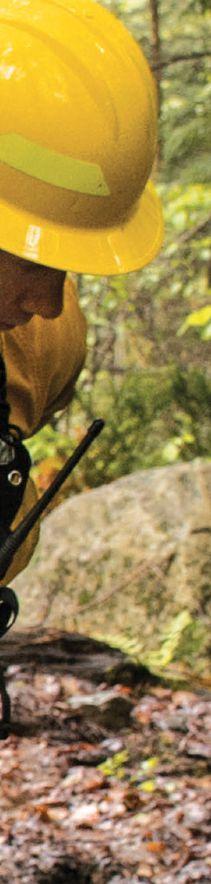
Learn how the largest First Nation fire department in Canada is making great strides in its community in this feature by Fire Fighting in Canada’s associate editor Jayson Koblun.
16
LIVE FIRE TRAINING
Lance Bushie, lead instructor at Trident Fire Training & Consultancy, explains why practical drills in realistic fire conditions are a must for today’s firefighters battling dangerous modern day fire behaviour.
28
BUILDING A HEALTH AND WELLNESS PROGRAM
In the fourth installment of a fivepart series looking at Oak Bay Fire Department’s holistic health and wellness program, Sara Wegwitz, RN, and Fire Chief Dave Cockle share strategies for how to create a program from the ground up.
BY LAURA AIKEN Editor laiken@annexbusinessmedia.com
F
COMMENT
A fit for fire
inding candidates that are a good fit for the department is a universal challenge. As psychologist Dr. Lori Gray, said during her seminar at May’s OAFC 2018 show: “The wrong hire can have profound implications for you as a service.” Personal experience is probably bringing a few of these implications to mind now. In addition, she continued, you are not doing justice to candidates by hiring them for a job they are not suited for.
I attended her session titled “Psychological Screening in the Fire and Emergency Services” with rapt curiosity as her extensive biography spoke to highly credible expertise and the subject matter pointed to the larger challenge of hiring right as a department and finding the right career as an individual.
admission criteria, screening be available for students to optionally learn their aptitude for themselves. In another area of her talk Gray recommended that the screening feedback be withheld from candidates in a hiring process because they may try changing their approach if they are re-tested in the future. It could be extrapolated that giving students the same kind of insight might impact their strategies for self-presentation in an interview. Bottom line: how do people figure out whether they are a fit for the career they want? It would sure save everyone a lot of time and effort on all ends of the spectrum if people weren’t pursuing jobs that they are inherently a bad fit for.
ON THE COVER
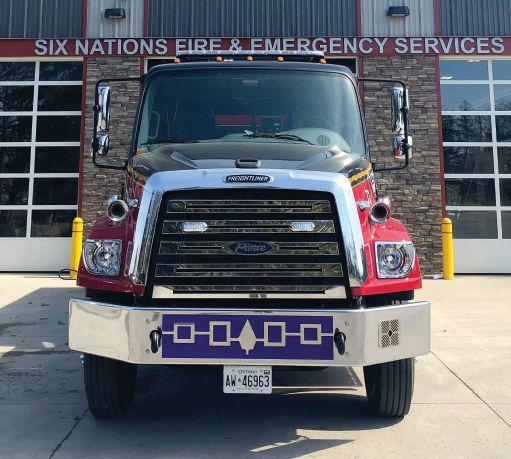
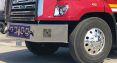
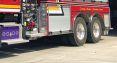
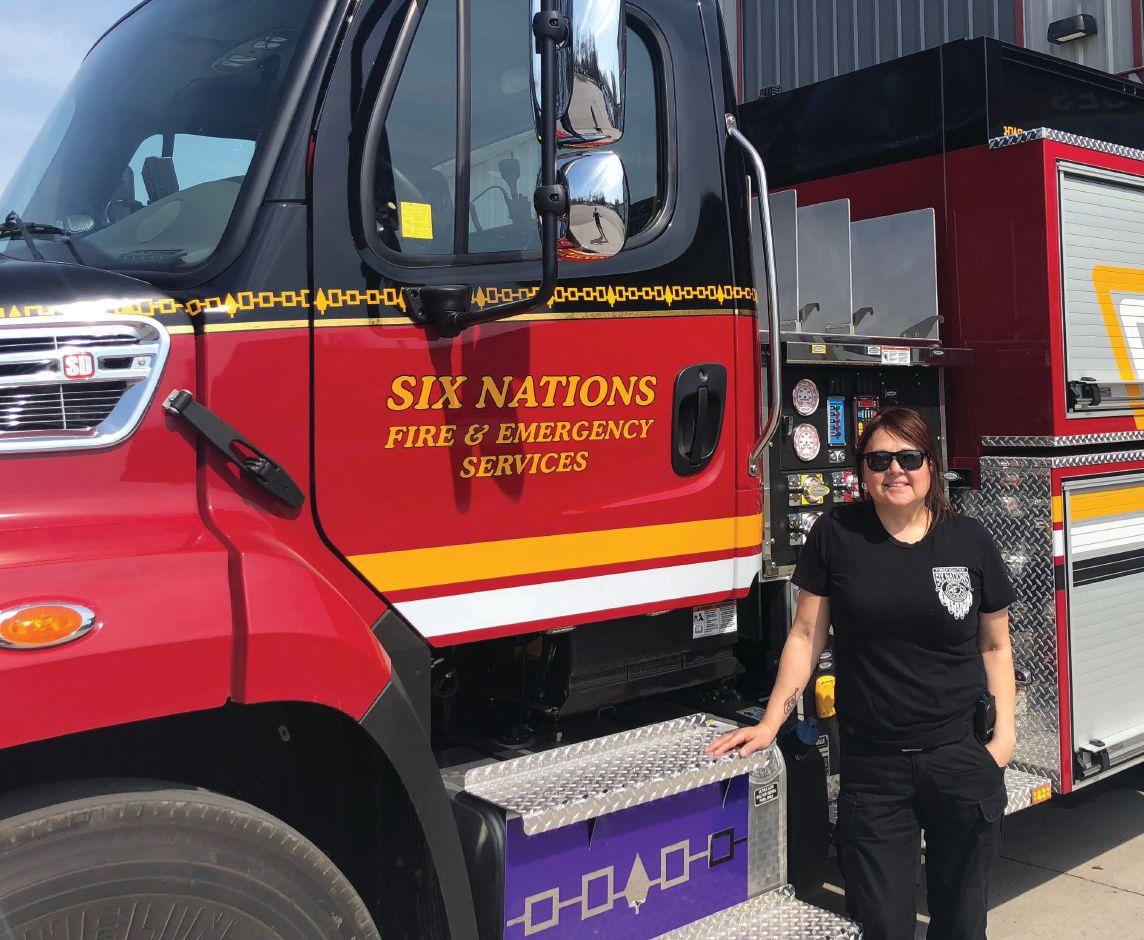
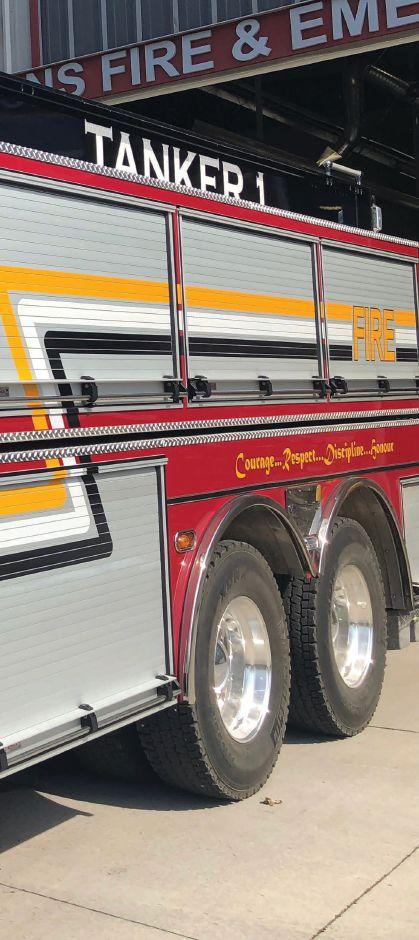
The purple and white flag on the front and sides of this tanker is known as the Confederacy flag and is part of the Six Nation’s traditional government. See story on page 10.
Her presentation centred on tools available to departments in the form of clinician administered testing to qualify the individual’s ability to perform the role at the current time and deem whether candidates are well suited to the stress they will experience.
Over the course of her session, one audience member questioned whether this type of screening could be instituted at the training level. Gray agreed that it would be an ideal approach but identified the challenge for schools who come from the thinking that everyone has a right to an education — it is not in their wheelhouse to accept or deny students based on their psychological aptitude for the future career. It was discussed whether, rather than part of
One challenge is that people are hugely capable of pursing dreams via self-efficacy. Look no further than American Idol auditions. At some point, someone weeds the ill-suited out of the pack, infrequently be it the ill-suited. In the fire service, the wrong hire can have extraordinarily detrimental consequences. Professionally administered testing designed to disallow an individual to hide from themselves could have tremendous value to your department should budget and time permit. Fire Fighting in Canada will be exploring her talk in-depth in upcoming OAFC 2018 coverage. In the meantime, food for thought!
ESTABLISHED 1957
JUNE 2018 VOL. 62 NO. 4
EDITOR LAURA AIKEN laiken@annexbusinessmedia.com 416-522-1595
GROUP PUBLISHER MARTIN MCANULTY fire@annexbusinessmedia.com
COO TED MARKLE tmarkle@annexbusinessmedia.com
PRESIDENT & CEO MIKE FREDERICKS
PUBLICATION MAIL AGREEMENT #40065710
RETURN UNDELIVERABLE CANADIAN ADDRESSES TO CIRCULATION DEPT.
P.O. Box 530, SIMCOE, ON N3Y 4N5 e-mail: subscribe@firefightingincanada.com
Printed in Canada ISSN 0015–2595
CIRCULATION
e-mail: bolechnowicz@annexbusinessmedia.com
Tel: 416-442-5600 ext. 3543
Fax: 416-510-6875 or 416-442-2191
Mail: 111 Gordon Baker Rd., Suite 400, Toronto, ON M2H 3R1
SUBSCRIPTION RATES
Canada – 1 Year - $25.00 (GST - #867172652RT0001)
USA – 1 Year $44.00 USD
Annex Privacy Officer
Privacy@annexbusinessmedia.com
Tel: 800-668-2374
Occasionally, Fire Fighting in Canada will mail information on behalf of industry-related groups whose products and services we believe may be of interest to you. If you prefer not to receive this information, please contact our circulation department in any of the four ways listed above.
All advertising is subject to the publisher’s approval. Such approval does not imply any endorsement of the products or services advertised. Publisher reserves the right to refuse advertising that does not meet the standards of the publication.
www.firefightingincanada.com
PHOTO BY JAYSON KOBLUN
STATIONtoSTATION
ACROSS CANADA: Regional news briefs
Inaugural Penticton wildfire symposium a success
Deputy Fire Chief Chris Forster said Penticton, B.C., fire department’s first ever wildfire symposium accomplished just what he hoped it would.
“It was an exceptional turnout and an overall terrific event,” said Forster. “The team and everyone involved communicated great together and the entire weekend was a success.”
The symposium took place from April 6 to 8 in Penticton and aimed to teach anyone interested in the training and firefighters from various Canadian departments about new wildfire mitigation tactics and methodology and the most effective wildfire suppression techniques.
“What was really awesome to see was the different departments working together so well in our hands-on training experiences,” said Forster, adding that firefighters in different departments rarely get the chance to learn from one another and teach each other different things. There were 28 departments that came out to participate in the symposium.
“Each department has different equipment available to them and each department uses different terms when talking to each other, so seeing so many groups come together and interact so well was
THE BRASS POLE Retirements
JOHN F. MASKERINE will retire from the Thompson Fire and Emergency Services in Manitoba later this summer after 50 years of service. He served in northern Manitoba since 1968 and has held almost every position in the department from rookie to chief. In 2008 Maskerine
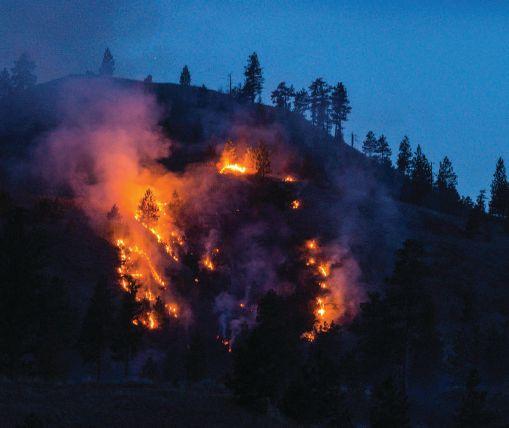
Fires were staged at predetermined locations around the city of Penticton, B.C. during the department’s first wildfire symposium.
encouraging,” said Forster.
Fires were staged at predetermined locations around the area and groups made up of members from different departments were tasked with working together to put them out.
“Everyone worked together so well.
The only really potential problem of the weekend was that it had recently rained, so starting the fires took a bit of time, but that wasn’t actually a problem—it all went great.”
became deputy chief of operations and in 2013 he transitioned to the front office as fire chief and director of public safety. His official last day of active duty is Sept. 14.
GERRY PINGITORE announced his retirement as chief with the Ottawa Fire Department at the
The event was also a good opportunity for networking and getting to know others within the fire services industry as guests received hands-on training throughout a fun and event-filled weekend.
Some of the topics covered were engine company strategies and tactics, boots on the ground-wildfire operations, structure protection and more.
“The weekend was a huge success and I’d love to see it became an annual event,” said Forster.
end of April. He has been the chief in Ottawa for just over three years and has been a firefighter for more than four decades. He served at the Town of Montreal West from 1977 to 1979 and served in Ottawa for 38 years in Nepean (career) and West Carleton (volunteer) at the same time. “Farewell and retirement messages are never easy. I offer my thanks to the men and women with whom I
have collaborated, debated and championed over the years. It is with gratitude that I thank staff @OttFire for their continued dedication to protecting our Nation’s Capital with pride,” Pingitore tweeted.
GARTH PIGEAU retired as deputy chief of the Chisholm Township Fire Department in Ontario. Pigeau was one of the department’s founding
Ottawa crews averaging 20 false alarms per day
Firefighters in Ottawa responded to an average of 20 false alarms a day between 2015 and 2017. That number is high indicated statistics released from the City of Ottawa in April, and can cause a lot of problems when it comes to dealing with authentic emergencies.
A call is deemed a false alarm when an investigation does not lead to the finding of a fire or other kind of emergency. Several different factors led to the 7,507 false alarms in Ottawa in 2017; 4,168 of them were caused by defective equipment and the rest were caused by human error.
Aging buildings may correspond with aged alarm systems. An old and outdated alarm system is likely to start malfunctioning if left unattended. Ottawa Fire Services suggested an education campaign for property orders in 2014 and has since implemented a false alarm education and awareness program for property owners.
Not every false alarm was caused by malfunctioning equipment, some false alarms were caused by human accident,
In 2017 firefighters in Ottawa responded to a total of 7,507 false alarms. Most of the calls were caused by defective equipment and old and outdated buildings.
perceived emergency, malicious act, carbon monoxide alarm malfunction, and carbon monoxide situations that were perceived to be legitimate at the time, reported CBC news in April.
Ontario fire chief ousted by new policy
A long-serving fire chief in eastern Ontario says he is challenging a new policy that forces all fire department employees in Renfrew, Ont., to retire by age 60.
Guy Longtin, who was forced to retire as fire chief after town council passed a
motion for the policy, says he has hired an employment lawyer to challenge the legality of his termination.
Renfrew Reeve Peter Emon says the Ontario government passed legislation in 2011 forcing front-line firefighters to retire at age 60, partly
members when he joined as a volunteer firefighter more than 30 years ago. He was appointed deputy chief in 2001. Pigeau also served as an instructor with number of other northern fire departments including Temagami and Kearney. Pigeau will continue to serve as a member of the department following his retirement as deputy, reported a local retirement announcement.
The City of Vaughan’s Fire Chief LARRY BENTLEY is retiring after more than 38 years of public service. His last day was May 31. Bentley is a veteran of Vaughan Fire and Rescue Service (VFRS).
After joining VFRS in 1979, he was promoted to the rank of captain in 1990, platoon chief in 1996, deputy fire chief in 2006 and fire chief in 2013. He was the first Vaughan firefighter to be promoted to the role of fire chief.
The CBC article also noted that people can become complacent if the alarms become a regular occurrence and not react as they should when a fire alarm is activated
The City of Ottawa’s website recommends to the community that when you hear a smoke alarm go off or if someone yells “fire” you should evacuate immediately, gather at a predetermined meeting place and phone the fire department (911).
Although implementing a fee for false alarm dispatches was discussed in the city’s false alarm education and awareness program, Ottawa does not impose a fee for false alarm dispatches. The program discussed other options to mitigate the high number of false alarms that included updating old and outdated buildings a few at a time, helping property owners educate their tenants on proper fire alarm safety and for the province to emphasize the property owners’ responsibility to regularly inspect their building’s fire alarm panel.
because of the hazards of the job. But he says town council felt the legislation should also be applied to the fire chief, because due to the small size of the town's department, the chief is often at the scene.
Emon says the decision was not based on the physical
Captain IKE DYCK from Winkler, Man., is retiring after having been with the department for nearly half of its 111-year history. Dyck has been serving for 52 years, making him the city’s longest serving firefighter. In an interview with pembinavalleyonline.com, he said that his department has really felt like a family to him and that a lot has changed since he joined the service in the 1960s.
nature of the job, but the effects of accumulated stress when the fire chief works as an incident commander.
However, Longtin said his termination was based on an "arbitrarily imposed age requirement" for the position.
– The Canadian Press
Last Alarm
The Yukon community of Watson Lake is mourning the loss of a local fire captain. Forty-six-yearold GARTH ZORN and his dog Romeo died after the pickup they were in collided with a boom truck near Swift River. It happened as Zorn was returning from Whitehorse, where he'd taken Romeo to the vet. Zorn joined the Watson Lake fire department in 2002.
PHOTO BY UNSPLASH
STATIONtoSTATION
BRIGADE NEWS: From departments across Canada
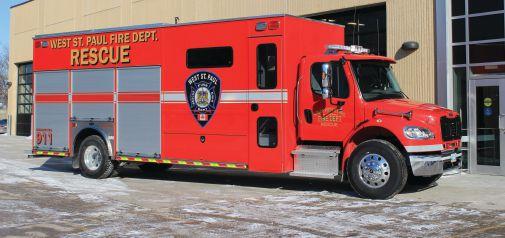
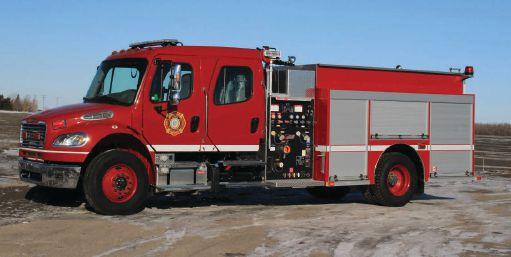
The West St. Paul Fire Department in Manitoba welcomed a custom-built rescue unit from Acres Emergency Vehicles. Built on a Freightliner M2-106 chassis and powered by a Cummins L9 350hp engine and Allison 3000 EVS transmission, features include an Advent roof top heater w/ A/C and 2 Hannay 120-volt cord reels.
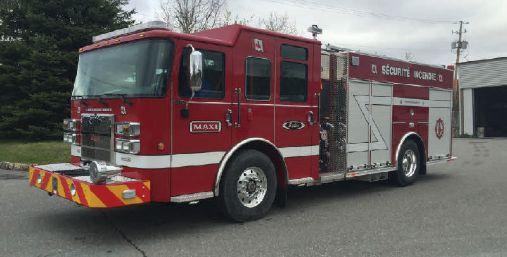
The fire department in Springwater, Ont., took delivery of a new pump unit from MAXIMETAL. The vehicle is built on a Pierce Saber FR chassis and comes with a Cummins L9 450-hp engine. The pump is a Hale DSD1500; foam system is injection with a FoamPro 2002 foam injection pump. The unit features a narrow pump house with very low speedlay on a removable tray and also a MAXI ladder rack on the right side with an enclosed compartment for a rescue stoke basket.
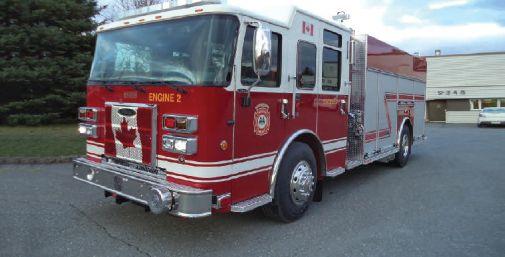
The fire department in Campbellton, N.B., took delivery of a new pumper-tanker unit from MAXIMETAL. The unit sits on a Pierce Saber FR chassis and has a Cummins L9 450-hp engine with a Husky 3 foam injection pump. Features include a narrow pump house with a low preconnect speedlay in two removable trays, 10 ft. x by 10-ft. dump valve hidden in the rear compartment and ladders, suction hoses, and pike poles stored in the body and in the tank.
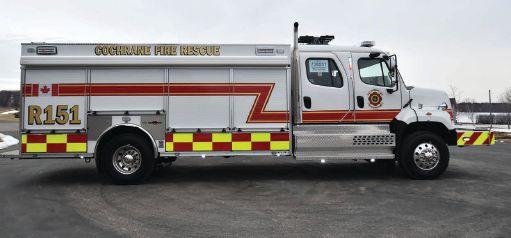
The Cochrane Fire Department in Alberta recently received a new commercial pumper from Rosenbauer. The unit is built on a Freightliner FLD-120 chassis and powered by a Cummins 400-hp engine. The truck features a rear pump, single axle, road power generator and pump model NH45.
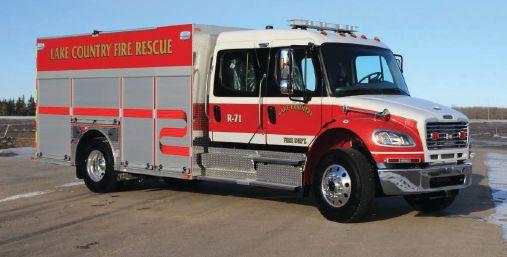
Lake Country Fire Rescue in British Columbia recently took delivery of a new unit from Fort Garry Fire Trucks. The unit sits on a M2-106 4-door Freightliner chassis and has a FGFT extruded rescue body made out of 5083 aluminum. The truck features on spot chains, Sigtronics intercom, Kussmaul charger and compressor, two Hannay cored reels-40 amp capable, coffin compartments, basket stretcher storage, multiple shelves and trays, SlideMaster tip down trays and more.
A new unit from Fort Garry Fire Trucks was delivered to We’koqma’q First Nations in Nova Scotia earlier this year. The unit sits on a Freightliner M2-106 2-door chassis and has a crusader pumper/side pump panel body. Features include a FRC Incontrol 400 pressure governor, FRC Tank Vision Pro, Elkhart valves, FGFT ladder rack, Whelen emergency light package, Whelen PFP2P1 telescopic lights, FGFT heat retention package and more.
SPRINGWATER FIRE DEPARTMENT
WEST ST. PAUL FIRE DEPARTMENT
CAMPBELLTON FIRE DEPARTMENT
COCHRANE FIRE DEPARTMENT
LAKE COUNTRY FIRE RESCUE
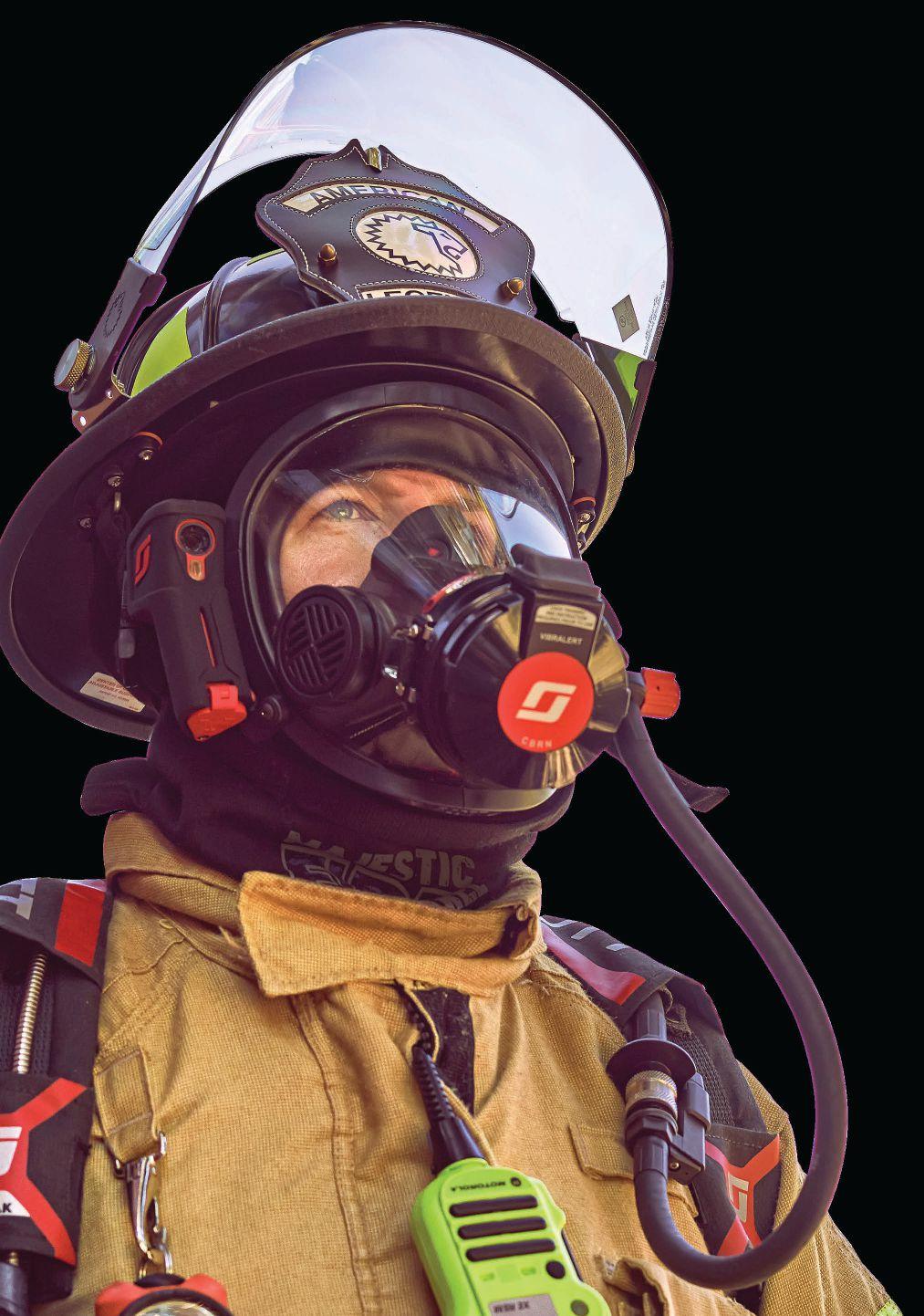
Every day you strive to be your best. Learn more. Train more. Because you know that in critical situations, what you do today can make a difference tomorrow. That’s why we never stop developing new technology to help you do your job more efficiently, comfortably and safely — so you can keep making a difference today and into the future.
Six Nations Fire Department
How the largest First Nation fire department in Canada is making great strides in its community.
By JAYSON KOBLUN
Ontario is home to the largest First Nations fire department in Canada. Fire Chief Matthew Miller, along with the rest of his department, have worked hard to bring the service up to snuff – and keep it there.
“In 2006 I came on board full-time as deputy fire chief of the Six Nations of the Grand River Territory. Mike Seth, the previous fire chief and myself knew a lot of the challenges we were facing and started the department on a process of professionalization,” said Miller. “I’ve been chief now for the last three years and the team has made a lot of progress on our journey.”
Up until the late 1960s, Six Nations did not have a fire department. Six Nations is the largest and most populated First Nations territory in Canada with more than 25,000 community members. With no active fire protection and prevention service, the community was seeing a lot of fire deaths.
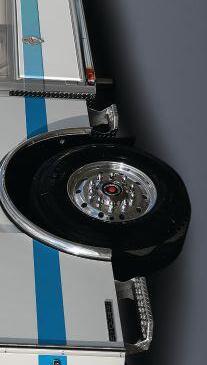
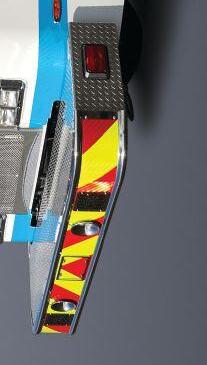
LEFT Assistant Fire Chief Crystal Farmer stands with the department’s newest tanker. ABOVE The Six Nations Fire & Emergency Services is located in southwestern Ontario and has five stations. The department has worked hard to modernize and professionalize its service.
“We would lose entire families and homes,” said Miller. “Finally, in 1966, Six Nations Elected Council made the decision to establish a volunteer fire department.”
The community did not have any fire service related resources of their own at the time so their initial beginnings as a fire department came from a donated fire truck and some equipment from the city of Hamilton, Ont.
Throughout the last 52 years the department has grown into the largest First Nation fire service in Canada, having recently been given a new headquarters and growing to a fleet of 14 trucks. Miller wants to take what his department has learned and help other departments, especially within First Nation communities, on their road to becoming a safer place to live.
■ CHALLENGES
An individual living on any First Nation in Canada is 10 times more likely to die in a house fire than an individual living off
of a First Nations territory, shows federal government statistics.
“That’s a huge challenge that a department on a First Nation community faces and it’s all too true here on Six Nations,” said Miller. “The statistics are amplified here due to our dense population.”
Miller and his department respond to an average of two to three house fires per month, a number he says is high. Part of that figure is caused by some of the risks within the community; risks such as elderly community members living alone, accidents and even some cases of arson.
One of the challenges Miller mentioned is that there is not enough housing on the territory. While this can be an issue for any community, on Six Nations not enough housing leads to what Miller refers to as multi-generational homes.
“We have grandparents living with their kids, who are living with their grandkids and their own kids too. Sometimes we have a home down here with anywhere between 12 and 22 people living in a three-bedroom home. It creates a unique, very unsafe situation for fire risks.”
The lack of smoke and carbon monoxide alarms in homes on Six Nations is another obstacle for Miller and his crew; a problem that in and of itself leads into a third problem on the territory – lack of trust stemming from intergenerational trauma. Intergenerational trauma is the transmission of historical oppression and its negative consequences across generations.
Miller wants to see 100 per cent of the homes on Six Nations with a smoke alarm, but realistically he knows 95 per cent is more likely. Right now, the community sits at around 60 per cent for smoke alarm coverage. Even though the Six Nations fire department will come to an individual’s home and install up to two smoke and car-bon monoxide alarms free of charge, some individuals decline them access to their home.
“A lot of people off the territory don’t know what intergenerational trauma is and those that do know what it is may not see how it can translate to the fire service field, especially concerning smoke alarms, but it absolutely can,” said Miller.
Miller said one example of intergenerational trauma effecting this is Canada’s part in the residential school system.
We need to create strong partnerships with our municipal partners that are near our First Nations.
’’
– Six Nations Fire Chief Matthew Miller
“Anyone who has background knowledge with First Nations knows that because of things like the residential school system, where kids were taken away from their communities and not allowed to speak their language or know their traditions, trust is going to be an issue. If a non-native firefighter goes up to your home and says ‘hey let me in your home so I can install a smoke alarm’ there is often trust issues that have been generationally passed on for decades. Ideally they should see the safety of their home and those inside it as more important but sometimes it’s too hard.”
Miller said that most of the team on Six Nations is from Six Nations or another nearby territory, but that it is not always the case with other communities.
■ MAKING PROGRESS
The Six Nations fire department saw a need for more training, but Miller said they weren’t having as easy of a time accessing it as a municipal department would because there were not enough openings in the available courses for Six Nations to keep up with what was needed. So Miller and the team sought to establish a training academy of their own. The academy has been a great success so far and Miller is excited for its growth and future.
“We started our own training academy and through different partnerships we provide accredited training at NFPA levels – most notably the 1001 level one and level two programs,” said Miller.
Miller is president of the Ontario Native Fire Fighters Society as well as a director of the Aboriginal Firefighters Association of Canada. He has visited more than 100 First Nation territories in Ontario in the past year and a half and through his consultations and meetings he and his team developed the Ontario Region First Nations Fire Protection and Strategic Plan that was designed with achievable benchmarks.
“Our plan is meant to help other First Nations fire departments become more self-sufficient and have access to the types
of things we do here. The strategic plan we developed is to be viewed as a living and breathing document that can change to anything that comes up as it comes up,” said Miller, added that the plan is reviewed on an annual basis.
Despite the challenges that Miller sees daily on Six Nations, he is pleased by the level of teamwork he sees within his department and encouraged by the support he receives from other off-reserve departments. Miller doesn’t take any personal credit for the steps other departments have taken due to his suggestions; he is just proud to be a part of making communities safe.
“We’re all in partnership here. “It hasn’t been only us, I would simply say we were a part of the catalyst for working towards overcoming these challenges. Every department has their own set of challenges. There has been a lot of work that has happened in the last few years and I’m excited for what is to come.”
■ MOVING FORWARD
The team at Six Nations teaches their new recruits and regular crew – 14 full-time suppression staff and around 30 volunteers – more than just skills and what they need to know to suppress a fire. Miller teaches that communication is key to success and to not be afraid to ask for help and to create partnerships with nearby communities.
“We need to create strong partnerships with our municipal partners that are near our First Nations,” he said.
Miller also does his best to stay in the loop about new practices, techniques and equipment. He took some of his team to FDIC International in Indianapolis in April. He also went in 2017, where he learned about and recently introduced a potentially life-saving technology for his crew – personal escape systems. A personal escape system allows a firefighter to bail out of an upper-floor window in the face of a fire or to evacuate a civilian by rolling them out of a window. When used
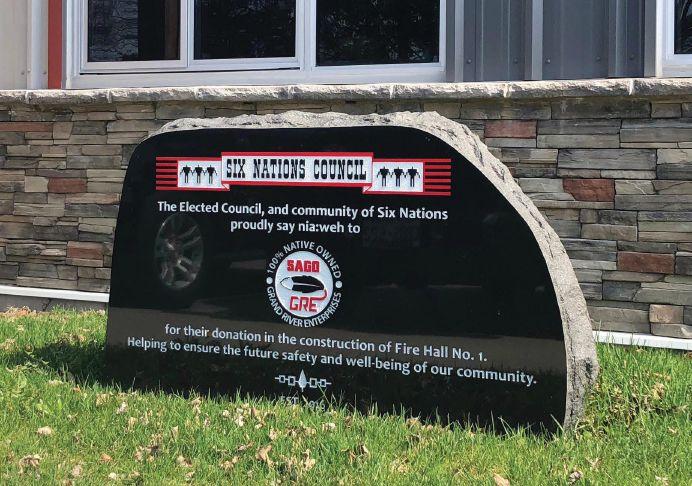
The department was given a new headquarters, paid for by Grand River Enterprises, almost two years ago because their old one was condemned due to mould.
to evacuate a civilian, the system can be brought back up to the window for the firefighter to self-rescue.
“I don’t think many other departments in Canada are using this equipment yet,
but I have been involved in situations already when I can see how this could save my life,” said Miller. “Because of the aggressive nature of our fire fighting services here on Six Nations and the amount
of house fires we respond to, having access to a personal escape system could mean life or death to myself or anyone on my team.”
Miller and his team received training on their new personal escape systems in May from Petzl and is thankful that they now have the systems available.
Miller is thankful that he had the opportunity to include the new systems into his department and looks forward to seeing how other First Nations can benefit from initiatives similar to this.
The Six Nations fire department is working hard to challenge the statistics and make their home and other First Nation communities a safer place to live. From their humble beginnings of accepting gear and one small truck from Hamilton to now being the largest First Nations department, Six Nations has seen a lot of growth.
Although they still continue to face difficult challenges such as, housing, intergenerational trauma and distrust, Miller is hopeful for the future.
“If we want to help other First Nations communities as well as ourselves and off-reserve departments succeed we need to be prepared and ready for anything.”
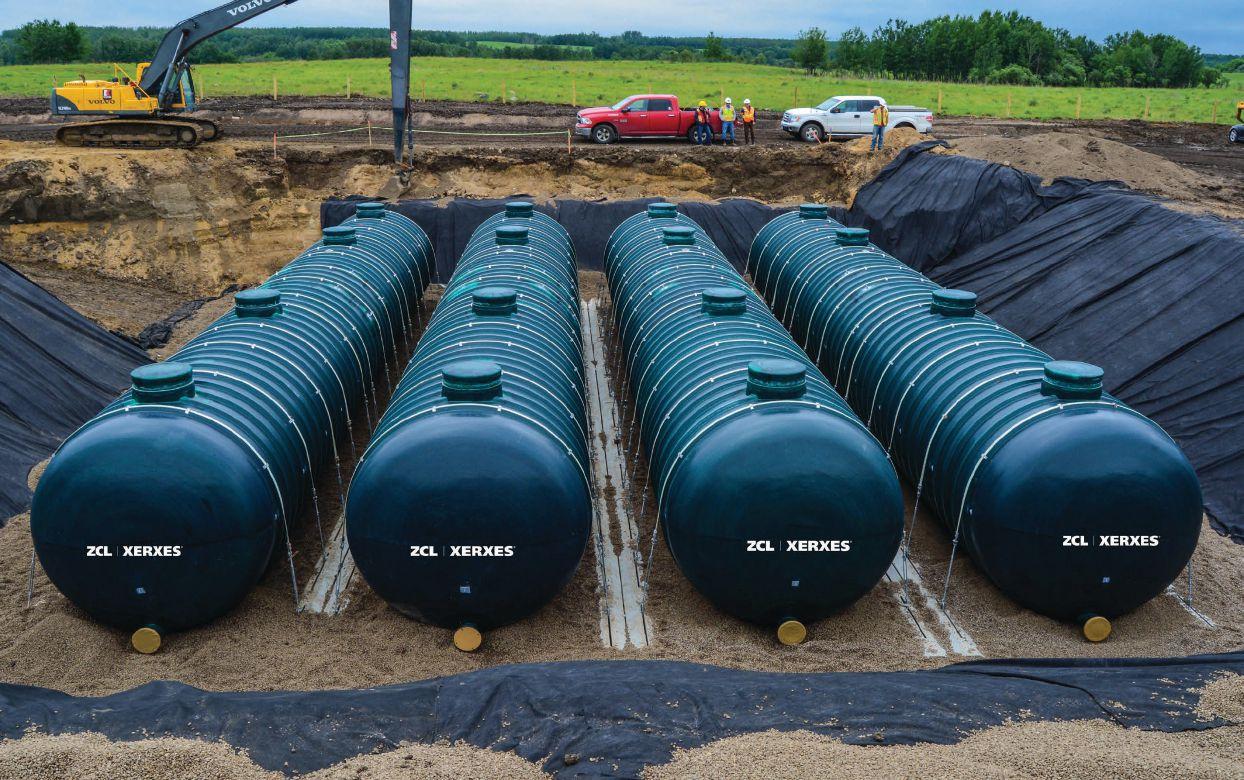
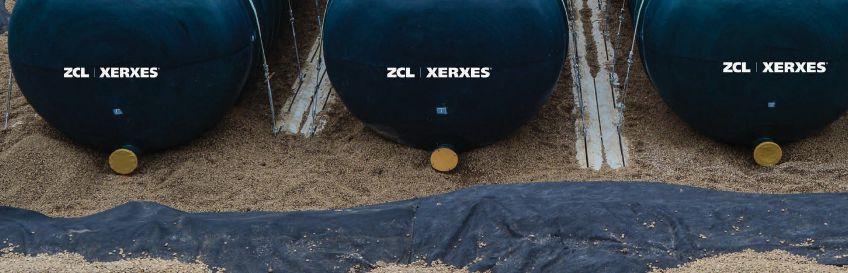
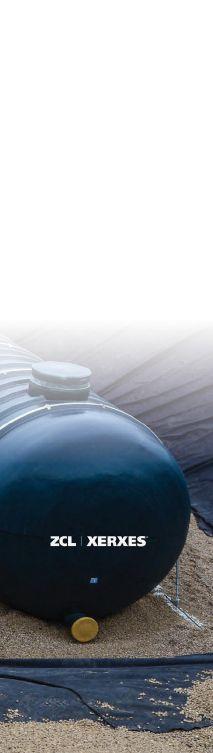
Industrial and commercial fire protection systems call for long-term, watertight and structurally strong solutions.
Our fiberglass tanks offer peace of mind for business owners throughout Canada.
• Fiberglass tanks meet NFPA standards.
• Lightweight materials make installation quick and easy.
• Cisterns and break tanks provide additional water supply for fire protection systems to meet building code requirements.
PHOTO BY
BY TINA SARYEDDINE Executive director, Canadian Association of Fire Chiefs
WGUESTCOLUMN
10 reasons why the federal government matters to fire
hat sits on the border of two provinces and matters to every fire department in Canada? If you guessed Ottawa, you are correct. In the last five years, the importance of federal policy has become more pronounced as each province has faced tragedies of national proportion, such as the wildfires in the West, the LacMégantic rail disaster and Humboldt.
“This is why a ‘By Canada, for Canada, Made in Canada’ approach to fire service issues is so important,” said Canadian Association of Fire Chiefs (CAFC) president and Edmonton Fire Chief, Ken Block. “As leaders in the fire service we have the opportunity to unite, discuss, share and advance our perspectives, evidence, and experience as federal initiatives evolve, to the benefit of all departments. Here are some examples of key issues at the federal level.
1. Building and fire codes: The National Research Council houses the Commission overseeing the building and fire codes. How do we work within the codes process to effectively mobilize necessary fire safety changes?
2. Science, technology and the future of fire fighting: From the department of National Defence to Public Safety Canada, the National Research Council and federal granting councils, the Ottawa plays an important role in directing and funding research. How does the fire service influence decisions and priorities and ensure that funding flows to them?
3. Critical infrastructure: In the event of an emergency, every sector from food to water, health and transportation may be adversely impacted unless critical infrastructure considerations are put in place. Public Safety Canada is working on a Critical Infrastructure Action plan. How do we ensure policy meets practice?
challenges be considered?
5. Mental health, opioids, cannabis: In Budget 2018, the federal government allocated $30 million to the Canadian Institute of Public Safety Research and Treatment located at the University of Regina. How can we help them maximize impact? In addition, decisions regarding cannabis legislation and the opioid crisis will have a direct impact on departments and first responders. How do we ensure resource needs of municipalities are understood and considered?
6. Maintaining the volunteer firefighter tax credit: In 2017, there was a review of federal tax measures and we were advised to ensure that we reassert its importance. How do we stay visible?
7. Memorial Grant Fund: On April 1, the Memorial Grant fund took effect to help families who lose a first responder in the line of duty. In addition to fatal injury, the fund will cover chronic disease and psychological injuries associated with the profession. How do we influence the ongoing dialogue on what’s included?
8. Transportation of dangerous goods and rail safety: Transport Canada takes an active role these areas. How can we help to inform, scale and spread this knowledge?
9. Aboriginal and First Nation’s health: The federal government
This is why a 'By Canada, for Canada, Made in Canada' approach to fire service issues is so important.
’’
4. Interoperability and NG911: In 2015, the Government of Canada allocated a total of 20 MHz of the 700 MHz spectrum for the public safety community. The question is how will this be built out in all communities? In addition, Next-generation 911 (NG911) — the ability to send out 911 distress calls using means other than traditional telephony —must be implemented by 2020. How will implementation
Tina Saryeddine, PhD, MHA, CHE, is the executive director of the Canadians Association of Fire Chiefs and an Adjunct Faculty Member at the Telfer school of Management at the Unviersity of Ottawa. She brings 20 years of experience with membership driven organizations and extensive experience on the policy, research innovation and advocacy fronts. For more information on how you can join the conversation, email info@cafc.ca or call 1-800-775-5189.
plays a key role in fire departments in First Nation’s communities. How do we use collective knowledge and experience to ensure all of Canada’s communities are safe?
10. Status of women: The safety of all communities depends on the capacity to leverage the full richness of Canadian society. how do we leverage incentive programs following the commitment of this government to diversity and inclusion.
How do we do this? You can join us at the CAFC if you are a fire chief or company officer. The next step is to understand the process. Playing politically and on social media is necessary but it’s also important to understand how the policy making apparatus works. Third is to master the content domain. We have a smart government. They will ask good questions and expect us to have the data. Finally, get involved in national and federal initiatives. Canada needs you.
FEATURING THE SP 777E2 SPREADER
IN A WORLD WHERE SAVING TIME SAVES LIVES , HURST JAWS OF LIFE ® DELIVERS THE NEW SP 777E2 THE MOST POWERFUL 32” BATTERY-POWERED SPREADER ON THE MARKET. GET THE JOB DONE , AND GET IT DONE FASTER THAN EVER. LIGHTWEIGHT. HEAVY-DUTY. UNSTOPPABLE
Live fire TRAINING
Have you thought about live fire training in your department? Today’s fires occur with less frequency, but when they occur the fires are far more dangerous than they were 20 years ago.
Firefighters need to be aware of the rapid and dangerous fire behaviour that can occur in modern building construction. New research is becoming available all the time from UL/NIST that challenges previous training and traditions. A wider choice of tactical considerations are now available to the incident commander that previously were taboo. An example is transitional attack — also called “resetting the fire” — which uses exterior water application to control the gas fire even if firefighters or occupants are in the building.
In the past firefighters received ample real-life training on the scene of fires. With the frequency of fires on the decline (thank you fire prevention officers and fire codes), firefighters don’t have the same number of opportunities to learn the necessary skills and gain experience. This gap must be closed by conducting realistic live fire training.
I’ve been in the fire service for 28 years. I progressed from joining as a volunteer in 1989 to moving through the ranks to fire chief and director of protective services. Through my career I have always had a passion for instructing. In my experience, firefighters are lacking the basic understanding of fire science and how it relates to rapid, dangerous fire behaviour and extinguishment of modern buildings and contents. We all take two hours of lecture in NFPA 1001 Level 1 at the beginning of our fire training and may never touch the subject again unless you are a training officer. Take a moment and think about how important it is to have an in-depth knowledge of fire and its behaviour? It’s imperative that firefighters be highly proficient in how fire develops, warning signs, control measures and efficient extinguishment. Tactics and
The importance of live fire training drills in fighting modern day fires
By LANCE BUSHIE
strategies based on traditions, or “this is the way we’ve always done it,” are no longer acceptable. Every firefighter must have the ability to judge their surroundings and be situationally aware and apply the right tool from the tool box at the right time.
There’s a Latin saying, “sine scientia ars nihil est” that translates to “skills without knowledge is nothing.” Do you or your firefighters understand the knowledge behind the skills we employ?
What do you do as a training officer to close the gap? Conduct live fire training drills. Why? My experience has shown that the true understanding of the principals of fire attack are gained with the combination of classroom, demonstration and student application in a realistic environment gaining
firsthand experience and muscle memory. This is the standard approach to training. Fire behaviour and tactics can only be mastered by teaching the knowledge, demonstrating the knowledge and having the firefighter perform the skills while explaining the why behind the skill until proficient. Before live fire training, paperwork needs to be done and standards followed. The 2018 NFPA 1403 standard on live fire training is available and there are new updates that every department should be aware of. If you are unaware of the standard, go the NFPA.org and read it. The standard is based on hard lessons learned; training fires that have killed and injured. I highly recommend that your jurisdiction adopt the standard if this hasn’t occurred already.
First-hand experience and muscle memory are key pieces of comprehensive training.
The standard covers engineered live fire props and acquired structures. Acquired structures require large amounts of work to prepare the structure for safe evolutions. The department I’m from once used acquired structures for training. We stopped due to an incident involving an officer and a firefighter being involved in a flashover. They narrowly escaped. Soon after this incident we invested in the Swede Survival Phase 1 Class A Flashover unit from Draeger.
I’m a huge advocate of using live fire props that are engineered and built with specific training objectives in mind combined with an experienced training officer who has the ability to fully control the fire (and as it should go without saying, also meets NFPA 1403 requirements). I have been the instructor in charge of training in Phase 1 for the past 11 years and the Draeger Phase 1 meets all the above requirements. The department also invested in the Phase 2 interior attack trainer, Phase 5 multi storey live fire trainer and the Draeger System 64 with a variety of props which all meet the above requirements.
There are several updates to the 2018 NFPA 1403 standard, which include:
• Instr uctor In Charge (IIC): The IIC is now required to meet 1041 Level 2. All other instructors involved in the live fire training are required to meet the NFPA 1041 Level 1.
• Written learning objectives are required for all live fire evolutions. Weather conditions must be monitored and limits on wind and heat established to ensure safe burning conditions.
• The IIC shall not serve as the ignition officer for more than one burn in a row.
• Prohibited fuel types have been added to include tar paper and carpeting.
• Students minimum training requirements before participating in live fire training are outlined in 1001 Level 1: safety, fire behaviour, extinguishers, PPE, ladders, hose streams, overhaul, water supply, ventilation, forcible entry and building construction. Newly added are specific training on the fire dynamics of flashover, health and safety, fundamentals of fire behaviour, compartment fires, nozzle techniques and door procedures. Students must rehab in accordance with NFPA 1584 Chapter 6.
• NFPA 1584 Chapter 6 rehab rules also apply to all the instructors involved in the live fire training.
Classroom training should also include the required knowledge of fire behavior, dangerous rapid fire behaviours, interior fire attack tactics, thermal imager basics, PPE limitations and construction, all of which prepare the student for the dangers modern fire behaviour present.
Practical skills must be demonstrated and practiced; hose handling skills reviewed and practiced. LA County Fire Training Division has some great videos available for nozzle handling and deployment. Nozzle skills covering stream patterns and application rates are highly recommended. Hose movement and positions specifically focusing on the prone position should be covered. The training should then proceed to door entry procedures and the transitional attack. All must be taught, demonstrated and performed by the students prior to live fire drills.
Live fire training can be conducted with a high degree of safety and efficiency. The key is using props that simulate actual fire behaviour while ensuring firefighter safety. Care must be taken to ensure the training and tactics taught are relevant to the real world fires of today. Too often we teach tactics to the burn building we train in. In the
past we had hay and pallets for fire. Those didn’t create the heavy dense smoke and fire behaviour that occurs in a real compartment fire with a large fuel load of petroleum based furniture and wall coatings.
must be observed and techniques practiced to cool the environment, control rollover and delay flashover. Some fire training buildings are Class B and can be great for teaching and allow students to master skills that
demonstrate far more realistic compartment fire behaviour, however the amount of water we apply in this environment isn’t representative of the amounts required to cool the gases generated by fires encountered during an interior attack on modern fire fuel loads. Students will remember exactly the way they were taught and repeat those skills when under pressure. Training props need to reflect the learning objectives that you are trying to achieve. These props must replicate the conditions of the objectives so that the reactions of the students will be the same on the fire ground. How many times as an instructor have you said “But in the real fire we would…” Insert any statement like: “be lower to the ground, apply more water, not be able to see.” See where I’m going with this? As instructors we need to provide the firefighter as realistic an experience as possible as they will replicate exactly as we have taught them when faced with the conditions and stress of the fire environment.
Train hard and stay safe.
Lance Bushie is the lead instructor at Trident Fire Training & Consultancy Inc.
With the frequency of fires on the decline (thank you fire prevention officers and fire codes), firefighters don’t have the same number of opportunities to learn the necessary skills and gain experience. This gap must be closed by conducting realistic live fire training.
TRAINER’SCORNER Knowing Rate of Spread
By ED BROUWER
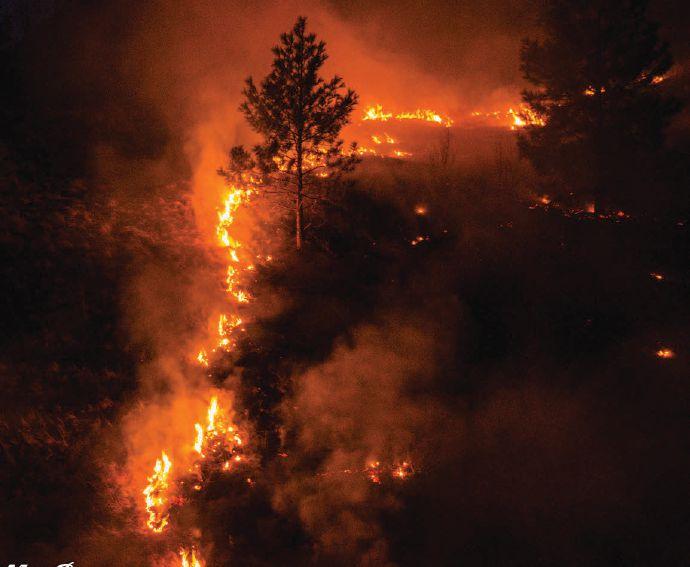
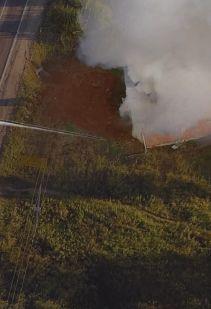
The BC Wildfire Service uses a ranking scale from one to six to quickly describe fire behaviour based on a set of visual indicators.
• Rank One: Smouldering ground fire, no open flame, white smoke
• Rank Two: Surface fire, visible, open flame, unorganized flame front
• Rank Four: Grey to black smoke, organized surface flame front, moderate to fast rate of spread (ground), short aerial bursts through the forest canopy, short-range spotting
• Rank Five: Black to copper smoke, organized crown fire front, moderate to long-range spotting and independent spot fire growth
• Rank Six: Organized crown fire front, long-range spotting and independent spot fire growth, possible fireballs and whirls, violent fire behaviour probable, a dominant smoke column may develop which influences fire behaviour
Unless you are familiar with wildland fire behaviour you may not understand what a “moderate rate of spread” looks like on the ground.
Canadian Wildland Fire Information System defines Rate of Spread (ROS) as the predicted speed of the fire at the front or head of the fire (where the fire moves fastest) and takes into account both crowning and spotting. It is measured in metres per minute and is based on the fuel type, initial spread index, buildup index, and several fuel-specific parameters such as phenological state (leafless or green) in deciduous trees, crown base height in coniferous trees, and percent curing in grasses.
Simply put, ROS is the rate at which a fire is extending its horizontal dimensions. It is the speed with which the fire travels across the ground or through the bushes
and trees. Properly estimating rate of fire spread is a key element in planning for effective fire control.
• Rank 3 - Rate of spread: 1.5 - 3.0 m/minute
• Rank 4 - Rate of spread: 3.0 - 6.0 m/minute
• Rank 5 - Rate of spread: 6.0 - 18.0 m/minute
• Rank 6 - Rate of spread in excess of 18.0 m/minute
It is of great importance that firefighters understand the three factors that affect ROS: topography, fuel and weather.
■ TOPOGRAPHY: SLOPE, ASPECT, TERRAIN
Slope is the angle of incline on a hillside. The steeper the slope, the faster a fire burns. Higher on the slope ahead of the
fire, the fuels become heated by radiant and convection heat currents. Burning material on slopes can also roll downhill to start other ignitions.
ROS can be greatly influenced by the degree of slope on which the fire is burning. ROS doubles (roughly) for every 20 per cent of slope increase.
To illustrate this, take a long wooden match and after lighting it hold it straight up. The flame burns evenly and there is little rate of spread. Now begin to angle it down, as you do, you will see the flame length grow and spread quickly up the unburnt portion of the match stick. The steeper the angle the greater the spread (the flame is also pre-heating the unburnt flame, causing it to ignite quicker). Fuels that have been pre-heated require less additional heat energy to reach their ignition point
Canadian Wildland Fire Information System defines Rate of Spread (ROS) is the predicted speed of the fire at the front or head of the fire (where the fire moves fastest) and takes into account both crowning and spotting.
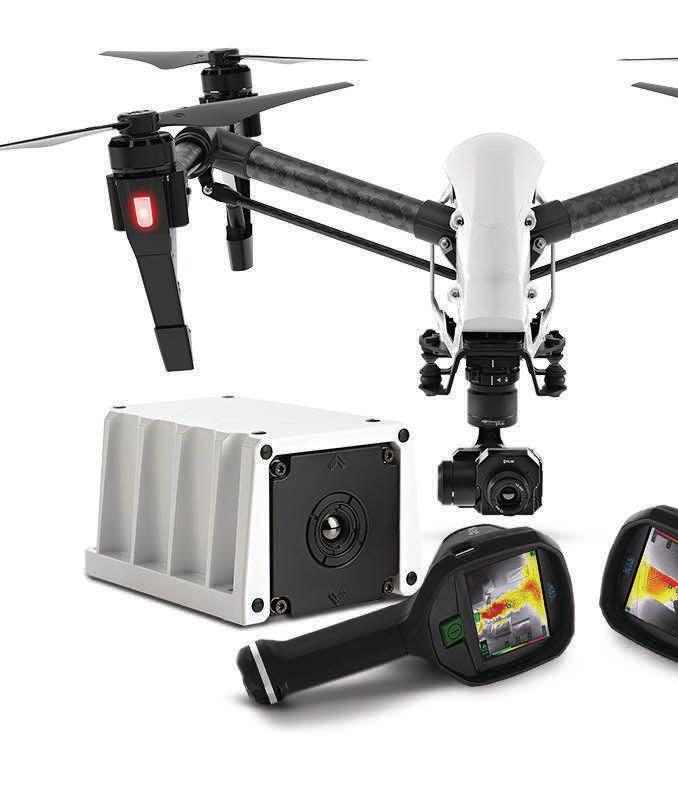
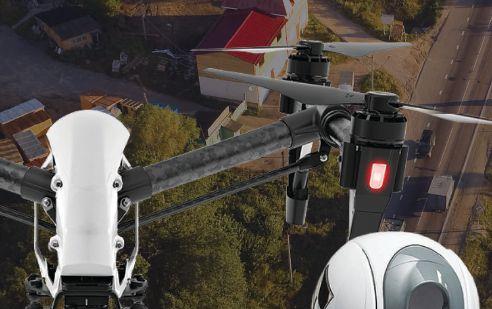
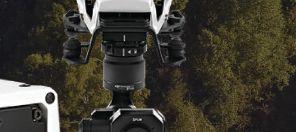
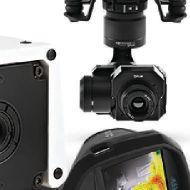
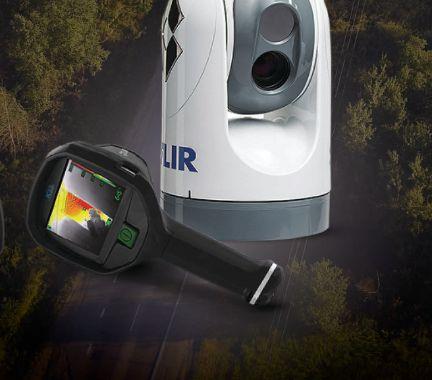
FROM BOOTS ON THE GROUND TO EYE IN THE SKY, WE’VE GOT YOUR BACK.
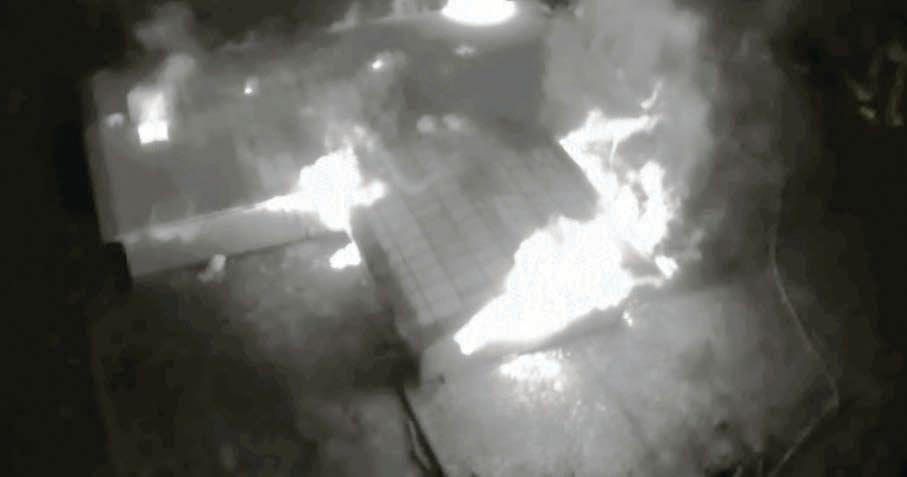
FLIR’s wide range of TICs can help you identify hot spots from a variety of distances – making safety the top priority. Learn more at FLIR.ca/fire
Trade in your current TIC — of any brand, in any condition — and receive a trade value of up to $2,950 off select new FLIR K-Series cameras .
· FLIR M-SERIES PAN-TILT-ZOOM TIC s FOR ARFF, HAZMAT & ALL EMERGENCY VEHICLES
· FLIR AERIAL FIRST RESPONDER KITS
TRAINER’SCORNER
Aspect describes the direction in which a slope faces in relation to the sun. More direct sunlight generally falls on the south and southwest slopes, with resulting higher temperatures, lower humidity, lower fuel moisture and sparser and lighter fuels. These areas are critical in terms of wildland fire starts and spread. North aspects of slopes are more shaded and have more fuels
that are heavier. This shady side has lower temperatures, higher humidity and higher fuel moistures.
Terrain includes land variations such as canyons and ridges. A narrow canyon can cause radiant heat to raise the fuel temperature on the opposite slope, drastically increasing the chance of multiple ignitions
■ FUEL: MOISTURE, SIZE, SPACING, FUEL LOADING
ROS is directly affected by the change in fuel types. Forward rate of spread doubles as a fire front moves from heavy fuels to lighter fuels. Slash to timber (doubles), timber to brush (doubles), brush to grass (doubles). When a fast-moving fire burns from light flashy fuels, into an area characterized by heavy fuels, the ROS will most likely slow down.
■
WEATHER: WIND, RELATIVE HUMIDITY, TEMPERATURE
Wind is a major factor affecting the rate of spread. Rate of spread doubles for every additional 16 kph (10 mph) of wind.
‘‘ ’’
When a fuel has more moisture, it is more difficult to ignite and burn.
Relative humidity (RH) is the ratio of the amount of moisture in the air (water vapor) compared to the amount that the air could hold at the same temperature and pressure if it were saturated. Low humidity in the air takes moisture out of fuels, high humidity allows more moisture in the air to be absorbed into fuels. When a fuel has more moisture, it is more difficult to ignite and burn.
30/30 cross describes the condition where the RH drops below 30 per cent and temperature rises above 30 degrees C. If this occurs on the fire line you should expect extreme fire behaviour. Plan accordingly.
Increasing temperature also increases the effects of convection currents. But the most important consideration is that heat contributes to the drying of fuels, and dry fuels are easier to ignite than moist fuels.
■
EVOLUTION IDEA
One way to get these points across to your members is to set up an ROS scenario. You will need a large field, 10 24 inch long wooden stacks, nine rolls of flagging tape and four volunteers (not necessarily
firefighters) to be the fire. At the edge of the field hammer the wooden stakes about 10 feet apart (this will be the fire’s ignition point). Using one roll of tape string the tape from the first stake to the last (wrap it a few times around each stake to keep it in place). Give volunteers two rolls of tape (one is a spare) and have them tie on to one stake each, this should include the outside stakes, the fourth and the seventh. Their job will be to step out away from their stakes into the field (unburned area) unrolling the tape as they do so. The tape indicates the “growing fire.” One volunteer with a watch should call out “step” each minute after the fire starts. Each volunteer will take several steps (unrolling the tape as they do so) in respect to your desired ROS. For example, if the rate of spread is 10’ per minute then they would step forward three large steps (approximately nine feet) every minute unrolling the tape as they go. Then as soon as the next minute elapses and the sinal word “step” is shouted they again would step forward three steps.
This continues unless you as the Training Officer signify that the wind increases to 32 kph (20 mph) or that the slope has increased 20 per cent. In either case the ROS would double. So, then they would now step out 20 feet (six large steps) each minute. Have your “ROS Team” set up and ready to go. Dispatch your members and appropriate apparatus from your hall. Your “ROS Team” should be informed that they begin to step out their distances as soon as the responding members come into view.
Command is established and an initial size-up is conducted. The IC stages the apparatus and members are assigned tasks. All during this time the ROS team is still stepping out. Somewhere in this time frame I would increase the ROS due to a wind increase of 16 kph (10 mph).
Continue through this scenario, letting it evolve (please do not spray down the ROS team), but hose lines should be laid out and charged. Hopefully everyone will see the importance of staging your apparatus appropriately. Unfortunately, the apparatus can become an anchor in a useless position. And it is not unrealistic to have the fire just out of your hose lay’s reach. Consider that if the ROS is 15’ per minute and it takes you 10 minutes to do a size
up and set up your apparatus and firefighters that the fire (ROS Team) has already moved forward 10x15’= 150’.
Summary: If the IC is unaware of the importance of reading the ROS he or she can end up a hose length short of the fire. Or worse yet, place crews in harm’s way. Remember to train like lives depend on it, because they certainly do.
Ed Brouwer is the chief instructor for Canwest Fire in Osoyoos, B.C., deputy chief training officer for Greenwood Fire and Rescue, a fire warden, wildland urban interface fire-suppression instructor and ordained disaster-response chaplain. Contact Ed at aka-opa@hotmail.com.
THE POWER YOU NEED
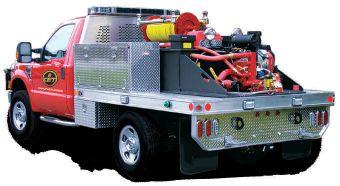
Skid Units
Glider Kit
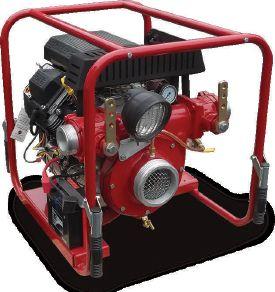
Portable Pumps
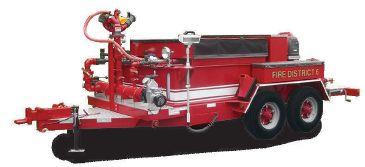
Foam Trailers
Hose advancement BACKtoBASICS
BY MARK VAN DER FEYST
In our look back at the last 10 years, there has been a lot of attention devoted to moving the handline. There has been a paradigm shift in the fire service due to firefighters like Aaron Fields, Andy Fredericks, Dave McGrail and others. This article was written back in 2008 when the paradigm started to take flight.
■ ENGINE COMPANY: HOSE ADVANCEMENT, NOVEMBER 2008
Last edition we looked at the importance of the backup person on the hose line when we are advancing a hose line into a structure. Hose advancement is an important part of our fire ground operations. Without it, we are unable to conduct interior operations. There is a saying in the fire service regarding hose advancement, “As the first line goes, so goes the fire!” What does this mean? It means that if we are able to advance our initial hose line correctly and efficiently from the start, our fire will follow suit. If we advance our initial hose line incorrectly and completely mess the operation up from the start, our fire will quickly go downhill from that point.
Part of hose advancement is knowing how to advance the hose from the nozzle man’s position. Many times, we incorrectly advance hose from this position. Let us look at two methods of advancing a hose line from the nozzle man’s position.
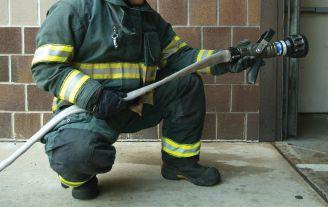
In our basic training, we have been taught to advance a hose line from the kneeling position, with both of our knees on the ground. See photo 1. We have always shown recruit firefighters that this is the way to advance hose. Even during live fire training, I have witnessed this time and time again. Every person on the hose line is on their knees, both of them crawling along trying to advance a hose line. Is this efficient and practical? No, it is not efficient and practical. In fact it slows down the hose line being advanced and it creates more work for the team.
So why do we do this? I believe we teach this method because we assimilate hose line advancement with search. We teach our recruit firefighters to search on their hands and knees which can also be inefficient and sometime useless. This basic method is ingrained into their heads and so they are taught the same method for hose advancement (we will look at proper search techniques later in the year). We also teach this method for safety reasons. If we are on our
How many times do we read of firefighters falling through floors while advancing the hose line?
knees, we will be low to the ground and below the heat. As nice as this sounds, it leads to an unsafe practice.
Advancing a hose line as in photo 1 will lead you to certain doom. How many times do we read of firefighters falling through floors while advancing a hose line? It just happened this year in Ohio where two died while advancing a hose line inside a residential house. Crawling on your knees will lead you to the open holes in the floor or open stairs and when you come upon them, it will be too late, and you will fall through and down. It has happened with one of my recruits in a burn tower during live fire training. The recruit fell down a set of stairs because he lost his balance while on his knees, and when he came upon the set of stairs, he fell right down to the bottom.
I categorize this as the “penguin walk”. Penguins walk upright with little movement of their feet. They fall over easily because they are top heavy. We also are top heavy when we crawl on both of our knees. Look at photo 1 again. If this firefighter were to come
New recruits are often taught to advance hose by crawling along on their knees. This method is not efficient or the most practical when fighting a fire.
PHOTOS BY MARK VAN DER FEYST
BACKtoBASICS
upon a hole in the floor, how will he know it is there? When he comes upon it, he will fall right through because his whole upper body is top heavy. Remember we are wearing full SCBA on our backs; we have equipment in our hands, in our pockets, a helmet on our head, a radio in our upper pocket, a flashlight and a face piece on our face. All of this equipment adds to the overall upper weight of our body. He will have no chance of recovery.
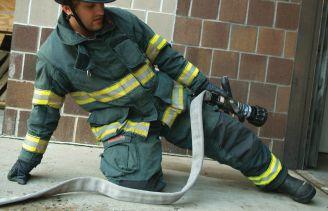
How can we avoid this? We can advance our hose lines by having our one leg out in front of us. See photo 2 for this point. In the photo, you will see how the firefighter has his one leg out in front of him. By doing this he will be able to advance the hose line a lot faster and with ease. Notice the span that is covered by advancing in this fashion. If we were to advance our line on both of our knees, our span is very limited.
We are also able to feel the floor in front of us with the front leg. This will give us an early warning that there is a hole in the floor or an open set of stairs. We can also recover and prevent ourselves from falling in. Look at photo 4. The firefighter can fall back to prevent falling into a hole. This is accomplished because his upper body weight is resting mostly on the back leg.
Another advantage of advancing a hose line in this fashion is the ability to absorb the nozzle reaction. If you were to be by yourself on the nozzle and your back up man was a little ways away (because he is helping to bring in more hose for you around corners) you would be able to handle the nozzle reaction better. Remember in the previous article regarding nozzle management we discussed the proper way of managing the nozzle. This position forces you to hold the nozzle the correct way and not on your hip. Crawling on your knees allows you to hold the nozzle in the wrong position which is on your hip.
It also allows to you to be more aware of your surroundings. When you are crawling on your knees, you are only going to see what is in front of you. If you are on your hands and knees, it will be even more difficult to see what is going on around you. In the position of photo 2, you will be able to see what is going on around you. You will have more mobility to observe.
I observed a student at a training evolution in September at a live fire class.
He was crawling on his knees to advance the hose line. His partner was anxious to get the hose fed to him. He was actually pushing the first firefighter over because he was pushing the hose toward the firefighter and because the first firefighter was on his knees, he was thrown off balance from behind by his own man. Advancing the hose line as in photo 2 will avoid this.
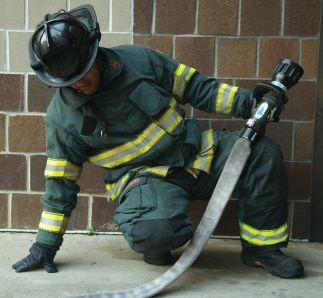
Another way of advancing the hose line is seen in photo 3. Instead of having the one leg out in front, we can duck walk. The same objectives can be accomplished as in photo 2. We can cover a great distance because our span will be more than crawling on our knees. Our upper body weight is also resting on our back leg. If we come across any openings in the floor we will be able to recover ourselves and prevent falling through. Look at photo 5. This positional stance of advancement will aid you in setting yourself up to employ the tactics of nozzle management.
Using the hose line to “feel” the floors or walls in front of you can be beneficial. This tactic can save your life. It has worked in the past. I know of a firefighter in Ohio who used the hose line to “feel” the floor in front of the team and discovered that there was a hole in the floor. Sweeping the nozzle stream across the floor in front of us will aid us in feeling if there is any floor in front. It will also help to cool off the floor for you as you advance into the structure. Burning material that falls to the ground from the ceiling can burn your knees. Sweeping the floor will cool it and make life easier for you in the long run. We can also use the nozzle stream to “feel” the walls for windows or any other openings. A great way of extending our reach!
What has been described here will only work if we practise and train these techniques. By doing so, you will master the skills shown and it will become an instinctive manoeuvre to execute.
Mark van der Feyst has been a member of the fire service since 1999 and is a full-time firefighter in Ontario. Mark teaches in Canada, United States and India, and is a FDIC Instructor. He is the lead author of the Residential Fire Rescue book. Email Mark at Mark@FireStarTraining.com.
Photo 2: By keeping one leg out in front of you, you are able to advance hose line a lot simpler and faster. The span you cover is also widened.
Photo 3: The duck walk is another method to advance hose that is thought to be more efficient than the normal method of crawling along using both of your knees for support.
Photo 4: Keeping one leg in front, firefighters are also able to feel the floor in front of them with the front leg, giving an early warning of a potential hole in the floor or an open set of stairs.
Photo 5: This positional stance of advancement will aid you in setting yourself up to employ the tactics of nozzle management, a tactic that may save your life or others around you.
Building a
holistic program
Here are some ideas to help you in developing a health and wellness program for your department.
By SARA WEGWITZ and DAVE COCKLE
TOP A key part of a successful program is tracking and measuring quantifiable results such as sickness and absence rates, decreased presenteeism and annual health risk assessments.
Editor’s Note: This feature is the fourth installment in a five-part series exploring Oak Bay Fire Department’s holistic health and wellness program.
In any fire department firefighters are the most valuable — and vulnerable — asset. The overall health and wellbeing of firefighters must be maintained, like any other city asset, or they become disabled and rendered ‘out of service’.
Despite the importance, it can be a daunting task to consider creating a health and wellness program in a department with a very full work flow and competing priorities. The nature of much of your work is focused on reacting and responding to events/situations (e.g. putting out fires), which further complicates the situation. Before you know
it, another fiscal year has come and gone and so has the opportunity to improve the health and wellbeing of your firefighters. To sum up why now is the time to take action, consider the inspiring wisdom found in this old Chinese proverb: "The best time to plant a tree was 20 years ago. The second-best time is now." The following will provide you with some ideas to create, customize, and streamline your health and wellness program regardless of the size or type of your department. The focused investment of time upfront in getting a program off the ground will pay dividends for years to come.
■ CLARIFY THE MISSION
Consider the following questions: Why is it important for our department to create a health and wellness program now? Is it to help improve the overall health and wellbeing of our firefighters? Is it to give them further skills to be better equipped to manage stress and mitigate or even prevent mental, emotional, and physical injuries? Is it to boost morale, foster teamwork and help shift the culture? All of the above? Note that “save money in terms of reducing sickness and absence rates” was not mentioned as a reason why. Firefighters are human beings and the success of a program must be based on it being people-centric. If the only focus is on numbers, you will have a program doomed for failure from the outset. Tracking numbers such as sick days and absence rates can be useful for measuring progress and results but they must never be the primary focus. When a department defines and clarifies the reason "why", the answer will act like a compass in providing direction for how your program is designed.
Question to consider: Who in your department is best suited to help to define and clarify the why?
Action: Consider creating a small mixed group of management and members.
■ CREATE A SHARED VISION
A successful program will require spending time looking at things from the strategic perspective, which in turn will give way to tactical operations for the program. It is critical that departments invest the time necessary to define what you want in your program and create a shared vision for what the program could look like.
Enabling members and management to contribute their ideas either through crew input or through a small group made up of management and members is a fantastic way to brainstorm, discover emerging trends, themes, and patterns, and facilitate buy-in to the program. To start things off, one of the most useful documents that helped frame our program is the IAFC/IAFF Joint Labour Management Wellness Fitness Initiative (https://events.iafc.org/ files/healthWell_WFI3rdEdition.pdf.pdf). This 30-year-old document still holds true today and provides important key aspects to consider in creating a program. We based our program on the following guiding principles as outlined in this document:
• Progressive wellness improvement
• Holistic approach
• Improves quality of life for the firefighters
• Positive and individualized
• Confidential
• Educational focus (non-punitive)
In addition to using these guiding principles as a framework, we chose a holistic approach by focusing on the four pillars for creating healthy and resilient firefighters: how they eat, move, sleep and think. We initially used a health risk assessment (HRA) that screens for nutrition patterns, movement habits, sleep hygiene, and psycho-social aspects. These results gave our great quantitative data to assess the overall health and wellbeing of our department. We were able to merge what we wanted to create with what the department needed. We continue to use this HRA annually as tool to measure and track progress as well as identify emerging patterns or areas for focus in our next year’s program. After five years, these are the pillars we base our education and training on and have also now included team building and leadership skill development.
Questions to consider: Acting ‘as if’ it is one or three years from now what do we want to be seeing, experiencing, feeling in our department? What will be different in our department because we have implemented a health and wellness program? What specifically do we really want to create? What one area if we were to focus on right now would give us the most positive impact? Where is the best place to start?
Action: Enable members to participate in the creation of your program.
■ CHALLENGE THE PROCESS
One of the hurdles to implementing a successful program is not getting stuck in self-defeating patterns of thinking and behaving. Some of the most detrimental statements in any workplace are “that’s not how we have always done things here” or at the first sight of an obstacle, “this will never work.” These statements stifle innovative solutions in the face of challenges. As part of challenging the process, being open to trying out new ways of doing things can be refreshing and rewarding. One of our first challenges was looking at how our department could make changes to the old schedule/routine to accommodate dedicated health and wellness training time while not impacting operations. With some creative thinking we were able to make amends to the schedule and have now further amended the schedule as each crew has different work flow demands.
Another common challenge is time and expertise. Time is a precious commodity and if designing and implementing a program is outside your skillset, it might be wise to hire an experienced health practitioner to help. Having an outside health professional to assist with creating, facilitating, and overseeing the program
Celebrating your wins all the way along will ensure that momentum doesn’t wane, and it will reinforce the positives
will also provide other benefits including confidentiality, providing a barrier between management and membership and improved and enhanced access to community resources. We have learned that the more flexible and adaptable we can be in our approach to our program, the better it is for all concerned.
Questions to consider: How else might we approach implementing this? How can we best implement this program without impacting our operations? What are our potential roadblocks and how can we best find solutions for them? In terms of resources, who or what else do we need to move this program forward?
■ MEASURE AND TRACK
A pattern that we have observed in many organizations is that they tend to react and throw resources towards ‘hot topic’ issues in the workplace without taking the time to be strategic in their approach (see creating a shared vision). They further compound the problem by failing to plan for how they will measure the results. This inefficient and ineffective strategy is equivalent to flushing money and resources down the drain.
It is imperative that departments consider what quantitative and qualitative metrics they will use to measure progress and track results. Being deliberate in this process helps to identify issues as they come up and allows departments to tailor and further tweak the program as they progress. For example, one of the primary quantitative metrics we use is the annual Health Risk Assessment (HRA). This is a metric that gives hard numbers on the average scores for a department for all the health markers. It ensures that our program is providing results that are trending in the right way and provides council with stats about our program which in turn ensures that our program continues to receive funding. When our level of participation in our program is down, our platoon health leaders communicate this to me (Wegwitz, registered nurse), who can assist in diagnosing and addressing the issue.
The following are examples of various quantitative and qualitative metrics for
departments to consider using to measure results and track progress.
Quantitative measures
• Sickness and absence rates
• WCB claims
• Measuring B/P and pulse/weight
• Health Risk Assessments (annually)
• ProQOL (Professional Quality of Life) questionnaire (screens for compassion satisfaction versus compassion fatigue)
• Stress leave
• Physical and mental injuries
Qualitative measures
• Employee engagement in the program
• Satisfaction with program (surveys to elicit feedback; platoon health leaders feedback)
• Ownership and accountability for personal level of health and wellbeing
• Overall improvement of employee satisfaction (improved camaraderie and morale)
• Team focus versus individual focus (e.g. what's in it for me)
• Decreased presenteeism (showing up to work even when sick)
• Increased productivity (presenteeism and productivity go hand in hand. As workers work more, exercise less, eat worse, stress more and sleep less they become less productive)
• Repor ting less workplace stress
Questions to consider: How specifically will we measure progress and track results in our program? How will we know our program is successful? What will be our evidence criteria? What do our municipal stakeholders value or want/need measured?
■ TAKE ACTION
Often when setting up a program we wait too long to ‘get it right’ or over-analyze and get mired in the details. Creating a timeline can help with mapping out your program and makes taking action easier. In addition to a timeline, what else can be helpful is creating milestone markers. For example, if your timeline is for a year you might consider quarterly milestones and then defining what those benchmarks are.
These milestones can also act as opportunities to measure progress and track results to assess whether you are moving in the right direction. Once you have a timeline established you can start breaking things down into smaller more manageable tactical action steps. The last part to taking action is to be sure you celebrate your wins. Celebrating wins can mean high fives, crew meals, verbal feedback, or even creating the “Healthiest Platoon of the Year Award” like we did, which leverages the healthy competition you’d find in any fire department. When you see members actively participating in the program, reinforce that behaviour with positive verbal feedback. Celebrating your wins all the way along will ensure that momentum doesn’t wane, and it will reinforce the positives. It helps everybody share in the victories instead of solely focusing on what is wrong or not working. It will allow those who are resistant to participate or slow to adopt the health and wellness program take the leap and participate.
Questions to consider: What three action steps can we take this week/month/ quarter that will move our program forward? How specifically will we celebrate our wins? How else can we ensure positive momentum moving forward?
In conclusion, the health and performance potential of any firefighter depends on how they eat, move, sleep, and think on a consistent basis. A strategic focus on building mental fitness and improving general health practices will positively impact each firefighter’s potential, enhance performance, and improve their quality of life both on and off the job. This proactive and preventative approach aids in decreasing the incidence of mental and physical health injuries while improving morale, fostering team, and saving money. After all, healthy firefighters are resilient firefighters — and resilient firefighters are effective firefighters.
Chief Dave Cockle has been a career firefighter with the Oak Bay Fire Department for 30 years. He is a founding member and chair of the BC Earthquake Alliance and ShakeOut BC. Contact him at dcockle@ oakbay.ca. Sara Wegwitz is a registered nurse who specializes in mental fitness and resilience training. She provides training and education to a number of fire departments across British Columbia and is the primary facilitator of the Oak Bay Fire Department’s wellness program. Contact her at sara@tailormakinghealth.ca.
BY GORD SCHREINER Fire chief, Comox, B.C.
CSTOPBAD
#STOPBAD: The next generation
Comox Fire Rescue has recently hosted our 10th, bi-annual Firefighter Youth Camp. The camps started as a way to teach teenagers some fire prevention and life safety skills. The camps are the biggest (and most successful) public project our department manages. The camps require an incredible amount of work to host.
Thirty-six grade eleven and 12 students attend the camps. To date, over 300 students have attended. Enrollment in these intense camps is managed through the local school district and students get work experience credits for attending.
The students start their days with a 7:00 am tower run where they run 50 flights of stairs before breakfast. Breakfast is served at 7:30. At 8:15 they attend a 45-minute classroom session. Topics include fire prevention, life safety, team building and leadership. From 9:00 am to 9:00 pm each day (yup, 12 hours per day) they rotate though various activities at our fire training centre with plenty of refreshments and meal breaks in between. Students get one hour of free time from 9:00 pm to 10:00 pm then it is lights out. Students are housed acrossthe street from the fire station at our Community Centre with adult chaperons on duty each night. During their four days, the students are subject to all sorts of basic firefighter training including but not limited to SCBA, ladders, ropes and knot, search and rescue, auto ex., high-angle, hazmat, firefighter rescue drills, live fire and first-aid. A motivational speaker is brough in on one of the evening to speak to the students. One of the students' highlights are the midnight call-outs on the last night. Students are rustled out of bed, one platoon at a time and respond to a simulated emergency involving real fire and smoke. These emergencies also involve rescuing one of our many training “dummies”, which by now the students have become very familiar with.
firefighters (in many cases more) so we have a very good instructor/ student ratio. Firefighters from several other departments sign up to assists us including some who are alumni of earlier camps. Firefighters rotate through different positions including being on response standby as we know we will have a few “real” responses during the camps.
While the camps were never intended to be a recruitment tool they have proven to do just that. We have found that about 15 per cent of the students go on to become volunteer firefighters with a handful of past students having obtained full-time fire service careers already.
The camps also received huge support from our local businesses and service clubs. Many businesses donate food and goods while some service clubs provide additional funding. Students are given firefighter camp clothing like hats, t-shirts and hoodies. They are also issued safety gear like hard-hats, glasses, gloves and hearing protection all of which they get to keep.
The camps have been very popular with our local politicans and citizens as well with lots of them attending the last days public event where the students showcase their new skills. At the completion of the camps students receive a certificate of completion and will shake hands with all of the firefighters who assisted. Thery then go home for
While the camps were never intended to be a recruitment tool, they have proven to do just that. ‘‘ ’’
Students are divided into four platoons with representation from all schools, ages and genders on each. About a third of the participants are females. Each platooon selects their own leader and the leaders are responsible to ensure they platoon members work together and gets to where they need to be on time. Platoon do not get to eat until the entire platloon is clean-up and seated. Leaders can be replaced with another student from the platoon if they do not do a good job (just like real life). An accountibilty tag system is used to track students on their platoons. Each subject is delivered by at least four trained
Gord Schreiner joined the fire service in 1975 and is a full-time fire chief in Comox, B.C., where he also manages the Comox Fire Training Centre. Contact him at firehall@comox.ca and follow him on Twitter at @comoxfire.
a much needed rest.
It is great to see our firefighters working hand in hand with the students. It is also very rewarding to see the students grow as they gain more confidence and skills. One of our best rewards is hearing from the parents a couple weeks after the camps telling us we made a very positive impact in their students life. It makes us very proud to be able to do so. Our department is very progressive and active. We are involved everywhere in our community. Out of all of the things we do, delivering these camps is one of the best. We could not do such good work without the amazing commitment and deciation from our firefifghters. If you want to make a signifcant difference in your community, host a Firefighter Youth Camp even if it is just for a day or two. For more information please contact: Fire Chief Gord Schreiner, firehall@comox.ca.
BY TOM DESORCY Fire chief, Hope, B.C.
MVOLUNTEERVISION
Generational change
any have heard me quote this saying about the fire service: it’s “150 years of tradition, unimpeded by change.” But that’s not entirely true. There really is change in the fire service – it just doesn’t happen overnight. Believe me, in the last 35 years I’ve seen my fair share of change; it has and does occur on a regular basis, not only in the way we conduct ourselves and the job we do, but the change in the people that do the work itself.
The other day I happened to look back on some old photographs from when our fire departments first amalgamated 18 years ago. We had 45 members from three departments, more than we could imagine at the time. Since that time we started to experience what I would refer to as “generational change”. Some of our older members formally retired or simply stopped coming out anymore. Younger members began to step aside as new and more stringent training challenges were being initiated. As I look back at the department that once was, I see tremendous change and growth. Not in numbers but in attitude and ability. Change happened over time and seemingly by itself. Whether intended or not, generational change happens and it can take many forms. For example, I recall the advent of the paging apps that many fire departments use today to enhance their existing call out or paging systems. This enables a call to show up on your smartphone and you can see who is attending and where they’re coming from without tying up radio traffic. It’s a great idea that we simply couldn’t take advantage of in the beginning because the majority of our members formerly didn’t have smart phones. It’s changes such as these that shape not only the way you do business, but the speed you do it most of the time. You can’t simply force all your members to conform to the future as there are times that you have to wait it out. Then again, you can give it a little nudge. I believe that a lot of the changes we have seen over the years in our department has a lot to do with my moss and grass theory where we did a lot of “grass feeding” and a lot of “moss” left the organization. Today we are all grass, a lot of it green and new but growing in the right direction.
committee has dwindled and for the longest time we’ve been trying to figure out why. My theory is that when you consider 85 per cent of our members come from volunteer fire departments, more and more of them, as chief officers, are not “retiring” when they are no longer the chief. More and more are simply stepping back or completely out of the fire service. Life has pulled them in so many directions that they are not really retired at all. The days of the volunteer fire chief keeping the job for life may be gone.
It’s easy for people to let time pass them by. I work in the community I grew up in and had a previous career in radio. Hardly a day goes by when some long-time resident doesn’t comment on when I was on the air. I will often ask, “do you know how long ago that was?” When I tell them it almost 20 years, they are shocked. Longevity can have its benefits as I still learn from the veterans and even find myself pulling advice from my hat when it comes to the newbies. One of my favourite conversations came during a response to a public concern when an “older” gentleman, who was somewhat frustrated at the time, said that he’d been in this town “for 40 years” to which I calmly replied that I’d been here over 50. His demeanour changed but it was then that I realized how long I’d been there myself.
For most that care to notice, change around our department appears to happen naturally, but I can tell you it’s not an accident. ‘‘ ’’
I chair the conference committee for the Fire Chiefs’ Association of British Columbia and noticed in the past we had a fairly large group of retired chief officers that have their own committee. Gradually that
Tom DeSorcy became the first paid firefighter in his hometown of Hope, B.C., when he was appointed fire chief in 2000. He is very active with the Fire Chiefs’ Association of B.C., as communications director and conference committee chair. Email Tom at TDeSorcy@hope.ca and follow him on Twitter at @HopeFireDept.
From “baby boomers” to “millennials” or whatever group or category you wish to highlight, generational change will eventually affect all of us and this can be a good thing. This brings up the ageold question as to how you ask a volunteer to move on? How do you suggest they retire in a nice way? I often tell chiefs that want to enact change in some way, shape or form that sometimes you need to just let it happen. Time marches on and we all need to be ready when the opportunity for change presents itself. If you always give in to the notion that situations will always be the same, it means you’re missing out on a chance to realize improvement from within. For most that care to notice, change around our department appears to happen naturally, but I can tell you it’s not an accident.
Like we always say here in B.C., if you don’t like the weather, just wait a minute — it’ll change.
TRUSTED BY HEROES
SERVICE DEPARTMENT OF MORE THAN 30,000 SQUARE FEET
9 SERVICE VEHICLES - 3 SERVICE CENTERS
INVENTORY OVER $2.5 MILLION
MARK-3
WHEN YOU’RE HERE, THERE’S NO ROOM FOR COMPROMISE. YOU CAN TRUST THE MARK-3® TO MOVE WATER
Ask for the real McCoy: the MARK-3®, recognized across the firefighting industry as the ultimate lightweight, portable pump.