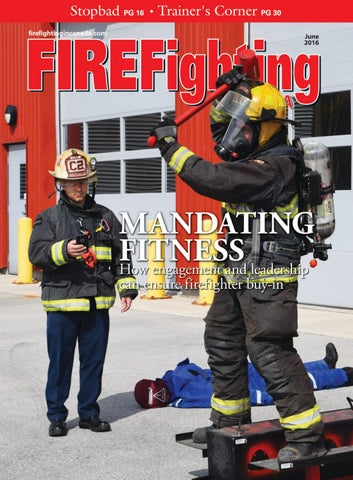
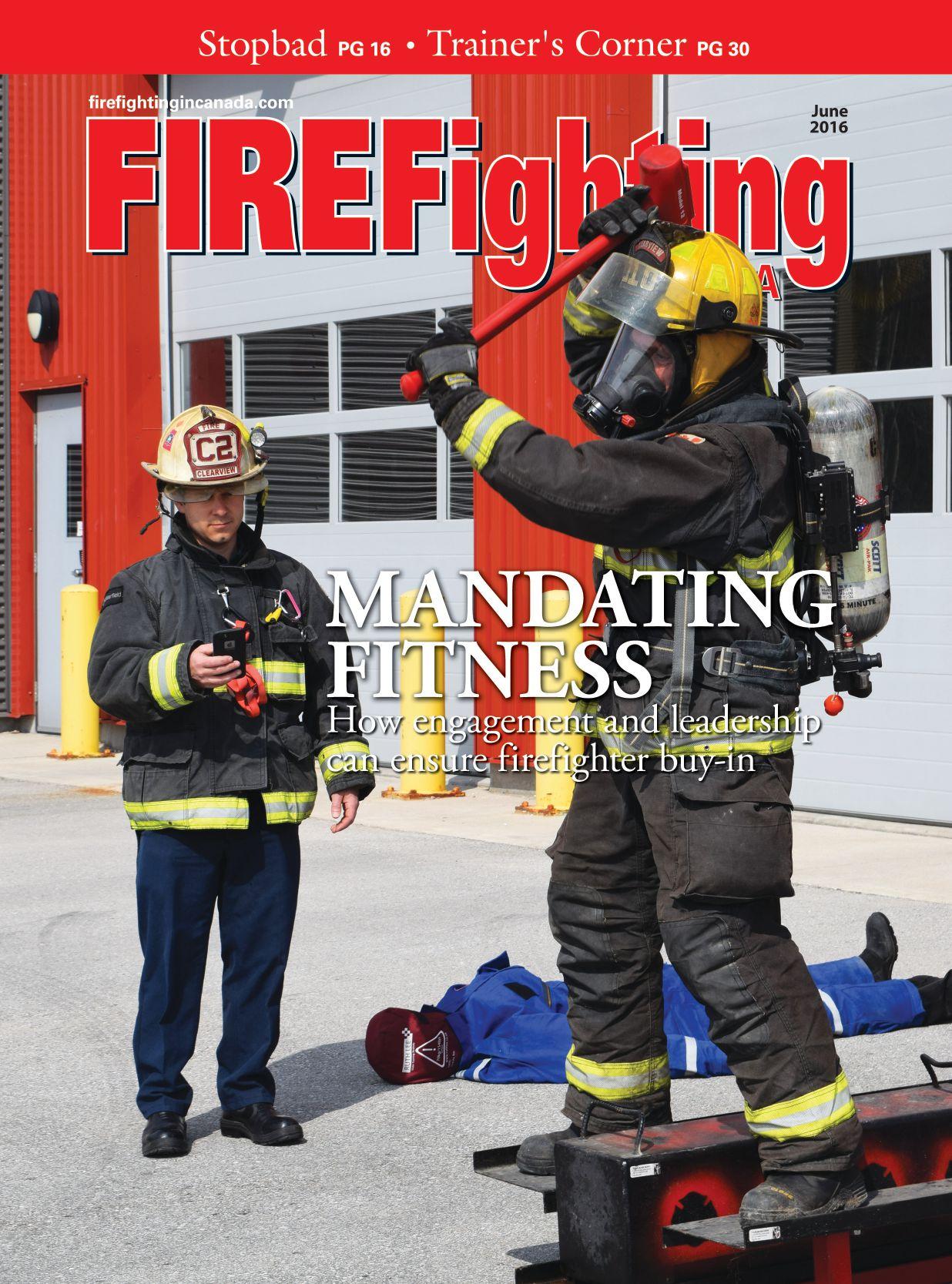
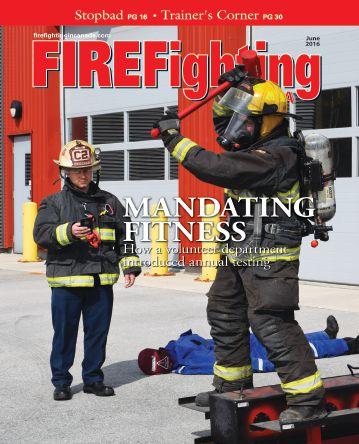
In January, 100 volunteer firefighters in Clearview Township, Ont., took a mandatory physical abilities test. No one quit the department; no one gave up during the test; and everyone passed. Maria Church explains how leadership and firefighter engagement allowed the department to successfully roll out its mandatory annual fitness test.
18
IMPROVING RAIL RESPONSE
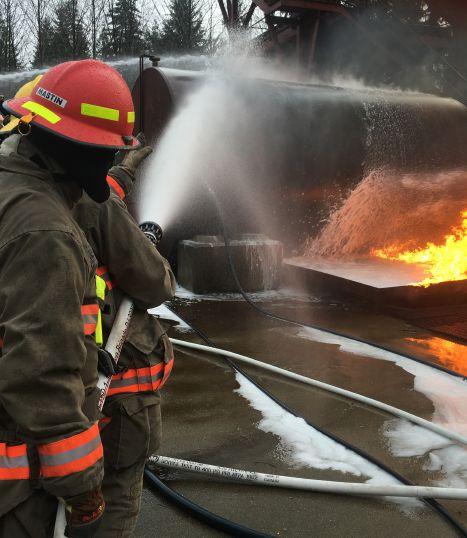
Firefighters from 10 Fraser Valley departments in British Columbia took part in an exercise in March that will shape the standard by which first responders deal with Class 3 flammable liquids delivered by rail in Canada. Fire Chief Tom DeSorcy explains what fire services learned about rail response techniques and the importance of non-intervention.
BY LAURA KING Editor lking@annexweb.com
I
COMMENT
Plan, prepare, be aware
t is taught in IMS 100 that all emergencies are local. But when rivers overflow, trains derail, or wildfires consume subdivisions, regional, provincial and federal assistance is critical.
In Alberta in May, as wildfire ravaged Fort McMurray, local firefighters responded, the emergency plan was activated, and Alberta Emergency Management Agency protocols were followed. Help came later – firefighters from British Columbia to Nova Scotia – albeit in a seemingly haphazard way.
Lessons learned from Kelowna and Slave Lake – about incident command, structural triage and resource management – were employed; Chief Jamie Coutts was among the first to help.
Prime Minister Justin Trudeau stayed away until the danger subsided, perhaps heeding the words of Brian Cornforth, who was the incident commander in High River, Alta., during the 2013 flood and admonished politicians for parachuting in at the height of the crisis, distracting responders and hijacking resources.
2016: Plan. Prepare. Be Aware. In northern
Alberta, chiefs have done just that – developed an emergency resourcing agreement, born of a wildfire that threatened High Level last year, to simplify the process of requesting resources from other departments.
Even after the Slave Lake fire in 2011, the province has yet to develop a municipal resourcing inventory, although the Calgary Emergency Management Agency recently set up a portal for that purpose. Peace region chiefs, however, have established their own system along with the resourcing agreement, relying on each for support, equipment and manpower, because no one else is coming – no national wildfire response teams, for example – and even if people are coming, they’re not coming quickly.
Clearview Fire and Emergency created a mandatory fitness test. See story on page 10.
When I wrote this on May 16, there were 114 wildfires burning in Ontario and the western provinces.
ESTABLISHED 1957 JUNE 2016 VOL. 60 NO. 4
EDITOR LAURA KING lking@annexweb.com 289-259-8077
ASSISTANT EDITOR MARIA CHURCH mchurch@annexweb.com 519-429-5184
NATIONAL SALES MANAGER ADAM SZPAKOWSKI aszpakowski@annexweb.com 289-221-6605
PUBLICATION MAIL AGREEMENT #40065710 RETURN UNDELIVERABLE CANADIAN ADDRESSES TO CIRCULATION DEPT.
P.O. Box 530, SIMCOE, ON N3Y 4N5 e-mail: subscribe@firefightingincanada.com
Printed in Canada ISSN 0015–2595
CIRCULATION
e-mail: lmalicdem@annexbizmedia.com
Tel: 416-510-5187 Fax: 416-510-6875
Mail: 80 Valleybrook Drive, Toronto, ON, M3B 2S9
SUBSCRIPTION RATES
Canada – 1 Year - $24.50 (with GST $25.73, with HST/QST $27.69) (GST - #867172652RT0001)
USA – 1 Year $42.95 USD
We acknowledge the [financial] support of the Government of Canada.
Two of Canada’s remaining four HUSAR teams – based in Calgary and Brandon, Man. – were sent to Fort Mac; interestingly, the assignment was the Calgary team’s first full deployment, notably to a wildfire-stricken community despite the team’s mandate of specialized search and rescue.
Ottawa, while matching record Red Cross donations, sent a Hercules and helicopters to help with evacuations, water bombers, 3,000 cots, generators and personal living supplies.
All this happened during Emergency Preparedness Week, May 1-7. The theme for
Three years after Lac-Megantic, Transport Canada is developing a plan to help responders deal with dangerous-goods incidents (see page 18).
I won’t debate climate change; what’s certain is that Alberta’s boreal forest is ripe to burn. As Coutts has said, watch the conditions, not the calendar. Four years after Slave Lake, fire chiefs have planned, are prepared, and are aware that in the absence of a true national response plan, all emergencies are, indeed, local.
Occasionally, Fire Fighting in Canada will mail information on behalf of industry-related groups whose products and services we believe may be of interest to you. If you prefer not to receive this information, please contact our circulation department in any of the four ways listed above.
All advertising is subject to the publisher’s approval. Such approval does not imply any endorsement of the products or services advertised. Publisher reserves the right to refuse advertising that does not meet the standards of the publication. www.firefightingincanada.com
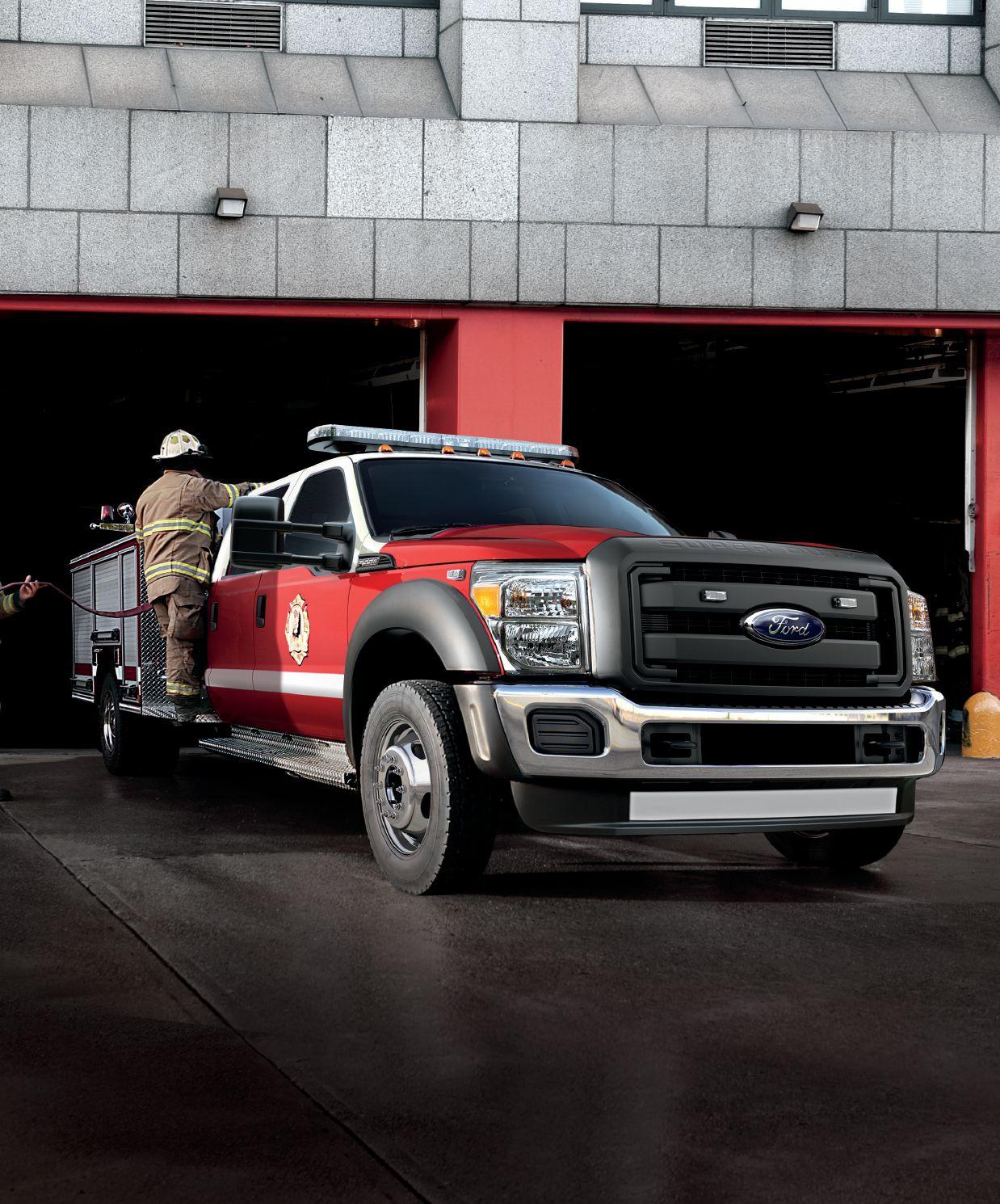
Lives depend on you every day. There’s no room for error and no time to waste. You need the same reliability and accountability from your rescue vehicles, which is why you need the undisputed Ford Class 2 through 7 trucks.
VEHICLES BUILT TO LAST.
A selection of tough and durable vehicles with GVWRs ranging from 6,010 lbs to 37,000 lbs.*
CUSTOMIZATION THAT FITS.
An extensive network of dedicated experts who offer customization to upt your emergency vehicle needs.
EXCELLENT SERVICE, AT YOUR SERVICE.
Hundreds of dealerships that offer after-sales service and repair solutions to save you time and money.
MEET THE TEAM BEHIND YOUR TEAM FORD.CA/BUILTFORBUSINESS
STATIONtoSTATION
ACROSS CANADA: Regional news briefs
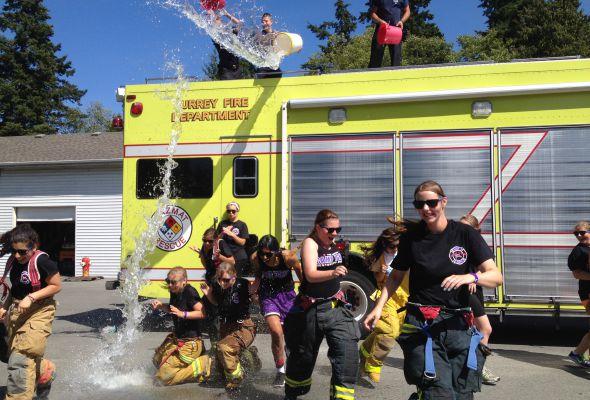
Camps encourage girls to join Canadian fire services
Camp Ignite in British Columbia balances serious learning about fire fighting with serious fun for its 20 annual participants.
Three camps run by fire-service members across the country are helping encourage young women to join the fire service.
Camp Ignite in British Columbia, Ember Fire Academy in Yukon and Camp FFIT (Female Firefighters In Training) in Ontario are taking place this summer and organizers say the camps are
helping add women to the fire-service recruitment pool.
Capt. Haida Siegmann, a director with Camp Ignite and member of North Vancouver City Fire Department, said the camp, going into its sixth year, gives young women confidence to challenge their boundaries.
“It’s not unusual to hear girls at the end of the camp
THE BRASS POLE
Promotions & appointments
BRIAN DURDEN was appointed fire chief in Oakville, Ont., beginning on May 1. Durden began his career as a firefighter with the Town of Oakville Fire Department in 1980 and has served as deputy fire chief of operations since 2008.
Durdin was heavily involved in the department’s implementation of regional radios, a computer-aided dispatch/ records-management system, station alerting and mobile computer-aided dispatch.
BRAD WILSON and GUY MCKINTUCK have been appointed deputies for the Delta Fire Department in British Columbia. Wilson has
say that they can do anything they set their minds to,” Siegmann said.
This year’s four-day Camp Ignite in August will welcome about 20 new girls as well as a returning peer mentor. Campers learn about search and rescue, dispatch, and live fire, and connect with female firefighter role models.
In Ontario, Camp FFITs, run by Fire Service Women of Ontario, are happening in Ottawa, London and Hamilton. More than 220 girls aged 15 to 19 have participated in Camp FFITs since its inception in 2010 and the application pool is growing each year, said Sue Jones, Ottawa fire prevention officer and Camp FFIT director.
“I think the reason that the camp is encouraging people to join is simply that they’re recognizing that [fire fighting] is an option where maybe they hadn’t recognized it before,” Jones said.
taken over as deputy chief of operations and McKintuck is in charge of fire prevention; both have served the department for more than 20 years.
FRED STEPHENSON became fire chief for Loyalist Township Emergency Services in Ontario on Feb. 15. A 31-year firefighter with the department,
This year in Ottawa alone, 19 women who have been to Camp FFIT are applying for full-time positions.
Three more cities in Ontario and one in Alberta are planning to hold Camp FFITs in 2017.
Ember Fire Academy, held each year in Whitehorse, is run by the Yukon Fire Marshal’s Office and offered to females of all ages, for free. Whitehorse firefighter Kiara Adams said fire fighting appeals to young women, but also women who are looking for a career change.
“It’s neat because everyone develops friendships over the week and the older ones are supporting the younger ones,” Adams said.
Ember runs for five days in late July for 12 successful applicants. Several of Ember’s past participants have gone on to volunteer in Yukon fire services.
– Maria Church
Stephenson had been serving the township as acting chief since March 2015.
LUIS GOMES accepted the position of deputy fire chief for Puslinch Fire and Rescue Services in Ontario in March. Gomes has served Puslinch for more than six years and also works as a platoon training officer with the Cambridge Fire Department in Ontario.
PHOTO COURTESY CAMP IGNITE
Program distributes CO alarms to vulnerable families
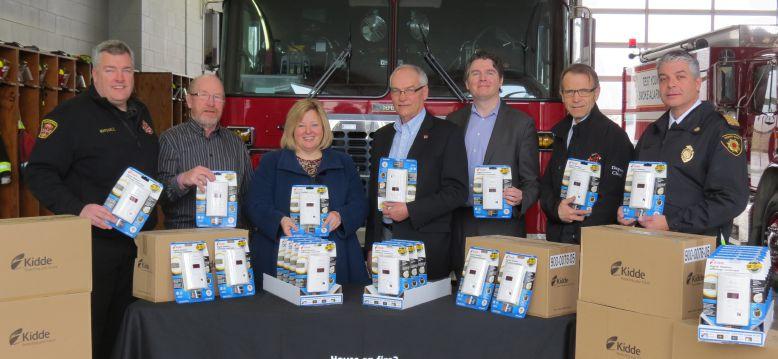
Caseworkers with the Children’s Aid Society in Huron and Perth Counties in Ontario now carry carbon-monoxide alarms in their vehicles to distribute to families as part of a new program to protect vulnerable residents.
The Insurance Bureau of Canada donated 150 CO alarms to the Huron Perth Hoarding Collation, which is working closely with the Huron Perth Children’s Aid Society to ensure families are not at risk of CO poisoning.
The alarms have LED displays that show continuous levels of CO within a home and track peak levels – both features that help reduce the instances of false alarms.
“We are responding to calls with carbon monoxide pres-
ent about once every three months,” North Huron Fire Chief David Sparling said in a new release.
“It is these kinds of partnerships that offer a means of
educating and achieving compliance,” Sparling said. “In knowing these units will all be protecting children, who are the most susceptible to carbon monoxide poisoning, makes it
all the more rewarding.” Ontario passed legislation in 2014 that requires all homes to have a working CO alarm on every level.
– Maria Church
Critical-incident support group launches in Saskatchewan
A team of firefighters, EMS and mental-health professionals in Saskatchewan is offering relief to first responders who have experienced traumatic events in the workplace.
Thirty volunteers so far have been trained in critical-incident stress management (CISM) in conjunction with
the Saskatchewan Volunteer Firefighters Association (SVFFA) spring and fall training events, known as fire schools, and the Saskatchewan Association of Fire Chiefs.
Paynton Fire Chief Ellery Russell, who is a CISM team committee member and director with the SVFFA, said the
Retirements
LEE GRANT, fire chief for the Town of Oakville Fire Department in Ontario, retired in April after 36 years in the fire service; he is serving as temporary executive director of emergency planning until the end of 2016. Grant began his career as a firefighter for Peterborough, Ont., in 1980 and later served as
chief for 13 years. Grant became a deputy in Oakville in 2008 and was promoted to chief in 2011.
BILL HIGGS, fire chief for the Sechelt Volunteer Fire Department in British Columbia, retired on April 2, the day he turned 59. Higgs served as chief for the past 26 years and was head of the depart-
provincial government indicated it will support the team, although a funding amount has yet to be determined.
“Critical incident stress management has been going on for ages,” Russell said, “but it hasn’t been provided to volunteers free of charge. The volunteer fire departments have had
to pay for someone to come out and do the intervention.”
Training will continue for CISM team members over the next three years, and organizers hope to eventually have 80 or so fully trained volunteers to provide peer support as needed, and reduce travel costs.
– Maria Church
ment in the early 1990s when it became the first in North America to use suppression foam to fight municipal fires.
Last Alarm
LLOYD SHIBLEY, past fire chief for the Golden Fire Department, died on Feb. 26 at the age of 77. Shibley was heavily
involved with the department throughout his life; he volunteered for more than 25 years and served as fire chief from 1980 to 1994.
MAX HUSSEY, former fire chief for Waterloo Fire Rescue in Ontario, died in February at 67 years old. Hussey served the department for more than 30 years, and was chief from 1993 to his retirement in 2004.
The Insurance Bureau of Canada donated 150 carbon monoxide alarms to be handed out to vulnerable families in Huron and Perth counties in Ontario by the local Children’s Aid Society.
STATIONtoSTATION
BRIGADE NEWS: From departments across Canada
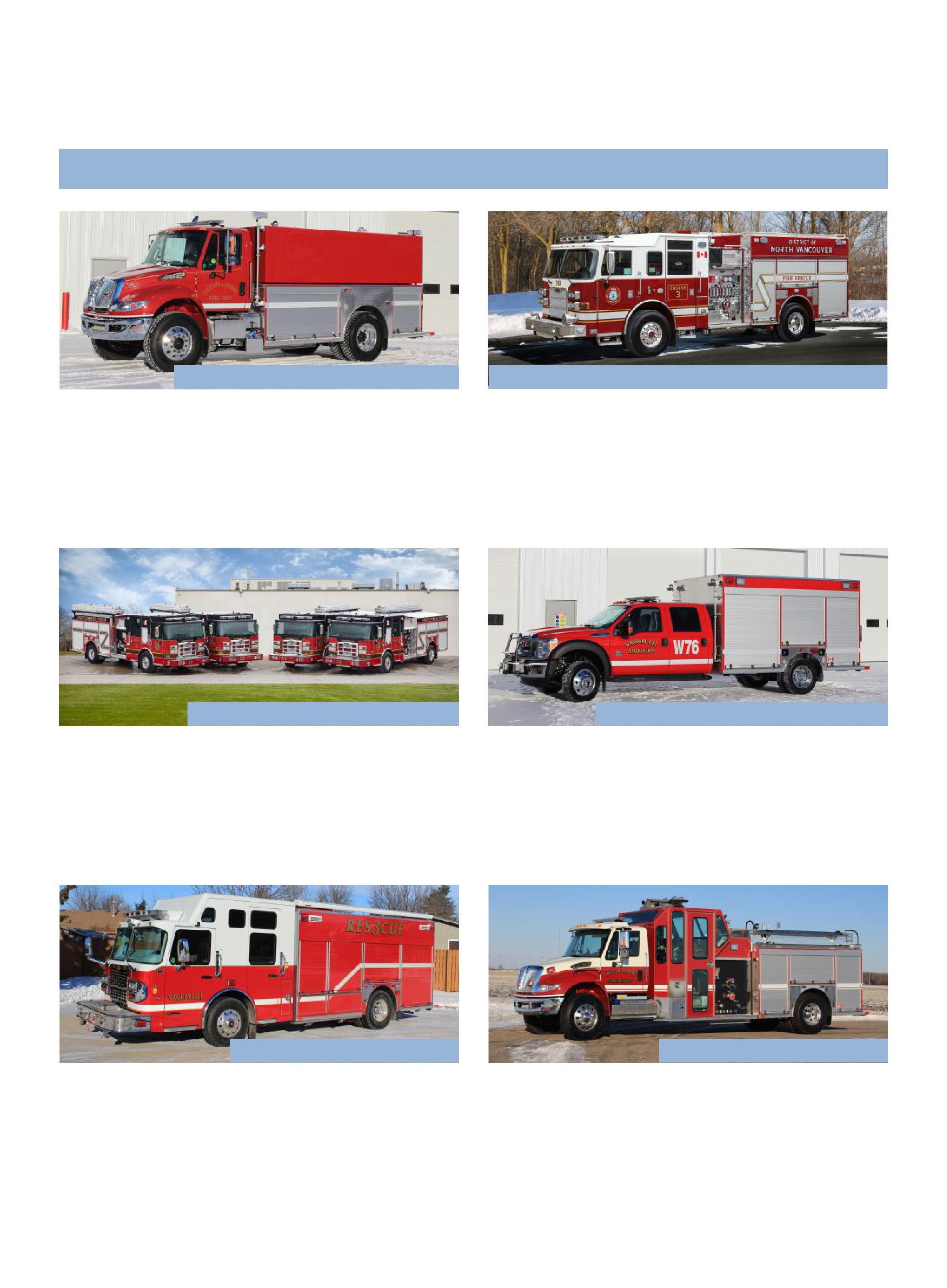
Lucknow & District Fire Department in Ontario, under Fire Chief Peter Steer, took delivery in December of a Fort Garry Fire Trucksbuilt tanker. Built on an International 4400 chassis and powered by a 330-hp Navistar N9 engine and an Allison 3000 EVS transmission, this unit features a 500-gpm Hale APS pump, a 1,700-igallon propoly water tank, internal ladder and porta-tank storage, FRC Spectra push-up scene lights.
District of North Vancouver Fire and Rescue Services, under Fire Chief Victor Penman, took delivery in February of two Pierce-built pumpers. Built on Arrow XT chassis and powered by 500-hp Detroit Diesel DD13 engines, these units feature 2,000-gpm Waterous Midship pumps, 400-gallon water tanks, Husky 3 Waterous foam systems, 6-kw Harison Hydraulic generators, hatch compartments, interior cab compartments, and hydraulic ladder racks.
Coquitlam Fire Rescue in British Columbia, under Fire Chief Nick Delmonico, took delivery in March of four Pierce-built pumpers. Built on Enforcer chassis and powered by 450-hp Detroit Diesel DD13 engines, the units feature 2,000-gpm Waterous PTO pumps, 600-gallon water tanks, Husky 12 Hercules CAFSs, 24-volt Wilburt LED light towers, hydraulic ladder racks, and hard hosebed covers.
Standard Volunteer Fire Association in Alberta, under Scott Jensen, took delivery in January of a Fort Garry Fire Trucks-built 12-foot walk around rescue. The unit is built on a Fort F-550 4x4 crew cab and powered by a 300-hp 6.7 litre Power Stroke engine and a sixspeed automatic transmission. It is equipped with Slide Master trays and tip-down shelves.
Vegreville Emergency Services in Alberta, under Fire Chief Jerrold Lemko, took delivery in January of a Fort Garry Fire Trucks-built 18-foot walk-around rescue. Built on a Spartan Metro Star LFD 24-foot raised roof chassis and powered by a 450-hp ISL 9 engine and an Allison six-speed automatic transmission, the unit features a CL615 Command Light, Warn 12,000-pound winch, powered awnings, on board cascade SCBA fill station, hydraulic hose reels and electric pump, on-board fridge and command centre.
Inuvik Fire Department in Northwest Territories, under Fire Chief Jim Sawkins, took delivery in December of a Fort Garry Fire Trucks-built pumper. Built on an International 4400 chassis and powered by a 330-hp Navistar N9 engine and an Allison 3000 EVS transmission, the unit features a 1,240-gpm Darley LDM pump, a 1,000-igallon propoly water tank, a Foam Pro 2002 system, Pneumax Platinum series 140 CFM PTO driven CAFS system, Akron Apollo monitor and a KL415D Command Light.
COQUITLAM FIRE RESCUE
LUCKNOW & DISTRICT FIRE DEPARTMENT
VEGREVILLE EMERGENCY SERVICES
DISTRICT OF NORTH VANCOUVER FIRE AND RESCUE SERVICES
Mandating fitness
How firefighter engagement and strong leadership ensure member buy in
By MARIA CHURCH
Fire Chief Colin Shewell and Deputy Chief Roree Payment are the only full-time members of Clearview Fire and Emergency Services in Ontario. The department heads were naturally nervous when they decided to introduce a mandatory annual physical-abilities test for all paid-on-call firefighters.
Nervous because, as Shewell put it, if the firefighters don’t buy into something, councillors aren’t going to fire the volunteers, they’re going to fire the chiefs.
Worries be darned, the chief and deputy were on a mission. In January all 100 or so Clearview volunteer firefighters took the mandatory fitness test. No one quit the department; no one gave up during the test; and everyone passed – albeit some after a second try.
Given well-known mental and physical benefits of exercise, it’s fair to assume the department in Clearview Township – an hour and a half drive north of Toronto – is stocked with happier, healthier, fitter firefighters. How did they do it?
LEFT Clearview Fire and Emergency Services
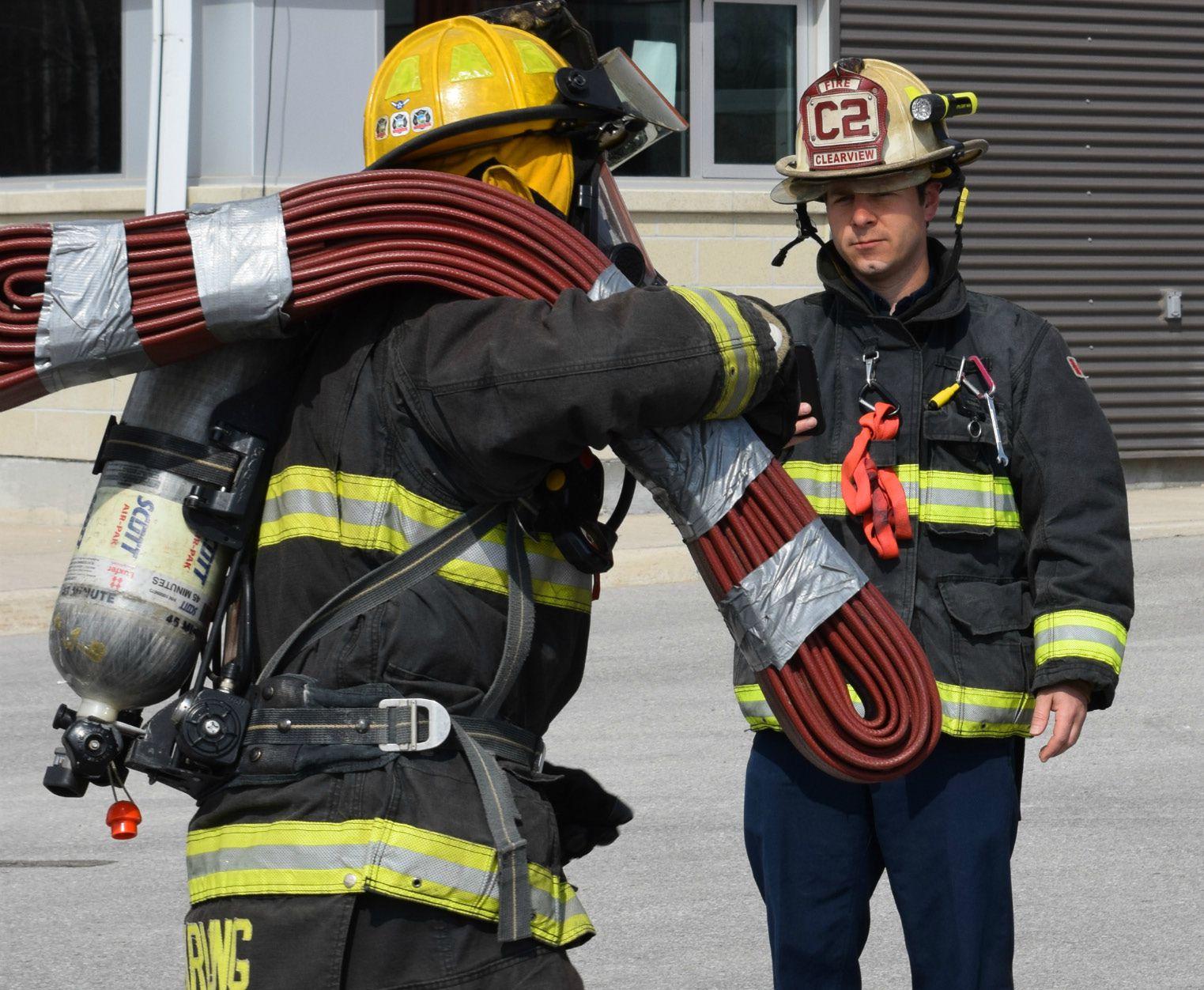
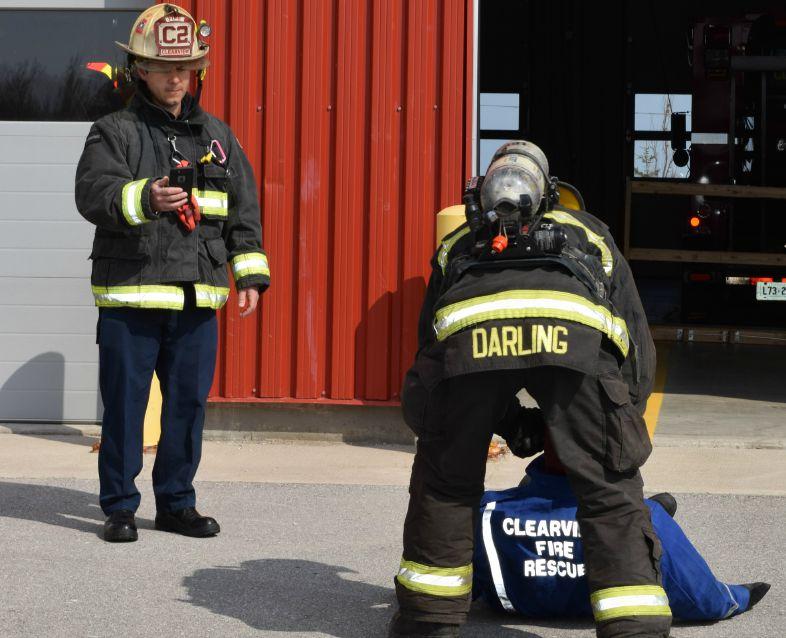
Deputy Chief Roree Payment keeps time as firefighter Warren Darling completes the department’s mandatory physical abilities test. The annual test ensures all members have the minimum skills and fitness levels required for suppression fire fighting.
ABOVE The department ran practice nights in the weeks leading up to the physical abilities test so that firefighters were comfortable completing the circuit in full PPE.
Shewell said he was surprised how well members accepted the physical-abilities test, which is now an annual standard operating procedure.
“I think the reason it was so successful is the way we rolled it out and put it into policy,” Shewell said. “It’s really for the protection of the worker.”
The test Clearview introduced is a version of the physical-abilities test the department uses to hire new recruits. The test, run as a circuit of firefighting tasks, determines a candidate’s ability to carry out certain firefighting duties within a particular time frame.
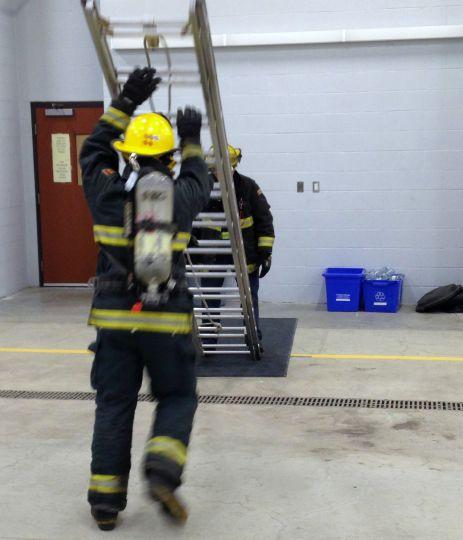
Clearview’s firefighters had to finish eight test components within 15 minutes – search and rescue, ladder carry and raise, hose pack walk, tool carry, dummy drag, hose advance, forcible entry and equipment haul – wearing full PPE and on air. Payment set the 15-minute finish time
based on an average of completion times for the different age and gender demographics in the department. More than 90 per cent of firefighters finished the test within 10 minutes.
Those few firefighters who did not finish within 15 minutes were given options: retake the test on another date that month, accept modified duties and obtain documentation from a doctor to retake the test within six months, or move into a public-education role. All members chose the first option.
“Why they failed had nothing to do with the physical element, it actually had everything to do with their confidence in an SCBA,” Payment said. The demand on a firefighter’s air supply is greater during the test circuit than during a regular training drill due to the high-intensity exercise and added time pressure.
“We worked with those firefighters and they came back and they all passed it the next time,” Payment said.
“The whole point of this testing is not to fail anybody,” he said. “Our end result, if we didn’t fail anybody, that was going to be perfect. If we inspired a few people to be better and to push themselves, we’ve won. And that’s what happened.”
■ MUSTERING THE TROOPS
The test circuit was introduced to Clearview members last year as an addition to regular station training. The idea, Payment said, was to re-familiarize firefighters with circuit (who would have last completed a similar circuit when they joined the department) and to make it a fun, challenging exercise. In October, Payment visited all five Clearview Township stations to announce that the circuit would be a mandatory annual test.
“Obviously as soon as you throw the word mandatory in there, there is going to be some apprehension,” Payment said.
To help address members’ concerns, Payment and Lt. Kevin Spears, created and ran a two-hour training session every Thursday night to give members a chance to practise the circuit. The training sessions were held for six weeks in the lead up to the January test dates.
“Probably 90 per cent of the department came to one of those tune-up sessions or training sessions before the test
date,” Payment said. “We tried very hard to expose as many people to it so there were no surprises come test time.”
One Clearview captain voiced some objections about introducing an annual test that would potentially remove members from a suppression role. The captain was respectfully concerned, Payment said, for members who he felt would have issues with the testing. The captain spoke with Chief Shewell and Deputy Payment on several occasions to understand what was involved in the test.
“I asked him to come in to one of those practice nights and I said, ‘Just try it.’ He came in, and he did it, and at the end of it he agreed it’s not that bad,” Payment said.
The next step was to bring in those members the captain felt would struggle with the test. Those firefighters, too, easily finished the practice run and were no longer concerned about the test.
After the testing dates in January, attendance numbers at training nights skyrocketed. For most members, Payment said, passing the test was likely a confidence booster.
“I probably had 30 per cent of the department ask me after the test if we can continue to have those training sessions,” Payment said. “I think that shows how successful it was and how much people liked it.”
Integral to the buy-in from members,
Shewell said, is demonstration from leadership. Both Shewell and Payment took and passed the test.
“[A mandatory test] is doomed to fail, especially in a smaller municipality, if the chiefs fail to do it,” Shewell said. “The chiefs have to participate and they have to show their crews that they’re willing to do the physical, just like your new people, your middle people and your older people. That’s the key, being engaged and being involved.”
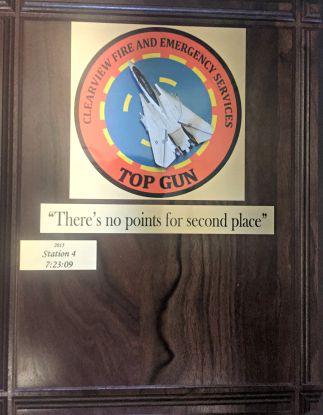
Incentives can’t hurt either, Payment said. The deputy created a custom plaque to award the station with the lowest average completion time. The playful plaque quotes a line from cinema classic Top Gun: There’s no points for second place.
“It’s a pretty cool trophy; some of my best work,” Payment said with a laugh. Next year the chief and deputy plan to change the trophy qualifications to allow stations to choose their top four or five performers to compete for the lowest average and the prized trophy.
■ FITNESS FOR LIFE
Both chief and deputy stressed the importance of firefighter fitness – both in terms of ability to do the job, and maintaining a healthy body.
According to the 2013 edition of the International Association of Fire Fighters
circuit included search and rescue, ladder carry and raise, hose pack walk, tool carry, dummy drag, hose advance, forcible entry and equipment haul.
ABOVE The station with the lowest completion time average received a playful trophy created by Clearview Deputy Roree Payment.
manual on heart disease in the fire service, cardiovascular disease, mainly coronary heart disease, remains the most frequent cause of firefighter line-of-duty deaths in North America. The manual recommends regular aerobic activity and muscle-strengthening exercises to help prevent sudden cardiac events on the job.
“Fire fighting is a zero-to-60 occupation,” Payment said. “The big thing with that, specific to a paid-on-call fire department, is that a lot of our firefighters might have sedentary jobs where they’re not overly physically active, and don’t have the opportunity to be physically active. And we want to make sure that they were all able to perform the tasks that were required.”
Beyond ensuring firefighters’ abilities are up to par, Payment said the test keeps them accountable to some type of fitness regime. Members saw how their fitness levels compared to others and how they can improve.
The idea of a mandatory physical is not altogether new, although it is uncommon. Lesser Slave Regional Fire Service in Alberta has had mandatory physical testing since 2003 and mandatory medicals since 2006. Lesser Slave Regional Fire Chief Jamie Coutts said in an email that the testing has been beneficial for firefighter health and safety.
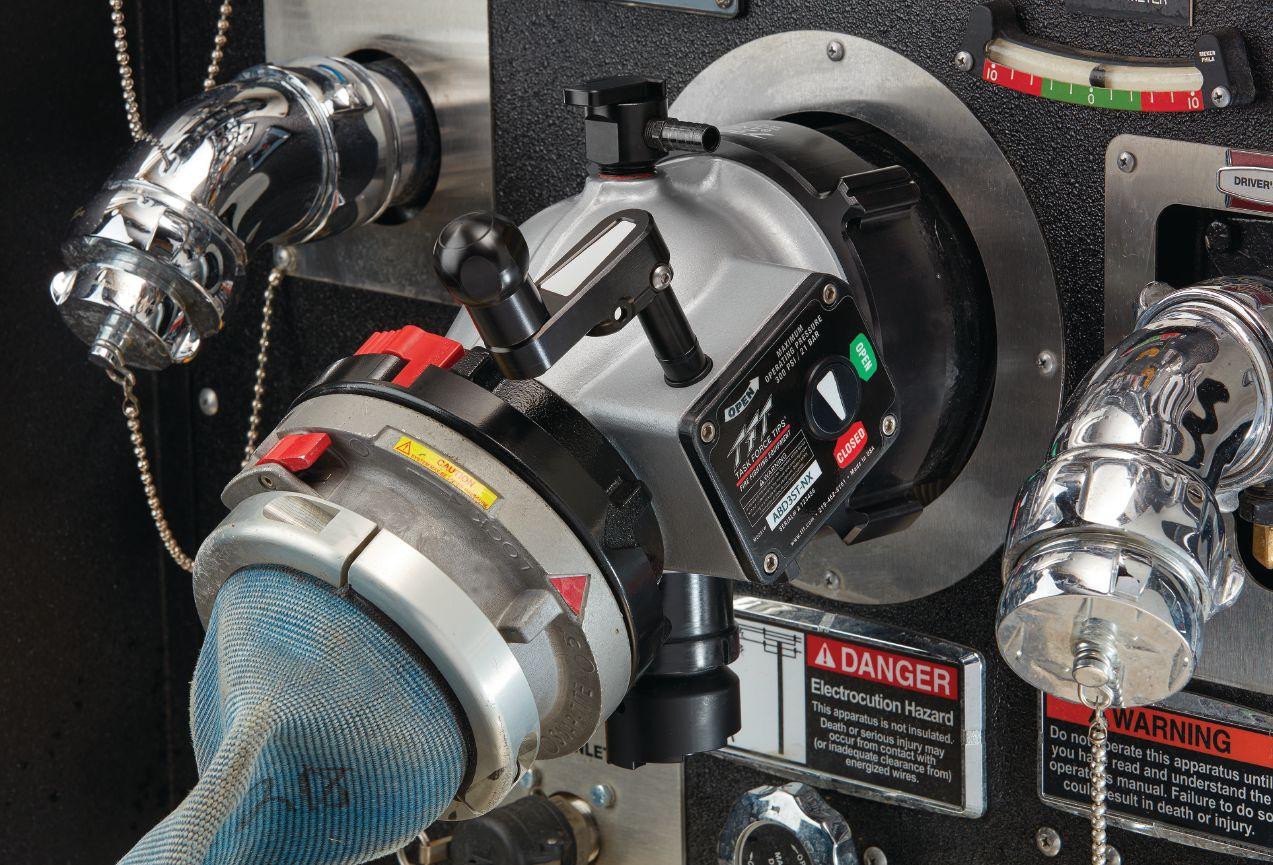
• Integrated Adjustable Pressure Relief Valve Provides Fast Reacting High Volume Protection from Water Hammers in the Hose lines
• Individually Serialized for Tracking and Continued Service and Technical Support
• Highly Visible Valve Position Indicator and Slow Close Operation Exceeds All Standards Requirements
• Flow Efficient Waterway Has Less Than 5 psi Loss at the Rated 1250gpm Flow
Model ABD3ST-NX
If we inspired a few people to be better and to push themselves, we’ve won. And that’s what happened.
’’
– Deputy Chief Roree Payment Clearview Fire and Emergency Services
“A few guys had to retire and we found a lot of high blood pressure and a few heart problems,” he said. “I recommend it to all departments. Nothing crazy just a light reminder annually that this job is tough and we need to be healthy.”
Lesser Slave’s physical test involves a one-kilometre run, stair climb, push-ups, weight lifting, a dummy drag and a hose pull, all completed within one hour.
■ SHIFTING CULTURE
Shewell said the mandatory physical is just one piece of what has been a push for department professionalism. Members are now referred to as part-time, paid-on-call firefighters, rather than volunteers. The department also introduced an attendance policy in 2014.
“With the services we provide, the expectations are that we’re professional and we can do our job well when individuals show up at an emergency scene,” Shewell said. “It’s not so much, ‘Hey, we’re just here to help,’ anymore; we have to have competent, professional individuals who can do the tasks.”
A few volunteer departments have been in contact with Clearview to learn what is involved in creating a mandatory physical-abilities test, and whether or not it would be a fit for them. (Fire Fighting in Canada contacted some chiefs who said they are impressed with what Clearview has done, but preferred to discuss ideas with their members before sharing with media.)
After discussions with Chief Shewell, Tony Mintoff, fire chief for the Township of Tiny Fire Department in Ontario, took what he said is a first, and ideally only, step towards ensuring his volunteers meet physical health standards for fire fighting.
In March, Tiny Fire Department members took home medical clearance forms that list the various tasks, environmental factors and stress factors associated with the job. The forms require a physician’s signature to confirm the patient is safe to perform that job.
“This is breaking new ground for us,” Mintoff said. “There has never been anything like this before in this department, and I thought, if we can come up with something pretty reasonable and somewhat unobtrusive to start with, we’ll get them complying with it and then we’ll go from there.
“If this system starts to help to identify and advise some of these people and we can get a reasonable level of fitness started, then fine, we may not have to be prescriptive about it,” he said.
The chief said he has not heard any negative feedback about the forms from members, which are due in October and will be required every two years. Mintoff points to the Occupational Health and Safety Act as a directive for chiefs to take precautions to protect their employees. Yet, for the 40 or so years Mintoff has been in the fire service, he said fitness programs have come and gone unsuccessfully in volunteer and full-time departments.
“It is not just for us, it’s for them as well,” he said. “I’m not interested in planning funerals for these guys.”
Clearview’s success with mandating a physical test is notable, Mintoff said, and encouraging for other chiefs.
“It’s long overdue . . . and hopefully 10 years from now it will be the norm.”
CLEARVIEW FIRE & EMERGENCY SERVICES
• Five stations
• 100 paid-on-call firefighters
• Full-time chief and deputy
• Part-time administrator, fireprevention officer, training officer
• 12 fire apparatuses, 1 ATV and three support vehicles
• 650 calls a year
• 550 kilometres squared
• 13,700 population
BY GORD SCHREINER Fire chief, Comox, B.C.
TSTOPBAD
Seconds count so train for speed
hose of you who know me know that I am very passionate about the fire service. I have completed 40 years of service and I can’t wait to do a few more. I am excited about the future of fire services, despite our many challenges, and I believe this future is bright; in fact, it has never been brighter.
I have had the honour of travelling all over this great country (and other countries) delivering training and learning a lot from the many fire departments I visit each year. I have seen remarkable improvements in equipment, technology, leadership, training, firefighters and safety.
I am often impressed with some very small departments doing some very big things when it comes to training. I can honestly say that today’s fire services are in good shape. Can we get better? Well, of course we can and we will.
In my column in the May issue of Fire Fighting in Canada, I discussed the importance of consistent, meaningful training. In my department we train, train and train. If you know me, you also know that I hate excuses. When it comes to training I have heard them all: it is too cold out; it is too wet; we don’t have enough firefighters here to train; we don’t have enough money to train. Forget about the excuses and get to work training as though lives depend on it, because they do. Some of the best-trained departments I have seen are ones with small budgets, big hearts and lots of desire.
My department, Comox Fire Rescue in British Columbia, has several training buildings with dozens of training props, but it is our desire and great training programs that make the difference. One of our newest training programs is called Seconds Count.
requirement for a high level of safety. Some of the short drills in the training program can be run with one or two firefighters and can be run inside or out; there are no excuses. The drills can also be run morning, noon or night.
Comox has developed a couple of dozen of these timed drills and we practise them during regular training sessions at the beginning, throughout or at the end. During some of our two-hour training sessions we might do a series of Seconds Count drills, most of which are fewer than five minutes long, so on a good night firefighters will complete several different ones.
I have seen a huge improvement in the efficienty of our welltrained firefighters as they worked toward completing these tasks in a reasonable timeframe while ensuring safety is still their No. 1 priority. As our firefighters become more and more efficient at these individual drills, we combine two or more of the drills into a timed scenario.
The tasks for these drills are simple: donning PPE and SCBA, stretching a line, throwing a ladder, setting up a fan, deploying an AED, performing VEIS (vent, enter, isolate and search) and
A well-trained firefighter is, of course, a safer firefighter and is more likely to make a positive difference on your fire ground. ‘‘ ’’
The very nature of our business is that we must be able to deliver many of our services in an urgent manner. Our citizens do not make appointments for our many emergency services.
The Seconds Count training program is designed to enhance the speed of delivery of some bread-and-butter tasks that are common at emergency scenes. Firefighters are training to increase speed, while at the same time maintaining the department’s
Gord Schreiner joined the fire service in 1975 and is a full-time fire chief in Comox, B.C., where he also manages the Comox Fire Training Centre. He is a structural protection specialist with the Office of the Fire Commissioner and worked at the 2010 Winter Olympics as a venue commander. Contact him at firehall@comox.ca and follow him on Twitter at @comoxfire
so on. These types of drills make it easy to keep a record of individual firefighters as they complete the various Second Count lesson plans.
The key to great training is to be organized and have several plans (lesson plans) ready for each training session. The trainer can then tailor these lesson plans to suit the circumstances of the session. A firefighter who is participating in meaningful training is a happy firefighter. A well-trained firefighter is, of course, a safer firefighter and is more likely to make a positive difference on your fire ground.
Remember, without effective on-going practice, a firefighter is just another civilian. Training saves lives – maybe even your own.
Please feel free to contact me for a copy of the Seconds Count lesson plans. We are more than happy to share.
Ergonomically
•
•
•
•
•
•
Improving rail response
Flammable-liquids exercise teaches fire services new response techniques
By TOM DESORCY
On March 12 and 13, firefighters from 10 Fraser Valley departments in British Columbia took part in an exercise that will shape the standard by which first responders deal with Class 3 flammable liquids delivered by rail in Canada.
Transport Canada, along with Defence Research and Development Canada (DRDC) – an agency of the Department of National Defence (DND) – conducted Exercise Vulcan, a pilot training exercise that will lead to improved response capabilities in the event of an incident involving a train carrying flammable liquids, such as crude oil.
Change often comes as a result of lessons learned from horrific and tragic events. Lac-Megantic Fire Chief Denis Lauzon, who was a presenter and observer during Exercise Vulcan, said the July 2013 derailment and explosion that decimated his town and killed 47 people, will pass three generations: “Those who lived it, those who will hear about it and those who will learn by it.” On a weekend in March, more than 40 firefighters got a jump on that learning.
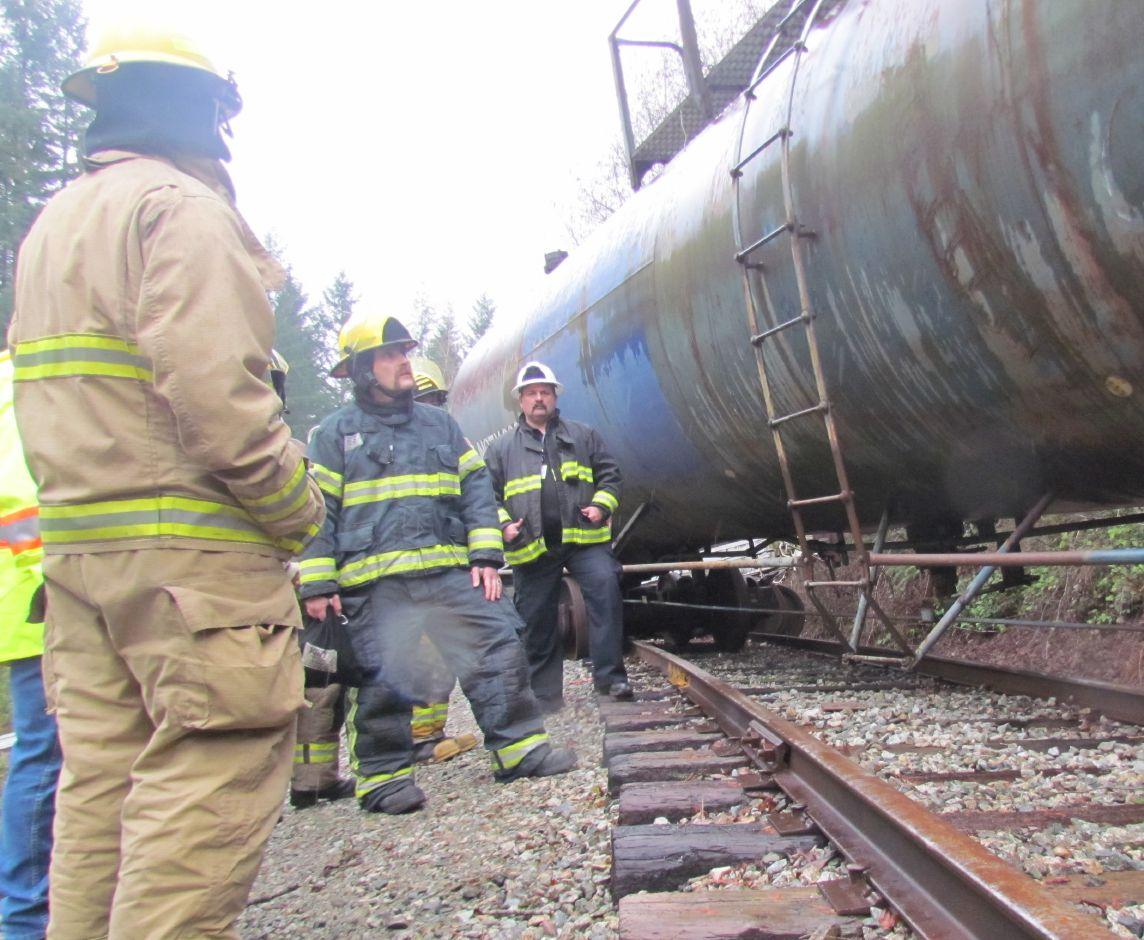
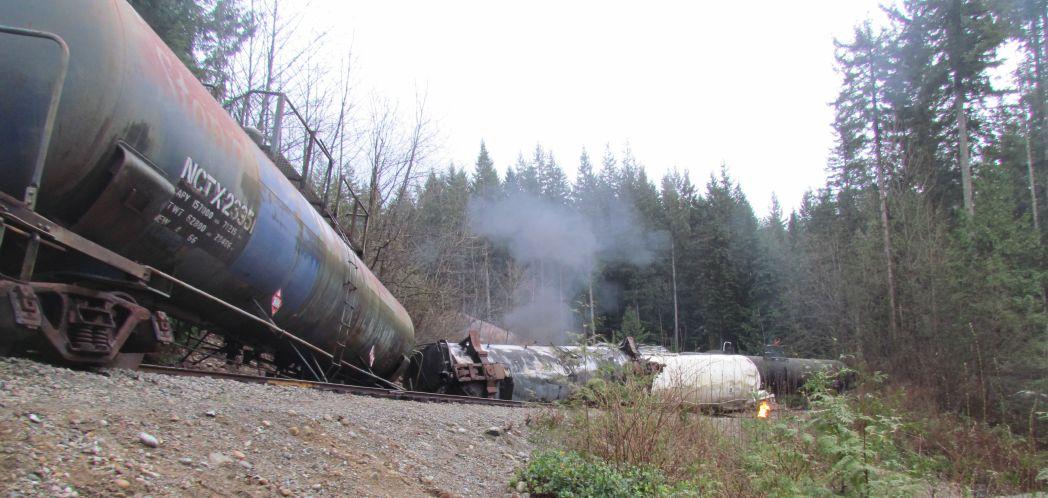
LEFT In March, Transport Canada and Defence Research and Development Canada led a pilot training exercise with 10 fire departments that will set standards for responses to rail incidents involving flammable liquids.
ABOVE Firefighters learned strategies for scenarios such as a crude oil derailment, and the importance of non-intervention.
My involvement in Exercise Vulcan began in November 2015 when I was invited to take part in a tabletop event in advance of what would become a full-scale exercise. In the room were representatives from Transport Canada, DRDC and the Canadian Safety and Security Program (CSSP), as well as members of the Saint John Fire Department in New Brunswick. Everyone had gathered with a focus on a train-derailment exercise involving Class 3 flammable liquids in a small community such as Yale, B.C., with a population fewer than 200. While participants were told this tabletop would be the precursor to a much bigger exercise, little did I realize just how large and involved the event would be, nor did I understand the impact the exercise would have on the responses to flammable-liquids
incidents for fire services across Canada.
Derailments involving flammable liquids, fortunately, do not happen every day, but the knowledge gained through this exercise will change the way fire departments respond to these types of incidents and give smaller departments the confidence to be able to handle them, knowing that resources are available, and that they are not alone.
Prior to attending the March exercise, participants were required to take part in a telephone interview that gauged our knowledge of flammable-liquids responses. The interview was followed by a two-hour, interactive, online training session (access in English at rail.capp.ca/en/index.html and in French at rail.capp.ca/fr/index. html) about dealing with incidents involving flammable liquids. The live portion of the exercise concluded with another evaluation to measure participants’ new levels of knowledge to help Transport Canada change the course structure and content to fit into a weekend setting, and not overwhelm the participants. Organizers stressed that we were not being evaluated individually – rather we were contributing to the overall picture of the level of awareness.
Saturday began with a presentation by Chief Lauzon, followed by information from hazmat specialists from CN and CP, along with some industry experts who explained how do deal with derailments. The original plan was to have two scenarios with two groups rotating through each one, but with additional participants – and therefore a third group – a trade show of sorts was added, comprising of industry partners and private hazmat companies. Saturday afternoon, each group toured the two scenario scenes and industry reps demonstrated their equipment and tools.
Sunday, the three groups rotated through two live scenarios: arrival on scene of a derailment; and a pool of liquid on fire near a tank. Responders had radio contact with a “dispatcher” and “specialists” to offer resource information. The third scenario was a debrief of sorts – a post-scenario interview.
Hope, B.C., firefighter Dave Hick said the exercise was broader and more valuable than he anticipated.
“I was expecting a deployment exercise but I was really blown away to get the knowledge and experience from the [subject
PHOTOS BY TOM DESORCY
matter experts],” Hicks said. “Having the chief from Lac-Megantic there really helped drive home how important the training [Transport Canada] is developing will be, and I was thrilled to take part in it.”
For me, the exercise was eye-opening – a bit different than simply putting the wet stuff on the red stuff. We were taught the importance of non-intervention – neither an offensive nor defensive attack, but not putting water on the fire right away, as structural firefighters are trained to do. We were taught to first cool the tanks and then apply foam
while considering the runoff of the possibly contaminated water and the impact on local infrastructure, such as drains and water-treatment plants, or the environment.
Not only was the exercise a learning experience for firefighters; it also gave organizers a better understanding of just how much the fire service knows about flammable liquids, and where gaps exist. For Transport Canada, the most significant aspect of the exercise was to gauge the existing knowledge and capacities of firefighters to determine the standard level
Participants in Exercise Vulcan examine equipment used to contain spills, stored inside a contractor-operated response trailer.
of hazmat training and the type of response that can be expected mostly in rural areas.
For better or for worse, fire departments have become all-hazards response agencies, and while they try to deal with every possible incident, there are times, particularly in the volunteer sector, when we become overwhelmed. In the case of incidents involving railways, some very serious steps have been taken since July 6, 2013, to better regulate the transportation of dangerous goods; post-Exercise Vulcan, a standard will be developed for first responders to deal with these types of dangerous incidents.
The training facility was the Maple Ridge campus of the Justice Institute of British Columbia (JIBC), located about 60 kilometres east of Vancouver. The facility houses more than a dozen firefighting props, including the largest static train-derailment prop in Canada, according to retired Maple Ridge fire chief Peter Grootendorst, who is the director of the fire and safety division at the JIBC.
Grootendorst said the JIBC supports a national training standard for high-hazard flammable liquid trains.
“The exchange of information and the training and evaluation of new techniques was excellent and was valuable for everyone involved,” Grootendorst said.
“The exercise was also a meaningful opportunity to evaluate existing standards and protocols.”
Louis Marcotte, chief of response operations for the transportation of dangerous goods with Transport Canada, explained the ground-breaking nature of the exercise – the change of culture in teaching the TASC response concept to structural firefighters: timely, appropriately, safely and co-ordinated.
Marcotte said Transport Canada is working to improve outreach to emergency responders and raise awareness of the Emergency Response Assistance Plan (ERAP) program (www.tc.gc.ca). Marcott explained that Transport Canada has several remedial measures specialists (RMS) who will arrive on site to help responding fire departments with knowledge of the product and assist in remediation of the incident while keeping local fire officials in charge and working under unified command. Marcotte also said CANUTEC (Canadian Transport Emergency Centre) is a phone call away, and while firefighters carry the Emergency Response Guidebook, a call to CANUTEC initiates the ERAP and the response.
Although the ERAP dates back to 1979, many participants – me included – had never heard of it until the table top exercise.
Marcotte said that although the ERAP has evolved and information about it is readily available, Transport Canada and other agencies need to ensure that awareness of the program reaches smaller communities.
Ibralima Sow, manager of exercises and programs/emergency preparedness with Transport Canada, emphasized that it’s important for first responders to realize they can quickly and efficiently seek help when dealing with flammable-liquids incidents and that significant resources – including government, the railway company involved in the incident, industry and contractors –can be “brought to bear to support them,” although local first responders remain the authority having jurisdiction.
For participants in Exercise Vulcan, it was evident that first response to a rail incident is a big learning curve for structural firefighters.
It has been almost three years since that tragic day in Lac-Megantic, and the town slowly recovers. Chief Lauzon said there remains a certain tension in the community whenever a “black tanker’” that may contain crude oil rolls through town. It will, the chief said, be a long time before that memory fades.
The fact that representatives of government, industry and first-response agencies gathered in a rural training facility to help shape the standard by which the rest of Canada will be trained to deal with dangerous-goods events is indicative of the commitment to change, as is the recognition of the capabilities of the first responders and
the provision of tools to deal these incidents. While there have been regulatory amendments for shippers and carriers of dangerous goods, Exercise Vulcan is the first step toward changing and improving the way first responders deal with flammable-liquids incidents.
Participants in Exercise Vulcan took away the need for a sight survey or scene assessments before rushing into an incident. Learning from the experts also develops a network of responders; in small or rural towns and cities there are only so many of these experts in the area, so the networking aspect of the exercise is crucial.
Representatives of fire schools in Quebec and Ontario attended the exercise as observers to determine how they will participate in the development of the program in their provinces. The goal is to create one program for use by responders across Canada rather than sending firefighters to costly United States-based programs.
Tom DeSorcy became the first paid firefighter in his hometown of Hope, B.C., when he became fire chief in 2000. Originally a radio broadcaster, Tom’s voice could be heard in the early 1990s across Canada as one of the hosts of Country Coast to Coast. Tom is married with two children and enjoys curling, golf, cooking and wine-tasting. He is also very active with the Fire Chiefs’ Association of B.C. as communications director and conference committee chair. Email Tom at TDeSorcy@hope.ca and follow him on Twitter at @HopeFireDept
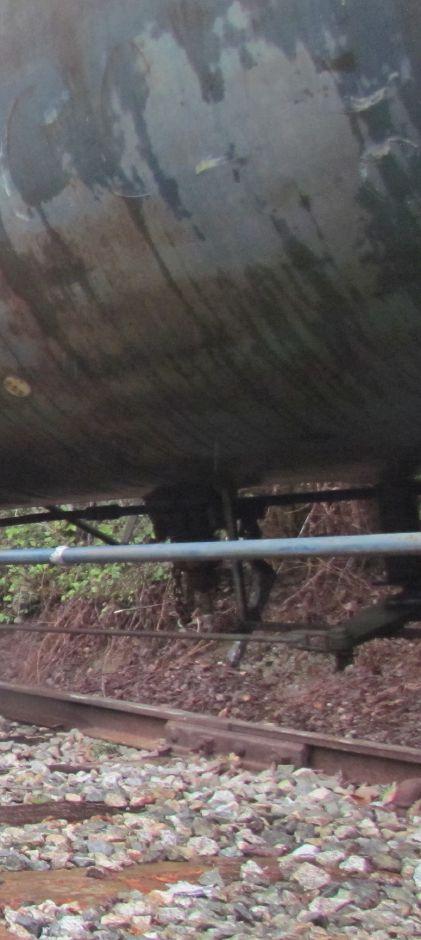
The exercise was held at the Justice Institute of British Columbia’s Maple Ridge campus, which houses the largest static train derailment prop in Canada.
BACKtoBASICS
Truck company ops –aggressive cooling part 3
BY MARK VAN DER FEYST
In this series about rapid fire development (RFD), we have focused on the science behind flashover and how water is used to aggressively cool the gases and the environment in order to reduce the heat-release rate and contain radiant heat. The third and final part of this series is a study of ventilation as a companion to using water for aggressive cooling.
Using science and data, fire services have been re-examining the usefulness and the purpose of ventilation. This re-examination has led some fire departments to shy away from ventilation; some have instituted a no-roof-ventilation practice and rely instead on horizontal, mechanical and hydraulic ventilation. While these three types of ventilation work well and have their place in fire fighting, vertical ventilation cannot be removed from the arsenal.
Vertical ventilation, used along with water, aggressively cools the fire and the environment by creating a natural travel path for hot gases, unburned particles of combustion and steam to escape quickly and easily; these gases are lighter than cold air and naturally want to travel up.
Smoke always travels to a lower atmospheric-pressure zone or area. A structural fire in a residential home has two distinct atmospheric pressure zones: the high and the low zones. The high-pressure zone is inside the structure, where heat generated from the fire forces the air to expand and fill the building. The expanding air coupled with high-density smoke increases the atmospheric pressure of the room. The smoke will thus push itself out toward the low-pressure zone, which is outside the structure.
Atmospheric pressure is why firefighters see smoke exiting from any structure fire – it is following its natural path, which is up and out. Once water is applied to the fire and the environment, the smoke will expand, it will cool and it will need an escape route. Vertical ventilation gives the heated air a natural pathway to exit the structure.
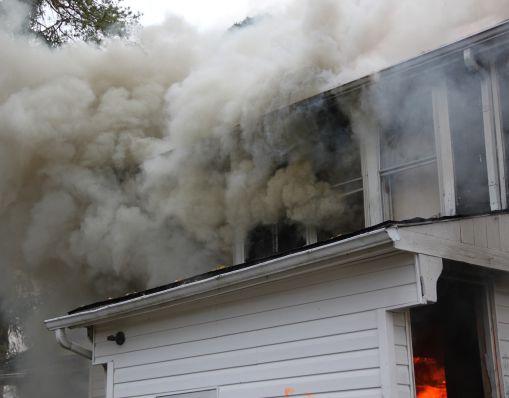
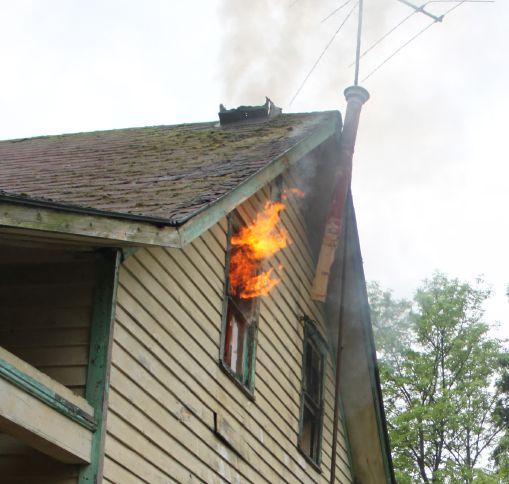
There are two distinct flow paths that can either aid or hinder firefighters: the unidirectional and bidirectional flow paths. A unidirectional flow path (see photo 1) has only one travel direction, either going in or going out. Either hot gases, unburned products of combustion and smoke will go out from the structure, or there will be a fresh supply of air coming into the structure. Notice in photo 1 how there is nothing but smoke exiting from the far left window.
A bidirectional flow path (see photo 2) is two travel paths occurring at once: smoke is exiting in the top half of a structure while the bottom half has an incoming supply of air. The window in photo 2 has fire exiting from the top half while the bottom half is wide open for incoming air supply.
Photo 2: Bidirectional flow path allows for an incoming supply of air to feed the fire. The top half of the window has flames exiting while the bottom is open for air to enter.
Photo 1: A unidirectional flow path has only one travel direction, in or out. Without incoming fresh air, the fire has limited or no growth.
PHOTOS BY MARK VAN DER FEYST
FEATURING THE SC 757E2 COMBI TOOL
IN THE RACE AGAINST TIME, TO SAVE LIVES EMERGENCY RESPONDERS REQUIRE UNRELENTING POWER AND SPEED. WITH THE LARGEST SPREAD AND SUPERIOR CUT RATING, THE SC 757E2 COMBI TOOL BY HURST JAWS OF LIFE IS THE SINGLE MOST POWERFUL COMBI TOOL
UNSTOPPABLE POWER
BACKtoBASICS
Vertical ventilation, done correctly, creates a unidirectional flow path to allow smoke and unburned gases to exit a structure. A vent placed directly above the fire area forms a natural travel path for gases and steam created once firefighters start to apply water on the fire and the surrounding environment.
So why have fire services moved away from using vertical ventilation? The reasons vary, but a common denominator is light-weight construction and failure times. Fire services are seeing faster failure times with the increase in lightweight construction in roof trusses, which means roofs are rapidly compromised by fire and are too dangerous for firefighters to access. Diligence needs to be exercised to make sure crews can still access the roof; this involves using size-up to determine if it is safe for firefighters.
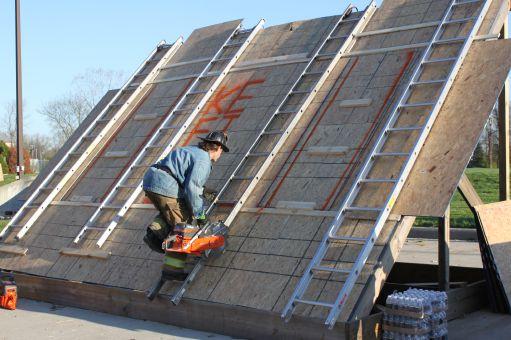
One tactic to help overcome lightweight roof trusses is to use two roof ladders. Typically, firefighters bring one roof ladder to vent the roof, but in the case of lightweight roof construction, two are more effective.
As you see in photo 3, two roof ladders placed close to each other allow two firefighters to easily work together to make a vertical opening. Each firefighter has a platform on which to work without having to step onto the roof itself. The roof ladders are supported at the top and at the bottom of the roof, thus displacing the weight of the firefighters. Firefighters should spend a limited amount of time up on the roof – they are there only to make the cut and then get off.
Firefighters need to be aggressive in their approach to gain an upper hand on rapid fire development: one method is to aggressively cool the fire and, at the same time, ventilate the structure. Ventilation and aggressive cooling go hand in hand to reduce the instances of flashover and to keep firefighters safe.
Mark van der Feyst has been in the fire service since 1999 and is a full-time firefighter in Ontario. Mark teaches in Canada, the United States and India and is a local-level suppression instructor for the Pennsylvania State Fire Academy and an instructor for the Justice Institute of BC. He is also the lead author of Residential Fire Rescue. Email Mark at Mark@FireStarTraining.com
Photo 3: Two roof ladders placed close together allow two firefighters to easily and safely work side by side to make a vertical opening and avoid placing their weight on the roof.
PHOTO BY MARK VAN DER FEYST
BY SHAYNE MINTZ
NFPA Canadian regional director
ANFPAIMPACT
Learn about alternately fueled vehicles
re your fire crews prepared to respond to incidents involving electric, hybrid, or fuel-cell vehicles?
First responders across Canada rush to incidents daily that may involve alternatively fueled vehicles (AFVs), and many of them are not immediately aware that they are dealing with this technology. These vehicles often look identical to their gasoline or diesel-powered counterparts, but collisions involving AFVs may result in serious, potentially fatal, on‐scene injuries to emergency responders and vehicle occupants, along with possible collateral property damage and post‐incident injury or death.
It is vitally important responders identify these vehicles at the earliest possible stages of an incident. Knowledge of AFVs will drastically alter the entire strategy and tactics of a response plan. AFVs can pose serious safety risks if they aren’t handled properly.
With the growing number of these vehicles on Canadian roads, first responders and all those who respond to auto accidents, including law enforcement, EMS, and tow and salvage operators, need to be aware of the dangers.
Potential dangers of AFVs include stranded energy, unexpected silent movement, toxic and flammable gases emanating from a damaged high-voltage battery, thermal runaway, battery fires and re-ignition, and the possibility of electric shock through exposed high-voltage wires and components, as well as emergency events occurring at AFV charging stations.
Serious hazards can arise when crews need to cut into or otherwise operate in and around an AFV and responders are unaware of the location and access to shut off modules. The various cabling and high-tension wires built into an AFV may be struck or damaged during extrication.
The NFPA, in response to the need for fire-service training specific to AFVs and by way of several grants made possible by the United States Department of Energy and the Federal Emergency Management Association, developed in 2011 an online, comprehensive first responder safety-training program for hybrid, electric and hydrogen fuel-cell vehicle emergencies (www.evsafetytraining.org/ training – see Sean Tracey’s NFPA Impact column in the November 2011 issue of Fire Fighting in Canada). The Alternative Fuel Safety Training Program covers electric vehicles, hybrid and plug-in hybrid electric vehicles, and vehicles that are fueled by hydrogen.
The program clarifies emergency responder strategies and tactics when responding to AFV incidents, especially in cases in which they may differ from the approaches used when dealing with conventional internal-combustion engines.
This program includes: an eight-hour classroom training component, which is delivered through a train-the-trainer format; a comprehensive emergency field guide that is intended as a convenient, consolidated, quick-reference field manual for first responders to use on scene or as a study guide to provide essential information about
It is vitally important responders identify these vehicles at the earliest possible stages of an incident. ‘‘ ’’
In late March, Elon Musk, the founder and CEO of Tesla Motors, released the new all-electric Tesla Model 3, and predicted that half a million Tesla vehicles would be on roads by 2020. With continually fluctuating fuel prices and increasing importance placed on the reduction of carbon emissions, these types of vehicles are going to continue to increase in popularity. Fleet owners of taxis, trucks and busses using AFV technology in their vehicles are already seeing significant benefits to their bottom line. There are other tangible benefits too: no oil changes, no tune-ups, lower overall operating costs, and incentive grant programs that encourage new vehicle purchasers to go green.
Shayne Mintz is the Canadian Regional Director for the National Fire Protection Association (NFPA). Contact Shayne at smintz@nfpa. org, and follow him on Twitter at @ShayneMintz
incident response when dealing with AFV incidents; and, a program website with additional products and resources for first responders.
The Council of Canadian Fire Marshals and Fire Commissioners recently secured funding for this program, and has entered into a licensing agreement with the NFPA to provide AFV training to first-responder services and agencies across Canada. The council has also arranged to have the entire program translated into French through the generous support of the Standards Council of Canada.
While details on the nationwide roll out of the program are still in the development stage, this is a ground-breaking arrangement for the council and the NFPA. Hopefully the agreement will be a model for future collaborations at the national level.
Stay tuned for more details on this project as it comes to a fire department or training centre near you.
TRAINER’SCORNER Understand urban interface
By ED BROUWER
I’ve been fighting wildfires for almost three decades and have noted that there are not too many wildfires today that don’t threaten something. And in spite of all the great advances in cross training (wildfire and structural), firefighters are still getting overwhelmed in urban interface fire situations. With more and more people moving into the great outdoors, this challenge is going to increase.
Wildland fires are associated with out-of-control burning, high intensity, high flame lengths and high rates of fire spread. These fires, fed by high temperatures, low humidity, low rainfall and a build up of fire-prone vegetation that shares the space with manmade structures, can destroy communities. Each year there are thousands of forest fires in Canada and more and more often they are on the outskirts of populated areas.
One reason urban wildland interface fires are increasing in frequency is the good job wildland firefighters have been doing in the area of suppression. Yes, we are too good at suppression. In many areas, vegetation is no longer burned off naturally and there is less fuel management, which means vegetation volumes are so high that 80 to 100 tonnes of fuel could burn per hectare in a fire that would normally burn five to 10 tonnes per hectare.
Although controlled or prescribed burning, (also known as hazard reduction) is a viable technique used in forest management, it is becoming more difficult due to the increase in population. I witnessed this during the 2003 Okanagan Mountain Park fire, which was started by a lightning strike and eventually forced the evacuation of 27,000 residents, consumed 239 homes and scorched more than 250 square kilometres. Sixty fire departments, 1,400 armed forces troops and 1,000 forest firefighters were largely helpless in stopping the fire storm: there had not been any prescribed burns on the mountain; and the fuel load was more than one-metre deep. Firefighters struggled to dig hand guards, and the multiple retardant drops served only to anger this fire dragon. The duff was so deep that the fire ate its way under the retardant, seemingly unaffected. The burning ground fuels produced such intense heat that the convection column was dropping burning embers at a distance of more than 2.5 kilometres; these quickly turned into hotspots and in some cases cut off our escape routes.
The growth of development in wildland regions now, in most cases, precludes the practice of allowing a wildland fire to burn out naturally. As I said, few wildfires today are not a threat to something. My crew and I were on that Okanagan Mountain fire from its birth Aug. 16 to its death Sept. 24 – 39 days I’ll not soon forget.
These particular types of fire incidents can quickly overwhelm even the most experienced firefighter. Firefighters must be trained (given permission) to write-off a house if it meets a certain hazard criteria – we call this structural triage.
Start by getting your firefighters to see houses as fuel rather
than homes. Firefighters must be taught how to decide when to let houses burn. Triage comes from the French, meaning “to sort.” In the sorting process, homes are classified as savable or write-offs. A home is a write off if it is already burning when the firefighters arrive, or when it is not safe for the firefighters to stay and fight the fire.
Houses are typically triaged based on the intensity of the fire, the proximity of vegetation, the flammability of the house and firefighter safety. Houses with cedar siding and roofs, wooden porches and vegetation growing close to the house are more likely to be written off.
The No. 1 triage factor should always be firefighter safety. A house stands a chance of being written off if it is at the end of a narrow driveway with no turnaround and no safe place for the firefighters to fight the fire.
Several key factors influence the survivability of a structure; remember them with pneumonic REDS:
• Roof construction
• Easy access to property by firefighters
• Defensible space
• Slope of the land
Spend a practice night reviewing the importance of proper sizeups. Notice I wrote size-ups in the plural – size-up, especially involving interface fires, must be ongoing. Firefighters must be trained to evaluate the survival chances of structures threatened by wildfire. At a higher level, incident commanders must understand how much risk is acceptable for their crews.
The following is from a paper prepared in 1990 by a student at the National Fire Academy’s Strategic Analysis of Fire Department
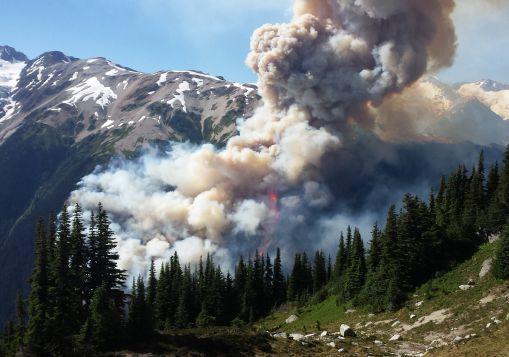
More than 50 firefighters and a helicopter battled a wildfire north of Puntzi Lake in British Columbia last July that grew to around 8,000 hectares. Wildfires burned more than 380,000 hectares in the province last year.
TRAINER’SCORNER
Each year there are thousands of forest fires in Canada and more and more often they are on the outskirts of populated areas. ‘‘ ’’
Operations course: “’Triage’ originates from a word meaning to divide into three parts. Basically, it amounts to: 1) eliminate the hopeless; 2) ignore the unnecessary; 3) deal with the rest. While we, as firefighters, hesitate to write off any threatened structure, triage is necessary to prevent futile waste of effort. Trying to save more than you realistically would, might very well result in the loss of everything, including homes you could have saved. Forget the structures that are impossible or too dangerous to defend; leave those that are too well-involved to save. Ignore, for now, the structures needing little or no protection. Concentrate on seriously threatened but savable structures.”
During a major interface fire there are going to be far more homes needing protection than there are fire-department resources to protect them.
Size-ups should determine whether or not firefighters can get in and out safely. Avoid driving or parking on lawns. Fire apparatuses can become stuck and stranded by sinking into soft ground or, worse yet, old septic tanks. In your triage size-up, look for low power lines, above-ground fuel tanks, multiple outbuildings (full of who knows what) and vehicles parked all over the property (contributing to the fire load and possibly blocking apparatuses).
Propane tanks, unless surrounded by large amounts of flammable materials, are not a major concern. Diesel or gasoline tanks, if mounted on wooden supports above ground, can become a problem: firefighters will have to take time to remove combustibles from beneath or around tanks, however, remember time is against you.
Time is crucial during a wildfire and resources are limited. Depending on the situation, firefighters may have to pre-identify homes that cannot be saved during a wildfire incident.
In the spring, have your members do area familiarization, write pre-plans for your interface area and identify the wildfire hazard zones within your protection area.
Talk with homeowners and educate them about their own particular hazards. Show them those places around the house where leaves have collected – areas where thousands of sparks will collect as well. Woodpiles stacked against buildings, open decks, unscreened eave vents, combustible debris scattered around the property, and abandoned vehicles are all areas of concern. Tactfully tell homeowners that firefighters will do what they can, but if there is too much to do in the few minutes before the fire arrives, they will not be able to safely defend their homes and will be forced to move on.
Nine wildland/urban interface watchout situations
• Wooden construction and wood shake roofs
• Poor access and narrow congested one-way roads
• Inadequate water supply
• Natural fuels closer than nine metres (30 feet) to structures
• Extreme fire behaviour
• Strong winds
• Need to evacuate the public
• Structures located in narrow canyons or on steep slopes near fuels that easily ignite
• Inadequate bridge-load limits If you need or want more information regarding this topic, drop me a line. In the meantime, stay safe and please remember to train as though lives depend on it, because they most certainly do.
Ed Brouwer is the chief instructor for Canwest Fire in Osoyoos, B.C., and training officer for Greenwood Fire and Rescue. He is also a fire warden with the B.C. Ministry of Forests, a wildland urban interface fire-suppression instructor/evaluator and an ordained disaster-response chaplain. Ed has written Trainer’s Corner for 15 of his 27 years in the fire service. Contact Ed at ebrouwer@canwestfire.org
VOLUNTEERVISION
BY TOM DESORCY Fire chief, Hope, B.C.
CEmbrace our changing f ire-services culture
hange has taken over in our fire services, and I suspect we experience more of it today than we did in years past. While it’s not uncommon to learn new ways to fight fire with new techniques and equipment, the greater change is happening to personnel.
Many of you know my story: I was challenged in 1999 to bring together three existing fire departments, two of which I had been a member over the years. Now, was I going to be the bad guy and tell them how to do it better? On the contrary, I was fortunate enough to have the support of the members and officers and, as a team, we brought about the necessary changes through consultation and a demonstration of how we could do things better. We learned with each other.
Back then I thought change would happen and then it would be over, but boy was I ever wrong. Change is sometimes like renovating your kitchen – what starts as a weekend project turns into a year-long build and before you know it you’ve done the living room and bathroom.
The changes we see today are rarely limited to individual departments because they are the result of challenges faced by myriad fire services. More and more people are starting to realize what many of us have been saying for a while: the fire department you used to know is becoming very different and I fear that, for the first time, it’s the fire-service leaders who will be forced to change. We are losing people from the top, and not for reasons we’re used to such as retirement, but because of economics, mental-health concerns and other illnesses.
As a full-time chief of a volunteer fire department, I’ve learned to work with what I’ve been given. It’s hard to cut back when you’re already operating on a shoestring. As is the case with most volunteer fire departments, we have a snowfall budget: a lot of what we spend our money on – such as paid-on-call allowances, fuel, and equipment repair – is determined as a result of calls. If we don’t get the calls, our service doesn’t cost as much. The opposite is also true: if we do get a lot of calls or the calls we get are longer in duration, costs increase.
A year ago, my friend welcomed a grandchild into the world. Unfortunately this baby was born with a health issue. I, like most people, reacted by saying, “Oh the poor little guy.” But I soon realized that this life was all the baby had ever known – to him, living in the hospital was normal. As the baby’s health improved, his normal changed for the better and it occurred to me that people’s perceptions of normal differ greatly: while we veteran fire folks consider today’s fire services to have changed considerably, recruits know nothing else; this is their normal. I will thank my friend’s grandson one day for the lesson he gave me in perspective and embracing change.
The more people you meet, the more people you know, and the more people you know, the more you’re affected by what happens to them. In the past year, I’ve witnessed a somewhat disturbing trend of fire chiefs being replaced, restructured out of their jobs, or simply being forced to retire before their time.
When I first heard my Volunteer Vision colleague Vince MacKenzie speak about the millennial generation entering the fire service, I couldn’t help but think about the future. MacKenzie was absolutely right: the way we teach, the way we mentor and the way
Budgets are being clawed back and the once coveted and seemingly untouchable fire department is no longer immune.
we recruit has changed.
I have often heard that fire services must learn to do more with less. Budgets are being clawed back and the once coveted and seemingly untouchable fire department is no longer immune. Is this happening in your region? How do you cut back when you began with next to nothing? Let me relay a real-life story for a little perspective.
Tom DeSorcy became the first paid firefighter in his hometown of Hope, B.C., when he became fire chief in 2000. Email Tom at TDeSorcy@ hope.ca and follow him on Twitter at @HopeFireDept
Young volunteers come into fire services often with unrealistic expectations, but also without preconceived notions of the “old ways” of the fire service. What young people see when they walk in the door is their normal; they have no idea of the changes the department had to go through in the years prior to get to that point. There is no room for excuses from the fire service and there shouldn’t be; in my opinion, we’ve become better and better with time.
Change is good; embrace it, but don’t be like the iguana that almost died of exhaustion crossing a tartan rug. Chief officers can’t be everything to everyone. But when it comes to change, know that nothing stays the same except the quality service provided every day by a dedicated group of men and women across this country, and thank goodness for that.
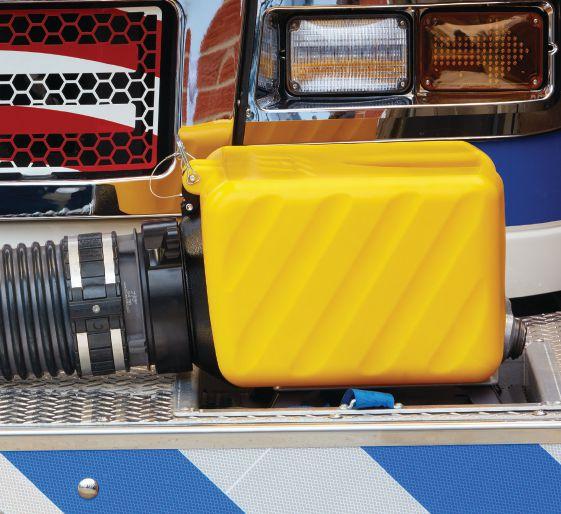
Low Level Strainer Now Includes Floating Option at NO CHARGE ...
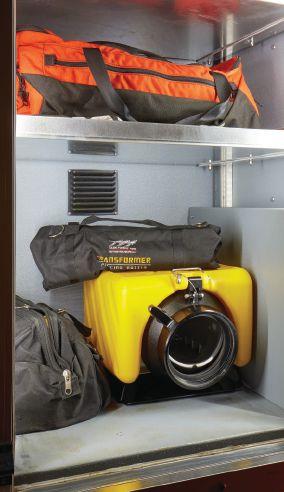
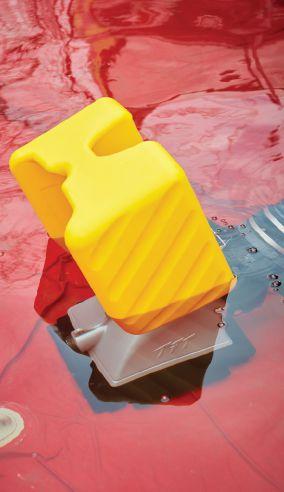
Flotation device allows TFT high volume low-level strainer to collect clean water from ponds, lakes and rivers. The strainer inlet, made of hard anodized and powder-coated aluminum, hangs 18” below water level to avoid sucking surface air and bottom debris. Capable of supporting up to 30 ft of hose, the strainer extends well beyond safety ledges of residential ponds.
The clog-resistant stainless steel filter has over twice as much flow area as a 6” hose keeping friction loss down to 0.5 psi (1” Hg) at 1500 gpm and reducing the potential for air vortexes. Oversized sealed ball pivot allows 45° range of hose angle without constricting the flow path.
Rugged polyethylene float is yellow for high visibility and nests compactly over the strainer for minimal storage space. Float removal is not necessary for low level use, although a tethered latching hinge pin allows the float to be removed or installed instantly if desired.
• Available With or Without Jet Siphon
• Supports Up to 30 Feet of Hose
• Clog-resistant Stainless Steel Filter Keeps Friction Loss to 0.5 psi (1” Hg) at 1500 gpm
• Sealed Ball Pivot Allows 45° Range of Hose Angle
• Rugged High Visibility Polyethylene Float Nests Compactly Over Strainer
• Tethered Latching Hinge Pin Allows Float to Be Removed or Installed Instantly