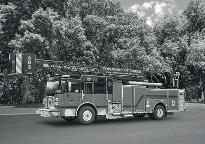
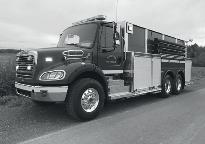
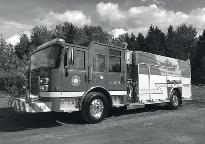
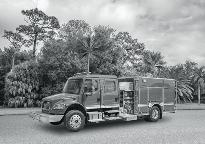
Commercial Emergency


By Ed Melanson

BY LAURA AIKEN Editor laiken@annexbusinessmedia.com
Commercial Emergency
By Ed Melanson
BY LAURA AIKEN Editor laiken@annexbusinessmedia.com
spent many hours talking to some of our multi-decade members of Canada’s Fire scene through my articles celebrating Fire Fighting in Canada’s 65th birthday this year. Amongst them are those who joined the fire service when there was a waiting list just to volunteer. This is a problem many of today’s volunteer department chiefs would love to have. The sense that it is getting more difficult to find and keep volunteers is an ongoing conversation nationwide. A feeling of urgency is beginning to develop alongside the simmering concern. Both Chief Tom DeSorcy’s Volunteer Vision article for this edition, and Chief Vince MacKenzie’s in November, call attention to finding volunteer firefighters.
like helping out at the local church fundraiser. In some places, like Ontario, there are mandatory minimum training requirements for all firefighters. While being a volunteer firefighter is unique, fire departments are not unique in seeking the same time-generous civic minded individuals who are giving over a 100 hours a year at the hospital.
The feeling that people are just too busy to volunteer seems widely held. Statistics Canada gathers data on volunteering in Canada, and it released 2018 survey figures in 2021 that showed about eight in 10 Canadians volunteered, formally or informally. Formal volunteering is self-evident, informal volunteering counts activities such as driving someone to an appointment or simply helping someone outside the household. The organizations with the highest levels of volunteer support are hospitals, religious institutions, and sports. Volunteers dedicated an average of 111 hours a year to hospitals. Being a volunteer firefighter is different and particular in its demands to other volunteering activities. There may be monetary compensation. Volunteer fire fighting can be a “farm team” path to career fire fighting. Fire fighting requires a higher level of training than some of other forms of community giving,
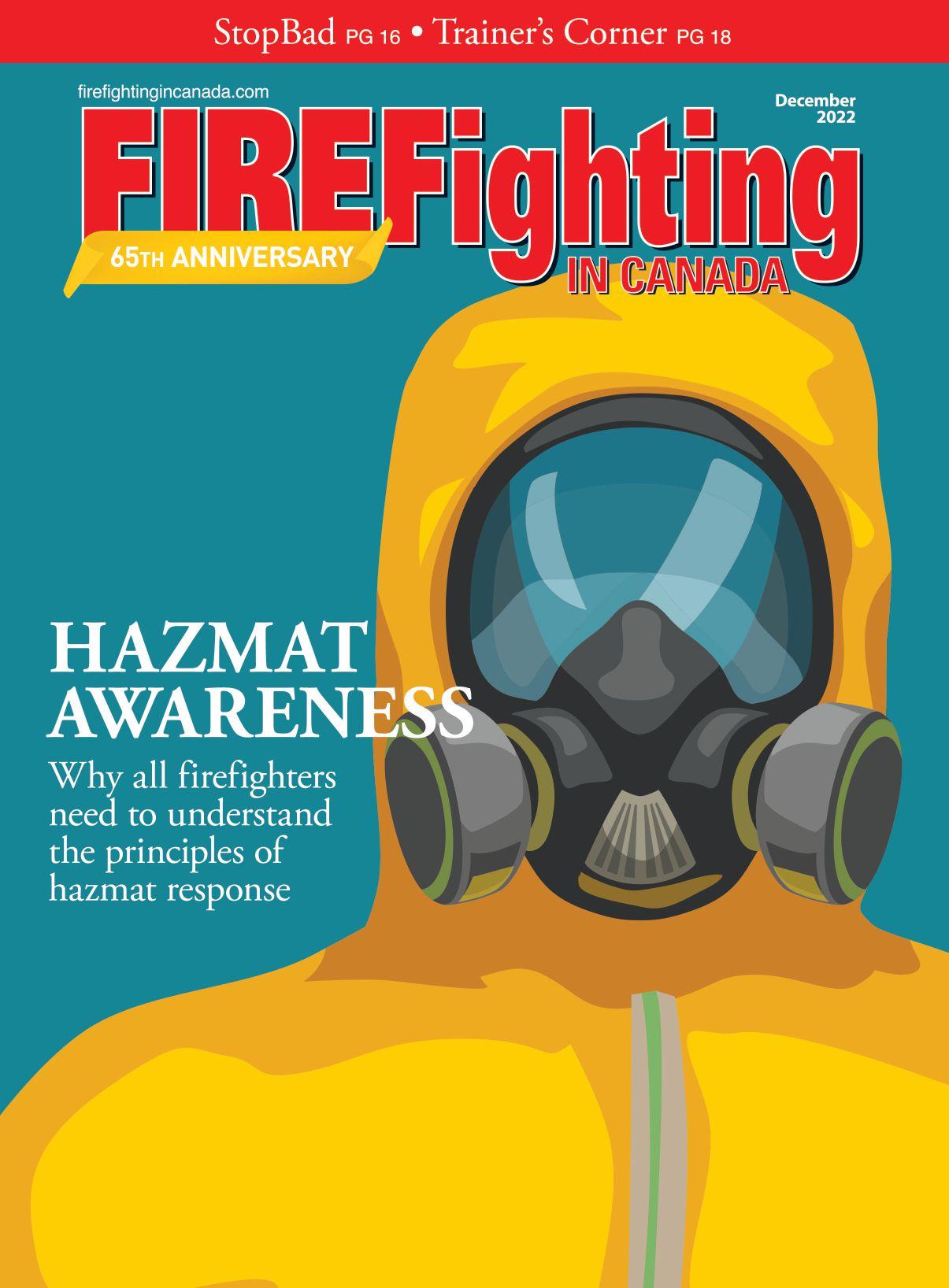
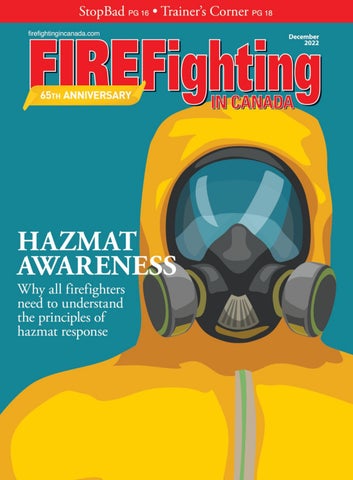
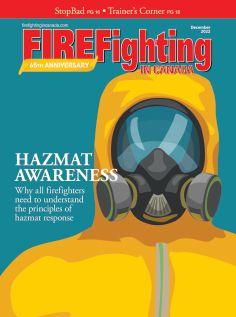
Fire Chief Ed Melanson shares why he believes every call is a hazmat call based on principle. See page 8.
Fire departments need people to be on call, give their time and understand the rewards of doing so. This last bit will be key as the volunteer fire service, making up over 80 per cent of the nation’s fire service, figure out their next move with volunteers on the decline. The Great Canadian Volunteer Firefighter Census, conducted by the Canadian Association of Fire Chiefs in 2021, estimated the total number of volunteers at 100,000 in comparison to 126,000 in 2016.
The concern surrounding the numbers of volunteer firefighters in Canada is warranted and may require some creative thinking on the part of the fire service. Being a volunteer firefighter is an honourable, social and rewarding calling that provides someone with many new skills and experiences. I haven’t said anything here you don’t all know well. There’s no magic bullet for the problem but keeping in front and centre will mobilize a creative approach and new ways to attract these vital members.

ESTABLISHED 1957
DECEMBER 2022
VOL. 66 NO. 8
Reader Service
Print and digital subscription inquiries or changes, please contact Angelita Potal, Customer Service
Tel: (416) 510-5113
Fax: (416) 510-6875
Email: apotal@annexbusinessmedia.com
Mail: 111 Gordon Baker Rd., Suite 400, Toronto, ON M2H 3R1
EDITOR LAURA AIKEN laiken@annexbusinessmedia.com 416-522-1595
ASSOCIATE EDITOR KAITLIN SECORD ksecord@annexbusinessmedia.com 416-435-1779
PUBLISHER ADAM SZPAKOWSKI aszpakowski@annexbusinessmedia.com 289-221-6605
ACCOUNT COORDINATOR CATHERINE GILES cgiles@annexbusinessmedia.com 416-510-5232
AUDIENCE DEVELOPMENT MANAGER BEATA OLECHNOWICZ bolechnowicz@annexbusinessmedia.com 416-510-5182
MEDIA DESIGNER ALISON KEBA akeba@annexbusinessmedia.com
GROUP PUBLISHER PAUL GROSSINGER fire@annexbusinessmedia.com
COO SCOTT JAMIESON sjamieson@annexbusinessmedia.com
PUBLICATION MAIL AGREEMENT #40065710
RETURN UNDELIVERABLE CANADIAN ADDRESSES TO CIRCULATION DEPT.
P.O. Box 530, SIMCOE, ON N3Y 4N5 e-mail: subscribe@firefightingincanada.com
Printed in Canada ISSN 0015–2595
SUBSCRIPTION RATES Canada – 1 Year - $25.50
(GST - #867172652RT0001) USA – 1 Year $58.50 (CDN)
Annex Privacy Officer Privacy@annexbusinessmedia.com Tel: 800-668-2374
Occasionally, Fire Fighting in Canada will mail information on behalf of industry-related groups whose products and services we believe may be of interest to you. If you prefer not to receive this information, please contact our circulation department in any of the four ways listed above.
No part of the editorial content of this publication may be reprinted without the publisher’s written permission ©2022 Annex Business Media. All rights reserved. Opinions expressed in this magazine are not necessarily those of the editor or the publisher. No liability is assumed for errors or omissions.
All advertising is subject to the publisher’s approval. Such approval does not imply any endorsement of the products or services advertised. Publisher reserves the right to refuse advertising that does not meet the standards of the publication.
There is no way to enforce building or fire codes on First Nations and pursuing a legislative fix would require significant time and money, federal officials warned in an internal briefing document.
But Blaine Wiggins, the senior director of the Indigenous Fire Marshals Service, said that enforcement gap has “catastrophic” consequences.
House fires have long posed a major safety risk to those living on reserve, with several children dying in blazes that broke out in communities earlier this year in southern Alberta and northern Ontario.
Indigenous leaders and experts tie the high number of deadly house fires on reserves to a lack of proper housing and overcrowding, as well as insufficient funding and education around fire protection.
Both the Canadian Association of Fire Chiefs and Aboriginal Firefighters Association of Canada have called on Ottawa to pass legislation to apply building and fire codes to First Nations communities, and mandate inspections.
But a briefing document prepared for the deputy minister of Indigenous Services Canada says there is currently no way to enforce provincial or national building or fire codes for buildings on reserves.
The document, which was obtained by The Canadian Press, says the department can make sure the infrastructure it funds adheres to such codes but the only other enforcement option for individual First Nations is by passing “ad hoc bylaws.”
“While there is a long-standing recognition of the need to
Promotions & appointments

The city of Cobourg, Ont., welcomed ELLARD BEAVEN as their new fire chief. Beaven has held the position of interm fire chief since April 2022. He began his career as a volunteer firefighter in 1991 with the
Timmins Fire Department, where he moved up the ranks to career firefighter, company officer and eventually deputy chief.

In Ontario, JAY PLATO has been named fire chief and community emergency management coordinator for the Town of Niagara-on-the-
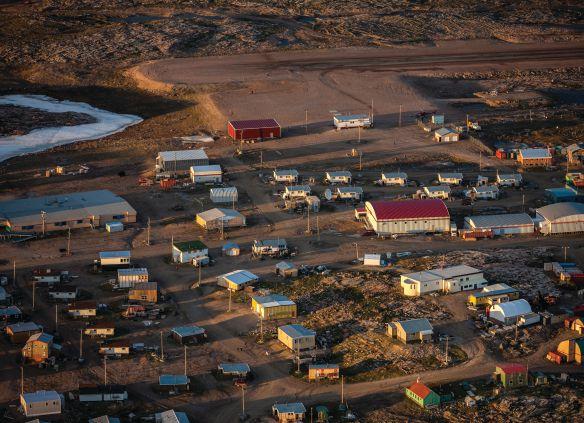
Both the CAFC and AFAC have called on Ottawa to pass legislation to apply building and fire codes to First Nations communities, and mandate inspections.
address compliance with respect to building and fire codes for other infrastructure and housing, there is not broad support for an approach for enforcing on-reserve building and fire code,” officials said.
Provincial fire services can condemn a building off-reserve if they feel it puts the lives of people inside in danger but that is more complex for on-reserve structures, the document said.
“As most fire deaths occur in residential buildings, enacting a similar approach to on-reserve communities would mean that First Nations individuals could be restricted from accessing their own property on First Nation land,” officials said in the briefing note.
Lake. Plato joined the fire service in 2017 as the fire prevention and public safety officer and volunteer firefighter. In 2020, he was promoted to deputy fire chief.
JASON SUCHIU , deputy chief of the Kingsville Fire Department in Ontario, is set to take on the role of fire chief. Suchiu has served as deputy chief since May 2022
and previously held the same role in the municipality of Lakeshore.

Wasaga Beach, Ontario has welcomed CRAIG WILLIAMS as their new fire chief. Williams has served as deputy chief for six years, and was the municipality’s point person on the town’s
“Such an approach requires careful consideration and would require significant consultation.”
Wiggins says whether it’s new legislation or a bylaw a First Nation has enacted, the government must provide the necessary funding and resources to ensure these standards can be met.
“There’s concern within the First Nations leadership, just like with other legislation, once legislation is put in place the federal government hasn’t funded it properly, so hence it’s failed,” he said.
The briefing document appears to show federal bureaucrats feel the same. Fire protection, the officials said, isn’t legislated as an essential service, and efforts underway to designate First Nations policing as essential have a high cost.
“A legislative approach to fire protection would likely follow a similar path requiring early and significant commitments to funding and program,” the document reads.
A spokesperson for Indigenous Services Minister Patty Hajdu said in a statement that the government is not planning to legislate fire protection after consulting First Nations partners and communities.
“It was determined that legislation would not be the best approach at this time. Rather, the focus should remain on identifying and understanding the gaps that currently exist and working to close them together,” the statement read.
“Should legislation be identified as a priority by Indigenous leadership at a future point, the federal government will be receptive to this advice and is open to working collaboratively.”
The department of Indigenous Services Canada is currently working with the Assembly of First Nations to roll out a new fire protection strategy to improve the use of fire codes.
In 2021, the Ontario chief coroner said in a report on fire deaths on First Nations that there is “jurisdictional neglect.”
That review, which followed several fatal fires on Ontario reserves, said because First Nations lands are regulated by the federal Indian Act, provincial buildings codes generally don’t apply and First Nations often end up falling through the cracks.
“Disputes between federal and provincial governments over their respective jurisdictions has contributed to chronic underfunding and fragmented and inadequate services being delivered to Indigenous communities,” the review concluded. It also said most fatal fires on First Nations happened in a home missing a smoke alarm, or had one that didn’t work.
That’s one area where Wiggins believes Ottawa must take action.
“Every jurisdiction is legally required to have a smoke alarm at home except First Nations,” he said. “First Nations are not required by any legislation to have that simple tool. We’ve asked the federal government to pass legislation that says you have to have working smoke alarms in a home. Nothing more complicated than that, and then give us the mandate to help every community meet that.”
– Stephanie Taylor, The Canadian Press
This report by The Canadian Press was first published Oct. 5.
The Manitoba government officially opened the new emergency services training structure at the Manitoba Emergency Services College (MESC) in Brandon.
The new training structure expands the training capacity of the current training site to meet a wide range of existing and emerging community life-
safety pressures seen throughout Manitoba. Features include the addition of high-angle training capabilities, the use of simulated smoke for non-live fire scenario training that reduces firefighter smoke exposure, and the addition of confined-space rescue training aids to improve safety.
“The Manitoba Emergency
Services College in Brandon has long been recognized as a vital training site for first responders, so ensuring that it is in top form to offer the best teaching tools available will provide emergency response personnel with skills needed to meet the unique challenges of responding to fire and lifesafety emergencies,” Municipal
Relations Minister Eileen Clarke said in a press release. MESC trains first responders of various disciplines supporting firefighters, paramedics and public safety personnel with over 200 Manitoba FDs and 130 local authorities across the province. On average more than 300 students complete MESC programming yearly, including up to 40 students from MESC’s full-time public fire paramedic career program.
response to COVID-19. He started his career as a volunteer firefighter with the Springwater Fire Department and has also held roles such as health and safety manager and paramedic with the county of Simcoe and Hamilton.
In B.C., Big White Fire Department named JOSH FOSTER their new fire chief. Foster, who joined the depart -
ment in 2004 as a volunteer firefighter, has also held the role of deputy chief. He has been responsible for training the work experience program team and paid-on-call crews.
ERICK PETERSON is the new fire chief for Abbotsford Fire Rescue Services in B.C. Peterson previously served as fire chief for the city of Williams Lake, B.C.,
for four years. He was originally deployed to the city by Emergency Management
B.C. to assist in the Cariboo Regional District’s Emergency Operations Centre during the 2017 wildfires.
In Ontario, JOHN QUENNELL has retired from his role of fire chief in Kingsville.

Quennell came out of retirement in October 2020 to fill the role of chief. Throughout his career, he served as deputy chief with the town of Lakeshore and was a career firefighter with the city of Windsor for 32 years, where he originally retired in 2010.
By ED MELANSON
Aself-proclaimed hazmat geek like myself can easily state that every call is a hazmat call. You can even insert the eyeroll here from the staunch suppressionists that exist amongst us. I was asked to join the fire service because of my hazmat knowledge, and certainly have been bit by the fire bug over the years. I can’t help but believe that the sounder a firefighter is in hazmat knowledge, the safer that firefighter will be. It is apparent that others in the higher levels of fire service believe the same.
Let’s begin with standards. Why is NFPA 1072 (Standard for Hazardous Materials/Weapons of Mass Destruction Emergency Response Personnel Professional Qualifications) Operations level required for a firefighter to be certified as NFPA 1001, the standard for firefighter professional qualifications in Ontario? Although these thoughts are centred around the province I live in, the thought process can be felt nationally when discussed in broader terms, especially when we look at presumptive legislation specific to types of cancers or diseases specific to firefighters.
In 2008, a change was made to NFPA 472 (Standard for Competence of Responders to Hazardous Materials/Weapons of Mass Destruction Incidents) operations in which awareness level responders were defined as those that may come upon a hazardous material incident (mall security guards, as an example) while operations level responders will come upon hazardous material incidents (firefighters). This change along with the move of typically technician level competencies to operations and operations mission specific competencies paved the way for the offshoot professional qualification document NFPA 1072. It was also the beginning of
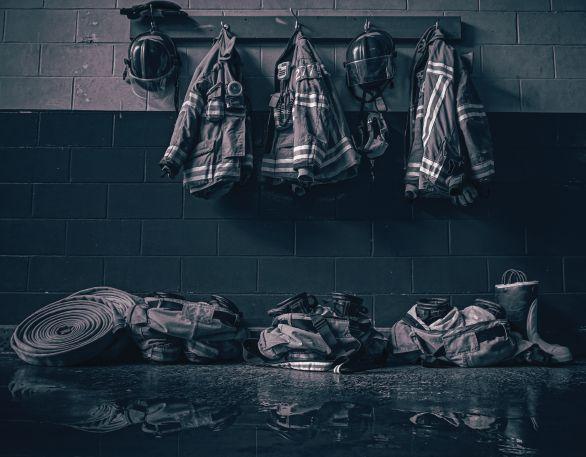
the realization that all firefighters should be hazmat trained as the introduction of emergency patient rescue during weapons of mass destruction terrorist events with emergency decontamination was done. Firefighters learned approach principles like upwind, uphill, upstream while protecting routes of entry with SCBA, allowing hazmat calls to be turned from slow methodical checklist exercises where patients potentially suffered worsening physical conditions waiting for rescue to a science-based approach where knowledge-based speed triumphed over ignorance. The firefighter gained competency through training in emergency decontamination techniques using hazmat knowledge tools at their disposal including victim clothing removal to reduce contaminants, washing patient with a charged hose line while protecting themselves by staying out of the product and wearing personal respiratory protection.


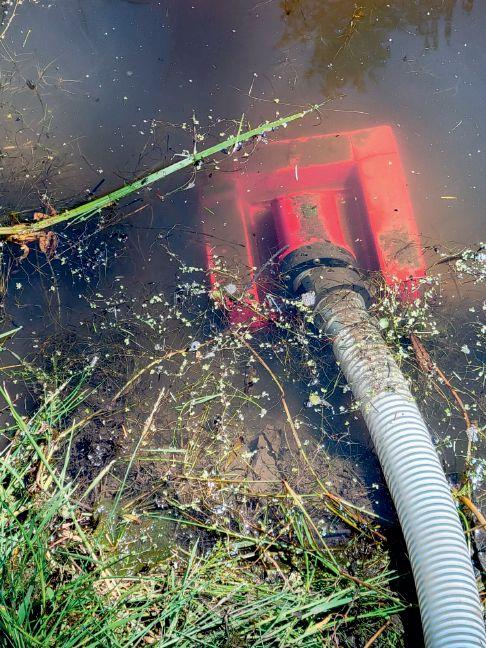
Was this rescue change foreshadowing to what really was going to happen in the fire suppression world? As early as 2003, the discussion of carbon monoxide and hydrogen cyanide as the toxic twins was covered in various reports and studies, including the Station Night Club Fire findings. The subsequent NIST re-creation of high levels of hydrogen cyanide from burning foam board in the NFPA report highlighted that smoke inhalation was the major cause of civilian deaths in structure fires, not flame itself. The fire services knowledge of carbon monoxide poisoning grew and on-board carboxyhemoglobin antidote kit feasibility discussions popped up around the country. Carbon monoxide and hydrogen cyanide monitoring began to happen with gas monitors being part of the safety officers’ rounds to protect both hot zone and cold zone responders and residents alike. Some of us became aware of hydrogen cyanide as being a larger issue to the point where straw was mandated to be burned in a Class A training facility rather than treated hay due to lower HCN levels. The year 2007 saw the introduction of Workplace Safety and Insurance Act, 1997, Ontario Regulation 253/07 - presumptive legislation specific to cancers and heart related issues for firefighters. A 24- hour “clause” specific to heart attacks after training or response activities was entrenched in the regulation. This was in part to acknowledge the acute but sometimes time delayed effects of carbon monoxide and hydrogen cyanide on firefighters and investigators. This welcomed a much needed “benefit” that also identified that our fire service was not doing everything possible to protect our own so new health and safety best practices were developed.
We began to examine methods in which we reduce exposure to products of combustion by developing on scene decontamination policies, designing firehalls with clean and dirty sides, installing point of contact exhaust fume extraction, supplying two sets of bunker gear to our firefighters, constructing bunker gear rooms separate of truck bays, and placing washing machines in negative pressure rooms, etc. Why? To reduce levels of exposure through contamination reduction using principles learned in hazmat operations training like ALARA (as low as reasonably achievable). NFPA 1001 (2019) certainly identified that decontamination is important and defines and requires the concept of “field reduction of contaminants” to address chronic exposure to carcinogens, but it falls short of the principles that are identified in NFPA 1072 Operations.
The service began to educate its members on routes of entry. Routes of entry define the where and how contaminants enter our bodies and what levels of toxins require what level of respiratory protection. Some began to lead the fire service to better understand the Ontario Health & Safety Act R.R.O. 1990, Reg. 833 Control of exposure to Biological or Chemical Agents. We began to teach exposure limits and such definitions as Time Weighted Average (TWA), Short Term Exposure Limit (STEL) and Immediately Dangerous to Life and Health (IDLH). As we learned, we saw a science-based move by some departments to be “on air” wearing SCBA for carbon monoxide calls until the actual concentrations are measured rather than no respiratory protection is worn until the meter shows carbon monoxide.
In 2012, the UL / NIST/ FDNY Governors Island project and the subsequent fire dynamics presentation in 2014 at FDIC was presented by UL FSRI director Steve Kerber and NIST fire protection engineer Dan Madrzykowski. This powerful study transformed the fire service by debunking some beliefs while proving others. One of the largest take-aways from the information was specific to coordinated fire attack by oxygen exclusion. Oxygen limited fire curves were presented to explain fire progression in a modern structure and how firefighters
impact fire progression. This information also helped define tactics like coordinated ventilation specific to water application and flow path control and oxygen control. The observed examination of flashover also began at this time where chemical properties like flammable range, flash point, fire point and autoignition temperatures of specific fire gases were discussed and roll over was explained using doll houses and YouTube videos.
The lines between hazmat response and suppression activities blurred a little further in the 2016 expansion of the BLEVE tables in the emergency response guide specific to the amount of cooling water that needs to be flowed for a given LPG container size. The ERG has grown into a reference document that a responding fire department should not be without.
The truth is this: Without the principles learned in hazmat awareness and operations, the why and how of what is being implemented in NFPA 1001 Firefighter would be lost. The properties of specific chemicals, including those created by a burning couch or an electric vehicle where magnesium components controls the fire attack strategy, how the gases are measured, how it is extinguished, all make a difference in how we protect ourselves from exposure in the short term and the long term. It certainly appears that virtually every fire call is a hazmat call. Is it blasphemy to state these things or is there a realization that hazardous material response principles and understanding are required to fully capture the craft of today’s firefighter?
Ed Melanson is the director of fire services and fire chief for Saugeen Shores Fire Department in Ontario.
BY CHRIS HARROW Director of Fire Services
Town of Minto and Township of Wellington North, Ontario
ow many times have you heard in the past year, “This is quite the world we live now. The world and people’s attitudes have changed so much, and not for the better.” It can’t only be me, but I have to agree the world has come to feel like much more negative. It doesn’t seem to matter which area you work in or where you hang out in your spare time, negativity is the go-to feeling for many issues. The fire service is definitely not exempt.
Watching the evening news or reading articles online, there is a plethora of negative thoughts and stories. The social media universe is a whole other animal we need to stay away from in certain circumstances. The negativity can suck you in and play a lot of tricks with your mind and your overall general well-being.
Before this article gets too doom and gloom, I want to look at ways we, as leaders, can avoid the negativity we face on a daily basis. This is a top five list of tactics we can deploy to turn our workspace into a more positive atmosphere for ourselves and those around us. The benefits of turning your workplace into a more positive environment are huge. It leads to more productivity, more creativity, and it is all around healthier for all of those involved.
During adverse times, stay away from social media. Many people’s first tendency during times of controversary is to go to social media to see what people are saying. Many times, it ends up exacerbating the situation. Posts can be relentless and ruthless because there are essentially no consequences for posting what you want. The leader is better off staying off social media and not worry about what people are saying. Follow the old saying, “what you don’t know, can’t hurt you.”
a solution that we can work together to make changes. It really curbs the gut reaction to complaints that may come forward.
Find the positive in every situation. This can be difficult to do but once mastered, it can make your own mental health better. Some situations will be very hard to find good in, but it can be done if you can put yourself in the right frame of mind. Many years ago, my father-in-law passed away from colorectal cancer at a young age. It was a devastating loss for our family. It took a little bit, but we soon realized that his passing brought on a lot of conversations and we discovered that cancer ran in my wife’s family. Because of this, many of her family members went and got tested and at least two others had cancer discovered at an early age that saved their lives. His death saved the lives of his other family members.
Happiness is a choice. If you are in a negative situation at your workplace, you can still choose happiness. You can change jobs or choose to try and change others in your workplace to become happier. It is also easier to battle negativity with happiness. I find many people don’t know how to handle someone who responds back in a positive manner.
Say a simple please or thank you in more situations. This seems over
The benefits of turning your workplace into a more positive environment are huge. It leads to more productivity; more creativity and it is all around healthier for all of those involved. ‘‘ ’’
Implement an unwritten policy about complaints and concerns brought to your attention. I read a long time ago that a great rule for leaders to implement is that those bringing complaints and concerns must also have to bring a solution for the problem. I saw this utilized when our municipality was holding delegations with government officials. The mayor and CAO were always firm on taking a package to the delegation that would identify the problem, but then go into more detail about the solution they were proposing to fix it. The same concept can be deployed in your department. Please bring forward your concerns, but also be prepared to bring
Chris Harrow is the director of fire services for the Town of Minto and Township of Wellington North in Ontario. He is a graduate from fire programs at Lakeland College and Dalhousie University and holds a graduate certificate in Advanced Care Paramedics from Conestoga College. He can be reached at c.harrow@mintofiredept.on.ca.
simplistic, but can be so effective. We all know what it is like when you get a thank you from a member of your team, it can really boost your emotions and give you immediate validation that your efforts are getting noticed. Just remember to return the favour some time to a fellow team member or person around you.
Finding that ray of sunshine in your day-to-day life can greatly help your mental health. It takes a lot of effort to begin and then maintain this mentality. There will be a bunch of forces that will try to derail you, but stay the course. It is absolutely amazing how having a positive attitude can change your outlook. Try it and I guarantee you will notice it right away.
We all have to do something to change the outlook of many workplaces and communities.



The PSPNET Families Wellbeing Hub, funded by the Public Health Agency of Canada, will offer trauma-informed mental health promotion resources and supports, to serve the families of public safety personnel (PSP).
The PSPNET Families Wellbeing Hub complements PSPNET, a federally-funded online platform that offers Internet-delivered Cognitive Behaviour Therapy (ICBT) for PSP.
Available right now is a Wellbeing Course for Spouses or Significant Others of public safety personnel (PSP). This course helps the spouse or significant other of PSP with education and guidance on simple techniques for managing various mental health concerns, spanning from low mood, depression, worry, anxiety to posttraumatic stress disorder. The course is free of charge, self-guided and confidential, and it takes into account the unique experiences of Spouses or Significant Others of PSP.
To sign up for this course, register for our newsletter, or explore the other resources PSPNET has available, contact us at pspnetfamilies@uregina.ca.
More information can also be found on the PSPNET Families website: www.pspnetfamilies.ca
Public Safety Personnel (PSP) are often more vulnerable to experience challenges related to depression, anxiety and posttraumatic stress due to the nature of their jobs.
PSPNET can help with free, confidential, online cognitive behaviour therapy tailored to PSP, including border services officers, public safety communications officials, correctional workers, firefighters, Indigenous emergency managers, operational intelligence personnel, paramedics, police and search and rescue personnel. The services provided by PSPNET are beneficial to those seeking tools to aid in staying healthy and being proactive in their mental health and wellbeing.
Some of the free courses available include the PSP Wellbeing course, which provides therapist-guidance through secure email exchanges or phone calls to manage the thoughts, behaviours, and physical symptoms that are impacting their wellbeing, and the PSP PTSD course which provides therapist-guidance on effective techniques to help manage symptoms of PTSD. Available to PSP in Saskatchewan, Quebec, New Brunswick, Nova Scotia, and Prince Edward Island. PSPNET also provides a free self-guided version of the PSP Wellbeing Course to PSP across Canada.
To sign up for this, register for our newsletter, or explore the other resources PSPNET has available, contact us at pspnet@uregina.ca.
And don’t forget to follow us on social media:
BY MARK VAN DER FEYST
We are going to wrap up our series on Vent, Enter, Search (VES) and Vent, Enter, Isolate, Search (VEIS) by examining the “don’ts” of VES. These don’ts are what some departments or firefighters add to the tactic as a way to make it safer, but in reality, are decreasing the effectiveness of the tactic in its simplicity.
The first don’t is to be tethered to a safety line such as a rope or a retractable cable system. The idea behind this addition is to ensure that a firefighter entering a room will be able to find their way back to the exit point like a hose line. The rope becomes an entanglement hazard with the furniture in the room and could entangle the firefighter. Using a retractable cable system like off an aerial platform is extremely dangerous. Should the hydraulic system fail on the aerial device, the attached firefighter could go for a deadly ride.
The second don’t is to bring a hose line inside the room with the firefighter. Departments have policies that always mandate the use of a hose line whenever a crew enters a structure. This only slows down the search process and makes the tactic ineffective due to the added time it will take to grab the required tools as well as a hose line. Instead, crews are better off going through the front door and making it a fast attack tactic instead.
The third don’t is to bring the hose line to the tip of the ladder and have it staged at the window. This also adds additional time to the tactic and can lead to the inability to rescue the occupant from the room. Once the interior firefighter locates the occupant(s) and brings them to the window, the window firefighter is then going to remove them from the building and on to EMS. Having a hose line on a ground ladder could lead to complications as to what to do with the hose. If the inside firefighter needs help, the outside firefighter will go in to assist and will need to drop the hose line. Having it there at the window tip will not increase the safety of the team, it will most likely hinder their ability to be effective.
The fourth don’t is to search beyond the single room. VES is a tactic that is designed for single room search and rescue only. The only extension beyond the room’s door is the immediate hallway area beyond the door – within arm’s reach. Once the firefighter goes beyond the single room and starts to search the other rooms of the structure, this is now a primary search. The safety of VES is that the door of the room is closed, cutting off the flow path and making the search area defined so that the outside firefighter is still in contact with the interior firefighter by sight, sound, or touch. Going beyond the bedroom door can cause issues with accountability of other team members. If the other bedrooms need to be searched, this is where the VES tactic can be multiplied/duplicated by having another team conduct VES on the other room or have the same team move from room to room.

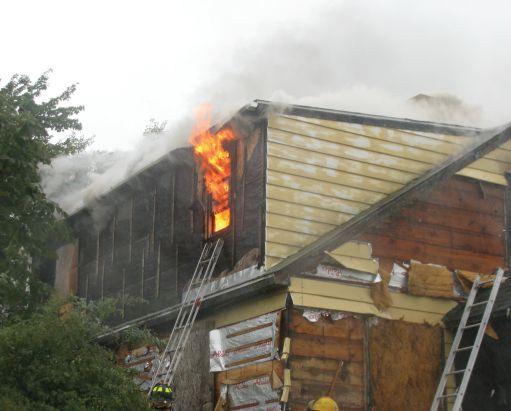
The fifth don’t is to enter the room when it is fully engulfed in flames. The purpose of VES is to rescue occupants who are viable. When a room is fully engulfed in flames, the viability of an occupant in that room is greatly reduced making it a recovery instead. Going into a fully engulfed room is crossing the line of safety and putting the firefighter(s) at great risk of becoming seriously injured or worse, a line of duty death.
The sixth don’t is to have more than two firefighters in a room. A team of three firefighters can conduct this tactic with two going in and one staying outside. Two firefighters will decrease the search time of the room by having both going in opposite directions after the door has been closed. A room can be cleared very quickly with two firefighters, but having more than two in there, makes it crowded. A second team of two firefighters can be created to conduct VES on a separate room at the same time as the first team – making the operation effective and efficient.
The seventh don’t is to wait for the RIT team to be set up first before initiating the tactic. Departments that have this rule in place will not be able to conduct VES – the purpose of this tactic is to achieve a rescue immediately by the first arriving unit on scene. With many departments facing staffing shortages, the first arriving unit may only have a few firefighters. Having a RIT team established first before any interior operation is allowed can limit the team, and removes the possibility of immediate rescue. This tactic is risky but has been conducted for over 20 years, with proven success when done in the proper manner.
Hopefully your department will be progressive in adopting this tactic into their operations – but this tactic does require practice to become proficient.
Mark van der Feyst has been in the fire service since 1999 and is currently a firefighter with the FGFD. Mark is an international instructor teaching in Canada, U.S. FDIC and India. He is the lead author of Fire Engineering’s Residential Fire Rescue & Tactical Firefighter books. Contact him at Mark@ FireStarTraining.com

BY GORD SCHREINER Fire Chief Comox, B.C.
oo often members of the fire service are not prepared for the next promotion or hiring. They seem surprised, when reading a job posting, to find they do not meet the minimum requirements. In many of these cases, the minimum qualifications have been known for a long time. Some think that one day in the future they will take more courses or try a little harder to be prepared. When an opportunity arises, they are not ready and want to blame the system, others, or anyone but themselves.
Many will start to hustle to try to get what they need to meet the minimum only after the opportunity has been presented. This is often too little too late. Others are already out in front of you as your competition has been preparing for a while. It can be very hard to catch up on short notice. Your competition often not only meets the posted minimum requirements but often exceeds them.
The unprepared candidate may hope that their years of service will carry them, only to find out that this is unlikely. They are frustrated that their years of service and previous commitment doesn’t often carry more weight in the selection process. Employers want to hire and promote the very best candidates. Employers want people who have looked forward and planned their future. Employers want to see your progression of training, your commitment level. Not taking a new course in the past few years is often a bad sign.
This is true at all levels, whether looking at a promotional opportunity to a lieutenant or a chief officer position.
Even if you have the minimum qualifications, don’t stop there. Keep building yourself to be prepared for the next opportunity as life is full of opportunities, you just need to recognize them and be ready for them. You will not regret learning more and being better prepared for your future.
The time I need to prepare to further myself in my career comes from my spare time.
Preparing means using this time to take additional courses and perhaps making a stronger commitment to the organization you are hoping to be more successful with.
Sacrifices need to be made to be successful. Just look at successful people around you. There are lots of great examples. Ask successful people what they did to get to where they are. What sacrifices did they make? I can guarantee you they will have lots to share with you and they have likely made lots of sacrifice on their journey to success.
Luck has very little or nothing to do with it. I have had many people tell me how lucky I am to be the chief of a great department. I agree but also know of the years of hard work I put in to get here and the continued efforts I make every day to prove that I deserve this position.
You need to constantly demonstrate your desire and commitment. Organizations want to hire and promote ambitious, dedicated, and committed individuals.
Do you have the skills and desire to bring new ideas to the organization or are you happy to maintain the status quo and what others have worked to build? ‘‘ ’’
Of course, being prepared for advancement requires a lot of effort and sacrifices. Successful candidates must make tough choices and significant commitments to prepare themselves in advance. As we all have very busy lives and limited time, candidates must make some tough choices on how they can make a stronger commitment to be more successful. The skill of time management is very important. I have strived to prioritize family, followed by my job.
Gord Schreiner joined the fire service in 1975 and is a full-time fire chief in Comox, B.C., where he also manages the Comox Fire Training Centre. He has delivered countless presentations in fire stations all over Canada and is available to assist your department in many areas. Contact Gord at firehall@ comox.ca.
Employers are also looking for innovative people who embrace change.
Do you have the skills and desire to bring new ideas to the organization or are you happy to maintain the status quo and maintain what others have worked to build?
I strongly recommend that you look forward now and keep improving yourself. You may not know where your next opprotunity is coming from, but it is coming. Prepare yourself now so you don’t miss out.
Successful people have worked hard to achieve what they have, and they continue to work hard to maintain what they have and set themselves up for success when the next opportunity knocks. Take charge and control your own destiny.










PULL THE PIN AND TOSS IT IN,
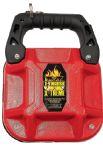
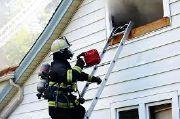
The X-Tinguish®X-Treme throwablefire suppression tool is an updated version ofour X-Tinguish® FST Our products are located within thousands of fire departments, commercialestablishments,and industrial locations worldwide The X-Tinguish®X-Treme can remove about 1,000F from anenclosure (upto 5,300Cu Ft.) in 60seconds while eliminating flames and making the room safer forthefirst responder. Theunits ability to knock down and hold a fire until the hose team arrives is paramount to its creation The X-Tinguish®Xtreme is a Tool for every Toolbox Innovationin Fire Suppression hasbeenour motto since2012
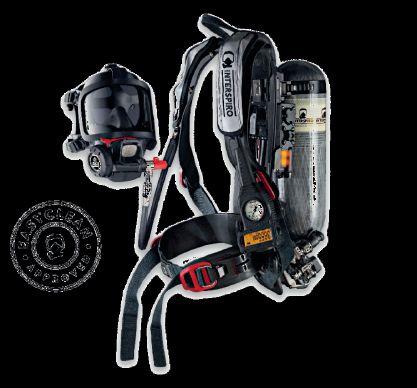
SAFETY EQUIPMENT IS B E A DISTRIBUTO R FOR INTERSPIRO RESPIRATORY PROTECTION LINE. STATE OF T S9 IS ONE OF MOST COMFORTABLE YOU WILL WEAR.
CALL AT 182 OR S AT INFO@CDNSAFETY.
No company has a richer history in Interspiro. Their innovations have become industry


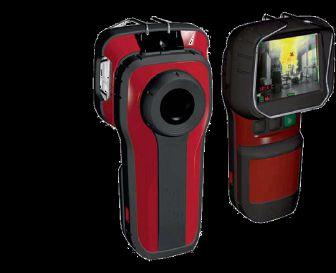
The most advanced thermal imager for firefighting
Larger 3.5″ display for a clearer view of the fire scene and lightweight at just 830g (1.8Ibs) Extended dynamic temperature range to 1100˚C (2000˚F) for greater scene detail in larger, hotter fire scenarios
Enhanced feature set including laser pointer to aid communication, electronic compass for greater scene awareness and heat/cold seeker technology NFPA approved

By ED BROUWER
This will be the last part to my mini-series regarding my “influencer’s”. And yes, we are still talking about Mayday protocols. I’m aware that some of you may be thinking, “I’ve heard all this before.” But one of our great needs today is to familiarize ourselves with the familiar, to get better acquainted with what we already know. Afterall, we are talking about protecting the greatest resource in the Canadian fire service — our firefighters.
With that in mind, let’s try an experiment to see just how familiar your members are with the whole process of calling a Mayday.
At your next practice announce you are having a pop quiz, but don’t reveal the subject. Hand out paper (blank) and pens to each member. The idea here is to see how fast they will clue-in and that the subject is Mayday. Once paper and pens are handed out begin asking the following questions, allowing time for members to write down an answer before proceeding. This is testing the individual’s knowledge so there should be no interaction.
1. What do the letters E-I-B stand for?
2. What is one of the three points of Risk Management NFPA 1500?
3. What does the acronym L U N A R stand for?
4. What do you think causes 40 per cent or more of on-duty deaths?
5. Name three times firefighters should call a Mayday.
6. What does it mean when your SCBA low air alarm goes off?
7. What does it mean when a firefighter’s PASS is activated?
8. If you called, “Mayday, Mayday, Mayday” on your radio, what would you expect (hope) to be happening on the fireground?
9. What do the letters IDLH stand for?
10. List three ways firefighters get into trouble on the fireground. Wait with reviewing the answers until all the questions have been asked.
Hopefully, as members respond with their answers, a picture will form for you as to just how familiar they are with Mayday protocols.
The following information will for the most part line up with the questions both as answers and background information.
First, push the Emergency Identifier Button (EIB) on the radio. This captures the channel for 20 seconds, gives an open mic to the radio (in other words the firefighter does not need to push the talk button on the radio), and sends an emergency signal to radio communications identifying the radio.
If unable to press the EIB, or if radio not equipped with EIB, go to Step 2. Second, on the assigned tactical radio channel call, “Mayday, Mayday, Mayday.”
Third, give the following information LUNAR: L location, U unit number, N name, A assignment (what were you doing?), R resources (what do you need?).
Acronyms are helpful in keeping the important points at the ready in
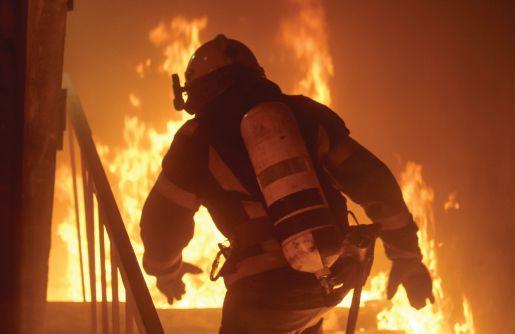
Remember when all hell breaks out on the fire-ground, your members will not rise to the occasion – they will default to their level of training.
our brains when we are suddenly faced with a crisis. The order here is to give your location first in case you are unable to give further information. Just saying “I need help” does not give the rescuers enough information to find you. Giving your unit number and assignment will be extremely helpful. And letting the RIT (Rapid Intervention Team) know if you need a certain piece of equipment (ladder, chainsaw, prybar etc.) will expediate the rescue efforts.
The next two steps are very simple but have a huge impact on you being found. Activate your PASS — it will be an audible beacon marking your location. Then, if you are able, set your flashlight up so the beam of light is shining on the ceiling above you. This is just another beacon to help you being found. Remember the difference between a rescue and a body recovery is time. The sooner you call Mayday, the sooner the RIT can get into action. Inform IC of any actions you take so RIT is updated on all actions taken in your efforts to escape.
Mayday comes from the French term m’aider, an imperative that means “help me.” Mayday was adopted as a distress call by the International Radio Telegraph Convention in 1927. In international radio language, “Mayday, mayday, mayday,” means “Life is in danger. Immediate help needed!”
The sobering truth is that Rapid Intervention is not always that rapid. And you do know what the letters IDLH stand for, right? Immediately Dangerous to Life and Health.
In my opinion firefighters should memorize the three points of Risk Management NFPA 1500: We may risk our lives a lot to protect savable lives; we may risk our lives a little to protect savable property; we will not risk our lives at all for lives or property that are already lost.
The following Mayday protocol was put together several years ago in honor of the Charleston 9. RIP brothers. I submit it to you as a suggested guideline to be added to your existing operational guidelines.
Starfield LION’s CenterCut™ Bunker Gear Liner System for Drier, Cooler, Lighter and...Safer Gear.

1. Becoming tangled, pinned, or stuck and the low-air alarm activates
2. Falling through the roof
3. Becoming tangled, pinned, or stuck and do not extricate yourself in 60 seconds
4. If you are caught in a flashover
5. If you fall through the floor
6. If there is zero visibility and no contact with the hose or lifeline and unaware where the exit is
7. If your primary exit is blocked by fire or collapse and you are not at the secondary exit in 30 seconds
8. If your low-air alarm is activated and you are not at an exit door or window in 30 seconds
9. If you cannot find the exit door or window in 60 seconds
These nine points may be narrowed down to six: Fall, collapse, caught, lost, trapped or activated (PASS/low air).
It is important to note that NFPA 1404, sets forth the standard for air management. According to the article, a firefighter is supposed to exit the IDLH environment before their low air alarm goes off. And if it goes off while a firefighter is in an IDLH environment, it is to be treated as an event comparable to a MAYDAY situation.
• EIB only mayday: A Mayday may be transmitted by pressing only the EIB, with no follow-up voice transmission. When only an EIB is activated (no voice transmission), Dispatch will notify Command of the activation. Command will make one attempt to contact the unit verbally. If the unit does not acknowledge this attempt, the unit will be considered a Mayday.
• A witnessed report: A witnessed report is an occurrence where personnel witness a person or persons becoming trapped (a fall through a roof or floor; firefighters caught in a flashover, etc.) and then that witness declares a Mayday.
• PAR mayday: A unit that is not accounted for in a PAR will be declared Mayday.
• Once a Mayday is declared, there are several things that will be set right on the training ground: When a Mayday is declared all other units must continue their assigned operations unless the IC directs otherwise. This prevents “free-lancing” as well as helps keep control of the fire incident.
The IC will request Emergency Radio Traffic Only. Only Mayday personnel, the Incident Commander or the IC’s designee, and the RIT will use this channel.
Consider the following: Among the 272 pages of the NIOSH report regarding the Super Sofa Store Fire were the following lines: “The communications process was not controlled. The Fire Chief, the Assistant Chief, and Battalion Chief 4 were all issuing orders and providing direction independently, using a single overloaded radio channel. Critical messages, including distress message from firefighters inside of the structure, were not heard.”
Analysis of the recorded radio traffic indicates that the deceased members did not attempt to call for assistance until they were in critical distress. All the recorded messages indicate that the firefighters were lost, disoriented, and either running out of air or already out of air. The firefighters were already in imminent danger, deep inside the building, when they began to call for assistance.
The recorded radio traffic included 16 distress messages that were transmitted by firefighters inside of the Sofa Super store Distress messages were recorded from Firefighter 16, Firefighter 5, and Engineer 5. The recordings included additional distress messages in which the firefighter speaking could not be identified…None of these messages were heard by a command officer on the scene.
Engineer 5 said the word “Mayday” once and then three minutes later he activated his emergency button on his portable radio. All the “firefighter in distress” messages came from the radios assigned to the deceased members.
Next comes the RIT Assignment. The Rapid Intervention Team (cew) should already be established, so now the IC or the IC’s designee will assign duties to the RIT and call for any other resources necessary to perform the rescue. If the exact location of the trapped personnel is not known, the RIT should be sent to their last known location.
On PAR after mayday declaration: Once all units (except the Mayday personnel, the IC or the IC’s designee, and the RIT) have switched to an alternate talk group, Command will conduct a Personal Accountability Report. Divisions/groups that do not report after two attempts will be considered Mayday. If divisions and groups have not been assigned, the PAR will be by individual unit.
Before I close let me leave you with three recommendations and a warning:
• Practice calling MAYDAY. You must practice it if you expect it to work when they need it.
• Can you push the EIB in five seconds with all you gear on?
• What happens when you push the EIB? (Does the radio channel change, who receives the EIB signal, where is it received, what do they do with the information?)
• Can you get to the radio when you are covered with debris?
• Where does the mike need to be so you can be heard?
• How loudly do you need to talk?
• Include MAYDAY calling in all training where firefighters are put into simulated IDLH conditions.
• Get communications involved. Do you want your real Mayday call to be the first time the IC or radio operator gets to test their Mayday skills?
A final warning: Firefighters get into trouble because of smoke, going too far into the building, getting disoriented or lost, poor communications, lack of confidence in SCBA emergencies, tunnel vision, and poor training. Remember when all hell breaks out on the fire-ground, your members will not rise to the occasion – they will default to their level of training!
And probably the most overlooked reason why firefighters get into trouble because they are physically unfit. Cardiac emergencies cause 40 per cent or more of on-duty deaths. Smoke, toxic gases, and the stress of the incident are all contributing factors. Accidents happen, but you being overweight and/or out of shape is totally preventable. Remember in a firefighter’s world, survival is the only benchmark of success!
Until next time please stay safe and remember to, “Train like lives depend on it, because they do”. 4-9-4 – Ed
Ed Brouwer is the chief instructor for Canwest Fire in Osoyoos, B.C., retired deputy chief training officer for Greenwood Fire and Rescue, a fire warden, wildland urban interface fire-suppression instructor and ordained disaster-response chaplain. Contact aka-opa@hotmail.com.
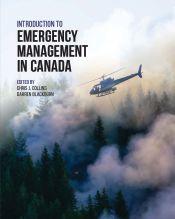
Introduction to Emergency Management in Canada
Item # 1772556780 $95.00
This essential guide takes readers through the pillars of emergency management—prevention, mitigation, preparedness, response and recovery—while covering a range of important topics for both students and professionals, including risks and hazards, crowd management, communication, business continuity, resilience, and incident command systems.
Mental Health Awareness for First Responders, 2nd Edition
Item # 1774620847 $63.00
This new edition offers a Canadian perspective that uses relevant examples and real-life case studies on the challenges first responders face in identifying and interacting with individuals living with mental health issues. An essential resource for current or aspiring professionals emergency management, fire services, EMS, search and rescue, dispatchers, and other front-line workers.
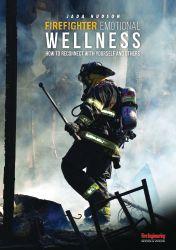
Firefighter Emotional Wellness
Item # 1593705725 $79.00
A training exercise for your heart and mind. This book is an excellent, evidence-based self-help book with boots on the ground sharing interviews with firefighters and how they adapt. This book covers a broad range of topics including PTSD, suicide, stress and trauma, resiliency, and treatment.
BY TOM DESORCY Fire Chief Hope, B.C.
n the fire service, we are good at many things. Public education being just one of them. What better way to protect our communities than to teach people to be safe and to avoid needing our service all together. But what about public awareness? Have we ramped that up at all?
As Fire Fighting in Canada marks 65 years, I can’t help but reminisce and look back on what I’ve written. Eight years ago, I wrote about promotion in the way of telling our story and blowing our own horns, so to speak, when it comes to awareness of what we do in the volunteer fire department.
Now I’m thinking we need to improve on that even more, as many of us face staffing and recruitment issues that are greater than ever before. I’ve also written in the past about our brand. We are the most recognizable brand in the world. One that sells itself, or should. Perhaps it’s time to take this product to the next level. Not by getting people to buy it, but to buy into it.
So just what are we doing to promote our brand? I believe that while it’s easy to talk in a forum such as this, how do we reach beyond and outside of the industry itself?
Have we not come to a point now where smaller communities see their volunteer fire departments are needed more than ever? At what point does your community realize or make the move to have career firefighters?
Everything boils down to levels of service. It’s the community, through their elected officials, that need to decide just how much service you are willing to provide. Fire chiefs have the power to make their elected officials think about the future and the services they wish to provide to their citizens. I fear that the volunteer fire service has done such a stellar job of providing a wide array of services that we are being taken for granted. This could soon come to a screeching halt.
ple options. It’s either on or it’s off. There is no in between or maybe. You hold the power to decide what level of service you require from that switch. Seems pretty simple, doesn’t it? The point I try and make is that we are in or we are out.
It’s no secret that we are facing challenges. Look no further than the employment levels in this country. There are jobs out there, lots of them, yet no one seems to want them. If people don’t want jobs that pay, they certainly won’t be signing up for ones that don’t.
The fire service in Canada is moving in the right direction. Declared levels of service are one example that has validated what we’ve been doing all along and has given us the necessary credibility to not only be safe, but to be even better at what we do.
The origins of the fire service in many small communities are essentially grassroot. Residents saw a local need and worked to fulfill it. As communities grew, the fire department had to grow along with it. Part of that growth was a changing level of responses and responsibilities. Very soon, the community came to realize that the local organization that was providing their fire protection was actually an entity that they controlled and were responsible for.
There has been discussion postpandemic that some things may never be the same. The volunteer fire service is one of them. ‘‘ ’’
To further confuse the issue, add in the discussion of service levels when it comes to minimum training standards. In B.C., for example, we train to an “interior level” but that is just for structure fires. This doesn’t cover everything else we do and while we are not at a “full service” level here in B.C., we are just about there.
Take a basic light switch for example. In most cases, it has two sim-
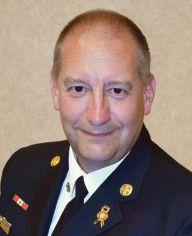
Tom DeSorcy became the first paid firefighter in his hometown of Hope, B.C., when he became fire chief in 2000. Originally a radio broadcaster, Tom’s voice could be heard in the early 1990s across Canada as one of the hosts of Country Coast to Coast. Tom is very active with the Fire Chiefs’ Association of British Columbia as communications director and conference committee chair. Contact Tom at TDeSorcy@hope.ca and follow him on Twitter at @HopeFireDept
I’ve seen this change first hand and my story is not new. We took three of those community groups and made them our fire department. They weren’t told to go medical calls. They weren’t asked to include extreme weather events in their list of responses but when the need is there, who else are you going to call?
The public expects a lot more from their fire department and it’s only going to increase. We all need to recognize this expectation and work harder to deliver it. There has been much discussion post-pandemic that some things may never be the same. The volunteer fire service is one of those things. Our credibility is certainly there and continues to be on the rise but we should look beyond that.
We train as if our life depends on it, because it does. Now, we all need to promote and recruit as if our community depends on it, because it does.
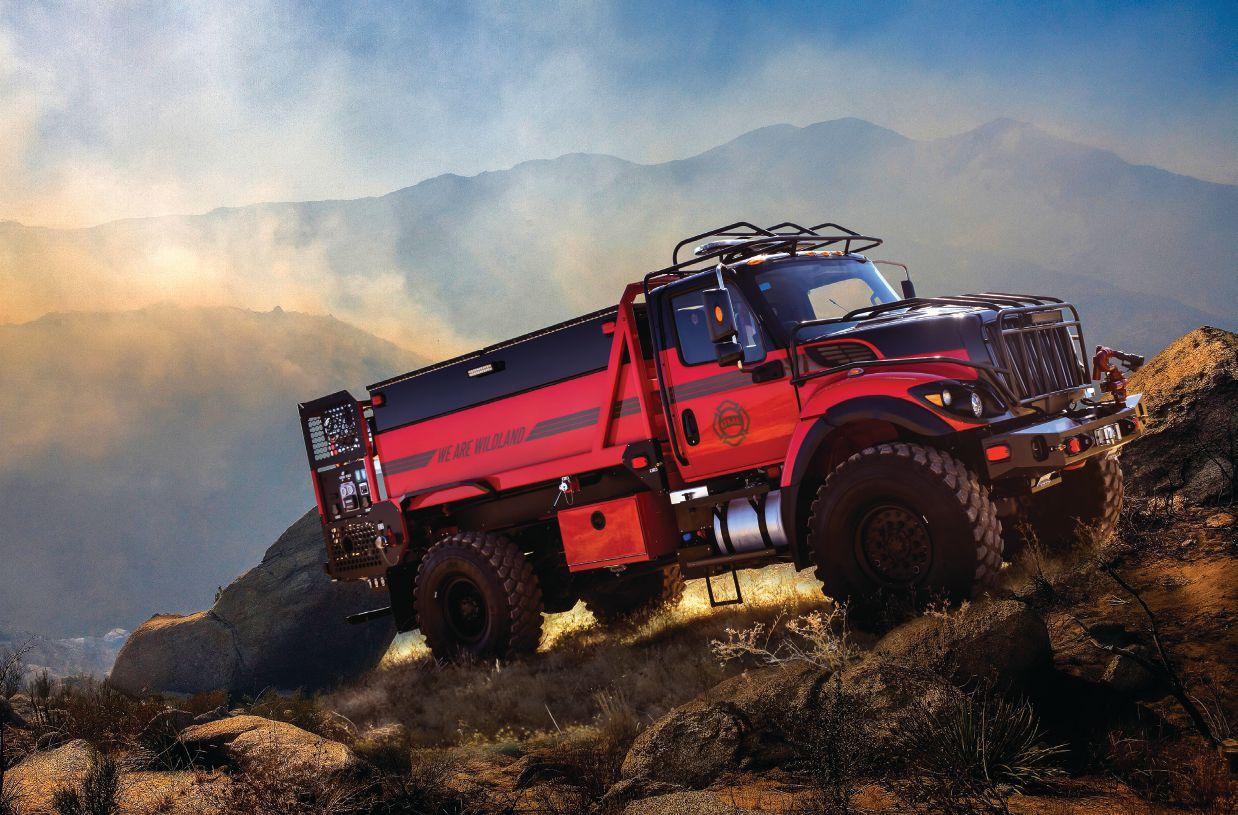

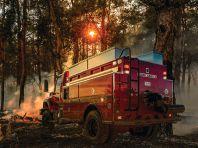
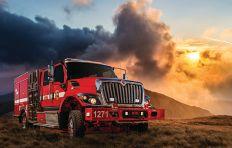
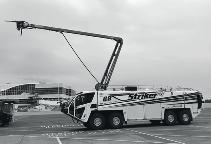
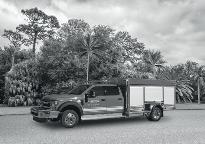
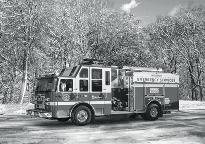
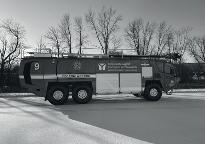
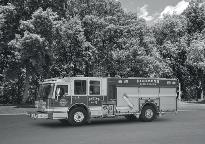
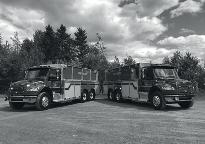
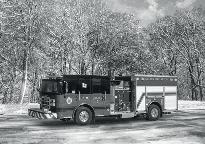
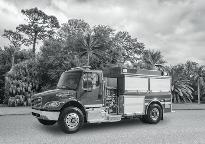
BME Fire Trucks, North America’s leading wildland apparatus manufacturer, has awarded the exclusive dealership territory for its emergency apparatus in Canada to Commercial Emergency Equipment. Commercial and BME have begun working hand-in-hand to bring the extensive line of BME Fire Truck apparatus to Canada’s first responders. Contact an Apparatus Specialist today to start building your next wildland truck. COMMERCIAL EMERGENCY EQUIPMENT IS CANADA’S FIRST AND ONLY DEALER FOR BME FIRE TRUCKS.