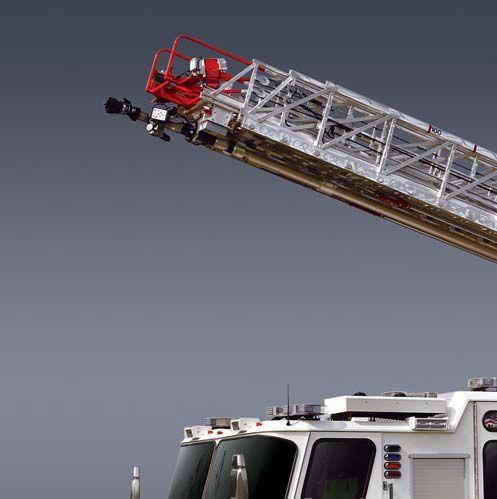
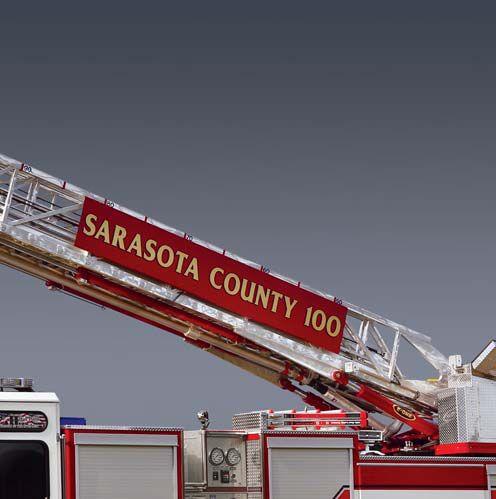
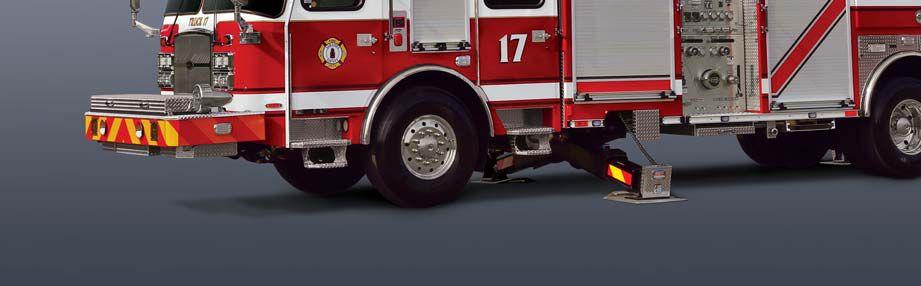
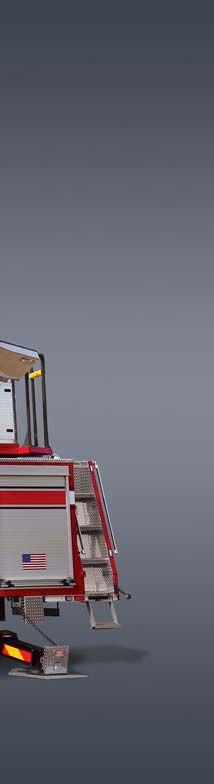
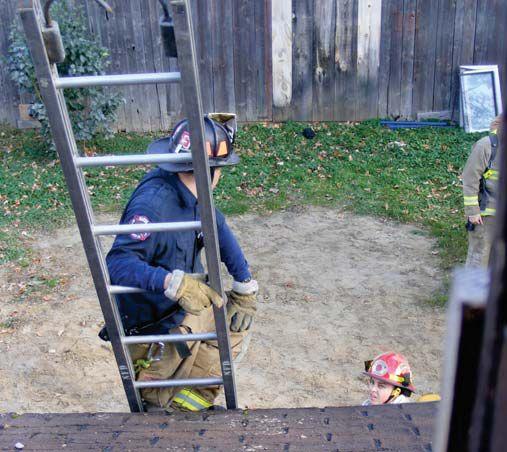
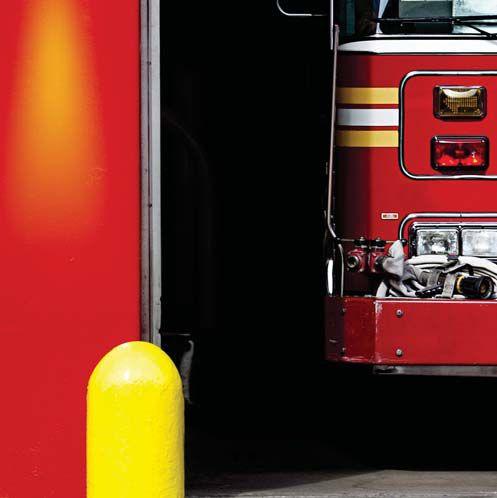
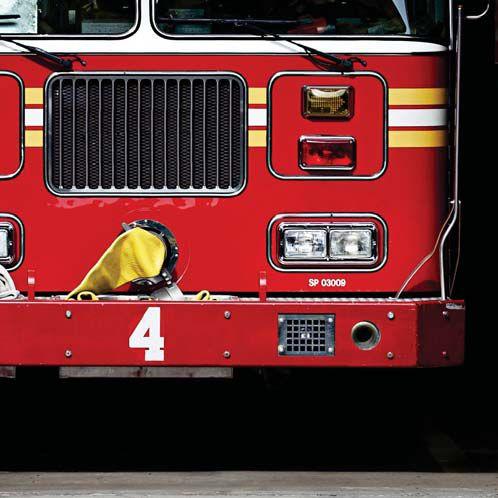
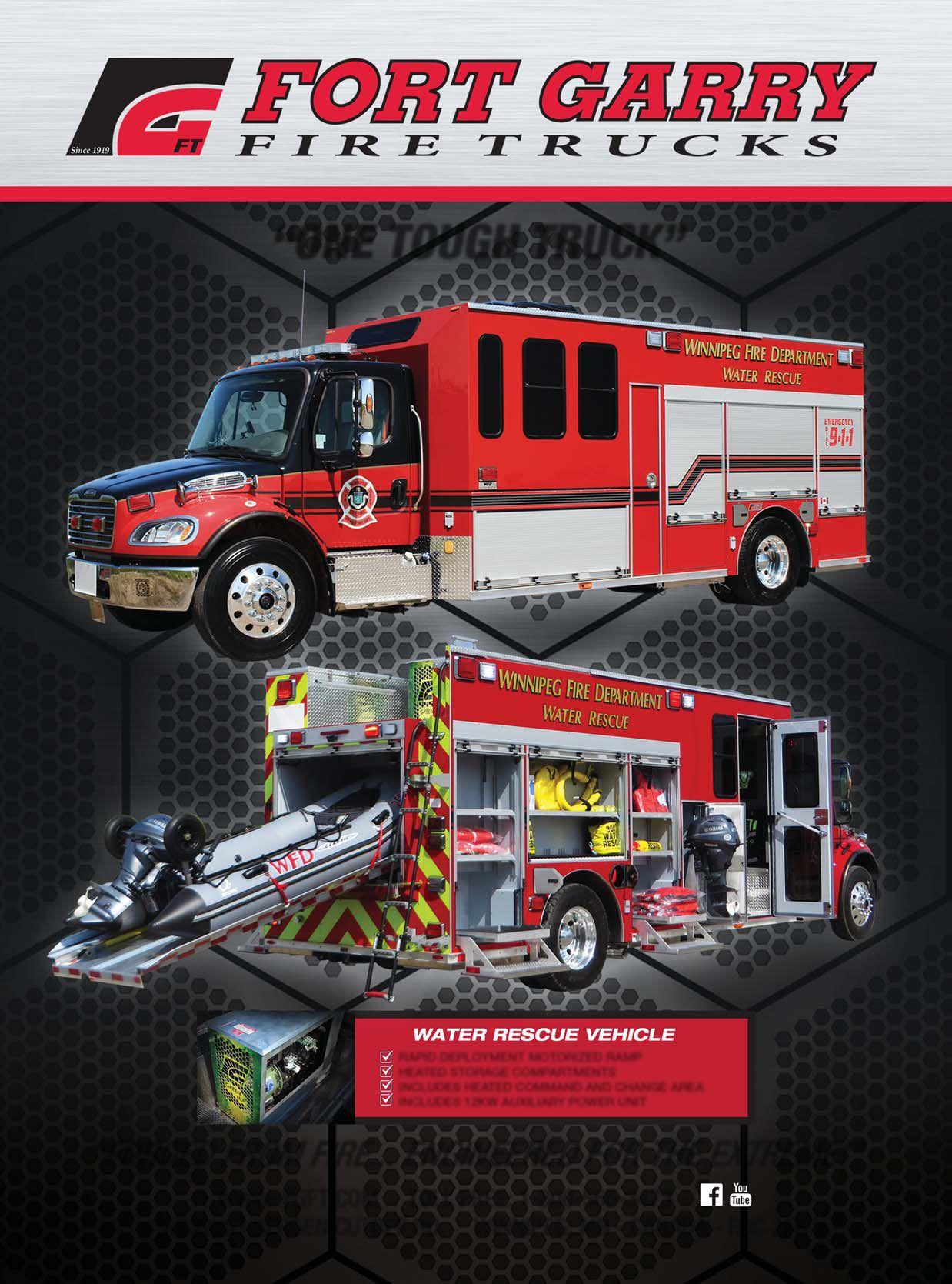
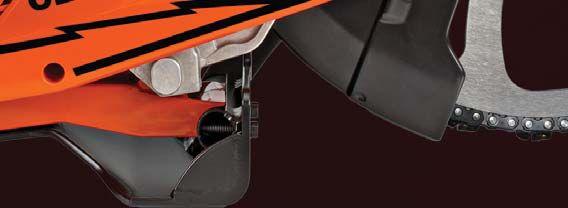
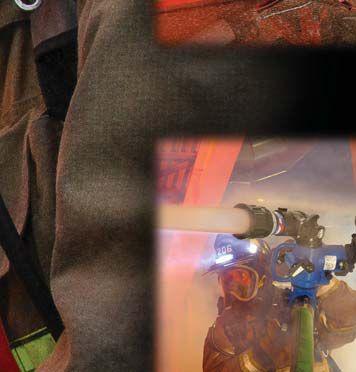
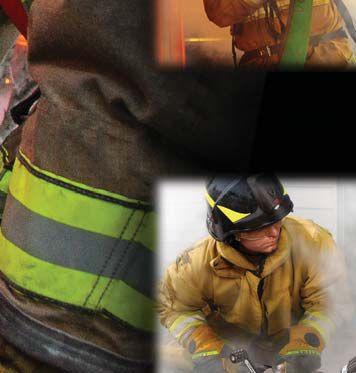
The Metro 100 Quint is a compact and maneuverable aerial perfect for tight streets and crowded environments. Available with the HM 100, LTH 100 or 110 aerial ladder, the Metro 100 Quint features best-in-class stability, full-depth compartments, pump, tank and a SideStackerTM hosebed.
Explore every feature in full, at: e-one-aerials.com/metro-100-quint.pdf
MAPPING THE CRISIS
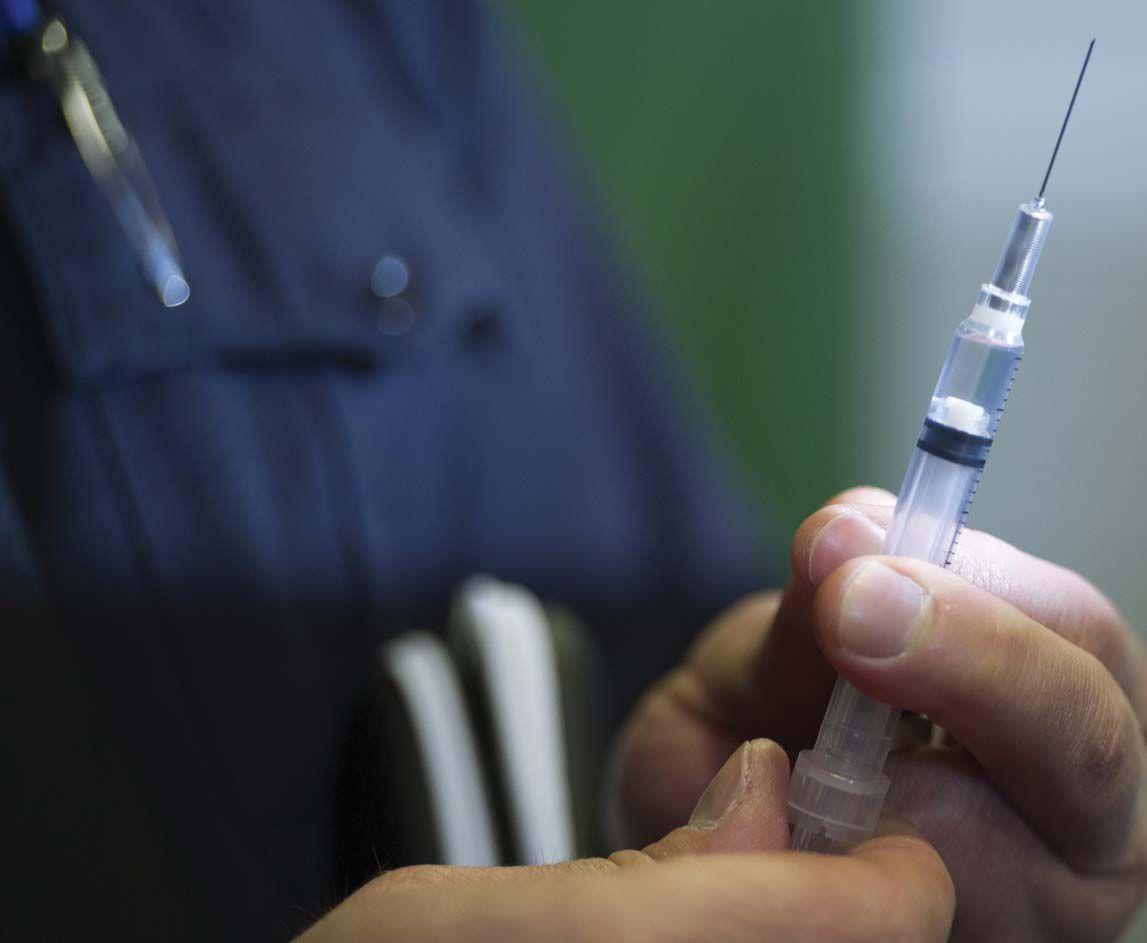
A computer program is allowing a British Columbia fire department to track overdoses in realtime. Surrey Fire Service Chief Len Garis, Deputy Chief Larry Thomas and journalist Karin Mark explain how the program helps responders approach the opioid crisis proactively.
20
SCARS VS. SCABS
Mental health expert and former firefighter Nick Halmasy discusses the differences between PTSD and other mental health issues that affect first responders.
32 KIDS AND ARSON: PART 1
Read Part 1 of a series exploring how the City of Regina, Sask., mobilized the community to manage an escalating problem with children setting fires. Authors Angela Prawzick and Candace Giblett introduce the story and early steps to confront the challenge.
BY LAURA AIKEN Editor laiken@annexweb.com
Change we choose I COMMENT
t’s a common sentiment that people don’t like change. I once interviewed change expert Peter de Jager on this very thought and his views summarily expressed that people like the change they choose. Well, after 15 years as an editor covering everything from golf to ground water, pizza making and baking, I am definitely excited about the change I chose in taking the helm as editor of Fire Fighting in Canada and its sister publication Canadian Firefighter
I might be on a learning curve that looks like climbing Everest from base camp, but I am certain the conditions will be far more welcoming in this new terrain. I am also certain I will never actually reach the top, because there never really is an end or peak to learning.
showed 2458 deaths nationwide (excluding Quebec). The national average is estimated at 8.8 per 100,000, with Western Canada being hit the hardest at 10 per 100,000 in Yukon, Northwest Territories, British Columbia and Alberta. The government noted several limitations with the data, including incomplete figures from Ontario and Newfoundland and Alberta’s data being only based on accidental overdose. In fact, the number of limitations and considerations noted (far more than listed here and most of which suggest underestimating), show how hard it is to grasp the full scope of this addictive beast.
ON THE COVER
In this edition’s cover story, Fire Fighting in Canada brings you a new development in the fight against opioid deaths. The City of Surrey in British Columbia, under an initiative by Surrey Fire Services, partnered with a software developer to create a program that identifies aberrations in overdose patterns. In 2016, fire first responders started giving injections of the overdose-reversing drug naloxone in Surrey and Vancouver. As the article’s authors point out, these are mitigation strategies and a root solution has yet to be found. The opioid crisis is truly that – a B.C. Coroners Service report found that from 2016-2017, fentanyl was guilty in 64.1 per cent of illegal drug overdose deaths.
The opioid crisis is hitting Western Canda hard. An initiative by Surrey Fire Services is giving fire first responders a new proactive strategy. See story on page 12.
Reiterating upon my opening theme – people like the change they choose. It is very difficult, if not impossible, to force addicts off their drug of choice. But we can choose how we respond to the social tragedy that it is, and in that, change our response if it’s not working. We can respond more creatively, as Surrey Fire Services did in using technology to help find bad batches of drugs and problem areas. The solution to the opioid crisis won’t come from any one place, but certainly in large part from the essential group that comprise mental health, medical, all emergency responders, social support services and government. The fire service has a role to play, and the Surrey department has exemplified it.
ESTABLISHED 1957 DECEMBER 2017 VOL. 61 NO. 8
EDITOR LAURA AIKEN laiken@annexweb.com 416-522-1595
ASSISTANT EDITOR LAUREN SCOTT lscott@annexweb.com 416-510-5116
NATIONAL SALES MANAGER ADAM SZPAKOWSKI aszpakowski@annexweb.com 289-221-6605
PUBLICATION MAIL AGREEMENT #40065710 RETURN UNDELIVERABLE CANADIAN ADDRESSES TO CIRCULATION DEPT.
P.O. Box 530, SIMCOE, ON N3Y 4N5 e-mail: subscribe@firefightingincanada.com
Printed in Canada ISSN 0015–2595
CIRCULATION e-mail: lmalicdem@annexbizmedia.com
Tel: 416-510-5187
Fax: 416-510-6875 (main) 416-510-5133
Mail: 80 Valleybrook Drive, Toronto, ON, M3B 2S9
SUBSCRIPTION RATES
Canada – 1 Year - $24.50 (with GST $25.73, with HST/QST $27.69) (GST - #867172652RT0001)
USA – 1 Year $42.95 USD
We acknowledge the [financial] support of the Government of Canada.
The Government of Canada’s national report on apparent opioid related deaths in 2016 indicated that preliminary numbers
Occasionally, Fire Fighting in Canada will mail information on behalf of industry-related groups whose products and services we believe may be of interest to you. If you prefer not to receive this information, please contact our circulation department in any of the four ways listed above.
Workrite FR Fire Service is the go-to uniform line for a crisp, professional look, easy care and high-quality flame-resistant (FR) protection. Our complete line of station wear maximizes the inherent protection of DuPont™ Nomex® IIIA with specialized construction techniques for added durability in tough conditions.
• Long lasting, looks great on and off the job
• UL certified to NFPA 1975 for added safety
• PerfectPress® permanent creases for a just-pressed look, right out of the dryer
STATIONtoSTATION
ACROSS CANADA: Regional news briefs
BC law does not adequately protect first responders, chief says
For the first time, a Nanaimo, B.C., judge used a provincial law intended to protect first responder safety to compel a blood test from a patient who vomited on a firefighter.
In August, a Nanaimo firefighter was providing oxygen to a suspected overdose patient using a mask. He was able to revive the patient, but unfortunately, when the man regained consciousness, he vomited in the firefighter’s face.
Although firefighters wear protective gear during medical aid calls, such as gloves and goggles, the spread of disease is still a risk for responders.
Most times, patients will agree to give blood after first responders come in contact with bodily fluids. However, this man refused treatment in hospital.
On Sept. 15, Provincial Judge Brian Harvey enacted the Emergency Intervention Disclosure Act, which had been on the books for five
years.
The man was given seven days following the court order to produce a blood sample.
Nanaimo Chief Karen Fry said officials were unable to compel a blood test within the allotted time. She said a process server from the court attempted to track down the individual, but efforts were not successful.
The legislation does not allow police to arrest the patient for missing a court order, but does allow for a $10,000 fine. High-risk individuals are rarely able to pay fines, and there is no recourse for non-compliance.
Fry said the department initially hoped this legislation would provide the firefighter with the information needed to begin treatment, if needed.
“It really goes to prove that the legislation maybe doesn’t assist the first responders, and police, and paramedics, as much as we had initially hoped it would,” Fry said.
THE BRASS POLE
Promotions & appointments
On Aug. 14, FRANK BIANCUCCI began his new role as an interim deputy fire chief in St. Catharines, Ont. Biancucci has 37 years of fire service experience in Hamilton, where he most recently served as assistant deputy chief. Biancucci will fill the position
for six months, replacing Deputy Chief Jeff McCormick, while he leads St. Catharines Fire and Emergency Services as acting chief.
On Sept. 5, STEVE TIERNAN officially took his post as the fire chief for Ganonoque, Ont. Tiernan previously served with the Northern Bruce Peninsula
The Emergency Intervention Disclosure Act does not do enough to protect first responder safety, said Nanaimo, B.C., Chief Karen Fry.
“I still believe that judge Harvey made the right decision and did as much as he could at that point in time, with the legislation that he had before him.”
The firefighter has remained on active duty, since the incident. As of October, Fry said
Fire & Emergency Services as a district chief, fire prevention officer, and training officer. Tiernan holds a number of NFPA fire instructor certifications and will be completing the municipal leadership program at Loyalist College this fall.
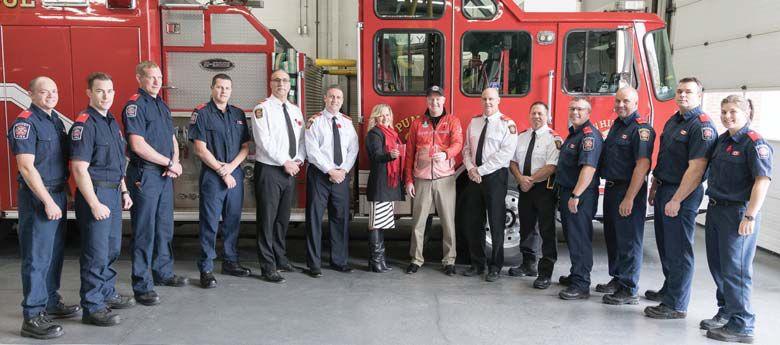
The Township of Puslinch in Ontario has named BRAD CHURCHHILL as its new deputy fire chief. Churchill began
the firefighter was still undergoing testing.
“We know that the risks are low, but we have to do what we can to protect our employees,” she said. “You can’t always remove every risk, it’s part of the job, but we need to do what we can for them.”
his fire service career in 1991, serving in Puslinch and nearby Cambridge. Prior to accepting the role in Puslinch, he served as a captain and acting platoon chief. Churchill’s first day as deputy chief was Nov. 1.
The Town of Oakville, Ont., hired MONIQUE BELAIR as deputy chief. Belair has more than 30 years of experience in the fire service, serving as a deputy chief
Oakville firefighters break records at international competition
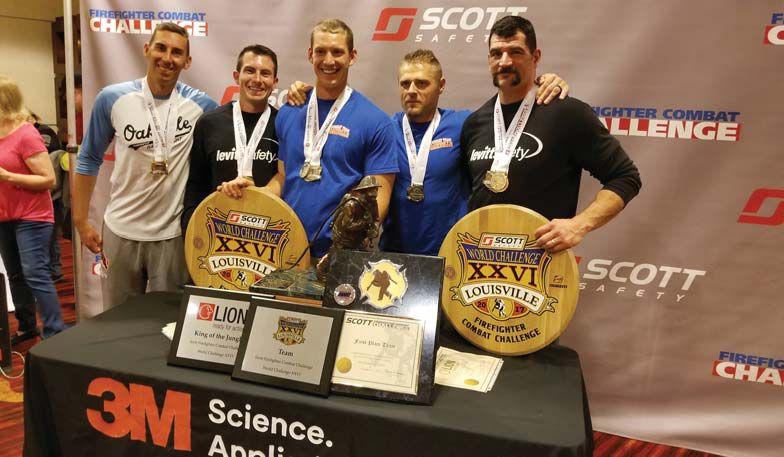
Firefighters from the Oakville Fire Department in Ontario set two world records, coming out ahead of the competition at an international Fire Fit competition in late October.
From Oct. 23-28, 10 firefighters represented Oakville at the 2017 Scott Safety World Firefighter Combat Challenge Championships in Jeffersontown and Louisville, Kent.
Ian Van Reenen came first in the individual male category, shattering his world record of 1:15.29 that he set the previous year in Alabama. This year in Kentucky, he ran the course in 1:14.76. In the team category, Oakville broke its own world record with a time of 4:04.03.
On top of the two world records and first place finishes, training officer Darren Van Zandbergen also came first in the over 40 male category.
“They worked just as hard, if not harder, to go down and defend their championship titles,” says Oakville Chief Brian Durdin.
Fire Fit training has become increasingly important for the Oakville team. In fact, the town helped to fund a replica of Canadian Fire Fit course
grounds at the department’s training centre last spring, allowing members to train better in their free time.
Durdin dipped into his own free time, using vacation time to go to Louisville to watch the team compete from Oct. 25-28. He said he was pleased to see his members represent the department on the world stage.
“It was a very proud moment to be there and witness their dedication, their professionalism to Oakville as
well as to their sport.”
Oakville has been dominating in these competitions for decades. Durdin says there are two trophy cases in the training centre full of awards that date back to competitions in the late 90s.
Most of these competitions serve a dual purpose, Durdin says.
“You’re going to compete, but you’re also going to learn some new skills. So we regularly rely on the team to come back from competitions and
impart their knowledge to the staff on new techniques, new safety measures.”
As department members were cleaning up in Kentucky, Oakville’s extrication team was competing in an international competition in Florida, where they placed first in limited pit, and second in technical.
“We’re very proud of the auto-ex team and we’re also very proud of the Fire Fit guys and girls,” Durdin says, “We’re extremely proud of their successes.”
of communications, training and fire prevention in St. Catharines prior to her move to Oakville. Her first official day was Oct. 31.
Retirements
Erin, Ont. Fire Chief DAN CALLAGHAN is retiring. Callaghan spent 43 years working in fire and law enforcement. He began his career as a volunteer firefighter in Brampton,
Ont., where he worked for 34 years, retiring as a captain in 2016. He later joined the Toronto Police Service, and was stationed in Fort McMurray, Alta., as an officer with the RCMP. In 2010, he joined Erin Fire & Emergency Services as fire chief. Callaghan’s last day is Dec. 28.
Last alarm
Retired Milton, Ont., firefighter
BARRY KORY died on Sept. 23, of a heart attack at the age of 70. In 2013, Kory retired from the Milton Fire Department, where he had served as the fire prevention inspector. Then Chief Dave Pratt told Inside Halton that Kory started as a recruit in 1998. In 2001, he was hired full time with the training division. Over the course of his career he remained a dedicated community activist, both in
terms of fire prevention education, and overall community needs.
Former Corner Brook, N.L., chief BOB BRAKE passed away on Sept. 22 at the age of 75. He retired in 2001 after serving with the department for over 30 years. A service was held for Brake on Sept. 28 at Fillatre’s Funeral Home in Corner Brook.
Oakville firefighter Ian Van Reenen came first in the individual male category, breaking the world record he had set the previous year.
STATIONtoSTATION
ACROSS CANADA: Regional news briefs Innotex secures $1.5 million deal with Mexico City
Canadian fire fighting protective equipment manufacturer INNOTEX, based in Richmond, Que., is expanding its business by securing deals with Mexico City and other international departments.
For an estimated cost of $1.5 million, INNOTEX will produce 1,000 turnouts, 1,000 sets of gloves, and 1,000 hoods for Mexico City.
Claude Barbeau, general manager for INNOTEX, says the increased international orders are a result of the company’s new ENERGY gear, which was introduced at FDIC
last April.
He says prior to the ENERGY release, INNOTEX was doing well with rural departments, but were not as successful with departments in big cities.
“Our initial goal was to come up with gear for metropolitan fire departments, large fire departments,” Barbeau says.
The release of ENERGY has allowed the company to expand their business, helping them to gain large tenders as their competitors do.
“Even in Canada, we were not very present in large fire
departments, but now this is changing,” Barbeau says.
“We are better equipped to serve that market segment and the same for the United States.”
He says Mexico City, like other departments across North America, were concerned about firefighter safety and comfort. The ENERGY gear includes increased durability at the seams, extra padding where the pack sits, and increased airflow features.
Last year, INNOTEX received contracts from departments in Central
America and the Middle East.
The company is slated to provide 1,000 sets of gear for Panama, 600 for Kuwait, at a total combined cost of more than $3 million. INNOTEX recently completed 600 sets for Saudi Arabia as well.
Barbeau says that INNOTEX is expanding its business internationally, and the new deal in Mexico’s capital has given the brand a major push.
“[The Mexico City deal] certainly helped us to grow our business and gain some credibility and brand recognition out there.”
Wearing red epaulettes for first responder mental health
For November, fire departments across Ontario donned red epaulettes in honour of veterans and first responders who struggle with mental health.
In June, Wounded Warriors Canada partnered with the Paramedic Chiefs of Canada to create the “Slip on your RED” campaign. Through the sale of red epaulettes, the campaign raises funds and awareness to create mental wellness programs for first responders and veterans.
Canadian uniform company Unisync Group Carleton Uniforms designed the epaulettes, donating the majority of proceeds back to Wounded Warriors.
In the campaign, red is more than just a colour. RED stands for “remember everyone deployed” – a message department members proudly wore on their sleeves.
In addition to paramedic chiefs, the Ontario Association of Fire Chiefs also promoted the campaign, encouraging members wear the red epaulettes every Friday throughout November.
Whitby, Ont., Fire Chief Dave Speed took his department’s support a step further. Every day in November all 141 members of Whitby Fire and Emergency Services wore the red epaulettes.
“It’s helping, I think to create a culture of openness and acceptance by seeing all these epaulettes on each other,” Speed says.
Two of Whitby’s own firefighters have participated in Wounded Warriors mental health programs. For one of these members, Speed said the experience was life-changing.
“. . . [H]is life had been transformed and he was able to deal with issues that he had
been keeping to himself for years,” Speed said. “I’ve spoken to people he works with on the trucks and they can’t believe the difference in him.”
“Even just wearing them creates that awareness and everyone is saying to everybody else we’re all in this together,” Speed said.
“I think it makes us a stronger department and enables us to provide a better level of service to the public.”
AUTOMATIC nozzles at 75, 55 or 45 psi
FIXED GPM, SMOOTH BORE AND BREAK-APART
SELECTABLE GPM nozzles at 75 psi
Low Pressure, High Flows
STATIONtoSTATION
BRIGADE NEWS: From departments across Canada
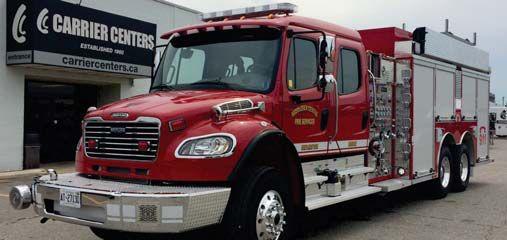
The Middlesex Centre Fire Services took delivery of a new Metalfab pumper. Chief Colin Toth ordered the truck, built on a Freightliner chassis, from Carrier Centers Emergency Vehicles. Features include a Waterous 1050 GPM/ PTO-driven pump, 2000 imperial gallon water tank, FoamPro 1600 system and 25-gallon foam cell, extruded aluminum body, Zico-powered ladder rack and portable tank rack, and Whelen warning light package.
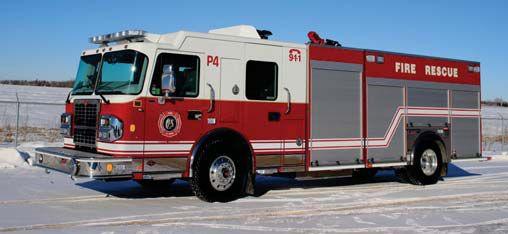
The fire department in Cornwall, Ont., added a new Fort Garry pumper to its fleet. Built on a Spartan Metro Star chassis and run by a 450-hp Cummins ISL9 engine and Allison EVS 3000 transmission. Special features include Class 1 flowminders, a Whelen emergency package, Onan HG 8 KW generator, FRC scene lights, Groenveld grease system, and multiple storage features.
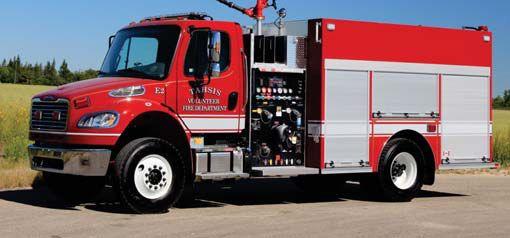
The Tahsis Volunteer Fire Department in British Columbia took delivery of a Fort Garry-built pumper. The red truck is built on a Freightliner M2 chassis and has a Crusader body. Powered by a 300-hp Cummins L9 engine and Allison 3000 transmission, the unit features a Darley PSP 1250 pump with a co-poly 300 imperial gallon tank. It comes complete with a Foam Pro 1600 system and side-control pump panels.
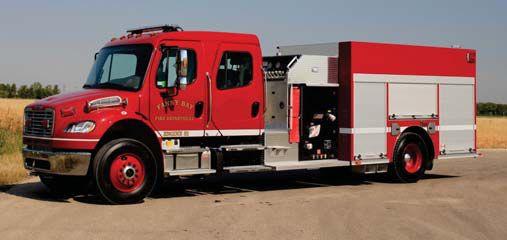
The fire department in Fanny Bay, B.C., recently received a new fire pumper from Fort Garry Fire Trucks. The truck was built on a Freightliner M2 chassis with a Crusader body. The red pumper runs on a 300-hp Cummins L9 300 engine and an Allison 3000 EVS. It has a Hale DSD 1250 gallon per minute pump and top-control pump panels. The truck comes with a pro-poly 1000 imperial gallon tank and a Foam Pro 1600 Class A foam system.
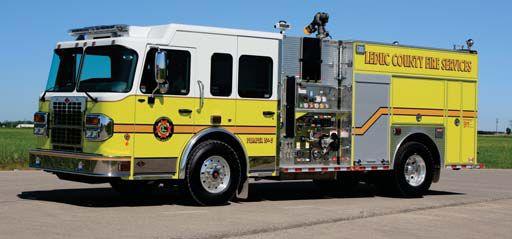
Leduc County Fire Services in central Alberta welcomed a new pumper. Built on a Spartan Metro Star chassis, the unit runs on a 380-hp Cummins L9 engine and Allison EVS 3000 transmission. Special features include: an Elkhart Cobra EXM monitor, a Zico electric ladder rack, Federal Signal emergency light package, a Honda 5000W, FRC scene lights, and on-spot chains.
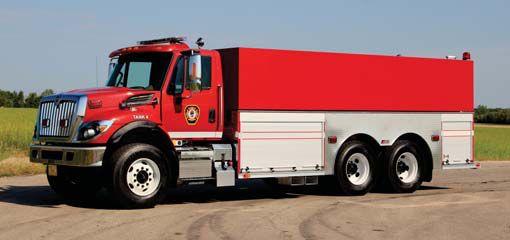
The Township of Douro Dummer in central-eastern Ontario took delivery of a Fort Garry-built fire tanker. Built on an International chassis, with a 350-hp Cummins ISL engine and Allison 3000 EVS transmission, the unit features two 1500 imperial gallon CET PFP20 HP portable pumps, Amdor roll-up doors, federal signal emergency package, Whelen scene lights, a portable tank compartment, manual fold-down portable tank storage.
CORNWALL, ONT.
MIDDLESEX CENTRE FIRE SERVICES
TAHSIS VOLUNTEER FIRE DEPARTMENT
FANNY BAY, B.C.
LEDUC COUNTY FIRE SERVICES
THE TOWNSHIP OF DOURO DUMMER
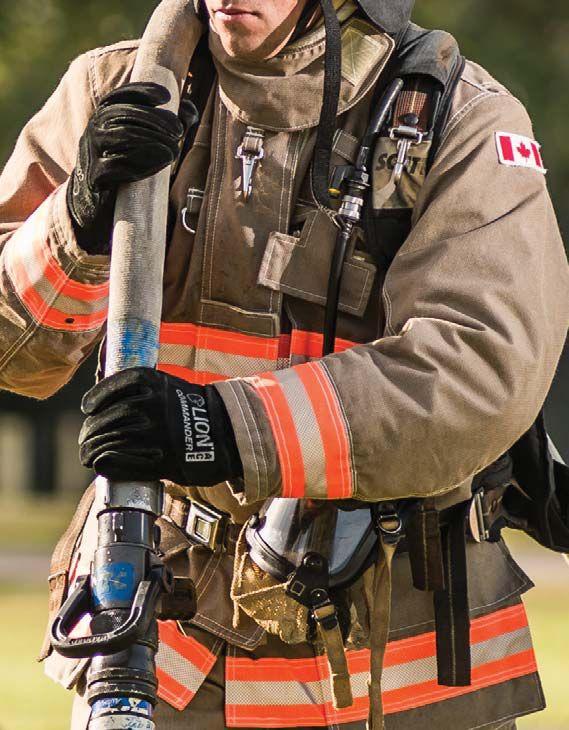
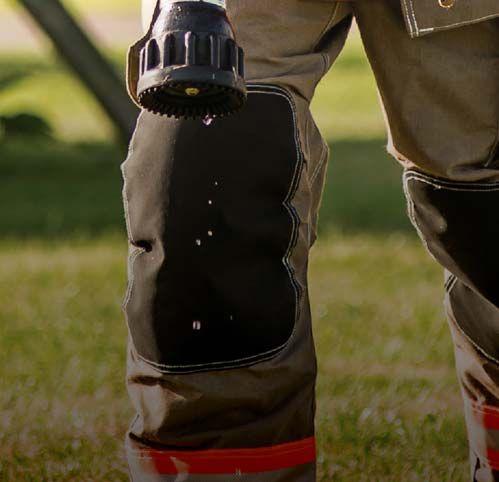
Loaded with safety, comfort and mobility features for unmatched performance, Flame Fighter® bunker gear offers a variety of custom outer shell fabric, liner system, hardware and pocket options to fit your specific needs.
Patented IsoDri®* moisture management reduces the water absorbtion and helps gear dry faster between runs
Exclusive Ventilated Trim™ allows vapor to be released, reducing the risk of scald burns
Thermashield™ provides an additional layer of liner material in the upper back and shoulders to protect against compression burns
Move-N-Hance™ crotch gusset increases mobility by reducing bunching, twisting and pulling
Flex Knee™ for easy, natural movement
Stay Rite™ sleeve wells integrate the sleeve’s liner into a full-length wristlet so that when you reach, the entire sleeve moves with you
For more information about Flame Fighter bunker gear, contact your Starfield LION sales representative at 1.800.473.5553 or visit us online.
Mapping the Crisis
Computer program allows departments to track overdoses in real-time
By LEN GARIS, LARRY THOMAS and KARIN MARK
How many lives could be saved if emergency responders knew when a cluster of opioid overdoses would occur in advance?
With opioid overdoses on the rise, the City of Surrey in British Columbia has turned to technology to warn fire, police, and emergency health responders when a bad batch of drugs may have hit the streets.
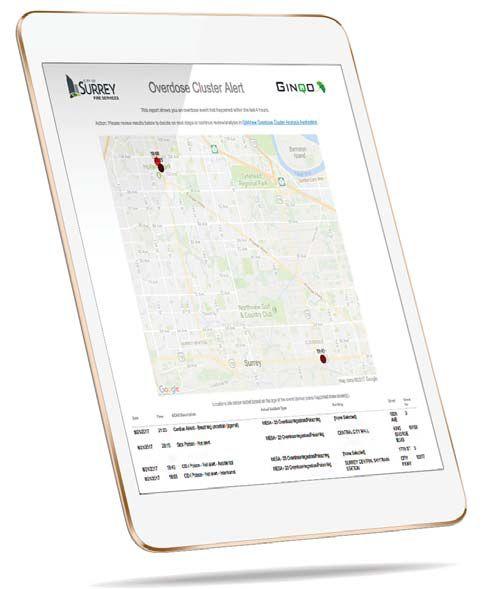
Through a partnership with Qlik business intelligence software developer GINQO, the city has developed software that mines data from dispatch calls in realtime for signs of overdose clusters. The software immediately issues an alert when data corresponds with pre-set rules – for example, if there are more than three overdoses within a square kilometre in a four-hour period.
LEFT In December 2016, the City of Surrey was seeing over eight overdoses a day. ABOVE SFS has taken a proactive approach to the crisis, creating a mapping system that allows the department to track overdose data in real-time.
“We’re supportive of exploring opportunities to reduce the number of opioid overdoses in Surrey and throughout Fraser Health,” said Dr. Victoria Lee, Chief Medical Health Officer for Fraser Health, a health care region serving 1.8 million people in Metro Vancouver.
“This important initiative by Surrey Fire will help to respond more quickly and effectively when clusters of overdoses take place”.
WHAT PROMPTED
THE INITIATIVE?
The initiative was triggered by a series of 17 overdoses over a 72-hour period in December 2016. At the time, Surrey Fire Services (SFS) was working with Qlik on an unrelated project when it occurred to fire-service staff that the company’s software may enable a data-driven response to the opioid crisis.
compared to 2015, when SFS responded to 1,606 overdoses and a total of 22,363 medical calls.
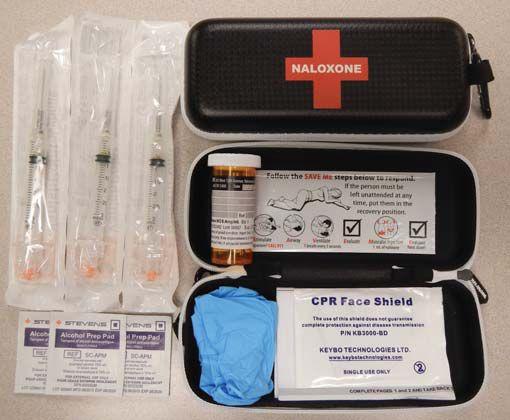
In February 2016, fire first responders in Surrey and Vancouver began administering injections of the overdose-reversing drug naloxone after receiving training from British Columbia Emergency Health Services. Within the first year, Surrey fire first responders had reversed 77 opioid overdoses.
While positive, the problem remained that naloxone injections are a reactive intervention, and the overdose rate continues to rise. By December 2016, Surrey was seeing more than eight overdoses per day – that is double the numbers of January 2015. The increase mirrors the situation across the province. British Columbia had 488 overdose deaths in the first four months of 2017 alone.
In early 2017, SFS began working with GINQO to create Qlik software that would provide real-time reporting of overdose clusters. The aim was to use the information to assign and deploy resources more effectively, potentially preventing further overdoses in emerging problem areas, instead of responding reactively to overdose calls.
THE SOFTWARE
Completed in the spring, the software is programmed to constantly scan dispatch call data and sends out email alerts of overdose clusters, including a map, to subscribers based on customizable business rules. The alerts emails are sent when:
• Overdoses are twice or more the daily rate of overdoses.
• More than three overdoses occur in a four-hour period within one square kilometre.
• More than four overdoses occur in a four-hour period within one square kilometre.
It was the logical next step for SFS, which serves a city of over 500,000 people and – like fire departments across the country – has been responding to ever-rising numbers of medical emergency calls and overdoses since 2014. The department responded to 24,976 medical calls in 2016, 2,623 of which were overdoses. This was a 63 per cent increase in overdoses
By August, Surrey had completed a privacy impact assessment, signed an agreement to share information with Fraser Health, and was in discussions about an agreement with Surrey RCMP.
From both a public health and enforcement standpoint the data generated by the software could have a significant impact on overdose prevention. Once alerted to a tunities to red oid overdoses Fraser Health Medica he million peo impo Fire will he and effect doses tak
cluster of overdoses, first responders and health agencies can direct additional staff and resources to hotspots, while police services can target the areas with increased patrols and enforcement. This will not only enable a more effective response, but may help diminish the supply.
Predictable patterns, such as timing and location, were already starting to emerge within the first months of the software’s use. Over time, the enhanced data will enable Surrey responders to target resources with greater precision.
Our data indicates that overdoses start when people first wake up, building in frequency throughout the day until midnight. Spikes in overdose rates also coincide with certain days of the week, such as paydays and government cheque days.
Real-time reporting of overdose patterns allows health and social support groups to adapt service delivery hours to align with peak overdose times. This data enables first responders to take proactive steps and provide targeted prevention messaging before further overdose spikes occur.
It’s a similar approach to how SFS already uses long-term fire statistics to strategically deploy staff and equipment. The risk-based model ensures resources are applied in the most efficient and effective way possible.
At a time when government and public health agencies across Canada are seeking a solution to the opioid crisis, it’s not surprising that word of Surrey’s innovative project has spread. Within months of its development, the city was receiving information and presentations requests by government and public health officials in both Canada and the United States.
Naloxone is the overdose-reversing drug that more and more fire departments are being trained to use across the country. However, naloxone is a reactive solution to the opioid crisis.
Those interested in learning more about the initiative may contact Surrey Fire Chief Len Garis at lwgaris@surrey.ca
Len Garis is the Fire Chief for the City of Surrey: LWGaris@ surrey.ca. Larry Thomas is a Deputy Fire Chief for the City of Surrey: LSThomas@surrey.ca. Karin Mark, is a former award-winning newspaper reporter based in Metro Vancouver.
We
provide the
in the
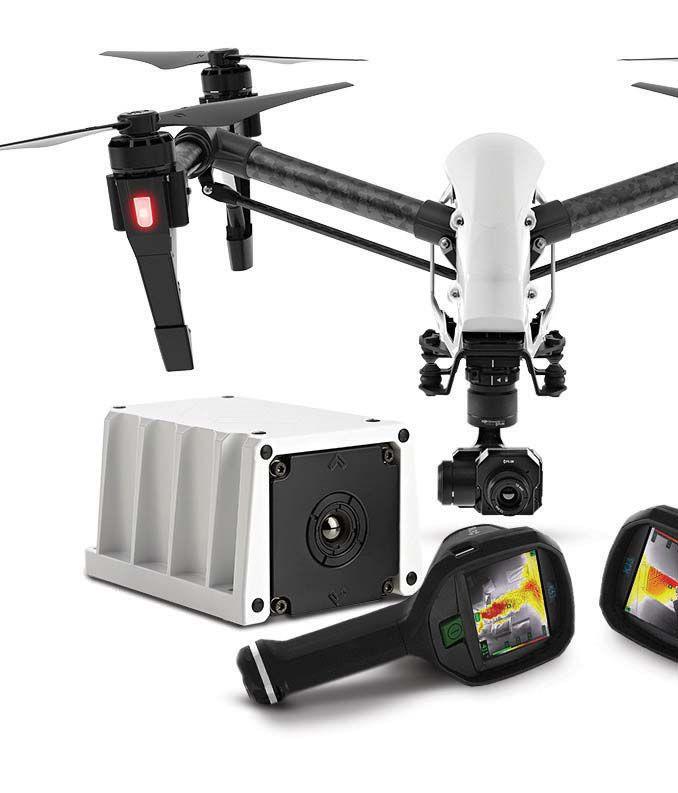
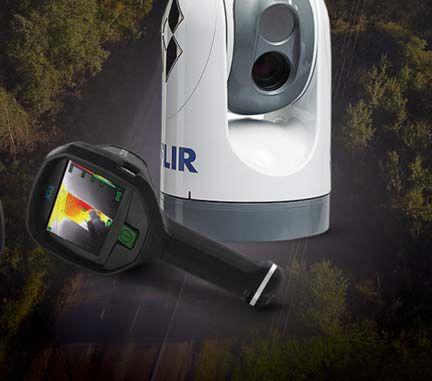
FLIR’s wide range of TICs can help you identify hot spots from a variety of distances – making safety the top priority. Learn more at FLIR.c /fire
FROM BOOTS ON THE GROUND TO EYE IN THE SKY, WE’VE GOT YOUR BACK. .
· FLIR M-SERIES PAN-TILT-ZOOM TICs FOR ARFF, HAZMAT & ALL EMERGENCY VEHICLES
· FLIR AERIAL FIRST RESPONDER KITS
BACKtoBASICS
Tips for proper ground ladder use
BY MARK VAN DER FEYST
Ihave been focusing a lot on fire ground operations lately after witnessing many firefighters completing tasks in a manner that is inconsistent with their training over the last few months. One area where I have noticed inconsistencies is the use of ground ladders. This area is neglected greatly in the fire service because we often consider ground ladders to be bulky, heavy and awkward to handle.
The ground ladder should be viewed as a useful tool and firefighters must become very familiar with its use. Many fire departments don’t have the call volume to support the frequent use of a ground ladder, but regardless, all firefighters should train in the event they need to use one.
I want to highlight some useful tips that we can employ when using ground ladders so that no matter the department or the firefighter, ground ladders can be easily integrated into operations.
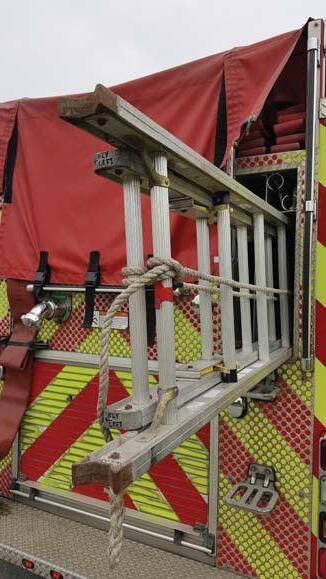
The first tip concerns the halyard. The halyard needs to be tied in a manner that allows one firefighter to raise and extend the ladder, without having to untie the halyard. This can be accomplished as shown in photo 1. Tie the halyard around the bottom rung of the bed section using a clove hitch, and ensure it is kept this way. When it comes time to extend the fly section of the ladder, all you need to do is pull on the halyard. The ladder should extend easily when the halyard is tied this way. I have seen too many firefighters wasting time by untying and retying the halyard once the ladder has been raised into position.
Even if the halyard is not tied around the rungs after the ladder has been raised, the ground ladder will still work safely. The halyard is not the safety feature that prevents the fly section from sliding back down; the pawls or dogs are rated for that exact purpose. If the dogs or pawls are secured around the rung, this means the fly
section is secured in position. If the pawls are not engaged, the fly section will slide back down.
The second tip is to identify the middle of the ground ladder. Paint a truck number on the side of the beam or use a certain colour to mark the middle of the ground ladder. Your department can use any colour for this marker, but the most common are green and red. The marker serves a bigger purpose than just telling you which truck the ladder belongs to — it tells the firefighter where to grab the ladder when picking it up from the ground, or where to shoulder the ladder when sliding it off the truck. This allows the firefighter to find the right spot to shoulder the ladder easily, avoiding having the ladder teeter-totter on their shoulder. Knowing where to grab the ladder allows for more efficient and effective operations.
The third tip is to orientate ground ladders to be ready for deployment right from the truck. As seen in photo 1, the ground ladder is mounted in the truck with the butt spurs facing the right direction, or the direction of travel. I have seen ground ladders mounted with the butt spurs facing the wrong direction, making deployment less efficient and more difficult for the firefighter. Firefighters should be able to open the compartment door, grab the ladder, pull it off onto their shoulder and continue moving in the same direction. If the ground ladder is mounted on the side of the truck, the application is the same. Have the butt spurs facing the direction of travel, which will be usually the rear of the truck.
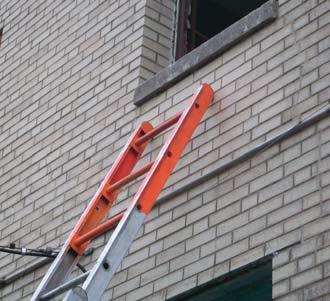
The fourth tip is to paint the tips of the ladder to identify where the ladder will sit at the roofline. As you can see in photo 2, the tip of the ladder has been painted bright orange, which allows for better visibility. Notice how far down the paint goes – it covers about three rungs, which is the min-
PHOTOS BY MARK VAN DER FEYST
Ensure that the butt spurs are facing the direction of travel. Firefighters should be able to open the compartment, grab the ladder, and continue moving with ease.
Paint the ladder a bright colour, which allows for better visibility when firefighters are trying to locate the ladder from the roof.
imum number of rungs required to sit above a roofline based on industry standards. When a firefighter needs to locate the ground ladder while on the roof, they simply need to look for the orange painted tips. Fluorescent glow-in-the-dark paint can also be used for nighttime operations.
The fifth tip is to always go more than three rungs above the roofline. The general rule of thumb is to have the rungs of the ladder to be at least three rungs above the roof but no more than five rungs. Why not always go with five rungs all the time as depicted in photo 3? Having five rungs above the roofline makes the ladder much more visible, easier for the firefighter to get on and off of the ladder and allows for more control for the firefighter.
The final tip is to always place the tip of the ladder at the window ledge or windowsill. Whenever laddering a window for the purpose of rescue, gaining entry, breaking a window, applying water through the window, or any purpose, the best place for the ladder tip is always at the windowsill. Some textbooks overthink ladder operations, showing different ways to ladder a window based upon the assigned task, without taking the firefighter’s greatest need into consideration – self rescue and occupant rescue. If the tip of the ladder is placed at the windowsill, the ladder will be in the right position should a firefighter need to bail out of a building using a ladder dive. Alternatively, if the firefighter needs to remove an occupant through the window, the ladder will be in the right position.
Armed with these tips, firefighters are able to use ground ladders effectively and efficiently. Keep in mind, these tips are only suggestions that can be improved or modified to accommodate situational requirements. But remember, training is the key to perfecting ground ladder operations.
Mark van der Feyst has been a member of the fire service since 1999 and is a full-time firefighter in Ontario. Mark teaches in Canada, United States and India, and is a FDIC Instructor. He is the lead author of the Residential Fire Rescue book. Email Mark at Mark@FireStarTraining.com
The ladder is positioned with five rungs above the roofline, giving the firefighter easier access, control, and visibility.
COAST COAST
Scars vs. SCABS
Iremember my first significant call. We all do. Or, well, pieces of it. It’s like rummaging through an old pile of photos out of sequence. I don’t remember which month it was, but I remember that the air was cold. The call came into the station; someone was hit by a train. As we raced to the scene, my mind raced through those same thoughts that many first responders have. I wondered what I was about to see. Will there be blood and gore? Am I cut out for this?
I vividly remember the cold steel of the train.
We arrived on scene, and one truck was already there. I remember the provincial police; the medics; the student; the conductor; the body. I remember all of this, from what I felt, to the black humour we used to help us cope with the emotionally daunting situation. I remember many things about this call and clips that play in my head about the things I saw. It has been so long since the incident that my mind has likely filled what I don’t remember with things that I believe happened. Confusing, right?
When I drive over train tracks, I always scan along the rails as I pass. I often believe I will see that train again, but simultaneously, I believe that it is irrational to think the train would be there. Of course, it never is.
According to an article published in the British Journal of Psychiatry, Canada has one of the highest lifetime prevalence rates of post-traumatic stress disorder (PTSD) globally. In 2008, researchers from McMaster University in Hamilton, Ont., found that 9.2 per cent of Canada’s total population will develop the disorder in their lifetime. The study found that whopping 76.1 per cent of the nearly 3, 000 participants interviewed had a traumatic experience that meets the criteria for events that are likely to cause PTSD. In the study’s abstract, lead author Michael Van Ameringen indicates his surprise at the high rates of PTSD in this country. “The results are surprising, given
Understanding the differences between PTSD and other mental health issues
By NICK HALMASY
TOP Firefighters regularly respond to stressful or traumatic calls, but traumatic incident exposure doesn’t mean a firefighter will develop post-traumatic stress disorder.
RIGHT To allow healing, firefighters should speak to colleagues and practice regular self-care.
the comparably low rates of violent crime, a small military, and few natural disasters,” he wrote.
In comparison, America’s lifetime prevalence rate is 6.8 per cent, with 79.4 per cent of respondents reporting traumatic exposure.
The reality is that Ontario’s Workplace Safety and Insurance Board now covers PTSD, but it does not cover the larger scope of mental wellness challenges. I believe this is why more people are being diagnosed with PTSD; they are being diagnosed where there is coverage.
We can’t ignore the fact that PTSD is becoming more and more “sexy”. By this, it’s a hot topic, both among first responders and the wider public. A quick Google search of therapists in your local area will show that a surprising number of them list “trauma” as a specialty in their toolbox. In my experience, this is the number one reason that first responders initially reach out to me. I believe misunderstandings about the nature of PTSD and any resulting diagnoses need to be addressed, in order to give PTSD patients the full respect they deserve.
I spend a considerable chunk of my time with fire departments, debunking the myth that PTSD is the only mental health affliction that first responders can develop. In order to understand the disorder, they must understand the diagnosis. Many people might be surprised to hear that, diagnostically speaking, a patient needs to experience more than one symptom of PTSD for 30 days to be diagnosed (according to the Diagnostic and Statistical Manual (DSM-5). These symptoms need to be present for a prolonged period of time. Not just immediately following the call. Not just a few days later.
According to the Centre for Addiction and Mental Health, a person with PTSD may exhibit these symptoms, among others:
• Re-experiencing the traumatic event
• Recurring nightmares
• Unwanted, disturbing memories of the event
• Acting or feeling like the event is happening again
• Avoiding activities, places, people that remind them of the experience
• Avoiding friends, family, and activities they used to enjoy
• Becoming easily angered
• Concentration issues
• Difficulties falling asleep
• Constant worrying<
• Constant fear
All those scary symptoms have become such trigger point topics (e.g. nightmares, irritability, sleeplessness, depressive moods, anxiety) are actually normal reactions to stress. Experiencing these shortly after a difficult call is a normal physiological reaction that should not be grouped immediately under the PTSD category.
Immediately jumping on the PTSD label has the potential to scare people and pathologize stress.
One aspect of PTSD diagnosis is this idea of the flashback. I work in the mental wellness field and I understand what a flashback is, but during recent discussions with first responders, I realized that many may not fully understand what a flashback means to them.
There is a difference between a flashback and a disturbing memory.
For my talks I liken a flashback to a “living hallucination.” I explain that, for the person experiencing a flashback, it feels as if they are literally back at the scene, in every possible way. They hear, smell, and see what occurred during that traumatic experience. They relive it. I can’t stress enough the severity of such a symptom.
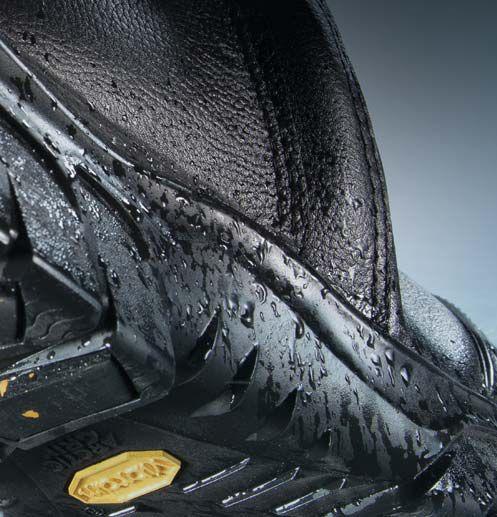
Deep lugs made with an advanced brush-like filler system for unparalleled traction even after wear
Stays flexible to -40°F (-40°C)
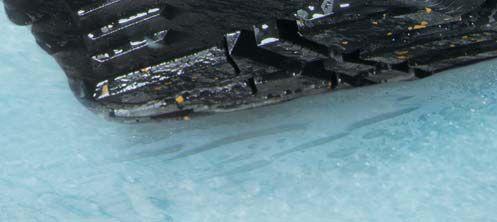
Now many Globe boots are available with state-of-the-art ARCTIC GRIP PRO sole technology specifically engineered to improve traction on wet ice. Contact your local Globe dealer today to help keep you on your feet this winter.
Learn more at globeturnoutgear.com
A flashback goes well past the upsetting feelings that we might experience when remembering a particularly uncomfortable call. These feelings indicate a disturbing memory, not a flashback. The person may be thinking about the incident, but they do not physically feel it.
I opened with my story about the train response. I am neither diagnosed with PTSD, nor any other stress-related disorder. For all I know, I am mentally healthy, despite my decade of service. So, I see my memories of that traumatic call as a scar; a mark left from an event that impacted me. Every person has them, scars that develop as life events leave their mark, each one representing a story. Some of these scars mark stories of good experiences, some scars, not so much.
But, for every scar we have, we can likely recall the event that caused it. Most times, we can recall the event with a normal level of emotional arousal. Usually, I don’t get too upset when thinking about that call. It is a scar, a story. It was an event that impacted me, and will always be present, but it is just a memory. It has healed and no longer hurts. I can recall it, with little difficulty, and I am OK when I do.
Scabs, however, are something completely different.
A scab is an injury that has not yet healed; one that will cause pain or discomfort if touched. If it is bumped, scratched, or hit there will be pain and possibly bleeding. The wound only has a thin layer of skin protecting it. The memories that created these scabs are still very raw. I would fully expect an emotional reaction when someone recalls a memory that falls into this category.
The reactions connected with scabs could include flashbacks. A gentle bump or touch could violently launch you right back to the moment that injury occurred. Now, as a clinician, when a person is experiencing a flashback there are a variety of appearances to a flashback. People may look “disengaged” (a sign of dissociation, or a disconnection from the present) to complete emotional dysregulation (emotional outbursts that don’t suit the present setting or topic of conversation). A flashback can cause someone to lose track of where they are. The person may be physically present, but mentally, they have checked out. In that moment, they may be experiencing the moment of injury all over again. Pick the scab, and it bleeds.
In an effort to help re-inject the gravity
Firefighters with PTSD may experience flashbacks that disconnect them from the present, forcing them to relive the experience.
of what a PTSD diagnosis does to a person, I’ve tried here to convey in words and completely experiential moment. A first responder with PTSD cannot easily shake away a memory of a traumatic call, despite wanting to forget. PTSD is not the occasional nightmare about a call or other stressful event that has impacted you. Instead, PTSD is the mental reliving of all the hellish pieces of the event(s).
It is normal to experience nightmares, irritability, trouble sleeping, and fixation on the call among other symptoms, for a few days following the event. The brain is trying to make sense of something that is difficult to process, collect or organize. But, these symptoms are part of the normal cognitive process to understand and sort the event mentally and emotionally. I experienced these symptoms following the train event –though, at the time I had no idea that my reaction was normal.
First responders have careers full of trauma. That is, the primary function of our jobs has us directly responding to traumatic events – it’s part of job description. But, there are ways to prevent a career marked by trauma: sessions with a therapist, chaplain, or other mental-wellness practitioner, regular exercise, taking breaks, and regular self-care to ensure mental well-being. The mind and
body are connected and being fit physically will help us to be healthy mentally.
First responders need to understand and normalize the fact that we all will carry the scars of the job, but this isn’t to say that we all have some form of PTSD or mental health issue. Using PTSD as a catch-all for mental struggles is impossible to substantiate, and clinically irresponsible. To be clear, there will be calls that keep you up at night, calls that will impact you. It is completely normal if you are affected for a short while. But first responders must get help when needed, especially when symptoms last for 30 days or more.
You will undoubtedly walk away from this career with scars. To minimize the mark of trauma, we must understand and respect PTSD, among other mental wellness issues. Take care of your mind and your body. Take the necessary steps to promote your personal healing process, allowing wounds to repair themselves, letting scabs become scars over time.
Nick Halmasy is a registered psychotherapist (qualifying) who spent a decade in the fire service. He is the founder of After the Call, an organization that provides first-responders with mental-health information. Contact him at nickhalmasy@afterthecall.org.
BY GORD SCHREINER Fire chief, Comox, B.C.
G
STOPBAD
Great firefighters are constantly improving
reat firefighters spend very little time lying around doing nothing. Great firefighters are constantly trying to improve themselves. They keep up with the latest trends. They are constantly maintaining and enhancing their training. The one thing good firefighters all have in common is their desire to continue to improve themselves.
We are fortunate that the Canadian fire service is full of great firefighters. However, the fire service needs more great firefighters, and it all begins with you. Only you can make the change, for better or for worse. Find yourself a good role model or mentor and observe what they do. Another thing about great firefighters is that they love to help others, and they will eagerly assist a colleague who wants to improve.
If you find yourself complaining a lot, quit complaining and start making a change. Don’t blame others for your shortcomings. Don’t make excuses, just get out and do it. I chuckle when someone tells me they are going to change. You are responsible for you. Don’t tell us; show us.
Becoming a better you is a life long journey, it never ends. It takes a constant effort. You will need to make sacrifices, lots of them. You need to put others first, doing more and expecting less. It starts with you being nice to everyone you meet, especially to those who are less fortunate. Be nice even on the days you do not feel like being nice. Lift others up, do not put others down. I try to commit at least one random act of kindness everyday. This might be as simple as holding a door open for someone, or paying it forward in a drive through. Doing this makes me feel better while helping someone else.
things. We need to take time for our families and ourselves to balance the negative with the positive.
Eat good to be good. Eat great to be great. Move your body more. Walk, run, bike, move, move, move. Exercise is key to a healthy body. Stay positive, talk to others when you have problems or concerns. Have some healthy fun along the way. You owe it to yourself – and others – to stay in good shape. The healthier you are, the more energy you will have to put towards bettering yourself.
Be a safer you. As I have gotten older, I have become more cautious. It might be because it takes a lot longer for me to heal, or perhaps I have learned some hard lessons along the way. I take fewer chances and have more patience, even when driving a Code 3. I can’t help if I don’t get to a scene safely. I drive defensively and I leave my phone alone.
I have always tried to make good decisions on the fire ground, but I make even better decisions today thanks to years of experience and learning from others. When in doubt, I always emphasize firefighter safety. I wear my PPE more often now and make sure others do the same. I am open to criticism and I seek the input of others to help be
If you find yourself complaining a lot, quit complaining and start making a change. Don’t blame others for your shortcomings. ‘‘ ’’
I have had the pleasure of meeting and working with many great firefighters in my life. Watching and learning from them has made me a better person and firefighter. Great firefighters are constantly helping others on and off the job. They seek opportunities to help others without expecting anything in return. You should feel good helping others, and by doing so, you are given an opportunity to learn more about yourself. Great firefighters treat others better than they expect to be treated. Great firefighters are humble.
Great firefighters look after themselves physically and mentally. They stay physically fit, eat well and do not abuse their bodies. They look after themselves mentally too. In our profession, we see many bad
Gord Schreiner joined the fire service in 1975 and is a full-time fire chief in Comox, B.C., where he also manages the Comox Fire Training Centre. Contact him at firehall@comox.ca and follow him on Twitter at @comoxfire
adjust my sails.
To be a great person/firefighter you need to maintain healthy relationships with family, friends, co-workers, employer, and associates. Having a good relationship require effort. Do not take relationships for granted. Reach out and make things happen. Always be nice, fair, honest and ethical.
Be open to change, including personal growth. You can reinvent a better you when you keep an open mind and embrace new things. Read, read, and read some more. Reading helps you to expand your mind and stay sharp. Do not just read fire service material. Choose a broad spectrum of things to read, and read often.
Train, train and train some more. In the fire service, we need to train all of the time. Lives depend on us doing our jobs correctly.
Inside every one of us is a great firefighter. Get off the couch, and work hard to let the great firefighter shine.
TRAINER’SCORNER Facing new challenges
By ED BROUWER
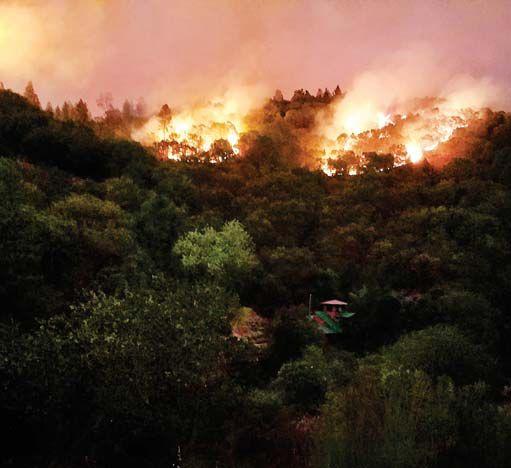
As I’m writing this column, the news reported that three more deaths have been confirmed in the wildfires burning in northern California’s wine country, which were already the deadliest series of such fires in state history. The death toll had reached 42 by the afternoon of Oct. 20. An estimated 8,400 homes and businesses were destroyed. The photos of the fires, which caused more than US $1 billion in damages, are mind numbing.
British Columbia (where I live) had the worst wildfire season in its recorded history. Our province had the same weather conditions as California: a very wet early spring, and a very hot, dry spring and summer. The rain caused rapid plant growth producing acres and acres of fuel. Daniel Berlant, the assistant deputy director for the California Department of Forestry and Fire Protection told The Mercury News the brush grew “much thicker and taller than we had ever seen.” Here in British Columbia, we sure could relate. October is windier than most months in California, especially at night. Sudden gusts of high-speed winds filled the sky with embers, igniting hundreds of homes and leaving thousands of people with little time to evacuate.
In British Columbia, it felt like fire crews spent the entire summer fighting wildfires. But as the situation in the province cooled down, crews in California were still helping with evacuations, fire suppression, structure protection, search and rescue, traffic control, logistics, and yes, body recovery.
When I read headlines like “200 people still missing”, I wonder if we really understand the magnitude. I’m concerned that we have become desensitized to mass casualty headlines. Unless you have been through it or responded to calls of this magnitude I really don’t think you “get it”. We sympathize, but have little understanding what these casualties and missing person reports means for the families and the first responders on the ground, not just at the moment the crisis breaks, but in the following days, weeks and months.
In a statement, Sonoma County Sheriff Robert Giordano said, “We have found bodies almost completely intact, and we have found bodies that were nothing more than ash and bones.” These responders were dealing with family, friends and neighbours of all ages. After reading this, I said a prayer for the firefighters working with Giordano.
I wonder if we can ever really prepare our firefighters to deal with horrendous events like these wildfires. Today, firefighters are faced with unprecedented dangers when responding to calls. When I joined the service three decades ago, our mission seemed pretty clear: put the wet stuff on the red stuff. Back then, there were less interface fires, mainly because there were less people living in forested areas. Our department dealt solely with fire emergencies, so our training zeroed in on developing suppression skills.
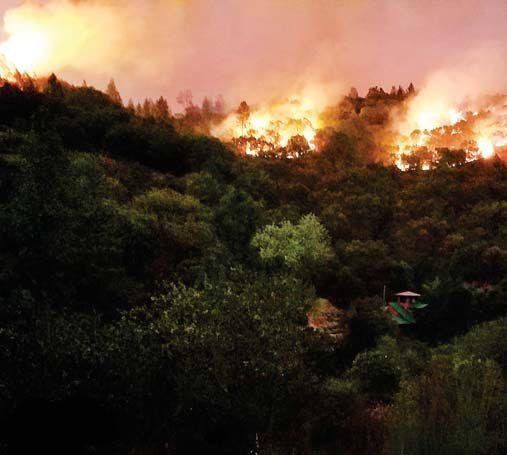
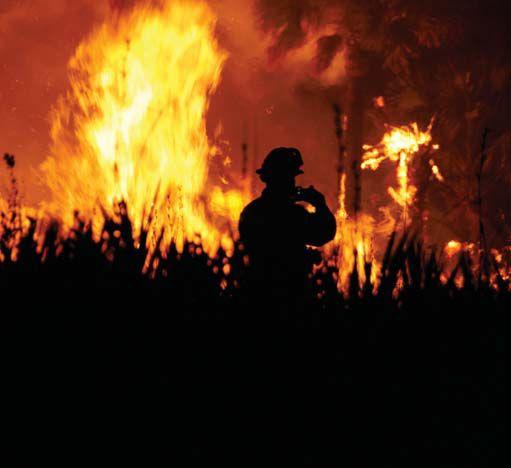
Both British Columbia and California experienced devastating wildfire seasons in 2017. This year was the worst wildfire season on record for British Columbia.
Brouwer says the nature of the fire service has changed. Today’s firefighters respond to a wider variety of calls with increasing risks, including more interface fires and medical emergencies.
A REVOLUTION IN PARTICULATE PROTEC TION
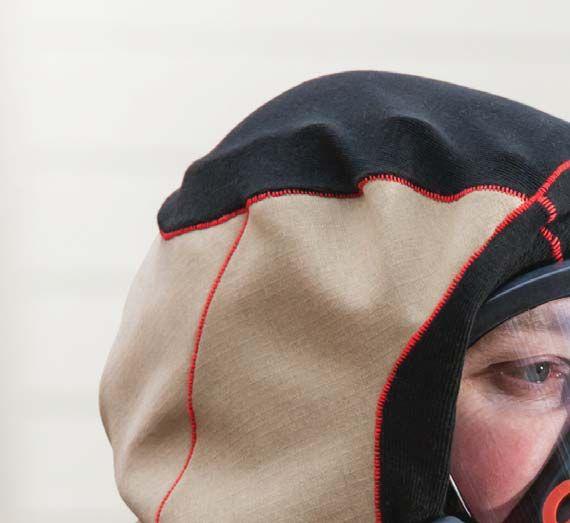
The Life Guard Hood is Honeywell’s latest breakthrough in safety and comfort for first responders. It promotes the safe flow of air around your head and neck while a trusted moisture barrier blocks exposure to hazardous particulates. The protection is proven by the FAST test images.
Tough, lightweight comfort and protection you can depend on.
D ownload a FREE copy of Firefighter Cancer Support Network ’s eBook “ Taking Action Against Cancer in the Fire Service” online at Honeywell firstresponder.com/community-suppor t
Median particulate diameter, 150 mg/m3, 10mph wind speed, 30 minute exposure, standard motion routing, same test subject.
Note: Exposure on chin of Life Guard results due to doffing SCBA with contaminated hands rather than particulate penetration.
IAFF Jan. 2015
Traditional Hood
Honeywell 201
Life Guard Hood
I call those the Pork and Beans days. Those days are long gone. Today’s companies have to advertise Beans with Pork because the largest percentage item has to be advertised first. The majority of calls are medical in nature, and departments respond to fewer fires. Perhaps we should be called “first responder services” instead of “fire services.” No one knows this better than today’s fire service training officers.
The Firefighter’s Handbook is a total of 980 pages. And although only 31 pages – or 3.1 per cent – are dedicated to Emergency Medical Services this is where we spend the vast majority of our energy and response resources.
The changes were subtle. First we took on motor vehicle incidents, which opened the door to auto extrication and medical calls. Call volumes across our nation have risen exponentially. Volunteering as a firefighter would never be the same again.
I think of the firefighters in British Columbia’s lower mainland that are dealing with fentanyl. According to the National Institute on Drug Abuse (US), fentanyl is 50-100 times more potent than morphine, and its use has lead to an increase in drug overdose deaths in the province.
The fentanyl crisis is taking a toll on the responding firefighters and paramedics. Robert Weeks, president of the Vancouver Fire Fighters’ Union, told The Tyee firefighters answered 1,365 calls in April alone. More than half were overdose calls. A single hall – Fire Hall 2, on Main Street near Powell Street – handled 68 per cent of these overdose calls. On average, this hall responds to 14 calls a day.
A call volume this high has the potential to cause major stress, decreased morale, and health issues. More than half of those calls are non-fire related, and life-threatening overdose and medical calls can take a huge toll.
One major problem for firefighters across Canada is the frequency of calls, which have rapidly increased when we took on medical calls, traffic control, motor vehicle incidents and Haz-mat. Physical and mental burnout is becoming a real and present danger for firefighters.
Linda Lupini, president of the B.C. Emergency Health Services told The Vancouver Sun last December about 200 of the province’s 4, 500 paramedics were receiving counselling. Bob Parkinson, health and wellness director of the Ambulance
Paramedics BC, said that depression and anxiety are becoming more common, with post-traumatic stress disorder (PTSD) affecting about 10 per cent of these paramedics. Support is also needed for partners and spouses to help them deal with paramedics’ psychological health issues resulting from traumatic calls.
We are living in a world where the life and safety of firefighters and first responders is increasingly put at risk. At our last practice night, my fellow training officer Rob Smith explained how the British Columbia Ambulance Service (BCAS) is putting a new spin on the existing 10-33 code: crew is in danger/life-threatening situation. BCAS is working to establish “Code 33” as a universal safe word for paramedics across the province. First responders are being encouraged to say, “Code 33” if they feel threatened or find themselves in a dangerous situation, and leave the area immediately, without packing up or retrieving gear. When a fellow first responder says “Code 33,” all emergency workers must return to the apparatus and call for assistance. Firefighters assisting paramedics in the British Columbia must be aware of this safe word and follow suit.
I’m not sure what your local protocols are, but it may be prudent to review safe words with your members.
As a service, we will never go back to simply putting the wet stuff on the red stuff – whether it is the unprecedented interface fires in British Columbia and California or the opioid crisis, firefighters are being called
to respond to dangerous/life-threatening situations with greater frequency. One major challenge is that our firefighters are often unable to notice stress related issues in one another. Firefighters need to be educated to serve as peer support, and counselors must be trained to deal with PTSD, using tools such as critical incident stress debriefing.
With that in mind, I would like to give a shout out to our nation’s fire chaplains. Never before has the role of fire chaplaincy in Canadian departments been more necessary than this present moment. If your department does not yet have a chaplain, it is a great idea to consider appointing one. If your chaplain has fire service background, this is even better.
Thank you for your continued service as training officers; it is a tough gig. Please know your work is appreciated. As we are entering the Christmas season, my wife Judi and I wish the very best for you and your families. And yes, remember to train as though lives depend on it, because as we have just read, it does.
Ed Brouwer is the chief instructor for Canwest Fire in Osoyoos, B.C., and deputy chief training officer for Greenwood Fire and Rescue. He is also a fire warden with the B.C. Ministry of Forests, a wildland urban interface fire-suppression instructor/evaluator and an ordained disaster-response chaplain. Contact Ed at aka-opa@hotmail.com
Firefighters in Vancouver are on the front lines of the opioid epidemic in Canada, responding to overdose calls daily.
Kids and Arson: Part 1
How did the City of Regina cope with children setting dangerous fires? This is Part 1 of the story.
By ANGELA PRAWZICK and CANDACE GIBLETT
TOP Arson behaviour in children may be commonly associated with incidents like setting fires in garbage cans, but the City of Regina experienced extreme property destruction that required a concerted community effort to solve.
In September 2014, children in a Regina neighbourhood started hearing stories about kids setting garbage containers and garages on fire and that some of these fires were set using gasoline. While kids setting garbage fires is common in the neighbourhood – an average of 100 garbage fires are set by kids every year – this was different. Kids using gasoline was different and indicated fire setting behaviour was at a new, dangerous level.
A FAMILY NARROWLY ESCAPES
On April 24, 2015, firefighters responded
to a house fire in Regina’s North Central neighbourhood. It was 10:30 p.m. A family with young children escaped with the help of an older brother, who happened to be walking home at the time of the fire and noticed the flames at the front of the house. He ran in, alerted the family, and helped the younger children escape to safety through the flames and out the front door. They said they could feel the intense heat as they ran to safety. The youngest child to escape was an infant. Once safely on the sidewalk, the father looked back and saw the flames burning up along the siding of the house and up to the roof. The fire was spreading extremely fast.
They said they could feel the intense heat as they ran to safety. The youngest child to escape was an infant.
’’
Despite arriving on scene within five minutes of a neighbour’s 911 call reporting the fire and concentrated fire fighting operations, the two-bedroom bungalow sustained heavy fire, heat and smoke damage. The home was completely destroyed – the family could not return. The fire also damaged the neighbouring home to the south. The fire investigator determined this fire was deliberately set under the front stairs to the home. This fire marked the culmination of escalating fire setting in the community by children and youth, which started six months earlier in October 2014.
HOW IT STARTED
Over the noon hour on Oct. 1, 2014, the department responded to a fire in a vacant home. The family living in the home had moved out the previous day. A witness saw children running from the home just before the fire, and provided the fire investigator with descriptions.
The fire investigator determined the fire was deliberate. Papers had been piled onto the stovetop in the kitchen, and the stove burners had been turned on.
Knowing his public education colleagues at the fire department had built strong relationships with principals in the neighbourhood schools, the fire investigator approached his colleagues to help him track down the children seen running from the home. Together, they approached the principals at the two schools located closest to the fire.
The principals provided immediate assistance in attempting to identify the children. One principal, who was new to the school, could not identify any of his students as matching the descriptions. At the second school the principal brought several students into the office to speak individually with the fire investigator and educator. Although they fit the witness descriptions, they did not set the fire in the house. The students began to tell alarming stories – stories of two children in particular who were setting garbage and garage fires, sometimes with gasoline. Although the children had no warning they would be called into the principal’s office, their stories were remarkable in that they were detailed, and they were consistent.
The two boys named by the other children weren’t in school that day, or the rest of the week.
On the evening of Oct. 3, 2014, a Regina police officer apprehended a group of six boys who were walking through the neighborhood playing with lighters. He took the lighters from the boys and talked to them about the dangers of lighters and starting fires. One father told the officer he had been having problems with his two sons starting fires. The mother of two other boys also said she had been having problems with her sons lighting papers and other items on fire. The boys identified two days earlier as setting fires with gasoline were part of this group.
your cleaning, decontamination, inspection, testing, repair and record keeping of your firefighter’s protective clothing... we have you covered!
The students began to tell alarming stories – stories of two children in particular who were setting garbage and garage fires, sometimes with gasoline.
’’
INITIAL
INTERVENTION ATTEMPTS
On Monday, the fire educator, the fire investigator and the police officer’s partner met with the principal and three of the boys apprehended on Friday evening, including the two named by the students the previous week. They talked about the consequences of using lighters and setting fires, and the extreme danger of using gasoline. The eldest boy admitted to setting fires using gasoline with his brother.
As a result of that admission the principal called a case conference for the boy and his brother, along with their mother, the police school resource officer, the community school coordinator, a social services child protection worker and a family preservation therapist. The fire setting was extremely dangerous, and both the principal and fire and police officials were very concerned for the safety of both the boys and other children in the community. The case conference for the brothers was held in late October, and focused on the brothers’ lack of school attendance, and other behaviors, including the fire setting. At the end of the meeting the boys’ mother decided to move the children to another school, which she did the next day.
In the meantime, the principal from the school first visited by the fire investigator and educator called, and reported that one of his students did, indeed, match the witness descriptions from the house fire on Oct. 1. That boy was also one of the six apprehended by the police officer the evening of Oct. 3.
community just four blocks apart. They found six garbage and recycling bins that had been lit on fire (which completely destroyed a garage and two cars), and damaged the house, a neighbouring garage and overhead power lines. Eight minutes later firefighters responded to another fire set in garbage and recycling bins, this time destroying a shed.
On Nov. 3 — again in the early morning, this time at 3:44 a.m. — firefighters once again responded to garbage bins set on fire, completely destroying a garage and its contents.
Three days later two students reported to their principal that the boy who admitted to using gasoline said he had burnt down a garage. They told their principal that although the brothers are grounded, they sneak out late at night and call on a third boy. The three boys wander the neighborhood lighting fires.
Throughout the winter (as is typical in the bitter cold of the Prairies), there were no further garage or structure fires started by fire spreading from garbage or recycling bins set on fire. There was also no further information from students about fires being set by kids, in particular the two brothers and the third boy. But this was not the end.
Stay tuned for your next issue of Fire Fighting in Canada to learn how the City of Regina managed the further escalation of children setting fires in their community
The fire investigator, along with the educator and a police officer met with the principal and the student, who admitted to setting the house fire with two other boys, both known to fire education officials as fire setters.
firefightingincanada.com/subscribe/
ESCALATION
On Oct. 27, just after 2:00 a.m., the fire department responded to two fires in the
Angela Prawzick is a public education officer for Regina Fire & Protective Services. She has been with the department for 23 years, where she works closely with community partners to develop targeted educational strategies and programs. Candace Giblett has worked as a public education officer with Regina Fire & Protective Services for 14 years. She is responsible for the design and development of fire and life safety education programs..
BY BILL BOYES Fire chief Barrie, Ont.
ILEADERSHIPFORUM
Modern chiefs have increased responsibilities
f you are reading this article and are interested in fire-service leadership, regardless of your rank, age, or department’s size, you know our profession has changed significantly in a short time period. The common fire service mantra of “200 years of tradition unimpeded by progress” does not apply to fire-service leadership.
I often contemplate what might have concerned my grandfather as a fire chief many decades ago. Surely there were operational and financial challenges. To say it was easier would be both ignorant and unfair, but undoubtedly today’s concerns are different and more complex. I have no doubt that every chief officer in today’s fire service would probably trade an email-free day for the pressures from yesteryear.
Expectations placed on the senior leadership are continuously evolving, and chief officers are forced to adapt to rapid and unrelenting change. Expectations, job demands and time pressures come from numerous internal and external stakeholders. Meeting the needs of our stakeholders is a major and growing responsibility.
Many aspiring chief officers may not consider an easily over looked responsibility that is a critical expectation that fire chiefs must meet. Can you guess what that expectation is? Hint: the name at the top of your pay stub, your employer . . . that being your municipality. Chief officers are called on to contribute to the strategic and operational success of the municipality.
Incumbent fire chiefs will quickly tell you that the senior leadership of a corporation has to deliver a wide range of high quality public services within many financial constraints. This can be a significant and time-consuming part of a fire chief’s job. These responsibilities can come in the form of committee contributions, senior leadership meetings, project leadership, or any other administrative task focused on municipal service delivery. Shifting societal and employee expectations of workplace leadership, financial pressures, public-sector accountability, an expanding scope of services provided and increasing non-emergency responsibilities have contributed to the new challenges we face. From a legislative perspective, in Ontario under the Fire Protection and Prevention Act, a fire chief is the person who is ultimately responsible to a municipal council that appointed him or her to deliver fire protection services. Given this ultimate responsibility, most fire chiefs will
report to the chief administrative officer (CAO), deputy CAO or commissioner/ general manager. Regardless of the reporting relationship, the role of the fire chief has a significant public and corporate profile, which comes with high expectations.
Many municipal managers are required to strategically lead large public-sector departments with multi-million dollar budgets, which comes with its own legal responsibilities and human-resource challenges, all conducted in politically sensitive environments. For the chief officers of a fire department, effectively contributing within the municipal management team can be an arduous task. Many of our peers at the management level of a corporation possess a solid combination of education and increasing administrative responsibilities. In addition, our corporate leadership peers typically have greater exposure to the corporate world than many of our fire service members would have. The reasons for this can range from a close geographic proximity to city hall or administrative experience, including writing reports, attending meetings, and liaising with other city departments.
Typically, many of our chief officers only get the opportunity to practice these skills after a career of operating in a frontline emergency
Chief officers are called on to contribute to the strategic and operational success of the municipality. ‘‘ ’’
response line or staff capacity. This reinforces the need for increasing administrative exposure throughout career progression. Aspiring officers should receive a tailored formal education and have an understanding of what the role of fire chief entails.
Bill Boyes is the fire chief for Brampton Fire & Emergency Services in Ontario. He is working on a PhD at the University of Toronto, which supplements his master’s degree in public policy and administration and bachelor’s degree in public management. Contact him at bill. boyes@brampton.ca
Perhaps these factors contribute to the perception of fire chief as a terminal position, limited by an invisible glass ceiling that inhibits many from assuming chief or deputy chief officer roles. Perhaps the role of CAO is not of interest to many of our fire service colleagues. Perhaps there are other contributing factors that are dependent on the individuals and municipality involved. Whatever the case may be, it is important that fire service leadership development focuses on external departmental issues, relationships and challenges. Essentially, it requires you to wear two hats: the fire helmet and corporate hat. With this increased understanding of fire service administration, we can ultimately serve the community and our department better.
BY TOM DESORCY Fire chief, Hope, B.C.
FVOLUNTEERVISION
Wildfire deployment challenges volunteers
irefighters are the kind of people that will help anyone, anywhere. For the most part, the communities they serve are willing to pitch in whenever needed too. That is, until it actually happens.
The unprecedented wildfire season that unfolded this summer in British Columbia scorched an area greater than P.E.I. The last time I was involved in something like this was the 2003 wildfire season, known here as the firestorm. It was the worst season on record until this year. In 2003, fire departments were deploying well outside their boundaries for weeks on end with no formal policy or plan in place. Many times, emergency services figured things out after the fact.
Following 2003, fire services in the province did what any self-respecting service would do: plan for the next severe wildfire season. The following year, the BC Office of the Fire Commissioner (OFC), the Fire Chiefs Association of BC and the BC Wildfire Service published a document called Inter-agency Operational Procedures and Reimbursement Rates. This document provides direction and clarity for the aforementioned agencies to mutually support each other during wildfire response.
As a result of the review, fire departments across the province are polled annually to offer up resources in the event they are required as part of a larger response effort. This is next to impossible for volunteer departments to provide. As I told the OFC this spring when the call initially came in, “I can’t guarantee a local response or who will be able to attend a call, say at 10:00 am on a Wednesday, let alone a six day deployment in June.” With that being said, it’s fully understood that when the wildfire call comes into a volunteer department, it’s a scramble to staff a water tender, not to mention the actual act of deployment.
responses. Many older staff members were hesitant to leave the community for mutual aid calls, let alone wildfire deployment.
The call came again in 2017, and this time I didn’t hesitate to ask the team to deploy. I told them in advance the call would be coming, but when we were actually asked assist in the wildfire efforts, it was met with some reservations. This time we had the capacity to help without compromising our protection locally: they soon came around.
Unlike in 2003, social media played a large role. People could see what other towns were going through on their Facebook feeds.
Pack up, let’s go, and see you in six to 14 days. Bring a sleeping bag and credit card, and keep your receipts.
When it comes to wildfire response, we can’t forget the benefits our department and members receive, especially as volunteers. I’m not referring to the remunerations. Wildfire deployment offers valuable experience and training through working with team members from other communities across the province.
As mentioned earlier, our team worked in the Williams Lake area. The community of about 12,000 people was evacuated while our members were there. One day they are part of a bustling community
Just as emergency crews learned from 2003, this year’s unprecedented wildfire season has better prepared us should there be a next time. ‘‘ ’’
In 2003, our department’s level of involvement was limited to myself working in an emergency operations centre in Penticton. All the while, I watched as departments across the province deployed apparatus and personnel. Why weren’t we there doing the same? I suppose it was a perceived lack of resources. It really takes guts to send your volunteers and equipment away when they might be needed at home. How would the ratepayers react to such actions?
We were a different fire department in 2003; it was only three years after amalgamation and we had recently started mutual aid
Tom DeSorcy became the first paid firefighter in his hometown of Hope, B.C., when he was appointed fire chief in 2000. He is very active with the Fire Chiefs’ Association of B.C., as communications director and conference committee chair. Email Tom at TDeSorcy@hope.ca and follow him on Twitter at @HopeFireDept.
and the next, they were driving the streets of a ghost town. Members worked in task forces, each with about five apparatus. One task force had two career engines from the Vancouver area and three tenders from smaller volunteer departments. Our firefighters worked in concert with other departments by patrolling and providing structural protection support for 12 hours each day for up to 14 days. Each of our firefighters returned home from with a new extended fire service family. They all gained a better understanding of the importance of the service by being part of a greater cause with a much broader reach.
Although this was a terrible provincewide event, one that no firefighter would wish to ever have happen again, the crews that helped to control the wildfires were able to learn valuable lessons by working together. Just as emergency crews learned from 2003, this year’s unprecedented wildfire season has better prepared us should there be a next time.