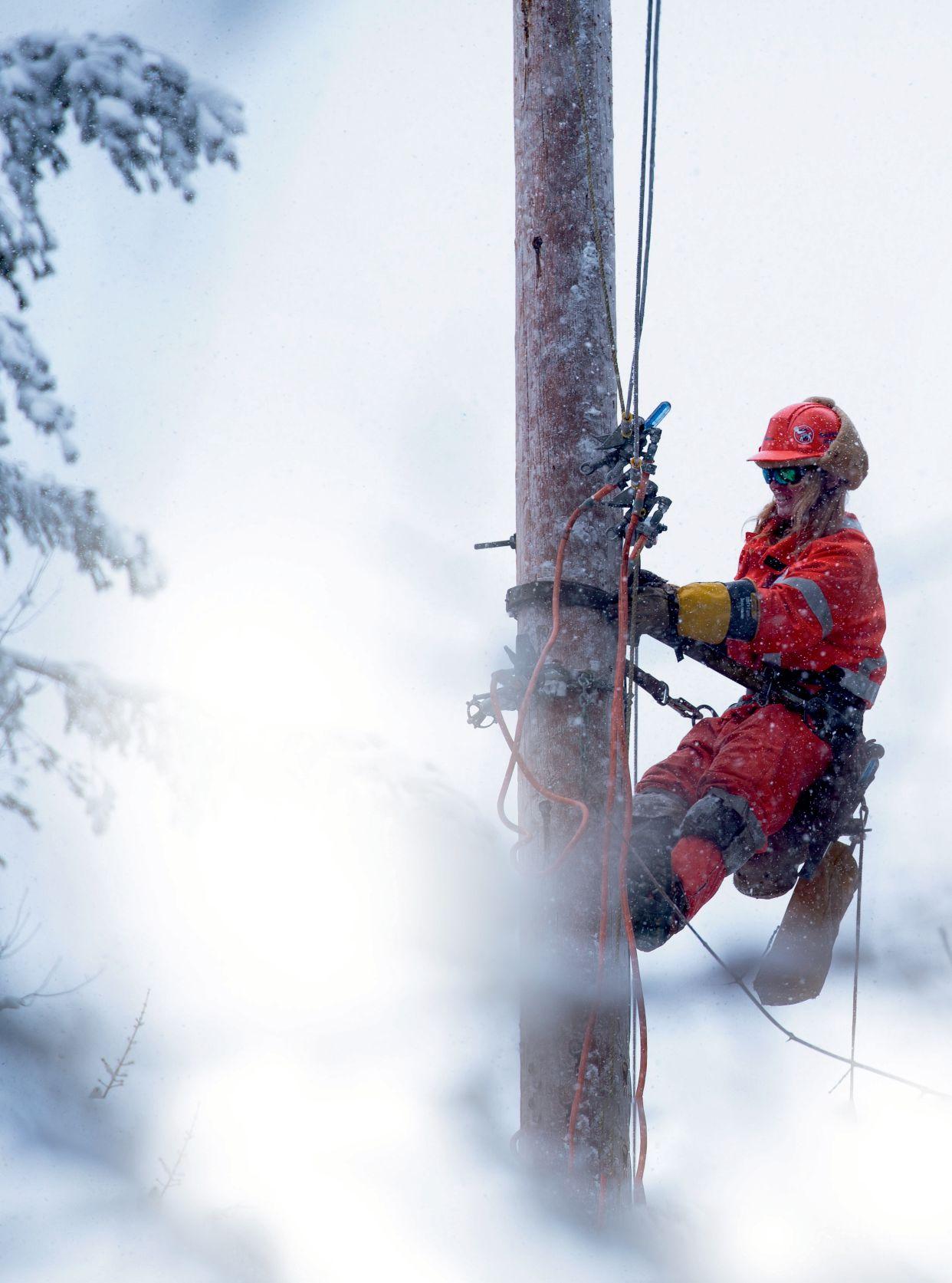



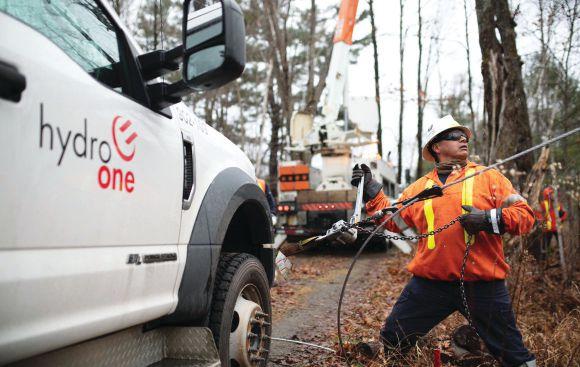
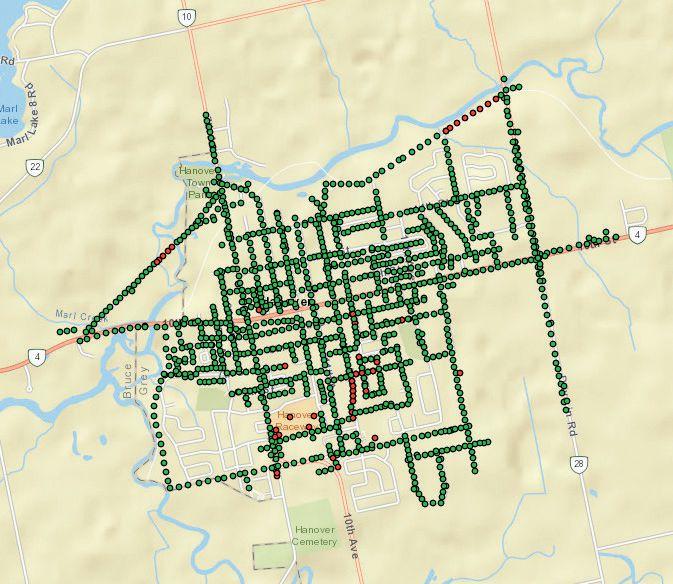






The way assets are inspected and managed has changed. Project tracking, image capture, GPS coordinates and GIS integration are all in the palm of your hand. Look to OEC’s companies to take your organization’s asset data into the future.
Integrated infrastructure solutions from damage prevention, asset management, engineering design, GIS system management, construction, metering and more.




Affordability
Safe, reliable, affordable. It’s always been a mantra of sorts in our sector. But it’s probably never had quite as much resonance as it has over the last year.
After last March’s pandemic declaration – and throughout the multiple emergency declarations and innumerable public health measures rolled out since – distribution utilities and all EDA members have had to find new ways of ensuring safety in the face of a health risk unlike any we’ve confronted before.
With our own employees, their families and a great many other Ontarians dispersing from workplaces and schools to their homes, it became all the more important to ensure across-the-board reliability of electricity supply. And with so many people experiencing economic hardship during the pandemic, we also needed to do even more to help with affordability.
In this issue of The Distributor, we present a panel discussion involving executives from a diversity of local distribution companies. It’s an insightful look back at the remarkable events of the last year and our sector’s response to them.
There’s a theme here that’s been common in many of the discussions I’ve had with colleagues: the tremendous response of everyone working in the distribution sector, from field crews to call centres. That’s not surprising, since utility employees are often called on to step up under very challenging conditions such as during ice storms and other extreme weather events.
But COVID-19 has been a unique and exceptionally long-lasting challenge. We’ve asked a lot of all employees as we’ve addressed it over the last year, and they’ve delivered. As our panelists point out, we’ll likely also have the significant benefit of an enhanced level of workplace trust going forward.
In this issue we also provide the Ontario Energy Board (OEB) with an opportunity to overview its recent accomplishments, as measured against crucial modernization objectives. At the EDA, we’ve established a very constructive working relationship with the OEB leadership team. We look forward to further engagement, aimed at building a regulatory framework that enables us to deliver the most for our customers.
As always, you’ll also find insights in this issue of the magazine on some of the specific and more innovative ways in which individual EDA members are working to deliver safe, reliable and affordable electricity to our customers, including our feature articles and an overview of all nominations for this year’s EDA Excellence Awards.
In closing, I’d like to add my thanks to all sector employees for their exceptional efforts over the year-plus of the pandemic, and also my condolences to those who have experienced the tragic health consequences the virus can have. As a sector and as an essential service provider, we’re weathering this particular storm well, and we all look forward to what will hopefully be calmer conditions soon ahead.

Sincerely,
Chris White President & CEO, ERTH Corporation Chair, Electricity Distributors Association
The Electricity Distributors Association (EDA) publishes The Distributor for its members and stakeholders. All rights to editorial content are reserved by the EDA. No article can be reproduced in whole or in part without the permission of the EDA.
PUBLISHED SUMMER 2021 FOR:
Electricity Distributors Association
3700 Steeles Avenue West, Suite 1100 Vaughan, ON L4L 8K8 www.eda-on.ca
EDA STAFF CEO’S OFFICE
Teresa Sarkesian, President & CEO
Natasha Galati, Executive & Administrative Assistant
POLICY, GOVERNMENT AND CORPORATE AFFAIRS
Ted Wigdor, VP, Policy, Government & Corporate Affairs
Derek Nardone, Director, Corporate & Public Affairs
Kathi Farmer, Senior Regulatory Affairs Advisor
Abdul Muktadir, Senior Policy Advisor
Brendan McClughan, Senior Advisor, Government & Stakeholder Relations
MARKETING, COMMUNICATIONS AND MEMBER RELATIONS
Andrew Temes, VP, Marketing, Communications & Member Relations
Marica Macura, Director, Member Relations
Lynne Cunningham, Manager, Communications & Marketing
Lesia Kostecki, Member Marketing Specialist
Sari Maritzer, Communications Specialist
Judy Ward, Member Experience Specialist
FINANCE AND ADMINISTRATION
Tamara Orlova, Chief Financial Officer
Arlene Klemmer, Accounting Clerk
Matthews Joseph, Senior IT Analyst
Chrissan Pascal, Office Services Assistant
PUBLISHED AND PRINTED BY ANNEX BUSINESS MEDIA, 111 Gordon Baker Road, Suite 400, Toronto, ON M2H 3R1 (416) 442-5600
annexbusinessmedia.com
Agreement #: 43526108
ADVERTISING SALES titus/one mediasales@eda-on.ca
And, we are honoured to be considered one. Partnering with many not-for-profit health and social agencies, Alectra offers support to those in need within our communities.
We support these agencies and their tireless efforts through funding, volunteerism and community outreach initiatives. Together, we foster good health, equity, diversity and inclusion wherever we can.
Learn more about our commitment at AlectraUtilities.com/AlectraCARES





The EDA officially welcomed the full board of directors at AGM 2021 on February 25, and the association would like to acknowledge three new board members. They are:
• Robert Brewer, President & Chief Executive Officer, PUC Services, Northeastern District Director
• Wilf Meston, Vice President, Operations, Kitchener-Wilmot Hydro, Niagara Grand District Director
• Scott Mudie, Chief Operating Officer, Oakville Hydro, Upper Canada District Director
Visit www.eda-on.ca for more information on the full slate of the EDA’s 2021-2022 board of directors.

The EDA would like to extend congratulations to Lesley Gallinger on behalf of our members and staff on her new appointment at the IESO. Lesley is a respected leader in Ontario’s electricity sector and sits on the EDA’s Board of Directors. Prior to her appointment at Elexicon Energy, Ms. Gallinger served as Chief Strategy and Financial Officer at the Electrical Safety Authority and as Vice-President of Corporate and Regulatory Affairs and Chief Financial Officer at Oakville Hydro. She also serves on the boards of Axis Auto Finance and the Nuclear Waste Management Organization, where she is Chair of the Human Resources and Governance committees.
The number of consecutive years Hydro Ottawa has been named one of the National Capital Region’s “Top Employer.”
Chris White, President & CEO, ERTH Corporation, was awarded the Clean50 and Clean16 designations in recognition of embracing community solar and energy efficiency retrofitting.
Dave Yeoman, Director, Health & Safety, Alectra Utilities, was named Employee of the Year by the Barrie Chamber of Commerce at its annual Business Awards ceremony. This award illustrates Alectra’s commitment to safety and recognizes the exceptional work of Mr. Yeoman.
Caroline Karvonen, Manager, Sustainability, Alectra Utilities, was awarded the Clean50 award in recognition of the establishment of the AlectraCARES framework to embed sustainability principles into company strategy and operations.
Congratulations to Oakville Hydro for receiving this year’s Centre of Excellence award from the Canadian Electricity Association for their innovative Spatial Data Intelligence project.
Hydro Ottawa has been named one of the National Capital Region’s Top Employers for the 13th consecutive year.
Hydro Ottawa, Waterloo North Hydro & KPMG LLP all made the list of Canada’s Greenest Employers for 2021, selected by Mediacorp Canada Inc., in recognition for their environmental leadership and having the kind of practical strategies that make a real difference.
Hydro One launched its Connected for Life campaign, building on its pledge to keep the lights on during the pandemic and that customers experiencing hardship have electricity while working together with the customer care team to access financial assistance and flexible payment options.

Learn more about the fund on the EDA website and keep up to date on the latest projects. For inquiries on the LDC Tomorrow Fund, please contact: LDCTF@eda-on.ca.
The purpose of the LDC Tomorrow Fund is to fund research projects and finance energy innovation and opportunities for the benefit of Ontario’s local hydro utilities. Funding is available to LDCs, government agencies, academic institutions, and others who work in the electricity industry who qualify and whose initiatives meet certain screening criteria.
EDA councils provide an important forum for members to discuss their needs, issues and policy solutions, ensuring that the association is always on target in its advocacy efforts. Councils also offer valuable input into strategic messaging and other industry initiatives, as well as play a key role in developing policy positions for consideration by the EDA Board of Directors. Our sector will benefit from the participation of more than 145 LDC employees – representing the majority of our LDC members – who will evaluate issues, share ideas and provide valuable input into EDA policy development, advocacy work and other association activities. Please visit www.eda-on.ca/About-US/Councils for more information.

Complex cyber threats need sophisticated solutions – that’s what we do best. Whether you’re looking to understand where your risks lie, enhance your cybersecurity strategy, or develop a response plan in the case of an incident – our team can support you every step of the way.
Wherever you are on your cyber journey, we can help.
www.grantthornton.ca/cybersecurity
The proclamation of Bill 87 on October 1, 2020, ushered in a new era for the Ontario Energy Board. Armed with a new corporate governance structure and mandate, the organization set about to establish a framework for modernization and build a foundation for increased trust, accountability and transparency both within the organization and with those it regulates.
A separate Board of Directors, led by a Chair, oversees the management of the OEB’s business and affairs. The Chief Executive Officer (CEO) is responsible for the efficient and effective management of operations and the Chief Commissioner, who reports to the CEO, is responsible for ensuring the efficiency and timeliness of the OEB’s adjudicative work. This new structure establishes clear lines of accountability within the organization that are critical to ensuring adjudicative independence and promoting regulator excellence.
The OEB quickly put the new governance structure into operation to carry out the recommendations from the Modernization Review Panel report and the government’s mandate letters.
“Meaningful change isn’t random or coincidental,” says Susanna Zagar, Chief Executive Officer, OEB, of her approach to this work. “It is deliberate and disciplined, well-planned and well-executed,” adding that in her 30 years of experience leading change, it requires very specific goals and measures along with a clearly articulated process for reaching those goals.
Guided by that philosophy and a strong focus on performance and outcomes, the OEB has already delivered on a number of key deliverables since October.
One of the first priorities was a full financial review of OEB operations. Completed in late 2020, it served as a basis for establishing the 2021-2022 operating budget and the three-year

business plan, which includes activities that will sharpen the OEB’s financial focus and deliver better value.

As Ontario’s independent energy regulator, their goal is to ensure Ontario’s energy system remains sustainable, today and tomorrow.
That 2021-2024 Business Plan was approved by the Minister of Energy, Northern Development and Mines and will drive the development of new, substantive performance indicators, attention to independence and accountability, as well as a laser-like focus on improving efficiency and effectiveness.
“Under new OEB leadership, we are pleased to see the development of an ambitious three-year business plan,” adds Teresa Sarkesian, President and Chief Executive Officer of the EDA. “We believe the scene is set for renewed momentum on regulatory modernization and efficiency, and we look forward to seeing substantial progress on this plan each year.”
Building trust starts with listening. And in the fall of 2020, the OEB reached out to 255 stakeholders (regulated entities and others) to participate in an online survey. The goal was to gain a deeper understanding of stakeholder impressions with respect to the OEB’s performance. The results serve as inputs into the OEB’s performance indicators and to provide a baseline for measuring progress.
Stakeholders also played a crucial role in developing another key OEB deliverable, the Top Quartile Regulator (TQR) Report. Informed by worldwide research and deep stakeholder engagement, the report defines the target behaviour of regulators who excel in delivering public value. With those attributes now defined as: Accountability,
Effectiveness, Certainty, Efficiency, Independence, and Innovation, the OEB will seek to embody them as it drives towards regulatory excellence.
All of these reports and plans can be found on OEB.ca in About us > Corporate governance & reports.
The OEB also continues its focus on promoting operational efficiency and finding cost efficiencies in regulation. Improvements were recently made to the Reporting and Record-keeping Requirements and changes to the Electricity Distributor Scorecard have been identified, reflecting feedback from distributors. The success of these projects will be measured both qualitatively and quantitatively through reduced workload for utilities, ease of transactions and automated validations to flag any incorrect or inconsistent data points. The OEB also recently issued new performance standards for leave to construct and motion to review applications. This second phase of modernizing its performance standards has immediate effect for new applications filed as of April 1, 2021.
Regulated entities will also have seen changes to the cost assessments this year. In light of the modernization underway, the OEB has frozen the assessments at the prior year’s amounts and taken into account a five per cent budget reduction. The OEB is also advancing the return of forecasted savings of $3.8 million to the first quarter and will adjust subsequent quarterly assessments as required following the audit of its financial statements.
In the next few months, the OEB will share its Chief Commissioner Plan as well as a new, five-year Strategic Plan. Guided by clear vision,

Meaningful change isn’t random or coincidental. It is deliberate and disciplined, well-planned and well-executed.
- Susanna Zagar
mission, purpose and values, the OEB will aim to drive change and modernize in pursuit of its mandate to deliver public value for Ontarians and enhance trust – with the regulated community, the public and public representatives.
Ultimately, ensuring public trust in the system is a shared responsibility, says Zagar. “I believe that the OEB, along with other system partners – regulated and non-regulated – have a collective role to play in building and maintaining public trust and confidence in the energy system,” she says, adding that the sector succeeds or fails collectively, regardless of respective mandates. “By working together, we can enable Ontario’s growing economy and improve the quality of life for the people of this province. And that’s a win for all of us.”

Utilismart digital utility solutions accelerate digital transformation by enabling and reducing distribution system management costs related to:
- Regulatory Accounting and Reporting
- Work Order Management
- Outage Management
- Engineering Analysis
- Grid Visualization
- Meter Data Management
- Consumer Engagement
- Meter-to-Cash Process Automation
LDC-member executives reflect on the realities of COVID-19 in Ontario’s distribution sector.
In March, The Distributor sat down virtually with a diverse group of LDC-member executives, to reflect on a year of adapting to the realities of COVID-19 in Ontario’s distribution sector. The following is an edited-for-length transcript of the discussion.
Our panelists were Robert Brewer, EDA Board Member and President & Chief Executive Officer, PUC Services Inc. (Sault Ste. Marie); James Brown, Vice President Hydro Operations at ENWIN; Jenny McGeachy, Manager of Human Resources at KitchenerWilmot Hydro; and Jennifer Smith, Executive Vice President Corporate & Chief People Officer at Burlington Hydro.
THE DISTRIBUTOR: AS YOU THINK BACK A YEAR OR SO AGO, WAS THERE AN “A-HA MOMENT” FOR YOU WHEN YOU REALIZED COVID-19 WAS GOING TO BE A REALLY BIG DEAL FOR YOUR UTILITY?
JENNY: I think we were one of the first utilities to have a COVID-positive case, and that was very early in the days when our committees were just starting to talk about it and what we were going to do. And all of a sudden… yikes; bail and take care of our immediate needs. It was in our control room and, of course, our operators needed to be protected, so that was a huge learning for us all. We had to react quickly: get some screens up, get people protected, get testing done. And fortunately, we were able to keep it to one individual. But that certainly was our a-ha moment – it’s live, it’s here and we need to start dealing with these issues.
ROBERT: I think for us it was the moment we realized we were sending our entire customer experience team home and had to figure out how we were going to actually get them connected. We

had planned an IP-based phone system for them, probably six months prior to it, so we had to rapidly implement that, and we got it done in a week. And we effectively set up a war room, so we had myself and the CFO and the head of HR in our boardroom – a large boardroom to social distance – and I’m going to say for the better part of a month that was really all we did was focusing on how all these things were going to happen.
JENNIFER: I think, for us it started in February. You know, watching the news and hearing what was going on in China. And you were hearing that it was going to affect North America and Canada. But when WHO [the World Health Organization] announced it was an official pandemic that for us really heightened our awareness, and then the a-ha moment for sure was when the province locked-down.
THE DISTRIBUTOR: TELL US ABOUT SOME OF THE OPERATIONAL ISSUES AND CHALLENGES YOU HAD TO WRESTLE WITH.
JENNY: I think we can all attest to the challenge of constantly evolving public health requirements. The protocols were constantly changing and that contributed to fear on the part of our employees initially. But I think we overcame that by getting as many people out

We deal with a lot of weather-related challenges. I think of those as sprints, but what we faced with COVID-19 was a marathon. I think it’s a little different – and we’re not out of it yet. This is really unlike anything we’ve dealt with before.”
– Jim Brown
as possible, and we had also all of the protective measures in place, so our people started to feel secure and safe in the end.
ROBERT: Every day, it seemed like there was a new announcement on the news about different restrictions or different things you could do or couldn’t do. And the approach we took was we were completely transparent. We explained what we were doing, we explained what we were thinking about doing. So we shared everything, and I think what happened was we developed a trust with staff. They knew where decisions were coming from, even if they didn’t agree with all of them, and I think it really helped lower the stress and anxiety. And I think that was a larger benefit we’ve gotten out of this – the trust that was established and continues today.
JIM: The buy-in with staff was excellent. They all realized that management was doing their best to keep them safe, even while the ground kept changing and moving under us. They also realized that we were working to maintain our services to our customers. Our employees let us know that they appreciated that, and I think our relationship with the employee group is probably stronger than ever. Our employees have worked diligently from home. In some cases we’ve probably seen an increase in productivity. We’ve seen excellent productivity. We separated our field staff into two groups, one starting at 6:30 a.m. and the other at 7:30 a.m. They took that in stride. They just got up an hour earlier and came to work.
THE DISTRIBUTOR: WHAT SORT OF IMPACTS DID YOU HAVE TO DEAL WITH IN YOUR OWN SUPPLY CHAINS?
JENNIFER: We’re actually experiencing more difficulty now with regards to larger equipment. We’re finding right now due to the curve and how the economy is changing, steel, aluminium and copper are becoming more expensive, and supply is low right now. So I think early on, maybe we had the equipment in inventory and we didn’t have any difficulty, but now we’re starting to realize that there are going to be ramifications that are going to be long lasting.
THE DISTRIBUTOR: THERE WAS CONCERN, CERTAINLY IN THE EARLY DAYS AROUND WHAT THE LIQUIDITY IMPACTS OF THE PANDEMIC MIGHT BE FOR LDCS. HOW BIG AN ISSUE DID THAT TURN OUT TO BE?
ROBERT: You know, I think we all sort of looked and tried to plan around worst case and I don’t think that materialized. We were in a good position. We had some facilities that we could draw down and we had some things already in place, so we were able to bolster cash early.
JENNY: We found that the government support programs assisted as well, the LEAP and CEAP and so on – that was great, and we were also able to support our customers to get through the difficult times, making different arrangements for payments, for example. Overall, I think we we’ve done well with that and, yeah, it didn’t turn out to be as big of an item as we thought.




THE DISTRIBUTOR: DID YOU FIND SOME ADDITIONAL OR DIFFERENT WAYS TO SUPPORT YOUR COMMUNITIES DURING THE PANDEMIC?
JIM: When we were in lockdown, we tried to minimize the number of planned outages, especially in residential areas, so that the people who were working from home would have a higher level of reliability. We also thought that we should try to make our feeders to our hospitals as reliable as we could, so we disconnected some of the branches off those feeders. And then we performed special inspections for potential tree contacts, and tested that all the automation we had in place was up and running.
THE DISTRIBUTOR: HAVE YOU EXPERIENCED A CHALLENGE LIKE THIS BEFORE IN YOUR TIME IN THE DISTRIBUTION SECTOR, OR HAS COVID-19 BEEN UNIQUE?
JIM: We deal with a lot of weather-related challenges. I think of those as sprints, but what we faced with COVID-19 was a marathon. I think it’s a little different – and we’re not out of it yet. This is really unlike anything we’ve dealt with before. Usually, our staff is ready to go in when there’s a large ice storm or blackout – you name it. But now, we have to be concerned about the health of our staff first. It’s a different approach.
JENNIFER: Yeah, I would say this has probably been the most fundamental challenge to overcome. I’ve been around long enough to experience deregulation –that obviously had a huge impact on our industry, changed the way we operated. In 2013, the ice storm in Burlington lasted seven days, and that was a highly intense, very emotionally draining experience. Our customers were impacted greatly, but it was over in seven days at least, this is ongoing.
ROBERT: It has been a transformative change and it’s not something that ever likely goes entirely back to the way it was, and I think we’re learning that there’s been so many challenges, so many bad things. But there’s also been a lot of really good things in terms of the way that we’ve learned to adapt, the way we’ve learned to innovate, and then the fundamental relationship between staff and management has changed significantly. You know the concept of sending people and having them work from home prior to the pandemic, we would never have thought of it, right? But we had to, and so, in doing that, we had to trust, and we found that that trust was well founded. And in fact, they had the integrity to do as much or more. I think that is the one thing we need to really work hard to make sure that we keep.
JENNY: Employees have really excelled so I agree the trust is certainly important. Employees have seen that we are trusting them and we have seen efficiency. But I think at the same time some are wanting to come back and I think the water cooler chats are being missed by some. It’s hard to engage people constantly like this, you know screen-streaming all day long it’s tough. So we have learned to take some time to have some fun. We need to check in on their mental health too and that’s been another component that we’re taking seriously.
JIM: One of the things that I was surprised to see is how quickly we were able to move our back office operations away from paper. Lots of information comes back from the field on paper, goes out to the field on paper, and paper gets moved around. We learned we could to do all that from home, without moving paper, and I’m really hoping that we keep that lesson learned.
THE DISTRIBUTOR: WHAT ARE YOU LOOKING FORWARD TO POSTPANDEMIC, WITHIN YOUR ORGANIZATIONS?
JIM: Just to be able to see people in-person, back in the office – you know, walking in and saying ‘good morning’ to everybody. I think we’re all missing that. I mean, it’s good over Zoom, but it’s not the same.
ROBERT: The collaboration piece. So there’s a Zoom meeting and then there’s an in-person meeting and the two don’t necessarily get to the same place at the end of the day. There’s an opportunity when you’re actually meeting in-person to really achieve significant collaboration that’s difficult to achieve via video conference. I think we’re looking forward to those days.
THE DISTRIBUTOR: IS THERE A MESSAGE YOU’D LIKE TO SEND BACK TO EMPLOYEES IN YOUR UTILITY, ABOUT THE EXTENT TO WHICH THEY’VE STEPPED UP IN THESE PAST MONTHS?
JENNY: It’s been admirable really – the adaptability, the effectiveness. The team has just held it together, and you know, unfortunately I think some are suffering a little bit because of the not being able to take vacations, because they can’t go anywhere, and you know we’re trying to get them out just for that mental break. But I think everyone deserves a huge pat on the back and I think we’ve all succeeded.
ROBERT: Certainly it’s been a very, very proud year. I think our staff have just done a phenomenal job of adapting to constant change. I mean as utilities we don’t always have a lot of change and, in the last year, that’s all flipped and every day there’s been something and they’ve just done an incredible job. We’ve just come up with some really, really good ways of trying to keep everybody linked. I think our team has just done a phenomenal job – our HR group really rose to the occasion and was able to find ways to keep everybody connected.


JENNIFER: At Burlington Hydro, in addition to COVID-19, we had the CIS implementation, we had a cost-of-service rate application – big projects going on, on top of everything. And we’re really impressed how innovative they’ve been in each of their areas. To adapt with the pandemic – whether it’s the HR team doing virtual events, to how we source equipment – we’ve had to change. So I think employees are working extremely hard and they’re extremely committed to the organization, while at the same time they’re also committed to ensuring all of us are safe.
JIM: We haven’t really experienced many interruptions. We’ve kept the lights on, and I think people appreciate that. I think our customers appreciate that it is through the efforts of our employees that we can do that. Especially in light of things that happened recently in Texas, people have realized just how important electricity is. So, the bottom line is, it’s the staff that keeps the lights on. And it’s really appreciated.




It can feel powerless to be powerless, especially during a global pandemic. As homes have suddenly doubled as daycares, schools and offices, uninterrupted access to electricity has become more essential than ever before. Local distribution companies recognize this and have found creative ways to adapt and make necessary planned outages less disruptive for their customers.
A shining example of this is Hydro Ottawa’s Battery Loan Pilot Program. Beginning in the summer of 2021, the utility will be loaning complimentary portable battery packs to customers impacted by planned outages related to its underground cable replacement projects. The pilot program aims to reduce the inconvenience of planned outages by providing a solution for customers to power simple electronic devices (such as internet routers, computers and cell phones) throughout the duration of the outage.
“More than ever, our customers are looking to us to ensure service continuity for their homes – and we take that very seriously,” said Guillaume Paradis, Chief Electricity Distribution Officer at Hydro Ottawa. “The Battery Loan Pilot Program is a demonstration of our commitment to maintain reliability and enhance service quality, especially at a time when it matters most to our customers.”
During this initial trial phase, the Battery Loan Pilot Program will be offered to individual residential customers in either single family homes or row houses. Since

outages related to underground cable replacement projects in Ottawa typically last up to eight hours, and affect transformers feeding up to 15 households each, interruptions to power can be better controlled.
“This makes the supply and delivery of a Battery Loan Pilot Program much more feasible,” explained Scott Nichols, Hydro Ottawa’s Distribution Engineer who has been managing the planning of the pilot program. “With over 70 battery packs on-hand, we’re prepared to tackle up to two transformers per day. That’s more than enough to drop off one battery pack to 30 homes while we charge the rest in preparation for the next day’s project.”
The process for the customer is as convenient as online shopping. Customers impacted by these planned outages will receive advance
notice by mail with instructions on how to reserve their battery online. From there, a portable battery pack will be delivered to the customer’s home the morning of the planned work and will be picked up shortly after work is completed.
Nichols emphasizes that in light of COVID-19, all precautionary measures will be taken to ensure social distancing, and that public health guidelines are respected. “As we run this pilot program, the health and safety of our customers and employees remains a top priority. We will be taking extra measures to ensure that battery packs are delivered and picked up in the safest manner possible.”
The portable battery packs are 14 kilograms and roughly the size of a small microwave. They provide a steady stream of power without the noise or exhaust of a gas-powered portable generator. Among other things, customers gain access to six AC ports offering up to 1800 watts of power, and two USB ports to charge portable devices. The manufacturer claims it can charge a smartphone up to 90 times or power a 10-watt lightbulb for more than 36 hours.

"More than ever, our customers are looking to us to ensure service continuity for their homes."
Replacing aging underground cables is essential to maintaining a safe and reliable supply of energy to power homes and businesses across our nation’s capital. With five cable replacement projects planned for 2021, impacting approximately 900 customers, Hydro Ottawa’s Battery Loan Pilot Program aims to provide a seamless experience for its customers to stay connected. This initiative is aligned with Hydro Ottawa’s promise to provide efficient and reliable services and a first-class customer experience.
Hydro Ottawa will be gathering feedback throughout the pilot and exploring the program’s potential for other applications in the future.
Hydro Ottawa Holding Inc. (Hydro Ottawa) is a private company 100 per cent owned by the City of Ottawa and whose core businesses are electricity distribution, renewable energy generation, and energy and utility services. Hydro Ottawa owns and operates three primary subsidiary companies, including Hydro Ottawa Limited, which delivers electricity to more than 340,000 customers in the City of Ottawa and the Village of Casselman; as well as Portage Power and energy-solutions provider Envari. @hydroottawa


This past February, millions of Texas residents and businesses experienced a winter storm that caused a statewide electrical grid failure. The storm, among the worst in a generation for Texas, is now believed to have led to the death of more than 100 people, making it one of the deadliest and worst power outages in the history of the United States.
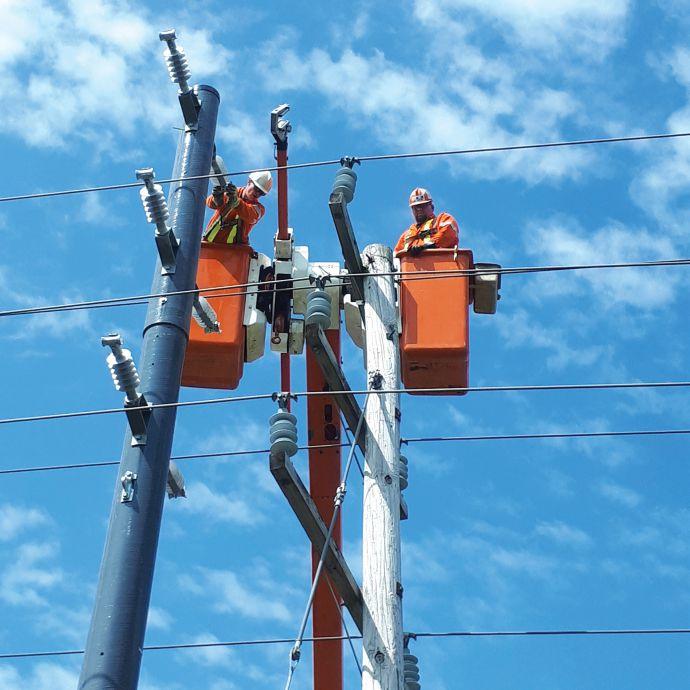
A number of critics have tried to suggest that wind and solar generation were to blame for what happened but the facts tell a different story. The events demonstrated the importance of an interconnected system and investing in electricity infrastructure.
Ontarians have experience with system failure. In 2003, a blackout left more than 50 million people across the northeast without power. The outage exposed weaknesses in the system, and since then, significant improvements and regulations have been implemented to strengthen the interconnected grid. However, as the impacts of climate change continue to intensify, Hydro One needs to increase its efforts to build resiliency and continue to deploy innovative technologies to withstand new challenges.
“There’s no question we are already seeing the devastating impact a changing climate is having on electrical systems across the world,” said Bruno Jesus, Vice President, Planning, Hydro One. “As we prepare for more severe storms, we must consider climate change in our planning for the grid of the future to increase resiliency and lower our environmental footprint.”
Although there are many differences between Ontario and Texas – climate, provincial/state interconnection, and regulation – the impact of climate change
promises more unpredictable weather events that threaten infrastructure in every part of the province and beyond.
Ensuring a dependable grid for the future is Hydro One’s greatest responsibility. The company is pursuing various strategic initiatives to build an electricity network for customers that is reliable, resilient and flexible.
Investments made in the grid now, such as modernizing and digitizing the system, far outweigh the costs of disaster in the future. In recent years, Hydro One has installed smart sensors and switches to remotely detect, locate and isolate a power outage to allow for quick
crew response and restoration of customers’ power supply from an outage event. This new technology will improve the reliability of electrical supply delivered to customers.
In addition, Ontario’s electricity grid needs to be ready to accommodate a range of new energy resources – from batteries, to local hydro solutions to small modular reactors.
“Hydro One continues to invest in our existing infrastructure to maintain a reliable and resilient grid, while embracing new technology for tomorrow,” said Mr. Jesus. “These investments help ensure we have a safe and reliable transmission and distribution grid that is resilient to more extreme storm events to meet the current and future energy demands in the province.”
While climate change represents a significant threat to electrical infrastructure, it also offers an opportunity to be innovative, leverage new technology and prepare for the long-term.
As climate change and the energy needs of Ontarians continue to evolve, so must the electricity system.
A key part of Ontario’s current electrical resilience is a robust transmission system that benefits from 25 interconnections with five neighbouring jurisdictions to facilitate power imports and exports. Strong transmission interconnections between neighbouring provinces and states means Ontario and its neighbours can lean on each other in times of need.
With that in mind, Hydro One and other electrical utilities operate vital infrastructure that helps Ontario achieve its long-term climate change goals and transition towards a low-carbon economy. Strategies to reduce Greenhouse Gas (GHG) emissions, including increased generation from renewable sources, electrification of transportation, and enhanced use of electricity for building heating and industrial processes, are all dependent on a resilient grid.
This means Ontario will become even more reliant on electricity systems for its energy needs.
“In 2020, we invested approximately $1.9 billion to expand the electricity grid and renew and modernize existing infrastructure,” said Mr. Jesus. “But there’s a lot more to do. Hydro One will continue to prioritize investments in infrastructure and technology to build a sustainable grid for the future, including investments that harden
and protect our equipment against the changing climate.”
As severe weather events become more frequent and in order to benefit from electrification and decarbonization of the grid, Ontario’s electricity system requires significant investments in efficient, smart, and flexible system infrastructure.
Communities in Ontario depend on a safe and reliable electricity system.
As both the public and private sectors prioritize climate mitigation policies, the province will become even more dependent on the electricity grid. Along with severe weather becoming more common, these factors mean Hydro One must continue modernizing infrastructure to respond to evolving customer needs.
“As we move forward into the future, we will continue to fulfil our mission of energizing life for people and communities through a network built for the possibilities of tomorrow” said Mr. Jesus.
As climate change introduces more volatility in our world, it is hard to predict who will be the next “Texas”, but we can work together to be ready.
Hydro One is Ontario’s largest electricity transmission and distribution service provider. We distribute electricity across Ontario to nearly 1.4 million predominantly rural customers,or approximately 26 per cent of the total number of customers in Ontario. In November 2015, we became a publicly traded company on the Toronto Stock Exchange (H). @HydroOne


Join us at the EDA Awards Gala to Celebrate LDC Achievements on May 20

In a year unlike any other, excellence abounded throughout the electricity distribution sector in Ontario, and our EDA Awards Gala is an annual celebration of the many noteworthy achievements of our LDC members.
We developed this virtual gala with one thing in mind – to bring our amazing community together to celebrate the outstanding projects, organizations, and people in our industry. The EDA would like to congratulate all the EDA excellence award nominees – because you are all winners in our book. The multiple nominations in each award category are summarized below.
Entegrus – Performance highlights included a comprehensive health and safety management system and programming worthy of IHSA CORTM 2 certification; an employee COVID-19 Pandemic Guide; operational enhancements including new control room SCADA maps and smart
switches technology implemented in Blenheim and Wallaceburg; and strong community investments with approximately $425,000 donated to charitable and not-for-profit organizations in 2020.
Hydro One – Performance highlights included an extensive Pandemic Relief Fund for customers; strong operational, customer service and financial results; extensive capital investments; and retail strategies for conservation and demand management resulting in 180,721,544 kWhs conserved and over $25.9 million in bill savings.
Oakville Hydro – Performance highlights included over eight years without a lost-time injury; championing a strong brand for health and safety through its Stayin’ Alive safety program; public powerline safety awareness initiatives; spatial data intelligence designed to improve customer reliability by advancing its decision-making process; and the completion of an integrated voice response project providing customers with self-serve options.
Synergy North – Performance highlights included customer service enhancements such as the new online MyEnergy portal allowing customers to register, move and close accounts all from the comfort of home, and making customer service internal processes entirely paperless. Synergy North also received the Infrastructure Health & Safety Association President’s Award in 2020 for achieving 500,000 hours without a lost-time injury.
GET YOUR TEAMS TOGETHER AND CELEBRATE WITH US ON MAY 20, 2021. And where, of course, we will announce winners in all of the corporate categories, as well as public electrical safety excellence award, sponsored by the ESA, and individual recognition through EDA Chair’s Citations and honorary memberships. Register for this event at EDA-on.ca.

Alectra Utilities for its internal communications strategy in response to the COVID-19 pandemic, helping employees feel more connected and supported, and ultimately enabling them to deliver outstanding care to all stakeholders in 2020.
Hydro One for two communications campaigns. The first highlighted the partnership between Hydro One and GlobalMedic, a registered Canadian charity specializing in disaster relief, to distribute critical aid kits to Indigenous communities across Ontario; and the second to raise awareness of its Pandemic Relief Program.
London Hydro for its Price Plan Calculator campaign which promoted an automated price plan calculator and self-service rate switch to help customers understand their options and reduce the back-end complexity of moving customers between rate plans.
Oakville Hydro for communicating the COVID-19 Energy Assistance Program. Teams worked together with third parties to develop a streamlined communication process powered by bots. Through a new online form, customers could use their preferred communication method and receive a quicker response than through traditional methods.
Waterloo North Hydro for its electronic communication enhancement campaign that shifted to more electronic customer communication based upon feedback from its customer satisfaction survey. The campaign included standardizing information presented to customers across all departments; improving the quality of hand-delivered notices by adding links to web resources and staff contacts; and exceeding the industry average for open and click through rates for all email communication.
Hydro One for its Pandemic Relief Program offering financial assistance and increased payment flexibility to customers affected by COVID-19. This included a customer Pandemic Relief Fund, increased payment flexibility, an extended Winter Relief Program, and temporarily suspended late fees and returned security deposits to eligible business customers.
London Hydro for its website refresh project to enhance customer experience and provide website administrators with a flexible, easy-to-manage solution that incorporated several features including driving users to self-service; reducing the number of support specific calls; improving findability of content; supporting core business; and meeting accessibility WCAG 2.0 Level AA compliance.
Oakville Hydro for its customer care pandemic response programs and outreach initiatives to support customers. These included the development of a support program allowing customers to amortize overdue balances over a period up to 12 months; proactive communications to notify customers of available support programs through auto-dialer and customer service phone calls, customer-specific letters and social media outreach; weekly outreach to key accounts to identify opportunities for support; and implementing CEAP with innovative robotic process automation.
Hydro One for supporting Ontario’s biodiversity through its one-of-a-kind Pollinator Habitat Program, including mechanical vegetation management activities and rights-of-way revitalization with the addition of pollinator species.
Oakville Hydro for its multidisciplinary approach to reducing its carbon footprint and creating environmental gains. Examples include the electrification of its fleet, paperless billing, headquarter ground-source heating and cooling, supplying EV chargers to customers and a smart grid that reduces the need to dispatch crews for maintenance.
Hydro One for launching, with Ontario Power Generation, the Ivy Charging Network, a new unregulated company which will create Ontario’s largest and most connected electrical vehicle fast-charger network to help decrease range anxiety and to increase Ontarians’ usage of the electricity grid.
Hydro Ottawa on achieving International Organization for Standardization (ISO55001:2014) certification signifying superior asset management practices that demonstrate the ability to achieve operational, environmental and financial goals for
the betterment of its customers and community through significant investments in technology and infrastructure.
InnPower Corporation for its Creating a Culture of Creativity and Innovation project which introduced a unique business model focusing on facilitating new or better ways of creating value while having a meaningful impact on customer satisfaction.
London Hydro for the development of its Price Plan Calculator which provides residential and small business customers with a means to help choose between two regulated price plans: the long-established time-of-use and the new tiered option.
Oakville Hydro for its Spatially Enabling Asset Management Insights (SEAM) initiative to help lower rates for customers through operational efficiency and sustainability, improve reliability in the electrical system, enable the operations team to be more effective, and minimize outage times.
Waterloo North Hydro for the introduction of Fault Location, Isolation & Service Restoration project to its
distribution system, which helped to decrease the severity and duration of power interruptions for customers through system automation and technological advancement.
Burlington Hydro for its balanced approach to celebrating its 75th anniversary while in the midst of a global pandemic. The utility leveraged the opportunity to build trust and showcase its long-standing history in the community, and to highlight its ongoing value and contributions to the City of Burlington.
Hydro One for shifting to virtual community open houses to engage communities in a safe manner during the pandemic, instead of the in-person community open houses it usually uses to carryout consultation and engagement activities in support of key capital and forestry projects.
London Hydro for its development of its Report on Progress and the subsequent awareness campaign to educate customers on the projects the company completed throughout the year and on its community giving initiatives, and demonstrating the positive impact to customers.


A Sault Ste. Marie area hospital is expected to save millions on its energy bill thanks to a new, innovative program introduced by its local utility PUC Services Inc.
“At PUC we are constantly focusing on innovative ways to reduce costs for our customers. This particular program was designed to help our larger customers and we believe its impact will be substantial,” said PUC President and CEO Rob Brewer. PUC serves 33,381 electrical customers over 342 square kilometres.
This summer, the Sault Area Hospital (SAH) will be the first to use PUC’s new Customer Energy Management (CEMa) program. Over the next 10 years, the hospital will benefit from a new battery energy storage system which will reduce its energy bill by an estimated $3.0 million dollars over the life of the project. The new system will allow the hospital to store energy during off-peak hours in battery systems that are the equivalent in size to four shipping containers. The energy can then be used during the middle of the day when energy prices are at higher rates. The system will also improve the power reliability and quality by providing additional levels of electrical redundancy to the hospital. When the power goes out, the system will kick in before a backup generator has to boot up.
“This program will provide substantial savings to SAH, allowing the hospital to redirect those funds to important and essential health care services and equipment for our region,” said Brewer.

“As a community partner, we know how important it is to keep energy costs affordable. Although we do not set energy prices, we can help to come up with innovative solutions to reduce the amount of energy each customer uses. This new innovative program will help to do just that,” he added.
PUC, a municipally owned utility, has a mandate to help local businesses save energy costs. By lowering utility bills, businesses will have a more competitive energy landscape that will allow them to grow and prosper.
In recent years, PUC has put a stronger emphasis on innovation and has introduced several new improvements that benefit customers. In this case, PUC partnered with the Demand Power Group Inc. to deliver the battery storage system to the hospital.
Construction for the hospital’s battery storage system is expected to begin this spring with a goal of having the program in operation by July 2021. This solution for the hospital is believed to be a first in Northern Ontario, but the goal will be to extend the program to other local businesses later this year.
PUC Distribution Inc. was founded in 1917, and today proudly provides safe and reliable electricity to more than 33,000 customers. PUC’s promise to its customers is to lead the way through innovation and compassion to deliver outstanding service every single day. @ssmpuc
Change is all around us – and there is no shortage of change and transition in the power and utilities industry. This change has required LDCs to consider how best to integrate people, processes and technology for a seamless transition. Additionally, LDCs interested in diversifying their portfolio and investing in non-regulated opportunities have needed to attract key talent with entrepreneurial skills and non-regulated experience to drive new business goals. Utility companies working on modernizing the grid have needed to implement new technology, equipment and controls to provide more efficient and reliable energy for customers.
LDCs have needed to adapt and evolve in order to attract new talent, maintain profitability and improve the customer experience. What often gets overlooked is how those goals will impact an organization’s people: how they will react to the change and move through the change acceptance process? Organizations must empower their people to embrace and drive change rather than passive acceptance.
Nicole Deveau, Principal and National Leader of Human Capital Management at Grant Thornton LLP, speaks to the importance of leveraging effective change management practices in an organization.
Change management is a discipline that guides how we prepare, equip and support individuals to successfully navigate the ‘change’ in order to drive organizational success and outcomes. Research shows that there are actions that can influence people in their personal transitions. Change management is a structured approach that supports individuals throughout a given change.
Organizations and leaders often

underestimate the impact that change has on their people. Everyone goes through the change process – understanding change, understanding the impact it has on them, accepting or resisting that change – at a different pace.
Integrated change management will lead to:
• productivity and quality
• employee satisfaction
• speed of adoption
• smooth transition
• visible engagement
Change can take a variety of forms, including leveraging technology to enable a more efficient workforce, re-engineering a process to ensure regulatory compliance, or pursuing an enterprise-wide transformation around customer experience.
Regardless of the scope of change, your organization’s initiatives impact how individuals do their work, and sometimes
even more importantly, how they feel about their work. This includes processes, job roles, workflows, reporting structures, behaviours and identities.
To achieve a successful transition, it’s key to implement proper and proven change management techniques that engage and empower people. This, in turn, will help drive adoption and usage to deliver desired results and outcomes.
All too often, organizational changes meet requirements without delivering expected results. They deliver the necessary outputs without delivering on expected outcomes. The focus of the change effort is on the solution rather than the benefits of the solution. The gap between requirements and
results, outputs and outcomes, and solutions and benefits, is the people who bring the change to life in their day-to-day work.
Change management can close this gap by effectively supporting and positioning those impacted by change for success within a given initiative.
Projects with strong change management components are more likely to deliver on objectives. Prosci’s correlation data from over 2,000 data points and 10 years shows that initiatives with excellent change management practices are six times more likely to meet objectives than those with poor change management practices. By simply moving from “poor” to “fair,” change management shows a three-fold increase in the likelihood of meeting objectives.
As an organization embarks on an ambitious change agenda, it is important to be mindful of the three phases of any effective change initiative: preparing, managing and reinforcing.
It’s beneficial to undertake an organizationwide assessment of change readiness when

preparing for a change initiative. This assessment helps to identify blind spots and gaps in planning and enables management and senior leadership to best support the organization and their respective teams.
Regardless of the nature of change, it is your organization’s people who must ultimately change how they do their jobs. If these individuals aren’t successful in personal transitions and don’t embrace and learn a new way of working, the initiative will be less likely to succeed.
Having a solid change management program in place requires adequate project resources and leaders who understand the importance and key principles of successful change management. This means:
• employees feel prepared, equipped and supported in the change process
• projects are more likely to meet objectives
• projects are more likely to stay on schedule and budget
• an increased ability to capture peopledependent return on investment
To learn more about the practical benefits of change management and how it can help drive your organization’s goals, reach out to Nicole



Minister of Infrastructure
Laurie Scott
The Ontario Legislature passed the Supporting Broadband and Infrastructure Expansion Act, 2021, having received Royal Assent on April 12. The bill facilitates the government’s objective to reduce costs to broadband providers associated with attaching broadband wirelines to hydro utility poles and provide ‘timely’ access to poles and to municipal rights of way to install broadband on municipal land.
After strong advocacy from the EDA and other stakeholders, the proposed legislation was amended while at Standing Committee. Section 21 of the bill was amended, removing the Minister’s authority to authorize work relating to an excavation or dig if a member of Ontario One Call does not complete the work on time. This was an issue that was brought up by members in council meetings and a key area of concern for the EDA as it relates to safety.
This legislation is fundamentally an enabling piece of legislation requiring extensive regulations to support its implementation. Through our conversations with decision-makers leading up to the tabling of the bill – including a meeting between the EDA Chair, CEO and staff with Minister of Infrastructure, Laurie Scott – the EDA focused on ensuring meaningful regulatory consultation will be provided for LDCs. The EDA has been successful and since seen the creation of working groups at the Ministries of Infrastructure and Energy, Northern Development and Mines where the sector will be represented. The EDA continues to be heavily engaged on this file and plans to provide feedback and insight on several important topics that will be covered in the regulatory working groups to ensure that our members’ objectives for broadband expansion are met.
The OEB received a letter from the Minister of Energy, Northern Development and Mines which indicated that the government has approved $6 million in additional funding for utilities that have already, or will imminently have, exhausted their initial CEAP and/or CEAP-SB allocations. This funding will only be available for applications that are filed with the utility by May 31, 2021. However, the Minister’s letter also indicated that the government has another $17 million in new program funding to allow utilities to continue to offer CEAP and CEAP-SB into 2021-22. Any questions relating to this letter should be directed to the OEB’s Industry Relations Enquiry at IndustryRelations@oeb.ca. Please include “CEAP/CEAP-SB Implementation” in the subject line.
The Ministry of Health has added more details to its list of eligible workers as part of the Phase Two “Cannot-Work-FromHome Strategy.” The previously designated “energy workers” have now been changed to “electricity,” with workers identified as those employed in system operations, generation, transmission, distribution and storage. The inclusion of the “electricity” designation in Ontario’s Vaccination Framework is consistent with the EDA’s recommendation to the government that noted the importance of key workers critical to the continued safe and reliable operation and maintenance of Ontario’s electricity distribution grid. Changes also included a shortened timeline to the end of June for Phase Two completion, a full month earlier than previously announced. LDCs should look to their local Regional Public Health Units for further guidance and information on vaccination clinic locations, and other details such as possible employer documentation to prove eligibility online and onsite.
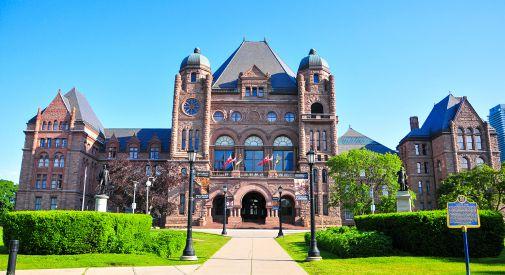
On March 24, the provincial government tabled its 2021 budget with EDA staff attending a technical advance briefing. The government has proposed significant spending in the two key areas of health and the economy to protect and support Ontarians, with $16.3 billion and $23.3 billion investments respectively. To stimulate the economy, $2.8 billion in additional funding will be invested in broadband expansion for a total of approximately $4 billion over six years.
Other notable budget items include: $56.4 million over the next four years to create the new Ontario Vehicle Innovation Network to help accelerate the development of the next-generation technologies that contribute to a lower carbon footprint; continued electricity rate relief for customers through existing and past initiatives such as the Ontario Electricity Rebate, Comprehensive Electricity Plan (GA subsidy), Off-Peak Holidays and Business Energy Rebates; and a technical amendment to the Electricity Act, 1998, to improve administrative effectiveness or enforcement, or enhance legislative clarity or regulatory flexibility to preserve policy intent. The EDA continues to engage with the Ministry of Energy, Northern Development and Mines to determine what, if any, implication this has for the distribution sector.
The Federal Minister of Infrastructure and Communities, Catherine McKenna, announced a $2.75 billion fund for electric bus infrastructure over the next five years. Funding will be provided through Infrastructure Canada to support the purchase of zero-emission public transit and school buses and can be accessed as early as 2021. This announcement was in addition to the $1.5 billion in low-cost financing made available for electric buses and charging infrastructure by Canada Infrastructure Bank announced in October 2020. The fund for electric bus infrastructure will come from a plan to spend $5.9 billion over five years on transit-related projects. That fund was announced in February, along with an announcement to create a dedicated public-transit transfer to municipalities worth $3.0 billion a year, starting in 2026.

The EDA’s Teresa Sarkesian, President and CEO, and Ted Wigdor, VP of Policy, Government and Corporate Affairs, participated in the OEB’s MaRS Discovery District Workshop, along with other senior industry leaders on the “Emerging Trends and Future Directions in the Energy Sector.” Key themes discussed included:
• Alternative business models and diversification of revenue streams.
• Distributed energy resources and emerging technologies such as behind-the-meter generation and energy storage.
• Changing customer profiles and the desire for lower energy costs, good reliability and greener products.
• Utility operation and management related to risk management, cyber security and aging infrastructure.
• Climate change impacts including high-impact events, re-evaluation of asset base to adapt to environmental guidelines and emerging clean fuels such as hydrogen.
• Political environment including government responses to net-zero targets and electrification of transportation.

• Workforce considerations such as the need for new skill sets, integration of younger demographics and emphasis on diversity and inclusion in the workplace.
Two key recommendations to the OEB included the need to figure out how the sector moves away from conventional cost-of-service regulation and towards allowing utilities to make investments that are future-looking and more uncertain; and that the OEB should focus on overall objectives and allow stakeholders the freedom to innovate to achieve those end goals, as opposed to regulating every step along the way.





One of the great strengths of the EDA is the various councils, committees and other forums by which various segments of the membership get actively engaged in association affairs. Among them is the Commercial Member Steering Committee (CMSC).
Members are appointed annually by the EDA Board of Directors, from among nominations made by the EDA membership. The CMSC meets regularly and is tasked with providing input and guidance to help ensure a strong value proposition for the close to 100 EDA members in the Commercial and Commercial Plus categories.
For 2021/22, Bob Mason of Bob Mason & Associates will complete the second in his two years as Chair of the CMSC, while Stephen Dow of TOC Logistics will continue to serve as Vice Chair. The other



2021/22
CMSC MEMBERS

Bob Mason

members represent a good cross section of the diverse goods-, services- and expertise-providers that make up the commercial membership classes.
Meetings are also attended by a designated board liaison with the CMSC, and this year newly appointed EDA Director Scott Mudie, Chief Operating Officer at Oakville Hydro, will serve in that role.
“Commercial and Commercial Plus members are an important part of the EDA, and many of them actively contribute to the success of our events and other activities,” says Andrew Temes, EDA Vice President, Marketing, Communications and Member Relations. “The CMSC’s advice is extremely helpful to us as we work to support commercial member success.”
Says Chair Bob Mason: “The distribution sector in Ontario is really a community, and membership in the EDA is the place where it all comes together – both LDCs and the wider community of suppliers and consultants who support essential utility activities.”
EDA members can connect with their Commercial and Commercial Plus colleagues via the online member directory, available after logging in to your member account on the EDA website. And for membership queries, please contact: mmacura@ eda-on.ca.
Bob Mason & Associate (Chair)
Stephen Dow TOC Logistics (Vice Chair)
Scott Mudie Oakville Hydro (EDA Board Liaison)
Arielle Kadoch Stantec
Daryn Thompson METSCO
Jerry Sampson K-Line Maintenance
Richard Booy Composite Power
Bart Burman Burman Energy
Nimish Bhatnager AESI
Alicia DiMarco DPM Energy
Roland Carbonneau Surplec
Brent Jackson Grant Thornton LLP
Timothy Sturgeon Essex Energy Corp.
Stephen Costello CIMA+
Todd Anderson
Valard Construction
Ken MacPherson Eaton Industries Canada Inc.
Why does a regulated monopoly need a Chief Customer Officer?
I believe that as a monopoly we have a greater responsibility to keep the customer at the centre of everything we do because we’re held accountable for the impact we have on our community and our customers. As the Chief Customer Officer, I’ve set an expectation for myself to be transparent and to have a natural curiosity. I want to know how our customers are feeling, what their interactions are like when they connect with us, and, going deeper, how we can better align ourselves with our customers’ needs and values.
This role is your first in the utility sector – what attracted you to it?
To be honest, I hadn’t considered the utility sector before Hydro Ottawa. But I was really drawn to the exciting changes coming to the electricity industry and, in particular, the position Hydro Ottawa was taking to better support its community and customers from a renewable energy and sustainability perspective, and from a customer-first perspective.
How is Hydro Ottawa’s relationship with its customers changing, and how important is that to its long-term success?
Our customers are more knowledgeable about their energy usage and their relationship to electricity than ever before. That has resulted in our team designing programs and changing policies to better support our customers who are spending more time at home during the pandemic. This includes exploring new ways that customers can connect and interact with us, to adjusting the time of day we perform maintenance and plan power interruptions, to offering tips and answers on how to choose a rate plan that works with their households.
How do people react at dinner parties when you tell them where you work and what you do?
Well, dinner parties are a far distant memory these days, but to be honest, I’ve had mixed conversations. It typically always starts with someone asking if I can get them a discount on their electricity –which still gets a chuckle out of me – but generally I learn that our customers are very happy with the level of support and assistance they get from the Hydro Ottawa team. But I’ve learned that you can’t get away from the customer experience comparison that Amazon provides. It tells me that we just have to be even more relatable, accessible and easy to do business with.

What’s something you’ve recently read, watched or listened to that you’re applying in your job?
I’ve been reading a lot about the change needed in our collective leadership style. This is the first time in history that we have up to five different generations working alongside each other. I always find it interesting to apply these same strategies to how we support our multigenerational customer base. Many of our services have been focused on the boomer generation, but they are quickly being outnumbered by millennials, and now gen Z. It’s proven that these demographics have very different ways they want to interact with us. And before you ask, no I don’t have a TikTok account...yet.
The EDA continues to deliver compelling virtual events with its CON::NECT Event Series in 2021. From our signature EDIST conference in January, and the successful expert-heavy Safety Forum and Construction & Infrastructure Forum this past spring, the EDA provides ample sector-specific and member-only exclusive events.
Join us at future events for more networking and knowledge-sharing opportunities with industry peers and top LDC decision makers.
May 20
There’s still time to join us at the EDA Awards Gala as we host a celebration of the excellence that abounded in the sector in 2020. Will you be a winner? Get your teams together to join us at the Awards Gala to find out.
The Awards Gala will be an electric time online with the entertaining duo The Sentimentalists, who have been featured on America’s Got Talent and Penn & Teller to name a few. Known as the world’s greatest mentalist team, they will be sure to impress and amaze. Don’t delay! Register today at www.eda-on.ca/ EVENTS/Awards-Gala.
Launching Jun. 8
The new online CUEE Digital Buyer’s Marketplace launches Jun. 8. Through a new CUEE website, you get access to anyone, anywhere, 24/7 and 365 days a year, as part of a digital catalogue of vendors, with no travel or accommodation expenses of an in-person event.
Vendors can showcase products all year long, with the potential to reach a wider North American audience, instead of the limited

two-and-a-half-day in-person event. The CUEE Digital Buyer’s Marketplace will also be promoted extensively by the EDA to drive potential customers to your dedicated exhibitor page. To discuss the right package to meet your business development needs, please contact us at mediasales@eda-on.ca to ensure you are part of the new CUEE Digital Buyer’s Marketplace.

Buyers can shop for all of their utility needs with ease from anywhere and explore an online catalogue of vendors all in one place. Check out the new online CUEE Digital Buyer’s Marketplace on Jun. 8. Visit www.eda-on.ca/EVENTS/CUEE-2021 for more details.
Jun. 17
For directors, corporate secretaries and staff who have governance responsibilities, hear directly from recognized governance experts and thought leaders on best practices and strategies to improve board performance. Gain new perspectives and strategies on how to deal most effectively with the current challenges of board leadership.
The Sentimentalists will be sure to impress and amaze. Watch the video now.
Aug. 24
The pre-eminent annual distribution-sector event combines insights on emerging trends and technical issues, and will continue in 2021 with a full day webinar featuring engaging global speakers.
Nov. 25
This ninth annual event addresses the unique contributions of women in our diverse and connected industry and world.
Watch for further updates, and agenda and registration details, for all of the above at www.eda-on.ca/EVENTS throughout the year. Plus, check for additional webinars that we may offer later in 2021. We always welcome member input on our events program anytime, which can be directed to: mmacura@eda-on.ca.
Olameter is a leading provider of outsourced utility asset management, network communications, and over 350 clients across North America.
Olameter provides communications and network monitoring needs for the electric, water, gas and telecommunication utilities, as well as energy retailers and energy management entities. Our specialty is personnel across multiple clients.
Olameter’s portfolio of services includes:





Meter & Field Services:
Installation | Site Services



Damage and Prevention Services:
Underground Utility Locating | Pole Testing/Audits | Leak Detection (Water/Gas) | Utility Asset Inspection & Mapping | System Route Patrol | Maintenance




IT/OT Services:
IOT Communications Services | Network Operations | Spatial Data
Infrastructure | System Hosting | Workforce Management | AI Development Services

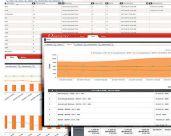

Meter Data Management (MDM): C&I Data Collection | Web Presentment | Aggregation | Data Exporting | Operational Data Store




Utility IT & Administrative Solutions
AMI Network Management | Utility Field Services Technology
The Canadian Institute for Climate Choices recently released Canada’s Net Zero Future, described as the first comprehensive modelling report on how Canada can achieve net zero carbon emissions by 2050 – an aspiration the federal advisory body termed achievable. Electricity figures are frequently cited as a key enabler of progress within the more than 60 scenarios modelled.
Will governments… require natural gas and electric utilities to merge or at least to be co-regulated
THE COST TO MODERNIZE THE ELECTRICITY GRID WILL ALSO BE SUBSTANTIAL
IN 2050, ELECTRICITY COULD REPRESENT ALMOST HALF OF TOTAL FINAL ENERGY CONSUMPTION
Canadian households would, on average, experience falling energy costs as a share of income under a transition to net zero
MORE EFFECTIVE AND EFFICIENT REGULATION IS NEEDED TO CREATE THE CONDITIONS FOR UTILITIES TO ADOPT NEW GRID TECHNOLOGIES
BETWEEN 2027 AND 2032
Moonshot innovations range from small modular nuclear reactors to a radically cheaper electricity storage technology


Through a new 2021 CUEE Digital Buyer’s Marketplace website, you get access to anyone, anywhere, 24/7 and 365 days a year, as part of a digital catalogue of vendors, without the travel or accommodation expenses of an inperson event.
ATTENTION VENDORS: Showcase your products all year round on the new CUEE. Reach a wider North American audience with extensive promotion by the EDA to drive potential customers to the website. Contact mediasales@eda-on.ca to reserve your spot today!
ATTENTION BUYERS: Whatever your equipment needs, CUEE will be your onestop shop for everything equipment and more. Visit CUEE.ca on Jun. 8.
Contact events@eda-on.ca to learn more.