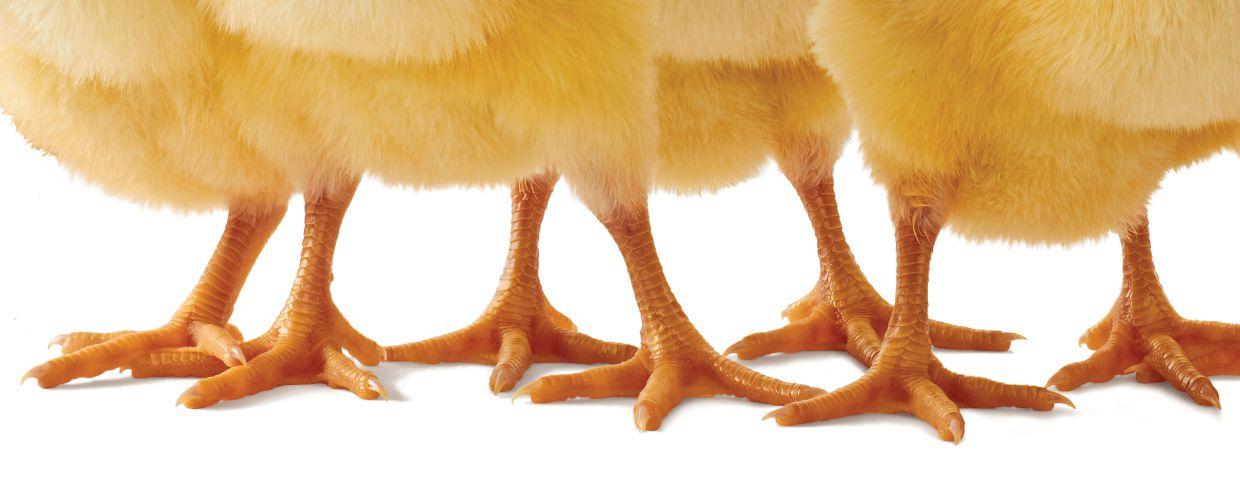
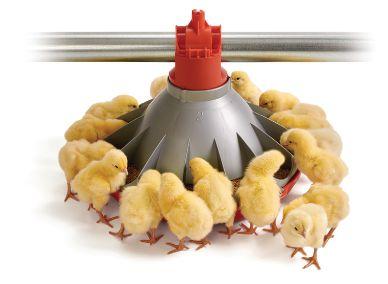
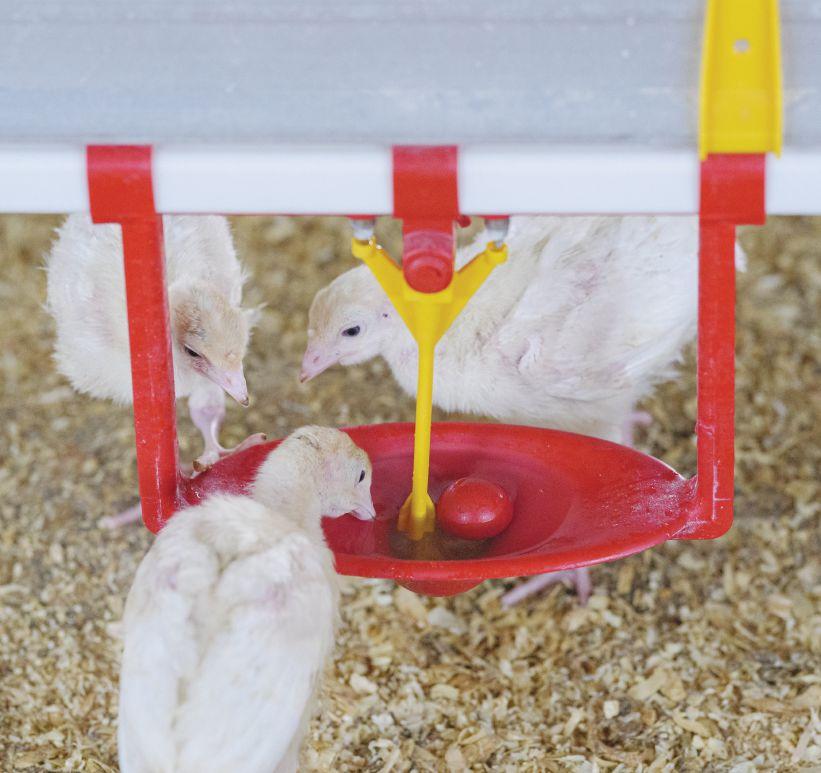
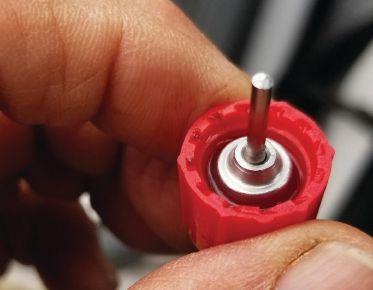
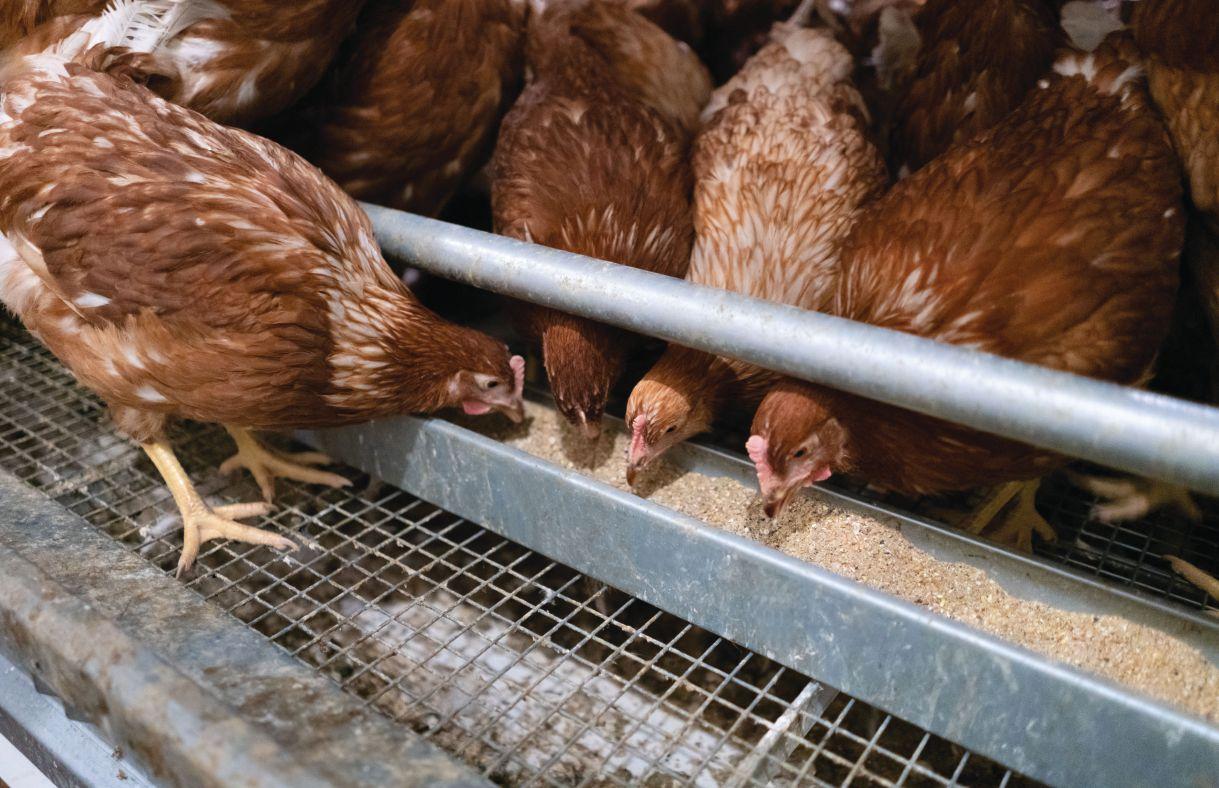
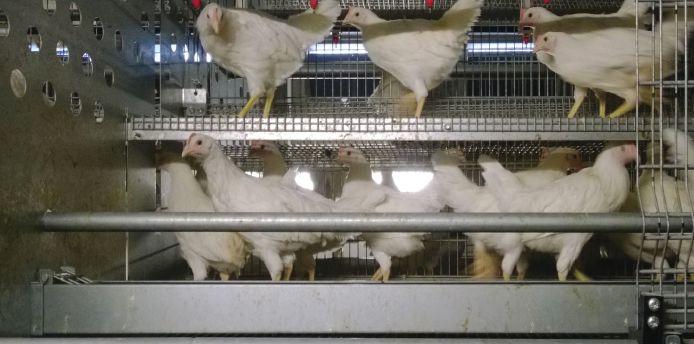
The Konavi® Feeding System is a breakthrough in global broiler feeding. It features an angled cone with anti-rake fins that helps keep birds out of the feeder to maintain fresh, clean feed. With its low pan height and patented scalloped edge, the Konavi Feeder invites chicks to eat from the pan from day one and gives birds
comfortable, easy access to feed throughout their growth cycle. Plus, the streamlined design permits more complete cleaning between flocks for better bird health. The Konavi Feeder lets beaks in, and helps keep feet out. Learn more about clean, open-style feeding at choretime.com/KONAVI-Broiler-Feeder
Maintaining target temperatures without forfeiting optimal air
Pullet rearing systems Assessing the true cost of different options for raising young laying hens.
by Brett Ruffell
Avian influenza’s mental health toll
As a poultry veterinarian based in Red Deer, Alta., the hardest hit province during this year’s avian influenza outbreak, Teryn Girard has seen firsthand the devastation the disease causes on farms.
She’s been the point person for clients whose flocks have been struck with the disease, guiding them through the stages until they can repopulate.
And she’s played an unexpected secondary role throughout the process – helping producers cope with the stress and anxiety that follows a positive diagnosis.
“Mental health is at the forefront of this whole disease outbreak,” she told the audience at the Poultry Service Industry Workshop in Banff, Alta., this past October.
The event was held in person for the first time since the COVID-19 pandemic began. Girard, who works for Prairie Livestock Veterinarians and Cargill Animal Nutrition, shared her perspective on dealing with the avian influenza outbreak.
She said producers, understandably, face multiple mental health stressors when the disease is detected on their farm and throughout the stages that follow.
And as a close confidante to producers throughout this past year’s challenges, Girard has learned to talk openly with them about mental health.
“The most important thing I
learned was to say right away this is not your fault,” Girard said. “I just assumed that they knew that, but they don’t.”
She found saying this early on allows her to have more open conversations with producers going forward. “It starts the process of healing when they can come to terms that it’s not their fault.”
Indeed, producers face multiple stressors when avian influenza is detected on their farm. There’s the financial stress of being unable to earn an income potentially for months, although supports have improved.
“But perhaps an ever bigger stressor is that time period when you are cleaning up your
“There’s no shame in admitting that you have mental wellness issues. And there’s no shame in seeking help.”
barn, disinfecting and trying to get it to swab clean but it doesn’t,” says Mark Reusser, a turkey farmer from New Dundee, Ont., and vice president of the Ontario Federation of Agriculture (OFA).
“All you are doing is cleaning, not knowing whether or not you’re successful until CFIA says you’re free to repopulate.”
And then there’s the impact on the flock. “While farm animals are not pets, farmers have some attachment to them,” Reusser says. “To have to euthanize a whole barn of poultry
is a traumatic event. And then you have to dispose of that livestock – that is a traumatic event itself.”
Girard adds that oftentimes producers are most concerned about the effect the experience has on their family. “When the kids see those people in the biocontainment suits – that’s terrifying,” she says. So, she makes sure to ask producers open-ended questions about how their family is coping.
On a positive note, there are an increasing number of resources available to support mental health on the farm.
In Ontario, for example, OFA partnered with the Canadian Mental Health Association Ontario to launch a suite of programs this past fall designed to ensure producers are getting mental health support.
Named Agriculture Wellness Ontario, the programs currently include: the Farmer Wellness Initiative, a free 24/7 telephone counselling service staffed by trained counsellors with agriculture experience; the Guardian Network, a volunteer suicide-prevention network; and In the Know, a free four-hour mental health literacy workshop to help farmers and to empower them to assist others.
Additional programs have sprung up across the country. View the online version of this article for a list of options in other provinces.
Reusser has a parting message. “There’s no shame in admitting that you have mental wellness issues. And there’s no shame in seeking help. Look after yourself but also look after your neighbours and your friends and family.”
canadianpoultrymag.com
Reader Service
Print and digital subscription inquiries or changes, please contact Angelita Potal, Customer Service Rep. Tel: (416) 510-5113
Email: apotal@annexbusinessmedia.com
Mail: 111 Gordon Baker Rd., Suite 400, Toronto, ON M2H 3R1
Subscription Rates Canada – 1 Year $32.50 (plus applicable taxes)
USA – 1 Year $91.50 CDN Foreign – 1 Year $103.50 CDN GST - #867172652RT0001
Occasionally, Canadian Poultry Magazine will mail information on behalf of industry-related groups whose products and services we believe may be of interest to you. If you prefer not to receive this information, please contact our circulation department in any of the four ways listed above.
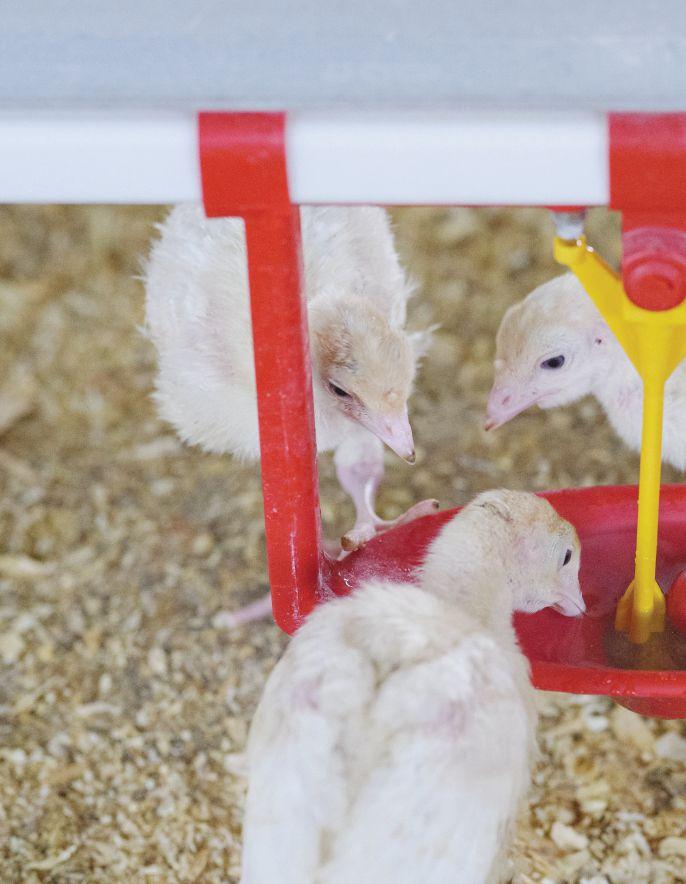
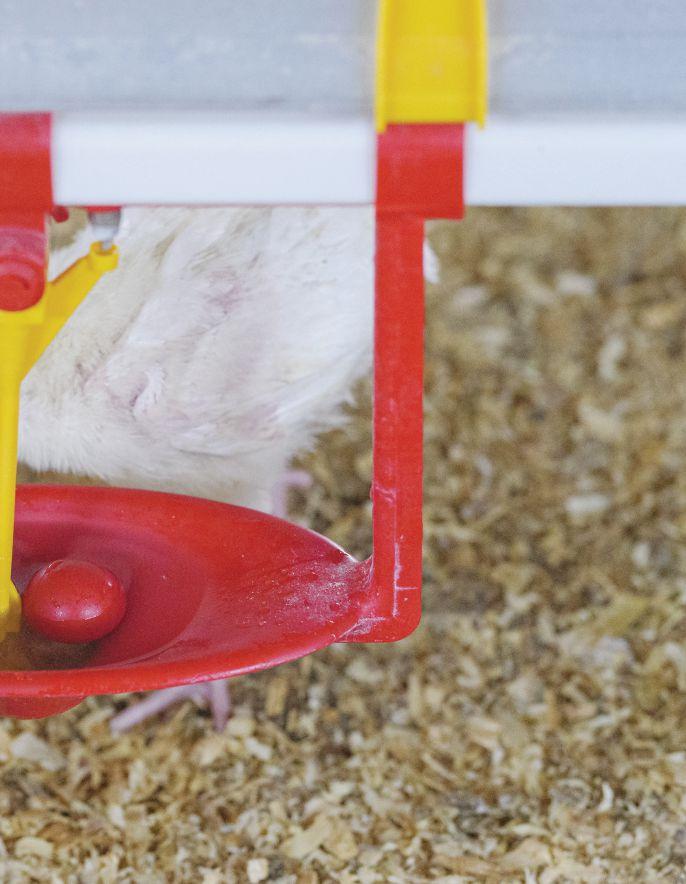
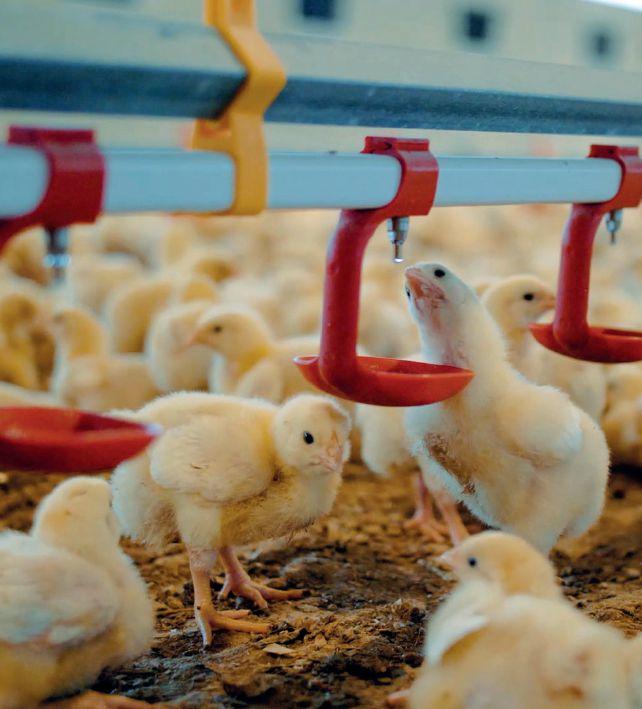
From the first day your chicks and poults are placed, water is one of the first things they look for, and for decades farmers and poultry have relied on our drinkers for a consistent flow of fresh water.
Our drinkers provide poultry the single most important ingredient for the BEST POSSIBLE START, AND HEALTHIEST LIFE DURING LAY PERIOD AND GROW-OUT.
Glass-Pac Canada
St. Jacobs, Ontario
Tel: (519) 664-3811
Fax: (519) 664-3003
Carstairs, Alberta
Tel: (403) 337-3767
Fax: (403) 337-3590
Les Equipments Avipor
Cowansville, Quebec
Tel: (450) 263-6222
Fax: (450) 263-9021
Specht-Canada Inc.
Stony Plain, Alberta
Tel: (780) 963-4795
Fax: (780) 963-5034
What’s Hatching
PIC elects new board of directors
At its hybrid annual general meeting in October and at a board of director’s meeting this fall, the Poultry Industry Council reviewed a year of educational programming and elected in some changes around the board table. Notably, long-standing chair of the board Ed Verkley of Verkley Enterprises stepped down to become past chair, and the board was pleased to elect Caroline Gonano into the position. Gonano is the associate manager – technical affairs, science & regulation for Turkey Farmers of Canada.
New recognition further strengthens EFC’s Animal Care Program
In mid-November, Egg Farmers of Canada (EFC) announced that its redeveloped Animal Care Program had been independently reviewed and recognized by the National Farm Animal Care Council (NFACC). The process confirmed that the assessment program meets all requirements outlined in the Code of Practice for the Care and Handling of Pullets and Laying Hens. This important milestone was achieved after a multi-year process that followed NFACC’s robust Framework for Developing Animal Care Assessment Programs and the outcome further bolsters EFC’s ongoing commitment to rigorous animal welfare standards.
Canada updates Salmonella testing
The Canadian Food Inspection Agency (CFIA) has amended its Health of Animals Regulations to better prevent and control foodborne illnesses associated with poultry and eggs, citing the need for national consistency, modernization, and alignment with global trading partners.
In mid-November, Agriculture and Agri-Food Minister Marie-Claude Bibeau outlined the federal government’s plan to compensate supply managed sectors for the impacts of the Canada-United States-Mexico Agreement (CUSMA).
Federal government unveils CUSMA package details
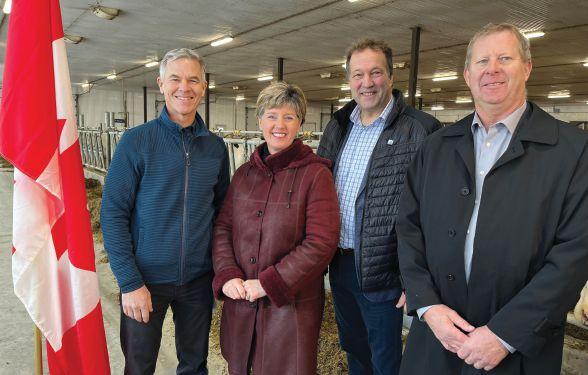
On a dairy farm in the Eastern Townships, Agriculture and Agri-Food Minister Marie-Claude Bibeau re-affirmed the federal government’s commitment to provide compensation for supply-managed sectors for the impacts of the Canada-United States-Mexico Agreement (CUSMA).
$112M is how much more the federal government committed to investing in the Poultry and Egg On-Farm Investment Program to help producers mitigate the impacts of CUSMA.
Dairy, poultry and egg producers and processors are expected to share more than $1.7 billion in direct payments and investment programs.
This federal investment will help dairy, poultry and egg producers and processors make key investments and improve their operations to be even more competitive and sustainable.
For the Canadian poultry and egg producers, the government intends to provide up to an additional $112 million under the Poultry and Egg On-Farm Investment Program. Producers
will receive payments based on their quota holdings, to support improvements to their farm businesses.
This funding will bring the total compensation for this sector to $803 million.
In addition, the federal government intends to invest up to $105 million in the Supply Management Processing Investment Fund to support investments in dairy, poultry and egg processing plants, to grow their productivity or efficiency through new equipment and automation technologies. This brings the total investment for processors up to $497.5 million.
Poultry sector leaders welcomed the news.
“Today’s further investment in our sector will help farmers enhance the long-term efficiency and sustainability of their farms and continue to feed Canadians,” says Tim Klompmaker, chair, Chicken Farmers of Canada.
HAPPY HOLIDAYS! JOYEUSES FÊTES
“On behalf of the Board of Directors of Chicken Farmers of Canada, I would like to extend to you our best wishes for a safe holiday season and a peaceful New Year.”
« Au nom du Conseil d’administration des Producteurs de poulet du Canada, j’aimerais vous offrir nos meilleurs vœux pour la saison des fêtes en toute sécurité et une nouvelle année paisible. »
~ Tim Klompmaker Chair, Chicken Farmers of Canada Président, Les Producteurs de poulet du Canada
On Aviaries
By Erika Prewitt
Fighting floor eggs
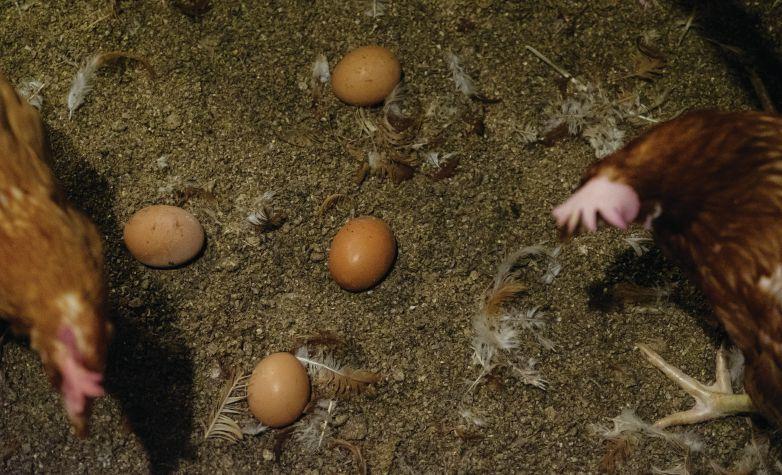
Producers commonly ask about floor eggs when discussing cagefree management. Ideally, they should be under two per cent for your flock. If floor eggs are over this mark, it’s time to take steps to improve this number. Keeping records and having information on this topic is crucial.
Have a clipboard at the front or back of the house so that workers can record when and how many floor eggs they picked up from each aisle. Knowing when and where floor eggs are laid is one of the first steps to tackling this issue. It also lets you know if a certain aisle is more problematic than another. High percentages of floor eggs can result from the need for workers to walk the aisles more often, litter aisle conditions and lighting.
1. Walk the aisles often
The first question to ask is are the floor eggs being laid before workers are present in the house?
It is important to have walkers in the house as soon as lights come on. Laying on the floor can be enticing to a hen if she is undisturbed.
Having walkers available as soon as lights come on to walk the flock prevents the birds from getting comfortable in the litter aisle. When hens and their laid eggs remain undisturbed, this can seem like an attractive place for others to lay as well.
The issue very quickly has a snowball effect. One egg can quickly become 10 when the eggs are left on the floor. This issue will continue to worsen each day that eggs are not immediately picked up.
2. Maintain litter aisle conditions
Second, evaluate the condition
Knowing when and where floor eggs are laid is one of the first steps to tackling this issue.
of the litter aisle that they are laying in. Often, floor eggs are higher in outside rows with a solid wall on one side. They also favour partition and aisle doors. Oftentimes, this is the first place that you start seeing floor eggs.
If these areas continue to be a floor egg hotspot flock after flock, you might want to consider training wire. If you have ramps or bridges of any kind in the aisle, don’t place them next to doors – this makes it even more attractive to hens.
Litter depth can also be a culprit for floor eggs. Litter should be dry with a consistency of coffee grounds and no higher than two to three inches.
Litter is important for birds to exhibit their natural behaviours such as dust bathing, but too much of it makes laying eggs there too enticing for your hens.
Barn workers will need to remove excessive litter either manually or with a litter reduction system. If hens have access underneath the system and the house is equipped with a litter reduction system, utilize it during the morning within the laying period. This not only helps to eliminate excess litter but also helps disturb the hens so that they don’t find this area to be somewhere where they can lay uninterrupted.
3. Proper lighting
Finally, the third condition producers should examine is the house lighting. Again, if hens can access underneath the system, make sure the lighting under there is at 100 per cent intensity.
Areas that mimic the condition of a nest by being dark, remote and a place they are undisturbed will seem attractive to them to lay.
Look to make sure the overall aisle lighting isn’t too dark or, vice versa, that your system lighting isn’t too bright, pushing them to find somewhere else to lay.
Hens will usually choose the nest area to lay if it is secluded, dark and contains a nest material that they approve.
Also, make sure the quantity of nests is appropriate for the population of the house. When one of these areas lack, the floor can be an alternative laying area.
Erika Prewitt is aviary systems specialist with Big Dutchman. In this column, she shares cage-free management tips for egg producers.
Litter should be dry with a consistency of coffee grounds to avoid floor eggs.
Together ensemble Sweeter Meilleur
Fill your holiday season with fun, family, friends—and delicious reasons to gather around. Find this recipe and more at eggs.ca.
Season’s Greetings from Egg Farmers of Canada!
Comblez votre temps des fêtes avec du plaisir, votre famille, vos amis et de délicieuses raisons de vous réunir. Retrouvez cette recette et plus encore sur lesoeufs.ca. Joyeuses fêtes de la part des Producteurs d’œufs du Canada!
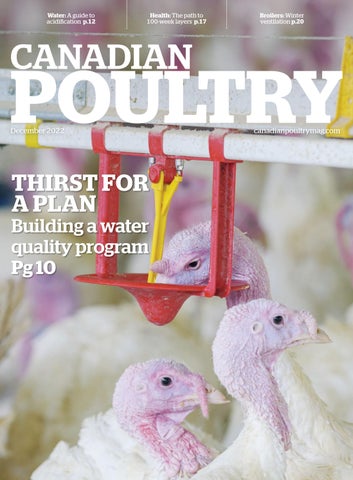
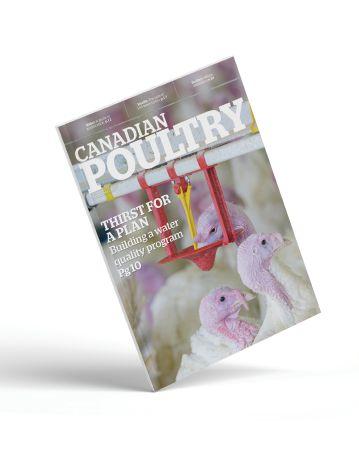
Thirst for a plan
Three steps to establishing a water treatment program.
By Samantha Beitia
Have you recently purchased a poultry farm and are unsure of how to start a water treatment program? Or maybe you have owned the farm for several years and never implemented a water quality program. Perhaps you wondered how you can verify if the water treatment program you are on is currently working.
These are all important things to ponder because establishing a water treatment program can be overwhelming. The poultry water industry has advanced with many different products and various equipment to choose from. Additionally, newly built poultry farms can consist of multiple pumps. Choosing what to do with each pump can be confusing.
With all this said, here are three steps for establishing a water program.
1. UNDERSTAND THE CHALLENGE
The first step is understanding the challenge. Is it to establish a water treatment program to solve a bacterial issue or mineral issues? Is it to establish a water treatment program to be proactive and reduce the chances of bacterial and fungal contamination and improve overall bird performance?
With minerals like iron, sulfur and manganese, one can typically see if there is an abundance of this mineral by looking at the in-line filters. However, there are some minerals, such as sodium and chlorines, that can only be detected through proper mineral analysis.
Additionally, microbial contamination is rarely visual. Submitting water samples for microbial counts and mineral/pH analysis will help to understand the challenge level. Not only do the results detail the level of contamination and mineral content but they will also help when determining what sanitation product is best for a specific operation.
To determine where the challenge on a farm may lie,
producers must understand where some of the potential issues are within a poultry drinking water system. First, it’s important to consider the flow of the water.
The water source – wells or ponds – is one area that could be contaminated with microorganisms, minerals or both. Water then can be stored in large holding tanks like a 5,000-gallon tank. This could be a source of challenges when the water has not been treated and has been stagnant for a period.
Also, certain minerals and other organic material can accumulate at the bottom of the storage tank, creating a great habitat for microorganisms to survive. Water is then transported into the chicken houses through underground distribution lines, where, if not routinely cleaned, could pose a potential problem.
Perhaps, the greatest potential for challenges is within the poultry house. When chicks are young their demand for water is low, so water is very slow moving. Additionally, the houses are warmed to create a nice environment for the chicks, but this also warms the waterlines, creating a nice warm environment for microorganisms to grow and reproduce.
The birds also are a source of contamination to the drinking waterline. Their beaks can become contamin-
Establishing a water treatment program can seem overwhelming but it will pay big dividends in terms of flock health and performance.
ated with microorganisms by coming into contact with, for instance, feces, litter and other birds. When the birds trigger the drinker waterline, the microorganisms from their beaks can be transferred back into it.
2. CHOOSE THE RIGHT SANITATION PRODUCT
The second step is choosing the proper sanitation product. The poultry industry uses three main types of products: peroxide; chlorine; and chlorine dioxide. All of these can be effective sanitizers.
Their efficacy can depend on the level of microbial contamination, the types of minerals present and pH of the water.
For example, liquid chlorine is effective at a pH below seven. If the operation has a pH level above a seven then the operation would need to acidify the water before injecting chlorine or choose a product that is not as pH dependent, like a peroxide or chlorine dioxide product.
A stabilized hydrogen peroxide can be used at any pH either during the entire flock or for specific times when there might be more challenges such as after using a supplement, vaccine or when illness has occurred in the flock.
Chlorine dioxide can be a good choice for continual use during the flock as well. Because it contains a mix of two chemicals, you always need an expert in hand-
OPTIONS
The poultry industry uses three main types of products: peroxide; chlorine; and chlorine dioxide.
ling it to make sure the system is set up properly. There are test strips for all three of these methods that can be easily purchased either at a feed mill or online. The trick is to make sure you are using them properly. Even though they are all oxidizers they are different products, each with their own requirements to accomplish the job.
3. VERIFY THE CHOSEN PRODUCT
The third step is verification. No matter which product an operation has chosen to use, it’s important to continually verify that the product is being administered properly into the waterline. This is vital for ensuring the solution is being utilized throughout the whole water system within the poultry house.
One way to confirm this is by checking the sanitation residual with the appropriate test strips. Residual is what is remaining after parts of the sanitizer have been used up by microorganisms, organic material or dissipated off.
Say the operation chose a stabilized hydrogen peroxide as their product. The target residual should be 25 to 50 parts per million (ppm) at the end of the waterline. If the operation is reading 35 ppm at that point then they have an effective amount of product going into the line to continue to reduce microbial contamination.
In addition, producers can even monitor waterline contamination by checking the level of the product at the beginning of the system versus the level of product making it to the end. The difference will be an indicator of the contamination of the system – the larger the difference the more contaminated the water line and the longer it may take for the product to reach the goal ppm at the end of the line. This doesn’t necessarily mean you need to add more product. It may just mean you need to be patient as the product works its way down through the system.
This also works for chlorine (that should eventually have a residual of three to five ppm at the end of the line) and chlorine dioxide (which should have at least a one ppm residual at the end of the water line).
It is a good practice to verify the sanitation residual each day product is administered into the lines. This can be a good tool not only to ensure a proper residual is present to combat microbial contamination but also to ensure there are not faults in mixing or dosing in the product. Checking the residual has allowed operations to catch errors in dosing equipment, stock solution mix and effectiveness for their set-up.
Samantha Beitia is quality assurance manager of live production with Simmons Foods. For help with any questions or concerns, contact her at samanthabeitia22@gmail.com.
A guide to acidification
A deeper dive into acid use in our water systems.
By Mary K. Foy
We’ve all done it. We walk through the birds and notice the droppings are loose. So, we head back to the anteroom, mix up a stock solution of an acid and water and begin injecting it into the water system.
Maybe we heard another producer talking about how much more water their birds were consuming since dropping the pH in their water system to 5.5 and we decide to try it. Maybe we have acids sitting around to use just for cleaning the waterline when the barns are empty. At one time or another, we have all either used or contemplated using an acid product in our waterlines to improve either the performance of our birds or our equipment.
All these reasons for using an acid product are valid. However, we seldom dig too deep into which acid products we should use for what we are attempting to accomplish. Most of us use what we have
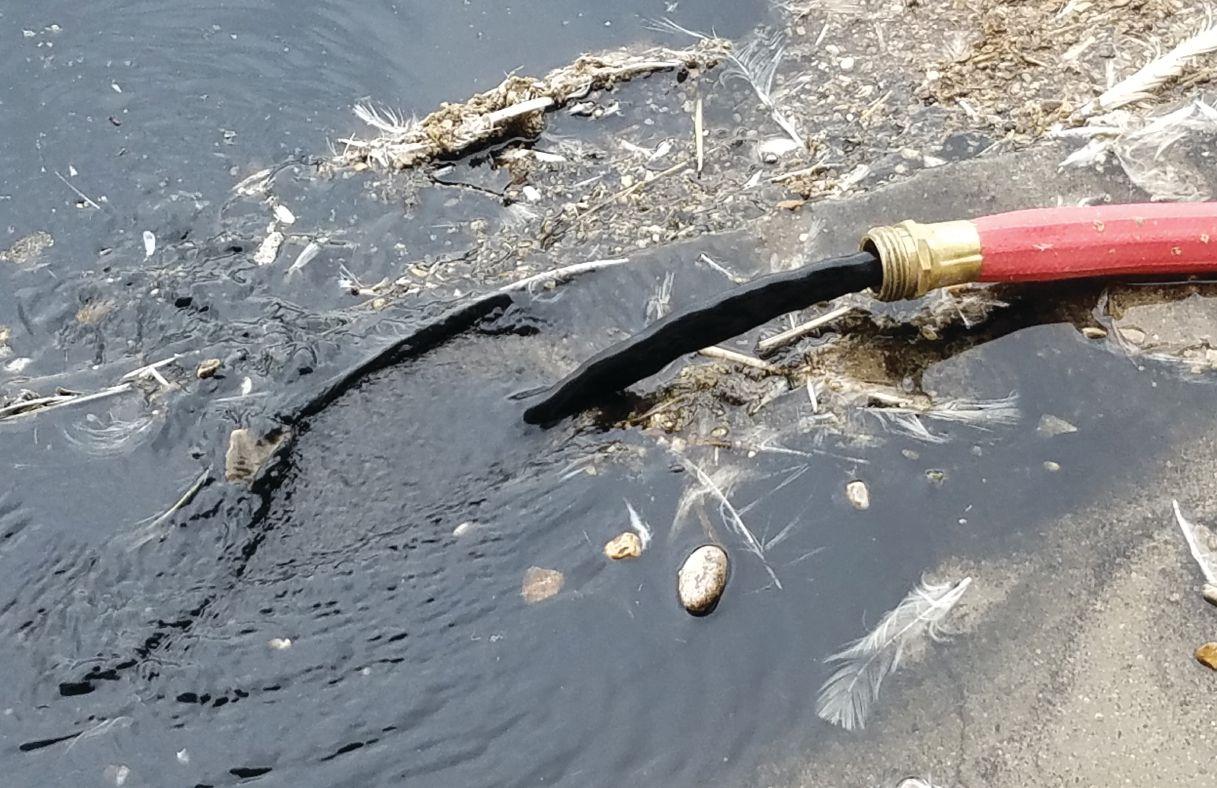
on hand. That single misstep, though, can lead to months of trying to figure out why performance has suddenly dipped or why your drinkers have begun to leak, or where the heck that black gunk in the waterline came from.
If you’ve ever used an acid product in your water system or contemplated the choice of acid to use, stick with me as we dig a little deeper into what to use, when to use it and the consequences of misuse.
The first question that needs to be asked when contemplating the use of an acid in the water system is, “Why?” That question alone determines the kind of acid product to use for optimum benefit (and the least negative consequences).
Most acids can be put into two categories – organic and inorganic. The reason for wanting to use acid products will determine which of these categories to turn to for help. Generally, if producers are aiming for better bird health, they’ll want to use an organic acid. If the reason for using an acid product is to lower pH,
they’ll want to use an inorganic acid. If they’re using it to clean waterlines, concentrate on its descaling abilities and use an oxidizer for organic buildup.
Organic acids
Organic acids are carboxyl acids that contain a carbon-hydrogen bond. They are considered weak acids. Some of the common organic acids we add to the waterline are acetic acid (vinegar) and citric acid. Several studies have indicated that organic acids such as formic acid and propionic acid are effective at controlling E. coli and Salmonella in the gut, while acids such as lactic acid and butyric acid can promote beneficial Lactobacillus in the gut microflora.
Many times, these acids are included in feed formulations. When it comes to adding an organic acid to the waterline, the benefit may be more to aid the digestive enzymes and increase the intestinal mucosa, although gut health microflora may also benefit.
Organic acids can be a useful tool for bird health but when used improperly they can lead to issues like mould in the waterlines as shown here.
Barn Management
The drawbacks of using an organic acid can be contributed to that pesky carbon atom mentioned before. That carbon-hydrogen bond makes all the difference in what can happen in the waterline. The carbon atom in organic acids can be used by microbes as an energy source.
We like to take comfort in the thought that because we are lowering the pH we are killing all the microbes. We are not killing all the microbes. In fact, we may be creating the perfect environment to wind up with clogged drinkers. Multitudes of fungi, molds, and yeast thrive in extreme environments with a pH from two to nine.
In an acidic environment, some organisms can eliminate the positively charged protons that are present through a translocating efflux pump they have developed. Others protect themselves and adapt by changing their polymorphic growth to produce thicker cell walls.
Sometimes, we even get a compounding problem when fungi produce a secondary metabolite that is used to defend their habitat and suppress the growth of competing bacteria. This secondary metabolite can interfere with chlorination, further inhibiting our attempt to effectively treat our water.
Bacteria can also thrive in a low pH environment. Listeria monocytogenes, various Salmonella species, and E. coli have all been shown to adapt to living at a pH below 5.5. These organisms can be found in the litter, they are passed from bird to drinker, they come in on our shoes and they are pulled in through the ventilation system. They are waiting for us to provide the perfect environment for growth. The thought that we are eliminating all the microbes by lowering the pH can get us into more trouble than we had before using the organic acid in the first place.
Organic acids can be a useful tool for bird health, but it must be remembered that it is also a great source of energy for many fungi, yeasts, molds, and bacteria. Use it short-term and follow it with an oxidizing agent.
Inorganic acids
If your “why” is to lower pH, an inorganic acid should be your method of choice. These are sometimes re -
We seldom dig too deep into which acid products we should use for what we are attempting to accomplish.
ferred to as “mineral acids”. Inorganic acids are considered stronger than organic acids and will be more effective at lowering pH while using less product. They do not contain the carbon-hydrogen bond present in organic acids and, therefore, the chance of drinker-clogging organisms using them as a food source is much lower.
The major drawback of inorganic acids is that they may be harsher on our drinker equipment (stainless steel, rubber). Certain strong acids can etch, pit or remove the protective chromium oxide layer of the stainless steel in our drinker systems. Unified Alloys of Canada states that different grades of stainless steel have different resistance to particular acids, but that the most damaging acids are hydrochloric acid and sulfuric acid, especially when mixed with a chloride compound (which we often do on the farm).
A chlorine/chloride-free phosphoric acid can often be a safer alternative. It’s a good idea to consult with the manufacturer of your drinker system to ask what they recommend for the type of stainless steel they use. Be aware, there are manufacturers that have warranty statements that read “continued exposure of the equipment to a pH below six and more than one ppm of chlorine will void any and all warranties on this equipment”.
Finally, let’s discuss using acids to clean waterlines when the facilities are empty. Inorganic acids are excellent for descaling waterlines to remove mineral buildup and scale. The pH should be four or slightly below and the inorganic acid does not need to be left
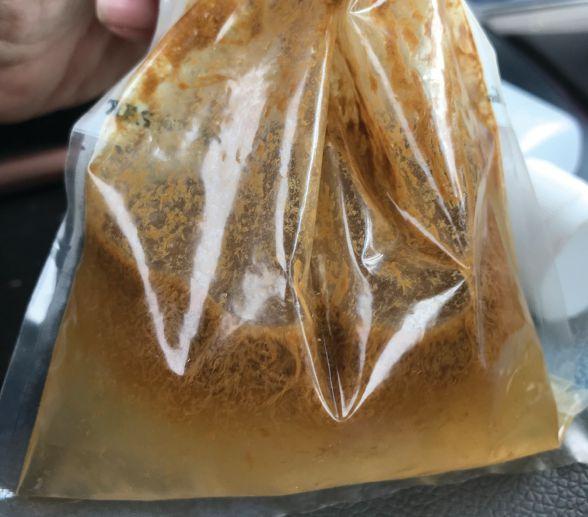
Misuse of organics acids can also lead to the development of vinegar slime as shown here.
in the waterline for long. The type of acid used will determine how long you can leave it. Again, consult the waterline manufacturer.
Organic acids are weak and are unreliable for removing biofilm. Several research studies have shown that once a polysaccharide biofilm has been produced, acid products have a difficult time breaking down the complex. A study at Auburn University revealed that an infectious laryngotracheitis vaccine (ILTV) administered through the waterline got caught up in the biofilm and was still being transmitted to the birds 21 days after initial administration.
Citric acid and sodium hypochlorite, separately, did not penetrate through the biofilm to kill the
ILTV. The stronger oxidizing power of sodium bisulfate and hydrogen peroxide (also separately) did penetrate through the biofilm and inactivated the ILTV.
Acids are an extremely useful tool for us on the farm but only if we know
Intelligent machines for poultry farmers
Labour saving automation for egg processing
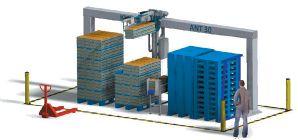
Our machines are specially designed for automatic processing of consumption eggs and hatching eggs. To ensure the automation runs smooth, our approach is as efficient as possible. This means that you can operate the machine without comprehensive explanation. The machine does not occupy more space than necessary and is virtually maintenance free.
why we are using them and what the difference is among them.
Mary K. Foy is the director of technical services for Proxy-Clean Products. The U.S. company’s cleaning solution is used in Canada as part of the Water Smart Program developed by Weeden Environments and Jefo Inc.
Kletec BV is a Dutch manufactor that specialises in the field of tray buffers, trolley loaders, egg stackers and pallet loaders.
ANT20 TROLLEYLOADER
ANT30 PALLETISER
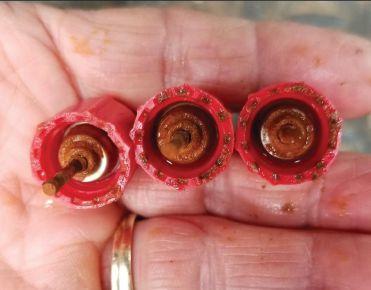
Drinkers before and after waterlines were cleaned using acids.
HAPPY HOLIDAYS
Turkey farmers continue to work hard to bring turkey to Canadian tables this holiday season.
Consumers can feel assured that Canadian turkey is raised with high animal welfare and food safety standards.
The path to 100-week layers
New research seeks to maintain hen health through longer lay cycle. By
Lisa McLean
For laying hens, strong bones and good eggshell quality both require phosphorus and calcium – two essential minerals that travel from the hen’s body to her eggs over time. As a result, at the end of a 70-week lay cycle, a hen’s supply of minerals in bone may be depleted leading to weaker bones.
Now, Marie-Pierre Létourneau-Montminy in Laval University’s Animal Science Department is leading an international multidisciplinary research team on two concurrent projects that aim to understand how calcium and phosphorus travel through a hen’s body at various stages of the life cycle, and how precision mineral feeding might help meet daily mineral requirements that would allow producers to extend a lay cycle.
“We are working to predict daily nutrition requirements of laying hens in calcium and phosphorus,” Létourneau-Montminy says. “We have a modelling project that, for the first time, collates all available
published data to give us a better understanding of the fate of calcium and phosphorus in the gastrointestinal tract and then at metabolic level. And simultaneously, we are able to test the model’s predictions in a 100-week research trial.”
Limestone particle size matters
To simulate the fate of these minerals, the team first had to understand the extent of work that had already been done to track phosphorus and calcium in the digestive tract of a laying hen. The researchers faced an unexpected hurdle when they realized there was no information relating to the interaction between limestone particle size (a source of calcium) and phytase in laying hens, an enzyme that makes phosphorus from plants. Research partners in France performed a trial that provided information to address the gap.
“We confirmed large limestone particles interact less with phytase, and fine particle size will reduce the efficiency of the enzymes,” Létourneau-Montminy
says. “Larger limestone particles stay in the gizzard longer, and since eggshells form at night when the hen eats less, they are an available source of calcium. This is particularly important as a hen ages and makes less efficient use of calcium.”
From there, the researchers were better able to predict phosphorus and calcium absorption.
In general, the hen has to take some calcium from the bone to deposit in the egg’s shell during the night, and that process delivers phosphorus, which is then lost in manure. With the modelling study data, the team was able to predict daily nutrition requirements throughout a hen’s life cycle – and even optimal time of day.
Measuring bone health
For the second part of the Létourneau-Montminy’s project, the researchers are putting the model predictions to the test by raising laying hens to 100 weeks with two different dietary phosphorus levels. The team is using a bone scanner
Scientists are examining how calcium and phosphorus travel through a hen’s body.
tool commonly used in human medicine for osteoporosis diagnosis to test the hens’ bones for mineral content as well as body composition in fat and lean. Létourneau-Montminy hopes the project will give a better understanding of how bone evolves and the amount of calcium that transfers to eggs as hens age.
“With age, the birds enter osteoporosis, and they make less efficient use of calcium,” Létourneau-Montminy says. “We also tend to see a reduction of phosphorus.”
The importance of precision phosphorus
Létourneau-Montminy notes with world phosphorus reserves affected by rising prices and scarcity, producers face increasing pressure to be precise with this non-renewable resource. When the trial completes in November 2023, she hopes to have a better understanding of exactly how phosphorus and calcium are used in the hen’s body over time.
“We know that with aging, hens use more of their bone reserves, so we are looking at different strategies,” Létourneau-Montminy says. “With this trial, we will
Marie-Pierre Létourneau-Montminy in Laval University’s Animal Science Department is leading an international multidisciplinary research team.
have important information about how mineral requirements change, and we will have many data points to help us fill in some of the knowledge gaps.”
Birds typically lay 350 eggs by the end of their 52week cycle. By extending to 70 weeks of lay or 100 weeks of age, the aim is to get to 500 eggs, as long as the data supports the birds are in good physical shape. She notes the team is gathering information about bone composition, bone marrow density, mineral content in eggs and bones, as well as hormone levels in bloodwork over time.
Both the modelling project and the research trial will be completed by early 2023. Létourneau-Montminy hopes to complete a similar trial using the same design looking at vitamin D concentrations in diet and in layer hens.
This research is funded by the Canadian Poultry Research Council as part of the Poultry Science Cluster which is supported by Agriculture and Agri-Food Canada as part of the Canadian Agricultural Partnership, a federal-provincial-territorial initiative. Additional support was received from Egg Farmers of Canada, DSM and Avimix Nutrition.
Barn Management
Martijin Gruyters has 21 years of poultry industry experience, 14 of which have been at Cobb. In his current role as senior manager of technical services, he services the European region. Martin holds bachelor’s and master’s degrees in animal science from the Wageningen University & Research.
Winter barn ventilation
Maintaining target temperatures for broilers without forfeiting optimal air quality.
By Martijin Gruyters
Progress in genetics, nutrition and management has led to remarkable improvements in the daily growth and feed efficiency of modern broilers. The benefit of these advances is a dramatic reduction in the time a modern broiler takes to achieve market weight. Thus, for every hour in which the birds lack optimal temperature and ventilation, valuable performance will be lost.
The greatest challenge facing any producer is the dynamic comfort zone requirements during the broiler life cycle, which also depend on the region of the world and season. However, during the winter, when outside temperatures drop significantly, tremendous challenges arise between maintaining target temperatures without forfeiting optimal air quality.
HOUSE SEALING
It is nearly impossible to properly ventilate or control temperatures in a poultry house if it is not well sealed. Any cracks, leaking fan shutters, poorly sealed inlets or poorly installed roof insulation will reduce the ability to control static pressure.
Poor static pressure control means a large percentage of fresh air will enter the house through leaks. In this case, higher fan capacity is required to achieve the correct air volume and velocity across the inlets and will cause over-ventilation and
increased heating costs. In addition, it will be difficult to maintain target temperatures, particularly at night, and leaks are sources of cold drafts, which may cause health issues for birds and wet litter.
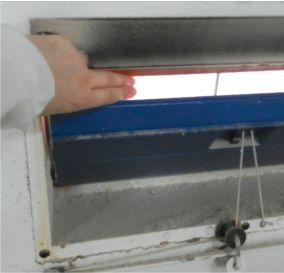
Most modern sidewall fans have shutters mounted on the inside, which can be sealed with a sheet of plastic placed between the shutter and the frame during the winter. The larger cone and box-type fans used for summer ventilation can also be sealed with a plastic cover on the outside. The negative pressure created in the house will pull the plastic against the fan shutters to help the seal. Large doors are
also easily sealed by placing a large plastic sheet on the outside.
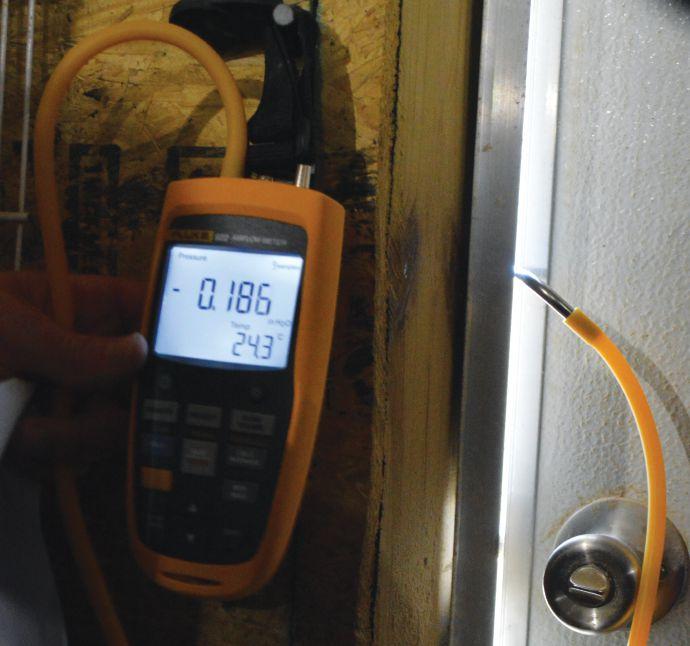
The following is a very simple pressure evaluation test. The fans used for the test are based on house floor area:
1. Close all inlets and doors.
2. Run the equivalent of 18 m3/h of fan capacity per m2 of floor area (e.g., 2,000 m 2 × 18 m 3/h =36,000 m3 /h of fan capacity). Depending on the fans installed, it is not always possible to get a perfect match.
3. Measure the static pressure across any small opening, such as a slightly opened inlet or hole.
It is impossible to properly ventilate a house that doesn’t seal well. Check how well sealed the house is by using a very simple pressure evaluation test.
Di sast er s c an ha ppen a nywhe re and anytime.
PIC's emergency planning resource is now on-line with interactive templates, forms , videos , along with standard operating procedures to follow when a crisis occurs.
Be prepared for what could come next.
The on-line "My Farm App" included with the resource is a place where you can securely store, update, and print a risk assessment, relevant contact information, and emergency response procedures, specific to each of your properties. Access it anywhere, anytime.
A compreh en si ve re sou rc e to help yo u plan!
Barn Management
A static pressure of >37.5 Pa indicates the house is adequately sealed. Static pressure < 25 Pa indicates a poorly sealed house, which will require maintenance. A newly commissioned house should easily achieve a static pressure of 60 Pa. Always record the results of your pressure tests for future reference.
MINIMUM VENTILATION
Minimum ventilation systems are designed to manage air quality levels and moisture using fans on a cycle timer. This system is independent of the temperature control system and needs to be designed and operated in such a way that it will maintain good air quality and moisture control for optimal broiler development. With minimum ventilation, there are three main factors to consider.
Firstly, continuous genetic improve -
ments result in higher metabolic and growth rates, which in turn increase oxygen demand. These increased metabolic rates also mean increased metabolic heat production, moisture deposited in the litter via the feces and levels of carbon dioxide production – all of which must be removed by the minimum ventilation system.
Secondly, due to the increased heater run times during the winter, more stress will be put on the minimum ventilation system, as there is more waste gas produced from the heating system.
Lastly, during the winter, there is a tendency for producers to reduce minimum ventilation rates as a means of maintaining temperature and reducing energy costs. However, this can cause poor air quality.
Air quality parameters for poultry can be defined as:
During the winter, it is particularly challenging to meet air quality parameters due to the dilemma of maintaining temperature and optimal air quality. When heating capacity is limited, there is a tendency to reduce the minimum ventilation to prevent heat loss. At the same time, carbon dioxide levels and relative humidity (RH) will increase, which will
have a negative impact on the development of the bird and the litter conditions. The correct programming of the minimum ventilation is the only effective method to control these parameters.
THE IMPORTANCE OF CONTROLLING CARBON DIOXIDE LEVELS
Oxygen is an important component in physiological processes, and birds will require a minimum level for optimal performance. In a poultry house, carbon dioxide is continuously added to the environment by the birds and heating system, particularly in the winter, and brooded with constant heater usage. The carbon dioxide levels should be kept below the maximum range of 3,000 ppm as increasing levels of carbon dioxide will displace oxygen in the house. When car-
bon dioxide levels exceed the maximum level of 3,000 ppm or 0.3 per cent, oxygen availability will be low, resulting in inactive birds, reduced feed and water intake and a higher risk for the development of ascites.
THE IMPORTANCE OF CONTROLLING RH LEVELS
Like carbon dioxide, moisture will be added to a poultry house mainly by the birds and gas heating systems. Birds will add moisture through respiration, drinking and excreta. The combustion of one m3 of gas adds one litre of water vapour into the air. If this added moisture is not removed from the house, the RH will increase and cause wet litter problems.
The RH needs to be kept below 70 per cent whenever possible. The only means to remove excessive moisture is by in -
Check this list to prepare for the winter
• Properly seal all fans that are not used during ventilation during the winter.
• Seal tunnel inlets when not used during the winter.
• Perform a leakage test to check for house sealing.
• Make sure all inlets completely close.
• Check all nylon connectors and cords. Any connectors that are broken or bad quality should be replaced.
• Make sure the front door seals well or provide additional sealing after receiving the birds (with wood shavings or plastic coverage).
• Check operating system settings (P-band, summer offsets, etc.) and make sure these are set for the winter period (cold air correction, RH correction, etc.).
Season’s Greetings from the Board of Directors and Staff
Meilleurs Voeux du Conseil d‘administration et du personnel
creasing air temperature and air exchange rates. As air temperature increases, its moisture holding capacity will also increase, which significantly increases the amount of moisture that can be removed by the minimum ventilation system.
INLETS AND HEAT CIRCULATION
Inlets are arguably the most important part of the house ventilation system. Positioning and design of the inlets will significantly impact the direction of the incoming cold air. In many regions of the
world, outside winter air temperatures are low with potentially high levels of RH. This cold, moist air needs to be heated before reaching bird level. Due to stratification, air temperatures are always the hottest at the ceiling or roof peak. Incoming cold, moist air needs to be directed to the peak and mixed with the hot air before reaching bird level.
In cold weather, air inlets should only open from the top, directing the incoming air to the peak of the house. Poorly sealed and designed inlets that leak from the sides or base direct a significant amount of cold heavy air onto the floor. This cold air is a source of drafts and wet litter.
The opening of the inlets should always match the fan capacity and generally have a minimum opening of five centimeters to produce an optimal air jet. A smaller opening will not produce a strong enough air jet that can reach the center of the house. For optimal air distribution, the incoming air needs a smooth surface to flow along to ensure it reaches the center of the house where it can mix with the hot air in the peak of the roof.
During the brooding stages, not all of the inlets are used so that the minimum opening of five centimetres is achieved. It is always best to ensure that opposite pairs of inlets are open or closed for an optimal airflow. Any inlet that is not in use should be completely closed because leaks cause pressure losses.
Inlet openings should be pressure controlled to maintain a constant airflow at different fan capacities. When cables are being used to operate the inlets, give special attention to the nylon cords closing the inlets. Cables can stretch and cause uneven openings. Inlets that do not close completely will cause pressure loss and energy loss.
There are many different designs and setups for circulation fans. Their main function is to break up the natural heat stratification in the house. It is not unusual to see up to a 10°C difference between the ceiling and floor level. These systems are designed to mix the air from floor to ceiling and remove significant levels of moisture from the litter.
Tuesday
Tuesday
Innovations
Tuesday Afternoon – Pre-Conference Workshop Theme: Ventilation – Mike Czarick
Wednesday
Wednesday
AI
Wednesday
Salmonella
Carcass
Avian
Alternative
Carcass
Alternative
Alternative
For information on registration, tradeshow and sponsorship, visit the conference website: atlanticpoultryconference.com
Salmonella
Alternative
Cultured
Salmonella
Cultured
Pullet rearing systems
Assessing the true cost of different options for raising young laying hens.
By Frank Luttels
Today’s producers have a few options when planning a pullet rearing system for commercial cage-free egg production.
From floor rearing to aviary rearing, each type of system comes with a different price tag. What is challenging to see, however, is the true cost of each system after figuring in labour needs, bird mortality rates and other factors.
Consequently, it is critical for producers to look at all aspects of the operation to calculate long-term return on investment, instead of simply flocking to the solution that is cheapest to install.
Floor rearing systems
The least expensive housing option for pullet rearing is the floor rearing system. It is particularly attractive to producers who have old barns with some equipment already installed, making the cost even cheaper. Unfortunately, floor rearing systems are not ideal for training birds to succeed in a cage-free laying facility, as they lack many of the features found in laying facilities.
Although some floor rearing systems contain perches, the number of perches is usually inadequate for the birds to fully learn how to use them. Additionally, floor systems typically do not have slatted areas, so the birds never become comfortable walking on slatted floors. And if bell drinkers are used in the barn, the pullets likely will not accept nipple drinkers
when transitioning to a laying system. These issues highlight the importance of proper pullet training. Additionally, the hidden costs of floor rearing systems continue to add up throughout the lifespan of a flock, as poorly trained birds will not perform well in a laying house.
Instead of moving around the house exhibiting natural behaviours, birds will often resort to stressful behaviours, such as feather pecking or bunching up in the house, causing management problems. The typical result is a low percentage of grade-A eggs, high labour costs and a poor return on investment.
Floor rearing systems with platforms
Another pullet rearing option is a floor system with perches and adjustable platforms. In this system, a nipple line is located above the platform, requiring birds to jump, which is a huge improvement over standard floor rearing systems when it comes to pullet training.
These types of systems offer a midranged cost of installation. Although the extra investment results in better bird training, producers who have them also pay high labour costs. Vaccinations, for example, can be difficult to perform when
While aviary systems are more expensive than floor rearing systems, the key advantage is their compartmentalized design.
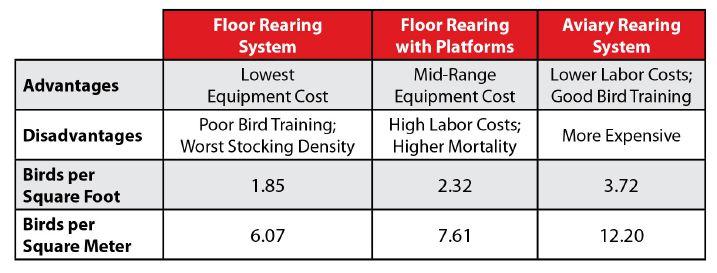
This table breaks down the long-term return on investment of different rearing systems.
Frank Luttels is
Barn Management
dealing with the very large flocks in these rearing systems. Not only is it difficult for many producers to fill the job openings to perform the required labour, but the added costs also erode return on investment potential.
Another big disadvantage of floor systems with platforms is higher bird mortality rates. For example, producers may bring in 105,000 pullets, fully expecting to lose 5,000 of them to achieve a laying flock of 100,000 birds.
A leading cause of the bird mortality with these systems is poor environment, and one of the main reasons for this is that the vast majority are installed without manure belts. Not only do manure belts reduce the amount of labour needed to remove the litter, but they also greatly improve the environment, leading to healthier and better performing birds.
Aviary rearing systems
A third option for pullet rearing is the aviary rearing system. In these systems, pullets can be closed in for the first few weeks, providing them a safe, comfortable and well-ventilated environment in which they have ample space to move and jump around. These systems include a lot of perches as well as adjustable platforms with nipple drinkers above them for bird training.
While such systems are more expensive than floor rearing systems, the key advantage is the compartmentalized design of aviaries, making access to birds much
easier and significantly lowering labour requirements. Aisles alongside the compartments make catching birds for vaccination and other tasks much easier. Producers may even keep multiple flocks separated in one house, which is not possible with other systems.
Bird density
One of the best apples-to-apples comparisons of the three systems is bird density. With a floor rearing system, producers can stock about 1.85 birds per square foot (6.07 birds per square meter) of barn. Floor rearing systems with platforms can be stocked with about 2.32 birds per square foot (7.61 birds per square metre). Aviaries can hold up to 3.72 birds per square foot (12.20 birds per square metre) of barn. Producers can double the number of birds in the same facility with an aviary rearing system versus a standard floor system.
Considering the huge expense of the barn space alone, it is logical to use that barn to house as many pullets as possible to help maximize the return. Further efficiency is gained through the fact that some equipment costs, such as ventilation, are the same for both aviary rearing systems and floor systems, spreading that cost out over more birds with an aviary rearing system.
Despite the higher stocking densities of aviary rearing systems, they can turn out birds with a very high uniformity percentage. The uniformity of birds reared in
aviary systems translates into healthier birds and more grade-A eggs when they are moved into laying facilities.
Long-term ROI
In the end, what matters most is the longterm return on investment of each system. When considering the reduced labour needs, reduced mortality and higher quality birds produced in an aviary rearing system, producers can achieve greater profits with aviaries over a long-term period.
Those who wish to save money up front on floor systems – with or without platforms – may regret the decision after seeing returns diminished by lower bird densities, higher labour costs and, overall, poorly performing birds.
When building poultry housing for commercial cage-free egg production, virtually no producer enters into it planning for the business to last only a short time. In fact, many hope their operations will succeed for generations.
Unfortunately, it is difficult for producers to look beyond the initial installation costs of aviary rearing systems. However, these systems must be considered from a longterm investment perspective. Investing in the right system may just be the key to the long-term success of the farm.
More resources
For more information on pullet rearing visit canadianpoultrymag.com.
By Lilian Schaer
Livestock Research Innovation Corporation (LRIC) fosters research collaboration and drives innovation in the livestock and poultry industry. Visit www.livestockresearch.ca or follow @LivestockInnov on Twitter.
Poultry and the future of food
Given the many pressures facing livestock and poultry producers today, from climate change challenges to animal-free meat and eggs, will food production in the future still include animals?
Definitely, according to Vaughn Holder, research project manager in beef nutrition at Alltech. He says the data around the importance of livestock for future food security and climate change mitigation is unequivocal – it won’t happen without animal agriculture.
“We usually talk about 2050 and producing enough food to feed the world in 2050, but that’s the wrong conversation,” Holder said while presenting at a Horizon Series webinar hosted by Livestock Research Innovation Corporation (LRIC) in September. “How we are going to feed the people of the world right now is the right conversation.”
That’s because population protein intakes and associated environmental metrics for the world’s 205 countries and territories are based on gross protein, which doesn’t account for digestibility or amino acid composition of that protein to decide how good it is at filling human nutritional requirements.
When those additional parameters are considered, only about one third of those countries and territories are protein secure with two thirds having a protein intake –mainly plant-based and plant proteins are less digestible to humans than animal proteins – that is below required levels, which Holder calls “quite terrifying”.
“That’s why any conversation around societal intervention that results in a reduction of food production around the world is extremely irresponsible,” he says. “We don’t need more calories; we need more nutrients.”
Tackling an issue like climate change isn’t as straightforward as simply proposing the elimination of livestock agriculture, he adds.
Only about four per cent of the world’s
“How we are going to feed the people of the world right now is the right conversation.”
land is suitable for growing crops – not enough to feed the world’s population. Livestock and poultry bring additional nutrients into the human food system by converting nutrients into protein that people can consume.
Ruminant animals like cattle do this by eating grasses, crop residues and forage crops, but monogastric livestock like poultry are also an important part of the solution. Some of the world’s most tightly controlled and balanced rations are fed to poultry and pigs, Holder notes.
“The vegetable proteins we feed poultry and pigs are incomplete, so we balance their diets by adding protein,” he says, adding this brings more benefit to the human food system than if people were to consume corn and soybeans directly. “Monogastrics have a very important role in improving protein availability to humans because we can correct for the deficiencies in plant-based proteins through ration formulation.”
United Nations data suggests 86 per
cent of global livestock feed is inedible to humans. So, livestock is performing a service by keeping all that human inedible feed out of the plant carbon cycle.
Another important consideration is that reducing meat production in North America doesn’t reduce global meat demand. It will simply shift meat production elsewhere where it may well have a much higher carbon footprint, effectively causing emissions from livestock farming to increase.
At the same time, replacing food production with food processing – the creation of plant-based meat, milk and egg products – is not bringing new protein into the human food system, but just creating new uses for existing ones.
“So, how do we increase food production in the face of protein insecurity but reduce greenhouse gas production? It’s not all doom and gloom – it’s about using the resources and the knowledge that we have,” he says.
If the world were to apply what is known about efficient livestock agriculture to parts of the world where it can make a difference, carbon emissions could be reduced by as much as 45 per cent. That includes capturing unused nutrients from grasslands through grazing, preventing carbon from going into landfills by feeding by-products to livestock and ensuring livestock farmers are paid for carbon sequestration activities.
“We can make much more food with the same environmental footprint as before if we implement things we know will improve the efficiency of livestock. The world is hyper-focused on emissions without also considering sequestration] and agriculture is essentially the only industry that has carbon capture as its central function,” Holder says.
Watch the full webinar with Vaughn Holder or any of LRIC’s 11 other webinars and white papers of topics of importance to the livestock industry at livestockresearch. ca/white-papers.
Vaughn Holder, research project manager in beef nutrition at Alltech, recently spoke about the future of poultry in global food production.
YOU HAVE AN INSTINCT TO PROTECT. WE HAVE AN INSTINCT TO PROTECT FAST.
Introducing Poulvac® Procerta™ HVT-IBD. Timing is everything in a poultry operation, and Zoetis created its newest vector vaccine to put time back on your side. Backed by the latest science resulting in excellent overall protection, studies found that Poulvac Procerta HVT-IBD protected chickens fast against classic and important variant IBD strains.1-3 It’s a quick way to full protection from infectious bursal disease. Contact your Zoetis representative.
Brown A. et al., Early Onset and Duration of Immunity of a Recombinant HVT-IBD Vaccine Against Virulent, Variant, and Very Virulent Infectious Bursal Disease Challenges. American Association of Avian Pathologists, Virtual Conference, Jul 30-Aug 6, 2020
Brown A. et al., Efficacy of a recombinant HVT-IBD vaccine in layers following virulent, variant, and