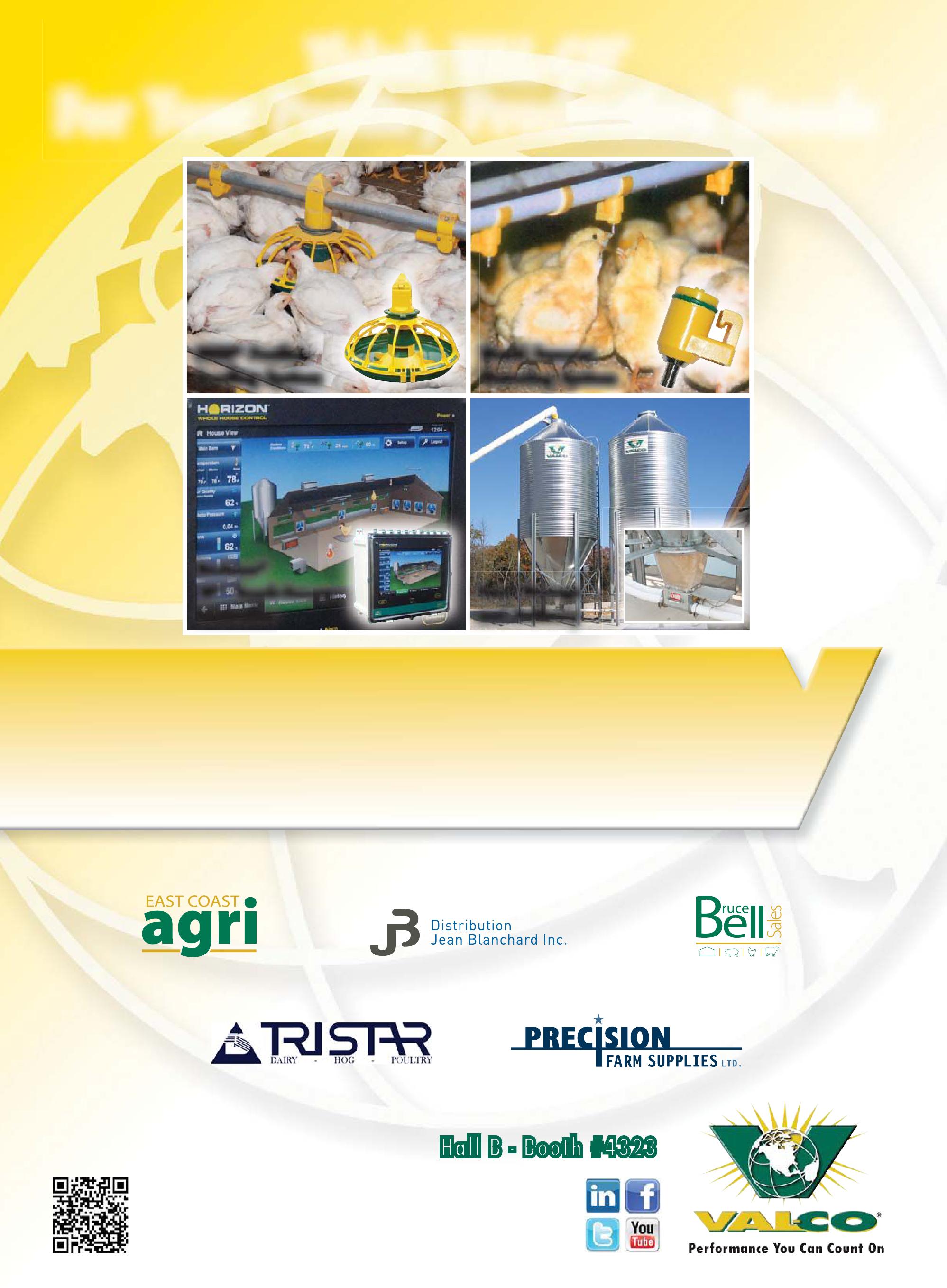
VAL-CO® is a leading manufacturer of high-quality systems for commercial poultry and egg production, creating new and exciting products based on innovative thinking, technical research, and field experience. By controlling the manufacture of all the components, VAL-CO engineers its products to work together as complete systems, each expertly designed and produced with a distinct focus on the customer. Our worldwide presence and commitment to providing leading products and technical service make VAL-CO your key business partner whose performance you can count on.
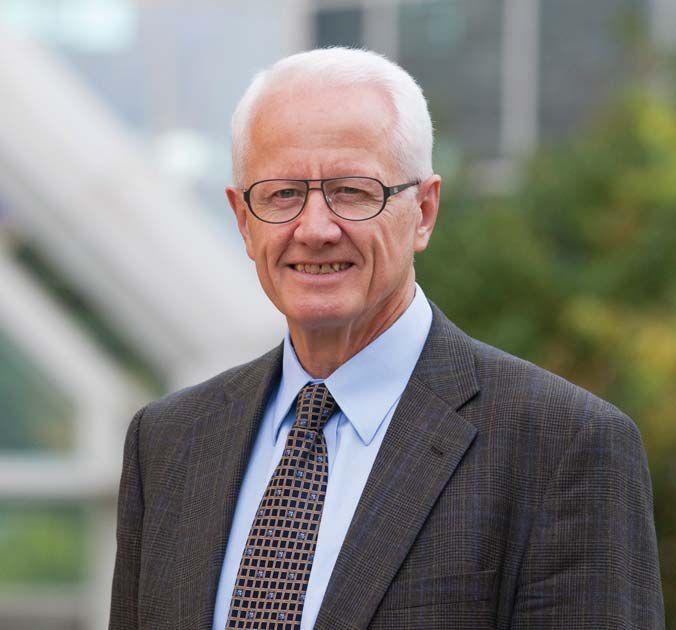
Lianne Appleby
Lilian Schaer
FROM THE EDITOR
BY LIANNE APPLEBY
Even Scrooge Would Approve
December just wouldn’t be the same without A Christmas Carol played ad infinitum on television. Even at 170 years old, the story remains popular because it continues to reflect society’s values.
So, when Ebenezer Scrooge has undergone his transformation from curmudgeon to benefactor and sends a random young lad to buy a goose for the Cratchits from the poulterers around the corner, it’s understandable that the boy is told to buy the prize one. Don’t we all want the biggest bird possible on our dinner table, even today – a point of pride, a symbol of a prosperous yet benevolent household?
Rather than pondering just how a goose got to be the size of a little boy, I imagine that readers in 1843 were preoccupied by the fact that Scrooge had done a miraculous one-eighty. But what if that same novel were actually released, for the first time, in 2013? Would today’s readers feel equally warm and fuzzy over Scrooge’s sudden change of heart? Or, when his random lad incredulously asks, “What? The one as big as me?!” would they cynically assume that the goose in question was a Frankenfood?
With commercials, pop-up ads and the like, consumers are exposed to misinformation without even knowing it – and unfortunately, they absorb that inaccurate information, whether they realize it or not. Having been constantly bombarded with inaccuracies about antibiotics and hormones, today’s readers likely wouldn’t get past said paragraph without raising an eyebrow.
The most recent example of such absorption comes courtesy of A&W in the form of a commercial regarding the addedhormone-and-steroid-free meat it uses for its burgers (sure, this time it’s beef, but it could very well be poultry or eggs in Round 2). This fear-mongering approach has disgusted
many in the agricultural community; in fact, Andrew Campbell, a dairy farmer and agvocate from Glencoe, Ont., has had enough. Andrew’s blog “I’m done with fearing food and done with A&W” (read it at www.realagriculture.com) unleashes a number of facts about hormones that many consumers may be surprised to learn.
It is a valiant rebuttal, but whether or not his target readers actually find their way to it online is another question.
Unfortunately, reaching a captive audience while they’re sitting ducks and watching their favourite prime time show seems like a pipe dream to agricultural communicators, simply because it costs a LOT of money to do it. Canada’s agriculture sector is doing an OK job of in-yourface advertising, but it’s usually through short-lived grants and funding, not longterm, sustainable investment. With few exceptions, agricultural organizations say that marketing dollars are always among the first to be chopped in favour of government relations and trade-related endeavours. And that’s a shame.
In 1843, it was of no concern to readers how Ebenezer’s super-goose was raised, albeit mostly because added hormones weren’t conceivable yet. But now they are. If agriculture fails to invest in telling consumers what’s what, we know from experience that someone will certainly get in there and tell them what’s not.
Dollars released to consumer marketing are a wise investment given today’s climate. And I’d wager that even our Ebenezer wouldn’t say “Bah! Humbug!” to that.
DECEMBER 2013
Vol. 100, No. 11
Editor Lianne Appleby – lappleby@annexweb.com
888-599-2228 ext. 266
Associate Editor
David Manly – dmanly@annexweb.com 888-599-2228 ext. 261
Publisher/Sales Manager
Marilyn White – mwhite@annexweb.com 519-400-2424
888-599-2228 ext 23 ax 888-404-1129
Sales Assistant
Mary Burnie – mburnie@annexweb.com 519-429-51 5 888-599-2228 ext 234
Media Designer
Brooke Shaw
Group Publisher
Diane Kleer – dkleer@annexweb.com
President Mike redericks – m redericks@annexweb.com
Mailing Address
P.O. Box 530, 105 Donly Dr. S., Simcoe, ON N3Y 4N5
Publication Mail Agreement #40065710
RETURN UNDELIVERABLE CANADIAN ADDRESSES TO CIRCULATION DEPT., P.O. BOX 530, SIMCOE, ON N3Y 4N5. e-mail subscribe@canadianpoultrymag.com.
Printed in Canada ISSN 1703-2911
Circulation e-mail subscribe@canadianpoultrymag.com Tel 866-790-6070 ext 201 ax 877-624-1940
Mail P.O. Box 530, Simcoe, ON N3Y 4N5
Subscription Rates
Canada – 1 Year $30.00 per year (with GST $31.50, with HST/QST $33.90)
GST – #867172652RT0001
USA – 1 Year $ 66.00 USD Foreign – $75.00 per year
Occasionally, Canadian Poultry Maga ine will mail in ormation on behal o industry-related groups whose products and services we believe may be o interest to you. I you pre er not to receive this in ormation, please contact our circulation department in any o the our ways listed above.
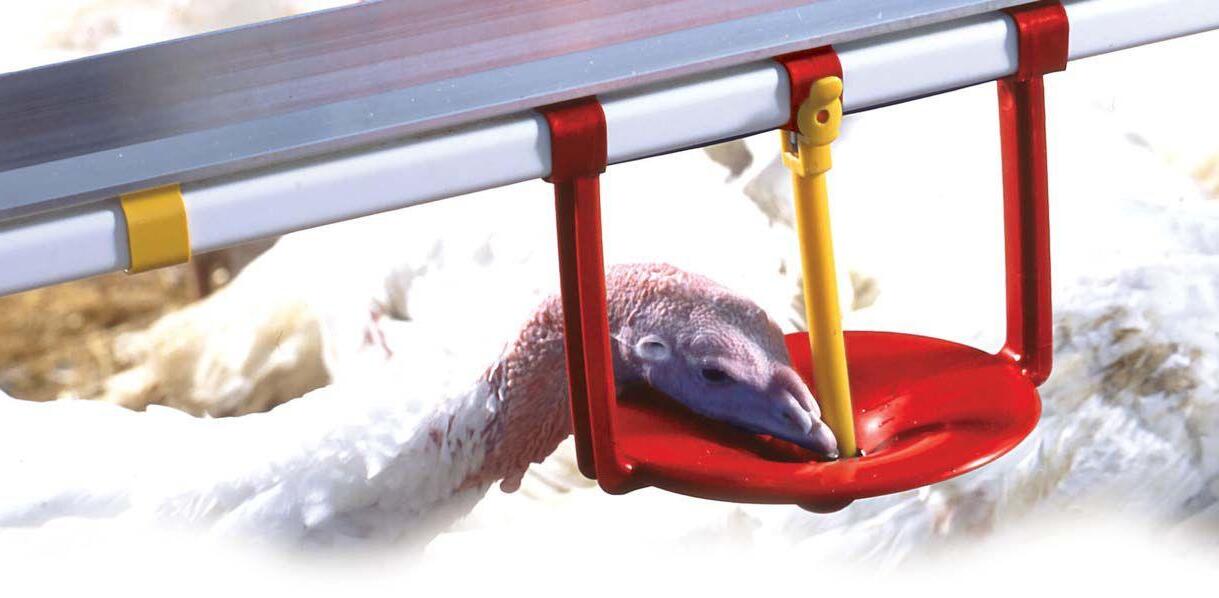
Lubing's EasyLine Nipple Drinking System for turkeys has changed the turkey industry forever. This revolutionary system incorporates a patented pendulum that effectively directs water from the nipple into a self-cleaning drink cup. The low profile cup design allows day-old poults easy access to the water for great starts and has proven to perform with great success delivering water to heavy toms. You too can Live Easy with EasyLine!
Got Lubing? Contact your local Lubing Distributor for more information about EasyLine or visit our website at www.lubingusa.com
Glass-Pac Canada
St. Jacobs, Ontario
Tel: (519) 664.3811
Fax: (519) 664.3003
Carstairs, Alberta
Tel: (403) 337-3767
Fax: (403) 337-3590
J. Dean Williamson Ltd.
London, Ontario
Tel: (519) 657.5231
Fax: (519) 657.4092
Eliminates routine cleaning
Provides fresher water supply
Improves litter conditions
Enhances air quality
Improves bird health
Les Equipments Avipor
Cowansville, Quebec
Tel: (450) 263.6222
Fax: (450) 263.9021
Specht-Canada Inc.
Stony Plain, Alberta
Tel: (780) 963.4795
Fax: (780) 963.5034
FNA will help recruit farm workers WHAT’S HATCHING HATCHING
A
Farmers of North America says there is a chronic shortage of skilled and unskilled labour in almost every sector of agriculture.
quickly and with less hassle than farmers who deal directly with Ottawa.
company is offering to help farmers cut through the “paperwork jungle” of the federal temporary foreign worker program to hire the labourers they need.
Farmers of North America said there is a chronic shortage of skilled and unskilled labour in almost every sector of agriculture from the grain fields of Saskatchewan to the cattle feedlots of Alberta to the orchards of British Columbia and Ontario.
For a fee of about $4,000 a person, the Saskatoon-based firm says it will work with an international recruiter who has long experience with the federal program to help farmers hire help from areas that include Ukraine, Eastern Europe and Ireland.
The company’s pitch is that it can get workers more
“It is a difficult process. Farmers are busy. They don’t really have the time to be doing all that paperwork,” vice-president Bill Martin said.
“If you don’t have that labour, you can’t increase your farm size or you can’t operate efficiently.”
The Canadian Federation of Agriculture estimates the country is short about 30,000 seasonal and longer-term farm workers.
Farmers of North America said it began its service in October 2013 after speaking with farmers frustrated with the requirements of the federal program, including the need to advertise locally for help before seeking to hire someone from abroad.
Employment Canada acknowledges there is a shortage of agricultural workers, but encourages farmers to apply for the people they
need without paying a third party. The ministry says the best way for farmers to reduce the paper burden and speed up applications is to use the government’s website.
“Employers do not need to use the services of a third-party representative or recruiter to apply,” Pamela Wong, a ministry spokeswoman, wrote in an email.“Employers who choose to use these types of services are required to cover all recruitment costs related to the hiring of the temporary foreign worker.”
The ministry suggests farmers who want to use such a service should check with Citizenship and Immigration Canada to verify that they are dealing with a qualified representative.
The program will be delivered by ILC Canada, while FNA will provide monitor service quality and media relations.
For more information, visit www.fna.ca/TFW.
Photo courtesy of
Chciken Farmers of Canada
CASA welcomes new board members
the Plan! 2013, CASA’s AGM and Conference in Québec City, Québec.
The Canadian Agricultural Safety Association (CASA) welcomes a new chair to the CASA Board of Directors, while congratulating a new director to the board.
Denis Bilodeau, second vice president of l’Union des producteurs agricole (UPA) was re-elected to the board representing producer groups this past October at Get with
He assumes the officer post of chair of the board.
Tara Huestis, farm safety specialist with the Workers Compensation Board of PEI, assumes the role of director representing government Huestis won her seat by acclamation.
This is her first term on the Board.
Filling out the remain-
der of the board, Lauranne Sanderson, department head of Dalhousie University Agricultural Campus, resumes her role as treasurer, while Billy Woods, producer from Torbay, Newfoundland and Labrador, continues as secretary.
Charan Gill, chief executive officer of Progressive Intercultural Community Services, and Niels Koehncke, acting director of the Canadian Centre for Health and Safety in Agriculture, continue their board terms.
For more information, please visit www.casa-acsa.ca.
Western poultry industry gets a boost
As a fifth-generation egg farmer and chair of our industry, I have visited hundreds of Canada’s more than 1,000 egg farms. I have never seen hens treated in the manner shown. I share in the public’s response to the video. The images shown in the video are unacceptable. However, I object to any perception that this is in any way common, tolerated or representative. It simply is not. The standards of our industry are set with the guidance of scientists, farmers, veterinarians and other third-party experts. Enforcement falls on Egg Farmers of Canada, provincial boards, and a national network of inspectors. We are investigating the available video now and will ensure corrective actions are taken.
- Peter Clarke, Chair, Egg Farmers of Canada
The Honourable Michelle Rempel, Minister of State for Western Economic Diversification, along with Blake Richards, Member of Parliament for Wild Rose, announced support for an initiative that will result in new commercial opportunities for Western Canada’s poultry industry.
The federal investment of $2.6 million through Western Economic Diversification Canada, combined with support from the Alberta Livestock and Meat Agency and industry, will enable the Institute for Applied Poultry Technologies to purchase and install specialized equipment needed to establish and operate a technology innovation and commercialization centre.
This centre will develop, produce and commercialize vaccines and other healthrelated products.
Shawn Conley has been hired by Hybrid Turkeys as its new technical service representative within North America while based out of Ontario. Conley is a graduate of the Florida Institute of Technology and holds a Bachelor of Science degree in biology and genetic engineering.
It will also provide western Canadian poultry producers enhanced access to advanced diagnostic services, vaccine development and production capabilities.
“In addition to being a sound industry, government and academia partner, the Institute will help address consumer demands for enhanced food safety, and value-added, hormone-free poultry products, leading to increased consumer confidence in our food supply,” said Gordon Cove, ALMA oresident and CEO.
“The Institute for Applied Poultry Technologies is focused on developing technical solutions and products for the Canadian and global poultry industries,” said Dr. Tom Inglis, President of the Institute’s Board.
For more on the Institute for Applied Poultry Technologies, please visit http://www.iaptwest.org/.
Robert Scott Oler has joined Adisseo North and Central America as the director of marketing and business development and will be responsible for the marketing and business development of all Adisseo products and business in North and Central America. He will be located at the headquarters for Adisseo North and Central America in Atlanta, Ga., and replaces John Geuss who retired in July.
Christine Daugherty has been appointed chief technology officer for CobbVantress Inc., where she will establish external research strategies and collaborations with academic institutions and other research partners. Daugherty had a background in biological sciences before pursuing her law degree at the University of Arkansas, and worked as a registered patent attorney in Little Rock before joining Tyson Foods in 2003.
SHAWN CONLEY
SASKATCHEWAN
ROBERT OLER
CHRISTINE DAUGHERTY
WHAT’S
HATCHING HATCHING
Salmonella spreads in U.S.
In the U.S., the outbreak of Salmonella from raw chicken linked to three Foster Farms processing plants in California is continuing to spread.
As of late October 2013, the outbreak has spread to 20 states and Puerto Rico, and has affected over 330 people, according to the Centers for Disease Control and Prevention (CDC).
While the number of cases is high, no deaths have been reported. And most cases (75
per cent) have been located in California.
The CDC also says that the outbreak involves strains of multidrug-resistant Salmonella Heidelberg and that, of those hospitalised, almost three times the usual rate for blood poisoning from the salmonella infection has been found.
For additional information, please visit http://www. cdc.gov/salmonella/heidelberg-10-13/index.html.
Keeping it kosher
AWith the closing of Ontario’s Chai Poultry earlier this year, only one Canadian kosher chicken processor was left in all of Canada. But, with increasing demand for kosher chicken every year, any processor would find it extremely difficult to keep up.
ccording to the National Post (http://bit.ly/17XysC5), the owner of Chai Poultry looked for five years to find a Jewish company to buy his plant and quota, but with no luck, he sold it to Sargent Farms, a Halal company.
Richard Rabkin, the director of marketing and business development for the Kashruth Council of Canada (known as COR), a non-profit kosher certification agency, said that the closure left the Montreal-based Marvid to meet the demand. “Initially, Marvid made its best efforts to meet the increased demand,
JANUARY
January 14, 2014
Science in the Pub –Food Safety: How much responsibility lies with the producer, processor and consumer? For more information, visit: www. poultryindustrycouncil.ca
January 14-16, 2014
Salon de l’agriculture, Saint Hyacinthe, Que. For more information, visit: www. salondelagriculture.com
January 28-30, 2014
International Production and Processing Expo (IPPE) 2014, Georgia World Congress Center, Atlanta, Ga. For more information, visit: www.ippe14.org
FEBRUARY
February 12, 2014
PIC Producer Update, Western Beacon Harbourside Hotel, Jordan, Ont. For more information, visit: www.poultryindustrycouncil.ca
and they worked very hard to ramp up their production,” said Rabkin. “But at the end of the day, they are simply not able to provide the amount of kosher chickens that kosher consumers are demanding.”
“Retailers themselves have complained to me that they are not getting the product they ordered,” adds Rabkin. “I think the ideal solution would be for the CFC to grant kosher as a specialty exemption in the quota system ... and potential kosher poultry processors would be able to step forward.”
February 19, 2014
PIC Producer Update, Mount Forest Community Centre, Mount Forest, Ont. For more information, visit: www.poultryindustrycouncil.ca
MARCH
March 19-20, 2014
Midwest Poultry Convention, Saint Paul RiverCentre, Saint Paul, MN. For more information, visit: midwestpoultry.com/
Photo courtesy of Kashruth Council of Canada
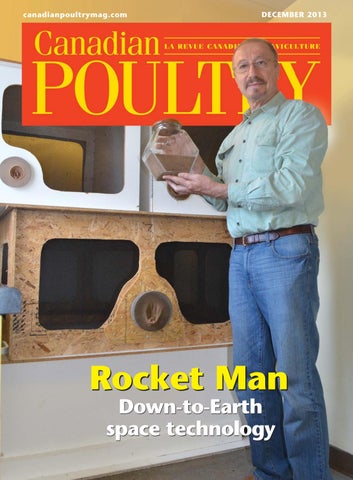
Technology Rocket Man
Down-to-Earth space technology
BY LIANNE APPLEBY
For centuries, the bane of agriculture’s existence has been its byproduct, manure. Once a tolerated fact of life, the embarrassing subject of poop – and what to do with it – began to haunt farmers as more and more people became removed from farming. The notin-my-backyard cliché is at its best when the necessary task of spreading it comes around: Sure, you can do that, if you have to – just not across the road from my house
But homeowners who envision lower property values are the obvious opposition. What they care about first and foremost is the smell. What governments and environmentalists care about is the fact that today’s technologies have not yet presented us with an efficient way to “recycle” manure, making it necessary to regulate how, where, when it’s spread – and who actually does the spreading.
Ivan Milin has been thinking about those two concerns a lot. The Serbianborn, Canadian-based engineer-turnedinventor is credited with multiple inventions, but his latest one (and its multiple clauses) is on a course to revolutionize the way we think about and handle livestock manure. The technology he’s patented via his Guelph- and Toronto-based company, EcoSpace Engineering Ltd., and the equipment he’s designed have already turned heads locally – and now they’re gaining international attention.
NOT SO OUT-OF-THIS-WORLD
Milin often refers to what he considers the “industrialized” production of animals, as the First World moved away from small farms to bigger, more efficient systems of production. The problem, in his mind, is that we have never devel-
oped ecologically friendly ways of processing manure to match that high level of production. “We have to industrialize the recycling of [animal] wastes,” he says. “Only then, will we close the natural cycle, restore the balance in our environment and have a sustainable meat and egg production industry.”
Inspiration came in the form of a project called Trip to Mars, undertaken during the communist era in Soviet Russia but later discontinued. When it was shelved, certain scientific communities learned of the idea behind the project. Milin met some of the people that were part of the work and learned for himself what it entailed.
In short, the research detailed how to sustain an environment in a spaceship during a three-year journey to Mars and back. Without the privilege of being able
to truck waste away and spread it, scientists were looking at a way to recycle it on the spacecraft. In a closed, longterm environment, astronauts need live birds, such as Japanese quail, to produce eggs and food, and both the birds and the humans themselves would generate feces. The technology used in space was a simple, manual closed-system approach to dealing with that problem.
“This environmentally-friendly recycling process used the life cycle of the fly to transform feces and other organic waste into rich organic fertilizer for the spaceship plants, which would then produce oxygen,” notes Milin. “The [resultant] fly larvae would be used to feed the Japanese quails, on the spaceship.”
When you consider what would occur in a world devoid of human
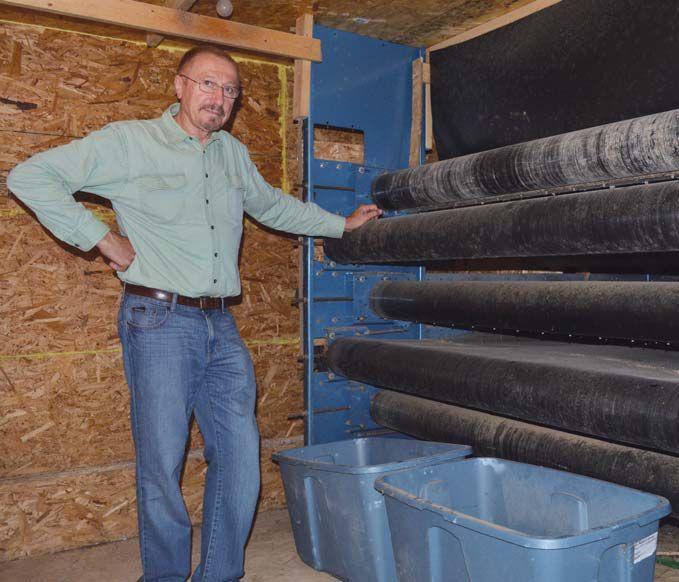
Ivan Milin poses with his prototype Milinator, which is currently being tested at the Arkell Research Station.
INDUSTRIALIZING THE PROCESSING OF MANURE
Technology
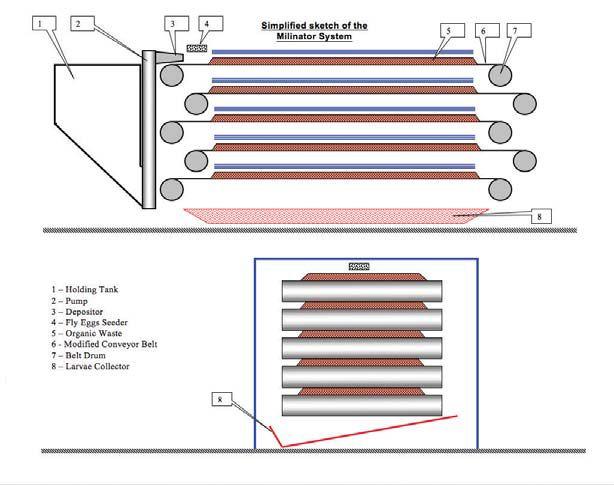
In these simplified cut-away diagrams, shown from the side and end, the Milinator’s basic skeleton can be seen.
Local Involvement
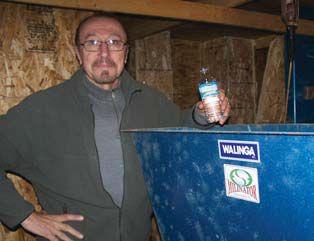
Theprototype Milinator was custom-built for Milin by Guelph-based Walinga Inc., a company best known for its feed delivery equipment and pneumatic conveying systems. Walinga started operations in the 1950s as Commercial Body & Coach with a staff of just two people. Today, more than 200 people are employed in Ontario, Manitoba and Michigan.
Walinga has three divisions: engineered transportation equipment, pneumatic conveying systems and machining. The latter includes clients and partnerships in many industries and markets, including material handling, plastics, food processing, mining, heavy equipment, and pulp and paper.
“Although we built the Milinator, this was 100 per cent Ivan’s plan, Ivan’s design,” says C.H (Butch) Medemblik, the managing director of manufacturing and engineering at Walinga. “We were connected a few years before the prototype came to fruition and it’s a different type of project than we normally take on. Having said that, customers ask for unique solutions to unique problems, and we try our best to work with them. Our engineers
and machinists are very skilled people who can take a dialogue with a customer and turn it into something like the Milinator.”
Walinga is especially well known for its Agri-Vac, a grain mover that first came on to the agricultural scene in 1977, but Medemblik acknowledges that the Milinator was a project unlike any of the company’s previous collaborations. But Walinga’s slogan is Building Any Body for Anybody and that’s just what they did here.
“We were very pleased to be approached, and we’re proud to be part of this research,” notes Medemblik. “The Milinator has massive implications for the way we handle manure. There were a number of Walinga’s people involved with this, and it’s been a great partnership so far.”
intervention, the process isn’t so spaceaged. Wild animals produce manure and die – and in either case, the cycle is closed. In nature, flies would lay eggs in the manure, or in the decaying body. In due course, those eggs would become fly larvae, which feed off what they are living in. Birds or other animals would eat those larvae or the resultant pupae and flies, leaving a relatively cleaned-up scene and further nurtured life.
Now privy to the small-scale recycling work, Milin started to ponder if – and how – the concept could be adapted for large-scale processing of manure and other organic waste produced in modern agriculture. “Everything is so simple on a small scale but very complicated on the large, industrial scale. To me, the most interesting part of this spaceship micro ecosystem was the recycling of animal and human feces by using fly larvae. Their recycling process lasted only six days and recycling was total. All of the products were useful and no byproducts were generated to pollute the spaceship’s ecosystem.”
Milin says he was fascinated by the ways that this system could have when adapted and applied to agriculture. He therefore took it upon himself to find a way to adapt it to large-scale processing.
LACK OF FUNDING
The problem was, with just an idea that the technology could work, and smallscale Russian technology as inspiration, Milin needed to find money to fund the research. In a “which came first” scenario, the funding wouldn’t come until he had something concrete, but he couldn’t have concrete evidence without funding.
That’s when Milin sat down with his wife, Bicky, and had a heart-to-heart chat. Also from an engineering background, Bicky knew that her husband was on to something.
“We talked about it and that’s when she suggested we use our retirement savings to fund my research. I asked her if she was serious and she said, ‘Absolutely, I love the premise of this technology and I know you could do it.’ So, that’s what we’ve done.”
Image courtesy of Ivan Milin
COOL CONNECTIONS
Along the way, Milin began collaborating with Bioenterprise Corporation, a business accelerator and commercialization agent established to help promote the creation and expansion of businesses engaged in agri-technologies. Through this relationship, he was connected to Mike Dixon at the University of Guelph.
Dixon is a professor and director of the Controlled Environment Systems Research Facility (CESRF). CESRF and its Space and Advanced Life Support Agriculture program are part of Canada’s contributions to plant research and development for space and closed-environment related activities.
“You can’t throw anything away when you leave Earth,” says Dixon. His goal is to be able to sustain life indefinitely in space. “It’s not like here. You’re in a tin can – a tightly constrained ecosystem – and you have to recycle everything and you can’t disinfect. You have to recycle nitrogen, carbon dioxide and water. Plants are absolutely necessary in space; you can’t leave Earth without them. Ivan’s work is one piece of our project – how to recycle the nitrogen. This is an accelerated composting.”
THE CONCEPT
Right now, Milin is working on his technology in conjunction with laying hen manure only, as, for now, it’s the best fit for the research purpose. His prototype is housed at the University of Guelph’s Arkell Research station, but Milin’s vision is that every poultry and livestock barn will eventually be fitted with the unit, which would be custom-made to handle the size of the operation.
The prototype was dubbed The Milinator by Milin’s friend after its development, and the name has stuck. But what is it?
According to Milin, it is “an industrialized, yet natural processing of raw manure.” The equipment and process he’s developed essentially result in an odourless, dry organic material – a highquality organic fertilizer. The “natural” comes in because Milin relies on the
Technology
natural biological processes of the common housefly (Musca domestica) to do the processing, which results in his second product, a protein-rich potential animal feed in the form of fly larvae. The biologics of the process mean there is no air, water or soil pollution during the decomposition of the raw manure, and the entire cycle is completed in only four days, before decomposition would ordinarily begin to take place.
Milin says the housefly seems to be the best species to use because of its shorter life cycle, its prolificacy and the ability of its larvae to kill pathogens so the processed fertilizer is safe for use in both indoor and organic farming. Trials have been done that used the Black Soldier Fly (Hermetia illucens), but that species is harder to work with. Other insect larvae (such as mealworms and darkling beetles) were also considered, but abandoned because they are known to be major disease carriers.
HOW THE MILINATOR WORKS
With Dixon’s help, and with support from the Ontario Ministry of Agriculture, Milin was able to secure space for his prototype, built by Walinga (See “Local Involvement” sidebar on page 12) at the Arkell Research Station. Bioenterprise
Corporation secured office space for Milin in its Guelph facility for when he needs to be close to his project.
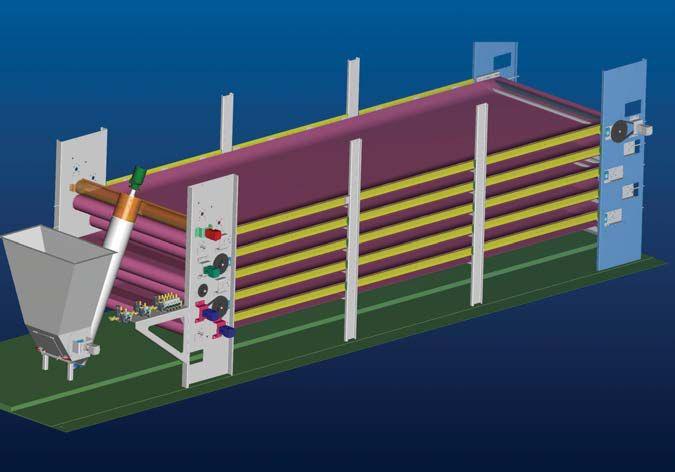
The Milinator is a series of conveyor belts (see diagrams on page 12 and above) working on top of each other. Poultry manure is deposited onto the top belt where it is mixed with fly eggs via a “fly egg seeder.”
After the top belt is loaded with manure and inoculated with fly eggs, the job for that day is finished. From the eggs, larvae soon hatch and start rapidly processing manure. The next day, the belts are started again (running for only 10 to 20 minutes) and manure from the top belt together with feeding larvae is transferred to the second belt below. At the same time, the now-empty top belt is loaded with fresh manure and inoculated with fresh fly eggs. When the first batch reaches the last (bottom) belt, the processing is finished and the manure is now a very rich organic fertilizer, which is discharged from the final belt. The process is continuous and the daily capacity can be customized without limitations, says Milin.
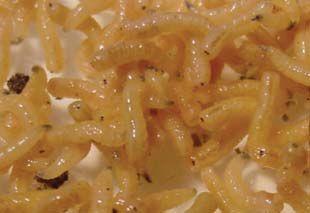
There is no need to separate larvae from the finished fertilizer, because when larvae finish the process, they instinctively migrate out of the fertilizer and fall over the edge of the belt into the larvae collector. That leaves two products: a
A 3-D schematic of the Milinator.
Image courtesy of Walinga, Inc.
rich dry, organic fertilizer, and fly larvae (which, if left untreated for two to four days, become pupae).
But what’s the big problem that the Milinator system solved, which others who tried to industrialize the larval processing of manure failed to do?
Says Milin, “The scientists from the Trip to Mars program gave a very simple explanation for that. They said ‘It is not possible to make the process profitable and nobody would use money-losing technology.’ I maintain that the best way to clean the environment is to make the process profitable.”
Milin says that to do this, the processed manure has to be tightly packed within the processor and that requires very precise and very uniform air circulation throughout the entire processing chamber. The Milinator patent has 24 claims on which the air circulation system is the main feature.
Manure in the Milinator system is packed so tightly that every 20 centimetres (8 inches) of vertical space contains one layer of manure together with conveyor belts, scrapers, belt holders and the air space for precise and uniform ventilation.
“The Milinator system does not change anything from what would occur naturally,” notes Milin. “We simply make sure that with the technology, the conditions in every part of the processor are perfect for the larvae to live and work. Mother Nature and the larvae of Musca domestica do the rest.”
BUILDING A FAN BASE
Finding allies who support his technology isn’t really a problem for Milin, especially among the knowledgeable people within the related industry. The patented process is so revolutionary that he has already got a huge fan base for the Milinator. Tim Nelson, the former executive director of the Poultry Industry Council, has been in contact with Milin from the start.
“This innovative and natural approach to dealing with the dual issue of increasing input costs and the profitable use
Technology
Feeding a Hungry World
The Milinator is a novel technology in itself, but the good news does not end there. Milin has found that the organic fertilizer produced by the process is proving to be a story in itself. He’s named the resultant fertilizer “Cyclorganic,” because it’s produced by recycling organic farm waste. The Milinator process captures and ties up nutrients such as nitrogen, which are later released for plant growth when applied to the soil as a fertilizer. This, Milin says, practically eliminates the risk of nitrogen escaping into the environment, where it can affect air and water quality.
But, the difference between Cyclorganic and other plant fertilizers is what the fly larvae add to it, during the process, he says. “Many insects and their larvae are disease carriers affecting both plants and humans, but fly larvae are known to kill pathogens and disinfect everything they touch.”
At home, Milin first tried the fertilizer on his own green beans and tomato plants. Compared to his neighbour’s same-variety plants, fertilized by commercially available product, Milin says the results were astounding. Vegetables and fruit flourished in Milin’s garden. Although the neighbour’s plants produced, the quantity of fruit and beans, leaf quality, colour, and size of growth were incomparable. That’s when Milin knew he needed to get a more official verdict on the quality of Cyclorganic.
In April of 2012, the Virtual Fertilizer Research Center (VFRC), a special devel-
opment unit of the International Fertilizer Development Center (IFDC) based in Alabama, contacted Milin, and it has been working closely with him since September of that year. IFDC’s mission is to ensure global food security by providing smallholder farmers the best soil fertility solutions and farming practices suited to their conditions. The collaboration began as an attempt to assess the performance characteristics of the organic fertilizer created by the patented Milinator process.
VFRC is reviewing Cyclorganic as part of its goal to identify a new generation of more cost-effective and environmentally friendly fertilizers for commercial smallholder farming that can deliver higher nutrient uptake, improved micronutrient supply and convenient local sourcing.
Specifically, VFRC’s work with Milinator includes the exhaustive assessment of the yield performance of Cylorganic with several crops (such as sorghum) compared to commonly available commercial fertilizers, an examination of the beneficial microbial activity in soil due to Cyclorganic, and an understanding of the key requirements for successful commercial scale-up in developing regions.
Milin believes the results of this work could be extremely positive. “Depending on the results, Cyclorganic could have implications for crop yield and in countries where there are small, independent farms. We could even be talking about solutions to hunger.”
Image courtesy of Ivan Milin
Chicken:
some reasons why we’re Canada’s favourite!
THE CANADIAN CHICKEN INDUSTRY:
We are the first food in Canada to achieve official government recognition for our On-Farm Food Safety Program.
We have an auditable Animal Care Program. We contribute to innovation through the Canadian Poultry Research Council.
The Canadian chicken industry: We’re a good choice for Canada and a good choice for Canadians.
of animal byproducts has the potential to increase agricultural efficiency,” says Nelson. “And, if successful, as a Canadian discovery it may well also generate important export income either as a proven technology, or perhaps of the final product itself.”
Egg Farmers of Ontario (EFO) has also voiced support, stating in a letter from general manager Harry Pelissero that “the possibility of producing improved envi-
Technology
ronmental benefits and a valuable output product at an acceptable cost … appears promising.” The letter goes on to offer support for securing research facilities and an interest in being kept abreast of how the work is progressing.
“The potential for commercializing this innovative process for use…on manure is very promising,” says Ron Lackey, feed ingredients and byproducts feeding specialist with the Ontario Ministry of
Fly Larvae as Feed
It has been much-lamented that the way food is currently produced is not sustainable; some critics are now saying that patting ourselves on the back because we recycle plastic, glass, tin and newspaper just isn’t enough.
Some, including Milin, say there also has to be a more efficient way to handle biological waste – an effective method of reducing environmental impact and utilizing waste how and when we can.
To that effect, Milin is pleased that the Milinator’s story doesn’t end with Cyclorganic alone. There is more work in the pipeline, and this time the research focuses on how to use the second byproduct of his technology, fly larvae.
“The larvae used in the Milinator process become pupae about two days after separation from the fertilizer product if the temperature is about 30 C, but they could stay larvae for the whole winter under certain conditions.”
In conjunction with Milin, Prof. Ira Mandell at the University of Guelph has funding to examine nutrient composition and microbial loads of fly larvae samples collected over the next year.
Says Mandell, “There is no work being conducted to examine the effects of feeding the fly larvae on animal performance [yet]. Instead, in the proposed work, we will evaluate the nutrient composition and microbial loads in the layer excreta and see how it is transformed by examining the nutrient composition and microbial loads in the insect larvae and the resultant fertilizer that is produced.”
Mandell will evaluate fresh, frozen and dried larvae, as the latter will most likely be the prominent form in which the larvae be handled. It is already known that improper drying could cause problems. Extreme high temperatures can make nutrients unavailable for digestion, while inadequate drying can allow moulds to develop.
Notes Mandell, “[n South Africa] they are light years ahead of us in this field as they are producing maggot meal from abattoir waste.”
Milin adds that when this research is complete, both he and Mandell are hoping to acquire additional funding for actual testing of the larvae and or/pupae as a feedstuff for pigs and poultry, and compare it to conventional feed ingredients.
“Nichelle Lomas obtained her master’s degree last year on the subject of poultry manure conversion by fly larvae. This year she is starting her doctorate degree on the same subject and she will collaborate with Ira,” notes Milin. “Nichelle will inoculate poultry manure with different pathogens and then process it by using fly larvae. I think that her work could perhaps be a first step in using fly larvae in the pharmaceutical industry.”
Agriculture and Food (OMAF). “I look forward to providing continued support and guidance to Ivan when and where possible, on his journey to success and satisfaction with his Milinator technology.”
Accolades are pouring in from outside of agriculture as well. Gord Miller, Ontario’s environmental commissioner, has visited with Milin and showed great support for the technology. “I showed the commissioner how this works and he was intrigued by it,” says Millin. “He’s fully supportive of it and my efforts to secure funding to proceed with the research.”
And, in China, Leon Hui is the CEO of the China Foundation for Desertification Control. Tasked with halting the spread of the Gobi desert, Hui has told Milin that his technology is under consideration for utilization in the effort to slow down desertification in China. Milin says, “In Leon’s words, ‘with the Milinator technology, we will make the whole desert green.’ ”
NO COMPETITION
You may have heard of similar ideas that tell of using insects to compost manure; Milin is acutely aware of these, but stresses that what he’s got is a system for handling large amounts of manure, quickly and efficiently.
“I have heard [a] South African story and also a Japanese story and Russian one … and so on, but nobody is telling what technology they are using. Anybody could put organic waste in a tray and put some fly eggs in it and they would do the job. The problem is that handling a large amount of waste and making sure that every part of that waste is supplied with adequate amounts of fresh air and kept under proper temperature for larvae to properly do the job is much more complicated.
“Up to now I have not seen any technology that could do large-scale production, especially with manure. The South Africans work only with animal blood and viscera, as far as I know, and they talk only of producing larvae. Labour is cheap in Africa and they do not have to heat the process so they might be able to make it profitable on the smaller scale,
Technology
but my system would probably be even cheaper there because I could work on the larger scale with much less labour.”
Milin notes that the Milinator technology does not rely on sale of larvae to be profitable and that any revenue from selling larvae and/or carbon credits would be just an extra profit.
Milin’s patent is already approved in about 50 countries, which means that 50 patent offices around the world couldn’t find any technology that is similar to his. “Most likely all [those] stories are just stories that tell of smaller operations. If they copy some part of my technology, then my lawyer would deal with that, but so far I have not seen any technology being described or data of the products being tested, just stories.”
INTO THE FUTURE
Says Milin, “This environmentally friendly process has the potential to become a superior and sustainable solution for a very large portion of the Earth’s pollution problems. Properly developed, my technology could completely eliminate all the problems associated with animal, poultry and human manure generated on our huge industrialized animal and poultry farming facilities and in our cities.”
Milin says that he’d like to set up a small plant in Canada and use it for further research and as a training facility for future operators of Milinator technology (the next phase of the process is to secure licencees who would use the technology on-farm).
He says that there are no limits to how the Milinator concept could be adapted for use with other poultry and livestock, even municipal organic waste. “I strongly believe that any nation and any industry would gladly adapt this technology because it is environmentally friendly, clean, efficient, and of course, profitable.”
Industry Remembering What’s Important
Turkey Farmers of Canada and some of its members have just donated $56,500 to Food Banks Canada to purchase turkeys.
BY TURKEY FARMERS OF CANADA AND FOOD BANKS CANADA
Katharine Schmidt, executive director of Food Banks Canada, says that member food banks are grateful for the recent Turkey Farmers of Canada (TFC) donation of $56,500, given that turkey is a high quality protein source that is always in demand. Recently, she sat down in an interview to answer some questions about food bank usage across the country.
HOW BAD IS HUNGER IN CANADA?
“Sadly, nearly 900,000 people turn to food banks each month in Canada. Each and every month, a total of 90,000 Canadians who have never visited a food bank before find themselves in a situation where they go for the first time to ask for some help. Four million meals are served each month through a variety of programs, from soup kitchens to shelters and schools.”
WHO USES FOOD BANKS?
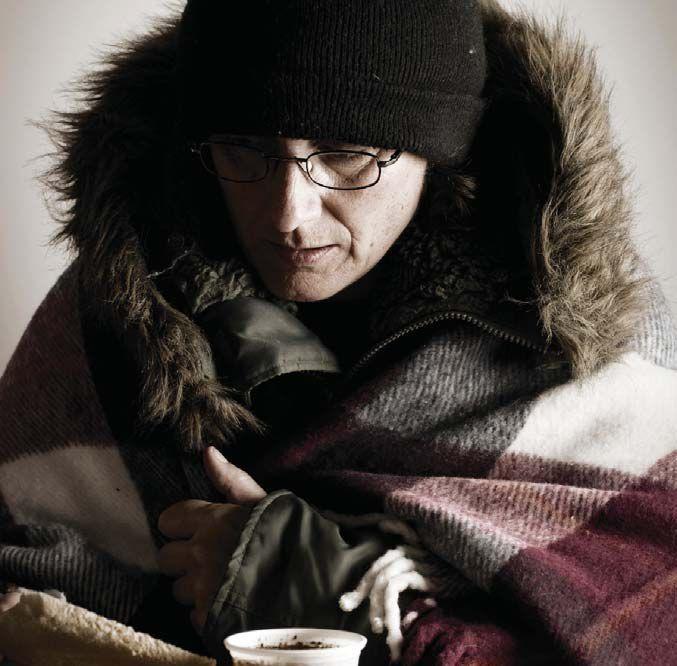
“People who use food banks could actually be your neighbour, a colleague at work, someone who served you coffee or lunch yesterday. Of those who use food banks, 18 per cent are either currently employed or were recently employed.
NOT THE USUAL SUSPECTS
People who use food banks could actually be your neighbor, a colleague at work, even someone who served you coffee or lunch yesterday.
Nearly 50 per cent are families and 38 per cent of those that access food banks are children. Of the 900,000 Canadians – 14 per cent are from rural areas of Canada.”
HOW MANY ARE THERE IN CANADA?
“There are nearly 500 food banks and over 4,000 food programs across the country
that are helping people with essential food. Food Banks Canada acquires and shares approximately $35 million of food with food banks across Canada each year. We offer education and training in areas of food safety, healthy shopping on a budget and child nutrition, as well as granting programs like our capacity building grants, and our grants for community kitchens.
“In addition to helping people with
OUR PASSION RUNS DEEP
Dr. Kate Barger Director Animal Welfare
Cobb-Vantress, Inc. is committed to the well being, proper handling and humane slaughter of all the birds that we manage internally or produce for sale to the poultry industry worldwide. This has been a long-standing commitment, and will continue to be a focal point for our future.
A division of Parrish & Heimbecker, Limited
Profile Customers Call the Shots
One family farming operation shares its good-news story
BY CANADIAN POULTRY STAFF
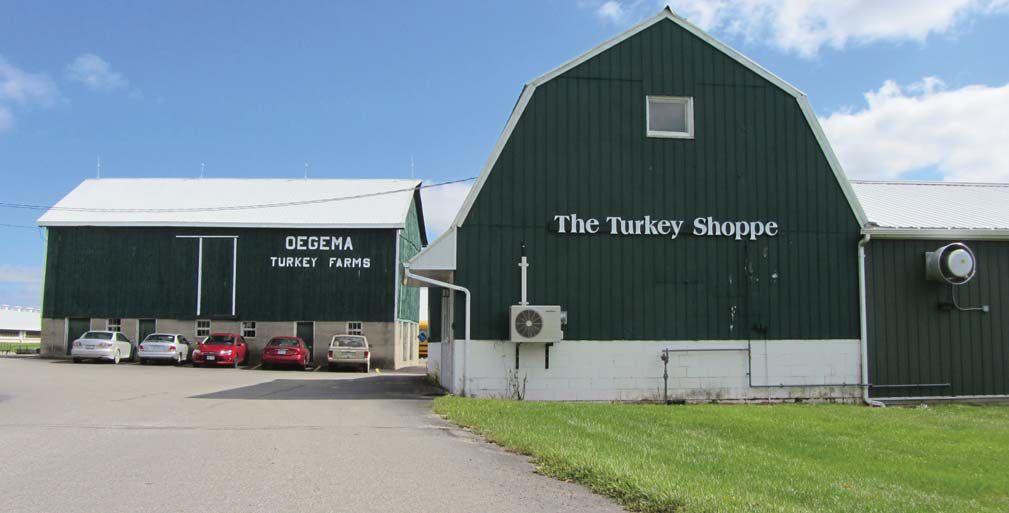
Since the first flock of turkeys arrived in 1959, Oegema Turkey Farms in Talbotville, Ont., has always been family run. Like many farms, the Oegemas’ dream is to pass the operation to future generations, which is why succession planning and maintaining the sustainability of both the farm and business model must always be in focus.
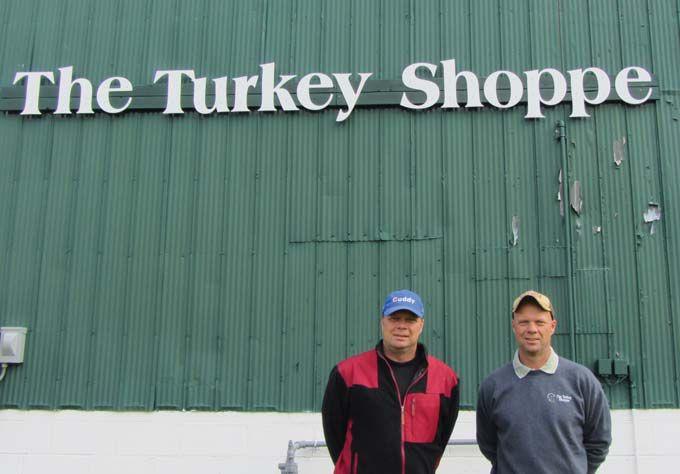
Oegema Farms raises approximately 55,000 turkeys (or 550,000 kilograms) annually. Recently, the farm operation split, with brothers Mike and Wayne Oegema taking over the turkey growing operation and their uncle and cousin taking the field crop division. “This allows us to concentrate on birds, as our strengths and interests differ,” says Mike. While Wayne works in the barns, Mike concentrates on the business aspects and, with wife Annie, works on marketing products at their on-farm retail store, The Turkey Shoppe
The Turkey Shoppe opened in 1992, offering turkey products direct to consumers, as well as providing relationships with other retail outlets. “Over the years this side of the business has expanded, as it now represents about 50 per cent of our annual sales, so there is still room for growth in this sector,” notes Wayne. “It also means we must listen to our customers’ concerns regarding our production, including not using growth promoting antibiotics (GPAs), and making sure that the birds are produced in a sustainable manner. But the most important
a sustainable family farm.
things are taste and affordability.”
The Oegemas maintain that goal by raising their birds without adding growthpromoting antibiotics. And over the last six years they have renovated all their grow-out barns into curtain-sided naturally ventilated barns, which allow a lot of natural light and air into the barn. The manure from the birds is used as fertilizer on the land farmed by their uncle and cousin, who return straw for use as bedding. “This means that manure is looked at as a valuable byproduct, and must be treated as such. All in all, we hope to make this a sustainable family farm.”
THE BUSINESS SIDE
The Turkey Shoppe sales during the holiday seasons (Christmas and Thanksgiving) are still the backbone of the business, says Mike. Over 1,100 fresh turkeys were sold during the two days before Christmas last year.
Another important aspect of the business is the growing sales that occur between holidays. “Smaller size whole birds for whole bird deep frying, parts for barbequing, turkey sausages, schnitzel, turkey pies, bacon wrapped medallions, burgers, and filets, are all contributing to
Wayne (left) and Mike Oegema have vowed to listen to their customers, while continuing to run
DOING IT ALL
Profile
steady year round sales,” he adds. Also, recipes, advice and product development are an integral part of the retail business.
As there is such a close connection between the farm and consumer, the primary focus of Oegema Farms has always been on bird quality, which is what led to the cessation of GPAs four years ago.
Litter and bird management, sanitation and the total health program were reviewed and a step-by-step, GPA-free program was created, but is continuously being updated and improved. “Water is a key element,” notes Wayne. “Our farm’s well water is chlorinated and acidified, so the ORP (oxidation reduction potential) reading is consistently 750. Bell waterers in the growout barns have been replaced with
nipple drinkers to avoid wet spots in the litter. In the brooding barn each bell drinker is rotated daily to four different spots, again to avoid wet spots in the litter.”
The Oegemas grow birds at a lower density, which means more room for each turkey and less problems. The birds are started with 24 hours of light for the first day, reduced by one hour per day so that on day eight, there are seven hours of darkness. Lighting is being transitioned from fluorescent to LED, partially powered by a wind generator installed in 2006 that currently provides 15 per cent of the electricity for the barns and The Turkey Shoppe. Ventilation in the brooding barn is provided by fans, of course, but Mike
says that since the four growing barns have been converted to curtain-sided barns with circulation fans to keep the air moving, they have been very happy with the health and performance of the birds. “Natural ventilation means happier, healthier birds,” he says. “And all these management practices lessen the need for GPAs, which has not been without its setbacks, but we believe we [are] there.”
In addition to eliminating GPAs, Oegema Farms has eliminated the use of anti-coccidial drugs. The pelleted feed for the turkeys is purchased from a supplier that provides traceability through the feed milling, which has improved feed utilization, economics and carcass quality.
“It has been an interesting time at Oegema Turkey Farms,” he muses. “The business has evolved, and if we are to have a sustainable family farm that will last through subsequent generations, we expect that our customers will continue to help us fine tune our products, that our suppliers will keep introducing us to new possibilities, and that economics will help dictate new concepts.”
Over 1,100 fresh turkeys were sold at The Turkey Shoppe during the two days before Christmas last year.
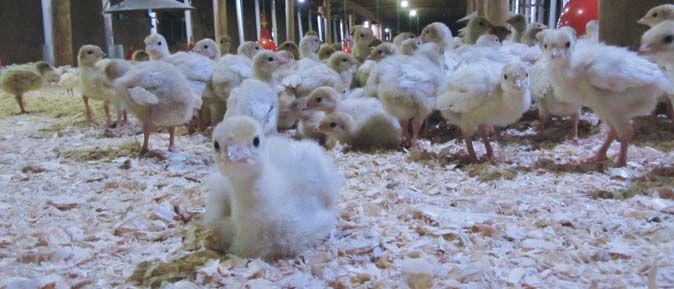
Young poults in one of the Oegemas’ barns. The birds are raised without the use of growth promoting antibiotics.
Health Probiotics and Phytogenics
The latest research on the role of feed additives
BY TREENA HEIN
The use of phytogenic feed additives and probiotics has been well researched and is growing around the world.
Livestock and poultry scientists across the globe continue to look at these natural substances as a way to replace antibiotics, control the growth of harmful micro-organisms in the digestive tract and boost animal performance. They are natural, have proven and positive effects, and require no withdrawal time before slaughter. However, although the benefits of both these additives are already well documented, much more research needs to be done to determine the best practices and detailed cost-effectiveness.
First, probiotics are “good” bacteria given in dry inert form that are activated in the intestines of livestock and poultry. They implant, grow and change the ecology in a positive way by reducing pathogen populations within the animal. Probiotics have been shown to help birds cope with the stresses of day-to-day life in densely populated flocks, and can also be particularly beneficial in high-stress periods such as transport, drastic weather events or ration changes.
“Probiotics are multifaceted products with a variety of beneficial effects for chickens,” says Dr. Shayan Sharif, a professor in the Department of Pathobiology at the Ontario Veterinary College, University of Guelph. “Probiotic formulations have been shown to reduce the burden of pathogens in the chicken intestine, including Salmonella, Campylobacter, Clostridium and coccidia.
Probiotics exert their effect through changes to the gastrointestinal microflora; thus, they are most effective when given at an early age. Recommendations differ for broilers and layers.
In addition, probiotics can enhance immune competence of the bird, leading to better immune responses elicited by vaccines and also better resistance to infectious pathogens.” He adds, “In broilers, probiotics have been shown to be effective to increase growth performance and feed conversion, along with enhanced immune competence. In layers, probiotics also show positive effects on enhancing immune status as well as a positive impact on egg mass, egg weight and egg size.”
Sharif notes that because probiotics exert their effect through changes to the gastrointestinal microflora, they are most effective when given at an early age while digestive microflora is still being established. Therefore, there are generally different recommendations for broilers and layers.
There is not a lot of data on the use of probiotics in Canada, which Sharif thinks may be partly related to the required approval process. “I presume the use of probiotics in the European Union, South
GOOD BACTERIA
America, Asia and the U.S. is much more common,” he says.
“Based on an estimate by Lallemand (a Canadian company based in Quebec that researches, develops and produces yeasts, bacteria and related products), the probiotic market in 2009 was worth close to $600 million.” Other market analyses, he adds, reveal that among feed supplements, probiotics have the highest rate of growth of use.
Dr. Doug Korver also believes probiotics have a place in poultry production, but notes some technical and practical limitations. “The efficacy of probiotics is dependent on live bacteria being delivered to the digestive tract,” notes the associate professor in the Department of Poultry Nutrition at the University of Alberta, “[so] this makes issues such as shelf life, heat stability, compatibility with other ingredients very important.”
He also points out that simple pro-
Health
biotics, such as those with a few bacterial species, tend to be less effective than complex probiotics (which have many species), because a single bacterial species cannot always form a stable population. “The products I am aware of in Canada tend to be ‘simple’ probiotics, but I can’t comment specifically on the efficacy of any product,” he says. “There was a complex product available in the U.S. for a time, with about 29 bacterial species, I believe, but it stopped being produced a number of years ago because of the complexity of maintaining all of these species in continuous culture.”
Like Sharif, Korver thinks probiotics are likely most effective when given early in life, when the birds’ guts are more or less sterile. “In that case, a simple probiotic might be able to prevent colonization by a pathogen, even if it doesn’t stay over time,” he says. “It allows a ‘bridge’ between the naïve gut and the mature
microflora the bird will have as it gets older.”
The beneficial probiotic bacteria are intended to occupy the surface of the intestine, and pathogenic bacteria are then unable to bind, which is necessary for colonization. “If they can’t bind, they get washed out with the fecal material,” Korver explains.
PHYTOGENICS
Like probiotics, phytogenic feed additives (PFAs) help prevent intestinal disorders and boost the health and growth rate of livestock and birds. These plantderived products, which are mainly essential oils, can also improve feed intake by boosting palatability. PFAs have been shown to improve egg production, increase immunity in laying hens and broilers and provide beneficial effects on eggshell characteristics. Sharif says research has shown that carvacrol (from oregano) cinnamaldehyde (from cinnamon) and capsaicin (from chili peppers) can also improve the growth performance of poultry.
“The use of essential oils as feed additives for agricultural animals is gaining popularity,” he notes. “Essential oils are another possible alternative to antimicrobial growth promoters.”
Dr. Todd Applegate, a professor in the Department of Animal Sciences at Purdue University in Indiana, agrees. He points out that current estimates of PFA use in combined livestock/aquaculture/ poultry diets in the European Union are around 20 per cent, and increasing.
“Phytogenic products certainly are discussed extensively within the U.S., but there is not nearly as much market penetration as in the EU,” Applegate says. “This may be due, in part, to the time which those products have been on the market and familiarity with cost/ benefit. In contrast, the U.S. market has had a much longer history with probiotic products (since the 1980s), and thus there is more familiarity and somewhat better acceptance.”
From our coop to yours, Happy Holidays
It’stimetotellthe realstory
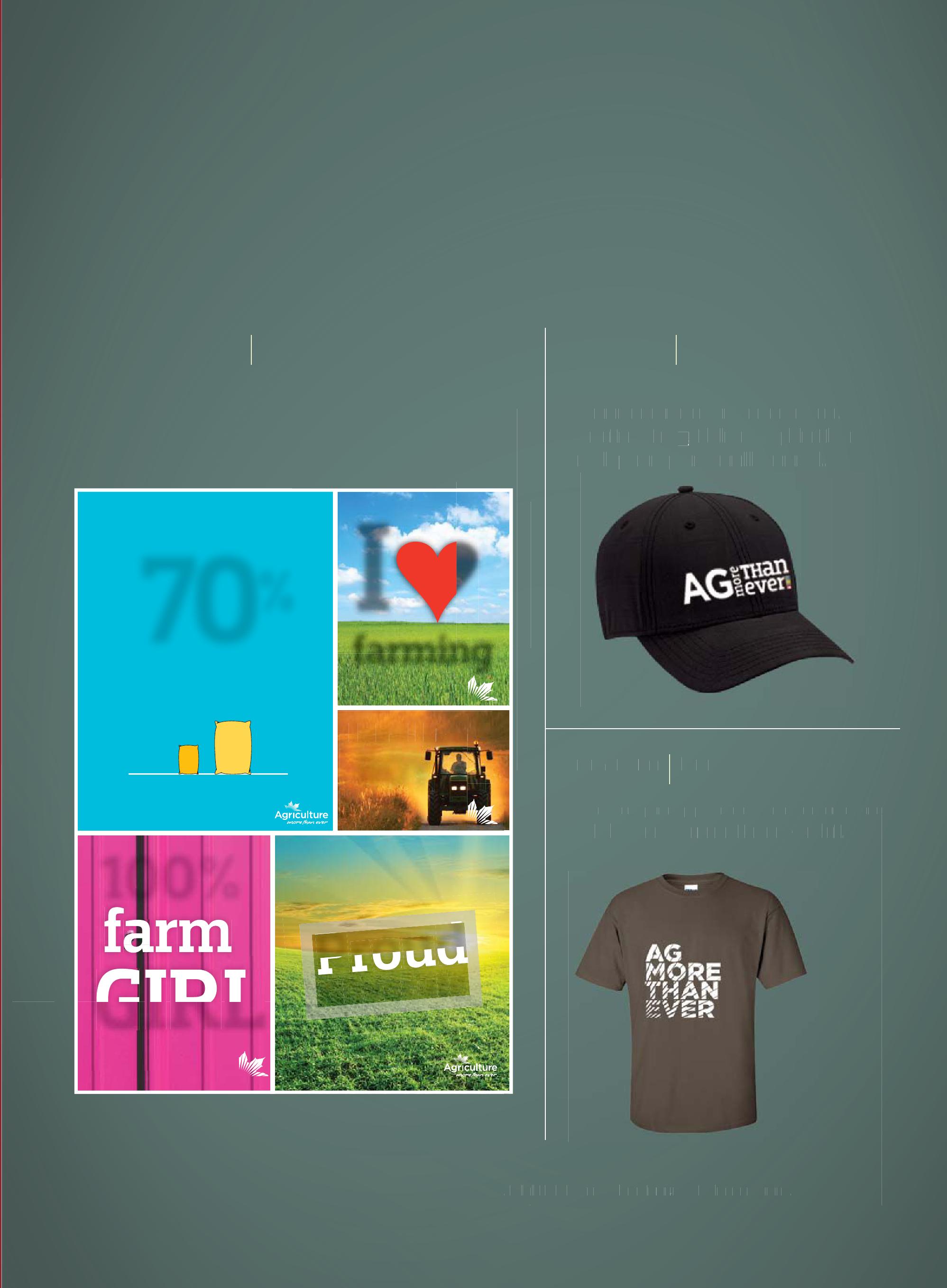
Never has Canadian agriculture mattered more to Canada and the world. Ours is a modern and vibrant industry, a leading employer in our country and a major driver of our economy. The Canadian agri-food industry provides safe, high-quality food to millions – at home and around the world. Yet despite all this, we’re often misunderstood.
Research shows that while Canadians see agriculture as an essential industry, many don’t see it as progressive or vibrant. To reach our full potential, we need to clear up the misunderstandings – to enhance consumer trust, attract more capital,
accelerate innovation and grow our talent pool.
Canadians need to hear more positive talk about agriculture. Industry players deserve to blow their own horns a little, to say out loud that they’re proud of what they do. To celebrate their successes. That’s the story of agriculture that needs to be told – today, more than ever.
It has to start with each of us. Be an agvocate and join the conversation at AgMoreThanEver.ca.
It’s time to tell the real story.
25,000 35 Almost 1 in 8 Canadian ag and agri-food jobs are in of corn today than to grow an acre 1990
50,000 fewer gallons of water It takes in farm operators are under the age of
#1 canola producer of in the WORLD
25 billion contributes almost to the Canadian economy BEEF The INDUSTRY annually $
5-part
Get
When
Bean AGvocate
Speak up, speak positively
Those of us involved in agriculture love what we do and we want the best for our industry. We know why agriculture is important to Canada and the world, and that it provides a lifestyle that can’t be beat. But we tend to be a humble group, so others may not hear this message.
We need to remember: image matters. What we say about agriculture influences how people view our industry. Share your passion and optimism for agriculture and let it shine through everything you say and do – being an agvocate is that easy.
Agvocates look for opportunities to talk about what’s going well in agriculture. They fill in information gaps, help dispel myths and learn more about the industry. Image is critical to our future, and fortunately we have a very positive story that we can tell. So let’s tell it.
• Get young people excited. There are jobs –great jobs. There’s farming of course, but many more options from science and sales to processing and manufacturing.
• Speak positively. Investment tends to flow to progressive industries that have a promising future.
• Inform consumers we’re capable business managers and stewards of the land, driven to produce safe, high-quality food using sustainable methods.
Our image matters –in fact, it has never mattered more. Tell the world why you love agriculture and what the industry means to you. We’re counting on you to tell the real, positive story of Canadian agriculture.
Speak up. Speak positively.
Our industry needs more agvocates
To reach its full potential, agriculture needs everyone in the industry to speak up and speak positively.
Agriculture More Than Ever is an industry-driven cause to improve perceptions and create positive dialogue about Canadian ag. Together we can share the facts and stories about this vibrant and modern industry, and tell the world why we love what we do.
It’s up to all of us to be agvocates and it’s easier than you think –visit AgMoreThanEver.ca and find out how you can get involved.
Health
The use of phytogenic feed additives and probiotics has been well researched and is growing around the world.
Continued from page 28
Applegate notes that a PFA’s physiological effects vary depending on several factors, including which plant it comes from. “For example, some can be immune-stimulatory (for example, ginseng) versus others which can be immunosuppressive (like Ginko biloba),” he explains. “The physiologic effects that we have observed in our laboratory have been through changes to chemical composition of the mucus layer in the intestine.”
He adds that many of the PFAs on the market today contain blends of several plant extracts, and their benefits can vary due to the blend itself as well as the processes used to extract and retain the essential oils.
The effect of PFAs will also take some time, depending on their properties. “For example, if they impart an effect on changing the mucin production in the bird,” explains Applegate, “due to the time it takes to have a cellular effect on cell identity and processes, it could be upwards of a week before intestinal cells can completely ‘turn over’ and thus be completely influenced.”
Applegate says producers must keep in mind that each PFA and probiotic product on the market is very unique in terms of its specific attributes, and therefore neither should be considered as a “commodity” product. “For example, some have targeted specific pathogen reduction capacities, while others may have been selected for production traits of bacteriocins (antimicrobial compounds), adherence to the epithelial surface, longevity within the digestive tract, and/or production/use characteristics (thermal stability, chlorine resistance, etc.),” he notes.
Hopefully, much more Canadian research will be conducted on the effects, best use practices and detailed cost-effectiveness of PFAs and probiotics. In the meantime, interested growers should do their research and consult with trusted feed experts and nutritionists.
We would like to hear from growers who have had experience with these feed additives; please contact the editor.
For more on poultry health, visit t d di l www.canadianpoultrymag.com.
Industry Building Interest
The Canadian Broiler Hatching Egg Producers Association offers programs that stimulate learning and networking among young people in this sector
BY TREENA HEIN
Both Monica Kunze and Melissa Sinnige describe their visit to each other’s farms during the summer of 2013 as “amazing.” The teens spent time at each family’s operations in August as part of the Canadian Broiler Hatching Egg Producers Association (CBHEPA) Student Exchange Program.
GOOD INTENTIONS
This initiative – along with two others aimed at inspiring and supporting excellence in the next generation of farmers and researchers – have been running successfully for many years. “We fully expect to maintain them for years to come,” says CBHEPA chair Brian Bilkes. “It’s important to look ahead to the next generation and encourage them to get involved with our industry.”
PROGRAM DETAILS
Each year, the Student Exchange Program provides travel costs for two high school students from different regions of Canada (the children of broiler hatching egg producers) to visit each other and experience a new environment for a week or more. “It’s all about helping young Canadians gain a better understanding of the opportunities available in the hatching egg industry,” says Bilkes. “The visit opens their eyes to different practices
EXCHANGE OF KNOWLEDGE
and how challenges such as biosecurity are handled in other parts of the country. These future farmers see how they can learn from each other and be open to sharing ideas.” The selection of the first participant is made at random from the applications received, and the second participant is selected to match the age and interests of the first.
2013 EXCHANGE REVEALS ALTERNATE METHODS
This year, Monica Kunze from southern British Columbia was first to visit Melissa Sinnige in southern Ontario. “Our farms are similar in size, but the quota system is different in the two provinces,” Monica explains.
“We also have a different egg collection system. We have tables and we bring buggies to each table for each type of egg, and they have a conveyor to a central area with a semi-automatic sorting system.” Kunze notes another difference between the farms relating to how the egg trays are filled. “The Sinniges fill them from the bottom up because of the heat of the eggs rises and warms those above them,” she says.
“They’ve talked about doing that here in B.C. but we’ve never done it – and now I’m making my Dad do that because it’s a good idea.”
Continued on page 54
Monica Kunze (left) and Melissa Sinnige in the Sinnige barn during their exchange in August 2013.
Research Professorship in Poultry Nutrition
Ontario farm family gives back
BY MELANIE EPP
In September of this year, the University of Guelph received a $1 million gift to help fund a professorship in the Department of Animal and Poultry Science at the Ontario Agricultural College (OAC). The generous donation from James and Brenda McIntosh will help improve poultry nutrition research, training and outreach.
FOND MEMORIES
James McIntosh earned both an undergraduate degree in 1959 and a master’s degree in 1961 (in poultry nutrition) from the university. “My years at the university were enjoyable, both as a time to learn and as a time to make lifelong friendships,” says McIntosh.
“The OAC is where I met Brenda, my wife and business partner, and the friendships I developed proved invaluable in my career in agriculture. Plus, being a graduate of OAC provided an immediate introduction and connection to others in the agricultural industry who graduated from the same school.”
The gift is significant in a number of ways, says OAC dean Rob Gordon. “In particular, it is so fantastic when some of our alumni are able to provide back to the institution,” says Gordon. “And certainly this McIntosh gift is a perfect example of an individual who is a graduate from our program who’s giving back, which we appreciate.”
Gordon says that the gift also allows the Animal Poultry Science department, as well as the Ontario Agricultural College, to
continue to be recognized as leaders in supporting the poultry industry in Ontario, both nationally and internationally.
The major aspect of poultry production continues to be the cost, he says. As well, research on feed digestion and the absorption of nutrients will greatly help to improve the efficiency of the industry. Guelph hopes that the person who fills this position will work closely with the feed industry, as well as the various poultry organizations, to further create opportunities for innovation and improved efficiency.
The hiring process has already begun with the formation of a selection committee, and the university is currently consulting with industry organizations to put together a strategic plan, making sure they are all on the same page when it comes to the industry’s needs.
“We want to make sure that we attract the best candidates from all over the world for this position,” says Gordon.
The university expects that the position will be filled by the spring or summer of 2014. “We really feel the need to
From left to right: James and Brenda McIntosh; Andy Robinson, chair of the Department of Animal and Poultry Science; and Robert Gordon, dean of the Ontario Agricultural College.
CHANGING WITH THE TIMES
Photo courtesy of OAC dean’s office
Happy Holidays
Chocolate Krinkles
1 cup granulated sugar
1/2 cup unsweetened cocoa powder
1/4 cup vegetable oil
2 eggs
1 tsp vanilla
1 cup all-purpose flour
1 tsp baking powder
1/4 tsp salt
1/3 cup icing sugar
Combine sugar, cocoa and oil in large bowl; with electric mixer, beat until combined and appearance resembles wet sand. Beat in eggs, one at a time. Beat in vanilla.
Stir together flour, baking powder and salt in small bowl. Add to cocoa mixture, beating to mix evenly.
Cover and refrigerate cookie dough for at least 4 hours or overnight.
When ready to bake, spray cookie sheet with cooking spray or line with parchment paper.
Scoop heaping teaspoonsful of cookie dough; roll into balls. Place in icing sugar and roll to coat completely. Place 10 to 12 balls on prepared cookie sheet about 2 inches (5 cm) apart.
Bake in preheated 350˚F (180˚C) oven until surfaces of cookies crack and interiors still look slightly moist, 10 to 12 minutes. Cool on wire rack. Repeat with remaining cookie dough.
Craquelures chocolatées
1 tasse de sucre cristallisé
1/2 tasse de poudre de cacao non sucré
1/4 tasse d’huile végétale
2 œufs
1 c. à thé de vanille
1 tasse de farine tout usage
1 c. à thé de poudre à lever
1/4 c. à thé de sel
1/3 tasse de sucre à glacer
Joyeuses Fêtes
Mélanger le sucre, le cacao et l’huile dans un grand bol. Avec un batteur électrique, battre jusqu’à consistance homogène et jusqu’à une apparence de sable mouillé. Ajouter les œufs en continuant de battre, un à la fois. Ajouter la vanille en continuant de battre.
Mélanger la farine, la poudre à lever et le sel dans un petit bol, puis verser le tout dans le mélange de cacao en battant pour mélanger uniformément.
Couvrir et réfrigérer la pâte à biscuits pour au moins 4 heures ou pour toute la nuit.
Quand la pâte est prête, vaporiser de l’aérosol
de cuisson sur une plaque à biscuits, ou bien la recouvrir de papier parchemin.
Prendre de grosses cuillerées à thé de pâte à biscuits, puis les rouler en boules. Rouler les boules dans le sucre à glacer pour les recouvrir complètement. Répartir 10 à 12 boules sur la plaque à biscuits, en laissant environ 2 pouces (5 centimètres) entre elles.
Cuire dans le four préchauffé à 350 °F (180 °C) jusqu’à ce que le dessus des biscuits commence à craquer et que l’intérieur semble toujours humide, soit environ 10 à 12 minutes. Refroidir sur une plaque de refroidissement. Répéter avec la pâte à biscuits restante.
Research
move forward as efficiently and effectively as possible, but at the same time want to make sure we find the right person,” he says.
It is expected that someone who is strongly focused on improving the feed efficiency and production capacity of the sector will fill the new professorship. “As part of that, they’re going to be looking for alternative feeds, improved feed use efficiencies, as well as other attributes that affect the whole context of nutrition,” says Gordon.
Michael Leslie, a poultry nutritionist with Masterfeeds, is thrilled about the news of the new professorship. He says in terms of available ingredients and production targets, Ontario’s poultry and feed industries are quite different from those in the United States, and even Western Canada.
“To have a professor at the university that is familiar with local conditions and able to help feed companies and producers meet our goals is much more valuable than importing talent periodically to try to find solutions to our problems,” says Leslie. “In addition, a local professor would keep on top of research going on across Canada and the rest of the world and be able to pass that knowledge along to our industry.”
Perhaps more important though, is the potential for the improved training of University of Guelph graduates. With the recent retirement of Dr. Steve Leeson, there’s some concern that Guelph graduates will have not acquired the necessary background in poultry nutrition through the Animal and Poultry Science Department, which means the industry would be hiring graduates who had no prior experience in poultry.
“This position will fill that gap and result in better trained, well-rounded graduates,” says Leslie.
“We really appreciate the McIntosh family for this transformational gift,” concludes Gordon. “It’s something that is allowing us to move forward during a time when the ability to hire new faculty at universities is often quite limited.”
The University of Guelph’s professorship in poultry nutrition hopefully will be filled by the spring or summer of 2014.
PIC Update
Cryogenic Storage and Efficient Recovery of Avian Genetic Material
BY KIMBERLY SHEPPARD AND FRED SILVERSIDES
In 1946, there were about 300 Canadian commercial chicken breeders, and most or all Canadian research institutions conducting poultry research maintained their own genetic lines. By the 1980s there were only two primary breeders based in Canada – Shaver and Hybrid – as well as 13 middle-level breeders of chickens, turkeys, and waterfowl, and 119 populations kept in 11 research institutions.
Today, two breeders dominate the international market for layers, broilers (90 per cent) and turkeys. As well, there are hardly any middle-level breeders left in Canada, and until recently, five Canadian institutions conducting agricultural research kept 38 populations of chickens and Japanese quail.
The Pacific Agri-Food Research Centre in Agassiz, B.C,, has recently terminated its poultry unit, including nine lines of chickens and nine lines of Japanese quail.
It is clear that avian researchers and the poultry industry have experienced a massive loss of genetic resources. Maintaining live flocks is impractical and very costly, and economical methods of preserving poultry genetics for future use are badly needed, as genetic resources continue to narrow.
In the recent past, the only effective method of conserving poultry germplasm has been in living animals. Alternative options have been attempted over the years, but results have not been very promising. Fertility obtained from cryopreserved chicken semen is unpredictable and the
To address genetic resource losses, researchers are working on optimizing cryopreservation and transplantation of avian gonadal tissue.
structure of the avian egg prevents its cryopreservation. Embryonic cells can be stored and used to generate germline chimeras (organisms with a mixture of cells from different embryos), but this requires complex procedures and results in very low efficiency. Over the past century, chicken ovarian transplantation has been attempted with limited success.
Successful development of techniques for cryopreservation and transplantation of ovaries and testicles of birds can provide the means of maintaining the genetic variation needed for full differentiation of markets for poultry meat and eggs. Dr.
Fred Silversides, formerly of Agriculture and Agri-Food Canada, together with Drs. Yonghong Song (Dubai), Jianan Liu (USDA post-doctoral research fellow) and Kim Cheng (UBC), has been working on optimizing cryopreservation and transplantation of avian gonadal tissue.
The first step in this research, which was Dr. Jianan Liu’s PhD project, was aimed at simplifying the storage process for cryopreserved genetic material by using vitrification, which converts liquid to a glass-like substance instead of ice crystals, and has several advantages over slowfreezing procedures in preserving tissue.
A vitrification protocol was developed to preserve Japanese quail ovarian and testicular tissue, using cryoprotective agents and acupuncture needles to facilitate tissue handling. Rather than using cryovials typically used for cryopreservation, a simpler straw system was tested and found to be an ideal storage medium, as it has the advantage of fitting into existing systems for storage and transport.
Normal morphology of testicular tissue was observed after in ovo culture and live offspring were produced by performing surgical insemination directly into the hen’s oviduct with the extrusion of cryopreserved testicular tissue. Donor-derived offspring were also efficiently produced from cryopreserved and transplanted ovarian tissue.
Also, because gonadal transplantation is critical to functional recovery of cryopreserved tissue but can be limited by tissue rejection, the researchers used thymic tissue to improve the efficiency of immunological acceptance. Donor thymic tissue was implanted into recipient embryos, and gonadal tissue from the same donor was transplanted under the skin to the recipient after hatching. Transplant viability and histology were also examined.
It was found that thymic implantation might improve survival of gonadal transplants from chicken to chicken, but not transplants from quail to chickens. Investigations into avian ovarian transplantation led to intriguing additional observations: donor-derived offspring were produced from transplanted adult quail ovarian tissue, although delayed age at first egg and reduced reproductive longevity were observed with the transplants. As well, offspring with chimeric plumage coloration were produced from cryopreserved and transplanted chicken ovarian tissue, indicating chimeric folliculogenesis.
This project provides a successful model of cryobanking avian gonadal tissue using a simple vitrification method and suggests future directions in improving transplantation tolerance and using gonadal transplantation in avian research. This is good news for the poultry industry, as cryobanking of germplasm is both economical and ensures availability of genetic resources
for years to come. To read more about this research project, please visit www.poultryindustrycouncil.ca.
The Poultry Industry Council congratulates Dr. Fred Silversides on his 2013 Poultry Science Association American Egg Board Research Award.
The American Egg Board Research Award is given to increase the interest in research pertaining to egg science technology or marketing that has a bearing on egg or spent hen utilization. The award is given to an author for a manuscript published in Poultry Science or The Journal of Applied Poultry Research during the preceding year.
Watering Wisdom
Key Principle:
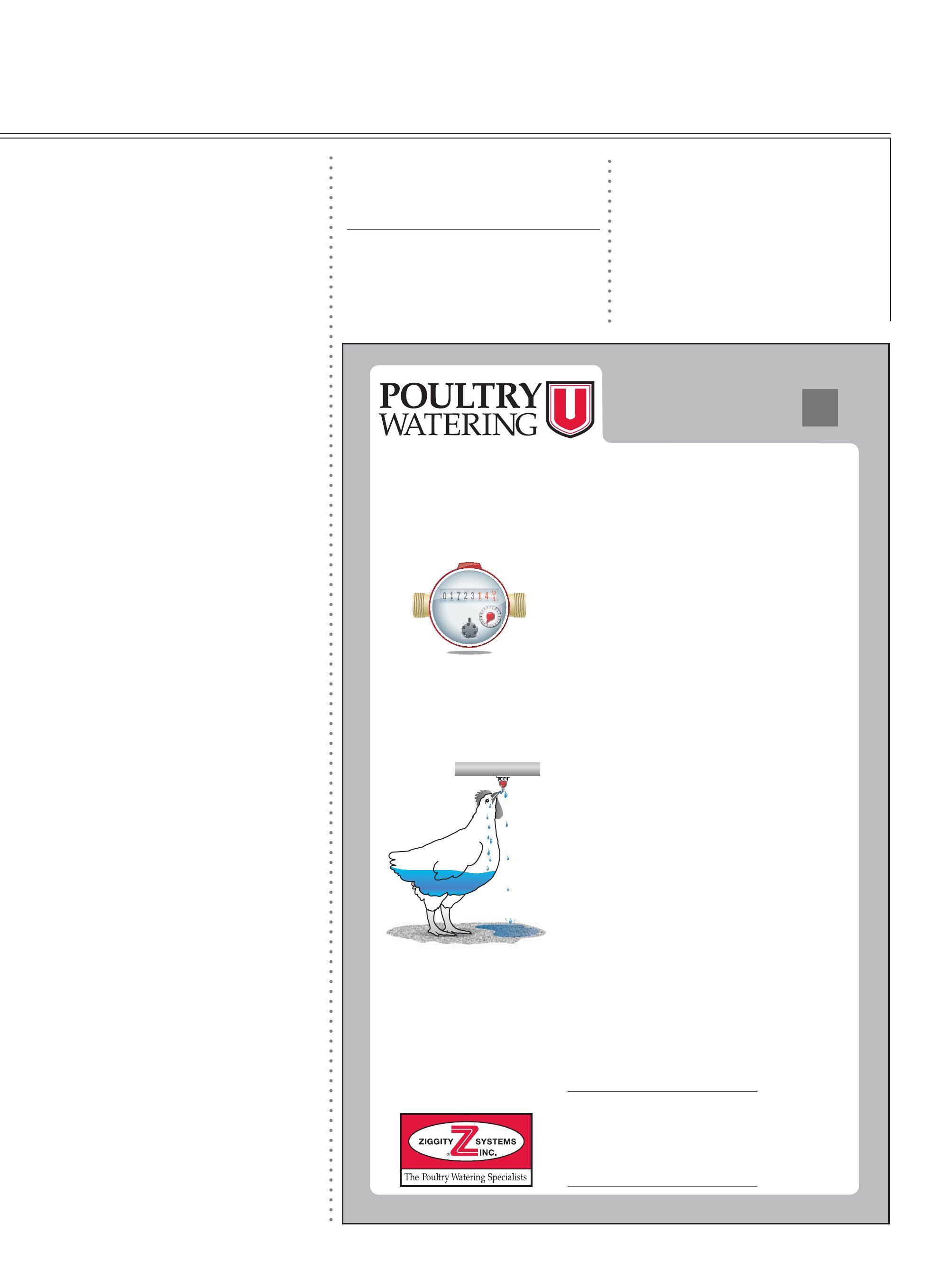
Water meters measure water usage, not water consumption. Water usage (WU) has two components: Water consumption (WC), water that is ingested by the birds, and Water spillage (WS), water that is spilled, not ingested.
This is a very important distinction because you cannot assume increased water usage will translate into increased consumption. Increasing water usage may simply create more spillage that can cause wet litter conditions. This in turn negatively affects bird health, reduces growth rate and increases pododermatitis.
Key Directive: Manage your watering system in a manner that promotes water consumption and minimizes water spillage. Learn about best watering management practices and much more at Ziggity’s Poultry Watering U website.
Health Protecting Poultry
Researchers are working to create vaccines against some of the most common pathogens in chickens
BY DAVID MANLY
Agricultural disease is one of the biggest hurdles for any farmer, processor or industry to overcome; never mind the damage it causes to the environment and economy of a region While the implementation of biosecurity measures is key in the control of such diseases, it does not deal directly with the problem.
The Alberta Livestock and Meat Agency Ltd. (ALMA) is working with a team of researchers to create a new vaccine for poultry to help prevent the spread and damage that two pathogens cause to poultry producers – Salmonella and Clostridium perfringens.
Dr. Christine Szymanski, a University of Alberta professor and one of the researchers involved in the project, said that the preferred method of control for these two pathogens would be a vaccine, as it can help reduce the risk of contamination of eggs and meat without the use of antibiotics. This is especially important due to the concerns from both consumers and producers regarding antibiotic resistance.
The researchers decided on Salmonella because of its ability to cause foodborne illnesses in humans, and Clostridium perfringens, which causes necrotic enteritis in broilers in addition to food poisoning in humans.
“While C. perfringens is the most common and financially devastating bacterial disease in commercial flocks, no effective chicken vaccine is com-
mercially available,” said Szymanski. “And salmonella in humans is caused by consumption of contaminated eggs and poultry products, and results in potentially severe gastrointestinal issues.”
MAKING IT STICK
The vaccine research is based on Szymanski’s development of a successful carbohydrate-based poultry vaccine for another common foodborne pathogen, Campylobacter jejuni. This was accomplished through the use of bacterial glycomics, the investigation of sugars (also known as glycans), especially those
found on the surface of the bacteria.
According to Szymanski, the sugars on the surface of pathogenic Salmonella and C. perfringens can be presented on the surface of a non-pathogenic bacteria, which means that a vaccine could be used to stimulate an immune response without the use of the deadly strains.
“This means we can create a vaccine from harmless bacterial strains that will help the bird’s immune system identify and destroy the pathogenic strains. In this way, a single vaccine will simulate an immune response in the bird that will protect it from a broad array of Salmonella and C. perfringens strains.”
Elizabeth Triscott (left), a fourth-year honours student, and Dr. Christine Szymanski.
VACCINE CONTROL
She added that combining the two vaccines into one would provide an inexpensive vaccine against the two problematic pathogens. In doing so, this could eliminate the need for antibiotics for both diseases.
This is especially important for C. perfringens , Szymanski said, which currently can only be controlled through the addition of antibiotics into the drinking water.
AN IMPORTANT STEP
Glycan-based vaccines are not new, as human glycoconjugate vaccines have been routinely used for less than 20 years with minimal side-effects, and are routinely given to infants. Similarly, no side-effects have been seen with the C. jejuni chicken vaccine, and the live non-pathogenic organisms in the vaccine are only in the system long enough to induce an immune response before being cleared from the chicken entirely.
“Right now, researchers struggle to obtain a reproducible two-log drop in campylobacter colonization from chickens,” said Szymanski. “In our studies, we reproducibly observe six to eight logs drop in campylobacter colonization – with many birds having undetectable levels of C. jejuni in their intestines.”
Dr. Susan Novak, ALMA’s research manager, said, “A glycan-based vaccine would be a transformative advancement for the poultry industry. The use of antibiotics could be reduced if producers are able to give their birds a dual vaccine that boosts the immunity against multiple strains with a single shot. Alberta is leading the world in this area and that is a point of pride for our industry as well as a real competitive edge.”
In addition, Drs. Szymanski and Mario Feldman have spun off a company, VaxAlta Inc. in Edmonton that builds on their studies in bacterial glycomics. They were the first to identify the C. jejuni glycan pathway and show that sugar systems can be mixed and matched to produce novel glycoconju-
gates. Szymanski and Feldman are now exploiting this expertise toward the development of novel glycoconjugate vaccines for use in agriculture.
“The next step in our research is to optimize the carbohydrate-based vaccine against C. jejuni and create an effective dual vaccine against Salmonella and
Clostridium perfringens . Glycoconjugate vaccines against other pathogens found in poultry, cattle and pigs are also in the pipeline,” said Szymanski.
Watering Wisdom
Water ingested during the drinking process is limited by beak size.
Key Principle:
Water spillage happens when more water is discharged from the drinker than can be retained in the bird’s beak. Lower column pressure means less water discharged from the drinker with each activation; higher pressure means more water discharged. Therefore, use low column pressure for birds with small beaks and increase pressure as birds (and beaks) grow. Applying this management principle will prevent excessive water spillage, thus avoiding wet litter conditions. Dry litter promotes healthier birds, increases growth rate and reduces pododermatitis.
Key Directive: Keep beak size in mind and adjust column pressure accordingly to minimize spillage. Find best management practices and much more at Ziggity’s Poultry Watering U website.
www.PoultryWatering.com How-to videos Poultry Watering U news Management downloads
Adjust water column pressure based on beak size. Supply no more than the bird’s beak can retain during the drinking process.
Profile A Logical Path
Dr. Hank Classen’s work has been granted honours, and it’s been an interesting journey
BY KAREN DALLIMORE
The good farmland of Aylsham, Sask., is where Henry Classen was born and raised. As the youngest of four boys in a Mennonite family, young Hank knew that his chance of getting any of the family farmland wasn’t good, but what he didn’t know was that his choice of pursuing an academic career in agriculture would lead him down a logical path to success.
Dr. Classen was named Distinguished Professor at the University of Saskatchewan in the spring of 2013 and within a month was also awarded the position of Industrial Research Chair in Poultry Nutrition, leading a fiveyear, $3.6-million National Sciences and Engineering Research Council (NSERC) research project.
Such an honour hadn’t even dawned on the early teenager when he was tending the chickens, turkeys, ducks and geese for a neighbour, Mrs. Ryba, a quarter mile down the road from his family’s grain and pig farm. It was a key time of influence on the young boy: he discovered poultry.
Classen did his early schooling in Aylsham and Nipawin, Sask., and then finished his last year of high school at Rosthern Junior College, a private Mennonite school. His family core values of hard work are typical of that era and that work ethic has had a strong impact on his life and what he thinks is important.
His father hoped that his youngest boy would pursue a career in banking. After all, his dad thought bankers must
DISTINGUISHED PROFESSOR
Hank Classen has come a long way and is pleased now to work with other collaborators, technicians and students involved in the NSERC IRC research project.
have a good life since banks were open only until 3 p.m. at that time. But much to his father’s chagrin, the young man ended up with a B.Sc. in agriculture from the University of Saskatchewan with a poultry science major.
“People can’t always understand where your interests will lead you,” says Classen, but he feels lucky to have loving
family members who supported him even though their choices may not have been the same.
Classen’s mentor through his undergraduate degree, Roy Crawford, had done graduate work at the University of Massachusetts, so it was more than just coincidence that his own interest in research took him there as well. By then
No matter the age, ROVIMIX® HY•D® makes hens stronger.
Whether a pullet or a mature hen, peak lay performance requires a well developed skeletal frame built with only the strongest bones. Research indicates that bones with the best strength come from diets supplemented with ROVIMIX® HY•D®. Science suggets that ROVIMIX® HY•D® provides birds with all the 25-hydroxyvitamin D3 they need to develop and maintain bones that can withstand the stresses of egg production. In young pullets, stronger bones are necessary for optimal lay persistence which can translate into more eggs. As the hen ages, ROVIMIX® HY•D® will help promote better egg shell quality.
To learn more about how ROVIMIX® HY•D® can strengthen your flock, contact your DSM Nutritional Products Account Manager or go to www.dsm.com or call 1 800 526 0189.
he was married with a year-old daughter and that’s when he and his young family left Saskatchewan for the first time. With a University of Saskatchewan jacket slung over one shoulder and a pony porta-potty for his little daughter slung over the other, he travelled with his family by bus and train to Massachusetts with all their worldly possessions in 23 boxes, including their pots and pans.
At the University of Massachusetts, Classen did two degrees under the supervision of his key mentor, J. Robert Smyth Jr. With his thesis written, he was quickly accepted for an assistant professor position at Pennsylvania State University, where he worked for one and a half years.
But when a professor at the University of Saskatchewan retired, Classen saw a chance to come home. His wife came with him for the interview but he didn’t tell anyone else, wanting to make the
Profile
decision without outside pressure.
That’s when the phone in the hotel room rang – it was his Aunt Betty, welcoming him back to the province. “Within a half hour we realized there were no secrets in Saskatchewan,” he says. He was glad to be home. That was 1978.
It has now been 35 years since Classen returned home to Saskatchewan, and as he says, “I’m still here and having fun.”
For Classen, being appointed as Industrial Research Chair is “a big honour that the poultry industry had confidence in me and put a lot of money on the table to make this happen.”
Even the organizing committee questioned if his ambitious mandate meant he was biting off more than he could chew, but organizing 20 studies in poultry nutrition – with three undergraduate, five M.Sc. and four PhD students, two post-doctoral fellows and a professional
research associate – while addressing the requirements of nine sponsors, will all follow a logical sequence of events. “It’s the way I like to do research,” says Classen, who expressed great confidence in his team and collaborators.
Funding for the five-year project has been provided through NSERC and poultry industry organizations in Saskatchewan, allowing Classen and his team to study starch and protein utilization in poultry and its potential to affect production, health and welfare.
With this award the University of Saskatchewan will also hire a new poultry scientist, which Classen says is important to the stakeholders in this research as well as to Canadian poultry science research in general.
For more profiles, visit p www.canadianpoultrymag.com
Industry Standing Proud
Pardoned U.S. Thanksgiving turkey has Canadian roots
BY LILIAN SCHAER
It may have been the U.S. Thanksgiving, but there was a strong Canadian connection this year to a popular holiday tradition south of the border. As part of the run-up to annual holiday festivities, the President of the United States formally “pardons” a live turkey, typically presented to him by the National Turkey Federation (NTF) in a special ceremony at the White House.
CANADIAN CONNECTION
This year, NTF chairman John Burkel, a turkey producer from northwestern Minnesota, was in Washington, D.C., with a tom that stems from genetics provided by Kitchener, Ont.-based Hybrid Turkeys. And Peter Gruhl, Hybrid’s director of customer service and unofficial pardoned-turkey-handler, personally drove the bird in question from Burkel’s farm to the U.S. capital.
“Usually, the chairman of NTF grows turkeys for the event on one of their own farms,” said Burkel in an interview in early October. “This is a White House event. We contact them every year to offer the event up and they let us know how it is going to happen.”
A TRADITION TO KEEP
The pardon’s origins are said to date back to 1947 when American poultry farmers presented President Harry Truman with a turkey, but there are no official records linking the bird to a presidential pardon.
According to the White House, John F. Kennedy is said to have given the
RECEIVING A PRESIDENTIAL PARDON
After her father pardons the 2011 candidate, Liberty, Sasha Obama is given a chance to pet the turkey with the help of former NTF Chairman, Rick Huisinga.
bird he received in 1963 a reprieve, but it wasn’t until 1989, when President George H. W. Bush made a comment about granting the turkey a presidential pardon, that the process became formalized (see page 52 for more information).
LONG-TERM PROJECT
Burkel, who is serving a one-year term as
National Turkey Federation president, started his special turkey-growing project earlier this year with 80 Hybrid toms. When they were three weeks old, he selected 25 he thought might make suitable candidates for a trip to Washington, a group that was later narrowed to 13. Two make the final cut as possible pardoning-ceremony candidates.
“I take the ones that are personable
Photos courtesy of Minnesota Turkey Growers’ Association
and have a temperament that will let them be handled and set on a table when presented at the White House,” he explained. “We do a lot to get them socialized so they’ll be used to noise and flash photography, including playing a radio in their housing.”
TIME-HONOURED
The event usually takes place on the Tuesday before Thanksgiving, so Gruhl arrives in Washington with the birds the night before. The toms are taken to the Rose Garden (where the short ceremony takes place) in advance, so they can become familiar with the surroundings and afterwards, they are sent to their new home at Mount Vernon, the nearby George Washington estate.
A STORY FOR HYBRID TURKEYS
According to Gruhl, Hybrid Turkeys’ birds have been part of the pardoning event three times before, but that’s linked to the genetics the annual NTF president uses and not something the company has any control over.
“We don’t have any influence with whether a Hybrid bird gets chosen, it just happens to be what genetics they’re using,” he explained. “I have known John and (and his wife) Joni for a long time and it gives me great pride to stand up next to them at the White House. It highlights the strong relationships we have with our customers.
“When we look at the bigger picture, the pardoning of the Thanksgiving turkey is a great opportunity to promote the entire turkey industry,” he added. “It allows the public to remain connected to the farmers that are raising these birds that provide safe, healthy food for everyone.”
A GOOD REMINDER
For Burkel, a fourth-generation farmer who is also part of a producer-owned processing co-operative, the event is a great opportunity to kick off the holiday season with a feel-good event that highlights families and farmers.
“Thanksgiving is an event that isn’t tied to anything other than being thankful,” he said. “Turkey is the focal point of the dinner plate that day, it’s about family, and that’s a great tie-in to what we do, which is produce safe, wholesome food for families.”
PRESIDENTIAL TURKEY WEBSITE
The Minnesota Turkey Growers’ Association (MTGA) has developed a special Website where the public can learn how the presidential turkeys are raised. While the turkeys are being raised just like any other turkey flock in Minnesota, they are given increased interaction with people so that, if chosen, any of the birds will be prepared for their role at the White House ceremony.
To view the video, visit: http://minnesotaturkey.com/presidentialturkey/meet-the-flock/
AgriACID® is a CFIA registered blend of organic and inorganic acids designed to lower the pH of water, resulting in improved water quality.
To learn how you can incorporate AgriACID® in your poultry operation contact your feed rep and ask for it by name.
Industry
THE THANKSGIVING TRADITION OF PARDONING A TURKEY AT THE WHITE HOUSE
Courtesy of the White House Historical Association
The official “pardoning” of White House turkeys is an interesting White House tradition that has captured the imagination of the public in recent years. It is often stated that President Lincoln’s clemency to a turkey in an 1865 dispatch by White House reporter Noah Brooks was the origin for the pardoning ceremony. Brooks noted, “About a year before, a live turkey had been brought home for the Christmas dinner, but [Lincoln’s son Tad] interceded in behalf of its life. [Tad’s] plea was admitted and the turkey’s life spared.”
Recently, White House mythmakers have claimed that President Harry S. Truman began this amusing holiday tradition. However, the Truman Library & Museum disputes the notion that Truman was the first president to pardon the holiday bird.
Reports of turkeys as gifts to American presidents can be traced to the 1870s, when Rhode Island poultry dealer Horace Vose began sending well-fed birds to the White House. The First Families did not always feast upon Vose’s turkeys, but the yearly offering gained his farm widespread publicity and became a veritable institution at the White House. But in December 1913, Horace Vose died, ending an era.
By 1914, the opportunity to give a president a turkey was open to all comers, and poultry gifts were frequently touched with patriotism, partisanship, and glee. In 1921, an American Legion post furnished a crate of a gobbler from Mississippi to Washington, while a Harding Girls Club in Chicago outfitted a turkey as a flying ace, complete with goggles. The turkey gifts had become established as a national symbol of good cheer.
The focus on Harry Truman as the originator of the turkey pardon stems from his being the first president to receive a turkey from the poultry and egg board. From September to November 1947, announcements that the government was encouraging “poultryless Thursdays” grabbed national headlines. Homemakers, restaurant owners, and the poultry industry deflated the effort in time for Thanksgiving, but not before poultry growers had sent crates of live chickens — “Hens for Harry”— to the White House in protest. The turkey they presented to President Truman that December promoted the poultry industry and established an annual news niche that endures today.
In December 1948, Truman accepted two turkeys and remarked that they would “come in handy” for Christmas dinner. But there was clearly no plan for these birds to receive a presidential pardon. In 1963, the Washington Post used both “pardon” and “reprieve” in an article where President Kennedy said of a turkey, “Let’s keep him going.”
The formalities of pardoning a turkey gelled by 1989, when George H. W. Bush, with animal rights activists picketing nearby, quipped, ”this guy [has] been granted a presidential pardon as of right now.”
For More information, visit www.whitehousehistory.org
Industry
Continued from page 37
SEEING THE COUNTRY
“They check the eggs constantly for cleanliness, and that’s a really good thing,” she says of the Sinniges’ hatchery. “It made me think that we should have some kind of system that measures how many broken, cracked and small eggs are coming into our hatchery and have a way of rewarding those farmers who deliver better eggs.” Kunze also noticed biosecurity differences. “We’re good at biosecurity in B.C., but there is always room for improvement, as there is in every province,” she observes. “We can all learn from each other’s biosecurity practices.”
Kunze also enjoyed a visit to one of the dairy farms in the area around the Sinnige farm in southern Ontario. “It was nice to see that because I work on a dairy farm,” she says. “We also went to Niagara Falls, which was a really neat experience.”
THE OTHER PERSPECTIVE
Reflecting on the whole trip, she says, “I had a really good time. It gives you a chance to see agriculture in another part of Canada. The
Ryan Kleinsasser (left), a Hutterite colony breeder farm near Steinbach Man., travelled to Aviagen’s head office in Huntsville, Ala., and met Mark Belanger (right), the Canadian technical manager for Aviagen.
landscape is so different. And Melissa is now a really good friend.”
Melissa Sinnige was also impressed, when she visited the Kunze farm shortly after, with the landscape. “The mountains were just amazing,” she says. “It looks so much different.”
“The way they have their barn set up is interesting,” she says, regarding the differences between her family’s and the Kunzes’ operation. “In where the chickens are, they have slats on the outside, and in our barn, they’re down the middle. They have four different belts for egg transport and we have two.” She also notes on the biosecurity side, “They sprayed their boots before they went into the chicken area of the barn and we use a footbath, which is in the main entrance.” The Kunzes took the girls to Vancouver and Whistler so Melissa could experience being in the mountains close up. “It was so much fun,” she says. “Monica and her family are awesome and I’d recommend this program to anyone.”
OTHER PROGRAMS
Under the CBHEPA Broiler Breeder Research Grant program, one or two university students (a senior undergraduate or a graduate student) get the opportunity to perform a short-term broiler breeder research project. CBHEPA offers a grant to support the project and/ or a presentation of the results at an international congress.
In terms of project selection, CBHEPA provides a list of broiler hatching egg industry research priorities including low production of young breeders, alternatives to antibiotics, general control of Salmonella, Salmonella vaccination program evaluation, breeder feed restriction, euthanasia methods and male mortality/longevity. They are also open to project ideas on early mortality of breeder hens, environmental research, white-chick syndrome, or dark-meat utilization. The last research grant was awarded to support a student from the University of Alberta for a project entitled: The effects of storing broiler breeder eggs for 4 and 14 days on the percentage of cell death which could affect hatchability.
YOUNG FARMERS
Finally, under its Young Farmer program, the CBHEPA sends a young farmer to a primary breeder in the United States. “It enables the selected producer to learn some of the amazing things going on in the poultry industry,” says Bilkes.
Applicants for this program should have less than 15 years’ experience in the hatching egg industry at their own operation or working at their parents’ operation. Participants are asked to share what they learned and accomplished during the program in a written report.
Ryan Kleinsasser, who manages his Hutterite colony’s breeder farm near Steinbach, Man., travelled to the Aviagen headquarters in Huntsville, Ala., this summer. “It was a very valuable experience,” he says. “We discussed strategies to address the different challenges that are coming in the future.” The Aviagen
nutritionists also gave him some ideas to try. “We had an ongoing issue with performance related to having ammonia in the barn,” he explains. “Of course, we need to vent more when ammonia levels are higher, but the birds get colder and the Aviagen staff suggested that we needed to provide more feed, more calories, at those times.”
LEARNING CURVE
Kleinsasser says each day presented a different learning experience, and that Aviagen was very open and supportive. “I learned so much,” he says. “We are going to be building a new barn and it was amazing to see the options. I learned about everything from nutrition to rodent control to biosecurity. It was also really interesting to see a lot of Alabama.”
“It is vital that we interest youth
in what we are doing,” Bilkes concludes. “Without the younger generation and their interest in broiler breeders, we can’t pass along the legacy that we inherited from our forefathers and -mothers. The future is with the next generation and we expect to continue to invest in our young people and keep these programs going. The young people that get involved with the programs come back with new energy and interest and we hope they can be ambassadors for our industry during their entire careers.”
For more details on any of these programs, contact Nicole Duval at Canadian Hatching Egg Producers (CHEP) by calling 613-232-5241, or via e-mail at nduval@chep-poic.ca.
THE BACK PAGE
BY ROY MAXWELL
Media: Focus on the Fair
Poultry, egg and dairy farmers face a serious mediarelations challenge. For example, on Sept. 2, 2013, the Globe and Mail’s Ottawa correspondent, Barrie McKenna, wrote: “Most Canadians are probably aware that prices for milk, chicken and eggs are fixed in this country…Mr. Black reckons Canadian consumers paid $10 billion more than they should for chicken over that period…Asked to comment on the provocative $1 billion-a-year estimate, the Chicken Farmers of Ontario – a farmer-run organization that operates the chicken supply management regime in the province – was tightlipped…But how would a typical Canadian ever know whether they’re being treated fairly, particularly when the organization that runs the system won’t talk publicly about how prices are determined? If more Canadians knew about the behind-the-scenes machinations, they might be less tolerant of the entire supply management system.”
National Post columnist John Ivison wrote the following on Sept. 17, 2013: “Blessed are the cheesemakers, for they will be protected from all foreign competition.”
On Oct. 7, Toronto Star staff reporter Marco Chown Oved wrote: “The quota system was brought in to protect farmers but decades later, new farmers complain it’s turned into a cartel that protects those who got in early and makes it nearly impossible for newcomers like Thunberg to make money.”
Media relations are a contact sport. Ironically, if you decide not to play, that is precisely when you are most likely to get hurt. Few people in supply management would be keen on starting their day with a phone call from a National Post columnist, a Globe and Mail reporter or CBC TV’s Marketplace. But a handful of professionals would view such a call as an opportunity. It’s normal and healthy to be nervous, but experienced media-relations people understand that journalists provide valuable access to the public. Do you think interviews, voice recorders and cameras are something to fear or cherish? How you answer that question speaks volumes.
urban media, and I realize that an overwhelming number of them are nothing less than blatant attacks, but not all of them. In fact, many items are what I call “fair,” which I define as being an article or story that treats a subject with respect and includes comments from both sides. By definition, any issue must have more than one side or it wouldn’t be an issue. Fair journalists understand that, and they incorporate some level of fairness and balance into what they write or say. Even if a journalist strongly advocates scrapping supply management, as long as views from the other side are included, it’s fair commentary in my opinion. After all, I also believe in free speech. I say let the readers, viewers and listeners make up their own minds about supply management or any other issue for that matter. It is being included in the discussion that counts.
In 2013, I updated what I call my “List of Fair Urban Journalists,” which includes about 50 people and more than 90 supply management stories that were written over the past couple of years. Where their stories appeared might surprise you: the National Post, the Globe and Mail, the Toronto Star, the Ottawa Citizen, the Regina Leader-Post, the Winnipeg Free Press, the Vancouver Sun, the Montreal Gazette, the Chronicle Herald, CBC radio and television, TV Ontario and many others across the country.
But my list barely scratches the surface.
Bear in mind that news reporters are expected to be fair, whereas columnists and commentators are not.
Understanding and respecting the world in which journalists live and work is a fundamental requirement for organizations that want to manage media queries successfully and create media opportunities. Hoping the phone won’t ring, or refusing to answer it, is fatal.
I pay close attention to supply management stories in the
My media-relations advice is to focus on journalists who provide balance, bearing in mind that news reporters are expected to be fair, whereas columnists and commentators are not. They are paid to be opinionated and there is a big difference between reporting and offering one’s opinion.
So the next time you read, hear or see something that impresses you, consider picking up your phone or sending an e-mail to thank a journalist for getting it right or for at least being fair, even if they have been critical. That will create an opportunity for you or your organization to gently correct any factual errors or to put things in perspective for the next time.
Most big city journalists don’t know any farmers and they will be delighted to hear from you as long as you are calm, positive and constructive. There are risks attached, but if you focus on responsible journalists, you will likely be included in the important public discussion about supply management.