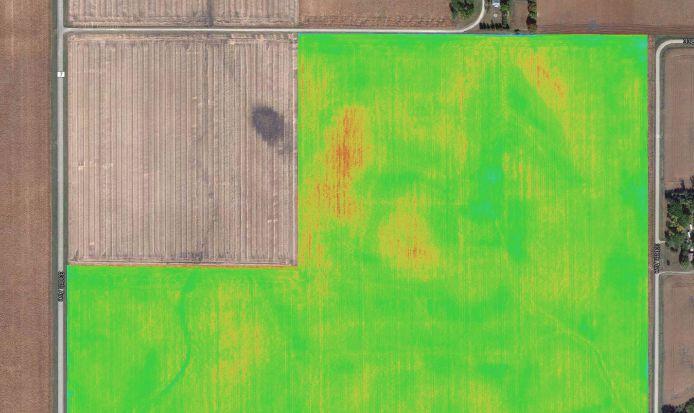
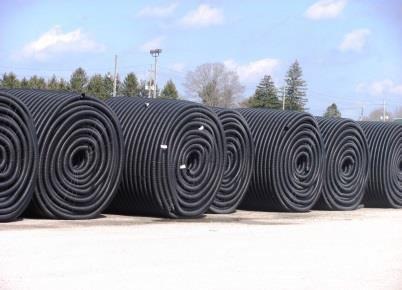
South Dakota State University (SDSU) Extension recently released web-based drainage calculators for tile drainage and sub-irrigation design.
Chris Hay, an SDSU extension water management engineer, and his team took research-based calculations and designed several easy-to-use calculators which address common drainage design calculations to provide farmers and contractors with in-field data they need.
“These are equations that we as engineers like to play around with but aren’t always the easiest to use. The calculators are designed to make it easy to get quick answers so they can get the job done right,” Hay said.
The calculations provide research-based guidance to boost productivity and minimize downstream impacts on everything from drain spacing and pipe sizing, to subirrigation and lift station design. Contractors and farmers can access these calculators online. They are compatible with a variety of devices, allowing for in-field use.
The calculators were developed in cooperation with University of Minnesota Extension. To learn more or to access the calculators, visit the iGrow Drainage website at www.igrow.org/drainagecalculators.
LICA NATIONAL SUMMER MEETING
LICA National is planning its summer meeting, to be held July 14–18 at the Embassy Suites Little Rock in Little Rock, Ark.
The tentative schedule is as follows:
• July 14: Tour Caterpillar Motor Grader plant
• July 15: Tour Bayou Meto Water Management Project and equipment demonstration, plus Dillard’s private showing and spa day
• July 16: Educational seminars, outing to Rock Town Distillery, rubber duck race and “The Roaring ‘20s” Associate’s Night
• July 17: Committee meetings and dinner cruise on a Mark Twain Riverboat
• July 18: Board meeting and outing to farmer’s market
For more information, visit www. licanational.com/events.
DES MOINES WATER WORKS FILES WATER QUALITY LAWSUIT
Des Moines Water Works has filed a complaint in federal court against drainage districts in three counties over the discharge of nitrate pollutants into the Raccoon River.
The complaint was filed against the Sac County Board of Supervisors, Buena Vista County Board of Supervisors and Calhoun County Board of Supervisors in their capacities as trustees of 10 drainage districts in Iowa. The lawsuit seeks to declare the named drainage districts are point sources pollutants, are not exempt from regulation, and are required to have a permit under federal and state law.
The complaint alleges the drainage districts have violated and continue to be in violation of the Clean Water Act and Chapter 455B, Code of Iowa. It demands the drainage districts take all necessary actions to comply with the Clean Water Act, including ceasing all discharges of nitrate that are not authorized by a National Pollutant Discharge Elimination System (NPDES) permit.
The utility provider is also demanding damages to compensate for the alleged harm caused by the drainage districts’ discharge of nitrates, assess civil penalties, and award litigation costs and reasonable attorney fees to Des Moines Water Works.
Des Moines Water Works provides drinking water to approximately 500,000 Iowans, drawing most of its raw water supply from the Raccoon and Des Moines Rivers. Under the Safe Drinking Water Act, Des Moines Water Works is obligated to meet Environmental Protection Agency (EPA) standards for the maximum contaminate level (MCL) in its finished drinking water. The MCL standard for nitrate is 10 mg/L. Health risks associated with nitrate contamination above this level include blue baby syndrome and endocrine disruption.
In addition to public health risks to drinking water, nitrate pollution also causes the development of hypoxic conditions in public waters, including the Gulf of Mexico’s so-called “dead zone.”
Des Moines Water Works contends artificial subsurface drainage system infrastructures, such as those created and managed by drainage districts, are a major source of nitrate pollution in the Raccoon River watershed. Recent upstream water monitoring by the utility at 72 sample sites in Sac County reportedly found nitrate levels as high as 39.2 mg/L in groundwater discharged by drainage districts.
Nitrate levels above the MCL increase the cost of drinking water treatment for Des Moines Water Works customers. Since the launch of Iowa’s Nutrient Reduction Strategy, Des Moines Water Works has experienced two unprecedented nitrate episodes and associated costs for the treatment of the pollutant. In 2013, when nitrate levels in the Raccoon and Des Moines Rivers reached record highs, Des Moines Water Works incurred approximately $900,000 in treatment costs and lost revenues. Then, on Dec. 4, 2014, the utility began operating the nitrate removal facility continuously for 97 days –unprecedented in the winter months – for a total of $540,000 in operations and additional expenses.
The utility is now actively planning for capital investments of up to $183 million for new de-nitrification technology to remove the pollutant and continue to provide safe drinking water to residents.
The lawsuit has angered many farmers, some of whom are now talking about boycotting Des Moines, including the Iowa State Fair, as well as shopping malls, state high school athletic tournaments and concerts in the area.
Food for thought
Education is key to defending against drainage’s critics.
by Steven Anderson, president, LICA National
Did you enjoy your last meal? Do you even remember what you had? In this country many take food very much for granted. But then why wouldn’t we? The grocery stores have an endless supply available, and that is where food comes from, right?
This may seem like a silly thing to say, but to many, especially as each generation becomes farther removed from the land, the grocery store is food production. This is one of the reasons agriculture is facing attacks for the alleged damage it causes to our world: food is made in stores, so all this work done on the land is damaging the rest of the world. Drainage is moving to the top of that list for all the “evils” it causes: flooding, nutrient discharges and loss of wetlands. But the interesting thing about drainage is that today’s society exists because of it – not entirely, but in good part.
Food supply is the basic foundation upon which any society is raised. In our past as huntergatherers, the size of the band was determined by how much food could be gathered in the area roamed. Then one enterprising individual noticed a certain grass had a very tasty seed. We hit upon the idea that if we planted these seeds and removed other plants growing around them, we could have more tasty seeds. Agriculture was born. Villages became possible and the nomadic life came to an end. This is an uncomfortable truth for those who battle against genetically modified foods; we have been genetically modifying food for some 10,000 years. Today we do it faster using the latest technology instead of cross-breeding plants over generations.
Now let’s look back at a more recent time in this country’s history. Settlers moving out from the hilly east looked to the rich, flat land of the Midwest with gleams of riches in their eyes, only to find that those riches had to wait until John Deere took an old saw blade and curved it into a plow. Steel was the only metal that would
scour in these rich soils because they were wet! In many level areas the soil was too wet to farm. Sure, this land was covered with lush prairie grasses tasty to vast heads of bison, but people found these grasses a bit less palatable. The foods we ate – corn, squash, wheat and vegetables – all needed a more oxygen-rich soil, which was only possible when the soil was not saturated. In my area of LaSalle County, Ill., it was the Irish who first began draining the land. Being used to bogs and peat and otherwise high organic matter soils, they turned their eyes to the flat lands of the western part of the county. Once they finished digging the Illinois & Michigan Canal in the 1840s, they took their shovels and slip scrapers and started digging ditches, putting in tile lines and growing vast quantities of food to feed a growing nation. This was happening all over the Midwest as settlers moved in to claim their own land. One can imagine what those early tiles discharged in terms of nitrates and soluble phosphates. Research today is finding that, in buffer strips, after plant growth does not keep up with the supply of nitrogen, phosphorus and potassium (NPK) in the soil; the excess leaches off into the neighboring stream. These facts about drainage are things we should know as the people who put tile lines in the ground. As misinformation is spread about the evils of drainage, we should be ready to counter with facts.
A new project in Illinois will go a long way to providing good data on what comes out of the tiles. The project, sponsored by the Corn Growers, the fertilizer people, and the University of Illinois, will pattern tile 80 acres into separate five-acre plots where only the outflow from that five acres will be measured. This will allow us to collect data over timing and rates and their effects on leaching over a short period of time. In the meantime, don’t be afraid to speak up about the value of what we do. DC
MANAGING RUNOFF
Controlling phosphorus losses key to better lake water.
Researchers are in agreement; too much phosphorus is finding its way into field tile. But rather than demand a moratorium on tile drainage installation, many are suggesting more practical drainage solutions for the agricultural industry.
The problematic algal blooms that are plaguing Lake Erie are being fed by high concentrations of phosphorus, particularly between March and June each year. Although there are many contributing factors to the growing problem, the timing suggests agricultural sources may be significant. After heavy rains in the spring of 2011 spawned the largest algal bloom in Lake Erie’s history, the International Joint Commission, which was created by the Boundary Waters Treaty to prevent and resolve disputes between Canada and the United States, formed the Lake Erie Ecosystem Priority (LEEP). In a report released last year, the organization identified that non-point sources (which include agricultural operations) truly are contributing more than 50 per cent of incoming phosphorus loads. Douglas Smith, a soil scientist working with the United States Department of Agriculture’s Agricultural Research Service (USDA ARS) in Temple, Texas, has a dominant interest in phosphorus transport. Between 2004 and 2013, he was involved in research that aimed to clarify the impact of conservation farming practices on the Lake Erie basin, and found several undesirable effects on the amount of phosphorus entering the watershed. No-till, for example, doubled soluble phosphorus loading compared to
rotational tillage (tilling only before planting corn). But in the same study, Smith found it also decreased total phosphorus loading by 69 per cent compared to rotational tillage. Similarly, grassed waterways increased soluble phosphorus loads, but not total phosphorus. Only the recommended rotational practice of planting corn, then soybeans, wheat, and oats reduced both soluble and total phosphorus loads (by 85 per cent and 83 per cent, respectively) compared to the standard corn–soybean rotation. Now researchers are concluding even the best farming practices can’t be solely depended upon to protect the lake and Smith is offering a piece of advice to drainage contractors.
“Be aware that drainage may have a target on its back,” he warns.
Both the International Joint Commission and the Ohio Phosphorus Task Force set phosphorus loading reduction targets of 39 per cent and 37 per cent respectively in 2013. In looking for ways to make those targets a reality, Smith says he personally has already been involved in multiple studies focused on tile drainage discharge. What he was surprised to discover in research fields was that as much as 49 per cent of soluble phosphorus and 48 per cent of total phosphorus losses occurred through tile discharge.
by AMY PETHERICK
“The water was hitting the tile much quicker than what I was expecting,” he says. “Our peak discharge in surface runoff happened at almost the exact same time as the peak discharge in the tile flow, so there’s a lot more surface connection through macropores, root channels, worm holes, and soil cracking in the region than what I had realized.”
Smith says these preferential flow paths have proven to be more pronounced in certain soil types. Kevin King, an agricultural research engineer also with the USDA ARS, but located in Columbus, Ohio, says most of the soils in Ohio are poorly drained and couldn’t be farmed without tile. They also tend to be soil types that are prone to developing preferential flow paths.
“We did a review article for the Journal of Environmental Quality and the fine textured clay soils will have more losses than your sandy soils due to preferential flow paths, even though phosphorus will bind to those clay particles,” King says. The fact that clay binds phosphorus only further complicates the problem as farmers increase fertilizer rates accordingly. King notes that if farmers in Ohio were applying phosphorus fertilizers through subsurface placement, this may not be as much of a problem, but the most common practice still
seems to be broadcast application. “If we have preferential flow paths that develop in fine texture soils, then any water that migrates into those is carrying that rich phosphorus off the surface, into the tile.”
North of Lake Erie, subsurface application of phosphorus seems to be more common. Merrin Macrae, an associate professor at the University of Waterloo in Waterloo, Ont., together with a team of surface-water chemistry students and the Ontario Ministry of Agriculture, Food and Rural Affairs (OMAFRA) recently concluded a study of field surface runoff and tile systems effluent from Ontario cropland.
Between May 2012 and April 2013, this research team demonstrated that although tile sources contributed 78 per cent of total runoff at one research site, surface runoff contained 81 per cent of the soluble phosphorus lost and an equal amount of total phosphorus. Their other site produced similar results. But in the first year of data at a new high clay site, tile drainage played more of a role relative to surface runoff. Macrae says that although there’s still a lot to learn, especially about the role of soil type, their research produces some clear lessons.
“Overland flow has much higher concentrations of phosphorus than our tile drainage effluent,” Macrae says. The challenge, as far as she’s concerned, is keeping that surface water from running directly into tile systems. “I’m not saying tiles are not a phosphorus source, but they seem to move phosphorus at a lower rate partly because of the soil types at our sites and how they are managed.”
For example, Macrae says it is clear a surface inlet that takes field runoff right into the tile drainage system is disastrous from a phosphorus standpoint. That’s why she’s working with OMAFRA’s Kevin McKague to promote the use and proper construction of surface water treatments such as water and sediment control basins (WASCoB). Macrae says she doesn’t think people outside of the research community have any idea just how much beneficial collaboration is currently in progress, on both sides of the border.
“The research that’s gone on for the last four or five years has very much been a collaboration between governments, farmers and researchers working together
to get the right answers,” she says.
King agrees that a lot of good collaboration has gone into addressing the issue so far, but he believes meeting phosphorus reduction targets is going to require the help of even more contributors. “How we get from science to implementation is where drainage contractors, ag retailers and the governments fit,” he says. “It’s all of our responsibilities to not only learn the science, but then to relate that to the producers to get that implemented.”
King believes drainage contractors are well equipped to offer advice to farmers when installing tile systems, taking soil type and farming practices into consideration. Farmers that broadcast fertilizer and practice no-till on a high clay content field need to hear about the effects of artificially adjusting the outlet elevation of their tile. “If we raise that outlet elevation to 16 or 18 inches from the surface during the winter months, we have the potential to reduce the amount of water leaving the site anywhere from eight to 45 per cent,” he explains. During winter months, when phosphorus losses start to rise, King says drainage control can reduce the amount that’s leaving the site anywhere from 40 to 65 per cent.
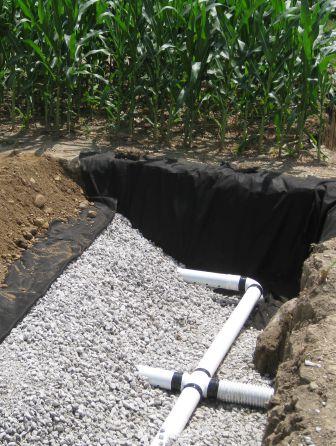
King also recommends blind inlets, sometimes also called French drains, in a no-till system. Smith says they’re absolutely perfect for closed depressions and pothole sites. “Blind inlets are
basically an alternative practice to tile risers,” Smith said. “We put them in at the lowest point of potholes and we got pretty good reductions for phosphorus, in the neighbourhood of 40 to 80 per cent phosphorus reduction depending on the year.” Smith says that in the comparative study conducted over six years, he found that sediment and nutrient loads were particularly improved during extreme weather conditions such as the wet spring of 2010. The study was so conclusive, it led to the development of a Natural Resource Conservation Service Standard for installing a blind inlet in Indiana. King says they’re currently looking into improving this system even further by back-filling the leach field with steel slag rather than pea gravel, which would offer greater phosphorus binding properties, but the effectiveness of these strategies is yet to be determined. King says there is still a vast amount of research to be done.
“Right now we’re putting band aids on a severed arm, just trying to stop the bleeding,” he says. “We’re going to have to stack practices and we have to understand that what works on one operation may not work on another.”
Smith agrees, noting that even now there are a number of research projects that could prove very effective. He also agrees one size certainly won’t fit all and there will potentially be lots of new practices for drainage contractors to get involved in developing. DC
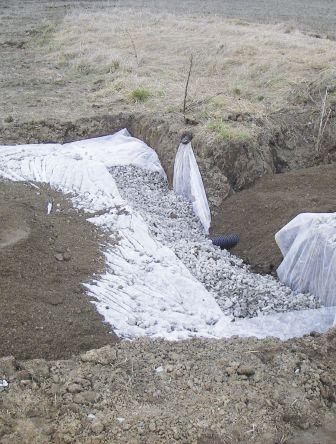
Currently, blind inlet construction includes back-filling leach fields with pea gravel, but ongoing research efforts are evaluating system improvements.
Blind inlets, sometimes also called French drains, have been proven to improve sediment and nutrient losses during extreme weather conditions.
PHOTO COURTESY OF ALLEN HAYNES/DEKALB SWCD.
Company on the move Optimize Field Surfaces for Better Drainage
Drainage contractors are well aware of the need to optimize subsurface drainage in order to maximize a field’s yield potential. However, what many contractors may not yet realize is that by also optimizing the field’s surface for drainage, they are ensuring the best possible outcome for crop yield.
Surface Optimization
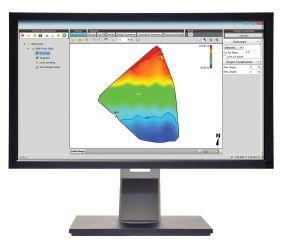
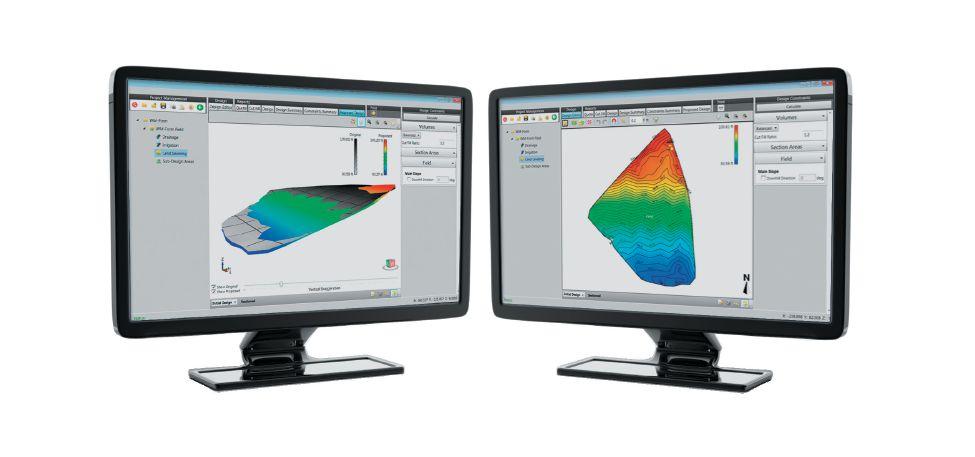
Trimble now offers a solution to optimize field surfaces for better drainage—the WM-Form™ land forming solution for leveling, surface drainage, and irrigation. WM-Form is an end-to-end agriculture solution for field survey, topography analysis, design creation, reporting and cost estimation, land forming, and verification. With easy-to-use surface design tools and flexible parameters, growers and contractors can use the WM-Form solution to repair underperforming areas and extend the amount of productive farmable land. It can reduce the volume and cost of earthworks and minimize disturbance to valuable topsoil. Growers can use the solution to optimize water distribution and drainage, reduce erosion and flooding by effectively directing waterflow, and create more uniform crop production which can lead to increased yield.
Contractors can use the WM-Form solution from survey to verification. They can collect 3D field data using the Trimble® WM-Topo™ survey system, or the FmX® integrated or TMX-2050™ displays. Users can then analyze topographic data in the WM-Form software to identify surface problems that are limiting yield potential and use the software’s flexible design tools to create a design that optimizes their field’s surface. The software also provides reports for volume, area and constraints, providing contractors and growers with an accurate quote on the total cost of the project. Users can leverage the 3D design to conduct land forming operations using the Trimble FieldLevel™ II system, and then verify that the design has been accurately completed using the Trimble WM-Topo survey system.
The WM-Form software provides flexibility, allowing users to design variable-shaped fields based on existing topography, the water needs of individual crops, and individual farming practices. It allows users to:
• Drain water in any direction or to a linear feature such as a ditch or existing drainage system
• Create surface designs for furrow irrigation
• Split a field into sections and create designs for each section individually
• Generate multiple design variations for the field, then compare them in 3D view against the original topography
• Produce 2D cut/fill estimates and reports
• Interact with Connected Farm™ for license and acreage management
• Level fields with custom/best-fit single or multiple planes
The WM-Form solution enables growers and contractors to turn their fields into optimal surfaces, even in areas that were unable to be leveled before. With more farmable land that is optimized for water management and more uniform production, growers can experience increased yield.
Subsurface Drainage
In some cases, however, surface optimization is only half of the equation. The other half is subsurface drainage. Trimble also offers the WM-Drain® farm drainage solution which enables contractors to quickly and easily manage drainage system designs and installation and to be more efficient throughout their operation. WM-Form streamlines the survey, analysis, design, installation, and mapping steps of subsurface drainage. It ensures optimal 3D drain placement, which improves crop yields by controlling ponding, optimizing root depth, maximizing planting seasons, and minimizing nutrient loss.
So What’s the Benefit for the Farmer?
Too much water on the field can lead to crop disease and lower yield, which is a detriment to a farmer’s bottom line. By installing a subsurface drainage system while also optimizing the field’s surface for water distribution and drainage, farmers can ensure their crops are not getting too much water on the surface or at the root zone. This allows farmers to maximize their yield.
For more information on the WM-Form solution, visit: http://www.trimble.com/Agriculture/WM-Form.aspx. For more information on the WM-Drain solution, visit http://www.trimble.com/Agriculture/WM-Drain.aspx.
Trimble WM-Form Land Forming Solution
Introducing the Trimble WM-Form land forming solution
Try the 10-day demo version for FREE!
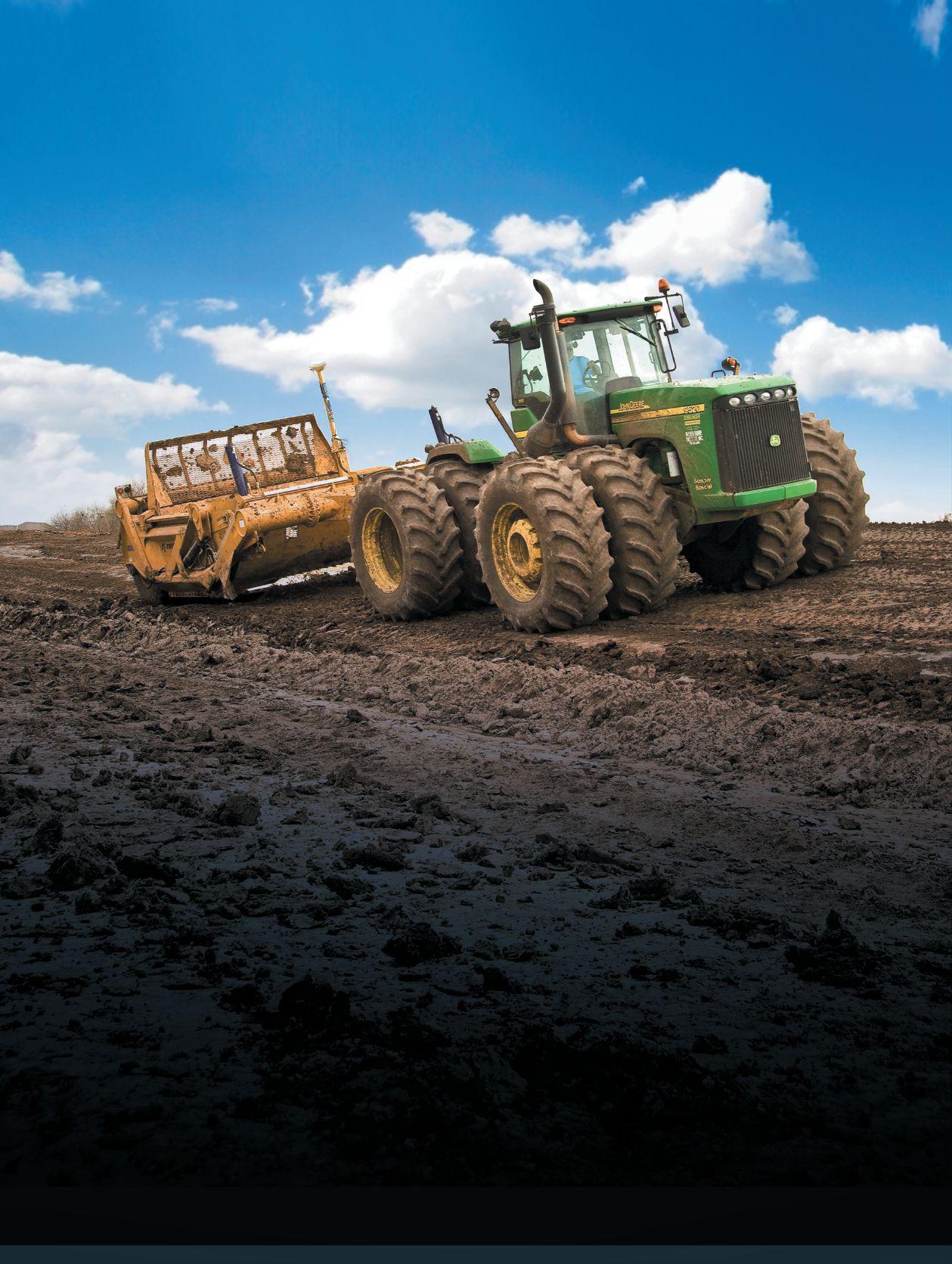
Instead of struggling against problem areas year after year, you can fix them with the Trimble ® WM-Form™ land forming solution. One integrated workflow streamlines the survey, 3D design, analysis, and earthworks steps—saving money, optimizing water management and boosting the yield of even the most stubborn terrain.
For more information, visit www.trimble.com/agriculture or see your Trimble reseller for a free demo.
ENVIRONMENTAL RESTORATION
The Scott Farm demonstrates the many benefits of a well-designed drainage system.
In 2005, Murray and Wilma Scott approached the Maitland Valley Conservation Authority with a common drainage issue. With hard work, they resolved the issue for good and were awarded the Ontario Minister’s Award for Environmental Excellence for their efforts.
by MEL LUYMES, MVCA
In the last decade, the
Ten years on, the Scott farm continues to demonstrate to drainage contractors, farmers and community leaders alike the benefits of using a systems approach when it comes to drainage.
The rolling farm near Belgrave, Ont., has been in the Scott family since 1856, when it was purchased from the Crown. While the fields are heavy clay, a gravel bottom provides great natural drainage and a high water table means that the Scotts have to manage a lot of water. A municipal drain was dug in the early 1950s, outletting to the Belgrave Creek, which flows to
Lake Huron via the Maitland River.
For years, runoff coming from the farmed slopes brought a steady stream of sediment into the open section of the drain. While the drain’s consistent flow meant that it didn’t require dredging, the Scotts still had their share of troubles with it flooding their fields. “It was a messy thing and it was getting wider over time,” Murray says. They also noticed the trout that had once spawned in the watercourse had disappeared.
To address these issues, the Scotts wanted to create clear and cold water on the property, says
Scott drain has withstood some of the wettest and driest weather on record in Ontario.
Simon VanDriel of VanDriel Excavating in Clinton, Ont. “Water comes from over there and leaves over there, we can’t change that,” he explains. The solution is to slow down the water by capturing it in wetlands and forcing it to take a much longer route to Belgrave Creek. “When water gets to the lake, it is lost. I know that sounds funny, but you actually want to get it underground and to keep up the water table,” VanDriel says.
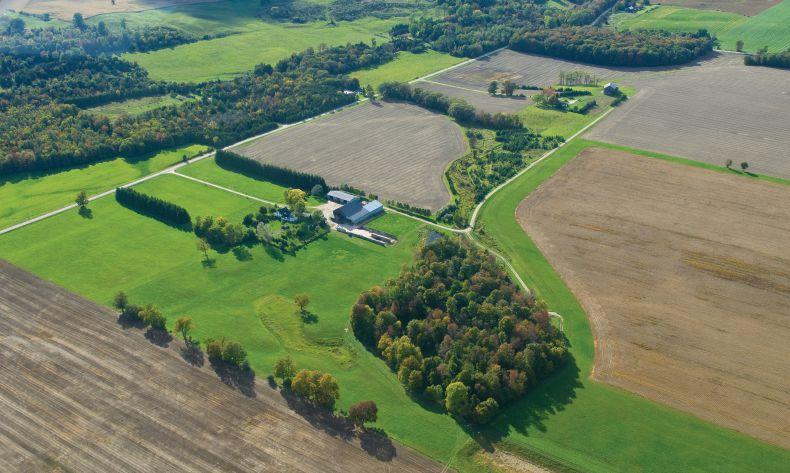
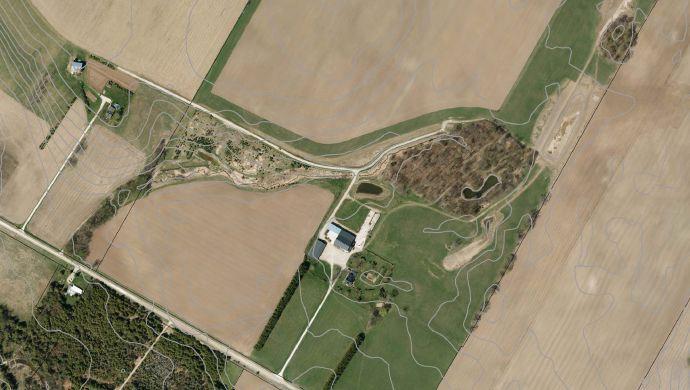
Between 2005 and 2009, the Maitland Valley Conservation Authority (MVCA) coordinated the funding and construction of a project that would showcase a whole suite of drainage solutions on the Scott farm. Agricultural runoff is now redirected through 2,558 feet of berms, 2,030 feet of grassed waterways and four standing inlet pipes into six constructed wetlands. Flow is controlled with three control boxes and an overflow culvert, while water is filtered through two French drains and three nitrate filters. In total, 813 feet of the channelized drain was restored to a low flow meandering channel with native shrubs and trees planted in the riparian areas.
An additional 4,033 feet of trees were planted as windbreaks to protect topsoil from wind erosion.
This solution was far beyond what the Scotts had originally expected. “And tours were never something we imagined when we started this,” Murray says with a laugh. In the last decade, the Scotts have taken hundreds of people around the property to show them how it all works. In looking back however, Murray feels that they started working on the wrong end of the drain. “We should’ve started upstream and worked our way down,” he says. “Any project of this nature should be done on a watershed basis.”
Geoff King, stewardship coordinator with the MVCA agrees. The organization is currently working with the four landowners upstream to intercept the runoff in a series of erosion control berms that will slow the water down even before it gets to the Scott drain. King is also exploring the possibilities of including these berms and other improvements under the protection of the Drainage Act. This will ensure that the area’s natural infrastructure is maintained
for optimal function.
Murray points to the fact that his farm was once part of the extensive Queen’s Bush that was cleared and drained for agriculture over a century ago. “Water used to pool in these places and go down into the aquifer, but now we’re draining it all in a short period of time.” He believes that with a bit of common sense, we can mimic Mother Nature while still making agriculture viable.
“We still need to tile drain because we can’t be productive without it,” he adds. “But through the experience of doing all this it has become clear to me that we were doing things all wrong in just letting the water go downstream and all drain away like that.” His field tiles no longer outlet directly to the drain, but empty into a series of constructed wetlands that allow the water to filter and seep down, along with the yard and roof runoff.
When Murray systematically tiled an adjacent 80-acre field in 2009, a control box was put on the main header at the downstream end of the field, so water can be stored there underground if needed. The field drains into a 370 by 130
foot stormwater management pond.
The pond was dug over the 14-inch municipal drain, and VanDriel opened the municipal tile with a control structure that diverts water to the pond in low flow conditions and back into the drain during high flow conditions. The pond can hold 290,000 cubic feet of stormwater and extra overflow culvert outlets along a grassed waterway into the woodlot. The pond drains back into the municipal tile through the control structure and outlets just 37 feet further downstream onto a rock chute within the woodlot. A field tile from the north also outlets through a nitrate filter in this location. Here a deeper pond was dug to act as a sediment trap and as a low flow pond for fish.
Overflow from two wetlands in the southeast join the drain here. These were naturally wet depressions that were dug out to increase the area’s water storing capacity.
Perhaps the biggest project was creating a 1,920 foot-long berm and grassed waterway that curves along the north edge of the Scott drain and has also provided a new access road for machinery and tours. The grassed waterways safely convey the field runoff to two separate catchment areas, one 80 acres to the west and the other 60 acres to the east. At the base of the east berm, a 620-foot long circular French drain filters water before it outlets in a fourinch pipe under the laneway and into the Scott drain. The drain is lined with filter cloth, backfilled with sand and “A” gravel, and then covered with topsoil and grass. A six-inch overflow culvert outlets under the road at the top end of the open section of the drain.
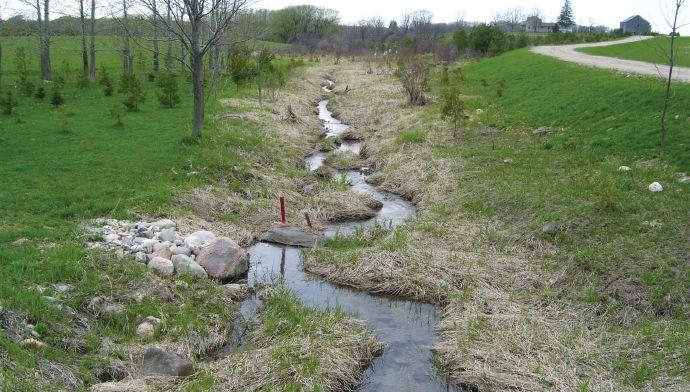
This section had long been straightened, but King was eager to construct a low flow channel that would meander and have the ability to self-maintain. While most of these meandering channels are professionally engineered, in this case the team spent time observing the channel’s flow patterns and then put in sod clumps to make the channel narrower and accentuate its existing shape. They found shallow ground water seeping out of the bank that now added cold and clear water to the base flow, whereas before it had been oozing from the silt along the drain. The Scotts were impressed with
Scott Drain Restoration
Belgrave, Ontario (2005-2009)
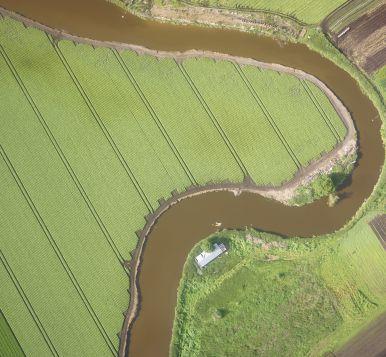
ABOVE: In total, 813 feet of the channelized drain was restored to a low flow meandering channel with native shrubs and trees planted in the riparian areas.
the naturalized channel. “A week later it looked like it had always been that way,” Wilma says.
On the west side of the property, surface water is intercepted in two areas behind the long berm and drains through standing inlet pipes and into a wetland, along with the field tile from the north.
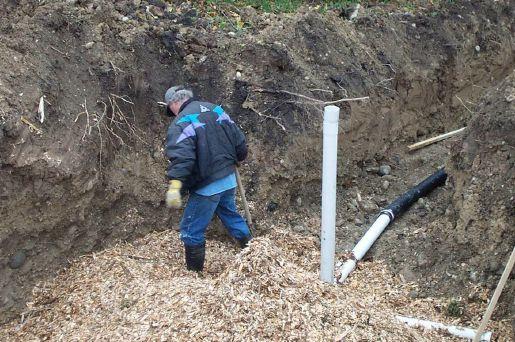
Decades ago, the Scotts built fish hatcheries along the drain, but the concrete tanks were left vacant for many years before the team thought of using them as nitrate filters. In 2008, Will Robinson with the University of Waterloo joined the team to pilot a nitrate filter design project. Two hatcheries were laid with a grid of four-inch PVC perforated pipe and filled with woodchips. Overflow from the wetland runs along a grassed waterway into the first filter, on to the second and then outlets to the Scott
drain.
Water quality monitoring has shown that the filters were effective at removing 100 per cent of the nitrates from the water that went through them, though they can only filter a small fraction of the total runoff. One challenge with this system is that it needs to have a consistent flow of water through it.
“If the flow is too high, then it doesn’t have enough time to take the nitrates out,” VanDriel says. “But if you don’t put enough water through it, it dries out and becomes too acidic to work.”
The team worked with Parish Geomorphic to engineer the naturalized channel near the filters, and other difficult areas of the project were professionally designed as well.
Belgrave Creek
TOP: The Scott drain features a network of 2,558 feet of berms, 2,030 feet of grassed waterways and four standing inlet pipes into six constructed wetlands.
Tait_3.375x4.875 10/18/04 3:09 PM Page 1
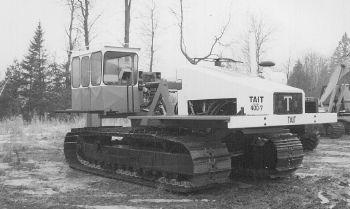
“Made to last for
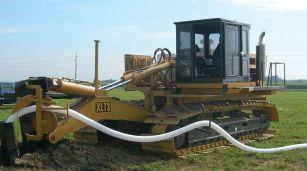
•Up to 7ft cutting depth
•High production
•Low ground pressure
•Robustly built plow and frame
The following options are also available:
•Choices of engines – CAT, CUMMINS, DETROIT
•Oscillating tracks
•Wider cab model
•Variable angle arc plate
•Quick change teeth (reversible)
•Tubing chutes up to 16 inch
•GPS or Laser Guidance
A SILT'S EYE VIEW OF NORTH AMERICA’S FINEST DRAINAGE FILTER
Managing Risk
Is your business protected against faulty workmanship?
by CNA Financial Corporation
Faulty workmanship is a risk specialty contractors face with each project they take on. Problems can come from a variety of factors and often take years to arise. For this reason, contractors need insurance coverages built for their unique exposures. To address this need, business insurance carriers are beginning to offer contractors errors and omissions policies, which can protect your company from significant losses. Historically, professional liability policies were designed to protect firms against risks beyond the coverage of their general liability policies — specifically claims resulting from design errors and omissions. Today, professional liability policies have evolved into a more robust contractors errors and omissions policy that expands coverage to include faulty workmanship and the use of defective materials and/or products. It is important that you understand the limitations and benefits of professional liability policies, for both your firm and the design professionals you are hiring. More and more contract requirements are emphasizing the need for this type of coverage.
Commercial general liability (CGL) policies were never intended to serve as warranties of work.
Damage to self-performed work is considered to be a “business risk” and is excluded in most situations. Exceptions would be damage to property that is not the work itself or, possibly, damages caused by or to the work of a subcontractor done on behalf of a general contractor.
Some insurance carriers hold that faulty workmanship never satisfies the commercial general liability insuring agreement because there is no accident and, therefore, no property damage to be considered a covered “occurrence.” Case law is often split by state. Since 2005, at least 20 jurisdictions have issued decisions to support defective construction as an “occurrence” with respect to damage to property other than the work itself. Courts in other states, such as Arkansas, Hawaii, Pennsylvania, South Carolina and Ohio,
ruled faulty workmanship is not an occurrence. In response to those decisions, South Carolina and Arkansas joined other states in enacting legislation to support the opinion that faulty workmanship, which causes damage to property that is not the selfperformed work, is indeed a covered occurrence.
While court decisions may change how CGL policies are construed, insurance carriers do offer endorsements to clarify that the exceptions to work exclusions, and damage to property that is not the work itself, are deemed to be an occurrence. Contractors should partner with brokers and carriers that can properly explain these options and whether or not they are needed.
Many carriers have taken steps to recognize the coverage need for what had previously been considered a pure business risk — faulty workmanship self-performed by a subcontractor. The Contractors Errors & Omissions and Pollution Liability (CEO) policy was developed in response to a number of requests for a product to address construction errors and omissions.
A contractor’s work often includes an element of judgment and design in selecting the means and methods of construction. Their contractual scope of work, however, is construction driven, and they do not generally deliver design documents as a work product. Claims regarding work by specialty contractors are typically driven by faulty workmanship. The CEO product responds to that market need. It is designed for specialty contractors that do not have a professional exposure per se, but do have an exposure from errors or omissions in construction that may cause damages not covered by the ISO Commercial General Liability (CG 0001) form or traditional professional liability forms. DC
The information, examples and suggestions presented in this material have been developed from sources believed to be reliable, but they should not be construed as legal or other professional advice.
DRAINAGE SYSTEMS
Continued from page 16
“It was a unique project, because there was no ‘blueprint’ so to speak,” VanDriel says. “It existed in Geoff’s head and we worked on our hunches. We knew the principles, we knew the landscape, and we knew what we needed to accomplish.” They have replicated these principles across a number of subsequent projects in the area, most notably in the Pine River watershed, to the north.
The Scott Farm project was made possible by funding from Greencover Canada, Huron County, the Department of Fisheries and Oceans, Ministry of Natural Resources, Parish Geomorphic, VanDriel Excavating, MVCA and, of course, the landowners themselves. The Scotts retired 10 acres of land and put much of their own time and money into the project. Their enthusiasm and dedication to the project, including running tours for the public, has earned them some wellearned recognition, including the 2013 Minister’s Award for Environmental Excellence.
Fish sampling in 2014 monitored a substantial amount of small brook trout, and water quality samples indicate that the area has been significantly improved.
The Scotts will admit that these improvements haven’t put any money in their pockets, but they are happy to be keeping their topsoil on the property. In the last decade, the drain has required no maintenance and it has withstood some of the
Nitrate filters were created by laying a grid of four-inch PVC perforated pipe inside fish hatcheries that had fallen out of use and filling the existing concrete structures with woodchips.
worst weather on record in Ontario, including one of the driest years on record in 2012, followed by one of the wettest years recorded in 2013.
The proof is in the water: while nearby watercourses are running full and muddy, the base flows of the Scott drain remain constant, clear and cool. DC
TECHNOLOGY
EYE IN THE SKY
UAVs can reveal what’s up down below.
Unmanned aerial vehicles (UAVs) are generating a lot of buzz in the agriculture sector lately. The rapidly evolving technology is giving farmers the ability to understand what’s happening in their fields like never before, and new rules coming down the pipeline on both sides of the border have the potential to open up new opportunities to put these powerful machines to work. Drainage contractors too stand to benefit from adopting UAV technology into their operations.
by BRANDI COWEN
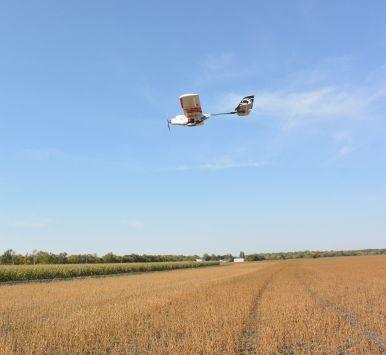
LEFT: An unmanned aerial vehicle (UAV) can pinpoint trouble spots requiring closer inspection by a trained human eye to diagnose whether drainage, disease, or some other factor is to blame.
RIGHT: A UAV can capture data on up to 500 acres in a single flight lasting up to an hour. Users can get a first look at the data within minutes of completing the survey.
There are two types of UAVs: a fixed-wing model that flies like a miniature airplane, and a rotor model that can hover in place like a miniature helicopter. Both models can be kitted out with cameras and sensors to deliver a bird’s-eye view of a farm, providing a snapshot of field conditions. To capture this data, the UAV flies multiple passes overhead, constantly snapping pictures to ensure complete coverage of the survey area. These pictures are then stitched together and can be imported into geographic information system (GIS) or computer-assisted design (CAD) software, allowing the user to study the aerial images and pinpoint areas that require closer inspection by a trained human eye to diagnose what’s at the root of any trouble spots.
“The bird’s eye view lets you get the holistic view of the field, and that’s a big help. You can see very clearly the differences in the field based on drainage, evaporation rates and things like that, particularly surveying after a rainstorm. It gives contractors a view of the
field that they can’t really get any other way,” says Ernest Earon, founder of PrecisionHawk. The company, with headquarters in Raleigh, N.C., and satellite offices across the United States, Canada, the United Kingdom, Australia and India, provides a complete system for aerial surveying. It’s designed to be userfriendly: simply throw the UAV into the air and it will fly multiple transects over a pre-programmed area to collect a complete survey of the field. PrecisionHawk’s UAV can fly in rain, snow and wind up to 40 to 45 km/ hour. Above this threshold, the wind can compromise the efficiency of the survey. If the machine, which monitors flight conditions in real-time, determines wind speeds are too high, it will turn around and land so the survey can be attempted at a later time, under more favourable conditions.
The UAV can capture data on up to 500 acres in a single flight; a survey of this size can take up to an hour to complete. Users have access to a first look at the data within minutes
of completing the survey. PrecisionHawk also turns the complete survey data package around quickly.
“Depending on the size and the intensity of the survey, we can have a completely processed photomosaic in your email inbox within an hour,” Earon says. “For a very data intensive survey it might take several hours, but the idea is to get the information turned around as fast as we can.”
DRAINAGE APPLICATIONS
HighEye Aerial Imaging, located in Wasaga Beach, Ont., specializes in aerial imaging services, capturing high definition photography and videography at low altitude with its fixed-wing and multi-rotor machines. Both types of UAVs feature on-board sensors that record and automatically transmit data to the ground in real-time. Although HighEye hasn’t yet flown any surveys strictly for drainage purposes, president Murray Hunt sees many opportunities for contractors to use UAVs in their operations.
“The biggest thing I see for the drainage contractors is that it saves time. In the design stage and in the pre-layout surveying, you can get the topography of the property,” Hunt says. “Through processing, we can provide detailed elevation data and generate contour maps... We can export the data into the CAD program so you can take the geographic information and convert it into a file that someone could load onto their software and do a final drainage design.”
As Hunt explains, latitude, longitude and elevation data is all embedded in the software. “This way, not only do you get all the geographic information, but you actually have an image and you can plop that on the aerial image of the property that you’re looking at.”
Imaging technology can spot differences from one section of field to the next, but it can’t yet distinguish a drainage issue from a disease issue. “If you’re looking at drainage and soil content, at moisture content in the soil, we don’t at the moment have any tools that can tell you exactly what the moisture content is in the soil or what the water level is and things like that,” Earon explains. The technology allows users to zero in on areas that require a
closer look; it’s up to the user to get out in the field and identify the root cause of any trouble spots the survey reveals. UAVs can also be a useful tool in helping contractors pinpoint the precise location of any existing drain tile in a field. “You can’t actually sense the tile, but you can sense all the symptoms in the crop above it, whether it’s nutrient deficiency they’re finding with an infrared camera or a multi-spectral camera or just locating drain tile the day after it rains,” explains Todd Golly,
co-founder of Leading Edge Technologies in Winnebago, Minn., and himself a drainage contractor. “That’s one of our things that we do most actually: locate old tile.”
UPGRADES THAT DIG DEEPER
As UAV technology and its applications evolve, existing equipment is being adapted to give operators new insights into what’s happening on the ground. For example, PrecisionHawk’s UAV system can be equipped with a thermal
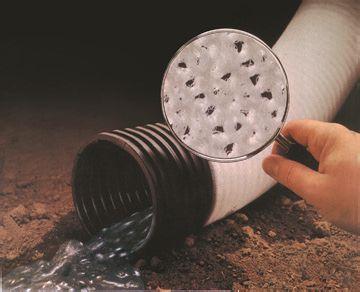
With nearly a century of experience behind them, Fratco products stand the test of time. Our pipe is engineered to a quality level that exceeds specifications. An investment in Fratco pipe means you can tile your field and never think about it again.
100% virgin plastics make up our strongest pipe. This pipe exceeds AASHTO and ASTM standards so you can rest easy for generations to come.
Call it “green” or call it “cost effective”, just don’t call it weak. Our highly engineered HDPE pipe is designed and tested to the same high standards. For less demanding projects consider our 100% recycled TruFlo pipes. Call our expert staff today to see if the TruFlo pipe might be a good fit.
camera that allows users to capture information about standing water on a field and evaporation rates in the soil.
“If you’re using the thermal cameras and looking at soil temperature, you can tell if you’re getting much higher evaporation rates with cooler soil early in the morning,” Earon explains. “That’s not necessarily saying it’s oversaturated and you have a drainage problem, but if you get a patch of field where you clearly have more water or faster evaporation rates, you would see that in the thermal image. It would look cooler and then you would want to go out and find out why.”
Leading Edge Technologies is also adapting new technology to its operations. The company now offers an optional multi-spectral camera attachment for its UAVs. The MultiSpec 4C unit contains four 1.2 megapixel sensors that collect data about the wavelengths of light being absorbed by a crop. Healthy plants reflect and absorb various wavelengths of light in different quantities than plants experiencing stress. So, by capturing data about how a crop is using light in the green,
red, red-edge and near infrared (NIR) wavelengths, a multi-spectral camera can identify variances in crop health. These differences aren’t necessarily visible to the human eye, nor at ground level, but when seen from the sky, patterns can become apparent. The overhead, whole of field view can allow drainage professionals to pick out patterns of lines running through the crop that may
indicate plants are growing along the path of existing tile.
Technology is continuing to drive innovation, and new tools to help agriculture professionals do their jobs more effectively are just around the corner. In the coming months, PrecisionHawk hopes to introduce a new ground penetrating radar sensor capable of providing information about soil content, moisture content, and the depth of the water table. Earon expects the company will be flying prototypes of this sensor by mid-summer.
A QUESTION OF COST
The price tag on a UAV can run from a few hundred dollars for a hobbyist craft, up to thousands of dollars for a commercial grade unit. Factor in software and the costs of investing in a complete system can add up quickly.
“You’re going to be in that range of $25,000 for the UAV and complete software package that can create these three-dimensional surveys with topography,” Golly says. “That software will also be able to export to other
HICKENBOTTOM INC.
A Few Key Features:
• 350 HP Cummins QSM11 Engine
• Cab with Heat and Air
• Power Shift Transmission
• 7' Dual Hydrostat Drive, Tapered Digging Wheel
• Self-Leveling Wheel Up to 8 Degrees Left or Right
• Self-Leveling Wheel Up to 8 Degrees Left or Right
• Digging Wheel Pivot
• 36" Wide Conveyor-Bar Style Dirt Shield
A Few Key Features:
• 400 HP Cummins QSM11 Engine
• 175 Double Link Plow with Auto Self Leveling
• Enlarged Cab Design for Operator Comfort with Heat and Air
• Full Wrap Around Service Deck
• Lower Profile Hoods for Greater Visibilty
• Plow Depth Up to 6' Deep
• Easy Access Catwalk to Tile Feeder
drainage programs. If you want to add different sensors, there will be additional costs on top of that.”
A multispectral scanner can run about $13,000, while a thermal camera can sell for about $17,000.
“The other option is an RTK [real time kinematic] version that will give you a bit more accurate topography,” Golly adds. “You won’t be able to fly the thermal camera and the multi-spec camera because they’re not compatible, but if you want the greatest accuracy –sub-inch accuracy – on topography, you could upgrade to an RTK system, which is in the $50,000 range.” However, Golly, who says farming remains his main job, adds, “We don’t use the RTK version for surveying; it’s mainly for planting.”
Golly recommends drainage professionals on the market for a UAV start with the base unit and build on
to the bird with additional sensors as needed.
Another option to leverage the power of UAVs in your business without taking on the cost of operating your own system is to contract a professional firm to fly surveys on an as-needed basis.
SURVEYING THE LEGAL LANDSCAPE
Both the Federal Aviation Administration (FAA) and Transport Canada (TC) are working toward new regulations governing UAV use that balance creating an operator-friendly environment with ensuring public safety, and reflect the realities of the technology. Although it may still be a while yet before either body has a full set of final rules in place, if they remain true to the proposals currently on the table, the changes could usher in a new era of UAV use in agriculture.
The FAA’s proposed rules for UAV use were announced in February. As they stand now, the new rules would require operators to comply with a certification process that includes an exam. Operators would also have to register and maintain the aircraft, and adhere to limitations on the UAV’s operation. Some of these limitations include: the UAV must not exceed a maximum weight of 55 pounds (25 kg); the operator must maintain visual line-of-sight with the UAV at all times; and the UAV may not fly above a maximum altitude of 500 feet above ground level.
“We think it’s a very common sense, practical set of operational guidelines, and we’re very pleased to see things moving forward from a regulatory standpoint,” Earon says. “The environment is finally getting to the point where people can make the decision [to invest in a UAV] and know that they’re going to be able to go out there and fly.”
TC is also working toward streamlining its regulations for UAV operations. In November 2014, the department introduced two exemptions to make it easier for small UAV operators to fly: a Special Flight Operations Certificate (SFOC) is no longer required for certain operations using a UAV weighing less than 2kg, or, with prior authorization from Transport Canada, a UAV weighing less than 25 kg. For these exemptions to apply, the operator must keep the UAV within visual line-ofsight, and fly at or below 300 feet above ground level, among other limitations.
“They’ve really made it very feasible for individuals to be operating these systems over their farm fields,” Earon says.
Hunt, an active member of the nonprofit Unmanned Systems Canada, which represents the interests of the country’s unmanned vehicle systems community, says the association is working with TC to further streamline the regulations.
“Agriculture is a huge and incredibly data-hungry space. They need answers and they need information to guide their decision-making process, so there’s a lot of attention being focused on making tools to support that,” Earon says. “Stay tuned because we have a lot of very interesting things coming.”
TOP: A thermal sensor can determine the health of a crop from the varying canopy temperatures, allowing the operator to isolate problem areas in a field.
ABOVE: A multi-spectral camera highlights areas where the soybeans in this field are under stress (shown in red).
PHOTO
DRAINAGE SYSTEMS
WATERLOGGING AND DRAINAGE
A Nuffield Scholar shares lessons learned.
The importance of good water management is sometimes lost in the busy world of farming. As an Australian Nuffield Scholar, travelling to the United Kingdom, the Netherlands, the United States and Canada to gain knowledge on ways to reduce waterlogging, I soon realized the importance of looking at multiple ways to combat this issue.
My study topic is finding ways to reduce waterlogging in high value cropping programs. Controlling water from rainfall and irrigation is an important part of any modern farming business. Crop stress, either by being too dry or too wet, limits plant growth.
My wife Sarah and I run a mixed cropping farm in the Northern Midlands of Tasmania, Australia. Tasmania, being an island with a moderate climate, lends itself well to niche crops such as poppies, vegetables, cereals, and seed crops such as grass seed, carrot, etc. On the property we also run a prime lamb trading operation. As crops are harvested in summer, wheat and grass seed crops are planted and used as a cover or fodder crop to fatten lambs. Most of the property is irrigated using pivot irrigation. The soil is a red clay loam with very heavy clay subsoil. Crops suffer badly through the winter and early spring from losses attributed to waterlogging. Because of the heavy clay content, water infiltration is very slow and most crops suffer after prolonged periods of wet weather. Tile is used in conjunction with raised beds, surface drains and mole drains. All tile is put in by local contractor Tas Land Drainage,
by GREG GIBSON
using a Mastenbroek trenchless plow with the aid of a laser. The company has been experimenting with GPS grade control and will hopefully take this technology on in the future. Gravel aggregate is placed around and on top of the tile up to 300 mm (one foot) of the surface to broaden the tile profile. In addition to this, mole draining at a depth of 600 mm (two feet) and two metres (approximately six to seven feet) apart is installed adjacent to the
tile lines to allow water infiltration. The mole drainer is simply a vertical leg 600 mm (two foot) long with a cylindrical torpedo attached. Following this is an expander, to help compact the mole wall. Mole draining needs to be done when the clay is damp enough to hold the shape of the expander, but not too wet to be compacting the surface with machinery. The mole will stay
DRAINAGE SYSTEMS
DRAINING FAIRWAYS
Seven steps to successful fairway drainage.
Few soils will drain fast enough to allow golf to be played in comfort after a period of prolonged rain, but effective drainage techniques can make a huge difference to the speed at which water will drain away. Here are seven steps for successful fairway drainage that will keep costs down.
1.
TILE DEPTH
The size and correct positioning of the tile is vital, as it has the job of drawing the moisture elsewhere. Many golf courses are built on clay soils, which are almost impermeable to moisture, so excess water will simply sit on top of it. For best results lateral tiles should be approximately 19 inches deep and main drains should be about 23 inches deep. Installing tiles even seven to 11 inches deeper can be a waste of money. Drains placed too close to the surface can be damaged by future surface aeration operations.
2. TILE LAYOUT
The “flag layout” gives the best results for fairway drainage, as the main drain runs
down the side of the fairway – possibly in the rough – and the junctions are clear of the closely mown areas. This method gives better results than the traditional “herringbone layout” where water is taken to the centre of the fairway, where most golfers will be playing.
3. TILE SPACING
Cost is generally the major factor when deciding how far apart to place lateral drains, but a spacing of 32 feet would be considered the maximum, while 22 feet or 16 feet are preferable spacings on the wetter parts of the course. Spacing can be wider if a secondary drainage system is superimposed over the tile system.
4. TILE SIZE
by MICK CLAXTON
Size is important, but bigger isn’t better when it comes to land drainage. Plastic land drainage tiles have small slits cut into them so the water can flow into the tile – as this happens, it takes fine soil particles with it. Where there is a good flow of water, these particles are flushed away. This can be helped by using a smaller tile of one, two or three inches in diameter. In larger tiles, where water flow is more sluggish, the soil particles will simply sit in the bottom and create a build up, reducing effectiveness.
5. TRENCH SIZE
The most cost-effective technique is to cut a trench that is slightly wider than the
diameter of the pipe. The forces in the soil will close the trench walls 0.5 to 0.75 inches soon after digging, allowing the tile to fit snugly in the trench. Many modern sportsturf trenching machines work on the same principles as a large circular saw, cutting trenches with considerable precision. Paying close attention to the size of the trench can result in a big cost saving as less aggregate is required to backfill the trench.
6. FALL
It may sound obvious that water doesn’t flow uphill, but all your good work can go to waste if tiles do not have adequate fall on them, allowing the water to run away. Specialist contractors use laser-guided machines to ensure tiles are installed at greater depths through mounds and ridges.
7. TIMING
The best advice has got to be to, “plan the work when it’s wet and do it when it’s dry.” Working in wet soils creates damage to the soil structure, but waiting until things dry up a bit means drainage work can be carried out speedily, so there is minimal disruption and greater recovery.
On heavy soil or courses in wetter areas, a secondary system may need to be installed for the best results, but a well-installed primary tile system is a cost-effective first step and can achieve great results. DC
Shelton Sportsturf Drainage Ltd is a global business based near Horncastle in Lincolnshire, England. Shelton designs and manufactures specialist drainage machinery engineered with sportsturf in mind, leaving minimal impact on grass so it can get back in play within 24 hours of work being completed. For more information contact www.sheltonsdrainage.com.
PHOTO COURTESY OF SHELTON SPORTSTURF DRAINAGE.
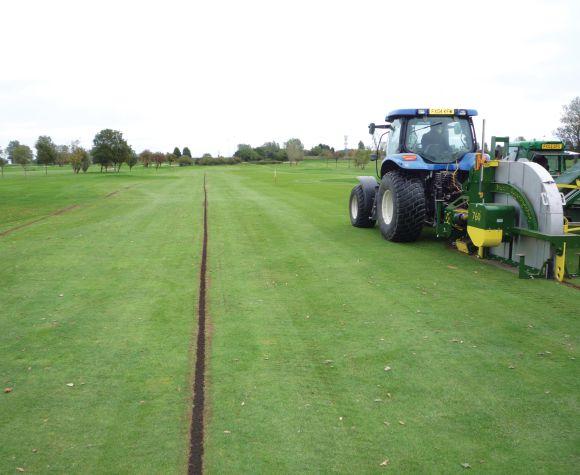
The Supertrencher+ 760 carries out fairway drainage.
NEW PRODUCTS
BACK FLOW PREVENTER FROM IDEAL POLYMER SOLUTIONS
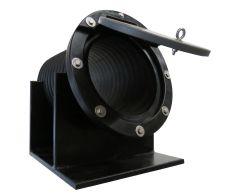
Ideal Polymer Solutions’ back flow preventer blocks the reversal of water flow in a drainage system, eliminating backup when water rises above the outlet.
The back flow preventer can be constructed from high-density polyethylene (HDPE) or polyvinyl chloride (PVC), and is available in pipe size diameters ranging from four to 18 inches. A neoprene rubber seal increases its effectiveness, and a handy clean-out access option is also available.
Advanced options include a flap assembly that can be welded to the end of an outlet pipe, and a field assembly that can be attached to a previously installed outlet pipe.
The back flow preventer can be used in the redevelopment of existing drainage systems, or in new agricultural developments.
www.justpipe.ca
INJECTION MOLDED PRODUCTS FROM FRATCO
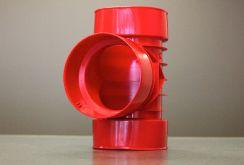
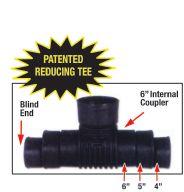
Select drainage system parts and fittings are already on offer, including four-inch tees, end caps, internal couplers, and three-inch plugs. The new injection molded parts promise to be sturdier, longer lasting, and made to a more exacting spec.
The company is also planning to offer more injection-molded parts and pieces going forward.
www.fratco.com
TRIMBLE WM-FORM LAND FORMING SOLUTION
Fratco is now offering injection-molded products.
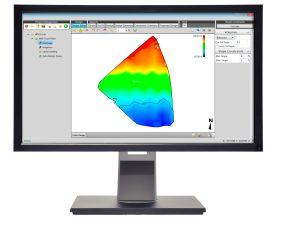
Trimble’s new WM-Form land forming solution optimizes field surfaces for leveling, surface drainage and irrigation. The solution can repair underperforming areas and extend the amount of productive farmable land, reduce the volume and cost of earthworks, and minimize disturbance to valuable topsoil. It can also optimize water distribution and drainage, reduce erosion and flooding by effectively directing water flow, and create more uniform crop production, which can lead to increased yield.
Contractors can use the WM-Form solution from survey to verification. Users can collect 3D field data using the Trimble WM-Topo survey system or the FmX integrated or TMX-2050
displays. They can then analyze topographic data in the WM-Form software to identify surface problems that are limiting yield potential and use the software’s flexible design tools to create a design that optimizes their field’s surface. The software also provides reports for volume, area and constraints, providing contractors and growers with an accurate quote on the total cost of the project. Users can leverage the 3D design to conduct land forming operations using the Trimble FieldLevel II system, and then verify the design has been accurately completed using the Trimble WM-Topo survey system.
www.aginfo.trimble.com
NEW TRENCHER MODEL FROM DK PRECISION TRENCHERS
DK Precision Trenchers
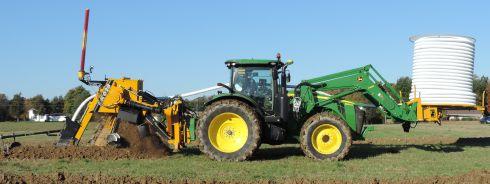
LLC is giving farmers and contractors alike the power to install drainage tile with a trencher and their own tractor. Automatic guidance control keeps the trench
bottom and sides in a clean and precise slope, with zero worries of slope interference. Installation tile size ranges from two inches to 24 inches with a six-foot depth capacity. Special models offer seven-foot depth capabilities. The 628 model has been a best-seller since hitting the ag market in 2010. The 2015 model offers new features to increase efficiency during operation and overall quietness. New chains, cutters, and sprockets are specifically designed for the trencher and have been uniquely engineered for this model. The machine is handmade in the United States. www.dktrenchers.com
775 DT TRENCHER FROM TESMEC
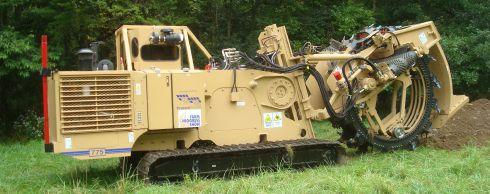
Tesmec USA’s 775 DT trencher is available in two different versions: chainsaw and bucket wheel. The 775 DT chainsaw reaches maximum depth at eight feet and maximum width at 24 inches, while the bucket wheel can dig up to 6.5 feet deep and 30 inches wide. Both machines are powered
Surface Water Intakes
• Parts highly adjustable & interchangeable with others on the market
• Orifice plate placed at tee level or at ground level.
• Exclusive locking device on each part. • User Friendly-Priced effectively.
• Adaptor available to repair old metal or broken intakes.
Why
DK PrecisionTrencher.
Tesmec 775DT Trencher.
How is drainage on your farm?
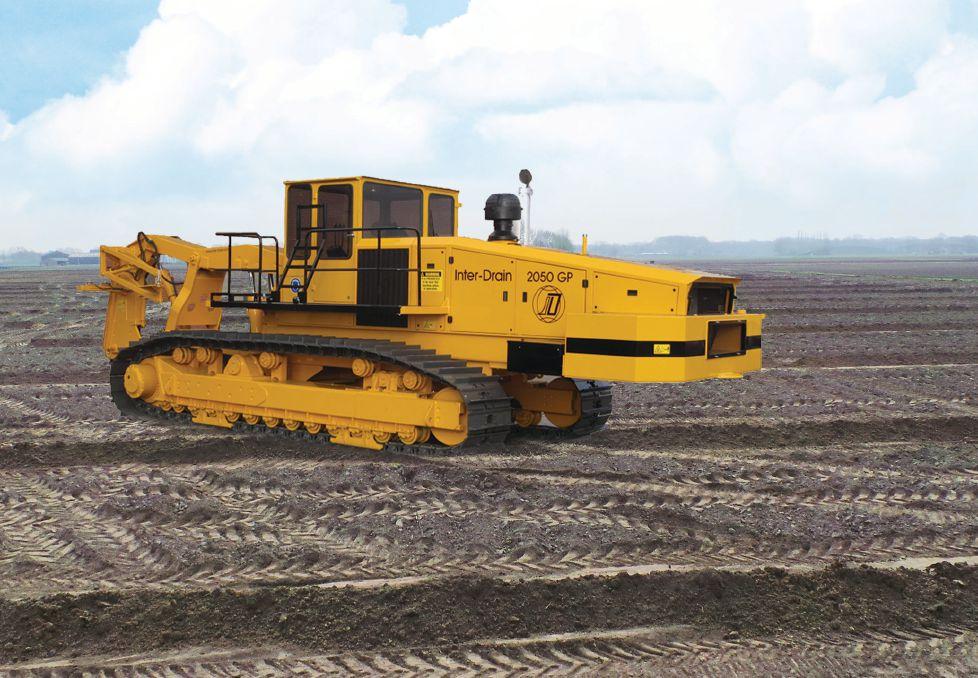
AFT 100 - The best investment for long term yield improvement; also provides an excellent opportunity for local contracting
Great Lakes Inter-Drain, Inc Fremont, OH 43420
Email: sales@ greatlakesinter-drain.com
Tel: 800-767-1904
NEW PRODUCTS
by a 225 HP CAT C6.6 and TrenchTronic 3.0-equipped for optimal digging conditions.
www.tesmec.com
LIEBRECHT INTRODUCES GRADABLE TRENCH BOX
Liebrecht Manufacturing, LLC has introduced the Liebrecht Gradable Trench Box. It is capable of installing 15 inch through 42 inch dual wall pipe. The trench box cuts a shaped bedding that conforms to the outside of the pipe and cost savings can be realized by eliminating the stone bedding and backfilling, reducing time, man hours and input costs.
The trench box comes standard with side tilt to maintain grade on cross slopes. It does this using laser components powered by the onboard hydraulic and electrical system. Another key feature is the hydraulic coupler that joins the pipe sections without entering the trench. A tandem axle dump truck with a pintle hitch or tractor with three-point hitch can be used for transport.
The Liebrecht gradable trench box cuts the grade, forms the trench and lays the pipe in one pass.
www.farmdrainage.com
HP AGRICULTURE LIFT STATION FROM ADS
Advanced Drainage Systems (ADS) has introduced the HP agriculture lift station,
which manages water flow rate, field water table level and power consumption. It has simple and easy remote access and operational alerts (including motor overload, system overheat, etc.) and can be monitored from anywhere in the world via any web-enabled device. The HP agriculture lift station can help increase yield, control ability to get into fields earlier, and reduce pump power consumption by using efficient irrigation methods or pump run schedules.
With thousands of miles of energy pipelines proposed or under construction in the Corn Belt, having a longterm, reliable way to repair tile damaged during pipeline construction is critical. The tile bridge, a patent product from Timewell Drainage Products, offers a solution to this challenge.
The tile bridge is designed to keep tile repairs on grade. During a proving session last summer, the tile bridge was installed with “access points”
Liebrecht Gradable Trench Box
to allow for grade testing. The tile bridge has been approved for use in the Illinois Department of Agriculture Pipeline Construction Standards and Policies and has also been accepted by the Natural Resources Conservation Service.
www.tilebridges.com
ENHANCED SOCK FILTRATION
With more marginal soils being drained in recent years, the demand for easy to apply filtration fabrics with enhanced performance characteristics has grown. Zodiac Fabrics and its sister company, Carriff Corporation, have responded to this demand by developing two new SOCK filter fabrics with enhanced filtration characteristics. They are available in four inch and six inch diameter fabrics with maximum filtration opening sizes of 120 and 250 microns.
Both of the new products are black; the 120-micron product is identified with a blue identification stripe
and the 250-micron fabric is identified with a yellow identification stripe. The products are seamless, eliminating the need to sew or glue the fabric during application to the tubing. As a result, tubing production line speeds can be maintained at normal rates and there is no risk of seam failure.
www.zodiacfabrics.com
UPGRADED WOLFE WHEEL TRENCHER
Major upgrades are taking Wolfe wheel trenchers up a notch with increased efficiency, safety and performance. The cooling system has been completely overhauled and is quieter, has more cooling capacity and is easier to clean and maintain. It features a larger engine cooler, variable speed hydraulic fans for more fuel efficiency and is side machine mounted to reduce recycled hot air and noise for the operator. The air conditioning system now has 45 per cent more cooling capacity and comes standard on all new models.
The wheel trencher can tilt up to seven degrees to hold the wheel vertical when trenching on slopes. The new optional extreme duty wheel features heavy duty 1.5-inch rims and buckets with wide-drive sprockets and wheels segments, large diameter lower wheel rollers with heavy-duty bearings and Kennametal tooth holders with flat digging tooth or carbide bullet for digging into frost and light rock. www.wolfeequipment. com
Double Link Tile Plows
DRAINAGE SYSTEMS
Continued from page 28
there for four or five years and must then be reinstalled.
My goal was to find out what causes waterlogging and how to reduce its effects. I studied monitoring soil, plant health, irrigation management using variable rate application, drainage and nutrient loss. Drainage was a large part of my investigation. During my travels I met with many contractors, manufacturers, researchers and farmers. It seems drainage itself hasn’t changed a lot over the years, but many things that surround it have. There is no doubt the addition of GPS technology has made a big difference to the way fields are drained. The design work takes minimal time using the latest watershed modelling programs. Utilizing these programs enables contractors to quote when looking into a new job. For the farmer or grower, this technology means they have a complete plan laying out the costing, tile size, tile placement and how much water can be drained off the field. Upon completion of the job, a record can be kept for reference in future extensions or repair work. GPS is also used to control tile grade and placement in regards to the field topography. This technology is a giant leap forward. Controlled drainage systems, utilizing
control structures, have been well highlighted to show benefits in the reduction of nutrient loss. Tile control structures have become very popular. By placing these structures just before the out fall, the water table can be raised to hold water in field and let the rain soak in and filter through the soil profile. This also holds nutrients in the field longer and doesn’t allow them to flow straight through the drainage tile into the waterways as a pollutant. It is a very simple structure that drastically reduces the amount of nutrient loss, keeping nutrients in the field to aid in crop growth.
I also met with researchers working on some very interesting programs. Richard Cooke, at Illinois State University, explained research is being done on saturated buffer zones and woodchip de-nitrification bioreactors to reduce nutrient loss. Hopefully, by using these methods in the future, nutrient loss will be vastly reduced. Another relatively new idea is the use of in-line water gates to raise water levels. Using these for subsurface irrigation was another idea that was really pushing the thinking of water management. As Chin Tan, with the Greenhouse and Processing Crops Research Centre in Harrow, Ont.
explained, the tile is already there and if it can be utilised as an irrigation option from beneath the plant it will promote deeper “searching” roots. Of course a close monitoring program needs to be in place in case of a major rainfall event. This can be done by lowering the water profile before rainfall through the use of stop logs in the control structure.
I was very impressed with the professionalism of the contractors that gave up some time to talk with me. They showed great precision and care when installing tile pipe. I am grateful for their honesty and openness when questioned on certain ideas and customs.
On returning home, after meeting so many great people with an array of ideas, I am focusing my time on a full system approach to waterlogging. The plan is to use the technology available to monitor as many factors as I can, and use drainage technique, design and technology, nutrient loss management, controlled tillage practices and variable rate irrigation to try to reduce crop loss from waterlogging. DC
Greg Gibson is a Nuffield Australia 2014 Scholarship winner.
Being open to unusual jobs can keep the machines running during slow periods.
Like many, I’m keenly awaiting the arrival of spring. This winter has been neither particularly snowy nor sodden for us, just a standard British winter, which makes draining land difficult. In the British Isles our weather is mild. We do not suffer from periods of extreme cold or heat and, on the whole, intense weather is something we experience only on the news. What we do have is rain and, in most places, heavy clay soils. These conditions are not good when combined with heavy drainage machines and over wintering crops. Our workload dwindles over the winter and each year we scratch around trying to find work that we can do. To begin with, this reduced pace makes a welcome change from the frantic pressures of the post-harvest rush, but by the time February arrives it is a drag on morale –and on the bank account. While I’m quite busy sending out estimates and drumming up work for next week, the guys are doing bits and pieces and painting our kit, none of which turns a profit. The only answer I can find, (and please correct me if you can) is to be flexible and try to say “Yes” to any opportunity that comes your way. This can lead us to places we have not been to before. That’s what happened to us this winter. Birmingham International Airport is one of the busiest in Britain and, as part of an expansion program, the runway has been lengthened. This is a major undertaking, as the A45 (one of the primary routes in and out of Britain’s second largest city) had to be re-routed. The work has taken over a year and has cost millions of pounds. One problem, tiny in terms of the size of the entire project, has been land drainage. The low laying ground beside the runway has standing water on it, and whilst this has not caused a problem yet, a flooded runway cannot be left untended, so we were asked to install some land drains. Of course, this is our bread and butter. The
job itself was very standard fare; however, the location was certainly not.
For some pretty obvious reasons we could not work beside the runway when planes were landing, so we undertook the first night work in the company’s 75-year history. The only time planes don’t land or take off is in the dead of night, meaning the working hours were from 11:30 p.m. to 3:30 a.m. We fitted lights on our machinery and floodlights provided enough light to work by. That was the easy part. Such a short working shift limited what could be done in a day and the job took twice as long as it would have if it had been completed in daylight hours. Rather reassuringly, security was tight and we had to pass through a strict security procedure each night. Health and safety was of paramount importance and involved numerous inspections, pre-work briefings and regulations. The drainage machine and other plant items could not be left on-site, so everything was taken off-site to a compound nearby via the airport’s main runway and taxi. After we finished working, the runway and surrounding area had to be swept for any debris, mud, overlooked tools and the like. No chances were taken, nor could there be.
This contract may have been the most unusual job we have ever undertaken, but it is not the only time we have laid drains in curious places. Just last year we drained the elephant enclosure for a zoo! We have no choice. To survive, grow and develop the business, we have to be flexible. I suspect that most fellow contractors reading this will have similar stories of working in strange places far from our natural home of farmers’ fields. Like us, you probably say, “Yes, of course we can,” and then wonder how the hell to do the job, but without an attitude like that, I doubt if we would be in business. Such an approach is at its heart positive, and a positive outlook is more valuable than anything else. DC
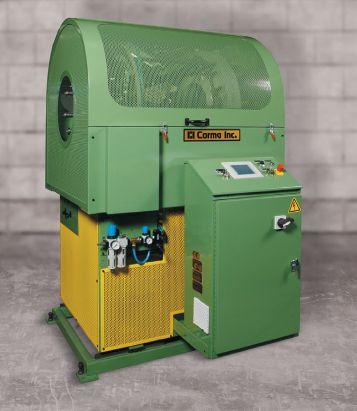
Since 1973, Corma Inc. has continuously innovated to meet the evolving demands of our customers. For example, our 630-12 and 830-12 High Speed Corrugators combined with our HSC Series 2 Adjustable Perforators will produce high quality 4" single wall HDPE pipes at high output rates up to 2,300 lbs/hr and 115' per minute. To learn how we can make a positive impact on your business, please contact: 830-12 Corrugator 2" (50 mm) I.D. to 12" (300 mm) O.D.