Annex Business Media P.O. Box 530, Simcoe, Ontario N3Y 4N5
(800) 265-2827 or (519) 429-3966
Fax: (519) 429-3094
READER SERVICE
Print and digital subscription inquiries or changes, please contact Angelita Potal, Customer Service
Tel: (416) 510-5113 • Fax: (416) 510-6875
Email: apotal@annexbusinessmedia.com
Mail: 111 Gordon Baker Rd., Suite 400, Toronto, ON M2H 3R1
EDITOR I Patrick Flannery pflannery@annexbusinessmedia.com (226) 931-0545
BRAND SALES MANAGER I Nav Matharu nmatharu@annexbusinessmedia.com (226) 931-5095
ACCOUNT COORDINATOR I Barb Comer bcomer@annexbusinessmedia.com (519) 429-5171
AUDIENCE DEVELOPMENT MANAGER Shawn Arul sarul@annexbusinessmedia.com (416) 510-5181
MEDIA DESIGNER I Curtis Martin
GROUP PUBLISHER I Danielle Labrie dlabrie@annexbusinessmedia.com (226) 931-0375
CEO I Scott Jamieson sjamieson@annexbusinessmeda.com
Publication Mail Agreement #40065710.
Printed in Canada ISSN 0383-7920
Subscription Rates Canada- 1 Year $ 45.90 + tax U.S.A. - 1 Year $104.55 (CDN)
Occasionally, Canadian Rental Service will mail information on behalf of industry-related groups whose products and services we believe may be of interest to you. If you prefer not to receive this information, please contact our circulation department in any of the four ways listed above.
All rights reserved. Editorial material is copyrighted. Permission to reprint may be granted on request.
Serving the Canadian rental industry for 45 years.
4
EDITORIAL
There might be reasons why the construction industry is slow to adopt digital technology beyond being afraid of it.
20 BRIDGES AND BARRIERS
Academics take a look at what holds construction industry innovation back.
6
INDUSTRY NEWS
Q2 rental market results and forecast...shareholder reports from the multinationals... Motion signs up to Indigenous program...
22 GET YOUR DUCTS IN A ROW
Tips on proper heater ducting from industry veterans.
12
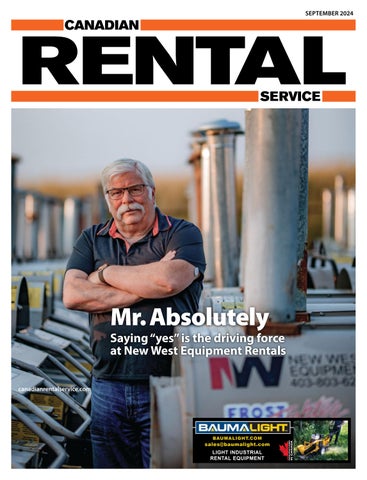
MR. ABSOLUTELY
A can-do attitude took Keith Beggs from fuel cleaning to a full rental operation.
26 2024 CONSTRUCTION HEAT SHOWCASE
www.canadianrentalservice.com
16 AT YOUR SERVICE
Things we can learn from Disney. by Russ Dantu
18 EVENTOLOGY
Amazon has moved the bar on service expectations. by Michelle Nicol
30
SNOOK’S LOOK
We’re going to need to get more productive to meet Canada’s housing needs. by Andrew Snook
PHOTO: SITTIPONG / ADOBE STOCK
Innovation frustration
by Patrick Flannery
What if the construction industry has actual reasons to be slow to uptake digital tech?
As you’ll see on page 20, there’s another white paper out bemoaning the low productivity of the North American construction industry. This one was provided by Trimble, a big global software supplier. The paper discusses agriculture, transportation and construction, but I think many of the issues are relevant in the rental industry as we are so closely adjacent to those other three. The paper, “Innovation Growth in the Lynchpin Industries” by Matthew Quint, director of Columbia Business School’s Center on Global Brand Leadership, outlines the problem by pointing out that “lynchpin” companies like Caterpillar and Deere have only eight members in the American top 100 (by market capitalization) and professional and business services companies have four of the top 10 (think Microsoft, Alphabet, Amazon and Meta) and dozens more lower down. This despite both sectors contributing roughly equally to U.S. gross domestic product.
Over here we can’t go for a decade or more making no revenue then get bailed out by a giant IPO.
I suppose the likes of Google and Facebook are to be congratulated for extracting trillions of dollars from the market when the incremental cost of each of their product deliveries is so low it can’t be measured. Some of us have to work for a living. If that’s the standard of productivity the construction industry is being held up to, it’s not exactly fair given the actual mechanics of what the two industries are doing.
But that aside, the paper goes on to identify the barriers to innovation in construction and to propose solutions. There’s a lot of quality insight there and we’ve reprinted some key excerpts. But in a few areas, I detect a whiff of techy frustration.
Barrier #1 is titled “this is how we do things.” The solution is to “slay the sacred cows.” The suggestion here is that companies are essentially hidebound to old practices and psychologically unwilling to look at anything new. Here’s a line
that struck me as ironic because it’s presented as a negative: “Companies that craft and execute a successful business model are expected to drive consistent and reliable results – which, ironically, hampers their attention to innovation practices.” Well, duh. Over here in construction we can’t exactly go for a decade or more making zero revenue like Facebook and Google did and hope to be bailed out by a massive IPO.
Barrier #2 is “fear.” Specifically, “fear of criticism, fear of uncertainty, and fear of negative impact on one’s career.” Yikes, sounds like cowardice and venality are running rampant at the top of North America’s construction corporations.
Barrier #3 is cost, and the discussion admits that available cash for innovation might be hard to come by in a low-margin industry. Again, back to the difference between an industry where you have to incur major upfront costs and work for weeks before you get paid and an industry where you make and deliver the product once and then get paid over and over, immediately, the instant someone clicks on it.
The paper does go on to suggest some more charitable reasons why lynchpin industries have been slow to adopt the “digital transformation” and there are some good insights and suggestions in there. I recommend reading the whole thing on the Columbia Business School website. But I have this strong suspicion that the reason construction companies are not immediately turning all their processes over to AI is not because their owners are hopeless Luddites. Work done with hands is not easily automated. And data is still collected and processed a lot faster by a set of human eyeballs and a brain than it is by a network of sensors and databases. I think the business case for intensive investment in digital transformation has still yet to be made in much of the construction sector. CRS
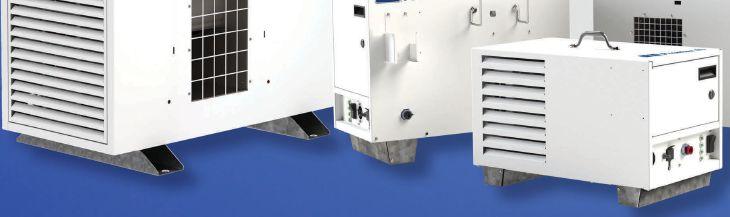
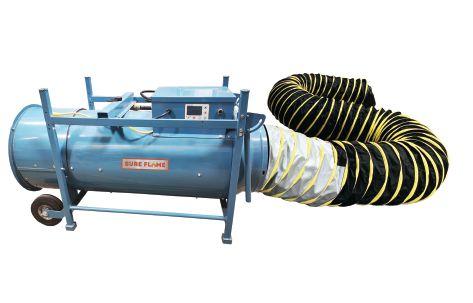
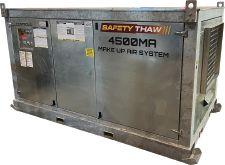
Direct-fired efficiency with added safety
n Enclosed flame promotes safer work environments and provides option to duct
n 99% direct-fired fuel efficiency boosted by remote thermostat and option to move air only like a fan
n Quiet with less than 70 dB operation
n Dual Fuel (DF) models quickly switch from NG to LP
n All models are maneuverable and can fit through a 36” doorway
CRA GROWTH FORECAST SLIGHTLY DOWNGRADED
The Canadian Rental Association has released its second-quarter economic forecast for the Canadian equipment rental industry. The Canadian equipment rental industry is poised for moderate growth, with equipment rental revenue expected to increase by 4.9 percent in 2024 to $8 billion. Continued growth is projected through 2025, reaching $9.4 billion by 2028. Construction and industrial equipment rentals are expected to grow by 4.6 percent in 2024 to $6.2 billion, driven by non-residential construction, industrial production and oil sands investments. This sector’s revenue is forecast to reach $7.3 billion by 2028. General tool rental is anticipated to expand by 5.5 percent in 2024 to $1.4 billion, with revenue reaching $1.6 billion by 2028, supported by modest construction growth. Tent and event rental is projected to increase by 5.9 percent in 2024, with revenue reaching $431 million by 2028. The re-opening economy supports this segment, although recovery rates are tempered by the broader economic slowdown. The latest economic outlook for Canada reveals a modest growth trajectory for the coming years, with household consumption and investment playing pivotal roles amid ongoing restrictive monetary policies. Canada’s real GDP is anticipated to grow by one percent in 2024, a slight downgrade from the previous 1.3 per cent projection. The economy is adjusting to restrictive monetary policies as demand for services softens. Household consumption is expected to be the primary driver of GDP growth, bolstered by sharp population increases and rising residential and non-residential investments. Consumer spending is projected to pick up in 2024, focusing on services and goods. The personal savings rate is expected to maintain around five per cent, supporting robust household spending capacity. Despite a less tight job market, wage inflation remains elevated. However, business services demand is fading, with indicators pointing to a downturn in service industries. Non-residential investment spending is set to grow, yet restrictive monetary policies will limit overall business expenditures. The residential investment outlook is modest, aligning with current housing start expectations. The Bank of Canada’s latest Business Outlook Survey indicates anticipated modest sales growth and headwinds over the next year, with spending focused on maintaining existing investments rather than new improvements.
“Despite economic uncertainties, the rental market in Canada shows resilience and promising growth,” said Melanie Misener, interim executive director of the Canadian Rental Association. “The equipment and event rental sectors, in particular, are poised to benefit from ongoing investments and a recovering economy. We are optimistic about the industry’s future and its contributions to the broader economic landscape.”
COMING EVENTS
2024
Sept. 19
DEMO International Ottawa, Ont. demointernational.com
Sept. 26
CRA BC Region Member Meetup Kelowna, B.C. crarental.org
Nov. 4 - 7
The Tent Show
Uncasville, Conn. matramembers.org
2025
Jan. 7 - 9
Landscape Ontario Congress Toronto locongress.com
Jan. 28 - Feb. 2
The ARA Show Las Vegas, Nev. arashow.org
Feb. 12 - 13
Concrete Expo Toronto canadianconcreteexpo.com
March 26 - 27 Quebexpo Drummondville, Que. crarental.org
Sept. 30 - Oct. 1
Canadian Rental Mart Toronto
canadianrentalmart.com
HOW’S UNITED DOING?
United Rentals’ rental revenue increased 7.8 percent year-overyear to a second quarter record of $3.215 billion USD, according to the company’s second-quarter report to shareholders. Fleet productivity increased 4.6 percent year-overyear and increased three percent excluding the impact of the Yak acquisition, while average original equipment at cost increased 2.7 percent. Used equipment sales in the quarter decreased 4.5 percent year-over-year. Used equipment sales generated $365 million of proceeds at a GAAP gross margin of 47.4 percent compared to $382 million at a GAAP gross margin of 51.3 percent for the same period last year. The year-over-year declines in the GAAP and adjusted gross margins primarily reflected the continued normalization of the
used equipment market, including pricing, the report said. Net income for the quarter increased 7.6 percent year-over-year to a second quarter record of $636 million, while net income margin increased 30 basis points to 16.9. The increase in net income margin was primarily driven by higher gross margin from rental revenue, which included the impact of a decrease in depreciation expense as a percentage of revenue, and reduced restructuring charges due to 2023 charges associated with the restructuring program initiated following the December 2022 acquisition of Ahern Rentals, partially offset by decreased gross margin from used equipment sales as discussed above. Adjusted EBITDA for the quarter increased 4.4 percent year-over-year to a second quarter record of $1.769 billion, while adjusted EBITDA margin decreased 80 basis points
to 46.9. The general rentals segment rental revenue increased 0.9 percent year-over-year to a second quarter record of $2.209 billion, while rental gross margin increased by 30 basis points year-over-year to 36.3 percent. Specialty rentals segment rental revenue increased 27 percent year-over-year to a second quarter record of $1.006 billion, including the impact of the Yak acquisition.
Matthew Flannery, CEO of United Rentals, said, “We were pleased with our record second-quarter results across revenue, adjusted EBITDA and EPS, as 2024 continues to play out as we expected. The integration of Yak remains on track. We continue to see particular strength in large projects, and believe we are uniquely positioned to capitalize on these opportunities in addition to other long-term avenues of growth.”
INDUSTRY NEWS
MOTION JOINS INDIGENOUS ACCREDITATION PROGRAM
Motion Industries, a distributor of maintenance, repair, and operation replacement parts and a provider of industrial technology solutions, has committed to Partnership Accreditation in Indigenous Relations (PAIR), a program of the Canadian Council for Indigenous Business (CCIB). Originally established in 2001, the PAIR program includes an online management and reporting tool that supports participating companies’ efforts toward progressive improvement in Indigenous relations and a certification program that confirms corporate performance in Indigenous relations at the bronze, silver or gold level. The PAIR program provides a high level of assurance through the independent, third-party verification of company reports on measurable outcomes and initiatives in four performance areas: leadership actions, employment, business development and community relations.
“We felt it was important for Motion to be part of the truth and reconciliation process in Canada,” said Brent Pope, Motion Group executive for Canada. “Our involvement with the CCIB will provide direction, resources and a partnership to guide us on our journey.”
ALBERTA HELPS UKRAINIAN EVACUEE TRUCK DRIVERS
Alberta’s government has amended the eligibility criteria in the Class 1 Experience and Equivalency Program to allow Ukraine evacuees who hold or have held category CE licences to reduce the time and cost to obtain their Alberta Class 1 driver’s licences. Transportation and Economic Corridors will also expand the Driving Back to Work (DBTW) grant criteria to include Ukraine evacuees. As part of the implementation of the new learning pathway in 2025-26, Alberta Transportation and Economic Corridors will monitor driver competency to inform possible expansion of Class 1 driver licence recognition to other foreign countries to further reduce the truck driver shortage in Alberta. According to the Alberta press release, Ukrainian driver licensing standards meet or exceed Alberta’s standards in most cases, particularly in driver training requirements. Ukrainian drivers with five or more years of equivalent experience within the last 10 years are eligible for a waiver from the Mandatory Entry-Level Training (MELT) program. Ukrainian drivers with between two and five years of driving experience will need to take the Class 1 Experience and Equivalency Program, which includes 40 hours of training. Regardless of which path is taken, qualified candidates will still be required to successfully complete a Class 1 driver’s knowledge and road test, to have their vision screened, to submit a driver’s medical assessment and to complete air brake training.
“Allowing Ukrainian evacuees with truck driving experience to enter the commercial driving industry is a win-win. It will help alleviate the ongoing driver shortage and support evacuees from Ukraine who have had so much to deal with over the past two and a half years,” said Devin Dreeshen, minister of Transportation and Economic Corridors.
The Class 1 Experience and Equivalency Program reduces the time and cost for drivers with experience to obtain their Class 1 driver’s licence. It takes 40 hours to complete and costs up to $4,000, compared to the MELT program, which takes 113 hours to complete and costs up to $10,000. From April 2023 to March 2024, a total of 14,315 driver’s licences from Ukraine have been submitted for exchange at Alberta registries for Alberta Class 5 driver’s licences. This permanent driver’s licence exchange replaced the existing, temporary one-year exchange put in place in 2023. As of April 4, more than 60,000 Ukrainian evacuees have registered with Alberta Health in 210 communities across the province.
Dynablast Announces Expanded Canadian Distribution of Flagro Products
TORONTO, ON – August 2024
Dynablast, the leader in hot and cold-water pressure washer manufacturing, is proud to announce a new agreement with Flagro to offer Canada-wide distribution of Flagro’s heating solutions.
With an already successful partnership spanning more than two decades, this strategic alliance allows Dynablast to market Flagro’s range of Canadian-made indirect, direct, and radiant heaters throughout Canada, which was previously limited to exclusive rights in Quebec only. Dynablast also carries a full range of replacement parts to support these products, ensuring a smooth and reliable operation.
Dynablast Director Marc Raymond spoke of the widespread distribution, which promises accelerated partnership growth and increased heating solutions offerings, commenting: “We are pleased with this nationwide agreement as it allows us to better serve our customers from coast to coast. The Canadian market has embraced Flagro heaters as the standard for quality and durability, and now we can serve them from our cross-country warehouses for optimal customer satisfaction.”
Flagro’s Mike Scardino echoed Raymond’s sentiments, adding, “Dynablast is a valued longtime distribution partner, and we are delighted to extend this proven distribution track record to a broader Canadian market.”
About Flagro:
Flagro has been manufacturing propane, natural gas, and oil-fired temporary heating equipment in St. Catharines, Ontario, Canada, since 1978. Acquired by Sunbelt Rentals in 2022, Flagro’s goal is to become a one-stop shop for all portable HVAC needs.
About Dynablast:
A John Brooks Company Limited division, Dynablast is one of Canada’s largest manufacturers and distributors of pressure wash, Hydrovac and light construction equipment and components.
Media Contact: Kate Dennis, Marketing Specialist E: kdennis@johnbrooks.ca
www.dynablast.ca
2625 Meadowpine Blvd Mississauga, ON L5N 7K5
INDUSTRY NEWS
COOPER ISSUES FINANCING NOTES
Toronto-based Cooper Equipment Rentals has successfully closed a private placement offering of $250 million of senior unsecured notes paying 7.45 percent on aggregate principal due July 4, 2029. The notes are general unsecured obligations of Cooper, which rank equal in right of payment with all other existing and future unsecured indebtedness of the company. The notes are effectively subordinated to all secured indebtedness incurred from time to time by Cooper, including indebtedness under the company’s asset-based loan credit facility. They have been assigned a provisional rating of BB(low) with a stable outlook by DBRS Limited. Cooper intends to use the net proceeds from the offering to repay a portion of the indebtedness outstanding under the company’s ABL credit facility and for the payment of a shareholder distribution. The notes have been offered for sale in each of the provinces of Canada to “accredited investors” on a private placement basis in accordance with Canadian securities laws, and in the United States only to persons reasonably believed to be qualified institutional buyers.
MAYBE THEY’LL NEED TO RENT STUFF
The Manitoba government is investing $20.4 million to repair dikes and dams throughout Manitoba, Transportation and Infrastructure minister, Lisa Naylor has announced. The funding will go toward construction projects that directly benefit residents and communities across Manitoba. Projects recently completed, currently underway or scheduled to start imminently include rehabilitating the west dike on Provincial Trunk Highway 75 near St. Norbert; rehabilitating multiple dikes on the Assiniboine River between Portage la Prairie and Baie St. Paul; rehabilitating the Carman Dam; replacing the Wanipigow Dam 25-10E at English Brook; and rehabilitating the Cox Drain. Other upcoming dam projects include the Rivers Dam, which is currently out for tender, with a construction contract expected to be awarded in the fall. Budget 2024 invests $500 million in capital funding to repair and rebuild Manitoba’s highways and public infrastructure to spur economic development and make it easier to get around the province.
DISCOUNTED TENT SHOW REGISTRATION FOR CRA MEMBERS
The Canadian Rental Association has made an agreement with the Manufacturers and Tent Rental Association to obtain discounted registration for CRA members to The Tent Show, happening Nov. 4 to 7 in Uncasville, Conn. The MATRA website calls The Tent Show “The largest annual outdoor tent show in the U.S., featuring hands-on training, education, networking and vendor displays. Highlights include Tour of the Tents, the MATRA Games, workshops and seminars led by industry experts, over 70 vendor exhibitors, plus so much more.” MATRA is a 35-year-old association in the U.S. mid-Atlantic region representing tent manufacturers and event rental stores.
“In alignment with our strategic plan, we are fostering collaborative relationships with other industry associations,” Melanie Misner, CRA executive director, explained.
EquipmentWatch is a trusted source for heavy equipment data and intelligence, producing leading database information products for the construction equipment industry. It is a world leader in heavy construction research and serves more than 15,000 professional, high-volume users of construction and lift-truck data. Find more heavy equipment intelligence at equipmentwatch.com.
Cross-Canada Rate Report
The Cross-Canada Rate Report is provided to Canadian Rental Service as a free service to the Canadian rental industry. Rate data shown are national averages generated by quarterly surveys of hundreds of Canadian rental companies. Rates shown are reported list rates and may not reflect the actual changes to any particular customer.
Number of rental companies:
Number of stores:
Number of rates collected in Q4 2023:
MR. ABSOLUTELY
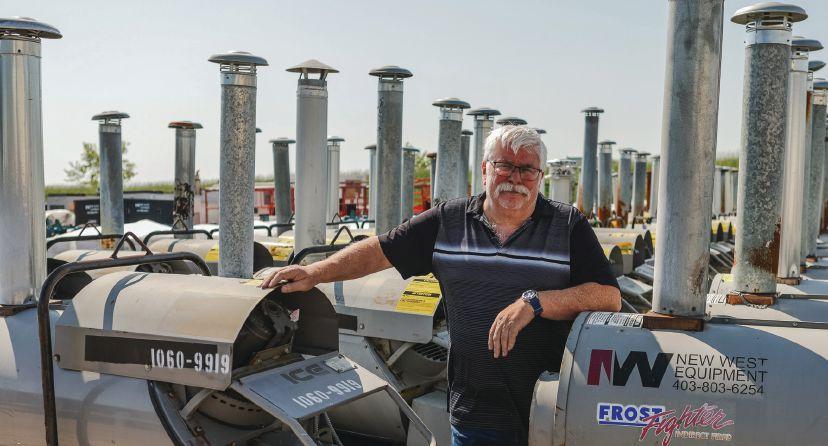
A can-do attitude is at the heart of New West Equipment Rentals.
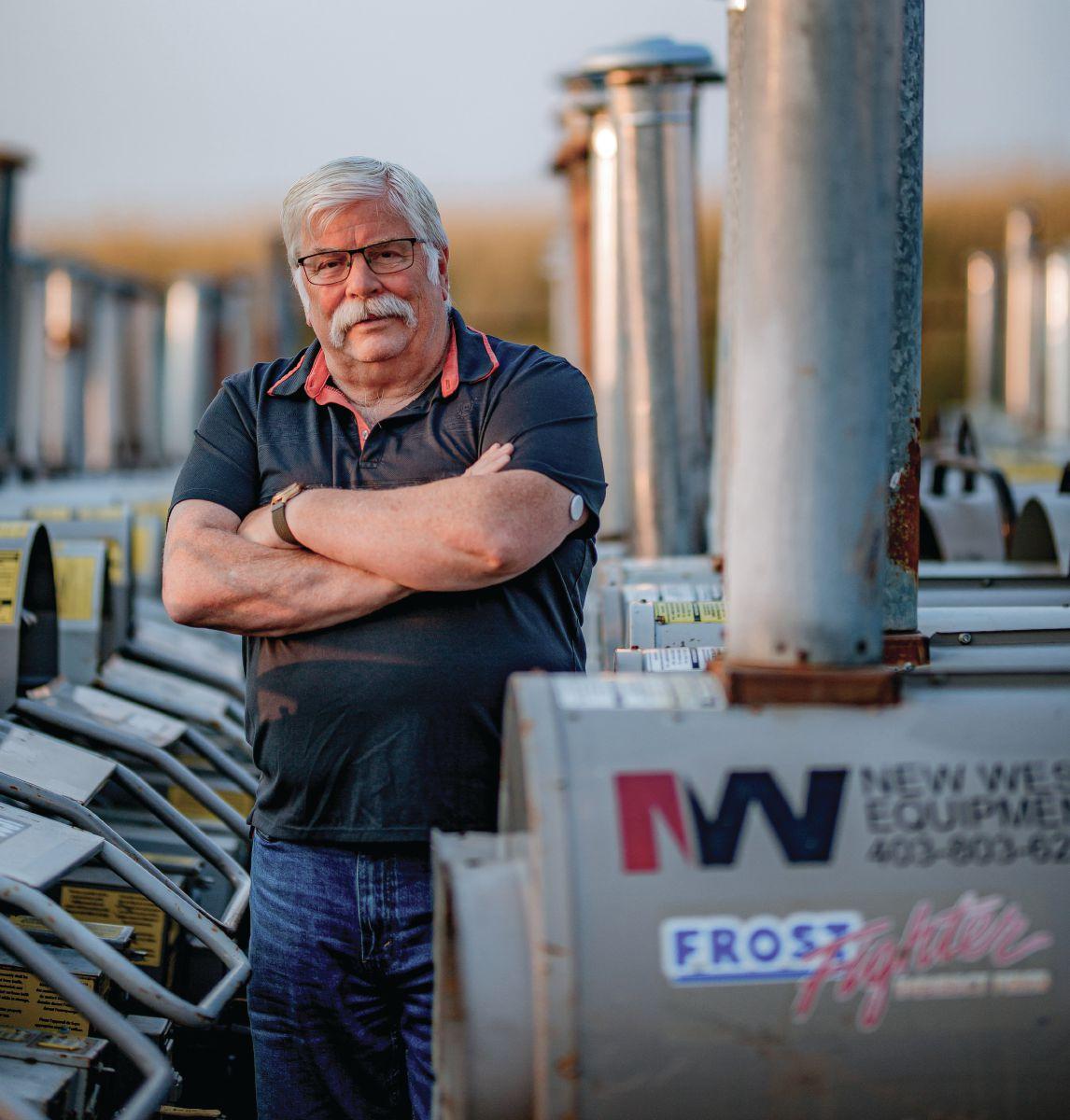
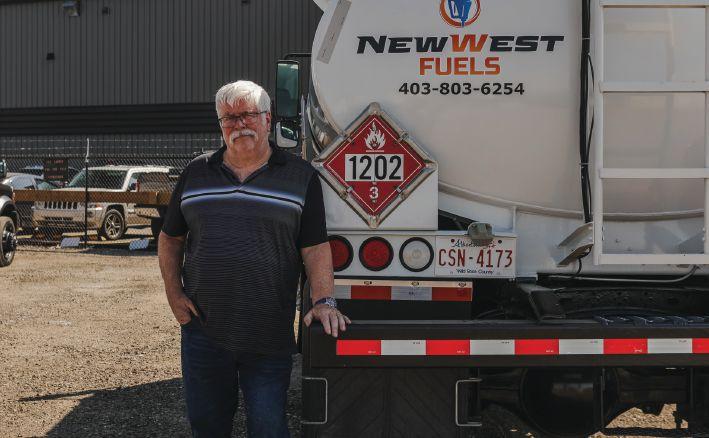
New West Equipment Rentals was one of the only fuel-cleaning businesses in all of western Canada. Keith Beggs, owner and general manager of New West started the company in Calgary in 1994.
by Macenzie Rebelo
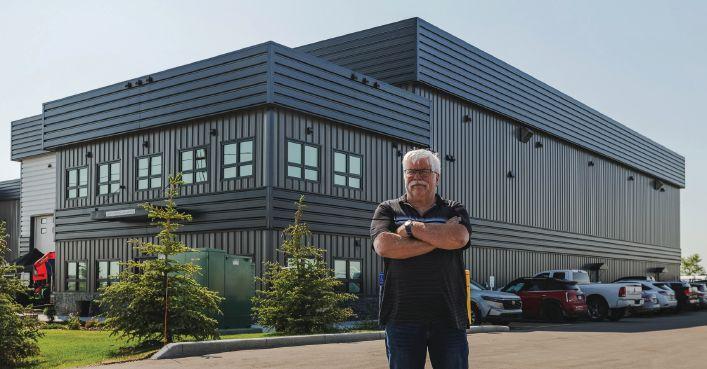
New West Equipment Rentals operates out of three locations in Calgary and one in Red Deer, Alt. It’s a big change from Beggs’ original position as a yard worker at Certified Rentals.
When he first immigrated to Canada, Beggs did not anticipate life to be surrounded by oil, diesel and fuel. Nor did he foresee that he would create a fuel-cleaning machine that would cause his business to boom. Beggs fell into the industry unexpectedly because he became a Canadian unexpectedly. Beggs was born in England and spent his whole life there up until 1973 when he was stationed in Calgary with the British Army. Beggs fell in love with the Alberta mountains and Canada as a whole. He immigrated a year later in 1974 at 22 years old.
Beggs started out working as a yard man for a rental company in Calgary and worked his way up to become a full-time mechanic with Certified Rentals. “They’re the guys who truly taught me everything I know,” says Beggs, who attributes New West’s success to the work ethic Certified Rentals instilled in him. Beggs worked
with Certified Rentals for 10 years and went on to become a journeyman and heavy-duty diesel mechanic. Although it was not a glamorous job by any means, Beggs adored the work.
Around this time, Beggs was being asked to service old generators after hours. Which was something he was hesitant to do, not only because of the mess but because it was a big job. After some consideration, Beggs went through with the job. “I made more in two and a half hours than I did all week,” he says. Beggs continues to work on generators after work hours, on weekends and on Christmas. In 1994, he realized that starting his own business would be beneficial, but he and his wife had two infant boys – taking a chance was risky. “My wife asked me ‘What if we fail?’” says Beggs. “And I said ‘I would rather try and fail than sit in a rocking chair and go, what if?’ So we did it.” From there
Thirty years later, the family-owned business has three locations in Calgary and another in Red Deer, Alta. Beggs says his company has been incredibly
successful. What is his secret? According to him, it is treating the customer with the utmost respect and always saying yes. “They call me Mr. Absolutely,” jokes Beggs. When the company started, it was
mostly fuel and oil changes, with a few guys working with him on the weekend. “But every year the business doubled,” he says. The business remained steady with the ebbs and flows a family-owned business is prone to. It wasn’t until 2021 that the business “exploded” as Beggs puts it. Mr. Absolutely always says yes to everything and his customers are his biggest priority. “It’s our reputation,” he says, “We get a lot of passion back from our customers.”
There are four key components to New West: equipment rentals, diesel, propane and site services. Fuel cleaning did incredibly well for New West; Beggs got into it when customers would try to rent equipment to move 10,000-litre tanks from their homes and basements. The Alberta and National Fire Code require an annual “swirl and bright,” test to determine fuel conditions. According to Beggs, a lot of customers would replace the fuel rather than clean it. Beggs used this opportunity for a moment of innova-
New West was born.
New West has stayed true to its origins as a fuel-cleaning service.
tion and decided his business would offer fuel cleaning as a lucrative business strategy. Initially, Beggs was using an older machine that was born out of the 2005 Hurricane Katrina. He used that machine for the first year, but it didn’t work as well as Beggs hoped – it was incredibly messy and slow. “We decided to write down everything we wanted in a machine and make it ourselves,” says Beggs. At first, it would take Beggs and his team 10 to 12 hours to clean a 10,000- litre tank
but with his new machine it only takes about four.
“It did really well,” Beggs says. “I wanted to raise revenue for the summer and this was a great way to do it.”
Equipment rentals are the heart of Beggs’ business. According to Beggs, the majority of his customers are homeowners. The business also offers services on-site to help with any of the rented tools; his biggest seller is battery generators. Like most rental service businesses,
New West faced some challenges when big commercial construction companies developed in the area. “We had to adapt,” says Beggs, “and went onto a different segment.” This is exactly what he did. Beggs started to work business-to-business and sell equipment alongside renting. “We were helping the guys who were building homes,” Beggs says. His team was doing everything from fencing, oil changes, roads and filling any gaps in staff. “When we work together we’re stronger,” he says. Beggs has also committed to being as eco-friendly and efficient as he can be, even if it makes him less money in the long run.
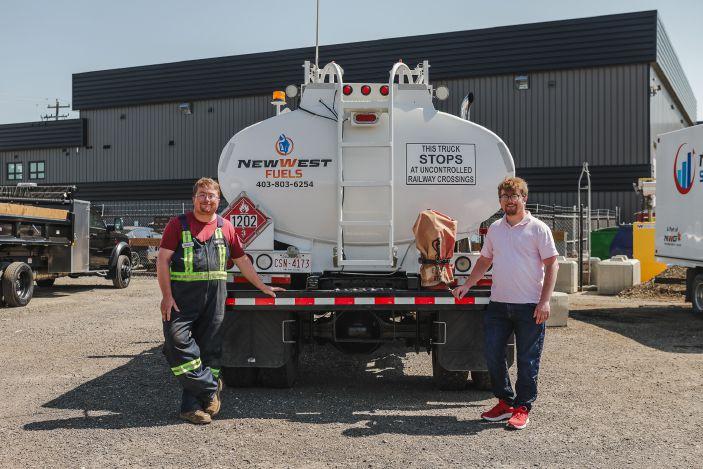
Beggs attributes his company’s success to the hard work and dedication of his employees, which are made up of many family units including his own sons.
“They’ve transformed this place,” says Beggs. “Hiring them was one of my biggest milestones.” As cliche as it sounds, Beggs loves his job and the company he has started from scratch – and now “absolutely” is his company mantra. “It sounds corny as hell,” he laughs, “but when we say we’re going to do something, we’re going to do it.”
Beggs’ sons, Andrew (left), Colin and Stephen (not pictured), also work at New West. Andrew and Stephen are shop foremen, Colin is a rental desk manager.
Infrastructure investment needed
Governments are finally heeding the call to invest in the infrastructure to support our housing needs.
by Richard Lyall
High interest rates, excessive taxation and bureaucracy, as well as the cost of materials and labour, are making it difficult for residential builders to get shovels in the ground on much-needed new housing projects. Another equally daunting hurdle, though, is the lack of critical infrastructure. It’s something that is often out-of-sight and out-of-mind, but adequate water, wastewater and stormwater infrastructure are crucial to accommodating growth and bringing more homes and condos on stream.
RESCON and other groups have been urging governments to address infrastructure constraints like sewer capacity and to ensure the cost of building does not fall entirely on municipalities which must collect fees for the work via taxes, fees, levies and development charges. Thankfully, it seems the call for infrastructure improvements is being heard.
In Ontario, the government announced just over $1.6 billion in new housing-enabling infrastructure in an effort to reach the previously announced target of building 1.5 million homes by 2031.
The money includes $1 billion for the new Municipal Housing Infrastructure Program, which emphasizes projects that can build the greatest number of homes, and another $625 million for the Housing-Enabling Water Systems Fund, which will help municipalities repair, rehabilitate and expand drinking water, wastewater and stormwater infrastructure.
The new funding complements an original $200-million investment in the HEWSF, a $1.2-billion Building Faster Fund that rewards municipalities on target to meet their provincial housing targets, as well as an investment of nearly $2 billion for the Ontario Community Infrastructure Fund.
The money will help municipalities fix and build the infrastructure to support construction of more homes.
The federal government has also stepped up to the table, launching a $6 billion Canada Housing Infrastructure Fund. Money in the fund will be used to support the construction and upgrading of water, wastewater, stormwater and solid waste infrastructure in municipalities across the country.
The feds are also adding $15 billion to the Apartment Construction Loan Program, launched in 2017, to support the construction of new rental homes by providing financing to home builders.
While welcome, these announcements are long overdue.
An earlier report done for RESCON by the Canadian Centre for Economic Analysis found that the federal government collects more than 30 per cent of the taxes on new homes but returns less than seven per cent to municipalities in terms of funding for supportive infrastructure.
There are tremendous social value consequences to not providing the proper infrastructure to accommodate more new housing. Another report done by CANCEA figured out the social value cost related to housing unaffordability and found it to be about 1.75 times greater than that of cancer in the GTA. It’s a very stark indication of the severity of the housing crisis that we face.
We are in desperate need of more new housing but are currently heading in the wrong direction. StatsCan reported recently that residential construction investment in Canada came in at $13.6 billion in January 2024, compared to $13.9 billion in the same month a year earlier.
The faster we get shovels in the ground for supporting infrastructure the better.
Richard Lyall is president of the Residential Construction Council of Ontario (RESCON). He has represented the building industry in Ontario since 1991. Contact him at media@rescon.com.
Take your store to Disneyland
by Russ Dantu
Ijust returned from Anaheim after a 10-day excursion. The first five days were a special vacation for my daughter and granddaughter as our little one had never been to Disneyland before (she’s only four) so it seemed like the perfect opportunity to have a nice family trip and create some lifetime memories together. While there, I discovered, again, that Disney has a thing or two to teach us all about great customer service. Here’s what I love about Disney: Their employees are called cast members. When they are in costume, they are on duty, until they are behind the “employees only” gates. This means that even if they are walking for their break, if someone needs something, they have to take care of you…and they happily did. Every time we asked for directions to a ride or for information we had no issues finding someone. They have way more employees working than are probably needed just to take care of the customers, and no one tried to pass the buck to someone else.
The second thing I love is the fact the park is always so clean. If I saw a napkin or empty cup rolling around because someone didn’t put it in the garbage, it would be picked up within a few seconds and it didn’t matter if it was a regular cast member or a supervisor. It just got picked up. It’s one of the cleanest parks in the world. When you look at other amusement parks around North America, there is no comparison. I’ve walked a ton of amusement parks in my time and most of them could use a huge upgrade on cleanliness.
The third thing I like is once you are in the park, you can use their app to get around or, if you are old school, they have paper maps or cast members there to help direct you.
The fourth thing I loved was how they moved people efficiently through every lineup. Some lineups were close to an hour long but there is so much to see on most rides with every few steps you take it adds to the excitement and adventure you are about to take with each ride.
The last thing I really appreciated was they had security gates that everyone had to go through as
they entered Downtown Disney. It may be the “Happiest Place on Earth” but in this day and age where there are so many acts of violence happening, it makes a family feel safer.
The one thing I didn’t like is that you had to download your tickets onto your phone to get in and out and you had to use their app for the lightning lanes on rides. This leaves a group of older visitors, who are not tech savvy, a bit frustrated. I was told it was to save paper and because of issues with people creating bogus tickets, so I guess they had good reason. To combat this issue, they had extra cast members at the entrances to help out.
Simple lessons we can take from Disneyland to immediately up our customer service game are:
1. Make sure your premises is always clean, especially the public bathrooms.
2. Have enough employees working at all times. If we jump over the counter to the other side where we are purchasers, how do you like it when you go into a hardware store and you need help and it takes a long time to find anyone to help you?
3. Make it about the entire experience. I get it, you rent products so you can only make that exciting to a point. But what else can you do to make the customer experience more enjoyable to the point where they actually like coming to see you?
4. Train your employees to not pass the buck. Make sure they know your business inside and out with regards to where things are, what you rent, helping customers and always being present and in the moment when on duty. If they don’t know something, have them personally find the answer rather than redirecting the customer to someone else.
Take care of your employees…and yourselves! CRS
Russ Dantu is a 30-year veteran of the rental industry and has been delivering workshops, keynotes and seminars on customer service for 15 years. Visit russdantu.com.
BARRIERS AND BRIDGES
An academic white paper looks at reasons why our sector lags behind in innovation and productivity.
It’s easy to imagine a science fiction film panning out on the vision of a towering city of the future, filled with majestic buildings, interspersed with lush and vibrant vertical farms, while fully automated land, rail, and flying vehicles bring people and supplies to and fro across the landscape.
The key underlying industries at the core of these specific images – agriculture, construction, and transportation – are rarely viewed as innovation leaders on the cusp of such transformations. They are “lynchpin industries” providing food, shelter, and mobility – all of which are at the core of supporting a stable society. Yet their rates of innovation persistently lag other sectors of the economy.
Many organizations, arguably most, do not struggle with the development of creative ideas, whether it be among staff, management, or leadership. Converting creative ideas into an innovation pipeline is where things often break down. There is a mixture of culture and process that must be developed, and there are a few key challenges that cause firms to stumble regardless of any leadership desire to be forward-thinking.
THIS IS HOW WE DO THINGS
One prime cause that hampers an innovation mindset, and one common among the lynchpin industries, is the inertia caused by prioritizing the daily operations of running an organization. This has led to the cliched refrain, “This is how we do things, and this is how it needs to be done.” Companies that craft and execute
a successful business model are expected to drive consistent and reliable results –which, ironically, hampers their attention to innovation practices, and can also make them averse to the risk inherent in adopting new ideas and processes.
One technique to help organizations to break out of this historic mindset is a technique that Bernd Schmitt, Robert D. Calkins professor of International Business at Columbia Business School, calls “killing the sacred cows.” Used numerous times with corporate executives, the idea is to craft a list of all the core beliefs or activities of both your industry and firm. For instance, every project requiring vendor support starts with developing a full-
scope Request For Proposal. Once crafted, small teams then work together to imagine doing the opposite, for example, all projects start by receiving rough concept pitches before any detailed RFP is drafted. FEAR
Another significant factor hampering innovation is fear. A McKinsey analysis around innovation barriers noted, “Our research shows that three fears hold back corporate innovation more than others: fear of criticism, fear of uncertainty, and fear of negative impact on one’s career.”
Interestingly, among companies that reported they were mastering innovation compared to companies that felt they weren’t, the main difference was a
lower fear of career impact. Unless the leadership of an organization specifically rewards risk taking, employees feel little motivation to stick their necks out to present new ideas
Simple language choice can help leadership tweak its culture to accept risk over fear and drive innovation. Erik Roth, a senior partner at McKinsey, notes examples of successful company practices in this area: “[One] organization has replaced the word pilot with pioneer. The subtle point is that when something doesn’t work, we won’t call it a failure but see it as a step, backed by the full intention to keep going forward.”
COST
Another constant and familiar element that stifles innovation is cost. This may be tied to risk aversion, but in other cases, it is just a matter of available budget. This is particularly true in long-established industries with low-margin business models that are challenged in budgeting for idea exploration.
The good news here is that, today, digital innovation need not be an expensive process up-front. One of the benefits of modern innovation processes is that establishing small teams with very minimal initial budgets is a best practice.
PROJECT UNIQUENESS
Every piece of land, and thus every construction, transportation infrastructure and agricultural project, is unique. A common challenge for all innovation efforts is that the risk/reward structure is often dependent on scalability. Yet carefully crafted design plans are often adjusted on-site due to the unique environment or situation of the build.
Unique situations lead to constraints on what is possible, but at the same time, research shows that constraints can spur creativity. Interestingly, with too few input constraints, people and teams can become complacent about pushing for creative problem solving; at higher thresholds the constraints are overly burdensome and similarly demotivating. Where possible
within a project, aim to break the effort up into sub-projects that have a moderate level of input constraint: not too low and not too high.
SILOED DATA AND DECISIONS
Even when innovative ideas become proven, existing legacy assets and unique digital systems make innovations hard to scale across lynchpin ecosystems. The potential for analytics and machine learning models to develop new insights and create efficiencies is lost when data is siloed among multiple parties.
Innovations that incorporate a common protocol vastly improve interoperability within firms and across all partners in an ecosystem, thus creating the dual benefits of scalability and efficiency. CRS
From “Innovation Growth in the Lynchpin Industries” by Michael Quint, director of the Center on Global Brand Leadership at Columbia Business School. Full text online at canadianrentalservice.com > Features > Business intelligence.
GET YOUR DUCTS IN A ROW
Heating veterans share some tips to heating spaces better.
Heating a construction space, whether for comfort, to cure concrete or protect other building materials, often requires ducting hot air into the building from a heater that is running outside.
by Macenzie Rebelo
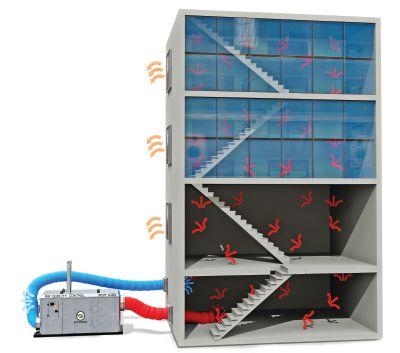
LEFT: This diagram from EcoPower demonstrates how recirculating air systems save energy in unsealed spaces by reusing already heated air.
RIGHT: Sizing ducting is not a straightforward answer. Factors such as the number of discrete rooms in the building need to be taken into account.
When renting and purchasing a ducted heater, it is important not to overlook factors that can impact the machine’s functionality. From ducting materials to different air supplies, there are many factors one should consider before renting.
MORE ISN’T ALWAYS MERRIER
When a customer is inexperienced with duct heaters, they often create longer ducting than necessary to warm a space. When too much is used, whether it is vinyl-coated or canvas, it can cause kinks and bends in the airflow. “This is very dangerous,” says Dustin Hubert, managing director of LMDH Equipment Sales. “A lack of airflow creates too much pressure on the unit. The heat can build up and cause the unit to shut down.” If a heater breaks down, not only does it leave the customer in the cold with costly delays, but often creates a jobsite call for your staff.
Heaters are rated differently based on static pressure and output capabilities, explains Gary Webb, director of sales for Norseman. That’s why stretching the capacity of a heater can be dangerous and restricts the required airflow for the product to function correctly. This being said, there is no ratio of duct length to size that fits all situations. “The machine’s output diameters are specific to the capabilities of the machine,” says Webb. “It comes down to a combination of the heat, the fan and the duct you’re using,” echoes Hubert. “You have to know the specifications of your units.”
MAKE-UP AIR VS RECIRCULATING AIR
There are two types of air setups for a duct heater: make-up air and recirculating air. There are benefits to both types, but depending on the work environment one is better than the other. If you
are trying to heat a smaller space, where you’re not too worried about moisture or fuel consumption, then recirculating air is a better option, explains Hubert. Make-up air is a system that provides fresh air from outside, that is then filtered and cleaned. As Gal Power Systems wrote in Sept. 2017 Canadian Rental Service, “Make-up air heat is better for curing and drying wet building materials such as drywall, concrete, paint and adhesives.” Recirculating units use fuel to power a heat exchanger, rather than directly heating the air, and then venting it back outside. “Make-up air offers distinct advantages compared to recirculating,” says Hubert. Because make-up air takes air from the outside, heats it up and brings it inside the building, it pressurizes the building and helps keep cold air from entering. If a building is very well sealed, then makeup air is a better choice.
WORKER COMFORT
When it comes to using make-up air or recirculating air to keep workers warm
on the jobsite, there are a few things to consider before renting. One, the layout of the space and, two, where the air is coming from. “If you’re going to be heating an environment that is very tight and with limited fresh air, best to use make-up air,” says Webb. As the air is coming directly from outside, the evaporated moisture is pushed out of the building letting outside air in. Plus, less air ducting means better air quality for you and your team, explains Hubert. Another tip Hubert offers is to hang your ducts, rather than leaving them on the ground - which can be dangerous and inconvenient for workers. “It requires a bit more work but it is for their comfort,” says Hubert.
HEATING METHODS AND RESEARCH
Before customers work in a space that requires a ducted heater, it is key that they research the volume and density of the building. Working in a warehouse
Performance From Billy Goat
with very few walls will require a different heating system compared to a smaller space with many rooms. It is also crucial to be aware of the necessary different heating appliances, like direct-fired and indirect-fired, explains Webb. “If you are going to be heating an environment where it is tight, with limited fresh air, you’d want an indirect-fired system which provides cleaner air. However, they are not typically ductable.”
Knowing if your workspace has the amenities for ducted heating is one of the first things to consider before starting a project. “Availability of fuel is another consideration,” says Hubert. “Some construction sites don’t have the required space outside the building to accommodate them.” Both Hubert and Webb encourage users to scope out the entirety of the project’s workspace before renting a ducted heating unit. Ultimately, for a ducted heater to work efficiently the logistics, heating goals and budget constraints have to be taken into account. CRS
WHAT WENT HONG
Safe heat
Use
construction heaters with care.
by James Hong
Worksite heaters play an important role on winter jobsites. But safe operation of construction heaters is necessary to prevent fires, explosions and carbon monoxide poisoning. Explosions are caused by fuel leaks. When there is a leak in a gas fuel system it can lead to the accumulation of flammable gas that can explode if ignited. Any ignition source coming into contact with a heater’s gas system fuel leak or flammable vapours can cause an explosion as well as contact with improperly ventilated carbon monoxide and other explosive gases in the area around the heater. When such gases condense into an ignitable concentration and make contact with an ignition source, the risk of explosion is very high. Ignition sources include anything that causes a spark: hot metal, hot work soldering and brazing, open flames, flammable liquids and hot surfaces such as engines and other hot surface equipment. Choosing a construction heater is based on considerations such as the size of the space requiring heat, fuel access for refueling, available ventilation and specific job needs. Let’s go over heater types and guidelines for safe use.
Today I’ll cover propane, diesel and electric heaters. Propane heaters use propane gas for fuel and are very portable with the flexibility to be used both indoor and outdoor. This flexibility works well for construction jobsites. Diesel heaters use diesel fuel and are generally found on large construction sites where efficient high heat levels are required to be effective. Electric heaters on the other hand come in a variety of sizes, are also very portable and often found on smaller jobsites where electricity is available. Proper ventilation for fuel-based heaters is critical for preventing carbon monoxide poisoning. Airflow stops the buildup of harmful gases which can be deadly to workers. Always make sure there is proper ventilation when using fuel-based heaters indoors. Ensure fuel is stored in a safe location with plenty of ventilation and keep the heater and fuel stored separately. Refuel outdoors if possible and be careful not to spill or over-fill. Keeping heaters stable by securing them to a steady, level foundation prevents
the units from tipping over or being accidentally redirected. If you require help, manufacturers provide instructions for both installation and use. Always keep in mind minimum clearance distances around the heater when selecting positioning as well as proximity to flammable materials. Be aware of your surroundings and any possible weather-related interference such as wind, rain or snow.
Fire safety is paramount no matter the type of heater used. Keep extinguishers close by, know where the extinguishers are and which type is required. Train for operation and be prepared to extinguish a fire if necessary. Carbon monoxide detectors should be installed close to the location of the heater to sound an alert when dangerous levels of gas start to build up allowing for time to shut the heater down. When using electrical heaters, inspect all cords and connections and repair or replace them as needed. Make sure not to overload circuits and make it a priority to use ground fault circuit interrupters (GFCI).
Supervisors should monitor heater output and make sure they are shut off when not in use. Training is always a number one-priority when operating any equipment on a jobsite, which should always include emergency procedures. Whenever possible, use heaters with a flame-supervision devices designed to automatically shut off the fuel if the flame goes out. Train users for start-up, shutdown and maintenance procedures. Prior to operation always check for fuel leaks and overall unit condition such as parts in good operating condition and body marks indicating previous malfunctions or fires. Use only certified construction heaters with corresponding labeling and do not use construction heaters near open flames, flammable materials or ignition sources. Stay warm, work smart and actively participate in a work safety culture.
Be safe. Be well. CRS
James Hong is an independent writer, journalist and safety consultant.
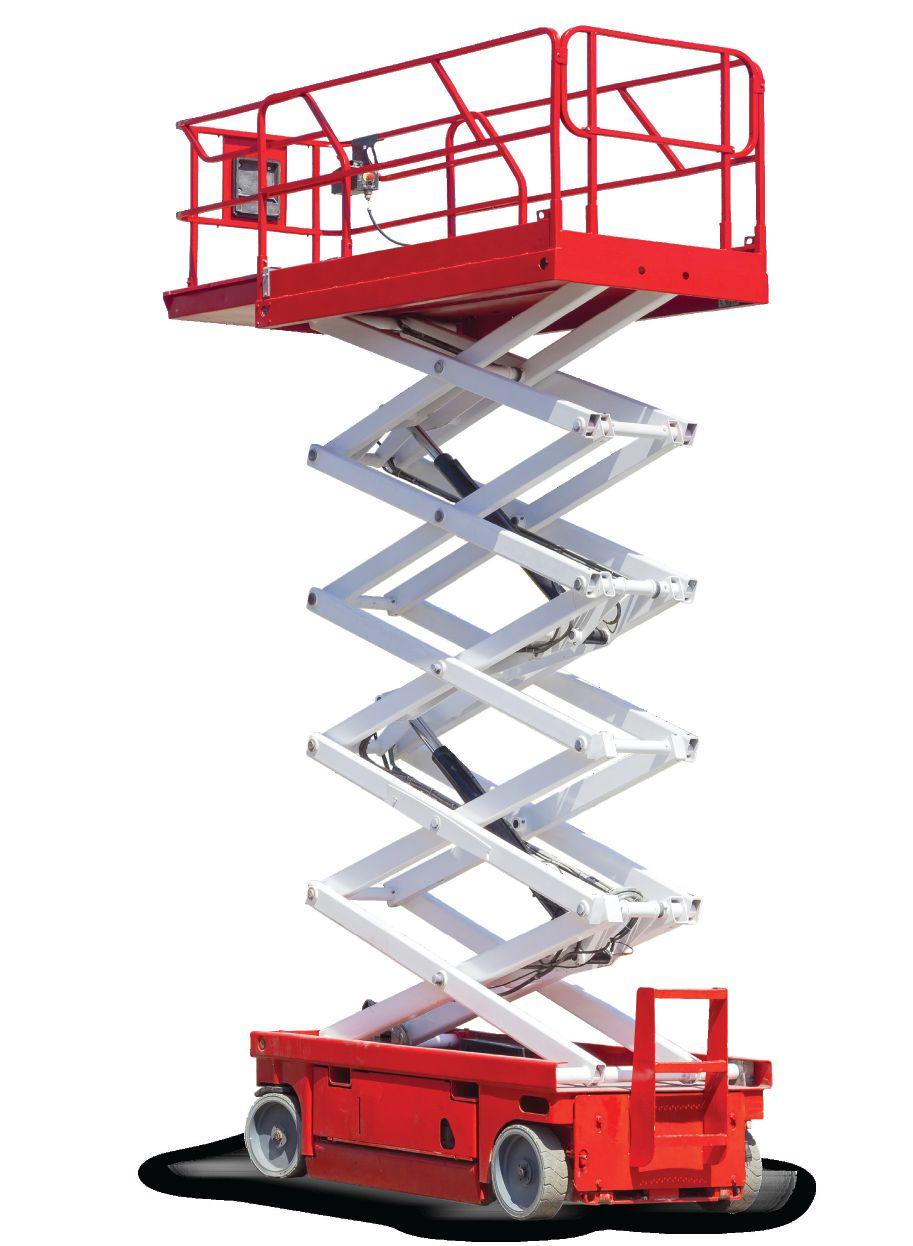
THIS IS MORE THAN JUST A SCISSOR LIFT
ALL OF THE PARTS THAT MAKE IT A SCISSOR LIFT.
With more than 47 million part numbers, TVH is a leading provider of quality parts and accessories for the material handling, industrial equipment and light construction industries. Our commitment to service, knowledge and product availability makes TVH the One-Stop-Shop for our customers.
Bad
news: summer’s over. Good news: here come the heater rentals.
CONSTRUCTION HEAT
UNCOMPROMISED DURABILITY
8 norseman.ca
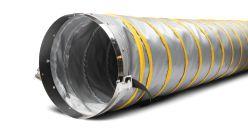
People aren’t able to perform at their best when they’re cold. As the temperature drops, Norseman’s portable heat-ducting gear is up to the challenge of keeping construction crews warm. The Arctic Helix high-temperature portable heat duct is designed to excel in ice, snow, sleet and cold temperatures. Built with advanced fiberglass fabric with silicone coating on both sides and the industry’s first stainless steel collar for a rust-free connection, the Arctic Helix HT is uncompromising when it comes to efficiency and durability, making it a suitable choice for rental companies and their customers. Designed to prevent cracking and remain extremely pliable in cold climates, this duct’s fiberglass fabric is odor-free, mold/ mildew and fire-resistant, and doesn’t freeze in sub-zero temperatures. The Arctic Helix HT also includes an FR Santoprene
durable wear strip that provides another layer of protection no matter how much it’s pulled and dragged across the jobsite. The wire helix design of the Arctic Helix HT provides a strong structure, allowing consistent air flow, and can be used in horizontal and vertical applications. The Arctic Helix HT is available with a pin-lock collar on one end and a belted-cuff collar on the other. It is a bi-directional duct, so it can be connected from either end. The Artic Helix HT has a 260 C temperature rating at the heat source and it passes FR testing to NFPA-701 and CAN/ULC-S109. Despite its heavy-duty construction, the Arctic Helix HT has integrated compression straps that assist with carrying and minimize storage space on rental shelves.
CELEBRATING 60 YEARS
8 sureflame.ca
Sure Flame is focused on the future with the development of two new indirect-fired
models, the ID4 (oil) and IX4 (dual fuel) heaters. Backed by advanced combustion theory and design, these new heaters feature outstanding performance along with high efficiency. Included standard on the ID4 and IX4 is a new cold-rated OLED display that is designed to simplify troubleshooting by reporting dozens of warnings and errors in easy-to-read text (English or French). Additionally, all warnings and errors are logged with a date and time stamp to give a clear picture of what happened throughout the heat season.
CURES NEW MATERIALS
8 lbwhite.com
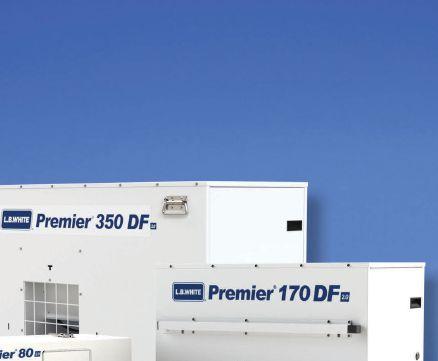
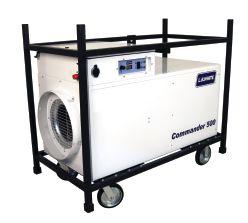
New construction involves the use of new raw materials. These materials require curing and removal of moisture. Moisture is not only present but enhanced due to variations in climate and materials. The
result of proper management evacuating the air is improved efficiency of the project as well as enhancing the strength of the structure. The Commander 500,000-BTU make-up air unit from L.B. White manages air conditions in construction sites where improved air quality, temperature control and moisture reduction is a necessity. These areas demand tempered heat while maintaining positive pressure, all done using the Commander’s modulating control and proven powerful air flow. The Commander provides tempered fresh air with a constant air exchange that evenly heats interior spaces and surfaces. The make-up air system maintains positive building pressure. The modulating control reduces fuel costs.
LOVES HARSH CONDITIONS
8 dynablast.ca
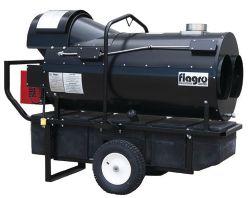
Flagro’s FVO-400 indirect-fired heater is a heating
solution designed to meet heating needs in various applications. Its innovative design and advanced features make this heater a reliable choice for rental use. Equipped with proven Riello burner technology, this product features a nozzle pre-heater for cold weather start-ups and an updated low-temperature fuel pump to ensure optimal performance, even in harsh weather conditions. The welded 304 stainless steel heat exchanger guarantees durability and efficient heat transfer. Its fuel tank capacity holds up to 42 U.S. gallons and can produce heat for up to 14 hours. Additionally, the FVO400 indirect-fired heater has a smart power indicator control to ensure that the heater is getting a proper power supply, providing added safety and
peace of mind. The density of the flat-free wheels offers easy mobility, allowing convenient transportation to different locations. The heater’s built-in fuel tank offers convenience and extended operational independence. The Flagro FVO-400 indirect-fired heater is now available across Canada through Dynablast.
IDEAL FOR ELEVATED BRIDGE DECKS
8 wackerneuson.com
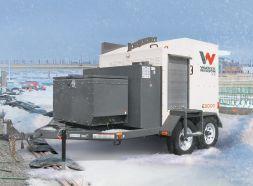
Engineered for reliable performance and trouble-free starts, the new Wacker Neuson
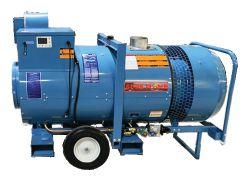
E3000 heater with a six-kilowatt generator features a standard 1,000hour service interval and delivers up to 140 hours of run time. With accessories this heater has a frost capacity up to 17,997 square feet or can provide 525,000 square feet of dry heat at 83 percent efficiency. Ideal for cost-effectively thawing and maintaining soil temperature during cold weather construction, the E3000 has positive displacement pumps that provide steady flow and
consistent heat delivery for thawing and curing up to 6,000 square feet with just two hose zones. The unique pump design of the heater allows for vertical flow of up to 250 feet, which is ideal for elevated bridge deck applications. Two pumps (one per loop) mean delivery of maximum BTUs per hour and also provide emergency back-up flow to ensure heating in critical applications such as commercial concrete preparation and curing. With 3,000 feet of hose split into
Votre partenaire de choix! Your partner of choice!
CONSTRUCTION HEAT SHOWCASE
just two continuous loops, the E3000 allows for single person set-up and placement. Simplified controls make operation of the generator easy and improved service access helps reduce downtime and costs The genset top opens completely, providing easy access to the oil filter, Kohler engine and other components. An extended service model allows oil changes at 3,000 hours.
THE RENTAL STORE’S FRIEND
8 ces-sales.com
Construction Equipment Solutions continues to provide quality heating products as well as service parts and technical assistance to the Canadian rental industry. CES carries a complete line of heating products for all heating applications and fuel
choices, including propane, natural gas, electric and oil-fired units. As well, it supplies units that are directfired, indirect-fired and infrared as well as convection.
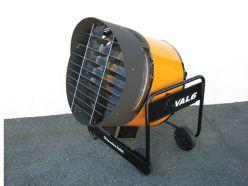
Val 6 heaters are designed with the highest quality and dependability in mind. Val 6 radiant heat is able to heat an object without heating the air and losing efficiency at the same time. Val 6 heaters are not affected by wind or cold ambient temperatures the same way forced-air heaters are. Not only are Val 6 heaters eco-friendly, releasing only one to two parts per million of carbon monoxide, but they are able to convert almost 100 per cent of their fuel to energy. This makes the Val 6 a very efficient form of heating. CES also offers the full line of Marley Engineered heating products. The TBX series mobile warmer comes in two sizes. The mobile warmers have a thermostat with positive “off” and “fan-only” positions with a range from 40 to 100 F. Teninch wheels allow for easy rolling over obstacles on a job
site to the spot where heat is required.
DOOR STAYS ON, DUCT GOES THROUGH
8 ntiglobal.com
The patent-pending VersaDoor from NTI Global allows transition ducting, power cables and hoses to pass through doorways in minutes without removing the door. Users can eliminate unsafe, non-routine tasks like cutting plywood while simultaneously providing a turnkey professional look to the jobsite. Patented versa ends fit all ducts from 12 to 20 inches. VersaDoor has four adjustable ports. Installation takes just minutes and fits standard 3070 doors (adjustable to 32, 34 and 36 inches wide and 80 to 84 inches high). It’s a labour-saving solution for air-transfer
(ducting) and building transitions.
DESIGNED FOR MAXIMUM PROFITABILITY
8 campoequipment.com
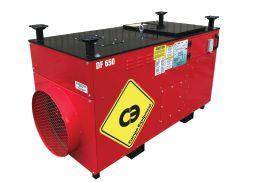
Designed in collaboration with rental industry peers and experts, the DF650 makeup air heater from Campo Equipment delivers a combination of performance and dependability. Every feature and function is designed to maximize a rental store’s profitability. Continuing the Campo tradition of using backward incline fan technology, the DF650 will supply 5,500 CFM with a great amount of static pressure to heat the workspace efficiently. Additionally, the constantly modulating flame will not shut off, ensuring a consistently pressurized and comfortable environment. Service calls for power-related
issues are greatly diminished as the DF650 will run smoothly on even a 15-amp, 110V outlet. The DF650 is easy to deploy with a narrow body design and end discharge, making it a great option when space is at a premium. It is also rated for 50 feet of 20-inch high-temperature flex duct. The DF650 is the first in a complete line of make-up air heaters from Campo Equipment. Campo also makes the DF1600 (1.6 million BTU), the DF2500 (2.5 million BTU) and the “big daddy” DF4500, which delivers up to 4.5 million BTU with 25,000 CFM heated air output.
MORE POWER IN THE SAME PACKAGE
8 frost-fighter.com
The new IHS1000 from Frost Fighter provides 900,000 BTU with the same physical footprint as the IHS700, but with more BTU, CFM and static pressure. It’s available in both oil and liquid propane/natural gas versions, with advanced
PLC operation for easy troubleshooting and simplified maintenance. Options include a status beacon indicator, and a 175-gallon oil tank for the diesel models. The backward incline fan produces up to 8,000 CFM and five inches of static pressure, with multiple different voltage options. The fan is controlled by a variable speed drive with two selectable fan speeds and reduced start-up requirements. Standard duct configuration is a two-by-16-inch inlet and outlet on the same side for easier connections on the jobsite. The IHS1000 is available with a complete lifting and stacking frame and forklift pockets. Approved by CSA.
CONTROLLED
CONCRETE CURING
8 hybridlightsolutions.com
Hybrid Light Solutions has launched two new products to its range: the 2.5-million- and 4.5-million-BTU temporary makeup-air heating systems. Hybrid’s makeup air systems
deliver forced mechanical ventilation to construction sites, circulating treated air to create a more efficient and controlled environment. The advanced technology in the heating systems raises the surface temperature of curing construction materials, speeding up and optimizing the curing process without compromising on air quality. Crucially, the systems are designed to manage site humidity by providing treated air. This pressurization capability allows the system to control humidity, accelerating curing periods and limiting the risk of mould development. Hybrid’s new models are equipped with cutting-edge variable controller technology that adjusts to the ambient temperature. This feature provides consistent heat to the project while effectively reducing fuel use, striking a balance between environmental sustainability and operational efficiency. The manufacturer’s commitment to reliability is embodied in the product design. Understanding that heating equipment must be operational under all conditions, Hybrid systems are built to function even in freezing weather.
MODULATING BURNERS FOR BETTER PERFORMANCE
8 ecopowerequip.com
Eco Power Equipment has introduced innovative modulating burner technology within the indirect-fired temporary construction heating space. By combining an application-based approach with cutting-edge technology, Eco Power is changing how temporary heating is achieved. Air movement ranges from 16,000 to 30,000 CFM. With the ability to modulate fuel consumption based on ambient conditions, Eco Power heaters offer enhanced application flexibility. Eco Power Equipment heaters deliver the precise level of heat where needed. The Alberta-based manufacturer understands the challenges of extreme weather conditions, particularly in Canada’s harsh winters. That’s why the heaters are designed to provide constant uptime. Once commissioned at the start of the season, Eco Power heaters remain lit throughout, eliminating short cycling issues and blown heat exchangers. This superior reliability translates into a significant reduction in service calls and interrupted performance.
Speedrooter 92R® from General Pipe Cleaners blends the best of
cleaners with the rugged reliability of rental machines. Clears tough root obstructions in 3” to 10” lines up to 100 feet long. With automatic feed and stair climbers.
LOOK
A productivity crisis
by Andrew Snook
In case you’ve been living under a rock, and assumably a very reasonably priced one in a remote area of the country (certainly not a rock within a one-hour drive of Toronto or Vancouver), you may have noticed that Canada is in the midst of a major housing crisis. And as we creep closer to the next federal election, politicians dance upon their soapboxes promising to fix the issue.
“We need more skilled workers!” they shout. This is the most common solution echoed by politicians looking to solve the housing crisis. I feel like I’ve been hearing this plea from every corner of the construction sector forever. Every year, industry associations lobby for more skilled workers, and politicians promise to bring in more people from other countries to fill the holes. You might be surprised to hear that Canada actually had a record number of people working within the residential construction sector in 2023. According to Statistics Canada, there were 645,995 people working in the sector last year, compared to 631,505 people in 2022 and 610,510 people in 2021.
While skilled labour is certainly one major factor in getting more homes built, some argue that this isn’t the main reason Canada’s housing sector is falling behind. According to the Canada Mortgage and Housing Corporation (CMHC), Canada’s residential building sector has a major productivity problem. In a recent column by CMHC senior vice-president of housing economics and insights, Mathieu Laberge, titled, “What is Canada’s potential capacity for housing construction?” Laberge argued that with the sector’s current resources Canada should be building between 130,000 and 225,000 more homes every year.
One of the biggest hurdles to increasing residential construction cited in the column are regulatory hurdles. This is one of the biggest factors typically cited by industry and it is certainly a significant issue. Regulatory hurdles from municipalities in certain cities can make it extremely challenging to build housing in an efficient manner. To help combat this issue, the Housing Accelerator Fund was established, which is designed to encourage municipalities to boost housing through the
removal of barriers by funding regulatory changes. According to the Laberge’s article, 179 municipalities had reached agreements under the housing Accelerator Fund to date (the article was published on May 16, 2024). While more work needs to be done at the regulatory level, it appears to be on the radars of all levels of government, which is a good sign for the sector.
Another factor affecting the sector’s productivity noted by CMHC deputy chief economist, Kevin Hughes, is the fragmentation of the residential construction sector. This past March, in an article titled, “Increasing productivity to address Canada’s housing crisis: Where are the gains?” Hughes writes that a lack of consolidation within the country’s residential construction sector may be playing a factor in the lack of productivity related to housing construction.
In the article, Hughes wrote, “This is more apparent in some regions of the country and, not surprisingly, in the single-detached market segments, where some firms will build one house a year… low market consolidation hinders investment in R&D and efficient recruitment, training, resource allocation and project management.”
The argument of a need for consolidation within the residential construction sector is an interesting one. While housing is not as easily mass-produced as consumer goods due to a wide variety of factors, productivity could certainly benefit from economies of scale. According to Laberge’s article, 69 per cent of construction businesses have less than five employees. That doesn’t leave a ton of room for these companies to take on major development projects. One could argue that larger companies should be able to finance bigger development projects, purchase their materials at lower costs and have the legal teams, designers, and other specialists in place to overcome regulatory hurdles more efficiently.
One thing is certain, more needs to be done if the country is to overcome its massive housing deficit. CRS
Andrew Snook is former editor of Rock to Road and Crane and Hoist magazines.
Get material handling equipment at the rates, time, and terms that work for you. Whatever you need to succeed, we deliver.
LARGER INVENTORY FLEXIBLE RENTALS DEDICATED SUPPORT
Find the right machine for the job from brands you trust like Clark, Sellick, JLG, & Doosan-Bobcat.
With 24/7/365 support and proactive maintenance, we’re committed to maximizing your uptime.
Only need equipment for a short time? Get the equipment you need with customized rental solutions.
Scan to Learn More or contact your Brandt Representive today.
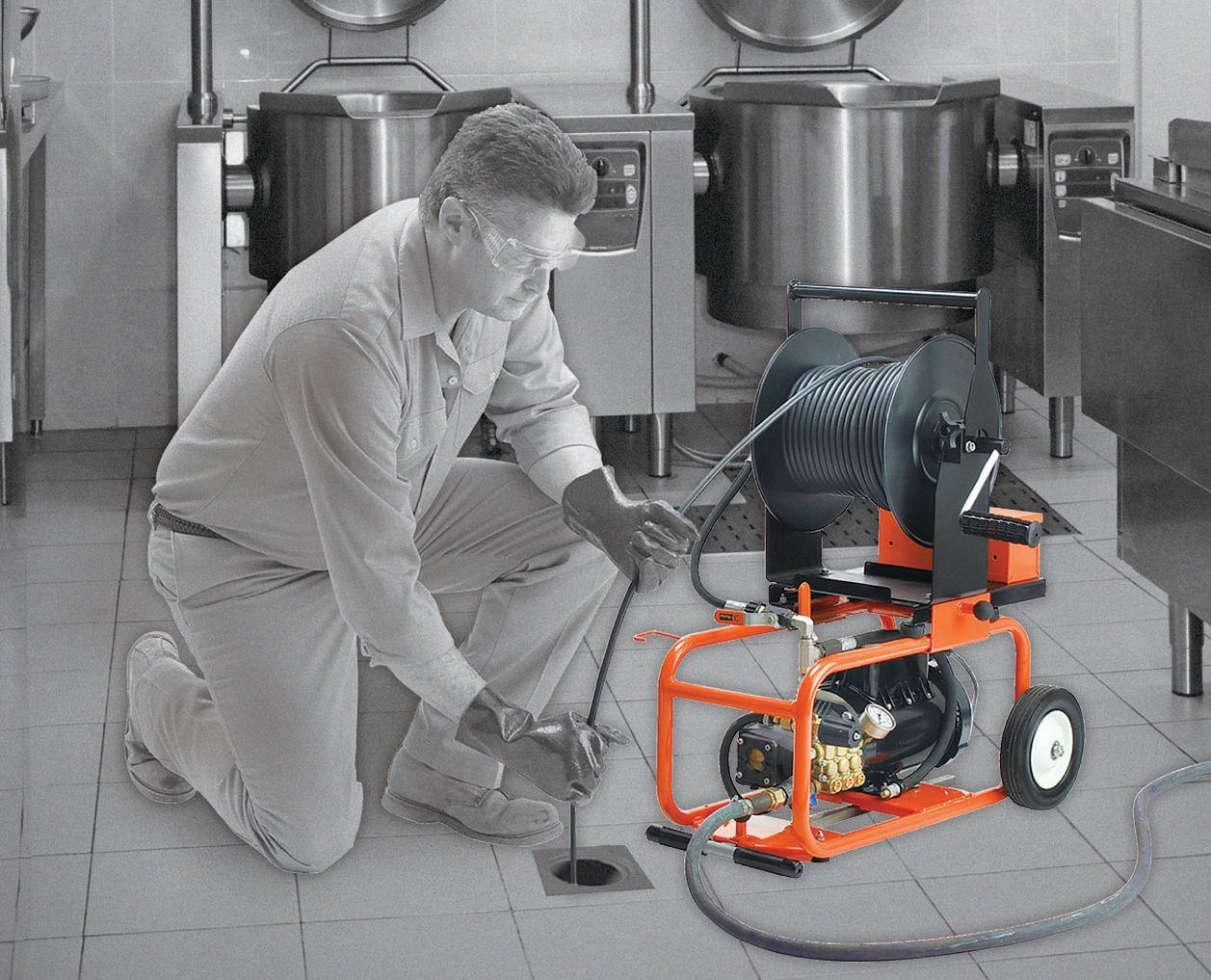
JM-1450 Water Jet
Vibra-pulse technology
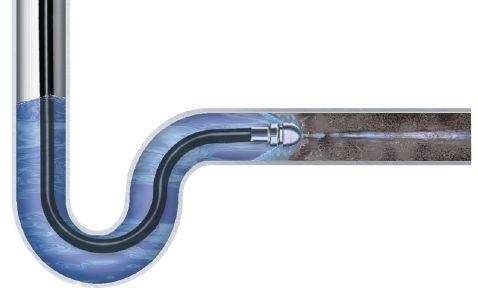
The compact and powerful JM-1450 electric water jet gives your customers as much pressure as they can get from an electric jet. It generates 1500 psi at 1.7 gallons per minute, yet it only pulls 13 amps. Its powerful stream of high-pressure water cuts through grease, sand and ice in ways no snake can.
The JM-1450 features Vibra-pulse ® that helps the hose slide around tight bends in small lines for better cleaning power. This unique feature allows ow rate to remain the same whether the pulse is on or off.
Call the Drain Brains ® at 800-245-6200, or visit www.drainbrain.com/jetset