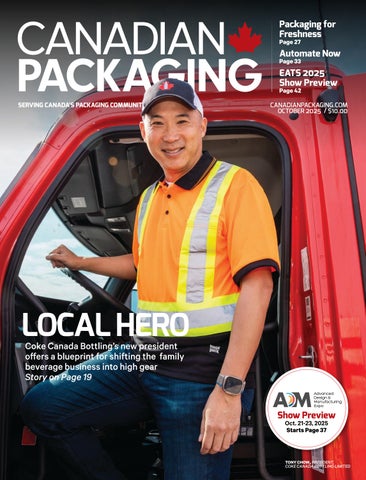
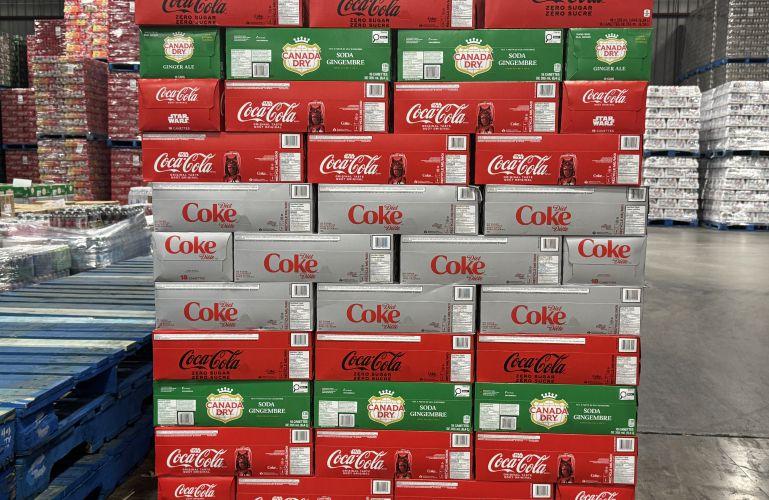
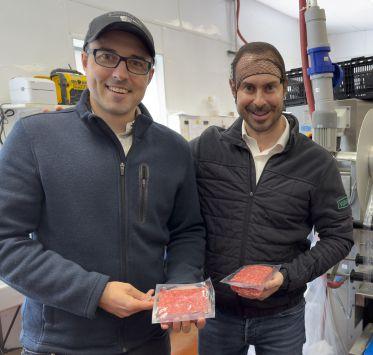
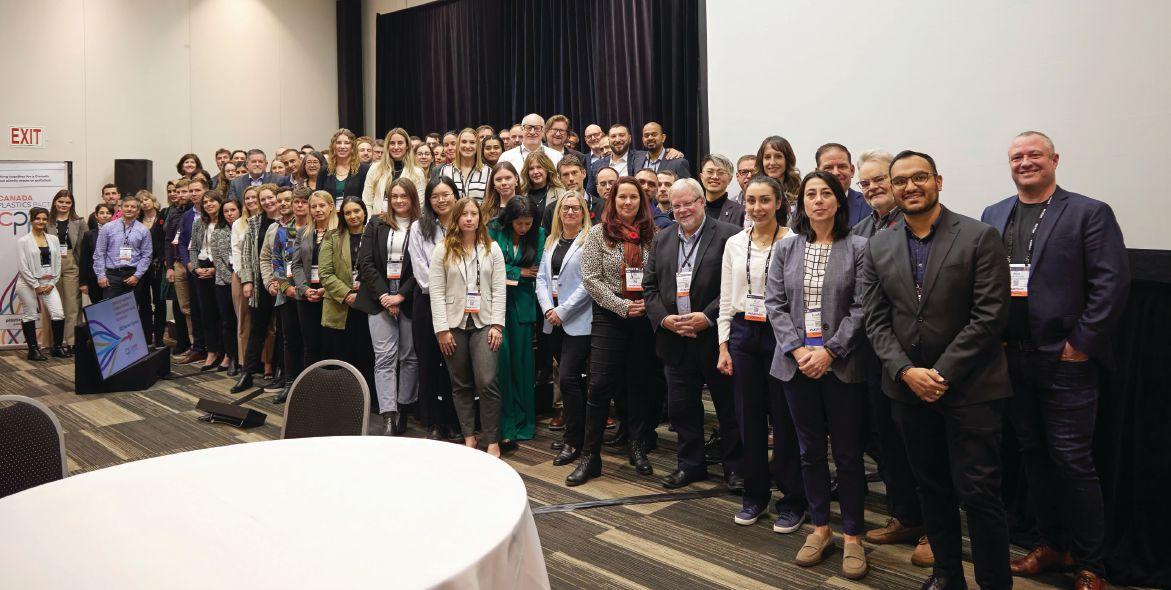
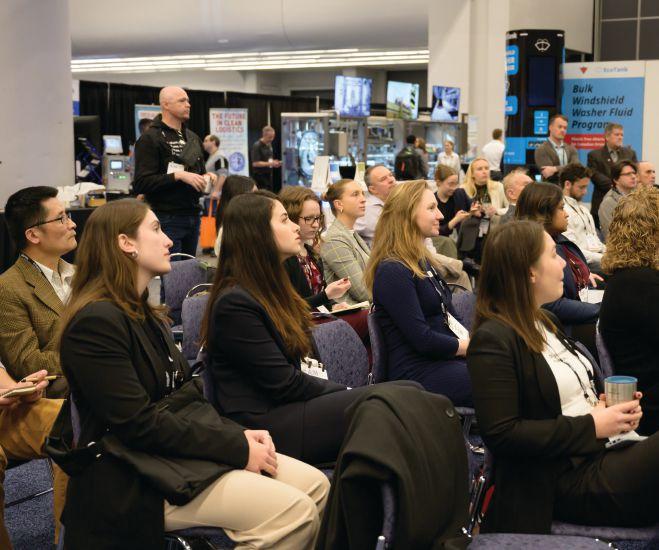
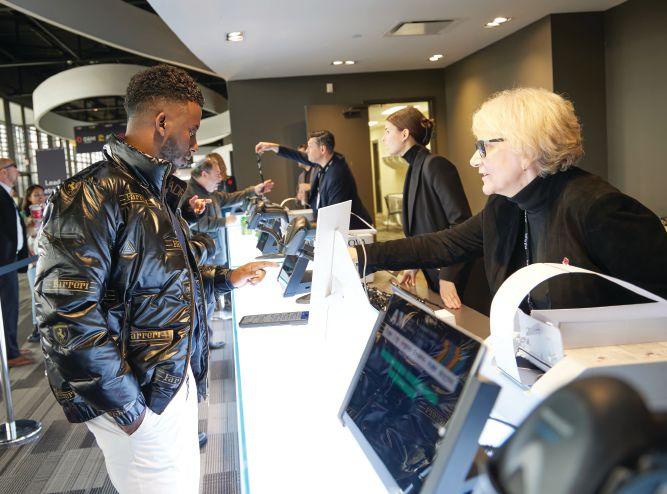
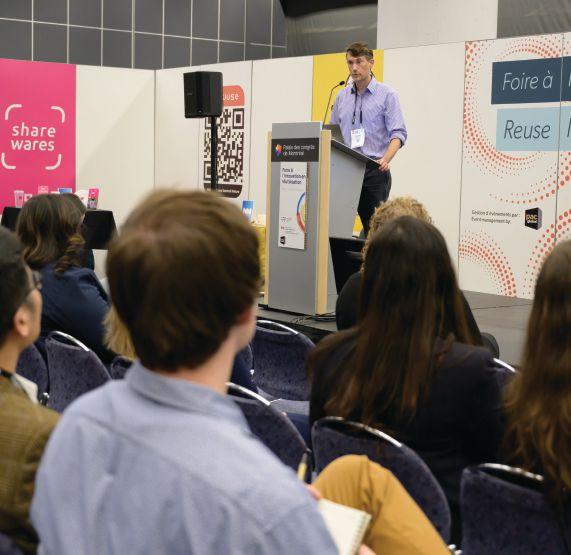
Coke Canada Bottling’s new president offers a blueprint for shifting the family beverage business into high gear Story on Page 19
Preview
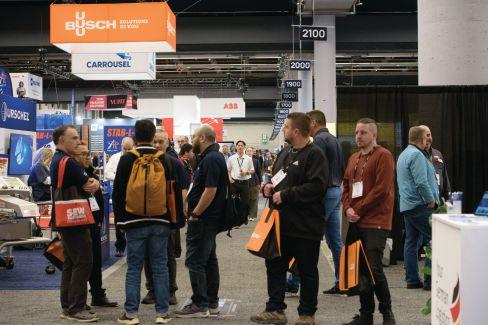
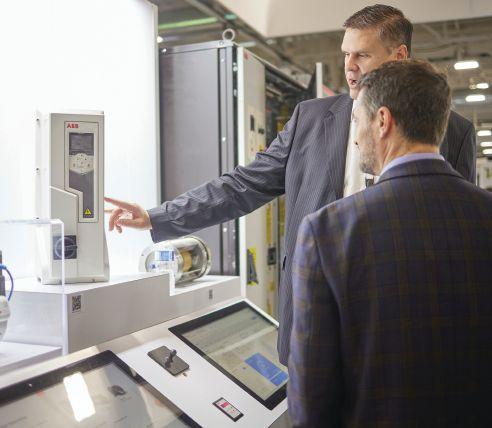
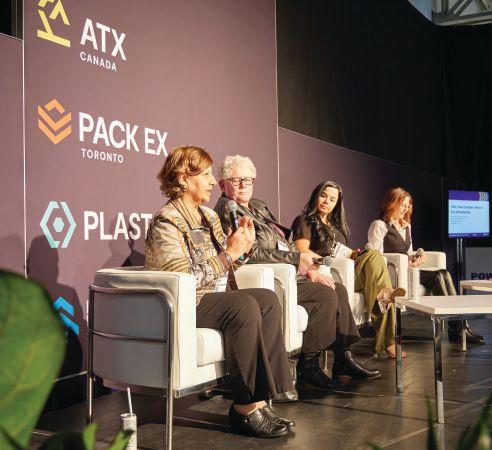
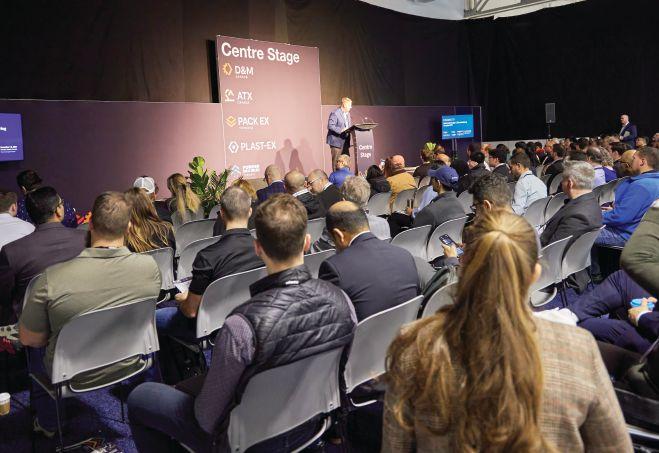
Oct. 21-23, 2025 Starts Page 37
PIONEERING INNOVATION SINCE 1950
Delivering Results.
With Heat and Control, you have a partner with the scale to support your success, the innovation to advance your operations, and a commitment to quality that will help you offer better products for consumers.
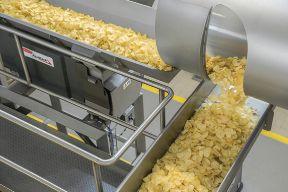
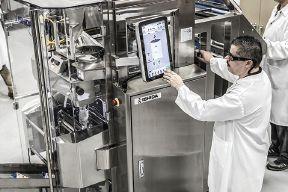
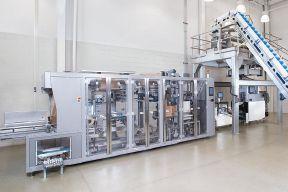
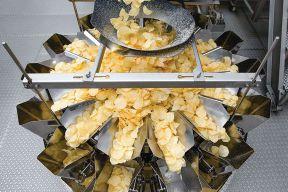
COMPLETE SNACK PACKAGING SOLUTIONS
• Accumulation
• Horizontal motion conveying
• Incline, belt and bucket conveyors
• Filling and multihead weighing
• Bagmaking and casepacking
• Checkweighing and seal checking
• Foreign object and defect inspection
We are successful when you are successful. That’s why we apply creativity, engineering excellence, and determined perseverance to every project to help our customers get the performance their business demands—whether measured by flavor, efficiencies, sustainability, improvement, or innovation.
• Controls and information systems info@heatandcontrol.com |
Oct. 28- 30, 2025
Booth #2100 McCormick Place, South Hall Chicago, IL, USA
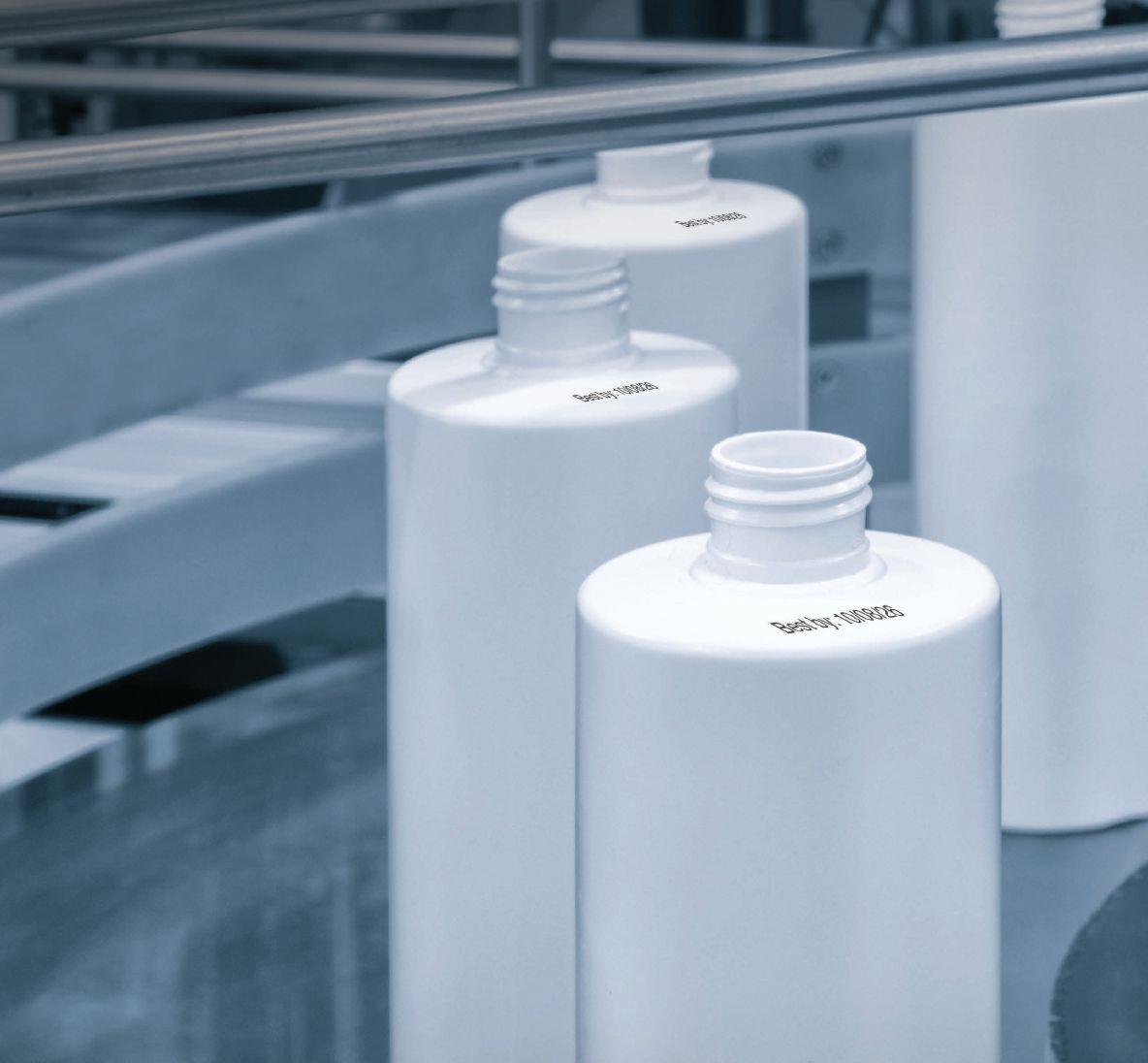
Videojet® 7920 UV Laser Marking System
The Videojet 7920 UV laser marking system is engineered to optimize your operations with innovative Videojet SmartFocusTM technology, helping to reduce manual intervention while maintaining packaging integrity.
See how you can achieve your automation goals with the Videojet 7920 UV Laser and SmartFocus™ technology.
COLUMNS
FROM THE EDITOR
4 George Guidoni
Las Vegas packaging showcase delivers a timely feelgood factor.
CHECKOUT
46 Noelle Stapinsky
Joe Public speaks out on packaging hits and misses.
15 COKE IS IT!
New Coke Canada Bottling president Tony Chow shares his thoughts on the company’s focus on local production and community engagement.
FEATURES
27 Ground Control
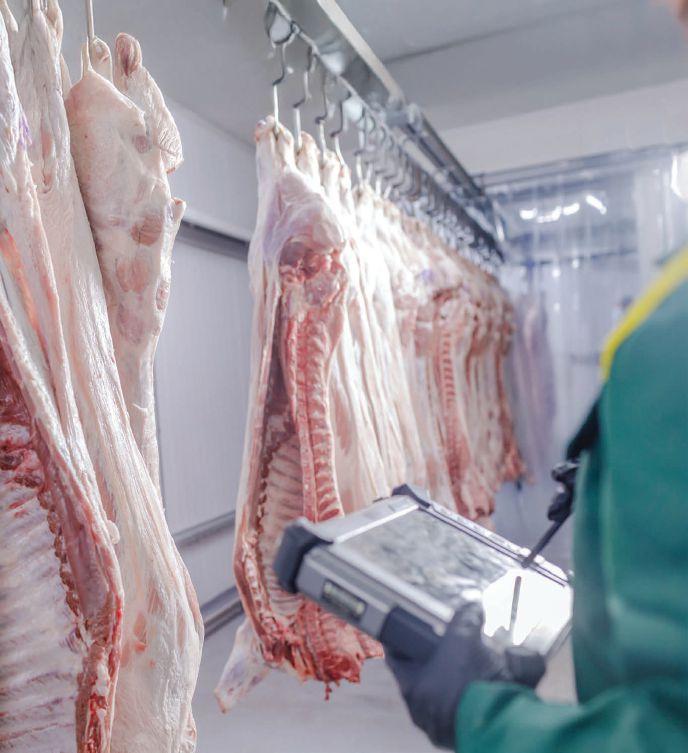
Quebec-based meat products manufacturer unlocks new process efficiencies with cutting-edge processing and packaging machinery.
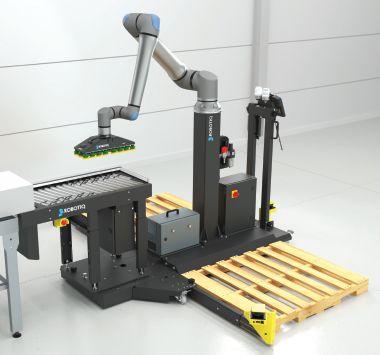
33 Lean and Fit
Quebec-based collaborative robotics specialist quickly gaining global prominence for its innovative approach to robotic palletizing.
37 Home Comforts
Your preview to the upcoming ADM Toronto showcase of advanced packaging and other manufacturing technologies for the Canadian marketplace.
42 Food for Thought
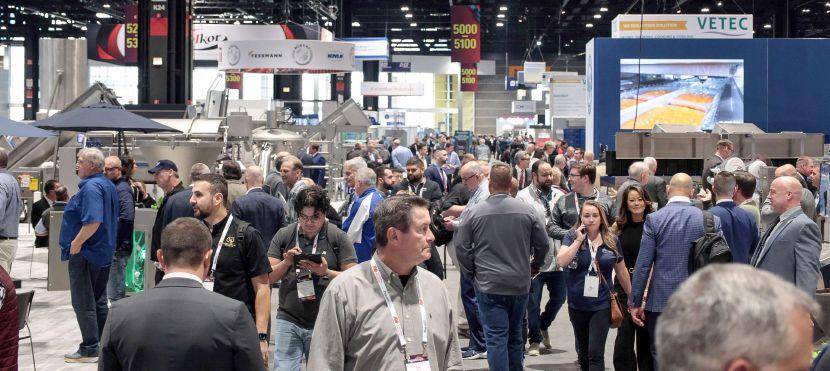
Freshly rebranded food processing exhibition in Chicago aims to deliver a sizzling showcase of technological innovation.
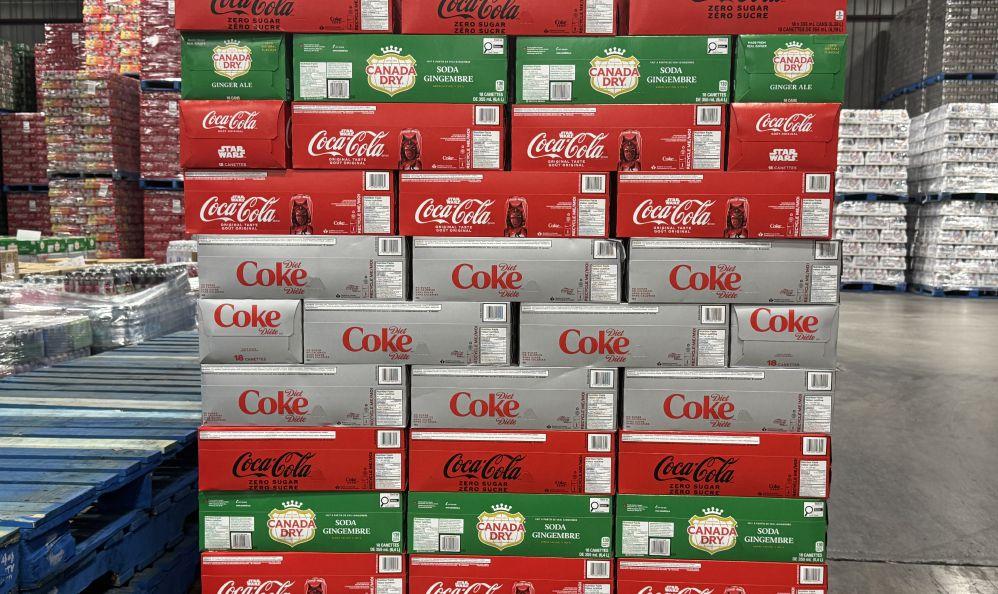
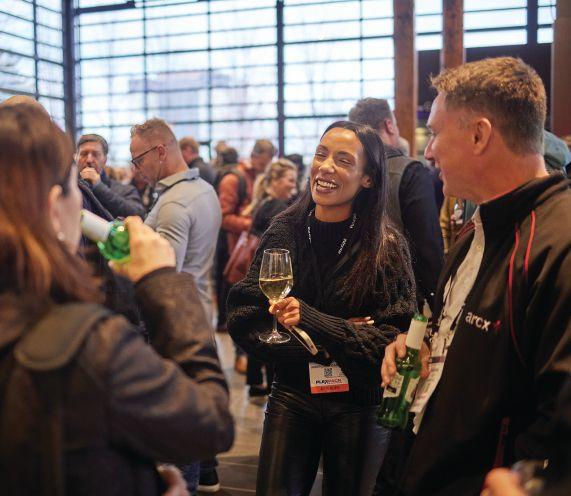
The new Coke Canada Bottling Limited president Tony Chow is eager to take the wheel to drive Canada’s largest independent bottler forward to new marketplace glories through continuous capital investment in local production and distribution facilities.
Packaging showcase delivers happy vibes
There really is no business like show business, especially when Las Vegas is the host city. And while the Sin City’s reputation for gambling and around-theclock partying is all part and parcel of its enduring allure, its parallel emergence as a go-to destination for major trade shows and conventions has been vividly underscored with the recent PACK EXPO Las Vegas exhibition a few weeks ago.
display aren’t just meeting today’s needs; they’re driving the growth, efficiency and innovation that will define packaging and processing for the next 30 years.”
Ironically, industry’s resilience in the face of uncertain economic prospects and geopolitical volatility even prompted the PMMI itself to revise some of its earlier forecasts made less than a year ago in Chicago.
OCTOBER 2025 | VOLUME 78, NO. 7
Reader Service
Print and digital subscription inquires or changes, please contact Angelita Potal, Customer Service Tel: 416-510-5113
apotal@annexbusinessmedia.com
Mail: 111 Gordon Baker Rd., Suite 400, Toronto, ON M2H 3R1
Senior Publisher Stephen Dean | (416) 510-5198 SDean@canadianpackaging.com
Editor George Guidoni | (416) 510-5227 GGuidoni@canadianpackaging.com
The number of registered attendees visiting the PACK EXPO
Las Vegas 2025 exhibition
Drawing tens of thousands of packaging and processing professionals to the newly-expanded Las Vegas Convention Center to marvel at the latest technological advances and innovations in this critical manufacturing industry, this year’s edition provided another resounding testament to the unrivaled skillfulness and expertise of the biennial event’s organizers PMMI, The Association for Packaging and Processing Technologies, to put on a great show.
Marking its 30th anniversary this year, the three-day packaging and processing showcase was fittingly a stunning success by any measure—unveiling a vast wealth of next-generation automation technologies, robotics and artificial intelligence (AI) solutions that no one in the industry could have conceivably foreseen three decades ago.
From starting out as a regional sideshow to the more established PACK EXPO International exposition held every two years in Chicago, the Vegas show has blossomed into a world-class showcase with its own unique identity and pedigree.
With more than one million square feet of exhibit space happily shared by more than 2,300 domestic and international exhibitors, the buoyant industry gathering was literally buzzing with energy and optimism from start to finish.
If a successful trade show is an accurate indicator of an industry’s current health and well-being, the feelgood factor generated throughout the show’s four vast exhibit halls points to some very happy days to come for the remarkably resilient industry driven by passionate innovation and rapid technological progress.
“The scale and energy of PACK EXPO Las Vegas this year reflect how fast our industry is advancing,” says Jim Pittas, PMMI’s president and chief executive officer.
“From AI and robotics to next-generation sustainability, the technologies on
Rather than flatlining or dipping after a couple of years of supercharged postCOVID growth, the shipments of packaging machinery in the U.S. and Canada are now predicted to post increases this year, according to PMMI’s latest Packaging State of the Industry report released on the eve of the show. (See page 8 for more details)
And despite the justifiable fears among Canadian packaging machinery OEMs (original equipment manufacturers) about the possibility of U.S. trade tariffs being extended to their products, the fact is that for the time being, at least, Canadian machine-builders currently enjoy the same, mostly unimpeded access to the U.S. market that they did before last year’s game-changing presidential election south of the border.
There’s no such luck for their European-based OEM counterparts, however, who are struggling to come to grips with the 15-percent tariffs imposed on their machinery shipped into the U.S. market, but for now, at least, the existing CUSMA (Canada-Unites States-Mexico Agreement) deal for free trade between the three nations remains in place for the lion’s share of packaging machinery shipments.
That may yet change down the road, mind you, but worrying about things outside of our control is a futile exercise.
The best course of action is to make the best of the current state of affairs by focusing on the positive, and taking part at the upcoming ADM Toronto manufacturing industries showcase later this month (see pages 38-40), with its significant packaging industry presence, would be an important first step towards maintaining the industry’s growth despite the otherwise sketchy Canadian economic outlook.
Here’s hoping to see you there! GEORGE GUIDONI, editor
Audience Development Manager Barbara Adelt | (416) 510-5184 Fax: (416) 510-6875 badelt@annexbusinessmedia.com
Media Designer Alison Keba | (519) 429-5181 akeba@annexbusinessmedia.com
CEO Scott Jamieson SJamieson@annexbusinessmedia.com
Annex Business Media 111 Gordon Baker Rd., Suite 400, Toronto, ON M2H 3R1; Tel: 416-442-5600.
Canadian Packaging, established 1947, is published 10 times per year except for occasional combined, expanded or premium issues, which count as two subscription issues.
PRINTED IN CANADA ISSN 008-4654 (PRINT), ISSN 1929-6592 (ONLINE)
PUBLICATIONS MAIL AGREEMENT NO. 40065710
SUBSCRIPTION PRICE PER YEAR (INCLUDING ANNUAL BUYERS’ GUIDE: Canada $80.07 per year,USA $183.09 (CDN) per year, Outside Canada $207.57 (CDN) per year, Single Copy Canada $10.00.
From time to time Canadian Packaging will mail information on behalf of industry-related groups whose products and services we believe may be of interest to you. If you prefer not to receive this information, please contact our circulation department in any of the four ways listed above.
We acknowledge the [financial] support of the Government of Canada
Bottling giant completes $8-million upgrade to its centenarian Hamilton DC Having served the local community for just over 100 years, the Coke Canada Bottling distribution center in Hamilton, Ont., has just completed a major $8-million capital upgrade that firmly positions the 120,00-square-footfacility as one of the country’s leading distributors of the expansive Coca-Cola beverage brand portfolio for many more years to come.
Originally started up in 1924, the Hamilton distribution center employs 165 people on a two-shift, six-day-per-seek schedule—servicing approximately 3,300 local customers across the region and selling over 400 different product, including the popular Coca-Cola, Canada Dry, A&W and Monster Energy brands.
Since becoming an independent, familyowned business in 2018, Coke Canada Bottling has invested approximately $9.5 million in the Hamilton facility. The latest investment
Test, Inspect, and Report
Reclaim
Mobile Service Delivered Directly to Your Facility (within 72 hours)
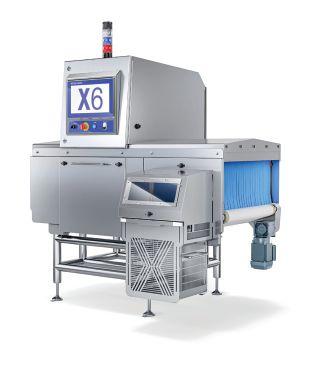
METTLER TOLEDO provides emergency x-ray inventory re-inspection services to help you efficiently manage suspect foreign material incidents.
PXT™ advanced photon counting and DXD+ dual-energy technologies deliver superior capabilities, enabling the detection of foreign materials in packaged food and beverages at sizes below 1mm. This includes a wide range of contaminants, helping you clear your on-hold finished products as quickly as possible.
Learn more today by visiting www.xrayreclaim.com or calling (844) 972-9911
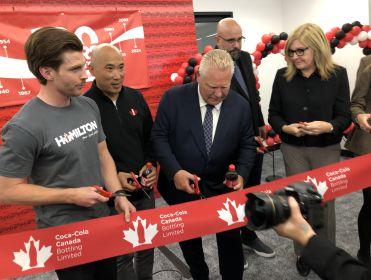
From left: Hamilton distribution center general manager Chase Heinemann, Coke Canada Bottling chief executive officer Tony Chow, Ontario premier Doug Ford, and local member of provincial parliament Natalie Pierre leading the ribbon-cutting ceremony.
Coke Canada Bottling president Tony Chow.
includes roof and facade improvements, security enhancements, and upgrades to employee spaces—ensuring the distribution centre meets and exceeds best practices for safety and operational excellence.
According to the facility’s general manager Chase Heinemann, the upgrade has also significantly expanded the distribution center’s storage capacity from 150,000 to 250,000 pallets with installation of new high-density racking systems.
“We’re investing to help ensure we can meet and exceed the needs of our customers while enabling best practices for safety,” said Coke Canada Bottling’s new chief executive officer Tony Chow.
“We are committed to this local community for the long term,” said Chow, noting Coke Canada Bottling’s significant national footprint comprising five bottling plants, 55 distribution centers, and nearly 6,000 employees at over 500 locations across Canada.
“We are thrilled to be in Hamilton, celebrating the strength of our history and the momentum carrying us into the future,” said Chow, before handing the mike to Ontario Premier Doug Ford to address the facility’s staff, local politicians and other invited guests.
“The backbone behind any company are the folks in this room; you folks are the ones that make things happen,” Ford told the enthusiastic audience, while revealing his own personal fondness for the Coca-Cola Zero brand.
“It tastes great,” Ford stated, highlighting his government’s efforts to lower taxes on Ontario businesses and workers to encourage companies like Coke Canada Bottling to continue investing in the province.
Steam Whistle returning to its packaging roots to mark 25-year anniversary
As the popular Toronto craft brewer Steam Whistle Brewing celebrates its 25th anniversary, it has embraced the adage that everything old is new
It is the latest step by the independently owned and operated brewery—started up in 2000 at the historic Roundhouse building in downtown Toronto—to embrace its origins and reinforce the working mantra of, ‘Do One Thing
“Steam Whistle is a brand that was founded on nostalgia,” says Greg Taylor, co-founder and chief executive officer of Steam Whistle
“In our early years, we made a
aesthetic, our company values, the historic railway Roundhouse we call home, and our vintage fleet of vehicles,” Taylor explains.
“Nostalgia is a place of comfort,” he says, “and as we mark 25 years, we felt it was the right time to bring back a bit of our own nostalgia.”
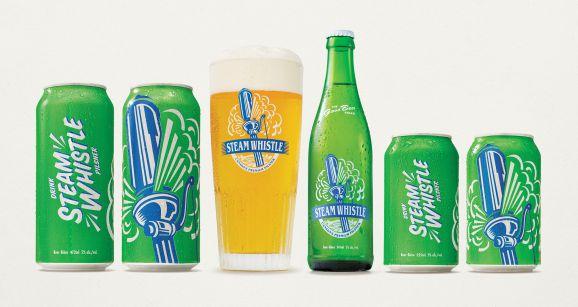
The original Steam Whistle look speaks to the playful, fun, retro and quirky values of the brand with its well-known green and blue hues, while the revival of the original logo reintroduces curves to the design, according to Taylor, evoking more life and movement.
Steam Whistle’s vintage logo blends minimalism with a modern touch, drawing on 25 years of history to connect with multiple generations. The brewery primarily uses its Sign Painter and Heritage Crest logos, both of which honor its rich legacy while maintaining a fresh appeal.
“We looked to the past to inspire the future,” says Steam Whistle’s creative director Ashley Ray.
it felt natural to start by reimagining our classic logos.
“Alongside a new typography system, original color palette and appetite-forward photography, the result balances the comfort of the past with a contemporary twist,” Ray explains. “It’s a bold new era for Steam Whistle—one that will be hard to miss.”
Bucking the industry-wide trend, Stream Whistle remains committed to continue using its iconic green glass bottles to package a significant portion of its output—in large part as a reminder of the company’s sustainability roots.
According to the brewer, the thick green,n direct-printed Steam Whistle bottles can be reused and refilled up to 45 times—reducing waste and keeping beer cold longer.
And as the only Canadian craft brewer that regularly uses bottles, the premium appearance is a key differentiator for the, made with just four natural ingredients.
“Steam Whistle in a bottle just hits different,” says Taylor. “We
packaging machinery sold in Canada estimated $1.2billion in 2024, growing the headwinds of persistently high mirroring the economic challenges
With financing conditions still tight uncertainty related to U.S. tariff policy, shipments are expected to remain relatively with projected growth of just 0.8%.
Packaging machinery
OEMs face cooling market demand after years of over-the-top growth
term, the value of machinery Canada is forecast to reach $1.4billion reflecting a CAGR of 3.1% from 2023 to Cartoning, multipacking, and case machines are projected to post the highest 4.3%, followed closely by palletizing and stabilization machines at 4.2%.
Automated changeovers, servo-driven systems, and versatile machines for legacy and novel packaging formats are propelling innovation in the packaging industry in 2025, according to the 2025 Packaging State of the Industry report of the Herndon, Va.-headquartered PMMI, The Association for Packaging and Processing Technologies. Released just prior to the recently-held PACK EXPO Las Vegas 2025 exhibition, produced by PMMI, the new report predicts relatively modest growth for the North American machinery market across both the U.S. and Canada.
This growth is largely driven by demand for end-ofline automation, as Canadian manufacturers continue to grapple with the rising cost of human resources and persistent staffing shortages, trends that parallel those seen in the U.S. The push toward more sustainable packaging also plays a role: increased investment in cartoning equipment is being supported by Canada’s bans on single-use plastics and new requirements around recyclability and packaging material content.
largely driven by demand for end-ofautomation, as Canadian manufacturers continue the rising cost of human resources staffing shortages, trends that parallel the U.S. The push toward more packaging also plays a role: increased cartoning equipment is supported by Canada’s bans on single-use new requirements around recyclability material content.
6
After reaching US$11.3 billion in sales in 2024, the growth rate for U.S.-made machinery is forecast to increase by 2.2 per cent this year, according to PMMI, while the Canadian packaging machinery market, which grew by 3.1 per cent last year, is only expected to post a “flat” increase of just 0.8 per cent.
n Household, Industrial, and Agricultural Chemicals
n Pharmaceuticals
n Personal Care, Toiletries & Cosmetics
n Other End-User Sectors
Fig. 6 Canada Packaging Machinery Forecast - Value of Shipments & % Growth YoY
Food
“With financing conditions still tight and ongoing uncertainty related to the U.S. tariff policy, machinery shipments are expected to remain relatively flat in 2025,” PMMI states.
Beverage n Household, Industrial, and Agricultural Chemicals n Pharmaceuticals n Personal Care, Toiletries & Cosmetics
at 4.3 per cent, PMMI reports, followed closely by palletizing and load stabilization machines at 4.2 per cent.
n Value of Shipments n %Growth YoY
supported by Canada’s bans on single-use plastics and new requirements around recyclability and packaging material content.”
n Other End-User Sectors
“This growth is largely driven by demand for end-of- line automation, as Canadian manufacturers continue to grapple with the rising cost of human resources and persistent staffing shortages— trends that parallel those seen in the U.S.,” the PMMI report states.
Machinery Forecast - Value of Shipments & % Growth YoY
However, the long-term picture appears much brighter, according to PMMI, which predicts the value of machinery shipments in Canada to reach US$1.4billion by 2030, reflecting annual cumulative growth of 3.1 per cent from 2023 to 2030.
“In 2024, cartoning, multipacking, and case-packing machines are projected to post the highest growth
n Value of Shipments n %Growth YoY
“The push toward more sustainable packaging also plays a role: increased investment in cartoning equipment is being
According to the PMMI report, packaging machinery makers on both sides of the border are increasingly tasked with designing compact equipment to fit existing plant footprints, while also handling delicate materials without damage and also being easy to operate and maintain.
“End-user customers are also increasingly challenged by high SKU (stock-keeping unit) counts,
25_008971_Canadian_Packaging_OCT_CN Mod: September 5, 2025 11:34 AM Print: 09/18/25 page 1 v2.5
Fig.
Canada Packaging
innovative packaging formats, and the need to minimize downtime,” states Jorge Izquierdo, vice-president of market development at PMMI.
Other factors affecting the industry include labor challenges, artificial intelligence (AI), sustainability and changes in U.S. government policies.
“Hiring and retention challenges continue to be hurdles for original equipment manufacturers (OEMs) and end-users alike,” according to the PMMI data. (See infographic)
While AI, automated systems, and data collection can help increase efficiency as companies deal with labor challenges, according to the annual report, many end-users want to focus on practical applications that can help them solve real problems on the plant floor.
One solution is increasing corporate investment in workforce development programs.
Predictive maintenance is another tool with the potential to solve manufacturing challenges,
but its adoption has been slow, according to PMMI’s 2025 State of the Industry report.
Many end-users are concerned about its cost and are hesitant to move away from existing preventative maintenance routines.
However, some OEMs report progress in manufacturing efficiency when predictive systems are integrated into a human-machine interface (HMI) with simple, actionable alerts.
In addition, preventative maintenance still holds promise because it aligns more closely with existing maintenance workflows and often helps end-users to feel more in control of the timing and cost.
While sustainability also continues to play a huge role for end-users seeking to boost efficiency and profitability, there is a noted shift in prioritizing environmental issues, as companies strive to balance environmental goals with cost and operational realities.
“At the same time, tariffs and changing U.S. policies are causing market volatility, making planning difficult,” PMMI acknowledges.
2025 PACKAGING MACHINERY STATE OF THE INDUSTRY
Enhance Food Safety & Efficiency
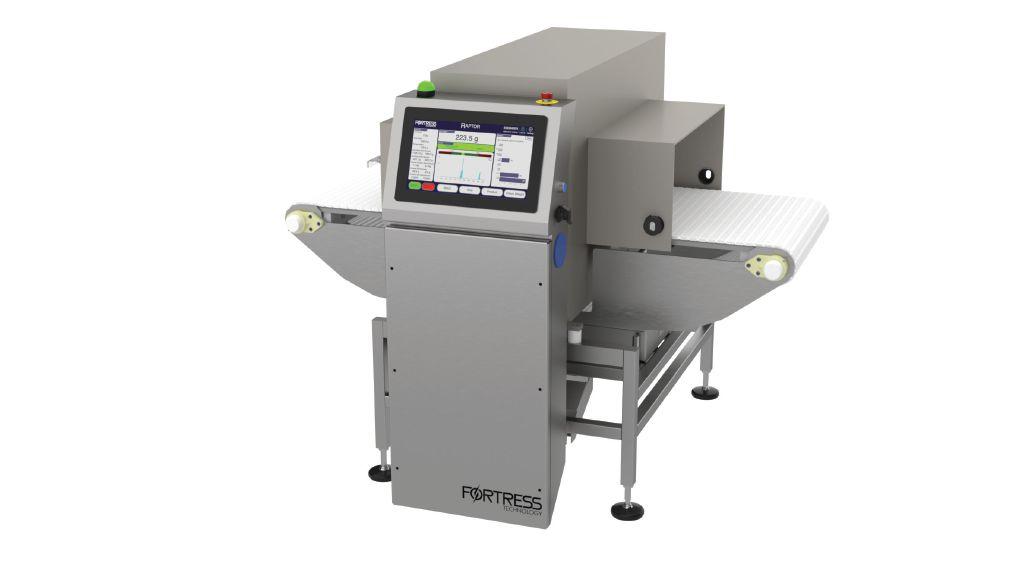
Transform your packaging line with the power of combined Metal Detection and Checkweighing Systems. Designed for heavy-duty applications, the Raptor BBK Combination System accurately inspects and weighs bags and cases weighing up to 25kg, delivering contaminant detection and weight compliance in one compact, high-performance unit.
NORDIPAK
EUROPEAN TECHNOLOGY. CANADIAN SERVICE.
The same company you know and trust, now locally run. Choose our premier line of meat, poultry and seafood machinery.
POLY-CLIP SYSTEM
Excellence in Clipping
Trust these German clipping solutions built on research and development since 1922.
INJECTORS
Injection Into Meat, Poultry, Fish and Cheese
Elevate the taste and quality of your products with curing injectors at the forefront of the industry for over 40 years.
BRINGING THE MANUFACTURERS STRAIGHT TO YOU
• Faster delivery
• Localized service
• Canadian headquarters
• Service coast to coast.
NORDIPAK LTD.
4993 Louis-B.-Mayer, Laval, QC H7P 0E5, Canada
TT BASTARD 160
Continuous and Time-Saving Protein Digestion
Ensure optimum protein extraction thanks to continuous massaging, tumbling and mixing. Press rack, Stainless steel mold and more...
contact@nordipak.ca 450.990.4646
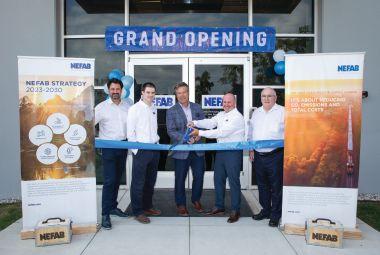
Nefab Group’s executive vice-president for the Americas region Patric Vestlund (center) leads the scissor-cutting ceremony for the company’s new southeast hub facility near Atlanta, Ga.
leading accredited brands that demonstrate their positive impact with B Corp certification or verified high SDG Action Manager Assessment scores, based on the UN’s sustainable development goals that include reducing environmental impact, ensuring responsible labor practices and promoting good governance.
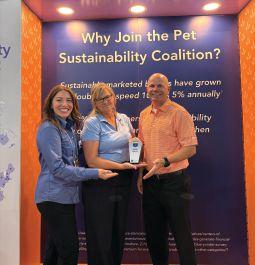
Founded in 2013, the nonprofit PSC serves more than 200 member-companies in the pet industry—including leading retailers, distributors, manufacturers, brands and suppliers—to help
maintain thriving and collaborative pet industry that creates a positive impact for the communities and environments where pet brands do business.
South African-based labeling manufacturer Ren-Flex Packaging has been awarded the 2025 Ronald B. Schultz Judges’ Choice Award of the In-Mold Decorating Association (IMDA) at last month’s Plastic Product Decorating Summit in Charlotte, N.C., for the AMSTEL Ice Bucket container developed for Amstel Brewery
A host for the Pet Sustainability Coalition (PSC) presents 2025-2026 Top Performer award to Mondi Jackson president Connie Patek and Mondi Jackson vice-president of sales Kevin Dorris at last month’s ceremony in Boulder, Co.
Designed to withstand rough usage, washability and frequent handling, the unconventionally shaped container features a digitally printed in-mold label laminated with clear BOPP (biaxially oriented polypropylene) film to resist scratching during use, with its built-in handle providing added user convenience, durability and visual impact.
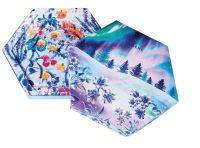
Finnish paperboard packaging producer Metsä Board has been awarded the prestigious Carton of the Year award of the European Carton Makers Association (ECMA) at the European Carton Excellence Awards gala last month in Istanbul, Turkey, for Lumene’s 2024 Beauty Advent Calendar. Designed by Metsä Board’s packaging design team and manufactured by VG Kvadra Pak, part of the Van Genechten Packaging Group, the eye-catching carton
Process improvement is improving quality while reducing operational costs.
Constant demand for consistency in product quality and taste makes Food & Beverage a demanding industry. With our comprehensive portfolio of instruments, industry expertise and accredited calibration services we ensure plant availability, resource conservation and repeatability in processing with traceable compliance.
Do you want to learn more?
ca.endress.com/food-beverage
combines outer packaging made of lightweight MetsäBoard Prime FBB folding-carton board and the inner packaging made of MetsäBoard Pro FBB Bright board in an innovative design showcasing Nordic winter beauty. Made from renewable wood fibers and featuring exceptional surface smoothness and high brightness of the board, the recyclable Lumene cosmetics calendar was also named the recipient of the ScanStar packaging award of the Scandinavian Packaging Association in recognition of the package’s creativity, functionality and sustainability. “By combining deep material knowledge with converting efficiency, we can create packaging solutions that are both functional and visually impactful,” says Metsä Board’s packaging designer Iiro Numminen. “The multidimensional structure and Nordic aesthetics of Lumene’s calendar deliver a rich consumer experience, while remaining easy to manufacture.”
Leading Swedish paperboard producer Stora Enso has been awarded the prestigious global Red Dot Design Award 2025 for the gift packaging portfolio the company created for the Finnish textiles, clothing and home furnishings manufacturer Marimekko. Made entirely of renewable certified materials, the scalable and recyclable award-winning packaging portfolio features distinct Marimekko artwork such as Unikko, Marimekko’s most iconic print, as well as logo patterns, with the first boxes launched in May of 2024. “The key to our development was creating premium protection with enhanced functionality and beauty,” says Anna Kjellberg, design director at Stora Enso’s Packaging Solutions Division. “Our design team aimed to present a gift packaging portfolio with a clear purpose while expressing Marimekko’s strong brand identity,” Kjellberg adds. “We are proud of our collaboration with Marimekko and delighted to see the gift packaging being used worldwide.”
Charlotte, N.C.-headquartered Sealed Air Corporation has reached a significant milestone with recent installation of the 4,000th CRYOVAC brand rotary vacuum packaging system at Cargill’s beef processing plant in Dodge City, Ka., last month. First introduced more than 50 years ago, the CRYOVAC rotary vacuum chamber system has since been installed at meat processing facilities across six continents, supported by an extensive network of technical service and product experts. “When you install a CRYOVAC system, it’s about more than buying a machine — you are stepping into a legacy of service, reliability and innovation trusted across the globe,” says Joe Lambert, Sealed Air’s North America Food vicepresident and general manager. “As we approach our 85th anniversary, we remain committed to meeting the food industry’s evolving needs, drawing on decades of experience to deliver innovative equipment, advanced materials and a service team dedicated to keeping our customers running.”
PRICELESS PRECISION
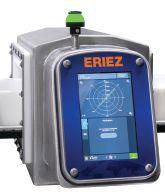
Combining high sensitivity with intuitive operation, the new PrecisionGuard X8 metal detector from Eriez is engineered to deliver accurate and reliable detection of ferrous, nonferrous, and stainless-steel contaminants across food, packaging, plastics, and other light industrial applications. Combining advanced sensing technology, auto-learning capabilities, and the industry’s largest intuitive touchscreen interface, new X8 is available in a wide range of configurations, including tunnel, tunnel with conveyor, liquid line, vertical drop, vertical form-fill-seal (VFFS), pharmaceutical, and webline models. Designed for seamless integration with new or existing production lines, the system’s high-resolution touchscreen puts critical functions at operators’ fingertips, while advanced auto-learning algorithms quickly adapt to new products—ensuring repeatable and accurate results. Moreover, the detector’s heavy-duty stainless-steel construction and IP69 washdown rating provide long-lasting durability and consistent performance, according to Eriez, even in the most rigorous operating conditions.
Eriez
TAKING SLIDES
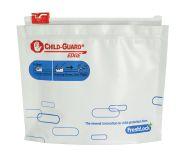
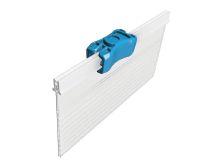
Presto Products Company’s renowned Fresh-Lock brand of reclosable flexible packaging technology has introducing two new innovations that set the stage for the next generation of slider technology, according to the company. The new Fresh-Lock Ergo Ultra slider enhances consumer accessibility with its contoured easy-grip design, while the highly anticipated Child-Guard Edge slider system brings child-resistant functionality to small-format pouches—unlocking new opportunities for flexible packaging. Engineered to feel as good as it functions, the Fresh-Lock Ergo Ultra technology combines a contoured, easygrip polyethylene slider design with a smooth, reliable polyethylene track. Made with recyclable materials, Ergo Ultra supports monomaterial pouch solutions and qualifies as a pouch component for the How2Recycle store drop-off program. For its part, the ChildGuard Edge was designed specifically for small-width pouches with high cycle counts. Featuring a reduced scale slider and track, the compact design extends the benefits of slider reclosability—including visual affirmation, durability, and child-resistant functionality—
into smaller-width pouches, while still delivering a convenient opening space.
Presto Products Company
MAKING SENSE
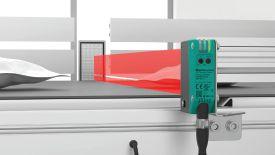
Designed to ensure reliable detection of thin and irregularly shaped objects from a height of just 2.0-mm, the new R305 retroreflective area sensor from Pepperl+Fuchs easily outperforms the single-point light beams of traditional retroreflective sensors—detecting very small or narrow objects that are not precisely aligned with the pointshaped detection area. For objects with irregular contours, such as bubble mailers and polybags, the point light beam may either miss the object entirely or detect it with a delay, which can trigger multiple switching operations. But the new R305 retroreflective area sensor, with its wide light band, always detects the leading edge of an object and avoids multiple switching. Using a light band of five individual beams that can be switched off individually, the R305 sensor allows for interfering objects to be blocked out, or for the detection height to be adapted to narrow openings. Its adjustable contrast level ensures reliable detection of challenging
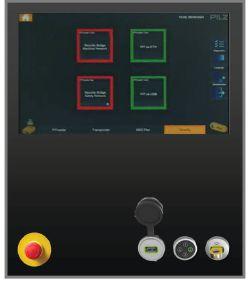
Simplify Secure Programming with Pilz
targets such as clear glass.
Pepperl+Fuchs
JUST IN CASE
Regal Rexnord Corporation has added powerful new capabilities and functionalities to its Busse/SJI PriorityPal HL series case conveyor to increase productivity and improve product handling across a broad range of food-and-beverage, warehousing, intralogistics and other applications that require quick and accurate case moving, sorting and palletizing. The updated system features a new roller apron design with enhanced structural integrity
and reinforced connection points that allow for improved weight distribution and greater load-bearing capacity. In addition, customers have the option to update their infeed design utilizing Rexnord chain—enabling increased diversity in product handling, tight product transfers, superior product stability and enhanced safety. Moreover, Regal Rexnord’s ModSort technology can be integrated for a smart, modular solution for optimizing package handling in high-speed, small-package environments.
Regal Rexnord Corporation
The food industry is of unparalleled importance. Without it, our everyday lives would look drastically different.
The industry is under constant pressure to meet rising customer demands. This means increasing production, improving product quality, lowering prices, and offering a greater variety of products. Staying competitive means keeping sustainability and efficiency top of mind, while being able to adapt to significant weather events, regulatory changes, trade dynamics and other external factors.
Regal Rexnord can address these challenges and reach your unique business goals with our broad portfolio of products and powertrain solutions.
Compostable produce stickers to clean up the waste streams
They don’t look like much in terms of size, but the tiny little produce stickers found on most branded fresh fruits and vegetables today are said to be one of the top five most common contaminants found in compost, and one of three most persistent contaminants found at industrial composting facilities worldwide.
And with deadlines mandating the use of compostable stickers on fresh produce fast-approaching in the EU (European Union), New Zealand, Australia and the U.K., the timing could not be better for a new collaborative partnership aimed at dramatically reducing this stubborn source of plastic pollution in organic waste streams.
Last month, Austrian-headquartered packaging giant Coveris Group entered into an exclusive agreement with the Israeli-based TIPA Compostable Packaging to manufacture and market compostable labels for fresh produce in the U.K.—responding to increasing market demand and tightening regulatory requirements for compostability of produce stickers.
This partnership combines TIPA’s recently announced home-compostable labels, which demonstrate high elasticity and excellent resistance to moisture, with Coveris’ large-scale production capabilities and extensive market knowledge, validating the applicability of the stickers for a wide range of fruits and vegetables.
“Labels on fresh produce have traditionally been made from conventional plastic that cannot be recycled and are often discarded in food waste bins— contaminating organic streams and contributing to microplastic pollution,” says TIPA co-founder and chief executive officer Daphna Nissenbaum.
“Policies requiring compostable labels are emerging around the world, and TIPA is leading the way with a solution that will break down with the organic matter it’s attached to without compromising on performance.
“We’re excited to offer these produce labels as part of our growing portfolio of sustainable solutions that perform like conventional plastics, but also meet today’s compostability standards.”
The new compostable labels are the result of a partnership between TIPA
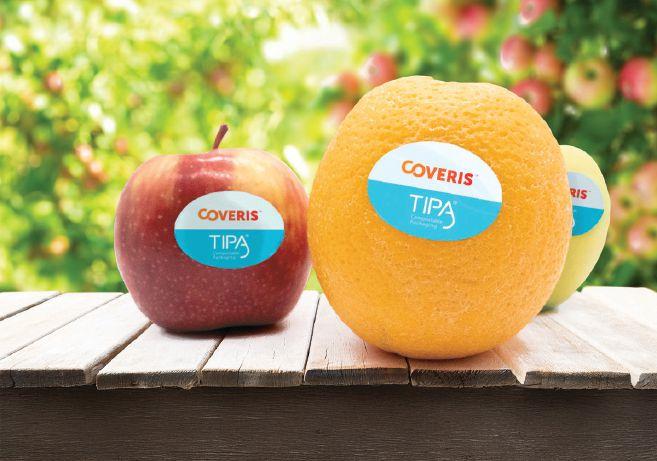
The new compostable fresh produce stickers jointly developed by TIPA and Coveris can be applied to a wide range of fresh produce items.
The new composble stickers incorporate the BioTak prssure-sensitive adhesive that ensures strong adherence to the rough skin of oranges, cantaloupes and many other types of fresh fruit.
and its European subsidiary Bio4Life, a supplier of home compostable adhesives such as BioTAK, is the world’s first adhesive that is fully certified to European compost standards and leaves no residue.
Following extensive testing of available market options, Coveris selected TIPA’s home-compostable label material for its superior performance and applicability across a wide range of fruits and vegetables.
As Coveris discovered, TIPA’s new film offers effective resistance to moisture while remaining flexible, allowing the stickers to securely adhere to produce that often has wet or varied surfaces.
For its part, the BioTAK pressure-sensitive adhesive allows for strong adherence on a variety of produce ranging from the smooth skin of a banana or mango to the complex, rough skin of an orange or cantaloupe, and across many other items such as apples, citrus fruits, kiwis, and avocados.
As a dedicated packaging partner with expert capabilities, experience and knowledge of the produce sector, Coveris is excited about the long-term potential of its partnership with TIPA.
“We are proud to partner with TIPA to introduce a new compostable labelling solution for the fresh produce sector,” says Will Mercer, Coveris’ R&D director for the paper business unit.
“By combining TIPA’s expertise in compostable materials with Coveris’
advanced print technology and understanding of the produce supply chain, we have developed a high-performance label that meets environmental, operational and legislative needs,” he adds.
“Aligned with our ‘No Waste’ strategy, we are focused on developing sustainable packaging and reducing waste in all its forms,” Mercer states.
“This partnership is about more than labels—it’s about eliminating unnecessary plastic from the food system,” adds Gary Tee, vice-president of global converting at TIPA.
“Our certified home-compostable label material delivers on performance and, equally as important, gives brands a sustainable option,” says Tee, citing other key performance attributes that include:
• Compatibility with conventional label printing presses;
• Suitability for both machine and hand application techniques;
• Food-safe certification for direct food application;
• Superior durability in cold and moist conditions.
As Tee sums up, “Partnering with Coveris allows us to combine our expertise and to provide a solution that removes conventional plastic labels from the organic waste stream and supports upcoming regulations for home compostability.”
Watch live demonstrations of our industry-leading packaging machines Package your entire line with versatile Reiser form/fill/seal technology
n Produce the highest-quality vacuum, MAP, and VSP packages with Reiser form/fill/seal packaging machines
n Fast, easy changeovers from one package to another
n Superior package seals eliminate leakers, rework, and returns
n Wide range of machines to meet all production requirements
n Backed by Reiser’s industry-leading service and support
October 21-23, 2025
Toronto, ON
Booth 1701
October 28-30, 2025
Chicago, IL
Booth 2812
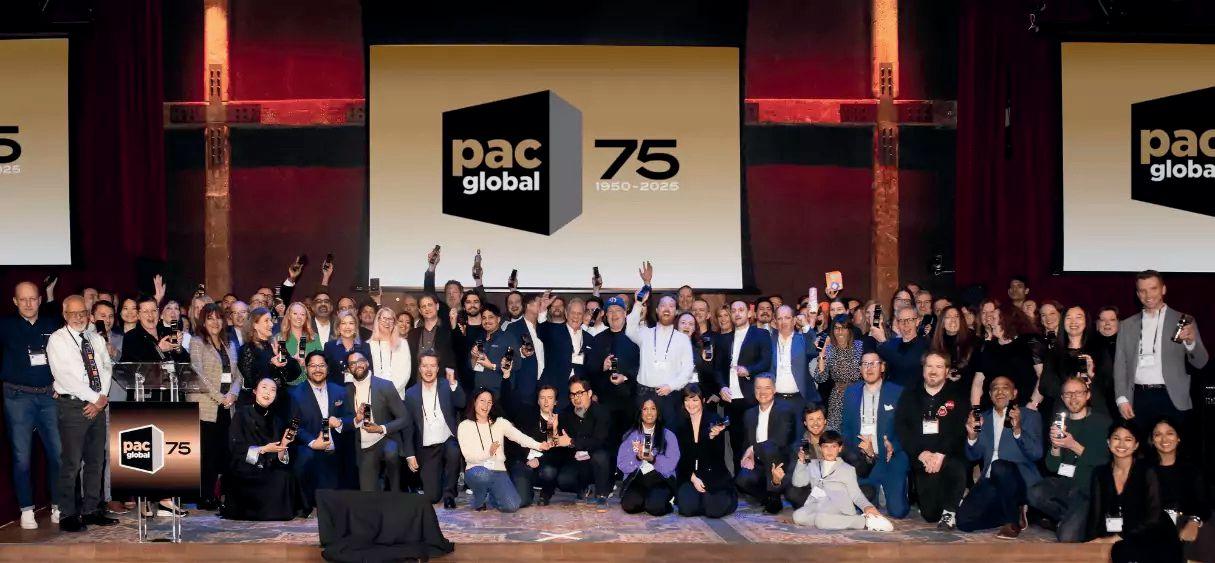
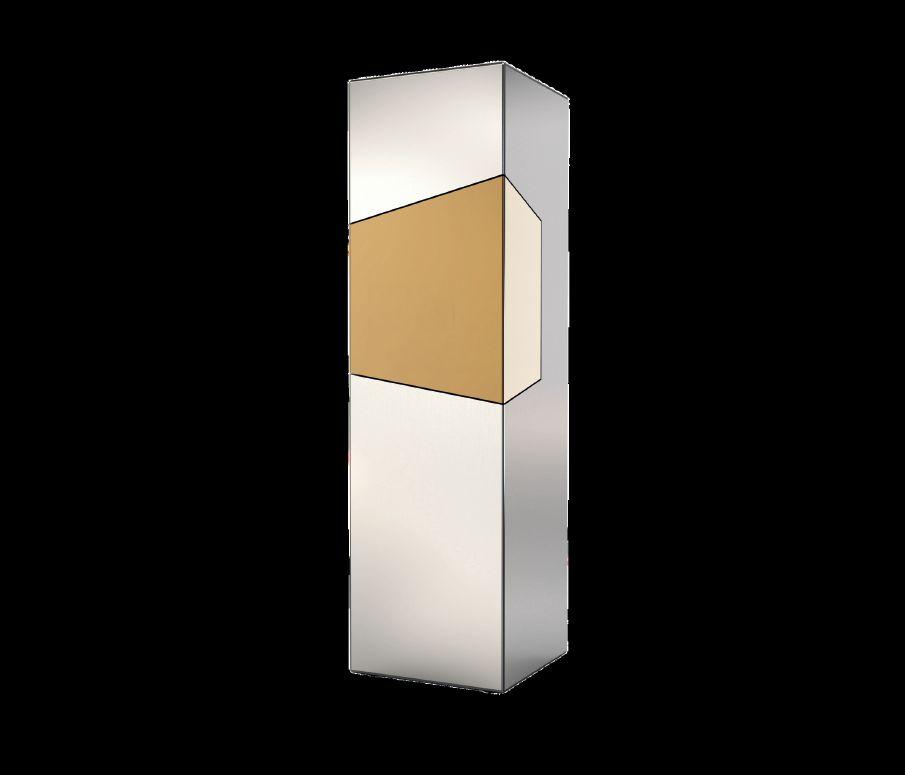
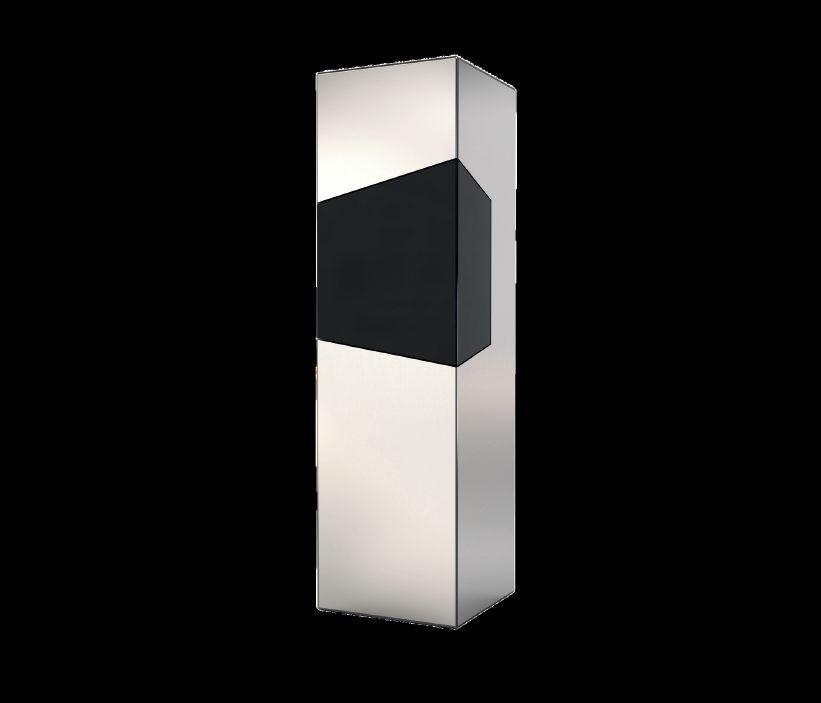
2026 PAC GLOBAL AWARDS
DEADLINE: OCTOBER 30, 2025
The 2026 PAC Global Awards celebrate the pinnacle of packaging excellence. From elevating brand presence and mastering specialty appeal, to championing inclusivity, advancing sustainability, and redefining design innovation, these awards honour only the most visionary achievements in the industry.
Act now and secure your place on packaging’s most prestigious stage!
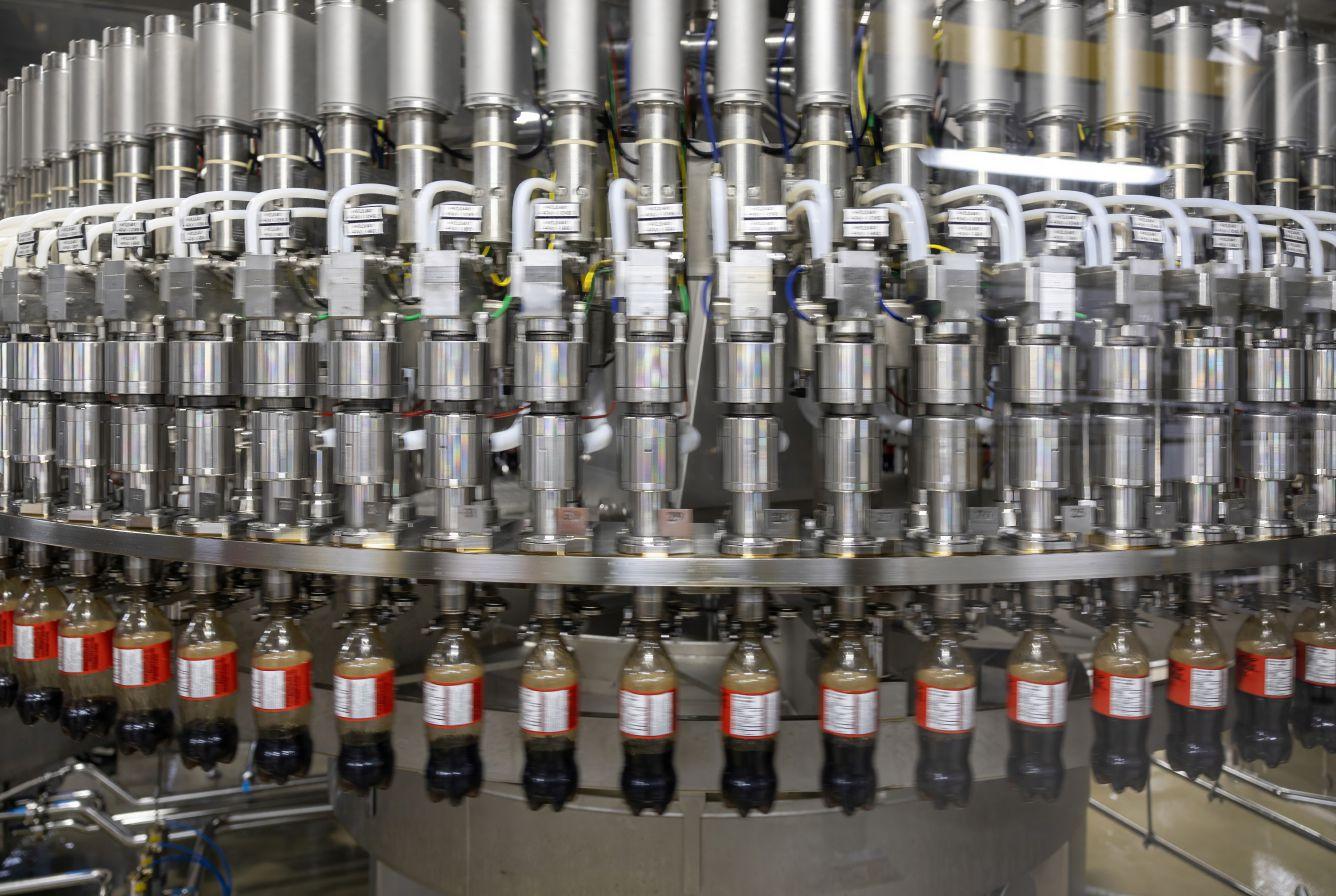
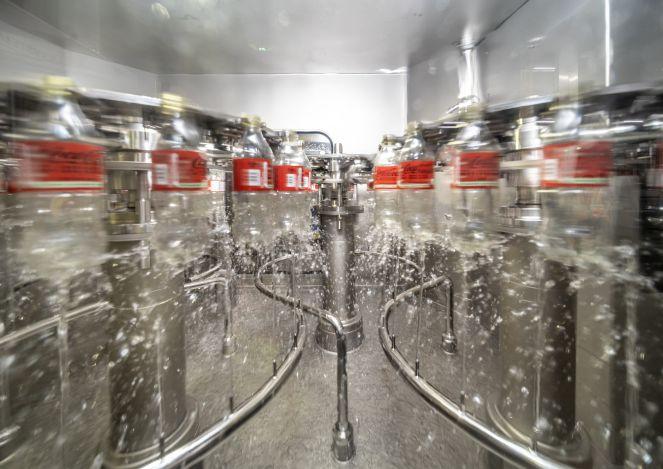
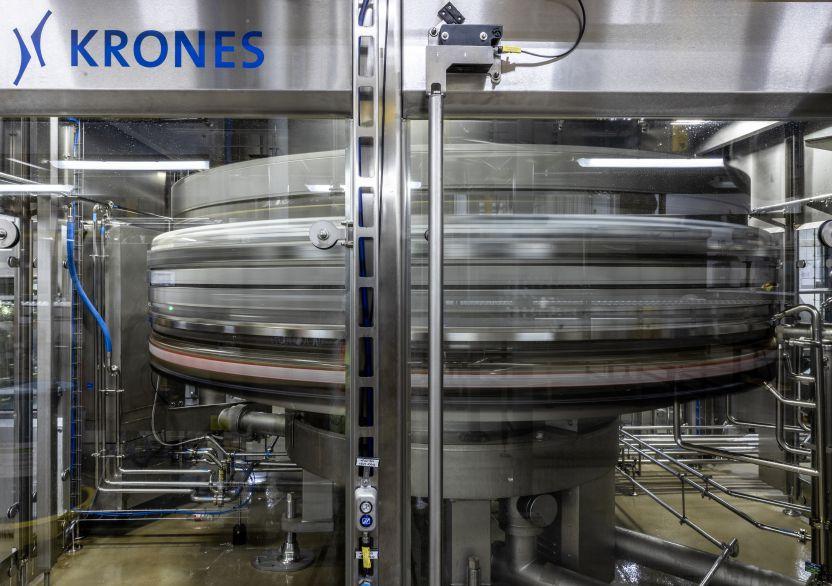
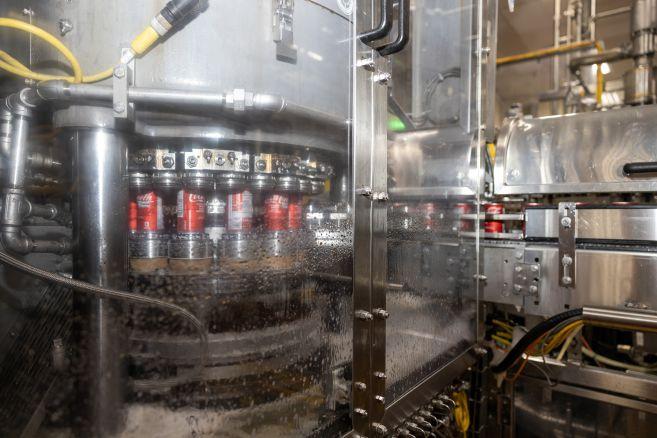
Close-up of the PET plastic bottles of Coca-Cola being precision-filled at high speeds inside a Krones filler outfitted with PFR valves at the Coke Canada Bottling plant in Richmond,B.C.
THE REAL THING
Canada’s largest independent bottler continues to invest into local operations to maintain its national leadership in beverage production and packaging
By George Guidoni, Editor
Thinking globally while acting locally is the very much the proverbial ‘real thing’ at Coke Canada Bottling Limited, the country’s largest beverage producer with a 120-year history of producing the world’s bestselling carbonated soft-drink brands for the Canadian market.
Since producing the first-ever bottle of Coca-Cola outside the U.S. in Toronto back in 1906, Coca-Cola’s Canadian bottling operations have grown to become the country’s leading manufacturer and distributor of non-alcoholic beverages, employing about 6,000 people at over 50 facilities in every province and territory across Canada.
Headquartered in Toronto, the independent bottler has operated as a familyowned business since 2018, when CocaCola’ Canadian bottling and distribution operation were acquired by the Tanenbaum and Bridgeman families.
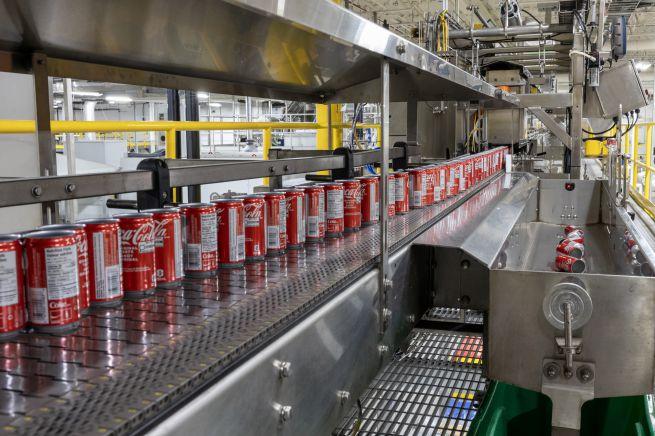
Operating give manufacturing facilities in Montreal, Toronto, Brampton, Ont., Calgary and Richmond, B.C., the company’s relentless drive to “Be the leading beverage partner in Canada” has been actively supported by hundreds of millions dollars of capital investment m throughout its vast nationwide network in recent years, with its western Canadian operations a major beneficiary of large-scale capital upgrades.
With a new $70-million high-density distribution center in Calgary scheduled to commence operations next year, Coke Canada Bottling has also invested about $65 million in various upgrades to its distribution and manufacturing capabilities just north of Vancouver in Richmond, which serves British Columbia’s Lower Mainland, interior B.C. and the Vancouver Island markets.
“Our Richmond manufacturing facility makes and packages over 210 SKUs (stock-keeping units) into 18 different packages, which results in the production
of close to 20 million cases of product a year,” says Coke Canada Bottling’s new president Tony Chow.
While the Richmond bottling plant is the smallest of the company’s five manufacturing sites, the 123,000-square facility employs 160 full-time staff to produce popular Coca-Cola brand such as CocaCola, Coke Zero, Diet Coke, Sprite, Fanta, Canada Dry, A&W and Monster Energy drinks.
A Chow reveals, “The Richmond manufacturing facility makes several formats, including PET (polyethylene terephthalate) plastic bottles, canned beverages, and our ‘Bag in a Box’ product, which is the concentrate that we provide to our food service and on-premise customers.”
For its part, the recently upgraded Richmond 230,000-square-foot distribution center is home to an additional fulltime 380 employees, making it the company’s largest warehousing operation in western Canada.
“The team at our Richmond manufacturing facility makes and bottles the product before it’s transported to the warehouse distribution center,” Chow remarks,
“where it’s stored for a short time before it’s picked up and transported to our customers by members of our distribution and fleet teams in our iconic ‘Red Fleet’ of delivery vehicles.”
Since 2018, Coke Canada Bottling has poured about $65 million into various capital upgrades at Richmond operations, according to Chow, to boost their manufacturing output and customer service.
These multistage upgrades include:
• A 2024 start-up of a brand new $24-mil-
“This line allows us to increase our ability to grow in the market and added capacity to meet the needs of customers and consumers,” Chow explains.
“This new line also has the capability to blow bottles in-house from pre-forms, which are much smaller than fully formed bottles.
“Because we can now transport many more pre-forms in a shipment than fully
“We are working to transform, innovate and digitize our business to ensure we are ready for the future.”
lion PET Line at the manufacturing plant.
New Coke Canada Bottling president Tony Chow strikes a cheerful pose at the recent commemorative event in Hamilton, Ont., marking the local distribution center’s 100th anniversary.
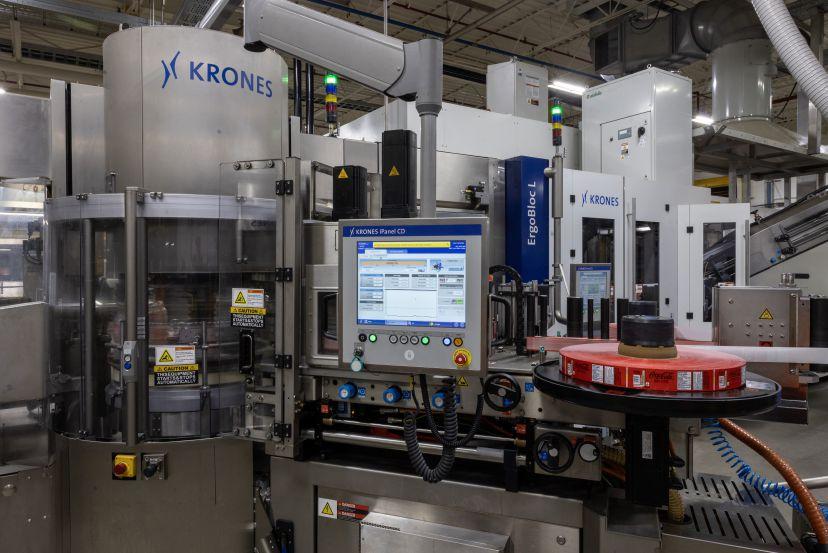
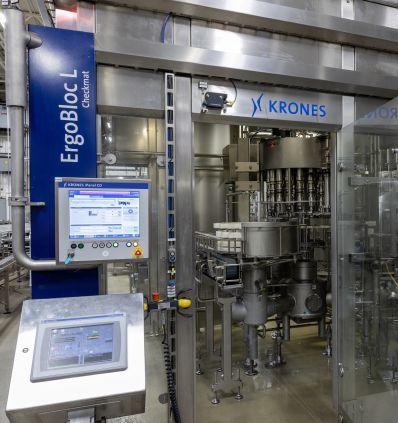
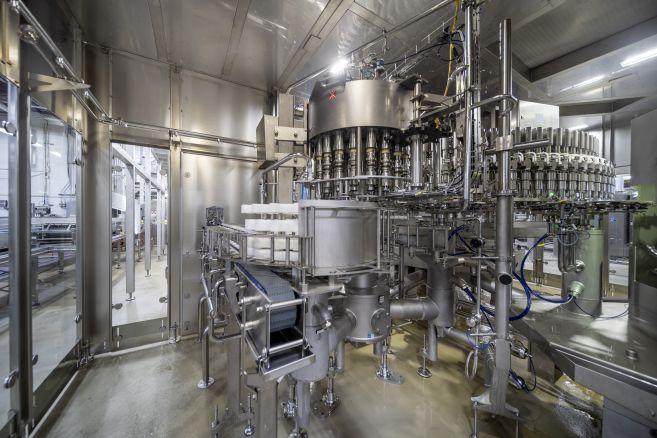
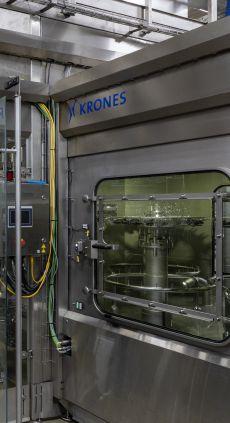
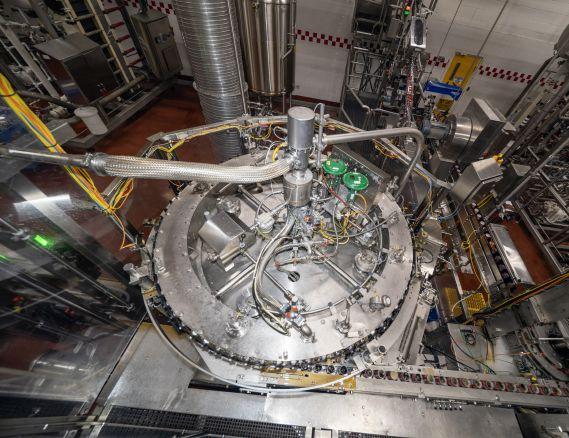
The turnkey ErgoBloc L line from Krones installed at the Richmond facility consists of a blowmolder, labeler, capper, and filler with PFR valves for faster and highly reliable foam-free filling of containers from 300-ml to two liters at speeds of up to 43,200 bottles per hour.
formed bottles, adding this new line has helped us to decrease our fuel usage and decrease our transportation-related emissions,” states Chow.
• An $18-million investment into a brand new distribution center combining the sales, warehousing and distribution operations, opened up last years.
• “It offers expanded storage capabilities and increased efficiency,” says Chow, “and it has allowed us to consolidate strengths and capabilities from several locations into one.”
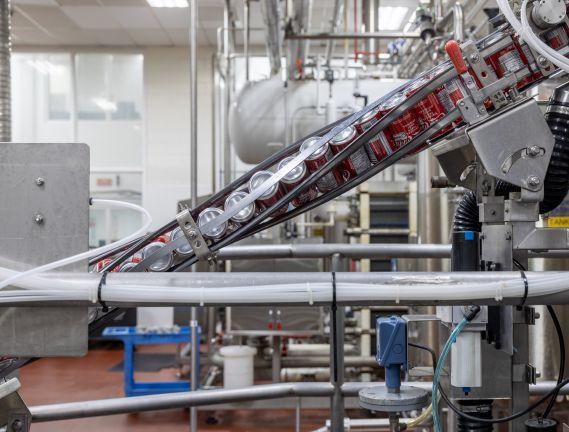
Says Chow: “Our most recent milestone has been our $12.55 million investment into our new canning line, which allows us to add can capacity to our western Canada supply chain and increase our local manufacturing capabilities, ensuring we’re able to produce even more beverages locally in Richmond.
“We completed this project by retrofitting an old PET line and moving one of two operational can fillers,” he notes.
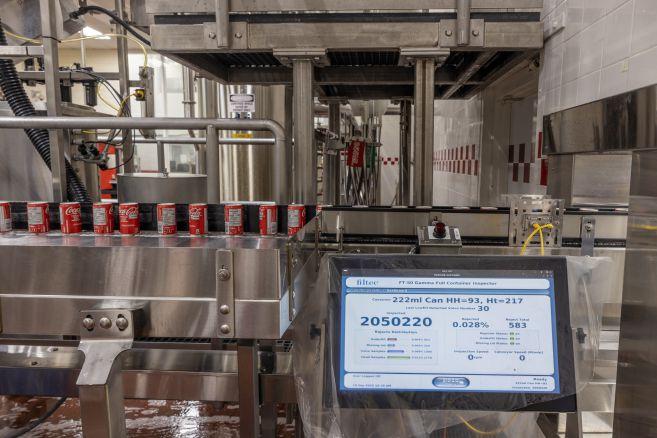
“Additionally, we invested another $4 million this year into our Richmond manufacturing facility for new roofing and an advanced barcode scanning system, which automatically halts or redirects any item with missing or incorrect labeling—reinforcing our commitment to quality assurance and error-free processing,” Chow states.
According to Chow, the new PET and canning lines at the Richmond plant has expanded the facility’s output capacity by an additional eight million cases of product per year.
“This includes our investment in our new PET line and new canning line, which has resulted in a combined incremental eight million cases per year,” he says.
The investment in Richmond oper-
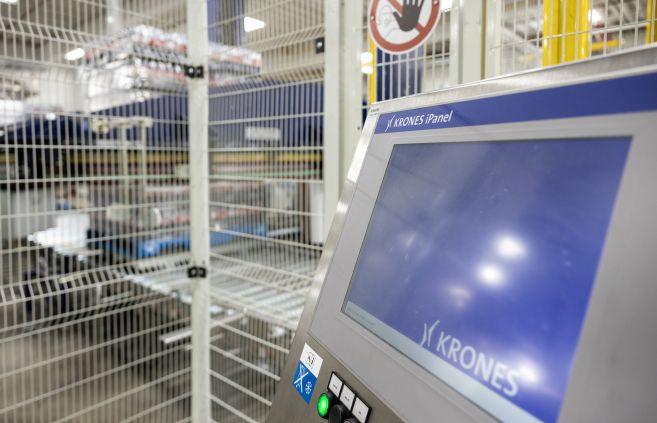
Outfitted with three individual machine HMIs (human-machine interfaces), the ErogBloc L line from Krones allows for just one machine operator to run the entire turnkey block.
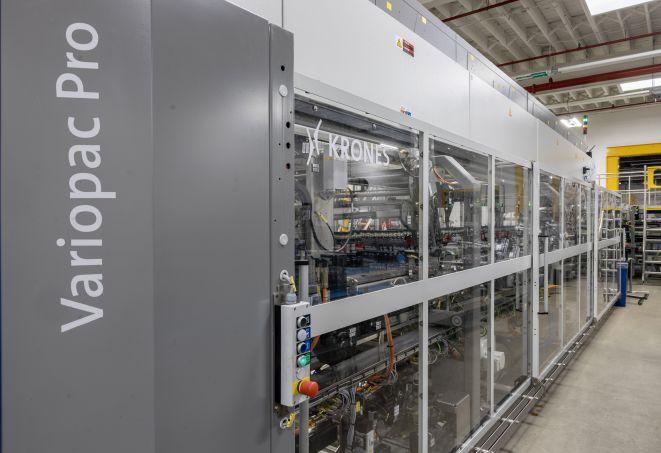
The fully-automatic Variopac Pro packer from Krones is a highly flexible modular machine that can be easily adapt for production of many different secondary packaging formats, including shrink-wrapping film used for the multipacks of Coke bottles produced at the Richmond bottling plant.
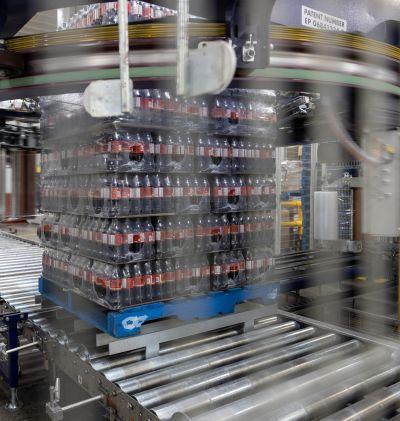
A finished five-layer palletized load of Coca-Cola bottles making its way from the stretchwrapping station towards the shipping area on top of a signature-blue CHEP pallet to be readied for shipment to the Richmond distribution center.
ations is a fitting follow-up to the $100 million the company has recently poured into its Calgary facilities, including installation of the company’s first high-density AS/ RS (automated storage and retrieval system), multiple enhancements to the water treatment system to improve water usage, and adding new trucks to the delivery fleet.
“We know that in order to grow, we must continue to invest in our owned manufacturing infrastructure as we work to better serve customers and consumers across western Canada and beyond,” says Chow, citing the significant economic spin-off benefits these investment bring to the local economy.
“Our team annually injects approximately $132 million into the Lower Mainland economy through local vendors and partners,” citing the significant new business opportunities generated for numerous Canadian and local businesses including Descon Conveyor Systems, Actemium Canada, Pivot Systems, Foundation Mechanical and Western Pacific Enterprises, among others.
“We want our communities to be better off with us and are working hard to earn our social license to operate by building our business responsibly and making our employees, communities, customers and stakeholders proud,” Chow proclaims.
“As ‘Your Local Bottler,’ we have close local connections in the communities where we operate and are deeply invested in making a positive impact,” he states. “We are committed to investing in our owned
manufacturing infrastructure to support sustainable growth.
“Through this investment in our Richmond manufacturing facility, for example, we are ensuring that we can meet the growing needs of our customers across the province,” Chow points out.
“Ultimately, it means we are helping to get more locally-made products into the hands of consumers,” says Chow, while emphasizing the company’s firm commitment to sustainable production and packaging.
“We were the first beverage company in Canada to transition all our 500-ml sparkling brands in clear PET to 100-percent recycled rPET—excluding cap and label— and we continue to find ways to reduce the amount of plastic we use in our bottles,” Chow states.
“As of the end of 2024, most of our 500ml sparkling beverages now contain 2.5 grams, or 11.9 per cent, less plastic than they did in 2023.”
Adds Chow: Our Richmond manufacturing facility has completed several local projects to make progress on our Toward
a Better Future Together Action Plan and environmental sustainability goals.
“The team has implemented some key operational changes that make their cleaning processes more efficient,” Chow continues, “which has helped us to reduce the amount of water used at the facility for each liter of product we produce.”
As one of the region’s biggest manufacturing employers, Coke Canada Bottling is also a major sponsor of local community programs and events, Chow points out.
“We are working to make a positive difference in the communities where we operate through employee volunteerism and community partnerships,” Chow explains.
“Our Richmond team continues to make a positive impact through employee volunteerism, and they are active supporters of our national partner, Junior Achievement.
“Through this partnership, we are working hard to make a meaningful difference by supporting the employability of Canada’s diverse youth,” Chow reveals.
“For three years in a row, the team has
also actively supported Tree Canada and the City of Richmond through the Partners in Planting Program, reinforcing their commitment to environmental sustainability and community engagement.”
According to Chow, this social activism plays a critical part in the company’s marketing strategy to appeal to the younger generations of Canadian consumers.
“Our teams are always looking at consumers trends so that we can provide a variety of beverage choices for every part of the day, for all different needs and occasions,” says Chow.
“For instance, we know that Gen Z consumers are prioritizing flavor alongside balancing their sugar content,” he points out. “They are also seeking out companies that are earning their social license to operate and doing good in the community, both of which are driving purchase intent.
“We saw this through the success of our Canada’s Kindest Community program last year.”
With an expansive product portfolio comprising 25 different brands and 75
Coca-Cola Canada Bottling has invested over $12.5 million into a brand new, state-of-theart canning line at the Richmond facility to increase the plant’s annual output by an additional eight million cases.
unique packaging formats, Coke Canada Bottling is firmly focused on future growth and continued product and packaging innovation to maintain its leading market positioning, according to Chow.
“We are focused on driving continuous improvement in our manufacturing; planning and procurement; transportation; distribution and warehousing processes ; and investing in tools and equipment to enable our growth,” Chow declares.
“We believe that leaning into intelligent automation and a data-driven culture will help us unlock the power of our people.
“We are working to transform, innovate and digitize our business to ensure we are ready for the future.
“We know we must fuel our growth through technology and investments,” says Chow, underlining the company’s unwavering commitment to proactive capital investment strategies.
“It is essential that we invest in our strategic infrastructure for what we’re doing today and for what we will do tomorrow,” says Chow.
“We’ve already committed hundreds of millions to do just that, and, with more to come.”
Says Chow: “At Coke Canada, we’ve laid a strong foundation for building a multi-generational business.
“We aim to be the leading beverage partner in Canada, and we know that we can only do this if we are the best at making, moving and selling our products,” he concludes.
“And as we work to become the leading beverage partner in Canada, we know we must offer the best beverage portfolio that meets Canadians’ diverse needs.”
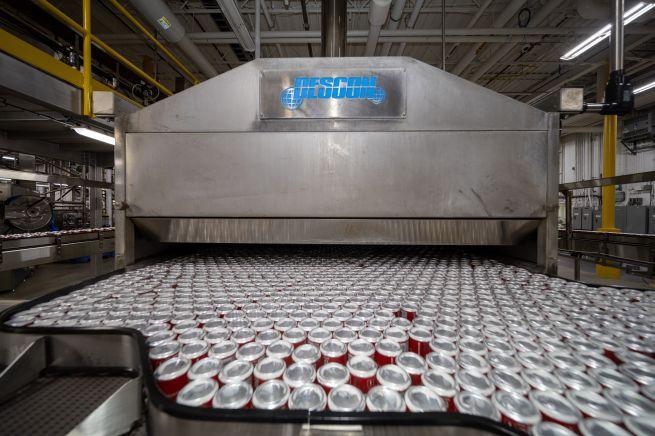
Descon Conveyor Systems played a major part in the commissioning or anew canning line at the Richmond bottling facility by supplying its high-speed pasteurizer (top) and conveyor systems to enable the facility significant boost its production capacity.
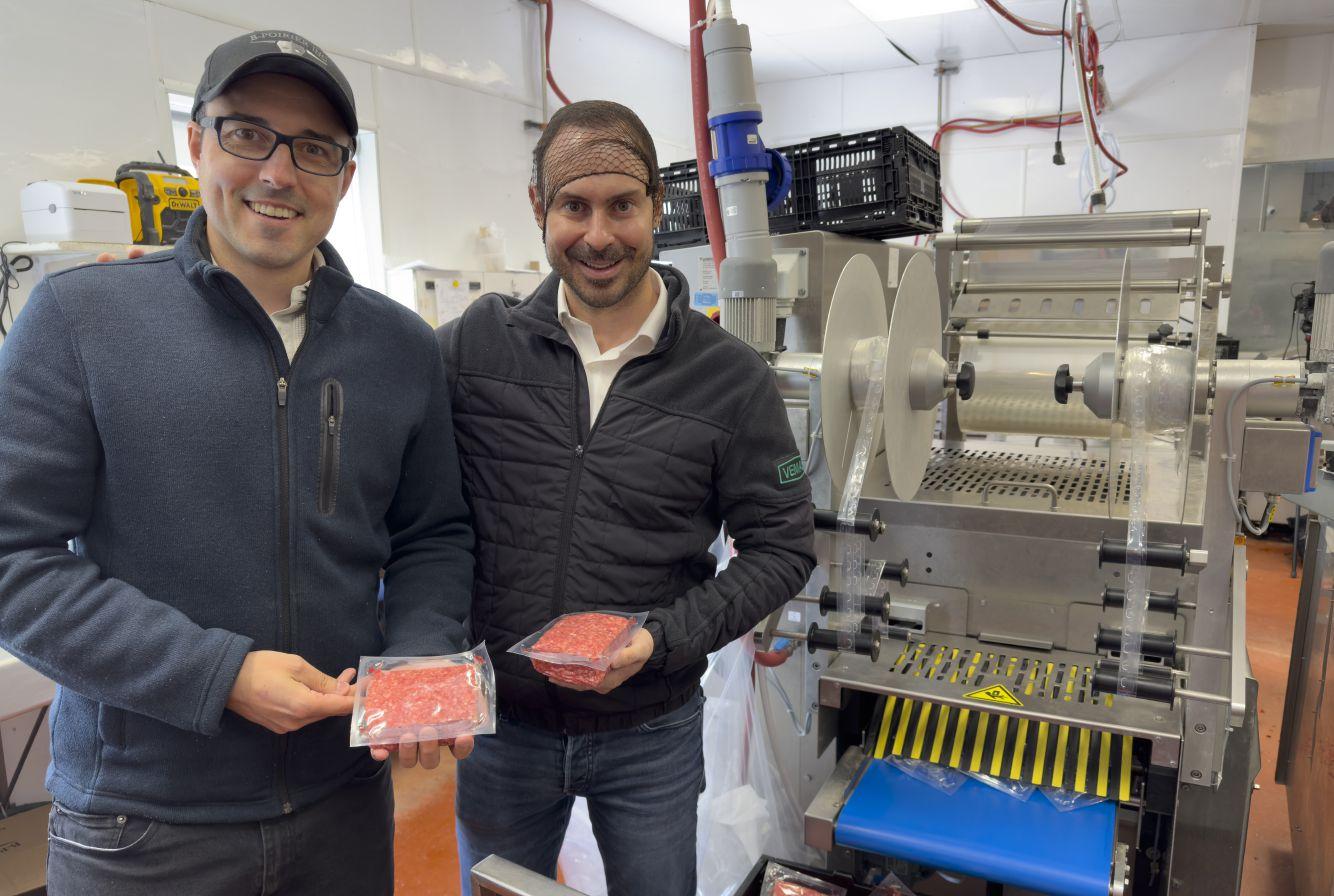
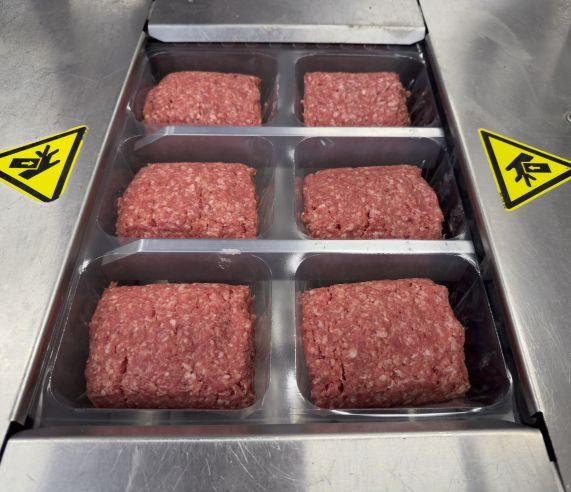
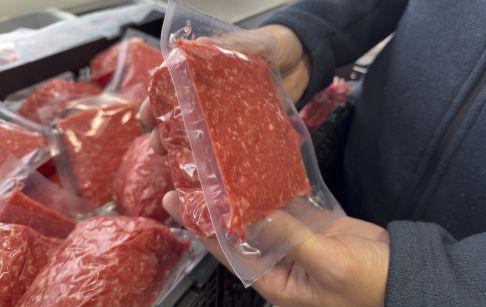
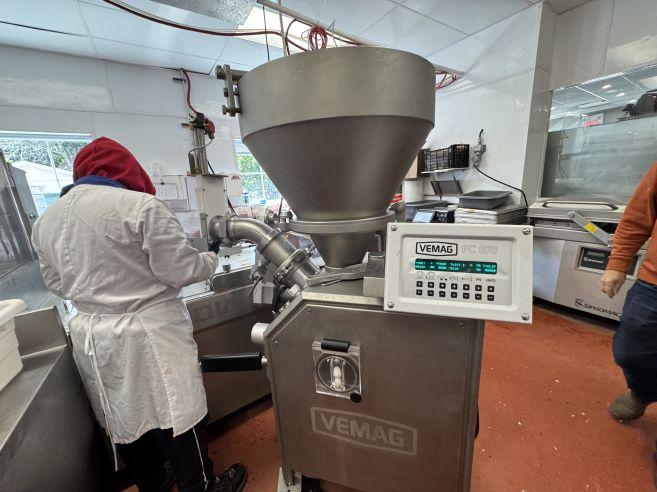
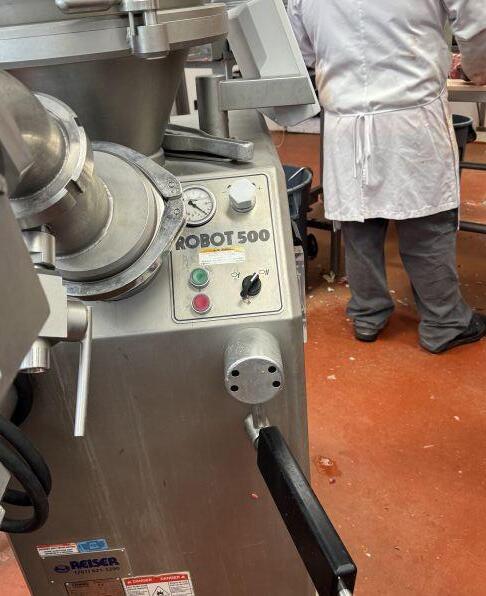
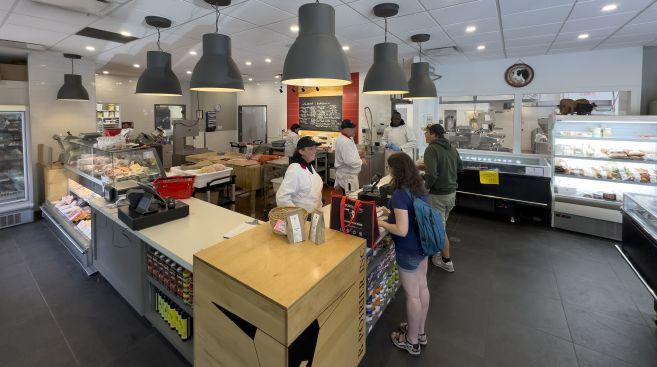
showing off the perfectly-sized 500-gram portions of ground beef processed on Reiser’s Vemag Robot500 vacuum filler and packed on the Variovac Optimus thermoformer.
GROUND CONTROL
New automated processing and packaging equipment helps Quebec meat processor unlock new process efficiencies and product innovation competencies
By Andrew Snook
Photos by Pierre Longtin
It’s hard to find good help these days. This concern can be heard throughout almost every industry across Canada today as the labor pool continues to shrink. The meat processing industry can be especially challenging for finding skilled workers.
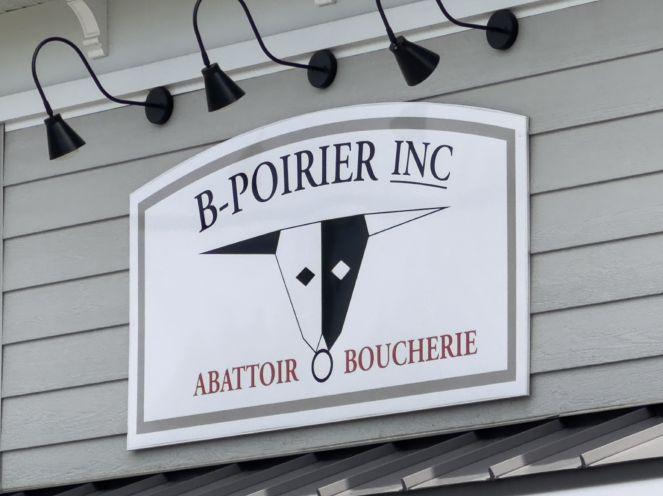
This has been the case for Boucherie B. Poirier, a small vertically-integrated butcher shop, slaughterhouse and meat processing facility located in SaintLouis-de-Gonzague, Que., about a 40-minute drive from Montreal.
The company has long held its roots in this rural community, opening as a butcher shop and slaughterhouse in 1939 when Omer Poirier purchased the business for his son, Bernard.
The Poirier family had owned and operated the business for several decades, serving the local farming community, before being purchased about two years ago by Michael Zeppetelli, a former commodity trader, investment
banker and CFO, who identified opportunities for growth within the family-run business.
“Our investment thesis was that there’s an opportunity in the market for portions,” Zeppetelli says.
When speaking with potential clients within the hotel, restaurant, and institutional (HRI) sector, the owners and operators explained that they were having a difficult time finding qualified people to work as chefs and sous chefs.
To solve this issue, Zeppetelli decided to create turnkey solutions for the sector.
“We’re still doing the slaughtering and the custom butchering for farmers that sell direct to consumers, and we still have our retail market, but we’ve gone hard over the last two years into the portion market—selling into restaurants, day-cares, other resellers with private label, or custom packaging for them,” he says, adding that Boucherie B. Poirier is also developing an e-commerce website to expand its reach.
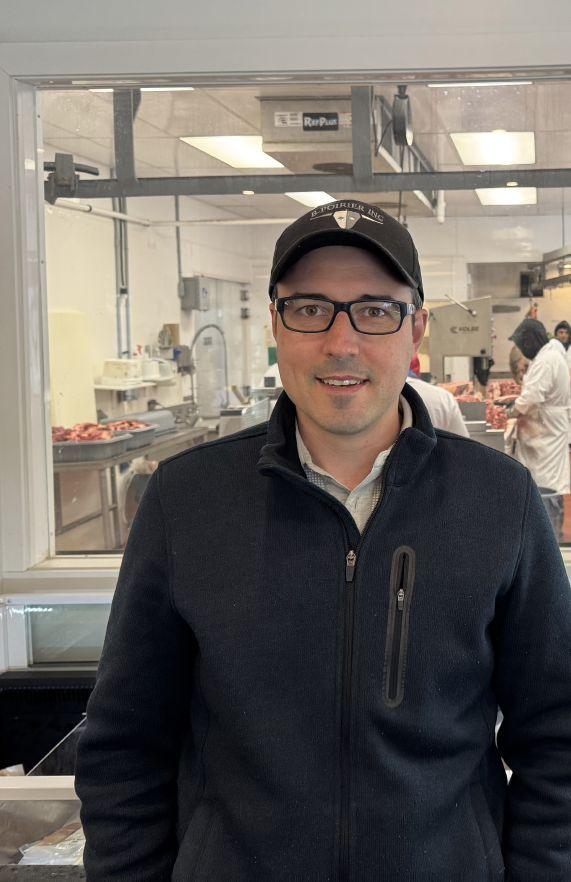
Boucherie B. Poirier owner Michael Zeppetelli (left) and Reiser Canada sales representative Jean-Yves Belisle
The company’s current 10,000-square-foot facility currently employs 40 people working across two shifts seven days a week. Currently, the abattoir slaughters about 2,000 cattle a year, along with another 1,000 sheep and goats.
While the number animals slaughtered is not huge, Zeppetelli says what sets his company apart is its vertical integration.
“We’ll buy the live animal, or we’ll bring it in for a farmer and do their custom butchery. The animal will arrive here in a stock trailer alive, but they’ll leave as finished cuts, all retail cuts,” he explains, noting that his company has no interest in competing in the boxed beef market as a wholesaler.
Boucherie B. Poirier’s production area is broken up into one carcass line, and an order preparation area.
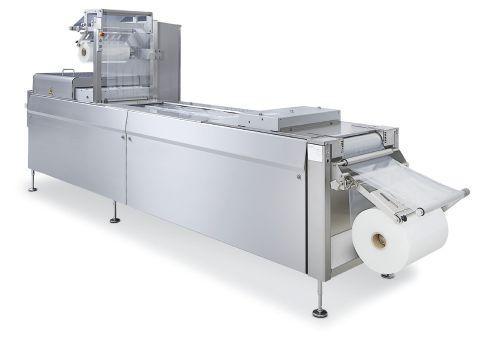
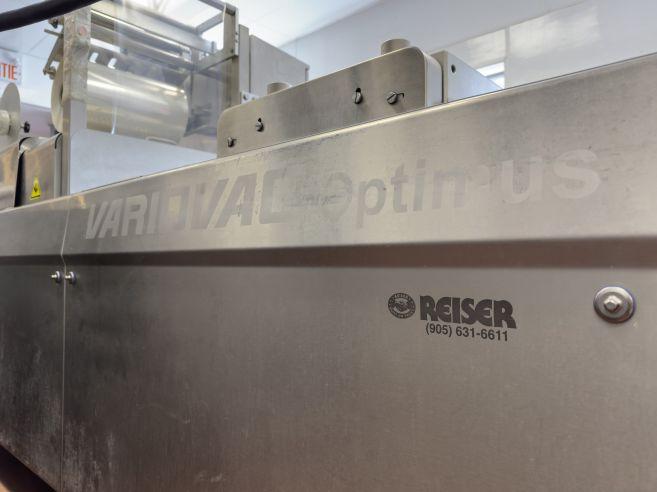
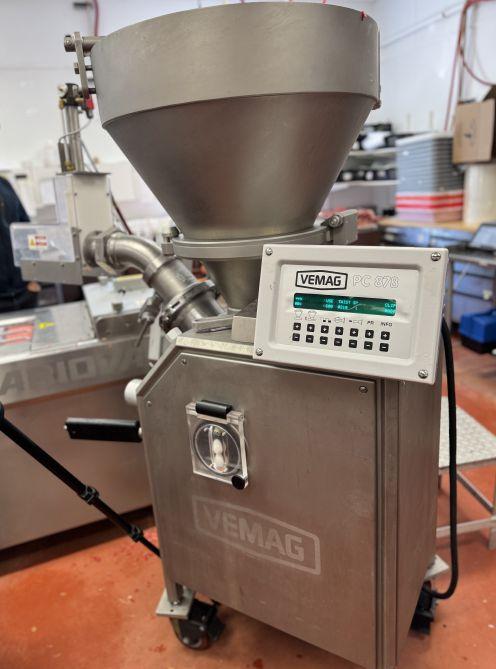
The carcass line typically has eight butchers breaking down the animals, which are then transferred over to another two butchers who take all the trim, grind it, place it into the company’s Reiser Vemag Robot500 vacuum filler, and then onto the company’s Reiser Variovac Optimus thermoformer, with both machines purchased about 12 months ago as part of the meat processor’s expansion plans.
When researching the company’s options for investing in automation for its processing and packing operations, Reiser’s reputation for quality equipment was part of the reason for the purchase.
“They’re known to be workhorses,” Zeppetelli states. “We talked to a lot of other people in the industry that have lots of experience in meat processing, and there was nothing but good words about Reiser as an organization and their equipment.”
Zeppetelli adds that the company and its staff have found Reiser’s Variovac Optimus thermoformer especially impressive, particularly the ease and speed at which dies can be changed out.
“Within 15 minutes, those are changed,” he says. “So if we’re packaging one-pound ground beef packages, and we need to switch to a larger format for another cut, it’s all done within 15 minutes.
“By the time the guys get back from their coffee break, the entire production line is ready to go again,” Zeppetelli says, noting that the control panel is remarkably intuitive and simple to operate.
He was also impressed by how he was treated by Reiser despite being a smaller customer.
“We’re not a big account for them,” he says. “The reality is
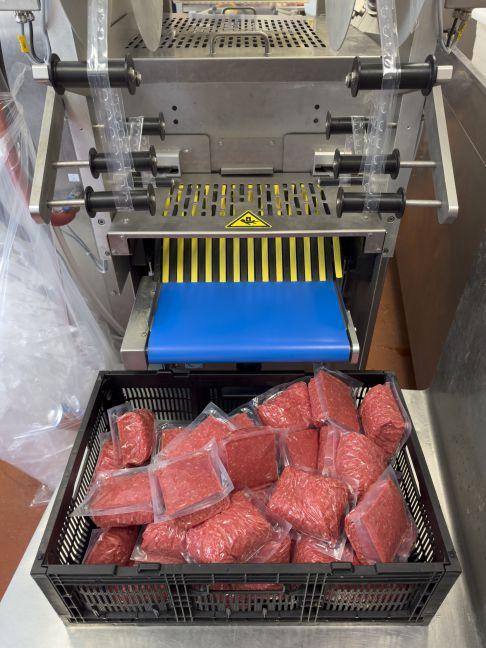
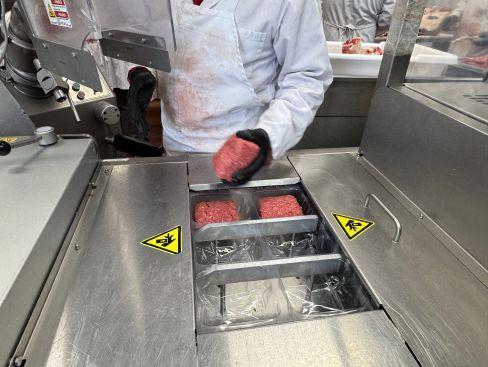
Installed at the Boucherie B. Poirier facility about 12 months ago by Reiser Canada, the Variovac Optimus thermoform packaging machine has been an invaluable addition to the company’s production capabilities by automating the production of vacuum-packed portions of ground beef with unerring precision, reliability and sealing integrity.
I bought just two machines. I’m sure there are companies that buy two or three machines a year, but they treated us like we were one of those companies.
“They helped us with the financing, and they helped us with getting a small government subsidy for investments in automation. They were there every step of the way,” Zeppetelli says.
“The first time we met, for an hour-and-a-half we talked about everything except Reiser,” recalls Jean-Yves Belisle, sales representative for Reiser.
“We talked about everything—ambitions, goals, investors, and where he wanted to bring the business in his first five years.
“And I don’t think we really talked about what Reiser was bringing to the table, because I really wanted to understand the goals and the objectives of the business,” Belisle continues.
“I think that made a big difference: not trying to sell anything right away, but trying to understand the business to provide good solutions down the line.”
The ability and willingness of Reiser to custom build and design its products to accommodate the tight production and packaging spaces within the Boucherie B. Poirier facility were another reason they were chosen for the project.
“We have 10,000 square feet, which is a very small facility considering the volumes that we’re doing,” says Zeppetelli.
“They were able to get us a custom-made, shorter packaging machine with only one tray.
“A lot of other companies’ machines wouldn’t even fit in our space,” he notes, “but Reiser was able to make a modification
exceptional weighing precision and accuracy for each 500-gram portion of ground beef produced at the
B.
meat processing facility.
“Automation allows us to have more consistent products, with high quality standards that can be respected every single day.”
Also installed by Reiser Canada, the Vemag Robot500 vacuum filler has been perfectly calibrated by Reiser to ensure
Boucherie
Poirier
and deliver us the machine.”
He has also been impressed by the level of service that Reiser offers.
“They’ll FaceTime with the staff to help them if ever there’s an issue,” Zeppetelli says, “and they’ll be here within 24 hours if required.
“I’ve been in other industries where you give someone a big six-figure sale and two months later you don’t hear from them,” Zeppetelli says, adding that Reiser is keen on offering solutions and service that help companies succeed in the long term.
Over the first 12 months of operation, the Reiser Variovac Optimus thermoformer and the Vemag Robot500 have both performed as advertised and the company’s production has doubled, with plenty of spare capacity to produce even more products.
“Packaging is no longer our bottleneck, storage is,” Zeppetelli says. “The machines don’t even run eight hours a day.
“We make a bit of a backlog and package everything in one swoop, and then we shut the machine off until the next batch of production is ready.”
To maintain its growth, Boucherie B. Poirier is currently in the process of planning out a 6,000-square-foot expansion to increase its storage and production space over the next three years. Once completed, the company would have the ability to double its production again.
Zeppetelli says there is a growing demand right now from smaller resellers, including convenience stores, grocery stores,
(Above)
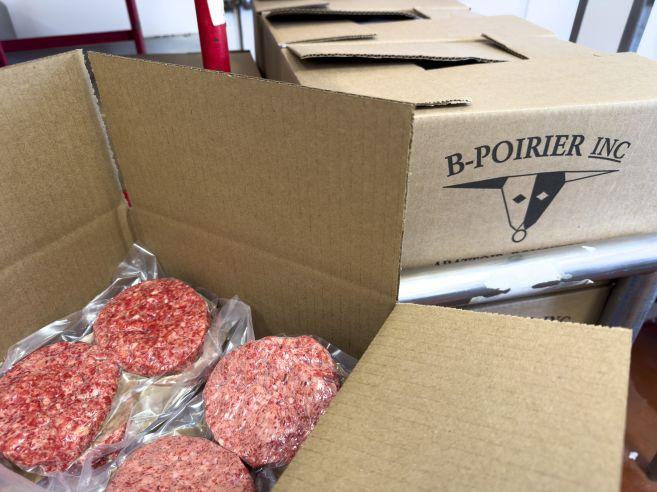
Fresh ground beef patties packaged on the Variovac Optimus thermoformer being placed inside the branded corrugated cases for shipment to customers.
(Left)
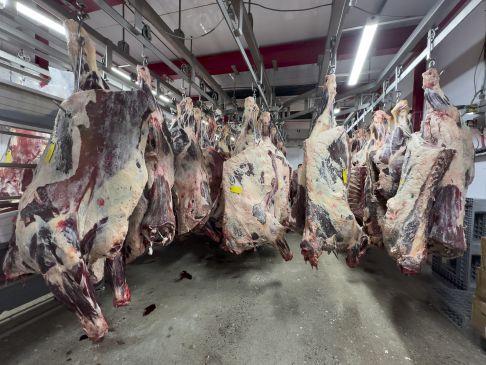
The freshly slaughtered beef carcasses hanging up on rail-mounted stainless-steel hooks before being transferred down the line to be being cut down to size by the Boucherie B. Poirier’s expert butchers.
retirement residences, schools and daycares that the company wants to capitalize on.
“As we’re serving more and more restaurants and institutional clients in the greater Montreal region, we’re attracting that urban retail customer out here, and within 30 to 45 minutes, they can talk to an artisanal butcher who can prepare the cut fresh right in front of them,” he says.
While the investment in automation with the Variovac Optimus and the Vemag Robot500 machines can be partially traced to managing labor shortages, it’s also about optimizing efficiencies to maximize profits and to cope with market volatilities.
“Automation is no longer a luxury:it’s a necessity,” Zeppetelli states. “Automation allows us to have more consistent products, with high quality standards that can be respected every single day.”
Both units have been production powerhouses for Boucherie B. Poirier’s operations. While the Variovac Optimus thermoformer is currently being used for simple vacuum packaging, the units are also available with the ability to do modified atmospheric pressure (MAP) packaging—increasing the potential number of applications for the machine.
For its part, the Vemag Robot500 has been expertly calibrated to ensure accurate portions for all their products, such as the popular 500-gram ground beef packages.
“With a growing number of our customers serving the online market, consistency, accuracy and portioning has become in-
creasingly important online,” Zeppetelli explains.
“A lot of times it’ll be sold at a fixed weight or fixed price, which means you can’t afford giveaways.
“If you’re selling a 500-gram portion, it needs to be 500 grams, not 502 grams, and this is where these units really shine,” he says. “Once they’re calibrated, this machine will run all day, and it’ll hit that 500-gram target on the nose.
Adds Belisle: “It’s designed to make consistent sausages in terms of weight, length and diameters, and very accurate portioning as well for ground beef and in multiple other applications.”
The ability of the Vemag Robot500 to be able to make a variety of products has been an invaluable production tool.
“We’ll do ground meat, and we can also do the more liquid products like meat pies with all the fillings, with everything being portion-controlled,” Zeppetelli remarks. “Our sausages, our kaftas, our burger patties ... all those things that used to be done by hand are now done by the machine, so that’s huge.”
Between the company’s investment in the Reiser Variovac Optimus thermoformer and Vemag Robot500, the company has saved a great deal in labor costs, according to Zeppetelli.
“To do the work that these two machines do would take an extra five or six staff,” he says.
As Belisle points out, “Instead of having an operator actually getting the meat, putting it on the scale, removing some, adding some, and then putting it in the packaging machine, you can rest assured that the accuracy of the vacuum stuffer is going to be high.
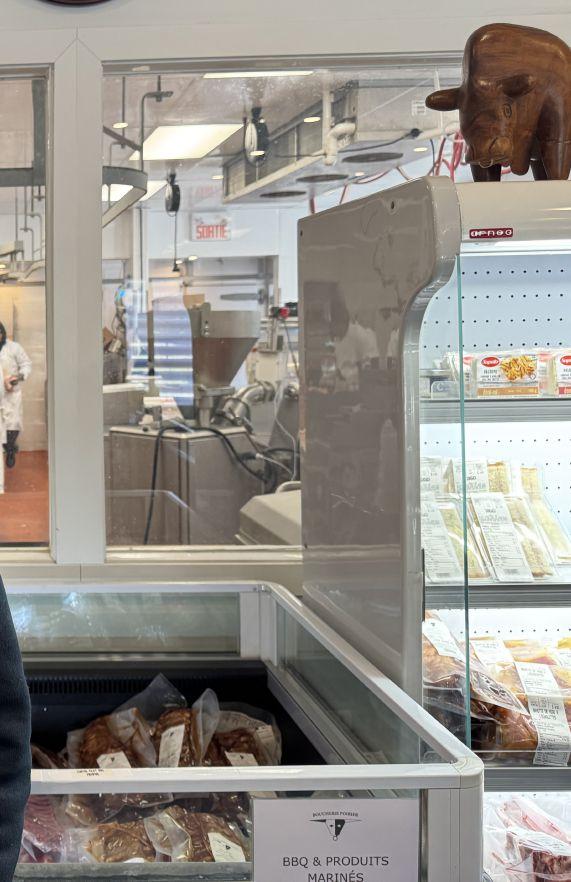
B. Poirier owner Michael Zeppetelli (above left) strikes a cheerful pose inside the company’s on-site retail storefront in Louis-de-Gonzague, Que.
“You don’t have to measure it, and you don’t have to put it on the scale,” he continues. “It’s directly in the thermal forming machine and you know it’s going to be consistent in terms of weight and size—fitting perfectly in the designated pocket of the packaging machine.”
All in all, Boucherie B. Poirier views Reiser as its own automation department, and Zeppetelli and believes they will be working together well into the future as his company continues to grow.
“They were here for the first solutions that we’ve put in place, and the goal is that they’ll be there for the next ones,” Zeppetelli says. “They’re not just a supplier of equipment.
“They bring a lot of expertise, and this is expertise that we didn’t have internally,” he points out. “The team we have here: they’re amazing butchers who really understand carcasses, while I understand spreadsheets.
“However, none of us had operated these machines before, and so having a team from Reiser come in and take us from A to Z on how this equipment works has been invaluable for our operation.”
Boucherie
Boucherie B. Poirier facility
YOU TRANSFORM WE FINANCE
Our nation-wide network of financing experts is helping you transform the Canadian food and beverage value chain. If you process it, produce it, pack it or move it, we can help your food and beverage business start strong or take the next step.
fcc.ca/Food
LEAN AND FIT
Canadian collaborative robotics supplier on a mission to enhance factory productivity by freeing up human hands for more valueadded tasks
Starting up a business in the midst of a nasty recession is always a risky proposition, but when you have a really good idea to offer to the marketplace, the rewards make the eventual success all the more gratifying.
Founded in 2008 by three former Laval University post-graduate students, Quebec City-based collaborative robotics specialists Robotiq has already achieved multiple milestones in a relatively short time-frame by leveraging its co-founders’ passion for science and innovation to become a prominent player in the fast-growing global market for collaborative robotics (cobots).
Having developed a comprehensive product portfolio comprising cost-effective solutions and services for automating palletizing, machine tending, screwdriving and assembly tasks for leading manufacturers worldwide, the privately-owned company—co-founded by Samuel Bouchard, Jean-Philippe Jobin and Vincent Duchaine—currently employs 120 people to manufacture and integrate robotic gripper , sensors, cameras and other key components, along with complete workcells, used by a vast number of global CPG manufactures to automate their production and packaging lines.
The Canadian Packaging magazine recently reached out to Robotiq’s president Samuel Bouchard to explain the company’s remarkable success in the highly competitive global market for collaborative robotics.
QPlease tell us about how Robotiq was founded and where the company fits in the robotics industry landscape.
ABasically, we started out on a mission to free human hands from repetitive tasks. We really believe that humans can do amazing things, and we also believe that humans should be empowered to do more than just doing the same thing over and over again in a factory setting.
And as a matter of fact, it is hard for companies to find people to do that kind of repetitive task, which is simply far more suited for robots—especially in the palletizing part of the process.
Our customers operate factories in a wide range of industries, including food, beverage, pharmaceutical, automotive,
(Above)
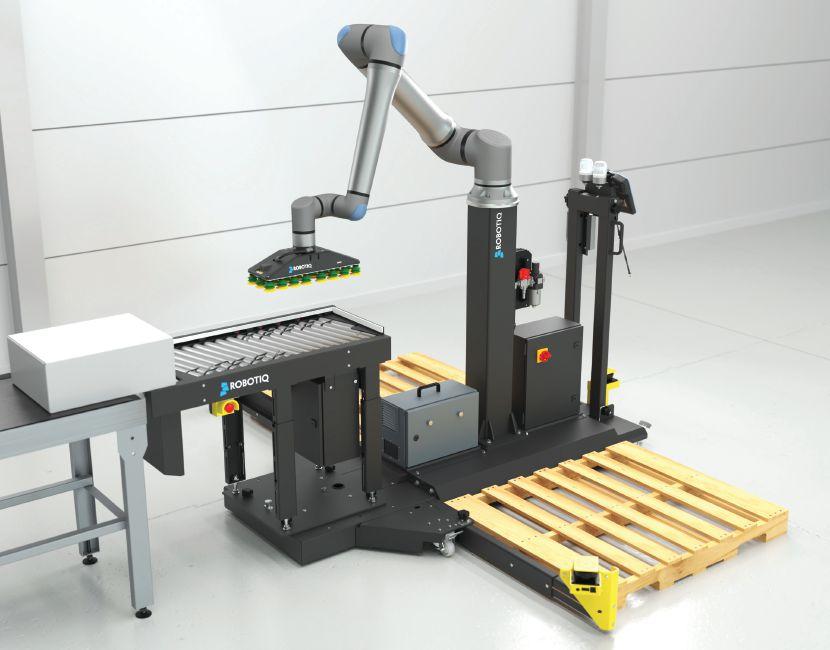
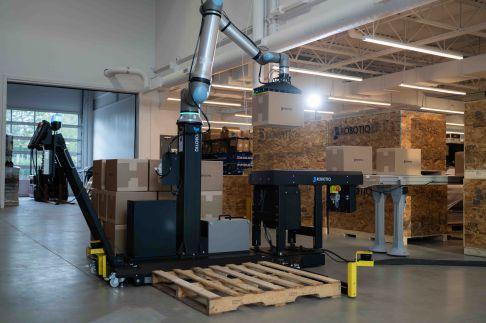
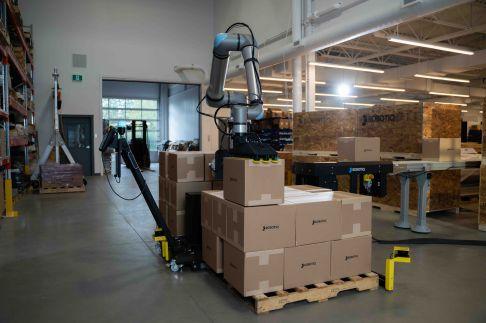
Designed for rapid installation upon arrival, the PAL Ready solution from Robotiq is a production-ready palletizing cell from Robotiq designed for optimal palletizing output with minimal programming intervention.
(Left) Robotiq co-founder and company president Samuel Bouchard.
electronics and other consumer products.
What we do is provide them with the robotic components and modules they need to build their own robotic solutions or, conversely, complete robotic workcells to be deployed at the palletizing stations so that they can automate repetitive manual tasks quickly and efficiently.
QHow hard was it for your company to break into the robotics business and make a name for yourselves?
AIf you recall, in 2008 the market was not really good for the robotics business, as it was right in the middle of an economic crisis. But fact it turned out to be a good time to start up because we didn’t really have anything to sell in the first year or so, meaning we could only go up from then on.
So we went on about developing our first product, grippers, and then move on to sensors, cameras and so on.
We just started building up our portfolio module by module, and eventually we reached the point where were able to connect them all together to start doing more complete and complex robotic applications.
QHow did you acquire the technical knowledge and know-how you would need to start up a robotics business, a cobot business to be exact?
AMe and the other two company-co-founders all did postgraduate studies in robotics at the Laval University, focusing on grasping, manipulation, and human-robot collaboration or grasping, which provided the core knowledge base for us to focus on the collaborative robotics (cobots) space. This enabled us to focus on the emerging collaborative robotics technology.
QAnd yet your company does not manufacture the actual robotic arms themselves; can you explain that?
We don’t make the arms themselves because we decided to focus on everything that enables the arms to do the job that the robot has to do with the right tools, the right software, the right integration—that’s the part we chose to focus on. Our components are compatible with all the major cobot brans, but on the application side, we work exclusively with Universal Robots.
Q
The are plenty of companies making cobots now; why did you select Universal as the exclusive partner?
AThey became the dominant player in the cobots market very early on because they had the right mix of ease-ofuse, reliability, performance and development tools that are really second to none.
In turn, this enables us to develop
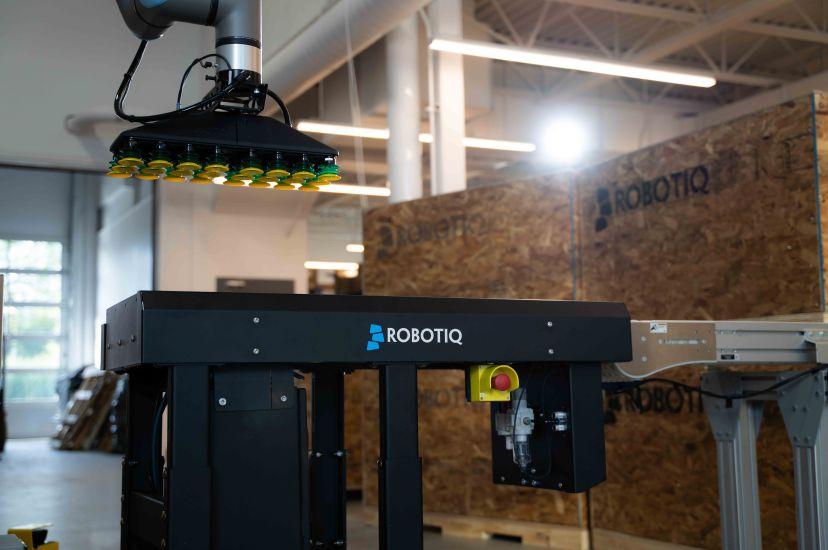
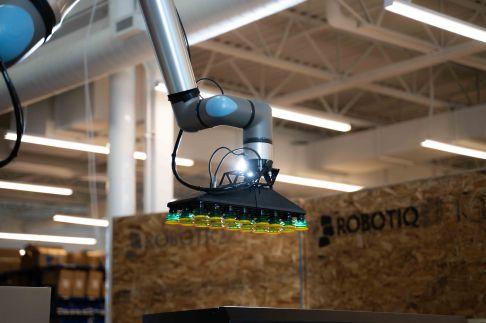
Designed for modular palletizing applications, Robotiq’s PAL Series palletizing solution is a configurable option built from the company’s standard AX or PE series models and modules that include Robotiq vacuum grippers, smart infeed, safety packages and mobility kits.
very high-value, high-performance, reliable, easy-to-use solutions by leveraging the development tools that they provide.
In addition, they also have a very big global footprint, with a lot of local partners that we work closely with.
So this partnership on the technology side also aligns very well on the commercial and marketing side of our business.
In fact, we are their biggest components partner on the palletizing side of their business, so when we go to exhibit at major trade show like PACK EXPO, for example, they will show our palletizer cells at their booth, and we will display their robotic arms at ours.
QHow much of your products are exported outside of Canada at the moment?
AAbout 95 per cent of what we make is exported outside of Canada, mostly to the U.S., with Europe being a close second.
That said, we would like to sell more in Canada, because what we really sell is
productivity, and there are a plenty of factories operating in Canada that would benefit from more automation.
Aside from the robotic arms, all the grippers, sensors, cameras and modules we make are assembled at our factory in Quebec City, so for companies looking for made-in-Canada automation solutions, we are happy to serve them.
QAre the U.S. trade tariffs having any impact on your export business south of the border?
A
Right now, our products are mostly exempt from tariffs U.S. tariffs, with just a little impact on one specific product line.
I think that the biggest challenge with the tariff is the uncertainty. There are a lot of U.S. manufacturers currently wondering what’s going on with the tariffs, so many of them are waiting on making automation investments because of all that uncertainty.
QWhy did you choose to focus on palletizing as your area of expertise and core competence?
AWhat we have seen in many food-and-beverage and consumer products factories is that many people have automated their core process, but as they go down the line, they discover that they still have a bottleneck at the palletizing station, which is usually because they don’t measure it well.
But when they start automating their palletizing, they realize that they increase their whole line productivity, because they have a steady palletizing tempo at the end of their line.
So our approach to automation, which we call Lean Robotics, is really a combination of the lean manufacturing mindset with continuous improvement and waste reduction with robotics.
It’s all about starting simple and keeping it simple—standardizing on the technology to eliminate a lot of waste along the way. It’s about start production fast with a simple case-packer, for example, and then iterating, improving and deploying the process as you go.
That is how we achieve a high return—doing it in a predictive way by starting with a simple application and growing from there step by step.
QThe palletizing station is typically where a lot of heavy lifting happens, with heavy payloads, so how do you convince prospective customers that a cobot solution is preferable to the conventional fixed-mount robots?
ACobots are just a set of tools, just like robots are a set of tools. And when
you look at your toolbox, some tools are better for some jobs and some other tools are better for others. The reality is that cobots can’t do very heavy payloads, but they can go up to about 30 kilograms.
There are several benefits to the cobot approach. First of all, you don’t have to do a lot of additional engineering. You can just drop it into the process; it is easy to program and deploy; you don’t need to bring in high voltage; it requires a much smaller footprint; and it is easier for your staff to learn to operate. So the whole deployment process is simplified.
An if you need to make changes to your program in a couple of months to accommodate a customer request for a special promotion, let’s say, cobots make it really easy for the operators to modify the system. This keeps the ownership of the process in-house, so that you’re not locked in to depend on your systems integrator to keep the factory running.
QAre the people in the industry buying into this reasoning?
ABased on the fact that we have sold close to 1,000 palletizers by now, with about 40 per cent of those sold to existing customers, the answer is ‘Yes.”
Once people buy one cobot, the chances are pretty good that they will buy more. For me, the best confirmation is the fact that many of our customers also use the conventional industrial-scale palletizers for high-speed applications, but they also have lines with smaller payloads, which require more flexibility to accommodate the frequent production changes. Being able to move your palletizer around to make those changes is a big plus.
At the end of the day, smart factories will use the best tool for the job at hand, meaning using industrial robots for some jobs and cobots for others.
QAside from palletizing, are there other opportunities to benefit from cobots at other points along the packaging line?
ABecause of their small footprint, cobots are a great fit for many packaging applications such as case-packing, carton-erecting and so on. But the further you go up the line, with faster throughput rates, the more challenging it becomes for cobots to provide a standard solution, although I’m sure there will be other innovations coming along to address those limitations.
But at the moment, it is the more downstream functions where cobots can provide standardized solutions with the advantages of ease-of-use, less system integration, less need for custom programming, easier design … that’s really where the big gains are.
The PAL Series solution from Robotic delivers modular palletizing through configurable standard models and modules to allow manufacturers to start start small and scale to multiple cells or multi-site deployments with the same software, operator interface, design logic and building blocks.
QCan you address the safety advantages offered by cobot technology?
AIn many cases, we improve the safety in factories because we eliminate a lot of ergonomic risks. Like any other machinery you install on your factory, cobots need to go through a risk assessment. For low-speed applications, you can do it in collaborative mode, because the robot is slow enough that it’s not dangerous. If you need to go higher speeds, you can have safety scanners, and you can also always use the fences. Some cobot installation will also use sensors, just like industrial ones. Even then, customers will get the benefit of the ease of use, even if they use fencing.
QIn your experience, how long does it take you customers to realize a return-on-investments with cobots?
AWe have a lot of Fortune 500 companies as customers, especially among the big food manufacturers, but the ones we really focus on are probably in the layer just beneath that top tier—midsized to large manufacturers—who can often move a lot faster with capital investments than the really big CPGs.
As long as the customer has a lot of lines running, there are a lot of benefits to be derived from scalability, whereby you can start out with a simple solution for one line and then scale that across all the other lines, maybe fives lines at a time.
The good thing there is that you get away from that compromise where a big return means taking a high risk.
What we do is a step-by-step approach, so that you automate one line to obtain a one-year payback, let’s say, and then proceed to get faster paybacks as you go along because you learn from your earlier installs. So if you have 10 or more lines and you save $150,000 per line in labor costs, those savings can really add up to a very big return.
We estimate that with the 1,000 or so installations we have done to date, our customers are saving themselves somewhere around $100 million a year in total.
When talking about ROI, the two big things are the saving on labour and the increased production—those are the two main variables that will impact the payback.
QSo with all that said, how does the future look for the cobot market?
APeople have been talking about cobots for more than a decade now, but the reality is that we are just entering the mass adoption stage of the market, so there is still very huge growth potential out there.
And while there is a lot of economic uncertainty right now, the fundamentals are still good, especially in the food and other CPG industries that are facing increased labor costs and finding it hard to find skilled labor. Increasing your productivity by installing technology that your employees can easily put into use, and also use it as an opportunity to develop their own skillsets, is a good thing in any economy.
QSo what is your ultimate value proposition to prospective customers?
AEverybody wants to automate, but everybody is too scared to automate because they find it too complex and too costly.
That’s where we come in: we allow them to automate in a way that’s simple and cost-effective, with a good balance between ease-of-use, high performance and high reliability.
Our ‘Lean Robotics’ mindset enables our customers to start out fast and simple, and because we have a broad portfolio with partners all over the world, they will be able to scale with us throughout all their lines and all of their factories. And that’s really our unique proposition that has allowed us to become the world’s leading cobot palletizing provider in the world, as well as the world’s biggest cobot plug-and-play components supplier.
HOME COMFORTS
Canada’s annual manufacturing showcase set to usher in an exciting new era of innovation, trade and talent
As global supply chains continue to face disruption and Canadian manufacturing adapts to evolving market forces, the Advanced Design & Manufacturing Expo Toronto (ADM Toronto) is stepping forward as the industry’s leading platform for connection, innovation and progress.
Taking place October 21–23 at the Toronto Congress Centre, ADM Toronto 2025 is more than a trade show: it’s a strategic response to the current challenges faced by industry. From deep-dive technical sessions to dynamic international networking opportunities, ADM Toronto has been designed to empower manufacturers with the tools, relationships and insights they need to diversify, stabilize and grow their businesses in today’s climate of disruption and uncertainty.
Formerly a series of co-located events, ADM Toronto has evolved into a single, streamlined expo that represents the full manufacturing supply chain: from design software and product development to plastics, processing, automation, packaging, logistics and distribution.
Now operating as a unified brand, ADM continues to champion each sector individually, with a particular emphasis on packaging—the show’s largest and sector. The new structure ensures that attendees can explore comprehensive solutions across all manufacturing verticals within one seamless experience.
The ADM Toronto 2025 expo will introduce a brand-new paid conference experience for attendees, featuring two focused tracks that have been designed to explore critical industry issues indepth. RunningTuesdayandWednesday, these tracks are tailored to Canadian manufacturers looking to re-
Running at the Toronto Congress Centre from October 21 to October 23, the upcoming ADM Toronto 2025 exhibition will feature must-see exhibits from leading companies in the Canadian manufacturing value chain, including packaging, industrial design, processing, automation, and logistics and distribution sectors.
main competitive in an increasingly global and technical landscape.
TUESDAY, OCTOBER 21
International & Interprovincial Trade
As Canadian companies reevaluate their reliance on U.S. supply chains—particularly in light of recent tariffs and trade volatility—this track will addresses how businesses can diversify internationally and strengthen partnerships across provinces.
Led by keynote speaker Dennis Darby, president and chief executive officer of Canadian Manufacturers and Exporters (CME) , these sessions promise to dive into market opportunities beyond North America and cross-provincial trade initiatives, while
revealing case studies showing how diversified sourcing can reduce risk and unlock growth.
WEDNESDAY, OCTOBER 22
Battery Workshops & Seminars
With clean tech and electrification currently going a long way toward reshaping global industry, ADM Toronto is responding by offering intensive battery-focused workshops. Attendees can expect technical content on battery safety standards, emerging materials and technological breakthroughs in battery production, with a particular focus on innovations coming out of China.
These sessions will be led by world-renowned experts including
The upcoming ADM Toronto 2025 exhibition will feature a multitude of high-profile speakers and industry experts sharing their insights and advice on a comprehensive range of topics addressing many new challenges facing the Canadian manufacturing sector.
Shmuel De-Leon, founder and chief executive officer of Shmuel De-Leon Energy Ltd., and other leading international experts in the business of energy storage, who will share insights into global battery trends and how Canadian firms can remain competitive.
THURSDAY, OCTOBER 23
ADM Pathways: Building the future of manufacturing talent
Rounding out the week on Thursday, ADM Pathways returns with a full day dedicated to career development, talent acquisition and workforce solutions.
Open to all attendees, ADM Pathways will offer practical and actionable programming designed for both employers and job seekers.
In addition, participants can attend Q&A panels with leading recruiters, receive complimentary professional headshots and explore strategies for leveraging university partnerships as a means to source young talent.
The highlight of the day, however, is the mentor/mentee matchmaking breakfast, where attendees can connect based on shared goals and industry expertise.
The ADM Pathways is ADM Toronto’s response to the real-world impacts of layoffs, restructurings and closures, helping both companies and workers to find their next steps forward.
And according to Michelle Sangster, managing director of Eclipse Automation and the keynote speaker kicking
off ADM Pathways, it’s a response that can help shape the future of manufacturing and the talent that drives the innovation.
“Workforce development and mentorship are not optional: they are the engines that power industry’s future,” Sangster states.
“By investing in people, we ensure that innovation doesn’t just keep pace with change but defines it.”
As Sangster points out, “The ADM, alongside its partners, creates the platforms where this transformation takes root by connecting visionaries with emerging talent and equipping the next generation to lead manufacturing into a future of resilience, growth and limitless possibilities.”
Beyond the paid conference tracks, ADM Toronto also offers a powerful line-up of free educational programming, available to all attendees across multiple themed stages.
CENTRE STAGE
This central hub will tackle the latest trends in AI (artificial inelligence), robotics, automation and vertical market strategies.
Must-see sessions include AI and Real-Life Applications in Canada , Practical Guide to AI Integration, and Funding and SRED Program Updates: How the Government is Moving at Lightning Speed to Build M&P Capacity in Canada with Business Grants and Tax Credits
OPEN-ACCESS BATTERY MANUFACTURING TRACK
Due to popular demand, ADM continues its open-access battery manufacturing education track, delivering content that covers the evolving landscape of material sourcing, manufacturing techniques and sustainability in battery development.
REUSABLE PACKAGING INNOVATION SHOWCASE
Hosted by PAC Global and Environment and Climate Change Canada, this theater is a staple for sustainability-minded professionals, offering two days of sessions on Circular Economy solutions, reusable packaging and emerging materials, followed by a day
Alternating between Toronto and Montreal as host cities, the annual Advanced Design and Manufacturing Expo (ADM) offers a plethora of invaluable learning and networking opportunities alongside exciting booth exhibits by leading Canadian and global manufacturing and technology companies.
of table-top displays showcasing supplier innovations.
At a time when Canadian manufacturers are prioritizing supply chain resilience over most everything else, ADM Toronto will delivers access to an impressive global exhibitor base, with companies from Germany, India, Italy, France, South Korea, China, Singapore, Switzerland, Taiwan, UAE and the U.S. on hand to present their latest technologies and capabilities.
The show will also features healthy provincial representation with exhibitors from Ontario, Quebec, British Columbia, Alberta and Prince Edward Island—each offering practical solutions that support regional collaboration and economic diversification.
With respect to the visitor traffic that the exhibitor floor attracts, Annie O’Farrell, marketing director/CMO, Vooban, believes that ADM is peerless in terms of drawing droves of interested perusers throughout the event.
“We are very excited to exhibit and take part in ADM Toronto 2025,” O’Farrell asserts.
“The show attracts a significant number of visitors from the advanced manufacturing community, and there is a notable interest in artificial intelligence.
“It is a real win-win combination for us.”
Beyond its educational and exhibitor experiences, ADM Toronto is built to foster connections, featuring invaluable networking opportunities every day of the show, including:
WELCOME RECEPTION
(Tuesday, 4–5 PM):
This high-energy gathering typically draws 300 to 400 attendees and sets the tone for the entire event.
In-Booth Receptions:
Sponsor-hosted networking events across the show floor will provide boundless opportunities to mingle directly with product experts.
Conference Delegate Breakfasts
:
Held Tuesday and Wednesday mornings, these breakfasts will provide paid attendees with a chance to share ideas with peers and speakers.
ADM Pathways Mentor/Mentee Breakfast (Thursday):
Attendees who sign up as mentors or mentees during registration will be paired and invited to connect over breakfast.
According to Steve Slothouber, founder of EmberOps , these networking opportunities prove to be one of the most valuable components of the ADM show every year.
“We at EmberOps are excited to be part of ADM Toronto this year,” he says. “Informa does a great job bringing together manufacturing, automation and emerging technologies in one place.
“For us, it’s an opportunity to connect with manufacturers, to see what’s new, and to share ideas that help move the industry forward.”
In a world where some markets are scaling back, Canadian manufacturers are choosing to invest significantly into new technologies, the creation of global connections and workforce growth.
To that end, ADM Toronto 2025 promises to serve as the industry’s voice in a call to continue its momentum, according to Informa.
“ADM Toronto provides a platform for Canadian manufacturers to meet local, interprovincial and international suppliers and partners to better diversify their supply chains, stabilize their businesses and grow while mitigating risk.
“Canada’s manufacturing industry is evolving: be a part of the shift.”
Whether you’re a decision-maker, engineer, designer, buyer or recruiter, don’t miss your chance to attend ADM Toronto 2025 and immerse yourself in the future of manufacturing.
For more information about ADM Toronto 2025, including ways to register for the event, visit www.admtoronto.com
FOOD FOR THOUGHT
The future of food and beverage innovation awaits at EATS 2025
In the rapidly evolving food-and-beverage industry, staying ahead of the curve is more than a competitive advantage— it’s a necessity.
Enter EATS (Equipment, Automation and Technology Show) 2025—North America’s only trade show dedicated to all areas of food-andbeverage manufacturing.
Taking place October 28–30, 2025, at McCormick Place in Chicago, EATS 2025 will bring together top-tier manufacturers, solution providers, and other food-and-beverage professionals to explore the latest innovations that are transforming the industry.
After years of success under its former Process Expo moniker, the event has evolved to create a new identity that underscores a bold step forward— embracing innovation and expanding its scope to better serve the dynamic and fast-changing needs of the food and beverage industry.
Unlike broader manufacturing shows or single-vertical events, EATS is dedicated entirely to the food-andbeverage business, making it the definitive hub for processing and automation.
Whether you’re in production, engineering, quality control, or product development, EATS delivers targeted, actionable solutions designed to elevate operations from recipe to retail.
Jointly produced by Messe Frankfurt Inc. and the Food Production Solutions Association (FPSA), EATS draws a highly qualified audience of CEOs, plant managers, engineers, R&D specialists and product development managers.
Attendees come to discover solutions, optimize operations, and stay ahead of industry trends.
Whether they’re exploring new equipment, networking with peers, or joining targeted education sessions, participants arrive with a purpose—and leave with actionable insights.
Unlike events that only serve one corner of the industry, EATS is purpose-
built for the full spectrum of food-and–beverage processing.
Whether you’re scaling operations, integrating new tech, or navigating shifting regulations, EATS is structured to deliver solutions that reflect the complexity and diversity of the entire industry.
With over 350 exhibitors showcasing innovations across eight critical sectors—bakery, beverage, cannabis, dairy, pet foods, prepared foods, proteins, and confectionery—attendees will find solutions tailored to their specific segment.
From optimizing your line and integrating automation to reducing downtime and scaling production, EATS 2025 will connect you with the technologies and insights to make it happen, with industry stalwarts like Blentech , Handtmann , JBT , Multivac, Reiser, Weber and other leading processing and packaging OEMs (original equipment manufacturers) eager to display their latest cutting-edge technologies and solutions.
Moreover, EATS goes beyond the traditional trade show format with immersive, live demonstrations that bring real production scenarios to life.
To that end, the popular Production Lines show feature returns in 2025 with three start-to-finish production experiences, including:
• Sliced Pepperoni Production: A complete look at processing, slicing, and packaging.
• Baked Blueberry Danish: Showcasing industrial baking precision and efficiency.
• Fresh Pet Food Manufacturing: Focusing on innovations in high-
Chicago’s McCormick Place exhibition grounds is the host venue for the upcoming EATS 2025 exhibition, dedicated to all aspects of the the food-and-beverage industry’s value chain.
quality, fresh pet nutrition.
New for this year, the inaugural EATS Kitchen area will feature acclaimed chefs—including celebrity chefs Rick Bayless and Jeff Mauro—lead live cooking demos, showcasing how recipes can scale into packaged products and bridging the gap between culinary creativity and commercial production.
Structured to bridge culinary artistry and scalable food production, the immersive EATS Kitchen will feature numerous industry experts providing their insights on how kitchen recipes evolve into packaged products— highlighting ingredient versatility, technique refinement, and operational scalability.
This experiential space will give show attendees a first-hand look at the challenges and decisions involved in taking a product from concept to shelf, while also providing suppliers and equipment manufacturers with valuable insights into the real-world needs of food and beverage processors.
As a special show highlight, the Food Network’s BBQ Brawl 2023 champion and renowned pit master Dominique Leach will bring her bold barbecue flavors to the EATS Kitchen stage on Wednesday, Oct. 29.
Founder of the celebrated Lexington Betty Smokehouse , Chef Leach is known nationwide for her soulful approach to barbecue.
To register for EATS 2025, go to: www.theeatsshow. us.messefrankfurt. com
A classically trained chef turned pit master, she has been featured on the Chopped and Fire Masters television shows, and has also been recognized as one of the ‘Best Barbecues in Chicago’ by the ABC network’s Good Morning America television program.
Show attendees will get a taste of Chef
EATS 2025 SCHEDULE AT A GLANCE
TUESDAY, OCT 28, 2025
10:00 AM - 5:00 PM
EXHIBIT HALL OPEN McCormick Place, South Hall
11:00 AM - 11:30 AM
Bakery Production Line: Pastry Demo Booth #5700
11:00 AM - 11:30 AM
The Role of an Integrator in Deploying AMR’s for Material Movement, Food for Thought, Theater 1, Booth #1840
11:30 AM - 12:00 PM
An Offer Your Wastewater Can’t Refuse: Cutting Costs and Ensuring Compliance The Beverage Spot
11:30 AM - 12:00 PM
Pet Production Line - Fresh Pet Food Demo Booth #5730
11:45 AM - 12:15 PM
Sustainability: What Does it Mean in Packaging Materials? Theater 2, Booth #1848
12:00 PM - 12:30 PM
Protein Production Line: Pepperoni Demo Booth #5750
12:30 PM - 1:00 PM
Innovation Awards Ceremony Theater 2, Booth #1848
1:00 PM - 1:30 PM
Bakery Production Line - Pastry Demo Booth #5700
1:00 PM - 1:30 PM
The CIP Revolution: Clean Better, Faster, and Greener Food for Thought, Theater 1, Booth #1840
1:15 PM - 2:00 PM
Seizing Opportunity Within Chaos: Frontera’s Strategic Adaptations During the Covid Crisis and a Changing Restaurant Landscape
EATS Kitchen, Booth #3748
1:30 PM - 2:00 PM
Pet Production Line - Fresh Pet Food Demo Booth #5730
2:00 PM - 2:30 PM
Market Trends & Consumer Behavior
Theater 2, Booth #1848
2:00 PM - 2:30 PM
Protein Production LinePepperoni Demo Booth #5750
2:30 PM - 3:00 PM
Analytics Support the Capital Project Lifecycle Theater 1, Booth #1840
2:30 PM - 3:15 PM
Sweet Success: Scaling from Kitchen to Commercial Baking at Scale: Cake Pops & Cookies for Commercial Success The Sweet Spot
3:00 PM - 3:30 PM
Bakery Production Line - Pastry Demo Booth #5700
3:00 PM - 3:30 PM
Crack the Code: New Tech, Big Savings in Robotic Case-Packing The Sweet Spot
3:00 PM - 3:30 PM
Securing the Food industry: OT Intrusion Detection Systems in Modern Facilities Theater 2, Booth #1848
3:00 PM - 5:00 PM
Food Safety Through Design and Management: A Hands-on Introductory Workshop Room S401D
3:30 PM - 4:00 PM
Intellectual Property Protection for the Food and Beverage Industry Theater 1, Booth #1840
3:30 PM - 4:00 PM
Pet Production Line - Fresh Pet Food Demo Booth #5730
3:30 PM - 4:15 PM
Uncovering Extra Virgin Olive Oil The Beverage Spot
3:30 PM - 4:15 PM
Whole Hog Butchery EATS Kitchen, Booth #3748
4:00 PM - 4:30 PM
Protein Production LinePepperoni Demo Booth #5750
4:00 PM - 4:30 PM
Stretching the Life of Existing Equipment: How to Get the Most Out of What You Have Theater 2, Booth #1848
WEDNESDAY, OCT 29, 2025
8:30 AM - 9:45 AM
FPSA’s Women’s Alliance Network Breakfast and Red Circle Honors Room S401
10:00 AM - 5:00 PM
EXHIBIT HALL OPEN McCormick Place, South Hall
11:00 AM - 11:30 AM
Bakery Production Line - Pastry Demo Booth #5700
11:00 AM - 11:30 AM
Global Dairy Innovations to Keep Dairy Relevant Theater 1, Booth #1840
11:30 AM - 12:00 PM
Expert Insights for Overcoming Bakery Sector Sanitation Challenges The Sweet Spot
11:30 AM - 12:00 PM
How To Solve Beverage Labor Challenges with Scalable Standard Robotic Solutions The Beverage Spot
11:30 AM - 12:00 PM
Pet Production Line - Fresh Pet Food Demo Booth #5730
Smoke, Sizzle & Scale: Dominique Leach on Taking BBQ to Market EATS Kitchen, Booth #3748
1:30 PM - 2:00 PM
How to Choose a Food Grade Robot Today and What’s Coming Next!
Theater 1, Booth #1840
1:30 PM - 2:00 PM
Pet Production Line - Fresh Pet Food Demo Booth #5730
2:00 PM - 2:30 PM
Combining X-Ray and Vision to Detect Both Low and High Density Materials
Theater 2, Booth #1848
2:00 PM - 2:30 PM
Protein Production LinePepperoni Demo Booth #5750
2:30 PM - 3:00 PM
Creating Revenue Streams from Waste Streams
Theater 1, Booth #1840
2:30 PM - 4:30 PM
Food Safety Through Design and Management: A Hands-on Introductory Workshop Room S401D
3:00 PM - 3:30 PM
Adding Food-Handling Robotics to a Bakery Line: Four Factors to Consider The Sweet Spot
3:00 PM - 3:30 PM
Bakery Production Line - Pastry Demo
Production Line, Booth #5700
3:00 PM - 3:30 PM
ROI for Capital Planning
Theater 2, Booth #1848
3:30 PM - 4:00 PM
Maximizing Financial Performance with the R&D Tax Credit
Theater 1, Booth #1840
3:30 PM - 4:00 PM
Pet Production Line - Fresh Pet
Food Demo
Production Line, Booth #5730
3:30 PM - 4:15 PM
Beef Primal Butchery EATS Kitchen, Booth #3748
4:00 PM - 4:30 PM
Protein Production LinePepperoni Demo Booth #5750
THURSDAY, OCT 30, 2025
10:00 AM - 5:00 PM
EXHIBIT HALL OPEN
McCormick Place, South Hall
11:00 AM - 11:30 AM
Bakery Production Line - Pastry Demo Production Line, Booth #5700
11:00 AM - 11:30 AM
Vacuum Cooling Technology:
Boosting Efficiency and Cutting Costs in the Food Industry Theater 1, Booth #1840
11:30 AM - 12:00 PM
How do Equipment Suppliers Act as Key Players in Supporting their Clients from the Bakery Sector in Selecting Packaging and Implementing Methods for their Use? The Sweet Spot
11:30 AM - 12:00 PM
Pet Production Line - Fresh Pet Food Demo Production Line, Booth #5730
11:45 AM - 12:15 PM
A Reactive Response to Foreign Material Can Cost You- Here’s How to Play Offense
Food for Thought, Theater 2, Booth #1848
12:00 PM - 12:30 PM
Protein Production LinePepperoni Demo Production Line, Booth #5750
1:15 PM - 2:00 PM
From Kitchen to Marketplace with Jeff Mauro EATS Kitchen, Booth #3748
1:30 PM - 2:00 PM
Capital Planning in the Digital Age: Transforming Asset Investments
Food for Thought, Theater 1, Booth #1840
2:00 PM - 2:30 PM
Bakery Production Line - Pastry Demo Booth #5700
2:00 PM - 2:30 PM
Getting Started in Freeze Drying, What All Do You Need for Success Theater 2, Booth #1848
2:00 PM - 2:30 PM
Innovative Automation Solution for Beverages: Leveraging Industry 4.0 with Universal Automation The Beverage Spot
2:30 PM - 3:00 PM
Pet Production Line - Fresh Pet Food Demo Production Line, Booth #5730
2:30 PM - 3:00 PM
Sanitary Conveyors: Critical To Food Safety
3:00 PM - 3:30 PM
Empowering Sustainability: Reducing Scope Emissions, Resilience, and Profitability for Food Processors via Microgrids and Carbon Capture Theater 2, Booth #1848
3:00 PM - 3:30 PM
Protein Production LinePepperoni Demo Booth #5750
3:30 PM - 4:00 PM
Rethinking your Approach to Traditional Pasteurization Theater 1, Booth #1840
3:30 PM - 4:15 PM
Working with Ground Meat: Sausage and Burgers
EATS Kitchen, Booth #3748
4:00 PM - 4:30 PM
Managing and Measuring Food Loss & Waste - Implementing a Management System to Reduce, Repurpose, and Redirect Food Loss and Waste
Food for Thought, Theater 2, Booth #1848
Leach’s signature style during a live cooking demonstration, where she’ll blend her fine-dining background with flavors inspired by her grandmother’s kitchen.
Her appearance at the show will adds even more energy to the EATS Kitchen, where food meets innovation and industry professionals connect with the people shaping what’s next. In addition to live demonstrations, EATS 2025 will also deliver plenty of robust learning opportunities through its Food for Thought theater and dedicated Sector Stages. Attendees can dive into high-impact topics like:
• AI in Food Manufacturing: Leveraging data for smarter, safer operations.
• Sustainable Packaging: Innovations that reduce waste and costs.
• Advanced Automation in Protein Processing: Driving consistency and yield.
• The Rise of Plant-Based: Scaling innovation to meet market demand.
Each session is designed to equip professionals with the knowledge to implement change, improve processes, and stay competitive in a rapidly shifting industry.
All in all, EATS 2025 is where the full foodand-beverage production ecosystem comes together to tackle today’s biggest challenges— from labor shortages to sustainability—while discovering the technologies shaping tomorrow’s industry. As such, it is the meeting place for the entire food-and-beverage value chain. Whether you’re exploring new technologies, sourcing solutions or building relationships, EATS 2025 is sure to deliver a lasting high-value, high-impact experience.
COMING SOON Food Safety Excellence Program
Powered by CMIT – Centre for Meat Innovation
& Technology
Your Path to Smarter Food Safety Starts Here
The goal of Food Safety Excellence is to support meat processors on their path to continuous improvement. Through practical tools and resources, FSE helps businesses strengthen their food safety systems, meet market expectations, and build lasting trust with customers and the public.
This program helps processors:
Assess your food-safety programs with clarity
» Our quick, anonymous self-assessment tool is designed to support meat processors in making continuous improvements to their food safety program and practices. Based on your current operation and stated goals, it will present you with a suggested path forward and relevant information and resources.
Confidently elevate your standards
» Walk away with specific, actionable improvements to enhance your food-safety protocols.
Explore FSE Learning Modules
» Learn the fundamentals of food safety with modules that will help guide you through various topics, including the value of food safety systems and the most common food safety systems in North America.
Build continual trust and credibility
» Demonstrate your commitment to food safety by showing measurable improvements to regulators, customers, and staff.
Whether you’re just getting started or refining an established program, FSE can offer guidance tailored to your stage of growth.
Sign Up for Exclusive FSE Program Updates
Scan the QR code to subscribe to our new Meat Matters Newsletter.
Productivity in food manufacturing is no longer defined solely by output per input. In today’s global and tightly regulated environment, it also reflects how effectively companies manage risk, maintain traceability and ensure compliance.
For food processors, packagers and manufacturers, increasing productivity requires more than efficiency improvements. It calls for systems that embed food safety into the fabric of production.
The food and beverage sector in North America has a long-standing reputation for delivering safe, high-quality products.
However, factors such as shifting global trade, labor shortages and rising operating costs are creating new challenges.
According to CRB Groups’s 2024 report titled Horizons: Digital Age of Food Manufacturing, only 37 percent of food companies have adopted real-time analytics or digital production tools, often citing cost and complexity as barriers.
Policy-makers are advised to take note of this challenge, as assisting food manufacturers to adopt new technologies can deliver significant economic benefits.
Increased productivity enables companies to expand output, raise wages and enhance production flexibility. This enables better adaptation to market
Discover the advanced liquid filler machines, meticulously built in Canada for superior performance.
PVR- 01
Semi-Automatic Tabletop Piston Filler
• Hand-wheel volume adjustment.
• Fills 30 ml to 1,000 ml (1 oz. to 33 oz.).
• Semi-automatic filling (foot control or continuous cycle).
• Independent suction and pushing speed adjustment.
±0.5% accuracy.
• Suitable for a broad range of products.
• Speed and performance subject to testing.
• Available automation kit upgrade.
demands and supply chain disruptions.
China provides a strong example, having prioritized digital manufacturing at the government level, with the aim of supporting over 10,000 factories in their transition to digital operations.
This gap between potential and implementation presents a clear opportunity. Inspection technology that aligns with modern production needs can support greater output, stronger compliance and faster response to evolving conditions.
Toronto-based product inspection systems manufacturer Fortress Technology develops inspection systems that go beyond well detection.
The company’s metal detectors, checkweighers and X-ray systems are designed to accurately detect physical contaminants, verify weight, streamline production and provide actionable insight through integrated data collection. These systems help manufacturers reduce downtime, support changeover agility and maintain consistent performance across production runs.
The company’s digital monitoring platform Contact 4.0 provides realtime access to performance data, automated record-keeping and centralized system oversight. This eliminates the need for manual data collection and helps ensure that compliance records are always audit-ready.
While many manufacturers are cautious about digital transformation due to perceived risks around integration or disruption, Fortress Technology addresses this by designing user-friendly systems that require minimal training and can be deployed into existing infrastructure with minimal modification. Legacy systems also remain supported through the company’s Never
Lean manufacturing principles that focus on maximizing value and minimizing waste, including digital tools, will be critical to productivity and supply chain transparency.
Food factories focused on operational efficiency can experience greater employee engagement, championing further process improvements.
Obsolete Commitment policy, whereby equipment installed decades ago can still receive software updates and digital enhancements.
This approach helps manufacturers extend system life, reduce capital expenditure and gain access to newer capabilities without replacing entire systems.
Inspection systems that operate with minimal resource waste, compact footprints and automated calibration functions contribute to both operational efficiency and environmental sustainability.
These features support lean manufacturing principles, lower utility consumption and reduce material loss—important factors in a sector facing growing demand and constrained resources.
In addition to meeting internal benchmarks, smart inspection systems support external expectations as well.
As the global trade and consumer transparency standards continue to rise. Facilities equipped with traceable, data-driven food safety practices are better positioned to manage recalls, respond to inquiries and maintain buyer confidence.
Productivity in food manufacturing must be resilient, traceable and adaptable. Fortress Technology supports this evolution with systems that improve performance without adding complexity.
By integrating food safety with digital insight and operational efficiency, the company’s equipment helps manufacturers move from reactive to predictive operations.
“Success in today’s turbulent food market hinges on the ability to predict, plan and adapt,” says Eric Garr, regional sales manager at Fortress Technology.
“Productivity is central to this transformation. Manufacturers that embrace innovation and sustainable practices will be best positioned to lead in tomorrow’s competitive markets.”
In today’s increasingly volatile market, preparation is a formidable competitive advantage. Manufacturers that align food safety with digital innovation will be best equipped to adapt, compete and lead.
OCT. 21-13
Toronto: ADM (Advanced Design & Manufacturing Expo) Toronto, packaging, automation, design, plastics, processing, design and EV technology exhibition by Informa PLC. At the Toronto Congress Centre. To register, go to: www.admtoronto.com
OCT. 22-24
Orlando, Fla: Printing United Expo, printing technologies exhibition by Printing United Alliance, at the Orange County Convention Center. To register, go to: www.printingunited.com
OCT. 28-30
Chicago: EATS (The Equipment, Automation & Technology Show), global food and beverage exhibition by Messe Frankfurt Inc. At McCormick Place. To register, go to: www.theeatsshow.us. messefrankfurt.com
NOV. 4-7
NOV. 12-13
Cleveland, Ohio: AMI Plastics World Expos 2025, global plastics industry exhibition comprising: Compounding World Expo , Plastics Recycling World Expo, Plastics Extrusion World Expo and Polymer Testing World Expo . By Applied Market Information (AMI). All at the Huntington Convention Center. To register, go to: www.ami-events.com
2026
JAN 27-29
Atlanta, Ga.: 2026 International Production & Processing Expo (IPPO), global meat and poultry supply chain exhibition by the U.S. Poultry & Egg Association, the Meat Institute, and the American Feed Industry Association. At the Georgia World Congress Center. To register, please go to: www.ippexpo.org
Bogota, Colombia: Andina Pack, regional packaging and processing exhibition for the Andean countries by Koelnmesse Inc. At the Corferias International Business and Exhibition Center. To register, go to: www.koelnmesse.us
With extensive experience in packaging equipment sales and a strong expertise in automation technologies, Dustin brings both knowledge and passion for end-of-line automation solutions.
He is dedicated to helping businesses optimize their production processes, improve efficiency, and achieve greater success.
We invite our customers to connect with Dustin for their end-of-line automation needs.
www.rychiger.com/pack
Illustrative packaging for emotional brand connection / Noelle Stapinsky
Having recently moved to Prince George, B.C., to take on the job of brewery operations manager at Pacific Western Brewery, I was surprised to discover just how lively the local craft brewing scene is in this northern B.C. community. While taking stock of local competition shortly after my arrival, I popped inside Deadfall Brewing—a small microbrewery operating out of a shopping plaza since 2022. Marketing itself as a brewmaster of dark arts, the idea behind Deadfall’s decor and packaging art is the notion that life is a full circle—from death comes life. The skeletal hands on the can seem to cradle the tree stump in which a mushroom thrives. The art on the brewery walls echoes this theme and when I first saw it, I asked the owners if they had ever heard T. Kingfisher, a pseudonym for an American author and illustrator who’s known for her children’s books series. Under her pen name, Kingfisher authored a series of fantasy/ horror novellas such as What Moves the Dead and What Feasts at Night, to name a couple. I discovered these novellas while listening to the Next Chapter profram on CBC, and they are real skin-crawling page turners. As it turns out, the art used for the cover and illustrations within the novellas were from the same artist that Deadfall has adorning its walls. Bravo Deadfall, it’s no surprise that they’ve won some prestigious industry awards in their short time on the scene.
Creative illustration also works like a charm for the Italian-made brand of Pastificio G Di Martino’s pasta, which briefly stopped me in my tracks with its standout engaging graphics that would not look out of place in an illustrative novel. In an aisle that is typically a sea of blue, yellow and red, this company incorporates all those colors on a soft-matte packaging surface to make the colorful bag project authenticity and family pride. These intricate patterns are on point with current home décor trends, particularly kitchens and bathrooms where Turkish and Moroccan tiles are being used to add a colorful
(Clockwise) The Deadfall Brewing’s illustrative beers cans; the colorful Pastificio G Di Martino’s bags of dry pasta; the 50-ml bottles of NUXE Huile
Prodigieuse
Shimmer Dry Oil; the classy-looking PIXI by Petra brand cosmetics packaging.
and warm aesthetic to interior spaces.
The NUXE Huile Prodigieuse Shimmer Dry Oil is one of my most beloved new finds, which I first saw it gracing the bathroom counter at a friend’s house. The clean lines of the glass bottle and the gold cap with the shimmery liquid inside are a lux accent adding just the right amount of elegance to the vanity. Not only does the product look pretty, but it can also be used on your face, body and hair as a moisturizer with a dash of shimmer. In fact, what amazed me most is the hair application: I now use it daily to manage fly-aways and maintain shine and bounce with out any grease build-up, making me a repeat customer for life.
Ending off with the beauty care theme,
the PIXI by Petra cosmetics brand is one of my new obsessions. The moss green and gold packaging give it a natural, yet slightly luxurious vibe. After first buying the Glow Tonic with Aloe Vera and Ginseng I was all in: hook, line and sinker. Since then, I’ve replaced nearlyall my make-up with PIXI, a U.K. brand started up 25 years ago in Soho, London. The weight of the mascara tube feels good in your hand, and the robust brush applicator delivers even distribution on your eyelashes. Whereas I used to spend $45 to $50 on mascara, the PIXI comes in at around the $25 price-point, and it looks just fabulous on the dressing table.
STAPINSKY is a brewery operations manager and freelance writer based in Prince George, B.C.
NOELLE
THE COPILOT GEMINI PRINTING SYSTEM
WIDE RANGE OF SUBSTRATES
The CoPilot Gemini utilizes oilbased, solvent-based, or UV curable inks for printing on a wide range of porous or non-porous substrates.
MORE PRINT HEIGHT
With a massive 5.6” of print height and print speeds up to 220 ft/min, the CoPilot Gemini provides a cost effective solution for making your mark on a wide variety of products and substrates.
HI-RESOLUTION PRINTING
Squid Ink’s proven inks and fluids print hi-resolution characters, razor-sharp text, scannable bar codes and great looking logos at up to 360 dpi. A coding and marking leader for over 30 years, Squid Ink printers and inks are made in the USA and are designed to keep your production line up and running day after day. For more information, visit www.squidink.com or call 1-800-877-5658 for an Authorized Squid Ink Distributor in your area.