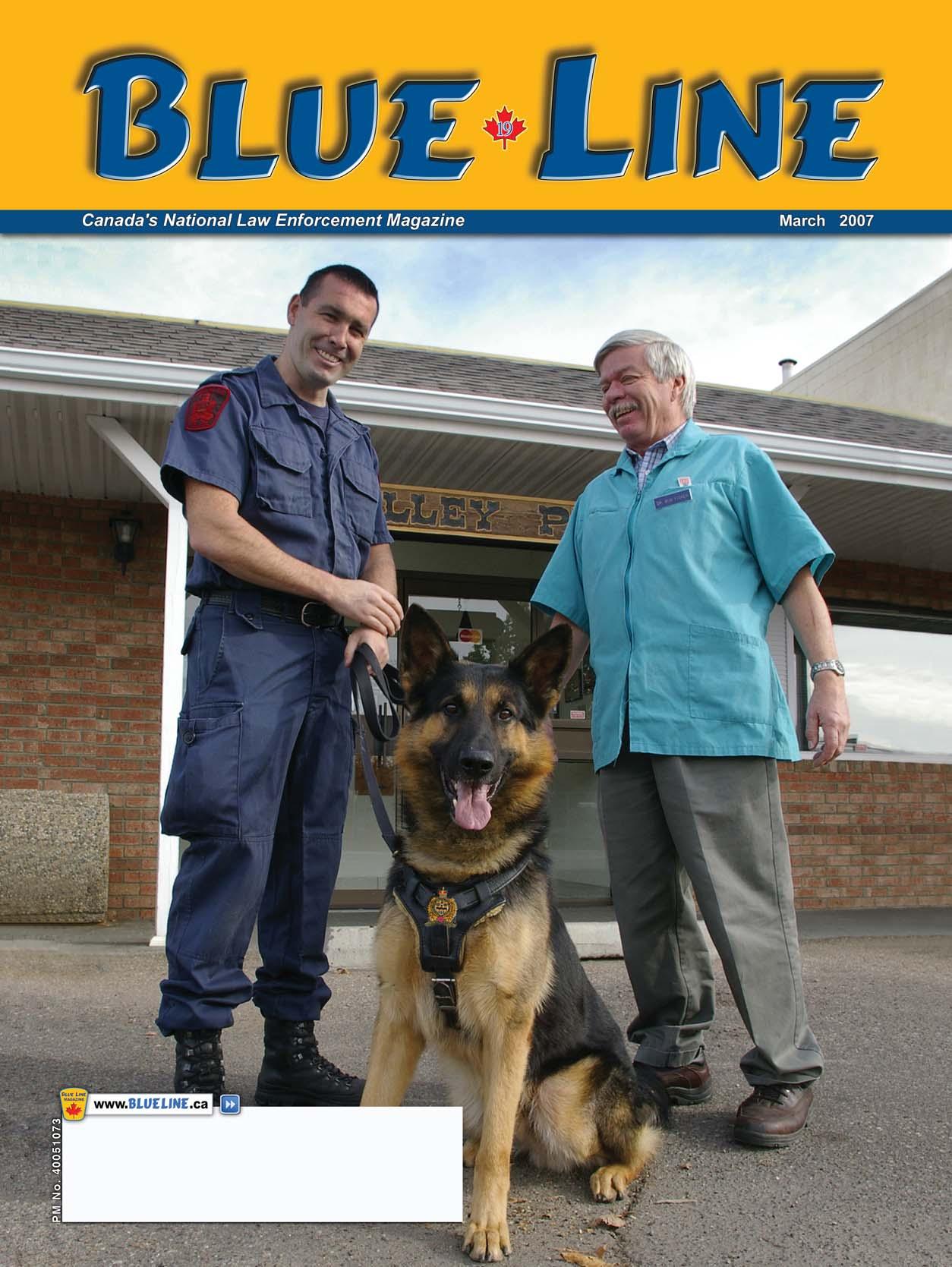
On the cover, Medicine Hat Police Cst. Shawn Davis stands with his service dog, Boris, as Veteranarian Bob Fisher looks on. Fisher was recently recognized for over 25 years service to the Medicine Hat Police K-9 Unit. For more on the story see Lissa Swihart’s article on page 6
6Cop dog doc Veterinarian’s quarter century of service 8Remote detection of clandestine graves Airborne and satellite imagery
12Postmortem drawings A vital key for public identification
26Stealing monsters
Heavy equipment theft nets big bucks
34Every officer is a leader Steps in the personnel development process
31Stopping vehicle leaving bar not arbitrary
justified by report of gunshots
Upper levels of CBSA need a clearer vision
by Morley Lymburner
Blue Line was called to testify before the Standing Committee on Public Safety and National Security in February on a subject near and dear to my heart – arming Canadian Border Services Agency officers. We flew in Tactical Firearms Editor Dave Brown to assist (his comments are in the ‘Back of the Book’ this month.)
It’s difficult for politicians to get a handle on border security concerns, fraught as they are with a myriad of interconnected issues involving management, labour and a multitude of agencies. However, there can be no confusion or debate about whether it’s wise to arm CBSA officers, and no rational argument exists to counter the logic of doing so. It is simply a tactic by the Great Wizard of Ottawa (GWO) to stretch out the argument until a government friendlier toward his/her point of view is elected.
The current government has to consider what is reasonable under the circumstances. For example:
•Most illegal revolvers or pistols in Canada have come within a metre or two of a CBSA member.
•The concept of arming CBSA officers to protect our borders is most certainly not a far stretch, especially when you consider that the GWO deemed that fisheries and certain environment ministry officers must carry sidearms.
•The message being sent out to smugglers, criminals and even terrorists is greatly enhanced by an armed officer at ports of entry. No other country in the world views this as being out of the ordinary – in fact, most would view it as being rather lax.
The committee should be thinking far
beyond the simple matter of arming border officers to protecting Canada in the future, and the best way to efficiently execute the wide range of law enforcement functions that will be needed.
In their recent book, Police Innovation: Contrasting Perspectives , Cambridge Professors David Weisburd and Anthony A. Braga argue that:
“America’s (and Canada’s) system of criminal justice is overcrowded and overworked, undermanned, under financed and very often misunderstood. It needs more information and more knowledge. It needs more technical resources. It needs more co-ordination among its many parts. It needs more public support. It needs the help of community programs and institutions in dealing with offenders and potential offenders. It needs, above all, the willingness to re-examine old ways of doing things, to reform itself, to experiment, to run risks, to dare. It needs vision.”
The CBSA’s capabilities and potential far exceed its current functions. The idea that it must delegate certain levels of action to another enforcement agency is simply not operationally nor fiscally prudent. A CBSA officer forced to hand an arrestee over to a police officer for processing and prosecution, is a horribly flawed concept. They should not have to sap away resources from another police service to help them perform their job. Does an Ottawa police officer call in the OPP to process and investigate a suspect after they make an arrest?
Too many CBSA functions involve tripping over parallel investigations in which they’re not involved, and often not even aware. Of particular concern is an entire branch of the RCMP set up to perform tasks which should be handled en-
tirely by the CBSA investigations branch. Why should taxpayers support two separate agencies performing the same function? RCMP resources are already stretched to the snapping point.
A good part of this argument can be applied to many other federal enforcement and investigative branches. The Canadian Coast Guard and Parks Warden Services are told to call police for help if firearms are required. This is no longer viable. Each and every branch must be equipped, trained and ready to perform all of its enforcement responsibilities, including protecting Canadians at the primary level of response.
Last year, I wrote about the security advancements a nuclear power plant has made. I wasn’t impressed on my previous visit, 16 years before. The unarmed security personnel were then trained to “hold off” an armed attack on the plant for 15 minutes, because that was how long tests had shown it would take to get an armed officer on site. Given the remote location, that would be ONE officer with ONE revolver containing six bullets. A wise officer might not even show up without lots of backup.
A more enlightened security branch head greeted me on my return, now working under a private sector mandate rather than government. He advised that, after three years of training, the plant’s tactical security personnel could “secure and hold this facility better than any other agency or group we could call in... we would be calling in the police to simply be our backup.”
If a private security firm can posses this kind of confidence, why can’t the Canadian Border Services Agency? The white shirts need a clearer vision of what is happening at ground level.
by Lissa Swihart
Veterinarian
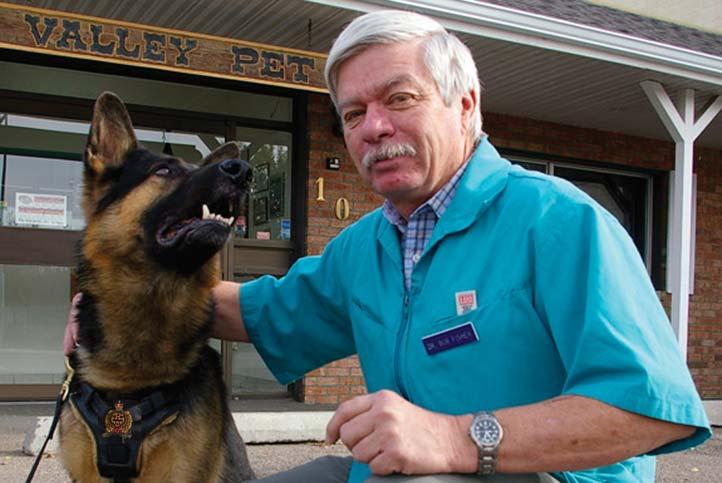
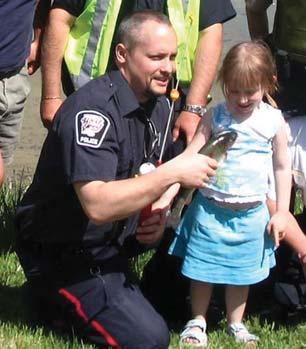
Bob Fisher has a pet project as the exclusive vet for the Medicine Hat Police Service K-9 Unit.
The same dogs who track drugs and strike fear into the hearts of fleeing criminals wag their tails when they see him and behave well while he conducts routine check-ups and occasional emergency care.
“Police dogs are special – and the police are special –big time, but especially the K-9 guys because, well, they are into animals,” he says. “To me, the police dogs are part
of the police department and they, in some situations, can not only catch the bad guys, but can protect the officers.”
Fisher smiles when talking about his 26-year relationship with the K-9 unit and can recall by name most of the 19 dogs he has worked with. He says police dogs suffer from back and leg problems more than other dogs because of the nature of their work.
“We’ve never had a bullet wound — knock on wood — and I hope we never do.”
The K-9 unit recognized Fisher in 2006 for his commitment and hard work. Not to be outdone, Fisher quickly set to work purchasing service badges for each of the dogs in the unit. They were distributed during a special presentation ceremony.
Darcy Brandt, who has been a part of the K-9 unit for seven years, says Fisher is invaluable to his unit.
“Bob is very dedicated, not only to his job, but to all of us and our police dogs,” says Brandt. “He’s passionate about animals and helping in any way he can.”
Brandt’s dog, Rocky, was once impaled by a stick while apprehending a man running from police. Rocky has since made a full recovery, thanks to a few surgeries by Fisher and a subsequent referral to a vet in Calgary.
“We’ve also had a few dogs pass away in the last bit and Bob is compassionate far beyond thinking that these are just animals. The dogs mean a lot to him and they certainly mean a lot to us.”
Fisher says he chose to pursue veterinary medicine because of a life-long love for animals. He finished his schooling at the University of Guelph in 1967.
“I was born and raised in Medicine Hat and my brother and I built the Valley Pet Clinic in 1973,” says Fisher. “He was a vet, went back to school to become a lawyer and is now a judge.”
Medicine Hat was much smaller then and, because he knew a lot of the police officers, Fisher says he naturally became the designated vet for the service’s first K-9 unit.
A train wreck nearly 20 years ago is one incident that stands out in his mind. The brakes on a train coming into Medicine Hat from the west failed, resulting in a crash that killed the engineer.
The first two dogs with the K-9 unit, Smokey and Bandit, worked for hours trying to find the engineer in the wreckage. Fisher was called in at 3 am to clean them up.
“The dogs were covered in oil and diesel fuel and I came down and spent three hours trying to scrub them off. It’s funny, that story sticks out in my mind but I remember admiring the dogs for working so hard.”
Bandit belonged to Lou O’Reilly, who says Fisher has been invaluable to the K9 unit since it started in 1980.
“Bob is a great guy to be associated with personally and professionally. He has an amazing way with animals and treats all of his clients like gold,” says O’Reilly.
He recalls Bandit breaking a canine tooth one day. Fisher checked on the dog and then arranged for a local dentist and his assistant to work on a Saturday and cap the broken tooth.
“Bandit was able to continue with his bite work after that,” says O’Reilly. “That’s just one example of how Bob goes way beyond the call of duty to help us out.”
Alberta Sustainable Resource Development awarded Fisher with the Order of
the Big Horn in March, recognizing his work with wildlife, which often includes raptors, owls and some eagles.
“Fish and wildlife bring them in, or people who find them on the street,” says Fisher. “We try to rehabilitate them and, if it’s going to be a long rehabilitation, we send them to the Alberta Birds of Prey Centre in Coaldale. Worse-case scenario — and if we can’t do anything else — we don’t let them suffer.”
When he is not busy working in his clinic and taking special care of police dogs, Fisher volunteers for the Medicine Hat Stampede board, loves to fish, cares for his dog and three cats and spends time with his family.
His daughter, Marni Fisher, a 9-1-1 communications operator with the Medicine Hat Police Service, shares his love for animals.
“He is used to me calling him with my own animal questions. I have dogs and cats and a horse and Dad can fix every problem.”
She says she is never surprised when people comment on her father’s gentle nature and ability with animals.
“It’s just how he is. He loves animals, he loves helping people. He has been working with the K-9 guys since the year I was born.”
Remote detection of clandestine graves
byMargaret Kalacska, Lynne S. Bell and Brian Thiessen
Although it is the most notorious, the Robert Pickton murder case is by no means unique. The bodies of more than 20 women have been found around Edmonton since 1983 and seven women have vanished along Hwy. 16 – the ‘highway of tears’ – in northern British Columbia.
The faster police discover clandestine graves, the better. The evidence obtained can lead to an arrest, preventing more murders and saving friends and relatives the immeasurable grief of not knowing what happened to their loved one. Promising forensic research may make it easier to find hidden graves.
Research
In a recently established ongoing study, we have been applying ‘remote sensing’ to locate clandestine burials employing insitu, airborne and satellite imagery – recording and processing, from a distance, reflected electromagnetic radiation in the visible to shortwave infrared wavelengths. This differs from ground-based techniques such as geophysical resistivity and magnetometry, which have been broadly used to detect and refine the location of mass graves or other sub-surface anomalies. Although they have been referred to as remote sensing in some instances, the latter techniques are completely separate from the discipline of remote sensing in the earth and planetary sciences.
While the original motivation for this study was to detect mass graves in countries following a conflict, the results and techniques developed could also help police locate missing people who may have been buried in shallow graves.
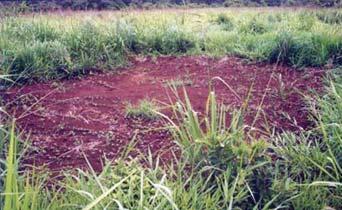
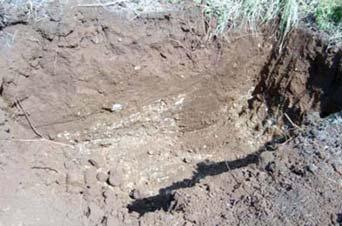
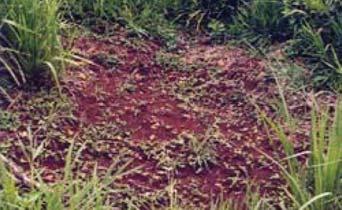
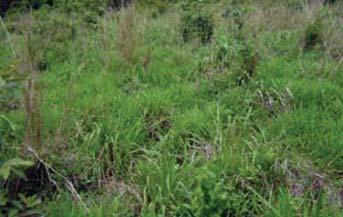
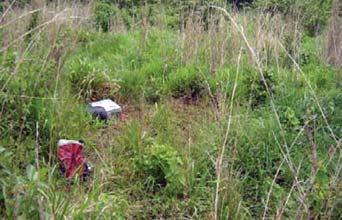
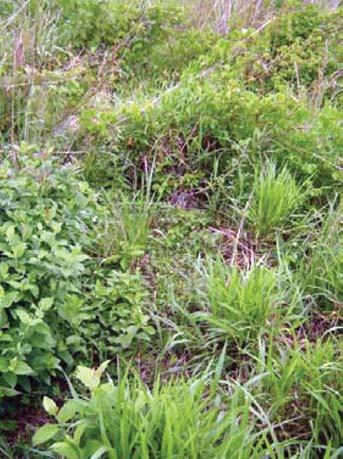
Our experimental set-up in Costa Rica consisted of burying antibiotic free, freerange cattle carcasses (approximately 800 lbs) and individual carcasses (approximately 140 lbs) (Figure 1). We collected the in-situ reflectance of these graves with a handheld spectrometer over a 16 month period (Feb. 2005 - July 2006).
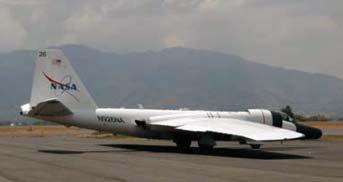
One month following burial in March 2005, a Hymap sensor aboard a NASA WB57 aircraft collected high spatial resolution (4.7 – 5.2m) hyperspectral airborne imagery (Figure 1). This was part of the CARTA II campaign, which collected infrared aerial photographs and multi and hyperspectral imagery for the entire country (at 20m resolution).
Hyperspectral data can consist of over
100 bands (or channels), each sensitive to only a narrow range of wavelengths. The imagery collected for this site consisted of 125 bands in the 450-2500nm range (visible - shortwave infrared).
Recent findings
We examined the separability of the insitu reflectance of the graves (mass and single) one, five and 16 months following burial. In each case, the mass grave was readily distinguishable (less than four per cent error) from the surrounding ground covers and control sites (excavation with the backfill replaced – done at the same time as the burials). The single graves were distinguishable from the control and other land covers up to five months following burial. Detection did deteriorate 16 months following burial.
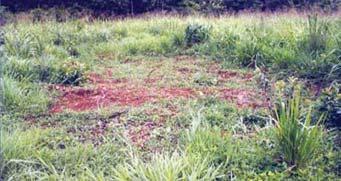
Contrary to our expectations, vegetation did not regenerate over the mass grave for more than 12 months. The control site was approximately 60 per cent re-vegetated five months following burial (Figure 2). At 16 months, vegetation can be seen in the centre of the grave (5x5m), covering approximately 70 per cent of the area, but the rectangular area can still be clearly delineated (Figure 3).
The single graves are difficult to distinguish from the surrounding pasture, while the control site can no longer be distinguished at 16 months. We attribute this inhibition of vegetation regeneration to an initial soil toxicity which gradually subsides over time. Statheropoulos et al. (2005; J. of Forensic Sciences) showed that decomposition of a human body produces more than 100 compounds, including several (e.g. dimethyl disulfide, toluene) in relatively high concentrations. These may inhibit micorrhizae and soil microbes, both of which would delay regeneration.
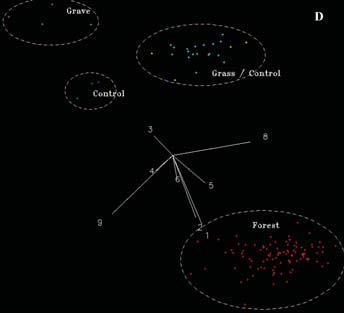
From the airborne imagery (one month following burial), when the spectral signatures (i.e. reflectance data) of the pixels representing the graves (mass and single) are examined, there is also a distinct separation of those pixels from the ones that represent other targets in the scene (e.g. pasture, control site, forest). This indicates the potential application of such imagery to the location of clandestine burials (Figure 4).
We also closely examined the reflectance of grass blades that regenerated 16 months following burial and contrasted them with the same species of grass growing in the adjacent pasture. The grass
Figure 1a
Figure 1b
Figure 1c
Figure 2a
Figure 2b
Figure 2c
blades growing on the graves were darker green (as previously reported by anecdotal evidence) and the spectral signature was readily separable, with less than five per cent error.
An analysis of the chemical composition of the soil from the mass grave, taken 16 months following burial, showed differences in the concentration of several elements, compared to soil taken from the control.
Remote detection using in-situ, airborne and potentially satellite imagery from the Costa Rican experimental study shows that this technology can distinguish clandestine mass graves, offering a real chance for ‘eyes in the sky’ that can see evidence of large scale killing. We are continuing to research using this technology in temperate environments with smaller burials, such as single graves more relevant to Canada.
Relevance for Canadian police
The Costa Rican study will be replicated in Canada over the next couple of years to determine if the same results occur in temperate ecosystems. If successful, Canadian police will have a new, innovative technology to locate the clandestine graves of missing persons.
The international context
The United Nations defines a mass grave as any grave containing three or more individuals. While they are often a result of civil and military conflict – an estimated 100 million people have been killed in war crimes, crimes against humanity and genocide since the Nuremberg Trials – it is important to remember that not all constitute evidence of a crime. Victims of natural disasters, for example, are often buried in mass graves because of fear of disease. Unrecovered shipwrecks or deep ocean submarine mass fatalities would also fall under the general definition.
Identifying a mass grave and recovering those interred may be motivated by legal requirement, humanitarian reasons or both. Identification is important for a number of reasons. The grave itself con-
stitutes material evidence and its successful identification legitimizes international reports and witness testimony, and verification can determine the international response, be it humanitarian aid or military intervention. It’s also an indication of the scale of a conflict.
In legal terms, a clear intent to exterminate a cultural group implies clear premeditation (genocide), which calls for UN intervention.
Airborne or satellite imagery is a powerful method to monitor ongoing conflicts and detect/confirm the location and size of a mass grave, but not without its challenges.
Different conflicts have produced different types of often clandestine mass graves. Huge mass graves in Iraq contain hundreds of individuals, often buried with their identification cards. This is an extreme example of little or no effort being made to
hide the actions by the then government and arguably presents a more straightforward target for remote detection.
During the Rwandan genocide many differing sizes and depths of graves were created and earth moving equipment was often used.
In the former Yugoslavia a range of mass graves were documented and excavated by the International Commission
Figure 3a
Figure 3b
Figure 3c
Figures 4a, 4b, 4c
for Missing Persons (ICMP). Witness testimony and excavation indicated that
Figure 4d
some mass graves were re-exhumed during the conflict and secondarily re-interred as a method of deception. Clandestine burials were even hidden within civic cemetery sites.
In Guatemala, smaller graves containing 10 to 20 individuals were hidden in the forest. Other larger mass graves in the country contained up to 100 individuals. However some clandestine graves were created by the survivours themselves, who wished to hide their dead relatives until a time that was safe for their recovery and Christian reburial. Yet, with the passage of time, even these types of graves can be difficult to identify as the forest regenerates and memories fade.
For additional technical details, see: Kalacska and Bell. (2006)
Remote sensing as a tool for the detection of clandestine mass graves. Canadian Society of Forensic Sciences Journal 39 (1):1-13
Kalacska, Bell, Sanchez-Azofeifa, Caelli. (2007). The application of remote sensing for detecting mass graves: an experimental case study from Costa Rica. Journal of Forensic Sciences (submitted) Calvo-Alvarado, Kalacska, Bell, Sanchez-Azofeifa, Arias. (2008)
Effect of soil type on the reflectance of tropical tree and grass species In: Kalacska and Sanchez-Azofeifa (Eds) Hyperspectral Remote Sensing of Tropical and Subtropical Forests. CRC Press. Forthcoming March 15, 2008
Margaret Kalacska PhD. School of Criminology, Simon Fraser University; Titan Analysis Ltd. Lynne S. Bell PhD. School of Criminology, Simon Fraser University; Titan Analysis Ltd. Staff Sgt. Brian Thiessen, Canadian Police Research Centre
One military's trash is another agency's treasure
Jan 29 2007 - WASHINGTON (AP) - The military’s trash is treasure for local police around the country. Cashstrapped US law enforcement agencies are lining up to take advantage of the Pentagon’s generosity: a tranquilizer gun to shoot bears in Pennsylvania, a van for crime scene investigations in Michigan and boats for water patrols in Virginia.
About 16,000 local agencies obtained more than 380,000 pieces of equipment in the 2005 budget year, according to an analysis of data provided by the Pentagon at the request of The Associated Press.
The items, which include night-vision goggles, copy machines, bulletproof vests and even helicopters, were worth nearly $124 million. The top recipients nationwide: -California, $17 million worth of equipment. -Indiana, $10.5 million. -North Carolina, $10 million.
Detectives on a drug task force in Tippecanoe County, Ind., wear military fatigues for covert surveillance of methamphetamine cooks and cocaine dealers. In Pennsylvania, the state game commission uses a tranquilizer gun in its program to put tracking collars on bears. In Emmett Township’s Department of Public Safety in Michigan, a blue 1986 Chevrolet van is part of the mobile unit to process evidence.
The program is administered by the Defense Logistics Agency. Police departments pay only to ship the equipment and for necessary upgrades. The military gives away only items it considers obsolete for its own use, parts that already have been replaced or are no longer needed in places such as Iraq.
“We’ve gotten unbelievable stuff,” said police Sgt. Jim Forbes in Hampton, Va. “It’s benefiting a whole lot of folks in this business.”
Last year, Forbes’ department obtained 55 patrol rifles and paid only a few hundred dollars for shipping. Over the years, his department has received boats and even a doublewide trailer it uses as a training room on a range.
In Alabama, a sheriff’s department near Birmingham received four 1970s-era helicopters. It cannibalized two for parts and already has a third in the air.
“We went to (the) bargain basement,” Jefferson County Sheriff Mike Hale said.
New helicopters would have cost taxpayers $800,000 each, said Hale, who figures his department will have two air-worthy helicopters for only a fraction of that amount. He intends to use them to chase criminals and watch over the local airport and water plants.
by Ryan Siegmund
Avoiding an identity crisis Biometric security takes full flight
Canada’s 29 largest airports have enhanced security measures by fully implementing advanced biometric technology to control access to restricted areas.
Began in 2004, the Restricted Area Identification Card (RAIC) program issued individual biometric access cards to approximately 100,000 airport workers –everyone from flight and grounds crew to caterers and maintenance staff.
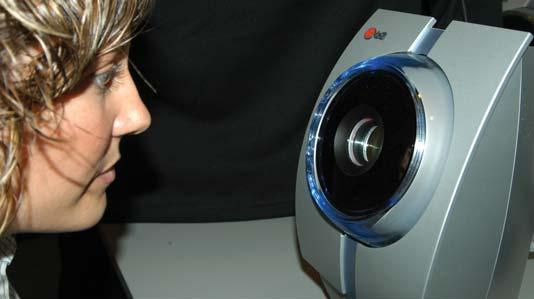
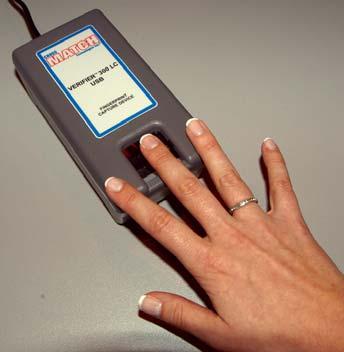
After Transport Canada grants security clearance, an employee’s fingerprint and iris templates are captured and encrypted in an RAIC card chip to become unique identifiers. To gain access to a restricted area, they must swipe their card while presenting a live sample (either their actual finger or iris) to a biometric reader, which scans for a one-to-one match. Access is only granted if the information on the card and reader match.
“The enhancement is that we know only the right people are getting into restricted areas,” says Peter Burden, manager of the RAIC program. “Only the enrolled person can use his or her card because only their biometrics are embedded in the chip.”
The RAIC readers are hooked up to a central database managed by the Canadian Air Transport Security Authority (CATSA) in Ottawa, which verifies the information and identifies the user at a given location. The database is frequently updated to coincide with mandatory RAIC card renewals and to stay current with worker employment status.
“The benefit of RAIC is that now the same system is employed in all 29 airports and there is consistency now where there wasn’t before,” says Burden, noting access used to be managed on an individual basis.
Although all airports are governed by the same Transport Canada regulations, the RAIC program is a significant upgrade over the Restricted Area Pass (RAP) system. Under the old manual system, a guard granted restricted access after checking the photo on an employee’s access card. However, the biometric technology hasn’t eliminated the need for a guard at each restricted access point, notes Burden.
“The guard’s purpose is to make sure that, first of all, there is no piggy backing. I mean, you can have the best technology in the world but if I open the door and leave it open for all my friends to come in, then it is useless from a security perspective.
“We’ve automated the guard’s job be-
cause the reader does all the work. It takes the subjectivity out of the equation because the guard doesn’t need to make any decisions anymore, just look for a red or green light and ensure there is no defect.”
The move to implement biometric security began in 2002, when Transport Canada asked CATSA to produce a system of technology for the new RAIC card. A test run began at four airports in 2004 has shown the technology is sound but communication with employees needed some work, explains Burden.
“The technology is the easy part of this. If you are not providing all the critical info when they enrol, they are going to be nervous – especially when you are dealing with iris. People are comfortable with fingerprints because it has been around a long time but with the iris, individuals were a little weary.”
An information package was put together for enrollees, including certifications from health organizations assuring that the technology was safe, says Burden. The iris reader, for example, is nothing more than a digital camera, with no scanner or laser shining in a person’s eye. It simply takes a snap shot and, using a proprietary algorithm, looks for unique patterns.
A template is formed by translating the image into a series of digits. Once constructed, Burden says the image is purged or deleted from the system.
“The benefit of the template is that it cannot be reversed engineered back into an image. It is a much more secure technology, not only from a security perspective but also a user perspective. It gives assurance to them that their fingerprints or iris images won’t end up in the wrong hands.”
Each airport decides on which type of RAIC reader they want by restricted access doors and employee preferences are taken into account. Two thirds of the 19 airports have opted for the fingerprint RAIC reader. Iris readers, although not as common, serve the specific needs of certain employees such as grounds crew, who may not be able to submit a fingerprint due to dirty or greasy hands.
CATSA is a world leader in this area of biometric security at airports, says Bur-
den, noting a number of countries, including the US, have contacted it for help in putting together programs of their own.
Preliminary work is under way on phase two of the RAIC program, which targets the areas outside of the terminal building, such as vehicle gates.
The $25-million price tag for phase one included $17.5 million for equipment and $7.5-million for operating costs. Phase two is projected to cost an additional $10 million. No future phases are planned, nor is implementation of the technology at other Canadian airports.
CATSA was challenged to move quickly on RAIC after 9/11, explains Irene Marcheterre, a CATSA spokesperson.
“We wanted to be up and running as soon as possible. It was challenging to make sure we had the right people, the right place, to have the right training for them. We work with Transport Canada daily to make sure these people are keeping in the loop with new procedures and that we have the best practices and equipment in place.”
For
by Diana Trepkov
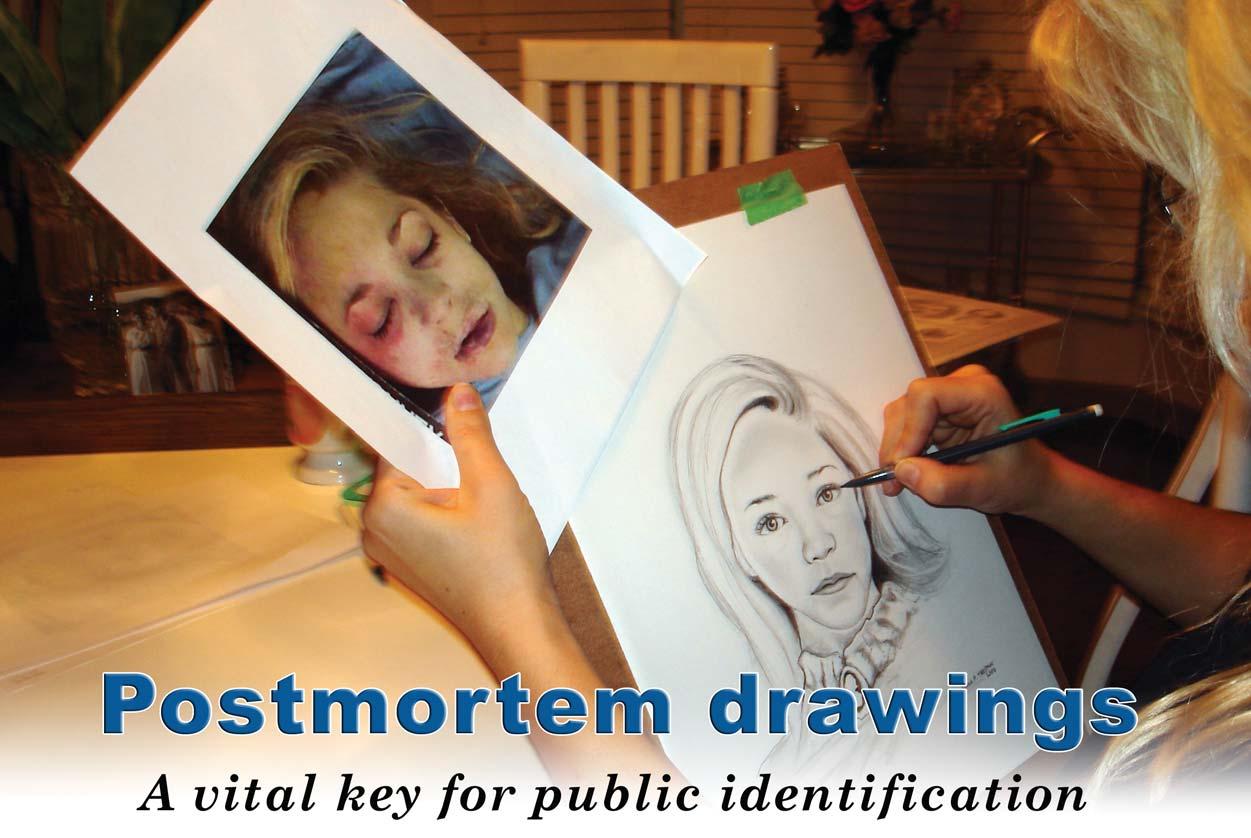
Postmortem drawings are shown to the public in hopes someone can identify the victim. They are based on a facial photograph, usually of a decomposing person with severe facial trauma. The forensic artist draws the unidentified victim by measuring proportions, opening the eyes and drawing specific features such as facial hair, moles, pimples, scars, tattoos, glasses and teeth.
It is often considered inappropriate to publicize the image of a deceased individual. Many people may find this type of morgue image (actual deceased photo) offensive or disturbing and the person is often unrecognizable because of alterations in appearance after death.
The deceased is generally photographed lying down and gravity distorts their features. A forensic artist understands anatomy and can create the proper proportions in their drawing.
Postmortem drawings are done with suicides, natural deaths, homicides, blunt or sharp trauma fatalities, traffic fatalities, drowning or boating accidents. They can attach a name to the unidentified and lead to a legally valid, positive identification.
Postmortem stages:
• Fresh, bloat;
• Active decay;
• Advance decay;
• Putrid dry remains;
• Semi skeletal remains;
• Skeletal remains.
Unidentified person
Postmortem drawing, Mariposa County Medical Examiners Office-Arizona. Phone: 602-506-3322
CASE: AZ - Jane Doe 0042 (ME Case Num: 99-0305)
Case information
This young girl was found on the ground in Pinal County on January 27, 1999. Her age range is 13-18 years old. The girl either fell, jumped or was pushed from a moving vehicle on Interstate 10 in January, 1999. She died in the emergency room of Scottsdale’s hospital the next day.
The people in the vehicle never came forward to identify her.
It has been over seven years now and Jane Doe # 99-0305’s identity is still unknown.
She is Caucasian, 5’4", weighed 110-
130 pounds and has 16 inch long blonde hair with brown roots. Her eyes are blue, she has a tattoo of a blue heart on her chest and wore earrings and a navel ring.
Dental x-rays are available and her DNA has been entered into the national database.
The aim is not to produce an exact photo of the individual, which may be difficult, but a likeness that will spark recognition. The amount of artwork in each postmortem case varies depending on the condition of the body.
The photo of Jane Doe #99-0305 was altered to show her eyes open and remove evidence of pre or postmortem work. More may be needed to recreate facial tissues where injuries are more severe and a greater amount of decomposition has taken place – for example, there is severe trauma around her mouth and right eye.
With the proper distribution of the postmortem drawing, there is a greater chance this young girl will be identified.
It is crucial that no one is buried without a name. We all have the right to leave the world with dignity. Postmortem drawings can be the key to a positive identification.
Diane Trepkov is a freelance forensic artist. She may be contacted at artworxbydiana@sympatico.ca
Facial reconstruction solves 40 year old case
by Kathryn Lymburner
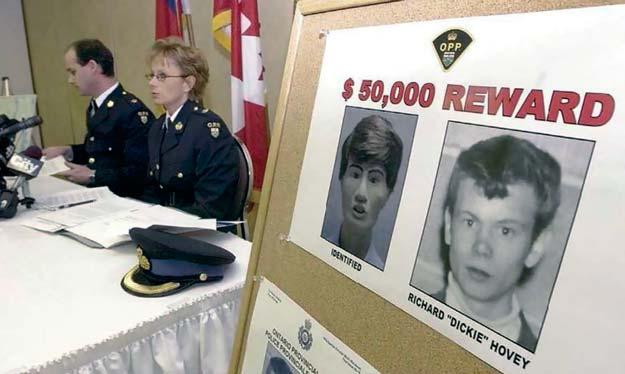
His remains had been stored in a metal drawer at the Toronto morgue, unclaimed and unidentified for the last forty years, but thanks to the Ontario Provincial Police’s (OPP) Resolve Initiative website, they now have a name: Richard “Dickie” Hovey.
Hovey’s family had not heard from him since he left home, nearly four decades ago, but they had always held out hope the talented young man was still alive and would some day reappear.
A tip from a family member and one from a friend proved crucial to the case.
OPP Det Insp. Dave Quigley said the pair noticed a similarity between Hovey and the facial reconstruction, and contacted police “totally independent of the other,” something Ontario’s chief coroner, Dr. Barry McLellan, said is practically unheard of.
“In Ontario, I would go as far as to say that this is the first case that I’m aware of where a reconstruction has been of significant assistance in leading to an identification,” McLellan said.
“It’s a very important case for many reasons,” said McLellan.
“It encourages us to go this route in the future.” The information, he said, allowed pathologists from the Centre of Forensic Sciences to gather DNA samples provided by Hovey’s relatives, which ultimately resulted in a positive ID.
Photos of the reconstruction, built out of clay over top of the deceased’s skull, were displayed on the OPP’s website as part of its “Resolve” initiative launched last May.
The first of its kind in Canada, the site contains information as well as composite sketches, three-dimensional facial reconstructions and even photographs of bodies that have yet to be identified, and has yielded between 4,000 and 6,000 hits a month.
With Hovey’s identity finally established, his remains made their way back home to Fredericton.
Police believe he was murdered by a sexual predator who was stalking attractive boyish men in Toronto’s Gay Village in 1967.
At the time, Hovey’s father had fretted over his son’s silence, taken his concerns to the local RCMP detachment. But
the information was never filed as an official missing person report.
A budding musician, Hovey was attached to an electric guitar he’d purchased at Sears and customized to look like a Fender. The guitar has never surfaced. “Everybody has said, at the outset, that his guitar was his most prized possession,” said Quigley.
Police say, he got some gigs at The Mynah Bird Club, a then-hot rock ‘n’ roll haunt at the corner of Yorkville and Hazelton that launched such notable careers as Neil Young and Rick James who would later form their own band called The Mynah Birds.
Hovey’s decomposed remains were found on May 15, 1968, lying against a hedgerow near Schomberg. Investigators
are still trying to establish a specific date for his disappearance. Hovey was last sighted on Yorkville, in the late spring or early summer of ’67.
“It is theorized Hovey was lured by the sexual predator and taken to the isolated spot – perhaps going willingly at first –where he was murdered. No cause of death has been determined.
Another young man’s body had been discovered five months earlier, on Dec. 17. 1967, in a wooded area of Balsam Lake Provincial Park, near Coboconk, Ontario. Those remains have never been identified. Facial reconstructions of both victims were revealed last November during a press conference and within 24 hours, police had received the two key tips – from among 30 – that sent Quigley to New Brunswick to obtain blood samples from the siblings. “We still have a lot of work to do, but we’re light years ahead of where we were a month ago,” said Quigley.
Anyone with information about the possible identities of these victims or with tips that may assist the investigations are encouraged to contact The Resolve Initiative at 1-877-9FIND ME (1-877-934-6363) or via email at opp.isb.resolve@jus.gov.on.ca.
The media is filled with references over the last few years to the ‘CSI Effect.’ Wikipedia defines it as “the phenomenon in which the popularity of television shows such as CSI: Crime Scene Investigation and Law and Order has raised crime victims’ and jury members’ expectations of forensic evidence, DNA testing and crime scene investigation to the level depicted in these shows.”
The evidence of this effect is almost entirely anecdotal, notes forensic scientist Barry Fisher, director of the LA County Sheriff’s Department crime lab.
“One problem is that many Americans believe that what they see on television dramas is a realistic portrayal of crime labs. While this problem can’t be completely eliminated, it may be a mistake to blame CSI, Crossing Jordan, Bones or other dramas for causing it.
“There will always be a few mentally ill persons who believe that Leonard Nimoy had secret ear reduction surgery so that he could live among us, who long for a doctor on Grey’s Anatomy to cure them or who would be happy to have a love child with David Letterman.” 1
Seven of the top 20 television shows in the Nielsen ratings this season have been forensic dramas, with the three CSI series placing in the top ten. CSI’s syndicated in
200 countries and its worldwide audience is estimated at two billion.2 With such widespread exposure, it’s not unreasonable that the shows might have an impact.
We are routinely asked if our job is “like CSI.” While it’s flattering for our work to be recognized, most of us would argue that there are significant differences between what we do and how it is portrayed on television.
Reality vs. television
“We want the public to be aware that the glorious vision it may have – of labs more spacious than the Taj Mahal, equipped with devices the Jetsons would find futuristic, staffed by people who can get a DNA result out of a copy machine –or about as fast as a copy machine can duplicate a page (if it jams, they can simply ask the staff psychic to reveal the killer’s identity) – bears no resemblance to reality,1” says Fisher.
“CSI has as much to do with criminalistics as Baywatch had to do with being a lifeguard,3” says John Houde, author of Crime lab: A guide for nonscientists.
“The fundamental science is always accurate,” CSI writer and senior technical advisor Richard Catalani told the Arizona Republic.4 “There is nothing we make up.
What we do stretch is the time factor.”
The shows stretch more than time. On TV the crime scene investigators (CSIs) do everything: attend scenes, collect and analyze evidence, question witnesses and suspects, control investigations and testify as experts in court. They are also experts in every forensic discipline.
In reality, what they do on television is an amalgam of work performed by a variety of people. Figure 1 shows staff of a real forensic laboratory at work.
Who really does what
In the CSI: Crime Scene Investigation episode ‘Too tough to die’ 5 a woman is abducted from a shopping mall parking garage, raped, beaten, shot and left for dead. CSI Sara Sidle conducts a vaginal examination on the victim at the hospital. That would be an offence in Ontario. Under the Regulated Health Professions Act, 1991, 6 only a licensed physcian or nurse 7 can perform that type of examination.
Forensic scientists occasionally attend scenes or autopsies as advisors 8 but don’t photograph scenes or collect evidence, question witnesses or suspects and aren’t in charge of police investigations. We do, however, scientifically analyze evidence and advise police, which may influence
byAlison Morris and Kimberley Johnston
Fig 1 Two staff members from the Centre of Forensic Sciences (CFS) examining an item of clothing using an alternate light source. Note the use of gloves, masks, goggles and lab coats.
Figure 2: Printout showing the analysis of a single gunshot residue sample stub using Scanning Electron Microscopy – Energy Dispersive X-ray spectroscopy (SEMEDX). Note the analysis time of more than seven hours.
the course of an investigation.
It’s impossible today for any single person to be an expert in every forensic discipline. We normally specialize in only one discipline – biology, chemistry or digital evidence, for example – or perhaps even in one or more sub-disciplines, such as DNA analysis, bloodstain pattern interpretation, alcohol analysis, drug analysis, explosives or fire debris analysis.
On TV the CSIs virtually never take notes or use standards and controls in their analyses. We never hear references to ‘qual-
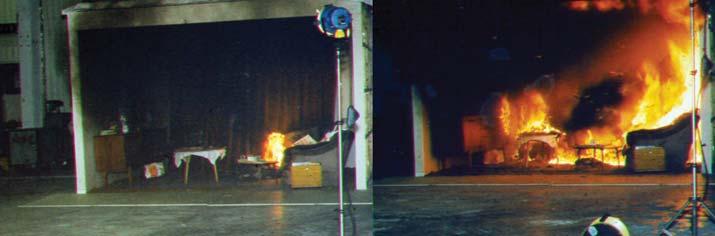
Figure 3: Stages in the development of a fire. These three photos show a newspaper fire in a plastic bin (upper left) six minutes after ignition, at rollover (upper right) nine minutes after ignition and 10.75 minutes after flashover (lower left).
ity assurance.’ In the real world, we take voluminous notes and use standards and controls to ensure our procedures and instruments are working properly. Quality assurance is crucial in everything we do.
The shows give a very wrong impression of the training required for a forensic scientist. In the pilot episode 9 of CSI: Crime Scene Investigation, a CSI is murdered while fingerprinting the site of a residential burglary. It’s her first day on the job and she is processing the scene on her own. What’s wrong with this picture? The character had no training, wasn’t being supervised by an experienced colleague and, to make matters worse, was working
an unsecured crime scene.
In a like vein, new CSI Ryan Wolf is introduced in the CSI: Miami episode ‘Under the influence’10 as being a former patrol officer and brand new to the crime lab. He is assigned to investigate a possible hit and run involving the father of another CSI. What’s the problem?
Aside from the conflict of interest, no one can be a fully competent forensic scientist on his/her first day in the lab. Typically, training programs require one to two years and successful completion of oral, written, practical and competency tests just to get started. An accredited forensic lab that allowed an untrained, untested scien-
Photo: Photos courtesy of John D. DeHaan, Ph.D. Test courtesy of Fire Research Station, BRE, Garston, UK.
tist to work on a case would likely lose its accreditation, given the number of standards violated.
TV forensic laboratories seem to have endless resources. Each CSI works on one case at a time and the labs have every analytical instrument and piece of equipment a scientist could want. There are no backlogs, every analysis scientifically possible is done in every case, results are obtained from every item and every case is solved in less than an hour.
Reality is very different. Forensic labs around the world tend to be underresourced; for example, one study11 indicated that American crime labs didn’t have sufficient computers, forensic scientists or equipment, resulting, at the end of 2002, in a backlog of over half a million cases.
A September, 2006 LA Times article 12 decried staffing shortages at the state crime lab that had “resulted in a backlog of more than 287,000 unprocessed DNA samples taken from criminals in an effort to tie them to unsolved crimes.” The article went on to state “the LAPD is unable to bring to trial 46 of every 100 murderers and 80 of every 100 rapists in the city because critical DNA evidence hasn’t been tested.”
The notion that scientists work on one case at a time has no basis in reality, nor does the proposition that every investigation is completed and every crime solved in less than an hour. Scientists juggle many cases, shifting from one to another as priorities change or while awaiting the results of an instrumental analysis. It may take a number of people months to do the work one TV CSI does in an hour.
Forensic TV dramas are no more accurate when it comes to science. A few examples (from a very long list) include:
• Using the same instrument to perform DNA and drug analysis
These analyses require totally different instruments.
• Getting instantaneous analytical results
You can’t put a sample in an instrument, push a button and have the results before you can take your finger off the button. (See Figure 2.)
• Not knowing what a flashover is
Throughout one CSI: Crime Scene Investigation episode 13 references were made to a flashover, although the only burn damage was a ‘V’ pattern against a wall, a breach through the ceiling and a charred upper doorframe. Once a flashover (see Figure 3) occurs, full room involvement follows in most fires unless the fuel is exhausted or the fire is oxygen deprived or extinguished.
• Reporting finding “hydrocarbons” at a
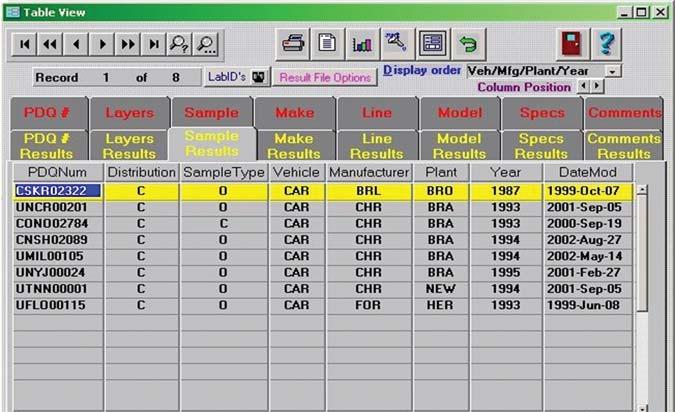
the PDQ (Paint Data Query) database, which is an RCMP developed, produced and owned database of automotive paints used by forensic laboratories to investigate hit and run accidents. The RCMP licences this database to partner forensic laboratories throughout the world.
suspected arson scene.13
“All extracts from organic materials are likely to contain ‘hydrocarbons,’” the American Society for Testing and Materials states. “The word ‘hydrocarbon’ should not appear in a report unless those hydrocarbons can be specifically identified and classified.”15
• Pouring caulk into a knife wound and making a perfect cast of the weapon, then using it to establish a physical match with the real blade tip.
Being able to do this would have saved many of us a lot of work over the years but, alas, it doesn’t work.
• A forensic document examiner discussing character traits from a handwriting sample.
Graphology 16 attempts to predict character traits from handwriting. Forensic document examination involves analysis and comparing questioned documents to known materials in order to identify, whenever possible, their author or origin.17
• Magnifying and sharpening blurry videos, photos and audio recordings to reveal
minute details to an unrealistic degree. Security camera photos used in the DC sniper cases in 2003 showed what appeared to be a dark-coloured, extended cab pickup truck. Neither the driver nor the licence plate number could be identified from the photos. “On television you’d have blown up those pictures until you could see the identifying birthmark on the side of the driver’s head,” 18 quipped a noted forensic scientist.
• Determining from a microscopic crosssection of a fibre who manufactured it, how many yards of fabric were produced and the location to which the fabric was shipped.
While a fibre’s cross-section (Figure 4) can provide information about its type or end use, it generally can’t provide this level of information unless there is something unusual about it.
• Checking non-existent databases. While there are real forensic databases –DNA, automotive paint (Figure 5), IBIS 19 and AFIS,20 for example – most of the TV databases don’t exist.
Figure 4: Cross-section (above left) and longitudinal (above right) views of a nylon fibre.
Figure 5. Screen capture showing
• Performing a single instrumental analysis on a sample and immediately determining it is Maybelline lipstick, colour #42, batch A-439.
In the real world determining something is lipstick and comparing it to a known sample can involve several analyses. There is no database that can determine that lipstick, if identifiable as such, is “Maybelline, colour #42, batch A-439.”
Impact on the criminal justice system
Scientific studies on the ‘CSI effect’ are currently underway in the United States and England;21 in Canada the law forbids questioning jurors about their deliberations. Even without these studies, it’s safe to say that forensic dramas have had an impact.
Juries of the past were often bored or intimidated by scientific evidence. The televised 1995 trial of O.J. Simpson, one of the most highly publicized to date, gave widespread public exposure to expert forensic testimony. The scientific evidence included three weeks of testimony on DNA, which late night TV comedy skits targetted, suggesting that the subject was dull. No doubt the jury saw the evidence in much the same light.
Today forensic evidence is often a trial highlight and experts testify in cases that would previously not have required their presence in the courtroom. A typical jury includes individuals who watch forensic dramas and are eager to come face-to-face with real-life CSIs.
While the increased attention is welcomed by some, the mis-education of potential jury members is not. There are concerns that forensic dramas may give jurors unrealistic expectations of forensic science: they may be disappointed when the technology presented in the courtroom doesn’t look like it does on TV, expect the results of tests that don’t actually exist or a specificity that may not be attainable.
Another concern is that the shows may lead juries to put more faith in forensic evidence than they should, to inaccurately view the technology as infallible and to question cases with no scientific evidence. Within the courtroom itself, fear of the ‘CSI Effect’ has reportedly caused some attorneys to question potential jurors during the selection process as to whether or not they watch forensic dramas.
The majority of media reports about the ‘CSI Effect’ relate to the courtroom. There are, however, other possibilities. Law enforcement agencies may now feel pressured to collect more evidence. This can lead to storage problems and, more
importantly, distract from the most probative analyses in each case. Another possibility is that the shows may create more forensically “savvy” criminals, leading to a decrease in evidence left behind for investigators.
Forensic dramas have had negative and positive effects on forensic laboratories. Increased collection of evidence by law enforcement agencies, coupled with the desire for expert testimony to describe why no corroborating results were obtained, may have increased backlogs at some laboratories, although there are other explanations.22 The focus on forensic science has caused a proliferation of academic forensic programs throughout the world and increased numbers of qualified – and unqualified – applicants for relatively few laboratory positions.
The bottom line
The limited data collected to date offers little insight into whether there truly is a ‘CSI Effect’ on the judicial system. Nonetheless, it’s clear that forensic television shows have increased public awareness of forensic science, although not en-
tirely accurately. Ultimately, though, we have been provided with the opportunity to educate the public and those who provide our funding about what we do, which may in the long run prove to be valuable.
Kimberley Johnston joined the CFS as a forensic biologist in 1982 and was assistant section head, biology, before becoming policy and program analyst. She has testified in more than 200 Ontario criminal trials and coroner’s inquests on body fluid identification, DNA analysis and bloodstain pattern interpretation. A significant portion of her current work is related to DNA policy and legislation.
She holds an M.Sc. in biochemistry, B.Sc. (Hon) in biology, physical anthropology and criminology and a B.A. in public administration and governance.
Johnston authored a chapter on blood and bodily substances in the first edition of the textbook Forensic Evidence in Canada , co-authored that chapter in the second edition and has made numerous presentations at forensics conferences.
Alison Morris is a forensic scientist in the CFS biology section. She has a B.Sc. in Bio-medical Science and a M.Sc. in forensic science.
She began with the CGS in May, 2001 and worked as a technologist and forensic scientist before joining the sexual assault team and working exclusively on sexual offence cases. She is qualified to perform body fluid identification, interpret DNA profiles and testify in court as an expert witness.
REFERENCES
1“Legislative Corner,” Academy News 36(5): 3 (Sept 2006).
2Guy Adams. (December 12, 2006) “CSI: The Cop Show That Conquered the World,” available online at http://news.independent.co.uk/media/ article2087137.ece.
3Speaking to the American Bar Association. Quoted in “‘CSI effect’ evident in US courtrooms,” by Alex Massie, which appeared in the April 24, 2005 online issue of The Scotsman. Available online at http:// www.news.scotsman.com/ international.cfm?id=436302005.
4An article by Jim Walshhttp://www.azcentral.com/specials/special21/ articles/0830realcsi29.html#
5Episode 116, original airdate March 01, 2001.
6S.O. 1991, Chapter 18.
7Per s. 4 of both the Medicine Act, 1991, S.O. 1991, Chapter 30 and the Nursing Act, 1991, S.O. 1991, Chapter 32.
8Staff at the Centre of Forensic Sciences may also do bloodstain pattern analysis.
9Original airdate October 6, 2000.
10Episode 303, original airdate October 4, 2004.
11Joseph L. Peterson and Matthew J. Hickman. (February 2005) “Census of Publicly Funded Forensic Crime Laboratories, 2002.” Bureau of Justice Statistics Bulletin. NCJ 207205.
12Henry Weinstein, Times Staff Writer. (September 18, 2006) “Top L.A. County Law Officials Decry DNA Lab Backlog: Bratton, Baca and Cooley call
on the governor and state lawmakers to address a lack of manpower and a funding shortfall”.
13“Fahrenheit 932.” Episode 112, original airdate February 01, 2001.
14See s. 5.5.4.2 of the NFPA 921 Guide for Fire and Explosion Investigations 2004 Edition.
15ASTM International Standard E-1387-01 Standard Test Method for Ignitable Liquid Residues in Extracts from Fire Debris Samples by Gas Chromatography, s. 12.4. (2005).
16Graphology is not recognized as a science, much less as a forensic discipline.
17See the Frequently Asked Questions section on the website of the American Board of Forensic Document Examiners at http://www.abfde.org/ FAQs.html
18Example and quote from Max Houck, director of West Virginia University’s Forensic Science Initiative. From the article “CSI: Real World. Debunking some of the CSI bunk.” Associated Press (Sept 9, 2003), available online at http:// www.unknownnews.net/030909csi.html
19Integrated Ballistics Identification System.
20Automated Fingerprint Identification System.
21Houck, M. CSI: Reality. (July 2006) Scientific American.
22One such explanation is DNA legislation in many U.S. states that has drastically increased the number of DNA databank samples taken from convicted offenders (or arrestees). Although the legislation requires these samples be taken and profiled, typically no funding is provided to enable the laboratories to cope with the additional workload.
An affordable children’s safety village Costs thousands instead of millions
by Kathryn Lymburner
Learning the rules of the road and how to stay safe in a fun way is no longer reserved for agencies with big operating budgets and million dollar fundraising campaigns.
Ontario Provincial Police Cst. Gerry Dwyer saw a need in the rural township of Ramara, Ontario to provide an affordable alternative to solid structure safety villages, the latest trend in community policing and school initiatives.
“They just aren’t affordable for most police services, especially rural detachments,” comments Dwyer, “I saw that the town had a need for something to keep the kids busy, so I decided to incorporate games they would play anyways with safety messages.”
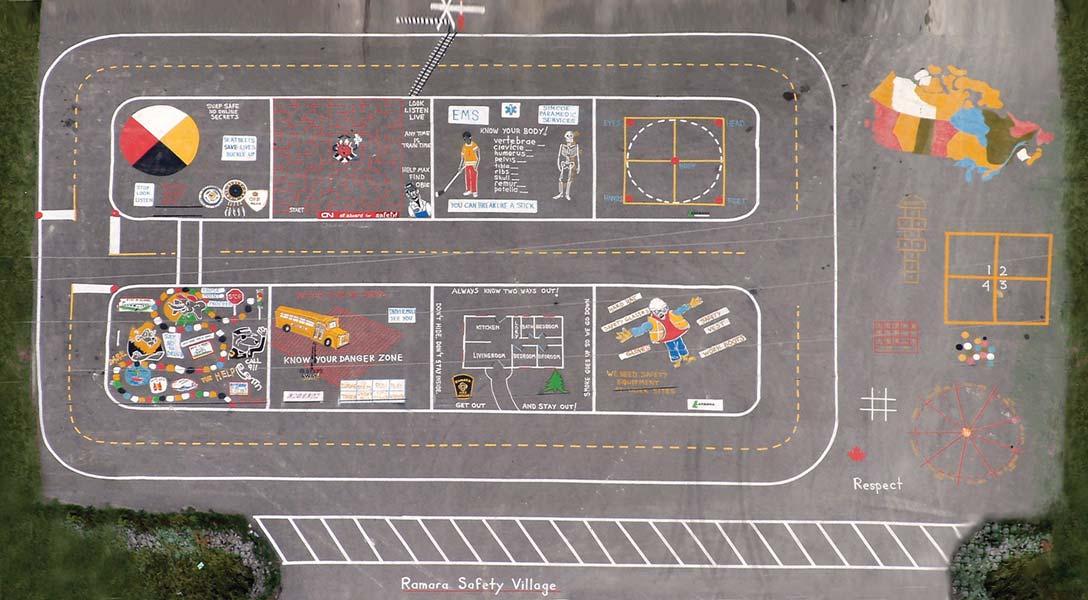
Instead of the traditional wood or brick structures, the safety village is painted on the asphalt in front of the town’s volunteer fire hall and cost just over $5,000 to create.
“Having it at the fire hall just made sense for us,” says Dwyer, “it allows for supervision, but it also allows for a safe location for the kids to come and play.”
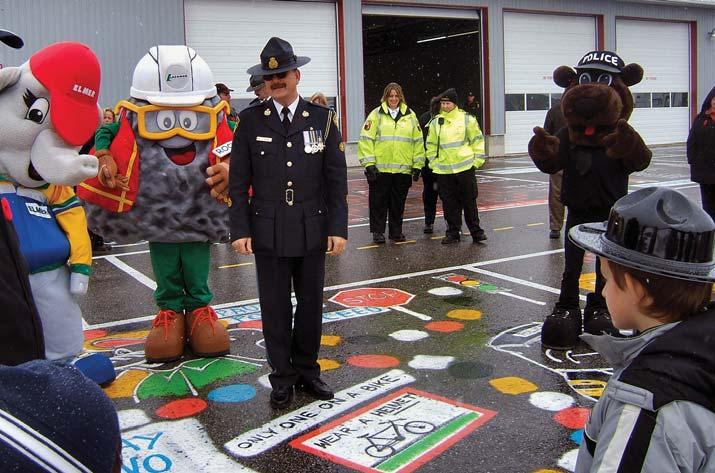
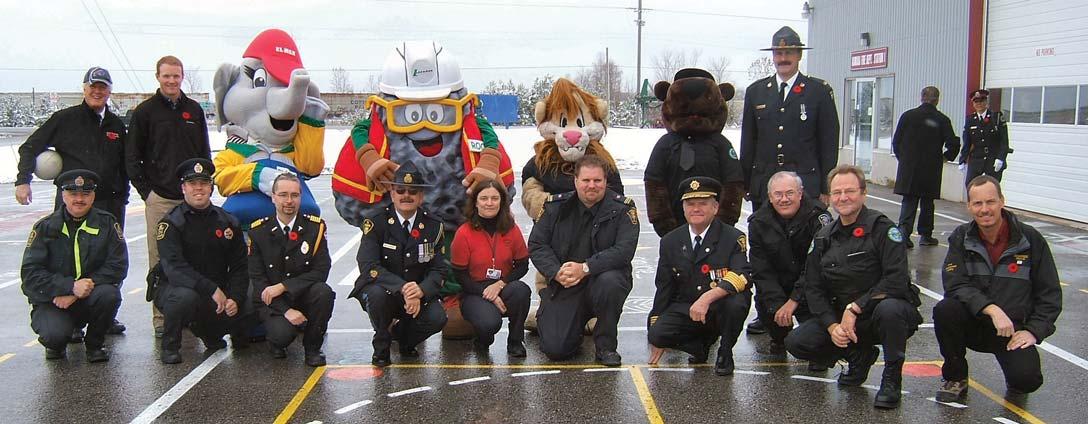
Not just an OPP initiative, the village has also brought together various local companies and other emergency services
in the region, including LeFarge Canada, Ramara Fire Department, Laidlaw, Mnjikaning First Nations Police, CN Police and Mnjikaning EMS.
“Everyone was eager to come on board and really wanted to see this village work,” notes Dwyer.
The village’s central location makes it easily accessible for school groups to use.
“Teachers can just stop by with their
class when their teaching schedules and lesson plans allow them. They don’t need to book a school liaison officer to come in and make a presentation,” notes Dwyer.
An honour box at the safety village with basic game supplies, including chalk, balls, dice and Frisbees, makes it easy for school or community groups, and even children on their own time, to play at the village. The games vary from a maze,
snakes and ladders and hopscotch to educational items such as a map of Canada and a diagram of the human skeleton.
“The applications for this are limitless,” says Dwyer. “We are even working on a canvas portable version so that in the winter months when I go into the schools, I can lay out the safety village on the gym floor and everything I can do outside at the fire hall, I can do inside.”
The outdoor version of the safety village will also help in conducting bike rodeos, Dwyer notes.
“I can have the spots where the pylons
The Conservative government has named the first police officials in Canada who will have a say in the appointment of judges, and include Dave Wilson, the head of the Toronto Police Association and Karl Walsh, the president of the Ontario Provincial Police Association.
Other nominees include Vancouver Police Sgt. Sheila Sullivan, who worked on the unit trying to find the remains of slain prostitutes in the Pickton case.
Members will sit on the judicial advisory committees that assess judgeship applicants.
A man accused of first-degree murder in the killing of Cobourg police officer, Chris Garrett, was plotting to bomb the police station, shoot more police officers, and rob stores, car dealerships and a bank.
Troy Davey faces three possession of explosives charges and has pleaded not guilty to all charges.
Crown Attorney David Thompson said Davey placed a call to police indicating he had been robbed of his wallet and ring.
Garrett arrived on scene and began
sit already mapped out and while I’m setting up for that event, the kids can be going through the activities at the safety village.”
Any agency that sets up a painted safety village can customize the activities according to the challenges being faced in the community, Dwyer points out.
“If water safety is a big issue in a specific area, games can be adapted to deal with that topic.”
He notes that snowmobile and water safety are the big safety issues which needed to be addressed in Ramara Township.
The facility was opened last Novem-
questioning Davey about the robbery. Several officers, believing the robbery story to be true, left Garrett alone with Davey in a dark hospital parking lot as they searched the grounds for a suspect.
Cst. John Roughley, the second officer on the scene, made the grisly discover as the headlights of his cruiser illuminated Garrett’s body.
A ballistics expert located a sequence of 11 bullet holes along the wall of the hospital, the last one stained with blood. ***
ber during a community day and residents, school groups and safety village contributors were all on hand.
“It snowed that day,” recalls Dwyer, “but everyone was excited to finally have the village up and running.”
He’s excited about the new initiative, noting “I can’t wait to see the kids out there in the spring and summer playing and learning about safety.”
Contact Dwyer at 705 326-3536 x3354 or gerald.dwyer@jus.gov.on.ca for more information.
A new report says Ottawa’s war on drugs has been a total failure.
It says Canada’s drug strategy has put too much emphasis on law enforcement instead of on ways to cut down on the human toll of drug use.
The study found law enforcement consumed 73 per cent of the drug strategy’s $245-million budget, while 14 per cent was spent on treatment, 7 per cent on research and 3 per cent on prevention and harm reduction.
Traffic safety a shared priority and responsibility
by Julian Fantino
We began the new year at a time of many public safety challenges and I was saddened by the unabated loss of life, trauma and other consequences resulting from traffic related mishaps, many the consequence of irresponsible drivers.
“The privilege of driving on a highway is granted to and retained by only those persons who demonstrate that they are likely to drive safely,” the Ontario Highway Traffic Act notes. Therefore, those who abuse the privilege or otherwise compromise public safety must be held accountable to the full extent provided in law.
Traffic safety is a shared responsibility, with particular authority given to police agencies. However, safety initiatives all too often take a back seat to what are perceived as more important problems –public safety issues and concerns such as gun and gang violence, the threat of terrorism and organized crime. Admittedly, all are legitimate law enforcement priorities but, on balance, traffic safety must be included as an equally important priority.
The leading criminal cause of death in Canada is alcohol and drug induced impaired driving, which unequivocally end up being the tragic outcome of an absolutely preventable criminal act.
Then there is the misnomer ‘traffic accident;’ over 80 per cent of all vehicle crashes are caused occurrences. Expert collision reconstruction analysis invariably discloses such causal factors as driver error and other human induced conditions, speeding, disobeying posted highway signs and signals, distractions, not adjusting to traffic and weather conditions, racing and, of course, the all too frequent alcohol and drug induced impairment.
Virtually all of these are preventable and definitely areas where, individually and collectively, we have absolute control but for bad habits, irresponsible conduct and a badly misplaced attitude of invincibility.
The annual financial cost of vehicle crashes in Ontario is approximately $10 billion. Add liability, loss of life, short and long term consequences of injuries and trauma and anguish resulting from the carnage and we should all be motivated to be much more responsible about our driving privilege, on land and water.
I am especially concerned about the
unabated incidents of impaired driving highlighted during the OPP seasonal RIDE campaign. Officers throughout Ontario ramped up efforts to detect and apprehend impaired drivers, checking more than 800,000 vehicles over the five-week campaign. There were 797 12-hour suspensions issued and 339 persons charged with alcohol related Criminal Code driving offences. By comparison, last year almost 577,000 vehicles were checked, resulting in 671 12-hour suspensions and 278 persons charged with impairment.
Although the results attained by our officers are gratifying from a policing perspective, I am incredulous that so many drivers continue to be irresponsible to the core. This only serves to emphasize the irrefutable reality that, in Canada at least, alcohol and drug induced impaired drivers are an extremely aggravating public safety menace. They must be tackled with the same vigour, commitment, dedication and resources expended on other serious, criminal public safety threats.
Despite an all-out effort to ensure maximum safety on Ontario’s highways during the holiday season, OPP officers had to deal with horrible collisions resulting in 43 deaths and many more serious injuries. Every one of these collisions was preventable; every one the tragic consequence of inappropriate driver behaviour.
The carnage continues and OPP officers will be unrelenting in their pursuit of aggressive and irresponsible drivers across the province. No more long weekend blitzes, no flavour of the day enforcement, no more humorous stories about those who compromise public safety. Rather, every day, 24-7, OPP officers will be deployed in an all-out effort to end the senseless carnage.
We are strangely complacent, passive and even accepting of the consequences of inappropriate driver behaviour. I don’t hear a public outcry about the absurd and avoidable threat to the safety of those of us using highways or waterways and that, in itself, is part of the problem.
Imagine the outrage about a similar carnage resulting from other public safety compromises; human-caused impacts to the environment, unsanitary conditions in the distribution of water or food or unsafe working conditions, for example. No doubt the acrimony would be loud and swift, as it should be. The debate about traffic safety should be framed in this context of public outrage.
The men and women of the OPP are not complacent about their responsibility for ensuring optimum traffic safety. They are fully committed to traffic safety as their core function and to a strategy that will see renewed emphasis on education, prevention and an aggressive, directed enforcement program intended to alter the inappropriate actions of particularly dangerous drivers. The public, police and judicial system share the responsibility for traffic safety.
Police officers also need more contemporary tools embodied in law to effectively deal with drug-induced impaired drivers and badly need a streamlined and efficient process for dealing with them within the justice system. It must ensure certain and severe consequences and specific and general deterrents, through sentencing, to elevate awareness and impact the public conscience.
There are many things we can’t prevent. Traffic safety is the one thing where, but for the human condition, prevention is not only available to us, it is absolutely in our control.
I believe that, in the hands of an irresponsible person, a motor vehicle is no less dangerous than a loaded firearm in the hands of an equally irresponsible individual. The potential trauma is tragically similar and the consequences equally unacceptable.
Fantino is Commissioner of the Ontario Provincial Police.
Julian
It seems plausible that vehicle colour can affect visual conspicuity. Allen (1970) reported insurance studies that demonstrated fewer automobile collisions with white or yellow cars. It is not known whether this is truly an effect of colour or instead that colour is confounded with other factors that really underlie the crash experience. For example, more aggressive drivers (e.g., younger males) may favour red or black vehicles while more cautious drivers (e.g., parents, older persons) favour white or yellow vehicles. Still, other research on driver vision has reported that cream, yellow, and white objects are most visible on the highway (Hills, 1980; Birren, 1957).
Consistent with the previously noted findings, Solomon (1990) has advocated for the use of lime-yellow colour to make emergency vehicles more conspicuous. He bases his recommendations on a study he conducted comparing the number of collisions that occurred with fire departments with red vehicles as compared with fire departments with
lime-yellow vehicles across nine fire departments. The results of this study showed that the lime-yellow vehicles had a collision rate less than half that of the red vehicles. More recently, Solomon and King (1999) have pointed out that peripheral or off-centre vision is most often responsible for early detection and that lime-yellow is seen significantly faster (earlier) than red in a peripheral view. Solomon’s recommendations have been taken up by many fire departments, though less so by police departments.
Colour variations are also intended to enhance conspicuity. National Highway Traffic Safety Administration (NHTSA, 1985) specifications for ambulances dictate that the ambulance be painted white with a horizontal orange stripe and blue lettering. In urban environments, this colour selection may be less conspicuous than, say, the lime-yellow colour scheme.
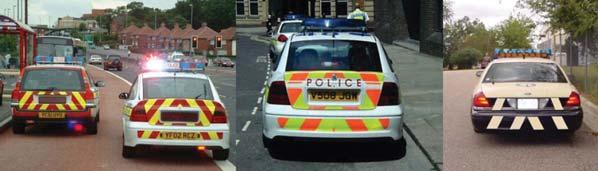
Rubin and Hewitt (1981) recommended a harlequin pattern for emergency (police) vehicles to enhance their conspicuity. In Europe, two-colour chevron patterns applied to the back of emergency vehicles are intended to reduce the incidence of rear-end collisions. A wide variety of colour combinations have been used. Though lime-yellow and orange appear to be a popular combination in the UK, any strong contrasting colour scheme may be equally effective. Figure 1 illustrates three versions of the rear-end chevron pattern. Note the impression of a barrier that this pattern makes. There is a need to evaluate the effectiveness of such markings on rear-end crash prevention. One potentially useful variation on the rear-end chevron markings concept is to deploy the markings only when stopped so that drivers learn to associate such patterns only with stopped vehicles. Various technical implementation of the when-stopped-only rear-end chevron marking are possible but whether these are necessary remains for a field study to determine.
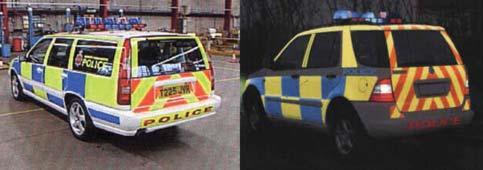
The main problem with any multicolour markings is that instead of enhancing conspicuity, they may in fact reduce it. As indicated in Figure 2, some patterns may effectively serve as camouflage by breaking up the outline of the vehicle and making it appear less like a vehicle. Recently, Langham and Rillie (2002) have recommended uniform colour rather than a harlequin or Battenburg Livery pattern that might disrupt the percept of the vehicle as a whole. Research is needed to determine the effectiveness of chevrons, harlequin patterns, and other treatments.
On the other hand, retro reflective markings that demarcate the outline of the vehicle should, in principle, enhance
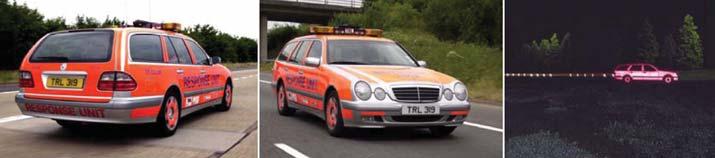
conspicuity (Langham and Rillie, 2002, Green, 1977, Solomon, 1999). Retro reflective markings have been quite effective in enhancing truck conspicuity and reducing the incidence of collisions with trucks at intersections and elsewhere. Edge markings or demarcation appear to be the most appropriate or important effect to be achieved. An example of such retro reflective markings and uniform colour prepared by the Transport Research Laboratory in England is provided in Figure 3
Recommendations on vehicle colour and markings might be summarized as follows. White, cream, yellow, or lime –yellow vehicles might be more conspicuous than other colours in vehicles (red, orange, blue, black) but additional research is needed in this area. Rear-end
chevron patterns may serve as useful conspicuity enhancements for emergency vehicles but the actual safety benefits are unknown. Similarly, Battenburg Livery or harlequin markings on emergency vehicle bodies are also intended to enhance conspicuity but may in fact break up the percept of the vehicle and make it less identifiable. Unfortunately, no definitive studies have been found that compare crash rates for these markings and other vehicle options, controlling for exposure factors and or nuisance variables. Careful research is needed to determine whether putative benefits are truly due to the colour and markings rather than to other factors. Furthermore, research is needed to determine if markings intended to enhance conspicuity do not, ironically, serve to camouflage the vehicle instead. The backgrounds against which emergency vehicles operate is also a critical concern. A cream colour vehicle may be quite conspicuous against dark pavement, yet blend into a desert background.
Next month: Highway flares and conspicuity
Figure 1. Rear-end Chevron patterns for police vehicles in three colour schemes. (Source: Wells, 2002)
Figure 2. Harlequin or Battenburg Livery markings raise concerns about camouflage effects. (Fay and Sferco, 2002)
Figure 3. Retro reflective edge markings and uniform colour intended to enhance vehicle conspicuity (Source: Fay and Sferco, 2002)
Less is more Saying
and writing it succinctly has
more impact
by Mark Giles
According to legend, he stood up and simply said: “Never, never, never, never give in,” in a now-famous address to a school audience in late 1941. Former British Prime Minister Winston Churchill’s speech was in reality much longer, but the one-liner is all many people remember.
“I have a dream,” said Martin Luther King, Jr. at several points during his 1963 speech at the Lincoln Memorial in Washington, D.C. This too is all most people remember, but the line was also part of a much longer speech. The key messages in both cases, however, can perhaps be summarized using those words and, from a communications perspective, the oneliners usually have much more impact.
The reason is simple: most people won’t read the long body text of a speech, article, web feature or even a police report in its entirety. In fact, 70 percent of readers are ‘skimmers and scanners’ looking for quick ‘meaty’ information. Another 15 percent are avid readers, while the remaining 15 percent are not readers, but judge value by visual syntax – photos, clipart and graphics.
This means that most media looking for
newsworthy stories, citizens reading police newsletters and web features, and police members and employees using the intranet or reading other forms of internal communication, will skim and scan – searching for information of relevance to them.
People are, therefore, more likely to read or listen to shorter communications. The “never, never... give in” line is remembered decades later because it has ‘punch’ and because it’s short. Its impact, therefore, is far greater in the long run. The result – less is more.
The concept applies to many forms of written communication – especially the news release, which should not normally exceed one page in length. Any longer and the likelihood of it being read by media decreases significantly. Similarly, web features and letters to the editor are generally more effective if shorter as the ‘skimmer and scanner’ may decide to read a piece based on its length.
Break it down
There are times, of course, when a longer letter, article or report is needed to address all the relevant information and facts. In these cases, the challenge is using a format that allows the reader to digest its length more easily.
Opinion-editorials and features are, by their very nature, longer, attracting the avid reader or those interested in a specific topic or issue. The reader is often drawn in by a good headline and lead. For the avid reader, this is often enough; however, the writer can also increase the likelihood of attracting the skimmer and scanner by breaking the text down into smaller bites and the use of short, catchy sub-titles and headlines.
Long paragraphs are generally more difficult to read than shorter ones. Breaking down text into shorter paragraphs – two to three sentences will usually suffice – using the occasional sub-title to divide into sections makes it easier for readers, especially the 70 percent who “skim and scan,” to jump in at a point that catches their attention.
An opinion-editorial piece by Interpol’s secretary general, addressing a controversial issue, was recently published in the Washington Times . The Times used the headline: Interpol follows the rules.’ It couldn’t have been better for Interpol, from a communications perspective, with a short and clear, easy-to-remember message. Even if the reader went no further than the headline, it would have likely had some impact.
The concept also applies to memos and email correspondence. Trying to wade through a one-page, one-paragraph email is a tough slog. Even if the length remains the same, breaking it down into several shorter paragraphs will make it easier to digest.
Newspapers often address this by splitting front-page stories into two, directing the avid reader to another page for the rest of the story. This allows the skimmer and scanner to quickly review a larger number of stories, and the newspaper to highlight more articles on its most read area.
Communicating with fewer words also has more impact because people are busy. They want the message quickly and in a simple format. The full text of Winston Churchill’s speech was approximately 735 words in length – relatively short, but it’s the one liner that is still remembered today. Considering the effort that goes into writing media products, speeches, reports and other documents, it’s worth doing so in a way that increases the likelihood they’ll be read – and most importantly, that they’ll be remembered.
In trying to practice what I preach, I’m keeping this column short – a mere 806 words. Less is more and if haven’t sold you by this point, another few hundred words won’t make any difference.
Mark Giles is Blue Line’s correspondent for public and media relations, military and international issues. He is also the chief of communications and publications at Interpol, based in Lyon, France.
Never too late to pursue a dream
by Danette Dooley
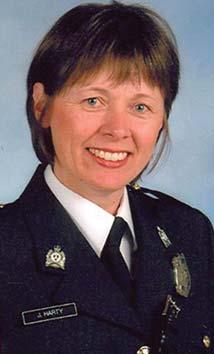
Most women dread turning “the big four-oh” but not Joan Harty. Rather than feeling over the hill, she took stock of her life and decided it was finally time to follow her lifelong dream of becoming a police officer.
“I was 40 when I went to the Atlantic Police Academy and turned 41 while I was there,” says Harty, who is from Upper Island Cove, Newfoundland.
Harty first tried to become a police officer when she was still a teen, but was turned down by the Royal Newfoundland Constabulatory. At age 17, she was just too young, they told her. Undeterred, she waited a few months and then joined the Canadian Air Force (CAF) when she turned 18, training in electronics. That’s where she met her husband Hazen, an air force captain, and her military career ended after three years.
“We knew that my husband was going to be away a lot and we both felt one of us should be there to raise the children, and that’s why I got out,” Hary explains.
The couple had three boys and once they began school, Harty returned to college to further her education, completing an office administration course. At age 32, she applied to the RCMP but when the call came, got cold feet.
“I really wanted to go but I just couldn’t leave the kids and go away for six months. I was supposed to be that confidante for them.”
Harty waited almost a decade to try again. Her family was living in Edmonton at the time.
“I’d been working in sales but I really didn’t like it, and because of my husband’s job, we’d moved around a lot and (each time) I’d have to start over again.”
It was her husband’s nudging that prompted her to again consider a police career.
“He’d been overseas and when he came back he said, ‘Okay, let’s sit down and talk. You know you’ve always wanted to be a police officer... Do you want to be 65 and say, the only thing I ever wanted to do was be a police officer and I never did it?’”
Harty knew he was right. With Hazen nudging her every step, she joined a gym and began to jog – something she hadn’t done in two decades.
“Hazen kept telling me that anybody can run, so I went out and I walked a kilometre
and I ran a kilometre. When I came home I was telling Michael about it. He said, ‘Mom, you’re just like me. You can do anything you want.’”
Not all her family was so sure about her decision.
“Dad is from a different generation and he said, ‘Joan, what if you go through all that and no one will hire you because of your age?’ I just said, ‘Dad, God is not going to put me through all that not to have a job’ – and even though Dad was hesitant in the beginning, no one could be prouder of me than him.”
Harty proved her son right, and overcame her father’s misgivings, in 2004, when she not only graduated as a police cadet but also won the top award, best all-around cadet. She credits her military background with helping her along the way.
Her dad no doubt breathed another sigh of relief when she was hired by the Fredericton Police Service. “We lived here before just outside of Oromocto, so the kids consider this home. It was just perfect for me,” Harty says.
Hazen is now stationed in Halifax and commutes to Fredericton on the weekends, but hopes to be transferred to Oromocto this summer. With 25 years in the military, he can retire at any time, but being on opposite ends of the working spectrum doesn’t bother Harty one bit.
“I don’t mind that I’m starting out late. I love my job; we’re really busy and no two calls are ever alike.”
Harty says her outstanding performance at the academy should be a lesson for all mature women – if she can do it, so can they.
“Today with the separation and divorce rate what it is, women all of a sudden feel lost and don’t know where to turn,” she says. “Lots have stayed home and raised their families and feel they don’t have much to offer, when in fact they have lots to offer.”
If other women received the same encouragement and support from family and friends, they would also know that it’s not too late to have a career instead of going from job to job, she says.
“Not only can we pass the courses but we can be just as good or better than everyone else,” Harty notes, “because, as we get older, we are more focused and more determined to succeed.”
You can reach Danette Dooley at dooley@blueline.ca
Toronto Chief, Bill Blair, says deficiencies in the service’s use-of-force training are not putting the public at risk. The comments came in the wake of a city auditor’s report that found that 25 per cent of the force’s more than 5,000 officers are not receiving such training every 12 months as called for in provincial regulations. Use-of-force training was made mandatory in Ontario after a series of police shootings in the early 1990s.
No Canadian city has a policy in place to deal with the issue, but Winnipeg police Chief Jack Ewatski wants to get his city ahead of the human traficking problem. Human trafficking affects underage women, especially those who aspire to be fashion models. Manitoba Labour Minister Nancy Allan is thinking about licensing Manitoba modelling schools, agents and photographers.
Public Safety Minister Stockwell Day announced that the federal government is offering up to $500,000 each to community groups across Canada who can present a workable plan to keep kids out of gangs. The money will come from a new $11.1 million Youth Gang Prevention Fund through the National Crime Prevention Centre. Another $5 million was added to the existing Youth Justice Fund with the Justice Department.
Interpol Secretary General Ronald Noble announced the creation of a specialist taskforce to tackle a new trend of criminals using ‘modelling’ sites to gain access to children. The sites serve as a front enabling paedophiles to contact the site owners to gain direct physical access to the ‘models.’ One million euros is required to launch Project Guardian, enabling Interpol to recruit two police experts for two years and fund six international operational meetings to assist in the co-ordination of work at the national level.
Alberta’s solicitor general, Fred Lindsay, wants more Mounties patrolling rural Alberta to fight organized crime spilling out from cities. He also intends to carry through a motion initiated by Harvey Cenaiko to hike the number of special constables on Calgary streets from the current nine to as many as 30.
The fired chief of the West Vancouver police force is seeking to stay on the job in a legal action filed in B.C. Supreme Court. Scott Armstrong says West Vancouver Mayor Pamela Goldsmith-Jones made him a scapegoat in a police-station drinking scandal that preceded his dismissal. A court motion seeks an interim injunction to halt the termination pending the outcome of a wrongful dismissal suit.
Dave Poirier is the new Chief of Police for the City of Summerside, PEI. Poirier replaces Chief Ian Drummond who recently retired.
It’s just after 2 AM when you come across a backhoe, still running, parked near a bridge. ‘Something’s wrong here,’ you figure, but how can you confirm that something is amiss?
Estimates of the value of heavy equipment stolen annually in the United States range from $300 million to more than $1 billion, and that includes everything from backhoes, skid steer and wheel loaders to excavators and paving equipment.
Former OPP officer George Kleinsteiber runs his own heavy equipment theft consulting company and estimates that in Canada, “roughly $33 million is stolen in heavy equipment each year and the number one area in all of Canada is the Greater Toronto Area (GTA).”
It’s hard to get firm figures though since Canada doesn’t have a national registry for stolen heavy equipment. Kleinsteiber’s statistics come from a number of sources, including the FBI, CPIC and major equipment manufacturers such as Caterpillar, John Deere, CASE and Kubota.
“This is just the equipment that’s reported as being stolen,” he notes. “The actual value could be much, much higher.”
Even the Canadian Centre for Justice Statistics in Ottawa has a difficult time giving an
accurate picture of the problem in Canada. Its research, based on the Uniform Crime Reporting Survey, puts the number of motor vehicles stolen in Canada in 2005 at 160,100 –almost 12,000 were reported under the “other motor vehicles” category, which includes everything from snowmobiles and ATVs to military vehicles and heavy equipment.
Couple the decentralized reporting system with non-standardized serial numbers and an archaic system where one key fits all machines and you’ve got a recipe for confusion.
“On top of that,” adds Kleinsteiber, “there’s very few law enforcement initiatives in this area in Canada and with so many other priority training issues that law enforcement officers have to get, heavy equipment is just sort of on the back burner.”
Just one piece of equipment alone, a back hoe, for example, can cost $130,000 – that’s four Honda Civics, the most commonly stolen vehicle in Canada, Kleinsteiber says.
Motives
The US based National Equipment Registry (NER) has worked with more than 370 insurance companies, police agencies and equipment owners to build a detailed database of some 77,000 equipment theft reports and over 13 million ownership records. It has helped police recover equipment valued at almost $7.5 million.
Operations Manager Glen Sider says there are four main reasons for the theft of heavy
equipment.
“Either you have a disgruntled employee who wants to get back at the company, or an employee knows the vulnerability of equipment security and knows he can make a lot of extra money.”
Often these employees will steal the equipment themselves, or hire someone to do it on their behalf.
“Also,” says Sider, “you may have an employee who is approached by someone on the outside who says, ‘give us some information, we’ll cut you in.’ Or lastly, you have just the complete third party, who just wants to make quick money or use it themselves.”
Sider says a recent trend is for thieves to use heavy equipment to rip ATM machines out of walls, load them in a truck and drive away, leaving the heavy equipment behind.
In the GTA, “most of the time you find there’s one guy who’s a crack head, who’s out of the construction business now and working for his family and stealing these things and selling them,” says Cst Jay Hodgson of the Peel Regional Police Auto Squad.
“Guys will stockpile them, steal a couple and then start a rent-a-business and rent out (the equipment) for $8,400 a week for three pieces.”
Contractors or landscapers wanting to rent equipment for a job often find a legitimate rental company’s rates too high, Hodgson notes. “That’s when the contractor will be ap-
by Kathryn Lymburner
George Kleinsteiber
proached outside (the rental company) and some guy will say, ‘they’re gonna charge you $10,000 a week, what if I charge you $8,000 a week for the same machine?’ – except these ones are stolen.”
Sometimes the renter won’t realize the equipment is stolen until police or the real owners show up at the job site to claim the machinery, leaving the renter without equipment and minus several thousand dollars.
Agencies on both sides of the border agree that most of the heavy equipment remains in the local area.
“More and more the recoveries that we’re having are within 50 miles of where the machine was actually stolen,” says Kleinsteiber. “We’ve seen a lot less equipment being recovered in the process of being shipped offshore.”
Since 9/11, equipment is staying closer to home because US Homeland Security has been more vigilant in inspecting containers and trucks at the borders, making it a lot harder for thieves to get the stolen goods out of the country. Sometimes they are successful, though.
“Recently, we had one where a dump truck was put in a container and was actually recovered in Jamaica,” says Hodgson. “They’re apparently trying to put a bid in for the Olympics and in order to be eligible, (Jamaica is) doing a big construction blitz down there for the next few years.”
Heavy equipment is also likely to start turning up in Iraq because of the war, Hodgson says, since “they’re getting desperate for anything that will run.”
The more widespread use of GPS tracking is one reason thieves are becoming more cautious.
“Thieves are always very leery about (the equipment) having some tracking device on it,” says Kleinsteiber, “so they’ll drive it to either a a major mall or train station parking lot and just let it cool down in the open for three or four days to see if it gets recovered...
“If it doesn’t get recovered by police, then they feel safe that there isn’t a tracking device on it and they’ll take it with them,” he explains.
Another problem facing the industry is educating officers who investigate the thefts. Most construction associations encourage their members to weld large identifying markers on their equipment, making it easier for police to identify it. Markers can include the equipment’s PIN or serial number, a 24 hour phone number and a company or owner’s name.
Beginning an investigation
The first thing to do is enter the PIN on CPIC, says Kleinsteiber, who notes this has not occurred in about 50 per cent of the cases he’s investigated in the past year. “It’s in the same category on CPIC as a car or a bike. Anything pushed or propelled, except railway trains and airplanes, is all on CPIC.”
Keep in mind that buckets, hammers or pounding attachments also have their own serial numbers and need to be entered as secondary information. Also, make sure the PIN number you’ve got is correct by learning the
manufacturer’s standard for numbering their equipment.
“The (equipment doesn’t) have a standard 17 character VIN number,” says Sider. “(You’re) looking at nine digits, five digits, letters and numbers and there isn’t a central ownership database with titles or registrations for these machine.”
If CPIC doesn’t show results, turn to the manufacturers web site. “We call the dealers for the most part, but I’ll also call the manufacturers directly to see if they have info in their databases,” notes Hodgson.
Companies such as Caterpillar maintain their own online database of owner reported equipment theft which it verifies for accuracy.
Most heavy equipment is moved at night, Hodgson says. “It’s not uncommon for these things to be floated out in the middle of the night because the job is done at 7 o’clock at night and it has to be ready at the next job site for 7 o’clock the next morning,” he says. “It makes it hard to recognize a legitimate float company or one that’s stealing the equipment.”
Kleinsteiber says that rush hour is the second best time for equipment to be stolen, because everyone is too busy getting home to worry about some machines on a flatbed.
If you are going to be checking out suspicious heavy equipment, Hodgson suggests a few basic questions that will help in your investigation:
•Who owns this machine?
•Who is your foreman?
•What job site are you moving the equipment from and where is it going?
•What’s the contact number for your supervisor so I can verify that this is yours?
•Who’s picking you up and dropping you off?
•Which company do you work for?
“Even though the vehicle is a lot bigger than what usually gets pulled over,” notes Hodgson, “the standard investigative techniques and precautions still apply. Basically, if it doesn’t sound right, then it’s probably not.”
George Kleinsteiber may be reached by phone to 705 436-6276.
Photos courtesy Peel Regional Police Auto Squad.
Please return my call
A retired cop explains the history, services and benefits current cops can get from their “Alumni”
by Tim Flynn
Back in 1991, the Ontario Association of Chiefs of Police (OACP) warned that the province’s police forces could no longer investigate most business-related crime. The main crime was fraud and the association advised major businesses to handle this problem on their own.
The good news was that the change opened up many new career opportunities for retired police officers or those nearing retirement. Banks, insurance companies and other industries started hiring people with police experience those who had specialized in fraud, auto theft and holdups
were especially in demand.
That’s where I come in. I was offered investigative positions with the Insurance Bureau of Canada (IBC) and the largest Canadian owned insurance company in 1992. I chose the insurance industry. After a successful 26 year career with the Metropolitan Toronto Police Force (we were still a force back then), specializing in auto and tractor trailer thefts, I took an early retirement as a detective and off I went to the private sector. This probably added a few years to my life.
One of my first accomplishments was working with both ex-police and civilian insurance investigators in 1993 to form our
Mountie uniform costs growing
Jan 17 2007 OTTAWA — In the past five years, the Royal Canadian Mounted Police has spent $58.4 million – or about $11.6 million a year on average – to outfit its members.
Given the Mounties turn out about 1,000 new recruits a year, and it costs, according to the RCMP, an average of about $3,500 to dress an officer with the standard clothing kit (for a total of about $3.5 million), $11.6 million seems about $8.1 million more than necessary.
Especially since officers have to pay for it themselves when shirts and other basic items like gloves need replacing.
But think of it this way, says Sgt. Sylvie Tremblay: Divide the remaining $8.1 million among the more than 19,000 uniformed and civilian members – like crime lab workers – who get some clothing replaced in the line of duty, and that works out to $426 a member.
That’s got to cover the replacement of an officer’s blood-stained patrol jacket, or any other lost or damaged gear.
The costs are no surprise to Cpl. Jacques Brunelle, who in 1994 wrote a book on the RCMP uniform – a design that’s evolved from its British militia-issue origins to one of the top police kits in the world, he says.
“I’ve looked at the U.S., Canada, Europe and Australia, and I think the RCMP outfit their people, in terms of quality, safety, comfort and warmth, at or near the top,” says Brunelle.
The laundry list of official clothing is long –166 items. It includes everything from Mountieissue underwear to leather boots to the famous “Red Serge” dress uniform that’s a national icon. Still, you’d think not every officer needs every item on the list. Much would surely depend on whether one is posted to Labrador or the B.C. Sunshine Coast, or the job – dog handler, tactical officer, pilot, highway patrol or air marshal –that one does?
Not so. The basic clothing kit for every of-
ficer consists of 121 items, regular operational clothing and dress uniforms, says Tremblay. It does not include gun, handcuffs, baton or pepper spray, and other specialty items.
Compare that to the basic kit Toronto police issues to its officers. Const. Victor Kwong says it’s made up of about 23 standard issue items – for the regular and dress uniforms – that nearly 10,000 police, parking enforcement and court officers wear. Kwong could not supply the yearly costs of clothing for Toronto’s police service members.
The RCMP has sourced gear from up to 93 vendors, according to documents released under Access to Information legislation to researcher Ken Rubin.
Only one supplier is not Canadian: A company in Walsall, England has sold nearly $400,000 worth of “spurs, various” to the Mounties since 2001/02.
Every uniformed officer has them, to go on the brown Strathcona boots, whether they are part of the Musical Ride or not.
Tremblay said “there are no regional considerations” to the purchasing decisions.
“Health and safety are the primary objective,” she said.
All clothing-supply contracts are posted on MERX, the federal government’s procurement website, and suppliers bid competitively for the work. The suppliers themselves jealously guard their costs.
A spokesperson for Crown Cap of Winnipeg, maker of the trademark muskrat fur hats that the Mounties wear in winter, said the patterns and the cloth are supplied by the Mounties, while her company supplies the fur and assembly. She was reluctant to discuss costs.
Brunelle says the force wouldn’t get the same quality gear if it used just one or two large suppliers. “Each company has (a) specialty. That’s the only way they can get the quality for the lowest price.” (Toronto Star)
own insurance investigators association. We called it the Canadian Association of Special Investigation Units (CASIU). How appropriate, as some of us have been told we’re nuts.
Our mandate is to:
•educate the insurance industry;
•network within the industry to better fight fraud and other related issues;
•support and assist police investigating crimes committed against insurance companies, such as auto theft, staged accidents, etc.
One way CASIU did this was by supplying police with theft recovery vehicles for sting, surveillance or other activities.
I was once approached by an officer involved in a joint forces operation (JFO) going after an international auto theft ring. A JFO officer had infiltrated this ring pretending to be a high roller and it’s hard to be convincing without the accompanying equipment, including high end cars. My company supplied a top of the line BMW and later a Mercedes Benz. The depreciation hit we took was for the common good of the insurance industry.
Police budgets are tight for units not targeting violent or drug-related crime, even though auto theft is constantly used for these activities, so CASIU helps in other ways, including:
•providing cell phones, computer equipment, cameras, tools, funds for police training, lectures at the police college, supports the IBC with lobbying for changes to the criminal code and other statutes.;
•holding luncheons to honour officers for successful insurance industry related investigations, even providing prizes for police charity golf tournaments, etc.
CASIU sees itself as a ‘Police Alumni.’
That’s a sample of the good news –now here’s a sample of the bad news that bums out Police Alumni.
CASIU members or others, such as insurance adjusters, often have great difficulty reaching the officer who investigated or took the report of claims which appear fraudulent, false or have some other negative element. Bear in mind that these investigators are very supportive of police and their hearts go out to officers involved in dangerous and tragic situations.
Since I’m the old retired cop that they can talk too, I am often asked why the of-
ficer won’t return their call. I don’t tell them that Alumni’s calls are also not always returned. It is embarrassing and disappointing. My bank investigator friends have the same complaint.
Many times we uncover serious fraud or public mischief such as lying to the police but cannot generate any police interest, even when it is served up as a complete court brief – signed, sealed, delivered and waiting for an officer to just cuff them.
Here’s a couple of examples.
•A car drove into a tree, causing substantial damage to the car and tree. Neighbours witnessed the crash and offered to call the police. The male driver refused, advising he would make the call. Police arrived later and the driver, who was now a female, was charged accordingly. A claim was submitted to my company. I instructed the adjuster to do a neighbourhood canvass, which resulted in signed statements that the crash was caused by a male driver. The very unique description of the male driver matched the husband of the female who took the charge. It turns out his licence was under suspension and had no insurance coverage. This information was taken to the traffic inspector, who refused to act on it.
•A woman put in an insurance claim after her house was broken into and listed $250,000 of stolen Royal Daulton, figurines, dishes, sterling silver flatware etc. She was on medical leave from her job on a car assembly line. The insurance investigator gathered overwhelming evidence that the claim was totally fraudulent. The woman realized the jig was up and had a lawyer sent a letter to the insurance company advising that she was withdrawing her claim. The local fraud officer was supplied with all of the evidence on a silver platter (but not the one taken from the B & E) and was very interested in pursuing the matter and laying charges. It’s now three years later and nothing has happened and he does not return our calls, resulting in no deterrent to the woman or her co-conspirators.
•My most disappointing experience occurred after I received a frantic call from an acquaintance in an auto squad advising they urgently needed a car for a sting operation involving the movement of illegal handguns. This car would not be returned. I got them the perfect toughguy looking Oldsmobile Cutlass, which was used for a gun exchange. The bad guys got to witness the car being crushed
to destroy the evidence. All I asked was to get some statistics on arrests and charges after the investigation to share with my superiors to justify the sacrifice of our car. The officer who gratefully took possession of this car promised did not deliver. His supervisor, who was fully aware of our contribution, also promised to give me the information instead he walked off into retirement.
I fully understand what it is like to be lied too, used and compromised, but because I was still a cardiac cop (cop at heart), I continued encouraging others to do what is right for police and the community. The litany goes on but I’m sure you understand. These stories abound in my circles.
If an insurance contract is breached, an individual faces a penalty much worse than the absolute or conditional discharge handed out by the courts, but we often need police input to accomplish this – and I’m not referring to getting information we are not entitled to have under the Privacy Act or other regulations.
I mentioned this once in a police college lecture, which prompted an officer to tell me that “I thought insurance people were just pains in the ass. I didn’t realize that you were fighting the bad guys as well.”
Please return those calls and get to know your Alumni better. We are always there for you and doing so will help you and us.
WEB SITES
Canadian Association of Special Investigative Units www.casiu.ca
North American Export Committee www.naec.ws
International Association of Auto Theft Investigators www.iaati.org
Canadain Association of Fire Investigators www.cafi.ca
Insurance Bureau of Canada www.ibc.ca
Tim Flynn will soon be retiring from The Cooperators Insurance after over fourteen years and is the current president of the Canadian Association of Special Investigation Units and also is “police liaison” for CASIU as is his good friend Wayne Somers of Meloche Monnex another MTPF retiree. Tim can be reached at marieflynn@rogers.com
Call it the cost of an education: a mother and son accused of stealing a snake from a pet store were arrested when they returned to the store and asked for books on how to care for the animal.
Store clerks recognized the suspects from surveillance video taken during the theft and stalled them until police arrived.
The video showed the 15-year-old taking the 75-centimetre baby boa from its cage, wrapping it around his neck and hiding it in his jacket, while his mother acted as a lookout.
The snake, worth US$300, was recovered from their home and returned to the pet shop.
There’s no place like home, unless it’s prison.
Authorities in Florida say Danny Villegas likes the big house so much, he staged a bank robbery to go back.
Villegas walked into the Kennedy Space Center Federal Credit Union, and told the teller he was robbing her and said she might as well call the cops.
Police say Villegas wanted to rob a federal bank because he wanted to go back
to a federal pen and was tired of working as a roofer.
He was sentenced to 70 months in federal prison a decade ago and liked it there.
Two inmates at a New Brunswick prison have been accused of escaping from the facility, breaking into a nearby home, then returning with more than five-thousand dollars worth of stolen goods.
RCMP officials say the pair left the Westmorland Institution in Dorchester after a head count.
Westmorland has no walls because it’s minimum-security facility.
Jewelry, money, alcohol and other household items were taken from the home. ***
Two Canadian symbols - snow and Mounties - foiled a convicted American sex offender’s attempt to sneak into Canada.
Manitoba Mounties arrested Calvin Herring after spotting him walking across a bridge in Emerson carrying only a few belongings.
Herring, who was wanted in Alabama
for breaching probation conditions and failing to register as a sex offender, drove himself to the remote crossing.
But his pickup got stuck in a snowy field when he tried to drive across the border.
Herring then began walking into Canada after burning most of his ID.
Someone who spotted him unloading his truck called the US Border Patrol, which sent an agent to check it out.
The agent contacted the RCMP after finding Herring’s abandoned truck and footprints leading into Canada.
***
Police on New York’s Long Island report they tracked suspected thieves, thanks to stolen GPS satellite navigation devices.
The GPS units were ripped off from the Town of Babylon Public Works garage and are used to track snow plows, dump trucks, street sweepers, and the like. The crooks thought they were cell phones.
Officers logged into the GPS system and traced one of the units to the home of Kurt Husfeldt, who was actually holding one of the high-tech gizmos.
Husfeldt, his teen-aged son and another man were charged in the thefts.
Stopping vehicle leaving bar not arbitrary
by Mike Novakowski
A police officer who stopped a vehicle seen leaving the area of a bar near closing wasn’t acting arbitrarily, the Saskatchewan Court of Appeal has held.
In R. v. Schell, 2006 SKCA 128, an officer was sitting in his police car with the parking lights on, about half a block away from the front entrance of a small town bar, in the early morning hours. His intentions were to act as a deterrent and also stop every vehicle leaving the area to check driver sobriety.
After seeing two men leave and walk around the corner, the officer saw a truck, which he had noted earlier parked on a side street near the bar, drive down the street. He followed a few blocks and stopped the vehicle, asking for a driver’s licence and vehicle registration. Noting Schell’s breath smelled of alcohol, a roadside test was administered and he failed. He was taken to the station, where two breathalyser samples over the legal limit were obtained.
A Saskatchewan Provincial Court
judge ruled police arbitrarily detained Schell, contrary to s.9 of the Charter, because there was no articulable cause to stop him. The only reason they stopped his vehicle was because it was being driven away from the immediate area of the bar where it had been parked. The certificate of analysis was excluded under s.24(2) and Schell was acquitted.
A Crown appeal to the Saskatchewan Court of Queen’s Bench was unsuccessful so it took the case to the Saskatchewan Court of Appeal, arguing the officer had reasonable grounds (or articulable cause) to detain Schell. In the Crown’s view, a patrol officer’s decision to stop as many vehicles as possible leaving a local bar does not make the stop arbitrary. The accused, on the other hand, submitted there was no cause for suspicion that would justify detention presented at trial.
Justice Lane, writing the court’s opinion, allowed the Crown’s appeal. The detention took place in a smaller community, late on a Friday night, about bar close time. The officer observed Schell walking from the bar and then a vehicle seen parked
nearby leave the immediate area. The stop wasn’t random and the officer had reasonable grounds to detain. Lane stated:
The officer had objective grounds for detaining the (accused) in the circumstances of this case as previously stated. It was late at night, around the time the bar was to close and the patrons were leaving. He saw the [accused] leave the bar and shortly thereafter saw a vehicle he had previously identified leave the immediate vicinity of the bar and proceed down the street. The apprehension took place close to the bar (para. 19).
There was no s.9 Charter breach and the certificate of analysis was admissible. Since the essential elements of the offence were admitted, a conviction on an over 80mg% charge was entered and the matter remitted back to Provincial Court for sentencing.
Entry justified by report of gunshots
by Mike Novakowski
The warrantless entry of police into a home was lawful because a neighbour had called to say she heard shots fired.
In R. v. Hill, 2006 BCCA 530, police received a 911 call from one of the accused’s neighbours reporting that she heard a gunshot coming from his property, situated on a five acre parcel. Police were dispatched and advised to proceed with caution.
They were approached by the complainant’s husband upon arrival, who told them he had also heard the shot and believed it came from the Hill’s house. Shortly thereafter, officers heard two more gunshots which sounded like they came from the same area. They contacted the complainant, who agreed they came from Hill’s house.
A member of the Emergency Response Team became involved in discussions on how best to approach the situation. It was decided officers would contact Hill and clear his home, believing they had a public duty to search the house to ensure no one had been injured or killed. Wearing body armour, officers managed to get Hill to exit
his house by using a siren and loud hailer. They told him why they were there and he suggested the shots may have come from a neighbouring property or from a container near the house that had a firecracker device in it. Police did not accept
these explanations and cleared the house. In the ensuing six minute search they discovered 105 lbs. of marijuana in a small room in the basement and subsequently seized them under a warrant.
At trial in the Supreme Court of British Columbia Hill was convicted of possessing marijuana for the purpose of trafficking. Although the search of the home was without a warrant and therefore prima facie unreasonable, the judge found the common law duties of police permit a warrantless entry to preserve the peace, prevent crime and protect life and property.
These duties, the judge ruled, authorized police to respond to exigencies in a manner necessary to respond to an emergency. Here, they believed the 911 call was legitimate; it was supported by objective criteria, the complainant had no ulterior motive in reporting the gunshots and there wasn’t anything to suggest the shots did not come from the residence.
The officers also collectively viewed entry as necessary, Hill’s inconsistent explanations for the sounds added to police concern and the purpose of entry wasn’t to investigate a crime but secure the life and safety of anyone in harm’s way. Hill received 30 months in prison, a $50,000 fine and was prohibited from possessing weapons.
He appealed to the BC Court of Appeal, arguing the warrantless search of his home was unreasonable under s.8 of the Charter. In his view, the circumstances did not provide a reasonable belief at the time of entry that there was a person in the house who needed emergency aid and assistance. The Crown, on the other hand, submitted that the circumstances must be viewed as a whole, rather than on a piecemeal basis.
Justice Prowse, writing the ruling for the court, upheld the conviction. Although police could not pinpoint the location of the shots they heard, they were nonetheless still acting on the report by the complainant, confirmed by her husband, that the gunshots were connected to Hill’s residence.
Officers were concerned enough to contact ERT and consulted amongst themselves numerous times before finally approaching the residence. Police honestly believed they needed to search the house to properly investigate the complaint and ensure no one inside was in harm’s way.
Hill’s appeal was dismissed.
Visit www.blueline.ca/resources/caselaw for the complete cases. E-mail caselaw@blueline.ca to reach Mike Novakowski.
by Tom Rataj
Networking sites a growing concern
Social networking sites – virtual online communities used primarily by teenagers to chat and share information, photos, music and videos – can be so addictive that some refer to them as ‘Internet crack.’
While there are hundreds of sites, the most popular – MySpace, LiveJournal, FaceBook, Friendster, ClassMates, Reunion, Windows Live Spaces and Xanga –garner most of the attention and attract an estimated 300 million users.
The sites offer a lot of positive social benefits and the unprecedented ability to share information with friends anywhere in the world but many parents, teachers and police have also experienced the negative side effects. The number of cyber-bullying and harassment incidents have been increasing and the large user base also attracts scam artists, unscrupulous individuals and child sex predators. Another problem, worms hidden on some sites, have compromised millions of computers.
Law enforcement agencies around the world are increasingly fielding complaints from school officials, parents and teen victims about cyber-bullying and other harassment, including ‘flaming’ (repeated or organized hostile, insulting, demeaning or derogatory messages or postings.)
Dealing with complaints is challenging, since the culprits are all ‘out there somewhere’ on the Internet. Legally obtaining records from US or other foreign site operators is a complex and time consuming process for police, and generally can’t be justified for the often minor criminal offences involved.
MySpace.com
This US based giant, bought by Rupert Murdoch’s News Corp. in 2005 for more than half a billion dollars, has upwards of 130 million users and advertises itself as “an online community that lets you meet your friends’ friends.” The MySpace ‘about’ page says it’s a vehicle to support singles meeting singles, matchmaking, family and business contacts, classmates and long lost friends looking for each other.
Some sites have specific focuses, target audiences or are restricted to people belonging to a particular group or organization. While most are free to users, operators recoup their costs and generate revenue from on-line advertising and services.
Generally anyone can join public social networking sites – there are a few re-
strictions such as age – by simply visiting, creating an online profile and then inviting friends into their ‘private’ community, or being invited into an existing community. Most sites also have public communities, which are open to all.
Potential
When used properly, social networking sites can be very effective tools for education and communication. For example, the Hamilton Police Service recently used YouTube, primarily a video sharing site, to help identify a suspect in a stabbing incident.
The force posted sequences of still photos from a bank machine that showed a suspect in the area and the hat he left behind after the incident. The posting made the local television news, which attracted more attention and visits to the site. The suspect turned himself in within a few days and was charged.
Problems
Perhaps the single biggest problem is that the integrity of each site relies on the honesty of the individual signing up for an account. There is no effective authentication done, so anyone can register, using any name. There’s also no way of telling if the information in their profile is true.
The second biggest problem is that many sites have very few ‘moderators’ –individuals responsible for enforcing the terms of service agreement. The sites generally rely on the users (and increasingly parents, teachers and police) to report cases where the agreement was violated.
When problems are identified with individual accounts, it’s difficult to permanently ban a user and remove the offensive or disallowed content or behaviour because the banned user can simply create a new profile under a different name or alias.
Most sites’ agreements do not permit teens under 14 to join, but this also depends on the honesty of the individual signing up. The online sign-up form typically just includes a warning about the age restriction and requires that the user select a button that “certifies” they are 14 or older.
Under-aged users can easily fall prey to unscrupulous individuals and pedophiles that often troll these sites because they are socially inexperienced and too trusting, often revealing far too much personal information. This could allow someone with bad intentions to manipulate them or arrange a meeting.
While girls are often the targets, boys are not immune. Some statistics suggest that about one-third of all Internet sexual predator cases involve male victims.
Safety
Most sites include safety information and recommendations for users and their parents, including warnings not to disclose personal information that would allow someone to directly or indirectly identify them. This includes real names, addresses, phone numbers, birth dates, school and team names, along with photos that would show this information.
Other recommendations include never posting anything on the site that the user wouldn’t want the whole world to see. Employers are increasingly researching potential employees on the Internet and discovered damaging information.
Some school boards have also started to monitor the activities of their students on social networking sites, or have investigated and taken punitive actions when inappropriate information turns up. Schools also report the sites are disruptive, primarily because some students spend too much time on them and use them to bully those they dislike.
A number of incidents have also been reported where students created fake online profiles of teachers or other staff members, which caused embarrassment and other difficulties. These problems have prompted some jurisdictions to restrict access to these sites with software filters.
While this is an admirable attempt to control the problem, it simply shifts it from school property to the students’ home computers, cyber-cafés and computers at the public library. A better approach, as used in some jurisdictions, is to include specific behavioural rules as part of the general student behaviour code used in many schools.
Parents need to learn which social networking sites their children use, discuss the dangers and set rules for appropriate behaviour. This should include a sort of ‘terms of use’ agreement covering what their children are doing. This is not to suggest that parents be allowed to snoop on children’s personal and private activities, but that the child understands their behaviour should and must be governed by the same code of conduct their parents expect them to abide by in person.
Tom Rataj is Blue Line Magazine’s technology editor and can be reached at technews@blueline.ca
Steps in the personnel assessment and development process Steps in the personnel assessment and development process
by Patrick Holliday
To further focus studies in the area of personnel systems and human resource management activities, the following nine-step process is presented. The topics are again derived from the Comprehensive Personnel System. These steps will help the leader assess the areas he or she thinks need attention in the organization.
Reflect on each area in terms of your own organization. Where you feel your organization is lacking, you may have identified a problem for your organization and you as a leader.
1. Specify knowledge and skills required in a position
Both skills and knowledge areas need to be defined for each position in the organization. Relationship, task, and leadership factors also need to be specified.
Job analysis is the first step any organization should take after identifying a position as an organizational need. A variety of methods are available. Internally, the organization can use questionnaires and interviews of incumbents and specialists or, specifically designed, commercially available instruments to provide insight into the specific knowledge and skills required.
One such instrument is the Job Knowledge and Skills Inventory, designed by and available from www.CRGLeader.com/ everyofficer.
It is used to specify all the skill areas required by an employee
so he or she will be most effective in a given job. It is important to remember that the more carefully the job analysis is done, the more accurately the requirements for that job will be understood and communicated to those doing the interviewing to select new personnel.
2. Specify appropriate work-style behaviours in each job
The job analysis for any position requires the inclusion of work style behaviours. These dimensions, as they are referred to in an Assessment Centre, are those behaviours deemed acceptable for the position sought; they are included in the job description. For example, a position can require the demonstration of sensitivity when dealing with issues. Such positions could include the coordinator of an employee assistance program or an investigator responsible for sexual harassment complaints.
One of the instruments available to determine the appropriate range of work style behaviours is the Job Style Indicator (JSI). The JSI is a pencil-and-paper job-style analysis tool used to specify a work style behavioural profile so it can be compared to an applicant’s work behavioural style profile. By seeking agreement on a range of scores on each style dimension of the JSI, managers and supervisors can agree upon an appropriate work style for each position in the organization.
Asking employees in a particular job to complete the JSI is also useful in having them more precisely understand the job they do. More information regarding the JSI is available from www.CRGLeader.com/everyofficer.
This style (or range of acceptable behaviours) can be included as a part of each job description. This agreement can be achieved by using the JSI to define the appropriate work style for each position in the organization, as above. Those employees assessed as being very successful in a position should have input into describing the requirements of that position so that managers who have never done that job can appreciate and consider their successful workers’ points of view.
An effective analysis requires a careful assessment of all of the dimensions of a job. An annual (or even more frequent) review of job requirements often reveals that jobs change over time.
3. Specify a Job Description
Through an effective job analysis and the use of instruments such as the Job Knowledge and Skills Inventory, the organization prepares a job description for every position. A job description must provide a clear explanation of the duties to be performed and the conditions under which they will be performed. It contains the job specification, which outlines the required skills and knowledge (Step 1), and abilities and characteristics (Step 2) necessary for the satisfactory performance of the job.
This description will include the core competencies of the organization. These are the basic but essential qualities required for the
position; they relate to what the organization does or would like to do well. For example, the ability of a new police officer to mediate a domestic issue is not only a skill possessed by the officer but also a service the organization wishes to deliver well. It is critical that each position has a clear job description that attaches all the information obtained in Steps 1 and 2 and also the following.
1. Any performance objectives and time-line performance requirements.
If evaluation is results-based, specific performance objectives must be provided.
2. A clarification description of roles in relation to other positions.
How does this job fit with other jobs, including functional relationships such as reciprocal interdependence where the performance is contingent upon the performance of another?
3. A clarification of the extent and limits of authority in the position.
Defining responsibilities and accountability is particularly important for functional (staff) positions. What decisions is the person responsible to make without reporting to a higher authority?
4. A clear line of authority (who is above and below).
Defining reporting responsibilities is particularly relevant in this era of flattened organizations and work teams. Adhering to the concept of unity of command.
5. Information on how problems can best be solved.
What is the performance expectation in problem-solving? Which problems come under the person’s jurisdiction?
6. Progress evaluation criteria (how the employee will be evaluated).
How is success in the position measured?
7. Incentives or rewards that will be given if goals and performance criteria are reached.
This is necessary in a system of increment promotions.
8. Performance evaluation dates and who is to conduct them.
This is relevant to new hires on the increment system and others on a standard evaluation cycle.
9. Terms of probationary appointment. This is relevant for a new hire or for a position that carries a probationary period, e.g., promotion, specialist unit.
10. Conditions of termination or transfer. Some behaviours that will definitely cause an employee to be fired for cause or lose the position.
I read the publisher’s commentary (January 2007 - Trust and confidence are not the same thing) the other day and gave myself a few days to calm down before responding. There’s no honour in “kicking a guy when he is down,” and that’s pretty much what Morley has done to Giuliano Zaccardelli and the RCMP membership as a whole.
It appears to me that Mr. Lymburner was just itching for his chance to get his own personal viewpoint of the RCMP onto paper and this was it. He really “twists” the commissioner’s statement into a weird contortion of his own view of the RCMP, its history, training and so called indoctrination process. Where did all this malice for the RCMP come from, Mr. Lymburner?
Perhaps you could do a future commentary on all the good that has been accomplished by the many members of the RCMP across our great country and the trust that
2005.
It is with great sadness that the West Grey Police Service announces the death of Aux Cst Brad Campbell, 39, a dedicated three year veteran. He sustained serious injuries as a result of an off-duty traffic collision Dec. 27 and succumbed to his injuries on Jan. 22, never having regained consciousness. Also; injured were Brad’s wife Karen and youngest daughter Erin. Brad also leaves behind his daughter Ainsley and his son McLeod.
Campbell joined in September, 2003. He previously served as an auxiliary constable with the Harriston Police Service from September, 1998 until the service disbanded in September, 1999.
A 21 year veteran of the bakery industry, Brad and Karen owned and operated the Harriston Bakery since 1996.
Although he wasn’t a sworn member of the service, all members feel that we have truly lost a brother officer. God bless you Brad, and rest in peace. Your service to the community will not be forgotten.
— Chief Rene Berger West Grey Police Service
most Canadians still have in them? And please, can you elaborate on where you got your information on how the RCMP trains its members to think they are “omnipotent,” and by merely mentioning the force’s name they can make criminals shake in their boots?
I went through training at Depot and have been in the RCMP for almost 30 years. Never have I heard that from anyone! In fact, I remember the self defence instructors emphasizing that the criminal doesn’t respect the RCMP or it’s name and you better be ready for any encounter.
No, it sounds to me like Mr. Lymburner has some sort of personal “bone to pick” of his own with the RCMP and took this opportunity to get his digs in. I thought your magazine was for the police, not against them, but it appears to me there is definitely some bias against the RCMP present here. A good journalist should get his facts straight before publishing an article if he hopes to keep the “trust and confidence” of his readers and customers.
Yes, we are proud of the RCMP image, history and culture, but not at the cost of the individual, as you suggest, and to be proud of these things does not make us any less trustworthy. In fact, I believe it makes an organization and the “individuals” who make it up, more honorable and trustworthy; that is partly why the RCMP is still so highly respected and trusted throughout the country.
To quote your own last paragraph, “When all is said and done, it is more important to be loyal to the profession than any particular agency.” Perhaps you, Mr. Lymburner, could take your own advice in this regard and do a little more factual research on your topic before lashing out and kicking the guy who is already down, whatever your motivation might be. If you want to publish a magazine, put your opinions into it and remain credible, you should really think about that.
“Trustfully” yours, (Name withheld by publisher) British Columbia
***
I very much enjoyed reading your comments and couldn’t agree more with what was said. I have been a member of the RCMP for approximately six and a half years and have experienced, first hand, all that you describe. In my opinion, image is THE main concern of the RCMP. Where other police forces may ask, ‘How are we going to do this?’, the RCMP ask, ‘How are we going to look while doing this?’
I could go on and on with the ‘negatives’ of the RCMP but I am sure that you are well aware of them. Having said that, there are a few ‘positives’ concerning the RCMP, but they are few and far between.
In summary, we need a major overhaul
and a complete shift in thought. I’m not holding my breath but hopefully it happens soon.
(Name withheld by request)
Manitoba
***
I’ve found Blue Line becoming more courageously thought-provoking in recent years. The piece about trust and confidence is very eloquently stated without doing harm to any side. As you make clear, trust has to be earned and not presumed to exist because of one’s addiction to one’s own opinion. As a person named Vauvenargues (1715-47) once said; “People find happiness in wisdom and folly, in virtue and vice. But happiness is no index of something’s true worth.”
I’m not a fan of ideology or ideologues. I always talk about allegiance to the cloth and to the cause of policing in my presentations. One can have both and unite both in their daily work as a police officer. In defining community policing (a term I don’t use anymore because it’s too nebulous) I make the point that if there is conflict on a particular issue in policing between policing wants and community needs, community needs should always win out! In the Arar case, sadly, community needs lost out to police wants.
Chris Braiden
Sherwood Park, Alberta
***
I am a member of the RCMP and after reading your comments about trust and confidence have to say that I agree. I feel the RCMP over the years have compromised their tasks at hand and objectives for the protection of the great and powerful image of the RCMP. At the end of the day we are still police officers and we all have a job to do. We all have the same badge in our wallet and we have been tasked to protect the people and uphold the laws.
Just one example (and there are many more) of our apparent loss of the task at hand, there has been a push to eliminate the use of unmarked cars. (The force will object by saying they are still out there), however... they are not (in Manitoba anyway). The apparent rationale for this is the need for more visibility. The force wants more visibility in the face of dwindling resources (people power). Consequently, the RCMP appears to be saying “don’t worry about the practicality and endless advantages of an unmarked vehicle for upholding the traffic laws of the land, as long as the few times you’re out there you are recognized.” It makes one wonder if we are trying to uphold the laws or the image here.
I could go on and on for pages but will leave you with that.
(Name withheld by request)
Manitoba
Auxiliary Constable Brad Campbell with his daughter Erin at the annual Varney Fish Derby in May,
Quebec police tackles cybercrime
Con artists, terrorists, pedophiles as well as 14-year-old hackers recruited by eastern European mobsters fill Frederick Gaudreau’s day.
Where some would flinch at such a daily dose of dealing with the worst the Internet has to offer, Gaudreau and his Quebec provincial police team approach their jobs with gusto.
Gaudreau, 32, is head of the provincial force’s cybersurveillance and monitoring unit.
The force has a group of about 20 cops who tackle cybercrimes, assist other units in complex investigations and bring back the forensic computer evidence, such as hard drive contents, needed to put online criminals behind bars.
“It’s a huge place,” Gaudreau says of tackling crime on the Internet. But not impossible.
“The fact is, when someone is posting information on the Internet, he has to know the information will always be there,” says Gaudreau, who has been fascinated with computers since he was a kid. “It will always be possible to trace where the information has been posted.”
The unit got a higher profile than usual in the last few months in the wake of gunman Kimveer Gill’s rampage at Montreal’s Dawson College.
Gill, who posted a hate-filled blog on the Internet with chilling messages and disturbing photos of him posing with guns, killed one student
and injured 20 other people before killing himself in the attack at the college last September.
Gaudreau’s team was involved in the Dawson investigation and in the following days helped round up several other people who were suspected of making death threats against people or institutions on the Internet.
“We see a lot of those things on the Internet,” he said in a recent interview at his office at the force’s east-end headquarters.
“But there are so many web pages and so many blogs - I think it’s 10 blogs a minute that are created in the world. How can you monitor all the blogs? It’s impossible technically.”
While Quebec provincial police have been investigating cybercrime since 1996, its activities were ramped up after the Sept. 11, 2001, terrorist attacks in the United States. The cybersurveillance unit is even moving out of its cramped office to bigger quarters.
The youthful investigator said the unit handles about 400 cases per year of all types. He acknowledged child exploitation is the most difficult to investigate.
“Because I have two kids, maybe,” says Gaudreau, “but it touched me really right in the heart because I don’t know how they can do this.”
by Dorothy Cotton
Flattery or harassment? The
answer likely depends on your gender
It is often said that beauty is in the eye of the beholder, but it’s not just beauty that’s subjective. I changed jobs a few years ago, going from a place which employed mostly women to one with mainly men. The difference in the organizational culture was – holy mackerel.
There were a lot of things I liked better about the male environment; the politics seemed a lot more straightforward, the grapevine was less invasive – but a few things really knocked my socks off. Take tolerance (or lack of it) for interaction between the sexes, for example, which we generally call ‘sexual harassment.’
It’s no secret that sexual harassment can be an issue in traditionally male organizations – not only policing but also correctional facilities and some industries and trades. Research indicates pretty clearly that it results in increased turnover and absenteeism and lower productivity.
Recent high profile cases have made
it clear that sexual harassment in policing is not such a hot idea, and most people seem to be getting the message. Things have changed dramatically over the last decade or two and, in most cases, members of the two species (male and female) seem to co-exist quite nicely these days –but not always.
The news that it’s not 100 per cent rosy in work gender relationships isn’t likely to shock anyone. There are still complaints; what’s with that, anyhow? Are men all evil and women all whiners? Probably not – but on the other hand, there are some real differences between men and women, including how each sees the whole issue of sexual harassment. Apparently, like beauty, it’s in the eye of the beholder – and male and female eyes see things a little differently.
I was just reading an article by some University of Minnesota researchers who have been trying to define exactly what is meant by sexual harassment. There’s sexual harassment and then there’s sexual
harassment , they point out. It can be tough to even know what the term means. They ended up breaking down the notion into seven categories:
•Impersonal derogatory attitudes: Behaviours that reflect on men or women in general, such as obscene gestures not directed at any one person in particular;
•Personal derogatory attitudes: The above behaviours directed at a particular person – stuff like obscene phone calls etc.
•Unwanted dating pressure: Persistent requests after a person has refused;
•Sexual propositions: Explicit requests for sexual encounters;
•Physical sexual contact: Kissing, embracing and otherwise touching a person in a sexual way;
•Physical nonsexual contact: A congratulatory hug, for example;
•Sexual coercion: Sexual bribery or otherwise requesting sex as a condition of employment or promotion.
Men and women do not always see things differently. Just about everyone agrees sexual coercion or expecting a worker to ‘put out’ for a promotion, raise or to keep their job is definitely sexual harassment, especially if the harasser is of a higher rank or in a position of power. That part seems pretty straightforward. If you happen to be one of the few surviving dinosaur types who still thinks sex is a job perk that comes with rank, consider that almost everyone disagrees with you!
There also is little difference about what falls into the ‘physical nonsexual contact’ category – things like a congratulatory hug, a humorous nudge, etc. Most people are fine with this, but it gets complicated when the behaviours in question are more ambiguous and not directly tied to a work threat, or when they’re directed at women in general rather than a specific woman.
You may be familiar with the concept of a ‘hostile work environment.’ Women often consider it harassment if the men they work with tell lots of lewd jokes or post sexual pictures. Many men would agree, but more men than women feel that this kind of stuff is harmless.
Another area of disagreement is when a co-worker (usually male) repeatedly asks for a date (usually from a female) and is always turned down. The persistent male may feel he is being flattering by not giving up, whereas the woman
often feels she is being harassed. It is noteworthy that rank also came into play, even when the harassment was less direct that ‘put out or else.’ The fact is, any kind of sexual overture made by a bosslike person is going to be interpreted differently and seen as a threat.
The bottom line – generally women perceive a broader range of behaviours as constituting sexual harassment, whether it’s touching, pressure for dates, derogatory comments, requests for sexual contact – even flattering yet sexual comments. Women tend to see some things as a threat or harassment that men might view as a compliment.
This confirms, of course, something that many of us have long accepted. Men and women do not always see things the same way. Aha!
This is a dilemma. I kind of like it when male colleagues occasionally comment that I look nice, my new glasses are cool or my new hair style is becoming. I am not so wild about it when they roll their eyes and make lewd gestures while making these comments. Fortunately I am a pretty transparent person and those who step past my boundaries receive a look that could kill, which I highly suggest they heed! Since none of you actually work with me though, where does this leave you?
If you are a male boss-like person,
tread very carefully. Everyone is going to be critical about your actions. Power is a big factor in all this; even if you don’t think you have any, everyone else does. Watch your step.
My advice is almost the same for men not in positions of power. Be aware that things you see as harmless may not be seen the same way by others. If a woman turns you down for a date three or four times, you may want to consider that she actually doesn’t want to date you – not that she likes being asked! If those posters in your locker offend people, then they are de facto offensive; it’s that simple.
Women have to tell men when things offend them, because otherwise they just might not know. Guys can’t read your mind. Yes, it is awkward – but you have to be able to say things like ‘I am really feeling pressured,’ ‘those locker posters really offend me and make it hard for me to work here’ or ‘I don’t like your asking me over and over; if you keep this up, I will consider this harassment.’
It’s not fun but is part of the process. If men and women are going to work together, we have to reach some common agreement about what’s okay and what’s not.
One thing I found very heartening in the study was the near uniform agreement among men and women that it’s unaccept-
able for a boss, supervisor or potential employer to pressure someone for sex. It is worth remembering that this wasn’t always the case. Many of us oldies can remember the day….
A final note: While traditionally male jobs such as law enforcement highlight the issue of men acting inappropriately toward women, the opposite can and does occur in female-dominant workplaces. I worked in health care for many years and was surprised that the few men at our lunch table did not crawl under the table during some of our more cavalier lunch discussions.
Since it was often women only, we sometimes voiced attitudes and beliefs best left unstated. I think it is even harder for men in these circumstances because there’s little sympathy for a sexually harassed man.
One might miss the old days, when either men or women had safe places to voice their gender-specific attitudes, but is there really ever a good place to voice or even hold attitudes others find derogatory or offensive? I think not.
We ARE making progress.
You can reach Dr. Dorothy Cotton, Blue Line’ s psychology columnist at deepblue@blueline.ca, by fax at (613) 530-3141 or mail at: Dorothy Cotton RTC(O) PO Box 22 Kingston, Ontario K7L 4V7.
Learn how to write search warrants
by Wayne VanDerLaan
Every search by a police officer is, on its face, unlawful and must be justified through a clear exception in law or through the obtaining of a search warrant
Does this sound like the ranting of an overly exuberant defense lawyer? It is actually one of the guiding principles a judge or justice uses in deciding whether to admit evidence obtained in a police search.
The trend in today’s courtrooms is towards a more restrictive interpretation of search exceptions and an increasing requirement that police search and seizure be done via a warrant. Police officers and other agents of the state need to embrace rather than fight this trend and become more proficient at writing and executing warrants.
Parliament has endorsed the court’s position by enacting laws allowing for greater police powers that can only be accessed through new types of warrants. One need only consider changes and additions to legislation that created general, DNA and Feeney warrants to see that our society is moving towards more warrant writing during the investigative process.
To access and exploit these new powers, officers must be prepared to invest the time and energy to become proficient at authoring warrants and accept the challenge the courts have placed before us.
Although warrants can be challenged in court, studies have shown they seldom are. Even when this happens, it’s usually on specific points that will not necessarily invalidate the entire search. Thus, the odds of getting evidence seized using a search warrant into court is very high and solidifies one aspect of the investigative process.
The advantages of a warranted search are obvious:
•ensures that evidence seized will not be excluded from the court process;
•cuts down on Section 8 challenges of unwarranted searches;
•allows for a more thorough examination and seizure of evidence;
•protects against civil remedies.
Warrants are not always required, as certain exceptions allow for warrantless searches. More importantly, when there is some question about whether a warrant is required, officers will often get creative in their thinking, trying to fit their scenario into one of the exceptions. This is usually done to avoid the warrant writing process, which some view as overly complex and challenging.
There is no question writing is a skill which must be learned, developed and practiced. In the past, officers requiring a warrant would simply “dust off” the last one someone had written and follow that example. One study undertaken some 10 years ago found that 70 per cent of executed search warrants should not have been issued, as they were fatally flawed. It would appear that ‘copying’ old warrants simply compounds old errors; today’s courts would hold them to a higher standard.
If courts require more warrants and are tightening up on search exceptions, it’s clear
an investigator requires training and development to do his/her job. Officers need to accept the trend and use it to their advantage.
A similar situation existed when judges insisted that all subject interviews be videotaped. Doomsayers predicted that an accused person would never again confess, but officers embraced the new reality and honed their interviewing skills, working within the new rules and using the technology to their advantage. The same can and will happen with search warrants.
The first step in the process is giving officers a clear understanding of the search warrant process and removing some of the current mystery and stigma. They need a solid grounding in the theory behind search warrant writing and an opportunity to develop their skills. Police organizations need to provide training to support this development prior to placing
their officers in a position where they’re expected to begin writing warrants.
Too often training is either not offered or provided only after an officer has begun an investigative role. This leads to negative attitudes towards warrant writing.
It is time to accept the reality that officers will be writing more warrants and use the new tools created to full advantage.
Rather than waiting for your organization to offer an opportunity, take charge of your own development by signing up for the Search Warrant Course at the Blue Line Trade Show. We have put together an intensive, full-day presentation on April, 25 covering all you need to know about the basics of obtaining search warrants. The course will serve as a base upon which officers can build their expertise in warrant writing and face the challenges of tomorrow.
How to get the ‘honest truth’
by Gord MacKinnon
Always tell the truth; that way you don’t have to remember anything – Mark Twain
We all learned to lie from an early age; doing so, in many cases, is a necessary social grace.
I can remember well as a youngster occasionally being invited to a favourite aunt’s house for Sunday dinner. She was a dear soul but terrible cook and her meals were practically inedible. I remember my old man telling me to eat everything on my plate, warning “if she asks how you liked the meal, you say that it was delicious!” (I even asked for seconds to seal the deal.)
When the inevitable “How was dinner, dear?” was asked, I lied like a trooper, telling her “oh it... it was very nice.” I was able to do this convincingly because I genuinely liked my aunt and did not want to hurt her feelings –and even more importantly, did not want to incur my father’s wrath.
What if my aunt had pursued it further by asking more pointed questions?
‘Which part of the meal did you enjoy the most, Gordon?’
‘Oh… the Brussel sprouts were… interesting!’
‘How were they interesting dear?”
Now Gordon the Liar would be getting mighty squeamish as his lies begin to build up.
Suppose we leave this little scenario and turn up the heat. This time it’s an interview and there are some major things at stake, like going to jail, keeping a job or convincing your significant other that you have been faithful; the liar’s plight becomes magnified even more.
This is the dilemma we find ourselves in when we lie. Even doing it for noble reasons makes us uneasy. The more scrutiny our lie comes under, the more uneasy we become –and the more desperate to convince the person we are lying to.
This is one of the primary differences between a truth teller and a liar. A person telling the truth expects to be believed and will often become annoyed if they perceive this is not
happening. A liar, on the other hand, tries to convince the other party of their story and will generally be more docile and agreeable to ramped up scrutiny. The further into the conversation they get, the more lies they tell, and the harder it is to keep up the facade.
This is one of the key rules for any interviewer – always make the person explain themselves by asking probing questions. If they are lying, their constant efforts to convince you will eventually produce ‘tells’ in their conversation or words.
When this happens, we begin to notice certain verbal signs that are almost always present when people lie. Sometimes it takes the form of what is called a ‘Freudian Slip;’ other times it will be a change in voice pitch. Often it will just be how a question is answered and certain words or phrases that liars almost always use — ‘to be quite frank,’ ‘to be perfectly honest,’ or ‘well, to tell the honest truth,’ for example. These phrases before an answer should put your radar on full alert. What comes next will be very suspect indeed.
A truthful person has no need of such props and their answers will be short and direct. The speed at which a person answers your question often indicates whether they’re attempting to deceive or withhold information.
Liars will go to great lengths to convince you and there will be certain key signs in their conversation that they are doing this. Knowing these signs is vital for the investigative interviewer – be it a police officer, personnel manager, government investigator – or indeed anyone tasked with finding out the truth.
We will focus on all these signs and much more at the Blue Line Trade Show seminar, including an in-depth look at using verbal analysis to help detect spoken or written deception, and tools an investigator can use to obtain the truth from any subject, any time.
Gord MacKinnon will teach the one day course Detecting Deception by Verbal Analysis April, 24 at the Blue Line Trade Show . Register at www.blueline.ca/tradeshow
by Liz Brasier-Ackerman
A place to call home
A recent letter to the editor sparked a debate about whether a ‘spiritual care’ column has a place in a law enforcement magazine. I have purposely stayed out of the sometimes heated conversation until now.
A friend told me about a movie which showed police getting a lead on where they could apprehend a powerful drug cartel boss – but when officers arrived, he was gone and the house completely empty, with no sign of anyone having ever lived there. We pondered what it would be like to have so much wealth that you could just pick up and move like that – and the great burden of having to always be on the run. I found myself wondering who would want to live such a transient life, never having a place to call home.
It’s the same with our spiritual life. When life gets hard and the big questions start bearing down on us, we tend to be like the man
in the movie – packing up any notions of finding answers and running away. Rather than deal with them, we move to a safer place — work, health club, bar – anywhere these scary questions can be suppressed or, better yet, drowned out. As a result, we have no spiritual place to call ‘home.’
We are holistic beings – multi-faceted and complicated – physical, psychological, emotional and spiritual in nature. Each of these parts needs to be cared for and nourished. When we neglect any one part, the whole suffers.
Police tend to build up their physical strength and wellness, ensuring they have the psychological and emotional fortitude to perform their jobs effectively. Doctors prescribe treatment when physical injuries occur and psychologists are there to help deal with job stress and critical incidents, but where does a person go when the ‘why’ question starts to haunt them?
Where do police turn when they begin
March 7-10, 2007
Fetal Alcohol Spectrum Disorder (FASD)
Victoria, BC
This second international conference will provide a forum to discuss and examine current research, policy and practice around the world. Legal capacity and equality before the law remain very active areas of FASD research and intervention. More information at www.interprofessional.ubc.ca or phone Joanne Nam, 604 822 7524 or ipad@interchange.ubc.ca .
April 24 & 25, 2007
Blue Line Trade Show
Markham, ON
The 11th annual trade show for law enforcement personnel from across Canada to view and purchase a wide spectrum of products and services in the law enforcement industry. Admission is free by pre-registration. Four training courses are also offered and require separate pre-registration and fee. See course titles below. Registration and information is at www.blueline.ca .
April 24, 2007
Street Drug Awareness
Markham, ON
This course by instructor Steve Walton is unique in its scope and provides important and relevant information concerning the world of street drugs to field level law enforcement officers. This course is offered during the Blue Line Trade Show. See course information page 43. Register at www.blueline.ca or phone 905-640-3048.
April 24, 2007
Detecting Deception by Verbal Analysis
Markham, ON
This course by instructor Gordon MacKinnon will teach you how to detect a liar every time by analyzing their verbal responses. This all new course is invaluable to anyone who investigates. This course is offered during the Blue Line Trade Show. See course information page 41. Register at www.blueline.ca or phone 905-640-3048.
April 25, 2007
Search Warrant Preparation
Markham, ON
This one-day course by instructor Wayne Vanderlann is an invaluable resource for the police and government investigator. You will learn the proper way to draft a warrant the first time and how to cover the various hurdles that have been placed in your way. This course is offered during the Blue Line Trade Show. See course information page 41. Register at www.blueline.ca or phone 905-640-3048.
April 25, 2007
The Methamphetamine Connection
Markham, ON
This one-day course is a comprehensive and in-depth examination of a troubling and problematic street drug from a law enforcement perspective. This course is offered during the Blue Line Trade Show. See course information page 43. Register at www.blueline.ca or phone 905-640-3048.
asking why life is the way it is, why evil exists and why bad things happen to good people? It’s easy to come up with pat answers and normal to want to minimize the tough questions and try to keep them at bay with black humour and diversions.
There is a deep part of each of us that aches when forced to deal with terrible realities such as crimes involving children or the death of a fellow officer. It’s vital for police to have a place to go where they can deal with the hard realities of the job and ensure that their spirit is cared for and nourished – a spiritual place to call ‘home.’
Everyone has their own home. It is important to find a safe place to learn what ‘God’ means in your life and a faith group where you are comfortable to struggle with and explore the deeper questions of life. Some prefer to find ways to search for a higher power on their own. The important thing is that, whatever the religion, one takes the time to nourish their spiritual side.
If these are new ideas, I would encourage taking the time to talk to someone who attends a place of worship or who is also struggling to make sense of the world. For those who already belong to a faith group and are familiar with nurturing your spiritual side, keep it up! Life is better when you are rooted in faith.
Tending to those roots will help when times get tough. This is true for everyone, but doubly so for police, who see the worst the world has to offer on a daily basis. Life as part of a religious community offers the opportunity to see the good in the world and to find comfort in knowing that there is a higher power watching over us.
My mandate is to write a spiritual care column that speaks to a broad, multi-faith population and does not offend any religious group. I try to offer insights that all readers can benefit from, whatever their spiritual beliefs, and to show how crucial spiritual care is in the life of every law enforcement officer.
I do not have a hidden agenda or intent to force my beliefs on anyone. I do strongly believe that the spiritual lives within every person and everyone needs a place to find rest and peace – a place to call home within them – in order to stay strong and fulfill their potential, both on and off the job.
Liz Brasier-Ackerman can be contacted at Liz@BlueLine.ca.
Security gates
Tymetal gate systems are equipped with keyless positive locking, variable high speed gate operators and a variety of access control options. Contact Strongbar Industries for details and pricing.
Security Lock
Mul-T-Lock’slocks and padlocks offer the highest level of resistance to common break and enter threats. Keys can only be duplicated at authorized service centres by the registered owner.
Fingerprint reader
CanSec’s new Zodiac Max Fingerprint Reader eliminates access cards in one convenient solution for up to 4,000 users. Zodiac Max works in either Stand-Alone Mode or in PC Mode for template management.
Thermal imaging
Infrared Technologies’ Recon XL thermal imager has full motion real time video, ambidextrous operability, selectable zoom and polarity. The Recon XL also features external power and video jacks.
LED performance
The INOVA T3 LED flashlight is durable, compact and has powerful light performance. Incorporates a flared head design in a 6.25” body, and is capable of projecting an intense beam of light up to 250 feet.
Military grade light stick
BlackHawk Products Group’s U.S. Military approved light stick with special locking hook is more versatile and brighter than novelty-grade light sticks, with a shelf life of 4 years and 12 hours of light.
No one wants armed border officers
But we need them
by Dave Brown
No one really wants to live in a country that needs an armed presence at the border.
A few loyal opposition members failed to grasp this point, which I made in a recent presentation before the House of Commons Standing Committee on Public Safety and National Security.
Most law-abiding citizens would like us to stay the kinder, gentler nation that we think we are today. However, most also recognize that the world has changed and certain measures have to be taken to protect us and our freedoms.
The move to arm Canada Border Service Agency (CBSA) officers is a train poised to leave the station – but someone left the brakes on. The opposition is calling it a “billion-dollar boondoggle.” With due respect, this is not even an ordinary, run of the mill boondoggle.
Someone is deliberately inflating the projected cost of this program and feeding a line to certain MPs eager to start pointing fingers, assessing blame and practicing their ‘I told you so’s’ before the program even begins.
The opposition also floated out the only slightly less excessive figure of $750 million during our presentation. After a quick calculation, Ron Moran, president of the CBSA officers union, announced that works out to about $167,000 per person for sidearms. We seemed to be the only ones in the room smiling.
That is SOME sidearm. CBSA officers
will soon be the envy of Canadian law enforcement, with monogrammed handguns for every day of the week, a gold-plated vault to keep them in and three weeks of one-onone training in a luxury hotel/spa/shooting range facility.
I tried to make two points to the committee: we need to give the people who protect our borders the proper tools to do their job, and we need to give them tested, reliable and widely used sidearms. I managed to convey part of that message, but I suspect only some of them were listening.
I did manage to counter the argument that CBSA officers could not be trained to the same high standard as police. I taught Manitoba CBSA (then Canada Customs) officers basic firearms safety training in 1999; someone in charge evidentially finally twigged to the fact officers who routinely seized dozens of loaded firearms every month had never been properly trained how to safely handle them, or even – insanely enough –unload them.
After the 16-hour course, held in Winnipeg, participants wrote a test on theory – the average score was 95 per cent – and completed a practical demonstration of handson loading and unloading, using a selection of rifles, shotguns and handguns; the average score was 93 per cent.
The only boondoggle here is thinking these officers cannot handle firearms training. I have taught versions of this course to thousands of people since 1994 and, as a subject-matter expert, helped the government design it – and these remain some of the
highest marks I have ever recorded for an organized group.
Another roadblock in the process is sidearm selection. What could have been a simple procedure has dragged on and on; the first few CBSA firearm instructors will need to train on several different handguns. Selection will not be complete before training begins if there is any hope of completing the program in the next ten years. Is there really a need to extensively test 20 different makes and models?
Every few years <Blue Line> conducts a cross-Canada gun survey to report on the sidearms agencies are issuing. There are really only two or possibly three viable choices on the market.
The Smith & Wesson pistol the RCMP uses is out of production and the Walther and HK pistols are only used by a single agency each. The five police agencies who dumped their existing semi-automatics for an entirely different make and model all moved from Beretta to either Glock (four) or Sigarms (one.) In my mind, if it doesn’t say Glock or Sigarms on the side, someone needs to do some serious justification.
The CBSA is relying on the RCMP’s technical expertise to select pistols and train the new firearm instructors. Why our national police force is being asked to use its scarce resources to train another agency is beyond me, especially when its experience is limited to one semi-automatic pistol that is no longer made.
Most other Canadian police agencies rely upon the expertise of manufacturers to train their initial instructors. Glock, Sigarms and Smith & Wesson all run highly respected training academies with the capacity to get this program off the ground in months instead of years.
Quite frankly, if I was buying 5,000 pistols, I would want the manufacturer to train my trainers, not an agency that doesn’t even carry the pistol the new instructors are being trained on.
So why all this foot dragging and opposition to giving the professionals who protect our borders the proper tools to do their jobs? No one wants to arm CBSA officers but it needs to be done – now.
Enough talking; let’s get ‘er done.
Blue Line Magazine Publisher Morley Lymburner and Tactical Firearms Editor Dave Brown appeared before the standing committee Feb. 7 – and were not entirely shocked to discover a lot of political agendas in what should have been a simple issue.