Check your answers for this month’s crossword puzzle Page 4
2026 Angus Foundation Heifer Package sells for $150,000 Page 7
Africa emerges as new major grain market for the U.S. Page 8
National Swine Health Strategy aims to tackle porcine diseases Page 9
Experts discuss fog fever in Wyoming cattle Page 12
Quick Bits
Snow Report
In the fifth snow report for Water Year 2026, the state’s snow telemetry data reads 101% of median, with a basin high of 137% and a basin low of 7%. Last year, the state was at 92% and at 69% in 2024. The report and a map displaying basin snow water equivalent percentages of median for the state may be found at wrds. uwyo.edu/wrds/nrcs/nrcs.html
Meeting
The first statutory meeting of 2026 for the Wyoming State Board of Control commences Feb. 2 at 1 p.m. in the Herschler Building in Cheyenne. Remote access will also be available. For more information, contact Wyoming State Board of Control Ex-Officio Secretary Cheryl Timm at 307-777-6899 or cheryl.timm@wyo.gov.
Calving Clinic
The Moffat County Calving Clinic is set for Jan. 31 in Craig, Colo. – a hands-on clinic offering a full day of interactive learning designed to equip livestock producers and caretakers of all experience levels with essential knowledge and practical skills for a successful calving season. Individuals will leave with tools and strategies that can transform how they approach calving. For more information, e-mail megan. stetson@colostate.edu or call 970-826-3402.
APHIS BRS
The U.S. Department of Agriculture’s Animal and Plant Health Inspection Service (APHIS) Biotechnology Regulatory Services (BRS) announced its Annual Stakeholder Meeting will occur on Feb. 26. The meeting will take place in person at the National Agricultural Library in Beltsville, Md., with an option for virtual attendance. The meeting will include an overview of Fiscal Year (FY) 2025 highlights, key updates, plans for FY 2026 and program efficiencies. For more information or to register, visit events. intellor.com/?do=register&t=7&p=513000
Rising inflation fuels investigation into food pricing practices
Due to rising grocery prices and ongoing concern over food affordability, President Donald Trump ordered a sweeping federal investigation into alleged price fixing and anti-competitive behavior within the nation’s food
supply chain.
According to new data released by the Bureau of Labor Statistics, food prices for U.S. consumers increased steadily in December 2025, rising 0.7 percent – the largest increase since
October 2022 – and pushing year-overyear food inflation to 3.1 percent.
The agency reports notable increases in the price of fruits, vegetables and dairy products, as well as beef
2025-30 Dietary Guidelines for Americans
Revised DGA emphasizes whole foods, real protein and less added sugar
On Jan. 7, the U.S. Departments of Agriculture (USDA) and Health and Human Services (HHS) released the updated 2025-30 Dietary Guidelines for Americans (DGA), marking one of the most significant revisions in federal nutrition policy in decades.
The new guidance shifts toward whole, minimallyprocessed foods and away from added sugars and ultraprocessed products, a notable change from the first iteration of the 2025-30 DGA released in the fall of 2024 which pushed plant-based diets and recommended replacing red meat with beans, peas and lentils.
Diet and disease
The DGA is the federal government’s principal set
Afton twins win team roping title at JNFR
The 10th Annual YETI Junior National Finals Rodeo (JNFR) was held at the Las Vegas Convention Center in Las Vegas Dec. 4-13, 2025.
Twin brothers Ryder and Case Kerr of Afton took home a world title in the #10.5 Team Roping, besting 21 other teams of top young rodeo talent in the nation to clinch the first-place finish.
The Kerrs were the only duo to catch all five head during the event. With Ryder on the heading side and Case on the heels, they won the event average with a total time of 51.29 seconds.
Winning the world
From the small town of Afton to the bright lights of Las Vegas, the Kerrs knew they had a job to finish when they entered the arena.
The 18-year-old twins have been roping together all their lives.
Their father, Hank Kerr, was a pickup man throughout their childhood, so they spent a lot of time roping in rodeos and sharpening their skills while growing up.
The brothers entered the final round of the JNFR #10.5 Team Roping on Dec. 11, 2025 with four qualified runs under their belt and an ultimate goal in mind, which they quickly accomplished.
After turning their final steer in 7.23 seconds – their fastest run of the week – the world championship was officially theirs.
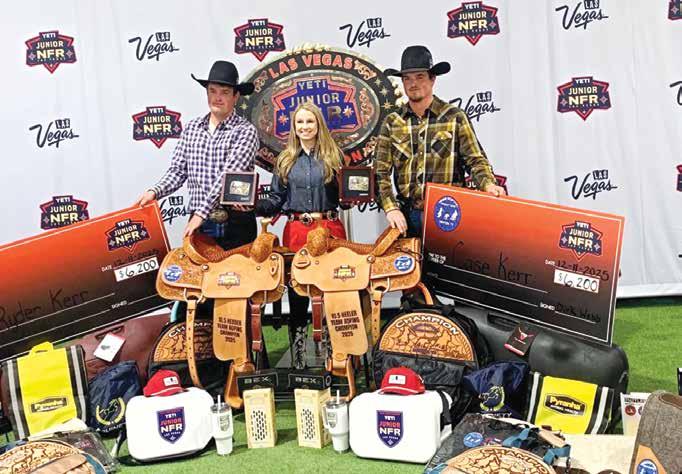
The brothers won JNFR World Championship saddles
of dietary recommendations, shaping standards for programs such as school meals, federal food assistance and military dining, and are updated every five years to reflect the latest in nutrition science.
“Since the first report was published in 1980, our nation’s diet-related chronic disease rates have risen to pervasive levels,” state USDA National Advisor for Nutrition, Health and Housing Dr. Ben Carson and Centers for Medicare and Medicaid Services Administrator Dr. Mehmet Oz in a Jan. 8 Newsweek opinion column.
The two go on to note the U.S. Centers for Disease Control and Prevention have reported over 40 percent of
2026
Ambassadors
College students promote beef via WYBAP
The Wyoming Beef Ambassador Program (WYBAP) has selected five students from the University of Wyoming (UW) to represent and promote the beef industry throughout 2026.
Sponsored by Wyoming CattleWomen (WCW), WYBAP is an annual program providing Wyoming college students with the opportunity to educate consumers and fellow students about the beef industry while growing their personal and professional skills.
The 2026 ambassadors were appointed during the 2025 Wyoming Stock Growers Association (WSGA) Annual Winter Roundup Convention and Trade Show and will complete their terms in December 2026.
Program goals
WYBAP is a program for students 18 to 26 years of age who are enrolled in undergraduate or graduate programs at any college or university throughout Wyoming.
The year-long program provides an avenue for college students to educate consumers and fellow students about nutrition, food safety and stewardship practices in the beef industry.
First water supply outlook released for 2026
On Jan. 1, the U.S. Department of Agriculture’s Natural Resources Conservation Service (NRCS) released the first Wyoming Basin and Water Supply Outlook of the new year, analyzing snowpack, precipitation, streamflow and reservoir storage across the state of Wyoming.
The report assesses the water supply outlook for the entire Cowboy State, as well as individual basins including the Snake River, Madison Headwaters, Yellowstone River, Wind River, Big Horn River, Shoshone River, Powder River, Tongue River, Belle Fourche River, Cheyenne River, Upper North Platte River, Lower North Platte River, Laramie River, Sweetwater River, South Platte River,
Little Snake River, Upper Green River, Lower Green River and Upper Bear River basins.
Making forecasts
When it comes to making forecasts for the Wyoming Basin and Water Supply Outlook, NRCS explains most annual streamflow in the western U.S. originates as snowfall, which accumulates in the mountains during winter and early spring.
As snowpack accumulates, hydrologists begin to estimate the runoff that will occur when it melts.
“Measurements of snow water equivalent (SWE) at selected manual snow courses and automated snowpack telemetry sites, along
Adobe Stock photo
So Long Sugar, Hello Steak
On Jan. 7, the U.S. Departments of Agriculture and Health and Human Services released the 2025-30 Dietary Guidelines (DGA). This is the 10th iteration of the report, and it contains a lot of common sense and good information on what we should be eating in our daily lives.
It is mandated by law a DGA be released every five years, and it always makes the news as some criticize the recommendations and some support them.
The last 20 years have been more controversial as politics have played a major role in developing the report. It all boils down to who is on the developing committee.
The 2025-30 DGA is really important, as it forms the basis for foods used in all federal and food assistance programs such as those found in schools, hospitals, the military, etc. Therefore, one can see why it has such far-reaching effects.
In past years, the DGA committee was all for plant-based and/or processed foods, and meat products were off the table. Climate change reasoning was more important than consuming proper proteins requirements. Americans were overfed and undernourished.
The big argument was over saturated fat consumption, which hurt meat. While the new DGA report keeps the previous recommendation for saturated fat consumption at 10 percent of the diet, it also recognizes it is hard to reach total protein needed per day with just 10 percent saturated fat.
I think saturated fat has taken a bad rap for heart disease and cholesterol. For years, we’ve all heard it is bad for us, but now some are saying there isn’t data to support the 10 percent cap.
The current DGA report doesn’t include an amount for alcoholic drinks per day or week. It does away with old numbers for men to limit consumption to two drinks per day and for women to limit to one drink.
I like how the current report gives us the basics on food but leaves the decision of how much up to the individual. We don’t want some vegan Harvard professor telling us not to eat meat and what to drink.
We’ve all been told to eat fake meat products which are highly processed. People with common sense realize all foods are to be consumed in moderation.
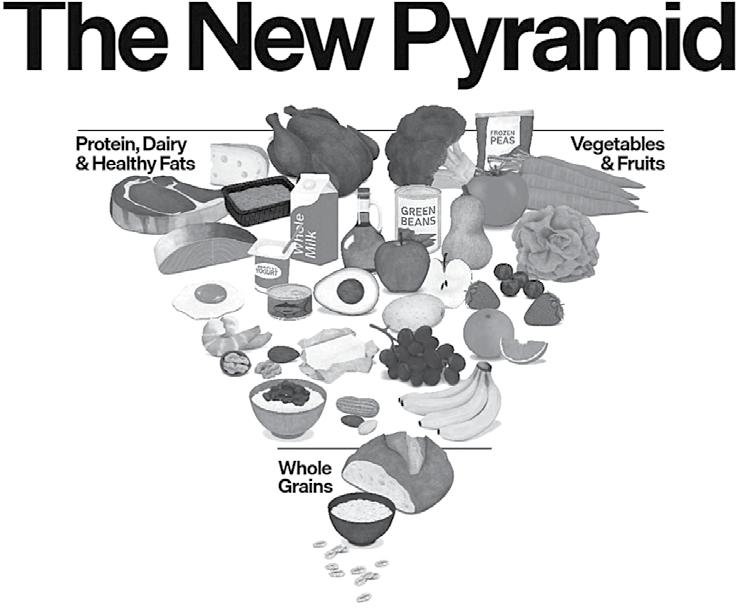
Some key points of the guidelines are having “real food as the foundation of health, urging people to eat more whole foods and fewer highly-processed products.”
For the first time, the guidelines recommend avoiding highly-processed foods and added sugars, while also limiting artificial flavors, dyes and preservatives.
The new guidance increases daily protein targets, relaxes restrictions on healthy fats from whole-food sources and simplifies alcohol advice to “consume less.”
The guidelines emphasize high-quality protein, healthy fats, fruits, vegetables and whole grains. Also, fresh meat, whole milk, butter, cheese and beef tallow used to cook with are all in now. Even pizza made with the right ingredients is considered good.
These guidelines are going to take some time to get into our schools, but it will be good when it does.
GUEST OPINIONS
Farmers Need Relief Before Planting Season –Starting With Fertilizer Costs
To provide much-needed relief to American farm families and consumers, President Donald Trump recently announced a major decision to exclude import levies on more than 200 agricultural products not produced in the U.S. in sufficient quantities. These commodities range from avocados and coffee to fertilizer and key minerals.
This move is the right one if our goal is to bring down U.S. food prices and support American agriculture.
Included in these tariff exemptions is phosphate – a needed fertilizer component and a critical input into food production in the U.S. Phosphate is also a global mineral commodity – one the U.S. does not have enough natural domestic resources of to ever be fully self-sufficient.
Rumor has it Trump may even go beyond these recent tariff exclusions by undoing the failed Biden-era countervailing duties placed on phosphate imports which led to skyrocketing fer-
By Dave Juday
tilizer and food costs across America.
In 2021, the Biden administration inexplicably imposed these duties – basically import taxes – under the guise of “protecting” American producers of phosphate and fertilizer from foreign competition. In practice, however, they’ve done the opposite, pushing down the U.S. supply of phosphate and more than doubling prices by 2022.
Prior to these new duties being announced and implemented, wholesale prices of monoammonium phosphate (MAP) – a standard fertilizer product – reached 112 percent of the 2018-20 three-year average in Iowa.
In October 2025, three years later with the market having adjusted somewhat, MAP wholesale prices were still 83 percent higher.
What did the Biden administration believe would happen once these duties were imposed?
In 2022, a total of 85 percent of the
world’s tradeable supply of phosphate fell under these costly U.S. duties.
This includes Morrocco, a U.S. ally and home to the world’s largest phosphate reserves, and a major longtime supplier of phosphate and end-use fertilizer upon which American farmers had relied on for up to 30 percent of their needs. And like other countries, Morocco shifted its products to other markets, creating supply shortages and spiking prices here at home.
The bottom line is U.S. farmers now face significantly higher input costs, eating away at their margins and livelihoods; American agricultural products are less competitive abroad and consumers unnecessarily pay too much at the grocery store.
It is a lose-lose-lose situation for on-farm economics, U.S. competitiveness and food price inflation.
Trump should now move beyond tariff relief by reversing Biden’s failed
Please see FERTILIZER on page 5
NEWS BRIEFS
Fishing derbies canceled
Unsafe and inconsistent ice conditions across southwest Wyoming have impacted several winter fishing events this season.
The Burbot Bash at Flaming Gorge has been canceled due to safety concerns related to poor ice and projected winds. Participants who registered for this year’s event will be contacted and given a choice for a refund or to have payment carried over for the 2027 tournament, which is tentatively scheduled for Jan. 22-24, 2027.
Additionally, the Sulphur Creek Fishing Derby at Sulphur Creek Reservoir and Kemmerer Lions Club Fishing Derby at Viva Naughton Reservoir will not be held this year. Ice fishing derbies are subject to conditions statewide. If there are events scheduled in a certain area, the Wyoming Game and Fish Department (WGFD) encourages checking ahead to confirm events are still scheduled as planned, as cancelations can occur and are determined by the planning organization.
“This has been an unusually warm winter and ice conditions across southwest Wyoming have been inconsistent and unsafe,” said John Walrath, WGFD fisheries supervisor in the Green River Region. “While we know these events are important to anglers and managers, public safety comes first. Canceling these derbies was the responsible decision for derby sponsors given current conditions and extended forecasts.”
Bison event upcoming
Hundreds of bison stakeholders are headed to Denver for the National Bison Association’s (NBA) Annual Winter Conference and Gold Trophy Show and Sale.
Bison producers, veterinarians, researchers, Tribal herd managers, conservationists and general enthusiasts will make up the over 500 expected for the annual event.
The winter conference will take place from Jan. 21-23 at the Omni Interlocken Hotel and Resort in Broomfield, Colo. For the second year in a row, the industry’s largest gathering is sold out.
Under the theme “United We Roam,” the conference program features an array of expert speakers who will present on topics ranging from bison herd health and marketplace updates to a panel of Tribal buffalo restoration leaders and much more.
The two-and-a-half-day event features four bisoncentric meals showcasing meats donated from the industry’s top marketers.
The event also includes annual industry awards and recognitions and hosts a 40-vendor trade show.
The NBA’s Gold Trophy Show and Sale, now in its 46th year, will be held on Jan. 24 at the conclusion of the winter conference. This year’s sale features 71 head of top bison breeding stock from 19 consignors from the U.S. and Canada.
Those interested can bid in person at the National Western Stock Show Stockyard Event Center in Denver or online. The sale begins promptly at 10 a.m. For more information, visit nationalbison.org/.
Grain markets lower
According to a Jan. 12 Northern Ag Network article, grain markets were sharply lower this week after the U.S. Department of Agriculture (USDA) released its January Crop Production Annual Summary, Quarterly Grain Stocks, World Agricultural Supply and Demand Estimates and Winter Wheat Seedings reports, delivering far more bearish numbers than most analysts had anticipated, especially for corn.
Instead of the expected decline, USDA raised national corn yield to a record 186.5 bushels per acre and increased harvested acres by 1.3 million to 91.3 million acres. This pushed total U.S. corn production to an all-time high of 17.02 billion bushels.
Dec. 1 corn stocks also set a record at 13.3 billion bushels, lifting 2025-26 ending stocks to 2.22 billion bushels and pressuring futures sharply lower.
Demand changes offered little relief. Feed and residual use rose by 100 million bushels, while food, seed and industrial use dipped slightly. Exports were unchanged, leaving total domestic use only modestly higher against swelling supplies.
Wheat markets faced similar – though less dramatic –pressure. USDA raised U.S. wheat ending stocks to 926 million bushels as feed use declined and total use slipped.
Globally, wheat supplies continued to build with higher production estimates for Argentina and Russia, pushing world ending stocks above 278 million metric tons.
Winter wheat seedings came in near 33 million acres, slightly higher than traders expected.
Soybeans leaned bearish as well, with production edging higher and exports cut, lifting U.S. ending stocks to 350 million bushels.
New leadership named
On Jan. 12, the U.S. Department of Agriculture announced important leadership changes within the Animal and Plant Health Inspection Service (APHIS).
APHIS Administrator Dr. Michael Watson will retire at the end of January after decades of distinguished service, and Deputy Administrator for Veterinary Services and U.S. Chief Veterinary Officer Dr. Rosemary Sifford has recently retired from federal service after a similarly notable career.
Beginning on Feb. 1, Kelly Moore will serve as acting administrator and, effective immediately, Dr. Alan Huddleston will serve as the acting U.S. chief veterinary officer.
Additionally, to ensure continuity during this transition, APHIS Veterinary Services Associate Deputy Administrator Dr. Adis Dijab will continue to provide operational oversight of Veterinary Services.
APHIS operations continue uninterrupted, guided by science-based policies, strong stakeholder engagement and experienced acting leaders to ensure program continuity. APHIS remains steadfast in its mission to protect the health, welfare and value of the nation’s plants, animals and natural resources, continuing to deliver solutions and essential services to safeguard U.S. agriculture and support stakeholders nationwide.
Letter penned to USTR
On Jan. 9, U.S. Sen. Steve Daines (R-MT) led a letter to U.S. Trade Representative (USTR) Jamieson Greer, voicing support for American sheep producers who have been disadvantaged by surging imports into the domestic market.
The letter highlighted a recent petition put forth by American producers to USTR and the U.S. International Trade Commission to initiate an investigation under Section 201 of the Trade Act of 1974 into foreign imports.
“We appreciate both your and President Donald Trump’s decisive action to address unfair trading practices against American agricultural producers, as well as efforts to enhance market access across the globe,” the letter reads. “America’s domestic sheep industry – already facing stubbornly high input costs and labor shortages –has suffered serious harm due to unchecked imports from foreign competitors over the last several years. As senators who represent significant portions of the domestic sheep industry, we urge you to use all available measures at your disposal to support American sheep producers.”
“America has a vested interest in maintaining our sheep industry, but without action, multi-generational family run farms and ranches will no longer be viable,” the letter continues. “We appreciate the Trump administration’s ongoing support for American agriculture and willingness to address injurious harm caused by unfair trading practices from competitors across the globe.”
Sens. Jim Banks (R-IN), Kevin Cramer (R-ND), John Curtis (R-UT), John Hoeven (R-ND), Cindy Hyde-Smith (R-MS) and Tim Sheehy (R-MT) joined Daines in sending the letter.
To read the letter in its entirety, visit daines.senate.gov
NEWS BRIEFS
Survey results released
The National Federation of Independent Business’s (NFIB) Small Business Optimism Index rose 0.5 points in December to 99.5 and remained above its 52-year average of 98.
Of the 10 Optimism Index components, two increased, three decreased and five were unchanged. An increase in those expecting better business conditions primarily drove the rise in the Optimism Index.
The Uncertainty Index fell seven points from November to 84, the lowest reading since June 2024.
“The year 2025 ended with a further increase in small business optimism,” said NFIB Chief Economist Bill Dunkelberg. “While Main Street business owners remain concerned about taxes, they anticipate favorable economic conditions in 2026 due to waning cost pressures, easing labor challenges and an increase in capital investments.”
“Wyoming’s small business owners closed out 2025 optimistic and hopeful for better business conditions in 2026,” NFIB State Director Michael Smith said. “NFIB will continue to work with lawmakers to ensure family-owned businesses can create jobs and expand their operations.”
The NFIB Research Center has collected small business economic trends data with quarterly surveys since the fourth quarter of 1973 and monthly surveys since 1986. Survey respondents are randomly drawn from NFIB’s membership. The report is released on the second Tuesday of each month.
4-H training offered
For new and current 4-H volunteers, University of Wyoming (UW) Extension will offer an in-person training opportunity in Buffalo on Jan. 31.
New volunteers will have the opportunity to complete their required orientation, while current volunteers are encouraged to attend sessions on robotics, outdoor recreation curriculum, parliamentary procedure, planning successful club meetings and more.
A separate youth track is available for teenage 4-H’ers interested in building leadership skills.
The program begins at 9 a.m. at the Summit Church Family Life Center in Buffalo and concludes at 4 p.m. Registration for both youth and adult participants cost $20 per person and includes lunch. Some county Extension offices may cover registration costs. Attendees are advised to contact their local office for more information.
To register, visit bit.ly/4h-northeast-training-2026 Registration must be completed by Jan. 21.
Prospective volunteers are welcome to participate even if they have not yet officially registered with their local 4-H program, though they are still required to undergo a background check before they can begin volunteering.
For more information, contact the Johnson County Extension Office at 307-684-7522 or bmckenz7@ uwyo.edu.
Pesticide programs offered
University of Wyoming (UW) Extension will offer two pesticide safety education programs for private applicators at the Niobrara County Fairgrounds in Lusk on Jan. 27.
Applicators can attend a morning session scheduled for 8 a.m. to noon or an afternoon session scheduled for 1 p.m. to 5 p.m.
Participants are asked to RSVP by contacting the Niobrara County Extension Office at 307-334-3534 or kelliec@ uwyo.edu.
Private applicator licenses are required for anyone who purchases and applies restricted use pesticides to their own property or properties they manage.
UW Extension’s private pesticide applicator education programs provide an overview of certification requirements, pertinent regulations, pesticide safety and handling, proper disposal practices and more.
Applicators can attend any class that fits their schedule.
All participants are required to bring a governmentissued ID, such as a driver’s license, to their session.
Upon completion of a program, the proctor of the class will submit all completed private applicator license applications to the Wyoming Department of Agriculture for approval and issuance of licenses.
For more information and to view a complete list of upcoming private applicator programs across the state, visit bit.ly/wy-psep-private-app
Regulations in effect
Updates to the Wyoming Game and Fish Department’s Chapter 46, Fishing Regulations for 2026, took effect on Jan. 1.
New regulations include new tackle requirements on the North Platte River and expanding harvest opportunities in the Jackson Region.
For the high-traffic stretches of the North Platte River below Seminoe Reservoir, new rules require the use of single-point, barbless hooks. The requirement covers the Miracle Mile, Alcova Afterbay, Gray Reef and Fremont Canyon areas.
This was implemented to reduce the number of hook injuries with catch-and-release fish.
Additionally, the use of pegged attractors is prohibited at Fremont Canyon and Gray Reef, and the section requiring the use of artificial flies and lures at Gray Reef was extended downstream to Government Bridge.
Finally, a new spawning closure area was instituted for Gray Reef downstream of Ledge Creek, effective from April 1-May 15 each year to protect spawning rainbow trout in the defined areas.
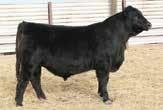
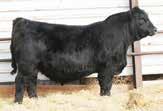
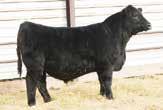
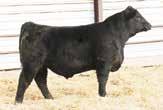
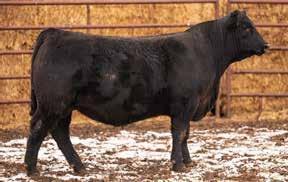
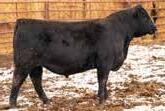
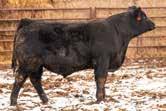
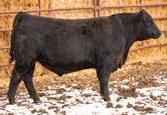
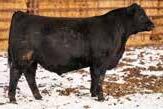
BEEN PAP TESTED BY DR. TIM HOLT AFTER SPENDING THE SUMMER AT 8,000’ IN WALDEN, CO., AND 82 OF THEM HAVE A PAP TEST SCORE THAT ALLOWS THEM TO GO TO ANY ELEVATION.
In the Jackson Region, anglers have more time and higher limits on several key waters.
Jackson Lake will no longer be closed to fishing in October and will remain open throughout the month.
On the Snake River, the daily trout limit has doubled from three to six on the stretch between the Jackson Lake Dam and the gauging station, with length restrictions removed.
As a reminder, Wyoming now has a mandatory registration system for commercially-guided fishing boats. Guides must register their vessels annually for a $325 fee and are required to display a registration sticker or dashboard slip while operating.
For more information and a complete list of Wyoming fishing regulations, visit wgfd.wyo.gov
CROSSWORD
with precipitation, antecedent streamflow and indices of the El Niño/Southern Oscillation are used in computerized statistical and simulation models to prepare runoff forecasts,” reads the report. “Unless otherwise specified, all forecasts are for flows which would occur naturally without any upstream influences.”
NRCS notes forecasts are by no means perfect. In fact, the agency explains streamflow forecast uncertainty arises from three sources – uncertain knowledge of future weather conditions, uncertainty in forecasting procedures and errors in the data.
Therefore, it is important individuals interpret these forecasts as a range of values with specific probabilities of occurrence instead of a single value.
“The middle of the range is expressed by the 50 percent exceedance probability forecast, for which there is a 50 percent chance the actual flow will be above and a 50 percent chance the actual flow will be below this value,” NRCS explains. “To describe the expected range around this 50 percent value, four other forecasts are provided – two smaller values at 90 percent and 70 percent exceedance probability and two larger values at 30 percent and 10 percent exceedance probability, respectively.”
The report further notes the wider the spread among these values, the more uncertain the forecast will be. As the season progresses, forecasts will become more accurate, primarily because a
FERTILIZER
greater portion of the future weather conditions become known.
Lastly, NRCS notes the median is the official normal for snowpack, precipitation, reservoir storage and streamflow calculations.
Snowpack and precipitation
According to NRCS, as of Jan. 1, SWE across Wyoming was reported at 84 percent of median.
The Yellowstone River Basin reported the highest SWE at 137 percent of median, while the South Platte River Basin had the lowest SWE at five percent of median.
NRCS notes the Belle Fourche, Cheyenne, Laramie, Little Snake, Lower North Platte, Powder, South Platte, Tongue, Upper Bear and Upper North Platte river basins posted SWEs below the median recorded from 1991 to 2020.
Additionally, the agency reports the highest amount of precipitation occurred in the Wind River Basin at 266 percent of median, while the Lower North Platte River Basin saw the least amount of precipitation at 71 percent of median.
Streamflow yields
For April through September, NRCS forecasts average streamflow yields from all basins in the state of Wyoming – except the Green, Little Snake and Cheyenne river basins – at 115 percent of median.
April through July median streamflow yields for these four exceptions are predicted at 70 percent of median in the Cheyenne River Basin, 80 percent of median in the Little Snake River Basin, 107 percent of
policies, something Sen. Charles Grassley (R-IA) suggested during a recent Senate Finance Committee hearing with the U.S. Trade Representative (USTR) nominees.
After the hearing, Grassley posted on social media stating, “At Finance Committee hearing today I urged USTR nominees to work with the rest of the Trump administration to end Biden phosphate duties hurting farmers.”
These phosphate duties were another squall in the perfect storm of Biden-era policies U.S. Secretary of Agriculture Brooke Rollins has cited as hurting U.S. agriculture and pushing up input costs.
Under Biden’s watch, interest rates spiked 73 percent, labor costs rose 47 percent and fuel prices toplined over 35 percent. Added to all of the phosphate duties driving fertilizer costs up 83 percent and overall agriculture input costs necessary for crop production which have exploded, it puts price pressures on farm balance sheets, U.S. farm exports and Americans’ pocketbooks.
Even if Trump cannot easily undo Biden’s import tax mess on phosphate by executive order or regulatory action, there is a clear path forward.
The countervailing duties are up for review this year, giving Congress and the Trump administration a perfect opportunity to end them before the next planting season. Taking action is critical.
According to the U.S. Department of Agriculture’s November update of its cost of production forecast, the outlook for fertilizer costs is projected to go up another five percent this year, on top of the past five years of skyrocketing cost increases.
Eliminating these phosphate duties could get these costs under control and headed in the right direction for the benefit of U.S. farmers and consumers and should be a key priority for the Trump administration and Congress.
Dave Juday is an agricultural economist, commodity market analysis, founder and principal of The Juday Group.
median in the Lower Green River Basin and 110 percent of median in the Upper Green River Basin.
The NRCS report shows streamflow yields for individual basins across the state at 90 percent of median in the Lower North Platte River Basin, 91 percent of median in both the Powder River and Tongue River basins and 92 percent of median in both the Upper North Platte River and Laramie River basins.
Median streamflow yields for the Big Horn, Yellowstone, Wind, Snake, Shoshone and Sweetwater river basins are estimated at 117, 128, 129, 145, 146 and 167 percent, respectively.
Reservoir storage
Additionally, the NRCS report outlines reservoir storage across the state of Wyoming, which averaged 66 percent of median as of Jan. 1.
Reservoirs reporting numbers below median include those in the Upper Bear River Basin at 37 percent, the Laramie River Basin at 50 percent, the Upper North Platte River Basin at 59 percent, the Cheyenne River Basin at 79 percent, the Wind River Basin at 81 percent and the Buffalo Bill Reservoir on the Shoshone River at 85 percent.
Reservoirs in the Snake River Basin and Lower Green River Basin, as well as the Boyson Reservoir, posted near median at 96 percent.
Reservoirs in the Upper Green River Basin and the
95 percent and 97 percent, respectively.
Lower North Platte River Basin also posted near median at
Reservoirs in the Belle Fourche River Basin were above median at 105 percent. Hannah Bugas is the
managing editor of the Wyoming Livestock Roundup. Send comments on this article to roundup@wylr.net.
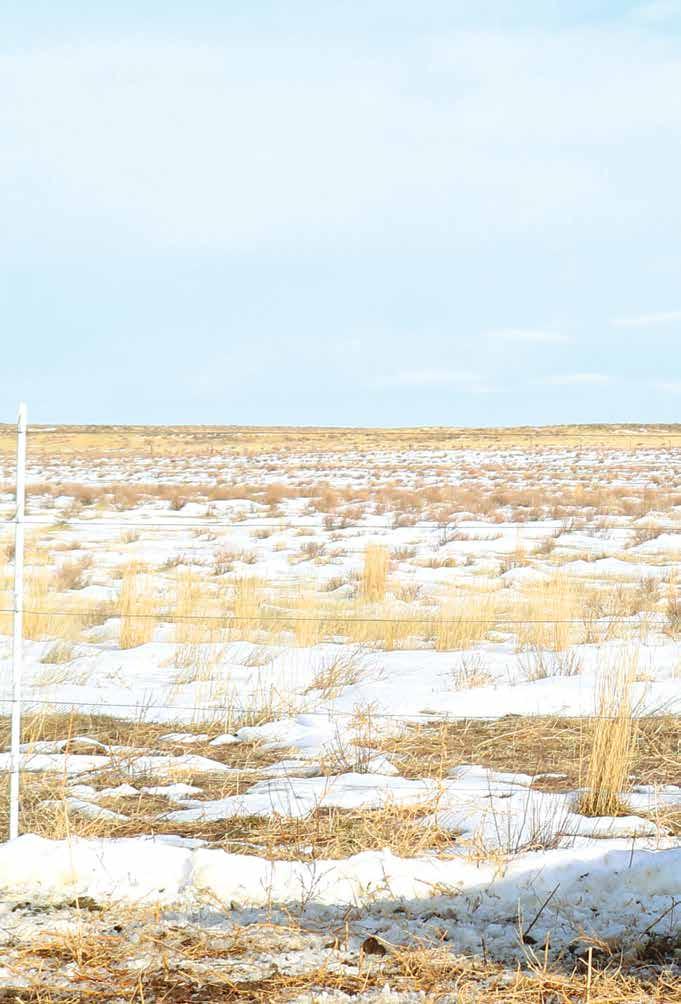
WYLR photo
FEEDERS Jasperson Cattle Co./Greg Jasperson 108 Blk/Rd Strs & Hfrs, 600-750#, Weaned since October, Bunk Broke, Been on Growing Ration, Branding Shots: Nasalgen PHM, Calvary 9, Booster Shots: Vista Once SQ, Vision 8 w/Somnus, No Implants
Fred & Laurie Reichert 172 Blk Strs & Hfrs, 650-700#, Weaned since Oct. 25, Bunk Broke, Been on a Light Grower Ration, Shots: Covexin 8, ViraShield 6+VL5, No Implants, Home Raised Vince Kasperbauer 142 Blk/Red Strs & Hfrs, 600-750#, Weaned since Nov. 1, Bunk Broke, Been on Ground Hay, Branding Shots: Vision 7 20/20, Shots on Nov. 7: Vision 7 20/20, Pyramid 5+Presponse, Poured, No Implants, Producer All Natural J & J Ochsner Livestock 84 Sim Angus Hfrs, 700-750#, Weaned 65+ days, Bunk Broke, Been on a Light Grower Ration, 3 Round of Shots, Poured w/Clean-up (2x), Home Raised, No Replacements Kept Bar O Bar Ranch/Jim Wiscombe 53 Mx Strs & Hfrs, 700-800#, Weaned 90 days, Bunk broke, Alflafa/Grass Hay Mix, 2 Rounds of Shots in the Fall: Bovi-Shield Gold, Ultra 7+Somnus, Poured w/Dectomax, Steers are Implanted & Knife Cut at Branding, Heifers are NOT Implanted, Home Raised Morris Hochstedler 39 Blk/Bwf/Hereford Strs & Hfrs, 650-750#, Weaned 60 days, Bunk Broke, Been on Silage, Soy hull Pellets, Alfalfa Hay, Branding Shots: Pyramid 5+Presponse, 7-way, Pre-cond. Shots: Inforce 3, Covexin 8, Safe Guard, Weaning Shots: Pyramid 5+Presponse, BarVac CDT, No Implants, Home Raised Jim Snow 18 Blk Strs & Hfrs, 700-750#, Weaned since Oct. 18, Bunk Broke, Been on Alfalfa/Grass Hay Mix, Branding Shots: 8-way wSomnus, Pre-cond. Shots: 8-way, Booster Shots: 8-way, Poured w/Vetermax, No Implants, Steers are Knife Cut, Producer All Natural
Bruce Cuthbertson 10 Blk few Bwf Hfrs, 625#, Weaned Oct. 15, Branding Shots: Pyramid 5, Vision 7, Weaning Shots: Nasalgen, Ivomec Pour On Petsch & Rollins 7 Blk Strs, 950#, Complete Modified Live Vac. Program, No Implants, Coming off grass, Home Raised WEANED CALVES
J Reverse J Cattle 475 Mostly Blk/Bwf few Red Strs & Hfrs, 550-700#, Weaned 90 days, Bunk Broke, Been on a Light Grower Ration, Branding Shots: Bovi-Shield Gold 5, 8-way, Nasalgen, Weaning Shots: Ultrabac 7 w/Somnus, Nasalgen 3 PMH, Dectomax Pour On, Steers are Knife Cut, Fancy High Elevation Calves, Sired by Montana Low PAP Coleman Bulls Lisco Ranch LLC 285 Blk Angus Strs & Hfrs, 575-800#, Weaned a 100 days, Bunk Broke, Been on a Grower Ration, Been on a Vita Ferm Mineral Program, Branding Shots: Nasalgen, Vision 7, Multi-min, Pre-cond. Shots: Nasalgen, Vision 7, Multi-min, Weaning Shots: Nasalgen, Vista Once, Vision 7, Implanted with Revalor at Weaning Yust Cattle Co. 150 Mx Strs & Hfrs, 500-550#, Weaned a long time, Bunk Broke, Been on a Grower Ration, Shots: (will be Called in) Alan Harrison 110 Blk Strs & Hfrs, 550-600#, Weaned 100 days, Bunk Broke, Been on Good Dairy Quality Alfalfa Hay, Branding Shots: 8-way w/ Somnus, Vira Shield 5, No Implants, Producer All Natural Frank Ranches Inc. 95 Blk Angus Hfrs, 600#, Weaned 90 days, Been on a Light Grower Ration (Hay and Corn Silage), Bunk Broke, Branding Shots: Vision w/Somnus+Spur, Nasalgen 3-PMH, Vista BVD CFP, Vista, Weaning Shots: Vision 7 w/Somnus+Spur, Vista Once SQ, SafeGuard, Poured w/ Saber in Late November, No Implants, Bangs Vac., Home Raised, High Elevation Petsch & Rollins 76 Blk/Bwf Strs, 600#, Weaned 85 days, Running out on Winter Grass supplemented with Hay, 3 Rounds of Shots: Vista Once, 7-way w/Somnus, Injectable Ivomec, No Implants, Home Raised Sand Hill Cattle LLC 75 Blk (2 Bwf) Strs & Hfrs, 550-600#, Weaned since Nov. 1, Been on Oat Hay mix with 1st Cutting of Alfalfa hay, Branding and Pre-cond. Shots: Vista Once SQ, Vision 7 w/Somnus, Poured w/Ivomec, High Elevation, High Desert, Summered @7000+’ Adam Percival 70 Blk/Rd Strs & Hfrs, 550-750#, Weaned since Nov. 1, Bunk Broke, Been on Corn Silage, Branding Shots: Bovi-Shield Gold One Shot, 8-way w/Somnus, Injectable Wormer, Poured, Steers are Knife Cut, Producer All Natural EHB Ranch Inc. 68 Blk/Rd Strs & Hfrs, 550-600#, Weaned 45 days, On Grass/Alfalfa Hay Mix, Complete Vac. Prog, High Elevation; 6500+’ Jim Licking 55 Mostly Blk Strs & Hfrs, 600-625#, Weaned since Dec. 1, Bunk Broke, Branding & Pre-cond. Shots: Ultra Choice 7, Bovi-Shield Gold, Poured Dectomax, Steers are Knife Cut, Home Raised Dean House Family 50 Blk Strs & Hfrs, 550-700#, Weaned 90 days, Bunk Broke, Been on a Light Grower Ration, Branding Shots: Bovi-Shield Gold 5, Vision 7 w/Somnus, A& D, Nasalgen, Dectomax Pour On, Fancy set of High Elevation Calves, Sired by Sitz Angus Bulls Roger & Pam Peterson 41 Blk (1 Rd) Hfrs, 450-600#, Weaned since December, Hay Fed, Branding Shots: Pyramid 5+Presponse, Vision 7, Booster Shots: Pyramid 5+Presponse, Vision 7 w/Somnus, No Implants, Producer All Natural Craig & Emarie McCarrel 40 Mx Strs & Hfrs, 500-600#, Weaned 60 days, Bunk Broke, Hay & Corn Silage, Branding & Weaning Shots: Bovi-Shield Gold One Shot, Ultra Choice 8, No Implants, Steers are Knife Cut Mark Miller 40 Mx Strs, 450#, Weaned 90+ days, Bunk Broke, Been on Hay and Haylage, Complete Vac. Program, 3 Rounds of shots
Tom Thurston 30 Blk Strs & Hfrs, 550-700#, Weaned 90 days, Bunk Broke, Been on a Light Grower Ration, Branding Shots: Bovi-Shield Gold 5, Vision 7 w/Somnus, A& D, Nasalgen, Dectomax Pour On, Fancy set of High Elevation Calves, Sired by Sitz Angus Bulls
Bob Halverson 17 Blk/Rd Strs & Hfrs, 600-700#, Weaned since Oct., Bunk Broke, Alfalfa Hay Fed, Branding Shots: Vira Shield 6, Vision 7, Booster Shots: Vira Shield 6, Vision 7, No Implants, Producer All Natural Pat & Dawson Reichert 15 Blk Strs & Hfrs, 500-600#, Weaned 75 days, Hay Fed, No Grain, Branding Shots Only David & Susan Walker 10 Blk Strs, 650-675#, Weaned 45 days, Bunk Broke, Hay Fed, Complete Vac. Prog, Producer All Natural T A Ranch/Colorado 6 Mx Strs & Hfrs, 400-600#, Weaned 45 days, Bunk Broke, Running out on grass pasture supplemented with Alfalfa Hay & Grain, Branding Shots: BarVac 7, Pyramid 5+Presponse SQ, Pre-cond. Shots (Nov. 30): BarVac 7, Pyramid 5+Presponse SQ Dalton Ward 5 Blk Hfrs, 600#, Weaned since October, Hay Fed, Cake Broke, Shots: Pyramid 5+Presponse (3x), Vision 7 w/Somnus (3x) Ed & Ronda Haas 5 Mx Strs & Hfrs, 600-700#, Weaned since Sept., Running out on grass, Supplemented with Grass Hay and Cake, Bunk Broke, Branding Shots: Alpha 7, Vira Shield 6, Multimin, Weaning Shots: Vision 7, Bovi-Shield Gold 5, Somnubac, Dectomax, Steers are Knife Cut, No Sickness at all, Home Raised, Producer All Natural Dennis Vanatta 5 Red Strs, 600#, Weaned since Oct. 31, Alfalfa Hay Fed, Branding Shots: 7-way, Nasalgen, Booster Shots: Nasalgen, Poured, No Implants, Producer All Natural Jamie Wiggam 5 Mx Bull/Str Calves, 500-800#, Weaned 60+ days, Branding Shots: BVD, Inforce, 7-way, Pre-cond. Shots: 7-way, Vista Once, Ultrabac 7
Richard “Dick” Loper
Sept. 9, 1944– Jan. 6, 2026
Richard “Dick” Loper, age 81, of Lander passed away on Jan. 6 in the community he proudly called home for decades.
Dick was born on Sept. 9, 1944 to Robert Henry Loper and Virginia Loper. He was raised among the tall grass of the Flint Hills of central Kansas, a landscape that shaped his lifelong respect for land, stewardship and the working people who depend on it.
Those early years laid the foundation for a career devoted to rangelands, agriculture and public service.
After graduating from Emporia High School in 1962, Dick proudly served his country in the U.S. Navy. Following his military service, he pursued higher education with purpose and determination, earning a Bachelor of Science in Range Science from Colorado State University and a Master of Science in Range Management from Kansas State University.
In 1979, Dick established a rangeland management consulting business in Lander where he became widely respected for his expertise, integrity and practical approach to land stewardship.
Over more than four decades, he focused his work on public rangeland management issues affecting family ranches dependent on federal grazing lands. His clientele included individual ranching families; local, state and national livestock organizations; law firms and multiple-use resource organizations.
Dick worked directly with and on behalf of clients who shared his conservative principles and strong belief in private property rights, responsible land use and commonsense conservation. He also collaborated extensively with county, state and national elected officials and their staffs on legislation, regulations and policies related to public rangeland planning and management.
A dedicated leader in his field, Dick was a lifelong member of the Society for Range Management (SRM) and a founding member of
the Association of Rangeland Consultants. He served on the SRM Select Task Force on Unity in Concepts and contributed nationally through his work with the National Research Council. He was a committee member involved in the development of the landmark publication “Rangeland Health: New Methods to Classify, Inventory and Monitor Rangelands,” published in 1994 by the National Academy of Sciences. He also served on the Council for Agricultural Science and Technology, which produced the publication “Grazing on Public Lands.”
Dick’s influence extended well beyond Wyoming.
In 2013, he was inducted into the Wyoming Agriculture Hall of Fame for his substantial and lasting contributions to agriculture, rangeland health and public lands policy.
In 2024, he was honored as with the Friend of the Public Lands Council (PLC) Award recipient by the PLC, recognizing his leadership, advocacy and lifelong dedication to responsible land management and conservation practices.
Despite his many professional achievements, Dick remained deeply grounded in community and family life. He and his wife Gail made their home in the westcentral mountain foothills of Lander, where they enjoyed outdoor pursuits and shared a love for Plains Indian beadwork, Old West cowboy collectibles and antique Colt and Winchester firearms.
Dick will be remembered as a principled advocate, a trusted consultant, a devoted steward of the land and a man whose quiet determination left a lasting mark on rangeland management across the American West.
His legacy lives on in the landscapes he helped protect, the ranching families he supported and the many colleagues and friends who valued his wisdom and friendship.
Dick was preceded in death by his son Christopher Richard Loper.
Family survivors include his wife Gail, his daughter Jenny Gramelt and his stepdaughter Laurie Summers, as well as his grandchildren and great-grandchildren.
At Dick’s request, there will be no services. Those who wish to honor his memory are invited to remember him when you are out in the vastness of Wyoming and its public lands – walk them, enjoy them and experience them as he did.
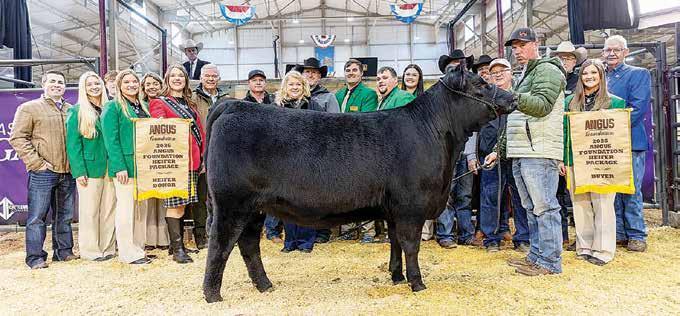
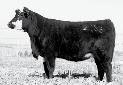
With the final bid cast and the last gavel dropped, Express Angus Ranches, Nowatzke Cattle/Maple Lane Farm and Pollard Farms were announced as the winning bidders for Wilks Rita 4728, the centerpiece of the Angus Foundation Heifer Package and a symbol of commitment to the foundation’s pillars.
Express Angus Ranches, Nowatzke Cattle/Maple Lane Farm and Pollard Farms purchased the 2026 Angus Foundation Heifer Package on Jan. 9 for $150,000 to continue the legacy of the Angus breed.
The package, donated by Wilks Ranch of Eastland, Texas, led off the National Angus Bull Sale during Cattlemen’s Congress in Oklahoma City.
“We are very grateful for our generous donors who continue to give unwavering support towards the foundation’s mission,” said Angus Foundation Executive Director Jaclyn Boester. “They want the very best for the Angus breed and its legacy. We cannot thank Wilks and the buyers enough for their continued support and dedication towards this mission.”
Standout female
The leading lady in 2026’s sale, Wilks Rita 4728, is a standout female from a proven maternal line. Her maternal sister, Wilks Rita 4067, commanded $100,000 as lot six in the 2024 Wilks Ranch Sale.
The consistency of this cow family is a testament to the quality of females Wilks Ranch offered up as this year’s foundation female.
Rita 4728 ranks in the top one percent for both $Beef and $Combined indexes, offering a powerful
2026 Angus Foundation Heifer Package sells
growth spread, elite structural correctness and eyecatching phenotype.
“She’s cowy. That’s what her mom is – she’s just a good female,” said Aaron Kaiser, seedstock manager at Wilks Ranch. “I think this female’s going to be the same way, but she does it in a really neat number package and a neat pedigree.”
The heifer package also includes an advanced reproductive technology package from Trans Ova Genetics, trucking to the buyer donated by Lathrop Livestock Transportation and 30 days of mortality insurance donated by Conover Auction Service Livestock Insurance Agent Jeanne Conover.
Longtime supporter
As a longtime supporter of the Angus Foundation, Wilks Ranch recognizes the value of contributing to initiatives promoting education, youth and research within the breed.
Their donation of the 2026 Foundation Heifer highlights a continued commitment to supporting programs which strengthen the foundation’s mission.
“It’s quite an honor and we’re proud to contribute to what the Angus Foundation does for youth to give them opportunities, tools and finances to grow; to do what they love and to build a foundation for their future,” said Kevin Reed, asset manager for Wilks Ranches.
Since 1980, the heifer package has been sold to generate unrestricted funds to further the foundation’s mission of supporting education, youth and research, and this tradition continues in 2026.
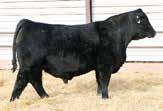
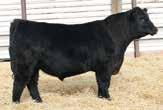
DOB: 3/4/25 Sire: Ellingson Prolific Dam’s Sire: B Bar Joe Hero 2774 EPDs: BW: +2, WW: +83, YW: +139 and Milk: +21 Buyer: MV Ranch, Recluse
for $150,000
on Jan.
cutting-edge research are among the many programs sustained by the Angus Fund.
The Angus Foundation Heifer Package has raised more than $3 million since the inception of the program.
For more information about the Angus Foundation or the annual Angus Foundation Heifer Package Sale, visit angusfoundation. org or call 816-383-5100.
Molly Biggs is a communications specialist for
the American Angus Association. This article was originally published by the association on Jan. 9.
Heifer package – The 2026 Angus Foundation Heifer Package, donated by Wilks Ranch of Eastland, Texas, was purchased by Express
Angus Ranches of Yukon, Okla.; Nowatzke Cattle/Maple Lane Farm of Michigan City, Ind. and Pollard Farms of Waukomis, Okla. for $150,000
9 at Cattlemen’s Congress in Oklahoma City. Courtesy photo
Economists say Africa is emerging as next major grain market for the U.S.
Africa’s rapidly growing population, accelerating urbanization and rising demand for vegetable oils and animal protein are positioning the continent as one of the most promising new grain and oilseed markets for U.S. growers, according to two agricultural economists who are closely tracking global trends.
During a Jan. 6 episode of Kansas State University’s (KSU) Agriculture Today podcast, Peter Goldsmith, director and principal investigator of the University of Illinois’ Soybean Innovation Lab, and KSU IGP Institute Senior Economist Guy Allen highlight why Africa could become a key destination for U.S. soybeans and other grains in coming years.
Increased demand
To begin, Goldsmith notes interest in African markets dates back to 2012 when U.S. government officials and industry leaders began examining opportunities to develop soybean markets in sub-Saharan Africa, where demand at the time accounted for less than one percent of global consumption.
“Back then, demand was very weak, palm oil domi-
nated the market and most countries outside of South Africa were closed to genetically-modified (GM) crops,” he says. “Things have advanced dramatically since then, in partnership with a lot of U.S. companies.”
“Sub-Saharan Africa in particular has seen a lot of high growth and opportunity, and they want to invest directly in soybean market development,” he adds.
Additionally, both economists mention Africa is expected to experience the fastest population growth in the world over the next several decades, and while much of the continent remains rural, urban populations are growing at more than twice the rate of rural ones.
Allen points out this shift has significant implications for food demand.
“As populations become more urban, disposable income grows and diets change,” Allen states.
He explains, while palm oil remains dominate in the region today, urban growth will likely fuel demand for soybean oil as a food ingredient, gaining market share as reliance on imports increases. He also believes
demand for soybean meal as a feed component for poultry and egg production will increase as well.
Goldsmith agrees this shift will increase soybean imports into Africa, as the country’s domestic production is already having trouble keeping up with demand.
In fact, he says processors across the region are operating at roughly only 50 percent of capacity due to limited supplies.
“They’re trying to find every soybean they can, and the gap is being filled by imports,” Goldsmith says. Key markets
To better understand market potential, Allen and Goldsmith mention they examined the comparative advantages of four African countries – Egypt, Ghana, Nigeria and Tanzania.
“Egypt is currently the largest importer of soy products in Africa,” Allen explains. “It is fairly evolved and sophisticated and what I would call a mature market.”
Ghana and Nigeria – both located in West Africa – offer U.S. exporters a transportation and logistical advantage, and Tanzania, while less developed, reflects conditions
common in many emerging African markets.
Allen goes on to explain market access varies by country, with availability of hard currency, port infrastructure and trade institutions playing a critical role.
He says Ghana, Nigeria and Egypt generally have sufficient currency reserves and port capacity to handle bulk grain imports, while other countries face more constraints.
He also notes tariff structure differs across countries, as some impose higher tariffs on processed products such as soy oil and meal to encourage domestic processing while leaving whole soybeans generally untaxed.
Major obstacles
Despite the African market’s growth potential, challenges remain.
“Africa is unfamiliar. The general public doesn’t tend to travel there often, so there isn’t a lot of commercial trade,” Goldsmith says. “Commercial norms and practices are new and different, which is a hurdle, but it’s not one that is uncommon in trade and/or unique to Africa.”
A significant and unique
challenge, however, is the country’s tight policy on GM crops. While South Africa allows GM products, many African countries historically have not.
Goldsmith says progress is being made in countries like Kenya, Ethiopia, Nigeria and Ghana, but broader acceptance is essential for large-scale commodity trade.
“For U.S. growers, the market has to be open to GM soybeans and corn,” he says. “Commodity markets don’t work well when products are differentiated and restricted.”
Technical knowledge is another barrier, according to Allen, who says training processors on how to efficiently use soybean oil and meal is critical to shifting the industrial standard away from palm oil.
He further notes organizations such as the U.S. Soybean Export Council and the Soybean Innovation Lab are working to provide this kind of education through programs like Soy 360.
Strategic importance
To wrap up, both economists emphasize the strategic importance of gaining access to Africa as the U.S. looks to diversify export markets amid
reduced Chinese demand. China currently accounts for more than 60 percent of global oilseed trade but has increasingly sourced soybeans from South America.
“The opportunity I see in Africa is we’re not competing over a portion of an existing pie,” Allen states. “Africa is new demand so the pie is getting bigger, and from a marketing point of view, when we’re in a growth situation like this, it’s a lot easier of an environment to establish a presence and be competitive than if we’re fighting over an existing or shrinking piece of the pie.”
Goldsmith adds Africa’s long-term potential could rival or exceed China’s market in the future, provided U.S. agriculture invests early in understanding and developing the market.
“This is a fast-growing import market where the U.S. has a comparative advantage,” he says. “The fundamentals are there, and they’re playing out in ways we’ve never seen before.”
Hannah Bugas is the managing editor of the Wyoming Livestock Roundup. Send comments on this article to roundup@wylr.net.
IT'S THE PITTS
by Lee Pitts
Cooties and Creeps
In the last 100 years, we have eliminated such diseases as the slobbers, palsy, quincy, the crud and the croup, and we didn’t have to have a single telethon, marathon or beg for money on TV to do it.
How easy we forget the pain and discomfort diseases such as puking fever, English sweating fever, the grip and the screws caused, and in all this time, I can’t ever remember getting a piece of junk
mail giving me a nickel in hopes I’d contribute to a campaign to cure dropsy, breakbone fever, ague, carbuncles, boils or piles.
The names of diseases when I was a kid were much more descriptive than they are now.
Instead of non-descriptive names like COVID-19, which doesn’t give a clue as to what it is or does, back then we called them like we saw them with diseases like barrel fever, which was just what one would surmise – alcoholism.
Ship fever and jail fever, now known as typhus, got their names from the terribly crowded and unsanitary conditions on ships and in jails.
I think one can guess from their names what the following diseases dealt with – trench mouth, liver complaint, falling sickness, ear throb, creeping numbness, the horrors, chin cough and softening of the brain.
Not to mention, the heebie jeebies, the creeps and the much-dreaded cooties every kid seemed to get in the third
grade. Although, in all honesty, I don’t think anyone ever died from cooties or anyone has ever actually seen one.
I can only remember a few maladies that gave no clue as to what part of the body they affected like puerperal fever, eel thing, dengue, anasarca, scrumpox and chalkstones, which we now know as arthritis.
Oops, upon further review, it seems for some reason diseases have evolved over time, and we didn’t actually eliminate them. We merely changed their names.
For example, quincy is now tonsillitis, dropsy is fluid retention, screws is rheumatism, scrumpox is impetigo, chin cough is whooping cough, consumption is tuberculosis, softening of the brain is stroke, commotion is concussion, gathering is a collection of pus, corruption is infection, hectial complaint is fever, inanation is starvation, horrors is now called delerium tremens, the grip is influenza, ague is malaria and strangery is rupture – not to be confused with rapture.
Also, worm fit is diarrhea, in which case the doctor’s only advice was, “Don’t sneeze.”
Some diseases have been merged and consolidated along the way.
For some reason tuberculosis went by several names including consumption, phthisis and long sickness, etc. It was said all could be cured by sleeping on the ground.
If a person had languor, black dog, melancholia, domestic malady or nervous affectations, they suffered from depression.
Some of the worst sounding diseases from way back when were black vomit, mor-
tification – gangrene – and puerperal exhaustion – death from childbirth.
We have eliminated a few diseases like grocer’s itch, which was caused by mites in the flour or sugar sold by a grocer, and other diseases were named after people like Parkinson’s disease, Bronze John, Hansen’s disease – leprosy – and Pott’s disease, not to be confused with Pitts’ disease, which is caused by coming in contact with me.
Another much-dreaded disease that went by several different names is syphilis which had been known as bad blood, great pox, French pox, King’s evil and Lues disease. I don’t know who Lue was, but how would you like your legacy to be that you had a venereal disease named after you?
For some reason, my family – probably bad genes – has suffered from many of these old-time diseases.
My father had barrel fever – I’m still not sure if alcoholism is a disease – a greatgrandfather had consumption, and when my great-grandmother went crazy, we simply said she “went off her rocker.”
My mother once had lumbago – back pain – so bad we had to carry her downstairs to the stove to cook dinner, and I’ve been been inflicted with many of the old diseases.
I’ve had softening of the brain or stroke, deplumation or baldness, decrepitude or old age, St. Vitus Dance or jerks, falling sickness or seizures, acute mania or craziness, Scrivener’s palsy or writer’s cramp and bowel complaints.
I’m just glad to report, I’ve never had Lues disease or I’d have some explaining to do to my wife.
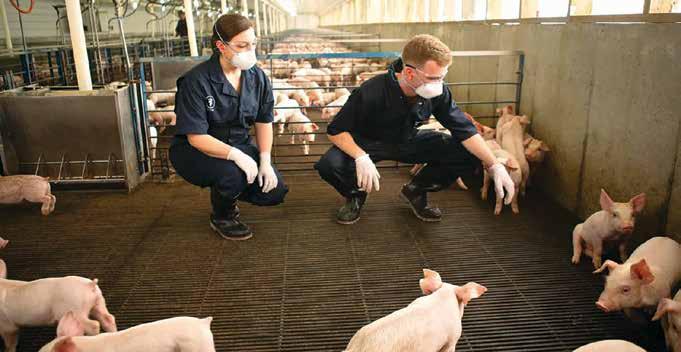
Elimination of diseases such as porcine reproductive and respiratory syndrome (PRRS) and porcine epidemic diarrhea virus (PEDv) is a main concern for every U.S. hog producer, and the development of the National Swine Health Strategy (NSHS) hopes to do just that, as well as prepare and prevent the introduction of foreign animal and emerging diseases.
The NSHS is a producerdriven initiative born out of an advisement presented at the National Pork Industry Forum in March 2025.
At the same time, the National Pork Board’s (NPB) Board of Directors approved a new strategic plan with a pillar focused on “improving the lives of pigs and people,” according to NPB Director of Swine Health Meredith Petersen.
“There’s also been a lot of industrywide discussions on this topic,” Petersen noted. “How can we coordinate work around swine health to get further as an industry?”
Establishing the NSHS
There is strength in numbers, and the NPB and National Pork Producers Council (NPPC) hit the ground running after the forum to gather as much information as possible from producers through more than 800 individual surveys and 47 listening sessions
National Swine Health Strategy aims to tackle porcine diseases
with producer groups, production systems and swine veterinary clinics.
A 12-member advisory group is made up of producers from different regions, segments of production and sizes of system or producer, as well as two state pork association executive directors and the chief executive officers from the NPB and NPPC. The group reviewed insights gathered and set the direction for the NSHS.
Five priorities have been identified, which include the elimination of major swine diseases such as PRRS and PEDv, reducing endemic disease spread, enhancing preparedness for foreign animal diseases (FAD) and monitoring emerging threats.
Already in place to address health issues in the swine world are such networks as the Swine Health Information Center (SHIC), Swine Health Improvement Plan (SHIP) and the Secure Pork Supply Plan (SPSP), but Petersen emphasized the NSHS isn’t creating anything new. Instead, it is helping agencies coordinate toward common goals.
“For example, the SPSP will continue to be a program the industry has to help producers prepare for an FAD outbreak,” Petersen said. “So, this directly aligns with the priority underneath the goal of keeping FADs out. What this does is allows
Montana Cowboy Hall of Fame inductees announced
The Montana Cowboy Hall of Fame (MCHF) will celebrate the 18th class of inductees on Feb. 14 at the Heritage Inn in Great Falls, Mont.
Inductees were chosen from a field of candidates nominated by the general public and will be recognized for their contributions to the history and culture of the state of Montana.
Registration is open for the Inductee Recognition Ceremony Brunch, which begins at 10:30 a.m. to celebrate accomplishments and lasting legacies of the inductees to the MCHF Class of 2026. Pre-registration is $35 per person.
The 2026 inductees into the MCHF include Betty Lorraine (Blair) Steele of Malta, Mont.; William C. “Billy” Knorr of Wolf Point, Mont.; Judd Twitchell of Jordan, Mont.; Thomas “Tom” Ray Larsen of Alzada, Mont.; George Albert Pitman of Lame Deer, Mont.; Ervin George Watson of Box Elder, Mont.; Edmond “Ed” C. Solomon of Havre, Mont.; Charlotte (Johnson) Barry of Cut Bank, Mont.; Walter “Blackie” Wetzel (Siks-A-Num) of Browning, Mont.; Gerald “Jerry” R. Petersen of Lewistown, Mont. and Charlie Russell Chew Choo of Lewistown, Mont.
Other inductees are Will Small of Busby, Mont.; Paul L. “Spike” Van Cleve III of Big Timber, Mont.; Ron Mills of Augusta, Mont.; Edward F. Lamb and George W. Lamb of Helena, Mont.; Jock and Jamie Doggett of White Sulphur Springs, Mont.; Brainard Ranch of Belgrade, Mont.; T.E. “Buddy” Westphal of Polson, Mont.; Majestic Valley Arena of Kalispell, Mont.; George Gogas of Missoula, Mont.; Marvin F. Bell of Hamilton, Mont.; William “Bill” F. Murphy of Garrison, Mont. and Montana Mad Hatters of Twin Bridges, Mont.
Attendees are encouraged to wrap up their day with the Cowboy Ball and Benefit Auction, which kicks off at 6:30 p.m.
Pre-registration of events is required by calling 406-650-7460.
us – from a national organization perspective – to align our work with these goals.”
Expanding the toolbox
Scott Hays, executive director of the Missouri Pork Association and a fifth-generation hog producer from Monroe City, Mo., sees SHIC, SHIP and the SPSP as tools for producers.
“This group is going to take a strategic look at all of the tools that exist today, plus whatever else producers or individual states are doing and apply it to the industry, then coordinate all of this to hopefully make a difference for the health of the herd,” Hays said.
Making a difference for the U.S. herd’s health starts with every producer implementing biosecurity measures and industry-wide biocontainment.
“We’ve got some great tools there, but we need to all coordinate and use them together,” Hays added.
Indicated by the surveys and listening sessions, PRRS and PEDv are still key concerns for producers regardless of operation size or geography.
“Overwhelmingly, we heard the focus on those domestic diseases, while also keeping an eye on FADs and emerging diseases,”
On Jan. 12, National Association of Wheat Growers Chief Executive Officer Sam Kieffer issued a statement in response to news of the U.S. Department of State and the U.S. Department of Agriculture (USDA) reaching an interagency agreement allowing USDA to operate the Food for Peace program.
Petersen said.
What does this strategic plan mean for producers?
“What I hope producers are able to see, at least from us at Pork Checkoff, is research which is really applicable to them at the farm level, and then producer education which can be implemented directly on the farm,” Petersen said.
Though this is a voluntary program, Hays said after every major disease faced on
NAWG applauds move
“For decades, the Food for Peace program has embodied the best of American leadership – delivering life-sustaining food around the world while supporting U.S. farmers at home,” the statement reads.
“NAWG is thrilled to see this agreement between USDA and the U.S. Department of State and thanks the
his farm, they assess where the failure was.
He said, “I hope as producers we can collectively have data available so we can start making real changes. We’re making bad decisions with no information because there was no information. We can make good decisions if we have good information.”
Kevin Schulz is the editor of The Farmer. This article was originally published by The Farmer on Jan. 12.
Trump administration for initiating this commonsense move.”
“Having USDA manage Food for Peace strengthens the program’s stability, ensures continued market opportunities for American grown crops and safeguards in-kind food aid for the people around the world who need it most,” NAWG continues.
Campaign yields insights
The American Lamb Board’s (ALB) Feast It Forward holiday campaign provided valuable insights to guide strategic marketing efforts in the year ahead.
Beyond growing the consumer e-mail list, the campaign delivered a clear snapshot of where consumers are actively choosing American lamb when dining out.
ALB plans to use these insights to identify and recruit potential Lamb Jam restaurants, track emerging restaurants
The campaign generated more than 500 consumer submissions from across the U.S., in which participants nominated their favorite restaurants serving American lamb and shared the lamb dishes they love most.
serving American lamb and better understand regional trends and consumer dining behavior.
To close out the campaign, ALB selected four lucky winners from across the country, each receiving a gift card to enjoy a “Feast It Forward” meal at their nominated restaurant.
January 14, 2026 - No Report
and buckles, rope bags, riding gear, YETI coolers, travel mugs and checks worth $6,200 apiece.
Case added to his accolades again just days later, winning the Open Team Roping in partnership with Kash Cook of Idaho Falls, Idaho to take the title.
The pair had previously roped together in jackpots throughout Wyoming and Idaho, according to a Dec. 30, 2025 Casper Star Tribune article by Jack Nowlin.
Wyoming champions
According to the same Casper Star Tribune article, the Kerrs were not the only Wyoming contestants to have a good run at the 2025 JNFR.
Klancy Cornelison of Evanston won the average at the Junior Roughstock Association’s Junior Bareback Finals with 215.5 points on three head, highlighted by a 75.5-point ride in the short round.
The 12-year-old seventh-grader told the Casper Star Tribune the win was extra special since it was his first time landing a firstplace finish.
“This feels amazing because I’ve got second and third other times, but this is my first time winning,” Klancy stated Nowlin. “I might just keep the buckle in the case because I don’t want to ruin it.”
Klancy’s brother, 15-yearold Kroyden Cornelison, finished second in the average in the senior bareback division.
The Evanston high
school freshman was competing in Vegas for the fourth time and won the final round short go with an 81-point ride – the highest score of the week.
“Rodeo’s Next Up” The YETI JNFR was founded in 2015. Each year, it draws hundreds of contestants from across the nation for 10 days of competition showcasing “Rodeo’s Next Up” – the next generation of rodeo talent.
Competitors from the age of eight to 19 compete for world titles and their slice of a combined payout amounting to over $1 million in cash and other prizes, including saddles, gear and Montana Silversmiths championship buckles.
To earn their shot at contending in Vegas, contestants compete in qualifiers for classic rodeo events including team roping, tiedown roping, barrel racing, steer wrestling, bareback riding, saddle bronc riding and bull riding. Breakaway roping and pole bending are also included at the JNFR.
In addition to title sponsor YETI, the JNFR is made possible through the contributions of a host of sponsors including Wrangler, Montana Silversmiths, Nutrena, Priefert, Classic Equine, Cavender’s, the Cowboy Channel and many more. Grace Skavdahl is the editor of the Wyoming Livestock Roundup. Send comments on this article to roundup@wylr.net.
World title – Twin brothers Ryder and Case Kerr of Afton earned a world championship team roping title at the 2025 YETI Junior National Finals Rodeo (JNFR) held in Las Vegas last December. Pictured from left to right are Ryder, JNFR Assistant Manager Brilynn Bentley and Case along with the brothers’ winnings. National Finals Rodeo Insider photo
prices which climbed one percent, steak prices which surged 17.8 percent, coffee prices which rose 1.9 percent and the cost of food at restaurants and other outlets which increased 0.7 percent.
Trump signs EO
Weeks before the bureau’s updated inflation data was released, Trump signed an executive order (EO) on Dec. 6, 2025 directing the Department of Justice (DOJ) and Federal Trade Commission (FTC) to investigate whether anticompetitive behavior like price fixing and foreign ownership is contributing to higher food costs for American consumers.
“An affordable and secure food supply is vital to America’s national and economic security,” the EO states. “However, anticompetitive behavior, especially when carried out by foreign-controlled corporations, threatens the stability and affordability of America’s food supply.”
Under the order, both the DOJ and FTC are required to establish Food Supply Chain Security Task Forces to investigate foodrelated industries, including meat processing, seed, fertilizer and ag equipment.
The agencies are tasked with determining whether
illegal collusion or market concentration is inflating prices or creating national and economic security risks.
If evidence of criminal collusion is uncovered, Trump has instructed the attorney general to pursue criminal proceedings, including potential grand jury investigations.
The DOJ and FTC are authorized to propose new regulatory approaches if anti-competitive behavior is identified.
Additionally, both task forces are required to brief Congressional leadership with a summary of their progress 180 days after the president’s order and again a year later.
Meatpacking and foreign ownership
According to a Dec. 7, 2025 DTN article, Trump referenced past civil settlements involving price-fixing allegations in the meat industry as justification for the investigation, noting several major meatpackers have paid tens of millions of dollars to resolve federal lawsuits in recent years, although there have been no criminal convictions.
DTN reports the president repeatedly singled out foreign-owned meatpacking companies as a source of pricing pressure, and in November, he pub-
licly called for a renewed DOJ investigation into beef prices, accusing foreignowned packers of manipulating markets.
“We will always protect our American ranchers, and they are being blamed for what is being done by majority foreign-owned packers who artificially inflate prices and jeopardize the security of our nation’s food supply,” Trump posted on Truth Social. “Action must be taken immediately to protect consumers, combat illegal monopolies and ensure these corporations are not criminally profiting at the expense of the American people. I am asking the DOJ to act expeditiously.”
Additionally, DTN says the U.S. Department of Agriculture was not assigned a formal role in the task forces outlined in the EO, raising questions among farm groups about how producer impacts will be evaluated.
Inflation pressure
According to a Jan. 13 Reuters article, food and housing costs were the primary drivers of December’s 0.3 percent increase in the Consumer Price Index (CPI), underscoring what many economists are describing as a “persistent affordability crisis.”
Reuters notes while underlying inflation remained
moderate, higher grocery and restaurant prices are proving more challenging for consumers.
“Families may not closely track core inflation, but they see grocery prices and restaurant costs immediately,” says Sung Won Sohn, Loyola Marymount University finance and economics professor. “A renewed push in food prices is not merely a statistical detail, it can influence public perception, wage negotiations and ultimately economic behavior.”
Multiple sources cite economists who believe that although some ag tariffs have been rolled back, it may take time before consumers see meaningful relief at the checkout line.
Other sources report, despite Trump blaming inflation on policies enacted under the Biden administration, polls have shown many consumers are shifting blame to him instead.
“Twice as many Americans believe their financial security is getting worse rather than better, according to a Harris Poll conducted for The Guardian last month, and they are increasingly blaming the White House,” writes
Continued uncertainty
Overall, sources are uncertain what this investigation will produce.
DTN points out the president’s recent order marks a shift from his earlier stance on competition policy. In August, he rescinded a Biden-era EO directing agencies to scrutinize corporate consolidation across industries, including agriculture and food.
DTN further reports during Trump’s first term, the DOJ examined meatpacker pricing following a
2019 Tyson Foods plant fire and pandemic-related disruptions, but no public findings were released.
Meanwhile, Reuters notes inflation remains above the Federal Reserve’s two percent target, with the CPI holding steady at 2.7 percent year-over-year in December. For now, consumers facing higher grocery bills are left waiting to see if the administration’s investigation will lead to concrete action or lasting relief.
Hannah Bugas is the managing editor of the Wyoming Livestock Roundup. Send comments on this article to roundup@wylr.net.
CLAY CREEK ANGUS
Michael Sainato in a Jan. 13 article published by The Guardian
Adobe Stock photo
Kansas State University Beef Cattle Institute experts discuss fog fever in cattle
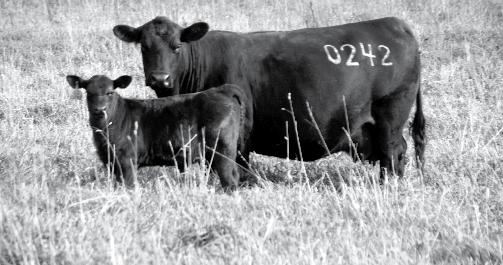
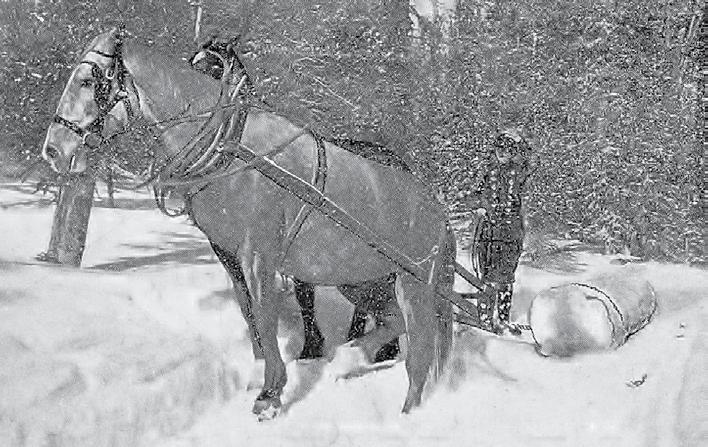
Although it is an illness which tends to affect cattle in fall months, acute bovine pulmonary edema and emphysema – commonly referred to as fog fever –was a topic of discussion during a recent edition of the Kansas State University (KSU) Beef Cattle Institute (BCI) Cattle Chat podcast.
In the Jan. 9 episode, KSU Clinical Assistant Professors Dr. Todd Gunderson and Phillip Lancaster took turns discussing a listener question posed by Dr. Glenn Gamble of Riverton regarding management strategies for combatting fog fever in cattle.
Overall, the experts agree introducing cattle to new forage environments gradually is the best course of action when it comes to preventing fog fever.
Causes and symptoms
As noted in a Sept. 13, 2021 article written by North Dakota State University (NDSU) Extension titled “Sudden Change in Diet May Cause Bovine Fog Fever,” fog fever is a rapidly-developing respiratory condition which occurs in cattle following sudden changes in forage.
It often occurs in the fall due to an increase in tryptophan levels throughout lush, rapidly-growing pas-
tures and usually develops in the first two weeks after moving animals from dry forages – including overgrazed pastures and/or dry feed – to lush grasses.
“Animals diagnosed with fog fever have lung damage due to metabolites produced by the rumen micro flora in response to the rapid change in diet from dry, mature grasses and forages to the higher moisture, lush growth found in grasses, alfalfa, some meadow forages and even some species of brassica cover crops,” says NDSU Extension Veterinarian Dr. Gerald Stokka. “The change in diet results in metabolites of the naturally occurring amino acid tryptophan.”
Symptoms of an outbreak include labored breathing, extended head and neck and frothing of the mouth. Once an outbreak is identified, it is often too late, as this strain of pneumonia does not respond to antibiotic therapy.
For this reason, proper herd management and risk-reduction strategies are important to consider before switching pastures.
Management strategies
In the Cattle Chat episode, Gamble poses a question regarding the poten-
tial impact of plant management in reducing fog fever throughout certain areas of Wyoming.
Gamble details instances of death loss after cattle were turned out to graze along a lush, boggy creek bank in Wyoming and wondered how to identify which plants were highest in tryptophan, as well as whether removing them from the area would be possible or helpful in reducing risk of fog fever.
The KSU BCI team agrees the answer to managing fog fever lies less with plant elimination and more with the gradual introduction of cattle to new forage areas.
“If we give cattle time to adapt their ruminal flora, they don’t convert the l-tryptophan to 3-methylindole, and it isn’t as toxic,” says Gunderson.
Gunderson admits a few species of plants do manufacture l-tryptophan at higher rates than others, but most are not found in high concentrations in Wyoming.
Further, Gunderson emphasizes a variety of common plants including bermuda grass, buffalo grass and legumes like alfalfa are effective at converting nitrates into l-tryptophan during lush stages
of growth. Therefore, eliminating such grasses is not necessarily a viable prevention strategy.
“Any grass can develop this, so I would say you’re going to have better luck trying to manage this rather than eradicate a certain plant and replace it with something else which could just as easily cause this problem,” adds Lancaster.
Reducing risk
To reduce risk, Lancaster recommends intro-
ducing cattle to new forages slowly and putting out hay to give their digestive systems time to adjust, as well as considering supplementing diets with ionophores like Rumensin and Bovatec.
“Your best bet is going to be transitioning cattle to lush forages slowly rather than trying to completely transform an entire ecosystem,” he says.
NDSU Extension also recommends feeding hay prior to turning cattle on
to new growth and limiting the number of hours cattle can graze new forage to ensure the transition remains gradual.
Overall, experts agree consulting with veterinarians and nutrition specialists in any cases involving rapid diet change of pastured cattle should be prioritized. Grace Skavdahl is the editor of the Wyoming Livestock Roundup. Send comments on this article to roundup@wylr.net.
Fog fever – An intense, rapidly-developing respiratory disease commonly referred to as fog fever can affect cattle which have been moved suddenly from dry forage to lush grass. To combat this risk, experts recommend introducing herds to new forage gradually. WYLR photo
Ambassadors work in person and online to tell their beef production story, educating consumers about the production chain and promoting the good image of ranching.
In addition to increasing education, WYBAP equips young people with opportunities to develop professional and personal skills including leadership, communication and self-confidence which will serve them throughout their terms, lives and eventual careers.
WYBAP Director Nicki Nimlos notes the program has been revitalized in recent years after a hiatus beginning in the early 2000s, and the response has been overwhelmingly positive.
“We wanted to get WYBAP going again to increase the general public’s understanding about the importance of ranching,” Nimlos says, emphasizing the critical role ranching plays in land management, ecosystem health and
For
food security.
“People don’t think of Wyoming as a place where we need to advocate for beef, but we need to advocate for beef everywhere – even in places like Wyoming,” Nimlos continues.
Ambassador duties
Throughout the duration of their term, ambassadors are required to lead four educational events of their choosing.
Students are allowed flexibility in choosing which events to host, as long as all
events are aimed at promoting beef and properly documented with photos and written reports.
Potential events include hosting an informational booth on campus or at the Wyoming State Fair, promoting beef through presentations in kindergarten through 12th grade classrooms, passing out brochures during local community events and more.
Ambassadors must also maintain an active social media presence advocating for the industry and are encouraged to complete Beef Quality Assurance and
the Master of Beef Advocacy Program.
After their term is complete, ambassadors will have a better understanding of the beef industry and possess necessary skills to continue promoting ranching throughout their lives.
At the end of their term, WYBAP ambassadors are allowed and encouraged to apply for the National Collegiate Beef Advocacy Program in order to take their skills nationwide.
New ambassadors
Five UW students, including one freshman and four juniors, were selected to serve as the 2026 WYBAP ambassadors. Their duties will begin in February.
Sean Frost is a freshman from California studying ranch management and
ag leadership.
Braley Smith of Laramie is a junior studying ag business with a concentration in livestock management.
Klacie Groene of Torrington is a junior studying ag communications, and Hattie Nelson of Lusk is a junior studying finance and marketing.
Sarah Liepold of Arvada, Colo. is a junior studying ag business with a concentration in livestock management.
A panel of judges consisting of Nimlos, WCW President Becky Langley, WCW Parliamentarian Leslee Lohrenz, Meredith Volquardsen and Leslie Hendry, original program director for the first-ever WYBAP, evaluated the contestants across three categories.
Students were scored on
their level of professionalism in speech and dress, a presentation detailing their interest in WYBAP and leadership and an issue response question regarding controversial topics in the beef industry.
All five ambassadors will be awarded a cash prize based on their performance and outreach following the completion of their terms in December 2026.
Applications for WYBAP are due in early November every year and can be completed online with more information made available as the deadline approaches annually.
Grace Skavdahl is the editor of the Wyoming Livestock Roundup. Send comments on this article to roundup@wylr.net.
-
Blk Hfr Clvs, avg. 545# $47400 Dobson, Martin - Burlington
5 Blk Str Clvs, avg. 566# $49250 11 Blk Str Clvs, avg, 599# $46250 Sage Creek L & C - Worland
8 Blk Str Clvs,
Jeremy - Riverton 3 Blk Hfr Clvs, avg. 692# $35000 Sage Creek Land & Cattle - Worland 28 Blk Hfr Clvs, avg. 774# $33600 STEER
Consignments • January 22
Bred Cow & Heifer Special w/ All Class Cattle, Sheep & Goat
Keith Bower – 10 black bred heifers, calve mid-February, bred to Black Angus bulls.
Mark Jones – 35 black bred cows, calve April, bred to black bulls.
Matt Fantasky/Preston Schwarzkoph – 7 bred heifers; 16 bred cows, 3 YO; 8 bred cows, 4-5 YO; 16 bred cows, 6 and up, bred to black Wagyu bulls, calve April 1 for 45 days.
Steve Watkins – 7 bred Black Angus heifers, calve mid-April, AI’d to CCA Emblazon 702 bull, registration #15980098, clean up with calving ease Black Angus bull.
Galloway Ranch – 40 fed cows, on corn since Dec. 1.
Braley Smith Courtesy photo
Hattie Nelson Courtesy photo
Klacie Groene Courtesy photo
Sarah Liepold Courtesy photo
Sean Frost Courtesy photo
CALENDAR
Submit your events to: Editor, Wyoming Livestock Roundup, P.O. Box 850, Casper, WY, 82602, or e-mail to roundup@wylr.net.
EVENTS
Jan. 19 University of Nebraska-Lincoln Extension Calving College Series Part One, 6:30-7:45 p.m., online. For more information, contact Lindsay WaechterMead at 402-746-3417 or lindsay.waechter-mead@unl.edu. To register, visit cvent.me/GOYAra
Jan. 20-22 Wyoming Applicator and Vector Education Summit, Ramkota Hotel and Conference Center, Casper. For more information or to register, visit bit.ly/ psep-waves-26
Jan. 21 Beef Cattle Research Council Hormone Implant Webinar, 7 p.m., online. For more information or to register, visit beefresearch.ca
Jan. 21-24 National Bison Association Winter Conference, Broomfield, Colo. For more information, visit nationalbison.org/events
Jan. 22 West Greeley Conservation District CERES Tag and ENVU Range and Pasture Workshop, 9 a.m., West Greeley Conservation District Office, Greeley, Colo. For more information or to register, call 970-230-7020 or e-mail Roy Hall at leroy.hall@wgcd.org.
Jan. 23 Larry Higgins Bison Junior Judging Contest, Denver, Colo. For more information, visit bisonranchers.com/events/the-larry-higgins-bison-junior-judgingcontest
Jan. 24 Wyoming Stock Growers Association Wyoming Day Celebration, National Western Stock Show, Denver, Colo. For more information or to register, visit wysga.org
Jan. 24 The National Bison Association Gold Trophy Show and Sale at the National Western Stock Show, Denver, Colo. For more information, visit nationalbison.org/event/gold-trophy-show-and-sale-gtss
Jan. 24 Fremont County Cattlemen’s Annual Meeting and Banquet, 12:30 p.m. meeting, 5 p.m. social hour, 6 p.m. dinner, Lander Community and Event Center, Lander. Tickets are available until Jan. 20 by calling Clay Espinosa at 307-349-7777.
Jan. 26 University of Nebraska-Lincoln Extension Calving College Series Part Two, 6:30-7:45 p.m., online. For more information, contact Lindsay WaechterMead at 402-746-3417 or lindsay.waechter-mead@unl.edu. To register, visit cvent.me/GOYAra
Jan. 27 University of Wyoming Extension Pesticide Safety Education Program, 8 a.m.-12 p.m. or 1-p.m.-5 p.m., Niobrara County Fairgrounds, Lusk. For more information, visit bit.ly/wy-psep-private-app. To register, e-mail kelliec@uwyo. edu or call 307-334-3534.
Jan. 27-29 Colorado Farm Show, Island Grove Park, Greeley, Colo. For more information, visit coloradofarmshow.com or call 970-356-9426.
Jan. 28-31 American Sheep Industry Annual Convention, Reno, Nev. For more information, visit sheepusa.org/events-convention
Jan. 31 University of Wyoming Extension 4-H Volunteer Training, 9 a.m.-4 p.m., Summit Church – Family Life Center, Buffalo. For more information, contact the Johnson County Extension Office at 307-684-7522 or bmckenz7@uwyo. edu. To register, visit bit.ly/4h-northeast-training-2026
Jan. 31 Moffat County Calving Clinic, Craig, Colo. For more information, e-mail megan.stetson@colostate.edu or call 970-826-3402.
Jan. 20 Ken Haas Angus 45th Annual Right Combination Bull Sale, at the ranch, LaGrange, 307-631-0844, 307-575-0095, kenhaasangus.com
Jan. 22 Marcy Livestock 64th Annual Angus Bull and Female Sale, Gordon Livestock Auction, Gordon, Neb., 308-430-2005, marcylivestock.com
Jan. 23 McConnell Angus Annual Bull and Female Sale, at the ranch, Dix, Neb., 308-235-5187, 308-230-0430, 970-215-3204, mcconnellangus.com
Jan. 24 Little Goose Ranch Ninth Annual Production Sale, Buffalo Livestock Marketing, Buffalo, 307-751-1535, 307-689-1072, 307-622-8330, littlegooseranch.com
Jan. 25
Triangle J Ranch 36th Annual Bull Sale, at the ranch, Miller, Neb., 308-6275085, 308-457-2505, 308-293-9241, trianglejranch.com
Jan. 26 Douglas Booth Family Angus 34th Annual Bull Sale, Torrington Livestock Market, Torrington, 307-532-5830, 307-532-6207, boothfamilyangus.com
Jan. 26 Bullis Creek Ranch Spring Production Bull Sale, at the ranch, Wood Lake, Neb., 402-376-4465, bulliscreek.com
Jan. 29 Ridder Hereford Ranch Annual Sale, at the ranch, Callaway, Neb., 308-8364430, 402-450-0431, ridderranch.com
Jan. 31 21 Angus 32nd Annual Top Cut Bull Sale, at the ranch, New England, N.D., 701-579-4221, 21angus.com
Feb. 4
Durbin Creek Herefords LLC 14th Annual Bull Sale, Big Horn Basin Livestock Auction, Worland, 307-921-8825, durbincreekranch.com
Feb. 5 K2 Red Angus Winter Bull Sale, K2 sale barn, Wheatland, 307-331-2917, k2redangus.com
Feb. 6 TJS Red Angus 18th Annual “Red Truck” Sale, Buffalo Livestock Marketing, Buffalo, 406-639-9112, tjsredangus.com
Feb. 6
Feb. 9
Elkington Polled Herefords and South Devons 46th Annual Range Raised Cattle Sale, at the ranch, Idaho Falls, Idaho, 208-521-1774, 208-681-0765, elkingtonpolledherefords.com
Pilakowski Angus Annual Performance Tested Bull Sale, Lightning Valley Ranch, Arthur, Neb., 308-249-0885, pilakowskiangus.com
Feb. 9 Fawcett’s Elm Creek Ranch Annual Production Sale, at the ranch, Ree Heights, S.D., 605-870-6172, 605-478-0077, fawcettselmcreekranch.com
Feb. 10 G Bar H Genetics Angus Bull Sale, Torrington Livestock Market, Torrington, 307-575-5520, 307-575-0373
Feb. 12
Feb. 13
Booth’s Cherry Creek Angus 53rd Annual “Progress Through Performance” Bull Sale, at the ranch, Veteran, 307-534-5865, 307-532-1805, 307532-1532, boothscherrycreekranch.com
Powder River Angus Annual Production Sale, Buffalo Livestock Marketing, Buffalo, 307-680-7359, 307-680-8266, powderriverangus.com
Feb. 14 Ludvigson Stock Farms All American Bull Sale, Leachman’s Sale Facility, Meriden, 515-450-3124, ludvigsonstockfarms.com
POSTCARD from the Past
It Was All a Part of Range Life
Following is the first of a two-part series portraying the life of a 13-year-old boy on a ranch in the 1880s. Material is taken from the book “Range Rider” by Bud Cowan, in which he relates the founding of the Big Creek Ranch in southcentral Carbon County and North Park, Colo.
The winter of 1883, all of the neighbors got together and built a block house up at Pinkhamton, about three miles from our home ranch.
well as dead logs for winter wood.
We camped in a cabin up there, hauled up hay for the oxen and brought up what provisions we needed.
We used bulls for parking the timber – that is, after cutting it we would drag it out to the side of the road where it was easy to load it on the sled and take it down to where it could be used.
the ranch.
After we hauled everything down with the bull team, father started us to sawing up the wood.
All Jimmy and I had to do that winter was saw wood, milk cows and attend to the horses and a few other chores because father had taken mother and the girls to Denver after we had done our share of building the block house.
Jimmie and I went up in the timber and cut logs for the block house, as
We cut all of the logs to build the block house and about eight loads of dead timber for the winter wood, and then it was our job to get the logs down to
Jimmie and I figured out a way to cut our wood which worked even better than we thought it would. We had an old Buck Eye mowing machine father had discarded and set over against the back of the barn. We conceived the idea of making a sawmill out of it. We wouldn’t have dared even mention the idea if father had been home, but we were our own bosses for the time being, and we went ahead with our plans.
To be continued in the next Postcard.
6 Excellent Speakers to cover a broad range of topics including- Disease and Weed Control. Speaker Examples: Dr. Andrew Kniss From University of Wyoming - Professor of Weed Science Dr. Jean Williams - Woodward University of Wyoming - Plant Pathologist Aaron Miller - Spray Nozzle Technology - TeeJet
Wednesday, February 4 • 10:00 AM • Lunch 12:00-1:00 PM • Private Pesticide Applicator Class •
We will serve a lunch please RSVP the Washakie County Extension Office. Call (307) 347-3431.
Tuesday, February 3 • 9:00 AM • Lunch 12:00-1:00 PM • Sugar Beet Conference • • Lunch Sponsor •
A youngster skids logs with a team atop the Snowy Range during a snowstorm in the 1880s. Photo from Gold Hill prospectus book in the Bob Martin/Dick Perue collection. Historical Reproductions by Perue
Compared to the last report all reported hay sales sold steady. Demand is mostly light with instances of moderate demand in some areas of the state. Most hay producers have at
National Sheep Summary As of January 9, 2025
Compared to last week slaughter wooled and shorn lambs sold steady. Slaughter ewes sold firm. All sheep sold per hundred weight (CWT) unless otherwise specified.
Slaughter Lambs: Choice and Prime 1-3: San Angelo: 70-80 lbs 345.00; 90-100 lbs 350.00; 100-110 lbs 300.00-390.00; 110-120 lbs 375.00; 130-140 lbs 280.00. Billings: No test.
Slaughter Ewes: Good 2-3: San Angelo: 138.00-149.00.
Billings: No test.
Ft. Collins: 140.000-180.00.
Sioux Falls: No test.
Feeder Lambs: Medium and Large 1: San Angelo: No test.
Billings: No test.
Sioux Falls: No test.
Ft. Collins: No test.
Replacement Ewes: Medium and Large 1-2: San Angelo: No test.
Billings: No test.
Ft. Collins: No test.
South Dakota: No test.
Sioux Falls: No test.
Sheep and lamb slaughter under federal inspection for the week to date totaled 38,000 compared to 34,000 last week and 34,814 last year.
Source: USDA AMS LPG Market News, San Angelo, Texas
Wyoming Hay Summary
As of January 8, 2026
Compared to the last report hay sales reported trading steady. Demand is mostly light, instances moderate. Dry, windy conditions continue across the state and some ranchers are afraid hay price will go up this year’s growing season so some are laying in enough hay to get through the winter of 20262027. Some hay contacts have decided to retire from the hay productions business as they have sold their ground to the younger generation.
Wyoming
Source: USDA AMS Livestock, Poultry &
Colorado Hay Summary
As of January 15, 2026
Compared to last report: Trade activity light on moderate demand. Prices mostly steady across all hay types. According to the U.S. Drought Monitor’s High Plains Summary for January 13, 2026, above-normal precipitation occurred across eastern Colorado, Kansas, and southeast Nebraska, falling primarily as rain and infiltrating soils due to warm temperatures. Much of the rest of the region remained dry. Temperatures were 10-15°F above normal across most areas, with parts of the Dakotas and eastern Montana 15-20°F above normal. Southeast Colorado was the only area near to below normal. Abnormally dry and moderate drought conditions improved in southeast Nebraska, eastern Kansas, and parts of south-central Colorado. Drought expanded across eastern Wyoming, west-central South Dakota, and northeast Colorado. The next available report will be Thursday, January 29, 2026..
&
CLASSIFIEDS
Pasture Wanted
LOOKING FOR PASTURE FOR THE SUMMER GRAZING SEASON FOR 100 PAIRS OF EXCELLENT BLACK COWS in central or northeastern Wyoming. Call Richard Leavitt, 307-2142200 2/7
WEAVER RANCH
PRESIDENT’S DAY PRODUCTION SALE – FEB. 16, 2026 12:30 PM @ the ranch north of Ft. Collins, CO
• 60 Registered Black Angus Bulls • BVD, Fertility, PAP and Trich Tested
SUMMER PASTURE WANTED FOR YEARLINGS: Seeking summer grass for 2026. For 500-1,500 head. Wyoming, Colorado, Nebraska, South Dakota. Prefer long-term potential, competitive rates offered. Call Jon, 831-240-5795 TFN
LOOKING TO LEASE A RANCH FOR APPROXIMATELY 150-200 HEAD OF COWS. Prefer area in Johnson and Sheridan counties. Call 307290-1643 1/31
GOTTSCH LIVESTOCK FEEDERS
LLC Red Cloud, NE
Come Join the Gottsch Livestock Feeders Family! Gottsch Livestock Feeders is looking for Cowboys/Pen Riders for their feedyard in Red Cloud, NE. The main focus of the Cowboy/Pen Riders are spotting, pulling, diagnosing and taking cattle to the hospital and shipping fat cattle. This person will need to be a team player who is seeking a long-term position. You will have the opportunity to work with and learn from some of the best in the industry. We offer a benefits package that includes health insurance, dental, vision, 401(k), health savings, life insurance and paid vacation. Retention bonus offered to full-time employees. Incentives paid out at 6 months and 1 year of employment. If you are interested stop by and fill out an application or visit our website at Call Mike Faimon at 406-469-1585 for more information.
must be present to win, 21 years of age and able to pass background check. Buy, sell, trade. Adults $6, children 12 and under free (when accompanied by an adult). For more information, contact Lisa, 208-420-2295 2/14 SEASONAL WEED CONTROL TECHNICIANS WANTED FOR THE BIG HORN COUNTY WEED & PEST DISTRICT: Must be 18 or older. Must have a valid driver’s license. For more information and to submit an application, please visit our website www.bhcweed.com 1/24
ALL TYPES OF EQUIPMENT AND VEHICLE FINANCING. Great service!! Great rates!! Call Chuck Brown at C.H. Brown Co., LLC, 307-3223232 (office), 307-331-0010 (cell) or e-mail chuckbrown@ wyoming.com 1/17
AGRI-ONE FINANCIAL: Farm/ranch and all commercial loans. RATES AS LOW AS 5%. We have been helping with all aspects of agricultural, commercial financing and management for years. LET US HELP YOU on a consulting level with management to increase profitability, deal with and fix credit problems and for all your financing needs. WE CARE AND HAVE WORKING PROGRAMS designed for the farmer/rancher and not the banker. Please call Steve, 303-773-3545 or check out our website, www.agrionefinancial.com I will come to you and get the job done!! 1/24
AMERICAN WELSH CORGI PUPPIES: CKC registered, born Nov. 2, 2025. Very cute and sociable. $500/each. Call 307- 271-2713 1/24
ENGLISH SHEPHERD PUPPIES: Ready now. Farm raised, working dogs, red and brown tri-colored, $400. For more information, call 402641-8842 1/17
LOTS of hunters and we pay top $$ to ranchers. DCPC Varmint Hunts Est. 1992
Call Dick • 406-366-3858
For more information contact: Susan & Mourine Weaver • (970) 568-3898 3000 West Co. Rd. 70 • Ft. Collins, CO 80524 Visitors always welcome • Cattle may be seen at any time!!!
YEARLING ANGUS BULLS:
These bulls are grown, not fattened, will get out and cover cows. Many will work on heifers. We will deliver. Call Joe Buseman, 605351-1535 2/7
NICE SET OF 200 BLACK BRED HEIFERS, weighing 1,050 lbs. Bred to LBW Black Angus bulls from Topp Angus. Ultrasound tested to calve in 30 days starting March 5. Recently poured and given 1 dose of 4KC. $4,600. Call 307-7092375. To view photos, go to www. wylr.net in the classifieds 2/7
BULLS FOR SALE: Registered yearling and 2-year-old Black Angus range bulls for sale private treaty. Good selection for heifers and cows. From popular sires and industry leaders. Semen tested and ready to go. CLAY CREEK ANGUS, 307-762-3541, www. claycreek.net TFN
Hereford
TWO-YEAR-OLD HEREFORD BULLS: Canadian registered. Fertility checked. View photos at www.workingherefords.com Estermann Herefords, 308-3404159 or 308-963-4473 2/7
FOR PRIVATE TREATY SALE AHA REGISTERED POLLED MINIATURE HEREFORD BULL CALF: Born July 2025 weaned and available. Sired by son of Boyd 31Z “Blueprint” 6153. Documented pedigree. Approximately 400-450 lbs. Located Powell, WY. Shots and RFID tagged. B&L Farm and Cattle, LLC. Call Bob or Linda at 307-254-7047 1/31
TWO-YEAR-OLD POLLED HEREFORD BULLS: Top bloodlines Historic and Gold Rush. Call Donald, 208-201-6213 1/17
www.gottschcattlecompany.com
LOOKING FOR RANCH ASSISTANT PROPERTY MAN -
AGER: Full-time position for large ranch located in Park County, WY. Responsibilities include: Lawn care, irrigation, agricultural equipment maintenance and general residential, building and property maintenance. Salary range of $45-$60K depending on experience. Living on property is required for employment. House and vehicle will be provided. Property is located 10 minutes from downtown Cody, WY. Position is available for immediate hire. Please send resumes to hbeirne@acpg. com and mgiliati@acpg.com 1/24
WYOMING BRAND FOR SALE: RRC, RSS, RHH. Expires Jan. 1, 2029. Electric iron included. $2,500 OBO. Call 307-575-6589 1/7
AKC ENGLISH SPRINGER SPANIEL PUPPIES: Health tested and vaccinated. Well socialized. Born Dec. 14, 2025. Call 785-447-2984 1/17
AKC LABRADOR PUPPIES: Eight weeks old, first shots, 1 yellow and 3 black females available. Pointing labs, parents onsite, proven hunters. Asking $1,000 or will trade for guns. Will make amazing dogs!! Call 307-631-9649 or 406-671-3733 for information and photos. Laurel, MT 1/17
MOFFAT COUNTY CALVING CLINIC, CRAIG, CO JAN. 31: This 1-day hands-on clinic offers a full day of interactive learning designed to equip livestock producers and caretakers with essential knowledge and practical skills for a successful calving season. You’ll leave with tools and strategies that can transform how you approach calving. Tailored to livestock producers of all experience levels. Email megan.stetson@colostate. edu or call 970-826-3402 for more details 1/24
FOR SALE: 300 head of commercial Angus and F-1 baldy bred heifers. Hand selected and purchased from top ranches in the region. All Miller Angus Farms customer genetics. UTD on vaccinations, pelvic measured, dewormed. Pregged/sorted into calving window groups. AI bred to elite calving ease bull GB Mogul M64J and cleaned up to top tier calving ease bulls. Group 1 due March 1. Group 2 due March 16. Group 3 due March 28. Group 4 due April 1 for 30 days. Group 5 due May 1 for 30 days. Will go on to make a productive, high performing cow that will add value to your program. First come, first served. Small loads to pot loads and volume discounts available. Free delivery. Miller Angus Farms, Kody, 605-690-1997 or Brady, 605-6905733 1/31
Shorthorn
SHORTHORN BULLS FOR SALE PRIVATE TREATY:
Yearlings up to mature bulls available. Developed conservatively so they hold up. Remember a red Shorthorn bull on your homozygous black cows will give you black calves. Shorthorns are excellent maternal cattle that produce quality beef. FrancisMillvale Shorthorns, Gene and Roberta Francis Family, 701-331-2403, e-mail francis. millvale@gmail.com. To view photos, go to www.wylr.net in the classifieds 1/17
PARK COUNTY, WY RANCH NEAR CODY, WY IS AVAILABLE FOR A LONG-TERM LEASE: The ranch has over 50,000 acres and supports an irrigated hay base with BOR water rights. Carrying capacity is 700 animal units year-round with hay production. Willing to split the hay ground and grazing. Please e-mail Honora Beirne (hbeirne@acpg.com) and Melanie Giliati (mgiliati@ acpg.com) for details 2/7
Horses
RANCH, RODEO, ROPING, BARREL RACING PROSPECTS: 2024 APHA black solid and sorrel Tobiano geldings. 2025 AQHA bay, red roan, bay roan colts. 2025 AQHA bay and APHA sorrel Overo fillies. 2025 grade buckskin colt. Visit www.brokenbackranchquarterhorses.com Call for pricing, 307-272-5509. Ten Sleep, WY 1/17
LS CUSTOM LEATHER: Belts, tack, cell phone cases and much more!! Contact Lester, 307-6311053, leave a message. Located in Riverton, WY 1/17
PIGS FOR SALE, located in Powell, WY. For more information, call 307271-1014 1/17
Hay & Feed
VALLEY VIDEO HAY MARKETS, LLC: Representing 40 of the best growers in eastern Wyoming and western Nebraska. Call now for your winter needs, Barry McRea, 308-235-5386, www. valleyvideohay.com 2/7
2024 HAY FOR SALE: 2,000+ bales, first, second and third cutting alfalfa/orchardgrass mix, roughly 50/50, round bales. If tests wanted, they can be obtained. Thirty miles east of Valentine, NE, trucking available if needed. Call or text for more information, 402759-2033 1/17
HAY FOR SALE: First, second and third cutting alfalfa, alfalfa/orchardgrass and grain hay options, net-wrapped round bales and 3x3 square bales. Delivery available. WE ALSO OFFER CUSTOM TRUCKING, hay hauling and side dump to haul gravel. Call Cheney Trucking/Jonathan Cheney, 605-569-0469 1/17
ALFALFA/GRASS MIX: Large round bales. FIRST AND SECOND CUTTING ALFALFA, large rounds and small square bales. OAT STRAW, large round bales. ALSO, HIGH QUALITY feed value SHELL CORN. For more information, call 307-7545864 1/17
GRAIN CORN FOR SALE in the Pompey’s Pillar, MT area. Call 406-860-8924 1/31
CERTIFIED BARLEY STRAW FOR SALE, 3x4 bales. Cody, WY. Call 307-899-1952 TFN
HAY FOR SALE: Grass and alfalfa hay. ALSO, grass/alfalfa mix, millet, forage wheat and straw. Round bales and 3x4 square bales. Delivery available!! Call 307-630-3046 1/31
HAY FOR SALE: 2025 grass/ alfalfa, first and second cutting alfalfa, millet, haybet barley and CRP hay. ALSO, 2025 GRINDING HAY also available. All in net-wrapped round bales. Semi load delivery available. Call for pricing, ask for Klint, 701-2904418, if no answer, send a text or keep trying 1/31
HAY FOR SALE: Triticale, barley, pea blend with alfalfa, nice hay, 3x3 bales. Alfalfa with some rain, 3x3 bales, shed stored, $170/ton. ALSO, CERTIFIED TRITICALE STRAW, long stem round bales, $130/ bale. Farson, WY. Call 307350-0350 2/7
BARLEY STRAW: Certified weed-free small squares, $4/ bale. ALSO, 5x6 round bales, $125/ton. GRAIN OATS, wheat and barley, $20/cwt. Greybull, WY area. Call 307762-3878 or 307-899-4714, leave message 1/24
ROUND-BALED GRASS: 2025 crop 1,000 lb. net-wrapped bales, $50/bale. Cody, WY area. Call, don’t text, Anthony at 307-254-2645 2/7
400 TONS DURUM STRAW: Round bales, 1,000 lbs., $40/ bale, 780 bales available. Excellent bedding or feed. Call 406765-7172 1/24
CERTIFIED WEED-FREE PURE ALFALFA HAY: 2025 third and first cutting available in small squares, averaging 70-80 lbs. Will load trucks and any open trailer. MONIDA OATS: $16/cwt. Combine run, great for seed or feed. Will auger into truck, trailer or large totes/ag bags. Located between Powell and Cody, WY. Certified scales on site. Call or text Knopp Farms for details, 307-254-0554 1/31
Irrigation Systems
EQUIPMENT FOR SALE, FARMER RETIRING: John Deere 71 Flex 8 row corn planter on a 24’ stackable bar. AC Model 1300 30’ ripper with rakes. Safety pull with a bull hitch. 2003 IHC 9400I Eagle semi fifth wheel truck, Cat engine, 26’ end dump trailer with roll tarp. John Deere front suitcase weights. IHC front suitcase weights. Contact Greg Keller at 406-679-1136 1/31
QUALITY HAY FOR SALE: Grass, grass/alfalfa mix and straight alfalfa, net-wrapped large round bales, no rain. Western Nebraska location. Pick up or delivery available for fee. Call or text 303-9062691 1/17 Seed
Seed is proud to sell Legend Seed which includes Corn Grain • Corn Silage • Soybeans Alfalfa • Sorghum • Canola We have biological products through Master solutions. We carry Millborn Seed products which include grains both for grain or forage, cover crops, alfalfa and AlfaGrass, annual forages including Triticale/pea mixes, grass seed and others.
Wyoming Division – Larry French 307-272-9194 Larryjfrench1950@gmail.com Montana Division – Jeremy Robertus 406-853-8554 triangle6livestock@outlook.com PO Box 191 • Powell, WY 82435
Trucks & Trailers
WESTERN B-TRAINS ALUMINUM FLATBED TRAILERS: Lead trailer is 32 ft. long, rear trailer is 28 ft. long. Really good tires, brakes and drums. $20,000 for whole set. Calls only, no texts, 208-651-8698 1/24
RARE 1986 F-350, 4-DOOR, DUALLY: Rebuilt in 1993 with 7.3 Power Stroke with turbo. Rebuilt in 2018 with 5-speed transmission, block heater, transfer case, driveline, front end all updated. Two new Legend (850 ccp) batteries, great tires. Inside in great shape. Truck needs paint but has never been wrecked. Lots of power. Asking $7,000, firm. Looking to get back on the farm to work. Text or call Toni Hallam at 307-330-6936 or e-mail lthallam@wyoming. com 1/24
RETIREMENT SALE!! Brand new medium weight corral panels, 12 ft. long x 5 ft. high, if buy minimum of 100, $90/ panel. Brand new Cattle Master squeeze chutes, $2,850. Calls only, no texts, 208-6518698 2/7
FOR SALE: Vermeer BP 7000 bale processor. Farm King 8’ snowblower with hydraulic spout. Erskine model 1812 skid loader 60” hydraulic snow blower. John Deere 714A and 716A chuckwagons with John Deere tandem running gear. H&S 7+4 18’ chuckwagon with bunk feeding extensions and tandem 14 ton running gear. J&M 385 gravity box with 12 ton gear, truck tires. Landoll 36’ cushion gang disc with 3 bar mulcher. Gehl 410 bushel manure spreader with slop gate, double floor chains, tandem axle. Meridian 240 seed tender, all hydraulic and roll tarp. Burns portable loading chute. 12’ and 14’ HD box scrapers with tilt. All in very nice condition!! Call 605-999-5482 2/7
FOR SALE: JOHN DEERE 200 STACKER. Field ready, no damage to floor, roof, unload chain. Excellent condition throughout. Call Steve at 612597-0721 1/24
LODGEPOLE OUTDOOR FURNACES, 307-223-2046. Your authorized Central Boiler Dealer. Get your outdoor wood furnace today!! Efficient wood heat. Heat multiple buildings. Invest in your heating, don’t just pay for it!! See us at www.cb.lodgepoleproducts. com!! 1/31
WOULD LIKE TO BUY: A Case IH 9150, 9250 or 9350 4x4 tractor. Call 605-530-6606 1/24
Good time management is essential to farming success. That’s why more farmers are turning to T-L center pivot irrigation systems. Hydrostatically powered, T-L’s simple design gives you the low maintenance time, cost, safety and reliability to let you manage your farm instead of calling electricians or replacing gearboxes. Simplify your complex world and make irrigation easier on you.
USED IRRIGATION PIVOTS FOR SALE, www.zimmag.com ● 2014 Zimmatic 8500 7 tower 1,286’, 5,132 hours ● 2020 Zimmatic 8500 7 tower 1,286’, 500 hours ● 2013 Valley 7000 7 tower 1,336’, 3,882 hours. Call 402-910-3236 1/24
Steel
Sales
PLAINS STEEL SUPPLY IS YOUR SOURCE FOR NEW CARBON STEEL SALES IN WYOMING, with thousands of tons of inventory available today. Give us a call for a quote, 307-773-8669
LODGEPOLE PRODUCTS, 307-742-6992, SERVING AGRIBUSINESSES SINCE 1975!! Treated posts, corral poles, buck-and-rail, western rail, fence stays, rough-sawn lumber, bedding. SEE US at www.lodgepoleproducts.com and click our “Picking A Fence Post” tab to see why folks choose our posts!! TFN
PIPE FOR SALE!! 2 7/8”, 3 1/2” tubing, 4” drill pipe, 4 1/2” casing, 5” casing, 7” casing. Rods 3/4”, 7/8” and 1” located in Montana, can ship anywhere. Call Mike, 602-758-4447. To view photos, go to www.wylr.net in the classifieds 5/30
the roughly 73 million children in the U.S. have at least one chronic health condition and 75 percent are not eligible for military service due to their poor health.
In a separate opinion column published by Fox News on Jan. 8, U.S. Secretary of Agriculture Brooke Rollins and HHS Secretary Robert F. Kennedy Jr. point out nearly 90 percent of healthcare spending is used to treat people with chronic diseases, while more than 70 percent of adults are overweight or obese and nearly one in three adolescents between the ages of 12 and 17 have prediabetes.
“These numbers are unacceptable,” write Carson and Oz. “Poor health inhibits the ability of our citizens to live healthy and happy lives, especially when harmful habits are ingrained from childhood.”
“While these statistics constitute a tragedy for the individuals directly affected, they have also put our national security at risk,” Rollins and Kennedy add. “Diet-driven chronic disease now disqualifies large numbers of young Americans from military service, undermining national readiness and cutting off a historic pathway to opportunity and upward mobility.”
New guidelines
At the heart of the new guidelines is a call for Americans to “eat real food” – a phrase officials are using to emphasize nutrient-dense choices and reduce reliance on heavily-processed options.
More specifically, the new DGA recommends prioritizing whole, minimally-processed foods such as fruits, vegetables, whole grains and healthy fats and increasing consumption of protein, with new recommended ranges of about 1.2 to 1.6 grams of protein per kilogram of body weight per day, which is significantly higher than previous standards.
Additionally, the DGA
urges Americans to avoid highly-processed foods and added sugars, noting no amount of added sugar is considered “truly healthy” and encouraging Americans to limit their added sugar intake to no more than 10 grams per meal.
The DGA also places a broader emphasis on healthy fats from whole-food sources such as nuts, seeds, olives and avocados, while saturated fat intake is still recommended to remain below 10 percent of daily calories.
“To ‘Make America Healthy Again,’ we must return to the basics of nutrition,” say Carson and Oz. “What we put into our bodies impacts what we can get out of them. What we eat impacts how we grow, function and flourish. However, the American diet has shifted dramatically toward highly-processed foods with artificial additives, which have displaced nutrientdense whole foods grown by America’s farmers and ranchers. As a result, Americans are consuming fewer essential vitamins, minerals, fiber and phytonutrients needed for optimal biological functioning.”
They continue, “Research consistently shows key micronutrients such as calcium, iron, potassium and vitamin D – which are found in fruits and vegetables – are essential for children’s physiological well-being. Evidence also consistently links diets centered on wholesome foods to lower rates of chronic diseases.”
“This is why we are finally putting real food back at the center of the American diet – real food that nourishes the body, restores health, fuels energy and builds strength,” they add. “This pivot also supports the abundant healthy food being supplied by America’s incredible farmers and ranchers. By making milk, raising cattle and growing wholesome
fruits, vegetables and grains, they hold the key to solving our national health crisis.”
Other notable changes to the 2025-30 DGA includes replacing the longstanding MyPlate graphic with an inverted food pyramid which places protein, dairy and healthy fats at the top and whole grains at the base.
Another standout policy change is advice on alcohol consumption, which removes specific daily limits previously recommended – one drink a day for women and two for men – instead suggesting Americans simply “consume less alcohol for better health.”
Mixed reaction
As expected, the new guidelines have elicited a range of mixed responses.
Some praise the wholefood focus and stronger stance on added sugar and processed foods, while others have raised concerns about the increased emphasis on animal proteins and full-fat dairy.
Ag groups such as the U.S. Cattlemen’s Association (USCA) and National Cattlemen’s Beef Association (NCBA) are among those in favor of the changes.
“Protein is not optional –it’s foundational,” says USCA President Justin Tupper in a Jan. 7 statement. “This guidance affirms what producers and nutrition experts alike have long understood – highquality protein, especially beef, is critical to human health. America’s cattle producers are proud to provide a safe and reliable protein source and the most nutrient-dense product in the meat case for families across the country.”
Tupper adds, “USCA supports nutrition policies grounded in sound science and transparency and will continue advocating for federal guidance reflecting the value of nutrient-dense foods and the producers who responsibly raise them.”
In a separate statement released the same day, NCBA Vice President and Idaho Rancher Kim Brackett says, “As a mom, I understand the importance of eating nutritious wholesome protein, and as a rancher, I see the hard work that goes into providing the best possible food for our communities. The updated and simplified DGA will help more families like mine learn the facts about beef’s nutritional value and make the best decisions when they’re shopping for a nutrient-rich, whole and delicious protein.”
“Beef provides high amounts of protein plus nine other essential nutrients like iron and B vitamins, and gold-standard clinical studies have consistently shown it is easy to incorporate beef into a balanced, heart-healthy diet,” she adds. “We appreciate Secretary Rollins and Secretary Kennedy for underlining the role of beef as an important part of a healthy diet.”
Looking ahead
Despite the debate, officials believe the new guide-
To read the 2025-30 Dietary Guidelines for Americans in its entirety, visit cdn. realfood.gov/DGA.pdf.
lines are designed to be easier for both consumers and implementers – such as schools and healthcare providers – to follow, and federal nutrition programs are expected to begin adjusting standards to align with the new guidelines over coming months.
Officials also say they believe the updated guidelines will have far-reaching impacts on how Americans eat, how schools feed children and how the nation approaches chronic disease prevention through diet.
“At long last, we are realigning our food system to support American farmers, ranchers and companies who grow and produce real food.
Farmers and ranchers are at the forefront of the solution, whether they raise beef, provide dairy or harvest nourishing fruits and vegetables,” Rollins and Kennedy write.
“This DGA recognizes the national health crisis affects us all and must be addressed through a holistic nationwide effort. We are calling on everyone – especially healthcare professionals, insurers, educators, community leaders, industry and lawmakers across all levels of government – to join in,” they add.
“Together, we can shift our food system away from chronic disease and toward nourishment, resilience and long-term health,” the two conclude. “As we ring in the new year, let’s recommit to ‘Making America Healthy Again,’ affecting real improvement through real food.”
Hannah Bugas is the managing editor of the Wyoming Livestock Roundup. Send comments on this article to roundup@wylr.net.
U.S. Meat Export Federation publishes export data
Pork exports totaled 264,657 metric tons (mt) in October, up five percent from a year ago, valued at $762.1 million, up seven percent.
Both volume and value were the largest since March, led by substantial growth in Mexico and year-over-year increases to Central America, Canada, Japan, South Korea and the Philippines. In addition to Mexico, October shipments were also record large to Honduras and Guatemala.
January to October pork exports reached 2.43 million mt, just two percent below the record pace of 2024. Export value was also down two percent to $6.93 billion. The year-over-year difference is mostly due to a 20-percent decline in exports to China – which are mainly variety meats – where U.S. pork is subject to burdensome retaliatory duties.
Beef exports totaled 93,448 mt in October, down 11 percent year-over-year but the largest since June and 16 percent above the low volume posted in September. Export value was also the highest since June at $759.5 million, down 12 percent from a year ago but 15 percent above September.
October beef exports increased year-over-year to Japan, Taiwan, Canada, the Association of Southeast Asian Nations and the Dominican Republic, while also jumping sharply to Colombia. But these gains were more than offset by lack of access to China, which has reduced exports to minimal volumes for the past several months.
For markets other than China, October beef exports were up five percent yearover-year in volume and up seven percent in value.
January to October beef
exports totaled 949,471 mt, down 11 percent from the 2024 pace, while value was down 10 percent to $7.79 billion. When excluding China from these results, exports were down three percent in volume and just one percent in value compared to the first 10 months of 2024.
Exports of U.S. lamb muscle cuts totaled 161 mt in October, down 12 percent year-over-year, while value
fell six percent to $971,000. October shipments declined to the Caribbean but increased to Mexico and Central America.
January to October exports were still up 40 percent year-over-year in volume at 2,340 mt and 27 percent higher in value at $12.65 million, led by growth in Mexico, Canada, the Bahamas, Trinidad and Tobago, Costa Rica and Panama.
New graphic – Among notable changes made to the 2025-30 Dietary Guidelines for Americans is a new graphic to replace the longstanding MyPlate graphic. The new graphic is an inverted food pyramid placing protein, dairy and healthy fats at the top and whole grains at the base. U.S. Department of Agriculture photo
Adobe Stock photo
Young
It’s hard today for firstgeneration ranchers to start raising cattle without a land base, but there are innovative ways to do it.
Sage Askin, a young rancher based in Lusk, built a multi-state livestock operation starting with nothing but a used pickup and a horse trailer.
“I thought I could find a ranch to lease and start by running somebody else’s cattle custom grazing on rented land,” Askin shares. “I wanted to buy cattle, but when I talked to bankers, they wouldn’t loan money to someone who had nothing and no family to back me.”
Askin put up his pickup as collateral and was able to get a $17,000 line of credit, hoping to make more money from custom grazing than he and his wife would pay out for land rent.
“I think more ranches are available to lease now than they were 10 years ago just because a lot of people have invested in land but are not actively running it. Many of the places one might be able to lease have not had the best care, however, and may not be very productive,” he admits.
“They may take a lot of work,” Askin adds. “If you find land available, there is usually a reason it’s up for lease, so you’ll have to work harder and maybe do some different things to make it work. For example, if you can turn it into a stocker operation, you can generally find clients who need summer pasture, and you won’t have to buy hay or winter any cows.”
Today, he and his wife Faith operate on a variety of leased and owned property, offering custom grazing services for sheep and goats as well as cow/calf pairs and stocker cattle. They also develop heifers for other ranchers and have some Dorper-influenced Mountain West Hair Sheep and Rambouillet sheep of their own as well.
Multiple enterprises
Sage and Faith were able to grow their livestock business to where they could start buying land.
“This is a significant part of our balance sheet, but it’s fueled by our other operations which are mainly leased lands and custom grazing, running other people’s livestock,” he shares.
Askin wanted to own cows but moved toward sheep and stocker cattle, noting these two things tend to be more predictably profitable, producing money they can invest in land.
“The first year of custom grazing we did make a little money, but it was easy to eat it up in equipment and other expenses,” Askin admits. “One of our better investments was a portable chute and portable panels.” He recommends having multiple enterprises –sheep might help pay for some cattle.
“Our return on this money has been higher than
producer shares tips on starting a cattle business without land
anything we could have done in cattle. The cattle situation did come around, but it was only due to the market coming up even higher. Today, however, who knows if the market is going to go up, down or sideways,” he says. Grazing management and stockmanship
Grazing management and stockmanship are also important when leasing land.
“We still have to bid as much as anyone else to get a lease,” Askin says. “The people who own the ranch would usually like to have a young, energetic person take it on, but the younger guy is still unproven. You still have to bid up there with the big guys but do better with the land – it’s the only way to prove you can do it.”
If the owners see progress, they are more likely to keep the individual as a renter.
“We have found good intensive grazing programs have helped us as one of the ways we can do better than the folks we had to outbid for the lease, and the thing that best complements it is good stockmanship,” he adds.
“We can easily handle a herd of 400 to 500 pairs by ourselves, and anyone who works with us can manage a herd of cows this way,” he continues. “It is the same with our yearling stockers. We can get yearlings to respect a one-strand hot wire within a couple of days. It’s the only way we can effectively manage 1,200 to 1,300 yearlings all by ourselves.”
Mistakes
Askin feels his worst mistakes in the livestock business have been with marketing.
“Sometimes you get backed into a corner,” he states. “We’ve had many instances in which I had a planned livestock sale date and had to go ahead and sell at that time. A term note is one of those situations. You probably need at least enough reserve at all times to be able to make a note payment without having to sell some animals if it’s not a good time to sell.”
“You don’t want to have all of your eggs in one basket and then be backed into a corner when it is time to market them and not have any way out,” he adds.
Even those who own the ranch need to try to market their animals optimally. A lot of ranchers do a great job of raising and managing cattle, but a poor job of marketing so their cattle may not bring what they are worth, he states.
“I’ve learned marketing is more important than genetics,” Askin says. “Genetics are important down the road – after you’ve become established – and livestock producers are certainly being paid for good genetics, but the more important thing for us is marketing. We try to focus on how best to market whatever we have.”
Askin says it’s also important to be frugal.
“With one set of cows we bought, we went to May calving – less work and less feed costs – and we leased bulls. We didn’t compete with people who had a lot more money than us at the bull sales. We learned we could lease some really
good bulls that were better than what we could afford to buy, and our breeding cost per cow was quite a bit lower,” he explains.
“The bulls we leased were from reputable breeders who trich test. Our costs to run a cow were very low, and because we ran a lowercost operation on leased
land – where we didn’t necessarily know where our cattle were going to be in the future – this was the best way to go,” he adds.
“You can spend time building a genetics program to fit a certain ranch, and then if you have to move and find a new place to lease, it suddenly doesn’t matter any-
more,” Askin concludes. “I think a person should focus more on marketing and less on genetics until they own their own ranch.”
Heather Smith Thomas is a corresponding writer for the Wyoming Livestock Roundup. Send comments on this article to roundup@ wylr.net.
Innovative solutions – Through innovation and a can-do attitude, First-Generation Rancher Sage Askin has created a successful ag operation without a land base. Today, he and his wife Faith offer custom grazing services for sheep, goats, cow/calf pairs and stocker cattle on a variety of leased and owned property. Courtesy photo
After almost 40 years of dedicated service to Wyoming’s wildlife and public, South Jackson Wildlife Biologist Gary Fralick has retired.
Fralick began his career in 1986 as a biologist with the Wyoming Game and Fish Department (WGFD) after he served in the U.S. Air Force and earned a degree in wildlife biology from the University of Montana.
Before his time with WGFD, Fralick held various biologist positions with the U.S. Forest Service, Montana Cooperative Fish and Wildlife Research Unit and Bureau of Land Management.
Fralick started with WGFD as a biologist aide in the Green River Region and later became a project biologist in Cheyenne. In 1990, he moved to Buffalo as the district wildlife biologist. Three years later, he moved into his long-term
WGFD Biologist Gary Fralick retires after years of service
position as the South Jackson wildlife biologist.
“My career has been filled with adventure, accomplishments, goodwill and, above all, an invincible curiosity,” Fralick said. “It has been an immense pleasure and privilege being an integral part of this agency and serving the people of Wyoming, and one I continually marvel at to this day.”
As the South Jackson wildlife biologist, Fralick was instrumental in the research and management of wildlife in his district, and he is highly regarded for his management of the Wyoming Range Mule Deer Herd – one of North America’s most iconic mule deer herds.
He played a vital role in developing the Wyoming Range Mule Deer Initiative and started the largest research project ever conducted on mule deer in Wyoming. He also spearheaded unprecedented mountain
goat research in the Snake River Range and moose research in the Hoback River Basin.
Fralick made extensive efforts in public outreach, most notably through the Greys River check station, which he operated every fall since 1993. At this check station, he collected an impressive dataset, resulting in a historical photo record chronicling three decades of hunter-harvested mule deer antler characteristics from the Wyoming Range Herd.
A significant highlight of Fralick’s career was his involvement on a committee of wildlife biologists from 1989-90, which documented the history and current status of private ownership of native and exotic wildlife across each state and province in North America.
The committee’s findings led the Wyoming Game and Fish Commission to make a landmark decision
in 1990, which prohibited the private ownership of big and trophy game animals in Wyoming, as well as the importation of exotic or non-
Fralick received numerous job honors, including
RIVERTON LIVESTOCK AUCTION
TUESDAY, JANUARY 20
CALVES
Eaton Livestock- 275 Blk Ang Strs, 175 Blk Ang Hfrs
500-600#. Rec Vista Once SQ & Vision 7 w/ Spur @ branding & 12-1 & poured. Weaned 12-14. Poured w/ Clean-Up II 12-30. On free choice mineral. Bunk broke, long stemmed hay. No implants. High elevation, desert calves!
JM Livestock- 300 Strs, 80% Blk Ang, 20% Red/CharX 600-650#. Rec Pyramid 5 w/Presponse & 7 way w/ Somnus @ weaning. Weaned 75 days. On light grower ration, conditioned for grass!
Ed & Tory Burton- 175 Blk Ang Strs & 60 Blk Ang Hfrs 550-600#. Rec Vista Once SQ, Vision7, Nasalgen 3 @ branding & Weaning (11-1). Sired by powerful Bl Ang Bulls, Bunk broke, summered on high desert range! Choice one brand cattle! Grandy X Bar T Ranch- 120 Red/Blk Ang & AngX Strs 450-550#. Rec Vista Once SQ, Vision 7 w/Somnus @ branding (6/1) and Rec Vista Once SQ, Vision 7 w/ Somnus @ precon (11/15). Sired by Leachman Stabilizer and Ludvigson Red Angus Bulls.
Ron & Jackie Lucas- 105 Strs & Hfrs 400-600#. Rec 2 rounds Vista Once SQ & 7way w/Somnus spring & fall. Poured @ weaning. Hay fed, bunk broke. High Desert. Sired by Powerful Blk Ang bulls selected for growth traits & $ Beef. Conditioned for grass. Fancy!
Dennis Horton- 45 Blk/BWF Strs 700#, 45 Blk Ang & AngX Hfrs 650#. Rec C&D @ birth; Endovac, Vista Once, Nasalgen, 7-way @ branding & weaning (10-1). Poured this winter. Bunk broke. Nice set of high desert, reputation calves!
Diamond Bar Ranch- 85 Char/AngX Hfrs 550-625#. Rec Vista Once SQ and Vision 7 w/Somnus @ branding and weaning (11/1). Poured w/ Ivomec and Boostered w/ Vision 7 w/Somnus 11/26. Over 60 days weaned on pasture and BioMos tubs. Hay fed & Bunk broke. Sired by Valley View Charolais. Reputation, Green, Loaded with Genetics!!!
Mark Anderson- 60 mostly Blk Ang Strs & Hfrs 450550#. Rec Vision 7 w/ Somnus & Vista Once @ weaning. Poured with ivermectin & Cleanup. Weaned since 11/10. Hay fed.
Steve Mines- 60 Blk Ang Hfrs 500-600#. Rec Vista Once & 7 way @ weaning (10-22). Bangs vacc & poured 128. Sired by Low PAP Black Angus bulls. No implants. Reputation, high desert calves!
Roby McNeel- 55 Blk Ang Hfrs 475-550#. Rec Pyramid 5 w/ Presponse & Vision 8 @ branding & weaning. Bangs vacc. Weaned Nov 1st on long stemmed hay & mineral. High elevation. Pennoyer & Son- 52 Blk Ang & AngX, sml % red Hfrs 450-525#. Rec Ultrabac 7 & Bovishield Gold One Shot @ branding & Precon(9-21) & poured w/Ivomec. Weaned 10/20. Bangs vaccinated 12/6. All Natural, no hormones. Bunk broke, hay fed. Sired by Blk Ang & Hereford Bulls. Year-around mineral program. High elevation calves! Diamond X Ranch- 50 Blk Ang & AngX Strs 450-500#. Rec Vision 7 w/Somnus & Pyramid 5 w/Presponse @ branding & weaning. Running out on meadow w/pellets & hay as needed. Good, high desert calves! Martin Land & Livestock- 40 Blk Ang & CharX Hfrs 600#. Rec Vista Once SQ, Vision 7/w Somnus@ branding & weaning. Cow herd Sitz genetics for multiple generations! High desert reputation calves!
Larry & Bob Anderson- 35 mostly Blk Ang Strs & Hfrs 375-425#. Rec Vision 7 w/ Somnus & Vista Once @ weaning. Poured with Ivermectin & Cleanup. Weaned since 11/10. Hay fed. Troy Corbett- 25 Blk Ang & Sml % Red Strs 450-500#.
Rec 2 rounds Vista 5, Nasalgen & Vision 7 w/Somnus. High desert calves!
Colter Lanier and Emily Whitlock- 25 Blk Ang & AngX Strs 500-600#. Rec 2 rounds of Pyramid 5 w/Presponse, 7-way w/Somnus, Safe-Guard Dewormer & Pour-On @ branding and Precon. Knife cut. High desert calves. Long time weaned. Bunk broke. Sired by registered Blk Angus bulls. One brand, Fancy! DF Cattle LLC- 25 Blk Ang Replacement Hfrs 550#. Rec Bovishield Gold One Shot & 8 way @ branding & weaning. Weaned on hay for 30 days.
Jim Yoder- 23 Blk Ang Strs 550-650#. Rec Nasalgen, Vista Once & Vision 7. 60 days weaned out on pasture & hay fed. Sired by Sim/Ang P/T Livestock bulls. Good gaining calves! Griffin Land & Livestock- 18 Blk Ang Strs & Hfrs 350400#. Rec Vista Once & 7 way @ weaning. High desert. Hay fed. Good calves! Al Coyle- 13 Blk Ang Strs & Hfrs 600#. All Natural. Nice big calves!
Eric McDonald- 12 Blk Ang Strs & Hfrs 700#. Rec Vista 7 w/ Somnus, Vista Once SQ, Safeguard, & Ivermectin. Weaned in October. Hay fed.
Jim Harmeyer- 7 Blk Ang Strs, 4 Blk Ang Hfrs 700#. Rec Vision 7, Nasalgen & Vista 5 @ branding. Home raised, one brand. Weaned 60 days. Sired by Registered Black Angus bulls. Kevin & Jana Hughes- 3 Char/Hereford Strs & Hfrs 400#. Rec Multimin, Nasalgen, 8 way & Vista Once @ branding. High elevation calves.
GOATS
Dillon Hedges- 1-4yr old Boer Buck- Proven Breeder. Up to date on shots & poured. 1-2yr old Nigerian Dwarf Buck- Proven Breeder. Up to date on shots & poured.
CALVES
Armada Ranch LLC & Braxton Crofts- 40 Blk Ang & BWF Hfrs 450-500#. Rec 2 rounds Vista Once & Vision 8 w/Somnus, Nasalgen @ weaning (11-1). Bunk Broke. Sired by good bulls. Cake broke. Nice high desert calves!
WEIGHS
Armada Ranch LLC & Braxton Crofts- 12 weigh cows
native wildlife into the state. This precedent remains in effect today.
the Wildlife Society’s Wildlife Professional of the Year and recognition as WGFD’s Wildlife Division Employee of the Year in 2015.