BLM proposes cancelation of APR bison permits
On Jan. 16, the Bureau of Land Management (BLM) issued a proposed decision to cancel grazing permits previously authorizing the American Prairie Reserve (APR) to graze bison on more than 63,000 acres of
On Jan. 16, the Bureau of Land Management (BLM) issued a proposed decision to cancel grazing permits previously authorizing the American Prairie Reserve (APR) to graze bison on more than 63,000 acres of
In the sixth snow report for Water Year 2026, the state’s snow telemetry data reads 93% of median, with a basin high of 125% and a basin low of 4%. Last year, the state was at 88% and at 83% in 2024. The report and a map displaying basin snow water equivalent percentages of median for the state may be found at wrds.uwyo.edu/ wrds/nrcs/nrcs.html
Proposed amendments to the Wyoming Livestock Board’s (WLSB) Chapter 15, Trichomoniasis Rules, were recently approved by the governor and are currently in effect. Changes made include updated definitions and terminology, current quarantine and laboratory protocol and updated notification procedure of adjacent landowners. A PDF copy of the updated rules can be found at wlsb. state.wy.us. For more information, call 307-777-7515 or e-mail lsbforms-applications@wyo.gov.
The 2026 Governor’s Capitol Art Exhibition opens on Feb. 9 in the Wyoming Capitol Gallery in Cheyenne. The exhibition features 62 contemporary works by 53 Wyoming artists. Artwork was selected from 383 submissions by Coors Western Art Exhibit and Sale Curator Kevin Hlavin and is available for public purchase. A public reception where awards will be announced is scheduled for Feb. 26 from 5-7 p.m. The exhibition will be on view until Aug. 8.
Registration is open for the Animal Agriculture Alliance’s 2026 Stakeholders Summit, set for May 5-7 in Kansas City, Mo. This year’s theme, “High Steaks: Navigating Pressure on Animal Protein,” will bring together hundreds of food chain partners for a rare opportunity to explore hot button issues facing all sectors of the food and farming industries. For more information or to register, visit animalagalliance.org/initiatives/stakeholders-summit/
federal land in northeastern Montana, marking a major reversal in federal grazing policy and a significant development in a years-long legal and political battle over the use of public rangelands.
The notice of proposed decision would rescind BLM’s 2022 approval allowing bison to graze on seven allotments in Phillips County, Montana and restore the lands to cattle use only.
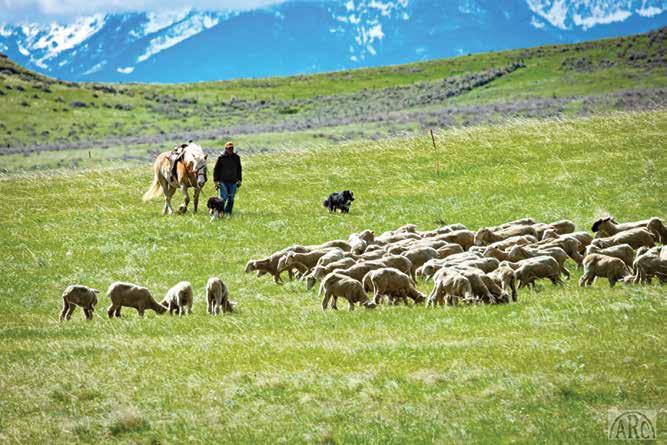

Following an incident which claimed the life of a working border collie last fall, ranchers and concerned citizens are garnering support to propose legislation which would require reduced speed limits in areas of livestock drives.

AFBF establishes 2026 policies, elects new leadership
On Jan. 14, farmer and rancher delegates of the American Farm Bureau Federation’s (AFBF) 107th Convention adopted policies to guide the organization’s work in 2026.
Key topics included labor, animal health, risk management and more.
2026 priorities
For the fourth year, delegates were polled during the voting session regarding their farms.
The results show almost 99 percent of those who cast votes operate family farms and more than two-thirds represent small- to mid-size farms, as defined by the U.S. Department of Agriculture.
This discussion highlighted the fact farmers across the spectrum and across the country are struggling.
Sublette County Rancher Rachel Misiewicz recently spearheaded a petition calling
for the passage of “Flo’s Law,” which would require motorists to reduce speed to 25 miles per hour (mph) when encountering livestock drives on public roadways and establish a $3,000 fine for failure to comply.
The petition also calls for clear road signage in livestock-heavy areas and the inclusion of livestock safety education in Wyoming tourism and travel materials, and it has been met with support from several industry leaders and community members.
Flo’s Law
Agriculture and tourism are two of Wyoming’s
Please see LAW on page 7
Valued partners – Working dogs are crucial partners for many livestock operations. Following an incident which claimed the life of a working border collie in 2025, Wyomingites are rallying for reform and education regarding

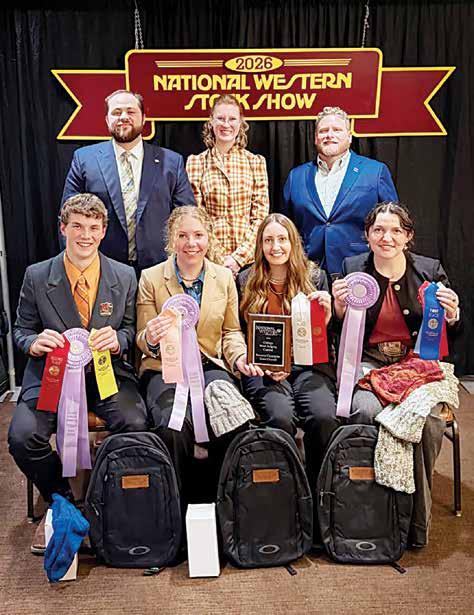
On Jan. 15, collegiate wool judging teams gathered at the Adams County Fairgrounds in Denver for the National Western Stock Show Intercollegiate Wool Judging Contest, where Wyoming students did the Cowboy State proud.
According to a University of Wyoming (UW) Extension Sheep Program Facebook post, UW wool judgers finished the contest as the overall reserve champion team, while also bringing home champion honors in the Handspinning Division.
The team is coached by Head Coach Dr. Whit Stewart, who also serves as UW Extension’s sheep specialist, and Assistant Coaches Cameron Harrick of Laramie and Allie Van Why of Chugwater.
Team members include Hadley Paisley of Wheatland; Trevor Halverson of Big Timber, Mont.; Claire Poppenberger of Prescott Valley, Ariz. and Elizabeth Schroeder of Evergreen, Colo.
“After a seventh-place finish out of eight universities at the UW 7220 Wool Contest just two days prior, this hard-working squad responded with grit and determination, coming back strong for an excellent all-around finish on a national stage,” the Facebook post reads.
The UW Wool Judging Team’s official website notes, “Our wool judging team is a community of passionate, driven students dedicated to learning and sharing Wyoming’s wool story. Through hands-on experiences and intercollegiate competition, team members develop analytical
Now in its seventh year, the COWGIRL 30 Under 30 program has recognized more than 210 women for their notable work in the ag industry.
Established in 2020 and curated by COWGIRL Magazine’s editors and executives, the program reflects the “depth, diversity and evolving impact” of women involved in ag-related media, science, business, rodeo, fashion, etc. who are driving the Western industry forward.
According to COWGIRL Magazine Marketing Specialist and Publications Editor Jillian Sinclair, the selection process for the Class of 2026 was the most competitive to date.
“Nearly 200 applications were sub-
“America’s farmers and ranchers are facing unprecedented challenges in agriculture, including high supply costs, trade imbalances and low commodity prices. Today, our members gave us clear guidance on how we should address these challenges in the coming year,” said AFBF President Zippy Duvall.
“AFBF’s strength was on display today, as our grassroots set the policy for this organization,” Duvall added. “We look forward to
mitted from across the world and evaluated through a rigorous, multi-score process led by the COWGIRL team alongside a committee of respected female executives within the Western industry,” Sinclair writes in a Jan. 20 article announcing the honorees. “From this accomplished pool, 30 women rose to the top, recognized not only for professional achievement but for leadership, integrity and a deep commitment to the Western way of life.”
According to Sinclair, a new feature of this year’s COWGIRL 30 Under 30 program is the COWGIRL Leadership Summit, open to women of all ages and professions.
“Designed to inspire, connect and
The Wyoming Legislature will convene on Feb. 9, and from what I’ve heard so far, it will not be a dull session.
Legislators need to be extra careful during a budget session as funding cuts affect much needed programs.
The best part of any budget session is the state will have a balanced budget when the session is over. As always, there will be some cuts and additions to the state budget.
One of the challenges of the budget session is there are always some bills unrelated to the budget, and these take up valuable time in discussion – time which really should be spent on the budget.
I think our legislative sessions have become too combative. Instead of simply discussing issues, some attack individuals with viewpoints on the other side. We see this on the national level, and I think it makes the attacker sound ignorant. Trying to beat someone down to get a point across never works, it just makes enemies.
The big news the last couple of weeks has been from the Joint Appropriations Committee. I realize this is the most challenging committee to be a member of.
They have been working on the budget through most of December and January, holding numerous hearings with state government agencies, as well as the university and other colleges around the state, plus they have been reviewing the governor’s budget.
Every bill requiring state funding has to go before the Joint Appropriations Committee, so as one can see, members have some heavy responsibility.
The Joint Appropriations Committee recently voted not to fund the Wyoming Business Council (WBC) and to reduce funding for the University of Wyoming (UW) – excluding the College of Education and the College of Agriculture, Life Sciences and Natural Resources – by $20 million per year over the next two years. Both are terrible decisions.
UW is a treasure to the state of Wyoming, which we should all support. Remember, it is Wyoming youth and the opportunities we are creating for them that we are dealing with here.
WBC is the lead for economic development in Wyoming. Every municipality in the state needs an economic development office and state business council as the lead. It’s a risky business being in economic development, and there’s always a bullseye on their back.
Jill Tregemba is the agribusiness development manager, and with the help of WBC staff, she does a great job representing Wyoming ag.
Through the Wyoming Table program, Tregemba connects Wyoming food and beverage products with state, national and foreign buyers. She assists ag entrepreneurs with essential resources for new business startups and works with communities, UW and other colleges to assist the growth and commercialization of ag technologies. She also promotes Wyoming as a prime location for corporate relocation of ag business development.
Why would the legislature want to put the WBC out of business? The state needs them.
We need to put funding for WBC on the list of interim topics to be discussed during legislative committees next summer and fall. Canceling funding to the WBC as a whole this session is not the right move for Wyoming. It is called serving the state in a responsible manner.

The making of another biennial budget is now in full swing and many are asking questions about what our state budget should and should not do.
Before this debate goes any further, a few facts matter. Wyoming does not have runaway spending. We do not have structural debt. We are not staring at a $38 trillion credit card bill to be handed to our grandchildren. Wyoming is not Washington, D.C.
Yet fear-laden, “cut everything” chainsaw rhetoric has been imported here for political theater.
These slogans may sound bold on a campaign mailer, but their consequences aren’t symbolic. They land squarely on families, communities, hospitals, schools and the people who keep this state running.
I have to wonder how many campaign mailers last cycle promised this?
Wyoming has always balanced its budget. It is right there in the Constitution I swore to uphold and defend. The budget I submitted this past November included nearly $500 million in excess tax revenue paid largely by industry, not you – money which could be saved
By Gov. Mark Gordon
for future generations, while still leaving flexibility for the legislature to set priorities.
We can do this because Wyoming has long done three things right.
First, we developed our mineral resources responsibly with vision and grit – resources that pay the bulk of our taxes.
Second, conservative legislatures protected the public purse.
And third, we saved during good years so investment income could support us in lean ones.
This is not luck. It is discipline and wisdom.
When revenues fell in the past, I cut budgets but never for show. Every reduction meant fewer services, longer waits and real people who felt the pain. Those decisions were weighed carefully because government is not a spreadsheet. It is neighbors, communities and obligations we owe one another.
This careful approach is not what we are seeing from the Joint Appropriations Committee.
I submitted a balanced budget which funds essential functions of government.
Reasonable people can debate how best to deliver economic development or rural obstetrical care – that is governing.
What is happening is different. A faction has decided wearing red coats and declaring a “fiscal cliff” creates a useful story line. Cutting close to $1 billion out of a budget which already has a $500 million surplus is not credible. In the end, this is about who you trust.
These reductions are not solving a structural problem, but they sure as heck could create one.
“Smaller government at any cost” may poll well in August, but it does not help plow roads, teach children with disabilities, keep clinics open or help seniors age at home.
Freedom Caucus, also known as “Club No,” members on the Joint Appropriations Committee are dismantling without a fiscal strategy, only a desire to claim victory. In the process, they weaken Wyoming, harm our small towns and erode our competitive edge.
The message to employers, investors and our kids is unthinkable –

Routine annual surveillance testing identified a brucellosis-affected herd in Sublette County.
Laboratory testing was conducted at the Wyoming State Veterinary Laboratory in Laramie, and results were confirmed at the National Veterinary Services Laboratory in Ames, Iowa.
The herd is located within Wyoming’s Brucellosis Designated Surveillance Area (DSA). With the addition of this herd, the Wyoming Livestock Board (WLSB) has two herds under quarantine for brucellosis, one each in Park and Sublette counties.
Brucellosis is a bacterial disease which causes abortion in cattle, elk and bison and can cause serious illness in humans in the form of undulant fever.
The affected herd is participating in serial testing to meet the requirements for quarantine release. Testing of affected herds is a cooperative effort between herd owners, private veterinary practitioners, WLSB personnel and U.S. Department of Agriculture’s Animal and Plant Health Inspection Service’s Veterinary Services personnel.
Wyoming’s comprehensive brucellosis mitigation program includes testing and vaccination for brucellosis.
In the state of Wyoming, sexually-intact heifers must be vaccinated for brucellosis by one year of age. In addition, heifers residing in Wyoming’s DSA that are brucellosis vaccine eligible – four months of age or older – must be brucellosis vaccinated by Feb. 1 each year.
For more information, contact WLSB at 307-777-7515, e-mail lsbbrucellosis-mitigation@wyo.gov or call Wyoming State Veterinarian Dr. Hallie Hasel at 307-840-1389.
The Laramie Rivers Conservation District (LRCD) hosted a celebration for its 80th anniversary of formation, as well as a housewarming reception for its new office location on Jan. 9.
Those in attendance included Albany County Commissioner Thad Hoff, State Sen. Chris Rothfuss (SD-09), Mayor Sharon Cumbie and City Councilman Jim Fried, among many of the district’s other partners, supporters and friends.
“I have immense gratitude for the district’s former board members and staff,” said Katie Wynne, LRCD district manager. “They laid a foundation for current board and staff to be able to move mountains when it comes to conserving Albany County’s remarkable natural resources.”
In addition to previous district members, LRCD wants to recognize and express gratitude for its current board members and numerous partners who make the district’s conservation projects possible.
LRCD’s new office is located at 793 Huron Street in Laramie.
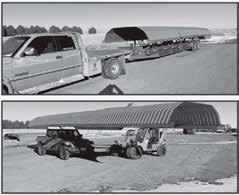
The Wyoming Ag Leadership Council (WALC) is hosting a one-day conference for Wyoming Leadership, Education and Development (L.E.A.D.) alumni and other Wyoming agriculturalists on Feb. 17 in Cheyenne.
The agenda includes attending the legislature, a presentation on the risk of cybercrime to ag producers, discussion on the U.S. Department of Agriculture’s reorganization and opportunities for Wyoming ag, the WALC Awards Luncheon, local ag tours or a tour of the Wyoming State Capitol and a legislative reception with ag industry organizations.
Wyoming L.E.A.D. alumni are also invited to a reception on Feb. 16 at the Governor’s Residence. Space for this reception is limited and by invitation only.
A complete agenda will be available soon and e-mailed to Wyoming L.E.A.D. alumni. For more information, call or e-mail Cindy Garretson-Weibel at 307-214-5080 or wylead@gmail.com.
The U.S. Department of Agriculture (USDA) will offer two free webinars focused on biosecurity best practices to help prevent the introduction and spread of highly pathogenic avian influenza (HPAI).
These sessions are designed for dairy producers and poultry operations of all sizes.
Each webinar will cover practical steps producers can take to strengthen biosecurity controls and protect animal health.
USDA experts will also highlight free resources available to support producers, including free biosecurity planning tools for dairy operations of all sizes, free biosecurity assessments for poultry operations with 500 or more birds and financial incentives for both poultry and dairy operations to enhance biosecurity measures.
These webinars are an opportunity to learn proven strategies, access tools and ask questions to help safeguard animals.
Webinars are scheduled for dairy producers on Jan. 28 at 12:30 p.m. and for poultry producers on Jan. 30 at 12 p.m.
For more information or to register, visit aphis.usda.gov

The National Wheat Foundation (NWF) is pleased to announce the recipients of the BASF Wheat Scholarships for 2026.
Two exceptional college students pursuing careers in agriculture will be awarded $2,500 this semester thanks to BASF.
NWF selected Jacob Bingaman, who is attending Oregon State University and pursuing a degree in ag and food business management, and Paul McCalister, who is attending West Texas A&M University and studying ag business, as the recipients of this year’s scholarships.
“Selecting the scholarship recipients each year is one of our favorite things to do,” said Ben Scholz, Texas farmer and chair of the NWF Scholarship Committee. “It brings us joy to recognize so much potential in these young applicants, and we are so happy to see young people wanting to get involved in agriculture.”
The selection committee commends everyone who applied and encourages those not selected to apply again next year.
For more information about the scholarship program, e-mail NWF Executive Director Anne Osborne at aosborne@ wheatworld.org.
Gov. Mark Gordon’s Sublette Antelope Migration Local Working Group will convene for its first meeting on Feb. 2 in Pinedale. The meeting will be held at the Board of Cooperative Educational Services’Board Room and begin at 8:30 a.m.
The local working group is ultimately charged with reviewing the Wyoming Game and Fish Department’s (WGFD) risk assessment, corridor components, potential impacts to socio-economic conditions of the region, conservation opportunities, highway projects and other factors appropriate to the potential designation.
Following their analysis, the working group will make a final recommendation to Gordon, who has the authority to either designate the corridor, return the recommendation to WGFD for refinement or reject the proposal for designation.
The governor’s appointed working group members include Craig Rood, Jasmine Allison, Maggie Hudlow, Mike Brennan, Michael Henn, John Erramouspe, Dave Lankford, Robb Slaughter, Lynn Bernard and Kent Connelly.
The public is invited to attend in-person or watch online.
For more information or to view a full agenda, visit wgfd.wyo.gov/sublette-antelope-migration-corridor

8/Somnus, Nasalgen 3 & Presponse HM, Express. Injectable Dectomax. Ralgro.
sort for loads. Rep: Justin Smith 307-340-0724. Lot 176 D & W Ranch 375 Heifer Calves. 50% Red; 40% CharX; 10%
of Torrington, WY. Delivery: 2/3/26 to 2/6/26. Origin: Ranch Raised. Branding Shots: Vision 8, Nasalgen 3 & Presponse HM. Precond Shots: Vision 8/Somnus, Nasalgen 3 & Presponse HM, Express. Injectable Dectomax. Ralgro. Weigh: Early am gather out of pen, weigh on ground w/a 3% and sort for loads. Rep: Justin Smith 307-340-0724. Lot 177 Mountain Valley Livestock 188 Weaned Steer Calves. 100% Black. Base Wt: 825 lbs. Wt Stop: 850 lbs. Slide: 14 cents. Location: 15 miles NW of Douglas, WY. Delivery: 2/2/26 to 2/7/26. Origin: Ranch Raised. Feed: Grower Ration: 20 lbs silage, 6 lbs ground hay & 10 lbs corn. Shots at Birth: Alpha C & D. Two Rounds: Vision 7/Somnus/Spur, Nasalgen 3 PMH, Vista BVD-CFP, Vista Once, Endovac. Ivermectin CDS. Weigh: Early am gather from pen, sort for loads, haul on buyer’s pre-weighed trucks and weigh w/a 2%. Comments: Weighed at 796 lbs on 1/20/26. These fancy, reputation steers will get big. Lots of bone, depth, rib and purebred genetics. Rep: Michael Schmitt 307-532-1776. www.cattlecountryvideo.com
FEEDERS
Vollman Ranch 375 Fancy Blk Strs, 625-850#, Weaned a long time, Bunk Broke, Been on a Grower Ration, Branding & Pre-cond. Shots: One Shot BVD, Inforce 3, Ultra Choice 7, At Weaning: Poured, Booster Shot (Dec. 20): Bovi-Shield Gold 5 Brian Nusbaum 75 Weaned Blk Strs & Hfrs, 650-850#, Weaned since Oct. 20, Branding Shots: Nasalgen PMH, Alpha 7, Pre-cond. Shots: Vista Once SQ, Vision 7, Booster Shots: Pyramid 5, Synanthic Wormer, Poured w/Clean-up, 25+ years of Stevenson, Green Mountain, Sevenson Diamond Dot Angus Genetics, Angus Verified-GMS: Beef Score: 141, Feedlot: 145, Grid Score: 123, Material: 142 Brent Gilbert 61 Mostly Blk/Bwf Strs & Hfrs, 650-700#, Weaned since Sept., Been on a Grower Ration: Corn Silage/Hay, 2 Rounds of Shots (Spring/Fall), Implanted w/Synovex at Branding, Home Raised
WEANED CALVES
Lewis Ranch/Bruce Lewis 187 Mx Strs & Hfrs, 490-575#, Weaned 30 days, Hay Fed, Cake Broke, Pre-cond. Shots and Weaning Shots: 7-way, Vira Shield 6, No Implants, Steers are Knife Cut, Home Raised Ron & Barb Jespersen 150 Blk/Bwf few Red (1 Char) Strs & Hfrs, 475-550#, Weaned a long time, Fed on Cornstalks for 1.5#/per day, Branding Shots: Bovi-Shield Gold One Shot, Vision 7 w/Somnus, Weaning Shots: Bovi-Shield Gold One Shot, Vision 7 w/Somnus, Poured w/Dectomax, Booster Shots: Bovi-Shield Gold 5, Steers Only are NHTC Y Z Limited 150 Blk Strs & Hfrs, 550-650#, Weaned for 45 days, Hay Fed, 2 Rounds of Shots Rob, Brian & Tyler Boner 100 Blk/Bwf few Rd Strs, 550-650#, Weaned 90 days, Hay Fed and Silage, Bunk Broke, Branding Shots: Vision 7 w/ Somnus, Vista Once SQ, Nasalgen, Pre-cond. Shots: Vision 7 w/Somnus, Vista Once SQ, Poured Dean & Brenda Anderson 80 Blk Angus Strs & Hfrs, 600#, Weaned 54 days, Running out on Hay Fields, Branding Shots Ultra Choice 7, Pyramid 5+Presponse SQ, Weaning Shots: Ultra Choice 7, Pyramid 5+Presponse SQ, No Implants, Home Raised Spencer Eyre 75 Blk/Rd Strs & Hfrs, 400-550#, Weaned since Nov. 15, Bunk Broke, Been on Ground Hay Only, 2 Rounds of Shots Garson Ranch 50 Blk Strs, 400-500#, Weaned since Oct. 15, Hay Fed, Loomix Tubs, 3 rounds of shots, No Implants, High Elevation Ervin Gara 50 Mostly Blk Strs & Hfrs, 450-700#, Weaned 90 days, Been on Alfalfa/ Grass Hay, Shots at Bith: Vision 7 w/Somnus, No Implants, No Brands, Home Raised Grant Ranch/Rick Grant 40 Blk Strs, 525#, Weaned since Oct. 25, Running out on meadows with 12-14# of hay per day, Branding Shots: 7-way, BVD One Shot, Enforce, Pre-cond. Shots: 7-way w/Somnus, Bovi-Shield Gold, One Shot, No Implants, Knife Cut Dave Olson/OSO Corporation 35 Blk Angus Strs, 550-650#, Weaned since Nov. 1, Bunk Broke, Been on Corn Silage, Branding Shots: Inforce, Bovi-Shield Gold One Shot, 8-way w/Somnus, Injectable Wormer SDRE 33 Blk Strs & Hfrs, 550-650#, Weaned for 45 days, Hay Fed, 2 Rounds of Shots Travis & Shelly Rodewald 20 Blk Angus Hfrs, 400#, Weaned a long time, Been on a Light Grower Ration, Bunk Broke, Branding, Pre-cond., & Weaning Shots: Bovi-Shield Gold One Shot, Vision 8 w/Somnus+Spur, Safeguard Wormer, 1-iron, Home Raised, High Desert Calves Kalan Seaman 12 Blk Strs, 600-800#, Weaned since Nov. 1, Bunk Broke, Been on a Light Grower Ration, Branding Shots: Pyramid 5+Presponse, Vision 7 w/Somnus, Weaning Shots: Pyramid 5+Presponse, Vision 7 w/Somnus, Producer All Natural PRE-COND. CALVES
Glen Palmer 170 Mx Strs & Hfrs, 550-650#, 2 Rounds of Shots: Calvary 9, Pyramid 5+Presponse, Steers are Knife Cut, Producers All Natural, Coming off their mothers

SALE RESULTS -FEEDER SPECIAL MONDAY, JANUARY 19 - 2112 HEAD
Wyatt Hageman 16 Blk Brd Cow 3/Apr-May 1075 $4,635.00
Theron Hageman 32 Blk Brd Cow 3/Apr-May 1089 $4,460.00
Theron Hageman 26 Blk Brd Cow 3/Apr-May 1001 $4,200.00
Wyatt Hageman 15 Blk Brd Cow 3/Apr-May 934 $4,200.00
Vearl Bird 6 Blk Brd Cow 3/June-Sum 1207 $3,500.00
Lucky 7 Angus Ranch 3 Blk Brd Cow 3-4/Mar-Apr 1195 $4,650.00
Vearl Bird 1 Blk Brd Cow 3-SM/ Sum 1535 $2,800.00
Webo Angus 7 Blk Brd Cow 3-SM/Apr-May 1130 $4,200.00
Mcnamee Cattle Co 9 Blk Brd Cow 3-SM/Mar-Apr 1475 $3,975.00
Aaron Sorensen 5 Blk/Rd Brd Cow SM/Mar-Apr 1171 $3,850.00
Ryan Boner 4 Rd Brd Cow 3-SM/Sum 1117 $3,850.00
Mcnamee Cattle Co 10 Blk Brd Cow SM/Mar-Apr 1412 $4,625.00
Lucky 7 Angus Ranch 15 Blk Brd Cow SM/Mar-Apr 1282 $4,300.00
Aaron Sorensen 3 Blk/Rd Brd Cow SM/Mar-Apr 1446 $3,725.00
Ben Mast 4 Rd Brd Cow SM-SS/Apr-May 1420 $3,650.00
Jesse Tabke 6 Brd Cow SS/Apr-May 1442 $3,425.00
Robert Yeik 20 Blk Brd Cow SS/Mar 1564 $4,025.00
Lucky 7 Angus Ranch 44 Blk Brd Cow SS/Mar-Apr 1388 $3,600.00
Brian Currier 9 Blk/Rd Brd Cow SS/Apr-May1572 $3,500.00
Vearl Bird 8 Blk Brd Cow SS-ST/May-June1165 $3,500.00
Doug Booth 2 Blk Brd Cow ST/Feb-Apr 1610 $3,250.00
Robert Yeik 10 Blk Brd Cow ST/Mar 1482 $3,310.00
Slipknot Ranch LLC 71 Blk Brd Cow ST/Mar-Apr 1312 $3,275.00
Slipknot Ranch LLC 3 Rd Brd Cow ST/Mar-Apr 1740 $3,300.00
Webo Angus 31 Blk Brd Hfr Apr 1026 $4,175.00
Michael Werner 22 Rd Brd Hfr Feb 1176 $4,050.00 Lucky 7 Angus Ranch 12 Blk Brd Hfr Feb-Mar 1016 $4,550.00

On Jan. 16, agriculture groups sounded an alarm about the economic crisis in rural America in a letter sent to Congress. Fifty-six organizations representing a cross-section of agriculture signed the letter.
The letter describes an “existential threat” looming over many farms, stating, “America’s farmers, ranchers and growers are facing extreme economic pressures which threaten the long-term viability of the U.S. agriculture sector. An alarming number of farmers are financially underwater, farm bankruptcies continue to climb and many farmers may have difficulty securing financing to grow their next crop.”
The letter goes on to say, “For the last three to four years, the reality of record-high input costs and rapidly declining and historically low crop and specialty crop prices have culminated in many U.S. farmers experiencing negative margins and losses approaching $100 billion nationwide. These trends aren’t just statistics. They represent an economic crisis in rural America.”
The letter, organized by the American Farm Bureau Federation, acknowledges – and expresses appreciation for – the significant investments over the past year in farm programs, a bridge assistance program and other aid to support farmers. It also notes losses for commodity crops and specialty crops remain deep, and the gap needs to be closed, saying, “In addition to continuing to pursue federal policies to increase long-term domestic demand for U.S agricultural commodities, we urge Congress to provide immediate economic support to fill in the gap of remaining losses for both field and specialty crop farmers.”
To read the letter in its entirety, visit fb.org/files/1.15.26-AgLetter-to-Congress-Economic-Assistance_FINAL.pdf#asset:251911@1:url
University of Wyoming (UW) Extension will offer a pesticide safety education program for private applicators in Worland on Feb. 4. The program will take place at the Washakie Museum and Cultural Center from 10 a.m. to 2 p.m. as part of WESTI Ag Days. Participants are asked to RSVP by contacting the Washakie County Extension Office at 307-347-3431 or dvanderp@uwyo.edu.
Private applicator licenses are required for anyone who purchases and applies restricted use pesticides to their own property or properties they manage.
UW Extension’s private pesticide applicator education programs provide an overview of certification requirements, pertinent regulations, pesticide safety and handling, proper disposal practices and more.
All participants are required to bring a governmentissued ID, such as a driver’s license, to their session.
Upon completion of a program, the proctor of the class will submit all completed private applicator license applications to the Wyoming Department of Agriculture for approval and issuance of licenses. For more information and to view a complete list of upcoming private applicator programs across the state, visit bit.ly/wy-psep-private-app
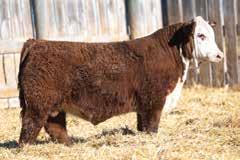
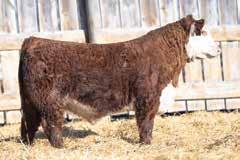
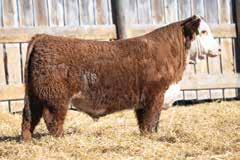
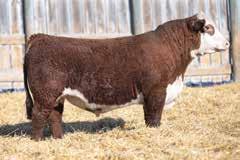
DOB: 5/2/24 Sire: Mc Cumber Cow Power
Dam’s Sire: Redland Traveler 0930 3456 EPDs: BW: -1.5, WW: +50, YW: +91 and Milk: +26 Buyer: Nathan Shackleford, Montana Lot 19 – Redland Cow Power 2004 – Price: $16,500 DOB: 5/15/24 Sire: Mc Cumber Cow Power 118 Dam’s Sire: O C C Do It All 656D EPDs: BW: -1.6,
Proposed decision
The decision follows a December directive from Department of the Interior (DOI) Secretary Doug Burgum, who assumed jurisdiction over long-running administrative appeals and ordered BLM to reconsider its earlier approval.
After reviewing the record and coordinating with DOI’s Office of the Solicitor, BLM concluded federal grazing statutes under the Taylor Grazing Act, the Federal Land Policy and Management Act and the Public Rangelands Improvement Act limit the agency’s authority to domestic livestock used for production purposes, such as meat, milk or fiber.
BLM’s determination also concluded APR’s bison herd is managed as wildlife rather than production livestock.
“Because APR has repeatedly described its bison program as focused on conservation, genetic restoration and public enjoyment – rather than agricultural production – BLM determined animals do not meet the legal definition of livestock eligible for federal grazing permits,” notes a Jan. 16 Western Ag Network article
Under the proposal, BLM would cancel all per-
mits allowing bison grazing, cancel permits allowing cattle and/or bison grazing, reissue cattle-only permits on affected allotments and leave existing cattle-only permits unchanged.
Background information
According to a Jan. 16 news brief published by the office of Montana Gov. Greg Gianforte, the dispute dates back to 2021 when Gianforte and multiple Montana state agencies objected to the BLM’s environmental analysis and proposed permit issuance, citing fencing and containment concerns, economic impacts and effects on state trust lands fenced in common with BLM allotments.
Despite these objections, BLM authorized the grazing change in July 2022.
The decision was appealed to DOI’s Office of Hearings and Appeals (OHA) where the matter remained unresolved for years.
“In December 2024, the Gianforte administration filed an action in federal district court, seeking review of OHA’s failure to stay the BLM decision pending its administrative appeal,” the press release explains. “In February 2025, the governor wrote to Burgum asking him to assume jurisdiction and vacate the unlawful
grazing permits.”
In September 2025, Gianforte and the entire Congressional delegation again urged DOI to act. Then, following the secretary’s assumption of jurisdiction in December, BLM issued its most recent proposed decision this month.
Praise from ag groups
Following this yearslong battle, Gianforte praised the recent proposed decision, calling it a victory for ag producers, rural communities and adherence to federal law.
The governor also says he believes the move aligns with long-standing concerns that replacing production livestock with nonproduction bison damaged local economies and displaced ranching families who have stewarded the land for generations.
“Today’s decision by the BLM is a win for Montana’s ranchers, our agricultural producers and the rule of law,” Gianforte says. “By proposing to cancel these permits, BLM is finally acknowledging federal overreach cannot come at the expense of our local communities and the production ag that feeds our nation.”
“We have always said the law is clear,” he continues. “Grazing permits under the Taylor Grazing Act are for domestic livestock production, not for creating a
massive nature reserve that displaces families.”
The Montana Stockgrowers Association (MSGA), along with the North and South Phillips County Grazing Districts and the Montana Association of State Grazing Districts, also welcomed the proposed decision.
“MSGA is thrilled to see this decision by BLM to restore grazing allotments back to their intended usage for production livestock grazing,” says MSGA President Lesley Robinson. “This decision is an incredible win for public lands grazers, ranching families and rural communities across the West.”
Deanna Robbins, president of the Montana Association of State Grazing Districts, reiterates agricultural producers have long argued the Taylor Grazing Act was designed to stabilize the livestock industry and food production.
“It’s encouraging to see this administration recognize the intent and take steps to reverse what we believe was a bad decision,” she states.
Montana Attorney General Austin Knudsen, whose office has challenged the permits for more than four years, also applauded the proposal.
“Canceling APR’s bison grazing permit will help protect the livestock industry and ranching commu-
nities in northeastern Montana from elitists trying to push them out,” Knudsen states. “For over four years I have been urging the BLM to cancel the permit, and our work finally paid off. This is a huge victory.”
APR responds
According to several sources, APR Chief Executive Officer Alison Fox called the decision “unfair, deeply disappointing, disruptive and inconsistent with long-standing public lands grazing practices in Montana.”
“Our organization and conservation model remain resilient, but it does not negate the fact this creates uncertainty for all livestock owners who depend on public lands for grazing,” Fox states. “We have followed the law, complied with every requirement and prioritized transparency at every step.”
Fox notes the organization has had permission to graze bison on BLM allotments for up to 20 years and believes the decision represents the first time the Taylor Grazing Act has been interpreted to require a bison herd be designated as a production herd.
“This decision is not grounded in new impacts or new information – it appears to be completely arbitrary and unfair,” Fox tells MTN News. “When federal agencies begin changing how the
rules are applied after the process is complete, it undermines confidence in the system for everyone who relies on public lands. Montana livestock owners deserve clarity, fairness and decisions they can count on.”
Fox goes on to note APR will review the proposed decision and consider next steps, including potential legal action.
Next steps
The BLM’s proposal kicked off a 15-day protest period ending on Jan. 31.
If finalized, the agency says it will allow time for the orderly removal of bison from federal allotments.
If upheld, sources say the move would represent a significant shift in how federal agencies interpret grazing statues related to bison and could have broader implications across the West, including in states like Wyoming where public lands grazing plays a critical role in sustaining livestock operations and rural economies.
In the meantime, Gianforte promises, “This administration will always stand with our farmers and ranchers against federal overreach. We will continue to protect our way of life and ensure Montana voices are heard in Washington, D.C.” Hannah Bugas is the managing editor of the Wyoming Livestock Roundup. Send comments on this article to roundup@.net.


taking their stories to leaders in Washington, D.C. as we work to ensure farmers and ranchers can continue to fill pantries for families across the country.”
Delegates adopted policy to improve labor programs to meet the needs of America’s farmers and ranchers, including formalizing support for the new Adverse Effect Wage Rate methodology and further revisions to avoid unpredictable rate swings in the future.
They voted to support federal funding for research and biosecurity facilities to better identify and combat illnesses and pests which threaten the health of crops and animals.
New policy also includes committing more resources specifically to eradicate the New World screwworm and keeping the U.S.-Mexico border closed to cattle trade until the screwworm is controlled.
Delegates revised national farm policy to provide more protection for dairy farmers who may suffer losses due to market challenges.
Delegates also formalized support for prioritizing locally-grown fruits, vegetables, bread and proteins in institutional purchases such as schools and government facilities.
Voting members also requested the board of directors analyze several agricultural issues, including the impact of tariffs and the lack of affordable insurance
options for poultry farmers. Leadership elections
Beyond policy changes, AFBF President Zippy Duvall and Vice President Scott VanderWal were unanimously re-elected for another two-year term.
Delegates also elected members to serve on the AFBF Board of Directors and national program committees.
Stacy Simunek of Oklahoma, who represents the Southern Region, was elected to fill a one-year term on the AFBF Board of Directors. Joyce Brady of New Hampshire, representing the Northeast Region, and ValJay Rigby of Utah, representing the Western Region, were elected to two-year terms.
Eleven other state farm bureau presidents were reelected to two-year terms to represent their regions on the board.
From the Midwest Region were Garrett Hawkins of Missouri and Mark McHargue of Nebraska; from the Northeast Region was Chris Hoffman of Pennsylvania and from the Western Region were Carlyle Currier of Colorado and Rosella Mosby of Washington.
Presidents re-elected in the Southern Region include Eddie Melton of Kentucky, Harry Ott of South Carolina, Jimmy Parnell of Alabama, Scott Sink of Virginia, Jeb Smith of Florida and Dan Wright of Arkansas.

BIG SELECTION OF BIG TEX TRAILERS
1918 FORD MODEL T PICKUP
EXCELLENT CONDITION - $19,500 $16,500 2013 MACK 600, 306,406 MILES
EXTENSIVE ENGINE WORK DONE - $39,500
2008 LANDOLL 53’ HYDRAULIC TILT TRAILER. AG PULL OUTS. LOW MILEAGE USED ON RANCH TO MOVE BALER+SWATHER. NEW PAINT AND DECK. $75,000 OBO.
2022 BOBCAT E60 MINI EXCAVATOR
2022 BOBCAT T770 SKID STEER
2008 BOBCAT T250 SKID STEER JD 5093E TRACTOR 2016 KUBOTA MX5200D TRACTOR
2023 CAT D6 DOZER
CAT320 EXCAVATOR
2023 CAT 420 BACKHOE
2023 CAT 906 LOADER
2018 CAT 930M LOADER 2022 FRIESEN TRAILER AIR COMPRESSOR CAT REACH FORKLIFT (TELEHANDLER)
2023 SA CARGO TRAILER 6X10 NEW PULLED 1500 MILES - $7,000.00
2024 BIG TEX 25GN-40DG1-MRBK - $24,500 2013 JLG G6-42A EXTENDED BOOM SKYJACKSJ7135 SCISSOR LIFT THE BEST PRICES YOU CAN FIND!!!!
National program committees
Julie Hardy of Georgia, representing the Southern Region, was elected to a two-year term on the Women’s Leadership Committee, while Mindy Orschell of Indiana, representing the Midwest Region; Dot Jensen of Utah, representing the Western Region and Jennifer Cross of Maryland, representing the Northeast Region, were re-elected to two-year terms.
Heidi Cooper of Massachusetts was elected chair, Steve Breeding of Delaware was elected vice chair and Lynn Leahy of Wisconsin was elected secretary of the Promotion and Engagement Committee. They will each serve one-year terms.
Additionally, Tommy Salisbury of Oklahoma was elected chair, Cleve Jackson of Georgia was elected vice chair and Katie Wiese of Minnesota was elected secretary of the Young Farmers and Ranchers (YF&R) Committee. They will each serve one-year terms beginning in March at the end of the YF&R Conference.
AFBF appreciates the 110 speakers and 4,500 registered attendees who helped make the 2026 Convention such a success.
Planning for AFBF’s 2027 Convention has already begun and is set to take place Jan. 8-13, 2027 in Charlotte, N.C.
AFBF is the national advocate for farmers, ranchers and rural communities. Every year, farm bureau members in more than 2,800 counties meet to discuss and vote on policies affecting their farms, ranches and communities. These policies then set the agenda for their state farm bureaus and ultimately AFBF. For more information, visit fb.org

In college I never went home for spring or Christmas break. Instead, I worked at various livestock units to make extra money and give students in charge a chance to go home.
I often worked at the beef unit and bull test and several times at the sheep and hog units.
I never got a chance to work at the horse unit where a screw up could cost a lot more money. Killing a $30 lamb was one thing, but killing a $40,000 stud was quite another.
Oddly enough, my two favorite units to work at were the swine unit and the Project Dairy. Dairy students could bring a cow with them to college and live at the Project Dairy, and I was surprised there weren’t more students who took advantage of this program.
But, I figured out most of them went away to college to enjoy four years of freedom from Holsteins before they went home to milk cows for the rest of their boring lives.
I had several dairy major friends, and I ended up spending a lot of time at the Project Dairy. I also spent the week before my employment there working with a friend who taught me the essentials so hopefully the dairy students wouldn’t come back to school to learn their cows were dead or had mastitis.
I wasn’t totally alone, as there was also a big
commercial dairy on campus with full-time workers who I could call upon if I had a disaster on my hands, and a professor in the dairy department checked on me regularly.
This was the best part of working on the various units, as I got to know the professors really well. As a result, I was always the teacher’s pet in their classes.
I shot pool and worked stock dogs regularly with the professor in charge of the sheep unit, who also happened to be a groomsman in my wedding.
The professor in charge of the beef unit became one of my best friends and got me my first two jobs in the cattle business, and the swine professor also became a lifelong friend.
I ended up taking an artificial insemination class from the dairy professor who watched over the Project Dairy and also sheared his kids’ lambs for the county fair.
The first thing I learned at the dairy is dairy cows are not the same species as beef cows.
Dairy cows actually round themselves up and aren’t always looking for ways to kill you.
I liked how they were more hands on, there were no bulls around and you knew where all of them were at all of the time.
On the other hand, because they were much
bigger, it hurt a lot more when one of them “accidentally” – although I think they did it on purpose –stepped on your toes. And, they produced a lot more manure which was always in a liquid state. I learned really quickly they could directionally aim a hoof or a belly full of alfalfa.
During the week I spent at the Project Dairy, there were 12 cows to be milked twice a day. All I had to do to round them up was rattle the grain sack.
I milked four at a time, squirting them off, attaching the teat cups, taking them off and dipping their teats afterwards. Then I opened the stanchion and repeated twice more.
I also had to be an alfalfa chucker and make sure there was plenty of hay in front of them.
Because I didn’t have a vehicle, my friend who was working at the sheep unit would come and get me and we’d eat at an upscale apartment complex for hoitytoity rich kids where my friend had a meal plan.
As a guest, I dined on all-you-can-eat hamburgers and unlimited chocolate milkshakes. I’d arrive wearing my rubber boots that smelled like, well, aged hog poop and soiled dairy cows, while my sheep friend carried the overpowering smell of KRS.
We grossed out all of the snobs, and after just two days, we were invited to never come back.
I really enjoyed the experience, but after a week at the Project Dairy, I realized I didn’t want to be a fodder forker, wear hip boots for the rest of my life or become a prisoner of lactation.
biggest industries. Although the two mostly coexist peacefully, failure to abide by commonsense practices and safety precautions can lead to catastrophic outcomes.
In the fall of 2025, Misiewicz was moving cattle off of public land in Sublette County down Highway 189 when a tourist from Texas failed to slow down enough in the presence of livestock.
The tourist struck and killed Flo, a working border collie who was just 11 months old at the time.
The loss was emotionally and financially significant, Misiewicz says. She emphasizes a good working dog can cost tens of thousands of dollars and can replace the help of multiple human counterparts.
“There’s an expression that a good cow dog replaces three cowboys, and its actually very true,” says Misiewicz, noting the initial expense of investing in a working dog usually pays off in the long run by saving ranchers “a bundle of money” in labor expenses.
When motorists fail to slow for livestock it puts lives at risk – both human and animal – and threatens ranchers’ livelihoods.
“Ranchers and riders
According to a Jan. 14 Reuters article, U.S. children could soon drink whole milk at school for the first time in nearly 15 years after President Donald Trump signed a law allowing the beverage to be served alongside low-fat and fat-free alternatives.
The Whole Milk for Healthy Kids Act, which will expand milk options for nearly 30 million children who eat school meals, enacts
have the legal right to move livestock. Working dogs are essential partners, not disposable animals,” reads the petition. “Slowing down for a few minutes can prevent death, trauma and lifelong loss.”
The petition urges Wyoming legislators to sponsor and pass Flo’s Law, emphasizing its provisions are not about punishment, but rather prevention, respect and accountability.
“This is not a partisan issue,” adds Misiewicz. “It’s an animal and human welfare issue.”
Proposed changes
Launched on change. org, the petition proposes enforcing a speed limit of 25 mph in the presence of cattle, horses, riders or active livestock drives on public roadways and calls for legal repercussions when this standard is not met.
Misiewicz says the proposed fine of $3,000 pales in comparison to the cost of a potential loss of life.
“Making the fine $3,000 seems like a low price to pay compared to the consequences of killing someone,” she says.
Increased signage reading “Flo’s Law – Slow the Flow – Protect Our Fami-
lies and Livelihood” in livestock-heavy areas is also a proposed measure, along with including livestocksafety education in Wyoming tourism and travel materials.
These actions will hopefully result in a more educated and aware public, according to Misiewicz.
Misiewicz acknowledges accidents do happen, but in her experience working on ranches throughout a seven-state area, she’s seen multiple close calls and tragedies she believes could have been prevented by stricter speed limit laws and increased public awareness.
“It’s a problem in every state, and I would love to see Wyoming do something about it,” she says, emphasizing a hope the Cowboy State can lead the way for reform in other ag-dependent states.
Ranchers react
Stacy Saunders, a rancher based in Sublette County, has a personal connection to the factors driving the petition and hopes to see Flo’s Law become statute.
Saunders lives on River Bend Ranch, a cattle and horse operation located alongside Highway 191 in Bondurant.
The ranch has pastures on both sides of the pave-
ment, making moving livestock along the public roadway unavoidable.
The speed limit is currently 70 mph, but Saunders says travelers sometimes reach speeds of up to 80 mph on the straight stretch of road which runs parallel to the ranch.
Around 10 years ago, Saunders says her husband Tony and two young children were moving cattle when a traveler hit and killed their beloved dog, a working border collie cross named Roxie.
“We had kids and cowboys on horses, as well as dogs and a couple hundred head of cattle,” Saunders recalls. “You’d think people would have the commonsense to slow down with so much going on, but that was not the case.”
Saunders remembers Roxie as “a cool, smart little dog” who was a beloved member of the family and a valuable asset to the ranch.
The motorist’s refusal to slow down for just a few minutes erased years of training and bonding and delivered a blow which is still felt today.
“It’s horrible to lose a dog, but we are thankful it wasn’t a kid,” she continues.
Saunders adds the combination of “excessive speed limits” and ignorance has
led to tragedy for her family on more than one occasion.
In 2019, a fatal motor vehicle accident claimed the life of her father-in-law
Bill Saunders, who was on his four-wheeler near the ranch’s entrance when he was struck by a vehicle traveling at high speed.
Saunders says the Bondurant community has been pushing for speed limit reductions for years, and she believes provisions like the ones outlined in Flo’s Law are integral to the safety of Wyoming ranchers.
“I think it’s an important proposal,” Saunders says. “I hope it passes – for the safety of everybody.”
Industry support
The Wyoming Wool Growers Association (WWGA) has also voiced support for the proposed legislation, placing specific emphasis on support for increased signage and the inclusion of all working dogs in the legislation.
a longstanding priority of the dairy industry dating back to the administration of former President Barack Obama.
Schools have been required to serve only lowfat and fat-free milk since the 2012 implementation of the 2010 Healthy, Hunger-Free Kids Act, a school meal reform bill championed by former First Lady Michelle Obama as part of a broader effort to curb
On Jan. 21, U.S. Secretary of Agriculture Brooke Rollins announced the launch of the New World Screwworm (NWS) Grand Challenge.
This funding opportunity marks a pivotal step in the U.S. Department of Agriculture’s (USDA) comprehensive strategy to combat NWS and prevent its northward spread.
As part of the NWS Grand Challenge, USDA’s Animal and Plant Health Inspection Service (APHIS) will make up to $100 million available to support innovative projects to enhance sterile NWS fly production; strengthen preparedness and response strategies and safeguard U.S. agriculture, animal health and trade.
APHIS invites proposals which support enhancing sterile NWS fly production, developing novel NWS traps and lures, developing and increasing understanding of NWS therapeutics and treatments for animals and/or developing other tools to bolster preparedness or response to NWS.
Eligible applicants are invited to submit proposals which align with and support these priorities by Feb. 23.
Entities interested in submitting a proposal should ensure they are registered with the U.S. Government System for Award Management.
For more information or to view the notice of funding opportunity, including application instructions, eligibility and program requirements, visit screwworm.gov
childhood obesity.
Farm and dairy groups have since said the act led to reduced milk consumption at schools and higher-fat milk

is not associated with poorer health outcomes for children.
Under the new law, schools will be permitted to serve whole or reduced-
fat milk as well as lower-fat options. Farm-state lawmakers have attempted to pass similar legislation several times in recent years.
“Not only do we support Flo’s Law as written in the petition, we would like to see all working dogs included in this legislation including sheepherding and livestock protection dogs,” Crane continues. “More signage is a necessity in trailing and crossing areas as well as education for tourists in Wyoming, especially when visiting our public land areas.”
So far, the petition has garnered nearly 600 individual signatures, reflecting a widespread sentiment of support for its proposals and is set to be presented to the Wyoming Legislature once it surpasses 5,000 signatures.
Grace Skavdahl is the editor of the Wyoming Livestock Roundup. Send comments on this article to roundup@wylr.net.
“WWGA is in complete support of Flo’s Law becoming statute,” says WWGA Executive Director Alison Crane on behalf of the organization. “Anyone who has taken part in livestock trailing or road crossings when public roads are involved has been plagued with the concern of loss of life or catastrophic injury due to traffic that is unaware or not mindful of the Wyoming way of life.”
However, implementation of the law will take a few weeks, according to U.S. Secretary of Agriculture Brooke Rollins at the White House.
Top Sellers
Bulls Lot 1 – KCH Congress 874 – Price: $39,000 DOB:
12/29/24 Sire: Crouch Congress Dam’s Sire: Quaker
Hill Manning 4EX9 EPDs: BW: +0.5, WW: +85, YW: +150, Milk: +28, Marb: +1.55 and RE: +0.98
Buyer: Grimmius Cattle, California
Lot 27 – KCH Congress 131 – Price: $31,000 DOB: 1/29/25 Sire: Crouch
Congress Dam’s Sire: GB Fireball 672 EPDs: BW: -0.1, WW: +72, YW: +131, Milk: +25, Marb: +1.59 and RE: +1.24 Buyer: Commercial Buyer, Illinois Lot 5 – KCH Congress 039 – Price: $20,000 DOB: 12/26/24 Sire: Crouch Congress Dam’s Sire: GB Fire-
ball 672 EPDs: BW: -0.5, WW: +71, YW: +126, Milk: +26, Marb: +1.32 and RE: +1.06 Buyer: Kerbs Four Bar, Wyoming Lot 11 – KCH Statesman 346 – Price: $20,000 DOB: 1/25/25 Sire: Virginia Tech Statesman Dam’s Sire: G A R Home Town EPDs: BW: +0.5, WW: +83, YW: +145, Milk: +26, Marb: +1.61 and RE: +.66 Buyer:
4272 – Price: $20,000 DOB: 12/10/24 Sire: Ingalls Kahuna Dam’s Sire: Paint-
rock Windbreak 2229-7
EPDs: BW: +0.2, WW: +64, YW: +112 and Milk: +29
Buyers: Fish Hook Cattle, Beach, N.D. and Romanick Ranch, Prairie City, S.D. Lot 97 – Ingalls 3436 Deadwood 4286 – Price: $16,000 DOB: 12/16/24
Sire: Ingalls Deadwood 3436 Dam’s Sire: Sitz Resilient 10208 EPDs: BW: +1.4, WW: +93, YW: +151 and Milk: +18 Buyer: Stratton Sheep Company, Rawlins Lot 62 – Ingalls 6005 Upward 4216 – Price: $15,000 DOB: 11/11/24
Sire: Ingalls Upward 6005 Dam’s Sire: Sitz Resilient 10208 EPDs: BW: -2.5, WW: +63, YW: +114 and Milk: +24 Buyers: Fish Hook Cattle, Beach, N.D. and Dan Ingalls, Casper
Two-year-old bulls Lot 103 – Ingalls 2023 Resilient 4148 – Price:
Jan. 20, 2026
Haas Angus Ranch, LaGrange Auctioneer: Lander Nicodemus Sale Manager: Genetic Pathways
Yearling Angus Bulls Avg. $10,865
Lower 33, Nebraska Lot 7 – KCH Powerplant 900 – Price: $20,000 DOB: 1229/24 Sire: Roseda Powerplant Dam’s Sire: SydGen
Enhance EPDs: BW: +0.8, WW: +88, YW: +156, Milk: +33, Marb: +1.45 and RE: +0.76 Buyer: Jacci Tracy, Wyoming
Reported By: Curt Cox, WYLR Field Editor Jan. 15, 2026
Riverton Livestock Auction, Riverton Auctioneer: Joe Goggins Sale
$12,000 DOB: 3/15/24
Sire: Ingalls Resilient 2023
Dam’s Sire: V D A R Black Train 1243 EPDs: BW:
+0.8, WW: +55, YW: +91 and Milk: +29 Buyer: Tim Totton, Big Piney Lot 105 – Ingalls 6005 Upward 4168 – Price:
$12,000 DOB: 3/6/24 Sire: Ingalls Upward 6005 Dam’s Sire: Sitz Logo 12379 EPDs: BW: +1.2, WW: +60, YW: +104 and Milk: +24 Buyer: Bob Nicol, Fort Washakie Top female Lot 120 – Ingalls Black
+72, YW: +125 and Milk: +26 Buyer: Dan Ingalls, Casper
Top bred cow Lot 106 – Ingalls 0193 Elluna 2210 – Price: $4,700 DOB: 3/4/22 Sire: Sitz Who’s That 10709 Dam’s Sire:
April 13, 1995 – Jan. 12, 2026
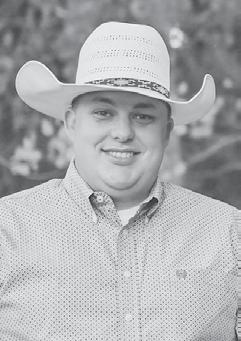
Coleman “Cole” Wade Singer, age 30, of Casper passed away on Jan. 12. Cole was born in Casper to Janet Singer and Copie “Den” Singer on
April 13, 1995. He went to high school at Natrona County High School and graduated in 2013. He worked as an assistant service manager
April 24, 1938 – Jan. 17, 2026
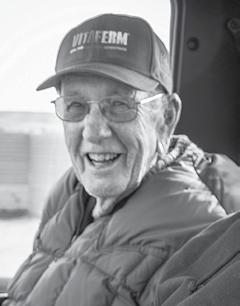
David Dennis Vetter, age
passed away on Jan. 17 in Lusk.
Dennis was born April 24, 1938 in Denver to David
and Helen Vetter.
Dennis, the oldest of four boys, grew up north of Bennett, Colo. on the family’s dryland wheat farm. He enjoyed cowboying on their ranch south of Bennett, Colo. and loved to rodeo, riding bareback horses, calf roping and team roping.
Dennis served in the U.S. Army in Fort Leonard Wood, Mo.
He married Joyce Becker on May 24, 1960, and they were together over 65 years. Together, Dennis and Joyce had four children – Melinda, Dan, Chrissy and Penny. The
continued from page 2
Wyoming is closed for business.
If these reductions stand, Wyoming faces damage to University of Wyoming programs and our membership in the Mountain West Conference; reductions to rural hospitals, labor and delivery and care for Native American communities; limits on food programs for children and low-income families and cuts to preschools; the elimination of statewide economic development efforts, ceding opportunities to Texas, Colorado, South Dakota and Montana; continued disregard for fair pay for our state employees who keep us safe and an insufficient response to wildfires and
protection of our lands.
Taken together, this is not fiscal discipline. It is institutional demolition carried out without the public understanding or meaningfully participating in the process.
A red line on a spreadsheet does not attract employers. It does not keep young families here or protect our small towns from hollowing out. It does not keep Wyoming, Wyoming.
There is still hope. Most legislators understand what Club No does not – Wyoming’s future is an inheritance, not an election prop. Wyoming already enjoys the lowest tax burden in the country. We must be prudent without being reckless.
at Whites Mountain Motors for 10-plus years, Triple V Rodeo Company and enjoyed helping numerous ranches.
He enjoyed hunting, fishing, golfing, darts, spending time with family and friends and, most of all, rodeoing. He was a proud Professional Rodeo Cowboys Association card holder since 2024. After many soul-searching conversations with his loving wife and friends, Cole
family loved and enjoyed Penny for nine months.
Dennis and Joyce ranched and farmed in Colorado but Dennis always wanted a ranch of his own, so in 1983 the family moved to the OW Ranch north of Lusk.
In 2001, Dennis, Joyce, and Dan moved to their ranch near Lance Creek. Dennis thoroughly enjoyed the Lance Creek community and his many friends near and far.
Dennis and Joyce loved watching their kids and grandkids in sports and 4-H activities.
Dennis enjoyed good cattle, good horses and good dogs.
The choice before us is clear. One path leads to stability, growth and opportunity.
The other delivers long-term harm while shifting benefits to wealthy, out-of-state interests at the expense of working families and rural communities.
I call on the full legislature to reject this demolition budget, restore funding to core institutions and remember why we – all of us – were elected, not to perform outrage for cameras, but to protect the people and communities of Wyoming.
Mark Gordon was elected Wyoming’s 33rd governor on Nov. 6, 2018. He was sworn into office on Jan. 7, 2019 and reelected on Nov. 8, 2022. He can be reached by visiting governor.wyo.gov
Private lands play a central role in the well-being of people and wildlife throughout the West, yet they are under increasing economic pressure.
A new, groundbreaking report sheds light on the efforts and investments landowners are making to conserve and steward remaining intact lands and natural resources.
Collectively, private landowners invested at least $407.5 million out-of-pocket in conservation practices.
The survey, commissioned by Western Landowners Alliance (WLA) and conducted by the research firm Southwick Associates, gathered data from 649 landowners who own 500 acres or more.
Based on this data, the report estimates average conservation investments across 11 western states. This spending included activities across the landscape from forestry and rangeland management to riparian restoration and wildlife reintroductions.
The report also highlights the scale of private stewardship relative to major public funding streams. Across the same 11 states in 2024, landowner investment outpaced the $342.7 million in contributions from firearm and fishing equipment taxes which are earmarked for state wildlife agencies. It also topped the U.S. Department of Agriculture’s cost-share for environmental quality program, which
accepted Jesus Christ as his Lord and Savior in January 2025.
Cole is preceded in death and greeted in heaven by his grandparents on both sides, several aunts and his dog Capone Charles.
He is survived by his wife Stephanie, daughter Addie Elizabeth, son Braxton Wayne, mom Janet Singer, dad Den Singer, bonus mom Jenni Singer, sisters Rebecca Spiva and
Dennis is preceded in death by his parents, his infant daughter Penny Raylene, his brothers Gerald and Gary and his son-in-law Terry Lambrecht.
Dennis is survived by his wife Joyce; son Dan; daughters Melinda Lambrecht and Chrissy (Blake) Ochsner; brother Bruce (Sandi) Vetter; sisters-in-law Sandy Vetter and Beverly Vet-
Olivia Singer, brother-inlaw Eric Spiva and nephew Emmett Kane, along with his village – the Hamiltons, the Spivas, the Kirks and his Triple V Rodeo family.
Cole’s memorial service was held at the Central Wyoming Fairgrounds Indoor Arena on Jan. 17, officiated by Pastors Tom Rush and Eli Hamilton from Shekinah Glory Church. His ashes will be scattered on Pine Mountain at a later date.
ter; grandsons Josh (Krystal), J.D. (Sherry) and Jed Lambrecht and B.W. (Terra) Ochsner; granddaughters Keli (Chris) Hoschouer, Ashley (Chris) Mason and Katie (Devin) Martin; greatgrandsons Dante and Gunnar Lambrecht, Nate Fabian, Cody Ochsner and Memphis and Cash Mason and greatgranddaughters Annika and Olivia Ochsner and Winona Martin. Services will be held on Jan. 26 at 2 p.m. at the Niobrara County Fairgrounds in Lusk. Interment will follow at the Lusk cemetery. In lieu of flowers, memorial contributions can be given to the Lusk EMS, Niobrara Senior Center or the Niobrara County Fairgrounds for a tree in honor of Dennis.
B Cattle Co. - Cokeville
Blk Cow 1130# $18000
1 Blk Cow, 1080# $17400
1 Blk Cow, 1165# $16700 Anderson, Sawyer - Manderson
1 Blk Cow, 1360# $17500
E Spear LLC - Riverton
1 Blk Cow, 1105# $17350
2 Blk Cows, avg. 1443# $17100
1 Blk Cow, 1215# $16800
2 Blk Cows, avg. 1355# $16600
Grenseman, Janet - Glenrock
spent $341 million.
In addition to out-ofpocket investments, the survey also found landowners passed up significant economic opportunity in favor of conservation in 2024.
Fifty-nine percent of respondents intentionally gave up income-generating opportunities to benefit conservation. Common forgone opportunities included agricultural expansion, residential or commercial development and recreation or access-based income. While many forgone opportunities would have generated less than $50,000, one in five exceeded $1 million.
To view the report in its entirety, visit westernlandowners.org/landownerinvestment/
Ready, Michael - Thermopolis
1 CharX Bull, 1610# $18600
2 CharX Bulls, avg. 1700# $17500 Anderson Ranch Co. - Ten Sleep 1 Red Bull, 1515# $17200 Pitchfork Ranch LLC - Meeteetse 1 Hfrd Bull, 1455# $16700
1 Hrfd Bull, 1915# $15900
Kirby Creek Ranch - Thermopolis
1 Blk Bull, 1715# $16100
1 Hrfd Bull, 1755# $14500
L U Ranch - Worland
1 Blk Bull, 1545# $16000 Telford, Calahan - Columbus
XBred Bull, 1550# $15000 Frias, Ramon - Powell 1 Blk Bull, 2380# $14900
1 BWF Cow, 1360# $17300
1 BWF Cow, 1430# $16700 Zeller Ranch - Meeteetse
1 Red Cow, 1190# $17200
1 Red Cow, 1280# $17050 Galloway, Clayton - Manderson
2 Blk Cows, avg. 1193# $17100
L U Ranch - Worland
1 Blk Cow, 1350# $16950
1 Blk Cow, 1255# $16600
1 Blk Cow, 1485# $16250 Ostby, Troy - Lovell
1 Red Cow, 1185# $16700 Michaels, Calvin - Burlington 3 Blk Cows, avg. 1538# $16500 1 Blk Cow, 1555# $16350
2 Blk Cows, avg. 1640# $16250 Lungren Land & Cattle - Worland
1 Blk Cow, 1335# $16500
Zeller Ranch - Meeteetse
2 BWF Cows, avg. 1405# $16250
Jan. 26 University of Nebraska-Lincoln Extension Calving College Series Part Two, 6:30-7:45 p.m., online. For more information, contact Lindsay WaechterMead at 402-746-3417 or lindsay.waechter-mead@unl.edu. To register, visit cvent.me/GOYAra
Jan. 27 University of Wyoming Extension Pesticide Safety Education Program, 8 a.m.-12 p.m. or 1-p.m.-5 p.m., Niobrara County Fairgrounds, Lusk. For more information, visit bit.ly/wy-psep-private-app. To register, e-mail kelliec@uwyo. edu or call 307-334-3534.
Jan. 27-29 Colorado Farm Show, Island Grove Park, Greeley, Colo. For more information, visit coloradofarmshow.com or call 970-356-9426.
Jan. 28 U.S. Department of Agriculture Free Highly Pathogenic Avian Influenza Webinar, 12.30 p.m., online. For more information or to register, visit aphis. usda.gov
Jan. 28-31 American Sheep Industry Annual Convention, Reno, Nev. For more information, visit sheepusa.org/events-convention
Jan. 30 U.S. Department of Agriculture Free Highly Pathogenic Avian Influenza Webinar, 12 p.m., online. For more information or to register, visit aphis.usda.gov
Jan. 31 University of Wyoming Extension 4-H Volunteer Training, 9 a.m.-4 p.m., Summit Church – Family Life Center, Buffalo. For more information, contact the Johnson County Extension Office at 307-684-7522 or bmckenz7@uwyo. edu. To register, visit bit.ly/4h-northeast-training-2026
Jan. 31 Moffat County Calving Clinic, Craig, Colo. For more information, e-mail megan.stetson@colostate.edu or call 970-826-3402.
Feb. 2 2026 Wyoming State Board of Control, Herschler Building, Cheyenne. For more information, contact Cheryl Timm at 307-777-6899 or cheryl.timm@wyo.gov.
Feb. 2 First Sublette Antelope Migration Local Working Group Meeting, 8:30 a.m., BOCES Board Room, Pinedale. For more information, visit wgfd.wyo. gov/sublette-antelope-migration-corridor
Feb. 2 University of Nebraska-Lincoln Extension Calving College Series Part Three, 6:30-7:45 p.m., online. For more information, contact Lindsay Waechter-Mead at 402-746-3417 or lindsay.waechter-mead@unl.edu. To register, visit cvent.me/GOYAra
Feb. 3-4 WESTI Ag Days, Washakie Museum and Cultural Center, Worland. For more information, call University of Wyoming Extension at 307-347-3431.
Feb. 3-5 CattleCon 2026, Nashville, Tenn. For more information or to register, visit convention.ncba.org
Feb. 4 University of Wyoming Extension Pesticide Safety Education Program, 10 a.m.-2 p.m., Washakie Museum and Cultural Center, Worland. For more information, visit bit.ly/wy-psep-private-app
Feb. 4-7 2026 Outstanding Farmers of America Convention, Hersey, Penn. For more information, visit outstandingfarmers.com/
Feb. 5 Wyoming Farm Bureau Federation Young Farmers and Ranchers Collegiate Discussion Meet, Cheyenne. For more information, contact Alexis Lake at alake@wyfb.org or 307-721-7716.
Feb. 6-7 Colorado and Wyoming Farm Bureau Federation Young Farmers and Ranchers Joint Conference, Cheyenne. For more information and to register, visit wyfb.org/Get-Involved/YFR/Conference
Feb. 9 University of Nebraska-Lincoln Extension Calving College Hands-On Workshop, 5 p.m., Cherry County Extension Office, Valentine, Neb. For more information, contact Lindsay Waechter-Mead at 402-746-3417 or lindsay. waechter-mead@unl.edu. To register, visit cvent.me/GOYAra
Feb. 9-11 Top Producer Summit, Nashville, Tenn. For more information, visit events. farmjournal.com/top-producer-summit-2026
Feb. 10 University of Nebraska-Lincoln Extension Calving College Hands-On Workshop, 5 p.m., Tripp County 4-H Center, Winner, S.D. For more information, contact Lindsay Waechter-Mead at 402-746-3417 or lindsay.waechtermead@unl.edu. To register, visit cvent.me/GOYAra
Jan. 25 Triangle J Ranch 36th Annual Bull Sale, at the ranch, Miller, Neb., 308-6275085, 308-457-2505, 308-293-9241, trianglejranch.com
Jan. 26 Douglas Booth Family Angus 34th Annual Bull Sale, Torrington Livestock Market, Torrington, 307-532-5830, 307-532-6207, boothfamilyangus.com
Jan. 26 Bullis Creek Ranch Spring Production Bull Sale, at the ranch, Wood Lake, Neb., 402-376-4465, bulliscreek.com
Jan. 29 Ridder Hereford Ranch Annual Sale, at the ranch, Callaway, Neb., 308-8364430, 402-450-0431, ridderranch.com
Jan. 31 21 Angus 32nd Annual Top Cut Bull Sale, at the ranch, New England, N.D., 701-579-4221, 21angus.com
Feb. 4 Durbin Creek Herefords LLC 14th Annual Bull Sale, Big Horn Basin Livestock Auction, Worland, 307-921-8825, durbincreekranch.com
Feb. 5 K2 Red Angus Winter Bull Sale, K2 sale barn, Wheatland, 307-331-2917, k2redangus.com
Feb. 6 TJS Red Angus 18th Annual “Red Truck” Sale, Buffalo Livestock Marketing, Buffalo, 406-639-9112, tjsredangus.com
Feb. 6
Feb. 6-14
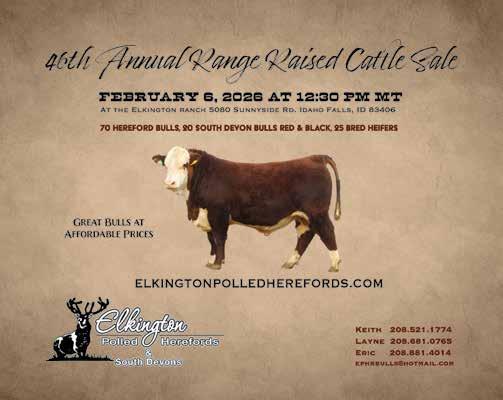
Elkington Polled Herefords and South Devons 46th Annual Range Raised Cattle Sale, at the ranch, Idaho Falls, Idaho, 208-521-1774, 208-681-0765, elkingtonpolledherefords.com
Calvo Family Red Angus Annual Spring Bull Sale, online on DVAuction, 605-830-2210, 402-760-1274, calvofamilyredangus.com
Feb. 9 Pilakowski Angus Annual Performance Tested Bull Sale, Lightning Valley Ranch, Arthur, Neb., 308-249-0885, pilakowskiangus.com
Feb. 9
Fawcett’s Elm Creek Ranch Annual Production Sale, at the ranch, Ree Heights, S.D., 605-870-6172, 605-478-0077, fawcettselmcreekranch.com
Feb. 10 G Bar H Genetics Angus Bull Sale, Torrington Livestock Market, Torrington, 307-575-5520, 307-575-0373
Feb. 11
Feb. 12
Feb. 13
Feb. 14
Feb. 14
Feb. 16
Feb. 16
Feb. 17
Jindra Angus 26th Annual Production Sale, at the Bull Center near Clarkson, Neb., 402-920-3171, jindraangus.com
Booth’s Cherry Creek Angus 53rd Annual “Progress Through Performance” Bull Sale, at the ranch, Veteran, 307-534-5865, 307-532-1805, 307532-1532, boothscherrycreekranch.com
Powder River Angus Annual Production Sale, Buffalo Livestock Marketing, Buffalo, 307-680-7359, 307-680-8266, powderriverangus.com
Ludvigson Stock Farms All American Bull Sale, Leachman’s Sale Facility, Meriden, 515-450-3124, ludvigsonstockfarms.com
Flying M Angus Seventh Annual Bull Sale, Southern Campbell County Ag Complex, Wright, 307-660-5755, 307-660-5756, 307-680-0235
Weaver Ranch 41st Annual Production Sale, at the ranch, Fort Collins, Colo., 970-568-3898
Big Sky Salers 42nd Annual Salers Focus Bull Sale, Stockmen’s Livestock, Dickinson, N.D., 406-557-6259
McClun’s Lazy JM Ranch Angus and Polled Herefords Annual Production Sale, Torrington Livestock Market, Torrington, 307-575-3519, 307-5752113, 307-534-5141, mcclunranch.com


This is part two of a series portraying ranch life in the 1880s, as seen through the writings of Bud Cowan in his book “Range Rider.”
In the last Postcard, we left our readers as two young men were about to make a power saw out of an “old Buck Eye mowing machine.”
Here’s the rest of the story.
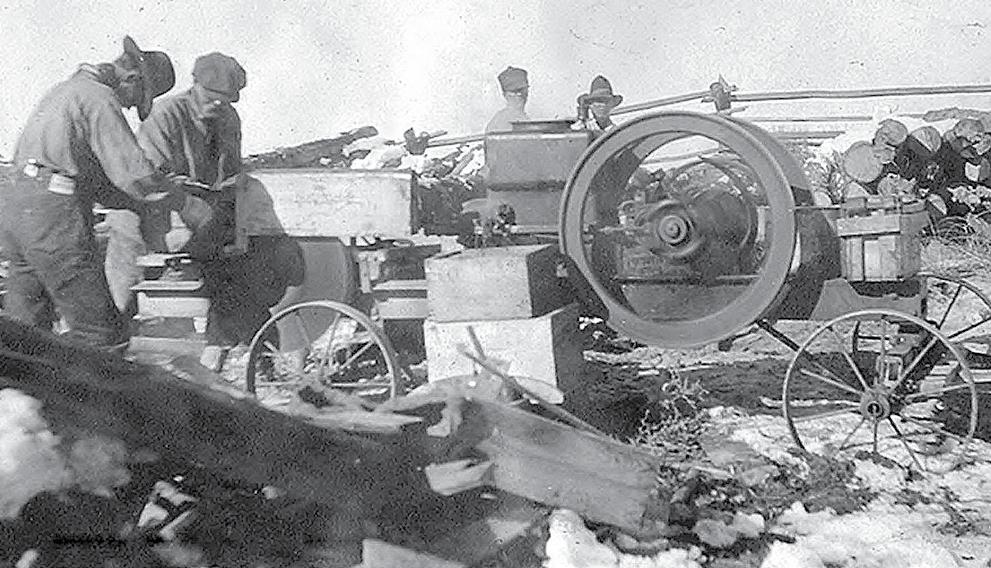
We pulled the old machine up to the wood pile and dug a hole deep enough in the ground to bury one wheel as far as the pitman wheel, to which the sickle is ordinarily attached. We put an extension on the end of the pitman rod and fastened our big crosscut saw to it, in place of the sickle which really belonged there, then we built housing for the rod.
Next, we made a sweep – that is, we made a pole and fastened it
to the top of the other wheel remaining out of the ground. We put a singletree on the end of this pole and hitched up a little white mule we had.
We put a lead bar in front of the mule and fastened his tie rope to it. This we did in order to keep him from walking off straight. By being tied to the lead bar, he walked around in a circle and pulled the sweep attached to the wheel which turned the pitman rod with the cross-cut saw attached to it. Did it work? I’ll say it did.
It took quite a little while to make the mule understand just what we wanted of him, but when he got the idea, he had as much fun out of it as we did. We would saw until noon, then unhitch our mule and feed him grain and hay.
Then I would take
the saw out and file it while Jimmie fixed dinner. After that, we would oil our mowing machine, put the saw back in again, hitch up the mule and go to work.
Father said when he left for Denver, “You boys have wood enough to keep you busy until I get home.”
Well, we fooled him, because we had every stick cut and split when he came home about Christmas time. He was surprised to find the wood all cut, split and piled in the woodshed.
When he asked us how we did it, we kidded him quite a little while because we had replaced the mowing machine as soon as we had finished with it and covered up all signs as to what we had done. Finally, we did tell him.
The boys who were doing the feeding around our ranch laughed at us and said it couldn’t be done, but we did it just the same. After that, nearly everyone in our neighborhood did their wood-sawing with an arrangement like the one we had.
Inside of three days, we had sawed wood that would ordinarily have taken three weeks of hard work.
US
US
Source: USDA AMS Livestock, Poultry & Grain Market News, Torrington National Sheep Summary As of January 16, 2026
Compared to last week slaughter wooled and shorn lambs sold steady. Slaughter ewes sold firm. All sheep sold per hundred weight (CWT) unless otherwise specified. Slaughter Lambs: Choice and Prime 1-3: San Angelo: 80-90 lbs 300.00; 120-130 lbs 250.00; 170-180 lbs 280.00.
Billings: No test.
Ft. Collins: 70-80 lbs 335.00-365.00; 80-90 lbs 290.00-340.00; 90-100 lbs 285.00-295.00; 100-110 lbs 265.00-330.00. Sioux Falls: 70-80 lbs 315.00-340.00; 80-90 lbs 285.00-305.00; 90-100 lbs 290.00-300.00; 100-110 lbs 230.00-270.00; 120-130 lbs 222.00-227.00; 140-150 lbs 205.00-227.00;150-160 lbs 218.00-228.00. Slaughter Ewes: Good 2-3: San Angelo: 120.00-1609.00.
Billings: No test.
Ft. Collins: 100.000-155.00.
Sioux Falls: 110.00-150.00.
Feeder Lambs: Medium and Large 1: San Angelo: No test.
Billings: No test.
Sioux Falls: 50-60 lbs 375.00-440.00; 60-70 lbs 375.00.
Ft. Collins: No test. Replacement Ewes: Medium and Large 1-2: San Angelo: No test.
Billings: No test.
Ft. Collins: No test.
South Dakota: No test.
Sioux Falls: No test.
Sheep and lamb slaughter under federal inspection for the week to date totaled 40,000 compared to 38,000 last week and 35,788 last year.
Source: USDA AMS LPG Market News, San Angelo, Texas National Wool Review
As of January 16, 2026
Domestic wool trading had no confirmed trades reported this week. Prices reflect trades FOB warehouse
Source: USDA- CO Dept of Ag Market News Service, Greeley, CO Wyoming Hay Summary
As of January 22, 2026
Compared to the last report small square bales sold steady to 5.00 per ton higher. Large square bales steady. Demand picked up in the last two weeks as dry weather continues across the state. Prospective buyers are starting to pick out a few loads of hay to feed now or later in the year. Most of the state is very dry with some high elevation receiving snow. Per NRCS weekly snow report for Jan 19,2026: Currently the state’s SNOTELs are reading 93% of median with a basin high of 125% and a basin low of 4%. Last year the state was at 88%, and at 83% in 2024. So overall median is a little better than the last two years for the same week.
Source:
Torrington
&
Montana
As of January 9, 2026
Compared to last report(12-12-25): Hay sold mostly 10.00-20.00 higher. Hay in Northern and Western portions of the state have seen supplies tighten over the past few weeks. Many producers in Western Montana report they are sold out of hay for the season. Hay in the southern portions of the state have seen increased demand due to tighter supplies. This has caused prices to rise since the last report. Demand for round bales is very good as many ranchers report that they are hard to find. Hay in rounds are a 10.00-20.00 premium to hay in squares. This is mostly driven by rancher demand. Winter weather conditions have been very mild which has helped curb some demand for hay. While several snow storms accrued over the last few weeks much of that snow melted and was absorbed into the ground as some locations have yet to see the ground completely freeze. According to the drought monitor 19.79 of the state is in Moderate drought or worse, down 27.27% from 4 weeks ago. 8.08 of the state is in an Severe drought or worse, down 12.38% from 4 weeks ago. 1.46% of the state is in Extreme drought or worse, down 2.24% from 4 weeks ago. 0% of the state is in Expectational drought, unchanged from 4 weeks ago. Notably, 51.39% of the state is abnormally dry, down 13.37% from 4 weeks ago. N/A - Hay Conventional
check. Buy, sell, trade. Adults $6, children 12 and under free (when accompanied by an adult). For more information, contact Lisa, 208-420-2295 2/14

Come Join the Gottsch Livestock Feeders Family! Gottsch Livestock Feeders is looking for Cowboys/Pen Riders for their feedyard in Red Cloud, NE. The main focus of the Cowboy/Pen Riders are spotting, pulling, diagnosing and taking cattle to the hospital and shipping fat cattle. This person will need to be a team player who is seeking a long-term position. You will have the opportunity to work with and learn from some of the best in the industry. We offer a benefits package that includes health insurance, dental, vision, 401(k), health savings, life insurance and paid vacation. Retention bonus offered to full-time employees. Incentives paid out at 6 months and 1 year of employment. If you are interested stop by and fill out an application or visit our website at
www.gottschcattlecompany.com
Call Mike Faimon at 406-469-1585 or Davin Arnold 970-301-3098 for more information.
SEASONAL WEED CONTROL TECHNICIANS WANTED FOR THE BIG HORN COUNTY WEED & PEST DISTRICT: Must be 18 or older. Must have a valid driver’s license. For more information and to submit an application, please visit our website www.bhcweed.com 1/24 LOOKING FOR RANCH AS -
SISTANT PROPERTY MAN -
AGER: Full-time position for large ranch located in Park County, WY. Responsibilities include: Lawn care, irrigation, agricultural equipment maintenance and general residential, building and property maintenance. Salary range of $45-$60K depending on experience. Living on property is required for employment. House and vehicle will be provided. Property is located 10 minutes from downtown Cody, WY. Position is available for immediate hire. Please send resumes to hbeirne@acpg. com and mgiliati@acpg.com 1/24


AGRI-ONE FINANCIAL: Farm/ ranch and all commercial loans. RATES AS LOW AS 5%. We have been helping with all aspects of agricultural, commercial financing and management for years. LET US HELP YOU on a consulting level with management to increase profitability, deal with and fix credit problems and for all your financing needs. WE CARE AND HAVE WORKING PROGRAMS designed for the farmer/rancher and not the banker. Please call Steve, 303-773-3545 or check out our website, www.agrionefinancial.com. I will come to you and get the job done!! 1/24
WANTED RECIP COWS: Must be open!! Two to 6 years old, Red Angus or Angus-based cows. For more information, call Corie Mydland, 406-8555598 (cell), Trans Ova Genetics, Joliet, MT 1/24
MOFFAT COUNTY CALVING CLINIC, CRAIG, CO JAN. 31:
This 1-day hands-on clinic offers a full day of interactive learning designed to equip livestock producers and caretakers with essential knowledge and practical skills for a successful calving season. You’ll leave with tools and strategies that can transform how you approach calving. Tailored to livestock producers of all experience levels. Email megan.stetson@colostate. edu or call 970-826-3402 for more details 1/24
YEARLING ANGUS BULLS:
These bulls are grown, not fattened, will get out and cover cows. Many will work on heifers. We will deliver. Call Joe Buseman, 605351-1535 2/7

REGISTERED WYOMING BRAND, LRC, LSS, LSH, LRB, For sale or trade, best offer accepted. Call 307-760-5976 2/14

REGISTERED WYOMIING BRAND FOR SALE, lazy RM. RRC, RHH, renews in January 2027, 2 sets of hot irons and 2 sets of electric irons. $3,000. Calls only, 307899-3737 1/24
NICE SET OF 200 BLACK BRED HEIFERS, weighing 1,050 lbs. Bred to LBW Black Angus bulls from Topp Angus. Ultrasound tested to calve in 30 days starting March 5. Recently poured and given 1 dose of 4KC. $4,600. Call 307-709-2375. To view photos, go to www.wylr.net in the classifieds 2/7
FOR SALE: 300 head of commercial Angus and F-1 baldy bred heifers. Hand selected and purchased from top ranches in the region. All Miller Angus Farms customer genetics. UTD on vaccinations, pelvic measured, dewormed. Pregged/sorted into calving window groups. AI bred to elite calving ease bull GB Mogul M64J and cleaned up to top tier calving ease bulls. Group 1 due March 1. Group 2 due March 16. Group 3 due March 28. Group 4 due April 1 for 30 days. Group 5 due May 1 for 30 days. Will go on to make a productive, high performing cow that will add value to your program. First come, first served. Small loads to pot loads and volume discounts available. Free delivery. Miller Angus Farms, Kody, 605-690-1997 or Brady, 605-6905733 1/31
BULLS FOR SALE: Registered yearling and 2-year-old Black Angus range bulls for sale private treaty. Good selection for heifers and cows. From popular sires and industry leaders. Semen tested and ready to go. CLAY CREEK ANGUS, 307-762-3541, www. claycreek.net TFN
PRESIDENT’S DAY PRODUCTION SALE – FEB. 16, 2026 12:30 PM @ the ranch north of Ft. Collins, CO
• 60 Registered Black Angus Bulls • BVD, Fertility, PAP and Trich Tested For more information contact: Susan & Mourine Weaver • (970) 568-3898 3000 West Co. Rd. 70 • Ft. Collins, CO 80524
Visitors always welcome • Cattle may be seen at any time!!!
TWO-YEAR-OLD POLLED HEREFORD BULLS: Top bloodlines Historic and Gold Rush. Call Donald, 208-201-6213 3/14
TWO-YEAR-OLD HEREFORD BULLS: Canadian registered. Fertility checked. View photos at www.workingherefords.com Estermann Herefords, 308-3404159 or 308-963-4473 2/7
FOR PRIVATE TREATY SALE AHA REGISTERED POLLED MINIATURE HEREFORD BULL CALF: Born July 2025 weaned and available. Sired by son of Boyd 31Z “Blueprint” 6153. Documented pedigree. Approximately 400-450 lbs. Located in Powell, WY. Shots and RFID tagged. B&L Farm and Cattle, LLC. Call Bob or Linda at 307-2547047 1/31
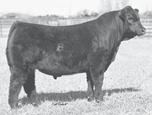
LOOKING TO LEASE A RANCH FOR APPROXIMATELY 150-200 HEAD OF COWS. Prefer area in Johnson and Sheridan counties. Call 307290-1643 1/31
COUNTY, WY RANCH NEAR CODY, WY IS AVAILABLE FOR A LONG-TERM LEASE: The ranch has over 50,000 acres and supports an irrigated hay base with BOR water rights. Carrying capacity is 700 animal units yearround with hay production. Willing to split the hay ground and grazing. Please e-mail Honora Beirne (hbeirne@ acpg.com)

GREAT SELECTION OF VALENTINES GIFTS!! MONTANA SILVERSMITHS, AUSTIN ACCENT and others!! SILK SCARVES, BELT BUCKLES, MONEY CLIPS, TOM BALDING and DUTTON BITS and ALL KINDS OF QUALITY TACK for your COWBOY or COWGIRL VALENTINE!! $AVE on BOOTS: HONDO, BOULET, JUSTIN WORK BOOTS, TWISTED X (boots and shoes) and more!! WE CAN ship!! Shop Moss Saddles, Boots and Tack, 4648 West Yellowstone Highway, Casper, WY, 307-472-1872. Our family serving yours for 50 years!! Check us out on Facebook or our website 1/24

FAITHFUL FEEDERS: Heifer development, backgrounding and grass calf prep. Billings, MT. Call Ryan, 406-6960104 4/11
LOOKING FOR PASTURE FOR THE SUMMER GRAZING SEASON FOR 100 PAIRS OF EXCELLENT BLACK COWS in central or northeastern Wyoming. Call Richard Leavitt, 307-2142200 2/7 SUMMER PASTURE WANTED FOR YEARLINGS: Seeking summer grass for 2026. For 500-1,500 head. Wyoming, Colorado, Nebraska, South Dakota. Prefer longterm potential, competitive rates offered. Call Jon, 831240-5795 TFN
MOFFAT COUNTY SHEEP SHEARING SCHOOL, CRAIG, CO APRIL 17-19: This 3-day shearing school provides hands-on, instructed experience in shearing sheep and an introduction to equipment maintenance. No previous experience needed. E-mail megan.stetson@colostate. edu or call 970-826-3402 for registration information and questions 1/24
POLLINATED SEED CORN out produces hybrid for silage and grazing quality grain, $69/bushel +S/H. Call 217-857-3377 or text cell 217-343-4962, visit website www.borriesopenpollinatedseedcorn.com
GOLDEN GERMAN MILLET HAY FOR SALE: Not combined, really nice hay, no nitrates, 8% protein, 4x4x8 big square bales, $110/ton. Call 970-630-0336 2/14
CATTLEMEN, ARE YOU NEEDING HAY FOR YOUR CATTLE? We have alfalfa, barley hay, mixed grass, oats and pea hay. Been in the hay business for 25+ years. Trucking available. Call 701-2902363 1/24
HAY FOR SALE: 3x3 and round bales of grass or alfalfa/grass mix. Delivered only. Call 605840-0015 1/24 FOR SALE: 2025 MILLET HAY IN LARGE ROUNDS, approximately 1,100 lbs., 150 tons available at $155/ton. Gooseneck delivery possible. Call 307259-5485 2/14

VIDEO HAY MARKETS, LLC: Representing 40 of the best growers in eastern Wyoming and western Nebraska. Call now for your winter
VERY GOOD QUALITY 50/50
ALFALFA/GRASS HAY FOR SALE: Fifty 1,200 lb. round bales, net wrapped, no rain when put up, stored outside. West of Baggs, WY. $175/bale take all. Text or call for price on smaller lots, Paul Anderson, 970-620-1568 1/24
QUALITY HAY FOR SALE: Grass, grass/alfalfa mix and straight alfalfa, net-wrapped large round bales, no rain. Western Nebraska location. Pick up or delivery available for fee. Call or text 303-9062691 2/14
FEED/GRAIN FOR SALE: Alfalfa, cane and millet hay. Large squares and rounds. Semi loads only. Will deliver. Call 970-2272760 2/14
ALFALFA AND ALFALFA/ GRASS HAY FOR SALE: Can deliver. Have three sets of doubles. Can haul 45 bales a load. We can help with your hay hauling!! Call Dave, 605520-6341 or Telly, 605-5200236 2/14
GRAIN CORN FOR SALE in the Pompey’s Pillar, MT area. Call 406-860-8924 1/31
CERTIFIED BARLEY STRAW FOR SALE, 3x4 bales. Cody, WY. Call 307-899-1952 TFN
HAY FOR SALE: Grass and alfalfa hay. ALSO, grass/alfalfa mix, millet, forage wheat and straw. Round bales and 3x4 square bales. Delivery available!! Call 307-630-3046 1/31
HAY FOR SALE: 2025 grass/ alfalfa, first and second cutting alfalfa, millet, haybet barley and CRP hay. ALSO, 2025 GRINDING HAY also available. All in net-wrapped round bales. Semi load delivery available. Call for pricing, ask for Klint, 701-2904418, if no answer, send a text or keep trying 1/31
HAY FOR SALE: Triticale, barley, pea blend with alfalfa, nice hay, 3x3 bales. Alfalfa with some rain, 3x3 bales, shed stored, $170/ton. ALSO, CERTIFIED TRITICALE STRAW, long stem round bales, $130/bale. Farson, WY. Call 307-350-0350 2/7
BARLEY STRAW: Certified weed-free small squares, $4/ bale. ALSO, 5x6 round bales, $125/ton. GRAIN OATS, wheat and barley, $20/cwt. Greybull, WY area. Call 307762-3878 or 307-899-4714, leave message 1/24
ROUND-BALED GRASS: 2025 crop 1,000 lb. net-wrapped bales, $50/bale. Cody, WY area. Call, don’t text, Anthony at 307-254-2645 2/7
400 TONS DURUM STRAW: Round bales, 1,000 lbs., $40/ bale, 780 bales available. Excellent bedding or feed. Call 406765-7172 1/24
CERTIFIED WEED-FREE PURE ALFALFA HAY: 2025 third and first cutting available in small squares, averaging 7080 lbs. Will load trucks and any open trailer. MONIDA OATS: $16/cwt. Combine run, great for seed or feed. Will auger into truck, trailer or large totes/ag bags. Located between Powell and Cody, WY. Certified scales on site. Call or text Knopp Farms for details, 307-2540554 1/31
LODGEPOLE OUTDOOR FURNACES, 307-223-2046. Your authorized Central Boiler Dealer. Get your outdoor wood furnace today!! Efficient wood heat. Heat multiple buildings. Invest in your heating, don’t just pay for it!! See us at www.cb.lodgepoleproducts. com !! 1/31
WOULD LIKE TO BUY: A Case IH 9150, 9250 or 9350 4x4 tractor. Call 605-530-6606 1/24




with 5-speed transmission, block heater, transfer case, driveline, front end all updated. Two new Legend (850 ccp) batteries, great tires. Inside in great shape. Truck needs paint but has never been wrecked. Lots of power. Asking $7,000, firm. Looking to get back on the farm to work. Text or call Toni Hallam at 307-330-6936 or e-mail lthallam@wyoming. com 1/24
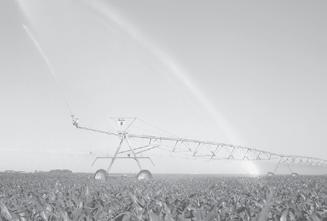
USED IRRIGATION PIVOTS FOR SALE, www.zimmag.com ● 2014 Zimmatic 8500 7 tower 1,286’, 5,132 hours ● 2020 Zimmatic 8500 7 tower 1,286’, 500 hours ● 2013 Valley 7000 7 tower 1,336’, 3,882 hours. Call 402-910-3236 1/24
Sales HIGH PLAINS STEEL SUPPLY IS YOUR SOURCE FOR NEW CARBON STEEL SALES IN WYOMING, with thousands of tons of inventory available today. Give us a call for a quote,

$170,500, CUTE, QUIET AND HOMEY!! 301 D St., Bushnell, NE 69128, just north of Hwy. 30, straight shot to Cheyenne, WY or Sidney, NE. Four bed/2 bath, 2 up, 2 down with bath 1 up and 1 down. 1,172 sq. ft. upstairs, 864 sq. ft. finished basement, attached garage, newer roof, fireplace, lots more. This house is very cute!! In a nice village of friendly folks, sits on a fenced .34 acre lot with lots of room for your dogs. Quiet living, nice views, very safe place, movein ready, lots of elbow room. We have a Village office, great water!! Post office and volunteer fire department. For more information, pictures or a walk through call Colleen at 970-631-5649. YOU WILL LOVE IT HERE!! To view photos, go to www.wylr.net in the classifieds 2/14
BIG HORN BASIN 120 ACRES WITH
RETIREMENT SALE!! Brand new medium weight corral panels, 12 ft. long x 5 ft. high, if buy minimum of 100, $90/ panel. Brand new Cattle Master squeeze chutes, $2,850. Calls only, no texts, 208-6518698 2/7
FOR SALE: Vermeer BP 7000 bale processor. Farm King 8’ snowblower with hydraulic spout. Erskine model 1812 skid loader 60” hydraulic snow blower. John Deere 714A and 716A chuckwagons with John Deere tandem running gear. H&S 7+4 18’ chuckwagon with bunk feeding extensions and tandem 14 ton running gear. J&M 385 gravity box with 12 ton gear, truck tires. Landoll 36’ cushion gang disc with 3 bar mulcher. Gehl 410 bushel manure spreader with slop gate, double floor chains, tandem axle. Meridian 240 seed tender, all hydraulic and roll tarp. Burns portable loading chute. 12’ and 14’ HD box scrapers with tilt. All in very nice condition!! Call 605-9995482 2/7
EQUIPMENT FOR SALE, FARMER RETIRING: John Deere 71 Flex 8 row corn planter on a 24’ stackable bar. AC Model 1300 30’ ripper with rakes. Safety pull with a bull hitch. 2003 IHC 9400I Eagle semi fifth wheel truck, Cat engine, 26’ end dump trailer with roll tarp. John Deere front suitcase weights. IHC front suitcase weights. Contact Greg Keller at 406-679-1136 1/31 FOR SALE: JOHN DEERE 200 STACKER. Field ready, no damage to floor, roof, unload chain. Excellent condition throughout. Call Steve at 612-597-0721 1/24




LODGEPOLE PRODUCTS, 307-742-6992, SERVING AGRIBUSINESSES SINCE 1975!! Treated posts, corral poles, buck-and-rail, western rail, fence stays, rough-sawn lumber, bedding. SEE US at www.lodgepoleproducts.com and click our “Picking A Fence Post” tab to see why folks choose our posts!! TFN
PIPE FOR SALE!! 2 7/8”, 3 1/2” tubing, 4” drill pipe, 4 1/2” casing, 5” casing, 7” casing. Rods 3/4”, 7/8” and 1” located in Montana, can ship anywhere. Call Mike, 602-758-4447. To view photos, go to www.wylr.net in the classifieds 5/30

School districts across Wyoming are incorporating hydroponic growing systems in cafeterias to get students involved with nutrition education while integrating fresh, hyper-local produce into school meal offerings.
The Natrona County School District (NCSD) recently installed a Flex Farm hydroponic growing system in their school cafeteria.
A product of the Wisconsin-based agriculture technology company Fork Farms, the Flex Farm hydroponic growing system allows programs like NCSD to grow fresh produce year-round while increasing student awareness about nutrition and where food comes from.
About Flex Farms
The Flex Farm system is a compact vertical hydroponic growing system using light and water to grow produce.
“Long story short, hydroponics is growing plants in water,” explains Fork Farms Partnership Development Leader Alex Ziebell.
Ziebell is based in Wisconsin but works with partners across the country to incorporate Flex Farms into food service programs.
He gave a presentation on Flex Farms during the Wyoming Farm to School Conference in October 2025, providing details on the system’s features and impacts to edu-
Farm milk prices dipped sharply in the second half of 2025 due to strong milk production.
Class III prices dropped by $1.38 per hundredweight (cwt) since August’s $17.24 payout for cheese and whey. Unfortunately, Class IV experienced even steeper losses, falling from $18.50 to $13.64 per cwt by December, according to Corey Geiger, lead dairy economist for CoBank Knowledge Exchange.
“This $4.85 reduction per cwt has put significant pressure on West Coast dairy farmers where larger volumes of butter and milk powders are produced at processing plants, which begs the question, ‘When might we see a rebound in milk prices?’” Geiger explained.
Challenging question
Geiger admitted, “It’s a challenging question to answer because it depends on when we will see a pullback on milk production in both the U.S. and other major dairy product exporters.”
This is because milk prices have taken a downturn in those regions, too.
European Union (EU) milk production has been rather robust in recent months after being flat a year ago.
In August, EU milk was up 3.2 percent, and by October, output climbed a remarkable 5.5 percent, Geiger noted. Signals indicate November and
cators and food service directors gathered in Casper.
According to Fork Farms, Flex Farms take up less than 10 square feet of space and need only an electrical outlet to function, eliminating the need for soil, real sunlight and large plots of land – factors which make the systems convenient options for places like cafeterias.
One standard indoor Flex Farm system is capable of producing roughly 25 pounds of produce every 28 days.
The product’s design eliminates the variables of weather and seasons, enabling growers access to a wide variety of fresh produce year-round.
The controlled environment also eliminates the need for pesticides, enabling food service directors to keep chemicals out of the lunch line.
Ziebell notes 12 programs across Wyoming either have active Flex Farms or are in the process of establishing one, including school districts in Carbon, Fremont and Natrona counties.
Of these programs, Ziebell says five have been established in the past three months, bringing fresh vegetables to Wyomingites in the heart of winter.
Local impact
The NCSD Flex Farm was installed in mid-November 2025 and harvested its
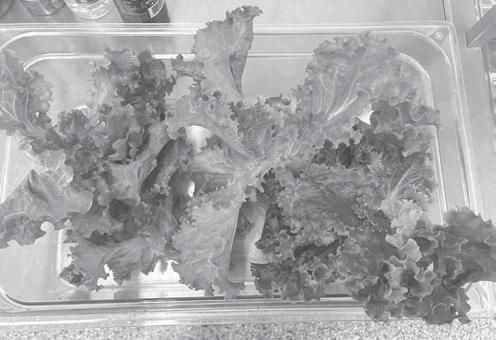
Fresh produce – Flex Farms have been incorporated throughout a number of Wyoming school districts thanks to the Wyoming Farm to School program, bringing fresh produce to students across the Cowboy State. Pictured is a recent lettuce harvest from the Natrona County School District. Courtesy photo
first crop in late December.
According to NCSD Food Services Director Desiree McAdams, the Flex Farm was made possible through grant funding from the Wyoming Farm to School program.
NCSD Food and Nutrition Services Kitchen Manager Mickey Anderson has overseen the installation of the system and the growth of the first plants, and the system’s centralized location in the cafeteria will allow students to watch the growing process from seed to harvest throughout the school year.
The NCSD Flex Farm recently produced its first harvest of romaine lettuce and basil, while tomatoes and green pepper plants are also
beginning to bloom.
As emphasized in Ziebell’s presentation, harvesting produce locally through Flex Farms cuts food transport time out of the equation, eliminating the need for synthetic preservatives and leading to convenient and consistent access to fresh foods in schools.
By increasing access and allowing students to oversee the growing process, McAdams hopes to inspire a taste for fresh produce and healthy habits in NCSD students.
“My biggest goal is to get kids excited about trying fresh produce,” McAdams says. “I’m hoping if they see it grow, they’ll get excited about eating nutritious food.”
Increasing education
In addition, McAdams
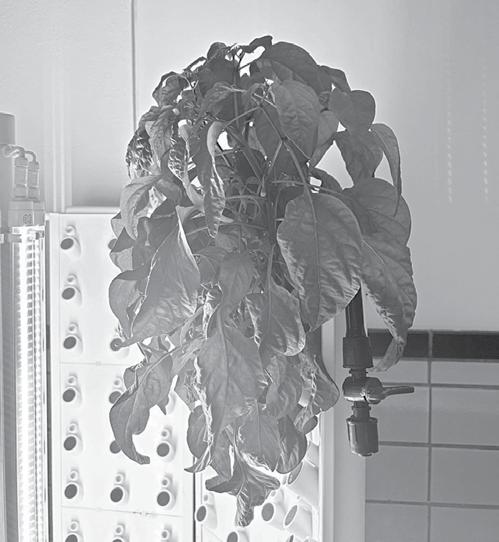
says connecting kids with an awareness about where their food comes from is another top priority.
“Most of the time, students just see their food coming from the store,” says McAdams.
Closing this knowledge gap is a central goal of all Farm to School programming, and McAdams notes NCSD has taken part in other efforts to incorporate local foods through the program.
The district’s breakfast and lunch programs have used beef products from Frank’s Butcher Shop in
December could be more of the same once final tallies get reported.
“This matters for two reasons,” he said. “For starters, the EU milk shed – with the United Kingdom – is 1.6 times the size of the U.S. Secondly, the EU is the world’s largest dairy product and ingredient exporter, shipping the equivalent of nearly 20 percent of its milk production overseas. Strong production from this continent tends to put pressure on global milk prices as dairy products and ingredients search for a home abroad.”
In New Zealand, the world’s second-largest exporter – the U.S. comes in third – milk production has been up 2.5 percent season-over-season.
With margins rather favorable to make milk, due to low feed prices, Kiwi production growth should hold in steady in the 2.5-percent range during the second half of its production season.
“This is all taking place even though the country’s largest cooperative, Fonterra, revised milk prices lower on both Nov. 25 and Dec. 18,” Geiger said. Strong stateside growth
To some extent, U.S. milk output had mirrored the EU, with growth hovering under two-percent levels from January through April. Then, output began trending higher, with June
through November milk rising 3.3 to 4.5 percent year-over-year.
“However, the more dynamic story has been growth in milk components,” Geiger said. “During the same June-toNovember window, protein production moved 4.3 to 5.7 percent higher. Markets have easily absorbed the extra protein production given growing demand for yogurt, cottage cheese and high-protein dairy shakes and whey powders.”
Butterfat has been a different component story.
“Dairy fats posted growth from 2.9 to four percent in the first five months of the year. By June, butterfat climbed 5.3 percent year-over-year and peaked at 6.3 percent in September, with no month being under five percent through year’s end,” he explained.
“Markets simply have become saturated despite growth in per capita butter and creamers, along with strong butter exports. Hence the downturn in Class III and Class IV milk prices,” he added.
Given what buyers believe will take place for future output, Class III futures on the CME first pushed past the $17 mark in July 2026 with Class IV moving above $16 next September, based on early January trading activity.
What turns the tide?
“Certainly, dairy cows have become more effi-
cient, with the collective U.S. dairy herd posting 2.1 percent growth on a per cow basis this past November,” Geiger stated. “However, more milk per cow only accounts for half of November’s new milk output.”
Beef-on-dairy breeding patterns account for the larger half as dairy farmers retain cows to make beef calves.
“When looking back over the past 12 months, there are 211,000 additional dairy cows, and those extra cows produced an extra 414.1 million pounds of milk,” Geiger said. “This represents 2.3 percent of the growth in November milk on a national level from just those extra cows. When looking back to October milk, the extra 200,000plus cows were responsible for 61 percent of the additional milk compared to the 39 percent share attributed to added efficiency in milk produced per cow.”
“This helps shape the picture for higher supplyside milk volumes, putting pressure on the demand side of the equation as cow numbers hover near 30-year highs,” he added. Due to pressures on milk margins, the U.S. dairy industry has begun to see a slight uptick in dairy cow culling. There were more cows sent to slaughter every week from midSeptember to year’s end, according to Geiger.
Casper, sweet corn from 1890 Farms in Riverton, mushrooms and green peppers from Eat Wyoming and beans from Equality State Farms in Gillette and Kelly Bean Co. in Torrington.
Further, McAdams notes NCSD also participated in the 2024 Farm to School Crunch Off Challenge, in which Wyoming was declared the Mountain Plains Region Champion. Grace Skavdahl is the editor of the Wyoming Livestock Roundup. Send comments on this article to roundup@wylr.net.
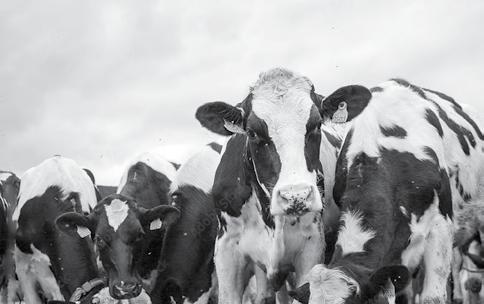
However, those 15 straight weeks only netted 24,000 additional cows culled – or 11 percent of the 200,000-plus additional dairy cows.
With the beef category now contributing between four to five dollars per cwt to dairy farm revenues, those extra cows in dairy herds continue to pay dividends to the bottom line.
“In early January, sales of beef-on-dairy calves were fetching a $1,400 average in Lancaster, Pa.,” he said. “Until this financial contribution reverses or margins to produce milk fall further, we may have a larger dairy herd and more milk to disperse in the marketplace. This will continue to put pressure on milk prices and slow a milk price recovery.”
According to Geiger, the most likely scenario is global dairy markets realize a pullback in EU milk production first.
This scenario is likely to play out first because the European continent
is not seeing high returns in the beef category like U.S. dairy farmers are. As a result, lower milk prices are not buoyed as much by beef-on-dairy income. Pressure on milk margins should induce culling sooner.
Given all those factors, U.S. Department of Agriculture (USDA) economists lowered their all-milk price forecast for 2026 from $18.75 to $18.25 per cwt in the January 2026 World Agricultural Supply and Demand Estimates. This number was closer to $21 in 2025.
In the meantime, if these financial conditions continue, producers might once again see payments for milk covered in USDA’s Dairy Margin Coverage Program as milk income over feed costs could fall below the $9.50 level.
Fran O’Leary is the senior editor for Wisconsin Agriculturist. This article was originally published in Wisconsin Agriculturist on Jan. 20.
equip women across the Western industry, the threeday summit brings together leading female executives, entrepreneurs and changemakers for dynamic programming focused on leadership, growth and opportunity,” she writes.
The summit will take place in conjunction with the Seventh Annual Wrangler COWGIRL 30 Under 30 Empowered Gala, in which the Class of 2026 will be formally recognized. The event is set for May 20-23 at Live! by Loews in Arlington, Texas.
Cowboy State representative
Wyoming’s own Tori Teegarden, agriculture and federal lands policy advisor in the Office of U.S. Sen. John Barrasso (R-WY), was among those named in COWGIRL Magazine’s prestigious list.
Teegarden was raised with deep ties to the ranching industry in both Wyoming and Colorado, earning degrees in animal and meat science from Colorado State University (CSU) and Texas A&M University (TAMU).
From there, she pursued internships to gain hands-on experience in beef packing, research and policy on Capitol Hill.
Today, Teegarden is based in Washington, D.C. where she handles Barrasso’s agricultural, natural resource and federal lands and water portfolio. In this role, she bridges science, policy and advocacy to ensure the voices of Wyoming’s ag industry are well represented in national decision-making.
“Teegarden is passionate about advocating for the people of agriculture. She values the industry’s ability to adapt across generations while maintaining its mission to feed and fuel the nation, and she takes pride in safeguarding Western heritage through policy work,” Sinclair writes.
Western women
In addition to Teegarden, a handful of other women hailing from the Mountain West were also named in the COWGIRL 30 Under 30 Class of 2026.
Officially based in Utah, Braidie Jill Anderson has strong ties to the Cowboy State.
Anderson is the owner of Roamstead Ranch, a direct-to-consumer beef and bison operation, and a professional backcountry outfitter associated with J&J Outfitters, which provides outfitting services across Utah, Idaho and western Wyoming.
Prior to this, Anderson was Miss Rodeo Wyoming and a TV reporter and spokesperson for the Utah Department of Agriculture.
Fellow Utahn Jacee Lancaster was born and raised in south-central Idaho and now serves as the livestock director at the Utah State Fair in Salt Lake City where she oversees all live-
stock events and produces Utah’s Own Professional Rodeo Cowboys Association Rodeo.
Hailing from Boise, Idaho, Annika Johnson works as a feedlot consulting veterinarian for Veterinary Research and Consulting Services, while Cassi Nichols, a native of northern Colorado, now works as the sponsorship and endorsee specialist for CINCH, based in Grandview, Texas.
Another Coloradoan, Maggie Murphy, serves as the CSU horse judging team coordinator in Fort Collins, Colo.
Samantha Dopp is the director of equine and agriculture operations at The Ranch at Rock Creek in
Philipsburg, Mont. and serves on the board of the Montana Reined Cow Horse Futurity.
Jamie Steen grew up on a ranch in eastern Montana and now serves as the Art of the Cowgirl executive director based in Worden, Mont. Other honorees
Among the women included in COWGIRL’s 30 Under 30 Class of 2026 is a long list of individuals hailing from Texas.
They include Houston Livestock Show and Rodeo Horse Show Coordinator Ashley Dibbs of Spring, Texas; TAMU College of Veterinary Medicine and Biomedical Sciences Clinical Assistant Professor Audra Jones of College Station, Texas; AgTexas Farm Credit Crop Insurance Agent Baily Summers
of Amarillo, Texas; On-Air Sports Broadcast Journalist Hayley Novak of Terrell, Texas; Equibrand Products Group Public Relations (PR) and Social Media Coordinator Joy Nabors of Stephenville, Texas; Double K Digitals On-Camera Talent and Co-Founder Kennadee Riggs of Yoakum, Texas; National Cutting Horse Association Communications Manager Logan Lynch of Boyd, Texas; Rachel Cogle, assistant professor of equine industry and business at West Texas A&M University of Canyon, Texas; Cavender’s Boot City Western Marketing and Events Coordinator Sydney Shepard of Tyler, Texas and Taylor Christie of Tahoka, Texas, an ag science teacher and FFA advisor at Tahoka ISD.
Three individuals from Fort Worth, Texas – Double D Ranch Assistant Sales Manager Savannah Welborn; American Hat Company PR and Digital Media Manager Skylar Smith and Stevie Guess, western industry media and strategic partnerships coordinator at RFD-TV – were also honored. Other honorees include Wrangler PR and Brand Collaborations Marketing Senior Coordinator Ashley Pollard of Greensboro, N.C.; American Quarter Horse Association Manager of Championship Shows Aubrey Braham of Thompson, Ohio; Brooke Kitting of Guymon, Okla., director of marketing and communications for Guymon Pioneer Days Rodeo and senior veterinarian for Seaboard Foods and Ariat Inter-
national, Inc. General Manager Brooke Whitmer of Nashville, Tenn. Rounding out the Class of 2026 are Kimes Ranch Digital Content Manager Camryn Faust of Scottsdale, Ariz.; 6666 Ranch Marketing Manager Carlie Pollmeier of Fort Scott, Kan.; BUCKEYE Nutrition Marketing Specialist Hannah Manns of Orrville, Ohio; Irina Pateras of San Luis Obispo, Calif., equine center manager for California Polytechnic State University, San Luis Obispo and Sarah Kezar of Madison, Wis., assistant professor of weed science at the University of Wisconsin-Madison. Hannah Bugas is the managing editor of the Wyoming Livestock Roundup. Send comments on this article to roundup@wylr.net

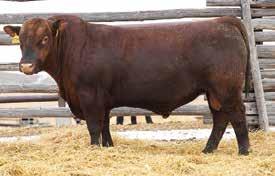
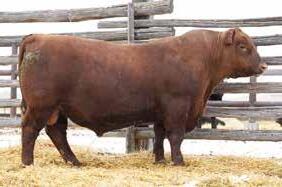
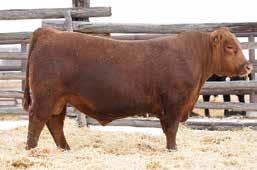
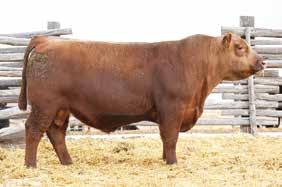
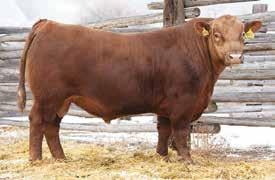
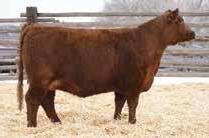

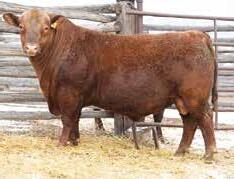
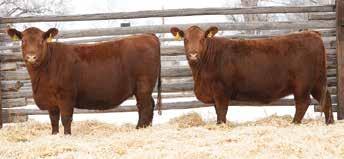
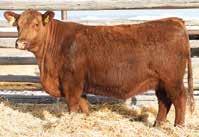

The Wyoming Game and Fish Commission held its first meeting of 2026 at Wyoming Game and Fish Department (WGFD) Headquarters in Cheyenne. The meeting included several presentations on upcoming initiatives and efforts the department has in place.
The commission approved a change to policy to allow for the department’s education team to move forward in offering a fullyonline hunter education course option for those over 18. Following this approval, WGFD will develop an online course anticipated to go live in early 2027.
Beginning in 2027, WGFD plans to transition from an annual hunt-
ing season-setting process to a threeyear cycle to improve data analysis and provide greater regulatory stability for hunters.
This shift aims to refocus public engagement from traditional annual meetings with season proposals already developed to fostering more meaningful public engagement in years seasons are not set, so public input can be better considered prior to developing formal proposals.
The commission also heard an informal presentation outlining the 2026 Mule Deer Conservation Strategy.
Building on the success of the Mule Deer Initiative adopted by the commission in 2007, the strategy will
serve to identify priority actions and coordinate the department’s approach to habitat conservation and herd management over the next five years.
The plan sets significant financial goals, including $50 million annually to protect intact working lands and $75 million to treat one million acres of invasive species. The strategy also prioritizes connectivity by earmarking $50 million for high-priority wildlife crossings and $15 million to convert 500 miles of fencing to wildlife-friendly designs.
The next Wyoming Game and Fish Commission meeting is set for March 18-19 in Torrington.
For more information, visit wgfd.wyo.gov
2
2
3 Bred Cow, 1421# $2,700.00
1 Bred Cow, 1380# $2,600.00
2
9
8 Steer, 407#
15 Steer, 414# $590.00
6 Steer, 429#
3 Steer, 441# $582.50
14 Steer, 456# $575.00
85 Steer, 477# $559.00 SHOSHONI
59 Steer, 471# $551.00
14 Steer, 490# $532.00
4 Steer, 491# $529.00
4 Steer, 517# $529.00 FARSON
44 Steer, 523#
29 Steer, 534# $524.00
17 Steer, 526#
19 Steer, 545# $517.50
11 Steer, 542#
33 Steer, 557#
2 Steer, 567#
20 Steer, 561#
13 Steer, 576#
143 Steer, 611# $453.25
33 Steer, 622#
13 Steer, 637#
Steer, 637# $423.00
11 Steer, 651#
5 Steer, 678#
11 Steer, 709#
541#
583#
592#
592#
577#
621# $411.50
643# $393.25
650# $392.50
650#
Heifer, 642# $390.00
Heifer, 667# $390.00
7 Heifer, 680# $376.50 PAVILLION 5 Heifer, 677# $372.00
RIVERTON 10 Heifer, 684# $371.50 FARSON 13 Heifer, 688# $367.50 10 Heifer, 749# $335.25
HEIFERETTES BIG PINEY
9 Heiferette, 902# $260.00 BIG PINEY 6 Heiferette, 745# $310.00
SHOSHONI 2 Heiferette, 1120# $209.00 COWS
SHOSHONI
2 Cow, 1020# $220.00
LANDER
1 Cow, 1230# $180.50
SHOSHONI
2 Cow, 1185# $176.00
BIG PINEY
2 Cow, 1085# $172.00
SHOSHONI
2 Cow, 1235# $167.50
5 Cow, 1317# $165.00
1 Cow, 1375# $163.00
2 Cow, 1527# $161.00
CROWHEART
2 Cow, 1042# $159.00
1 Cow, 1805# $159.00
MCKINNON
1 Cow, 1750# $157.00
RIGBY, ID 1 Cow, 1515# $157.00
UT 2 Cow, 1187#
1 Bull, 1915#
ID 1 Bull, 1530#
FORT WASHAKIE 1 Bull, 1840#
1 Bull, 1970#
ID 1 Bull, 1700#
2 Bull, 2017#
TUESDAY, FEBRUARY 17
FEEDER SPECIAL START TIME 9:30 A.M. W/ WEIGH UPS
TUESDAY, FEBRUARY 24 ALL CATTLE CLASSES W/ SHEEP & HORSES • START TIME 9:30 A.M. W/ SHEEP & WEIGH UPS TUESDAY, MARCH 3
FEEDER SPECIAL START TIME 9:30 A.M. W/ WEIGH UPS
SATURDAY, MARCH 7
LUCKY
TUESDAY, JANUARY 27
BRED HEIFERS
Vickrey Ranch- 20 Mostly Blk Ang Bred Hfrs. Bred to LBW Black Angus bulls to start calving April 1st for 45 days. High elevation. BRED COWS
Hellyer Ranch- 15 Blk Ang Bred Running Age Cows. Bred to Popo Agie Angus Bulls to calve March/April. Rec Triangle 5 & poured this fall @ preg test.
GOATS
Dillon Hedges- 1-4yr old Boer Buck- Proven Breeder. Up to date on shots & poured. 1-2yr old Nigerian Dwarf Buck- Proven Breeder. Up to date on shots & poured. SHEEP
Willow Bow Ranch- 20 ewe/lamb pairs, 20 lambing ewes, 60 mix sheep. Hair sheep. HORSES/MULE
Justin Case – 8yr old mini mule.
TUESDAY, FEBRUARY 3
BRED COW & HEIFER SPECIAL ALONG W/ CALVES & YEARLINGS START TIME 9:30 A.M. W/ WEIGH UPS BRED COWS @ NOON
BRED HEIFERS
Fleur De Lis Cattle- 50 Blk Ang & AngX Bred Heifers. Bred to LBW Reyes & Lucky 7 Black Ang bulls to start calving 3-1. Rec Virashield 6 VL5, Safeguard & poured w/Clean-Up @ preg checking. Heifers will weigh 1000-1050#. Summered on high desert range (7200’). Big, fancy bred heifers! Bred to good bulls!
CALVES
Armada Ranch LLC & Braxton Crofts- 40 Blk Ang & BWF Hfrs 450-500#. Rec 2 rounds Vista Once & Vision 8 w/Somnus, Nasalgen @ a (11-1). Bunk Broke. Sired by good bulls. Cake broke. Nice high desert calves!
JR Munger- 12 Registered Hereford & BWF Strs, 3 Hfrs 525-625#. Sired by Registered Hereford bull Kickstart. Rec 2 rounds Ultra bac 7. Poured @ weaning 12-28. No implants. Hay fed. Born & raised @ 6000’. Electric fence broke. COWS C&D Enterprises- 45 Test cows WEIGHS Armada Ranch LLC & Braxton Crofts- 12 weigh cows
TUESDAY, MARCH 17 ALL CATTLE CLASSES START TIME 9:30 A.M. W/ WEIGH UPS
TUESDAY, MARCH 24 ALL CATTLE CLASSES 48TH ANNUAL NORTHWEST ANGUS ASSOCIATION BULL SALE (1:00 P.M.) START TIME 9:30 A.M. W/ WEIGH UPS Northwest Angus Association Black Angus Yearling & 18 Month Old Bulls From: Obsidian Angus, Hoggs Angus, Davidson Angus, Lazy BV Cattle, JOH Ranch & WYO Angus. Bulls will be BVD, Semen & PAP tested. (1:00 PM) Representing 27 herd sires. Contact Fred Thomas 307-868-2595 or any Breeder to request a catalog or more information fkdramsrus@gmx.com.
TUESDAY, MARCH 31
TUESDAY, APRIL