On Jan. 21, Colorado Parks and Wildlife (CPW) announced a decision to pause gray wolf reintroduction efforts for the remainder of the current release season.
Industry groups including the Col-
On Jan. 21, Colorado Parks and Wildlife (CPW) announced a decision to pause gray wolf reintroduction efforts for the remainder of the current release season.
Industry groups including the Col-
In the seventh snow report for Water Year 2026, the state’s snow telemetry data reads 85% of median, with a basin high of 117% and a basin low of 4%. Last year, the state was at 86% and at 80% in 2024. The report and a map displaying basin snow water equivalent percentages of median for the state may be found at wrds. uwyo.edu/wrds/nrcs/nrcs.html
In partnership with Visit Cheyenne, Hell on Wheels Rodeo Company and Laramie County Events, Pine Bluffs Distilling will host Frozen Fury on the Plains, a premier indoor winter bucking bronc futurity match featuring top young saddle bronc riders and horses, on Feb. 7 at the Event Center at Archer in Cheyenne. Doors will open at 5 p.m., and the rodeo will start at 6 p.m. The Burns Lions Club will host a post-rodeo party and dance featuring live music from the High Horses. For more information, to purchase tickets or to enter the competition, visit cheyenne.org/frozenfury-onthe-plains/
On Jan. 12, at the 107th American Farm Bureau Federation Convention, U.S. Secretary of Agriculture Brooke Rollins announced expanded enrollment for 2026 Dairy Margin Coverage (DMC) program and new Section 32 commodity purchases which will result in more healthy, U.S. grown food in the hands of Americans. For more information on the DMC program and new coverage, visit fsa.usda.gov/resources/ programs/dairy-margin-coverage-program-dmc or contact a local U.S. Department of Agriculture service center.
Registration is open for the Third Biennial Soil Health in the West Conference, which will be held Feb. 10-12 at the Dixie Convention Center in St. George, Utah. This year, 28 speakers will focus on soil health-focused crop production and grazing. For more information or to register, visit utahsoilhealth.org/events/soilhealth-in-the-west
orado Cattlemen’s Association (CCA) and ranchers across the West have welcomed the pause while continuing to call for ongoing policy reform.
Additionally, the National Cattlemen’s Beef Association (NCBA)
and Public Lands Council (PLC) are praising advancements in legislation which aims to remove the Mexican gray wolf from the list of threatened species under the Endangered Species
NWSS wraps up with Wyoming Day, record-breaking sale and tough rodeo competition
After two whirlwind weeks of competitive livestock shows, thrilling entertainment and tough rodeo competition, the 120th National Western Stock Show (NWSS) officially wrapped up in Denver on the weekend of Jan. 23-25.
Some highlights from the last weekend of “The Best 16 Days in January” included the Auction of
Junior Champions, Wyoming Day and the Professional Rodeo Cowboys Association (PRCA) Rodeo Finals.
Livestock shows, auction breaks records
In the inaugural year of exhibiting livestock in the Sue Anschutz-Rodgers Livestock Center – the
Please see NWSS on page A14
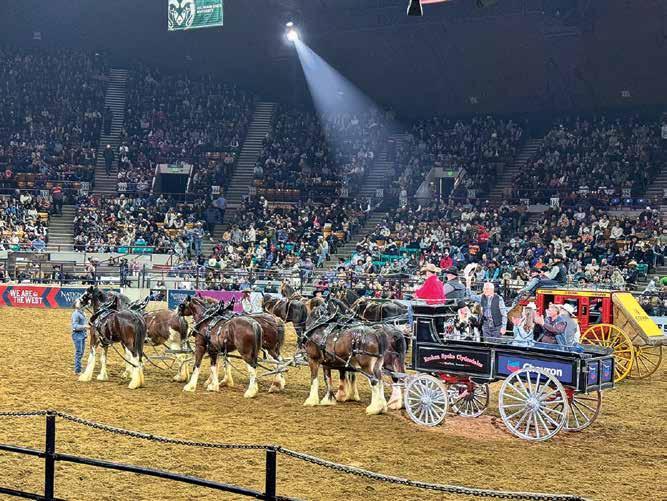
Wyoming Day honorees – In honor of Wyoming Day at the National Western Stock Show (NWSS), Gov. Mark Gordon, First Lady Jennie Gordon and members of the Wyoming Stock Growers Association (WSGA) made an appearance during the Wyoming Day Rodeo in the official NWSS wagon pulled by the Broken Spoke Clydesdale six-horse hitch. Here, WSGA Executive Vice President Jim Magagna tips his hat to the crowd. WYLR photo
Once again, the Four States Irrigation Council took time this winter to recognize individuals who have made significant contributions in the irrigation, agriculture and water infrastructure industries.
During a Jan. 15 awards banquet in Northglenn, Colo., the organization distributed its annual Headgate Awards, which are given to industry leaders in each of the four states – Colorado, Kansas, Nebraska and Wyoming – who have been active in and supportive of irrigation and water resources development.
Each year, the Four States Irrigation Council Awards Banquet takes place as part of the organization’s broader two-day annual meeting.
Wyoming Headgate Award
Joan McGraw is the recipient of the 2026 Wyoming Headgate Award.
McGraw has worked in water, water quality and water conservation since 2012, when she started working for the Medicine Bow Conservation District. After a short time there, she became the district manager and kept a constant flow of grants moving through the district to complete needed conservation projects.
Then in 2023, McGraw became the district manager for Casper Alcova Irrigation District (CAID), where she hit the ground running.
She has accomplished a lot with CAID, including securing funding for cost sharing on an automation project for the district which saved hours of drive time for ditch riders.
McGraw has also strengthened relationships with the Bureau of Recreation, State Engineer’s Office, Wyoming
The 15th Annual Women’s Ag Summit, hosted by the Johnson County CattleWomen (JCCW) in memory of Tracy Alger, was held on Jan. 17 at the Play House in Buffalo.
Wyoming women gathered for a day of conversation and connection regarding Johnson County’s cattle industry, enjoying presentations from a host of speakers on topics ranging from fighting food insecurity and infectious diseases to rural mental health, ag advocacy and more. Morning session
The event kicked off with a presentation on ag advocacy and the Wyoming Hunger Initiative delivered by First Lady of Wyoming Jennie Gordon.

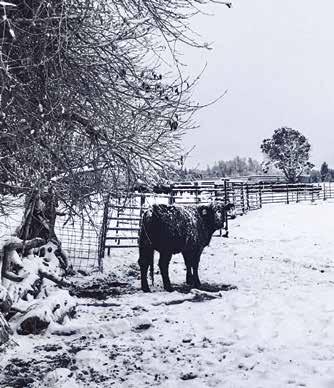
Historic cold conditions prompt reminders for winter storm preparedness
As historic winter weather moves across the country, the U.S. Department of Agriculture (USDA) and other industry groups have issued reminders about preparing for cold conditions.
USDA emphasizes the importance of making a plan before winter weather hits and provides information about risk management strategies and disaster assistance resources available to impacted producers.
Food safety
Since storms can cause power outages and make travel to stores dangerous or impossible, having a food safety plan in place and stocking up on essentials ahead of time is important.
In a Jan. 23 press release, USDA provides some guidelines for navigating food safety in the midst of a winter storm.
USDA recommends keeping several days’ worth of ready-to-eat foods which do not require cooking or cooling on hand.
In the event of a power outage, USDA says refrigerators can keep food below 40 degrees Fahrenheit for roughly four hours, while a fully-stocked freezer should be able to stay cold for about 48 hours as long as opening doors is minimized.
Perishable foods which
“Advocacy for the ag industry is really important because if we don’t tell our story, somebody else will,” Gordon said.
“I think women in agriculture have such a powerful position because we’re kind of a softer side most of the time,” Gordon added, emphasizing the ability to foster education and correct misinformation while remaining compassionate is a strong asset for ag advocates.
The morning continued with comments on infectious animal diseases and biosecurity from Wyoming Assistant State Veterinarian Dr. Rose Digianantonio. Digianantonio offered an overview of some common animal diseases which

With protein recognized as a major factor in our diets lately, it is no surprise whole milk is back in our schools and homes as a great protein source.
On Jan. 7, President Donald Trump signed the Whole Milk for Healthy Kids Act into law to get whole milk – as well as low-fat and no-fat milk – into schools and other federallyfunded kitchens.
This act counters the Obama administration’s Healthy, Hunger-Free Kids Act which banned whole milk on the reasoning children’s calories from fat should be restricted. This act really hurt the school lunch program and left a lot of food in the school lunch line untouched.
According to the National Milk Producers Federation, students consumed 288 million fewer half pints of milk from 2012-15 and 213 million fewer in 2014-16.
Overall, throughout these policy changes, Americans as a whole have rapidly pulled back on the consumption of milk.
According to the American Farm Bureau Federation, milk consumption fell 28 percent since 2010. Consumption has been falling since 1975 though – down 50 percent in the last 50 years. Milk demand is difficult to figure, as a shift in government dietary guidelines and the consumer narrative have certainly had an impact on demand.
Now, many people feel it is unlikely per-capita consumption will get back to 2010 levels anytime soon. Hopefully, the new dietary guidelines and Trump’s new act will jumpstart people’s choice back to milk.
The bill Trump signed also includes the Protecting Children with Food Allergies Act, which states food service staff in schools should receive training on food allergies and how to recognize and prevent allergic reactions. It also allows schools to provide milk alternatives in food lines.
I realize there are students and faculty who are lactose intolerant, and there is the need to provide alternatives in schools for those who request it.
As one who grew up on raw milk, I’m a big milk promoter. On the other hand, I have friends who have children who are lactose intolerant and have to drink goat’s milk or other alternatives.
I hope this new law will help the dairy industry, which throughout the past few years has had some low times. It is not an easy business, but those in the industry realize to succeed they must have a large dairy. Even in Wyoming we have a dairy with over 2,000 milk cows.
I’ve always thought the bad part about changing food groups is the political piece – we don’t need any administration or Congress telling us how and what to eat. It is the job of parents to find out what foods they want their children to consume.
I’m glad whole milk and its alternatives are recognized as healthy for school lunch lines, just don’t call it milk if it is plant based.

The record-high calf prices experienced in 2024-25 have left many cow/ calf producers with a welcome challenge – determining how to reinvest profits in their operations.
While strong cattle markets offer an opportunity to improve long-term profitability, they also bring the temptation to spend pre-tax earnings on items which may not enhance operational efficiency or performance in future years.
This cattle cycle is unique in many respects. Contributing factors include sustained drought in key production regions, historically high calf and cull cow prices, an aging producer base and a severely reduced national cow herd inventory.
As history reminds us – such as the sharp drop in feeder calf prices in 2016 – periods of high income require careful, strategic decision-making to ensure long-term business success.
Tax planning
One common driver of decisionmaking during profitable years is tax
planning. Many producers consult with accountants to reduce taxable income before the end of the year.
While this strategy can be valid, decisions based solely on minimizing tax liability may not support the longterm financial health of the ranch.
For example, purchasing a new pickup or piece of equipment before year-end may reduce tax exposure, but these investments should be evaluated on whether they contribute meaningfully to the business’s efficiency or profitability.
To evaluate potential investments more effectively, it’s important to distinguish between tax accounting and economic profitability. Tax accounting focuses on cash income and deductible expenses, often using accelerated depreciation and excluding unpaid labor or owned asset costs.
In contrast, an economic profit statement includes the fair market value of owned inputs such as raised feed, land use and unpaid family labor. It also accounts for depreciation or
replacement cost of breeding animals and applies an opportunity cost to owned assets – recognizing capital tied up in equipment or land could otherwise be earning a return through lowrisk investments.
From an economic perspective, investments in capital assets like pickups or tractors should be evaluated by their ability to increase gross margin –revenue minus direct costs – relative to the overhead they add.
A new pickup may not improve revenue or reduce direct costs, but it does increase fixed costs through depreciation and maintenance.
On the other hand, investments like cross-fencing, improved water infrastructure or rotational grazing systems can improve forage utilization, enabling greater production without increasing land base and ultimately improving gross margin.
Another valuable use of pre-tax earnings is to improve the ranch’s current asset position – liquid assets Please














Gov. Mark Gordon will be in Lander to kick off a series of events around the state entitled, “The Essentials Budget: Protecting and Powering Wyoming’s Future,” highlighting the importance of the upcoming budget session and the decisions made there.
Topics will include protecting core industries, economic and business growth, importance of saving, property tax reform and others as time allows.
The governor will also highlight important priorities in his budget which could affect local communities.
The public will have the opportunity to ask questions for a portion of the event. As well, the governor will take time to speak with local media after the event.
The Lander event will begin at 1 p.m. in the Wind River Room at The Inn at Lander on Feb. 3.
The governor will also be in Gillette on Feb. 13, Cody on Feb. 16, Torrington on Feb. 25 and Rock Springs on March 2. For more information, visit governor.wyo.gov
Forty-five students wandered through the bison pens at the National Western Stock Show in Denver late in January, studying animals closely and jotting down notes before stepping in front of a panel of seasoned bison rancher-judges to defend their selections.
The students were competing in the annual Larry Higgins Bison Judging Contest, hosted by the Rocky Mountain Bison Association and the National Bison Association.
When the snow settled and the competition wrapped up, Delaney McGowen of Eastern Wyoming College (EWC) earned the top collegiate ranking.
Teigen Derner of Laramie County 4-H won the senior high division, and Lucy Hester of West Grand Elementary/Middle School claimed top honors in the junior division.
The EWC Judging Team, made up of Cort Bannan, Rebecca Gardner, McGowen and Anthony Quick, secured the Top Team Award.
Ava Roundy of EWC placed second in the collegiate division.
In the senior division, Hudson Wright of Laramie County 4-H took second, followed by Brylee Snell of Laramie County 4-H in third.
In the junior division, Spencer Bohnenkamp of Mountain Grove, Mo. placed second, and Lilyko Suzuki of Bibber Creek Spurs 4-H in Jefferson County, Colorado placed third.
Rounding out the team rankings, the EWC Team, consisting of Ellen Hartman, Roundy, Athena Swinart and Conley Hogland earned second place, with the Laramie County 4-H Team of Wright, Walter Martinz, Allis Martinz and Derner finishing in third.
The top three junior competitors received plaques, while senior and collegiate top finishers were awarded plaques and scholarships.
On Jan. 27, Western Ag Network (WAN) and Ag Information Network (AIN) announced a strategic merger under Nemetz Communications, Inc., bringing together two respected agricultural media organizations to create one of the most comprehensive, far-reaching ag broadcast platforms in the U.S. with the primary focus in the West and Southeast.
With more than 200 radio affiliates across 17 states and a combined legacy of trusted agricultural journalism, the unified network offers an expanded, streamlined and highly-efficient channel for delivering agricultural news, market reports and industry insights to producers, communities and national agribusiness partners alike.
As the transition moves forward, WAN intends to preserve the established identity of the AIN. Listeners, affiliates and industry partners will continue to hear familiar AIN programming and trusted hosts they rely on, ensuring a seamless experience while the two networks align behind the scenes.
“This merger reflects a shared commitment to elevate the accessibility and depth of agricultural information across the West and beyond,” said Russell Nemetz, president and owner of Nemetz Communications, Inc. “We’re combining the strengths of two respected networks to create a stronger, more connected platform without losing the authenticity and credibility our audiences expect.”
“Our listeners and partners value consistent, trusted information,” added Kelly Allen, president and owner of Allen Media. “Joining WAN allows us to expand this service while maintaining the editorial identity which has defined AIN for more than 30 years.”
The unified network strengthens service for agricultural audiences by expanding coverage areas, improving reporting capacity and providing more consistent regional information.
Wyoming CattleWomen’s Association is accepting applications for $1,000 scholarships to be awarded to women in agriculture.
The scholarship is available for accredited college, university or trade school programs and there is no age limit.
Those interested can apply by sending in an essay of no more than 500 words introducing themselves and detailing how they will use their education to benefit agriculture. Applications can be e-mailed to wcwscholarship@gmail.com.
The deadline to apply is Feb. 28.
Recipients will be notified by April 15 and announced at the June 2026 Wyoming CattleWomen Meeting. Recipients will be asked to attend the meeting in person or via Zoom.
In addition to the scholarship funds, recipients will receive a one-year membership in the Wyoming CattleWomen’s Association.
The American Lamb Board (ALB) is pleased to share the U.S. Department of Agriculture (USDA) announced new appointments to the board.
These leaders, representing diverse sectors of the American lamb supply chain, bring valuable experience and insight to help guide the board’s work to build demand, strengthen industry collaboration and champion American lamb.
Newly appointed members include Lee Bruner of Whitehall, Mont., representing producers with 100 head or less head; Garrett Julian of Kemmerer, representing producers with greater than 500 head; Tucker West of Crawfordville, Ga. as an at-large feeder and Karissa Isaacs of Carr, Colo. as a first handler, reappointed for her second term.
These members were sworn in at the ALB’s annual meeting on Jan. 28.
Additionally, three current ALB members have served for two consecutive three-year terms and will be retiring after the January meeting. They include Don Hawk of Ohio, Gary Visintainer of Colorado and current ALB Chairman Jeff Ebert of Kansas.
For more information about ALB, visit lambboard.com
Wyoming’s Cent$ible Nutrition Program (CNP), which provides free nutrition and physical activity education to residents with limited resources, has shifted from a county-based model to a regional structure in response to a loss of federal funding.
CNP participants develop practical skills to help stretch food dollars, increase food security and improve physical health. Formerly, CNP provided in-person programming in every Wyoming county and on the Wind River Indian Reservation. The program is now operating under an area-based model with seven educators across the state providing limited in-person education and online classes.
Individuals seeking in-person classes should contact their nearest CNP educator or the CNP State Office at cnp-info@ uwyo.edu or 307-766-5375. The Wyoming Department of Family Services can also help participants find a CNP class nearby. Due to its reduced capacity, CNP does not currently have designated educators for the Crook, Park, Sublette, Teton and Weston counties. However, CNP-eligible participants are encouraged to reach out to an area educator or the state office to find the nearest course. CNP also offers online courses. For more information or to find the next scheduled class, visit uwyocnp.org, e-mail cnp-info@uwyo.edu or contact an area educator.
Nebraska Extension invites feedlot owners, managers, employees and allied industry professionals to attend the 2026 Beef Feedlot Roundtable Series, which will be held on Feb. 17 from 10 a.m. to 3 p.m. at the Prairie Winds Community Center in Bridgeport, Neb.
The Beef Feedlot Roundtable Series will feature timely, research-based discussions focused on feedlot management, cattle health, nutrition and market outlooks, providing practical information participants can apply directly to their operations.
The 2026 Beef Feedlot Roundtable Series will include presentations on maximizing calf gain in the backgrounding phase, managing cattle health from feedlot arrival to finish, University of Nebraska-Lincoln research highlights, a beef cattle market outlook and what feedlots need to know about New World screwworm.
The cost to attend is $20, payable at the door via cash or check. Lunch will be provided.
Pre-registration is requested to assist with meal planning at go.unl.edu/2026roundtable
For more information, contact Dr. Galen Erickson at gerickson4@nebraska.edu.

FEBRUARY 4, 2026 - FEEDER/CALF SPECIAL
FEEDERS Buckhaults Cow Co 215 Blk Angus Hfrs, 675-775#, Weaned long time, Bunk Broke, Been on a High Roughage Grower Ration, Branding Shots: Pyramid 5 + Presponse SQ, Vision 7 w/Spur, Weaning Shots: Vista Once SQ, Vision 7 Somnus, Poured Twice: Ivermectin (1x); Brute Pour On (1x), No Implants, Bangs Vac., 1-iron. Home Raised, Many of these heifers are Replacement Quality Thaler Land & Livestock 200 Blk/Bwf/Char-x Strs, 850-900#, Weaned since early October, Bunk Broke, Been on a Grower Ration, Weaned on ByO-Reg Breath-Rite Tubs, Branding Shots: Inforce 3, Bovi-Shield Gold One Shot, Ultra Choice 7, Pre-cond. Shots: Bovi-Shield Gold One Shot, Ultra Choice 7, Weaning Shots: Bovi-Shield Gold 5, FerAppease, Pour On, No Implants, April Born Calves Flyng A Ranch/Robert Brinton 156 Fancy Blk few Bwf Hfrs & Strs, 740-800#, Weaned 90+ days, Bunk Broke, Been on a Grower Ration, 2 Rounds of Shots: 7-way w/Somnus, Vista Once, Bangs Vac., No Implants, Home Raised, 1-iron, Replacement Quality, No Replacements Kept
Tony & Rachel Hedges 64 Angus-x Gelbvieh Strs, 95% Blk, 800#, Weaned 100+ days, Bunk broke, Been on a Grower Ration of Hay and Silage, Complete Vitamin and Mineral Package of Riomax 360 Tubs, Branding Shots: Bovi-Shield Gold, Vision 7, Weaning Shots: Bovi-Shield Gold (2x), Vision 7 (2x), Poured, No Implants, Homes Raised, AI Sired by: SAV Magnum, Cleanup Bulls: Booth Cherry Creek Angus and Sons of TAU Infinity, A Nice Set of Quite and Ease to Work With Calves Hicks Prairie Farm LLC 37 Char/Angus Hfrs, 700#, Guaranteed Open, Weaned 100 days, Bunk Broke, Been on Hay and Corn Silage, Weaning Shots: Vista Once SQ, Vision 7 Somnus w/Spur, Poured w/Ivermectin, No Implants, None Treated for Sickness, March-April Calves Dean Wilson 6 Blk Strs, 700#, Weaned since Oct, Hay Fed, Branding Shots: 7- way Lazy A One 2 Blk Strs, 1000#, Complete Vac. Program, Coming off grass WEANED CALVES
Aaron Sorensen 300 Blk Hfrs, 500-600#, Weaned since Oct., Bunk Broke, Been on a Grower Ration, 2 Rounds of Shots, Replacement Quality, Home Raised Miranda Zielke 290 Blk Strs & Hfrs, 450-600#, Weaned at Ranch, Hay Fed, Complete Vac. Program, Home Raised, High Elevation Bar RZ Ranch 220 Red/Rwf Angus Strs & Hfrs, 500-600#, Weaned 60 days, Running out on grass supplemented with Hay & Lick Tubs, Shots at Birth: 7-way, No Implants, Producer All Natural
Robert & Cindy Faulkner 110 Blk few Bwf Strs, 400-500#, Weaned 60 days, Grass Hay Fed Only, Branding Shots: 7-way, Pre-cond. Shots: Vira Shield 6, 7-way, Polybac, Pasteurella, No Implants, Steers are Knife Cut, Producers All Natural, May/June Calves
Dave Olson/OSO Corporation 35 Blk Angus Strs, 550-650#, Weaned since Nov. 1, Bunk Broke, Been on Corn Silage, Branding Shots: Inforce, Bovi-Shield Gold One Shot, 8-way w/Somnus, Injectable Wormer
JC & Leann McLauglin 29 Blk Angus Strs & Hfrs, 550-650#, Weaned 60 days, Running out on grass supplemented with Hay & Lick Tubs, Shots at Birth: 7-way, No Implants, Producer All Natural
olds to 6 yr olds, Bred to Blk Bulls, CF: April/May, High Elevation Don & Tammy Willis 133 Blk/Bwf (10 Red) Cows, Complete Dispersal, Running Ages, Bred to 100% Reyes Blk Angus Bulls, CF: April 1 for 55 days, Shots on Nov. 11: Vira Shield 6 VL5, Valcor Injectable Wormer, Poured w/Clean-up, Running out on Native Grass and Crystalyx Tubs, Supplemented the last three week with Native Hay, Selling only due to drought conditions 77 Reed Ranch/ZN Brand 130 Red/Hereford-x (3Blk) Cows, Complete Dispersal of the ZN Brand, Running Ages, Bred to Red Angus Bulls, CF: April 9 for 50 days
BRED COWS/HEIFERS
LFC Ranch Properties 56 Blk/Bwf 1st Calf Hfrs, 2 yr olds, AI’d Bred & Clean-up w/Gardner Blk Angus Bulls, CF: AI’d on July 1st to CF: April 9, The Gardner Bull is a Direct Son of Home Town, All Heifers are Home Raised, One Owner, 1-iron, Wyoming Born and Raised ****28 Blk Cows, 8 yr olds to ST, Bred to Schaff Angus and Gardner Angus Blk Bulls, CF: April 9 for 60 days Stratton Sheep Co. 60 Blk Cows, Mostly SS-ST few Young Cows, Bred to Blk Bulls, CF: April/May, Young Cows to CF: June Pending 60 Blk Angus Cows, SM-ST, Bred to Blk Angus Bulls, CF: March 15 to April 1st, Been on a Complete Vac. Program; but NO Shots this Fall, Home Raised, Coming from a Closed Herd Progrm Taylor Ranches 45 AngusSim/Angus-x (Blk/Bwf) Cows, 1200#, Running Ages, Bred to Kal Herring Blk Angus Bulls, CF: April 15, Shots last Fall: Vira Shield 6 VL5, Ultra Choice 8, Home Raised, Running at 7500# Thoman Brothers 40 Angus/Angus-x Cows, 1275#, Mostly SM, Bred to Olsen Hereford / Registered Blk Bulls, CF: Summer, Shots: 8-way, Safeguard, Multimin, Bovi-Shield Gold 5, Ivermectin Pour On Pennington & Hall 30 Blk Cows, Mx Ages, Bred to Blk Bulls, CF: April 3, Shots on Oct. 19: Guardian Scour Boss, Vit. A & D, Vira Shield 6+VL5 HB Cole Creek Sheep 30 Blk Cows, 3 yr olds to SS, Bred to Blk Bulls, CF: May/June, Shots on Oct11: Vit. A & D, Vibro/Leptro, Scourguard



which can be easily converted to cash. This could include backgrounding calves, purchasing stockers for grazing or simply retaining cash in savings or a low-risk investment account.
While income taxes will still be owed on retained cash, having a strong liquidity position can help service existing debt, buffer against future volatility or enable the operation to seize opportunities down the road.
In many cases, paying taxes is a sign of profitability, and retaining earnings for strategic flexibility can be more valuable than chasing deductions.
Hunter Dockery - Lusk, WY 307-340-1202 ***Ben Kukowski - Kaycee, WY
Nolan Brott - Lusk, WY 307-216-0033 *** Scott Redden - Burns, Co 970-596-3588
ABC provides figures based on cash returns or a total economic basis and is customizable for any operation.
It’s a program that can be well worth the time to learn more about and to utilize.
Overall, reinvesting pre-tax earnings during a strong market can either strengthen or strain the operation depending on how the funds are used.
Evaluating decisions through an economic lens – not just a tax lens – can reveal opportunities to enhance efficiency, productivity and long-term profitability.
The current cattle market provides a rare opportunity to build resilience in cow/calf operations, but doing so requires strategic planning and disciplined evaluation of where and how dollars are invested.
Brock Ortner is a Nebraska Extension livestock educator. This column was originally published by UNL on July 21, 2025.
The Agricultural Budget Calculator (ABC), recently developed by the University of NebraskaLincoln (UNL) Center for Agricultural Profitability, is an online enterprise budgeting program available to producers to assist in making management decisions such as retaining calves for backgrounding or breeding, along with projecting profitability.
The Wyoming Game and Fish Department (WGFD) is encouraging nominations for the Wyoming Outdoor Hall of Fame and the newly-created Youth Conservationist of the Year Award.
The deadline for submitting nominations is March 31, and selected nominees will be inducted into the hall of fame in November.
The Wyoming Outdoor Hall of Fame honors individuals who have made significant and lasting lifetime contributions to the conservation of Wyoming’s outdoor heritage. Since 2004, it has recognized individuals who have worked consistently over many years to conserve Wyoming’s natural resources through volunteer service; environmental restoration; educational activities; audio, visual and written media; the arts and political and individual leadership.
Nominees have the opportunity to join well-known inductees such as Curt Gowdy, Olaus and Mardy Murie, President Theodore Roosevelt and Bill Cody.
WGFD is also seeking nominations for the Wyoming Youth Conservationist of the Year Award, which honors a Wyoming resident 18 years or younger who has shown leadership and achievement in conservation.
Anyone can nominate a young person for the award.
The induction ceremony is held every 18 months at the Buffalo Bill Center of the West in Cody. Tickets will be available to purchase at a later date.
For more information or to fill out a nomination packet, visit wgfd.wyo.gov
By Paul Dykstra
As Certified Angus Beef (CAB) wrapped up 2025 and the calendar turned to 2026, two holiday-shortened weeks of federallyinspected cattle harvest pulled head counts down to 425,000 head and 474,000 head.
The first full week of December’s 553,000 head was not a decisive return to pre-holiday volume as the week’s total was the second smallest since mid-October.
Fed steer and heifer volume was 445,000 head, compared to fourth-quarter, non-holiday weekly averages of 464,000 head and all fourth-quarter weeks at 436,000 head.
Looking to the first quarter, feedlot turnover rates should continue on a slow pace with added days on feed remaining a theme, and the expectation is for smaller weekly totals.
Fed cattle expected to decline
Assuming the U.S. border reopens, CattleFax is projecting a 600,000 head decline in fed cattle harvest for the year. This eventual-
ity is not a given, while a change to the current policy would not increase fed cattle supply until the second half of the year.
Adding disincentive to increase production volume, packer margins are estimated to be at more than $200 per head in the red, according to latest reports.
The comprehensive carcass cutout value began the year with the first week’s average at $353 per hundredweight (cwt), eight percent higher than the January 2025 average.
The first three full weeks of 2025 featured fed cattle harvest volume of 485,000 head.
Continuation of smaller weekly head counts is likely to hold wholesale boxed beef prices on a higher plane.
Midway into January, seasonal focus has shifted from middle meats toward the more favored winter end-meat roasting cuts.
Wholesale cut prices are reflecting major downward corrections with ribeyes and tenderloins dip-
ping below spot prices of the last two years.
It’s yet to be seen if retailers will take advantage of the opportunity to buy a volume in the spot market to entice consumers to the meat case.
Price speaks volumes
Whether it’s calves, fed cattle or boxed beef, staying current with relevant price information has been an everyday task in the beef sector. Volatility is a tired term in the modern era, even with the exclusion of major industry news.
Running headlong into 2026, the cattle market is ablaze with feeder cattle generating a highlight reel of prices in the first two weeks of January. It’s as if the industry awoke on Jan. 1 to realize projected declines in feeder calf supplies were suddenly truthful.
On the end-product side of the equation, there have been recent seasonal undulations as new record carcass weights were charted, accompanied by a record share of 87 percent Choice and Prime carcasses for the past four weeks.
CAB brand certification has been steady for the period, near 37 percent of Angus-type carcasses qualifying. As carcass weights touched new records in the fourth quarter, a disproportional number of those were excluded from the brand as they exceeded the
1,100-pound weight limit specification.
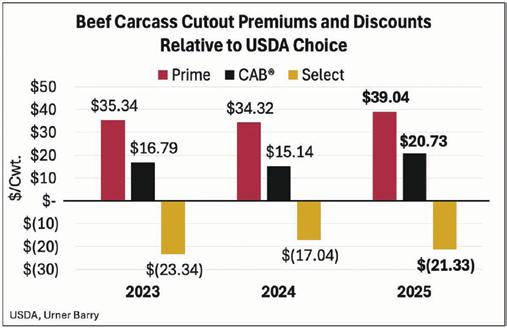
With U.S. Department of Agriculture Prime carcass tonnage – including CAB Prime – record-large again in 2025, the industry revisits price spreads up and down the quality grade and branded product offering.
Even as Prime carcass supply increased 11 percent on the year, the annual average Prime premium increased to $39.04 per cwt above commodity Choice, up $4.72 per cwt for the year. The record $56.21 per cwt annual Prime premium, set in 2022, is unlikely to be tested again anytime soon.
CAB carcass counts were the fifth largest in brand history for Fiscal Year 2025 and just three
percent fewer than a year ago on the calendar year.
Yet, the year’s advance of $5.59 per cwt in the cutout premium for traditional CAB carcasses was up 36 percent over 2024 to average $20.73 per cwt, according to Urner Barry.
Calculated Select carcass tonnage slipped nine percent on the year while the discount deepened from $17.04 per cwt to average $21.33 per cwt. Recent seasonality has brought focus to the Choice-Select spread dipping briefly below one dollar per cwt in early January.
However, the year-long trend brings to light the big picture of further demand destruction for Select carcasses even as they are
less prevalent in the supply chain.
The strong price spread trend is a clear indicator for the industry in 2026. While the tightest fed cattle supplies in the cycle are projected this year, consumer demand has issued directional support tight supplies do not necessitate narrowing of price differentiation for quality.
Importantly, more and more retail and foodservice firms are grasping a satisfied beef customer is a loyal customer. This starts with a marbling-rich carcass meeting specifications.
Paul Dykstra is the director of supply management and analysis at CAB. He can be reached at pdykstra@certifiedangusbeef.com.
can pose threats to herds in Wyoming, as well as an explanation of disease traceability and mitigation strategies, including best practices for producers to incorporate in order to prevent outbreaks.
Next, Andrea Allen, co-founder of the Cowboy Cole Memorial Foundation, delivered a talk on suicide prevention and mental health awareness.
After losing her son Cole to suicide in October of 2021, Allen formed the Cowboy Cole Memorial
Foundation along with her husband Shane and daughter Molly.
During her presentation, Allen shared her family’s story, discussed some of the projects the foundation is currently working on and emphasized the importance of destigmatizing conversations about mental health.
“We hope to help create a community that supports one another and works tirelessly to prevent future tragedies,” Allen said. “Unity and compassion can make a difference
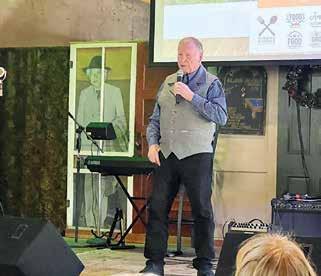
in the lives of individuals struggling with mental health challenges.”
Award recognition
In addition, JCCW recognized the recipients of the first-ever The Way We Live Award, which honors local farmers and ranchers who exemplify the Johnson County ag industry in their daily lives.
The inaugural award was presented to Gerry and Marie Miller of Buffalo during the 2025 Johnson County Fair.
“Gerry and Marie have a cow/calf operation northwest of Buffalo where they raised their children, Shawn and Heidi, instilling the Western values of hard work, perseverance, respect for the land and loyalty to their community,” reads a blurb about the award on the JCCW website.
“Gerry and Marie have lived a life dedicated to agriculture which goes beyond their family operation,” the website continues, noting Marie has been a longtime member of JCCW and Gerry enjoyed a long career as an ag teacher “passing on his knowledge of this industry and in the trades crucial to running a successful ranch.”
“Gerry has shaped the future of not only his family but countless young
people of Johnson County, helping the agriculture industry in general, not just his own operation,” the website adds.
Gerry attended the summit, expressing gratitude for the award on behalf of his family. He also praised the JCCW for their efforts in increasing education and community involvement with the cattle industry, calling the organization “a tremendous asset to the agricultural industry.”
Afternoon session
The afternoon continued with presentations from Sara Hollenbeck, a Montana rancher and entrepreneur who is passionate about connecting consumers to agriculture.
Her presentation focused on creative marketing in agriculture and hands-on marketing strategies for ranchers.
Hollenbeck markets beef, pork and lamb directly to consumers through her company High Five Meats and has been featured in national and international media including FarmHer and the PBS series Moveable Feast
Known online as “Sara the Sheep Lady,” Hollenbeck also uses social media as a tool to advocate for agriculture.

The event concluded in the evening with shopping opportunities from several vendors and a private screening of “The Real Yellowstone” documentary at
the Buffalo Theater. Grace Skavdahl is the editor of the Wyoming Livestock Roundup. Send comments on this article to roundup@wylr.net.
Continuing a time-honored community tradition, the 42nd Annual Fremont County Farm and Ranch Days will take place Feb. 11-12 at the Fremont County Fairgrounds in Riverton.
This year’s lineup covers topics ranging from livestock predation, virtual fencing and multi-species grazing to ag-friendly conservation easements, equine diseases and weed management in alfalfa.
The two-day event, hosted by the University of Wyoming (UW) Extension, features more than 20 presentations by local experts

from the Wyoming Stock Growers Land Trust, Fremont County Trappers, Wyoming Wool Growers Association, Fremont County Weed and Pest District, Wyoming Game and Fish Department, Wyoming State Veterinarian’s Office and Wyoming State Veterinary Laboratory, as well as


UW researchers and Extension educators.
Sessions will begin both days at 9 a.m. and conclude at 2:45 p.m. A free lunch, funded by sponsors and prepared by the Fremont County CattleWomen, will be provided at 1 p.m. A vendor tradeshow will open at 9 a.m. and continue through-
out the event.
For attendees seeking to obtain or renew their private pesticide applicator licenses, a four-session program will be offered on Feb. 12 at 9 a.m. to 12:45 p.m.
Participants must bring a government-issued ID, such as a driver’s license, and attend all four sessions
to apply for a private applicator license. For more information or a complete agenda, visit wyoextension.org/fremontcounty Educational sessions will be recorded and posted on the UW Extension YouTube channel following the event.
Act (ESA).
Reintroduction paused
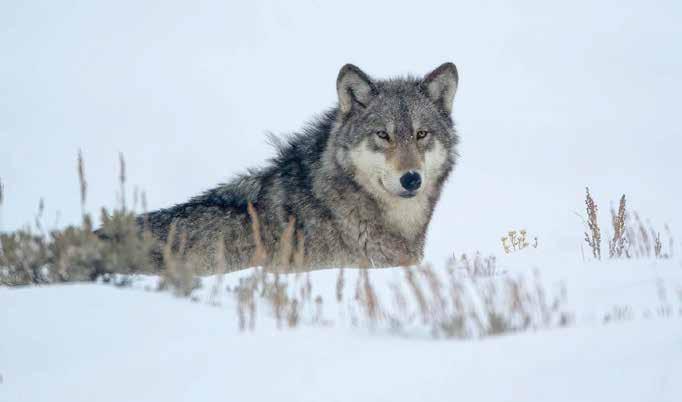
Pausing wolf reintroduction is meant to allow CPW to focus on supporting existing wolf populations and managing ongoing restoration efforts, as noted in a Jan. 21 press release issued by the organization.
A primary concern of CPW is continuing to navigate conflicts with ranchers and achieving a “self-sustaining gray wolf population” following a high mortality rate in 2025.
According to a Jan. 20 Colorado Daily Sun article by Tracy Ross, the death loss of reintroduced wolves has reached 12 since the beginning of reintroduction efforts – nearly onehalf of the original 25 animals which were released in the state between December 2023 and January 2025.
Ross further notes the survival rate of reintroduced wolves currently sits at 56 percent – well below the early rates predicted by the CPW Commission when it first adopted the Colorado Wolf Restoration and Management Plan.
CPW says the impact of stopping releases is dependent upon several factors, including wolf survival and reproduction.
The agency also says it will assess the existing population throughout the year in order to determine whether to start translocation efforts again in winter 2026-27.
“During this intermediate time, CPW will continue to meet with producers and other stakeholders, including the U.S. Fish and Wildlife Service, to explore how to maximize the restoration effort and achieve our plan of establishing a selfsustaining gray wolf population in Colorado,” says CPW Acting Director Laura Clellan.
“Our team has invested in a significant conflict minimization program, and we look forward to exploring how to continue improving this program with producers to protect both livestock and wolves,” Clellan adds.
While reintroduction is paused, CPW vows to continue making management decisions on a case-by-case basis after evaluating circumstances, the Colorado Wolf Restoration and Management Plan and relevant law.
“This is a complicated effort, and I want to encourage all stakeholders to continue to work together as we move toward the goal of creating a self-sustaining population of wolves in the state, while at the same time minimizing conflict with livestock,” Clellan concludes.
Legislation advances
On another front, legislation to delist the Mexican gray wolf from the ESA has advanced to the next step.
On Jan. 22, the House Natural Resources Committee voted to advance the Enhancing Safety for Animals Act of 2025. Led by
Rep. Paul Gosar (R-AZ), the legislation has been backed with bipartisan support.
The Mexican gray wolf was first listed as an endangered species in 1976, and the population has grown significantly in the decades since.
If enacted, the bill would delist the Mexican gray wolf and reduce regulatory barriers regarding management practices, allowing state and local authorities more flexibility in managing conflicts between wolves, livestock and people.
Supporters of the decision, including NCBA and PLC, cite concerns about livestock losses and general safety in rural areas, arguing the species is no longer endangered and federal protections have made it difficult to respond in dangerous situations where wolves have posed threats to both animal and human lives.
“The Mexican wolf population has grown well beyond recovery goals, yet producers are left without the tools needed to protect their livestock, their families and their livelihoods,” says NCBA Policy Division Chair Skye Krebs. “When predators can’t be responsibly managed, it puts people at risk and undermines the stewardship efforts of those who live and work on the land every day.”
Industry responds NCBA and PLC expressed further support for delisting the Mexican gray wolf in a Jan. 23 press release, arguing the proposed legislation would help restore “commonsense wildlife management authority while providing muchneeded relief to cattle producers and rural communities across the Southwest.”
Colorado Rancher and PLC President Tim Canterbury praises the legislation as “a step toward alleviating the challenges southwestern producers face,” including ongoing livestock depredation, disrupted grazing operations and delayed or denied response to problem animals – often with little to no compensation for losses.
Regarding the pause in gray wolf reintroduction, CCA issued a statement immediately after CPW’s decision was made public on Jan. 21.
In a press release, CCA commends the pause as “a constructive step” and calls for continued reform to existing wolf policy, as well as increased attention to ongoing problems.
“CCA views this decision as a constructive step reflecting the need for the state to pause and address ongoing concerns raised by livestock producers and rural communities,” the release states. “Listening to those most directly affected is essential as Colorado continues to navigate wolf management.”
However, CCA then emphasizes halting releases does not eliminate ongoing
problems faced by producers.
The organization encourages the state to focus on practical, producerdriven solutions including authorizing take authority in applicable situations,
affording compensation for confirmed and probable livestock losses and continuing direct engagement with producers to address on-the-ground realities.
“A pause in releases
must not mean a pause in action,” says CCA President Curt Russell. “Producers are living with wolves today, and effective management tools, compensation and responsiveness from the state are critical during this period.”
Grace Skavdahl is the editor of the Wyoming Livestock Roundup. Send comments on this article to roundup@wylr.net.
Water Development Commission, City of Casper and other government agencies. Landowners, too, have been pleased with the level of communication McGraw has brought to the role.
She has spent countless hours reorganizing operational processes within the office, including researching and updating landowner water rights, restructuring the district’s accounting system and organizing the office to better research various topics.
She is known by those she works with as the first one into the office and the last to leave.
In 2024, McGraw was elected to fill a three-year term on the Wyoming Association of Irrigation Dis-
tricts Board of Directors and has provided helpful leadership to the organization as well.
Colorado Headgate Award
This year, the Colorado Headgate Award was given to Joel Schneekloth, a longtime water resources specialist for Colorado State University (CSU) Extension and the Colorado Water Center at CSU.
Schneekloth will soon be wrapping up a multi-decade career devoted to irrigation and agriculture research, as he plans to retire this spring.
Having been with CSU since 2000, he has spent his career conducting research and educational programs related to irrigation and crop production, primarily focusing on limited water supplies,
system management and design and alternative crops and their potential impacts on water management.
Based at the Central Great Plains Research Station in Akron, Colo., his most
recent research and demonstrations have included large-scale limited irrigation and crop systems projects in the Republican and South Platte basins and also focused on the impacts of
cover cropping in irrigated production.
Over the years, his projects have also examined various aspects of irrigated forage production, irrigation response of sunflow-



ers, water response of oilseeds and residue management impacts on water – all aimed at the critical need to help farmers produce more with less in a region facing long-term water scarcity.
Growing up on an irrigated dairy farm in northeastern Nebraska, water has always been a part of his Schneekloth’s life.
After attending the University of Nebraska, Schneekloth went to work for his alma mater for 11 years, holding the positions of water resources Extension educator and water resources coordinator in southwest Nebraska before eventually going to work for CSU.
Nebraska Headgate Award
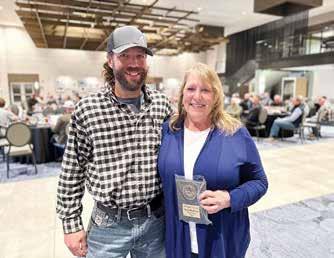
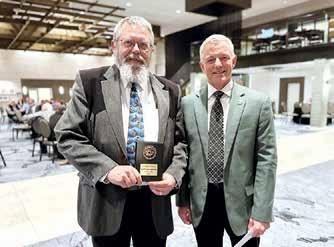
Bernie Glos and Rick Preston both received the Nebraska Headgate Award this year.
Glos has been with the Twin Loups Reclamation and Irrigation District for 40 years, having been employed with the district since it started in 1986. He has served in several different roles, including maintenance, ditch riding, executing water right transfers and Reclamation Reform Act compliance.
He has recently served as office manager and administrative manager, and is currently the assistant manager for the district.
Having been in various roles over the years, Glos’ expertise has proved valuable to daily operations of the district.
In addition to his responsibilities as assistant manager, Glos also does water rights mapping and has set the district up with data loggers to monitor flows throughout the project to assist both experienced and new ditch riders. He also enjoys assisting fellow employees and meeting farmers the district serves.
Glos has dedicated everything he has to providing outstanding customer service to every farmer in the district, assisting with any and all needs they have, as well as fellow irrigation districts by providing insight on current issues and guidance for day-to-day operations.
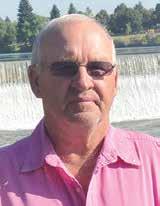
Preston was general manager for the Gering-Fort
Irrigation District from 1993 until his retire-
in December of 2024.
to his employment
in Nebraska, he worked for the San Luis Irrigation District in Los Banos, Calif. for 10 years as a ditch rider.
Over the course of his employment, Preston made some difficult but necessary changes and improvements at the district. One of the huge stresses he had to work through was the Fort Laramie Canal Tunnel collapse in 2019, which continues to be an ongoing process.
Preston worked with Gering Irrigation District for 17 years, helping them navigate through years of water shortage and continues today as an advisor to their board.
In 2017, Enterprise Irrigation District reached out to Preston seeking help to restructure their district, which he also did until his retirement.
During his time at Gering-Fort Laramie, he served on the Board of Nebraska Water Resources Associa-
tion, Nebraska State lrrigators Association, Gering Valley Flood Control Committee and the Lake Alice School Board.
Preston is widely regarded as a very knowledgeable person who has a love for agriculture and deeply values surface water.
In 2023, he was inducted into the Nebraska Hall of Agricultural Achievement. Kansas Headgate Award
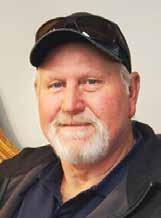
Dan Reynolds, the recipient of the Kansas Headgate Award, began his career at the Kansas Bostwick Irrigation District in 1979 as a ditch rider for the Lower Fifth Canal.
Following the first irrigation season, his ditchriding duties were transferred to the White Rock Canal, where he remained for the next 40 years, until his retirement following the 2019 irrigation season.
While serving as a ditch rider in the summers, Reyn-
The U.S. Department of Agriculture’s (USDA) Natural Resources Conservation Service (NRCS) in Wyoming announced a Feb. 20 batching deadline for the Regional Conservation Partnership Program (RCPP).
This batching date ensures producers have a clear, consistent timeline for participating in RCPP. NRCS programs are continuous sign-up programs, but due to the government shutdown, the agency is implementing a batching period to ensure producers have access to funding and support.
Sign up includes RCPP, Bear River Watershed Agriculture and Habitat Connectivity and land management agreements.
For more information, visit nrcs.usda.gov or contact a local USDA Service Center.

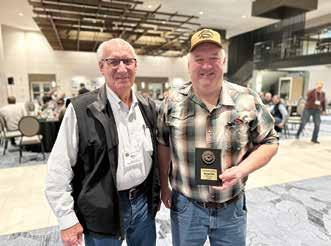
Headgate Award. Over the course of his employment, Preston made some difficult but necessary changes and improvements at the district.
Courtesy photo
olds was also promoted in 2012 to co-foreman of the field crew during the offseasons, a position he also held until his retirement.
While being a skilled ditch rider and supervisor of the field crew, Reynolds was also known as one of
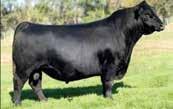
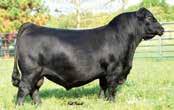


HYDRAULIC TILT TRAILER. AG PULL OUTS. LOW MILEAGE USED ON RANCH TO MOVE BALER+SWATHER. NEW PAINT AND DECK. $75,000 OBO.
2022 BOBCAT E60 MINI EXCAVATOR 2022 BOBCAT T770 SKID STEER 2008 BOBCAT T250 SKID STEER JD 5093E TRACTOR 2016 KUBOTA MX5200D TRACTOR
2023 CAT D6 DOZER CAT320 EXCAVATOR
2023 CAT 420 BACKHOE 2023 CAT 906 LOADER
2018 CAT 930M LOADER 2022 FRIESEN TRAILER AIR COMPRESSOR CAT REACH FORKLIFT (TELEHANDLER)
2023 SA CARGO TRAILER 6X10 NEW PULLED 1500 MILES - $7,000.00
2024 BIG TEX 25GN-40DG1-MRBK - $24,500 2013 JLG G6-42A EXTENDED BOOM SKYJACKSJ7135 SCISSOR LIFT THE BEST PRICES YOU CAN FIND!!!!
Feb. 2 2026 Wyoming State Board of Control, Herschler Building, Cheyenne. For more information, contact Cheryl Timm at 307-777-6899 or cheryl.timm@ wyo.gov.
Feb. 2 First Sublette Antelope Migration Local Working Group Meeting, 8:30 a.m., BOCES Board Room, Pinedale. For more information, visit wgfd.wyo. gov/sublette-antelope-migration-corridor
Feb. 2 University of Nebraska-Lincoln Extension Calving College Series Part Three, 6:30-7:45 p.m., online. For more information, contact Lindsay Waechter-Mead at 402-746-3417 or lindsay.waechter-mead@unl.edu. To register, visit cvent.me/GOYAra
Feb. 3 The Essentials Budget: Protecting and Powering Wyoming’s Future Series, 1 p.m., Wind River Room, The Inn at Lander, Lander. For more information, visit governor.wyo.gov
Feb. 3-4 WESTI Ag Days, Washakie Museum and Cultural Center, Worland. For more information, call University of Wyoming Extension at 307-347-3431.
Feb. 3-5 CattleCon 2026, Nashville, Tenn. For more information or to register, visit convention.ncba.org
Feb. 4 University of Wyoming Extension Pesticide Safety Education Program, 10 a.m.-2 p.m., Washakie Museum and Cultural Center, Worland. For more information, visit bit.ly/wy-psep-private-app
Feb. 4-7 2026 Outstanding Farmers of America Convention, Hersey, Penn. For more information, visit outstandingfarmers.com/
Feb. 5 Wyoming Farm Bureau Federation Young Farmers and Ranchers Collegiate Discussion Meet, Cheyenne. For more information, contact Alexis Lake at alake@wyfb.org or 307-721-7716.
Feb. 6-7
Colorado and Wyoming Farm Bureau Federation Young Farmers and Ranchers Joint Conference, Cheyenne. For more information and to register, visit wyfb.org/Get-Involved/YFR/Conference
Feb. 7 Frozen Fury on the Plains, 6 p.m., Event Center at Archer, Cheyenne. For more information, to purchase tickets or to enter the competition, visit cheyenne.org/frozenfury-onthe-plains/
Feb. 9 University of Nebraska-Lincoln Extension Calving College Hands-On Workshop, 5 p.m., Cherry County Extension Office, Valentine, Neb. For more information, contact Lindsay Waechter-Mead at 402-746-3417 or lindsay. waechter-mead@unl.edu. To register, visit cvent.me/GOYAra
Feb. 9-11 Top Producer Summit, Nashville, Tenn. For more information, visit events. farmjournal.com/top-producer-summit-2026
Feb. 10 University of Nebraska-Lincoln Extension Calving College Hands-On Workshop, 5 p.m., Tripp County 4-H Center, Winner, S.D. For more information, contact Lindsay Waechter-Mead at 402-746-3417 or lindsay.waechtermead@unl.edu. To register, visit cvent.me/GOYAra
Feb. 10-11 Precision Education in Spray Technologies Academy Session Four, Precision Application Technology Lab, West Central Research, Extension and Education Center, North Platte, Neb. For more information or to register, visit go.unl.edu/pestacademy
Feb. 10-12
Third Biennial Soil Health in the West Conference, Dixie Convention Center, St. George, Utah. For more information or to register, visit utahsoilhealth. org/events/soil-health-in-the-west
Feb. 11 University of Nebraska-Lincoln Extension Calving College Hands-On Workshop, 5 p.m., West Holt FFA Shop, Atkinson, Neb. For more information, contact Lindsay Waechter-Mead at 402-746-3417 or lindsay.waechtermead@unl.edu. To register, visit cvent.me/GOYAra
Feb. 11-12 42nd Annual Fremont County Farm and Ranch Days, 9 a.m.-2:45 p.m., Fremont County Fairgrounds, Riverton. For more information, visit wyoextension. org/fremontcounty
Feb. 12 University of Wyoming Ranching in the West Seminar Series, 5 p.m., Room 1032, Agriculture Building, University of Wyoming Campus, Laramie, in person and online. For more information or to register, visit uwyo.edu/uwag/ rmal/ranching-in-the-west-seminar-series.html
Feb. 12
University of Nebraska-Lincoln Extension Calving College Hands-On Workshop, 5 p.m., Northeast Community College, Norfolk, Neb. For more information, contact Lindsay Waechter-Mead at 402-746-3417 or lindsay. waechter-mead@unl.edu. To register, visit cvent.me/GOYAra
Feb. 4 Durbin Creek Herefords LLC 14th Annual Bull Sale, Big Horn Basin Livestock Auction, Worland, 307-921-8825, durbincreekranch.com
Feb. 5 K2 Red Angus Winter Bull Sale, K2 sale barn, Wheatland, 307-331-2917, k2redangus.com
Feb. 6 TJS Red Angus 18th Annual “Red Truck” Sale, Buffalo Livestock Marketing, Buffalo, 406-639-9112, tjsredangus.com
Feb. 6 Elkington Polled Herefords and South Devons 46th Annual Range Raised Cattle Sale, at the ranch, Idaho Falls, Idaho, 208-521-1774, 208681-0765, elkingtonpolledherefords.com
Feb. 6-14
Calvo Family Red Angus Annual Production Sale, online on DVAuction, 605-830-2210, 402-760-1274, calvofamilyredangus.com
Feb. 9 Pilakowski Angus Annual Performance Tested Bull Sale, Lightning Valley Ranch, Arthur, Neb., 308-249-0885, pilakowskiangus.com
Feb. 9
Fawcett’s Elm Creek Ranch Annual Production Sale, at the ranch, Ree Heights, S.D., 605-870-6172, 605-478-0077, fawcettselmcreekranch.com
Feb. 10 G Bar H Genetics Angus Bull Sale, Torrington Livestock Market, Torrington, 307-575-5520, 307-575-0373
Feb. 11
Feb. 12
Feb. 13
Feb. 14
Feb. 14
Feb. 16
Feb. 16
Feb. 17
Jindra Angus 26th Annual Production Sale, at the Bull Center near Clarkson, Neb., 402-920-3171, jindraangus.com
Booth’s Cherry Creek Angus 53rd Annual “Progress Through Performance” Bull Sale, at the ranch, Veteran, 307-534-5865, 307-532-1805, 307-532-1532, boothscherrycreekranch.com
Powder River Angus Annual Production Sale, Buffalo Livestock Marketing, Buffalo, 307-680-7359, 307-680-8266, powderriverangus.com
Ludvigson Stock Farms All American Bull Sale, Leachman’s Sale Facility, Meriden, 515-450-3124, ludvigsonstockfarms.com
Flying M Angus Seventh Annual Bull Sale, Southern Campbell County Ag Complex, Wright, 307-660-5755, 307-660-5756, 307-680-0235
Weaver Ranch 41st Annual Production Sale, at the ranch, Fort Collins, Colo., 970-568-3898
Big Sky Salers 42nd Annual Salers Focus Bull Sale, Stockmen’s Livestock, Dickinson, N.D., 406-557-6259
McClun’s Lazy JM Ranch Angus and Polled Herefords Annual Production Sale, Torrington Livestock Market, Torrington, 307-575-3519, 307-5752113, 307-534-5141, mcclunranch,com


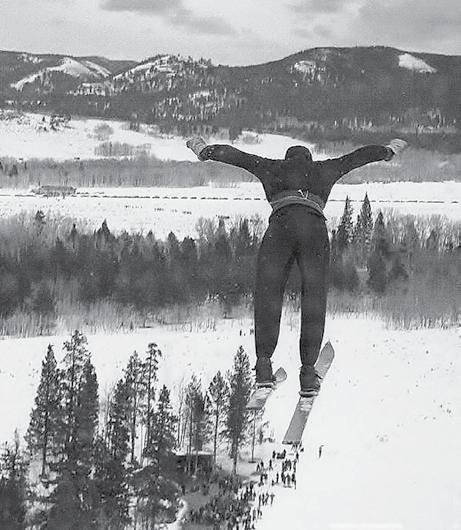
Following are excerpts from articles in the Saratoga Sun from 1936-40. With an attendance of approximately 1,200 spectators and plenty of lively competition in all events, the second annual Wyoming Winter Sports Tournament, held on March 17, 1940 at the Barrett Ridge Ski Course, was declared an entire success.
Although snow fell during most of the day and the slippery, muddy condition of the highway in spots probably turned many visitors back, those in attendance were loud in their praise and declared the meet a thrilling one.
Many contestants were on hand from Laramie; Jackson; Casper; Steamboat Springs, Colo. and Denver, with Laramie taking home the lion’s share of the trophies. Several contestants, including some good jumpers, drove here from the Dubois section, but owing to unavoidable delays, failed to arrive in time to take part in the competition.
Downhill, slalom and jumping events were held, and after the meet, before a gathering of several hundred people, the trophies were awarded at Ten Mile Inn.
Gov. Nels Smith, who attended the meet with First Lady Jeanette Smith, awarded the trophies for the winners of the men’s and women’s combined slalom and downhill
events and the jump winners, and Dr. Ray Corbett, president of the local ski club, made the rest of the presentations.
Thor Groswold, Denver manufacturer of the famous Groswold skis, attended and acted as a judge in the events, and following the meet, he presented the governor with a pair of his fine metal-edge slalom skis.
The Barrett Ridge Ski Jump and Ryan Park Ski Course were built in
1936 by enrollees from the Civilian Conservation Corps camp, in cooperation with local volunteers and U.S. Forest Service personnel.
A 1940 Saratoga Sun article noted, “With two jumps, one 100-foot and one 175-foot, a tricky downhill course a trifle over a mile in length and a slalom course probably second to none in the state, the Barrett Ridge course is ideal for contests. Then too, Saratoga is most strategically located for the meet, being literally at the hub of highways leading from Jackson, Lander, Casper, Laramie and Cheyenne and the various ‘ski centers’ of northern Colorado.”
The Barrett Ridge Ski Jump was abandoned around 1950, and the Ryan Park Ski Course closed in the early 1970s.
US #1 Small Red Beans
Source: USDA AMS Livestock, Poultry & Grain Market News, Torrington National Sheep Summary As of January 23, 2026
Compared to last week slaughter wooled and shorn lambs sold steady. Slaughter ewes sold firm. All sheep sold per hundred weight (CWT) unless otherwise specified. Slaughter Lambs: Choice and Prime 1-3: San Angelo: 90-100 lbs 270.00-320.00; 130-140 lbs 205.00220.00; 140-150 lbs 210.00-225.00. Billings: No test.
Ft. Collins: 80-90 lbs 300.00-305.00; 100-110 lbs 267.00295.00; 110-120 lbs 285.00-310.00; 130-140 lbs 227.50247.50.
Sioux Falls: 60-70 lbs 370.00; 70-80 lbs 305.00-355.00; 8090 lbs 315.00-350.00; 90-100 lbs 290.00-327.50; 120-130 lbs 227.50-229.00; 130-140 lbs 222.00-229.00; 140-150 lbs 221.00229.00; 150-160 lbs 217.00-223.00. Slaughter Ewes: Good 2-3: San Angelo: 126.00-152.00.
Billings: 100.00-112.00.
Ft. Collins: 105.000-165.00.
Sioux Falls: 120.00-145.00.
Feeder Lambs: Medium and Large 1: San Angelo: No test.
Billings: 60-70 l 320.00-337.50; 70-80 lbs 305.00-337.00; 8090 lbs 285.00-307.00; 90-100 lbs 262.00-275.00 100-110 lbs 257.50-267.50.
Sioux Falls: 40-50 lbs 405.00; 50-60 lbs 390.00-430.00; 60-70 lbs 380.00-430.00; 80-90 lbs 355.00.
Ft. Collins: No test.
Replacement Ewes: Medium and Large 1-2: San Angelo: No test.
Billings: No test.
Ft. Collins: No test.
South Dakota: No test.
Sioux Falls: No test.
Sheep and lamb slaughter under federal inspection for the week to date totaled 35,000 compared to 40,000 last week and 33,344 last year..
Source: USDA AMS LPG Market News, San Angelo, Texas National Wool Review As of
Nebraska
exception of grass hay rounds, which
Source:
&
Colorado Hay Summary
As of January 29, 2026
Compared to last report: Trade activity light on moderate demand. Prices mostly steady across all hay types. According to the U.S. Drought Monitor’s High Plains Summary for January 27, 2026, most of the High Plains Region was dry last week, with a amounts of a few tenths to approaching one inch fell on much of central and eastern Kansas and on scattered higher elevations in Colorado and Wyoming. Otherwise, little or nothing fell. The Region - outside the higher elevations - is climatologically cold and dry, so precipitation deficits increase very slowly, and demand is lower this time of year. Dryness and drought was essentially unchanged in most of the High Plains Region, with some scattered deterioration introduced in parts of western Colorado (to D1 or D2). Drought intensification was also introduced around the Black Hills and adjacent western South Dakota (to D0 or D1), where snowpack is deficient and slowly declining. The next available report will be Thursday, February 12, 2026.
Source: USDA-AMS Dept
According to the National Drought Mitigation Center’s (NDMC) December 2025 Drought Climate Summary, published on Jan. 26, much of the West and western Great Plains were warmer and drier than usual during the last month of 2025.
These conditions align with drought felt across large portions of the U.S., which has resulted in widespread impacts to agriculture and wildlife in particular.
Conditions across the High Plains
According to NDMC, states located in the High Plains Region saw a mixed bag of drought degradations and improvements.
“Southeast Kansas and portions of Nebraska saw one- and isolated two-category degradations during December. A few one-category improvements occurred in portions of Colorado, but mostly one-category degradations or no changes occurred across the state,” NDMC reports. “A one-cat-
egory improvement occurred in northeast South Dakota as well.”
In Wyoming, the southeast half of the state saw oneand two-degradations, while the north-central and western parts of the state had one- and two-category improvements.
Overall, NDMC notes most of the High Plains were warmer and drier than usual, with areas of Kansas, Nebraska and eastern Colorado receiving less than onequarter of normal precipitation for the month.
Wyoming in particular saw temperatures of up to 12 degrees Fahrenheit or more above normal in the central and western portions of the state, while snow water equivalent (SWE) numbers across south-central and southeast Wyoming struggled.
Northwest Wyoming, on the other hand, had a much wetter December than normal, with SWE numbers near or above normal in areas of the Wind River and

OF THE
Wyoming ranges.
“Across the High Plains, abnormal dryness or worse grew from 44.15 to 52.23 percent and moderate drought or worse grew from 19.22 to 23.47 percent, while severe drought or worse dropped from 7.23 to 6.29 percent and extreme drought or worse dropped from 1.32 to 1.13 percent,” the NDMC report reads.
“A small amount of exceptional drought developed near the end of December, covering 0.11 percent of the region at the end of the month,” it continues.
Agricultural impacts
In the December 2025 Drought Impacts Summary, a separate report also published by NDMC on Jan. 26, the service notes widespread drought impacts were felt during the month of December, most of which were largely related to water quality and supply, agriculture, plants and wildlife.
On the ag front, Christmas tree growers along the
East Coast and across the Midwest reported damage to young trees, especially in New Hampshire and Wisconsin.
Similar losses were seen in Michigan, one of the nation’s top Christmas tree producing states, where drought impacts prompted Michigan State University Extension specialists to begin assisting growers with mulching and irrigation strategies to protect trees from increasingly erratic precipitation patterns.
Specialty crops were also hit hard.
NDMC notes Maine’s wild blueberry industry, which produces nearly all of the nation’s supply, lost an estimated $28 million due to drought-related crop losses, with production falling to 55 million pounds in 2025 –well below the typical average of 80 million pounds.
Additionally, dry conditions in late summer and early fall resulted in smaller pecans in Illinois; Ohio producers reported poor winter wheat germination and emergence and peanut yields in part of Florida dropped dramatically, falling to roughly 300 pounds per acre compared to typical yields of 3,500 to 4,000 pounds.
Kansas, Missouri, Oklahoma, Louisiana, Florida and Texas where feeding hay early, livestock relocation and herd reductions are becoming increasingly common.
These drought-driven herd reductions are also rippling through the broader ag economy.
In December, JBS announced the permanent closure of a beef processing plant near Los Angeles, citing rising costs tied to shrinking cattle supplies.
“The facility’s closure in February 2026 will eliminate 374 jobs, as beef prices hit record highs due to persistent drought causing ranchers to reduce herd sizes,” the report notes.
Water shortages and wildlife woes
December drought conditions also strained water supplies and disrupted ecosystems across the U.S., prompting conservation measures, burn bans and growing concerns for wildlife.
sey, reduced precipitation and falling groundwater supplies led officials to issue a statewide drought warning in early December and in Pennsylvania, drought watches were declared across 37 counties, leading water providers to ask customers to reduce consumption by up to 15 percent.
NDMC notes drought impacts were also evident in wildlife populations and natural ecosystems, particularly in the Southwest.
Consecutive weak monsoon seasons and poor winter rainfall in Arizona and New Mexico left plants unable to produce nectar and seeds, pushing birds outside of their typical ranges in search of food and water.
Cow, 1405# $17600 1 Blk Cow, 1430# $17350 Schuebel Land & Livestock - Cody
2 Blk Cows, avg. 1378# $17650 2 Blk Cows, avg. 1443# $17300 VF LTD LLC - Greybull 1 Blk Cow, 1470# $17500 Bain, C. Joy - Hyattville 1 Blk Cow, 1365# $16800 Friesen, Travis - Basin
1 BWF Cow, 1845# $16400 Thomas B. Jones Living Trust - Powell 2 Blk Cows, avg. 1508# $16100 Jones, Mark - Morristown
1 Blk Cow, 1250# $16000

HEIFERETTES
Vigil, Michael - Manderson
24 Blk Hfrettes, avg. 1467# $19400
• Upcoming Sales • Feb. 5 – No Sale Feb. 12 – Feeder Special w/ Weigh-Up Special Feb. 19 – Bred Cow & Heifer
Special w/ All Class Cattle, Sheep & Goat Feb. 26 – All Class Cattle
March 5 – Bred Cow & Heifer Special w/ All Class Cattle
Consignments • February 12
Feeder Special w/ Weigh-Up Special
TD Farms – 100 mixed black and red, 500-650#, two rounds of shots.
Kent Price – 100 heifers, mostly black and BB, Bangs vacc, 500-600#, two rounds of shots, FerAppease and poured, high elevation, weaned Oct. 26. Double Dollar – 40 black heifers, 500-600#, shots at branding. Tim Ramsey – 28 mixed black, BWF and red, 500-800#, complete vacc, bunk broke, weaned mid-November.
Kenny & Karl Price – 20 mixed black, 300-500#, two rounds of shots. Frank Deede – 26 mixed HerefordX, 500-550#, two rounds of shots, weaned Nov. 8. Mendez Brothers – 30 black steers, 500-600#; 45 black heifers, weaned Nov. 10, 600-650#. two rounds of shots. Sale Date: Thursday, February 12, 2026 At the ranch in Veteran, WY • Lunch: Noon • Sale Time: 1 p.m.
Livestock producers also faced mounting challenges in December as drought reduced forage availability and water supplies.
According to NDMC, producers in Wyoming and the South-Central Region reported severely degraded pastures, dry reservoirs and declining livestock water sources.
“In Wyoming, producers in Sublette, Goshen and Washakie counties reported severely degraded pastures, dry reservoirs on public grazing lands and increased dependence on supplemental feed,” the report reads.
Similar conditions were reported across Alabama,
Water shortages were widespread across Florida, where a Phase One Water Shortage went into effect on Dec. 1, 2025 and is set to remain through July 1.
Low reservoirs across the Tampa Bay area have forced the city of Tampa to begin purchasing water months earlier than normal, while conditions have also led to burn bans across several Florida counties and cities, reflecting heightened wildfire risk.
Drought conditions extended northward along the East Coast.
In Georgia, Lake Hartwell and Lake J. Strom Thurmond reached drought trigger levels in early December; in North Carolina, parts of the Keowee-Toxaway Basin moved into Stage One drought status; in New Jer-
Oak trees in the region failed to produce normal acorn crops, removing a key food source for wildlife, while widespread tree mortality was reported in drought-stressed woodlands. Dry conditions increased wildfire risk across the West and South as well.
Fireworks restrictions were implemented in parts of New Mexico and Texas, while Colorado officials responded to an emerging mountain pine beetle outbreak tied to drought and warming temperatures. Elsewhere, drought contributed to declining golden eagle populations in Nevada, prompted changes to fish stocking practices in Utah and caused tree die-offs and falling water levels in Louisiana parks, further highlighting the ecological toll of prolonged drought conditions nationwide.
Hannah Bugas is the managing editor of the Wyoming Livestock Roundup. Send comments on this article to roundup@wylr.net.
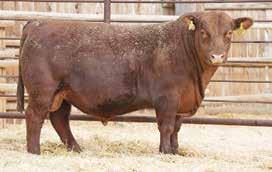
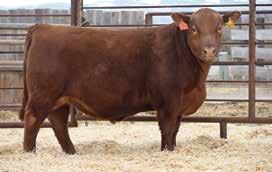
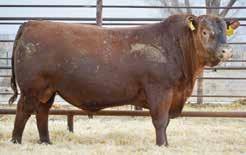
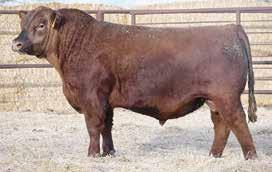
Lot 152 – Marcys Erica 220 – Price: $10,000 DOB: 1/16/22 Sire: Square B Atlantis
8060 Dam’s Sire: Marcys Scale Crusher EPDs: BW: +1.8, WW: +64, YW: +104 and Milk: +25 Buyer: Tim Rice, Mullen, Neb.
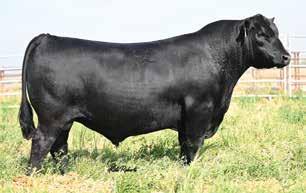
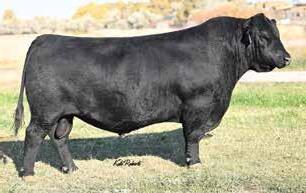
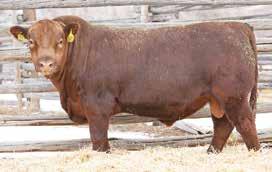
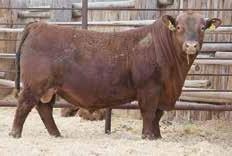
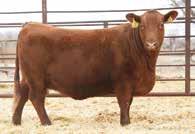
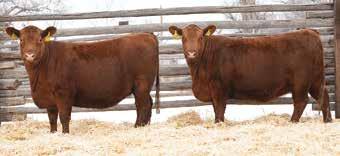
Sire: S A V Renovation 6822 Dam’s Sire: Marcys 09 Sledgehammer 103-9 EPDs: BW: +0.7, WW: +71, YW: +120 and Milk: +25 Buyer: M Diamond Angus, Glenrock Lot 1 – Marcys Scale Crusher 516 – Price: $18,500 DOB: 2/2/25 Sire: Marcys Scale Crusher Dam’s Sire: Marcys Game Time EPDs: BW: +3.3, WW: +84, YW: +148 and Milk: +17 Buyer: Lisco Angus, Douglas Females Lot 160 – Marcys Manor 096 – Price: $10,000 DOB: 2/12/20 Sire: S A V Resource 1441 Dam’s Sire: Marcys Game Time EPDs: BW: +3.7, WW: +79, YW: +146 and Milk: +26 Buyer: Mansfield Angus, South Dakota Lot 156 – Marcys Pride 240 – Price: $10,000 DOB: 1/18/22 Sire: Marcy Scale Crusher Dam’s Sire: Marcys 09 Sledgehammer 103-9 EPDs: BW: +1.2, WW: +72, YW: +125 and Milk: +27 Buyer: McConnell Angus, Dix, Neb.
will not be eaten immediately, such as leftovers, milk, fresh meat and poultry, can be frozen to extend their safe storage time. For other frozen items, USDA says grouping foods together can help items stay cold longer.
USDA also encourages those in the path of a winter storm to freeze containers of water ahead of time, which can be placed around food to help maintain cold temperatures.
While these containers of water may be stored outside to keep chilled, the department warns to never place perishable food items in the snow as a means of maintaining cold since outside temperatures can vary and food can be exposed to animals and unsanitary conditions.
Extreme winter conditions pose threats to livestock and pets alike. USDA reminds pet and livestock owners in the path of winter storms to prepare by ensuring animals have access to shelter, dry bedding and unfrozen water.
Although cattle are hardy animals, unmanaged cold stress can result in weight loss, sickness and even death.
In an article published on Jan. 20, the Texas A&M University (TAMU) Col-
lege of Veterinary Medicine and Biomedical Sciences shares tips to prepare pets and livestock for freezing temperatures.
“Preparation looks different depending on location but the principles are the same,” says TAMU College of Veterinary Medicine and Biomedical Sciences Clinical Associate Professor Eric Kneese. “Reduce wind exposure, keep animals dry, ensure reliable water access and provide enough nutrition.”
Since cold, wet and windy conditions pose the greatest threat to animals, ensuring access to shelter and food is critical.
“If multi-day freezes are forecast, owners should bring pets indoors, stock food and medications and prepare warm bedding in case of power outages or burst pipes,” reads the article.
For livestock producers, protecting animals from the elements comes in the form of windbreaks and extra insulation.
“Producers should utilize windbreaks such as tree lines, brush, natural terrain features, barns or temporary barriers such as tarps or plywood on windward sides of shelters,” the article continues. “Rolling out hay can help provide dry, insulated ground for live-
stock to rest.”
Water and nutrition are crucial components of animal health which become even more essential during winter conditions.
Since cattle regulate their body temperatures through feed intake, increasing access to quality forage and hay is vital.
University of Nebraska Lincoln Extension reminds producers not to make drastic changes to daily rations, but instead to provide consistent, high-energy feed options during extended cold spells.
Further, a Jan. 23 DTN Progressive Farmer article by Jennifer Carrico reminds ranchers cattle on pastures may require more attention during winter storms.
Since snow can make grazing difficult and water can freeze, producers should consider providing additional hay and increasing frequency of checks.
For equine owners, TAMU emphasizes horses benefit from access to runin sheds, covered areas or barn aisles for shelter, while advice from an online forum called The Green Horseman reiterates the importance of providing plentiful forage and water while minimizing changes to the animals’ regular routine as much as possible.
Disaster assistance
For producers facing losses from severe winter


storms, USDA outlines a variety of disaster assistance programs and risk management options.
The Jan. 23 press release issued by the department encourages producers to document all losses and contact their local USDA Service Centers as soon as they are able to safely do so.
Disaster relief for losses of livestock, crops, trees and conservation resources are available through organizations like the Natural Resources Conservation Service and Farm Service Agency (FSA).
Additionally, USDA says producers with Federal Crop Insurance or Noninsured Crop Disaster Program coverage should report losses to their insurance agent or local FSA office within 72 hours of discovering damage and follow up in writing within 15 days.
Further, the department emphasizes USDA’s Food and Nutrition Service remains on alert for requests for emergency nutrition assistance from states and local authorities.
For more information on disaster assistance resources in cases of winter storms, visit farmers.gov/protection-recovery/winter-storm Other recommendations
In addition to implementing food safety strategies and safeguarding animals, protecting homes and plants are also crucial com-
ponents of successfully weathering winter storms.
TAMU reminds homeowners to winterize pipes and wells with pipe wrap and heat tape and recommends shielding pipes from direct wind, which can accelerate freezing.
Mike Arnold, a professor and horticulture specialist at TAMU, also reminds those with a green thumb to protect plants and gardening materials from freezing temperatures by applying two to three inches of extra mulch over roots, covering vulnerable plants with frost cloths or blankets, unhooking hoses and watering
plants ahead of the freeze.
“Well-watered plants survive freezes better than drought-stressed ones,” Arnold comments. “Moist soil freezes more slowly, providing insulation during sudden temperature drops.”
Further, Arnold reminds gardeners to wait until late winter or early spring before pruning perennials, since dead growth provides protection and premature pruning can increase susceptibility to freeze damage.
Grace Skavdahl is the editor of the Wyoming Livestock Roundup. Send comments on this article to roundup@wylr.net.
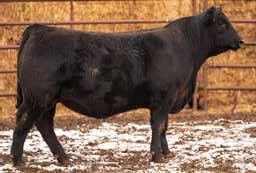
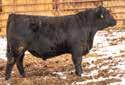
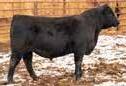


largest agriculture building in the U.S. bearing the name of a woman – female junior exhibitors swept grand and reserve honors across all four livestock species.
Cannon Reimann of Ree Heights, S.D. exhibited the Grand Champion Market Steer, followed by Hadlie Bell of Bristow, Okla. in reserve.
The Grand Champion Market Hog was shown by Maria Frash of Attica, Ind., and the reserve hog was shown by Bailey Stromberger of Illiff, Colo.
Sayde Allen of Elk City, Okla. had an impressive showing at the 2026 NWSS, taking home honors with both the Grand Champion Market Lamb and Grand Champion Market Goat.
In the Junior Market Lamb Show, Allen was followed by Delaniee Moore of Canute, Okla. in reserve, and in the Junior Goat Show, Dayton Mortvedt of Lynnville, Iowa claimed the reserve champion slot.
This year, NWSS also held the inaugural Junior Supreme Heifer Drive – the only show of its kind – and Kaylee Langford of Breckenridge, Texas topped the leaderboard with her Angus heifer.
NWSS livestock shows
wrapped up with a sold-out, record-breaking Auction of Junior Champions in the new CoBank Auction Area inside of “The Sue” on the evening of Jan. 23. According to sale organizers, 750,039 people were in attendance, topping the record of 726,972 previously set in 2006.
With World Champion Auctioneer John Cory at the helm, the sale shattered multiple records, fetching a record-breaking total of $1.8 million across 98 animals, which is the highest total in stock show history.
The top eight champion animals sold for a collective $822,500, besting the record set last year by a whopping $185,000.
Reimann set a new record herself, bringing $320,000 with her champion steer, which was purchased by the Bank of Colorado and smashed the record of $210,000 set in 2025.
Bell’s reserve champion steer tied the previous record, selling for $125,000 to Ames Construction Company.
Stromberger sold the reserve champion hog to Transwest Trucks, Inc. for a record $120,000, while Mortvedt’s reserve champion goat brought a record $32,500, purchased by Bruce and Bev Wagner.
Both the grand and reserve champion lambs also fetched record-breaking numbers, respectively selling for $55,000 to TMK Foundation and $50,000 to APC Resources.
NWSS celebrates the Cowboy State
On Jan. 24, the Wyoming Stock Growers Association (WSGA) celebrated Wyoming Day at the NWSS. Representatives of the Cowboy State bussed from Cheyenne to Denver for a full-day’s agenda at the stock show.
The day included a luncheon at the National Western Club, plenty of time to tour the stockyards and visit vendors and tickets to the Wyoming Day Rodeo.
During the rodeo, Gov. Mark Gordon, First Lady Jennie Gordon and honorary members of WSGA –including Executive Vice President Jim Magagna and President Reg Phillips – made an appearance between events in the official NWSS wagon pulled by the Broken Spoke Cyldesdale six-horse hitch.
The day finished off with dinner at Nordy’s Barbecue and Grill in Loveland, Colo. Rodeo champions crowned
On Jan. 25, the NWSS officially wrapped up with the PRCA Rodeo Finals, where top-notch competitors were crowned champion.
Collegiate Cowboy
Cooper Filipek of Rapid City, S.D. earned his first major professional rodeo win, scoring 85.5 points in the final round of bareback riding. He earned a total $7,380 in the Denver Coliseum during the stock show.
Mike McGinn of Haines, Ore. was the champion steer wrestler, posting 3.6 seconds in the final round and earning $9,302 on the week.
The fast time in the team roping went to Texas duo Tanner Tomlinson of Lipan, Texas and Coleby Payne of Stephenville, Texas. The team stopped the clock in 3.5 seconds to tie the arena record and brought in total earnings of $12,629.
With an 89.5-point ride on Cervi Championship Rodeo’s R. Watson’s Prairie Fire, Parker Fleet of Axtell, Texas earned the saddle bronc riding title and a total of $8,316 on the week.
The championship title in the tie-down roping went to San Angelo, Texas Cowboy Dylan Hancock who posted a 7.1-second run in the final round. He earned a total of $9,268 in Denver.
In the barrel racing, Heidi Gunderson of Murdock, Minn. stopped the clock at 14.91 seconds to take the championship title.
Rounding out the champions was Stetson Wright of Beaver, Utah, who earned his first championship title riding bulls in the Denver
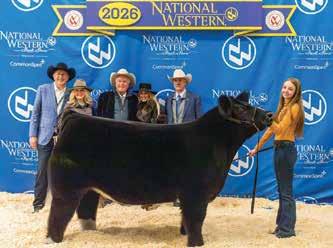
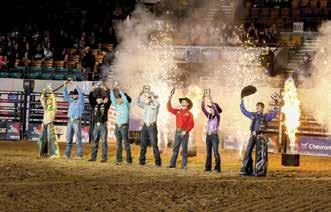
Coliseum, scoring 90 points on Vitalix Ringling Road. Over the course of the week, Wright earned $17,196.
Hannah Bugas is
the managing editor of the Wyoming Livestock Roundup. Send comments on this article to roundup@ wylr.net.











SPIEGELBERG SPRINGS RANCH
Laramie, Albany County, Wyoming
6,284± total acres; 5,019± deeded, & 1,265± State lease acres. Live water via Spring Creek & Sand Creek, 89± acre private lake. Year-round access. New improvements
$6,500,000
Mark McNamee (307) 760-9510 or Cory Clark at (307) 334-2025
HANSSEN-MELVIN HORSE FACILITY
Hermosa, Custer County, South Dakota Turn-key horse facility, with heated 125x225 indoor arena, outdoor arena, over-sized box stalls, ranch home plus barn living quarters and MUCH MORE!
$3,030,000
Cory Clark at (307) 334-2025 or Logan Schliinz (307) 575-5236











DOUGLAS QUARRY AND RANCH
Douglas, Converse County, Wyoming
1,331.44± deeded acres with current quarry operations on approximately 35± acres. Divers aggregate products with established client base. Ranch home with roping arena.
$12,995,000
Cory Clark at (307) 334-2025 or Mark McNamee at (307) 760-9510
TERRY RANCH STOOPS DRAW UNIT
Ranchester, Sheridan County, Wyoming
520± deeded acres with direct access off Hwy 14, located just outside Ranchester. Rolling hills, stock reservoir, panoramic views.
$5,200,000
Clark & Associates at (307) 334-2025
Sepsis, a condition in which the immune system spirals out of control in response to an infection, is one of the most life-threatening health concerns a horse can face.
Managing it requires medications, fluids and other supportive care, which quickly add up to long hospital stays and overwhelmingly expensive bills. Even then, survival is far from guaranteed – only 30 to 40 percent of horses survive and those that do are often left with severe complications.
However, a new technology called hemoperfusion is offering hope for septic horses. It may be able to stop the condition from becoming life-threatening, while also lowering both the time and cost of treatment.
Dr. Kallie Hobbs, assistant professor at the Texas A&M University (TAMU) College of Veterinary Medicine and Biomedical Sciences who has been at the forefront of hemoperfusion research, shares how the technology works and the difference it could make for septic horses.
Filtering out the danger
Normally, when bacteria or other microorganisms invade a horse’s bloodstream, the immune system releases cytokines – inflammatory signals or messengers which help the body fight off infection.
“In a septic horse, however, there’s an overproduction of cytokines, a ‘cytokine storm,’ which overwhelms the immune system and prevents it from fighting the infection,” Hobbs said.
In cases of sepsis, hemoperfusion may help the immune system reset by physically removing those excess cytokines and restoring the body’s natural ability to fight infection.
“A hemoperfusion machine uses a cartridge filled with beads – called a column – to filter out the cytokines, very similar to a water filter,” Hobbs explained. “A catheter draws blood from the horse, the blood passes through the hemoperfusion column for filtering, then the cleaned blood is returned to the horse.”
“Depending on what the problem is and the size of the animal, a session can be anywhere from four to 12 hours,” Hobbs said. “For the sepsis cases we’ve treated in horses, it’s always taken about four to six hours, and most horses just stand and eat hay while we run the treatment.”
A game-changer in critical care
Polymer-based hemoperfusion, which gained renewed interest during the COVID-19 pandemic, is still new in the veterinary world, but it has already shown encouraging results and may become a breakthrough for treating horses with sepsis.
One of the most promising aspects is how fast horses improve after filtering.
“I’ve filtered blood in several horses with sepsis which have otherwise failed traditional treatment, and I have noted a rapid improvement in their clinical signs,” Hobbs said. “One patient, for example, was able to substantially decrease the medications they were on within 24 hours after we did the treatment.”
Beyond speed, this technology can also ease the financial and emotional toll of a sepsis diagnosis.
“It has the potential to not just save lives but to save time and costs as well,” Hobbs said. “Sepsis can lead to horses being in the hospital for a long time, and each day can cost several thousand dollars to keep the patient stable. Reducing treatment time also reduces
stress on the animal and allows veterinarians to help more patients.”
A hope “fill-tered” future
While sepsis has been Hobbs’ primary focus, hemoperfusion has also proven useful in other emergencies, successfully treating toxicity cases such as rat bait ingestion and venomous snake bites – instances where dangerous substances can be physically removed from the blood.
“We know it pulls out Western Diamondback snake venom,” Hobbs said. “With continued research, we hope to figure out exactly what conditions respond best to hemoperfusion.”
Because hemoperfusion is still new in veterinary medicine, it’s not widely available yet.
“Currently, TAMU is one of the only three teaching hospitals that can perform hemoperfusion on animals,” Hobbs said. “We have been publishing data showing polymerbased hemoperfusion not only works, but also how it works, which will hopefully expand its acceptance and availability as a treatment.”
For Hobbs, the goal is to see hemoperfusion become an established part of sepsis care.
“Right now, hemoperfusion is the last resort to save a horse not responding to anything else,” Hobbs said. “My hope is it will become a management strategy we can use early, instead of waiting until everything else has failed.”
Pasture Talk is a service
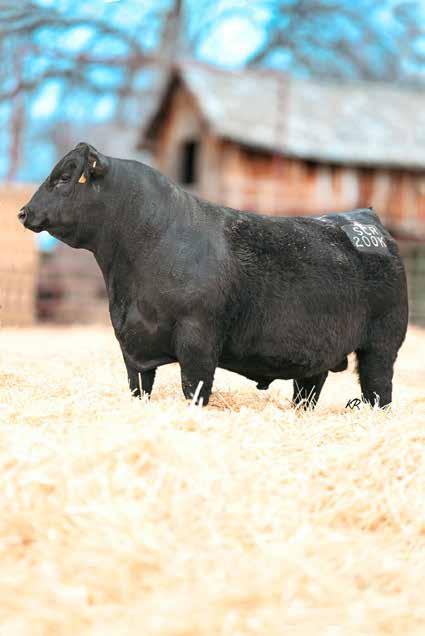
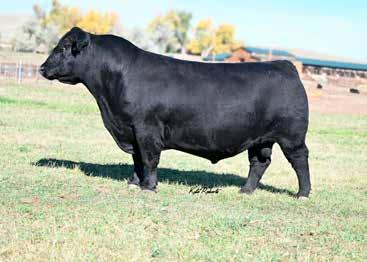
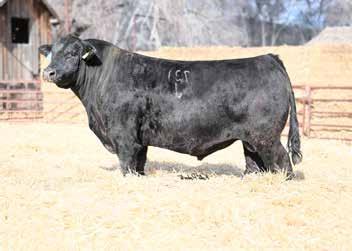
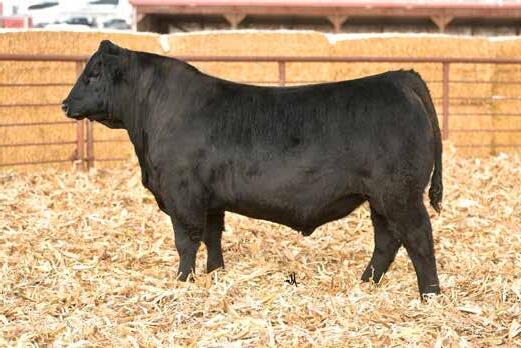


Top Sellers
Lot 69 – DB North Star N156 – Price: $29,500 DOB: 3/3/25 Sire: Bear Mtn North Star Dam’s Sire: EXAR Monumental 6058B EPDs:
BW: -1, WW: +76, YW: +133 and Milk: +30 Buyer: Bill Klein, Wheatland Lot 14 – DB Jameson N35 – Price: $20,000 DOB: 2/7/25 Sire: Basin Jameson
Top Sellers
Bulls
Lot 2 – LGR Statement
5003 – Price: $19,000 DOB: 1/24/25 Sire: Ellingson Statement Dam’s Sire: Coleman Ranger 029 EPDs: BW: +0.6, WW: +80, YW: +125 and Milk: +23 Buyer: Dyer
Ranch, Crawford, Neb.
Lot 20 – LGR Alpine
5028 – Price: $16,750
DOB: 2/2/25 Sire: Coleman Alpine 2466 Dam’s Sire: W Sunrise Executive Law 507H EPDs: BW: +1.3, WW: +69, YW: +122 and Milk: +28
Buyer: Black Thunder Cattle
1076 Dam’s Sire: S Foundation 514 EPDs: BW: +1.6, WW: +83, YW: +135 and Milk: +26 Buyer: Bryan Palm, Mitchell, Neb. Lot 55 – KLB North Star N122 – Price: $20,000 DOB: 2/20/25 Sire: Bear Mtn North Star Dam’s Sire: BJ Surpass EPDs:
BW: -1.7, WW: +87, YW: +149 and Milk: +25 Buyer: Thaler Land and Live-
LLC, Newcastle
Lot 25 – LGR Charlo
0256 – Price: $15,500 DOB: 1/23/25 Sire: Coleman Charlo
0256 Dam’s Sire: Sitz Stellar
726D EPDs: BW: -1.9, WW: +54, YW: +88 and Milk: +22
Buyer: SR Cattle Company, Decker, Mont.
Lot 8 – LGR Statement
5066 – Price: $15,000 DOB: 2/7/25 Sire: Ellingson Statement Dam’s Sire: Coleman
stock, LaGrange Lot 72 – DDB Gravity N166 – Price: $18,000
DOB: 3/7/25 Sire: McKellar Gravity 1266 Dam’s Sire: DL Wheelhouse 409 EPDs: BW: +2.2, WW: +97, YW: +170 and Milk: +27 Buyer: Vollman Ranches, Douglas Lot 31 – DB Commerce N67 – Price: $18,000 DOB: 2/12/25 Sire: Connealy Commerce Dam’s Sire:
Bravo 6313 EPDs: BW: +4.4, WW: +87, YW: +148 and Milk: +16 Buyer: Belus Brothers, Buffalo
Lot 17 – LGR Statement 5062 – Price: $15,000
DOB: 2/7/25 Sire: Ellingson Statement Dam’s Sire: LGR Meatloaf 5005 EPDs: BW: +1.4, WW: +67, YW: +112 and Milk: +21 Buyer: Black Thunder Cattle LLC, Newcastle
WAR Albion H191 EPDs:
BW: -0.9, WW: +84, YW: +142 and Milk: +32 Buyer: Travis McIntosh, Wheatland Lot 12 – DB Architect M33 – Price: $14,000
DOB: 2/8/24 Sire: S Architect 9501 Dam’s Sire: Myers Fair-N-Square M39 EPDs: BW: -1.8, WW: +73, YW: +126 and Milk: +31 Buyer: Robert Yeik, Torrington
Reported By: Curt Cox, WYLR Field Editor Jan. 24, 2026
Buffalo Livestock Marketing, Buffalo Auctioneer: Greg Goggins
63 Yearling Angus Bulls Avg. $10,869
23 Angus Heifer Calves Avg. $5,239
Heifers
Lot 106A – LGR Forever Lady 5143 – Price: $12,000 DOB: 2/25/25 Sire: Ellingson Statement Dam’s Sire:
EPDs:
TUESDAY, FEBRUARY 3
BRED COW & HEIFER SPECIAL ALONG W/ CALVES & YEARLINGS START TIME 9:30 A.M. W/ WEIGH UPS BRED COWS @ NOON BRED HEIFERS
Fleur De Lis Cattle- 50 Blk Ang & AngX Bred Heifers. Bred to LBW Reyes & Lucky 7 Black Ang bulls to start calving 3-1. Rec Virashield 6 VL5, Safeguard & poured w/Clean-Up @ preg checking. Heifers will weigh 10001050#. Summered on high desert range (7200’). Big, fancy bred heifers! Bred to good bulls! BRED COWS Meadow Creek Ranch- 15 Blk Ang & AngX 3-5 yr old Bred Cows. Bred to Blk Ang Bulls to calve March-April. Peter Dempster- 5 Blk Ang Mixed Age Bred Cows. Bred to Blk Ang bulls, to calve March/April. CALVES
Gifford Ranch- 220 Blk Ang & AngX Strs & Hfrs 500650#. Rec Virashield 6, 8 Way, & poured twice. Weaned since November. High desert calves!
ta 5, Once PMH IN, Vision 7 & Nasalgen @ branding, Vista Once & Vision 7 w/Somnus @ weaning. Bangs vacc. Wormed w/Safeguard this fall. Been on grower ration of alfalfa, grass & hay barley, fed w/ EZ ration feeder. Peter Dempster- 1 Blk Ang Str 1900#. COWS C&D Enterprises- 45 Test cows WEIGHS Armada Ranch LLC & Braxton Crofts- 12 weigh cows
TUESDAY, FEBRUARY 10
ALL CATTLE CLASSES START TIME 9:30 AM W/ WEIGH UPS • BREDS @ NOON
TUESDAY, FEBRUARY 17
FEEDER SPECIAL START TIME 9:30 AM W/ WEIGH UPS
TUESDAY, MARCH 31
2 Pair, 1175#
14 Bred Heifer, 851# $3,250.00
4 Bred Heifer, 963# $3,150.00
1 Bred Heifer, 1120# $3,000.00 HEIFERETTES
MOUNTAIN VIEW
7 Heiferette, 865# $260.00
PINEDALE
1 Heiferette, 1005# $220.00 SHOSHONI
1 Heiferette, 1065# $210.00 COWS
JEFFREY CITY
4 Cow, 1262#
RIVERTON 7 Cow, 1314#
1 Cow, 1220#
1 Cow, 1195#
Cow, 1385# $161.00 PAVILLION
12 Cow,
Cow, 1397#
4 Cow, 1165#
4 Cow, 1137#
6 Cow, 1137# $149.50
1 Cow, 1075#
Merl Glick- 100 Blk Ang & AngX Strs & Hfrs 400-650#. Comp vacc spring & fall. Poured this fall. Running on pasture.
Rafter Cross- 100 Blk Ang & AngX(F1 BWF) Strs 600625#. Rec Vista Once SQ & Vision 7 w/Somnus @ branding, Pyramid 5 w/Presponse & Vision 7 w/Somnus @ weaning (10-15). Sired by Popo Agie Black Angus & Oschner Hereford Bulls. One brand, conditioned for grass. Fancy!
Jake Agar- 80 BWF & RWF Strs & Hfrs 500-650#. Rec
Vista Once & 8 Way w/ Somnus @ branding, Rec 8 Way w/ Somnus & Endovac @ weaning. Rec Safeguard & Cleanup on 1/10. Weaned Since mid-October. Green. Conditioned for grass. One brand. Jock & Chera Campbell- 40 Ang & CharX Strs & Hfrs 550-650#. Rec Pyramid 5 + Presponse & Vision 7 spring & fall. Poured @ weaning. Weaned 100+ days. High elevation. Armada Ranch LLC & Braxton Crofts- 40 Blk Ang & BWF Hfrs 450-500#. Rec 2 rounds Vista Once & Vision 8 w/Somnus, Nasalgen @ weaning (11-1). Bunk Broke. Sired by good bulls. Cake broke. Nice high desert calves!
Boysen Lake Ag- 26 Blk Ang & BWF Strs & Hfrs 400450#. Rec Vista 5, Vision 7 w/Spur & One Shot Ultra 8 @ branding. Rec One Shot Ultra 8, Vision 7 w/Spur, Clean-Up & Safeguard @ weaning 9-16. One iron & Fancy!
Charlie Whitlock- 22 Red Ang & AngX Strs 650-700#. Rec Pyramid 5 w/ Presponse, 7 way w/Somnus & poured @ weaning (11-1). Six Iron genetics. Fancy!
JR Munger- 12 Registered Hereford & BWF Strs, 3 Hfrs 525-625#. Sired by Registered Hereford bull Kickstart. Rec 2 rounds Ultra bac 7. Poured @ weaning 12-28. No implants. Hay fed. Born & raised @ 6000’. Electric fence broke.
Skylark Cattle- 10 Blk Ang & BWF Strs & Hfrs 400450#. Rec Vista 5, Vision 7 w/Spur & One Shot Ultra 8 @ branding. Rec One Shot Ultra 8, Vision 7 w/Spur, Clean-Up & Safeguard @ weaning 9-16. One iron & Fancy!
Kent & Shelli Haun- 10 Sim/Angus Hfrs 600#. Rec Vis-
TUESDAY, FEBRUARY 24
ALL CATTLE CLASSES W/ SHEEP & HORSES • START TIME 9:30 AM W/ SHEEP & WEIGH UPS
TUESDAY, MARCH 3
FEEDER SPECIAL START TIME 9:30 AM W/ WEIGH UPS
SATURDAY, MARCH 7
LUCKY 7 ANGUS BULL SALE. START TIME NOON
TUESDAY, MARCH 10
BRED COW SPECIAL • BREDS @ NOON START TIME 9:30 AM W/ WEIGH UPS Lucky 7 Angus Bulls- PAP tested @ 7570 ft. Rugged High Country Range Bulls.
TUESDAY, MARCH 17
ALL CATTLE CLASSES START TIME 9:30 AM W/ WEIGH UPS
TUESDAY, MARCH 24
ALL CATTLE CLASSES 48TH ANNUAL NORTHWEST ANGUS ASSOCIATION BULL SALE (1:00 PM) START TIME 9:30 AM W/ WEIGH UPS Northwest Angus Association Black Angus Yearling & 18 Month Old Bulls From: Obsidian Angus, Hoggs Angus, Davidson Angus, Lazy BV Cattle, JOH Ranch & WYO Angus. Bulls will be BVD, Semen & PAP tested. (1:00 PM) Representing 27 herd sires. Contact Fred Thomas 307-868-2595 or any Breeder to request a catalog or more information fkdramsrus@gmx.com.
TUESDAY, JUNE 2
