


By Bailey Daniels STATESMAN SENIOR REPORTER
Aggies on Utah State University Logan campus lately may have noticed students holding signs either opposing or supporting Proposition 4. Prop 4 is a law in Utah created with the goal of making voting maps fairer by limiting the political influence in how they are drawn.
The law was first enacted in 2018, and now there are measures being taken to get it back on the ballot, allowing citizens to vote again on whether it should remain in use. According to the Salt Lake Tribune, Republicans have 57,437 of the 140,748 signatures needed to put the repeal on the ballot as of Jan. 26.
United States President Donald Trump posted on his social media app Truth Social on Jan. 23, encouraging followers to sign the petition to repeal Prop 4: “Utahns deserve Maps drawn by those they elect, not Rogue Judges or Leftwing Activists who never faced the Voters, and therefore, I encourage all Patriotic Utahns, Republicans, and MAGA Supporters who love their Great State and Country to sign this initiative ASAP.”
Trump also mentioned in his post the initiative must reach the required number of signatures by Feb. 15 in order for the Utahns to be able to vote on it in November. The president cited its importance in “keeping Utah red.”
Isabella Erwin is the current president of the USU chapter of the College Democrats. They are a supporter of Prop 4 and think it reaches its goal of fairer voting maps.
In their words, the goal of Prop 4 was to create an Independent Redistricting Commission for Utah, which is a body separate from the state legislature formed to draw electoral district boundaries. Although it was voted into law by Utah voters, the state legislature enacted a law that ensured the commission had only an advisory role, so they chose to use nonpartisan maps created recently.
“The Utah Republican Party, and I would say the Republican Party at large, has not been taking this lying down at all, and throughout this entire process since Prop 4 was enacted into law, have been looking for any possible way to take this power back,” Erwin said.
On Jan. 26, the Salt Lake Tribune cited a poll conducted by Embold Research that found “57% of those surveyed – including 47% of Republicans – oppose repealing Proposition 4 and the Legislature implementing its own map.”
Maggi-Lynn Perla is the coordinating vice president of the USU chapter of the College
Republicans. She is in favor of putting Prop 4 back on the ballot and allowing citizens to vote on whether it should still be in use.
“It’s not about party advantage. Voters elect legislators, and legislators should be accountable, and commissions aren’t truly independent,” Perla said. “The constitution gives us the right to redistrict power to our legislature, and Proposition 4 isn’t doing that. It’s going against the constitution. Voters deserve to have clarity about who is responsible for redistricting.”
Many Democrats disagree that the goal is not power, including Erwin.
“I think it’s extremely disappointing for leaders to value their own power over the wants and demands of the people they’re supposed to be representing,” Erwin said.
Perla explained she feels the proposition takes power away from the people. Because the maps are drawn by unelected commissions, Perla thinks this makes it difficult for voters to have a say. Perla said legislators should be able to represent the people, not “random commissioners.”
Erwin went on to say gerrymandering isn’t only an issue with Republicans, depending on the state. They think it’s important there is independent redistricting across the nation and that voters choose their politicians.
“I think a lot of young people are just worried about their college classes or other temporary things, but this is something that’s going to affect their futures,” Perla said. “Utah is a big Republican state, and people should understand Utah and the history behind it, even if they don’t agree.”
More information about Prop 4 can be found on le.utah.gov.
Bailey Daniels is a senior studying technology systems. She loves Lana Del Rey, sweet treats and all things whimsical.
— bailey.daniels@usu.edu
By Hazel Harris-Staples STATESMAN EDITOR
Following the hearing board meetings of both USUSA Logan Vice President Po’okela YamakoshiSing and Athletics & Campus Recreation Executive Director Ben Burdette, Student Advocate Vice President Colin Hastings is working on rewriting the legislature surrounding the hearing board.
Hastings scheduled a meeting with members of USUSA leadership to gather feedback on the structure of the board. This meeting was held on Jan. 16 in an open-house format that allowed leadership members to drop in and share their perspectives. Three USUSA student body officers were in attendance.
Since that meeting, Hastings has scheduled two additional meetings during which he was expected to present drafts of the proposed legislation. Both meetings were canceled and rescheduled on the day they were set to occur.
In this proposed legislation, in accordance with what was shared at the first meeting, students could expect to see, among other changes, an increase in training of board members, revision of the appeals process, clarification of timelines and notification requirements and a reduction of number of hearing board members from 12 to nine — an action that would require an amendment to the USUSA Constitution.
Hastings said the biggest change he would like to make is moving from what he described as a trial-like format to something more like a true hearing board.
“My idea is that we should be moving from a trial format because we had the defense and the offense and they came up and presented their evidence. I think that's really messy. I think it also makes it so we have to pit officers against each other,” Hastings said.
Hastings additionally said he felt the move from trial format to hearing board would allow for shorter hearing times — a concern shared by each of the three student body officers in attendance. By having members of the newly revised board gather evidence, rather than have complainants and respondents calling up witnesses in their hearings, the time spent inside these hearings could greatly decrease.
Currently, 12 people serve on the board with at least two of them required to be from a Utah State University Statewide campus. Hastings is proposing to lower this number to nine.
According to the USUSA Constitution, the Logan and Statewide Executive Councils are responsible for nominating and choosing board members — the same people who will decide whether they should stay in office if a problem should arise.
“My proposition would be to lower the amount of students on the board so it would be an easier job of vetting them. How many people that were nominated did you know personally, well enough to go on and say, ‘Yeah, they would do a good job?’” Hastings said.
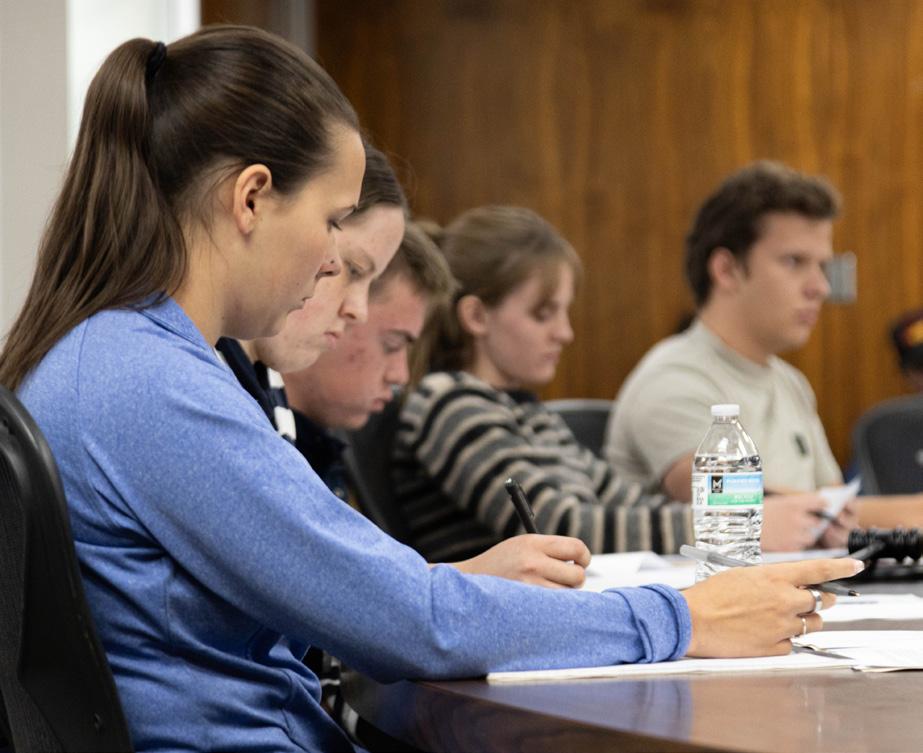
An additional issue Hastings pointed out from the board bylaws surrounds the timeline of when the respondent had to be notified there was a complaint against them.
“Currently, if I get an email saying, ‘Here’s a wrongdoing,’ I have 24 hours to get a screening panel, and then at some point within the next 10 days of student days or weekdays, I have to get a trial together. There’s nothing in there that says when I have to alert the person the complaint is against,” Hastings said.
Modifications brought up by additional attendees, particularly USUSA Chief of Staff Grace Wheeler, surrounded the involvement of officers in the board.
“The student advocate should be a little more removed. I don’t think any officer in USUSA should be the one collecting evidence. I think that's what became very messy,” Wheeler said.
Hastings riffed off this statement, discussing ways the student advocate vice president could become less involved in the entire hearing board process.
“If we’re training them more, then maybe we don’t need me to be that connecting piece,” Hastings said.
In the current structure, the student advocate serves in a secretarial capacity, doing administrative tasks like sending emails, scheduling and organizing details of hearings.
The next step in this process will be for Hastings to present a draft of his proposed legislation to USUSA leadership for review and additional comments.
Hazel Harris-Staples is a junior studying photography. She has recently taken up crochet, gained a love for wiener dogs and developed a strong appreciation for 35mm film.
— hazel.harris@usu.edu
Barker Alyssa Caywood
Colvin
Ludlow Jayke Martin
McNeill
Moore
Nielsen
Packer
Peterson
Shelite
Ferraro

The USU Student Fee Board passed three out of the four proposed student fee increases presented at this year’s fee board meetings.
The Aggie Shuttle will be receiving a $1.73 fee increase.
Campus Recreation will be receiving a $10.46 increase, and USU Athletics will recieve a $29.72 fee increase.
NEHMA’s fee proposal of $2.50 did not pass the board.
More details on each fee can be found in previous coverage by The Utah Statesman.


By Jillian Peterson STATESMAN REPORTER
Bigfoot — or an art professor dressed as Bigfoot — was seen walking around Utah State University Logan campus last week as part of a promotion for the Nora Eccles Harrison Museum of Art’s newest exhibition, which opened Jan. 20.
The exhibition titled “The Lure and Lore of the West” explores stories and legends of the American West with a special emphasis on local artwork.
“When we started preparing this exhibition, we had almost 1,000 pieces that could potentially go in it,” said Danielle Stewart, the museum’s curator.
“We narrowed it down to 80, but we tried to prioritize work that was local to Cache Valley.”
Stewart said she wanted visitors to feel as if they were going on a road trip through the West as they visited the museum.
“So much of the West that we see is through a car window, a train window or even a wagon train,” Stewart said. Because of this, Stewart included several pieces that display local outdoor landscapes, like Sardine Canyon and the Jardine Juniper — one of the oldest trees in the United States — located in Logan Canyon.
In addition to artwork, the exhibition also includes objects and stories found in Utah State’s archives.
“We have at least one object from every major archive at USU: the library’s special collections, the herbarium, the geology museum and the anthropology museum,” Stewart said.
One of these objects is a dinosaur bone, which was found in Escalante and likely belonged to a brontosauruslike dinosaur.
“Stories like Bigfoot, or stories like the Bear Lake Monster, often get started with real objects, then morph into a myth,” Stewart said.
The exhibition also incorporates local folklore stories found in the MerrillCazier Library Special Collections & Archives. Melissa Anderson Asay, a graduate student studying folklore, was involved in collecting these stories.
“I spent a lot of time digging through the five folklore archives in the library,” Anderson Asay said. “Lots of
these stories were gathered by previous students.”
Several pieces in the exhibition are accompanied by headphones that allow visitors to hear the stories Anderson Asay and others collected, which were recorded by students in the USU Theatre Arts Department.
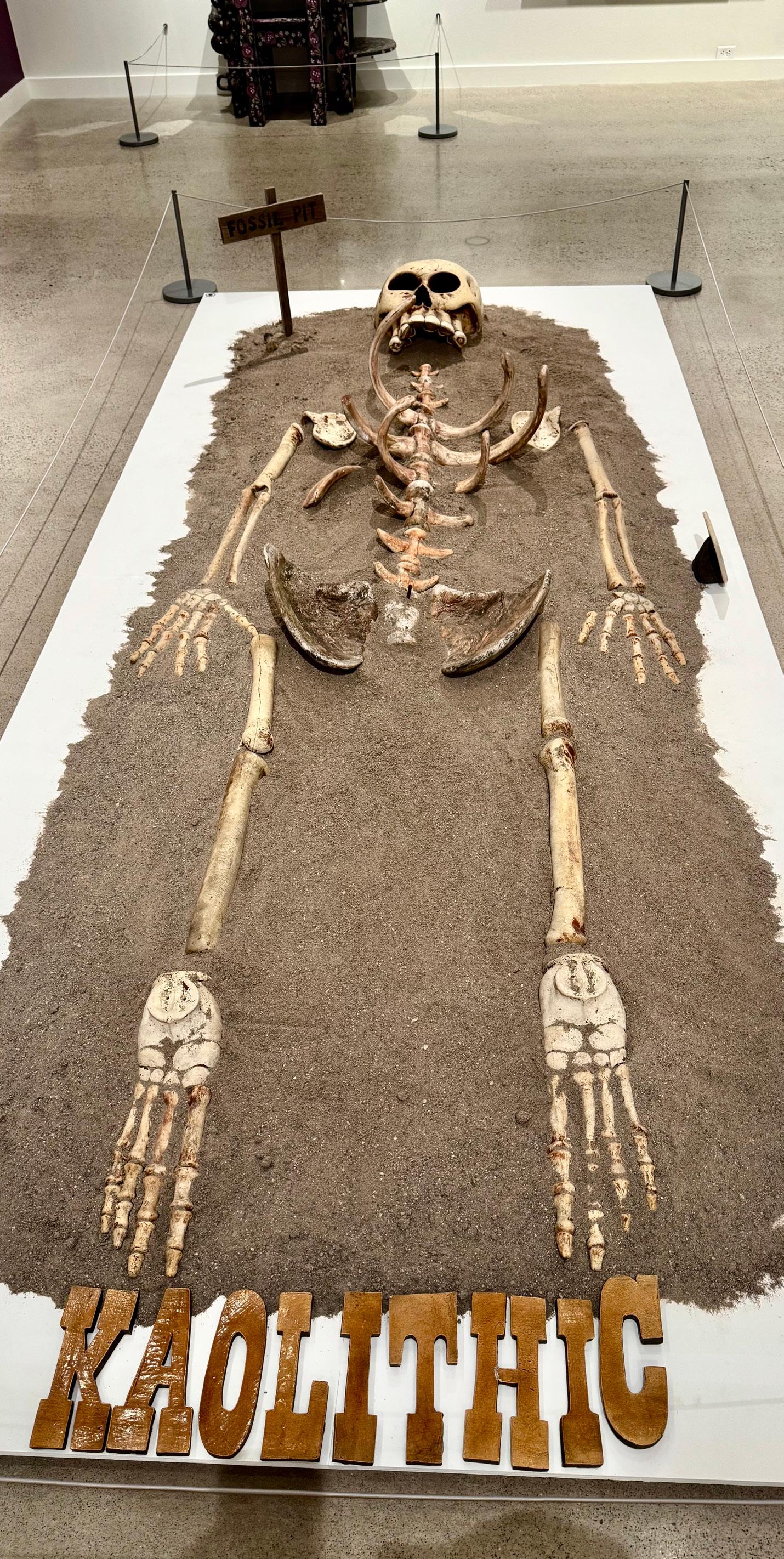
One of these audio recordings is about a Bigfoot sighting, which is paired with a life-sized ceramic Bigfoot skeleton that appears as if it’s being unearthed.
“This piece is really the heart of the exhibition,” Stewart said. “It was made by a California funk artist named Clayton Bailey, and he invented a sort of alter ego for himself called Dr. George Gladstone.”
Stewart said Bailey created the piece and buried it, but then his alter ego uncovered it.
“It’s a piece as well as a performance,” Stewart said.
In addition to folklore and myth, the exhibition also features artwork depicting groups commonly associated with Western stories, like Indigenous Americans, pioneers and cowboys.
Stewart said the exhibition addresses which perspectives have historically been underrepresented in artwork about the West and also aims to contrast artwork depicting Indigenous Americans.
“We don’t have a lot of pictures of women in the West,” Stewart said. “We have two pieces from white-descended artists and then a couple pieces from Native American artists.”
These pieces, as well as the rest of the exhibition, are expected to remain on display until May 2027. The museum is free and open to the public Monday through Saturday every week.

By Alyssa Caywood STATESMAN REPORTER
Preparing for takeoff requires preparation far beyond the classic countdown shown on TV, according to Utah State University Rocketry Club. The club seeks to prepare students to build and prepare rockets for launch through the projects they work on during the semester.
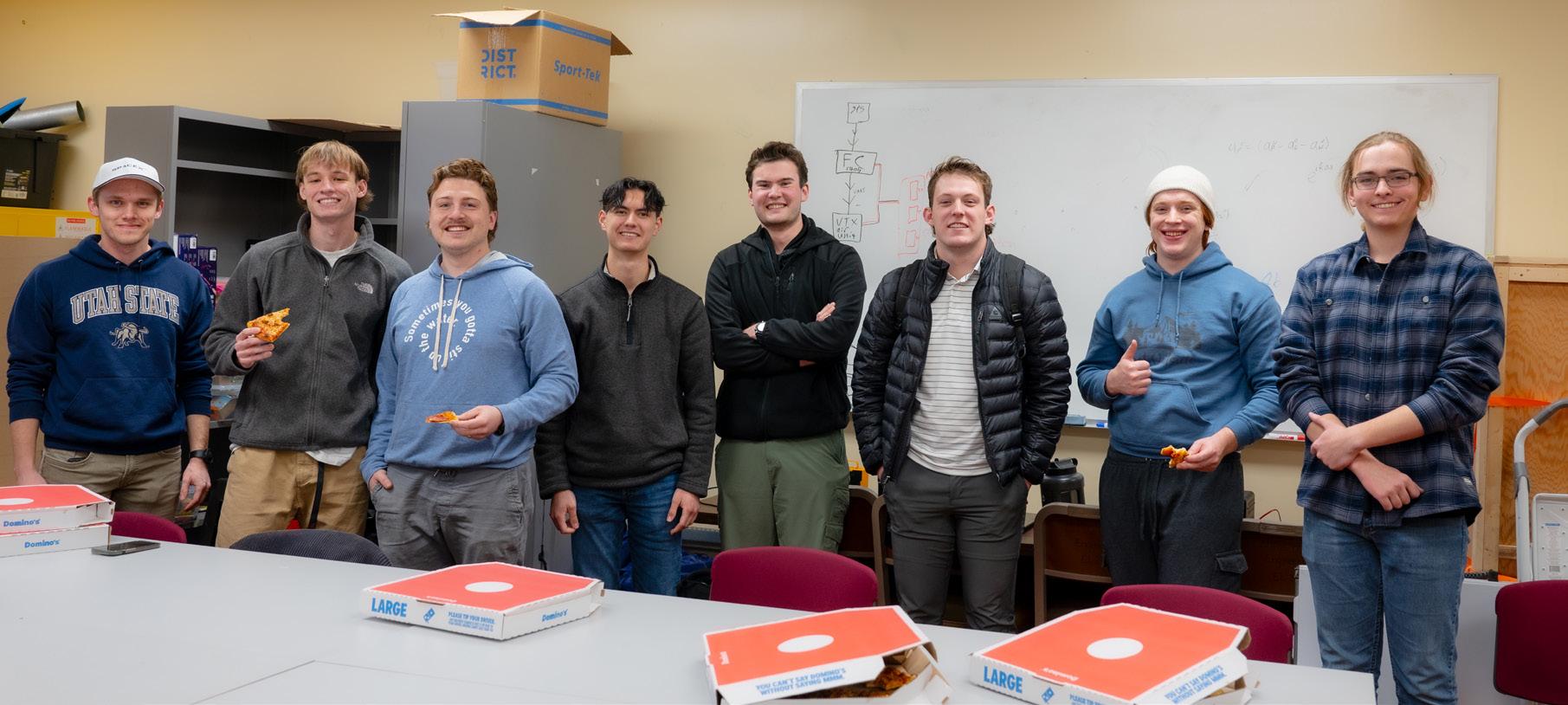
The club had its opening social on Jan. 21, where members discussed what the club will be focusing on in Spring 2026. The event was planned and hosted by J Barton, a junior in mechanical engineering and president of the club, with the help of his presidency.
The main goal of the club is to help students gain experience in high-powered rocketry. It provides opportunities to help students learn more about making larger rockets and gain certifications to launch high-powered rockets from 2,000 to 10,000 feet in altitude.
During the meeting, the club announced it will continue to work on students’ personal certification projects while also introducing more team projects.
“This semester, we’ve got some club builds that we’re going to start working on,” Barton said.
One of the team projects is an interclub competition called “Over-easy Orbit.” This event will be held in March. During this competition, each club will be divided into teams where they will work together to design a rocket that will safely carry an egg.
“We will launch that egg and see who can launch their egg the highest and recover it without damage,” Barton said.
The club offers several hands-on group projects that allow students to get involved in working together and developing rocketry experience that extends beyond the classroom setting.
“Within engineering, you do a lot of the classes and
you do a lot of the math and all that kind of stuff, but there’s not a ton of the hands-on working as a team and building a project and that kind of stuff,” said Wyatt Daugs, a USU graduate student studying space systems engineering. “We have a lot of students that are interested in rocketry. That just gives them a place to explore their interests and have fun and meet new people with similar interests.”
The club is also preparing for the International Rocket Engineering Competition. This competition is the largest collegiate rocket engineering competition in the world, with more than 150 competing teams.
During this competition, the teams involved are tasked with designing, building, testing and launching rockets with target altitudes of either 10,000, 30,000 or 45,000 feet with a payload size of 2 kg, or 4.4 pounds. The 2026 competition will be held in June.
The club will also be involved in high-powered launches when based in Salt Lake City during April, May, October and November.
“There, we have a ceiling of 10,000 feet that we can launch rockets to,” Barton said.
Along with returning club members, 10 new students attended the opening meeting seeking more information about rocketry. The club is available to all USU students who want to get involved.
“It’s really for anyone who wants a little bit more experience about rockets,” Barton said.
Meetings are held about every other week to discuss and work on ongoing projects.

Sienna Brown is the host of “Crosseyed & Painless,” a weekly dive into a variety of music ranging all genres and decades. Tune in on Thursdays at 6 p.m. on Aggie Radio 92.3 FM for some great tunes and commentary.




Alyssa Caywood is a firstyear student at USU studying journalism. She loves anything outdoors from backpacking to snowboarding to water skiing.









By Grace Colvin STATESMAN REPORTER
On a daily commute to campus, one of the last things one might expect to see is a fully operating, fully stocked fridge sitting on the side of the road. However, if one happens to be on Boulevard Street, chances are they’ll run into just that — and with it, the Cache Valley community’s newest resource to fight hunger.
Cache Fridge - Boulevard began operation in October 2025 and is located at 571 Boulevard Street in Logan. Modeled after the Weber Fridge organization in Ogden and the wider “freedge” project, the program is run by Cache Valley Mutual Aid and aims to relieve food insecurity in the valley through community-created, community-run infrastructure.
The concept is a donated fridge is set up on a volunteer’s porch or lawn, allowing public access to the resource.
Anyone in the community can show up and stock the fridge with their extra food, and anyone can show up and take what they need. The upkeep and cleanliness of the fridge is maintained by CMVA, but its contents can be provided by anyone who has the means to donate. There are no questions asked and no forms to fill out — the program is a lowkey, self-run form of mutual aid, operated solely by volunteers and community members.
According to Paige Sargeant, one of the founding members of Cache Fridge, this tenet of community members coming together is one of the main goals of the project.
“The idea is to create a network of resources that anybody can either contribute to or receive aid from,” Sargeant said in an interview with The Utah Statesman. “It’s neighbors taking care of neighbors rather than people having to fill out forms, and all those organizations that do that kind of thing are amazing, and we need them, but there are some people that they don’t reach.”
Sargeant said the fridge can be described as a charitable “free for all.” There are no formal requirements to qualify for the fridge’s aid, and there are no specific times or events where services are given. The organization encourages community members to simply come to the fridge when they need something.
According to CMVA, the need for mutually beneficial community aid is higher than ever as more and more people in Cache Valley feel the effects of food insecurity, especially following recent events — namely, the elimination of many federally-funded programs.
“People’s SNAP [Supplemental Nutrition Assistance Program] benefits were cut last fall,” said Melissa Draper, a volunteer with the project. “That wasn’t just people who were standing in welfare lines. That was students attending the university. That’s how they were able to go to the university, because they had SNAP benefits that would keep them fed while they were studying, which is critical.”
According to Draper, in addition to college students, the project also hopes to serve working-class families struggling to make ends meet, as well as unhoused people
who may not know where their next meal is coming from. Draper said it recognizes many of these people are unrepresented by formal relief organizations, and for some, community aid is the only way to stay afloat.
“The core message of mutual aid in the valley is just acknowledging these pitfalls and understanding that … the systems that we live under don’t meet our needs anymore,” said Eleni Robinson, another volunteer. “You can’t have a real community if the most disparaged among you are starving.”
However, as CMVA reminds the community, people don’t need to be struggling financially to benefit from the Cache Fridge. In fact, members said the project’s biggest problem currently is the fridge has too much food and not enough recipients. Many community members may feel like they don’t qualify for the fridge’s services or that others’ needs are greater than theirs, but Draper said if someone has any need, the fridge is for them.
“This is for anybody that’s just short that week, or the car broke and you had to fix the car, and ‘Gosh, it would be nice if we just had something to go with dinner tonight,’” she said.
While the community fridge on Boulevard is the closest one to the Logan community, it isn’t the only Cache Fridge in operation. There are several other fridges run by CMVA, which can be found at cachevalleymutualaid. com/food-pantry-and-fridge-map. Additionally, CMVA’s reach extends beyond the fridge projects. It also supervises community meal events for people in need at various times in Logan.
For those interested in supporting Cache Fridge by volunteering food, time or space, CMVA encourages reaching out to it. It is always looking for new fridges, houses to host fridges and food to stock them. More information can be found at @cachefridge.boulevard on Instagram.

Grace Colvin is a sophomore in the theater education program at USU. After graduation, she plans to become a middle school drama teacher. When she isn’t writing or working on a play, she loves making crafts and woodworking.
grace.colvin@usu.edu
By Essence Barnes STATESMAN SENIOR REPORTER
Women in positions of leadership across the state are coming together for a collaborative online speaker series to discuss lessons they’ve learned and challenges they’ve faced while succeeding in their fields. From careers in higher education to government, this series highlights the Utah women behind it all.
The Utah Women and Leadership Project, an initiative created by Utah State University professor Susan Madsen in 2009, is the steward of the Women in Leadership Executive Speaker Series.
“Our mission has always been to strengthen the impact of Utah girls and women,” Madsen said in an interview with The Utah Statesman.
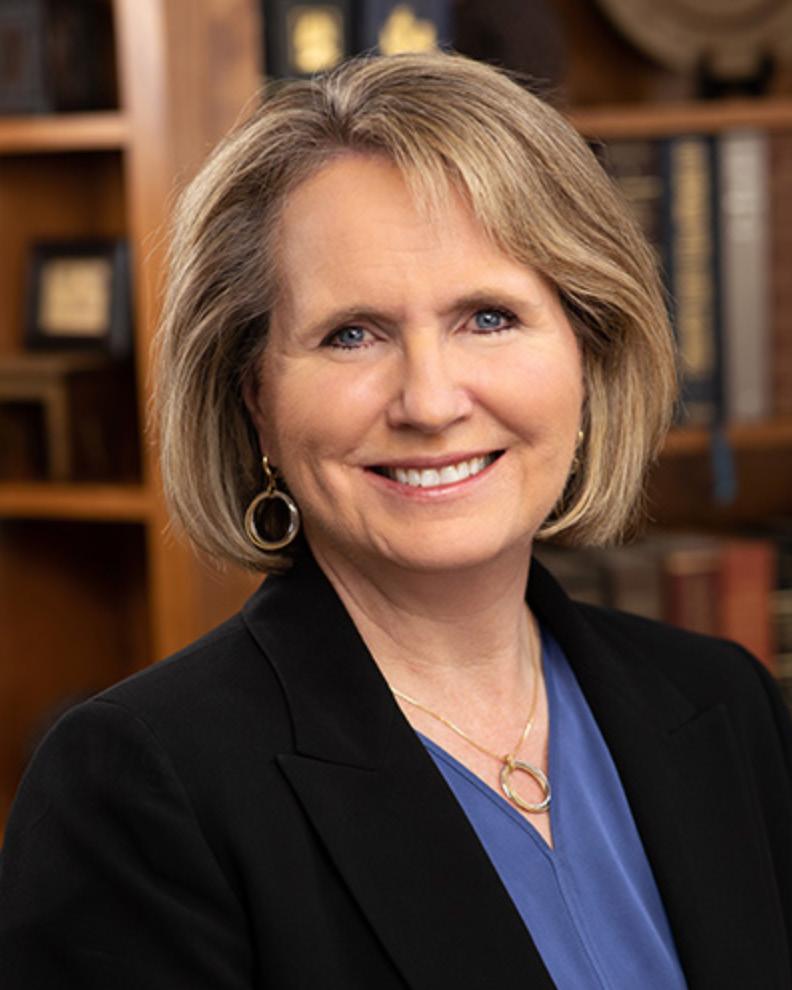
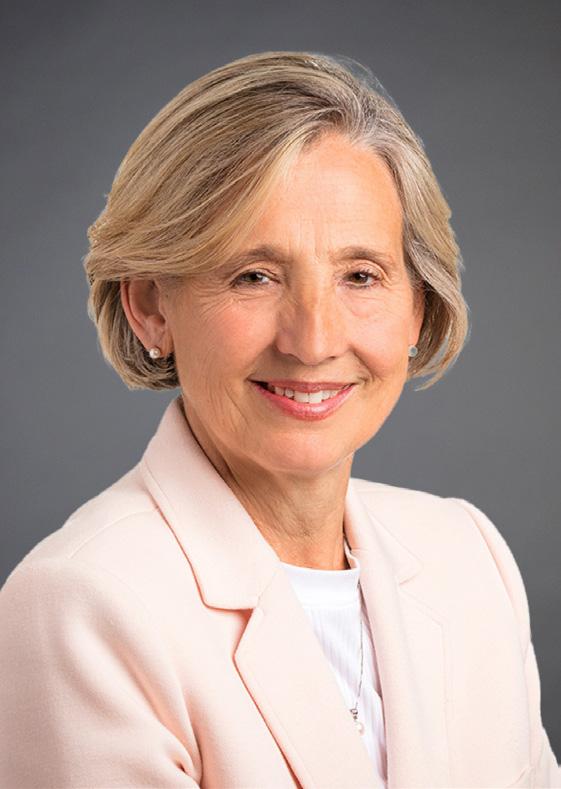
The series includes seven free Zoom webinars that highlight women from different career and life backgrounds. Natalie Gochnour, director of the Kem C. Gardner Policy Institute at the University of Utah, spoke as part of the “Strategic Voices: Women Leading Public Policy Change” panel on Jan. 21 along with Congresswoman Celeste Maloy.
“I came from a family that was very engaged in the civic square. I had a mother that was an avid reader of Newsweek and Time Magazine, and I had a brother that served in the Vietnam War,” Gochnour said in an interview with the Statesman. “In my early childhood, I was quite aware of what happens in our world and why it’s important.”
Gochnour’s early interest in the world and the policies that shape it encouraged her to pursue a variety of career passions in public policy. From advising Utah governors to writing published columns in local news publications to serving as the current chief economist for the Salt Lake

Chamber, Gochnour said through it all, she never felt inhibited by the male domination of those fields.
“I grew up in a setting where you had an understanding that things weren’t always easy and that you were always going to have a bit of an uphill climb making yourself relevant and known,” Gochnour said. “The way I think of it is doors will open for you, and as they open, if you’re using your skills, knowledge and experience to make a contribution, it will be rewarded.”
During the public policy change panel, Gochnour, Madsen and Maloy discussed how women are reshaping the landscape of public policy and governance in Utah by participating as active members of their communities, finding fulfillment in their work and following research towards progress.
“When women aren’t in the boardroom, when they’re not in the C-suite, when they’re not actively involved in decisions, their perspective is not represented,” Gochnour said. “I think it’s a fair supposition to say that when you involve people from many backgrounds in decision making, you get better decisions.”
According to Madsen, research is a core foundation of the Utah Women and Leadership Project, the importance of which was a large point of discussion during the public policy change panel.
“What we know from the research is that you can get the best thinking, the best decision making, the best representation of community members from more equal members of men and women serving together,” Madsen said. “Throughout time, men have served in public roles, and women have served more privately, and we just haven’t gotten the best results from our society.”
Madsen, who serves as moderator at every speaker series event, said she continues to be surprised by how much she learns from the discussions.
“I have ‘aha moments’ myself,” Madsen said. “You
read leadership books and you do various things, but when you’re actually listening to and hearing the life experiences and challenges from the leaders themselves, it’s just a really powerful kind of learning.”
One of Madsen’s goals for the series is to make panel discussions not only inspiring and educational but candid and real.
“These are more comfortable, real-life conversations than you would see at a conference or some of those other formal settings,” Madsen said. “It is such a good opportunity for students, especially women but men too, to learn from amazing women leaders in the state.”
At the time of publication, Madsen and the UWLP will have three more panel discussions left in the series. Panelists will include a former chief justice of the Utah Supreme Court, two wardens leading correctional facilities in Utah and the seventh president of Utah Valley University. Discussions will revolve around justice, law, leadership in times of crisis and the role women play in navigating it all.
“It’s good to have men, but we have to have more women. We need more and more women to say ‘Hey, I belong in this space,’” Madsen said. “There are other things we can do to make sure our voices are heard, and I think that’s critical moving forward.”


By Malory Rau STATESMAN EDITOR
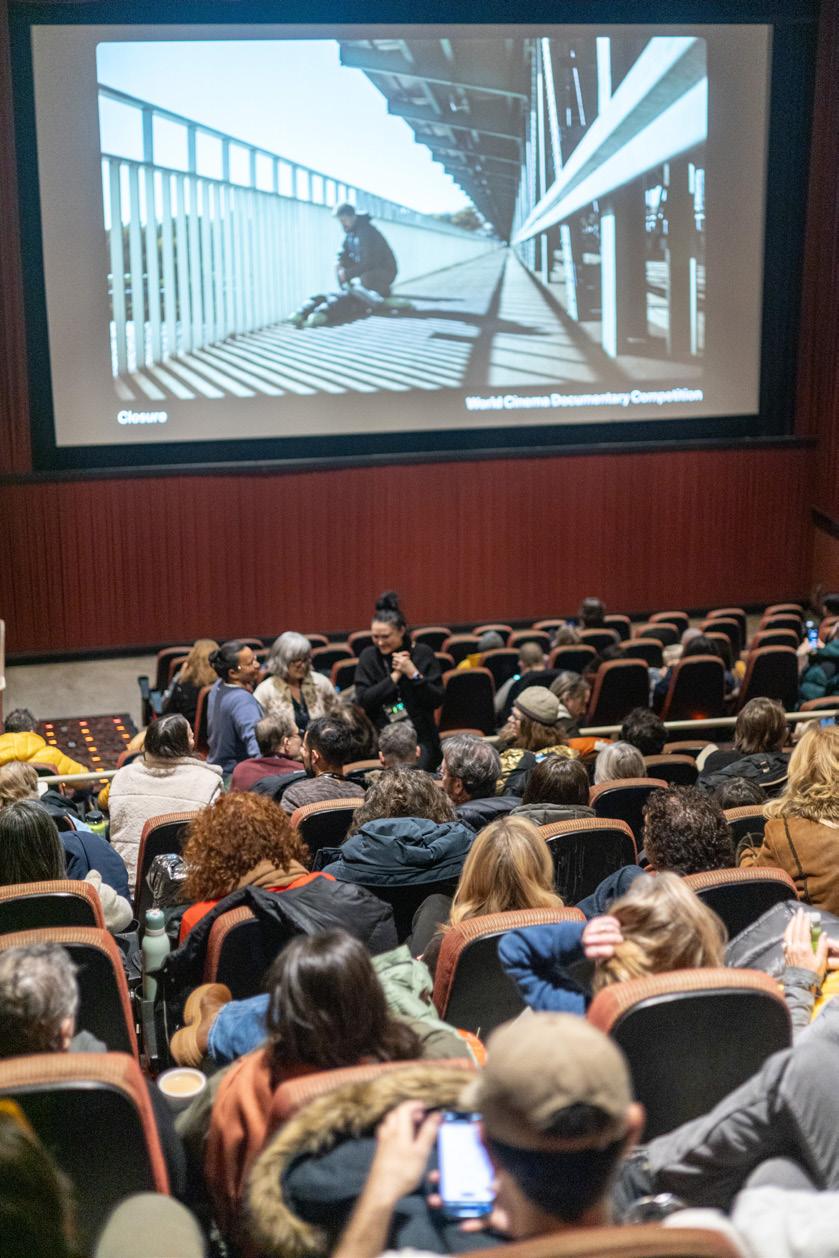
With an opening sequence straight out of a nightclub, 2026 is starting off “Brat” green with a throwback to the album that claimed the summer of 2024. At this year’s Sundance Film Festival, Charli XCX reintroduces audiences to her iconic “Brat” album with her new film “The Moment,” directed by Aidan Zamiri.
The film is a mockumentary, serving in place of what could have been a tour documentary, that centers around Charli XCX, who plays what she has publicly called a version of herself. “The Moment” provides a satirical, eye-opening look into what life is like as a 365 party girl in the slimy neon green spotlight.
In Zamiri’s first feature-length film, he captures exactly what draws a listener into the “Brat” album: Charli’s revival of 2000s-inspired club music mixed with her vulnerability as an artist.
The film is set in September 2024, the end of “Brat” summer, where many are asking Charli how to keep
this moment going. Jokes of a “Brat” fall or winter are tossed around with talks of touring the album or the fear of “Brat” becoming cringe.
Alongside Charli, Alexander Skarsgård plays film director Johannes Godwin, who is tasked with making a concert film of the “Brat” Tour. Skarsgård stuns at acting as the out-of-touch Gen X-er who “doesn’t get it” when it comes to “Brat” as a concept.
Skarsgård is one of many people tasked with capitalizing on the moment that is or was “Brat” summer, according to the listeners. Much of this mockumentary raises the question: What happens when, as the film describes, this huge moment’s over? Charli answers this in her song “Sympathy is a Knife” with the lyrics “logically the nеxt step is they wanna see you fall to the bottom.” The film follows this lyric by — without giving too much away — addressing a version of a canceled Charli XCX.
The version of herself Charli is playing properly conveys the emotions she writes about in the “Brat” album. Viewers can sense her need for creative control of not only her success but also her life as they watch her begin to the fray at the edges of stardom.
Prior to “The Moment,” Zamiri is most known for directing iconic “Brat” music videos “360” and “Guess.” Zamiri makes a case for more music video directors to enter the filmmaking space. His use of fast-paced editing that adheres to music first and everything else second immediately captures the viewers’ attention and elicits joy at seeing one of the biggest club-pop albums in a long-form visual medium.
“The Moment” not only serves as a supposed “Brat” funeral as Charli makes peace with the moment being over, but it also pokes a bit of fun at the oversaturation of tour documentaries or concert films. It invites viewers to get off the couch, throw on their shades and sequins, get to the club and start bumpin’ that beat. It reminds us that at the end of the day, “it’s all a bit cringe,” so why not live for “The Moment?”

Malory Rau is having a “Brat” winter to fight off the spring semester blues. When not bumpin’ that beat, she is usually listening to Malcom Todd or SZA. — m.rau@usu.edu

‘God does not hold against you time spent in hot water’
By Jack Burton STATESMAN EDITOR
At the top of my list of films from Sundance Film Festival this year is “Hot Water.” This film follows a mother and her son traveling across the United States in an old Subaru Outback — though the model of the car wasn’t integral to the story, I believed it to be a sweet touch to the mise-en-scène. For those who don’t know exactly what that means — I certainly didn’t — it is essentially everything in front of the camera, everything captured in the frame. In “Hot Water,” this is the actors, lighting, clothing and location all coming together and being presented to the viewer. I believe mise-en-scène is best described as the feeling after taking in all the information presented to you, and the feeling this film delivers to the viewer is one of nostalgia, timelessness — no, that’s not quite right. It is the feeling that time has no constraint or control. Every step of the journey we follow takes effort and strain, scraping minutes off the clock. But in “Hot Water,” this doesn’t seem to affect the characters quite the same way it would in the thrillers or actions that completely depend on the story moving. Watching this film is taking a moment to step away from narrative urgency and into an experience. As viewers, we are enveloped into the scene, exploring the relationship between a mother

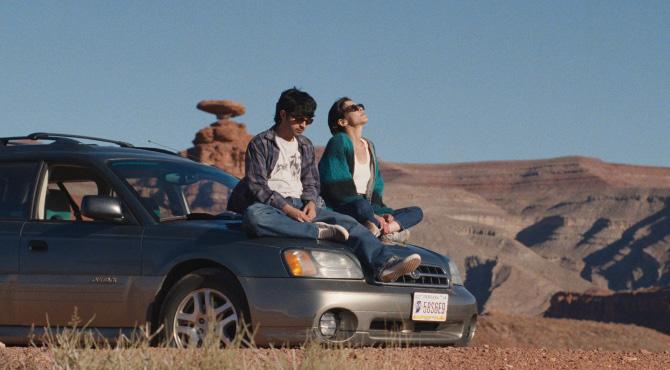
and son as it would naturally unfold — with time. At the center of “Hot Water” lies the relationship between a tired, stressed mother, Layal, and her emotional, slightly problematic son, Daniel. After getting expelled for hitting another student, Daniel is forced to consider staying with his estranged father in California to complete high school. Under the stress of her mother’s declining health and her own strenuous life as a professor, Layal is hesitant to allow this. Ultimately, deciding it’s best for Daniel, she drives him to Colorado to meet her ex-husband halfway. These events and decisions set our characters on a long, chaotic and insightful road trip, exploring the American landscape as well as the two’s roles in each other’s lives. Most importantly, it examines the future of their bond. Our view of Layal and Daniel’s development stretches the entire film, with a few interruptions from other characters offering a life lesson, obstacle or a comedically awkward experience. I would hate to spoil the experience of this sacred and intimate arc any further for those who haven’t seen “Hot Water.” So, all I can say is this film is best described with themes of shared time, familial kinship, harmony, patience, solace, endurance and presence. Beautifully shot and composed, the film consists of lingering silhouetted views, open landscapes and authentic life. Having grown up in Utah, I felt a bit
emotional when they drove through the Western landscape of red rock formations and mountainous deserts. The cinematography’s patience gives each scene room to breathe, creating a sense of fullness that felt resonant. My family has a history of long road trips through this terrain. I couldn’t help but connect with this film in so many ways. “Hot Water” is a thoughtful, intimate journey — a film that holds time so dearly, much like the quiet, tender and occasionally chaotic shared moments it portrays.

Jack Burton is a senior studying graphic design. If you mention cameras or his favorite band, he’ll step right into your conversation without an invitation. He likes to do schoolwork and normal work, or at least, that’s where his time is spent.
By Emma Barker STATESMAN REPORTER
Arobot sat on the floor in Jon M. Huntsman Hall late in the evening. Around it, Utah State University students huddled over laptops, racing to break into the website containing the robot’s controls.
For some students, it was their very first time attempting to hack at all, but that was exactly the point.
The event — hosted by the USU Student Organization of Cybersecurity, or SOC, and led by the USU Baddies of Tech Club, or BOT — aimed to make cybersecurity and hacking accessible to students who might not see themselves in the field. Most had never exploited security vulnerabilities before.
“I felt so intimidated,” said Emma Nebeker, a data analytics senior and BOT leadership member. “In the beginning of the presentation, everyone else was like, ‘Oh yeah,’ but then I was the first one to hack in.”
The collaboration brought together two clubs with a shared mission: SOC’s technical expertise and BOT’s commitment to creating space for students who don’t fit traditional tech stereotypes.
Baddies of Tech, formerly Women in Tech, champions “nontraditional pathways in technology” and works hard to break down barriers in tech spaces, according to its website.
“There’s, like, a big stereotype of the tech-bro guy,” Nebeker said. “If you feel like you don’t fit that role — you
don’t fit the mold you always see — that’s okay. I don’t look like these big tech giants, but that’s okay.”
The club changed its name to Baddies of Tech after Utah legislation required clubs to avoid “exclusive language,” according to House Bill 261, though the club welcomed everyone, even before the change. With the new name, the club continues its mission to make tech accessible to historically overlooked perspectives.
“Another big barrier is just feeling like you don’t know enough,” Nebeker said. “Once you get into it, you’ll realize you know a lot more than you think you know.

There’s always ways to figure it out, and you can always just learn from other people.”
The Jan. 21 robot hacking event put that mission into practice. Students learned about SQL injection vulnerabilities and applied the concepts to hack into robots.
Nebeker had touched on SQL injections in a data class but had never applied the knowledge to hands-on work.
“This one I liked because there was a clear goal,” she said. “Everyone’s working together. It was a really good way to learn more about cybersecurity.”

Emma Barker is double-majoring in journalism and communications and sociology. When she’s not reporting, she enjoys spending time with her dog and husband, thrifting and attempting to keep her sourdough starter alive.
— emma.barker@usu.edu

By Rory McNeill STATESMAN REPORTER
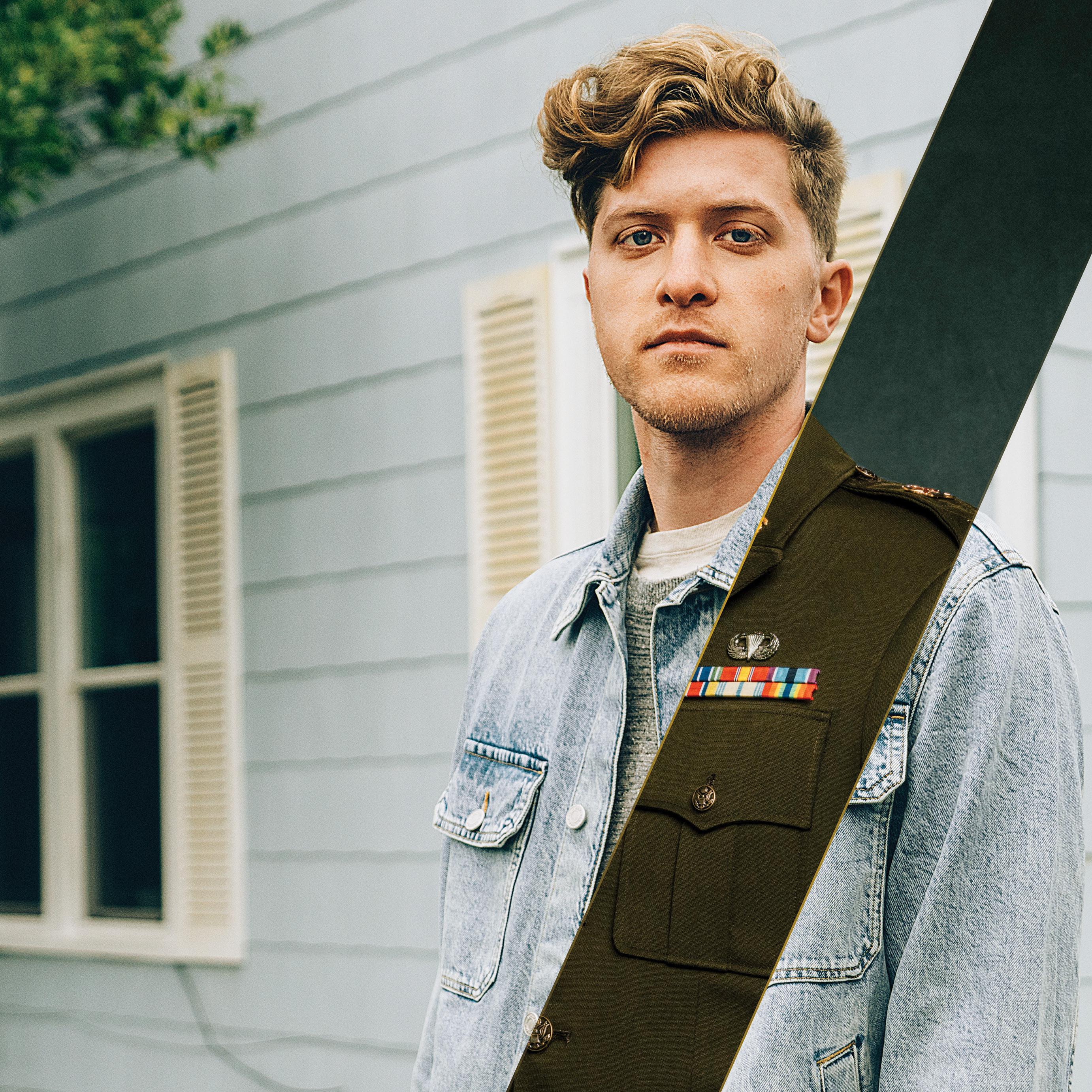
After the Snake River Open meet held in Pocatello, Idaho, Track and Field Aggies came home with nine titles and 21 podiums across all the events. Leading the charge was sophomore sprinter Ayodele Ojo Jr., who broke multiple Utah State University records and positioned himself near the top of the nation in the 60-meter.
At the event, Ojo broke the USU record of 6.61 seconds, set by Nic Bowens in 2014. Posting a time of 6.55, Ojo not only broke the long-standing Aggie record but also landed No. 3 in the nation for the 60-meter. Despite the success, Ojo is still looking to improve on his time and become No. 1 in the nation.
Rodney Burkes, assistant coach and sprints coach for USU Track and Field, said he believes reaching No. 1 in the nation is only a matter of time for Ojo.
“Running the third-fastest time in the country — I mean, he’s stepping into the elite of the elites,” Burkes said. “We’re going to try to win nationals like we’re going to go after it. We’re going to try to come home with the dub and shock the world and put everybody on notice that Utah State and Ojo are here and we belong.”
Despite the success, Ojo admitted at one point, he couldn’t really imagine himself standing where he is right now.
“I started track around middle school. I wasn’t really too involved. I was more focused on football. When I got to high school, I kind of noticed that maybe football isn’t for me. So, around my sophomore, junior year, that’s kind of when I started focusing on track, and in my senior year, I ran number 12 time in the nation,” Ojo said. “Texas is very fast, so 12th wasn’t really getting looked at by teams. I ran a bit late in the season, so I didn’t really get
that many schools looking at me, but, you know, Rodney found me and gave me a chance.”
When Burkes found Ojo, he knew Ojo had the potential to be great if the staff could help him unlock it.
“The time he ran was solid. He ran like 10.4 or something, but the crazy part was that he got fourth in the race, but that’s just Texas. You know, Texas speed is just different. But when I was watching him, he got out the blocks kind of late, but the way he accelerated and started running the field — I knew that this kid had some wheels and something in there, and the kids that he lost to were some really, really elite kids, so he stood out,” Burkes said. “That’s when I thought, ‘Alright, so we got that guy that’s kind of under the radar, but he’s going at the top kids with confidence. That’s the type of guy that we need.’”
Before Burkes found him, Ojo had been considering moving on from track and athletics entirely.
“I was planning on going to the military by my second semester of high school. My senior year, I already had the papers filled out around two weeks before I ran my fastest time in high school,” Ojo said. “I was at the office doing my fingerprints, and the recruiter looked at me and asked, ‘Hey, do you really want to do this?’ and I told him I wasn’t sure, so he told me to come back in a few weeks to see how I felt. I took that as an opportunity, and two weeks later, I ran the fastest time. From there, Rodney gave me a chance, and I took it automatically.”
Ojo’s arrival at USU was only the beginning of his journey, according to Burkes.
“I didn’t think he was going to make it. Last year, his freshman year, he was quitting workouts. He was dying. He just couldn’t finish it. His teammates were like, ‘What’s going on here?’ It was just an adjustment for him, but he came back,” Burkes said. “I had to learn Ojo during the workouts at the beginning of the season. Now he’s killing it. So, you can just see his athleticism, his maturity and just his strength and stamina are just through the roof now.”
From Burkes’ perspective, Ojo hasn’t only grown as an athlete but as a leader as well, helping support and motivate his teammates.
“If I’m helping somebody at hurdles or something, for example, I can turn around and look over, and then he’s teaching somebody how to get out of the block. He’s sharing with them something that he and I worked on that can help his teammates,” Burkes said. “He’ll share about his mindset so that he can set up his race better and help others. He’s definitely taking a leadership role with everybody: his brothers, little brother and sisters.”
All of these adjustments and changes helped Ojo find his passion and purpose for track, ultimately helping him to push to reach the highest level possible.
“My purpose is to win — just win. Everything that I do, no matter the cost, I will do whatever it takes just to win. There’s no certain time or goal I’m looking for,” Ojo said. “All I want to do is be number one. I want to be at the top,

and I don’t care who you are — if you’re in front of me, I’m going to catch up to you.”
Both Ojo and Burkes believe becoming No. 1 is a possibility this season. Their goal is to focus on perfecting Ojo’s craft rather than chasing the number.
“We always talk about chasing execution, not time. Sometimes when you chase time, you get disappointed. Sometimes you get too high, you reach the time and you get comfortable,” Burkes said. “We just want to execute and run the best race that we can and see where that take us.”
Ojo said his chase of excellence not only drives him on the track but also pushes him in all aspects of his life.
“My whole goal coming to college was to be great in everything that I do. Even beyond track, anything that I do in my life is just ‘be great,’” Ojo said. “That mindset is what helps me to keep going.”
With the 2026 season in its early stages, both Ojo and Burkes have high hopes for what they will accomplish, with their eyes set on the top of the nation.

Rory McNeill is a sophomore from Rocklin, California studying mechanical engineering. He loves Aggie sports, skiing, golf and writing music.
— rory.mcneill@usu.edu
By Dylan Moore STATESMAN REPORTER
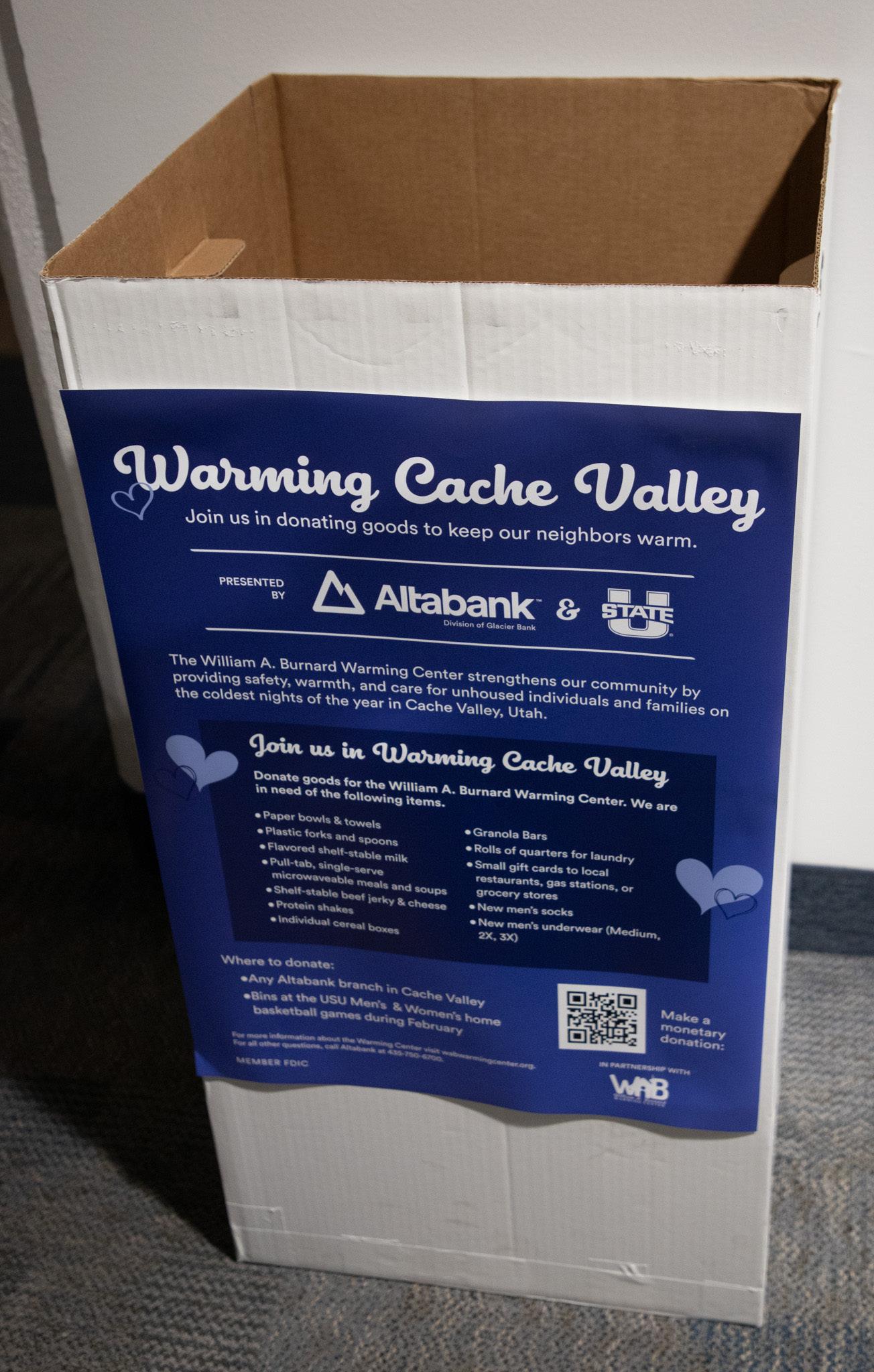
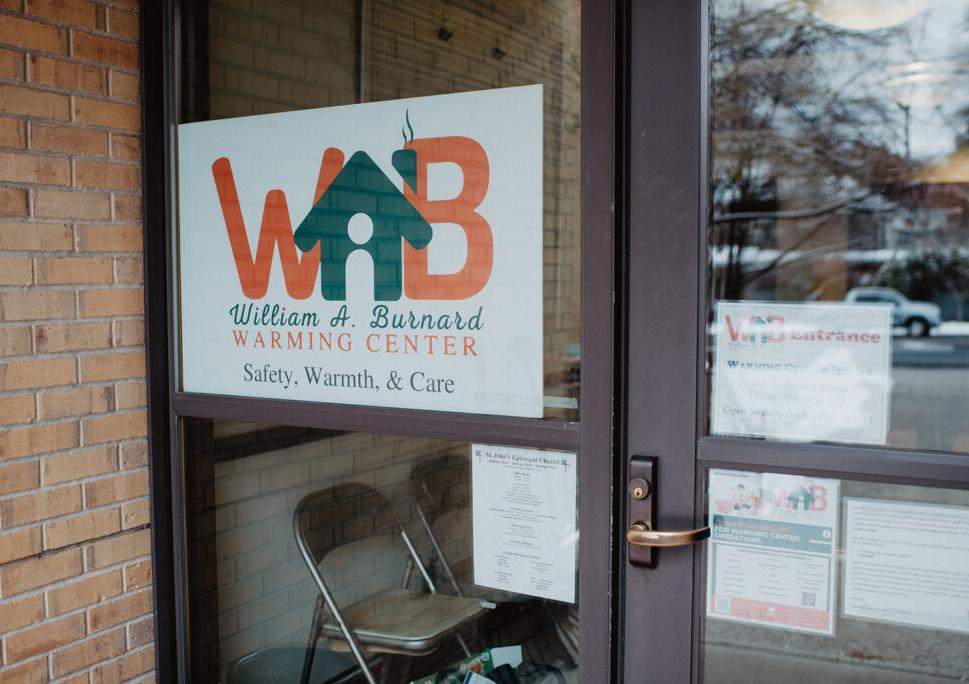
Utah State University Athletics has partnered with Altabank to host a winter goods drive benefiting the William A. Burnard Warming Center, using athletic events in the Dee Glen Smith Spectrum as collection points for community donations.
The drive, now in its third year, runs through the end of February and encourages fans attending games to bring essential items for unhoused individuals in Cache Valley. Donation bins are placed throughout the concourse during home sporting events, making it easy for spectators to contribute while attending games. The partnership grew out of a shared interest in connecting athletic events with community service. Katie Hansen, retail area manager for Altabank in Cache Valley, said the bank and USU Athletics wanted to create a consistent way to support local organizations.
“As part of our partnership with Aggie sports, we really wanted a community component to it,” Hansen said. “This was the warming center. We thought they’re a
newer nonprofit and that they could use some exposure and support.”
Rather than focusing solely on food, organizers collect a variety of items based on the warming center’s needs each year. For this season, donations include paper bowls, high-protein snacks, shelf-stable food and quarters for laundry services.
“Each year, it’s a little bit different,” Hansen said. “This year, it’s paper bowls, individual snacks and things they can easily hand out to guests.”
In addition to physical donations, fans can make monetary contributions by scanning QR codes displayed on the video board during games. Representatives from the warming center are also present at select events to answer questions and accept items directly.
Tyler Thompson, general manager for Aggie Sports Properties, said USU Athletics uses its platform to support both corporate partners and local causes.
“We work with a number of businesses around town,” Thompson said. “At the same time, we want to utilize our reach to give back to local charities and provide as much exposure as we can.”
Thompson said the Spectrum provides a central location where large numbers of people can be reached in a short period of time.
“If you’re attending a game, there are bins placed along the concourse,” Thompson said. “There are also video board elements and QR codes so people can donate however they’re comfortable.”
The goods drive is one of several community-focused initiatives tied to the Altabank and USU partnership. In the fall, the two organizations also collaborate on “Stuff the Truck,” which benefits the Cache Community Food Pantry.
Hansen said the goal is to provide consistent support throughout the year.
“We try to do something in the fall and in the winter that gives back to the community,” she said. “This is our third year doing the warming center drive, and it gets better every year.”
Heather Crockett, executive director of the warming center, said the partnership has been valuable both financially and logistically.
“What Altabank has done for us is twofold,” Crockett said. “They gave us a cash donation, and they’ve helped us collect goods at the games. Both of those are incredibly important for us.”
The warming center operates from late November through mid-April and provides overnight shelter, meals and basic services for individuals in need. Crockett said the center serves between 35 and 40 guests each night.
“Having shelf-stable food and quarters for laundry makes a big difference,” she said. “We go through a lot of food very quickly, so those donations help us keep up.”
Crockett also emphasized the importance of student involvement in keeping the center running.
“We do not function without the students at USU,” she said. “When students went home for Christmas, it was really hard to fill those volunteer shifts.”
Both Hansen and Thompson said the success of the drive depends on community participation.
“The more people we can get involved, the better it is for our community,” Hansen said. “Right now, the warming center is full most nights, and they need our help.”
With multiple home basketball, gymnastics and other athletic events scheduled through February, organizers hope attendance will continue to translate into donations.
Thompson said the partnership reflects how athletics can extend its impact beyond competition.
“At the end of the day, this is about using what we have to help people in our community,” he said. “If we can make it easier for fans to give, then we’re doing something right.”

Dylan Moore is a junior majoring in political science and minoring in anticipatory intelligence and Russian. He always loves going on outdoor adventures and cooking.
— dylan.moore@usu.edu

By Rory McNeill STATESMAN REPORTER
While every sport has aspects to its game that are repeatable processes, possibly the most common and repeated process of them all is free throws. For example, in the 2025-26 NBA season, teams are taking, on average, 24 free-throw attempts per game. In general, these are often the shots with the highest probability to go in, making them an extremely important aspect to a team’s success. To learn more about the processes players take in their free-throw routines, I met with Sophie Sene on the Utah State University Women’s Basketball team to learn about her process. Sene, who plays forward and center for the Aggies, currently has an 85.3% free-throw percentage while averaging two attempts per game. Sene currently leads the Aggies in free-throw percentage among those who have attempted 15 or more free throws on the season. To preface this, I would consider myself an average athletic male, but I was unfortunately cut from the seventh-grade basketball team, so it’s safe to say basketball isn’t my strength. With that being said, I do play basketball at the gym with my friends fairly regularly, so I do have at least a fair understanding of how everything works.
“Basically, I walk up to the line and make sure I’m square to the rim, take a deep breath, spin the ball, take two dribbles and shoot,” Sene said. I figured that seemed simple enough, so I gave it a try. I approached the line, lined myself up with the rim, took a
deep breath, gave the ball a quick spin and two dribbles, and then I took my shot. I suppose I may have been a little too focused on the routine and not the shot itself, because upon leaving my hand, it was clear the ball was not making it to the rim. An airball at the free-throw line is likely the biggest fear of every basketball player, but after a few laughs, I tried again.
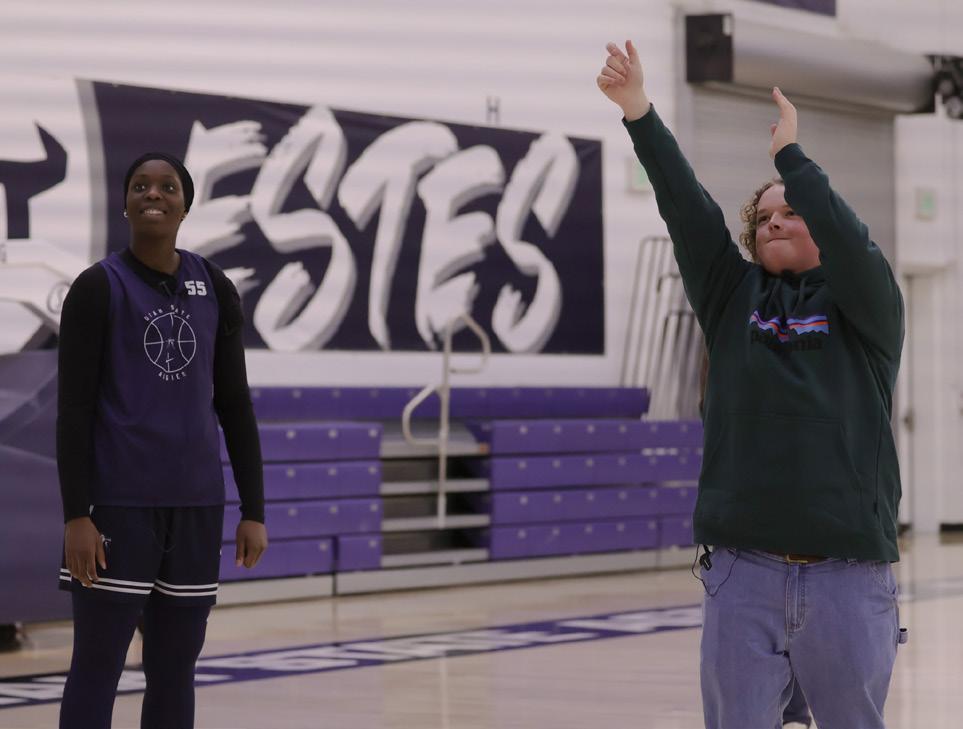
was squarely underneath the ball, not off to the side or on the back. She also advised I use my legs more to help get some power on my shot.
After these adjustments, I then went through my routine again. Line up, deep breath, spin, two dribbles and shoot. While my second attempt was an improvement — I at least hit the rim this time — I still missed my shot.
I once again followed the steps of Sene’s routine, and at last, the ball found its way through the rim. Unfortunately, my 33% free-throw percentage is not going to have any college scouts recruiting me to their programs, but at least I proved I could make a free throw.
While the routine seems simple, each player’s individual process is essential to their success. While I was simply shooting around a gym, most players are faced with loud crowds, exhaustion and pressure to perform, all adding to the stress and difficulty of their free throws.
Despite my new free-throw routine, if put in a position with the game at risk, you’d probably want someone other than me at the line.

I asked Sene if she had any specific place on the ball she liked to put her hand, such as a certain seam or panel. She explained she liked to make sure her hand

By Jayke Martin STATESMAN REPORTER
While most Utah State University students were sleeping, a small group planned to spend an entire day walking nonstop from Logan toward Preston, Idaho, starting at 3 p.m. Jan. 30 and ending at 3 p.m. Jan. 31.
The 24-hour walk was organized by USU senior Austin Steinkamp, a wildlife ecology major who has spent much of his life walking long distances. Although informal, the event required a great deal of endurance and drew interest from other students eager to test their limits.
“I’ve always loved walking,” Steinkamp said. “I feel like when I’m walking, I can remove the distractions and strip my mind down to the bare necessities.”
Steinkamp said the walk was not his first experience with extreme distances. He recently completed a 24-hour walk on his own, covering far more ground than he expected.
“I actually did it last weekend,” Steinkamp said. “I’ve been walking my entire life, but I’ve never done a 24-hour walk until recently. And yeah, I ended up doing 66 miles. I surprised myself.”
For Steinkamp, walking is not about speed or traditional training.
“This isn’t, like, an exercise thing,” Steinkamp said. “Walking, to me, is my happy place.”
The route headed north toward Idaho, largely along roads and highways. Steinkamp said much of the walking occurred overnight.
“When you’re out there at, like, 3 a.m. in the middle of the dark, it’s so incredibly simple,” Steinkamp said. “It’s refreshing, it’s energizing, it’s cold. It’s very cold.”
To prepare, Steinkamp said he relies on layers, food and water.
“A lot of coats, a lot of layers, thermals, and then food and water, lots of food, probably two days’ worth of food in this single day,” Steinkamp said.
Steinkamp hoped to make the experience communal by inviting others to join him. Though he did not expect much interest, several students reached out.
“I was expecting nothing at all,” Steinkamp said. “I’m really just curious to see if there’s anyone else out there who shares this idea.”
One of those students is Callum Olmer, a senior studying nutrition science, who said
he contacted Steinkamp after seeing a flyer advertising the walk.
“I’m very big into my cardio,” Olmer said. “I do a lot of endurance running. The idea of ultra-marathons always fascinated me. I was actually planning on walking for 24 hours straight at some point just to see if I could.”
Olmer said seeing the flyer confirmed others shared his interest.
“When I saw the poster, I was like, ‘There’s someone as crazy as me out there,’” Olmer said. “‘I should definitely do it with them.’”
Unlike Steinkamp, Olmer approached the walk with a performance mindset and started planning his nutrition carefully ahead of time.
“I’m trying to talk to some of my nutrition professors about the best snacks for endurance,” Olmer said.
“You’re going to need [3,000] to 5,000 calories because you’re burning up so many calories.”
Olmer said preparation is essential to avoid hitting a physical limit.
“If you run out of your sugar stores, glycogen, you’re cooked,” he said. “You’re not going to be able to walk any farther.”
Both participants said the mental challenge was just as demanding as the physical one, preferring to focus on their own thoughts rather than listening to music.
“I don’t want my performance to dwindle if I’m in a place without music,”
Olmer said. “So, I just, like, do that as kind of the baseline.”




















Each year, students gather around a table located on campus filled to the brim with handmade mugs as the Valentines Day season approaches. Each mug on the table carefully crafted by one of the talented Ceramics Guild members, representing just how alive Utah State’s Ceramics program is. As this season approaches, we invite you to take a look into the Ceramics Guild at Utah State, a program that fosters and supports undergraduates getting through their art degrees, BFA’s wanting to hone their skills and graduates mastering the craft.
The Ceramics Guild is a special section of the Ceramics program with a long running tradition where students promote the art of ceramics through annual sales and events, such as the Mug Sale every February. Every fall the Guild kicks off the season with the Annual Chili Bowl Sale, a sale that includes a bowl of chili with a purchase of a handmade bowl. These sales directly benefit the students within the Guild as they raise money to help attend
the National Council on Education for the Ceramic Arts (NCECA), an annual ceramics conference, to make improvements to the shared studio spaces, and to fund visiting artists and workshops. At the end of each semester, the studio also opens its doors to the public during our Holiday and Spring sales, where students sell the work they created throughout the previous semester.
These events have helped foster a deep connection with the Logan community and a close-knit community of artists within the university.
This year, join us in the fun and potentially find the perfect gift for you or your Valentine. The Guild can’t wait to see you there.
Abigail Bradley is a ceramics student in her second year of the program. She is currently the vice president of the Ceramics Guild.
— abigail.bradley@usu.edu

Last week’s solution:

Sudoku puzzles are provided by www.sudokuoftheday.com.