














Dan PRZYBYLSKI Heather ANDERSON

Sales/ClassifiedsCirculation (250)784-4319handerson@farmmedia.com dcsales@glaciermedia.ca
Pleasedirectallaccountinginquiriestoap@farmmedia.com
THENORTHERNHORIZON (PublishedbyGlacierFarmMedia)1666DublinAve, Winnipeg,ManitobaR3H0H1
TheNorthernHorizonretainsfull,completeandsolecopyrightofanyadvertisement, writtenorphotographicmaterialpublishedintheNorthernHorizon.Reproduction isnotpermittedwithoutthewrittenpermissionoftheNorthernHorizon. AllcontributedmaterialwillbeincludedintheNorthernHorizonasspacepermits. Wereservetherighttoeditorre-writeanyaspectofcontributedcopytomakeit suitableforpublishing.
OURNEXTISSUE:FRIDAY,FEBRUARY 13TH,2026
REGULARADDEADLINES:
Bookingdeadlineforregulardisplay ads: Noonon WEDNESDAY,FEBRUARY4TH,2026
Admaterialdeadline: Noonon FRIDAY,FEBRUARY6TH,2026
CLASSIFIEDADDEADLINE:
AnysubmissionsforClassifiedAdsshouldbemadetoDanPrzybylski byphoneat(250)784-4319oremailatdcsales@glaciermedia.ca
Allclassifiedadsubmissionsmustbereceived by theNorther nHorizon by10:00a.m.(BCtime)on FRIDAY,FEBRUARY6TH,2026
SUBSCRIPTIONS
SubscriptionstotheNorthern Horizonareavailablebycontacting DanPrzybylski by phoneat(250)784-4319oremailat dcsales@glaciermedia.caorHeatherAndersonbyemailat heather@fbcpublishing.com
Theannualsubscriptionrateis$150.00(GSTincluded)withfullpayment dueattimeofsubscription



To Canada Post, your Mailbox orSuperboxis designatedinoneof four ways -House,Apartment, FarmorBusiness.
Justheaddown to your localpostoffice andask your Postmaster to have yourMailbox/Superbox designatedasa“Farm”.
Youshouldstart receiving your copy oftheHorizon withina coupleof weeks.
98907416JAN26







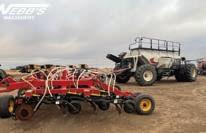
$279,000
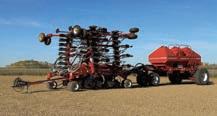
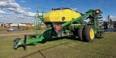
2013BOURGAULT3320-76 QDA/7950
76’X10”,DS,MRBIII’S,QDA 4.5” Round Packers,FullSeedsingleFert Blockage,X30,ASC,Cameras,Dual Fan, 4TankPlusSaddle,Conveyor, Duals,SurgeBrake,Scales




Stk#20327 2024BuhlerFarmKingC4560B $5,750 Stk#20323
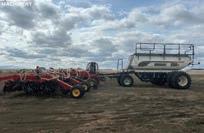
$159,000
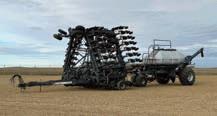
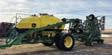
2012BOURGAULT3320-60XTC/ 20116550STAIRCART &TANK 60’X10”,MRBIII’S, VStyle Packers, 4 TankMetering,AuxClutches, 591Monitor, Deluxe Auger, Rear 650/75R34Duals.
Stock#20994-2



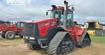

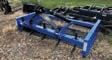


$639,000
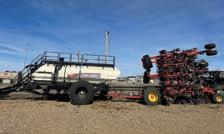
2022BOURGAULT3330-66HF/ L9950AIRSEEDER &TANK
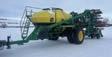
66x10”,HF, DS,MRBIII’s,3/4” Tips,PLXOpeners,FullRunAgtron Blockage -8”Tablet,950Bushel, Scales,Saddletank,Conveyorwas neverused, 2HCFans,Airguardon FertilizerwithSnorkel, X35Monitor, 8RunSectional Control,Duals
Stock#22281-1
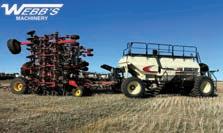
$629,000
2020BOURGAULT3320-76/71300 AIRSEEDER &TANK
76’ x10”,DS,XTC,MRBlll’sw/ RetainingWheel,4.5” V-Style Packers,3/4”Openers, 5Tank Metering,Saddle Tank, Conveyor, X35ASC, SurgeBrake/Conveyor,








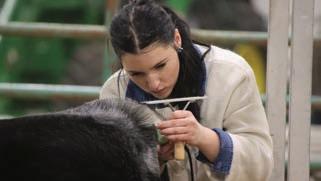

www.cattle.ca, January 19, 2026
The Canadian Cattle Association (CCA) welcomes the news that Canadian beef access to China has been restored after being wrongfully shut out in 2021. We will continue to work with government officials and industry stakeholders to learn more details, including potential safeguard measures.
In addition, CCA was encouraged to see Prime Minister Carney placing a high priority on Canadian export-driven agriculture as an economic driver for Canada and our trade diversification goals.
“We are pleased to see renewed access into China, one of the largest export markets for beef. Every market matters to Canadian beef farmers and ranchers; it supports our industry’s resilience and growth,” said CCA President Tyler Fulton. “Canadian beef continues to be sought after because it is among the highest quality beef in the world and we appreciate the advocacy of both Prime Minister Carney and our Minister of Agriculture, Heath MacDonald.”
As Canada continues to discuss trade diversification strategies, CCA will continue to stand up for Canadian beef producers, advocating to remove non-tariff barriers in existing markets and working with the government on new free trade agreements to ensure they present significant market opportunities for our sector. This welcomed news reinforces CCA’s trade advocacy at home and abroad.
CCA’s top priority remains strengthening existing trading relationships with trusted trading partners who follow international rules-based trade. “We remain committed to expanding market access for Canadian beef and securing the best trade deals for Canadian beef farmers and ranchers. We look forward to continuing to work with the Government of Canada in pursuing new markets and removing non-tariff and tariff barriers to Canadian beef,” said Fulton.
For close to five years, Canadian beef has not been exported to China. In December 2021, China halted all exports of Canadian beef due to Canada’s atypical case of BSE. Prior to the halt in trade, Canadian beef saw continued growth into the Chinese market. NH

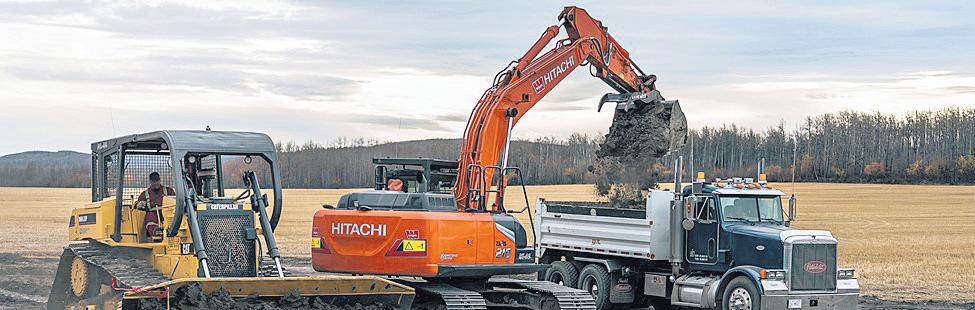

Submitted by Art Seidl, Secretary for the South Peace Stockmen’s Association
The Annual General Meeting of the South Peace River Stockmen’s Association was held on November 26th, 2025, at Fixx Urban Grill Banquet room in Dawson Creek. Approximately 56 members and 8 guests attended the event commencing with member registrations. President Judy Madden welcomed everyone to the meeting and proceeded to introduce our guests. Special recognition goes to our AGM sponsors including Fixx Urban Grill, DC Vet Clinic, Northline Equipment, Dawson Co-op, VJV Auction and Schweitzer Ranch for the door prizes.
Brenna Schilds with the Ministry of Agriculture gave a short presentation on the BC Peace Agriculture Fund and funding availability for agricultural projects on the farm (water storage, agribusiness incentives, natural disaster recovery programs etc.).
PRRD Electoral Area “D” Director Leonard Hiebert informed the membership of a vacant position on the ten-member board for the BC Peace Agriculture Fund. Our next speaker was Jordan Barrett from NDIT, the administrator of the aforementioned fund. Jordan gave a brief background history of the fund and information on the amount of funding each applicant is eligible for and how frequent an application can be made. The “fund” only accesses the interest generated each year and the principle remains untouched. About 120 applications have been made to date on a wide variety of agriculture related projects in the Peace.
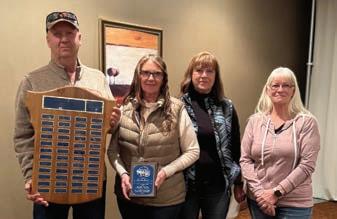
The last item on the agenda before supper was the SP Stockmen’s Honor Roll presentation. This award goes to a BCCA SP member who exemplifies ranching and has provided significant contributions to the cattle industry. Judy Madden and Bev Wilson had the honor of presenting the award to Tom & Lori Krantz (L-T Ranch) of Tomslake B.C. This deserving ranching couple has had a very busy 43 years promoting their ranch herd, their family and their community.
After a delicious roast beef supper (what else) served up by the Staff of Fixx Urban Grill, Judy Madden called the AGM to order. The agenda, the minutes, committee reports, and financial report were circulated to the membership in accordance with proper procedure and dealt with appropriately. BCCA vice-president Alex Kulchar, our guest speaker, was called upon to give the latest information coming from the BCCA office. Problems facing ranchers throughout BC appear to be the same with only slightly different circumstances: overpopulations of elk, ALR restrictions, Right-of-way concerns, grazing tenures on crown land, on-farm water storage regulations and the list goes on. But through working together these problems can be overcome, not always to our complete satisfaction but we can always strive for better results.
Next guest speaker, BCCA President Werner Stump kept his presentation to a few key issues. One of the topics he addressed was the recent indigenous land claim issues that have sparked the interest of ranchers throughout B.C. The Haida Gwaii, Kamloops and Richmond land claims have been in the news and leave one to ask what is next? Crown grazing tenures? Werner encouraged all BCCA member to take an active part in highlighting issues that affect future farming and ranching and the viability of the family farm in B.C. Virtual townhall meetings hosted by BCCA provide members an opportunity to collectively discuss situations that are occurring around us and call for a consistent approach when attempting to resolve them. DRIPA and its guidelines need to be more adaptable for B.C. was another message delivered by Werner.
Following the President’s address the remaining committee reports were presented which then led to the election of directors. Leonard Hiebert chaired this portion of the meeting. Incumbents Judy Madden, Kristina Schweitzer, Glyn Evans and Chance Wiebe all allowed to let their names stand for re-election and were subsequently re-elected by acclamation. Donald Dunbar, Brian Stratuliak, Scott White, Fred Schneider and Chet Jans have one more year on their term. Scott White was elected President at the post AGM executive meeting.
Julie Robinson with the Ministry of Forests recounted some of the same problems her department is facing within the range branch. Something newer up here on the “range” is the concept of virtual fencing and some pilot projects that have been undertaken by individual ranchers in the North Peace. The last word went to Dennis Wilson of DB Trucking thanking local farmers and ranchers for their patronage over the many years of hauling livestock. As he put it “ I shoveled out my last liner”. Wishing you a well-earned retirement, Dennis. This concluded the evening’s meeting.
The South Peace Stockmen’s Association wish to thank the following businesses for their sponsorship of our Annual General Meeting: Fixx Urban Grill, Dawson Creek Veterinary Clinic, Dawson Co-op, Northline Equipment, VJV Livestock Marketing, and Schweitzer Ranch. Your support for our beef industry is appreciated by our local farmers and ranchers. NH


BirchHillsGasCo-opLtd., am emberownedruralnaturalgasdistributionutility establishedin1973,isseeking adedicated andexperiencedManagertooverseethe dailyoperationsofou ro rganization.
W ep roudlyservethesurrounding communitiesbyproviding asafe,reliable supplyofnaturalgastoourmembersand customers.
POSITIONOVERVIEW
TheManagerisresponsible for the leadership,operation,andmaintenanceof thenaturalgasdistributionsystem.Key responsibilitiesinclude:
•L eading,supervising,hiring,and training staff while fostering aculture ofintegrity,a nd ap ositive,teamorientedworkenvironment
•P reparingandmanagingannual budgets,projectestimates, andlongterminfrastructureplans
•Maintainingaccurate financial records andoverseeinginternalcontrols
•E nsuringcompliancewithal l applicablelegislation,regulations, andindustr ystandards
•S upportingtheBoardofDirectors through effective communicationand operationalreporting
QUALIFICATIONS &EXPERIENCE
Theidealcandidatewillbring:
•HighSchooldiplomaorequivalent
•S trong in terpersona la nd communicationskills
•ProficiencywithMicrosoft Wordand Excel;experiencewithSage50and GasManisanasset
•P reviousmanagerialexperience, includingbudgetingand staff supervision
•A bilitytointerpretandappl yt he
RuralUtilitie sA ctandassociated regulations
•MinimumClass 5driver’slicencewith acleandriver’s abstract;willingness toobtainClass 3anasset
• Background in oi l& ga so ru tility operations, w ithsolidknowledge ofpipeline co nstructio na ndAM R systems
•ValidH2SAlive,StandardFirstAid, andTDGcertifications
• Basi cu nderstandingofAlbert a LabourStandards
•WillingnesstocompletetheFedGas NewManager TrainingProgramand obtain aP olyethy len eP ip eF usion
JoiningCertificateanasset
•M echanicalaptitudeandstrong troubleshootingabilities
•Abilitytoworkcollaborativelywitha BoardofDirectors
WHATBIRCHHILLSGASCO-OPOFFERS
•Competitivesalary
•Comprehensivebenefitsandpension package
•O ngoingtrainingand professi onal development
•A re s pe c tful, integrity-driven workplaceculture
•Theopportunitytoworkin ascenic ruralcommunity
Pleas ef or wardyou rc ov erle tter an d r és um ét o care er s@birchhillsgas.ca . Deadlineis Februar y12,2026 oruntila suitablecandidatehasbeenselected.
Formoreinfo r matio nc al lt heBoard Chair,MauriceLemay,@ 780-814-4285,or Vice-Chair,DerekDreger,@780-814-0841. We thankallapplicantsfortheirinterest; however,o nlythoseselectedfo ra n interviewwillbecontacted.






Edmonton, Alberta, December 29, 2025
RDAR (Results Driven Agriculture Research) is pleased to announce a major investment of $2,137,650 in Western Crop Innovations (WCI), supporting the next phase of feed and forage crop breeding for Alberta’s agriculture sector. This decision reflects RDAR’s commitment to advancing innovation, sustainability, and producer value in Western Canadian agriculture. The funds are drawn from the Strategic Research and Development Program that RDAR manages on behalf of the Government of Alberta.
The approved funding will enable WCI to accelerate the development of high-performing feed and forage barley and triticale varieties, supporting Alberta’s livestock and cropping sectors with resilient, high-yielding, and quality-focused options. This investment aligns with RDAR’s vision to foster a competitive and sustainable agriculture industry by supporting research that delivers tangible benefits to producers and the broader value chain.
In addition to the funding decision, the RDAR Board has determined that a thirdparty, independent scientific review of WCI’s assets and breeding program will be conducted. This review, to be led by recognized experts in crop breeding and program modernization, will assess WCI’s scientific leadership, infrastructure, breeding methodologies, and partnerships. The findings will inform a modernization action plan, ensuring WCI is positioned as a Centre of Excellence for feed and forage crop breeding in Western Canada.
“Agriculture is a core sector of Alberta’s economy and our government continues to support investments that will drive further innovation in crop development. This strategic and significant investment by RDAR directly benefits our farmers and ranchers while positioning Alberta as a world-class leader in the development of high-quality feed and forage varieties that are critical to the sustainability and growth of our agriculture sector.” Hon. RJ Sigurdson, Minister of Agriculture and Irrigation, Government of Alberta
“This investment demonstrates RDAR’s commitment to supporting innovation and modernization in Alberta’s crop breeding sector. By engaging independent experts and working closely with WCI, we are ensuring that our producers have access to world-class feed and forage varieties that meet the evolving needs of the industry.” Dr. David Chalack, RDAR Board Chair.
“WCI’s transformation into a not-for-profit, industry-partnered breeding centre marks a new era for crop innovation in Alberta. RDAR’s support will help us deliver greater value to producers and position Alberta as a leader in feed and forage crop development.” Trevor Sears, Executive Director, Western Crop Innovations. NH


CFO News, January 8, 2026
The NRCB is seeing a concerning trend: unauthorized construction at confined feeding operations has increased significantly. Complaints have increased by approximately 32% from 2024, and enforcement actions have jumped by about 125%.
Under Alberta’s Agricultural Operation Practices Act (AOPA), it is illegal to begin construction of a confined feeding operation, manure storage facility (such as an earthen manure storage or manure lagoon), or a manure collection area (such as a barn floor, feedlot pen, or catch basin) without first obtaining the required NRCB permits.
Constructing before your permit application has been approved or building something different than stated in your permit are both also considered unauthorized construction.
Constructing without a permit is a serious offence. Consequences can include:
• enforcement orders
• prosecution
• additional costs, such as depopulating livestock from unpermitted facilities. Financial institutions are also asking for NRCB documentation before approving financing. If you have started building before getting a permit from the NRCB your financing may be delayed or denied.
The NRCB wants to help you avoid these consequences—consult with an NRCB approval officer or inspector before starting any construction.
NRCB Field Offices:
• Morinville: 780-939-1212
• Red Deer/Airdrie: 403-340-5241
• Lethbridge: 403-381-5166




Brian Offert and the rest of the staff at DeBolt Ag Ltd in Crooked Creek will be hosting the professionals from AgriGro West at a seminar to be held Monday, February 23rd at the Pomeroy Hotel and Conference Center in Grande Prairie.
The seminar will help area producers how to easily shift input dollars and leverage simple, effective practices to decrease inputs and increase profitability. The bottom line for the seminar is to show growers that crop production should be profitable, and that is what they show growers how to achieve.
Speakers at this seminar include

Ross Nielson
AgriGro Western U.S. Business Development
Meeting Introduction and Benefits of a Biologically Active Soil
Ross lives in eastern Idaho and has been with AgriGro for the past 12 years. He works with agronomists, growers and Ag. retailers, establishing relationships and the use of AgriGro’s Prebiotic technology. Ross will dive into different aspects of what contributes to soil health and the huge impact AgriGro’s Prebiotic technology has on crop production efficiencies.
He has a BSc degree in Agronomy from Brigham Young University-Idaho. He and his wife Heidi have been married for 19 years. They have three girls and one boy that keep them busy.

Brett Hale
Ph.D Molecular Bioscience | AgriGro Head of Research and Development
Leveraging Soil Biology with AgriGro Prebiotics.
Brett will identify specific species and strains of microbiology, native to your soil and how AgriGro technology manipulates



SpecializinginMicro-Nutrients
Products: •Micro-Mix
them to release specific tied-up nutrients on your farm. With a research background in molecular plant-microbe interactions, Brett holds Ph.D. and M.Sc. degrees in Molecular Bioscience, and a B.Sc. in Plant Science.
Brett has additional university accreditation in Crop Consulting & Agronomic Services, Biology, and Spatial Technologies & Geographic Information Systems. In addition, he has published numerous peer-reviewed publications in internationally recognized scientific journals and serves on the editorial boards of Frontiers in Plant Science and In Vitro Cellular & Developmental Biology – Plant.

Grant Briggs
Independent crop consultant/owner: Element Cropping Systems-Central Montana
Agriculture trends, influencers, and how Dad did it, how do we know what to do that’s best for our farm?
He will also report his 5th year observations of using AgriGro with his customers. Grant works with growers across Montana and throughout the U.S. with crop production, grain contracting, and input purchasing. He has a Bachelor’s degree in Agriculture Operations from MSU Northern, and is a Certified Crop Adviser, and serves on the Rocky Mountain Certified Crop Advisors Board of Directors. Grant, his wife, and his three kids live north of Great Falls, MT and he is an avid outdoorsman and enjoys spending time with his family.

Landry May
Independent Agronomist - Big Sky Roots Agronomy | B.Sc. Plant Production and Protection
Landry will be sharing data from 2025 research trials using AgriGro on different farms in MT and WY. Landry was born and raised in Kalispell MT where she found her passion for





agriculture by riding in the buddy seat of her father’s combine. Landry studied soil microbiology and plant health at Sheridan College and the University of Wyoming. She has worked in various parts of MT, ID, and WY scouting crops, researching soil, and interacting with producers. Developmental Biology – Plant.

Tryg Koch
Producer: Flathead Valley and Chester, MT |
Past President of Montana Grain Growers
From Soil Health to Fertilizer Savings…What I’ve seen for over 10 years using AgriGro on our farm and in trials. For Tryg it is all about ROI. As he has been using AgriGro’s technology for close to 10 years, he will share his financial gains on both the input and yield side of his operation that anyone can duplicate. His approach creates a healthier soil environment and keeps more money in his pocket. Tryg started farming with nothing, he leases 2,400 acres and works with over 50 landowners. In Tryg’s world, the tools he employs on the farm must work quickly.

Nathan Keane
Producer: Loma, MT | Current Treasurer of National Association of Wheat Growers | Past President Montana
Grain Growers Association
Soil Health from a Growers Perspective
Nathan will discuss the importance he places on soil health and what that means to him and his perspective on how it impacts his operation. Nathan grew up in the suburbs of St. Paul, MN married a farmer’s daughter and has farmed with his father-in-law, Kerry Upham, on a 4th generation homestead near Loma, Montana. With a bachelor’s degree in Businessfrom the University of Northwestern in Saint Paul and a background in sales, Nathan brings this experience to the family farm as it has transitioned from primarily winter and spring wheat crops to growing a host of alternative crops. He and his wife, Dianna, have three young children. In his free time, he enjoys snowmobiling, hunting, fishing, and playing music. NH


Producers!




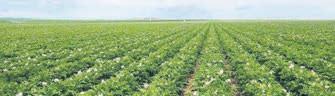
TheProblem...YourProfitMarginsAreShrinking...Now What? ...whenit comes tofarmProfitability,statusquocropproductionpractices aren'tgettingitdone.Likewithany industry, thosewhodon'tlearnandadapt may findthemselves struggling to stay competitive...so, what'sthesolution?



TheSolutionisallabout Leverage... Leverageisaboutmaximizing yourimpact (inthiscase,yourprofitability)with certainresourcesyoualreadyhave unfortu-natelymostproducersdon'tfocusonthisareaofproductionand leave them-selvesopen to morevariabilityandinconsistency yearafteryear. As aleadingpioneerinthesoilhealthspace, withcloseto50yearsin existence, comelearnandtakehome aneglectedpractice thatisaprovenand tangibleway to bemoreconsistentlyprofitablein your farmingoperation.






PLEASE RECYCLE THIS NEWSPAPER
Scientists do a deep dive into molecular biomarkers of sperm with protein synthesis to solve problems across species
Greg Price, Glacier FarmMedia
Joint research between the universities of Calgary and Lethbridge has unlocked a new understanding of sperm function, opening up possibilities for fertility in the cattle industry.
There has been a long-standing scientific belief for the past 50 years that sperm was in a dormant state during capacitation, using existing proteins.



However, Nehal Thakor, a molecular biologist in the University of Lethbridge’s biological sciences department, Jacob Thundathil, a reproductive physiologist and veterinarian in University of Calgary’s Faculty of Veterinary Medicine, and University of Calgary PhD student Saurabh Tiwari discovered in a transdisciplinary study that mRNA translation is activated, and new proteins are made, using bovine sperm samples in their labs.
WHY IT MATTERS:
Unlocking greater knowledge of male infertility across species will aid productivity, including giving women a greater chance to conceive.
Veterinarians do breeding soundness evaluations

of bulls with physical examinations, measurement of scrotal circumstances and semen analysis for motility, density and morphology.
“When stem cells are producing new proteins, and their ability to produce new proteins, all those things are absolutely critical. Maybe at one point that knowledge we found could be translated to make diagnostic approaches for complementing what veterinarians are already doing. We can select better quality tools and improve fertility and thereby improving animal productivity,” said Thundathil.
“There are so many climate changes and environmental changes, all these things are happening, and at this point we don’t know how these factors are actually contributing to the ability of sperm to produce new proteins. These are the future directions that we want to go.”
Thakor gave an example of a bull producing a million motile sperm, yet during capacitation, most of them turn out to be infertile.
However, a bull that produces half as much sperm can yield many more fertile sperm in a more success-
ful translation process.
Examining the protein-making process and identifying its markers with more successful bulls has the possibility to increase production yields.
“We should look more into molecular biomarkers of sperm to validate this further, so that we can achieve a better outcome for reproducibility of bulls,” said Thakor.
“A bull is producing so many sperm, and they may be all motile, but what if they are not able to get capacitated in the female reproductive system due to maybe a defect in translation or the protein synthesis step. If we study that further, then maybe even low-sperm producing bulls can be more fertile in comparison to a bull that produces lot of sperm based on the markers.”
He said isolating the genes that are being activated and identifying what part of the fertility process they are responsible for opens up possibilities across species, including helping solve infertility problems in couples wanting to start a family.
Male factors contribute to approximately half of infertility cases in humans, with unexplained infertility affecting one out of three couples.
The researchers’ paper, Systematic mRNA interactome analysis reconceptualizes translational quiescence in bovine sperm , has been published in the Nature Portfolio journal and Communications Biology, a journal that only accepts novel findings.
The Canadian cattle and beef sector contributed an average of $34. 2 billion a year to the country’s gross domestic product from 2022-24, making male fertility crucial in animal breeding systems where cryopreserved semen from an elite bull is distributed worldwide to breed numerous cows through artificial insemination.
“Semen from a bull is used to inseminate thousands of cows,” said Tiwari.
“We will have the fertility data of that particular bull, so there are many indexes which categorize bulls into high fertile and low fertile. What differences exist in protein synthesis between the high and low fertile bull? Can we trace it down to anything that we use, segregating these bulls on a molecular level? We are trying to understand if there is a difference between the expression of the protein synthesis, between the high and low fertile bulls, and can we make something out of it so that any person can use it with a simple application.”
The study did find an interesting difference between fresh semen and cryopreserved samples.
Protein synthesis is much higher and faster in frozen-thawed semen compared to fresh semen.
While protein synthesis remains low in fresh samples for up to four hours, many new proteins are synthesized within one hour after thawing frozen semen.
Some proteins detected after thawing frozen semen are not present in fresh semen, indicating that the process of freezing and thawing alters the protein synthesis activity of the sperm.
“What we think of is that new or different proteins are being synthesized once the semen is cryopreserved and thawed. We have to understand what are the function of these new proteins, or the proteins that are not in fresh semen, and whether some of the proteins are contributing to the fertility,” said Tiwari.
“The differential protein synthesis that I am seeing between the fresh and frozen semen, it might explain why the semen from some bulls can be cryopreserved very efficiently.That means there is something going on at the molecular level, and we are looking further
into this direction.”
An increased understanding about how different genes are activated means they could be used as biomarkers and translated to biomedical sciencesin humans as well for enhancing fertility.
“The next step is using really high-end techniques, such as ribosome profiling,” said Thakor.
“That has never been done on sperm before to see what mRNAs are being activated during the capacitation process and underlying biological mechanisms.” NH





FORAHAY MIX#1- $3.46perpound
60%RanchersAlfalfaBlend

25%SmoothBrome |5%Timothy 5% TallFescue|5%MeadowFescue 12poundsperacre
FORAHAYMIX#2- $3.68perpound
85%RanchersAlfalfaBlend |10%Timothy 5% TallFescue 10poundsperacre
HAY/PASTUREMIX- $4.25perpound
20%RanchersAlfalfaBlend |20% YellowAlfalfa 20%MeadowBrome|20%SmoothBrome 10%AlsikeClover |5%OrchardGrass |5%Timothy 10poundsperacre
HAYMIX(LOWLAND)- $4.28perpound
40%AlsikeClover|20%SmoothBrome
20%Timothy |20%ReedCanaryGrass 10poundsperacre




TallFescue |10%OrchardGrass 12poundsperacre

30%MeadowBrome |30%SmoothBrome 10%Rancher’sAlfalfa |10% YellowAlfalfa 10%RedClover|5%CicerMilk Vetch 3%MeadowFescue |2%Timothy 12poundsperacre

Reducefertilizercosts |Preventerosion |Conserve moisture |Reducetheneedforherbicides Improveyieldsbybuildingsoilhealth
PEACECOUNTRYTOTALMIX$55peracre
20%ForageOats,14%Barley,15%Forage Triticale, 20%ForagePeas,6%Hairy Vetch,4%FabaBeans, 3%RedProsoMillet,4%ItalianRyegrass,2% Sunflower,2%Flax,3%Sudangrass,2%Daikon Radish,1%Purple TopTurnip,1%7-Top Turnip,2% CrimsonClover, 1%BerseemClover 65lb.seedingrate |Availableintotesor50lbbags. PEACECOUNTRYSILAGEMIX$45peracre
45%ForageOats,15%Barley,19%Forage Triticale, 11%ForagePeas,4%Hairy Vetch,5%FabaBeans, 1%7-Top Turnip 110lb.seedingrate |Availablein TotesorBulk Tofollowupwithgrazing,add3lbsCrimsonClover & 4lbsItalianRyegrassat15$peracre
Pleasebeadvisedthatallpricesaresubjecttochangewithout priornotice. We continuously reviewandadjustourpricingto provideyouwiththebestpossiblevalue.

We arecommittedtohelpingfarmers &rancherstouse regenerativefarmingpracticesinordertodiversifyfarmland ecosystemswhileenhancingefficiencyandprofitability.Wecan custommixmostanycovercropmixthatyouwouldlike,at competitivepricing.

















notavailable$7.03 (+$0.11 )$7.09 (+$0.14) May2026 notavailablenotavailablenot available June2026notavailablenot availablenot available July2026not availablenotavailablenot available
Februar y2026 not availablenot availablenot available March2026 not availablenot available$7.72 (+$0.03)
April2026 not availablenotavailablenot available May 2026 not availablenotavailablenot available June2026notavailablenot availablenot available
$7.29 (- $0.02 )$7.59 (- $0.00 )$7.69 (+$0.01) YELLOW PEAS -#2Peace
not available$7.99 (- $0.03 )$8.04 (-$0.03) February 2026 not available$8.02 (- $0.03 )$8.10 (-$0.00) March2026 not available$7.75 (- $0.03 )$7.83 (-$0.01)
April2026not available$7.37 (+ $0.01 )$7.46 (+$0.03) May2026 notavailable$7.37 (+ $0.01 )$7.46 (+$0.03)
June2026 not available$7.37 (+ $0.01 )$7.46 (+$0.03)











Binks






Broken Stick Ranch
Black Angus for Sale off the Farm
Tom & Amber Ditner, Baldonnel, BC 250-794-7105
Evans Cattle Company
Glyn & Stephanie Evans, Doe River, BC 250-467-2275
Excel Ranches
Ron & Barb Miller, Westlock, AB Cody & Amy Miller, Westlock, AB 780-349-0644
Fourth Creek Angus Ranch
Ryan Lacey & Lucie Coche, Spirit River, AB Ryan 780-864-7753 Lucie 780-517-3507
GRA-TAN Farm
Grant & Tanya Chittick, Mayerthorpe, AB 780-284-0684
Crystal Chittick, Mayerthorpe, AB 780-204-2005
GRA-TAN Farm
Grant & Tanya Chittick, Mayerthorpe, AB 780-284-0684
Crystal Chittick, Mayerthorpe, AB 780-204-2005

Harvest Angus
Tom & Carolyn Dewaal, Prince George, BC 250-960-0022 | 250-562-5200
Heart Valley Angus
Nat Tschetter & Chris Tschetter Wanham, AB 780-978-6407 / 780-978-6406
Hill 70 Quantock Ranch
Bill, Connor & Tes Creech, Lloydminster Bill 780-871-4947 | Connor 780-871-8496 Ted 306-307-2873 | Adam 780-218-4301
Kjos Black Angus
Marty & Miriam Kjos, Fort St. John, B.C. 250-787-0970
Kleskun Lake Farm
Brady Fraser, Sexsmith, AB 780-505-1734
Lakeroad Black Angus
Jim & Donna Rowe, Worsley, AB Jim 780-835-0455 | Donna 780-835-9588
Lazy B Livestock
Trevor Binks & Melanie Klassen Grande Prairie, AB Trevor 780-518-0630 Melanie 780-518-0230
Lazy S Ranch
Stewart Ainsworth, Mayerthorpe, AB 780-785-3136 or 780-786-4150
M.C. Quantock
Mac & Pat Creech, Lloydminster, AB 800-561-2855
Northway Cattle Co.
Hwy 64 & RR 94.5, Cleardale, AB Albert 780-834-7055 Peter 780-835-8291
Sorensen Cattle Co.
Murray & Nicole Sorensen Teepee Creek, AB Murray 780-831-6332 Nicole 780-832-1189
Willow Creek Simmentals
Mike & Mari Klassen, Crooked Creek, AB Colby&Tiffany Klassen,Crooked Creek, AB Mike 780-832-7343 Colby 780-832-6714


LAZY SCHAROLAIS ROY& ERIKASCHWEITZER ERIKASCHWEITZER BEAVERLODGE,AB LAZY SCHAROLAISBULLSALE
1:00P.M. |SAT,MAR21,2026 |VJVBEAVERLODGE 30RED, WHITE& TANBULLSONOFFER
CELL:(780)402-5617
HOME:(780)356-3611
SCHWEITZERRE@GPNET.CA
Dry Creek Ranch
Seth Harmon, Cecil Lake, BC 250-793-1858
Hill 70 Quantock Ranch

Bill, Connor & Tes Creech, Lloydminster
Bill 780-871-4947 | Connor 780-871-8496 Ted 306-307-2873 | Adam 780-218-4301
JayDawn Farms
Jason & Nikki McQuaig, Sexsmith, AB 780-933-5530
KSL Simmentals
Keegan Scorgie & Brad Smith Beaverlodge, AB Keegan 780-518-6572 | Brad 587-202-0254
Pinnacle View Limousin
Rob & Cheryl Swaan, Quesnel, BC
Erin & Eric Kishkan, Quesnel, BC
Erin 250-991-6654
Rosebud Creek Charolais
Dan & Holly Schleppe, Dawson Creek, BC 250-786-5698/250-219-5698
Schweitzer Ranch
Troy & Kristina Schweitzer Dawson Creek, BC Troy 780-814-3598 | Kristina 250-219-4429



Chittick Farms
Raymond & Mona Chittick
Mayerthorpe, AB 780-305-3925
Gold Stock Hereford Farms
Steve, Ashley & Brad White
Beaverlodge, AB 780-518-0064 | 780-354-3190
Hill 70 Quantock Ranch
Bill, Connor & Tes Creech, Lloydminster Bill 780-871-4947 | Connor 780-871-8496 Ted 306-307-2873 | Adam 780-218-4301
Jonomn Hereford Ranch
Norm & Joanne Parrent, Clyde, AB 780-307-6586 | 780-348-5835
Mike Grimmeyer, Clyde, AB 780-307-3385
M.C. Quantock
Hill 70 Quantock Ranch
Bill, Connor & Tes Creech, Lloydminster
Bill 780-871-4947 | Connor 780-871-8496 Ted 306-307-2873 | Adam 780-218-4301
Mac & Pat Creech, lloydminster, AB 800-561-2855
Rachido Ranch
Randy & Donna Chittick, Mayerthorpe, AB 780-674-1986
Reber's Polled Herefords

Serena & Kasey Reber, Woking, AB 780-518-2643
Dry Creek Ranch
Gordon & Carla Harmon, Cecil Lake, BC 250-793-2384
Excel Ranches
Ron & Barb Miller, Westlock, AB
Cody & Amy Miller, Westlock, AB 780-349-0644
Hillview Farms
Sturgeon County, AB
Raymond & Corine Verbeek 780-982-2176 | 780-939-2173
Colin & Tessa Verbeek Colin 780-982-1676 | Tessa 403-636-1066
Pinnacle View Limousin
Rob & Cheryl Swaan, Quesnel, BC Erin & Eric Kishkan, Quesnel, BC Erin 250-991-6654
Barrhead Feeder Association Ltd.
Barrhead, AB | Office: 780-674-2456 office@barrheadfeeders.ca
Grande Prairie Feeders' Association Ltd. Grande Prairie, AB | Office: 780-538-1263 gpfeeders@gmail.com
North Peace Feeder Association Ltd. Berwyn, AB | Office: 780-338-2270 barhm@abnorth.com
Prairie River Feeders Co-op Ltd. High Prairie, AB | 780-523-8888 prfc@telus.net
Westlock Feeders Association Ltd. Westlock, AB | 780-348-5850 westlockfeedersassociation@hotmail.com
B.C. Breeder & Feeder Association
Quesnel, BC | Office: 250-992-8483 bearvlly@telus.net
Central Interior Feeders Co-operative Assn
Vanderhoof, BC | Office: 250-567-2049 audreycifca@gmail.com
North Peace BC Feeder Co-operative Dawson Creek, BC | Office: 250-782-8911 pcc@neonet.bc.ca
North Peace B.C. Bred Heifer Association
South Peace Bred Heifer Association Dawson Creek, BC | Office: 250-782-6272 pcc@neonet.ca.ca
VJV Livestock Marketing Group
Dawson Creek, BC Office: 250-782-3766
Beaverlodge, AB Office: 780-354-2423
Yancy Crosier 403-485-0887
VJV Livestock Marketing Group
Westlock, AB Office: 780-349-3153
Travis Sekura 780-621-6841
VJV Livestock Marketing Group
Ponoka, AB Office: 403-783-5561
Craig Jacklin 403-783-1453
VJV Livestock Marketing Group Rimbey, AB Office: 403-843-2439
Dean Edge 403-704-0280
Wembley Livestock Exchange
Glen Mayer & Nolan Mayer, Wembley, AB Glen 780-897-9570 | Nolan 780-518-0709

• We arestillCanada’s #1 Red Poll Breeder
• Maternaltraitswith lightbirthweights
• Registeredstock forsale on farm Dean&MarshaAnderson–FortStJohn,BC (250)827-3293•marshascows@hotmail.com www.shadowcreek.farm

Jennings Martin Direct Buying
La Glace, Alberta
Jennings Martin 780-933-1023
Thorsby Stockyards Inc.
Thorsby, Alberta
Office 780-789-3915
Chance 403-358-0456 | Jeff 780-203-4953















Albrecht Farms
Steve & Tammy Albrecht, Sprit River, AB 780-832-0883
Ryan & Tara Albrecht, Spirit River, AB 780-933-5448
Blazin" J Simmentals
Darcy & Caitlyn Lind, Sunset House, AB D 780-536-5203 / C 780-552-4934
Clarkson Valley Simmentals
Kyle & Ashley Klassen, Crooked Creek, AB 780-933-8605
Clearwater Simmentals
Chad Smith, Olds, AB 403-586-4714
Crystal Springs Ranch
Eckbert & Crystal Weitzel
Georg & Sarah Weitzel
Charlie Lake, BC 250-263-8237
GB Farms
Garrett Biggelaar, Lacombe, AB 403-877-7661
Harvest Angus
Tom & Carolyn Dewaal, Prince George, BC 250-960-0022 | 250-562-5200
Hill 70 Quantock Ranch
Bill, Connor & Tes Creech, Lloydminster Bill 780-871-4947 | Connor 780-871-8496 Ted 306-307-2873 | Adam 780-218-4301
KIN-KIN Cattle Co.
Gary & Faye Chittick, Mayerthorpe, AB 780-786-4500
Kruger Farms
Ryan & Chelsea Kruger, Sundre, AB 403-586-0125
KSL Simmentals
Keegan Scorgie & Brad Smith
Beaverlodge, AB Keegan 780-518-6572 | Brad 587-202-0254
Lazy S Ranch
Stewart Ainsworth, Mayerthorpe, AB 780-785-3136 or 780-786-4150
M.C. Quantock
Mac & Pat Creech, Lloydminster, AB 800-561-2855
M J Simmentals
Joe & Marianne Gingles, Beaverlodge, AB Joe 780-354-8842 | Cell 780-814-2567
Rachido Ranch
Randy & Donna Chittick, Mayerthorpe, AB 780-674-1986
Rosefield Simmentals
James & Martha Wiebe, Prespatou, BC 250-630-2621
Sorenson Cattle Co.
Murray & Nicole Sorenson Teepee Creek, AB Murray 780-831-6332 Nicole 780-832-1189
Southpaw Cattle Company
Ron & Tammy Daley, Carstairs, AB
Brandon & Shallaine Sharpe, Carstairs, AB 403-519-3401
Swantewitt & Sage Simmentals
Yellowhead County, AB
Gerd 780-712-2096
Jordan 780-712-3600
Tri K Cattle
Beaverlodge, AB
Keiran Hodges 780-933-5637
Keith Hodges 780-831-7999
Whiskey Jack Black Herefords & Simmentals
Tamara & Darcy Kuriga, Whitelaw, AB 780-834-7108
Willowdale Simmentals
Dale & Judy Smith and Family Valleyview, AB
Dale 780-558-9337 | Kent 780-721-1109
Wolfe Farms
Tony Wolfe, Valleyview, AB 780-524-9322
Wolfes Fleckvieh
Shane & Shannon Wolfe, Sundre, AB 403-556-0729
JANUARY30,2026 BookingDeadline– Wed, Jan14,2026
Material Deadline –Wed,Jan21,2026
CATT LE MARKET REPORT FOR JAN 30, 2026
TUESDAY S WEEKLY Office (250)782-3766 Fax:(250)782-6622 dawson@vjvauction.com
THURSDAY S WEEKLY Office (780)354-2423 Fax(780)354-2420 beaverlodge@vjvauction.com
600-699
700-799
800-899
THURSDAY S WEEKLY Office (780)349-3153 Fax(780)349-5466 westlock@vjvauction.com
WEDNESDAY S WEEKLY Office (403)783-5561 Fax(403)783-4120 office@vjvauction.com
$700.00$834.00$720.00$820.00$660.00$720.00$695.00$805.00$700.00$720.00$800.00$962.00$751.00$885.00$725.00$840.00$750.00$900.00
$640.00$728.00$620.00$715.00$560.00$629.00$625.00$705.00$570.00$671.00$615.00$745.00$620.00$741.00$600.00$720.00$600.00$740.00
$560.00$641.00$555.00$630.00$500.00$559.00$560.00$631.00$520.00$571.00$575.00$681.00$570.00$645.00$575.00$656.00$565.00$690.00
$505.00$559.00$510.00$555.00$465.00$509.00$505.00$565.00$470.00$515.00$520.00$556.00$510.00$563.00$500.00$579.00$500.00$579.00
$460.00$505.00$480.00$515.00$430.00$465.00$460.00$502.00$435.00$475.00$487.00$520.00$471.00$499.00$480.00$523.00$475.00$524.50
$435.00$455.00$450.00$480.00$420.00$450.00$430.00$468.00$425.00$451.00$440.00$465.00$410.00$469.00$440.00$479.50$455.00$486.00
500-599
$585.00$649.00$540.00$610.00$515.00$565.00$580.00$634.00$520.00$573.00$610.00$662.00$540.00$648.00$600.00$685.00$545.00$647.50
600-699$505.00$585.00$490.00$555.00$470.00$525.00$509.00$582.00$460.00$525.00$515.00$592.00$530.00$575.00$500.00$590.00$525.00$576.00
700-799 $440.00$507.00$430.00$500.00$425.00$467.00$450.00$525.00$405.00$459.00$490.00$523.00$450.00$515.00$460.00$535.00$450.00$520.00
800-899 $410.00$442.00$420.00$440.00$390.00$425.00$405.00$445.00$402.00$432.00$450.00$473.00$412.00$459.00$450.00$562.50$425.00$464.00
900-999$390.00$425.00$410.00$435.00$380.00$402.00$370.00$415.00$390.00$415.00n/an/a$393.00$405.00$375.00$442.50$350.00$427.50 1000+$330.00$359.00$380.00$420.00$340.00$390.00$330.00$371.00$350.00$382.00$345.00$391.00n/an/a$340.00$390.00$300.00$406.00
D1-D2 CowsD1-D2 CowsD1-D2 CowsD1-D2 CowsD1-D2 CowsD1-D2 CowsD1-D2 CowsD1-D2 CowsD1-D2 Cows
$210.00$229.00$220.00$232.00$200.00$227.00$208.00$230.00$200.00$225.00$212.00$234.00$210.00$234.00$215.00$230.00$215.00$230.00
D3-D4 CowsD3-D4 CowsD3-D4 CowsD3-D4 CowsD3-D4 CowsD3-D4 CowsD3-D4 CowsD3-D4 CowsD3-D4 Cows
$180.00$210.00$190.00$215.00$170.00$199.00$170.00$207.00$170.00$203.00$194.00$211.00$185.00$208.00$200.00$214.00$200.00$214.00 Heiferettes Heiferettes Heiferettes HeiferettesHeiferettesHeiferettesHeiferettes HeiferettesHeiferettes


11:00a.m.|Sat,Jan31,2026|VJVDawsonCreek
BRED HEIFER/ BRED COW SALE FEATURINGTHESE GUESTCONSIGNORS
100CommercialBredHeifersfromKSLSimment als
65Blac k& RedAngusHeifersfromShipton Farms
50Blac kAngusHeifersfromHidden ValleyRanch 152nd&3rdAngusCalversfromLocashRanch
HerdDispersalof62Simment al CrossCowsfromDave McPhee HerdDispersalof35BredCowsfrom Steve& PeggyJohnson


LIVECONSIGNMENTSALE
Sat,Jan31,2026|1:00p.m.to2:00p.m. VJV,DawsonCreek
FEATURINGVIDEOSFROM
Albrecht Fa rm s| Bink s Angu s Fa rm | Blazin 'J Simment al s| Crestlan d Fa rm s| Crys ta l Sp r ings Ranch| Dr y CreekRanch| 8-Way Charolais| Fallen Timber Fa rm s| Fr iese n Fa rm s| Gu rt le r Po lle d Herefords| Hear tValley Angus| JayDawn Farms |KMRSimmentals|KSLSimmentals|Lakeroad Angus|LazySCharolais|Nicklason Stock Farms |North42CattleCo.|Northway CattleCo| Reber Polled Herefords| Rio Grande Angus| Rosefield Simmentals| SchweitzerRanch| Shady LaneColony | Shor t Grass Farms| TriK Cattle Co.| Whiskey Jack Black Herefords& Simmentals| Willow Creek Simmentals|WillowdaleSimmentals
Ring1
ANDSMALLANIMAL, SHEEP, GOAT &HORSESALE SATURDAY,APRIL11,2026|11:00A.M. VOLD,JONES& VOLD AUCTIONCO. LTD. BEAVERLODGE,AB
2RINGSOF AUCTION AC TION
10:00a.m.-ConsignmentItems 11:00a.m.–SmallCaged Animals 12:00Noon–Consignment Sale Resumes Ring2
10:00a.m.– Tack Sale 12:00Noon–Horses Sheep& Go at Sale to Follow Pleasecallahead tobo ok your smallanimalsandhorsesinto the sale.Allanimalsshould be inthe yard by 9:00a.m.on saleday.


JAN172026 2025
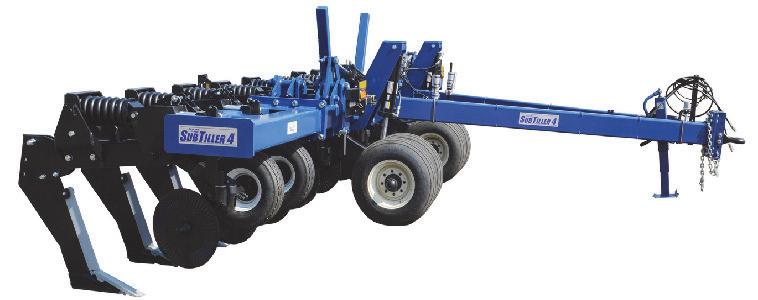
25’Pull-type11Spring-TripShanksSubsoiler30”shank spacing,Shankboltonwearplates,2onorder s#109091Completewithfrtsetup&exch$121,800 $107,000codiforderedNOWw/$1,000deposit
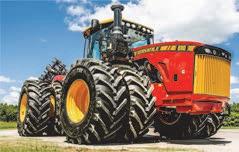
20246204wdVersatile665hp@1900rpm, 16x4CatP/Stranrev-fantowcable900/60 R42 tire110gpmpump 6E hyd remote3/4” returndifflock PTO DelCab12”monitor L/seatSusp/CabRadar,Jake BrakeV6700 A/S/RIsobus,Rcamera#s852615 wt61,250 SN708852 msrp$995,000cod$895,000
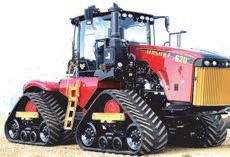
2023DT620 Versatile,665hp@1900rpm , 16x4P/S,rev-fan,difflock,TowCable,36” 6500SeriesTracks,110gpmpump6remotes,3/4”return,DeluxeSuspCab, Radar19 LedlitesV6700A/S/R,#249650 wt64,000 SN708249 msrp$995,000 NEW 2023DT620COD$ 895,000
1 Versatile+1-70’MorrisADis$1,790,000. Takethe pairfor$ 1,590,000

10Series 915720 820 bu,4Tanks80bu,250,bu,135bu, 355bu,+Tank LoadCells dualfans,TopConXD+monitor 5m3397 duals4-900/60R42 Convey-All Conveyor Sect Control +70’ QuantumAirDrill12”Spacingpaired row dblshoot 3 Row Packer 7m5332 9M5729 ,820buCart$545,000+70’Quantum$450,000=msrp$995,000cod$895,000
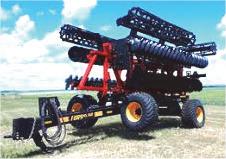
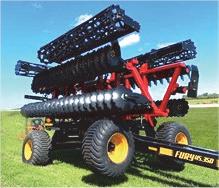
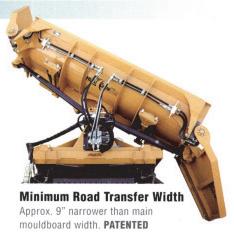


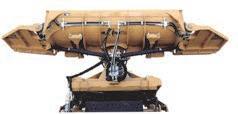
Tractorwt 25000# bladewt2540lbsN/Cinstall 42008’-14’$23,545 w/12” top 0-OH$21,545 4200 10’-16’$25,050w/12” top1-OH $22,050 420012’-18’$26,052 w/12” top 0-OH $23,055 DEMO INOURYARDANYDAY OFTHE






AVoluntary breeder participation in Performance tracking provides EPDs for birth, weaning and yearling weights, milk, a number of carcass traits (using ultrasound technology) and scrotal measurement.
berdeen Angus cattle were first imported to Canada in 1860. The breed was strengthened with further imports from Scotland and the cattle have been registered by the Canadian Angus Association since 1905. Since 1960, animals have been exported back to Scotland and around the world. All Angus animals registered in Canada are 100% purebred and all walking sires are DNA tested and sire verified to ensure the accuracy of our records.
Red and black Angus are both registered in one herd book, but the registration paper easily indicates the colour of each animal. The breed has experienced a significant growth in demand and size and is now the largest and fastest growing breed in Canada.
Angus animals offer numerous economic advantages in addition to their solid red or black colour. They are naturally polled, easy keeping and the females are natural mothers. Over 98.5% of all registered Angus calves are born unassisted, weaning weights usually exceed one half of the cow’s weight. It is not unusual for a cow to remain active and healthy for fourteen or more years.
Angus cattle are extremely fertile but the increased demand for Angus genetics in Canada has been because of the quality of the carcass. Cattlemen using Angus with superior marbling ability open the door for improved beef tenderness and increased consumer acceptance of beef.
Canadian Angus breeders have worked cooperatively with the American Angus Association to improve our Performance Program and provide more accurate genetic evaluations on both Red and Black Angus. All breeders are encouraged to weigh and measure cattle and submit performance data that will provide customers with accurate information to select suitable genetics for their breeding program.
Angus is Canada’s leading beef breed because Angus and Angus-cross cattle make sound economic sense, in the breeding pasture, the feedlot, at the packing plant, and on the table.
Blonde d’Aquitaine arrived in Canada, from France, in the early 70’s at the end of the importation era of continental cattle from Europe. At the time of the first imports, the Blonde breed in France was one of the smaller breeds in number. Blondes are now the third largest beef breed in France.
Blondes, a large, high performance breed, excelling in lean meat yield, have been bred with calving ease in mind. Their fine-boned bodies have been bred to be longer and leaner at birth to facilitate easier calving. While well known in countries around the world for their well-muscled, high-yielding carcasses, the Blonde calf does not start to show the heavier muscled hind quarter, until it is four to six weeks of age.
Fullblood polled Blonde genetics have contributed to the Herd book in Canada and are marketed worldwide via semen, embryos and by live animals into the United States.
All registered fullblood Blondes in Canada are parentage verified by DNA.
Crossbreeding with Blondes adds muscle, length and thickness in the calves, produces more beef, less fat, less bone and supplies a high-yielding carcass. Crossbred Blonde carcasses have a high Commercial Index Superiority, high meat density, heavier meat to the carcass, leaner meat (3.7% less fat at the 11th rib): heavier muscling (5.9% more muscle on the 11th rib): less bone (2.2% less on the 11th rib): and excellent lean to fat ratio. Blondes cross extremely well with dairy breeds, increasing muscling immensely.
Charolais were first imported to Canada in 1956 from the United States. Later, cattle were imported directly from France. In 1959 the Canadian Charolais Association (CCA) was formed and in 1960 it was formally recognized as a Breed Association under the Animal Pedigree Act of Canada.
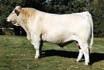
The CCA is a non-profit organization that derives funding from member subscriptions and the Whole Herd Enrolment (WHE) fees. The Canadian Charolais Association operates a number of performance testing initiatives on behalf of its members. However the backbone of the performance program is Whole Herd Enrolment in which breeding and calving information is tracked on each cow every year. This tracking ensures the highest possible level of accuracy in Charolais pedigrees and allows breeders to monitor reproductive traits. Research has shown that fertility is the most economically important trait in beef production and total herd reporting sets Charolais apart as an industry leader. All performance data from the past is utilized in producing a high accuracy, scientifically proven Canadian Expected Progeny Difference (EPD). EPD’s indicate genetic differences in cattle and may be used for comparison across herds.
Due to the diverse landscape and the extremes in both temperature and precipitation in Canada, Canadian Charolais are highly adaptable to not only the Canadian environment and production systems but to climates and production systems throughout the world. Charolais cows have performed well under a variety of environmental conditions and are selected as very structurally sound animals with exceptionally good feet and strong legs. This is important when cattle are managed in large herds and on vast areas of land where walking distances for feed and water is necessary.
It has been said that no other breed has impacted the North American beef industry so significantly as the introduction of Charolais. Canadian Charolais are highly compatible with the indigenous cow base and the cross is second to none. In Canada the Charolais crossbred calf receives a premium price at the auction market.
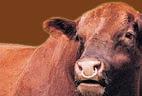







Charolais were first imported to Canada in 1956 from the United States. Later, cattle were imported directly from France. In 1959 the Canadian Charolais Association (CCA) was formed and in 1960 it was formally recognized as a Breed Association under the Animal Pedigree Act of Canada.
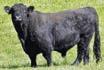
The CCA is a non-profit organization that derives funding from member subscriptions and the Whole Herd Enrolment (WHE) fees. The Canadian Charolais Association operates a number of performance testing initiatives on behalf of its members. However the backbone of the performance program is Whole Herd Enrolment in which breeding and calving information is tracked on each cow every year. This tracking ensures the highest possible level of accuracy in Charolais pedigrees and allows breeders to monitor reproductive traits. Research has shown that fertility is the most economically important trait in beef production and total herd reporting sets Charolais apart as an industry leader. All performance data from the past is utilized in producing a high accuracy, scientifically proven Canadian Expected Progeny Difference (EPD). EPD’s indicate genetic differences in cattle and may be used for comparison across herds.
Due to the diverse landscape and the extremes in both temperature and precipitation in Canada, Canadian Charolais are highly adaptable to not only the Canadian environment and production systems but to climates and production systems throughout the world. Charolais cows have performed well under a variety of environmental conditions and are selected as very structurally sound animals with exceptionally good feet and strong legs. This is important when cattle are managed in large herds and on vast areas of land where walking distances for feed and water
Gelbvieh cattle were developed in the Bavarian region of Germany in the early 19th century. Gelbvieh was first imported into Canada in 1972, instigating the incorporation of the Canadian Gelbvieh Association (CGA) under the Canadian Animal Pedigree Act. 2022 marked 50 years of Gelbvieh in Canada. In celebration a 50th Anniversary History book was published and copies can be purchased through the CGA office.
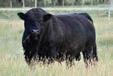
can Gelbvieh Association, this has produced a database of well over one million performance records that result in an annual Sire Summary, Cow recognition Program, and contribution to a multi-breed EPD evaluation for all registered Gelbvieh and Gelbvieh influenced animals. This provides a powerful source of documented information for cattlemen raising Gelbvieh on both the commercial and purebred level. Another great resource for information on the Gelbvieh breed and breeders is the Gelbvieh Guide, available online through the CGA website or you can contact the CGA office to get added to the mailing list.
Gelbvieh traits of fertility, calving ease, longevity, milking ability, moderate size and docile temperament have become more important than ever before, making Gelbvieh an optimal choice for crossbreeding

programs. Vigorous at birth, Gelbvieh calves wean off heavy and gain rapidly. Documented progeny tests, impressive feed efficiency and lean/muscular carcasses round out the roster of breed’s characteristics that have made Gelbvieh popular with cow/calf operators, feeders, packers and consumers.
The CGA has maintained the strong performance heritage of the breed with a policy of mandatory performance records. In cooperation with the Ameri-

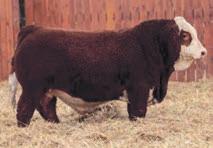
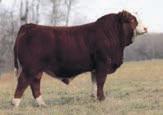
Herefords were first imported into Canada by William F. Stone of Guelph, Ontario from Herefordshire, England. He admired their strength, docility and feed efficiency. Herefords have prospered in Canada for over 150 years, due to these strengths and their hardiness in the coldest of winters and driest of summers.
Today, these major breed strengths of disposition and feed efficiency, along with its versatility in crossbreeding programs, continue to position Hereford as the breed of choice in commercial cowherds. It is currently the second most popular breed exported from Canada.
Herefords are leaders in docility. Research has proven that docile temperament increases cattle profitability through lowered production costs and better meat quality. Disposition is becoming increasingly important as a sought-after trait by producers purchasing either female or bull replacement for their cattle operations. Cattle with a good temperament are easier to handle, safer to be around at calving time, adjust better to new environments and tend to perform better in all phases of the production chain.
Herefords are widely used for cross breeding in North America, especially with Angus cattle. A recently completed research study conducted in conjunction with California State University indicates an overall net return for Hereford-sire crossbred calves to be approximately $30.00 (USD) per head in a vertically coordinated beef marketing system. US Meat Animal Research Center (MARC) research shows hybrid vigor to be greater in whiteface cross cattle, due to the genetic purity in the Hereford breed.
The Hereford breed is recognized as being more efficient. Hereford and Hereford influence cattle consistently require less feed than cattle of other breeds, per pound of gain and for body maintenance. Disposition and the thick hide and excellent hair coat of Hereford cattle are among the reasons less energy is required to stay warm in the winter, thereby reducing feeding costs. Again research has shown that Hereford cattle are about 6.0% more feed efficient than other breeds, which is a significant economic factor for profitability.
The Canadian Hereford Association was formed in 1890 and was incorporated in 1902 under the Government of Canada Animal Pedigree Act. The Animal Pedigree Act ensures the integrity of the registration and documentation of the ancestry of purebred
Hereford cattle. The Canadian Hereford Association is also part of the Pan American Cattle Evaluation (PACE) program which includes genetic evaluations from the countries of Argentina, Uruguay and the USA. Semiannual genetic evaluation reports are produced by PACE members for their respective members. The Expected Progeny Differences (EPDs) are reported on 11 traits, which include calving ease, birth weight, weaning weight, yearling weight, carcass traits, scrotal circumference, cow weights and stay-ability. The Canadian Hereford Association also independently produces a genetic evaluation index for maternal productivity and feedlot merit, in order to track, retain and improve on these traits.
The Hereford breed is among those which represent the foundation of Canada’s beef industry, making it one of the most widely used cattle breeds. More Hereford genetics have been exported from Canada in the past 30 years than from any other breed. Live animals, semen and embryos have been exported to: the USA, Russia, Kazakshtan, Australia, New Zealand, the U.K., Ireland, all the Nordic countries, Germany, Japan, China, Hungary, Chile, Poland, Brazil, Argentina, Uruguay, and South America.
• Best adapted continental breed for the case-ready beef industry
• Proven as the top breed for feed conversion
• Superior muscle
• High weaning and yearling muscle growth with moderate birth weight
• Highest red meat yield of any major breed
• Uniform size and color
• Best Cross with British Based Females
• Carcass Champion, Canadian Western Agribition for 28 consecutive years
• Superior Canadian health status
• Exceptional pedigree integrity*
*The Canadian Limousin Association carries the only Full French Limousin Herd book in the world that guarantees every single registered Full Blood animal is parent verified by DNA genotyping or bloodtyping.
Imported to Canada in 1968 from France, Limousin is one of the five major breeds in Canada and in the United States. The Limousin breed has an important economic role in today’s beef industry. Known throughout the world as the carcass breed, Limousin cattle excel in feed efficiency and have proven to consume less than other animals of the same size and yet perform to equal or superior levels. The Limousin female is appreciated In commercial production for her easy maintenance, her fertility and milking ability while Limousin sired calves are sought after for their feed conversion and high quality carcass. This genetic achievement is the result of selection based on carcass and residual feed intake research and development throughout the North American Limousin population.

The Canadian Limousin Association (CLA) is a non-profit, member-owned organization. Our primary function is to maintain the pedigree herdbook of Limousin cattle in Canada. We are committed to the improvement of the Limousin breed by way of performance programs, research, education, advertising and promotion, and export.
he first Lowline cattle in North America came to Canada in 1996. Interest in them has grown steadily since. The Canadian Lowline Cattle Association was established in 1997. Fullbloods and percentage cattle are now recognized in separate herd books. Lowline cattle were developed by the Trangie Agricultural Research Centre in NSW, Australia. In 1929, a choice Aberdeen Angus herd from Canada, supplemented by additional animals from the USA and Scotland, was purchased by the Australian government to form the
foundation of a research herd. From 1929 to 1963 this Angus research herd was prominent in the Australian showing circuit and won many awards. The herd was closed to outside genetics in 1964, and between 1974 and 1992 research was performed to investigate the efficiency of converting feed to beef within groups of different sized animals. The Angus herd was divided into three groups; the “High Line”, the “Low Line” and a random “Control Line”. A detailed evaluation of weight gain, feed intake, reproductive performance, milk production, carcass yield and quality and structural soundness was carried out. Through 20 years of research, the smaller “Low Line” cattle were found to be extremely efficient converters of feed to beef while maintaining performance in the other characteristics studied. Interest in the smaller animals was great, and a new breed was created when the herd was dispersed to private breeders in 1992.
Lowline possess traits that will help them excel in the cattle industry. They are extremely hardy, naturally polled, black or red in color, and small framed. At all stages of their growth they are about 60% of the size of normal beef cattle. Lowline cattle mature early. They are easy calving and docile. At birth calves average 40 to 50 pounds. Calving losses are extremely low and even heifers have great ease in calving. The dams make excellent mothers and provide ample milk. Cows at maturity average about 100 cm at the hip while equivalent age bulls stand about 110 cm. Lowline are extremely efficient grass feeders and can even be finished on grass. They exhibit rapid early growth. Carcasses yield high, with reduced fat but greater marbling. Cuts are smaller which is attractive to the health conscious consumer.
An increasing number of commercial breeders are committing to downsizing their cattle. They want cat-

tle that are moderate framed with excellent muscling ability and performance. Lowline bulls have proven to provide this consistently. Crossing heifers with Lowline sires produces aggressive calves that are born easy. Fewer calving difficulties mean more calves and a higher percentage of cows returning to calf. Half blood calves average 65 pounds but wean off heavy with high yielding carcasses and consistent marbling. Lowline bulls in a commercial herd provide easier handling, calving ease, increased stocking rates, increased feed efficiency and high yield quality carcass characteristics. The ease and profitability of beef production increases once the frame score of the herd is reduced.
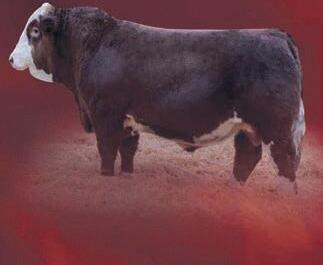
The Maine Anjou breed originated in France in the 19th century, taking their name from the Mayenne and Anjou river valleys in which they were developed.
In France the breed has evolved as a dual-purpose breed, where the cows are selected for their milk production, and bull calves are fed for market. The traditional colouring is very dark red with white markings on the head, belly, rear legs and tail. White on other parts of the body is also common.
The first Maine Anjou arrived in Canada in 1969 and later through artificial insemination the breed entered the United States. In 1970, the Canadian Maine Anjou Association was formed. Over the past 35 years in Canada, selective breeding has: reduced the frame size of
both fullbloods & purebreds, drastically reduced birthweights, tightened up the front end, thickened up the back end, developed a polled feature in both fullbloods & purebreds and developed multiple colours due to the recessive fullblood colour gene, resulting in the traditional red & white (fullblood) colouring, solid black, solid red and other colour patterns.
Advantages to breeding Maine Anjou are high rates of gain, feed efficiency, adaptability to climatic extremes, superior carcass quality, docility, and smooth muscling. Bulls are known for being: high gainers, with a quiet disposition, sound conformation and the ability to be horned, polled or scurred. Females are recognized for their: quiet disposition, strong milking ability, maternal instincts, extreme longevity (10 years or more), easy calving ability and high fertility.
Crossbreeding with Maines adds: stretch, growth rate, quiet disposition and more pounds at weaning to a herd. Maines can also be utilized to breed for or select against other specific traits. Crossed with white-faced cattle, the Maine influence produces dark pigmentation around the eyes. This reduces the occurrence of cancer eye and pink eye. The recessive red gene can be utilized to maintain your preferred colour pattern. Maines’ performance at tests and in shows has repeatedly shown that Maine Anjou genetics can be advantageous to any herd!
Proudly serving the BC and Alberta Peace Region Since 1977





















The Canadian Food Inspection Agency (CFIA) is aware of public discussion regarding the proposed amendments to Part XV (Traceability) of the Health of Animals Regulations.
These amendments are not currently in place and have not been finalized. The CFIA has consulted with industry, associations and governments regarding the proposed amendments and will continue to do so. The CFIA will pause any publication of the regulations until the proposed changes are more widely understood and concerns are heard and taken into consideration.
The CFIA is committed to reducing red tape and regulatory reform and is advancing a number of modernization initiatives to support businesses, while ensuring Canada’s animal health system remains effective, practical, and fit for purpose. Animal diseases continue to occur, and when they do, Canada must be able to respond quickly, accurately, and effectively.
Strong traceability is central to that response. A modern, reliable traceability system allows animals to be tracked through the production system, supports faster and more targeted disease response, and helps limit impacts on producers, communities, and trade. It is also an investment made to protect Canadian animal health and respond to disease threats, like foot and mouth disease. In practice, better traceability leads to quicker resolution of disease events, greater certainty for businesses, and stronger confidence in Canada’s livestock system domestically and internationally.
The proposed amendments are intended to close gaps in the current framework and strengthen Canada’s livestock traceability system. This supports effective response to disease events, minimizes economic disruption and helps Canadian producers and processors remain competitive at home and abroad, while supporting long-term economic stability for businesses.
Industry has been closely involved throughout the development of these proposed amendments over the last decade. The draft regulations were pre-published in Part I of the Canada Gazette in 2023, followed by a 90-day public comment period. In 2024, the CFIA published a What We Heard report summarizing feedback from producers, industry associations, provinces, and other partners. Since then, the CFIA has continued engagement with stakeholders so that the system is workable while maintaining strong animal health protections.
When the amendments are published, the regulations will include transition periods to support the implementation process — one year for regulated parties before implementation, followed by a graduated enforcement approach. The CFIA will provide guidance, education, and support throughout this period.
The CFIA values ongoing dialogue with industry and remains open to input. Maintaining an excellent, credible animal health system is essential to protecting livestock, supporting producers, and enabling trade. NH




























































































CUSTOMER NAME Real Page Supplement Page
Albrecht Farms 38, 39 BSS-18, BSS-19
Blazin’ J Simmentals 26, 27 BSS-6, BSS-7
Brandl Cattle Company 53 BSS-33
Bull Power Sale 51 BSS-31
Chittick Family Bull Sale 37 BSS-17
ClearFab Manufacturing 23 BSS-3
Clearwater Simmentals 41 BSS-21
Crestland Farms Ltd. 34 BSS-14
Excel Ranches 47 BSS-27
Fallen Timber Farms 49 BSS-29
Fourth Creek Angus Ranch 59 BSS-39
Friesen Hereford Farms 48 BSS-28
Gold Stock Hereford Farms 58 BSS-38
Grundke Family Salers 58 BSS-38
Harvest Angus 22 BSS-2
Heart of the Peace 55 BSS-35
Heart Valley Angus 29 BSS-9
Hillview Farms 36 BSS-16
Horizon Red Angus 56 BSS-36
Jay Dawn Farms 21 BSS-1
JDF - Northern Classic 44, 45 BSS-24, BSS-25
Jonomn Hereford Ranch 42 BSS-22
KJOS Black Angus 61 BSS-41
KSL Simmentals 43 BSS-23
Lazy S Charolais 30 BSS-10
Moonlite Farms 46 BSS-26
North Ctry Ranchland 2 8 BSS-8
Northway Cattle Co. 32, 33 BSS-12, BSS-13
Pinnacle View Limousin 57 BSS-37
Rafter SJ Ranch 40 BSS-20
Schweitzer Ranch 35 BSS-15
Shadow Creek Red Poll 52 BSS-32
Silent K Stock Farms 23 BSS-3
Silver Willow Ranch 56 BSS-36
Smoky River Red Angus 60 BSS-40
Swantewitt & Sage 31 BSS-11
Tamarack Shorthorns 54 BSS-34
Transcon P.C. Simmental 25 BSS-5
Tri-K Cattle Co. 38, 39 BSS-18, BSS-19
Whiskey Jack B/Hrfd/Simm 50 BSS-30
Willow Creek Simmentals 44, 45 BSS-24, BSS-25
Willowdale Simmentals 24 BSS-4
EPD Definitions 62 BSS-42
EPD’s – Angus 63 BSS-43
EPD’s – Charolais 64 BSS-44
EPD’s – Gelbvieh 64 BSS-44
EPD’s – Hereford 65 BSS-45
EPD’s – Limousin 65 BSS-45
EPD’s – Red Polls 66 BSS-46

EPD’s – Salers 66 BSS-46
EPD’s – Simmental 67 BSS-47




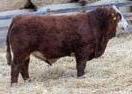


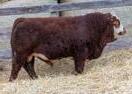

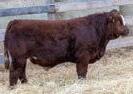


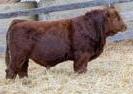

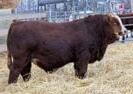

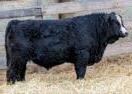

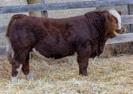


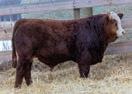


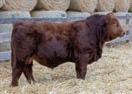









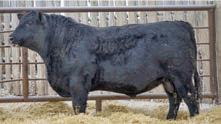
BullsproducecalveswithHEAVIERweaning weightwithoutsacrificing calvingeaseorvigoratbirth.Bullswillleaveyou asolidreplacementpen foryournextgenerationofcows.
Jointhegrowingnumberofsatisfiedcustomer sinour“BUYBACK”program andgetinonourhigherpremiumbids foryourcalves. We willpaya$15premium ontopofourbidtoourcustomer sforsellingustheircalvesfar mdirect.
Wearetransparentwithourcustomer saboutthepresentandfuturecattle mar ketsandtheinfluenceitcouldhaveontheircalfmar ketingdecisions. Withmar ketsbecomingextremelyvolatile we helpourcustomers forwardselltheircalfcropifneededtohelpmanagetheirmar ketrisk.



















The Canadian Cattle Association (CCA) welcomes the news that Canadian beef access to China has been restored after being wrongfully shut out in 2021. We will continue to work with government officials and industry stakeholders to learn more details, including potential safeguard measures.
In addition, CCA was encouraged to see Prime Minister Carney placing a high priority on Canadian export-driven agriculture as an economic driver for Canada and our trade diversification goals.
“We are pleased to see renewed access into China, one of the largest export markets for beef. Every market matters to Canadian beef farmers and ranchers; it supports our industry’s resilience and growth,” said CCA President Tyler Fulton. “Canadian beef continues to be sought after because it is among the highest quality beef in
the world and we appreciate the advocacy of both Prime Minister Carney and our Minister of Agriculture, Heath MacDonald.”
As Canada continues to discuss trade diversification strategies, CCA will continue to stand up for Canadian beef producers, advocating to remove non-tariff barriers in existing markets and working with the government on new free trade agreements to ensure they present significant market opportunities for our sector. This welcomed news reinforces CCA’s trade advocacy at home and abroad.
CCA’s top priority remains strengthening existing trading relationships with trusted trading partners who follow international rules-based trade. “We remain committed to expanding market access for Canadian beef and securing the best trade deals for Canadian beef farmers and ranchers. We look forward to continuing to work with the Government of Canada in pursuing new markets and removing non-tariff and tariff barriers to Canadian beef,” said Fulton.
For close to five years, Canadian beef has not been exported to China. In December 2021, China halted all exports of Canadian beef due to Canada’s atypical case of BSE. Prior to the halt in trade, Canadian beef saw continued growth into the Chinese market. www.cattle.ca, January 19, 2026
2026 PEACE COUNTRY BEEF CONGRESS
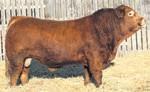
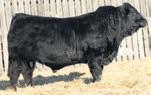



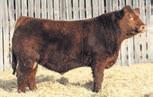
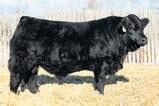




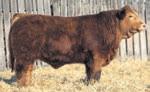

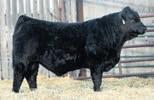


Raymond& Corine Verbeek
Home780-939-2173Ray780-982-2176 crverbeek@xplornet.ca
Colin &Tessa Verbeek
Colin780-982-1676 Tessa403-636-1066 hillviewfarmsltd@gmail.com









































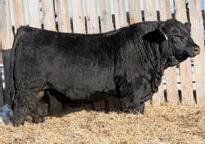


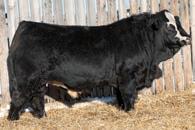

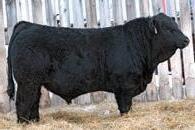

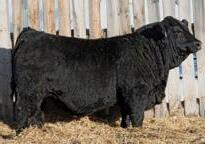





















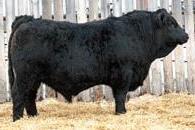

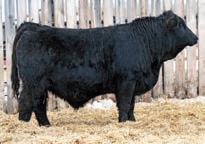

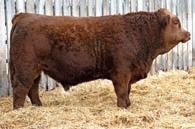

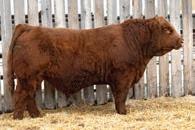














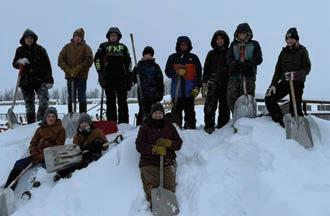
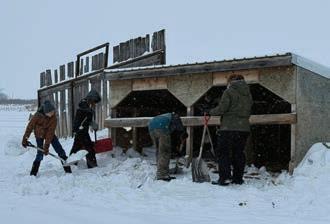
Submitted by Chelsie Dillabough
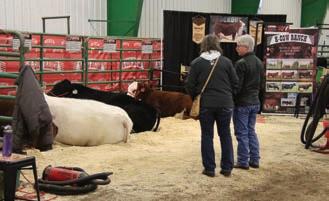
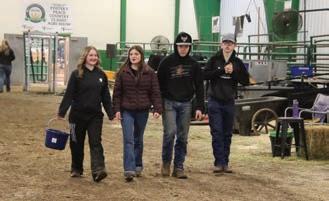
On January 3rd, the DCC Ridgevalley 4H Multiclub jumped on the chance to dig the Stevensons out getting ready for the upcoming calving season. Of course, Margo had an amazing spread of fresh baking for our efforts. NH































In May 2026, farm operators across Canada will receive an invitation in the mail to complete the Census of Agriculture questionnaire. Respondents will be able to complete their questionnaire online using their Secure Access Code (SAC) included in the invitation letter.
In the coming months, the Census of Agriculture Program will reach out to the farming community with materials they can use to help promote the census. Along with shareable materials, there will be a media campaign detailing what’s new in the upcoming census and why the census is important.
In accordance with the Statistics Act, farm operators are required to participate in the Census of Agriculture. By the same law, Statistics Canada is required to protect the information provided in Census of Agriculture questionnaires. We place the highest priority on protecting your privacy and your information.
Filling out the Census of Agriculture questionnaire is important for supporting the agricultural industry and local farming communities across Canada. Since 1921, the Census of Agriculture has provided a detailed portrait of the agricultural industry across Canada.
The data produced are key to supporting economic growth and sustainability for the businesses in this sector and can support decision-making around international trade, competitiveness and technological progress.
Farm organizations are also heavy users of census data and draw on this information to formulate policy recommendations, develop communications and outreach activities, and conduct market research.
Statistics Canada has been working hard to make it easier for farm operators to complete their 2026 questionnaire. It is now shorter, faster and easier to complete. Farm operators are now required to only answer questions relevant to their operation’s activities.
In fall 2022, Statistics Canada conducted a national consultation to assess the

information needs of agricultural stakeholders. The agency received 847 comments and suggestions from diverse groups—including farming organizations and businesses, federal government departments and agencies, provincial government, and academics—to help improve the Census of Agriculture. Statistics Canada is grateful to the Canadian agricultural community for its ongoing feedback and support. For more information, please visit the census website (https://www.census.gc.ca/ en/index)
The Census of Agriculture begins in early May 2026. Farm operators will receive a letter with easy-to-follow instructions on how to complete the questionnaire. Completing the questionnaire online is quick and easy. In May 2026, farm operators can:
• go to Statistics Canada’s website, www.census.gc.ca, and select the online questionnaire.
• use the secure access code received in the mail to complete the questionnaire.
The Census of Agriculture has provided a detailed portrait of the agricultural industry across Canada since 1921. Census data are key to strengthening the economic growth, international competitiveness, and sustainability of the agricultural sector and to ensuring that farm operators have the support they need to continue producing fresh, healthy food for Canadians.
Census data are Canada’s sole source of community-level data on agriculture. Key decision-makers – including farm businesses – use this information to act in the interest of farm operators, farming communities and agricultural associations across Canada.
Farm organizations are also heavy users of census data. They draw on this information to formulate policy recommendations, develop communications and outreach work, and conduct market research.
Policy advisors from all levels of government use Census of Agriculture data to develop strong farm support programs, to evaluate the impacts of external events on the agricultural sector, and to provide rapid, effective assistance in times of natural disasters—such as floods, droughts, storms and wildfires.
The Census of Agriculture comes with other benefits:
• Census of Agriculture data can help identify trends and provide information on emerging economic and social issues, opportunities, and challenges within the agricultural community.
• The questionnaire covers a wide range of topics, such as land use, crops, livestock, agricultural labour, machinery and equipment, land management practices, and farm finances. These invaluable data help inform research and policy across the Canadian agriculture sector.
• Census data give all stakeholders in the agriculture sector an equally reliable source of information.

Farm operators can support their community by filling out the Census of Agriculture questionnaire in May 2026. The questionnaire can be completed by anyone who is responsible for, or knowledgeable about, the day-to-day management decisions of the farm’s operations.
In accordance with the Statistics Act, farm operators are required to participate in the Census of Agriculture. By the same law, the information provided to Statistics Canada will be kept confidential and used only for statistical purposes.
For 2026, we have made improvements to the questionnaire to make it faster and easier to complete. Data from high-quality alternative sources will be used to replace multiple questions, reducing response burden while ensuring data needs are still being met.


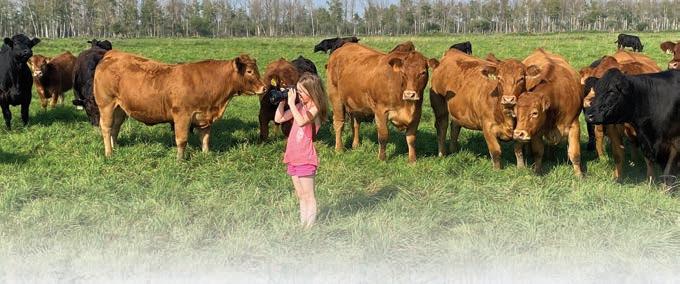






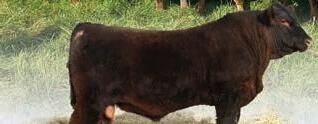

































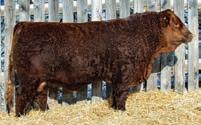


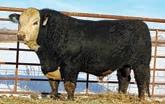
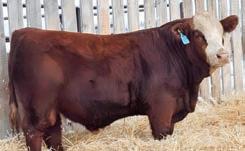

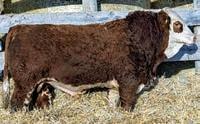
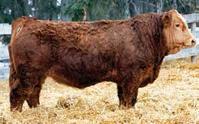

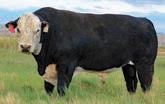

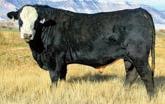
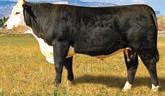










Improving the genetics of your beef herd starts with knowing which traits you can change through genetics and which traits respond better to management practices. Because cattle have a long generation interval, every bull or replacement heifer you choose affects your herd for years. That’s why understanding heritability — and how traits interact with each other — helps ensure your breeding decisions move your herd toward your production goals.
WHAT HERITABILITY REALLY MEANS
Heritability tells us how much of a trait is controlled by genetics versus the environment and/or management. It’s expressed as a number between zero and one:1,3
• High heritability (over 0.40): Traits are strongly influenced by genetics, meaning you can make changes more quickly by selecting the right replacements and bulls.
• Examples: ribeye area, marbling, weight and growth traits.
• Moderate heritability (0.15 to 0.40): Traits that can be improved through both genetics and management.
• Examples: milk production and calving ease.
• Low heritability (less than 0.15): Traits are mainly influenced by crossbreeding (e.g., heterosis/hybrid vigour and management (e.g., nutrition, colostrum, vaccination).
Examples: fertility, reproductive efficiency and disease resistance.
Weaning weight has a heritability of 0.24 to 0.30, which means that 24% to 30% of the differences we see in weaning weights between cattle in a herd are caused by genetics. Table 1 provides a summary of the heritability of common traits. The higher the heritability, the more progress you’ll make through selection. Traits with low heritability still matter — they just require dedicated management to go along with genetic decisions.
As an example, improving pregnancy rates in beef cattle cannot be achieved through genetics alone. This is primarily due to fertility traits having low heritability and being heavily influenced by management factors such as nutrition, body condition, health and breeding season management. Until those areas are optimized, selecting new genetics alone won’t move the needle.
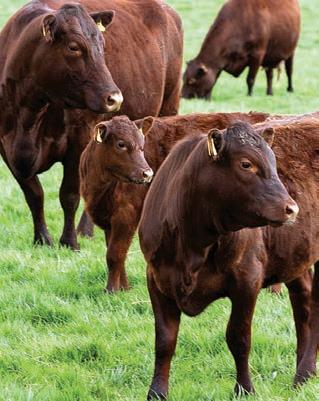
In contrast, calving ease is moderately heritable, and information can be used strategically when planning a heifer breeding program. Selecting sires with high calving-ease genetics can help avoid calving difficulties.
Table 1. Heritability in beef cattle
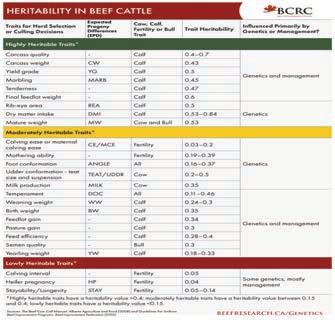

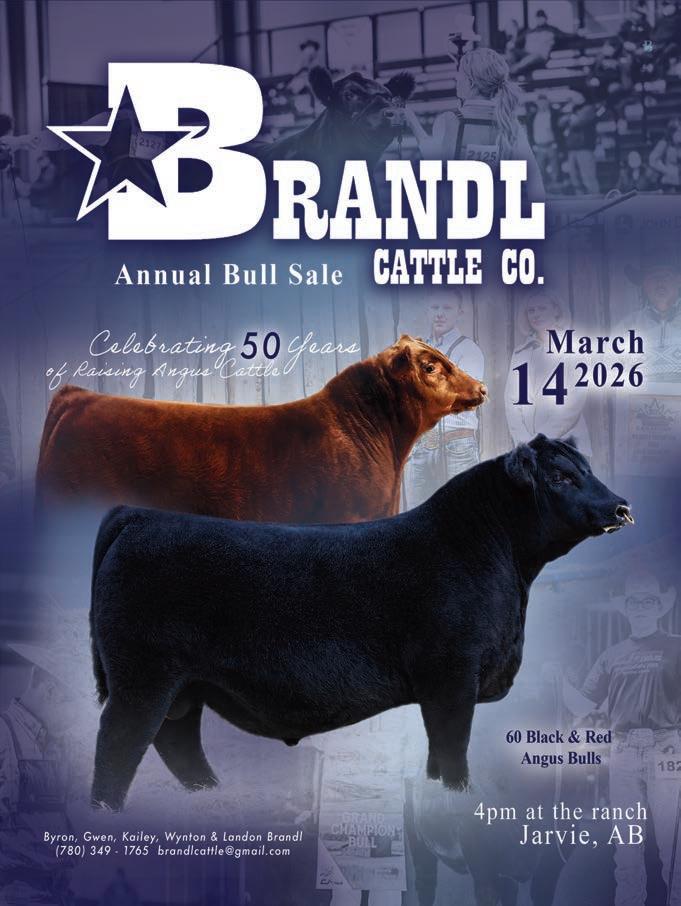
Continued from page 32
Traits don’t work in isolation. Selection for one trait can cause an increase or decrease in the expression of another, sometimes in ways you don’t want. Trait correlations are expressed as a number between +1 and –1.
A positive (+) genetic correlation means that as one trait increases, the other also tends to increase. A negative (-) correlation means that as one trait increases, the other tends to decline. Despite the positive/negative labels, neither automatically indicates whether the relationship is beneficial. A correlation is considered favorable when selection for one trait leads to a desirable change in another2. Table 2 shows examples of some trait correlations.
*A positive (+) genetic correlation means that as one trait increases, the other also tends to increase.A negative (-) correlation means that as one trait increases, the other tends to decline.
Understanding these relationships helps avoid unintended consequences. For example, weight and growth traits tend to be positively correlated. So, selecting heavily for low birth weights will ultimately lead to smaller heifers that may be more prone to calving difficulties or calves that don’t grow as well as desired. Similarly, selecting large weaning or yearling weights will eventually produce bigger mature cows that cost more to feed.
These relationships mean that selection decisions should be made with your operation’s goals in mind. A herd keeping replacement heifers may prioritize balanced growth and moderate mature size, while a cow-calf operation selling all calves at weaning may put more emphasis on growth and weaning weights because they aren’t keeping replacements.
KEY QUESTIONS TO ASK WHEN MANAGING TRAIT SELECTION:
Milk Calving Interval Positive High Cows that produce more milk may take longer to rebreed due to higher energy requirements.
Milk Total Energy Intake Positive Moderate Higher-milking cows usually require more feed to maintain body condition.
Calving Ease Direct Maternal Calving Ease Negative Low to Moderate Improving calving ease direct of an animal itself can slightly reduce a daughter’s calving ease.
Fertility Leanness Negative Moderate-High Fast growing, lean genetics become larger cows that can have difficulty maintaining body condition and rebreeding.
Yearling Weight Mature Cow Size Positive Moderate-High Selecting for faster growing and larger calves often increases mature cow size.
Milk Weaning Weight Positive Moderate Higher milk production typically result in a higher calf weaning weight.
Birth Weight Mature Weight Positive High Smaller calves generally grow into small cows and bigger calves often become big cows.
Yearling Weight Carcass Weight Positive High Selecting for yearling weight will usually increase carcass weight.
Yearling Weight Marbling Negative Low-Moderate Selecting for yearling weight may decrease marbling slightly.
Yearling Weight Ribeye Area Positive Moderate Selecting for yearling weight tends to increase ribeye area.

• Is this trait something I can improve through genetics (e.g., growth, carcass traits), or would crossbreeding and/or management be a more effective strategy (e.g., fertility, health traits)?
• Will improving this trait support my overall goals (e.g., fertility, feed efficiency, carcass quality)?
• What traits need to be balanced so I don’t create problems elsewhere (e.g., heavy calf weaning weights often lead to large mature cows)?
Selection indexes help simplify genetic decisions by combining several traits into one value that reflects your breeding goals while also accounting for trait correlations behind the scenes, making it easier to avoid unintended trade-offs and helping prevent single-trait selection. Think of a selection index like a financial index: instead of tracking every single trait (or “stock”) on its own, the index combines them into one value based on their economic importance.
Like expected progeny differences (EPDs), indexes are breed-specific, so they cannot be compared across breeds, unless the genetic evaluation contains information from several breeds. Knowing which indexes fit your operation can make bull buying simpler and more profitable.
While indexes are extremely useful, they should be used alongside visual appraisal, structural soundness and good management to make the most informed selection decisions.
Examples of selection indexes include:
ALL-PURPOSE INDEXES
• Best for herds where heifers are kept and steers are marketed from the same calf crop
• Balanced across maternal and terminal traits
• Examples: Canadian Angus Association’s Canadian Balanced Index (CBI), Canadian Simmental All Purpose Index (API)
• Best for herds where heifers are kept and steers are marketed from the same calf crop
• Balanced across maternal and terminal traits
• Examples: Canadian Angus Association’s Canadian Balanced Index (CBI), Canadian Simmental All Purpose Index (API) MATERNAL INDEXES
• Designed to build better mother cows
• Prioritizes fertility, milk and stayability
• Example: Canadian Hereford Association’s Maternal Productivity Index TERMINAL INDEXES
• Used when all calves are sold and none kept for replacements
• Focused on growth, feed efficiency and carcass traits like marbling and ribeye area
• Example: Canadian Charolais Association’s Terminal Sire Index
Building a more productive herd starts with understanding which traits are driven by genetics and which ones respond more to management. Knowing the heritability of key traits and how those traits interact helps ensure that breeding decisions move your herd in the right direction without creating unwanted challenges.
• Canadian Beef Improvement Network Dashboard
• AgSights: Bull and Replacement Heifer Genetic Evaluations
ACKNOWLEDGEMENTS
Thanks to the following individuals for contributing their time and expertise to review this article and related resources:
• Karin Schmid, Beef Production and Extension Lead, Alberta Beef Producers
• Chelsey Siemens, Livestock and Forage Extension Specialist, Saskatchewan Ministry of Agriculture
• Macy Liebreich, Chief Executive Officer, Canadian Beef Breeds Council
• Stephanie Lam, Director of Research, Livestock Research Innovation Corporation This article has taken from www.BeefResearch.ca, the website of the Beef Cattle Research Council and has been reprinted with permission. NH
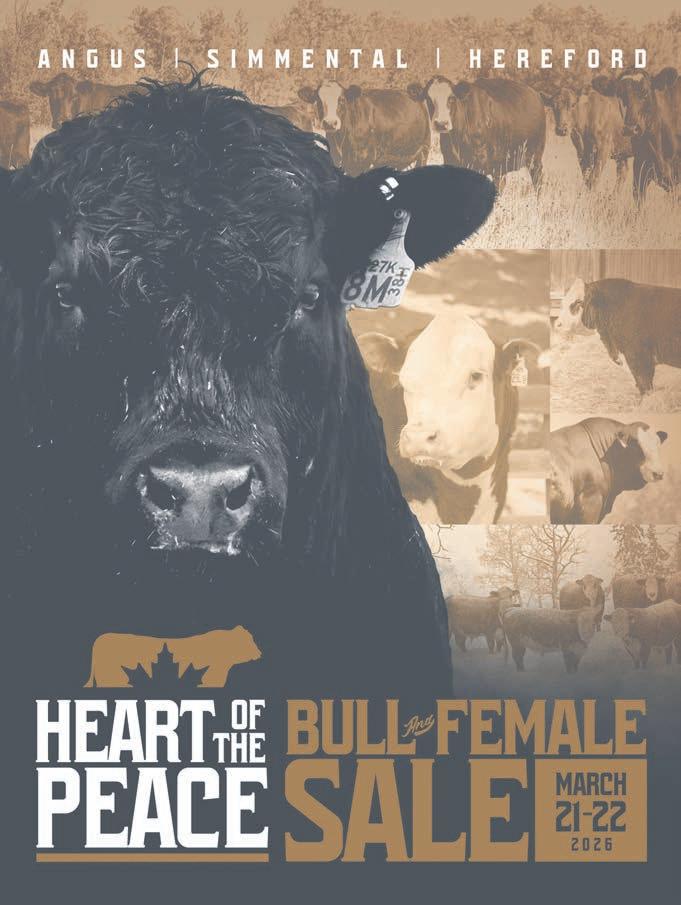


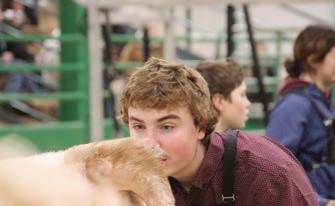
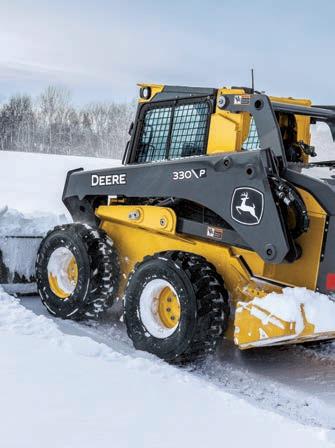
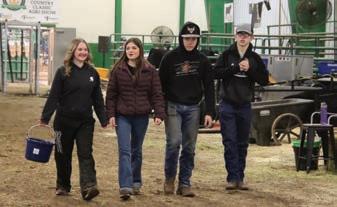
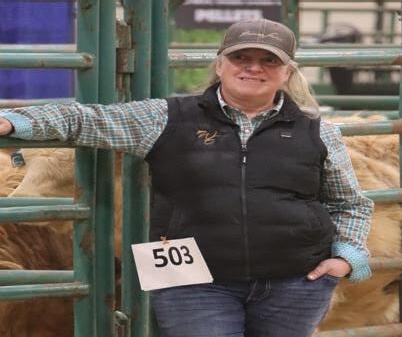
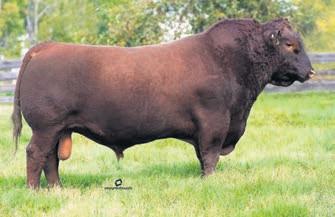
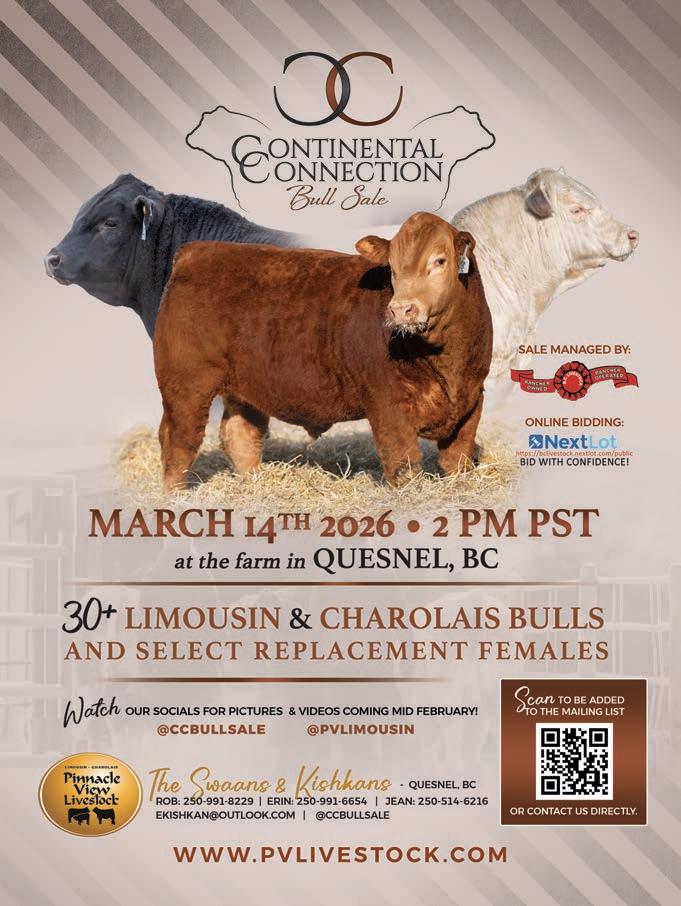
Salers are considered to be one of the oldest European breeds, whose roots can be traced to 16,500-year-old cave drawings found near the town of Salers in the South Central region of France, the Auvergne, in the heart of the volcanic area of the Massif Central. The rough terrain, poor soil and harsh climate combined with the area’s isolation has contributed to a genetically pure breed of cattle with bred-in range ability to thrive almost entirely on native grasses in the summer and roughage diet in winter.
The Salers breed in North America has evolved into an outstanding maternal beef breed with no lack of performance and carcass traits. The cattle are usually solid red or black and are naturally horned but polled bloodlines have been developed by selection and are now predominant in the national herd. Salers females possess a larger than average pelvic area, the largest in the industry, and calve easily to the service of larger terminal cross sires. They are excellent mothers with good milk production, are very fertile and re-breed quickly.
Salers bulls are efficient breeders and sire calves of moderate birth weight, with a strong will to live and good growth. USMARC studies have confirmed that Salers is the highest marbeling Continental breed, have a large ribeye area and a leaner carcass (less fat thickness) than British breeds. Salers cross steers perform well in feedlots and have exceptional carcass yield and quality.
The Salers breed is one of only three breeds evaluating data on docility and through the efforts of its breeders has improved this trait dramatically in recent years. The genetic trend for Salers has been very positive from a breed average of near zero in 1992 to the current breed average EPD of over +8.0.
Excellent feet and legs contribute to admirable longevity. All of these traits combined, have made Salers the choice of many commercial cattlemen striving to maximize production without increasing management or labour costs. Salers are a balanced breed, which is key to optimizing all aspects of beef production.
Salers were first imported into Canada in 1972 with the Salers Association of Canada being established in 1973. Canada continues to be an excellent source for Salers genetics worldwide.


The Shorthorn breed had its founding about 225 years ago in Durham County in North East England. Shorthorn cattle are medium framed with mature females in the 1400 -1600 pound range and bulls ranging from 2200 – 2400 pounds in working condition. They are available both horned and polled with homogeneous polled genetics also available. The main colour variations are solid red, red with white markings, and roan and white, which gives commercial producers several different options to select from to suit their situations.
Shorthorn genetics have always provided a strong maternal trait. The Shorthorn female, purebred or crossbred, has long been sought after for its early maturity, fertility, ease of calving, milk production, longevity and docility. Carcass traits have been an area where the exotic or terminal breeds have excelled.With the more recent return and focus on a moderate carcass with consistent superior marbling, the carcass traits of the Shorthorn breed have become more popular. Feedlot tests reveal that Shorthorn influenced cattle reach the optimum carcass weight at an earlier age with a higher percentage of AA+ marbling. While exotic breeds will claim more muscling and larger rib eyes they cannot compete with the consistent, well marbled, high yielding Shorthorn carcasses.
Today’s Canadian Shorthorns continue to prove that they play a very important role in the future of the beef industry. While many breeds portray themselves as being balanced and versatile, none of them compare to the ability of Shorthorn genetics to adapt and improve in a variety of crossbreeding situations.
Since the first importations to Canada, Simmental has grown in popularity and has become one of the nation’s most influential breeds. Outstanding growth and performance, combined with unbeatable milk and mothering abilities has resulted in the superior Canadian Simmental beef animal of today.
The Simmental female is recognized globally as one of the best mother cows in the commercial cattle industry. Cattlemen have found them to be profitable, docile animals that possess superior carcass characteristics. These attributes have positioned Simmental as the breed of choice in cross-breeding programs with all other cattle breeds. The unparalleled success of Canadian Simmentals has resulted in them being exported to many countries around the world.
The Canadian Simmental Association (CSA) is the national organization focused on the development of the breed and its distinctive strengths and is continually working to deliver services that enhance the breed’s performance and marketability. Through the CSA’s performance and “Total Herd” data recording programs, breeders benefit from having accurate, complete and up-to-date records that can be used to identify cattle within a herd and within the breed that excel in specific traits.
These records also enable the CSA to continue to develop programs that assist cattlemen in identifying and selecting cattle that excel for various economically important traits; ultimately strengthening the breed and creating a superior animal. Our programs lead the industry in the development of tools that support and promote the advancement of not only the Simmental breed but also the future needs of the beef industry.

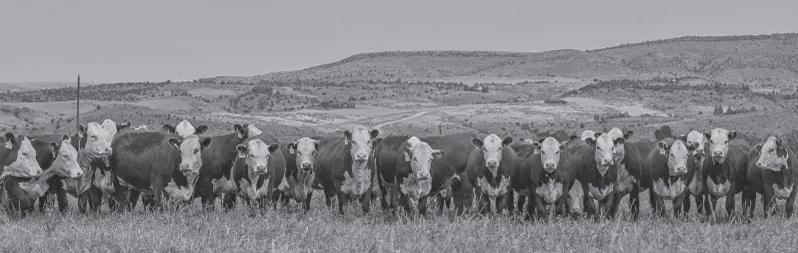
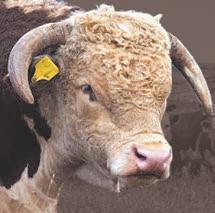
The selection and breeding programs implemented by Simmental breeders and the CSA, along with the superior genetic attributes of Simmental cattle, have all contributed to the present-day success of the breed.
The Speckle Park breed is a Canadian creation. Speckle Park were created and developed in two western Canadian provinces – Saskatchewan and Alberta. Speckle Park as a breed consistently produce moderate sized well marbled carcasses with a minimal fat cover. Speckle Park do all of this in a harsh winter environment on very basic food stuffs. Speckle Park are now also at home in Australia, New Zealand, Ireland, England and the United States.
Often described as “the beef breed with the colour bonus” SP have a range of spectacular colour patterns. The “classic speckled” pattern is black sided with a white top line and underline, a black or grey head and spots on the rear quarters like the Appaloosa horse. The black sides may be broken into many smaller black spots of various sizes on a white ground. Some are white with black points on the nose, ears, skin around the eyes, and feet and legs. Teats are black. Speckle Park also produce some solid black progeny. All of the colour patterns have pigment in the right places for sun and snow. Speckle Park also grow extremely heavy coats in winter and then slick off quickly for the spring and summer.
Speckle Park are moderate sized animals. Mature cows typically weigh 545 kg (1200 lbs), and mature bulls weigh 910 kg (2000 lbs) or a bit more. Calves average 34 kg (75 lbs) at birth and wean between 250-260 kg (550 – 575 lbs). Finished carcasses on the rail typically have an average weight of 330 kg (725 lbs).
Speckle Park also bring to the cattleman many other highly desirable traits: polled, early fertility, calving ease, vigorous calves, milking ability, and manageability of cows and bulls.
Speckle Park were developed over a period of fifty years and are now a distinct pure breed with a closed herd book as stipulated by the Canadian Animal Pedigree Act. The breed’s genetic base is British and derives primarily from black Angus, a Teeswater Shorthorn and an unidentified white bull with coloured points.

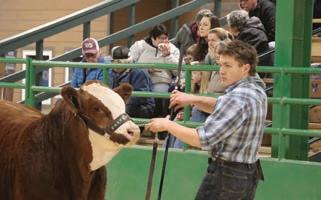
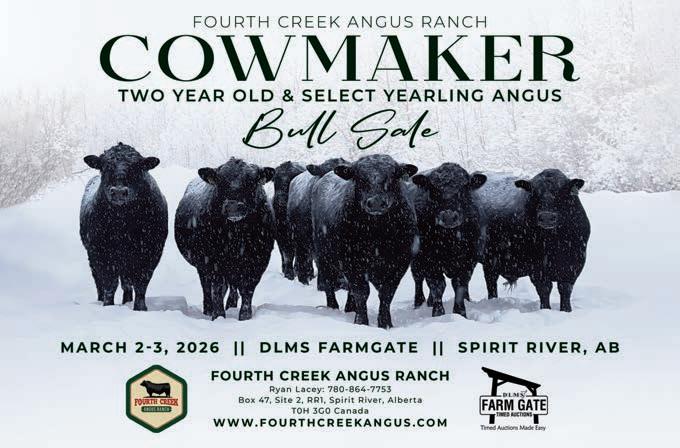
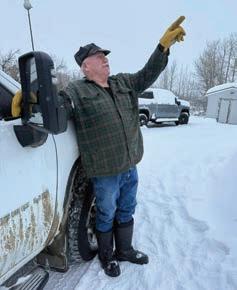
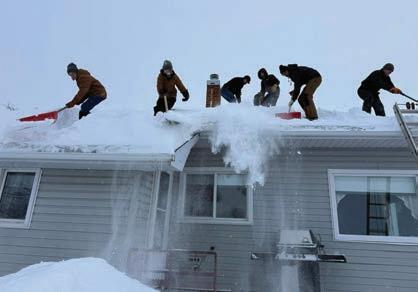

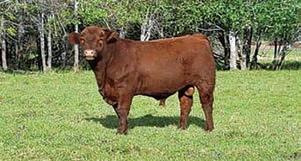


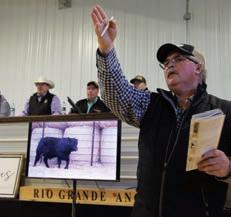

Using EPDs for Bull Selection
EPDsare calculated using pedigree, performance and genomic data
Canadian Angusmembers participatein the voluntary Performance Program through which they collect and submit performance data on fertility, calving ease,growth, structure, carcass quality, and feed efficiency for their calves. Abig thank you to allour members who take the time to measureand record this data;without you we cannot generate the genetic selection tools that we do Manymembers have startedmeasuringand submittingphenotypes for the new traits introducedhere. As you start calving, pleasedonot forget to record teatand udderscores on your cows.
EPDsarea genetic selection tool that some producersappreciate anduse to selecttheirbulls.
Production EPDs:
CalvingEaseDirect (CED) EPD describes the percentage of expected unassisted births when abull is exposed to first-timeheifers.The higher the number, the higher the probability that first-time heifers bred to thebull in questionwill calvewith no assistance. The EPD predicts theaverage differencein ease with whicha sire’s calves will be born whenhe isbred to first-calfheifers.
BirthWeight EPD(BW) EPD describesin pounds the differencein expected progeny weight,onaverage. Abull with a BW EPDof+4will, onaverage,sire calves that are2 poundsheavier thanabull with a BW EPDof+2 (givenequal management).
WeaningWeight EPD(WW) EPD describesin pounds the difference in expected weaning weight in progeny,onaverage.WWEPDisa predictorofa sire’s ability to transmit weaninggrowth to his progeny compared to that ofothersires. Abull with a WWEPDof+50willsire calves that are, onaverage, 20 pounds heavier at weaning thana sire witha WWEPDof+30 (givenequal management)
Yearling Weight EPD(YW) EPD describes in pounds the differencein expected yearling weight in progeny, onaverage.YWEPDisa predictor ofa sire’s ability to transmit post weaninggrowth to his progeny compared to that ofothersires. Abull with a YWEPDof+100willsire calves that are, onaverage, 30 pounds heavier at weaning thana sire witha WWEPDof+70 (givenequal management).
ResidualAverage Daily Gain(RADG)EPD describesananimal’s ability to grow post weaningona constant amount of feed RADG EPD, expressedin pounds per day, isa predictorofa sire’s genetic ability for postweaning gainin future progeny compared to that ofother sires, given a constant amount of feed consumed. Abull with an RADG EPD of+1.5willsire calves that,onaverage, will grow1 extra pound per day more than calvesfromanotherbull with an RADG EPDof0.5—on the same amount of feed.
Dry MatterIntake(DMI)EPD describes the feed intake potential for weaned calvesfromone sire compared to the feed intake potential of calvesfromanother sire. This EPDis expressed in pounds per day. Weaned calvesfrom Sire Awith aDMI EPDof0.50will eatapproximately 0.5 pounds of dr y matter a day more than weaned calvesfrom Sire B withaDMI EPDof0.00. This EPD should also be used in conjunction withagrowth EPD, such as YWEPD,as unlike RADG EPD,it doesnot include agrowth component Used independentlyofagrowth EPD the DMI EPD selects solely forappetite.
Scrotal Circumference EPD(SC)EPD describes the differencein average scrotal circumferencein sons. Expressedin centimetres,
a sire withan SCEPDof1.2will,onaverage,have sons with scrotal circumference that is1 centimetre larger than the sonsfroma sire with an SC EPDof0.2. SCEPD has also been correlated with daughter’s age at pubertyand progeny fertility.
Docility(Doc) EPD is expressedasa differencein yearling cattle temperament,with a higher valueindicatingmore favourabledocility It predicts theaverage differenceof progeny froma sire in comparison withanother sire’s calves Inherds where temperament problems are notanissue, this expecteddifference wouldnot be realized
Claw Set(Claw) EPD is expressedin unitsof claw-set score, with a lower EPD being more favourable indicating a sire willproduce progeny with more functional claw set. Ideally, toes are symmetrical, even andappropriately spaced
FootAngle (Angle) EPD is expressedin unitsof foot-anglescore, witha lower EPD being more favourable indicating a sire willproduce progeny with moreideal footangle.The idealisa45-degree angle at the pastern jointwith appropriate toe length and heel depth
Carcass EPDs:
Carcass Weight(CW) EPD is expressed in pounds andisa predictorof thedifferences in hot carcass weight ofa sire’s progeny compared to progeny ofother sires. Abull with a CW EPDof+30willsire calves that, onaverage, will result in10 poundsmore hot carcass weight than the progeny ofabull with CW EPDof+20.
Marbling (Marb)EPD describes the marbling potentialof calvesfrom onebull compared to the calvesfromanother bull, given the same management This EPDis expressedas the differenceingrade score. Given the samemanagement, the calvesfromabull with a Marb EPD of0.6willmarble ½agrade score better than the calvesfromabull witha Marb EPDof0.1.
Ribeye Area (RE)EPD describesin square inches the differencein ribeye area ofa sire’s progeny compared to progenyofother sires.
Fat Thickness (Fat) EPD expressedininches,describes the differences in back fat thickness at the12th rib (as measured between the12th and13th ribs)ofa sire’s progeny compared to progeny ofothersires.
Maternal EPDs:
Heifer Pregnancy (HPG) EPD isa selection tool to increase the probabilityor chance ofa sire’s daughters becomingpregnant as firstcalfheifers at first exposure.A higherEPDindicatesa higherprobability of conception.
CalvingEaseMaternal (CEM)EPD describes the probabilityof not requiring assistance when abull’s daughters calve for the first time. The higher the EPD, the higher the probability that abull’s daughters will not requireassistance at calving time.
Milk EPD describes, in pounds, the portionofa calf ’s weaning weight attributed to milk and mothering ability. On average,daughters from abull with a MilkEPDof+20will contribute 5 poundsmore to their calves’ weaning weight than the daughtersofabull with MilkEPD of +15. MilkEPDisa threshold trait thatshould be maintained at a moderate level dependent on the managementand environmentof the herd
Mature Weight(MW) EPD expressedin pounds, isa predictorof the differencein mature weight of daughtersofa sire compared to the daughtersofother sires.
Mature Height(MH)EPD expressedininches,MHEPDisa predictor of the differencein mature height ofa sire’s daughters compared to daughters ofother sires

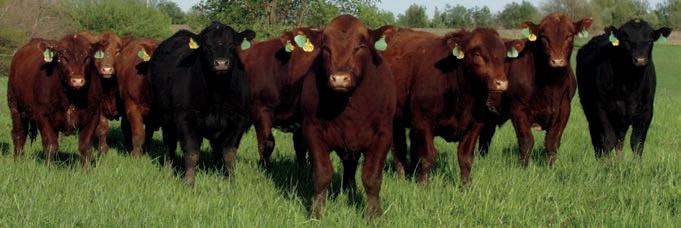
POSSIBLECHANGETABLE
ThistableprovidesEPDsusersanestimateofhowmuchanEPDcouldchangebasedonitsaccuracy. AYWEPDwith a10%accuracymaychange+/-23lbasmoreinformationontheanimalbecomes available. Incomparison,a YWEPDwith a90%accuracyiswithin+/-2.6lboftheanimal’s truebreedingvalueforYW.ItispossibletocalculatemoreaccurateEPDswhenthereismoreperformance,pedigree,progeny and genomicinformation availableonananimal.ThehighertheEPDaccuracy, themoreconfidencetheproducercanhaveinit.
PRODUCTIONMANAGEMENT
AccuracyCEDBWWWYWRADGDMIYHSCDocClawAngleHPCEMMilkFL TeatUDDRMWMHCWMarbREAFat 5%9.72.5514.924.30.0620.7470.470.7616.70.140.125.710.49.50.130.280.25380.52240.290.420.060 10%9.22.4214.123.00.0590.7080.440.7215.80.130.125.49.99.00.130.260.24360.49230.280.400.057 15%8.72.2813.321.70.0560.6680.420.6814.90.120.115.19.38.50.120.250.22340.46220.260.380.054 20%8.22.1512.620.50.0530.6290.390.6414.00.110.114.88.88.00.110.230.21320.43210.250.360.050 25%7.72.0211.819.20.0490.5900.370.6013.20.110.104.58.27.50.110.220.20300.41190.230.330.047 30%7.21.8811.017.90.0460.5500.340.5612.30.100.094.27.77.00.100.200.18280.38180.220.310.044 35%6.71.7510.216.60.0430.5110.320.5211.40.090.093.97.16.50.090.190.17260.35170.200.290.041 40%6.21.619.415.40.0390.4720.290.4810.50.090.083.66.66.00.080.180.16240.33150.180.270.038 45%5.61.488.614.10.0360.4320.270.449.70.080.073.36.05.50.080.160.14220.30140.170.250.035
50%5.11.347.912.80.0330.3930.250.408.80.070.073.05.55.00.070.150.13200.27130.150.220.032
55%4.61.217.111.50.0300.3540.220.367.90.060.062.74.94.50.060.130.12180.24120.140.200.028
60%4.11.066.310.20.0260.3140.200.327.00.060.052.44.44.00.060.120.11160.22100.120.180.025
65%3.60.945.59.00.0230.2750.170.286.10.050.052.13.83.50.050.100.09140.199 0.110.160.022
70%3.10.814.77.70.0200.2360.150.245.30.040.041.83.33.00.040.090.08120.168 0.090.130.019
75%2.60.673.96.40.0160.1970.120.204.40.040.031.52.72.50.040.070.07100.14
80%2.10.543.15.10.0130.157 0.100.163.50.030.031.22.22.00.030.060.058
85%1.50.402.43.80.0100.1180.070.12
90%1.00.271.62.60.0070.0790.050.081.80.010.010.61.11.00.010.030.034
95%0.50.130.81.30.0030.0390.020.040.90.010.010.30.50.50.010.010.012

Avg 5.30.360.7111.622.75.753.01.19.024.70.750.0070.07258.6 Min -32.0-12.0-5.6-1.1-9.9-19.06.8-0.5-19.0-22.40.01-0.069-0.41178.7 Max 22.614.8106.6180.755.318.189.62.837.065.71.540.0820.70326.6
SD 5.572.459.8816.775.894.058.220.376.768.260.150.0150.0814.10
Top1% 17.1-6.084.6152.037.314.073.11.924.745.11.14-0.0280.29294.1
Top5% 13.9-3.976.8139.332.311.866.41.720.138.21.01-0.0170.21281.9
Top10% 12.1-2.973.0132.930.010.663.31.617.534.90.95-0.0120.17276.3
Top15% 10.9-2.270.5128.728.59.861.31.515.932.90.91-0.0090.14272.8
Top20% 9.9-1.768.7125.427.49.159.71.414.631.30.87-0.0060.13270.0
Top25% 9.1-1.267.1122.526.58.558.41.413.530.00.85-0.0030.11267.6
Top30% 8.3-0.865.7120.025.68.057.21.312.528.70.82-0.0010.10265.5
Top35% 7.5-0.564.3117.724.87.556.11.311.627.60.800.0010.09263.6
Top40% 6.9-0.263.1115.524.17.055.11.210.726.60.780.0020.08261.8
Top45% 6.20.161.9113.423.46.554.11.29.825.60.760.0040.07260.0
Top50% 5.50.460.7111.422.76.053.11.18.924.60.750.0060.06258.3
Number 43,84644,70844,70844,70844,70843,84644,70844,7087,06427,06627,06627,06627,06644,694
Number 1516151615161516151615161516151115111516151614841515151615161516151615161516151615381538153915391539
Top2% 20-3.993141347512166 23171.7010.41-0.44571.120.60-0.09-0.140.07174.95203.18131.32161.94199.57
9123 19151.108.42-0.31450.850.40-0.060.280.03146.91140.17118.96133.91165.56 Top20% 16-1.47912027659 11 319141.008.05-0.29420.800.36-0.060.360.03141.24128.84116.33128.76158.13
Top25% 15-1.17811626648 10 218141.007.65-0.28410.770.32-0.060.430.02137.64120.11114.26123.49151.45
15-0.87611426628


+22.8-8.7+100.5+155.4+58.8+91.1+15.1+3.0+176.1+37.9+2.00+2.0+212.2+261.2+145+62.8-0.096+1.72+1.46135.3 1% +15.6-4.3+78.9+127.4+41.9+75.1+9.1+2.0+133.1+27.8+1.60+1.6+175.4+196.9+119+50.8-0.036+1.07+0.66105.3 5% +11.5-0.8+72.4+116.3+37.4+69.8+6.8+1.7+119.1+24.6+1.50+1.5+158.0+171.4+113+45.4-0.016+0.88+0.4695.5 10% +9.5+0.1+69.2+110.8+35.2+67.0+5.7+1.6+112.2+23.0+1.40+1.5+149.4+159.2+110+42.8-0.006+0.79+0.3790.4 15% +8.3+0.7+67.0+107.2+33.8+65.2+4.9+1.5+108.4+22.0+1.40+1.4+143.7+151.5+109+40.9-0.006+0.73+0.3287.0 20% +7.3+1.1+65.2+104.4+32.7+63.7+4.3+1.4+105.2+21.2+1.40+1.4+139.2+144.8+107+39.6+0.004+0.69+0.2884.5 25% +6.6+1.4+63.8+102.0+31.7+62.5+3.8+1.3+102.7+20.5+1.40+1.4+135.3+139.2+106+38.5+0.004+0.65+0.2582.3 30% +5.9+1.7+62.5+99.9+30.9+61.3+3.3+1.3+100.4+19.9+1.30+1.4+131.9+134.0+105+37.4+0.014+0.61+0.2280.5 35% +5.3+1.9+61.3+98.0+30.1+60.3+2.9+1.2+98.2+19.3+1.30+1.4+128.6+129.2+104+36.5+0.014+0.58+0.2078.7 40% +4.7+2.2+60.2+96.2+29.4+59.3+2.5+1.2+96.2+18.7+1.30+1.3+125.4+124.6+104+35.6+0.014+0.55+0.1877.1 45% +4.1+2.4+59.1+94.5+28.7+58.2+2.1+1.1+94.2+18.21.30+1.3+122.5+120.4+103+34.7+0.024+0.52+0.1675.6
50% +3.6+2.6+58.0+92.7+27.9+57.3+1.7+1.1+92.4+17.7+1.30+1.3+119.7+116.3+102+33.9+0.024+0.49+0.1474.1
60% +2.5+3.0+55.9+89.2+26.5+55.2+1.0+1.0+88.2+16.7+1.20+1.3+114.3+108.7+101+32.2+0.034+0.44+0.1071.2
70% +1.4+3.5+53.5+85.4+24.9+52.9+0.1+0.9+83.8+15.7+1.20+1.2+108.3+101.0+101+30.3+0.034+0.38+0.0768.1 80% 0.0+4.1+50.7+80.9+22.9+50.1-0.9+0.8+78.8+14.5+1.20+1.2+101.4+92.6+99+28.1+0.044+0.31+0.0364.3
Low -15.0+11.1-18.3-31.1-10.7-14.0-14.2-1.0+17.7-4.2+0.40+0.5+45.0-12.6+61+0.5+0.154-0.92-0.44-19.3
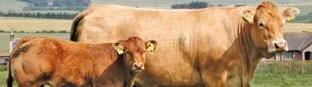

5% -5.117-1.9811243569101.31818-0.67511.430.06-0.13 10% -4.515-0.9761153266
Red PollCattlearejustnotplainredcows.Lastcentur y, whenfarms weremoreself-sufficientandtheykeptcattlefortheir ownmeatandmilkproduction,thecattlemostcommonlyusedwereRed Poll.They hadamplemilkofexcellentqualityand producedtasty,welltextured,tenderbeef.Theseeasycare,fertile,nofusscattlewerethechoiceoffarmer sbackthenand thosetraitsthat wererecognisedassoimportantthen,arestillthetraitssoughttodaybytheBeefIndustr y.
TheBeefIndustr yismuchmoresophisticatedsincethedayofthehousecow,withthefocusmovingawayfromthelocal tradetocow/calfoperationsandthathasintroduced awholerangeofmar ketvariations.RedPollcattlecanmeetthese demandsandfillawiderangeofrequirementsontheirownorincrossbreedingprogramstoimprovethetraitsofother breeds.Whileprimarilynowusedas abeefanimal,a smallnumberofmilkingherdscontinue.Milkingcowswillgive averageyieldsof5,000litres @4.2%butterfatand3.5%protein.
TheRed Pollcowissomethingspecial.Shewilldeliveryou acalfever yyearuntilyoudecidetoreplaceherintheherdand thiscanbe over14year sofage.Red Pollfemalescomeintopubertyat 9monthsofageandearlierandwillhavetheirfirst calfat24monthsofageand ever yyearafterthat.Theyhaveamplemilktonursetheircalvesuntil weaning ,andwill keep onfeedingthosecalvesifyoudon’tweanthem.AnyfemaleherdbasedonRed Pollcalves,is anaturallyproductiveherd.
TheRedPollbullisa mostusefulanimal.Hehas awell-housedpenisandheapsoflibido. Youcanrestassuredthathewill gethisfairshareofcowsandprobablymoreanditwouldbefairtoexpect aRed Pollbulltoservice40cowsormoreand somewilldoupto70cows.Theyarevery fertilewiththeBREEDPLAN averagefortesticlecircumferencebeing37cm.So, they arewellendowed!Theflatshoulder sandgenerallyflatter,ratherthanrounderbonestructureisconducivetoeasier calving .Thisisnotattheexpenseofmuscle,becausetheBreedisabove averageforthistrait.Ourcarcasesuccesses attributetothis.InAustraliathis wasprovenmany, manytimesnationallyincarcaseandtaste-testtrialswhere, overa rangeofproducts,Red Pollbeef wasthemostoutstanding .Thisprobablyhad alottodowiththenatureoftheanimals. Theycanbegathered,handledandtransportedwithminimumfussandwilladapttochangingconditionsextremely well. Red Pollcattlehavemovedwiththetimesandarecommerciallydesirablefortoday’s mar ket.Profitabilityisdetermined by fertilityandtheabilitytomaximisekgsperhectarewith aminimumofeffort.Thisbreedofcattlecansatisfythe commercialexpectationsof amoder nindustr y. Forfurtherinformationgotohttp://redpollbeef.ca



Current Population-all calvesborninthelast2 years(2023-2024)


ActiveSire-anysirewitha calf reportedinthelast2 years(2023-2024)
ActiveDam-anydamwitha calf repor tedinthelast2 years(2023-2024)

PercentilesshowwhereananimalstandswithintheSimmentalpopulation.ThefollowingpercentilesarebasedonCSAcurrentcalves(2023-2024).
19.513.2106.4160.914.845.691.624.625.953.01.520.0680.73153.485.8
3.631.878.4113.962.923.345.702.552.907.720.1330.01200.0839.844.73 1% 15.00.194.2135.89.841.284.021.517.638.91.20-0.1520.12127.779.2 2% 14.10.691.4131.89.040.382.520.916.536.61.17-0.1470.09124.377.8 3% 13.41.089.8129.48.539.881.520.515.635.11.14-0.1450.07122.576.8 4% 12.91.388.7127.48.239.480.920.215.034.01.12-0.1430.06121.476.2 5% 12.51.687.8125.97.939.180.219.914.733.11.11-0.1420.05120.375.6
10% 11.02.384.8121.06.838.178.219.013.429.91.06-0.1370.02116.973.7
15% 10.02.882.7117.76.037.376.818.412.727.81.03-0.1340.00114.472.6
20% 9.23.281.2115.05.436.775.617.912.226.31.00-0.132-0.01112.671.5
25% 8.53.579.8112.45.036.274.717.511.825.10.98-0.131-0.02111.070.7
30% 7.93.878.5110.14.535.773.817.111.424.00.96-0.129-0.04109.670.0
35% 7.44.077.2108.34.135.373.016.811.122.90.94-0.127-0.05108.369.3
40% 6.94.376.1106.33.834.972.216.410.721.90.93-0.126-0.06107.068.7
45% 6.44.575.0104.53.434.571.516.110.420.80.91-0.125-0.07105.868.2
50% 6.04.774.0102.93.134.170.815.810.120.00.90-0.123-0.08104.567.6
Num 8,4378,4378,4378,4378,4378,4378,4378,4378,4378,4378,4378,4378,4378,4378,437
Average 8.53.280.5118.24.624.164.215.211.128.30.89-0.094-0.04113.973.5
Minimum -5.0-5.343.954.6-6.86.637.53.5-16.3-10.20.23-0.161-0.5470.051.2
Maximum 22.412.1126.6190.114.442.993.926.625.671.61.54-0.0230.55174.4105.9
SD 3.341.929.5815.902.624.466.522.522.758.720.1430.01500.10211.195.97 1% 16.8-1.7104.5156.410.835.280.120.917.449.21.23-0.1290.22141.988.9 2% 15.8-1.0101.6152.110.134.078.020.116.546.71.19-0.1250.18138.687.1 3% 15.1-0.6100.0149.29.633.176.819.715.945.11.16-0.1220.16136.485.9
4% 14.7-0.398.5147.09.232.475.919.515.643.91.14-0.1200.14134.785.0 5% 14.3-0.197.4145.48.931.975.119.215.343.01.12-0.1180.13133.384.2 10% 12.90.893.2139.08.030.072.718.414.439.51.07-0.1120.08128.581.6 15% 12.01.390.3134.77.328.771.017.813.837.21.03-0.1080.06125.479.7 20% 11.21.788.2131.36.827.769.617.313.335.41.01-0.1050.04123.078.3
25% 10.62.086.5128.66.426.968.516.912.933.90.98-0.1030.02121.177.1
30% 10.12.385.0126.16.026.267.516.612.532.60.96-0.1010.01119.376.1
35% 9.62.683.6123.85.625.566.616.212.231.40.94-0.099-0.01117.775.2
40% 9.12.982.4121.75.325.065.715.911.830.20.93-0.097-0.02116.274.4
45% 8.73.181.2119.74.924.464.815.611.529.10.91-0.095-0.03114.873.7
50% 8.33.380.1117.74.623.864.115.311.228.10.89-0.093-0.05113.473.0
Num 35,57735,57735,57735,57735,57735,57735,57735,57735,57735,57735,57735,57735,57735,57735,577









February 19-20,2026





THURSDAY


























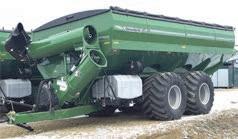
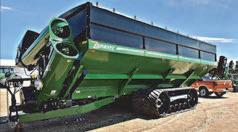
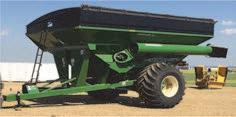
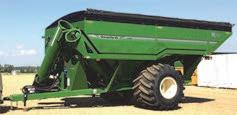
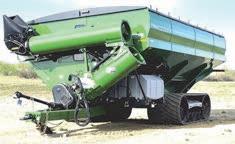






WEEKEND Jan17/26(prel)Jan10/25(prel)Jan18/24
54,13954,898N/A EAST 10,64711,872N/A WEST 43,49243,026N/A WEEKEND Jan24/26 (est)Jan17/26 (est)Jan25/25 US 531,000561,000591,000 CANADIAN CATTLEGRADES WEEKEND Jan17/26Jan10/25Jan18/25 A 40,08641,64642,705 B 578467446 D 5,3685,4626,497 E 250 186179
DATE Tues,Jan20,2026 Tues,Jan13,2026 No.3,696 Head 6,217 Head FEEDERSTEERS
600-699 $600.00$644.00$600.00$642.00
700-799 $510.00 $575.00$500.00$565.00
800-899 $445.00$511.00$450.00$522.00
900-999 $400.00$470.00$415.00$491.00
1,000+ N/AN/AN/AN/A FEEDERHEIFERS
BID LOWHIGH LOWHIGH
300-399 $725.00 $835.00$650.00$750.00
400-499 $650.00$747.00$625.00$720.00
500-599 $600.00$680.00$615.00$680.00
600-699 $525.00$608.00$500.00$580.00
700-799 $475.00$579.00$450.00$515.00
800-899 $400.00$474.00$410.00$470.00
900-999 $375.00$435.00$375.00$425.00
$200.00$235.00$200.00$224.00 D3 COWS D3 COWS
$175.00$200.00$180.00$200.00 SLAUGHTERBULLSSLAUGHTERBULLS
$200.00$245.00$200.00$245.00 REPLACEMENT CATTLE FEEDER COWSFEEDER COWS





Highway43andRangeRoad91, Wembley,AB Ph:(780)766-2887 |Fax:(780)766-3751 admin@cassityequipment.comIwww.cassityequipment.com
REGULARCATTLE SALES (REG) |FEEDER SALES (FDR) |BRED COW&HEIFER SALES (BCH)
REG– Mon, Feb2nd – 9:00a.m.
REG– Mon, Feb9th – 9:00a.m.
REG– Mon, Feb 16th – 9:00a.m.
REG – Mon, Feb 23rd – 9:00a.m.
BCH– Sat, Feb 28th – 12NOON
REG– Mon,Mar2nd – 9:00a.m.
REG– Mon,Mar9th - 9:00a.m.
REG– Mon,Mar 16th - 9:00a.m.
REG – Mon,Mar 23rd - 9:00a.m. SATURDAY, MAR 28 | 12NOON
TSI ALL BREEDS BULL SALE AND BRED COW& HEIFER SALE
BOOK YOURLIVESTOCK TODAY! | WATCH/BIDONLINE AT lmaauc�ons.com

(E)thorsbystockyards@outlook.com (Web)www.thorsbystockyards.ca



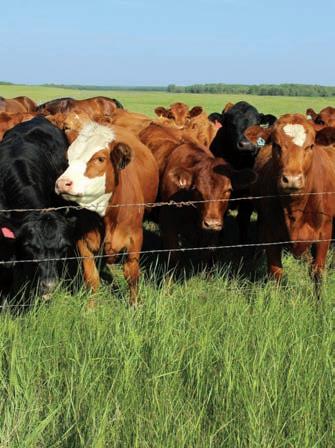
JenningsMartinCattleBuyingwillbethereforyouandyouroperation asyouprepareforyour2026springandsummermarketing.Andwhilenotwo yearsseem to bethesame, Iremaincommittedtocontinueoffering fairprices whileproviding astress-freeenvironmentforbothyouandyourcattle. Our facilit yinLaGlacecontinues to remainopen,buyingallclassesofbulls, cows, steersandheifers,savingyoutheneed forshipping to localorsouthernmarkets.
Callus todayandmaximizeyourSpring& Summersaleopportunities. BUILDING FORSUCCESS| WORKINGWITHINTEGRITY Checkoutour Facebook Page forWeekly Updates
JENNING YO UR ST RE SS -FRE ES EL LI NGSOLUT IO N RESS-FREESEL Je n ni ngsMa r ti n •7 80.933.1 023 JenningsMa rt in

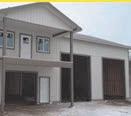

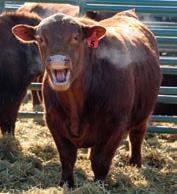










*Offervalidwith20%ofpurchasepricedown.Loadersandcabsarefactor yinstalled.Itemsmaynotbeexactlyasshown,accessories,attachments,andimplementscostextra.Taxes,set-up,delivery chargesnotincluded.PricesarebasedontheUSexchangeandmaybesubjecttochange.A documentationfeeofupto$349willbeappliedtoallfinanceofferings.Additionalfeesmayapply. Programsandpricessubjecttochangewithoutnotice. SeePrairieCoastequipmentforfulldetails.Somerestrictionsapply. Offervaliduntil Februar y28,2026.whilesupplieslast. Financingonapproved John DeereFinancialcreditonly. Limitedtimeofferwhichmaynotbecombinedwithotheroffers.QID#335791035075Ew/loader,












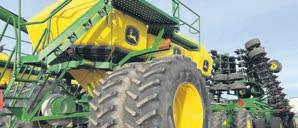
Ottawa, Ont, Jan. 6, 2026
Swine Innovation Porc (SIP) is pleased to announce four research projects under its Advancing Swine Research Call for Proposals, a national initiative designed to strengthen the resiliency, sustainability, and competitiveness of Canada’s pork sector.
Supported by the Pork Promotion and Research Agency (PPRA), the projects announced today represent the first set of approved investments under a highly competitive, industry-guided research call. Additional approved projects will be announced as partner co-funding decisions are finalized.
For the four projects announced today, SIP will invest up to $488,347, mobilizing up to $1.18 million in total project funding to advance innovation across priority areas including housing systems, animal health, energy efficiency, and product quality.
“SIP is proud to lead this national research effort that channels research investments into meaningful, targeted impact for producers and processors,” said Mark Ferguson, Chair of SIP. “This call delivered exceptional proposals from across Canada, and the projects we are advancing will help producers meet today’s challenges while positioning the sector for long-term success.”
Projects were selected through a rigorous review process informed by industry input and scientific expertise, ensuring research outcomes are relevant, impactful,
and positioned to deliver value back to producers and processors.
The projects will explore innovations such as alternative lactation housing systems, vaccine development for PEDV and PDCoV, passive barncooling technologies to reduce heat stress, and advanced food-safety interventions to improve pork quality.

“This announcement reflects important outcomes from a structured, nationally co-ordinated approach to deploying industry-driven research,” said Daniel Ramage, General Manager of SIP. By working closely with provincial pork organizations, industry partners and the PPRA, we are ensuring every research dollar supports practical solutions that deliver value back to producers and processors.”
The Advancing Swine Research initiative supports one to three-year projects running from 2025 to 2028 and involves collaboration among leading research institutions across Canada.
To learn more about the Advancing Swine Research Call for Proposals and the projects announced today, visit research.swineinnovationporc.ca. NH

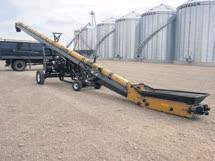
The1650-TLand1658-TL’s newoil-damage preventionfeaturesincludeachevron-patterned beltforsuperiorseedcarriage.
Thesebinspreventclogsandare easytoclean, reducingmaintenancetimeandloweringthe riskofcontaminationatpricescomparableto corrugatedstorage


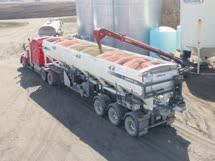


Thisfive-compartmenttenderisableto transportfertilizerandseedatthesametime. Theuseofconveyors,ensurenoseeddamage orcross-contamination,unloadingat arateof2 tonsperminute.

now$49,999 now$49,999
2008CLAAS570R
620FRONTDUALS &28L26REARTIRES W/4WD,MAVCHOPPER,OUTBACKS GPSW/STEERING,SUNNYBROOK CYLINDER,2070SEPHRS, STK2448
NEW2023KUBOTAL3902
0%FINANCINGFOR60MONTHSOAC, LOCATEDATKUBOTACOUNTRY, 37.5HP STK10210
now$29,999 now$29,999
NEW2023VERMEERR2300 23FTMAXRAKING WIDTH,72IN.MAX WINDROW WIDTH STK9921
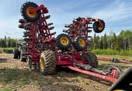
now$34,999 now$34,999
2006CLAAS580R
4WDREARAXLE,900/60R32FRONT TIRES,OUTBACKGPSSTEERING,1600 SEPHRS, STK1136
$110,000 $110,000
NEW2023KUBOTAM5-091
0%FINANCINGFOR60MONTHSOAC, LOCATEDATKUBOTACOUNTRY, 92.5HP STKU000052

now$29,999 now$29,999
2002CLAAS480R STANDARDHOPPER,3-DSIEVE, QUANTIMETER,3715/2889HRS STK1748
$225,000 $225,000
NEW2024JCB525-80AGRIPLUS 25FT10IN.MAXLIFTHEIGHT,12000 LB MAXLIFTCAP,145 HP, 25KM/H MAXSPEED STKU001148
NEW2023KUBOTARA2076
$565,000 $565,000
NEW2024SEEDMASTERULTRASR 60 FT,735BUSHELSTOTALCAP, INCLUDESDELIVERYANYWHEREIN ALBERTA STKU000988
NEW2024JCB407AGT4 64 HP,30KM/HMAXSPEED STK U001057
0%FINANCINGFOR60MONTHSOAC, LOCATEDATKUBOTACOUNTRY STKU000138 now$45,999 now$45,999 NEWHIGHLINEBP660-400 LIFTUPTO6FTBALES,67.5IN.FORK LENGTH,HI-FLOTATIONTIRES




Two leading John Deere dealerships, Greenvalley Equipment Ltd. (part of the Agri Western Dealer Group), and Enns Brothers Ltd., are pleased to announce their intention to join forces to create an even stronger John Deere dealership network to serve Manitoba.
This strategic move brings together two trusted organizations with deep agricultural roots, shared values, and a long history of supporting farmers across Manitoba. The new partnership will create a stronger, more resilient company, focused on enhancing customer service, strengthening employee opportunities, and investing in the future of agriculture.
“This represents an exciting step forward for both our customers and our employees,” said Curwin Friesen, President of Greenvalley Equipment Ltd. “By combining resources, expertise, and technology, we’ll be able to serve farmers with an even broader range of solutions and faster access to the parts and service they depend on.”
“Our companies share the same commitment to customers, employees, and communities,” added Ray Bouchard, CEO of Enns Brothers Ltd. “Together, we’ll have the scale and financial strength to continue investing in innovation and meeting the evolving needs of our industry for years to come.”
• Expanded Equipment Offerings: better access to a wider range of John Deere equipment, precision ag technology, and complementary solutions tailored to your farm.
• Enhanced Parts Access: Real-time visibility into a larger combined parts inventory means faster service and less downtime when it matters most.
• Greater Service Capacity: A larger team of certified technicians and precision specialists will provide faster, more specialized support.
• Stronger Financial Foundation: Together, we’re better positioned to invest in the technology, infrastructure, and people needed to meet the evolving needs of modern agriculture.
• Local Ownership and Decision-Making: We remain proudly local — committed to serving Manitoba farmers with the same trusted faces and familiar service.
• Same People, Same Commitment — You’ll continue working with the same dedicated teams — now with even more support behind them.
The expected timeframe for this change is April 2026, subject to all customary closing conditions. Together, Greenvalley Equipment and Enns Brothers are proud to grow stronger for you, your farm, and the future of agriculture. NH
Proudly serving the BC and Alberta Peace Region Since 1977
Nevada Goertz (R), Goodlow
Jaycob Farmer, Quesnel
Brynn Ganson, Chetwynd
BARRELS – NORTH REGION 2025-26 Rank Name/Location
Kenzie Lloyd, Quesnel
Gitscheff, Arras
Blom, Chetwynd
Bowden, Quesnel
Charlee Farmer, Quesnel
Pypre Kilgour, Dawson Creek
Rayne King, Dawson Creek 19
Katarina Olmstead, Two Rivers 18
Brooke Gladysz, Charlie Lake 17
Nevada Jones, Prince George 15
BULL RIDING – NORTH REGION 2025-26 Rank Name/Location Points
Nolan Bergen, Gundy
Haden Hamilton, Charlie Lake
Jase Sawley (R), Vanderhoof
Jonas Frizzi, Chetwynd
Ryan Rombs, Beaverlodge
Mavrik Studley, Dawson Creek 0
Stopintodayorvisitnewholland.com.

NewHollandT5.115 tractor(2014)w/loader&bucket, 6750hrs,cab,FWA..............................................................comingsoon KubotaMX5800 tractor(2019),w/loaderandbucket, 580hours,ROPSHST,FWA...................................................comingsoon
Kenton Herman, Cecil Lake 0
Draydon Lee (R), Quesnel 0
Zain Redwood, Dawson Creek 0
GOAT TYING – NORTH REGION 2025-26
Rank Name/Location Points
Nevada Jones, Prince George 50 1.



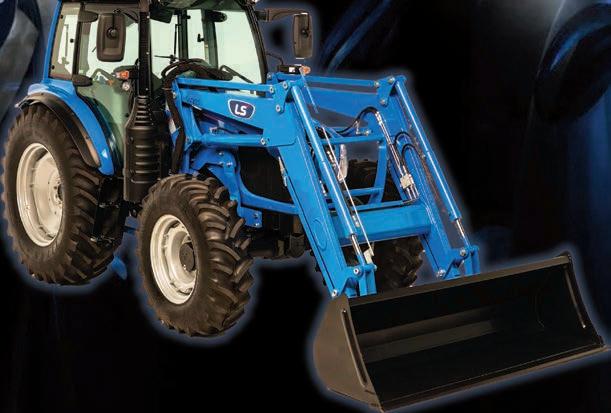


Agriculture and Agri-Food Canada, January 23, 2026
Agriculture and Agri-Food Canada, January 23, 2026 – To support the farming and agri-food industry in Newfoundland and Labrador, the Honourable Heath MacDonald, Minister of Agriculture and Agri-Food Canada, and the Honourable Pleaman Forsey, Minister of Forestry, Agriculture and Lands, are announcing measures to assist farmers and producers affected by drought conditions in 2025.
The Federal and Provincial Governments are opening the 2025 AgriStability program to accept late participants. Interested producers must submit their final application by the September 30, 2026 deadline.
Opening late participation for 2025 ensures producers, such as fruit and vegetable growers, can access AgriStability support to help with problems they faced due to extreme dry conditions in 2025.
All farmers and producers are encouraged to apply for federal-provincial costshared Business Risk Management Programs for 2026, including:
• AgriStability: Protects producers against large declines in farming income for reasons such as production loss, increased costs and market conditions. The enrollment deadline for the upcoming 2026 program year is April 30, 2026.
• AgriInsurance: Provides producers with production insurance against uncontrollable natural perils. The enrollment deadline is April 30, 2026.
• AgriInvest: Helps producers manage small income declines and make investments to manage risk and improve market income. The deadline to submit AgriInvest program forms is September 30, 2026.
For more information on AgriInsurance, contact the Newfoundland and Labrador Department of Forestry, Agriculture and Lands by phone at 709-637-2378, or by email at SCAP@gov.nl.ca.
For more information on AgriStability or AgriInvest call toll free 1-866-367-8506.
“It’s important that governments are unified in support of Newfoundland and Labrador farmers when they face stressful and uncertain times. That’s why we have made changes to AgriStability, in addition to offering other Business Risk Management programs, to support the producers who were affected by extreme drought in 2025.” The Honourable Heath MacDonald, Minister of Agriculture and Agri-Food “Our new government is working to build a future where opportunities thrive, and government works for all of us. As partners in the national Sustainable Canadian Agricultural Partnership, we are committed to finding practical solutions to assist our hard-working farmers and producers and support our rural communities. All farmers and producers are encouraged to apply for programs that protect their valuable products and assist in difficult times.” The Honourable Pleaman Forsey, Newfoundland and Labrador Minister of Forestry, Agriculture and Lands
• AgriStability protects Canadian producers against large declines in farming income for reasons such as production loss, increased costs and market conditions. It is one of the Business Risk Management (BRM) programs under the Sustainable Canadian Agricultural Partnership (Sustainable CAP). Farmers are encouraged to make use of BRM programs, like AgriStability, to protect their farming operation and help make Newfoundland and Labrador agriculture strong. NH


In early winter of each year, Dr. Xianming Chen, USDA-ARS, and WSU, Pullman, WA, issues one or more stripe rust forecasts for the PNW region in the USA. Winter wheat crops in the PNW region serve as an important source of stripe rust inoculum for Prairie cereal producers. These PNW forecasts provide a heads-up for Prairie cereal producers regarding potential stripe rust risk for the upcoming growing season.
Dr. Chen evaluates weather data (mainly temperatures) for November and December of each year as it impacts potential overwintering and subsequent development of stripe rust on PNW winter wheat crops. In his January 5, 2026 risk update, Dr. Chen indicates that 2026 is forecast to potentially have severe levels of stripe rust, with 40-60% yield losses in highly susceptible varieties. Overall, potential losses in commercial fields of winter wheat will vary based on the susceptibility level of the variety being grown, with yield losses in the 0-40% range. Moreover, growers considering spring wheat in the PNW are encouraged to avoid planting 2026 fields with moderately susceptible to susceptible varieties. For winter wheat fields, Dr. Chen emphasizes the importance of fungicide application at herbicide timings, especially for susceptible to moderately susceptible to intermediate varieties. For Prairie wheat growers the development of stripe rust in the PNW can represent an important source of disease for the Prairie provinces.
The Prairie Crop Disease Network (PCDMN) is currently preparing for the 2026 growing season and will launch weekly cereal rust risk forecasts starting in mid May 2026. With the help of Environment Canada, we look at reverse wind trajectory occurrence and frequency for Prairie sites for the PNW, and the Texas/Oklahoma, Kansas/Nebraska regions. These trajectories can readily move cereal stripe, leaf, stem and crown rust uredospores from source locations in the USA into the Prairie region. Typically trajectories from the PNW are of most concern for central to western Prairie cereal growers, while trajectories from the Texas to Nebraska corridor are of most concern for central to eastern Prairie growers.
In addition to the occurrence of wind trajectories, the PCDMN also looks at the status of cereal rust development for source locations in the USA, as well as Prairie weather conditions and crop growth stages. Based on this information the PCDMN issues weekly updates for Prairie regions regarding potential risks and the need for timely targeted in-crop scouting.
Unfortunately, damaging cereal rust levels can develop quickly, and without timely scouting and fungicide application, the efficacy of control can be significantly reduced. The PCDMN cereal rust forecasts help to identify Prairie regions with an elevated rust risk, thus allowing growers to make timely fungicide use decisions.
The PCDMN cereal rust forecasts appear on the in-season updates section of our website, where one can can also review past in-season updates for a range of crops and disease issues. The in-season updates provide a summary of the weekly rust forecasts, while the Cereal Rust Risk section provides the full weekly reports from current and past growing seasons. Farmers are encouraged to consult the most recent Manitoba, Saskatchewan and Alberta seed guides for information on Prairie cereal variety reactions for stripe rust.
As the 2026 growing season approaches, the PCDMN will be monitoring further rust risk forecasts from Dr. Chen (expected in March 2026) as well as the status of rust development in source USA locations. Further updates will be provided with weekly cereal rust risk forecasts starting around mid-May. Stay tuned and monitor our PCDMN website and X (Twitter) feed for further information. NH

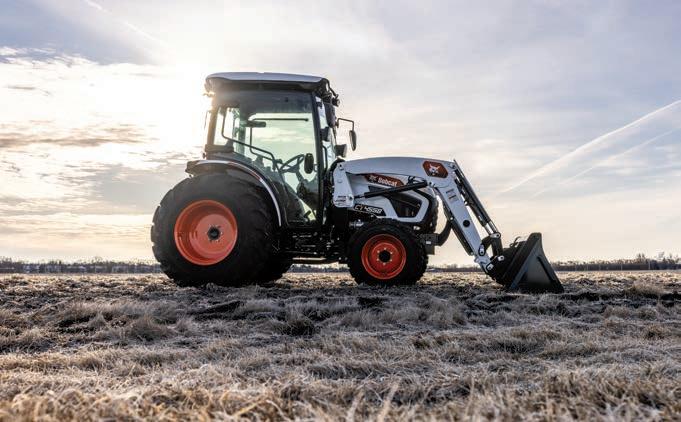



ANIMALS, LIVESTOCK, POULTRY & PETS
AUCTIONS &
20 ANGUS BRED Heifers for Sale. Call Keith for more information at 780-274-0699.
WANTED: SKELETON (rock picking) bucket for skidsteer. Call Neal 250-784-7160.
- HEREFORD
CROSSBRED commercial bulls, semen-tested, vet inspected, vaccinated, free delivery in Peace Country. 780-836-0117 or 780-8360552.
2 YR OLD registered red simmental bulls for sale by Private Treaty. 780-354-8842 or 780-814-2567.
(50) BLACK ANGUS and Angus/Hereford cross cows. Bred to Black Angus & Hereford bulls. April/May calvers. Preg-checked Nov. 28. Will feed to February. Info 250-263-5871.
QUARTER HORSES for Sale. Call Keith for more information at 780-274-0699.
LOOKING FOR A female Lassie Collie or Sheltie for farm pet. Call Jake 780-9273638.
SPEED CONTROLLED RUBBER finger chicken plucker for sale, call 780772-6544.
FOR SALE: Big horn roping saddle. Padded seat, bridle included, asking $500 OBO. Call 780-354-3435.
CANADIAN ARCOTT
YEARLING ewes bred for February. Open ewe lambs, can deliver. Donald Johnston 780-837-1770.
CANADIAN ARCOTT
YEARLING ram, ram lambs for sale, can deliver. Call Donald Johnston, Donnelly, 780-837-1770.
Buying Antiques: Coins, toys, advertising, tools & more. Will buy bulk. Call/text 780832-8216.
LOOKING FOR a 1980-87 cab for International 1854 3tonne truck. Call Abe 780841-4740.
1950'S ERA FORD truck found when clearing brush. For details and pricing, call 780-772-6544.
1975 FORD 8000 w/B&H, 6V "Jimmy" engine, 13spd transmission, not running. 780-836-2107 or 780-6189161.
LOOKING FOR AN older (70's era) single axle water truck with spray bar. 780523-1488.
LOOKING FOR old or used reefer vans. Call/text 780926-6789.
MILITARY BUILT CAT D8 dozer. Includes blade & winch, taking offers. 780523-1488.
WALL FRAMING TRAILER, on wheels. Deck screws out to 8’. 780-772-6544.
Dismantling cultivator, disc, and plows for parts. Some air drills. 780-831-6747.
HTS WESTERN SNOWBLADE, like new, 7'6", fits any pickup truck. C/w all accessories. 780814-2567.
SNO-CO 30" ROTARY separator. Call Ed 780-6189161 or 780-836-2107.
ALLIED 794 FEL, fits JD 4240/4440, with HD bale spear. $5,000. 780-831-4233 or 780-766-2538.
CAT D8H dozer blade for sale. Hydraulic tilt on one side. Call 780-618-9161 or 780-836-2107.
250 3”-4” x 7ft fence posts for sale. $3.50 each. Call Doug 250-219-4139.
VALLEE FORESTRY BIG Red Portable Sawmill, undercarriage, and trailer. Call for price and details. 780-926-6087.
1981 HONDA 185 XL, enduro, excellent shape, always covered, $3000. 250219-4139.
HEATER FROM INTERTHERM furnace, good condition, taking offers. Call Ben 780-835-4457.
UPRIGHT PIANO for sale. Taking offers, For more information or pricing, call 780-772-6544.
WANTED WAFFLE IRON cast iron with five hearts. Call Ernest 780-926-9412.
BUILT RIGHT SHEDS. Building quality shelters. Call John 780-835-1908 for your quote today.
MANNING SEED Cleaning Plant is looking for a Manager Trainee. Wages negotiable. Darlene 780-8363511, 780-626-0118.






185/75R14 TIRES on rims, quantity for sale. Call Roy, 780-835-4457.
195/75R14 TIRES on rims, quantity for sale. Call Roy, 780-835-4457.
GREENFEED OAT BALES for sale, 1150 lbs., no rain, put up in August, $50/bale. 403-886-2088.
HARVEST & SPRAYING
205/75R15 TIRES on rims, quantity for sale. Call Roy, 780-835-4457. 2011 NH BR7090 round baler, mega-wide pickup, excellent condition, $27,000. Call Doug 250-219-4139.
REAL ESTATE & RENTALS
FARMS & RANCHESALBERTA HAYING & HARVESTING
1800 sqft home on QTR/section, f/basement, 400 sqft upper bedroom, 1 bath. 780-971-2592 after 6PM.
FARMS & RANCHESALBERTA
LOOKING TO LEASE farmland in the GP/Sexsmith/Teepee Creek area. Contact David to discuss options. 780-9786768.
REAL ESTATE PROPERTY & LAND
16' HEAVY DUTY bale frame. Needs hitch, would make excellent bale wagon. Call 780-772-6544.
3/4T AUTOSTEERING bale wagon for sale. For more details and pricing call 780772-6544.
1971 UTB 65 HP 4WA, diesel, 3 new tires, 661 hrs, excellent condition, $6000, 780-971-2592. 1958 FARMHOUSE TO be moved by mid-April 2026. 950 sq.ft., $30,000 OBO. 250-569-7509, Grimshaw, AB.
WANTED: 4 or 5 bottom pulltype Moldboard plow. Auto Re-Set, colour doesn’t matter. Call 250-719-4967. LAND AND BUSINESS OPPORTUNITY, remote 20 acres on pavement. Unfinished hwy lodge, gardens. Duane 250-2325400.
TRACTORSJOHN DEERE
WANTED: BARLEY, WHEAT and oats for feedlot. Can pickup with Super B. Gary 780-518-3992.
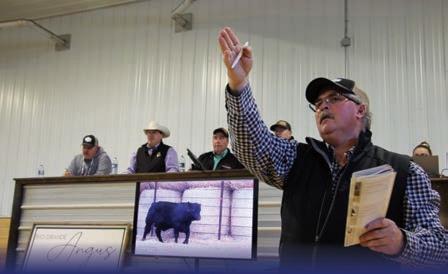

WANTED: JOHN DEERE Model 80 tractor for parts. Call 780-814-0523.


It is important to monitor grain temperature and to keep stored grain cool and dry by regular aeration or by turning it. High moisture and warm temperatures in grain allow for the rapid growth of insects, fungi and the possible production of mycotoxins.
Grain is a very good insulator. When it is undisturbed, it holds temperature well. If warm grain is placed into storage and left undisturbed, convection currents develop and cause hot spots and moisture condensation. The greater the temperature differential (the difference between the temperature of the grain and the outside temperature), the stronger the convection currents. The stronger the convection, the greater the effect of heating and condensation on the grain. This is particularly evident when stored grain is not leveled and the grain bulk forms a peak.
The cycle of convection currents in bin-stored grain when ambient air outside the bin is cold and the grain is warm. In the bin:
• The surface of the grain bulk forms a peak.
• Grain at the surface and just below the surface has high moisture content.
• Warm grain is located in the centre of the grain bulk. Arrows represent the convection currents.
• Cold air flows down from the surface of the grain, along the interior of the bin wall. The flow of cold air surrounds the warm grain.
• At the bottom of the grain bulk the cold air is drawn to the centre of the grain by an upward flow of warmer air. The upward flow is a convection current created at the centre of the grain bulk.
• As the cold air is drawn to the centre of the grain, it warms up and flows up to the surface of the grain bulk where there is moist grain.
• The warm air is cooled as it reaches the surface, condenses, and the cycle is repeated.
DETERMINING THE MOISTURE CONTENT OF GRAIN
Grain with a moisture above grade requirements can create an environment con-
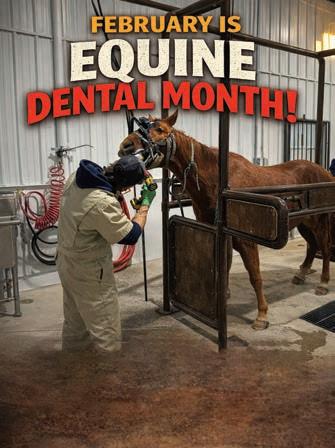
ducive to insect and fungal growth and development if it is not managed. Grain left unmanaged may increase in temperature and subsequent convection currents can cause surface condensation.
To determine the moisture content of grain at storage, take samples from bins every 3 to 4 weeks after storage if grain is not managed (no aeration or turning). Samples should be taken from several areas of the bulk and be kept in sealed plastic containers prior to testing.
Check the temperature of the bin every 2 weeks. Measure temperature by using temperature sensing cables that are permanently installed or by probing the grain with an electronic sensor device.
If devices for measuring temperature are not available:
• Assess the general temperature by inserting a metal rod into the grain at the top of the pile near the centre. The rod should reach at least one metre into the grain.
• Leave the rod for approximately 30 minutes.
• Remove the rod and, with the palm of the hand, test it for warmth at various points from the tip. Any section of the rod that feels warm to the touch is an indication of heating and grain spoilage.
Aeration systems preserve stored grain and keep it dry by reducing the temperature of grain and reducing moisture migration. Appropriate aeration can prevent convection currents and condensation from occurring.
It is important to consider the physical characteristics of grain when considering aeration and drying. Factors such as grain class and storage configuration impact the static pressure and thus the aeration fan requirements. In general, as static pressure increases (e.g. increased height of the storage or change in the class of commodity in storage), the amount of time required to properly aerate also changes. Please consider consulting with your aeration system provider to determine aeration or drying times for the bin type or commodity that you have in store.
The movement of cooling and drying fronts through crops ventilated with air during autumn.
Stored grains should be aerated as soon as possible after harvest, particularly if aeration can reduce the bulk temperature below 18°C. When the ambient temperature falls below that of the grain bulk, initially during the early evening, night, and early morning, you can use aeration to reduce the temperature of the grain.
If you aerate grain when the ambient temperature is above 20°C and the temperature of the grain is above 30°C, the odors produced will be more attractive to insect pests. Sanitation involving cleaning and treating grain is very important in preventing problems.
As well as preventing insect infestations, aeration is also very effective in controlling them. Once the grain temperature is reduced to below 18°C (which prevents insect feeding and reproduction) a further temperature reduction can be used to cause mortality. Refer to the disinfestation time periods required at low temperatures table in Physical control of grain insect pests.
In order to gain the most from your aeration system’s capabilities, it’s important to understand the fan and motor proficiency and the static pressure of the commodity you intend to aerate. There are charts available, provided by the Prairie Agriculture Machinery Institute, to help you determine the length of time required to aerate your stored bulk of grain.
If an aeration system is not available, turning grain outside the bin is an alternative to aerating it in the bin when the ambient air temperature falls below 15°C. Turn the grain every 2 to 4 weeks until the grain temperature reaches 15°C. This procedure involves removing about one-third of the grain from the bin and putting it back in the bin.

Grain chillers can be used to reduce the temperature of the grain when outside temperatures are above 20°C. Grain chillers reduce the temperature and moisture of air used to aerate the grain. Once grain is chilled it remains cool for extended periods, due to its natural insulating properties.
Grain mixing and stirring equipment is also a good way to assist in drying to reach uniform temperature and moisture content for your stored grain.
Grain stirring devices slowly move grain from the lower and central areas of the storage bin to the surface. This helps to mitigate the effects of moisture and temperature concentration that are caused by convection. These systems can be used in conjunction with aeration to reach and maintain a uniform grain temperature and moisture.


REGULARSEASON
Fri,Dec197:00p.m. GRANDEPRAIRIE CanmoreCanmoreRecCentre
Sat,Dec205:00p.m. GRANDEPRAIRIE CalgaryKenBrackoArena
Fri,Jan2 7:00p.m. GRANDEPRAIRIE Bonnyville
R.J.LalondeArena
Sat,Jan3 7:00p.m. GRANDEPRAIRIE Lloydminster CenovusEnergyHub
Thurs,Jan8 7:00p.m.FortMcMurray GRANDEPRAIRIE
Sat,Jan106:00p.m.FortMcMurray GRANDEPRAIRIE
Sun,Jan112:00p.m.FortMcMurray GRANDEPRAIRIE
Sat,Jan176:00p.m.Drumheller GRANDEPRAIRIE
Sun,Jan182:00p.m.Drumheller GRANDEPRAIRIE
Fri,Jan237:00p.m. GRANDEPRAIRIE Lloydminster
Sat,Jan247:00p.m. GRANDEPRAIRIE Bonnyville
Fri,Jan307:00p.m.Camrose GRANDEPRAIRIE
Sat,Jan316:00p.m.Camrose GRANDEPRAIRIE

Bonnett’sEnergyCentre
Bonnett’sEnergyCentre
Bonnett’sEnergyCentre
Bonnett’sEnergyCentre
Bonnett’sEnergyCentre
CenovusEnergyHub
R.J.LalondeArena
Bonnett’sEnergyCentre
Bonnett’sEnergyCentre
Wed,Feb4 7:00p.m. GRANDEPRAIRIE DevonGFL TwinArena
Sat,Feb 76:00p.m.Calgary GRANDEPRAIRIE
Sun,Feb8 2:00p.m.Calgary GRANDEPRAIRIE
Bonnett’sEnergyCentre
Bonnett’sEnergyCentre
Fri,Feb137:00p.m.Whitecourt GRANDEPRAIRIE Bonnett’sEnergyCentre
Sat,Feb147:00p.m. GRANDEPRAIRIE WhitecourtJDAPlace
Sun,Feb222:00p.m.Devon GRANDEPRAIRIE Bonnett’sEnergyCentre
Tues,Mar 37:00p.m.Whitecourt GRANDEPRAIRIE Bonnett’sEnergyCentre
Fri,Mar6 7:00p.m. GRANDEPRAIRIE WhitecourtJDAPlace
Mon,Mar 97:00p.m. GRANDEPRAIRIE DevonGFL TwinArena
Tues,Mar107:00p.m. GRANDEPRAIRIE DevonGFL TwinArena
Fri,Mar137:00p.m.Drayton Valley GRANDEPRAIRIE Bonnett’sEnergyCentre Sat,Mar146:00p.m.Drayton
Sat,Jan108:00p.m.BeaverlodgeBlades North PeaceNavigators Sat,Jan107:00p.m.SexsmithVipers LaCreteLumberBarons Sat,Jan108:00p.m.DawsonCreek KodiaksCtyofG.P.WheatKings Sun,Jan111:30p.m.SexsmithVipers LaCreteLumberBarons Wed,Jan148:00p.m.SexsmithVipers CtyofG.P.WheatKings Fri,Jan168:00p.m. FortSt.JohnHuskiesDawsonCreek Kodiaks
Sat,Jan178:00p.m. FortSt.JohnHuskies FairviewFlyers
Sat,Jan178:00p.m.LaCreteLumberBaronsNorth PeaceNavigators Sat,Jan178:00p.m.BeaverlodgeBlades SexsmithVipers Sun,Jan182:00p.m.North PeaceNavigatorsSexsmithVipers Sun,Jan182:00p.m. FairviewFlyers DawsonCreek Kodiaks Wed,Jan218:00p.m.North PeaceNavigatorsBeaverlodgeBlades Fri,Jan238:00p.m.CtyofG.P.Wheat Kings FortSt.JohnHuskies Fri,Jan238:00p.m.SexsmithVipers DawsonCreek Kodiaks Sat,Jan248:00p.m.LaCreteLumberBarons FortSt.JohnHuskies Sat,Jan248:00p.m.North PeaceNavigatorsDawsonCreek Kodiaks Sat,Jan248:00p.m. FairviewFlyers CtyofG.P.WheatKings Sun,Jan252:00p.m.LaCreteLumberBaronsSexsmithVipers Fri,Jan308:00p.m.North PeaceNavigators FairviewFlyers Fri,Jan308:00p.m.SexsmithVipers FortSt.JohnHuskies Sat,Jan318:00p.m.BeaverlodgeBlades FairviewFlyers Sat,Jan318:00p.m. FortSt.JohnHuskiesNorth PeaceNavigators Sat,Jan317:00p.m.CtyofG.P.Wheat KingsLaCreteLumberBarons Sun, Feb11:30p.m.CtyofG.P.Wheat KingsLaCreteLumberBarons SEASONSTANDINGS(asofSunday,January25,2025)
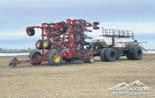
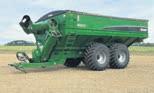
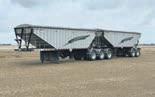

Alle M. Carter, Lawyer, CLH Law/CLHbid.com, Farmer, Peace Country
Growing up in the Peace Country, I am proud to call the Niobe area home, where I’m now the fourth generation on the land my greatgrandfather homesteaded in 1911. Most days I’m somewhere between farming, practicing law, and talking with farmers/ranchers about land; often juggling all three at once. I’d like to think my farm background keeps me out of the category of “stuffy, overpriced lawyer,” and that this column feels more like a conversation than a lecture. I don’t claim to be an expert, but I do spend a lot of time listening, and I hope my two cents are helpful. Perhaps if one topic doesn’t resonate with you, it might with a neighbour or a friend.
FARMLAND APPRAISALS: A STARTING POINT, NOT THE ANSWER
I have many clients asking whether they should obtain a farmland appraisal. As you know, farmland is very different from a house in town and, as a result, almost impossible to properly appraise. I often say, “If someone tells you what your land is worth, stop listening.”
Appraisals work well for chattels (moveable objects). A John Deere 2018 S770 Combine with 1,200 thresher hours will sell for virtually the same price in Rosetown, Strathmore, or Rycroft, AB. If prices drift too far apart, dealers step in, buying in the cheaper market and selling in the higher market; a practice known as arbitrage. Because machinery is movable, it’s value is entirely % intrinsic to the asset itself.
Land is very different; it is said to be the only commodity in the world that cannot be moved once pur-

chased and therein lies the problem with appraising land.
Appraising houses in town is more difficult than valuing machinery, but far easier than farmland. While a house cannot be moved, people can. If one area of town is cheaper than another similar area, buyers tend to migrate and prices tend to even out over time. Farmland doesn’t work that way. Farmers and ranchers are not mobile and cannot simply pick up and move operations the way urban buyers can move streets.
Farmland appraisals often treat quarters as though they are movable squares on a map, but that is not the reality. A good example comes from the Viking area. Two quarters were appraised with the “better” quarter valued at $915,000 and the smaller quarter appraised at $870,000. The landowner knew that was wrong. The higher-appraised quarter had heavy solonetzic soil and struggled to produce, while the quarter with less cultivated acres fit perfectly into neighbouring operations. On sale day, the “inferior” quarter sold for over $1.25M, while the higher-appraised quarter sold for nearly half that. Had decisions been made solely on the appraisal, nearly $400,000 would have been left on the table, and the poorer quarter may not have sold at all. Local buyers understand the land better than the numbers do.
Intrinsic factors such as soil class and acres cultivated are reasonably easy to quantify. Extrinsic factors are not. Things like whether neighbours are expanding or exiting, whether a river or narrow bridge limits access, whether Crown land boxes a quarter in,
whether land completes an existing assemblage, or whether a larger grouping of land attracts new outof-area buyers all play a major role in value. These factors are difficult to identify, let alone quantify, yet they often have the greatest influence on price.
Because these external factors are nearly impossible to quantify, they are frequently ignored in appraisals. Yet, they have the greatest influence on price. Each comparable used carries its own unknown set of external influences, making blind reliance on comparables potentially more dangerous than helpful.
This doesn’t mean appraisals are useless. They can be important for probate, financing, and planning. Problems arise when people confuse an appraised value with fair market value. An appraisal is an estimate, a snapshot based on imperfect information rather than a guarantee.
Some of the most honest answers I hear come from farmers themselves. When asked what their land is worth, many simply say, “I don’t know.” That’s not a lack of knowledge, it’s an understanding that land is worth what someone is willing to pay on a given day, under a specific set of circumstances.
I look forward to discussing additional agricultural topics. If you have any suggested areas of interest, please feel free to reach out to me at alle@clhlaw.ca. NH


BeginbiddingSaturday,Feb.28th

Parcel#2:SE-36-86-26-W5
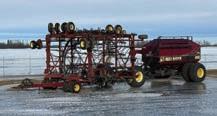

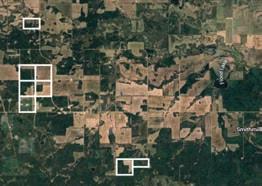


1,100+ Acres of Far mland near Dixonville, Alber ta! a D xonville,
Purchase Available Make an offer today!