Scholes Junior and Infant School
PSHE / RSE Substantive Knowledge Progression
Theme: Personal and social
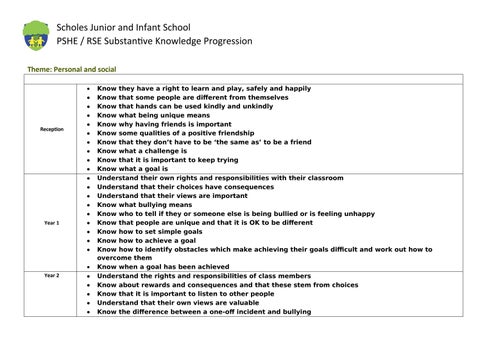
ï‚· Know they have a right to learn and play, safely and happily
ï‚· Know that some people are different from themselves
ï‚· Know that hands can be used kindly and unkindly
ï‚· Know what being unique means
ï‚· Know why having friends is important
Reception
Year 1
ï‚· Know some qualities of a positive friendship
 Know that they don’t have to be ‘the same as’ to be a friend
ï‚· Know what a challenge is
ï‚· Know that it is important to keep trying
ï‚· Know what a goal is
ï‚· Understand their own rights and responsibilities with their classroom
ï‚· Understand that their choices have consequences
ï‚· Understand that their views are important
ï‚· Know what bullying means
ï‚· Know who to tell if they or someone else is being bullied or is feeling unhappy
ï‚· Know that people are unique and that it is OK to be different
ï‚· Know how to set simple goals
ï‚· Know how to achieve a goal
ï‚· Know how to identify obstacles which make achieving their goals difficult and work out how to overcome them
ï‚· Know when a goal has been achieved
Year 2
ï‚· Understand the rights and responsibilities of class members
ï‚· Know about rewards and consequences and that these stem from choices
ï‚· Know that it is important to listen to other people
ï‚· Understand that their own views are valuable
ï‚· Know the difference between a one-off incident and bullying
Year 3
ï‚· Know that sometimes people get bullied because of difference
ï‚· Know that friends can be different and still be friends
ï‚· Know how to choose a realistic goal and think about how to achieve it
ï‚· Know that it is important to persevere
ï‚· Know how to recognise what working together well looks like
ï‚· Know that the school has a shared set of values
ï‚· Know why rules are needed and how these relate to choices and consequences
 Know that actions can affect others’ feelings
ï‚· Know that others may hold different views
ï‚· Know what it means to be a witness to bullying and that a witness can make the situation worse or better by what they do
ï‚· Know that conflict is a normal part of relationships
ï‚· Know that some words are used in hurtful ways and that this can have consequences
ï‚· Know that they are responsible for their own learning
ï‚· Know what an obstacle is and how they can hinder achievement
ï‚· Know how to take steps to overcome obstacles
ï‚· Know what dreams and ambitions are important to them
ï‚· Know their place in the school community
ï‚· Know what democracy is (applied to pupil voice in school)
ï‚· Know how groups work together to reach a consensus
ï‚· Know that having a voice and democracy benefits the school community
ï‚· Know that some forms of bullying are harder to identify e.g. tactical ignoring, cyber-bullying
Year 4
 Know the reasons why witnesses sometimes join in with bullying and don’t tell anyone
ï‚· Know that sometimes people make assumptions about a person because of the way they look or act
ï‚· Know how to make a new plan and set new goals even if they have been disappointed
ï‚· Know how to work as part of a successful group
ï‚· Know how to share in the success of a group
 Know that hopes and dreams don’t always come true
Year 5
ï‚· Understand how democracy and having a voice benefits the school community
ï‚· Understand how to contribute towards the democratic process
ï‚· Understand the rights and responsibilities associated with being a citizen in the wider community and their country
ï‚· Know external forms of support in regard to bullying e.g. Childline
Year 6
ï‚· Know that bullying can be direct and indirect
ï‚· Know what racism is and why it is unacceptable
ï‚· Know what culture means
ï‚· Know about a range of jobs that are carried out by people I know
ï‚· Know the types of job they might like to do when they are older
ï‚· Know that young people from different cultures may have different dreams and goals
 Know about children’s universal rights (United Nations Convention on the Rights of the Child)
ï‚· Know about the lives of children in other parts of the world
ï‚· Know that personal choices can affect others locally and globally
ï‚· Know that people can hold power over others individually or in a group
ï‚· Know that power can play a part in a bullying or conflict situation
 Know that there are different perceptions of ‘being normal’ and where these might come from
ï‚· Know that difference can be a source of celebration as well as conflict
ï‚· Know their own learning strengths
ï‚· Know what their classmates like and admire about them
ï‚· Know a variety of problems that the world is facing
ï‚· Know some ways in which they could work with others to make the world a better place
Theme: Physical Health and Well-being
 Know what the word ‘healthy’ means
ï‚· Know some things that they need to do to keep healthy
ï‚· Know the names for some parts of their body
Reception
Year 1
ï‚· Know when and how to wash their hands properly
ï‚· Know how to say no to strangers
ï‚· Know the names of some emotions such as happy, sad, frightened, angry
ï‚· Know the difference between being healthy and unhealthy
ï‚· Know how to make healthy lifestyle choices
ï‚· Know that all household products, including medicines, can be harmful if not used properly
ï‚· Know how to keep safe when crossing the road
ï‚· Know what their body needs to stay healthy
ï‚· Know what relaxed means
Year 2
ï‚· Know why healthy snacks are good for their bodies
ï‚· Know which foods given their bodies energy
Year 3
Year 4
ï‚· Know how exercise affects their bodies
ï‚· Know that there are different types of drugs
ï‚· Know that there are things, places and people that can be dangerous
ï‚· Know when something feels safe or unsafe
ï‚· Know that there are leaders and followers in groups
ï‚· Know the facts about smoking and its effects on health
ï‚· Know the facts about alcohol and its effects on health, particularly the liver
ï‚· Know ways to resist when people are putting pressure on them
ï‚· Know what they think is right and wrong
ï‚· Know basic emergency procedures, including the recovery position
ï‚· Know how to get help in emergency situations
Year 5
Year 6
ï‚· Know that the media, social media and celebrity culture promotes certain body type
 Know the different roles food can play in people’s lives and know that people can develop eating problems/disorders related to body image pressure
ï‚· Know how to take responsibility for their own health
ï‚· Know what it means to be emotionally well
ï‚· Know how to make choices that benefit their own health and well-being
ï‚· Know that some people can be exploited and made to do things that are against the law
ï‚· Know why some people join gangs and the risk that this can involve
Theme: Relationships Education
ï‚· Know what a family is
ï‚· Know some of the characteristics of healthy and safe friendships
Reception
ï‚· Know that friends sometimes fall out
ï‚· Know some ways to mend a friendship
ï‚· Know that unkind words can never be taken back and they can hurt
 Know that everyone’s family is different
ï‚· Know that families are founded on belonging, love and care
Year 1
ï‚· Know that physical contact can be used as a greeting
ï‚· Know how to make a friend
ï‚· Know who to ask for help in the school community
ï‚· Know that there are lots of forms of physical contact within a family
ï‚· Know how to stay stop if someone is hurting them
Year 2
ï‚· Know there are good secrets and worry secrets and why it is important to share worry secrets
ï‚· Know what trust is
Year 3
Year 4
ï‚· Know that different family members carry out different roles or have different responsibilities within the family
ï‚· Know some of the skills of friendship, e.g. taking turns, being a good listener
ï‚· Know some strategies for keeping themselves safe online
ï‚· Know that they and all children have rights (UNCRC)
ï‚· Know some reasons why people feel jealousy
ï‚· Know that loss is a normal part of relationships
ï‚· Know that negative feelings are a normal part of loss
ï‚· Know that sometimes it is better for a friendship/relationship to end if it is causing negative feelings or is unsafe
ï‚· Know that there are rights and responsibilities in an online community or social network
ï‚· Know that there are rights and responsibilities when playing a game online
Year 5
Year 6
 Know that too much screen time isn’t healthy
ï‚· Know how to stay safe when using technology to communicate with friends
ï‚· Know that it is important to take care of their own mental health
ï‚· Know ways that they can take care of their own mental health
ï‚· Know the stages of grief and that there are different types of loss that cause people to grieve
Theme: Growing and changing
ï‚· Know the names and functions of some parts of the body (see vocabulary list)
Reception
ï‚· Know that we grow from baby to adult
ï‚· Know who to talk to if they are feeling worried
ï‚· Know the names of male and female private body parts
ï‚· Know that there are correct names for private body parts and nicknames, and when to use them
Year 1
Year 2
ï‚· Know which parts of the body are private and that they belong to that person and that nobody has the right to hurt these
ï‚· Know who to ask for help if they are worried or frightened
ï‚· Know the physical differences between male and female bodies
ï‚· Know that private body parts are special and that no one has the right to hurt these
ï‚· Know there are different types of touch and that some are acceptable and some are unacceptable
ï‚· Know that the male and female body needs to change at puberty so their bodies can make babies when they are adults
Year 3
Year 4
ï‚· Know some of the outside body changes that happen during puberty
ï‚· Know some of the changes on the inside that happen during puberty
ï‚· Know that personal characteristics are inherited from birth parents and this is brought about by an
Year 5
Year 6
ovum joining with a sperm
ï‚· Know that babies are made by a sperm joining with an ovum
ï‚· Know the names of the different internal and external body parts that are needed to make a baby
ï‚· Know how the female and male body change at puberty
ï‚· Know that change can bring about a range of different emotions
 Know how girls’ and boys’ bodies change during puberty and understand the importance of looking after themselves physically and emotionally
ï‚· Know that sexual intercourse can lead to conception
ï‚· Know that some people need help to conceive and might use IVF
ï‚· Know that becoming a teenager involves various changes and also brings growing responsibility
ï‚· Know how a baby develops from conception through the nine months of pregnancy and how it is born
ï‚· Know how being physically attracted to someone changes the nature of the relationship
ï‚· Know the importance of self-esteem and what they can do to develop it