
Evening Submission Form Deadline

4.15 to 7pm in school
(Parents’ Evening and Guided Choices Information Evening)

Sent to parents to begin submitting choices


Forms to be submitted by 3pm
Speak to your teachers throughout the process to fully understand what it is you’re choosing to study
EBacc
Key stage
Level 1
Level 2
Level 3
Linear
Pathway
Specification
STEM
Transition
Vocational / Technical
Short for the English Baccalaureate, it is a specific combination of subjects that keeps a young person’s options open with regards to future study and career pathways
This refers to a phase of a child's education:
▪ Key stage 3 – years 7 to 9, when students follow the national curriculum. Often abbreviated to KS3.
▪ Key stage 4 – years 10 and 11, when students study for public examinations. Often abbreviated to KS4.
This refers to different types of qualification:
▪ Level 1 – equivalent to GCSE grade 3 (or below)
▪ Level 2 – equivalent to GCSE grade 4 (or above)
▪ Level 3 – equivalent to A level
All assessment takes place at the end of the course, with exams sometimes referred to as 'terminal'.
A clear route from key stage four to future careers by studying relevant subjects linked to specific career areas and industry sectors.
Details of a specific exam course – the content to be studied, how it is assessed etc.
The group of subjects relating to Science, Technology, Engineering, and Mathematics.
A qualification with a significant applied, practical and/or work-related element. BTECs and Cambridge Nationals are examples of vocational qualifications.
This usually refers to the process of moving from one key stage to another, such as from secondary school to post-16 learning.
For more information about the Guided Choices process or how to make an informed choice about the courses you study at Key Stage Four, please speak to Mr Atkinson (Assistant Headteacher)
Dear student and your parent/carer,
As you approach an important stage in your educational journey, we are delighted to provide you with this Guided Choices Information Booklet. This resource is designed to help you make informed and confident decisions about the courses you will study during Key Stage Four.
Selecting the right courses is a key step in shaping your future and building the foundation for further education, training, and career opportunities. The booklet contains:
▪ Detailed descriptions of all the subjects available to you.
▪ Guidance on how to balance interests and strengths with future aspirations.
▪ Information about the possible pathways available and how they align with post-16 education and beyond.
▪ Key dates and the process for submitting choices.
We encourage both students and parents/carers to explore this booklet together, discussing the options available and thinking carefully about what excites and motivates you as a learner.
It is very important that students at this point aspire and show a real ambition for the future and look beyond KS4. We will guide them to our colleges programme for further education or an apprenticeship and the world of work between the ages of 16-19 at Key Stage Five
We offer a broad and balanced curriculum with students studying for 8 GCSES or Vocational Qualifications for all students as a start point. Our students need the best possible qualifications to move onto ambitious destinations at Colleges and Universities. Students will study three hours per week of the Optional Courses with more hours being offered to Core Subjects (English, maths, and science).
To support you further, we will be hosting a Guided Choices Evening on Thursday 5th February 2026 from 4.15pm. This event will provide an opportunity to meet subject teachers, ask questions, and gain insights into the expectations of each course. Additionally, our Careers Advisor and senior staff will be available to offer tailored guidance. This is the same evening as Parents’ Evening, so you should book appointments with your child’s class teachers as well to review their progress.
The submission of choices will be done through an online form which will be released on the last day of the half term, on Friday 13th February 2026. These forms will then need to be submitted by 3pm on Friday 13th March 2026. These should be completed together with parents and students.
If you have any questions after reviewing the booklet, or at any point during the Guided Choices process, please do not hesitate to contact me at the email address below. We are here to support you every step of the way as you make these important decisions.
We look forward to helping you navigate this exciting and important phase of your education.
Yours sincerely,
Mr JM Atkinson Assistant Headteacher John.Atkinson@ths.set.org
All GCSEs now use the 9–1 grading system, with 9 being the top grade and 1 the lowest. Candidates get a 'U' where performance is below the minimum required to pass the GCSE.
The GCSE courses are fully linear, which means that the content is no longer divided into modules. All assessment takes place at the end of the course.
This change was introduced to avoid the disruption to teaching and learning caused by repeated assessment, to enable students to demonstrate the full breadth of their ability in the subject, and to allow standards to be set fairly and consistently across different subjects.
Some subjects we offer are categorised as technical or vocational qualifications. These subjects allow students to develop their knowledge and understanding by applying their learning and skills in a work-related context.
These courses all have examinations but, unlike GCSEs, there is a heavy emphasis on coursework.
They are generally graded as follows:
Pass
Merit
Distinction
The English Baccalaureate – or EBacc – is a combination of GCSE subjects that keeps a young person’s options open with regards to future study and career pathways. The EBacc subjects are:
▪ English language and literature
▪ mathematics
▪ the sciences
▪ geography or history
▪ a language
The UK government has spoken of 90% of young people studying the EBacc subject combination by 2025. Any student at THS can ‘qualify’ for the EBacc by choosing French and either history or geography.
All of these subjects are considered to be ‘gold standard’ GCSEs that have academic rigour and will prepare students for A level and university. The Russell Group of top universities says that studying EBacc subjects at A level opens the door to a wider range of degree choices.
Research indicates that a person’s socio-economic background often affects the subjects they choose at GCSE, which then determines opportunities beyond school. A study by the UCL Institute of Education shows that studying EBacc subjects increases the likelihood that a young person will stay on in full-time education.
The EBacc is not compulsory for our students at THS, we want our students to make the right choice for their individual futures.
More information can be found at: https://www.informedchoices.ac.uk/
If you do not meet the required standard in mathematics or English language at GCSE level, you will have to re-sit these qualifications at a post-16 provider (college)
You are about to make some very important decisions. The choices you make will affect not just the next two years but also the pathways open to you after you leave THS. It is important that you make informed choices –in other words, that you know as much information as possible before you make your choice. This guide, and your teachers, will help you make the best choice for you.
1
Think beyond THS to your post-16 pathway and your future career possibilities.

2
3
Choose subjects that keep future education and training options open, rather than narrowing your options down.
Find out as much as you can about the courses that you are thinking of taking. Make sure you are clear about the content and how they are assessed.
4
5
Talk to your teachers, your parents, your form tutor, the learning support staff, and current key stage 4 students who are studying these subjects.
Choose subjects that give you some balance, perhaps choosing one subject that involves doing something practical.
What is the subject about? Is it something that I am genuinely interested in and will enjoy doing for two years?
Am I playing to my strengths? Do I have the skills and abilities to do well in this subject?
What kind of work is involved? What sorts of assignments are set? Is it the kind of work that I enjoy?
How is the subject assessed? Is it all by examination at the end of the course, or is there also a coursework element?
What will my week look like? What other demands will I have on my time – clubs, sport, rehearsals, DofE etc?
Do not pick a subject for any of these reasons:
▪ A friend is choosing it (you may not be in the same class)
▪ You like the teacher (you may be taught by a different teacher)
6
Choose subjects that you enjoy. You will be studying them for two years. If you enjoy them, you are more likely to work hard and do well in them.


▪ You feel under pressure to choose it
▪ You think it will be an easy option – none of them are!
▪ You can’t think of another subject to pick
▪ Most people think it’s cool or a good choice – it isn’t about them; it is about you!
▪ Someone has told you it’s a good choice, but you don’t think so

At Tottington High School, we believe that the most important work that we do is to prepare our students for their future. We have designed pathways to highlight to students the best options to choose so that they are industry ready, no matter which field they plan on working in. Each suggested pathway has a selection of courses that will prepare our students for a career in that field.
Students have freedom over the subjects they wish to study, but the running and allocation of courses will depend on the suitable of students to certain courses as well as the staff availability to offer subjects side-byside with other courses. There is no guarantee that all courses will run, or that the choices students make can be offered together. Every effort will be made to give students their choices.
A well-designed curriculum is offered, through which students are enthused, engaged, and make especially good progress in their chosen field.
We have outlined pathways that highlight to students the best choices to make to prepare them for the world of work, by providing opportunities to immerse themselves in specialist subjects that offer them the ability to acquire the knowledge and skills required. They will be more likely to excel because they like what they are doing.
Students will leave THS ‘work ready’, professional, and with well-developed employability skills.
High standards of appearance, conduct, work, and responsibility are expected at school, as they are in the workplace. Developing essential employability skills such as problem-solving, communication, teamwork, and leadership is also an important aspect of the work we do at THS.
Learning will be ambitious for all and deepened through content as well as enrichment opportunities.
The courses being offered, the content of these courses, and the opportunities for students to enhance their learning outside their lessons allows students to connect their learning to the world of work.
Students will secure progression to ambitious destinations.
THS is one step on the educational journey for our students. The next stage in a student’s learning is important, and the curriculum at THS is designed to allow students to fulfil their potential to get there and be ready for the rigours of their course, whether this is A-Level, T-Level (or a vocational qualification, or an apprenticeship.



COMPULSORY GCSE SUBJECTS OPTIONAL SUBJECTS
English Language
English Literature Mathematics
Combined Science
Students choose at least two subjects from this group
Separate Sciences Engineering Design* Geography
COMPULSORY NON-EXAMINED SUBJECTS
▪ T Level Engineering and Manufacturing, Design and Development: Mechanical Engineering
▪ T Level Engineering and Manufacturing, Design and Development: Specialism in Electrical and Electronic Engineering
▪ T Level Science – Technical: Laboratory Sciences
▪ T Level Building Services Engineering for Construction – Specialism in Plumbing and Heating Engineering
▪ A Levels in Biology, Chemistry, or Physics; Geography
▪
COMPULSORY GCSE SUBJECTS
English Language
English Literature Mathematics
Combined Science
OPTIONAL SUBJECTS
Students choose at least two subjects from this group
Separate Sciences
Sport Studies*
Hospitality & Catering*
Health and Social Care*
* = Vocational Qualification
COMPULSORY NON-EXAMINED SUBJECTS
(Personal, Social, Health & Economic Education)
What courses can this pathway lead to after THS?
▪ T Level in Health: Supporting The Adult Nursing Team
▪ T Level in Health: Supporting Therapy Teams
▪ Vocational Course in Health and Social Care; Sport; Food and Preparation
▪ A Levels in Biology, Chemistry, or Physics; Physical Education; Food and Preparation
What careers can this pathway lead to?
▪ Surgeon, Doctor, Nurse, Midwife, Paramedic
▪ Medical Assistant
▪ Podiatrist, Dentist, Chiropractor, Audiologist, Pathologist, Optometrist, Oncologist, Psychiatrist
▪ Professional Athlete, Coach, or Personal Trainer
What links do we have in Bury and Greater Manchester?
NHS
Bupa
Spire
Nuffield
David Lloyd
The FA / Football clubs
What enrichment opportunities can we expect?
▪ Duke of Edinburgh Award ▪ Salou trip ▪ Skiing trip
COMPULSORY GCSE SUBJECTS
English Language
English Literature Mathematics
Combined Science
▪
▪
▪
▪
SUBJECTS COMPULSORY NON-EXAMINED SUBJECTS
Students choose the two subjects from this group, along with another subject of their choice


COMPULSORY GCSE SUBJECTS
English
Combined
▪
▪
▪
▪
SUBJECTS COMPULSORY NON-EXAMINED SUBJECTS

COMPULSORY GCSE SUBJECTS
English Language English Literature
Combined Science
▪ Retail
▪ Business
▪ Banking ▪ Law ▪ Politics ▪ Accountancy ▪ Marketing
Armed Forces
Media / Journalism
Students choose at least two subjects from this group

All students will study the Compulsory Subjects, including Core PE and PSHE which are non-examined lessons of one hour per week, in-line with government legislation.
In addition to this, students should pick three options and two reserves. The reserves will only be needed for one of the following reasons:
▪ Where we can’t offer the combination of subjects chosen due to staffing
▪ Where a course can’t run because there haven’t been enough students choosing it
▪ Where a student has chosen subjects that aren’t appropriate to their skill (such as music or sport studies) or ability/aptitude (such as separate sciences) If a student’s options will need to be selected using their reserves, this will be done in consultation with the student and parents, where appropriate, through meetings and discussion with Mr Atkinson.
Choices will be submitted through an online form sent to parents with a two-week window to complete and submit choices We hope to be able to confirm choices within the weeks that follow, but this can be a complicated process, so your patience is most welcome.
§ = students who have an aptitude for the sciences will be given the option to study Separate Sciences (Biology, Chemistry, and Physics) for their science qualification which will count as one of their options
Core PE and PSHE are non-examined, but are important weekly lessons as part of the National Curriculum
If you do not meet the required standard in mathematics or English language at GCSE level, you will have to re-sit these qualifications at a post-16 provider (college)
DON’T LET THIS BE YOU!!
For more information about the Guided Choices process or how to make an informed choice about the courses you study at Key Stage Four, please speak to Mr Atkinson (Assistant Headteacher)
For more information about the Guided Choices process or how to make an informed choice about the courses you study at Key Stage Four, please speak to Mr Atkinson (Assistant Headteacher)
Exam Board information: AQA GCSE
Contact: Ms Adams, Associate Assistant Headteacher
English is everywhere. We use it to communicate in our everyday lives, and we read, analyse, and compose ‘texts’ all the time.
English is one of the world’s most commonly spoken languages. Understanding our language helps us to take our place as citizens in the modern world.
Studying English will help you to become a reflective thinker, expressive, creative, and precise in how you communicate.
It is not just about reading books or writing stories. We explore a huge variety of ‘texts’ such as articles, novels, letters, and autobiographies.
Gaining a grade 5 or above in English language is vital for whatever you choose to do when you leave school.
Studying GCSE English language will enable you to develop excellent written and spoken communication skills. These are essential skills needed for whatever you choose to progress on to do in the future.
You will develop as a critical reader, a skilful writer, and an independent thinker. You will also be given many opportunities to further develop your ability to work independently as well as with others. You will be involved in trips, participate in team projects and complete various speaking and listening tasks.
▪ Writing non-fiction e.g. writing to argue, persuade and explain
▪ Writing fiction (creative prose)
▪ Reading non-fiction and media texts e.g. articles, autobiographies, and letters
▪ Reading fiction
▪ Speaking and listening
▪ Exploring the writer’s intention
A good GCSE in English language links well with A levels in related subjects such as combined English language and literature, and media studies. It also links well with subjects like history and law.
English is important in all careers, particularly areas like journalism, broadcasting, publishing, media, and marketing.
If you do not meet the required standard in English language at GCSE level, you will have to re-sit this qualification at a post-16 provider (college)
COMPONENT 1: Explorations in Creative Reading and Writing
• Written examination: 1 hour 45 minutes
• 50% of total GCSE grade
Section A – Reading
25% of total GCSE grade
Understanding of one prose extract (about 60-100 lines) of literature from the 20th century assessed through a range of structured questions that test understanding of language, structure, and evaluation.
Section B – Prose Writing
25% of total GCSE grade
One descriptive or narrative writing task.
COMPONENT 2: Writer’s Viewpoints and Perspectives
• Written examination: 1 hour 45 minutes
• 50% of total GCSE grade
Section A – Reading
25% of total GCSE grade
Understanding of two extracts (about 900-1200 words in total) of one non-fiction text and one literary nonfiction text, assessed through a range of structured questions.
Section B – Writing
25% of total GCSE grade
1 Extended non-fiction writing task.
COMPONENT 3: Spoken Language
Non-examination assessment – unweighted
One presentation/speech, including responses to questions and feedback
Exam Board information: AQA GCSE
Contact: Ms Adams, Associate Assistant Headteacher
The study of English literature is an enjoyable and enlightening journey through our literary heritage, from Shakespeare right up to the present.
Studying English literature develops your ability to think critically and to understand different cultures and times, including how people thought and behaved.
We explore all aspects of texts. You will be reading and analysing plays, novels, poetry, and non- fiction extracts.
Many students find English literature a magical gateway to worlds previously unknown to them.
The study of great literature also complements and supports your work in English language.
Studying GCSE English literature will enable you to develop your analytical and critical-reading skills. You will familiarise yourself with a range of texts, respond to them personally and critically, and explore the contexts in which they were produced.
Wherever possible, you will go to watch performances of the texts we study to help you appreciate and understand the language, characterisation, and writer’s intention, as well as enjoying the exciting plots!
▪ Reading novels and poetry
▪ Using your imagination
▪ Writing analytical essays
▪ Developing your critical and analytical responses
▪ Discussing the context in which a text was written and its impact on the reader
▪ Including your personal response
▪ Exploring the writer’s intention
A good GCSE in English literature links well with A levels in related subjects such as combined English language and literature, and media studies, as well as subjects like history and law.
English is important in all careers, particularly areas like journalism, broadcasting, publishing, media, and marketing.

COMPONENT 1: Shakespeare and Poetry
Written examination: 1hr 45 minutes: 40% of total GCSE grade
Section A – Shakespeare
20% of total GCSE grade
Students will answer one question on their play and will be required to write in detail about an extract from the play and then to write about the play as a whole. This will either be: Macbeth, Romeo and Juliet, The Tempest, The Merchant of Venice, Much Ado About Nothing, or Julius Caesar.
Section B – The 19th-Century Novel
20% of total GCSE grade
Students will answer one question on their novel and be required to write in detail about an extract from the novel and then to write about the novel as a whole. This will either be: The Strange Case of Dr Jekyll and Mr Hyde, Charles Dickens A Christmas Carol, Charles Dickens Great Expectations, Charlotte Brontë Jane Eyre, Mary Shelley Frankenstein, Jane Austen Pride and Prejudice, or Sir Arthur Conan Doyle The Sign of Four
COMPONENT 2: Post-1914 Prose/ Drama, 19th Century Prose and Unseen Poetry
Written examination: 2 hours and 15 minutes: 60% of total GCSE grade
Section A Modern Texts:
Students will answer one essay question from a choice of two on their studied modern prose or drama text Drama text: JB Priestley An Inspector Calls, Willy Russell Blood Brothers, Alan Bennett The History Boys, Dennis Kelly DNA, Simon Stephens The Curious Incident of the Dog in the Night-Time (play script), Shelagh Delaney A Taste of Honey Prose: William Golding Lord of the Flies, AQA Anthology Telling Tales George Orwell Animal Farm, Kazuo Ishiguro Never Let Me Go, Meera Syal Anita and Me, Stephen Kelman Pigeon English
Section B Poetry:
Students will answer one comparative question on one named poem printed on the paper and one other poem from their chosen anthology cluster.
Section C Unseen Poetry:
Students will answer one question on one unseen poem and one question comparing this poem with a second unseen poem.
In preparing for the unseen poetry section of the examination students will experience a wide range of poetry in order to develop their ability to closely analyse unseen poems.

Exam Board information: OCR GCSE
Contact: Mrs Hesketh, Associate Assistant Headteacher
Mathematics teaches you how to learn – how to build up an understanding from basic principles, develop general concepts and apply this understanding to specific examples. It teaches you to think logically, ask questions and check out your conclusions.
Basic mathematical skills are also important in other subjects. Some you may be familiar with, such as biology; others, such as sports science, you may want to study in future. Whatever route you take, a good grasp of mathematics will help.
All GCSE courses in Mathematics follow the National Curriculum, so you will carry on from the work completed at Key Stage 3.
The topics are number; algebra; ratio, proportion, and rates of change; geometry and measures; probability; and statistics
By studying GCSE Mathematics, you will be able to reason clearly and logically, set out a rational argument and find solutions to problems in real life. You will be able to understand the Mathematics likely to be encountered in daily adult life and develop your ability to solve problems systematically and select the correct technique for the solution.
Employers/professions often require at least a Grade 4 in GCSE Mathematics. Indeed, they may require you to sit a Mathematics Skills Test to check your knowledge before offering the job to you.
The reason that Mathematics is held in such high regard is because of the transferable skills you learn in the subject and its relevance to real life. Good Mathematical skills are essential in Building, Engineering, Economics, Medicine, ICT, Accountancy, Teaching, and many more professions.
There are three examination papers, each 1 hour 30 mins in duration. Each paper is equally weighted in content and marks. The grade is attained from the overall mark from all three papers.
Higher tier is graded from 4-9 and foundation tier is graded from 1-5.
Student progress is assessed by the teacher on a regular basis by a series of short examinations at key points in the Academic Year.
If you do not meet the required standard in mathematics at GCSE level, you will have to re-sit this qualification at a post-16 provider (college)
Exam Board information: AQA GCSE
Contact: Dr Thomson, Head of Science
Science affects a very large part of your life – what you eat, what you wear and what you use. The Science GCSE course encourages you to consider the way in which Science is applied to technological developments and will help you to formulate views and opinions about these issues e.g. whether or not you would want your children to be vaccinated etc.
This Science course leads to a dual award GCSE grade. The GCSE combined science course covers the three main subject areas Biology, Chemistry and Physics. Students will study and be assessed on two units of Biology, two of Chemistry and two of Physics which will lead to a combined double GCSE grade.
In Year 10 all students follow the Combined Science modules. These introduce topics such as genetics, atomic structure, energy, and forces. These are followed using a mixture of practical work, investigation, and discussion. In Year 11, students continue to build up their knowledge; there are topics on organ systems, chemical reactions, and radioactivity. This Science course gives all of the background required for students who may wish to take Biology, Chemistry or Physics at Advanced Level.
▪ Designing experiments and assessing the results
▪ Investigating and problem solving
▪ Communicating and working with others
▪ Thinking creatively
▪ Debating science-related issues in the news
▪ Risk-assessing situations and working safely in a laboratory environment
Combined science students can take Biology, Chemistry or Physics at Advanced Level. It can also lead on to a range of vocational courses. It is not necessary to have taken triple science to access these courses. These courses lead to a wide variety of degrees and employment in engineering, the medical, environmental and research industries, to name but a few. They can also lead to courses which qualify a student for practical and technological work in a wide range of industries, from health and sports to medical and work as a technician.
▪ All the examinations are taken at the end of Year 11.
▪ There are six examinations each of 1 hour 15 minutes, two Biology, two Chemistry and two Physics.
▪ These are available at foundation tier (grades 55-11) and higher tier (99-44).
▪ Students must complete all assessments in the same tier.
▪ There are required practical assessments that will need to be completed and are assessed in the written examinations.
Students who have an aptitude for the sciences will be given the option to study Separate Sciences (Biology, Chemistry, and Physics) for their science qualification which will count as one of their options
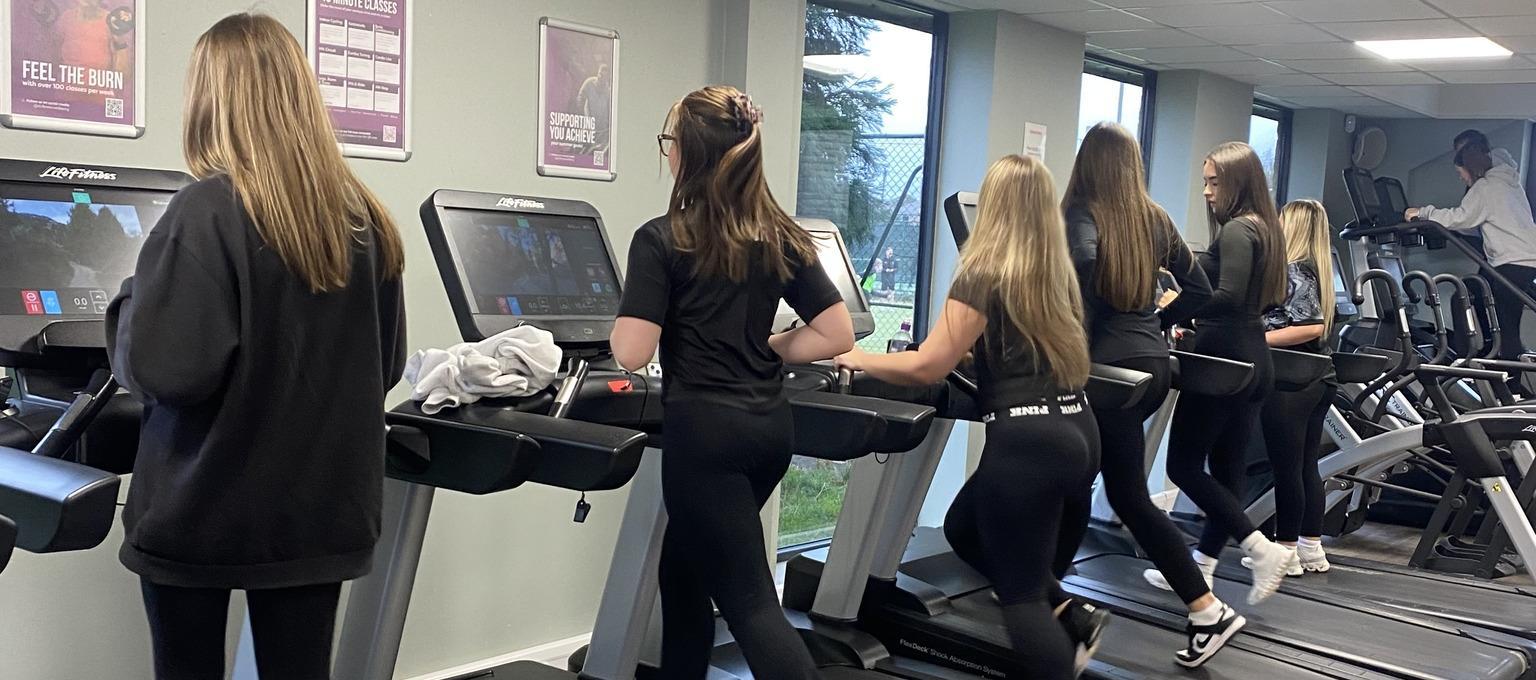
Every student will receive one hour per week of Core PE as part of the National Curriculum.
During Core PE, students will be given opportunities to participate in the following sporting activities:
▪ Badminton
▪ Table Tennis
▪ Football
▪ Rounders
▪ Trampolining
▪ Bench Ball
▪ Basketball
▪ Just Dance
▪ Dodgeball
▪ Handball
▪ Rugby
▪ Cricket
▪ Danish Long Ball
▪ Frisbee
▪ Aussie Rules
Weekly attendance to lessons, in full PE kit, is still an expectation, just like in years 7 ,8, and 9.

Every student will receive one hour per week of PSHE, following the PSHE Association Thematic Model, as part of the National Curriculum. The three key themes are Health and Wellbeing, Relationships (including RSE) and Living in the Wider World.
PSHE is delivered through form-time and covers the following topics:
▪ Mental Health and Well-being
▪ Addressing Extremism and Radicalisation
▪ Financial Decision Making and Economic Well-being
▪ Exploring Influence
▪ Healthy Relationships
▪ Career Success
▪ Next Steps
▪ Families and Communication in relationships
▪ Building for the future and Study Skills



For more information about the Guided Choices process or how to make an informed choice about the courses you study at Key Stage Four, please speak to Mr Atkinson (Assistant Headteacher)
Exam Board information: AQA GCSE
Contact: Ms Preston-Webb, Head of Art
If you have creative and artistic abilities, you will develop them in much greater depth, while extending your skills to a higher level.
It is an exciting practical skills-based course, working with a variety of media. You will be working with people who share your interest and enthusiasm for the subject. Producing original artwork will give you great personal satisfaction.
In Art and Design, you will improve your observation and objective drawing. Explore your own personal ideas imaginatively in visual and tactile studies. You will learn more about the work of other Artists, Craftsmen and Designers and understand the influence they have on your own work. You will use a variety of materials and techniques to express your ideas and learn how to modify and improve work as it progresses. You will use all your planning, research, and development of ideas to produce a successful piece of artwork and gain more confidence in your knowledge about Art in our society and around the world. You will learn to work independently and creatively.
In Year 10, you will be guided through three major coursework projects. Each ‘Project’ will include observational drawing, collecting other visual resources, photography, development of your own imaginative ideas, research into relevant artists and designers, practical experimentation, planning and modifying your ideas and producing a successful piece of Artwork.
In Year 11, you will be expected to work more independently to develop your own ideas. Working through coursework projects before your final examination project. Towards the end of the course, you will be able to revisit previous work to improve it, select the best work and prepare it for final assessment.

▪ Observation drawing
▪ Painting
▪ Mixed Media
▪ Printmaking
▪ Textiles
An essential qualification, if you are looking for a career in any Art, Design or Craft related field, you wish to study Art and Design in Further and Higher Education. It provides you with a creative way of ‘thinking’ and problem-solving. If you achieve a good grade, employers will be impressed with your ‘well rounded’ education. There is a wide range of career opportunities available from Architecture to Teaching.
▪ Regular End of Project Assessments and tutorials to set individual targets.
▪ Continuous Assessment on all elements of Coursework from the start of Year 10.
▪ A Mock Examination in Years 10 & 11.
▪ Presentation of three major Coursework Projects for Assessment by the end of April/beginning of May in Year 11.
▪ A ten-hour Practical Examination, Final Assignment to be completed in Year 11.
▪ Exhibitions of work and external Moderation in June

Exam Board information: AQA GCSE
Contact: Mr Tait, Head of Drama
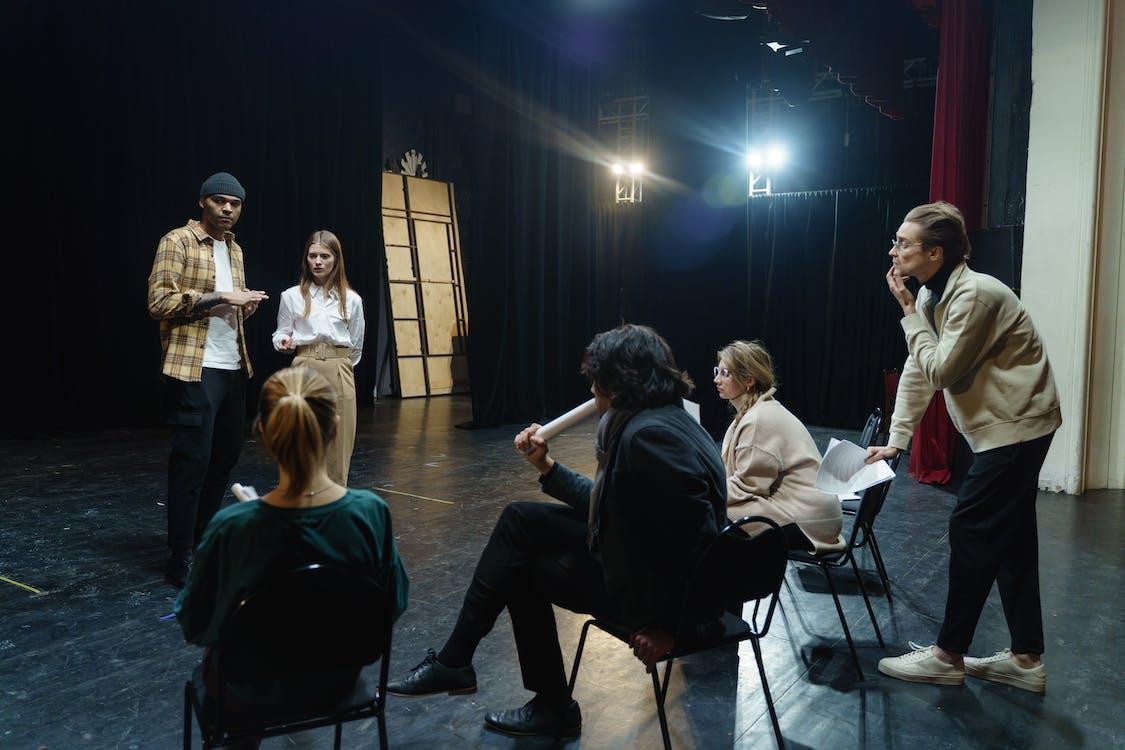
If you enjoy working with other people, whether it is in acting groups or technical aspects of the theatre, you will enjoy the course. You don't have to be full of confidence. Drama is a multidisciplinary subject that teaches you to be confident. You will learn subject specific skills, knowledge and understanding whilst also developing analytical skills, self-confidence, and communication skills.
GCSE Drama is a course that explores both theory and performance, allowing students to understand the historical journey theatre has taken in order to become what it is today. You will explore play texts both as a performer and as a member of an audience, learning to work collaboratively in a creative environment. The course allows students to express themselves in a highly creative and practical way, giving the opportunities to work in many roles.
Theatre visits and working with industry professionals are planned elements of the course to give students an insight to the theatre industry and potential future career paths.
You will complete 3 components of work over the 2 years of study; the first year of study will be your chance to build on your theatrical skills, explore the history of theatre and explore a variety of performance styles. In the second year, students will further build their confidence and knowledge, before sitting their theory and performance exams and logbooks.
Studying Performing Arts, at any level, develops practical and transferrable skills:
▪ Creative Thinking: Exploring existing material and devising own ideas both theoretically and practically
▪ Problem Solving: Time management and meeting a brief
▪ Responsibility and Dependability: Organisation, self-discipline, empathy
▪ Collaboration and Teamwork: Rehearsing and performing with others
▪ Self-Discipline and Time Management: being able to practise alone
Careers drama can lead to include Art and marketing, Drama therapy, journalism, teacher, actor, public relations, set design, lighting technician, costume and make- up design. Television and theatre work to advertising.
Drama is useful for any job which requires you to use your communication and creative skills, it is a desirable skill for prospects. We focus on career paths in Drama from years 7- 11 so students are aware what skills they are accessing and have transfer skills to multiple jobs roles.

Component 1 (40% of total GCSE grade)
Knowledge and understanding of theatre genres, staging styles and stage directions is assessed. Study one play from a set choice of six, and students must see a piece of live theatre to review for the exam.
This is the exam component of the course, students must read and perform a chosen play based on the AQA text list, we look at the theatre industry, jobs, and types of staging and lastly students must see a live theatre performance which they then run in the exam.
Component 2 Devising Drama (40% of total GCSE grade)
Students study a wide range of practitioners and performance styles in workshop style lessons, they are then asked to create a performance from a wide range of stimulus.
Students will keep a logbook of the process of development and be able to evaluate their work and is assessed by your teacher. This component is structured with practical elements and written alongside; collaboration is key!
Students can also complete this module as a designer in the role of costume/lighting/set/puppetry.
Component 3 Texts in Practice (20% total GCSE grade)
Students will either perform in or design for two key extracts from a performance text and is assessed by an external examiner.
This is a free choice of text but must contrast with the text chosen for study in component 1, students can complete as a monologue/dialogue or group piece. With chosen script, they must research the social, cultural, and historical context behind the play.
Exam Board information: AQA GCSE
Contact: Mrs O’Hara, Head of Modern Foreign Languages
French is spoken as an official language in 29 different countries including France, Belgium, Canada, and Switzerland. There are strong historical, cultural, and trading links between Britain and France. It is an official language of the European Union and the United Nations. By continuing with French, you are increasing your career options. In the enlarged European trade market those speaking French, as one of the business languages most in demand will enjoy more opportunities than ever. Please note - you will only be able to opt for French if you are currently studying French in Year 9.
You will continue to develop your language skills within three main areas:
Identity and culture:
▪ Family, Friends, Technology and Free time
Local, national, international, and global areas of interest:
▪ Home, Town, Region, Social issues, and the Environment
Current and future study and employment:
▪ School, Post-16, Jobs, Career choices and Ambitions
You will learn how to speak, read, write in French and understand spoken French in a variety of situations. You will develop your knowledge of French grammar.
Employers are often keen to have someone with knowledge of French working with them. France is one of our most important trading partners in Europe and many British firms have branches in France, just as there are as many French companies investing in Britain. We cannot walk down the main street of any British town today without seeing French brand names: Air France, Axa, Bugatti, Citroën, Chanel, Dior, Evian, Garnier, Renault and many more.

You will be assessed in each of the four language skills at the end of Year 11. With the new exam, if you are entered as a Foundation candidate, you will do the Foundation paper in all 4 skills. Equally, if you are entered as a Higher candidate, you will be entered for Higher for all 4 skills. There is no mixing and matching.
1. Listening:
▪ Worth 25% of the total GCSE grade
▪ Written exam - 35 minutes (Foundation Tier), 45 minutes (Higher Tier) 40 marks (Foundation Tier), 50 marks (Higher Tier)
▪ Set and marked by AQA
▪ Some questions and answers in English, some in French
2. Reading:
▪ Worth 25% of the total GCSE grade
▪ Written exam: 45 minutes (Foundation Tier), 1 hour (Higher Tier) 60 marks (for each of Foundation Tier and Higher Tier)
▪ Set and marked by AQA
▪ Some questions and answers in French, some in English
▪ This paper will also include a translation from French into English
3. Speaking:
▪ Worth 25% of the total GCSE grade
▪ Terminal speaking test including role-play, photo card description and an extended conversation based on two topics:
Role-play – 15 marks- 2 mins at Foundation Tier; 2 mins at Higher Photo card – 15 marks-2 mins at Foundation Tier; 3 mins at Higher
▪ Conversation– 30 marks-3–5 mins at Foundation; 5–7 mins at Higher
▪ Conducted by the Teacher and marked by AQA
4. Writing:
▪ Worth 25% of the total GCSE grade
▪ A written exam- 1 hour (Foundation Tier), 1 hour 15 minutes (Higher Tier) 50 marks at Foundation Tier and 60 marks at Higher Tier
▪ Set and marked by AQA
▪ This paper will also include a translation out of English into French

Exam Board information: AQA GCSE
Contact: Mr Vale, Head of Geography
Do you want to study a subject that is modern, stimulating, relevant to your life and practical? A subject in which you can achieve highly? If yes, then Geography is the subject for you! It is your world, so why not find out more about it?! Studying Geography will enable you to find out how the Earth works and the challenges we face in the 21st Century. Geography will give you a passport to understanding the world in which you live. You will get the opportunity to investigate a wide range of topics in this subject.
You will study both Physical and Human Geography topics:
Living with the physical environment – Paper One
▪ The challenge of natural hazards – volcanoes, earthquakes, weather hazards e.g. hurricanes, weather hazards in the UK, climate change
▪ The living world – Ecosystems, tropical rainforests, cold environments
▪ Physical landscapes in the UK – coastal landscapes and glaciated landscapes.
Challenges in the human environment – Paper Two
▪ Urban issues and challenges – Studying city life in an NEE e.g. Lagos in Nigeria and in the UK e.g. Manchester, and also how cities can be sustainably developed.
▪ The changing economic world – Studying development, population, and the rising importance of NEE countries e.g. Nigeria. Studying the importance of the UK in the world economy.
▪ The challenge of resource management – Studying the challenge of ensuring there is enough food, energy, and water for the people of the world.
Geographical applications – Paper Three
▪ Issue evaluation – A resource booklet is given before the exam to be studied and subsequently for students to answer questions about in the exam. This involves some statistical analysis using maths skills.
▪ Fieldwork – Two compulsory fieldtrips are taken as there is a requirement for students to have conducted both physical and human fieldwork. These are currently to Cleveleys to study coastal management strategies (early in year 10) and to Salford Quays for Human Geography to study the urban regeneration which has happened to this former dockland to transform it into a media/cultural hub (later in year 10). The cost of these trips is low to cover coach transport only.

▪ The ability to research and present information
▪ The ability to use Graphs, Diagrams and Statistics to help analyse information
▪ The opportunity to conduct practical fieldwork enquiries using the primary data collection skills.
▪ The ability to work individually and collaboratively.
▪ The ability to debate controversial and topical information
Geography bridges the gap between the arts and the sciences and is particularly useful if you are thinking of a career in Retail, Business, Banking, Law, Politics, Accountancy, Marketing, Armed Forces, Media, Journalism, Relief/Aid Work, Travel and Tourism, Environmental Management, Surveying, Architecture, Police/Social Work, Education, Management, Land Management.
Paper 1: 35%: Living with the physical environment
Written paper, maximum 88 marks (35% of total GCSE grade). Topics examined at the end of Year 11. Duration of examination: 1 hour 30 minutes.
Paper 2: 35%: Challenges in the human environment
Written paper, maximum 88 marks (35% of total GCSE grade). Topics examined at the end of Year 11. Duration of examination: 1 hour 30 minutes.
Paper 3: 30%: Geographical applications
Written exam: maximum 76 marks. (30% of total GCSE grade) Topics examined at the end of Year 11. Duration of examination: 1 hour 30 minutes.
Geographical skills – will be examined in all three papers

Exam Board information: Pearson EDEXCEL GCSE
Contact: Mr Wilkinson,
Acting Head of History
The best reason to study History is because you enjoy it! It’s fascinating! Imagine a subject that teaches you about the most exciting things that have ever happened. It is also essential to learn from the past in order not to repeat our mistakes. Imagine a world where another Hitler might be allowed to rise to power. Other great reasons to study History are that it is an academic subject with an established tradition, and that it is wellrespected among employers and in higher education. History opens doors.
In GCSE History you will learn about Crime and Punishment through the ages, from the days of the AngloSaxons to modern policing techniques, law enforcements and punishments. You will also focus on Elizabethan England and the Spanish Armada, examine the rise of Hitler and the evil of the Nazi state, and investigate the changes that migration caused natives in America. These topics have been selected for their accessibility, interest, and relevance to contemporary issues.
▪ Writing in depth and detail
▪ Reading a variety of texts
▪ Discussing and debating – challenging others’ opinions
You will also need to be working at or above your target level in humanities and English.
Employers consider History to be one of the best subjects to demonstrate a potential candidate’s ability in critical thinking and argumentation. It is a subject that opens doors everywhere but is particularly well suited to the law, education, and journalism.

PAPER 1: Thematic Study and Historic Environment
Option 11: Crime and Punishment Through Time, c.1000-present
30% of total GCSE grade 1 hour 20 minutes
PAPER 2: Period Study and British Depth Study
This paper is divided into 2 sections:
Section A: Option P3: The American West, c1835–c1895
Section B: Option B4: Early Elizabethan England, 1558-88
40% of total GCSE grade 1 hour 50 minutes
PAPER 3: Modern Depth Study
Option 31: Weimar and Nazi Germany, 1918-39
30% of total GCSE grade 1 hour 30 minutes

Exam Board information: Pearson EDEXCEL GCSE
Contact: Mrs Robson, Head of Religious Education and Sociology
We live in a world of different belief systems and values. This subject looks at fundamental questions about life, death, and the purpose of our existence. It examines issues facing people in all parts of the world and helps you understand your own personal beliefs and how you might be able to influence events.
You will investigate arguments about God and whether we should allow euthanasia and abortion, what happens when we die and views on evil and suffering. The course will be enjoyable and is highly relevant to any chosen career; it allows you to participate in some soul searching of your own.
The course is about Religion and Ethics in Christianity, and Religion, Peace, and Conflict in Islam. You will study topics such as Christian beliefs, marriage, and family, living the religious life, crime and punishment, peace and conflict and matters of life and death (abortion, euthanasia etc.) All will be studied in relation to Christian and Muslim beliefs and practice.
A wide range of different types of teaching and learning styles, including research activities and group work are used.
You will follow the Pearson Edexcel Specification B ‘Beliefs in Action’ Area of Study 1 - Religion and Ethics based on a study of Christianity.
Including the following topics:
• Matters of Life & Death e.g. abortion, euthanasia
• Christian Beliefs e.g. creation theories, the problem of evil
• Marriage & the Family e.g. Christian marriage, divorce, contraception
• Living the Christian Life e.g. prayer, charity, and pilgrimage
Area of Study 2 – Religion, Peace and Conflict based on a study of Islam.
Including the following topics:
• Muslim Beliefs e.g. Allah, evil & suffering
• Peace and Conflict e.g. war, weapons
• Crime and Punishment e.g. death sentence, drugs.
• Living the Muslim Life e.g. the Five Pillars of Islam

Religious Studies will help develop your key skills in decision making, investigation, reflective thinking, working with others and problem solving. It will also give you skills in making decisions about moral problems and help you to become sure about your own beliefs and explain them clearly to others. It is not about making you religious, it is about enabling you to think for yourself about religious and moral issues.
A GCSE in Religious Studies is a stepping stone to a wide range of careers and future opportunities, e.g.
▪ Teacher
▪ Journalist
▪ Medical Careers
▪ Social Worker
Religious Studies is a way of broadening your understanding of the world and people. You will have to meet people from a huge range of cultural backgrounds”.
The skills you develop will support you in further employment. A good Grade at GCSE will help you progress to an AS/A Level in Religious Studies. GCSE Religious Studies also prepares you to work and deal with people of different cultures and beliefs, which can be very useful for careers such as the Police, Medicine, Law, Government, Management, Armed Forces, Counselling, Therapy and Nursing.
For the full course, two examinations will be taken at the end of Year 11.
Each will be worth 50% of the total GCSE grade and last 1 hour and 45 minutes.

Exam Board information: AQA GCSE
Contact: Dr Thomson, Head of Science
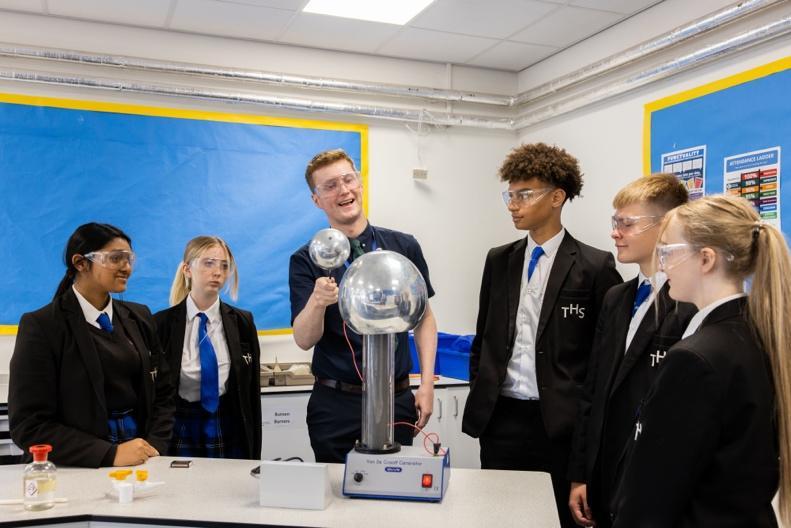
The Triple Science Programme is intended for highly motivated students who intend to study Science further in higher education and is aimed at those students who are high achievers. The expectation for students on the course is high.
As well as studying the same content as the Combined Science course, the Triple Science Programme offers extension units for Biology, Chemistry and Physics which turns the Combined Science qualifications into separate GCSEs in Biology, Chemistry and Physics.
▪ Designing experiments and assessing the results
▪ Investigating and problem solving
▪ Communicating and working with others
▪ Thinking creatively
▪ Debating science-related issues in the news
▪ Risk-assessing situations and working safely in a laboratory environment

Triple Science students can take Biology, Chemistry or Physics at Advanced Level. These courses lead to a wide variety of degrees and employment in engineering, the medical, environmental and research industries, to name but a few. Students with Science degrees are highly sought after in many other areas such as accounting, sport, and journalism, because an understanding of scientific principles shows the ability to think logically, to apply principles and predict the effects of change.
The course is linear with all six papers taken at the end of Year 11. Each paper is 1 hour 45 minutes. Papers are available at foundation tier (5-1) and Higher tier (9-4).
There are a core set of practical assessments to be completed by the end of the course. The examination papers will test aspects of the practical work done over the three years.
Students will receive one GCSE grade for each of biology, chemistry, and physics each between 9-1.
If you would like to study Separate Sciences, you should discuss this with your science teacher.
The final decision on studying Separate Sciences will be made by the science department dependent on ability within the subject.
Exam Board information: AQA GCSE
Contact: Mrs Robson, Head of Religious Education and Sociology
Many students study Sociology for the personal enrichment it brings them, broadening their minds and enabling them to see their world in new and interesting ways. If you choose to study Sociology you will gain a range of very valuable skills; for example, you will learn how to work independently; you will learn how to find information, extract what is important from it and turn it into an argument. With newly acquired skills and insights into the workings of society it is not surprising that a wide range of employers see a Sociology qualification as being highly relevant; many students decide to continue their Sociology studies at college and then beyond to university to study a degree or post graduate qualification in the subject.
Family:
▪ What are the functions of the family?
▪ How are families different around the world?
▪ How relationships and types of families changed over the years?
▪ Why are more people getting divorced?
Education:
▪ What is the point of education?
▪ How do factors like class, gender and ethnicity affect how well you do in education?
▪ How has education changed over the years?
Students will study key ideas of classical sociologists including Durkheim, Marx, and Weber, referencing their view of the world and their contribution to the development of the discipline.
Students will also learn how to apply various research methods to different sociological contexts. They will be introduced to sociological terms and concepts concerned with social structures, social processes, and social issues.

▪ Investigating facts and make deductions
▪ Developing opinions and new ideas on social issues
▪ Analysing and better understanding the social world
People who have studied Sociology open up a wide range of job markets and many become lawyers, doctors, social workers, teachers, or politicians to name but a few examples.
Paper 1: The sociology of families and education (1hr 45mins)
50% of total GCSE grade
▪ The sociology of families
▪ The sociology of education
▪ Relevant areas of social theory and methodology
Students will be expected to draw on knowledge and understanding of the entire course of study to show a deeper understanding of these topics.
Paper 2: The sociology of crime and deviance and social stratification (1hr 45mins)
50% of total GCSE grade
▪ The sociology of crime and deviance
▪ The sociology of social stratification

If students choose to study a vocational subject their attendance will be considered before being accepted onto the course. Good attendance is essential to pass these courses.
For more information about the Guided Choices process or how to make an informed choice about the courses you study at Key Stage Four, please speak to Mr Atkinson (Assistant Headteacher)
Exam Board information: OCR Cambridge National Level 1 & 2 Certificate
Contact: Mr Brandwood, Head of Computing Faculty
This course is for people who like to use ICT in a creative manner. To stretch your learning, you can investigate the different purpose, uses and audience for digital media across the UK. This could include the development of apps on phones and tablets, social media and its impact on the world, or the development of comic book narratives in popular culture.
This course lets students gain knowledge in a number of key areas in the media field, from pre-production skills to digital animation, and offers a hands-on approach to learning.
The options available offer the chance for students to explore areas of creative media that interest them.
The Cambridge National in Creative iMedia will also provide opportunities to develop useful transferable skills such as research, planning, and review, working with others and communicating creative concepts effectively.
Students will be assessed via three units. There are two mandatory units and one optional unit:
▪ Creative iMedia in the media industry (Exam - 40% of total grade)
▪ Visual identity and digital graphics (Coursework - 25% of total grade)
▪ Interactive digital media/Characters & Comics/Animation with Audio/Visual Imaging/Digital Games (Optional Choice - Coursework - 35% of total grade)
What are some of the skills I will gain from Creative iMedia?
▪ Working with computers
▪ Investigating and problem solving ▪ Thinking logically and creatively

Digital Media is a key part of many areas of our everyday lives and vital to the UK economy. Production of digital media products is a requirement of almost every business so there is huge demand for a skilled and digitally literate workforce. This course will provide you with the skills for further study in subjects such as media, journalism, design, or business. It also prepares you for a range of creative and technical job roles within the media industry.
40% of final grade: Examination
25% of final grade: Mandatory Coursework Unit
35% of final grade: Optional Coursework Unit
Grades are based on assessment across all three units and are graded Level 2 Distinction* to Level 1 Pass
The course is assessed at the end of the qualification and is equivalent to GCSE grading. All colleges and universities accept this qualification and grading.


Exam Board information: OCR Cambridge National Level 1 & 2 Certificate
Contact:
Mrs Willis, Head of Technology
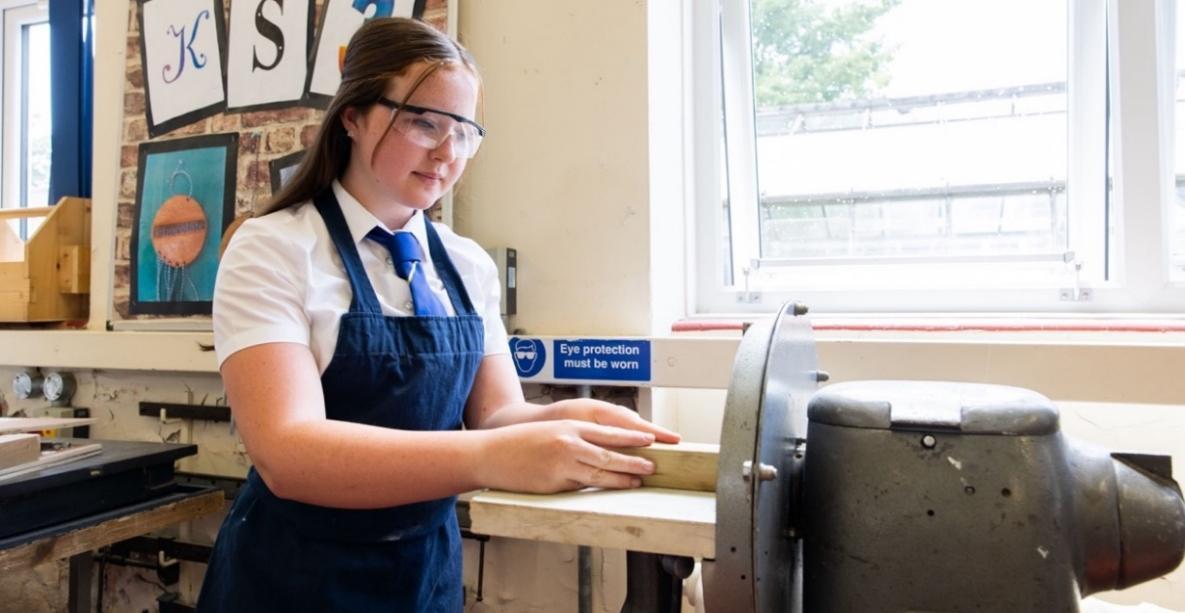
The OCR Level 1/Level 2 Cambridge National in Engineering Design is aimed at students aged 14-16 and will develop knowledge, understanding and practical skills that would be used in the engineering design and development sector. You may be interested in this if you want an engaging qualification where you will use what you learn in practical, real-life situations, such as:
▪ Using both 2D and 3D engineering design techniques
▪ Designing new products to meet a design brief
▪ Communicating engineering design ideas. This will help you to develop independence and confidence in using skills that would be relevant to the engineering design and development sector.
The qualification will also help you to develop learning and skills that can be used in other life and work situations, such as:
▪ Completing research to inform engineering design ideas
▪ Solving problems by exploring different engineering design options
▪ Finding imaginative solutions through creative thinking.
▪ This qualification will enable you to learn about the process of engineering design and understand how it can be used to design effective solutions for a given design brief.
You will develop the ability to communicate your design ideas through the use of sketches and engineering drawings and computer-aided design. You will also be able to evaluate the design of a product, through the disassembly of existing products or the use of modelling for new designs. These skills will help you progress onto further study in the engineering design and development sector.
▪ Manual production of freehand sketches
▪ Production of engineering drawings
▪ Use of computer aided design (CAD
▪ Modelling a prototype

This qualification will enable you to learn about the process of engineering design, and understand how it can be used to design effective solutions for a given design brief. You will develop the ability to communicate your design ideas through the use of sketches and engineering drawings and computer-aided design. You will also be able to evaluate the design of a product, through the disassembly of existing products or the use of modelling for new designs. These skills will help you progress onto further study in the engineering design and development sector.
This qualification allows students the opportunity to gain broad, transferable skills and experiences that can be applied as they progress into their next stages of study and life and to enhance their preparation for future employment. It has been specifically developed alongside industry representatives to ensure that the skills attained match the need in the professional workplace.
Students will have the opportunity to develop the following skills that are transferable to different real-life contexts, roles or employment:
▪ Conducting research as part of the development of engineering design ideas
▪ Solving problems by exploring different engineering design options, and selecting an appropriate design
▪ The use of creative thinking to find imaginative design solutions
▪ Written analytical skills that are developed through product analysis and disassembly of existing products
The course is made up of three mandatory units: R038, R039, and R040.
R038: Principles of engineering design
1hour 15minute written examination
The question paper is in two parts:
▪ Part A includes 10 multiples choice questions (MQAs)
▪ Part B includes short answer questions and extended response questions. One extended question will be assessed using a ‘levels of response’ mark scheme.
R039: Communicating designs
OCR-set assignment containing 4 practical tasks.
R040: Design evaluation and modelling
OCR-set assignment containing 6 practical tasks.
Exam Board information: OCR Cambridge National Level 1 & 2 Certificate
Contact:
Miss McKay, Associate Assistant Headteacher
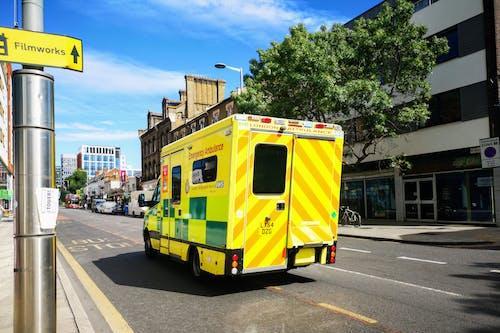
In the UK, the health and social care sector is one of the fastest growing sectors with a rising demand for employees. Approximately 3 million people are currently employed in the sector and in 2019 it was estimated that by 2035 there will over 2 million more health and social care vacancies that need to be filled.
Health and social care is a vocational course for those who want to acquire sector-specific knowledge by studying human lifespan and development and supporting individuals through life events, principles of care in health and social care settings, and creating and delivering a health promotion campaign d health and wellbeing, giving students a broad introduction to a sector that has a wide range of careers such as:
▪ Child or Adult Care Worker
▪ Allied Health Profession Support
▪ Health and Social Care
▪ Healthcare Science Assistant
▪ Maternity and Paediatric Support
▪ Health Care i.e. Nursing
▪ Social Worker
The course allows students to identify their strengths and interests to help them inform the next stages of their post-16 education. Health and Social Care will also complement the learning of other GCSE programmes such as English, Sociology, Sports Studies, Food and Nutrition and Biology.
You will study the key aspects of health and social care, and have the opportunity to apply what you learn through a number of practical experiences. This will involve the studying of three units.
R032: Principles of care in health and social care settings.
In this unit you will learn about the key topics that are important when caring for and protecting people in health and social care.
Topics include:
▪ Topic Area 1 - The rights of service users in health and social care settings
▪ Topic Area 2 - Person-centred values
▪ Topic Area 3 -Effective communication in health and social care settings
▪ Topic Area 4 - Protecting service users and service providers in health and social care settings.
R033: Supporting individuals through life events
In this unit, you will learn about growth and development through the life stages. You will also learn how to understand the needs of individuals who have been affected by life events and how to recommend support to meet their needs.
Topics include:
▪ Topic Area 1 Life stages
▪ Topic Area 2 Impacts of life events
▪ Topic Area 3 Sources of support
R035: Health promotion campaigns
In this unit you will research health promotion campaigns and learn about their benefits to society. You will also plan and deliver your own health promotion campaign.
Topics include:
▪ Topic Area 1 Current public health issues and the impact on society
▪ Topic Area 2 Factors influencing health
▪ Topic Area 3 Plan and create a health promotion campaign
▪ Topic Area 4 Deliver and evaluate a health promotion campaign
▪ Research techniques
▪ Written and verbal communication
▪ Empathy
▪ Compassion
▪ Patience
▪ Honesty
▪ Trustworthiness
▪ Care
▪ Commitment
▪ Problem solving ▪ Organisation
Creativity ▪ Time Management ▪ Presentation Skills
Health and social care is an excellent course for those who are passionate about making a positive impact on people's lives in careers which include:
▪ Doctor
▪ Nurse
▪ Midwife
▪ Healthcare Assistant
▪ Care Worker
▪ Social Worker
▪ Youth Worker
▪ Occupational Therapist
▪ Physiotherapist ▪ Dietician
▪ Community Support and Outreach Worker
Paramedic
▪ Optician
▪ Pharmacist
▪ Care Home Manager
▪ Counsellor
▪ Family Support Worker
▪ Foster Carer
The course is made up of three units, each worth a percentage towards the final grade. The majority of the grade (60%) is gained from two set assignments (coursework) submissions. More information can be found below on the weighting and submission times for each assessment.
Please be advised that as set assignments are completed throughout the course, good attendance is essential to ensure students keep up with the demands of the course.
R032: Principles of care in health and social care settings = 40% weighting of final grade.
▪ This unit is assessed by an exam.
▪ The unit is studied from the Spring term of Year 11 until the exam.
▪ The exam is completed in the May/June exam series of Year 11.
▪ There will be two mock examinations in advance to prepare students for this final exam.
R033: Supporting individuals through life events = 30% weighting of final grade.
▪ This unit is assessed by a set assignment.
▪ This unit is studied from the start of the autumn term to the end of the spring term of Year 10.
▪ Students work on the set assignment over this time.
▪ The submission of this set assignment is due in May of Year 10.
R035: Health promotion campaigns = 30% weighting of final grade.
▪ This unit is assessed by a set assignment worth 30% of your final grade.
▪ This unit is studied from the start of the summer term of Year 10 to the end of the autumn term in Year 11.
▪ Students work on the set assignment over this time.
▪ The submission of this set assignment is due in December of Year 11.


Exam Board information: WJEC Vocational Level 1/2 Award (Technical Award)
Contact: Mrs Willis, Head of Technology
This course gives students an introduction to the hospitality and catering industry, including both food production (kitchen) and hospitality services (front of house). Students will develop an understanding of how hospitality businesses operate, such as restaurants, cafés, hotels, and event catering. Students will learn about job roles and career pathways, customer needs and expectations, health and safety, food safety, nutrition, food provenance, and factors that influence food choice. The course also explores how hospitality businesses provide good customer service and meet the needs of different customers.
In this course, you will learn about the hospitality and catering industry and how businesses such as restaurants, cafés, hotels, and event caterers operate, including:
▪ The hospitality and catering industry – different types of businesses and the job roles within them
▪ Customer needs and expectations – how to provide good customer service in hospitality settings
▪ Health, safety and food safety – including hygiene, risk assessments, and safe working practices
▪ Nutrition and food choice – how menus meet the needs of different customers
▪ Food provenance – where food comes from and why it matters
▪ Planning and preparation – how to plan menus and dishes to meet a brief
▪ Practical skills – preparing, cooking, and presenting food safely and professionally
▪ Teamwork and communication – skills needed to work in hospitality environments
▪ You will also learn how to apply your knowledge in real-life situations, combining theory and practical work, just like in the hospitality and catering industry.
▪ Practical food preparation and cooking skills
▪ Safe and hygienic working practices
▪ Customer service skills for hospitality settings
▪ Organisation and time management
▪ Teamwork and communication
▪ Planning and preparing food to meet a brief
▪ Skills for further study, apprenticeships, and careers in hospitality and catering
Employers value Hospitality & Catering because it develops practical, real-world skills that are directly relevant to the workplace.
• Shows you can work safely and follow rules, especially health and food safety
• Demonstrates reliability, organisation, and time management
• Builds teamwork and communication skills
• Shows experience of customer service and meeting customer needs
• Develops problem-solving and the ability to work under pressure
• Prepares you for work in restaurants, cafés, hotels, events, and customer-facing roles Employers see this qualification as strong preparation for employment, apprenticeships, and further training in hospitality, catering, and customer service industries.
Unit 1: The Hospitality and Catering Industry (External Exam)
▪ Written exam (on screen or paper)
▪ Duration: 1 hour 20 minutes
▪ Marks: 80
▪ Weighting: 40% of final grade
▪ Tests knowledge of the industry, customer needs, health & safety, food safety, nutrition, and food provenance
Unit 2: Hospitality and Catering in Action (Practical Assignment)
▪ Internally assessed practical task
▪ Duration: Around 12 hours of planned assessment
▪ Marks: 120
▪ Weighting: 60% of final grade
▪ Tests practical cooking skills, menu planning, nutrition, safe working, organisation, and evaluation
Overall Qualification: Graded from Level 1 Pass to Level 2 Distinction* based on combined results of both units

Exam Board information: WJEC Level 1/2 Vocational Award (Technical Award)
Contact: Mrs Willowley, Head of Music
▪ If you already play an instrument or sing, you can develop your skills and get a GCSE out of it!
▪ If you already enjoy writing your own music or songs, you can use this ability and experience towards your GCSE.
▪ If you are a creative person who wants to learn to make music, this course will give you that chance.
▪ If you love listening to music, and can spot all the details, sing every riff and “air-drum” every beat you have already developed some of the abilities you need. OK, so you can’t mime playing it in the exam, but if you can already think that rhythm or sing that tune in your head, you have some skills!
Neuroscience has demonstrated that learning to play a musical instrument or sing leads to changes in a child’s brain that make it more likely they will reach their full cognitive and academic potential.
Music is the one subject that supports progress in all other areas of academic life. These factors contribute to the reasons that employers view the ability to play a musical instrument or sing as a huge asset, when listed on a CV. The music industry is growing year on year, providing lots employment opportunities. Even if you’re not considering a career in music performance or music composition, GCSE music opens the door to explore other job roles within the industry, and can be a great stepping-stone to further study.
You will improve your skills in performing and composing different styles of Music. You will listen to a wide variety of Music and learn more about how and why it was written and/or performed.
You should receive instrumental lessons to aid you on your instrument. Please see Mr Atkinson about this, before choosing Music as an option. If you don’t already have instrumental (or singing) lessons, you may struggle to pass this course.
In order to do well on this course, basic keyboard skills are also important, particularly to help with composition. The keyboard work we have done in class at KS3 is enough, but students who have keyboard lessons in addition to their main instrument tend to do best in the composition aspect of the course.
Studying Music, at any level, develops the following skills:
▪ Self-Confidence: through self-improvement as well as performance
▪ Problem Solving: fixing errors when practicing and finding your own solutions
▪ Creativity: writing music and coming up with own ideas
▪ Self-Discipline: being able to practise alone and set your own deadlines
▪ Teamwork: performing with others, being a reliable and dependable classmate

Due to the varied skills (listed above) we learn as musicians, people who have studied music are very employable. A survey by the Guardian in 2013 found that music graduates were employed in areas (beyond music) such as publishing, editing, media production, broadcasting, and marketing, many worked in management roles and they were many employed in finance/banking, legal and consultancy fields.
Increasingly, employers and universities are looking for young people who have skills that are learned through creative subjects: creative thinking, emotional intelligence, adaptability, communication and tenacity to name just a few. And universities are keen to attract students who have a well-rounded education and achieve good results, no matter what the subject.
There are THREE units which will be assessed from the specification:
UNIT 1 - PERFORMING: Non-Examined Assessment
30% of total grade Candidates are required to perform throughout the course and will submit one recording for final assessment.
This can be in any style and on any instrument (including DJ skills, rapping, singing, band, and orchestral instruments). Grade 3 music is the standard level and can score full marks if played perfectly.
10 Hours
UNIT 2 - CREATING: Non-Examined Assessment
30% of total grade
A ‘set brief’ composition, where the exam board dictate a style in which to compose a piece of music. There is still plenty of freedom to be very creative!
10 Hours
UNIT 3 – PERFORMING ARTS IN PRACTICE: Non-Examined Assessment
40% of total grade
A project in response to a scenario set by the exam board. Focusing on various areas of the performing arts industry, candidates much consider and complete all tasks in response to an industry-brief commission.
20 Hours
All three units involve written coursework meaning good attendance is critical in achieving success in this course.
You should be able to play an instrument, or sing, to a reasonable standard. The instrument can be anything, not limited to keyboard or ukulele. Your keyboard skills from the work you have done in class will be useful for the composing elements of the course, but unless you have developed these to a high standard, they won’t be enough to get you through the GCSE course.
Speak to your teacher to find out more about this.
Exam Board information: OCR Cambridge National Level 1 & 2 Certificate
Contact: Mr Scholes, Associate Assistant Headteacher
For students that are interested in how sport affects society.
This course is most suitable for students who prefer to be assessed mostly using coursework and who enjoy the performance of practical sports.
The OCR Cambridge National Sports Studies is a vocational qualification which offers students the opportunity to follow one of two pathways depending on their own ambitions, interests, and personal strengths.
The Sports Studies consists of the following components:
Exam: Contemporary Issues in sport
Practical: Performance in 2 Sports (1 Team & 1 Individual) and Leadership in 1 sport
Controlled assessment: 1 of: Sport and the media or Increasing awareness of outdoor adventurous activities.
Students will learn about how sport reflects society and its values, what the barriers to participation in sport are and about the role of high-profile sporting events.
They will learn how to be an effective sports leader and develop their confidence and communication skills. They will also develop their practical skills in both an individual sport and team sport.
▪ Playing sport
▪ Analysing your own performance and that of a team
▪ Planning for fitness training
▪ Leadership e.g. taking a lead role in a sporting activity
▪ Participating in extra-curricular sports clubs
▪ Communicating with others and working as part of a team

Sport Studies can lead to the following careers:
▪ Sports Coach
▪ Fitness Instructor
▪ Leisure Assistant
▪ PE Teacher
▪ Sports Development officer
Contemporary Issues in sport
▪ 1 hour written paper
▪ Comprises short-answer questions, extended-response questions and some use of multiple-choice questions
Developing Sports Skills
Developing skills, techniques, and use of tactics/strategies/compositional ideas in both an individual and team sporting activity, as well as understanding rules to allow performances in a number of officiating roles. Considering the use of different practice methods in order to improve performance.
Approximately 10 hours internal assessment 60 marks (60 UMS) Centre assessed and OCR moderated
The assessment for this unit: comprises of centre assessed task(s).
Sports Leadership
Learners will develop knowledge of the different qualities, styles, roles and responsibilities of sports leaders with positive and/or negative role models in sport. They will plan, deliver and review a safe and effective activity session to others.
Approximately 10 hours internal assessment 60 marks (60 UMS)
Developing knowledge and skills in outdoor activities
Many skills required in outdoor activities relate to leadership and working with a team.
Approximately 10 hours internal assessment 60 marks (60 UMS) Centre assessed and OCR moderated
The assessment for this unit: comprises of centre assessed task(s).
To consider Sport Studies, students must currently be performing at least one sport for the school or a club.