Executive Summary







Bio-Based & Natural Materials:
Context, Applications, and State of the Industry
Contributors
Authors:
Kendall Claus, Lead Author
Jesce Walz, Co-Author and Editor
Design:
Jacob Williams, Graphic Design
Project Leadership:
Leigh Christy, Project Director
Kimberly Seigel, Project Advisor
External Reviewers:
Chris Magwood, Rocky Mountain Institute (RMI)
Jacob Deva Racusin, New Frameworks
James Kitchen, MASS Design Group / Bio-Based Materials Collective (BBMC)
Leila Behjat, Parsons Healthy Materials Lab / The New School
Internal Reviewers:
Asif Din, Danielle Baez, Glenn Veigas, Helena Christensen, Juan Rovalo, Lona Rerick, Mady Gulon, Yash Akhouri
About Perkins&Will
Innovation starts with inquiry. In our never-ending quest for knowledge, we push limits, take risks, investigate, and discover.
Perkins&Will, an interdisciplinary, research-based architecture and design firm, was founded in 1935 on the belief that design has the power to transform lives. Our research is inspired by our practice, and our practice is informed by our research.
We believe that research holds the key to greater project performance. Our researchers and designers work in partnership from project start to completion. We constantly ask ourselves, “What if?” “What’s next?”
This makes our ideas clearer, our designs smarter, our teams happier, and allows us to innovate to achieve our clients' goals and further best practices in design.
www.perkinswill.com
Executive Summary
This document summarizes the following publications:
Bio-Based & Natural Materials: Context and Applications in Architecture
Bio-Based & Natural Materials: State-of-the-Industry Survey
These and related documents can be found on our website
Abstract

This executive summary distills insights from two companion reports on Bio-Based and Natural Materials, available on our website: Context and Applications in Architecture and a State-of-the-Industry Survey. It provides a consolidated overview of current opportunities and challenges shaping the use of bio-based and natural materials. This summary highlights the environmental and cultural motivations for shifting toward biological and regenerative material systems and introduces the taxonomy, technological readiness, and sourcing and design considerations found in the Context and Applications report. It also synthesizes key market signals and barriers identified through the State-of-the-Industry Survey’s literature review, interviews, and analysis. Together, these insights offer a clear starting point for understanding the current landscape of bio-based materials, outlining near-term specification opportunities as well as areas where advocacy, strategic investment, and pilot projects can accelerate broader adoption in the built environment.
Overview
As the impacts of climate change, biodiversity loss, and social inequity become more visible, bio-based and natural materials are evolving from outliers to viable options in North American practice. This three-part report (Executive Summary; Bio-Based and Natural Materials: Context and Applications in Architecture; and State-of-the-Industry Survey), assesses their potential through the following lenses:
1. Introduction: Insights to support design with biobased materials, using the lens of the Planetary Boundaries framework.
2. Methodology: A taxonomy of nine material categories and five technology readiness levels.
3. State of the Industry: Synthesis of North American market availability, opportunities, and barriers for bio-based materials.
4. Interpretation: Matrices of featured materials at commercially available and early adoption stages, accompanied by sourcing and application recommendations.
Through review of materials databases, project examples, and literature, we find a sector in transition.
Demonstration projects, evolving codes (such as tall mass timber provisions and natural-building appendices), growing demand for product transparency, and regional supply initiatives are driving market momentum. At the same time, fragmented standards, limited distribution, data gaps, and conservative procurement continue to impede widespread adoption.
The near-term opportunity is to translate existing proof of concept into mainstream practice by strategically integrating commercially available bio-based and natural materials into projects today. An immediate next step involves identifying test cases and advocacy opportunities that advance new products and systems from early adoption toward scalable delivery, expanding both material diversity and supply chain capacity.
Key Signals
Signs of momentum: Evolving codes and procurement policies; expanding environmental impact transparency, digital material libraries, and visible demos and retrofits that de-risk adoption.
Opportunities for advancement: Standards and testing; supply chain cohesion and contractor familiarity; first-cost frameworks that acknowledge lifecycle and regenerative value.
What this report adds: A lens for material sourcing, categorization, and readiness; a comprehensive state of the industry assessment; key material summaries and substitution matrices.
How to apply the guidance in this document:
✓ Review this summary document & Key Takeaways.
✓ Survey the Materials and Products Tables and Substitution Matrices.
✓ Consider opportunities for application by building element.
✓ Identify 1–2 pilot materials to test on your next project.
Introduction & Taxonomy
Bio-based materials represent a broad and evolving family of natural building resources, from structural timber and hempcrete to seaweed panels and microbial coatings. These materials originate from living systems, may regenerate over time, and are increasingly being cultivated or processed for architectural use. In addition to being low-carbon or carbon-storing alternatives, bio-based materials, when sourced and specified with care, present new opportunities to align material choices with ecosystem restoration, healthier buildings, circular economies, and cultural context.
Material Categories:
This report introduces bio-based materials with focus on their value in respect to earth’s Planetary Boundaries, accompanied by sourcing considerations. It then outlines key characteristics, performance traits, and ecological benefits across a set of material categories. The taxonomy builds upon the Parsons Healthy Materials Lab (HML) classification “Healthy and Regenerative” material categories (Parsons Healthy Materials Lab 2025).
The categories summarized in this report include:
Animal: Products made of animal fibers or byproducts.
Bacteria: Products that utilize bacteria.
Fungi: Products made of mycelium, the root-like structure of mushrooms.
Marine: Products that contain marinebased material.
Plant: Products made of plant fibers, residues or byproducts.
Mineral: Products derived from minerals.
Earth: Products made of earthen material (clay, soil, sand).
Biocomposite: Products made from multiple bio-based materials. Often composed of both matrix and reinforcement material.
Living Materials: Materials that employ living organisms to perform a function, including Engineered Living Materials (ELM), Hybrid Living Materials (HLM), and Living Building Materials (LBM).
Technology Readiness Levels
To help project teams act now, the report applies a Technology Readiness Levels (TRL) framework to evaluate the maturity and applicability of present day commercial application (ISED Canada 2021):
Commercially Available (no TRL #): commercially available products or purpose-built methods, with precedent.
Early Adoption (TRL 9): commercially available in select regions or early stage in North America.
Pilot and Demonstration (TRL 6-8): used in demonstration projects; start-up stage; not standardized.
Research & Development (TRL 3-5): tested in labs or conceptual applications.
Fundamental Research (TRL 1-2): academic explorations where initial research has been conducted.
Categorize Bio-Based and Natural Materials
Evaluate Material Technological Readiness
Index Materials That Can Be Operationalized
The materials represented across these categories and TRLs range from centuriesold vernacular systems, such as earth, plant fiber, and wool, to emerging products made from materials like fungi, seaweed, algae, or bacteria, developed through scientific innovation and cross-disciplinary experimentation. Together, they demonstrate the expanding potential of products that are carbon-sequestering, non-toxic, and circular by design. Some bio-based products, like timber, hempcrete, and clay, are already commercially viable in many regions. Others, such as mycelium panels, algae bricks, or microbial pigments, remain in the pilot stage or research and development (R&D) stage. By outlining their distinct characteristics, readiness levels, and performance profiles, this report aims to equip designers with a clearer understanding of what is currently available, what is emerging, and how to responsibly assess and apply each material type.
NOTE: The TRL framework provided by ISED Canada uses the term commercially available products that are market-ready. While availability may vary by region, we apply the commercially available TRL to materials that are available as either commercial products or via purpose-built traditional methods within North America. We have categorized products that are available in Europe but less common in North America at the early adoption level (ISED Canada TRL 9).
Commercially Available Products
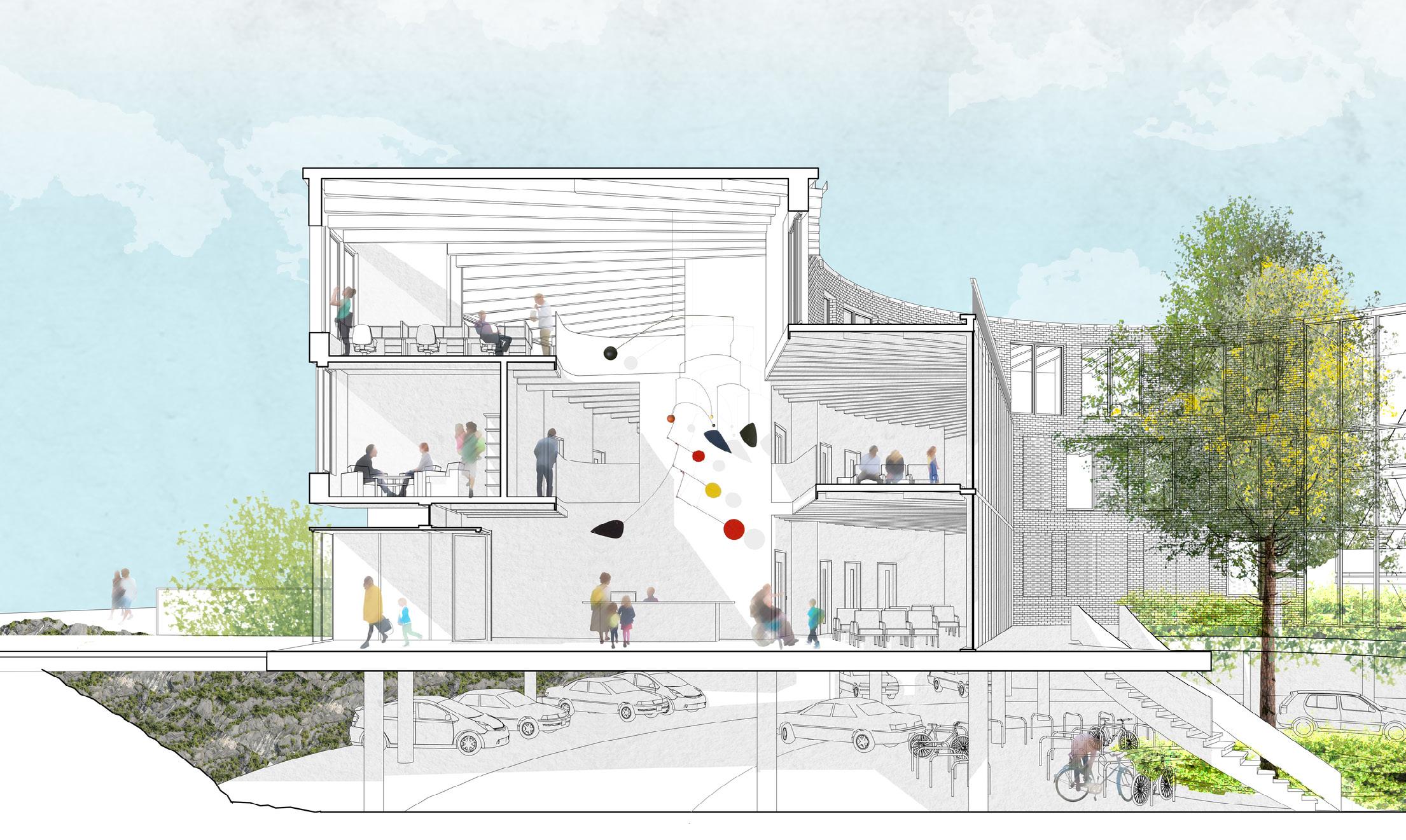
Building on this understanding of the field, this report translates a diverse material landscape into practical pathways for project teams. While the taxonomy and TRL analysis illustrate what materials exist and how mature they are, the following Tables (1-3) shift the focus to how these materials can actually be used in buildings today. Through this research, we evaluated hundreds of available products and organized them according to where they can substitute for conventional products across common assemblies:
1. Foundation
2. Structure (Load-Bearing, Non-Load Bearing)
3. Exterior Sheathing (Walls, Roof)
4. Enclosure (Exterior Cladding & Roof Covering)
5. Insulation (Board & Cavity)
6. Paints, Coatings, Binders & Sealants
7. Interior Millwork & Casework
8. Interior Partitions
9. Interior Finishes (Wall, Ceiling, & Floor Finishes)
10. Interior Furnishings
This approach reveals that designers are not starting from scratch: a substantial and growing library of bio-based and natural products already meet performance expectations, are supported by commercial supply chains, and ready for specification today.
At the same time, Table 3 clarifies where emerging materials warrant thoughtful piloting, helping teams navigate a rapidly expanding field with confidence; identifying where they can act immediately and where experimentation can meaningfully advance a more regenerative materials economy.
Figure 1: Building section illustrating potential locations for bio-based material and product integration.
Commercially Available Materials & Products by Material Category
The table below highlights over 50 key bio-based and natural material types that are commercially available today as either products or traditional materials and methods. Each is listed once with its primary architectural applications. These examples have precedents in built projects, supply chains that extend to at least a regional scale, and, in some cases, explicit acceptance within codes and standards.
These are the materials design teams can most readily seek out and specify now, given regional availability and project fit.
Many of the materials described in the charts below may be incorporated into assemblies and composites. Examples include structural insulated panels, systems like cob that use straw and clay-rich soil, and gabion walls.
CATEGORY
Beeswax
beeswax finish/coating
Leather leather textiles
Silk silk textiles
wool yarn
ANIMAL
Wool
wool felt
wool insulation
Hair goat hair
Milk milk (casein) paint
Earth adobe*
compressed stabilized earth block (CSEB)*
rammed earth (precast/site-cast; stabilized /unstabilized)
clay plaster
EARTH
MARINE
MINERAL
Clay
clay paint
unfired & low-fire clay tile
clay mortar
terracotta tile
Seaweed seaweed panel*
Shells shell aggregate
Basalt mineral wool
Gypsum natural gypsum board
Lime lime plaster
lime paint
lime grout/mortar
Magnesite magnesium oxide board
Potassium Silicate mineral paint & primer
Silica glass (primary & recycled)
Stone stone* (primary & recycled)
(I) Finishes (wood coatings)
(I) Finishes (drapery, wallcovering)
(I) Furnishings (upholstery)
(I) Finishes (carpet/rugs)
(I) Finishes (acoustic tile/panel)
(I) Furnishings (upholstery)
(I/E) Insulation (batt, loose-fill)
(I) Finishes (carpet/rugs)
(I) Finishes (wall/ceiling coatings)
(I/E) Structure (load-bearing/non-load-bearing walls)
(E) Enclosure (cladding)
(I) Partitions
(I/E) Finishes (wall coatings)
(I) Finishes (wall/ceiling paint)
(E) Enclosure (cladding)
(I) Finishes (floor/wall tile)
(E) Enclosure (cladding, roofing)
(I) Finishes (floor/wall tile)
(I) Finishes (acoustic panel)
(I/E) Finishes (decorative, terrazzo, tile, pavers)
(E) Insulation (batt, board)
(I) Partitions, Finishes (ceiling)
(I/E) Finishes (wall coatings)
(I/E) Finishes (wall/ceiling paint)
(I/E) Masonry (grout, soft mortar, repair - preservation)
(E) Enclosure (sheathing)
(I) Partitions & Flooring (substrate)
(I) Finishes (wall/ceiling)
(I) Finishes (wall/ceiling paint)
(E) Structure (cement replacement)
(E) Structure (load-bearing walls, stabilization - stacked, gabion)
(I/E) Finishes (slab, tile, aggregate - countertops, flooring)
Table 1: Commercially available bio-based and natural materials and products
CATEGORY MATERIAL
Biochar biochar aggregate or additive*
cork tile/plank/board
Cork
cork brick
cork (molded)
upholstery filling (cotton, kapok, buckwheat hull, coconut coir)
Natural Fibers
Hemp
Straw
PLANT
Wood
textiles (linen/flax, cotton, hemp)
hemp fiber insulation
hempcrete (block/panel/cast-in-place)
hemp fiber board
hempwood
strawbale (bale unit/prefabricated panel)*
light straw-clay* (loose fill + clay slip)
compressed straw board/panel
APPLICATIONS
(E) Structure (cement replacement)
(I/E) Insulation (w/ binder), Finishes (pigments)
(I/E) Insulation (board)
(I) Finishes (flooring, wallcovering, acoustic tile/panel)
(I) Partitions
(I) Furnishings (furniture)
(I) Furnishings (cushion fill)
(I) Finishes (acoustic panel, drapery, wallcovering)
(I) Furnishings (upholstery)
(I/E) Insulation (cavity, board)
(I/E) Structure (non-load-bearing walls)
(I/E) Insulation (cavity, board)
(E) Enclosure (sheathing)
(I) Partitions, Finishes (wall/ceiling panels)
(I) Finishes (flooring, millwork, casework)
(E) Structure (load-bearing/non-load-bearing walls)
(I/E) Insulation (cavity)
(E) Insulation (cavity)
(E) Enclosure (plaster)
(I) Partitions, Finishes (wall/ceiling panel), Insulation (board) cob (straw + earth)*
engineered wood products
(CLT, DLT, NLT, GLULAM, MPP, PSL, LVL, LSL, OSL, flooring, siding)
cellulose
wood fiber
wood wool
salvaged wood*
wood veneer
paper-based solid surface
latex foam
Latex
Flax / Linseed
(I/E) Structure (non-load-bearing walls)
(E) Structure (framing, decking, sheathing)
(E) Enclosure (cladding)
(I) Finishes (flooring, wall/ceiling, millwork, casework)
(I/E) Insulation (batt, board)
(I) Finishes (acoustic tile/panel)
(E) Enclosure (sheathing)
(I/E) Insulation (batt, board)
(I) Partitions, Finishes (acoustic tile/panel, casework)
(I/E) Insulation (board)
(I) Finishes (acoustic tile/panel)
(E) Structure (framing)
(E) Enclosure (cladding)
(I) Finishes (flooring, wall/ceiling, millwork, casework)
(I) Finishes (wall/ceiling, millwork, casework)
(I) Finishes (countertops, millwork, casework)
(I) Furnishings (cushion fill)
water-based latex paint
natural rubber
linseed oil & paint
linen textiles
flax fiber board
linoleum
grass fiber panel/board (reed, rice, elephant grass composites)
(I) Finishes (wall/ceiling paint)
(I) Finishes (resilient flooring/surfaces)
(I/E) Finishes (protective paint/coating)
(I) Finishes (drapery, wallcovering), Furnishings (upholstery)
(I) Partitions, Finishes (acoustic panel)
(I) Finishes (resilient flooring/surfaces)
(I) Finishes (acoustic panel, casework)
(E) Structure (framing, sheathing)
Grasses
bamboo (engineered, laminated, plywood, composite board, veneer)
bamboo linen/ grass textiles
Oils, Resins & Pigments
pigmented bio-resins
pigments & dyes
(E) Enclosure (cladding)
(I) Finishes (flooring, millwork, casework), Furnishings
(I) Finishes (wallcovering, acoustic panel, drapery, rugs)
(I) Furnishings (upholstery)
(I) Finishes (coatings, binders)
(I) Finishes (paints, plasters, stains, textiles, wallpaper)
Commercially Available Materials:
Substitution Matrix
This matrix shows commercially available materials mapped to building elements. It highlights opportunities for bio-based products to directly replace conventional ones in practice.
Table 2: Substitution matrix of commercially available bio-based and natural materials
BUILDING
FOUNDATION Cement / Concrete
STRUCTURE
(load-bearing, non-load bearing) Concrete / Steel
EXTERIOR SHEATHING
(walls, roof)
ENCLOSURE (EXTERIOR CLADDING & ROOF COVERING)
OSB / Plywood
Brick / CMU GFRC
Vinyl Roof Covering
BOARD INSULATION (exterior walls)
EPS / XPS foam board SIP Panels
CAVITY INSULATION
(walls, roof, floors)
Fiberglass Batt Insulation
Commercially Available
BIO-BASED
biochar aggregate/ additive*
foam glass (insulating aggregate substitute/ fill) glass pozzolan (cement substitute / SCM) self-healing concrete*
adobe*
biochar aggregate/additive* cob*
compressed stabilized earth block (CSEB)*
engineered/ laminated bamboo*
engineered wood (CLT, DLT, NLT, GLULAM, ...) foam glass (insulating aggregate substitute) glass pozzolan (cement substitute / SCM) rammed earth* timber frame strawbale* salvaged wood* stone (dry stacked or gabion)
bamboo plywood*
hempwood plywood
magnesium oxide board salvaged wood* wood fiber board
adobe block bamboo cladding/veneer* cob*
compressed stabilized earth block (CSEB)*
engineered wood cladding light straw-clay (plaster/ system)* rammed earth* rice hull cladding salvaged wood* terracotta cladding & roof tile
basalt mineral wool cellulose board*
compressed straw board* cork board*
hempcrete board* wood fiber wood wool*
basalt mineral wool cellulose cork board*
hemp fiber batt*
hempcrete* light straw-clay* strawbale, straw batt* wool batt wood fiber
PAINTS, COATINGS, BINDERS & SEALANTS
INTERIOR MILLWORK & CASEWORK
Petroleum-Based Paints, Coatings, Binders & Sealants
MDF / Plywood / Plastic Laminate
INTERIOR PARTITIONS Drywall (Gypsum) / Cement Board
INTERIOR FINISHES
(wall, ceiling, & floor finishes)
PET / Foam Acoustic Panel
Synthetic Textiles (polyester, vinyl)
Synthetic Flooring / Paneling
Vinyl / Carpet flooring
Concrete / Ceramic tile
INTERIOR FURNISHINGS
Plastic furnishings
Synthetic textiles (polyester, vinyl)
Foam and synthetic fill
beeswax finish/coating
biochar additive
clay plaster/paint
lime mortar
lime plaster/paint
linseed oil finishes & sealants
linseed paint
milk (casein) paint
pigmented bio-resins*
plant-based pigments & dyes
potassium silicate mineral paint
water-based latex paint
bamboo plywood/veneer*
grass fiber board
hempwood plywood
Paper-based solid surface
Salvaged wood*
Wood veneer
compressed straw board
cork brick
flax fiber board
hemp board*
magnesium oxide board
natural gypsum board
plant cellulose panels**
precast rammed earth block panels*
wood fiber board
bamboo finishes & flooring*
cellulose acoustic panels
compressed straw board
cork acoustic panels*
cork finishes & flooring
engineered wood flooring
flax fiber board
goat hair carpet/rugs
grass fiber board/panel
hemp fiber board
hempwood flooring/finishes
leather textiles
linoleum (flax-based) flooring
magnesium oxide board
natural fiber textiles (bamboo, linen, cotton, hemp)*
natural rubber flooring
silk textiles
salvaged wood*
seaweed acoustic panels*
shell aggregate tile/terrazzo*
stone (slab/tile, aggregate - countertops, flooring)
terracotta tile
unfired/low-fire clay tile
vegetable-tanned leather textiles
wood fiber acoustic panels, finishes, & casework
wood wool board acoustic panels
wool felts/textiles*
wool acoustic tile/panel
wool carpet/rugs
bamboo furniture*
cork furniture
latex foam
natural fibers upholstery (cotton, kapok,...)
wool or natural fiber upholstery
wood furnishings (solid, engineered, composite)
Early Adoption Substitution Matrix
This matrix includes products at the early adoption stage, mapped to building elements. These are products to track for near-term innovations and may be candidates for pilot applications. Many, but not all, of these products are gaining traction in Europe and are supported by early certifications or built precedents but not yet established in North America. Products that are more readily available in Europe are marked with an **.
BUILDING ELEMENT
CONVENTIONAL PRODUCT TYPES
FOUNDATION Cement / Concrete
STRUCTURE Concrete / Steel
ENCLOSURE (EXTERIOR CLADDING & ROOF COVERING)
EXTERIOR SHEATHING
(walls, roof)
BOARD INSULATION (exterior walls)
Brick / CMU GFRC Vinyl Roof Covering
OSB / Plywood
EPS / XPS foam board SIP Panels
Early Adoption (TRL 9)
CAVITY INSULATION
(walls, roof, floor) Fiberglass Batt Insulation
PAINTS & COATINGS Petroleum-based Paints & Coatings
BIO-BASED PRODUCT TYPES
basalt fiber reinforcement compressed earth (site compressed)** nutshell aggregate
compressed earth + natural fiber block (CSEB with straw/hemp)**
basalt fiber board/panel** birch bark roofing composite bamboo cladding* cork panel cladding/render* grown masonry** thatch roofing**
calcium silicate board** corn-based board** reed grass board** straw board/panel**
bacterial cellulose panel** corn stover board** eelgrass board** mineral-plant insulation board straw board
eelgrass batt** kelp batt** mycelium insulation** perlite insulation rice hull insulation seaweed batt** straw batt insulation**
algae-enriched paints** bacterial bio-coatings & resins** diatom mud paints** chitosan-based coatings** oystershell plaster** thermal cork plaster**
INTERIOR MILLWORK & CASEWORK MDF / Plywood Plastic Laminate
agave fiber-reinforced panels/boards** mycelium plywood** nutshell composite board sugarcane composite board**
Table 3: Substitution matrix of bio-based and natural materials for early adoption
BUILDING ELEMENT
INTERIOR PARTITIONS Drywall (Gypsum) / Cement Board
INTERIOR FINISHES
(wall, ceiling, & floor)
PET / Foam Acoustic Panel
Synthetic Particleboard
Synthetic Textiles (Polyester, Vinyl)
Leather Textiles
Concrete / Ceramic tile
Synthetic Carpet / Rugs
Synthetic Resilient Flooring
INTERIOR FURNISHINGS Plastic Furnishings
** A product or process that is available in the EU but not as widely available in the US.
calcium silicate board** clay fiber board** straw board** corn-based board** flax core panels**
animal fur/hair/hide (recycled/byproduct) bacterial bio-cement tile** basalt fiber board chitosan bio-composite tile corn-based board** corn-based tile** earthen flooring eelgrass board/mat** grown tile** kelp/seagrass panel** lanolin-rich wool felts & textiles lime tile
mycelium acoustic tile/panel** mycelium composite flooring** mycelium textiles/leather** plant pulp cellulose panel** pozzolanic tile** rice husk board** vegan leather (plant-based)**
algae film furnishings** bacterial cellulose panels & films** linoleum furnishings**
molded mycelium furnishings** nutshell bio-composite furnishings
seaweed bioplastic furnishings** food waste panels**
State of the Industry
The report proceeds with a state of the industry survey that draws on more than 100 references published between 2014 and 2025, including academic, trade, and grey literature. The survey assesses the current capabilities, maturity, and market conditions of bio-based and natural materials, and it also examines enabling factors and key barriers to adoption. Our research indicates that:
nj Bio-based materials are supported by technological innovation, localized manufacturing, circular economy models, emerging carbon-focused policies, and rising demand for transparency.
nj Promising market signals include the growth of digital material databases, increasing consumer demand for healthy and sustainable products, opportunities for bio-based retrofits, and burgeoning cross-sector collaborations strengthening bioregional networks.
nj While enthusiasm is accelerating, supporting infrastructure is needed for bio-based and natural materials to keep pace. Progress is constrained by misconceptions about bio-based performance, lack of knowledge, and a design culture rooted in industrial and “modern” material expression.
nj Other significant barriers include code, policy, and regulatory misalignment; fragmented supply chains; inconsistent performance and gaps in carbon data; costs associated with scaling up; and a strong tendency towards risk-aversion in the building industry.
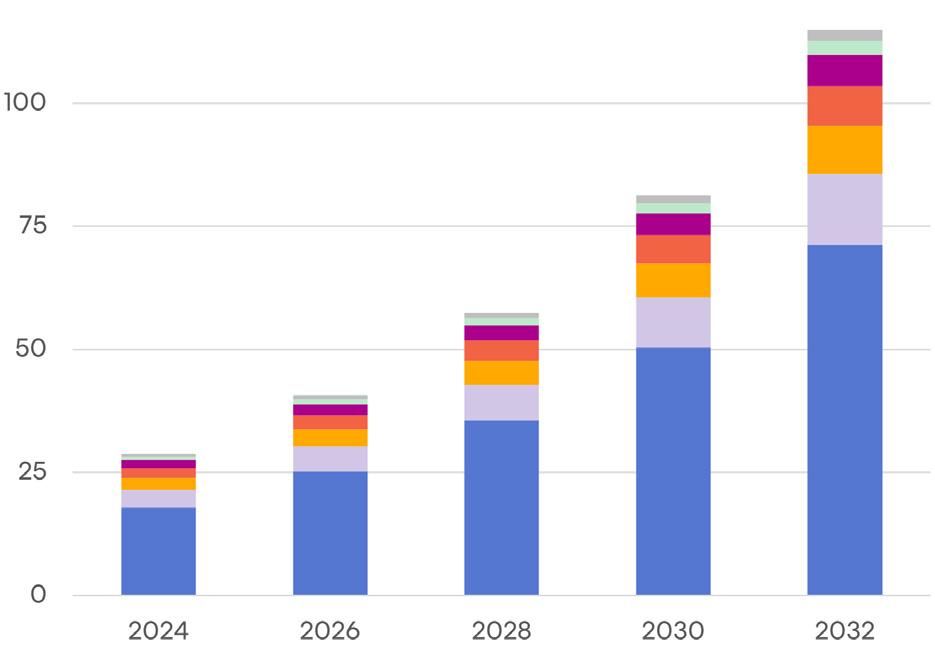
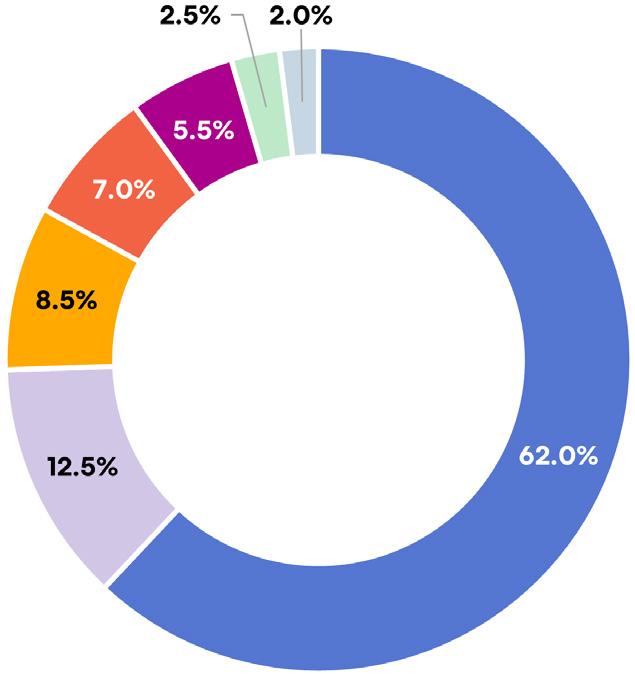
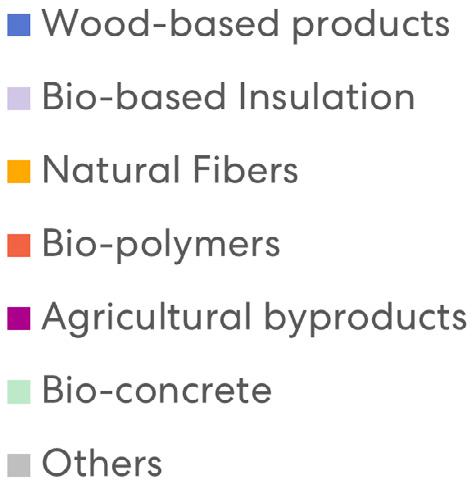
GLOBAL BIO-BASED BUILDING MATERIALS MARKET
Value and projected Growth by Material Type, USD Billion $
Forecast average of 18.9% annual growth through 2032
Following this survey, the report provides considerations for regenerative material sourcing and introduces the American Institute of Architects (AIA) Materials Pledge as a guiding framework. It then highlights market insights per material category, accompanied by a set of practical matrices and next steps.
1. Commercially Available Materials and Products: a concise list of commercially available bio-based and natural materials, organized by type and primary application.
2. Commercially Available Materials Substitution Matrix: maps bio-based options to common building elements, identifying where they can directly replace conventional products, with notes on traditional methods and regional availability.
3. Early Adoption Materials Substitution Matrix: highlights emerging materials suitable for pilot projects, mapped to common building elements, with indicators for products and processes that are currently commercially available in the EU but not as common in North America.
Materials Pledge Alignment
Bio-based materials and products are uniquely positioned to advance the AIA MATERIALS PLEDGE because their origins, processing pathways, and end-of-life cycles often align more naturally with regenerative outcomes than conventional, petrochemical-based products. Many biobased materials inherently support HUMAN HEALTH through low-toxic feedstocks, breathable assemblies, and finishes and binders that avoid harmful chemicals commonly found in synthetic alternatives. They can also strengthen SOCIAL HEALTH & EQUITY when sourced from transparent, community-embedded supply chains, such as small-scale farming, regenerative forestry, or local fiber and craft traditions, rather than opaque global extractive industries. Their close relationship to living systems means
they can directly contribute to ECOSYSTEM HEALTH, provided cultivation or harvesting avoids monoculture, overextraction, or land-use change and instead reinforces soil vitality, biodiversity, and watershed resilience. In terms of CLIMATE HEALTH, many bio-based materials store carbon during growth, rely on low-energy or ambienttemperature processing, and can be regionally sourced to reduce transportation impacts. Finally, their biological origin supports CIRCULAR ECONOMY goals by enabling repair, reuse, or composting, and by allowing residues and waste streams to be transformed into durable resources— contrasting sharply with petrochemical materials that are typically difficult to recycle and often downcycle into lowervalue products.
From Curiosity to Application
Taken together, these findings indicate that the field is at an inflection point. Collectives are emerging to support the evolution of bioregional materials. These include land managers, manufacturers and fabricators, funders, policymakers, designers, builders, and more. Bio-based materials are no longer niche; they are viable, scalable, and increasingly essential.
The next challenge is not technological capability, but creativity and integration: aligning design culture, supply chains, and policy to meet the urgency of climate, health, and equity goals.
Design teams must move from cautious curiosity to confident application. The shift from sustainability to regeneration requires reimagining our relationship with land, labor, materials, and each other.
This report is meant to build familiarity, spark curiosity, and equip designers with tools to begin exploring how buildings can participate in fully cycling, living material ecosystems.
The shift toward bio-based materials requires not only technical literacy, but also creative courage.
Designers are uniquely positioned to lead this transition by rethinking long-held assumptions about what materials can do and how they can perform. Rather than waiting for perfect data or complete standardization, we can prototype, test, and learn through practice, treating each project as an opportunity to advance material intelligence and collective progress. By approaching materials with curiosity and openness, we expand both the design vocabulary and the cultural narrative of what architecture can be when it works in partnership with living systems.
We now have the possibility of moving towards developing regenerative buildings and cities. We expect that profound changes to the way we build, and what we build with, are inevitable… That is, we can learn to grow buildings.
Paraphrased from Bruce King, on the need for a low-carbon building code (King 2018, 3,9)
Key Takeaways
This document is a beginning. It’s a foundation for integrating bio-based and natural materials more confidently into our projects and culture.
To
build on this work, we recommend the following actions:
Circulate & Gather Feedback: Engage with the teams and leadership within your sphere. Collaborate with colleagues, clients, and material suppliers to utilize, apply, and expand upon these resources.
Document Pilot Projects: Identify, support, and track projects that use bio-based and natural materials.
Advocate and Share Lessons Learned: Capture lessons learned, both technical and cultural, to build an internal evidence base and inspire further adoption. Share at industry conferences, through publications, and by participating in working groups. Advocate for code, policy, and procurement reforms that remove barriers to bio-based materials.
Develop Regional Inventories: Create bioregional material maps by identifying locally available bio-based materials, their supply chains, and any gaps. Use these to inform context-appropriate choices.
Grow the Future Archive: At an industry scale, there is a need for a centralized library of bio-based material examples, suppliers, certifications, and regional insights to support sourcing and storytelling. Libraries are currently fragmented and may not be filtered dynamically, and some are behind paywalls.
Build Supplier Relationships: Proactively engage with growers, manufacturers, and fabricators. Early conversations can reveal innovations, align expectations, and enable custom solutions.
Expand Education: Host workshops, presentations, and studio reviews to introduce material alternatives, highlight pilot examples, and strengthen confidence in specifying bio-based materials.
Tools & Resources
These platforms and resources can serve as starting points for teams looking for bio-based products to integrate into their projects.
Industry Resources
• AIA Materials Pledge – a collective commitment by architects to prioritize building products that advance human health, climate and ecosystem health, social equity, and a circular economy.
• Aireal Materials – a physical and online library of materials that capture CO₂ during production.
• ACAN Natural Materials Detail Library – a collection of natural construction details and list of natural materials manufacturers, suppliers and installers.
• Biobased Materials Library – a library of all biobased materials used in the projects of Company New Heroes and Biobased Creations.
• Builders for Climate Action (BfCA) Bio-Based and Circular Materials Database – a curated database of bio-based and regenerative materials.
• Future Materials - showcases design-led, low carbon, bio and circular products.
• Materials Assemble Materials Library – a library of the finishes and techniques (including bio-based) from working craftsmen, artisans and makers.
• Materials District – a database and match-making platform that includes natural materials & connects manufacturers and distributors w/ A&D professionals.
• Material Order – a resource for designer materials collections led by academic and cultural institutions (filter results by “Lifecycle component > renewable”).
• Parson’s Healthy Materials Lab (HML) Healthy and Regenerative Materials Collection – a large material collection focused on materials and products that originate from ecological sources.
• USDA BioPreferred Catalog – a catalog of certified bio-based products (see “Construction” tab).
• UTSOA Materials Lab – a student researchdriven online database of existing, new and upcoming materials.
Perkins&Will Resources
• Bio-Based & Natural Materials: Context and Applications in Architecture – foundational guidance for integrating bio-based and natural materials into architectural practice.
• Bio-Based & Natural Materials: State-of-theIndustry Survey – foundational guidance for integrating bio-based and natural materials into architectural practice.
• Circular Design Primer for Interiors – distills best practices in circular design from projects across our global practice; the strategies in this primer may be applied to architecture and interiors projects.
• Getting to Craft in Mass Timber – a guide to support ecological sourcing, design, and technical considerations for mass timber projects.
• Our Carbon Health Series – a series of reports developed in collaboration with Habitable that address both embodied carbon and health concerns that are associated with common building materials..
Reference List
1. Global Market Insights. 2024. “Bio-Based Building Materials Market: Global Forecast (20242032).” https://www.gminsights. com/industry-analysis/ bio-based-building-materials-market.
2. ISED Canada. 2021. “Technology Readiness Level (TRL) Assessment Tool.” Innovation, Science and Economic Development (ISED) Canada. https://ised-isde.canada. ca/site/clean-growth-hub/en/ technology-readiness-level-trlassessment-tool.
3. King, Bruce. 2018. A Low-Carbon Concrete Buiding Code: Towards a Carbon-Sequestering Built Environment. https://www.bruceking.com/images/_A_Low-Carbon_ Concrete_Building_Code10-9.pdf.
4. Parsons Healthy Materials Lab. 2025. “Material Collections: Healthy and Regenerative.” https://healthymaterialslab. org/material-collections/ natural-materials.
5. U.S. EPA. 2020. Inventory of U.S. Greenhouse Gas Emissions and Sinks: 1990-2018. United States Environmental Protection Agency (U.S. EPA). https://www.epa.gov/ ghgemissions/inventory-usgreenhouse-gas-emissions-andsinks-1990-2018.
Acknowledgments
We gratefully acknowledge:
nj The Traditional Custodians of the lands on which we work and learn, whose deep relationships with the natural world have long guided regenerative practices, and who continue to teach us what it means to care for land, living systems and community.
nj Highly respected external experts from New Frameworks, Parsons Healthy Materials Lab, Rocky Mountain Institute, MASS Design Group, and the Bio-Based Materials Collective who generously shared their knowledge, case studies, and vision for regenerative design.
nj The designers, researchers, and sustainability leaders across Perkins&Will who provided insights, critical feedback, and creative ideas throughout the process.
nj Authors, thought leaders, and industry guides, whose work is shaping our understanding of bio-based and natural materials.
nj The growing global community of builders, makers, and advocates who demonstrate what’s possible when design reconnects to living systems.
We also acknowledge the use of AI-assisted writing tools (OpenAI’s ChatGPT) to support editing and synthesis; all interpretations and conclusions reflect the judgement of the authors.
We extend thanks to everyone who challenged assumptions, asked critical questions, and helped shape this resource into a tool for meaningful change.
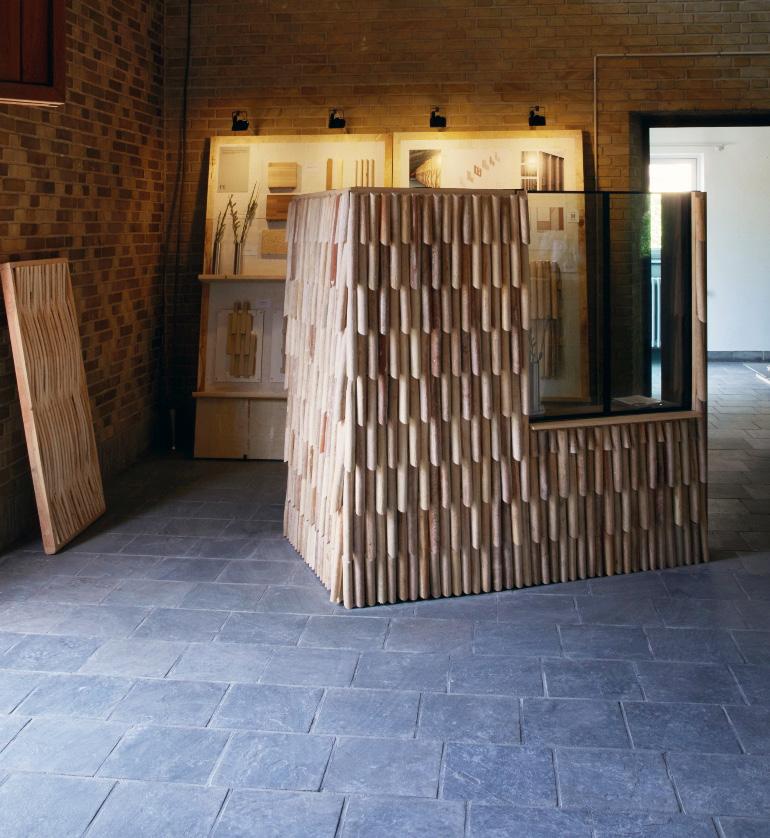
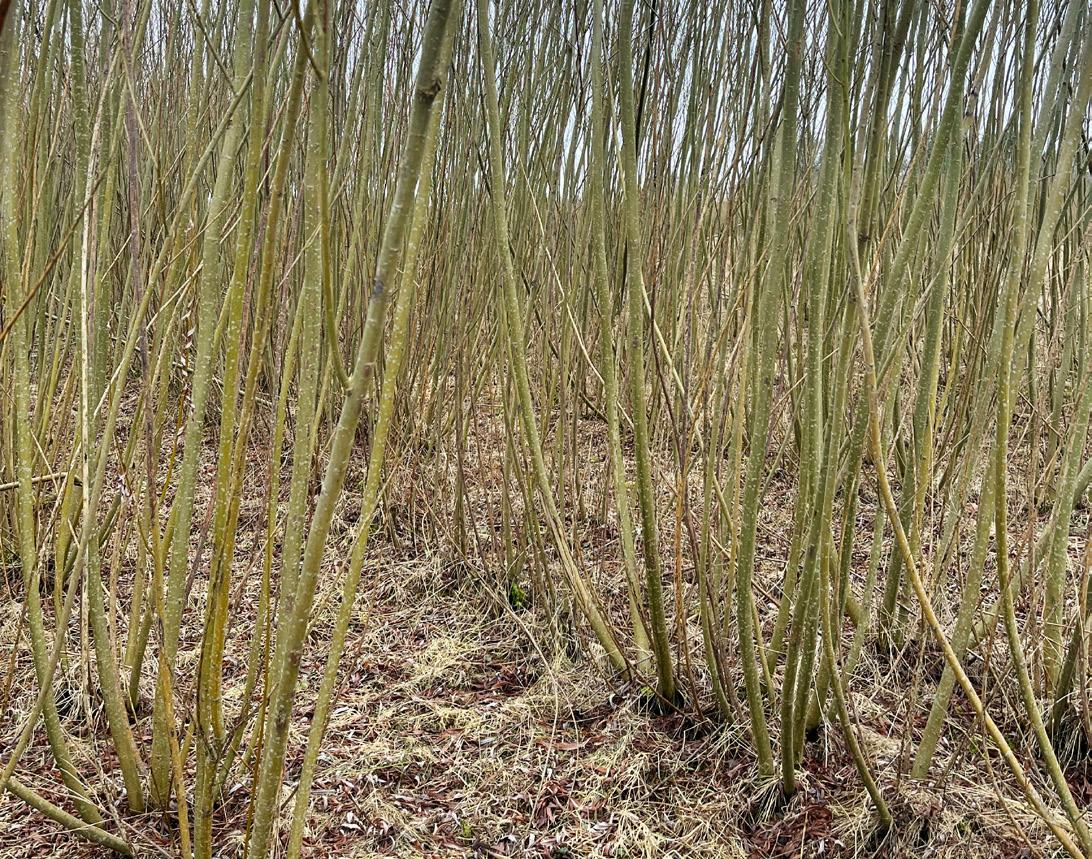
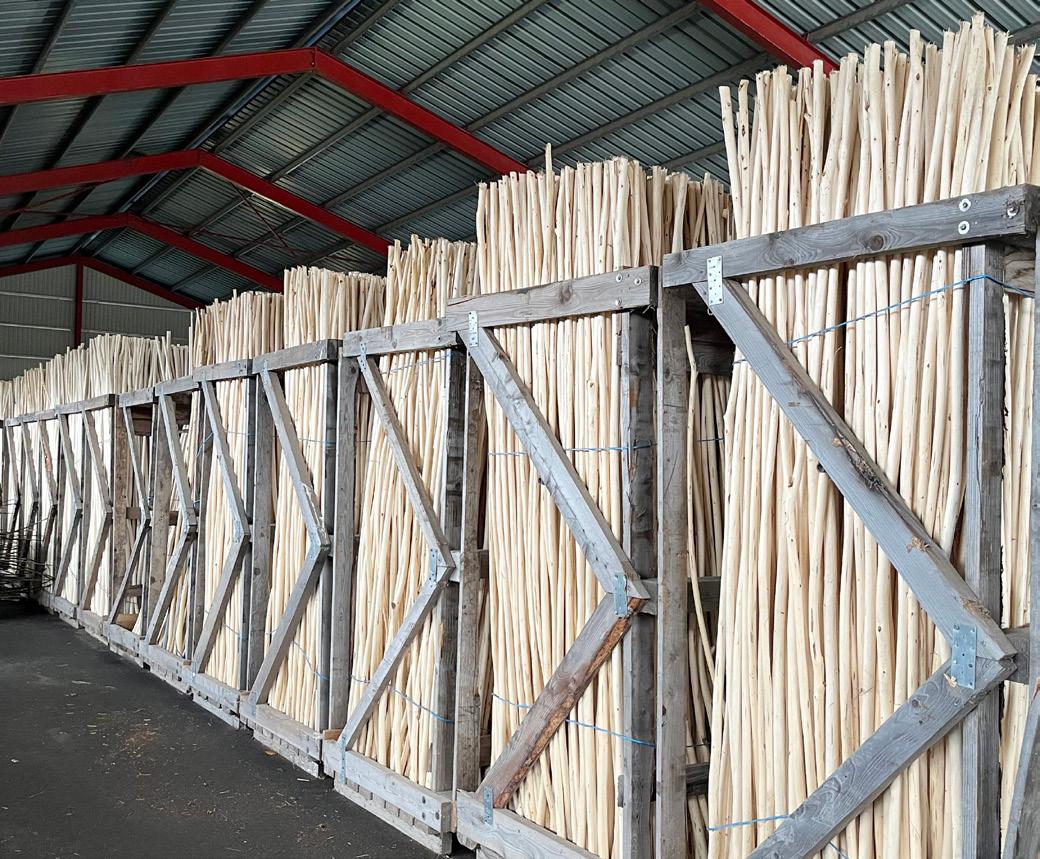
Figures 3-5:
The Pilefaçade project by Schmidt Hammer Lassen (SHL / Perkins&Will) transforms fast-growing willow stems into a prefabricated modular façade system.
Top photo: Benita Marcussen; bottom photos: SHL / Perkins&Will