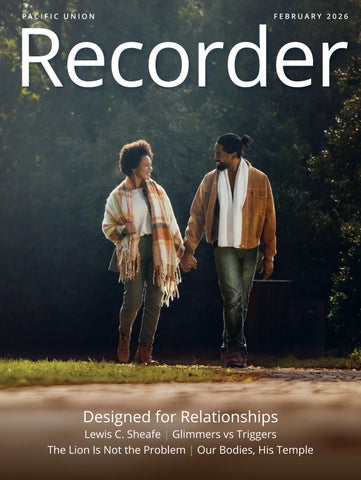
The Lion Is Not the Problem | Our Bodies, His Temple
Christ taught His disciples how to conduct themselves when in the company of others. He instructed them in regard to the duties and regulations of true social life, which are the same as the laws of the kingdom of God. He taught the disciples, by example, that when attending any public gathering, they need not want for something to say. His conversationwhenat a feastdifferedmostdecidedly from that which had been listened to at feasts in the past. Every word He uttered was a savor of life unto life. He spoke with clearness and simplicity. His words were as apples of gold in pictures of silver.
—Ellen G. White, “Lessons from the Christ-Life,” The Review and Herald, Oct. 2, 1900, p. 625.
Recorder
Publisher Ray Tetz
Editor Alberto Valenzuela
Assistant Editor Connie Jeffery
Design/Layout
Stephanie Leal • Alberto Valenzuela
Printing
Pacific Press Publishing Association www.pacificpress.com
Adventist Health 916-742-0429
Kim Strobel strobeka@ah.org
Arizona 480-991-6777
Alexis Camacho ACamacho@azconference.org
Central California 559-347-3031
Justin Kim Communication@cccsda.org
Hawaii 808-595-7591
Miguel Manzo communicationsdept@hawaiisda.com
What’s inside
4Designed for Relationships
8Fundamental Belief #23: Marriage and Family
10Lewis C. Sheafe and the Cost of Telling the Truth
14Glimmers vs Triggers in the Life of a Christian
16The Lion Is Not the Problem
19Our Bodies, His Temple
22Honoring God Through Science and Scripture
26Arizona Conference
28Central California Conference
30Hawaii Conference
32Holbrook Indian School
34Adventist Health
35La Sierra University
36Loma Linda University Health
37 PacificUnionCollege
38Nevada-Utah Conference
40Northern California Conference
42Southeastern California Conference
44Southern California Conference
46Community & Marketplace
48Sunset Calendar
50Why We Remember
Holbrook Indian School 928-524-6845 x143
Kimberly Cruz kcruz@hissda.org
La Sierra University 951-785-2000
Darla Tucker dmartint@lasierra.edu
Loma Linda 909-651-5925
Ansel Oliver anoliver@llu.edu
Nevada-Utah 775-322-6929
Michael Jenkins Jr. mjenkins@nevadautah.org
Northern California 916-886-5600
Laurie Trujillo
Laurie.Trujillo@nccsda.com
Pacific Union College 951-809-6777
Gene Edelbach gedelbach@puc.edu
Southeastern California 951-509-2258
Taji Saleem taji.saleem@seccsda.org
Southern California 818-546-8400
Lauren Lacson Llacson@sccsda.org
Editorial Correspondents
Postal Regs: The Pacific Union Recorder (ISSN 0744-6381), Volume 126, Number 2, is the official journal of the Pacific Union Conference of Seventh-day Adventists and is published monthly. Subscription rate: No charge to Pacific Union Adventist church members; $16 per year in U.S.; $20 foreign (U.S. funds); single copy, $2. POSTMASTER: Send address changes to: Circulation Department, Pacific Union Recorder, Box 5005, Westlake Village, CA 91359. Info@adventistfaith.com.
The Recorder is a monthly publication reaching approximately 76,000 Seventh-day Adventist homes in Arizona, California, Hawaii, Nevada, and Utah. Our mission is to inform, educate, and inspire our readers to action in all areas of ministry.
Designed for
By Bradford
Relationships
C. Newton
The box arrived just a few days before February 14. It was my senior year of university. The return address on the brown box read Angwin, California. Taking the stairway steps two at a time, I entered my third-floor dorm room at Andrews University. As I opened the flaps, I dug through the packing popcorn (real popcorn!) to the contents. Homemade cookies. A little chain with her name attached, along with a picture. And best of all, the card signed, “Love, Jennifer.” It’s been over 45 years since that box arrived, yet I still remember that feeling of happiness. I didn’t appreciate at the time that this joyful experience was designed into the very cells of my being by our Creator.
Neuroscience—the study of how our brains function—has discovered over the decades the brain’s amazing complexity. The connections between the billions and billions of brain cells make us into the people we are. Our personalities, reactions to the world around us, and—most importantly for our focus here—the social relationships we need to fully flourish as people are formed at the cellular level. Among the many insights of brain science is the evidence that human beings are mentally hard-wired for relationships.1
As Christians, we believe that the pinnacle of God’s work in Genesis was His creation of man and woman. Unlike the rest of life on earth, which was spoken into existence by the word of God, humanity came to be by a different process. Kneeling in the soil, our Creator fashioned with His own hands
the physique and form of Adam. From the cellular level outwards, the human frame was exquisitely designed. Yet at this stage it was an unconscious and lifeless body.
God then acted in a manner unlike any of the other days of Creation. “Then the Lord God formed a man from the dust of the ground and breathed into his nostrils the breath of life, and the man became a living being ” (Genesis 2:7; emphasis added). 2 In uniting the body and brain formed from earth with His creative life force, God brought into existence the conscious being, Adam. This new being contained all the marvelous potentiality to reflect the love that God embedded throughout the rest of Creation. The incredible dynamism of humanity is revealed in the divine dialogue: “Then God said, ‘Let us make mankind in our image, in our likeness’ ” (Genesis 1:26; emphasis added). Through Adam, all generations are endowed with the Goddesigned architecture to reflect His love, servanthood, and grace as stewards of this newly created world.
Embedded in those newly activated networked neurons was a yearning for relationships. This was first directed toward Adam’s Creator. The love born in the heart of God found a willing answer in the mind
Through Adam, all generations are endowed with the God-designed architecture to reflect His love, servanthood, and grace as stewards of this newly created world.
of the man. Together they explored the Garden’s fresh wonders. Soon a further dimension awakened within Adam as he named each pair of animals: to know and be known by another like himself. His Divine Friend knew this and declared, “‘It is not good for the man to be alone. I will make a helper suitable for him’” (Genesis 2:18). The newly created first couple then enjoyed their first Sabbath with God.
As Seventh-day Adventists, we embrace the calling of being God’s remnant Church (Revelation 14:12; 19:10). We center this identity on our Bible teaching paired with practical ministry representing the character of Jesus. But is there more? Could we intentionally create more opportunities in our churches for the divinely implanted need for relationships to be nurtured and grown? Hebrews 10:24-25 speaks to this core purpose, "And let us consider how we may spur one another on toward love and good deeds, not giving up meeting together, as some are in the habit of doing, but encouraging one another—and all the more as you see the Day approaching.” Doing this requires more than a single encounter on Sabbath mornings. We’re going to need many more opportunities—study groups, service opportunities, and other creative settings. Growing in faith is not a solitary exercise; it is nurtured through faith-affirming relationships.
As you and I consider how we are designed for relationships, there are some questions that arise:
• Are there relationships that I have neglected that need my attention?
• Am I growing each day as a person who benefits others’ lives at home, work, and church?
• Have I been missing the benefits God provides through the personal gathering of people of faith each Sabbath?
• Is my most important relationship—my relationship with Jesus—the first priority of each day?
God designed us for relationships. May we find what C.S. Lewis experienced: "When I have learnt to love God better than my earthly dearest, I shall love my earthly dearest better than I do now.… When first things are put first, second things are not suppressed but increased.”3
Bradford C. Newton is the president of the Pacific Union Conference.
1Warren S. Brown and Brad D. Strawn, The Physical Nature of Christian Life: Neuroscience, Psychology, and the Church (New York, Cambridge University Press, 2012).
2All Scripture quotations are from the New International Version.
3C.S. Lewis, The Collected Letters of C.S. Lewis: Narnia, Cambridge, and Joy 1950-1963, vol. 3, ed. Walter Hooper (San Francisco, HarperCollins, 2007), p. 247.
Could we intentionally create more opportunities in our churches for the divinely implanted need for relationships to be nurtured and grown?
Fundamental Belief #23
Marriage and Family
By Tim and Miki Nelson
When God desired to reveal His character to the universe, He spoke to Himself and said, “Let Us make man in Our image” (Genesis 1:26).1 And “in the image of God He created them; male and female He created them” (Genesis 1:27). God then united man and woman in marriage (Genesis 2:24). From the very beginning, marriage was designed to reveal the character of God.
As husband and wife, we believe this is why marriage matters so deeply. When a child sees the love of father and mother expressed toward one another in word and deed, that child learns what the love of God is like (cf. Psalm 103:13; Ephesians 5:1-2). Marriage was intended to be a living illustration of divine love.
This is precisely why, from the beginning, Satan has attacked marriage with such venom and determination. In assaulting marriage, he is assaulting the character of God Himself.
In the Garden of Eden, marriage unity was the first thing the enemy attacked. Satan divided Adam and Eve. He appealed to their individual pride and vanity and led them to reject the divine character God had lovingly placed within them (Genesis 3:1-6). The effect was immediate and devastating. Adam and Eve turned on one another (Genesis 3:12), and humanity has been living with the consequences ever since.
That is why the stranger who once smiled at you— causing your heart to race—became the one with whom whose first conversations lasted hours but felt like seconds. The one who was once unfamiliar became the one you could not imagine life without. And so you said, “I do.” And for a moment, you truly believed in happily ever after. Then came after
The very traits that once delighted you became the ones that felt like eternal fingernails on a chalkboard. The one you once could not live without became the one that…well, if the Lord took them quickly in their sleep, you
would quietly understand and carry on. The face that once caused your heart to reverberate with joy became the face you were convinced was God’s punishment for some long-forgotten, unconfessed sin.
Irritation turned into fury. Fury gave way to hurt. Hurt settled into silence. And “ever after” began to feel more like a life sentence than a promise. Sound familiar?
If you have been married any length of time, chances are you recognize some—or all—of this. You might even feel a little guilty as a Christian, because Christians aren’t supposed to have bad marriages…right?
Yet the struggle is universal. The moment we said, “I do,” the enemy went to work on our marriage, just as he does in every marriage, playing on insecurities and egos the way a teenager plays video games (cf. Ephesians 6:12). He works tirelessly to insert distance, miscommunication, tone-reading, eye-rolling, and resentment. He makes sure couples become experts at deciphering body language—and that no one ever knows what they want to eat for dinner.
You may be tempted, like the disciples, to say, “If such is the case of a man with his wife, it is better not to marry” (Matthew 19:10). Even the apostle Paul—the Spirit-filled, demon-stomping, earthly kingdom-defying warrior of the early Christian church, who was not afraid of anything— after he looked at marriage, said, “Nah, I’m good!” (cf. 1 Corinthians 7:7).
But stopping there misses something vital. Marriage was ordained by God. And when we said, “I do,” God went to work as well. He began working to empower our marriage to become what He designed it to be: a Spiritfilled, joy-producing, intimate bond with our best friend (Genesis 2:18; Ecclesiastes 4:9-12). He has been working from that day forward—and He is working even now.
You may ask, “If God is working, and if He is allpowerful, why isn’t it working for me?”
That is a good question. Here is another one: Are you allowing Him to work as God, or—like Adam and Eve in
the Garden—are you trying to be God to yourself? (Genesis 3:5). For God to be God, He has to be the priority in all you do. Could it be that many of us have a form of godliness but are denying the power of God in our lives? Perhaps we are finding that God can’t just be a part of our lives for us to be successful, He has to be the focus of our lives, He has the be the center—and maybe for many of us He hasn’t been. So then what can you do if you find yourself there?
Let us share an illustration from our own home. One day our daughter asked her dad, “Daddy, would you braid my hair?” Without hesitation—and with complete confidence— he replied, “Sure thing, baby girl!” Now, the truth is, my husband had never braided hair before. But he had watched me do it day after day and figured he could replicate it. He grabbed two equal handfuls of her hair and began twisting them together. The moment he let go, the braid fell apart. Our daughter looked at him with a questioning expression. After assessing the situation, he said, “I didn’t pull it tight enough,” and tried again—this time yanking the poor girl’s head back with each twist, pulling as hard as he possibly could. But once again, as soon as he let go, the braid completely unraveled. That’s when she said, “I’ll ask Mom.”
Before she walked away, I said, “Let Dad try one more time.” Then I let my husband in on the secret. I told him, “I know it looks like two strands woven together, but it’s actually three. The third strand is what holds the braid together.”
Marriage works the same way. It may look like two people trying to weave their lives together, but if it’s only the two of you—no matter how hard you pull—it will eventually fall apart. But when the third strand, God Himself, is intentionally woven into the marriage day by day, month by month, year by year, that third strand holds everything together. “A threefold cord is not quickly broken” (Ecclesiastes 4:12).
This is why successful Christian marriages choose to weave God into marriage through daily prayer together, daily worship together, and daily study of His Word together. Jesus promised this when He said, “What therefore God has joined together, let not man separate” (Matthew 19:6, ESV). Those words are more than a command—they are a promise. God supplies the power for marriages to remain unseparated: unseparated in affection, unseparated in respect, unseparated in love, and ultimately, unseparated from Him.
God ordained marriage to be a thing of beauty—a
covenant meant to last a lifetime and reflect His love. He also provides the power to make it so. This is the ideal.
But sin shattered the ideal. Within just a few generations of Adam and Eve, marriage itself was marred. Polygamy, adultery, and eventually divorce became commonplace (Genesis 4:19). What became common on earth became accepted as normal by fallen humanity, until the biblical vision of one man and one woman united for life in God’s love is now often dismissed or mocked.
But did God change His view of marriage because the world did? Biblically, the answer is no.
Scripture permits divorce in cases of marital infidelity and physical abuse (Matthew 19:9; 1 Corinthians 6:19). Outside of these circumstances, Scripture remains clear: “What God has joined together, let no one separate” (Matthew 19:6, NIV)— including the married couple themselves.
Biblically speaking, divorce and remarriage outside of these parameters is sin. Yet here is the good news: we serve a God who is “merciful and gracious, slow to anger, and abounding in steadfast love” (Psalm 103:8, ESV). He does not allow past sins to invalidate present or future grace (1 John 1:9; Romans 8:1).
This is not permission to treat marriage lightly. It is hope for those who come to God broken and repentant in a broken world. We know this because throughout Scripture, God calls His people His bride (Isaiah 54:5; Ephesians 5:2527; Revelation 19:7). And throughout history, that bride has been weak, unfaithful, and rebellious—yet God continues to call her His beloved (Hosea 2:19-20).
Just as Hosea redeemed Gomer, God redeems His people, clothing them with righteousness and covering them with mercy and grace (Hosea 3:1; Isaiah 61:10). In doing so, He gives us a living model for our marriages: to be quick to forgive, slow to anger, and abounding in steadfast love (James 1:19; 1 Corinthians 13:4-7).
This is the biblical vision of marriage. And as Seventh-day Adventist Christians, this is our understanding of marriage. And praise God—it is.
Tim Nelson pastors the Kaneohe and Waimanalo churches and Miki Nelson is the superintendent of schools in the Hawaii Conference.
1Unless otherwise indicated, all Scripture quotations are from the New King James Version.
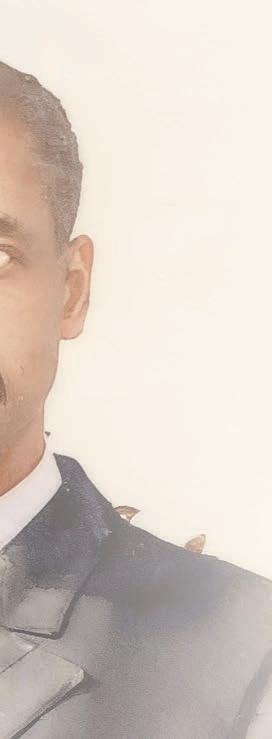
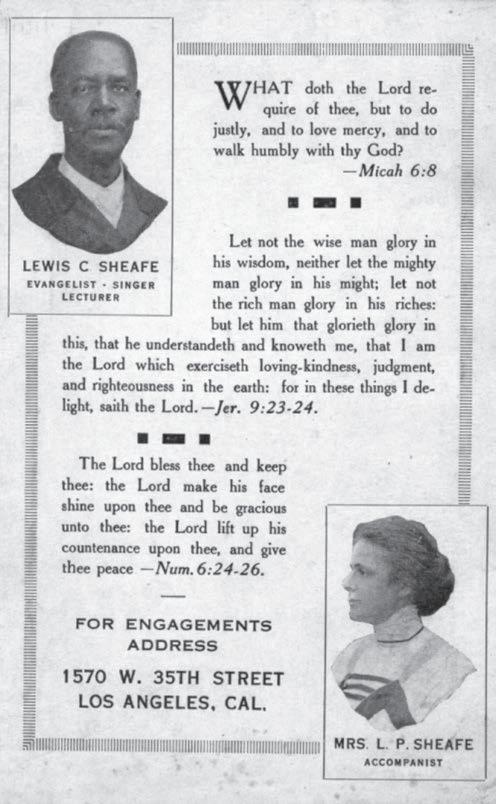
Lewis C. Sheafe and the Cost of Telling the Truth
TBy Leon B. Brown Sr.
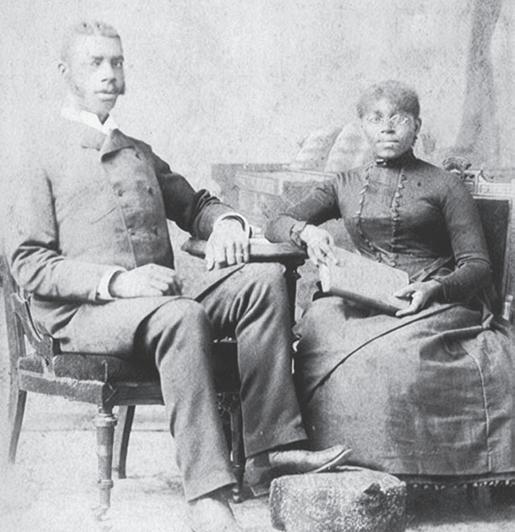
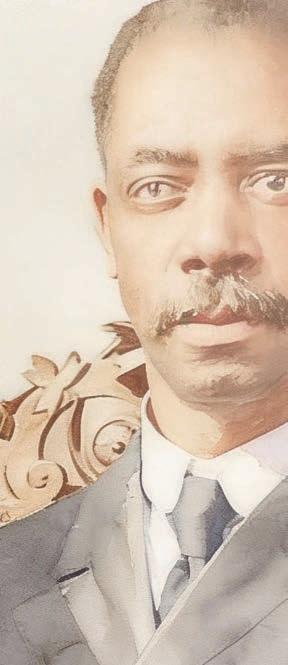
here are figures in religious history who do not fit easily into denominational timelines or institutional triumphalism. They trouble us. They refuse to stay put. They expose fault lines, not by shouting from the margins but by standing too close to the center. Lewis C. Sheafe was such a figure. His life reads less like a settled career and more like a long, contested argument—between gospel and institution, between justice proclaimed and justice deferred, between the promise of Adventism and its reluctance to live fully into that promise.
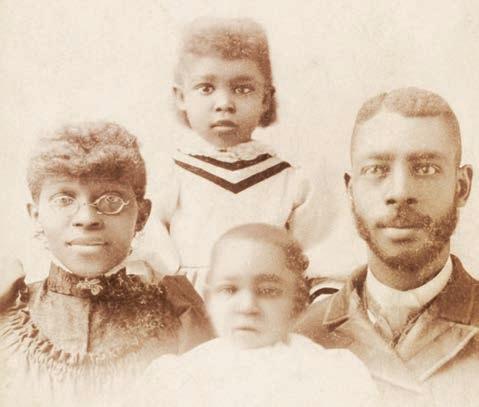
Sheafe was born in Baltimore in 1859, the child of formerly enslaved parents whose freedom came before emancipation became law.1 His father disappeared into the chaos of the Civil War; his mother carried the burden of survival and instruction. That early mixture of loss, resilience, and moral seriousness never left Sheafe. A childhood injury that impaired his eyesight did not diminish his hunger for learning. Instead, it deepened an already inward, searching temperament. Truth, for Sheafe, would never be inherited casually. It had to be wrestled into clarity.
congregations invited him to preach, newspapers praised him as an “eloquent colored divine,” and interracial audiences gathered without regard for the lines society tried to enforce. This is important: Sheafe was not a separatist. His ministry was interracial by instinct and by conviction long before it became controversial.
Nor was he merely a preacher, concerned only with souls and detached from the conditions of life and laws. He protested lynching. He criticized political betrayal. He joined early civil rights organizations, not as an activist dabbling in religion but as a minister convinced that the gospel had public consequences. The pattern was forming: affirmation from audiences, admiration from leaders, and discomfort from systems that benefitted from his restraint.
That wrestling first took him through training in the Baptist way of life. Wayland Seminary,2 in Washington, DC, shaped him intellectually, but it did not contain him. He emerged as a preacher of unusual eloquence—so much so that White
When Sheafe encountered Seventh-day Adventism in 1896, it felt to him like the convergence he had been seeking. Here was a movement grounded in Scripture, serious about health, urgent about justice, and bold in its eschatology. He saw Adventism’s “present truth” not as a slogan but as an ethical summons. Adventism, he believed, carried within it a power that could liberate oppressed people—not merely spiritually, but socially and intellectually as well.
For a time, the church seemed to agree. In Battle Creek, White Adventist leaders praised him
extravagantly. John Harvey Kellogg declared that no White minister could equal him in education or power of address.3 Sheafe preached at the General Conference, was ordained, and became the most visible Black voice in early Adventism. Yet from the beginning, affirmation came paired with control. His gifts were welcomed, but his vision was managed. He was celebrated but not trusted.
Nowhere did this contradiction become clearer than in the South and later in Washington, DC. As Adventism adjusted itself to Jim Crow realities, racial separation hardened from pragmatic concession into policy. Sheafe was asked—implicitly and explicitly—to accept these arrangements for the sake of “the work.” He was willing to not obstruct local choices, but he refused to become the theological enforcer of inequality. That refusal would cost him.
Washington, DC, became the crucible. There, Sheafe’s preaching ignited unprecedented interest. His tent meetings drew thousands—Black and White alike. Newspapers took notice. Baptisms followed. His success disrupted assumptions that racial separation was necessary for evangelistic effectiveness. Ironically, it was precisely his success that intensified institutional anxiety.
A.G. Daniells, president of the General Conference, encouraged Sheafe to form a new congregation with the converts from his 1903 evangelistic campaign. Accordingly, the People’s Seventh-day Adventist Church was organized on December 3 with 51 members. The People’s Church was not a protest movement disguised as a congregation; it was a living experiment in dignity, education, health, and worship. Its members sacrificed to purchase property. Its pastor raised
funds when the denomination would not. It envisioned a training school, a center of Black Adventist leadership, a future not dependent on benevolence filtered through racial hierarchy. What broke the fragile trust was not disagreement alone, but inequity hardened into refusal. When the People’s Church asked whether it could benefit from Adventist institutions—schools, hospitals, sanitariums—the answer was effectively no. When it asked whether it could use its own tithes to build what it was denied, the answer was also no. In that moment, Sheafe faced a question older than Adventism itself: what obedience is owed to an institution that demands loyalty while withholding justice?
His response—to claim congregational independence—was costly and controversial. It entangled race, authority, and theology in ways that alarmed denominational leaders. A letter from Ellen White dated Feb. 4, 1907, admonished Sheafe to, “Stop right where you are.” 4 Ellen White’s rebuke focused on pride and unity, but Sheafe believed his moral protest had not been truly heard. Once again, affirmation gave way to silencing. He returned his credentials—not lightly, but deliberately.
What followed was neither triumph nor collapse, but a long exile marked by persistence. Even as he left Adventism institutionally, Adventism never fully left him. He returned. He reconciled. He preached again. He organized churches in Los Angeles. And once more, conscience collided with authority—this time over the use of Ellen White’s writings on race. 5 When pressed to affirm what he could not reconcile with Scripture, Sheafe chose to leave the Adventist
What followed was neither triumph nor collapse, but a long exile marked by persistence. Even as he left Adventism institutionally, Adventism never fully left him.
Church again, never to return.
To dismiss him as merely contentious is to misunderstand him. Sheafe was not driven by novelty or rebellion. He moved again and again toward whatever combination of faith and justice seemed most faithful at the time. Baptist, Adventist, Free Seventh Day Adventist, Seventh Day Baptist—these were not ideological costumes but provisional homes. He sought a church that could hold together biblical fidelity, racial dignity, and moral courage.
In his later years, as “the people’s minister” in Washington, DC, he embodied what institutions had failed to become. He preached, lectured, healed bodies through chiropractic work, supported movements for Black self-determination, and remained intellectually alive well into old age. Some were unsettled by his alignment with Marcus Garvey’s radical message of racial dignity and solidarity in the world struggle against oppression by European peoples,6 but it was consistent with his lifelong pattern: he supported whatever offered real hope to oppressed people, even at the risk of respectability.
Sheafe died in 1938, still serving, still thinking, still unconquered. His legacy cannot be measured by denominational titles or uninterrupted service. It must be measured by the questions he forced Adventism to confront. His protests helped precipitate structural reforms. His conflicts exposed the moral cost of racial accommodation. His ministry demonstrated what Adventism could be—and what it too often refused to be.
He was an apostle without a secure home. Yet perhaps that is the point. The gospel has always been carried forward by those willing to unsettle institutions for the sake of truth. Lewis C. Sheafe did not abandon Adventism lightly; Adventism failed to fully receive him. And in that failure, it lost not only an extremely effective preacher but also an opportunity to live more honestly in its own prophetic calling.
History does not ask whether Sheafe was easy to manage. It asks whether he was right to insist that faith without justice is a contradiction. On that question, his life still speaks—uncomfortably, urgently, and with enduring power.
Leon B. Brown Sr. is the executive vice president of the Pacific Union Conference.
1Based on Douglas Morgan, “Sheafe, Lewis Charles (1859-1938), Encyclopedia of Seventh-day Adventists, https://encyclopedia.adventist.org/ article?id=FCFO&highlight=Sheafe,|Lewis|Charles.
2“Our History & Our Purpose,” Virginia Union University, https://www.vuu. edu/about-union/about/our-history-our-purpose.
3J.H. Kellogg to E.G. White, Dec. 19, 1900, Ellen G. White Estate. 4E.G. White to L.C. Sheafe, Feb. 4, 1907, 22LtMs, Lt 44, 1907, par. 3, https://m.egwwritings.org/en/book/9259.1.
5Lewis C. Sheafe and wife to A.G. Daniells, Oct. 26, 1915, Presidential Correspondence, General Conference Archives.
At the end of a long day, do you like cuddling with your pet on the couch? Do you delight in seeing the sunset? Do you enjoy hearing an inspiring song on the radio or on social media? Do you appreciate getting an unexpected hug from your teenager?
All of these activities send signals to your brain that you are loved and safe—and therefore you can relax. A “glimmer” can be defined as “a mini-moment that creates a [small] mood shift.… Glimmers are those brief moments reminding us of the beauty and joy in the world, helping us feel safe.”1 The term was first coined by licensed social worker Deb Dana in her 2018 book, The Polyvagal Theory in Therapy 2
“Positive emotions signal safety,”3 and building up those higher emotions can help us develop coping skills to deal with stressful situations.
In contrast, a trigger does the opposite. A trigger is an internal or external stimulus that cues a threat
response such as fight, flight, or freeze. It creates stress in our body and a feeling of danger.
As Christians, we are not exempt from strong emotions that come from bad experiences or trauma. We all have triggers due to the unfortunate consequences of sin. However, I believe God can use glimmers to offset the negative experiences in our lives.
In the Bible we have examples of triggering situations. In the story of Hagar, she was rejected, abandoned, and unloved by her adopted family. She became a single mother with no income. The widow in the story of Elisha faced the threat of her children being sold into slavery due to financial
debt. She must have felt alone and despised by God. Jacob faced rejection by his dad, and in turn he manipulated and lied to both his brother and father, leading Esau, his brother, to want to murder him.
How many triggers do you count in the aftermath of these stories? However, we must not forget that, if we turn to God, there is always hope and restoration. God appeared to Hagar and promised to provide for her. Elisha gave the widow a way to repay her debt. And God appeared to Jacob in a dream with a promise to be with him and bring him back to the land of his family. Did all their troubles suddenly disappear? No, but there were glimmers present in their lives despite the triggers.
Other stories that reflect glimmers in the Bible include the rainbow given to Noah after he and his family got out of the ark. It was a powerful and vivid reminder that God was with Noah and his family, and the reminder is still with us thousands of years later. Paul and Silas used the glimmer of music to offset their dark and discouraging night at the prison in Philippi. The widow and her son in Zarephath, about to eat their last meal, received a glimmer of God’s love and provision through the prophet Elisha. All of these Bible characters had to make the choice: do I continue to struggle with the trigger or do I invite the glimmer into my life to cope with the trigger?
According to Myers and Jeeves,4 people of faith recover faster and have more resilience with personal happiness when they go through divorce, sickness, unemployment, or grief. Practicing finding glimmers during hard times can help us cope better with life stresses. The Christian life is having faith in the promise of salvation, redemption, and eternal life. Glimmers can help use, exercise, and express our faith in a loving God.
How can we practice increasing the glimmers in our lives? Last summer, I got the opportunity to visit Grand Tetons National Park in Wyoming. I was in awe of the majesty I saw. I couldn’t help but to look at the gorgeous scenery and thank God for the
beauty I encountered. I also live close to the coast of California, and the sunsets over the Pacific Ocean are breathtaking. I get feelings of love, safety, and relaxation when walking on the beach.
I know we can’t always travel, so what can we do in our homes to increase the feelings of love, safety, and relaxation? How about music? Can we listen to encouraging songs? Can we call a friend and catch up? Can we hug our families? Can we cook a favorite meal and fill the house with a mouth-watering aroma? Can we journal and find things to be grateful for every day? Can we help someone in need? Can we spend time in meditation with our Creator? What are some glimmers around you?
Glimmers bring joy to your lives. Nehemiah 8:10 says, “The joy of the Lord is your strength” (ESV). How can we as Christian feel love, safety, and joy despite our circumstances? God calls us to grow our glimmers. According to commentator Iain Provan, “Our response to His grace and blessing should be to seize the time that we have and live it well and joyfully to his glory and praise.” 5 We know our hope is real and Jesus is coming soon to give us an eternal glimmering life full of love, safety, and joy devoid of triggers.
“Amen, Come, Lord Jesus!” (Revelation 22:20, ESV).
Libna Arroyo is an assistant professor in the Department of Psychology and Social Work at Pacific Union College.
1Victoria Maxwell, “How to Grow Glimmers and Feel Less Anxious,” Psychology Today, Oct. 1, 2023, https://www.psychologytoday.com/ us/blog/crazy-for-life/202309/how-to-grow-glimmers-and-feel-lessanxious#:~:text=A%20glimmer%20is%20a%20mini,world%2C%20 helping%20us%20feel%20safe.
2Sara M.Moniuszko, “‘Glimmers’ Are the Opposite of Triggers. Here’s How to Embrace Them,” USA Today, March 23, 2022, https://www.usatoday.com/ story/life/health-wellness/2022/03/23/glimmers-opposite-triggers-mentalhealth-benefits/7121353001/; Deb Dana, The Polyvagal Theory in Therapy: Engaging the Rhythm of Regulation (New York: W.W. Norton & Company, 2018).
3Christopher Peterson, A Primer in Positive Psychology (New York: Oxford University Press, 2006), p. 58.
4David G. Myers and Malcom A. Jeeves, Psychology Through the Eyes of Faith (New York: Harper & Row Publishers, 1987).
5Iain Provan, Ecclesiastes, Song of Songs, The NIV Application Commentary (Grand Rapids, MI: Zondervan, 2001), p. 101.
The Lion Is Not the Problem
By J. Art Camacho and Carlos A. Camacho
In our fast-paced world, stress has become an unavoidable part of daily life. From looming deadlines to financial burdens, from broken relationships to glo bal uncertainty, our bodies and minds are constantly under pressure. Dr. Hans Selye, often called “the father of stress research,” first introduced the term “stress” in the 1 940s, borrowing it from physics to describe the pressure or force placed on an object. He distinguished between two types of stress:
• Distress —the negative, overwhelming stress caused by pain, loss, fear, or suffering.
• Eustress —the healthy stress that challenges us to grow, build resilience, and achieve more than we thought possible. 1
The problem, however, is not merely the demands placed on us—it’s our response to those
demands. In a quote attributed to Selye, he is said to have observed that “it’s not stress that kills us; it’s our reaction to it.”
In America, stress has become a public health crisis. Research shows that over 120,000 deaths each year are linked to stress-related factors, and nearly $190 billion are spent annually treating stress-related illnesses. 2 Even in the church, stress can silently erode our emotional, physical, and spiritual well-being. Pastors, teachers, leaders, and members alike often carry burdens that leave them exhausted and spiritually depleted. Stress can be a dangerous lion. But here’s the paradox: the lion isn’t the problem. The danger lies in how we perceive the lion.
The
real battle is in the mind
When faced with overwhelming challenges, our stress is often amplified not by the situation itself but by the narrative we create around it. The “lion,” whether financial strain, ministry conflict, or health crisis, is rarely the ultimate problem. Instead, it’s our perception of the lion that determines whether we experience peace or panic.
Scripture affirms this principle. Jesus said to His disciples, “Peace I leave with you; my peace I give you. I do not give to you as the world gives. Do not let your hearts be troubled and do not be afraid” (John 14:27). 3
Notice that peace is not tied to the absence of stressors but to the presence of Christ in our minds and hearts. Ellen G. White echoes this reality: “When we take into our hands the management of things with which we have to do, and depend upon our own wisdom for success, we are taking a burden which God has not given us, and are trying to bear it without His aid” ( Thoughts From the Mount of Blessing , p. 100).
When we assume that our peace depends on eliminating every challenge, we set ourselves up for disappointment. But when we surrender
control and invite God into our mental space, our perception changes and often peace follows.
Psychiatrist Viktor Frankl, a Holocaust survivor, is said to have famously observed: “Between stimulus and response there is a space. In that space is our power to choose our response. In our response lies our growth and our freedom.” 4
That “space” is holy ground. God created it as the meeting point where His Spirit can guide our choices. The apostle Paul confirms this spiritual principle: “Do not be anxious about anything, but in every situation, by prayer and petition, with thanksgiving, present your requests to God. And the peace of God, which transcends all understanding, will guard your hearts and your minds in Christ Jesus” (Philippians 4:6-7).
When we pause and dwell for a little time in that space instead of reacting impulsively, we allow Christ to shape our response. As Ellen White reminds us: “When we surrender ourselves wholly to God, and fully believe, the blood of Christ cleanses from all sin. The conscience can be freed from condemnation. Through faith in His blood, all can be made perfect in Christ Jesus” ( Letters and Manuscripts , vol. 22, p. 107).
This is where freedom from stress begins: not in avoiding the lion, but in learning to rest in Christ, even while standing in its shadow. "It is good to wait quietly for the salvation of the Lord" (Lamentations 3:26).
God anticipated our need for rest long before modern psychology began studying stress. At
When faced with overwhelming challenges, our stress is often amplifiednotbythesituationitself but by the narrative we create around it.The“lion,”whetherfinancialstrain, ministryconflict,orhealthcrisis,is rarely the ultimate problem.
the dawn of creation, He established a rhythm of work and rest, culminating in the Sabbath: “By the seventh day God had finished the work he had been doing; so on the seventh day he rested from all his work. Then God blessed the seventh day and made it holy” (Genesis 2:2-3).
The Sabbath is not merely a theological statement; it’s God’s remedy for human exhaustion. It reminds us weekly that we are not defined by our productivity but by God’s presence. It offers a pause from the relentless demands of life, an opportunity to realign our thoughts, recharge our bodies, and reconnect with the Creator.
Ellen White captures this beautifully: “The Sabbath is a sign of the relationship existing between God and His people, a sign that they are His obedient subjects, that they keep holy His law” ( Testimonies for the Church , vol. 8, p. 198).
When we treat the Sabbath as God intended— not as a checklist of restrictions but as an invitation into His presence—we discover a divine rhythm that protects us from emotional and spiritual burnout.
The Sabbath recalibrates our priorities, it invites us to release control, lay down unnecessary burdens, and reclaim the peace Christ promises. For pastors and church leaders, Sabbath rest is not optional. It’s essential to sustaining a vibrant ministry.
Choosing peace over panic
Returning to Selye’s original insights, stress itself is not inherently destructive. In fact, eustress, the right kind of stress, can propel us into growth, innovation, and deeper faith. But when we allow distress to dominate our minds, we disconnect from God’s peace and spiral into anxiety. Here’s the good news: God offers us a better way. We cannot always control the lions we face, but we can control our perspective about those lions. When Christ occupies the “space” between stimulus and
response, stress loses its power.
Jesus invites us into this sacred rest: “Come to me, all you who are weary and burdened, and I will give you rest. Take my yoke upon you and learn from me, for I am gentle and humble in heart, and you will find rest for your souls” (Matthew 11:28-29).
This rest isn’t just a weekly appointment; it’s a way of life. The Sabbath reminds us that our true peace comes not from escaping challenges but from abiding in God’s presence.
The lion isn’t the problem; our perception is. In a world drowning in anxiety, God has provided both a place and a person where we can find rest. The Sabbath is God’s sanctuary in time, a weekly reminder that we are not defined by stress, fear, or performance. In Christ, we find renewal for our bodies, clarity for our minds, and peace for our souls.
As blood brothers—one a mental health professional, the other a church leader—we’ve discovered that the intersection of psychology and theology leads us back to the same place: Jesus Christ, the Lord of the Sabbath. He is our refuge, our resilience, and our rest. Let us choose peace over panic. Let us embrace God’s invitation to live and lead from a place of Sabbath rest.
J. Art Camacho is a Doctor of Social Work in Texas and Carlos Camacho is the president of NevadaUtah Conference. An earlier version of this article by J. Art Camacho appeared in the Southwestern Union Record , August 2025.
1Hans Selye, The Stress of Life (New York: McGraw-Hill, 1984), p. 74. See https://www.medicalnewstoday.com/articles/eustress-vs-distress for more information on these two types of stress.
2Jennifer Moss, “Burnout Is About Your Workplace, Not Your People,” HBR Executive , Dec. 11, 2019, https://hbr.org/2019/12/burnout-isabout-your-workplace-not-your-people.
3All Scripture quotations are from the New International Version. 4Although famously associated with Holocaust survivor and psychiatrist Viktor Frankl, the exact origin of the widely used quote is unclear. Author Stephen R. Covey recounts finding it in a library book an d attributing it to Frankl's perspective ( The Stephen R. Covey Interactive Reader [Miami: Mango Media Inc., 2015]).
Our Bodies, His Temple
By Virginia Félix
The apostle Paul, writing to the Corinthians, tells us a truth that is both ancient and urgently relevant: our bodies are not our own—they are the temple of the Holy Spirit (1 Corinthians 6:19-20). The God who redeemed us also designed us, and His plan for our physical life is not a secondary matter—it is part of His saving work. In the Adventist Church, we have been given not only the everlasting gospel but also a prophetic health message that calls us to glorify God in our bodies.
We live in a world plagued by lifestyle diseases—heart disease, diabetes, cancer, obesity, and depression—we could even include stress and anxiety nowadays. Yet God has shown us a better way. After a visit to “Our Home” in Dansville, NY, in 1863,1 Ellen White entrusted to His people a blueprint for living that combined faith with practical health principles: a plant-based diet, daily physical activity, rest, temperance, trust in God, and avoidance of harmful substances. The evidence is overwhelming—from decades of scientific research—that those who follow the advice of Ellen White live longer, healthier, and happier lives.
In Genesis 1:29, God gave humanity the original diet: “I have given you every herb bearing seed… and every tree, in which is the fruit of a tree yielding seed; to you it shall be for meat” (KJV). This Edenic menu was entirely plant-based—fruits, grains, nuts, and seeds. This was God’s perfect prescription for human health.
Ellen G. White reaffirmed this in Ministry of Healing: “Grains, fruits, nuts, and vegetables constitute the diet chosen for us by our Creator” (p. 296). She wrote that meat eating would become increasingly unsafe and that God’s people should move toward a plant-based diet.2
Science has now reaffirmed Ellen White’s writings. The Adventist Health Studies (AHS-1 and AHS-2) show that Adventist vegetarians live on average five years longer than their non-vegetarian counterparts and have lower rates of heart disease, diabetes, certain cancers, and obesity.3 This is not coincidence—it is the fruit of obedience.
Some think the health message is just about what we eat, but it is far more. Lifestyle medicine, as practiced in a faith-based context, includes nutrition, exercise, rest, stress management, abstinence from harmful substances, and trust in divine power. This is the biblical principle of whole-person stewardship.
The Adventist advantage is not only in the foods we avoid but in the life we embrace: abstinence from alcohol, tobacco, and harmful drugs (Proverbs 20:1; 1 Corinthians 3:17); regular physical activity—not necessarily in a gym, but in the natural activities of life; sufficient rest, including the blessing of the Sabbath, which offers mental, spiritual, and physical renewal; positive relationships and community support, as seen in our churches and fellowship; and daily connection with God through prayer and Bible study, which reduces stress and strengthens resilience.
This is not legalism; it is living in harmony with
God’s design. We obey, not to be saved but because we are saved.
In the global research on “Blue Zones”—regions where people live significantly longer than average— one region stands out for its intentional faith-based lifestyle: Loma Linda, California, home to a large Adventist population. Researchers found that Adventists there typically live 7–10 years longer than the average American. Why? The same principles God gave us over 150 years ago: Plant-based diet rich in fruits, vegetables, nuts, and legumes; regular moderate physical activity—gardening, walking, household work; rest and Sabbath observance, which reduces chronic stress; strong social bonds within the church community; a sense of purpose rooted in service to God and others.
Other Blue Zones—Okinawa, Sardinia, Ikaria, Nicoya—share similar lifestyle factors, but Adventists uniquely combine these with a biblical worldview and an intentional mission to glorify God.4
Ellen White wrote: “Temperance in all things of this life is to be taught and practiced. Temperance in eating, drinking, sleeping, and dressing is one of the grand principles of the religious life” (Testimonies for the Church, vol. 6, p. 375). The health message prepares us for service, increases mental clarity, and reduces physical suffering so that we can better proclaim the gospel.
We cannot separate our spiritual witness from our physical habits. How credible is our call to prepare for eternity if our lifestyle hastens disease and death? By living the message, we become walking sermons— silent witnesses to God’s wisdom.
Research done by Loma Linda University and other health institutes echo what God told us through inspiration: Vegetarian diets are linked with lower BMI, reduced cholesterol, lower blood pressure, and decreased risk of type 2 diabetes.5 Diets rich in
The health message is not an optional extra. In a world of epidemic disease, it is a witness that God’s law of life still works.
plant foods provide phytochemicals and antioxidants that fight inflammation and protect against cancer.6 Regular moderate activity, as practiced by centenarians in Blue Zones, maintains mobility, cognitive health, and independence well into old age. Even simple habits—drinking sufficient water, eating nuts regularly, consuming whole grains—can add years to life.7
This is not just about adding years to our life, but life to our years.
Romans 12:1 calls us to “present your bodies a living sacrifice, holy, acceptable unto God, which is your reasonable service” (KJV). Make health reform a spiritual act of worship.
Base your meals on fruits, vegetables, whole grains, legumes, nuts, and seeds. Avoid processed foods, refined sugars, and excess oils. If you are transitioning, take it step by step—replace meat with wholesome plant proteins. You don’t have to run marathons—just walk, garden, clean, climb stairs, and engage in active hobbies. Blue Zone centenarians get most of their exercise through daily life, not gyms. Honor the Sabbath not only spiritually but physically. Get 7–8 hours of sleep each night. Adequate rest supports immune function, mood, and metabolism. Steer clear of tobacco, alcohol, recreational drugs, and excessive caffeine. The Adventist record shows these habits dramatically shorten life. Share meals, join church activities, volunteer. Social connection is a proven longevity factor in every Blue Zone. Live with purpose. Engage in ministry, mentoring, and acts of kindness. Purpose is a spiritual vitamin.
Some may think, “I’m too old to change.” But studies show that adopting healthier habits at any age brings measurable benefits—lower blood pressure, better mobility, more energy. Others fear a vegetarian diet is nutritionally lacking. Yet research and the experience of millions show that, with variety and balance, a plant-based diet meets all nutritional needs, with the possible exception of vitamin B12, which can be supplemented.8 Still others resist for cultural reasons, saying, “This is how I was raised.” Remember, God
calls us out of harmful traditions into life-giving truth. Change is not betrayal of our roots; it is obedience to our Creator.
The health message is not an optional extra. In a world of epidemic disease, it is a witness that God’s law of life still works.
Our diet and lifestyle also have an ecological and economic impact. A plant-based diet conserves resources, reduces environmental harm, and aligns with our stewardship of the earth.9 In this way, the Adventist lifestyle is a prophetic protest against greed, exploitation, and waste.
Jesus grew up in the simplicity of Nazareth, working with His hands, walking long distances, and living close to nature. He cared for the sick, fed the hungry, and valued the whole person—body, mind, and spirit. His ministry restored both spiritual and physical health. To follow Him is to care for our bodies as He cared for others.
When we eat and drink to the glory of God (1 Corinthians 10:31), we not only honor Him but also open our lives to greater usefulness in His service.
Virginia Félix is a freelance writer from San Ysidro, California.
1Merle Poirier, “In Her Own Words,” Adventist Review (Oct. 2, 2022), https:// adventistreview.org/magazine-article/in-her-own-words/.
2John Ersek, “Ellen G. White, Pioneer of Vegan Diet,” Gorham Times (July 20, 2023), https://www.gorhamtimes.com/ellen-g-white-pioneer-of-vegan-diet/; Roger W. Coon, “Ellen G. White and Vegetarianism,” Ministry (April 1986), pp. 4-7, 29.
3Ansel Oliver, “Study Shows Vegetarian Diets Have Reduced Risk of MediumFrequency Cancers,” Pacific Union Recorder (August 2025), p. 42.
4Casandra Herbert, Mary House, Ryan Dietzman, Mike Climstein, James Furness, and Kevin Kemp-Smith, “Blue Zones: Centenarian Modes of Physical Activity,” Springer Nature (Oct. 19, 2022), https://link.springer.com/ article/10.1007/s12062-022-09396-0.
5T. Key and G. Davey, “Prevalence of Obesity is Low in People Who Do Not Eat Meat,” British Medical Journal 313, no. 7060 (Sept. 28, 1996), p. 816.
6I.T. Johnson, “Phytochemicals and Cancer,” Proceedings of the Nutrition Society 66 (2007), pp. 207-215.
7“Adventist Health Study-1,” Loma Linda University Health, https:// adventisthealthstudy.org/studies/AHS-1.
8M. Lihoreau, et al., “Nutritional Ecology Beyond the Individual: A Conceptual Framework for Integrating Nutrition and Social Interactions,” Ecology Letters, 18 (2015), pp. 273-286.
9Madeline Stachel, “5 Ways to be More Sustainable with Your Diet,” Colorado State University (Sept. 2021), https://www.chhs.colostate.edu/krnc/monthlyblog/5-ways-to-support-sustainable-farming/.
From Radio Invitation to Weekly Fellowship
When the voice of Diné Adventist Radio (DAR), KDHH 89.5 FM, carried a simple invitation to worship at the Page All Nations church, no one could have predicted the chain of miracles that would follow. Yet this is precisely what DAR was created for: to be a bridge between listeners and the loving fellowship of local churches, drawing hearts toward Jesus through the quiet power of radio waves.
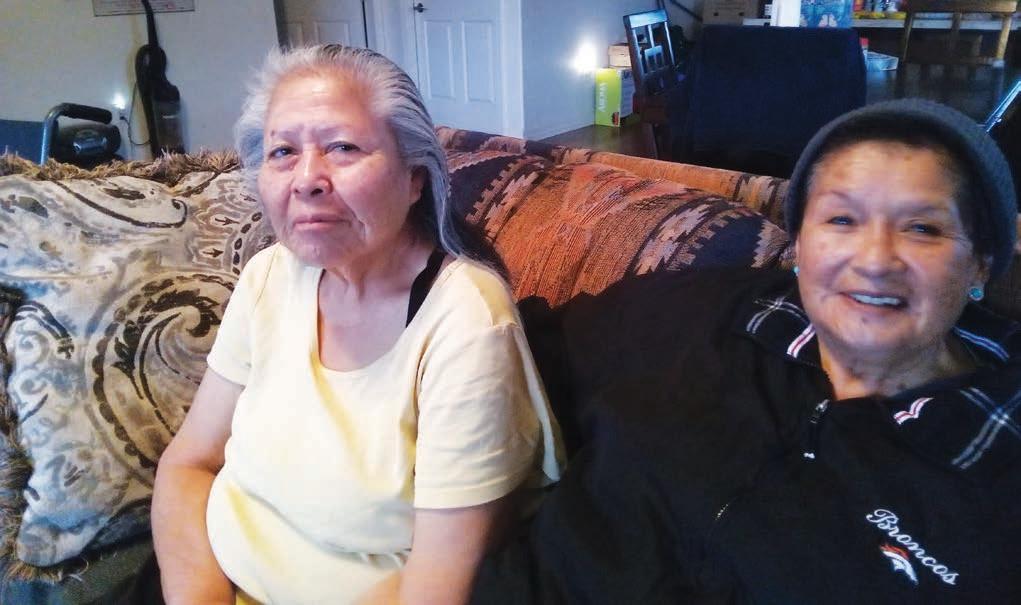
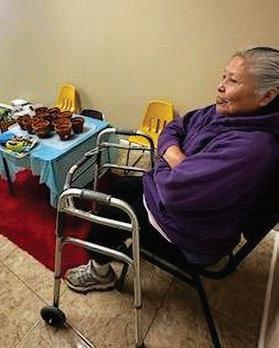
For Millie Shaw of Kaibeto, that invitation was more than just an announcement; it was a call. She reached out to DAR, asking for the NativeNewDayBiblestudiesandrequesting a Bible,herveryfirst one.
Pastor Jose Esparza personally delivered the materials and began studying with her. “When someone reaches out because they heard God’svoicethroughtheradio,”Esparzareflected,“weknowtheHoly Spirit is already working. Our job is simply to show up and walk with them.”
Millie speaks English well, but Navajo is her heart language. Esparza’s visits became a time of understanding and trust, and as her faith deepened, she invited her neighbor, Helen Bitney, to join the studies.
Helenis a retiredregisteredflightnursewhohaslivedandworked around the world, from Saudi Arabia to Germany and beyond. Yet,
“When someone reaches out because they heard God’s voice through the radio, we know the Holy Spirit is already working. Our job is simply to show up and walk with them.”
what feels like her longest journey has been one of grief—she lost her son to suicide, and that pain has followed her for years. The Bible studies on the Adventist belief about death, resurrection, and the hope found in Jesus have brought her profound comfort. What began as lessons soon became lifelines.
Both women also began attending the Page All Nations church regularly; their presence is a blessing to the congregation.
In October, the Page church welcomed two new Bible workers who had recently returned from missionary service. They arrived in Montana and reached out to Esparza for guidance. At the same time, the Page church had been seeking Bible workers—and God’s timing brought them together.
Esparza entrusted Millie and Helen’s ongoing studies to these new workers, who immediately embraced the outreach with compassion and dedication.
Each week, the Bible workers pick up a box of food from the local food bank and deliver it to Millie and Helen before their Bible study. Sometimes the items in the box feel like small miracles—like the week Helen asked for potatoes and the box “just happened” to include them. The Bible workers’ ministry combines spiritual nourishment with practical care, showing Christ’s love in action.
The Bible workers also pick up the ladies each Sabbath, bring them to worship and potluck, and then take them home afterward. The women look forward to every Sabbath, sometimes calling just to ask, “Are you coming?”
Millie and Helen have found joy and a sense of belonging in their new church family. Millie’s faith shines through her growth, while Helen’s testimony of a heart healing from grief is a miracle.
Their story is a reminder that God’s call can come through unexpected channels, such as a Diné Adventist Radio broadcast. His Spirit then will work through others who are willing to be His hands and feet. Ultimately, this partnership will lead to fellowship, healing, and true hope.
By Steve Pester
“Do
You Need Prayer?”
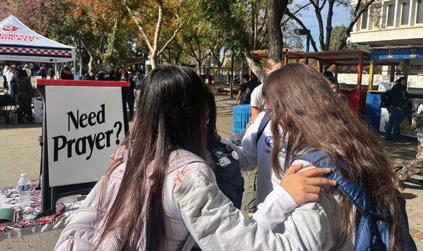
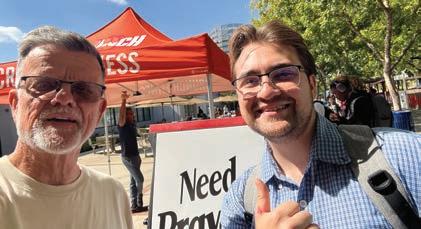
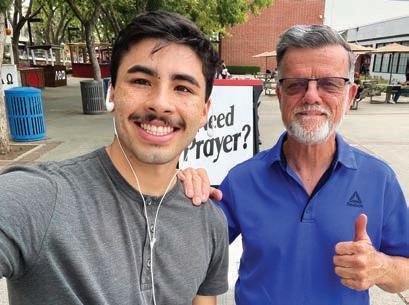
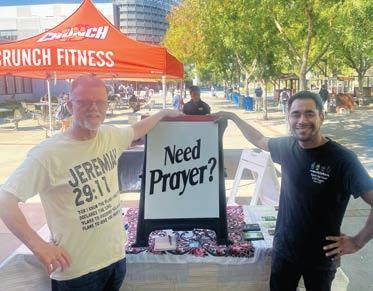
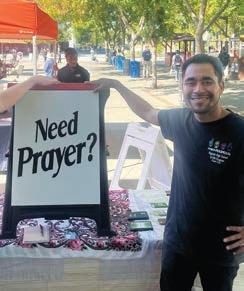
After returning from a year and half of overseas mission work, Bob Clayton, a member of the Clovis church, found himself praying for direction. Though he had moved back to California to be closer to his son and family, he sensed that God still had a ministry for him—he just didn’t know what it was yet. So, he began walking through the community, praying and listening for God’s leading.
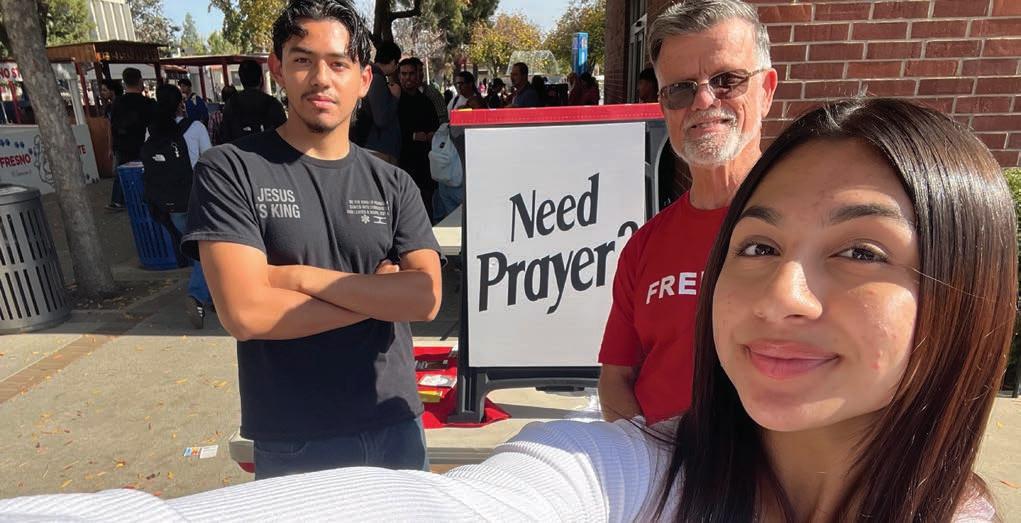
One afternoon near Fresno State University, Bob encountered a woman sitting at a table displaying a Christian sign. He shared an idea that had been quietly growing in his heart: setting up a simpletableandofferingtopraywithanyonewhoneededit.Her response was immediate—“That’s a great idea!”—and she directed himtothesecondflooroftheStudentUnionwherehecould request permission to begin. That early September conversation became the seed God used to launch a powerful campus ministry.
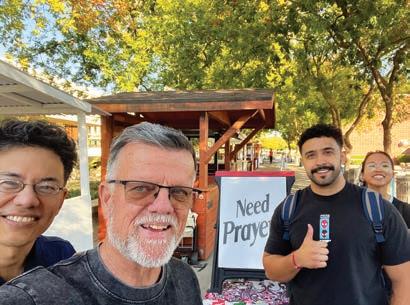
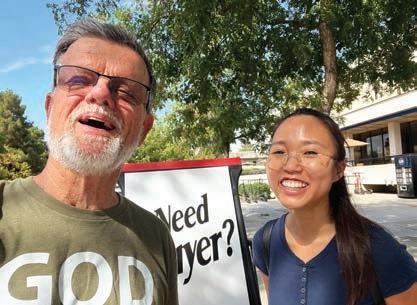
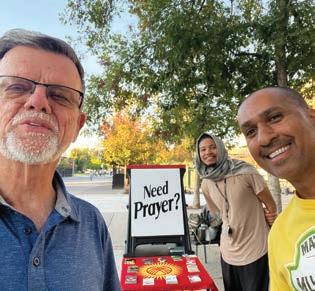
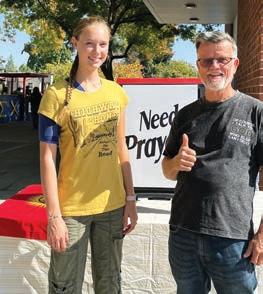
Since then, Bob has faithfully set up his prayer table every TuesdayandThursday,spendingfourtofivehoursattheheart of campus. What has grown from that single table is a quiet yet deeply meaningful ministry of spiritual care for students navigating stress, loneliness, and major life transitions.
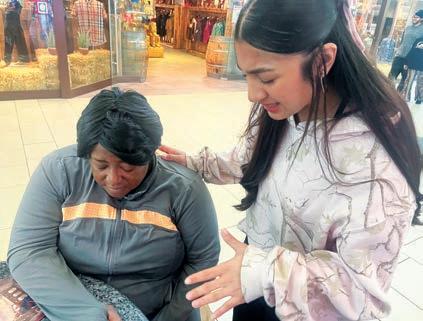
A typical day varies, but the pace of ministry rarely slows. Some students walk directly toward the table, asking for prayer about exams, family problems, or overwhelming anxiety. Others watch from a distanceuntilBoboffers a welcomingsmileandgently waves: “We’re praying for people—can I pray for you?” Across a four-hour period, he prays for an average of 10 to 20 students.
Memorable moments appear often. Recently, a young woman walked up, nearly in tears. When Bob softly asked how he could pray, she replied, “I’m not doing very well,” her voice trembling. After prayer, her face softened and she thanked him earnestly—
one of many reminders that God continues to reach students through these quiet acts of compassion.
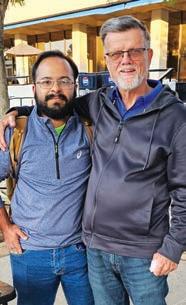
Another student has become a frequent visitor. Despite a painful family situation—a father experiencing homelessness and a mother currently incarcerated— he consistently demonstrates hope and gratitude. He asks Bob for a Bible verse after each prayer, seeking encouragement for the day. “I have a heart for him,” Bob said. “He’s going through so much, but he still wants to grow closer to God.”
Surprisingly,somestudentshavealsoofferedtopray for Bob. Since September, eight to ten students have approached the table—not for prayer, but to pray for him, the minister who prays for others. Five of these students now participate in a group text through which Bob invites them to join him at the table whenever they are free. Though they do not know each other, they form a smallprayerteam—youngadultslearningfirsthandthe joy of intercessory prayer.
This ministry has even extended beyond campus. During Thanksgiving week, when classes were not in session, Bob sent a message to the prayer group inviting anyone who wished to join him at the Fashion Fair Mall to pray for people as they walked by. One student responded, and together they spent two and a half hours offeringprayerforanyonewillingtoreceiveit.“Itwas a blessing,” Bob shared. “A beautiful surprise.”
When asked about the future, Bob does not claim
to have a grand strategic plan. “A retired pastor once told me that God put him in ministry to save him,” Bob reflected.“Inmanyways, I feelthesame.Aftermuch prayer, this is where God led me—and I just want to keep showing up.”
He hopes more people—especially young adults—will join him. He’s already had help from a local physician, several pastors, and a young woman with previous campus ministry experience in Canada. His desire is simple: that more people would discover the blessing of praying for others.
Each prayer table shift requires a $10 reservation fee through Fresno State’s system, which Bob covered himself until a member of Clovis church recently stepped intosupporttheministryfinancially.“It’snot a large cost,” Bob said, “but it means a lot to know someone believes in what God is doing.”
As hundreds of students make their way across campus each week—many carrying invisible burdens— one small table with a handwritten sign continues to offer a simplequestion:“Doyouneedprayer?"
If you’re interested in supporting this ministry or joining Bob at the prayer table, Bob welcomes anyone who feels led to reach out and be part of God’s work at Fresno State. You can contact him at Bob Clayton: bobclayton1969@gmail.com.
By Bryan Bong
From Ashes to Restoration: The Faith Journey of Lahaina Church
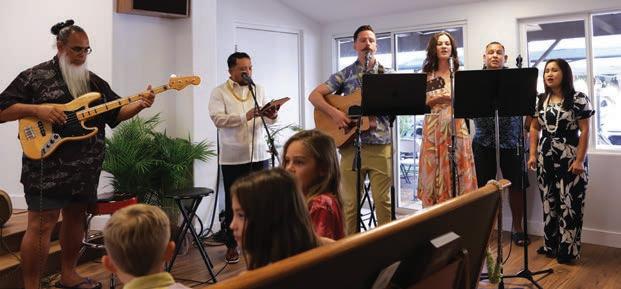
OnAugust8,2023,theLahainawildfireforeverchangeda community—and deeply impacted the Lahaina church family. While the sanctuary building was miraculously spared, the fellowship hall and parsonage were completely destroyed. Even then, the sanctuary could not be used due to required state and county safety inspections. What followed was a long journey of faith—two years and two months without a permanent place to worship.
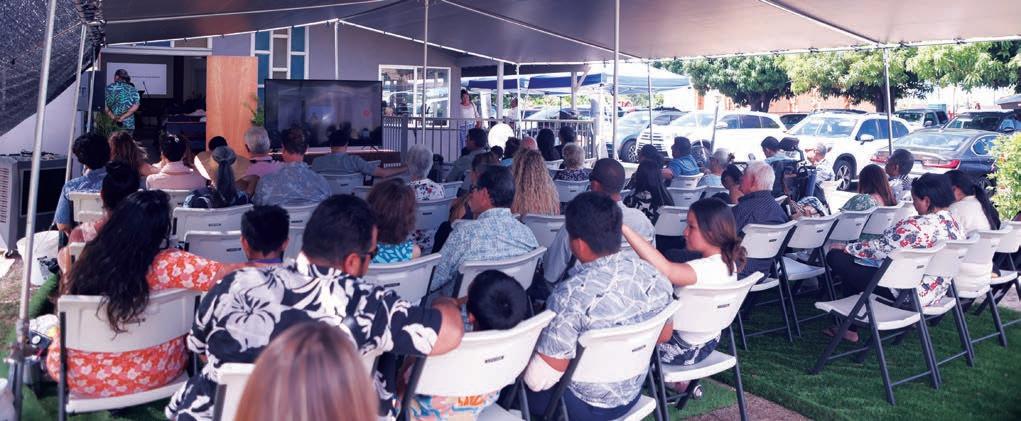
During that season, the Lahaina church became a “wandering church.” Members worshiped at Kahului church, at Kihei church for over a year, under tents in the hills of Lahaina, and later for six months under a tent on their own property once access was permitted. Through extreme heat, displacement, housing insecurity, and personal loss, the members continued to gather faithfully for worship.
They clung to God’s promise in Isaiah 61:3: “To console those who mourn in Zion, to give them beauty for ashes,…the garment of praise for the spirit of heaviness” (NKJV).
InAugust2025—twoyearsafterthefire—thechurchboardvoted in faith to set the Grand Reopening for Oct. 25, 2025. Yet major challenges remained: issues withelectricity,sanctuaryflooring,andthe sound system were still unresolved just two weeks before the event. United in prayer and standing on God’s promise of restoration, the church witnessed a miracle—every major issue was resolved just one day before the reopening.
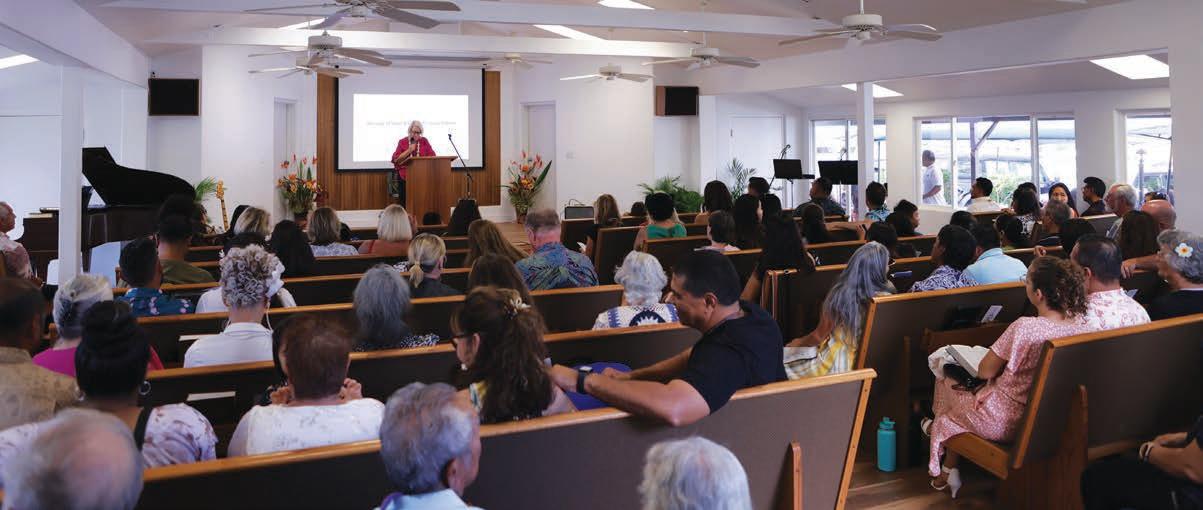
The Grand Reopening Sabbath was unforgettable.Tearsofjoyflowedasmemberswor-
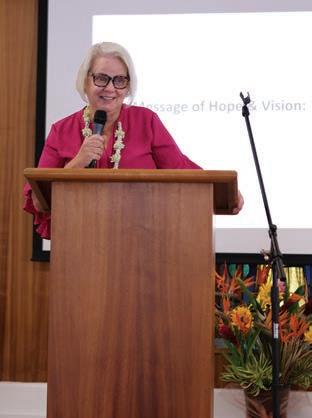
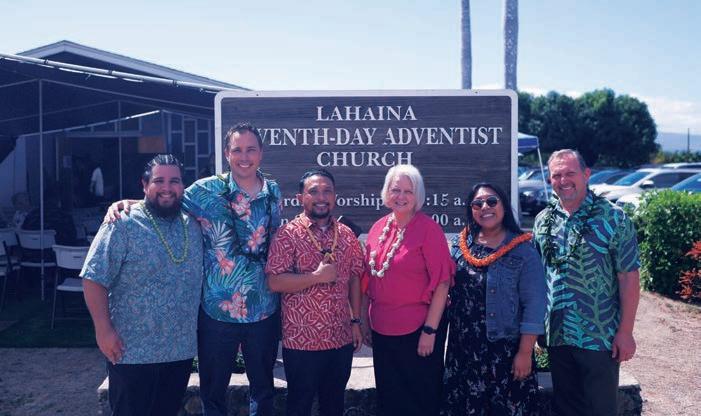
shiped again inside their sanctuary. The celebration was made even more meaningful by the attendance of the Kahului and Kihei church families, along with leadershipfromthePacificUnionConference,represented by Executive Secretary Sandra Roberts, and the Hawaii Conference, led by President Erik VanDenburgh.
The worship that day felt like Israel’s song after crossing the Red Sea—praise born from deliverance. After the service and fellowship meal, many lingered on the grounds inquietawe,reflectingonthefaithfulness of God.
The reopening of the Lahaina church stands as a powerful testimony: from ashes, God truly brings restoration. And with hearts
renewed, this church family continues forward—anchored in faith and hope in the soon return of Jesus Christ.
By Ramel Ramos
Lending a Hand at HIS: La Sierra Style
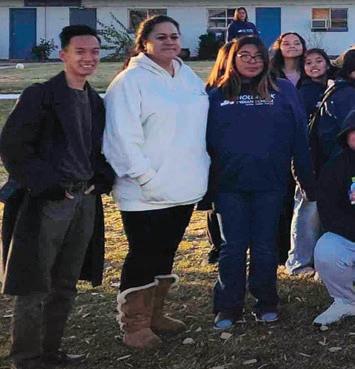
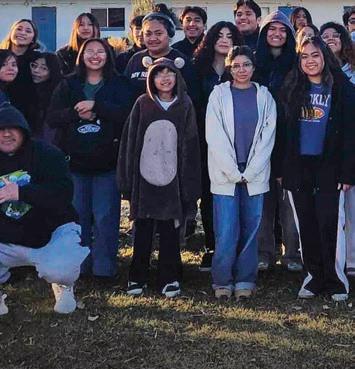
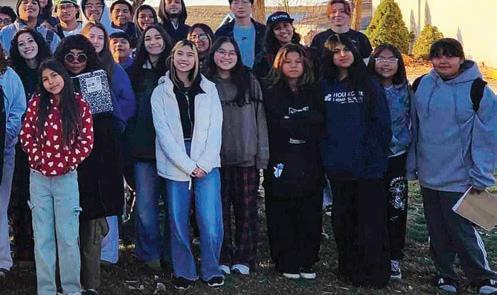
At Holbrook Indian School (HIS) there is never a lack of projects to complete. From roofingthatneedstobereplacedtoareas that need to be cleaned up to required painting and remodeling, there is always work to be done. This often draws mission groups to our school to lend their hands in service to our campus beautificationneeds.
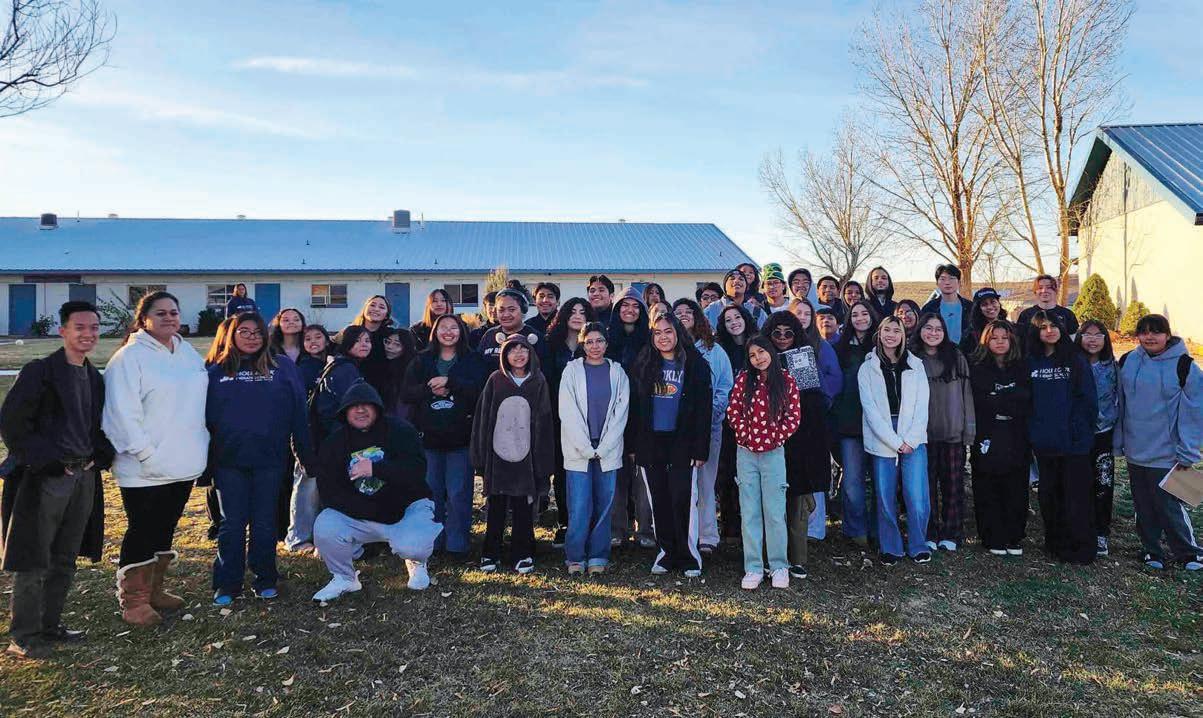
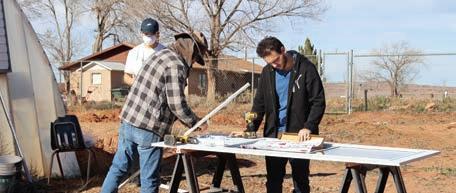
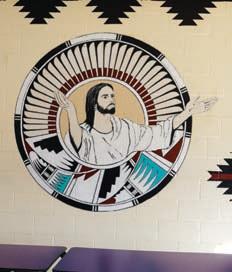
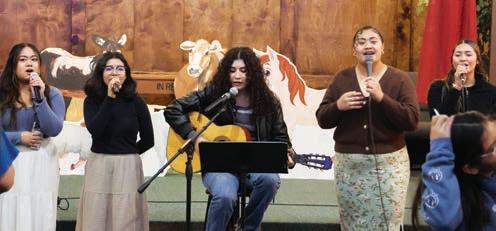
A groupofstudentsandstaffsponsorsfromLa Sierra University recently visited us to do just that in several top priority areas. One of those areas was our cafeteria, which was in great need of a facelift by way of repainting. A second location was on our farm, which required some extra hands to assist our director, Daniel Nicholls, and his assistant, Mike Wagner, in tearing down one of the greenhouses that had been destroyed during a severe windstorm last year. The La Sierra crew also presented our Sabbath School and led praise songs during church service. When asked what prompted her to bring her students here, Dionne “DeeDee” Afaese replied, “I visited Holbrook on a previous mission trip with Escondido Adventist Academy in March of 2025. After
A Seventh-day Adventist Boarding Academy Serving Native American Youth Since 1946
myfirstvisit,Iwonderedhowwecouldhelpmoreas an Adventist community. So, I got into conversations about HIS, and eventually I was granted the opportunity to coordinate the mission to go there. My hope was for my students to see the potential HIS has for future development for the Indigenous children that are there that we could be a blessing to.”
La Sierra students also shared about their experiences at Holbrook. Yechan Lim, a sophomore psychology major on a pre-dental track, shared that her biggest takeaway was realizing “how meaningful simple presence and honest conversations can be.” Julianne Role, a biomedical science major, had this to say: “In my time at Holbrook, I realized the power of connecting withyourstudentsandstaff.Whetheritwasduring worship or at the places that we worked, connecting andtalkingwithyourstudentsandstaffbroughtasmile to their faces. It allowed the students to feel heard and thestafftohaveanenjoyabletimeworkingwithus, evenduringthemostdifficulttasks.Talking,interacting, and sharing a smile can make someone’s day.”
We are no strangers to hosting mission groups
and visitors who wish to support our little school in the desert. Among the highlights we look forward to in 2026 are the pending visits from groups like Southern Adventist University and Sunnydale Adventist Academy, who are slated to lend their helping hands to us during our second semester. They will be helping us with redoing the ventilation in the pottery room, giving our gazebo a facelift, and landscaping around the commons, to name a few projects. We are grateful for the ways many support us in the upkeep of our beautiful campus.
By Kimberly Cruz
A Seventh-day Adventist Boarding Academy Serving Native American Youth Since 1946
Holbrook Indian School (HIS) is a first- through twelfth-grade boarding academy operated by the Pacific Union Conference of the Seventh-day Adventist Church. HIS also manages a first- through eighth-grade day school on the Navajo reservation in Chinle, Arizona. Eighty-seven percent of funding comes from individuals who have a desiretosupportNativeAmericanministriesandChristianeducation.Yourgenerositymakesadifferencein the lives of our students, their families, and the communities they serve. Thank you for your support.
Which Food Trends Should Have Staying Power in Your Diet?
Therightfoodscanbeaneffectivewaytohelp prevent and manage disease, but like fast fashion, food can feel trendy. With new studies regularly adding to the list of “superfoods,” it can be challenging to keep up with what belongs on your grocery list. Here are some top choices that can significantlyimpactyourlong-termhealth.
Foods to boost immunity
Duringcoldandfluseason,eatingimmune-boosting foods can help protect you from illness. Instead of relying on supplements, aim to get nutrients from food.
What to eat: Fresh fruits and vegetables provide vitaminsandfiberthatstrengthenyourimmune system. Try sweet potatoes, spinach, and carrots, which arehighinillness-fightingbetacarotene.Getzincfrom beans and tofu.
Foods to help you recover faster
If you do get sick, the right foods can help you bounce back more quickly, thanks to vitamins and other compoundsthatfightillnessandinfection.
What to eat: Probiotic-rich yogurt contains “good” bacteria that may shorten the duration of colds and flu.Darkleafygreens,citrusfruits,andredorgreen peppers are excellent sources of vitamin C. Garlic can reduce the severity of symptoms, while ginger and turmericfightinflammationandcongestion.Staying hydrated is essential—try hot water with lemon and honey to soothe a sore throat.
Foods to help your gut work at its best
One of the best things you can do for gut health is avoid processed, high-sugar foods, which encourage unhealthy bacteria to grow. Instead, focus on fresh, whole foods.
What to try: Collagen-rich foods, such as salmon, provide amino acids—nutrients that support the gut
liningandaiddigestion.Soyisrichindietaryfiber thatfeedsbeneficialgutbacteria.Addrawcacao powder or nibs (not sugary chocolate) to foods for rich flavorsupportingguthealthwithprebioticfiberand inflammation-fightingpolyphenols.
Foods to support heart health
Making small changes to your diet can have a big impact on your heart.
What to eat: Cauliflowerhasbecomepopularfor good reason—it’s naturally low in saturated fat and calories,highincholesterol-loweringfiber,andpacked withantioxidantsthatreduceinflammationandsupport healthybloodpressure.Itis a smartswapforrefinedcarb pizza crusts. On salads, skip heavy dressings, croutons, and piles of cheese, and instead load up on a rainbow of fresh veggies.
Foods to help prevent cancer
Yourdietcaninfluenceyourcancerrisk.Whileno single food prevents cancer, eating a variety of nutrientrichfoodscancreateananti-inflammatory,antioxidantrich environment in the body.
What to eat: Two to three servings of cooked tomatoes each week may lower prostate cancer risk by nearly 30% and can also help reduce breast cancer risk. Leafy greens suchasspinachandSwisscharddeliverfiber,folate,and carotenoids that protect cells from DNA damage. Fiberrich whole grains, such as brown rice, oats, and quinoa, help regulate insulin and lower colorectal cancer risk.
The bottom line
Adopting the mindset of adding healthy foods rather than focusing only on what foods to avoid can make good habits stick. By prioritizing fresh, nutrient-dense options, you’ll naturally crowd out ultra-processed foods—andreapthebenefitsforyearstocome.
By Cambria Wheeler
La Sierra University Enrollment Jumps, Ending Multi-Year Declines
This school year, La Sierra University has experienced a 26% surge in new freshmen, a 38% increase in new graduate students, and a 24% increase in total new students, ending several years of enrollment losses.
The university’s enrollment totaled 1,602 as of Oct.1,2025,itsofficialcensusdate,representingan overall enrollment increase of 5%. The enrollment surge put the university on track to meet its budgetary expectations.
“We are thrilled by the highly encouraging increase in our enrollment numbers,” said La Sierra University President Christon Arthur. “Our dedicated university team answered the call and worked hard to move the needle. New processes were adopted toward increasing enrollment, and strategic investments were made in key areas, in particular enrollment services and marketing.… We look forward with excitement to additional gains and opportunities to help even larger numbers of students achieve their God-given potential.”
As of census last fall, the university welcomed 294 new freshmen to campus compared to 234 in fall of 2024. New graduate students this fall totaled 124 as of Oct. 1 compared to 90 last year. Transfer student enrollment dropped, totaling 129 this year compared to 150 last year.
Additionally, of La Sierra University’s more than 80 major degree programs, 13 experienced growth this fall. For example, biology experienced a 13% increase; digital media, a 33% uptick; educational leadership, a jump of 106%; history and political science, up 29%; physics, a spike of 133%; mathematics, a 50% climb; and social ecology, a 400% increase.
The university has set a preliminary long-term target of 3,000 total enrollment by 2035.
La Sierra has taken numerous actions toward spurring growth. Last September, the university hired a new vice president of strategic enrollment management,alongwithfourstaffmembers.This action follows increased investments in marketing and recruitment last school year, which included new technology that enhances responsivity to potential studentsandtheadditionofstaffingandsocialand digital media initiatives in marketing.
Early last school year, the university also shifted the opening of its annual fall enrollment period by two months to coincide with the fall enrollment periods of other schools. It also embarked on a new initiative involving partnerships with regional school districts and academies toward boosting enrollment.
“Aswefulfillourmissiontoshepherdourstudents, our bright stars, into their fullest potential, as we follow God’s leading in this endeavor, we will be successful as an institution,” said Arthur.
“We are a family whose doors are open, where there is room at the table for all who want to come home.”
By Darla Martin Tucker
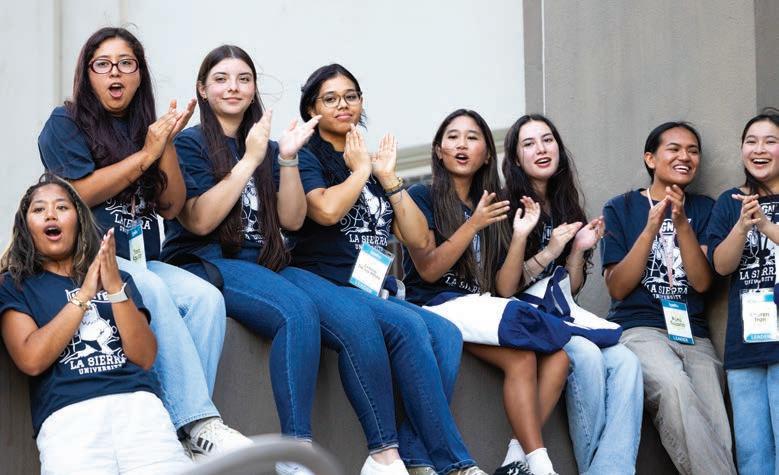
La Sierra University students cheer incoming freshmen during IGNITE orientation week in September.
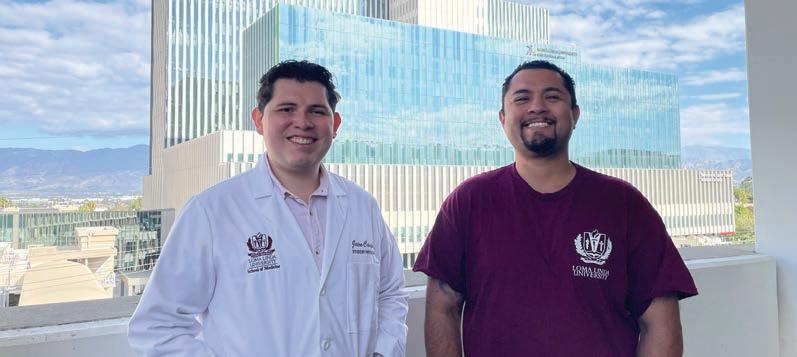
Fourth-year medical student Jairo Campos, left, recently shadowed community health worker Richard Salazar as he worked with patients in the community.
Medical Students Learn From Community Health Workers
Fourth-year medical student Jairo Campos recently spent a day in San Bernardino with a Loma Linda University Health community health worker (CHW), visiting homes of patients, stopping at motels where some patients go after hospital discharges, and meeting gunshot victims.
Campos said the ride-along opened his eyes to how CHWs contribute to the healthcare system by helping patients with their care in the hospital, in homes, or on thestreet.ManypatientsseenbytheCHWsufferfrom drug addiction, homelessness, or gang violence—social drivers of health that go beyond what doctors can do for them while they’re hospitalized.
“It was really eye-opening to see the potential CHWs have because of their connection with the community,” Campos said. “They’re there. They’re part of that community.”
Campos’ participation was required for Loma Linda University School of Medicine’s whole-person care clerkship, a new, two-week program of hands-on training for fourth-year medical students that includes a requirement to shadow a CHW. Students visit homes toseefirsthandcaregivingsituationsandexperience environments that determine drivers of health. This enables them to better understand how CHWs work upstream to address the root causes of a patient’s health condition.
“We hope as this generation of doctors graduates they will really understand how they can utilize community
See the latest news and Health & Wellness stories from Loma Linda University Health at news.llu.edu.
partners, because right now care of some patients can feel overwhelming,” said Amy Hayton, MD, MPH, associate dean of physician formation and wholeness.
CHWs are trusted members of the community who build bridges between clinical care and local citizens. They help patients navigate the healthcare system, reduce patients’ preventable hospitalizations and readmissions, increase positive long-term population health outcomes, and lower health care costs.
Campos says his shadow day included a hospital visit to a gunshot victim’s bedside as a team of doctors was leaving. He saw that the CHW had a unique bridge between the care team and the patient. “The patient’s face changed, his mood, his expression, everything told you he was way more open to Richard, the CHW, than he was to the medical care team.”
Richard Salazar, who has worked at LLUH as a CHW since 2024, says one fourth-year medical student shadows him each week. He enjoys teaching them about resources available in the community and in the hospital, showing how patients need to be supported, and how to deal with patients who don’t cooperate well but are in need, such as those in drug withdrawal. Many medical students who shadow him request to stay for another hour or two after their time is up.
Salazar says downtown San Bernardino and Loma Linda University may only be seven miles apart, but theenvironmentsareverydifferent.It’simportantfor future doctors to know the real environment in which many of their patients live.
“Personally, I think we need to continue to spread the word that CHWs are one of the most hopeful assets in healthcare,” Hayton said.
By Ansel Oliver
PHOTO: ANSEL
Two Tonge Grants Awarded to M.A. in Communication and Aviation Program
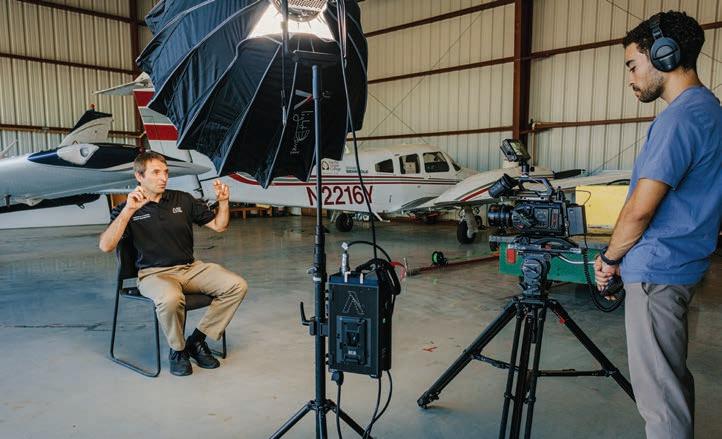
Recently, the Archie Tonge Education Fund awardedPacificUnionCollege(PUC)grantsof $59,987 for the M.A. in communication and $74,041 for the aviation program.
ThefirstgrantwillsupportthenewMasterofArts in communication program, a fully online, 43-credit degree designed to prepare working professionals for leadership roles in healthcare, ministry, and missiondriven organizations, among others. On a broader scale, thisdegreewillfulfillthemarket’sdemandforpositions such as public relations specialists, health services managers, and digital media and marketing managers, as well as prepare students for opportunities in the nonprofitsector,globalmissions,andchurchministries.
PUC’s M.A. in communication is the only entirely online,professionallyfocuseddegreeofferedwithinthe Adventist higher education system, directly addressing unmet student demand and workforce needs and aligning with PUC’s commitment to developing ethical, Christ-centered leaders for service.
These awarded funds will help support various areas within the program, such as course and program development, marketing and student recruitment, technology and digital tools, administrative support, and faculty support, including adjunct instructors.
The second grant awarded to PUC will help support the aviation program’s remarkable turnaround and
success over the last few years through God’s blessings andthededicatedeffortsofNathanTasker,Merilyn Chaffee,andtheadministration.Therenewalandvision of the aviation program continues to grow, serving as a modelforinnovative,Christ-centeredflighteducation.
Because of the great success in visibility and engagement through the Angwin Air Expos and the PacificQuestSoarofferingsforhighschoolstudents, the aviation program has helped reestablish a strong community interest, drawing attention and support from alumni, local pilots, and prospective students.
One of the most important needs is the acquisition ofanothermodern,FAA-approvedflightsimulator, which will allow the program to enhance instructional efficiency,reducecost,provideyear-roundaccess,and increase training quality while prioritizing safety. A flightsimulatorallowsstudentstoinnovatewithflight simulation in a well-rounded experience. In addition, they are able to log a certain number of hours in it toward their instrument rating and commercial pilot certificates.Thenewflightsimulatoracquiredthrough this grant will complement the Frasca simulator, which continues to faithfully serve its purpose.
This grant will also make it feasible to upgrade the older simulator hardware and software in-house without risking the loss of training capability. This, in turn, will allow students to complete essential hours towardtheirpilotcertificationsat a fraction of the cost, while increasing revenue for the aviation program. It will provide instructors with greater flexibilityandschedulingcapacity,serve as a recruitment tool for new students (particularly those from underserved or under-resourced backgrounds), and support the program’s long-term vision of self-sustaining aviation education withlittleornoadditionalflightcosts beyond tuition.
Both the communication department and the aviation program are grateful for these grants and for the many opportunities this will provide students at PUC.
By Marina Maher
Christmas Mission Trip
DuringthefirstweekofDecember,sixstudents from Fallon Adventist Christian School and Vegas Valley Adventist Academy participated in a mission trip to serve in Kayenta, Arizona. The students and their sponsors spent time worshiping together while also preparing to serve the community by hosting a Christmas party for the local children, providing a vespers program for the community, and leading out in the worship service on Sabbath.
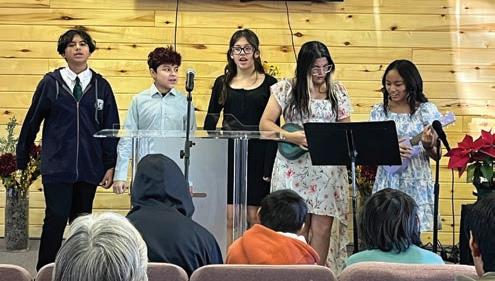
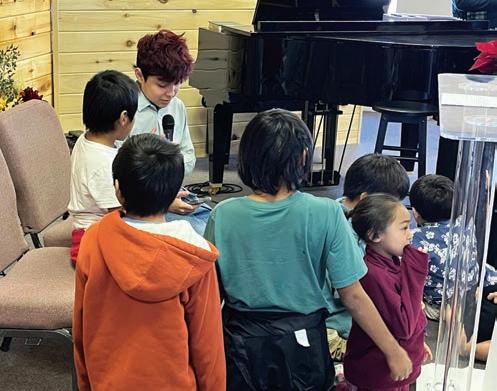
During the Christmas party, the students served pizza for dinner, played games, shared the “Legend of the Candy Cane,” sang “Happy Birthday, Jesus,” and distributed gifts. About 45 children in Kayenta received Christmas gifts this year in partnership with Rez Christmas Packages. One of the volunteers said, “It was worthalltheefforttoseethesmilesonthosekids’faces.”
Following the party, the students worked together to transform the dining area from a kids’ party to a Christmas banquet hall. The community was invited to a pasta dinner on Friday evening, which was followed by a vespers program featuring a living nativity. As the program closed, all were given an invitation to accept the greatest Christmas gift, Jesus, into their hearts.
On Sabbath morning, the students led out in the worship service and shared their gift of music with the congregation. James Crosby, the pastor of the Kayenta church, helped the students learn the words to the song “Jesus Loves Me” in Navajo, which they sang for special music.
The students who participated in the mission trip were able to explore Horseshoe Bend and Navajo National Monument to learn more about the early history of the Navajo people. They visited an exhibit to learn about the Navajo Code Talkers. The students were blessed by the opportunity to learn more about the Navajo Nation, serve the Kayenta community, and share the love of Jesus during the Christmas season—blessed by their acts of service, by a deeper understanding that Jesus came for everyone, and by the chance to help carry the gospel to the world.
By Heidi Jorgenson
The Ministry of Christmas Programs
As part of the strategic plan for the Nevada-Utah Conference, schools and churches are called to becentersofinfluencefortheircommunities.
Each of our schools—from the littlest learners at Rainbow Connection preschool to the junior academy students at Vegas Valley Adventist Academy and all our schools in between—prepared and shared Christmas programs with their local community. Through music and drama, the students recounted the nativity story and found ways to share that Jesus is the reason we celebrate the Christmas season.
At Riverview Christian Academy’s program, the play featured a story about adoption. It reminded the audience that we are all adopted into God’s family. In Bishop, California, the preschool students performed a play about an elephant who never forgets that Jesus is the most important part of Christmas.
Illness struck in Susanville, and with so many kids sick early in the week of their performance, there were questions as to whether the program could go on. God answered their prayers for healing, and all of the students were feeling better and able to participate in the program.
The local newspaper featured a story about Fallon Adventist Christian School the week before their program and included an invitation for the community to attend.
On Sabbath, Dec. 20, the Fallon church was full as the students shared their gifts of music and performed three skits, which the students had written, reminding the audience that Jesus is the Lamb of God.
As part of the Christmas mission trip, students from Vegas Valley and Fallon collaborated in a living nativity program that retold the story from Scripture and included congregational singing of Christmas hymns.
Christmas programs are open to the public and serve as one of the ways our schools serve as centers of influenceastheysharethegoodnewsofJesus’loveand invite their communities to accept the gift of salvation.
By Heidi Jorgenson
A Culture of Outreach
The Christmas season often brings joy, anticipation, and aflurryofactivity—notonly in homes but also in our churches, schools, and ministries. Amid the festive bustle, congregations across our territory found creative ways to share the story of Jesus’ birth and connect with their communities.
Faithfuleffortsextendedbeyond outreach to include in-reach as well. Officematesexchangedgiftsand shared potlucks, while classrooms buzzed with seasonal crafts and excitement. At the same time, churches opened their doorstoneighbors,offeringexperiencesthatmadethe message of Christmas tangible.
The Carmichael church presented “A Night in Bethlehem,” an interactive nativity experience complete with live animals. Children guided their families from scene to scene, petting animals and joining in songs. Associate Pastor Melissa Howell shared, “This gave Carmichael church a chance to open our doors to the surrounding community and share the story of Jesus’ birth in a fresh way. Many attendees were visitingthechurchforthefirsttime,and some expressed interest in joining the congregation, while others said they wanted their children to be part of a faith community and asked to participate in future events.”
In Santa Rosa, the church once again hosted its beloved walk-through nativity, delighting visitors with live scenes re-enacted by members of all ages. “The Live Nativity is a special part of many community members’ holiday traditions,” said Pastor Brad Geinger. “Over 25 years, it has become something we are known for in Santa Rosa. Perhaps most essential are the nearly 100 volunteers of all ages who participate. ThissameLiveNativitywasmyfirst church volunteer experience, and today it remains the starting point for many engaging in the Lord’s work.”
“The Live Nativity is a special part of many community members’ holiday traditions.”
Brad Geinger
In Placerville, over six nights, a diverse mix of people—from the East Coast to just down the street—
came to connect, celebrate God, and experience a living picture of hope at “A Walk Through Bethlehem.” Churchmembersunited,offeringhundredsof volunteer hours for construction, conversations, and prayer. In the barn, at the feet of Baby Jesus, tears were shed and hearts were moved. Pastor Andrew Uyeyama shared, “The camaraderie was incredible— we truly became a church family, and God interrupted many lives with light and hope.”
Across our territory, this same theme runs through program after program: Bringing Christ to Christmas. Churches, schools, ministries, and members—young and old—shared the gift of spiritual community with neighbors, inviting them to experience the story of Christmas in a handson, meaningful way.
By Communication Staff
Redwood Camp Meeting Is on the Horizon
Looking ahead to warmer days and summer events, Redwood Camp Meeting leaders are already preparing the grounds for July.
Nestled beneath towering redwoods on California’s North Coast, the camp is a place many families return to year after year—often describing it as a reunion in the trees. Eachwinterbringsnewchallenges. A floodyearcanleavelogs,silt,anddebris scattered across the property. Coupled with fallen trees, branches, and foliage throughout the canopied campsite, spring cleanup becomes essential to restore the peaceful, welcoming atmosphere that campers treasure.
To address this, the camp organizes its annual Memorial Day weekend volunteer cleanup, scheduled for May 23-25, 2026. The cleanup also prepares the site for camp pitch, which takes place the week before camp meeting.
This year, the camp launched a new website: redwoodcampmeeting.com. Campofficersreportthesitewillgrowas a resourceforonlinereservations, essential documents, and details about speakers, children's programming, and upcoming events.
The 2026 Redwood Camp Meeting runs from July 26 to August 1, with featured speakerSamLeonor,ChiefMissionOfficerforAdventistHealth,amongothers. Withthesedatesset,everyoneisinvitedtoenjoyGod’smagnificentredwoods, the North Coast, and the joy of gathering in the trees to learn and serve together.
By Ken Miller
Hernández Ordained to Serve
On Nov. 15, 2025, David Hernández, who serves as associate pastor at the Escondido church, was ordained to pastoral ministry. Prior to his ordination, Hernández served the Escondido congregation for six years.
Hernández shared that his journey into pastoral ministry was not a direct one. He pursued his undergraduatedegreeinexercisescienceatPacific Union College; over time, however, God redirected his path, leading him to attend Andrews University, where he earned a Master of Divinity degree. One of the mostsignificantinfluencesinHernández’sdecisionto pursue pastoral ministry was his family. He noted that his parents played a foundational role in shaping both his faith and his sense of calling through their deep involvement in local church leadership. His sister, who later became a pastor, also had a lasting impact through her example and mentorship.
Now serving as a full-time minister, Hernández shared that one of the aspects of pastoral life he values most is the opportunity to walk alongside people throughout their life journeys. He described the privilege of being present for joyful milestones such as birthdays, graduations, and celebrations, as well as the sacred responsibility of supporting individuals and families through seasons of loss, grief, and heartbreak. He considers it an honor to remind his congregation that God is present in both their joys and their sorrows.
Looking ahead, Hernández hopes the Escondido church will continue growing into a community that loves as Jesus loves. He envisions the church as a safe space where people experience grace, belonging, and authentic spiritual growth, and where members remain committed to the ongoing process of discipleship. In his personal ministry, Hernández is committed to continual growth as a pastor who leads with humility, authenticity, and love. His desire is for his ministry to consistently point people to Christ and help others deepen their relationship with Him.
Outside of ministry, Hernández enjoys cooking and trying new recipes with his wife, Raysa Juliana Flores, watching sports, spending time with friends, and traveling. These activities help him remain grounded, connected to those he loves, and spiritually and emotionally renewed as he continues to serve his congregation.
The Southeastern California Conference extends warm congratulations to David Hernández on his ordination and pastoral ministry, praying that he will continue to honor the calling God has placed on his life and faithfully shepherd those entrusted to his care.
By Ezrica Bennett
LEFT: Will Penick, ministerial director, and Verlon Strauss, treasurer, lead the ministerial charge. RIGHT: Hernández and his wife are prayed over. Hernandez family.
LLUC Outreach Brings Hope to Families in Need
From Dec. 5-7, 2025, the Loma Linda University church Anthem, UReach, and Student for International Missions (SIMS) teams partnered together to serve families through a multi-day outreachmission.Travelingtogetherasoneunified group, the teams traveled by vehicle into Mexico, strengthening both teamwork and shared purpose along the journey. Overseen by Linda Mendez, pastor for UReach, and Kane Kim, Anthem Hospitality and Community Engagement director, the initiative brought together 25-30 volunteers, including nursing, dental, and medical students.
A central focus of the outreach was a visit to a domestic women’s shelter, where many mothers and children had sought refuge from abusive situations. Through a Giving Tree initiative, the team collected Christmas wish lists and distributed gifts to 17 children, along with care items for 15 mothers and appreciation gifts for 10 shelter employees. To further support the mothers, volunteers created a dedicated self-care space where women received nail services, massages, and makeup while engaging in open, healing conversations with Mendez. The room became a safe spaceforreflection,encouragement,andrestoration.
One volunteer captured the emotional weight of the experience, sharing, “Can we stay here and not go back home?”
The outreach extended beyond the shelter as
volunteers assisted local community churches and continued their journey together into a refugee camp in Mexico. There, the team delivered food, gifts, and board games to families living in extreme conditions, including a village where multiple individuals shared a single shack. Volunteers spent time listening, playing games, andbuildingrelationships,offeringnotjustresources but genuine connections.
Through every interaction, the Anthem, UReach, andSIMSoutreachteamsreflectedacommitmentto meeting people where they are and reminding them that they are seen, valued, and deeply loved.
By Jordyn Wright
The giving tree initiative was a huge success.
LEFT: Anthem and UReach teams. MIDDLE: Mendez passes out gifts to some of the children. RIGHT: The LLUC teams organize all their gifts and activities for the shelter.
Hollywood Hub: A Central Place for Community Care
What began in 2013 as a shower program at Hollywood church has grown into the Hollywood Hub—a centralized community resource center providing support for people experiencing homelessness and housing insecurity. By consolidating multiple services to one location, the Hub is designed to increase access tocare,improveefficiency,andbringdignitytoguests seeking support.
Located at Hollywood church, the Hollywood Hub provides personal care services such as showers, clothing, hot meals, case management, and housing navigation. These services are made possible through a collaborative partnership between Compassion Connection (shower ministry), the Hollywood church, Los Angeles City Council District 13, and Homeless Health Care Los Angeles. Soon, the Hub will also include laundry services.
“Theministriesthatweoffershouldreflecttheneeds in our community,” said Andrew Froemming, program manager for the Hollywood Hub and Hollywood church administrator, “and homelessness is a huge need within our community.”
Froemmingpitchedtheideatooffermultiple services at one location to anyone who would listen. Los Angeles City Council District 13 heard his plea and helped the church apply for the Encampment Resolution Fund, resulting in a $7 million grant to be used in 2025-2027. So far, this grant has helped thechurchcreate a customfive-stallshowerandhas allowed the Hub to employ 21 full-time workers.
“At some other facility, you might have to wait a few hours in line to get a shower, and then wait again to talk to your case manager,” said Froemming. “Then, if you needed a meal, you might wait another hour or two. When you add all that up, it can take an entire day just waiting in line. We brought these services into one place
andreducedthewaiting,makingitmuchmoreefficient. People can come in, access what they need, and move on with their day—whether that’s looking for a job, going to school, or whatever they need to do to improve their life.”
According to the annual report from the Los Angeles Homeless Services Authority, in 2025, nearly 75,000 people experienced homelessness on a given night in Los Angeles County. The service planning area Hollywood church is in had the highest population of people experiencing homelessness—16,955. This is the community the Hub serves, Monday through Friday, 8 a.m. to 4 p.m. Currently, the Hub serves 400 to 450 guests a week. With the new laundry services, they anticipate serving 500 guests each week.
Froemming, who helped launch Compassion Connection more than 10 years ago, works to ensure the culture of Compassion Connection—improving on theservicesofferedwhiledemonstratinggenuinecare for clients—remains true as services have expanded through the Hub.
“To be able to see people have their needs met, to be abletoseepeoplewho,maybeforthefirsttimein a very long time, realize that somebody genuinely cares about them and that they have worth and value and that God loves them,” Froemming said, “that’s incredible.”
By Araya Moss
New five-stall shower unit.
Paulo Tenorio Joins SCC Team as Youth Director
Paulo Tenorio’s ministry experience has taken him all over the world—Brazil, Guam, South Korea, Argentina, Texas, Michigan, Tennessee, Washington, D.C., Virginia, and more.
“When I was a kid, I always wanted to be a pastor,” Tenorio recalled. “But then, when I became a teenager, things started to change, and I realized that I didn’t feel called to be a pastor.”
That all changed during his senior year, when he felt the Holy Spirit prompting him to respond to a student missionary opportunity in South Korea. “It was in that missionary year that I felt God’s calling for ministry, for pastoral work,” Tenorio continued. Upon his return from South Korea, he went on to study theology and graduate from Southern Adventist University.
This January, he joined the Southern California Conference team, stepping into the roleofyouthdirector.Ashereflected on this next step, Tenorio recalled, “God kept pointing in the direction of going back to youth ministry.”
Most recently, Tenorio served as a pastor for the Guam-Micronesia Mission. He was also involved in youth ministries during his time on the island, organizingthefirst-everAdventurer camporee for Guam. Prior to moving to Guam, he served in the Texas Conference for 12 years, beginning as a pastor. After a couple of years, hemovedtotheconferenceoffice as associate youth director and soon went on to serve as the youth director, during which time he organized a large virtualcamporeeduringthefirstfew months of the covid pandemic.
When asked what he most enjoys about youth ministry, he talked about “seeing the click—when a young person has a wall against the Holy Spirit and then seeing that wall come down.”
He mentioned this could happen in a discipleship or mentorship program, Pathfindersoryouthevent,summer camp, or school week of prayer. “Atfirstyouseethemwiththeir
arms crossed, face sticking out, very serious, very ‘I don’t want to be here. I hate it being here.’ Then toward the end, the Holy Spirit has been getting access, day by day or week by week. And then you see it—a change in their attitude, their demeanor, and they’re just surrendering to God. To me, that’s a beautiful thing. Then the celebration is the baptism. I am big on baptisms and trying to help people make that decision, whether they’re young or older. For me, that’s the highlight: the transformation.”
Tenorio looks forward to exploring Southern California and meeting new people, while getting acquainted with the team, listening to ideas, and building on structures. He will be joined by his wife, Ana, and their two daughters.
By Lauren Lacson
PHOTO: PAULO TENORIO
Advertising
Advertising is accepted as a service to Seventh-day Adventist church members in the Pacific Union. The Recorder management reserves the right to refuse any advertisement, especially ads not related to the needs and practices of the church membership. Acceptance of any advertising shall be considered a matter of accommodation and not a matter of right, nor shall it be construed to constitute approval of the product or service advertised.
Payment in advance must accompany all classified advertisements or they will not be published. Display ads for known advertisers will be billed.
How to Submit Advertising
Classified ads must be sent with payment to the Recorder office. Display ads should be arranged with the editor (recorder@adventistfaith.com).
Classified Rates
$70 for 50 words; 75 cents each additional word. Display rates (full color only): back cover, $4,200; full page, $3,800; 1/2-pg., $2,200; 1/4-pg., $1,200; 1/8-pg., $700; $160 per column inch.
Information
The Pacific Union Recorder is published 12 times per year with a circulation of approximately 75,000. For more information about advertising, please email to recorder@adventistfaith.com.
Upcoming Deadlines
These are the advertising deadlines for the Recorder Your local conference news deadlines will be earlier. March: February 2 • April: March 2
Contributions
The Recorder pages are assigned to the local conferences, colleges, and healthcare institutions, and all content comes through the communication departments in those organizations. If you have a news story/idea, calendar announcement, etc., please contact your local communication department. See the masthead for contact information. Want tips for writing for us? See www.dailywritingtips.com/the-artof-writing-news.
Recorder Membership
The Pacific Union Recorder is provided as a free service to members oftheconferencesthatarepartofthePacificUnionConference (Arizona, Hawaii, Northern California, Central California, Southern California, Southeastern California, and Nevada-Utah). Each conference maintains the list of members, based on the reports from their churches. If you would like to make a change to your subscription (name, address, cancellation), please contact your local conference.Thestaffofthe Recorder does not have access to the circulation lists, other than the paid subscriptions.
Calendar
Central California Conference
Mountain View Academy Alumni Weekend is Friday, April 10, 2026, starting at 6:15 p.m. with a light dinner followed by vespers. Alumni day is Saturday, April 11, starting at 9:00 a.m. with registration and a continental breakfast. Honor classes are 1946, 1951, 1956, 1961, 1966, 1971, 1976, 1981, 1986, 1991, 1996, 2001, 2006, 2011, 2016, and 2021.
Northern California Conference
Southgate Church Women’s Spiritual Retreat, May 15-17, 2026. Theme “Speak Life,” with empowering workshops, warm fellowship, and worship experiences. The annual event will be held at Leoni Meadows Camp; keynote speaker is Pastor Nicole Harvey. Online registration information at southgatesda.org.
Pacific Union College
Chorale Ensemble Concert. All are invited to a performance of PUC’s choral ensembles, Chorale and Vox Pro Musica, on Sunday, March 1, at 4 p.m. in Paulin Recital Hall. Directed by Ronnie Zanella, the ensembles will present a variety of choral styles for all toenjoy.Admissionisfree.Questions:music@puc.edu or 707-965-6201.
PUC Boys’ Volleyball Tournament. PUC looks forward to welcoming high school students, coaches, and families to their boys’ volleyball tournament from March 6 to 7.
Paulin Center for the Arts “Think Spring” Recitals
Two opportunities to hear what PCA students are working on in various studios. Instruments include violin, piano, guitar, cello, horn, and trumpet. Sunday, March 15, 12 p.m. and 2 p.m. in Paulin Recital Hall onthecampusofPacificUnionCollege.Admissionis free.Learnmoreatpaulincenterarts.com.Questions? paulincenter@puc.edu or 707-965-6201.
Connect Ministries isagroupofPacificUnionCollege students passionate about Jesus and sharing through music and worship. The bilingual team leads worship services, retreats, youth events, and any programs where they can inspire other young people to become worship leaders. Any school or church interested in having them visit, please email connectministries@ puc.edu.
Add PUC News in Your Church Bulletin. With manyupdatestoshareatPacificUnionCollege,we designed a printable bulletin insert for churches to use. Just print the PDF double sided and cut in half, then include as a bulletin insert. Download at puc.edu/ bulletin.
Subscribe to the PUC Now Newsletter. Stay up to datewithPacificUnionCollegebysubscribingtotheir monthly newsletter at puc.edu/subscribe. From campus stories and alumni features to student interviews, you’ll be in the now with PUC.
Southeastern California Conference Come Home to Loma Linda Academy Homecoming, March 6-7, 2026. Join us for Music Vespers and Sabbath Worship centered on “Generations of Faith, Fully Alive in Jesus.” Guest speaker Chris Johnston ’91 and special music by Joshua Tuburan ’96. Enjoy a delicious Sabbath lunch and campus tour.
Classified Employment
Pacific Union College seeksaskilledCertified Electrician with expertise in Medium Voltage Systems to join our team. C10 Contractors License or California Fire AlarmInstallationCertificationrequiredaswell.This role requires a strong understanding of electrical codes, safety protocols, and hands-on experience in industrial or commercial settings. https://www.puc.edu/campusservices/human-resources/careers/electrician. Email hr@puc.edu, 707-965-6231.
Pacific Union College seeks dedicated Executive Director to lead Human Resources operations and strategy and oversee well-being and development of talented team members. Strong leadership, communication, and organizational skills are essential. https://sdawest.pub/job_posting. Email hr@puc.edu, 707-965-6231.
Pacific Union College seeksqualifiedcandidatestofill openpositionsinfulfillingourmissiontoLearnwith Purpose, Rise in Faith, and Serve in Love. Beautiful mountain campus, minutes to shopping, an hour+ drive of ocean and skiing. Current openings at https:// sdawest.pub/candidates.
Live-in companion in Madera, CA. Seeking an SDA woman to share home with a mostly independent elderly woman. Evenings/overnight preferred; minimal assistance, presence in the home. Must be reliable, kind, and comfortable with one gentle, mostly outdoor cat. Room and board plus stipend provided. Email ayomoon@gmail.com with references and brief bio.
Free rent in Henderson, NV. One bedroom/living room, snack kitchen casita in exchange for helping widow with managing household three hours per day. Owner travels. Need single person who can help with various duties. Live in guard-gated community, fabulous situation in estate home. Call Myrna at 310-613-9549.
Discover Life Church and Mother Lode Junior
Academy are seeking a regular part-time Maintenance Director to provide oversight of grounds and facilities. This role includes supervising volunteers and contractors, performing basic maintenance as needed, and supporting long-term facility care. Experience in maintenance, grounds, or facilities management preferred. For more information or to apply, please contactthechurchofficeat209-532-3337oroffice@ discoverlifesonora.org.
Camp Cedar Falls is hiring! Live and work in God’s beautiful nature. Positions available include: Camp Ranger/Custodial and Camp Ranger/Maintenance. Opportunities available to singles, couples, and families. To learn more or apply, visit https://scc.adventist.org/ departments-ministries/human-resources/job-openings. For questions, call Camp Cedar Falls at 909-805-4104.
Real Estate
PUC commercial space for rent. PacificUnionCollege has commercial real estate space available for lease. The spaces are in various sizes and functionality and are available for inquiries. For additional information, please email Sam Heier at sheier@puc.edu.
Cottage for rent. Are you looking for serenity and peace? Then this rental is the perfect place for you. A small and private cottage, complete with picket fences and gardens. 1 bedroom, 1.5 bathrooms, skylights, and unique shower. Located in foothills by Collins Lake, CA. Contact John at Mountains. skyz@gmail.com.
Summit Ridge Retirement Villages, an Adventist
California Adventist Federal Credit Union
YOUR “ONE STOP FINANCE SHOP”
Serving our Adventist Community for over 68 years withfinancialproductsand services, along with wealth building education.
Please visit our website for updates on all that CAFCU has tooffer.Callourofficeand speaktoourfriendlystaffor manager for more information.
www. SDA Credit Union .com I 818-246-7241
communityin a ruralsetting,offersaffordablehomes or apartments and caring neighbors, with fellowship you will enjoy. Onsite church, planned activities, and transportation as needed. Onsite Wolfe Living Center offersindependentlivingandnursinghomes. Visit SummitRidgeVillage.org or call Bill Norman, 405-208-1289.
Country living with contemporary luxury in this newly remodeled 3-bed 2-bath 2700 sf home with openfloorplanbathedinnaturallightwithgourmet kitchen, SS appliances, granite countertops, LVP flooring. A mastersuitewith a largebathroomand shower with a huge walk-in closet. Also a large game room/office,allon a singlelevel.Houseon1.6acres backed by a pond and stream; more acreage available. Any questions or pictures, contact me at ptnbear@ gmail.com.
Country living in Northern California: 3-bedroom, 2-bath, newly renovated home for sale on one acre, quiet street 15 minutes from Redding, mature fruit trees, grapevines, 50x80 fenced garden area with small greenhouse, irrigation system, landscaping, 3-car garage, gym, and large 18x30 shop with RV hookups. Call, text 909-735-2745.
“So there remains a Sabbath rest for the people of God.” Hebrews 4:9
Near Pacific Union College, in Pope Valley, CA. Beautiful 3-story, 4 BDRM, 3 full bath home for sale. Downstairs could be apartment. Peaceful, secluded, sits above creek. Own water access. Dock possible. Kayak, swim, picnic, hike. No neighbors either side, rolling hills across. $525,000. See listing: www.listing4. com/1060deputydrive. Kris Chun, Brokerage License 01870237; phone: 707-853-5747.
Southern Oregon, Days Creek, country living: 10-acre property, 4+bdrm, 3.5-bath, 4,000 sq. ft, well with 3,000-gallon tank, septic system, big garden area, grapes and fruit trees, large workshop, greenhouse, woodshed/carport, lots of storage, Adventist schools and church nearby, ideal place for country living or wellness center. Call 541-825-3823, email janmay92@ aol.com.
Off-grid solar, 4+ sloped acres. Shared well, older mobile, 2 bd/1bath with 3 sheds. Near Mexico and Arizona border. God willing, moving overseas. Church with school nearby. Estimated $130K invested. No conventionalfinancing.Cashoffers.Muchtoinclude. Materials for strong greenhouse. Text, 520-858-6674 message, or email poolman52@hotmail.com.
45-acre retreat estate in Valley, Washington. This45-acreestateoffersaremarkableopportunity
for Christian ministry, retreat, or community living. The main residence spans over 15,000 sq. ft. with 10 bedrooms and 11 bathrooms—ideal for hosting church retreats, leadership gatherings, discipleship training, or extended fellowship stays. Amenities include an indoor pool and spa, elevator, multiple family rooms, and spacious common areas designed for rest and renewal. Beyond the home, the property’s 45 acres feature barns, shops, guest quarters, and horse facilities—perfect for outdoor ministry, youth camps, agricultural projects, or creation care programs. Surrounded by serene mountain views, this estate provides a peaceful environment for prayer, worship, andcommunityconnection.Offeredat$2,300,000. For more information, please contact: Riley Knutson, knutsonrealtor@gmail.com, 509-279-9797; Clive Osbourne, clive@cliveosbourne.com, 971-901-5350.
For Sale
Outpatient physical therapy and aquatic therapy in the foothills above Sacramento, CA. Turn-key practice, in business for over 30 years. Great referral base and solid practice. Lots of potential for growth. Great opportunity for someone wanting to establish a medical mission outpost or wellness center as well. 5400-sq-ft facility. $450,000. Flexible options to the right party. Contact levi2000@sbcglobal.net or leave message at 209-304-7455.
Vacation Opportunities
Travel on a faith-based biblical tour to Israel (March 2026) with Dr. Carl Cosaert, Dean of the School of Theology at Walla Walla University. To learn more, visit www.adventtours.org or email info@adventtours.org.
Travel on a William Tyndale Reformation tour, Aug. 26 to Sept. 11, 2026, celebrating the 500th anniversary of the English New Testament with Dr. Carl Cosaert of Walla Walla University. Explore Tyndale’s England, with an optional Germany and Belgium extension. To learn more, visit www.adventtours.org or email info@ adventtours.org.
Angwin home. Five-bedroom, three-bathroom vacation home 2 miles from PUC. Fully furnished, large kitchen, dining room, living room, family room, piano, vineyard views,WiFi,washeranddryer,BBQ,sleeps10. Callfor rates, photos, and reservations: 415-539-7980 or email nroger1965@gmail.com.
Bulletin Board
Free sharing cards. LifeTalk Radio has beautiful FREE sharing cards for all occasions with encouraging messages like “God Loves You” and “You Matter to God” plus Scripture cards. Share hope and faith with others. Order free cards at: LifeTalk.net/sharing-cards
Authors, transform your manuscript into a globally distributed book. Get FREE evaluation from trusted SDA publisher (42 years). If accepted, we edit, design, layout,
market, and distribute worldwide. Submit today: www. teachservices.com. Look for red “Submit Manuscript” button, top of homepage. We buy/sell used SDA books www.LNFbooks.com. 706-504-9192.
Adventist singles wanted! Looking for meaningful, faith-centered connections? Join AdventistDating. com—where single Seventh-day Adventists meet for friendship, companionship, and love grounded in shared beliefs. Safe, sincere, and free to join. Start your journey today at AdventistDating.com—where faith meets love!
Country living for students? Check out Milo Adventist Academy in Southern Oregon: miloadventistacademy. com, admissions@miloacademy.org, 541-825-3200.
Hone your fundraising skills at the 2026 Missional Philanthropy Conference at Southern Adventist University in Collegedale, TN, July 14-16. Learn from nationally recognized experts in education, healthcare, corporatefoundations,andnonprofitworkabouthow toeffectivelygeneratefinancialsupportforprojects. Early-bird registration is open through April 1 at southern.edu/philanthropyconference.
At Rest
Als, Marva – b. Oct. 21, 1941, Panama; d. Aug. 19, 2025, East Palo Alto, CA. Survivors: sons, Eloyd, Eduardo, Delano; daughter, Shelia; seven grandchildren.
Bauer, Olive – b. Oct. 20, 1929, Oshawa, Ontario; d. July 2, 2025, Porterville, CA. Survivors: son, Teddy Bauer; daughter, Lori Pozo; two grandchildren.
Bowes, Carole Sue – b. Aug. 25, 1944, Loma Linda, CA; d. Dec. 13, 2025, Loma Linda, CA. Survivors: husband, Ron Bowes; daughter, Sharla Halverson; son, Rodney Bowes.
Cummings, Doris – b. Sept. 24, 1925, Los Angeles, CA; d. Nov. 26, 2025, Rancho Cucamonga, CA. Survivors: children,RichardCummings,LeonardCummings;five grandchildren; six great-grandchildren.
Dancel, Cris A. Jr. – b. May 7, 1940; d. Nov. 14, 2024. Survivors:son,Cristopher;sister,SharonDunawy;five grandchildren; three step-grandchildren; seven stepgreat grandchildren.
Gaede, Rodney – b. Jan. 14, 1940, Lodi, CA; d. Sept. 26, 2025, Lake Tahoe, CA. Survivors: wife, Linda; daughter, Rolinda. After graduating from both PUC and California State University in Sacramento, where he earned a master’s in public administration, Rodney served many years as the manager of the San Joaquin County food stamps and public assistance programs.
Why We Remember The Last Word
By Ray Tetz
One of the earliest religious terms I learned as a child was “remember.”
Because it is the first word of the fourth commandment, my Sabbath-keeping parents treated it as more than a word—it was both a sacred command and a holy invitation. We were admonished to remember God’s power in creating the world—and we were reminded of the invitation to spend each Sabbath in His presence. Not only did I learn that only the fourth commandment started with “Remember,” my parents and teachers made sure I understood that this was an important value both to God and to His true followers.
As I grew, I learned that “remember” is a value that runs throughout Scripture. We are called to remember God, His works, and His goodness. God remembers people, and the fact that He remembers is recorded and affirmed. God’s people are told to remember where they have been, what they have endured, and how they have been sustained. Reading the stories of the Scripture, I began to see it as the book of remembering. To remember was not just about recalling facts or details, it was what thoughtful people did to honor relationships, faithfulness, and
the arc of God’s care across time.
It is through remembering that we begin to find ourselves within the broad scope of the larger story of providence. It anchors identity, prompts gratitude and appreciation, and acknowledges the many ways in which faith shapes our daily lives.
What do we mean when we say “remember?” What is it we are doing when we remember?
Sometimes we use the word “remember” to mean “take note of or retain,” such as when we make a list of things to do. Sometimes we use “remember” to mean “mention with favor,” as when we say, “Let’s remember him in our prayers.” Sometimes we use it to convey a greeting or friendship, as in “Remember me to your wife.” Sometimes we use it to mean the function of remembering, like when we say, “I can’t remember a thing about it.” Another way we remember is to commemorate—to keep a memory alive through a deed or event or memorial.
And sometimes it is not only to recall, or take note, but also to bring into focus a time that is gone—not just the faces or the places but the whole time and experience. To be reunited with a family member or friend that we have not seen for a long time, to
feel that wave of emotion and memory suddenly surface again, makes us feel alive and enriched and loved! Those faces call on us to do more than recall or note—they invite us to cherish one another with gladness and to restore the gaps created by time and space.
The distinctive use of the word translated as “remember” in the Old Testament is not just to recall but to bring the past up into the present. To remember literally means things that happened in the past continue to have impact—not just thinking back but recognizing that past actions shape present life and obedience.
This is why I am persuaded that, regardless of our ethnicity, we each benefit from coming to Black History Month with a holy appreciation for remembering. Black History Month is important because it honors the history and lives of individuals who deserve to be understood and remembered. Throughout the Scriptures, the people of God are called to remember stories that are not their own. The work of grace and redemption is powerfully communicated through the experiences of life.
“Our confession of His faithfulness is Heaven’s chosen agency for revealing Christ to the world. We are to acknowledge His grace as made known through the holy men of old; but that which will be most effectual is the testimony of our own experience. We are witnesses for God as we reveal in ourselves the working of a power that is divine. Every individual has a life distinct from all others, and an experience differing essentially from theirs. God desires that our praise shall ascend to Him, marked with our own individuality. These precious acknowledgments to the praise of the glory of His grace, when supported by a Christlike life, have an irresistible power that works for the salvation of souls” (Ellen G. White, The Ministry of Healing, p. 100).
Howard Thurman was an American theologian and teacher who affirmed this idea within his personal experience as a Black American. Thurman prayed, “Keep fresh before me the moments of my High
resolve, that in fair weather or in foul, in good times or in tempests, in the days when the darkness and the foe are nameless or familiar, I may not forget that to which my life is committed.”1 During Black History Month, how may we learn from listening to one another, from affirming the struggles and the triumphs, from sharing the contours of our individual journeys of faith, while keeping fresh the moments of high resolve?
Of course, not everything that we are called to remember is happiness and joy. As the people of God, we are called to remember in ways that are honest and authentic. The life of faith does not ask us to tame down the stories of the past or to ignore suffering—far from it. The psalmist teaches us the power of lament; the prophet names injustice. Remembering includes acknowledgment of hurt and wrong, of unfairness and tragedy that were endured.
We know this world is filled with injustice, and remembering is an intentional act that resists indifference or neglect. We begin with remembering because we are the people that God calls “to do justly, and to love mercy, and to walk humbly with thy God” (Micah 6:8, KJV). “When men are bound together, not by force or self-interest, but by love, they show the working of an influence that is above every human influence. Where this oneness exists, it is evidence that the image of God is being restored in humanity, that a new principle of life has been implanted” (Ellen White, The Desire of Ages, p. 678).
Black History Month invites us to remember. Together we are called to see those whose stories have been overlooked, listen to those whose voices have been ignored, and honor those whose faith has been forged in extraordinary and difficult circumstances. This is remembering.
Ray Tetz is the director of communication and community engagement of the Pacific Union and the publisher of the Recorder
1Howard Thurman, Meditations of the Heart (Boston: Beacon Press, 2023), p. 163.