



By Peri Kinder | peri.k@thecityjournals.com
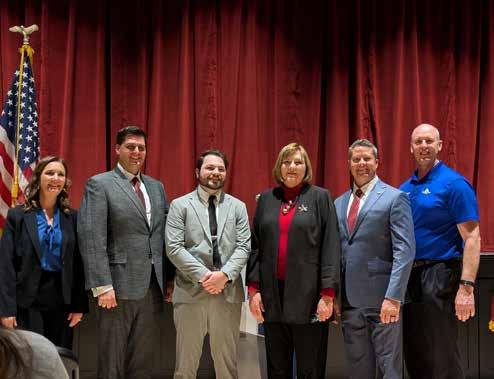
Tish Buroker was sworn in as Riverton’s new mayor on Tuesday, Jan. 6. Alexander Johnson (District 3) and Shannon Smith (District 4), also took the Oath of Office to join Riverton’s City Council as the newest councilmembers.
Buroker requested the ceremony be held at the Sandra N. Lloyd Community Center, paying tribute to the history of the building and honoring Riverton’s first female mayor.
“It’s called the Sandra Lloyd building because she was the mayor who helped it remain instead of being destroyed when the school moved to a different location,” Buroker said. “I remember as a child in sixth grade, sitting up there in those chairs, because those were the best chairs in the auditorium…Who would imagine that an ordinary person like me would have the opportunity to now stand before you as mayor? It’s extraordinary, and I recognize it and appreciate that opportunity.”
Buroker served two terms as a council member before winning the mayoral seat in November with more than 70% of the vote. She thanked the city staff for the professionalism and efficiency she witnessed during her time on the council and expressed her eagerness to continue serving with them during her tenure as mayor.
“I’m so excited to be working with them and my message for them is we are going to work hard, we are going to be honest with each other, we are going to accomplish great things and we are going to have a lot of fun doing it,” she said.
Buroker thanked the people who sup-
ported her during the campaign, including her uncle Hank Eberle, who served as a mayor in Ridley Park, Pennsylvania for more than 20 years.
“He would call me up and he would give me encouragement and give me feedback,” Buroker said. “There are four things he taught me. One, don’t use inflammatory words. Two, stick to the facts. Three, set goals. And four, stay positive. I really tried to run my campaign that way. I’m trying to run my life that way, and he made that difference in my life.”
Representing District 3, Johnson is a seventh-generation resident of Riverton who served on the city’s Historic Preservation and the Parks, Recreation and Trails committees. He and his wife, Sara, recently welcomed an eighth-generation of Riverton residents with the birth of their daughter, Opal Alexandria.
When his neighborhood was heavily affected by the Bangerter construction at 13600 South, he wrote a letter to the city council, asking for help to relieve the onslaught of traffic in their area. Johnson found that representing his neighborhood in that capacity was engaging and fun, so he decided to throw his hat into the city council race.
“The biggest priority for me is transportation. We have some really big issues,” Johnson said. “I want to help people with roads and streetlights. I’m looking forward to being that voice to get the little things done, because after a while, those little things become a lot.”
For Smith, who represents District 4, growing up in Iran during the revolution influenced her interest in local politics. When her family finally left Iran, Smith
was 10 years old. Although she loved Persian culture, she was grateful to be safely back on American soil.
When she studied political science at Utah State University, her professor told her that local laws and city policies influence a person’s life the most. That message stuck with her. Smith served as PTA President and Legislative Representative for Riverton schools and worked in economic development for the State of Utah. She plans to reach out to constituents and learn more about their concerns.
“My priority is to continue to do what I did when I was knocking doors and to listen to everyone,” Smith said. “Because people trust me, they feel like I have integrity. I’ll be honest. So my biggest priority is to make sure I continue to have that integrity, honesty and character that they trust.”
Riverton City Council meetings are held at 7 p.m. on the first and third Tuesday of every month at City Hall (12830 S. Redwood Rd.) The public is invited and encouraged to attend. l




Trent Staggs and Tawnee McCay wrapped their final council meeting with special recognitions from the city.
By Travis Barton travis.b@thecityjournals.com
As 2026 welcomed two new council members and saw a new mayor, the passage of the new year also bid farewell to two departing elected officials: Trent Staggs and Tawnee McCay.
Staggs, having served two terms as mayor and one term as council member, chose not to rerun, opting to accept a position as advocate for the U.S. Small Business Administration for Region 8. McCay’s term as council member was up. She ran for mayor in November 2025, falling to Tish Buroker. She served two terms on the city council.
The final council meeting of 2025 saw the city recognize both for their contributions to Riverton.
In a written commemoration, City Manager Kevin Hicks offered gratitude to both for their principles and values. For McCay, Hicks said she represented District 3 with “integrity, thoughtfulness and a firm commitment to the principles that strengthen local communities.”
She served on multiple key boards including for the Salt Lake County Tourism, Recreation, Culture and Convention, the Utah League of Cities and Towns and the South Valley Business Chamber.
Her focus was on keeping city government on its core missions while also
allowing residents the freedom to govern their own lives, Hicks said.
“She consistently emphasized that effective local government is not measured by how much it controls but by how well it serves,” he said.
Speaking from the dais, McCay gave a long list of her favorite things with the city that included the veterans program; the Town Days rodeo, parade and fireworks; giving tours of city hall to kids; attending 44 ribbon cuttings and groundbreakings; 9/11 days of service; serving food at the senior center; serving on those boards; working with the youth council and Riverton High’s Hope Walk and Silver Rush; recognizing teachers, students and volunteers during council meetings; the Riverton police and fire departments; and getting to know the residents.
“We have great people here in Riverton,” she said, adding her appreciation for city staff.
“You’ve done a remarkable job,” Staggs said of McCay. “You’ve served your community with distinction and I appreciate it.”
For Staggs, Hicks said his service coincided with some of the “most consequential periods in the city’s history.”
Hicks highlighted the city’s evolution from rural farming community into a “regional center of enterprise and opportunity in the southwest Salt Lake valley. That transformation did not happen by chance, it was guided by a mayor who believed that numbers tell the truth, that disciplined planning matters and that good governance must be both principled and precise.”

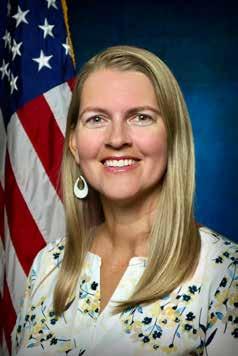
Driven by Mountain View Village and Costco, tax revenue grew from $5 to $13 million during Staggs’ tenure, Hicks said. That revenue was also reinforced by eliminating the business license fee. He also highlighted the creation of the Riverton police department and the ability to direct outside funds towards water systems and roads while keeping utility rates low.
The city’s resident committees were also created during his time that Hicks said helped foster a “culture of volunteerism and shared ownership.”
Both departing members showed emotion as they reflected on their time in the council chambers.
Staggs described his final council meeting as bittersweet and repeatedly described his time as an elected official as “remarkable.”
“One of the most rewarding things I think I’ve ever done is serve in public office,” he said. “I knew it wasn’t going to last forever.”
“Thank you so much,” McCay said. “It’s been the honor of a lifetime.” l
The Riverton Journal is a monthly publication distributed directly to residents via the USPS as well as locations throughout Riverton. For information about distribution please email hello@thecityjournals.com or call our offices. Rack locations are also available on our website. The views and opinions expressed in display advertisements do not necessarily reflect or represent the views and opinions held by Loyal Perch Media or the City Journals. This publication may not be reproduced in whole or in part without the express written consent of the owner. © 2019 Loyal Perch Media, Inc.
Bryan Scott | bryan.s@thecityjournals.com
Travis Barton | travis.b@thecityjournals.com ADVERTISING EXECUTIVES
Mieka Sawatzki | mieka.s@thecityjournals.com
Lindsay Andreasen | lindsay.a@thecityjournals.com
Ryan Casper | ryan.c@thecityjournals.com
Marc Davis | marc.d@thecityjournals.com


Riverton City hosts two dances in February: one for adults and a daddy-daughter date.
By Peri Kinder peri.k@thecityjournals.com
Dance the night away in Riverton, where the community comes alive with music and movement. From daddy-daughter dances to the adult Jitterbug Jive, there’s something for everyone to connect and create memories this month.
Just You & I: Daddy-Daughter Date Night. This daddy-daughter event has become a highly-anticipated tradition in Riverton, with its Valentine’s Day theme and special gifts for attendees.
Held at the Sandra N. Lloyd Community Center (12830 S. Redwood Road) on Friday, Feb. 6 from 6-8 p.m., the dance includes dinner, photo opportunities and special parting gifts for each daughter. Tickets are $40 per daddy-daughter couple ($20 for additional daughters) and registration is available at RivertonCity.gov.
Jitterbug Jive. Step into a memorable night of classic swing dancing at the Riverton City Jitterbug Jive for adults. Get swept away by the high-energy Charleston, the rhythms of swing and the spirited Lindy Hop.
The event will be held at the Sandra N. Lloyd Community Center on Saturday, Feb. 7, starting at 7 p.m. Tickets are $5 per person and can be purchased at RivertonCity.gov.
With music from the Riverton Jazz Band, the dance floor will come to life with vibrant tunes. Start the night with a free dance lesson, perfect for mastering the basics or polishing your moves before the fun begins. l

The creation of a resident subcommittee was also approved to provide feedback on the skate park’s future within the city.
By Travis Barton travis.b@thecityjournals.com
After the closure of Riverton’s skate park, the city council voted 3-2 to officially remove the skate park along 12300 South in front of the Old Dome building.
With the skate park under the microscope of much discussion throughout 2025, it seems appropriate the final council vote of the year would involve the public amenity.
Part of the resolution passed by the council includes the creation of a subcommittee of the mayor and three councilmembers to “facilitate discussion, draft proposed policies and make recommendations to the full council for consideration.” The committee will also feature the city manager, Riverton residents and youth representatives.
The resolution stated how staff explored options to repair it but recommended removal because “the current facility cannot be salvaged or preserved in a cost-effective manner.”
After looking at cost estimates, City Manager Kevin Hicks explained to the council they were looking to have city staff do the removal “to save taxpayer dollars.” He said having staff perform the job would be half the amount of a contractor.
Then-councilmember Tawnee McCay, a consistent proponent for keeping the skate park where it is, was against the removal. She said she didn’t like approving something without a set dollar amount attached to it. She also added the removal should have been left to the new-look council this year to decide.
McCay said she felt the skate park could still be fixed.
The tiebreaking vote fell to former mayor Trent Staggs. Councilmember Spencer Haymond was absent for the meeting and under Riverton’s form of government the mayor — not a regular voting member — then breaks the tie, similar to how Councilmember Andy Pierucci was selected when Sheldon Stewart stepped down.
Staggs noted they received “report after report” from city staff about issues with the facility and this was a chance to engage the input of the community for a new skate park. He highlighted the possibility of something new rather than updating the current version which was constructed in 2003.

“This is an opportunity to build something brand new with a clean slate and new council,” he said.
Staggs previously noted he didn’t think any funds should be spent to replace the skate park, but said his tune had changed.
“I can admit I was probably wrong
in that regard and in listening to so many people, there is an interest in rebuilding the facility,” he said.
With various avenues for funding, Hicks highlighted a possible $18,000 from the Salt Lake County budget, Staggs was hopeful other funding sources could be found to minimize the cost to the city. l

City officials and the high school’s Hope Squad combine to raise awareness for suicide prevention.
By Travis Barton travis.b@thecityjournals.com
never walk alone.
A commonly spoken exhortation is made manifest every year in Riverton.
Held annually on the Saturday following Riverton High School’s HOPE (Hold on. Persuade. Empower) Week, this year’s walk will take place at 9 a.m. on Feb. 28 starting at Riverton High School and ending at Spirit Corner at the intersection of Redwood Road and 12600 South.
Dozens participated in Riverton High School’s Hope Walk last year where students, faculty and members of the community joined to walk from the high school, east along 12600 South and ending at the River-
ton Spirit Corner (on the corner of Redwood Road). The Hope Walk is the culmination of Hope Week at Riverton, spearheaded by the school’s Hope Squad, a team of students and faculty who have been trained in recognizing signs of suicide in individuals and how to respond. The walk aims to bring awareness to suicide prevention and mental health.
“I feel like everyone has been affected or can relate someway to suicide prevention,” Dylan Elliott told the Riverton Journal in 2022. Elliott was that year’s Hope Squad president. “So, I thought this program was so cool because it not only focuses on the deep stuff, but also the happy stuff, the idea of hope. And we want to give hope to my peers.”
Riverton High partners with the city for the walk, usually featuring fire trucks and police vehicles accompanying the participants along the road. Last year doves were released on the steps of the high school before the walk began. l


Local high school dancers made history earning top medals while promoting inclusion and showcasing talent.
By Julie Slama j.slama@mycityjournals.com
In the first state high school unified dance competition, three area schools swept the event.
Copper Hills High School won the unified dance team competition, with Highland High and Murray High in second and third places, respectively. Several students from each of the schools placed in solo and duet categories.
Unified dance is a program that brings together students of all abilities together to promote inclusion, friendship and teamwork with an emphasis on movement and joy. The Special Olympics Utah competition was held in December at Highland High and featured a variety of dance styles and creative interpretations.
Students performed their routines on stage before receiving feedback from a panel of judges, including three who recently competed and won gold medals at the Special Olympics World Games. Much of the feedback was positive and encouraging with comments such as “keep smiling and showing you’re having fun,” “you owned that stage,” “great techniques” and “good energy and choreography.”
Many of the performances included costumes and props. Murray High dancers wore bright colors while Copper Hills performers sported matching shirts that said, “Inclusion is Cool.” Props included everything from watering cans to leis, adding creativity and personality to the routines. Some students choreographed and practiced dances independently or together as an afterschool club. At Copper Hills, teacher Anna Bay has instructed adaptive dance for three years.
“We have so many good kids who love to dance, so we wanted to give them more of a dance experience than what they could get in our mainstream classes,” she said. “With so many interested, we were able to open up a class just for the special ed kids. We have 20 special ed students in the class, plus 20 peer tutors. Then, we have aides who help.”
Bay said the benefits of unified dance go beyond learning choreography and dance technique.
“They’re learning social skills, how to be part of a team and about friendship. They’re listening and following directions, but we do it in a dance way, so it’s all by having fun. I teach them a lot of the same things I do in my ballroom classes from stretching to line dances. We’ve been working on learning choreography, which we were able to perform today,” she said. “They have so much fun and I love their genuine smiles.” l

The defending girls wrestling state champs, Mountain Ridge is once again primed for a strong finish.
By Josh McFadden
In Region 2 girls wrestling, the Mountain Ridge Sentinels have stood tall above the competition.
This season is shaping up to be another stellar campaign from the squad.
Mountain Ridge entered this season as
the two-time defending Region 2 champs, beating out some talented teams to win the crown. Even more importantly, the Sentinels captured the Class 6A state title a year ago, scoring 221 points to second-place Westlake’s 187 points. The Sentinels had skilled, experienced wrestlers across the board—and this season has been more of the same.
Head coach Brandon Birch said this season’s team is once again loaded with capable performers at every weight class. He loves the team camaraderie and family-like atmosphere in the program. Seniors and non-seniors alike

have been excellent examples of hard work and dedication. He also said his wrestlers are humble and eager to learn and improve.
“We have a lot of depth this year, as well as leadership, not only from our seniors, but with some of our underclassmen as well,” Birch said. “We also have a lot of drive this year to learn and grow. We have a very teachable team, and it’s showing so far on the mat.”
Birch said continuing to build team chemistry and improving technique are points of emphasis for the Sentinels. Birch and his assistants are working hard to develop younger, less experienced wrestlers.
There is no shortage of talented, experienced wrestlers on the Mountain Ridge squad.
Arguably the top performer is 145-pounder Olivia Merino, a senior. She won a state title a year ago and was runner-up as a sophomore. Merino was sixth at state as a young freshman. Back for her junior year after a successful sophomore campaign is 125-pounder Faith Bowen, who was second in 6A last season. Senior Naidelyn Lucio Coronado has been a big part of the program, and she has been a standout wrestler this season. She was third in the state tournament each of the past two seasons and should be a top contender in February’s state tournament.
Another senior, 105-pounder Brooklyn Eagar, could be one to watch at state this season. She was third overall last season after placing fifth as a sophomore. Two of her junior teammates, Amelia Jekins (135 pounds) and Bella Birch (235) have plenty of matches under their belts. Jenkins was third in 6A a season ago and was sixth at state as a freshman. Birch was a fourth-place finisher as a freshman in 2024. Meanwhile, sophomore 170-pounder Abbi Tasini has high hopes after taking fifth a year ago. An intriguing addition to this year’s team has been 140-pound wrestler Evalyn Lenahan, who moved to Herriman from Arizona last year.
A big reason why Mountain Ridge is so difficult to beat is the sheer numbers the team boasts. As if the main group of state contenders isn’t enough, the Sentinels have other wrestlers who can add to the team’s
point total. Sophomore Kayda Rowberrry (125), senior Kiara Tanaka (115), senior Sophia Gwynn (120), senior Jazmyn Simmons (155), sophomore Maya Strong (140) and senior Dylynn Wayman (140) all qualified for state in 2025 and, as Birch puts it, “are ready to make waves this year.”
Birch has preached preparation, hard work and positive attitudes as his squad goes up against stellar opponents.
“There are a lot of great teams and competition this year,” Birch said. “It’s going to be fun but challenging. Our biggest challenges will be to make sure we are physically and mentally ready as we take the mat against the great competition we have in the state.”
With all the success the Sentinels have had, Birch said the team objectives are simple: be the best.
“Our goal is to repeat as Region 2 champs, division champs and state champs,” he said.
Mountain Ridge is a favorite to claim the top prize in 6A when the state tournament is held Feb. 11 and 12. But competing for another title is no simple task. Birch said not only do the Sentinels need to be focused and committed, but they need to stay healthy during the stretch run of the regular season heading into the postseason. The demanding season, which includes daily practices, can take a toll on the body and mind.
“As always, we need to be diligent in practice and work hard, putting the effort in to achieve our goals,” Birch said. “Avoiding injuries and wrestling together as a team are critical as well.”
Birch also praised his staff, noting that the team’s success wouldn’t be possible without the support he gets from the assistant coaches— Zan Elder, Jon Eagar, Jim Birch, Paul Hulet, Ryan Lenahan, Logan Eagar and Miyo Strong—and the teaching they provide to the wrestlers.
“They are very talented coaches who do a great job with our team,” Birch said. “This team is a fun group with lots of personality. They combine that with grit and the desire to get better, and this is a fun group to coach.” l
When we talk about heart disease, the usual suspects often come to mind: crushing chest pain, shortness of breath, radiating arm discomfort. While these classic symptoms demand immediate attention, your heart often speaks in a more subtle language, a series of whispers and quiet shouts that can easily be dismissed or attributed to other, less serious issues.
During Heart Month this February, we want to empower you to become a skilled interpreter of your body’s unique signals, recognizing that early detection can be profoundly life-saving.
Many people are unaware that heart problems don’t always announce themselves with dramatic flair. “We frequently see patients who’ve ignored subtle signs for weeks or even months, often rationalizing them away,” explains Dr. Richard Gelb, a cardiologist at Holy Cross Hospital –Mountain Point. “Especially for women, symptoms can be incredibly nuanced and different from the textbook descriptions often associated with men.”
So, what are these often-overlooked indicators that your heart might be sending out an SOS?
Persistent, Unexplained Fatigue: This isn’t just being tired after a long day. If you
find yourself unusually exhausted after normal activities, or if a simple walk leaves you winded in a way it never did before, your heart might be working harder than it should to pump blood.
This can be a sign of various heart conditions, including heart failure or even blockages.
Discomfort Beyond the Chest: While chest pain is classic, heart-related discomfort can manifest in surprising places. This includes pain, pressure, or aching in your jaw, neck, back, or even your stomach.
“We’ve had cases where patients initially thought they had a bad toothache or indigestion, only to find it was their heart,” says Dr. Bruce Kenwood, a cardiologist at Holy Cross Hospital – Jordan Valley. “Pay particular attention if this discomfort appears during exertion and subsides with rest.

Swelling in Unusual Areas: Swollen feet, ankles, legs, or even your abdomen could be a sign of fluid retention, a common symptom of heart failure. If your heart isn’t pumping effectively, blood can back up in the veins, leading to fluid accumulation. Don’t dismiss persistent swelling, especially if it’s accompanied by weight gain.
Chronic Indigestion or Nausea: While often benign, persistent indigestion, heartburn, or nausea, particularly when coupled with exertion, can sometimes be a


heart attack symptom, especially in women. If antacids aren’t helping and the discomfort seems linked to physical activity, it’s worth investigating further.
Lightheadedness or Dizziness: Occasional lightheadedness can happen for many reasons, but if you frequently feel faint, dizzy, or lightheaded, it could indicate an arrhythmia (irregular heartbeat) or a problem with blood flow to your brain due to a compromised heart.
“By familiarizing yourself with these less obvious signs, you’re taking a proactive step in safeguarding your cardiovascular health. Your body is constantly communicating; the key is to learn its second language,” said Dr. Roja Mulamalla, a cardiologist at Holy Cross Hospital – Davis.
Call to Action: If any of these subtle symptoms resonate with you, or if you’re experiencing anything that just “doesn’t feel right” in your body, please don’t wait. Listen to your heart’s whispers. Schedule an appointment with your primary care physician to discuss your concerns, or if symptoms are sudden and severe, seek emergency medical care immediately. Early detection and intervention are crucial for positive heart health outcomes. Your heart speaks – are you listening?
For more information or to find a provider visit mountain.commonspirit.org


Learn more about the services, care providers and missiondriven work of the Holy Cross hospitals and CommonSpirit Health at www.holycrossutah.org.

At CommonSpirit Health, we make the healing presence of God known in our world by improving the health of the people we serve, especially those who are vulnerable, while we advance social justice for all.
When minutes count, count on our emergency care.
Get
to know us before you need us.
When you need emergency care fast, the closest emergency room is a smart thing to know. You never know the level of care you’ll need when an emergency happens and choosing the right ER can make all the difference. And a hospital ER comes with the confidence of additional services right on-site.
Congratulations to CommonSpirit Holy Cross Hospital – Jordan Valley for receiving the Leapfrog Hospital Safety Grade-A Accreditation for the fourth consecutive time. Leapfrog Hospital Safety Grades are determined based on a rigorous assessment of various safety measures.
Find emergency care close to you at mountain.commonspirit.org
Salt Lake Academy offered an optional session during its extended winter break: here’s how it went.
By Jet Burnham j.burnham@mycityjournals.com
School absence rates are high in December, with holiday traveling, out-of-state sports competitions and cold and flu season, causing teachers to avoid any new instruction they’ll end up having to reteach. Cue the holiday crafts, movies and class parties.
To address the problem, Salt Lake Academy tackled it head-on by extending winter break from Thanksgiving to New Year’s Day.
“We had tracked attendance for a couple years between Thanksgiving and the winter break, and that attendance was historically low, about 70% at the high school,” K-8 campus Principal Becky Hogan said.
John Hancock, principal at the high school campus, said the feedback from parents and students has been overwhelmingly positive.
“A parent commented their student had back-to-back soccer tournaments throughout December, and that the break provided them time and space to compete without playing catch-up for school,” he said.
An optional intersession was offered to students K-12 for three weeks in December and with fewer restrictions and an open-ended curriculum, teachers made it worthwhile for students.
The high school campus held classes focused on catching up and getting ahead academically such as ACT test prep,
credit recovery remediation and elective credits. Athletes also got extra hours of sports practice and conditioning. About 100 students took advantage of the classes, many more than administrators expected.
“The benefit I’ve heard from a student was that they are happy they don’t have to worry about a course they were going to have to remediate,” Hancock said.
The elementary school intersession provided classes for differentiated needs, whether it was needing to be retaught or to have more academic challenge.
“The art of the sell was, if you need remediation, we’re going to meet you where you’re at,” Hogan said. “So if you’re a second grader but you need first grade reading, we’re going to give you first grade reading for three weeks and really make some gains. Those kids got three weeks of intense instruction.”
Students performing above grade level joined classes with older students who are their intellectual peers. And multilingual students got three weeks of targeted language progress and completed testing that would normally take them out of class. Hogan said, academically, the intersession helped all students be better prepared for state testing scheduled at the end of January.
But after a morning of academic rigor, afternoons were dedicated to fun, interactive, interest-based, hands-on learning activities. Weeklong elective options included classes on watercoloring, card making, choir and mindfulness. In Fun with Cardboard, students created 3D art and engineered building projects. In another class, students researched animals, created a March Madness bracket and had class discussions about which animals would win each match-up.
“It’s such a fun way, and it’s so memorable for the kids to do this,” Hogan said. “They don’t even know that they’re

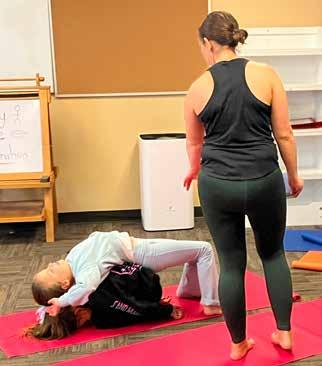
learning all these really cool facts about animals, and it was just a really clever way to do some fun stuff.” Hogan said it reminded her of her elementary school experience.





“Education had space for all these different hands-on projects when we were kids, and now it’s very data driven and high stakes testing driven, so these three weeks allowed us to step outside of that and still learn and make it really fun,” Hogan said.
Elective classes were chosen and taught by staff members and community volunteers. Teachers chose one week to teach and two weeks for a break. The schedule adjustment was worked into their contract by starting the academic year in early August. Part time aides and employees were given an option to work two weeks of the intersession to earn extra hours.
“Every teacher got a passion project, something that they really love but don’t always get to squeeze into a day,” Hogan said.
A behavior aid staff member taught the Fun with Cardboard class, and had an opportunity to interact with new students and strengthen relationships with those she already knew.
Special Education teacher Naena Bland, who is a pro football player slated for the flag football Olympic tryouts, taught an athletic movement class with her husband (who does it professionally). They had kids doing agility training, running speed ladders, pivoting and jumping like professional athletes.
“It’s really cool that she’s our SpEd teacher and she never gets an opportunity to do that, but she’s a pro level athlete, and so then she gets to do this passion project,” Hogan said.
Students signed up for one, two or three weeks of classes. Those who didn’t attend were given optional enrichment packets and encouraged to use online reading and math programs during their break. Faculty followed up with these families and students were incentivised to complete the work, but there was no consequence if families opted to take the free time for a family vacation, or to just simplify their December schedule.
Very few middle school students participated in intersession classes because it is a busy time for soccer players. Many traveled for tournaments and for youth soccer scouting and recruiting events.
SLA board member Darrell Robinson said the flexibility to implement this kind of scheduling experiment is one of the benefits of a charter school. He was impressed with how well it worked to meet the varying needs of families.
“There’s a win-win, because if you want the break, take the break, and if you want to bring them in, or if you want to take part of the break, you can bring them in — I mean, who can complain about this?” he said. l






Students get their hands on rare tools during project-based learning field trips.
By Jet Burnham j.burnham@mycityjournals.com
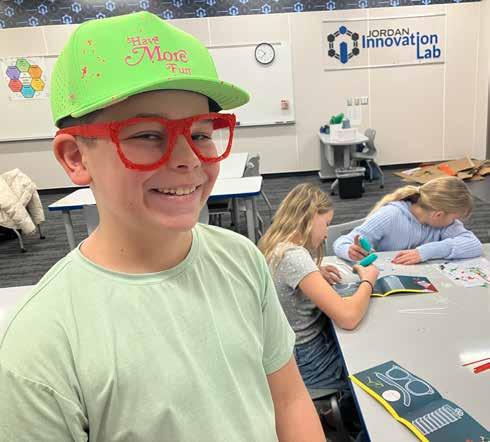
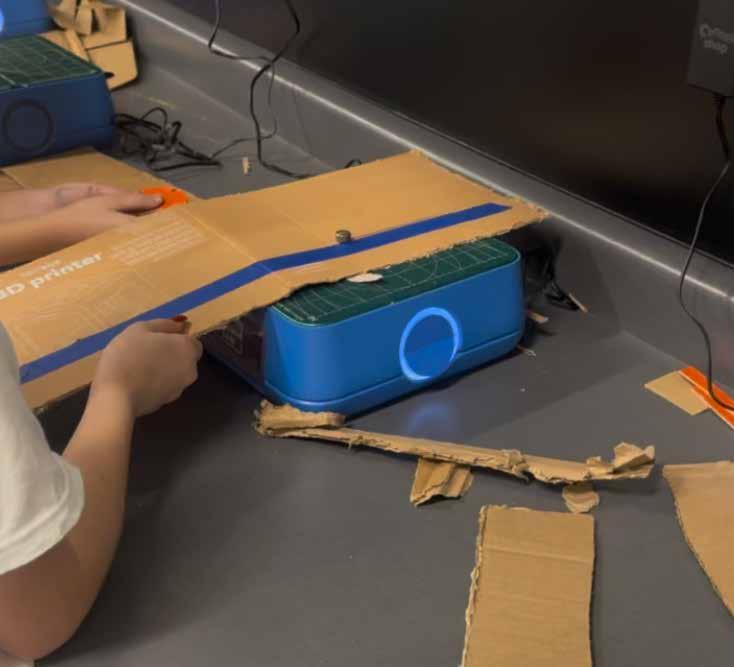
The Jordan Innovation Lab housed at Juniper Elementary in Herriman is full of 3D printers, cutting machines, digital cameras, 3D pens and piles of cardboard and craft supplies. It is currently available to Jordan School District’s fourth, fifth and sixth graders for one of three project-based field trips: 3D printing, stop motion animation or engineering.
“The skills they take away from here — just like the problem solving and creativity — are invaluable,” JSD digital specialist Traci Rindlisbach said. “Any kid who comes in here is going through the design principles of engineering.”
JSD digital specialists collaborate with teachers to plan curriculum-based learning activities that allow students to show what they’ve learned in a whole new way, using equipment they don’t usually have access to.
The lab has 14 3D printers, some basic and easy to use and some that can handle more advanced multicolor prints. Students love to create a design on the computer and then watch it get printed with plastic filament to become a solid object. Students often print objects related to something they are learn-
ing. One teacher had students design and 3D print something to include in a diorama of an ecosystem. Another class designed and printed models of Native American shelters they’d been learning about.
Stop motion filming is a popular field trip. Students have used the technique to create animations showing what they know about fractions, the Pioneer Trail and planetary orbits. Students use the lab’s craft supplies to create objects to manipulate as they take 300-400 still shots to create a four second video.
A row of ChompSaws and a pile of cardboard greeted a class on an engineering field trip. After a quick tutorial of how to use the equipment, students designed and built solar ovens. With creativity and trial and error, they figured out how to make hinges and interlocking pieces which were quickly and safely cut using the ChompSaws.
Lab supervisor Tori Hadley said both teachers and students are excited to use the lab.
“The kids want to learn and they want to do hands-on,” Hadley said.
Through a grant from the Jordan Education Foundation, fourth, fifth and sixth grade teachers can get a free bus for field trips to the lab. For teachers of other grades, the lab holds a weekly Teacher Tinker Time to allow all teachers to explore the lab’s equipment and brainstorm ideas for using lab resources.
“It’s just a way to get people here and trying things,” digital specialist Kel-
li Cannon said. “They’ll come in because they just want to see what this is all about. They can make something and then take it back to their class, because we know if the teachers get skills, then they can share it with their classroom, even if they can’t bring their kids here.”
Foothills Elementary teacher Amy Peterson attended a Tinker Time to explore the tools. She had already scheduled a field trip for her students to 3D print fish which they could use to identify the animal’s anatomy and adaptations. But then lab specialists showed her how students could make a time lapse video of the life cycle of a fish while they waited for the 3D prints to be done.
“I didn’t even know that was an option,” Peterson said. “So it was nice to be able to talk to them about the standard and find out we could do something that I have no capability and no technology to be able to do. I have no idea how to make that work, but they do, so I’m pretty excited about that.”
Her field trip to the lab is scheduled for March.
“It’s exciting to be able to have the kids try something new and find a new way to apply their learning outside of the classroom, but also using some technology that I think is going to really get them excited about it,” she said.
When there isn’t a field trip scheduled, Juniper Elementary students have access to the one-of-a-kind lab which was made possible by community partners Utah
Jazz, Utah Mammoth and America First Credit Union.
“It’s actually really fun because you get to learn how to use things that you’ve never tried before,” a student said.
Two students recently had an idea to create a maze for remote controlled Spheros and used the space and equipment in the lab to build it. The school also has a 3D printing club, in which students work together on projects such as creating centerpieces for a Jordan District banquet.
Employees cultivate a nonperfectionist atmosphere in the lab where mistakes are expected. They are quick to show students the drawer full of their failed prints.
“We fail all the time,” Rindlisbach said. “But we’re still here and it’s because we failed and we kept going and we learned from our failures. So we just show them that we mess up all the time. That is something I think kids don’t necessarily always have— the opportunity to mess up and try again.”
Cannon said students get excited about the potential of 3D-printing movie props, tablet cases or things they can sell, but others think bigger, like designing light-weight 3D-printed objects for a space station or printing prosthetic limbs. Lab employees talk with students about careers that use the skills they learn in the lab and encourage them--especially the girls, who are underrepresented in STEM fields-- to take advantage of the many CTE and STEM courses offered in middle and high school. l
The Mountain Ridge boys basketball team went 11-5 through its first 16 games. The team has high hopes for a postseason run.
By Josh McFadden
One thing’s for sure about the Mountain Ridge boys basketball team: the Sentinels will be battle-tested by season’s end.
The Sentinels faced some strong foes this past November and December in non-region play, where they built an 8-2 record. Mountain Ridge’s only three non-region defeats were at Crimson Cliffs on Nov. 22, at Viewmont on Dec. 9 by the count of 66-56 and at Farmington on Dec. 19, 76-68. Five of the team’s eight wins during this stage were by double digits.
Finding the basket wasn’t difficult for the most part during the early going. Head coach Andre Ashton said his team can shoot well, and he expects that to continue now that region play is in full swing.
“I think one thing this team does really well is shoot the basketball,” Ashton said. “It’s definitely one of the strengths and something we need to continue doing moving forward in the season.”
Through 16 games, Mountain Ridge was 11-5 overall. At this point, four Sentinel players were averaging in double figures in points, with one more player—senior guard Carter Price—at 9.8 points per game. The leader in this category is junior guard Dylan Hatton, with an average of 14.8 points a contest. Senior guard Isaac Langston scores 11.9 points each game, while sophomore guard Jordan Horsely and junior forward Spencer Dow are at 11.3 points and 11.1 points a contest, respectively. Horsley hit 40 three-pointers in the first 16 games to pace the Sentinels. Dow’s 7.6 rebounds a game led the team. Hatton dishes out 4.9 assists a game, topping the squad.
The offense has been productive, but Ashton is looking for more efficient, effective defense and rebounding. He is using practice time to work on these aspects. Ashton knows that defeating the top teams in Region 2 and being successful in the upcoming state tournament will only happen if Mountain Ridge can improve in these areas.
“We’re hoping to continue to improve on defending and rebounding,” he said. “At the end of the day, that’s really what matters most, especially once you get into region and play. Our success for this year will depend on how well we can defend and rebound against teams.”
The long boys basketball season heats up once region play begins. As of Jan. 19, the Sentinels were 3-2 in league action. Region 2 isn’t for the faint of heat. The region includes Westlake, which, at our press deadline, was a perfect 16-0. The Sentinels
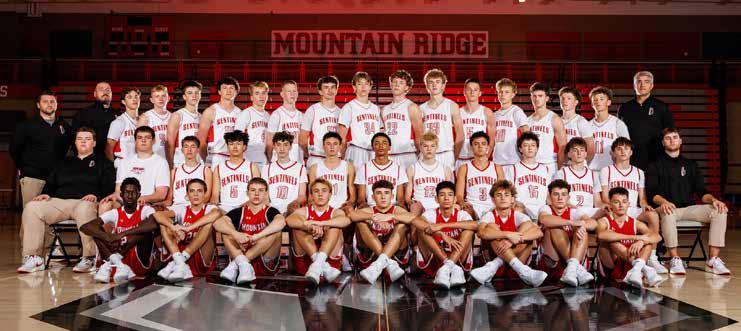
put up a valiant fight at Westlake falling 80-65 when the teams first met on Jan. 16.
Mountain Ridge defeated Bingham, 75-65 on Dec. 30 to open region play and also took down Herriman (70-57 on Jan. 6) and Copper Hills (87-75 on Jan. 9). The Sentinels also fell at home to Riverton on Jan. 2 by the count of 59-57.
What matters most, Ashton said, is that the Sentinels are at their best once the postseason begins.
“Our goals for this season is just to continue to grow and become better basketball players and teammates,” he said. “We want to be playing our best basketball heading into early January and hopefully late February.”
Mountain Ridge doesn’t rely on just one player or even a few members of the team. Ashton said for the team to achieve its goals, every player in the program needs to do his part and fill an important role.
“For us to be successful, we need to just have everyone contributing and doing what they need to do to get the job done,” he said.
The Sentinels have used an eight-man rotation, so several players contribute every game. Ashton said Mountain Ridge enjoys a good mix of seniors and underclassmen who are equally valuable to the team’s success. He said Langston, Horsley, Price and senior Keaton Richardson “have all had huge impacts on our game so far this season.”
Ashton loves what Hatton and Dow have brought to the team this season.
“[Dow] is our anchor down there in the middle and is a heck of a defender and rebounder, and an offensive threat,” Ashton said. “Dylan so far has been our leading scorer and general on the floor.”
Sophomores Jordan Horsley and Boston Gertsch and making their presence known. Jordan Horsley started last season,
while Gertsch is becoming more and more of a key player for Mountain Ridge.
As a first-year coach, Ashton has had some ups and downs at Mountain Ridge. But he said he loves the players and appreciates how everyone in the program treats one another and enjoys being a Sentinel.
“It’s been really fun coaching this
group,” Ashton said. “It’s my first year, so it’s brought challenges, but it’s also brought us together in a way. There were moments when the kids were just as happy for the coaching staff as they were for themselves. It’s just been a really fun group who seems to like each other—all the way from the coaching staff to the players.” l



















Outpatient Trauma-Focused Mental Health Therapy and Intensive Treatment Programs








• Trauma and stress-related disorders, including PTSD, CPTSD, anxiety, panic, and depression


• Trauma recovery for veterans, active-duty service members, first responders, and high-stress professions



• Chronic pain, somatic symptom disorders, and nervous system dysregulation





• Ketamine-Assisted Psychotherapy (KAP)
• Disordered eating and intuitive eating support

Individualized, Goal-Directed Mental Health Care Veteran-Owned | 20+ Years Providing



Heart care is more than numbers on a screen.
At Intermountain Health, heart care starts with getting to know what’s important to you and building a care plan together. From preventive screenings and lifestyle recommendations, to treating the most complex conditions with advanced technologies, our experts are with you through all of it. In other words, we’ve got your back — and your heart.

Learn more or schedule with a primary care provider

Students earned two to six times more money than last year with Riverton’s Silver Rush leading the charge raising over $250K.
By Jet Burnham j.burnham@mycityjournals.com
In the first three weeks of December, students at Jordan School District high schools collected a combined total of $1,096,873 for charity. That number is almost double last year’s $645,935 total.
West Jordan High School’s 2025 charity drive, MAD Jags, collected $184,573, six times more than the $30,849 they collected last year, breaking their record for the most money ever raised.
SBO Service Officer Camryn Ridley credits the dedication of WJHS student body officers and students who gave up most afternoons and evenings in December for MAD Jags events.
“Helping others is something that comes natural to our students, and through the student’s efforts this MAD Jag (making a difference) season, we will be able to continue to help others throughout the year,” Ridley said.
There were several successful fundraising events but donations from local business owners contributed the most to the final record-breaking total. For the first time, students developed an investor pitch to request donations from local businesses.
“The opportunity for our Student Government Officers to reflect on their classmates and use that knowledge to brainstorm a list of needs and develop a pitch deck was a critical deep dive into serving our community,” WJHS Assistant Principal Kami Taylor said. “The outcome blew us all away. We raised more funds than ever before and the students were able to see how they directly impacted their community.”
Taylor said besides the financial aspect, the successful outcomes of the charity season
included students thinking about others and discovering how they can positively impact others and getting to know people outside their usual social groups.
“[Student Government Officers] and their families were full of emotions: pride for their hard work, joy for the people served and increased self esteem from the success of hard work,” Taylor said.
The fundraising total was announced at a school assembly just before the winter break.
“The students and staff who helped raise that money were beyond excited,” Ridley said. “Tears were shed, smiles were on everyone’s faces and overall it was just a really cool experience to be a part of.”
Some of the money raised went to Indy’s Ohana. One of the families who will receive a family trip to Hawaii because of the funds raised attended the assembly.
“It was very heartwarming to see their happiness, knowing that they are going through such a difficult time in their lives, and knowing that we had played a part in helping bring that joy into their lives,” Ridley said.
The money also went to help more than 50 families in need within the West Jordan community.
Copper Hills High School’s PAWS for a Cause charity fundraiser collected $227,796.26 this year. By comparison, last year’s total was $71,515.25. That money will be used to help community members in need.
Riverton, after raising $173,487.25 during the 2024 Silver Rush, eclipsed that mark and then some, reaching $257,300.26. All proceeds went to the We Give Hope Foundation and Jordan School District’s mental health access program.
Posted on the Copper Hills school website was a note of appreciation.
“We would like to thank the community for their incredible generosity in supporting our Copper Hills charity drive PAWS for a Cause. It was a record breaking year with $227,796.26 being raised to help those in our community.” l
‘Good
Outlook for state, region remains strong.
By Brice Wallace Salt Lake Business Journal
Economicoutlook season is underway, and Robert Spendlove has thrown out the first pitch.
At a recent outlook briefing in Salt Lake City, Zions Bank’s senior economist listed several challenges in the national economy: uncertainty and risk caused by tariffs and the recent government shutdown, low consumer sentiment, slowing labor market growth, and the threat that increased tariffs could reaccelerate inflation.
“But with all that, the Intermountain Region remains really strong,” he assured the crowd. “Our economic fundamentals are strong. Our population and demographics are strong. So, it is a good time. Even though we’ve got that risk and that uncertainty, it’s a good time to be in Utah.”
Businesspeople are generally “grumpy” about tariffs because of the uncertainty they create. The average effective tariff rate was 3% a year ago but now it’s at 17%. However, they have yet to cause expected inflation. Most businesspeople can adjust to tariff impacts, but only if they know at what rates they will be, he said.
“It’s been going up and down and sideways. … We just see them going up and down, almost willy-nilly, for the past year,” Spendlove said. “And if you’re a businessperson, your response might just be ‘I’m just going to pull back,’ and I’ve heard that from a lot of businesspeople.”
But Utah’s economic fundamentals remain strong:
• Utah’s population growth is nearly 2%, compared to 1% nationally.
• Utah’s employment growth is 1.7%, above the national figure of 1%.
• Utah’s unemployment rate, like the nation’s, has been trending up, but Utah’s — at about 3.5% the past year — “actually has kind of stalled out,” he said. “I mean, it’s good, right? We want the unemployment rate to stall out. We don’t want it to continue to move up.”
Spendlove expects the rate to “kind of stick around there” at about 3.5% and keep Utah in “that sweet spot.” “We’re not the lowest in the country, like in the Upper Midwest, but we’re also not the highest, like in California and Nevada and Washington, D.C.,” he said.
• Utah’s new unemployment insurance claims are about 2,000. “We would have to cross 4,000 for me to get nervous about those weekly unemployment insurance claims. … We’re about half of that now, and it’s something that we’ll
be watching, but I don’t see any signs of distress right now.”
For contrast, during the COVID pandemic, the figure grew from 2,000 to over 20,000 in one week.
• After seeing a huge surge in housing prices from 2020 to 2022, the growth now is between 1% and 2% — “actually what I would argue is a really good level,” he said. “You don’t want to see a big contraction. You also don’t want to see a big escalation in those home prices again.”
• Utah’s wage growth is higher than the national average.
• Median household income in Utah is “great,” at more than $100,000, thanks to demographics and the state’s strong economy.
Meanwhile, Moody’s indicates that Utah is not among states facing a recession risk. “Utah is doing well,” Spendlove said. “We’re still expanding, Idaho is still expanding, Arizona is still expanding. But we are surrounded by weakness. We are surrounded by states that are already struggling, are already treading water or are already in recession.”
Nathan Callister, the new president and CEO of Zions Bank, said annual economic outlooks usually feature an assessment that the new year will be “the most unique year.”
“And I’m not saying this is the most unique year, but it is an incredibly unique market environment that we’re in,” he said.
“I think there’s a lot of stuff above the surface that we see. I think there’s a lot below the surface as well that are creating challenges and will continue to create challenges. And we are navigating, I think, the convergence of so many moving parts.”


Trouble areas include geopolitics, tariffs, the AI boom, asset prices in the stock market, the proliferation of the private markets (including private credit), consumer sentiment, the “K”-shaped economy, a convergence of wealth, affordability, deficits and the national debt, among others, he said.
“Despite all of this, our economy has been incredibly resilient, and Utah has been incredibly resilient, but I think we’re feeling, even here, some of those challenges,” Callister said.
Calling for Utahns to become more agile and more connected than ever before, Callister said geopolitics heads his overall list of worries.
“I feel like we’re seeing a tectonic shift in the world order, from turf battles to trade wars, to the Monroe Doctrine that’s going on now, to all these changes going on to our supply chain,” he said. “I think we’ll continue to see some major implications to what’s going on in this changing world order that’s way different from what we’ve experienced since World War II.” l



By Lizzie Walje l.walje@mycityjournals.com
Recently, Granite School District contemplated closing down two of its elementary schools, eventually deciding not to move forward at this time after facing widespread community opposition. Similarly, Utah County’s Alpine School District considered closures of its own, ultimately opting to permanently close Cedar Valley Elementary School following their school board’s vote.
The aforementioned are just two recent examples of a statewide problem: declining enrollment. Utah is undergoing its most significant reduction in K-12 public school enrollment numbers in the past 25 years. As of fall 2025, Utah has 11,478 fewer students than the previous academic year.
Granite, one of Utah’s largest school districts, has had a particularly difficult past decade. In the past seven years, they’ve voted to close down 10 schools. If they had decided to move forward with their recent votes regarding Eastwood Elementary School and Morningside Elementary School, those institutions could have potentially marked the 11th and 12th closures in less than a decade.
Despite currently suspending the Eastwood and Morningside votes, Granite District officials and board members continue to warn parents and students that more closures are not just possible, but highly probable.
“We cannot lose sight of the reality of the situation that we are in,” said Clarke Nelson, a Granite School District board member. “We have to direct the process to get to the greatest common good. And that has a reality to it that will be painful, at some point, for certain schools, for certain neighborhoods, that I don’t see going away in the near future.”
Granite District leaders have parroted Nelson’s sentiments, predicting that enrollment will drop an additional 10% in the next two years. Superintendent Ben Horsley has only been in his current position for a little over a year, yet he has already had to discuss these closures on multiple occasions. In response to criticism, Horsley has said that many of the factors leading to declining enrollment and closures are “outside our ability to control.”
What exactly are the circumstances leading to declining enrollment, and what are the broader implications for the state writ large?
As of 2025, every school district in the state of Utah has faced declining enrollment rates to some extent, except for two outliers, Beaver and Tooele. While Granite’s rapid decline has been particularly notable, so too have


Salt Lake and Washington school districts. At face value, one might wonder why Utah is undergoing such a crisis considering that, in recent years, the state has consistently been ranked as one of the fastest growing in the nation. St. George, in particular, which falls under the Washington School District, is regularly cited as Utah’s most rapidly growing city, even going so far as to have previously garnered national attention for its noteworthy growth. Furthermore, Utah has the youngest median population in the nation. According to a Census.gov report, Utah’s median age is 32.4.
Even Aaron Brough, director of data and statistics at the Utah Board of Education has sounded off about the conundrum. “We seem to be exiting from the constant growth or the constant struggle to deal with the pressures of growth to … this decline that we’re seeing here,” he said.
While some districts, like Granite, have been dealing with declining rates for several years, many other districts are citing the Covid-19 pandemic as a major turning point. In the early days of the pandemic, many schools and districts struggled to implement rules and guidelines that had universal appeal. This led to a subset of parents developing a lack of trust, subsequently pulling their children from their schools and districts at large. However, instead of transferring these students to other public schools or districts within the same county, many parents opted for alternatives like charter schools, private schools and homeschooling.
Incidentally, charter schools, which are technically still public run institutions, but they operate independently of an established district, are mostly trending in the opposite direction. Their growth is far more reliable, expanding by 3.6% in the past year. As of 2025, they represent 13% of the state’s public-school population. However, even charters aren’t completely immune, as 44 of the 113 registered Utah charter schools also saw declines in enrollment.
Additionally, while Utah has retained its status as a state with a rapidly growing population, one aspect of that growth has dropped



off substantially—children. Not only is the birth rate declining nationwide, but in Utah, the cultural trend that previously favored large families, is no longer nearly as prevalent. Economic pressures and exorbitant housing costs are also making it increasingly more difficult for young people to support large families.
While it may be true that Utah’s housing market saw significant periods of growth in the past decade, much of that development favored new apartment buildings and condominiums. Historically speaking, these types of properties typically don’t attract families with school-age children, a fact that continues to be true.
It also doesn’t help that declining enrollment equals reduced funding from the state. In many cases, that loss in revenue can easily creep into the millions. These cuts can be fatal for certain institutions, considering that operating costs remain the same whether or not funding is decreased.
“It’s not the district’s responsibility to ensure families are growing at a rate to sustain schools,” Horsley added. “We’re here to sustain our families.”
No question, these declining rates will continue to pose problems for Utah’s school districts. However, if there is a silver lining to be found, Utah State Superintendent of Public Instruction Molly Hart says that enrollment numbers are up for students from demographics that are historically underserved, such as those with disabilities and first-time English learners. She believes this will translate into an opportunity for public schools to serve populations of students who are most in need, as students from these demographics often unintentionally slip through the cracks.
Additionally, the presence of students of color continues to steadily increase, and as of fall 2025, they account for 31.2% of the K-12 public school population, an increase from last year’s 30.6%.
Hart nevertheless maintains that she remains dedicated to serving all students throughout Utah. “Our focus remains,” she said, “on ensuring that every child, in every community, continues to receive a high-quality education, regardless of statewide fluctuations.” l



As part of a nationwide and global observance, the Salt Lake County Sheriff’s Office proudly welcomed a special flag during its stop in Utah as part of Flag Sojourn 250.
As part of a nationwide and global observance, the Salt Lake County Sheriff’s Office welcomed a special flag Jan. 7 during its stop in Utah as part of Flag Sojourn 250—a historic journey designed to unite Americans while honoring the nation’s past, present and future.
The Flag Sojourn 250 initiative, commemorating the country’s upcoming 250th anniversary, is carrying this American flag to every U.S. state and territory, as well as all 26 overseas U.S. military cemeteries. The journey is meant to pay tribute to those who served and sacrificed for the nation while celebrating the principles of liberty, resilience and unity that define America.
“This shared journey honors our history, remembers our heroes, and looks ahead with hope,” said Salt Lake County Sheriff Rosie Rivera. “The Stars and Stripes represent far more than a symbol—they embody the sacrifices made in defense of freedom and the ideals that bind us together as one nation.”


The ceremony featured the presentation and raising of the flag by the Salt Lake County Sheriff’s Office Honor Guard, followed by a moment of silence and ceremonial music. Attendees also joined together
in reciting the Pledge of Allegiance.
The event concluded with the Honor Guard lowering and refolding the flag, marking the end of a meaningful stop on its journey. The flag next traveled to Colorado.
Flag Sojourn 250 is a national unity initiative led by the National Flag Foundation (NFF) in partnership with America250’s America Waves program, an epic tribute campaign honoring the American flag. l

Leaders gather to discuss the overregulation of their businesses during a forum sponsored by the Intermountain Business Alliance.
By Tom Haraldsen t.haraldsen@mycityjournals.com
Aside from the need for financial support and strength, there may be no larger challenge for businesses than government rules and regulations. That was the message shared by and with participants in the Utah Regulatory Reform Listen and Learn Forum held on Dec. 17 at the Salt Mine Productive Workspace in Sandy.
The forum was the third in a series of such meetings planned by the Intermountain Business Alliance, designed to bring Utah business leaders together to discuss real-world barriers and develop practical reforms to strengthen Utah’s economic competitiveness.
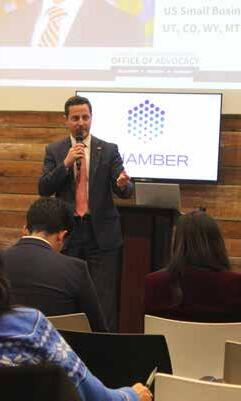
“The most terrifying words in the English language are ‘I’m from the government and I’m here to help you,’” said Trent Staggs, outgoing mayor of Riverton and now the U.S. Small Business Administration advocate for Region 8. “The cost of regulation in this country is staggering. The National As-
sociation of Manufacturing says it believes regulation alone is costing businesses $3 trillion a year. That’s almost 15% of our GNP.”
One example he pointed to is Form 941, the quarterly reports businesses are required to file with the IRS. Shifting that to an annual report, he said, could result in a $90 billion savings for businesses.
As mayor, and now in his role with the SBA, Staggs is advocating for less regulation and more common sense when it comes to the rules of the road in business. A strong advocate for President Trump, he praised Trump’s Executive Order 14192, which says that for any new regulation an agency wants to implement, it has to eliminate 10 others already on the books. He stated that another executive order from Trump charges all agency heads to look at current rules and identify those they feel might be unconstitutional.
“Just this summer, the National Small Business Association asked all businesses across the country what the most painful resource of regulations was, and they stated the federal government by far,” Staggs said. “Rules that come from these federal agencies are by people not elected to their offices. Congress to a large degree, I believe, has abdicated much of its responsibility by delegating the rulemaking authority to these unelected bureaucrats. The net result of this overregulation is it keeps you from making

profits and hiring people. Deregulation will help the economy.”
Speakers at breakout sessions during the forum covered a wide range of areas where regulations have large impacts. Those include agriculture and agri-business, construction and infrastructure, tourism and hospitality, manufacturing and mining, technology, banking and finance, and health care and insurance.
Corinna Harris, president of the Intermountain Business Alliance, said its goal is to “ensure businesses stay in business, by driving meaningful regulatory reform and removing barriers to growth at every level of government.”
“We are holding two more forums in the next week, on Jan. 9 in Eagle Mountain and on Jan. 12 in Nephi,” she said. “We’re also publishing a newsletter with comments and suggestions shared at these forums.”
She wants to see a united effort by local business owners and government leaders to make meaningful changes in regulatory practices.
Staggs told attendees the list of most wanted issues concerning business owners can be found on the SBA website at advocacy.sba.gov. Harris said more information about the alliance, or suggestions for changes, can be sent to her at charris@intermountainbusinessalliance.com. l


Funeral arrangements are a deeply personal choice. Preplanning provides you with the time needed to make practical, detailed decisions that reflect your standards, lifestyle, taste and budget. And we assure you and your family that the choices you make will be carried out as planned.
By Shaun Delliskave s.delliskave@mycityjournals.com
Anew peer-led support group aimed at first responders across Salt Lake County will begin meeting in Murray later this month, offering a confidential, non-clinical space for participants to talk with others who understand the unique pressures of the job.
The group, called The Watch, was founded by Murray City Police Officer Benjamin Gregoire, who said the idea grew out of both personal experience and conversations with colleagues across agencies.
A critical incident he experienced in the line of duty last year, Gregoire said, became a turning point and underscored for him how limited accessible, peer-based wellness resources are for first responders in Salt Lake County.
Gregoire said that beyond formal peer support teams, there are few places where first responders can speak openly with others who share similar experiences. He also observed that first responder culture often operates in silos.
“Police tend to stay with police, fire with fire, dispatch with dispatch—even though we often carry very similar stressors and trauma,” he said. “The Watch grew out of a desire to create a shared space that breaks down those barriers.”
Unlike traditional mental health programs, The Watch is intentionally peer-led and non-clinical. Gregoire emphasized that the group is not designed to replace professional care.
“There are no clinicians, no diagnoses, no notes, and no treatment plans,” he said. “It’s a space grounded in shared lived experience. While professional mental health care is critically important—and encouraged—The Watch is designed to complement those resources, not replace them.”
Sessions are structured to be low-pressure and accessible. Meetings will last one hour and are drop-in, meaning participants can attend as their schedules allow. At the start of each session, guidelines are reviewed to establish expectations and safety. From there, discussion is participant-led.
“If there’s a lull, a simple prompt—such as ‘What brought you here today?’—may be offered,” Gregoire said. “But there is never any pressure to speak. First-time attendees can expect a low-pressure environment where listening is just as welcome as sharing.”
Confidentiality is a central principle of the group. Gregoire said participants verbally agree to keep what is shared within the group confidential and that rank does not factor into the space.
“Rank does not exist within the space— everyone is equal,” he said. “If administrators attend, they are held to the same standards as everyone else.” He added that the confidentiality protections outlined in Utah’s peer support statute apply and are communicated at each meeting.
Murray City has played a supporting role by approving the group, providing meeting space, administrative assistance, and help with outreach and marketing. Gregoire stressed, however, that The Watch remains independent.
“It is not a Murray City Police Department program, nor does it report back to any department,” he said. “Murray is hosting and endorsing the effort, but the group itself remains peer-driven and separate from departmental operations.”
Gregoire hopes the group will help address lingering stigma around seeking help, particularly for those who may feel overlooked.
“Dispatch and corrections professionals, in particular, are often overlooked in wellness conversations despite facing significant cumulative stress,” he said. “The Watch aims to create a starting point—normalizing peer support and making it easier for people to show up without fear or judgment.”
The first meeting is scheduled for Jan. 14, and while no sessions have yet been held, Gregoire said early interest has been strong. “We’ve already received strong informal inter-


est from a wide range of agencies and disciplines,” he said.
Looking ahead, Gregoire said success would mean broader cultural change. “Success, to me, would look like peer support becoming more normalized within first responder culture and administrations taking wellness

more seriously as a core responsibility—not an afterthought,” he said. He added that he hopes similar groups will eventually form in other counties, noting that “Davis County Sheriff’s Office is beginning something along those lines, which suggests this is a need being felt beyond just Murray or Salt Lake County.” l



Thousands of Utahns deal with Seasonal Affective Disorder.
By Peri Kinder peri.k@thecityjournals.com
F
or many people in Utah, the “winter blues” show up as exhaustion, a lack of motivation and low energy. While the dark nights and cold days can make anyone irritable, if symptoms of weariness or sadness last more than two weeks, it could be a sign of Seasonal Affective Disorder.
While the national SAD rate is around 5%, it’s estimated that 10% of Utahns experience SAD each year. Environmental factors like the annual inversion, limited sunlight and disrupted circadian rhythms contribute to an overall emotional slump.
Dr. Jason Hunziker, Division Chief of Adult Psychiatry at the University of Utah, said SAD is a type of depression affected by low light exposure that can heavily impact the way people function. It can show up as low motivation, a higher intake of carbohydrates, excessive sleeping or just feeling off.
“People get up in the morning and it’s dark; they come home from work and it’s dark, and it affects them,” Hunziker said. “It begins to interfere. You’re getting to work late, you’re not keeping up at work and you’re not getting to school. Your relationships are starting to become fragile, and there are more arguments or isolation. You start to feel hopeless.”
While brief periods of sadness are common, SAD symptoms lasting two weeks or more should be considered serious, and it might be time to talk with a professional, especially if the depression includes thoughts of self-harm or suicidal ideation.
Hunziker said one of the best ways to combat SAD is
through movement, outside if possible. Moving the body releases endorphins that provide a sense of well-being and it can take the mind off worry or stress.
“One of the biggest things people forget to do in the winter is move,” he said. “Go out for a walk, go to the gym, run on the treadmill at home, just make sure you’re trying to do something. It’s best if you’re outside because the cold air and the sunlight, all of those things we need are outside.”
Light therapy is another effective way to treat SAD symptoms. Whether you take a 20-minute dog walk or sit in front of a light therapy lamp, the benefits will pay off in the long run.
Healthy eating plays a big role in how people feel in the colder months. Winter meals and snacks often contain carbheavy comfort foods but the more fresh produce that can be incorporated into a diet, the bigger the reward. Staying connected to loved ones is another way to improve mental health.
“We isolate in the wintertime but we need to make sure we’re meeting with family and friends, and reaching out to them all the time,” Hunziker said. “There are so many ways that we can help when things start to go the wrong direction. Let’s not let it get too far down the road before we do something.”
For people prone to SAD some pre-winter planning may help. Create an autumn toolkit to help avoid the deep depression associated with the disorder. Set up a therapy appointment in early September and plan on filling anti-depressant medication in early fall, so it has time to work.
Having things to look forward to can help alleviate SAD symptoms. Schedule fun events for the winter or plan a weekend getaway.
For those who need crisis help, key resources include the 988 Suicide & Crisis Lifeline number and the SafeUT App, an


Walking outside is a top recommendation for alleviating symptoms of Seasonal Affective Disorder. Taking a proactive approach to seasonal depression can help those who struggle with mental health in the winter. (Adobe stock)
app that allows students to call a licensed counselor for free, at any time of the day or night.
“If you don’t know where to start, start with your primary care doctor and let them know what’s happening,” Hunziker said. “Make sure you’re moving, make sure you’re getting light, make sure we’re taking care of our bodies and keeping our connections. Don’t ignore that stuff.” l

By Holly Curby hello@hollycurby.com
ove isn’t just a feeling reserved for Valentine’s Day—it’s a daily choice that shapes our relationships, our health, and even the world around us. Sometimes the best reminders of everyday love come from simple gestures—like what one local Chick-fil-A guest does faithfully every month.
At a Chick-fil-A restaurant in our community, team members have grown accustomed to more than warm greetings from one particular customer. This guest arrives carrying gift bags—one for every team member who has a birthday that month. Rain or shine, they show up with small, thoughtful gifts that send a clear message: You matter. You’re seen. You’re appreciated.
Team members say the gesture brightens the month and boosts morale. A simple birthday gift becomes a reminder that kindness doesn’t have to be complicated. Mother Teresa once said, “Not all of us can do great things. But we can do small things with great love.” These monthly gifts reflect that spirit—a small act that makes a big impression.
Research also shows that expressing love and kindness has measurable benefits.
- Feel happier and less stressed: Showing connection boosts oxytocin by up to 12% during supportive interactions, according to University of California research. Higher oxytocin lowers cortisol, the body’s stress hormone, and increases daily life satisfaction.
- Build stronger relationships: The Gottman Institute found that regularly expressing appreciation maintains a ratio of five positive interactions for every negative one. This helps build emotional safety and trust.
- Grow personally: Encouragement from friends and loved ones makes people more motivated and resilient. Research in the Journal of Personality and Social Psychology shows those with regular emotional support are more than twice as likely to complete a difficult task.
- Spread kindness: A study in Proceedings of the National Academy of Sciences found that one considerate act often inspires additional acts, creating a ripple effect that touches people far beyond the original act.
- Boost health and longevity: People with strong relationships have lower blood pressure, stronger immune systems, and live longer, according to the 85-year Harvard Study of Adult Development. That makes love a practical daily prac-
tice. Whether at home, at work, or while running errands, we each have opportunities to make someone feel valued. Here are simple ways to bring more love into everyday life:
1. Practice active listening: Put down the phone and be fully present.
2. Offer your attention: Presence communicates, “You matter.”
3. Express gratitude: A sincere “thank you” or note of appreciation goes a long way.
4. Offer emotional support: Sometimes love looks like simply sitting with someone.
5. Show patience and grace: Understanding helps relationships grow.
6. Let go and forgive: Healing matters more than holding onto hurt.
7. Support someone’s dreams: Celebrate steps of courage.
8. Create safe spaces: People open up where they feel accepted.
9. Practice self-compassion: Loving yourself strengthens your ability to love others.
10. Lead with empathy: Try seeing the world from another’s perspective.
11. Celebrate joy: Rejoice with others in big and small victories.
12. Offer simple acts of kindness: Open a door, help someone, or serve without expecting anything back.
13. Pray for others: Quietly lifting someone up is an act of love.
14. Learn their love language: Words, time, service, gifts or touch—speak what matters to them.
In a world that often feels hurried or divided, love has never been more essential. It isn’t defined by grand gestures but by noticing who needs encouragement, choosing compassion over criticism, and making time for connection. The Chickfil-A birthday tradition is a perfect example: meaningful love often looks like small, consistent, intentional kindness.
Maya Angelou captured this truth beautifully: “People will forget what you said, people will forget what you did, but people will never forget how you made them feel.”
This week, choose two ways from the list above to intentionally show love. Notice the impact—for you and the person you reach out to. You may find that one small act becomes the very encouragement someone needed.
For more inspiration or to dive deeper, tune into Holly’s Highlights podcast, Season 6, Episode 4, and consider joining the 30-Day Show Love Challenge at www.HollyCurby.com to “be the change we wish to see in the world” (Mahatma Gandhi)—one intentional act at a time. l

Our TMS machine can help you get your life back
• NOT medicine
• NOT shock therapy
• NOT invasive
• IS safe and effective
• IS COVERED by most insurance










your depression. With NeuroStar, you can live on your terms NOW FDA-cleared for depression in adolescents 15 and older!










Salt Lake County is responsible for many of the region’s core public safety functions, including jail operations and serving as the behavioral health authority. About 74% of the county’s general fund budget is dedicated to public safety. As the government agency responsible for these essential countywide services, we regularly evaluate our systems to ensure delivery of better outcomes for people, public safety and taxpayers.
That responsibility is what led Salt Lake County to partner with Judge Steve Leifman and The Leifman Group, nationally recognized leaders in behavioral health and criminal justice reform. In Miami-Dade County, Florida, Judge Leifman’s work helped establish one of the nation’s most successful diversion models, the “Miami Model.” The model redirects individuals with serious mental illness from jail into treatment and recovery. That approach led to dramatic reductions in arrests and recidivism, a significant drop in the jail population—saving millions of taxpayer dollars while improving public safety and enhancing lives throughout Miami-Dade County.
Salt Lake County Councilmember
District 3

also partnered with Salt Lake City on the planning and implementation of their Public Safety Plan. These efforts reflect a shared understanding that fragmented systems lead to repeated crises—costly for families, communities and taxpayers.
shared willingness to align around practices that work. The Leifman Group’s recommendations focus on better coordination, improved crisis response and using shared data to guide decisions and track what’s actually working.
Over several months last fall, Salt Lake County convened more than 100 leaders from across the state and region— including state leaders, city officials, courts, law enforcement, service providers, advocates and philanthropy— to learn from the Miami Model and identify ways to implement the model here at home.
This engagement builds on years of work already underway. In 2023, Salt Lake County partnered with the State of Utah and Salt Lake City to advance the Coordinated Homeless Services Plan. In 2024, Salt Lake County Mayor Jenny Wilson launched the County’s first five-year Human Services, Homelessness and Criminal Justice Reform Action Plan, prioritizing early intervention, service coordination and accountability across systems. We’ve




The data drives the need for action. Today, the Salt Lake County jail functions as Utah’s largest mental health provider. Roughly 34% of people leaving the jail exit directly into homelessness. Jail is among the most expensive—and least effective— way to address untreated mental illness and substance use disorders. Diverting individuals with serious mental illness from repeated, low-level incarceration into structured treatment and supervision is not about leniency; it is about accountability, public safety and using public dollars wisely.
Salt Lake County recognizes that simply replicating another community’s model is not what’s needed. Instead, the county is applying proven principles through a local lens—recognizing our specific responsibilities, what our population needs and what will work here. What has emerged clearly is the strength already present here: committed service providers, engaged public safety partners and a


This work is also about leadership. Because Salt Lake County bears such a large share of public safety costs, we have a strong incentive to lead system improvement. Communities are safer when fewer people cycle through jail and our criminal justice system. Additionally, families are more stable, and taxpayer dollars can be reinvested into solutions that prevent crises before they escalate and that create lasting positive change.
At its core, Salt Lake County’s criminal justice reform work reflects a simple truth: when systems function better, outcomes improve for individuals and for the community as a whole. By leading with data, coordination and evidence-based solutions, Salt Lake County is working to improve public safety, support families in crisis, hold systems and individuals accountable, and ensure public dollars are used effectively for the benefit of the entire community.






TheFirst Amendment now comes with footnotes. Instead of promising not to abridge the freedom of speech, government officials are quietly redlining your opinions like a ruthless book editor holding a grudge.
The erosion of our First Amendment rights should wake you up like a five-alarm fire.
Banned Media. Reporters have been barred from the White House, kicked out of the Pentagon and have lost access to the press secretary’s office. A Washington Post reporter had her house searched by the FBI, relabeling journalists from “democracy watchdogs” to “people of interest.”
The president threatens the media licenses of organizations that don’t paint him in a flattering light. He’s sued networks for billions, ordered shows to be canceled and got Jimmy Kimmel fired. When millions of people canceled Disney and HULU, Kimmel was put back on the air, so I guess free speech can now be bundled with your subscription.
Banned Words. This melting pot we call America has outlawed diversity, equity and inclusion. That’s like taking the heart out of the Tin Man or the soul out of Hozier.
The Head Start early childhood programs were told to remove a list of 200 words in grant applications or the Death Star would blow up their facilities. Words like “belong,” “disability,” and “mental health” will get funding denied, so now applicants have to do an interpre-

tative dance, acting out “equality” or “diverse.” Government leaders go ballistic if we use pronouns or call a trans person by their chosen name, yet expect the entire country to salute the nonsensical renaming of the Gulf of America or the Trump-Kennedy Center. It costs nothing to respect someone’s pronouns, but rebranding the Department of War will cost taxpayers more than $1 billion.
Banned Books. Having a library card is now an act of defiance. Utah loves a good book ban because nothing prepares kids for real life more than hiding information that makes them feel uncomfortable.
Utah already ranks at the bottom of education funding, but yes, let’s make our kids dumber by discouraging them from learning critical thinking skills or empathy. Reading as exploration is forbidden. Curiosity becomes taboo.
But if kids want to read a book, they’ll find a way to read it. A ban adds extra enticement, like putting chocolate sprinkles on an ice cream

sundae. We’re all for letting 18 year olds carry a rifle into McDonald’s, but heaven forbid they read “The Hate U Give,” which talks about a teen affected by gun violence.
Banned criticism. The First Amendment gives us the right to criticize anyone, even the president. You can slap bumper stickers on your VW, write columns or even burn the flag.
However, professors are being fired for political beliefs, protestors are tear-gassed and shot, and university funding is cut unless courses fall in line with this administration’s doctrine. Freedom of speech is now an extreme sport.
Here’s what’s not free speech: incitement, threats, defamation, obscenity and perjury. The president has threatened talk show hosts, slan-
dered Democratic leaders and there’s strong evidence he’s perjured himself several times. He is also protected under the First Amendment, but the president walks a Sharpie-thin line between free speech and hateful rhetoric. TrumpActionTracker.info documented 264 actions (as of Jan. 16) taken by the president and his administration during the last year to control information or spread propaganda. He’s all for free speech, as long as it’s only his.
History shows that free speech is as durable as steel, with the propensity to outlast those who violate it. The First Amendment doesn’t promise pleasant agreement but a safe space for necessary debate. Freedom of speech is not silent, and we shouldn’t be either.