
Holladay City Hall to temporarily relocate
By Peri Kinder | peri.k@thecityjournals.com
City offices will move to Millcreek for 18 months.
Starting April 1, Holladay City Hall will close so the historic building can be seismically retrofitted. City offices will move to the former Millcreek City Hall at 3330 S. 1300 East, until the autumn of 2027.
Located at 4580 S. 2300 East, Holladay City Hall is a nearly 100-year-old building, and the former Holladay Elementary. It’s classified as an unreinforced masonry building and must be renovated to meet public safety standards in case of a disaster, like an earthquake.
The city will enter into an 18-month lease agreement for the building in Millcreek, from April 2026 through September 2027, so city officials and staff can continue conducting business while City Hall is being updated.
“We estimate the construction on this building will take 12 to 15 months,” said Holladay City Manager Gina Chamness. “So, being very cautious after other construction projects, we are securing the space for 18 months, with the option to add three additional months.”
Leasing the Millcreek building will cost $143,648, payable in monthly installments of $11,970. Total cost for the retrofit is estimated at nearly $10 million, funded by a 20-year municipal bond.
City officials said moving the city offices to Millcreek was determined to be the most cost-effective option as the building is already set up to function as a City Hall, and it was more affordable than other options. However, some work must be done before city leaders
can make the move.
“Most of what we have to do at the space is associated with security for the Justice Court. When Millcreek occupied it as their City Hall, they did not operate a Justice Court, since they were contracting with us. So, there are things there that need to be done, but we think those will be fairly minimal,” Chamness said. “The lease assumes that we can begin occupancy in February and that will allow us time to do the minimal build-out that we think we have to do.”
While it might feel unusual to have Holladay’s City Hall located in Millcreek for 18 months, city leaders wanted to preserve the historic building and retrofitting will cost less than having to raze it and build a new City Hall.
The Unified Police Department Holladay Precinct, located on the north side of City Hall, will not move to the new location since that area of the building has had more recent renovations.
Potentially, Holladay is in line to receive nearly $1.7 million in federal funding from the Community Project Fund under FEMA’s Building Resilient Infrastructure and Communities program, to help cover some of the construction costs for retrofitting.
“The current deadline for passage of the federal budget is January 30, so in an ideal world, all of this is going to be negotiated before January 30, a bill will be passed, and we’ll know what we’re getting, but I’m going to be holding my breath,” Chamness said.
Regular updates to the seismic upgrade will be shared on the city’s social media channels and website.l
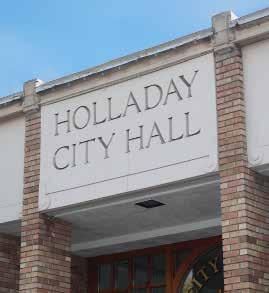

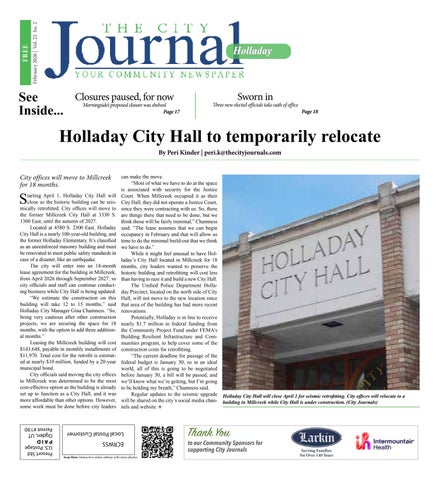
Holladay City Hall will close April 1 for seismic retrofitting. City offices will relocate to a building in Millcreek while City Hall is under construction. (City Journals) Holladay


Photographer blends the art and science of photography to produce stunning images
January’s Artist of the Month, photographer Andrew McLellan, brings the beauty of nature to life and captures portraits rich in detail.
By Collette Hayes c.hayes@mycityjournals.com
Holladay photographer Andrew McLellan captures unique moments in nature through the lens of a camera, from the Onaqui mustangs who roam the west desert to the waves crashing against the rocky shores of Thunder Hole in Maine’s Acadia National Park. Each frame reveals the exquisite beauty of the natural world, inviting viewers to pause and reflect.
“Hopefully, my photographs instill an appreciation and understanding of the wonder of nature,” McLellan said. “Through my photos, I want to show people how to enjoy and access nature while protecting and caring for it. It’s a fine line to walk and something I work toward.”
McLellan, known for his captivating landscape and portrait photography, has been appointed to the Holladay Arts Council. In recognition of his exceptional artistic talent and innovative approach to photography, the council has also selected him for the Holladay Artist of the Month for January 2026.
McLellan discovered his passion for photography by chance. While he was just a few credits short of graduating in English Literature and a minor in Sociology from the University of Redlands, he decided to enroll in a black-and-white film class—and he ended up loving it.
“After I graduated from college, photography became a hobby for a couple of years and then fell off,” McLellan said. “I then began working in marketing and spent about 15 years at a marketing agency. After that, I transitioned into management, where I managed teams, which eventually led me to start

HOLLADAY TEAM
The Holladay Journal is a monthly publication distributed directly to residents via the USPS as well as locations throughout Holladay. For information about distribution please email hello@ thecityjournals.com or call our offices. Rack locations are also available on our website. The views and opinions expressed in display advertisements do not necessarily reflect or represent the views and opinions held by Loyal Perch Media or the City Journals. This publication may not be reproduced in whole or in part without the express written consent of the owner. © 2019 Loyal Perch Media, Inc.

my own consulting business over the past few years.”
About three years ago, McLellan’s life changed dramatically, rekindling his passion for photography.
“When my son was born, I thought it would be nice to get a camera and begin documenting this little guy’s life,” said McLellan. “My wife and I do a ton of hiking in national parks and really enjoy the outdoors. I bought a camera and ended up taking it on hikes and having a lot of fun. Soon, several people began telling me they would like to buy my photos.”
McLellan and his wife have an exciting goal: they plan to visit every national park in the United States. So far, they have ventured into 38 parks, while their 3-year-old son has already visited 12. Most of McLellan’s photo shoots take place in Utah, particularly in iconic locations such as Little Cottonwood Canyon, Antelope Island, the west desert and the five national parks in southern Utah, collectively known as the Mighty Five.
Great Basin National Park, centered around Wheeler Peak—Nevada’s second-tallest mountain—is one of McLellan’s favorite
destinations. The park is known for the Lehman Caves, which contain unique caverns filled with stalactites, stalagmites, helictites and flowstone.
McLellan remarked, “The wooded areas in the Great Basin were a beautiful surprise, and the caves just blew my mind. Glacier, Bryce, Grand Teton, and Joshua Tree National Parks are also among our favorite destinations, offering numerous opportunities to capture unique photos.”
Utah is home to one of America’s most famous herds of wild horses the Onaqui, named after the Onaqui Mountains. This herd is located near Dugway, Utah, which is about 90 minutes from Salt Lake City.
“One of my favorite photos that I’ve taken is of wild mustangs near Simpson Springs,” McLellan said. “The horses are easy to observe and exciting to photograph.”
McLellan is also a portrait photographer and enjoys photographing people, whether it’s in his home studio or a local rental space.
How does McLellan define success as an artist?
“I was participating in an art fair down
Connect social media
PUBLISHER
Bryan Scott | bryan.s@thecityjournals.com
EDITOR
Travis Barton | travis.b@thecityjournals.com
ADVERTISING EXECUTIVES
Mieka Sawatzki | mieka.s@thecityjournals.com
Lindsay Andreasen | lindsay.a@thecityjournals.com
Ryan Casper | ryan.c@thecityjournals.com
Marc Davis | marc.d@thecityjournals.com
CIRCULATION COORDINATOR
Lydia Rice | lydia.r@thecityjournals.com 385-557-1022
Rack locations are also available on our website.
EDITORIAL & AD DESIGN
Stacey LaMont Ty Gorton
HOLLADAY CITY JOURNAL
9500 South 500 West, Suite 205 Sandy, UT 84070 PHONE: 801-254-5974
in southern Utah when I witnessed a woman tear up while admiring the exquisite beauty of a photograph. There is nothing more rewarding for an artist than evoking such an emotional response—one filled with surprise and wonder.”
Figuring out more ways to bring art to the Holladay community is a goal of McLellan’s as a new Holladay Arts Council board member.
“I hope to do some teaching while on the Arts Council, whether it’s in the community or in the aging learning community,” said McLellan. “I love teaching, although I have never taught photography before. I’m hoping to teach basic photography skills, including composition and proper camera use. Many photography classes focus on important technical aspects, but photography is also an art form. Learning to combine the technical and creative elements is essential—the photo then has meaning.”
His works were on view at Holladay City Hall through January. For more information about McLellan’s photography, visit his website: www.admphoto.co. l
Our mission is to inform and entertain our community while promoting a strong local economy via relevant content presented across a synergetic network of print and digital media.
PUBLISHER Designed,
& Distributed by

Most of Andrew McLellan’s photo shoots occur in Utah, at iconic locations like Antelope Island, the west desert, Little Cottonwood Canyon and the five national parks in southern Utah. (Photo courtesy of Andrew McLellan)
Contemporary figurative painter inspires new perspectives in artistic expression
Holladay Artist of the Month
Rebecca Jessee uses unconventional color and flatness techniques for a modern feel to traditional figure subjects.
By Collette Hayes c.hayes@mycityjournals.com
Holladay artist Rebecca Jessee’s portraits embrace flat-color techniques to create texture and space. This innovative artistic approach transforms traditional figure subjects into contemporary illustrations, offering a fresh, captivating perspective on classic themes.
The Holladay Arts Council has selected Jessee as the Holladay Artist of the Month for February. This recognition honors her talent and skill as a figurative contemporary painter, conveying stories and emotions while often incorporating symbolism.
Jessee’s artistic medium is oil, which she uses to create beautiful and unique art. “Oil does exactly what I want it to do; in contrast, watercolor has a mind of its own. It is unforgiving,” she said.
Jessee identifies Orem as her hometown. While attending Timpanogos High School there, she was inspired by her visu-

“My goal is to create beautiful and unique art that helps others to build and understand themselves and their communities,” said artist Rebecca Jessee.
(Photo courtesy Rebecca Jessee)
al arts teacher, Anna Davis. Known for her ability to motivate students, Davis quickly realized Jessee’s artistic talent and began
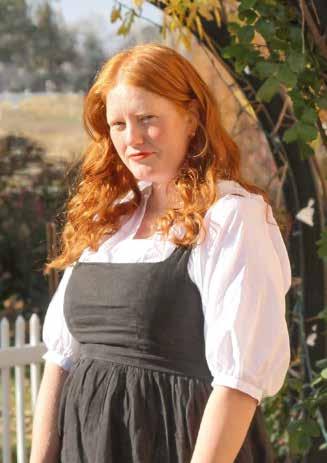
The Holladay Arts Council has selected Rebecca Jessee as the Holladay Artist of the Month for February. This recognition honors her talent and skill as a figurative contemporary painter.
(Photo courtesy Rebecca Jessee)
to encourage and mentor her closely.
“In high school I had an amazing art teacher Anna Davis that was a major in-
fluence on me. She recognized my ability to paint and gave me a lot of attention,” Jessee said. “I enjoyed painting scenes inspired by literature. One of the paintings I created for my art portfolio was based on a scene from the novel ‘To Kill a Mockingbird’—the part where Scout and her brother Jem build a snowman primarily out of mud because of the scarcity of snow in Alabama.”
After graduating from high school, Davis played a crucial role in helping Jessee secure a scholarship to study art at Brigham Young University, where Jessee is currently pursuing a Bachelor of Fine Arts in Illustration.
“Keep it local and keep it simple,” says Jessee when deciding where to show her paintings. Her art has been featured in the Spiritual and Religious Art of Utah exhibition at the Springville Museum of Art, the Holladay Fine Art Show and Plein Air Holladay Show. At her first showing at the Utah Art Market, she displayed a large number of paintings and sold out during the show. Her spiritual art has been offered on LDSart.com for the last several years. Also, Jessee had enjoyed a large clientele as a portrait painter, but that was about to change.
Three years ago, Jessee became a mother to Moses, and just a bit short of a
year ago to Reid. Her little boys have become her central focus over the past few years. Jessee’s time for art has been limited to completing her degree at BYU and painting during her sons’ nap times. Recently, her husband has adjusted his work schedule to help support Jessee’s desire to immerse herself again in the world of art.
In high school I had an amazing art teacher Anna Davis that was a major influence on me. She recognized my ability to paint and gave me a lot of attention
Rebecca Jessee
Now with more time to focus on painting, Jessee has returned to following several local, well-known artists and tries to incorporate their techniques into her artwork. From the bold, expressive paintings of Rose Datoc Dall, known for her body of religious works as well as her figurative work, Jessee has learned to incorporate design into her art by using unconventional
color and flat techniques.
Dall’s form of artistic style, became prominent in the 20th century and continues to influence modern illustrators and fine artists. It offers a vibrant visual language that boldly prioritizes color, form and surface over the mere illusion of depth. Figurative subjects are rendered with flat techniques for a modern feel, encouraging a fresh perspective in artistic expression.
“For many years I’ve painted still-life food, spiritual themes and portraits,” Jessee said. “Studying the art of Rose Datoc Dall and her use of bold flat colors has been a significant influence on my art.”
And how does Jessee define success as an artist?
“For me success as an artist used to be getting into shows and receiving recognition for my art,” Jessee said. “But now, I see success as helping others to create beautiful spaces. Art is like good food— it makes life enjoyable. That’s one thing I love about living in Holladay, the residents of Holladay seem to appreciate what makes life beautiful. The homes in Holladay are a perfect example of that.”
To learn more about Rebecca Jessee’s art or for inquiries about commissions, visit: www.beccajessee.com/
Jessee’s figurative contemporary art will be on display at Holladay City Hall, 4580 South S. 2300 East, through February. l
Holladay Comfort Drive brings in thousands of donations
By Peri Kinder peri.k@thecityjournals.com
Holladay City held a Comfort Drive during November and December, where residents could drop off items for The Road Home Connie Crosby Family Resource Center in Midvale (529 9th Ave.).
Thirteen vehicles, filled with nearly 4,000 items donated by Holladay residents, delivered the goods to the shelter, including blankets and warm weather gear. Additionally, residents donated $1,900, which was tripled by private donors.
“I was talking to one of the women who is in charge of the shelter and she was saying how
much this is needed, how much it will be appreciated,” said Holladay City Councilmember Drew Quinn. “I didn’t realize that most nights they have about 200 children there overnight, and that the majority of them are 5 years old or younger. So, if you ever have an extra box of diapers, you know where to drop them off.”
The Connie Crosby Family Resource Center serves as an emergency shelter that offers dining and cooking facilities, a sleeping area and communal spaces for up to 300 people each night. For more information, visit TheRoadHome.org.
“I was really proud that Holladay came through so well,” Quinn said. “We have a wonderful city.” l

City officials from Holladay and Midvale join forces to deliver much-needed resources to the Connie Crosby Family Resource Center in Midvale. (Photo courtesy of Holladay)







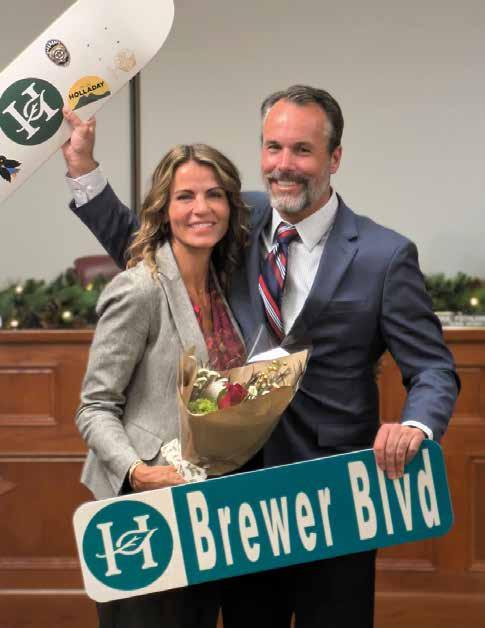
Ty Brewer recognized for his city council service
Brewer was known for his ability to look at all sides of an issue.
By Peri Kinder peri.k@thecityjournals.com
After choosing not to run for reelection, Holladay City Councilmember Ty Brewer was recognized at a city council meeting for his service to the community.
As a councilmember representing District 1, Brewer served in several roles, including RDA chair, liaison for the Holladay Historical Commission and the Mosquito Abatement Board, and the Cottonwood Elementary and Olympus High community councils.
“Ty has been a really effective advocate for his district,” said Councilmember Matt Durham. “It’s been great watching him repre-
sent the members of his district and look out for their interests. Ty has always made me think and he raises issues that I haven’t considered. He approaches things in a way that is always respectful and always thoughtful. He’s smart in the way he approaches things and has been helpful to me to explore different ways of getting things done, different ways of addressing problems. He will be missed on the council.”
Brewer, his wife, Kellie, and their seven children are longtime residents of Holladay. He thanked his fellow councilmembers, city staff and his family for their support during his term in office.
“What a wonderful experience this has been,” he said. “All these kinds of words that my colleagues have said, all of them are fantastic people. We’re lucky, here in Holladay. I don’t think all cities benefit in that way. I have tremendous respect for every one of them.” l
Ty Brewer (right) was recognized at a Holladay City Council meeting in December for his service in District 1. He and his wife, Kellie, were both honored during the presentation. (Peri Kinder/City Journals)
Holladay adopts its WUI overlay zone
The new code addresses the increased risk of wildfires.
By Peri Kinder peri.k@thecityjournals.com
Inthe hope of avoiding wildfire devastation like what was seen in California, the Utah Legislature passed House Bill 48 in 2025 to designate zones with an increased risk of wildfires. The bill intends to increase awareness of wildfire risks and have property owners help reduce that danger.
Cities were required to adopt a Wildland Urban Interface map by Jan. 1, 2026, and to update local building codes to comply with the mandate. After weeks of discussion and public comment, the Holladay City Council approved a WUI map on Dec. 4.
“The map has an identification and theme that is going to be the structure exposure score. So it’s a way to look at the structure exposure scores around embercasting,” said Unified Fire Authority Fire Marshal Wade Watkins. “So if you see a wildland fire able to burn a hillside or burn vegetation and cast those embers, that’s embercasting.”
Holladay neighborhoods affected by the law are located east of I-215 and include more than 300 homes. Initially, about 100 additional homes on the west side of I-215 were included on the WUI map but were later withdrawn following resident input and discussions with UFA and city officials.
Existing structures in the designated zones will not be affected by the new law, unless those property owners decide to make an addition, repair or alteration to the property. At that point, the code will require the owner to be responsible for removing trees and vegetation, and using upgraded materials in
buildings and structures.
Any new construction in the WUI area will need to meet the higher standards spelled out in the 2006 Utah Wildland Urban Interface Code. The bill also requires insurers to provide justification when raising rates by more than 20% or dropping coverage for homes in the zone.
Councilmember Ty Brewer pointed out that while the WUI map addresses obvious risks from wildfire in the Wasatch Mountains, other places in the tree-dense city could be considered at risk, and homeowners throughout Holladay should be made aware of the fire danger and options available.
“When I built my home on Big Cottonwood Creek, it didn’t even cross my mind to think about defensible space and the [fire] risk along the creek, with the tree canopy and everything that’s there,” Brewer said. “I hate to add bloat to what might seem bureaucratic, but I don’t think it is. I think an important role that the government plays is to help people think about things they might not otherwise think about.”
Fire mitigation advice for any city property includes keeping weeds and grass cut, removing dead vegetation, disposing of trash and debris, and stacking firewood away from structures or fences. A list of fire wise solutions can be found at unifiedfireut.gov.
Property owners in a high-risk WUI boundary will also be assessed a fee based on the square footage of the structure. Salt Lake County will collect the payment through property taxes. Owners can request a lot assessment through the Division of Forestry, Fire and State Lands to receive recommendations for ways they can reduce wildfire risk.
City officials are creating a webpage infographic to accompany the new code, educating all residents of wildfire risks, whether or not their property is within the WUI overlay zone. The WUI overlay zone and building code information
will also be added to the Holladay City Code on its website holladayut.gov.l
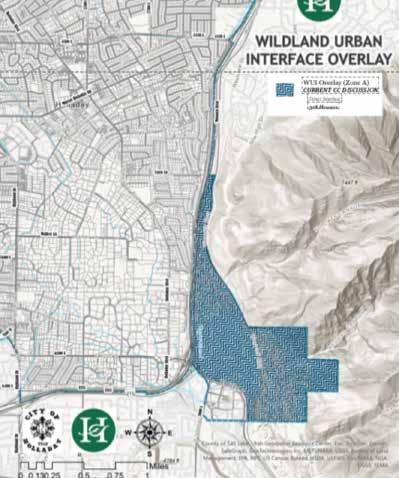
courtesy of Holladay City)
Holladay City Council welcomes two new members
David Sundwall and Natalie Bradley take their place on the council.
By Peri Kinder peri.k@thecityjournals.com
In November, Holladay residents in Council Districts 1 and 3 elected new representatives for the city council. David Sundwall was chosen to replace Councilmember Ty Brewer in District 1, after Brewer chose not to run for reelection. Natalie Bradley steps into the District 3 seat now that former councilmember Paul Fotheringham will serve as the city’s mayor.
Sundwall has lived in Holladay for 17 years with his wife, Kimberly, and their five children. He works as an attorney in the legal technology field and served on the U.S. Senate Judiciary Committee under Sen. Orrin Hatch.
He’s grateful for the opportunity to serve the residents in his district and wants to make sure their voices are heard.
“I want to give a big thank you to those who supported me and even those who may not have supported me,” Sundwall said. “I think I have an attitude of curiosity and humility, and I’m open to hearing people’s input about their concerns and what their priorities are. I hope to be responsive and open to their thoughts and suggestions.”
Priorities for his first year in office include
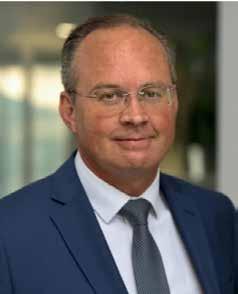
David Sundwall will represent Holladay District 1 when he starts his term on the city council in January. (Photo courtesy of Sundwall)
learning processes and procedures, understanding what issues the city faces and diving into budgetary issues, including transparency and property taxes. He’s also concerned about the prevalence of temporary home rentals in the city and how it affects housing costs.
“I think a lot of people are concerned about trying to make Holladay more afford-
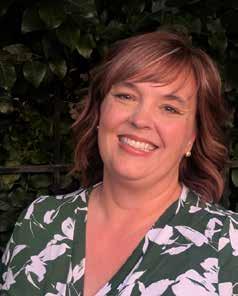
Natalie Bradley is the new councilmember representing Holladay’s District 3. (Photo courtesy of Natalie Bradley)
able,” he said. “It seems younger and growing families are being priced out and have to move somewhere else. They have to move out of the area or even out of the county. That’s been a big concern.”
Bradley is a former teacher and mother of five who has called Holladay home for nearly 13 years, alongside her husband,
Christian. After serving on the Holladay Arts Council, working on the Cottonwood Council PTA Board and participating in the Salt Lake League of Women Voters, Bradley chose to run for office as a way to keep the city vibrant and family-friendly.
She said serving District 3 is an honor, especially with its unique demographics. Located west of Highland Drive, the area has several apartment complexes and students attend Cottonwood High School instead of Olympus High.
“It makes us a little different as a community,” Bradley said. “But it’s a good, close-knit community. There’s no place else we’d rather live. We have loved this town and are working to make it better, working to keep traditions alive and start new ones.”
Her priorities include growing community programs, helping people access city services and being responsive to her residents, both in and outside her district. She knows this first year will be a steep learning curve as she gets to know her fellow councilmembers and city staff, but she looks forward to engaging in the government process to build a strong foundation for Holladay’s future.
“I’ve loved the people I’ve worked with and the people I met while working on the arts council,” Bradley said. “I love going to activities in the city and shining lights on some of the best of Holladay.” l
The Holladay Wildland Urban Interface map shows zones in the city with an increased risk of wildfire. New structures in this area must take steps to mitigate wildfire risk. (Map









County sheriff’s office honors America’s 250th anniversary with flag ceremony
As part of a nationwide and global observance, the Salt Lake County Sheriff’s Office proudly welcomed a special flag during its stop in Utah as part of Flag Sojourn 250.
As part of a nationwide and global observance, the Salt Lake County Sheriff’s Office welcomed a special flag Jan. 7 during its stop in Utah as part of Flag Sojourn 250—a historic journey designed to unite Americans while honoring the nation’s past, present and future.
The Flag Sojourn 250 initiative, commemorating the country’s upcoming 250th anniversary, is carrying this American flag to every U.S. state and territory, as well as all 26 overseas U.S. military cemeteries. The journey is meant to pay tribute to those who served and sacrificed for the nation while celebrating the principles of liberty, resilience and unity that define America.
“This shared journey honors our history, remembers our heroes, and looks ahead with hope,” said Salt Lake County Sheriff Rosie Rivera. “The Stars and Stripes represent far more than a symbol—they embody the sacrifices made in defense of freedom and the ideals that bind us together as one nation.”
The ceremony featured the presentation and raising of the flag by the Salt Lake County Sheriff’s Office Honor Guard, followed by a moment of silence and ceremo-
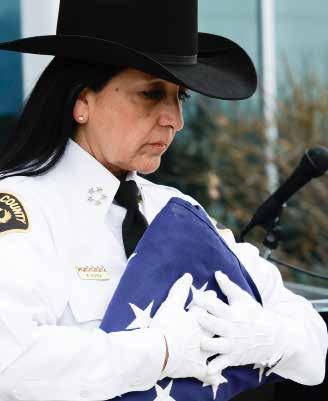
Salt Lake County Sheriff Rosie Rivera participates in the special flag ceremony held in January. (Photo courtesy Salt Lake County Sheriff’s Office)
nial music. Attendees also joined together in reciting the Pledge of Allegiance.
The event concluded with the Honor Guard lowering and refolding the flag, marking the end of a meaningful stop on its journey. The flag next traveled to Colorado.
Flag Sojourn 250 is a national unity initiative led by the National Flag Foundation (NFF) in partnership with America250’s America Waves program, an epic tribute campaign honoring the American flag. l
The Salt Lake County Sheriff’s Office held a special flag ceremony in January to honor the upcoming 250th anniversary of the country. (Photos courtesy Salt Lake County Sheriff’s Office)





























Granite School District puts the pause on school closures—for now
District board says they need more time to conduct additional studies.
By Lizzie Walje l.walje@mycityjournals.com
After facing community backlash, Granite School District is pressing pause on its plans to close down two of its east bench elementary schools.
The decision comes as welcome news for both community members and families alike, who have strongly protested the potential closures ever since Granite first announced its intention to put the decision to a vote at the end of 2025.
Almost immediately following the announcement, the District received strong opposition from parents and families alike.
The schools in question, Eastwood Elementary and Morningside Elementary, have long served generations of students. Even so, the District claimed that the schools’ declining enrollment rates prompted officials and school board members to assess their longterm viability. It is worth noting, however, that declining enrollment rates have been a District (and statewide) problem for several years now, leading to multiple school closures in Granite District in recent history.
Superintendent Ben Horsley directly cited the declining enrollment rates as the main reason behind the District’s desire to vote on these specific closures. He further referenced declining birth rates and the exorbitant cost of living in the areas that the schools serve as other mitigating factors.
“It’s not [families’] fault that the birth rate overall has declined and that families don’t have four to five kids anymore,” Horsley said. “It’s not their fault that we don’t have enough young families that can afford homes in that area.…But it also puts the District in a sticky situation.”
Despite the District’s reasoning, students and parents continued to protest the closures. In response community members banded together, starting various grassroots initiatives. This included conducting their own “community study,” a direct response to the District’s population study. In addition, those fighting on behalf of Eastwood start-
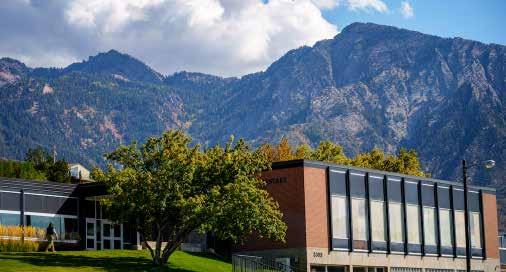
Eastwood Elementary has served generations of students, many of whom, would adamantly oppose the potential closure. (Granite School District)
ed a campaign called “SOS EASTWOOD,” which includes its own website and Change. org petition. At the time of this article’s release, the petition has amassed over 1,800 signatures.
The SOS EASTWOOD supporters insisted that their studies yielded compelling evidence directly contrasting the claims put forth by the District. This led to a further divide, with parents contemplating the District’s true motives.
One of their biggest concerns materialized after research suggested a potential conflict of interest directly linked to board member, Julie Jackson, who represents Precinct 1 within Area 5 of the District, which oversees both Eastwood and Morningside.
Jackson and her family own a property management company called Beckstrand & Associates, and opposers argued that the company may have their eye on the Eastwood property. Eastwood, which sits at 3305 Wasatch Blvd., could definitely be considered valuable real estate.
Christopher Jennings, a parent of two Eastwood students said that he was “concerned about the disposition of the land for purposes not oriented towards teaching children.”
Jennings and other parents believe Granite’s push to close Eastwood may be
driven by the potential profit the District could gain from selling such a valuable plot of real estate. These concerns led to the crafting of an email authored by Eastwood parent Nastasya Mangone, whose daughter Scarlett, attends the school. The email was sent directly to Board President Nicole McDermott on Sept. 17, requesting that Jackson recuse herself from the final vote.
“For the sake of fairness, transparency and community trust, I respectfully request that Board Member Jackson recuse herself from any votes, discussions or decisions,” Mangone wrote. “Her relationship with and board seat on a real estate development company and lack of public disclosure indicates that she has an actual conflict of interest.”
Three days after the email was sent, McDermott responded insisting that there was “no evidence” supporting a potential conflict of interest. She added that recusal would be warranted only if Jackson or her family stood to benefit directly from the property’s sale. Furthermore, District officials asserted that they have no interest in selling the property.
Nevertheless, Granite remained firm in their reasoning and insisted that all of their studies and findings had been well researched and thoroughly reviewed by board members and District officials. However,
something shifted in late November 2025 after the District decided they needed more time to conduct independent studies before making an informed, permanent decision.
In light of the news, Jackson stated at a November board meeting that “my community is tired, and if we are going to spend our time continuing to engage on this, we want our time effectively and efficiently spent.”
The final vote regarding the closures was slated to occur in December 2025. Following the decision to suspend the vote, an email went out to parents stating, “There will be no school closures, programmatic changes, or boundary adjustments for the foreseeable future.”
The District said the decision was ultimately informed by several factors including wanting to dispel any notion that the “process [was] biased and unfair.”
While those who fought to keep Eastwood and Morningside in operation were thrilled to hear of this news, the District did caution parents, families and students alike that the current decision does not mean that closures could not still happen in the future. Furthermore, they stressed that declining enrollment is still an ongoing issue, one that they suspect will continue to persist and worsen in the coming months and years.
“We cannot lose sight of the reality of the situation that we are in,” said Clarke Nelson, another board member. “We have to direct the process to get to the greatest common good. And that has a reality to it that will be painful, at some point, for certain schools, for certain neighborhoods, that I don’t see going away in the near future.”
Jackson also addressed board members and onlookers, stating that future studies will focus on collecting data and information that is completely removed from the influence of District officials and board members, to help encourage community trust.
“I want to be clear about my expectations of this study,” Jackson said. “I expect a thorough Community Engagement Plan, but one that is completely different from what we’ve done in [the previous] study.…I expect a full report with data to back up recommendations. I expect board and District leaders to be completely distant from the process.” l
New Holladay mayor and councilmembers take the oath of office
A changing of the guard for Holladay City.
By Peri Kinder peri.k@thecityjournals.com
OnThursday, Jan. 8, Paul Fotheringham was sworn in as Holladay’s new mayor by Holladay Justice Court Judge Augustus G. Chin. David Sundwall and Natalie Bradley also took the oath of office, becoming Holladay’s newest councilmembers, serving Districts 1 and 3, respectively.
Fotheringham said it was an honor that the voters of Holladay entrusted him with the position and thanked the previous mayor, Rob Dahle, for his guidance and example. He also thanked his colleagues on the city council, both past and present, and had a special shout-out to his grandchildren.
“Thank you, Rob, for leaving this corner of your world, not only better than you found it, but also with a launching pad built for us who will carry on,” he said. “And thank you to my lovely grandchildren and Holladay residents, Luke and Rosie Fotheringham, from whom I perceive the meaning and purpose of my life in greater relief. They are a reminder that the work we do in City Hall isn’t just for the next fiscal year, but for the generations
that will inherit the shade of the trees we plant during our moment in time.”
Sundwall continued the spirit of gratitude as he expressed appreciation for the opportunity to serve city residents in his district. He expressed his hope to build on the success and contributions of those who came before him and said he is eager to learn his responsibilities.
“I hope I can do my share and help with serving our wonderful city,” Sundwall said. “I just want to say to the people of the city that I’m here to listen and to learn and work with you, and I hope I can live up to this discharge to serve.”
After taking her oath of office, Bradley said she was honored to accept the responsibility given to her by her constituents. She added that the best outcomes occur when people can look past their differences and work together to find solutions for city issues.
“As I step into this role, I promise to listen, to work hard, and to be thoughtful in the decisions that are made,” she said. “I’m proud to serve. I’m excited to get to work and grateful for the chance to give back to my city that has given me so much.”
Fotheringham noted that the next four years will be busy for the Council as City Hall relocates for 15 months, the 12-acre Spring Lane park project gets underway and the Holladay Hills development continues to grow.




He said relying on the city staff professionals, maintaining partnerships with public safety partners, supporting local committees and commissions, and focusing on thoughtful stewardship will help continue the progress made in the city, with more opportunities for growth and connection.
“I’m sure I can speak for the rest of the council when I say that the highlight of public service in Holladay is working with our excellent city staff. Their smarts and professionalism are a backstop for us amateur
citizen public-office holders who are crazy enough to campaign and run for office,” Fotheringham said. “Our home of Holladay will continue to evolve as the loveliest gem, not only on the east bench, but the loveliest gem of a city in the Intermountain West.” Holladay City Council meetings are held at 6 p.m. on the first and third Thursday of each month, in the City Council Chambers at City Hall (4580 S. 2300 East). The public is invited and encouraged to attend. l
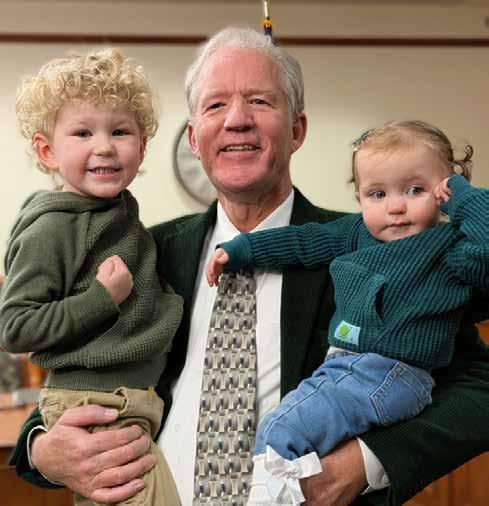

At his swearing-in ceremony, Holladay Mayor Paul Fotheringham dedicated his service to city residents, including his grandchildren, Luke and Rosie Fotheringham. (Peri Kinder/City Journals)




Local officer helps launch peer-led support group for first responders
The Watch will offer drop-in, peerled sessions intended to support first responders from across Salt Lake County.
By Shaun Delliskave s.delliskave@mycityjournals.com
Anew peer-led support group aimed at first responders across Salt Lake County will begin meeting in Murray later this month, offering a confidential, non-clinical space for participants to talk with others who understand the unique pressures of the job.
The group, called The Watch, was founded by Murray City Police Officer Benjamin Gregoire, who said the idea grew out of both personal experience and conversations with colleagues across agencies.
A critical incident he experienced in the line of duty last year, Gregoire said, became a turning point and underscored for him how limited accessible, peer-based wellness resources are for first responders in Salt Lake County.
Gregoire said that beyond formal peer support teams, there are few places where first responders can speak openly with others who share similar experiences. He also observed that first responder culture often operates in silos.
“Police tend to stay with police, fire with fire, dispatch with dispatch—even though we often carry very similar stressors and trauma,” he said. “The Watch grew out of a desire to create a shared space that breaks down those barriers.”
Unlike traditional mental health programs, The Watch is intentionally peer-led and non-clinical. Gregoire emphasized that the group is not designed to replace professional care.
“There are no clinicians, no diagnoses, no notes, and no treatment plans,” he said. “It’s a space grounded in shared lived experience. While professional mental health care is critically important—and encouraged—The Watch is designed to complement those resources, not replace them.”
Sessions are structured to be low-pressure and accessible. Meetings will last one hour and are drop-in, meaning participants can attend as their schedules allow. At the start of each session, guidelines are reviewed to establish expectations and safety. From there, discussion is participant-led.
“If there’s a lull, a simple prompt—such as ‘What brought you here today?’—may be offered,” Gregoire said. “But there is never any pressure to speak. First-time attendees can expect a low-pressure environment where listening is just as welcome as sharing.”
Confidentiality is a central principle of the group. Gregoire said participants verbally

agree to keep what is shared within the group confidential and that rank does not factor into the space.
“Rank does not exist within the space— everyone is equal,” he said. “If administrators attend, they are held to the same standards as everyone else.” He added that the confidentiality protections outlined in Utah’s peer support statute apply and are communicated at each meeting.
Murray City has played a supporting role by approving the group, providing meeting space, administrative assistance, and help with outreach and marketing. Gregoire stressed, however, that The Watch remains independent.
“It is not a Murray City Police Depart-
ment program, nor does it report back to any department,” he said. “Murray is hosting and endorsing the effort, but the group itself remains peer-driven and separate from departmental operations.”
Gregoire hopes the group will help address lingering stigma around seeking help, particularly for those who may feel overlooked.
“Dispatch and corrections professionals, in particular, are often overlooked in wellness conversations despite facing significant cumulative stress,” he said. “The Watch aims to create a starting point—normalizing peer support and making it easier for people to show up without fear or judgment.”
The first meeting is scheduled for Jan. 14, and while no sessions have yet been held, Gregoire said early interest has been strong. “We’ve already received strong informal interest from a wide range of agencies and disciplines,” he said.
Looking ahead, Gregoire said success would mean broader cultural change. “Success, to me, would look like peer support becoming more normalized within first responder culture and administrations taking wellness more seriously as a core responsibility—not an afterthought,” he said. He added that he hopes similar groups will eventually form in other counties, noting that “Davis County Sheriff’s Office is beginning something along those lines, which suggests this is a need being felt beyond just Murray or Salt Lake County.” l
Officer Benjamin Gregorie takes the oath of a police officer. (Photo courtesy Murray Police)
‘Good time to be in Utah,’ Zions economist says
Outlook for state, region remains strong.
By Brice Wallace Salt Lake Business Journal
Economic outlook season is underway, and Robert Spendlove has thrown out the first pitch.
At a recent outlook briefing in Salt Lake City, Zions Bank’s senior economist listed several challenges in the national economy: uncertainty and risk caused by tariffs and the recent government shutdown, low consumer sentiment, slowing labor market growth, and the threat that increased tariffs could reaccelerate inflation.
“But with all that, the Intermountain Region remains really strong,” he assured the crowd. “Our economic fundamentals are strong. Our population and demographics are strong. So, it is a good time. Even though we’ve got that risk and that uncertainty, it’s a good time to be in Utah.”
Businesspeople are generally “grumpy” about tariffs because of the uncertainty they create. The average effective tariff rate was 3% a year ago but now it’s at 17%. However, they have yet to cause expected inflation. Most businesspeople can adjust to tariff impacts, but only if they know at what rates they will be, he said.
“It’s been going up and down and sideways. … We just see them going up and down, almost willy-nilly, for the past year,” Spendlove said. “And if you’re a businessperson, your response might just be ‘I’m just going to pull back,’ and I’ve heard that from a lot of businesspeople.”
But Utah’s economic fundamentals remain strong:
• Utah’s population growth is nearly 2%, compared to 1% nationally.
• Utah’s employment growth is 1.7%, above the national figure of 1%.
• Utah’s unemployment rate, like the nation’s, has been trending up, but Utah’s — at about 3.5% the past year — “actually has kind of stalled out,” he said. “I mean, it’s good, right? We want the unemployment rate to stall out. We don’t want it to continue to move up.”
Spendlove expects the rate to “kind of stick around there” at about 3.5% and keep Utah in “that sweet spot.” “We’re not the lowest in the country, like in the Upper Midwest, but we’re also not the highest, like in California and Nevada and Washington, D.C.,” he said.
• Utah’s new unemployment insurance claims are about 2,000. “We would have to cross 4,000 for me to get nervous about those weekly unemployment insurance claims. … We’re about half of that now, and it’s something that we’ll be watching, but I don’t see any signs of distress right now.”
For contrast, during the COVID pandemic, the figure grew from 2,000 to over 20,000 in one week.
• After seeing a huge surge in housing prices from 2020 to 2022, the growth now is between 1% and 2% — “actually what I would argue is a really good level,” he said. “You don’t want to see a big contraction. You also don’t want to see a big escalation in those home prices again.”
• Utah’s wage growth is higher than the national average.
• Median household income in Utah is “great,” at more than $100,000, thanks to demographics and the state’s strong economy.
Meanwhile, Moody’s indicates that Utah is not among states facing a recession risk. “Utah is doing well,” Spendlove said. “We’re still expanding, Idaho is still expanding, Arizona is still expanding. But we are surrounded by weakness. We are surrounded by states that are already struggling, are already treading water or are already in recession.”
Nathan Callister, the new president and CEO of Zions Bank, said annual economic outlooks usually feature an assessment that the new year will be “the most unique year.”
“And I’m not saying this is the most


unique year, but it is an incredibly unique market environment that we’re in,” he said. “I think there’s a lot of stuff above the surface that we see. I think there’s a lot below the surface as well that are creating challenges and will continue to create challenges. And we are navigating, I think, the convergence of so many moving parts.”
Trouble areas include geopolitics, tariffs, the AI boom, asset prices in the stock market, the proliferation of the private markets (including private credit), consumer sentiment, the “K”-shaped economy, a convergence of wealth, affordability, deficits and the national debt, among others, he said.
“Despite all of this, our economy has been incredibly resilient, and Utah has been incredibly resilient, but I think we’re feeling, even here, some of those challenges,” Callister said.
Calling for Utahns to become more agile and more connected than ever before, Callister said geopolitics heads his overall list of worries.
“I feel like we’re seeing a tectonic shift in the world order, from turf battles to trade wars, to the Monroe Doctrine that’s going on now, to all these changes going on to our supply chain,” he said. “I think we’ll continue to see some major implica-
tions to what’s going on in this changing world order that’s way different from what we’ve experienced since World War II.” l
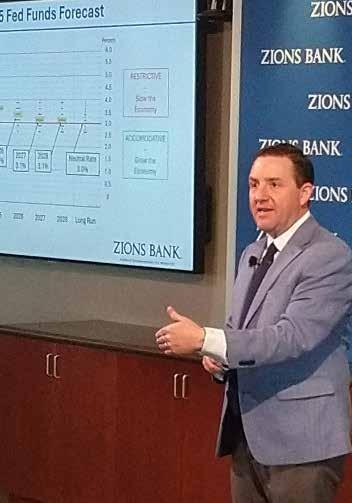




Robert Spendlove, senior economist at Zions Bank, briefs an audience about his 2026 economic outlook at a recent gathering in Salt Lake City. (Brice Wallace/Salt Lake Business Journal)
Salt Lake County leads on criminal justice reform bringing a national lens to local solutions
Salt Lake County is responsible for many of the region’s core public safety functions, including jail operations and serving as the behavioral health authority. About 74% of the county’s general fund budget is dedicated to public safety. As the government agency responsible for these essential countywide services, we regularly evaluate our systems to ensure delivery of better outcomes for people, public safety and taxpayers.
That responsibility is what led Salt Lake County to partner with Judge Steve Leifman and The Leifman Group, nationally recognized leaders in behavioral health and criminal justice reform. In Miami-Dade County, Florida, Judge Leifman’s work helped establish one of the nation’s most successful diversion models, the “Miami Model.” The model redirects individuals with serious mental illness from jail into treatment and recovery. That approach led to dramatic reductions in arrests and recidivism, a significant drop in the jail population—saving millions of taxpayer dollars while improving public safety and enhancing lives throughout Miami-Dade County.
Aimee Winder Newton
Salt Lake County Councilmember
District 3

also partnered with Salt Lake City on the planning and implementation of their Public Safety Plan. These efforts reflect a shared understanding that fragmented systems lead to repeated crises—costly for families, communities and taxpayers.
shared willingness to align around practices that work. The Leifman Group’s recommendations focus on better coordination, improved crisis response and using shared data to guide decisions and track what’s actually working.
Over several months last fall, Salt Lake County convened more than 100 leaders from across the state and region— including state leaders, city officials, courts, law enforcement, service providers, advocates and philanthropy— to learn from the Miami Model and identify ways to implement the model here at home.
This engagement builds on years of work already underway. In 2023, Salt Lake County partnered with the State of Utah and Salt Lake City to advance the Coordinated Homeless Services Plan. In 2024, Salt Lake County Mayor Jenny Wilson launched the County’s first five-year Human Services, Homelessness and Criminal Justice Reform Action Plan, prioritizing early intervention, service coordination and accountability across systems. We’ve

The data drives the need for action. Today, the Salt Lake County jail functions as Utah’s largest mental health provider. Roughly 34% of people leaving the jail exit directly into homelessness. Jail is among the most expensive—and least effective— way to address untreated mental illness and substance use disorders. Diverting individuals with serious mental illness from repeated, low-level incarceration into structured treatment and supervision is not about leniency; it is about accountability, public safety and using public dollars wisely.
Salt Lake County recognizes that simply replicating another community’s model is not what’s needed. Instead, the county is applying proven principles through a local lens—recognizing our specific responsibilities, what our population needs and what will work here. What has emerged clearly is the strength already present here: committed service providers, engaged public safety partners and a
This work is also about leadership. Because Salt Lake County bears such a large share of public safety costs, we have a strong incentive to lead system improvement. Communities are safer when fewer people cycle through jail and our criminal justice system. Additionally, families are more stable, and taxpayer dollars can be reinvested into solutions that prevent crises before they escalate and that create lasting positive change.
At its core, Salt Lake County’s criminal justice reform work reflects a simple truth: when systems function better, outcomes improve for individuals and for the community as a whole. By leading with data, coordination and evidence-based solutions, Salt Lake County is working to improve public safety, support families in crisis, hold systems and individuals accountable, and ensure public dollars are used effectively for the benefit of the entire community.




The First Amendment now comes with footnotes. Instead of promising not to abridge the freedom of speech, government officials are quietly redlining your opinions like a ruthless book editor holding a grudge.
The erosion of our First Amendment rights should wake you up like a five-alarm fire.
Banned Media. Reporters have been barred from the White House, kicked out of the Pentagon and have lost access to the press secretary’s office. A Washington Post reporter had her house searched by the FBI, relabeling journalists from “democracy watchdogs” to “people of interest.”
The president threatens the media licenses of organizations that don’t paint him in a flattering light. He’s sued networks for billions, ordered shows to be canceled and got Jimmy Kimmel fired. When millions of people canceled Disney and HULU, Kimmel was put back on the air, so I guess free speech can now be bundled with your subscription.
Banned Words. This melting pot we call America has outlawed diversity, equity and inclusion. That’s like taking the heart out of the Tin Man or the soul out of Hozier.
The Head Start early childhood programs were told to remove a list of 200 words in grant applications or the Death Star would blow up their facilities. Words like “belong,” “disability,” and “mental health” will get funding denied, so now applicants have to do an interpre-
Don’t be left speechless
Peri Kinder Life and Laughter

tative dance, acting out “equality” or “diverse.” Government leaders go ballistic if we use pronouns or call a trans person by their chosen name, yet expect the entire country to salute the nonsensical renaming of the Gulf of America or the Trump-Kennedy Center. It costs nothing to respect someone’s pronouns, but rebranding the Department of War will cost taxpayers more than $1 billion.
Banned Books. Having a library card is now an act of defiance. Utah loves a good book ban because nothing prepares kids for real life more than hiding information that makes them feel uncomfortable.
Utah already ranks at the bottom of education funding, but yes, let’s make our kids dumber by discouraging them from learning critical thinking skills or empathy. Reading as exploration is forbidden. Curiosity becomes taboo.
But if kids want to read a book, they’ll find a way to read it. A ban adds extra enticement, like putting chocolate sprinkles on an ice cream

sundae. We’re all for letting 18 year olds carry a rifle into McDonald’s, but heaven forbid they read “The Hate U Give,” which talks about a teen affected by gun violence.
Banned criticism. The First Amendment gives us the right to criticize anyone, even the president. You can slap bumper stickers on your VW, write columns or even burn the flag.
However, professors are being fired for political beliefs, protestors are tear-gassed and shot, and university funding is cut unless courses fall in line with this administration’s doctrine. Freedom of speech is now an extreme sport.
Here’s what’s not free speech: incitement, threats, defamation, obscenity and perjury. The president has threatened talk show hosts, slan-
dered Democratic leaders and there’s strong evidence he’s perjured himself several times.
He is also protected under the First Amendment, but the president walks a Sharpie-thin line between free speech and hateful rhetoric. TrumpActionTracker.info documented 264 actions (as of Jan. 16) taken by the president and his administration during the last year to control information or spread propaganda. He’s all for free speech, as long as it’s only his.
History shows that free speech is as durable as steel, with the propensity to outlast those who violate it. The First Amendment doesn’t promise pleasant agreement but a safe space for necessary debate. Freedom of speech is not silent, and we shouldn’t be either.