Lakeview turns 50
The hospital was dedicated in 1976 Page 10
Davis County
Sweethearts celebrated 72 years together
Bountiful couple’s love did not diminish with age Page 14

The hospital was dedicated in 1976 Page 10
Sweethearts celebrated 72 years together
Bountiful couple’s love did not diminish with age Page 14
By Becky Ginos | becky.g@thecityjournals.com
The 45-day session ends March 6.
STATE CAPITOL—The 2026 Legislative Session opened Jan. 20 and lawmakers are off and running. Over the course of the session hundreds of bills will be debated. Some will pass, others will fail as it comes to a close on March 6. Legislators will be faced with some of the usual issues such as taxes, affordable housing, education and the GSL but also in the mix this year are criminal justice reforms, energy, a min eral lab and water.
who came before it,” said Speaker Mike Schultz in his opening day remarks. “And every genera tion, whether it realizes it or not, is laying foun dations for the next.”
committee meetings or on the House floor, he said. “It happens around kitchen tables, in the carpool pickup line, at business meetings, in the grocery store and at little league ball games. That’s where our focus should be. Our work here is meaningless if we aren’t focused on the people who put us in these chairs.”
American liberty,” said Senate President J. Stuart Adams in his opening speech. “Two and a half

centuries filled with lessons of courage, sacrifice and heartache that shaped our nation.”
From the Revolutionary War to Gettysburg, Normandy and Afghanistan American service members have stepped forward in moments of the country’s greatest need, he said. “They endured unimaginable hardship so that the liberties we debate, defend and preserve in this chamber might endure.”
Reps. Ray Ward, R-Bountiful and Karen Peterson, R-Clinton, were running several bills as




Visit Dr. Andrew Moffat at the Hyperbaric & Wound Center at CommonSpirit Holy Cross Hospital – Davis and CommonSpirit Holy Cross Hospital – Mountain Point.
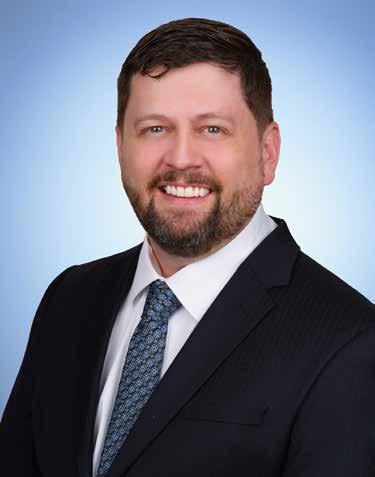
Specializing in wound care and hyperbaric medicine, Dr. Andrew Moffat provides advanced, compassionate treatment to help patients recover from chronic and complex wounds. Dr. Moffat is dedicated to restoring healing, comfort, and confidence so you can get back to living fully.
Dr. Moffat treats:
• Arterial ulcers
• Radiation injury
• Central retinal artery occlusion

• Burns
• Diabetic foot ulcers
• Decompression sickness
Same-week appointments are often available. Call 385-345-3555 or scan the QR code to schedule.
CommonSpirit Health Mountain Region does not discriminate against any person on the basis of race, color, national origin, disability, age, sex, religion, creed, ancestry, sexual orientation, and marital status in admission, treatment, or participation in its programs, services and activities, or in employment. For further information about this policy contact CommonSpirit Health Mountain Region Office of the General Counsel at 1-303-6738166 (TTY: 711). Copyright © CommonSpirit Health Mountain Region, 2026. ATENCIÓN: Si habla español, tiene a su disposición servicios gratuitos de asistencia lingüística. Llame al 1-303-673-8166 (TTY: 711). CHÚ Ý: Nếu b
s
1-303-673-8166 (TTY: 711).
The approximately 160,000 square foot building sits on the Utah State Capitol campus and has been designed to mirror the look of the historic building.
By Becky Ginos becky.g@thecityjournals.com
SALT LAKE CITY—Just in time for the first day of the 2026 Legislative Session, the new North Capitol Building was completed and opened to the public, Jan. 20. The approximately 160,000 square foot building sits on the Utah State Capitol campus and has been designed to mirror the look of the historic building.
The construction also includes a public parking garage with 318 stalls. In the past, parking has been an issue around the Capitol. This new parking terrace is expected to ease that congestion. The general design of the previous plaza has been maintained with more intentional areas for the public. The new features include structural waterproofing and water wise plantings.
“The first thing I want to point out as you come through the central plaza, it looks a lot like it did before,” said Executive Director for the Capitol Preservation Board, Dana Jones during a media tour Jan. 14. “We were tasked by the board to maintain the integrity of the structure when we knew that we had to tear it down and rebuild it. But in maintaining that we also needed to be water wise and functional.”
New courtyards were added, she said. “Things that make it more appealing for everybody that comes to the Capitol to have kind of that all inclusive, if you will, experience at this plaza.”
What used to be a lot of lawn area now has planters and more beds with a drip tubing
underneath them to make sure the watering is more efficient. It is anticipated that there will be a 40% reduction in water usage.
In the entrance stands a beautiful curved marble staircase including newel posts. The ceiling above has an intricate stained glass window.
“The staircase is obviously a very dramatic element of the lobby,” said Nathan Leavitt, principal architect of VCBO Architecture. “It’s very functional because it connects the two public floors of the building. The upper floors are staff floors.”
The whole campus is very symmetrical, he said. “But the offset stair really added a sense of circulation space. This is the main entrance of the campus now. People are passing through this as an introduction to the Capitol and exciting south.”
The whole building takes a lot of inspiration for what’s already on campus, said Leavitt. “You’ll see elements from the historic buildings in the state. The marble is Georgia marble and it comes from the same quarry that’s been open in Georgia now for almost 150 years. We went there and set the blocks to get the best match to the marble on the campus.”
The Museum of Utah will be located in the new building. “The museum is still in construction,” said Museum of Utah Director, Tim Glenn. “It will open in June of 2026, so six months from now.”
Office space for the museum is in the entire west wing and there is office space on levels three and four. The building has sweeping views of the Capitol and the grounds from a lounge specifically designed for the public to enjoy.
A large stateroom will be available for meetings and other functions. “This room will most closely mirror the boardroom in the Capitol,” said Jones. “This is rentable to


the public and again you capture the beautiful views of the Capitol from here.”
In addition to the stateroom there is a conference center that can seat 515 people. “It’s almost as many as we can seat in the Rotunda,” she said. “We have a retractable wall that can create a north and south conference center.”
A collective storage facility in the building will be home to the Utah Historical Society. “This is the space where Utah’s fine arts collection and history preservation will happen for the next 100 years,” said Glenn. “This is state-of-the-art. It provides an opportunity for us to grow. All of the state’s treasures will be here and future state treasures will be here so when the museum opens, there’s a lot of stuff in people’s basements and attics that might come to us.”
The collection currently has around 30,000 artifacts, 28,000 books, 8,500 manuscripts and 23,000 pamphlets and many, many
other materials, he said. “All of this will be stored in this space. It’s the culmination of many, many years of work to have this now.”
The building is also seismically base isolated with 89 individual isolators disconnecting from the ground. “Now the earthquake comes and it shakes the ground,” said Jared Johnson, the structural engineer who was part of the restoration of the State Capitol. “Because the building is sitting on these base isolators and not directly connected to the ground it just kind of lumbers back and forth very slowly compared to how the ground is moving.”
The mantra was a 100-year-old building. “They (early builders) did that for us with the Capitol right?” said Jones. So this is us paying forward to many generations.”
The North Capitol Building hours will be Monday – Thursday, 7 a.m. – 8 p.m., Friday –Sunday and holidays from 7 a.m. – 6 p.m. l
The City Journal is a monthly publication distributed directly to residents via the USPS and our Bountiful office.
For information about distribution please email hello@thecityjournals.com or call our offices. Rack locations are also available on our website. The views and opinions expressed in display advertisements do not necessarily reflect or represent the views and opinions held by Loyal Perch Media or the City Journals. This publication may not be reproduced in whole or in part without the express written consent of the owner. © 2019 Loyal Perch Media, Inc.
PUBLISHER
Bryan Scott | bryan.s@thecityjournals.com
EDITOR
Becky Ginos | becky.g@davisjournal.com
ADVERTISING EXECUTIVES
Mieka Sawatzki | mieka.s@thecityjournals.com
Lindsay Andreasen | lindsay.a@thecityjournals.com
Ryan Casper | ryan.c@thecityjournals.com
Marc Davis | marc.d@thecityjournals.com
CIRCULATION COORDINATOR
Lydia Rice | lydia.r@thecityjournals.com 385-557-1022
Rack locations are also available on our website. To subscribe to the weekly Davis Journal: subscribe.davisjournal.net
270 S. Main St. Suite #108, Bountiful UT 84010 801.901.7962
EDITORIAL & AD DESIGN
Ty Gorton Stacey LaMont
THE CITY JOURNAL
270 S. Main St. Suite #108 Bountiful, UT 84010 Phone: 801-901-7962 MISSION
Our mission is to inform and entertain our community while promoting a strong local economy via relevant content presented across a synergetic network of print and digital media.
PUBLISHER
Designed, Published, &




























The new building opened on the first day of the 2026 legislative Session, Jan. 20.
By Becky Ginos
becky.g@thecityjournals.com
STATE CAPITOL—It was a brisk day as government officials and the public attended a ribbon cutting ceremony to open the new North Capitol Building, Friday, Jan. 16. Construction on the approximately 160,000 square foot structure has taken three years to complete and now rounds out the Capitol Building campus. It opened to the public as the 2026 Legislative Session began Jan. 20.
“This is a really exciting day today and we’re not just here to open a building but I think we’re here to honor the commitment to Utah and its people for generations to come,” said Senate President Stuart Adams. “Those that built the original Capitol didn’t build it for themselves but they built for those that would inherit the work like today.”
They imagined a future, he said. “A future, maybe 100 or 110 years into the future.”
“I’ll never forget it was a very im-
pactful day when we were sitting in that Capitol Preservation Board meeting,” said Gov. Spencer Cox. “We just had a presentation on a new parking structure here and we walked out and I grabbed the former Speaker and Senate President and said, ‘are we really gonna spend this much money on a parking structure next to one of the ugliest buildings in the state? Why can’t we think big?’”
The Capitol is very special, he said.
“For those of you that have visited other Capitols, we’re very fortunate. This is renowned as one of the greatest State Capitols anywhere in the country.” Just getting rid of the north building improved the Capitol complex significantly, Cox said. “That would have been enough. But then to replace it with something to match the majesty it was always intended from the very beginning to have a Capitol complex that looked like this.”
This will be here for generations to come, he said. “This, of course, will be for our kids. They will come and they will be uplifted and they will be inspired. They will want to carry that flame forward and they will want to make sure that this remains the greatest state in the greatest nation in the history of the world.” l
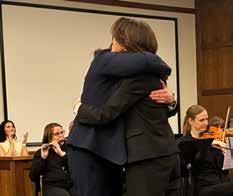
ewly elected Bountiful Mayor Kate Bradshaw shares a hug with Lt. Gov. Deidre Henderson following the swearing in ceremony Jan. 5. The newly elected mayor and two city council members were met with some fanfare at their swearing-in ceremony held at City Hall. The Philharmonia kicked off the celebration with a spirited musical number as guests filed in and another number later in the program. Henderson conducted the swearing in. A good leader listens more than they talk, said Bradshaw. “A good leader must be connected to people they seek to lead and serve. When the opportunity came to serve, I wanted to put that belief into action.” l
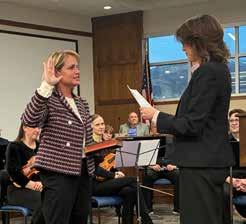
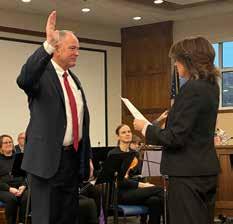
Onthe evening of Jan. 13, 2026, Bountiful City officially welcomed Millie Segura Bahr back to the City Council. Following her appointment at the Jan. 8 council meeting, Bahr was formally sworn in by City Recorder Sophia Ward.
Councilmember Bahr is returning to a role she knows well, having previously
served an elected term from 2020 through 2024. Her reappointment brings a wealth of experience back to the dais, ensuring a smooth transition and a continued focus on Bountiful’s community priorities.
The City is pleased to have Bahr back on the leadership team as she resumes her service to the residents of Bountiful.l

Tamara Tran (Tami) signs her Oath of Office Jan. 6 for her second term as Kaysville City Mayor. Tran believes that strong families and tight-knit communities are the foundation of Utah’s success. She prioritizes fiscal responsibility, honest leadership, and constitutional principles. “I’ll defend our freedoms, keep government accountable, and focus on practical solutions that keep Utah the best place to live, work, and raise a family.” l
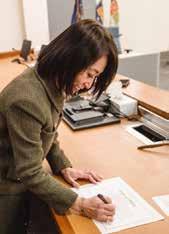
Tamara Tran signs her Oath of Office for her second term as Mayor.
Jan. 6 Second District Judge David Williams administered the Oath of Office to Mayor Clark Wilkinson and to City Councilmember Gina Hirst, and to newly elected City Councilmember Rick Bangerter prior to a city council meeting.
This is Wilkinson’s third term as mayor and Hirst’s second term on the council. Bangerter, who previously held a position on the council from 1998 to 2002, filled the seat vacated by Spencer Summerhays who served a four-year term on the council. Following the oath Bangerter took his place on the podium and commenced his term as a council member. l

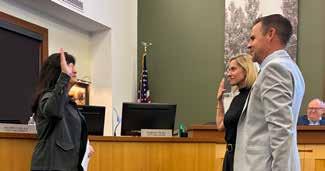
Brian Horrocks was sworn in for his second term as Mayor of North Salt Lake City during a ceremony and reception on Jan. 6, 2026. The reception was a small affair attended by the family of the newly elected city council members, a handful of North Salt Lake citizens, and other government officials. After taken his oath of office, Mayor Horrocks said a few brief words praising the election process. “This is a capsule of what makes our country great,” he said. “Being able to elect our officials and throw them out if they don’t do a good job.”
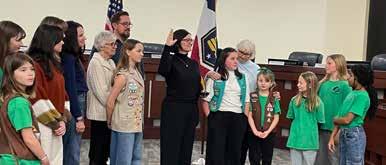
Alisa Van Langeveld was sworn in Jan. 6 for her second term on the North Salt Lake City Council while surrounded by her family and a local Girl Scout troop. The swearing-in ceremony and reception was followed by a work session of the city council, during which Van Langeveld stressed her commitment to dignity in politics and healthy debate, and recited the pledge, “There is no North Salt Lake without democracy.”
Heidi Smoot took her oath of office Jan. 6. A graduate of Ricks College, she hopes to help preserve North Salt Lake’s small town charm during her term. Smoot said she began to attend city council meetings and admired the courteous way in which the members spoke to each other during disagreements. She hopes to carry on that tradition. l
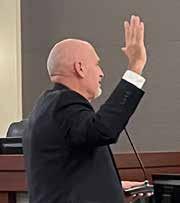

Jeanne Groberg was sworn in as the Mayor of Fruit Heights Jan.6, making the first time a female has been elected to hold the city’s highest office. Groberg will be the 14th mayor to represent Fruit Heights.

“I’m honored to be sworn in as the Mayor of Fruit Heights,” said Groberg. “I look forward to working as a team with our great city staff and council to build on all the good we enjoy in Fruit Heights, and to keep it a beautiful place to live, now and for future generations.” l
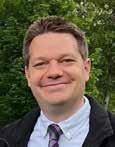

David Hale and Blake
were sworn in as new council members for Fruit Heights Jan. 6. These newly elected officials join Mayor Jeanne Groberg and three current council members: Gary Anderson, Mark Cottrell and Eileen Moss.
Fruit Heights recognized and thanked outgoing Mayor John Pohlman and council members Florence Sadler and Shon Stevenson for their service. “With change comes the opportunity for Fruit Heights to grow, improve, and have a new outlook,” City Manager Darren Frandsen said.l
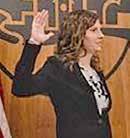
City Councilmember Abbigayle Hunt (Abbi) took the oath of office Jan. 6. This is Hunt’s second term.
Hunt believes “every decision should be made with a thoughtful, balanced perspective.” During her time on the City Council, she has focused on planning that honors Kaysville’s history while preparing for a future that reflects its values and needs. l
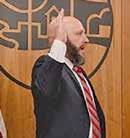
Joshua McBride (Josh) was sworn in Jan. 6 as Kaysville’s newest city council member. “Kaysville has grown, and while the city looks different than it did years ago, it’s still home,” said McBride. “I want future generations – my grandkids included – to experience the same safe, welcoming hometown I did growing up.” l
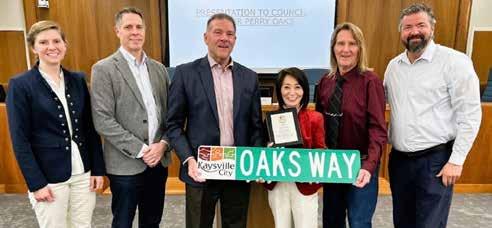
Kaysville recognized outgoing City Council member for his four years of dedicated service to the Kaysville Community.
By Cindi Mansell c.mansell@mycityjournals.com
OnDec. 18, 2025, the Kaysville City Council recognized Perry Oaks for his dedicated service to the community over the past four years. Oaks was sworn into office
on Jan. 5, 2022, and said he “decided to run for election to give back to the community.”
Throughout his tenure, Oaks demonstrated a strong commitment to thoughtful leadership and community service. “It was exciting to see how city government runs at the local level and I’ve enjoyed getting to know everyone better,” he said. Oaks also served as the City Council Liaison to the RAMP (Recreation, Arts, Museum, and Parks) Advisory Board. His contributions have had a lasting, positive impact on Kaysville. l
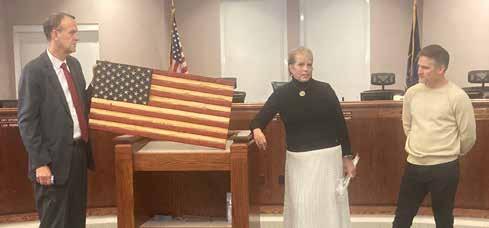
City held a special open house on Jan. 6 to honor outgoing City Councilmember Spencer Summerhays. Summerhays, who served one four-year term on the council, previously served on the planning commission. At the open house Mayor Clark Wilkinson presented Summerhays with a special wood American flag custom made in New York and other gifts. He praised the outgoing councilman’s dedication to the job.
Councilmembers Gina Hirst praised
Summerhay’s financial acuity and his commitment to service and said that the two had become friends over the past four years serving alongside each other on the council. Other city officials including Councilmember Hirst and Robyn Mecham, Police Chief Allen Anderson and Second District Judge David Williams, who formerly served as Summerhay’s Scout master, also paid tribute to Summerhays. After, Summerhays thanked city officials and those in attendance, particularly his wife Jules, for their support during his tenure. l
FAMILY PROTECTION
• Special Needs Trusts
• Guardianships
• Pre & Post-nuptial Agreements
• Adoptions
• Domestic Partner Trusts
• Name Changes
• Pet Trusts
• Asset Protection
PROBATE & ESTATES
• Letters Testamentary
• Formal & Informal Probate
• Intestate Succession (No Will)
• Small Estate A davits
• Survivorship A davits
• Spousal Claims
DISPUTE RESOLUTION
• Mediation
• Elder Care Disputes
• Estate & Trust Disputes
• Elder Exploitation & Abuse
• Estate & Trust Litigation



TRUSTS & WILLS
• Living & Family Trusts
• Simple & Complex Wills
• Trust Administration
• Irrevocable Trusts
• Assist Trustees, Executors & Heirs
• Trust Review Service
BUSINESS PROTECTION
• Corporations
• Partnerships
• Limited Liability Companies
• Non-pro t Organizations
• Buy-Sell Agreements
• Quiet Title Actions
ELDER LAW
• Powers of Attorney



• Guardianships
• Conservatorships
• Living Wills
• Competency Issues
• Medicaid Planning
• VA Aid & Attendance Planning

When we talk about heart disease, the usual suspects often come to mind: crushing chest pain, shortness of breath, radiating arm discomfort. While these classic symptoms demand immediate attention, your heart often speaks in a more subtle language, a series of whispers and quiet shouts that can easily be dismissed or attributed to other, less serious issues. During Heart Month this February, we want to empower you to become a skilled interpreter of your body’s unique signals, recognizing that early detection can be profoundly life-saving.
Many people are unaware that heart problems don’t always announce themselves with dramatic flair. “We frequently see patients who’ve ignored subtle signs for weeks or even months, often rationalizing them away,” explains Dr. Richard Gelb, a cardiologist at Holy Cross Hospital –Mountain Point. “Especially for women, symptoms can be incredibly nuanced and different from the textbook descriptions often associated with men.”
So, what are these often-overlooked indicators that your heart might be sending out an SOS?
Persistent, Unexplained Fatigue: This isn’t just being tired after a long day. If you
find yourself unusually exhausted after normal activities, or if a simple walk leaves you winded in a way it never did before, your heart might be working harder than it should to pump blood.
This can be a sign of various heart conditions, including heart failure or even blockages.
Discomfort Beyond the Chest: While chest pain is classic, heart-related discomfort can manifest in surprising places. This includes pain, pressure, or aching in your jaw, neck, back, or even your stomach.
“We’ve had cases where patients initially thought they had a bad toothache or indigestion, only to find it was their heart,” says Dr. Bruce Kenwood, a cardiologist at Holy Cross Hospital – Jordan Valley. “Pay particular attention if this discomfort appears during exertion and subsides with rest.

Swelling in Unusual Areas: Swollen feet, ankles, legs, or even your abdomen could be a sign of fluid retention, a common symptom of heart failure. If your heart isn’t pumping effectively, blood can back up in the veins, leading to fluid accumulation. Don’t dismiss persistent swelling, especially if it’s accompanied by weight gain.
Chronic Indigestion or Nausea: While often benign, persistent indigestion, heartburn, or nausea, particularly when coupled with exertion, can sometimes be a
heart attack symptom, especially in women. If antacids aren’t helping and the discomfort seems linked to physical activity, it’s worth investigating further.
Lightheadedness or Dizziness: Occasional lightheadedness can happen for many reasons, but if you frequently feel faint, dizzy, or lightheaded, it could indicate an arrhythmia (irregular heartbeat) or a problem with blood flow to your brain due to a compromised heart.
“By familiarizing yourself with these less obvious signs, you’re taking a proactive step in safeguarding your cardiovascular health. Your body is constantly communicating; the key is to learn its second language,” said Dr. Roja Mulamalla, a cardiologist at Holy Cross Hospital – Davis.
Call to Action: If any of these subtle symptoms resonate with you, or if you’re experiencing anything that just “doesn’t feel right” in your body, please don’t wait. Listen to your heart’s whispers. Schedule an appointment with your primary care physician to discuss your concerns, or if symptoms are sudden and severe, seek emergency medical care immediately. Early detection and intervention are crucial for positive heart health outcomes. Your heart speaks – are you listening?
For more information or to find a provider visit mountain.commonspirit.org



When you need emergency care fast, the closest emergency room is a smart thing to know. CommonSpirit Holy Cross Hospital - Davis offers complete emergency care at our Weber Campus serving as a direct path between feeling scared or uncomfortable and feeling better. Find emergency care close to you at mountain.commonspirit.org.

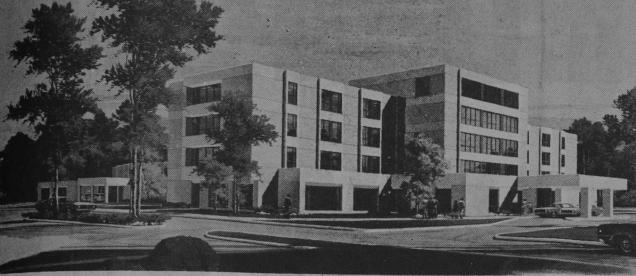
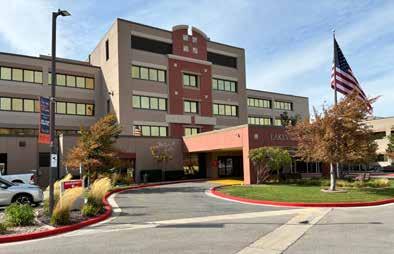
The hospital was dedicated on Sept. 18, 1976.
By Becky Ginos becky.g@thecityjournals.com
was 50 years ago that Lakeview Hospital opened its doors in Bountiful. The decision to build Lakeview came about because of the overcrowding at South Davis Community Hospital that was built in 1961. The new hospital was built to serve the growing needs of the Davis County community.
Today, that is still the hospital’s mission – to serve the public. “Our mission is for the care and improvement of human life,” said Lakeview CEO, Troy Wood, who has been at the hospital for 25 years. “Then at Lakeview we add a very personal promise. And that promise is to provide the quality of health care we would want for our closest loved ones.”
an evolution. “It’s an evolution of our services, our reputation, our facilities and the impact that we have while maintaining our mission.”
“I think from a clinical or nursing standpoint, what stands out about Lakeview is every single leader, every single clinician that walks through our doors is committed to our mission statement,” said Chief Nursing Officer, Anna Marie Dickey. “So our clinical outcomes are not by happenstance. They are because of the hard work and the focus that our teams put into creating those outcomes.”
Great outcomes are also driven by culture and how people show up, she said. “It’s really the commitment of every single person that comes into our hospital, not just our clinical staff, but our auxiliary staff and support staff.”
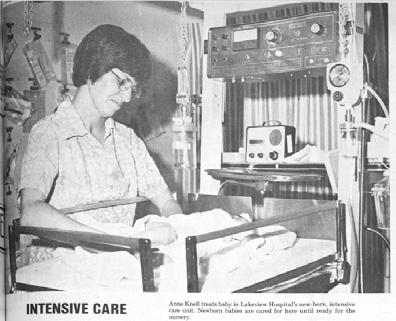
The ICU was just a small, tiny department, now it’s very big.
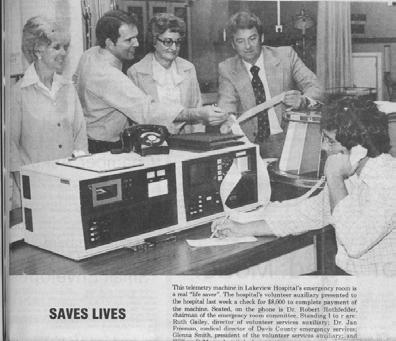
Wood said there are several landmark changes that have been made since Lakeview opened. “The hospital doubled in size in the early 80s. We doubled the size of the ER in 2012. Then we created a brand new ICU in 2016.”
This year the hospital has the most expensive and most significant project, he said. “We’re going to kind of re-lay out the first floor of the hospital. And in that process we’ll also add two ORs. So it’s the most significant investment that we’ve made in the 50 years price wise.”
The population grows, it ages, said Wood. “The types of services that we offer have become more central as we have an aging population in Bountiful, Centerville and North Salt Lake. So a lot of procedures we’ve been doing are orthopedic and urology.”
Lakeview has an amazing birthing center as well, he said. “In this kind of community you get to be one of maybe four or five patients, not one of 30, and that becomes a very one-on-one type of birthing experience. So that’s the advantage of living in an aging community that if you’re still having babies this is the place.”
Wood said the key things they’ve been working on to improve the hospital over the years have been
Pam Clark
Pam Clark has been a nurse at Lakeview for 45 years. “I started here when I graduated from the nursing program at Brigham Young University,” she said. “Things have changed a lot. We didn’t have an out patient department. Patients stayed a lot longer than they do now. It’s much more efficient today.”
The emergency room and ICU departments have grown significantly, said Clark. “The ICU was just a small, tiny department now it’s very big.”
When COVID hit, Clark said they were prepared. “We’d certainly trained but we’d never dealt with anything like that and nobody thought something like that would happen.”
Clark said the staff really stepped up during the pandemic. “People were dedicated to staying here. They stayed to take care of the patients. Even though it was a scary time.”
No one expected the number of patients there were and the length of their stay, she said. “Many didn’t make it. It was hard for all of us to go through that. But we did have some amazing outcomes for others.”
“Being a nurse has been the best decision I’ve ever made,” said Dickey. “I wake up every morning and I love to come to my job. I love to come to work. It’s what I’m passionate about. It feels my cup. I feel very blessed that I get to wake up to a job that I love.” l


By Becky Ginos becky.g@davisjournal.com
BOUNTIFUL—William Reid Rowland has lived through a lot of major events in his 100 years of life. From the introduction of television, the Great Depression, WWII, Korean War, Vietnam War, the internet, COVID and now AI, he’s had a front row seat to just about everything. On Feb. 26 Rowland will be a century old.
“He was born in Logan,” said his daughter Nancy Stephens. “They moved to Salt Lake City where his dad was a contractor.”
He joined the Army toward the end of WWII and served for 18 months, she said.
“When I got home I worked for my dad,” said Rowland. “He was in construction. He built big buildings and roads and everything all over the country.”
Rowland was building a bridge in southern Utah with his dad when an accident happened. “A bank sloughed off and trapped me. I got buried up to my waist and my leg got curved. So I went to a hospital in Moab.”
While he was there, Rowland said his mother brought him a book called This is Photography. “She knew I was interested in photography. So while I lay in the hospital I studied photography.”
That started his career as a photographer, he said. “When I got back to Salt Lake I got a job in photo finishing but my main job was processing film. We’d go to drugstores and pick up the work that had been submitted and I would process the negatives.”
Shortly after he got married he and his wife moved to Sun Valley, Idaho, said Rowland. “I was doing photo finishing up there. I learned photography and bought myself a camera. I was working part time for the news bureau doing their photo finishing.”
They finally said they needed a full-time photographer in the news bureau, Rowland said. “I transferred over from the photo shop to the news bureau. One of my main jobs was to become the Hometown (news) photographer.”
Rowland said he was skiing with a lady who was about 50, he said. “I thought she was an old lady. She was locating well-known guests that were up there and I
would go over and take their picture standing with their skis or skiing.”
At the end of the day, Rowland said he would process the negatives. “These were the days of black and white film photography. I would go into the dark room and print the pictures. I would print two pictures, one to keep and one to give to them.”
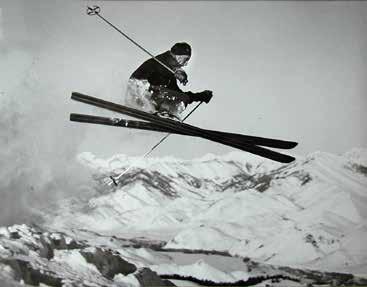
They could sell it to the guest and the other one went to the Hometown with a story the lady had written, he said. “I met Stein Eriksen. In 1952 he got the gold medal in downhill skiing. Sun Valley hired him to teach a special class of racing.”
Rowland said he went up to Eriksen one day. “I tried to talk with him but he didn’t know English. I told him I wanted to take his picture. He just shook his head. I don’t think he knew what I was saying. When he found out that I was one that he really should get associated with because I could make him famous he came up to me and says ‘you take my picture.’”
They went up on top of Bald Mountain, he said. “We manufactured a little ski jump. He came down and jumped off that jump up in the air. I took his picture but he over corrected and landed headfirst. I thought he was going to be dead.”
He just curled his head under and rolled up when he was skiing, said Rowland. “He says, ‘gotta fix jump.’ We rebuilt it and he tried it again.”
He did this kind of swing with his arms out feet behind him and jumped, Rowland said. “We sent the picture to either Look or Life Magazine and they said ‘this is fabulous, we’re going to send a crew out.’ That’s my story about Stein Eriksen. I’ve got lots of pictures of him.”
Rowland took pictures of many other famous people while he was in Sun Valley, said Stephens. “(Swimmer) Esther Williams and Bing Crosby’s wife and other starlets.”
Now he uses his photography skills taking pictures of his large family. “During Thanksgiving, we came up to my house and got a group picture,” he said. “There were 57 people in the group.”
Rowland has seven children and 25 grandchildren. “I think I have 60 great grandchildren. I’m not sure, they just keep coming and I have one great great grandchild.”
The family is celebrating his birthday with an open house Feb. 28 from 3 p.m. – 6 p.m. for any friends and neighbors who would like to share stories and memories of him. It will be held at 3350 S. 100 East, Bountiful. l
















Editor’s note: Since this interview with the Ferrantes, Frank passed away in January.
By Stephanie Morales s.morales@davisjournal.com
Ina time when lifelong love often feels like a fading tradition, Frank and Bev Ferrante stand as a living legacy of what enduring marriage looks like. This past October, the Kaysville couple celebrated 72 years of marriage – years woven together with loyalty, laughter, and an unshakable bond built on

trust, mutual respect, and faith. Their story began in 1951, when Frank was stationed in Utah from the Marines to guard the Clearfield Naval Supply Depot, the Navy’s largest inland depot, crucial during WWII and the Cold War for storing supplies for the Pacific fleet. They attended a dance at the base. Bev, a Kaysville native, had been invited by a friend’s wife and it was there that fate introduced the two. Bev remembers being instantly drawn to his handsome Italian smile. Frank, charmed by her grace, knew he had found someone special. Their first date? Being set up at that dance. “It was free for Navy members,”

Frank said. “We didn’t have much, but we had each other.” One and a half years later, they married on Oct. 16, 1953.
The wedding itself was small but meaningful. Many men were out hunting that weekend, so the guest list skewed toward women and children. “It was simple, but it was us,” Bev recalls.
Afterward, they embarked on a bittersweet honeymoon: a two-day train ride to Boston to see Frank’s ailing father. Though his dad passed away the day after their arrival, the couple treasures that journey as a meaningful part of their early marriage story.
Faith, family, and foundations
So what’s kept their marriage so strong? “Trust and teamwork,” said Frank. Bev handled the family’s finances, raised four children, and held the home together during Frank’s 20 relocations over 24 years of military service, including long stints in Vietnam and Japan.
“She was efficient, organized, and always thinking ahead,” Frank said. “I trusted her with everything.”
Bev agrees. “We always put our family first,” she said. “We made decisions as a team – even if we didn’t always agree.”
Frank admits he had to learn to let go of always being right. “I was independent, raised to handle everything myself. But Bev taught me the value of sharing the load,” he said. “And she was right –most of the time.”
They never go to bed angry, a rule they’ve
kept for over seven decades. “Talk it out, give a hug, and sleep with peace,” Frank advises.
Challenges and change
Life wasn’t always easy. Their first child was born just a month before Frank shipped out to Japan. Later, Bev raised the children while Frank served in Vietnam. They moved nearly two dozen times. “It was hard, but we kept each other going,” Bev said.
Now in their golden years, the roles have shifted. “We take care of each other,” Frank says tenderly. “I fix things around the house, she fixes our meals. We’re still a team.”
They’ve celebrated countless milestones – children, grandchildren, and now great-great-grandchildren. Their favorite season of life? Three years spent in Hawaii with their kids, walking the beach and enjoying sunsets together.
Their advice for young couples? “Love each other every day. Don’t let anger linger. Communicate and help each other. Be helpful – because love is in the little things.”
Asked to describe one another in three words, Frank says Bev is “lovable, organized, and patient.” Bev calls Frank “honest, helpful, and dependable.”
Seven decades later, before Frank’s passing, they still looked at each other with the same affection they shared on that dance floor in 1951 – a reminder that true love, with a little faith and a lot of teamwork, really can last a lifetime. l
Twenty-three students graduated from the Davis Technical College program.
By Becky Ginos
becky.g@thecityjournals.com
KAYSVILLE—Another group of firefighters graduated from Davis Technical College (Davis Tech) Firefighter Academy and are ready to hit the ground running to keep the community safe. The 23 graduates took part in a Challenge Coin Ceremony on Jan. 6.
The Challenge Coin symbolizes their courage, honor, dedication and their experiences with each other while training. The graduates were also presented with the Maltese Cross.
“Today marks the end of the academy and beginning of your service,” said Murray City Chief Steven Roberson. “Today you earned the right to wear the Maltese Cross.”
The Maltese Cross is a well-respected honor that symbolizes bravery and sacrifice by firefighters.
Adam Hockstein started the program later in his career but earned the respect of his fellow classmates on the first day. “I was nominated and elected by the students to be
Class Chief,” he said. “Most of the students I would say were 18 to 26, maybe a couple of 30-year-olds. I’m 42 so I was the eldest.”
Hockstein said he got excited about becoming a firefighter because his partner’s father was a firefighter. “He got me interested.”
Before starting the Firefighter Academy, Hockstein was enrolled in Davis Tech’s EMT program. “I was just curious about fire and that was the first step. I knew I couldn’t really get into the fire program without my EMT.”
Davis Tech opened a new Emergency Services Training Lab last January 2025. The lab gives students the skills they need to save lives.
“It was really great to be able to have a couple different facilities to get hands-on experience,” said Hockstein. “The D5 facility at the Freeport Center gave us the chance to get our hands on the SCBA (Self Contained Breathing Apparatus) equipment. It’s kind of like scuba but not underwater.”
SCBA is an essential tool for a firefighter, he said. “It keeps us safe when we have to go into smoke-filled conditions to rescue people. They had plenty of equipment like that so we were able to practice and really get good at using those tools.”
Hockstein said at the Layton tower they were able to actually charge the hoses off of a hydrant and run the water. “It gave me a good feel of what it was like to actually hold a hose to go into a burning building and what we would need to do to put that fire out and get people out safely.”
Graduate Ian Nicholson has already been hired by the Clinton City Fire Department. “I’m 19,” he said. “I pretty much started class right out of high school. My dad was in the fire service and was captain of the Tacoma Washington Department. Being around that and seeing that leadership and his actions – he served in 911 as well as the Oklahoma City bombing – really inspired me.”
“I really like connecting with people,” said Hockstein. “I think for me to be able to remain strong and calm in emergency situations when people are faced with some of the most difficult times of their life and in some of the most difficult situations that they will ever experience in their life that I can be someone that can be supportive for them and help carry them through that situation is what’s important to me.” l
Students were also able to use the Layton City fire tower for training, said Hockstein. “We were able to actually charge hoses with water because the D5 building was an indoor facility and we weren’t able to use charge hoses.”

By Becky Ginos becky.g@thecityjournals.com
American Legion
was founded in 1919 by the American Expeditionary Forces stationed in Europe waiting to come home from World War I. Their experiences in the “war to end all wars,” created the tradition that is now the nation’s largest organization of veterans that advocates for veterans, service members and military families while fighting to end veteran suicide, according to americanlegion.org.
That tradition remains strong for American Legion Post 79. The 75 veteran member group was established in 1922 and includes the five cities in south Davis County, Centerville, North Salt Lake, Bountiful, West Bountiful and Woods Cross.
The local Post has been busy in the community this past year supporting the Bountiful Veterans Park and assisting in military funerals. They were honored for their service recently with a plaque featuring the veterans park on the military wall at the Bountiful Texas Roadhouse.
Drew Thompson, who works at the restaurant, initiated the space there. “I served in the United States Army from ‘89 to ‘94,” he said. “About four weeks into school we got called out by the school commander and they put us on special training to learn the HEMTT trucks, trailers and launching systems. We took care of the Patriot missile batteries over in Saudi during Desert Storm.”
Frank (restaurant manager) is the one to thank for this (wall), said Thompson. “He gives me permission and I just run with it.”
Thompson also hands out military coins to patrons who are veterans, slipping them into a hand shake. Military coins are personalized metal medallions symbolizing honor, identity, and unity.
“Several of us are on the board of the Bountiful Veterans Park,” said Vice Commander of AL Post 79, Eric Hattabaugh. “The Legion kind of takes care of the park. Most of the guys that do that work on trimming trees, weeding, taking care of lighting and replacing flags when they’re worn out.”
The Post also does several military funeral honors, he said. “We have someone who plays Taps and there’s usually anywhere from three to seven guys who do the rifle volley. We do every veteran in the Centerville, Bountiful and Lakeview cemeteries. We average about one a week.”
Hattabaugh said they’re also involved in community events like the Veterans Memorial Day programs at the park, city parades and the Rotary and North Salt Lake car shows.
The Legion does more than that, he said. “We try to help veterans understand what their benefits are, to try and prepare them a little bit for things in life because every veteran should have an estate trust.”
There are a couple of reasons for that, said Hattabaugh. “One is there are military benefits for end of life care. This is what most don’t know and that’s why we try to get the word out that there are veteran benefits that the government will pay but they need an estate plan.”
Unless they’re part of the Legion they usually don’t find out about it, he said. “We’ve saved many of our veterans just thousands of dollars.”
There are several members who are on the council for Boys State, Hattabaugh said. “Some of us are counselors and some work in the executive office so we’re fully engaged in it each year.”
It’s at Weber State University, he said. “It’s where boys and girls will go from all over the state and learn about the U.S. government. There’s some patriotic themes to it as well as they get three political science credits.”
Just the association with others who served in the military and kind of understanding what’s going on is what makes being part of the Legion special, said Hattabaugh. “Even after many, many years some veterans still suffer from post traumatic stress syndrome.

A lot of times we will wear our baseball caps with ‘veteran’ on it and guys will come up to us in Lowe’s or Home Depot or wherever we may be and some of them will break down and cry because they’re still carrying stuff
from being in the military.”
For more information about getting a name on the wall at the Bountiful Veterans Park or to donate go to bountifulveteranspark.org. l



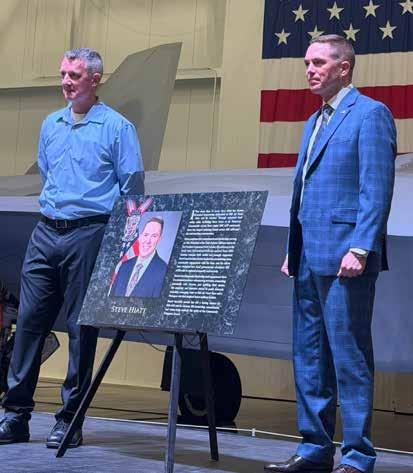
Former Kaysville Mayor Steve Hiatt has been recognized by Hill Air Force Base with its highest civilian honor, the Community Wingman Award, celebrating years of leadership, service, and unwavering support for Team Hill and the surrounding community.
By Cindi Mansell c.mansell@mycityjournals.com
WhenHill Air Force Base looks for civilian leaders who truly have their back, one name now stands proudly among the best.
Former Kaysville Mayor Steve Hiatt has received the Community Wingman Award, a prestigious honor presented by Hill Air Force Base Col. Daniel Cornelius of the 75th Air Base Wing Commanders to individuals who demonstrate exceptional, long-term service to HAFB, its airmen, and the greater Team Hill community. The award is often bestowed during high-profile base events and command gatherings, highlighting those whose commitment rises far beyond ordinary civic duty.
Established in 2007, the Community Wingman Award is given annually to community members who consistently go above and beyond through leadership, advocacy, volunteerism, and strong civilian-military partnerships. Hiatt’s record
of service made him a natural choice.
A Kaysville native and lifelong public servant, Hiatt served as the city’s 38th mayor, first elected in 2009. At the time, he made history as the youngest mayor in Utah. During his two full terms, he guided Kaysville through periods of growth while prioritizing emergency preparedness, community safety, and quality-of-life improvements for residents. His service also includes two terms on the Kaysville City Council, further cementing his dedication to local leadership.
When presented the award, Hiatt talked about growing up in Clearfield near HAFB and hearing the airplanes and watching his airman father go to work. He said he had never had a full appreciation of HAFB until he came to know the thousands of people responsible for getting those planes in the air and the hundreds of thousands of military men and women who have sacrificed for this country. He said, “he is honored by this award, but it pales in comparison to their service.”
Beyond city hall, Hiatt has played a key role in strengthening ties between Kaysville, Davis County, and Hill Air Force Base. He continues to lead Kaysville’s annual Patriarchal Devotional, an event that brings together community members from across the region and reinforces lasting relationships with Team Hill.
Those efforts – rooted in selfless service, community resilience, and mutual respect between civilian and military neighbors – are exactly what the Community Wingman Award was created to honor. l

The Bountiful Branch Library moved to a smaller, temporary location at 85 N. Main Street while the renovation takes place.
By Becky Ginos becky.g@thecityjournals.com
more than 50 years the Bountiful
Branch Library has been serving the community and has become a staple in the city. On Jan. 24, patrons said goodbye to the facility while it is closed for renovations for a minimum of 18 months.
“The building is getting a total renovation,” said Davis County Library Director, Josh Johnson. “Significant upgrades and design are intended to help ensure that it will continue to serve the public for another 50 years. The renovation also includes seismic upgrades.”
Initially the plan had been to do a land swap with Bountiful City to build a new library but earlier this summer, the Library Board voted to remodel the existing building.
The county hired an architectural firm to do a feasibility study, Johnson said in a previous interview. “The study determined the overall cost would roughly be the same to rebuild on the site or to build a new building off site.”
Basically all of the systems in the old building were at the end of life, he said. “The heating, air conditioning, and roof were from the 60s. If we had to remove the roof they could take care of some of that during the remodel.”
The remodeled branch will have many upgrades such as larger conference rooms and updated tech. An earlier survey

Late 2027
Grand reopening of the newly renovated Bountiful Branch
Services during the renovation:
We plan to provide as many regular services as reasonably possible – but on a smaller scale, said Johnson.
Services at our “twig” will include:
• item checkout, pickup, and drop-off – including an after hours book return
• old/reservation pickup from other locations
• smaller physical collections of materials for all ages
• study and reading areas adjacent to newspapers and magazines
• regular reference and information services for all ages
showed that patrons are interested in books and e-books as well.
Here is the timeline:
Monday, 1/26/26
Bountiful Branch was closed until the renovation is complete.
Monday, 3/2/26
Smaller, temporary location opens to the public Location: 85 N. Main St, Bountiful UT 84010 Regular Hours (M-Th 10-9; F-S 10-6)
6,500 total square feet in the old Wight House building (Staff have humorously nicknamed this location a “twig” due to its size.)
Mid-March, 2026
Grand Opening of the Bountiful “Twig”
• programming for all ages (programing may be limited due to the smaller space)
• public Internet computers
• public photocopying and printing
• 3D printing
Because space is limited, the following services will be suspended until after the remodel:
• Conference room use and reservation
• Large meeting room reservations
Anyone who has lived in the area for a long time has probably been to a piano recital at the South Branch, said Johnson in the previous interview. “We want to respect the history of the building, it is well loved. What works stays, we want to give people what they want. We’d like to keep some of the old things.” l
Pedro Bautista founded SLC Padel Club in April 2025 and held its grand opening in September of that same year. As the first padel club in the State of Utah, the organization offers lessons, community events, and court and gear rentals.
He and his father worked together on the project with a simple goal: build something meaningful. They had always wanted to create a business that was new, exciting, and rooted in connection and community. As they explored ideas, one vision stood out clearly: Padel.
Tell us about SLC Padel Club.
We’re bringing a new racquet sport to the state! We don’t have any competitors in Utah because we are the first. Padel was invented in Mexico in 1969 and is just being introduced in the U.S. It’s a solution for people who haven’t had a chance to play a racquet sport or are looking to transition from another sport like pickleball, tennis or racquetball. Also, during the winter, we provide another way to exercise.
We want to grow the local padel community, collaborating with local businesses, offering the best services we can to our members, and increasing the awareness of the sport.
What is padel?
Padel is a racquet sport that combines tennis and squash. Participants play in an enclosed court where players use the walls to keep the ball in play. The ball is similar to a tennis ball, but smaller, and games are fast with fun action.
Who is your ideal participant?
Anyone looking to belong to a community, make new friends, try a new sport, and improve their health. This sport is based on community, which is why we have more than five events each week. We want to grow the community and introduce new people to this great sport.
What is your advice for someone who is considering padel?
Get to know the sport. Our program is designed for all levels and all backgrounds, and our club blends the energy of sport with the warmth of community.
What else would you like readers to know about SLC Padel Club?
This is different than pickleball. Padel is quickly growing in the United States, and it is projected that there will be five more clubs in Utah this year, from different owners.
Are you running any specials or hosting events?
We host multiple events throughout the week. The most popular is called TAPAS Tuesdays, where you pay $30 and play for two hours, plus we bring in different foods every week. This week we bought Argentinian empanadas. We’ve also served Venezuelan food, Peruvian empanadas, Spanish tapas and much more.
Another popular activity is She Serves Sundays, where we do a women-only event. We have an instructor on site, bring in a coffee vendor and the ladies play for two hours for $30.
We also have multiple sessions of a new format called Try Padel, where people can try the sport for 50% off. We have someone on-site ready to explain all the rules and help you learn the game. It’s perfect for people who already play pickleball or tennis and want to test it out!
What is your favorite service at SLC Padel Club?
The community events we schedule every week! We invite everyone to come check us out and try a new sport.
SLC Padel Club
2269 S. 1200 West, Woods Cross slcpadelclub.com | 321-429-7473
info@slcpadelclub.com
Instagram @slcpadelclub



By Becky Ginos becky.g@thecityjournals.com
Fountains con-
structs custom design water features for both residential and commercial installations along the Wasatch Front. What started as a side business for owner James Harris in 2007 has grown into a full-time company.
“It’s been good but we’ve definitely had growing pains and trying to figure out ‘hey what does this all mean and what do we do next?” said Harris. “I’m really, really grateful. I feel like things are moving forward for us and I’m really grateful for that.”
However, in order to sustain that growth, a small business like Sapphire Fountains needed more operating capital.
“Often when a young business starts to get a foothold, there’s this space there where you really could use some money to help you grow,” Harris said. “But you don’t have a very established credit history so with loans like this traditional banks are more hesitant to step in. But you still need that.”
The Utah Small Business Credit Ini-


We’ve got our new salesman there with us. Then we have one large area set apart where we build and test fountains.”
The company also rents fountains. “We have our rental side of our business,” said Harris. “Last week we were testing some rental fountains that are now at the Davis Conference Center for the week. A couple of weeks before that we were getting a fountain ready that went down to the MGM Grand in Las Vegas for their big exclusive New Year’s Eve party.”
Sapphire Fountains do rentals in other states as well, he said. “So we’ll prep the fountains for those there but we build permanent fountains here locally. So parts and things that need to be put together we’ll do that in our shop and then take it to the job site.”
tiative (USBCI) program, part of the Governor’s Office of Economic Opportunity (GOEO), has an ongoing relationship with the Davis County Council of Governments (COG) which helped connect Harris to USBCI for a source of capital.
Harris said he has mostly been working with the Davis County Loan Fund. “This loan fund is something where they analyze your business and what they think the trend is. They’ll lend you the money and then they’ll

try to help you have a proven track record of paying money back and then they’ll transition you over to a traditional lender to finish out the loan.”
It’s kind of this leg up situation, he said. “It’s where they think ‘yeah, we believe in you. We think you can do this. You just don’t have a history yet so we’re going to give you a loan and help give you a shot.’”
As part of the loan application, Harris said he had to fill out a questionnaire about what his growth plans were for the company. “They want to have a sense of if what you’re doing is going to benefit Davis County, the cities within Davis County and the people who are employees. Also, what your plans are to hire people and create jobs.”
Harris said the company recently won the bid for a $870,000 job. “I can’t say who it is but I can tell you that it’s going to be a really amazing project. It’s something they (client) really care a lot about and they want it to be great and special and there are some really talented partners that are involved. It’s been a really fun thing for us to be a part of.”
Once it’s up and running people are going to enjoy this thing for years, he said. “So it’s a really great opportunity.”
Honestly without the loan this would have been impossible, said Harris. “The thing I’m learning is most of Sapphire’s growth has just been bootstrapped. We spend a little money and we make a little more than we put it all back into the business. You can grow like that but it’s slow. Big projects like this you have to invest a lot.”






Once he completed all of that it was submitted to the state, he said. “When that got approved for the state side of it, I had to go in front of the Davis County Loan Fund committee. They interviewed me and a few days after that they came back with a decision as to whether or not they’d give me the loan and they said ‘yes,’ which was great.”
Harris moved into a new facility at 85 W. 300 South in Bountiful and hired a sales team. “That’s our home base,” he said. “We take care of our business activities there.
Harris said they’re used to a job where they put out $5,000. “That’s the only amount we have to leverage of our own money. Now all of a sudden you’ve got to spend $150,000 to buy all the parts, resources that you need to do the job. You just can’t do anything like that if you don’t have the resources like what this loan fund money has provided for us. Without it I don’t see any way we could’ve done this.” l








West Bountiful began the year by swearing in a new city council and preparing for the year ahead.
By Simon Mortensen s.mortensen@davisjournal.com
Thedawn of a new year marks a time of change for many. For West Bountiful, 2026 began with the swearing in of a new city council member as well as an announcement of things to come.
Here’s a recap of what happened in the city before and after the calendar transition.
Julie Thompson takes seat on City Council
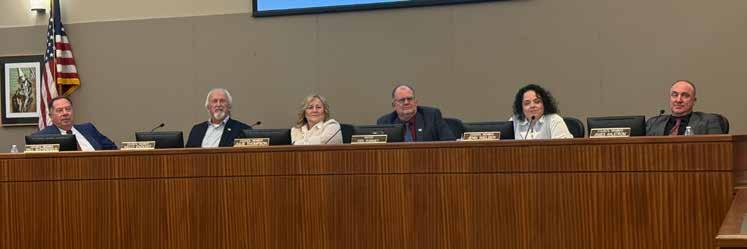
After receiving 1,049 votes last November, Thompson took her place Jan. 6 on the West Bountiful City Council alongside fellow election winners Kelly Enquist and Mayor Ken Romney. The meeting began with each being sworn in for four years of service.
A 36-year resident, Thompson ran on the premise of leaving “things (and people) better than you found them.” She’s overseen two local businesses with her husband, and served as a parent-teacher association president twice.
Thompson replaces 16-year council member Mark Preece. A West Bountiful resident since the late 1970s, Preece was awarded lifetime golf privileges at Lakeside Golf
Course in recognition of his service.
Council members change assignments
With the group’s reorganization, some individuals on the West Bountiful City Council were given new assignments. Until the next election cycle, each member will serve as a representative or board member for the following organizations:
• Julie Thompson – Planning Commission
• Kelly Enquist – Arts Council and Davis County Mosquito Abatement District
• Jenn Nielsen – Youth City Council
and Wasatch Integrated Waste Management District
• Dell Butterfield – Emergency Preparedness Committee, ULCT Legislative Policy Committee and Audit Committee
• James Ahlstrom – Audit Committee
• Kenneth Romney – South Davis Sewer District
In addition to reassignments, West Bountiful is in the process of selecting a new Mayor Pro Tem to replace Preece.
Upcoming decisions and announcements
As announced during the Jan. 6 council
meeting, a variety of items will be addressed throughout the first quarter of the year. Included in that list are plans to coordinate a new wellness survey with the city’s residents – following up on one conducted in 2024. Additionally, West Bountiful will plan to review the first draft of their audit as well as their first budget amendment. Projects identified in the 2025-26 fiscal year budget include replacing water meters as well as installing a new driving range net at Lakeside Golf Course.
Future council meetings will be held on the first and third Tuesday of each month at 7:30 p.m. at West Bountiful City Hall. l

By Becky Ginos becky.g@thecityjournals.com
group of six current and former Davis
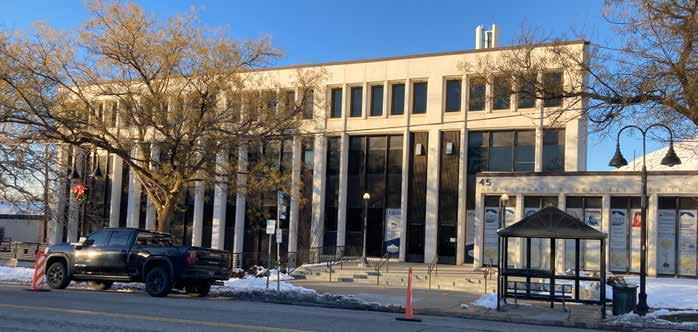
High School women’s soccer players filed a $10 million lawsuit on Jan. 12 against the Davis School District alleging the district failed to act when the girls reported a team coach for alleged misconduct. The coach is not included in the suit. The lawsuit alleges “‘Institutional betrayal,’ defined as a violation of trust by an institution that harms individuals who depend on it for safety and support.”
The district faced charges in 2019 after an investigation by the U.S. Department of Justice found evidence of “severe racial harassment” in the district. The settlement called for several steps the district had to take in order to comply. The district recently completed those requirements.
The district gave the following statement regarding the lawsuit: “Davis School District takes allegations of misconduct seriously and has processes for receiving and reviewing concerns. The District does not comment on pending litigation. This approach protects the integrity of the legal process.”
“The case began when these students, who are anonymous, reported their coach and teacher for abusive behaviors that are akin to grooming behaviors, on school grounds and at school events that had been pervasive and ongoing,” said Andy Bondy, an attorney with Parsons Behle & Latimer who is counsel for the plaintiffs. “They went to their administrators at the school which is exactly what they’re supposed to do.”
Every student should report to a responsible adult when something like this happens, he said. “They were – in large part – ignored. The teachers, administrators tended to see this as an issue of complaints about a gung-ho coach or they thought these students were complaining because they’re not getting enough playing time or something like that.”
The lawsuit states that they didn’t investigate the sexual harassment, said Bondy. “It is our understanding that the school basically undertook a very cursory investigation on some of these allegations and no investigation on other ones. They did not take action to end up removing this teacher from his position or otherwise stop him from continuing this behavior. So the students felt that they weren’t being listened to.”
“There were a few red flags everywhere,” said one student plaintiff identified in the case as Jane Doe A. “It’s kind of hard to talk about the actual stuff he did, but the main rea
son we’re filing this lawsuit is not actually about what the coach was doing. It’s about how we went and complained to the district and to the school and they did nothing about it and that led us to be targeted and the targeting led us to bullying from other girls.”
Jane Doe A said that they kept complaining about it every time it happened. “It kept going on and on and it got so bad it finally led to all the girls being cut from the soccer team.”
The hardest part probably is that these weren’t just random kids, she said. “They were my best friends that I’ve been playing soccer with for two years. I think they liked the coach and wanted to play for him. He has a reputation of winning and when you’re on a winning team you want to please him so that you can win.”
That was the culture of Davis High, said Jane Doe A. “You had to put up with this behavior in order to win. And the winning overtook how uncomfortable it made us.”
“When they came forward with these things it kind of activated us as parents,” said her mother. “We knew we had to do something. We knew this wasn’t appropriate. That’s when originally we just went to the school and honestly we thought it would be handled appropriately and we thought it would definitely be kept confidential.”

Anytime someone makes an allegation about anything sexual confidentiality is vital, the mother said. “We did not
experience that at all. We went in on a Friday and Monday when she (Jane Doe A) went to school a kid from the boys soccer team approached her and asked if she was part of it. You can imagine as a mother we were actually really scared because we realized that they had allowed our daughters’ names to be leaked for whatever reason, whether they intentionally did it or they just were not careful. I don’t know why.”
The lawsuit alleges that the girls were bullied, threatened and in one case attacked by another student. “All of the bullying and harassment happened throughout my junior year,” Jane Doe A said. “Then we went to tryouts. It was a disaster in itself. It was terrible. The environment was horrible. I watched one of them get shoved and she was on the ground and she got kicked by a girl. I would come home with bruises on my legs.”
“The reason we feel so passionate about it is we’re telling kids in elementary school to find a trusted adult to ask for help,” said her mother. “The school district is putting themselves out there as someone who can be trusted. Ultimately that’s what we would like (with the lawsuit) is to see that they can be trusted to help people.”
Kids need to be able to speak up and not be afraid of retaliation, she said. “So hopefully that can change. That is our hope.” l





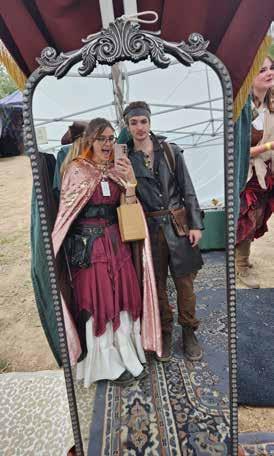
Young adults in Davis County struggle to find meaningful connections using dating apps.
By Kerry Angelbuer k.angelbuer@mycityjournals.com
Dating with the help of computers and phones on websites and apps has really taken off, with most single young people experimenting with the different options. On the surface, it might look like finding people to date could be simple, but finding that one special person can still be challenging.
“Dating apps are a modern day necessary evil, that are almost comically unfair for the guys,” Mark, a good-looking, 20-something living in Bountiful said. While many girls are struggling with 99+ likes at all times and are overwhelmed with interested guys, it is a different story for the men unless you are “totally hot and rich.”
“If I go on the dating apps every day I might get one or two likes a week and since these girls have so many options, often these leads do not result in an online conversation and most of the time end in being ghosted.” It is a struggle to appear “witty” or otherwise interesting to stand out from the large pool of guys the girls are considering. Finding a girl with “personality” who you can “form a

deep connection with,” or even a “non-boring person” can seem impossible. Paying for upgrades can result in more “likes,” but often the distance or range of girls is not reasonable, maybe even international, and so only a few of these are “viable.” It is better than “cold calls,” said Mark, which means approaching a girl at a shared activity. “The vibes better be 100% right” for that to happen. He believes dating friends of friends might be the best option to find a match. He found his current girlfriend, however, on Hinge, a popular dating app and feels he was “lucky.” He cautions that Tinder is probably best for casual hook-ups. The Bumble app which allows women to make the first move was “abysmal”– only a few matches over the years he used it. When his current girlfriend asked him to delete his dating apps, it filled him with “six-feet-off-the-ground euphoria” to get rid of them.
Lydia, who recently graduated from college in American Sign Language, finds dating apps annoying. The free versions have ads and limit how many people you can like a day. Despite these restrictions, she would get too many options daily. Despite a plethora of guys, getting conversations going was difficult. A lot of people just ghost you rather than “unmatching” or sending a good bye text. “Phishing is a real problem on the apps,” said Lydia, “they may seem to have
a lot of personality online with witty answers to prompts, but then you meet them and they hardly talk. Sometimes the picture looks nothing like the actual person because it was taken years ago or they have “gained a hundred pounds.” They might say they are a certain height, but it turns out to be a lie. She has used both Mutual, an app for LDS singles, and Hinge. She would much rather meet someone in person so she can hear their “voice” see how tall they are and how they look in person.
Michael, another college grad, recently found someone to date on Mutual when it had free “premium” service for a weekend. He prefers Facebook Dating which is free and lets you know who likes you immediately without having to wait or pay for it. Facebook Dating uses your current Facebook profile, but your dating photos and summaries are private from your friends. Using an AI model, Facebook dating gives you one “personalized match a week” and will only share your “secret crush” on a friend on Facebook if the other person says that you are also a “secret crush.” You can set a radius of 1015 miles if you don’t want to travel too far to date and also put in religious preferences, activities, and personality traits that you are interested in. “If you initially think this is not the love of my life,” said Michael, “keep going out and give it a try.” l

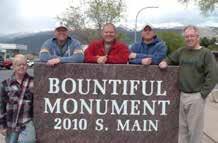


Centerville City leaders and community partners recently gathered to recognize local police and fire personnel with more than $4,000 in donated gifts and gift cards.
By Linda Petersen l.petersen@mycityjournals.com
many com-
munities hold ceremonies for first responders around the anniversary of Sept. 11, Centerville City leaders and local partners recently gathered to show that their appreciation doesn’t have a season.
During a city council meeting on Dec. 16, local police and fire personnel were recognized for their service in a special presentation. The event was a collaborative effort between the city, the Centerville-Farmington Rotary Club and the local Church of Jesus Christ of Latter-day Saints communication council.
Daryl Olsen of the Rotary Club presented a $1,000 contribution toward gifts for the firefighters and police officers, while Rob Prince, representing the communication council, presented more than $3,000 in gift cards donated by area merchants.
“When [merchants] learned what the

purpose was and who these gifts were going to, they were very generous and very kind,” Prince said.
Centerville Police Chief Allen Ackerson noted that Centerville’s support doesn’t fade when the seasons change.
“What I love about Centerville is it’s not just Sept. 11 when we as a community recognize our first responders, it’s year-round,” he said.
Although there has been significant national tension surrounding law enforcement since 2020, Centerville has seen the “exact opposite” of that trend, he said. “We saw a lot of citizens come out of their way to let us know that ‘we still have your back.’”
Mayor Clark Wilkinson echoed that sentiment, sharing personal stories of ridealongs and running into officers during their grocery runs at Dick’s Market.
“We’re all grateful for the service they render... knowing that they’re there and they’re available,” he said.
South Davis Metro Fire Chief Greg Stewart introduced the group of firefighters and paramedics, calling them “truly professionals” who are ready for anything – from technical rescues on Deuel Creek to medical emergencies in the home. However, Stewart joked that public praise is the one thing his crew isn’t trained to handle.
“I don’t usually see these gentlemen
uncomfortable unless we’re in this situation where they’re being thanked and appreciated,” he said. “They’ll tell you they’re just doing their job... but they’re here serving, doing it professionally every single day.”
The evening also marked a transition for the city council. Councilman Spencer Summerhays, attending his final council meeting, delivered a “legislative thought” reflecting on his time in office.
“Each person’s life touches so many other lives. When that person isn’t around, it leaves an awful hole,” Summerhays said quoting the holiday classic movie, It’s a Wonderful Life. “I’m glad we don’t have holes here in Centerville because of [this staff].”l


Personalized naturopathic medicine, hormone care, regenerative therapies, and non-invasive aesthetics.
We specialize in personalized care for:
• Hormone balance and metabolic health
• Fatigue, weight changes, and brain fog
• Joint pain and injury recovery
• Longevity, strength, and healthy aging
• Non-invasive aesthetic treatments
Our approach blends advanced testing, evidence-based natural medicine, regenerative therapies, and modern technology to treat the root cause—not just the symptoms.
Whether you are noticing changes in energy, strength, or appearance, our goal is to help you feel like yourself again.


North Salt Lake’s City Council approved plans to amend city codes related to the size of accessory structures and setbacks allowed in residential lots
By Megan Fisher m.fisher@davisjournal.com
Amotion to amend North Salt Lake’s ordinances concerning accessory structures and setbacks was unanimously accepted by the city council during the meeting Dec. 2, 2025. The proposed changes would allow for more expansive accessory structures and bring the rules concerning setbacks, or the distance a building or structure needs to be from the property line, into compliance with the International Building Code.
The issue was brought to the attention of city government when an application to amend North Salt Lake City code Section 1019-17 (c) was filed by city resident Rueben Wolsey. An artist, Wolsey would like to build a studio on his property for the purpose of working on his sculpting and, also selling his art, and the current North Salt Lake City code would not allow him to construct a building on his lot large enough for his needs.
North Salt Lake City code 10-19-17 (c) allows for an accessory structure, or a building connected to a residential home such as a shed, garage or playhouse, to have a maximum height of 14 feet with a 20 foot roof peak, be no taller than the primary structure, and its maximum square footing can only be 50% of the square footing of the primary structure.
The proposed amendment to the code was presented to the city council by Sherrie Pace, Community Development Director for North Salt Lake, and developed by the Planning Commission, an advisory board to the City Council in relation to matters of zoning and city planning. It would make some small, but noticeable adjustments to the ordinance
regulating accessory structures. There would be no change to the maximum height allowed for an accessory structure, but in lots of ½ acre or less the building can have a footprint of 50% of the primary structure. In lots greater than ½ acre the footprint can be no larger than that of the main building. If the structure is greater than 800 square feet it needs to be setback from the property line more than 10 feet. The rear may be reduced to five feet if that wall has a one hour firewall.
The current code related to setbacks for the accessory structures, ordinance 10-10-3, does not comply with International Building Codes and changes need to be made in order to remedy that. The planning commission believed it would be prudent to propose adjustments to the ordinances related to setbacks at the same time as those related to accessory structures. The current code for the city of North Salt Lake states that a structure needs to be three feet away from property line, and can be reduced to one feet away with a one hour fire rating and no doors or windows. The International Building Code states that structures in the side and rear yard need to be five feet away from the property line, and if they have a one hour fire rating, with no windows or doors it can be reduced to three feet. The proposed amendment to the ordinance would line city code up with the International Building Code.
During the week leading up to Dec. 2, the planning commission held a public hearing during which they presented the proposed amendment to residents. As reported by Pace they did not receive any pushback concerning the possibility of ordinance changes.
North Salt Lake City Council unanimously voted to approve the amendments to city codes 10-19-17 (c) and 10-10-3. The regulations would apply to all property and structures in North Salt Lake. Existing structures that do not meet the requirements would be grandfathered in and pose no problem, as long as they were legally built with the proper permits. l



City officials have organized the “Centerville Utah250” committee to coordinate local festivities for the U.S. milestone anniversary. The group aims to secure state and federal support to enhance regular city events with historical education and community-building activities.
By Linda Petersen l.petersen@mycityjournals.com
City has created a special committee to help celebrate the United States’ 250th anniversary locally this year. By passing a resolution on Dec. 16 and organizing the committee, Centerville Utah250, the city becomes eligible to apply for federal funds to help pay for these events.
“The mission of America250 Utah is to commemorate and celebrate, reflect on our nation’s past, build community, and look toward to the future by educating, engaging, and uniting Utahns and visitors to our State … The City acknowledges it will partner with and support America250 Utah as deemed appropriate and will support the Centerville Utah250 Community Committee to educate and engage citizens in America250 Utah,” the resolution said in part.
“America250 Utah aims to partner with Utah’s 250+ municipalities, county governments, and Tribal nations to create hundreds of exciting and engaging opportunities to commemorate and celebrate local events and everyday Americans who have shaped our history,” the state committee website says.
City organizers hope to be able to celebrate the nation’s semiquincentennial in conjunction with regularly scheduled events this year.
“My plan from the staff member perspective is to already bundle this with things we’re doing so it won’t create an additional cost for us,” Recreation Coordinator Haley Turner told the city council. “I think the funding will really be used to support the committee and any staff time that it requires to kind of monitor that.”
The city will need to apply to America250 Utah with a description of events it would like help funding. It is unclear how the projects will be chosen and how much funding is available.
America250 Utah will also host monthly check-in calls to coordinate and help the committees and designated planners. The organization has also provided the city with a toolkit to help plan activities.
“We want to celebrate with the nation in Utah America’s 250th anniversary, make that part of our events and celebrations this year,” Turner said. l
I am preparing to move out of state and I sincerely doubt I will be back. I had spoken to a neighbor about my move and he asked if I would sell my cemetery plot to him. It’s in Centerville. Most residents know there are no available plots through the city. I don’t know if residents, especially those holding Right of Burial Certificates (cemetery plots) are aware that the certificates cannot be transferred to another person unless they are an heir to the person the certificate was issued to through purchase from the city. What this translates to in my case is I cannot sell it to whoever I choose. I have to sell it back to the city then they decide who it will be resold to. It will not be available to my neighbor because he isn’t quite ready to die, he’s only preparing for when that happens. That tiny bit of information wasn’t shared when I purchased the plot. If you would share this with your Centerville readers I believe it would benefit them to know restrictions that exist with the cemetery plots.
Hayil Kasdorf, Centerville







After serving on the city council for 16 years, Mark Preece is assessing what the future of his civic responsibilities look like.
By Simon Mortensen s.mortensen@davisjournal.com
Nestledbetween three cities and some of Davis county’s largest outdoor environments, West Bountiful’s community has been known to cling to tradition. A small town, many in the area preach about strong values, as well as the unchanging characteristics that have remained present since its founding.
Some of West Bountiful’s qualities are timeless. For individuals like Mark Preece, though, the transformations that have occurred in the last two decades are easy to acknowledge.
Throughout his 16 years on the city council, Preece became one of the most recognizable figures for meeting attendees. Now with his run over, he’s assessing what his civic responsibilities will look like for the future.
“It was the biggest honor of my life to have 700-800 citizens vote for me and allow me to be their representative,” said Preece. “I will stay involved, and I’ve told the mayor this. You’ll see me at city council.”
Preece paid attention to the city’s happenings long before he decided to run. Rooting his profession in the printing space, he moved to West Bountiful in 1979 with his wife and began to attend three to four council meetings each year. After becoming a longtime resident, he decided it was his time to give back and campaigned for a spot.
According to Preece, the state of West Bountiful today is far different from when he joined. At the time, the city had a reputation for being poorly funded. Preece says that even his brother-in-law, a housing developer, used to ask why the city was always broke.
“The city had been poorly managed for a very long time,” said Preece. “When I started, we had a lot of equipment, police cars, tractors and public works trucks that didn’t work. They were all parked behind the city, and we couldn’t afford to fix them.”
Over the next few years, the city began to remedy these issues, primarily through personnel changes. As one of the individuals on the council when Mayor Ken Romney’s tenure began, he weighed in on decisions to replace city administrators, police chiefs, public works directors and leadership at Lakeside Golf. Today, Preece praises the people who serve in these roles, especially current City Administrator Duane Huffman.
Part of bringing West Bountiful out of the red also involved rate changes. According to Preece, the city tax change ushered in at the beginning of the 2010s was the first to
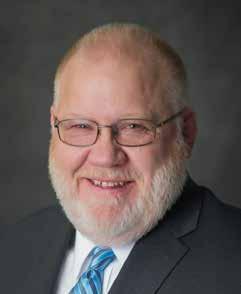
occur since the 1970s, and while it was met with frustrations, it provided the community with the funding needed to make necessary change. Additional alterations included ones to the water rate, which helped build essential infrastructure.
During his time, Preece sat on the board for the South Davis Sewer District as well. While in that role, he played a part in pushing forward ordinances for new projects, such as the ongoing renovations being made to their facility.
Despite serving several years on the council and being involved in a variety of changes, Preece doesn’t consider a lot of the decisions he made to be “hard.”
“There were some hard things we did, but the ones I felt I made were the right ones,” said Preece. “Like we always say [on the council], you’ve got to count to three. We always had to have three, and there were a lot of votes that were split three-to-two. But, I was always on the three side, I have to say. No decisions were hard. You just have to make the right ones.”
Preece’s tenure on the council came to an end during 2025’s election season. On Jan. 6, his successor, Julie Thompson, appeared in her first meeting with the city.
While Preece is unsure of what his next responsibility will look like, he has let Mayor Romney know that he’s open to new projects – and that he hasn’t ruled out a second run.
“I think if one day something happens that really makes me angry enough, I might run again,” said Preece. “I can see myself saying ‘hey, wait a second. That doesn’t make sense,’ and I’d try to run again, but I don’t really plan on it. My thing will just be if the mayor calls and he needs help with a committee, or he needs help with something, I would be the first guy to say yes.” l
Inspired by his family’s history of hardship and his own journey through tough times, Layton author Brian T Harris has released his debut novel “Drawn to You,” a story about healing, creativity, and rediscovering oneself after heartbreak.
By Gail Newbold andersennewbold@gmail.com
author Brian T Harris knows firsthand about hard times and healing in his own life as well as his ancestors. His Japanese grandmother was incarcerated in the Manzanar War Relocation Center in the 1940s. After her family’s release, his mom remembers living in a boxcar and eating catsup packages at school because of the family’s extreme poverty.
“Going through hard things is something my family has experienced,” said Harris who grew up in Meridien, Idaho, and now lives with his wife and five children in Layton.
Although he works full time as a healthcare administrator supporting VA outpatient clinics, writing and other creative pursuits have always been part of his life. “I started with writing poems,” he said. “I sing, play the piano and guitar, and produce music. It
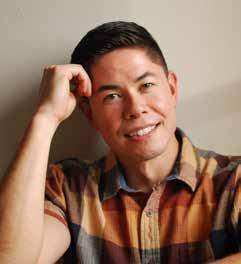

was always on my bucket list to write a book, but I didn’t know what to write about.”
Knowing that everyone goes through hard things, he decided to craft a contemporary women’s fiction novel centered on art, healing and love.
“I wanted to write about how we get through the hard times and come out the other end,” he said. “And about how we can support others and help them heal. I learned a lot while helping my sister through a divorce.
But I also kind of wrote the book for myself.”
Titled “Drawn to You,” the book follows Luna Reyes, a woman navigating life after the end of a long-term relationship that left her disconnected from her sense of self. After years of setting aside her artistic passion, Luna returns to drawing and painting, using creativity to process loss, rebuild confidence, and rediscover her voice. The novel encourages readers to see love as something that honors individuality rather than erasing
it, and to understand that choosing yourself can be the first step toward deeper connection. Harris hopes readers will connect with the book’s themes of second chances, self-acceptance, and rebuilding after heartbreak.
Although Harris has not experienced divorce, he’s endured feelings of inadequacy, depression, anxiety, days that blurred together and unemployment. “I want my readers to know they can come out on the other side as I have,” he said. Harris served a mission in Taiwan for The Church of Jesus Christ of Latter-day Saints, earned a bachelor’s degree from Brigham Young University and a combined MBA and MHA degree from the University of Utah.
Someday, he dreams of writing about his grandmother’s life. “She’s 98 years old and lives with my mom who is a watercolor artist,” said Harris. “After the war, my grandmother’s family moved back to Los Angeles where they discovered everything they previously owned had been taken from them. They moved to Idaho Falls where there was an existing Japanese community and lived in a boxcar.”
The self-published novel has already reached new-release top charts and is available on Amazon and Kindle Unlimited. Harris hopes it will become a bestseller. Meanwhile he is deep into writing his second book during lunch hours at work.
“Drawn to You” is available at https://a. co/d/2qhjJVv. l

REX VEROUGHN TORGENSON, age 94, passed away peacefully at his home on Monday, Jan. 19, 2026. He was born Nov. 3, 1931, in Salina, Utah, to Arvin V. and Chloeen Torgenson. Rex married his sweetheart, Renee Poulson, on Feb. 20, 1950, beginning a loving partnership that shaped his life and legacy.
Rex was raised in Salina, Utah, where he learned the value of hard work early in life. One year after marrying Renee, he joined the United States Navy and proudly served during the Korean War until 1955. After his military service, Rex and Renee moved to Layton, Utah, where they raised their family. Rex worked at Hill Air Force Base as a radome technician and was an active member of his community, including service with the Jaycees.
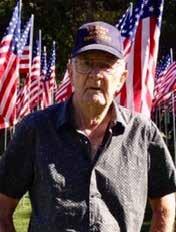
friendly efforts.
Despite his many talents and community involvement, Rex always made time for his family. He and Renee attended every event – keeping score at ball games, cheering at performances, teaching skills, and helping with any project that arose. As he grew older, Rex joyfully embraced new hobbies, including coloring, word searches, and countless diamond art projects. His generosity knew no bounds, and he touched countless lives through his selflessness, kindness, and strength.
Rex’s legacy lives on in the love he shared, the lessons he taught, and the countless acts of service he gave so freely. He will be deeply missed and forever remembered.
Family was always at the center of Rex’s life. He loved coaching his children, hunting and fishing on family camping trips, and making rugs. In 1987, Rex and Renee moved to Washington, Utah, where his creativity and generosity truly flourished. He was known for the most beautiful yard and a remarkable garden that produced the best tomatoes. Rex handcrafted incredible holiday decorations, made hundreds of sheets of peanut brittle to give away each Christmas, and sewed over 3,000 quilts. He loved irrigating and quickly became the neighborhood water master, earning recognition as an honorary leader in environmentally
He is survived by his children: Amy Torgenson; Fernando (Karen) Torgenson; Eugene Valdez; Marie Torgenson; and Rita (Tom) Leeman. He is also survived by his grandchildren: Malachi Nelson; Gina (Tony) Altenes; Marcus (Sara) Torgenson; Teresa (Ryan) Guthmiller; John Torgenson; Tori Anne (Jon) Jensen; and Jessie (Kevin) Newman; as well as 10 great-grandchildren. He is survived by his sisters Marva Colby, Arva Lund, and Catherine Edwards. Rex was preceded in death by many loved ones including his wife, Renee.
Funeral services were held on Jan. 31, 2026 in St. George, Utah. Interment in the Washington City Cemetery.
GEORGE K. FADEL , our dear father, grandfather, and “ummo,” departed this life on Jan. 1, 2026, at home among his family, at age 105 years and 12 days. Every second of his life was a valuable gift to us, and we are grateful for the cheer and love he gave us for our final Christmas with him here.
George was born on Dec. 20, 1920, in Salt Lake City, Utah, the eighth of nine children of Kaly and Besma Fadel. Among other things, his parents taught him how to love his neighbor, to speak Arabic, and to enjoy their native Lebanese food and culture. His parents and eight siblings predeceased him.
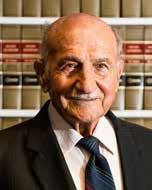
His family moved to their farm in Bountiful in about 1925, where George began cultivating his abilities as a master grower, learner, cheerleader, speaker, actor, advocate, leader, facilitator, teacher, builder, follower, and eternal optimist.
George worked on the family farm and in the family store on Main Street. He sought learning throughout his life and earned A’s as he attended Stoker Elementary, Bountiful Junior High School, Davis High School (class of 1938), and the University of Utah. He was a cheerleader for school and for us throughout his life. He won awards for debate and extemporaneous speaking and had a talent for being able to speak on a variety of topics without preparation. At the University of Utah, he majored in Military Science and Law, and he acted in leading roles in several plays.
He was admitted to the Utah Bar in 1948 and remained an active member of the Utah Bar until his death. He served as Bountiful City attorney for several years, while building his own private practice. He was the legal counsel for many municipalities operating power systems and the legal counsel for the Intermountain Consumer Power Assn. He was a member of the Bountiful Jaycees and Bountiful Rotary Club (over 50 years), and he served as the president of the South Davis Chamber of Commerce. He actively represented clients until age 100.
gan to modernize the fire department using the National Guard building on 200 South between Main Street and 100 West to house the fire engines. There was a water shortage during his administration, which was remedied by purchasing Harold Calder’s well. Later, when he was city attorney, the federal government began purchasing all the canyon water stock. He wisely urged city leaders to purchase all the water stock left in Barton Creek and Millcreek, which gave them control of two of the three major canyon streams. George worked hard all his life. He put energy and love into everything he did. He accomplished so much each day in helping his family and other people; maintaining his property, garden, orchards, animals, and buildings; and in shopping for and preparing Sunday dinner for all the family each week. He did all these things until he became ill four weeks before his death.
George was a master teacher. If something needed to be done, he learned how to do it and then taught it to someone else. His hobbies were among the topics of instruction, which included gardening, roller skate dancing, horse riding, fishing, duck hunting, sports, and building. Like his father, his building expertise was with rock, and he has built many rock walls and buildings. We enjoyed building strong walls out of rock with him. He is our rock.
He was a follower of Jesus Christ without associating with any particular church. When his children were young, he taught them about Jesus every Sunday out of the New Testament. He taught us to sing, “Praise God from Whom All Blessings Flow,” and to recite the Lord’s prayer in English, Arabic and Latin.


In World War II (1942-45), he served as an artillery captain in the army, mostly in northern Italy, where he learned Italian. Later, he organized the National Guard in Bountiful. He was a lifetime member of the Bountiful Jeep Posse.
He began serving as mayor of Bountiful in 1954, when he was only 33, and he served until 1957. During this time, pressure groups were trying to push the city out of the power-business. Under Mayor Fadel’s leadership, a revenue bond passed, making it possible to modernize the power generator facilities, allowing the power company to be a great source of city revenue. It also provided power to residents at less than the prevailing rate of nearby areas. With the increasing city revenues from the power company, he and his council be-
George’s mind remained clear and strong throughout his 105 years. As an eternal optimist, George remembered everything good. He didn’t just remember the good. He remembered the details of everything, in a good way, always with faith and hope for the present and the future. This gave him great resilience. With great love, we will forever remember him in the best way, and with great hope.
This is one of George’s sayings: “Do good, and the bounties will overflow the ocean. That which you needed so badly, quickly, will eventually come when experience and maturity have prepared its reception.”
George is survived by his four children, Kia Hodgson (Russel), Kristin Fadel (John Diaz), Douglas Fadel (Micah Beals), and Kara Burnett (Daren); his former wife, Janice Kramer; his 14 grandchildren; and two great-grandchildren.
Funeral services were held Saturday, Jan. 10, 2026. Interment Bountiful City Cemetery.
GRANT E. SECRIST passed away at his home in Cedar City, Utah, on Jan. 22, 2026 at the age of 89. Grant was born in Rock Springs, Wyoming, on Oct. 8, 1936, to his parents, Grant H. Secrist and Josephine Zueck Secrist. He grew up in Bountiful, Utah, and also spent time in Rock Springs with his beloved maternal grandparents, who significantly shaped his life. Gene, as he was known to family and close friends, learned the value of hard work at a very young age, working on local farms by age eight and delivering newspapers. He was the oldest of five boys and was expected to care for his brothers while his father was working in the trucking industry, and his mother was very involved in local civic affairs during and after World War II. His brothers (Gary, Joe, Tom, and Bill) looked to his example and leadership throughout their lives. Gene graduated from Davis High School in 1954, where he lettered in four varsity sports.
nel in 1981.
In 1979, Grant married Narcie Garcia Temple in San Antonio, Texas. Narcie and her son, Michael, became part of the family. Narcie was by his side for nearly 47 years. They found their way to Cedar City, Utah, where they have lived together for the last 30 years.
Following his Air Force career, Grant founded Human Performance Research Associates, where he consulted on numerous projects, including the development of High Demand Training concepts. The application of these concepts enhanced fighter pilot training, led to a long-standing relationship with Major League Baseball umpires, and supported other commercial applications.

Grant continued his education at the College of Southern Utah (now Southern Utah University), where he lettered in football, baseball, and track. In 1955, he married his high school sweetheart, Carol Babcock. Over the next nine years, they welcomed five children: Ted, Rick G., Susan, Michele, and David. The marriage later ended in divorce in 1977.
Grant continued his education at the University of Utah and completed a bachelor’s degree in psychology. While at the University of Utah, Grant joined the Air Force ROTC, earning the Distinguished Military Graduate designation and being commissioned as an officer. He served on continuous active duty for 22 years, including assignments with the Strategic Air Command Missile Combat Crew and the Air Force Manned Orbiting Laboratory program. While in the Air Force, he completed a master’s degree at Purdue University and a Ph.D. at the University of Utah. He retired from the Air Force as a Lt. Colo -
Grant had a love of God, family, and country. He had a burning desire to leave the world and his country a better place for his children and grandchildren. He worked tirelessly to research and write, aiming to improve the trajectory of the country he loved right up to the time of his passing. He loved the beauty of the American West and was especially fond of the Wind River Mountains in Wyoming. Grant also passionately pursued his family’s historical roots, including early Utah pioneers and his maternal grandparents who immigrated from Northern Italy.
Grant was a loving father, grandfather, and uncle. He found a way to bond with each of his 18 grandchildren, focusing on their individual interests so that each would say they are his favorite.
Grant is survived by his wife, Narcie; his children, Ted Secrist (Sandy), Susan Phelps, Michele Swenson (Rick), David Secrist (Julie), and Michael Temple (Sherry); 18 grandchildren; 33 great-grandchildren; and one brother, Bill Secrist (Tammy).
Services were held Feb. 3, 2026 at Southern Utah Mortuary, in Cedar City, Utah. Interment at the Southern Utah National Cemetery in Cedar City.


of natural light in this building now.”
By Becky Ginos becky.g@thecityjournals.com
the new Bountiful
City Hall was renovated one of the ideas behind it was to make it more usable for the public. There are several rooms that could be considered for public rental and the city council discussed creating a clear policy to guide the use of those rooms at a work session held Dec. 4.
“For those who don’t know, in the basement we had, right in the middle of this building, basically below us, what we call the black hole,” said City Administrator, Gary Hill. “It was a huge storage area that was basically unused for anything other than that, just enough to see what you were doing.”
It was a large unused space, he said. “In addition, what I think the neatest innovation that we’ve done in this building with the remodel was adding the windows to this council room. It opened up this space and some other windows on the top floor. We have a lot
The other great innovation was being able to take that space downstairs in particular and configure it in a way that is much more usable for employee activities but we also designed it in a way so that it could be rented out and used for the public, said Hill. “One of the challenges with renting public space is figuring out the doors and the locked situation but we think we’ve kind of figured that out. What we want to do is get some direction from you (council) on a variety of issues related to our proposed policy so we can begin renting the building to folks that might need it.”
Hill said city staff are proposing four different rooms. “Potentially one is the council chambers. One is the basement conference room. That’s what is lovingly called the fishbowl room. The one with the windows around it, or with the glass around it. Then the multipurpose room which can be used as a whole room or can be divided in half.”
Those would be the spaces available for rent, he said. “We would recommend some fees. The first policy question we want to ask is if you are comfortable with the idea of a differential fee for residents versus nonresidents.”
“I have a question about whether these are a per hour fee or a block like four hours or a whole day,” said current Mayor Kate Bradshaw, who was a councilmember at the time.
Yes these would be for a block of time,



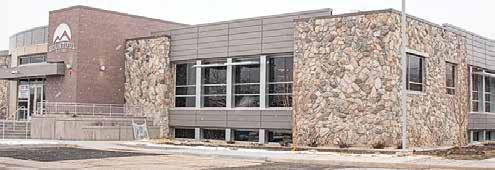
said Hill. “Essentially half day blocks.”
“This is Bountiful City Hall and personally I’m fine with giving a preference to residents of Bountiful,” Bradshaw said. “I could see this as kind of a regional gathering point for surrounding communities or our legislators who serve multiple communities.”
“So I did have a question about a group like South Davis Communities that Care,” said Councilmember Beth Child. “They kind of travel around to each of the south Davis City Halls. I know they’ve had one meeting here recently but that’s a group that benefits our community.”
It’s not necessarily from Bountiful, she said. “Would you charge them a rate to do lunchtime meetings?”
“Right now what we have contemplated is primarily the use would be folks who want to come in and use it for a recital, potentially a reception or a birthday party or the occasional meeting,” said Hill. “What we haven’t really had much conversation about is this idea of nonprofit use and ongoing use. Our recommendation is that we not allow anybody, to say, hold clubs here or monopolize the space having a regular meeting all the time that isn’t our own. We have our own committees like the community service council that already meets here once a week and things like that.”
Maybe it makes sense to have a nonprofit category that is separate from the resident, nonresident, he said. “I believe there are city partners and establish who those people are that we would allow to use it.”
It would be nice to be able to say for ex-
ample that elected representatives from the state or from Congress coming who might want to have an open house here for residents – not political – just an open house could, said Hill. “That’s a great benefit to our community. Our residents are better served by having it here than having to go to some other community. We might need some discretion on if it’s a part of governmental partnership or maybe educational so that there’s some ability to waive fees.”
The council discussed what the public’s rental would include. “What about access to our tables and chairs downstairs?” said Bradshaw. “Would that be an additional fee or is that an expectation that you can use them?
“That’d just be included with the use,” Hill said. “The rental of the room, the tables and chairs.”
“I love the idea of allowing these spaces to be more accessible for all types of uses,” said Councilmember Cecilee Price-Huish. “I do hope that we can really dive into this but I do like the idea of our city partners and partner agencies and all the things that were mentioned and maybe having a fee extension.”
“I agree with you that the intent is that people can come here to City Hall,” said Mayor Kendalyn Harris, who was in office at the time. “It’s accessible. It’s for the residents. I love that idea for sure.”
The council did not make a firm decision that night. For more information and a proposed fee chart go to https://www.bountifulutah.gov/file/75551f83-36f4-4511-80632f62499d44f0 page 7. l




TheFirst Amendment now comes with footnotes. Instead of promising not to abridge the freedom of speech, government officials are quietly redlining your opinions like a ruthless book editor holding a grudge.
The erosion of our First Amendment rights should wake you up like a five-alarm fire.
Banned Media. Reporters have been barred from the White House, kicked out of the Pentagon and have lost access to the press secretary’s office. A Washington Post reporter had her house searched by the FBI, relabeling journalists from “democracy watchdogs” to “people of interest.”
The president threatens the media licenses of organizations that don’t paint him in a flattering light. He’s sued networks for billions, ordered shows to be canceled and got Jimmy Kimmel fired. When millions of people canceled Disney and HULU, Kimmel was put back on the air, so I guess free speech can now be bundled with your subscription.
Banned Words. This melting pot we call America has outlawed diversity, equity and inclusion. That’s like taking the heart out of the Tin Man or the soul out of Hozier.
The Head Start early childhood programs were told to remove a list of 200 words in grant applications or the Death Star would blow up their facilities. Words like “belong,” “disability,” and “mental health” will get funding denied, so now applicants have to do an interpre-

tative dance, acting out “equality” or “diverse.” Government leaders go ballistic if we use pronouns or call a trans person by their chosen name, yet expect the entire country to salute the nonsensical renaming of the Gulf of America or the Trump-Kennedy Center. It costs nothing to respect someone’s pronouns, but rebranding the Department of War will cost taxpayers more than $1 billion.
Banned Books. Having a library card is now an act of defiance. Utah loves a good book ban because nothing prepares kids for real life more than hiding information that makes them feel uncomfortable.
Utah already ranks at the bottom of education funding, but yes, let’s make our kids dumber by discouraging them from learning critical thinking skills or empathy. Reading as exploration is forbidden. Curiosity becomes taboo.
But if kids want to read a book, they’ll find a way to read it. A ban adds extra enticement, like putting chocolate sprinkles on an ice cream

sundae. We’re all for letting 18 year olds carry a rifle into McDonald’s, but heaven forbid they read “The Hate U Give,” which talks about a teen affected by gun violence.
Banned criticism. The First Amendment gives us the right to criticize anyone, even the president. You can slap bumper stickers on your VW, write columns or even burn the flag.
However, professors are being fired for political beliefs, protestors are tear-gassed and shot, and university funding is cut unless courses fall in line with this administration’s doctrine. Freedom of speech is now an extreme sport.
Here’s what’s not free speech: incitement, threats, defamation, obscenity and perjury. The president has threatened talk show hosts, slan-
dered Democratic leaders and there’s strong evidence he’s perjured himself several times. He is also protected under the First Amendment, but the president walks a Sharpie-thin line between free speech and hateful rhetoric. TrumpActionTracker.info documented 264 actions (as of Jan. 16) taken by the president and his administration during the last year to control information or spread propaganda. He’s all for free speech, as long as it’s only his.
History shows that free speech is as durable as steel, with the propensity to outlast those who violate it. The First Amendment doesn’t promise pleasant agreement but a safe space for necessary debate. Freedom of speech is not silent, and we shouldn’t be either.