TUESDAY, FEBRUARY 3 2026 | VOL. 45 | ISSUE 17
OPINION
Race-blind justice isn’t justice at all PG. 6
OFF THE BOARD
The road to reckoning FEATURE PGS. 8-9 A love letter to ‘Tribune’ haters
PG. 11

Mia Helfrich

TUESDAY, FEBRUARY 3 2026 | VOL. 45 | ISSUE 17
Race-blind justice isn’t justice at all PG. 6
The road to reckoning FEATURE PGS. 8-9 A love letter to ‘Tribune’ haters
PG. 11
Josette Chandler Staff Writer
In December 2024, the Legislative Assembly of Alberta passed the Health Statutes Amendment Act, officially known as Bill 26. This act restricts minors’ access to gender-affirming care (GAC), including prescriptions for puberty blockers and hormone therapy. In response, Egale Canada and Skipping Stone initiated litigation against the Government of Alberta over the constitutionality of Bill 26. In June 2025, the Court of King’s Bench of Alberta granted an injunction, effectively pausing Bill 26’s enactment.
In November 2025, the government introduced Bill 9, which used the notwithstanding clause to override the Charter of Rights and Freedoms. The injunction was ultimately removed in December 2025. Since then, Trans Rights YEG has created a petition to be brought into the House of Commons. The Tribune outlines how Bill 26 affects trans youth disproportionately, explaining how the petition may reverse the proposed legislation.
What is Bill 26?
Bill 26 is an Alberta law that amends the Provincial Health Agencies Act as well as the Health Professions Act by introducing regulations for new and existing provincial health organizations.
Celeste Trianon, an activist in Montreal known for her documentation and
tracking of anti-trans legislation, considers this law unconstitutional. In a written response to The Tribune , she stated how Bill 26 signals to trans youth that they are second-class citizens in Alberta, and that they do not have the same rights to care as other Albertans.
“It’s simple, they’re constitutionally protected rights!” Trianon wrote in relation to GAC. “This includes the right to life, liberty, and security of the person, to be exempt from cruel and unusual treatment, and to be treated equally under the law. This also includes, for trans youth themselves, to be treated under the principle of the ‘best interests of the child,’ the governing principle of family law across Canada.”
What does Bill 26 do?
Under this bill, minors in Alberta cannot access GAC, including puberty blockers, Hormone Replacement Therapy (HRT), and gender-affirming surgeries. Trianon insists the ban does long-lasting damage to the minors affected.
“These bans do not protect [trans youth]. Countless instances of research and the Alberta Court of King’s Bench have held that such bans create irreparable harm—up to and including suicide. And in many cases, these consequences are lifelong, both physical and psychological,” Trianon wrote.
According to a study by the Trevor Project, an organization founded in 1998
to aid 2SLGBTQIA+ youth, antitrans legislation— like that limiting access to GAC— increases suicide rates in trans and non-binary youth by 72 per cent. HRT has been found to decrease suicidality by over 67 per cent, showing this form of GAC to be crucial to supporting trans youth—a demographic where close to 49 per cent experience suicidal ideation.
What will the petition do?

With their petition, Trans Rights YEG is attempting to stop the continued implementation of Bill 26. The petition has already reached its goal of 500 signatures, but is still continuing to accept signatures until it is brought before the House of Commons. If successful, it will ensure trans youth in Alberta have access to GAC once again. Anyone who is a resident in Canada can sign the petition.
Trianon joined Trans Rights YEG in
Amelia H. Clark News Editor
On Jan. 19, the Students’ Society of McGill (SSMU) revoked Post Graduate Students’ Society (PGSS) members’ access to the Free Lunches Program. This decision follows PGSS executives opting out of the meal fee, which previously went towards the now-closed Midnight Kitchen (MK), but since closure has gone towards the program. Postgraduates previously paid $2 CAD per student per term, while undergraduates pay $8 CAD.
In a written exchange with The Tribune , the PGSS executive team declined to comment on the motivation behind their decision to suspend the fee or the state of ongoing negotiations.
SSMU President Dymetri Taylor explained in an interview with The Tribune that discussions between the two student societies led to the suspension of the fee, stating that PGSS felt they should have been consulted in the decision to close MK.
According to Taylor, PGSS cited the change in structure from MK to the new Free Lunches Program as their reason for suspending the fee. PGSS executives informed McGill of this decision. In response, the university responded that PGSS executives could not unilaterally decide to opt-out without their members’ say-so. This led to a compromise wherein PGSS would not collect the fee until May
18, when the results of a referendum moving to permanently suspend the meal fee are announced.
“Because there was a reorganization planned for that service, for the provision of meals to be increased and continue to be provided, the SSMU at the time believed that there was no incentive to reach out to PGSS about it. It’s a change of the service, but it’s not a removal of it,” Taylor said.
“So, [the PGSS] had a meeting with the [SSMU] executives, in which case they had a riveting discussion to say the very least. And there was certainly some interesting perspective shared by PGSS regarding Midnight Kitchen and the reorganization, so that has led to them wanting to remove the fee in general.”
Upon learning of PGSS’s final decision to suspend the fee, Taylor put forward a motion during the Jan. 15 Legislative Council meeting to restrict PGSS members’ access to the program and the SSMU food pantry. He stated that it is in the best interest of undergraduate students to stop subsidizing the cost of free lunches without a contribution from PGSS. The motion was passed unanimously. However, SSMU Vice-President (VP) External Seraphina Crema-Black later proposed an amendment to allow PGSS members to retain access to the food pantry until the referendum results are announced.
Crema-Black explained the motivation behind this amendment at the Jan. 20 Board of Directors meeting, stating that
discussions with PGSS SecretaryGeneral Sheheryar Ahmed and SSMU’s inhouse council led her to believe a compromise was reachable.
“I want to know whether that’s something that they would consider before we pull access, especially because it’s used disproportionately by PGSS members, and food insecurity is a very important issue,” Crema-Black said. “I think I will be doing right by the company in my capacity as VP External, knowing that we’ve been talking to PGSS.”
support of this petition. She insists that the passing of this petition is essential to stopping Bill 26’s drastic negative effects. “Kids will die. Families will be split apart. People will suffer. And the consequences will be unquantifiable,” Trianon said. “Few times do governments decide to actively destroy the lives of a few people, but the consequences will certainly be intergenerational.”

An email motion granted the amendment, allowing PGSS members to continue accessing the food pantry for the remainder of the Winter 2026 semester.
Students are now mandated to provide McGill identification proving that they are undergraduates before accessing the Free Lunches Program. If the motion to annul the fee fails, postgraduate students will again have access to these services but will have to pay an $8 CAD per-semester fee in order to match the contributions made by SSMU members.
Taylor told The Tribune that removing PGSS access to the daily free lunches is the required course of action until the referendum, as the program will have less funding due to the executives’ decision to suspend their fee. Without funding from PGSS, the program cannot serve as many students as it does currently.
“[The PGSS executives] believe that it is better that no fee should exist and that their students should not have access to a meal service that’s recurring every day of the week, [...] especially because the PGSS has no plans to institute any food accessible initiatives of their own at the present time,” Taylor said. “And now it’s up to their members to decide what is better, what is worse.”
Eren Atac News Editor
McGill Faculty of Law’s Centre for Human Rights & Legal Pluralism (CHRLP) hosted a workshop titled “Revitalization of Indigenous Justice in the Americas” over Zoom on Thursday, Jan. 29. The event featured three speakers active in Indigenous rights advocacy, including attorney Elizabeth Olvera Vásquez, McGill BCL/JD candidate Tarek Maussili, and Peruvian grassroots organizer Elsa Merma Ccahua.
The event explored the meaning of justice for Indigenous Peoples in the Americas, with a focus on community responsibility, the relationship between land and life, and collective repair. The speakers examined how these concepts exist in the context of marginalization, capitalism, and land dispossession, with an emphasis on current Indigenous efforts to challenge these systems of power.
Vásquez began the discussion by emphasizing the importance of Indigenous communities being familiar with their family origins and history. She explained that, through an understanding of family history, Indigenous people can more effectively integrate into their communities.
“It is important [for Indigenous people] to know that their children are part of the community itself, because they know [their family] background will imply responsibility in a deter-

mined moment,” Vásquez said. “So it is important to know where to find that.”
Maussili continued the talk by criticizing Canadian society’s treatment of Indigenous Peoples, using his childhood as an example of the country’s historic and continuous erasure of Indigenous cultures and identities.
“Being Indigenous in Canada was never a good thing up until 2015 or 2016. I went through high school and I finished around 2015 and I remember being Indigenous was the most horrible experience,” Maussili said. “You’re treated as subhuman. You’re not treated with respect, and this is still the case today. Justice means reclaim-
ing our identities and reclaiming our strength as a people. We’re losing our position in this country as Indigenous people from our respective nations. This is the goal of Canada, to assimilate our people, to dispossess us of our lands.”
He expressed the need for the younger generation of Indigenous people to get involved in activism, stressing the vitality of broader action against Canada’s attitude towards Indigenous rights.
“Getting the youth active is something that I would like to see for our people,” Maussili said. “When I was in Peru, I saw the youth and all the young activists getting involved in protest-
ing against the government and asserting their rights, and that sort of thing is what we need to see here in Canada [....] You can still clearly see that it’s not in Canada’s best interest to assert or to respect Aboriginal rights and titles. The future doesn’t really look good for us if we continue down this path.”
Ccahua spoke next, underlining the central role of land and territory in holding Indigenous communities together in the face of corporate advancement.
“We have been fighting with a mining company for many years,” Ccahua said. “I belong to an impacted and affected community, and we have a very long history. For our people, justice is defending [our] territory, water, and life. We live in a productive community that lives off the [land], and [our people] see those products as capital for their daily living and for supporting their families.”
She concluded the workshop by stressing the role of Indigenous activism as a tool for autonomy against governmental agendas of cultural assimilation.
“In spite of all of the negative [experiences] our communities have gone through, I strongly believe that something that continues to be very present is resistance and the ways of resistance in which communities have found their own political [and] judicial strategies,” Ccahua said. “Why speak about Indigenous justice? It enhances the self-determination and autonomy of Indigenous Peoples.”
Expert panellists warn that Bill 94 affects religious minorities disproportionately
Devdas Hind Contributor
On Jan. 27, Muslim Awareness Week (MAW) hosted a roundtable on the dangers to civil liberties that Bill 94—passed in October 2025—would bring.
Quebec lawmakers allege that Bill 94 is intended to reinforce secularism in the Quebec education system and bring several legislative reforms. The bill requires any worker providing services to students, as well as students themselves, to keep their faces uncovered within public or private institutions, and to refrain from wearing any visible religious symbols. This restriction does not apply to coverings worn for medical reasons or by people with disabilities.
The author of the bill, former education minister for the Coalition Avenir Québec (CAQ) Bernard Drainville, argues that these measures are meant to promote Quebecois and democratic values such as gender equality and a secular state.
The roundtable convened at the Centre communautaire de loisir de la Côte-des-neiges and was composed of three panellists: Ligue des droits et libertés Coordinator Laurence Guénette, Professor of Law at the Université de Québec à Montréal (UQÀM) Ndeye Dieynaba Ndiaye, and UQÀM Political Science Master’s student Nour Amjahdi. The panel was overseen by MAW President and Co-Founder Samira Laouni.
Laouni began by acknowledging the
ninth anniversary of the Jan. 29 mass shooting at the Islamic Cultural Centre of Quebec City, emphasizing the importance of fighting Islamophobia. She then introduced the main concern with Bill 94, noting that it excludes Muslim women from working in the public sector, given that many of them choose to wear hijabs for religious and cultural reasons.
“While pushing the fundamental value of gender equality, [the government] is violating the right to work of certain women,” Laouni said. “How can gender equality be achieved without the financial independence of women?”
Laouni then passed the microphone to Guénette, who began with an assessment of the Quebec government’s actions since the Act respecting the laicity of the State (Bill 21) was passed in 2019. She noted that Bill 94 expands the restrictions of Bill 21, and adds to the existing violations of certain marginalized groups’ rights.
“The religious neutrality of the state [is] meant to allow everyone to practice their religion freely without fear of compromising their convictions and with respect to the right to equality,” Guénette stated.
She continued by explaining that the CAQ adopted Bills 21 and 94 despite opposition from several feminist and human rights organizations. She also noted that the restrictions on face coverings in Bill 94 represented flagrant violations of both the Canadian and Quebec Charters of Rights
and Freedoms. Guénette ended by warning that the CAQ’s use of the notwithstanding clause to override constitutional protections should worry everyone in society.
Next, Amjahdi discussed how she was directly impacted by the ban on face coverings.
After Bill 21 was passed, she could no longer teach music as she had intended. More recently, she lost her job leading a children’s choir because of Bill 94.

“It was very violent,” Amjahdi said. “I was quite lost and my life turned upside down. I felt that my identity was shaken. This law put an end to my musical identity.”
Amjahdi explained that, despite being a product of the Quebec francophone school system, she now questions her identity as a Quebecoise. She concluded by calling for allies of the Muslim community to join them in protesting these bills.
Dieynaba Ndiaye, the fourth panellist, discussed the importance of speaking out against constitutional injustices.
“In certain societies [like Quebec], filing grievances has an important moral value. We must do it when rights are violated in Quebec,” Dieynaba Ndiaye affirmed. “We have the Commission des droits de la personne et des droits de la jeunesse.”
According to Dieynaba Ndiaye, Bill 94, along with several other pieces of legislation, represents a rupture of this social contract.
“It’s very important [to understand] that people come here with competencies, with experience,” Dieynaba Ndiaye said. “People choose Quebec just as Quebec chooses people.”
*All quotes were translated from French.
Eimaan Ahmed Contributor
In July 2025, the Coalition Avenir Québec (CAQ) agreed to a project proposal that permits cohabitation in social housing, allowing unhoused individuals to live with a roommate. However, as of January 2026, this proposal has not yet been implemented.
In response, Québec Solidaire called out the CAQ on Jan. 18 for its inaction on the issue. They cited the CAQ’s inefficiency in fulfilling its commitments to provide housing solutions to counter the shelter crisis.
The city’s homeless shelters are increasingly overoccupied, with many unhoused individuals turning to emergency rooms for shelter. In a written statement to The Tribune, Jayne Malenfant, an assistant professor in the
Department of Integrated Studies in Education, explained how the government could implement homelessness prevention to offset the number of people in need of housing.
“The proposed project would have been a start but it would have just treated the symptoms of the housing crisis rather than the root causes,” Malenfant said. “The provincial and municipal governments have to start considering and implementing rights-based policies that see a home as a right, and not something that people can be pushed out of for the profit of landlords or rental companies.”
The homelessness crisis has worsened with rising costs of living, increasing rent prices, and insufficient funding for community groups. In the first quarter of 2025 alone, the average rent for two-bedroom apartments in the metropolitan area increased by 7.7 per cent, making it harder for residents to find af-
fordable housing.
Eza-Marie Lambert, U1 Arts, reflected on rising housing costs in a statement to The Tribune.

On Jan. 1, the Quebec government introduced a new method for calculating rent. (Anna Seger / The Tribune)
“The only reason my parents and I are able to live on the first floor of a beautiful triplex in the Plateau is because we rent it at a discounted price from my extended family, who purchased the whole building for under $70,000 [CAD] back in the late sixties,” Lambert said. “To put that number in perspective, purchasing that same building in 2026 would run you well over $2,000,000 [CAD].”
Gregor McCall Student Life Editor
On Jan. 29, the Students’ Society of McGill University’s (SSMU) Legislative Council (LC) convened to discuss a new motion proposed by SSMU President Dymetri Taylor. The motion seeks several amendments to the SSMU Constitution—the Society’s fundamental governing document, which outlines SSMU’s roles as the governing body of McGill undergraduates and serves as its legal by-law regarding its status as a non-profit corporation under the Quebec government.
The meeting began with Executive and Councillor reports. During Vice-President (VP) University Affairs Susan Aloudat’s report, Science Councillor Benjamin Yu inquired into McGill’s proposed Identification Policy for Access to Properties Owned, Occupied, or Used by the University, which was presented to the McGill Senate on Jan. 14.
Though Aloudat assured the LC that the Senate had serious concerns with the proposed policy—which would empower unspecified, authorized personnel to request anyone on university grounds to provide McGill or government-issued identification and remove facial coverings—she expressed her belief that the proposed policy would nonetheless pass the Senate and move to the Board of Directors (BoD). Still, she intimated that the policy would undergo reforms before its ultimate implementation.
“I do think that [the Senate is] going to reimagine [the policy], especially for considerations like certain groups who will be experiencing [on-demand identification] disproportionately, who are on campus for perfectly legitimate and academic affairs,” Aloudat said. “[McGill should put] […] guardrails around when this policy will be used, so that it’s only applied and enacted in situations where security is a genuine threat or risk, and not a ‘perceived’ risk or arbitrarily interpreted
risk.”
Also during Aloudat’s report, Arts Councillor Delaney Cahill inquired into SSMU’s policy that grants undergraduates access to Grammarly, a writing-assistant software powered by Artificial Intelligence (AI). Cahill stated that members of the Faculty of Arts professoriate are concerned that SSMU is providing undergraduates with access to AI tools that could be used to undermine academic integrity.
“Some of the [Faculty of Arts] teachers weren’t thrilled about [undergraduate access to Grammarly] and […] the SSMU prompting the students to use Grammarly and AI in general,” Cahill noted. “What is the SSMU doing to combat […] unethical AI use right now?”
While Aloudat stated that it was not her duty to police undergraduates’ use of AI, Taylor later clarified that the generative AI features in Grammarly are unavailable to undergraduates.
Taylor then presented the newly proposed motion, which seeks to amend the SSMU Constitution to, among other initiatives, further empower the LC, change specific terminology, combat the politicization of the BoD, and specify the roles and powers of Board and Executive Council members.
One of the amendments would change the constitution’s nomenclature, replacing the current designation “Board of Directors” with the name “College of Directors.” Taylor explained that part of the rationale for this amendment is that “College of Directors” has a more positive connotation than its current name.
“[The current designation] gives the impression that the Society is more of a corporation than a student society,” Taylor said. “That is the current way in which we are structured [….] We are both [a non-profit] company and a student society, […] but principally the change […] [from] ‘Board’ to ‘College,’ […] more or less presents an opportunity for the Board to be considered into a better light than
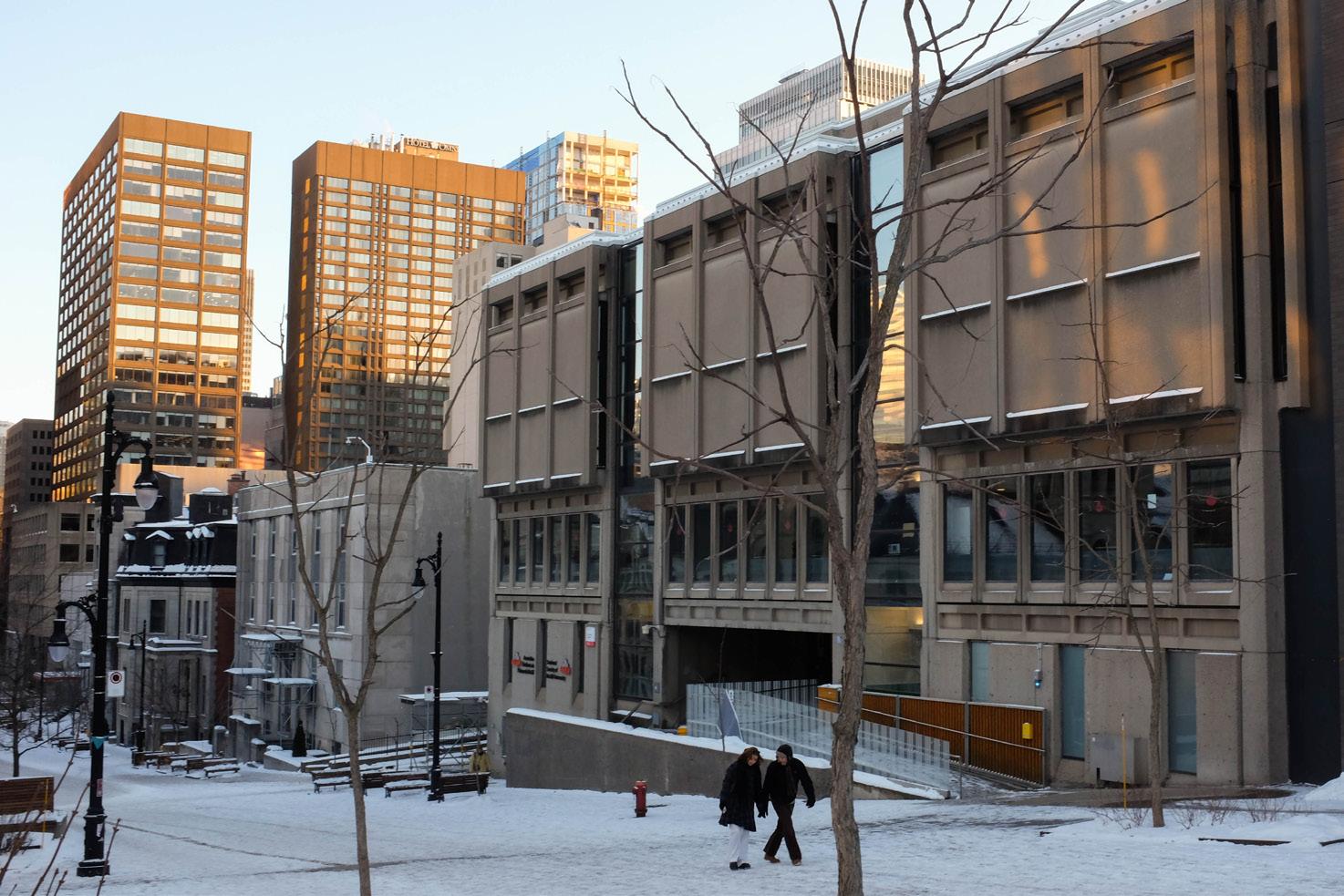
how the Board has been viewed in previous times.”
Similarly, Taylor indicated that amendments to increase the LC’s oversight over the BoD and its subgroup, the Executive Council, were necessary in light of past political polarization within the Board.
“[In the past] executives might tap [individuals] because they want to get people that are like-minded to them onto the Board,” Taylor said. “[It served as] a way for the executives […] to then be able to have their vision [of the BoD] be the one that goes forward without necessarily getting the broad perspective that you otherwise get in as a council.”
Taylor mentioned how, rather than focusing on legal, financial, and operational duties, the BoD has gradually and strategically begun to shape what SSMU achieves.
“With the board now and with the way it’s currently structured, for instance, for our job contracts, I’m overseeing the executives, which doesn’t make any sense at all,” Taylor said. “There can be interpersonal issues that
arise [….] That’s what this [amendment] is trying to navigate, as well as to also ensure executive accountability.”
Ultimately, the motion was tabled. If passed by the LC and a student referendum, it would be implemented on May 4.
Moment of the meeting:
Arts Senator Keith Baybayon and VP University Affairs Susan Aloudat discussed potential accommodations to address McGill’s 2026 Spring Convocation dates and the conflicts it imposes on Muslim graduates celebrating Eid alAdha.
Soundbite:
“The Faculty of Music throws the best bars out of every single faculty! You can quote me on that, Tribune!” — VP External Seraphina Crema-Black, regarding the Music Councillor’s report on the success of the Music Undergraduate Students’ Association holiday party.
Editor-in-Chief Yusur Al-Sharqi editor@thetribune.ca
Creative Director Mia Helfrich creativedirector@thetribune.ca
Managing Editors Kaitlyn Schramm kschramm@thetribune.ca
Malika Logossou mlogossou@thetribune.ca Nell Pollak npollak@thetribune.ca
News Editors Eren Atec
Amelia H. Clark Asher Kui news@thetribune.ca
Opinion Editors Moyọ Alabi Defne Feyzioglu Ellen Lurie opinion@thetribune.ca
Science & Technology Editors
Leanne Cherry
Sarah McDonald scitech@thetribune.ca
Student Life Editors
Gregor McCall Tamiyana Roemer studentlife@thetribune.ca
Features Editor Jenna Durante features@thetribune.ca
Arts & Entertainment Editors Alexandra Lasser Bianca Sugunasiri arts@thetribune.ca
Sports Editors Ethan Kahn Clara Smyrski sports@thetribune.ca
Design Editors Zoe Lee Eliot Loose design@thetribune.ca
Photo Editors Armen Erzingatzian Anna Seger photo@thetribune.ca
Multimedia Editors Seo Hyun Lee multimedia@thetribune.ca
Web Developers Rupneet Shahriar Johanna Gaba Kpayedo webdev@thetribune.ca
Copy Editor Sarah-Maria Khoueiry copy@thetribune.ca
Social Media Editor Mariam Lakoande socialmedia@thetribune.ca
Business Manager Laura Pantaleon business@thetribune.ca
Rachel Blackstone, José Moro Gutiérrez, Dylan Hing, Lia James, Ethan Khan, Antoine Larocque, Sophia Lay, Lialah Mavani, Talia Moskowitz, Julie Raout, Parisa Rasul, Alex Hawes Silva, Michelle Yankovsky, Ivanna Zhang Lilly Guilbeault, Emiko Kamiya, Alexa Roemer
CONTRIBUTORS
Eimaan Ahmed, Lulu Calame, Nello Giuliani, Devdas Hind,Will Kennedy, Camila Sierra Ordóñez, Gretta Iraheta Palacios, Sophia Angela Zhang Gwen Heffernan, Abbey Locker. Sophie Schuyler
IIn 2020, the Black Class Action Secretariat (BCAS), a nonprofit organization dedicated to addressing systemic discrimination against workers across Canada’s public institutions, filed Thompson et al. vs Canada, a federal class action representing 45,000 Black Canadians. The lawsuit seeks to address systemic anti-Black racism in the Public Service of Canada, namely discrimination in the hiring and promotion of Black employees.
After five years of litigation, the Federal Court denied certification of the class action in March 2025 . Despite publicly acknowledging the pervasive nature of anti-Black discrimination in the Public Service and settling class actions with other groups in the same sector, the Canadian federal government has refused to recognize the legitimacy of the lawsuit’s claims and has spent over $15 million CAD targeting the BCAS aggressive legal injunctions. By financing the obstruction of Black public servants from legal channels instead of taking concrete, institutional action against systemic racism, the Government of Canada has once again revealed that its commitment to fighting anti-Black discrimination is superficial and
Nello Giuliani Contributor
Black History Month in Canada is a celebration of Black people and their cultures, the diversity of Black communities, and the contributions and legacies of Black Canadians throughout the country’s history.
However, Black History Month is often viewed purely as commemorative, intended to spotlight Black historical figures for the sake of mere acknowledgment and recognition. Yet, the month’s purpose lies far beyond that. Black History Month involves the conscious reevaluation of how histories are written, constructed, and shared, by emphasizing the lesser-known aspects of Black history, noting how information and histories are shaped by power relations, and actively decolonizing collective memory and the process of history creation. This approach, known as historiography, serves to analyze how Black history has been and must continue to be revisited, re-celebrated, and reunderstood.
In Canada, February was first
perfunctory. The Canadian federal government’s continued prioritization of public statements over effective policy only leads to further entrenchment of structural racism in the public sector—a pattern mirrored by institutions across the country, including McGill.
Black employees are chronically underrepresented in the Public Service, making up less than two per cent of managerial positions and often being hired in lowerlevel administrative categories. In the criminal justice system, where Black people are disproportionately targeted through over-policing and incarceration, representation is crucial. A lack of diversity and Black leadership within the Department of Justice and the Royal Canadian Mounted Police (RCMP) shapes outcomes for Black Canadians and further ingrains bias into already discriminatory systems.
To address these gaps, the BCAS lawsuit has demanded several tangible action items: Equitable representation, an external reporting mechanism for harassment and misconduct, financial compensation, and a Black Equity Commission to coordinate recommendations. Injuries amount to $2.5 billion CAD, with the BCAS also requesting that funds be allocated for punitive damages to deter future discrimination.
The Federal Court justified
rejecting the lawsuit’s certification by asserting that its claims could risk over-expenditure, despite the government comfortably investing $15,024,452 CAD in legal dues to fight the BCAS. This funding could have been transformative if directed toward the action items identified by the BCAS, or if employed to tackle anti-Black racism in other institutions across Canada, such as the healthcare, education, housing, and child welfare systems. The federal government’s message is clear: Canada would rather invest in silencing legal claims than taking genuine steps to confront antiBlack racism.
Crucially, the lawsuit also demands amending the Employment Equity Act to create a separate category for Black employees distinct from the ‘visible minority’ designation, a term used to identify groups eligible for equity measures. This strategy of demarcation erases complex differences in experiences between racialized groups in Canada, instead choosing to define ‘visible minorities’ in the negative, as “persons other than Indigenous people who are non-Caucasian in race or non-white in colour”—a framing that positions whiteness as the default against which everyone else is defined. By homogenizing all racialized groups into a single umbrella category, this approach neglects how systemic racism targets Black Canadians
through distinct mechanisms that lead to disparate inequities.
This pattern of neglect for comprehensive reckoning is not confined to the federal government. Bound by the Employment Equity Act, McGill’s own policies are too shaped by the presence of the ‘visible minority’ designation and its accompanying negligence, with McGill’s commitment to reconciling its history of racism and slavery remaining superficial. Reporting and faculty testimonies continue to document severe underrepresentation of Black professors, hostile workplace environments, systemic discrimination against Black faculty, exclusion from senior leadership, and an over-reliance on Black labour to drive anti-racism efforts.
The BCAS has since appealed the Federal Court’s refusal to certify their class action. The Canadian government, its courts, and institutions like McGill are now confronted with a choice: Continue to rely on empty gestures, or take meaningful action toward fighting anti-Black racism. Institutions must disaggregate ‘visible minority’ data, institute binding hiring and promotion commitments for Black workers and faculty, and create independent mechanisms for reporting anti-Black discrimination. Not statements, not mere recognition, not diversion and distraction— radical, systemic change.
designated as Black History Month in 1978 by Daniel Hill and Wilson Brooks, the founders of the Ontario Black History Society (OBHS). In 1995, Canadian Member of Parliament Jean Augustine presented a motion to formally recognize February as Black History Month, which was unanimously approved by the House of Commons. Augustine, having worked in education, understood the importance of institutionalizing this celebration within Canadian education and collective memory.
However, the motion to recognize Black History Month was only fully passed by Parliament in 2008, when Senator Donald Oliver pursued its recognition in the Senate. Oliver emphasized the importance of Black History Month in challenging our common perceptions of history and tackling racial prejudices. He also tied the month’s value to Canadian pedagogy, stating schools must teach the country’s history of slavery and segregation—the latter of which lasted well into the 1960s—in order to understand the present-day fight against anti-Black racism. Therefore, one of the active goals of Black History Month is to analyze biases
and how they have systematically hidden stories from conventional Canadian history.
Systemic biases still persist today, including through notions like Canadian exceptionalism, under which anti-Black racism is often depicted as external and U.S.specific. Overlooked far too often are patterns of prejudiced policing and disproportionate incarceration rates in Canada. In 2015, Black people were twice as likely to be accused in Canadian criminal courts, and in 2020, Black people accounted for nine per cent of federal correction populations, despite making up only four per cent of adults in Canada. Also neglected is the underrepresentation of Black people in academia, as only 2.3 per cent of high-ranking positions at Canadian universities were held by Black professionals as of 2024. These statistics demonstrate that Anti-Black racism is not a strictly American phenomenon, and reveal the critical significance of Black History Month as a mechanism through which to revisit such biases.
An important part of this process is interrogating how history has selectively omitted Black narratives. This goal does not have to be solely
pursued through historical research and education reform, but can also be achieved through cultural events, such as music, visual art, and performance art. In this way, cultural events become part of the historiographical process themselves—sites where Black artists and communities reframe dominant narratives and participate in the ongoing reconstruction of collective memory.
Black History Month’s historiographic power lies in its recurrence, its nature annually underscoring the voices of Black Canadians while also finding new ways to challenge Canadian history. One of the best ways to continue this tradition is through education. At McGill, this means going beyond initiatives and events during February to offering courses on Black history and critical Canadian history, designating a program specifically for Black Studies, and reconciling its own histories of slavery, discrimination, and exclusion.
Black History Month anchors a celebration of Black excellence and cultures, but this cannot exist without an ongoing commitment to reexamining the stories Canada tells about itself.
Camila Sierra Ordóñez Contributor
n November 2025, the McGill School of Social Work published a study examining racial disparities in child welfare interventions across Canada, finding that Black children were investigated for maltreatment at 2.27 times the rate of white children. When researchers matched cases with similar clinical and socioeconomic profiles, out-of-home placement rates were twice as high for Black children as for their white counterparts.
Existing data has posited that the overrepresentation of Black families in child welfare interventions reflects structural inequalities. Researchers note that poverty and its associated factors are the primary drivers of out-of-home placement, and with Black Canadians experiencing disproportionately high rates of poverty, they argue that racial disparities in interventions merely reflect the impact of systemic racism on socioeconomic status. However, these disparities cannot be explained by poverty alone.
Child welfare practices have systematically targeted Black families through biased decision-making, overpolicing, and heightened surveillance of Black families. Existing risk assessment tools have failed to account for differences in parenting styles between families, revealing a profound racial bias embedded within national child protection systems. Yet,
these findings do not include Quebec, as the province does not collect or publicly release comparable race-based data on child welfare practices.
Quebec’s failure to make race-based data publicly available limits the province’s ability to identify and respond to potential disparities in its youth protection system. Without race-based data, the youth protection system is shielded from accountability, dangerously obscuring the racial inequities faced by Black children and their families.
In the context of a system that holds the power to separate families and inflict lasting trauma, race-based data is crucial to understanding the over-policing of Black families within our province’s youth protection systems. Quebec’s failure to collect accessible, race-based child welfare data has slowed down that initiative, forcing professionals and scholars to rely solely on data collected at the national level, namely, the Canadian Incidence Study of Reported Child Abuse and Neglect (CIS). This negligence creates a significant and alarming information gap. The absence of disaggregated data on racialized communities makes it impossible to accurately assess how racial bias impacts the overrepresentation of Black youth in the Canadian child welfare system.
This is not the first time Quebec has demonstrated inconsistency in addressing race-based issues and youth protection. In 2021, the Quebec government conducted an evaluation of child welfare systems across the
province, with its final report revealing that Black children account for approximately 30 per cent of children in the youth protection system, despite only representing 15 per cent of the population. The report emphasized that this statistical phenomenon could be attributed to social workers’ biases, calling upon the government to address racism within the system. However, years after the report was issued, most of its recommendations remained incomplete or inconsistently applied. Of the report’s 65 recommendations, the Commission spéciale sur les droits des enfants et la protection de la jeunesse found that only one has been fully implemented.

An estimated 61,104 Canadian children were in out-of-home care in March 2022. The national average rate of out-of-home care was 8.24 children per 1,000.(Anna Seger / The Tribune)
Addressing how over-policing shapes youth protection interventions involving Black families requires more than collecting and releasing disaggregated child welfare data. It also requires the acknowledgment of systemic racism in youth protection and responses through concrete reforms. These measures may include meaningful partnerships and collaborations with community organizations to better understand
Ellen Lurie Opinion Editor
In July 2025, Frank Paris, a 52-yearold Black man raised in Montreal, was sentenced to three years in prison after pleading guilty to trafficking cannabis and hash. However, with the help of his lawyer, who submitted a report outlining Paris’s experiences with systemic racism, the judge reduced his sentence from 35 to 24 months.
This style of report is known as an Impact of Race and Culture Assessment (IRCA).
IRCAs offer a tactic for criminal justice professionals to inform judges of the effect of systemic discrimination on the offender, their life experiences, and, therefore, their experiences with the justice system. IRCAs are employed at the sentencing stage of trials and are often used to advocate for reduced sentences or alternatives to incarceration.
IRCAs represent a critical, anti-racist method to address the overrepresentation of Black individuals in the carceral system. By providing an opportunity for judges to reevaluate overly punitive sentences, courts are able to achieve justice outcomes that avoid further entrenching systemic racism in courts and prisons.
Paris’s case was the first time in Quebec that a judge had used an IRCA when determining a sentence for a Black offender. Paris’s IRCA outlined his experiences with systemic and interpersonal racism in Nova Scotia, where he spent most of his summers as a child. Nova Scotia is often referred to as
‘the deep south of Canada,’ home to the highest rate of hate crimes across the country and site of the destruction of Africville. The report also outlined several incidents in which Paris had faced overt racial discrimination, including a time when he was detained in a holding cell for immigrants despite being a Canadian citizen. Without an IRCA, the judge’s verdict would have neglected how these experiences shaped Paris’s relationship with the justice system.
Since 2021, the Government of Canada has offered substantial funding to support the implementation of IRCAs across the country, with these funds earmarked for training legal professionals who prepare IRCAs, professional development courses, and provincial costs associated with IRCAs.
However, in 2025, Quebec turned down federal funding for IRCAs, as Christopher Skeete, Quebec Minister Responsible for the Fight Against Racism, argued that IRCAs contradict a key aim of anti-racism: Equality under the law. According to Skeete, using race as a criterion by which to evaluate and determine justice outcomes is, in itself, an act of racism.
Yet Skeete’s analysis flattens the true purpose of policies like IRCAs: Not equality, not equity, but justice—collectively challenging the underlying social structures, power dynamics, and institutional practices that perpetuate injustice.
Affirmative action measures are instrumental in correcting systemic biases against marginalized groups. IRCAs do not represent the undue targeting of a racial
minority. Instead, they facilitate the necessary and legitimate uplifting of Black Canadians, a group that colonial forces and the Government of Canada have systemically disadvantaged through over 200 years of slavery, decades of immigration restrictions, formal segregation in education, and still today, racism in the workplace, housing discrimination, overrepresentation in the criminal justice system, and police profiling.
Offering resources or making policy determinations based on ‘equality’ in a system that is inherently unequal merely maintains the systemically discriminatory status quo. Only through anti-racist, justice-based protocols can true equality within institutions like the criminal justice system be realized.
Yet denialist myths surrounding systemic racism in Quebec are disturbingly common.
Quebec Premier François Legault has repeatedly asserted that systemic racism does not exist.
The myth of Canadian exceptionalism still persists, under which it is asserted that Canada is a utopian, ‘raceless’ society that has escaped the rise of populism and white nationalism by virtue of its unique, multicultural
the lived experiences of the targeted families, instituting anti-bias training for social workers, and implementing the recommendations from expert committees such as Quebec’s Commission spéciale. Until Quebec fully confronts systemic racism as a central driver of Black children’s overrepresentation in the youth protection system and starts collecting and disaggregating data at the provincial level, it cannot credibly claim a commitment to addressing structural racial inequities. Meaningful action must be informed by transparent data and guided by the experiences of the communities most affected.
nature. The Canadian census continues to manipulate and erase the concept of race from its surveys, leading not to a more equal society but to a shortage of the data necessary to inform its reconfiguration.
The use of an IRCA in Paris’s case has been subject to widespread backlash, including an incredibly hateful piece by La Presse columnist Patrick Lagacé, who called it “de la bullshit pour jus.” Yet these critics are not defending fairness; they are defending a status quo where systemic racism persists unchallenged. A justice system that refuses to see race is not neutral—it’s just more efficient at reproducing injustice.

‘Aunties’ Work: The Power of Care’ spotlights
Bunyan’s exhibit reflects a collaborative process with Montreal’s Black community
Gretta Iraheta Palacios Contributor
In many Black communities, ‘auntie’ is not just a family title, but a mark of respect given to women who serve as pillars of their community, regardless of blood ties. They serve as nurturers and mentors to the youth, creating protected spaces where members of their community can dare to dream. Though their labour often goes unacknowledged, its impact is deeply felt by their loved ones. Aunties’ Work: The Power of Care at the McCord Stewart Museum, created by fashion designer and researcher Nadia Bunyan, hon -
ours the resilient care networks forged by these matriarchs in Montreal’s Black communities.
As the founder of Growing A.R.C., a nonprofit that builds community through interaction with material culture and sustainability practices, Bunyan designed the exhibit to embody the core values that guide her work. She made community collaboration central to her creative process, working closely with Montreal’s Black community. Through 21 audio interviews, Bunyan invited members to share their own experiences with their aunties and reflect on the impact of their care. This process gave her a clear understanding of how these figures keep their community united through acts of love and care.

The exhibit’s first section, “Bodies of Care,” features three spotlighted mannequins, each representing a different decade: the ‘70s, ‘80s, and ‘90s. Bunyan explained in a conversation with Alexis Walker, hosted by the museum, that the mannequins and their placement recreate
the comfort and safety of entering a room and being greeted by one’s aunties. A lace doily motif decorates the wall behind the mannequins, a detail Bunyan’s interviewees consistently recalled seeing in their aunties’ homes. As a result, the doily motif appears in every section of the exhibit. The mannequin embodying the ‘80s wears a yellow blouse and pants ensemble that once belonged to Bunyan’s mother, adding a personal touch to the installation.
The “Materialities of Care” section displays borrowed belongings, including garments, books, and CDs, revealing how Black matriarchs influence different facets of life for their loved ones. A touchscreen also allows visitors to gain further insight about the pieces—their source, the stories they tell, and their cultural significance.
A vintage vanity anchors the “Reflections and Continuity of Care” section. The piece sits within a halo of pictures of various aunties, dating from the ‘70s to the present day, creating a sense of being watched over by these nurturing figures.
The vanity’s mirror reminds visitors that they, too, are a reflection of the work of aunties and invites them to consider how they can continue the cycle of care for the generations to come.
Lastly, the “Discussions of Care” section features a video projection of a roundtable discussion between some of Bunyan’s
interviewees. As one walks through the exhibition, the voices of community aunties and of the people who have directly felt the impact of their care can be heard. In the interview clips, they share their fondest memories with these matriarchal figures.
Bunyan’s overall work also touches on a social, cultural and political facet of Black communities. While the selected pieces represent symbols associated with aunties, they equally reflect the respectability politics present within the Black community, under which the social scrutiny Black people face manifests in a concern with self-presentation. However, through the love and care that the aunties impart, this deep attention to their appearance shifts into a sense of pride surrounding their identity.
At the end of the exhibition, a private nook offers notebooks and pens for visitors to write down their own reflections on how aunties have shaped their personal lives. Bunyan explained that this section positions itself as a contrast to the ephemerality of art expositions. Through the words on the pages, the experience of the exhibit is immortalized.
Aunties’ Work: The Power of Care runs until April 12, 2026, at the McCord Stewart Museum, located on rue Sherbrooke.
Tolstoy transformed: McGill’s Arts Undergraduate Theatre Society’s immersive ‘Great Comet’ shines Students adapt a complicated Russian novel into a genre-bending, high-energy spectacle
Sophia Angela Zhang Contributor
From Jan. 24 to Jan. 31, the McGill Arts Undergraduate Theatre Society (AUTS) staged Natasha, Pierre, and the Great Comet of 1812 , a musical originally created by Dave Malloy, as their annual performance. The show reinterprets a 70-page excerpt of Leo Tolstoy’s War and Peace , set in 19th-century Moscow, as the characters experience love, jealousy, heartbreak, familial obligation, and societal expectations. AUTS director Milan Miville-Dechene explains that even though the story spans 200 years, the musical explores themes that remain deeply relevant.
The show follows the countess Natasha (Claire Latella, U1 Music) and her cousin Sonya (Miranda De Luca, U3 Education) as they arrive in Moscow, awaiting the return of Prince Andrey Bolkonsky (Chris Boensel, U2 Arts), Natasha’s fiancé, who has been sent off to war. One night at the opera, the rogue Anatole (Frank Willer, U1 Science) sweeps Natasha off her feet. Convinced they are in love, Natasha breaks off her engagement and makes plans to elope with the charming Anatole, whom she has known for just a few days. When others discover their plans, Pierre (Sam Synders, U4 Arts), Andrey’s best friend, steps in to prevent the disaster.
Théâtre Plaza was the perfect venue for this show, with its moody, atmospheric
lighting and spacious interior. The actors used the balcony and floor as part of the set, physically and metaphorically engrossing the audience in the story. The lighting reflected the musical’s numbers distinctively—when the characters were partying at the club, the lights switched to green and purple, reminiscent of hazy modern clubbing.
Natasha, Pierre, and the Great Comet of 1812 embodies the most extravagant and outlandish aspects of musical theatre, perhaps most notably by constantly breaking the fourth wall, made easier thanks to the confines of the intimate venue.
From the first musical number, “Prologue,” the cast interacts directly with the audience by making eye contact and chanting the lyrics “Gonna have to study up a little bit / If you wanna keep with the plot / ‘Cause it’s a complicated Russian novel / Everyone’s got nine different names / So look it up in your program.” Complete with designated interactive seating, a few audience members were brought up to the stage and spun by various characters.
Some cast members elaborated on how they connected with audience members and handled the show’s fourth-wall breaks.
“It’s definitely intimidating because [...] I love to connect with a scene partner, so having to connect with an audience member who is like ‘I’m not in this right now’ is definitely different, but so much
fun,” De Luca said in the interview with The Tribune
Later, maracas were handed to attendees, inviting them to join the live orchestra. The setting and the story are removed from modernity, a fact the musical itself embraces, blending story and reality and enticing the audience to join the colourful world of Moscow.
The cast’s performances were also remarkable for their ages. Latella dazzled with her singing, especially in her solo “No One Else.” Complemented by her dynamic acting, she brought the wide-eyed, romantic young girl to life. Though Mary, Andrey’s sister, is a relatively minor character, Ariel Goldberg (U0, Arts) conveys Mary with her abusive father’s impossible whims through vocal performance, imbued with a slow, mournful quality. Mary and Natasha’s dissonant harmony in “Natasha & Bolkonskys” perfectly conveys their apprehension and clash of personalities. Willer, on the other hand, exudes Anatole’s effortless charm and suavity from his first moment on stage, making the audience feel Natasha’s immediate infatuation.
Ryan Jacoby’s (U1, Science) performance as Dolokhov embodies what made this musical so special. The delicate balance between the fun, theatrical humour and the grounded dramatic emotions epitomizes the quick-witted humour of the show.
The company numbers were among the most impressive, featuring elaborate choreography, precise synchronization, and stellar vocal harmonies from the entire cast. The ensemble was integrated into the musical, with their presence—or absence—noticeable in the musical numbers. With the entire company on stage, it was easy to feel the chemistry among the cast, which translated into a natural camaraderie among their characters.

On the afternoon of April 2019, Joseph-Christopher Luamba was driving to Collège Montmorency for a study session when a police cruiser coming from the opposite direction turned around to pull him over. After running checks, the officer let him go without issuing a ticket. In the 18 months following his driver’s licence issuance, Luamba was stopped more than ten times. Each time, he was let go without so much as a fine. Luamba’s experience is not an anomaly, but a view into a broader pattern of how ‘random’ traffic stops operate for Black motorists in Quebec when a law allows police to stop drivers without cause, without criteria, and without accountability.
On Jan. 19 and Jan. 20 of this year, the Supreme Court of Canada (SCC) heard arguments for Luamba v. Quebec . Should the Supreme Court rule against Quebec, it could set a precedent with broader consequences for other provinces that employ similar traffic stop regulations. Currently, random or arbitrary stops are permissible in all other provinces, which continue to operate under the 1990 Supreme Court precedent set in R. v. Ladouceur
Two lower courts have already ruled these stops unconstitutional. Quebec Superior Court
Justice Michel Yergeau ruled in October 2022 that Article 636 of Quebec’s Highway Safety Code—the provision authorizing random traffic stops—violates sections seven, nine, and 15 of The Canadian Charter of Rights and Freedoms, which guarantee liberty, security, protection against arbitrary detention, and equality rights. The Quebec Court of Appeal unanimously upheld that decision in Attorney General of Quebec v. Luamba in October 2024. Given the Court of Appeals decision that the negative impacts of random stops on the Black community outweigh the benefits to the public of letting them continue, random traffic stops have been suspended in Quebec since April 2025.
Now, Quebec’s Attorney General and Minister of Justice, Simon Jolin-Barrette, is asking the Supreme Court to overturn those rulings, arguing that police need this power to ensure road safety. Interveners, including the Canadian Association of Chiefs of Police (CACP) and Mothers Against Drunk Driving (MADD), have joined in support, arguing that random mobile stops are more effective at catching impaired drivers than stationary checkpoints. But this framing pits road safety against civil rights, as though protecting one requires sacrificing the other, creating a false binary that obscures what is actually at stake: Whether a discretionary police power that has been proven to enable racial profiling can be justified under the Charter.
Quebec officials and supporters of their case in Luamba describe these as ‘random’ traffic stops— but the data tells a different story. When police are free to stop any driver for any reason—or no reason at all—the pattern remains consistent: Black and Indigenous drivers are stopped at rates vastly disproportionate to their share of the population. What Quebec calls discretion, the evidence establishes as discrimination.
Since 2022, Quebec police forces have begun collecting race - based data on who they stop, but many have been reluctant to publish the results—a reticence that speaks volumes about what those numbers are likely to show. Data from Laval, Quebec’s third-largest city, showed that Black people were subjected to 19.7 per cent of police stops despite comprising only 8.9 per cent of the population. In Montreal, a 2019 report spanning data from 2014-2017 found Black people were approximately 4.2 times more likely to be stopped by the Service de police de la Ville de Montréal than white people, and Indigenous people 4.6 times more likely.
Harini Sivalingam, director of the equality program at the Canadian Civil Liberties Association, stressed that there is nothing neutral about how
this power operates.
“I want to be clear, there’s nothing random about these stops,” Sivalingam said in an interview with The Tribune . “We’re not talking about a structured program to check sobriety. What we’re talking about is a police power that just enables anyone, at any time, anywhere to be subjected to what we feel is an unconstitutional stop by police.”
The harm, she stressed, runs far deeper than momentary inconvenience. At trial, Black individuals described the psychological toll of being stopped over and over again—persistent sleep loss, reluctance to leave home, anxiety, and a deep erosion of trust in a police force that targets, rather than protects, their communities. Luamba himself testified that whenever he sees a police cruiser, he instinctively prepares to pull over.
“The harm doesn’t stop at the roadside,” Sivalingam explained. “It doesn’t stop before or after. The harm is
profiling that it has accumulated since. MADD has warned that striking down Article 636 could lead to increased injuries and death related to alcohol and drug-impaired driving. The CACP justifies random stops as an essential tool for promoting compliance with traffic regulations.
This framing, however, diverts attention from what the evidentiary record actually shows. In 2024, Quebec’s Superior Court, upheld by the Court of Appeal,
ongoing—the anticipation, the fear and the anxiety of being pulled over is very real.”
Sivalingam also pointed to how young Black children are taught from early ages how to interact with police to protect themselves. These conversations, as a routine part of the Black experience in Canada, are themselves an indictment of the practice of ‘random’ stops—and a reminder that what’s at issue in Luamba is not just how police interact with drivers, but how the law structures everyday life for entire communities. Instead of building confidence in public safety, these traffic stops under Article 636 continuously undermine it.

Quebec’s defence centres on grounds similar to those the Supreme Court accepted in 1990: Police need discretionary powers to keep roads safe, ignoring three decades of evidence on racial
found that the Attorney General failed to adduce evidence that random, suspicionless traffic stops improve highway safety, inadequately demonstrating a rational connection between this power and the government’s stated safety objectives.
According to Solomon McKenzie, counsel to the Canadian Association of Black Lawyers in Luamba , the expert record in the case is unequivocal.
“There’s been extensive expert evidence led in the case of Luamba,” McKenzie said in an interview with The Tribune . “All of whom have shown that this kind of unfocused, unstructured, and randomized stop of individuals is not effective policing. It does not result in reducing traffic infractions.”
Conspicuously, the rulings do not affect structured, program - based roadside checkpoints, such as sobriety roadblocks, whose legality is expressly preserved in Luamba and
Opolice discretion and arbitrary power. Lorne Foster, professor and director of York University’s Institute for Social Research, has studied this intersection for over a decade.
“I do accept that discretion is necessary for officers to handle complex situations,” Foster explained in an interview with The Tribune . “But when you use discretion, it can also be influenced by implicit biases, and that can lead to racialized stereotypes.”
The difference lies in accountability, he says.

publish comprehensive race-based data, they’re just disabusing the public with their ignorance,” Foster said. “You have to somehow monitor that. You have to have an empirical, evidence-based tool to ensure that that is the case.”
His point is simple: A government that does not collect adequate race-based data cannot credibly insist that race plays no role in how a power is used.
“An example of arbitrary use of police power is when there’s no evidence-based monitoring, no standards, no transparency, and no civilian oversight.”
Article 636 provides none of these safeguards. It grants police unconstrained authority to stop any driver without cause, without criteria, and without review—precisely the conditions under which bias flourishes. This is not
“By permitting unfettered discretion, the law makes it impossible to distinguish between its permissible operation and its unconstitutional abuse, so that racial profiling remains both pervasive and legally invisible,” Sabrina Shillingford, who represented the Black Legal Action Centre before the Supreme Court, said in an interview with The Tribune
This is precisely why the ‘bad apples’ defence fails. As McKenzie put it in an interview with The Tribune : “The full phrase is a bad apple spoils the bunch. The literal phrase in English is that if you let bad actors fester inside a system, they ultimately corrupt the entire system.”
Quebec is asking the Supreme Court to accept that the speculative benefits of random stops outweigh their documented injustices.
“The evidence that we do have shows that Black people are being disproportionately stopped and are suffering actual harms. At a certain point, it starts to prioritize the hypothetical safety of some versus the very real safety of Black individuals who are being targeted,” Shillingford said in an interview with The Tribune
The implications extend beyond traffic stops. The justice system functions as a race-making institution—one that actively constructs and reinforces racial categories through its operations. When Black drivers are stopped at rates far exceeding their share of the population, they are disproportionately exposed to criminalization. This produces statistics showing higher rates of criminal involvement—statistics that then get cited to justify the very policing practices that produced them.
ndom’ stopshasbecomeatest
protect a
The SCC striking down Article 636 would not, on its own, dismantle this cycle. But upholding it would constitutionally entrench one of its key mechanisms—signalling that police powers enabling racial profiling can survive Charter scrutiny so long as governments invoke road safety. It would effectively ratify the false safety - versus - rights binary Quebec has cultivated, treating the mental - health harms, the erosion of trust, and the everyday fear described by Black drivers as an acceptable price of doing public safety.
“This isn’t a hard case,” Sivalingam said. “It’s very clear-cut. The law disproportionately harms racialized people, undermines equality, and doesn’t enhance public safety. It can’t be justified.”
discretion exercised within limits; it is arbitrary power without accountability.
THE ‘BAD
ial profling.
which police can still use under designated road - safety programs.
“I think what’s important is to recognize that you can have programs that reduce impaired driving that don’t result in this arbitrary power that enables racial profiling,” Sivalingam said.
The safety argument also obscures a crucial legal distinction: The difference between legitimate
Quebec’s attorney general has argued that the problem lies not with the law itself but with individual officers who conduct “illegal interceptions” based on prejudice. The logic follows that the power to randomly stop is neutral—racial profiling results from its sporadic—not systemic— misuse.
But this distinction collapses under scrutiny. Racial profiling often operates implicitly. Without objective criteria governing who gets stopped, without data collection, and without oversight, there is no way to identify when a stop is discriminatory and when it is not. The law provides no mechanism to detect its own abuse.
“When Quebec claims stops are exercised without regard to race while refusing to collect or
For Black drivers like Luamba, this case is not about an abstract balance between rights and safety. It is about whether the law will continue to sanction a power that has taught them to brace every time a cruiser appears in the rear- view mirror, to teach their children how to manage encounters with law enforcement that are treated as inevitable, and to live with the ongoing anxiety that those encounters can happen at any moment, without cause. The SCC cannot undo the years in which ‘random’ stops have normalized that reflex for Black communities. But it can start by refusing to continue constitutionally underwriting it.
NELL POLLAK MANAGING EDITOR
Opera McGill and McGill Symphony Orchestra present Britten’s harrowing tale
‘The Rape of Lucretia’ haunts audiences with soaring melodies
Alexandra Lasser Arts & Entertainment Editor
Trigger warning: This piece contains mentions of sexual violence.
The famed red curtain rises on a scene of violence and destruction.
Soldiers surround the shattered remains of a colossal statue as the opera’s narrators introduce the chaos of the present moment. On Jan. 30, Opera McGill and the McGill Symphony Orchestra premiered Benjamin Britten’s The Rape of Lucretia , directed by Patrick Hansen, to thunderous applause in the historic Monument-National.
Set in ancient Rome, the story centres on the fiercely devoted love between Collatinus (Tristan Pritham, U3 Music), a Roman soldier sent away to fight, and Lucretia (MacKenzie Sechi, PG Artist Diploma in Performance), his loving wife who longs for his return. Her faithfulness inspires jealousy among the other soldiers, eventually spurring Tarquinius, the prince of Rome, to test her chastity and, in a horrifying act of sin, sexually assault her.
The tale is narrated and commented on by the two figures of the Male Chorus (Fletcher Bryce-Davis, MMus 1), and the Female Chorus (AJ Gauger, MMus 2). Drawing on a tradition stemming from ancient Greek theatre, they are removed from the plot and embody the voice of morality sorely lacking from the tragedy.
As a chamber opera, the work allows for intimacy between the group of 11 characters and the chamber orchestra conducted by Stephen Hargreaves. The small ensem -
ble conveys all of the dramaticism while highlighting the psychological aspects of the plot through focused attention on individual melodies. Strings and harp accompanied scenes of care and friendship in Lucretia’s home, while highly percussive instrumentation heightened the soldiers’ brutal bickering. The lighting design reinforces this contrast, illuminating domestic scenes in soft blue tones and casting the military ranks in stark red. When Tarquinius entered Lucretia’s home, Britten and the lighting broke down this contrast with percussive and nonmelodious writing framing a harshly lit home, elevating tension and marking the destructive nature of the act.
Portraying such a horrific tale on stage is a difficult task for anyone, but especially for a young cast of university students. Cast members Sechi and Pritham explained how they approached and portrayed the opera’s heavy content.
“We definitely had several meetings about intimacy and about [...] subject matter,” Pritham said in an interview with The Tribune . “Most of the rehearsals were actually closed, which is kind of rare for us.”
While music students may watch other productions’ rehearsals, closed rehearsals for this opera allowed the cast to grow comfortable with one another and work through the scenes without added pressure. Sechi emphasized the importance of forming a sense of camaraderie before navigating the assault scene.
“We started with a really light-hearted approach so that we would be able to just laugh, [...] because obviously it’s a really difficult scene to navigate,” Sechi said. “It
was very lighthearted and fun so that we could find intimacy and connection in that way before moving into something so horrible.”
The fight between Lucretia and Tarquinius was violent and dramatic, culminating in the act of rape. The audience was blinded by a bright light placed centre stage behind the characters as Tarquinius undid his attire. This choice forced the audience to look away from the brutality, communicating the act without relying on gratuitous portrayals of violence.
The aftermath of the crime focused largely on Lucretia’s psychological state rather than on plot-driven action. Revenge was not carried out, nor was anger expressed through battle. Instead, Sechi’s deep, lamenting voice shifted the typical emphasis on plot to her emotions. Britten’s choice to write Lucretia as an alto not only made her voice stand out against her soprano and mezzo entourage but also conveyed the depth of her grief.
The opera ends without offering a reason or justification for the chaos it depicts. The question, “Is this it all?”
haunts the final scene through its endless repetition. The Romans and Choruses sing together in a beautifully stirring display of solidarity, yet none can find meaning in the painful injustice, forcing audience members to confront the horrors head-on. The delicate yet impactful presentation of this harrowing tale revealed the maturity and talent of the young performers, entrancing the audience through beauty and terror.


Fashion Business Uncovered’s conference merges business and style Behind the scenes of the business world of fashion
Malika Logossou Managing Editor
Fashion is everywhere. It’s in the brands we wear, the trends we follow, the models we admire, and the meticulously staged illusions that flood our feeds. Yet behind every viral look, ‘It girl’, or coveted brand, lies a business quietly shaping visibility, marketability, and how trends are created, sold, and sustained.
On Jan. 24, Fashion Business Uncovered’s (FBU) annual conference put fashion, skincare, and clothing under the spotlight as both art and industry. The room itself felt like a runway of its own: Heels clicked across the room, statement accessories sparkled, and a striking variety of aesthetics—from minimalist chic to bold and creative—displayed that fashion was not merely being discussed but fully lived.
FBU carefully brought together panellists from both global and local brands, including ALDO, L’Oréal Paris, Indeed Labs, Groupe Dynamite, Jack the Publicist Group, and Atelier Détails. The speakers traced their journeys into the fashion world, illuminating the breadth of careers it offers, and exploring how creativity and craftsmanship intertwine with business strategy, technology, and marketing.
A recurring theme throughout the conference was the importance of exposing oneself to opportunities. Speakers encouraged students to pursue internships, network and attend events, and join companies they aspire to work for. They emphasized that a specific degree or linear path is not required to succeed in the fashion and beauty industry.
In an interview with The Tribune, panellist Dimitra Davidson, CEO and co-founder of Indeed Labs, stressed the educational value of such events for students navigating a world where trends and reality evolve faster than academic curricula.
“I did not have [...] at all a foundation of marketing,” Davidson said. “You just figure it out as you go along. If you actually go by a playbook, then sometimes you’re not going to have a point of difference. You’re just going to be exactly like everybody else.”
Social media also took centre stage, with panellists acknowledging its influence in shaping trends and directing brand strategies to fragmented digital audiences.
Nathaniel Woo, Marketing Manager for Men & Skincare at L’Oréal Paris Canada, spoke about the importance of immersing oneself in these online spaces to cater to target audiences.
“One of the best pieces of advice [one of my managers] gave me was to scroll. Literally
set aside 15 to 20 minutes to scroll on TikTok, scroll on Instagram. I even have an account on my work phone that is more tailored to the male algorithm,” Woo said. “I know nothing about hockey. But in that algorithm, it’s literally hockey, soccer, F1, and [...] I don’t usually find that on my personal phone.”
Beyond industry insight, education remains at the heart of the club’s mission. In an interview with The Tribune, Michelle Govorkova, co-executive director of FBU, explained that exposing students to the full spectrum of fashion careers was one of their primary objectives.
“Our main goal and priority here is education and to teach people that there are so many professions and jobs within the fashion industry that are not stereotypical,” Govorkova said. “Obviously, you have your designers, you have your models, you know, [...] the mainstream roles, [...] but what we aim to do here, as for the name ‘Fashion Business Uncovered,’ is to really touch on the business side of fashion because [...] even a fashion company is still a business, right?”
Co-executive director Julie Baillet echoed similar sentiments, emphasizing the importance of revealing the industry’s full scope
through its selection of panellists.
“We just wanted to have [...] this very diversified panel to really show all the facets of fashion and uncover the ‘behind-the-scenes’ that happen within the fashion industry,” Baillet said. “[We wanted to] have [...] many different perspectives from production, marketing, like entrepreneurship, operations, really anything that happens within fashion.”
By the end of the conference, one thing felt clear for attendees: The fashion industry is broad and intersects with businesses more than we imagine. Given that there is no traditional fashion program at McGill, this conference proved to be an inspiring learning experience for many students.

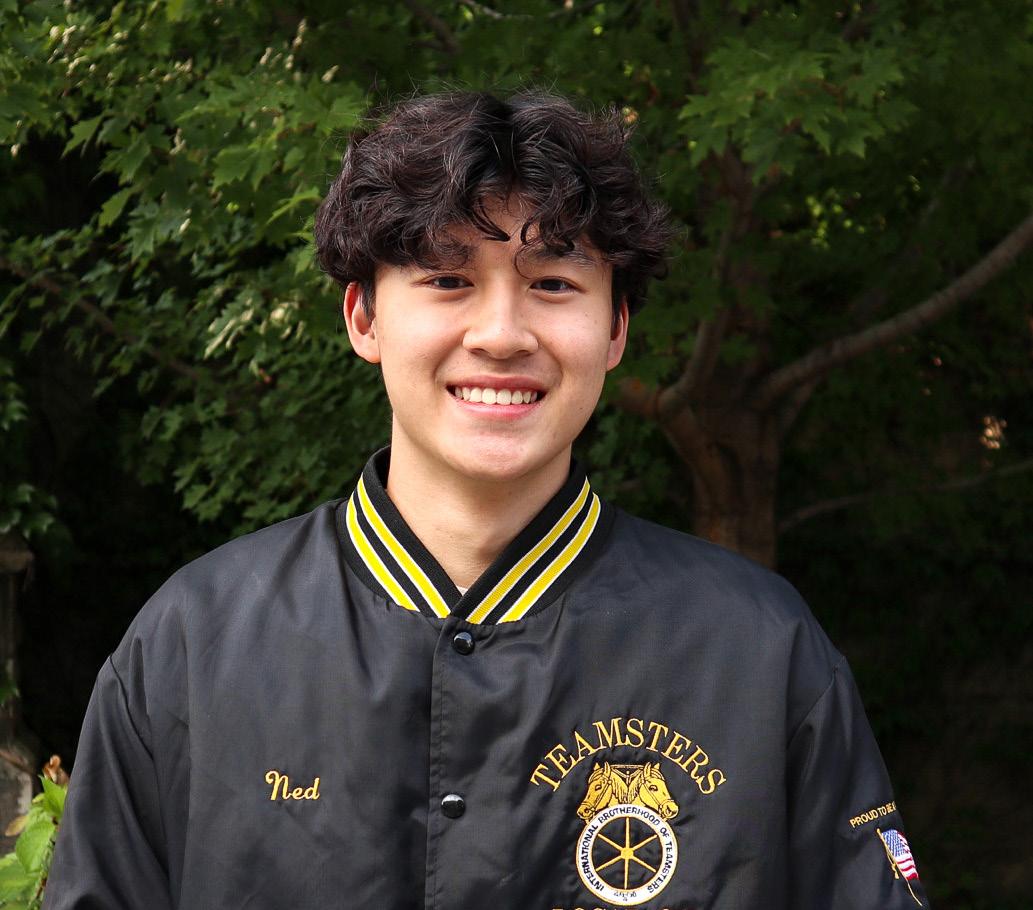
Asher Kui News Editor
Content warning: Mention of The Tribune and its absolutely horrible takes
Icannot count on one hand the number of times I’ve mentioned that I’m an editor at The Tribune , only to receive an eyeroll. In fact, there is a Reddit discussion post that affectionately calls our paper the “least terrible of the bunch.” I get it: If you think The Tribune isn’t perfect, I can assure you that you’re not alone. Whether you fall asleep at night dreaming of our next issue, or you walk past our newspaper stands on campus muttering something PG-13, I must thank you—at least you’re paying attention.
A campus paper that only affirms what you already believe or want to believe is not a newspaper, but a propaganda machine. The Tribune exists to challenge and question the status quo. Even if you don’t agree with us, your criticism sharpens our perspective, and your hostility does not derail us from continuing to write and uncover unspoken injustices.
Nonetheless, this doesn’t stop some from criticizing us for being ‘selectively aware,’ that we care loudly about some issues while staying silent on others. But I implore you to consider: We have, usually, 27 pieces to publish in print every week. Every issue is a matter of editorial judgement. To select one story over another is the nature of journalism, not ignorance toward other injustices.
We must choose carefully what we cover if we want to maximize our leverage in the community. While geographical distance does not make global injustices matter any less, The Tribune ’s inherent job is to cover stories of interest and impact to the McGill community. When we write about McGill’s complicity in Israel’s genocide in Palestine, it’s because we know the student empire has the power to influence institutional behaviour. When we write about McGill’s
inadequate efforts in reconciliation, it’s because we recognize our paper has the power to inform students about McGill’s lacklustre initiatives.
And when we receive your criticism, it urges us to reconsider our journalistic angle. Not only does your attention direct us to what the community cares about, it informs us of where our coverage succeeds and where it falls short. This way, we can sharpen our lens and take responsibility for our choices.
And then comes the accusation that we are a biased paper. There’s no disagreement there—bias is a prerequisite to journalism. Stories carry perspective, perspective carries judgement, and judgement contains bias. The Tribune is inherently biased, and so are other media outlets—even if they claim honest reporting
There is no unbiased reporting. We are biased, and we are proud of it. As a matter of fact, our Anti-Oppressive Mandate clearly states that “we centre anti-oppression in our coverage, our editorials, our hiring, and our workplace practices.” But this is more than a badge we wear; it is a commitment to holding ourselves accountable to readers. Our mandate demands ongoing reflection, compassion, and a willingness to
Parisa Rasul Staff Writer
While struggle must be recognized, it should not—and does not—define a community.
As Andalus Disparte, U3 Arts and VicePresident (VP) Political & Advocacy for McGill’s Black Students’ Network (BSN), said in an interview with The Tribune , “We want to strike a balance between […] educational events that focus on Black history […] but also highlighting Black joy. There’s a tendency during Black History Month for programming to focus a bit too much on Black struggle, but we are so much more than that.”
Members of BSN work tirelessly to provide and support a community for Black students on campus. Established in 1970 when there were only 15 Black students at McGill, BSN was the Black Students Association. In 1986, it became the Black Students’ Network.
Since then, BSN has consistently mobilized and advocated for tangible change.
“The BSN started the McGill South Africa committee, which […] was campaigning against the school’s financial ties to South Africa […] and in the end, McGill divested during the 80s,” Disparte explained. “Later, in 2020 […] the Take James Down movement was spearheaded by BSN and that was successful— the James McGill statue that used to be in front of the Arts Building is no longer there.”
During Black History Month at McGill, BSN aims to support other Black
student groups, run events and educate the broader McGill community. In an interview with The Tribune , Yousof Eldood, U1 Science and VP Operations & Comms for BSN, expanded on this.
“My favourite event that we do is Black Talk with CKUT,” Eldood said.
“There will also be a soul food [event] [....] where essentially there’ll just be some food from Black culture somewhere to kind of give people a taste, and to serve as a point for the Black community to congregate, talk, have a good time, and just enjoy themselves.”
Disparte also touched on some other events from BSN’s upcoming Black History Month calendar, which was released on their Instagram.
“There will be a book club […] we’re gonna be […] reading The Bluest Eye by Toni Morrison [….] There’s a speaker event happening […] with multiple professors.”
These events allow for important matters to be brought to the forefront, BSN President Orlane Donkpêgan Dopinos, U4 Arts, explained in an interview with The Tribune.
“Every single Black club on campus feels compelled to […] organize an event this particular month to talk about something that’s relevant to their own subcommunity.” Donkpêgan Dopinos said. “There’s a lot more attention on us and we take advantage of that as much as possible to discuss things that are specific to Black people.”
But while Black History Month creates a period of sustained visibility and
recognize that harmful biases exist—and that our paper strives not to perpetrate those biases through our words, or replicate them through the stories we choose to platform. Our mandate is a responsibility, not just a slogan.
Now you may ask, whose side are we on? The truth is, we don’t glorify anyone or anything for that matter. But we do stand with those who have been silenced or sidelined. Those that the mainstream media institutions have neglected or ignored. Those who were systemically oppressed. And, cliché or not, history is—after all— his story. It is up to us journalists to disrupt this narrative and make it their story—by listening, reporting, and frontlining accountability.
If you have made it this far, I would like to seize the chance, one last time, to say thank you, from the bottom of my heart. Loving The Tribune doesn’t require agreeing with every headline—I know I don’t. It doesn’t entail trying to out-woke everyone. Loving The Tribune simply means caring enough to stay engaged.
After all, we are a newspaper, not a dictatorship. We didn’t ask for unconditional agreement, just engagement.
acknowledgement, allyship is no less important outside of February.
“I think that part of being a good ally outside of Black History Month is definitely realizing that there’s a tendency when we talk about racism, to reduce it solely to casual racism […] but really […] those things are institutionalized,” said Disparte. “It can be very valuable to call out your friends or if you see something happening and not [...] requiring Black people only exclusively to use their voice.”
As of 2021, Black students made up 4.6 per cent of McGill’s student body. Despite Dopinos noticing an increase in Black students at McGill since 2021, she also recognizes the power in not accepting the statistical predisposition of being a minority, and instead bolstering opportunities to grow community ties.
“What’s more important is what you do
with that community. How you guys rally up.” Donkpêgan Dopinos said. “How do you guys support each other? How do you guys make sure that your needs are being heard? How do you create spaces where you feel supported, where you feel valued academically, culturally, socially as well?”
To learn more about the BSN and their events, visit their Instagram page, @bsmcgill
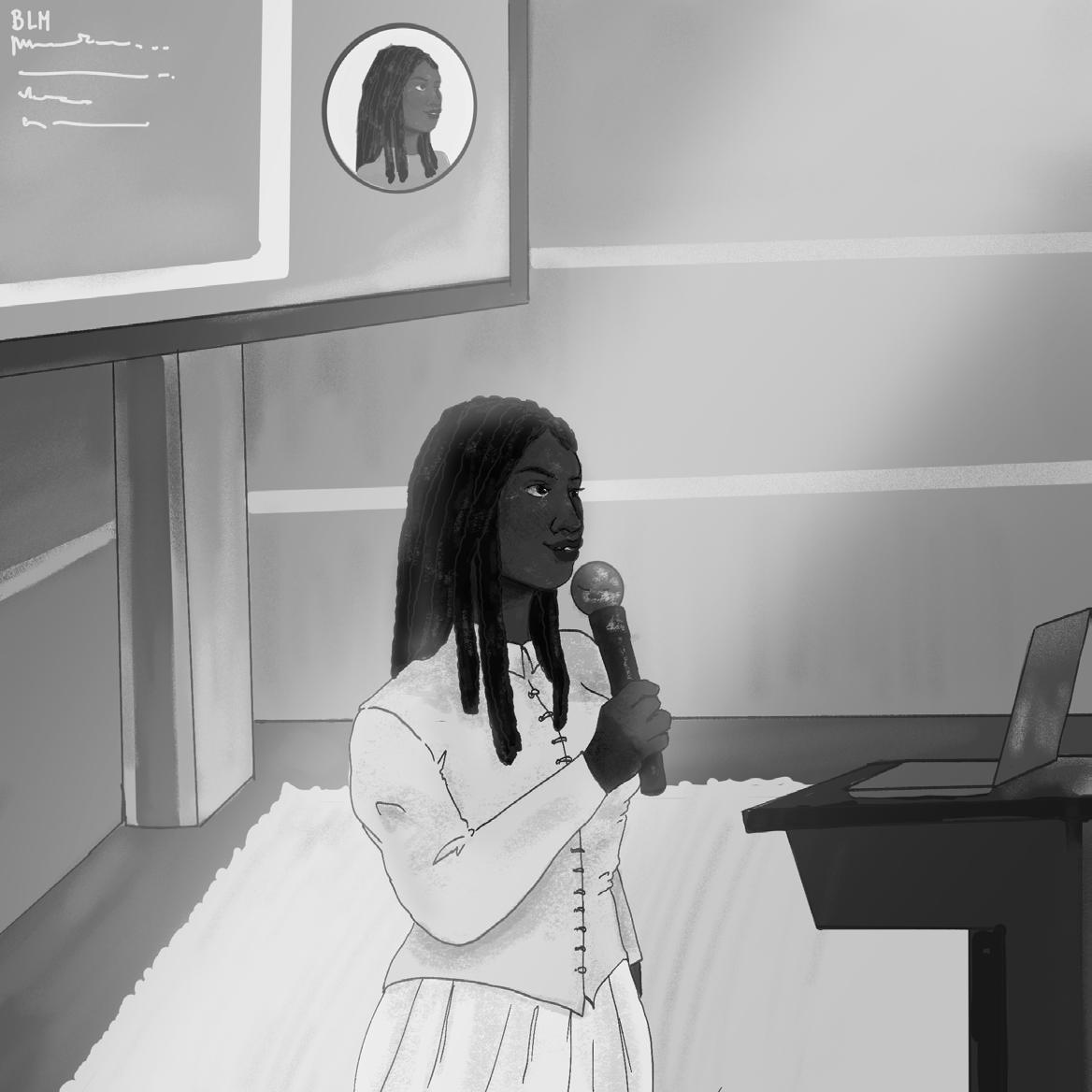
Rachel Blackstone Staff Writer
As we celebrate Black History Month, it is important to recognize the vast ways to support and uplift the Black community in Montreal, not just in February, but year-round. One way is to explore the cuisine of Montreal’s many fantastic, diverse, Black-owned restaurants. With this in mind, The Tribune has curated a non-exhaustive list of Black-owned restaurants to kickstart an exploration into all that Montreal has to offer.
Lloydie’s
Lloyd Tull first opened Lloydie’s in the early 1990s, bringing Caribbean flavours and his famous Jamaican patties to the Quebec culinary scene. While Lloydie’s has since greatly expanded, it remains a family-owned Montreal institution. Today, the restaurant is managed by Tull’s son, Nathan, alongside his childhood friend Julian Chemtov. Taste classic Caribbean delicacies at two locations, one in Saint-Henri, and the other in the core of the Mile End. Their menu is simple but classic: Plantains, oxtail, and jerk chicken. Try their jerk chicken poutine for a delicious fusion of Quebecois and Caribbean flavours. And if you can’t get enough of Lloydie’s classic Jamaican patties, find them frozen in a series of local grocery stores.
Restaurant Queen Sheba
If there is anything students yearn for in the depths of Montreal winter, it’s a warm family-style meal. Find respite and cure homesickness with a trip to Restaurant Queen Sheba for a nourishing Ethiopian meal. Located at the intersection of av. du Parc and av. du Mont-Royal with a range of vegan options and an array of braised and stewed meats, Queen Sheba has something for everyone. Enjoy one of their many shared tasting menus that blend vegan and non-vegan options, and connect with others in the most rewarding way—over a warm meal.
Chef Paul Toussaint
The culinarily diverse Time Out Market is home to an authentic Haitian restaurant, Chef Paul Toussaint, named after its founder, Paul Toussaint. Find shelter from the Montreal winter there with the tastes of corn, yuzu, and lime—all found in a fresh ceviche for $16 CAD. If seafood isn’t your fare of choice, try their griot sandwich or goat curry. A mere 5-minute walk from McGill’s downtown campus, escape to the tropics by treating yourself to an elevated lunch out in between lectures. Once hooked on Toussaint’s cooking, check out one of his other restaurants scattered throughout downtown Montreal and Little Italy.
Kwizinn
Kwizinn Vieux-Montreal is in the heart of old Montreal, offering a fusion of classic Caribbean flavours and modern culinary methods for a menu that is both authentic and innovative. Order their octopus carpaccio, served on a bed of grilled guacamole and topped with a habanero and ginger sauce, to truly appreciate their creativity. In addition to dinner, Kwizinn offers brunch on the weekends, jazz nights every Thursday from 6:00 to 9:00 p.m., and a late-night DJ on Saturdays and Sundays. Kwizinn is also home to a not-sosecret speakeasy that’s available for private events, and is awaiting the opening of a food truck in April 2026.
Le Virunga
A previously recommended Tribune pick, Le Virunga brings vibrant Congolese cuisine to the table with fresh Quebec produce. Chef Maria-José de Frias and her daughter Zoya have built an intimate and delicious restaurant where Congolese spices produce the ultimate Montreal fine-dining experience. For a mouth-watering meal, start with the seared walleye fillet that comes with mashed cassava
and an eggplant mousse, and try the guinea fowl leg confit as your main. Le Virguna was a 2025 Michelin guide pick, and features a 100 per cent South African wine list. While a more expensive option, Le Virguna is certain to provide an unforgettable culinary experience.

Lulu Calame Contributor
In February of 2025, following the completion of her honours-level Bachelor’s degree in clinical nutrition in Gaza, Aya was admitted to McGill’s M.Sc. thesis program in Human Nutrition. Now, a year later, she remains trapped in Gaza, unable to provide the necessary biometric data to complete her application.
Because of limited border crossings in Gaza under Israel’s genocide and the lack of a visa application centre (VAC) in Palestine, Aya was forced to defer her admission to McGill to the Winter 2026 semester, and then again to the Fall 2026 semester. With the former now well underway, she has yet to receive the support she needs to provide her biometrics. This would result in a third deferral, after which she will lose her offer of admission.
“This opportunity [to attend McGill] represents years of hard work finally being recognized,” Aya said in an interview with The Tribune
Aya is one of 130 Palestinian students who have been accepted into Canadian universities but remain barred from travel to begin their studies; 70 of these students, like Aya, are trapped in Gaza even after the ceasefire, while 30 have evacuated to Egypt.
The biometric requirement that holds Aya in Gaza has already been circumvented by a number of countries—including the United Kingdom, France, and Ireland. These countries have all established programs to either evacuate students to Egypt or Jordan to obtain biometrics, or to waive the biometric
With more than 55,000 children in Gaza malnourished, clinical nutrition experts are lifesaving, and in higher demand than ever. (Armen Erzingatzian / The Tribune)
requirement entirely, with the understanding that students in Gaza face exceptional circumstances and cannot be held to standard visa stipulations. In 2022, under this same logic, Canada—rightfully—waived the biometric requirement for some Ukrainians fleeing Russia’s war in their country. The same support has not been extended to Palestinian students.
“I know students who got scholarships from other countries and [have] been evacuated and started their degrees, but there’s [still] no action [from the] Canadian government to help us get evacuated from Gaza,” Aya said.
While awaiting political action from the Canadian federal government and Immigration, Refugees and Citizenship Canada (IRCC), Aya is working full-time as a nutrition officer with an international non-govern-
mental organization (NGO).
Though the famine has subsided, malnutrition persists in the Gaza Strip as food remains expensive and insufficient—a scarcity created and upheld by Israel’s continued restriction of food supplies into the region. Her days involve supporting malnutrition screening, food distribution, and medical treatment, while her evenings are spent taking independent online courses to supplement her work.
“Living in Gaza, we continue to struggle under extremely difficult conditions, as there is still severe food insecurity [....] A lot of children and pregnant, lactating women are malnourished. The struggling is still the same,” Aya explained. “Even when food enters Gaza, prices remain extremely high, converted to before the genocide, and most families have no
source of income.”
From Aya’s nutritional perspective, the food in Gaza is not just deficient in quantity, but also in quality.
“Even what enters Gaza is for commercial use, a lot of snacks, a lot of […] energy drinks,” Aya said. “It’s not high-quality food, [like] vegetables and fruits, to resolve the malnutrition impact in children, in elderly people.”
In Gaza, expertise in clinical nutrition like Aya’s saves lives. By failing to facilitate Aya’s education and research at McGill, the Canadian government and IRCC are denying a lifeline to those in Gaza, where Aya plans to return after her studies.
“These delays affect far more than one individual future,” Aya said. “When opportunities like these are lost, the impact extends to [the] entire community, as my goal has always been to return and help my community in Gaza.”
For Palestinian scholars in Gaza today, education is not so much a personal undertaking as it is an imperative responsibility to their Palestinian homeland and those who remain in it.
“That’s why we are looking for this opportunity,” Aya said. “It’s not a choice. It’s mandatory to have a good education.”
The future of Gaza lies in academic expertise capable of rebuilding from the ground up.
“Supporting our ability to study,” Aya said, referring to all prospective Palestinian students and scholars, “is also an investment in the future recovery and resilience of our community.”
Vice President Fatima Janneh sits down to discuss community, representation, and NSBE McGill’s role in supporting Black engineering students.
José Moro Gutiérrez Staff Writer
For many Black engineering students at McGill, finding community can be just as important as academic success. The McGill chapter of the National Society of Black Engineers (NSBE) aims to provide that support through camaraderie, mentorship, and leadership.
One of the students helping lead these efforts is Fatima Janneh, a third-year student in McGill’s Department of Bioengineering, and the current Vice President of NSBE McGill. Janneh has been involved with NSBE since her first year at McGill, but her connection to the organization began even earlier. While still in high school, she attended a summer program at the University of Toronto (UofT) and heard a guest speaker—then president of UofT’s NSBE chapter—talk about how the organization provided networking and professional opportunities. At the time, Janneh was interested in STEM but unsure about pursuing engineering. Seeing Black engineers, particularly women, changed that perspective.
“People of colour, Black people like me, a woman who wears a hijab—I was not seeing that in engineering,” Janneh said in an interview with The Tribune. “Other people in that panel who were also Black inspired me to pursue this career. I was 16 years old at the time. Fast forward a couple of years, and now I am in my first year of university.”
One of NSBE McGill’s most anticipated events is the Black Legacy Dinner, held annu-
ally during Black History Month. The event brings together students, professionals, and sponsors from across the Greater Montreal Area to discuss experiences in the professional world as Black individuals. This year’s dinner will take place on Feb. 16, and is themed “Yes We Can”—a reference to former U.S. President Barack Obama. The dinner features up to 100 participants and a panel of speakers from different backgrounds, including engineering, social work, philanthropy, and startups.
Janneh also discussed how NSBE’s internal culture plays a central role in its impact. General meetings include informal discussions about members’ weeks and shared experiences,
alongside event and logistic planning, which helps create an environment where members feel comfortable speaking openly.
NSBE McGill collaborates regularly with other Black student organizations at McGill, including the Black Student Network, the African Students Society, and the Caribbean Students Society. These collaborations aim to bring together different Black student communities at McGill through social and cultural events.
NSBE McGill is also connected to other chapters across North America. Each year, members attend the NSBE Convention, which brings together more than 10,000 students. This year’s convention will take place in Baltimore
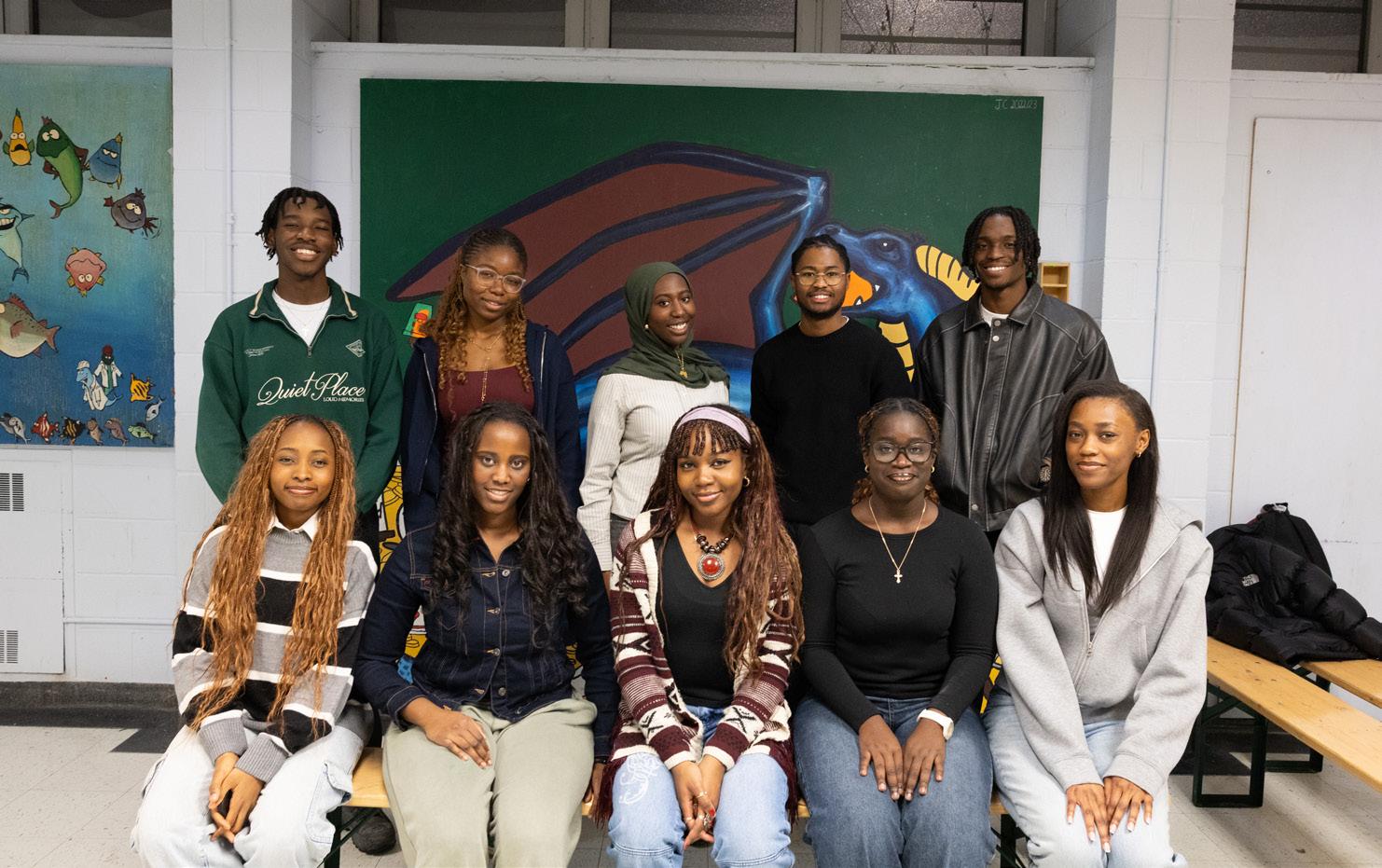
from March 17 to 22. The event offers networking opportunities with major companies and allows students to connect with peers from other chapters. Additionally, NSBE McGill participates in the East Canada Zone conference and was recently named Chapter of the Season for its involvement in student life.
While NSBE McGill has grown since its founding in 2005, Janneh noted that challenges related to representation remain.
“When I walk in a room, not many people will know the feeling of being a Black student. The Black identity can be very different for others [….] There are certain prejudices that people might have in their minds but that they will never voice, though you can still feel them,” Janneh explained. “In the past, NSBE had to struggle with visibility and member count. But now, every single year, I see it grow more.”
Janneh stressed that her presence at McGill is tied to a broader sense of responsibility.
“I am here for more than just my degree. I am here to learn, grow, develop my skills [….] There is a pressure on me to be able to grow. I know my parents came here for us to have a better education, for us to have a better future. I can’t just throw this down the drain.”
To first-year students who may be questioning their place in engineering, Janneh offered one piece of advice: Avoid isolation.
“Just because you do not see representation in your class does not mean you won’t find representation anywhere else. I know it is difficult to go to those events when you don’t know anybody, but reaching out will bring you where you need to go.”
How systemic barriers hinder the integration of African immigrants in Quebec’s labour market Challenges influencing African immigrants’ experiences in the workforce
Michelle Yankovsky Staff Writer
Immigrants contribute significantly to Canada’s socioeconomic growth in undeniable ways, yet many of them are excluded from job opportunities for reasons unrelated to their qualifications. A complex interplay of racial discrimination, social isolation, and systemic inequalities shapes the experiences of Highly Skilled African Immigrants (HSAIs) joining the workforce. This raises a pressing question: Despite arriving with strong educational backgrounds and adequate training, why do HSAIs remain so alienated from the labour market?
In a recent publication in the Journal of International Migration and Integration, Jacob Kwakye, a PhD candidate in McGill’s School of Social Work, examined the experiences of HSAIs in the Quebec labour market. He hopes his findings can shed light on the systemic racism Black communities face and inform policymaking moving forward.
“[The] majority of the findings in the study had to do with racial perception,” Kwakye said in an interview with The Tribune. “Although Canada is doing its best and Quebec has a lot of policies in place that try to address issues of racism, there are still certain issues that are perpetuating these kinds of perceptions.”
Kwakye’s study interviewed 16 partici-
pants using a qualitative approach, intentionally focusing on those who spoke different languages, held a Bachelor’s degree or higher from a Canadian or African university, and had lived in Quebec for three or more years.
“We’re just trying to look at meaningful narratives, and to be able to get those, you need to reduce the sample size in order to get in-depth knowledge from your participants,” Kwakye explained.
While language barriers were shown to play a role in HSAIs’ reduced ability to gain employment, racial biases held a more significant influence: Racism usually overrides language proficiency in the decision to hire HSAIs.
“The issues of language [as a barrier] also came up because, for the Quebecois context, the language is predominantly French. [The] majority of the participants stated that yes, language is a concern, but it does not supersede issues of racial perception.”
Kwakye also discussed how having a Bachelor’s or Master’s degree still puts them at a disadvantage when looking for work.
“They feel that they are more overqualified [than what the job demands] and that employers feel that because of their higher qualifications, they will not be able to engage them at the workplace,” Kwakye said. “So it’s either you need to reduce your qualifications in order to match the portfolio that is being advertised,
or you must hide some of your qualifications to be able to be considered for a particular position.”
The study also revealed that the labour market favours the skills of those with local roots—an upsetting yet unsurprising finding given that it has always been easier for individuals born in Quebec to integrate into the workforce.
“When [HSAIs] are not able to conform and don’t understand the cultural dynamics, they will not be able to fit into these workplaces,” Kwakye said.
Kwakye also highlighted a participant’s experience in the workplace, where biases, racial discrimination, and assumptions about cultural competence directly affected HSAIs’ professional credibility.
“One lawyer said that sometimes some of the Quebecois clients felt unsafe to bring their matters to them or felt that they would not be the best person to help solve their problem, because they perceive [HSAIs] to not under-
stand the Quebec context.”
As Quebec continues to rely on immigration to address employment shortages, Kwakye’s study highlights the contradiction of Quebec’s labour market—a system rooted in discrimination, perpetuated by systemic barriers, yet dependent on immigrant talent.
Addressing these dynamics is important to create awareness and influence policy-making that does not disadvantage Black communities. Moreover, creating more equitable hiring practices and recognizing foreign credentials as valuable is a critical step to help prevent HSAIs’ exclusion from the workforce.

Professor
Malika Logossou Managing Editor
Black Canadians, on average, experience disproportionately poor health outcomes throughout their lives. While genetics may contribute to many chronic illnesses and mental health challenges, social and environmental determinants such as limited access to health care and anti-Black racism drive much of this disparity. This discrepancy is compounded by the legacy of colonialism and medical racism, which leaves Black communities underrepresented in mental health research.
To explore how these inequities affect youth mental health, The Tribune spoke with Myrna Lashley, an associate Professor in the Department of Psychiatry and adjunct researcher at the Culture and Mental Health Research Unit of the Lady Davis Institute for Medical Research.
While researching youth mental health, Lashley noticed that Black youth often carry a profound burden of intergenerational trauma relating to racism while also having to navigate structural racism, shaping how they see themselves.
“Structural racism is based on ideology,” Lashley said. “It’s in our laws, in the way we interact with each other, even in the way we teach religion, in the arts, and cultures, everything, and we have to be very conscious to set things so that Black youth see things that value them as citizens in the Canadian mosaic.”
These systemic pressures also bleed into Black youth’s educational environments. Schools’ anti-violence policies often define violence as solely physical rather than emotional. This results in disciplinary action being taken only against students who respond physically to racial bullying, ignoring the harm caused by racist language. Teachers may also dismiss racist comments or fail to document incidents, leaving frustrated students to undermine their self-worth and sometimes reshape their perceptions of mental health practitioners.
“Anti-violence policy is used against that child, who responded to violence that they have been suffering all along, because violence is often seen only as a physical thing and not as an emotional thing,” Lashley explained. “When you are young, you tend to look at everybody almost the same. So how do you say to somebody, ‘Let’s go and get you some mental health remedies,’ when the person who is going to help you looks like the person that you are angry at?”
Lashley highlighted several persistent barriers in accessing mental health care in Canada for youth, stemming from systemic bias to a lack of culturally competent care and adequately trained professionals.
“We don’t have enough people who understand the issues [.…] You still have people even to this day, who [incorrectly] think that Black people don’t feel pain to the same extent as white people,” Lashley explained. “There are barriers to care in terms of knowledge, there are barriers to care in terms of […] therapists taking racism into the therapy room with them. Have they done the reflection that’s necessary to look at their own privilege?”
In order to offer appropriate mental health resources to Black youth, professionals must recognize their privilege and understand how Black youths are affected by their lived experiences.
“How do you help someone when you already determined that they are genetically flawed as a group? […] You’ve made up your mind that they are aggressive […] You send that kid on the road to difficult mental health issues.”
These barriers often put the onus on Black youth to educate their caregivers or mental health practitioners about their lived experiences, which can discourage them from seeking care. The underrepresentation of Black service providers also leads to lower medical school enrolments within Black communities.
“We’re still in the process of trying to train people to understand not only the lived reality of Black people and therefore […] Black youth, but what effect this has on mental health,” Lashley said. “Because if you feel like you are going to see someone who doesn’t understand you, […] you are spending a bit of money in your first few sessions […] teaching people how to see you. We have to really make sure that when we train people who are working in mental health and are going to help others, that they have a better understanding [of this reality].”
Cultural stigma within Black communities adds another layer of difficulty.
“[There is] stigma within the community, and how we deal with, as Black people, […] mental health, and mental illness. And we are ashamed to have it, so we tend often not to seek the care that’s necessary, and so our youth don’t do it, because we’re not encouraging them to do it.”
Lashley also emphasized how adults’ lack of access to mental health services can create
familial and environmental issues that harm children.
“People have to deal with racism in the workplace, and they don’t know how to confront it there, or they have to put food on the table, […] then they go home, and they take it out on the family. The kids get hit, or the partner gets hit, or the person starts to self-medicate with alcohol or drugs,” she said.
With these factors in mind, Lashley shared how she sensitizes professionals and the public to Black mental health through her work.
“I talk with my colleagues, I try not to get angry […] If I’m angry, they don’t hear me [....] When I go to the court, this is what I do: I go to the judge, I give them a history of racism in Canada, not the United States [....] I will talk about it here,” she said.
This ignorance comes from many not knowing their history, placing the burdens of education, which stem from systemic factors, on Black communities themselves.
“A lot of Canadians don’t know their history. And so, I approach it from that perspective and […] have them understand their history so they can understand why […] some Black people don’t trust them. We have to teach our kids that, so that they know how to protect themselves, not to hate you, but for them to protect themselves, and that’s something you don’t have to do with your kids [.…] I get them to address their privilege,” Lashley explained.
Medical and educational institutions also have a role to play in addressing systemic inequities, as they impact not only Black commu-
nities but also Indigenous, disabled, and other marginalized populations in various ways. This makes inclusion important in all spheres of life.
“It’s one thing to pull people in, but if you then end up putting people just like polka dots on the background of the hegemony of whiteness, what have you done?”
Looking ahead, Lashley’s work reinforces the need for more research and institutional inclusion to reflect the lived experiences of the studied communities rather than token representation.
“You have to look at the lived experience [....] If you go into a specific group, you have to create what it is you’re studying, the research, with that specific group,” she said. “We can no longer take a position of ‘I am the academic, I know everything, I am going to go and study, and then I am going to impose my results on you.’ That is very insulting. It’s inaccurate, it’s unethical, and it’s unhelpful.”
Overall, Lashley stressed the importance of doing inclusive research on mental health in Black youth. She teaches and spreads her expertise not to divide people, but rather to create an egalitarian society where all communities can access the mental health services they deserve without stigma.
“We’re not looking at what divides people [….] We want to know what the issues are. What is dividing people and using that information to pull everybody together [....] We want to create a world, a city, where everybody feels included, and everybody feels equal, and everybody is getting equity.”
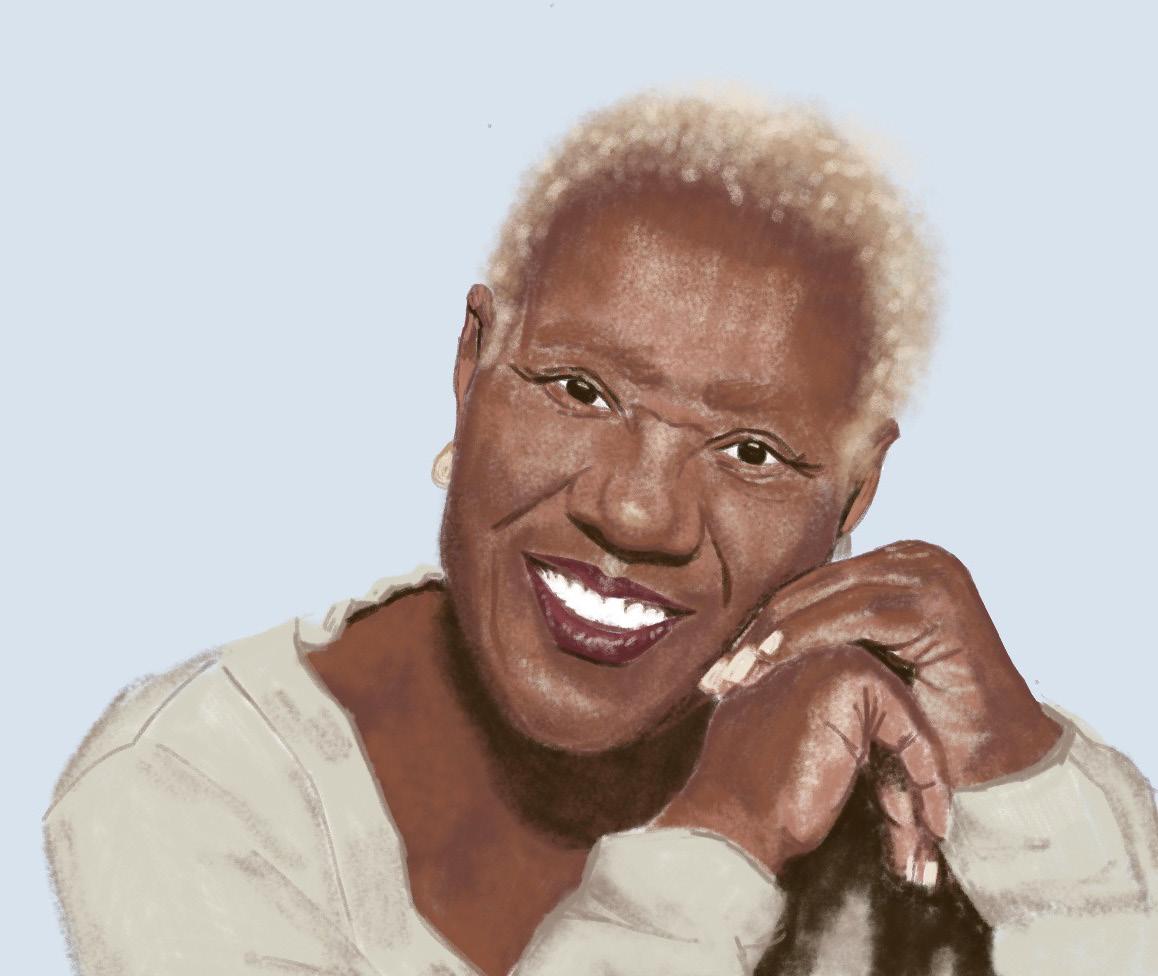
Will Kennedy Contributor
McGill’s Men’s Basketball team currently finds itself at the bottom of the Réseau du sport étudiant du Québec (RSEQ) standings. The conference is not a forgiving one, as it boasts two top teams: The Bishop’s University Gaiters, ranked second in the country, and the Université Laval Rouge et Or, who are not far from the top 10. McGill has had a rough go of things with a 2–13 record, but the Redbirds are a better team than their record would suggest, with plenty of hope for the future.
Over the weekend, the Redbirds played Laval in what was a familiar tale. The McGill team had a strong start to the fourth quarter, bringing the crowd to life. Excitement in the gym peaked after a thunderous dunk from Saransh Padhy who finished with a team-high 18 points, accounting for 60 per cent of the total output from McGill’s five starters. Laval responded with a scoring run of their own, taking a game that was once tied at 55 apiece and quickly building a double-digit lead. Letting close games slip away in the fourth quarter has been an issue all season for the Redbirds, who have lost six times by just 12 points or fewer. In modern basketball, a 12-point swing is fairly minor.
The Redbirds’ fourth-quarter struggles have not happened in a vacuum. McGill ranks last in points per game amongst the
five RSEQ teams, with a measly 68 points. Looking across all of U SPORTS, only three teams in the country average fewer than 70 points on offence. At the same time, McGill surrenders around 80 points per game, which also puts them last in the RSEQ.
While the Redbirds have not exactly excelled this season when it comes to offensive efficiency, the metrics suggest they should not be a bottom-three offence in the country or the worst in the RSEQ. They sit third on the RSEQ standings for field goal and free throw percentage, while occupying fourth in three-point percentage. Their main issue has been the number of shots taken in comparison to their opponents. This discrepancy is a two-fold issue—the team is turning the ball over roughly four times per game more than opponents, while also being outrebounded by an average of nearly six rebounds per game. No matter how efficient you are, it is a tall task to win with 10 fewer possessions.
Rebounding issues were on full display against Laval, where the Redbirds were outrebounded 48-35 and lost the fourth quarter rebounding matchup by four points. McGill could not keep opposing big men off the glass late in the game, something that both extended Laval’s lead and ran the clock dry. The inability to pull in rebounds also led to several Laval free throws as McGill’s defence scrambled to get stops in the paint. McGill has players who can guard and force missed shots, but what happens before the shot goes up no longer matters with a forgone rebound.
Despite this season’s struggles, there
should be plenty of optimism moving forward: It is clear that the Redbirds have plenty of talent and room to grow. Their entire roster has remaining eligibility next season, including the team’s two top scorers, Sean Duff and Padhy.
Duff has had a strong start at McGill, scoring in double figures in 13 of the 18 games he has played dating back to preseason. Meanwhile, Padhy has truly broken out. Last season, he averaged 7.5 points and 3.9 rebounds; this season, he is up to 13.1 points and 7.3 rebounds per game. Padhy appears to be a safety valve on offence late
in possessions, someone whose teammates can trust to make the best of a short shot clock. With so many returning players, Assistant Coach Martin Cassini sees a bright future for the team.
“I think some of our guys who have been here a couple years will be ready to step into leadership roles,” Cassini said. He also highlights this year’s rookies as a bright spot in the team and a reason to be excited about the future.
“Our rookies this year have great work ethic and willingness to improve their game,” Cassini said.

With the Olympics beginning Feb. 6, these five Canadian athletes and teams lead Canada’s charge for gold in Milano-Cortina 2026 Team Canada’s medal
Jenna Payette Staff Writer
From frozen rinks to mountain peaks, Team Canada’s brightest stars are preparing for their biggest stage yet. At Milano-Cortina 2026, these five athletes and teams carry not only medal hopes, but years of sacrifice, resilience, and pride.
Connor McDavid and Men’s Hockey
For more than a decade, Olympic men’s hockey has been missing its brightest stars. This year, in Milano-Cortina, National Hockey League (NHL) players are finally back—and no performance is more anticipated than Connor McDavid’s. After watching from afar in 2018 and 2022, the world’s most electrifying player will finally don the maple leaf on the sport’s biggest stage, alongside fellow superstars Nathan MacKinnon, Nick Suzuki, and Cale Makar.
For a generation raised on Sidney Crosby’s golden goal, this tournament signals a new era. Canada enters as a favourite, with a likely showdown against the United States looming. McDavid’s Olympic debut gives him a chance to define his legacy beyond the NHL and lead his country when it matters most.
Marie-Philip Poulin and Women’s Hockey
men’s or women’s—to score in four Olympic gold-medal games. Her two goals in the 2022 final against the United States secured her third Olympic title and reaffirmed her ‘Captain Clutch’ reputation.
She arrives in Italy alongside dozens of Professional Women’s Hockey League (PWHL) players, representing a new era of women’s hockey since the league’s inception in January 2024.
Since women’s hockey debuted in the 1998 Nagano Olympics, gold has never left North America. Nearly every final has been a Canada-USA showdown, decided by inches and nerves.
Canada will once again chase greatness in women’s hockey’s fiercest rivalry with Poulin at the helm.
Flag bearers Mikaël Kingsbury and Marielle Thompson
Few athletes embody sustained excellence like Mikaël Kingsbury. The most decorated male moguls skier in World Cup history, he arrives with three Olympic medals, nine world titles, and 100 World Cup wins—yet still chases perfection on every run.
Chosen as flag bearers, Kingsbury and Thompson represent longevity, resilience, and relentless ambition. In sports where one mistake can end everything, they have remained elite through injuries, pressure, and changing generations. In Italy, they carry not only the flag, but a deep legacy of Canadian winter sport excellence.
Ski half-pipe phenom Cassie Sharpe
Cassie Sharpe’s return to elite skiing is one of Team Canada’s most inspiring stories. The 2018 Olympic halfpipe champion and 2022 silver medallist stepped away to become a mother, unsure if she would ever return.
Two years later, she is back and thriving. In her first season returning, Sharpe earned World Cup podiums, won X Games gold for the first time in six years, and became the first mother to claim the title.
With her daughter watching from home, Sharpe now competes with renewed purpose. Her journey reflects both the unseen challenges athletes face and the courage it takes to chase greatness again.
Figure skaters Deanna Stellato-Dudek and Maxime Deschamps
Once a teenage prodigy, she was forced into early retirement by injuries. Years later, she faced a defining question at a 2016 retreat: What would she do if she could not fail? Her answer— win Olympic gold—pushed her back onto the ice weeks later to begin training in pairs.
After moving to Montreal, the duo steadily climbed the ranks before breaking through on home ice in 2024. Their story is proof that perseverance has no expiration date.
When the pressure is highest, MariePhilip Poulin rises like few can. The Canadian captain remains the only hockey player—
Alongside him stands Marielle Thompson, one of ski cross’s most consistent and courageous competitors. Since winning Olympic gold in 2014, she has remained a fixture on podiums around the world, collecting more than 70 career top-three finishes and multiple Crystal Globes.
At an age when most figure skaters have long retired, Deanna Stellato-Dudek is just getting started. In 2024, alongside partner Maxime Deschamps, she captured Canada’s first world title in pairs skating in six years. She completed this feat at age 40.

Canada continues a century-long tradition of participating in every Winter Olympics since the inaugural games in 1924. (Eliot Loose / The Tribune) The Redbirds currently sit fifth in RSEQ, yet
Ivanne Zhang Staff Writer
The McGill Artistic Swimming Team delivered a flawless performance at the Eastern Divisional Meet at Queen’s University on Jan. 24, placing first in all six events and taking home the trophy.
That dominance was fueled by a standout performance from Sonia Dunn, U2 Science, who won gold in the solo, duet, and team routines. Scoring 204.1150 points in her solo routine, she made history as the first athlete to break the 200-point mark in the Canadian University Artistic Swimming League (CUASL) level.
In an interview with The Tribune , Dunn reflected on the moment she first fell in love with artistic swimming at just seven years old.
“One of my friends in elementary school had a sister who did artistic swimming, and she invited me to one of her shows,” Dunn shared. “I was supposed to be there [to play with my friend], but the moment I watched the first routine, I was completely transfixed. I remember thinking, ‘this is what I want to do.’”
What started as a strong interest soon became a full-time pursuit. Dunn trained with the GO Capital Artistic Swimming Club in Ottawa for five years before reaching the national level at merely 12 years old.
“In high school, it was nearly 30 hours a week. Saturdays and Sundays could be
up to six hours each day,” she said. “There would be days when we trained at one pool for two hours, then got in cars to drive to another pool and continued training there.”
Her experiences in the pool shaped not only her athletic career but also her decision about where to attend university. In 2015, Dunn’s coach, a synchronized swimmer for Carleton University, invited her to watch and volunteer at the Nationals of the Canadian University Synchronized Swim League, now known as CUASL. That year, McGill won their 12th title.
“That kind of always stuck with me in my head,” Dunn said. “Okay, McGill is number one.”
When she first arrived at McGill, Dunn took an unconventional path: Instead of joining the university team right away, she spent her U0 year with Montreal Synchro. With club eligibility extending to age 19 and two seasons lost to COVID, she wanted one last year competing at the club level.
“It was a hard decision, but I’m really glad I took that stepping stone. I familiarized myself with McGill as a school separately from McGill synchro,” Dunn explained. “It also helped me mature as a leader because I was the oldest on the team, and I never really experienced [leadership] to that extent.”
All the growth from her U0 year paid off. With the Eastern Divisional Meet coming earlier than last year, the team dove into fitness training right after winter break, moving quickly to swim full routines in-
stead of breaking them into segments. Dunn believes the hard work yielded results at the competition.
“When I’m competing, my goal is always to win because that’s the standard I hold myself to. But synchro isn’t a sport where you’re just competing against one other team or person, it is a subjective sport judged objectively,” Dunn said. “Once I started competing, I realized my fitness was really there. As the events progressed throughout the day, the momentum from the crowd and the results kept building, and it just compounded in a really positive way.”

Dunn also credited her teammates and Head Coach Lindsay Duncan for fostering a supportive environment.
“Coach Duncan would come with a quote to motivate us. One of our key words was trust. We trust each other. We know this routine is hard, but I’m surrounded by nine other girls who are all going to push themselves hard, and I trust that they’re going to,” Dunn said.
While her focus remains on reaching
new heights for herself and the team, Dunn is also looking ahead to the next chapter of her synchro journey.
“Once I’m done at McGill, I think it’s going to be a great way to close my chapter indefinitely,” Dunn explained. “I’ll need a little break from the sport to find myself outside of being an athlete, since so much of my identity is tied to it. But I know my path is going to lead back to synchro. It’s always been my first love.”
Alex Hawes SIlva Staff Writer
In January 2026, Trinity Rodman, one of the most prominent talents in women’s soccer, reached a milestone unseen in the National Women’s Soccer League (NWSL). By signing a new contract with the Washington Spirit, Rodman became the highest-paid player in NWSL history and second-highest-paid women’s soccer player in the world. At 23 years old, she signed a three-year contract worth more than $2 million USD per year (including bonuses), surpassing all previous contracts in the league’s 14-year history.
Rodman’s rise to this moment has been astounding. Drafted second overall by Washington in the 2021 NWSL Draft, she helped lead the Spirit to the 2021 NWSL Championship at 19 years old and quickly became one of the league’s most effective attackers. Her profile expanded internationally as she became a prominent figure with the United States Women’s National Team (USWNT) and played an important role in the team’s success.
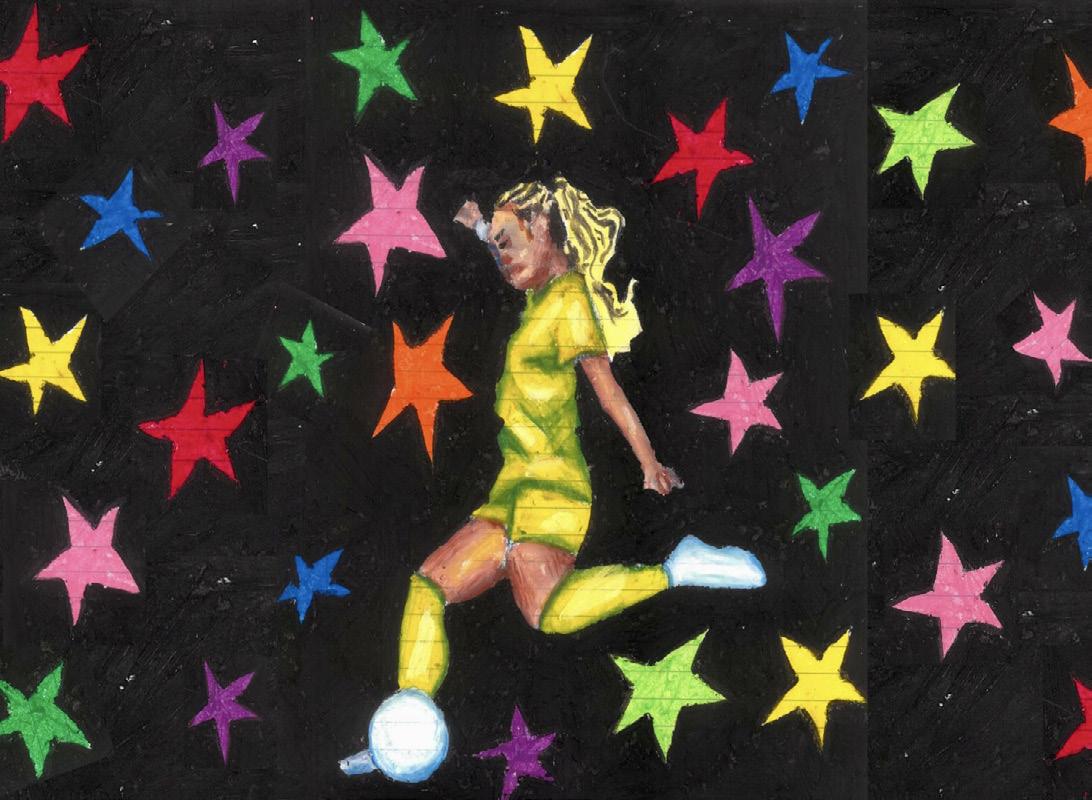
While Rodman’s talent on the pitch has been clear to see for years, her status as the league’s top earner was not achieved without controversy. When her previous contract expired at the end of 2025, Rodman entered free agency with strong interest from elite European clubs—teams that could potentially offer more compensation due to the NWSL’s salary cap limitations. In late 2025, the Spirit and Rodman agreed to a four-year contract structure that would have averaged more than $1 million USD annually. However, NWSL commissioner Jessica Berman rejected the deal, saying
it violated the ‘spirit’ of the league’s salary cap rules, despite both sides stating that it was compliant.
This led to a larger dispute: The NWSL Players Association (NWSLPA) filed a grievance on Rodman’s behalf, arguing that the rejection of the contract violated her free-agency rights under the collective bargaining agreement. This put pressure on the league, already attempting to balance financial sustainability with the retention of elite talent. In response, the NWSL Board of Governors approved a new rule known as the High Impact Player rule, designed to allow teams to exceed the standard salary cap by up to $1 million USD for players who meet specific criteria, such as national team involvement, marketability, and elite performance.
While the league frames the High Impact Player mechanism as a tool to retain and attract star players, the NWSLPA has raised concerns about how the system was implemented and whether it gives the league control over which players are deemed ‘impact’ players. Regardless of the debate, Rodman’s contract reflects not only her immense value as a player, but also the shifting economics and politics of women’s soccer. Historically, women’s leagues around the world have struggled to offer salaries that rival those seen in men’s competitions. While European clubs have paid top players well, Rodman’s deal positions the American league in a strong spot for the sport to grow.
Critics of the NWSL’s salary cap argue that without mechanisms like the High Impact Player rule, or without a higher base cap, the league risks losing its best talents to teams abroad. The Major League Soccer (MLS) has similar salary limitations, with a cap of $5.95 million USD per player annually, which has also swayed stars to take their talents abroad. Rodman’s re-signing is both a victory and a challenge, as it shows that the league can hold on to top stars but also reveals the pressures that come with balancing equality and competitiveness. For the Washington Spirit, keeping Rodman is more than a strategic win but a financial success as well. Her presence boosts the club’s visibility, expands its fanbase, and enhances its marketing appeal. Rodman’s new contract may even influence how future NWSL negotiations unfold, setting a benchmark for player compensation and reshaping expectations for what elite women’s soccer players can earn.
As she begins this next chapter, Rodman’s journey from a teenage prodigy to the highest-paid player in NWSL is a reflection of a sport that is growing through new circumstances. By reforming what is possible for NWSL athletes, she has become a trailblazer for Black women athletes, paving the way for younger players. Her story speaks to how competitive excellence and talent increasingly intersects with equity, value, and the future of women’s professional soccer.